Category: Bars

  • Philly bars open past 2 a.m.? A new push for late-night bars amid FIFA World Cup

    Philly bars open past 2 a.m.? A new push for late-night bars amid FIFA World Cup

    A new push to let Philadelphia bars stay open past 2 a.m. is being mounted by local trade groups and bars as the largest global sporting event arrives in the city in June.

    The Pennsylvania Restaurant and Lodging Association, which represents restaurants, bars, and other hospitality businesses, wants state lawmakers to create a temporary permit that allows Philadelphia bars to serve alcohol until 4 a.m. during the 2026 FIFA World Cup, which will come to Philadelphia and 15 other cities in North America from June 11 to July 19.

    “When we’re trying to attract tourists from all over the world to a destination in the United States to enjoy the World Cup, we want to make sure that Philadelphia is offering at least the same amenities as the other host cities,” said Ben Fileccia, senior vice president for strategy for the restaurant and lodging association.

    Many of the most popular U.S. host cities allow bars to serve alcohol past 2 a.m., including New York, Miami, and Kansas City. Other popular international destinations, such as Mexico City and Toronto, also allow it.

    Philadelphia officials did not immediately return a request for comment.

    Any changes to bar closing times would have to come from new legislation, as the Pennsylvania Liquor Control Board does not have the authority to change the liquor code to allow bars to sell alcohol after 2 a.m., said PLCB spokesperson Shawn Kelly.
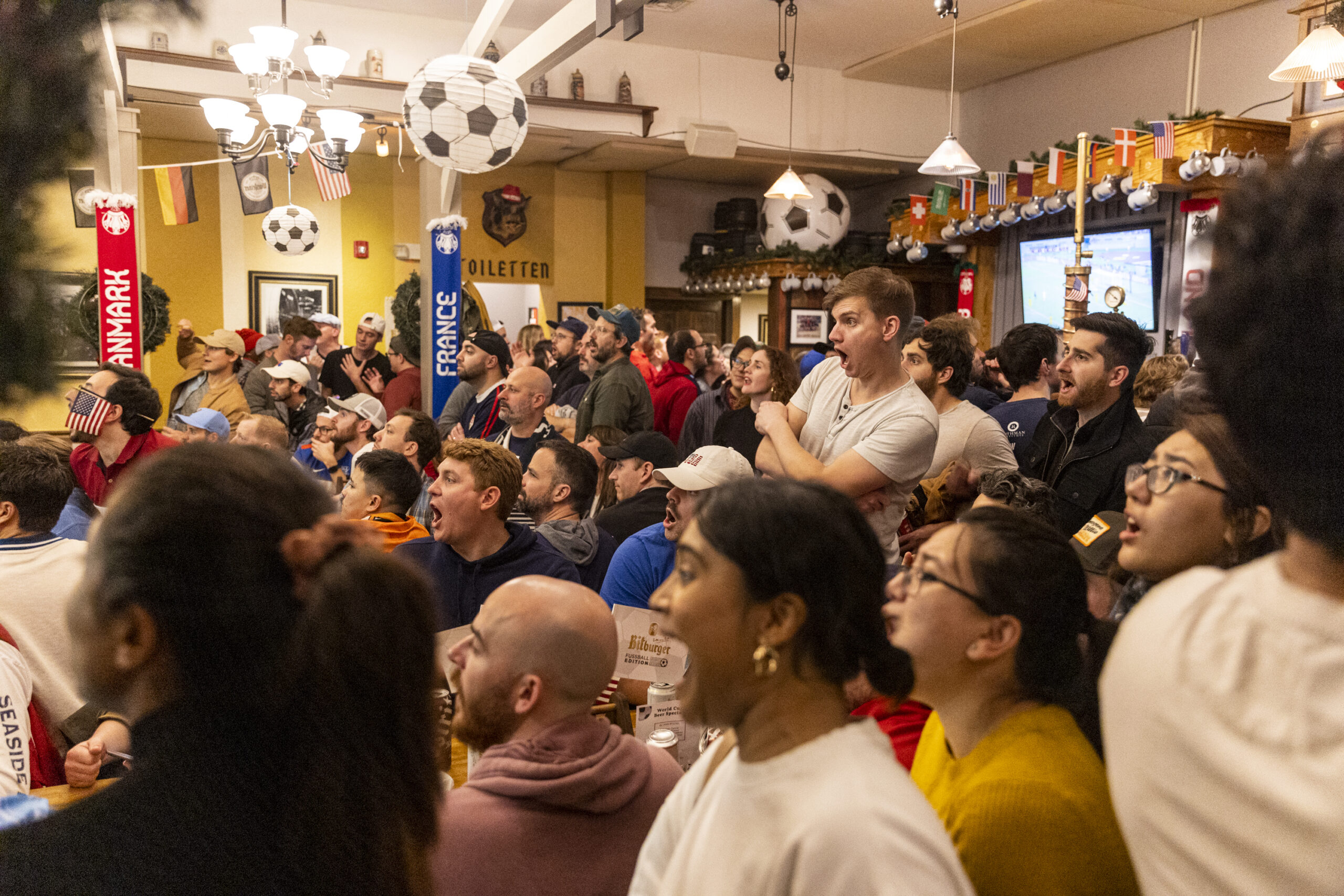
    The crowd cheers and celebrates USA’s first goal against the Netherlands in the World Cup at Brauhaus Schmitz bar in Philadelphia, Pa., on Saturday Dec. 3, 2022.

    Philly’s chance to prove 4 a.m. closing times work

    Fileccia said this permit would allow bars to take advantage of the estimated 500,000 soccer fans expected to stay in Philadelphia for the six matches being played at Lincoln Financial Field.

    Zek Leeper, co-owner of Founding Fathers sports bar in Southwest Center City, does not see this just as a way to earn more revenue with a surge of tourists coming to Philadelphia.

    “This is our chance to prove that 4 a.m. nightlife can work in Philadelphia. Setting up a temporary license also allows the city and state to pull it back, depending on how it goes,” Leeper said. “With the amount of tourists this year, when is this opportunity going to come up again to justify giving this a try?”

    It doesn’t hurt that an estimated 1.5 million people, including the half million soccer fans, are expected to stay overnight in Philadelphia this summer as the city also hosts America’s 250th celebration and the MLB All-Star Game.

    Leeper and other local bar owners feel confident that the crowds will show up for late-night matches. “We host soccer games from leagues around the world, and those fans are committed. They have consistently shown up whenever the game is on,” Leeper said.
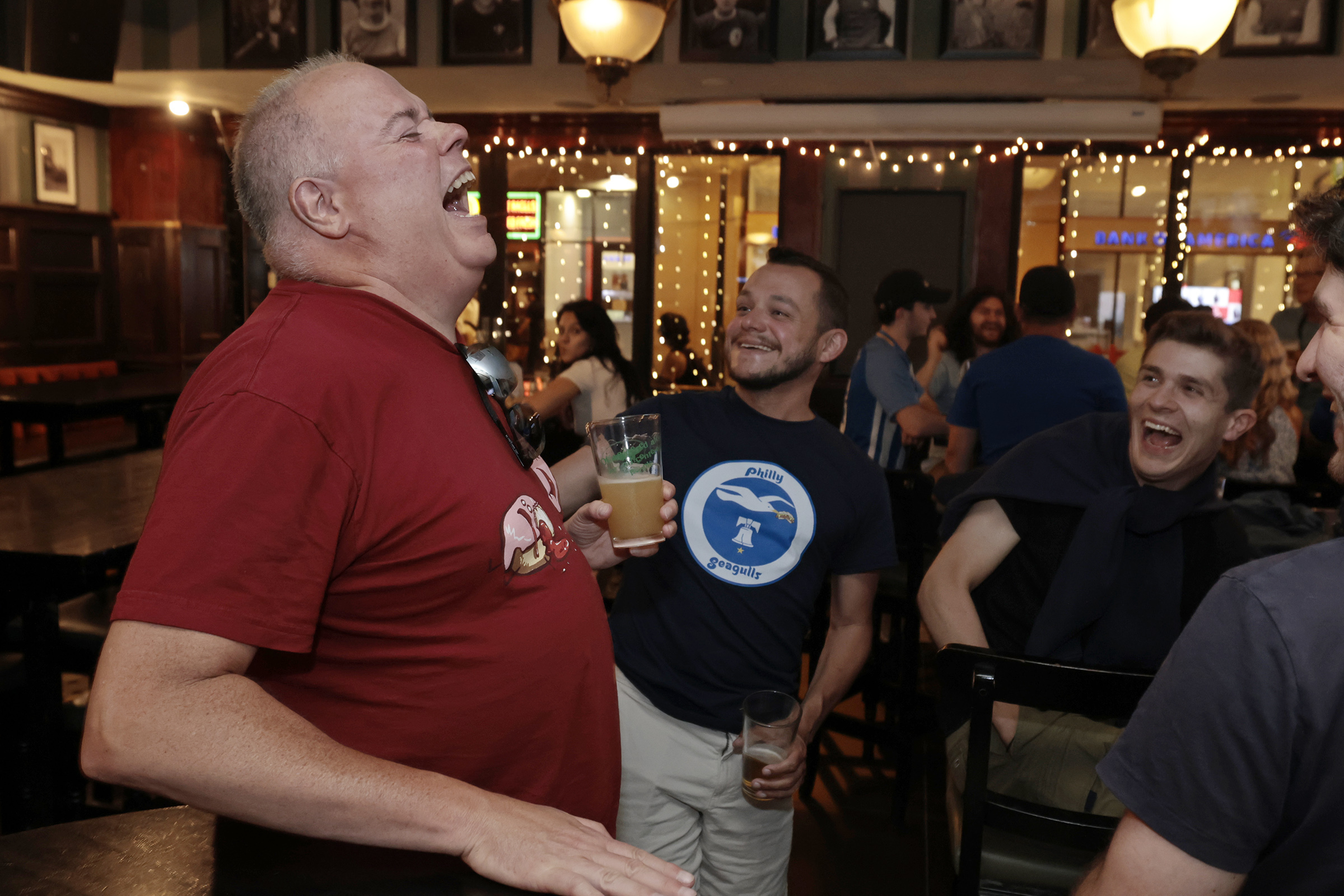
    Steve Maehl (left) of Oconomowoc, Wisconsin laughs as Philly Seagulls President John Fitzpatrick and Dan Peck of Brighton, England (right) look on during the supporter meetup, to kickoff the summer series weekend, at Fadó Irish Pub in Phila., Pa. on Thursday, July 20, 2023.

    Philadelphia soccer fans are already known to work deals with local bars to open as early as 7 a.m. Leeper said upward of 50 people will pack into the bar at sunrise to watch games. While there are no games being played in Philadelphia past 9 p.m. during the World Cup, at least eight of the group stage matches in June will be broadcast on the East Coast starting at midnight or 11 p.m.

    With a 90-minute match, plus halftime and added time, there could be a handful of cases where bartenders have to face down a packed crowd of fans and ask them to leave before the final whistle, Leeper said.

    There’s also the element of international tourists coming from cities that do not have a 2 a.m. cutoff, such as London and Tokyo, leading some visitors to find ways to late-night party outside of licensed establishments, Fileccia said.

    Philly bars were allowed to close later during the 2016 DNC

    Lawmakers allowed bars to stay open until 4 a.m. during the 2016 Democratic National Convention in Philadelphia. Bars and restaurants with contracts or association with the convention could apply for $5,000 special-event permits to serve alcohol past 2 a.m.

    Fileccia said the details for a similar permit in 2026 are not available yet, as the effort is just underway. But he and others at PRLA want to bring the Philadelphia Police Department, the Philadelphia Department of Commerce, and other stakeholders to the table to find out the best resolution, he said.
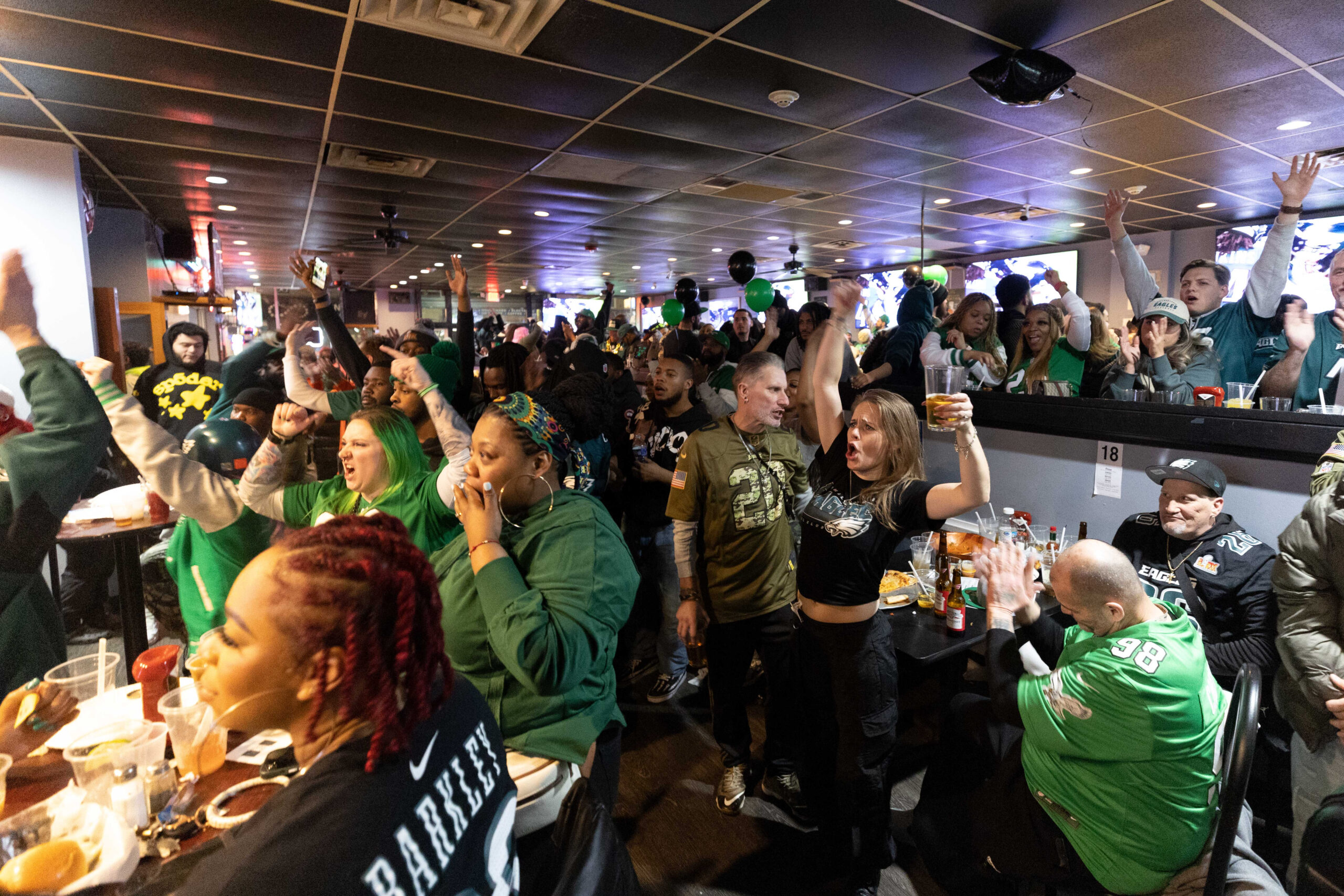
    Fans react to the Eagles play the Chiefs in the NFL Super Bowl LIX, in a bar near Frankford and Cottman Aves., Saturday, Feb. 8, 2025, in Philadelphia.

    Will there be enough interest in late-night partying?

    With millions of tourists in Philadelphia this year for the international and national events, there will be increased foot traffic throughout the city, but will there be a late-night crowd to meet the moment?

    That is the question Chuck Moran, executive director of the Pennsylvania Licensed Beverages and Taverns Association, is asking despite his support for temporarily keeping bars open later.

    “The one thing that I’ve been hearing across the state is that ever since COVID, the late-night crowds have left,” Moran said. “There could also be issues with finding staff who want to work till 4 a.m. in a bar.”

    Moran said he would rally behind the cause but would look to other measures to maximize revenue for local restaurants and bars, such as allowing liquor-license holders to operate a “satellite location,” letting them serve liquor at a second establishment under their original license. That would open the door to partnerships with restaurants without liquor licenses, Moran said. State Rep. Pat Gallagher, a Philadelphia Democrat, introduced a bill to do just that last June.

    No legislation on keeping Philly bars open later has been introduced yet, but Fileccia hopes to get the ball rolling with lawmakers in the coming months before the first match in Philly on June 14. Even with the window closing on getting new rules passed, Kelly said the PLCB turned around special-event permits in less than two weeks before the start of the 2016 DNC.
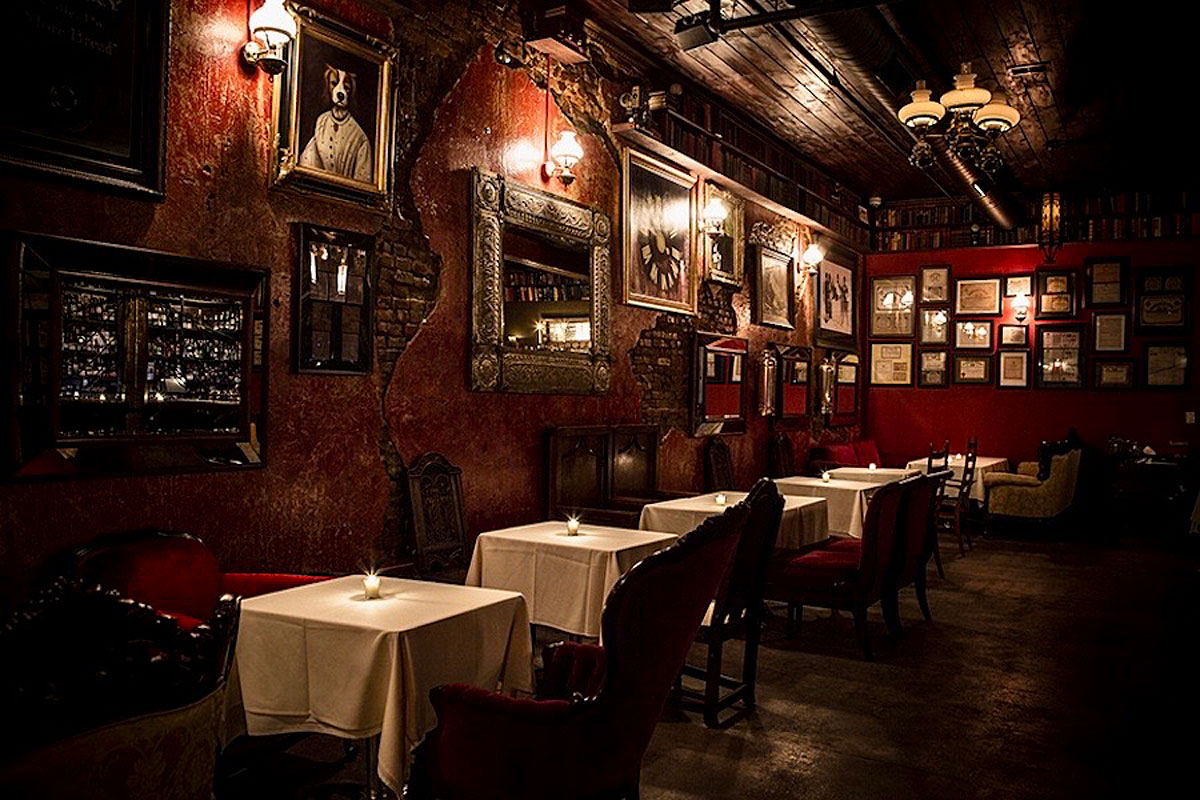
  • The owner of Hop Sing Laundromat has been hoarding rare booze. Now, he’s selling it by the pour — at bargain prices.

    The owner of Hop Sing Laundromat has been hoarding rare booze. Now, he’s selling it by the pour — at bargain prices.

    Hop Sing Laundromat has never been laid-back.

    For nearly 14 years, the speakeasy-style Chinatown cocktail bar has operated under the authority of its enigmatic owner, who goes by Lê, and his house rules, which are as well known as the drinks: No photos. No cellphones. No flip-flops, sandals, or shorts. Cash only. Entry begins at the metal gate on Race Street, where aspiring customers hand over their photo IDs, which are scanned before they are allowed inside.

    Those on Lê’s banned list — the 6,600 people he’s barred for breaking rules or tipping poorly — are turned away.

    The payoff for entry is a table in Hop Sing’s Old World library setting, where one can order cocktails made with fresh mixers and high-end liquor.

    Hop Sing Laundromat, which opened in 2011 at 1029 Race St.

    As Hop Sing expands its Friday and Saturday schedule to include Thursdays, Lê wants to begin moving his inventory of high-end spirits — particularly tequilas and American and Japanese whiskies — at below-market prices.

    Regulars know about this list, which includes about 30 whiskies and 20 tequilas, typically offered neat or on the rocks in 2-ounce pours.

    They also know that Lê is a bit of a hoarder.

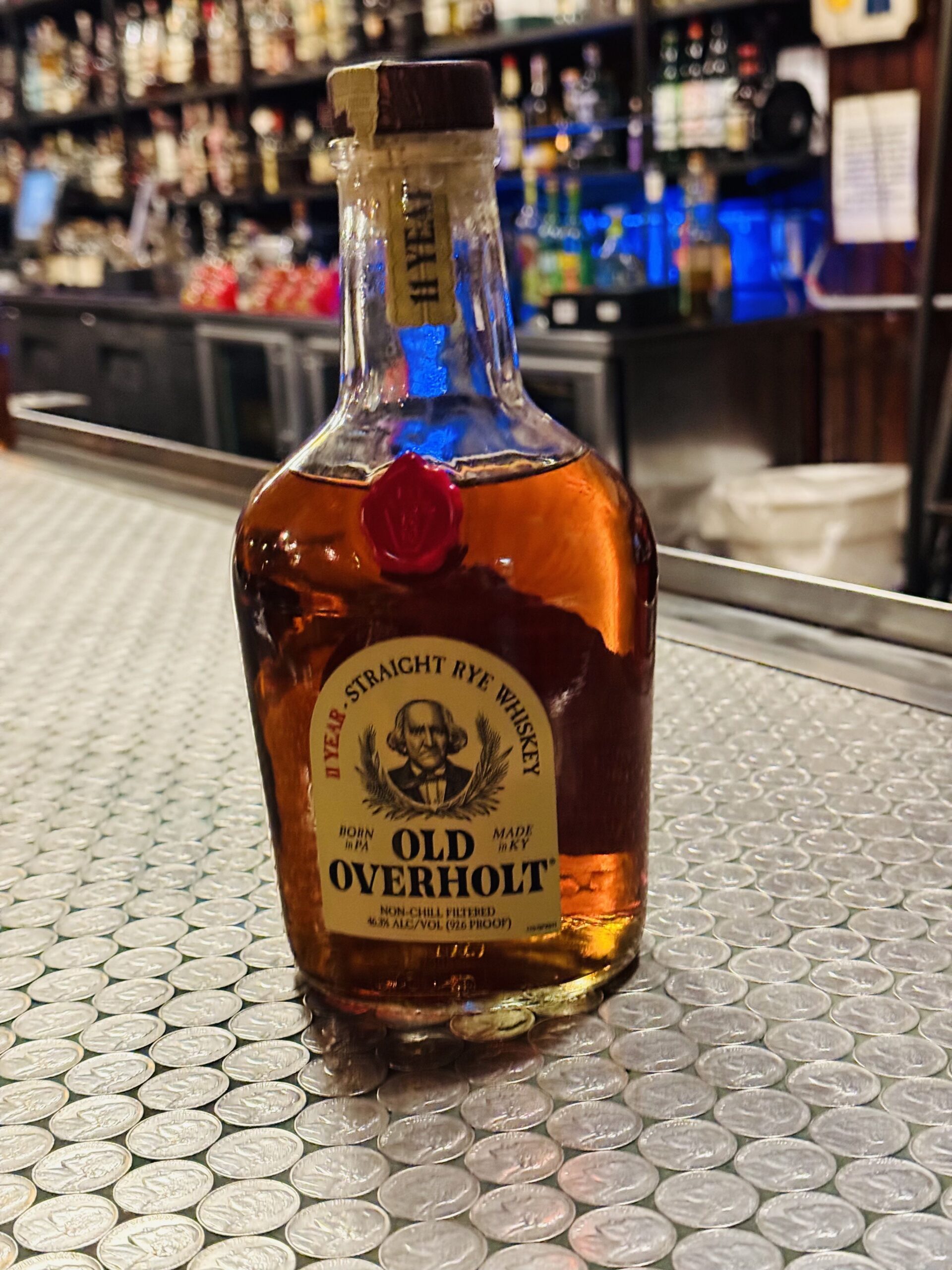
    One example: Old Overholt 11-year-old rye, a limited-release bottle that Bourbon Culture gave an 8.5/10 (“a flavorful sipper that is all about balance”).

    A bottle of Old Overholt 11-year-old rye, one of the cache of 835 bottles that Hop Sing Laundromat purchased through the Pennsylvania Liquor Control Board in 2022.

    You cannot get it anywhere else in Pennsylvania because Lê effectively bought out the state’s remaining supply of the whiskey several years ago — all 835 bottles at $75 each.

    Michael Betman, a sales manager for Suntory Global Spirits, said Lê first bought 10 cases and then asked how much was left. “Once he realized how limited it was, he said, ‘I want all of it,’” Betman said.

    Betman called the Pennsylvania Liquor Control Board to request the bottles. “They were stunned,” Betman said. “But they made it happen.”

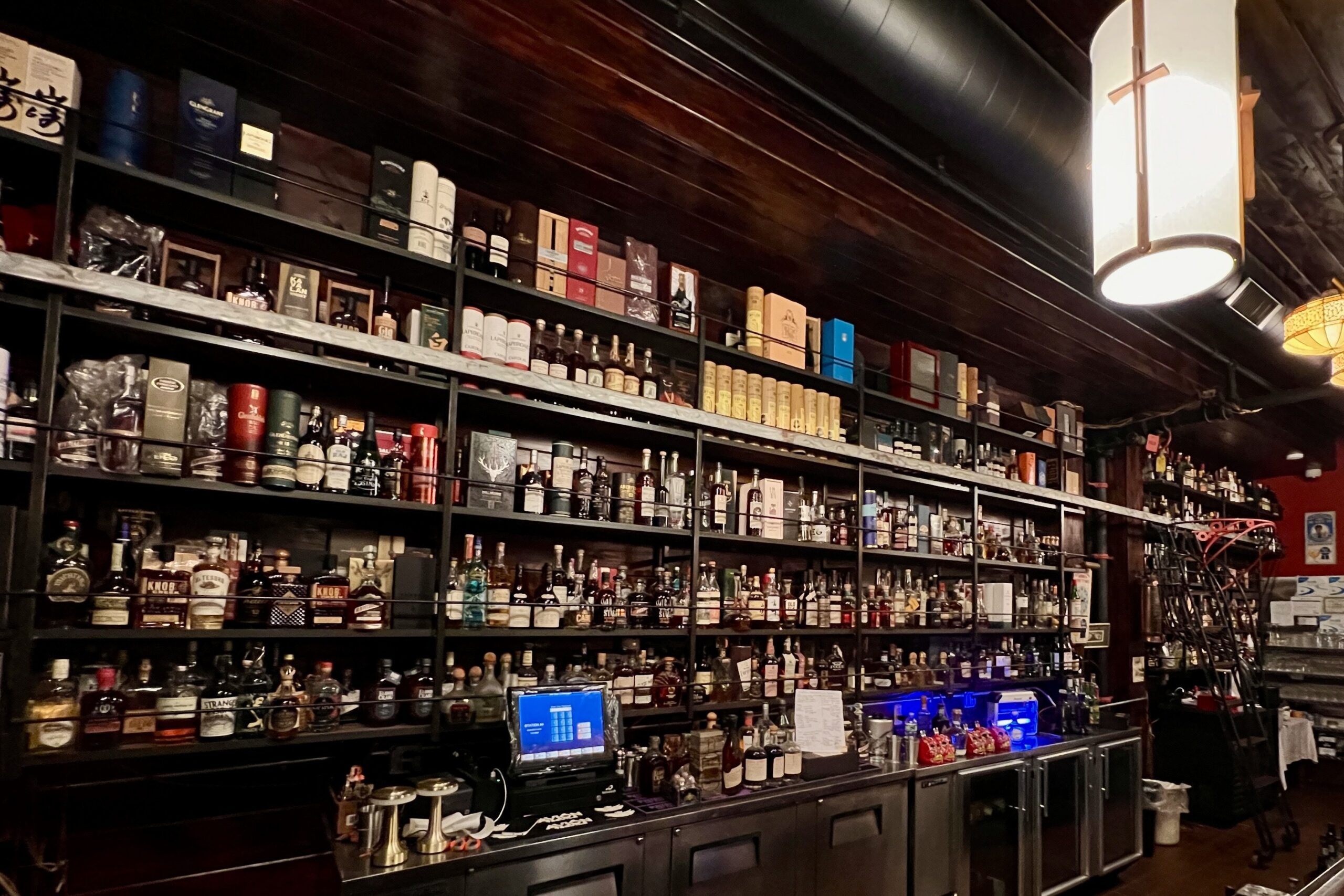
    High-end spirits fill the shelves behind the bar at Hop Sing Laundromat at 1029 Race St.

    The PLCB gathered bottles from stores all across Pennsylvania and delivered them to Hop Sing. “At first people thought Lê might be joking,” Betman said. “But he was completely serious.”

    Hop Sing is going through its supply. Lê declined to specify how much he had left, but given the bar’s limited hours, it’s likely a lot.

    Bottle math

    At Hop Sing, Lê charges $18 for 2 ounces of the Old Overholt. Although $18 sounds expensive, it’s modest by industry standards.

    A 750-milliliter bottle yields about 12 pours. Multiply $18 times 12, and each $75 bottle grosses about $216 — a 188% markup before accounting for labor, breakage, overhead, overpours, and comps. Many bars aim for 200% to 300% markups, often while pouring 1½ ounces instead of 2.

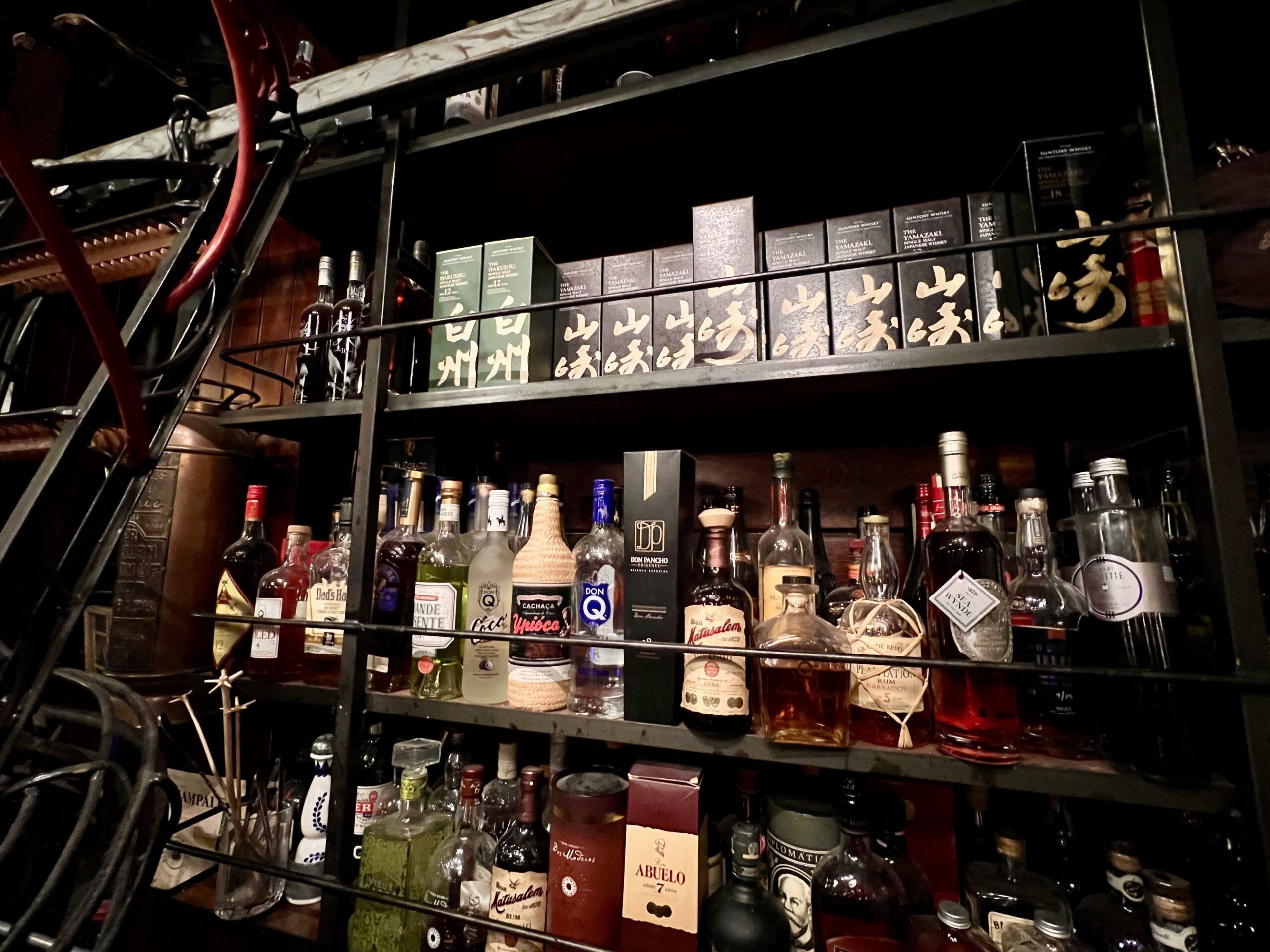
    Bottles of high-end Japanese whiskies line the top shelf at Hop Sing Laundromat at 1029 Race St.

    Lê said he was happy with this math, which extends to his cocktail list. (An old fashioned made with 2 ounces of Booker’s straight bourbon, for example, is priced at $20 — a relative bargain for a bottle that retails for $100.)

    This approach comes from a bar owner who no longer drinks. Lê said he tastes cocktails during development but hasn’t had a full one in 15 years.

    “This isn’t about me drinking it,” he said. “It’s about letting people experience it.”

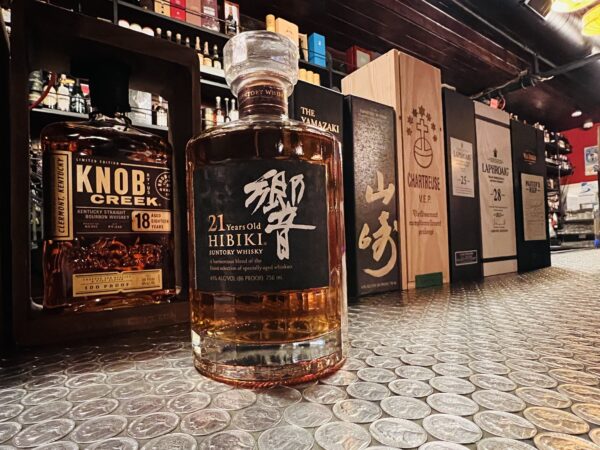
    That philosophy shows up across the pour list. Among the tequilas, there’s a 2014 Herradura Reposado Scotch Cask at $35 and Casa Dragones at $45. On the whiskey side, Yamazaki 12-year is $35. Knob Creek 18 is $35. Elijah Craig 18 is $42. Hibiki 21 and Yamazaki 18 — which have become scarce amid the Japanese whiskey boom — are $100 per pour. While $100 may seem way out of kilter, consider that the Hibiki and Yamazaki bottles retail for $750 — and Hop Sing has rows of them on its top shelf.

    Many of these bottles now circulate almost entirely through secondary markets, where prices can climb multiple times above retail.

    Lê said the goal is to pour whiskies that people read about but rarely see, without turning curiosity into a financial stunt.

    “I’ve been collecting these bottles for years,” Lê said. “At some point, it’s time to let them go.”

    Hop Sing Laundromat, 1029 Race St. Hours: 5 p.m. to 1 a.m. Friday and Saturday. Thursday hours, also 5 p.m. to 1 a.m. No reservations, cash only.

  • Forget the apps and algorithms. To find love, maybe just go to a 166-year-old bar.

    Forget the apps and algorithms. To find love, maybe just go to a 166-year-old bar.

    McGillin’s Olde Ale House, the 166-year-old pub in Center City long owned by the same family, has determined that being a matchmaker is a strategic advantage in a crowded industry.

    Of course they serve draft beer, Philly cheesesteaks, and wings — but the bar has leaned especially hard into being, in its own description, the place where more couples have met than anywhere else in Philadelphia.

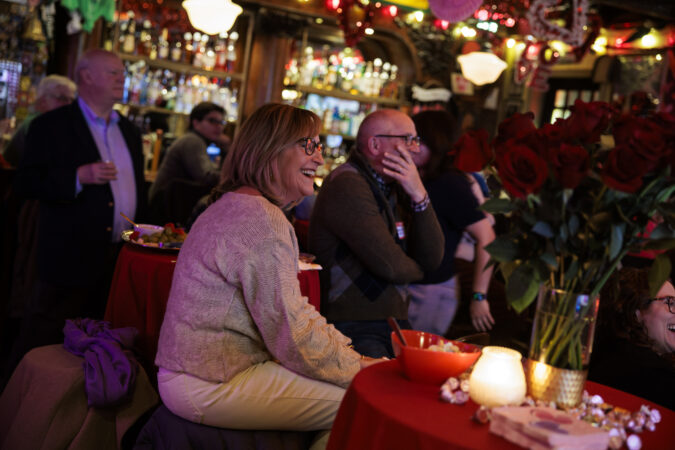
    At McGillin’s first reunion for such couples this month, attendees seemed less like regulars at a bar and more like alumni of the same beloved college club, touched by those who came before and rooting for those to follow.

    Everyone wore red-and-white name tags with the year their significant McGillin’s romantic event had taken place. The upstairs bar, where couples sat under tinsel hearts and drank from frosted glasses, was warm and close. There was merch; the crowd clapped especially hard for long marriages.

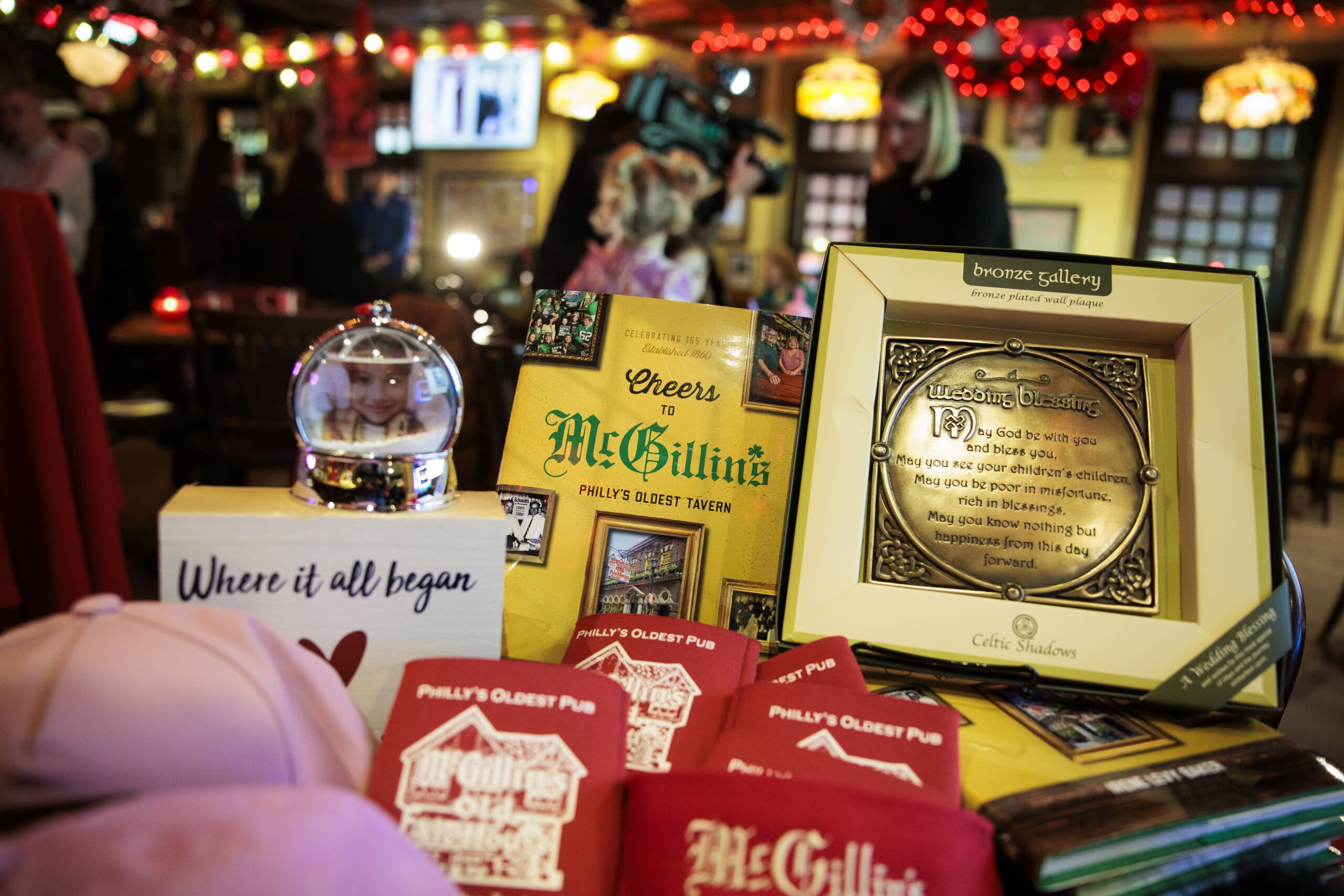
    Merch on display at McGillin’s, including a snow globe that says “where it all began.”

    It was also a media event: four TV news stations, as well as the Philadelphia Citizen and The Philadelphia Inquirer, came to capture the famous McGillin’s couples. Irene Levy Baker, the bar’s longtime publicist and author of the new book Cheers to McGillin’s, Philly’s Oldest Barwhich has its own chapter devoted to “mating magic,” is clearly good at her job.

    She is in touch with more than 200 couples who found love at the bar, and McGillin’s has so far filled up four guestbooks of signatures and anecdotes: Met New Year’s Day 2002. Engaged 9/22/12. Met here in 1996 when I was waitressing. Still together in 2024!

    “We actually met for the first time one bar stool over. I was eating a grilled cheese sandwich,” said Emily Dowling, 28, sitting beside her husband, Giacomo Trevisan, after a keynote presentation of McGillin’s love stories. Dowling and Trevisan’s name tags were marked 2022.

    On the fateful night that year, Dowling was out with a friend and Trevisan was visiting for the first time, having just arrived in the United States on an extended work trip from Italy. Hearing him speaking Italian, Dowling asked what had brought him to town.

    “I was impressed that a girl would just start talking to me. In Italy, it doesn’t work like that,” Trevisan, 32, said.

    The two got married less than a year later. They closed out the night of their wedding with a drink at McGillin’s.

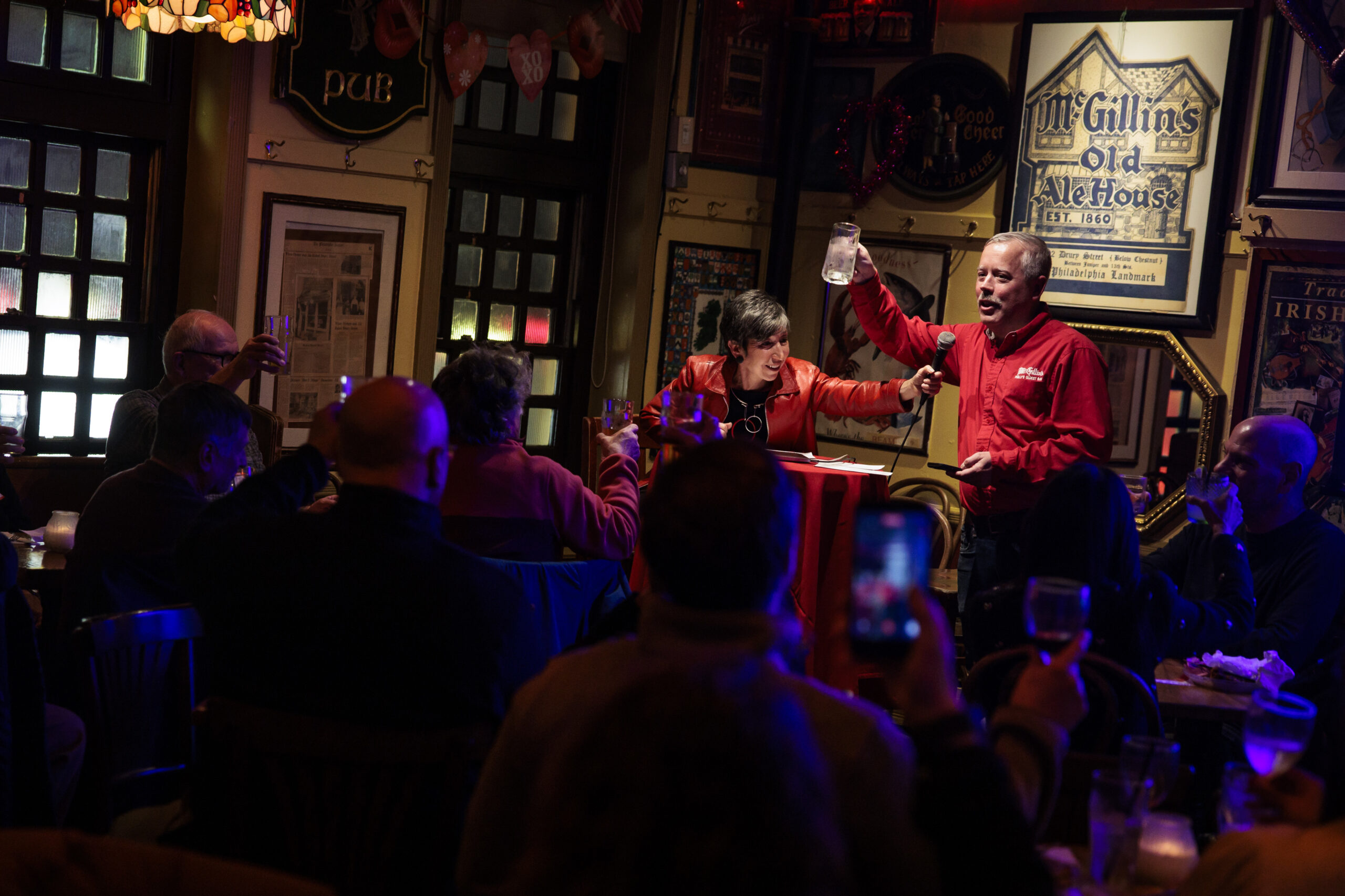
    Irene Levy Baker, McGillin’s longtime publicist, and Chris Mullins Jr., co-owner of the bar, led a toast to couples who met there.

    In a world of loneliness and dating app dread, in which people pay matchmakers and make PowerPoint presentations and even take out billboards looking for love, there is a certain nostalgia to the idea that a bar, with salvaged oak tables and framed liquor licenses dating back to 1871, is the best place to find it. At some point, the legend probably becomes self-fulfilling.

    During an interview, Baker googled “where do couples meet in Philadelphia,” and the AI summary dutifully reported that “couples in Philly meet in classic old spots like McGillin’s Olde Ale House.”

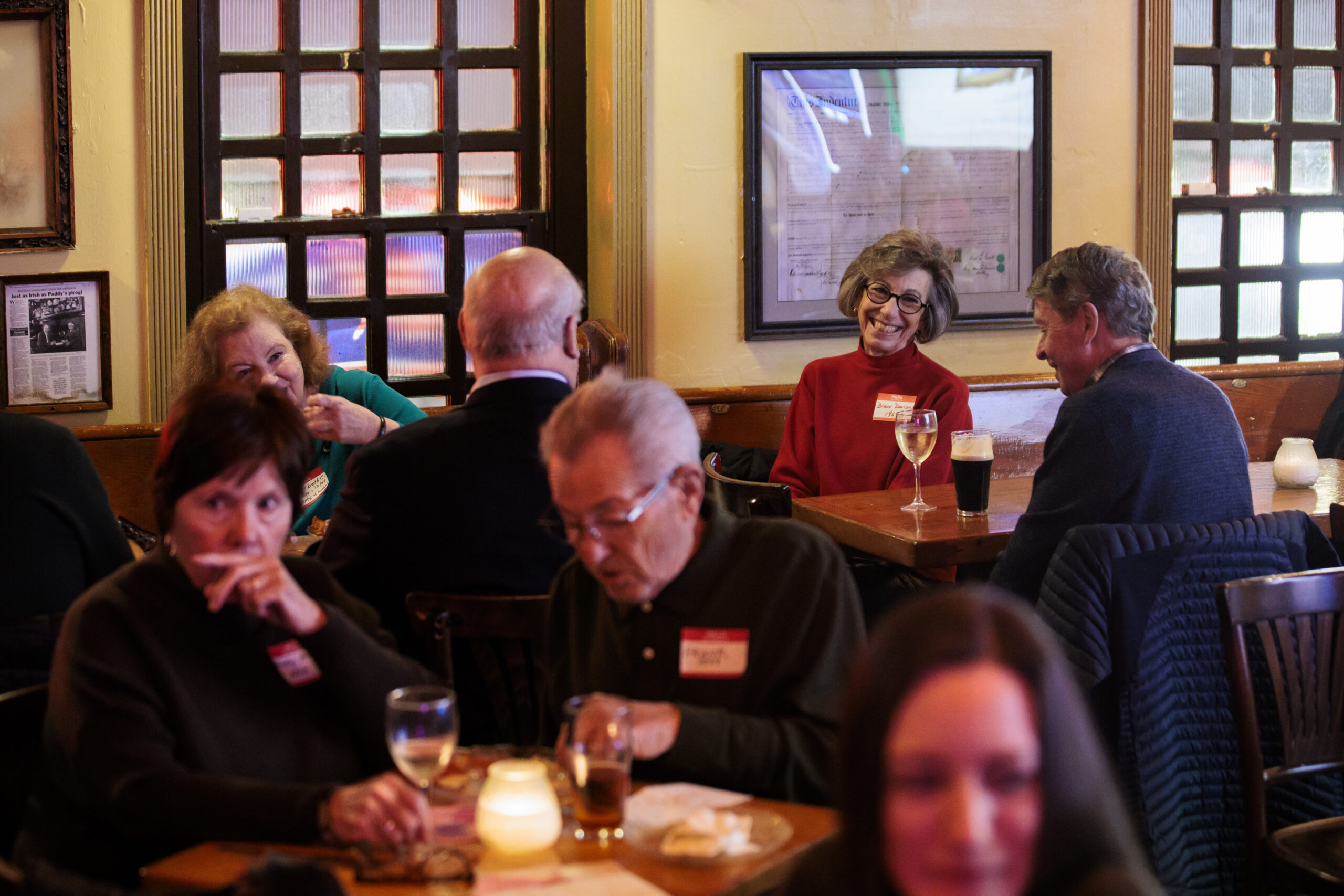
    Diane and John Davison, for example, met in 1969: He was a regular, she was a first timer. The downstairs bar was smoky and packed. Patrons passed glasses of beer hand-to-hand above the crowd because no one could reach the bar.

    “I remember the first time I saw her face,” John said. “Nice smile.”

    “I remember the night,” Diane, 79, said. “John and I don’t exactly agree on some of the details.”

    The two have been married for over 50 years, and the bar is an intimate part of their story. John’s brother, who has since passed away, also met his wife at McGillin’s. Just before Christmas, John celebrated his 80th birthday there, and the other diners sang to him.

    At right, Diane and John Davison, who met at McGillin’s in 1969.

    Both Baker and Christopher Mullins Jr., who co-owns the bar with his parents, have theories about why McGillin’s is a magnet for connection: it’s unpretentious, it’s approachable. The tables are close. The beer obviously helps.

    At night it can get packed, but the atmosphere during the day is cozy; a fire crackles in the downstairs grate and patrons order soup for lunch.

    “We don’t want to be old-fashioned and forgotten, but we want it to be the same kind of feel that people experienced 50 years ago,” Mullins said.

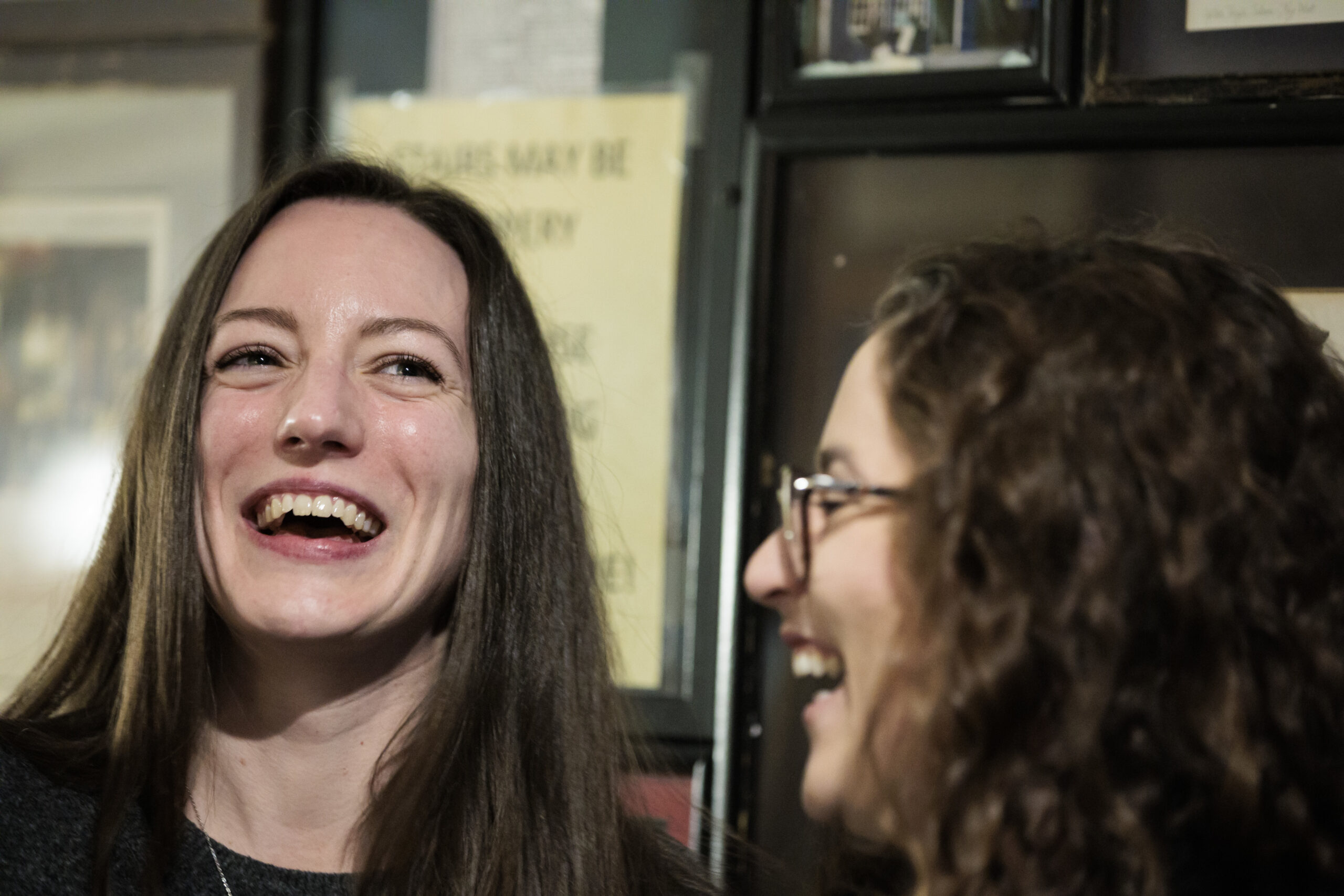
    Kaitlynn and Amanda Capoferri laugh while telling their love story at the bar where they met.

    Of course, there are some differences. Kaitlynn Capoferri, 32, mentioned wanting to get wings and beers at McGillin’s — on her Tinder profile. So Amanda Capoferri, 32, asked her on a date to the bar in 2017.

    When Amanda proposed at the bar three years later, “All I could get out of my mouth after stumbling to pull the ring out of my pocket was, ‘I know how much you love McGillin’s, and I can only hope that you love me as much.’” (They’ve been married for four years).

    It’s all part of the lore, carefully curated and growing by the day.

    “There is one guy who sometimes comments on the Facebook page and he’ll say, ‘I met my wife there and we’re divorced now,’” Baker said. She wasn’t deterred. “I’m like, ‘Well, I’m glad you found love here once. Be sure to come back.’”

  • Lou Capozzoli, steward of Ray’s Happy Birthday Bar in South Philly, has died at 86

    Lou Capozzoli, steward of Ray’s Happy Birthday Bar in South Philly, has died at 86

    Lou Capozzoli, 86, of Southwest Philly, a dive bar owner and band front man with a penchant for telling jokes, died Sunday, Feb. 1, after battling a brief illness at Mercy Fitzgerald Hospital while surrounded by family.

    Mr. Capozzoli, born April, 4, 1939, was just one year younger than the bar he would eventually take over at the intersection of East Passyunk Avenue and Federal Street, then called Ray’s after the nickname bestowed on his father, Anthony.

    Almost immediately, the bar became the center of Mr. Capozzoli’s life. He grew up in the apartment upstairs and as a toddler would sit quietly on the bar downstairs, eating cornflakes, while his mom poured beers. His dad, meanwhile, would wish every customer a happy birthday, even if it wasn’t theirs to celebrate.

    It was a gesture that stuck with Mr. Capozzoli, who would go on to spend the rest of his life doing whatever he could to earn smiles from strangers, whether it meant serving birthday shots of cake-flavored vodka with a candle or performing to crowds as a singer and saxophonist across Las Vegas, the Jersey Shore, and South Philly.

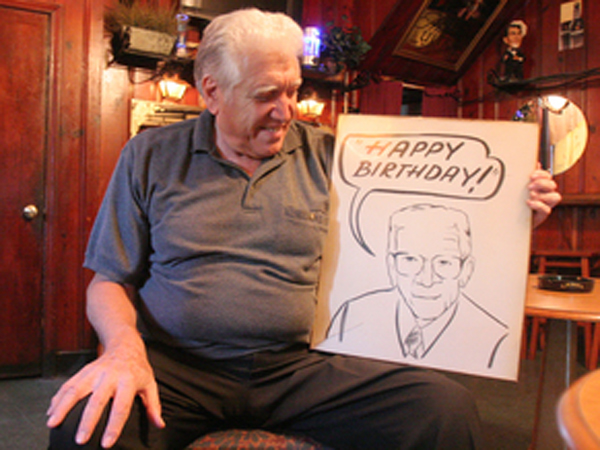
    Mr. Capozzoli with a drawing of his father, Anthony “Ray” Capozzoli, who opened Ray’s Happy Birthday Bar in South Philadelphia in 1938. Mr. Capozzoli took over the bar when his father died in 1997.

    “That’s all he wanted, for his father to be proud of him,” said Rose Capozzoli,Mr. Capozzoli’s wife.

    And he would be, Rose is certain. Mr. Capozzoli took over the bar when his father died in 1997, rechristening it Ray’s Happy Birthday Bar in honor of his dad’s slogan. Under his stewardship, Ray’s would go on to become the gold standard of Philly dive bars, known for $4 citywides, Friday night karaoke, staying open on Christmas, and an unwavering adherence to theme. Mr. Capozzoli would call regulars on their birthdays to wish them well and maintained a calendar of seemingly all the birthdays in the world to help his staff keep tally on the outdoor chalkboard.

    As a boss, Mr. Capozzoli was “pretty silly,” said bartender T.C. Cole, who also played guitar in Mr. Capozzoli’s band. “He would call you at 1:45 in the morning when you’re trying to close just to tell you a joke.”

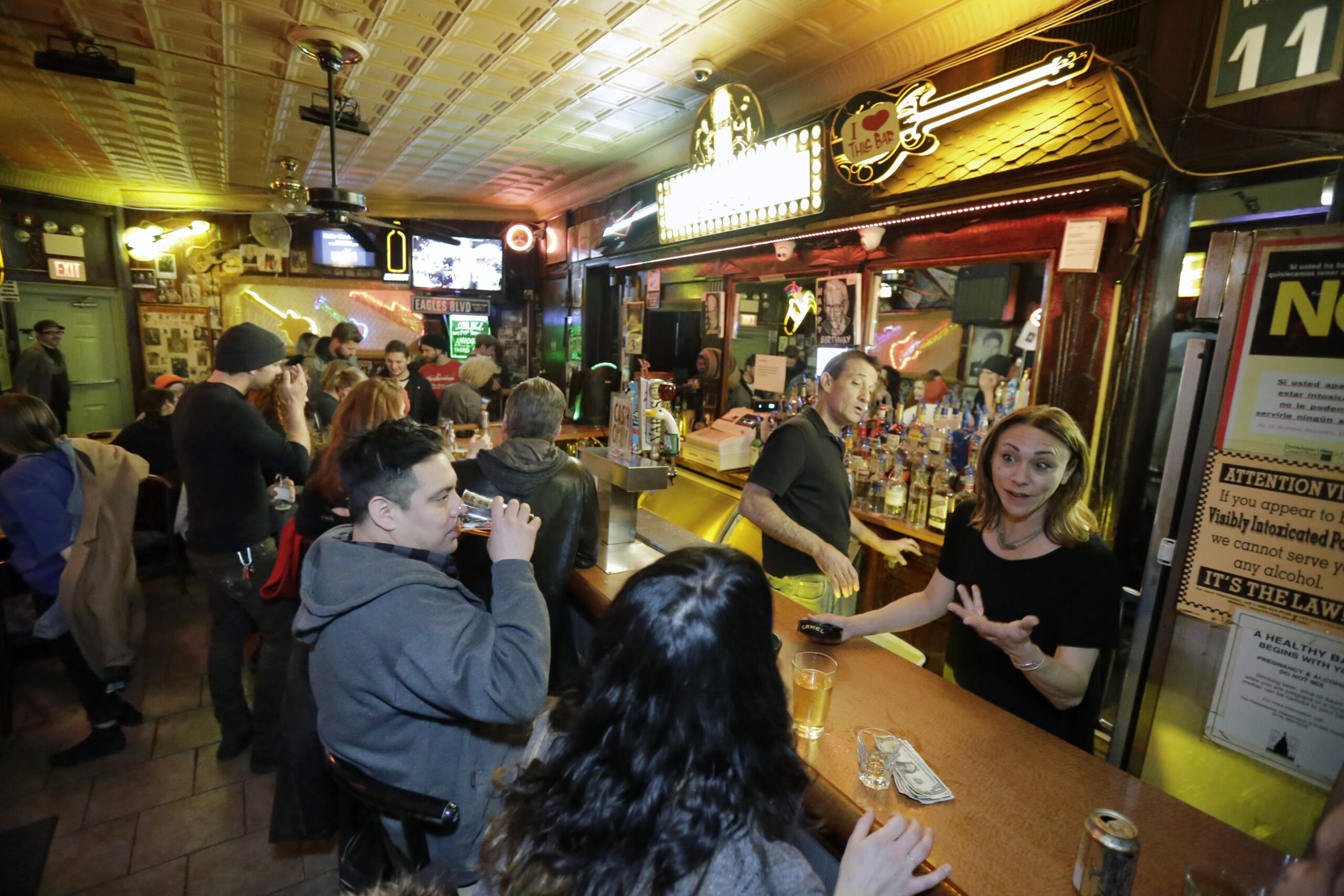
    The inside of Ray’s Happy Birthday Bar. Mr. Capozzoli was known for calling regulars on the mornings of their birthdays.

    If jokes were a currency, Mr. Capozzoli was a billionaire, friends and family said. He’d fire them off incessantly — during closing shifts, band performances, family dinners — and had enough discretion to whisper the most risqué in your ear. Mr. Capozzoli’s style was modeled after that of Buddy Hackett and Rodney Dangerfield, his favorite comedians, but the punch lines didn’t matter as much his delivery.

    Mr. Capozzoli “would laugh with the person he was telling the joke to,” his son Anthony Capozzoli, 55, said. “If you weren’t laughing with the punch line, you were laughing at how much he enjoyed getting to it.”

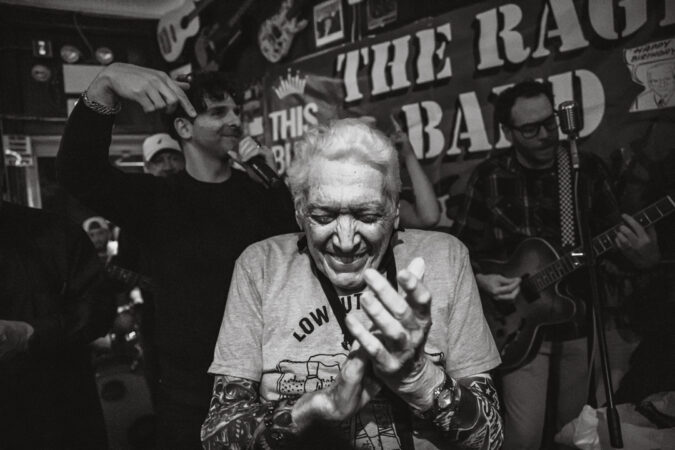
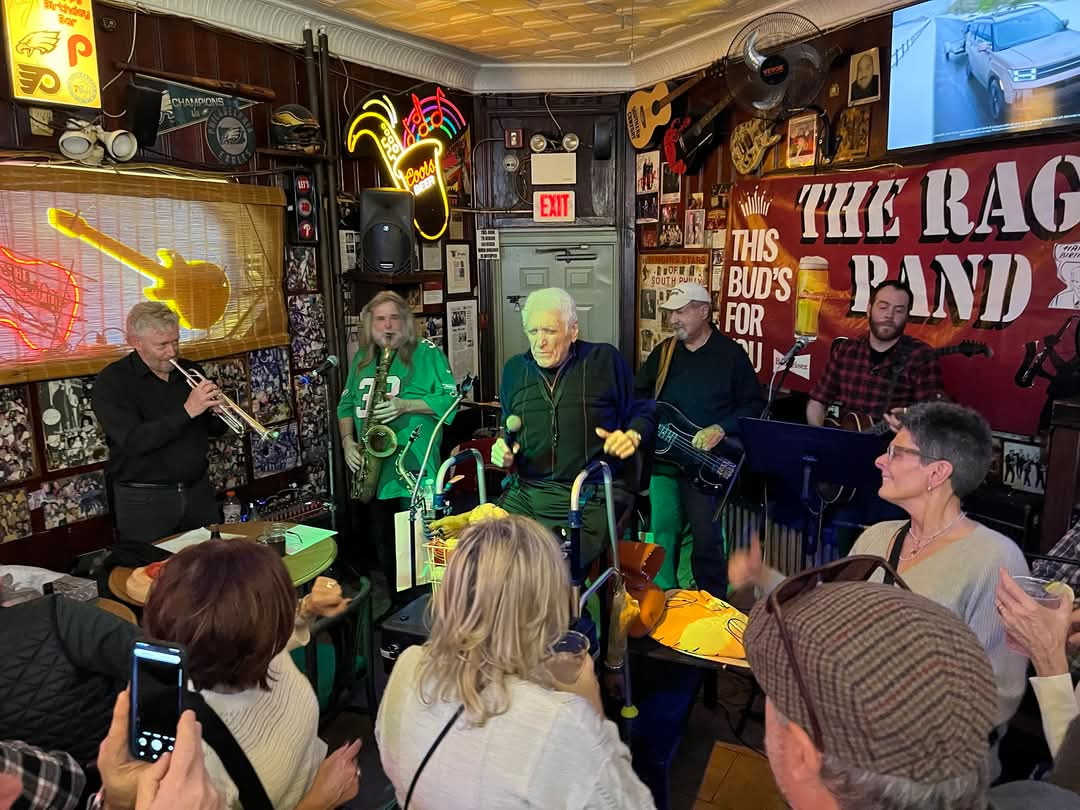
    More recently, Anthony said, his father would call him just to workshop material, most of which isn’t fit to print. Mr. Capozzoli’s favorite jokes were set to music in 2023 for a five minute-long comedy track as part of a studio EP for the Rage Band, the seven-piece group that Mr. Cappozoli sang with for 41 years alongside a rotating cast of characters.

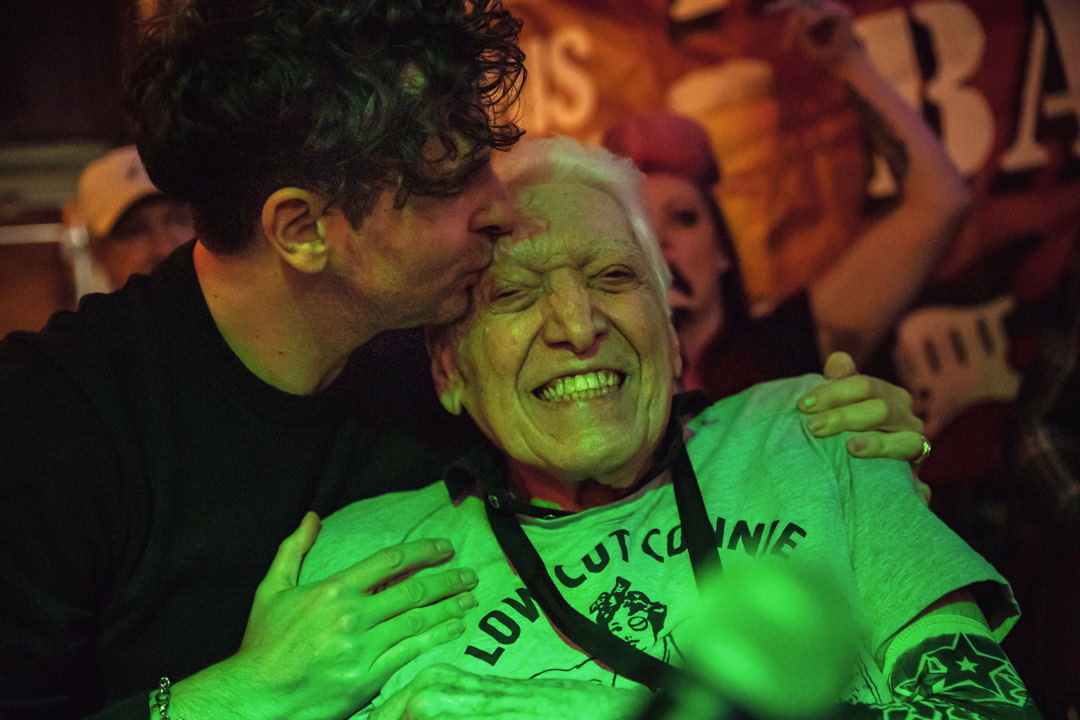
    Low Cut Connie front man Adam Weiner recorded the EP. He and Mr. Capozzoli grew close after Weiner played a gig at Ray’s in 2012, bonding over their shared love of captivating a crowd.

    “Not everyone is about joy when they perform … People care about their ego, people care about fashion,” Weiner said. “But Lou was always about fun, just radiating 100% joy.”

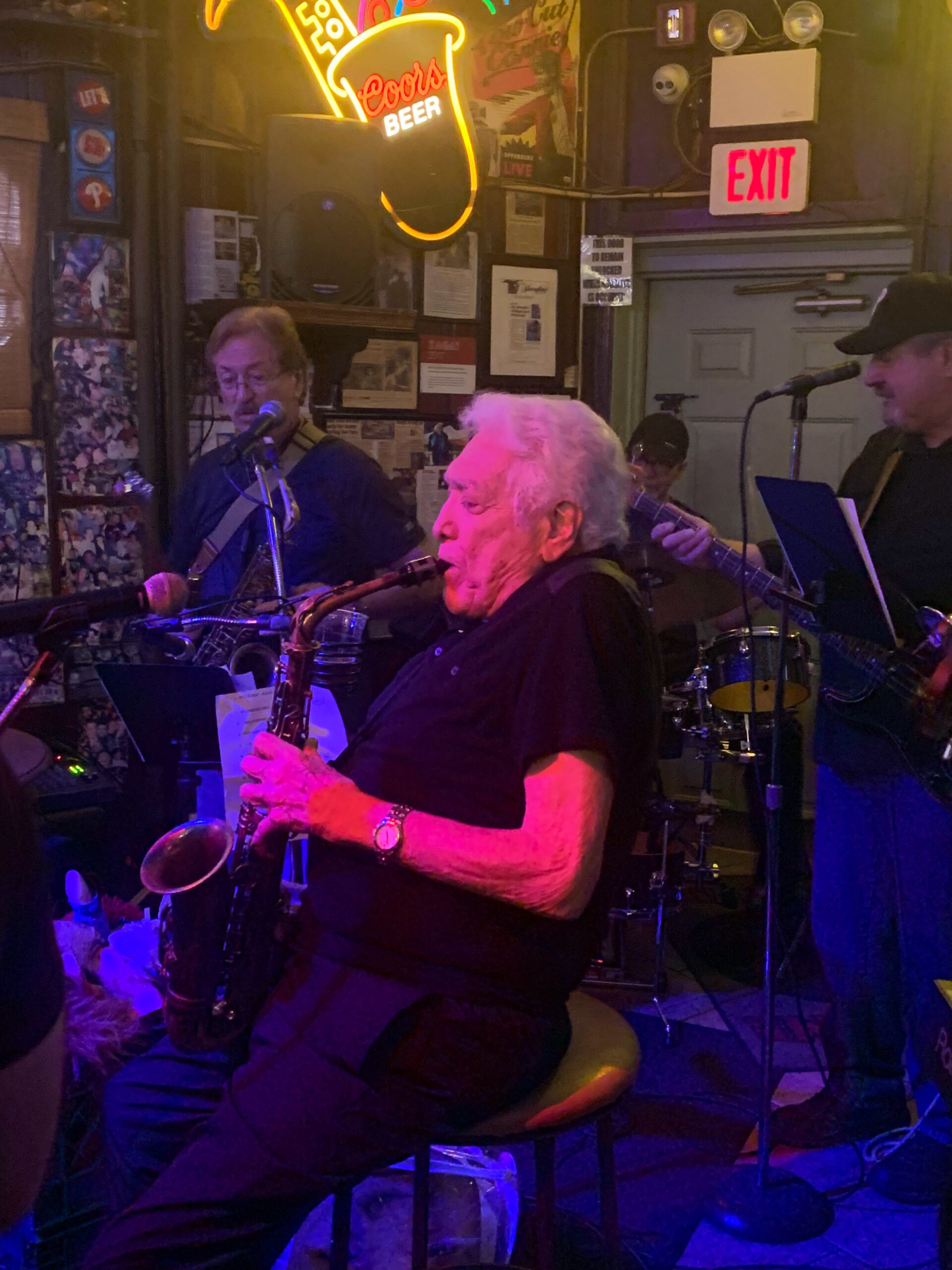
    Mr. Capozzoli started performing professionally when he was 14, sneaking into clubs to accompany bands on the alto sax. The stage was a calling that helped him fall in love. It also took him to the edge of celebrity.

    After serving in the military in the early 1960s and playing for Sophia Loren as part of an army band, Mr. Capozzoli told jokes and sang standards at the Stardust and Flamingo casinos in Las Vegas. At the peak of his fame, he opened for Diana Ross at the Riptide Club in Wildwood in 1965. That same year Mr. Capozzoli met his wife, Rose, who was charmed by his talents at another Wildwood concert. They wed three years later.

    Mr. Capozzoli bonded with Low Cut Connie’s Adam Weiner over their shared love of performing.

    Mr. Capozzoli’s steadiest gig began in 1984 with the Rage Band, once the house act for Sea Isle City’s now-shuttered Springfield Inn. There, Mr. Capozzoli settled into his larger-than-life style, commanding a crowd of roughly 1,000 people a night on summer weekends. He’d serenade Burt and Ernie puppets for a medley of Sesame Street songs and show tunes, or don outlandish masks for a Mummers tribute. Both brought down the house, but never as much as when Mr. Capozzoli would cover “Those Were The Days” or ”Sweet Caroline,” which were always punctuated with jokes.

    “I call him the showman’s showman,” said Brian Saunders, one of band’s saxophonists. Tony DiMattia, a bassist for the band, concurred: “He didn’t just entertain the crowd. He entertained us as musicians.”

    The Rage Band stopped their Sea Isle residency in 1999, only to pick up at new one at Ray’s in 2003, where they have performed on the first Saturday of every month from October through April ever since. The band never rehearsed, DiMattia said. Mr. Capozzoli’s stage presence could smooth over just about any kink.

    Mr. Capozzoli played in The Rage Band for 42 years, performing for packed houses at the Springfield Inn in Sea Isle City and Ray’s Happy Birthday Bar.

    “There is no Rage Band without Lou,” Saunders said. “He was the glue that kept us together.”

    Outside of music, Mr. Capozzoli’s greatest loves were his wife and children. He was a dedicated father who enjoyed cooking large French toast breakfasts, organizing tee ball games, and ensuring the family always had a rescue dog to snuggle. Laughter — and his wife’s minding — kept Mr. Capozzoli going, even as the decades of working in a smoking bar wore on him.

    “I don’t think I’ve ever seen Lou angry,” said Saunders. “I don’t think he’d ever not had a smile on his face.”

    Mr. Capozzoli was an accomplished saxophonist who started playing professionally when he was 14 years old.

    In addition to his wife, Rose, and son, Anthony, Mr. Capozzoli is survived by his daughters, Dyan Wixted and Luann Capozzoli, and three grandchildren: Louis, Daniel, and Delaney.

    Visitation with the family will be held from 6 to 9 p.m. Feb. 6, and from 9:30 to 11 a.m. Feb. 7 at Pennsylvania Burial Company, 1327-31 S. Broad St., Philadelphia, Pa., 19147. Services will follow Saturday at 11 a.m.

    Donations in Mr. Capozzoli’s name may be made to an animal shelter of your choosing or ACCT-Philly, c/o Development, 111 W. Hunting Park Ave, Philadelphia, Pa., 19140. Alternatively, his wife said, stories about Mr. Capozzoli or jokes he would’ve enjoyed can be sent to the family via email at rayshappybirthdaybar1@gmail.com.

  • A quarter-century-old zoning law threatens to block a restaurant and bar in Fishtown

    A quarter-century-old zoning law threatens to block a restaurant and bar in Fishtown

    A plan to revitalize a neglected building at 2043 Frankford Ave. with a ground-floor burger restaurant and second-floor cocktail bar is facing stiff opposition in Fishtown.

    Because of an over-25-year-old zoning overlay — which applies to the east side of Frankford Avenue and not the west side — the Slider Co.’s plans have been hung up for months awaiting a hearing from the city’s Zoning Board of Adjustment (ZBA).

    On Wednesday, the board ruled in the Slider Co.’s favor, but the saga has cost the business owners at least $40,000 and almost six months of waiting for a hearing.

    And that’s if opponents of the project don’t appeal the ZBA ruling to the Court of Common Pleas — adding at least another nine months and more legal costs to the project, probably killing it.

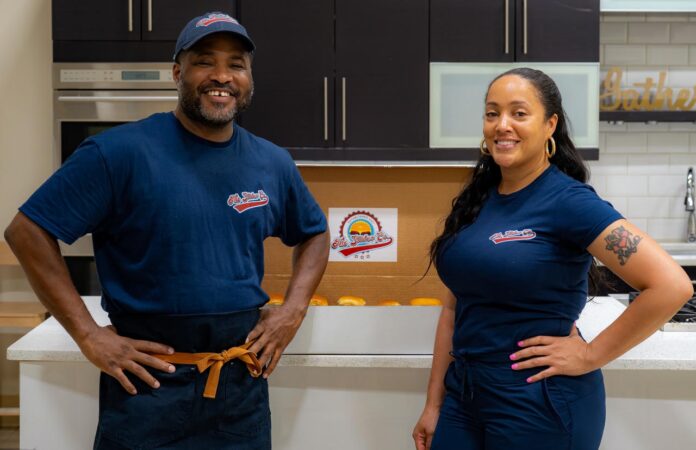
    “We were expecting to have a straightforward project, and then all of a sudden all hell breaks loose,” zoning attorney Alan Nochumson, who represents Slider Co.’s William Johnson and Anesha Garrett, said at a late January ZBA hearing.

    The principal opponent of the project is Ashley Gleason, who owns the clothing shop Vestige next door at 2041 Frankford Ave. She hired a zoning attorney to fight the case. At a Fishtown Neighbors Association (FNA) meeting last year, a narrow majority (36-30) voted to recommend that the zoning board deny the application.

    “Our block is not like the lower part of Frankford. It doesn’t have the bars and restaurants,” Gleason said at the ZBA hearing. “It is mostly residential and retail. So it [the proposal] is out of character for this block.”

    (function() {
    var l2 = function() {
    new pym.Parent(‘fishtownburger’,
    ‘https://media.inquirer.com/storage/inquirer/projects/innovation/arcgis_iframe/fishtownburger.html’);
    };
    if (typeof(pym) === ‘undefined’) {
    var h = document.getElementsByTagName(‘head’)[0],
    s = document.createElement(‘script’);
    s.type = ‘text/javascript’;
    s.src = ‘https://pym.nprapps.org/pym.v1.min.js’;
    s.onload = l2;
    h.appendChild(s);
    } else {
    l2();
    }
    })();

    The property at 2043 Frankford Ave. is a faded two-story building at the end of the row, and it’s been in rough shape for years.

    Unusually for a restaurant application, the case has stirred up allies in the community who submitted a petition in support of Johnson and Garrett, who already have a presence in the neighborhood.

    The former president of FNA, Ashlei Tracy, spoke in support of their application at the zoning board, noting bars and restaurants on the blocks of Frankford to the north and south of this one.

    “A constant complaint that we hear is that Fishtown is becoming very corporate,” Tracy said in an interview after the hearing. “A part of that is that it’s so expensive to even go through this [zoning] process.”

    The cases can also stir neighborhood tensions. January’s ZBA hearing on the matter saw lengthy testimony, weeping, and accusations of racial discrimination. Johnson and Garrett are Black, and Fishtown is an overwhelmingly white neighborhood.

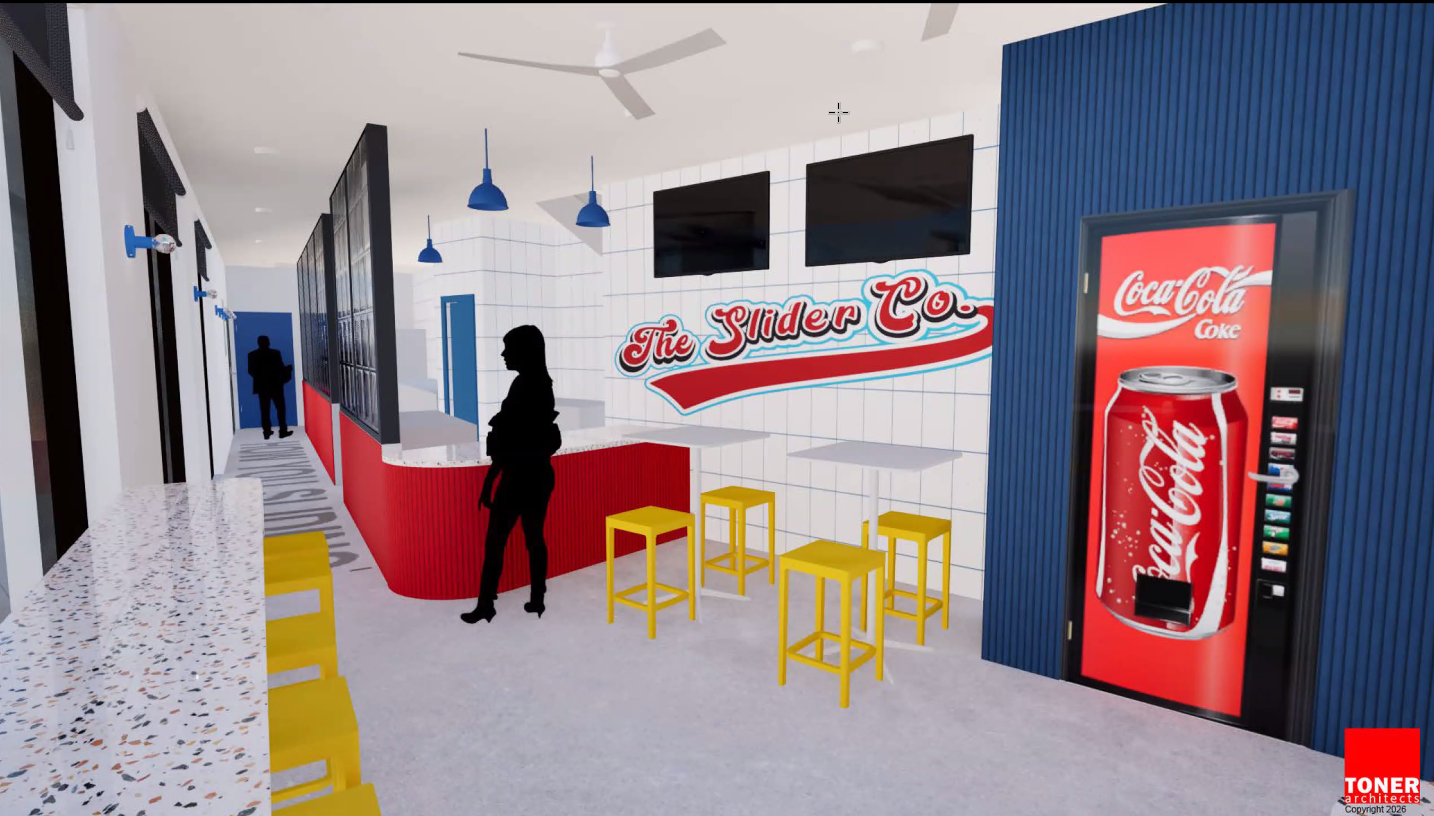
    An interior rendering of the burger place planned by the Slider Co. The Coke machine is a hidden entrance to the upstairs speakeasy.

    The wrong side of the street

    The complexities of the Slider Co.’s attempt to open a new restaurant and bar in one of Philadelphia’s hottest culinary neighborhoods is an effect of a 1990s-era zoning law to address rowdy nightclubs along the Delaware River.

    The “North Delaware Avenue overlay district,” which covers much of Northern Liberties and Fishtown, bans entertainment businesses from the area it covers while requiring food and beverage businesses to secure approval from the ZBA to open.

    The overlay extends from the Delaware River to the east side of Frankford Avenue and from Lehigh Avenue down to Spring Garden Street.

    The law was largely successful in its initial aims, stemming the creation of new nightclubs in the area. The Delaware riverfront is now known for its surplus of rental apartments, not for rowdy nightlife.

    “Everyone agrees that the original purpose of the overlay no longer needs to be served,” said Matt Ruben, a longtime civic activist in Northern Liberties who has been involved with zoning and planning issues in the area — including negotiations around this overlay — for years.

    “Where there is disagreement, and shifting views within some neighborhoods, is on the more subtle question of whether there should be some kind of zoning to help regulate everyday operational nuisances and negative impacts that can come from them,” Ruben said. “Even from operators who are not bad actors at all.”

    Many overlays linger on for decades, long after the politicians who created them are retired because they empower neighborhood groups to stave off changes in their community.

    An interior rendering of the upstairs speakeasy proposed by Slider Co.

    In this case, Councilmember Mark Squilla, who represents the area, says he is open to rewriting or scaling back the overlay, but only if there is unanimity among neighborhood and business groups in Fishtown and Northern Liberties.

    Currently, the Fishtown Neighbors Association (FNA) is in favor of the zoning overlay, which it argues gives residents of Frankford Avenue and the surrounding blocks a say in the restaurant boom.

    The community group says new restaurants and bars have affected quality of life — such as when eateries implement late-night private trash collection that can wake up people who live nearby.

    “I have not seen any interest in our community to get rid of” the zoning overlay, said John Scott, president of FNA. “It’s not seen as a detriment. It’s seen as a way to mitigate some of the impact of the food establishments.”

    Johnson and Garrett fear the old zoning law has given opponents of their project a way to wage legal warfare against their proposal.

    “We have never previously faced opposition to opening a new restaurant,” said Johnson, who has opened numerous culinary businesses in Delaware and Philadelphia.

    “An appeal to the Court of Common Pleas would likely put the project in jeopardy due to the financial strain and delays it would impose on the property owner,” Johnson said.

    Gleason’s lawyer declined to comment, and the property owner, Jordan Claffey, did not respond to a request for comment.

    Staff writer Michael Klein contributed to this article.

  • McGlinchey’s Bar, which closed last summer, is now on the market

    McGlinchey’s Bar, which closed last summer, is now on the market

    McGlinchey’s Bar, which survived decades of shifting tastes, smoking laws, and disco, is now on the market, five months after its closing.

    The asking price for the property at 259 S. 15th St. is $2.45 million, according to the listing, which is being handled by Nadia Bilynsky and Dennis Carlisle of MPN Realty on behalf of the Sokol family, which has owned the building since 1968.

    The family is selling not only the century-old building — with bars on two floors and a vacant third floor — but its liquor license and the McGlinchey’s name.

    For generations of regulars, McGlinchey’s was known less for reinvention than for what it refused to give up: cash-only tabs, smoking long after most bars banned it, and prices that seemed detached from inflation. It seemed to outlast trends simply by ignoring them.

    And if walls could talk, McGlinchey’s would probably ask for another shot before answering.

    Its building, on 15th between Locust and Spruce Streets, opened in 1922. For the first decade, it housed offices for the Allen-Sherman-Hoff Co. In 1932, Joseph A. McGlinchey bought it, leasing the first floor to a book and gift store called the Odd Shop, opening McGlinchey’s Restaurant on the second floor, and living upstairs.

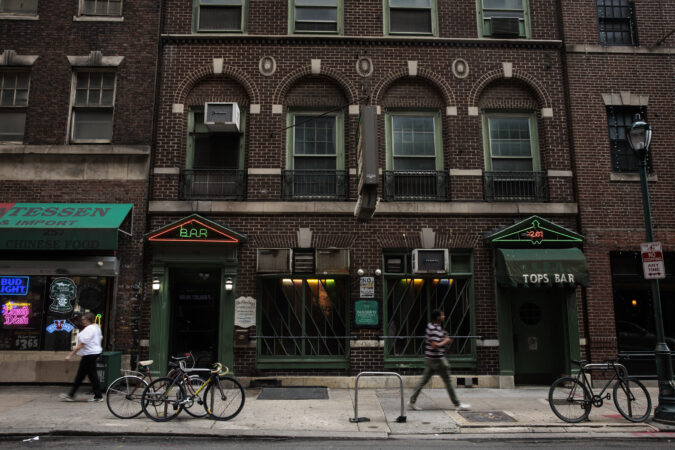
    The bar downstairs opened in the 1950s, and Henry Sokol purchased the business in 1968. In 1976, he converted the second floor into Top’s Bar, which began as a disco, later hosted music and poetry, and eventually became an extension of McGlinchey’s itself.

    Five decades ago, the neighborhood sat on the seam between old Center City grit and the city’s new, corporate face; the clientele continued to reflect a broad cross-section of society.

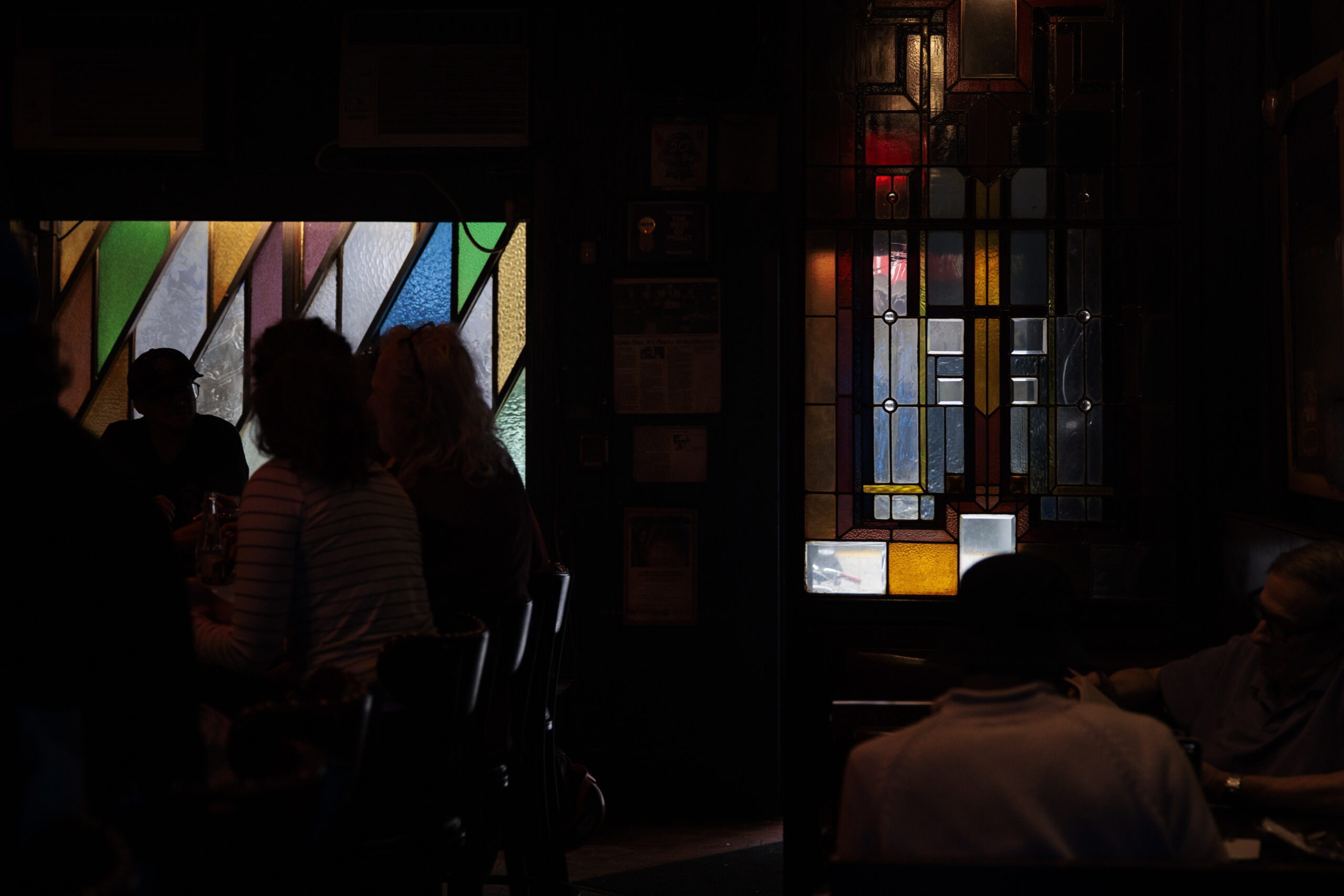
    Stained-glass windows inside of McGlinchey’s on Aug. 18, 2025.

    After Henry Sokol’s death in 1985 — the year construction began on One Liberty Place, the city’s first building taller than William Penn’s hat on City Hall — McGlinchey’s was passed along to sons Ronald and Sheldon.

    Ron Sokol died in 2022, and last summer’s closing was prompted by Sheldon’s retirement.

    “It was just time,” said Sandra Sokol, Ron’s widow.

    Sheldon Sokol was the daytime manager, while Sandra Sokol said she handled administrative work behind the scenes. Douglas Sokol, Ron and Sandra’s son, worked at the bar, too.

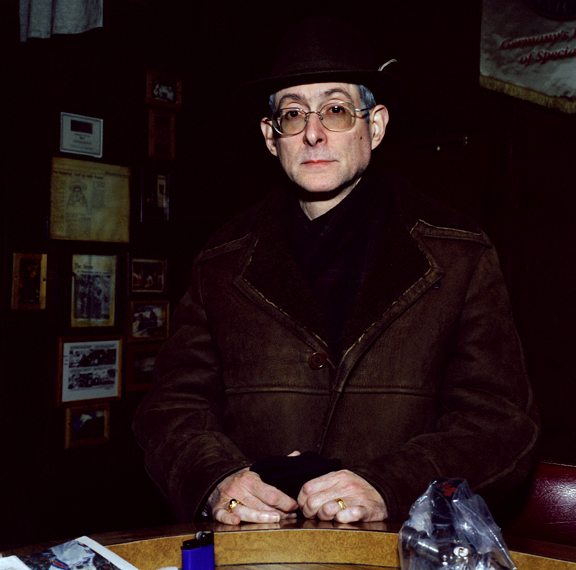
    McGlinchey’s owner Sheldon Sokol in a 2004 photo taken for “The Regulars,” a series by former bartender Sarah Stolfa, who went on to publish the collection in a book of the same name.

    For Sandra Sokol, the bar’s meaning extended well beyond its balance sheets. “We used to joke that we had two children, but McGlinchey’s was [Ron’s] third child,” she said. “It was that important to him. He was really responsible for what it became.”

    Under Henry Sokol, she said, the business began as a more traditional restaurant and gradually evolved. “When Ronnie began hiring art students as bartenders and waitstaff, that’s when it started to shift into something more edgy,” she said. “What it became wasn’t planned. It just morphed that way, the way family businesses often do.”

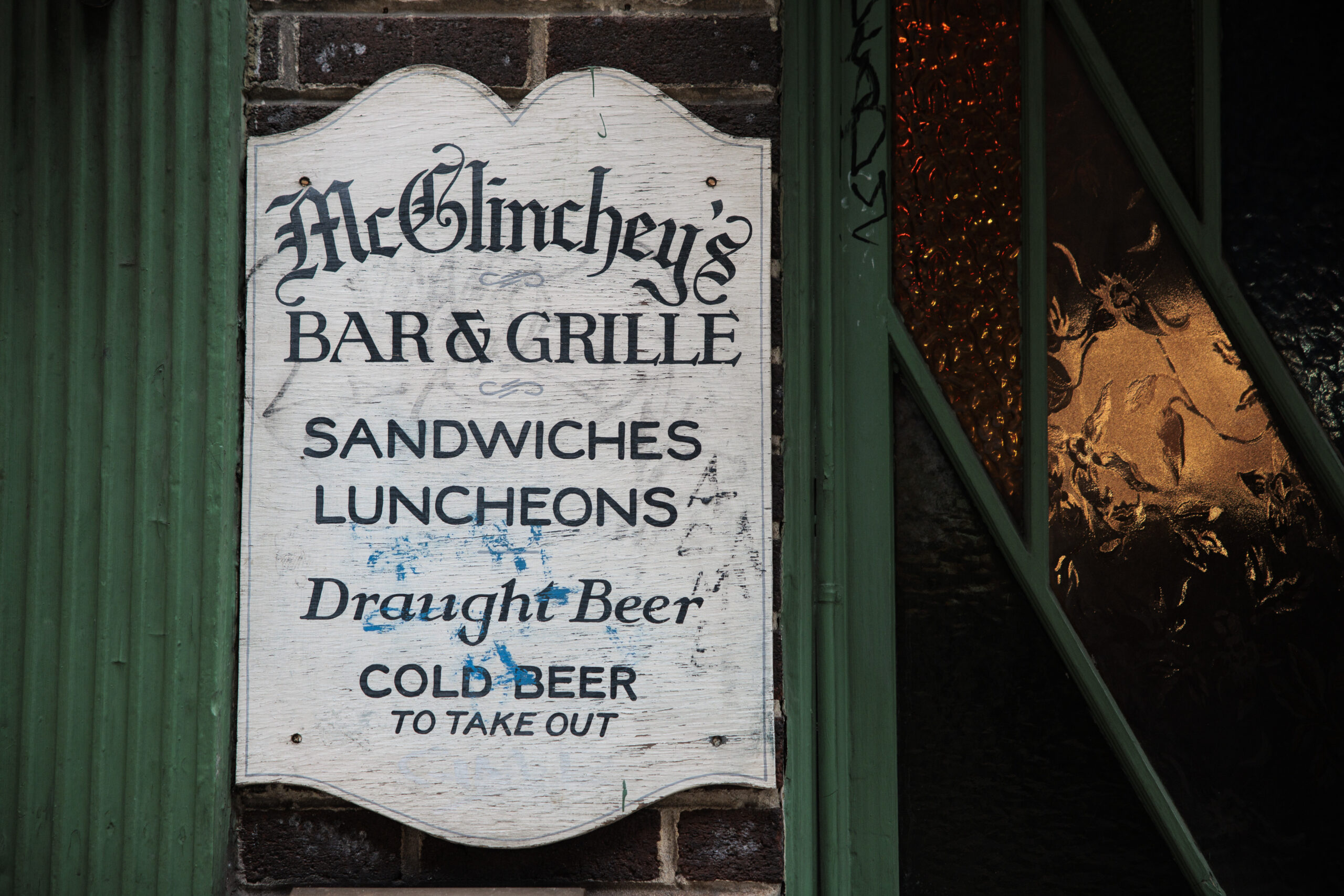
    Sign at McGlinchey’s.

    That evolution extended upstairs as well. Sandra Sokol recalled visiting Top’s in its early disco days. One night, her sister, visiting from out of town, was asked to dance by a man who turned out to be a carpenter, still wearing his tool belt — hammers and all — straight from work. “It was that kind of place,” she said. “Spontaneous, serendipitous moments.”

    Those moments, she said, added up to something larger. “People would often say — and I agreed — that it was like the experience of Cheers,” she said. “It was more than a bar. More than a business. It became an institution — and in many ways, an extension of our family.”

    Even the bar’s most controversial feature — smoking — was handled pragmatically. “It was a double-edged sword,” she said. “If they banned smoking, they might gain new customers, but they would lose longtime ones.”

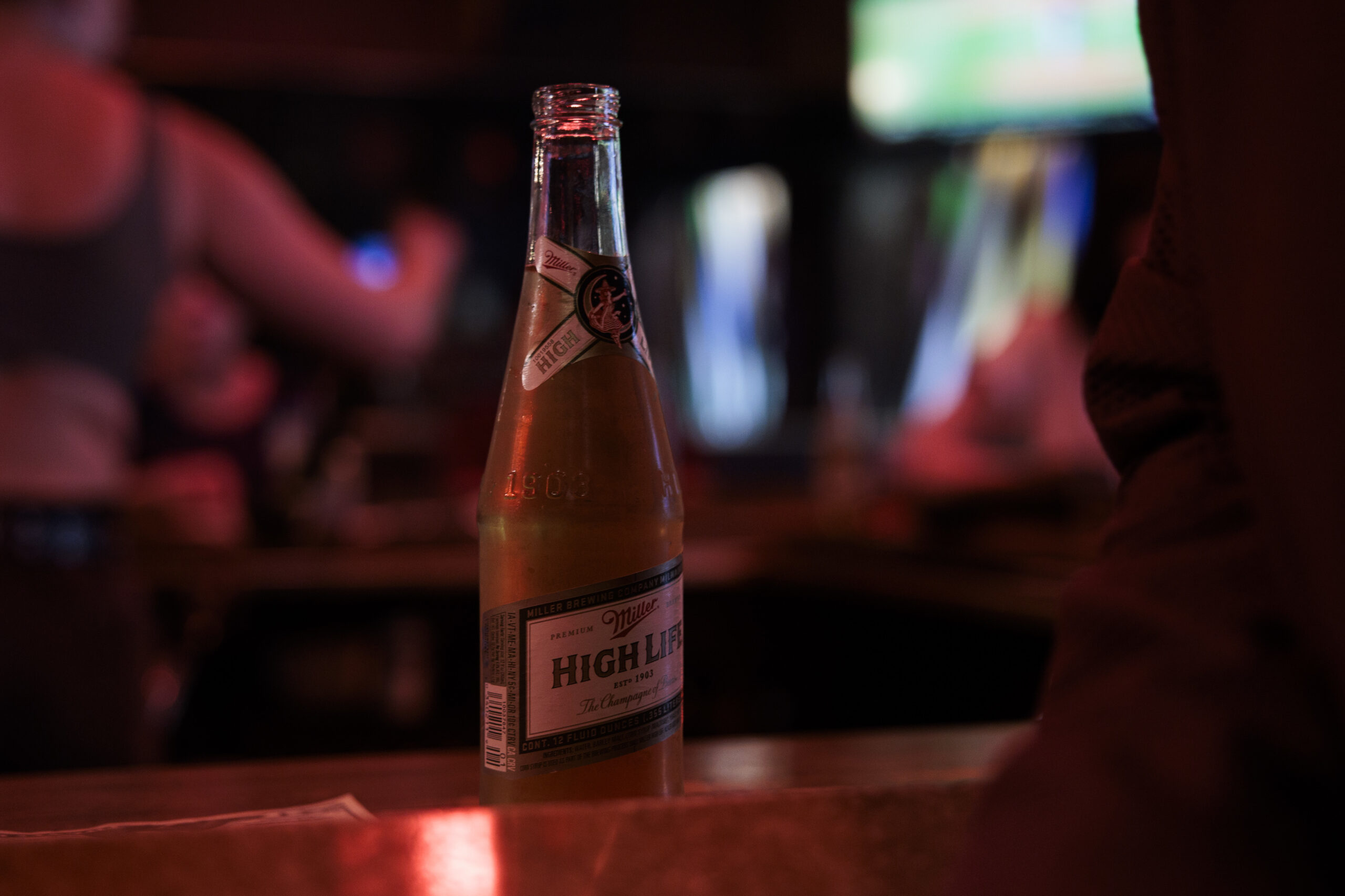
    A Miller High Life on the bar inside McGlinchey’s on Aug. 18, 2025.

    When Ron Sokol died, former employees turned out for the memorial. “So many people who had worked at McGlinchey’s over the years came and told me how important the bar had been in their lives,” she said. “I’m not really talking about the business side — I’m talking about the presence it had in people’s lives.”

    Among its alumni was Fergus Carey, the serial Philadelphia bar owner, who got his start in the industry there, as did his business partner, Jim McNamara. Carey said they had considered putting in an offer on McGlinchey’s, “but at this point, Jim and I have let it go in our hearts. We met so many people there — people we worked with, people we served, people who became friends. It was an important steppingstone for both of us, professionally and personally. It’s a big part of our history in this business.”

    As the property changes hands, Sandra Sokol said she hopes its identity survives the transition. “I would really like it to remain McGlinchey’s and for a new owner to keep it as close as possible to what it was,” she said. “I especially feel that way because I know Ronnie would have wanted it to continue into the next chapter.”

  • Iron Hill Brewery could be revived in some locations as judge OKs trademark acquisition

    Iron Hill Brewery could be revived in some locations as judge OKs trademark acquisition

    Iron Hill Brewery may get a second life.

    Four months after the chain closed nearly 20 locations and filed for bankruptcy, a federal judge has approved the acquisition of Iron Hill’s trademark and intellectual property in conjunction with the transfer of five restaurant leases, including one in Philadelphia, according to court documents filed over the weekend.

    The shuttered brewpubs in Center City, Huntingdon Valley, Hershey, Lancaster, and Wilmington are set to be taken over by new tenants, each of which is referred to as “IHB” in the documents. Earlier this month, these tenants registered as business corporations under “IHB” and the name of each location, according to state records in Pennsylvania and Delaware.

    Judge Jerrold N. Poslusny Jr. also approved a written agreement that allowed for “Rightlane LLC” to assume Iron Hill Brewery’s trademark and intellectual property, according to the same filing in U.S. Bankruptcy Court in New Jersey.

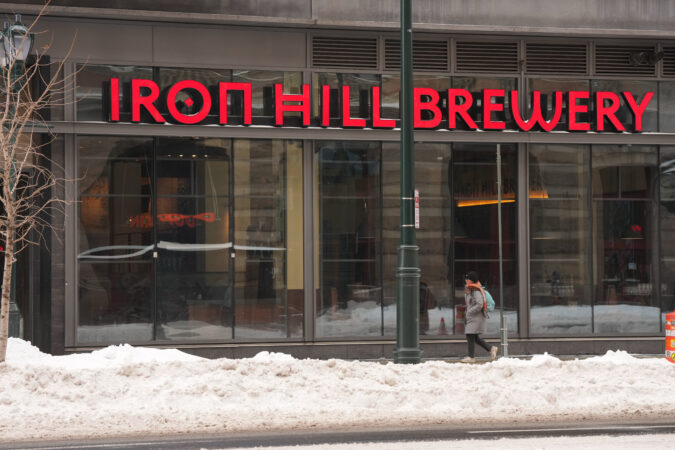
    A view from the outside looking in on a closed Iron Hill Brewery.

    Jeff Crivello, the former CEO of Famous Dave’s BBQ, was originally set to buy the assets of these five Iron Hill locations, along with those of five others that he has since sold.

    On Monday, Crivello confirmed that the assets of his five remaining Iron Hills, along with the brand’s trademark and intellectual property, had been acquired by a buyer called Right Lane.

    There are several companies that go by the name Rightlane or Right Lane. Attempts to reach representatives of the Right Lane that was involved in the Iron Hill deal were unsuccessful.

    The deal could revive some prime real estate in the Philadelphia region. In Center City, the 8,500-square-foot restaurant was meant to help revitalize the troubled Market East. In Wilmington, Iron Hill had renovated its 10,000-square-foot restaurant on the waterfront.

    In December, Crivello had hinted at the possibility of an Iron Hill resurrection, saying, “We’re working with a couple buyers that want to reopen [closed breweries] as Iron Hill.”

    Iron Hill Brewery, which was founded in Newark, Del., developed a loyal following over its nearly 30 years in business. Fellow business owners and brewers considered it a pioneer in the local craft beer scene and a restaurant that helped put suburban downtowns like West Chester and Media on the map. Customers said they loved its family-friendly atmosphere.

    In more recent years, Iron Hill opened a production facility in Exton, started canning its beers, and unveiled new locations in Philadelphia, South Carolina, and Georgia. This expansion occurred against the backdrop of the coronavirus pandemic and a nationwide decline in consumers’ thirst for beer and other alcohol.

    For Iron Hill, it did not prove a winning strategy. By the time the chain filed for liquidation bankruptcy this fall, it owed more than $20 million to creditors and had about $125,000 in the bank.

    Since then, massive shells of former breweries have sat vacant throughout the region. As the case made its way through bankruptcy court, landlords were delayed in their searches for new tenants.

    Many locations still remain empty, with no word on what might fill the spaces. But in some spots, there are signs of life.

    The company that owns P.J. Whelihan’s may be moving into the former Iron Hill in Newtown, Bucks County.

    Last month, PJW Opco LLC, which is registered at the headquarters of PJW Restaurant Group, was approved to take over a lease for an 8,000-square-foot closed Iron Hill in the Village at Newtown shopping center.

    In South Carolina, Crivello has sold the assets of the former Iron Hills in Columbia and Greenville to Virginia-based Three Notch’d Brewing Co.

    This story has been updated to reflect additional information about Right Lane.

  • Eight happy hour deals to try in Media this winter

    Eight happy hour deals to try in Media this winter

    With early sunsets persisting for the next few weeks, the 4 to 6 p.m. hour can feel pretty grim. If you’re looking for a drink-sized pick-me-up or a discount on some tasty bites, there are plenty of places in and around Media to choose from. Here are eight restaurants in the Media area doing happy hours right now.

    Departure (2 S. Orange St., Media)

    Internationally inspired restaurant Departure is serving hits from around the globe. Their happy hour includes select wines for $7, beers for $4 to $6, house martinis for $9, mixed drinks for $7, and featured specialty cocktails for $11. Small bites also abound. Think tandoori chicken dumplings for $8, jerk shrimp for $10, or hummus for $5. Happy hour is available Monday through Friday from 4 to 6 p.m.

    Maris Mediterranean (214 W. State St., Media)

    Maris is the new kid on the block in Media’s dining scene. The Mediterranean restaurant opened on State Street in November and has been serving up fresh seafood and Greek-style dishes since. Maris’ happy hour deal includes buck-a-shuck oysters, half-priced calamari, and half-priced spreads. Drink options include $4 Miller Lites, $10 glasses of wine, and $10 “bartender’s choice” cocktails. Happy hour is Monday through Friday from 4 to 6 p.m.

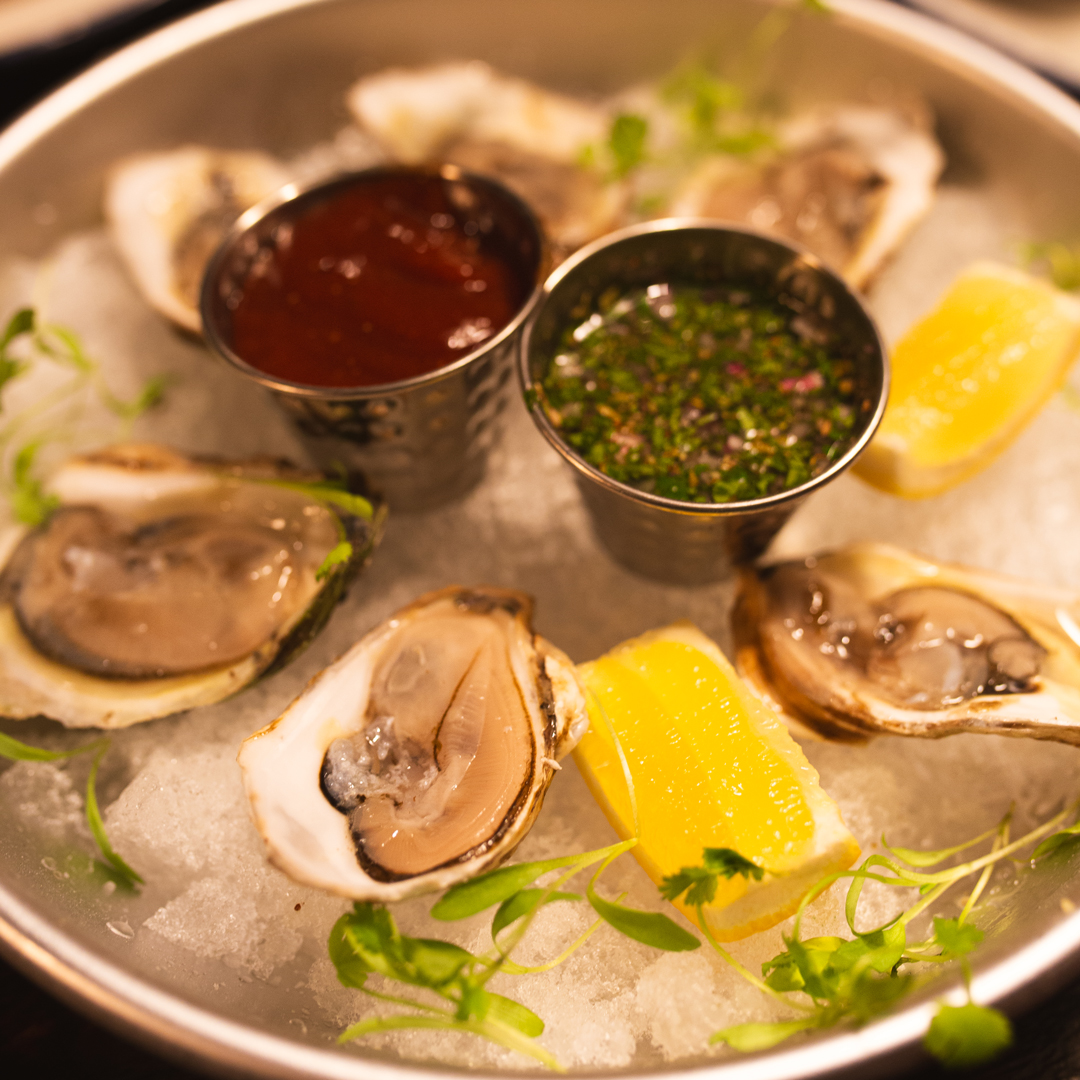
    Buck-a-shuck oysters at Maris Mediterranean Seafood in Media, Pa. Maris offers happy hour Monday through Friday from 4 to 6 p.m.

    Spasso Italian Grill (1 W. State St., Media)

    Spasso Italian Grill is a Media icon. The beloved restaurant serves up Italian comfort classics, from wood-fired pizzas to homemade pastas and hearty salads. Spasso’s happy hour menu features a wide-ranging list of beers for $4 to 5, wine by the glass for $8, mixed drinks for $7, and martinis for $8. Pick from the $8 small plates menu, including arancini, meatballs, and tomato bruschetta, or try a pizza or heartier dish, like eggplant parmesan or steamed mussels, for $13. Happy hour is Monday through Friday from 4 to 6 p.m.

    Ariano (114 S. Olive St., Media)

    Ariano is a cocktail bar and restaurant in downtown Media specializing in Southern Italian cuisine. The restaurant is offering both an early and late happy hour through Jan. 18. Every day from 4 to 6 p.m., enjoy $4 off wines, cocktails, pizza, and appetizers and $2 off draft beers. On Friday and Saturday, get the happy hour deal from 8 to 9 p.m.

    Old State Tavern (38 State Rd., Media)

    The Old State Tavern has taken the moniker “Media’s best neighborhood bar.” The laid-back bar is a local favorite, complete with darts, a pool table, bar food, and lots of beer. Take 50 cents off domestic beers and $1 off craft beers during happy hour, which takes place Monday through Friday from 4:30 to 6:30 p.m.

    la Padella (100 State Rd., Media)

    Media’s la Padella is home to comforting Italian dishes, steaks, chops, and desserts. Their happy hour menu features $7 starters, from mussels to fried ravioli and truffle fries. House wines and cocktails like the Tuscan Sunrise or Penn Martini are also $7, and a rotating selection of draft beers is $1 off. Happy hour runs from 3 to 5 p.m., Tuesday through Sunday.

    Stephen’s on State (105 W. State St., Media)

    Stephen’s on State prides itself on high-quality, fresh steaks and an “exquisite” ambiance. Looking for something more casual than a full steak dinner? Pull up a seat at the bar for happy hour, Monday through Friday from 4 to 6 p.m. Get your first two drinks half-off (excluding top shelf liquor), and try some bites like the cheesesteak nachos for $7, jumbo wings for $8, or margherita flatbread for $8.

    La Porta Ristorante (1192 Middletown Rd., Media)

    Located off Middletown Road, La Porta Ristorante is a family-owned restaurant serving wood-fired pizzas, pastas, and Italian-inspired small plates and mains. Happy hour is available at the bar, Monday through Friday from 4 to 6 p.m. Order a Stella Artois for $3.50, liquor drinks for $4, or wine by the glass for $5.50. Small bite options include scotch eggs for $5, mussels for $8, bacon-wrapped bleu cheese-stuffed dates for $6, and deviled eggs for $5.

    This suburban content is produced with support from the Leslie Miller and Richard Worley Foundation and The Lenfest Institute for Journalism. Editorial content is created independently of the project donors. Gifts to support The Inquirer’s high-impact journalism can be made at inquirer.com/donate. A list of Lenfest Institute donors can be found at lenfestinstitute.org/supporters.

  • A massive, first-ever Dry January bar crawl launches in Philly this weekend

    A massive, first-ever Dry January bar crawl launches in Philly this weekend

    From inventive cocktails at bars to interactive bartender-led classes, it’s easy to be alcohol-free in Philadelphia this month and still leave the house. And now, sober-curious drinkers can hop from one bar to the next in the city’s first-ever Dry January bar crawl.

    Together, Northern Liberties Business Improvement District and Fishtown District are hosting a massive, two-day bar crawl of more than two dozen restaurants, bars, breweries, wineries, distilleries, and hospitality spots offering discounted zero-proof cocktails. The event runs Saturday, Jan. 17 and Sunday, Jan, 18, allowing participants to explore the two neighborhoods at their own pace. No tickets or check-in are required.

    “We are excited to kick off 2026 with our close friends in Fishtown for a post-holiday reset,” said Sydney Rexroad, Northern Liberties Business Improvement District executive director. “The Dry January Crawl … is a great opportunity to see a different side of creativity from your favorite spots.”

    Bar Palmina will participate in the Northern Liberties/Fishtown Dry January Bar Crawl.

    “This is the perfect way to start 2026,” said Marc D. Collazzo, Fishtown District executive director. “Our close connection provides a full, fun wellness experience in the hottest neighborhoods in the city. Come join us to sip, savor and smile.”

    Along with a slate of regularly priced nonalcoholic cocktails or specialty beverages, folks can expect each participating establishment to have one or more special happy hour-priced nonalcoholic beverage, from $6 to $10.

    Bar1010 will offer strawberry matcha mocktails for $10, beers and Moscow mules will run $6 to $8 at Bar Palmina, and smoked mixed berry spritz will go for $10 at Jerry’s Bar, just to name a few.

    But remember: “Mocktails are what you’ll see mostly on menus — they’re made up of syrups, shrubs, soda, juices, and the ABV falls at 0.0,” according to Nikki Graziano, owner of Bar Palmina. “Zero-proof cocktails are made with complex nonalcoholic spirits and bitters. They provide the same balance and craft as a regular alcoholic drink and their ABV ranges from 0.0-0.5% ABV.”

    “There’s no better or worse, but the distinction is important to note for sensitivities as well as price points,” she said.

    Front Street Cafe will participate in the Northern Liberties/Fishtown Dry January Bar Crawl.

    In Northern Liberties:

    • Amina: 1102 Germantown Ave., 11 a.m. to 4 p.m.
    • Bar1010: 701 N. Second St., 11:30 a.m. to 4 p.m.
    • Bourbon and Branch: 705 N. Second St., 11 a.m. to 4 p.m.
    • El Camino Real: 1040 N. Second St., 11 a.m. to 4 p.m.
    • Jerry’s Bar: 129 W. Laurel St., 11 a.m. to 4 p.m.
    • Standard Tap: 901 N. Second St., 11 a.m. to 4 p.m.
    • The 700: 700 N. Second St., 2 p.m. to 5 p.m.
    • Urban Village Brewing: 1001 N. Second St., noon to 5 p.m.
    • Yards Brewing Co.: 500 Spring Garden St., 11:30 p.m. to 5 p.m.
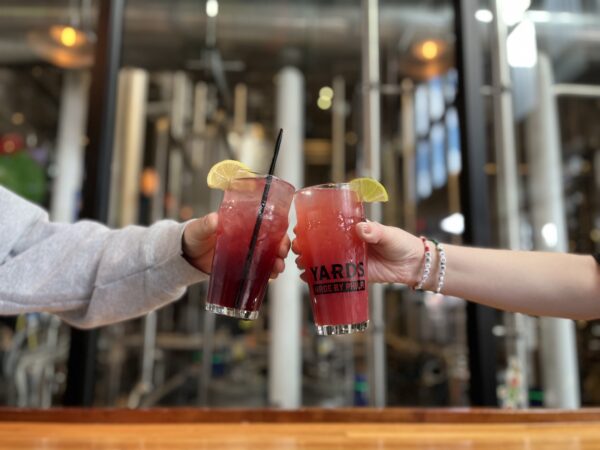
    Expect nonalcoholic cocktails like this one, from Bar Palmina, at happy hour prices on Northern Liberties-Fishtown’s inaugural Dry January bar crawl.

    In Fishtown:

    • Bar Palmina: 1306 N. Front St., 2 p.m. to 6 p.m.
    • Brewery ARS: 2223 Frankford Ave., 3 p.m. to 6 p.m.
    • Evil Genius Beer Company: 1727 N. Front St., noon to 5 p.m.
    • Fette Sau: 1208 Frankford Ave., noon to 5 p.m.
    • Fishtown Social: 1525 Frankford Ave., noon to 5 p.m.
    • Frankford Hall: 1210 Frankford Ave., noon to 5 p.m.
    • Front Street Cafe: 1253 Front St., 11 a.m. to 4 p.m.
    • Garage Fishtown: 100 E. Girard Ave., noon to 5 p.m.
    • Johnny Brenda’s: 1201 Frankford Ave., 11 a.m. to 4 p.m.
    • Mamajuana Cafe Philly: 1000 Frankford Ave., noon to 5 p.m.
    • Meyers Brewing: 436 E. Girard Ave., noon to 5 p.m.
    • Mural City Cellars: 1831 Frankford Ave., noon to 5 p.m.
    • Nut Hut Saloon: Corner of Frankford Ave. and E. Norris St., 11 a.m. to 4 p.m.
    • Pearl’s Fishtown: 1444 Frankford Ave., 1 p.m. to 5 p.m.
    • Percy Diner & Bar: 1700 N. Front St., Saturday 11 a.m. to 4 p.m. and Sunday 11 a.m. to 3 p.m.
    • Stateside Vodka Bar: 1700 N. Hancock St., noon to 5 p.m.
    • The INTL: 1642 N. Front St., noon to 4 p.m.
  • PLCB lottery opens for a chance to buy rare whiskeys, including a Pappy Van Winkle

    PLCB lottery opens for a chance to buy rare whiskeys, including a Pappy Van Winkle

    It’s that time again: You could win the rare whiskey lottery, and the deadline for entry is Friday.

    State liquor license holders and Pennsylvania residents 21 and over have till 5 p.m. Jan. 16 to enter the Liquor Control Board’s latest “Limited-Release Lottery.” This time, 1,434 bottles are being offered in three lotteries. As usual, this is a chance to buy — not win — one of these prized whiskeys. If you’re a collector or serious about whiskey, it’s worth a shot.

    There will be separate lotteries for each collection. Opt in for one, two, or all three lotteries. Only one entry per household, per drawing is allowed; duplicative entries will be disqualified.

    Individual consumers and licensees entering the lottery must have an active account on Fine Wine & Good Spirits‘ website. Entries must include a valid store for delivery.

    Lottery 1, the Buffalo Trace Antique Collection, retailing for $149.99, includes:

    • Sazerac Straight Rye Whiskey 18 Year — nine bottles for individuals, three for licensees
    • Eagle Rare Straight Bourbon 17 Year — 18 for individuals, six for licensees
    • William Larue Weller Straight Bourbon Barrel Proof — 45 for individuals, 15 for licensees
    • George T. Stagg Straight Bourbon Barrel Proof — 45 for individuals, 15 for licensees
    • Thomas H. Handy Sazerac Straight Rye Whiskey Barrel Proof — 126 for individuals, 42 for licensees

    Lottery 2, the Van Winkle collection, $129.99 to $449.99, includes:

    • Pappy Van Winkle’s Family Reserve Straight Bourbon 23 Year — 32 for individuals, 10 for licensees
    • Pappy Van Winkle’s Family Reserve Straight Bourbon 15 Year — 34 for individuals, 11 for licensees
    • Pappy Van Winkle’s Family Reserve Straight Bourbon 20 Year — 34 for individuals, 11 for licensees
    • Old Rip Van Winkle Handmade Straight Bourbon 10 Year — 118 for individuals, 39 for licensees
    • Van Winkle Special Reserve Straight Bourbon 12 Year — 580 for individuals, 193 for licensees

    Lottery 3 features limited-edition Colonel E.H. Taylor Jr. straight bourbon, bottled in bond, $149.99: 36 bottles for individuals and 12 for licensees.