Category: Food

  • 2025 in pizza: The best new slices and pies in the Philly area

    2025 in pizza: The best new slices and pies in the Philly area

    What a year for the Philly-area pizza scene. To recap 2025’s newcomers, we saw full-service settings that treat pizza as one pillar of a modern Italian restaurant, such as Cerveau in Spring Arts, Corio in University City, Scusi in Northern Liberties, and the hypermart Eataly in King of Prussia. Fishtown’s roster expanded with Marina’s Pizza, from the grandson of a local pizza magnate. The late-night scene, moribund for the last five years, now has 15th Street Pizza & Cheesesteak in Rittenhouse. Other newcomers include Angelina’s in deep South Philly, Rhythm & Spirits in Suburban Station, Puglia on South Street, and Italian Family Pizza on the Parkway.

    New social rooms treat pizza as an anchor for hanging out (the Borough in Downingtown, the Pizza Pit in Bensalem, and Gloria Sports & Spirits in Warrington). Expansion was also on the table: The Main Line hit Johnny’s Pizza opened an offshoot in Wayne, and Santucci’s tacked on new spots in University City and Deptford.

    The burbs saw ambition from Anomalia in Fort Washington, Antica in Warrington, Barclay Pies in Cherry Hill, Classic Pizza in Bala Cynwyd, Not Like the Rest in Pine Hill, Taco-Yote in Moorestown, and Genova Pizza 2 Go in a Williamstown gas station. There was even a nerdy newcomer: Apizzeria 888 by Sebastian, a “pizza lab” in Elkins Park that feels like a cult favorite in the making.

    N.B. The 2026 pizza scene commences with the Jan. 1 opening of Assembly Pizza Co. at University City’s Gather Food Hall.

    Philadelphia proper

    Angelina’s Pizza

    Saloon alumnus Marty Angelina and Franco & Luigi veteran Brian Cunningham serve abundantly topped New York-style pizza along with a menu of sandwiches, chicken cutlets, pastas, and stuffed long hots wrapped in bacon from this Seventh and Oregon Avenue space, formerly the Pizza Shop and Ralph & Rickey’s. The pizza that gets the most attention is the Honeyroni, a mix of pepperoni, ricotta, and hot honey, available by the slice or the pie. Its location makes it an easy jump to the sports complex. (Bonus: John’s Water Ice has a pickup window here in season.)

    Cerveau

    Pizza Brain cofounder Joe Hunter is behind this neighborhood drop-in disguised as a colorful playground in the 990 Spring Garden building, with a cicchetteria menu (small plates and the mini-sandwiches known as tramezzini), plus a few large plates at dinnertime. The stars are the puffy-crusted, 16-inch Neapolitan-ish pizzas, which are on the cheffy side: The French Onion, with mornay, caramelized onions, and comte, is a winner of a white, and nostalgics should find a soft spot for the Crab Rangoon — a take on the Chinese takeout staple — topped with cream cheese and lump crab with a swirl of sweet chili.

    Corio

    They’re creating in University City these days, and not just at the high-tech “innovation district” that Drexel University and Wexford Science + Technology are putting together. Chef Dave Feola puts out some traditional, thin-crusted 14-inch pies at this comfortable Market Street bistro, such as a Margherita with a San Marzano base and buffalo mozzarella and a spicy sausage Bolognese. But the seasonal selections get wilder, like braised rabbit in a tomato sauce dotted with ricotta and Calabrian chili oil, or the hazelnut pesto with roasted poblano and pecorino over béchamel.

    15th Street Pizza & Cheesesteak

    When it’s creeping past 2 a.m. and the bars are letting out, you need a munchie run: That is what drove brothers Andrew and Michael Cappelli, who own Cappelli’s, a late-night pizzeria on 13th near Locust, to open this corner parlor and cafe in the former Starbucks at 15th and Latimer. It’s open till 3 nightly, with a case that’s stocked with slice options. The plain cheese and the pepperoni are the big sellers, as you’d imagine, but they sell plenty of the buffalo chicken ranch (rounds and Sicilians), broccoli spinach ricotta (rounds), and Margherita Sicilians. If pizza isn’t singing your song, they’ve got overloaded cheesesteaks coming off the flattop.

    Italian Family Pizza

    You may have to tilt the pizza box slightly to navigate the doorway of Steven Calozzi’s rustic parlor in the former Subway shop at 17th and the Parkway. Calozzi, a pizzeria lifer from Bucks County (by way of Seattle), is turning out whopping, 24-inch Trenton-style pies: cheese on the bottom, with a thin, crispy crust. (A 12-inch is available, too.) There’s a tomato pie drizzled with pecorino and olive oil, a sauceless white pizza, a cheese pie (heavy on the toppings), and a Sicilian. Dine-in on two levels is a plus when you have a family attending an event on the Parkway.

    Marina’s Pizza

    Mason Lesser is 24, but he’s been around the pizza world all his life through his maternal grandfather, Angelo Lancellotti, who owned dozens of local pizzerias over the decades. Lesser, who named his Fishtown storefront after his mother and grandmother, offers thin-crusted New York-style pies (18-inchers for whole, 20-inchers for slices) that meld both fresh and low-moisture mozzarella with minimal sauce (a simple combo of tomatoes, salt, basil, and olive oil); all pizzas get a finishing dusting of pecorino-romano and glug of EVOO. His upmarket pie is the Riviera, with pepperoni, creamy stracciatella, basil hot honey, and basil. It’s open for dine-in or pick-up.

    Puglia Pizza

    Cosimo Tricarico left Philly (and his Caffe Valentino in Pennsport) a few years ago for his native Puglia. In his Philly comeback, he’s set up Puglia at Ninth and South, turning out an assortment of football-shaped Romans, traditional rounds, plus sfilatini —thin, pressed baguette sandwiches with fillings like meatballs and vegetables. It’s open for dine-in.

    Rhythm & Spirits

    Lee Sanchez’s something-for-everyone menu at his mod bistro inside the Suburban Station building (aka One Penn Center) includes five pizzas — all thin-crusted 14-inch rounds with sturdy bottoms and good crunch. There’s plenty of heat from the Trevi, with spicy pepperoni cups, pickled serrano peppers, hot honey, and blobs of whipped ricotta. Also of note is the Funghi, whose wild-mushroom mix gets a topping of Dijonnaise, fresh mozzarella, and rosemary gremolata.

    Santucci’s

    It’s hip to be square at this old-Philly institution — now up to 14 locations (including new outposts in University City and Deptford) under one branch of Joseph Santucci’s family. The pan-baked square crusts envelop a firm, crackly bottom, and the sharp sauce stays bright, ladled on top of the cheese.

    Scusi Pizza

    Chef Laurent Tourondel, the New York restaurateur behind an international portfolio of steak houses, Italian restaurants, and pizza concepts, is behind this sophisticated pizzeria/cocktail bar in Northern Liberties’ Piazza Alta. For the French-born chef, pizza is personal. “I was telling my staff that I cooked for a living, but pizza for me was always a hobby.” Twenty years ago, after Michelin awarded a star to BLT Fish, Tourondel’s chef de cuisine announced that he was quitting to open a pizzeria, a growing category. Inspired, Tourondel trained in Naples and returned to New York to launch La Mico and later take over a longtime pizzeria on Long Island, where he refined a crispy, airy-crusted style. At Scusi, chef de cuisine Georgeann Leaming offers a by-the-slice pizza bar as well as two Sicilian pies, along with calzones, salads, sandwiches, and soft-serve for dessert. Tourondel is also behind Terra Grill, a wood-fired grill restaurant, planned next door for early 2026.

    Pennsylvania Suburbs

    Anomalia Pizza

    The phrase that pays at this humble, stand-alone slice shop near the Fort Washington SEPTA station is “drunken grandma”: That’s Frank Innusa’s crispy, almost buttery-bottomed squares topped with fresh mozzarella and ribboned with a thick, creamy vodka sauce amped with pancetta. Other hits include the stromboli and the uncommon mozzarella in carrozza — basically, a mozzarella stick in sandwich form (cheese tucked inside bread, crusted with bread crumbs, and fried). There’s seating for dine-in.

    Antica Pizza Co.

    Whether you’re after thin or thick crusts, 12- or 16-inch, there’s something for everyone among the grandmas, Sicilians, and New York pizzas at this roomy, contemporary strip-mall spot in central Bucks County. If you’re indecisive, there is the capricciosa, which has a little bit of everything on top. The oven also turns out pinsa (the Roman-style flatbread) and schiacciata for Tuscan-style sandwiches.

    Apizzeria 888 by Sebastian

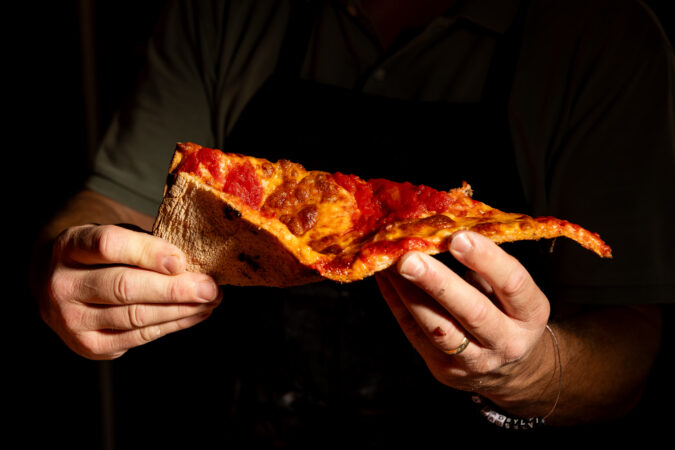
    Owner/pizzaiolo Sebastian Besiso is the first to say that you may not like his pizza, especially if you prefer more conventional New York or Neapolitan styles. His “Roma” — available in limited qualities at his one-man hole-in-the-wall takeout in Elkins Park — is built with two kinds of aged cheese, a smear of a slightly sweet tomato basil sauce, and an almost impossibly thin crust that shatters around the edges as you bite. There is no flop whatsoever. Apizzeria pies have the crunchy, cheese-on-the-bottom qualities of Chicago tavern-style, though Besiso slices them into conventional eighths, not party squares.

    The Borough

    This newcomer in Downingtown is many things: a family restaurant and sports bar downstairs, with a sushi bar and event space upstairs. It’s also a serious pizza destination thanks to consultant Ptah Akai, whose pies are puffy, neo-Neapolitan-ish, with sturdy crusts and a light char. The sliced garlic gave a subtle roast to a cheeseless tomato pie that he made for me off-menu. His Forager, with basil pesto and three kinds of mushrooms, was balanced and did not sink under the mozzarella. There’s also a plain cheese, pepperoni, and a Margherita. Important, non-pizza-related tip: The adjacent parking lot is not the restaurant’s, and tow trucks abound; park across the street in the municipal lot.

    Classic Pizza

    Staten Island-born pizzaiolo Paul Brancale has taken over the Bala Cynwyd location of EVO Pizza for a slice shop built around old-school New York styles, including thick, soft Sicilians; crispy-crusted, rectangular grandmas; and 18-inch round pies that are thin and crispy, in the Joe & Pat’s/Rubirosa tradition. He’s making his own fresh mozzarella from curds, and the sausage comes from Martin’s at Reading Terminal Market.

    Eataly

    Pizza at this massive Italian emporium in KoP Mall splits cleanly into two lanes. The full-service restaurant, La Pizza & La Pasta, serves classic, whole Neapolitan pies in a classy setting. For something faster, the marketplace counter sells Roman-style pizza by the slice; with a small seating area, it’s built for both lingering or grabbing a quick square mid-shop.

    Gloria Sports & Spirits

    It would be easy — and wrong — to write this place off as a sports bar. What matters is the pizza: light yet sturdy 13-inch pies from Vetri alum Brad Daniels, whose resumé also includes the high-end Tresini in Spring House. The toppings show real thought, from a saganaki-inspired pie with preserved lemon, feta, and oregano to the broccoli-forward “Brock Party” with ricotta sauce and roasted garlic. Even the red pies are dialed in, finished with restrained Bianco DiNapoli sauce and fior di latte instead of generic mozzarella.

    Johnny’s Pizza

    Having wowed our tasters for The Inquirer’s 76, John Bisceglie has added a Wayne outpost to his bustling Bryn Mawr pizzeria. Located in a strip center near the farmers market, it’s set up mostly for takeout, but there’s a comfy dining room to enjoy unforgettable pies both thick and thin(ish), rectangular and round, red and white. We’re particularly fond of the white pies, topped with fresh mozzarella, lemony ricotta, caramelized onions, pecorino-romano, and parsley and baked on a sesame-seed crust.

    The Pizza Pit

    The no-frills, 14-inch pies — especially the upside-down (with provolone on the bottom) and the cheeseless tomato — pair well with the brews on tap at this counter setup inside the industrial-looking “mixing room” at Bensalem’s Broken Goblet Brewing, run by veteran pizza man Bob Meadows and his business partner, Chris Margarite.

    South Jersey

    Barclay Pies

    This cheery, spacious spot offers gluten-free crusts (using Caputo’s flour) along with a line of conventional pies, plus other foods (chicken tenders, wings, fries, cookies) that are gluten-free from inception. The lineup: five red pizzas (plain, pepperoni, sausage, pineapple, and a vegan Margherita featuring cashew milk mozzarella cheese by Miyoko’s Creamery) and four whites (arugula, mushroom, broccoli, and buffalo chicken). Allergen info and protocols are up on their Instagram. Plain and pepperoni slices are available over lunch.

    Genova Pizza 2 Go

    Come for a fill-up at this branch of Audubon’s Genova Pizza, tucked inside Marathon Gas. The grandma pies, with their crispy, olive oil-slicked crusts, the thicker-crusted Sicilians, and deep dish are the big draws. If you’re on your way somewhere, note that you can eat at the counter, if you’d care to spare your car’s interior.

    Knot Like the Rest Pizzeria

    Gary Lincoln’s latest South Jersey pizzeria is not like the rest: It’s all online for delivery, and walk-in customers must use kiosks for slices and pies, available also for dine-in. Highlights include the Pickle (pickles, bacon, cheddar, mozzarella, ranch dressing), Zinger (secret sauce, steak, banana peppers, mozz, American cheese), and Knotty Vodka, with its edges ringed with garlic knots.

    Taco-Yote

    There are seven Mexican pizzas on the menu at this vibrant taqueria in downtown Moorestown from Carlos Melendez of Conshohocken’s Coyote Crossing. The 16-inch rounds (not too thick or thin) aren’t just getting “taco toppings,” either; there’s mole poblano with pulled chicken, red onions, and toasted sesame seed; birria topped with guajillo and morita-seasoned brisket, with consommé on the side, and a sweet-and-savory al pastor with achiote and the kick of chile de árbol salsa.

  • Eat your way through Honolulu, from poke to shave ice | Field Trip

    Eat your way through Honolulu, from poke to shave ice | Field Trip

    As a chef from Hawai’i who has lived in Philadelphia for well over a decade, I saw firsthand the connection between both places. For years, through Poi Dog, I fed homesick Hawai’i people and those who had celebrated weddings, honeymoons, and holidays in my home state, then came back to the mainland searching for a taste of the islands. These days, the question I get most often is simple: Where should I eat in Honolulu?

    This is a special edition of our Field Trip series — not a typical three-day drive, but a culinary escape meant for when you’re bundled up at home, staring down winter, and dreaming of somewhere warmer. Think of it as planning your next trip while the heater’s on: balmy breezes, sun-warmed beaches, and unlimited fresh poke, all waiting when you’re ready to go.

    What follows is a starting point for eating your way through Honolulu, whose excellent, deeply multicultural food scene is built on Native Hawaiian traditions and shaped by waves of immigrants who came to work the sugarcane and pineapple plantations — and now, the tourism industry. I urge you to explore far beyond this list, to leave Honolulu when you can, see the rest of Oʻahu, and visit its neighboring islands. But if you’re beginning with the city, this is where to start.

    Honolulu is sprawling and encompasses a downtown business district, touristy Waikiki, Kaimuki with its many hip restaurants, Chinatown (which also has hip restaurants), and many suburbs. In the former three categories, we say they’re “in town,” though the limits of “town” are as heavily debated as the boundaries of Philly’s neighborhoods.

    Chances are you’re staying in Waikiki, and all of the following are in the most touristed district or are a quick, cheap Uber ride from Waikiki (unless of course, it’s rush hour, in which case, I can’t help you).

    Honolulu restaurants to check out

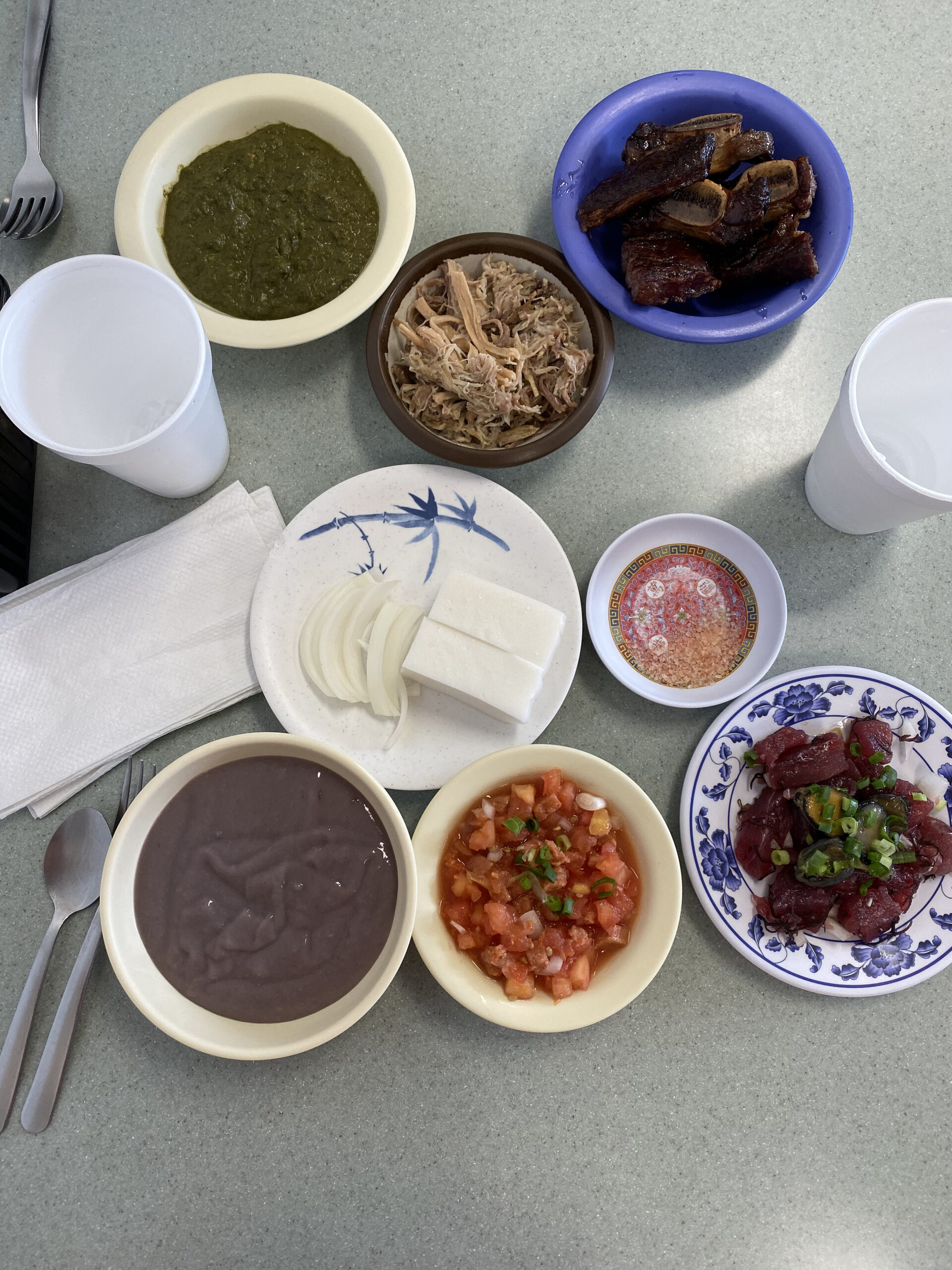
    If you’re going to Honolulu, the first order of business is getting real Hawaiian food. This means poi, or pounded taro root, the staple starch of the Hawaiians before laborers on Hawai’i’s sugarcane plantations from East Asia shifted the dominant starch of the islands to rice; smoky, tender kalua pig (preferably cooked in an imu, or underground oven); lu’au (a stew made from taro leaves, coconut milk, and usually with chicken or squid); and delicacies like ‘opihi, small limpets that are somewhat similar in taste to abalone, and are notoriously challenging to collect, requiring one to pry the barnacles from slippery rocks while being pounded by surf.

    Hawaiian food is a distinctly different cuisine from Hawaiian BBQ, which falls under the category of “local food” in Hawai’i – a confusing term for outsiders because “local food” encompasses food that was introduced to Hawai’i by its waves of immigrants. Native Hawaiian food does have immigrant influences and does incorporate ingredients not native to Hawai’i, but in ways that predated its sugar plantation era.
    Helena’s Hawaiian Food in Honolulu.
    Helena’s Hawaiian Food

    Helena’s is the reigning queen of Hawaiian food and this is the ideal place for you to try all of the above Hawaiian specialties, including ‘opihi. Their pipikaula, or Hawaiian-style beef jerky, is less jerky and more of a soy-marinated and dried short rib that manages to retain remarkable tenderness, concentrating sublime beefiness into tiny squares of meat. Cleanse your palate with a square of their haupia and a nibble on fresh, raw sweet onion dipped into red alaea salt, fixings that come with every set meal. Be mindful that Helena’s is only open 10 a.m. to 7:30 p.m., and it is closed on weekends.

    📍 1240 N. School St., Honolulu, Hawaii 96817, 📞 808-845-8044, 🌐 helenashawaiianfood.com

    Highway Inn

    If you can’t make it past the throngs of people trying to get into Helena’s, Highway Inn also serves great Hawaiian food in town. (Its original location is in Waipahu. They also just opened an outpost at the Bishop Museum.) It’s open every day and in addition to Hawaiian stalwarts like kalua pig, chicken long rice, and squid lu’au, they also serve a large menu of riffs on these, like kalua pig nachos, with sides of lomi lomi salmon, a dish that is made entirely of introduced ingredients, but has been around so long that it has been accepted into the canon of Hawaiian food.

    📍 680 Ala Moana Blvd. #105, Honolulu, Hawaii 96813, 📞 808-954-4955, 🌐 myhighwayinn.com

    Sashimi and meat jun at Kyung’s Seafood in Honolulu.

    Kyung’s Seafood

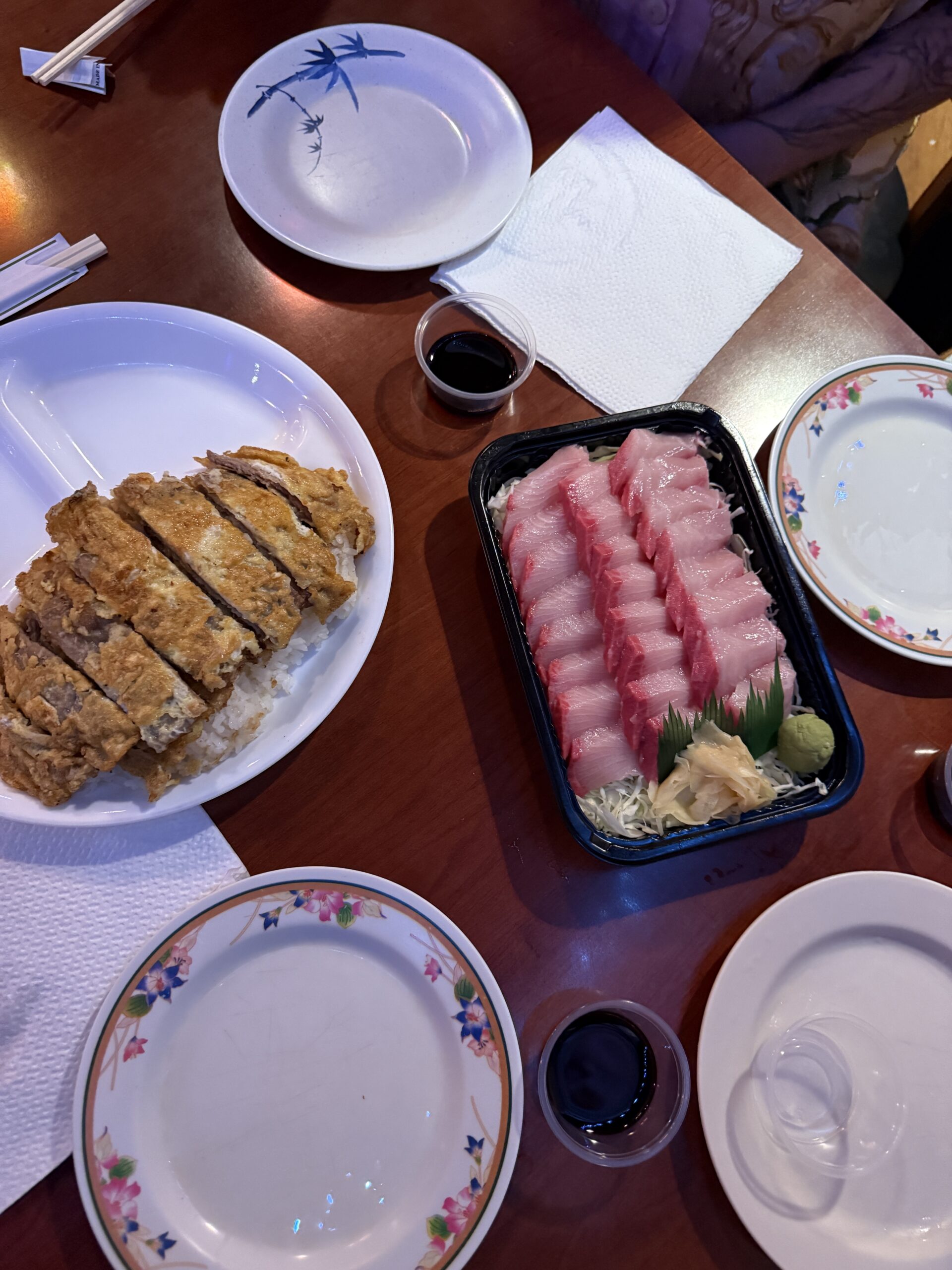
    Some of Honolulu’s best Hawaiian BBQ intersects with Korean BBQ, and there are Korean dishes in Hawai’i that are found nowhere else, not even Korea. Kyung’s Seafood makes one of the very best versions of meat jun, one such Korean dish that exists in isolation, which consists of thinly sliced meat battered in scrambled eggs and served with a light soy dipping sauce. Marry their meat jun with rice and mac salad, and some of Kyung’s excellent banchans or precisely arranged sashimi platters.

    📍 1269 S. King St., Honolulu, Hawaii 96814, 📞 808-589-1144, 📷 @kyungsseafood

    Monaka filled with ahi tartare and caviar from Miro Kaimuki.

    Miro Kaimuki

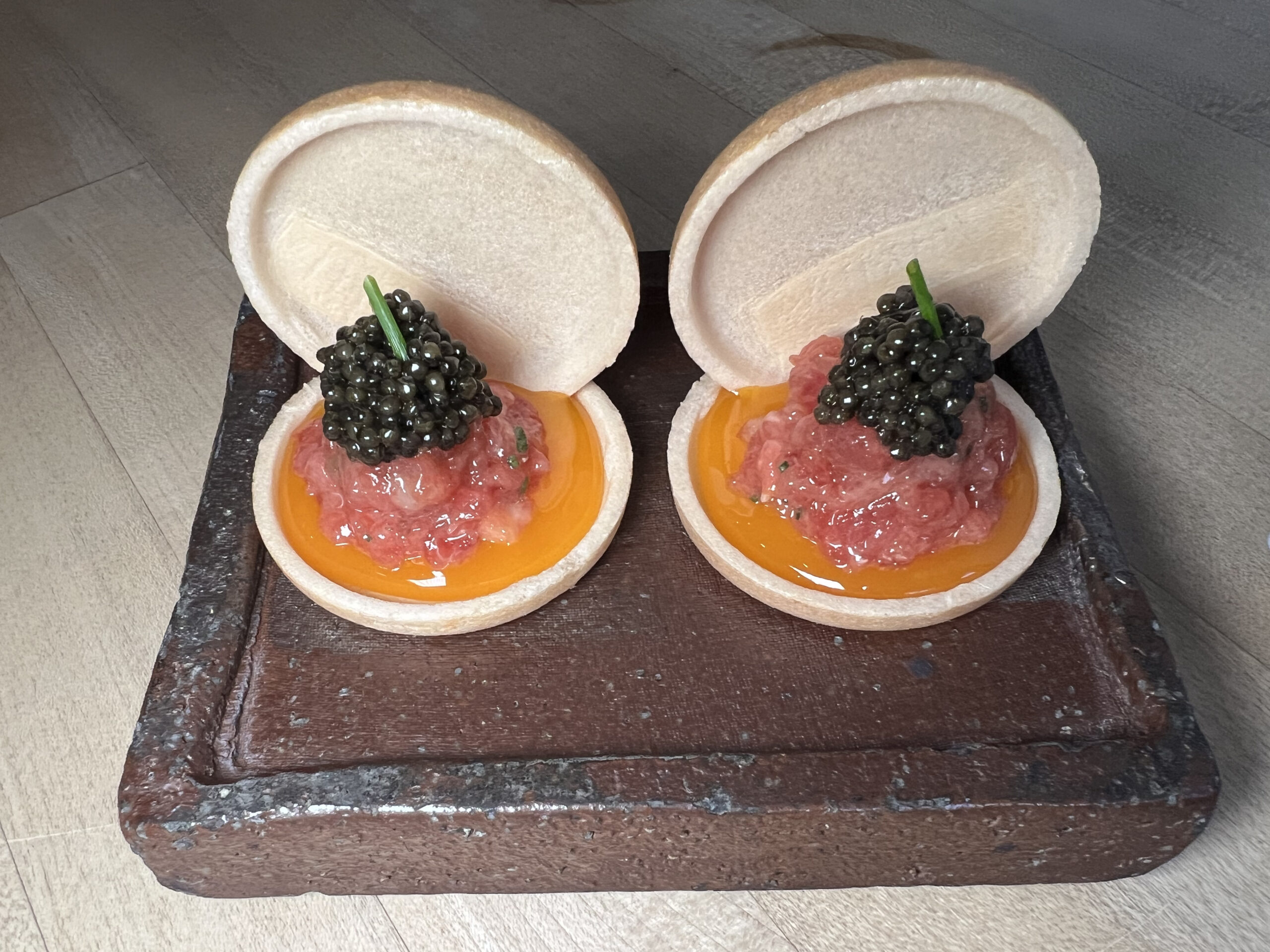
    If you’re celebrating something special, whether it’s an anniversary or a Tuesday, Miro in Kaimuki is the finest of dining on this list. It’s a special occasion restaurant that doesn’t feel the least bit stuffy, with beautifully balanced cocktails and wine pairings. Meals are prix fixe, with many possibilities of add-ons like flank washugyu, toasted brioche topped with curls of uni, and vanilla macarons filled with caviar. Miro also happens to be the self-declared Philadelphia Embassy in Hawai’i, as many of its current and former staffers either hail from Philly or have spent time in the city (Zahav pops up on numerous Miro cooks’ resumés).

    📍 3446 Waialae Ave., Honolulu, Hawaii 96816, 📞 808-379-0124, 🌐 mirokaimuki.com

    Sushi Izakaya Gaku

    Speaking of sashimi, Hawai’i is really close to Japan, so not only do we get a wealth of fish pulled from surrounding waters, but we have an abundance of Japanese seafood flown in regularly. This makes for fantastic (and countless) omakase options, most of which hew to classic Japanese experiences. For a relaxed, island-style omakase or a la carte sushi and izakaya dinner, head to Sushi Izakaya Gaku. Gaku has the softest, silkiest, and lightest tamago, the homemade sweet egg omelet, and all the standard izakaya fare, but also some wild, more unusual specials, like seared sting ray, raw octopus, and thinly sliced beef tongue served over shaved onion with a big squeeze of lemon.

    📍 1329 S. King St., Honolulu, Hawaii 96814, 📞 808-589-1329

    Sashimi platter from Mitch’s Seafood in Honolulu.

    Mitch’s Fish Market and Sushi Bar

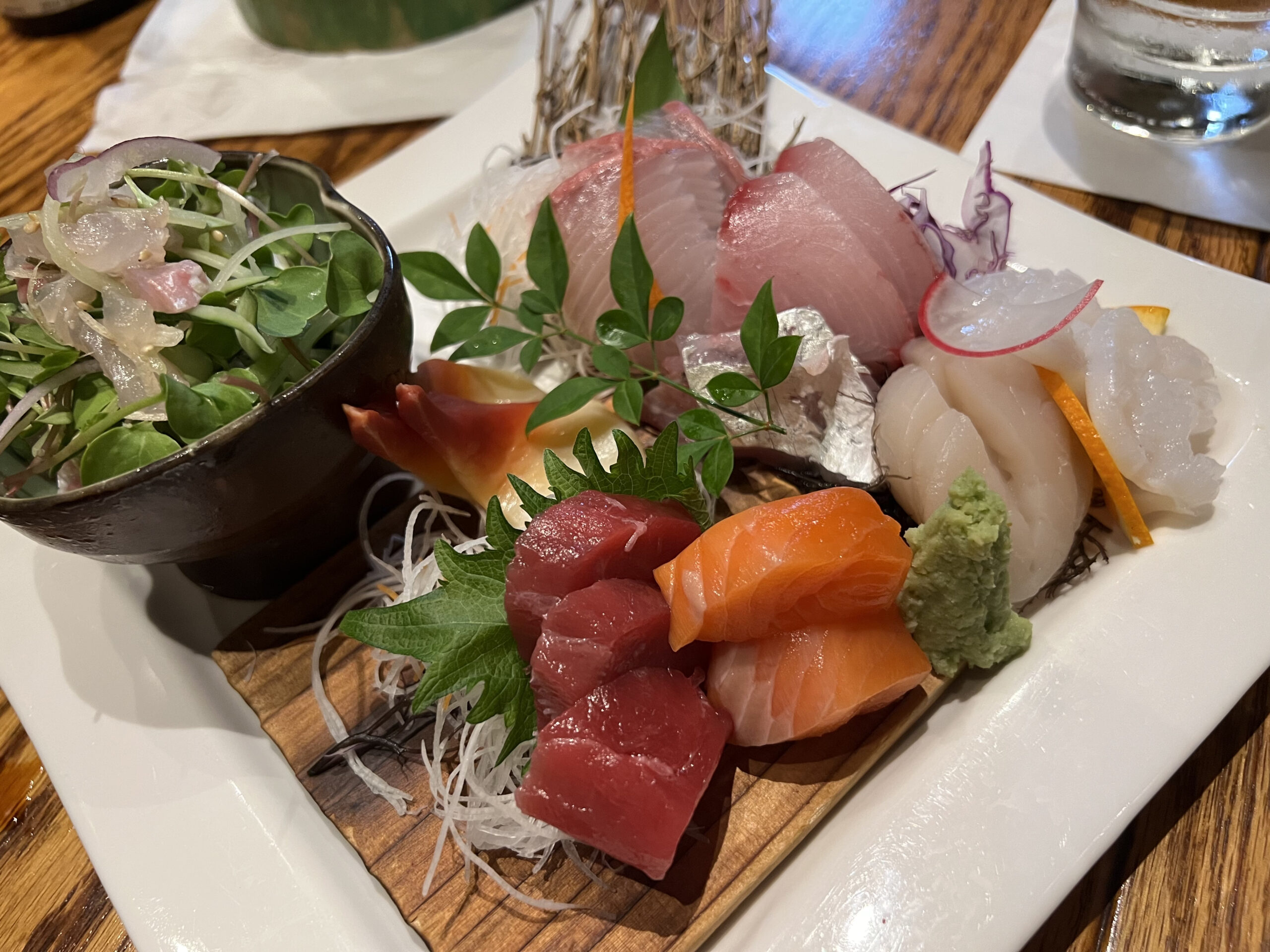
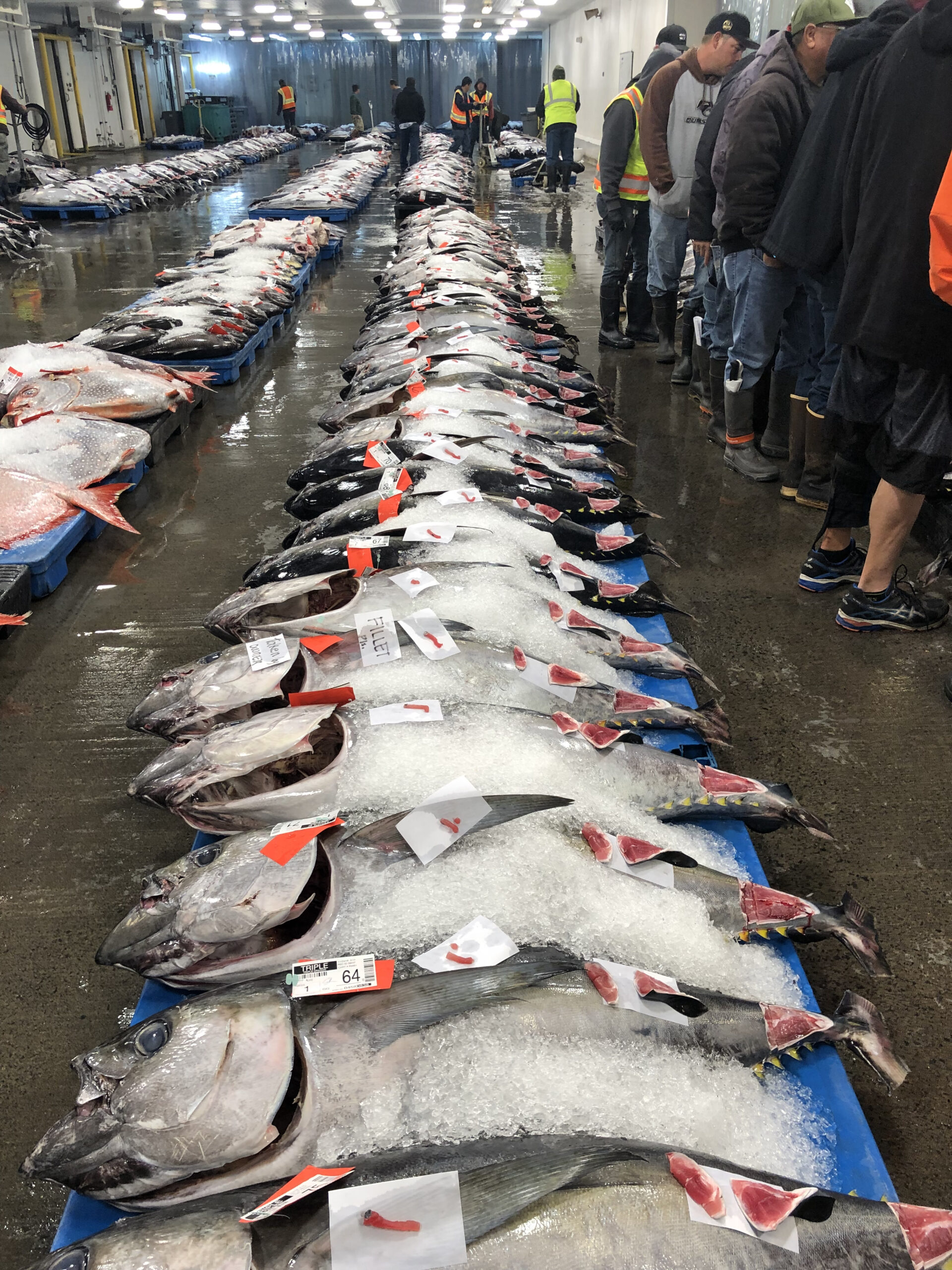
    Located right on the pier, where fishing boats dock and unload their ahi for the Honolulu Fish Auction, Mitch’s Fish Market and Sushi Bar is an unbelievable option for generous cuts of sashimi, hefty chirashi bowls piled with shrimp, ahi, yellowtail, and tamago. It’s small (make a reservation), casual, and perpetually proud of their most famous patron, President Barack Obama.

    📍 524 Ohohia St., Honolulu, Hawaii 96819, 📞 808-837-7774, 🌐 mitchssushi.com

    Tempura Kiki set meal, inside the Stix Asian Food Hall.

    Stix Asia Food Hall

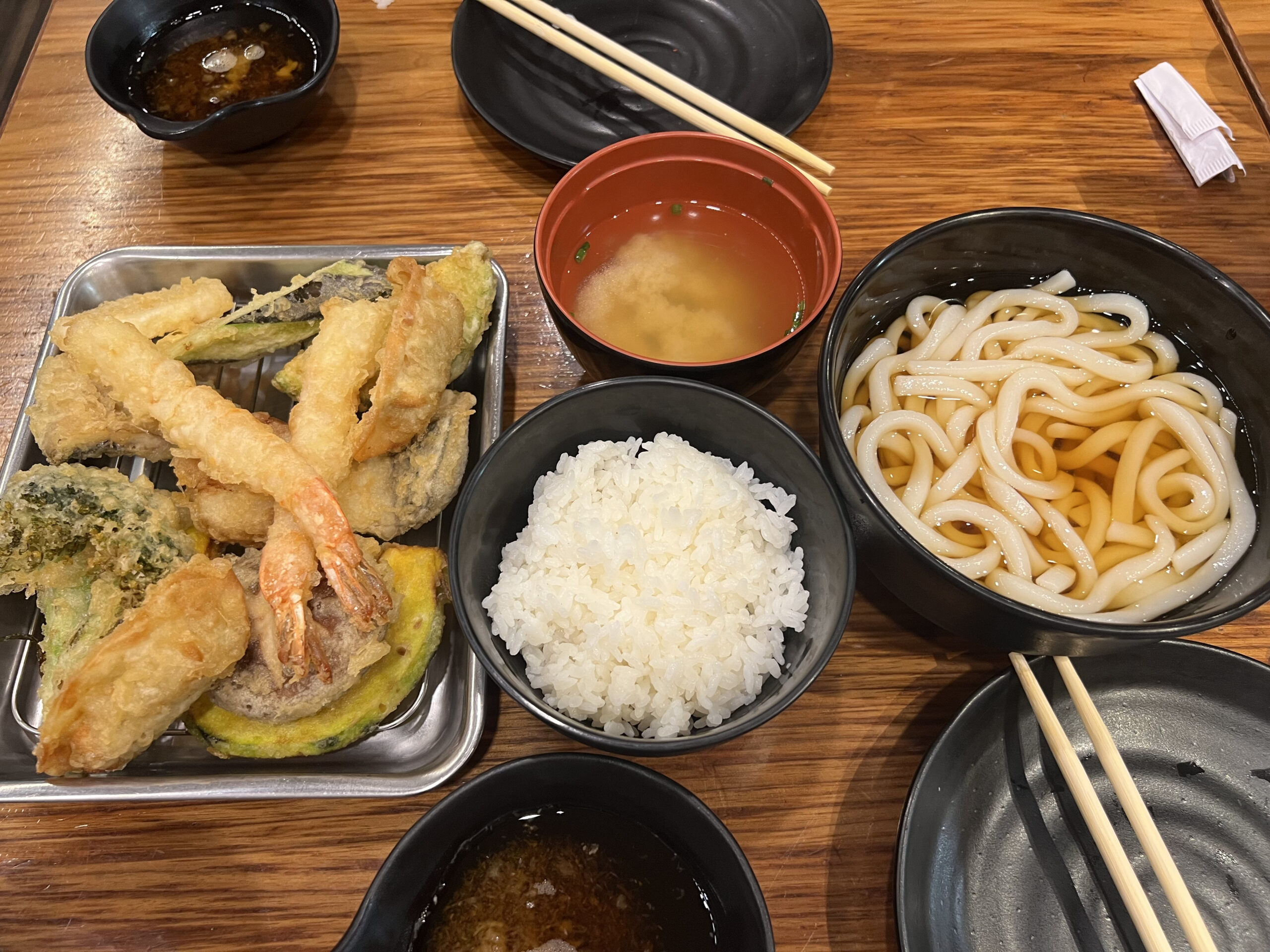
    In addition to ready access to Japanese ingredients, we have practically all the hot Japanese chain restaurants. like Marugame Udon, Han No Daidokoro (which specializes in fresh wagyu — usually, when wagyu is exported, it’s frozen), and many others packed into Stix Asia, a Japanese food hall. Two of my favorites inside Stix Asia are Tempura Kiki for its avocado tempura and bowls of udon (no relation but they did offer me a discount because of my name), and Nanamusubi, which churns out omusubi made with specialty, heritage Japanese grains, and stuffed with an array of fish salads and pickled seaweeds.

    📍 2250 Kalākaua Ave., Lower Level 100, Honolulu, Hawaii 96815, 📞 808-744-2445, 🌐 stixasia.com

    Breakfast bruschetta from Koko Head Cafe.

    Koko Head Cafe

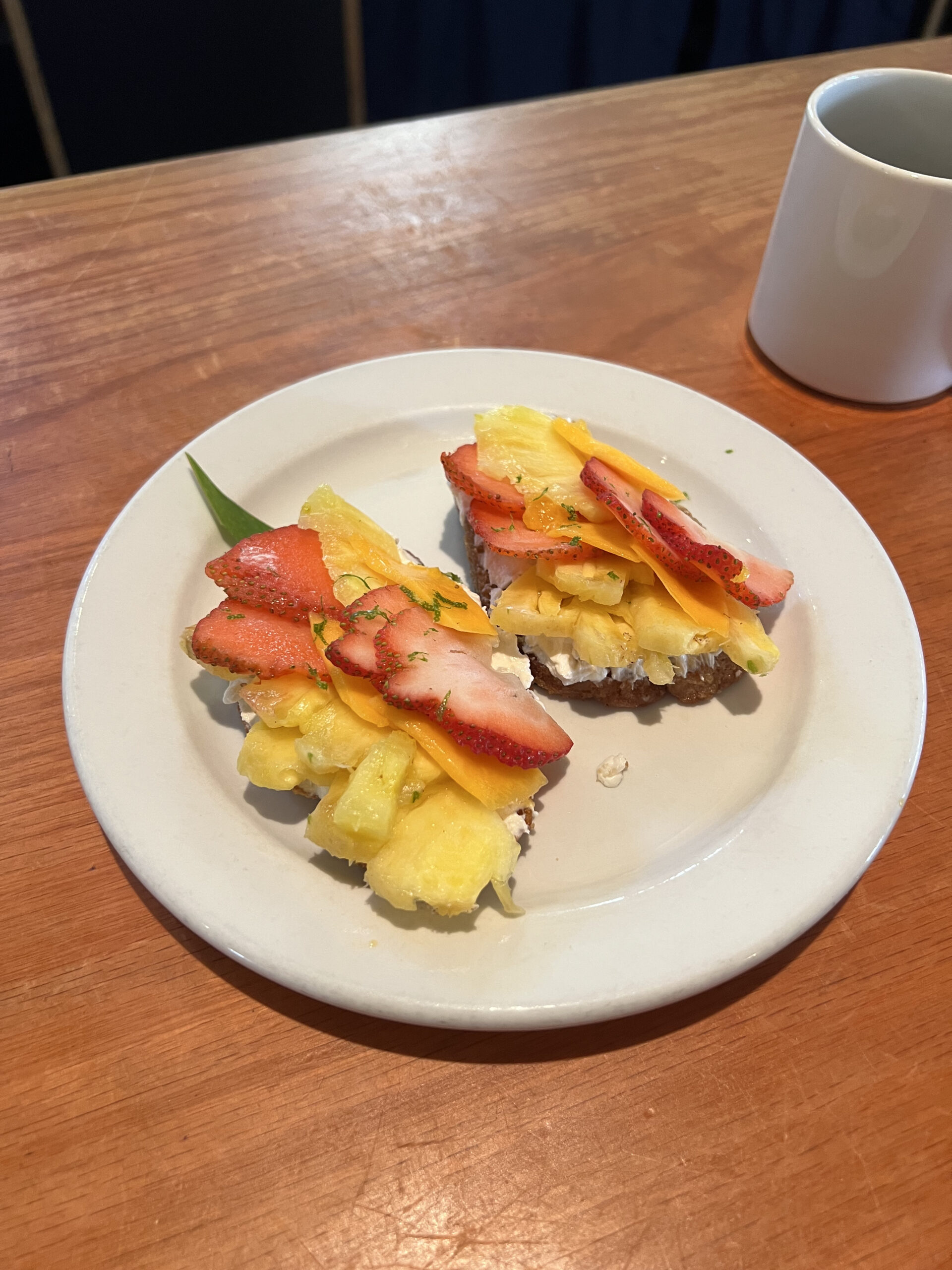
    New York transplant and Top Chef competitor Lee Anne Wong pretty much single-handedly made brunch a craze in Honolulu a decade ago. Her Koko Head Cafe has since become a classic for eggs scrambled with local ingredients and enormous, indulgent bowls of congee topped with croutons. Hawai’i and Japan also seem to have a restaurant exchange system; the cafe has also opened locations in Japan. Don’t miss their poke omelets, and my favorite breakfast item, rusk spread with yogurt and fresh local fruit.

    📍 1120 12th Ave. #100, Honolulu, Hawaii 96816, 📞 808-732-8920, 🌐 kokoheadcafe.com

    Fish sauce chicken wings at Pig and the Lady

    The Pig and the Lady

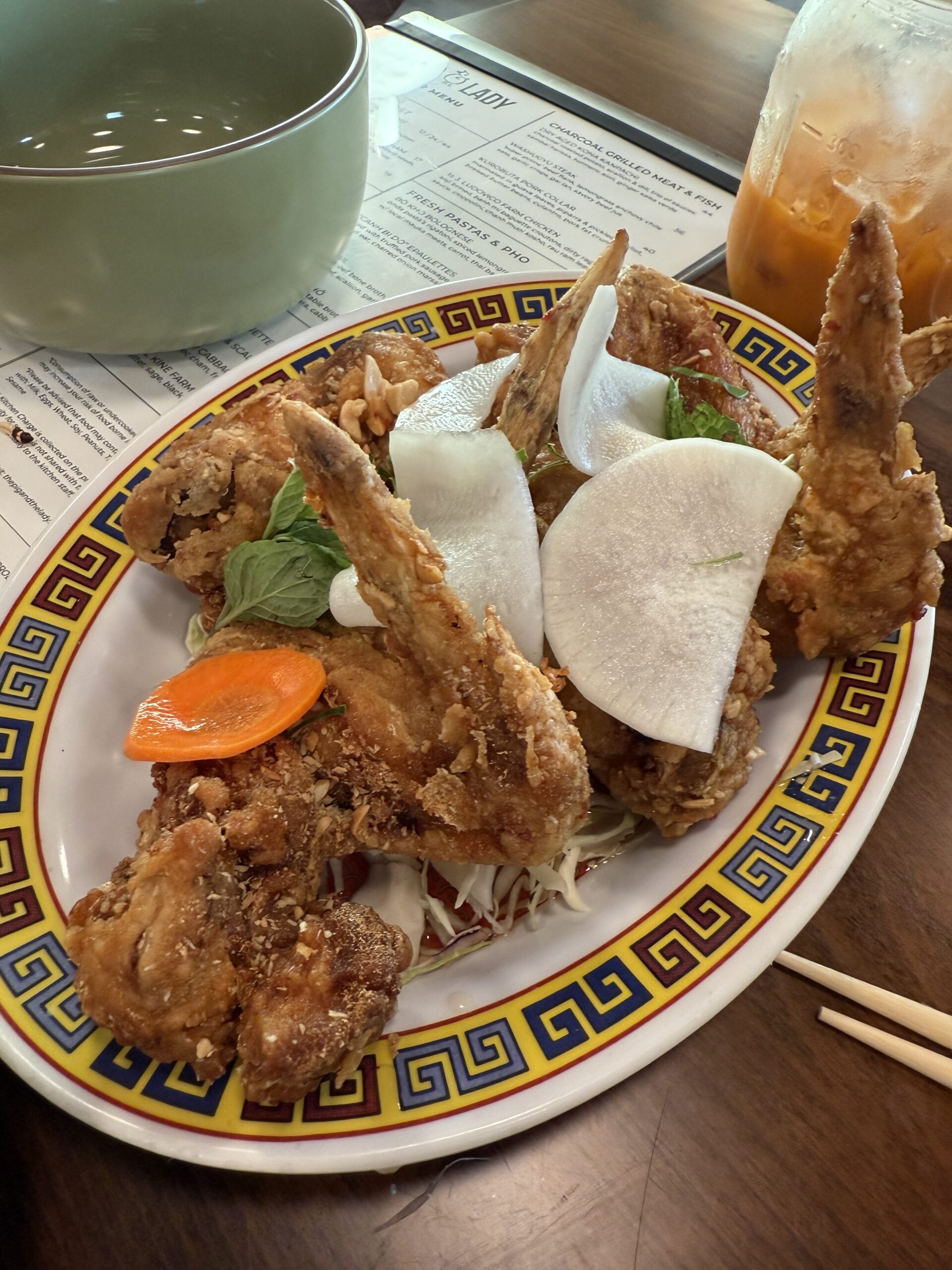
    The Pig and the Lady is one of those chef-driven destination restaurants that appear on many a national list. It has gone through a couple iterations, and just opened a new location in Kaimuki that will more than scratch your itch for excellent Vietnamese food, if you can’t live without your Gabriella’s Vietnam fix. But there are unmistakable Hawaiian touches like chile pepper water-doused oysters, country ham served with persimmons, and banh xeo made with pa’i’ai or pounded taro. Vietnamese food like this exists nowhere else on the planet.

    📍 3650 Waialae Ave., Honolulu, Hawaii 96816, 📞 808-585-8255, 🌐 thepigandthelady.com

    Spring rolls from the Kapiolani Community College Farmers’ Market.

    Kapiolani Community College Farmers Market

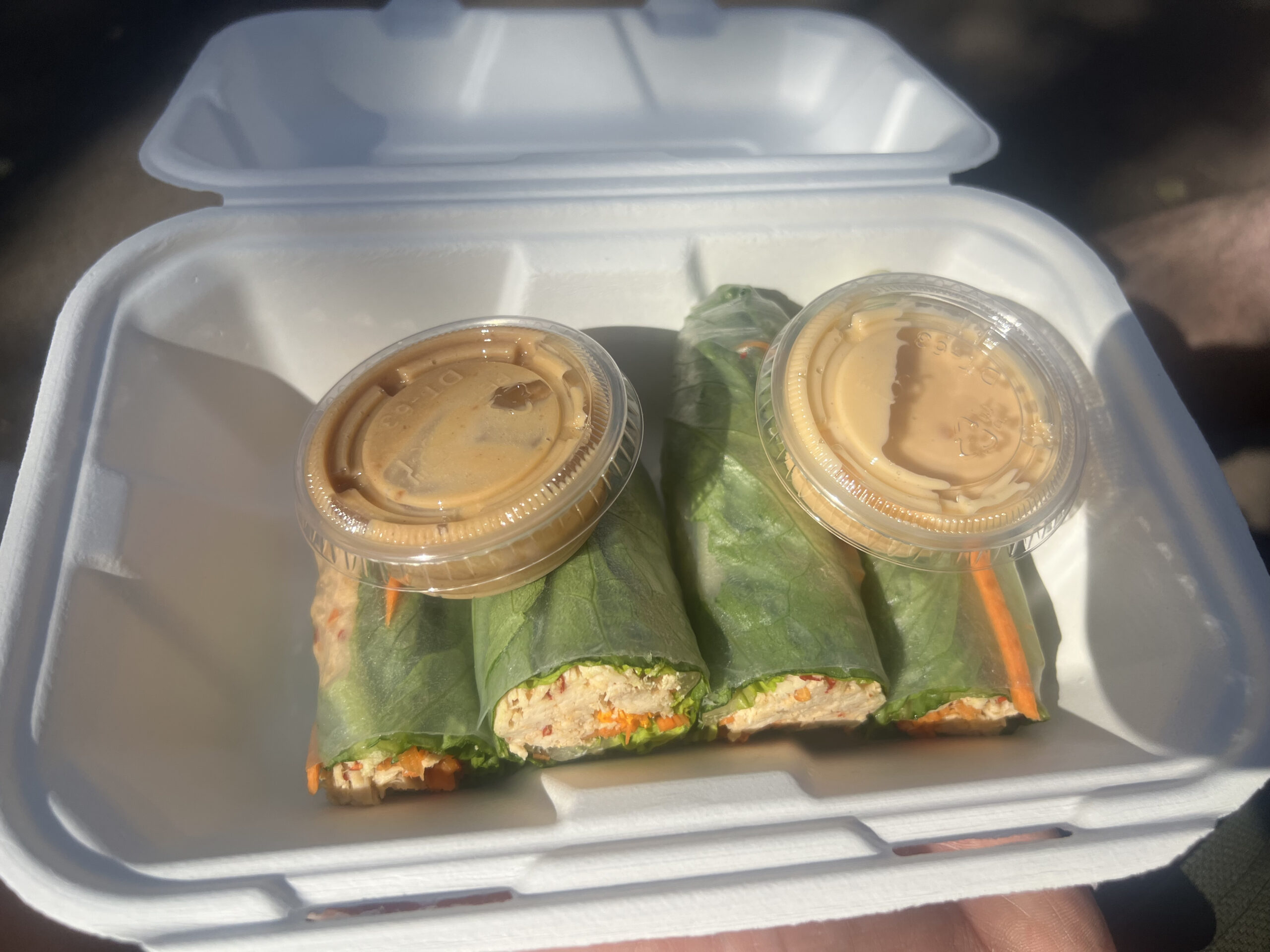
    The Pig and the Lady also sets up a stand at the Kapiolani Community College Farmers Market on Saturdays from 7:30 to 11 a.m., serving pho French dips, lemongrass chicken banh mis, bun bowls with a vermicelli base, and curry rice plates. The rest of KCC Farmers Market will knock your socks off with its array of prepared foods, fresh fruit juices, coffee stands, vendors hacking into fresh coconuts with machetes, and abundance of tropical produce, from papayas to ‘ulu or breadfruit. If you’re walking up to the Diamond Head trail from Waikiki, you’ll pass it near the trailhead, but build in time to stop for a siphon coffee at Ars Cafe for a cup that rivals one from Ray’s Cafe and Tea House in Philly.

    📍 Parking Lot B, 4303 Diamond Head Rd., Honolulu, Hawaii 96816, 🌐 hfbf.org/farmers-markets/kcc

    The array of musubi at Musubi Iyasume in Waikiki.

    Musubi Iyasume

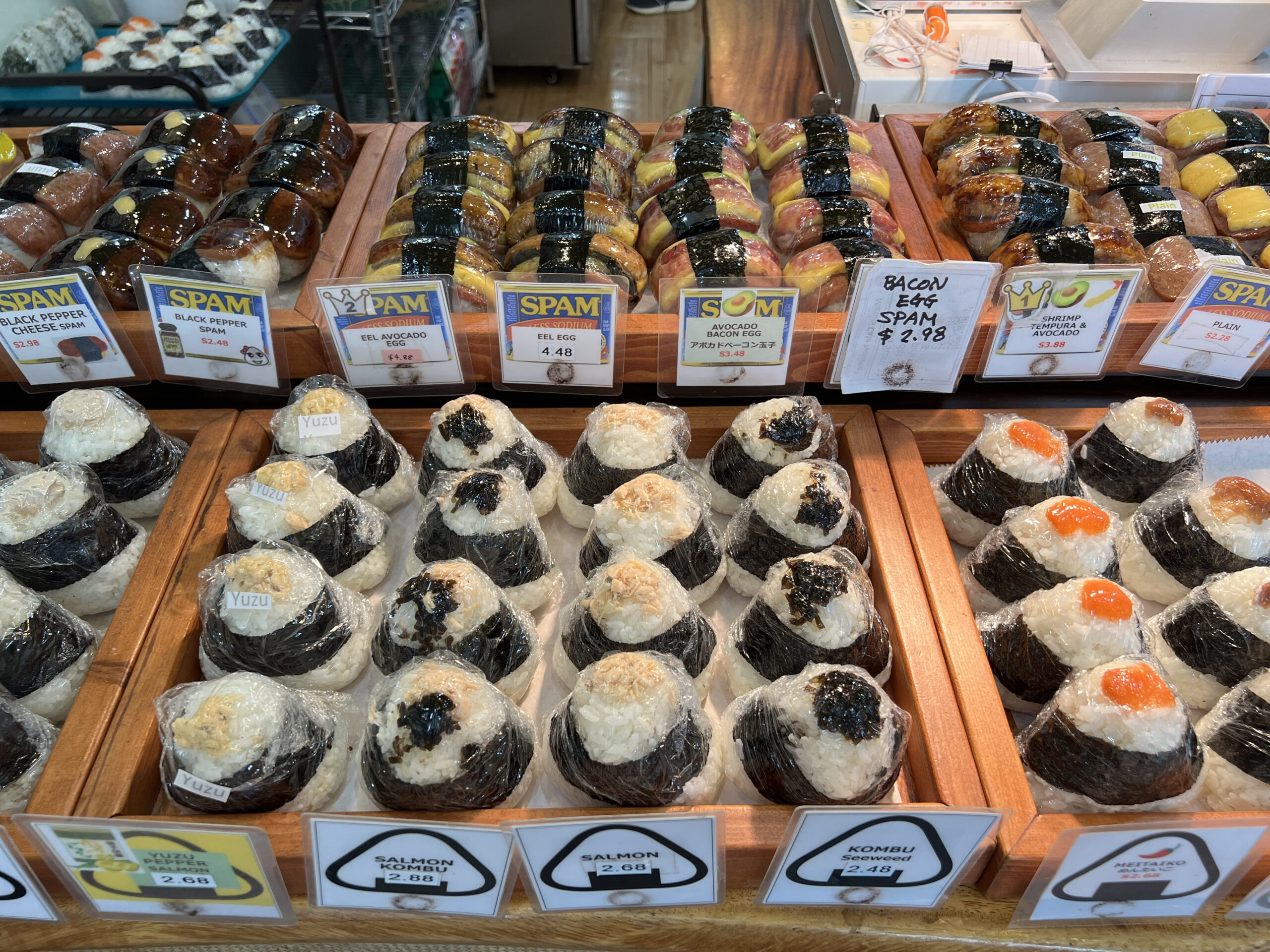
    Many of Waikiki’s 24-hour diner grand dames have closed at this point, but thankfully, my favorite breakfast in Waikiki doesn’t involve sitting down. Musubi Iyasume has multiple locations, serving classic Spam musubis, as well as ones that pair avocado, eel, and tamago with Spam and rice. They have seven locations, but I love the one at Waikiki Beach Walk the most because it has the longest opening hours and can scratch your musubi cravings from 7 a.m. to 9 p.m. every day.

    📍 227 Lewers St., Honolulu, Hawaii 96815, 📞 808-383-3442, 🌐 iyasumehawaii.com

    Aloha Sugarcane Juices

    Wash down your breakfast musubi with one of the best deals in Waikiki: a sugarcane juice from the stationary food truck Aloha Sugarcane Juices, which you can get spiked with juicy, local calamansi, or blended with mangoes and papayas.

    📍 138 Uluniu Ave., Honolulu, Hawaii 96815

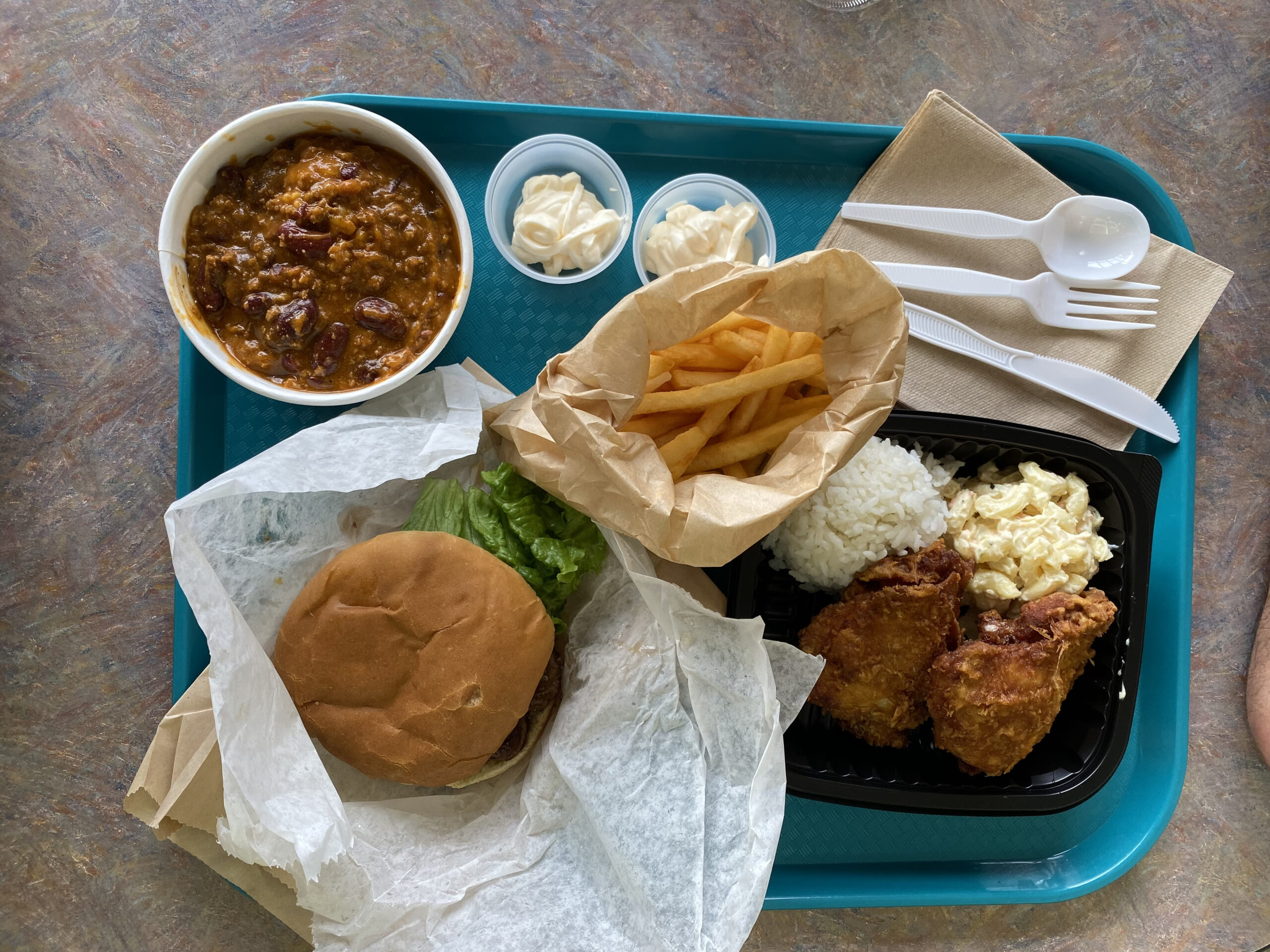
    Zippy’s chili, teri burger, fries, and mini fried chicken plate.

    Zippy’s

    Head over to one of many locations of Zippy’s (a fast food diner chain that we love as dearly as Philadelphians love Wawa) to get some of the best of the island’s fried chicken or to pick up a bento box to bring on one of Oahu’s legendary hikes. Zippy’s is also famous for their chili, which will require you to pick a stance when you order: pro-kidney beans or no-kidney beans. While Zippy’s locations are scattered throughout Oahu (and also Las Vegas, considered Hawai’i’s ninth island), I implore you to go to the one in Kapahulu, so you will be within walking distance of the legendary Leonard’s Malasadas.

    📍 601 Kapahulu Ave., Honolulu, Hawaii 96815, 📞 808-733-3725, 🌐 zippys.com

    Alicia’s Market

    Delis in Hawai’i don’t resemble anything that might be called a deli in Philadelphia. Cold cases are filled with vats of fresh fish poke as opposed to deli meats, and Alicia’s Market mixes up some of Hawai’i’s best pokes (though honestly, unless you’re going to one of those newfangled build-a-bear style poke joints, it’s hard to go wrong).

    📍 267 Mokauea St., Honolulu, Hawaii 96819, 📞 808-841-1921, 🌐 aliciasmarket.com

    Foodland Farms

    If you’re committed to staying near Waikiki, Ala Moana Shopping Center is a short walk and pretty unavoidable if you’re a tourist. Thankfully, Foodland Farms opened adjacent to the mall eight years ago, and it has only gotten better over the years. It’s far more than just a grocery store, but a one-stop shop for great poke, edible island souvenirs (there’s a huge selection of Hawaiian chocolate, sweets, and coffee), and bento boxes to take with you on hikes. There’s also a wine bar.

    📍 1450 Ala Moana Blvd., Honolulu, Hawaii 96814, 📞 808-949-5044, 🌐 shop.foodland.com

    Inside the Honolulu Fish Auction

    Hawai’i has a serious sweet tooth

    If you think Philly’s water ice is good, wait till you taste shave ice. Forget about tiny little paper cups of flavored ice, in Hawai’i, our shave ice (no “d” in “shave”) is a fluffy, lightly compacted pile of snow that will be quite a bit larger than your head.

    Shimazu Shave Ice

    Shimazu has been shaving ice for over 70 years and decorating the globes with stripes of tamarind, strawberry, passionfruit, mango, li hing mui (salty preserved plum), and many other syrups. Most shave ice shops will insist upon you consuming their shave ice outside.

    📍 3111 Castle St., Honolulu, Hawaii 96815, 📞 808-782-2369, 🌐 shimazushaveicekapahulu.com

    Asato Family Shop

    For something more akin to water ice, Asato Family Shop painstakingly makes small batches of sherbet inspired by the nostalgic flavors of crack seed stores, Hawai’i’s throwback snack shops filled with jars of pickled mango, dried seeds, and raisin-like apricots.

    📍 1306 Pali Hwy., Honolulu, Hawaii 96813, 🌐 asatofamilyshop.com

    Leonard’s Bakery

    Need a doughnut? Malasadas, which are yeasty, pillowy Portuguese doughnuts without holes and tossed in sugar, are far superior to any doughnut. Don’t be fooled by “bakery” being in Leonard’s name. These malasadas are fried. Go get one at Leonard’s original location (they also have trucks scattered throughout Oahu), and start with their original malasada, with no filling and a sugar coating, then move on to ones stuffed with haupia, or coconut pudding.

    📍 933 Kapahulu Ave., Honolulu, Hawaii 96816, 📞 808-737-5591, 🌐 leonardshawaii.com

    The Local General Store

    Now that you’ve made it to this point in the guide, you’ve likely consumed a lot of rice and hopefully, poi. If you need your fresh baked bread fix, Local General Store has been garnering a lot of recent attention. It’s on par with Philly’s Lost Bread and Mighty Bread, but is a combination bakery and butcher shop, so you can stop by for a pastry and a porchetta, and perhaps, a slice of their housemade Spam.

    📍 3458 Waialae Ave., Honolulu, Hawaii 96816, 📞 808-777-2431, 🌐 thelocalgeneralstorehi.com

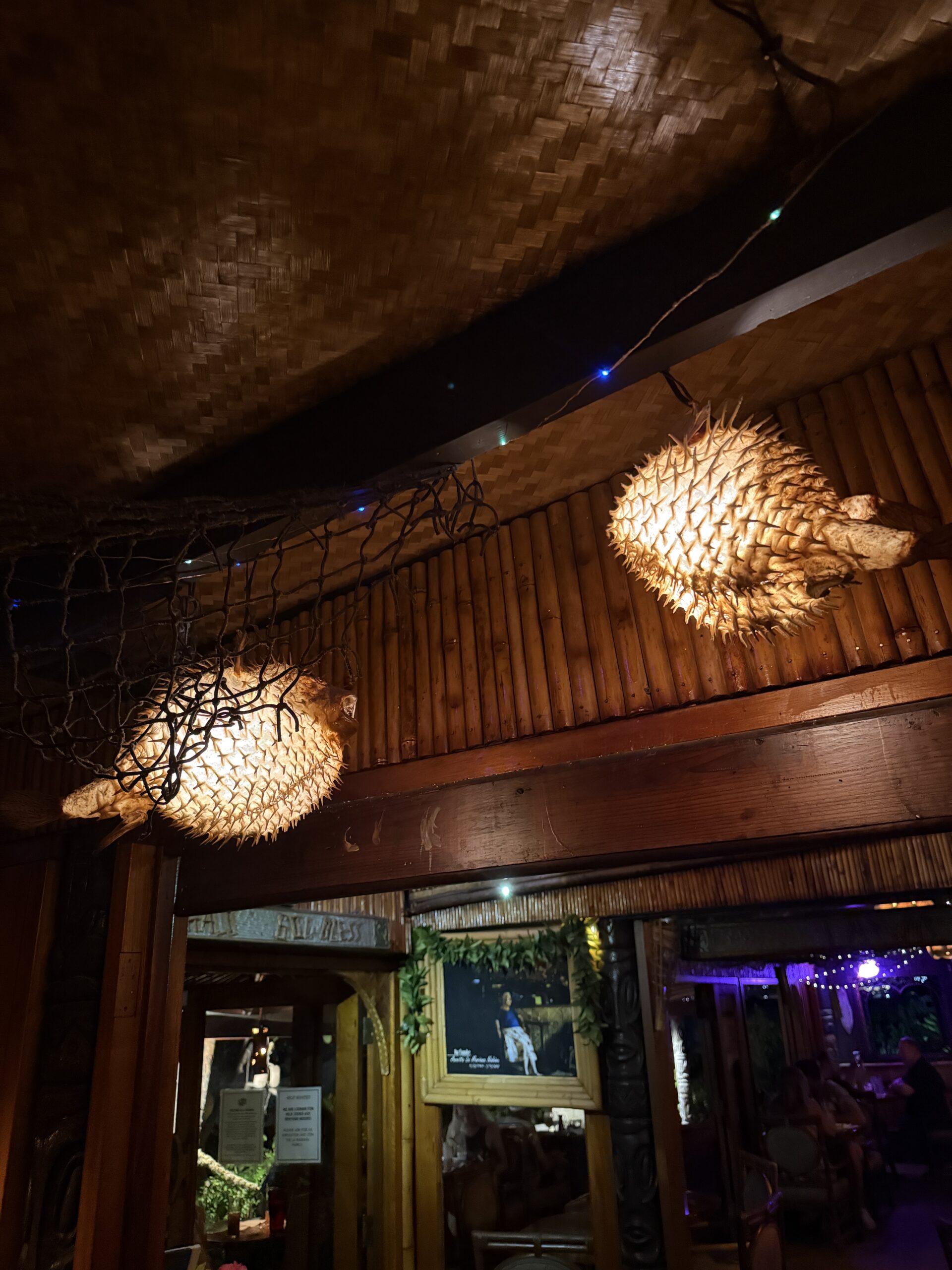
    Blowfish lamps at La Mariana Sailing Club in Honolulu.

    At some point, you’re going to want to unwind with a cocktail

    La Mariana Sailing Club

    Yes, it’s hard to get around Honolulu without encountering a mai tai, but if you’re a fan of kitsch and want to visit one of Oahu’s last remaining old school tiki bars, La Mariana Sailing Club leans hard into the theme. They have the vintage tiki mugs, the glass buoys hanging from the ceiling, the dangerously strong drinks. La Mariana is also near the airport if you need one last hurrah before passing out on the plane home.

    📍 50 Sand Island Access Rd., Honolulu, Hawaii 96819, 📞 808-848-2800, 🌐 la-mariana-sailing.club

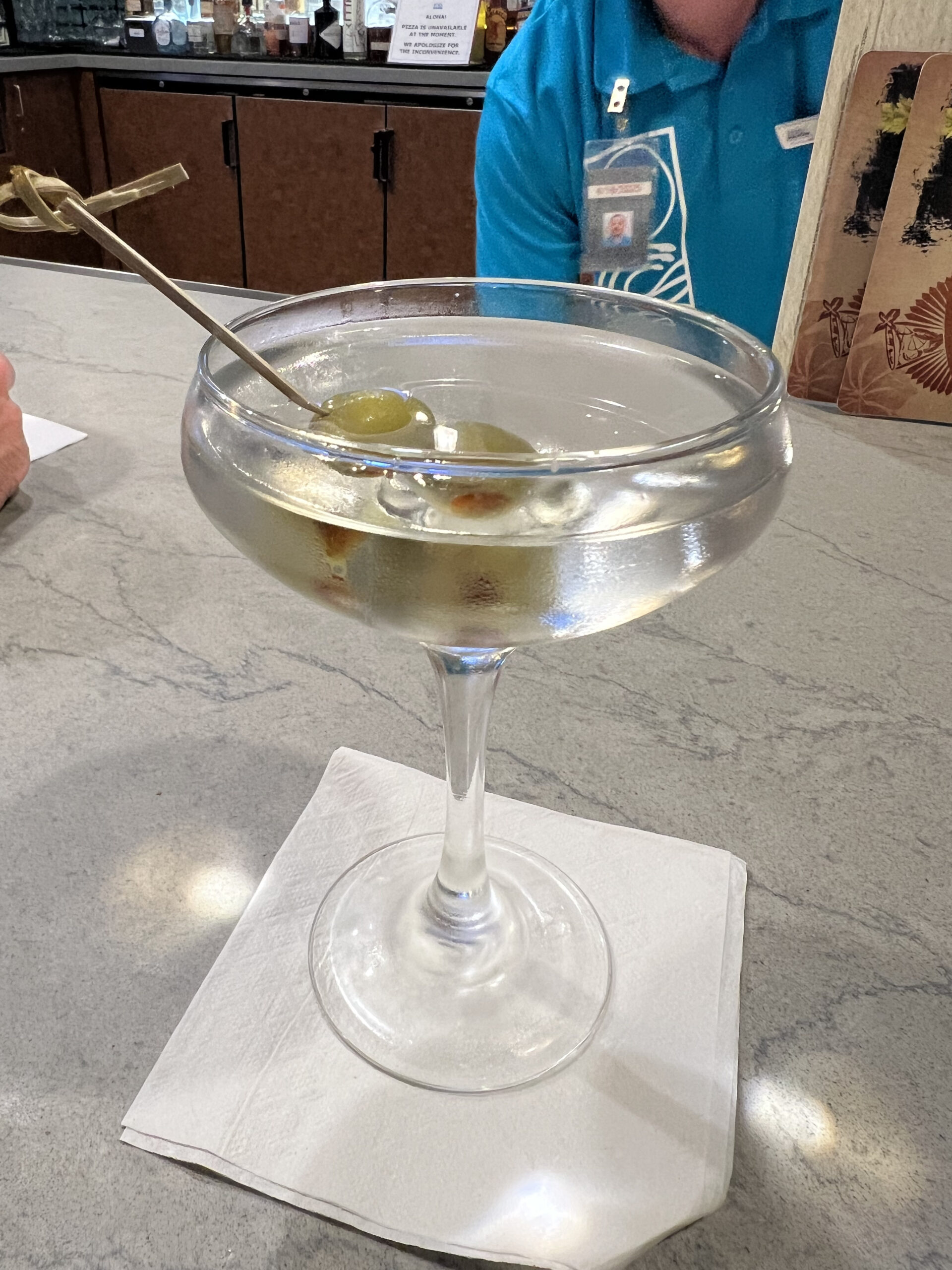
    A martini from Podmore in Honolulu.

    Podmore

    But if you’re looking for refined fancy cocktails, you’ll find them at Podmore in Chinatown, which is fond of touches like yogurt-washed gin, heady spices, and a very good dry martini shaken with yuzu kosho.

    📍 202 Merchant St., Honolulu, Hawaii 96813, 📞 808-521-7367, 🌐 barpodmore.com

    Wild Orange

    For artful, Asian-inflected cocktails and vegan bar snacks, head to the Wild Orange speakeasy, hidden inside Hawaiian Brian’s and accessed by opening up the door to an Aloha Maid juice vending machine.

    📍 1680 Kapiolani Blvd., Honolulu, Hawaii 96814, 📞 808-892-6966, 🌐 wildorangehi.com

    Giovanni’s Shrimp Truck

    Restaurants for which you need a car and which are worth the drive

    If you want to get out of Waikiki, you need to rent a car. The restaurants in this portion of the list are technically outside of Honolulu, but easily accessible with a car if you’re staying in Honolulu. For context, Haleiwa is the farthest point from Waikiki and is 33 miles across Oahu, which is basically like driving to Bucks County from Center City.

    Squid lu’au and handrolls from Masa and Joyce.

    Masa and Joyce Okazuya

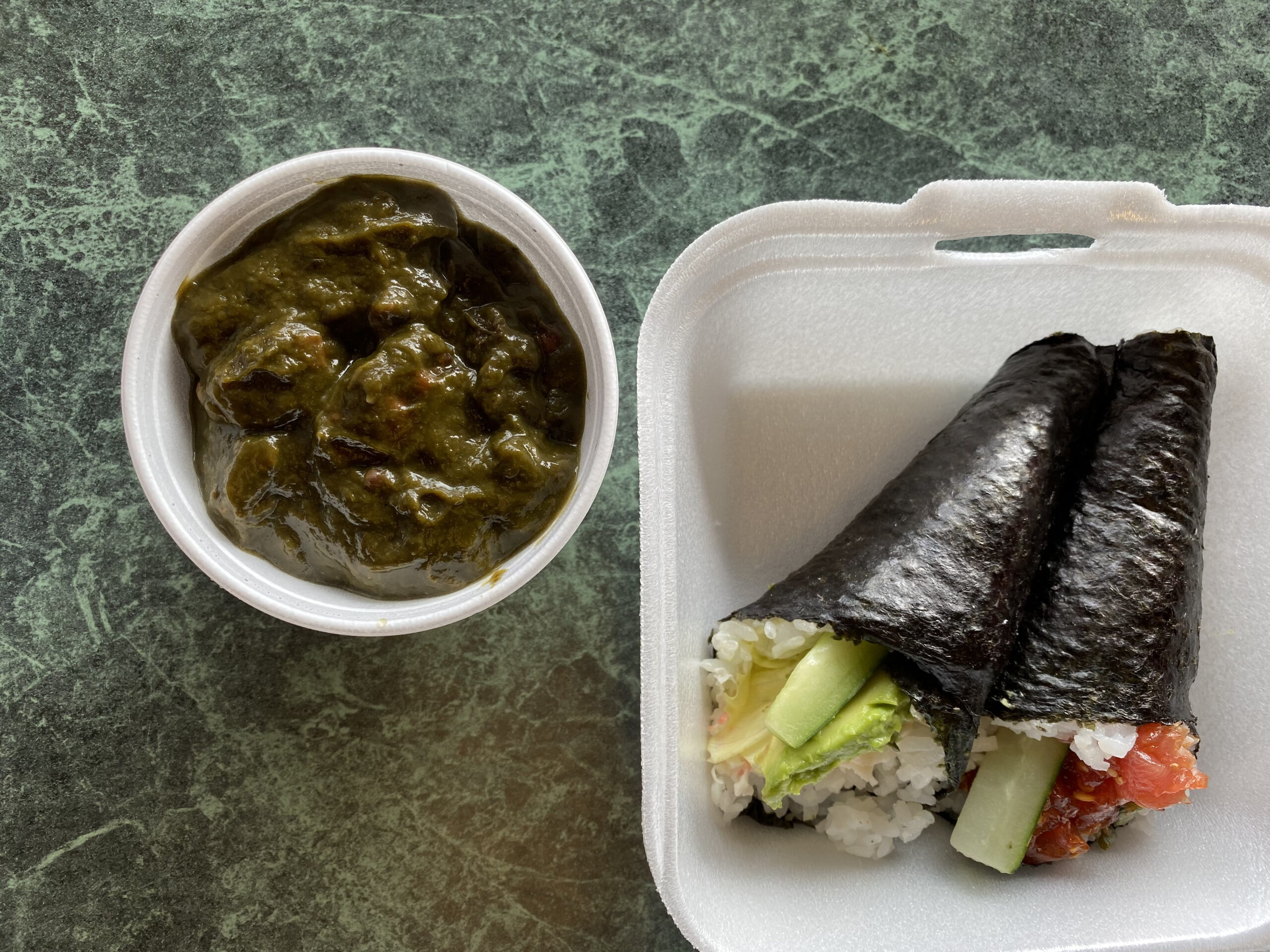
    Masa and Joyce in Kaneohe is an old school okazuya, or casual Japanese lunch counter, that makes one of Oahu’s best versions of squid lu’au as well as spectacular hand rolls. It is usually my first stop after getting off the plane, their squid lu’au is so savory and mesmerizing.

    📍 45-582 Kamehameha Hwy., Kaneohe, Hawaii 96744, 📞 808-235-6129, 🌐 masaandjoyce.com

    Waiahole Poi Factory

    Waiahole Poi Factory is also in Kaneohe, but on your way to the North Shore if you’re taking the scenic route around the eastern side of the island. In this factory that has been operating over a century, you can pick up poi that’s both scaled up for larger production (steamed taro root passed through a grinder until it reaches a smooth consistency) and hand-pounded, but more importantly, dig into some of Oahu’s best Hawaiian food, like lau lau (ti leaf wrapped bundles of pork and butter fish) and a gingery beef lu’au.

    📍 48-140 Kamehameha Hwy., Kaneohe, Hawaii 96744, 📞 808-239-2222, 🌐 waiaholepoifactory.com

    Shiro’s Saimin Haven

    Ramen is great and all (and you’ll find a wealth of ramen shops in Honolulu) but in Hawai’i, the classic noodle soup dish is saimin, with a lighter broth than most ramens, developed by both Chinese and Japanese laborers over the years. Shiro’s Saimin Haven is a classic saimin spot that serves vast bowls of fresh noodles sunk into a mild, lightly salted dashi that you can dress up with dozens of options for sides, from Filipino-style pork adobo to lau lau to Spam to roast duck. Everything here is good. There are two locations, in Aiea and Ewa Beach, but the Aiea one is the one that I’ve been going to for years.

    📍 98-020 Kamehameha Hwy. #109, Aiea, Hawaii 96701, 📞 808-488-4834, 🌐 shiros-saimin.com

    Tanioka’s Seafoods and Catering

    But if you’re heading in the direction of Ewa Beach, stop in Waipahu and pick up poke, a pupu or sashimi platter, and or a mochiko chicken bento from longtime neighborhood seafood spot Tanioka’s. This is a go-to takeout spot if you need to feed a lot of people at parties or if you want to grab a bento to eat after surfing.

    📍 94-903 Farrington Hwy., Waipahu, Hawaii 96797, 📞 808-671-3779, 🌐 taniokas.com

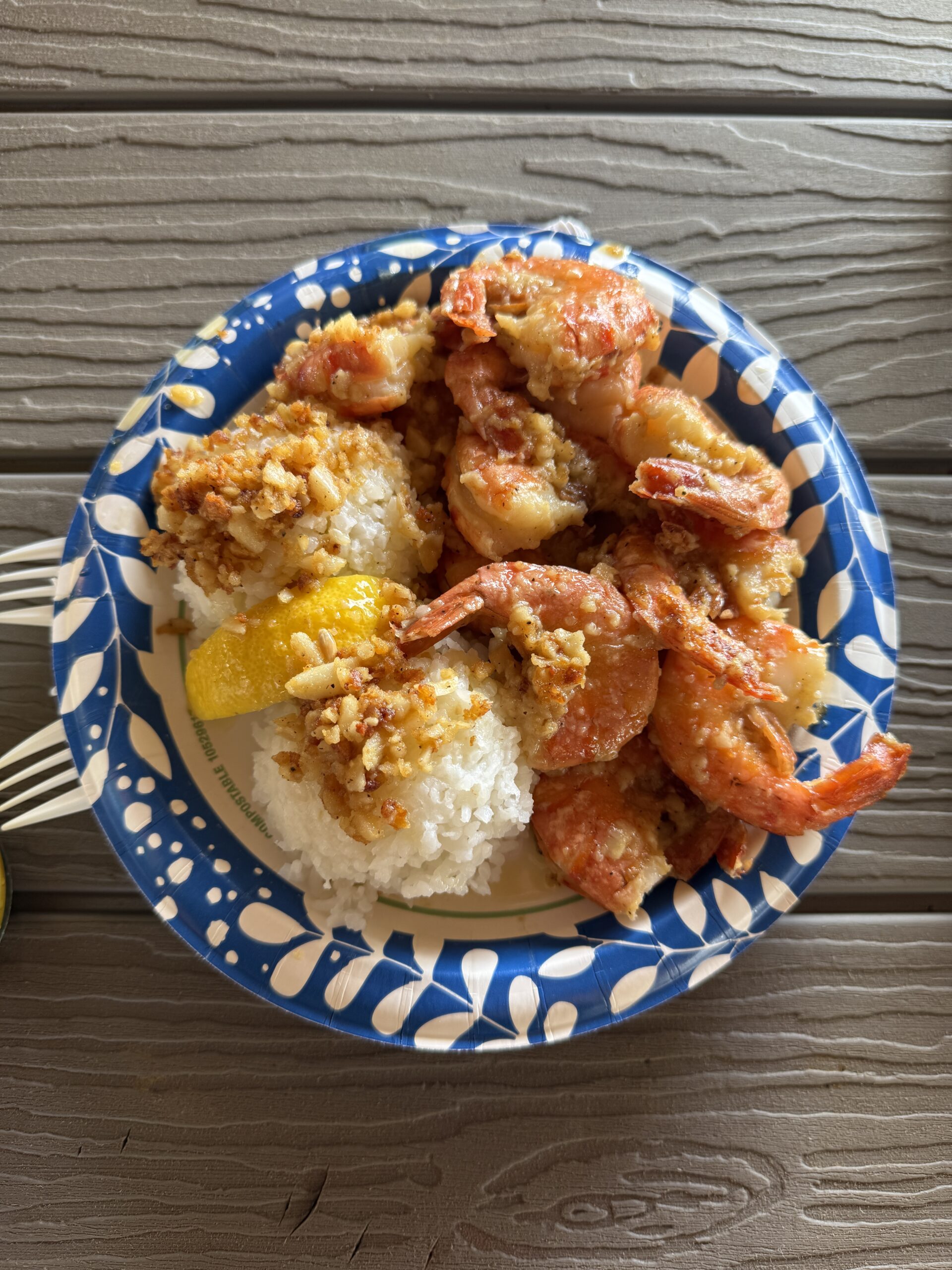
    Shrimp scampi plate from Giovanni’s Shrimp Truck.

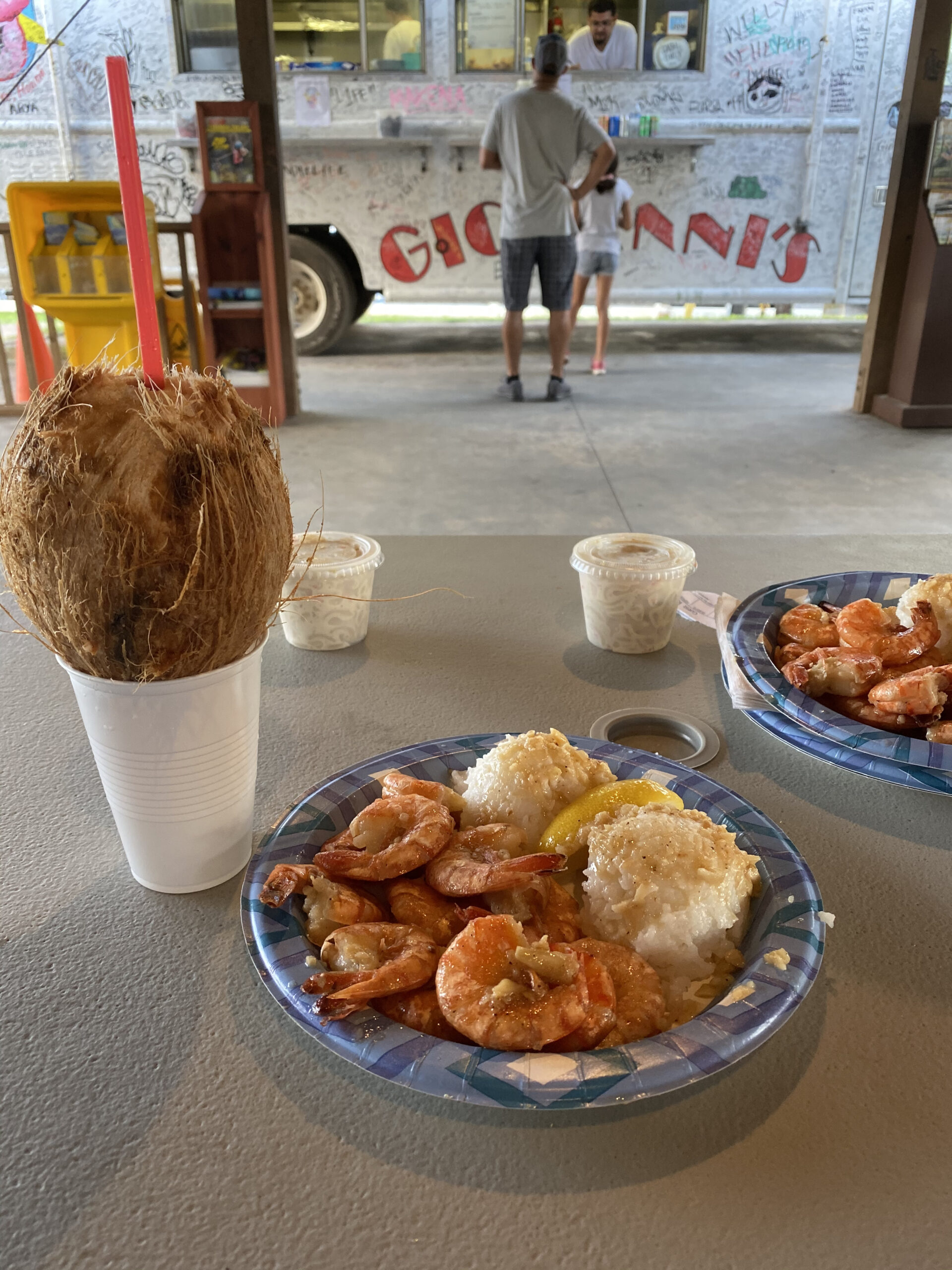
    Giovanni’s Shrimp Truck

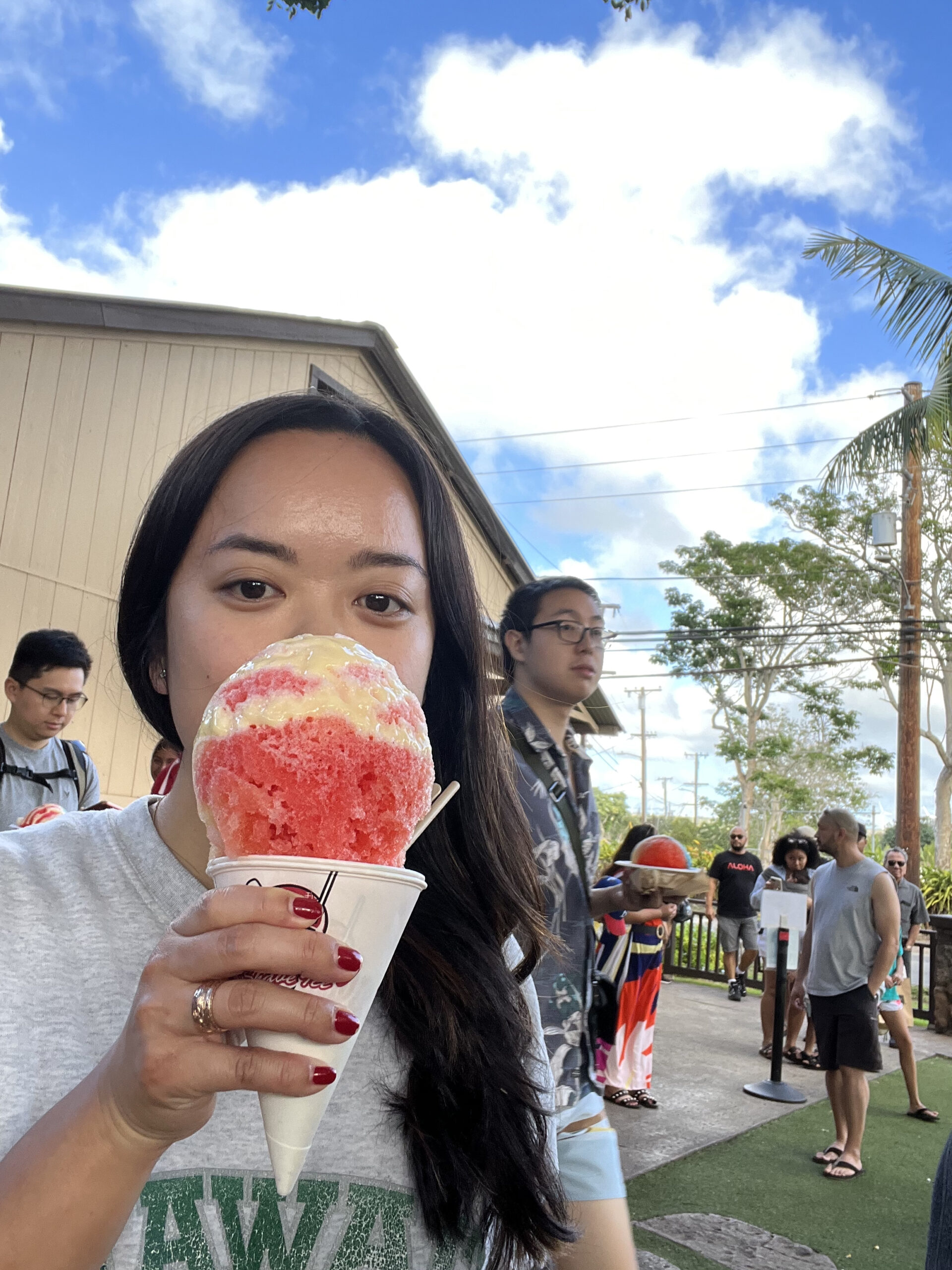
    The closest food rivalry in Hawai’i, akin to that between Pat’s and Geno’s, is between the shrimp trucks up at North Shore, which are parked close to the shrimp farms they source from. Giovanni’s, a white truck covered in the signatures of many happy visitors, even has a connection to our parts, as its owner Troy Nitsche is a Pennsylvania native. Don’t leave Oahu without digging into a plate of Giovanni’s super garlicky and buttery shrimp scampi, sucking the shells dry, along the essential sides of rice and macaroni salad. Near Giovanni’s, in Haleiwa, stop in to Matsumoto Shave Ice to complete your North Shore experience.

    📍 56-505 Kamehameha Hwy., Kahuku, Hawaii 96731, 📞 808-293-1839, 🌐 giovannisshrimptruck.com

    The author enjoying shave ice from Matsumoto Shave Ice in Haleiwa.
  • The best things we ate this week

    The best things we ate this week

    Red shakshuka at Café La Maude

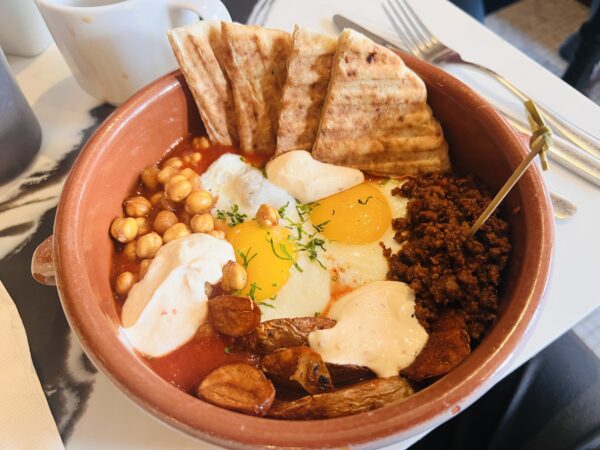
    There’s a whole lotta shakshuka going on at Café La Maude, Nathalie and Gabi Richan’s snug, perpetually busy French-Lebanese bruncherie in Northern Liberties. In fact, the café offers two varieties of the comforting sunny-side-up-egg-topped dish that traces its roots to Amazigh (also known as the Berbers of North Africa). The red shakshuka, more prevalent on local menus, floats beef sausage, crispy chickpeas, pesto, sliced fingerling potatoes, and harissa labneh atop a rich, spiced tomato sauce studded with onions and peppers. Café La Maude’s green version sits on the opposite side of the color wheel: green tomatoes, spinach, kale, and green fava beans, plus sweet potatoes and fried cauliflower, with a drizzle of carrot tahini sauce and a sprinkle of toasted almonds. Budgeting your pita consumption is essential so you can be sure to get every drop of sauce.

    Café La Maude, 816 N. Fourth St., 267-318-7869, cafelamaude.com

    — Michael Klein

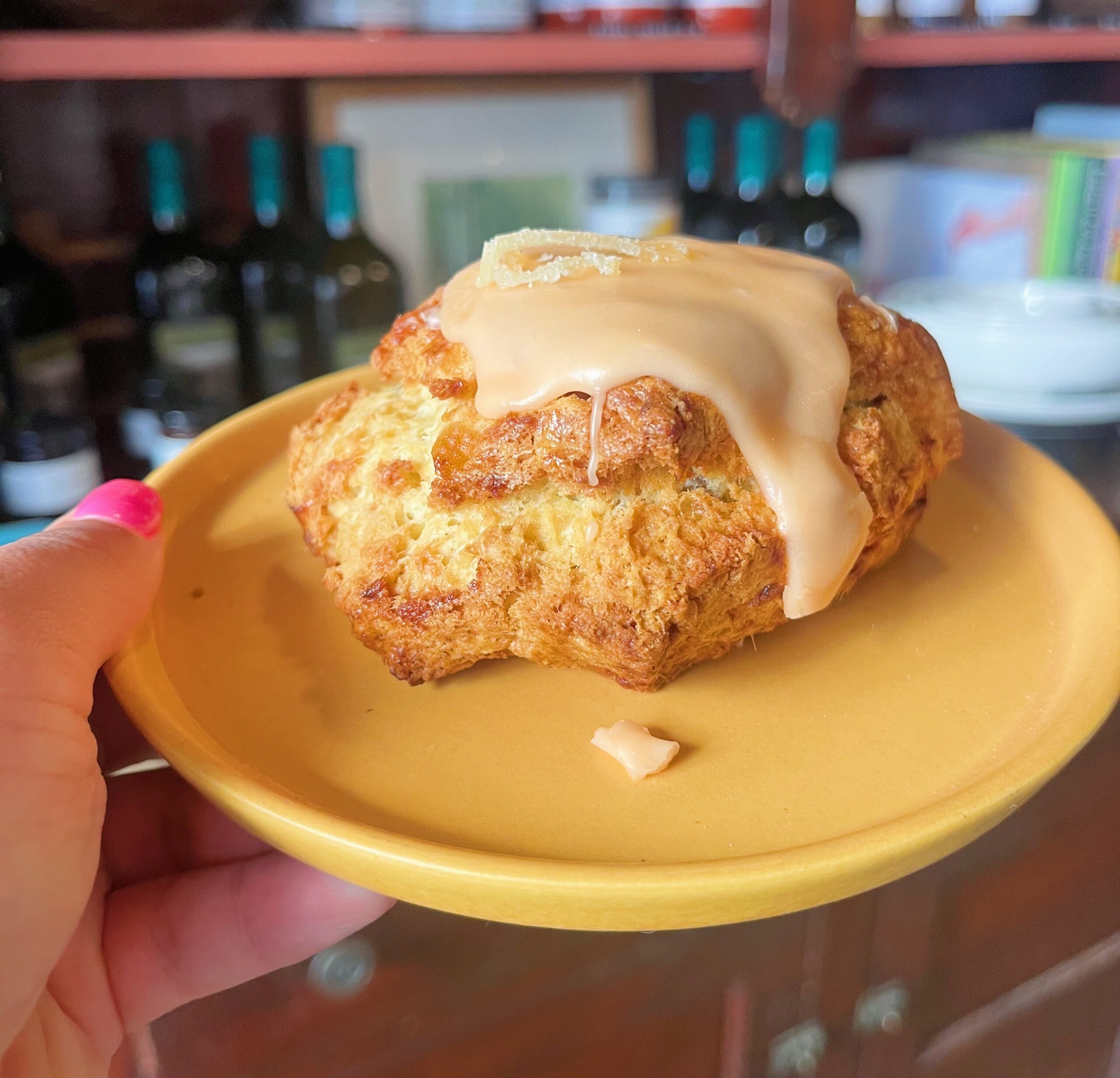
    The candied ginger scone from The Bread Room, Ellen Yin’s new-ish bakery at 834 Chestnut St.

    Candied ginger scone at the Bread Room

    There’s a lot to love about Ellen Yin’s new-ish bakery The Bread Roomthe fudgy olive oil brownie, the large hoagie salad with capicola, and the holiday pies — but perhaps the menu’s most overlooked gem is the humble candied ginger scone. I’ve been getting it almost weekly as a reward for braving the cold (and my perpetually late SEPTA bus) to go into the office, and it’s often the best bite of my week. What makes the Bread Room’s scone so distinct is the texture, dense enough to verge on a biscuit with an outer crust only made better by a light pink ginger glaze. It feels like biting into just-hardened royal icing, and reveals a soft and sweet crumb. The ginger is potent but never overpowering, more sweet than zesty.

    The Bread Room, 834 Chestnut Street Ste. 103, 215-419-5830, thebreadroomphl.com

    — Beatrice Forman

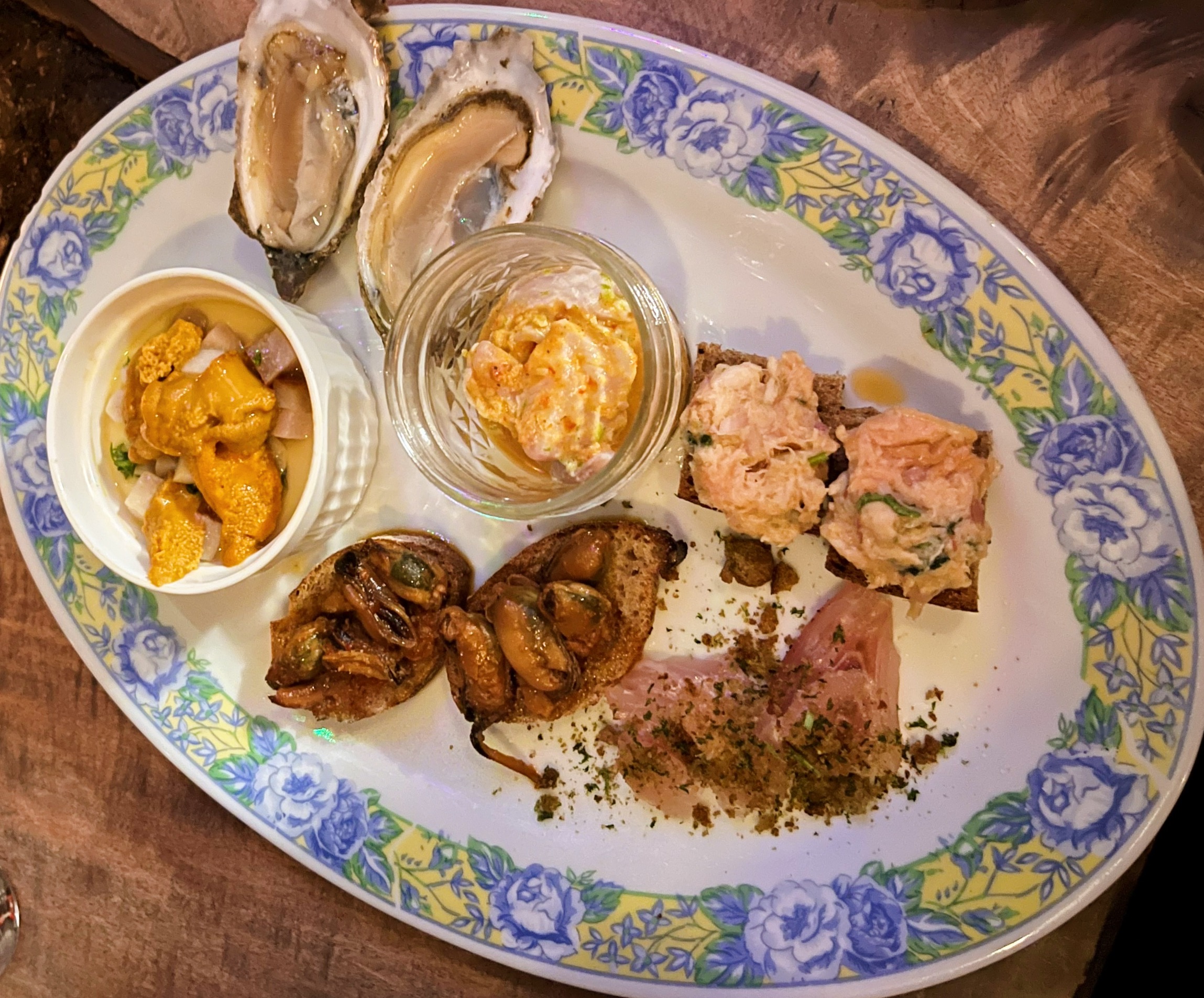
    The egg custard with uni and swordfish bacon (far left) was served as part of a platter of raw and cooked seafood for the first course at Heavy Metal Sausage Co.’s Feast of More Than Seven Fishes.

    Egg custard with uni and swordfish bacon at Heavy Metal Sausage Co.

    I was told to jump on a reservation for one of Heavy Metal Sausage’s Feast of More Than Seven Fishes seatings; that they would sell out fast and blow me away. Everything I heard was correct.

    On Monday night, my partner and I got to experience the absolute feat that is Heavy Metal Sausage stuffing 14 people into their butchery for an honest and approachable — yet extremely technical — meal that adds layers to the Italian American tradition. Every bite was wonderful, including a key lime cured mackerel and an acidic eel stew over Bloody Butcher polenta. But the night’s showstopper was a velvety egg custard, served in a ramekin and finished with heaps of uni and cubes of swordfish bacon alongside a platter of other raw and cooked seafood.

    Did you know swordfish bacon was a thing? I didn’t, and now I want it forever. Chef Pat Alfiero said he salted, cured and cooked his swordfish the same way he would for pork bacon. Perhaps pig bacon might be overrated.

    Heavy Metal Sausage Co., 1527 W. Porter St., heavymetalsausage.com

    Emily Bloch

    Halibut schnitzel at Cardinal

    I could go on and on about the amazing duck wings glazed with black pepper hoisin at Atlantic City’s Cardinal, a cavernous restaurant with an inventive menu from chef Michael Brennan. The kitchen and bar focus on the details (my reposado and biscotti liqueur cocktail came topped with a literal biscotti), but it was the main course that left me truly wide-eyed.

    Behold the Halibut Schnitzel, two words I’ve never heard said together. It arrived with two meaty pieces of lightly pounded out and schnitzel-ed halibut perched happily atop a very caper-forward lemony sauce and a carpet of tiny bell peppers. A charred lemon sat beside them. It was a puckery, flaky, satisfying coat of many flavors. Delish.

    Cardinal Restaurant, 201 South New York Ave., Atlantic City, N.J., 609-246-6670, cardinal-ac.com

    — Amy S. Rosenberg

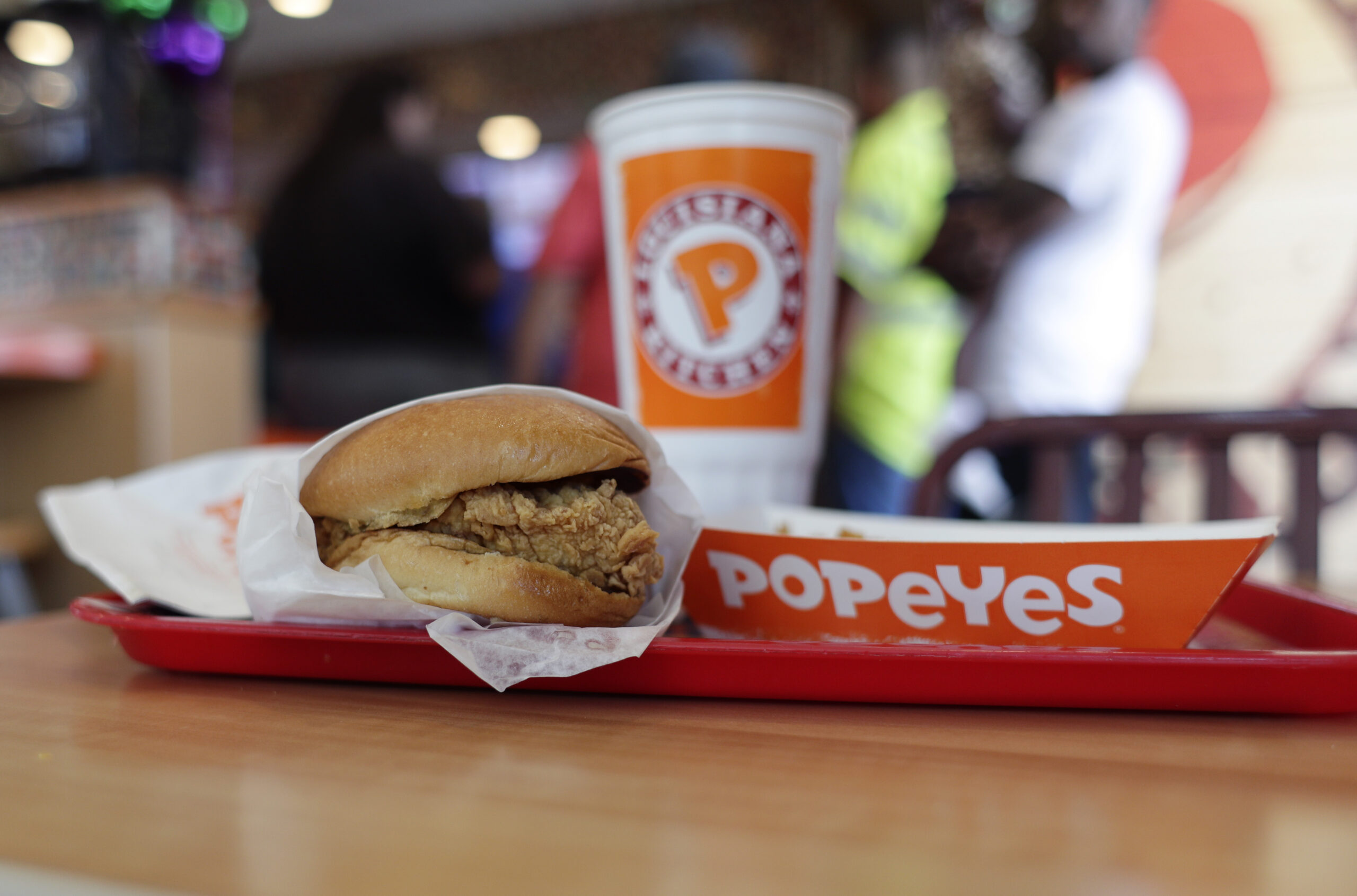
    A Popeyes chicken sandwich and fries almost made Inquirer reporter Dugan Arnett miss his train to Boston. It was well worth it, he writes.

    No. 1 Combo from Popeyes Louisiana Kitchen

    As a kid, whenever I’d complain of being hungry, my dad would respond with one of his favorite idioms: “Hunger,” he’d say, “is the best sauce.” He was wrong, of course. The best sauce is the blackened ranch dipping sauce at Popeyes Louisiana Kitchen.

    I was already running dangerously late to 30th Street Station to can an Amtrak train to Boston, when I stumbled upon a Popeyes on Market Street. In no world was this a responsible detour, particularly with a $200 train ticket hanging in the balance. But Popeyes is an American culinary institution, and when you come across one in the wild, you must take advantage. (After all, there’s a reason a trendy Long Beach, Calif. brunch spot once got caught serving Popeyes chicken with its dishes and then vehemently defended itself.) I ordered a spicy chicken sandwich combo meal with a biscuit and proceeded to eat it the way fast food is meant to be eaten: Out of the bag, standing, with only a modicum of self-shame. The chicken patty? Juicy and impossibly plump. The fries? Psoriasis-scabbed and fresh out of the fryer. The biscuit? A butter-kissed dream.

    In the end, I still managed to make my train — though, after that meal, it would’ve been well worth it even if I hadn’t.

    Popeyes Louisiana Kitchen, 940 Market St., (267) 239-2388, popeyes.com

    Dugan Arnett

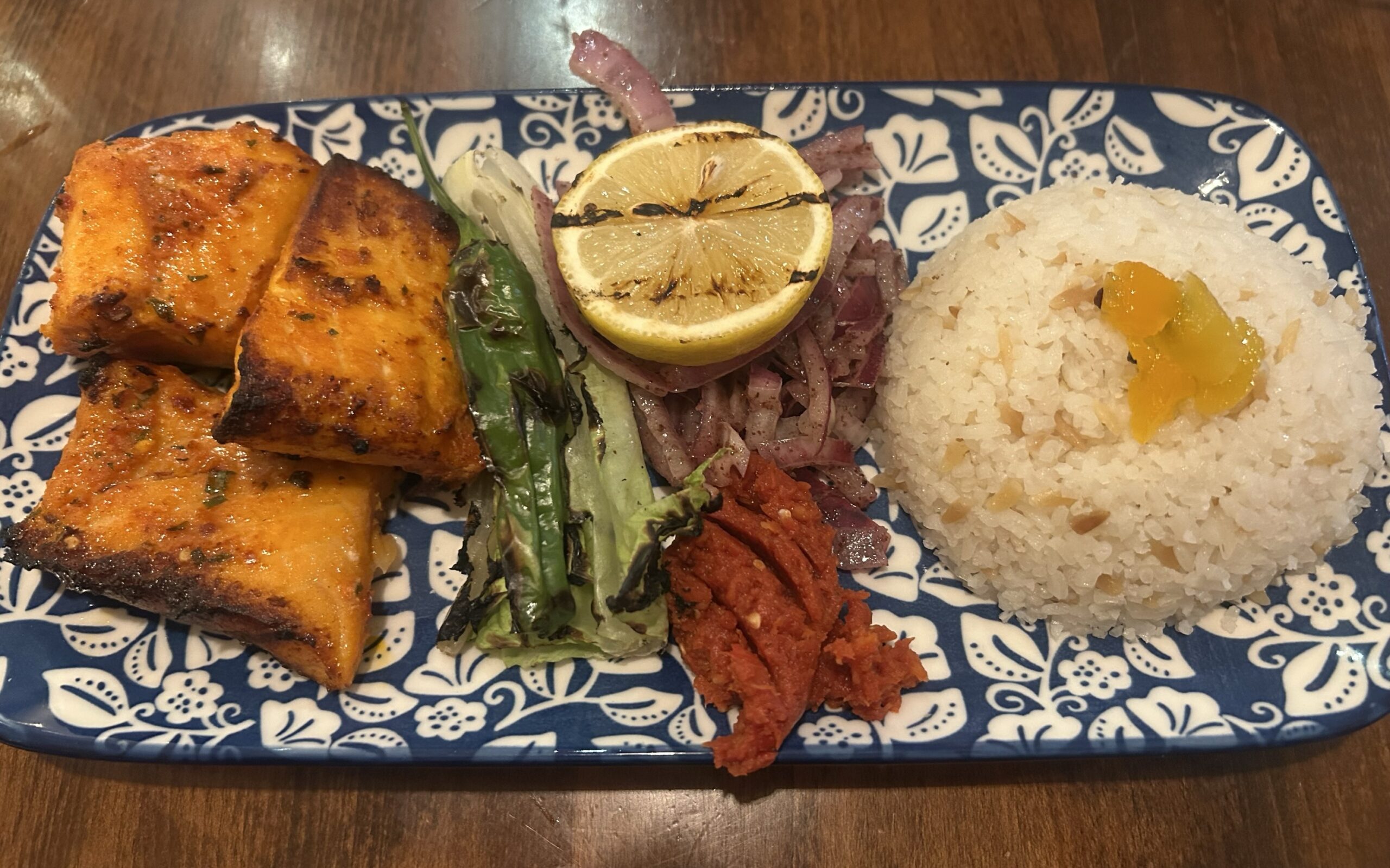
    The salmon kebab from Kanella comes plated with grilled green lettuce, fiery red harissa, sweet purple onions, and a wedge of lemon.

    Salmon kebab at Kanella

    It’s not island weather, but the best thing I ate this week was the salmon kebab with a squeeze of sumac-sprinkled grilled lemon at Kanella in Center City. The salmon was a succulent orange-pink, crispy on the outside, tender and juicy within. Yes, my mom and I were the only patrons in the middle of a weekday afternoon. Yes, it was nearly sleeting outside, but the restaurant was so charming. And none of that mattered when this dish arrived. The salmon shared a plate with grilled green lettuce, fiery red harissa, sweet purple onions, and that wedge of bright lemon. The service was warm; holiday covers played on the sound system. I’d come back in any time.

    Kanella, 1001 Spruce St., 267-928-2085, kanellarestaurant.com

    — Zoe Greenberg

  • Iron Hill Brewery in West Chester is officially seeking a new tenant

    Iron Hill Brewery in West Chester is officially seeking a new tenant

    The search is on for a new restaurateur to take over the shuttered Iron Hill Brewery in West Chester, after the building’s owner bought the assets from the former CEO of Famous Dave’s BBQ.

    John Barry, a Massachusetts-based real estate investor who owns the building, and Jeff Crivello, the ex-CEO of Famous Dave’s, said Friday that Barry purchased the liquor license and all assets inside the former West Chester Iron Hill, one of 16 locations that closed abruptly this fall when the regional chain filed for bankruptcy.

    In November, Crivello had said he intended to revive the West Chester Iron Hill, under the same name or as a new concept, after a bankruptcy judge approved his offer to buy the assets of the location and nine others in Pennsylvania, Delaware, and South Carolina.

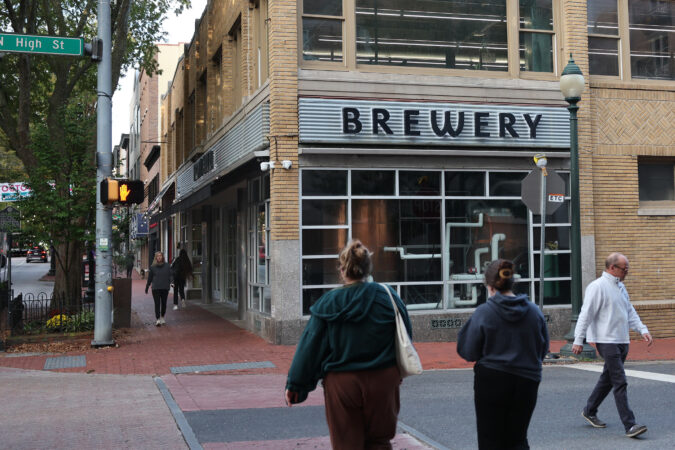
    A view from the outside looking in of the closed Iron Hill Brewery in West Chester in October.

    Both Barry and Crivello declined to disclose financial details of the West Chester deal, which was finalized on Christmas Eve. It was first reported Wednesday by Hello, West Chester, a local news website.

    “As a landlord, I was hoping to have a chance to purchase the assets,” Barry said Friday in an interview. “I wanted to buy and keep the liquor license with the building. It allows me to get a better tenant in there that is probably going to pay a little bit more in rent.”

    Iron Hill had anchored the old Woolworth’s building since 1998, when the brewery founders opened their second location there. Many local business owners credit Iron Hill with sparking a restaurant renaissance in the borough, as the brewery did in other Philadelphia suburbs.

    Situated at West Chester’s central corner of High and Gay Streets, Iron Hill had a 30-year lease, with a 15-year extension, Barry said.

    Barry, a West Chester native who now lives outside Boston, purchased the nearly 30,000-square-foot building for $8.25 million in 2022, according to Chester County property records.

    Barry said the next anchor tenant would take over a new lease for the now-vacant 10,000-square-foot space that can seat 300 people. He declined to specify what the lease terms might be.

    “It will not be reopening as Iron Hill Brewery,” said Barry, who didn’t buy the rights to the name. “My goal would be to find something similar,” though not necessarily a brewery.

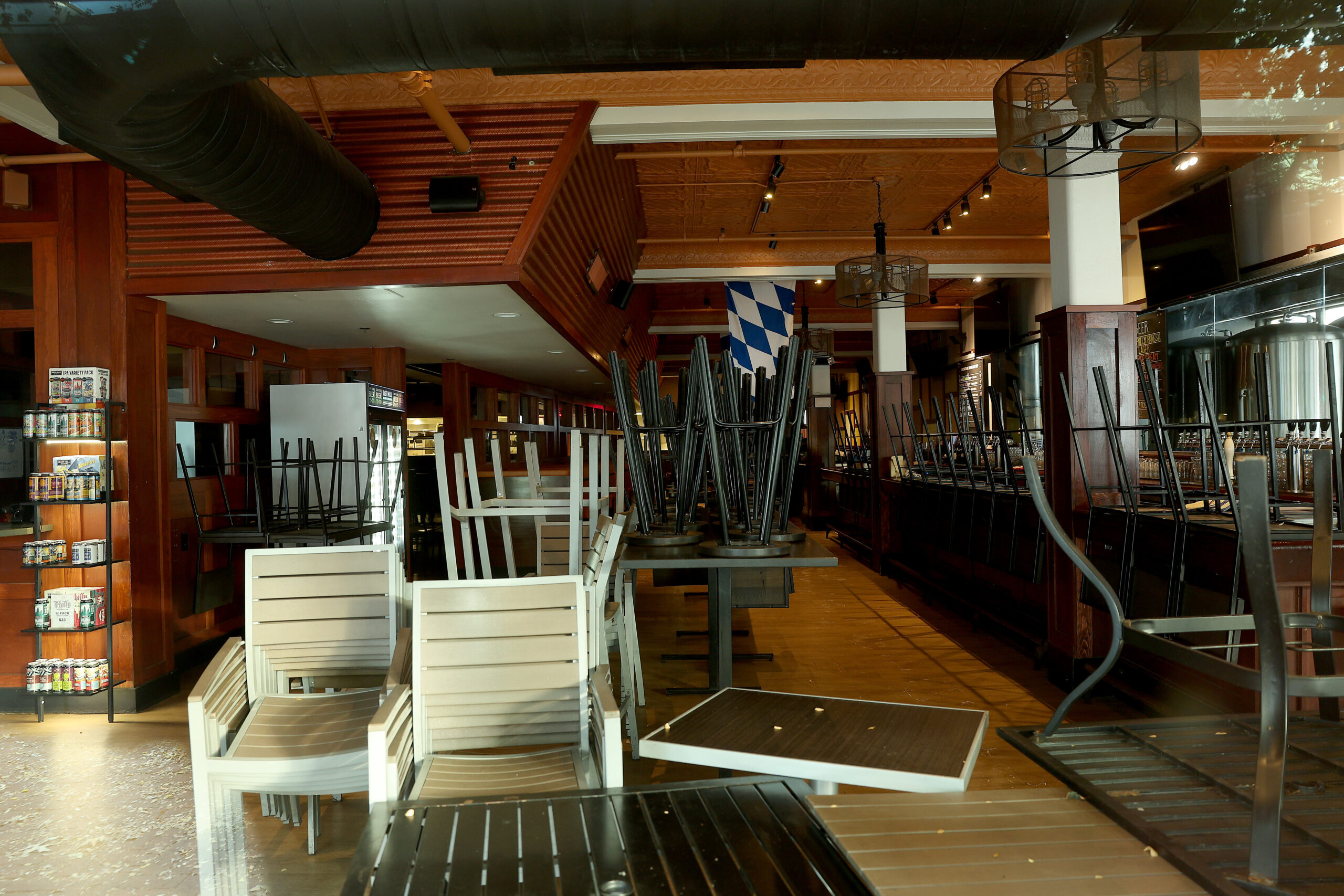
    In buying the assets, Barry said the restaurant is essentially turnkey, with all the furniture and kitchen and brewing equipment still inside. A new tenant, however, may want to redesign, he said, or the space could even be subdivided for a restaurant and a retail space.

    A view from the outside looking in the now closed Iron Hill Brewery in West Chester in October.

    “It’s really important to me that we find the right tenant for the West Chester community,” Barry said. “It’ll take a little bit of time.”

    But, he added, “my hope is we get somebody in there and operating by the summer.”

    Elsewhere, Crivello said there is still hope that the Iron Hill brand could get another life.

    “We’re working with a couple buyers that want to reopen [closed breweries] as Iron Hill,” Crivello said. He declined to say which locations could be resurrected.

    In November, Crivello got the OK to acquire the assets of former Iron Hill brewpubs in Center City, Huntingdon Valley, Newtown, Wilmington, Lancaster, Hershey, and Rehoboth Beach, as well as West Chester and the two locations in South Carolina.

    Crivello said Friday that he has since sold the assets of the former Iron Hills in Columbia and Greenville, S.C., to Virginia-based Three Notch’d Brewing Co. He said plans for the other locations were still in the works.

  • More than 40 Philadelphia area spots with heated outdoor dining areas where you can cozy up

    More than 40 Philadelphia area spots with heated outdoor dining areas where you can cozy up

    The dip into 30-degree weather means it’s time for chunky sweaters, hot drinks, and cozy seating.

    While dining indoors may seem cozy with temperatures dropping, the search for suitable outdoor dining continues. With the flu and respiratory viruses running amok, some still prefer to sit outdoors.

    The city still has plenty of comfy, heated outdoor seating despite changes in regulations. Here is a list of bars and restaurants setting up outside.

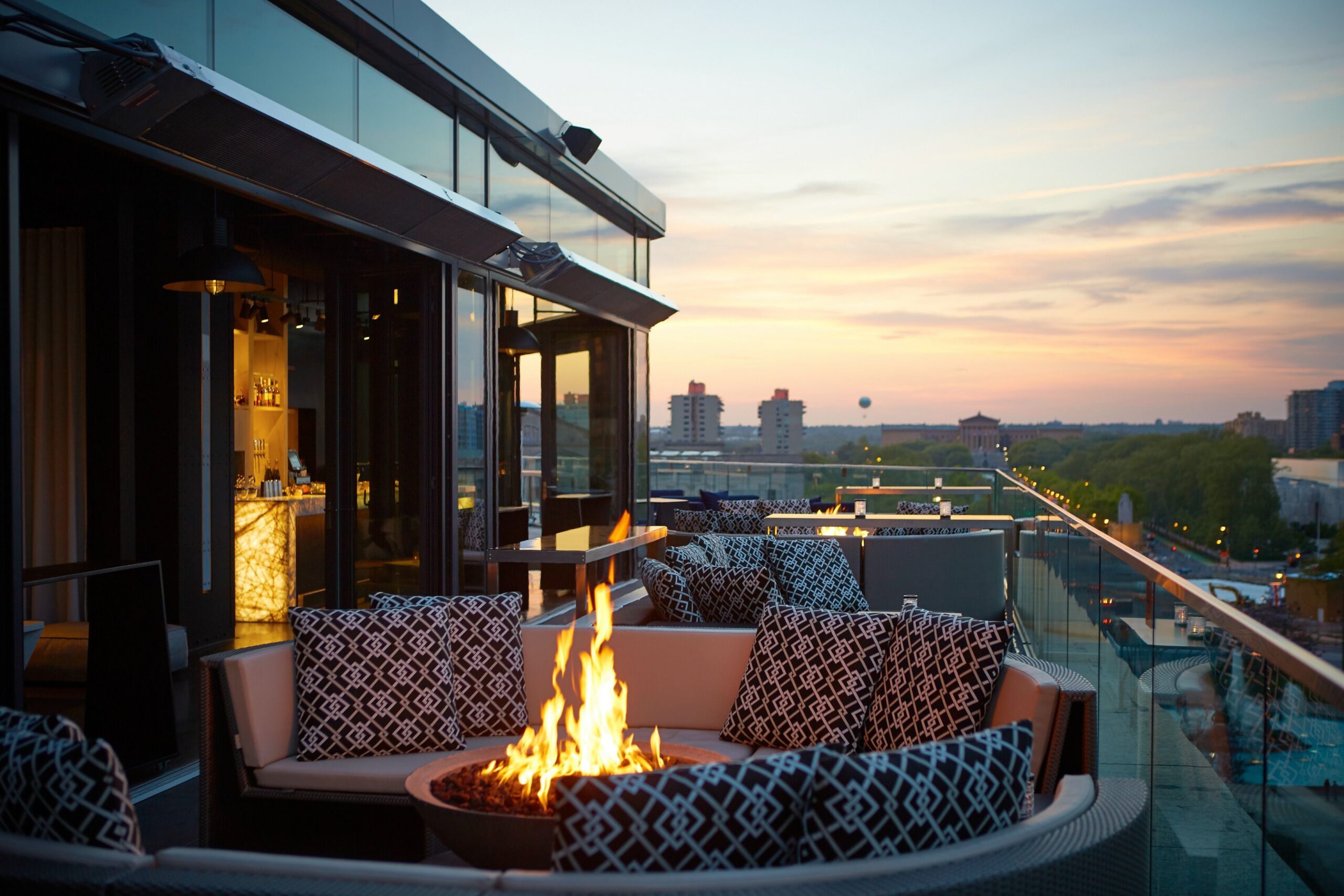
    Sunset at The Logan’s Assembly Rooftop.

    Assembly Rooftop Lounge

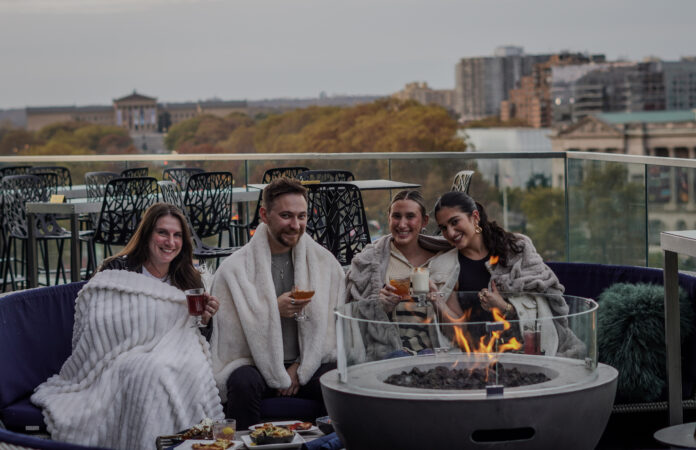
    Head to this rooftop lounge and enjoy breathtaking views of the city while warming up to four firepits and overhead and standing heaters.

    📍1840 Benjamin Franklin Pkwy., 📞 215-783-4171, 🌐 assemblyrooftop.com

    Bridget Foy’s

    Covered seating with built-in heaters will keep you comfortable in cold weather at Bridget Foy’s. Order a hot toddy to accompany entrées that run $15 to $36.

    📍200 South St., 📞 215-922-1813, 🌐 bridgetfoys.com

    Bar Sera

    Sit at one of five tables on the outdoor patio and sip on a Where There’s Smoke ($16), mezcal with oak smoked salt and maple syrup and mole bitters. Or try their $6 nonalcoholic red wine with pomegranate, strawberry, fig, and black walnut, called Luther Vandross. Standing heaters will keep you warm, but if you’re looking for a firepit, head to the lounge area by the L-shaped couch.

    📍 382 E. Elm St., Conshohocken, 📞 610-234-0561, 🌐 barsera.com

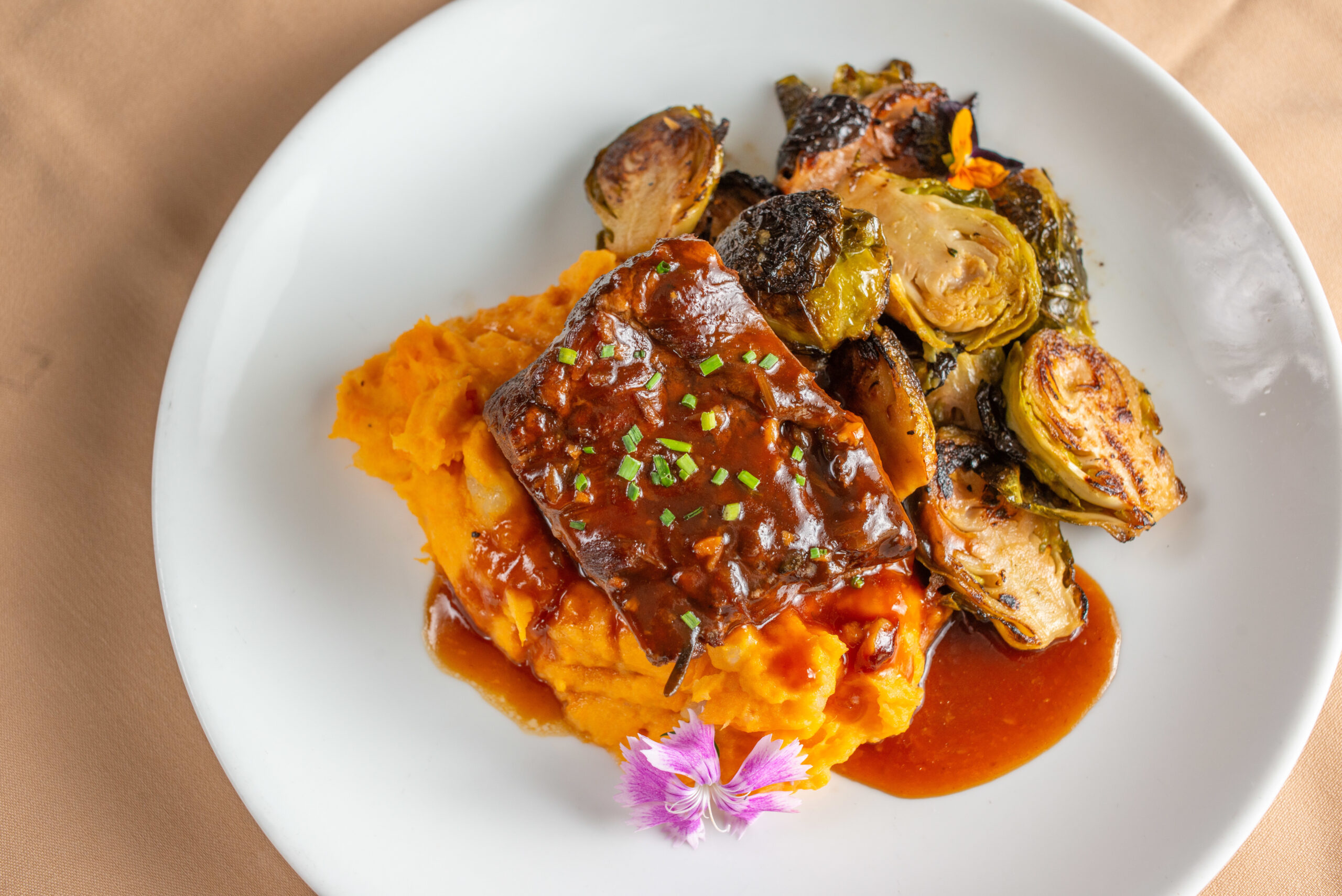
    Braised short ribs at Blue Bell Inn in Blue Bell.

    Blue Bell Inn

    A firepit and propane heaters keep diners warm as they sip on a pear martini ($15), a blackberry raspberry liqueur-infused bourbon ($16), and more. There is a tent set up for heated enclosed seating.

    📍 601 W. Skippack Pike, Blue Bell, 📞 215-646-2010, 🌐 bluebellinn.com

    Con Murphy’s Irish Pub

    Propane heaters keep the patio warm as you enjoy hot cocktails like Irish coffees ($12) and hot toddy ($11).

    📍1700 Benjamin Franklin Pkwy., 📞 267-687-1128, 🌐 conmurphyspub.com

    Continental Midtown

    Head to the rooftop for views of Chestnut Street, open Monday through Sunday. Standing outdoor heat lamps and mounted heaters offer cozy dining. Bites and cocktails are $6, plus wine is $5 and beer is $4 during happy hour.

    📍 1801 Chestnut St. 📞 215-567-1800, 🌐 continentalmidtown.com

    El Poquito

    Dine inside the covered pergola area with standing propane heaters. The menu, with fare like fajitas and enchiladas, ranges from $14 to $31.

    📍 8201 Germantown Ave., 📞 267-766-5372, 🌐 elpoquito.com

    Frankford Hall

    Roast s’mores, toast with European beers, and enjoy snacks near the large fire pits in the outdoor garden. Propane heaters at every table also keep you warm as you sip on hot cider (spiked if desired) and mulled wine. Drinks are $8 to $15, and dishes are $8 to $18. S’mores kits are available for $4.

    📍 1210 Frankford Ave., 📞 215-634-3338, 🌐 frankfordhall.com

    Rosalie

    At the historic Wayne Hotel, you can have brunch, lunch, or dinner, or order a cocktail or two, while enjoying the warmth of Rosalie’s enclosed porch with heaters. Sip on the Fireside Chat ($16) with cinnamon milk-washed bourbon, apple cider, lemon, cinnamon, and walnut, or the Spiced Pear Spritz ($17) with vodka, spiced pear liqueur, brut, lemon, honey, and ginger. Munch on hot Italian sausage pizza and wild boar Bolognese lasagna.

    📍139 E. Lancaster Ave, Wayne, 📞 610-977-0600, 🌐 rosaliewayne.com

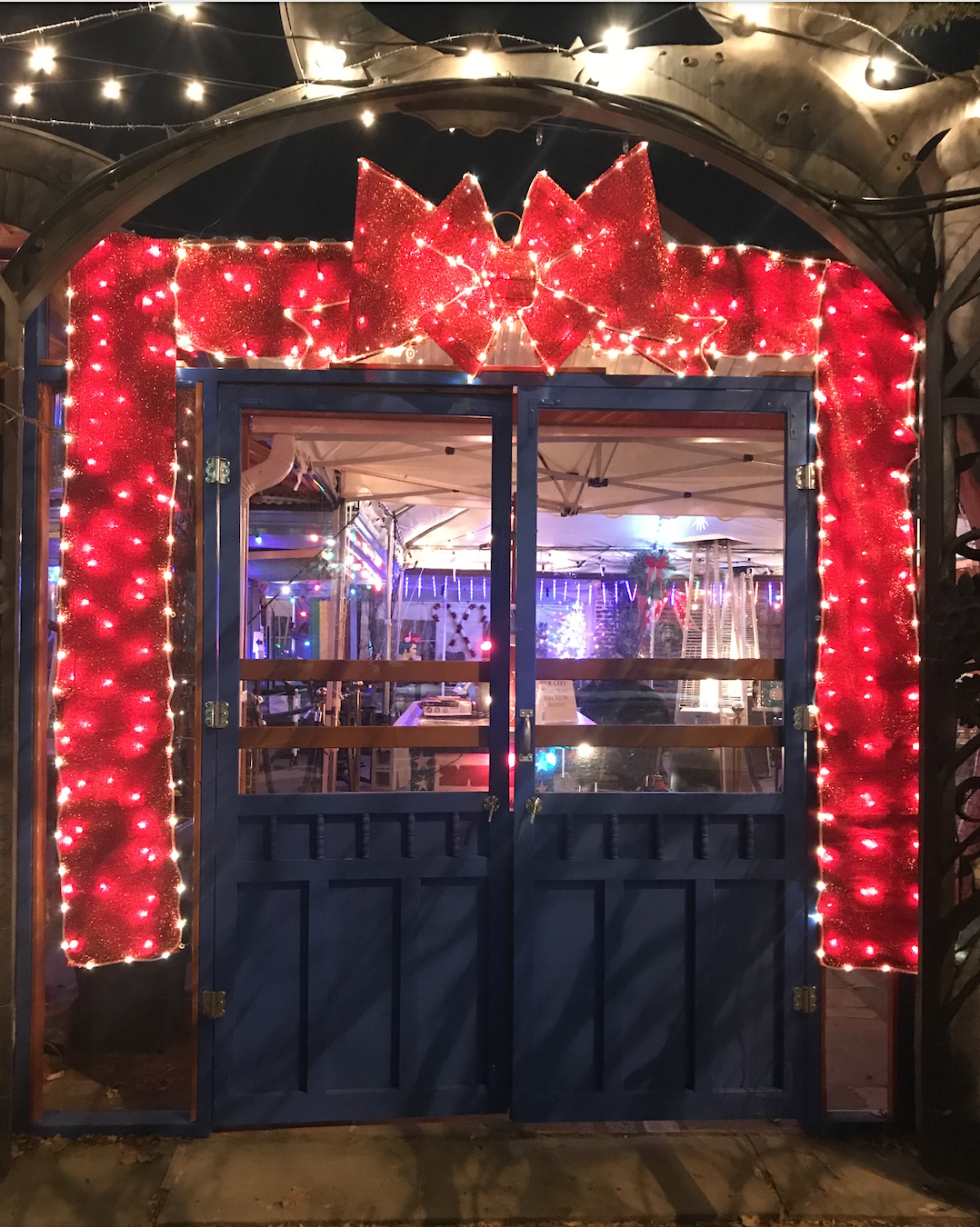
    Stay warm in the enclosed, tented seating at Silk City.

    Silk City

    Order a round of hot cider (spiked if you’d like), coquito, or creamy hot chocolate (can also be spiked) for your friends in Silk City’s fully tented 3,000-square-foot garden. Get comfortable on furniture crafted in Lancaster as industrial-grade hot air and electric heaters spread warmth throughout the space . Additional cocktails are $13 to $16.

    📍435 Spring Garden St., 📞 215-592-8838, 🌐 silkcityphilly.com

    Looking for more heated outdoor dining? Check out these spots in Philly, the ‘burbs, and Jersey.

    Avola Kitchen + Bar (625 N. Morehall Road, Malvern)

    Butcher Bar (2034 Chestnut St.)

    Carlucci’s Waterfront (876 Centerton Rd., Mount Laurel)

    El Camino Real (1040 N. Second St.)

    El Vez (121 S. 13th St.)

    Fette Sau (1208 Frankford Ave.)

    Front Street Cafe (1253 N. Front St.)

    The Goat’s Beard (4201 Main St., Manayunk, and 103 N. Wayne Ave., Wayne)

    Harvest Seasonal Grill & Wine Bar — call ahead for your location (multiple locations)

    The Kitchen Consigliere (700 Haddon Ave., Collingswood)

    Little Nonna’s (1234 Locust St.)

    Louie Louie (3611 Walnut St.)

    The Love (130 S. 18th St.)

    Misconduct Tavern (1801 John F. Kennedy Blvd.)

    MilkBoy (401 South St. and 1100 Chestnut St.)

    Moonshine Philly (1825 E. Moyamensing Ave.)

    Osteria (640 N. Broad St.)

    Parc (227 S. 18th St.)

    Philadelphia Brewing Co. (2440 Frankford Ave.)

    Pizzeria Stella (420 S. 2nd St.)

    P.J. Whelihan’s — call ahead for your location (multiple locations)

    Pub of Penn Valley (863 Montgomery Ave., Narberth)

    Redstone American Grill (all locations)

    Sharrott Winery (370 S. Egg Harbor Rd., Hammonton)

    SouthGate (1801 Lombard St.)

    Stella New Hope (50 S. Main St., New Hope)

    Talula’s Garden (210 Washington Square West)

    Tamarindo’s (726 Bethlehem Pike, Flourtown)

    Tavola at Springfield Country Club — be sure to call ahead (400 W. Sproul Road, Springfield.)

    Tex Mex Connection (201 E. Walnut St., North Wales)

    Trattoria Carina (2201 Spruce St.)

    Tria Cafe (123 S. 18th St.)

    Tutti Toscani (1491 Brace Rd., Cherry Hill)

    Urban Village Brewing Co. (1001 N. Second St.)

    Via Locusta (1723 Locust St.)

    Walnut Street Cafe (2929 Walnut St.)

    Yards Brewing Co. (500 Spring Garden St.)

  • A new wine style for a new year: Prosecco rosé is a thing now

    A new wine style for a new year: Prosecco rosé is a thing now

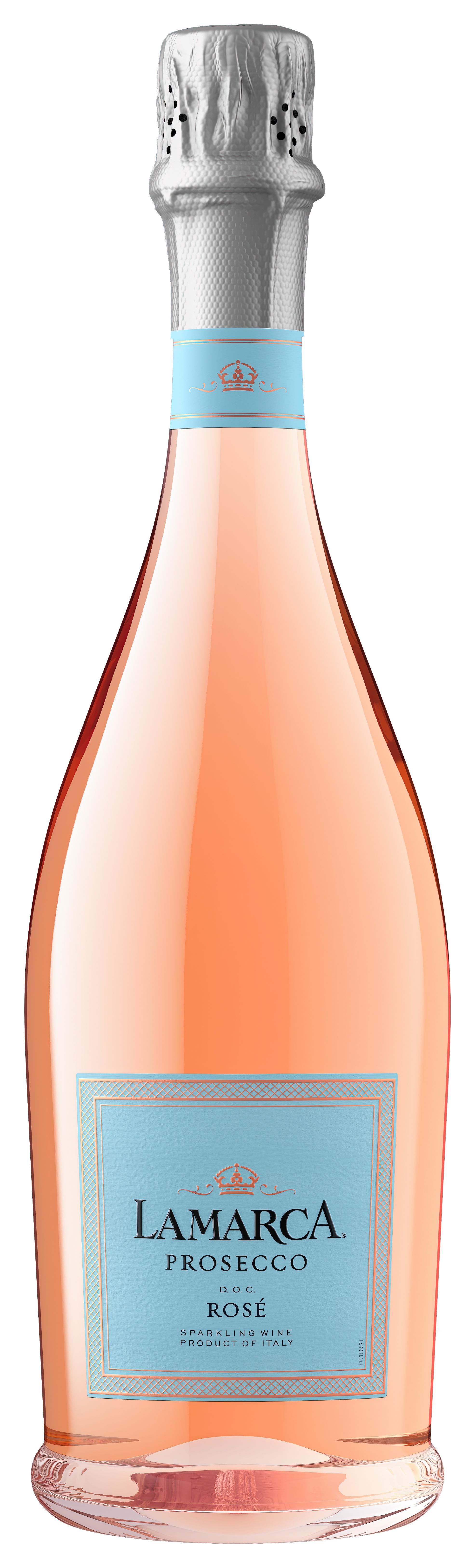
    As we prepare to leave 2025 behind, it’s time to make sure you have some bubbles ready. With freshness, verve, and just a hint of new beginnings, this prosecco rosé makes a nice change of pace for this year’s midnight toasts.

    Prosecco used to be a specialty of Venice that was always white — never pink — and was only familiar to locals and those who visited Venice in person. However, it has since become an international sensation and is now one of the top-selling sparkling wines on earth.

    Like most sparkling wines, prosecco is made from grapes that are picked when underripe in order to preserve crisp acidity and prevent the development of excess alcohol during their double-fermentation production process. Unlike others — French Champagne or Spanish cava, namely — it has always been made using the more economical Charmat process for its second fermentation. Lower prices were not prosecco’s only appeal though: The key to its success has been that it is rarely made in the dry “brut” style, but rather retains a faint touch of sweetness, giving its orchard-fresh apple and pear flavors extra succulence and charm.

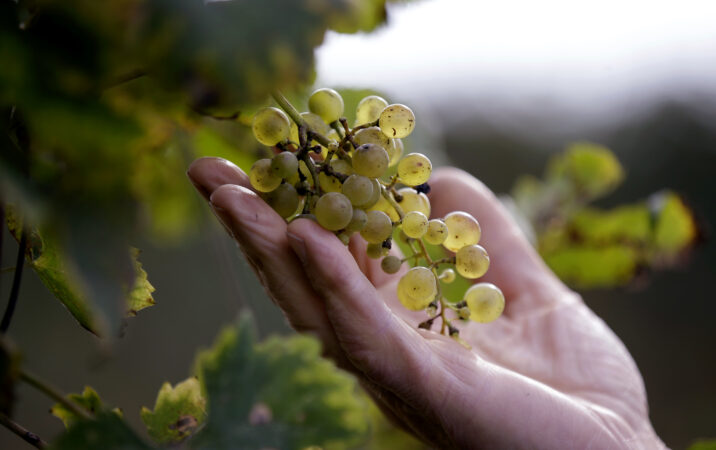
    The massive increase in Prosecco’s popularity in the past 25 years has spurred innovation and led to a 2020 regulatory change to make prosecco rosé possible. Prosecco wines were historically made using only the green glera grape of northern Italy, but are now permitted to blend up to 15% pinot nero (aka pinot noir) into white glera wine in order to turn it pink.

    In its flavor and scent, the dominant flavors of this wine are squarely in the classic prosecco profile, tasting of green apples, white peaches, and jasmine tea. But its dollop of pinot nero adds a lively scent of fresh-cut strawberries, like a preview of the coming spring and all the possibilities of a new year.

    La Marca Prosecco Rose

    La Marca prosecco Rosé

    Veneto, Italy; 11% ABV

    PLCB Item # 98896, on sale for $17.99 through Jan. 4 (regularly $19.99)

    Also available at: Canal’s in Pennsauken ($15.01; canalsliquors.com), Total Wine & More in Cherry Hill ($15.07; totalwine.com), and Wine Warehouse in Clementon, N.J. ($15.98; winewarehousenj.com)

  • This $21 zero-waste cocktail is a taste of the future

    This $21 zero-waste cocktail is a taste of the future

    Enormous effort is being exerted at Almanac, the dark cocktail bar tucked above Ogawa Sushi and Kappo in Old City. The diminutive bar’s shelves are lined with local amari and nocini, made of foraged botanicals steeping in alcohol.

    They‘re fermenting their own chrysanthemum kombucha and riffs on amazake, a spirit made from fermenting rice with koji, or Aspergillus oryzae, Japan’s most famous mold, but which Almanac’s bartenders has applied to other ingredients like ube, sweet potatoes, and corn. It’s a great example of why Almanac is one of the bars pushing Philly’s cocktail scene to new heights.

    Zero-waste cocktails are trending, whether that means bartenders are utilizing whole ingredients or “waste” generated by the kitchens their bars are attached to. Bartenders across the country are, like Almanac’s Rob Scott and Beau Quick, rethinking what has long been considered waste. Pickle brine, wagyu fat, and citrus rinds are being given chances to shine as cocktail ingredients in the nearby District of Columbia. And it’s likely only a matter of time, during Philadelphia’s cocktail renaissance, that more bartenders think of what other ingredients they can rescue and transform.

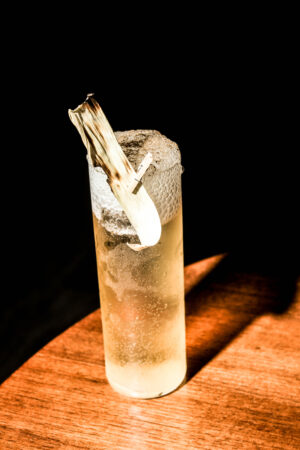
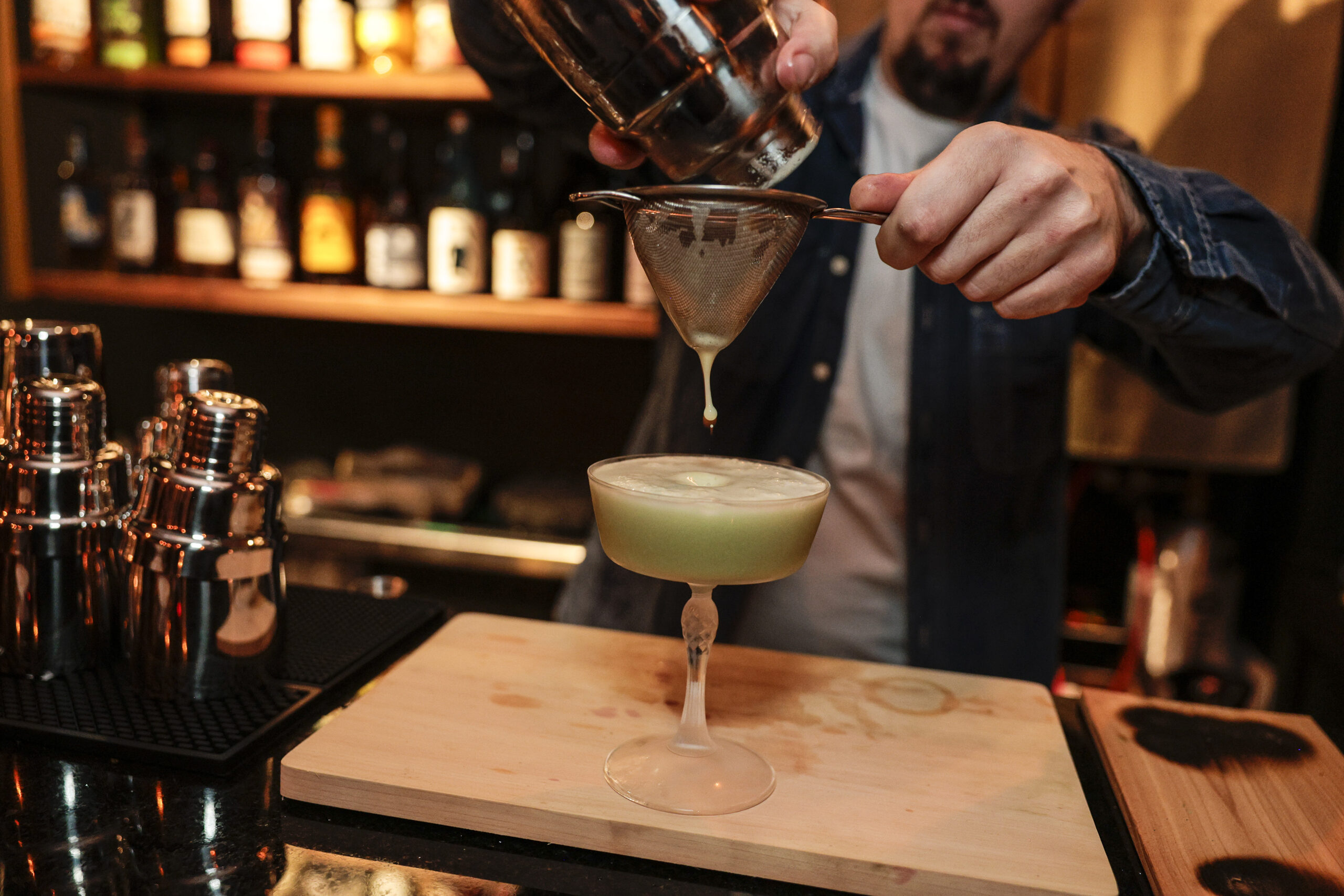
    Almanac’s Ride on Shooting Star ($21), conceived by Quick, seems deceptively simple and far more straightforward than, say, the Sadotini, a cocktail that requires whisking ceremonial-grade matcha to order. The drink is listed on the menu as: reposado tequila, mugi shochu (distilled from barley), amontillado, corn cob, hojicha milk tea, spice tincture, and corn husk ash.

    It’s a cocktail that I found utterly mesmerizing and unlike anything I’ve had before. It’s hauntingly lovely with a light sweetness evocative of peak summer corn. Its effervescence lingers with big, juicy bubbles. It’s also a tiny bit smoky, with a hit of corn curd ash. When diving into how Almanac renders it into existence, I was shocked to find it’s as smart as it is nuanced, perhaps a harbinger of a wider trend toward zero-waste cocktailing coming to Philly.

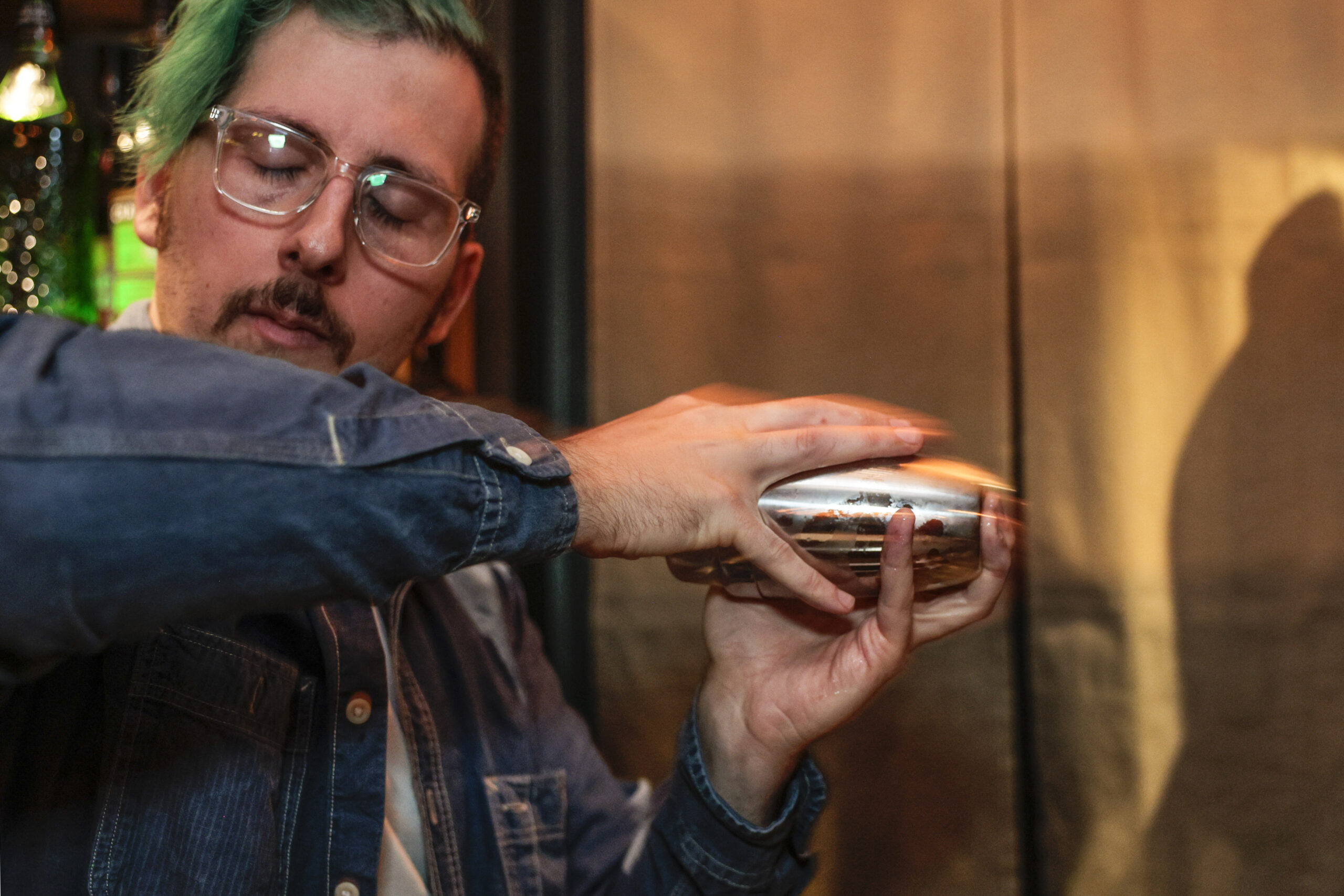
    Bar manager Rob Scott making a Sadōtini at the Bar Almanac at Ogawa, 310 Market St., Wednesday, Nov. 20, 2024.

    What’s not immediately visible from the list of its ingredients is that Ride on Shooting Star is an ode to corn, with elements coming from every part of a corn cob except its kernels. The kernels are used by Scott for one of his amazakes. Left with the cobs, Scott and Quick make a corn cob stock, turn it into a cordial with some sugar and “acidulation, which just means adding some citric and malic acids to it,” said Scott. To the cordial they add Arette Reposado tequila, Barbadillo Amontillado sherry, Watanabe Mannen Boshi Genshu mugi shochu, and then “make it into a milk punch. But the acid from the cordial can cause the milk to curdle.”

    Bar manager Rob Scott making a Sadōtini at the Bar Almanac at Ogawa, 310 Market St., Wednesday, Nov. 20, 2024.

    The process uses hojicha tea powder, ground as fine as matcha, and milk powder. “We combine the two ingredients, then rehydrate them to create a hojicha milk tea,” said Scott.

    The mixture sits for a day to let its flavors develop while the milk tea powder causes it to curdle, then it is strained.

    “We take the milk tea curds and dehydrate them. Once dry, we blend them with corn husk ash and salt and sprinkle it on top of the corn air as both those components are in the air to further reinforce that flavor and aromatic component,” said Scott.

    Before service, “the corn cob cordial we make for the drink has corn husk ash, salt, methylcellulose, and xanthan gum added,” said Scott. “And then we use a fish tank aerator in the cordial, which then bubbles up like cool air.”

    The result is a clear, gently yellow-hued cocktail, served in a Collins glass, with large bubbles that linger for an improbably long time and are dusted with corn curd ash, like furikake sitting upon rice kernels.

    The cocktail uses several layers of ingredients that could have, at any point, been discarded. The primary ingredient, after all, is corn, whose first use was amazake. But its cob is given a second use. The curds rendered from the milk punch are given a third life.

  • This restaurant group just opened a second Philly-themed gift shop

    This restaurant group just opened a second Philly-themed gift shop

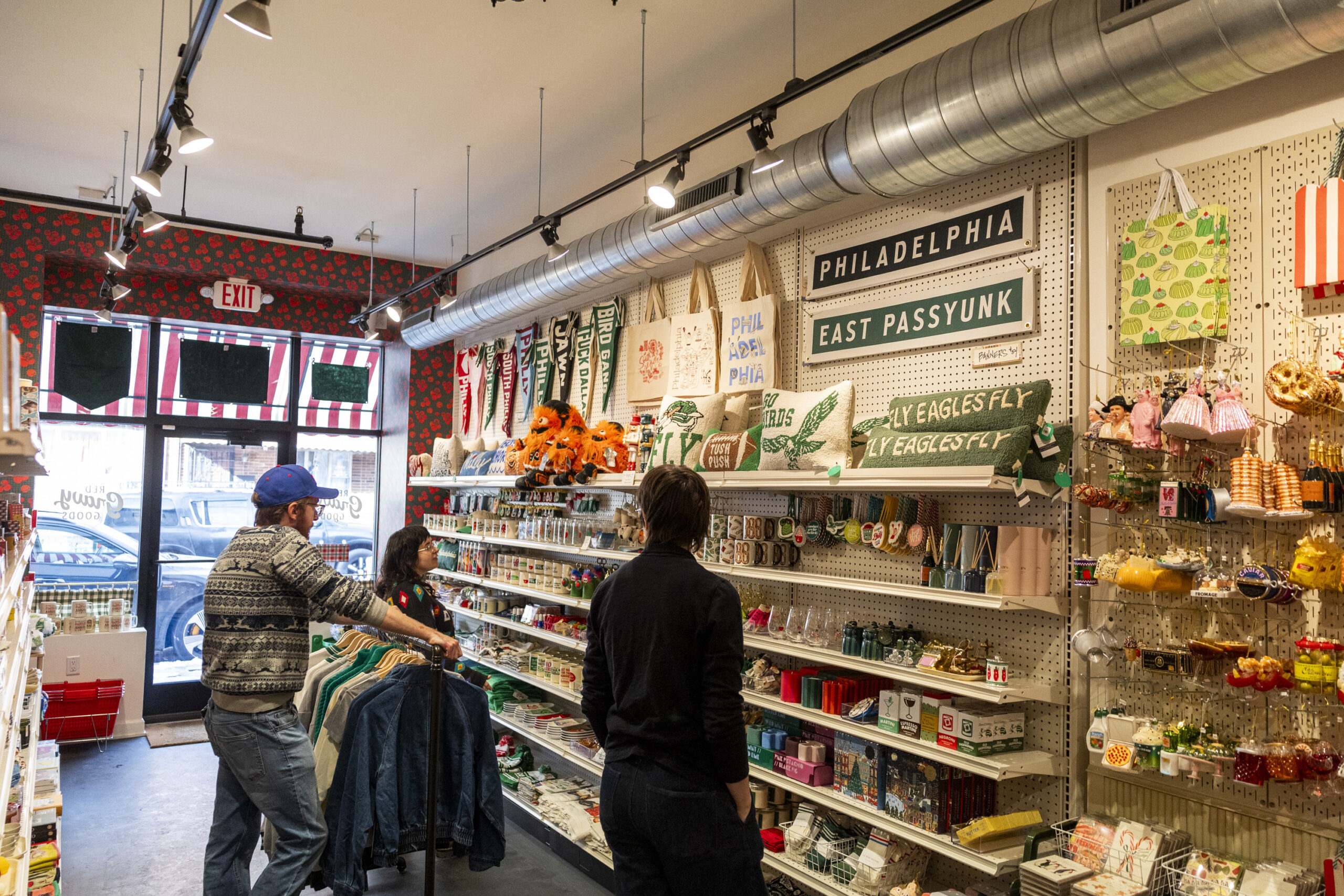
    A ceramic coffee mug shaped like a stick of salted butter. Glittery Christmas tree ornaments fashioned after tins of beluga caviar, knotted pretzels, and even an Ozempic syringe. A Phanatic-shaped bottle opener made from discarded wooden baseball bats, plus Phillies-themed press-on nails, sweatshirts printed with South Philly landmarks, and lots and lots of bespoke Eagles merch.

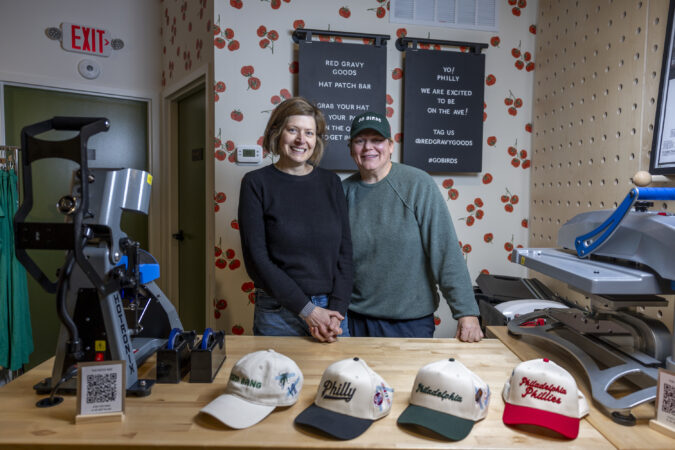
    Those are just some of the wares on offer from Red Gravy Goods, a new food and Philly-centric gift shop that opened earlier this month at 1335 E. Passyunk Ave. The store is the latest project from Valerie Safran and Marcie Turney, the married entrepreneurs who helped revitalize the Gayborhood with a string of boutiques and restaurants along 13th Street.

    The couple met while Safran was waitressing and Turney was working as a chef at a long-shuttered Mediterranean restaurant, going into business together after just a year of dating to open all-Philly-everything boutique Open House at 107 S. 13th St. in 2002. The couple then spent the next two decades opening a string of Center City restaurants and retail concepts.

    Some — like gourmet food market Grocery and vibey Mexican restaurant Lolita — puttered out during the pandemic. But others — Barbuzzo, Bud & Marilyn’s, and beloved Italian spot Little Nonna’s — have stuck around to become Center City stalwarts. Safron-Turney’s last project was Darling Jack’s Tavern, a casual-yet-design-forward bar that opened in 2023.

    The East Passyunk Avenue gift shop Red Gravy Goods is stocked with Philly-coded merchandise, ranging from decks of pasta-printed tarot cards to Jason Kelce prayer candles.

    Red Gravy Goods is the couple’s first foray into South Philly. It’s as much an homage to their new neighborhood as it is to their other brands.

    “We really just love everything that South Philly is. Yeah, it’s Philadelphia, but it’s also its own thing — red sauce and pasta,” said Safran, 50. “It just feels like [South Philly] never goes out of style.”

    Though the pair now lives in Chestnut Hill, South Philly has long captivated Safran and Turney. They pick up breads from Sarcone’s Bakery and certain pastas from Claudio Specialty Foods for Little Nonna’s, and often sneak sweet treats home from Mighty Bread for their two daughters. Whenever Turney passes the uniform store at Ninth and Christian Streets, she said, she cracks a smile.

    The couple purchased the East Passyunk Avenue building in 2017, which property records show used to be an auto body shop. The name comes from Little Nonna’s Sunday Gravy, a pasta dish heaped with a San Marzano marinara and a side of beef short ribs or meatballs. To reiterate the theme, Turney covered accent walls in a tomato-printed wallpaper.

    “You have to respect those old businesses that are still here, still kicking,” said Turney, 55. “We’re a good connector to what’s happening further up the avenue.”

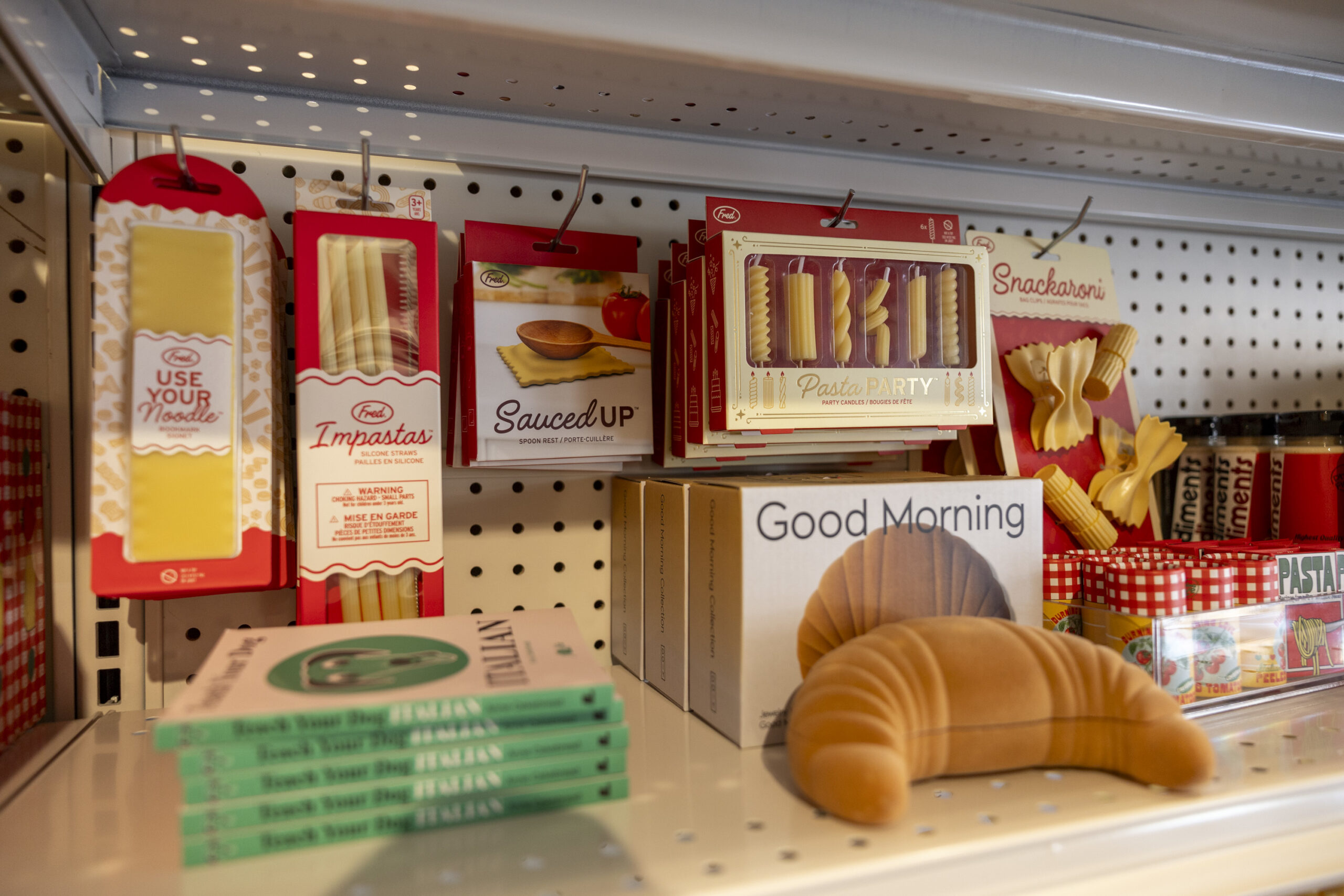
    Croissant-shaped jewelry organizers and sets of pasta candles are sold at Red Gravy Goods, a new South Philly gift shop.

    Curating a Philly “shoppy shop”

    Red Gravy Goods is what the internet calls a “shoppy shop”: a broad collection of highly curated gift shops, artisan markets, and modern-day general stores where, as Emily Sundberg wrote in New York Magazine, “you can touch all of the products you see on Instagram.” Shoppy shops are places of discovery, often merchandising things like trendy condiments next to goods from small local brands.

    South Philly is nothing if not a collection of ultra-specific stores held together by rowhouses and excellent delis. There’s cookbook store Binding Agents on Christian Street and the duo of quirky kitchen supply stores from former chef C.M. Neff, plus the treasure trove of boutiques and specialty food stores that line Passyunk Avenue and Ninth Street in the Italian Market.

    What differentiates Red Gravy Goods is that more than half the stock comes directly from Safran’s brain. Roughly 60% of the store is exclusive to the Safran-Turney universe, where Safran works with a rotation of top-secret local illustrators and designers to create prints sold only at Red Gravy Goods, Open House, and Verde (the duo’s other gift shop).

    The rest, Safran said, is sourced from trade show trips and social media. She never peers into other Philly boutiques for inspiration.

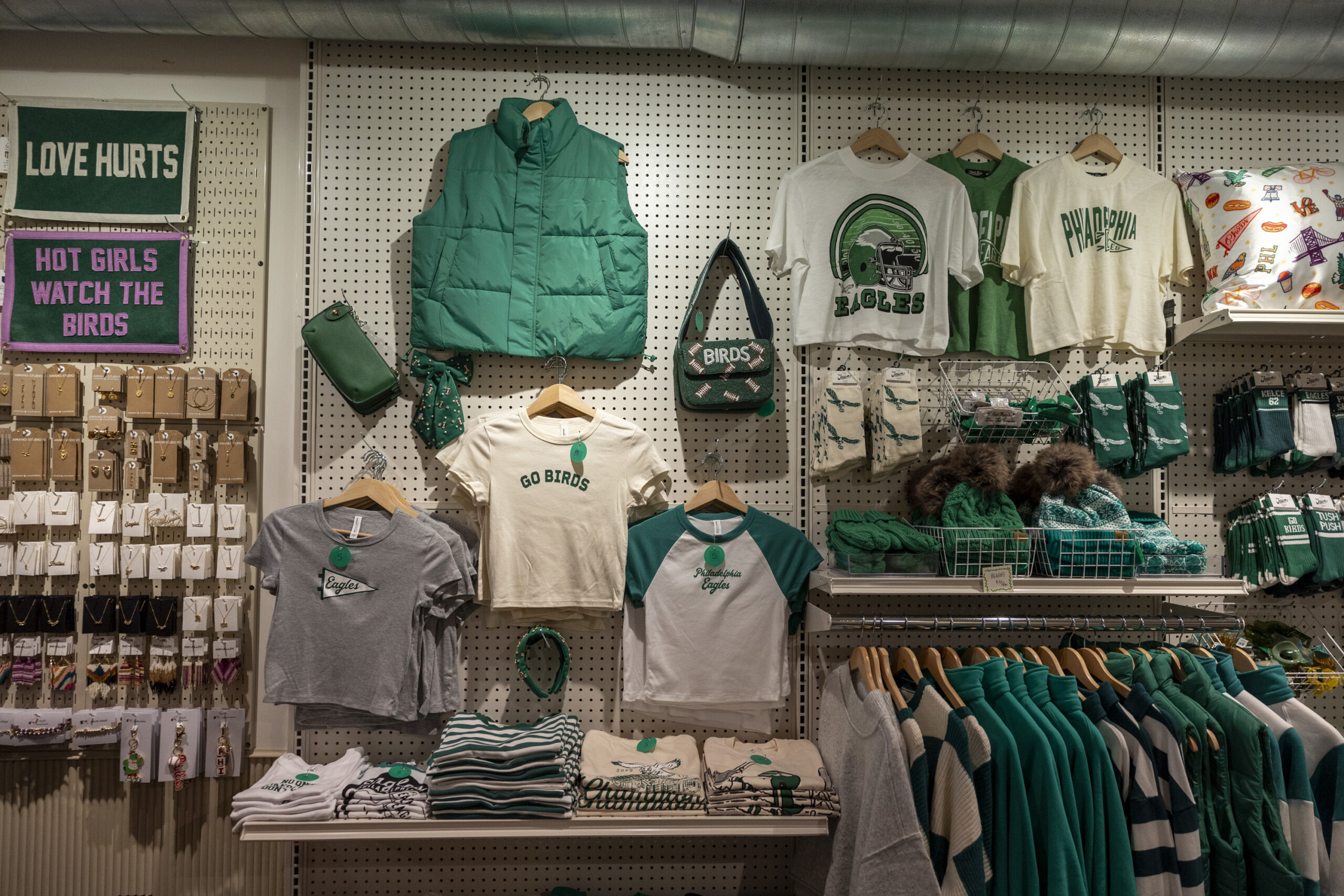
    Roughly 60% of Red Gravy Good’s merchandise is exclusive to the East Passyunk Avenue gift shop — including unofficial Eagles gear.

    “I don’t want what they have … because everything gets repeated,” Safran said. “If it brings me joy, it’ll bring someone else joy … There’s nothing serious about this.”

    Nearly everything in Red Gravy Goods costs under $100, save for a couple of big-ticket items, like a forest green shoulder bag covered in beaded footballs from local apparel brand Phannies, that retails for $120.

    The front of the 1,000-square-foot store is a hodgepodge of Philly-coded food paraphernalia, from butter-shaped coffee mugs and a deck of pasta-themed tarot cards to shimmering Italian cookie ornaments, and a candle that smells exactly like a soft pretzel. Like any good shoppy shop, there’s also condiments from trendy sauce brands such as Ayoh!

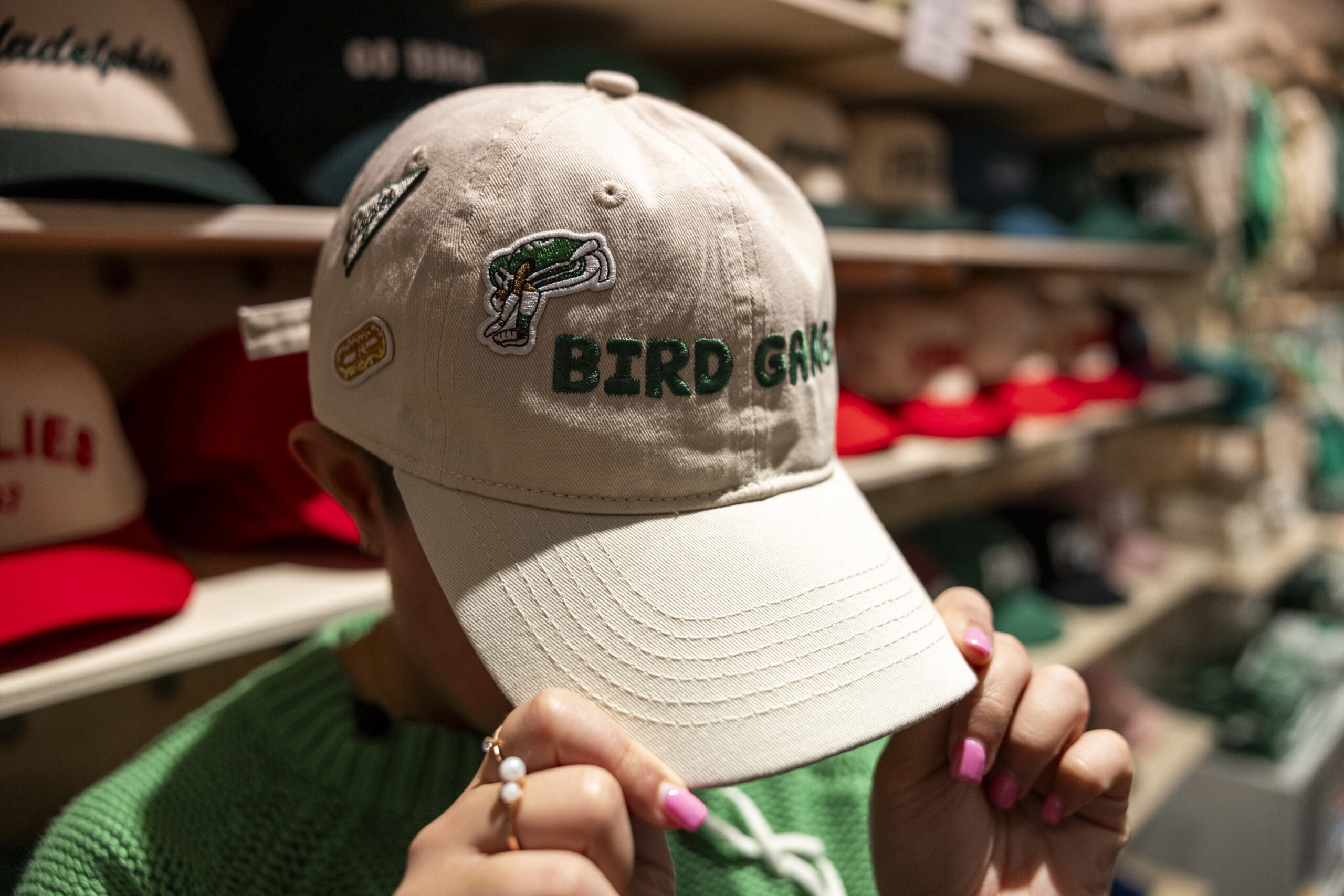
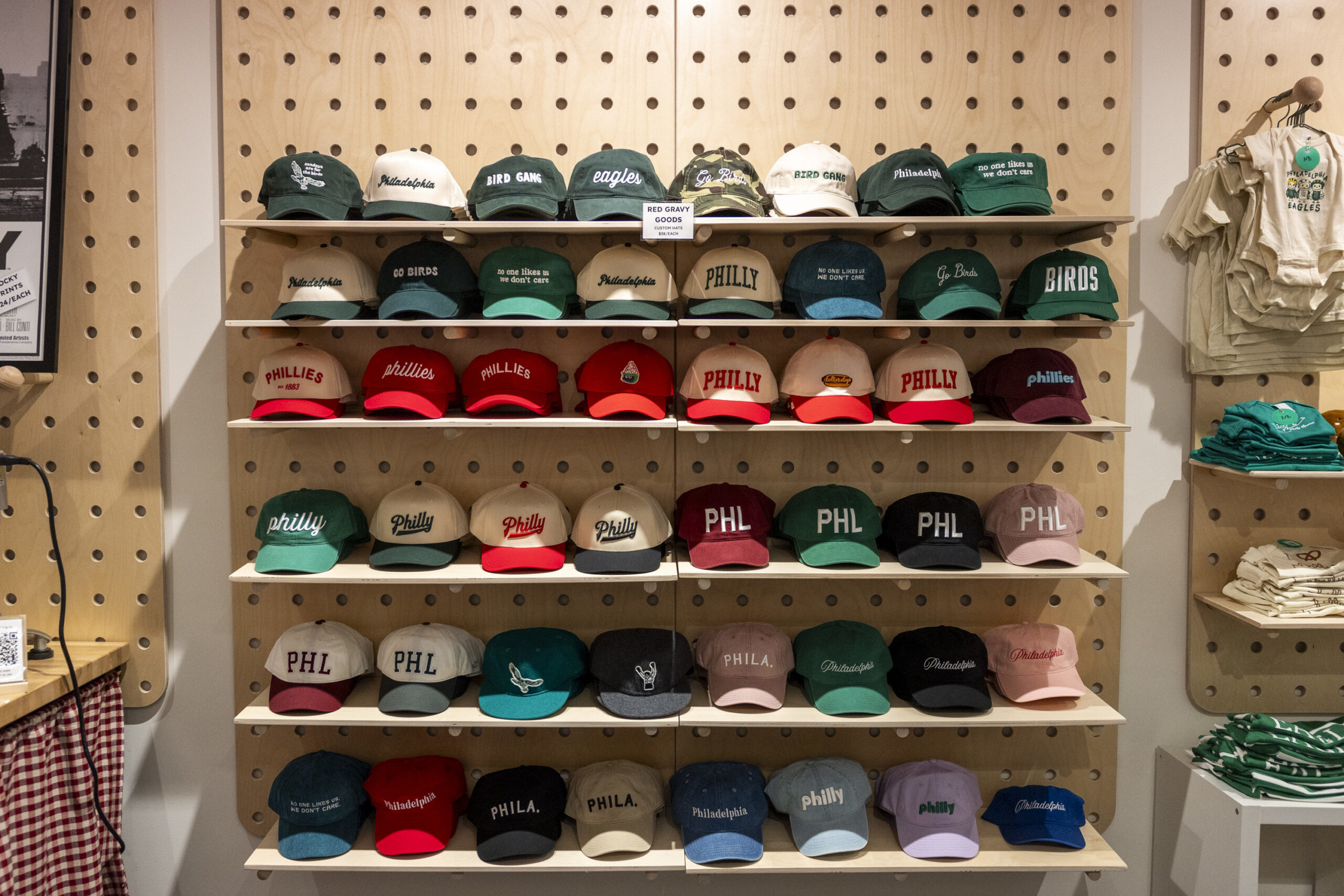
    Customers are able to customize caps with upward of 50 patches designed by Valerie Safran, who co-owns Red Gravy Goods.

    The back of the store, meanwhile, is for apparel and accessories, from claw clips (shaped like cannolis) to children’s clothes and a wall of unofficial Eagles swag.

    Already, most of the store’s bestsellers are Safran’s designs: A mug printed with “F— Dallas” in cartoonish script; a children’s nursery sign that says “Shhh … an Eagles fan is sleeping”; and a new crew neck covered in illustrations of South Philly iconography that range from a Mummer and a cup of John’s Water Ice to the awning of P & F Giordano Fruit & Produce.

    A hat patch bar only a Philadelphian could love

    The piece-de-resistance of Red Gravy Goods is a custom hat patch bar currently manned by Turney.

    Customers choose a Philly sports hat for $34, and then can add a patch from what will eventually become a line of roughly 250 patches designed by Safran. Each costs $6.

    Inquirer reporter Beatrice Forman shows off a customized “Bird Gang” baseball cap from Red Gravy Goods. It features a heat-pressed patch of Saquon Barkley’s iconic reverse hurdler.

    The first 52 patches are already in store, and run the gamut from sports pennants and cartoonish pretzels, to depictions of Saquon Barkley’s iconic reverse hurdler, and uncannily accurate miniature versions of a SEPTA bus.

    The hats are prepared on-demand, with Turney operating a heat press machine. When done right, Turney said, it should take less than a minute to press down a trio of close-together patches.

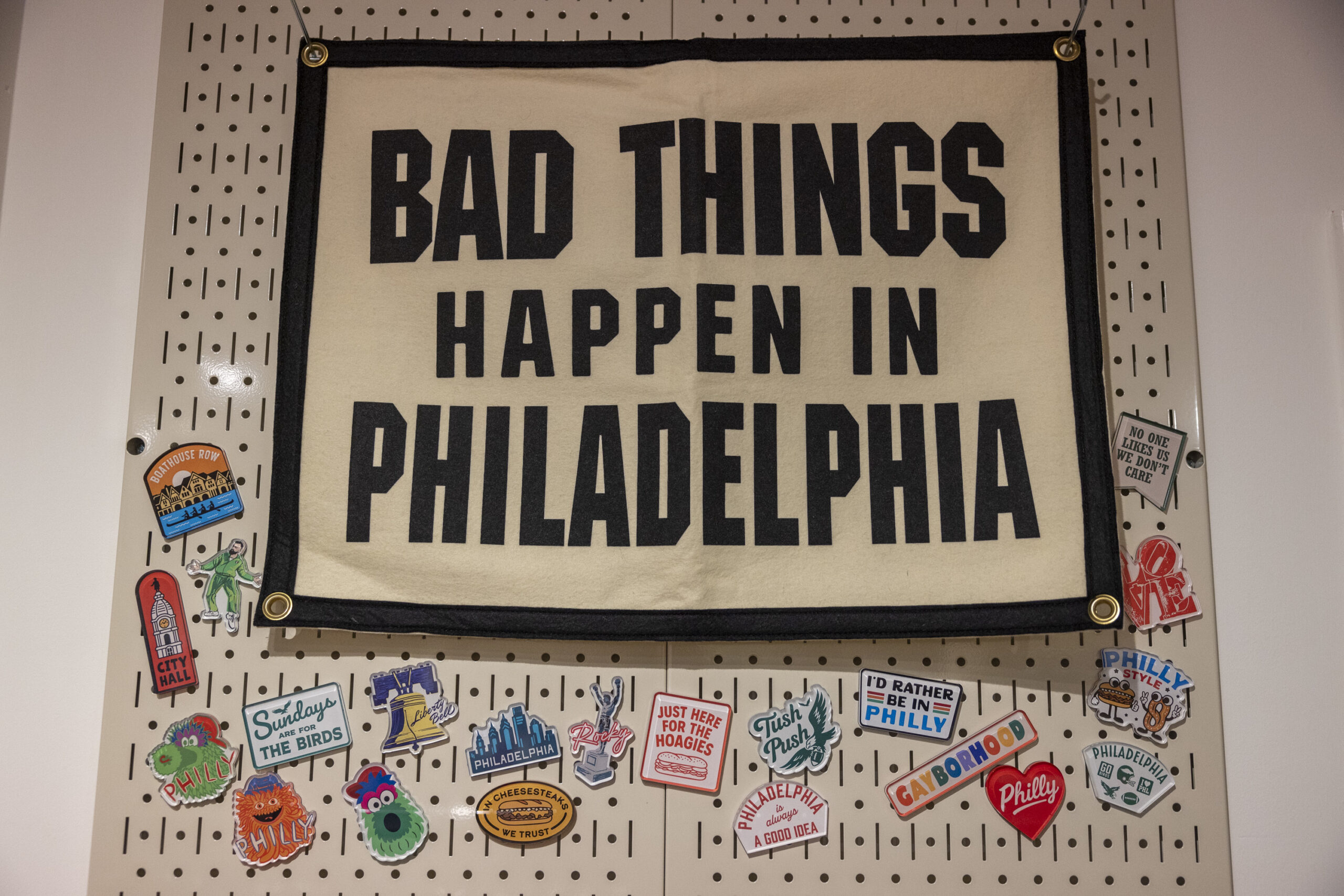
    A sign reading “Bad Things Happen in Philadelphia” is seen with various stickers, at Red Gravy Goods at 1335 E. Passyunk Ave.

    Already, said Turney, their 7-year-old Harlow aspires to be a shop owner when she grows up — just like her moms.

    Red Gravy Goods, 1335 E. Passyunk Ave., 267-764-5532. Hours: 11 a.m. to 7 p.m. daily

    Customizable hats inside Red Gravy Goods, which will heat press patches on demand. A hat costs $38, and each patch costs $4.50.
  • Jason Kelce invests in Sea Isle City’s Hank Sauce

    Jason Kelce invests in Sea Isle City’s Hank Sauce

    Jason Kelce, a man of voracious appetite and enthusiasm, is putting his money behind a local Jersey Shore brand, Hank Sauce.

    The hot sauce company, based in Kelce’s beloved Sea Isle City and sold everywhere from surf shops to the Acme, produces a variety of hot and not-so-hot sauces that have become ubiquitous at the Jersey Shore and Philadelphia area.

    The deal with Kelce’s Winnie Capital was announced in two ways: a sedate corporate press statement, and a not-at-all sedate Instagram post featuring a full-throated Kelce throwing jabs and juggling bottles of Hank Sauce, growling and snarling about the wonders of the flavorful sauce. As only the pitchman and iconic Eagles great can do.

    “BAM! POW! POW FLAVOR! YEEEEOWWWWWW,” Kelce spitballs for the camera from inside the Hank Sauce restaurant in Sea Isle, an array of sauce laid before him, before he and others off-camera dissolve in laughter. “You got some eggs that don’t have any [beeped expletive] flavor? Well we got you covered baby.

    “Any notes?”

    Someone throws him a bottle from stage right; he makes the catch. “I’m glad I looked,” he said.

    In the comments, and in the press statement, Kelce calls Sea Isle “right in my backyard in South Jersey,” and says he and the three founders plan to “take this thing to the next level.”

    The Kelce family owns a $2.2 million vacation home in Sea Isle, hosts his annual celebrity bartending Eagles fundraiser at the Ocean Drive, and support local causes like Mike’s Seafood walk for autism.

    “This one was a no-brainer,” Kelce said in the Instagram post. “I’ve been a consumer of this product and a fan of this brand for a long time.”

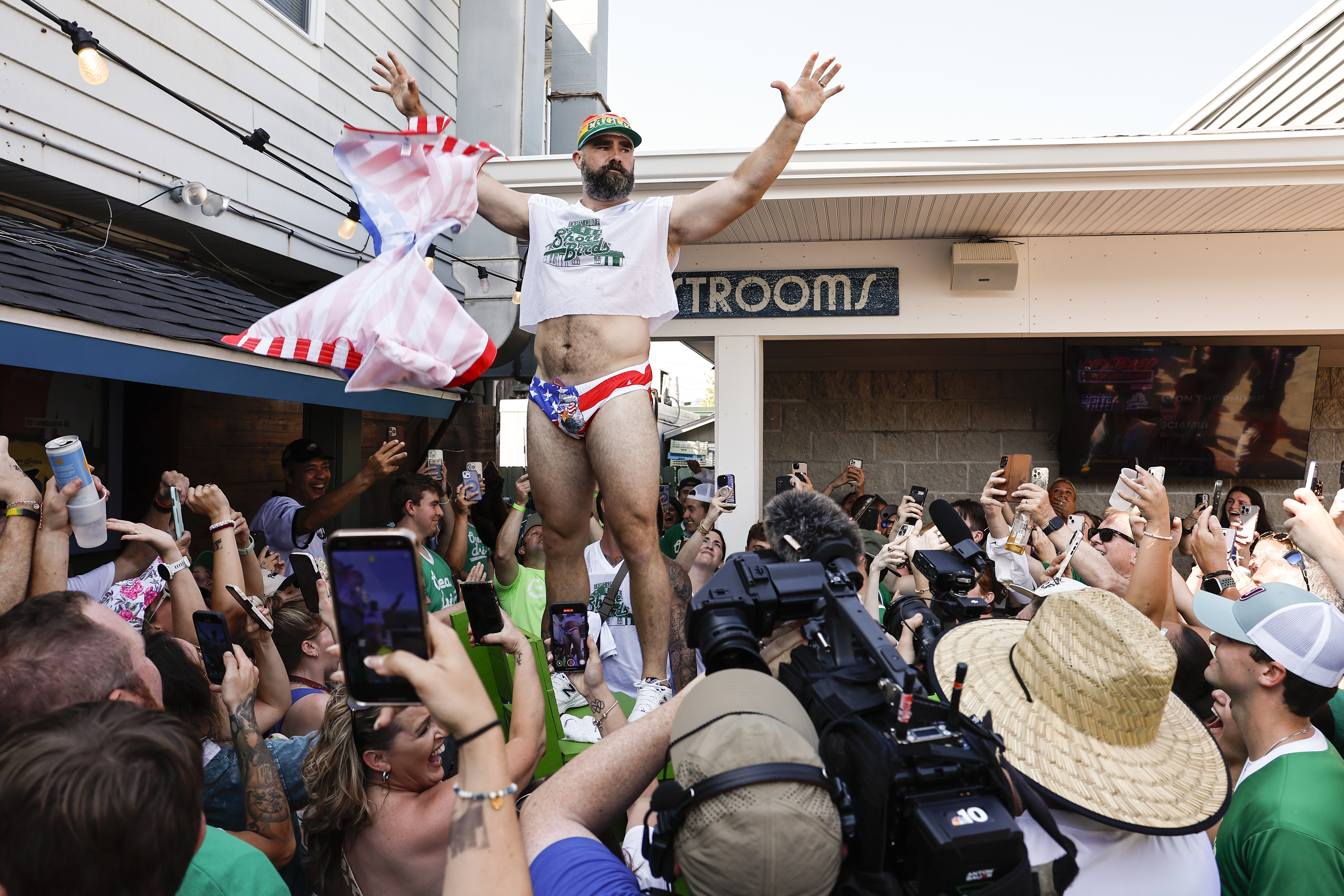
    Former Eagles player Jason Kelce rips off his pants during the fifth annual Team 62 at the Ocean Drive celebrity bartending event on Wednesday, June 25, 2025, in Sea Isle City, NJ. The event raises funds for the Eagles Autism Foundation.

    A regular in Sea Isle City with his family, Kelce said he walked into Hank Sauce in 2015 and met Brian “Hank” Ruxton himself, who took the Eagles star into the back where they shared a beer.

    “I like these guys,” Kelce said.

    The statement described the arrangement as “a strategic equity investment from former NFL player, podcaster, and investor Jason Kelce.”

    “The new investment and partnership with Kelce’s Winnie Capital will accelerate national expansion and increase Hank Sauce’s visibility and reach in new markets across the country,” the statement said.

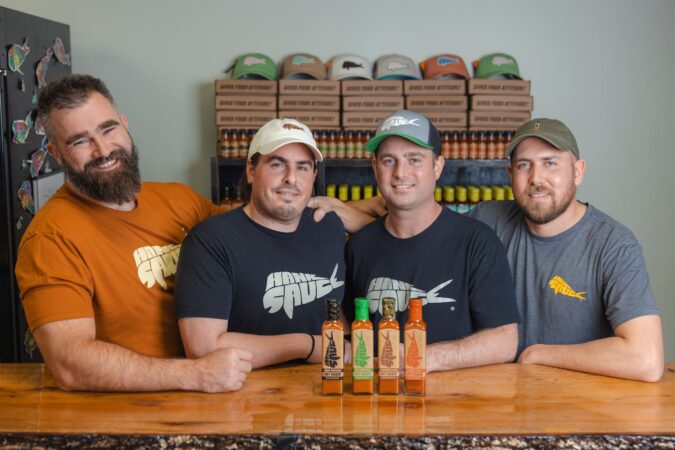
    Founded in 2011 by three college roommates — Ruxton, Matt Pittaluga, and Josh Jaspan — as “a hot sauce for people who don’t like hot sauce,” Hank Sauce was first made in a garage, and hand-bottled for six years. The company eventually expanded into a 10,000-square-foot manufacturing facility in Millville, and is now sold in more than 5,000 stores nationwide, according to the press statement.

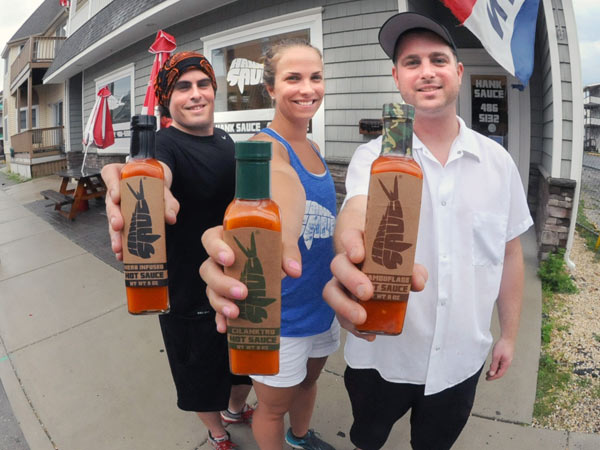
    Matt Pittaluga (from left), Kaitlin Ruxton and Brian Ruxton are the dream team behind the Hank Sauce phenomenon. (DAVE GRIFFIN / For The Inquirer)

    Hank Sauce comes in multiple variations, including the original Herb Infused, plus Cilanktro, Camouflage, and Hank Heat.

    As part of the deal, Kelce will “collaborate with Hank Sauce on original content and ongoing brand strategy,” the statement says.

    “We’ve poured our lives into building this brand, and we couldn’t be more excited to have Jason on board — not just as a partner and ambassador, but as a genuine fan long before this partnership,” Pittaluga said in the statement.

    Winnie Capital is described as “a private family office supporting the business and philanthropic activities of Jason and Kylie Kelce. The Winnie portfolio includes diverse investments and partnerships across media, athletics, consumer packaged goods, apparel, real estate, agriculture, and technology.”

  • Philly’s Polish community keeps a Christmas Eve tradition alive

    Philly’s Polish community keeps a Christmas Eve tradition alive

    Philadelphians have become increasingly familiar with the Italian American-originated celebration festa dei sette pesci, or feast of the seven fishes, thanks to a slew of restaurants hosting fish-centric holiday events in recent years. But there’s another equally cherished, if lesser-known Christmas Eve tradition that’s deeply symbolic: Wigilia, a dinner that showcases the dynamic flavors of Polish food — savory, earthy, sour, sweet, and tangy. In a city where Polish restaurants are mounting a quiet comeback, a new generation of Philadelphians, home cooks and professional chefs alike, are keeping Wigilia alive.

    “Wigilia was the most lasting memory of Polish tradition for me growing up and the main reason that I wanted to open a Polish restaurant,” says Michael Brenfleck, chef and owner of Little Walter’s in Philadelphia. “The thing I remember most was the pierogi — they were perfect.”

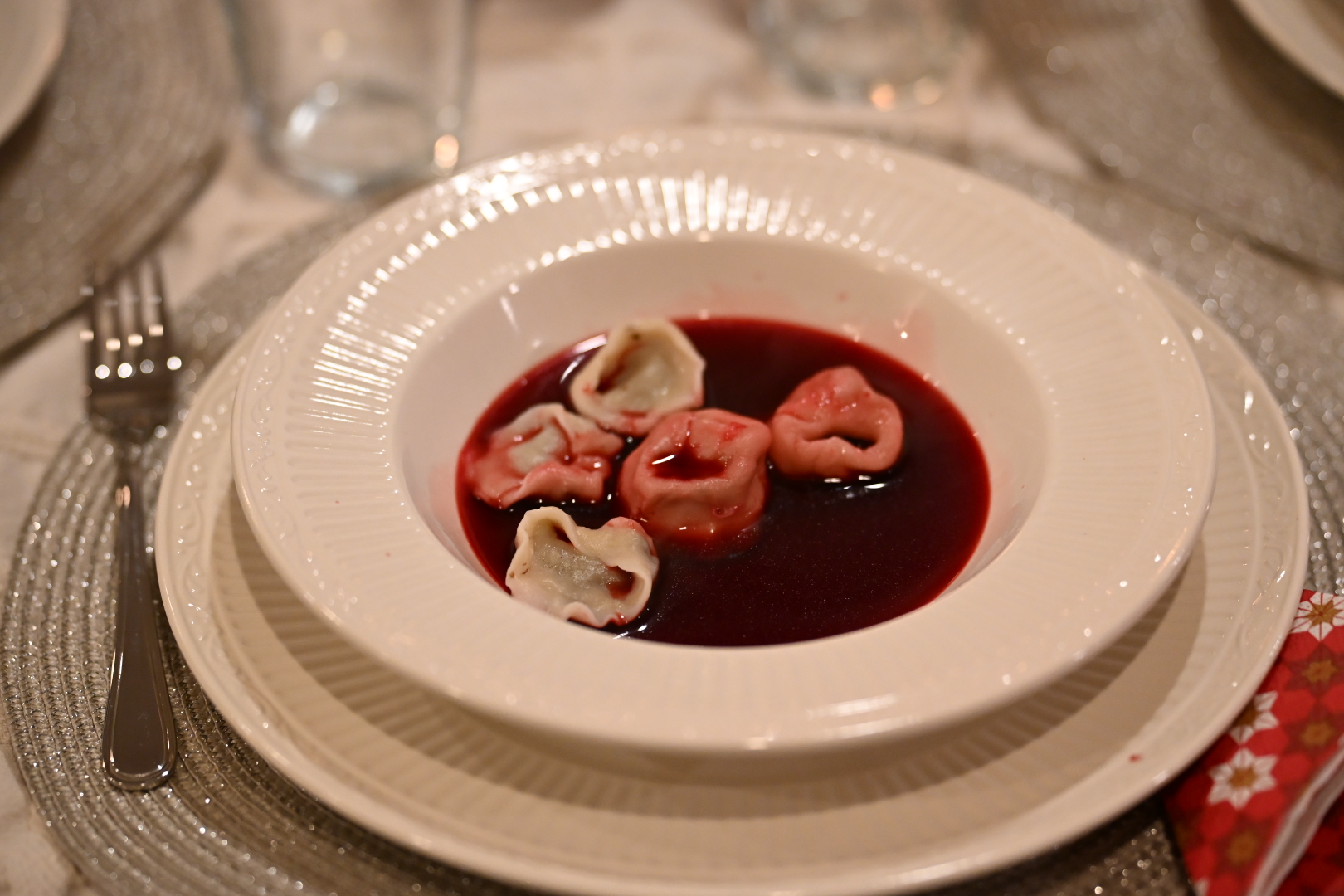
    Pierogi is one of the 12 distinct dishes featured on the Wigilia table. It’s a number with deep significance, understood to symbolize either the 12 apostles or the 12 months of the year. The dinner typically begins with a soup course, often a clear red beet soup (barszcz czerwony) with small mushroom-stuffed dumplings known as uszka, or foraged mushroom soup (zupa grzybowa) depending on what region of Poland the family is from.

    Some families serve multiple soups, all at the start of the meal. That’s how Olde Kensington resident Kasia Fan does it, ladling out a bowl of beet soup followed by mushroom soup, then sauerkraut soup at the start of her annual Wigilia dinner. “Everyone is full by that point, but you have to keep going,” says Fan, who is originally from Nowy Sącz, a city in southern Poland.

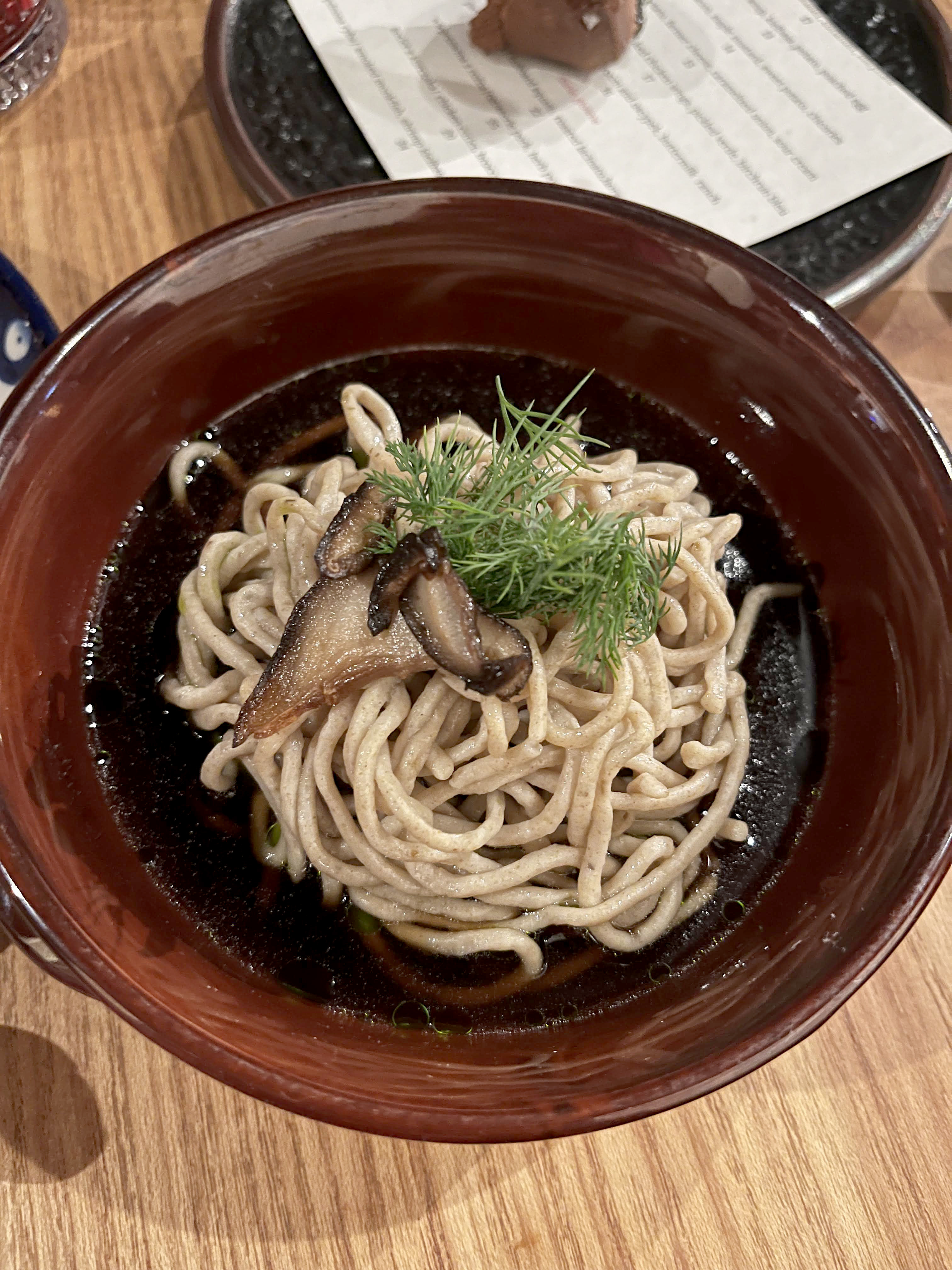
    A chilled mushroom broth with rye soba at the Little Walter’s dinner, made by chef Krzysztof Babik of the Comcast Technology Center.

    Pierogi generally come after soup, and fillings vary by family preference; traditionally they are filled with mushroom and cabbage, though Polish Americans have often adapted to pierogi stuffed with potato and farmers cheese. For side dishes, the meal includes cabbage and split peas, or goląbki, which is a stuffed cabbage roll (prepared vegetarian for Wigilia).

    As with the Italian American Christmas Eve meal, fish is also central to the Wigilia table. Polish American families often use other mild fish such as salmon, sea bass, or halibut; the traditional choices in Poland — herring or carp — don’t have the same popularity in the U.S.

    Dorota Szarlej-Lentz of Narbeth arrived in the area from Poland in 1986. She serves salmon as part of her annual Wigilia dinner, but recalls going to the market as a child to buy a live carp with her parents, a common practice in this part of Europe at the time. Her family let the fish swim in the bathtub for several days — so that it would filter the fresh water and taste less “muddy” — until it met its demise on Christmas Eve. (Live carp sales have since declined.)

    Szarlej-Lentz hosts guests from many different cultures for her Wigilia. After dinner, one guest plays piano, and everyone sings Polish and English Christmas carols after the customary desserts (Polish gingerbread cookies, poppy-seed roll, and tangy Polish cheesecake called sernik). “The tradition of Wigilia is ingrained in the Polish spirit and community,” says Szarlej-Lentz.

    At Little Walter’s, Brenfleck recreates this togetherness in a public setting. He hosts his second annual Wigilia dinner on Tuesday in collaboration with other Polish American Philadelphia chefs, including Pat Alferio of Heavy Metal Sausage, Ryan Elmore of Mom-Mom’s, Ian Moroney of Carl, and Patrick Czerniak of Square 1682.

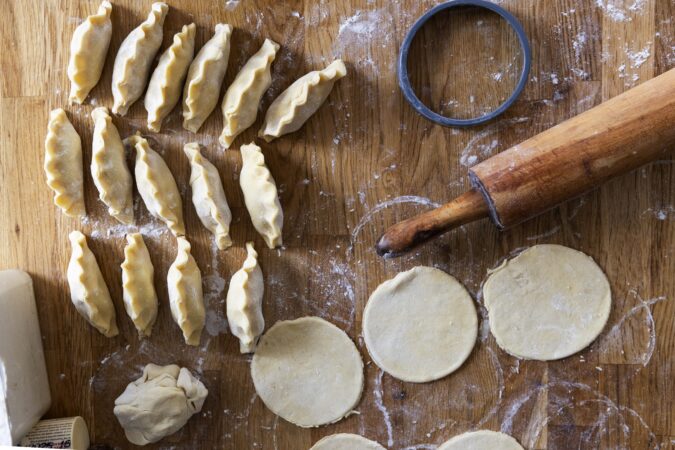

    Chef Michael Brenfleck crimps pierogi.

    All of the chefs will prepare reimagined Wigilia dishes, combining inspiration from their Polish roots with their own culinary style. The six-course meal includes barszcz with uszka, roe-topped pierogi stuffed with potato, vegetarian cabbage filled with barley and celery root, monkfish liver kielbasa, and a buckwheat custard with compote made from dried fruit as well as a Polish cookie platter.

    Growing up, Brenfleck fondly remembers going to his grandfather Walter’s farm house in Lehighton, Pennsylvania, to celebrate Wigilia — a memory that inspired him to open up Little Walter’s. “Without Wigilia, there would be no Little Walter’s,” he says.

    The collaborative dinner is an opportunity for the chefs (and customers) to connect over their cultural heritage. “It’s cool hearing everyone else’s stories, it brings me full circle,” says Czerniak, who recalls going to church on Christmas Eve morning, then spending the day rolling out pierogi with his mom. “I went to culinary school because I wanted to stop cooking the Polish staples like cabbage, and now in my culinary career, I went back to cooking Polish food.” Czerniak will prepare barszcz with delicate uszka dumplings, as well as gingerbread-spiced paczki (traditional yeasted doughnuts filled with plum jam).

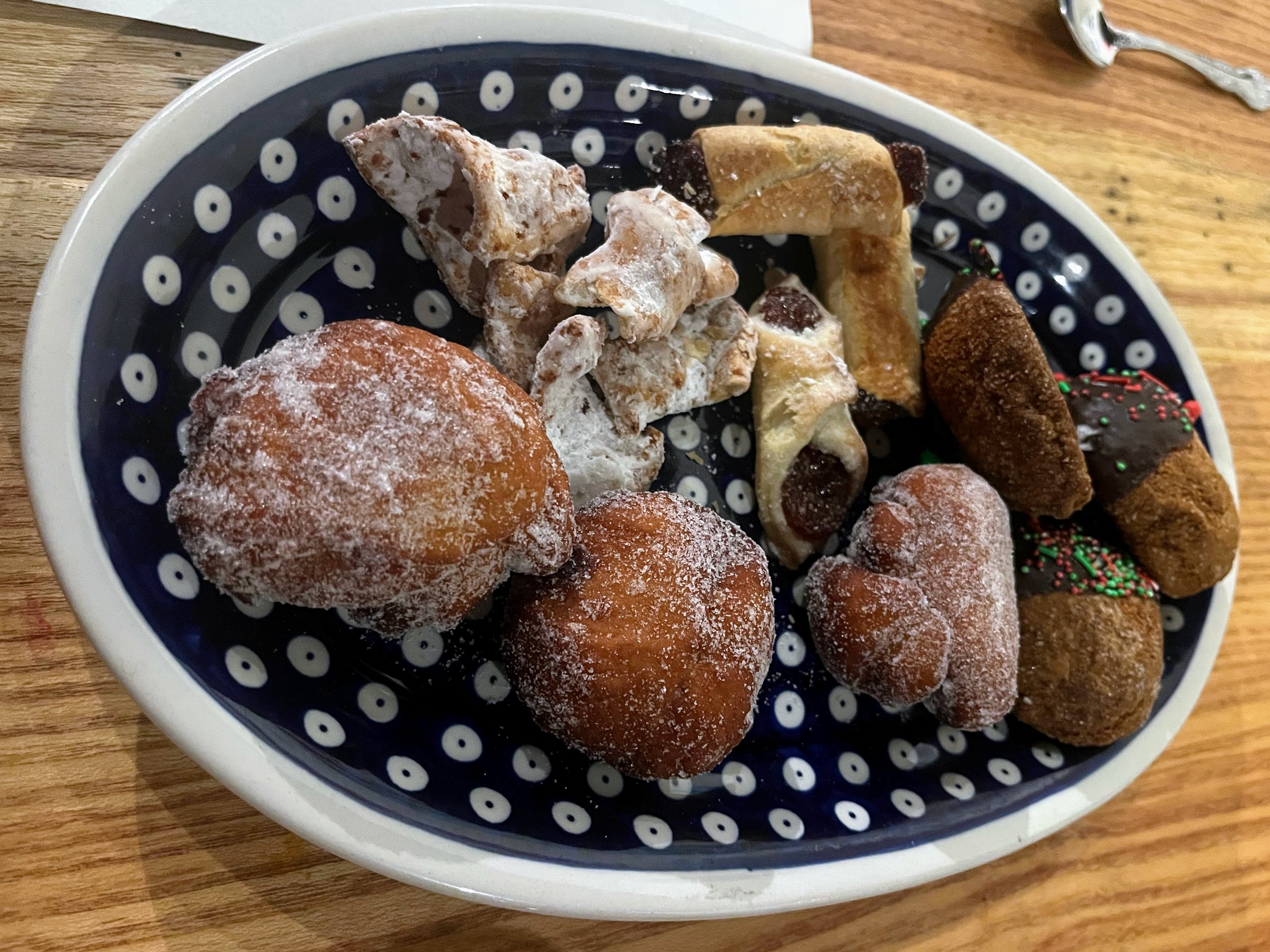
    A plate of cookies and paczki (yeasted doughnuts) at Little Walter’s 2024 Wigilia.

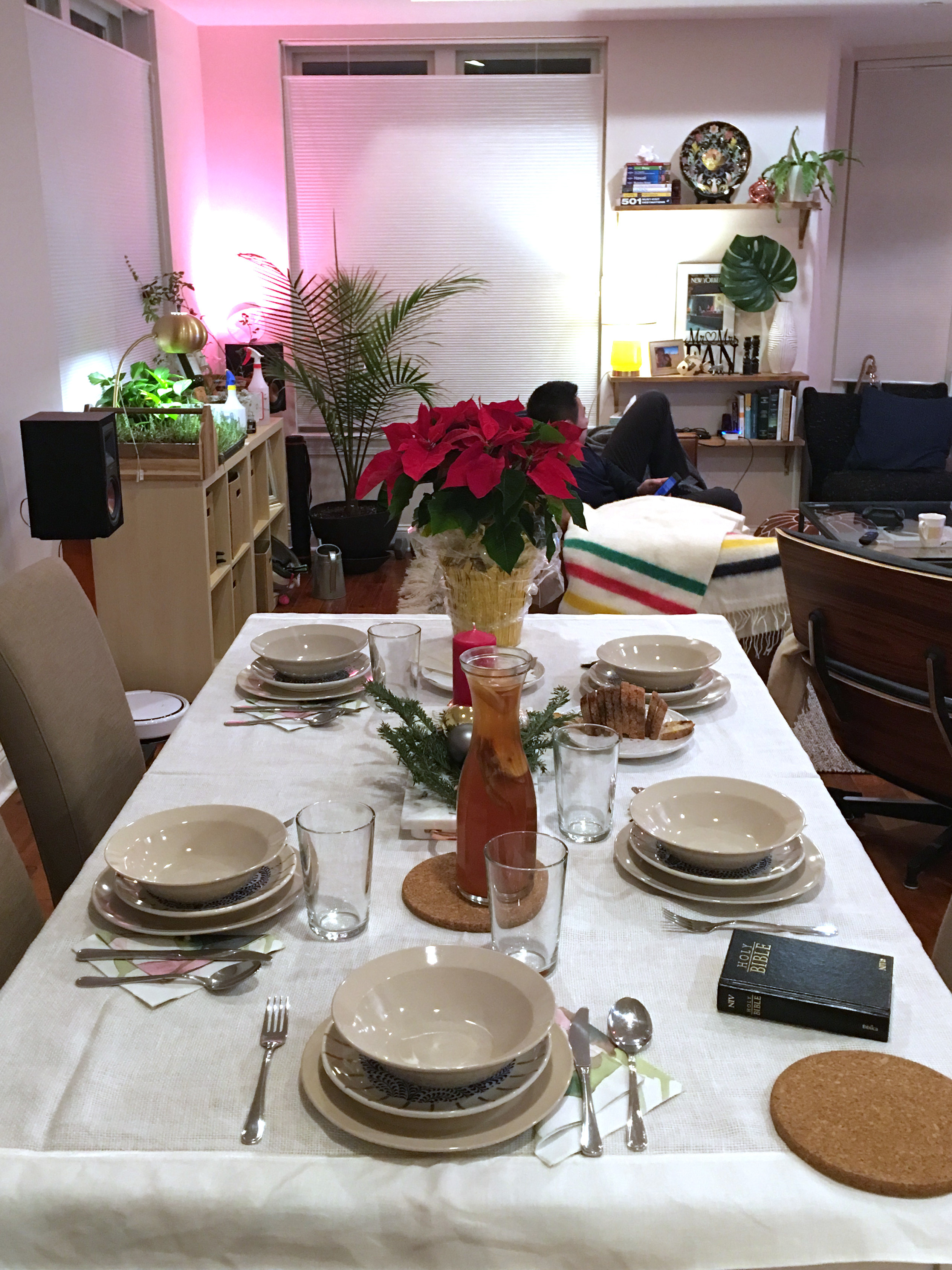
    While a restaurant setting makes the Wigilia tradition accessible to anyone — even those without Polish backgrounds — celebrations at home hold a deep significance. “I go through a lot of effort to celebrate Wigilia the Polish way for myself and my children,” says Fan, who arrived in the U.S. over a decade ago. She recalls the Polish custom of starting the Christmas Eve meal when the first star — representing the Star of Bethlehem — appears in the eastern sky. Her table always features a white tablecloth, symbolizing both modesty and where Jesus was born. An extra place setting is prepared for any unexpected guests, reflecting Polish hospitality and the belief that “a guest in the house is God in the house.”

    Once Fan lights a candle at the table, the dinner begins with a wafer known as opłatek, or bread of love, that’s shared with family and guests. During the breaking of the opłatek, each individual offers blessings, forgiveness, and well wishes for the new year by breaking the wafer and eating it. It’s an essential moment of connection, Fan says. “These symbols of Wigilia have true meaning that transcend generations and make being Polish so special to my heart,” says Fan.

    Kasia Fan’s Wigilia table.

    Patrick Iselin, a partner in the Kensington bars Starbolt and the Cormorant, isn’t Polish, but he’s an enthusiastic Wigilia celebrant. Iselin’s first introduction to Wigilia was over 15 years ago through his wife’s family (her maternal grandfather came from Poland). The sharing of the opłatek and the warming flavors of barszcz, which Iselin sometimes enjoys sipping out of a mug, sold him on the holiday.

    When the usual host, his wife’s aunt, was ready to give up her Wigilia duties, Iselin took the helm — he’s a seasoned cook thanks to years in the restaurant industry. “I look forward to it every year, and I love how happy it makes my wife,” he says.

    His wife, Stephanie, is surprised at how readily Iselin and others have taken to the Polish tradition. “I didn’t think it would be something we would continue over the years,” she said. “We’ve all grown to love it, and now our non-Polish friends and family are also part of the tradition.” She feels proud her husband carries Wigilia forward.

    Beet soup (barszcz) with uszka (mushroom-stuffed dumplings) on the Wigilia table at Kasia Fan’s house.

    Iselin’s favorite part of the meal is making barszcz from a family recipe that yields earthy yet bright flavors from roasted beets, allspice, parsnip, celery root, and red wine. “It’s like a liquid hug,” says Iselin. “Wigilia is a very elegant dinner party, I love the warmth of it all.”

    After serving barszcz and pierogi, Iselin prepares a roasted halibut dressed with a tapenade of asparagus and olives. He enjoys krupnik, a Polish honey liqueur, alongside the meal.

    He hopes the couple’s children take up the Wigilia mantle when they are old enough. “I couldn’t imagine celebrating Christmas Eve any other way,” he said.