The Philadelphia area’s December restaurant forecast is on the light side, compared with previous months, but this crop of newcomers is an intriguing mixture: a Euro-inflected bistro with a Bing Bing/Cheu pedigree, a colorful pizza bar, a honky-tonk vintage shop, a Filipino riff on Outback Steakhouse, the makings of an Indian brewpub, and the eagerly awaited casual corner spot from Michelin-starred Amanda Shulman and Alex Kemp .
Banshee (1600 South St., opening Dec. 11): Twin brothers Bryan and Kyle Donovan, partnered with Bing Bing/Cheu alums Shawn Darragh and Ben Puchowitz, are ready to unveil their sleek South Street West bistro offering casual cuisine influenced by Paris, London, and Basque wine bars. Menu sampling: Barnstable oysters (kiwi mignonette); tarte flambee (smoked crème fraîche, maitake, caramelized onion); Berkshire pork collar (Tarbais beans, Savoy cabbage, bearnaise); and a Butterscotch Krimpet filled with Boysenberry jam.
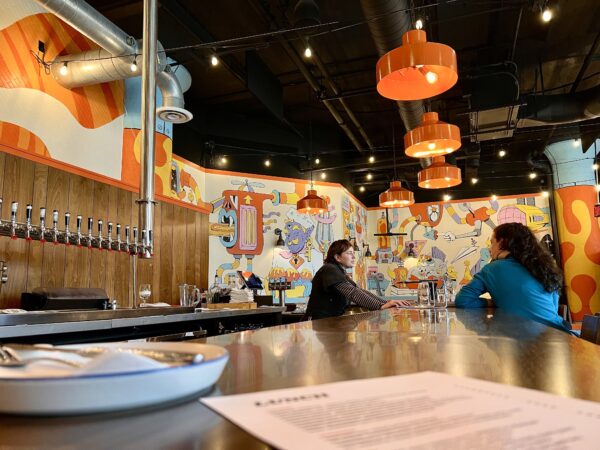
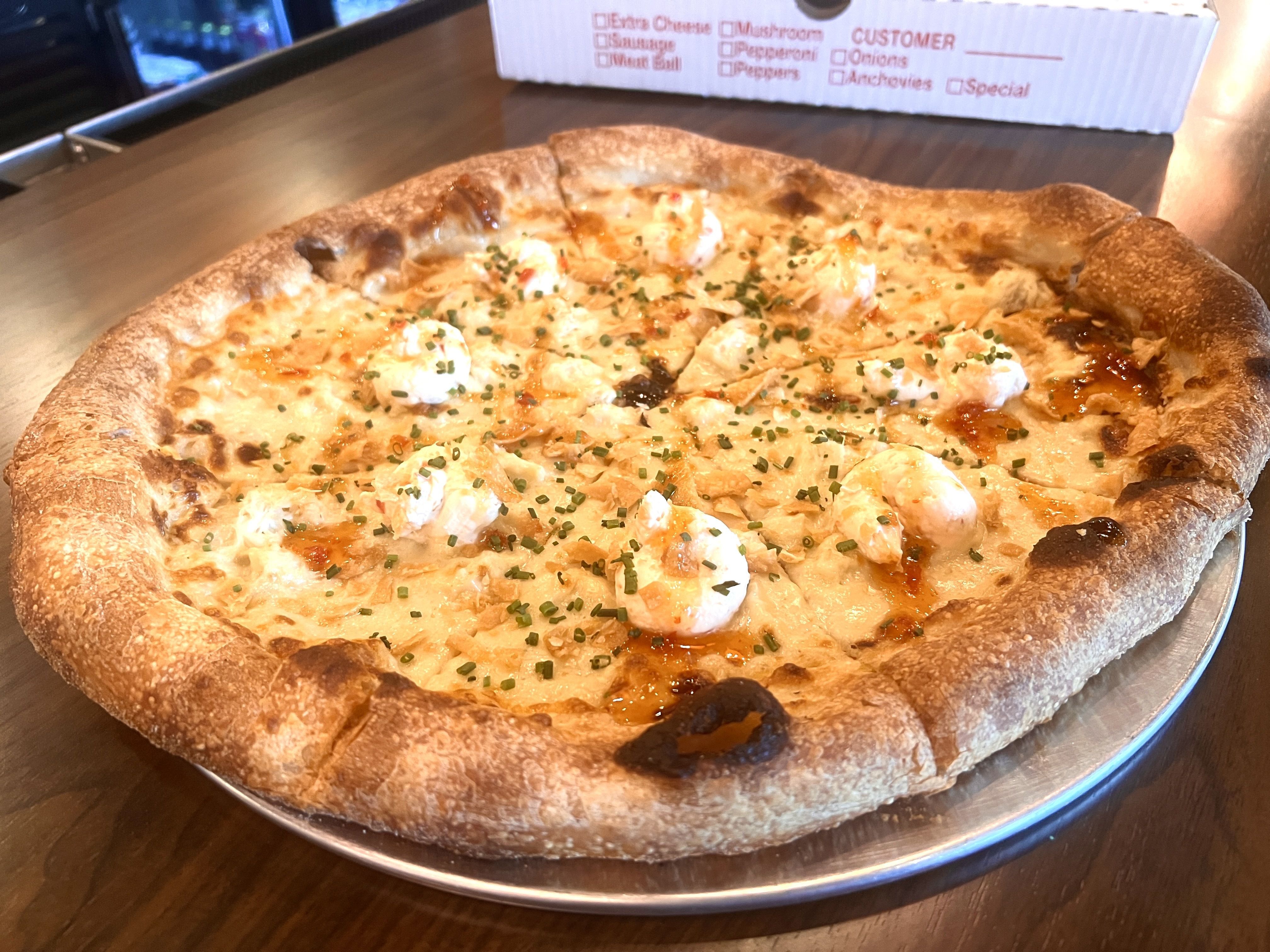
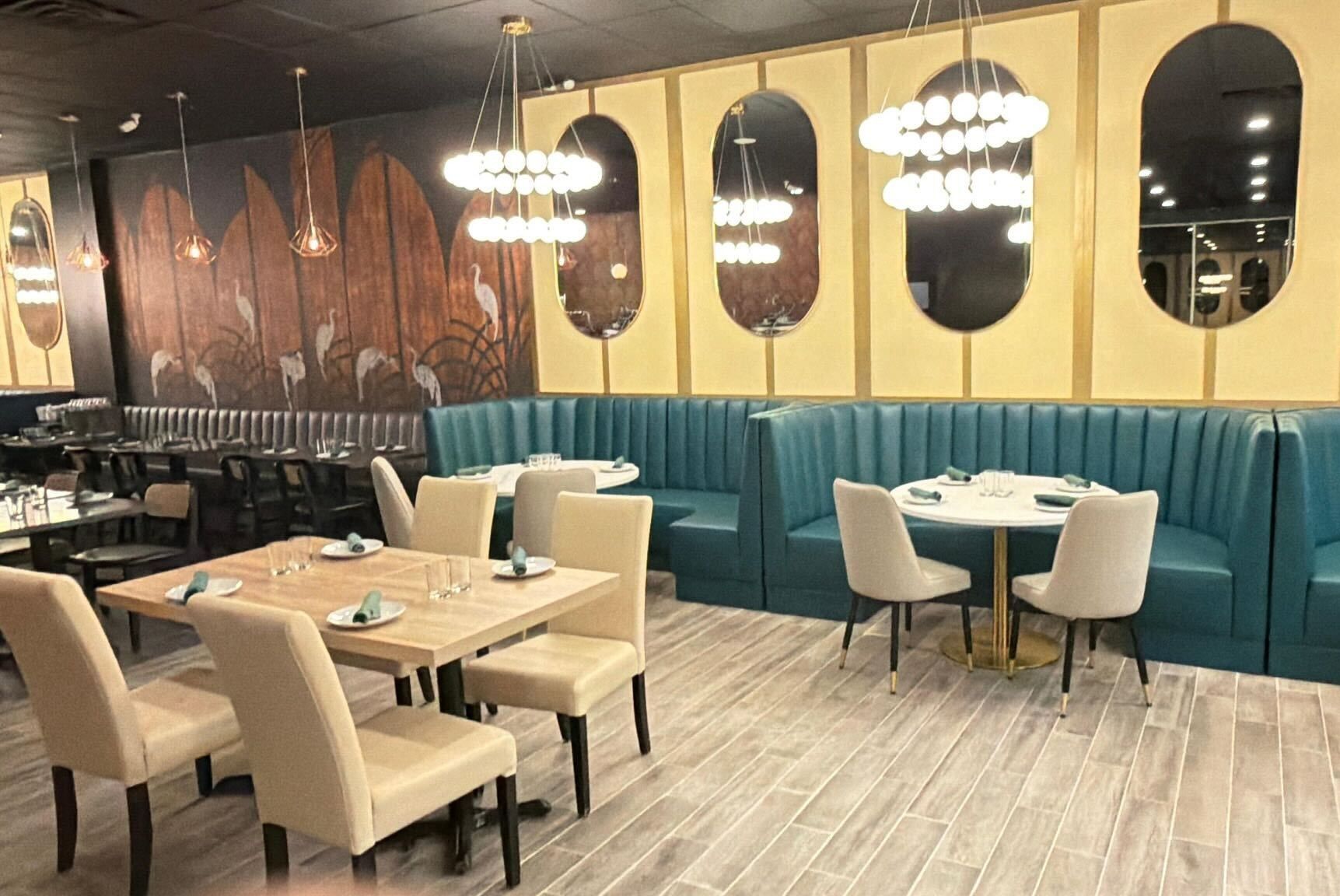
Cerveau (990 Spring Garden St.; now open): Finally operating full bore with its liquor license, this Mediterranean-leaning newcomer from Pizza Brain cofounder Joe Hunter rocks colorful — almost surreal — surroundings with murals and columns resembling lava lamps. The menu mixes pizzas, pastas, small plates, and the mini-sandwiches known as tramezzini, with attention to vegetarian and vegan options. A full bar, including zero-proof cocktails, supports a plan to evolve into an all-day café-style hangout. Do not miss the crab rangoon pizza, which is exactly what it sounds like.
Crab rangoon pizza at Cerveau, 990 Spring Garden St.
LeoFigs (2201 Frankford Ave.; opens “later in December”): Shannon Leocata Figueras and Justice Figueras’ urban winery, cocktail bar, and restaurant in Fishtown is built around the idea of “unpretentious deliciousness” with a warm living room setting. In addition to house-made wines and ciders and cocktails, menu leans toward comfort-driven small plates. (The couple was not above creating a cheeky ruse on the neighborhood recently.)
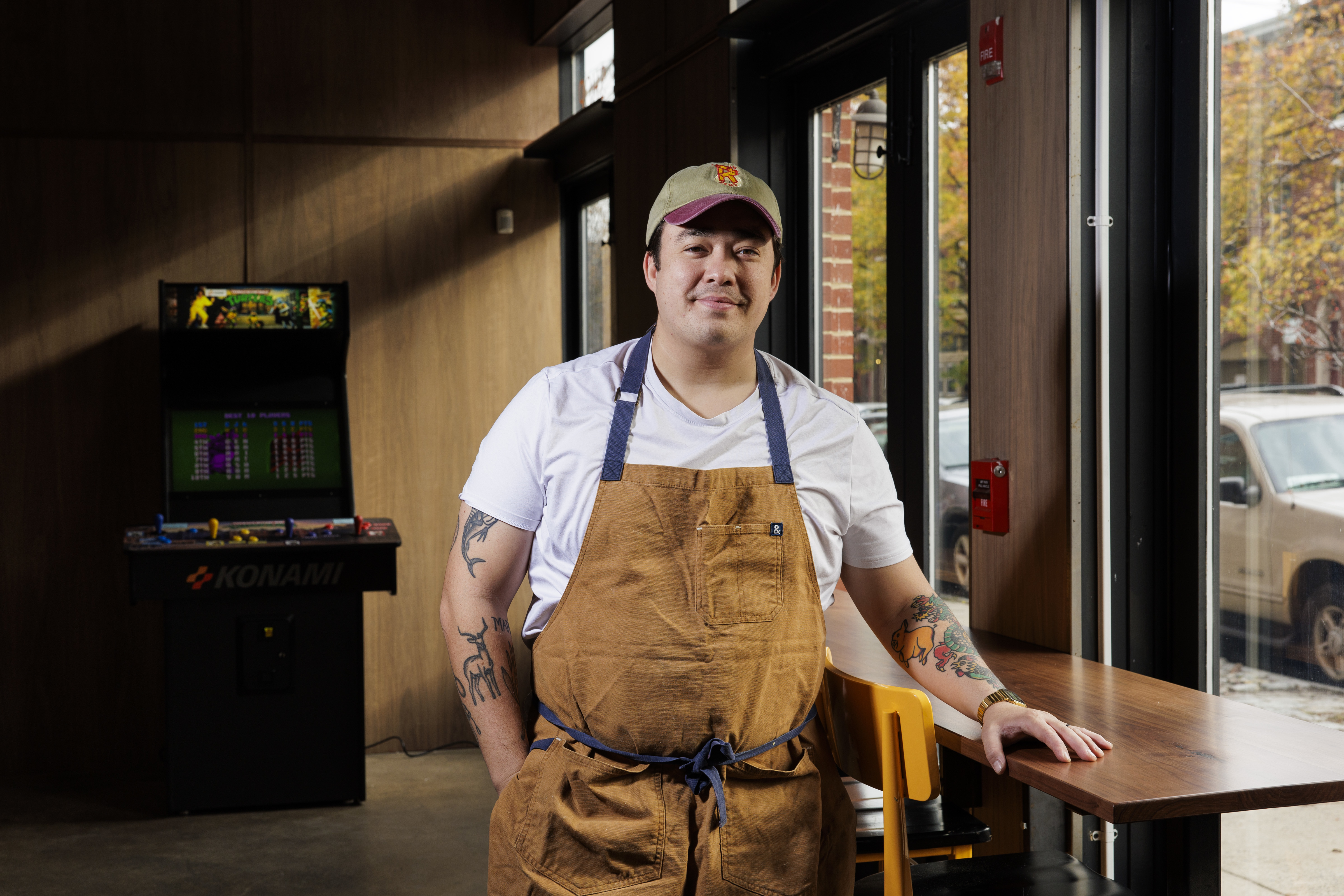
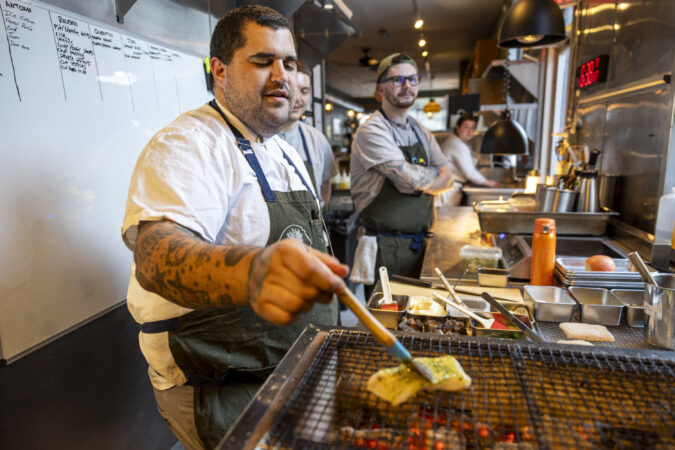
Chef Chance Anies at Manong.
Manong(1833 Fairmount Ave.; opens Dec. 5): Chef Chance Anies follows up his South Philadelphia hit Tabachoy with an interpretation of Outback Steakhouse — “that is,” writes Kiki Aranita, “if the chain restaurant existed in a Filipino alternate universe.”
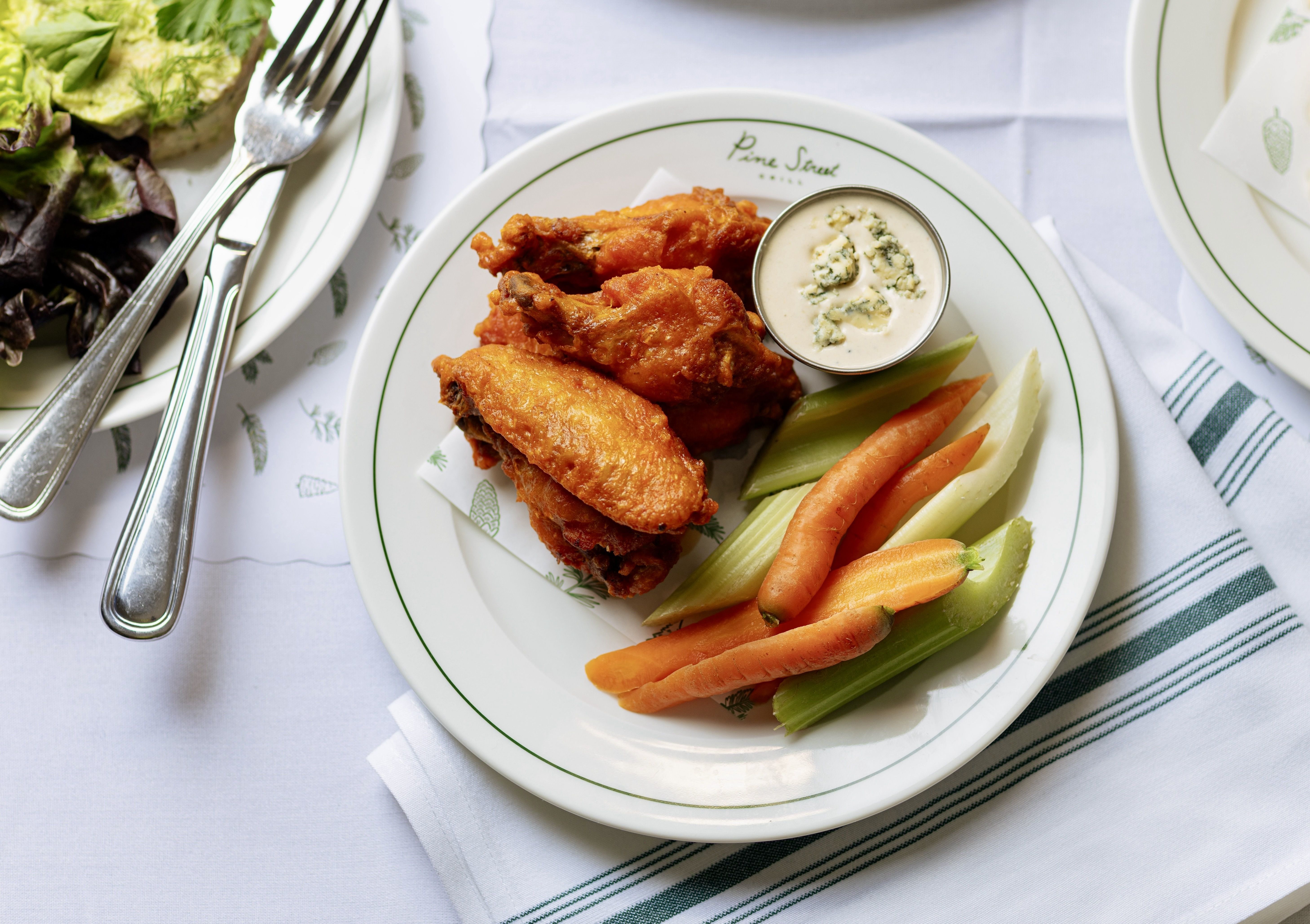
Buffalo wings at Pine Street Grill, 2227 Pine St.
Pine Street Grill (2227 Pine St.; “this month”): Amanda Shulman and Alex Kemp’s neighborhood spot in the former Cotoletta space in Fitler Square — a more casual counterpoint to Her Place Supper Club and My Loup — will serve “timeless American food made with care,” such as matzo ball soup, spinach-artichoke dip, Greek salad, French dip, and rotisserie chicken, and a drinks program of classic cocktails, beer on tap (including birch!), and wines “with no pretense” at a variety of price points.
Secondhand Ranch(1148 Frankford Ave.; soft opening Dec. 6 with a grand opening in January): Here’s what happens when a vintage shop and a honky-tonk bar have a baby in a former bank building at Frankford and Girard in Fishtown. This mash-up hosts independent vendors selling secondhand finds, while the bar slings beer, cocktails, and simple saloon fare like sausages and hot dogs, all while rocking a Western-outlaw vibe. It’s meant as much for hanging out as for thrifting.
Side Eye (623 S. Sixth St.; “later this month”): Queen Village gets a neighborhood bar serving “French-ish” food, classic cocktails, European-leaning wines, and beer at approachable prices in the former Bistrot La Minette. Owner Hank Allingham leads a team including chef Finn Connors (formerly of Sally and Wilder) and beverage director Ryan Foster (Messina Social Club). The menu has house-made breads, fresh pasta, frites, French onion soup, mussels, and a late-night raw bar.
Dining room at Vibe Haus, which opened Dec. 1, 2025, at 402 Swedesford Rd. in Berwyn.
Vibe Haus Indian Plates & Taps (402 Swedesford Rd., Berwyn; opened Dec. 1): Karthic Venkatachalam and Gopal Dhandpani of the well-regarded Nalal Indian Cuisine in Downingtown and Adyar Cafe in Exton have taken over the long-shuttered Lotus Inn with what they intend as an Indian brewpub for the western suburbs. Though the on-site brewery is at least several months away, they’re now teasing out a pub menu of Indian-meets-American favorites, such as Madras nachos (papdi chips layered with spiced queso, black beans, masala corn, and cilantro crema), tandoori mushroom flatbread, and butter chicken bao buns.
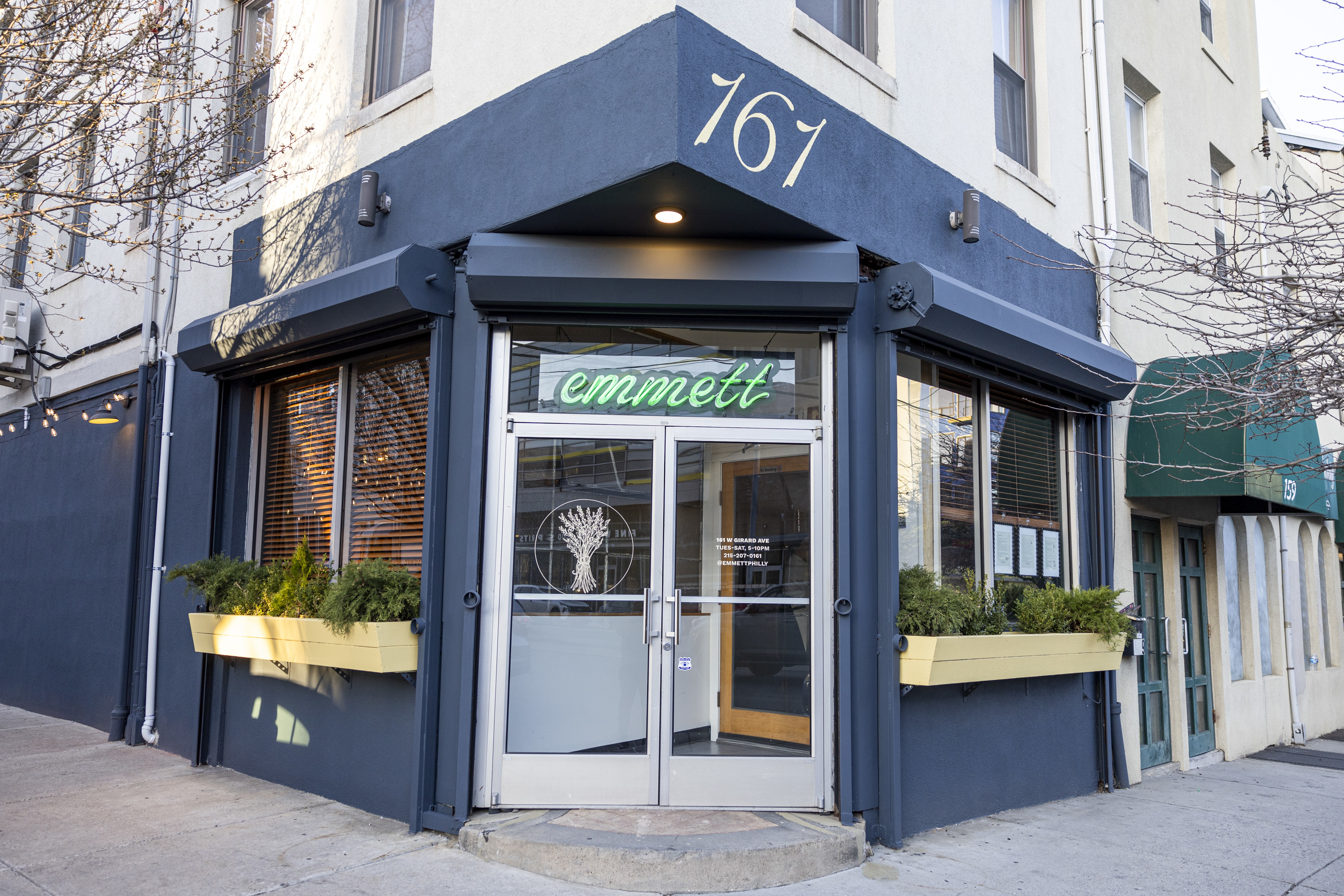
Emmett, the Kensington restaurant serving modern Levantine cuisine, has found itself on a coveted list: Esquire’s Best New Restaurants. It is the only Philadelphia establishment recognized on the list. The 30-seat restaurant is already perpetually busy, but since the list was announced Dec. 1, chef-owner Evan Snyder, 33, has seen an uptick in reservations on OpenTable.
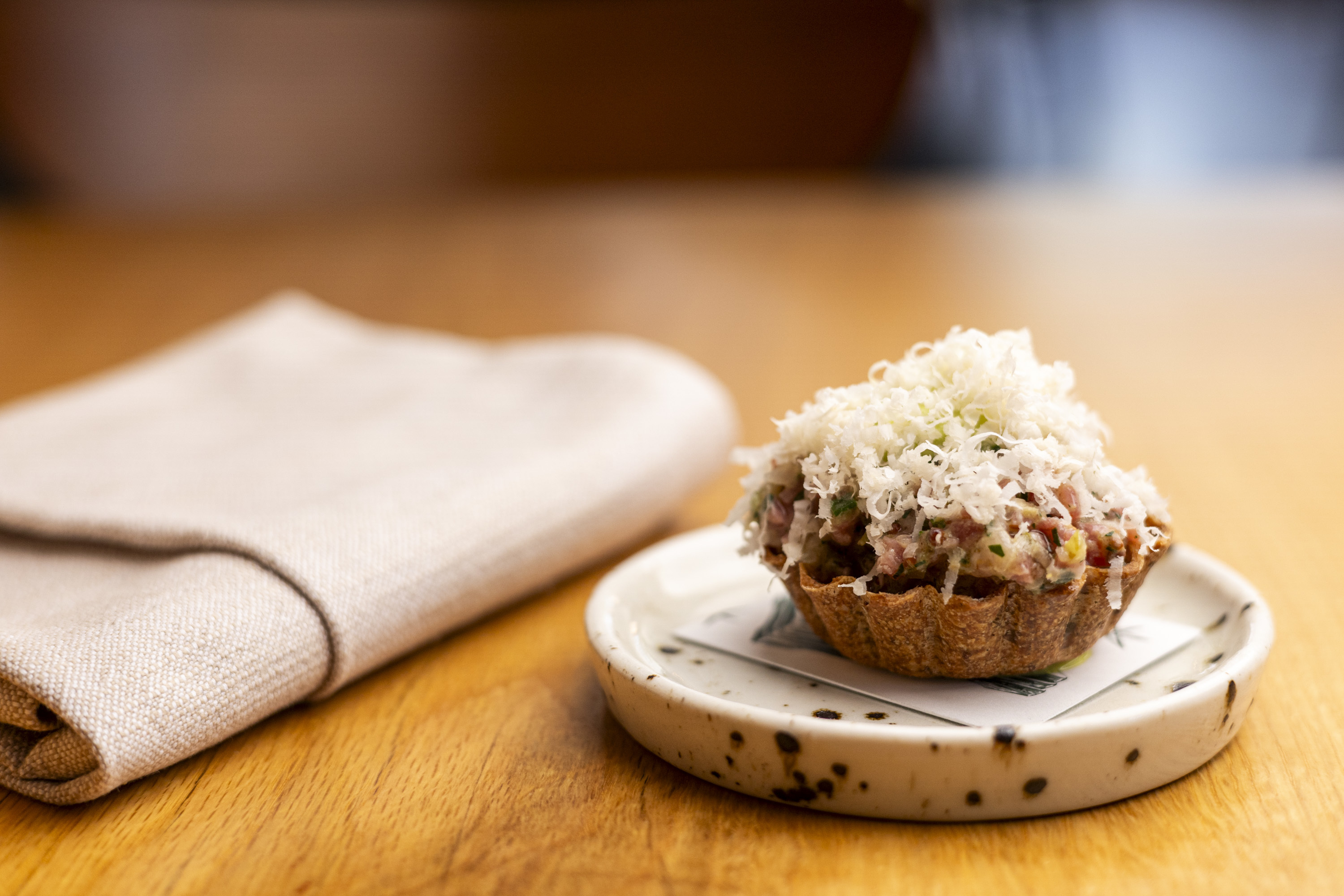
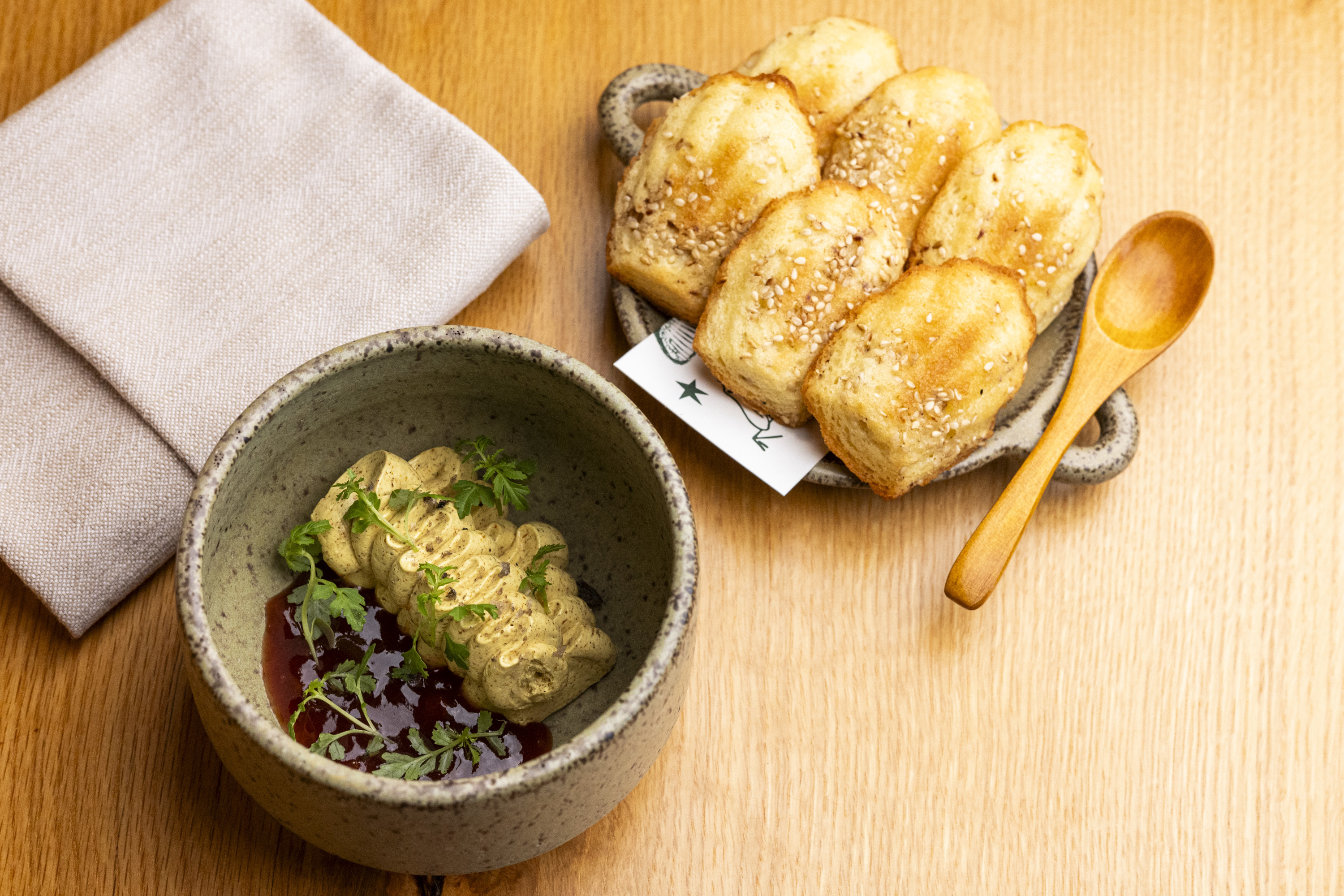
He had been sitting on the news — or at least, some suspicion of it — for the last two weeks, since he received an invitation from Esquire for the list’s unveiling party in New York. The list was compiled by editor Jeff Gordinier and writers Joshua David Stein and Amethyst Ganaway; Stein was responsible for Emmett’s inclusion. He visited twice this past year and in Emmett’s segment of the article praised its rye tartlet filled with American wagyu tartare, sesame madeleine with baharat butter, corn agnolotti with tahina, and duck breast.
The rye-wagyu tartlet at Emmett, 161 W. Girard Ave., in Philadelphia, Pa., on Thursday, March 27, 2025.
Snyder was particularly delighted by Stein’s focus on these menu stalwarts. “The tartlet and madeleine are staples that will probably never come off the menu, as well as the dry-aged duck, which we age for 21 days, quite a bit longer than most people age ducks. The agnolotti with tahina is a set that changes micro-seasonally. These are all the things he enjoyed,” said Snyder.
Sesame Madeleines with Ras al Hanout butter at Emmett, 161 W. Girard Ave., in Philadelphia, Pa., on Thursday, March 27, 2025.
Emmett, named after Snyder’s 2-year-old son, opened Jan. 28, after he had run the concept as a pop-up for two years prior.
The outside of Emmett, 161 W. Girard Ave., in Philadelphia, Pa., on Thursday, March 27, 2025.
Snyder is most thrilled that the recognition gives his team “a shine.”
“It’s the most important thing to me that [my team] is proud of what they’re doing and where they work.”
Blackfish BYOB’s 19-year run in Conshohocken will end New Year’s Eve. Chef-owner Chip Roman said the decision to close the restaurant did not come from financial strain or burnout.
He said he, his wife, Amanda, and their four children are doing well, and business on Fayette Street is good.
Why then?
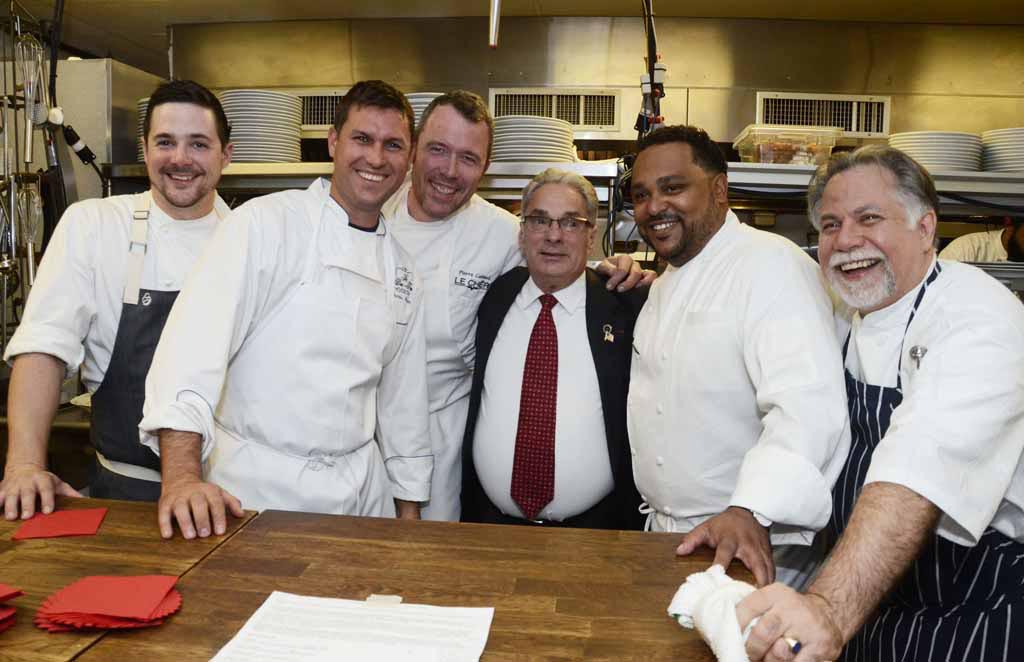
Chip Roman (second from left) at a 2014 tribute dinner for chef Georges Perrier (center) with fellow chefs (from left) Nicholas Elmi, Pierre Calmels, Kevin Sbraga, and Al Paris.
“It’s hard to put into words. I’ve always felt that I’m here for a bigger purpose, like there’s more for me to do rather than cook,” he said in an interview Tuesday. “I could probably go on for another 20 years, but I don’t feel like that’s my ultimate calling. If I don’t follow what’s in my head and my heart, I’m going to regret it. On paper, it’s really stupid, but you only live once.”
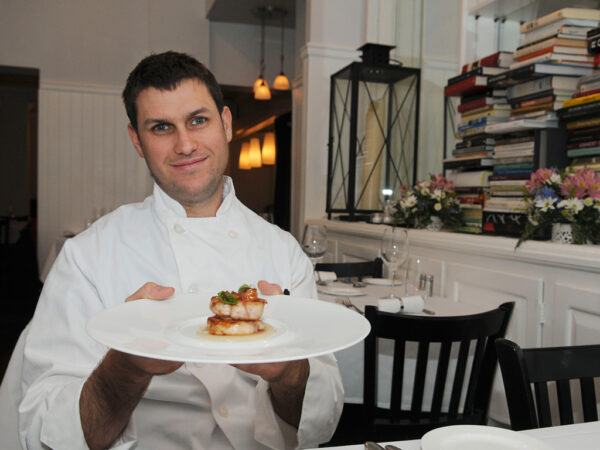
Roman, 46, grew up in Fishtown, attended culinary school at Drexel University, and worked for Marc Vetri at Vetri Cucina and Georges Perrier at Le Bec-Fin. At 22, he arrived on Fayette Street in Conshohocken to take over a restaurant called Maya Bella, where he set up a catering business before opening Blackfish in fall 2006.
For his review in early 2007, Inquirer critic Craig LaBan praised Roman for brightening the rooms with “a vaguely nautical air” and “producing a stellar bistro-plus menu full of clever surprises, from foie gras streaked with cinnamon oil to seafood flavored with spruce.”
Chip Roman (left) with fellow chef Josh Lawler on a fishing trip off Ocean City in 2011. Roman enjoyed cooking his catch at his restaurants.
Over the years, Roman opened Blackfish locations at the Jersey Shore, a BYOB in Chestnut Hill called Mica, and a bistro in Center City called the Treemont. A dedicated fisherman, he would cook his catch at his restaurants. He also was a partner in Tradestone Confections, a candy business.
He said that he began thinking about a post-chef career after his father, Charles, died in February.
Roman has real estate investments and said he can always return to a kitchen if he misses the work. He feels pushed toward a different path. “Whatever there is, it’s putting all these opportunities in front of me and leading me down certain paths,” he said. “I’m starting to see clues. I’d be a fool not to explore it.” He emphasized that he is fortunate — “God’s given me a lot of blessings,” he said — and believes it is time to give something back.
Roman acknowledged that stepping away from Blackfish when the business is healthy makes him feel “crazy,” particularly when so many restaurateurs close under duress. “That’s not my situation.” Roman said he has watched others stay too long in a role that no longer fits them, and he wants to avoidthat.
In a Facebook post, he and his wife wrote: “This is not a decision I made lightly — this restaurant has been a defining part of my story, my work, and my heart. What made Blackfish truly special was never just the food or the space. It was you — our guests — who showed up year after year, celebrating milestones, sharing meals with loved ones, and trusting us with your most important moments.
“And it was our extraordinary staff, past and present, whose talent, dedication, and passion brought Blackfish to life every single day. They are the soul of this place, and I am endlessly grateful for everything they have given.”
After 10 years in Rittenhouse, Revolution Taco, a fast-casual restaurant whose menu blends global influences from chorizo to Peking duck to Korean BBQ beef, plans to close early next month.
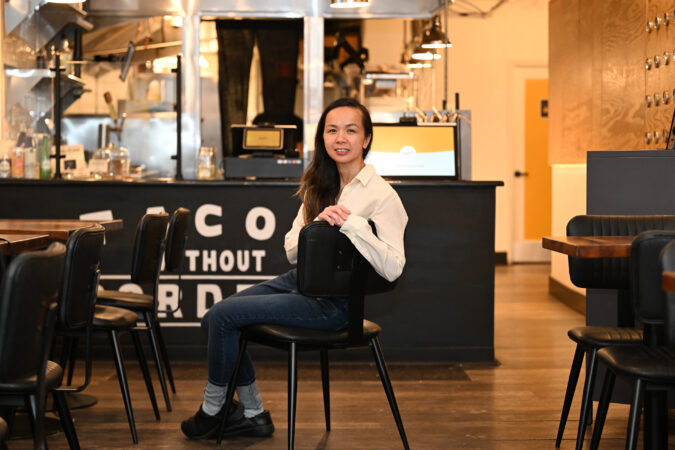
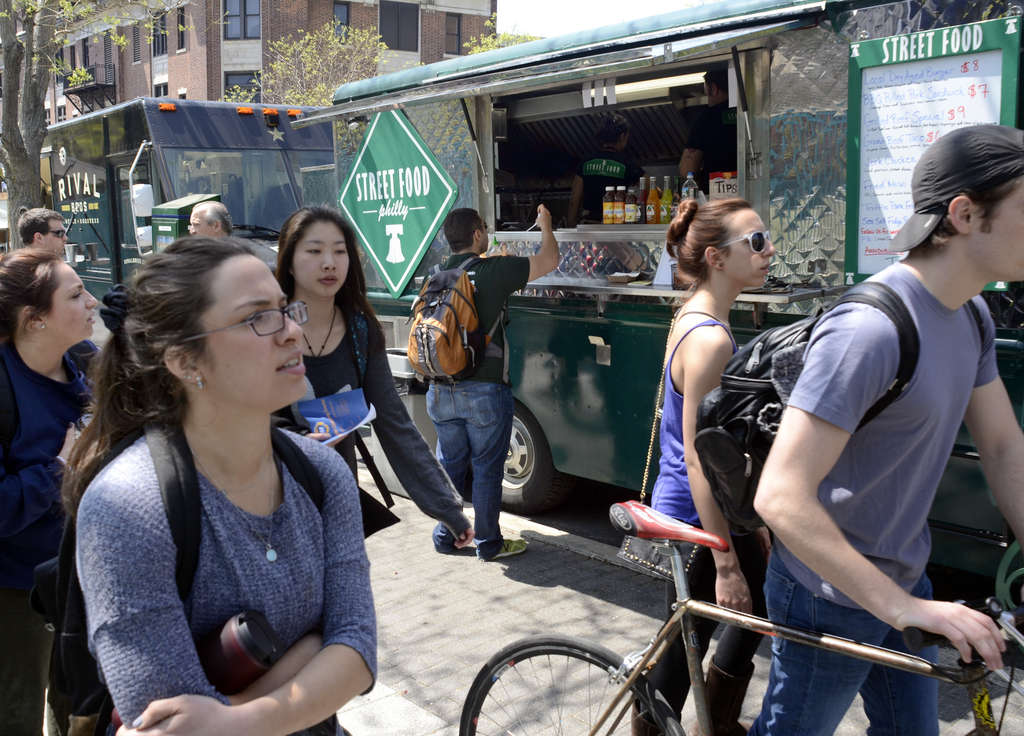
Owner Carolyn Nguyen, 41, grew the business from Street Food Philly and Taco Mondo, two stalwarts of Philly’s new age food truck scene, which had its heyday from 2012 to 2016. The two trucks, which Nguyen co-owned and operated, vended regularly on 33rd Street at Drexel University’s campus — a street once referred to as Philly’s “Food Truck Mecca” — and at the now-defunct Night Markets, once run by The Food Trust.
Revolution Taco’s Jan. 6. closure isn’t goodbye for Nguyen, who has leased the space at 2015 Walnut St. for another three years. Rather, Nguyen is returning to her roots: For the first time in her two decades of working as a chef in Philadelphia, Nguyen will be cooking the Cajun Vietnamese food of her Louisiana youth.
Also for the first time, her name will be on the door of her business. She aims to open Carolyn’s Modern Vietnamese within weeks of Revolution Taco’s closure. “It will combine my Vietnamese heritage, my Cajun upbringing, and the global flavors that I’ve come to love and enjoy to cook through my career,” said Nguyen.
“Growing up, we always had seafood boils when crabs and crawfish were in season. They were a major part of my childhood. We ate boudin — a stuffed rice sausage with pork — lots of curries, and a lot of chicken. My family had a little chicken farm just for our relatives, with around 20 to 30 chickens,” said Nguyen. “As a child I had so much curry chicken, but I’ll modify it a little [for the new restaurant], along with thịt kho, a braised pork with egg that I’ll use pork belly for. And there will be slow-cooked grits.”
Nguyen speaks both English and Vietnamese with a soft but distinct Southern twang. She was born and raised in Amelia, Louisiana. “It’s a very small town with a population of around 2,000 people. When I lived there, around a third of the population consisted of Vietnamese people,” she said.
Nguyen came to Philly in 2007, intending a visit to her sister here to be a stopover on her way to New York. But she never left and ended up attending the Arts Institute for culinary school. After graduating, she worked for Susanna Foo in Center City, and then at Nectar and Maia with Patrick and Terence Feury. When Terence went to work for Ellen Yin at Fork, she followed as a line cook from 2013 to 2014 and worked closely with Andrew Wood (now the chef at Le Virtù). “He was a big part of my cooking journey,” she said.
During a catering stint in the early 2010s, “I was watching a lot of Food Network and The Great Food Truck Race and I knew I wanted to open one.” Together with a former business partner, she leased the truck that would become Street Food Philly. The menu was a conglomeration of many influences, featuring everything from tacos to the handmade pastas Nguyen mastered at Fork.
Street Food Philly, run by restaurant vets Carolyn “Mama C” Nguyen and Michael Sultan. TOM GRALISH / Staff Photographer
These experiences will feed the menu at Carolyn’s Modern Vietnamese, where Nguyen is planning on making a curry duck with handmade gnocchi.
To cook from her roots is something Nguyen has long wanted to do, “but I never felt the timing was right. Then a lot happened in my personal life and I was just like, the timing is never going to be perfect, it’s now or never.”
And yet, perhaps Nguyen’s timing is perfect. Philly is having a moment where chefs, especially Southeast Asian ones in their 30s and early 40s, are reflecting on their childhoods. With restaurants like Manong, Baby’s Kusina, and Rice and Sambal retelling their chef-owners’ American upbringings — mingled with Southeast Asian flavors and ingredients — Philadelphia is primed for Nguyen’s story. And the Mid-Atlantic as a region may be on the cusp of a much deeper exploration of Cajun Vietnamese flavors, as chef Kevin Tien has done in D.C. with Moon Rabbit.
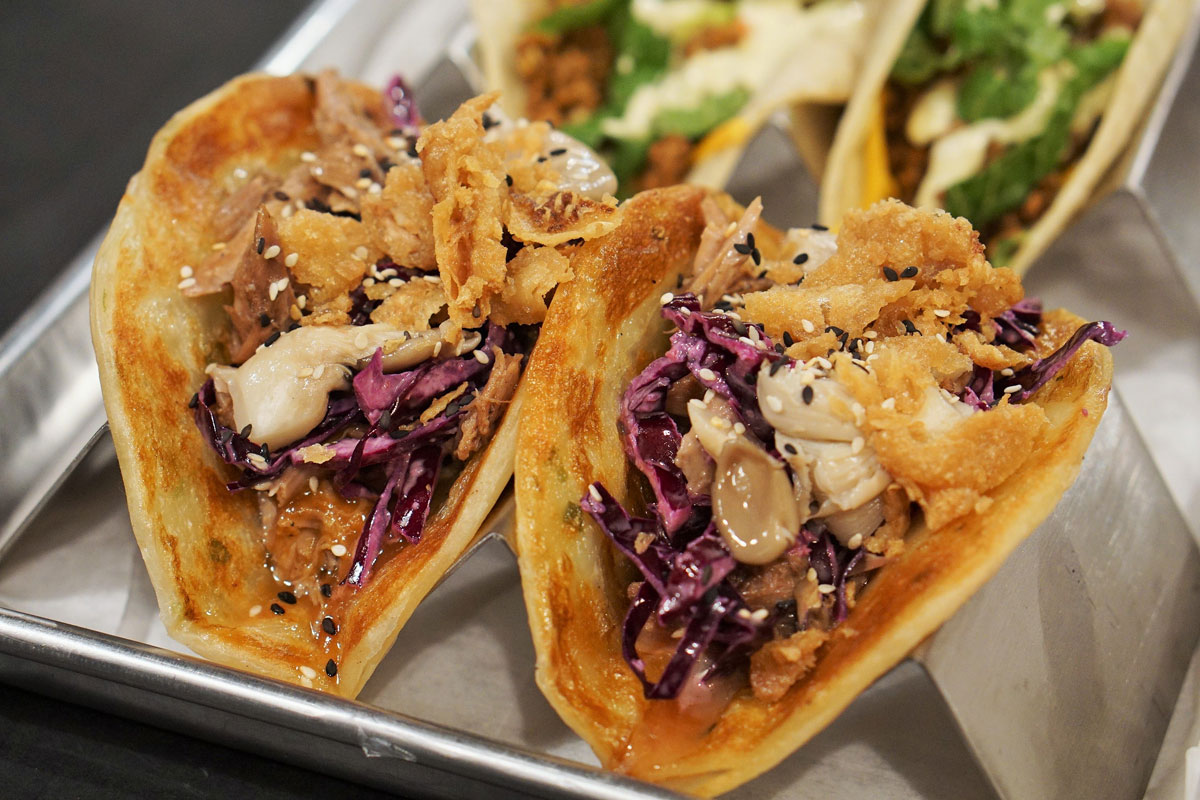
Roast duck tacos from Revolution Taco at 2015 Walnut St.
Nguyen returned to Louisiana last month after a many-year absence and spoke to her family about her plans. “The excitement, enthusiasm, and support from family and relatives,” coupled with Ellen Yin’s encouragement, solidified her resolve to make a change to her Rittenhouse business.
Minimal work is required to revamp Revolution Taco’s existing space. The upstairs dining room will receive a paint job and new decor, and the front counter and dining area will be reconfigured for table service. Some Revolution Taco staff will remain at Carolyn’s Modern Vietnamese, and others will be offered positions at Revolution Taco’s kiosk at the Comcast Center’s concourse, which will continue to operate as Revolution Taco Express.
“Revolution Taco has been my home for the past 10 years. But I’m looking forward to being more creative with the food and being vulnerable with the way I cook, not knowing how people will receive it,” she said.
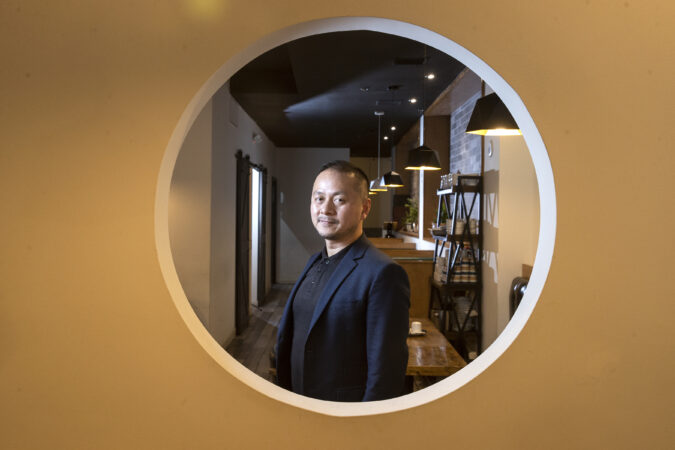
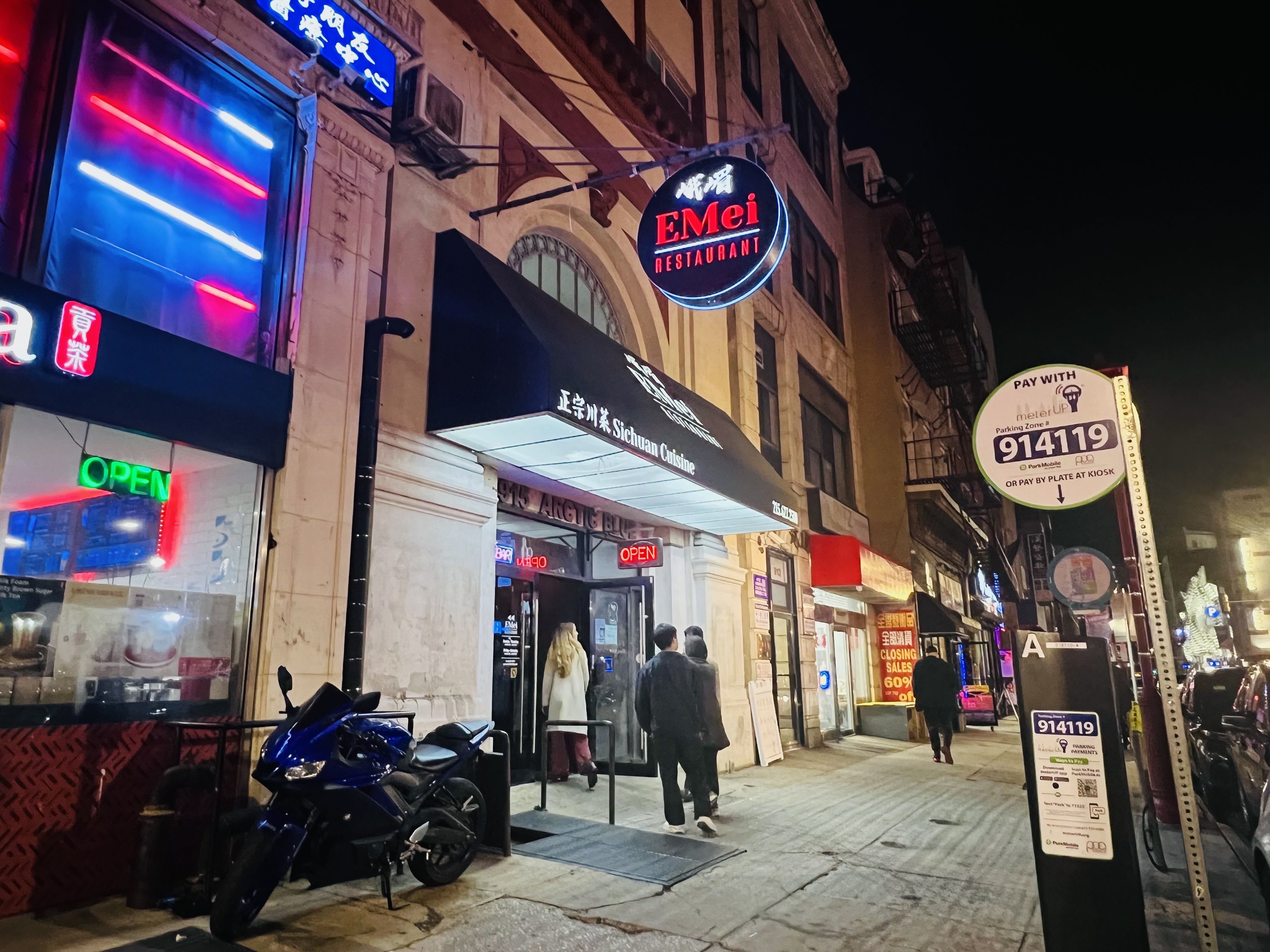
Dan Tsao’s restaurant EMei at 915 Arch St. in Chinatown on Nov. 8, 2025.
Tsao said the East Passyunk EMei would roll out in phases, with takeout and delivery launching in February during renovations and full dine-in service targeted for summer 2026. He said he wants to become part of the Passyunk Avenue community for decades to come.
Real estate broker Greg Bianchi, who represents the family that owned the Marra’s building at 1734 E. Passyunk Ave., called the deal “a win-win for everybody. [Tsao is] going to bring more people and business to the other businesses. People don’t realize what a force he is in the Chinatown community.”
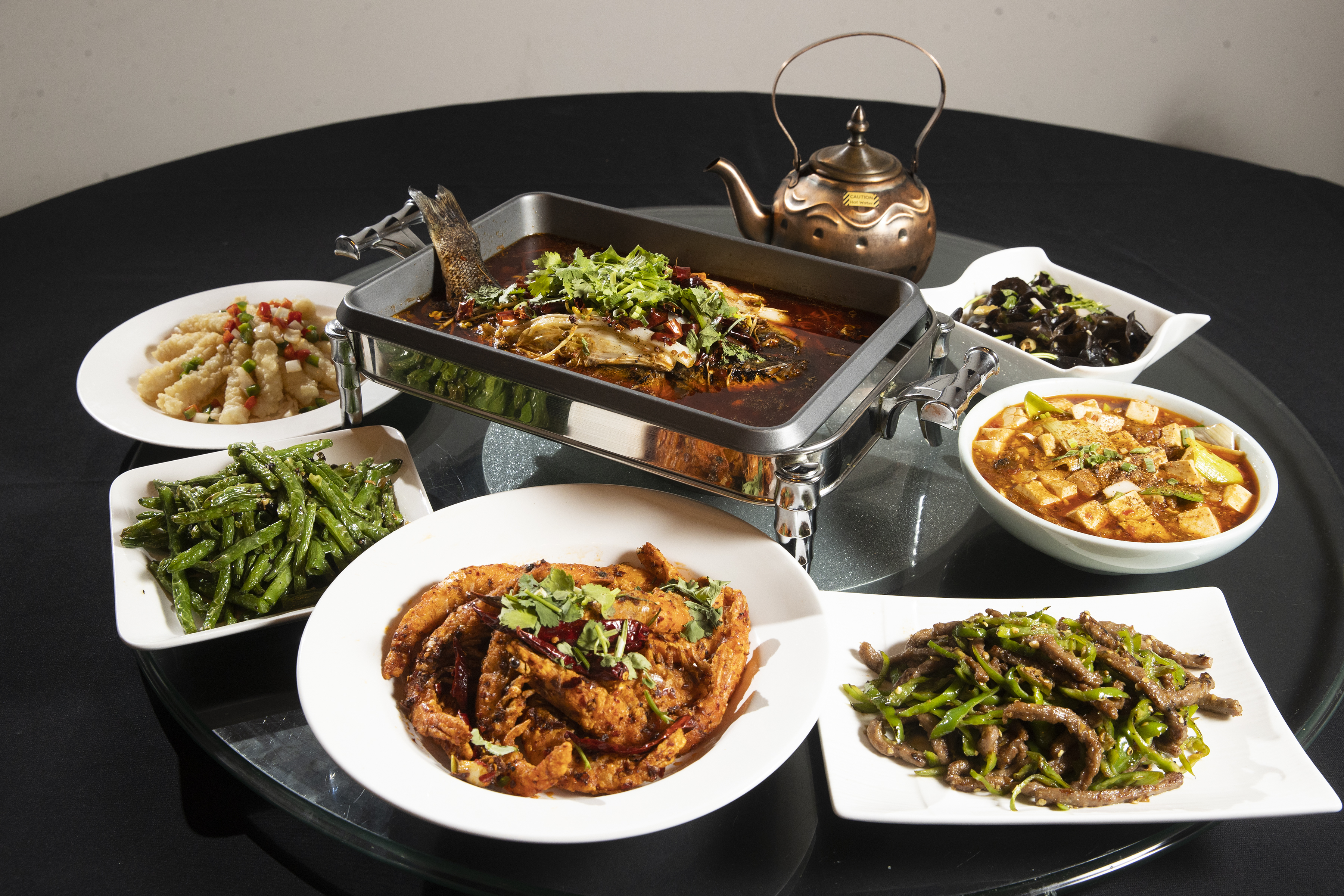
Dishes served family style at EMei, 915 Arch St.
Besides operating EMei, Tsao — who immigrated from China after high school and graduated from Penn State in 1999 — has been a newspaper publisher for 18 years. His New Mainstream Press operates Metro Chinese Weekly and Metro Viet News, offering deeper news coverage than the typically ad-heavy publications that had dominated the local Asian-language media.
The kitchen at 915 Arch St., entirely in the basement, is now at capacity. Even after recent upgrades, including six new wok stations, 18 new kitchen staffers, and robots delivering foods to the tables, “growth requires new space,” Tsao said.
Tsao analyzed sales data and found that many customers hail from Lower Merion, where he lives with his family — hence the opening in Ardmore. He also noticed that EMei is especially popular in South Philadelphia, whose four ZIP codes account for more than 20% of delivery volume.
This made East Passyunk a natural site for expansion. He said he was immediately drawn to the Marra’s building and was surprised that it had been on the market for more than four years.
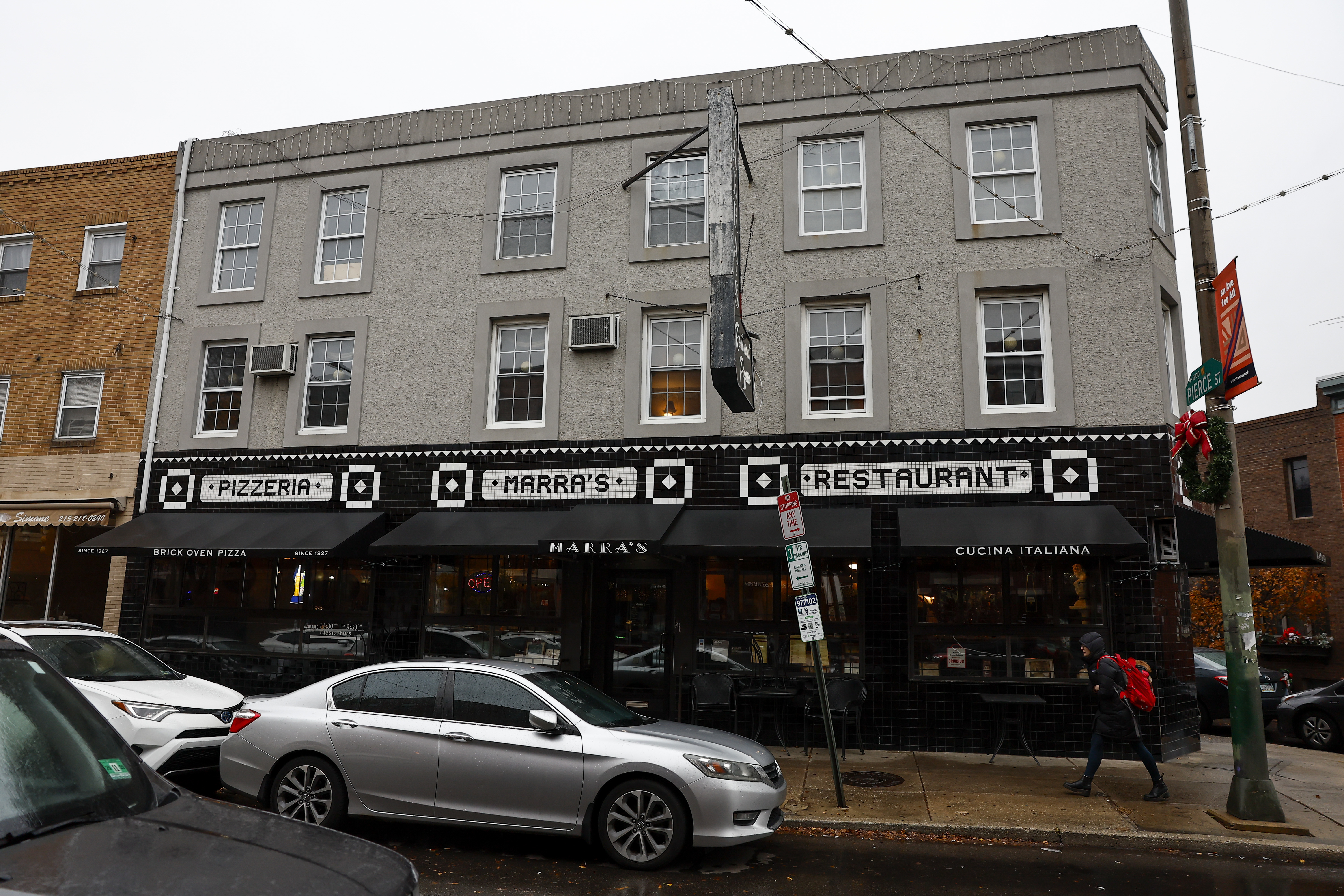
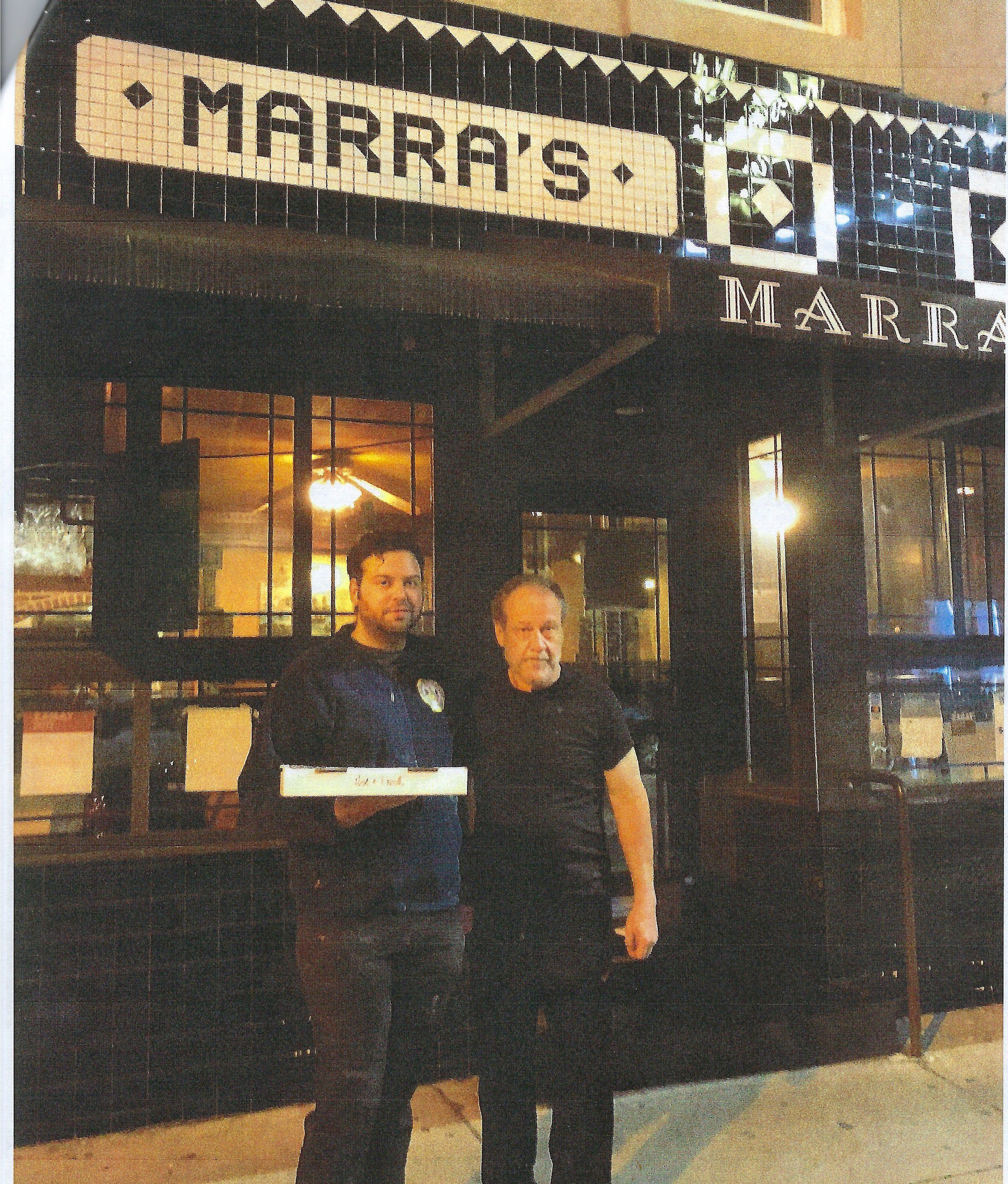
Marra’s restaurant, as seen on Nov. 30, 2025, its last day.
When Tsao learned that co-owner Robert D’Adamo — a grandson of Marra’s founder Salvatore Marra — was preparing to retire, Tsao saw parallels in his own experience: Before the pandemic in 2020, his mother-in-law, Jinwen Yu, and her business partner, chef Yongcheng Zhao, were looking to step aside; Tsao became an unlikely restaurateur, buying out partners and taking on responsibilities he had not expected.
“My father spent his entire career as an executive at a food enterprise in our hometown in Zhejiang, and in college I worked every position in a Chinese takeout restaurant,” Tsao said. “Through my newspaper and digital platforms, I’ve also worked with more than 200 restaurant clients. I always knew this was a hard business. But I didn’t fully understand the challenges until I took over EMei.”
He recalls fixing sewage backups until 2 a.m., working overnight with contractors to maneuver a 1,200-pound wok station into the basement, and spending hours after service refining the menu with chefs. “The industry is brutal,” he said. “If you stay mediocre, or stay in the comfort zone of only serving a niche customer base, you will struggle — even if the restaurant doesn’t close. I knew we had to evolve EMei into something much bigger.”
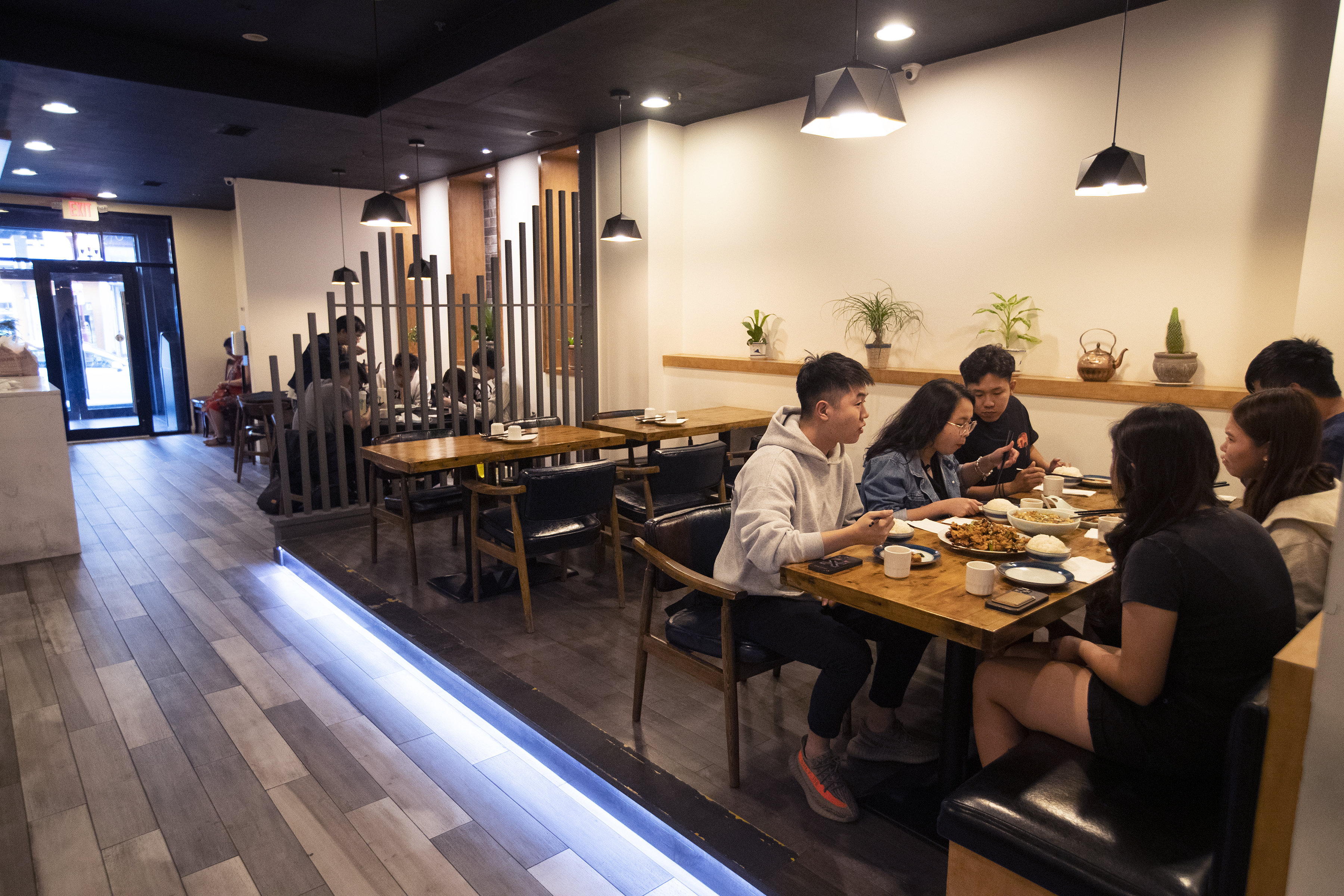
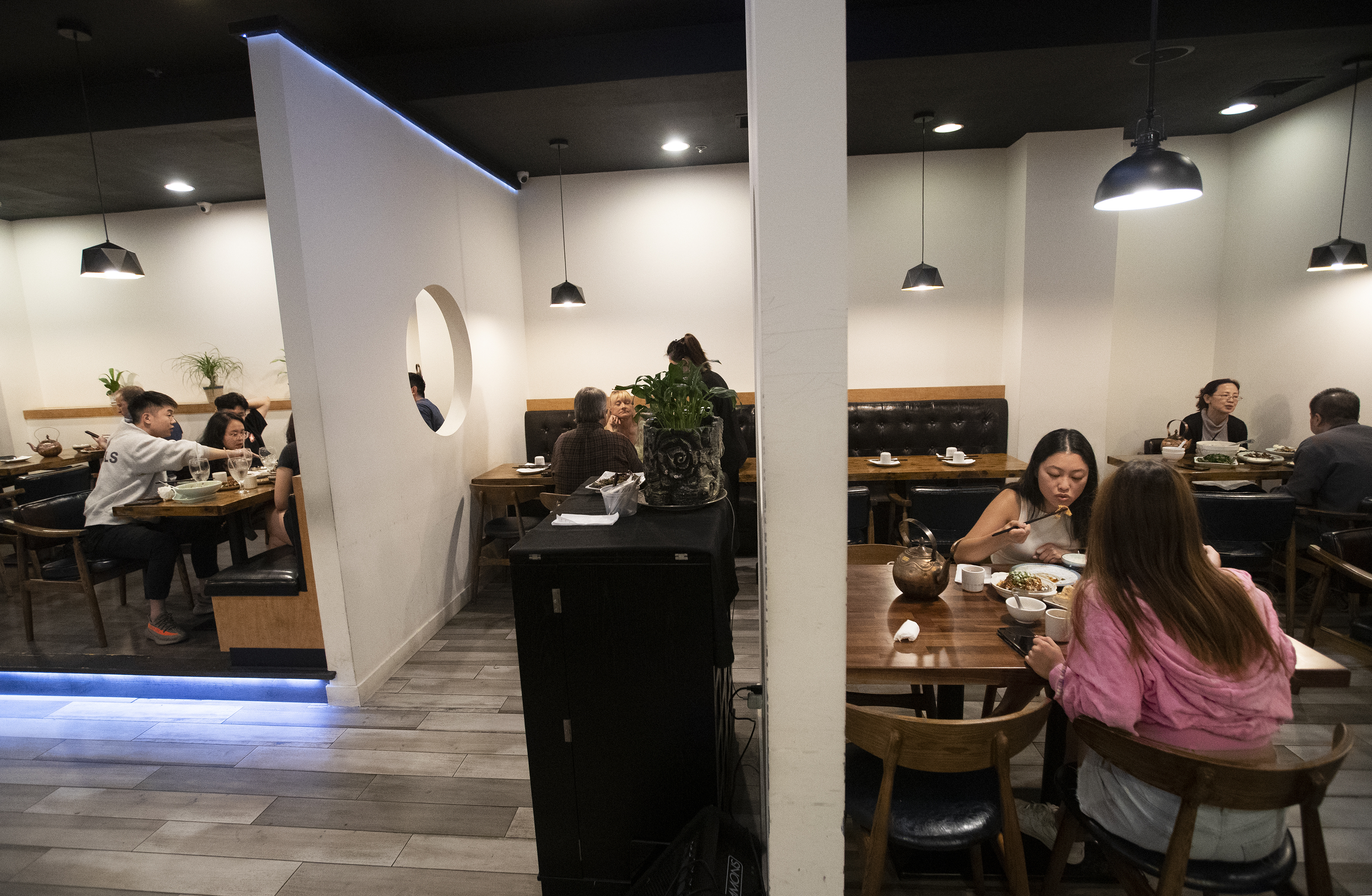
The dining room of EMei at 915 Arch St.
In 2019, he and his wife, Ting Ting Wan, closed the restaurant for two months to renovate. During the first two years of the pandemic, when sales dropped 50%, the entire family worked more than 60 hours a week to keep the business alive.
Tsao also pulled two assistants from his media company to build formal back-office systems that later enabled EMei to scale. During the pandemic, Tsao launched RiceVan, a delivery and distribution service that transported Chinatown meals to suburban households and provided jobs for refugees and new immigrants.
EMei restaurant at 915 Arch St., which opened in 2011.
EMei has since grown from 11 full-time employees to 37, and sales have increased more than 300% compared with pre-pandemic levels, Tsao said.
Tsao credits the restaurant’s founders — Yu and Zhao — for staying involved. “They still come in every day, even now,” he said. “Part of it is that retirement can be boring. But it’s also because once we took responsibility for operations and finances, they were able to relax, work fewer hours, and focus purely on the culinary side.”
The dining room of EMei, 915 Arch St.
A historic building reimagined
The Marra’s building will undergo substantial structural and mechanical upgrades, Tsao said. Plans include a first-floor restroom to resolve long-standing ADA issues; full replacement of HVAC and electrical systems; and removal of window units in favor of central air.
The vintage booths will be reupholstered. The bar will shift to the Pierce Street corner to improve flow. The second-floor private dining room will get new lighting and finishes; the third floor may be converted into a multipurpose or staff area. Tsao said he intends to address minor structural concerns while preserving the historic masonry and architectural character.
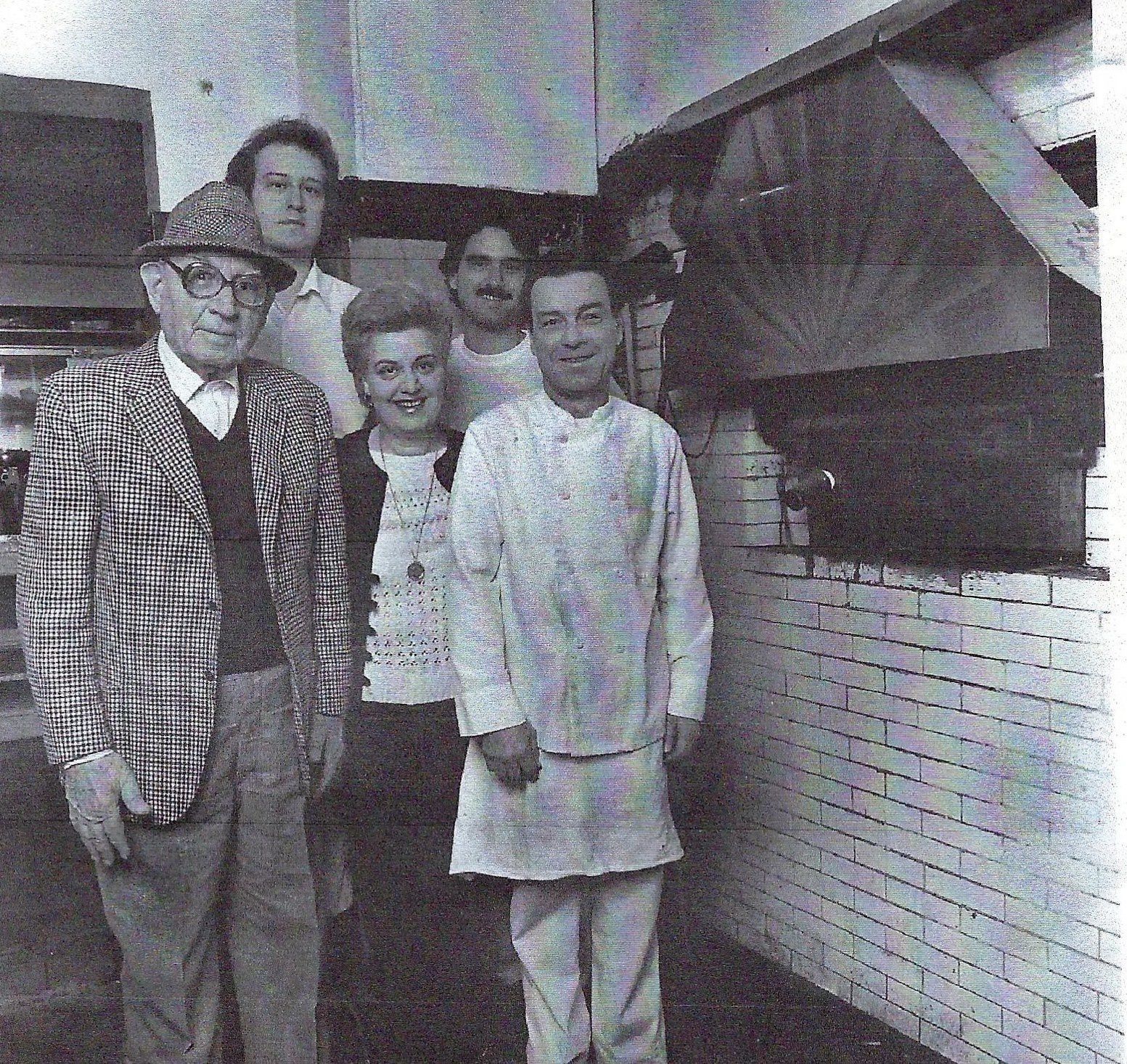
One open question is the fate of Marra’s nearly century-old brick pizza oven, which Marra’s family member Mario D’Adamo said was failing. EMei will test whether it can be used. If removal becomes necessary, Tsao said the bricks, sourced from Mount Vesuvius, would be saved and possibly given to the D’Adamo family, the East Passyunk Business Improvement District, or incorporated into the renovation.
“Our model has evolved — instead of putting over half a million dollars into leasehold improvements that don’t belong to us, we’d rather put that money into a building that becomes part of the company’s foundation,” Tsao said. “Restaurants come and go, but great restaurant buildings with stories — like this one — can last generations. We want to be the next chapter in that story, not just a tenant passing through.”
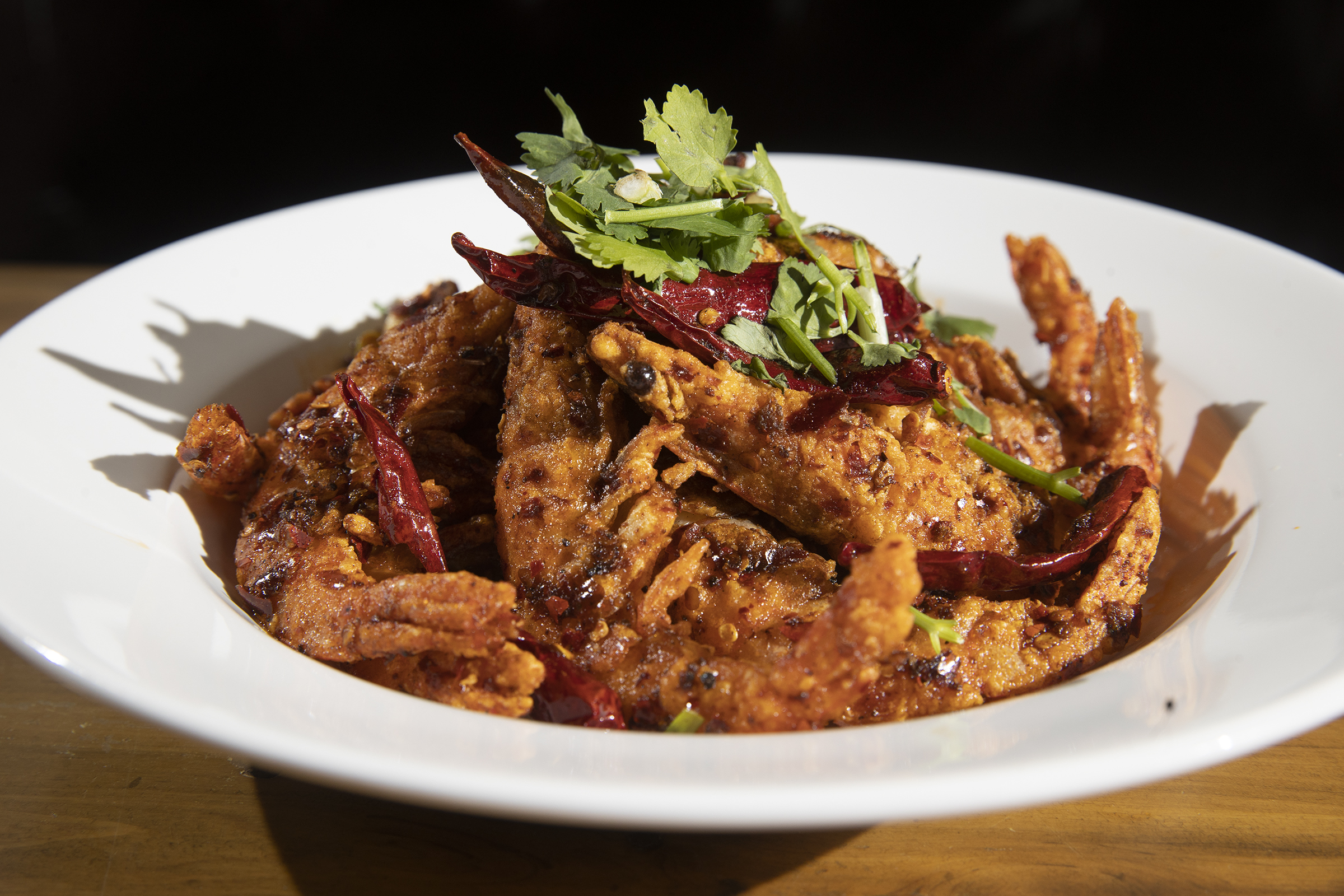
The jumbo shrimp in hot peppers at EMei at 915 Arch St. on Sept. 15, 2022.
What to expect on EMei’s menu
The East Passyunk menu will reflect the Chinatown original while serving as a testing ground for contemporary Sichuan cooking – “lighter, seasonal, more ingredient-driven interpretations that show how Sichuan cuisine continues to evolve,” Tsao said.
Roast duck and possibly Shanghai soup dumplings are under consideration, filling a void left by the closure of Bing Bing Dim Sum nearby. Some heritage dishes removed from the Chinatown menu will return there, helping differentiate the three locations while keeping them unified. EMei’s gluten-free program, including a separate fryer, will continue.
Tsao said the neighborhood feels like home to his family. “I took my three kids — ages 6, 14, and 17 — to the East Passyunk Fall Fest again this year, and they instantly connected with the neighborhood’s energy,” he said. “They spent nearly 30 minutes exploring Latchkey Records, each leaving with something they picked out themselves. Watching them fall in love with the street the same way we did really made it feel like home.”
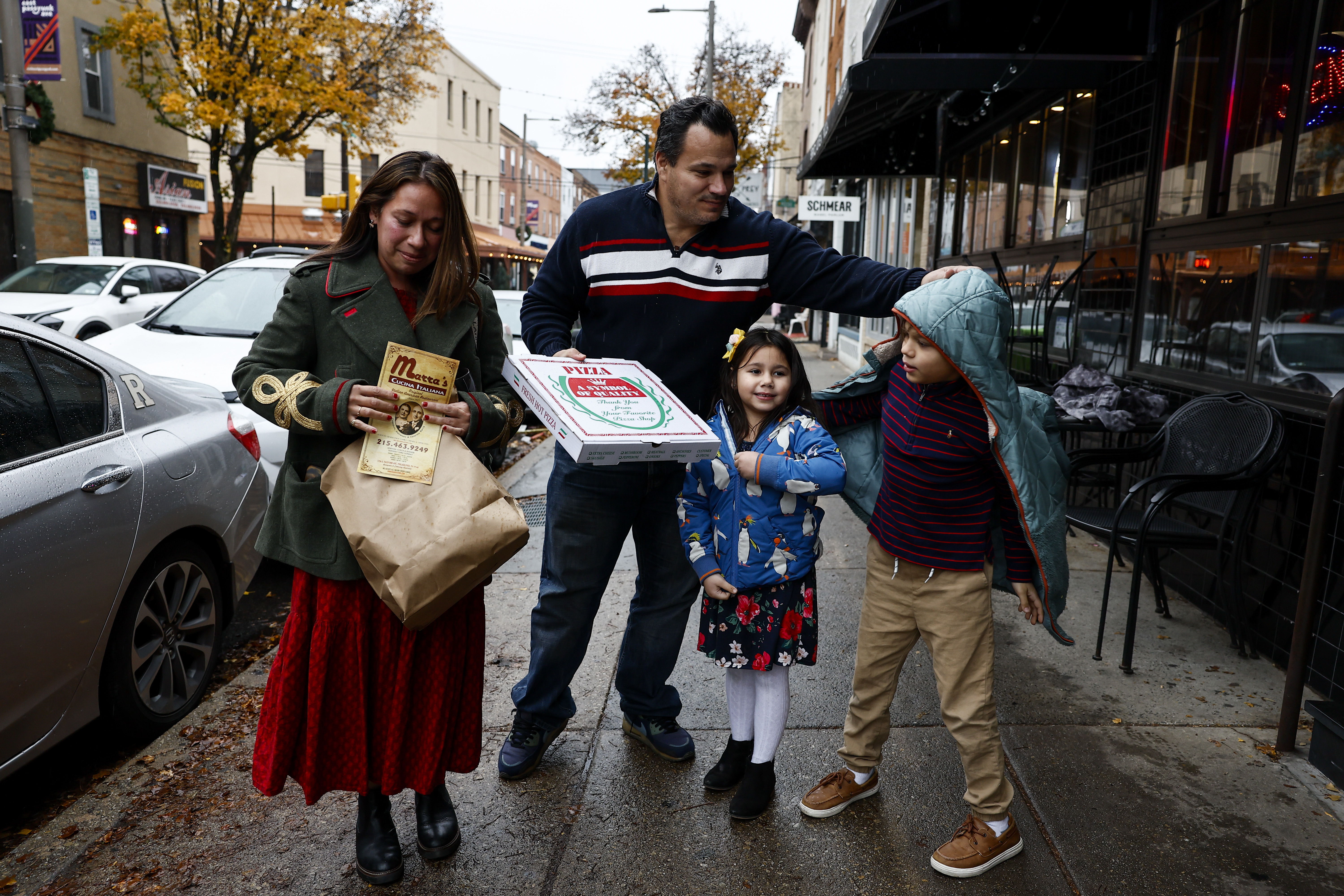
Antoinette and Chris Caserio walked out of Marra’s on Sunday afternoon with their children, a menu, a pizza box, and a bag of leftovers they called “their last supper.”
“It’s super sad,” Antoinette Caserio said. “My dad’s 80 and this was his spot.”
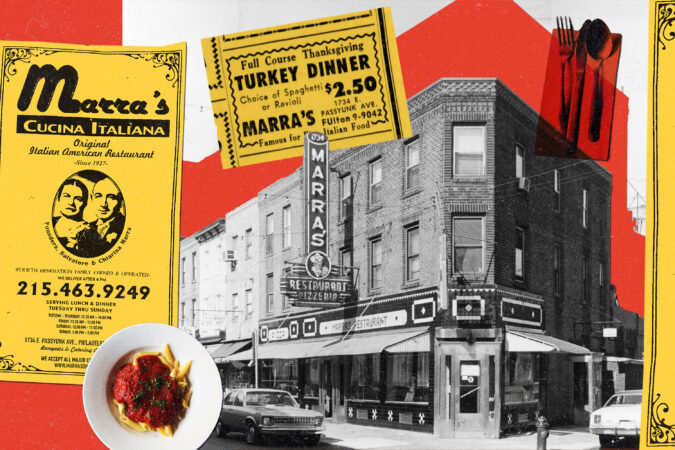
Marra’s, the family-run restaurant widely considered Philadelphia’s oldest pizzeria, closed Sunday after 98 years — a day in advance of the sale of its iconic black-and-white-tiled building at 1734 E. Passyunk Ave. in South Philadelphia. The property had been on the market for several years.
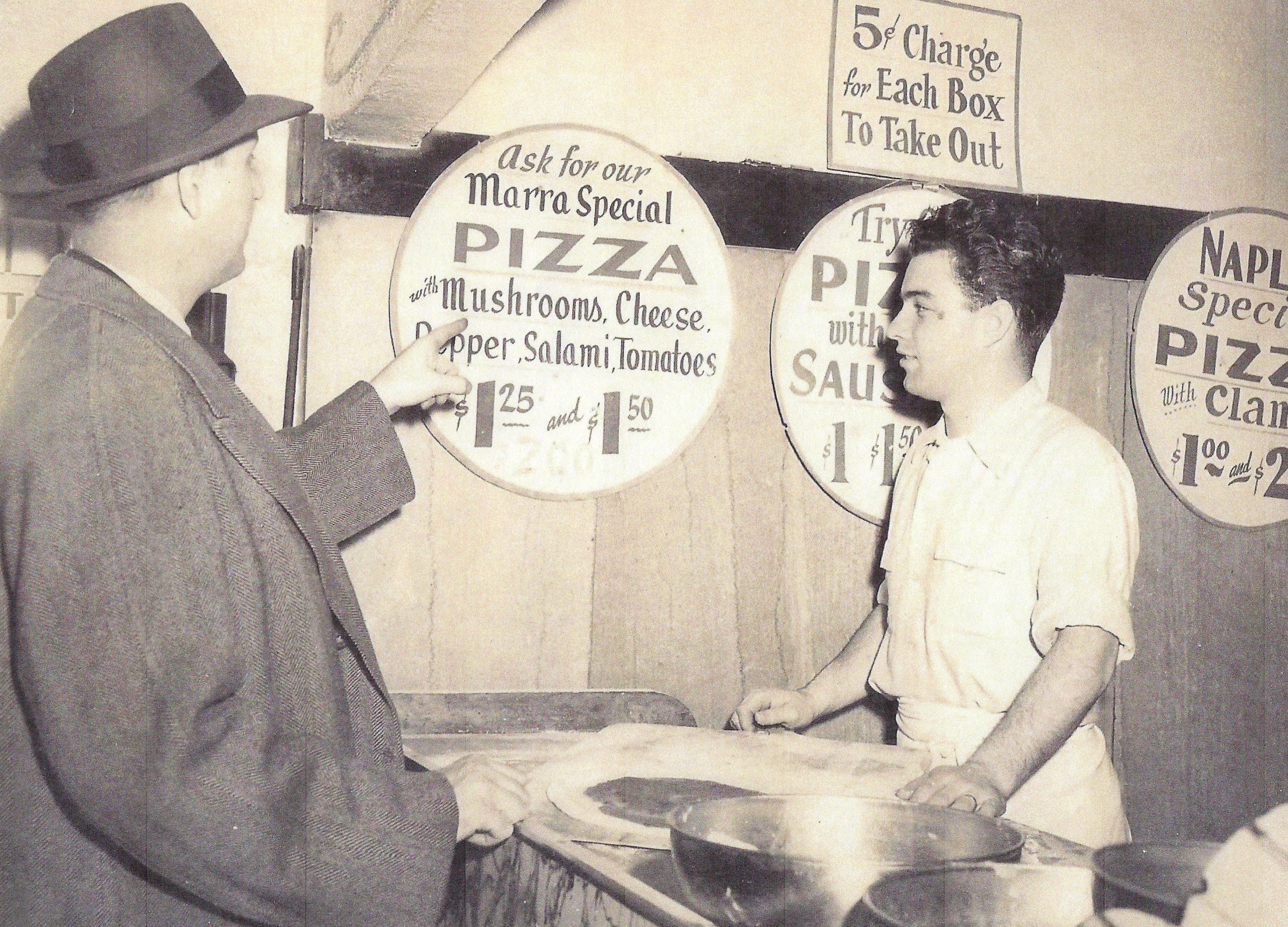
Mario D’Adamo Sr. (right) with a Marra’s customer just after World War II.
The buyer, Chinatown restaurateur and publisher Dan Tsao, said he plans to open a branch of his popular Sichuan restaurant EMei next year.
Marra’s was one of the last remaining links to East Passyunk Avenue’s featured role in the Italian American immigrant experience of the early 20th century. It also marks a transition for the founding Marra and D’Adamo families, who say they are exploring a new location for the restaurant, which opened in 1927.
Mario D’Adamo Jr., a grandson of founders Salvatore and Chiarina Marra and brother of co-owner Robert D’Adamo, said business had dipped after the pandemic, but that wasn’t the impetus for the sale. “The biggest killer was parking,” he said by phone while searching for a spot Sunday. “Small restaurants can survive that; large places can’t.” With 160 seats, including its 80-seat banquet room on the second floor, Marra’s lost a lot of business because of it, D’Adamo said.
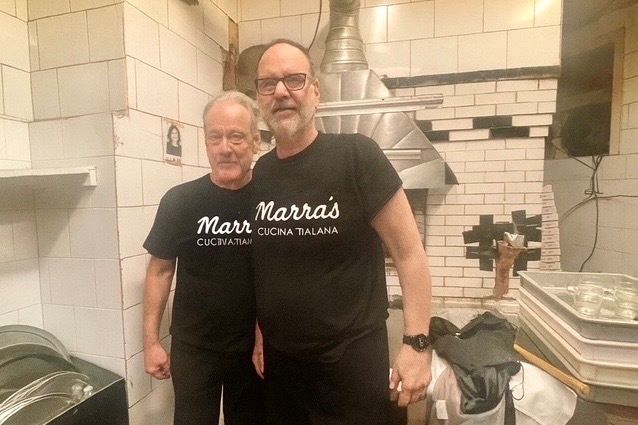
Robert D’Adamo, 75, and cousin Maurizio DeLuca, 61, who took over ownership in 2000, declined to speak with The Inquirer over the last few weeks as word spread of the impending sale, citing their emotions. In a statement, they said they were prepared to move on with “the same love that has always defined us — just in a location that better serves our guests.”
Antoinette and Chris Caserio and children Kira and Chris leaving Marra’s on Nov. 30, 2025.
Mario D’Adamo Jr., 71, a lawyer and deputy court administrator for Philadelphia’s Family Court, sold his stake about 25 years ago but retains an interest in the Marra’s name.
With the sale to Tsao, the building will remain a restaurant. Tsao has said he intends to renovate the building while respecting its look and feel.
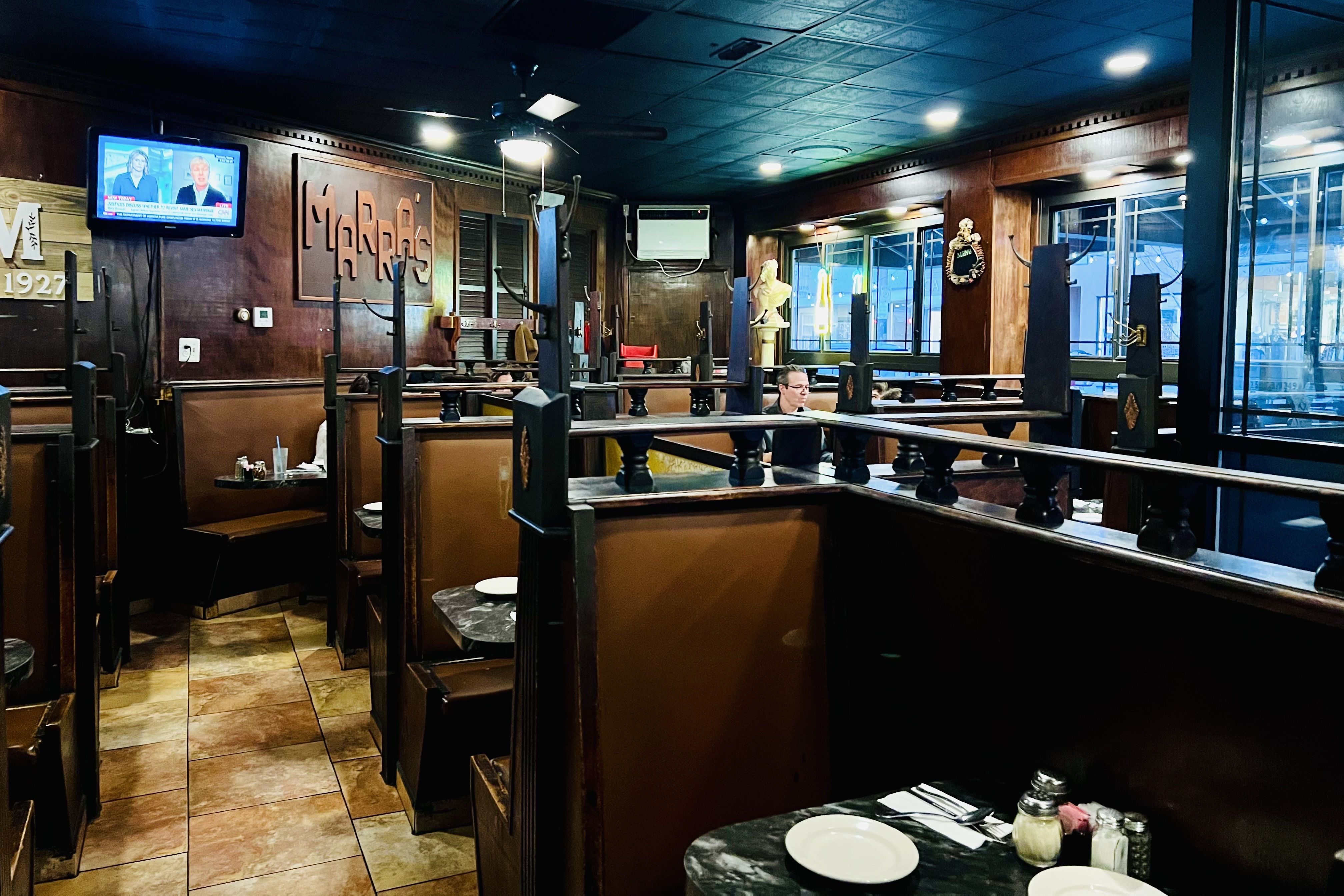
The front dining room at Marra’s, 1734 E. Passyunk Ave., on Nov. 7, 2025.
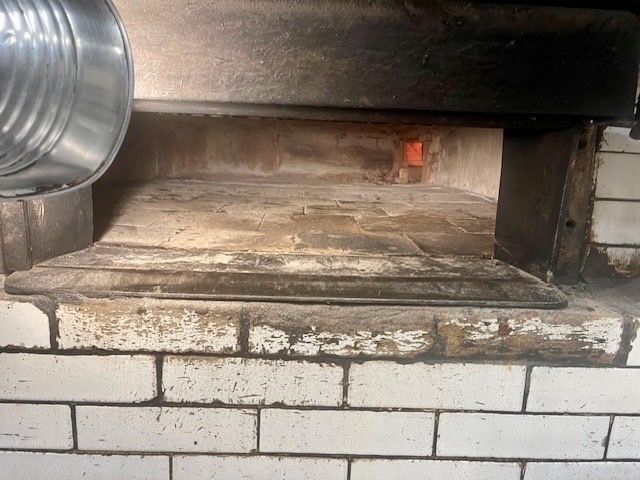
Marra’s oil-fired brick oven, believed to be one of the city’s oldest, may not be salvageable, D’Adamo said.
The life of the bricks is about 100 years and the inside is collapsing, even though an artisan patched it about two years ago. “The oil flame is so hot that the bricks are now pulverizing,” he said.
Marra’s backstory
The families of Salvatore Marra and Chiarina Daniele were baking pizza in Naples before the turn of the 20th century.
Shortly after the couple married, they set out for the United States.
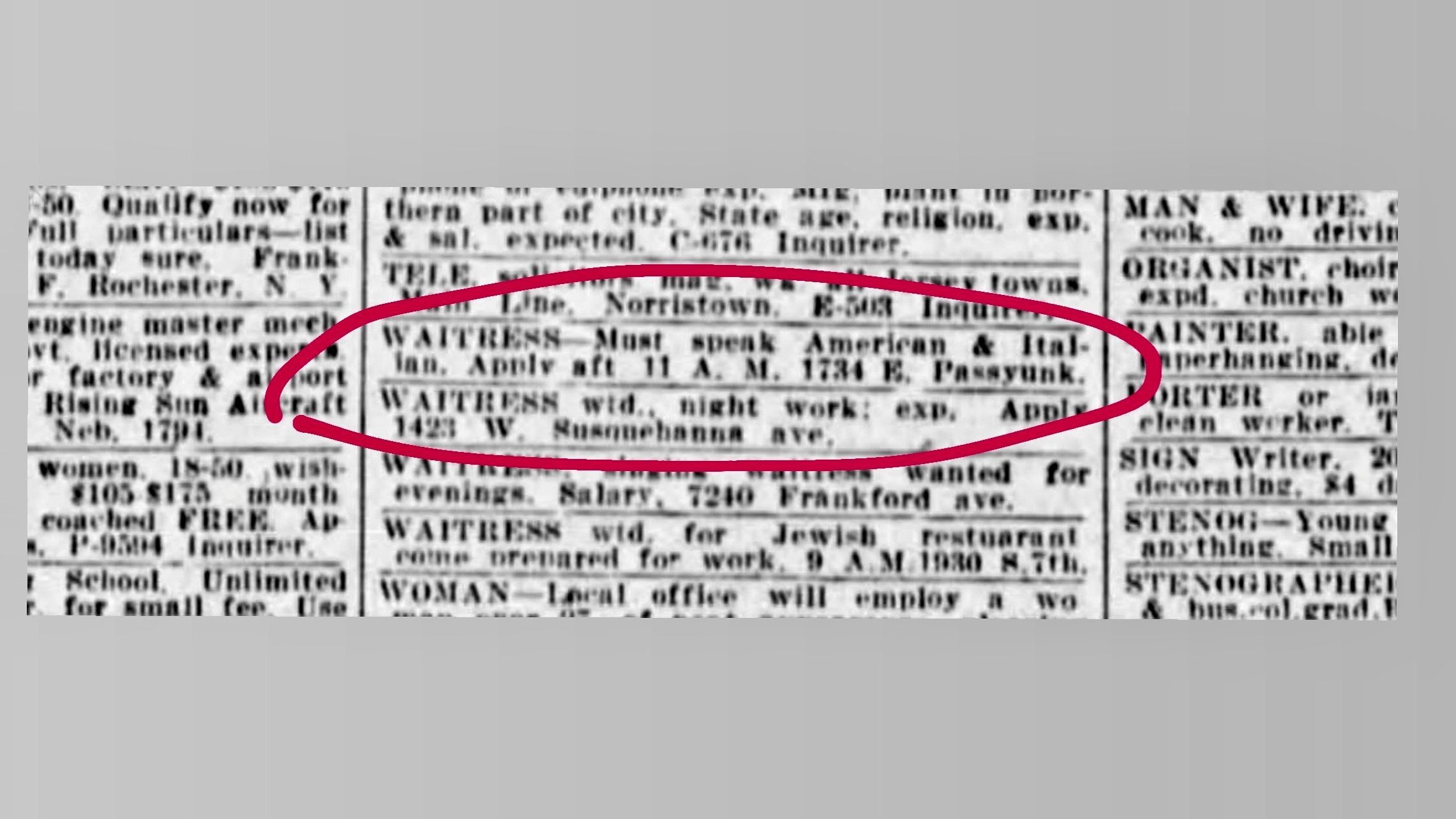
Marra’s help-wanted ad from The Inquirer on March 14, 1934, seeking a waitress who “must speak American & Italian.”
Marra family lore holds that Salvatore arrived at Ellis Island in 1921 with a single dime — likely a 10-centesimi coin — which he tossed into New York Harbor so he could say that he had begun his life in America with nothing. Chiarina joined him soon after.
His early attempts to recreate Neapolitan pizza were discouraging — first in Brooklyn and then Chicago. He thought that the pies were lacking and blamed the ovens.
The century-old brick oven at Marra’s on Nov. 30, 2025.
Back in Naples, the ovens were lined with lava bricks from Mount Vesuvius, which radiated and retained heat in a way he couldn’t replicate. When the Marras moved to Philadelphia, he ordered bricks from Naples and had the oven built for their first pizzeria, which opened in 1924 at Eighth and Christian Streets in South Philadelphia. This time, the pizza tasted right.
In 1927, when the Marras bought a former butcher shop at 1734 E. Passyunk Ave., the oven was dismantled brick by brick and rebuilt there.
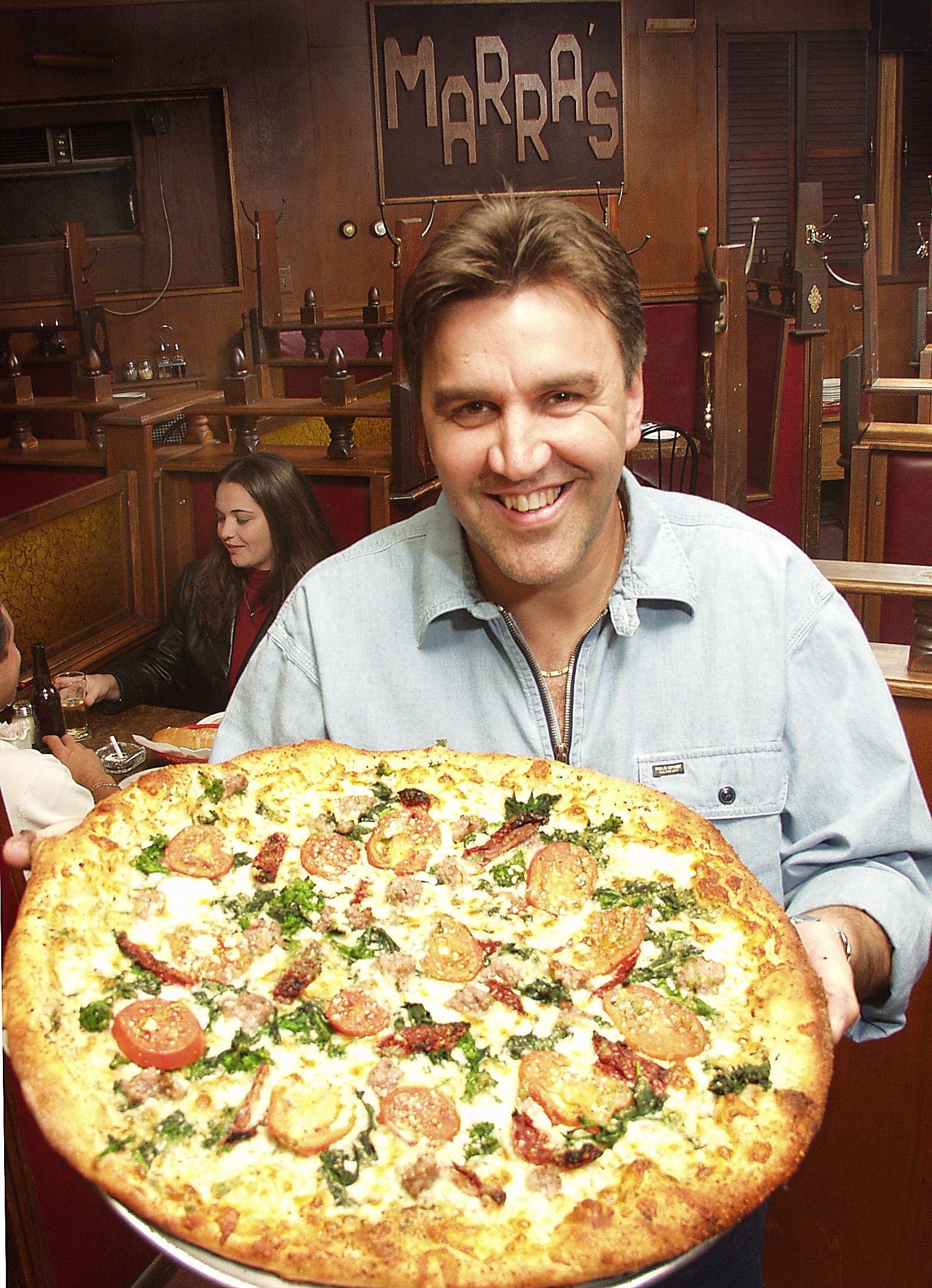
At Marra’s, co-owner Maurizio DeLuca holds a pizza fresca on Oct. 10, 2001.
The neighborhood was teeming with immigrants, and East Passyunk’s diagonal path through the city’s rowhouse grid — historically, it was a Lenape trail — had made it a natural commercial strip. For generations, families bought their church clothes, shoes, furniture, and sundries on the Avenue.
Salvatore and Chiarina still lived on the restaurant’s third floor after their retirement in 1947. She died in 1973 at age 73. Salvatore, in his usual fedora, was a familiar presence on the Avenue until his death in 1984 at age 89.
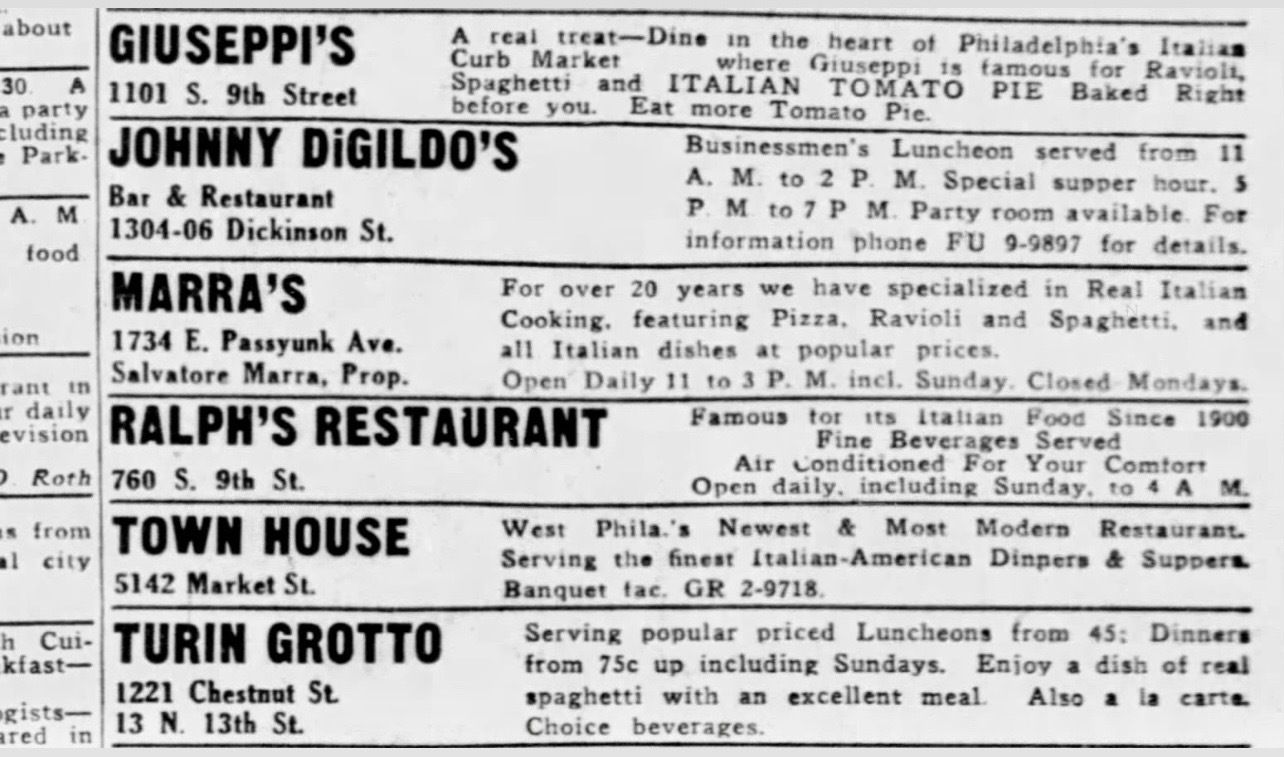
Marra’s ad in The Inquirer on Feb. 28, 1948.
Their children, Bianca and Vincent Marra, carried Marra’s business forward after Salvatore and Chiarina’s retirement. By that time, Bianca had married Mario D’Adamo Sr., a Marra’s busboy who lived around the corner. (Their children, Robert, Mario Jr., Linda and Marlene, represented the next generation.)
Bianca D’Adamo, known as “Mama D’Adamo,” became one of the restaurant’s most visible figures. In a 1980s interview with The Inquirer, she recalled a particularly loud regular from years past: a kid named Fred Cocozza. “He’d come in, stand right over there, and sing at the top of his lungs,” she said. “Papa would come out of the kitchen and tell him to get out. He thought it was bad for business.” In 1947, he performed for 20,000 people at the Hollywood Bowl and signed a film contract with MGM as Mario Lanza.
Patriarch Salvatore Marra with his daughter, Bianca, grandsons Robert (rear left) and Mario Jr., and son-in-law Mario Sr.
In 1950, Bianca and Vincent bought the bakery next door and expanded the restaurant. Vincent Marra opened his own Marra’s restaurant on Baltimore Pike in Springfield, Delaware County, in 1954.
Marra’s fame
During Bianca and Mario’s oversight, Marra’s began attracting the spotlight. For National Pizza Week in 1955, Salvatore Marra was named Pizza Man of the Year. In 1977, Eastern Airlines’ in-flight magazine, Pathways, cited Marra’s as one of the five best pizzerias in the country. Philadelphia Magazine named it South Philly’s top pizzeria in 1985 — the same year Villanova University won the NCAA men’s basketball championship. That year, coach Rollie Massimino, a regular, inspired the dish known as Rollie’s ziti in white, a bowl of ziti and broccoli in garlic sauce, that remained on the menu till the end.
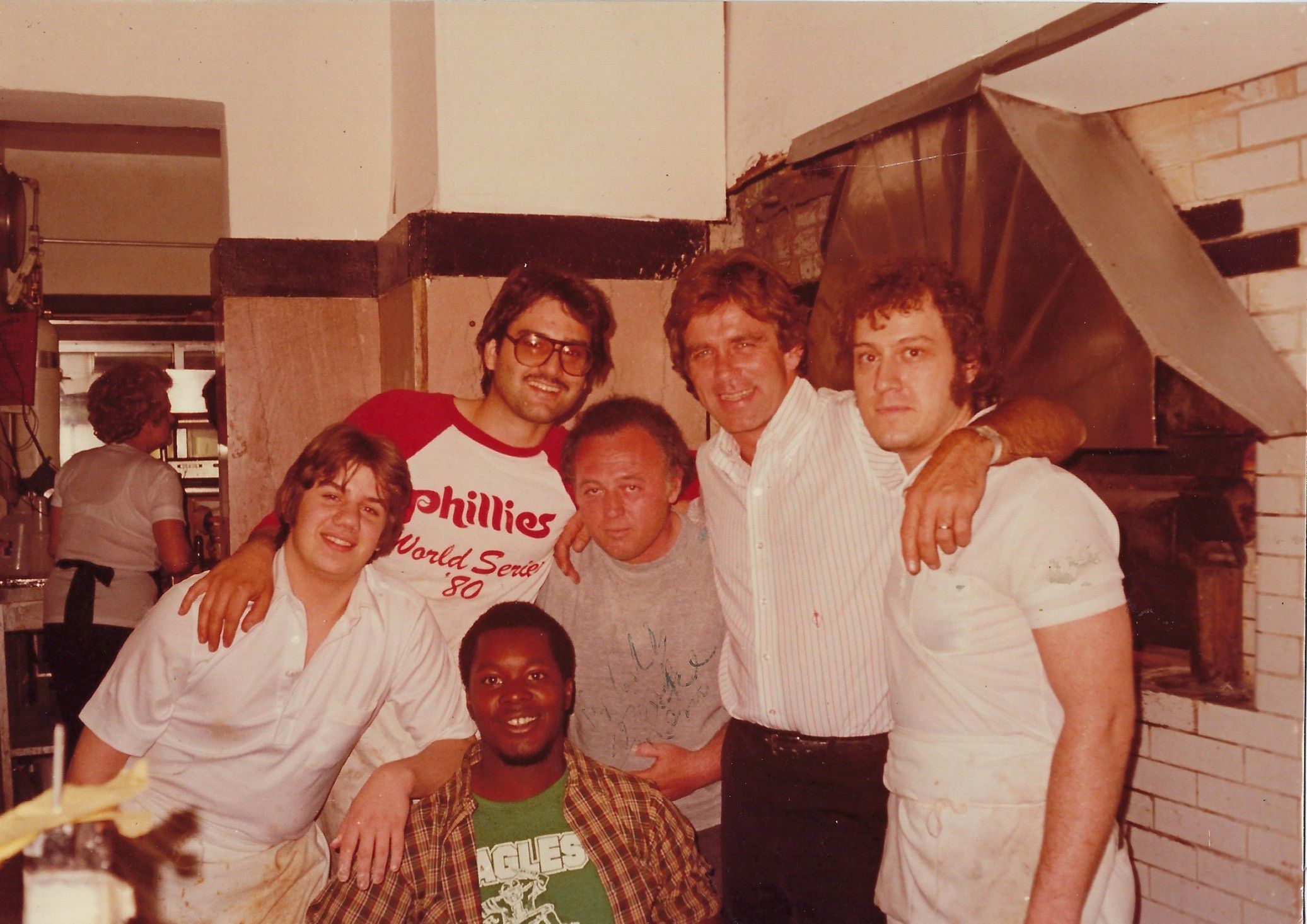
Baseball great Tim McCarver (second from right) with Mario D’Adamo Jr. (in Phillies shirt) and Robert D’Adamo (right) at Marra’s in the early 1980s.
Marra’s celebrity guest list read like an index of 20th-century American entertainment: Mickey Rooney, John Wayne, Frank Sinatra, Frankie Avalon, Eddie Fisher, Jimmy Darren, Bobby Rydell, Al Martino, John Travolta, Eugene Ormandy, Conan O’Brien.
When Passyunk Avenue’s fortunes began dipping in the 1990s, a group now known as Passyunk Avenue Revitalization Corp. began buying and rehabbing distressed properties. (PARC was originally created in 1991 as Citizens’ Alliance for Better Neighborhoods, but later became embroiled in a scandal that brought down former state Sen. Vincent Fumo.)
The early 2000s saw a new wave of residents moving in from outside the neighborhood as PARC’s work helped spark an influx of chef-driven restaurants and bars to join such traditional spots as Mamma Maria and Mr. Martino’s (which opened in 1992) and Tre Scalini (1994).
Le Virtù, serving the rustic cuisine of Abruzzo, opened in 2007 in a former community newspaper office at 1927 E. Passyunk. That year, Fiore’s, which fed generations in a low-slung building where Passyunk crosses 12th and Morris Streets, became a Mexican restaurant, Cantina Los Caballitos.
Restaurants continued to usher in change along the Avenue as the years went on. The distinctive curved building at 1709 E. Passyunk morphed through the years from an appliance store to a bank and then to a men’s clothing store before opening in 2017 as Barcelona Wine Bar. What is now Rice & Sambal, an Indonesian BYOB at 1911 E. Passyunk, was a photographic-supply shop for years after World War II.
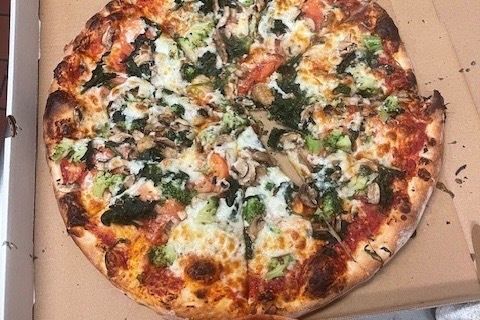
Marra’s co-owner Robert D’Adamo (right) with his nephew, Michael D’Adamo, in 2023.The last pizza baked at Marra’s, 1734 E. Passyunk Ave., on Nov. 30, 2025.
Marra’s closing is painful to Mario D’Adamo Jr., as he recounted late Sunday after the last pizza — topped with spinach, broccoli, tomatoes, and mozzarella — slid out of the oven. Like his brother, he grew up on the third floor of the restaurant’s building.
“It became part of your DNA,” he said. “We used to close at 2 or 3 in the morning. My whole life, I heard the jukebox playing Sinatra, Dean Martin, Tony Bennett. I still go to bed late because of that. Some of my earliest memories are my father coming up the steps, tired, smelling like the restaurant, folding his apron over the banister.
“Other families watched football. We watched cooking shows,” D’Adamo said. “Everything in your mind connects back to the restaurant.”
Brothers Robert D’Adamo (left) and Mario D’Adamo Jr. in the kitchen at Marra’s on Nov. 30, 2025.
PopUp Bagels, the viral bagel chain that is on its way to the Philadelphia area, will preview its arrival with a one-day pop-up event Sunday at Di Bruno Bros.’ flagship store near Rittenhouse Square.
PopUp will take over Di Bruno’s second floor from 9 a.m. to 1 p.m., offering an early taste of its “grip, rip, and dip” bagels — and a limited-edition collaborative schmear — while raising money for charity.
PopUp’s location in Suburban Square in Ardmore, across from Shake Shack, is due to open in early 2026.
Bagels will be available by preorder only, with sales launching Monday on popupbagels.com. Franchisee Brian Harrington said 300 dozen bagels would be available at Di Bruno’s, 1730 Chestnut St.
Harrington said that for one of his new stores in Boston earlier this year, PopUp tied a preview to the Boston Marathon. “We put them online for preorder and they sold out in 16 minutes,” Harrington said. As people arrived for their bagels (six for $24), they were feted with music and PopUp swag to stimulate buzz.
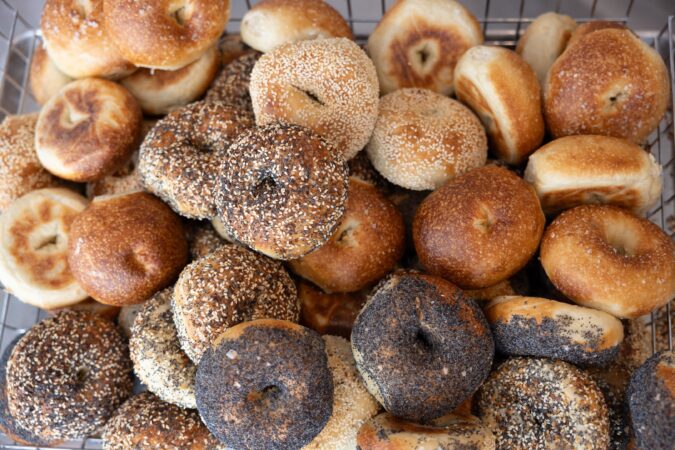
PopUp, conceived in a Connecticut backyard in 2021, does not make sandwiches or even offer sliced bagels — rather, the bagels are sold hot and whole with cups of cream cheese “schmears” or butter for dipping.
In Philadelphia, customers will be able to preorder a six-pack of mixed bagels — plain and everything flavors — along with classic plain and scallion schmears. The highlight will be a third schmear: a limited-time-only collaboration blending Di Bruno’s Abruzzi cheese spread with PopUp’s classic cream cheese.
Proceeds from the day will benefit the Eagles Autism Foundation and the Travis Manion Foundation.
After Ardmore, PopUp is planning for three locations in the Philadelphia market in 2026 and as many as seven or eight overall in the longer term.
PopUp Bagels was launched during the pandemic by Adam Goldberg, a bored flood-mitigation specialist who started baking sourdough bread at his home in Westport, Conn. He turned that into a bagel recipe, settling on a light, soft bagel, as opposed to the chewy New York style. The backyard project drew attention and led to pop-up shops in New York City.
Social media attention and investors quickly followed. Fans of the chain line up outside locations across Connecticut, New York, and Massachusetts to film TikToks of them ripping apart bagels and dipping them into cream cheeses.
At lunchtime on a Thursday, a week before Thanksgiving, Chestnut Hill was buzzing.
Inside the newly expanded Matines Café, almost every table was full. People sipped warm drinks from large mugs and ate Parisian croissants and quiche. Bottles of prosecco sat on ice by one large table adorned with Happy Birthday balloons.
McNally’s Tavern was bustling, too, with regulars sitting at the bar and at tables inside the cozy, nearly 125-year-old establishment atop the hill. Multiple generations gathered — a son taking a father out to lunch, a mother with a baby in a stroller, and two sisters, Anne and Meg McNally, running the place.
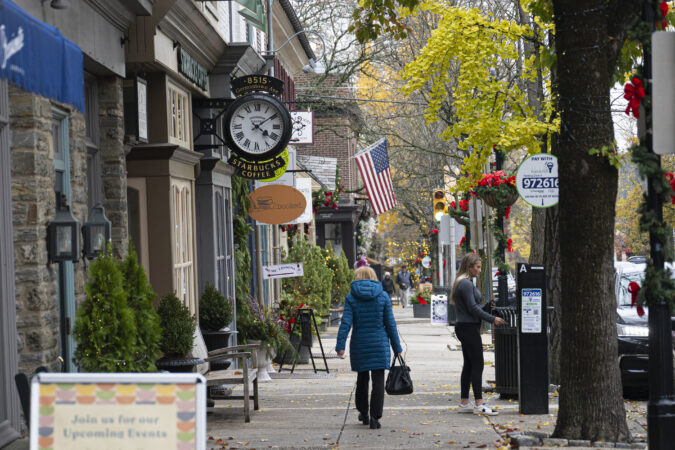
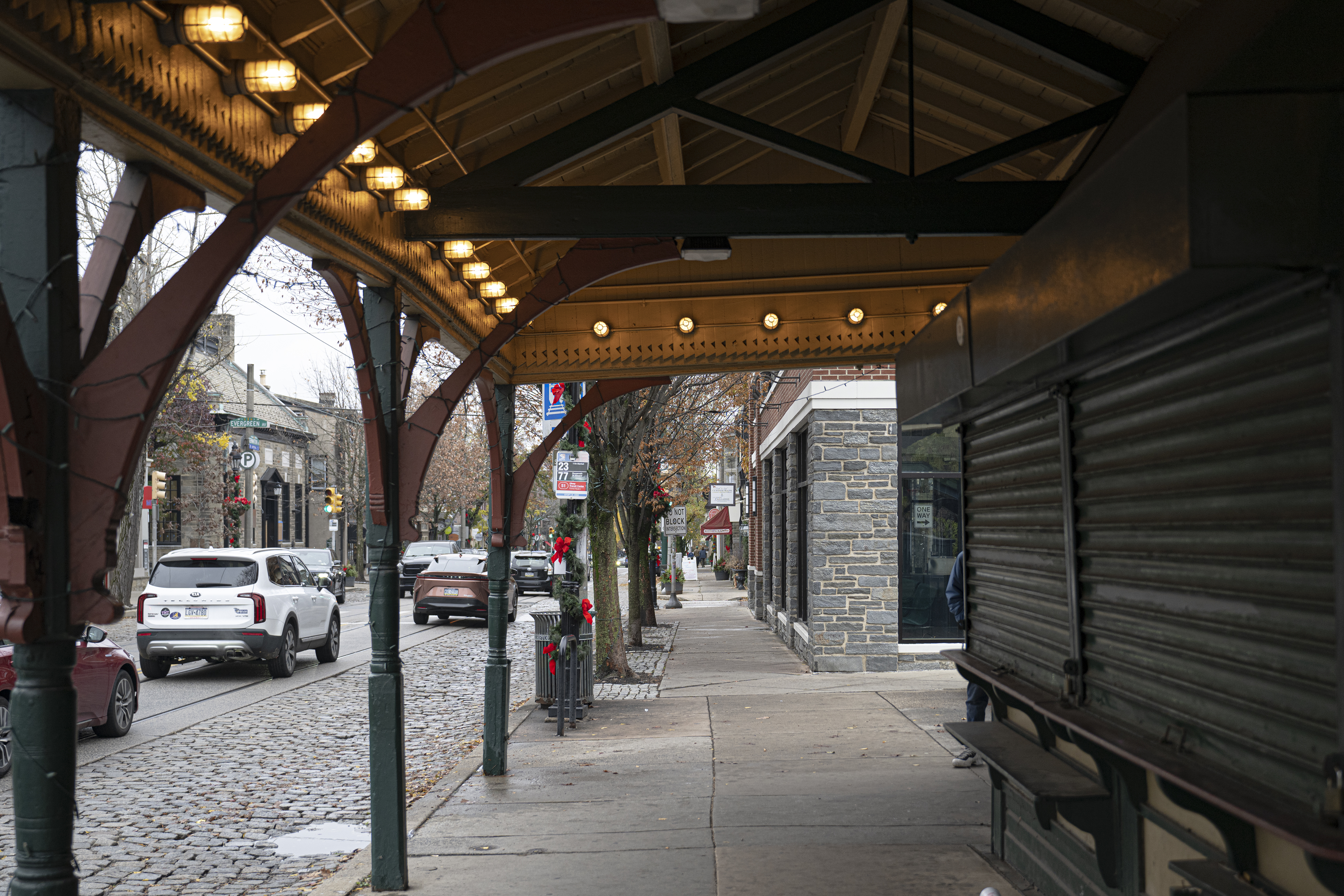
Behind the storefronts along Germantown Avenue’s main drag, some people perused the boutiques, while others typed away on laptops in coffee shops.
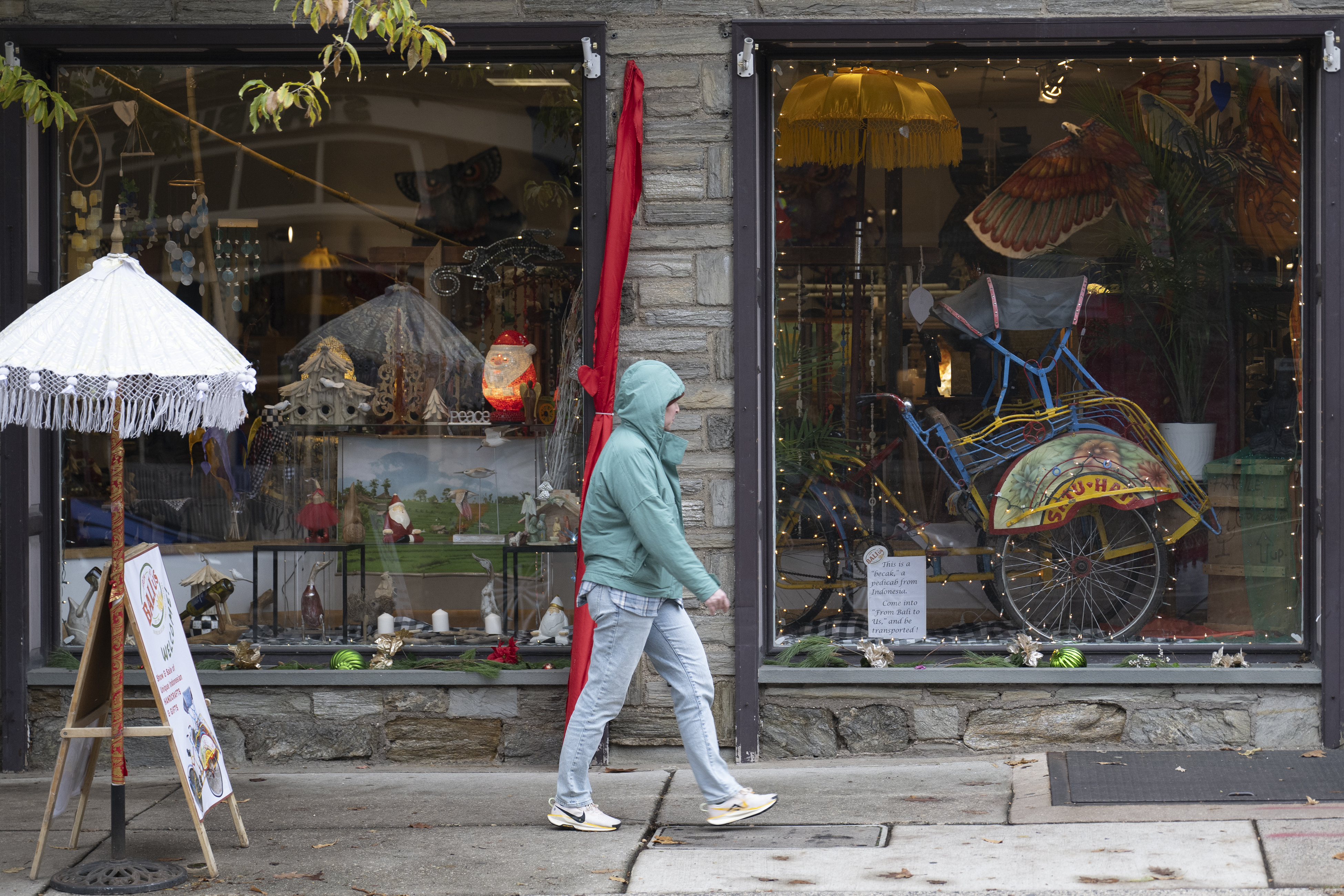
In the northwest Philadelphia neighborhood known for its wealth and postcard-picturesque aesthetic, the small-town charm of longstanding establishments — four are more than 100 years old — is now complemented by the shine of some newer shops and restaurants. Several Chestnut Hill business owners said the variety has helped both old and new spots succeed despite broader economic challenges, including inflation and tariffs, and the loss of a few restaurants.
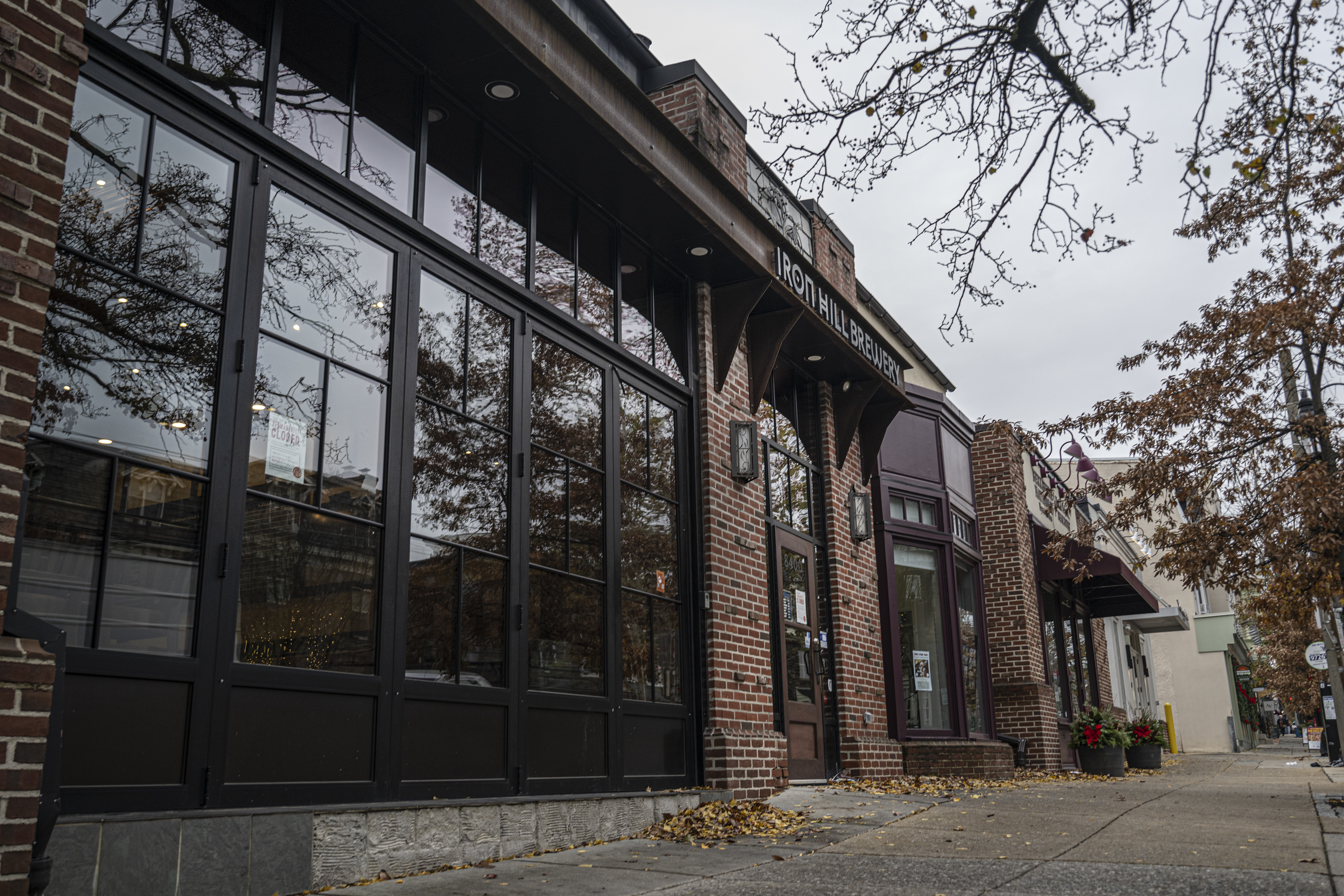
A view down Germantown Avenue from the Chestnut Hill SEPTA Regional Rail station.The closed Iron Hill Brewery is shown in downtown Chestnut Hill on Nov. 19.
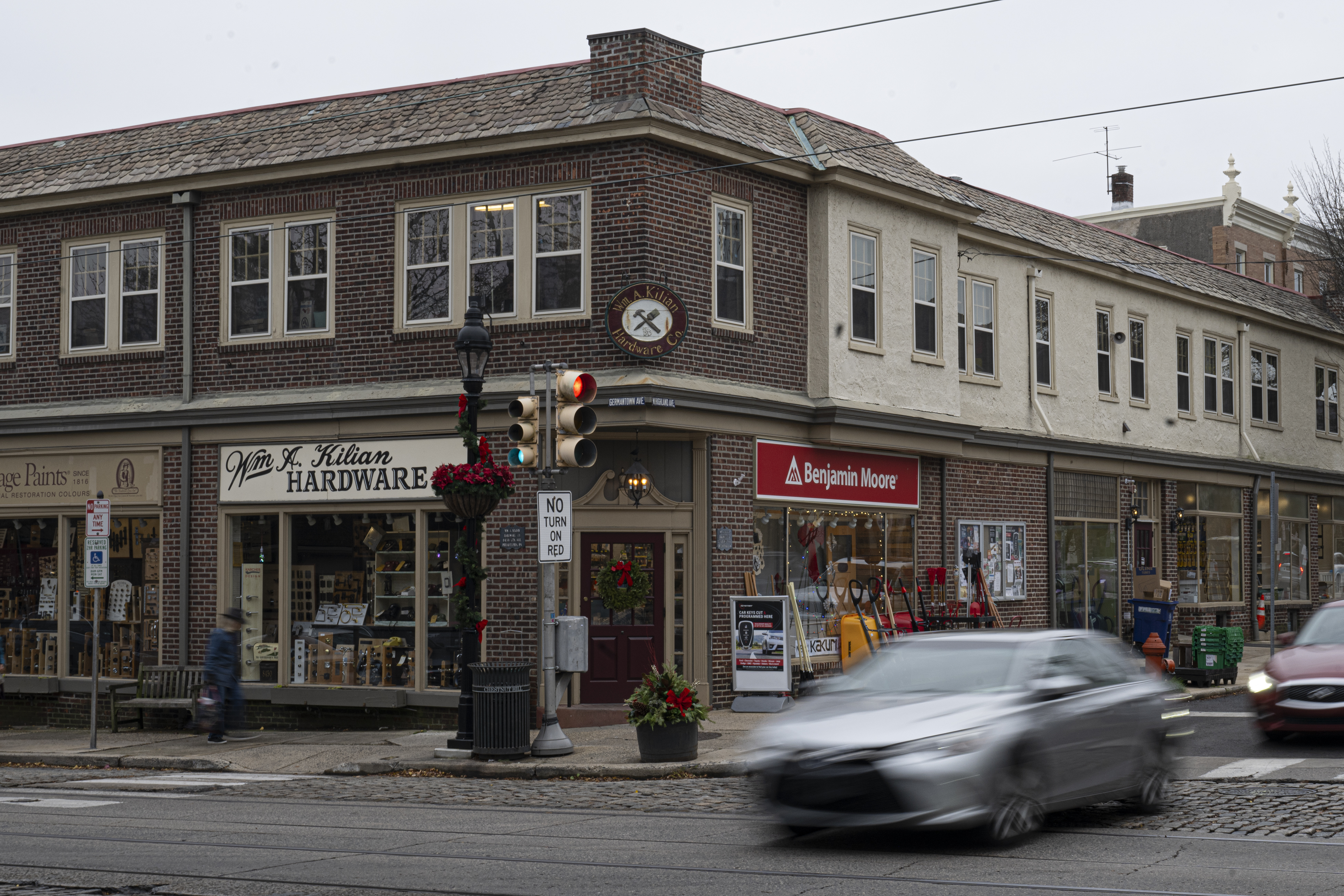
As the owner of Kilian Hardware, which has been in business for 112 years, Russell Goudy Jr. has watched the avenue change. Fifty years ago, he said it was “basically like a shopping mall,” a one-stop shop for everyday needs.
In recent years, however, the neighborhood has focused on attracting and retaining unique food and beverage businesses, “quaint, specialty shops,” and service-oriented businesses, which Goudy said offer experiences Amazon and other e-commerce platforms can’t replicate.
“If you’re not giving people an experience in today’s economy, it’s very tough to compete,” said Nicole Beltz, co-owner of Serendipity Shops, which for a decade has had an expansive store on Germantown Avenue. And providing a memorable experience is never more important than during the lucrative last few months of the year.
“When you come to Chestnut Hill over the holidays, you get what you came for,” Beltz said. “You get that charming feeling of being somewhere special for the holiday.”
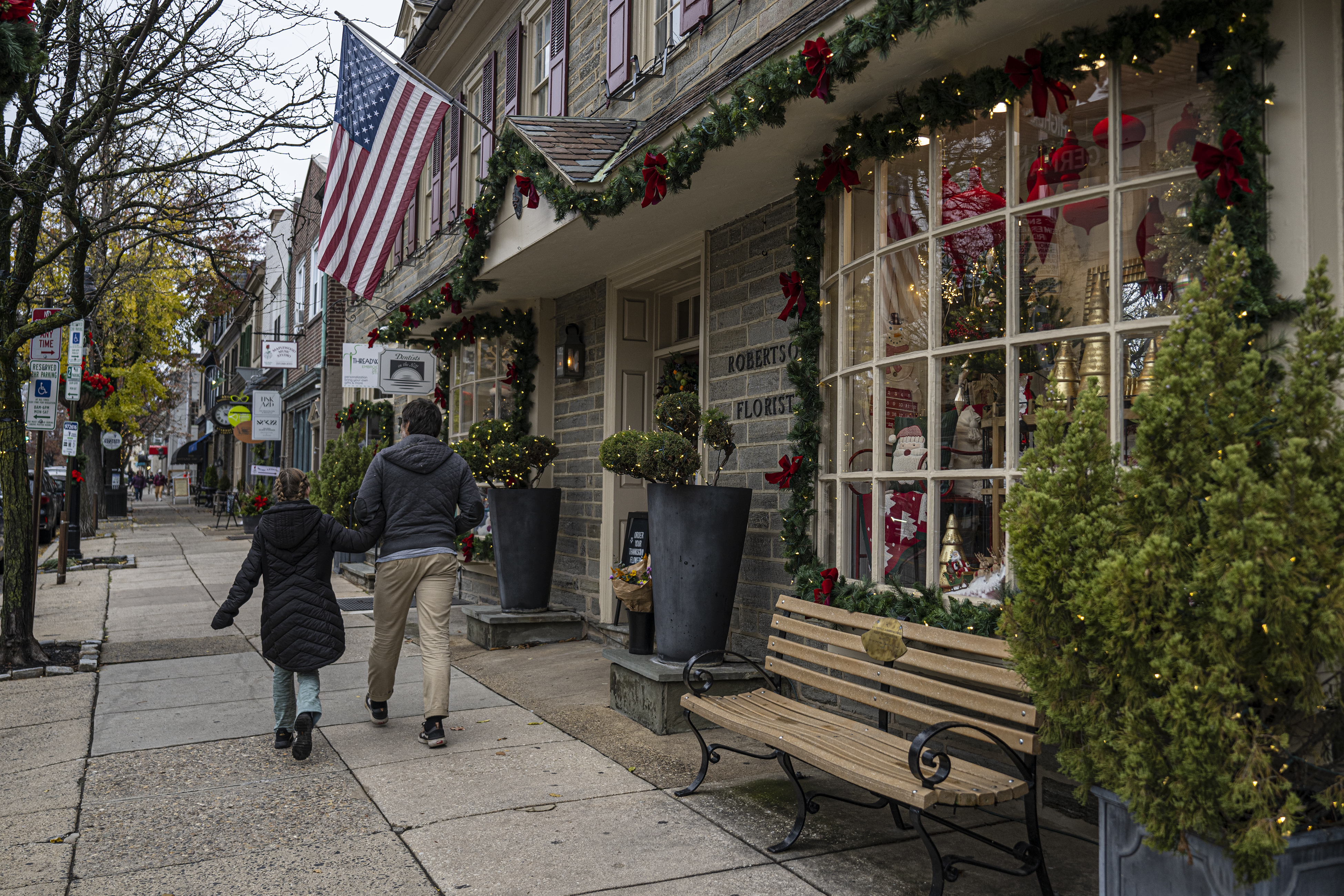
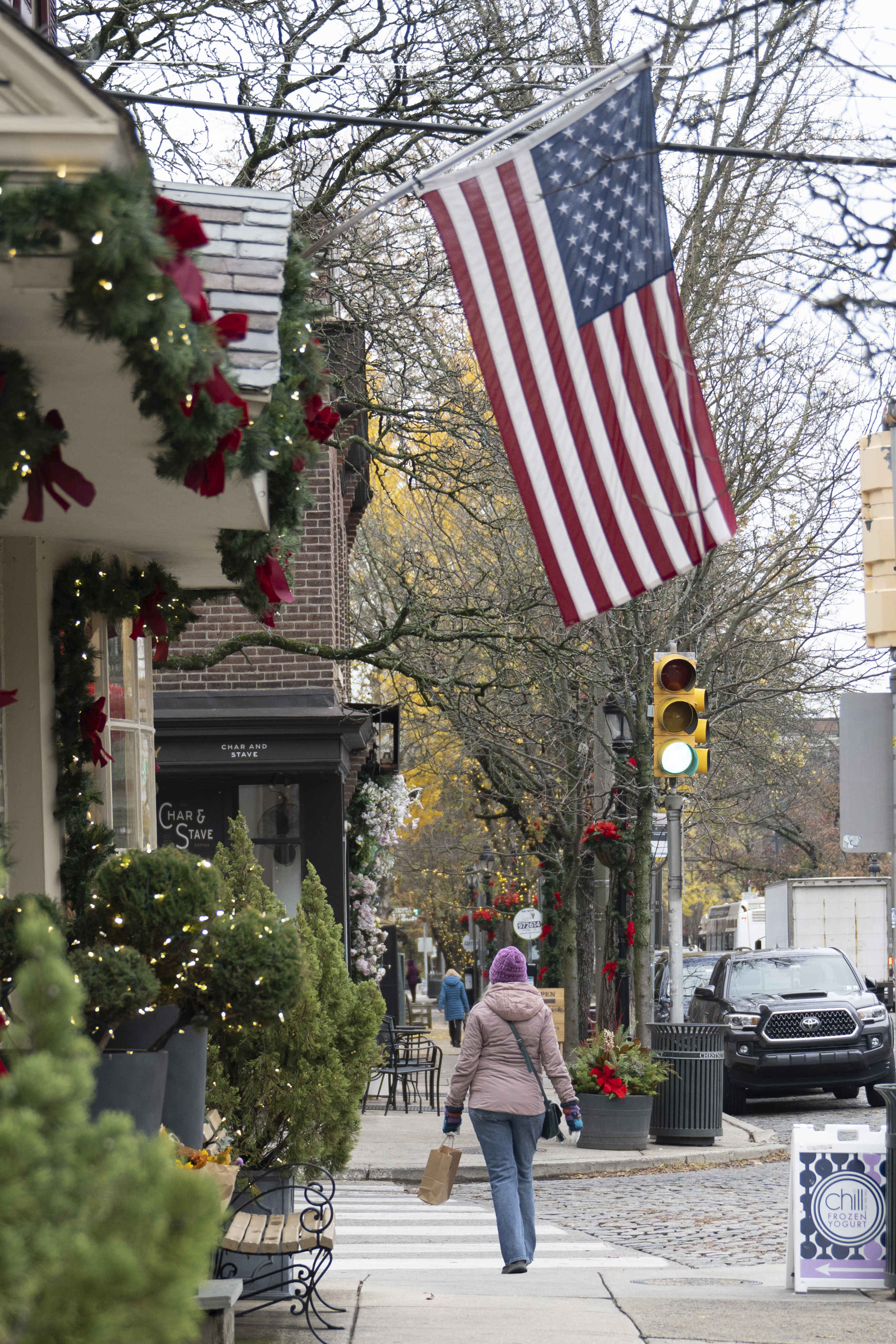
People walk by holiday decor outside Robertson’s Flowers & Events in Chestnut Hill earlier this month.
‘New vitality’ coming to the Chestnut Hill restaurant scene
During the holidays and all year long, Chestnut Hill business owners said they’re grateful that the neighborhood has held onto its charm despite recent challenges.
During the pandemic, “it definitely felt a little grim and dark,” said Ann Nevel, retail advocate for the Chestnut Hill Business District. “The impressive thing is the old-timers, the iconic businesses, and some of the newer restaurants … pretty much all were agile enough to tough it out.”
And a slew of other businesses have moved into the community since then. In the last four years, 20 retail shops, 20 service businesses, and 10 food and beverage spots opened in Chestnut Hill, Nevel said, while several existing establishments expanded.
Among them was Matines Café, which opened a small spot on Bethlehem Pike in 2022 and expanded this fall to a second, much larger location on Highland Avenue. The café serves 500 people or more on weekdays, according to its owners, and even more on weekends.
Sitting inside their original location, which is now a cozy children’s café, Paris natives Amanda and Arthur de Bruc recalled that they originally thought they’d open a café in Center City, where they lived at time. Then, they visited Chestnut Hill and fell in love, despite “a lot of empty spots” there around 2022, Amanda de Bruc said.
A colorful storefront along Germantown Avenue in Chestnut Hill.
“We liked the idea of living in the suburbs, which technically Chestnut Hill is not the suburbs, because it’s still Philly,” she said. But “we were looking for something that we were more used to, like Paris. There are so many boutiques in such a small area,” and everything is walkable.
The opening of shops and cafés like Matines became a “catalyst for this new vitality, a new, more contemporary energy that has taken hold in Chestnut Hill,” Nevel said. Soon, “we’re going to see that new vitality in the restaurant scene,” including in some long-vacant storefronts.
In 2026, former Four Seasons sommelier Damien Graef is set to open a wine bar, retail store, and fine-dining spot called Lovat Square off Germantown Avenue, Nevel said. On the avenue, a café-diner-pub concept called the Blue Warbler is under construction and also slated to open sometime next year.
Kilian Hardware in Chestnut Hill has been in business for 112 years.
In downtown Chestnut Hill, there are still a few empty spots, including those left by Campbell’s Place, a popular restaurant that closed this summer; Diamond Spa, which closed this fall; Iron Hill Brewery, which closed in September (right before the regional chain filed for bankruptcy); and Fiesta Pizza III, which closed last year.
Kismet Bagels, a popular local chain, was set to fill one of the spots this summer, but its deal fell through, co-owner Jacob Cohen said in a statement. He said they could “revisit the Chestnut Hill neighborhood” in the future.
While the future of Iron Hill will be dictated by bankruptcy proceedings — which include an auction of assets set for next month — stakeholders say conversations are ongoing about some of the other vacancies.
Steve Jeffries, who is selling the Campbell’s building for $1.5 million, said he’s gotten a lot of interest from people who want to revive the nearly 3,000-square-foot space as a neighborhood pub, but one that is “more cutting edge.” Perhaps, he said, one that is not focused on craft beer, which has decreased in popularity, especially among younger generations.
“The town is just screaming for other opportunities for nightlife and sports bars,” said Jeffries, executive vice president of Equity CRE. “There has been a connotation in the market that Chestnut Hill was kind of older, stuffy, that it wasn’t a nightlife town.”
But that’s changing, Jeffries said.
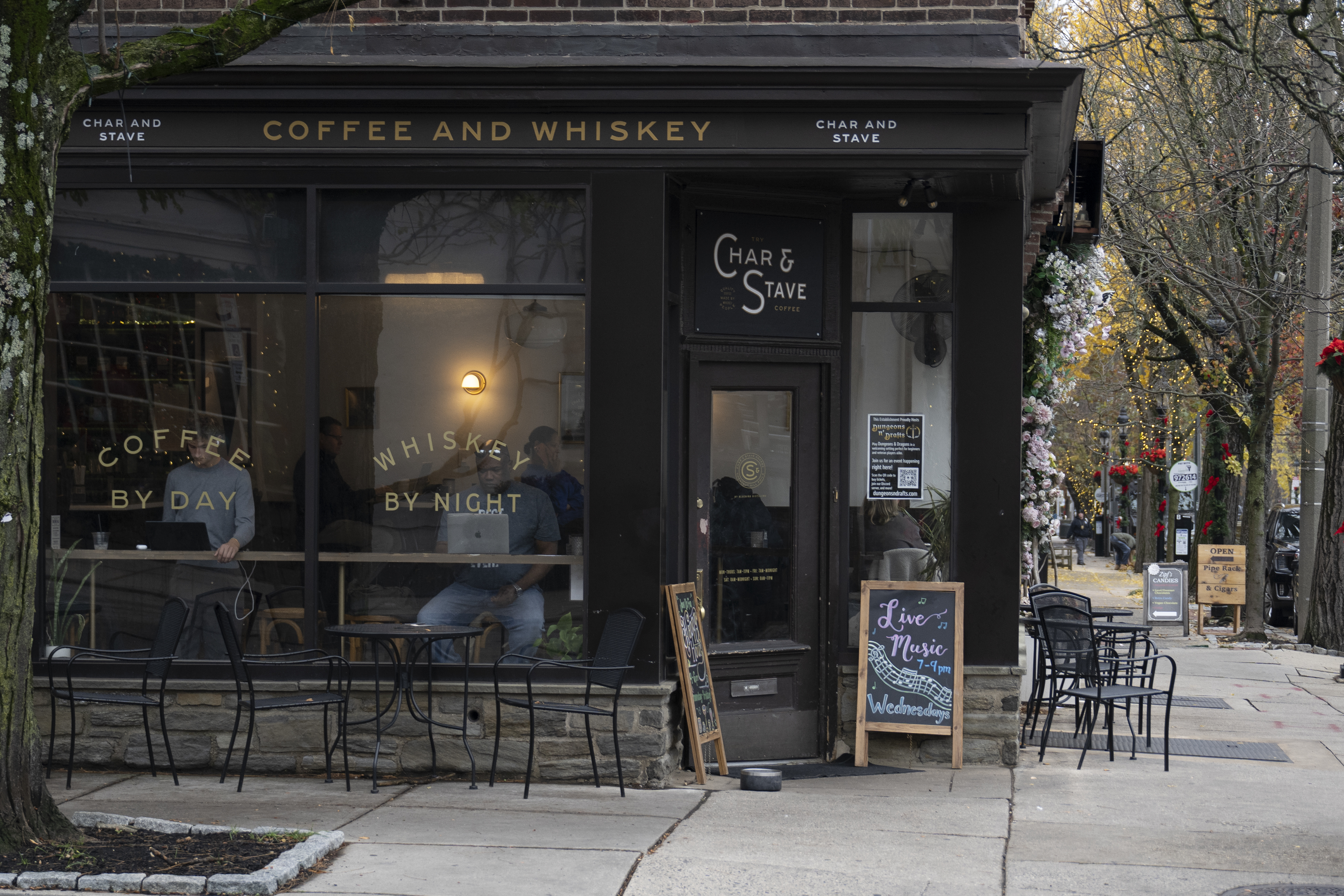
Char & Stave, an all-day coffee and cocktail bar, has done great business since moving into Chestnut Hill, its owner, Jared Adkins, said.
Just ask Jared Adkins, owner of Char & Stave, an all-day coffee and cocktail bar at the corner of Germantown and Highland Avenues.
After Nevel visited Ardmore and saw the success of Adkins’ original Char & Stave, she recruited him to open a Chestnut Hill location. It started as a holiday pop-up in 2022, then became a permanent presence the next year.Since he moved into town, Adkins said, business has been booming.
“We’re really just busy all day long,” said Adkins. The café is open until 11 p.m. during the week, midnight on the weekends, and it often brings in musicians and hosts events.
Adkins describes Char & Stave as a place where drinkers and nondrinkers alike can spend time together, and where people can get work done with coffee or a cocktail beside them: “It’s really a gathering place that fills a niche of a nice cocktail place.”
More changes to come for Chestnut Hill
Businesses along Germantown Avenue in Chestnut Hill are decorated for the holidays.
Chestnut Hill business leaders and community members say they’re optimistic about the neighborhood’s continued evolution.
As Brien Tilley, a longtime resident and community volunteer, ate lunch inside Cosimo’s Pizza Cafe, he said the community is doing well. But, he added, “it could always do better. It’s always in transition.”
Nevel noted that restaurants require more capital to open than other businesses, so it can take awhile to fill those larger holes downtown.
“The economy is tough,” said Anne McNally, a fourth-generation owner of McNally’s, as she sat by the tavern’s front window overlooking Germantown Avenue. But in Chestnut Hill, she gets the vibe that the community “wants us to be successful.”
McNally and Goudy, of Kilian’s, both noted that their families bought their buildings decades ago. That has contributed to their longevity, both said, as has evolving with the customer base.
For the McNally family, that meant transitioning from a “bar-bar,” with no clock or phone, to a bar-restaurant that closes at 10 p.m. For Goudy, it meant soliciting online orders and walk-in business from out-of-town and even out-of-state customers whose older homes require unique hardware.
“Everything is changing,” Goudy said. “It’s important to keep changing and not to try to go back to where you were before.”
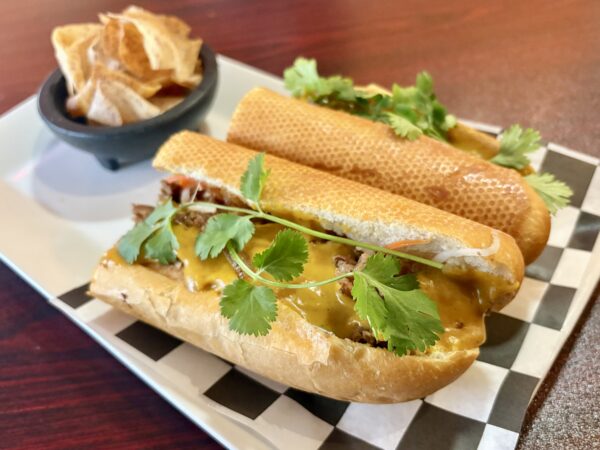
My newest global cheesesteak crush is the Vietnamese banh mi version at Saigon Grace, a sweet fusion cafe on South Street blending Asian and Mexican flavors where I’d already fallen for the intense salt foam Vietnamese coffee. The food has been very good, too, and this recent sandwich special is pretty much exactly the multicultural mashup it sounds like: a griddled hash of flat-iron beef, onions, and melty mozzarella tucked into a delicately crusty Vietnamese roll from South Philly’s Ba Le Bakery along with the classic banh mi fixings of pickled daikon and carrot laces, jalapeño rounds, and crunchy cilantro stems. What ultimately brought this sandwich to the next level, though, was the unexpected flow of golden sauce ladled over top. Was it Whiz? Absolutely not! It was an aromatic Vietnamese curry sauce — a hint sweet and fragrant with star anise — enriched with a creamy kiss of coconut milk that kept the sandwich moist and added an extra layer of nuanced spice to every bite. Saigon Grace Cafe, 1514 South St., 267-423-0081, saigongracecafe.com
— Craig LaBan
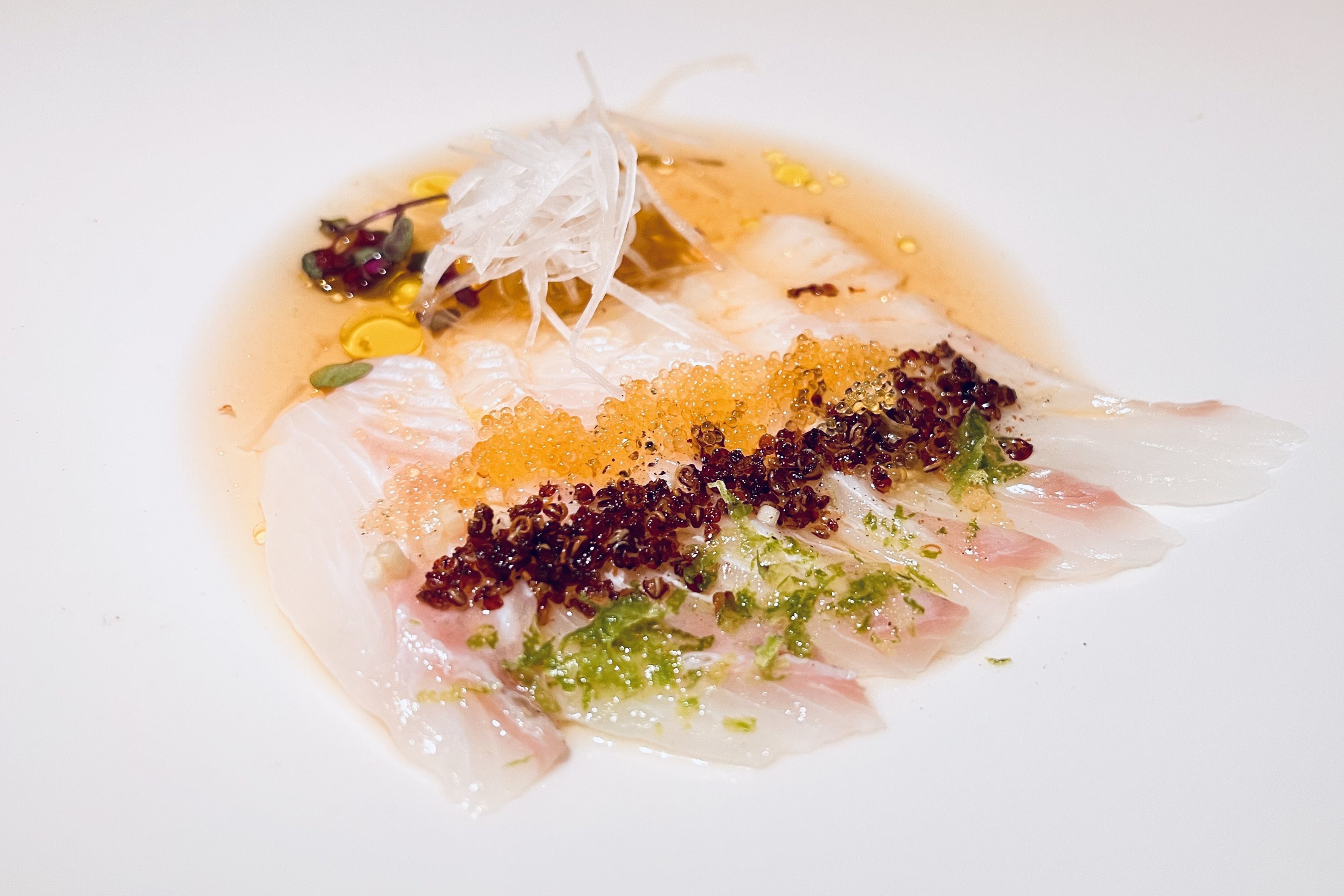
Hirame usuzukuri as served at Uchi, 1620 Sansom St.
Hirame usuzukuri at Uchi
This sleek, sumptuous Japanese spot out of Austin planted its flag in Rittenhouse this month. Its dim lighting makes it a date-night must (sushi bar, drinking bar, dining room options) for high-level fish. This hirame usuzukuri off the cool tastings menu was a crudo surprise — so simple, but so complex: its candied quinoa base gives it a quiet crunch and nutty depth that sharpen the pristine flounder’s silkiness. Uchi, 1620 Sansom St.,215-647-7611, uchi.uchirestaurants.com
— Michael Klein
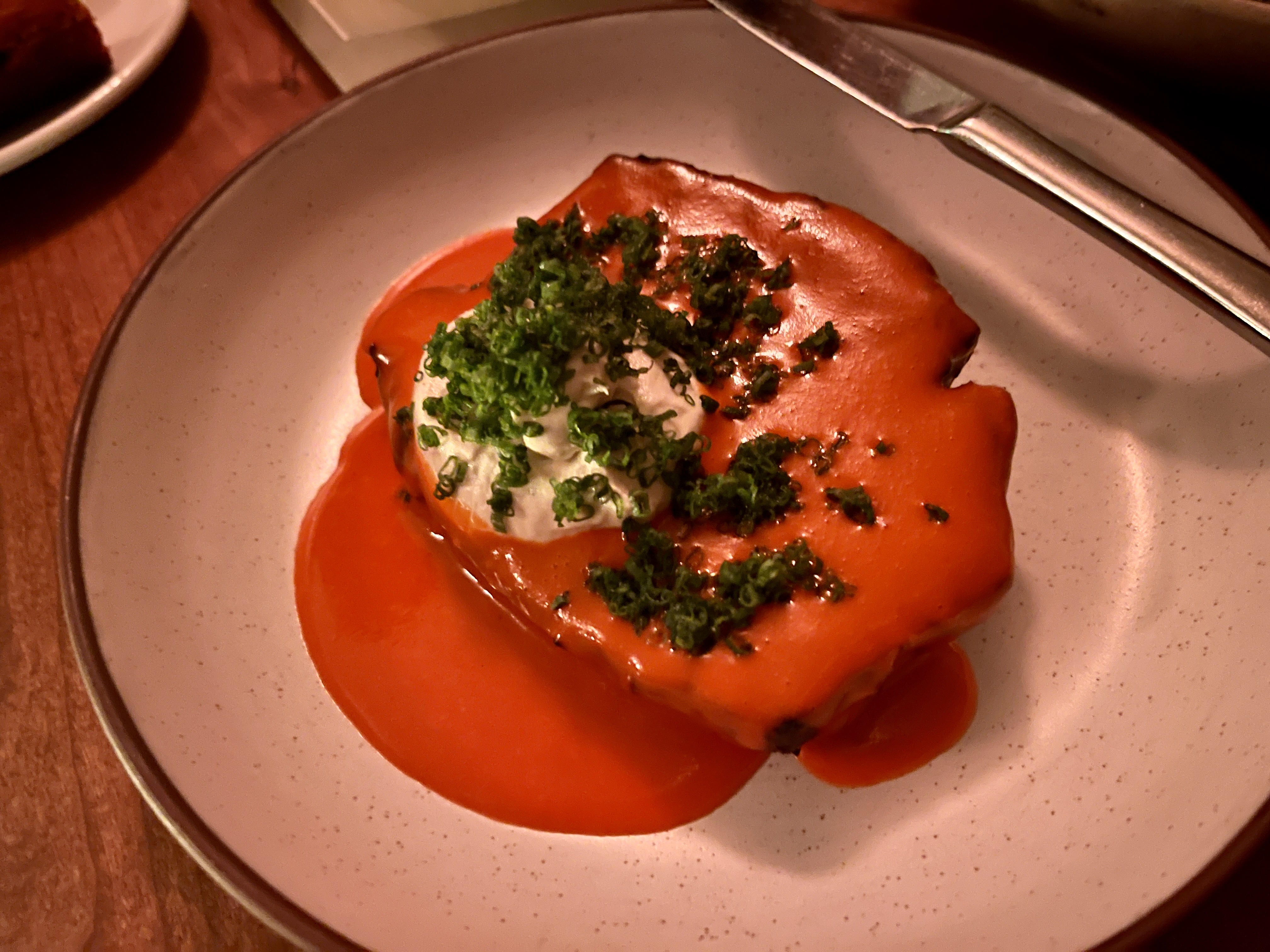
Murasaki sweet potato with yuzu kosho Buffalo sauce, sour cashew cream, and chives at Pietramala.
The Buffalo sauce-covered sweet potato at Pietramala
Lucky me to have a band of friends who were up for sharing the entire menu at Pietramala, Philly’s brightest vegan star, now Michelin-endorsed. On the night I had dinner there, chef-owner Ian Graye was off at the awards ceremony, picking up a Green Star and a Recommended. The meal was no less applause-worthy, starting with the tomato XO sauce-laden focaccia (which Craig LaBan considers one of Philly’s best renditions of tomato pie) and finishing on the chocolate-enrobed peanut mousse bar (which I deeply regret not ordering an individual serving of).
The menu was full of hits, but a predilection for wings perhaps inspired a deep appreciation of the Buffalo sauce-smothered Murasaki sweet potato. The silken, white-fleshed spuds come from Robin Hill Organics in Newtown Square. Pietramala roasts them, smashes them flat, then deep-fries them to order to yield a crispy-creamy slab of potato. It arrives on the plate positively drenched in a velvety Buffalo sauce made with yuzu kosho (a citrusy fermented chili paste), topped with a generous dollop of sour cashew cream and a shower of fresh chives. When our server put the plate down, they let us know it’s not often Pietramala repeats menu items, but this one’s too good to let go. Pietramala, 215-970-9541, pietramalaphl.com
Fairmount will soon get an interpretation of Outback Steakhouse— that is, if the chain restaurant existed in a Filipino alternate universe. Chance Anies’ Manong, a word that means “elder brother” in Ilocano, the Filipino dialect of Anies’ paternal family, opens to the public on December 5.
Anies, the chef-owner behind beloved Bella Vista BYOB Tabachoy, took over the former Tela’s space at 1833 Fairmount Ave. earlier this year. It’s a huge departure from Tabachoy’s minuscule footprint of 985 square feet, and of course, from its origins as a small food truck, which Anies still owns. “Manong’s kitchen is bigger than Tabachoy,” said Anies.
Chef Chance Anies posed for a portrait at Manong on Thursday, Nov. 20, 2025 in Philadelphia.
The dining room, which Anies had entirely renovated, seats over ninety people, including nine at its ample bar, at seats painted school bus yellow. There are globe lamps and custom-built booths, backed by forest green shiplap, and resembling the same leather-esque banquettes of a throwback, middle class steakhouse. There are also booths lining the windows, like in every diner movie that has ever been made. The dining room feels industrial, thanks to its exposed ductwork and concrete floor with veined cracks.
The front-of-house and back-of-house staff numbers around 28 people, unlike the eight, mostly part-timers that run Tabachoy.
Manong is a celebration of Anies’ ‘90s youth. Walk in through its enormous glass doors, above which their offerings are painted in orange cowboy-style font (Breakfast, Lunch, Dinner, Coffee, Bottle Shop), and on your left is a Teenage Mutant Ninja Turtles arcade game, procured from “an arcade guy in Michigan.” At Manong’s photo shoot for this article, Anies carried around a paper sack filled with Beanie Babies, given to him by his mother-in-law, as he tried to decide where to put them as decorations.
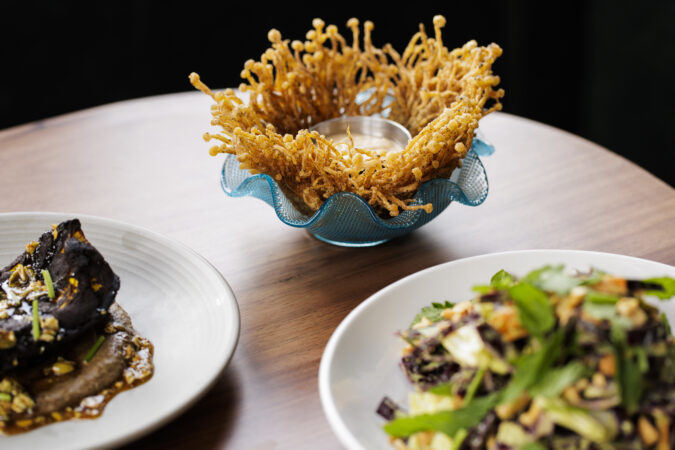
The Bloomin’ Shroom at Manong on Thursday, Nov. 20, 2025 in Philadelphia.
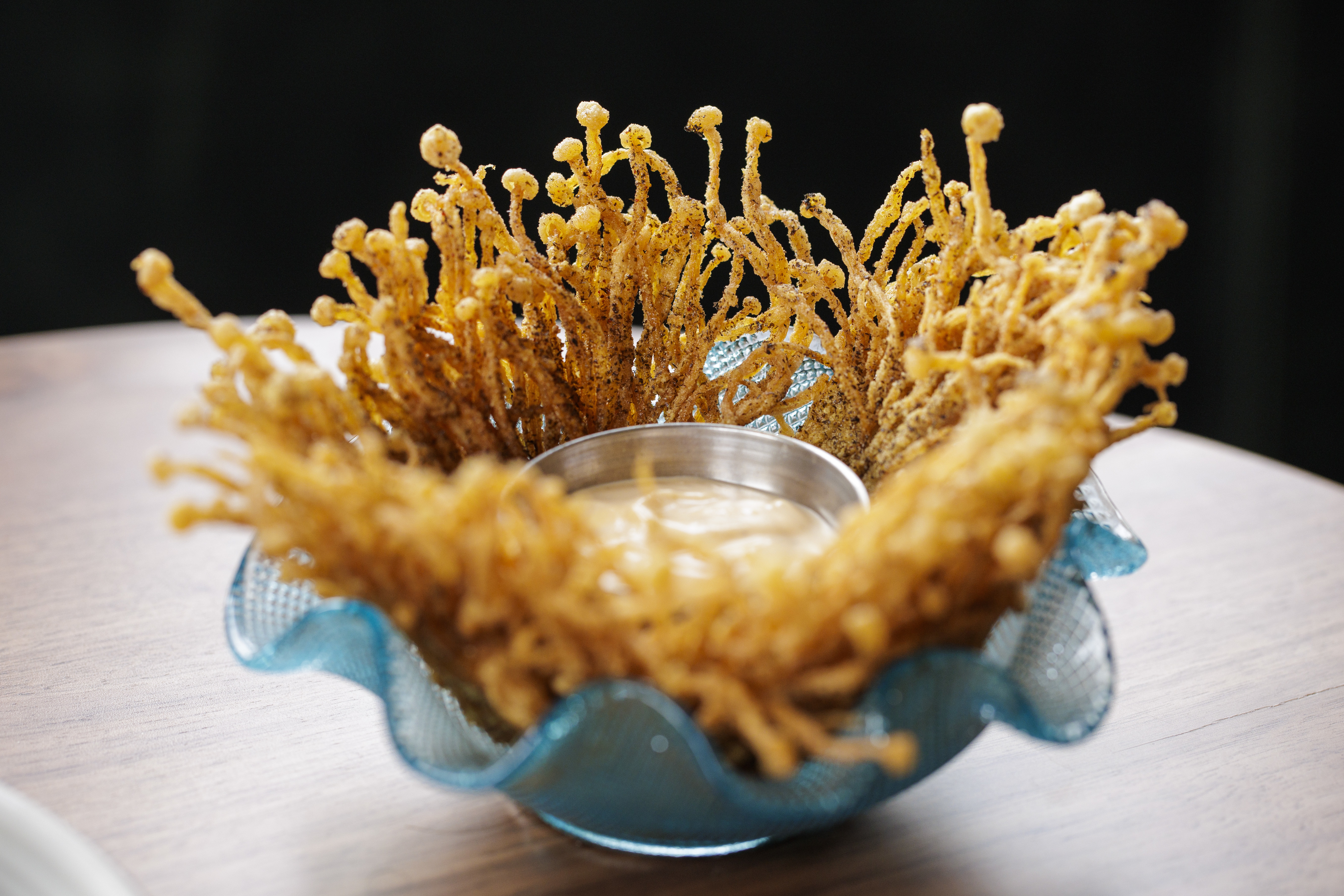
As a riff on Outback’s blooming onion, on Manong’s menu there will be a blooming mushroom, consisting of crispy enoki mushrooms tossed in cornstarch, garlic, and powdered, preserved lemon peel and arranged in a pressed glass frilled dish, mimicking a blooming effect with a ramekin of salsa rosada (a mixture of vegan mayo and housemade banana ketchup) at its center. Their Dynamite Lumpia, stuffed with pork, jalapeños, and mozzarella are enormous crispy parcels, unlike Tabachoy’s small, delicate rolls. “They’re like if a jalapeño popper married a lumpia,” said Anies.
The salad at Manong on Thursday, Nov. 20, 2025 in Philadelphia.
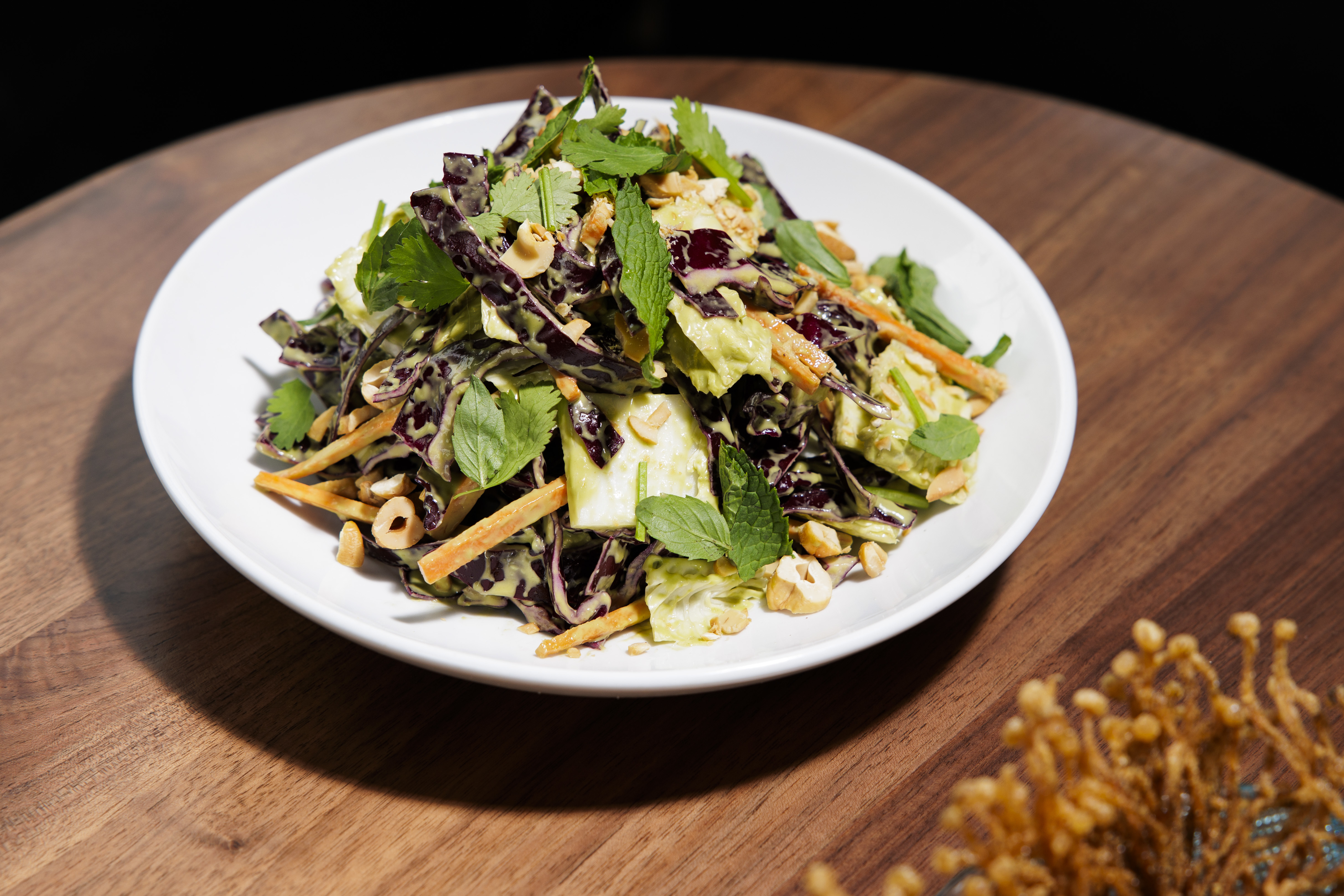
Their house salad will feature a green goddess dressing made with canned bangus, or milkfish, a popular Filipino pantry ingredient. Anies is also making efforts to develop versions of Filipino stalwarts that are less processed, like pulverizing red rice yeast for his tocino, a sweet Filipino cured pork known for its bright red hue, typically synthetic in origin. “It’s crazy how red the red rice yeast is,” he said. “It’s like an all-natural Red 40.”
The squash at Manong on Thursday, Nov. 20, 2025 in Philadelphia.
Their Balong Burger — “Balong” is a term of endearment meaning “my boy” or “my child” in Ilocano and what Anies’ mother calls him — has a bun that echoes the pillowy Filipino loaves called pandesal and fashioned into four conjoined pieces. “The bun is sort of like connected King’s Hawaiian rolls,” said Anies. A half-pound burger patty will be sandwiches between the sliced open buns, with an option to add another patty on. It will be served with housemade banana ketchup and white American cheese. “But not Cooper Sharp. We’re not fancy over here,” said Anies.
To finish your meal, there will be homemade ube ice cream, fudgy in texture, and served in little metal dishes, along with a robust dessert menu of frozen treats like calamansi water ice.
Unlike Tabachoy, Manong has a liquor license. Expect local beers on draft from Love City and Carbon Copy, breweries that Anies developed relationships with after vending with his food truck at them for years. But there will also be Filipino Kasama rum in cocktails and served with a bottle of San Miguel beer as a “Quezon City Wide,” a nod to Anies’ father’s birthplace. Bottles of the Filipino beers San Miguel and Red Horse, an extra-strong lager brewed by San Miguel, will also be available at the bar. “But they don’t export kegs. I guess we could pour the bottles into kegs to have them on draft,” joked Anies.
And also unlike Tabachoy, where diners need to exit the front door, make a right, turn down an alley, and re-enter the building in order to go to the bathroom, Manong’s bathrooms (indeed there are now plural “bathrooms”) are accessed through the main dining room. One is papered with old magazine articles and Applebee’s-themed. The other is Outback-themed. And where did he procure the neon decor for each? “Don’t ask, don’t tell,” he responded.
Manong, to start, will be open Wednesday to Sunday from 5 p.m. to 11 p.m. They will seat guests until 9:30 p.m. as their kitchen will close before the bar does, at 10:30 p.m. Reservations are available on OpenTable.