Category: Health

  • Montco school in shadow of toxic landfill finds PFAS in its water

    Montco school in shadow of toxic landfill finds PFAS in its water

    Residential waste, construction and demolition debris, as well as sewage treatment plant sludge, were dumped for decades at the 30-acre Boyertown Sanitary Landfill in northern Montgomery County until it was capped in 1987.

    As state and federal officials mull whether to add the landfill to the national Superfund list, a well used by nearby Gilbertsville Elementary School has tested positive for human-made polyfluoroalkyl substances, known as PFAS.

    The school is about 3,000 feet from the landfill property border and is within the Boyertown Area School District. Minister Creek passes through the property, and two residential neighborhoods are nearby.

    Scott Davidheiser, the district’s superintendent, sent a letter to staff and students’ families Monday alerting them to the test results, which were made known during a Pennsylvania Department of Environmental Protection (DEP) public information session on the landfill on Dec. 10.

    Gilbertsville Elementary tested at an annual average of 6.7 parts per trillion (ppt) for PFAS. That falls under acceptable limits by current state standards of 14 ppt.

    However, it would exceed federal maximum contaminant level standards of 4 ppt set to go into effect in 2031 if not addressed.

    Davidheiser’s letter said the district “remains committed to safety in all areas, including water safety.” The district has hired Suburban Water Technology Inc. to develop a water safety plan to lower annual average PFAS levels to within federal standards.

    District officials plan in January to discuss a plan to lower the levels.

    <iframe title="Boyertown Sanitary Landfill and PFAS contamination" aria-label="Locator map" id="datawrapper-chart-1kgam" src="https://datawrapper.dwcdn.net/1kgam/1/" scrolling="no" frameborder="0" style="width: 0; min-width: 100% !important; border: none;" height="581" data-window.addEventListener(“message”,function(a){if(void 0!==a.data[“datawrapper-height”]){var e=document.querySelectorAll(“iframe”);for(var t in a.data[“datawrapper-height”])for(var r,i=0;r=e[i];i++)if(r.contentWindow===a.source){var d=a.data[“datawrapper-height”][t]+”px”;r.style.height=d}}});

    What are PFAS?

    PFAS are a group of chemicals manufactured by industry for use in consumer products since the 1940s. There are thousands of different PFAS, some of which have been more widely used and studied than others.

    Exposure to them has been shown to impact the health of humans and lab animals, but the extent is still being studied.

    Standards for maximum acceptable levels of the compounds in drinking water have created confusion in recent years.

    The EPA was slow to set standards, so states began setting their own. Pennsylvania set different levels to start in 2024 for various types of PFAS: 14 ppt for perfluorooctanoic acid (PFOA) and 18 ppt for perfluorooctane sulfonic acid (PFOS).

    However, the EPA, under the Biden administration, then set the first federal standards, which would supersede state standards. The rule said that PFOA and PFOS can’t exceed 4 ppt. And, it set standards for other compounds within the PFAS family. The regulations were set to go into effect in 2027.

    However, the EPA, under the Trump administration, rolled back some provisions by announcing it would keep the standards for PFOA and PFOS, but delay enforcement until 2031. And, it said it would reconsider the limits on the other compounds.

    As a result, the PFAS level at Gilbertsville Elementary School’s current level would exceed the federal level if not brought down by 2031.

    What’s the Boyertown Landfill?

    Officials with the state Department of Environmental Protection and U.S. Environmental Protection Agency have been deciding since 2023 whether the Boyertown Landfill, in Douglass Township, should be named a Superfund site after test samples showed PFAS in nearby private wells.

    The landfill and surrounding property are owned by the Boyertown Sanitary Disposal Co. It is set on a wider 60-acre parcel at 300 Merkel Road in Gilbertsville. The property contains raw and pretreated leachate storage lagoons, buildings housing leachate pretreatment facilities, and stormwater management basins and swales.

    The unlined landfill stopped accepting solid waste in 1985. It had accepted municipal waste, office trash, and construction debris. It took in significant amounts of municipal sewage treatment plant sludge and industrial waste.

    In last week’s informational session, the DEP said water sampling around the area of the landfill in 2024 and 2025 showed multiple locations containing various PFAS compounds.

    State officials said they have installed carbon-activated filtration systems in residential wells within a half-mile of the landfill that tested above 4 ppt, according to an account of the meeting in Pottstown’s local newspaper, The Mercury.

    The newspaper reported that the DEP, however, will not provide similar assistance to Gilbertsville Elementary School because it is part of a small public water system and is required to remediate contamination.

  • How quiet is your hospital at night? See how patients rate Philly-area hospitals.

    How quiet is your hospital at night? See how patients rate Philly-area hospitals.

    Once considered the loudest hospital in the Philadelphia area, Riddle Hospital in Media has significantly reduced its nighttime noise levels, newly released federal data shows.

    At the Main Line Health Riddle hospital, only 12% of patients from the most recent survey rated the area around their room at night as “sometimes” or “never” quiet — down from 26% of patients surveyed between July 2022 and June 2023.

    Across the Philadelphia region, 52% of patients said their hospital room was “always” quiet at night. That’s slightly worse than nationally, where patients said hospitals were quiet throughout their stay 57% of the time.

    Virtua Mount Holly Hospital in New Jersey is now rated the loudest by patients.

    Nazareth Hospital in Northeast Philadelphia, owned by Trinity Health, was ranked the second loudest in the region.

    window.addEventListener(“message”,function(a){if(void 0!==a.data[“datawrapper-height”]){var e=document.querySelectorAll(“iframe”);for(var t in a.data[“datawrapper-height”])for(var r,i=0;r=e[i];i++)if(r.contentWindow===a.source){var d=a.data[“datawrapper-height”][t]+”px”;r.style.height=d}}});

    Quieter hospitals have benefits for both patients and staff, helping to lower anxiety levels, improve sleep quality, and ease the flow of communication.

    Riddle Hospital’s improvement follows construction of a new 230,000-square-foot patient pavilion that had temporarily increased noise at its Delaware County campus.

    “With the pavilion’s 2023 completion, as well as the resulting addition of more private rooms, noise is significantly reduced,” spokesperson Larry Hanover said.

    Reducing noise is also priority for Penn Medicine, whose Hospital of the University of Pennsylvania (HUP) was rated the quietest hospital among the 25,000 patients surveyed in the Philly-area.

    Chester County Hospital, also owned by Penn Medicine, was ranked the second quietest.

    The health system has made big investments in recent years to address noise levels at its hospitals, according to the university’s website. The Pavilion, which opened at HUP in Center City in 2021, was designed to reduce noise levels and nightly disruptions by separating nonclinical work from patient care areas.

    Each floor of the $1.6 billion building centers around an “offstage” area for staff to hold conversations and calls away from patient rooms that line the perimeter. The design of the rooms also allows care teams to check vitals and refill medications from the hallway, reducing nighttime disruptions.

    Here’s a look at how patients ranked their Philly-area hospitals on nighttime noise, according to the Centers for Medicare and Medicaid Service’s Hospital Consumer Assessment of Healthcare Providers and Systems data from October 2023 to September 2024.

    window.addEventListener(“message”,function(a){if(void 0!==a.data[“datawrapper-height”]){var e=document.querySelectorAll(“iframe”);for(var t in a.data[“datawrapper-height”])for(var r,i=0;r=e[i];i++)if(r.contentWindow===a.source){var d=a.data[“datawrapper-height”][t]+”px”;r.style.height=d}}});

  • UPenn launches a $10 million fund for seed investments in companies founded by Penn researchers

    The University of Pennsylvania launched a fund backed by $10 million from the university to make seed investments in companies founded by Penn researchers, officials announced Monday.

    The fund, called StartUP, will invest up to $250,000 in companies founded by Penn researchers and based on innovations created at the university. Any profits will be put back into the fund, Penn said.

    “This new fund addresses the critical need for seed investment capital at the earliest stages of company formation and will further accelerate innovation across the university,” Penn’s vice provost for research, David Meaney, said in a statement. Meaney is on the faculty at Penn’s School of Engineering and Applied Science.

    The university’s Office of the Chief Innovation Officer will manage the fund. The innovation office will evaluate applicants with the help of external advisers. Factors in investment decisions include overall feasibility and commercial potential.

    The new investment fund builds on efforts already underway at the Penn Center for Innovation, the Wharton School, and Penn Medicine, which in 2018 started a fund to invest $50 million in biotech companies.

    Penn has led the nation recently in licensing revenue from faculty inventions, thanks largely to revenue from COVID-19 vaccines that were based on mRNA technology developed 20 years ago by Penn researchers Drew Weissman and Katalin Karikó.

  • Adolescence lasts into your 30s, and other surprises about the brain

    Adolescence lasts into your 30s, and other surprises about the brain

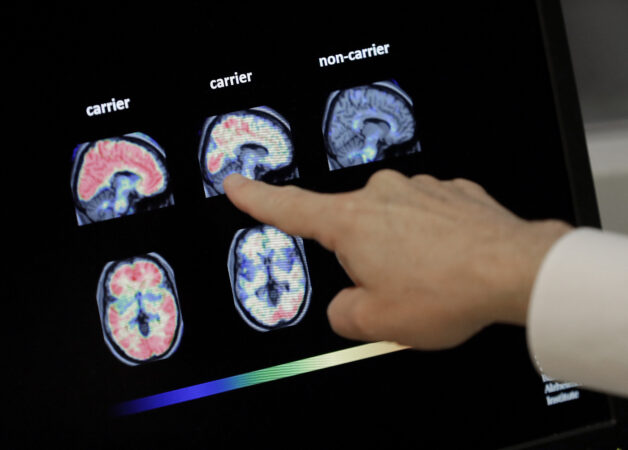
    The human brain has four distinct turning points where its structure changes, according to a study published in the journal Nature Communications, demonstrating that brain development is not as linear as you might think.

    “It’s easy to fall into this belief that there’s a ‘good’ or ‘bad’ way for a brain to be structured,” said lead study author Alexa Mousley at the University of Cambridge. “And that’s not really the case. What this study is emphasizing is the brain is expected to be doing something different at different ages.”

    In the new study, Mousley and colleagues looked at around 4,000 scans from healthy people ages 0 to 90 and analyzed their brains. They found four major times when the brain underwent developmental changes, around ages 9, 32, 66, and 83, dividing the life span into five distinct phases.

    “It’s yet another very nice example of how the brain and its global interactions change across the life span,” said Seth Grant, a neuroscientist at The University of Edinburgh who wasn’t involved in the new research. “The message is, there is continuous change from birth until old age. It’s not as if you suddenly build a brain and it stays the same and then just drops off at old age. It’s always changing.”

    Mousley and her co-authors identified five epochs during which the brain is wired in different ways.

    1. Childhood

    From infancy to 9 years old, the brain is busy. There is a lot of consolidation of neural connections happening, competitive elimination of synapses, and rapid increases in gray and white matter. But interestingly the brain is becoming less efficient during this time — so it takes longer for information to get from one region of the brain to another. The researchers don’t fully understand why this would be the pattern, but they have some theories.

    “We know that in very early life, the brain makes more connections than it needs, and then it prunes them away,” Mousley said. “It’s unclear if that is kind of what’s happening here, but it is potentially what’s happening.”

    Whatever the reason for the brain becoming less efficient during childhood, it is a time when a lot of learning happens — language, motor skills, speech — and there is likely a reason that the brain is structured the way that it is during this period.

    “It could be that this decreasing efficiency is potentially related to this incredible moment of learning,” Mousley said.

    2. Adolescence

    There is a dramatic turning point that the researchers saw occurring around the age of 9 on average — a time when many children begin to enter puberty. The brain switches gears and starts rewiring to become more efficient.

    The adolescence phase the researchers identified lasts for two decades, into the early 30s on average. This is when people are most vulnerable to developing a mental health disorder, but it’s also a critical time for brain development.

    “It is really important to think about adolescence as this protracted window,” said Katie Insel, a psychologist at Northwestern University who studies how the brain changes over the course of adolescence. She said that while in our society we may think of 18- or 21-year-olds as adults, this research adds to a growing body of work suggesting that the brain isn’t fully developed or stable until our late 20s or even early 30s.

    “Something that sets us apart as humans from other animals is how slowly we develop,” Mousley said. “A giraffe can stand up very soon after being born, but human babies just take a very long time to learn to walk, to eat.”

    Mousley suggested that this slower development might give humans the opportunity to develop more complex brain connections, and could be related to the things that humans can do that other animals can’t.

    3. Adulthood

    Adulthood is the longest phase — lasting for more than three decades from around 32 years old until around 66 years old.

    “It does seem to be this kind of period of relative stability,” Mousley said. “It’s consistent for a very long period of time.”

    That doesn’t mean that the brain isn’t changing during this period, but the changes are less dramatic than during other phases. This is also a period of stability in terms of intelligence, behavior, and personality.

    “If you just think about what an adult is compared to a teenager, you kind of assume there’s kind of a level of stability there in terms of how people are behaving. And that’s aligning with this three-decade period of consistent brain rewiring from our study,” Mousley said.

    4. Early aging

    Around 66 years old on average, the researchers saw another turning point. This is a time when the brain seems to become more vulnerable to age-related diseases — but the news isn’t all bad for the aging brain.

    “There’s an expected and healthy, typical way for the brain to shift,” Mousley said.

    Insel noted that in addition to some of the negative changes people might associate with aging, like memory loss, there are also positive changes. Older adults tend to be wiser and better at emotional regulation.

    “There are pros and cons to every developmental stage,” Insel said. “I think with every phase of life, there are trade-offs where some types of cognition and behavior are privileged because of how the brain is responding to the environment.”

    5. Late aging

    From 83 onward, the researchers identified a “late aging” phase.

    “What we’re seeing during that late aging phase is something called ‘increasing centrality,’” Mousley said. Particular regions of the brain become more important than others during this time. There is reduced connectivity, but there seems to be a pattern to that change.

    The metaphor Mousley used was that of changing bus routes. If you had a direct bus to work, but one day it stopped running and you had to take two buses, the transfer station would suddenly become very important. She theorized that the brain might be prioritizing important connections if other connections drop off.

    What it means

    The word “development” is often associated with childhood or the teenage years — but what this new research demonstrates is that the brain develops continually throughout our lives.

    “We often ascribe certain brain changes to negative outcomes in adulthood or later life,” Insel said. “But actually there’s certain cognitive features that can be really helpful and useful in aging.” By zooming out and looking at how the brain changes over the course of our lifetimes, Insel hopes that we can have a better understanding of what to expect at these different ages, and why our brains might be more vulnerable to certain disorders in adolescence or older age respectively.

    Yaakov Stern, a neuroscientist at Columbia University, noted that a good next step would be to try to understand exactly how these measures of the brain might be related to cognitive processes — essentially connecting the dots between this research and other work that has looked at the way our brains function throughout our lives.

    He added that many of the things that affect brain development are within our control — such as diet, exercise and social connection.

    “The brain changes with aging. We know that,” Stern said. “What interests me, is there are exposures that seem to be associated with more successful aging.”

  • Buscando respuestas sobre el autismo: un experto de CHOP desmiente los 5 mitos principales

    Buscando respuestas sobre el autismo: un experto de CHOP desmiente los 5 mitos principales

    Varios padres me pidieron mi opinión cuando la Administración de Alimentos y Medicamentos (FDA) anunció recientemente una advertencia sobre el acetaminofén por su supuesto vínculo con el autismo, y cuando la agencia apoyó el uso de leucovorina como tratamiento para el autismo pese a la falta de evidencia científica. Y estoy segura de que recibiré preguntas sobre la nueva afirmación en la página web de los Centros para el Control y la Prevención de Enfermedades (CDC) de que no se puede “descartar” un vínculo entre las vacunas y el autismo.

    Como pediatra del desarrollo y del comportamiento quien atiende a muchos niños dentro del espectro autista, me gusta conversar con las familias sobre lo que escuchan.

    Las familias con niños en el espectro pueden sentirse desorientadas por los “influencers” del internet quienes promocionan diferentes teorías, productos y tratamientos alternativos. Estas familias quieren hacer todo lo posible para apoyar a sus hijos, por lo tanto buscan información en todas partes.

    Las familias buscan alternativas porque muchos de nuestros tratamientos actuales no son efectivos para todos los niños, y aquellos que funcionan bien pueden requerir un esfuerzo intenso por parte de maestros, terapeutas y cuidadores. Como doctora, intento compartir con las familias la evidencia disponible para que puedan tomar decisiones informadas.

    La promoción de tratamientos y teorías sobre el supuesto aumento en autismo no es nueva. Pero cuando los funcionarios del gobierno hablan mucho sobre el autismo y el internet está lleno de “información” desconectada de la prueba científica, es más importante que nunca que los clínicos y los funcionarios de salud pública se acerquen a los padres con compasión, honestidad y evidencia.

    En el Hospital de Niños de Filadelphia (CHOP), El Pediatric Health Chat está rastreando mitos y rumores médicos, incluyendo aquellos relacionados al autismo. Basado en esos datos y en conversaciones con padres, aquí están las cinco cosas principales que desearía que mis familias supieran:

    1. El autismo no es una epidemia

    Aunque es cierto que el número de niños con trastorno del espectro autista sigue aumentando en todos los grupos sociodemográficos, no hay evidencia de que un único tóxico ambiental u otro factor sea la causa. De hecho, los estudios más sólidos muestran que gran parte del aumento del autismo durante los últimos 20 años se debe a una mayor detección de la condición, lo que ha permitido dejar de lado diagnósticos incorrectos establecidos antes; y al hecho de que ahora se conocen más características y conductas como señales de autismo. Así que, aunque los diagnósticos de autismo estén en alza, no hay evidencia de una epidemia: el autismo está aumentando, pero no es un brote de enfermedad repentino como COVID.

    2. Las vacunas no causan autismo

    El mito de que las vacunas causan autismo se originó en un estudio británico de los años 90 con apenas 12 niños que resultó ser tan fraudulento que la revista científica que lo publicó terminó retrayéndolo. Algunas personas insisten en que, dado que el autismo ha seguido en aumento —y se han desarrollado vacunas nuevas— debe existir algún tipo de vínculo. Pero que dos cosas ocurran al mismo tiempo, no significa que una cause la otra. (Un ejemplo clásico es que tanto las ventas de helado como los ahogamientos aumentan en verano, pero nadie afirma que el helado cause ahogamientos).

    Como explica el Centro de Educación de Vacunas de CHOP, han habido varios estudios bien realizados que no han encontrado vínculo entre las vacunas y el autismo. Las vacunas salvan vidas, y la evidencia sobre su seguridad en relación con el autismo es extensiva. Animo a todas las familias de mis pacientes a vacunar a sus hijos. Me enorgullece decir que vacuno a mis propios hijos siguiendo los calendarios recomendados, para protegerlos de infecciones prevenibles.

    3. El acetaminofén no causa autismo

    Aunque algunos estudios pequeños han encontrado una asociación entre el uso prenatal de acetaminofén y el autismo, los estudios más grandes y sólidos no han encontrado esa asociación. Estudios que no consideran factores como el motivo por el que la persona embarazada toma acetaminofén o si hay hermanos en el espectro autista pueden concluir de manera inexacta que el acetaminofén es una causa cuando no lo es. La verdad es que las fiebres altas durante el embarazo son peligrosas, y el acetaminofén, el ingrediente activo de Tylenol, es el medicamento más seguro que tenemos para combatir la fiebre. No dudaría en recomendar acetaminofén durante el embarazo cuando sea necesario.

    4. La leucovorina no es un tratamiento probado para el autismo

    La primavera pasada apareció una noticia sobre un niño que se volvió más verbal tras tomar leucovorina (también conocida como ácido folínico, un medicamento usado en pacientes con cáncere quereciben quimioterapia). Desde entonces, las solicitudes para empezar leucovorina de parte de familias en la comunidad del autismo han aumentado. Sin embargo, la evidencia sobre la efectividad de la leucovorina es extremadamente limitada. Por ejemplo, niños en grupos con placebo —los que no recibieron leucovorina— mostraron mejoramientos similares a los que la recibieron. Algunas familias abandonaron el tratamiento porque sus hijos se volvieron más agresivos al recibir leucovorina. Necesitamos ensayos controlados aleatorizados más grandes y bien diseñados antes de sentirme cómoda recomendando leucovorina a mis pacientes.

    5. La suspuesta “comunicación facilitada” no ayuda a los niños con autismo

    Hace varias décadas, la comunicación facilitada (en la cual un facilitador toca al paciente para “ayudarle a deletrear” en un teclado o tablero de letras) fue completamente desacreditada por estudios que demostraron que el facilitador guiaba las respuestas y no ayudaba a la persona a comunicar sus propios pensamientos.

    Sin embargo, la comunicación facilitada (CF) ha reaparecido en forma de otras “terapias” como la mecanografía apoyada y a través del podcast “Telepathy Tapes”. No son más que CF con otro nombre y tampoco llevan evidencia.

    Por otra parte, la comunicación aumentativa o alternativa, mediante la cual los individuos usan por sí mismos estrategias alternativas o dispositivos “hablantes” para expresarse (en lugar de que un facilitador les ayude físicamente), está fuertemente respaldada por la evidencia. Entiendo por qué las familias quieren brindar a sus hijos todas las oportunidades para expresarse; por eso les insto a optar por los métodos que han demostrado ayudarles a alcanzar sus objetivos.

    Lo que más me preocupa es que, entrelazado en todos estos mitos y desinformación, esté la creencia implícita de que las personas con autismo no tienen valor o no pueden llevar vidas felices y exitosas. Si bien algunas personas del espectro autista tienen dificultades para vivir de forma independiente y pueden presentar conductas desafiantes, todas estas personas merecen dignidad y respeto. Seguir encontrando maneras de apoyar mejor a las personas con autismo y a sus familias, para permitirles alcanzar su máximo potencial, debe ser la prioridad.

    Gracias a Dra. Gloria Gutierrez por su ayuda con la traducción.

    Nota del editor: El Pediatric Health Chat es una iniciativa en el internet del Hospital de Niños de Filadelphia (CHOP) que investiga a los mitos y conceptos erróneos más recientes sobre la salud infantil. Kate E. Wallis, MD, MPH, es una pediatra del desarrollo y del comportamiento en la División de Pediatría del Desarrollo y del Comportamiento del Hospital de Niños de Filadelphia (CHOP).

  • One year of inspections at Doylestown Hospital: November 2024 – October 2025

    One year of inspections at Doylestown Hospital: November 2024 – October 2025

    Doylestown Hospital was not cited by the Pennsylvania Department of Health for any safety violations between November 2024 and October of this year.

    Here’s a look at the publicly available details:

    • Nov. 6, 2024: Inspectors came to investigate a complaint but found the hospital was in compliance. Complaint details are not made public when inspectors determine it was unfounded.
    • Nov. 14: Inspectors followed up on an October 2024 complaint and found the hospital was in compliance. The hospital had been cited for not following protocol for admitting mental health patients.
    • Nov. 20: Inspectors followed up on a July 2024 complaint and found the hospital was in compliance. The hospital had been cited for not following protocol for identifying patients prior to surgery.
    • Jan. 10, 2025: Inspectors visited for a special monitoring survey and found the hospital was in compliance.
    • July 24: Inspectors came to investigate a complaint but found the hospital was in compliance.
  • Trump seeks to cut restrictions on marijuana through planned order

    Trump seeks to cut restrictions on marijuana through planned order

    President Donald Trump is expected to push the government to dramatically loosen federal restrictions on marijuana, reducing oversight of the plant and its derivatives to the same level as some common prescription painkillers and other drugs, according to six people familiar with the discussions.

    Trump discussed the plan with House Speaker Mike Johnson (R., La.) in a Wednesday phone call from the Oval Office, said four of the people, who, like the others, spoke on the condition of anonymity because they were not authorized to speak publicly. The president is expected to seek to ease access to the drug through an upcoming executive order that directs federal agencies to pursue reclassification, the people said.

    The move would not legalize or decriminalize marijuana, but it would ease barriers to research and boost the bottom lines of legal businesses.

    Trump in August said he was “looking at reclassification.” He would be finishing what started under President Joe Biden’s Justice Department, which followed the recommendation of federal health officials in proposing a rule to reclassify marijuana; that proposal has stalled since Trump took office.

    “We’re looking at it. Some people like it, some people hate it,” Trump said this summer. “Some people hate the whole concept of marijuana because it does bad for the children, it does bad for the people that are older than children.”

    Trump cannot unilaterally reclassify marijuana, said Shane Pennington, a D.C. attorney who represents two pro-rescheduling companies involved in the hearing. But he can direct the Justice Department to forgo the hearing and issue the final rule, Pennington said.

    “This would be the biggest reform in federal cannabis policy since marijuana was made a Schedule I drug in the 1970s,” Pennington said.

    The president was joined on the Wednesday call with Johnson by marijuana industry executives, Health Secretary Robert F. Kennedy Jr., and Centers for Medicare and Medicaid Services chief Mehmet Oz, three of the people said.

    Johnson was skeptical of the idea and gave a list of reasons, including several studies and data, to support his position against reclassifying the drug, two of the people said.

    Trump then turned the phone over to the executives gathered around his desk, who rebutted Johnson’s arguments, the people said.

    Trump ended the call appearing ready to go ahead with loosing restrictions on marijuana, the people said, though they caution the plans were not finalized and Trump could still change his mind.

    A White House official said no final decisions have been made on rescheduling of marijuana.

    The Department of Health and Human Services referred questions to the White House. The Centers for Medicare and Medicaid Services did not immediately respond to a request for comment. A representative from Johnson’s office declined to comment.

    Marijuana is currently classified as a Schedule I substance, the same classification as heroin and LSD. Federal regulations consider those drugs to have a high potential for abuse and no accepted use for medical treatment.

    Trump would move to classify marijuana as a Schedule III substance, which regulators say carry less potential for abuse and are used for certain medical treatments, but can also create risks of physical or psychological dependence.

    Other Schedule III drugs include Tylenol with codeine, as well as certain steroid and hormone treatments.

    Democrats and Republicans alike have been interested in reclassifying marijuana, with some politicians citing its potential benefit as a medical treatment and the political popularity of the widely used drug.

    Marijuana has become easier than ever to obtain, growing into an industry worth billions of dollars in the United States. Dozens of states and Washington, D.C., have legalized medical marijuana programs, and 24 have approved recreational marijuana.

    The Biden administration pursued efforts to ease access to the drug, with health officials recommending reclassification to Schedule III in 2023. But health officials have said that those recommendations were slowed down by the Drug Enforcement Administration, which took months to undergo required administrative reviews and were not completed before the end of Biden’s term.

    The Drug Enforcement Administration was supposed to hold an administrative hearing on the proposal, with a judge hearing from experts on the health benefits and risks of marijuana. But the hearing has been in legal limbo since Trump took office, amid allegations from cannabis companies that the DEA was working to torpedo the measure.

  • Senate rejects extension of healthcare subsidies as costs are set to rise for millions of Americans

    Senate rejects extension of healthcare subsidies as costs are set to rise for millions of Americans

    WASHINGTON — The Senate on Thursday rejected legislation to extend Affordable Care Act tax credits, essentially guaranteeing that millions of Americans will see a steep rise in costs at the beginning of the year.

    As Republicans and Democrats have failed to find compromise, senators voted on two partisan bills instead that they knew would fail — the Democratic bill to extend the subsidies, and a Republican alternative that would have created new health savings accounts.

    It was an unceremonious end to a monthslong effort by Democrats to prevent the COVID-19-era subsidies from expiring on Jan. 1, including a 43-day government shutdown that they forced over the issue.

    Ahead of the votes, Senate Democratic Leader Chuck Schumer of New York warned Republicans that if they did not vote to extend the tax credits, “there won’t be another chance to act,” before premiums rise for many people who buy insurance off the ACA marketplaces.

    “Let’s avert a disaster,” Schumer said. “The American people are watching.”

    Republicans and Democrats never engaged in meaningful or high-level negotiations on a solution, even after a small group of centrist Democrats struck a deal with Republicans last month to end the shutdown in exchange for a vote. Most Democratic lawmakers opposed the move as many Republicans made clear that they wanted the tax credits to expire.

    The deal raised hopes for a compromise on healthcare. But that quickly faded with a lack of any real bipartisan talks.

    “We failed,” said Alaska Sen. Lisa Murkowski, one of four Republicans who voted for the Democratic bill, after the vote. “We’ve got to do better. We can’t just say ‘happy holidays, brace for next year.’”

    A Republican alternative

    The dueling Senate votes were the latest political messaging exercise in a Congress that has operated almost entirely on partisan terms, as Republicans pushed through a massive tax and spending cuts bill this summer using budget maneuvers that eliminated the need for Democratic votes. In September, Republicans tweaked Senate rules to push past a Democratic blockade of all of Trump’s nominees.

    On healthcare, Republicans similarly negotiated among themselves, without Democrats. The health savings accounts in the GOP bill that they eventually settled on would give money directly to consumers instead of to insurance companies, an idea that has been echoed by President Donald Trump.

    Senate Majority Leader John Thune (R., S.D.) said ahead of the vote that the Democrats’ simple extension of the subsidies is “an attempt to disguise the real impact of Obamacare’s spiraling healthcare costs.”

    But Democrats immediately rejected the GOP plan, saying that the accounts wouldn’t be enough to cover costs for most consumers.

    The Senate voted 51-48 not to move forward on the Democratic bill, with four Republicans — Maine Sen. Susan Collins, Missouri Sen. Josh Hawley and Alaska Sens. Murkowski and Dan Sullivan — voting with Democrats. The legislation needed 60 votes to proceed, as did the Republican bill, which was also blocked on a 51-48 vote.

    An intractable issue

    The votes were the latest failed salvo in the debate over the Affordable Care Act, former President Barack Obama’s signature law that Democrats passed along party lines in 2010 to expand access to insurance coverage.

    Republicans have tried unsuccessfully since then to repeal or overhaul the law, arguing that healthcare is still too expensive. But they have struggled to find an alternative. In the meantime, Democrats have made the policy a central political issue in several elections, betting that the millions of people who buy healthcare on the government marketplaces want to keep their coverage.

    “When people’s monthly payments spike next year, they’ll know it was Republicans that made it happen,” Schumer said in November, while making clear that Democrats would not seek a compromise.

    Even if they view it as a political win, the failed votes are a loss for Democrats who demanded an extension of the benefits during the shutdown — and for the millions of people facing premium increases on Jan. 1.

    Maine Sen. Angus King, an independent who caucuses with Democrats, said the group tried to negotiate with Republicans after the shutdown ended. But, he said, the talks became unproductive when Republicans demanded language adding new limits for abortion coverage that were a “red line” for Democrats. He said Republicans were going to “own these increases.”

    House to try again

    Republicans have used the looming expiration of the subsidies to renew their longstanding criticisms of the ACA, also called Obamacare, and to try, once more, to agree on what should be done.

    In the House, Speaker Mike Johnson (R., La.) has promised a vote next week on some type of healthcare legislation. Republicans weighed different options in a conference meeting on Wednesday, with no apparent consensus.

    Murkowski and other Senate Republicans who want to extend the subsidies expressed hope that the House could find a way to do it. GOP leaders were considering bills that would not extend the tax credits, but some Republicans have launched longshot efforts to try to go around Johnson and force a vote.

    “Hopefully some ideas emerge” before the new year, said Republican Sen. Thom Tillis of North Carolina, who has been pushing his colleagues for a short-term extension.

    “Real Americans are paying the price for this body not working together in the way it should,” said Alabama Sen. Katie Britt, a Republican.

    Republican moderates in the House who could have competitive reelection bids next year are pushing Johnson to find a way to extend the subsidies. But more conservative members want to see the law overhauled.

    Rep. Kevin Kiley (R., Calif.) has also been pushing for a short extension.

    If they fail to act and healthcare costs go up, the approval rating for Congress “will get even lower,” Kiley said.

  • Restrictions on Kensington outreach services take effect as City Council approves a broader ban

    Restrictions on Kensington outreach services take effect as City Council approves a broader ban

    Philadelphia lawmakers voted Thursday to ban mobile outreach groups that provide medical care and support services to people in addiction across a swath of Kensington, the epicenter of the city’s drug crisis.

    The vote came just days after the city began enforcing controversial new regulations in a different part of the neighborhood, where the same providers may operate only if they have a permit to do so and park in areas designated by the city.

    Taken together, the actions spearheaded by City Council members who represent Kensington and Mayor Cherelle L. Parker’s administration amount to a major shift in how transient people who use drugs obtain medical care and basic needs like food, water, and clothing.

    Many have long relied on mobile outreach services that met them on the street. Those same providers can now park only in designated areas or serve people for limited amounts of time.

    Council members who support the legislation say residents in the neighborhood do not want people in addiction lining up for medical care or support services near their homes.

    Councilmember Mike Driscoll authored the bill banning mobile service providers entirely from his 6th District, which includes parts of the neighborhood that are northeast of the infamous open-air drug market at the intersection of Kensington and Allegheny Avenues.

    Driscoll said his bill, which passed Council 14-3 on Thursday, is not aimed at punishing providers. He said he is open to finding a location in his district where they can operate with the city’s permission.

    “I just don’t want the service providers picking where they want to go at the expense of the kids and the neighbors,” he said.

    Councilmember Michael Driscoll in chambers as City Council meets Thursday, Dec. 11, 2025, on the last day of the 2025 session.

    But advocates for people who use drugs slammed the bill, and said reducing access to care will not help people in addiction.

    “Restrictions like these will not end the opioid crisis. They will not make anyone in Kensington or District 6 safer,” said Katie Glick, a nurse who treats people in addiction and lives in the neighborhood. “These restrictions will disable and kill people.”

    In Kensington, inconsistent rules for providers

    If Parker — who has never issued a veto — signs Driscoll’s bill, it would result in a patchwork of rules for mobile service providers in Kensington, which is represented by three different Council members.

    The western side of Kensington is in the 7th District, where Councilmember Quetcy Lozada’s legislation that required the permitting system applies. Organizations that do everything from handing out water to providing medical care now face a $1,000 fine for operating without a permit.

    The city began enforcing those new rules on Dec. 1. No citations had been issued as of Wednesday, police said.

    In the southern parts of Kensington that fall in the 1st District, represented by Councilmember Mark Squilla, no legislation applies to mobile providers.

    (function() {
    var l2 = function() {
    new pym.Parent(‘kensington_districts’,
    ‘https://media.inquirer.com/storage/inquirer/projects/innovation/arcgis_iframe/kensington_districts.html’);
    };
    if (typeof(pym) === ‘undefined’) {
    var h = document.getElementsByTagName(‘head’)[0],
    s = document.createElement(‘script’);
    s.type = ‘text/javascript’;
    s.src = ‘https://pym.nprapps.org/pym.v1.min.js’;
    s.onload = l2;
    h.appendChild(s);
    } else {
    l2();
    }
    })();

    The inconsistency is the result of councilmanic prerogative, the unwritten rule that gives Council members who represent geographic areas a large amount of sway over what happens in their districts. Lawmakers largely approve legislation offered by a district Council member when it affects only that member’s district.

    Some of Council’s progressive members who represent the city at-large have bucked that practice several times on matters related to Kensington, where Parker and her allies in Council have placed an intense focus on improving quality of life.

    In this 2023 file photo, the mobile home belonging to the Behavioral Wellness Center at Girard parked along Kensington Avenue. It is one of the city’s so-called mobile service providers that have faced increasing regulation from City Council.

    The progressives — who favor an approach to the crisis called harm reduction that aims to keep people alive until they are ready to enter treatment — argue that placing restrictions on mobile service providers will make it harder for them to reach vulnerable people in addiction and ultimately reduce the number of providers on the street.

    “When human beings are trying to provide help,” said Councilmember Nicolas O’Rourke, “the attitude should never be ‘how can we limit them.’”

    O’Rourke and Councilmember Kendra Brooks, both of the Working Families Party, and Democrat Rue Landau voted against Driscoll’s measure.

    But Lozada said implementing new regulations was not about restricting care.

    “We’re hoping that services continue,” she said. “People have just moved to other spaces to find a way to be able to continue to provide the services that people need.”

    And Parker administration officials said the goal is not to reduce the number of providers, but to better coordinate them and ensure safety, especially for people receiving medical services.

    Councilmember Quetcy Lozada in chambers as City Council meets Thursday, Dec. 11, 2025, on the last day of the 2025 session.

    Kensington has been a key issue for the Parker administration and Council members who have pushed for more law enforcement in the neighborhood, where sprawling homelessness, open drug use, and violent crime have been commonplace for years. There have been some signs of progress, including a reduction in the number of people living on the street.

    The city has tried new tactics, including opening its own recovery house and expanding police foot patrols. The local government has also at times operated its own mobile medical services and contracts with organizations that do so.

    So far, the city has issued nine permits to providers who perform mobile medical services and 40 to organizations considered “nonmedical,” like those that distribute food. Some of those organizations also operate in other neighborhoods.

    “We don’t have a problem if there’s five or 500 providers,” said Crystal Yates-Gale, deputy managing director for health and human services. “As long as they’re qualified to provide the care, and as long as we can help coordinate the care.”

    Despite the changes, city says ‘people are still coming’

    Under the new rules, nonmedical providers are prohibited from staying in one place for more than 45 minutes. Medical providers can station on a two-block stretch of Allegheny Avenue at nighttime or at a designated parking lot at 265 E. Lehigh Ave. during the day.

    That lot, which is managed by the city and addiction service provider Merakey, is connected to the city’s Wellness Support Center.

    Inside, people can access first aid, showers, and food, as well as get directed to treatment, legal aid, housing assistance, and other services.

    People walk near Kensington Ave. in January 2025.

    In the parking lot, two mobile medical service providers run by Merakey and Kensington Hospital are currently stationed, according to Kurt August, executive director of the Philadelphia Office of Public Safety’s Criminal Justice Division. He said officials are looking to expand the number of providers that operate there.

    In late October, Merakey began dispensing methadone out of an RV parked in the lot. The tightly regulated opioid medication is a popular treatment for people experiencing withdrawal because it helps stave off cravings.

    Raymond Bobb, a medical director at Merakey, said he has seen promising results in just a few weeks, including starting people on methadone and getting them stable enough to transition to inpatient drug treatment. Merakey offers to transport people on the street to the RV to enroll them in medication-assisted treatment.

    “We’ve been able to take everything right to the heart of the epidemic and engage people the way you would treat your brother, or your sister, or your family,” said Bobb, who is also in recovery and became emotional when speaking about the program.

    “Our goal,” he added, “is to build people up and motivate them to want treatment for themselves.”

    August said retention has been high, despite the police presence at the support center. The officers, he said, were “handpicked” to be stationed alongside behavioral health professionals.

    “It’s not a secret that police are on site, and people are still coming,” August said.

    Still, other providers have expressed concern that requiring people to travel to the lot adds an additional barrier to care, especially for those who were used to mobile services coming to them.

    Sarah Laurel, who runs the addiction outreach program Savage Sisters and has a nonmedical permit, said she fears that providers who offered medication-assisted treatment on the street will now be less accessible.

    However, she said, some clients greeted the news of service limits with a shrug.

    “The friends we serve are so used to not being heard that when they realize that services are going away, they adjust quickly to not having things,” Laurel said. “They just say, ‘No one cares about us. They hate us anyway.’ That is how people feel seen in this city.”

    Staff writer Ellie Rushing contributed to this article.

  • Bancroft, a South Jersey provider of IDD services, hired Gregory Passanante as its next CEO

    Bancroft, a South Jersey provider of IDD services, hired Gregory Passanante as its next CEO

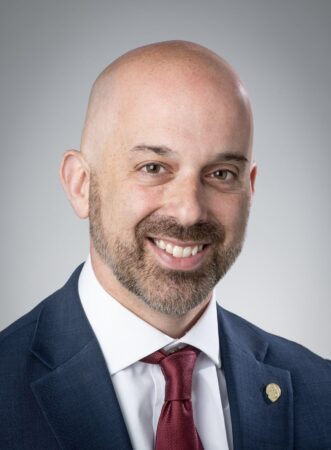
    Bancroft, a South Jersey nonprofit provider of services for people with intellectual and developmental disabilities, has hired Gregory Passanante to succeed Toni Pergolin as president and CEO.

    Passanante, who will be the 10th president in the organization’s 143-year history, is scheduled to start Jan. 7.

    Since 2023, Passanante has been northeast market administrator for Shriners Children’s Hospital Philadelphia. Before that, he was chief nursing officer at Wills Eye Hospital.

    Passanante will take over a Cherry-Hill-based organization that is in solid financial condition, especially compared to 2004 when Pergolin arrived as chief financial officer and had to worry about making payroll because the organization was so weak financially.

    In the 12 months that ended June 30, the nonprofit had operating income of $13 million on $284 million in revenue, according to its audited financial statement. Bancroft had 1,642 clients and employed 2,853 people on a full-time basis at the end of the fiscal year.