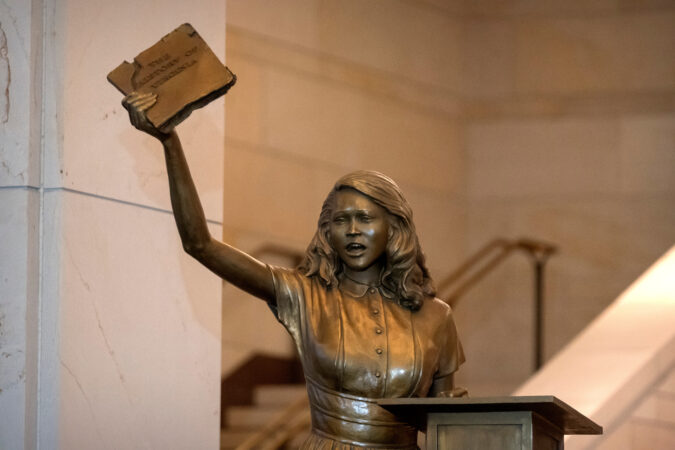
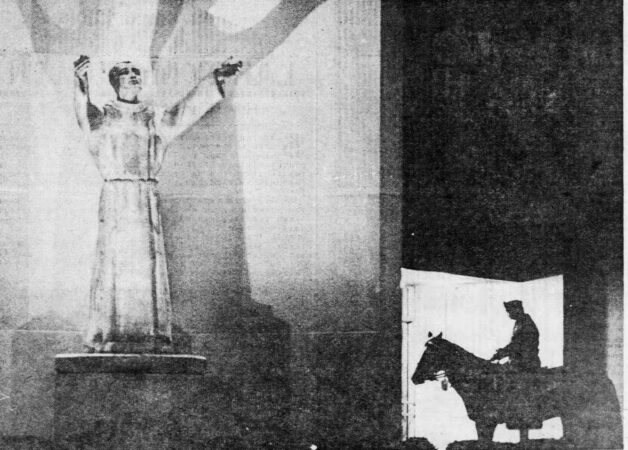
Back in 1951, a teenage Barbara Rose Johns led a walkout at her segregated high school in Virginia that would go on to contribute to the U.S. Supreme Court’s landmark decision in Brown v. Board of Education. Now, a statue of her is on display in the U.S. Capitol, replacing a sculpture of Confederate Gen. Robert E. Lee.
“The Commonwealth of Virginia will now be properly represented by an actual patriot who embodied the principle of liberty and justice for all,” House Minority Leader Hakeem Jeffries (D., N.Y.) said at a ceremony Tuesday unveiling the statue. “And not a traitor who took up arms against the United States to preserve the brutal institution of chattel slavery.”
And while Johns today is remembered as a seminal civil rights figure who hailed from Virginia, she spent much of her adult life in Philadelphia.
Born in New York City in 1935, Johns as a child moved to Prince Edward County, Va., where she lived on a farm with her grandmother. The county’s public schools were segregated, and in the late 1940s, she began attending an all-Black high school in Farmville known as Robert Russa Moton High School.
Johns, according to the Moton Museum, became frustrated with the poor conditions at the school, which lacked resources and was overcrowded compared with white facilities. In April 1951, when she was 16, she led a walkout with hundreds of other students to protest the conditions, ultimately gaining the support of NAACP lawyers, who filed a lawsuit that challenged the practice of segregated education.
Known as Davis v. Prince Edward, the lawsuit went on to become one of the five cases that the U.S. Supreme Court reviewed in Brown v. Board of Education. The high court’s landmark 1954 decision declared “separate but equal” public schools unconstitutional. Despite resisting the court’s decision, Prince Edward County schools were ultimately integrated by the mid-1960s.
People take photos of a statue of Virginia civil rights activist Barbara Rose Johns, whose statue will replace one of Robert E. Lee as one of Virginia’s two statues on display at the Capitol, at a dedication ceremony Tuesday, Dec. 16, 2025, in Washington.
Following the walkout, Johns’ parents were worried for their daughter’s safety and sent her to live in Montgomery, Ala., where she resided with her uncle, the Rev. Vernon Johns, who was a pastor and civil rights leader in his own right. She completed high school there and studied for a time at Spelman College in Atlanta, according to the Farmville Herald, Farmville’s local newspaper.
In 1954, she married the Rev. William Rowland Powell, and the pair later moved to Philadelphia. As a resident, Johns continued college at Drexel University, from which she graduated in 1979 with a bachelor’s degree in library science, according to the 2018 bookRecovering Untold Stories: An Enduring Legacy of the Brown v. Board of Education Decision.
Johns would go on to have five children, and worked for more than 20 years as a librarian for the Philadelphia School District. Public information about her time in Philadelphia is scarce, and neither Drexel nor the school district immediately responded to requests for comment.
On Sept. 25, 1991, Johns died in Philadelphia following a battle with cancer. Her family, the Farmville Herald reported, knew little of activism and her involvement in the Moton walkout, only learning of it late in her life.
The statue of Johns is part of the National Statuary Hall Collection at the Capitol, in which each state can contribute two statues. The other statue representing Virginia is of George Washington.
The National Statuary Hall displays 35 of the statues. Others are in the Crypt, the Hall of Columns, and the Capitol Visitor Center. House Speaker Mike Johnson (R., La.) said the Johns statue will be placed in the Crypt.
Former Democratic Virginia Gov. Ralph Northam had requested the removal of the Lee statue. In December 2020, a state commission recommended replacing Lee’s statue with a statue of Johns. The removal occurred during a time of renewed national attention over Confederate monuments after the death of George Floyd, and the Lee statue was relocated to the Virginia Museum of History and Culture.
Johns is also featured in a sculpture at the Virginia Civil Rights Memorial outside the state Capitol in Richmond. Her former high school is now a National Historic Landmark and museum.
“She was brave, bold, determined, strong, wise, unselfish, warm and loving,” said Terry Harrison, one of her daughters, at Tuesday’s unveiling, according to NPR. “We’re truly grateful that this magnificent monument to her story, the sacrifices that her family and her community made, may continue to inspire and teach others that no matter what, you too can reach for the moon.”
This article contains information from the Associated Press.
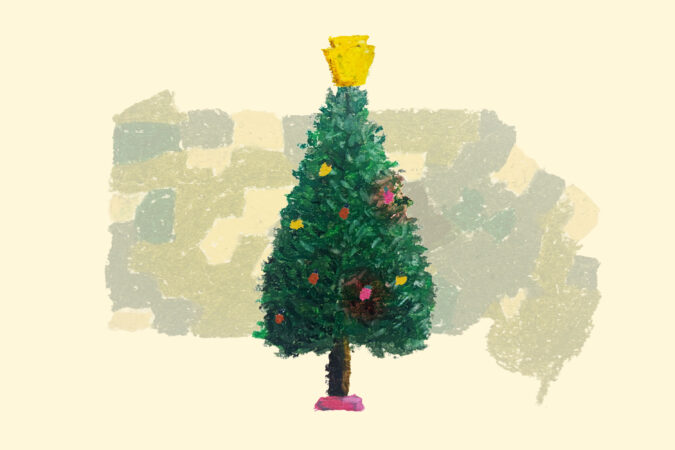
Taking a direct route, Santa has to travel 3,400 miles from the North Pole to Philadelphia. In comparison, your Christmas tree will have barely moved. That’s because there’s a high likelihood that your tree is one of the approximately 720,000 grown in the state of Pennsylvania.
Christmas tree lore runs deep around these parts. Don’t take our word for it, Taylor Swift grew up on an 11-acre Christmas tree farm in Reading – she even wrote a song about it.
That’s because Pennsylvania and New Jersey played a significant role in shaping the Christmas tree industry. Pennsylvania is still home to 1,301 Christmas tree farms, the second most in the nation, according to the U.S. Department of Agriculture.
Christmas trees harvested by county annually in Pennsylvania and New Jersey
0
0 – 5k
5k – 20k
20k – 50k
50k – 110k
Indiana, Pa. was once known as the "Christmas Tree Capital of the World."
Columbia, Pa. was where the technique of shearing Christmas trees was invented.
Mercer, N.J. was where the first commercial Christmas trees were grown.
Philly
Pittsburgh
Data: U.S. Department of Agriculture
America’s very first Christmas tree farm was established just outside of Trenton, according to Henry H. Albers and Ann Kirk Davis, authors of the Wonderful World of Christmas Trees. In 1901, a farmer named William McGalliard planted 25,000 Norway spruce trees on his farm in Mercer County, and would later sell his trees seven years later for $1 each.
Before McGalliard’s innovation, most yule trees were wild evergreen conifers (think green cones) cut from forests or abandoned farm land.
A 2000 Inquirer article on Philly and Pennsylvania’s role in establishing the Christmas tree tradition. The Christmas tree in the early illustration is indicative of how wild Christmas trees were far less dense and conical before tree shaping was invented.newspaper.com
Although the origins of decorating Christmas trees indoors are uncertain — often attributed by historians to early German immigrants — archival Inquirer articles have claimed that Philadelphians were among the first Americans to promote the tradition.
Although the growing industry began in Jersey, Pennsylvania farmers were instrumental in improving Christmas tree cultivation through the invention of techniques that are still practiced to this day.
story continues after advertisement
Fred Musser of Indiana County, Pa., started growing seedlings that he sold to other Christmas tree farmers in order to improve the quality of the trees, becoming the nation’s first ever Christmas tree nursery in the late 1920s. Andrew Abraczinskas, who first planted trees in Columbia County in 1915, invented the widely adopted process of shearing the sides of trees such that the resulting trees would keep a dense, conical “Christmas tree” shape.
McGalliard, Musser, and Abraczinskas’s work effectively ended the practice of harvesting wild trees and heavily influenced how trees are grown today:
Many growers buy young plants from tree nurseries where they were raised from seeds that have been genetically curated for the best chance of survival, either in seedbeds or as individual plugs.
Planting happens as soon as the ground thaws in the spring, typically in March. Trees establish themselves better if planted by mid-April, when temperatures rise and new growth begins to emerge.
After about the third growing year, growers wait until August for the new growth to harden before trimming the tree. Every year, the tree must be trimmed again, the base around the trunk pruned, and sprayed with pesticides.
Growers trim the sides to form the classic conical Christmas tree shape. This directs the tree’s energy upward and encourages denser needle foliage.
Trees reach their ideal marketable height of six or seven feet after about seven years, depending on the species. In the holiday harvest season, retail customers can select and cut their own tree, which is then netted by a mechanical baler for easy transport home to be adorned and adored.
While most of the growing process is the same, there are in fact a few different species of trees used for Christmas trees: notably: Firs, Pines, and Spruces. Each region will be better at growing specific subspecies within those three.
“Christmas tree species that you'll find growing in any production region reflect the climate and what grows well there. For instance, in the Pacific Northwest, they grow a lot of Noble Fir and Douglas fir,” said Rick Bates, Associate Professor or Horticulture at Penn State, who also advises growers on Christmas tree management.
“Here in Pennsylvania, we grow a lot of Fraser fir and Douglas fir and a handful of other species.”
Fir trees make up 60–70% of Christmas trees from Pennsylvania. They have flat, soft, long-lasting needles and some, like Douglas firs, have a citrus scent. Fraser firs are currently the most popular yule tree in the country, with European varieties like Turkish, Nordmann, and Korean firs introduced in the past 20 years.
Pine trees with slender, bundled needles and a sharp, earthy scent. They have a long history in Pennsylvania Christmas tree cultivation. Scotch pines, promoted by early innovator Musser, along with Eastern white and red pines, were once the state’s most popular Christmas tree.
Spruce trees, including the bluish-green Colorado spruce, have square, stiff needles that hold ornaments well but can be prickly and shed quickly. Norway spruces were the first commercially grown Christmas trees near Trenton.
Managing a Christmas tree farm can be fun, says Gerrit Strathmeyer II, a tree farmer in York County and president of the Pennsylvania Christmas Tree Growers Association, but the work is also a years-long endeavor that is logistically and physically demanding.
“Think of farming Christmas trees like farming corn or soybeans. They’re on what’s called a one year rotation — we’re on a 10 year rotation.”
The work is tough and labor-intensive. Planting begins in the still-chilly early spring, while growers wait until the hottest late summer months to start manually shearing, as Strathmeyer recounts: “I remember my high school days growing up, my summer jobs were just working in the field for eight, nine, ten hours a day.”
Subscribe to The Philadelphia Inquirer
Our reporting is directly supported by reader subscriptions. If you want more journalism like this story, please subscribe today
Come the winter months, while everyone else enjoys the festive season, this is the busiest time for growers, who take inventory and harvest trees.
Russell Wagner, a former board member of the Pennsylvania Christmas Tree Growers Association, whose farm is located 45 miles north of Harrisburg, has been monitoring the snow forecast in preparation for a busy work week.
“If we get a lot of snow, it can really hamper things, though light snow just makes it more Christmassy.”
story continues after advertisement
Strathmeyer said that his dad and uncles were at their Christmas tree peak in the late ‘90s and early 2000s. “They had 2,500 acres of Chrstmas trees and were selling around 120,000 cut Christmas trees.
Today, Strathmeyer sells around 22,000 trees a year, and the industry is no longer at its pinnacle. In the most recent USDA Census of Agriculture (2022), Pennsylvania had only 60% as many Christmas tree farms as it did 20 years ago.
Wagner attributes this to the fact that “the initial cost to get into the business is prohibitive. Unless you’re already a Christmas tree grower and another generation is going to continue it, it’s very difficult to get started.”
The industry was also disrupted by the advent of the artificial tree in the last 30 to 40 years, which are becoming increasingly more realistic — some even simulate the smell of a yule tree.
A 1972 Inquirer article about the artificial Christmas trees and Indiana County, once known as the "Christmas Tree capital of the world" at the time.newspaper.com
Strathmeyer, who is 38, said that “the popularity of the real Christmas tree has kind of plateaued off. It's a generalization, but our generation I think, people don't want to deal with the mess of a tree, and so that deters them from getting a real tree.”
However, Strathmeyer is optimistic. He is currently transitioning one of his wholesale farms to a choose-and-cut farm – where customers visit the farm, select a tree to cut, and take it home. He credits the recent popularity of these on-site experiences to social media. “People want that experience,” said Strathmeyer, “they want to take pictures out on the farm.
“Maybe they'll put up with the mess of a real tree because their kids want to go out to the farm and ride the wagon and run through the field.”
Support That Keeps Our Journalism Evergreen
Rooted in the field and committed to the facts, our newsroom brings you in-depth reporting. Support quality journalism by making a donation today.
Bates said Pennsylvania has a thriving choose-and-cut scene and that “a lot of those retail choose-and-cut farms also have other activities, like they may have a corn maze or some kind of agritainment.”
Combined with Pennsylvania’s proximity to major cities along the eastern seaboard, this growing popularity of experience-forward farms suggests the industry will remain viable for the foreseeable future.
It might be too late for you to grow up on a Christmas tree farm like Taylor Swift, but it’s not too late to ride a wagon and run through local Christmas tree fields. Whether you’re going to cut your own, or pick one up from a parking lot, we’ve got you covered with guides on where to go and how to get one delivered.
Methodology
Christmas tree data comes from the U.S. Department of Agriculture (USDA) Census of Agriculture data, which was most recently conducted in 2022, and accessed via the USDA’s National Agricultural Statistical Service. The data accessed cover farms that produce Christmas trees, including the number of farms, trees harvested, and acres planted.
Staff Contributors
Design, Development, and Data: Jasen Lo, Sam Morris
On Thursday, a three-coin set of the final pennies minted for circulation sold at auction for $800,000. Another of the sets sold for $180,000.
In all, the final pennies sold for a combined nearly $17 million.
Sold by Stack’s Bowers Galleries, the sets represented the 232 years since the penny was first minted in Philadelphia in 1793. Each included some of the last pennies struck for circulation at the U.S. Mint’s facilities in Philadelphia and Denver, plus a 24-karat gold penny minted in Philadelphia. Each coin bears a unique omega symbol (Ω), marking the end of the penny.
The Philadelphia U.S. Mint struck the final circulating one-cent coins in November after President Donald Trump ordered the Mint to stop producing new pennies earlier this year. The last small-change coin the government canceled was the half-cent in 1857.
Costly to produce and displaced by digital payment, the penny had grown almost as irrelevant as the half-cent. Still, pennies aren’t disappearing soon. Americans have hoarded 300 billion pennies, which remain legal tender, officials say. Killing penny production is estimated to save around $56 million a year, experts believe.
Thursday’s auction had been closely watched by collectors and numismatics, who had expected bidding to be high. None more than for the final lot, which eventually topped out at $800,000. The special lot came with the three origin dies used to strike the coins.
“This set represents the VERY LAST cents struck in the classic circulating finishing, the true Omega,” read for the listing for the final pennies. “It is impossible to overstate the historic nature of these three pieces, which are likely the most significant coins to emerge from the United States Mint this century.”
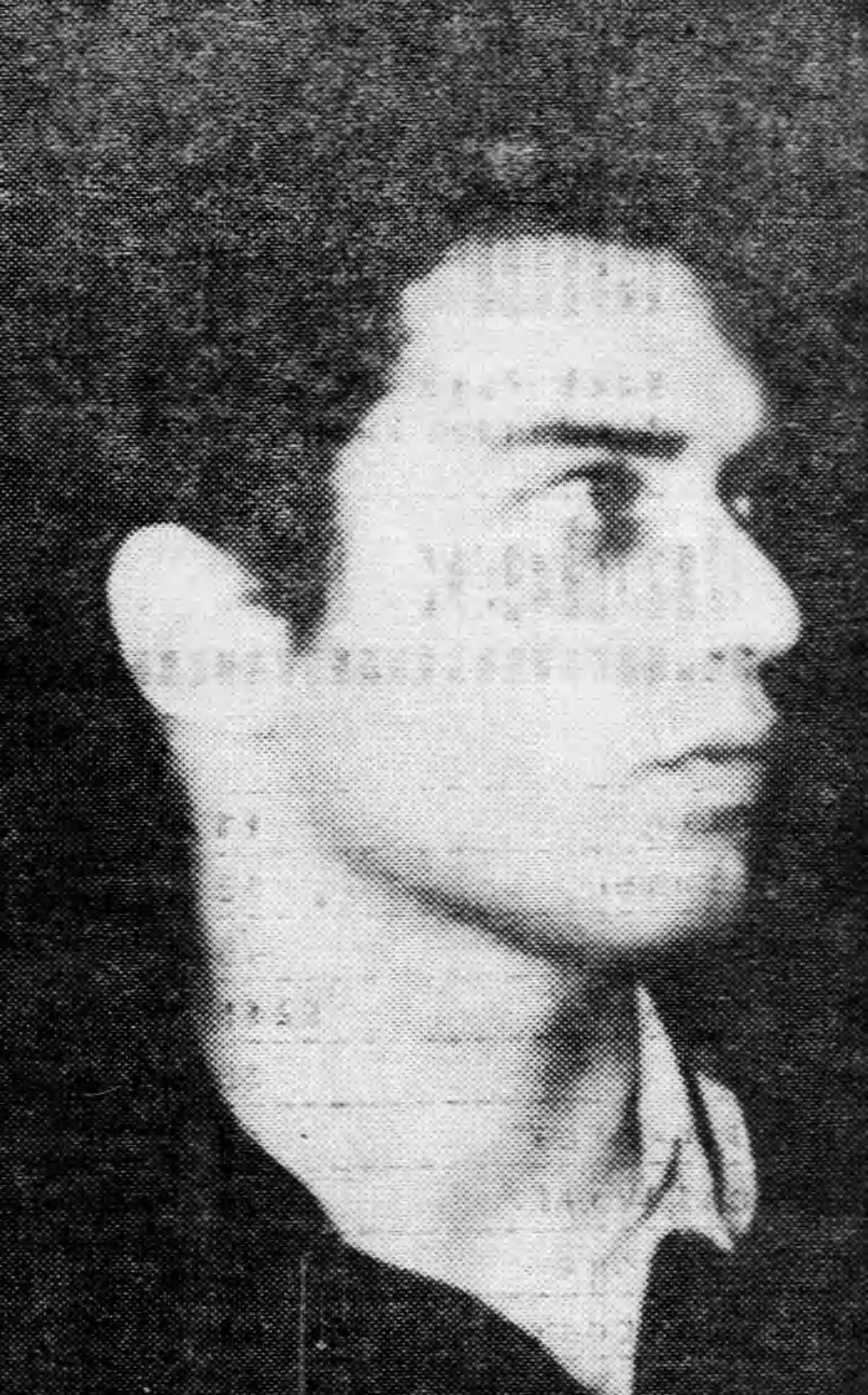
Around 2 p.m. Gold spoke with police by phone, and demanded President Ronald Reagan — who first ran on the Make America Great Again campaign slogan — resign from office.
And turn over leadership of the country to Gold,who said he wanted to be called the Antichrist.
In a statement that was read to the press, Gold wrote:
“Either choose my leadership, or accept the death of America.”
Back then, the Catholic high school was separated into two segregated schools: the boys’ school in the south wing, and the girls’ school in the north wing.
Gold took the hostages in the boys’ wing. Shortly afterward, the 1,950 male students were dismissed. They walked out just as the 2,150 female students were leaving for the day on a shortened schedule. Together, boys and girls filed calmly out of the massive, three-story school building at Academy Road and Chalfont Drive.
About an hour into the standoff, Gold let the secretary go after learning she was a mother of four. Shortly afterward, he traded the assistant dean for a food order, leaving only three male students as hostages.
Around 7 p.m., a police negotiator briefly entered the disciplinarian’s office.
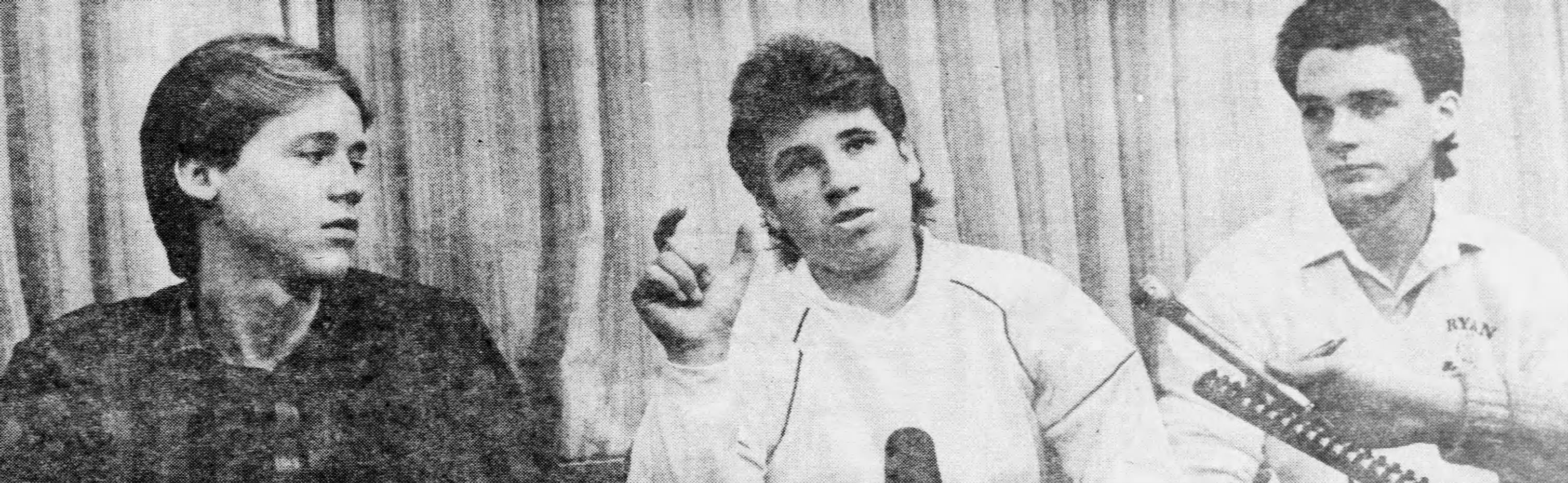
As student hostages (from left) Patrick Hood, 15, Raymond Smith, 16, and Mike Wissman, 17, meet the press, Smith estimates the size of the captor’s knife.
Gold told the negotiator on the phone that he would let two of the students go, and then the officer heard “a commotion and a lot of screaming” on the other end of the phone.
The students decided the gun Gold was brandishing was a fake.
So in good, old-fashioned Northeast Philly fashion, they jumped him. And it turned out they were right: The gun was a starter’s pistol, and it was loaded with blanks.
The students overpowered Gold, and held him down until the stakeout officers rushed in and put an end to the more than seven-hour standoff.
Scientists have discovered the oldest evidence of ancient humans igniting fires: a 400,000-year-old open-air hearth buried in an old clay pit in southern England.
The study, published in the journal Nature, is based on a years-long examination of a reddish patch of sediment excavated at a site in Barnham. It pushes back the timeline on fire-making by about 350,000 years.
The nebulous question of how far back human ancestors conjured fire is deeply intertwined with some of the biggest outstanding mysteries about human evolution. The ability to reliably set fires would have allowed humans to cook food, expanding the range of what they could eat and making meals more digestible. That, in turn, could have supported bigger brains that consumed more energy, catalyzing new social behaviors as humans gathered around campfires.
But campfires don’t leave fossils. It takes painstaking work to reconstruct these ephemeral uses of technology. And what remains unclear is who set them. No telltale bones have been recovered at Barnham, but researchers think it was Neanderthals, close cousins of our species who interbred with our ancestors.
“The evidence of fire is incredibly difficult to preserve. If you get to ash and charcoal, it can wash away. Sediment can get washed away,” said Nicholas Ashton, curator of Paleolithic collections at the British Museum and one of the leaders of the work. “We just found this one pocket — quite a large site — where it happens to be preserved.”
Even when traces of fire remain, the task of distinguishing incidental flames sparked by lightning strikes or wildfires from those set by people is difficult. Perhaps most challenging is distinguishing between fires ignited by humans with the know-how from those produced by scavenging embers from wildfires.
The study could spark more debate.
“The authors did an excellent job with their analysis of the Barnham data, but they seem to be stretching the evidence with their claim that this constitutes the ‘earliest evidence of fire making,’” Wil Roebroeks, an archaeologist at Leiden University, said in an email, calling the evidence “circumstantial.”
Ségolène Vandevelde, an archaeologist and adjunct professor at the University of Quebec at Chicoutimi, praised the multidisciplinary approaches the authors used and said the finding was “solid.”
Pyroarchaeology
In the Paleolithicera, the Barnham site would have been a woodland with a seasonal pond — set away from the main river valley, where predators might have roamed, according to Robert Davis, an archaeologist at the British Museum and one of the authorsof the study. The wildlife would have included elephants, lions, deer, fish and other small mammals.
Despite the fleetingnature of fire, it can leave traces under the right conditions. At the site in Barnham, where artifacts such as heat-shattered flint hand axes were also found, researchers were intrigued by a layer of reddish sediment — a result of iron-rich sediments being heated to produce a mineral called hematite. For four years, they studied it, trying to determine whether it was the result of a wildfire or deliberate human activity.
One of the first questions they asked was whether this was a one-time blaze or something closer to a fireplace that was lit and relit many times.
To deconstruct this question, scientists studied the magnetism of the sediment, which is altered by heating. They conducted modern experiments, to see if they could come up with an estimate of how many heating events might have resulted in the magnetic profile of the sediment — and found that after about a dozen heating events, each one four hours long, their modern samples mimicked the archaeological one.
Then they examined the chemistry of the site — scrutinizing particular chemical compounds left behind. The patterns they found suggested humans had been using these fires.
The last element was small pieces of cracked flint scattered about the site — as well as two bits of pyrite, which can create a spark when struck together. A geological study of the area showed that pyrite was scarce in the local landscape, leading the authors to argue that the inhabitants had carried it there for the specific purpose of making fire.
Scavenging sparks vs. setting fires
The archaeological record with examples of fires used by hominins — the ancestors of humans — stretches back more than a million years ago in Africa.
But what interests scientists is not just the ability to successfully scavenge sparks from wildfires or lightning strikes, but also the ability to reliably create it — possibly by striking flint and pyrite together to create sparks.
The oldest accepted evidence of fires purposefullyset are from a Neanderthal site dated to 50,000 years ago in France. That evidence is considered convincing in part because there are chunks of flint showing “microwear traces of having been struck” to create sparks, Roebroeks said. But at Barnham, there are no microwear traces, leaving room for disagreement.
“It’s a very contentious debate that’s been going on for some time,” Davis said.
Early hominins would have learned to harvest fire by collecting embers, harvesting the right fuel and tending the fire. And eventually, they had to learn how to make it on demand — which would allow them to live in colder places, cook, fend off predators and socialize after dark.
The study does not suggest that Barnham was where fire originated; it was probably widespread across the ancient world. But it does offer a rare, preserved snapshot of prehistoric life.
“The maintenance of fire requires social cooperation, cultural rules and work coupled with knowledge of wood types, and means that a complicated tradition is at play,” said John Hawks, a paleoanthropologist at the University of Wisconsin at Madison.
Philly is getting ready to dress itself up — with Liberty Bells. Lots of Liberty Bells.
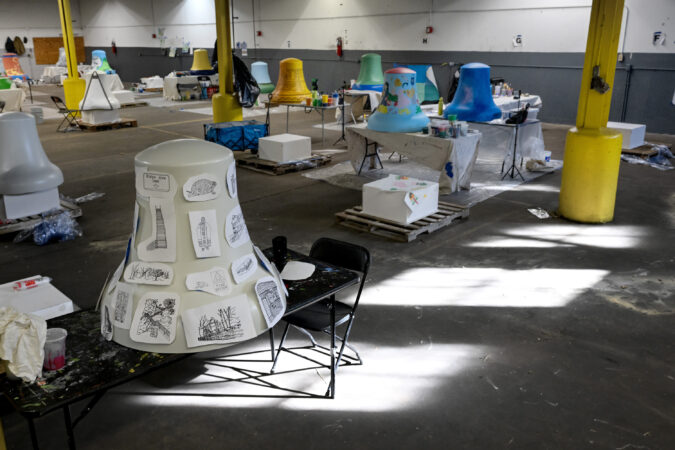
Organizers of Philadelphia’s yearlong celebrations for America’s 250th anniversary in 2026 gathered in a frigid Philadelphia School District warehouse in Logan on Tuesday, offering a special preview of the 20 large replica Liberty Bells that will decorate Philly neighborhoods for the national milestone.
Designed by 16 local artists selected through Mural Arts Philadelphia — and planned for commercial corridors and public parks everywhere from Chinatown and South Philly to West Philly and Wynnefield — the painted bells depict the histories, heroes, cultures, and traditions of Philly neighborhoods.
As part of the state nonprofit America250PA’s “Bells Across PA” program, more than 100 painted bells will be installed across Pennsylvania throughout the national milestone, also known as the Semiquincentennial. Local planners and Mural Arts Philadelphia helped coordinate the Philly bells.
“As Philadelphia’s own Liberty Bell served as inspiration for this statewide program, it makes sense that Philly would take it to the next level and bring these bells to as many neighborhoods as possible,” Mayor Cherelle L. Parker said in a statement. “We are a proud, diverse city of neighborhoods with many stories to tell.”
Kathryn Ott Lovell, president and CEO of Philadelphia250, the city’s planning partner for the Semiquincentennial, said the bells are a key part of the local planners’ efforts to bring the party to every Philly neighborhood.
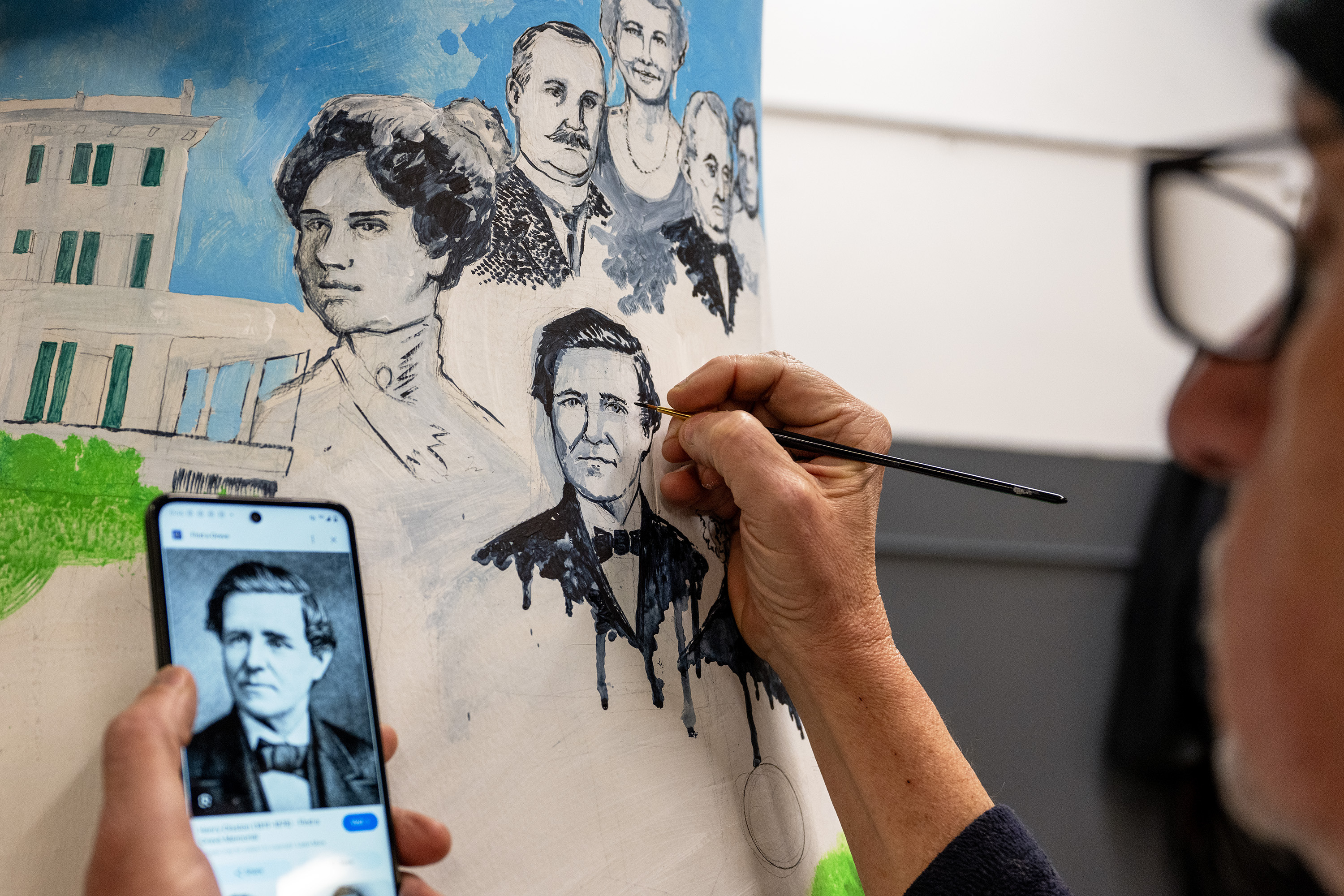
Local artist Bob Dix paints a portrait of industrialist Henry Disston on his bell.
“The personalities of the neighborhoods are coming out in the bells,” she said, adding that the completed bells will be dedicated in January, then installed in early spring, in time for Philly’s big-ticket events next summer, including six FIFA World Cup matches, the MLB All-Star Game, and a pumped-up Fourth of July concert.
Planners released a full list of neighborhoods where the bells will be placed, but said exact locations will be announced in January. Each of the nearly 3-foot bells — which will be perched on heavy black pedestals — was designed in collaboration with community members, Ott Lovell said.
Inside the massive, makeshift studio behind the Widener Memorial School on Tuesday, artists worked in the chill on their bells. Each bell told a different story of neighborhood pride.
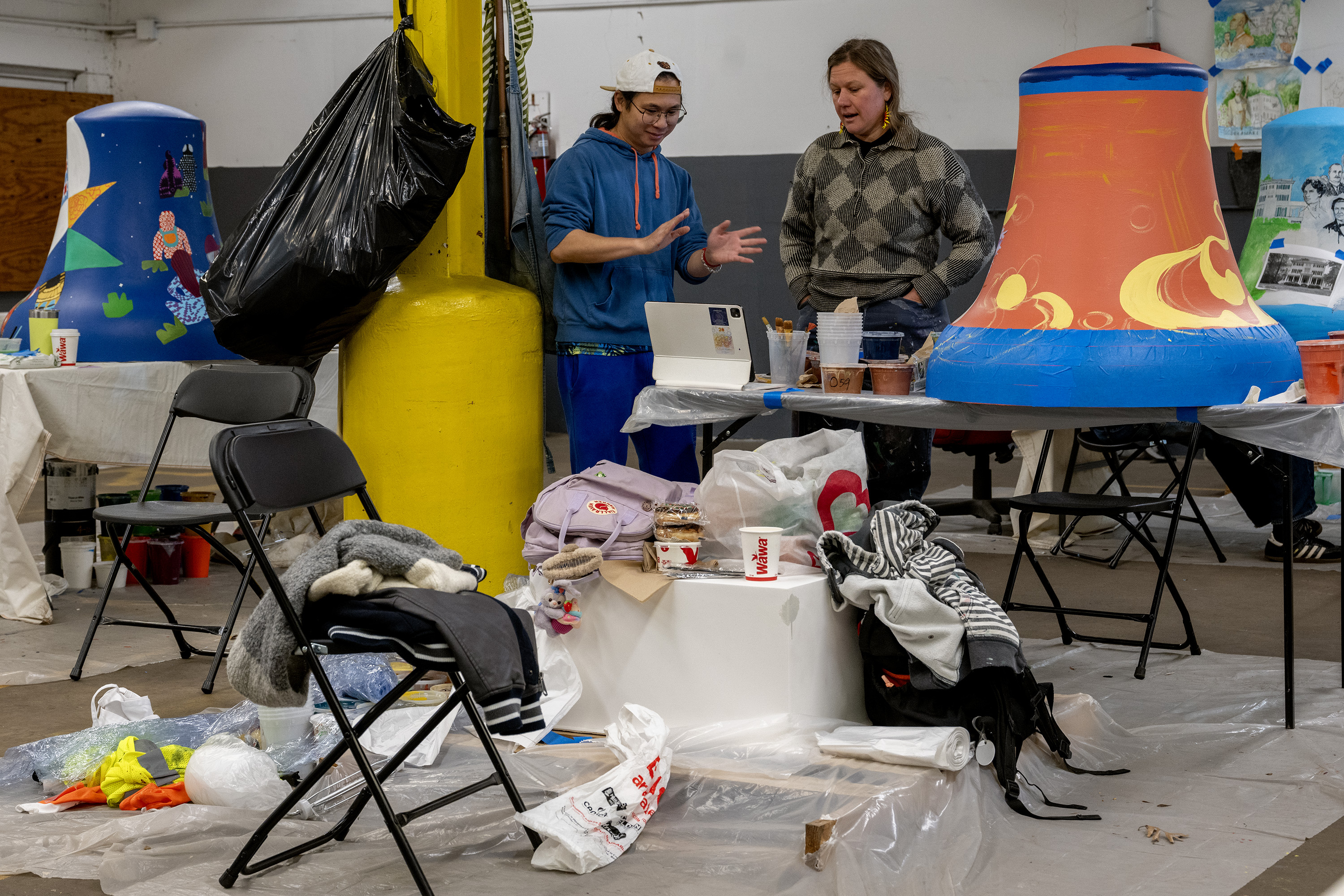
Chenlin Cai (left) talks with fellow artist Emily Busch (right) about his bell, showing her concepts on his tablet.
Cindy Lozito, 33, a muralist and illustrator who lives in Bella Vista, didn’t have to look for inspiration for her bell on the Italian Market. She lives just a block away from Ninth Street and is a market regular.
After talking with merchants, she strove to capture the market’s iconic sites, history, and diversity. Titled Always Open, her bell includes painted scenes of the market’s bustling produce stands and flickering fire barrels, the smiling faces of old-school merchants and newer immigrant vendors, and the joy of the street’s annual Procession of Saints and Day of the Dead festivities. Also, of course, the greased pole.
“It’s a place where I can walk outside my house and get everything that I need, and also a place where people know your name and care about you,” she said, painting her bell.
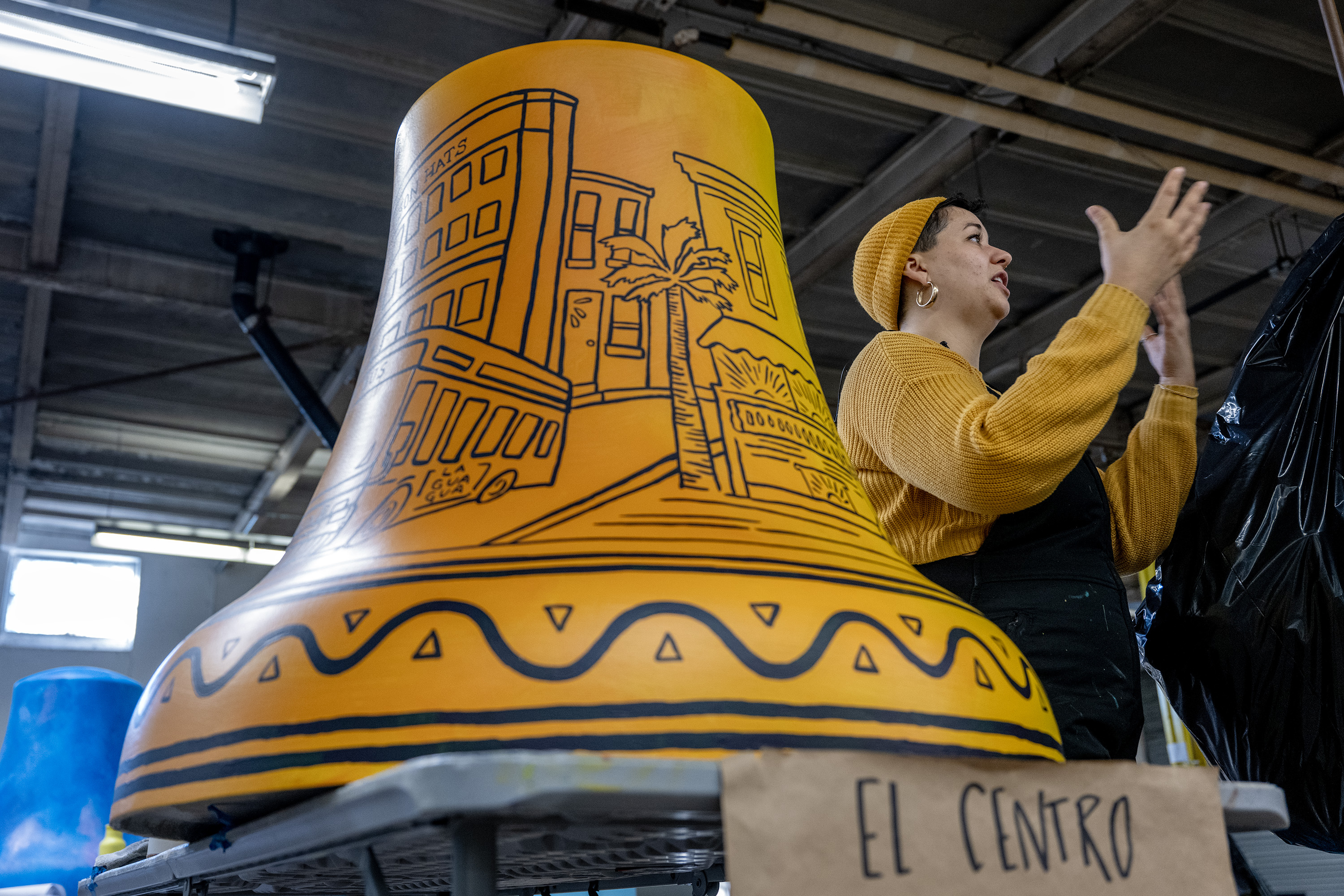
For her bell on El Centro de Oro, artist and educator Symone Salib, 32, met twice with 30 community members from North Fifth Street and Lehigh Avenue, asking them for ideas.
“From there, I had a very long list,” she said. “People really liked telling me what they wanted to see and what they did not.”
Local artist Symone Salib talks with a visitor as she works on her bell.
Titled The Golden Block, the striking yellow-and-black bell depicts the neighborhood’s historic Stetson Hats factory, the long-standing Latin music shop Centro Musical, and popular iron palm tree sculptures.
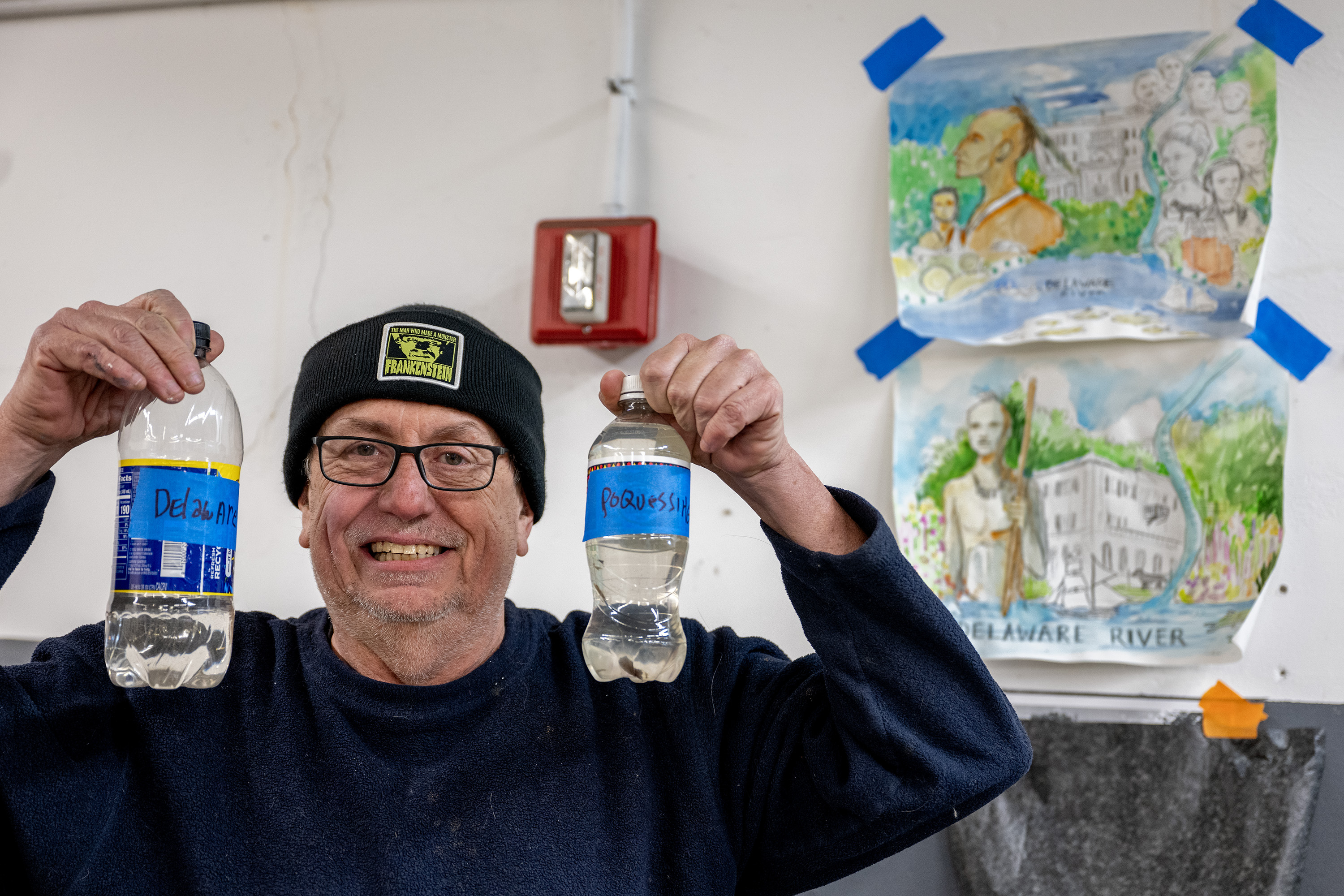
To add that extra bit of authenticity to his bell depicting Glen Foerd, artist Bob Dix, 62, mixed his paints with water bottled from the Delaware River, near where the historic mansion and estate sits perched in Torresdale, overlooking the mouth of Poquessing Creek.
“I like to incorporate the spirit of the area,” he said, dabbing his brush in the river water. “I think it’s important to bring in the natural materials.”
Local artist Bob Dix displays waters he collected from the Delaware River and Poquessing Creek to use in his painting of one of 20 replica Liberty Bells representing different neighborhoods Tuesday, Dec. 9, 2025.
Planners say they expect the bells to draw interest and curiosity similar to the painted donkeys that dotted Philadelphia neighborhoods during the 2016 Democratic National Convention.
Ott Lovell said organizers will install the bells around March to protect them from the worst of the winter weather.
“I don’t want any weather on them,” she said with a smile. “I want them looking perfect for 2026.”
Two of its tentpole baseball franchises — the Brooklyn Dodgers and the New York Giants — packed up before the 1958 season and moved to the West Coast. Leaving behind only the Yankees and the rival American League to carry the New York City banner.
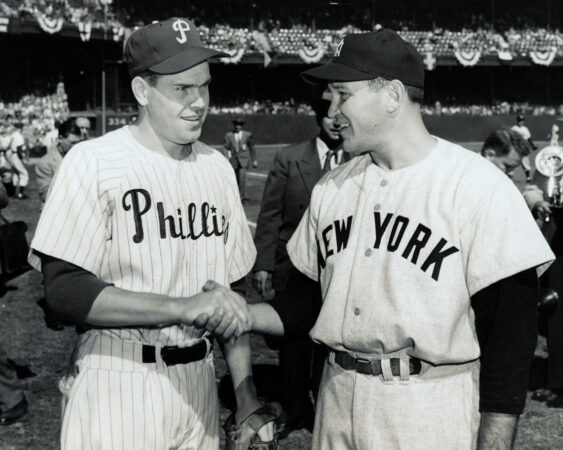
Just down the (not-yet-under-construction) I-95 corridor, the Carpenter family wondered if their own N.L. franchise, the Philadelphia Phillies, could help fill the void.
Broadcasting Phils’ games to the New York market could help soften the blow of losing two beloved franchises. It could also be lucrative.
And it would help a Philly team build a fanbase in — of all places — the Big Apple.
A league of their own
Now they’re just organizing devices, but back in the 1950s, there was a difference between the two leagues under the Major League Baseball umbrella.
The N.L. was faster to integrate Black players, featured more competitive teams, and thus more competitive pennant races. The A.L., on the other hand, was mostly dominated by one glory-hogging franchise.
So Phillies owner Bob Carpenter, hoping to help fill the vacuum, made a deal with TV station WOR, which had previously aired Dodgers games.
New York would carry 78 Phillies games during the 1958 season: 58 from Connie Mack Stadium, and 20 from the road (including night games).
And they weren’t alone.
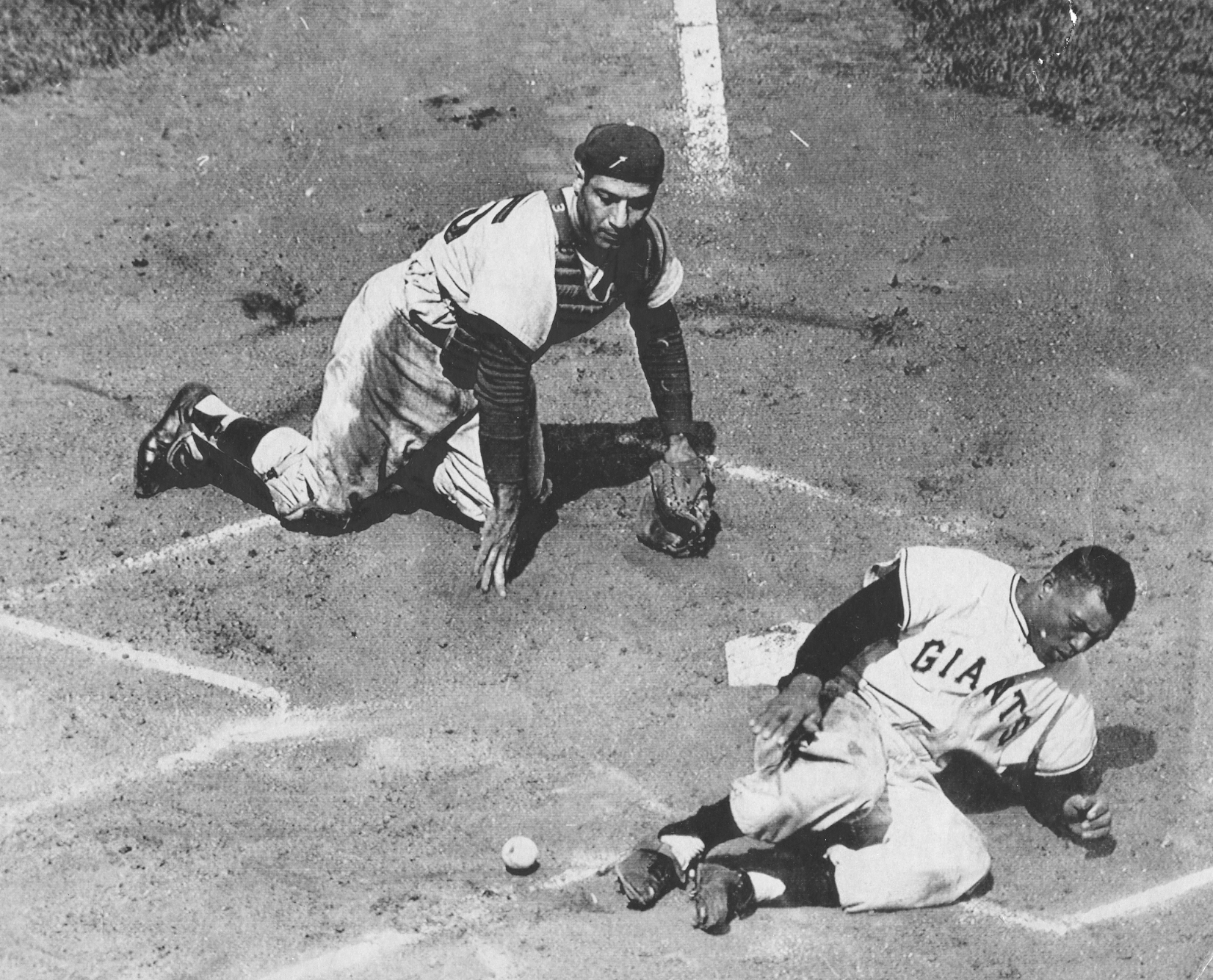
Willie Mays scores on an inside-the-park home run vs. the Phillies in the 1950s.
‘The market is shot’
The St. Louis Cardinals and Pittsburgh Pirates made deals to broadcast two dozen of their games against the Giants and Dodgers to a New York audience.
Yankees brass reacted with trademark tact: They started making threats.
If Phillies (or Pirates or Cardinals) games returned to New York television sets the next season, then the Yankees would look to televise their games — featuring World Series-winning superstars like Mickey Mantle and Yogi Berra — on a national network. They’d even partner with the National League’s Milwaukee Braves to complete the package. Together stealing away scores of diehards and converting scores of casuals, from sea to shining sea.
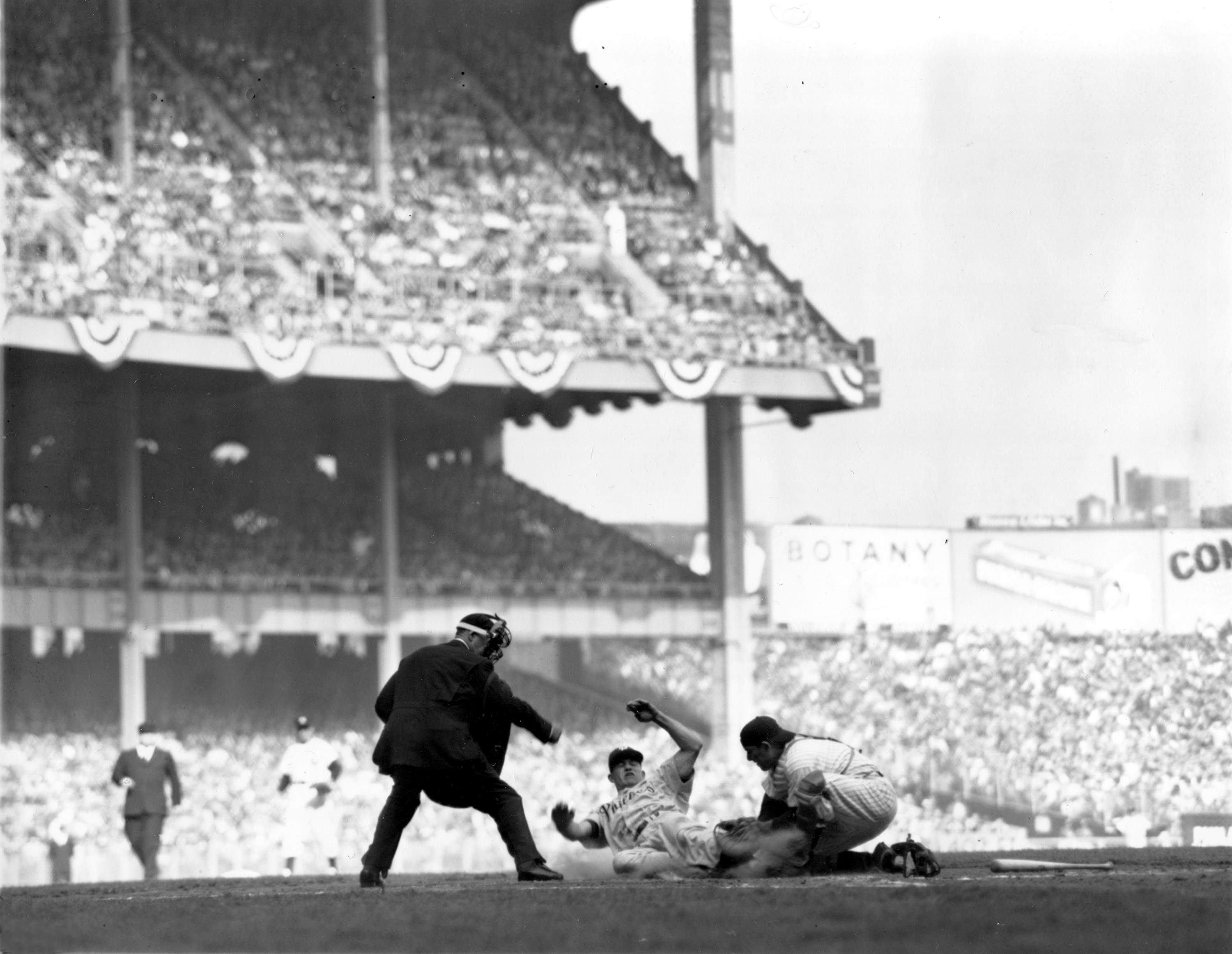
New York Yankees catcher Yogi Berra tags the sliding Philadelphia Phillies shortstop Granny Hamner for an out at home plate and second half of double play in 4th inning in the fourth and final World Series game at Yankee Stadium in New York City in 1950.
So on Dec. 5, 1958, the three teams announced that they were dropping their New York broadcast plans for the 1959 season.
None of the team representatives admitted to backing down.
But the joke was really on us: Those left-behind Dodger and Giants fans in New York didn’t get much joy from Philadelphia’s signature brand of baseball.
The Phillies went 69-85, and finished in last place.
And to make it worse: the Mets would arrive four years later.
The hairdresser had two boys, ages 4 and 12, and some time to kill before Friendsgiving brunch.
So on a chilly Thanksgiving morning, on Nov. 28, 1996, she lugged her laundry down to the basement of her West Philadelphia apartment building and loaded up the washer.
But she forgot one thing: The dryer she wanted to use wasn’t working.
Too late.
She had already plugged a quarter into the dryer’s coin slot.
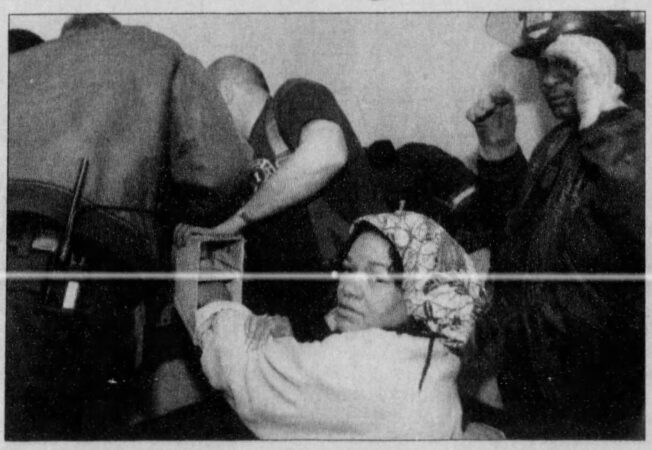
Using the ring finger on her left hand, she tried to poke the bottom of the slot to get back her 25-cent piece.
And then her finger got stuck.
Barba started to cry.
“This felt like, to her, one more thing in a long line of things that were just not going great,” Inquirer reporter Al Lubrano, who wrote the original story, said recently.
For two hours she stood in that thankless and cold laundry room, fending off pins-and-needles sensations in her hand and worrying about her boys being alone in their apartment, before a neighbor found her.
The neighbor brought a chair for Barba to stand on — to help release some of the pressure on her hand — and then called for help.
Cell phones were not yet a thing, but another neighbor kindly brought down a portable phone so Barba could call and reassure her sons.
Firefighters swooped in and cut the coin box off the machine. The machine’s operator was then called into action, and he showed up to separate the coin slot from the coin box.
“She was little bit surprised when the firefighters came and it wasn’t the end of it,” Lubrano recalled.
Her now-swollen finger needed a few dollops of petroleum jelly before slipping out of the coin slot. She did not report any permanent damage.
Lubrano asked Barba back in ’96 to sum up the whole ordeal in one word.
“Annoying,” she said.
“Like a true mom,” Lubrano said recently, “she sort of minimized it.”
And after all that, Barba went back downstairs later that night in ’96 and threw in another load of laundry— using a different dryer.
“I’m grateful to my neighbors,” Barba said, “but I missed my brunch.”
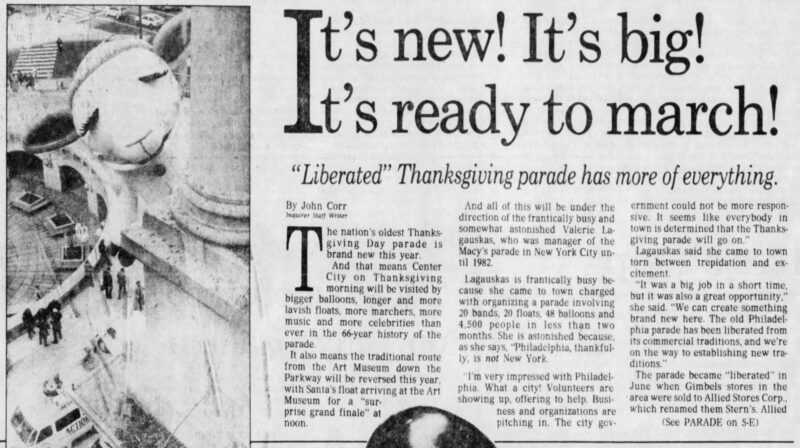
Since 1920, Philadelphia has gone without a Thanksgiving Day parade only twice — once because of poor weather, and once because of a global pandemic. But nearly four decades ago, another formidable foe — corporate sponsorship — threatened the city’s beloved holiday tradition.
That’s not a bad record for the country’s oldest Thanksgiving Day parade, which Gimbel Brothers Department Store launched with a humble procession through Center City. For more than 60 years, the festivities ended with Santa Claus climbing a ladder into the window of the Gimbels store at Ninth and Market Streets, signaling the start of the holiday season.
Until 1986, that is. Gimbels by then had fallen on hard times and, following its sale to the highest bidder, was liquidated. Its Philadelphia-area locations were to be converted into Stern’s department stores, and Gimbels hoped to pass the baton to that chain to keep the Thanksgiving Day tradition alive.
The problem was that Stern’s and its parent company, Allied Stores Corp., were not interested.
“I think the best we could do this fast is to buy the Mummers some T-shirts,” Allied Stores chairman Thomas Macioce told the Daily News in 1986.
The parade that year, however, became bigger and better than it had ever been. Here is how The Inquirer and Daily News covered it:
Article from Jun 18, 1986 Philadelphia Daily News (Philadelphia, Pennsylvania) <!— –>
‘We can’t be ready in time’
A deal in the Gimbels sale emerged in June 1986 and, right away, the Thanksgiving Day parade was on the chopping block, at least for that year. Allied officials claimed no planning had yet been done and there was no way to put it together in time.
That, it turns out, wasn’t true. Ann Stuart, a Gimbels executive, told the Daily News that parade organizers had been proceeding as though the parade would be held as scheduled. And Barbara Fenhagen, the city’s special events coordinator, said planning was going ahead as usual.
Either way, Stern’s and Allied’s lack of interest left the city in a tight spot. Aug. 15 was the last day orders could go in for the floats to be ready on time, marking a hard deadline to find a sponsor. Whoever took up the role would be expected to spend hundreds of thousands of dollars.
“We will do everything we can to make sure that [the parade’s] appearance is not interrupted, even for one year,” Fenhagen said at the time.
Article from Jul 16, 1986 Philadelphia Daily News (Philadelphia, Pennsylvania) <!— –>
‘Don’t rain on our parade’
As the controversy wore on, Philadelphians and the local press grieved and snarled at the potential loss of a holiday tradition. The Daily News seemed to plead for Stern’s to reconsider.
“Please don’t rain on our parade,” the People Paper wrote in an editorial. “To Philadelphians of all ages, it launches the holiday season in a special and heartwarming way.”
Business columnist Jack Roberts struck a more combative tone, likening Stern’s to a houseguest who begins a conversation “by spitting in your face.” He later suggested that readers send back Stern’s junk mail to the company’s “Scrooge” executives with the phrase “I want the parade” scrawled across it.
Special events professionals, meanwhile, warned that forgoing the sponsorship might create a bad name for Stern’s that would be difficult to overcome.
“Philadelphians have a way of remembering,” special events consultant Shelly Picker said.
Article from Nov 21, 1986 Philadelphia Daily News (Philadelphia, Pennsylvania) <!— –>
‘We’re delighted’
The search for a new lead sponsor was arduous, with city officials approaching “most every local company that breathes,” according to a Daily News report. A number of bigger local outfits — ranging from Meridian Bancorp to Kiddie City — bowed out over cost and branding concerns.
Then, after 56 days of limbo, the Thanksgiving Day parade was back on. And it was thanks to WPVI (Channel 6), better known today as 6abc.
“When it became clear that because of the time frame and other commitments most were unable to assume that mantle, we decided to do it — and we’re delighted,” said the station’s general manager, Rick Spinner.
The station had been airing the parade locally for 19 years and seemed to be a natural fit to take over. And, as the Daily News reported, the city had been pressuring Channel 6 to come up with a plan, seeing as the station benefited significantly from broadcasting the day’s festivities.
The parade would go on to be known as the “Channel 6 Thanksgiving Day Parade.” But that was not the only — or even the biggest — change afoot.
Article from Sep 24, 1986 Philadelphia Daily News (Philadelphia, Pennsylvania) <!— –>
‘Establishing new traditions’
Channel 6 brought in the big guns straight away. Namely, by hiring a parade coordinator named Valerie Lagauskas, who previously managed the Macy’s parade in New York and wrote a book on parade planning.
A number of changes came under Lagauskas’ leadership, including a new route. Instead of starting at the Philadelphia Art Museum and marching toward City Hall, as had been tradition, the parade would reverse direction and end at the Art Museum. The route would allow for the use of larger balloons, bigger floats, and better camera angles for the parade’s telecast.
The full parade that year would also be broadcast nationally for the first time, appearing on the Lifetime network, in which ABC was part owner.
In total, there would be 20 bands, 20 floats, 8 gigantic balloons, and 40 other balloons that were merely very large, The Inquirer reported. A massive balloon of the cartoon cat Heathcliff would make its debut. The theme, fittingly, would be “We Love a Parade.” And leading it all as parade marshal would be Sixers legend Julius “Dr. J” Erving,
“The old Philadelphia parade has been liberated from its commercial traditions and we’re on the way to establishing new traditions,” Lagauskas said.
Article from Nov 28, 1986 The Philadelphia Inquirer (Philadelphia, Pennsylvania) <!— –>
‘The best ever’
On parade day, more than 500,000 spectators were expected to attend. And, according to reports from the time, they were not disappointed.
Not only were there better floats and a more picturesque route, but paradegoers also were met with unseasonably warm temperatures.
“It’s the first time we’ve been to a Thanksgiving Day parade where you could get a sunburn,” one attendee joked.
The parade itself seemingly went off without a hitch, concluding on the steps of the Art Museum as Santa Claus pulled up to a rendition of “Happy Holidays.” Musicians and dancers let go of green and white balloons that drifted out over the Benjamin Franklin Parkway to cheers.
And at least one Philadelphian didn’t forget who saved the day. Donna Harris, 30, of Audubon, who had attended the parade yearly since she was 5, was spotted holding a sign that read “Thank You WPVI.”
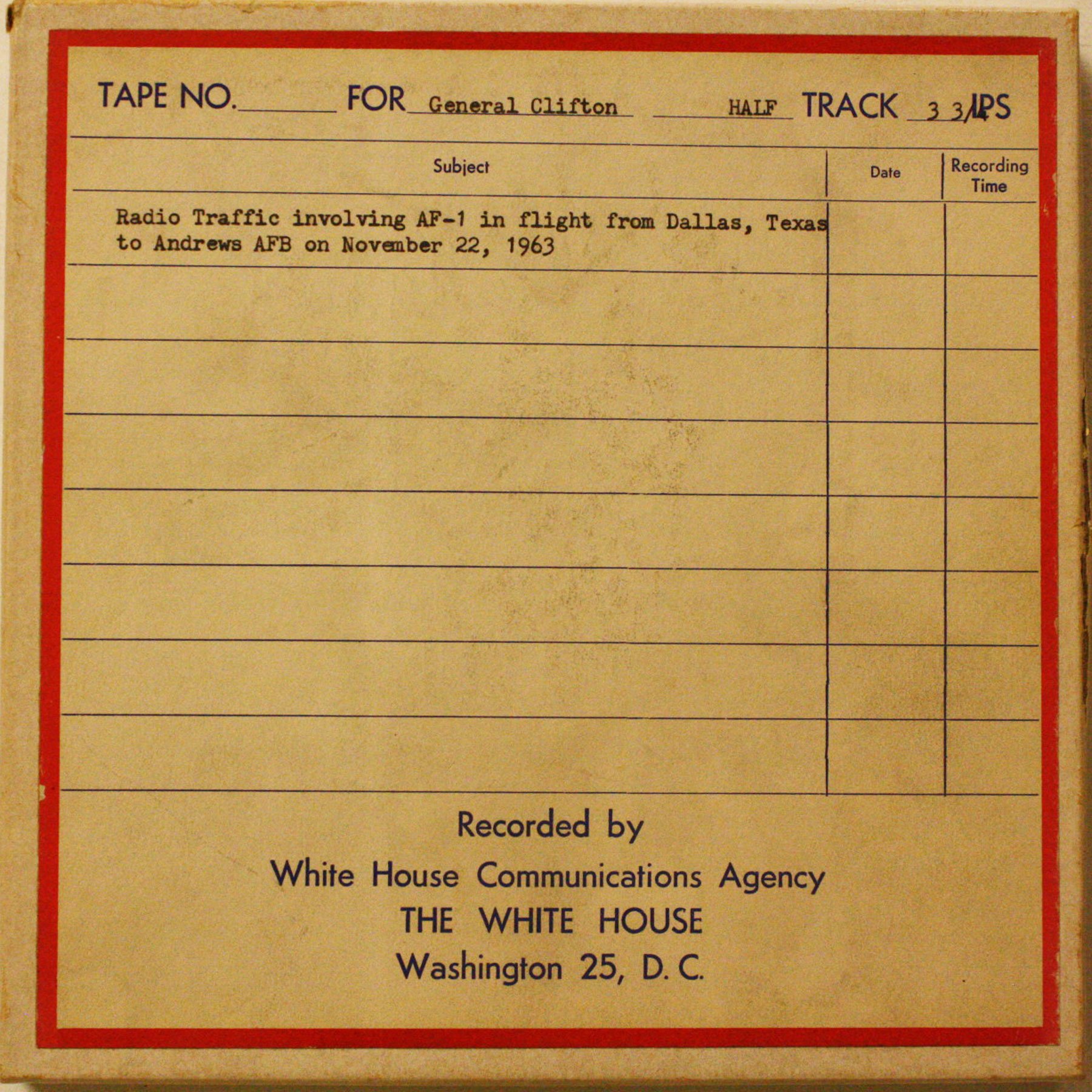
Listed at $750,000 by the Raab Collection, the tape captures more than two hours of shocked radio conversations between Kennedy aides and military officials during the fateful flight home on Nov. 22, 1963.
An original recording of Air Force One radio traffic has been listed for sale in Philadelphia for $750,000.
Discovered at the bottom of a box of JFK memorabilia at a private auction in 2011, the tape represents the earliest and most complete recording of Air Force One radio traffic from the day of the assassination.
In staticky conversations, Kennedy aides, bearing the casket home to Washington, and White House officials awaiting them discuss grim logistics after a presidential killing — arranging the removal of the coffin; transportation for the blood-soaked first lady, Jacqueline Kennedy, and the new president, Lyndon Johnson; and an autopsy for the slain leader.
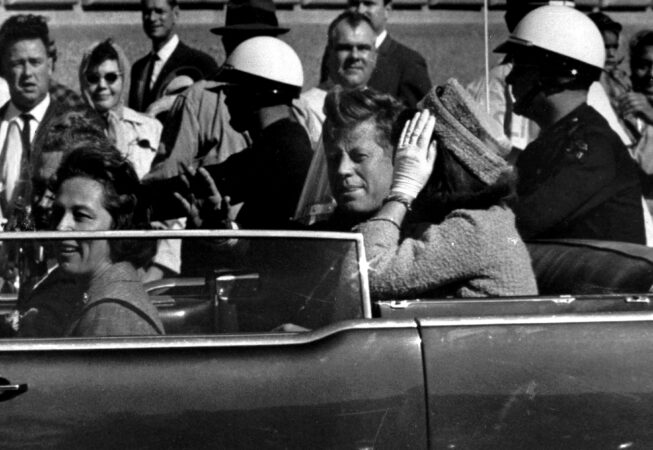
Hours earlier, Kennedy, 46, had been fatally shot in a Dallas motorcade by Lee Harvey Oswald.
One of a pair of identical tapes, the finding had caused a stir of controversy in JFK assassination research. Snippets from a heavily edited version of the tape had previously been released by President Johnson. No other recordings were thought to exist.
At the time of their discovery, historian Douglas Brinkley described the tapes as a “serious find” and critical listening for all Kennedy researchers.
Raab recently donated the other remaining recording to the National Archives as part of a settlement that allowed the collection to keep one.
The tapes had long belonged to a senior military aide, Gen. Chester Clifton, who rode in the fateful motorcade and was aboard Air Force One. Raab had the tapes digitized from reel-to-reel form.
“This is a powerful moment in American history,” said Nathan Raab, president of Raab Collection, which has offices in Ardmore and Center City. “It is an incredible object, a unique discovery, and a reminder of our journey as a nation.”
To see the sale listing, visit www.raabcollection.com/presidential-autographs/jfk-original-tape-air-force-one
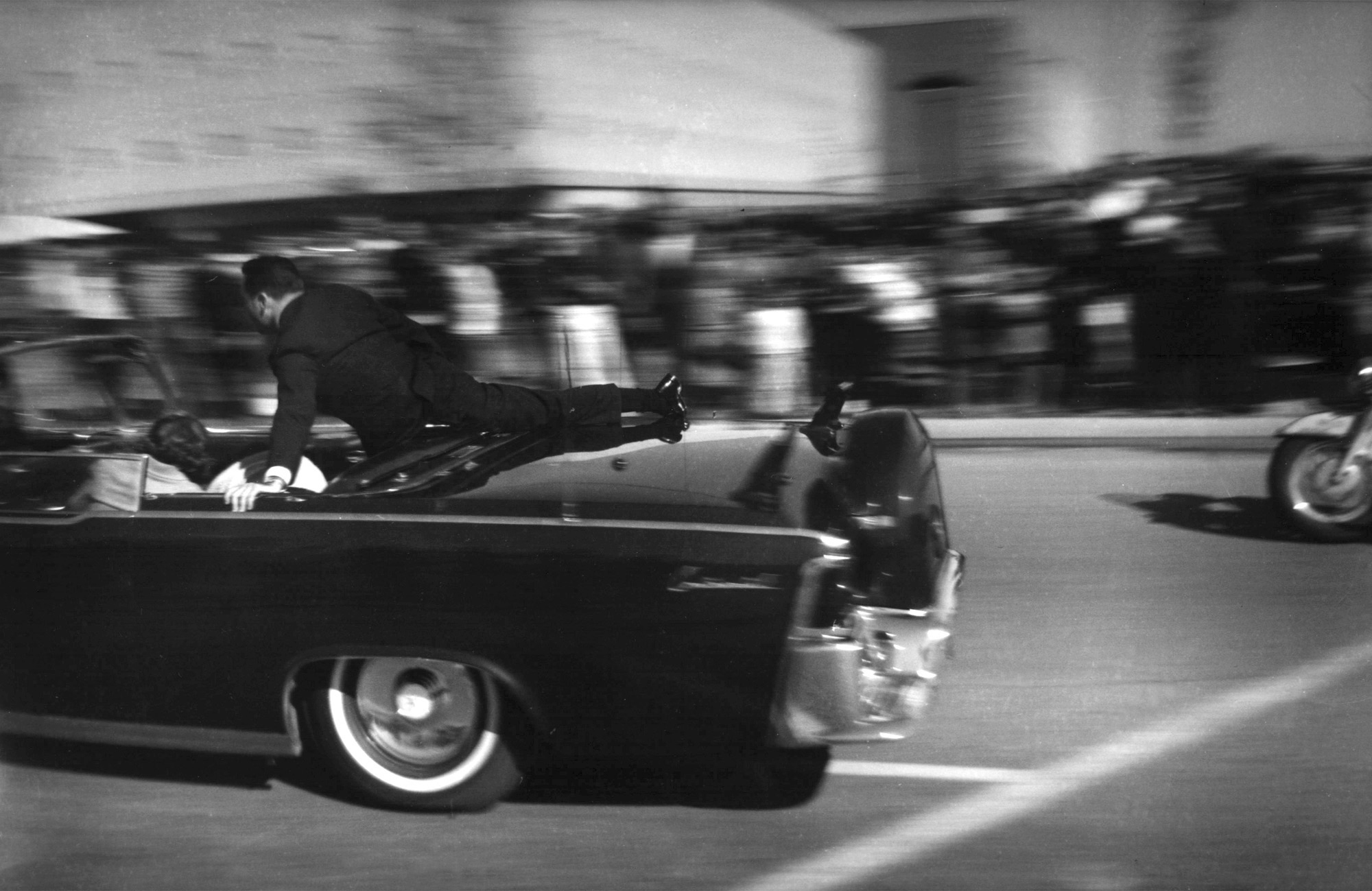
FILE – The limousine carrying mortally wounded President John F. Kennedy races toward the hospital seconds after he was shot, Nov. 22, 1963, in Dallas. The 60th anniversary of President Kennedy’s assassination, marked on Wednesday, Nov. 22, 2023, finds his family, and the country, at a moment many would not have imagined in JFK’s lifetime. (AP Photo/Justin Newman, File)



 on Philly and Pennsylvania’s role in establishing the Christmas tree tradition. The Christmas tree in the early illustration is indicative of how wild Christmas trees were far less dense and conical before tree shaping was invented.](https://interactives.inquirer.com/secondbank/arc/23HWJ4UDIZGPPALTU5ZPZVNUD4/325.webp)


 about the artificial Christmas trees and Indiana County, once known as the "Christmas Tree capital of the world" at the time.](https://interactives.inquirer.com/secondbank/arc/3L6UHPXXHNHYFITN64ON5QSIMI/325.webp)



 –>
–>  –>
–>  –>
–>  –>
–>  –>
–>