Category: History

  • The history of Philly’s Joe Frazier statue, from inception to a move to the Art Museum

    The history of Philly’s Joe Frazier statue, from inception to a move to the Art Museum

    The blank space that our famed Rocky statue is slated to soon leave at the base of the Philadelphia Museum of Art’s steps will be filled by a monument to someone a whole lot less fictional — and it has been a long time coming.

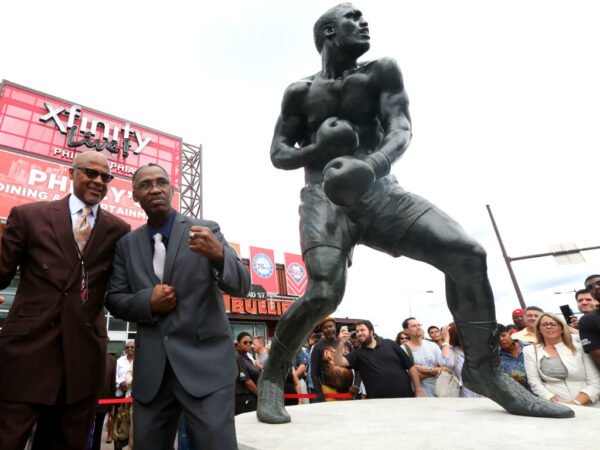
    After just over a decade standing outside of what is now known as Stateside Live!, the city’s statue of Philly’s own “Smokin’” Joe Frazier will be the newest Philly boxer to call the Art Museum home. The Philadelphia Art Commission on Wednesday approved a plan detailing the move presented by Creative Philadelphia, the city’s office for the creative sector.

    That plan is the latest development in a saga that began before Frazier’s death from liver cancer in 2011. Frazier’s statue was unveiled in 2015 after years of work and advocacy. Fans and supporters considered the lack of a statue an injustice, given that the statue of Rocky Balboa has been in the city for more than 40 years and he’s not even a real person.

    Rocky, in fact, has been stationed at the base of the Art Museum steps since 2006. That lengthy run follows installations not only at the top of the steps, but also at the sports complex in South Philadelphia, where the Frazier statue has been located since its inception. And Rocky has been in its current home twice as long as the Frazier statue has existed.

    Still, Philly’s Frazier statue has a storied history of its own. Here is how The Inquirer and the Daily News covered it:

    https://www.newspapers.com/article/the-philadelphia-inquirer/191021228/

    Article from Nov 12, 2011 The Philadelphia Inquirer (Philadelphia, Pennsylvania) <!— –>

    Early advocacy

    Frazier’s supporters had long lamented that Philadelphia lacked a memorial to the boxer. In fact, in a June 2011 Daily News poll, nearly 21% of respondents said Smokin’ Joe should be the next Philadelphia legend honored with a statue — second only to Flyers great Bob Clarke, who himself got a statue in 2013.

    Calls for a statue intensified after Frazier’s death in November 2011. His loved ones and fans — including fellow Philly boxing great Bernard Hopkins — leaned on the city to memorialize the fallen legend. As Hopkins that year told the Daily News, the city ought to “build the biggest statue in appreciation for all the heart and love” Frazier gave to Philadelphia.

    Following his death, Frazier lay in state at the Wells Fargo Center to allow friends, family, and fans to grieve. At Frazier’s funeral, the Rev. Jesse Jackson admonished the city for its lack of respect to Frazier.

    “Tell them Rocky was not a champion, Joe Frazier was,” Jackson said to cheers. “Tell them Rocky’s fists were frozen in stone. Joe’s fists were smokin’.”

    https://www.newspapers.com/article/philadelphia-daily-news/191021343/

    Article from Mar 9, 2012 Philadelphia Daily News (Philadelphia, Pennsylvania) <!— –>

    Building momentum despite challenges

    In March 2012, two months after what would have been Frazier’s 68th birthday, boxing promoter Joe Hand — a longtime Frazier supporter — publicized plans for a life-size statue of Frazier that would be placed near what was then Xfinity Live! Hand pledged a memorial, at a cost of $200,000, would be built.

    Divisions among family members, friends, and business partners emerged, but by that September, Frazier’s family — led by daughters and estate executors Weatta Collins and Renae Martin — took over efforts for a statue.

    Hand later bowed out of the proceedings, leaving the memorial up to Frazier’s family with backing from the city via the Fund for Philadelphia. Plans later shifted to a $150,000 funding goal for the statue, with support from the city under then-Mayor Michael Nutter, who was a longtime Frazier fan dating back to his childhood.

    “[This is] a very personal moment for me to be in this position and make this announcement about someone I truly admire,” Nutter told The Inquirer in 2012.

    https://www.newspapers.com/article/philadelphia-daily-news/191021483/

    Article from Apr 25, 2013 Philadelphia Daily News (Philadelphia, Pennsylvania) <!— –>

    Setbacks and continued effort

    In April 2013, Frazier’s family and the city selected New Hampshire-based sculptor Lawrence J. Nowlan to helm the project. An Overbrook Park native, Nowlan homed in on an image of Frazier knocking down fellow legend Muhammad Ali in the famed 1971 “Fight of the Century” as the statue’s inspiration.

    But in late July, Nowlan unexpectedly died at the age of 48. The city proceeded with its Frazier statue plans, and roughly three months later selected Fishtown-based sculptor Stephen Layne as Nowlan’s replacement.

    “We all deeply regret the passing of sculptor Lawrence Nowlan and the loss of his artistry in this project,” Nutter said at the time. “But Mr. Nowlan’s untimely passing will not deter us from honoring a great Philadelphian.”

    Layne largely stuck with Nowlan’s plan, and in December 2013, the Philadelphia Art Commission approved designs for a statue depicting Frazier during the iconic Ali fight. It was, The Inquirer reported, expected to stand nine feet tall, plus a three-foot base, ultimately to be cast in bronze.

    https://www.newspapers.com/article/the-philadelphia-inquirer/191021607/

    Article from Sep 13, 2015 The Philadelphia Inquirer (Philadelphia, Pennsylvania) <!— –>

    Frazier’s unveiling

    Among the most ardent supporters of the Frazier statue ahead of its unveiling in September 2015 was boxer Hopkins, who donated hundreds of thousands of dollars to see it erected. In April 2014, he told the Daily News that Frazier “has a rightful place in Philadelphia history and that should be honored.”

    Sculptor Layne, meanwhile, plugged away at the statue for months. The pose, he told the Daily News ahead of its unveiling, showed a “pivotal moment” in Frazier’s career, which itself showed a “blue-collar mentality” that showcased his connection to Philadelphia perfectly.

    And finally, on Sept. 12, 2015, Philly finally got its first look at the statue with its unveiling on the corner of 11th Street and Pattison Avenue. Family and friends pulled a green shroud off the statue in front of several hundred onlookers.

    “I am very happy to know Joe is being honored and memorialized in the city he loved, something that is long overdue,” Ali, Frazier’s longtime arch-nemesis, told the Daily News. “Joe was a great boxer and a worthy opponent in the ring. He always brought his best whenever he stepped inside the ropes. My only regret is that Joe won’t be there to share in the celebration.”
  • Philly is not dumping snow in the Schuylkill, but it has in the past

    Philly is not dumping snow in the Schuylkill, but it has in the past

    Many Philadelphians are continuing to deal with snow-clogged, slushy, ice-laden streets nearly two weeks after a winter storm produced the city’s biggest snowfall in a decade.

    To deal with the snow, the city has deployed roughly 1,000 workers and 800 pieces of snow-removal equipment, and instituted programs to break up ice at crosswalks and streets in residential neighborhoods, among other efforts. But to some Inquirer readers, the solution has been right in front of us all along.

    “I know we used to toss snow into the river,” one reader wrote via Curious Philly, The Inquirer’s forum for questions on all things local. “What happens to it now?”

    » ASK US: Have something you’re wondering about the Philly region? Submit your Curious Philly question here.

    In the past, the city has dumped snow into the Delaware River and the Schuylkill on various occasions. But in recent decades, that practice has been used rarely — if at all — primarily over environmental concerns. Here is what we know:

    An old practice

    Newspaper archives show references to dumping snow in the Delaware and Schuylkill dating back at least to the late 19th century — during a storm colloquially known as the “Great Arctic Outbreak of 1899.” That storm dumped 19 inches of snow on Philadelphia around Valentine’s Day.

    In the aftermath, the city sought permission from its Board of Port Wardens to dump snow in the rivers surrounding Philadelphia, but there were concerns over the “considerable amount of dirt” that would be thrown into the water.

    The practice was utilized in the winter of 1909, when 21 inches of snow fell. Initially, snow was dumped into the rivers at three points, but officials later expanded approved dumping sites to be “at any point and from any wharf” along either river.

    “It was contended that this was perfectly proper, since snow is not refuse, but will readily melt after it is thrown into the water,” The Inquirer reported at the time.

    https://www.newspapers.com/article/philadelphia-daily-news/190719291/

    Article from Jan 10, 1996 Philadelphia Daily News (Philadelphia, Pennsylvania) <!— –>

    The blizzard of ’96

    Perhaps the most well-known modern use of Philadelphia’s rivers as a snow dump came in 1996, when a debilitating 30.7 inches of snow fell in early January. The city was left with few options, and got a permit from state environmental officials to dump snow in the rivers, Inquirer reports from the time indicate.

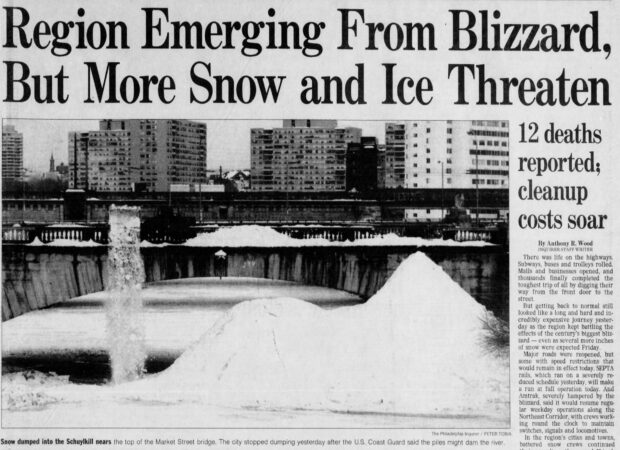
    Within days, roughly 500 tons of snow were dumped into the rivers, and that total would grow into the thousands. Famously, city trucks were spotted dumping snow into the Schuylkill from the Market Street Bridge — until being asked to stop by the U.S. Coast Guard.

    “We did advise the city to stop dumping snow into the Schuylkill. Our concern was the accumulation of ice in the river,” a Coast Guard spokesperson said at the time. The piles of snow in the river ran the risk of forming dams that could cause flooding.

    The piles became so severe they had to be beaten back down. By mid-January, one Inquirer report noted, wrecking balls were sent in to break up at least one mountain of snow that threatened to clog the Schuylkill.

    https://www.newspapers.com/article/the-philadelphia-inquirer/190719516/

    Article from Feb 22, 2003 The Philadelphia Inquirer (Philadelphia, Pennsylvania) <!— –>

    An ‘option of last resort’

    The city again in 2003 dumped snow into Philadelphia’s rivers, this time in an attempt to mitigate the impacts from a February storm that left about 19 inches of the white stuff. This time, though, city officials seemed to at least feel bad about it, calling it an “option of last resort.”

    For this storm, roughly 400,000 pounds of snow was dumped into the Schuylkill. But along with it went road salt, antifreeze, trash, and other pollutants, prompting concerns from regional environmental groups. That pollution, they said, could harm marine life and devastate the riverbanks.

    “All the stuff that’s on the road surface goes into the water,” Delaware Riverkeeper Network head Maya van Rossum told The Inquirer that year. “This is not the appropriate way to deal with the snow. There are plenty of places on the land to put it.”

    The dumping, Streets Commissioner Clarena Tolson said, was limited. And the Pennsylvania Department of Environmental Protection said it asked the city to only dump “virgin snow” into the rivers.

    https://www.newspapers.com/article/the-philadelphia-inquirer/190719722/

    Article from Feb 12, 2010 The Philadelphia Inquirer (Philadelphia, Pennsylvania) <!— –>

    No more dumping, officially

    By 2010, the city appeared to have officially abandoned the practice of dumping snow into city riverways. That February, one storm caused more than 28 inches of snow to fall, but Mayor Michael A. Nutter’s administration declined to pour it into the rivers.

    “We’re going to take some of that down to the Navy Yard. We will not dump in the river,” Tolson said. “There are environmental concerns with placing snow in the river. The snow accumulates pollutants and salt, and dumping it in the river would be a very extreme measure.”

    The Center for Environmental Policy at the Academy of Natural Sciences applauded the Nutter administration’s decision, writing in a letter to The Inquirer that the move would “prevent serious environmental damages to the river.”

    “Urban precipitation, including snow, acquires a witch’s brew of contaminants such as oil, grease, litter, road salt, and lawn fertilizer,” director Roland Wall wrote. “We salute the city for making a commonsense decision that will protect one of Philadelphia’s natural treasures.”

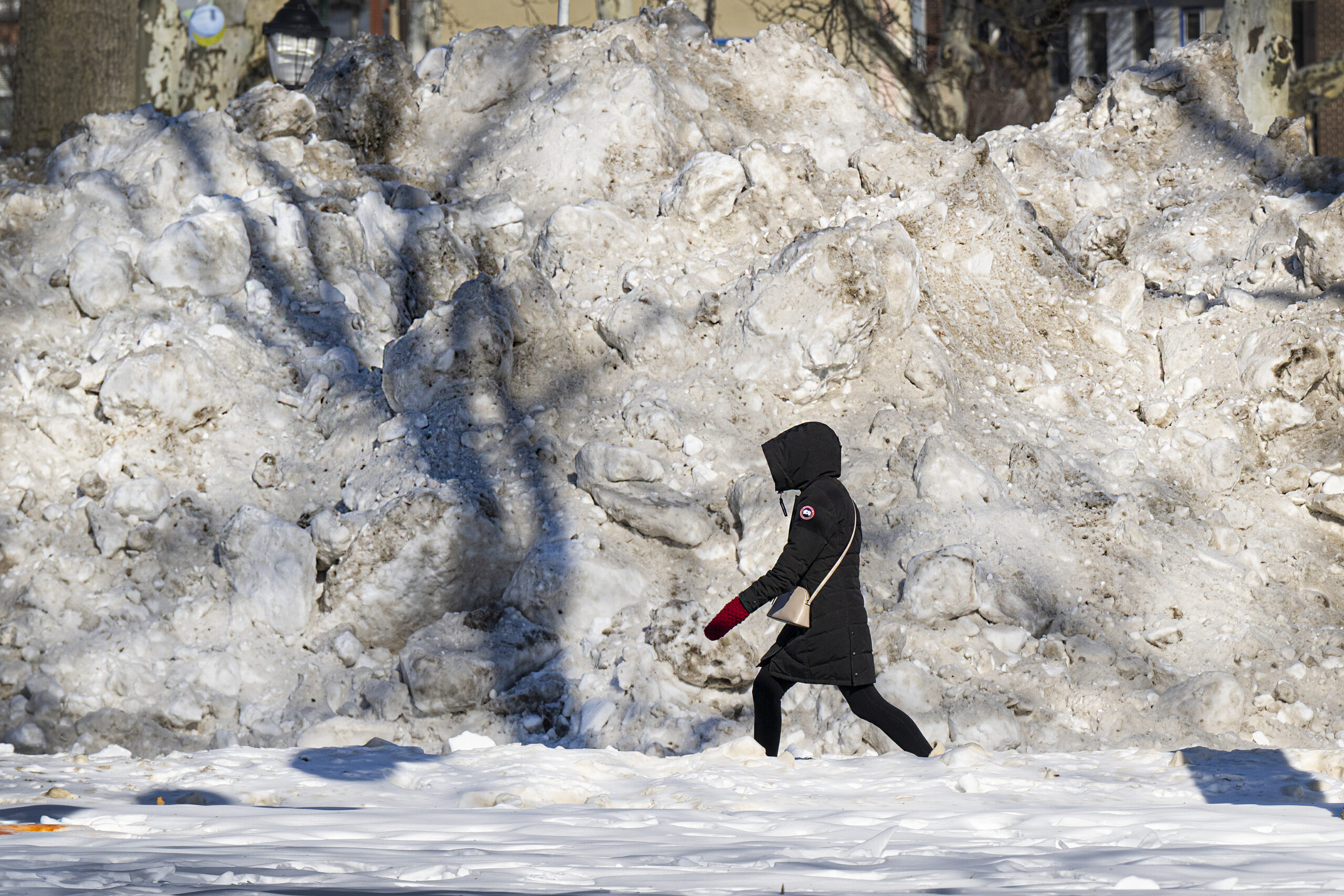
    A pedestrian walks past a large pile of snow and ice along the Benjamin Franklin Parkway days after a fierce winter storm dropped up to 9 inches of snow and sleet, with freezing temperatures leaving large banks of ice and snow on streets and sidewalks in Philadelphia, Monday, Feb. 2, 2026.

    So what do we do now?

    On Wednesday, Carlton Williams, the city’s director of clean and green initiatives, said the city does not dump snow in Philadelphia’s rivers, as that practice is “not an EPA standard.” Instead, the city has gravitated toward removing the snow from city streets and placing it at 37 snow dump sites around Philadelphia.

    The city did not respond to a request for comment regarding those dump sites’ locations. Some of them contain mounds of snow up to 12 feet high that stretch for blocks, Williams said Wednesday. Officials also brought in a snow-melting machine from Chicago.

    Pennsylvania Department of Environmental Protection guidelines, meanwhile, recommend municipalities push snow at least 100 feet away from surface waters, where it will be able to melt with less environmental impact.

    “Dumping of snow directly into a stream carries with it the shock of loading de-icing chemicals and anti-skid agents,” the agency said in a recent recommendations document. “Allowing a natural melt provides a slow release of the water, dilutes the chemicals, and provides filtration of the solids through the soil.”

  • America’s oldest warship, sunk in 1776, is getting a 250th-birthday makeover

    America’s oldest warship, sunk in 1776, is getting a 250th-birthday makeover

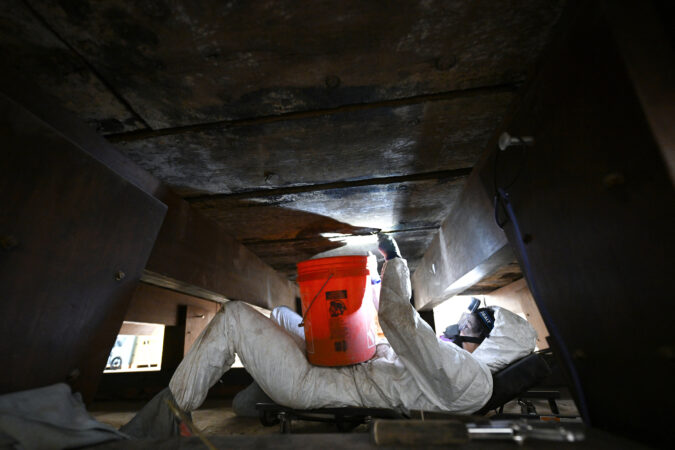
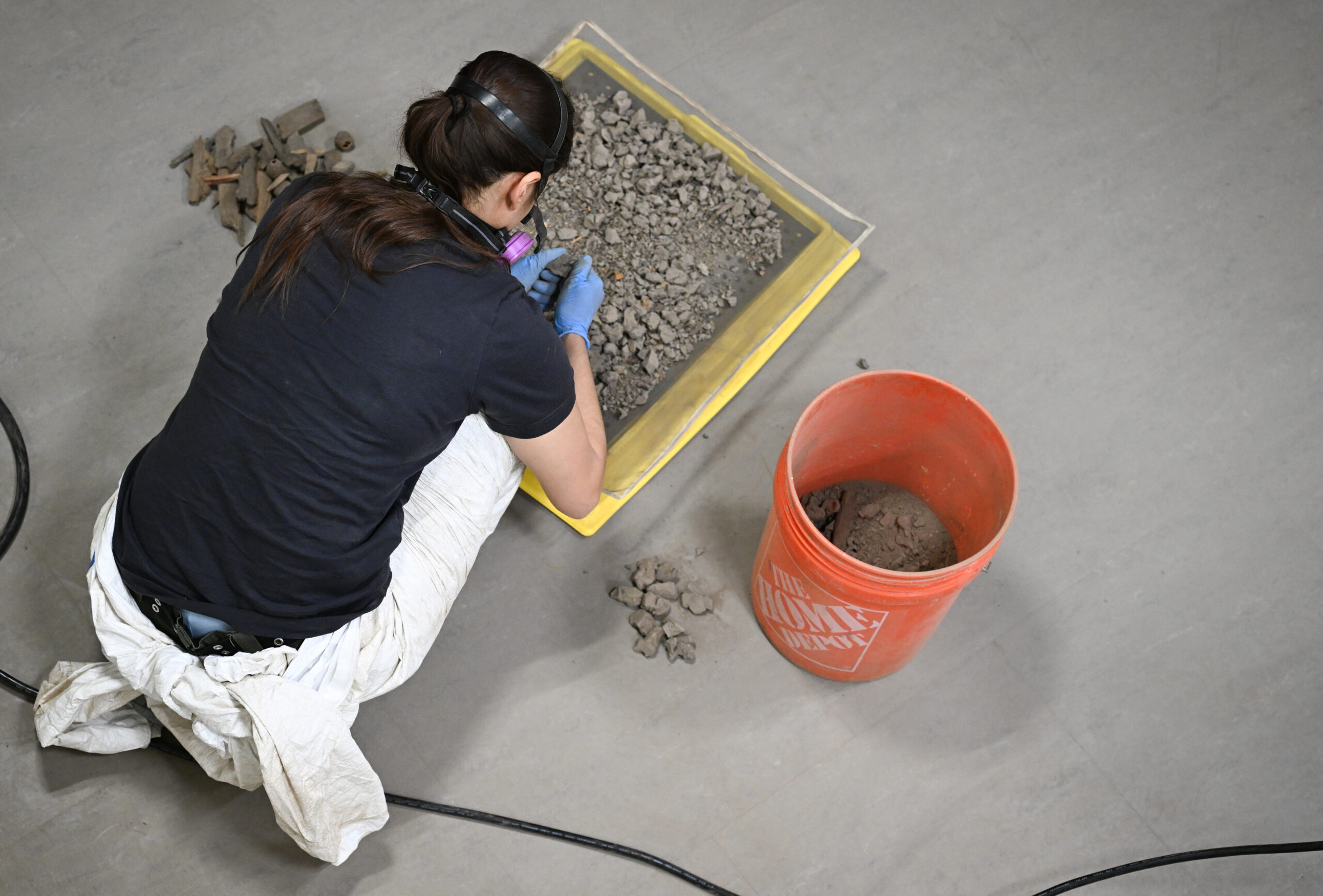
    Conservator Angela Paola is lying on her back under the 16-ton gunboat, picking debris from between its nearly 250-year-old planks. She is wearing blue surgical gloves, grimy white coveralls, and a half-face respirator.

    Dust floats in the beam of her headlamp, and the light reveals bits of the original oakum and pitch used to seal the bottom of the Philadelphia before it was sunk in battle by the British in 1776.

    As she pokes a tool between the planks, clumps of hardened sediment fall on her. “It’s dirty,” she says. “But it is really satisfying work. And it’s really exciting to see it slowly start to show itself through all the mud and the years.”

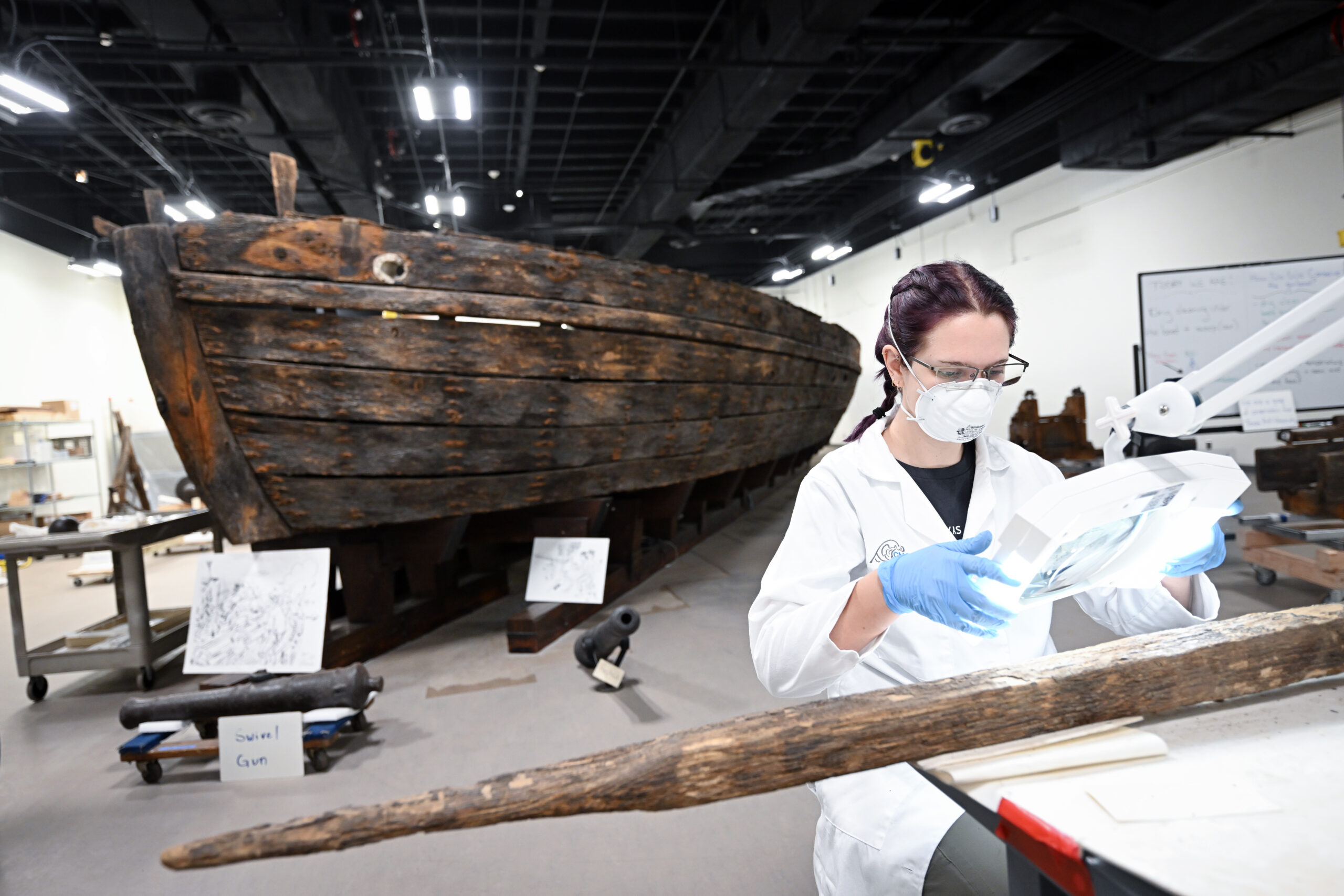
    Texas A&M University research assistant Marissa Agerton works on the project to preserve the gunboat Philadelphia at the Smithsonian National Museum of American History in Washington on Jan. 13.

    The Philadelphia is the country’s oldest surviving intact warship, according to the Smithsonian Institution. It was launched on July 30, 1776, a few weeks after the Declaration of Independence was adopted. And as the nation prepares for its 250th birthday this summer, experts are grooming the old vessel for its place in the celebration.

    “It’s one of the most important objects — movable objects — of the Revolution, flat out,” Anthea M. Hartig, director of the Smithsonian’s National Museum of American History, said in an interview at the museum this month.

    The gnarled boat has survived battle, sinking, the elements, wood-eating bacteria, rodents, misguided attempts at preservation, tourists, and almost 250 years in the country it helped found.

    It’s “one in a million,” Paola, the conservator from Texas A&M University, said through her respirator last week.

    The 53-foot-long boat, hastily built of green oak, was sunk by British cannon on Oct. 11, 1776 at the Battle of Valcour Island, on Lake Champlain. But historians say the small fleet it was part of helped thwart British plans to invade the colonies from the north, and furthered the cause of independence.

    The boat, powered by oars and sails, spent 159 years sitting upright in 60 feet of water at the bottom of the lake until it was raised in 1935. It then became a tourist attraction: admission 50 cents, according to an old advertising poster, and was carried from place to place on a barge.

    After almost 30 years, it came to Washington in 1961 as one of the early arrivals at what was then the National Museum of History and Technology. It was hoisted inside while the building was still under construction and has been there ever since.

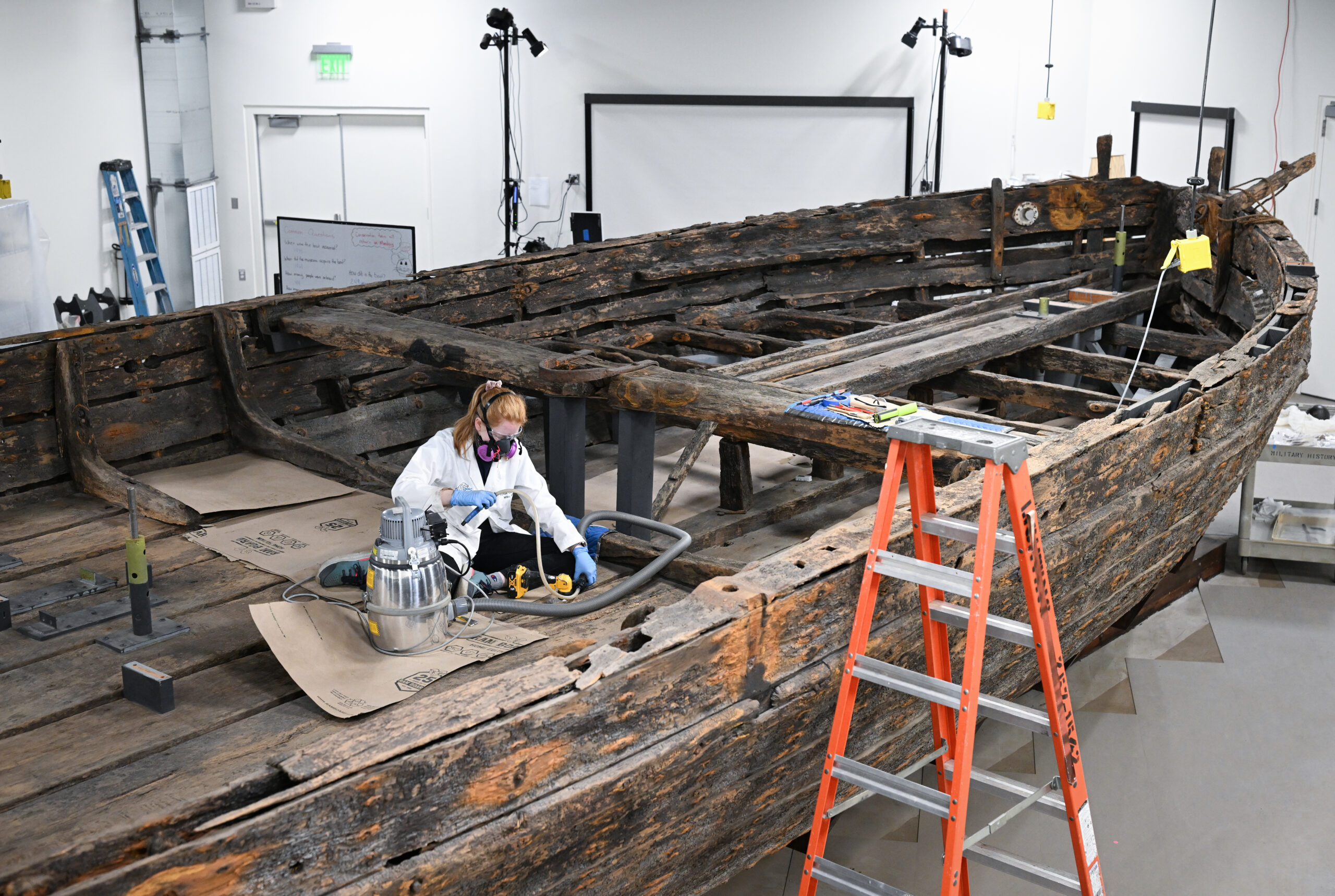
    Since July, the museum has had the Philadelphia partially cordoned off in a special conservation lab on the third floor of the East Wing.

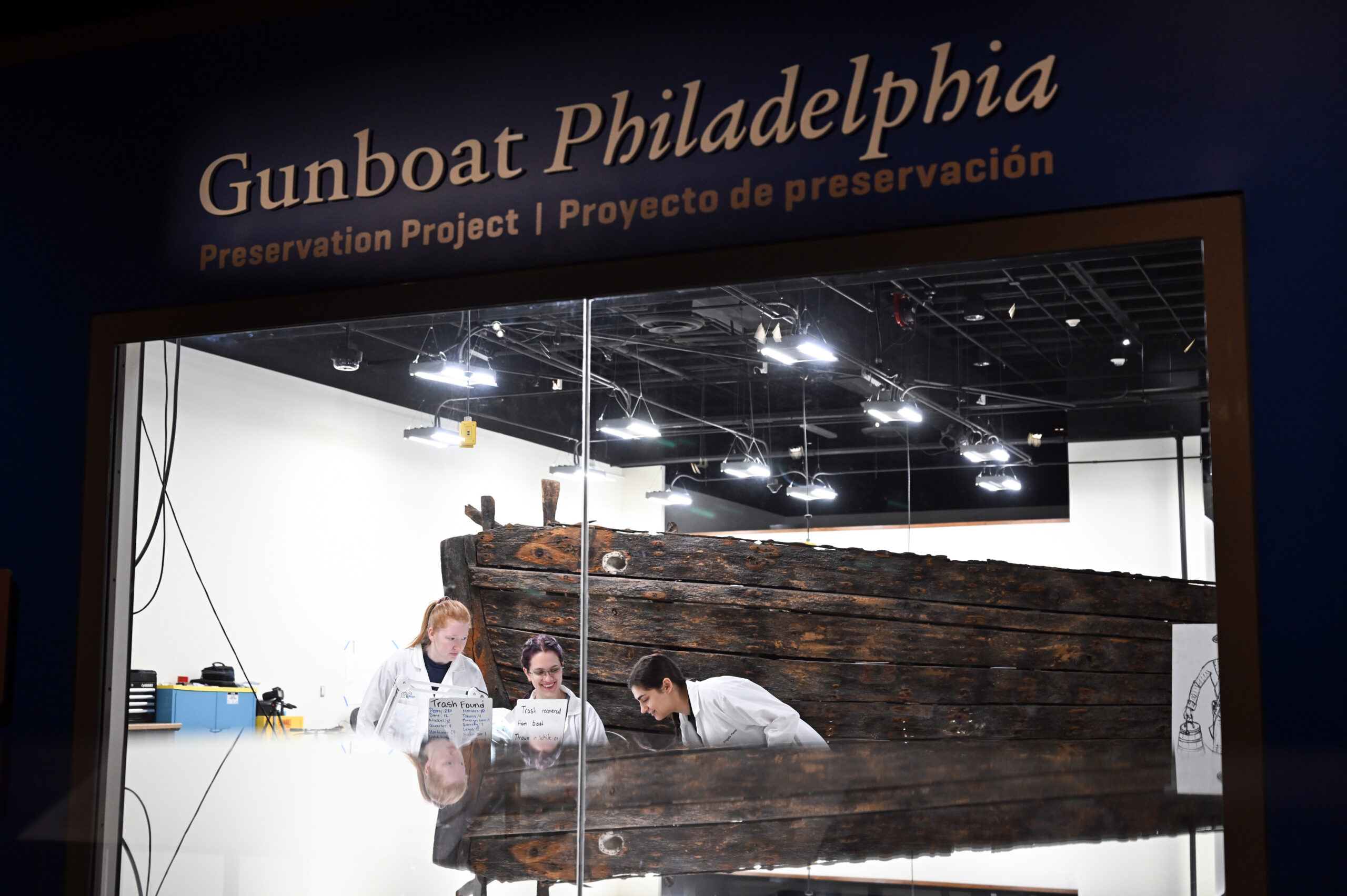
    There, experts from the Smithsonian and Texas A&M are working with vacuums, brushes and dental tools to give it a state-of-the art cleaning and look for lost artifacts in areas they said have never been probed before. Visitors can watch the work through a large viewing window.

    A portion of the Philadelphia.

    The vessel rests in a huge cradle. Arrayed around it are its lower mast, rudder, two anchors, three big cast-iron guns, gun carriages, swivel guns, and the 24-pound British cannon ball that helped sink it.

    The Philadelphia’s biggest weapon was an 8-foot-long, 3,800-pound cannon made in Sweden. It sat on a wooden rail at the front of the boat and fired a 12-pound iron ball. The gun still had a projectile in its mouth when it was discovered.

    The boat was raised on Aug. 9, 1935 by history enthusiast and salvage engineer Lorenzo F. Hagglund and yachtsman J. Ruppert Schalk. When it came up, it contained a trove of more than 700 artifacts, according to John R. Bratten’s 2002 book, The Gondola Philadelphia & the Battle of Lake Champlain.

    It also had a handful of human bones.

    According to salvage reports, “there were a couple of arm bones … some teeth and a partial skull that were found on board the boat itself,” said Jennifer L. Jones, director of the museum’s Philadelphia gunboat preservation project.

    “We know there were a lot of injuries,” she said in an interview at the museum this month.

    Angela Paola goes through debris as she works on the Philadelphia.

    The Oct. 11 battle was a daylong shootout with both sides firing iron cannon balls that could sink a ship or tear off a limb.

    Less than two years after the start of the Revolutionary War, the British had been planning an attack from Canada south along the lake between New York and Vermont to try to split the colonies.

    They quickly assembled a fleet of about two dozen vessels near the lake in Canada for the task.

    The Americans countered, building and gathering a fleet of 16 vessels, including the flat-bottom Philadelphia and seven others like it, said Peter D. Fix, of Texas A&M, the lead conservator on the gunboat preservation project.

    The two sides met in a narrow channel of the lake between the New York shore and Valcour Island, about five miles south of Plattsburgh, N.Y.

    “It was a very bloody battle,” Jones said.

    From the American hospital ship, “Enterprise,” crewman Jahiel Stewart wrote in his journal: “The battel was verryey hot [and] the Cannon balls & grape Shot flew verrey thick.”

    “I believe we had a great many [killed] … Doctors Cut off great many legs and arm and … Seven men [were thrown] overbord that died with their wounds while I was abord,” he wrote.

    Each side suffered about 60 men killed and wounded, Bratten wrote.

    Jones said it is possible the limbs found on the ship had been amputated. Their whereabouts are unknown, she said.

    The Philadelphia was commanded by a young Pennsylvania army officer, Benjamin Rue. He had 43 men from many walks of life under him.

    “We have a wretched, motley crew in the fleet,” American Gen. Benedict Arnold wrote before the battle. “The refuse of every regiment, and the seamen, few of them, ever wet with salt water.”

    Texas A&M University research assistant Alyssa Carpenter works on the Philadelphia this month in D.C.

    Arnold, who commanded the patriot fleet, later deserted the American cause and went to fight for the British in 1780. He died in England in 1801. One of the crewmen on the Philadelphia, Joseph Bettys, also switched sides. He was later captured and hanged.

    The Oct. 11 battle was a stalemate. The British withdrew; the Americans, bottled up in the channel, escaped that night. But two days later, the British force tracked down the Americans and destroyed most of their fleet.

    Only a handful of American ships survived the fight. The Philadelphia was not one of them.

    The ship is now “heavily degraded,” said Fix, the lead conservator,

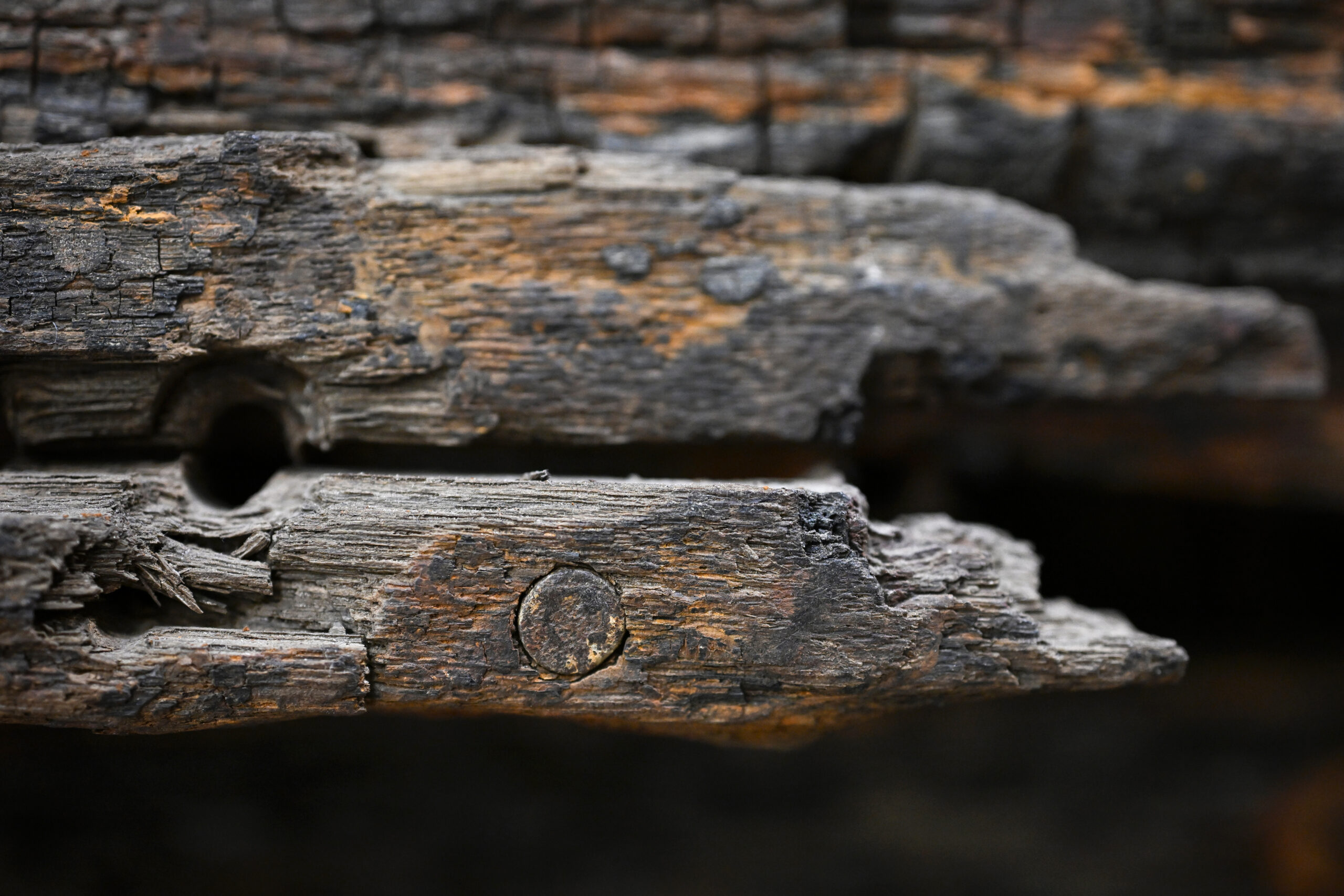
    The hull still bears three holes made by British cannon balls. A wooden cross piece near where the mast stood is charred, probably from the ship’s brick fireplace. The hull planks have lost about three-quarters of an inch in thickness to bacteria, Fix said.

    Care of the boat “is a huge undertaking, of which the conservation is one part,” he said. “The conservation, the preservation, is kind of the avenue to learn all this other extra stuff, which has been great.”

    “Our main task, as we were assigned, was ‘let’s make sure we make it last for another 250 years,’ ” he said.

    Back under the vessel recently, conservator Paola put chunks of fallen debris in an orange bucket, to be sifted for artifacts later. She said it was amazing that the Philadelphia had survived.

    “She lasted,” she said. “We’re really lucky.”

    Texas A&M University research assistants Alyssa Carpenter, Marissa Agerton, and Angela Paola work on the gunboat Philadelphia, preparing it for the United States’ 250th birthday celebration this summer.
  • John du Pont shot and killed Olympic wrestler Dave Schultz on this week in Philly history

    John du Pont shot and killed Olympic wrestler Dave Schultz on this week in Philly history

    The multimillionaire became a murderer on Jan. 26, 1996. That part is known.

    But why John du Pont shot and killed Dave Schultz, an Olympic champion freestyle wrestler who was living and working on du Pont’s Newtown Square estate, is still a mystery.

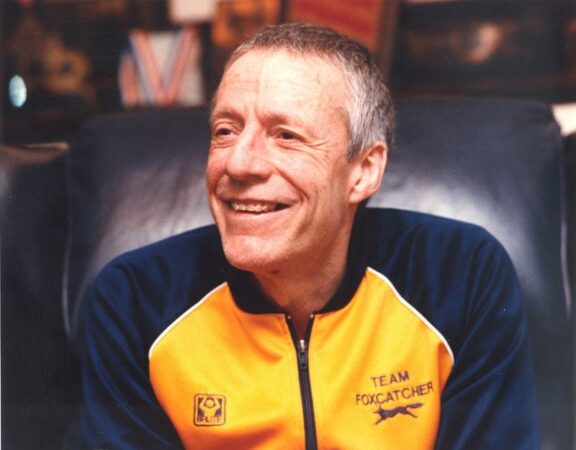
    Foxcatcher

    John Eleuthere du Pont was not a captain of industry, but he was a descendant of one.

    His great-great-great-grandfather was Eleuthere Irenée du Pont de Nemours, who founded the Wilmington chemical giant.

    The most notable title of the du Pont heir’s life was sports enthusiast.

    He transformed his 800-acre estate, known as Foxcatcher Farm, into a world-class athletic training facility. He opened the facility to athletes and their families so they had a place to stay while wrestlers, like Schultz, could prepare for major competitions.

    In 1996, Schultz, a 1984 Olympic gold medalist, and his family stayed there while he trained for that year’s Summer Olympics.

    But even before the run-up to the Summer Games, du Pont’s behavior had become increasingly strange.

    Conviction

    His sister-in-law, Martha du Pont, said they expected something like this to happen.

    Foxcatcher’s overseer had been abusing cocaine and alcohol, and had been walking around with loaded guns for several years.

    During angry outbursts, he would even threaten athletes with guns.

    But why he pointed a .44-caliber revolver at the 36-year-old Schultz during an argument on the estate’s grounds and fired three times will forever be a mystery.

    Du Pont holed up in his mansion for two days before surrendering to police after his heat was cut off during an especially cold weekend.

    On Feb. 25, 1997, he was ruled guilty but mentally ill, and convicted of third-degree murder.

    He offered no explanation for his behavior, only excuses.

    He was sentenced to 13 to 30 years in prison.

    Du Pont died in prison at age 72 on Dec. 9, 2010, four years before an award-winning film starring Steve Carell about the incident would hit theaters.

    Nearly 30 years after his conviction, he is the only member of the Forbes 400 richest Americans to have been convicted of murder.

    Nancy Schultz, who witnessed the shooting, said she never understood why her husband was killed. And she was struck by something du Pont never did.

    “He never just said, ‘I’m sorry.’”

  • Independence Hall reopens after a four-month preservation project

    Independence Hall reopens after a four-month preservation project

    The doors of Independence Hall had been flung open, and the British were coming.

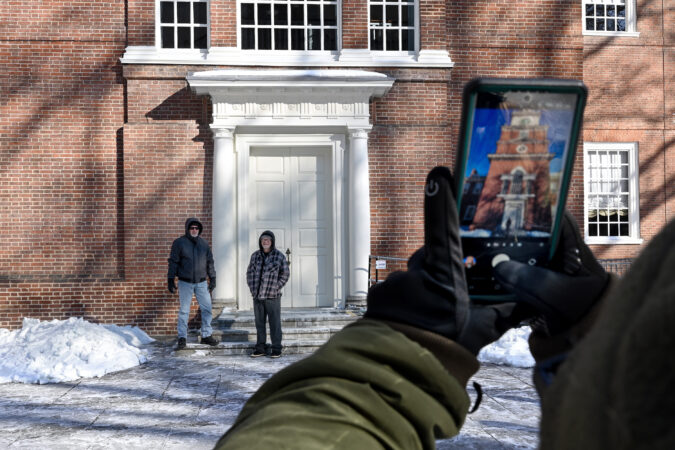
    More specifically, English tourists Chadi Rahim and his daughter, Sophia Rahim, 18, shivered in their parkas Thursday, awaiting one of the first tours of Independence Hall since its 119-day closure.

    The historic state house, where American democracy was born in 1776, had been closed to the public since Oct. 1 — a temporary pause of access, stretching through the federal government shutdown and weeks of planned preservation work ahead of Philadelphia’s Semiquincentennial celebrations this year. The revamp included restoration of wood, masonry, plaster, and metal, historically accurate paint finishes, and the construction of accessibility ramps. The work would ensure that Independence Hall would continue as a “beacon of American freedom,” the National Park Service had said.

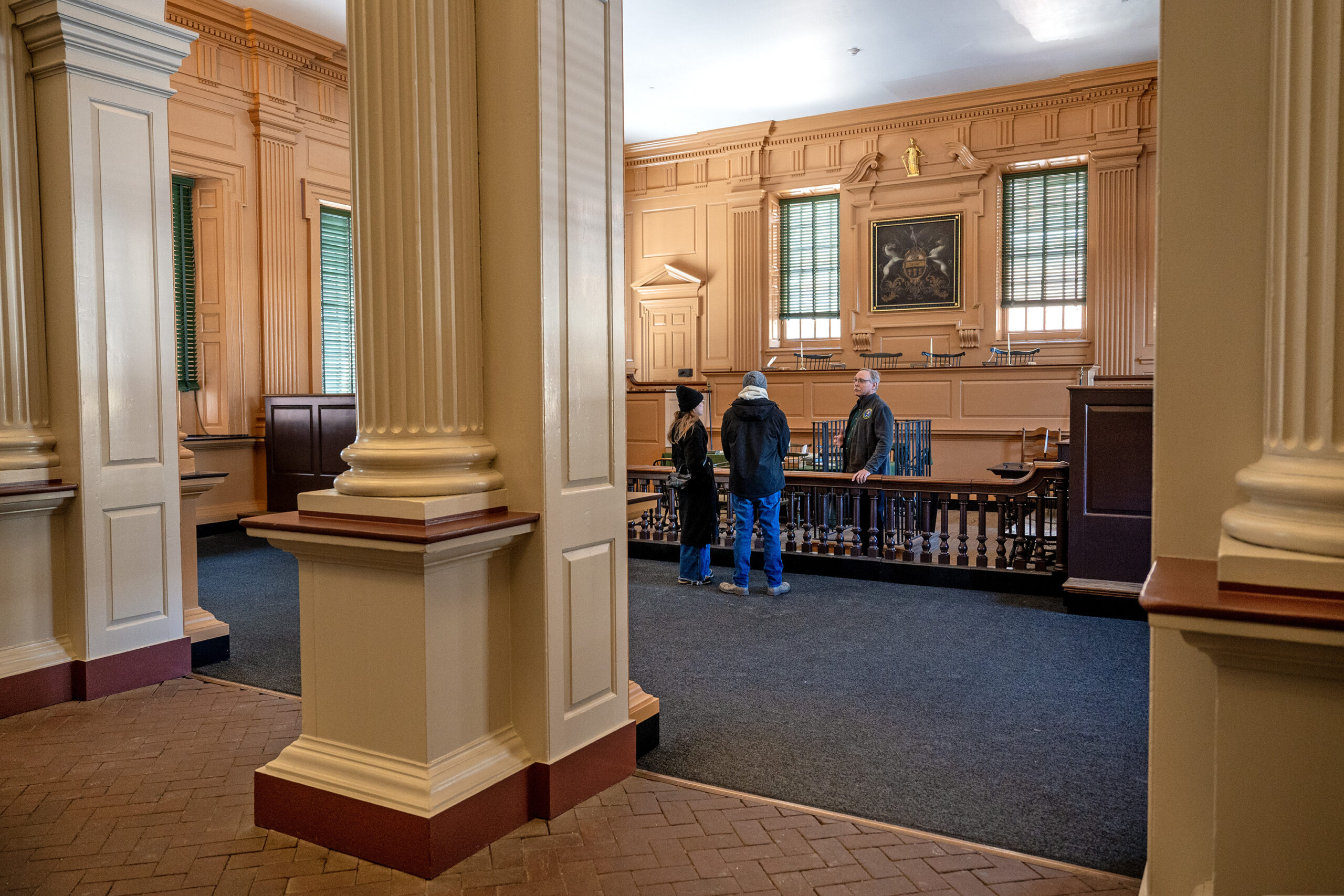
    Tourists Jenna Lippert and Brandon Camperlino from Syracuse, NY listen as park service volunteer Bill Rooney (right) gives a tour in the Pennsylvania Supreme Court Chamber in Independence Hall Thursday, Jan. 29, 2026.

    As part of the Independence Square Improvement Project, similar repairs were planned for Congress Hall and Old City Hall, which are part of the Independence Hall complex.

    “Wear and tear,” National Park Ranger Hugh Evans assured 14 visitors assembled for the 11:30 a.m. tour.

    All morning, a steady trickle of travelers trekked to the redbrick building in Old City where the Founding Fathers staked their necks on the promise of a freer and more perfect future.

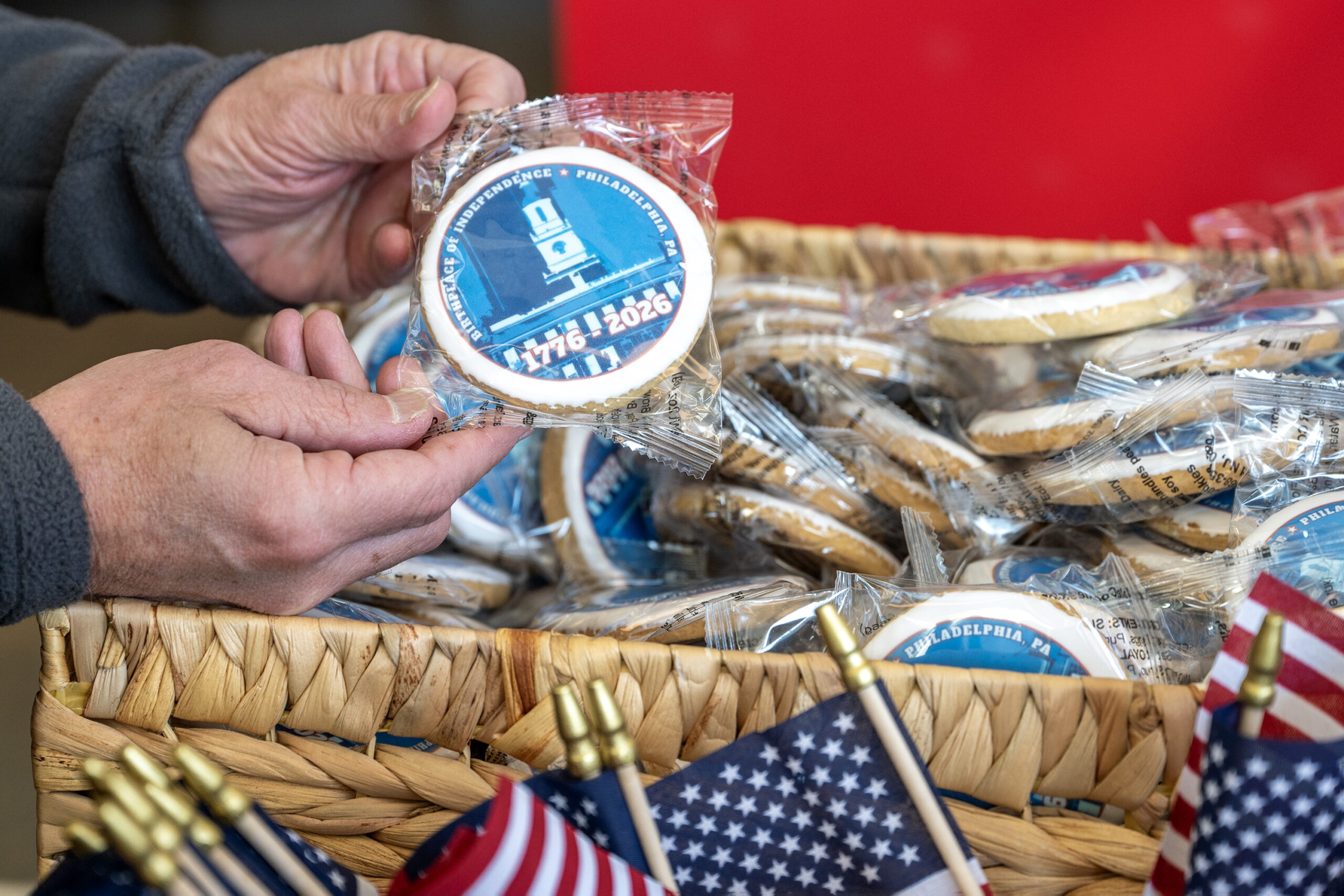
    Independence Visitor Center information desk host Woody Rosenbach displays a free Independence Hall cookie offered to the first 250 visitors on Thursday.

    In Thursday’s cold, the tourists came from the rocky coasts of Oregon and the sunlit shores of California, from small towns and big cities, from red states and blue states. And their presence on such an auspicious day was completely by chance. None of the more than a dozen pilgrims to American democracy who braved frozen temps and icy footpaths said they had been aware that Independence Hall had only just reopened.

    The site where the Declaration of Independence was signed 250 years ago, the building is one of Independence National Historic Park’s central attractions. The Liberty Bell Center, which was also closed during the shutdown, reopened in November. Officials expect that more than five million people will visit Independence Hall in 2026 for the national milestone.

    Learning that their visits had fallen on the reopening of the historic site only lent more power, visitors said.

    Rahim, a business owner with the sturdy frame of a Victorian boxer, said he and his daughter had decided on a Philadelphia holiday for shopping and relaxation and Rocky (Sophia is also a fan of National Treasure, a 2005 Nicolas Cage history caper that was filmed at Independence Hall and other historic district sites). But also because of the story only Philadelphia can tell about America’s founding.

    And especially now, when the future of American democracy feels more at stake than ever.

    “We know the story about independence,” Rahim said, buttoning up against the cold. But he and his daughter had wanted to experience it up close. “Sometimes stuff gets in the way. But if you see the history, it makes you realize what people went through to get us where we are now.”

    During the 11 a.m. tour, National Park Ranger David Powers welcomed a half-dozen visitors into the stately, Georgian state room, where the Founders first passed independence. Walls and floors in the rooms where it happened reflected a new polish, while some painting could still use touching up.

    After four months of closure and renovations, guided tours resumed every half hour Thursday. Security staff said they did not encounter crowds of guests seeking to stroll the sun-streaked confines where profound compromises of democracy were hashed out 2½ centuries ago.

    Rather, on the day of the building’s reopening, many of the visitors represented just normal Americans, looking for signs of hope in uncertain times.

    Rachel Lawson of Bend, Ore., and Amanda Shapiro of Southern California, colleagues in town for a work event, admired the simple elegance of the original woodwork design inside Congress Hall, home of the U.S. Congress from 1790 to 1800.

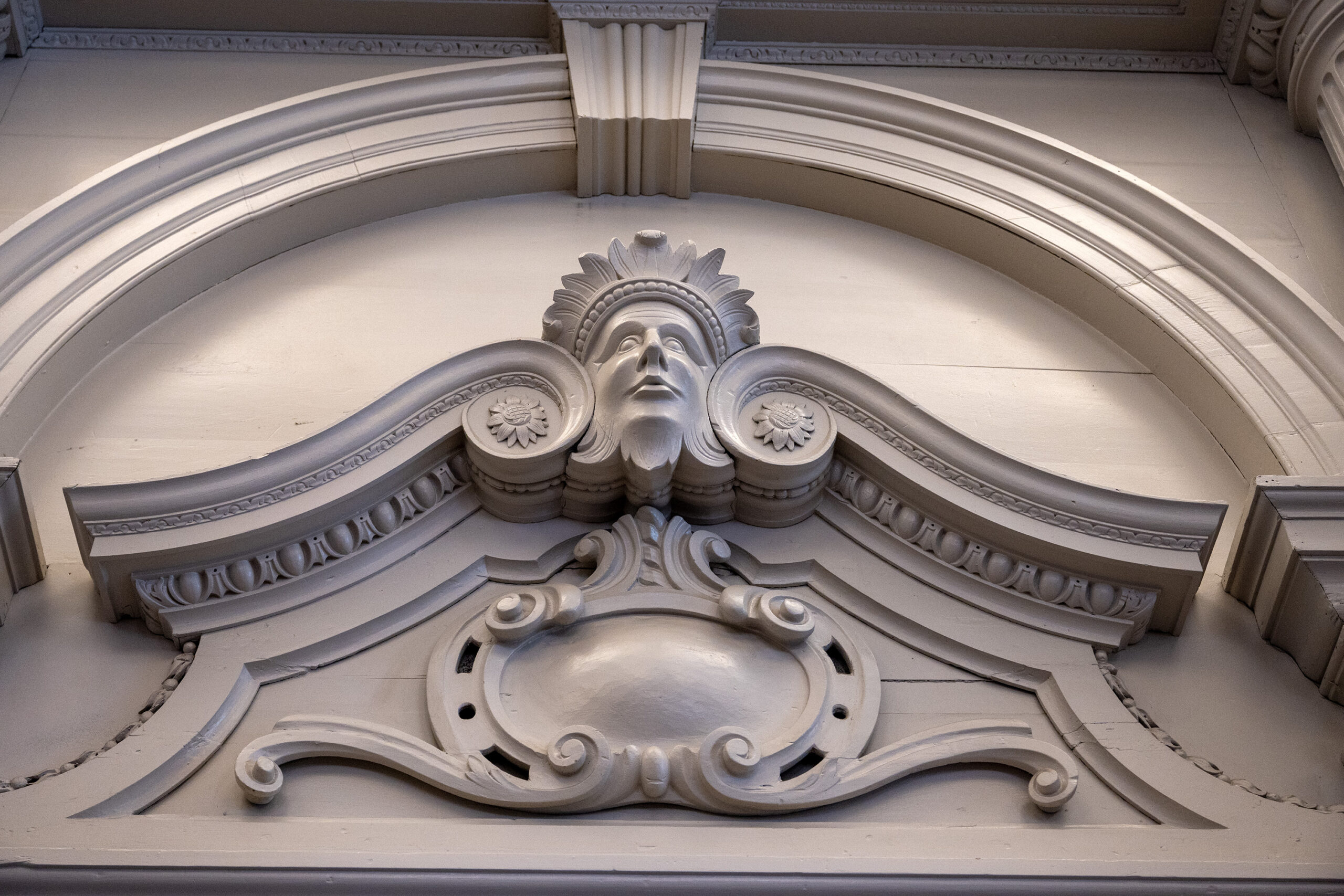
    A newly painted pediment above a doorway in Independence Hall on Thursday, Jan. 29, 2026.

    “The attention to detail, the thoughtfulness, the regal energy,” she said.

    Nearby, Luke Morris, a 20-something political podcaster from Washington, had planned his visit to Independence Hall as a reminder that Americans are still fighting for that promised future amid all the pain and turmoil.

    “We are still fighting for what we think is right,” he said.

  • An armored guard stole from his own truck on this week in Philly history

    An armored guard stole from his own truck on this week in Philly history

    A Brooks armored truck pulled up to the main PSFS Bank office in Center City on the morning of Jan. 20, 1988, but guard Edward Leigh Hunt Jr. didn’t get out.

    Two other employees of the Wilmington-based company, a driver and another guard, went inside the bank office on 13th Street near Market. When they returned about 30 minutes later, the 24-year-old Hunt was gone.

    He fled the vehicle carrying two canvas bags containing used bills totaling $651,000, or more than $1.7 million in today’s dollars.

    ’See ya soon’

    A few days after the robbery, Hunt, who went by Leigh, had made his way to Los Angeles, and phoned a friend from back home — mainly asking how much publicity he was receiving.

    And then Hunt went silent for nearly 20 months.

    In the meantime, he was twice featured on America’s Most Wanted and attracted national attention as well as a following.

    “The whole incident has been bizarre since day one,” the fugitive’s father, Edward Leigh Hunt Sr., a former prosecutor for the Delaware Attorney General’s Office, would say later.

    As the two-year anniversary of the heist approached, editors from the Wilmington News Journal newspaper inexplicably received a handwritten letter.

    It was from Hunt, and he said the money was gone.

    The University of Delaware graduate said he gambled it all away in an attempt, he wrote, to quadruple the sum and then return half the proceeds.

    He missed his family, he wrote, and wanted to surrender on the second anniversary of the theft, Jan. 20, 1990, at noon in front of the Chamber of Commerce offices in downtown Los Angeles. He enclosed a photo of himself emerging from a swimming pool.

    He sent a second letter to the newspaper a few days later, reiterating that he would be turning himself in. “Just a reminder,” he wrote.

    “I’m sorry about the problems I have caused,” he added. “It’s nobody’s fault but mine. See ya soon.”

    Going downtown

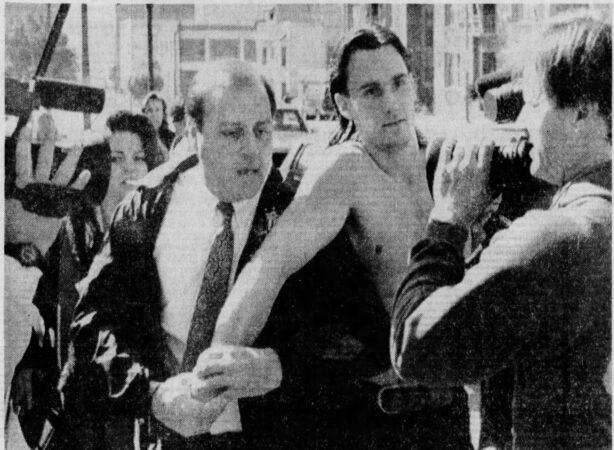
    Hunt, now 26, arrived shirtless and five minutes late, but nonetheless surrendered as planned to members of the FBI.

    “I love America,” Hunt said as he was taken into custody. “America is a great country.”

    As he was taken away, according to the Los Angeles Times, a few supportive spectators shouted, “Free Leigh.”

    Six months later, Hunt pleaded guilty to interstate theft, and a federal judge in Philadelphia sentenced him to eight years in prison. In hopes of getting his sentence reduced, Hunt later came clean and confessed to having hidden most of the money in a Hollywood storage locker. The FBI recovered nearly $574,000, and Hunt’s sentence was cut down to six years.

  • Here’s where 22 painted replica Liberty Bells will be installed around Philly in 2026

    Here’s where 22 painted replica Liberty Bells will be installed around Philly in 2026

    The bells are coming.

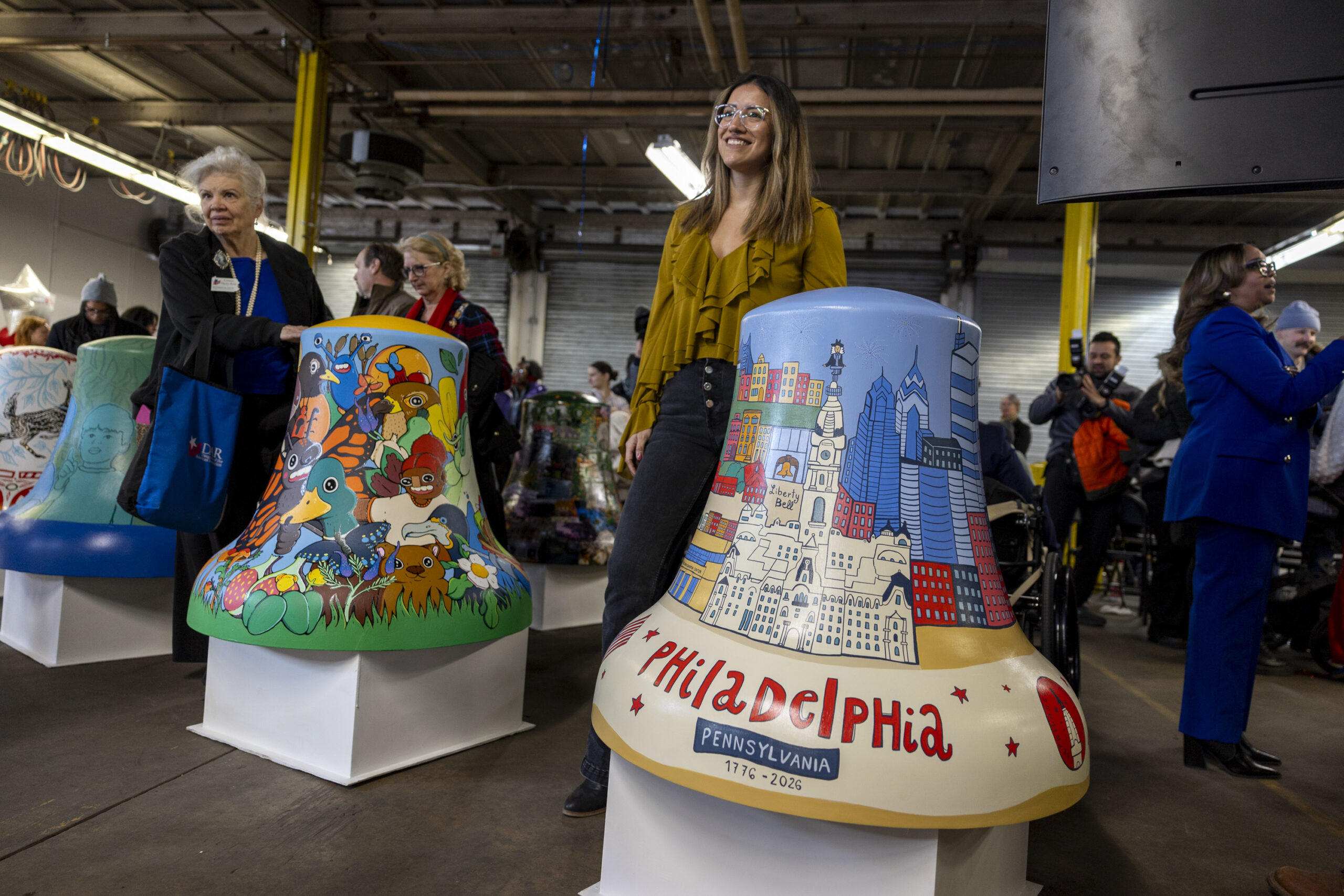
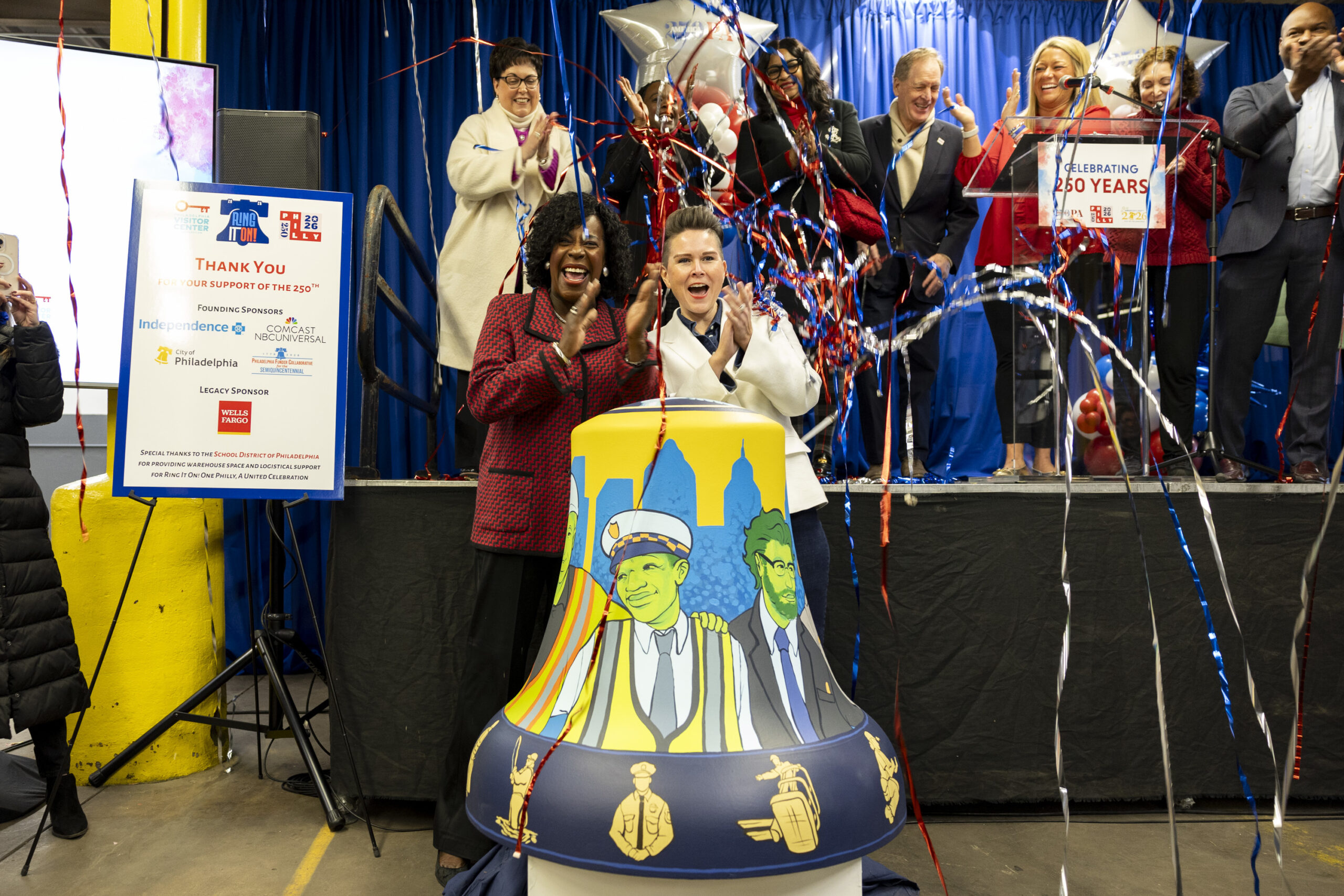
    On Friday, the city revealed the 22 large replica Liberty Bells that will decorate Philly neighborhoods this year for the celebrations of America’s 250th anniversary. Officials also released a list of locations where the painted bells will soon be installed. The program announced two special replica bells for the Independence Visitor Center and the Convention Center.

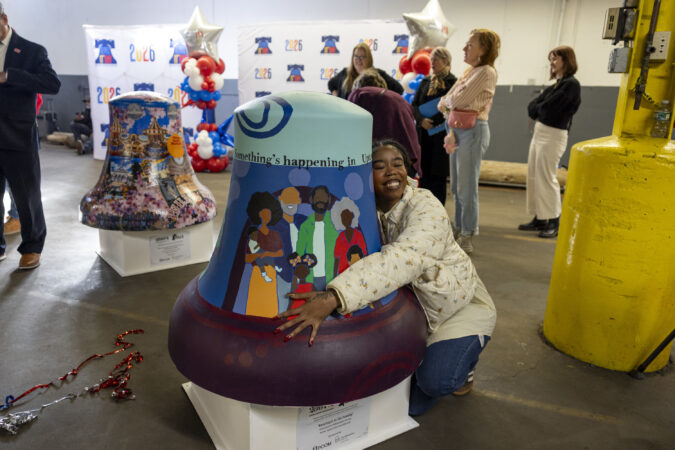
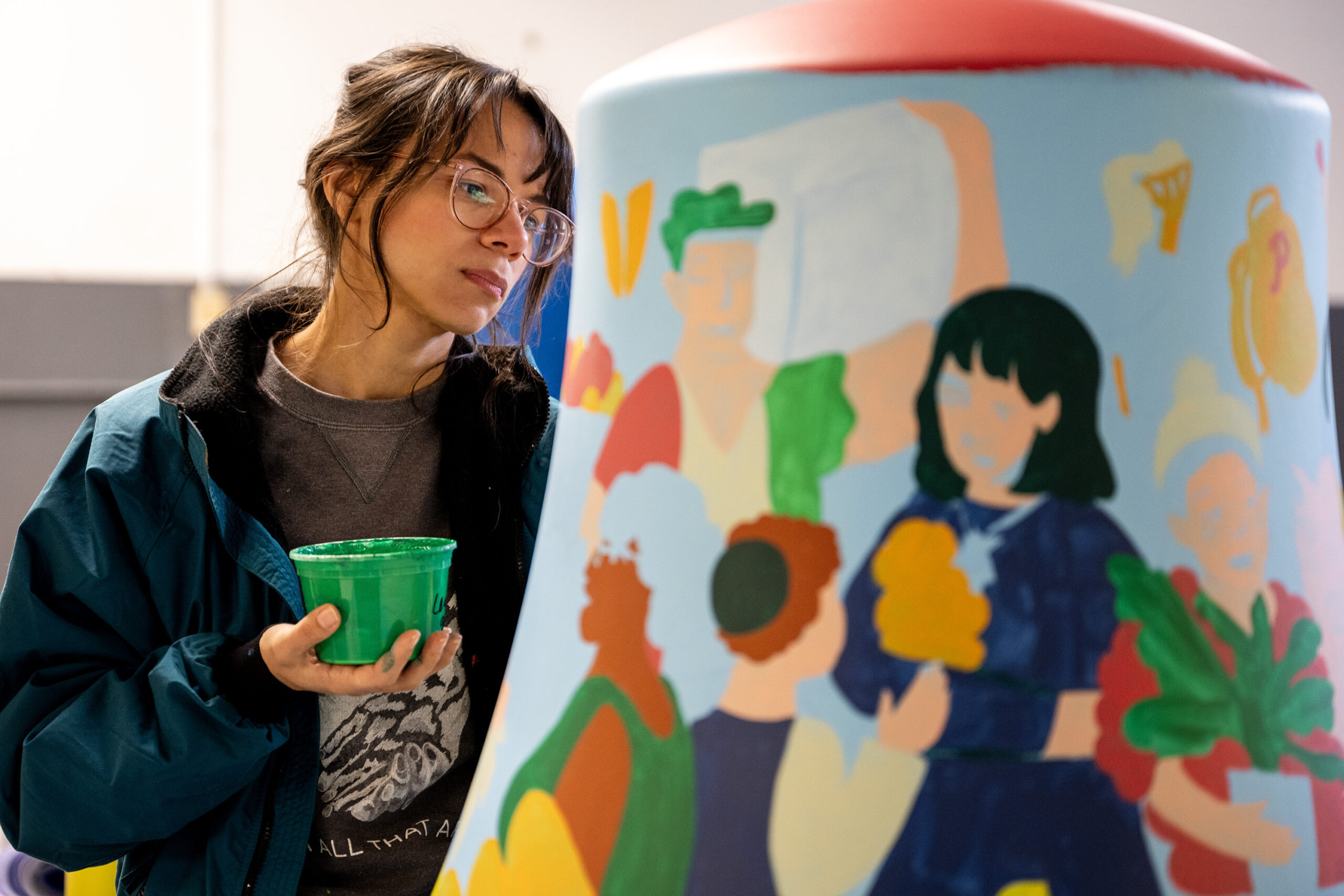
    Designed by 16 local artists selected through Mural Arts Philadelphia — and planned for commercial corridors and public parks everywhere from Chinatown and South Philly to West Philly and Wynnefield — the bells depict the histories, heroes, cultures, and traditions of Philly neighborhoods.

    <iframe title="‘Bells Across Pa.’ Locations in Philadelphia" aria-label="Locator map" id="datawrapper-chart-UZW3N" src="https://datawrapper.dwcdn.net/UZW3N/1/" scrolling="no" frameborder="0" style="width: 0; min-width: 100% !important; border: none;" height="665" data-external="1"></iframe><script type="text/javascript">window.addEventListener("message",function(a){if(void 0!==a.data["datawrapper-height"]){var e=document.querySelectorAll("iframe");for(var t in a.data["datawrapper-height"])for(var r,i=0;r=e[i];i++)if(r.contentWindow===a.source){var d=a.data["datawrapper-height"][t]+"px";r.style.height=d}}});</script>

    “Philadelphia has always been a city of neighborhoods, each with its own story to tell,” said Mayor Cherelle L. Parker during an unveiling of the bells in Olney. “That’s why our communities and these talented artists came together to tell these stories.”

    As part of the state nonprofit America250PA’s “Bells Across PA” program, more than 100 painted bells will be installed across Pennsylvania throughout the national milestone, also known as the Semiquincentennial.

    For weeks, artists had toiled on their bells inside a makeshift studio behind the Widener Memorial School, each telling a different story of neighborhood pride.

    Ana Thorne, of Center City, 37, is next to their bell they made during the Bells Across PA event in celebration of America’s 250th Birthday in Philadelphia, Pa., on Friday, Jan. 16, 2026.

    An Italian Market bell depicts scenes of the bustling produce stands, flickering fire barrels, and smiling old- and new-school merchants. An El Centro de Oro bell is painted with images of the neighborhood’s historic Stetson Hats factory, the iconic Latin Music store Centro Musical, and popular iron palm tree sculptures. A Glen Foerd bell is decorated with paints mixed with water from the Delaware River.

    “Our goal is to create a Semiquincentennial celebration that meets every Philadelphian where they are,” said Kathryn Ott Lovell, president and CEO of the Philadelphia Visitor Center Corp. and Philadelphia250.

    Local artist Cindy Lozito works on her South Philadelphia bell, one of 20 painted replicas of the Liberty Bells representing different neighborhoods Tuesday, Dec. 9, 2025. The bells will decorate parks and public spaces in every corner of the city during America’s 250th birthday.

    Planners said they expect the bells to draw interest and curiosity similar to the painted donkeys that dotted Philly neighborhoods during the 2016 Democratic National Convention. Those painted decorations became the focus of scavenger hunts and countless selfies.

    Organizers expect to install the bells sometime in March, once the weather warms.

    Mayor Cherelle L. Parker and Pennsylvania Deputy Secretary of Tourism Anne Ryan, reveals one of the bells called “Philly Workforce: Celebrating Our Past, Building the Future” made by artist Akira Gordon during the Bells Across PA event in celebration of America’s 250th Birthday in Philadelphia, Pa., on Friday, Jan. 16, 2026.

    “I am asking all Philadelphians and everyone who visits our city in 2026 to see the bells,” Parker said.

    Below is a full list of Philadelphia’s Bells Across PA installations, artists, and locations:

    Neighborhood: Chinatown

    Artist: Chenlin Cai, Xingzi Liang

    Bell Title: “It Takes a Village”

    Bell Location: 10th Street Plaza (10th and Vine Streets)

    Neighborhood: City Hall/Center City

    Artist: Akira Gordon

    Bell Title: “Philly Workforce: Celebrating Our Past, Building the Future”

    Bell Location: Municipal Services Building, 1401 John F. Kennedy Blvd.

    Neighborhood: El Centro de Oro

    Artist: Symone Salib

    Bell Title: “El Centro de Oro”

    Bell Location: 2739 N. Fifth St.

    Neighborhood: Fox Chase

    Artist: Sean Martorana

    Bell Title: “Heartbeat of the Fox”

    Bell Location: Lions Park, 7959 Oxford Ave.

    Neighborhood: Germantown

    Artist: Emily Busch

    Bell Title: “Who’s Your North Star?”

    Bell Location: Joseph E. Coleman Northwest Regional Library, 68 W. Chelten Ave.

    Neighborhood: Hunting Park

    Artist: Andrew Daniels

    Bell Title: “United Hunting Park”

    Bell Location: Hunting Park

    Neighborhood: Logan Square

    Artist: Cindy Lozito

    Bell Title: “Connection Between the Stars”

    Bell Location: Franklin Institute, 222 N. 20th St.

    Neighborhood: Mayfair

    Artists: Alana Bogard, Madeleine Smith

    Bell Title: “Celebrate Mayfair”

    Bell Location: 7343 Frankford Ave.

    Neighborhood: Mount Airy

    Artist: Parris Stancell

    Bell Title: “A Tapestry of Hidden History”

    Bell Location: United Lutheran Seminary, 7301 Germantown Ave.

    Neighborhood: Ogontz

    Artist: Tykira Octaviah Mitchell

    Bell Title: “Keeping It In the Family”

    Bell Location: 7182 Ogontz Ave.

    Neighborhood: Olney

    Artist: Joanne Gallery

    Bell Title: “Where Global is Local”

    Bell Location: Greater Olney Library, 5501 N. Fifth St.

    Neighborhood: Parkside

    Artist: Parris Stancell

    Bell Title: “Fun Facts and Historical Treasures of Fairmount Park”

    Bell Location: Memorial Hall, 4231 Avenue of the Republic

    Neighborhood: Point Breeze

    Artist: Symone Salib

    Bell Title: “The Promise of What’s to Come”

    Bell Location: 1336 S. 21st St.

    Neighborhood: Roxborough

    Artist: Meghan Turbitt

    Bell Title: “19128: A Place With Roots”

    Bell Location: Roxborough Pocket Park, 6170 Ridge Ave.

    Neighborhood: South Philadelphia

    Artist: Cindy Lozito

    Bell Title: “Open Everyday”

    Bell Location: Piazza DiBruno, 914 S. Ninth St.

    Neighborhood: Southwest

    Artist: Michele Scott

    Bell Title: “A Diagram of Value”

    Bell Location: Bartram’s Garden, 5400 Lindbergh Blvd.

    Neighborhood: Torresdale

    Artist: Bob Dix

    Bell Title: “Nature to Industry to Nature Again”

    Bell Location: Glen Foerd, 5001 Grant Ave.

    Neighborhood: University City

    Artist: Sean Martorana

    Bell Title: “The Ringing Railroad”

    Bell Location: William H. Gray III 30th Street Station, 2955 Market St.

    Neighborhood: West Philadelphia

    Artist: Akira Gordon

    Bell Title: “Lancaster Living Legacy”

    Bell Location: 3952-54 Lancaster Ave.

    Neighborhood: Wynnefield

    Artist: Abigail Reeth

    Bell Title: “Stories Tolled”

    Bell Location: 5320 City Ave.

    In addition to the bells listed above, there will be additional Liberty Bell replicas in Philadelphia as part of America250PA’s Bells Across PA program. These bells are in partnership with Mother Bethel African Methodist Episcopal Church, the Philadelphia Convention and Visitors Bureau, and Visit Philadelphia.

    Neighborhood: Center City

    Artist: Tara Jacoby

    Bell Title: “We The People

    Bell Location: Independence Visitor Center

    Bell Sponsors: Visit Philadelphia, Philadelphia Visitor Center Corp.

    Artist: Ana Thorne

    Bell Title: “Colorful Independence

    Bell Location: Convention Center

    Bell Sponsors: Philadelphia Convention and Visitors Bureau, Convention Center

  • Charles Dickens, who called the city ‘distractingly regular,’ visited on this week in Philly history

    Charles Dickens, who called the city ‘distractingly regular,’ visited on this week in Philly history

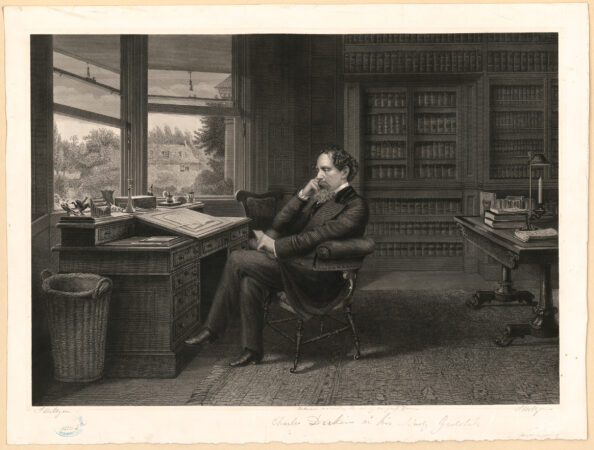
    Philadelphia’s favorite Victorian novelist made his second, and final, visit to the City of Brotherly Love on this week 158 years ago.

    Charles Dickens, a few weeks away from his 56th birthday, arrived near midnight in Philadelphia on Jan. 12, 1868.

    He would stay at the Continental Hotel, and most notably, would give readings at the Concert Hall on Chestnut Street to sold-out audiences.

    His first visit here, in March 1842, Dickens had mixed feelings.

    He was horrified of how prisoners were treated at the “solitary prison” Eastern State Penitentiary, but delighted at meeting Philly’s other literary hero, Edgar Allan Poe.

    He also called Philly “distractingly regular” in his 1842 memoir, American Notes.

    He also called the city “handsome,” and “What I saw of its society, I generally liked.”

    In December 1843, he would publish his most seminal work, A Christmas Carol, in England. Philadelphia publisher Carey & Hart would publish the first notable U.S. edition of the story, which could help explain why the city fell in love with the author and his penchant for highlighting working-class and underdog characters.

    Dickens’ second visit was most notable for his readings from A Christmas Carol and his first novel The Pickwick Papers to “unbounded enthusiasm and loud applause,” according to an Inquirer report from the time.

    “The rude and boisterous mob which, with flaunting banners, tossing hats and loud cries, follows the horse of some victorious general,” The Inquirer wrote.

    Dickens died in 1870, at age 58. And while the whole world mourned his death, the city he so enraptured would take it a step further.

    In 1905, Philadelphia became the first city to build a statue of him, despite explicit wishes written into Dickens’ will against the honor.

    The statue now sits in Clark Park.

    Throughout the years, Philly has continued its Dickens tradition.

    In 2012, the 200th anniversary of Dickens’ birth, the Free Library held a yearlong celebration of the literary icon.

    And the library boasts an extensive collection of his artifacts, including his writing desk.

    One of its prized attractions is the taxidermied body of Grip, Dickens’ pet raven, which famously inspired Poe.

  • The Art Commission is weighing the fate of the Rocky statue. It’s been controversial for decades.

    The Art Commission is weighing the fate of the Rocky statue. It’s been controversial for decades.

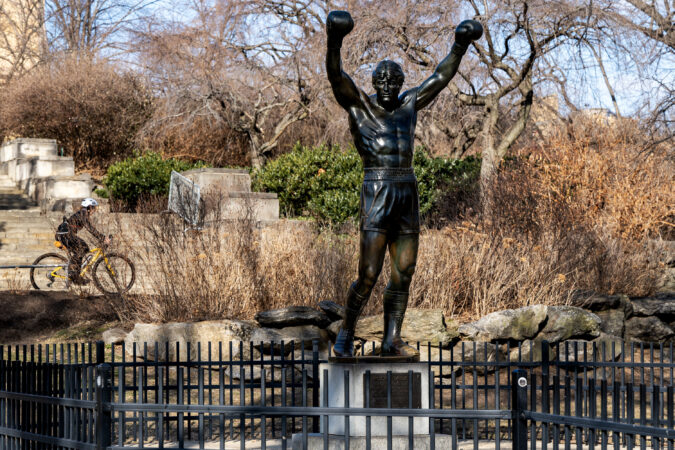
    Our famed Rocky statue could soon be a permanent fixture atop the steps of the Philadelphia Art Museum — again.

    The Philadelphia Art Commission on Wednesday is slated to vote on a plan that, if approved, would affix the original statue — commissioned by Sylvester Stallone for 1982’s Rocky III — at the top of the museum’s East entrance steps later this year. Recently proposed by Creative Philadelphia, the city’s office for the creative sector, the move stands to place the iconic statue in one of the city’s most prominent locations for the umpteenth time since it arrived here more than 40 years ago.

    In fact, Philly’s original Rocky statue has been shuttled back and forth between the museum and the stadium complex in South Philly — another site that was pitched as its permanent home — at least six times, according to Inquirer and Daily News reports. But since 2006, it has sat at the base of the museum’s famed stair set, its most permanent location to date.

    Somehow, though, it always seems to end up overlooking the Benjamin Franklin Parkway from on high, however temporarily. And every so often, debate over the statue seems to reignite, regardless of where the statue sits — a cycle that has been repeating itself since the dawn of the 1980s.

    Here is how The Inquirer and Daily News covered the early days of Philly’s famed Rocky statue:

    https://www.newspapers.com/article/philadelphia-daily-news/188853911/

    Article from Dec 11, 1980 Philadelphia Daily News (Philadelphia, Pennsylvania) <!— –>

    An ‘unnecessarily strident’ monument

    The statue’s roots can be traced back to December 1980, when Stallone proposed the temporary installation of his own bronze visage atop the museum steps for the filming of Rocky III. From the start, the star proposed giving the statue to the city following filming as a “way of reaching the common man and perhaps beginning an interest in fine art,” production manager Jim Brubaker told the Daily News.

    In Budapest, you don’t always see generals and politicians,” Brubaker said. “You see working men with picks and shovels and that relates to the working class.”

    That month, Brubaker and sculptor A. Thomas Schomberg presented a model of the proposed statue to the Art Commission, the Fairmount Park Commission, and the museum’s board. The commission voted 6-2 in favor of letting the statue stay at the museum for the duration of filming, with the two “no” votes indicating that they didn’t want the statue near the museum ever, for any reason, The Inquirer reported.

    “There is a difference between size and greatness,” said local artist and commission member Joseph Brown. “This is unnecessarily strident. I appreciated Rocky, but I don’t think it put our museum and our city on the map.”

    https://www.newspapers.com/article/philadelphia-daily-news/188853847/

    Article from May 9, 1981 Philadelphia Daily News (Philadelphia, Pennsylvania) <!— –>

    Rocky arrives

    The Rocky statue that Philly knows today officially arrived on May 8, 1981, and was unveiled in front of the Philadelphia Art Museum that afternoon — three hours later than expected because the truck that was carrying it got stuck in traffic on the way from West Philly, according to a Daily News report.

    The plan was for the statue to return to California following filming, but Stallone himself was already admittedly embarrassed by the controversy that had quickly cropped up.

    “I’m sorry that got blown out of proportion,” Stallone said, according to a Daily News report. “It’s essentially a prop for the movie. I really don’t want to ruffle anyone’s feathers.”

    After a few days, the Rocky statue was dismantled with the conclusion of filming, and was set to be on its way back to the Golden State. City Representative Dick Doran, however, urged Stallone to reconsider the statue’s relocation, noting that it could be relocated to the Spectrum in South Philly, or placed outside the Philadelphia Tourist Center on JFK Plaza.

    https://www.newspapers.com/article/the-philadelphia-inquirer/188854136/

    Article from May 25, 1982 The Philadelphia Inquirer (Philadelphia, Pennsylvania) <!— –>

    Philly’s ‘Rocky III’ premiere

    In May 1982, Rocky III made its premiere in Philadelphia with a screening at the Sameric Theater at 19th and Chestnut in a star-studded affair that began with a reception at the Art Museum in which Stallone himself presented the Rocky statue to Philadelphia, almost exactly a year to the day that it first arrived in town. It was, The Inquirer reported, a 300th birthday gift to the city.

    On May 24, 1982, the statue was officially unveiled to the city, with Stallone himself pulling the cord on a canvas cover to reveal the sculpture at the top of the museum’s steps as the Lincoln High School band played the Rocky theme, The Inquirer reported. Stallone had “done more for this city than anyone since Benjamin Franklin,” said Doran, then the city’s commerce director.

    “I owe everything to the city of Philadelphia,” Stallone said at the unveiling. “If you could cut up the character of Rocky into a million pieces, each of you would be a part of it.”

    https://www.newspapers.com/article/the-philadelphia-inquirer/188854084/

    Article from May 24, 1982 The Philadelphia Inquirer (Philadelphia, Pennsylvania) <!— –>

    ‘Schlock, chutzpah, and mediocrity’

    Though the statue was displayed prominently, it was not exactly well-received. The Daily News’ Kitty Caparella, for example, called it “only a movie prop.”

    Inquirer columnist Tom Fox, meanwhile, called the statue a “monument to schlock, chutzpah, and mediocrity.” Art Commission member Joe Brown, a local painter, meanwhile, told Fox the statue “violates the spirit of the museum and its environment,” and that the city would be better served by the creation of a statue depicting Tug McGraw, Pete Rose, or Dr. J instead.

    Still, a museum spokesperson said, attendance had increased since the statue’s installation, though they believed it was because of a new exhibit featuring the work of artist Thomas Eakins. Those arriving at the museum to see Rocky, the spokesperson told the Daily News, “don’t even come inside.”

    https://www.newspapers.com/article/philadelphia-daily-news/188854219/

    Article from Aug 3, 1982 Philadelphia Daily News (Philadelphia, Pennsylvania) <!— –>

    Goodbye, Rocky

    Though the statue was only supposed to initially be installed at the Art Museum through mid-July 1982, it remained there through early August that year, Daily News reports from the time indicate. In fact, it wasn’t moved to the Spectrum until Aug. 3, 1982.

    At the time, no one was willing to foot a reported $25,000 bill to get the statue to the Spectrum, and the issue was only settled after negotiations led to splitting the cost between the Spectrum and distributor United Artists, according to a Daily News report from the time. The city, a Commerce Department staffer told The Inquirer, flatly refused to pay.

    But on a hot day, the statue’s run atop the Art Museum’s steps came to an end. Despite encountering difficulties with removal due to the concrete base upon which it had been installed, workers were ultimately able to send the statue on its way to the Spectrum — the spot where it would largely remain until it saw a high-profile move back to the Art Museum for the filming of Rocky V.

    “People are going to miss him,” said onlooker Marcy Landesburg, of Wyncote, amid the statue’s 1982 removal. “They’re having a hard time dislodging him. He doesn’t want to go.”

  • Thomas Paine published ‘Common Sense’ and helped ignite a revolution on this week in Philly history

    Thomas Paine published ‘Common Sense’ and helped ignite a revolution on this week in Philly history

    They just needed a spark.

    The American colonies in the autumn of 1775, then under the thumb of King George III and his sprawling British Empire, were divided on the prospect of independence.

    Revolutionary ideas start in refined quarters, but they must spread to the masses to surge into action.

    And the 13 colonies were divided in threes: those who favored independence from English rule, those who opposed it, and those who wished to remain neutral.

    And then the spark arrived as a pamphlet.

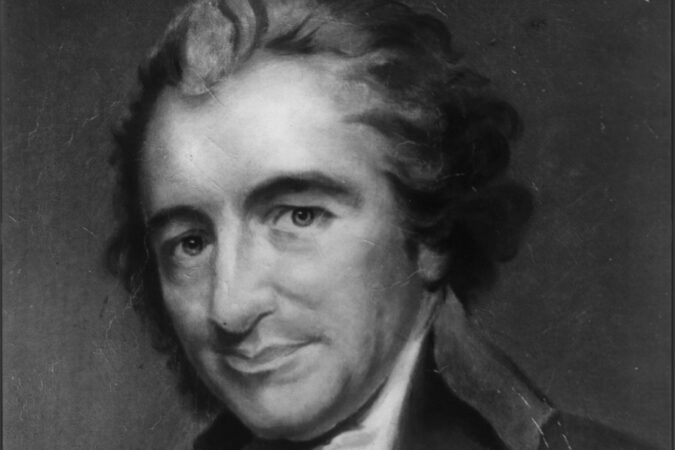
    On Jan. 10, 1776, in a small publishing house at Third and Walnut Streets in present-day Old City, Englishman Thomas Paine published his 47-page document. It promoted the cause of American independence, and stoked the fires of revolution.

    This pamphlet, titled “Common Sense,” was first printed anonymously.

    But the colonists knew who wrote it.

    An original English printing of “Common Sense,” the pamphlet written by Thomas Paine, combined with a rebuke entitled “Plain Truth” by James Chalmers, a British Loyalist officer. The two pamphlets were reprinted together in a book in London in 1776.

    Paine was a self-educated rabble-rouser who had found little success making corsets or collecting taxes.

    And who, upon meeting Benjamin Franklin after giving a speech in London, opted to join the upstart colonists and move to America in 1774.

    After following Franklin to Philadelphia, he followed him into journalism, writing and editing for Pennsylvania Magazine.

    It’s where he displayed a knack for speaking to the common people through essays denouncing slavery, promoting women’s rights, and dumping on English rule.

    And again he took from Franklin, turning his pamphlet into a lightning rod.

    In it he laid out his arguments in plain language.

    An island, he argued, should not rule a continent.

    “Every thing that is right or natural pleads for separation,” he wrote.

    More than 500,000 copies circulated the colonies, convincing the commoners, the people who would actually take up arms against the Royal military, to support a war against Great Britain.

    Despite his outsized role in lighting the fires of rebellion, Paine’s services would go unrecognized for a generation.

    He temporarily returned to Europe after the war, and his later denouncing of Christianity did him no favors on either side of the Atlantic. He died in poverty in New York in 1809 at age 72.

    It wouldn’t be until the mid-1970s for historians to recognize the enduring power of Paine’s pamphlet, which now holds a place of honor a step below Thomas Jefferson’s Declaration of Independence.