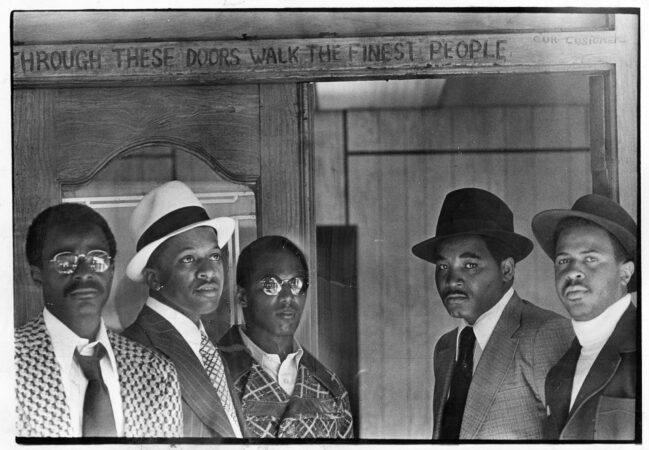
After more than 40 years behind bars, reputed former Black Mafia leader Lonnie Dawson has been freed from prison, ending a decades-long legal drama that includes state and federal convictions for crimes, including drug trafficking and murder.
Dawson’s release, though weeks old, went viral on social media in recent days thanks to video clips appearing to show his first moments as a newly free man. The widely shared video shows a man exiting the gates of a prison and immediately kneeling on a sidewalk in prayer.
Dawson, also known as Abdul Salim, was freed from SCI Smithfield in Huntingdon County on Dec. 22 following a successful petition under the Pennsylvania Post Conviction Relief Act, his attorney, David B. Mischak, told The Inquirer. The Pennsylvania Department of Corrections confirmed Dawson’s release date, noting that he had been held in that state prison for three months before he was freed. The bulk of his incarceration, however, was served in federal prison.
“Mr. Dawson has spent the majority of his adult life behind bars,” Mischak said in a statement posted to his law firm’s website. “After more than 40 years of incarceration, Lonnie Dawson is grateful for the opportunity to live out his remaining years with dignity and peace.”
Dawson’s path to release was a long and circuitous one that stretches back to a 1975 murder of which he was twice convicted at the state level — and sentenced to life. In the 1980s, federal convictions on drug distribution and related charges followed, leading to a staggering 134-year federal sentence. Here is how The Inquirer and Daily News covered it:
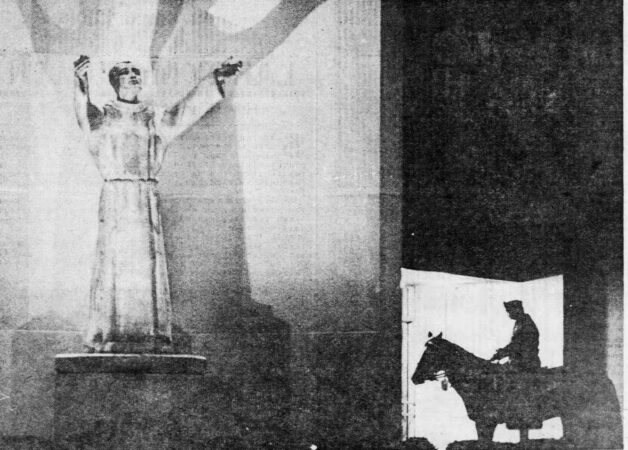
Article from Aug 10, 1982 Philadelphia Daily News (Philadelphia, Pennsylvania) <!— –>
The murder of Herschell Williams
In November 1975, a purported drug dealer and Black Mafia member named Herschell Williams — also known as the “Jolly Green Giant” due to his 6-foot-6 frame — was gunned down near his Mount Airy home. Shortly after the murder, Dawson, along with fellow reputed Black Mafia members Roy Hoskins and Joseph Rhone, were arrested in connection with the slaying while driving on the Schuylkill Expressway, reports from the time indicate.
Investigators later linked Williams’ murder to a dispute over cocaine, and authorities alleged that Hoskins and Rhone carried out the shooting while Dawson, whom they said ordered the killing, served as the getaway driver, The Inquirer and Daily News reported. Several months later, both Dawson and Hoskins were convicted of murder in separate cases and sentenced to life in prison, while Rhone, who jumped bail following his arrest, remained a fugitive.
The convictions stuck until July 1978, when the state Supreme Court ordered new trials due to legal errors during the initial proceedings. Following their arrests, both men had been questioned by then-Detective Michael Chitwood, and Dawson’s conviction was overturned in part because his attorney was not allowed to cross-examine Chitwood. Dawson alleged Chitwood had fabricated a confession used during the trial, according to Inquirer reports.
The retrial, however, did not work out in either man’s favor. Dawson, for his part, was again convicted in August 1982 and later sentenced to life for a second time, despite having maintained at trial that he was busy giving one of his children a haircut about 20 blocks away at the time Williams was killed, according to Inquirer and Daily News reports.
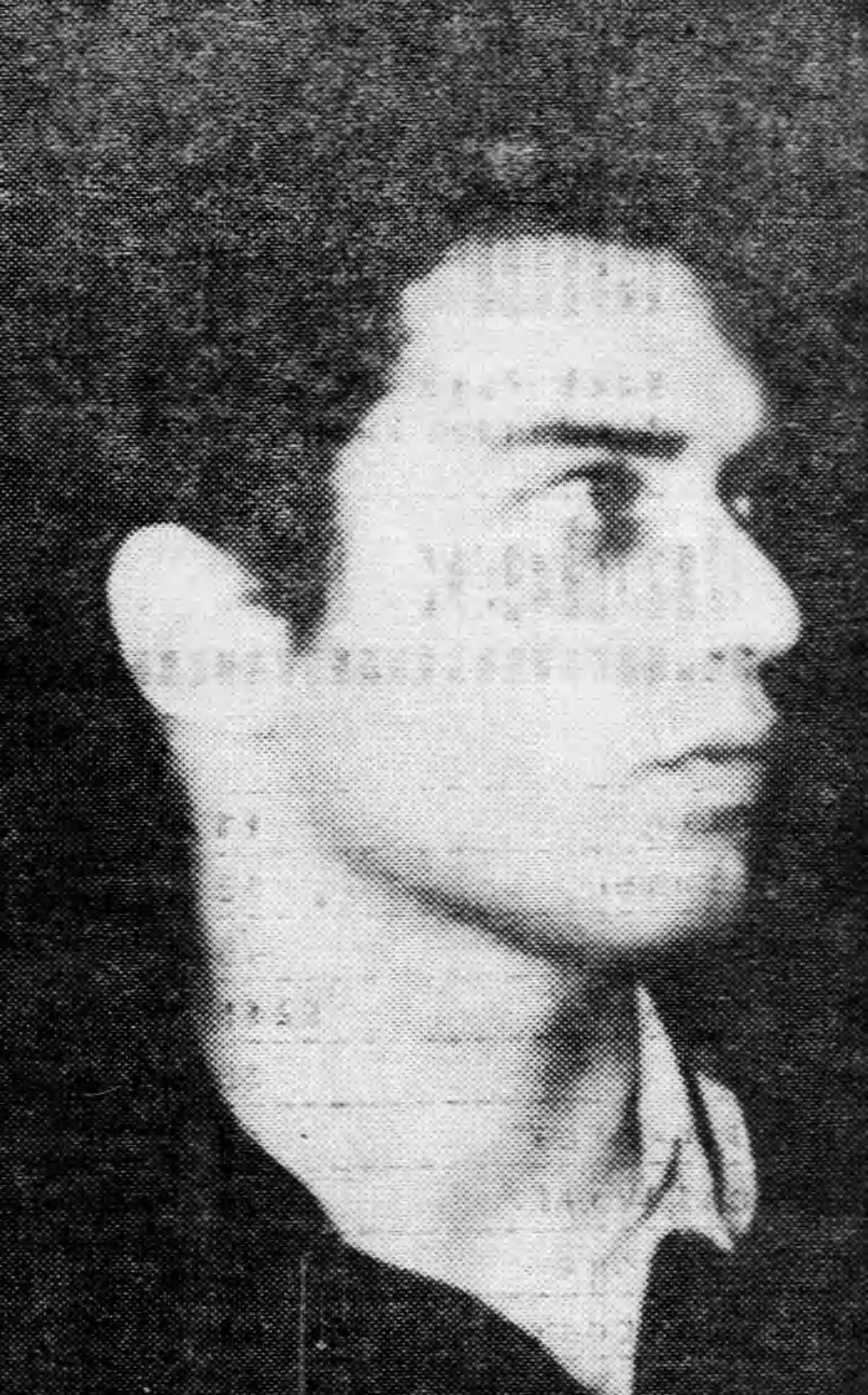
Article from Dec 14, 1982 The Philadelphia Inquirer (Philadelphia, Pennsylvania) <!— –>
A federal conviction
As Dawson awaited retrial in the Williams case, more legal issues were added to his docket. In April 1982, an FBI affidavit alleged that Dawson and Hoskins quickly took over the Black Mafia after the state Supreme Court overturned their convictions, and revealed that both had been investigated over the past year by federal authorities.
That, however, only came to light after Dawson, Hoskins, and several others were arrested following a high-speed car chase on I-95 in which a car was riddled with bullets in an apparent attempt to kill a federal informant, Inquirer and Daily News reports from the time indicate.
The informant, Lawrence D. Simons, who said he was a member of the Black Mafia, was unharmed in the chase, which concluded after his would-be killers crashed their vehicle into a tree, the Daily News reported.
Federal grand jury indictments followed, with Dawson and his alleged cohorts facing a lengthy list of charges, including obstruction of justice, conspiracy, drug, and gun counts. Authorities alleged Dawson was the Black Mafia’s leader, and said the group was linked to drug trafficking throughout Philadelphia and Delaware County, The Inquirer reported.
After a three-week trial, Dawson was found guilty on a number of counts, and sentenced to a 134-year prison sentence and $230,000 in fines — though a later appeal dropped that sentence to 65 years and $100,000. Hoskins faced a similarly stiff penalty.
U.S. District Judge Louis C. Bechtle in his ruling referred to both men as “major drug manufacturers” who were a “danger to the community.” The sentences, the Daily News reported at the time, were the harshest ever imposed by a federal judge in the Philadelphia area for drug trafficking.
Dawson in court denied he was involved in a major drug ring and called the charges “a bunch of malarkey,” the Daily News reported.
Article from Dec 21, 1984 Philadelphia Daily News (Philadelphia, Pennsylvania) <!— –>
‘Ain’t calling too many shots now’
While Dawson was imprisoned in the early 1980s, a report from the Daily News alleged that he remained in control of drug sales in Philadelphia — particularly in North Philadelphia, Germantown, and Mount Airy. An unnamed FBI source told the People Paper that despite Dawson being jailed, his drug trafficking activity did not slow down, and said he regularly met with organized crime figures to orchestrate sales.
The Daily News later reported that Dawson was placed in administrative segregation in prison. The move, an unnamed associate told the paper, diminished Dawson’s alleged stature in the drug trade, and as a result, he “ain’t calling too many shots now.”
In late 1984, Dawson responded to the Daily News’ reporting directly in a letter to the paper in which he denied controlling drug sales anywhere. While in prison, he said, he had never met with organized crime figures to discuss drug manufacturing or sales, and said claims were floated by reporters “in hope of getting some type of promotion and/or attention.”
“Why must I be the sacrificial lamb?” Dawson wrote. “Why?”
Nowhere will celebrate America’s 250th anniversary like Philadelphia. Because nowhere else can celebrate the national milestone like Philadelphia.
Philly is where it happened.
Only in Philadelphia, on July 4, 1776, did 56 sweat-soaked delegates of the Second Continental Congress stride into sweltering Independence Hall to stake their necks on an idea. In the course of human events, it had become time to declare self-evident truths. All men are created equal and endowed by certain unalienable rights.
Some men, that is.
This unforgivable erasure would have reverberations to this day. Nowhere are the centuries-old wounds of that betrayal more visible than in the unrelenting poverty, violence, and inequality preventing so many Philadelphians from their pursuit of happiness.
But the manifesto was still the most revolutionary freedom document humankind ever produced. A single piece of parchment composed of elegant, unwavering prose that defied and dared an empire, forever reordered the rights of man, and drew the eyes of humanity — and judgments of history — upon our humble burg.
Their work for the day done — and in keeping with the rest of the Founders’ stay in the City of Brotherly Love — the framers presumably dusted off their wigs, loosened up their waistcoats, and repaired to the cooling comfort of the City Tavern for a rager for the ages.
Only in Philadelphia.
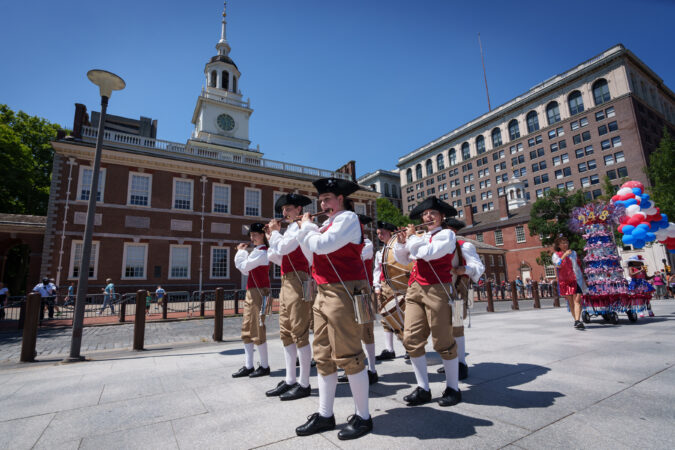
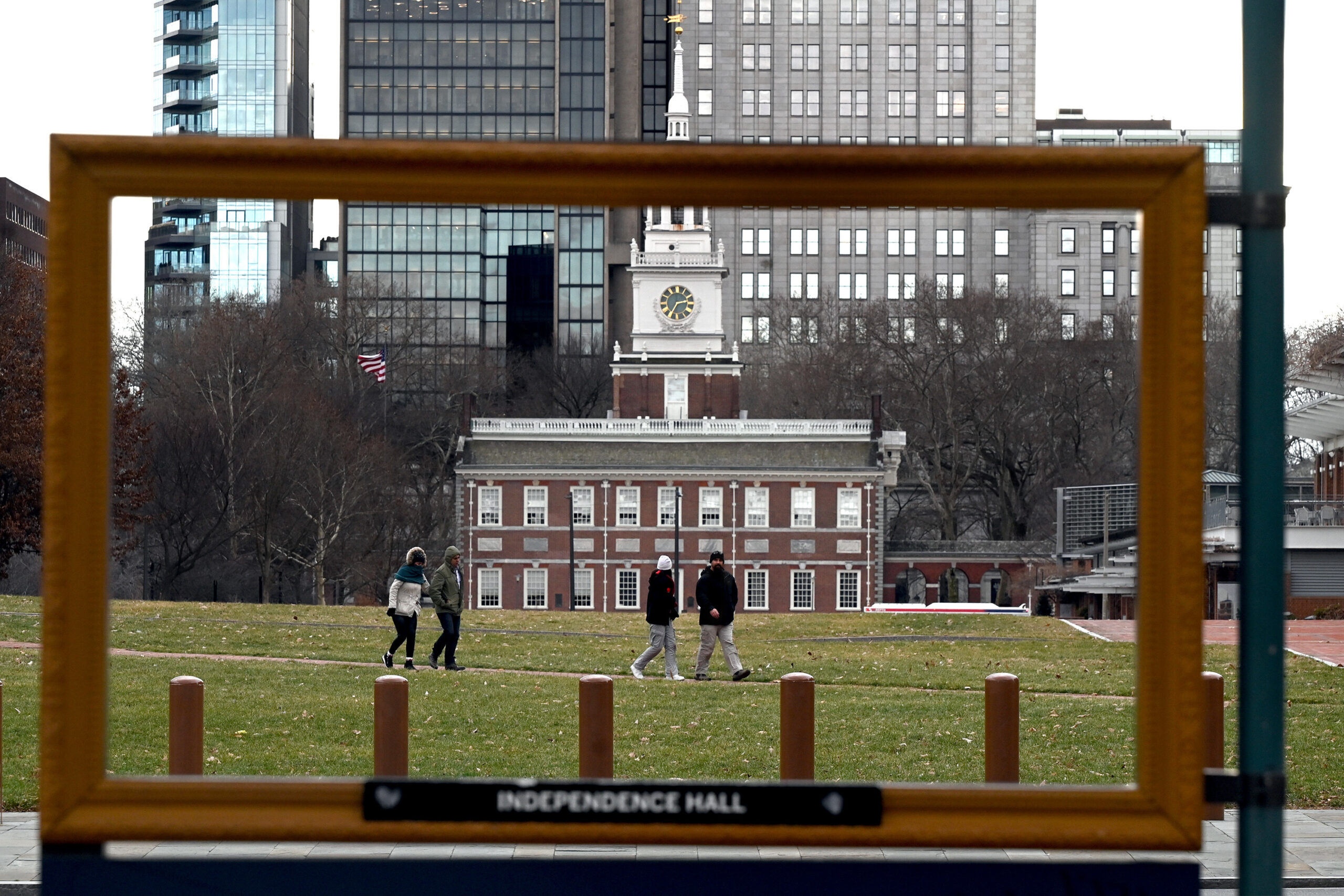
Independence Hall in Independence National Historical Park Jan. 3, 2024. one of the Philadelphia region’s most visited areas, but the lustre has often seem faded in its grounds and buildings. But organizers say it will be different in time for 2026, the 250th birthday celebration of America.
‘Philly is beyond ready’
Two-and-half centuries later, the eyes of the world again fall upon our Philly — for yet another rager for the ages.
In Philly fashion, the city’s preparations for the 250th anniversary of the signing of the Declaration of Independence, also known as the Semiquincentennial, stumbled to a rocky start. Poor funding, a lack of leadership, and miscommunication plagued early stages of Philly’s 250th party planning.
But in truer Philly fashion, dozens of passionate Philadelphian civil servants, cultural leaders, artists, volunteers, and philanthropies rallied to ensure the city where it happened met the moment.
Only a year ago, during a 2026 preparedness meetings, worried planners requested $100 million from city and state coffers to fund festivities and programming worthy of democracy’s birthplace. They have received it.
“A year ago, we were having a conversation about, ‘Are we ready?’, ‘Is the money there?’, ‘Can we pull this off?’” said Max Weisman, an aide to Councilmember Isaiah Thomas, a key planner. “Yes, yes, yes.”
Philadelphia is ready, the planners say. Have no doubt.
These Philly-loving patriots say they have organized a once-in-a-lifetime party equal to the city’s unparalleled role in history — and its irrepressibly proud personality.
“Philly is beyond ready,” said Kathryn Ott Lovell, president and CEO of the Philadelphia Visitor Center Corporation and Philadelphia250, the city’s key planning partner for 2026. “Everyone is pulling out the red carpet. Every museum. Every cultural institution. Every neighborhood organization. Everyone is doing something special for the company that’s coming.”
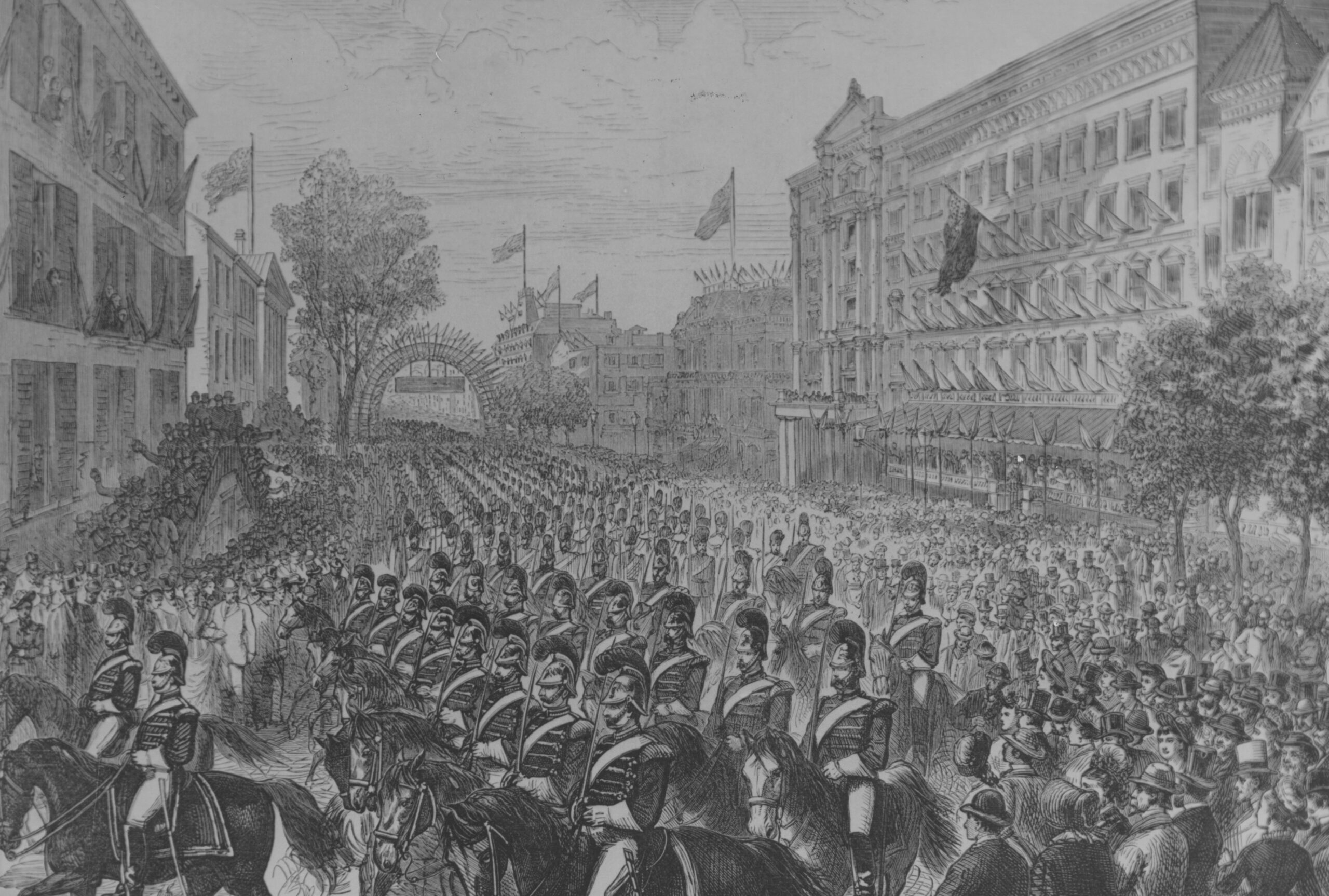
In this depiction published in The Inquirer July 1, 1951, the first event of July 4, 1876, was a huge military parade. The celebration was held in Independence Square after the parade.
A ‘reintroduction to the world’
Look around. Everywhere signs abound of the already-underway party. In the scores of new museum exhibits grandly exploring every power and contradiction enshrined in the declaration bellowed out of Philadelphia 250 years ago. In the abundance of plans for neighborhood programming and beautifications that bring the party to the people in 2026. In new ventures honoring Philly diversity and pride. In the polish and paint in the works for the Historic District.
Hey, Philly cleans up when it needs to.
It was visible when a parade of ships sailed along the Delaware in October to kick off the 250th anniversary of the Navy, founded in Philly. And it was heard in the crisp salutes and solemn hymns of the Marines who crowded Old City in November to mark their branch’s founding, also in Philly in 1775. It builds in the excitement of clock-ticking preparations for the string of big-ticket events that will grace Philadelphia in 2026.
Six FIFA World Cup matches, with a summer fan festival and volunteer-training campus. The MLB All-Star Game. A pumped-up Fourth of July with to-be-announced special guests. TED Democracy talks featuring citizen speakers from Philly and beyond, exploring democracy’s painful past and uncertain present.
It rings out in the genuine excitement of Philadelphians who work in ceaseless dedication to the principle that Philadelphians know how to throw a party.
Philadelphia is not screwing up a party, is Weisman’s mantra (except he doesn’t say, “screwing.”)
Matthew Skic, of Morristown, N.J., Director of Collections and Exhibitions, (left), and Michael Hensinger, of Fishtown, Pa., Senior Manager of K-12 Education, (right), are dressed as Minute Men from the Massachusetts Militia at the opening of the exhibit Banners of Liberty which showcased the original revolutionary war flags at the Museum of the American Revolution in Philadelphia, Pa., on Saturday, April 19, 2025.
Not just a party. A year-long, city-wide commemoration that delivers Philadelphia into a more prosperous future. Before city planners found their 250th footing, Philly tourism and cultural leaders banded together to seize the opportunity. With more than500,000 visitors expected for the World Cup alone, they aim to reintroduce Philadelphia to the world.
“Or introduce ourselves for the very first time to people who do not know Philadelphia or have a very narrow view of Philadelphia,” said Angela Val, president and CEO of Visit Philadelphia, the nonprofit that serves as the city’s official leisure-tourism marketing agency. “We don’t take these big events lightly. They are investments. This is really an opportunity to set ourselves up for success in 2026 and beyond.”
Parties of the past
We’ve been here before.
Every 50 years since 1876, the nation’s Centennial year, and America’s first major birthday bash, Philly has dusted off its wig to get down. Each of these events came with larger national wounds.
“Before every one of these fairs, there’s a scar,” said David Brigham, librarian and CEO of the Historical Society of Pennsylvania, referring to Philly’s previous national birthday parties. “There’s always been a conflict and a pain.”
And in these moments, Philly has strove to be a salve, he said. Most of the time, anyway.
In 1876, when America reeled from unhealed wounds of the Civil War, Philadelphia built a small city in Fairmount Park — and hosted 10 million people from 37 countries. The showcase of growing American innovation and economic prowess aimed to heal a ruptured nation. Memorial Hall, its massive art gallery, remains today as the Please Touch Museum.
In 1926, as America emerged from the carnage of World War I, our Sesquicentennial marked the building of the Ben Franklin Bridge, the transformation of what is now FDR Park, and the construction of a temporary, gleaming, utopian metropolis in South Philly.
The Bicentennial in 1976 led to the creation of the Mann Center and the African American Museum in Philadelphia, even if the party itself was marred by Mayor Frank Rizzo’s heavy-handed security — he summoned 15,000 National Guard members.
We’ve been here before. And we aren’t perfect.
As ready as Philadelphia stands, next year’s commemoration will not include the big legacy projects of past celebrations, the bridges, stadium, and new museums.
But maybe that’s not what this moment is about, anyway.
An unfinished journey
Just as past planners grappled with the questions of their American moment, Philadelphia organizers wrestle with ours.
“It’s a commemoration of why our republic was created,” Lovell said. “But also about a recommitment to the ideals that were established. We were founded on these basic principles and values that the Founding Fathers fought over. And we’re still fighting over it.”
It’s that same theme — the grand fragility of our American experiment — that pulses though the Museum of the American Revolution’s landmark exhibit, “The Declaration’s Journey.”
A breath-taking assemblage of rare artifacts, including Thomas Jefferson’s writing chair and Martin Luther King’s prison bench, the museum’s most ambitious show ever explores the 250-year global impact of the declaration. How words proclaimed out from Philadelphia inspired revolutions and freedom movements throughout the centuries
“The American Revolution is not synonymous with the Revolutionary War,” said R. Scott Stephenson, president of the museum. “It is a centuries-long, ongoing experiment in liberty, equality, and self-government.”
And that journey’s not yet over.
The birth of democracy in Philadelphia, and the worldwide struggle to sustain it, represents the most significant event since the birth of Christ, said filmmaker Ken Burns. (And here we though it was Super Bowl LII.)
The American war may be over, but the revolution is not, said Burns, whose 12-hour docuseries, “The American Revolution,” is streaming on PBS.
All we were promised was the pursuit, he said. And the chance to forever make the imperfect a little less so.
The republic the Founders forged in the Philly heat stands the most divided and tested it has been in decades, with core disagreements about its very foundations.
It is only right, then, that Philadelphians march onto the global stage. Who else but us?
In every way, being America’s birthplace shapes Philadelphia. Where else is its hallowed iconography such a daily staple? Where else does its symbolism so powerfully frame every civic successes — and failure? Every sports triumph and cultural happening. Every step forward; every stumble backward.
Where else does the promise and contradictions of a proclamation that turned the world upside down so intrinsically coarse through the lifeblood of a place?
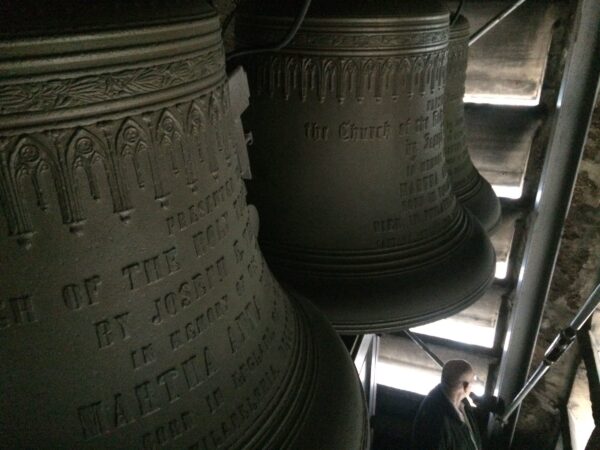
Two friends — a rector and his organist at the Church of the Holy Trinity on Rittenhouse Square — found the inspiration in the run-up to the Christmas celebration in 1868.
The result of their delayed creativity was “O Little Town of Bethlehem,” composed and heard in a Philadelphia church.
It was a song that spread across the world, and put the 19th-century church on the map.
The silent stars
Three years before, in 1865, the church’s vicar visited the Holy Land.
So moved by what he saw on that trip, the Rev. Phillips Brooks put pen to paper.
The result was a poem:
O little town of Bethlehem,
How still we see thee lie.
Above thy deep and dreamless sleep
The silent stars go by.
In totality, as a piece of music, the song is not exactly upbeat.
The lyrics reflect on the darkness found after midnight. Cries of misery reverberating through dark streets under cover of ink-black skies.
But there’s also everlasting light.
A Christmas miracle
Three years later in 1868, Brooks asked the church’s organist, Lewis Redner, a real estate agent who played the organ for four churches, to set music to those lyrics Brooks penned.
It was to be part of a song that would play during the Christmas holiday in 1868.
And then Brooks waited.
To his congregation, Brooks was an inspiring preacher. In the throes of the American Civil War, he would ride on a wagon to the battlefields around Gettysburg to perform last rites on dying soldiers and offer words of comfort to wounded soldiers — Union and Confederate.
Days turned to weeks, and Brooks was still waiting for the completed song.
But as the holiday approached, the procrastination had reached a fever pitch.
Two days before the Christmas service, on a Friday, Brooks nervously asked about the song.
“Have you ground out the music yet?”
“No,” Redner said.
But he assured Brooks: “I’ll have it by Sunday.”
On Saturday night, Redner wrote in his diary that his brain was in knots over the tune, according to The Inquirer.
Once asleep, he woke with a start.
He wrote that he heard an angel whispering in his ear.
Redner then scribbled down the tune.
And before the Sunday service, he layered on the harmony.
Outside the front door of Independence Hall, amid a wet and mild December in Philadelphia, a handful of devoutly orthodox Jews decided to add their light to the world.
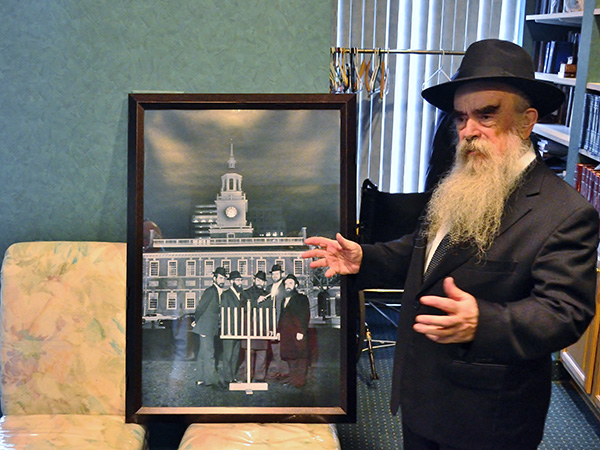
Four men of the Lubavitcher sect of Hasidic Judaism, including renowned Rabbi Abraham Shemtov, gathered on Independence Mall on Dec. 14, 1974. Together they lit what is believed to be the first menorah, or Hanukkah candelabrum, ever illuminated on public property.
And together they watched their light spread.
“Philadelphia is where we started,” the now-88-year-old Rabbi Shemtov told The Inquirer in 2014. “Now it’s everywhere, in too many places to count.
“So, the idea caught fire,” he said, smiling through his long, gray beard.
Hanukkah is the Jewish celebration of light over darkness, and of faith and freedom over oppression and persecution. While it’s not the biggest holiday in the Jewish faith, its themes of perseverance and hope have been as synonymous with the winter solstice as any Christian tradition.
The most obvious reason that menorahs were traditionally not lit outside was because the flame would go out.
So on that breezy evening in mid-December, the flame stayed lit against all odds. Some might even call it divine intervention.
“What you need to understand,” Shemtov explained, is that Jewish tradition dictated that the candelabrum be lit at home, and placed “at the spot the house shares with the outside,” typically at the front door.
“Our sages say outside is better,” he said with a shrug. “So, we brought it outside a step further.”
In the years since, public menorahs havesprouted up across Europe and North America, from Revolution Square in Moscow to the White House in Washington.
“The simple lighting ceremony in Philadelphia,” wrote The Inquirer’s longtime religion reporter David O’Reilly, “became the foundational story of public menorahs for most of the world’s Jews.”
For centuries, menorah lighting had at times been a covert domestic ritual.
“We lit the first candle. There was some singing and dancing. It was a private event in public,” Shemtov said in 2014. “But even so, in concept we were sharing the thing with the world.”
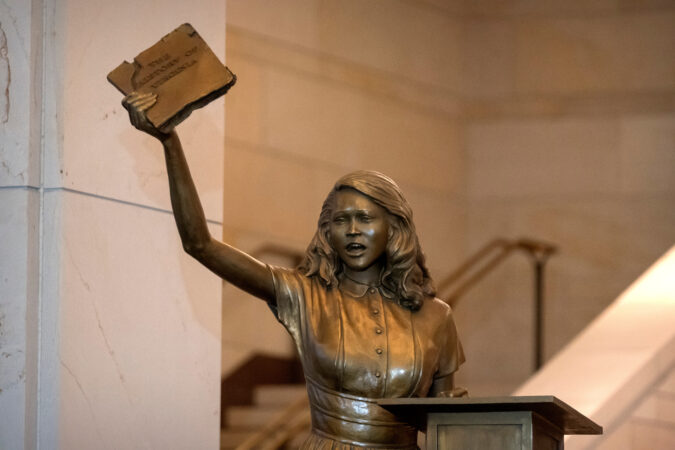
Back in 1951, a teenage Barbara Rose Johns led a walkout at her segregated high school in Virginia that would go on to contribute to the U.S. Supreme Court’s landmark decision in Brown v. Board of Education. Now, a statue of her is on display in the U.S. Capitol, replacing a sculpture of Confederate Gen. Robert E. Lee.
“The Commonwealth of Virginia will now be properly represented by an actual patriot who embodied the principle of liberty and justice for all,” House Minority Leader Hakeem Jeffries (D., N.Y.) said at a ceremony Tuesday unveiling the statue. “And not a traitor who took up arms against the United States to preserve the brutal institution of chattel slavery.”
And while Johns today is remembered as a seminal civil rights figure who hailed from Virginia, she spent much of her adult life in Philadelphia.
Born in New York City in 1935, Johns as a child moved to Prince Edward County, Va., where she lived on a farm with her grandmother. The county’s public schools were segregated, and in the late 1940s, she began attending an all-Black high school in Farmville known as Robert Russa Moton High School.
Johns, according to the Moton Museum, became frustrated with the poor conditions at the school, which lacked resources and was overcrowded compared with white facilities. In April 1951, when she was 16, she led a walkout with hundreds of other students to protest the conditions, ultimately gaining the support of NAACP lawyers, who filed a lawsuit that challenged the practice of segregated education.
Known as Davis v. Prince Edward, the lawsuit went on to become one of the five cases that the U.S. Supreme Court reviewed in Brown v. Board of Education. The high court’s landmark 1954 decision declared “separate but equal” public schools unconstitutional. Despite resisting the court’s decision, Prince Edward County schools were ultimately integrated by the mid-1960s.
People take photos of a statue of Virginia civil rights activist Barbara Rose Johns, whose statue will replace one of Robert E. Lee as one of Virginia’s two statues on display at the Capitol, at a dedication ceremony Tuesday, Dec. 16, 2025, in Washington.
Following the walkout, Johns’ parents were worried for their daughter’s safety and sent her to live in Montgomery, Ala., where she resided with her uncle, the Rev. Vernon Johns, who was a pastor and civil rights leader in his own right. She completed high school there and studied for a time at Spelman College in Atlanta, according to the Farmville Herald, Farmville’s local newspaper.
In 1954, she married the Rev. William Rowland Powell, and the pair later moved to Philadelphia. As a resident, Johns continued college at Drexel University, from which she graduated in 1979 with a bachelor’s degree in library science, according to the 2018 bookRecovering Untold Stories: An Enduring Legacy of the Brown v. Board of Education Decision.
Johns would go on to have five children, and worked for more than 20 years as a librarian for the Philadelphia School District. Public information about her time in Philadelphia is scarce, and neither Drexel nor the school district immediately responded to requests for comment.
On Sept. 25, 1991, Johns died in Philadelphia following a battle with cancer. Her family, the Farmville Herald reported, knew little of activism and her involvement in the Moton walkout, only learning of it late in her life.
The statue of Johns is part of the National Statuary Hall Collection at the Capitol, in which each state can contribute two statues. The other statue representing Virginia is of George Washington.
The National Statuary Hall displays 35 of the statues. Others are in the Crypt, the Hall of Columns, and the Capitol Visitor Center. House Speaker Mike Johnson (R., La.) said the Johns statue will be placed in the Crypt.
Former Democratic Virginia Gov. Ralph Northam had requested the removal of the Lee statue. In December 2020, a state commission recommended replacing Lee’s statue with a statue of Johns. The removal occurred during a time of renewed national attention over Confederate monuments after the death of George Floyd, and the Lee statue was relocated to the Virginia Museum of History and Culture.
Johns is also featured in a sculpture at the Virginia Civil Rights Memorial outside the state Capitol in Richmond. Her former high school is now a National Historic Landmark and museum.
“She was brave, bold, determined, strong, wise, unselfish, warm and loving,” said Terry Harrison, one of her daughters, at Tuesday’s unveiling, according to NPR. “We’re truly grateful that this magnificent monument to her story, the sacrifices that her family and her community made, may continue to inspire and teach others that no matter what, you too can reach for the moon.”
This article contains information from the Associated Press.
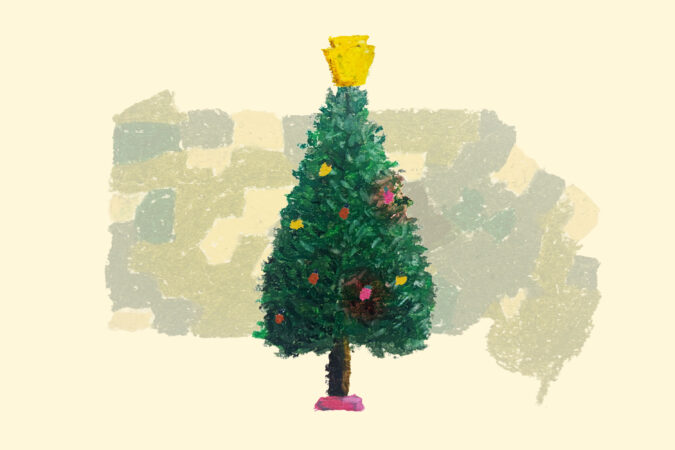
Taking a direct route, Santa has to travel 3,400 miles from the North Pole to Philadelphia. In comparison, your Christmas tree will have barely moved. That’s because there’s a high likelihood that your tree is one of the approximately 720,000 grown in the state of Pennsylvania.
Christmas tree lore runs deep around these parts. Don’t take our word for it, Taylor Swift grew up on an 11-acre Christmas tree farm in Reading – she even wrote a song about it.
That’s because Pennsylvania and New Jersey played a significant role in shaping the Christmas tree industry. Pennsylvania is still home to 1,301 Christmas tree farms, the second most in the nation, according to the U.S. Department of Agriculture.
Christmas trees harvested by county annually in Pennsylvania and New Jersey
0
0 – 5k
5k – 20k
20k – 50k
50k – 110k
Indiana, Pa. was once known as the "Christmas Tree Capital of the World."
Columbia, Pa. was where the technique of shearing Christmas trees was invented.
Mercer, N.J. was where the first commercial Christmas trees were grown.
Philly
Pittsburgh
Data: U.S. Department of Agriculture
America’s very first Christmas tree farm was established just outside of Trenton, according to Henry H. Albers and Ann Kirk Davis, authors of the Wonderful World of Christmas Trees. In 1901, a farmer named William McGalliard planted 25,000 Norway spruce trees on his farm in Mercer County, and would later sell his trees seven years later for $1 each.
Before McGalliard’s innovation, most yule trees were wild evergreen conifers (think green cones) cut from forests or abandoned farm land.
A 2000 Inquirer article on Philly and Pennsylvania’s role in establishing the Christmas tree tradition. The Christmas tree in the early illustration is indicative of how wild Christmas trees were far less dense and conical before tree shaping was invented.newspaper.com
Although the origins of decorating Christmas trees indoors are uncertain — often attributed by historians to early German immigrants — archival Inquirer articles have claimed that Philadelphians were among the first Americans to promote the tradition.
Although the growing industry began in Jersey, Pennsylvania farmers were instrumental in improving Christmas tree cultivation through the invention of techniques that are still practiced to this day.
story continues after advertisement
Fred Musser of Indiana County, Pa., started growing seedlings that he sold to other Christmas tree farmers in order to improve the quality of the trees, becoming the nation’s first ever Christmas tree nursery in the late 1920s. Andrew Abraczinskas, who first planted trees in Columbia County in 1915, invented the widely adopted process of shearing the sides of trees such that the resulting trees would keep a dense, conical “Christmas tree” shape.
McGalliard, Musser, and Abraczinskas’s work effectively ended the practice of harvesting wild trees and heavily influenced how trees are grown today:
Many growers buy young plants from tree nurseries where they were raised from seeds that have been genetically curated for the best chance of survival, either in seedbeds or as individual plugs.
Planting happens as soon as the ground thaws in the spring, typically in March. Trees establish themselves better if planted by mid-April, when temperatures rise and new growth begins to emerge.
After about the third growing year, growers wait until August for the new growth to harden before trimming the tree. Every year, the tree must be trimmed again, the base around the trunk pruned, and sprayed with pesticides.
Growers trim the sides to form the classic conical Christmas tree shape. This directs the tree’s energy upward and encourages denser needle foliage.
Trees reach their ideal marketable height of six or seven feet after about seven years, depending on the species. In the holiday harvest season, retail customers can select and cut their own tree, which is then netted by a mechanical baler for easy transport home to be adorned and adored.
While most of the growing process is the same, there are in fact a few different species of trees used for Christmas trees: notably: Firs, Pines, and Spruces. Each region will be better at growing specific subspecies within those three.
“Christmas tree species that you'll find growing in any production region reflect the climate and what grows well there. For instance, in the Pacific Northwest, they grow a lot of Noble Fir and Douglas fir,” said Rick Bates, Associate Professor or Horticulture at Penn State, who also advises growers on Christmas tree management.
“Here in Pennsylvania, we grow a lot of Fraser fir and Douglas fir and a handful of other species.”
Fir trees make up 60–70% of Christmas trees from Pennsylvania. They have flat, soft, long-lasting needles and some, like Douglas firs, have a citrus scent. Fraser firs are currently the most popular yule tree in the country, with European varieties like Turkish, Nordmann, and Korean firs introduced in the past 20 years.
Pine trees with slender, bundled needles and a sharp, earthy scent. They have a long history in Pennsylvania Christmas tree cultivation. Scotch pines, promoted by early innovator Musser, along with Eastern white and red pines, were once the state’s most popular Christmas tree.
Spruce trees, including the bluish-green Colorado spruce, have square, stiff needles that hold ornaments well but can be prickly and shed quickly. Norway spruces were the first commercially grown Christmas trees near Trenton.
Managing a Christmas tree farm can be fun, says Gerrit Strathmeyer II, a tree farmer in York County and president of the Pennsylvania Christmas Tree Growers Association, but the work is also a years-long endeavor that is logistically and physically demanding.
“Think of farming Christmas trees like farming corn or soybeans. They’re on what’s called a one year rotation — we’re on a 10 year rotation.”
The work is tough and labor-intensive. Planting begins in the still-chilly early spring, while growers wait until the hottest late summer months to start manually shearing, as Strathmeyer recounts: “I remember my high school days growing up, my summer jobs were just working in the field for eight, nine, ten hours a day.”
Subscribe to The Philadelphia Inquirer
Our reporting is directly supported by reader subscriptions. If you want more journalism like this story, please subscribe today
Come the winter months, while everyone else enjoys the festive season, this is the busiest time for growers, who take inventory and harvest trees.
Russell Wagner, a former board member of the Pennsylvania Christmas Tree Growers Association, whose farm is located 45 miles north of Harrisburg, has been monitoring the snow forecast in preparation for a busy work week.
“If we get a lot of snow, it can really hamper things, though light snow just makes it more Christmassy.”
story continues after advertisement
Strathmeyer said that his dad and uncles were at their Christmas tree peak in the late ‘90s and early 2000s. “They had 2,500 acres of Chrstmas trees and were selling around 120,000 cut Christmas trees.
Today, Strathmeyer sells around 22,000 trees a year, and the industry is no longer at its pinnacle. In the most recent USDA Census of Agriculture (2022), Pennsylvania had only 60% as many Christmas tree farms as it did 20 years ago.
Wagner attributes this to the fact that “the initial cost to get into the business is prohibitive. Unless you’re already a Christmas tree grower and another generation is going to continue it, it’s very difficult to get started.”
The industry was also disrupted by the advent of the artificial tree in the last 30 to 40 years, which are becoming increasingly more realistic — some even simulate the smell of a yule tree.
A 1972 Inquirer article about the artificial Christmas trees and Indiana County, once known as the "Christmas Tree capital of the world" at the time.newspaper.com
Strathmeyer, who is 38, said that “the popularity of the real Christmas tree has kind of plateaued off. It's a generalization, but our generation I think, people don't want to deal with the mess of a tree, and so that deters them from getting a real tree.”
However, Strathmeyer is optimistic. He is currently transitioning one of his wholesale farms to a choose-and-cut farm – where customers visit the farm, select a tree to cut, and take it home. He credits the recent popularity of these on-site experiences to social media. “People want that experience,” said Strathmeyer, “they want to take pictures out on the farm.
“Maybe they'll put up with the mess of a real tree because their kids want to go out to the farm and ride the wagon and run through the field.”
Support That Keeps Our Journalism Evergreen
Rooted in the field and committed to the facts, our newsroom brings you in-depth reporting. Support quality journalism by making a donation today.
Bates said Pennsylvania has a thriving choose-and-cut scene and that “a lot of those retail choose-and-cut farms also have other activities, like they may have a corn maze or some kind of agritainment.”
Combined with Pennsylvania’s proximity to major cities along the eastern seaboard, this growing popularity of experience-forward farms suggests the industry will remain viable for the foreseeable future.
It might be too late for you to grow up on a Christmas tree farm like Taylor Swift, but it’s not too late to ride a wagon and run through local Christmas tree fields. Whether you’re going to cut your own, or pick one up from a parking lot, we’ve got you covered with guides on where to go and how to get one delivered.
Methodology
Christmas tree data comes from the U.S. Department of Agriculture (USDA) Census of Agriculture data, which was most recently conducted in 2022, and accessed via the USDA’s National Agricultural Statistical Service. The data accessed cover farms that produce Christmas trees, including the number of farms, trees harvested, and acres planted.
Staff Contributors
Design, Development, and Data: Jasen Lo, Sam Morris
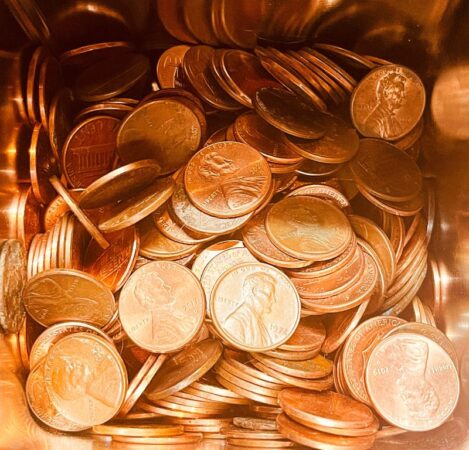
On Thursday, a three-coin set of the final pennies minted for circulation sold at auction for $800,000. Another of the sets sold for $180,000.
In all, the final pennies sold for a combined nearly $17 million.
Sold by Stack’s Bowers Galleries, the sets represented the 232 years since the penny was first minted in Philadelphia in 1793. Each included some of the last pennies struck for circulation at the U.S. Mint’s facilities in Philadelphia and Denver, plus a 24-karat gold penny minted in Philadelphia. Each coin bears a unique omega symbol (Ω), marking the end of the penny.
The Philadelphia U.S. Mint struck the final circulating one-cent coins in November after President Donald Trump ordered the Mint to stop producing new pennies earlier this year. The last small-change coin the government canceled was the half-cent in 1857.
Costly to produce and displaced by digital payment, the penny had grown almost as irrelevant as the half-cent. Still, pennies aren’t disappearing soon. Americans have hoarded 300 billion pennies, which remain legal tender, officials say. Killing penny production is estimated to save around $56 million a year, experts believe.
Thursday’s auction had been closely watched by collectors and numismatics, who had expected bidding to be high. None more than for the final lot, which eventually topped out at $800,000. The special lot came with the three origin dies used to strike the coins.
“This set represents the VERY LAST cents struck in the classic circulating finishing, the true Omega,” read for the listing for the final pennies. “It is impossible to overstate the historic nature of these three pieces, which are likely the most significant coins to emerge from the United States Mint this century.”
Around 2 p.m. Gold spoke with police by phone, and demanded President Ronald Reagan — who first ran on the Make America Great Again campaign slogan — resign from office.
And turn over leadership of the country to Gold,who said he wanted to be called the Antichrist.
In a statement that was read to the press, Gold wrote:
“Either choose my leadership, or accept the death of America.”
Back then, the Catholic high school was separated into two segregated schools: the boys’ school in the south wing, and the girls’ school in the north wing.
Gold took the hostages in the boys’ wing. Shortly afterward, the 1,950 male students were dismissed. They walked out just as the 2,150 female students were leaving for the day on a shortened schedule. Together, boys and girls filed calmly out of the massive, three-story school building at Academy Road and Chalfont Drive.
About an hour into the standoff, Gold let the secretary go after learning she was a mother of four. Shortly afterward, he traded the assistant dean for a food order, leaving only three male students as hostages.
Around 7 p.m., a police negotiator briefly entered the disciplinarian’s office.
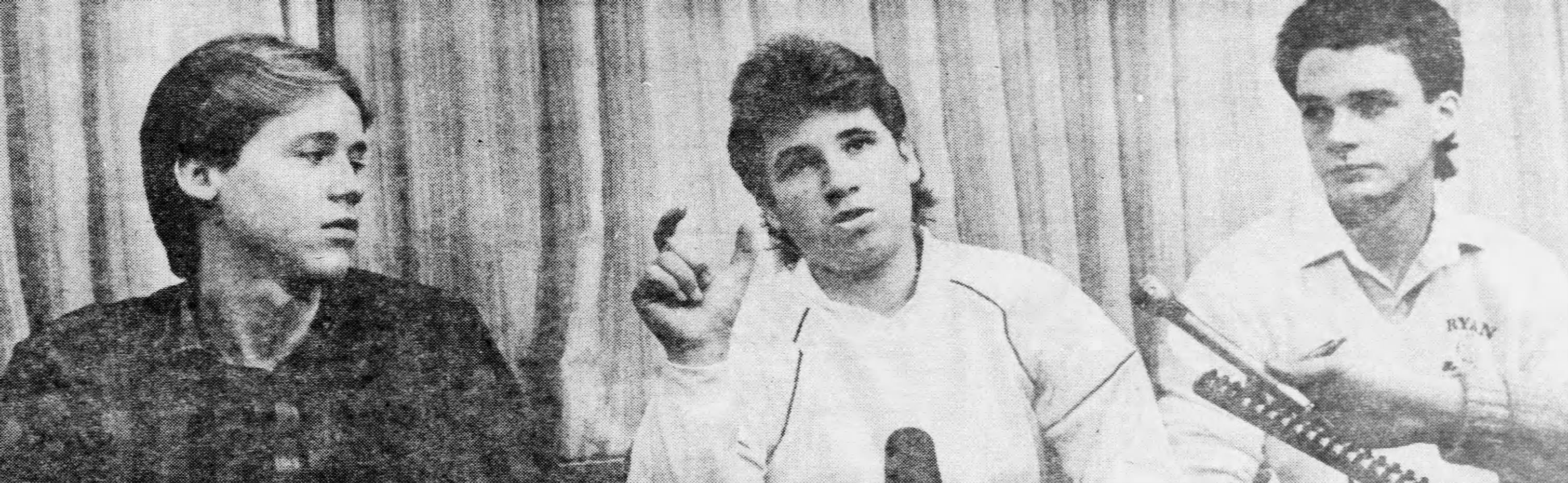
As student hostages (from left) Patrick Hood, 15, Raymond Smith, 16, and Mike Wissman, 17, meet the press, Smith estimates the size of the captor’s knife.
Gold told the negotiator on the phone that he would let two of the students go, and then the officer heard “a commotion and a lot of screaming” on the other end of the phone.
The students decided the gun Gold was brandishing was a fake.
So in good, old-fashioned Northeast Philly fashion, they jumped him. And it turned out they were right: The gun was a starter’s pistol, and it was loaded with blanks.
The students overpowered Gold, and held him down until the stakeout officers rushed in and put an end to the more than seven-hour standoff.
Scientists have discovered the oldest evidence of ancient humans igniting fires: a 400,000-year-old open-air hearth buried in an old clay pit in southern England.
The study, published in the journal Nature, is based on a years-long examination of a reddish patch of sediment excavated at a site in Barnham. It pushes back the timeline on fire-making by about 350,000 years.
The nebulous question of how far back human ancestors conjured fire is deeply intertwined with some of the biggest outstanding mysteries about human evolution. The ability to reliably set fires would have allowed humans to cook food, expanding the range of what they could eat and making meals more digestible. That, in turn, could have supported bigger brains that consumed more energy, catalyzing new social behaviors as humans gathered around campfires.
But campfires don’t leave fossils. It takes painstaking work to reconstruct these ephemeral uses of technology. And what remains unclear is who set them. No telltale bones have been recovered at Barnham, but researchers think it was Neanderthals, close cousins of our species who interbred with our ancestors.
“The evidence of fire is incredibly difficult to preserve. If you get to ash and charcoal, it can wash away. Sediment can get washed away,” said Nicholas Ashton, curator of Paleolithic collections at the British Museum and one of the leaders of the work. “We just found this one pocket — quite a large site — where it happens to be preserved.”
Even when traces of fire remain, the task of distinguishing incidental flames sparked by lightning strikes or wildfires from those set by people is difficult. Perhaps most challenging is distinguishing between fires ignited by humans with the know-how from those produced by scavenging embers from wildfires.
The study could spark more debate.
“The authors did an excellent job with their analysis of the Barnham data, but they seem to be stretching the evidence with their claim that this constitutes the ‘earliest evidence of fire making,’” Wil Roebroeks, an archaeologist at Leiden University, said in an email, calling the evidence “circumstantial.”
Ségolène Vandevelde, an archaeologist and adjunct professor at the University of Quebec at Chicoutimi, praised the multidisciplinary approaches the authors used and said the finding was “solid.”
Pyroarchaeology
In the Paleolithicera, the Barnham site would have been a woodland with a seasonal pond — set away from the main river valley, where predators might have roamed, according to Robert Davis, an archaeologist at the British Museum and one of the authorsof the study. The wildlife would have included elephants, lions, deer, fish and other small mammals.
Despite the fleetingnature of fire, it can leave traces under the right conditions. At the site in Barnham, where artifacts such as heat-shattered flint hand axes were also found, researchers were intrigued by a layer of reddish sediment — a result of iron-rich sediments being heated to produce a mineral called hematite. For four years, they studied it, trying to determine whether it was the result of a wildfire or deliberate human activity.
One of the first questions they asked was whether this was a one-time blaze or something closer to a fireplace that was lit and relit many times.
To deconstruct this question, scientists studied the magnetism of the sediment, which is altered by heating. They conducted modern experiments, to see if they could come up with an estimate of how many heating events might have resulted in the magnetic profile of the sediment — and found that after about a dozen heating events, each one four hours long, their modern samples mimicked the archaeological one.
Then they examined the chemistry of the site — scrutinizing particular chemical compounds left behind. The patterns they found suggested humans had been using these fires.
The last element was small pieces of cracked flint scattered about the site — as well as two bits of pyrite, which can create a spark when struck together. A geological study of the area showed that pyrite was scarce in the local landscape, leading the authors to argue that the inhabitants had carried it there for the specific purpose of making fire.
Scavenging sparks vs. setting fires
The archaeological record with examples of fires used by hominins — the ancestors of humans — stretches back more than a million years ago in Africa.
But what interests scientists is not just the ability to successfully scavenge sparks from wildfires or lightning strikes, but also the ability to reliably create it — possibly by striking flint and pyrite together to create sparks.
The oldest accepted evidence of fires purposefullyset are from a Neanderthal site dated to 50,000 years ago in France. That evidence is considered convincing in part because there are chunks of flint showing “microwear traces of having been struck” to create sparks, Roebroeks said. But at Barnham, there are no microwear traces, leaving room for disagreement.
“It’s a very contentious debate that’s been going on for some time,” Davis said.
Early hominins would have learned to harvest fire by collecting embers, harvesting the right fuel and tending the fire. And eventually, they had to learn how to make it on demand — which would allow them to live in colder places, cook, fend off predators and socialize after dark.
The study does not suggest that Barnham was where fire originated; it was probably widespread across the ancient world. But it does offer a rare, preserved snapshot of prehistoric life.
“The maintenance of fire requires social cooperation, cultural rules and work coupled with knowledge of wood types, and means that a complicated tradition is at play,” said John Hawks, a paleoanthropologist at the University of Wisconsin at Madison.
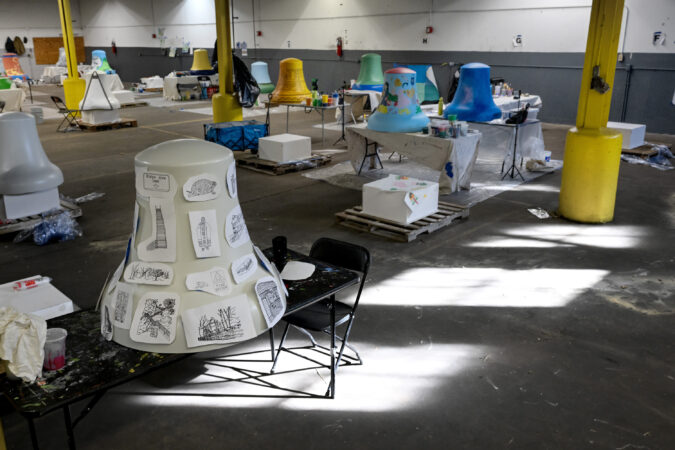
Philly is getting ready to dress itself up — with Liberty Bells. Lots of Liberty Bells.
Organizers of Philadelphia’s yearlong celebrations for America’s 250th anniversary in 2026 gathered in a frigid Philadelphia School District warehouse in Logan on Tuesday, offering a special preview of the 20 large replica Liberty Bells that will decorate Philly neighborhoods for the national milestone.
Designed by 16 local artists selected through Mural Arts Philadelphia — and planned for commercial corridors and public parks everywhere from Chinatown and South Philly to West Philly and Wynnefield — the painted bells depict the histories, heroes, cultures, and traditions of Philly neighborhoods.
As part of the state nonprofit America250PA’s “Bells Across PA” program, more than 100 painted bells will be installed across Pennsylvania throughout the national milestone, also known as the Semiquincentennial. Local planners and Mural Arts Philadelphia helped coordinate the Philly bells.
“As Philadelphia’s own Liberty Bell served as inspiration for this statewide program, it makes sense that Philly would take it to the next level and bring these bells to as many neighborhoods as possible,” Mayor Cherelle L. Parker said in a statement. “We are a proud, diverse city of neighborhoods with many stories to tell.”
Kathryn Ott Lovell, president and CEO of Philadelphia250, the city’s planning partner for the Semiquincentennial, said the bells are a key part of the local planners’ efforts to bring the party to every Philly neighborhood.
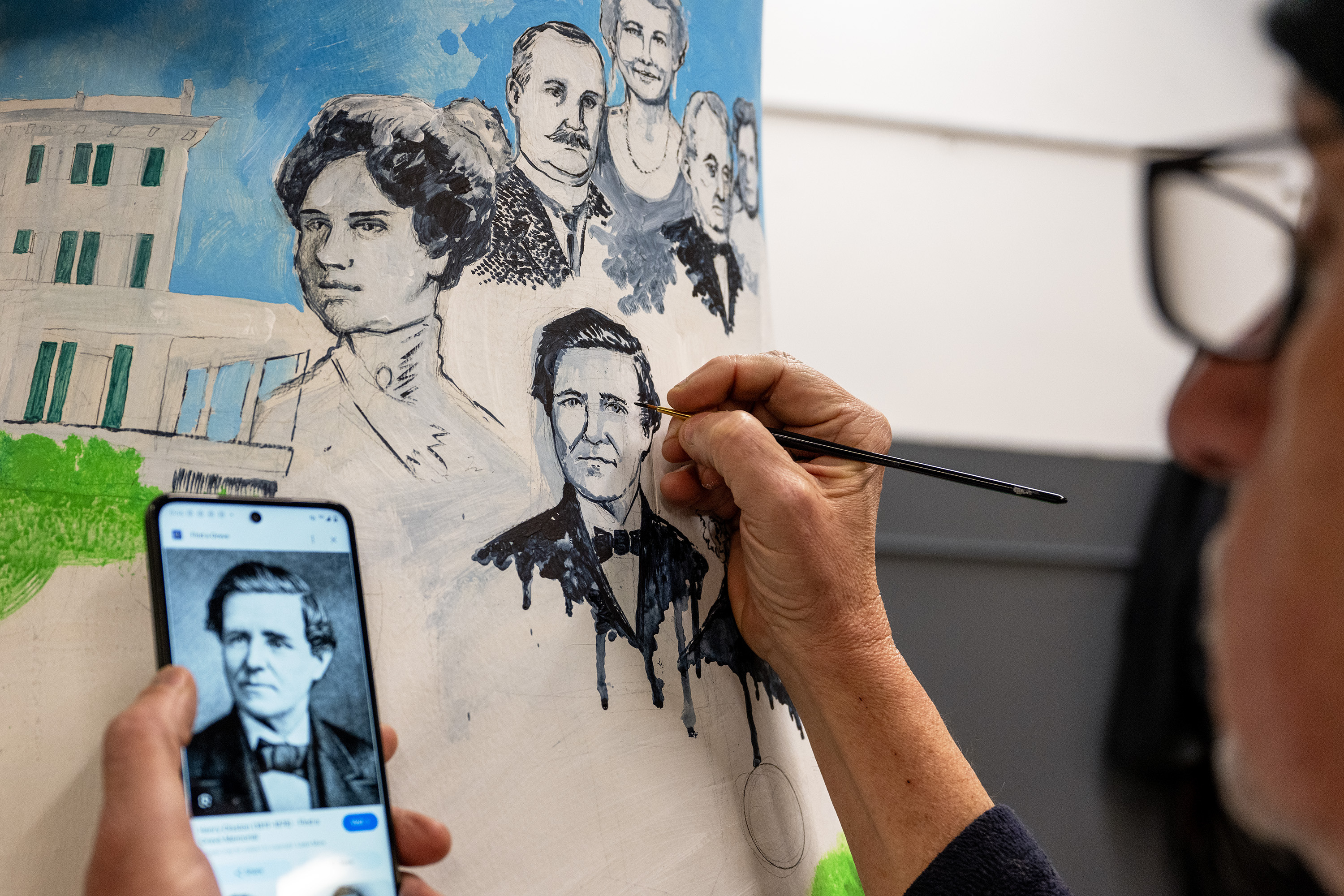
Local artist Bob Dix paints a portrait of industrialist Henry Disston on his bell.
“The personalities of the neighborhoods are coming out in the bells,” she said, adding that the completed bells will be dedicated in January, then installed in early spring, in time for Philly’s big-ticket events next summer, including six FIFA World Cup matches, the MLB All-Star Game, and a pumped-up Fourth of July concert.
Planners released a full list of neighborhoods where the bells will be placed, but said exact locations will be announced in January. Each of the nearly 3-foot bells — which will be perched on heavy black pedestals — was designed in collaboration with community members, Ott Lovell said.
Inside the massive, makeshift studio behind the Widener Memorial School on Tuesday, artists worked in the chill on their bells. Each bell told a different story of neighborhood pride.
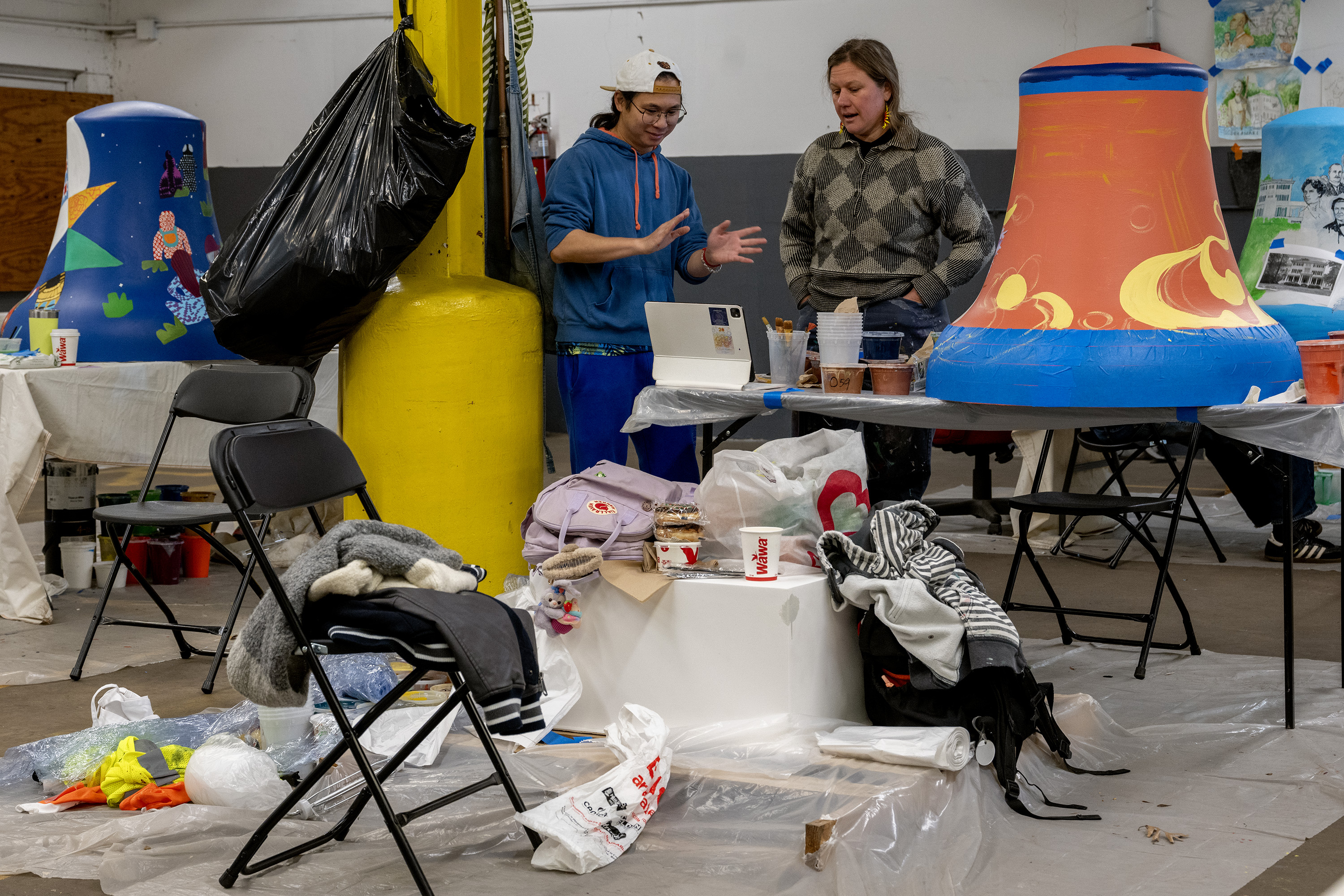
Chenlin Cai (left) talks with fellow artist Emily Busch (right) about his bell, showing her concepts on his tablet.
Cindy Lozito, 33, a muralist and illustrator who lives in Bella Vista, didn’t have to look for inspiration for her bell on the Italian Market. She lives just a block away from Ninth Street and is a market regular.
After talking with merchants, she strove to capture the market’s iconic sites, history, and diversity. Titled Always Open, her bell includes painted scenes of the market’s bustling produce stands and flickering fire barrels, the smiling faces of old-school merchants and newer immigrant vendors, and the joy of the street’s annual Procession of Saints and Day of the Dead festivities. Also, of course, the greased pole.
“It’s a place where I can walk outside my house and get everything that I need, and also a place where people know your name and care about you,” she said, painting her bell.
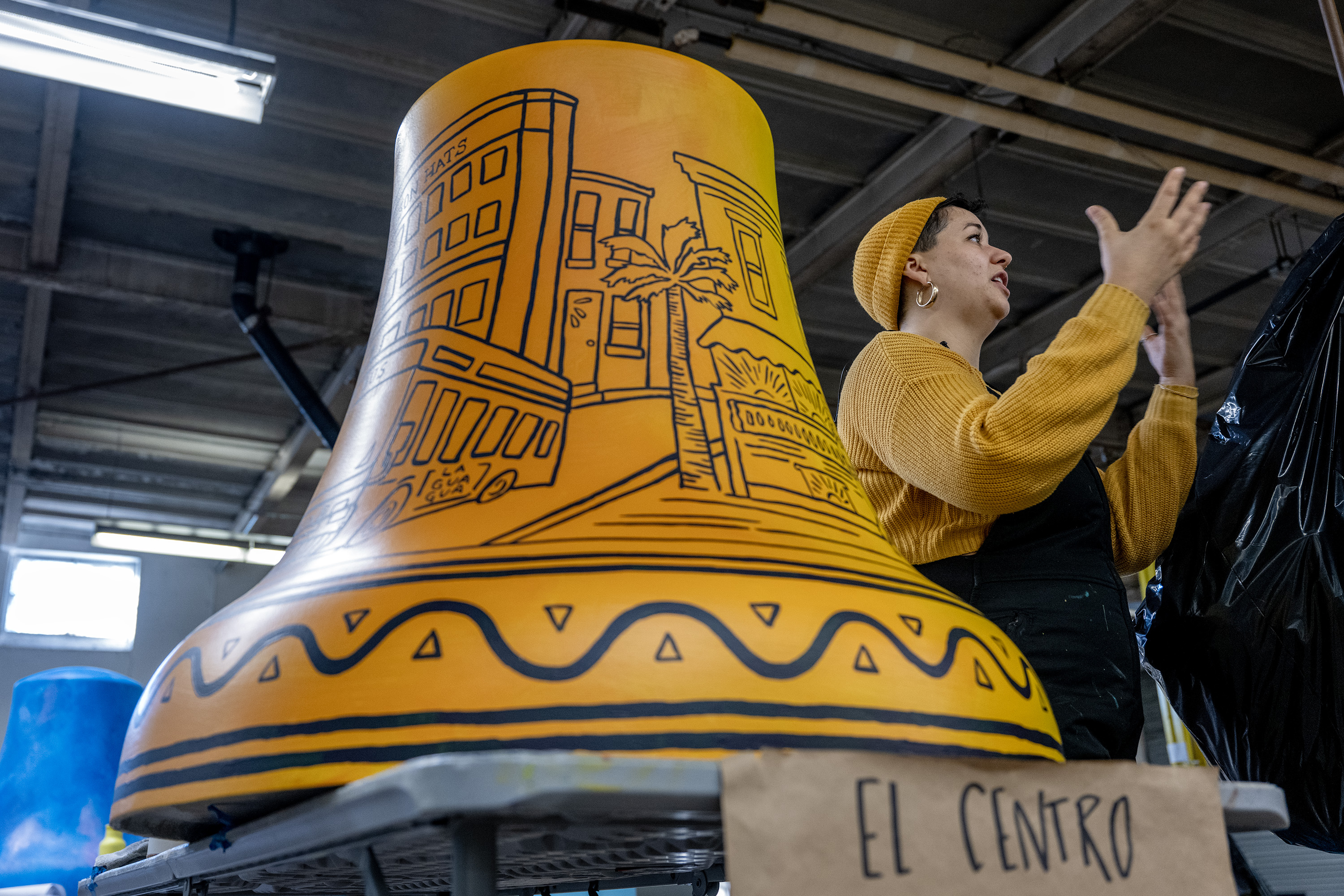
For her bell on El Centro de Oro, artist and educator Symone Salib, 32, met twice with 30 community members from North Fifth Street and Lehigh Avenue, asking them for ideas.
“From there, I had a very long list,” she said. “People really liked telling me what they wanted to see and what they did not.”
Local artist Symone Salib talks with a visitor as she works on her bell.
Titled The Golden Block, the striking yellow-and-black bell depicts the neighborhood’s historic Stetson Hats factory, the long-standing Latin music shop Centro Musical, and popular iron palm tree sculptures.
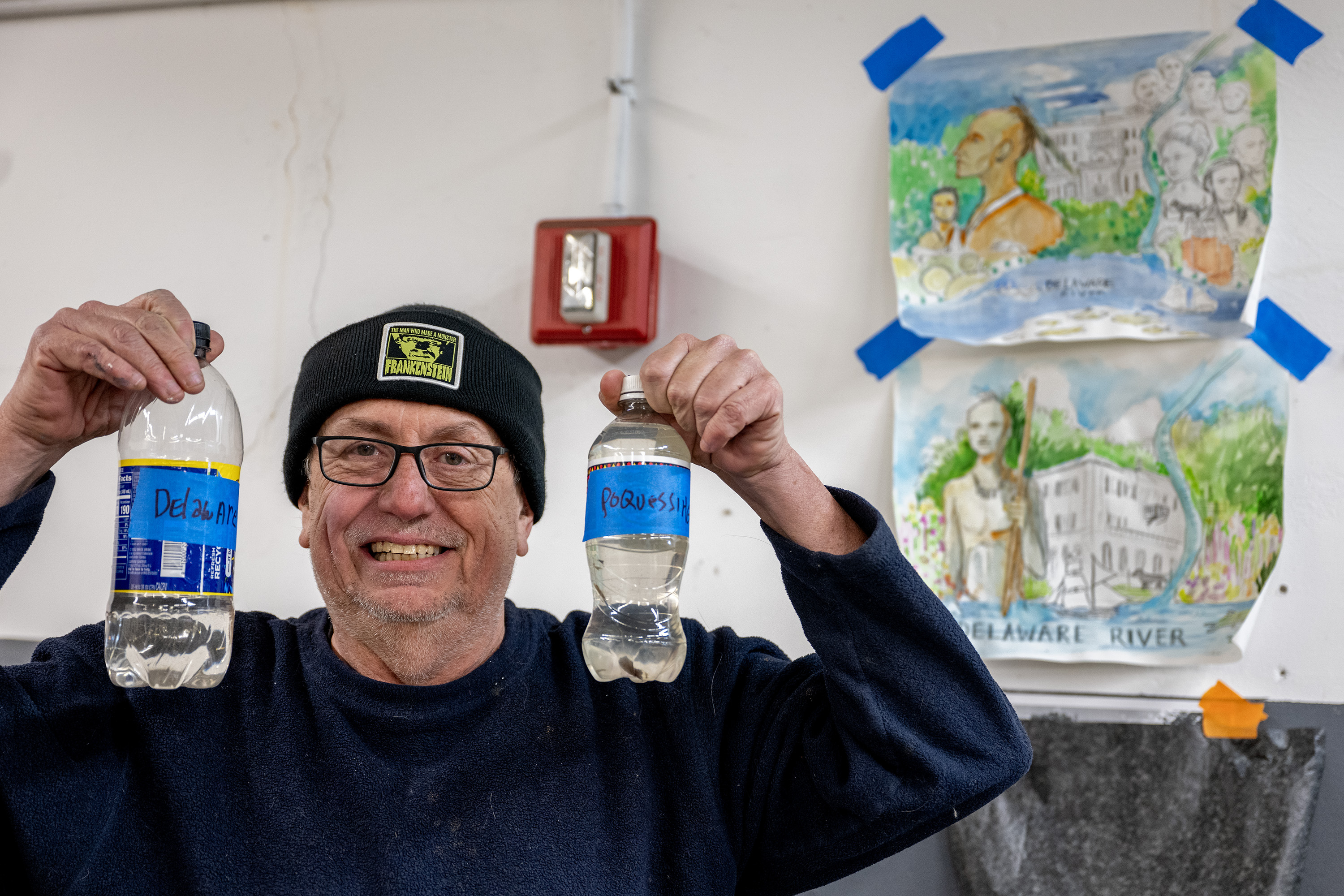
To add that extra bit of authenticity to his bell depicting Glen Foerd, artist Bob Dix, 62, mixed his paints with water bottled from the Delaware River, near where the historic mansion and estate sits perched in Torresdale, overlooking the mouth of Poquessing Creek.
“I like to incorporate the spirit of the area,” he said, dabbing his brush in the river water. “I think it’s important to bring in the natural materials.”
Local artist Bob Dix displays waters he collected from the Delaware River and Poquessing Creek to use in his painting of one of 20 replica Liberty Bells representing different neighborhoods Tuesday, Dec. 9, 2025.
Planners say they expect the bells to draw interest and curiosity similar to the painted donkeys that dotted Philadelphia neighborhoods during the 2016 Democratic National Convention.
Ott Lovell said organizers will install the bells around March to protect them from the worst of the winter weather.
“I don’t want any weather on them,” she said with a smile. “I want them looking perfect for 2026.”
–>
–>
–>




 on Philly and Pennsylvania’s role in establishing the Christmas tree tradition. The Christmas tree in the early illustration is indicative of how wild Christmas trees were far less dense and conical before tree shaping was invented.](https://interactives.inquirer.com/secondbank/arc/23HWJ4UDIZGPPALTU5ZPZVNUD4/325.webp)


 about the artificial Christmas trees and Indiana County, once known as the "Christmas Tree capital of the world" at the time.](https://interactives.inquirer.com/secondbank/arc/3L6UHPXXHNHYFITN64ON5QSIMI/325.webp)