Category: History

  • Claims of ‘rediscovered’ Michelangelos unsettle Renaissance experts

    Claims of ‘rediscovered’ Michelangelos unsettle Renaissance experts

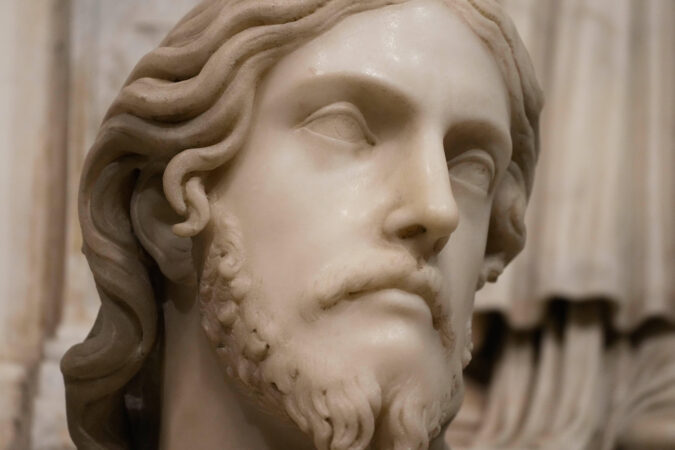
    ROME — An independent researcher claims that a marble bust of Christ in a Roman church is by Michelangelo, the latest purported attribution to the Renaissance genius who is one of the most imitated artists in the world.

    The unverified claim by Valentina Salerno has unsettled Renaissance scholars, especially since a recent sketch of a foot that was attributed to Michelangelo — but disputed by some as a copy — recently fetched $27.2 million at a Christie’s auction.

    Given the stakes — and Salerno’s suggestion that several other works can now be attributed to Michelangelo based on her documentary research — leading experts have declined to comment.

    Salerno has published her theory on the commercial website academia.edu, a non-peer-reviewed social networking site academics use, and announced the first “rediscovery” at a news conference Wednesday.

    The claims have drawn perhaps more attention than they normally would, given the Vatican seemed at least initially interested. Friday marked the 550th anniversary of Michelangelo’s birth, and a number of exhibits, conferences, and commemorations are reviving attention about his genius and legacy.

    The culture ministry was invited to participate in Salerno’s news conference but did not, said the abate of the order that runs the church, the Rev. Franco Bergamin, while the Carabinieri’s art squad refused to weigh in on the authenticity of the statue but said it was being protected and a laminated sign now graces the sculpture: “Alarm armed,” it reads.

    “We hope that this asset, which belongs to our cultural heritage regardless of whether it can be attributed to Michelangelo Buonarroti or not, is part of the national heritage that we are responsible for defending,” said Lt. Col. Paolo Salvatori.

    ‘Documentary evidence on this’

    Michelangelo Buonarroti, who lived from 1475 to 1564, created some of the most spectacular works of the Renaissance: the imposing statues of David in Florence and Pieta in St. Peter’s Basilica, the Sistine Chapel ceiling, and The Last Judgment fresco behind the chapel’s altar. Salerno now says she has located another — a bust of Christ in the Basilica of Sant’Agnese fuori le mura, listed by Italy’s culture ministry as anonymous from the Roman school of the 16th century.

    She is not the first to make the claim. In 1996, Michelangelo expert William Wallace wrote an article in ArtNews about the well-documented history of wrongly attributing works to Michelangelo. It quoted the 19th-century French writer Stendhal as writing that at the Sant’Agnese church, “we noticed a head of the savior which I should swear is by Michelangelo.”

    “Stendhal’s vow notwithstanding, the head has never been taken seriously, and nowadays would not even appear in a catalog raisonné under ‘rejected attributions,’” Wallace wrote.

    Salerno suggests that several documents in the first few hundred years after Michelangelo’s death correctly attribute the work to the artist but that in 1984 a scholar debunked it, erroneously in her view, and it has remained wrongly attributed ever since.

    “I have provided and will continue to provide — I hope, because the research continues — a whole series of documentary evidence on this,” she said. “There will be experts in the field who will conduct their own investigations. To date, we can say that, according to the documents, the object is attributed to Michelangelo.”

    She suggested that the bust was modeled on Michelangelo’s intimate friend, Tomaso De’ Cavalieriis, and was part of the great artistic inheritance Michelangelo left to his friends and students when he died. Salerno said she came to the conclusion tracing wills, inventories, and notarized documents held in church and state archives and the archives of Roman confraternities to which Michelangelo and his students belonged.

    Salerno, an actor and a fiction author, has no college degree or expertise in art history. She has said she fell into the research “by chance” when she set out to write a novel about Michelangelo 10 years ago.

    According to her research published on academia.edu, Salerno uncovered evidence of a secret “pact of indissolubility” among some of Michelangelo’s students and their heirs to keep Michelangelo’s works after he died. The pact included the previously unknown existence of a chamber, whose locks could only be opened with three keys, held by three different students, she said.

    Vatican takes note

    Salerno’s research caught the eye of Cardinal Mauro Gambetti, who runs St. Peter’s Basilica. He named Salerno and her mentor to a scientific committee formed in 2025 to discuss a possible Vatican exhibition to commemorate the anniversary of Michelangelo’s birth.

    Nothing has yet come of the committee’s work. But its members have downplayed the significance of Salerno’s work or refused to discuss it.

    Some expressed surprise at her inclusion in a committee made up of some of the leading Renaissance and Michelangelo scholars in the world, including Barbara Jatta, director of the Vatican Museums; Hugo Chapman, curator of Italian and French drawings, from 1400 to 1800, at the British Museum; and Wallace, professor of art history at Washington University in St. Louis.

    Jatta has distanced herself from the Vatican committee when contacted by the Associated Press.

    The British Museum declined to make Chapman available for comment. Gambetti’s office did not respond to a request. Other committee members declined to comment.

    Wallace told the AP that Salerno’s methodology was sound and noted that there is a strong tradition in Europe of noncredentialed researchers doing solid work. He said he agreed with her thesis that Michelangelo did not destroy his works in a fire, a commonly held belief at the time that has been debunked for years by scholars. Rather, he concurred with Salerno that Michelangelo entrusted what remained of his works in his final years to his students to finish his projects.

    But he disputes Salerno’s conclusion that a huge treasure of Michelangelo’s was secreted away — and is therefore ripe for new discovery — saying Michelangelo simply was not producing that much in his final years. Michelangelo was overseeing six architectural projects in Rome at the time. What drawings he made were sketches to resolve technical problems on the worksite, and likely did not survive because they were merely “working drawings,” he said.

    Wallace concurred that existence of a secret chamber that can be opened only with three keys is new. But he said proper academic scholarship would call for Salerno to transcribe the documents and allow for a peer-review process to take place.

    Italy is no stranger to claims of new discoveries about old artists, with fakes, frauds, and new “discoveries” of Modiglianis and other artists a regular occurrence in art history circles.

    “I think I counted up 45 attributions to Michelangelo since 2000, and not one of which you can remember or mention, but every single one arrived with the headline, ‘The greatest discovery of the time,’ [or] ‘It will change everything we think about Michelangelo,’” Wallace said. “And then, five years later, we can’t even remember what it was.”

  • Major historical documents start journey across U.S. as part of nation’s 250th anniversary celebration

    Major historical documents start journey across U.S. as part of nation’s 250th anniversary celebration

    Some of the United States’ most important historical documents are embarking on a first-of-its kind journey as part of the country’s 250th anniversary commemoration.

    Typically housed in highly controlled vaults under the watch of preservation experts at the National Archives, documents such as the 1783 Treaty of Paris that formally ended the Revolutionary War and the 1774 Articles of Association that urged colonists to boycott British goods are rarely moved.

    But those documents, signed by George Washington, John Adams, Benjamin Franklin, and other American revolutionary leaders, will be making their way across the country and put on display for free at local museums.

    “It’s tangible history, and tangible history inspires,” said Jim Byron, senior adviser to the acting archivist of the United States. “These documents have not traveled, and they’ve certainly not traveled collectively, ever. They are here in vaults.”

    The Boeing 737 “Freedom Plane” transporting the documents is just one of many events and activities planned across the country to mark America’s forthcoming 250th anniversary celebrating the signing of the Declaration of Independence on July 4, 1776, in Philadelphia. A congressionally chartered commission, America 250, and a separate White House-led initiative, called Freedom 250, are both coordinating events, an overlap that has faced some criticism in Washington.

    Among the planned activities are a fleet of mobile museums driving across the country, a story collection initiative, and a Great American State Fair on the National Mall in Washington. President Donald Trump has even announced plans for a “Patriot Games” sporting event featuring high school athletes and a UFC mixed-martial arts fight at the White House.

    The “Freedom Plane” departed Ronald Reagan Washington National Airport on Monday en route to its first stop in Kansas City, Mo., where the documents are being transferred to the National WWI Museum and Memorial. The records include a rare original engraving of the Declaration of Independence printed in 1823 from a copperplate of the original; the Oaths of Allegiance, signed in 1778 by George Washington, Alexander Hamilton, and other officers of the Continental Army; and a rare draft copy of the U.S. Constitution that includes handwritten notes by the delegates.

    Other planned stops will be in Atlanta, Los Angeles, Houston, Denver, Miami, the Detroit suburb of Dearborn, and Seattle.

    “The reality that these documents are leaving D.C. and coming to the heartland is fantastic,” said Matt Naylor, president and CEO of the National World War I Museum and Memorial, where they will be on display for a little over two weeks starting Friday. “There’s a lot of excitement about that and a lot of talk in and around the city about what that means.”

    Naylor said the early response has been overwhelming. Local schools have already booked visits for more than 5,000 schoolchildren.

    “That’s indicating that there’s a lot of enthusiasm for this,” he said.

    The “Freedom Plane” tour was inspired in part by the “American Freedom Train” that toured 48 states in 1975 and 1976 as part of the country’s Bicentennial celebration. It carried various pieces of American history, including the original Louisiana Purchase documents, Judy Garland’s dress from The Wizard of Oz, and Jesse Owens’ gold medals from the 1936 Olympic Games.

  • A&P grocery chain said it was closing its city stores on this week in Philly history

    A&P grocery chain said it was closing its city stores on this week in Philly history

    In a city replete with food peddlers and grocery proprietors, a Canadian chain would find a footing in Philadelphia.

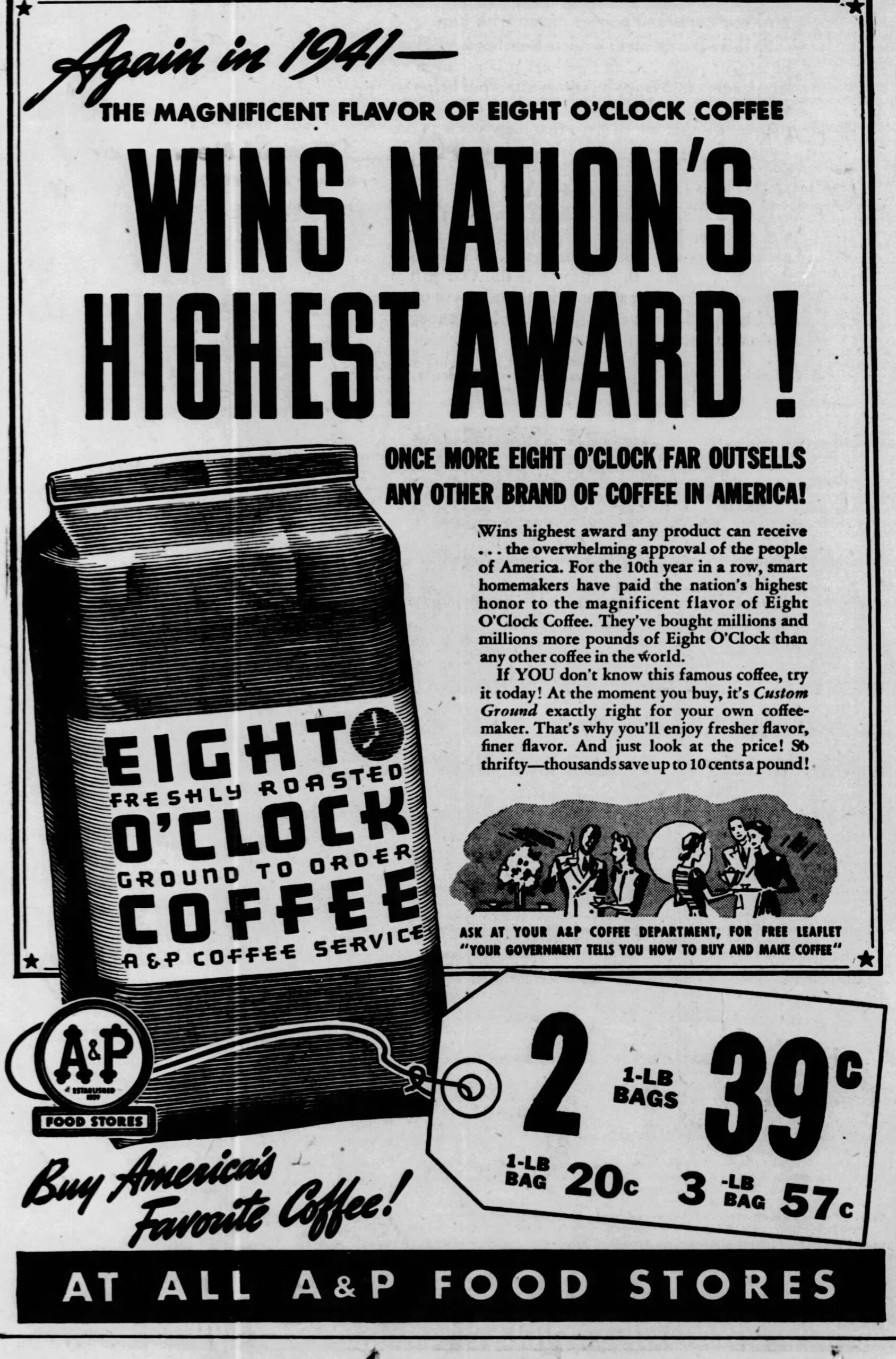
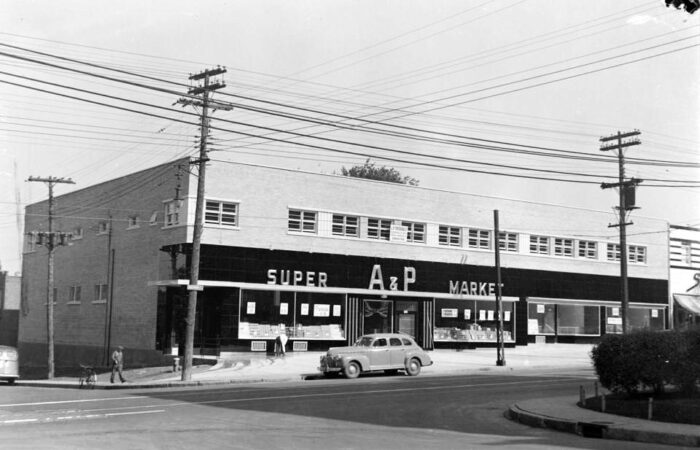
    The Great Atlantic & Pacific Tea Company Inc., better known as A&P, was where shoppers could get their chain-brand of Eight O’Clock Coffee beans freshly ground in-store and in their preferred style.

    An advertisement for Eight O’Clock Coffee that ran in The Inquirer in 1941.

    For a healthy stretch of the 20th century, a majority of U.S. residents shopped for groceries in an A&P store. The chain was founded in 1859 and by the 1940s, counted more than 16,000 locations spread between the Atlantic and Pacific.

    But by the spring of 1982, the grocery chain empire only had 70 stores in the Philadelphia region, and it was struggling to cover expenses.

    On March 1, 1982, the chain announced it would be pulling out of Philadelphia. A&P would close 29 stores in the region, including all 11 left in the city. More than 2,000 people would be out of work amid a historic recession and rising energy costs.

    It was the conclusion of a reorganization plan that resulted in the closure of 350 stores across the country at the end of 1981 and beginning of 1982. It would leave the chain with a little more than 1,000 stores, including more than 100 in Canada.

    The long and drawn-out end for the once-vast grocery empire had begun.

    In May ’82, the chain announced that the stores would reopen as Super Fresh Food Centers, and laid-off A&P workers would get first crack at the upcoming job openings.

    But the chain’s inability to evolve with changing market conditions would continue to hamper its progress, and eventually lead to its demise, according to Business Insider.

    A&P and its nearly 300 stores would hang on until 2015, when it filed for Chapter 11 bankruptcy for a second time, and sold off the rest of its catalog. The Super Fresh locations were absorbed by Acme, the South Philadelphia-based grocery group that, according to Philly Mag, had assumed the crown of Philly’s top food provider.

  • William Penn presided over Pennsylvania’s one and only witch trial on this week in Philly history

    William Penn presided over Pennsylvania’s one and only witch trial on this week in Philly history

    Pennsylvania’s one and only witch trial started over cow’s milk.

    “If your cow is not giving milk, it’s obvious that somebody put a hex on it,” Doug Miller, who runs William Penn’s estate Pennsbury Manor, said to explain the thinking of the time.

    In the 1680s, neighbors accused Margaret Mattson, who was of northern European descent and didn’t speak English, of putting a hex on local people.

    Although Pennsylvania was William Penn’s colony, it was still part of England. And in English rule, witchcraft was a capital offense.

    Witch trials had been held throughout England and elsewhere in Europe, but only a few had been held in the colonies. And this would be the first in Pennsylvania.

    On Feb. 27, 1684, William Penn himself presided over the witch trial in Philadelphia.

    He arranged for a prominent citizen, Lasse Cocke, who was also Penn’s chief negotiator with the Lenni-Lenape, to act as an interpreter.

    Three witnesses testified that Mattson had cast a spell over her neighbor’s cattle, which had not been giving milk. Over a daylong trial in Philadelphia, a jury ultimately found Mattson guilty of having “the common fame of a witch, but not guilty in the manner in form that she stands indicted.”

    So, yes, she had the reputation of being a witch, but there was no evidence she participated in any witchcraft.

    “This was a crafty way on his part to avoid harsh punishment for her and any hint of a death penalty under English law,” Miller said.

    Mattson and a co-defendant, Yesro Hendricksen, whom we don’t know much about, were each fined 50 pounds, which was a chunk of change back then, Miller said.

    Quakers at this time would expect the person to put forth a bond similar to bail today.

    It was called a peace bond, and it was good for six months.

    Eight years later, witch hysteria would hit Salem, Mass., and kick off the infamous witch trials.

    “The fact that he really didn’t want to encourage the idea that there were witches,” Miller said, “or inflict a penalty on somebody he felt was not guilty of what she was accused, speaks highly of Penn.”

  • A new streaming series tells the story of America through the lens of Philadelphia

    A new streaming series tells the story of America through the lens of Philadelphia

    By 2019, after a decade of producing dozens of documentaries about Philadelphia history, the filmmakers at History Making Productions realized they had more than just the story of a city.

    They had the story of America.

    On Friday, the studio released its epic, new telling of that 400-year-old story: In Pursuit: Philadelphia and the Making of America. Directed by documentary filmmaker Andrew Ferrett and written by author and historian Nathaniel Popkin — and mixing modern footage with historical recreation and more than 600 on-camera interviews — the 10-episode series explores the history of America through the lens of Philadelphia, its birthplace.

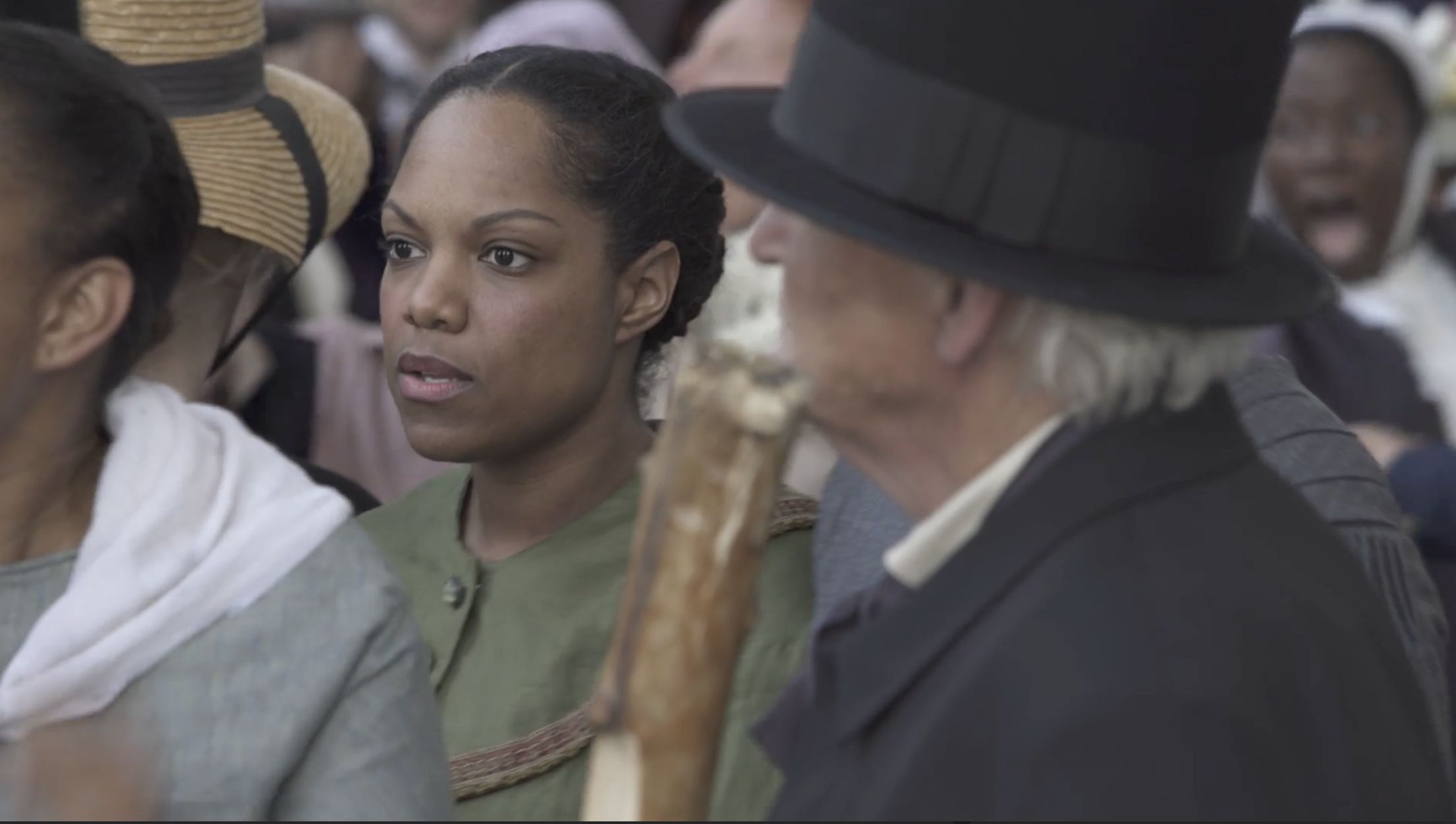
    Belinda Davis as Sarah Forten in “In Pursuit: Philadelphia and the Making of America.”

    Timed to coincide with the 250th anniversary of the Declaration of Independence in 2026, known as the Semiquincentennial, the series provocatively grapples with urgent questions, like how did the American experiment actually unfold? And how can it endure?

    “Philadelphia is not just the birthplace of American democracy — it has been its proving ground,” said Sam Katz, series creator, executive producer, and founder of History Making Productions. “This series looks honestly at how ideals were formed, challenged, expanded, and sometimes betrayed, and why that history matters so urgently.”

    ‘A national moment’

    Spanning 400 years of Philadelphia history, from its Indigenous roots to the MOVE Bombing the series is equal parts entertainment and civic project. Funded by Katz and philanthropies like Pew Center for Arts & Heritage, Penn Medicine, and Lindy Communities, the series premiered at the National Constitution Center on Thursday.

    Episode One is now streaming online. Katz and the filmmakers will host screenings and community conversations at Pennsbury Manor in Bucks County on Sunday, and another screening Feb. 26 at the Bok Building in South Philadelphia.

    Throughout 2026, as the city and country celebrate the national milestone, a citywide “In Pursuit of History Film Festival” will promote each new installment with monthly screenings and public events. 6abc will air monthly hourlong shows to highlight new episodes.

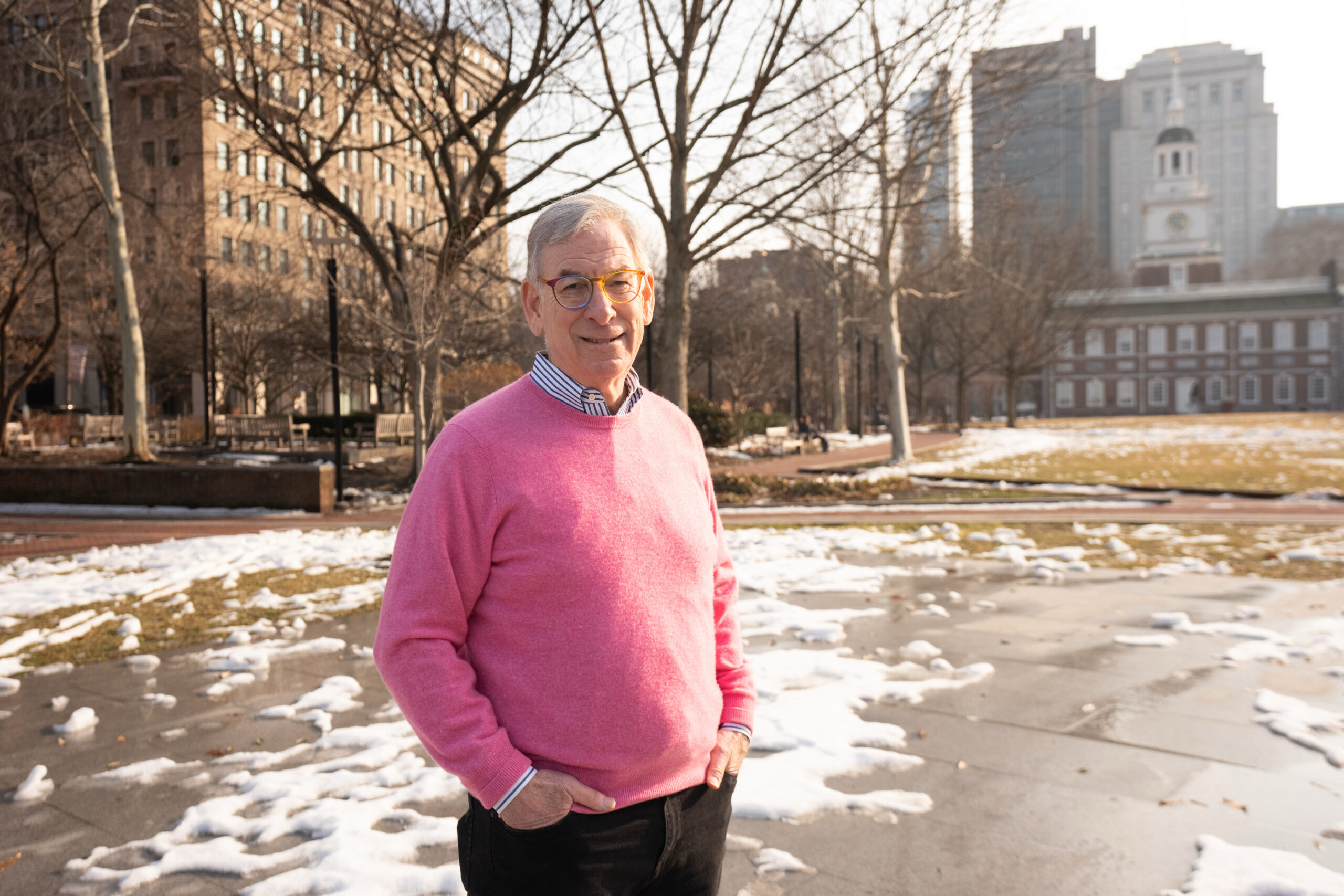
    Sam Katz at Independence Hall, in Philadelphia, Tuesday, Feb. 17, 2026.

    From the beginning, the project was meant to get people talking about the true meaning of the American experience, and those it has left behind.

    “We’re going to get partners all over the city, and we’re going to have screenings all over the place,” said Katz, the civic-leader-turned-producer. “We’re going to create opportunities for people to come and meet the filmmakers, or meet a historian or an artist, who will then lead a conversation. It really is an opportunity for Philadelphia to take stock of itself.”

    Popkin, who cofounded Hidden City Daily, said the project tells the story of events that shaped a city and a country founded on ideals not yet fully realized — and now as divided and tested as they’ve been in decades.

    “The timing is perfect,” he said. “I think a film can really launch a lot of conversations. This is a moment for us as a nation.”

    Fresh portals

    Ferrett, who grew up in Bucks County, and has been directing and producing films at History Making Productions for more than 15 years, said the project revealed itself.

    For earlier Philly projects — including The Great Experiment, an Emmy-award winning, 14-part docuseries spanning 500 years of Philly history, and Urban Trinity: The Story of Catholic Philadelphia — the filmmakers had amassed hundreds of unused hours of interviews with local and national historians, artists, and cultural leaders.

    Over the years, much of it had to be left on the cutting room floor, including magical moments that Ferrett said opened fresh portals to Philly history.

    “We talked to pretty much anyone you can imagine who was either involved with studying Philadelphia history, or in the case of 20th-century history, a lot of witnesses to it,” he said.

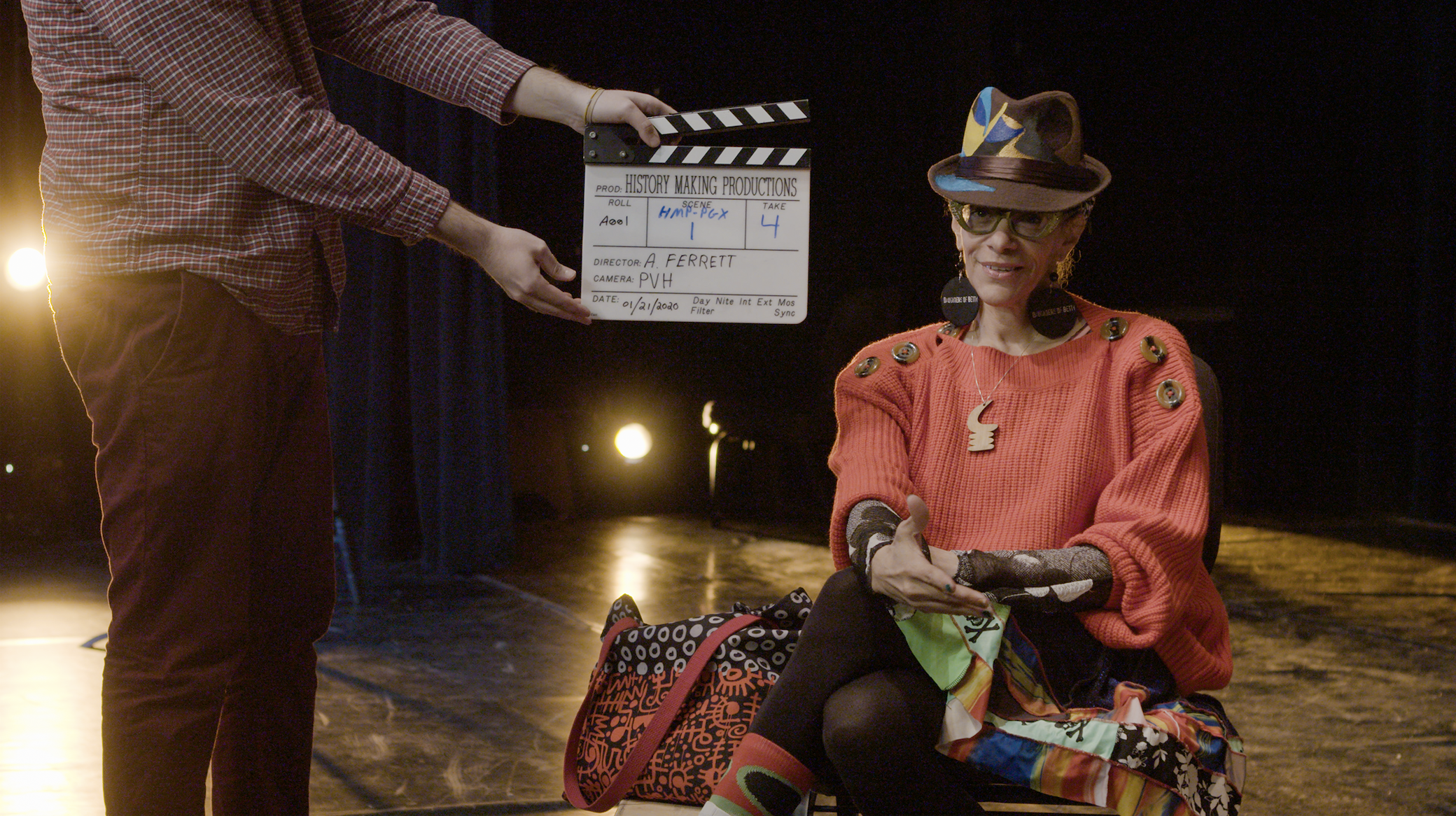
    Poet Ursula Rucker during filming of “In Pursuit: Philadelphia and the Making of America.” The new 10-part docuseries examines the history of America through the story of Philadelphia.

    Besides, he said, nowhere else could hold a better mirror to America than the place of its birth.

    “It really became obvious to us that what we have here is much more than a local history,” he said. “It’s a history of the whole United States because so many consequential moments that shaped the country’s history went through Philadelphia.”

    History that feels alive

    Setting out to tell the story anew, Katz raised money to shoot updated interviews and fresh historical recreations.

    Meanwhile, history did not slow down, from the COVID-19 pandemic, to the killing of George Floyd and the Black Lives Matter movements, to Trump, and immigration crackdowns.

    “We were asking how do we deal with history while all this is happening,” Katz said. “We were writing about it right now.”

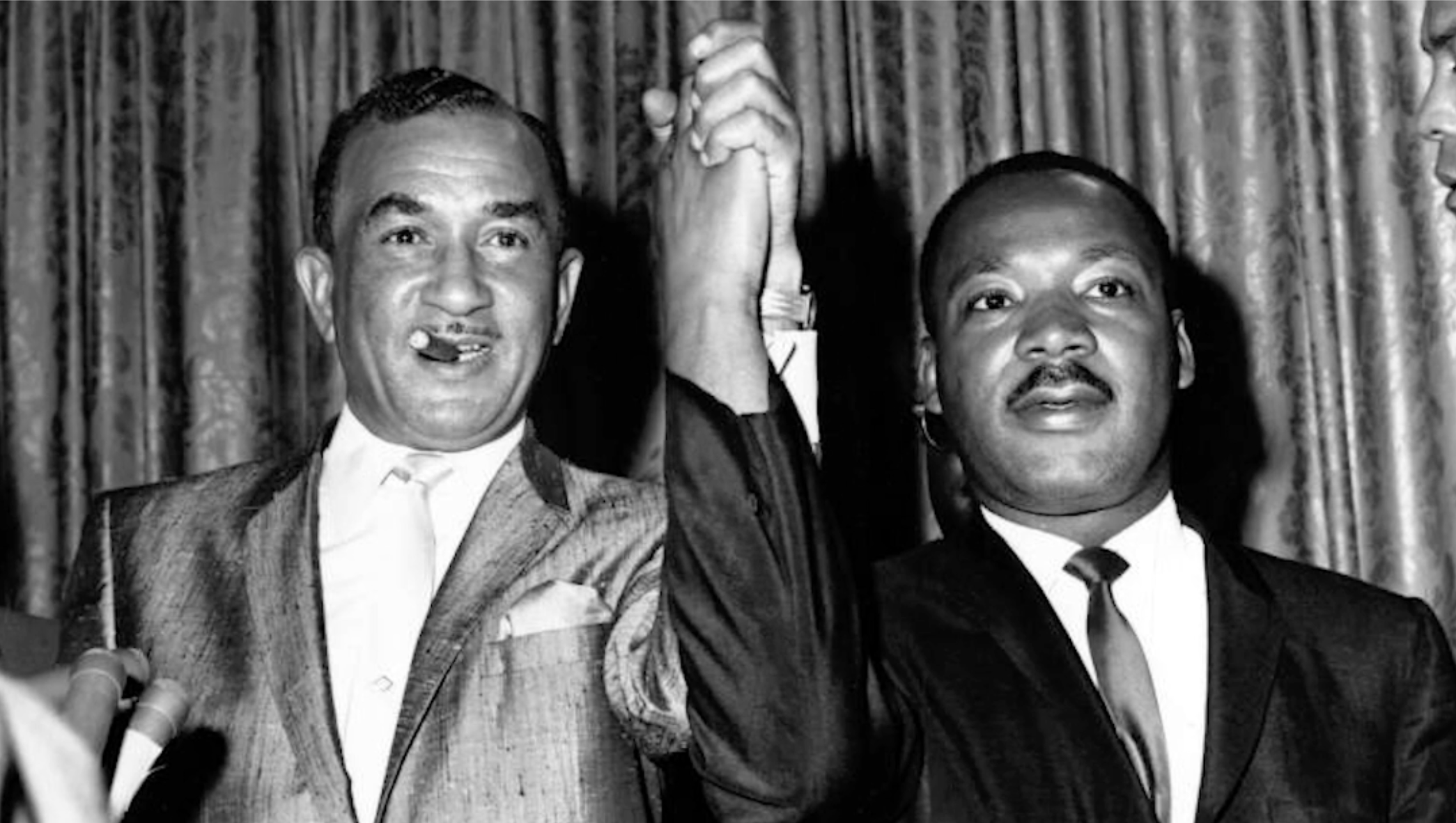
    Cecil B. Moore and Martin Luther King Jr. in footage from “In Pursuit: Philadelphia and the Making of America.”

    Narrated in a warm, resonant baritone by actor Michael Boatman, known for roles in shows Spin City and The Good Wife, In Pursuit is no dull, black-and-white history. The city feels alive, the stakes serious and undecided.

    Threading modern-day footage of bustling Philly streetscapes and soaring neighborhood shots with commentary and historical recreations imprints the series with a powerful immediacy.

    The story stretches far beyond 1776, though the dramatic details of that sweltering summer in Philadelphia are recounted in episode three in gripping scenes of refreshingly believable historical recreations.

    “We were able to shoot these lush and full reenactments,” said Ferrett, of all 10 episodes. “Sam was always like, ‘Where’s the dirt? I don’t want to see people with perfect teeth and smiling.’”

    The start

    Episode One, “Freedom (to 1700),” begins at the beginning, pulling no punches as it tells the story of the Lenape people, Philadelphia’s earliest Indigenous settlers — and of the generations of Dutch and other European colonists’ efforts to eradicate them through violence and disease.

    It surprises even in the telling of William Penn, recounting how the rebellious aristocrat’s nonconformist ways landed him in jail more than once, before he founded a City of Brotherly Love meant to be a better world, and a testing ground of the most advanced ideals in Europe.

    The episode also showcases what Ferrett describes as “deepeners,” when the story cuts away from the arc of history for moments of reflection from modern Philly voices.

    “We all feel it here … it’s all in our bloodstream,” poet Ursula Rucker says in the episode. “What does this city mean to me? Everything. Everything.”

  • A nearly 250-year-old hospital’s closure was announced on this week in Philly history

    A nearly 250-year-old hospital’s closure was announced on this week in Philly history

    In the wake of the U.S. Bicentennial, in which Philadelphia was at the center of a yearlong celebration of the country’s 200th birthday, one of the city’s contributions to public health was put on the chopping block.

    On Feb. 15, 1977, city officials confirmed that Mayor Frank Rizzo was closing Philadelphia General Hospital.

    The poorhouse

    Philadelphia General Hospital traced its lineage back to 1729, predating even the revered Pennsylvania Hospital, which was founded in 1751 and is generally considered the nation’s first chartered hospital.

    Philadelphia General Hospital was originally established at 10th and Spruce Streets as an almshouse, also known as an English poorhouse.

    “The institution reflected the idea that communities assume some responsibility for those unable to do so themselves,” Jean Whelan, former president of the American Association for the History of Nursing, wrote in 2014.

    The almshouse was used as housing for the poor and elderly, as well as a workhouse. It also provided some psychiatric and medical care.

    It moved in the mid-1800s into what was then Blockley Township, at what is now 34th Street and Civic Center Boulevard, and began offering more traditional medical services. The Blockley Almshouse’s barrage of patients and their variety of maladies helped it naturally grow into a teaching tool for nursing and medical students.

    And by turn of the 20th century, it had become a full-blown medical center, made official by its new name: Philadelphia General Hospital.

    But it held onto its spirit.

    Its doors were open to anyone who needed care, no matter that person’s race, ethnicity, class, or income.

    Healthcare was a given. Workers saw it as a responsibility.

    Even if it wasn’t always the best care.

    Poor health

    The hospital relied on tax dollars, and as a result was often short on staffing and low on supplies. It was a source of political corruption, scandal, and discord among its melting pot of patients.

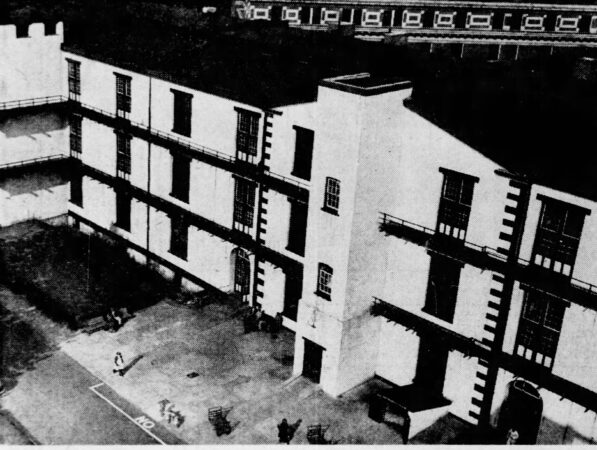
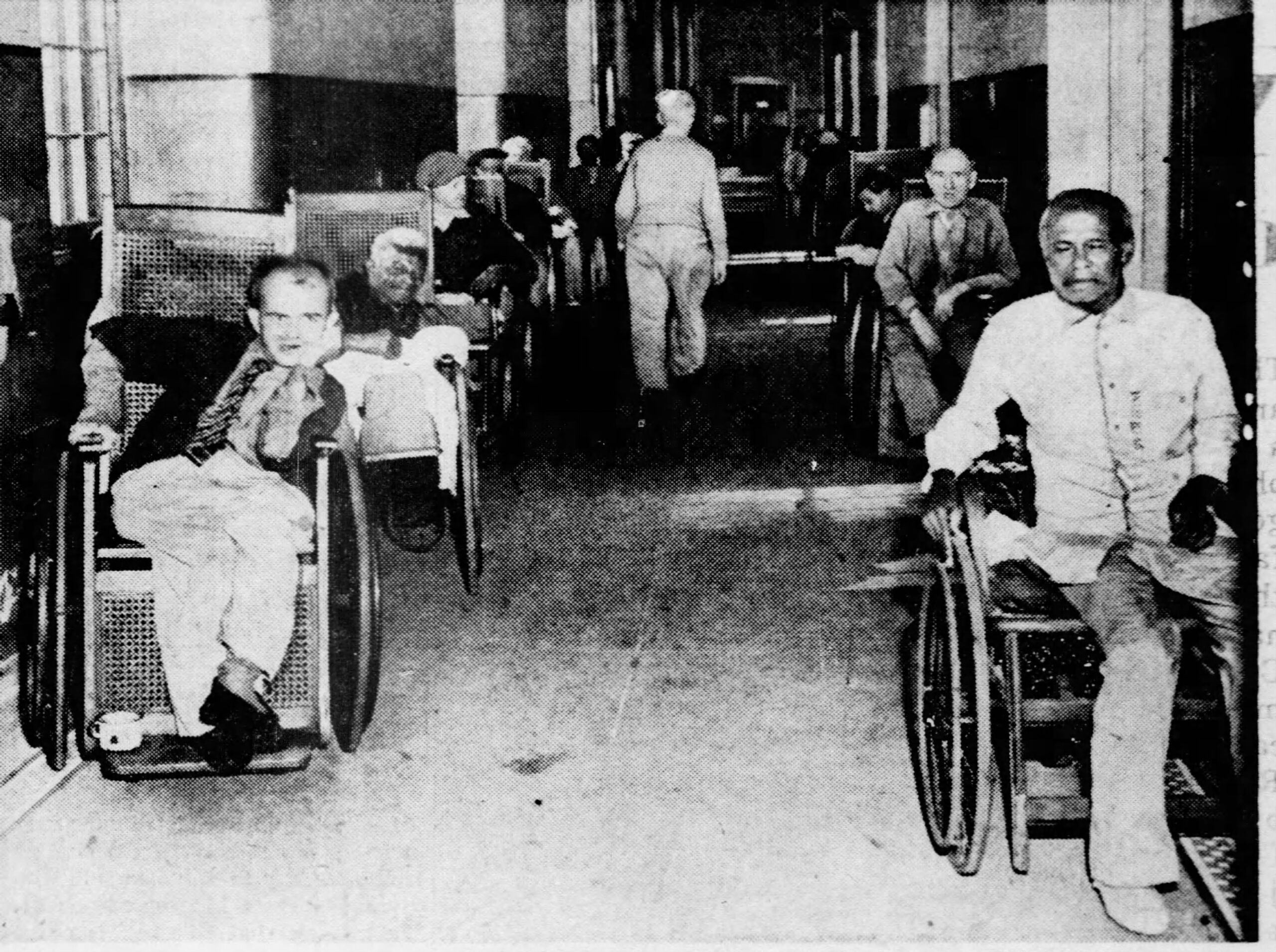
    Patients in the hallways of Philadelphia General Hospital in the 1940s.

    Eventually, it collapsed under the weight of its mission.

    Its facilities became outdated, its services could not keep up, and its role as educator was outsourced to colleges and universities.

    Philadelphia General Hospital’s closure left a gaping hole in available services in West Philadelphia. It was no longer there to help support the uninsured.

    Before it officially closed in June 1977, it was considered the oldest tax-supported municipal hospital in the United States.

    “There’s a common misunderstanding that PGH recently has become a poor people’s hospital,” said Lewis Polk, acting city health commissioner, in 1977. “It’s always been a poor people’s hospital. The wealthy never chose to go there.”

    Its old grounds are now occupied by several top-rated facilities, including Children’s Hospital of Philadelphia and the University of Pennsylvania medical campus.

    A historical marker there notes Philadelphia General Hospital’s nearly 250 years of service to the community.

  • In the 1940s, she was denied service at a Delco restaurant. She spent the rest of her life bridging racial divides in Media.

    In the 1940s, she was denied service at a Delco restaurant. She spent the rest of her life bridging racial divides in Media.

    When the Media-area NAACP was selecting a few Black figures to spotlight throughout Black History Month, adding Marie Whitaker to the list was a no-brainer, said Cynthia Jetter, president of Media’s NAACP chapter.

    Within the community, “I think most people know the story,” Jetter said.

    The story, that is, of when Whitaker sat down for a meal at the Tower Restaurant at the corner of State and Olive Streets with her baby in her arms and her sister by her side in 1943.

    No one waited on them.

    This bothered Dorothy James, a white Quaker woman who was dining at the restaurant. So she approached a worker there who explained that the waitresses did not serve Black people, James recounted in a letter she wrote a few days after the incident.

    Whitaker soon left the restaurant with her baby and sister and went elsewhere. Soon, James joined them, she wrote.

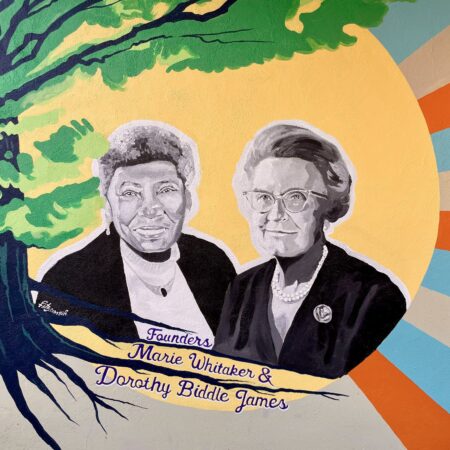
    Whitaker and James became fast friends and cofounded Media Fellowship House the following year. The goal was to bring together Media residents of all races and religions for events and meals. It grew over the course of its first decade, and in 1953, they raised enough money from community members to buy a property on South Jackson Street, where the organization flourished.

    Whitaker died in 2002, but the fellowship house lived on. In its 82 years, it has gone from hosting sewing circles and childcare events to helping Black people buy homes in restricted neighborhoods to now offering assistance to first-time homebuyers and helping those facing foreclosure.

    For Amy Komarnicki, who now runs the Media Fellowship House, the values Whitaker championed — inclusion, resilience, and courage — are always guiding her.

    “I think you have to move toward the injustice that you see and not ignore it,” Komarnicki said.

    That is especially difficult to do when you’re on the receiving end of the injustice, she added.

    “Being willing to accept an invitation to talk about it takes enormous bravery and trust,” Komarnicki said. “It’s good to be uncomfortable. It’s good to make people uncomfortable for the greater good. It opens up space for dialogue.”

    Whitaker’s legacy stretches beyond the bounds of Media. Her daughter, Gail Whitaker, once the infant with her at the restaurant where she did not get served, became the first Black woman to practice law in Delaware County and served on the Media Borough Council. She died in 2024. Her son, Bill Whitaker, is a 60 Minutes correspondent for CBS.

    Living in Media and going to Fellowship House growing up exposed him to people from all kinds of demographics and religions, Bill Whitaker said. And that was no accident; it was something his mother and Fellowship House helped lay the groundwork for.

    “She was resolute and knew what she wanted, not just for her family, but for her community and for her world,” Whitaker said. “She had a vision of what Fellowship House stands for, bringing people together and having people speak across what seems now to be a chasm of our differences — she wanted people to speak across that, to reach across that and come together.”

    As long as Fellowship House stands, that work, just as important now as then, will continue, Bill Whitaker said.

  • History and conservation groups are suing the Trump administration over censorship at national parks

    History and conservation groups are suing the Trump administration over censorship at national parks

    A new lawsuit filed by a group of conservation and history organizations is challenging President Donald Trump’s executive order to remove historic information from national parks.

    It comes a day after a federal judge ordered restoration of the slavery exhibits at the President’s House in Philadelphia and marks the latest chapter in a showdown between historical transparency versus censorship.

    On Tuesday, the National Parks Conservation Association filed a lawsuit in Massachusetts federal court against the Department of Interior, challenging Trump’s 2025 executive order that forced national parks to change or strip displays tied to topics ranging from slavery and racism to LGBTQ+ rights and climate change.

    “Plaintiffs are organizations committed to protecting the national parks, preserving history, promoting access to high quality scientific information, and providing high quality interpretive materials — including exhibits, signs, brochures, and other educational materials — that bridge the gap between physical objects and human understanding for park visitors,” the lawsuit says.

    “They and their members — including avid users of national parks and historians whose research is being erased — have been injured by these actions and seek to ensure that the administration does not wash away history and science from what the National Park Service has recognized is ‘America’s largest classroom.’ ”

    The coalition, which includes the American Association for State and Local History, the Association of National Park Rangers, the Coalition to Protect America’s National Parks, the Society for Experiential Graphic Design, and the Union of Concerned Scientists, is asking the court to declare Trump’s executive order unlawful and to order removed materials to be restored.

    “In filing this litigation together, we are taking a stand for the soul of our national parks,” Alan Spears, senior director of cultural resources at the National Parks Conservation Association, said. “Censoring science and erasing America’s history at national parks are direct threats to everything these amazing places, and our country, stand for.”

    In Philadelphia, U.S. District Judge Cynthia M. Rufe issued a ruling Monday requiring the federal government to restore the President’s House site to its original state. The removed exhibits paid tribute to the enslaved people who lived in George Washington’s home during his presidency.

    In her 40-page opinion, Rufe — who is a George W. Bush appointee — does not mince words. She compared the federal government’s argument that it can unilaterally control the exhibits in national parks to the dystopian totalitarian regime in George Orwell’s 1984.

    The plaintiff’s group for the Massachusetts suit is being represented by Democracy Forward, a progressive nonprofit that challenges government actions it views as harmful.

    “You cannot tell the story of America without recognizing both the beauty and the tragedy of our history,” Skye Perryman, Democracy Forward’s president and CEO said in a statement. “The president’s effort to erase history and science in our national parks violates federal law, and is a disgrace that neither honors our country’s legacy nor its future.”

    Beyond Philadelphia, the lawsuit also mentions other examples of Trump’s executive order in action, including the removal of an interactive display mentioning climate change at Fort Sumter in South Carolina, short films on labor history being scrapped at Lowell’s National Historical Park in Massachusetts, and the removal of displays discussing negative impacts tourists, settlers, and cattle ranchers have on the Grand Canyon National Park.

    The lawsuit goes on to point out the irony of Trump’s executive order aiming to avoid “disparaging Americans,” despite the president’s own new signage at the White House, which takes jabs at former President Joe Biden and others along his West Wing “Walk of Fame.”

    The parties are asking a judge to order that national parks must be allowed to present the full historical and scientific picture without censorship and for their court costs to be paid for.

  • Inaugural NFL draft was held at the Ritz-Carlton Hotel on this week in Philly history

    Inaugural NFL draft was held at the Ritz-Carlton Hotel on this week in Philly history

    More than 20 men crowded into a hotel room at the Ritz-Carlton on South Broad Street in the winter of 1936.

    They faced a blackboard listing 90 names of college football players from around the country.

    They took seats on the bed and on the bureau and passed around bottles as they kicked off the first draft in NFL history.

    Philly’s other famous Bell

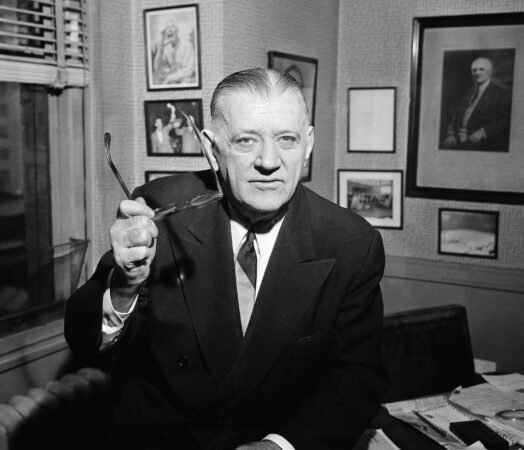
    Bert Bell pulled the defunct Frankford Yellow Jackets out of bankruptcy, and started a new NFL franchise in Philadelphia in 1933.

    His wife, actress Frances Upton Bell, paid her husband’s share of $2,500 (more than $60,000 in today’s money) to seal the deal.

    Bell spotted a billboard for Franklin D. Roosevelt’s New Deal, which included the insignia of a bald eagle, and decided this new team should be called the Philadelphia Eagles.

    The NFL back then was a nine-team league. And for players it was a free market. The best and brightest could join whichever team they saw fit.

    Teams in Green Bay, Chicago, New York, and Washington were the winningest franchises, so that’s where the best players usually signed.

    The Eagles were the worst. And in 1935, Bell tried to sign Stan Kostka, a 6-foot-2 fullback from the University of Minnesota. After failing to close the deal, he decided there had to be another way.

    Bell came up with an idea whereby each team had a fair shot at the top players. His solution was a draft, in which teams would select from a pool of new players entering the league.

    And the key idea: The order of player selection would be in reverse order of the previous year’s standings. So the worst-performing franchise would pick first, and the league champions would pick last.

    They called it “the selection of players.” And the first iteration would be held during the owners’ meetings, Feb. 8 and 9, 1936.

    It made sense to hold the event in Philadelphia. It was a midway point among the nine cities, and Bell’s father owned the hotel.

    On the clock

    The Eagles held the first-ever pick in the NFL draft.

    They selected Jay Berwanger, Heisman Trophy-winning halfback from the University of Chicago. But his salary demands were high, reported at $1,000 per game. (That would be $25,000 per game today.)

    So immediately the team traded him to the Bears for veteran tackle Art Buss.

    Berwanger, unimpressed with the Bears’ contract offer, took a job with a rubber company instead.

    He never played a minute in an NFL game.

    In that hotel room, the nine owners drafted 81 players over nine rounds, kicking off what would become an industry unto itself and the league’s third marquee event, behind the NFL’s opening weekend and the Super Bowl.

  • They grew up correcting everyone about their last name. Years later, they discovered the deep Philly history behind it.

    They grew up correcting everyone about their last name. Years later, they discovered the deep Philly history behind it.

    Twin brothers Larry and Kelly Ganges grew up outside of Trenton with people constantly mispronouncing their last name. “Grange, Grain, Ganger,” they’ve heard it all.

    So they developed a standard reply: “It’s Ganges like the river [in India].”

    Decades on, they’d find out the deep Philadelphia story behind it.

    When the brothers, now 72, got older and traveled, they’d grab the phone book in whatever town they were in to see if anybody with their last name was listed. Then they’d call and ask if they knew anybody in their family; they often did.

    “So we all thought, no matter where we were,” said Larry, “we were connected with somebody,”

    But they were also connected with something — a ship, a travesty, and a providence.

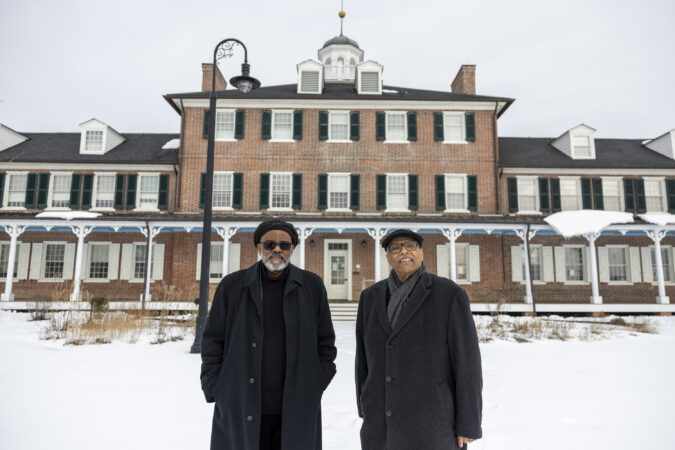
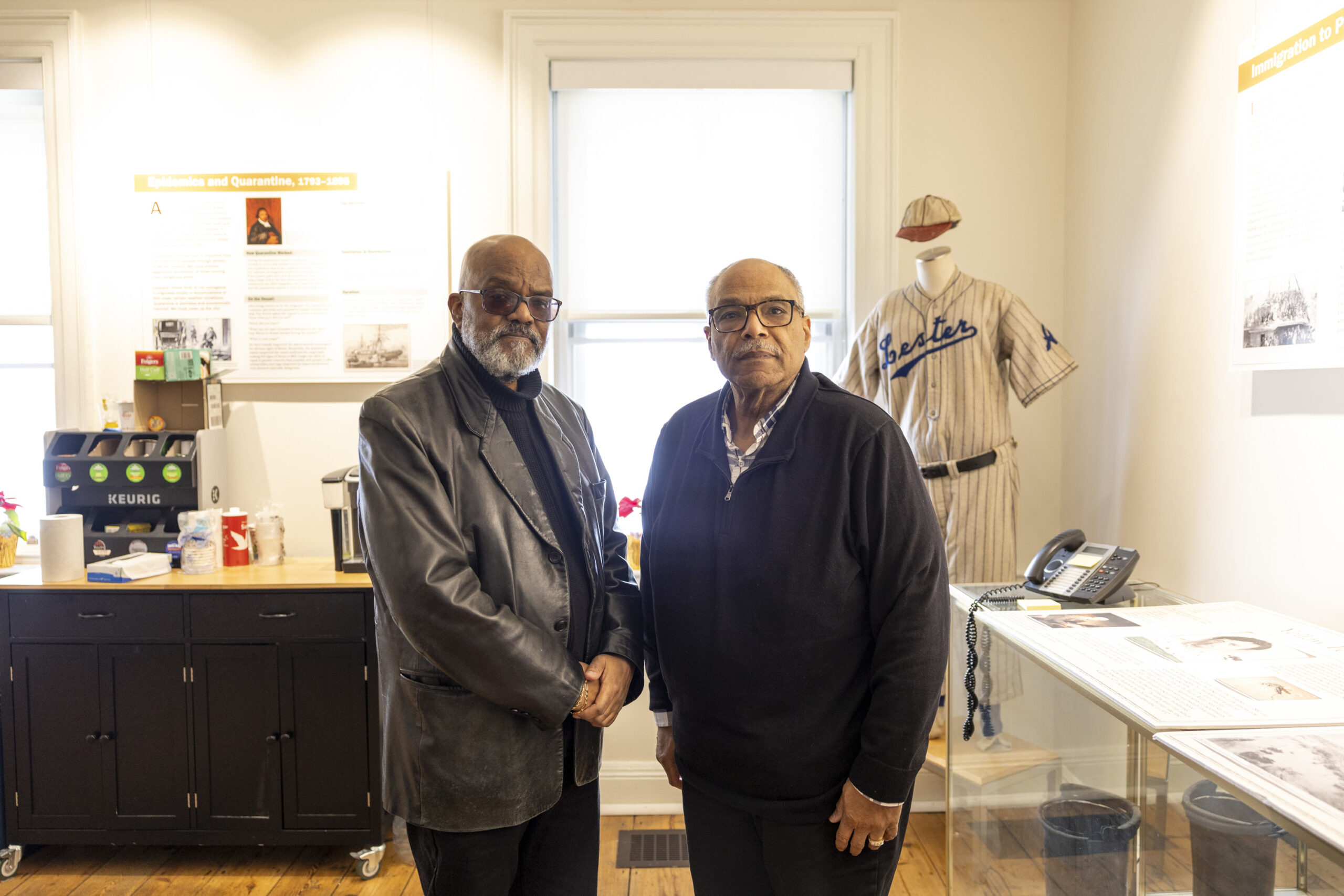
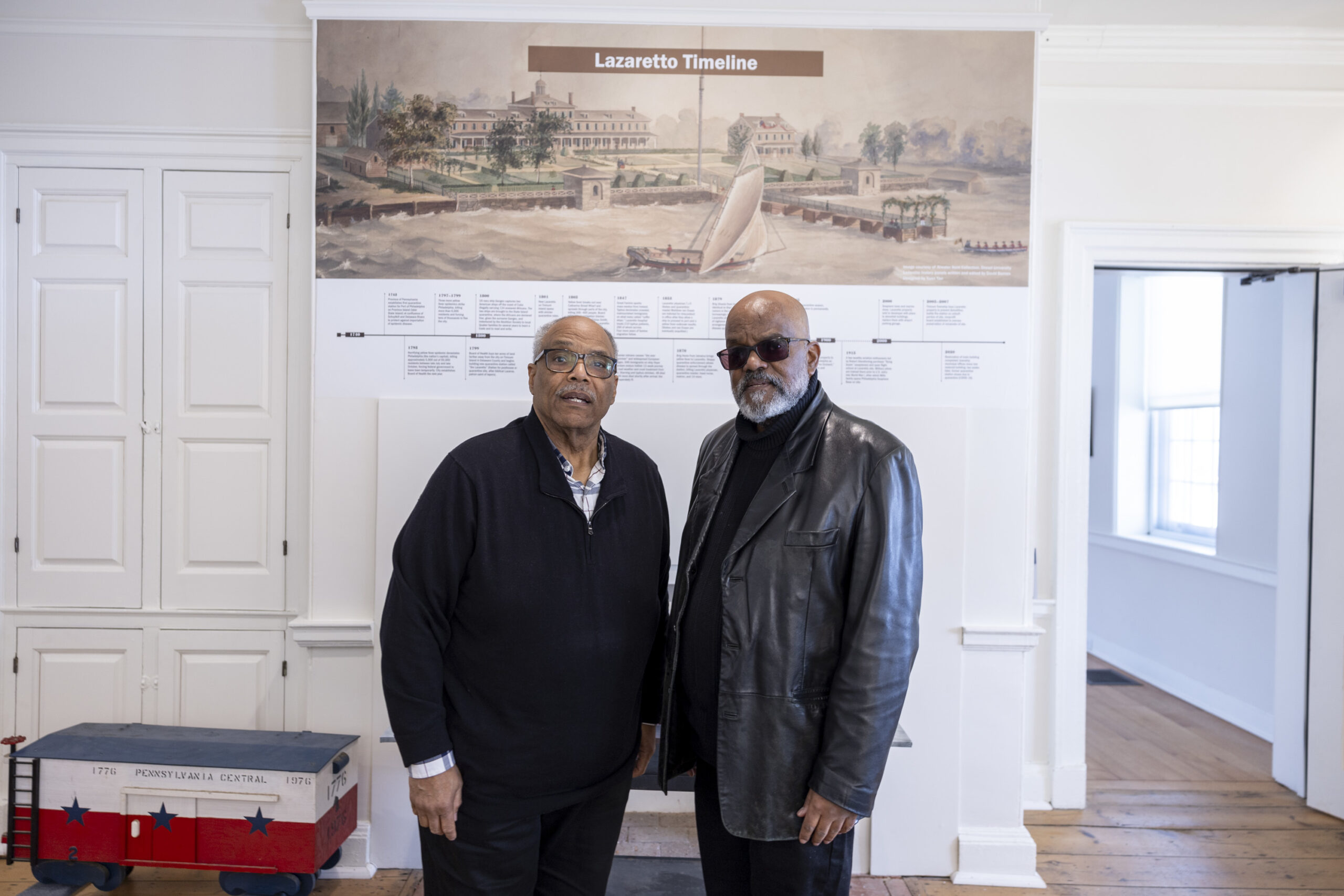
    (From left to right) Twin brothers Larry Ganges, and Kelly Ganges, pose for a portrait at the Lazaretto in Tinicum, Pa., on Friday, Feb. 6, 2026. “It allows us to view and experience Black history,” Kelly said. “Pride in knowing our family was in this journey.”

    The brothers’ first clue of their extended heritage arrived in 1975, when Kelly, was a student at Trenton State College. His journalism teacher, familiar with Bucks County cemeteries, asked if Kelly knew about the gravestones of two soldiers buried there.

    Torbert and William Ganges had fought in the Civil War’s colored regiment, but Kelly couldn’t be sure if they were his relatives.

    Nearly 30 years later, the brothers still don’t know if they are related to the soldiers, but they have discovered that their heritage is, as Kelly describes, “bigger than us, [it] extends beyond the continental United States and involves potentially the world.”

    That information came in a phone call.

    In the early aughts, Larry was working as the New Jersey Department of Health’s assistant commissioner for the HIV/AIDS division. His secretary told him that David Barnes, a University of Pennsylvania professor of history and the sociology of science, was on the line to talk about a different epidemic.

    72-year-old twin brothers Kelly Ganges (left) and Larry Ganges, pose at the Lazaretto in Tinicum, Pa., on Friday, Feb. 6, 2026.

    Barnes, who was seeking anyone with the Ganges name, had found Larry by chance in a New Jersey state employees directory. He wanted to discuss the 135 Africans who arrived in Philadelphia in 1800 and were detained at the old Lazaretto along the Delaware River.

    At the time, every vessel arriving in Philadelphia was required to stop and be inspected at the Lazaretto — a hospital and quarantine station — where patients with yellow fever were treated.

    Later, a brick facility replaced the old Lazaretto. Downriver from the original, the “new” Lazaretto, operational from 1801-1895, stands near present day Tinicum. It is the oldest surviving quarantine station in the Western Hemisphere and one of the 10 oldest in the world.

    By the call’s end, Larry had learned not just the origin of his name but how his ancestors arrived in America.

    “Wow, we had never heard about it. We just didn’t know,” he said.

    The story goes: In 1800, the United States naval ship Ganges intercepted two schooners (the Phoebe and the Prudence) off the coast of Florida, near Cuba. Despite a new federal law banning the carrying of human beings for enslavement, the schooners, which experts believe disembarked from near Sierra Leone, contained 135 people from Africa, imprisoned as slaves, bound for the New World.

    Ganges’ naval officers boarded the schooners — the Phoebe on July 19, 1800, and the Prudence on July 21, 1800 — took the enslaved into custody, and delivered them to the Ganges’ home port: Philadelphia.

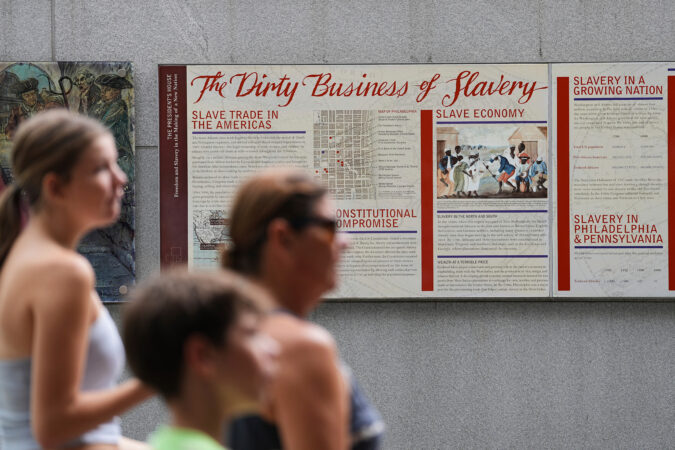
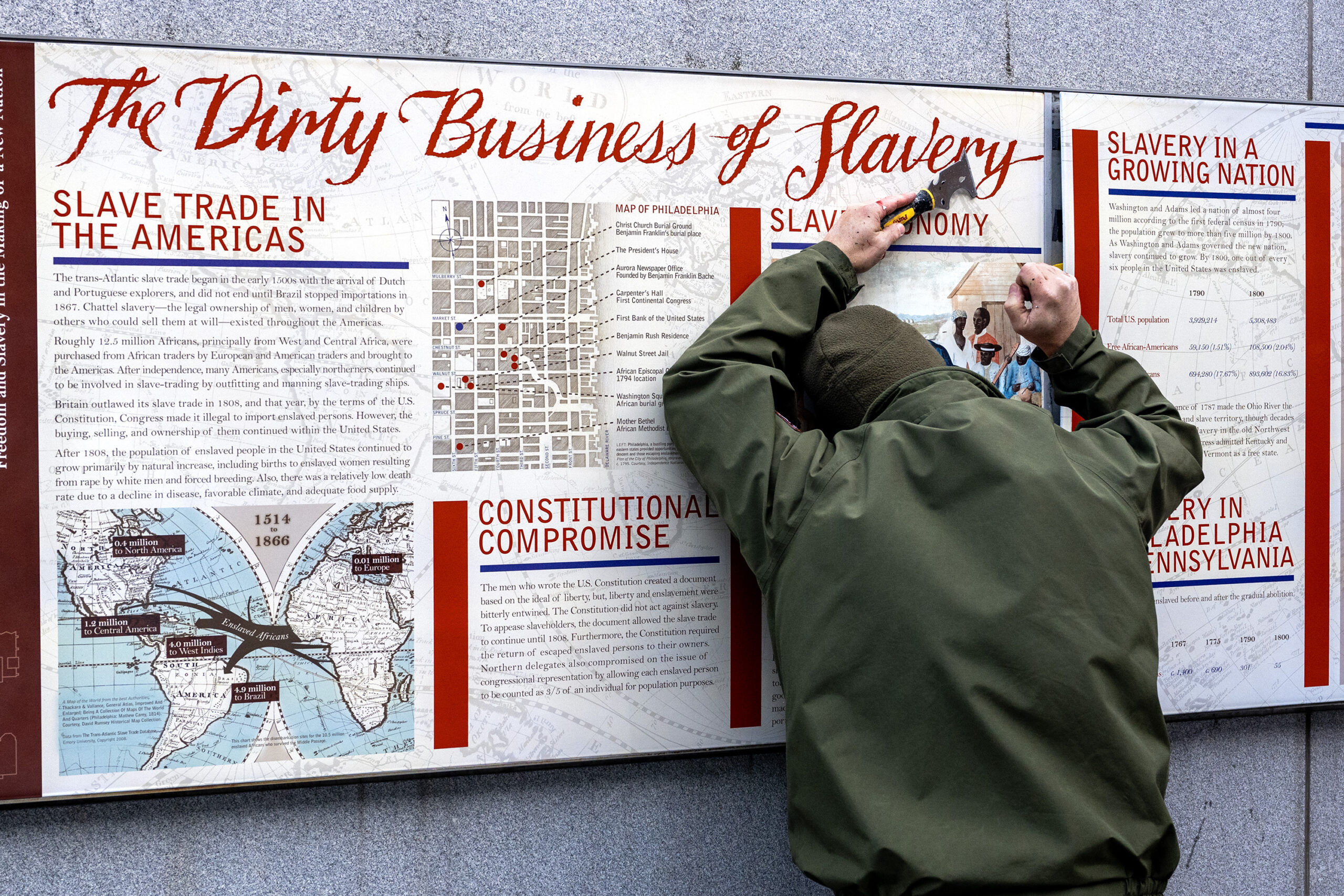
    A NPS worker removes an interpretive panels – “The Dirty Business of Slavery” – at the President’s House site in Independence National Historical Park Thursday, Jan. 22, 2026.

    When the schooners’ owners sued to reclaim their “property,” a Philadelphia judge ruled that the 135 aboard were people (not property) and ordered them freed. The Africans were remanded to the old Lazaretto for quarantine where they remained for up to three months.

    Subsequently Sambo, Milnor, Yelle, and Culico Ganges and the rest of the 123 survivors were indentured to Pennsylvania Abolition Society members and others.

    After Barnes’ phone call, the twins and their (late) older brother, Tendaji Ganges, visited the Lazaretto. At that time, the dilapidated building was locked. But Kelly returned with Barnes and gained access inside.

    “I saw all of the little rooms … it was interesting to touch a piece of history, and know that that’s the genesis of how our family came to the United States,” he said.

    “These modern-day heirs carry the legacy of resistance and survival into today’s conversations around justice, identity, and belonging,” said filmmaker Rah Crawford, whose documentary The Art of Brotherly Love focuses on the Ganges’ story.

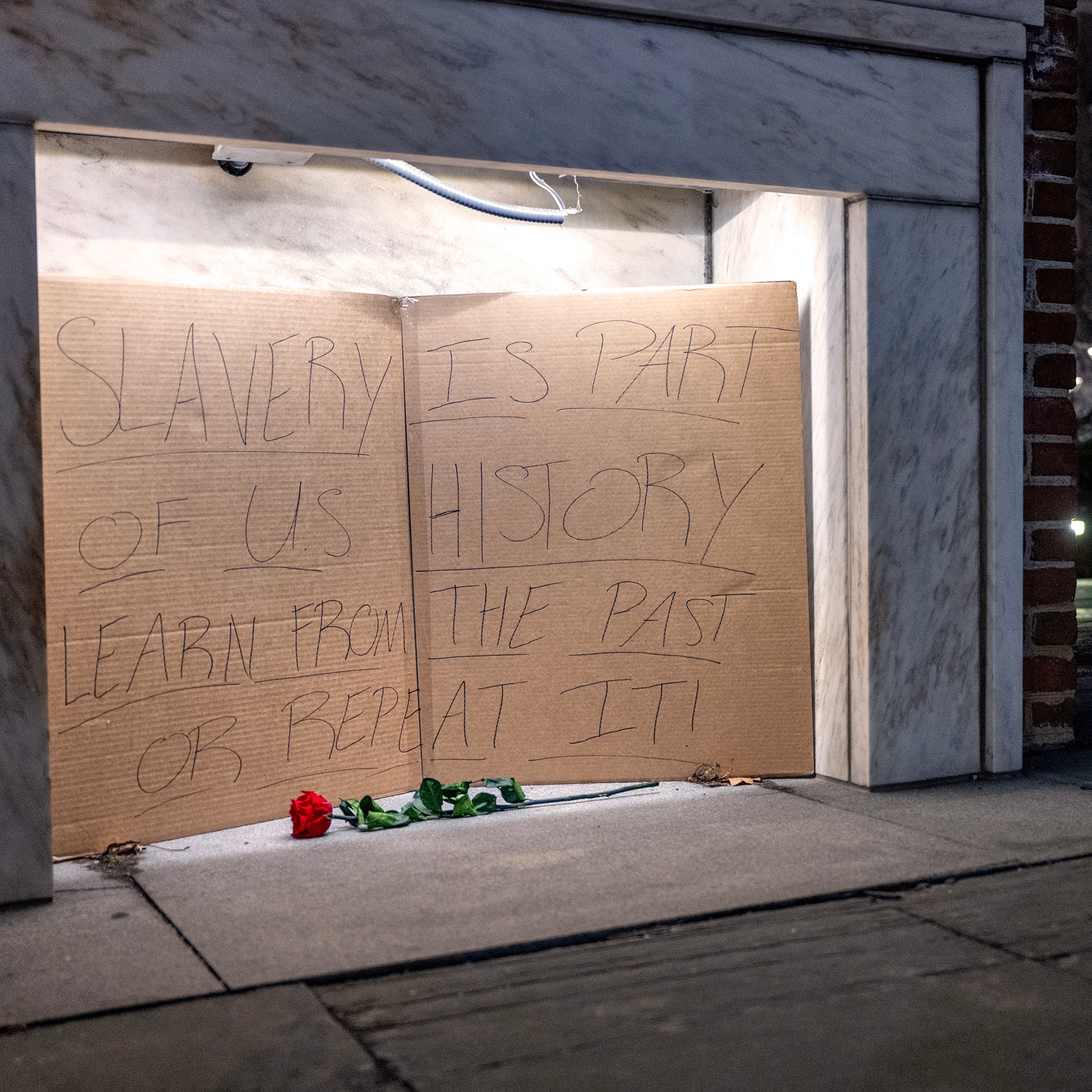
    A single rose and a handwritten cardboard sign (“Slavery is part of U.S. history learn from the past or repeat it”) are inside an empty hearth at the President’s House site in Independence National Historical Park late Thursday, Jan. 22, 2026 after workers removed display panels about slavery.

    When the film premiered in Brooklyn last year, Larry said that as he sat in the audience watching, he was shaking, almost in tears. His wife asked, “Are you OK? Are you cold?”

    He was overcome with emotions: “I was sad, I was happy, I was mad.”

    Although, as the brothers say, “we’ve got the generic connection to the name,” they don’t have a connection to identify individual family members that came through the old Lazaretto; they can’t yet determine how their bloodline was carried to them.

    But thanks to the efforts of family historian Michael Kearney, who is tracking descendants of the Ganges’ survivors, Larry is confident that “my children and my children’s children [are going] to know what the story is, and to know how to access it, and know who the players are …. And hopefully this movie is not the last of what’s going to occur.”

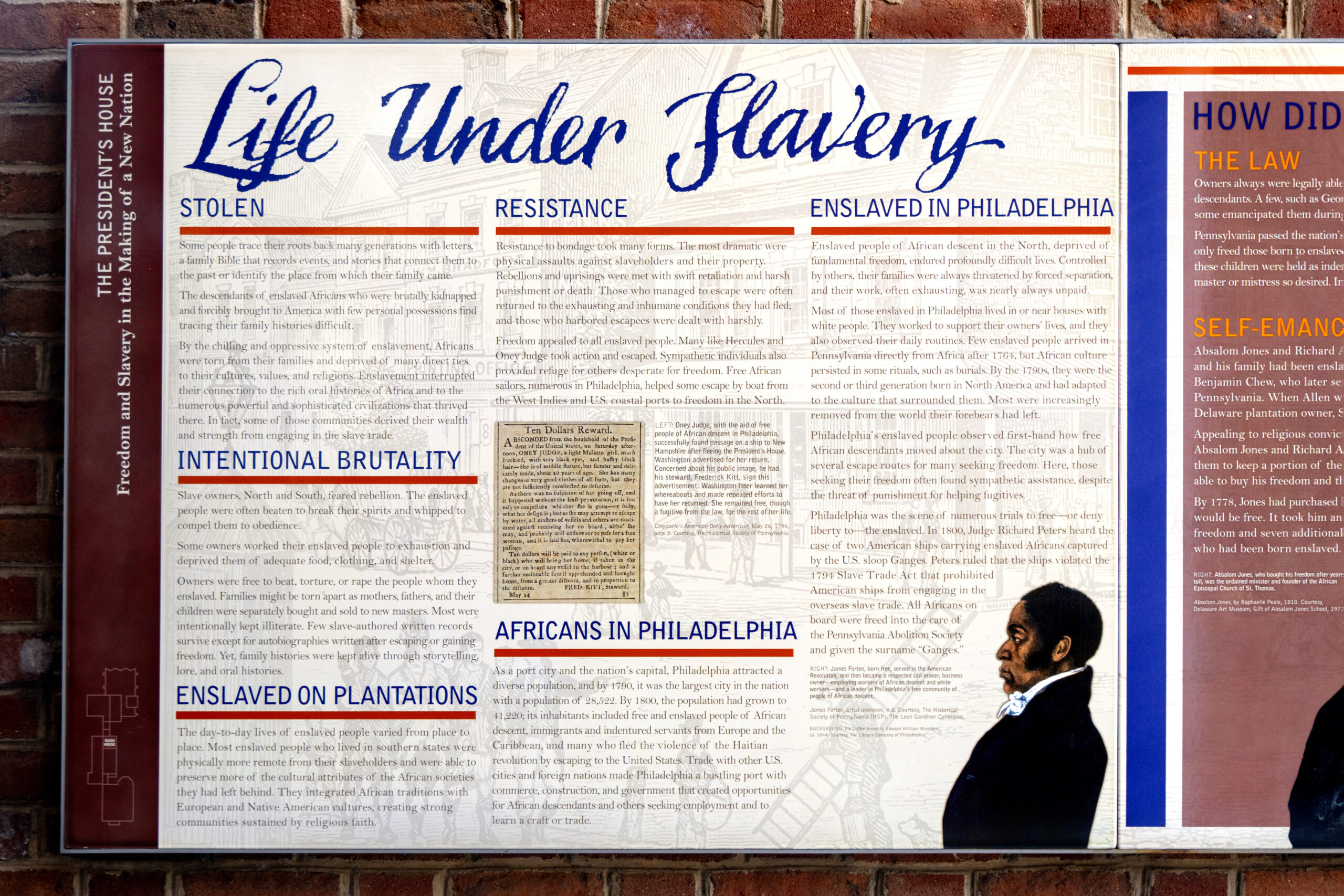
    The “Life Under Slavery” sign at the President’s House in the Independence National Historical Park. The sign has since been removed. Photo from Sunday, Aug. 3, 2025.

    Despite federal efforts to mute the history of enslavement in America — history panels at the President’s House referencing the Ganges story were removed from the site last month — the Ganges brothers know it’s important to share their story.

    “People made it through the troubled journey, the Middle Passage, and landed on American soil and contributed to make America a great nation,” said Kelly, “And nobody can ever deny that, and people can try and whitewash it and try to erase it, but it’s not going to work, because it’s real. Our contribution is documented.”

    Prior to the opening of the President’s House in 2010, filmmaker Crawford was commissioned to create storyboards for a video installation at the site. Through his research, he first learned of the Ganges’ story, launching a 15-plus-year journey to produce the documentary.

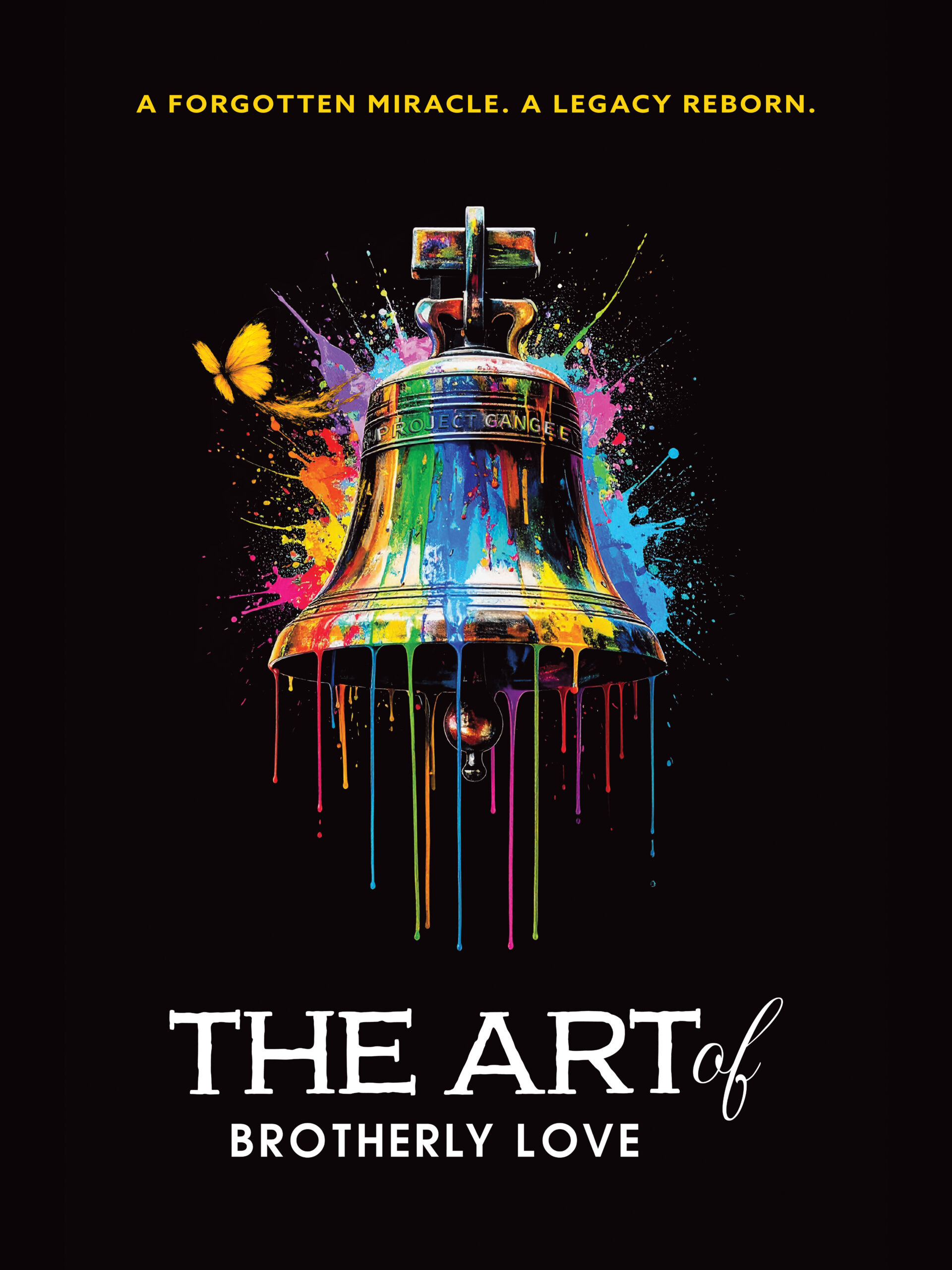
    Filmmaker Rah Crawford’s documentary “The Art of Brotherly Love” documents the story of the long-forgotten rescue of 135 enslaved Africans by the “Ganges” in the 1800s,

    The Art of Brotherly Love, presented in partnership with Creative Philadelphia, is both a documentary and a trailer for a forthcoming animated feature. The Philadelphia premiere is slated for Feb. 14 at Ritz Five.

    After the documentary screens, Kelly Ganges hopes that, “it just continues to cascade out — to inspire more genealogists and historians, and to reach more descendants and the next generation.”

    “The Art of Brotherly Love,” Feb. 14, 11:30 a.m., Landmark’s Ritz Five, 214 Walnut St., eventbrite.com