DEAR ABBY: I have three daughters with children of their own. Every year, we have a family vacation. My daughter “Monica’s” children, ages 8 and 9, whom I love and see regularly, behave badly. They cuss, yell at adults and show no respect whatsoever.
We have brought this to Monica’s attention multiple times. She always reacts like we are wrong and says, “I’m not going to beat my kids.” At no time did we imply she should “beat” her kids, just give them a time-out or a scolding. If any of us tell them “Stop, please don’t do that,” they act like victims. It’s so bad that one of my other daughters told us as we were planning a vacation that she will not be going because of Monica’s kids’ behavior.
Monica accuses us of not liking her kids and being mean. She goes to the school to argue with teachers and the principal if her kids tell her they didn’t get their way. I don’t know what her issue is. Her reasons sound like she is mentally ill. Anything you can recommend?
— NOT ENABLING IN NEVADA
DEAR NOT ENABLING: Monica is a terrible parent. A responsible mother would see that her children learn appropriate behavior before they get into serious trouble. Because you cannot help your daughter to see reality, I recommend you stop inviting Monica and her children on these vacations. Their behavior is unacceptable, and their cousins should not be further influenced by their bad example.
** ** **
DEAR ABBY: I am a 70-year-old male caring for my 71-year-old wife. She has had health issues for more than 10 years. I own my own business and am the only employee, although my wife does help me with a portion of the business. Dealing with all her health issues, trying to run a business, trying to survive financially and navigating the world today is difficult.
I am seeking resources or a support group in my area that works with people who care for their family members. We have been to counseling, which helped, but did not help me with all that I feel and have to do. I don’t think my wife could navigate this world on her own. Can you point me in the right direction?
— RESPONSIBLE IN TEXAS
DEAR RESPONSIBLE: You are carrying a heavy load. An organization called The Caregiver Action Network (formerly the National Family Caregivers Association) may be what you are seeking. Established in 1992, it works to improve the quality of life for tens of millions of family caregivers, providing education, peer support and resources to family caregivers across the country free of charge. For more information, go to caregiveraction.org or call 855-277-3640.
** ** **
DEAR READERS: Today, we remember the birthday of Rev. Martin Luther King Jr. who in 1968 was martyred in the cause of civil rights. During a time of insanity, his was a voice of reason when he eloquently preached, “Love is the only force capable of transforming an enemy into a friend.”
The long-lost demo tape had always held a certain mythos in Charlotte Astor’s imagination.
For years, the Cherry Hill teen had heard stories about it, recorded about 30 years ago by her mother’s very loud, very short-lived, teenage hardcore band, Seed.
Shannon Astor, now 47, had been a vocalist for the group, just 14 or 15 years old, at a time when female representation within the genre was rare. Within a year or so, the group had disbanded — but before it did, the group, which typically practiced in a member’s parents’ basement, recorded a single demo. There had been only a few dozen copies produced back then, and they had all sold, scattering out around the South Jersey area.
For Charlotte, the tape became a kind of white whale — a relic of her mother’s hard-charging past, something the teen occasionally scoured the web for, to no avail.
She’d never heard her mother’s band. And she wanted to. Badly.
“Ninety-five percent of what I have about my mother is in the stories she tells me,” says Charlotte, 16, a junior at Cherry Hill High School East.
But a demo was something tangible. Something concrete.
“A demo,” she decided, “I can find.”
And so one night last spring, that’s what she set out to do.
She had little to go on: A rough estimate of when the demo would have been released (1993-94), a general geographic location (South Jersey), and a single lyric (“In the wind of the AM shadows cling to nearby trees as season shifts to satisfy the light from above”).
“I have been looking for this tape for 4 years,” she wrote in an appeal to her 1,000 or so Instagram followers, “… and it would mean the absolute world to me to find this tape.”
Butsomething about her search — this desire to connect with a parent, to bridge a gap three decades wide — resonated. It became, within the tight-knit confines of the hardcore music scene, a united pursuit.
At an age when most teenagers couldn’t get far enough away from their parents, here was one launching a quixotic quest to better understand hers.
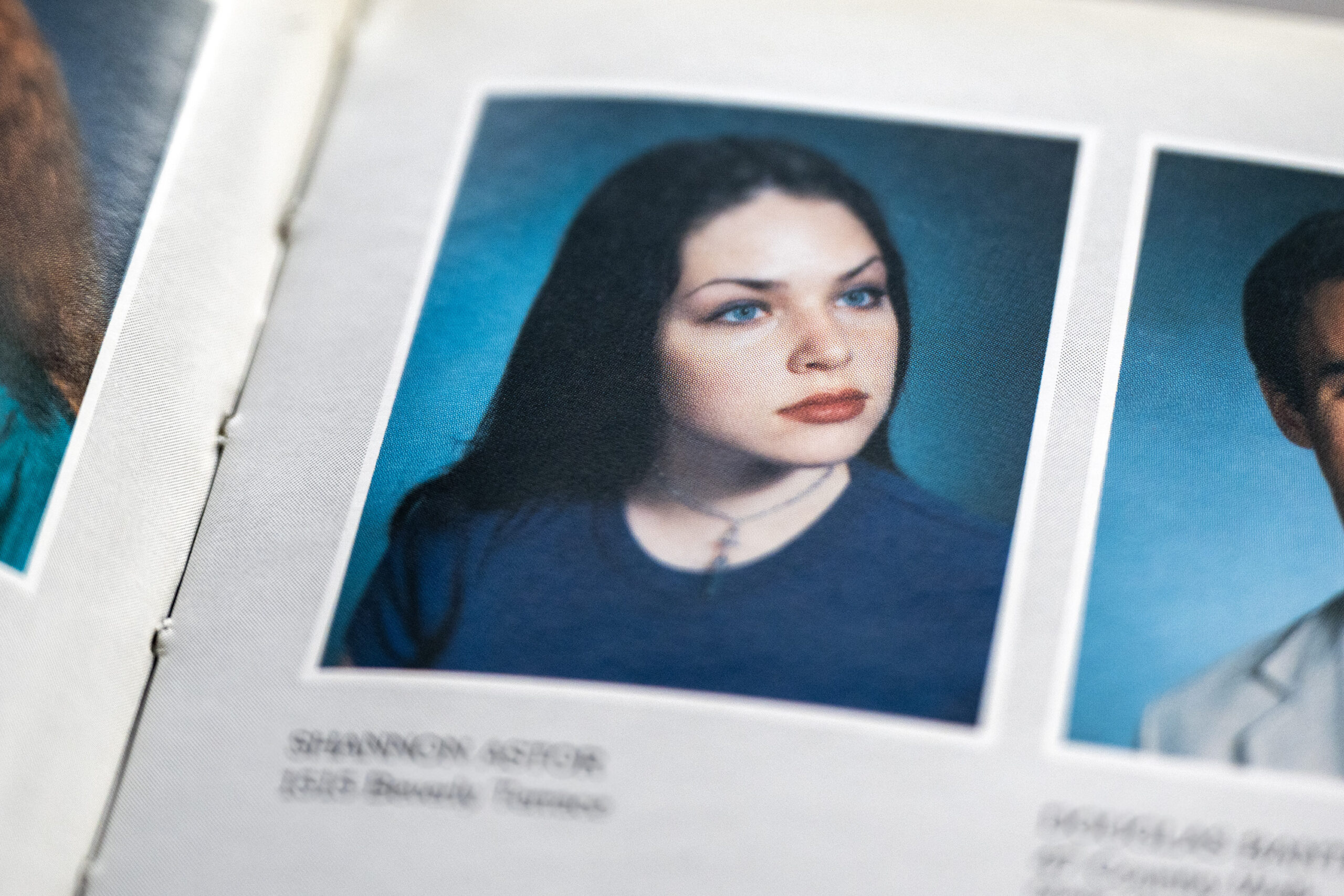
A senior class photo of Shannon Astor in the 1996 Cherry Hill High School East yearbook. Now 47, Shannon was previously in a hardcore band called Seed.
Soon, strangers from across the country were digging through old boxes in basements, or tagging old running buddies from Jersey’s 1990s hardcore scene in social media posts. Some reached out to old producers from the area, wondering whether the demo might have made its way into some dusty studio corner.
Messages poured in, too — hundreds of them — with suggestions ranging from the plausible to the outlandish. Had she tried getting in touch with Bruce Springsteen’s people? You never know what the Boss might have stowed away in some mansion closet.
“I suddenly had communication with so many people who I thought I would never in my life have any connection with,” Charlotte said. “California to Jersey, and everything in between.”
The lead singer of a well-known Jersey straight-edge band of the era, Mouthpiece, joined the search, messaging Charlotte after others reached out to him about the tape. (He vaguely remembered her mother, Shannon, but not the band.)
Much of the outside help, Charlotte notes, has come from the hardcore community.
Indeed, much of Charlotte’s young life is rooted in the same hardcore music scene that her mother’s once was. Like Shannon before her, Charlotte spends many nights at hardcore shows around the area, photographing the scene for the magazine she self-publishes, “Through Our Eyes.” And like her mother previously, she’s a member of the “straight-edge” hardcore community, a group with a shared collection of ideals that includes abstaining from drinking or drugs. (Her first flirtation with teenage rebellion came when she snuck out of the house one night to go to her favorite record store.)
And though her mother does not necessarily share Charlotte’s zeal for locating the old tape — “I’m not waiting for some garage band demo to be unearthed,” Shannon joked — she understands what it would mean to her daughter to have it.
“It’s special to me only because of how much she needed to hear it,” said Shannon. “I’m just so pro-Charli and everything that she does … But this is her journey, and something that was intrinsically important to her.”
To those in the scene, meanwhile, the response has been very hardcore.
“A bunch of people banding together to help this random girl find her mom’s thing,” said Quinn Brady, 19, of New York, and a friend of Charlotte’s. “Most people assume that hardcore people are not very nice or friendly. [But] there’s this inherent kinship. It connects people across the nation in a way that not a lot of other genres of music do.”
A recent selfie by Charlotte Astor (right) and her mother, Shannon Astor, taken at Reading Terminal Market.
Those outside the hardcore scene have been no less enthralled, however.
In December, after NJ.com picked up the story, further extending its reach, a documentary filmmaker reached out about the possibility of doing a film on her quest.
Last year, after posting in some “old-head” hardcore Facebook groups about the tape, Shane Reynolds — a member of the Philly-based hardcore band God Instinct — stumbled upon what appeared to be the most promising lead yet.
“I found the guy who allegedly made the demo,” Reynolds said.
But when she got the man on the phone, Reynolds says, it proved to be a dead end.
The closest Charlotte came was last year, not long after she first posted about the demo on Instagram. Her mom’s former bandmate in Seed, convinced he must have kept something from that period, recovered from storage an old cassette that featured a recording of a single Seed practice session.
Charlotte took it home, pushed it into the stereo in her bedroom. She stared at the ceiling as the tape began to play and 30 years fell away.
For the first time, she could put a sound to the stories she grew up hearing.
“The first thing I heard was a few seconds of my mom talking,” Charlotte said. “That’s my mom, when she was 16. I’m listening to a clip of my mother, listening to her at the same age I am.”
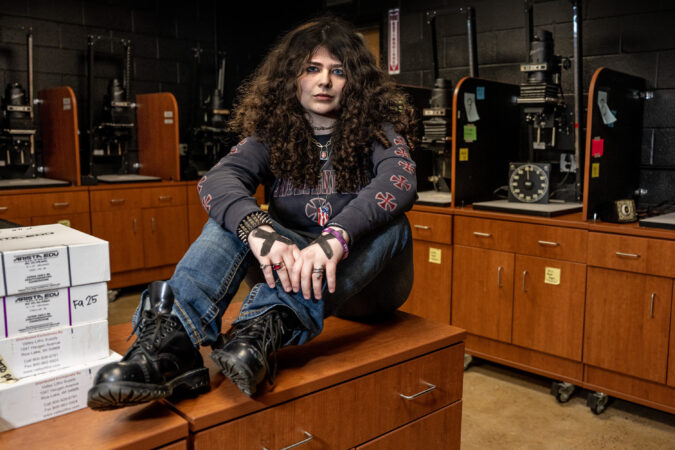
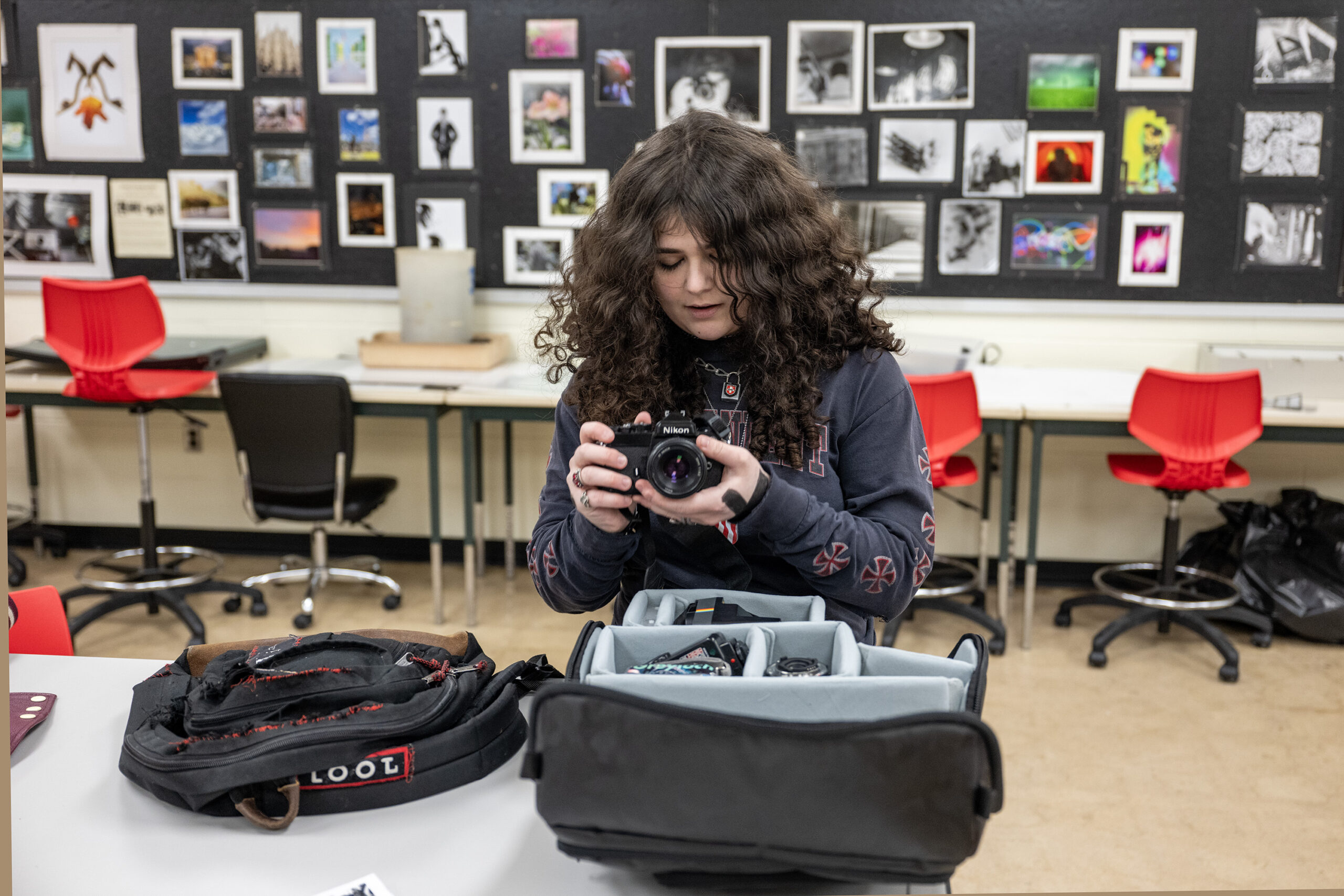
Charlotte Astor, a junior at Cherry Hill High School East, and her vintage 35mm film Nikon camera in the school’s photography classroom.
Still, that small taste has only reinforced her devotion to unearthing the actual demo.
Charlotte remains realistic about her odds of finding it. No, it’s not likely to be found in some radio station’s studio. And no, Bruce Springsteen is almost certainly not in possession of a three-decades old demo tape from her mother’s teenage years.
But some graying hardcore fan from the ’90s, with a penchant for hoarding and a cluttered garage?
Stranger things have happened.
“I have confidence — unwavering confidence — that someone has it,” Charlotte says. “And that I will get my hands on it.”
DEAR ABBY: I am neat and organized, but my wife is the opposite. She’s messy and disorganized. I knew it before we married, but we made a handshake deal that she’d make an effort to pick up after herself once we moved in together. Unfortunately, it hasn’t happened.
Every time she comes home, whatever she’s carrying gets dropped on the nearest flat surface — keys, bags, mail, you name it. She piles things up instead of putting them away and it feels like there’s clutter everywhere I look. Our bed is often piled with clothes and other items stacked almost two feet high.
I find myself constantly picking up after her, which is exhausting and makes me feel like I’m the only one taking care of our house. Her lack of effort is driving me crazy and causing me significant stress. I’ve tried talking calmly to her, setting boundaries for clutter-free areas, even threatening divorce out of sheer frustration. Nothing seems to work. I don’t know what else to do.
I love my wife and don’t want our marriage to fall apart over this, but the constant mess is taking a toll on my mental health and our relationship. How can I approach this in a way that fosters understanding and cooperation? I want us to find a solution that works for both of us without making her feel criticized or attacked.
— MESSED UP
DEAR MESSED UP: Several thoughts come to mind. You, a man who is “super neat,” knew your wife was messy but married her anyway. Short of divorcing her, would it be possible for you to designate certain areas of your home that you agree will remain clutter-free? If that isn’t possible, could you do what some other couples have done, which is live apart? Marriage mediation might help your wife understand the message you have been trying (and failing) to deliver. It’s worth a try, but lifelong habits are very hard to break.
** ** **
DEAR ABBY: Our 24-year-old daughter is getting married in 10 months. My wife is invited to the wedding, but I am not, and I am furious. The groom’s family is paying for the trip, but they say I am not invited “for financial reasons.”
I don’t have a great relationship with my daughter. But that isn’t the point. I told my wife that if the roles were reversed and she was excluded, I would not go. This may be a deal-breaker for me. It’s apparent that our marriage doesn’t mean as much to my wife as it does to me. What are your thoughts?
— ELIMINATED IN TEXAS
DEAR ELIMINATED: What I think is it’s terrible for your daughter to put her mother on the spot this way. By doing so she is putting a strain on your marriage. You and your wife need to ask your doctor for a referral to a licensed marriage and family therapist so you can hash this out before further damage is done to your relationship. Do I think your wife should forgo the wedding? What I think doesn’t matter as much as what she does.
The buyers: Mercedes Murphy, 33, healthcare worker
The house: a 1,710-square-foot townhome in Port Richmond with three bedrooms and two baths, built in 1925.
The price: listed for $289,000; purchased for $291,000
The agent: Emily Terpak, Compass
The exterior of Mercedes Murphy’s home in Port Richmond.
The ask: Murphy had a strategy for maximizing her savings: never pay more than $850 in rent. If it went above that, she would simply move, which she did several times over five years. But eventually, what started as a strategy began to feel like a trap. “The quality of the places I was willing to pay for kept dropping,” Murphy said. When her small, rat-infested apartment in Point Breeze flooded — the second place she’d lived in that had flooding issues — she decided she’d had enough and set out to find a two-bedroom house with an updated kitchen for $350,000 or less.
The search: Murphy looked across the city, including in Mt. Airy, Fishtown, and South Philly. Some houses looked good in photos, butlooked worse once she saw the surroundings. A Northwest Philly rowhouse made a great impression inside, thanks to its sparkling wood floors, but not outside. “It was just parking lots, and nobody was around,” Murphy said. “It wasn’t very safe.”
She saw a promising place in Fishtown — a beautiful house with updated appliances, right by Girard Avenue. But it was small and had only one bathroom. Murphy debated the pros and cons with her then-fiancé (now husband), Stefan Walrond, for a few days, then made an offer. Almost immediately, she regretted it. She pulled her offer less than 24 hours later. “They had so many offers already,” Murphy said, “I didn’t feel like fighting for it.”
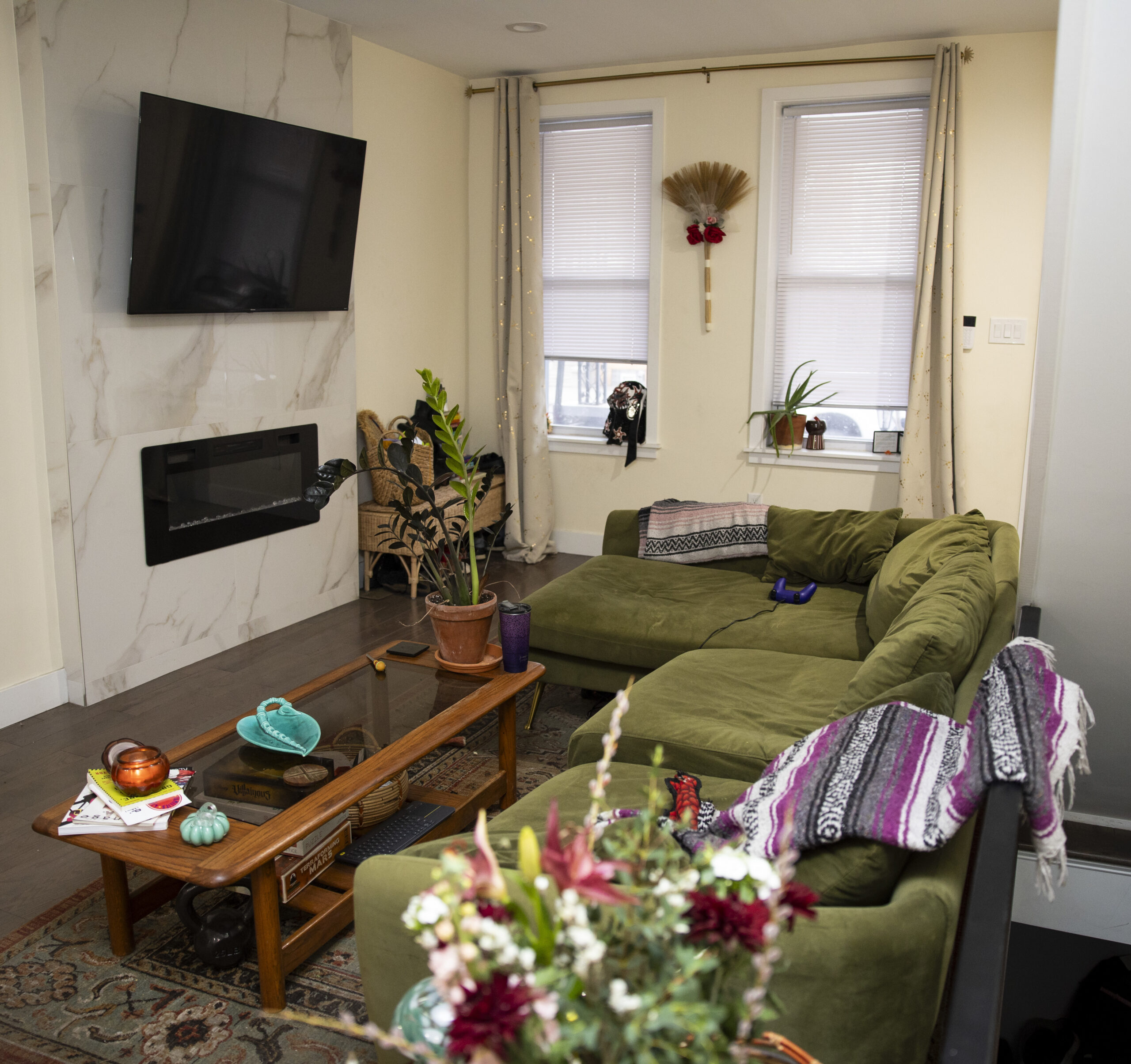
The living room in Murphy’s Port Richmond home. She liked how large it was compared to others that she had seen.
The appeal: A week after she pulled her offer, Murphy got COVID and couldn’t attend showings. Her fiancé went to see a house in Port Richmond without her. “He did the tour,” she said. “He sent me photos and did a little video walk-through.”
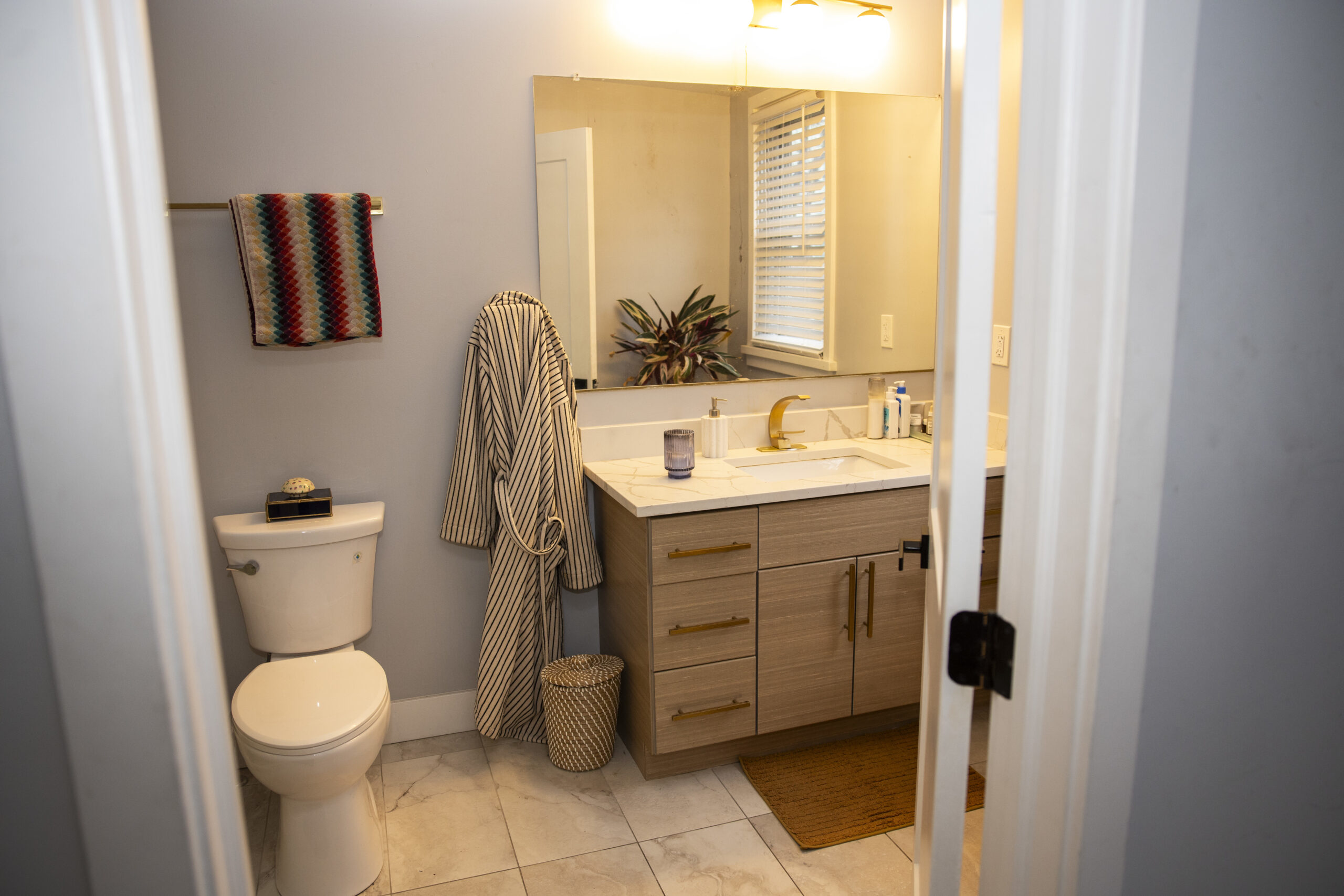
Murphy could tell that this might be the one. It had everything she wanted, including lots of space, two full bathrooms, and an updated kitchen. It even had a backyard with a cherry tree and enough room for their dog. What ultimately sold her, though, were the finishes in the kitchen and upstairs bathroom: the gold faucets, the marble countertops, the built-in bench in the shower. “I loved the modern aesthetic,” Murphy said.
The deal: Murphy wanted to avoid a bidding war, so she offered $291,000, $2,000 over the asking price.
Murphy fell in love with the modern finishes, like the gold faucet, in the bathroom.
The inspection was straightforward. The only major issue was the roof. It would need to be replaced in a few years. A few of the appliances looked like they wouldn’t last very long either. Murphy didn’t ask for any concessions or credits. She just made sure she had enough money saved to pay for replacements down the line. Sure enough, the fridge broke one week after she moved in, and the roof started leaking within the year.
The money: Murphy, a self-described “huge saver,” started aggressively saving money in 2015, the year she got her first “major job.” When she went to buy a house seven years later, she had just over $100,000 in savings. “I always lived really below my means,” Murphy said. She drove an old used car, lived with roommates, and didn’t have any “crazy expenses, like video games or makeup.”
“I’m just not a big spender,” she said. Not having student loans helped too.
Murphy loved the modern aesthetic of the kitchen.
Murphy used $70,000 for a 20% down payment. She tapped into her remaining $30,000 to pay for the new roof, which cost $6,000, and a new washing machine, which cost $1,700. Her parents bought her a new fridge for $2,000.
The move: Murphy’s landlord allowed her to break thelease she shared with her fiancé due to the flooding. She hired movers for the first time ever. “I moved so much in Philly before that I knew this time I definitely wanted movers,” Murphy said. It only cost $400. “We didn’t have that much stuff,” she said, “and we weren’t going very far.”
Any reservations? Murphy and Walrond love their neighborhood and their neighbors, but they wish they lived on a quieter street. “Aramingo is a main thoroughfare,” Murphy said. “So we have a lot of emergency vehicles come by.”
Other than that, Murphy wishes she negotiated more. If she could do it all over again, she wouldn’t offer $2,000 over the asking price. She would also ask for more concessions from the seller to address the aging appliances. “I didn’t even think to do it,” Murphy said. “I was just so happy to get a house.”
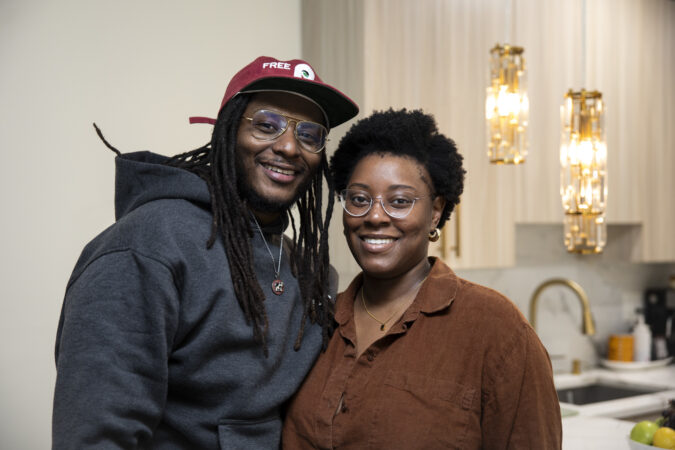
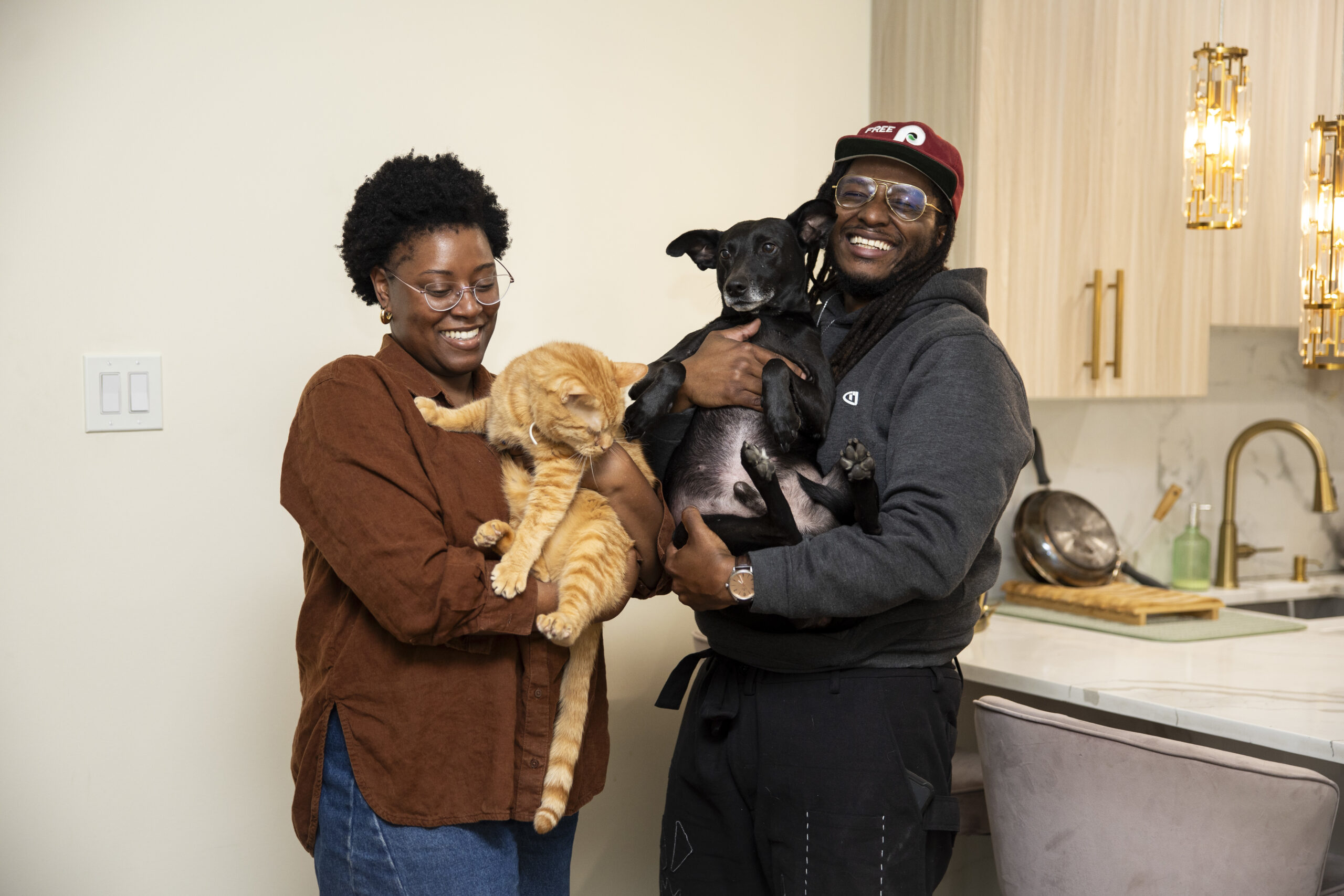
Mercedes Murphy and Stefan Walrond pose with their pets Archie (left) and Onyx at their Port Richmond home on Tuesday, Jan. 13, 2026, in Philadelphia.
Life after close: Murphy hasn’t changed anything since moving in, just repaired things. The leak in the roof damaged the bedroom drywall, which she is now in the process of fixing. And she had to replace a leaky window in the office. Despite the minor inconveniences, she’s happy with her purchase. Now she’s focused on rebuilding her savings. She wants to get back to $100,000. “Let’s see if I can do it again,” she said.
Chris Summers was born in South Philly and raised by her grandmother and her mother. She knew she was supposed to get married, but she never felt exactly like the people around her.
The main sticking point was sex: She didn’t want to have it, yet she still longed for romantic companionship.
“I really crave connection and spending time with somebody. I would be happy to spend a romantic weekend where we didn’t have to sleep together,” said Summers, 73. ”We would stay up talking and drinking tea and drawing and reading to each other.”
Summers married Fred, whom The Inquirer is referring to by his first name to protect his privacy, in 1975. The two had sex throughout their marriage, because Summers figured that was what a wife was supposed to do, but she never cared about it. They divorced in 1980 after Fred had a series of affairs, she said.
She continued to date men, all the while wondering if she might be a lesbian. Above all, she was attracted to people’s minds; she wanted a connection that had nothing to do with the “groping, kissing, fumbling, and activity that led to orgasms,” as she described it.
“At that time, there was no vocabulary for that. There was no saying: Sex does not interest me at all. Sex is not part of my reality,” she said. It wasn’t until the 2010s that she began reading about asexuality — the term for people who do not experience sexual attraction.
About 1.7% of lesbian, gay, or bisexual adults identify as asexual, according to the Williams Institute, a research center focused on sexual orientation and gender identity at UCLA. The vast majority are young, under 27; a Williams Institute scholar noted that asexuality is an “emerging identity,” and probably likely to become more widespread in the future.
Summers, who describes herself as neuroatypical, now lives with her two cats in Wissahickon. She has posted personal ads on Craigslist and forums for asexual people, but at this point has mostly resigned herself to being alone.
The following, as told to Zoe Greenberg, has been edited for length and clarity.
On meeting her husband
I put an ad in the personals in 1972. I was definitely hoping for romance, but also I was just looking for somebody to hang out and smoke dope with. Fred answered the ad, and he showed up at my house on his Honda 350 motorcycle. He was kind of like my knight in shining armor. We dated for a few months, and then I moved in with him.
On a less-than-romantic proposal
There was no real romance involved in getting married. We were living in West Philly, and I was setting the table for dinner. He came into the kitchen and said, “What do you think about getting married?” I hadn’t really thought about it at the time, and I just said, “Yeah, OK, that’s a cool idea.” I didn’t realize that was a proposal. He said, “I’ll call my parents and let them know we’re going to get married.” I thought, This is what it’s like?
Fred’s a Libra, and he likes to be doing what other people are doing. Friends and people in our age group were getting married. I guess he thought, Everybody else is doing this. So this should be something that we’re doing.
On her mother offering her husband-to-be cash to marry her
Fred and I had been married for several months, and we were having dinner one night. I was complaining about my mother; I always had a troubled relationship with her.
He said, “Did you know that your mother offered me money to marry you?” I thought he was kidding. I said, “What did she offer?” He said, “$1,000.” I said, “Did you take it?” And he said, “Of course not.”
I was horrified. I was raised by my mother to think I better get married, because that way I would have somebody to take care of me. She didn’t believe I could navigate life on my own. I think that on some level, my mother meant well. She thought, I’m going to offer a guy money to marry my daughter, and that way I’ll feel that I’ve done my part.
Summers at home in Philadelphia this month.
On her husband’s (“pedestrian”) fantasies and her evolving sexuality
Fred was into fantasizing. One of his favorites was: you work in a massage parlor, and you’re really a hooker. I like playing, and I like fantasy and dressing up, and I just thought that was so pedestrian. I mean, if he had said, “Let’s dress up like aliens,” I would have thought, This could be fun.
I still thought that it was quite possible that I was a lesbian. I liked looking at women, I found women attractive. When I was in 8th grade, I had a serious crush on my best friend. But in a working-class, blue-collar family, it was not something that you talked about.
On her husband’s infidelities
I thought we were happy. But Fred was a philanderer. He always had a little something on the side, and one of his big things that he really enjoyed doing was confessing his sins later.
For our first wedding anniversary, we saved money so we could take our honeymoon, and we went all the way up through the Eastern Seaboard.
We were at a lovely restaurant having a nice meal. Fred leaned over and said, “Um, there’s something I have to tell you.” I thought, Oh, God, no.
I knew he was going to confess something, and he told me that he had been having an affair with the woman who was our matron of honor. I said, “Why did you have to tell me this on our wedding anniversary?”
On life after divorce and discovering asexuality
I initiated the divorce in 1980 because I was tired of Fred not being faithful. I made sure that he was served at work with the divorce papers, to embarrass him.
After that, I was in California and I was looking for a partner. But I was not looking for somebody to sleep with. Sex to me is like having anchovies — yeah, I suppose I could, but I’d really rather not.
I was always attracted to people who were very intelligent and on the quirky side. For me, it was never about: I want to get in their pants. It was more like, I want to get in their brain.
In the last 10 years, I was trying to figure out, what is different about me? I started seeing things about asexuality. It made me feel like less of a freak, realizing: OK, this me. This is where I fit.
On searching for love but not sex
I’d always been homesick for Philadelphia, and returned in 2015.
At one point I was part of a now-defunct Meetup group for alternative sexualities. I was an old lady in the midst of these 20- and 30-year-olds. They were very dear, they were very accepting. But I was not really considered dating material due to my age.
Since I’ve been back, I have not really had much of a romantic life. I dated a few guys, a few women. But when you say “I really don’t want to have sex with you” — there’s no nice way to say that.
This story is part of a series about life partners across the Philadelphia area. See other stories in the series here and here.
If you want to share your story about who you’re navigating life with romantically or otherwise, write to lifepartners@inquirer.com. We won’t publish anything without speaking to you first.
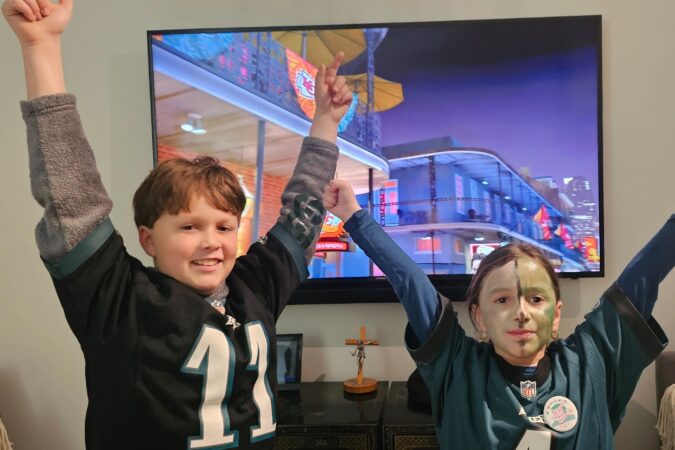
Sam Salvo didn’t deliver a nuanced breakdown of route trees or personnel groupings. He didn’t cite EPA or All-22 tape. He simply announced — with the confidence of someone who has never had to answer a follow-up question — that Kevin Patullo should be flipping burgers at McDonald’s. Philly nodded in unison.
The funniest part isn’t that it went viral. It’s that a day later, Patullo was gone, and the city collectively decided the kid deserved at least partial credit. In a town where people once egged an offensive coordinator’s house (too far), this somehow felt like the healthier outlet.
Sam’s rant worked because it was pure, unscripted Philly logic: blunt, emotional, metaphor-heavy, and somehow accurate. “One-half cooked, one-half raw” is not just a roast, it’s a season recap. And when he popped back up afterward saying, “I just wanted to say anything that could get him fired. And it worked,” it sounded less like a joke and more like a performance review.
The follow-up reactions only added to the lore. Fans celebrated. Former players debated scapegoating. Someone somewhere probably floated Big Dom calling plays. And the Eagles, intentionally or not, let the internet believe that an 11-year-old helped nudge a major coaching decision.
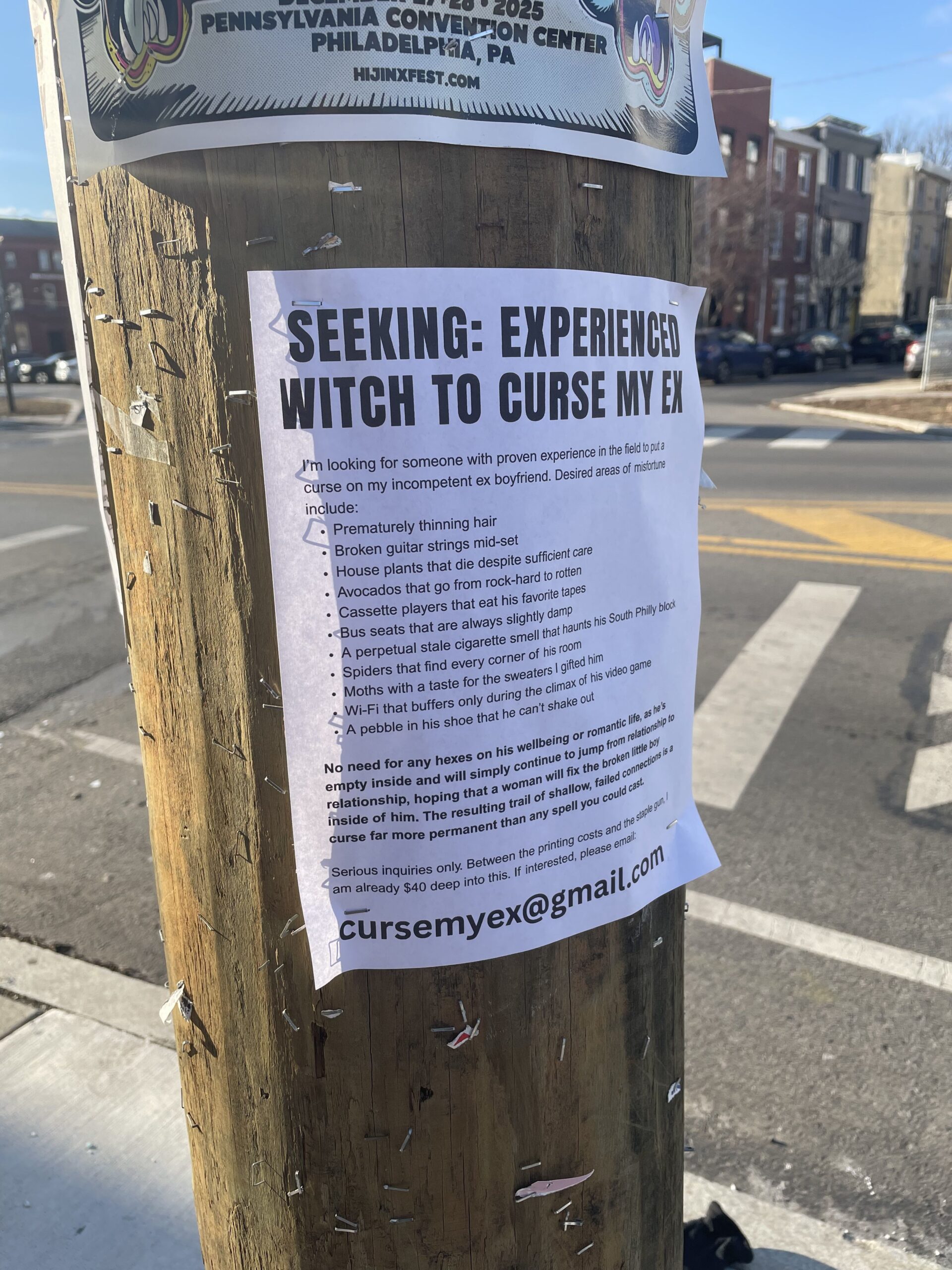
One of the witch-seeker’s fliers hangs in Fishtown on Sunday, Jan. 4. After ending a two-year relationship, a Philadelphia woman posted the fliers around the city and in Phoenixville as a way to channel her emotions over the breakup.
Philly collectively supports hexing an ex (with rules): A
At some point this winter, Philadelphia decided that asking a witch to curse your ex (politely, creatively, and without touching his health or love life) was not only acceptable, but deeply relatable.
The flier itself did most of the heavy lifting. “Seeking: Experienced Witch to Curse My Ex,” stapled to poles from Phoenixville to Fishtown, with a list of curses so specific and mild they felt less like dark magic and more like emotional Yelp reviews: thinning hair, damp bus seats, buffering Wi-Fi, eternally pebbled shoes. Nothing fatal. Nothing irreversible. Just inconvenience with intention.
Instead of pearl-clutching, the city leaned in. The flier spread through neighborhood Facebook groups and socials, where strangers did what they do best: offered commentary, solidarity, jokes, and unsolicited advice. Some people cheered her on. Some defended the ex. Others asked how it ended. And plenty of women recognized the feeling immediately: that moment after you’ve done the therapy, the journaling, the “being mature,” and still need somewhere for the anger to go. This wasn’t about actually ruining someone’s life. It was about yelling into the city and having the city yell back, “Yeah, that sucks.”
The rules mattered, too. No curses on his health. No messing with his love life. Philly rage has boundaries. Even our hexes come with ethics.
Wawa learns Philly does not want a vibes-only convenience store: C-
Philadelphia has many hard rules, but one of the hardest is this: If you remove the shelves from a Wawa, you are no longer operating a Wawa.
And in Philly, that’s not innovation. That’s friction.
This was once one of the company’s highest food-service locations before the pandemic, which makes the experiment feel even more puzzling in hindsight. People weren’t avoiding this store because they didn’t want Wawa. They were avoiding it because it stopped functioning like one. A convenience store that requires commitment, planning, and patience defeats the entire concept.
The grade isn’t lower because this wasn’t malicious or careless. It was a genuine attempt to test something new. But Philly answered clearly, quickly, and repeatedly: We don’t want a Wawa that feels like an airport kiosk. That’s what will get your store closed.
Phillies pitcher Ranger Suárez throws against the Cincinnati Reds on Saturday, July 5, 2025, in Philadelphia.
Saying goodbye to Ranger Suárez hurts, even if it makes sense: B+
This one lands softly and hard at the same time.
Ranger Suárez leaving Philadelphia was never shocking, just quietly devastating. Signed by the Phillies as a teenager, developed patiently, trusted in big moments, and forever tied to the pitch that sent the city to the World Series in 2022, Suárez felt less like a roster spot and more like a constant. You looked up in October and there he was, calm as ever, getting outs without drama.
Now he’s on the Red Sox.
The Phillies weren’t wrong to hesitate on a five-year, $130-million deal for a pitcher with mileage, injury history, and a fastball that succeeds more on craft than velocity. Andrew Painter is coming. The rotation math is real. This is how smart teams stay competitive.
But Philly doesn’t grade purely on spreadsheets.
Suárez embodied a certain Phillies ideal: unflashy, durable when it mattered, unfazed by the moment, and always a little underestimated. He wasn’t the loud ace. He was the steady one. The guy you trusted to calm everything down when the season felt like it might tip.
That’s why this stings. Not because it was reckless to let him go, but because losing someone who felt like a Phillie is different than losing someone who just wore the uniform. Watching him head to Boston is one of those reminders that the version of the team you emotionally commit to is always a few contracts behind the one that actually exists.
OpenTable adds a 2% fee, and Philly sighs deeply: C
Philadelphia understands restaurant math. We’ve lived through inflation menus, pandemic pivots, staffing shortages, reservation deposits, and the great “please cancel if you’re not coming” era. What we don’t love is when the bill quietly grows another line item after we thought we were done reading it.
That’s why OpenTable adding a 2% service fee to certain transactions (no-show penalties, deposits, prepaid dining experiences) landed with more fatigue than outrage. Not rage. Just tired acceptance.
The logic isn’t wrong. No-shows are brutal for small dining rooms, especially in places like South Philly where a missed table can knock a whole service sideways. Restaurants can absorb the fee or pass it on, and in many cases, the platform is genuinely helping places protect their bottom line.
But from a diner’s perspective, this is yet another reminder that convenience now comes with micro-costs layered so thin you barely notice them, until you do. The reservation is free … unless you’re late. Or cancel. Or book a special dinner. Or blink wrong. It’s another reminder that each new surcharge chips away at the simple joy of making dinner plans without feeling like you’re navigating airline baggage rules.
Philly draws the line at selling dinner reservations: A-
Philadelphia has tolerated a lot in recent years: prix-fixe creep, credit card holds, cancellation windows measured in hours, and now, yes, platform fees (see above). But selling a free dinner reservation for profit? That’s where the city finally says no.
The attempted resale of coveted tables at Mawn didn’t just irritate the restaurant’s owners, it offended a basic Philly value system. You can love a place. You can hustle for a table. You can brag that you got one. What you can’t do is turn access into a side hustle and expect people to shrug.
The reaction was swift and very local: public call-out, canceled reservations, and a clear message that this isn’t New York, Miami, or a StubHub-for-dinner experiment. Yes, reservation scalping exists elsewhere, powered by bots and platforms like Appointment Trader. And yes, Philly has passed laws trying to shut that down. But what made this moment resonate wasn’t legislation. It was cultural enforcement. A collective agreement that making money off a free reservation crosses from clever into gross.
Put simply: Waiting your turn is still the rule here. And if you try to flip your way around it, don’t be surprised when the city flips right back.
Amanda Seyfried gives Colbert a very real Allentown community calendar: A
Stephen Colbert has a recurring bit where he asks celebrity guests to promote actual events from their hometowns. When Amanda Seyfried, who grew up in Allentown, took her turn this week, she didn’t try to punch up the material.
She didn’t have to.
Seyfried read through a lineup of events that sounded exactly like a Lehigh Valley bulletin board: all-you-can-eat pasta night, speed dating for seniors, board games at a funeral home, a pirate-themed murder mystery, and Fastnacht Day donuts heavy on lard and tradition. No setup. No apology. Just listings.
That restraint is what made it land. Seyfried treated the segment like she was helping out a neighbor, not auditioning for a tourism campaign.
For viewers around Philly and the surrounding counties, it was immediately recognizable. This is the kind of stuff you scroll past in a local Facebook group or see taped to a coffee shop door without a second thought. Put it on national TV, though, and suddenly it becomes comedy.
It sits along the scenic banks of the Upper Delaware River in Pike County, surrounded by mountains, with access to major trails, canoeing, kayaking, and biking, and the tallest waterfall in Pennsylvania. It’s an adventure hub among the best in the tristate region.
But Milford isn’t just for people in hiking boots. It’s also an artsy town, with galleries, a theater, and dedicated film, music, and writers’ festivals. It’s a shopping destination too, with a slew of antique and gift shops, and a healthy-living store that rivals anything in Philadelphia or New York.
“Geographically, I believe Milford has the edge over most small towns around,” said local entrepreneur Bill Rosado, who owns some popular businesses in town. “It is centered so well. Just looking at the town is a treat to me.”
There’s plenty of history in Milford, too, which calls itself the “birthplace of the conservation movement” as it was home to Gifford Pinchot, founder and first chief of the U.S. Forest Service. It also has a historical museum that’s home to a unique and morbid artifact from the Civil War era.
And, finally, you have to eat. Milford is home to fine dining at historic hotels, both fancy and cozy bars, along with breweries, classic diners, organic coffee, and, thanks to Rosado, authentic food from Mexico’s Yucatan peninsula. (He was born there.)
Milford’s about 75 miles northwest of Manhattan and just across the river from North Jersey, so yes, you’ll see Yankees and Giants gear, but it’s just 135 miles from Philly, so get up there.
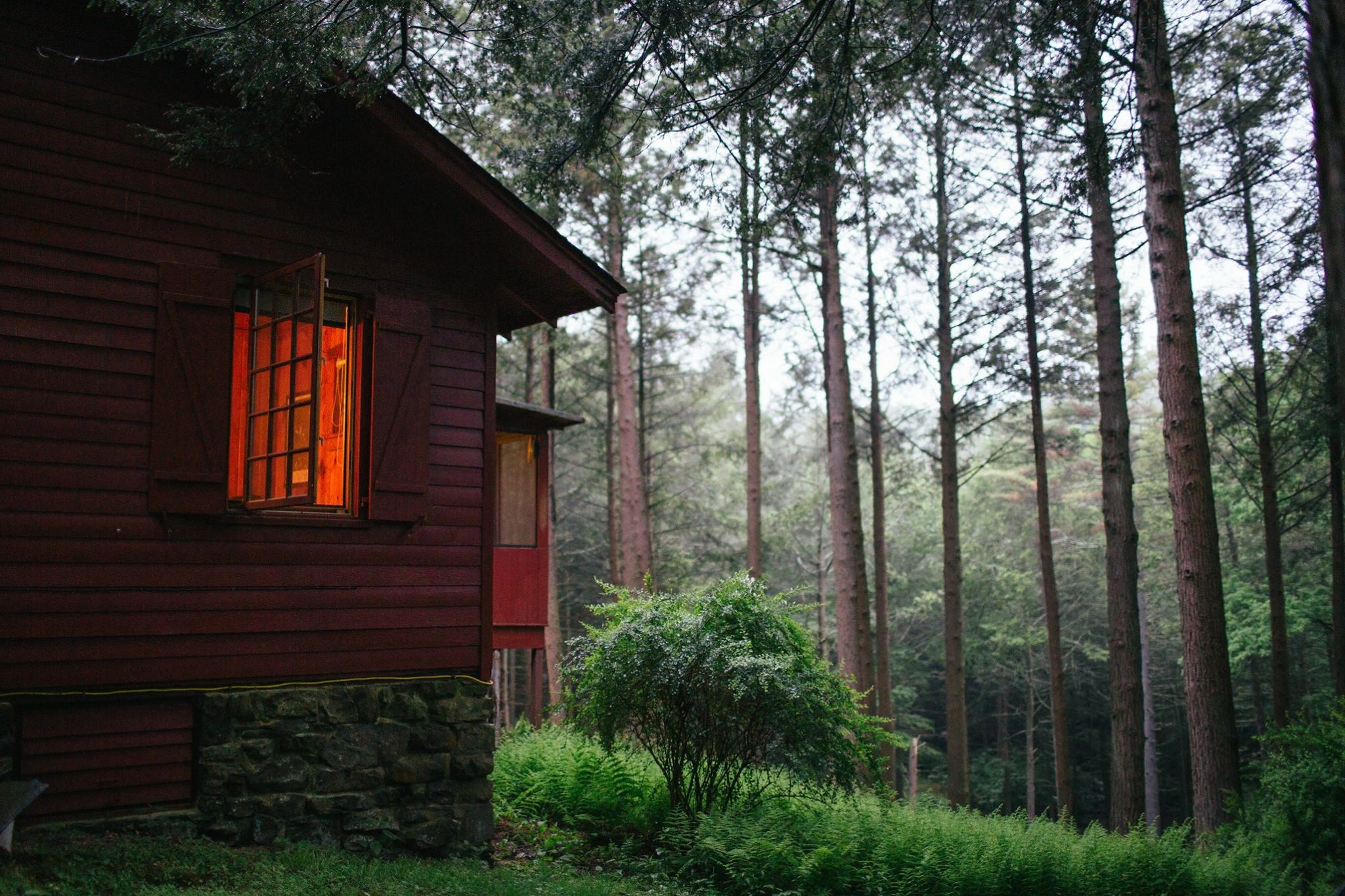
One of the cabins available for rent at Sean Strub’s Dwarfskill Preserve in Milford, Pa.
Stay: Dwarfskill Preserve
There are plenty of hotels in downtown Milford that are in the midst of everything the town has to offer, including the historic and ornate Hotel Fauchère and the Tom Quick Inn, which would be at home in Cape May. Rosado owns both of them.
I’ve been eyeing up the tiny cabin at the 575-acre Dwarfskill Preserve, up in the hills above town, for years now, as a former colleague had spent extended time there over the years and shared lovely pictures. It’s owned by former Milford mayor Sean Strub and consists of three separate properties: the one-room cabin I rented for a few nights with my girlfriend, Jen, and my dog, Wanda, and two larger cabins that can fit more people.
We stayed there over the New Year’s holiday, cooking brisket in the microwave and making coffee on the hot plate. While Milford and the Dwarfskill are undoubtedly at their best in the summer and fall, when you can take full advantage of the outdoor opportunities, including the swimming hole at the cabin, we watched both the wood fireplace and the ample snowfall outside for hours. It was hard to leave, a full hygge experience, in Northeastern Pennsylvania.
📍 Dwarfskill Falls Lane, Milford, Pa. 18337
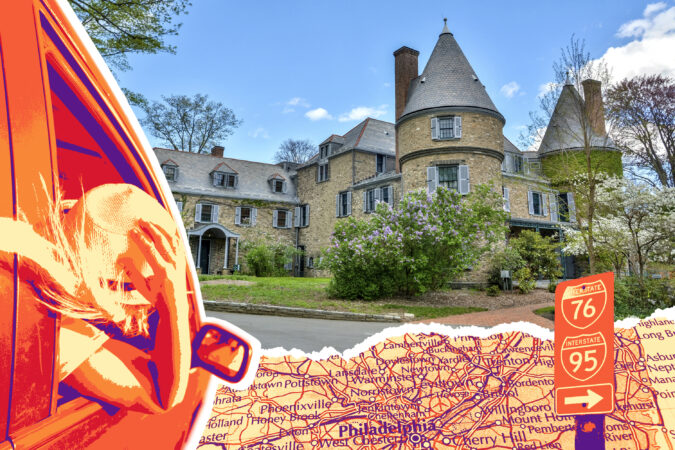
Grey Towers, the Pinchot family residence, outside Milford, and the family’s haven from 1886 to 1963. The family made its fortune in lumber.
Explore: Grey Towers National Historic Site
If you drive around Pennsylvania as much as I do, you’ll see the name Gifford Pinchot quite a bit. Pinchot was a two-term governor of the Commonwealth and has a 54,000-acre state forest named after him.
He went on to found and run the U.S. Forest Service and is generally considered a pioneer in the U.S. conservation movement. Pinchot was born in Milford and his home, Grey Towers, is a national historic landmark run by the U.S. Forest Service. Its curated gardens, French chateau-style stone architecture, and expansive library can all be seen on tours, both in-person during spring, summer, and fall, and online all year round.
At 150-feet tall, Raymondskill Falls is the tallest waterfall in Pennsylvania.
If you’re interested in something a little more outdoorsy, visit Raymondskill Falls, which, at 150 feet, is the tallest in Pennsylvania. You can, technically, visit in winter, but the ice and snow could be treacherous. In summer, you might have to brave some crowds and jammed parking lots, but the views are worth it.
📍 Grey Towers: 122 Old Owego Turnpike, Milford, Pa. 18337
Learn: The Pike County Historical Society at the Columns
It’s not every day that a county historical society can really wow you with an artifact, but Pike County punches up with a Civil War relic you won’t find anywhere else in the world: the bloody U.S. flag used to cradle Abraham Lincoln’s head after he was shot at Ford’s Theatre in 1865.
The flag and other exhibits are housed in “the Columns,” a 1904 neoclassical-style mansion. Want to learn how they obtained the flag? Visit on Wednesdays, Saturdays, and Sundays.
It’s a place to get coffee or tea and healthy pastries. It’s a community hub, where people gather to meet or work remotely.
It’s also a place to look good, with woolens and other “natural” clothes, and smell good, or simply be good, with homesteading supplies and books.
📍 Broad Street, Milford, Pa. 18337
Eat: Felix’s Cantina at La Posada
Jen spends weeks in the Yucatan every winter, so she was surprised to see a restaurant in Northeastern Pennsylvania promising a “taste of the Yucatan Peninsula and other regional dishes from southern Mexico.”
Rosado, who also owns a historic theater in town, owns the Cantina at La Posada, yet another one of his hotels. He was born in Merida, the capital of Yucatan.
He knows the dishes well, and she approved, describing our pork and birria tacos as “fattening and delicious.”
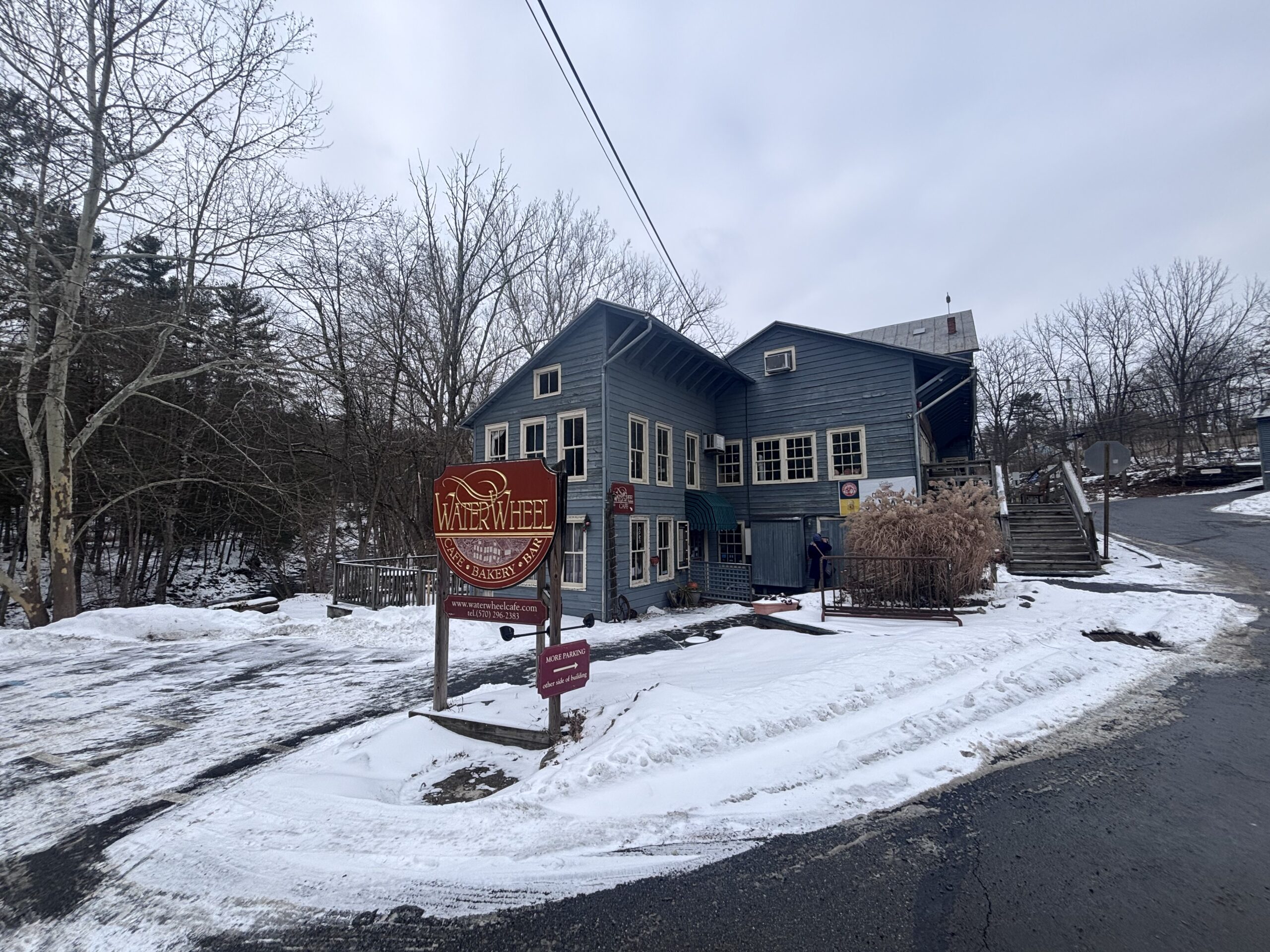
For breakfast, the Waterwheel Café Bakery Bar, an old grist mill along Sawkill Creek, serves up a killer thick-cut challah French toast. We basically licked the plate clean.
DEAR ABBY: To help out his parents, I pick up my grandson from daycare two days a week. I recently started taking him to a local park for about 45 minutes before I take him home. I’m physically active and climb the slides, chase him around and play with him. He loves our time together.
Over the last two weeks, there has been a little 6-year-old girl at the park who seems to be on her own. Her parents, I assume, are in the parking lot. They are not in the park play area.
The time we are there is the same time school gets out, so I’m sure she goes there every day after school. She has attached herself to us and wants me to go down the slide with her, push her on the swings and chase her constantly, and she asks me to watch her do this or that. Whatever we are doing, she is right there.
She is cute and sweet, but she is taking my time away from my grandson. Also, my grandson is annoyed at someone else demanding my time which also distracts me from keeping a close eye on him. There isn’t another park we can go to that is nearby, and he loves this particular one. The girl is always there when we go. At first, I tried to include her in our play but that made it worse because she wanted more attention.
I am a retired teacher, so I understand she is craving attention from an adult, but she’s really impeding on our play time together. How do I politely ask her to leave us alone?
— DISTRACTED GRANDMA IN FLORIDA
DEAR GRANDMA: You are assuming that the little girl HAS a parent in the parking lot. The next time you see her, ask her who is there with her — mom, dad, aunt, caregiver? If you do, you can either meet the person and explain the problem or realize that no responsible adult is looking after her. If this is the case, for heaven’s sake, report it to the school or CPS because leaving her all alone is child endangerment.
** ** **
DEAR ABBY: I am a 66-year-old woman who has worked full time for 47 years, in addition to raising two children and maintaining a home. I will be retiring in three months because, honestly, I’m tired of the rat race.
I’m single and don’t have a boyfriend. I have plenty of friends and family, but I’m increasingly nervous about what I’ll do with my spare time. I know I should feel happy and grateful that I’m able to retire, but at the same time, I’m having anxiety over this freedom. Have you any suggestions to offer?
— STOPPING SOON IN TEXAS
DEAR STOPPING: Start making a list of what your interests are. Your retirement years could offer you the chance to travel and see the wonders this country has to offer. You could take adult education classes at a nearby college or university. You might like to volunteer some time on projects or charities in your community. Or you could just hang out with friends. How you choose to spend your free time is entirely up to you and limited only by your imagination.
DEAR ABBY: I am a senior woman in great shape. I am active, and I have never had a problem attracting men. Five years ago, I married a man I had known for many years. We used to have a pretty active sex life, but it has been four years since he has touched me in an intimate way. He says he doesn’t know why, and that it is due to lack of confidence.
I’m afraid that if I don’t leave, I’ll never know the loving arms of a man around me again. In other ways, we get along fine, but as time has progressed, I no longer find him attractive. If he did make a move today, I think I would reject it because too much hurt has happened.
Financially, leaving would be a disaster. Our friends and family think we are a great couple, but no one knows the truth. I feel like I am sinking into a morass with each long, lonely day. Please advise.
— UNTOUCHED IN COSTA RICA
DEAR UNTOUCHED: Before you sink further into depression, I urge you to discuss this with your doctor and get a referral to a licensed psychotherapist. Make no hard-and-fast decisions about your marriage until you are feeling better. I don’t know what caused your husband’s problem. Neither do you, and it’s possible that neither does he.
Is your husband aware of how strongly you feel about this and that you are seriously considering leaving? If he isn’t, would he be willing to explore possible solutions and perhaps heal your relationship? And, finally, if he is, would YOU be willing to try again? I know I am giving you more questions than answers, but they are worth considering.
** ** **
DEAR ABBY: As the compliance officer at a university, it’s my job to run mandatory training for faculty and staff. They know the dates, times and schedules for the meetings weeks in advance. I try hard to keep these training sessions as short and as few in number as possible, which means we need to use all the time available.
My issue is that whenever we call a short break, some subset of people will wander away to unknown destinations. Are they looking for coffee? A bandage? A reevaluation of their life goals? We never know.
I am left with two choices: Hold everyone up and wait for them to return, which is polite but ensures we will all end the day late, or start without them. The ruder option means I must deny their certification until they meet with me to catch up on what they missed. Both options are frustrating.
I’ve learned that the longer the break, the more people who will go missing. No number of warnings or amount of cajoling will bring everyone back on time. So which option is better: starting, or waiting?
— RUNNING THE SHOW IN MASSACHUSETTS
DEAR RUNNING: Stop being such a pushover. At the beginning of each meeting, explain to the attendees that everyone must be present for the entire presentation OR YOU CANNOT CERTIFY THEM. Then follow through. Do not continue to make yourself available for those who skip out, because it is disrespectful of the folks who stayed.
Of all the things Betsy Kenney thought she might go viral for, whispering about Wawa wasn’t one of them. But the 38-year-old comedian’s Philly “ASMR” videos have taken off on TikTok and Instagram, turning Kenney — who spent more than a decade pursuing a comedy career in New York City — into an unlikely local celebrity.
If you aren’t familiar with ASMR, which stands for Autonomous Sensory Meridian Response, it’s a relaxing sensation triggered by soft sounds or repetitive patterns. People watch ASMR videos of soft tapping, scratching, whispering, or crinkling to unwind. A video of someone getting a scalp massage? Pure bliss. A video of someone with a strong Philly accent asking if you know their cousin while scraping a spoonful of Rita’s water ice? Less so. And therein lies the joke. “People find the Philly accent to be like nails on a chalkboard,” Kenney said. “And I thought it would be funny to combine the two.” The contrast clicked immediately.
Kenney’s videos have racked up millions of views, circulating through group chats and comment sections thick with recognition and debate. They’ve drawn fans far beyond the region and even earned an endorsement from Kylie Kelce, who rated Kenney’s Philly accent an 11. For Kenney, the sudden attention has been somewhat surreal, considering it only arrived after she stopped chasing it.
Betsy Kenney, the woman behind Philly ASMR, in Philadelphia, December 11, 2025.
For years, she had been grinding through the familiar comedy circuit in New York. She took improv classes at the Upright Citizens Brigade, acted in commercials to stay afloat, and wrote constantly. “I really wanted to do comedy as a living,” Kenney said. “And it turns out it’s really hard.” There were moments of traction. Kenney and her writing partner had a short film debut at the Tribeca Film Festival. They created a web series that was acquired by IFC. They hosted a podcast that found a sizable audience. “That was big,” she said. But none of it added up to stability. Then came COVID, two babies, and a move to Kenney’s hometown of Philadelphia, a return that quietly reshaped how she worked.
Back home, the pressure shifted. Kenney was no longer measuring every idea against an imagined career outcome. She was tired, busy, and short on time, and that looseness made room for something new. In September, she posted her first TikTok: an impression of “Phillies Karen,” aka the lady who stole a baseball from a kid at a Phillies game. It went viral. Before that, she said, she’d always been too self-conscious to post comedy online. Now, with less to prove and less time to overthink, she kept going.
She began posting whenever inspiration struck. Ideas surfaced in the slivers of time she had to herself, like in her car after school drop-off, or before pickup. Some of her best brainstorming happens in the shower, which is why her hair is often still wet in her videos. “I’m not trying to do a soaking wet Kim K thing,” Kenney said. “It’s literally the only time I have.” (Kenney is a full-time parent.)
A few days after “Phillies Karen” took off, she posted her first Philly ASMR video. Then came her impression of Ms. Rachel if she were from Philly. She tried non-Philly bits, too, but they didn’t land the same way. Viewers were clearly responding to the specificity of her hometown voice.
Betsy Kenney, the woman behind Philly ASMR, in Philadelphia, December 11, 2025.
Kenney isn’t the only creator to build a fan base on the back of the Philly accent. There’s also Olivia Herman, whose no-nonsense impression of a Philly mom has attracted over 200,000 followers and a brand deal with Burlington Coat Factory. But where Herman leans into parody, Kenney aims for recognition. The humor doesn’t come from exaggerating the accent, but from treating it as ordinary. That’s no small task considering how difficult the Philly accent is to fake. “It has one of the most complex vowel systems of American English dialects,” said Betsy Sneller, a professor of linguistics at Michigan State University, which makes it difficult to imitate if you didn’t grow up with it.
Kenney did. She was born and raised in Northeast Philadelphia by two parents from the area. “Philly is all I knew,” she said. Sneller said that familiarity is evident in Kenney’s use of Philly-specific phrasing — “it’s so expensive anymore,” “youse” — and regional slang and cultural references like Mom-moms, bo-bos, and the Roosevelt Mall. “There’s such an identifiable feeling of place,” Sneller said. “It feels so specific.”
In fact, Kenney has found that the more specific she is, the more people connect with her work. In the comments section of a video where she asks which parish “Father John ended up at,” viewers pile on with recognition. “Wow, so we all had a Father John then, lol,” wrote one. “We all Father John in eastern PA,” wrote another. Even the Eagles chimed in: “My kinda ASMR.”
Now that she’s back in Philadelphia, the specific details her audience loves are easier to access. Kenney improvises most of her videos, following associations as they surface. So a trip to Franklin Mills might trigger a memory about a childhood birthday, which turns into a video about Stock’s pound cake. Her family is another steady source of material, especially her father, who works in a Philly courtroom as a stenographer and comes over every week with fresh stories. “If I ever need inspiration,” Kenney said, “there it is.”
Back home, surrounded by the people and places that fuel the work, Kenney isn’t in a hurry to turn her TikTok success into something bigger. She isn’t chasing the next step the way she once did in New York. “This is the first time in my comedy career that I’m just having fun,” she said. “And now that I’m back in Philly, and that’s what’s blowing up, I’m just really happy.”