DEAR ABBY: My son took out a couple of education loans, which I cosigned when he was starting college 10 years ago. A couple of years ago, I found out (from someone else) that he never finished college. When I confronted him, he mentioned that he “intends” to finish college and is working toward it. He did not mention how many credits he has completed, what made him quit or why he didn’t consult me before dropping out. Shortly after that conversation, he stopped talking to or visiting me for a different reason. We haven’t seen each other in two years.
Recently, I received a notice from a debt collector regarding the loan. I tried to contact my son to figure out what he plans to do about the payments, but to no avail. He has always had terrible money habits. Until he stopped talking to me, he relied on me to rescue him whenever he got into money trouble. I had to pay off another of his education loans when he started defaulting a few years back.
Because of all of this, he owes me a significant amount of money. I am at an age where it is important that I build a retirement fund. If I have to pay off this loan, it will put a big dent into my savings. A few people have recommended I take legal action against him. I am, however, reluctant to do so for fear of severing my relationship with him forever. Is there a less aggressive way to have him take accountability for this loan?
— MOM ON THE HOOK
DEAR MOM: Face it, Mom. The son you have bailed out repeatedly is a deadbeat. He is avoiding you because he has no intention of paying back the money for which you so caringly cosigned 10 years ago. Contact an attorney and see what your options may be. Doing that is not aggressive or punitive. It may give you a road map to pull yourself out of this hole.
** ** **
DEAR ABBY: I recently saw a TV commercial in which a family of four was sitting at a table in a restaurant. The two kids were watching their parents text on their phones instead of socializing with each other and making pleasant conversation. It made me furious. Why? I was taught that it’s disrespectful not to give people your exclusive, undivided attention and that there is a time and a place for everything. I think it’s one of the reasons why so many people today lack appropriate social skills. Do you agree?
— PRESENT IN RHODE ISLAND
DEAR PRESENT: I agree with you 100%. What you saw in that commercial was a textbook example of lazy parenting. You cannot teach young people communication skills without modeling them. This has been a subject of concern for educators and behavioral specialists for at least 30 years. The result has been two generations of adults who have trouble making eye contact when trying to relate with others.
Temperatures in the Philly region may not visit freezing again until the end of next week, with a run of 70-degree days possible in the interim. And after some substantial winter napping, the region’s plant life is going to notice.
They allow that while it wasn’t exactly a vacation, spending five weeks and change under a glacier and snowpacks hasn’t been all bad for the plant life.
But as the great thaw accelerates, they have cautionary words for home gardeners: Watch your step.
And meteorologists warn that if you expect the thaw to be linear, you clearly have wandered into the wrong part of the country. Winter and spring are still in a nasty turf war that can turn ugly in March in the Northeast.
Five weeks under the covers had benefits for Philly’s plant life
Officially, Philadelphia has logged 36 days of snow cover of at least one inch, including 23 consecutive days after the Jan. 25 snow-and-ice fest. The timing of that snowpack was fortuitous in that it “insulated the ground, protecting perennials, grasses, and marginally hardy bulbs” from the Arctic freezes that followed, said Lisa Roper, horticulturalist at Chanticleer Garden in Wayne.
Horticulturist Lisa Roper tends to echinacea Tennesseensis at the Gravel Garden at Chanticleer in this file photo. She says the snow offered a measure of protection for the plants.
Said Sky Deswert, garden educator with the Norris Square Neighborhood Project in Philly, “Without the snow, there is a greater risk that dormant plants and roots will suffer from the cold.”
The snow was beneficial “to things like blue hydrangeas, insulating the stems from the cold,” said Bill Cullina, executive director of the University of Pennsylvania’s Morris Arboretum & Gardens in Chestnut Hill.
Overall, said Roger Davis, a landscape manager at Longwood Gardens in Chester County, “Snow cover does not typically cause any problems for most plants in our home gardens.”
Unfortunately, it also typically doesn’t cause problems for voles, those plant-nibbling so-called field mice that evidently had a field day.
But the winter also offered significant challenges
“Voles have been active underground, eating roots and even the crowns of grasses and perennials,” said Cullina. Snow has given voles ideal cover from an impressive lists of predators, including owls, foxes, raccoons, and cats.
They can kill shrubs and small trees by chewing at ground level, said Chanticleer’s Roper.
Deer also have been nuisances. “Heavy snow cover makes it difficult for deer to find food,” she said. “The deer will start to eat plants they typically leave alone.”
At Morris Arboretum, Cullina said, “They have been browsing needled evergreens that they normally ignore.”
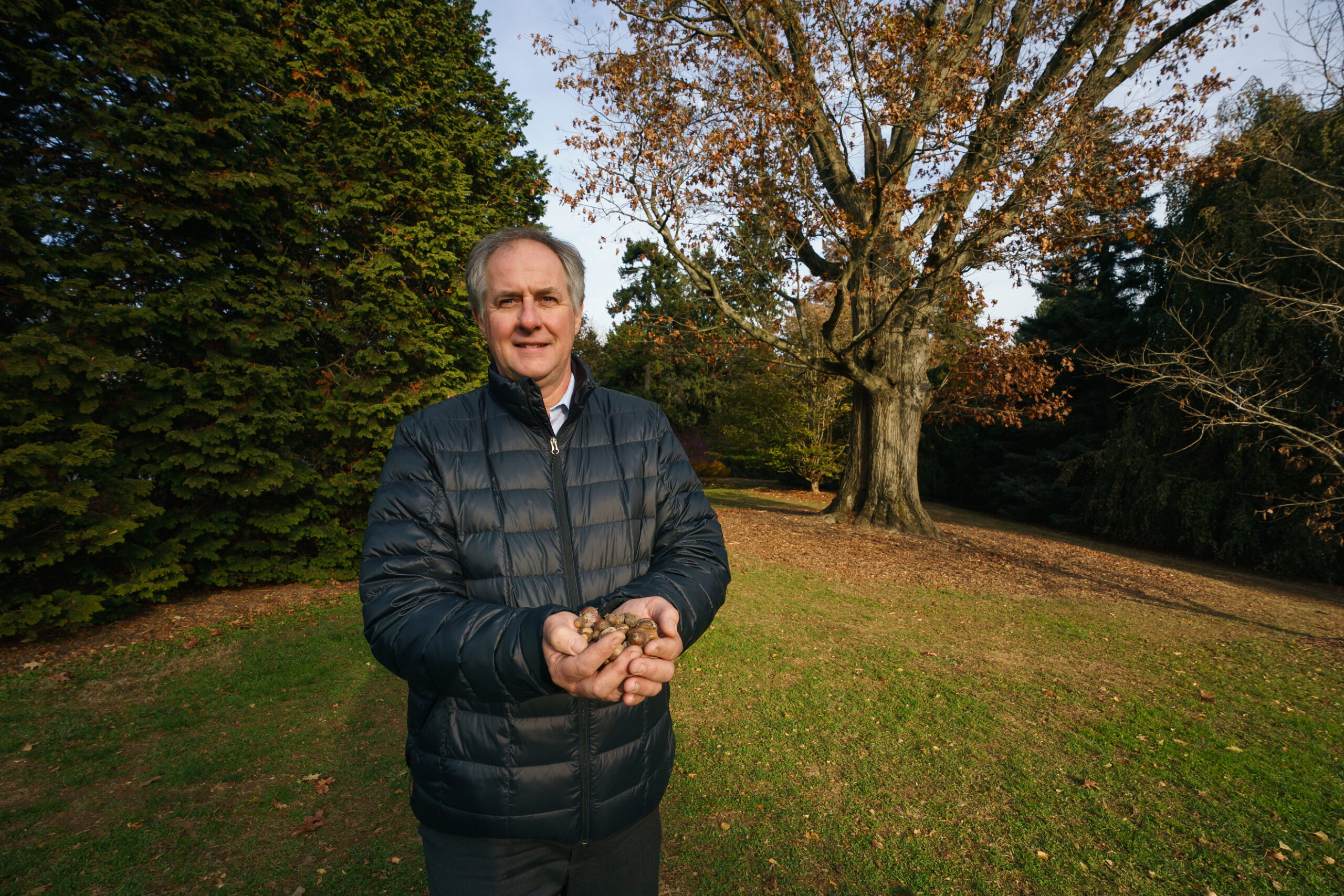
Bill Cullina shown here in this file photo in front of a a red oak tree at the Morris Arboretum. Beware of “mud time,” he advises.
He added that frost-heaving, in which soil expands and contracts with fluctuating temperatures, is back after taking off much of this century. “This can force recently planted perennials and even shrubs as well as bulbs out of the ground.”
Said Roper, “Keep your eye out for plants pushed out of the ground; you can stick them back in if you see them.”
Some of the broad-leaved evergreens, such as rhododendron and hollies, may have suffered from “the combined effects of sun reflecting off the snow and frozen ground that prevents water uptake,” said Cullina. That can lead to leaf burn and defoliation.
“Not much you can do at this point except wait until the plants leaf out …and then prune off any dead branches,” he said.
Shrubs planted near the eaves of houses may have suffered from another hazard — rooftop snow, said Theresa Smith, senior vice president of NaturLawn, a national lawn service company with several outlets in the region. “When you have snow falling off in heavy pieces, it’s definitely going to damage some of those softer plants.”
And beware of salt damage on lawns, particularly near well-salted roads and driveways, said Smith. Salt can dehydrate vegetation. She also warned that prolonged snow cover can yield bumper crops of “snow mold,” a fungus that thrives in cold, moist conditions.
If you see those unsightly straw-colored mold patches, rake them out and put down grass seed on the bare spots, Roper said.
‘Mud season’ has arrived in Philly. Watch where you step.
The ground has assumed a certain spongelike quality now that most of the snow is melted, and it’s going to take some time to wring out the sponge.
Cullina said that reminiscent of his native Maine, it “feels like Philly is getting a little taste of mud season this year.”
Smith strongly advises gardeners to keep off the mud as much as possible. “You don’t want to add to the compaction that’s already there,” she said.
The tighter the soil gets, said Longwood’s Davis, the more it reduces the air spaces. “Foot traffic has more effect on wet soil than you might think.”
And beware the moods of March
Smith cautions against yielding to an agricultural spring fever, despite the promising temperature forecast for the next several days. Starting Sunday, the high temperatures could reach 70 degrees on four or five days, said Bob Larsen, a senior meteorologist with AccuWeather Inc.
Smith votes for harnessing planting ambitions during March, a notorious transitional month when the aggressive warm air masses clash with the retreating winter.
Her birthday is in March, and she recalls receiving snow as a not necessarily welcome birthday present more than once.
Philadelphia’s last verified blizzard occurred in March, in 1993; in 1958 over 50 inches of snow fell upon Morgantown, Chester County, during the so-called equinox storm, and 20 inches fell in Philly on April 1, 1915.
Our coverage of the 1958 Equinox Storm.
“Home gardeners just need to relax a little bit,” she said, “and wait for the weather patterns to become more consistent.”
On a chilly February morning, Mallory Valvano walked up two flights of stairs to a second-floor atrium filled with exotic plants leading her to a salon suite. The baker behind Party Girl Bake Club found herself back inside the Fishtown building to see Alex Furst, also known as Pepper Holidays on Instagram.
But Valvano wasn’t in the neighborhood to deliver one of her whimsical, eye-catching cakes or catering displays. She was there on an equally important task: a manicure.
Valvano is one of many Philly culinary professionals who see their nails as an extension of their brand personality as well as a self-care treat — despite the taboo of chefs cooking with polished nails. (ServSafe, the food and alcohol safety-training and certification organization, discourages the use of nail polish and/or extensions and highly recommends cooking with gloves.)
Valvano is ServSafe-certified, which means she knows the impact of food safety really well. She also believes that shouldn’t stop her from expressing herself — especially when the products Furst uses ensure chip-free, perfectly intact nails for up to four weeks.
“I’m an artist, by trade, in textile manufacturing and design — the food thing came a little later in life,” she said. “So, [getting your nails done] is about, one, taking care of how you look and being presentable. It’s also an extension of your own personal style. I like to have this whole vision of what a party girl is: neon and pastels, colors inspired by art, architecture, and interior design.”
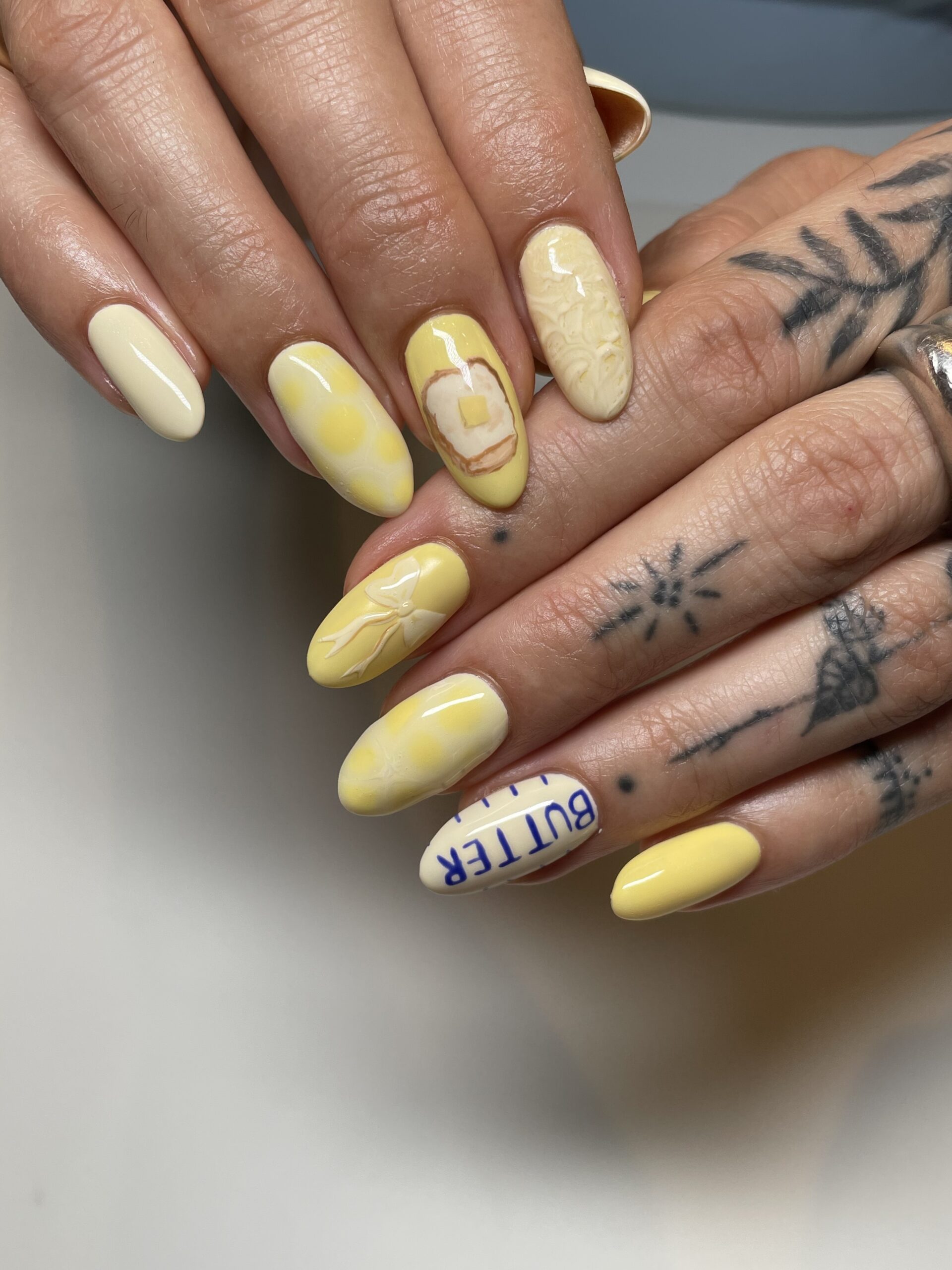
Mallory Valvano with butter-themed nails.
The key to nails that food professionals aren’t worried about working with? Regular sessions with a nail artist who emphasizes prep and uses gel builder, a thick-viscosity, strengthening product that creates a protective, hard shield with LED/UV light. And Furst is the woman to do the job for Valvano and Natalia Lepore Hagan of Midnight Pasta.
The 37-year-old nail artist is in her eighth year as a licensed nail technician. With two chef clients and a few nurse clients under her belt, Furst understands working on labor-intensive nails that exist in industries where unpainted nails are the norm.
“My philosophy for everyone is that the foundation is the most important thing — the prep or the way the product is applied, if that’s missing then you’re not going to have a long-lasting, strong manicure,” Furst said. “Gel body builder is strong enough that it allows the nails to maintain and support its structure so that they’re not going to be chipping or lifting in a three to four week time frame.”
What does a long-lasting manicure entail?
Each session begins with Furst removing old product and chatting with the client about what their month is looking like to determine length of nail. Then it’s prep: shaping and smoothing nails, pushing back the cuticles , and exfoliating, removing any sticky cuticle from the nail plate, and lightly etching the new nail growth.
“Our body naturally produces oil, so that prep is to ensure getting the gel completely adhered to the nail plate,” she said. “No one wants the gel to lift — when it lifts, it damages the nail. So, prep is important.”
Design comes next. Both Valvano and Lepore Hagan love to experiment with colors and incorporate their brands into the nail designs.
Natalia Lepore Hagan of Midnight Pasta and her nails.
Furst has drawn buttered toast designs for Valvano inspired by an all-butter event and tomatoes for Lepore Hagan inspired by an Italian picnic-themed event.
“I brought her an idea, and she sketched out all 10 nails in front of me,” Lepore Hagan said. “She said, ‘Let’s do tomatoes on this finger. We’ll do the checkers on your middle finger. And another with stripes.’ I love artists more than anything, and it’s so cool to collaborate with her on my nails.”
Gloves stay on while cooking, and nails come out for hosting. “Mallory and I are both really fashion-forward,” she said. “We care a lot about fashion. I am always looking at what she’s wearing and her nails because she’s a representation of her brand.”
But the pasta chef draws the line at gel extensions or acrylic nail tips, opting for only gel builder polish on her natural nails to ensure no attachments fall off when working.
“I want to be professional, and part of that professionalism is having my nails always done perfectly and interestingly,” Lepore Hagan said.
Jillian Moore’s nails with with My Loup’s Montreal cocktail.
Behind the bar with acrylics
Jillian Moore, however, is an acrylic nail queen.
She’s behind the bar at My Loup and Pine Street Grill, where customers will catch her perfectly pointed, brightly colored nails around spoons and cocktail shakers. As bar director at the two hot spots, she’s using her hands differently then chefs Valvano and Lepore Hagan, allowing her to opt for long acrylics decorated with gel polish every two weeks at her nail appointment with @nailsbylinny.
Expressing oneself through nails is similar to wearing makeup to work, Moore said, as long as food safety rules are followed. And following the ServSafe rules isn’t hard with nails, she said. “You still have to make sure your fingernails are clean [and put on gloves for prep work], regardless if you have extensions or not,” she said. “So that’s how I’ve always operated.”
For Moore, getting her nails done is way to share her personality, whether it’s with a specific color or theme — or repping the restaurants she works at. Every year for My Loup’s anniversary, she gets the color of the tiles at the bar with a little “ML” script on top. And when Pine Street opened, her nails were covered in little acorns.
“People are watching my hands all the time — it’s definitely something that people notice [and] we end up talking about it,” Moore said. “It’s just a fun way to express myself, [and] why I like it so much.”
“I make this joke all the time — I say, there are three people that you should never piss off: your bartender, your hairdresser, and your nail tech,” she added. “Maintain those relationships.”
DEAR ABBY: I am reaching out as a single mother grappling with a serious heart-lung condition. My son’s father abandoned us when I was pregnant, and I haven’t heard from him in more than a decade. Thankfully, my parents have been supportive coparents during the years when my health made things incredibly challenging.
I have always encouraged my son to express his feelings and have assured him that his emotions are valid. We share a strong bond, and he feels comfortable discussing anything with me. Recently, he confided that he feels unsafe at his grandparents’ house, where he spends two nights a week. He revealed that his grandmother is verbally abusive and critical — laughing at him when he makes mistakes, calling him a “loser,” making sneering comments and speaking poorly of me when they are alone, even though she’s pleasant to my face.
My mother’s behavior is deeply troubling. My son is scared to have me confront her because he’s worried he will be punished for sharing his experiences. In any other scenario, I would tell my mother that until she chooses to not abuse, he won’t be staying over. However, we have a mediated agreement that allows for those two overnights a week. I fear my mother could manipulate the situation and lie to the courts to maintain this arrangement. What should I do?
— HOPELESS AND OVERWHELMED IN OREGON
DEAR HOPELESS: Something has gone wrong with the arrangement you have with your mother. Any extreme change in behavior is troubling, and if her change of behavior is recent, she may need to be medically evaluated. What you need to do now is discuss this sorry situation with an attorney who may be able to challenge the custody agreement and protect your son from your mother’s abuse.
** ** **
DEAR ABBY: My son “Scot” recently remarried. I wasn’t involved in any of the preparations. I was also not acknowledged at the wedding and felt like just another guest. My son decided to change his last name without informing me about it. When I asked why, he said he had no claim to the name even though he has a brother and children with that last name. Am I wrong for feeling I’ve been punched in the heart for not being involved in this decision? The hurt is real.
— MOM WHO DOESN’T MATTER
DEAR MOM: With this new marriage, Scot is starting over, and the name change may be his way of creating a new beginning. Obviously, you and your son are not close enough that he confides in you, or he might have spoken to you about his decision and explained it beyond feeling he had “no claim” to the name he, his brother and his children were raised with. Scot’s decision was a personal one. Whatever his reason, it has nothing to do with you, and it should not be regarded as a “punch in the heart.” (A flip of the stomach, perhaps, but in no way related to you.)
But what some Philadelphians may not know is that the 109 country flags are taken down multiple times every year. In this week’s case of the missing flags, it’s just the city’s biannual replacement job for new custom-made flags with reinforced stitching, a city spokesperson said.
The flags will be back up in time for the St. Patrick’s Day Parade.
The Inquirer responded to this reader question in December through the Curious Philly question portal, where readers can ask Inquirer journalists to look into peculiarities around town.
We found out that the flags are overseen by the city’s Department of Public Property and are regularly replaced about twice per year, or as needed.
Crews perform weekly checks to monitor them for wear and tear, especially during strong weather and winds, which stress the flags the most, the department said. Extended exposure to the sun can also wither the flag’s liveliness. The bungles holding the flags to the poles are also screened for damage during these checks.
Philadelphia first mounted the flags in 1976, taking inspiration from Paris’ Champs-Élysées, as part of the U.S. Bicentennial celebration. The original 90 flags were meant to represent the various populations of people living in Philadelphia. The city added 19 more in 2010. Arranged in alphabetical order, the flags line the Parkway from 16th Street up to the Eakins Oval out front of the Philadelphia Museum of Art.
Staff writer Nate File contributed to this article.
DEAR ABBY: Since I was a small boy, silk fabric has always made me feel “safe.” I remember wearing tights in the bathroom in front of the mirror or under my pajamas. Throughout the years, if nobody was around after work, I continued, but not around my wife, kids or now grandkids. I don’t know why I enjoy them now in my 50s. Is this OK, or is something wrong with me? Am I missing one can in my six-pack?
— SMOOTH AS SILK IN VIRGINIA
DEAR SMOOTH: I don’t think you are missing anything in your six-pack or anywhere else. Men have been known to wear silk tights because it helps them stay warmer in cold weather. They have also been known to do it because it feels good next to their skin.
I wish you had mentioned why you felt it was necessary to smuggle this past your wife all these years, because there is nothing shameful about it. (Perhaps if you discuss it with her, she will tell you she wasn’t fooled but never mentioned it because you didn’t seem eager to talk.)
** ** **
DEAR ABBY: Yesterday, my wife and I went out to the cemetery to lay some flowers for her brother and father, who passed away many years ago. After we were finished and on our way out, I stopped for a few minutes to check on my first wife’s crypt before returning to the car. When she asked what I had been doing, I told her I was making sure the plastic flowers were still there. My wife was surprised that I still check on her crypt because she had been gone for more than 16 years.
I married my second and current wife 15 years ago. It was a wonderful marriage — until now. She said her feelings were hurt that I was still checking out the crypt. She asked me how often I do it, and I told her twice a year. She’s now upset with me. Was I wrong to pay my respects? My parents’ crypts are nearby, and I check on theirs as well.
— STILL CARE IN THE WEST
DEAR STILL CARE: Your wife is being childish, and I hope you will point that out to her. Much as she might wish otherwise, you came to her with a history. (You were, I assume, happily married before your first wife’s death.) Tell “Number Two” that checking on your deceased wife’s crypt isn’t a threat to her unless she chooses to make it so, and that Dear Abby suggests she knock it off before she damages a good thing.
** ** **
DEAR ABBY: My wife threatens to divorce me in most every situation in which I drink alcohol. The context doesn’t matter. Should I divorce her or try to work out another solution?
— THREATENED IN CALIFORNIA
DEAR THREATENED: The first thing to do is understand why your wife feels as strongly as she does about your drinking. Does she have a family history in which alcohol played a role? Does your personality change when you drink socially? How much are you drinking on a daily basis? Are other relationships affected by your drinking? Once you have the answer to these questions, you can decide which is more important to you — the drinking or the marriage.
DEAR ABBY: I have been married more than 20 years to my best friend. She’s the love of my life. We have been through a lot together and have been in couples counseling for eight months. We almost divorced last year because of an emotional affair I had seven years ago. (She had a similar distraction last year.)
We are friends and do everything together. I try to do everything right. I’m there for her emotionally. I have stopped drinking every day and developed a positive, mindful, and kind mindset. I got myself into shape physically. I earn a good living, help around the house, prepare dinner for all of us, and help with kids’ appointments and activities.
The problem? My wife has physically withdrawn from me. Anything beyond hugs and kisses is too much for her. Physical intimacy happens less than once a month. I feel alone in my own home because I thrive on touch and affection but receive none.
I love my wife and don’t want to be with anyone else. The counselor says things “may” turn the corner “in time.” In the meantime, how do I function while feeling undesired and rejected on a daily basis?
— FORGOTTEN HUSBAND IN THE SOUTH
DEAR HUSBAND: You have my sympathy. It is possible that as much as you and your wife like and love each other, you are better friends than spouses. Because after eight months of counseling with your wife nothing has changed and there are no gestures of affection and you feel alone in your own home, it’s time you found a psychotherapist of your own. It’s clear that joint counseling has not been helpful.
** ** **
DEAR ABBY: How do I get my daughter-in-law, “Darlene,” to clean up after herself? I live in the house, pay rent, and help with the bills, but she constantly creates a mess in the kitchen and everywhere else. She fills the sink with dishes daily and never washes pots and pans, to the point I can’t use the kitchen to cook.
Darlene doesn’t work and has nothing to do all day but create a disaster and wait for me or my son (her husband) to clean up behind her.
My son and I each work full-time. He does all the laundry, cleaning and cooking. If I say anything, Darlene gets defensive and makes all kinds of excuses why she can’t. (It’s sheer laziness.) If I say anything to my son, he defends her because she whines and cries about how “tired” she is and claims to have all kinds of illnesses. (Her stomach hurts, she’s on her period or just too tired.). She stays up late every night and can’t wake up to get my grandson to school, so my son does it every day.
I’m at my wits’ end, but I don’t want to create an environment where Darlene will ignore me and turn my son against me. Help!
— OUT OF BALANCE IN THE SOUTH
DEAR OUT OF BALANCE: You cannot change the unhealthy dynamic in your son’s household unless he and his wife agree to do so. From what you have written, that isn’t likely to happen. Be glad that you are fully employed, because the healthiest situation for you would be to make other living arrangements.
DEAR ABBY: I have always looked inside a person before casting judgment. It has been six years that I’ve been close friends with my neighbor “Tim.” I have always regarded him as a Kramer from Seinfeld.
I have OCD. I am a clean freak. I work hard to support myself and my kids. Tim is on every government program. He’s a hoarder. His dog is filthy, and Tim literally has to leave notes posted in his house to “remind” himself to wash his own hands. Tim is politically my opposite. He’s narcissistic, and if you disagree with him, he gets crazy, raging with anger. I have remained friendly with him because I feel bad for him.
Tim is always asking me to go out to dinner or an event, and I’m always turning him down. He doesn’t have much money, so when he needs something, I help out. Lately, though, because I feel like he’s taking me for granted, I have been quietly pushing him away. Tim has now become increasingly needy, both emotionally and financially. How can I end the friendship without sending him into a spiral?
— NEIGHBOR IN NEVADA
DEAR NEIGHBOR: Friendship is supposed to be reciprocal. From your description of your relationship with Tim, it has been all take and no give. Because this relationship has become so lopsided, continue refusing his invitations, be less available when he wants to dump his troubles on you and quit giving him money.
** ** **
DEAR ABBY: I am tormented by an incident that occurred at a time when I did not have the ability to object or present facts to disagree. My father had given me permission to invite my three close college friends for a holiday dinner. My stepmother evidently objected to it. A week before the dinner, my stepmother’s father began verbally attacking me for inviting my friends, implying that I had been out of line. He said, “Holidays are for family.” I was shocked by his statement because I had been taught from elementary school that people invite others for the holiday to share our gratitude for what we have. This could include those who have no family and are alone for the holiday. After that holiday, my stepmother told me I would never have friends over again for any holiday.
In each of the 25 or so years that have passed, that painful incident comes to mind, and I wish I had had the ability to speak out. What would you suggest should have been the proper answer, at the time, in this case?
— SEARCHING FOR CLOSURE
DEAR SEARCHING: You could have told your stepmother that sharing holidays with friends was never forbidden before she came along, but now that she ruled the roost, you and your friends would be celebrating elsewhere. I hope that in your adulthood you have practiced the principle of inclusion which is intrinsic to your nature.
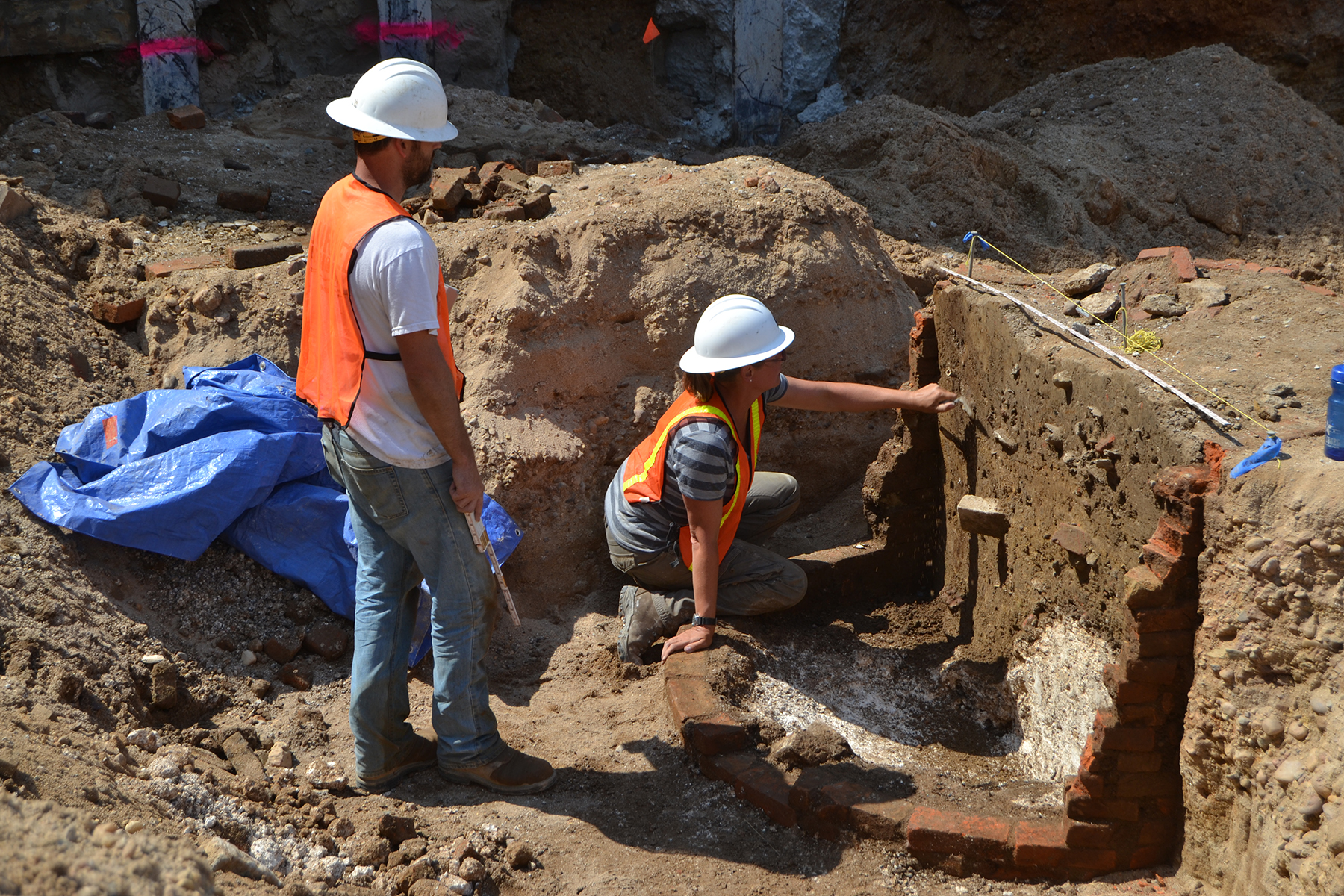
To be a privy digger in Philadelphia is to be part excavator, part flea market authority, and part pirate. First, you must be able to dig — sometimes 30-plus feet in rocky soil — to get to the bottom of a centuries-old outhouse. Whatever you find buried in the organic waste there, you must research. And much of this digging and discovery takes place in secret in the middle of the night, on open construction sites across the city where you’re not exactly supposed to be.
“Obviously, it’s sketchy. We would have the police come,” said Matt Waholek,39, a longtime Philadelphia privy digger who now lives on Long Island. “They would be like, ‘Alright, you’re not burying bodies, right?’”
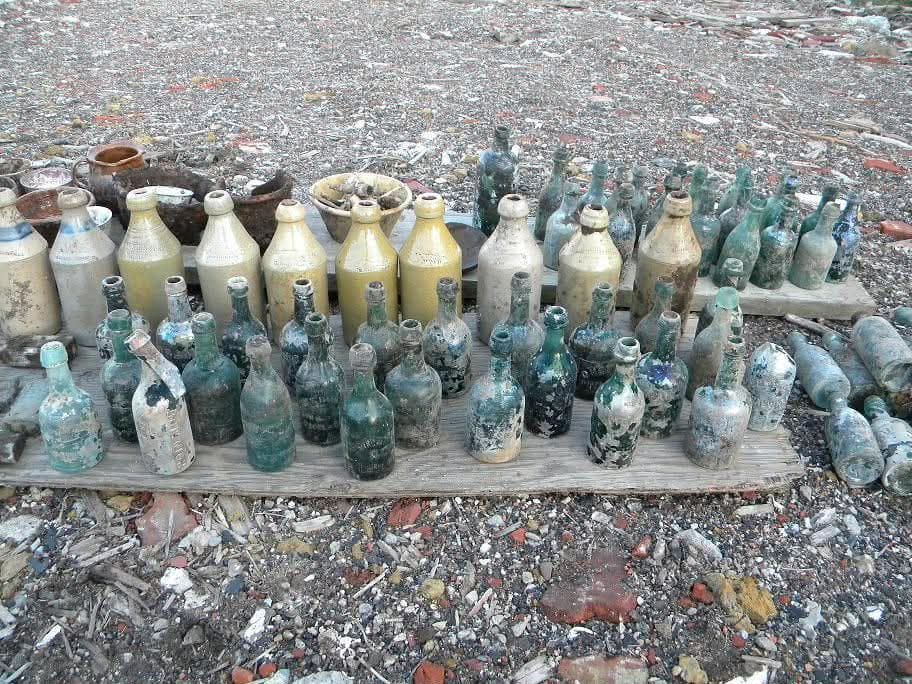
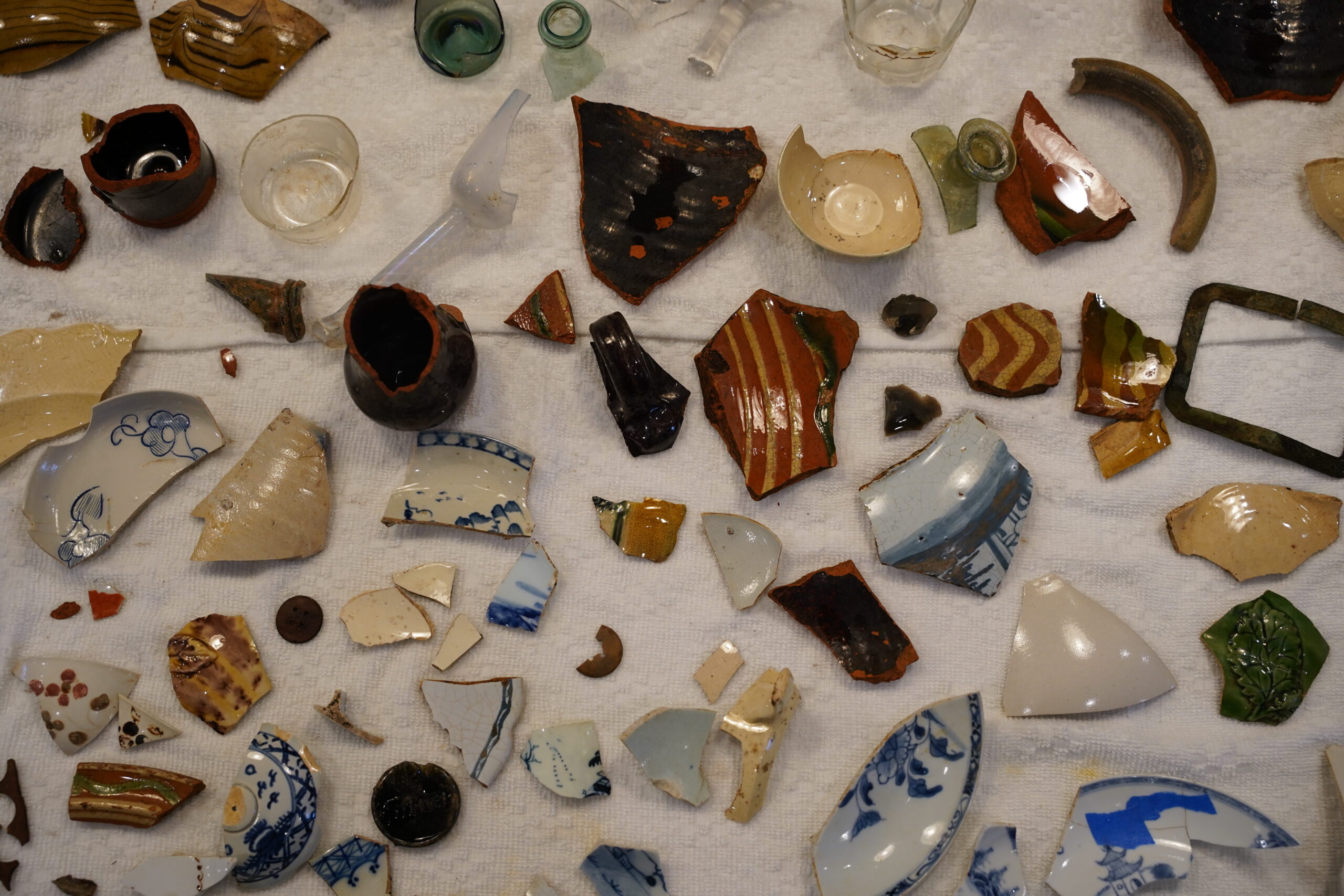
Privy diggers are not burying bodies. Instead, Waholek and his fellow diggers are hobbyistsprobing for a certain kind of treasure — ceramic cups and bowls, clay pipes, glass bottles — that long-ago Philadelphians threw into their outhouses before the existence of citywide trash collection.
Most of the diggers are only interested in land that was developed before 1880, when the rise of factory production led to fewer handmade objects. One digger described finding half a dozen handblown glass devices from the mid-19th century that turned out to be early breast pumps.
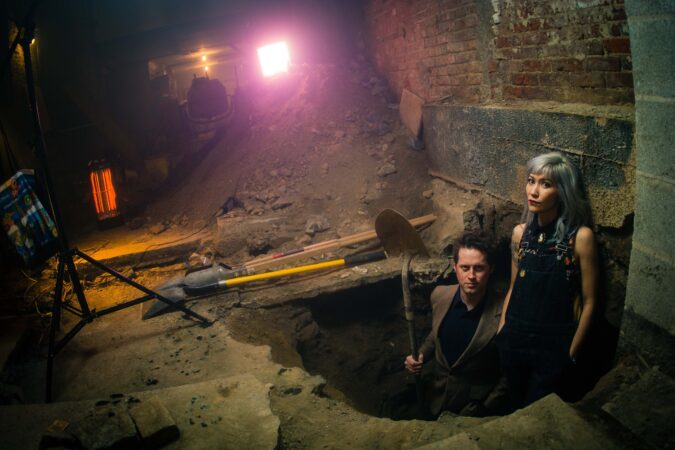
Privy digging is often done at night, when construction workers are not on-site, and diggers often work in pairs or teams because the digging itself can be dangerous. This photo was taken during a dig in Old City in November 2023.
It’s a largely male, macho subculture, rife with big characters and rumors of those who are not to be trusted because they absconded with their fellow diggers’ treasure.
“One guy was checking his car for pipe bombs ‘cause he thought I was gonna blow his car up,” said George Mathes, owner of the thrift store Thunderbird Salvage in Kensington, who has dug about 1,000 privies over the years. (He said he did not blow up anyone’s car.) He estimated there are about 15 privy diggers excavating today in the city.
As America’s 250th birthday approaches, Philadelphia is in the national spotlight, being counted on to reflect the country’s history back to itself. The question of how to preserve and tell that history has become more pressing than ever.
With its 300-year-old neighborhoods and relatively lax oversight, Philly is alsoa center of clandestine digging. People are legally allowed to keep almost anything they find under the ground on their own properties; privy diggers describe legally digging on someone else’s property as being “on a permission.”
A collection of bottles from the 1850s, dug out by Matt Waholek and other diggers from a privy in Queen Village in 2015. The collection includes pontil soda and beer bottles, as well as stoneware beer bottles. The clay used to make the bottles was sourced in Philadelphia, and most of the glass was probably produced here.
But there’s also a fair amount of trespassing, and some of the privy diggers sell what they find. (Prosecution is rare, though Mathes was arrested and sentenced to 24 hours community service for digging on someone else’s property in Old City in 2010, he said.)
All of this has frustrated professional archaeologists, whose job is not just to remove particularly interesting relics from the earth, but to document exactly where they were found and what relation they had to one another, in an attempt to tell a whole, contextualized story about the past.
They say Philadelphia has done little to protect its buried history. Unlike other historic cities, such as Boston or Alexandria, Va., Philadelphia does not have a city archaeologist, who would be responsible for guiding the city’s historical commission and offering insight to residents.
Into that breach, some see the amateurs — “whether you want to call them looters or private collectors,” as Doug Mooney, president of the nonprofit Philadelphia Archaeological Forum, put it — as taking and selling collective artifacts while recklessly destroying historical sites in the process.
Much of what professional archaeologists are interested in is not glamorous, said Jed Levin, an archaeologist for more than 50 years and the vice president of the forum. They are just as compelled by the preserved remains of human intestinal parasites and hundreds-year-old pollen grains as they are by whole glass bottles. Such microscopic information can reveal what Philadelphians were eating and growing hundreds of years ago.
Yet that kind of detail is lost to amateur diggers, who are far more interested in removing intact artifacts, some of which might net them hundreds or thousands of dollars.
“They dig indiscriminately through soil layers,” said Levin. “Once you dig through a site, you’ve destroyed it. It’s gone.”
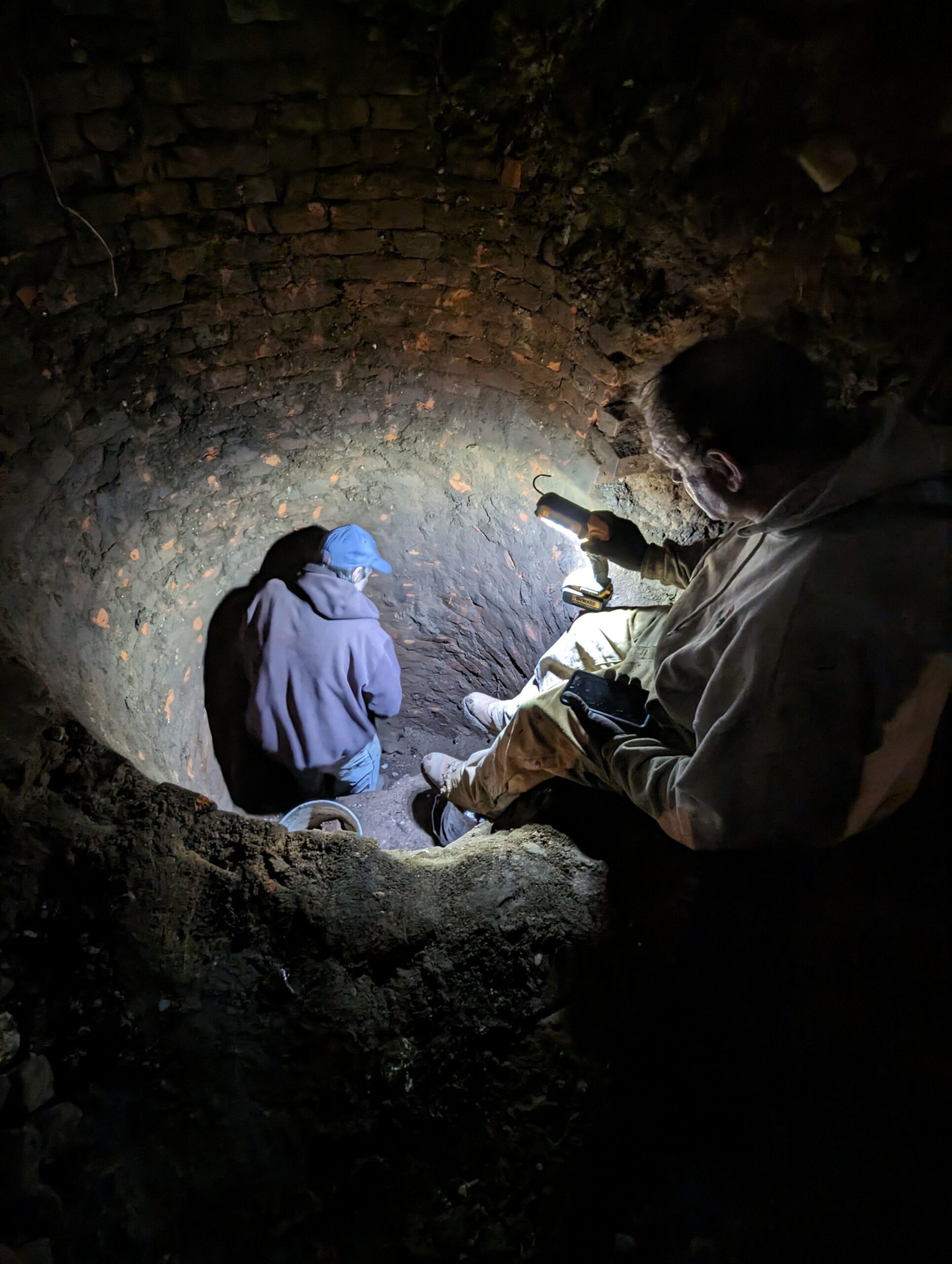
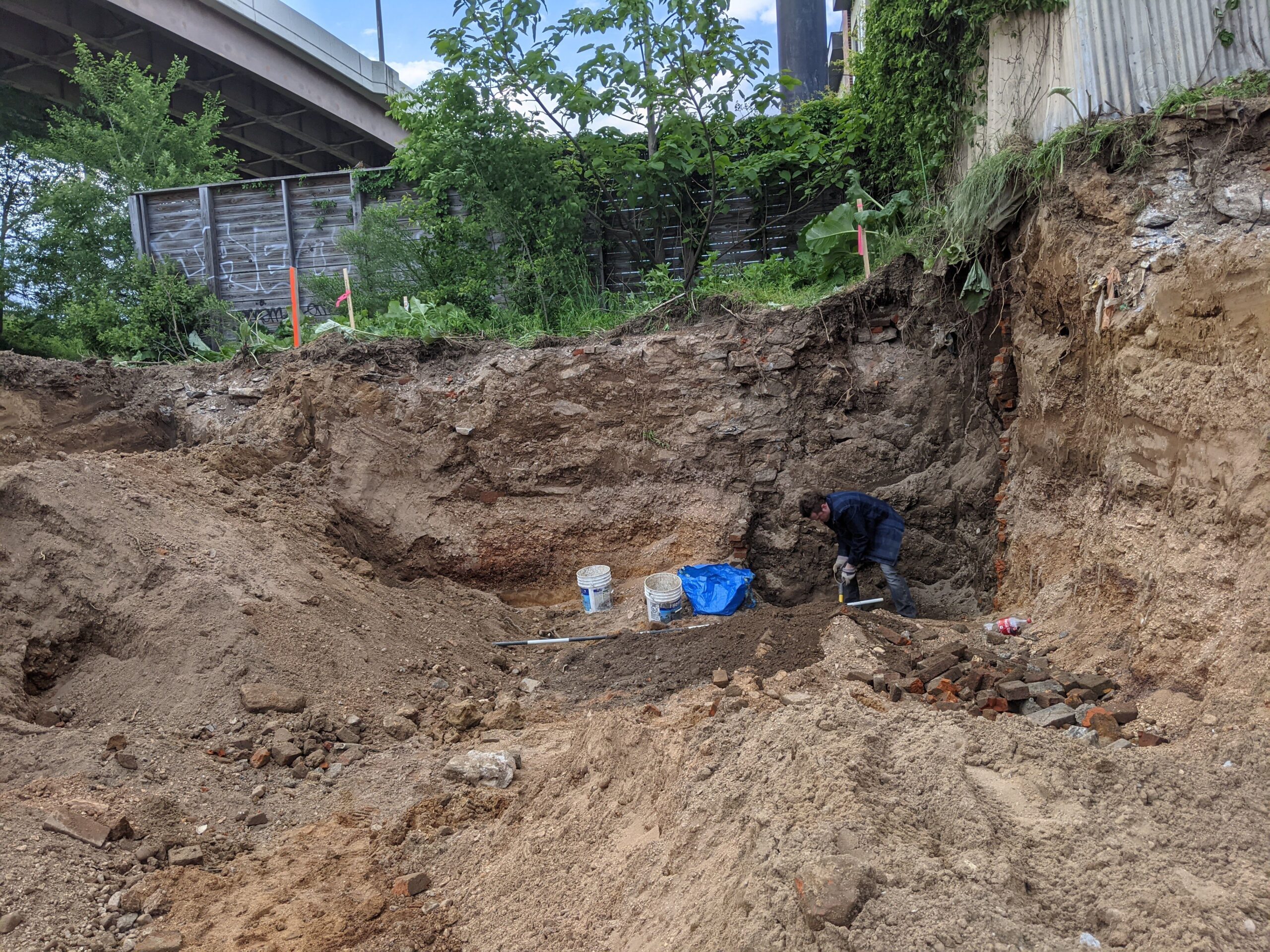
Matt Dunphy digs a privy pit near his home in Old City in May 2021. The dark column of soil in the right corner is indicative of the nitrogen-rich soil (also called “night soil”) found in a privy pit. This particular pit was 7 feet wide and 20 feet deep, likely dating to the 1740s.
The code of the privy pirates
Privy digging as a hobby surged in Philadelphia in the late 1960s, when the construction of Interstate 95 uprooted miles of soil across the city.
Over the decades, it became a passionate pursuit and then an underground industry. It’s driven largely by obsession: Diggers might find treasure, but they also might find nothing at all. Some end up with hundreds or thousands of broken pottery pieces. When I asked Waholek what he did with all the things he found over two decades, he replied, “Do you want some of it?”
Both the city’s amateur diggers and the professional archaeologists contend that they’re the ones working in the public interest, aiming to make their findings available to the most people.
“I don’t like the word ‘amateur.’ I probably know a lot more than some archaeologists. They focus mainly on one topic,” said Waholek, who calls himself an “avocational archaeologist.”
Some privy diggers say they are particularly moved to preserve objects that otherwise might be forgotten. Mathes, of Thunderbird Salvage, said he had found spearheads and Native American artifacts in his digs, objects which he does not sell. (Repatriation laws don’t apply to private property owners).
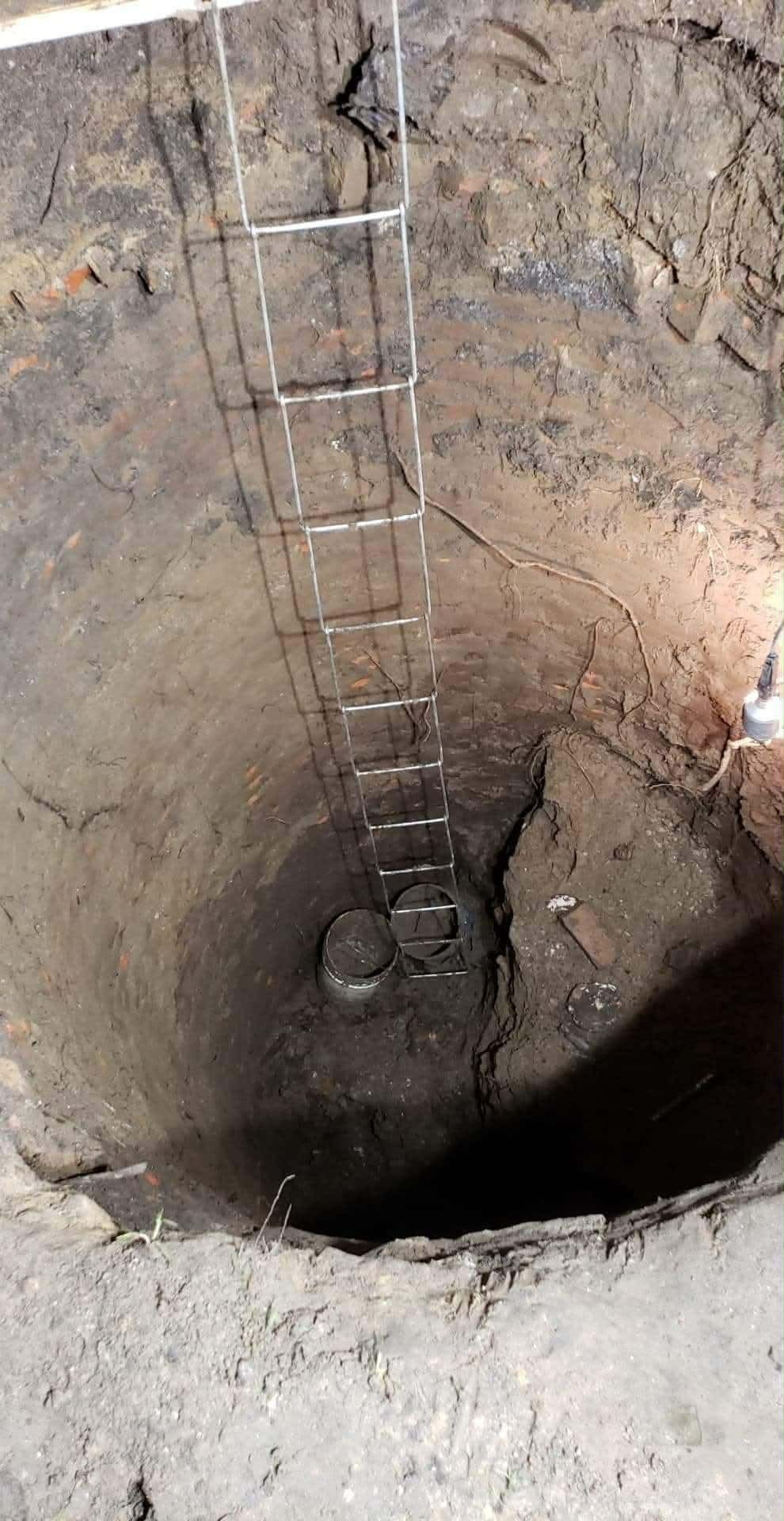
A brick-lined privy in North Philadelphia, pictured here in 2015. The ladder is an antique fire escape salvaged from a demolition on Frankford Avenue.
“To me, they’re more spiritual. I display those with the greatest of respect. I show them off to people, I like to hold them,” he said. “To donate them to a museum, most of the time they’re going to get put in a drawer and not displayed because there’s limited space.”
Over the years, some diggers have formed relationships with construction workers and police. One local developer described learning about the hobby when he encountered a group of men trespassing on his construction site carrying what he believed to be spears. (They were actually handmade metal probes, which the diggers use alongside shovels, clam rakes, pickaxes, and tripods and pulleys.) The developer was disturbed until he, too, became fascinated.
As with any subculture, there are rules about how to dig with integrity, said Michael Frechette, 60, an artist and veteran privy digger who lives in Kensington. Among them: Always ask permission; never dig on federal land where archaeologists are already working; fill in the hole you make; respect other diggers’ claims; and maintain honor within your own group — equal work should lead to equal bounty.
But, of course, as Mathes put it: “There’s pirates that work with you and there’s pirates that’ll work against you.”
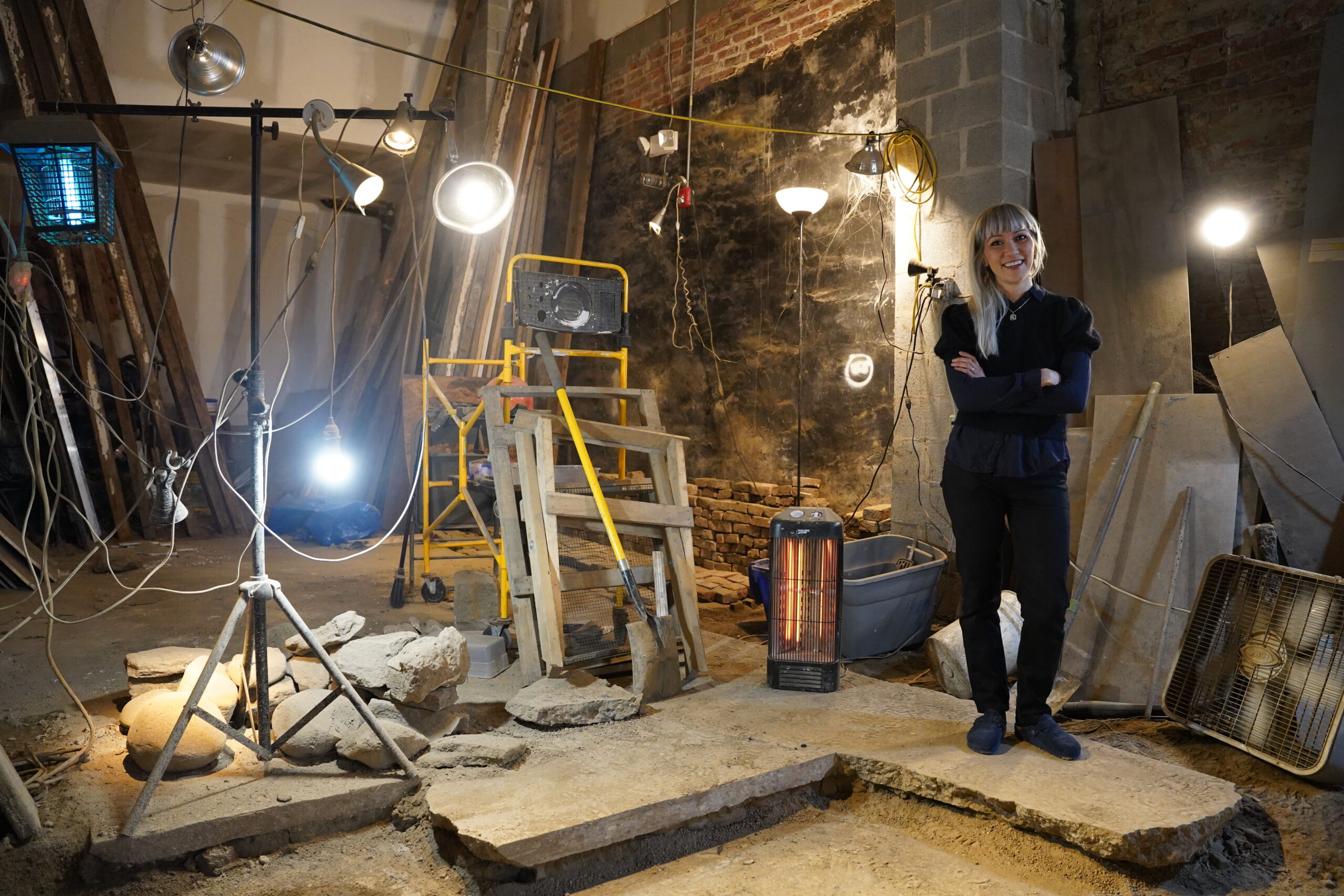
Melissa Dunphy, pictured here in 2022, stands in the ground level of her Old City property. It was here that Dunphy and her husband, Matt, discovered two privies filled with 18th century artifacts.
Who gets to call themselves an archaeologist
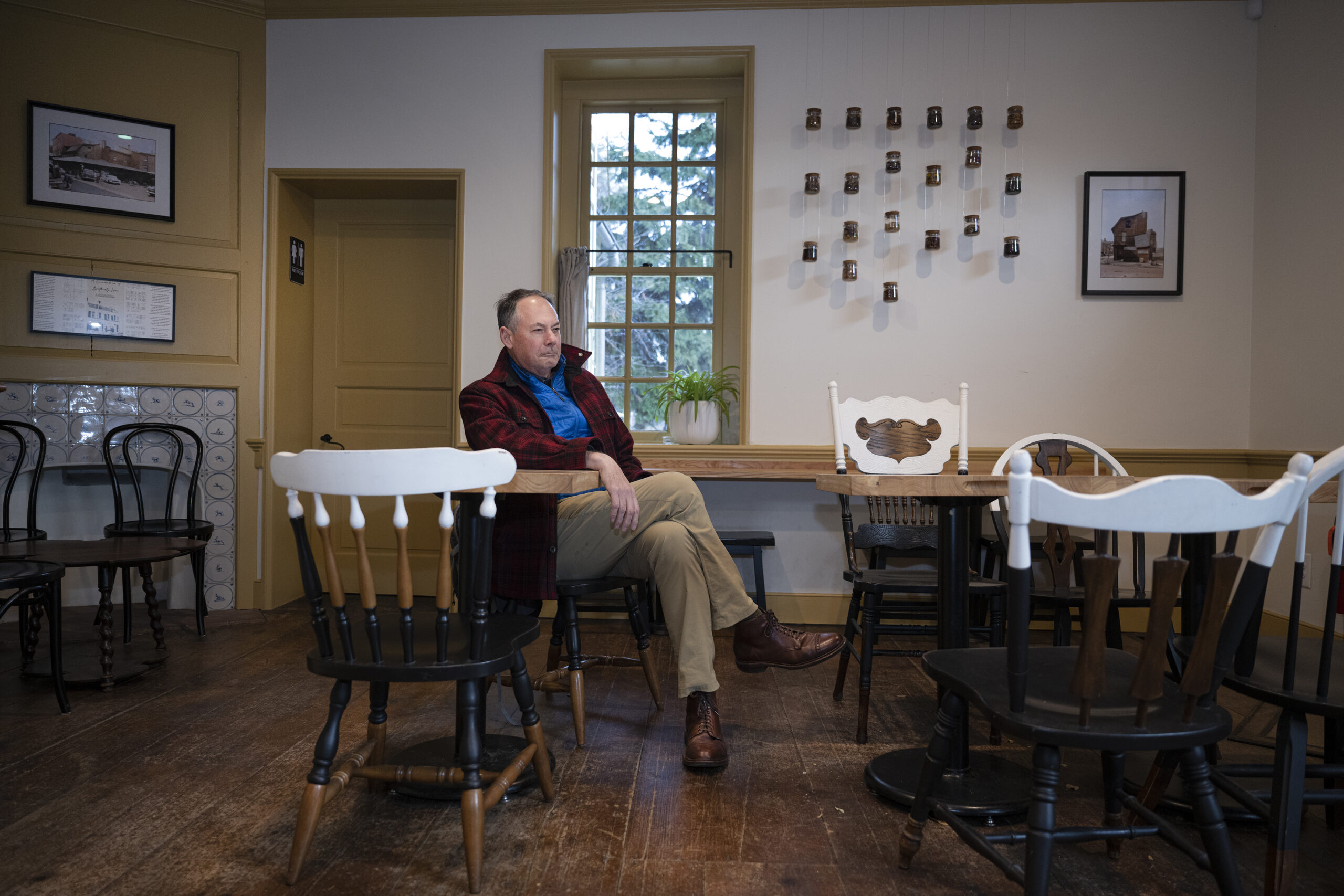
The non-sketchy, wholesome representatives of the privy digging community in Philadelphia are Melissa and Matt Dunphy, who call themselves “citizen archaeologists.” She’s a composer with a doctorate in music; he’s an e-commerce engineer.
They fell down the rabbit hole of privy digging about a decade ago after they bought a shuttered magic theater in Old City with a deed dating back to 1745 and began to renovate.
The construction workers uncovered two privies on their property, one of which the Dunphys excavated right away. Since then, they’ve dug six more privies in the vicinity and launched a podcast, The Boghouse, about their discoveries.
Every inch of the Dunphys’ walls are taken up by artifacts they’ve dug up in privies near their home in Old City.
The two have become “obsessed at the level that now we give talks at Colonial Williamsburg,” Matt Dunphy said.
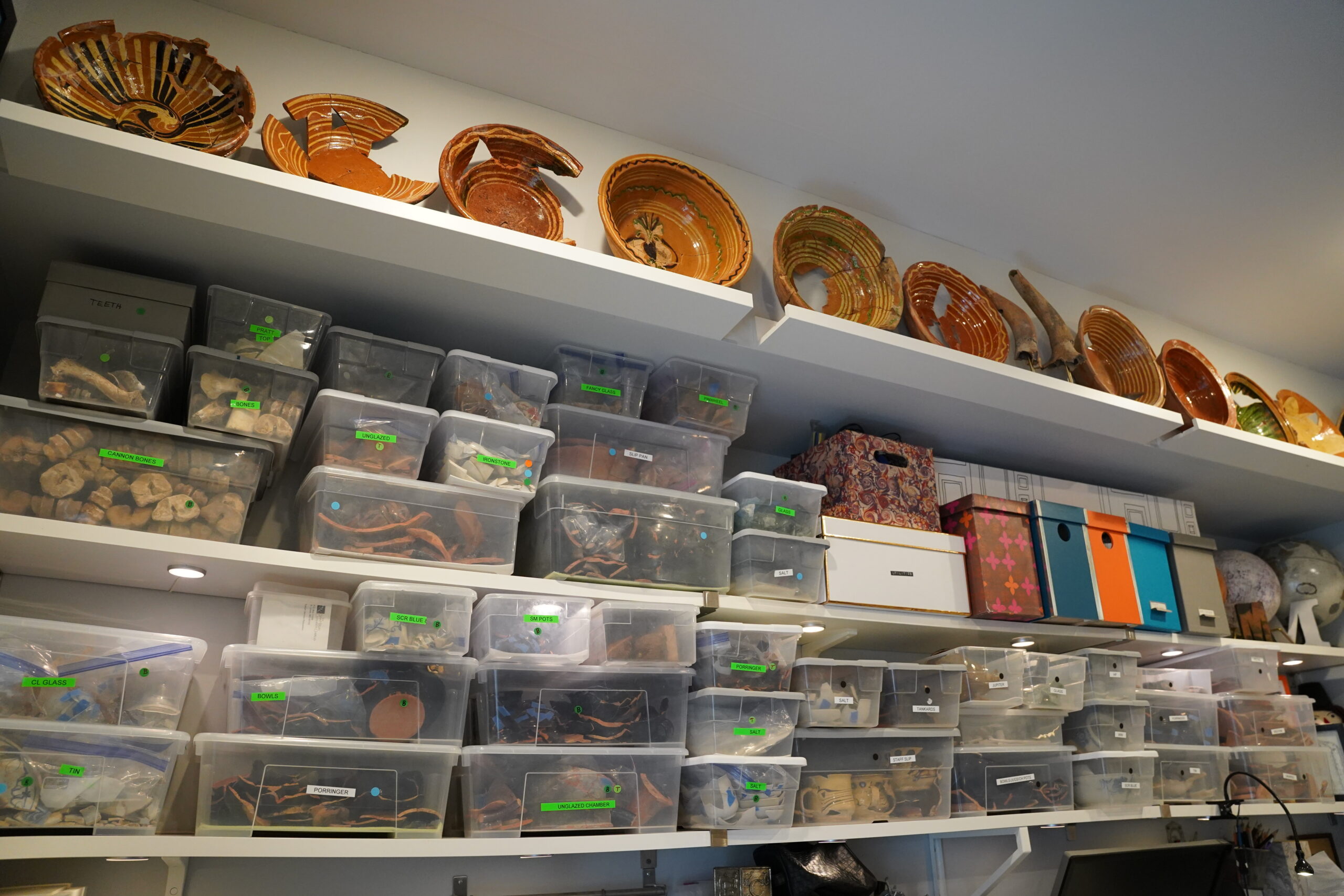
Their apartment, on the third floor of the former magic theater, is packed floor to ceiling with thousands upon thousands of shards of pottery and other artifacts. The bathroom has relics displayed on every wall, and the glass cabinets in the kitchen are filled not with matching plates but with broken teapots, chamber pots, punch bowls, and cups, each with their own carefully researched backstory.
The Dunphys are amateurs whohave not formally studied archaeology, but they are brimming with intellectual curiosity and knowledge about what they’ve found.
They mostlydon’t sell their discoveries (Melissa Dunphy has sold some found teeth) and are instead working to build a museum on the ground floor of the theater, which they hope to open by July. They want to call it “The Necessary Museum,” because privies were often called necessaries.
“These objects — even something as simple as a bowl — tell you something about the people who used them, the people who made them, the journey that that object took,” Melissa Dunphy said. “This is like a passing of stewardship of this little postage stamp-sized corner of the world.”
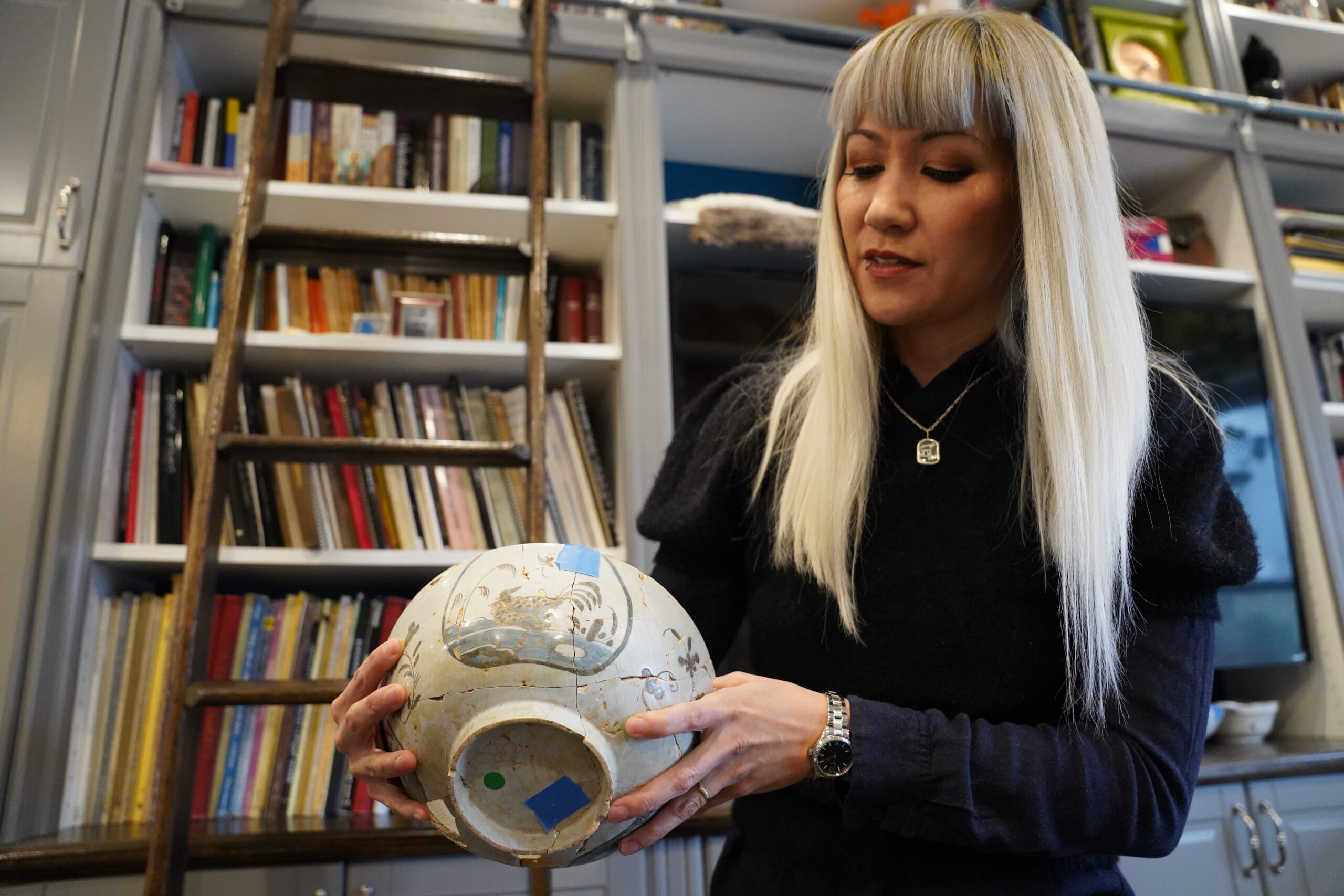
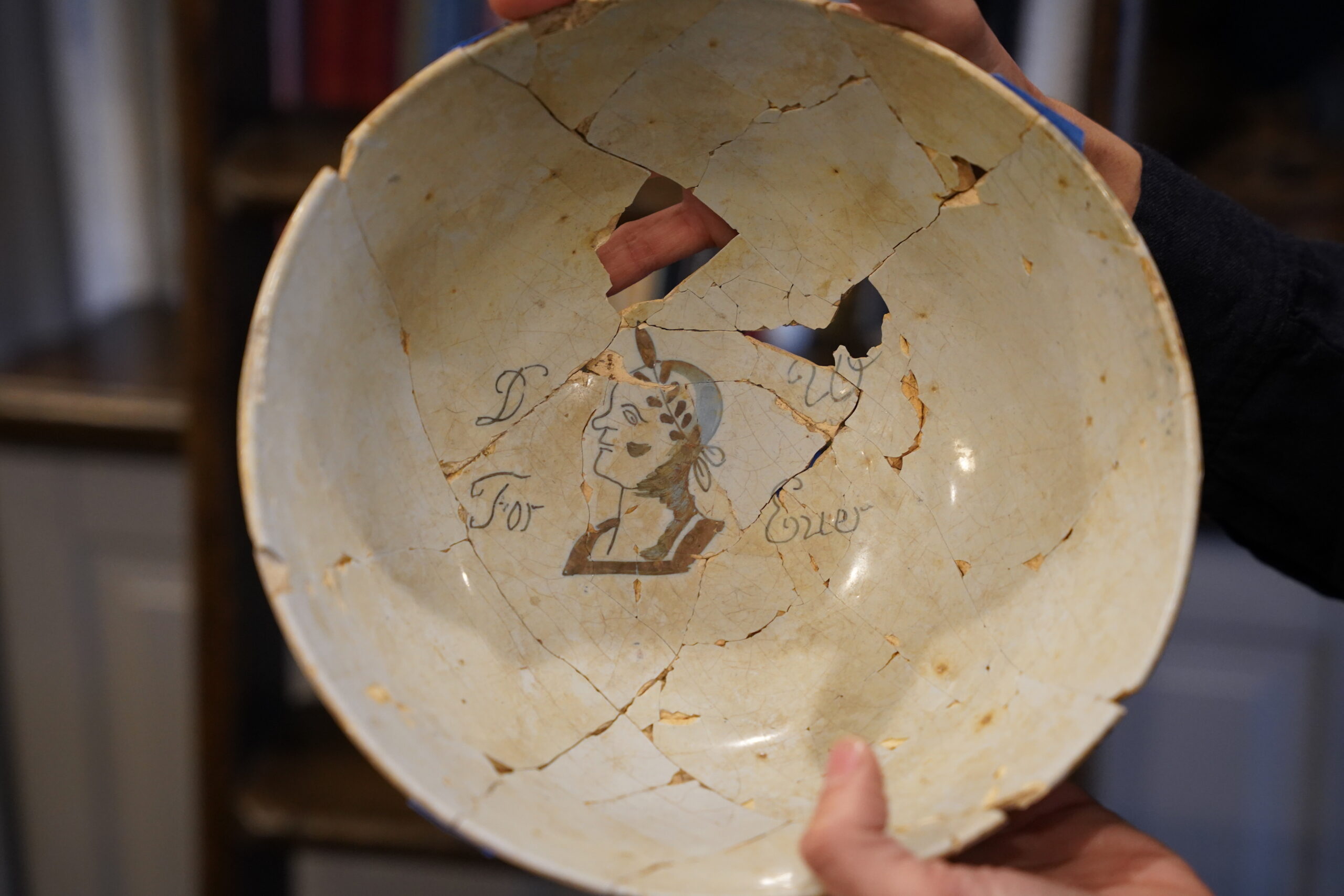
Melissa Dunphy, pictured here in 2022, holds a delft punch bowl which she pieced together from pieces found in the privies below her house. The bowl commemorates Britain’s victory over the Scottish Jacobite Army at The Battle of Culloden in 1746.
“What an anti-Jacobite bowl is doing in my privy is such an exciting question to me,” Dunphy said.
Melissa Dunphy, pictured here in 2022, holds a bowl at the Dunphy’s home.
Unlike those who work in secret, the Dunphys are in close touch with archaeologists at the National Park Service and local museums, speak at archaeology conferences, and regularly text with the editor of the academic journal Ceramics in America, whom they consider a mentor.
When they first found glass bottles in the privy in their backyard back in 2016, they tried reaching out to various archaeologists and museums in the city asking how they should proceed, they said. But no one was particularly helpful, and they only had a week before the hole would be filled in.
So they set about trying to “rescue” as much as they could themselves.
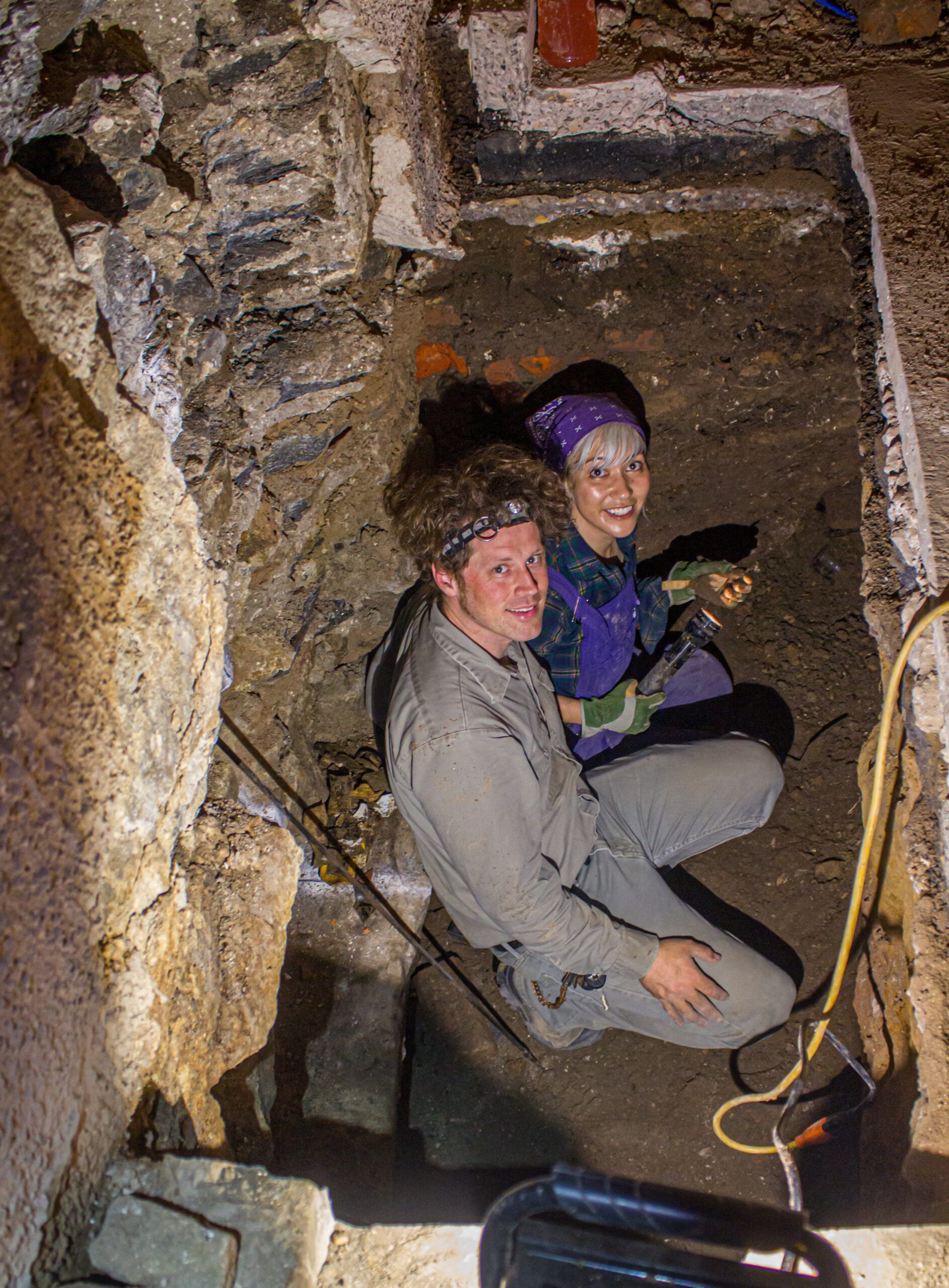
Matt and Melissa Dunphy pose in their first privy dig, in this photo from July 2016. While foundation work was being done on the shuttered magic theater they had just bought, workers unearthed two colonial-era privy pits. The Dunphys excavated them, fueling a decade-long obsession.
“My assumption then was that this archaeology is probably everywhere in Philly, and it’s probably not that important. So I don’t have to feel academically guilty about doing it myself, without any real expertise,” Melissa Dunphy said. She descended the privy hole in a cobbled-together archaeological outfit: Duluth Trading Co. coveralls, a “Rosie the Riveter” scarf, a camping headlamp.
The couple fashioned screens from chicken wire they bought at Home Depot to sift pottery from dirt, and Matt Dunphy photoshopped a picture of a ruler he saw at the Museum of the American Revolution to measure the objects they uncovered.
Scott Stephenson, president of that museum, who in the years since has gotten to know the Dunphys well, said he supports people doing “citizen archaeology” alongside professionals.
Museum of the American Revolution head Scott Stephenson, pictured here at Philly’s Revolutionary-era tavern, A Man Full of Trouble, likens each archeological site to a diary that can only be read once.
But he likens each archaeological site to a diary that you can only read once, because the story is as much about the objects that are buried as it is about the relationship between them. When amateurs “read the diary,” it’s like they’re “only recording three words off of an entire page,” he said.
Before the Museum of the American Revolution opened, it conducted a massive archaeological dig on its site that included multiple privies. The recovered artifacts are part of a display at the museum called “Trash Tells the Truth.”
Before opening, the Museum of the American Revolution conducted its own privy dig with professional archeologists.
The Dunphys acknowledge that they don’t document the stratigraphy, or the exact chronological layering, of the privies they have dug. But they also see themselves as democratizing an important effort, saving bits of the past that would otherwise be wholly lost. It’s not as if the city’s professional archaeologists have the time or ability to carefully dig every backyard under construction across Philadelphia.
“We have watched with our own eyes archaeological features being crushed up and destroyed during construction in our neighborhood,” Melissa Dunphy said.
Some archaeologists are frustrated by the very notion of “citizen archaeology.”
“Would we talk about an ‘amateur doctor?’ No. Medicine takes training and following a set of techniques and ethics. Archaeology, the same thing,” said Levin of the Archaeological Forum. Of privy diggers, he said, “They are not amateur archaeologists. They are no stripe of archaeologist.”
Pieces of artifacts at the Dunphys’ home, pictured here in 2022.
Piecing the past back together
On a recent afternoon, Matt Dunphy donned black rubber gloves, filled an Ikea strainer with sudsy water in the sink, and began to scrub pottery shards with a small denture brush. Centuries-old dirt trickled down the drain.
Next to him, pieces of clean pottery lay on a towel to dry. Many privy diggers don’t take the time to piece together the hundreds of broken pieces they find, because it can seem like a nearly impossible task. But Melissa Dunphy sees it as puzzle-making “boss level.” To repair a single ceramic bowl might take a week of 16-hour days, she said.
She uses painters tape to keep related pieces together, and when they seem to fit, she uses archival-grade museum glue diluted with a syringe full of acetone to seal them back together.
The thrill of bringing something back to life — it’s like nothing else.
“This is the first time that someone has seen this bowl,” she said, “the way that it’s supposed to be, in hundreds of years.”
DEAR ABBY: My spouse and I host regular meetings of a book club. It has been very successful; lots of people attend. We serve wonderful food and wine. Two attendees rarely miss this event, although they have never actually been invited. They come by default with their spouses, whom we did invite many years ago.
We are not fond of these two women because they are whiny and annoying. They go on and on about their ailments and life problems, and they rarely have anything insightful to say about the books we discuss.
My spouse and I wonder if they have ever read any book, much less one of the books we cover. We’re not sure if anyone else who attends feels the same way, but we do know that some of our friends have hung out with them. I often tell my spouse we need to drop them from the invitation list. She says we can’t because the other attendees will notice, and we’ll look like the bad guys.
Is my partner right? Is there any way to stop inviting them without looking mean? I’m worried we will be stuck hosting the pair forever into our old age.
— HATES THIS PLOT IN THE WEST
DEAR HATES THIS PLOT: You very well may wind up hosting those two pills in perpetuity, UNLESS at the next meeting, you establish some rules that should have been made clear from the beginning. In order to participate in these get-togethers, members of the group must have read the book under discussion and refrain from discussing other topics during the meetings. To do this is not unreasonable.
** ** **
DEAR ABBY: My mom and I recently got into an argument about her mortgage. I’m on the mortgage and title to her home because she couldn’t afford to be on it by herself and needed my income and credit to help her. So, I did. I helped her.
I am now married, and my husband would like to refinance our home. The problem is, I’m still on the mortgage to my mother’s house. I have asked her twice before to let me off the mortgage, and she responded by saying, “I can’t. I need you.” When I asked again this last time, she blew up at me.
She thinks my husband is controlling me or manipulating me to ask her to let me off the mortgage. Now she “hates him” and doesn’t want to see him or his family. She’s barely talking to me and acting super-cruel and vindictive. It hurts me that she is acting like a 5-year-old having a temper tantrum. I’m so sad. I just don’t know what to do anymore. Advice?
— ENSLAVED IN MARYLAND
DEAR ENSLAVED: You have my sympathy. Getting your name (and the financial guarantee that goes with it) off your mother’s mortgage may not be as simple as you would wish. It’s time you spoke about this with an attorney with an expertise in real estate, because extricating yourself may be both time consuming and expensive.