Category: Life

  • Will this Salem County town love its last dairy farm to death?

    Will this Salem County town love its last dairy farm to death?

    The future of a family farm in rural Salem County was at stake, and after multiple meetings and hours of presentations, questions, pleas, and complaints, a local planning board was set to vote.

    Before the vote, one longtime resident of Mannington Township came to the podium with a warning. In preparation for this crowded, mid-March meeting, Alice Waddington, 98, said she’d made a list of dairy farms she remembered from her decades in the little town.

    At one time, she said, there were close to a dozen.

    “There’s only one farm left milking cows,” Waddington told the board, “and that’s the Cadwalladers.”

    The Cadwalladers were struggling in the volatile dairy industry, though, and believed a large solar project could be a lifeline, a way to avoid shuttering and selling to developers eager to build warehouses, data centers, and housing in the nation’s most densely populated state.
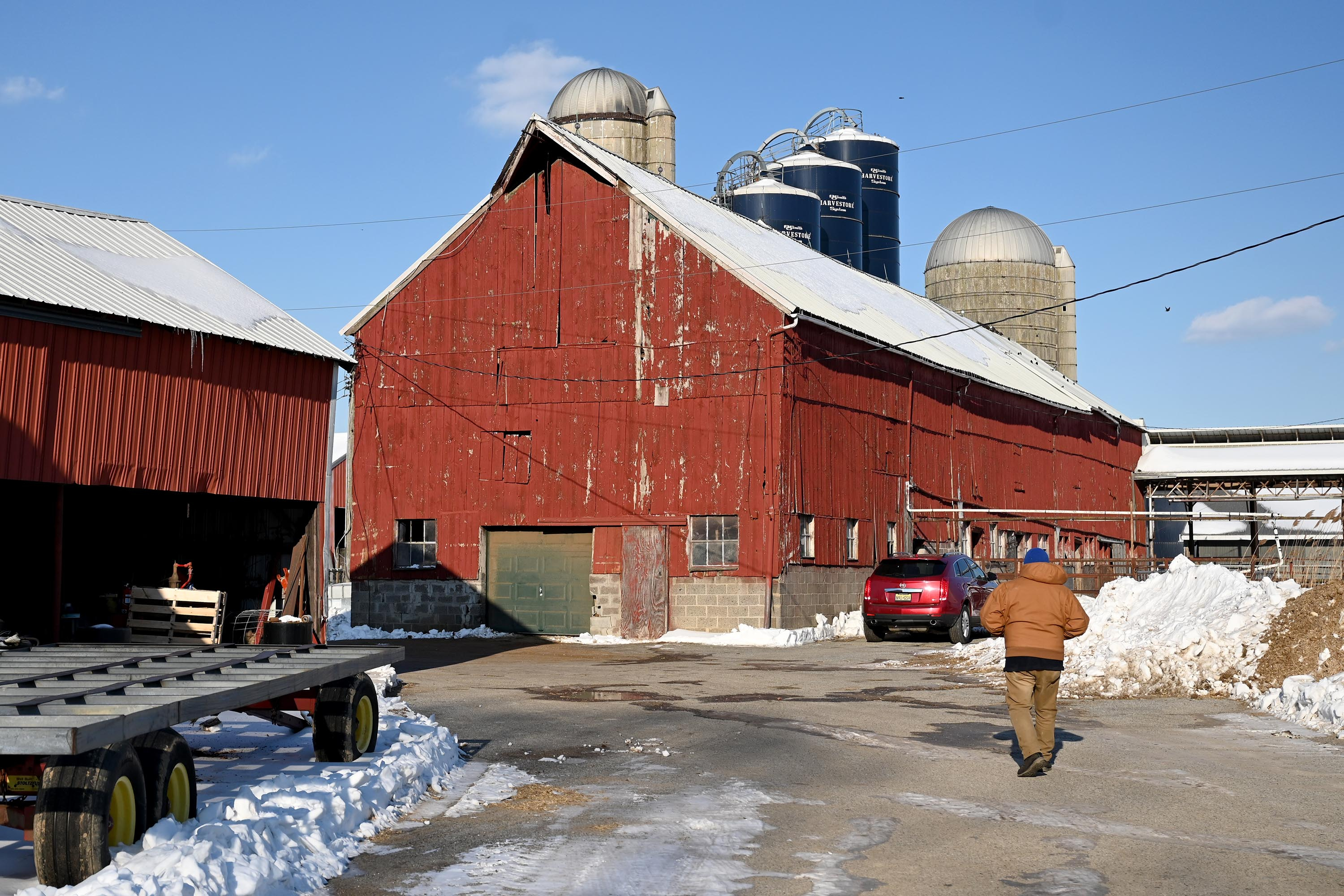
    Farmer David Cadwallader at Waldac Farms in Salem, N.J., on Jan. 29.

    This was the fourth Mannington Township planning board meeting for the Cadwalladers, who were seeking a variance to install 300 acres of solar panels on Waldac Farm that would, eventually, generate enough energy to power 19,000 homes annually.

    Some board members and locals questioned the environmental impacts, whether it would affect the soil, injure the abundant wildlife in the area, or taint the nearby Delaware River watershed. Representatives from AES Corp., a Virginia company that would build the solar project and pay a lease to the Cadwalladers, had answers for all of them.

    “Whether we all, in this room, agree with it or not, it is the state’s policy to advance these types of solar energy uses to meet the energy demands that we need,” Keith Davis, an attorney representing AES, told the planning board.

    What they couldn’t seem to quell, however, were the repeating concerns about how a solar farm would look in New Jersey’s most rural county. Those concerns raised open-ended, philosophical questions: What’s a working farm supposed to look like? What exactly does rural mean?

    “It will destroy property values and will be an eyesore for our township,” a neighbor of the Cadwalladers commented on a 2025 Facebook post about the project.

    Similar situations have played out nationwide. A recent Associated Press story from Ohio highlighted a struggling farmer’s solar project that also faced community pushback and was ultimately blocked.

    In Salem County, Mannington planning board member Joanne Wright was the most vocal at the meeting. She mentioned, often, that Mannington’s master plan called for maintaining “scenic vistas” and its rural, agricultural characteristics.

    The Cadwalladers said they would plant pollinator habitats and plants on the solar farm, and introduce roughly 300 sheep to graze around and under the panels. The combination of solar and agriculture — “agrovoltaics” — is supported by the New Jersey Farm Bureau, Andrew Cadwallader pointed out.

    Wright, however, thought solar panels would break up the township’s “contiguous farmland.”

    “I’m just wondering how you see that the positive outweighs the negative,” Wright asked representatives from AES.
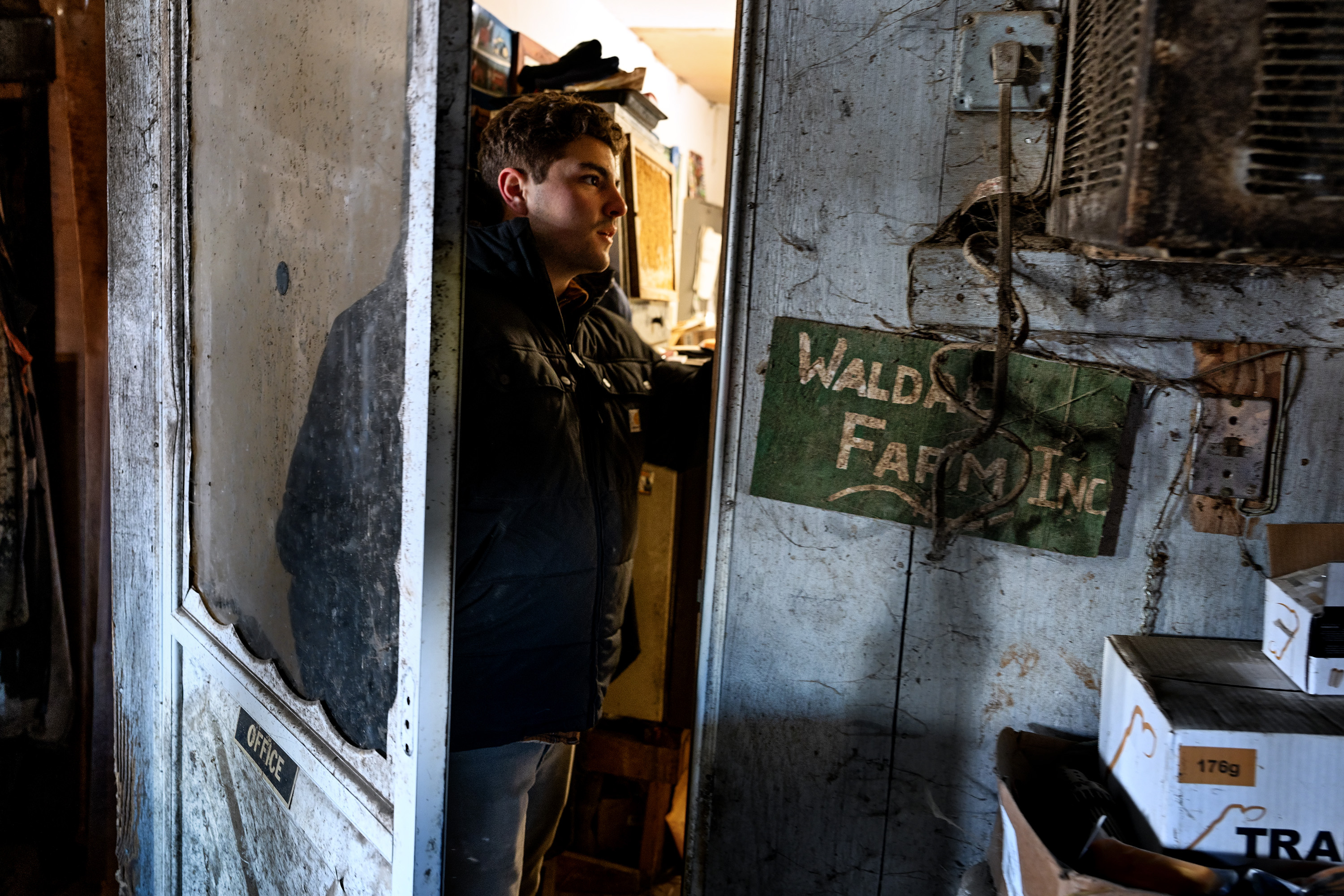
    Farmer Andrew Cadwallader at Waldac Farms in Salem, N.J., on Jan. 29.

    A picturesque farm

    The Cadwallader family has been farming since the 1860s, and Waldac Farms certainly looks the part: There’s a circa-1790 farmhouse down a long dirt road, a slew of silos dotting the flat landscape, and big red barns, faded by time, that are full of cows and cats. It was mostly silent there, too, aside from the winter wind.

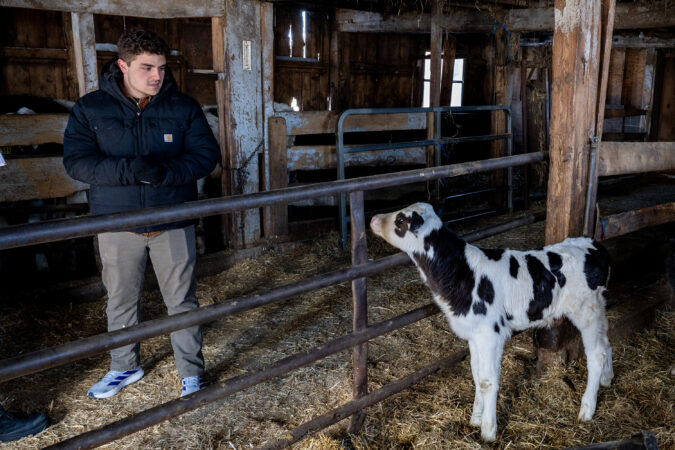
    The only thing that seems out of place on the family farm on a frigid afternoon is Andrew Cadwallader. The college senior looks younger than 22, and his sneakers and pants were impeccably clean.

    Andrew’s been milking cows since before his baby teeth fell out, though.

    In 2007, a South Jersey newspaper visited the Cadwalladers to discuss the dismal state of dairy farming at the time. The newspaper took a picture of Andrew, then 3, surrounded by cows in a pen. His father, David, told the newspaper he’d love to pass the farm down to his son.

    “If he wants it,” David Cadwallader said.
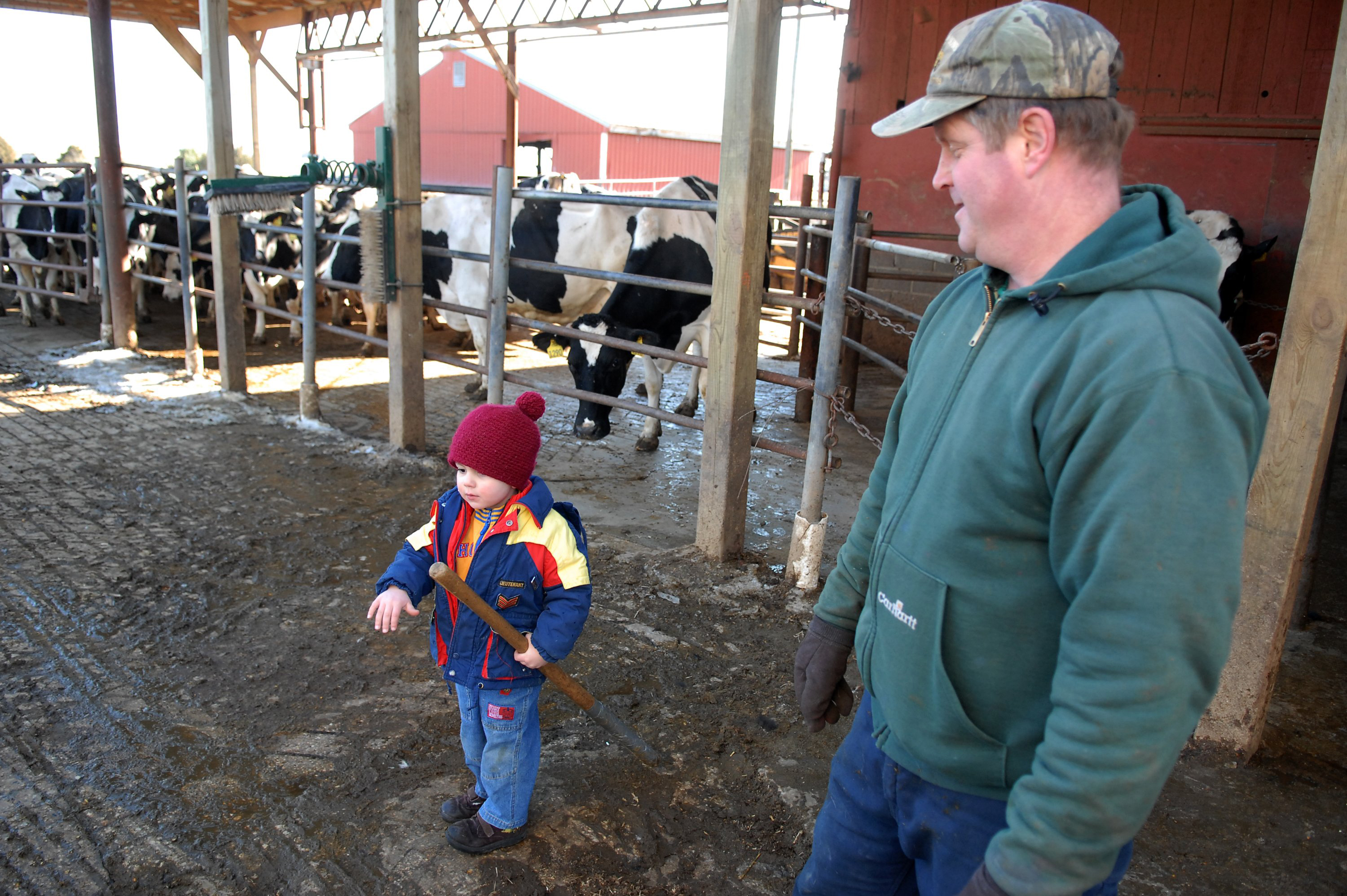
    From the Press of Atlantic City on March 12, 2007: The state is trying to revitalize its dairy farm industry. With his 3-year-old son Andrew, David Cadwallader prepares his cows for their 3 p.m. milking at Waldac, his Woodstown dairy farm.

    Andrew is set to graduate from Haverford College with a degree in political science. He’s merged his life history — agriculture and geology — with his interests in politics and government, and recently began an internship for CNN’s Michael Smerconish, a Bucks County native.

    Andrew’s an only child, and, yes, he wants to farm, bucking a trend that’s seen the average age of farmers, 58.1, rise steadily, according to the 2022 U.S. Census of Agriculture Data.

    “I’m coming back here after I graduate,” he said.

    Nationwide, small dairy farms like Waldac have continued to shutter at a rapid rate since Andrew was in the local newspaper.

    Overall, milk production is up in the United States. That’s because modern genetics has produced cows that make more milk than their ancestors. Those big production numbers are coming from massive farms with large herds, too.

    The Cadwalladers milk about 130 dairy cows on approximately 500 acres, and small farms like theirs have been decimated. In 2005, according to the USDA, there were 78,295 dairy farms in the United States. In 2025, that number was 23,609, a 70% decrease in just 20 years.
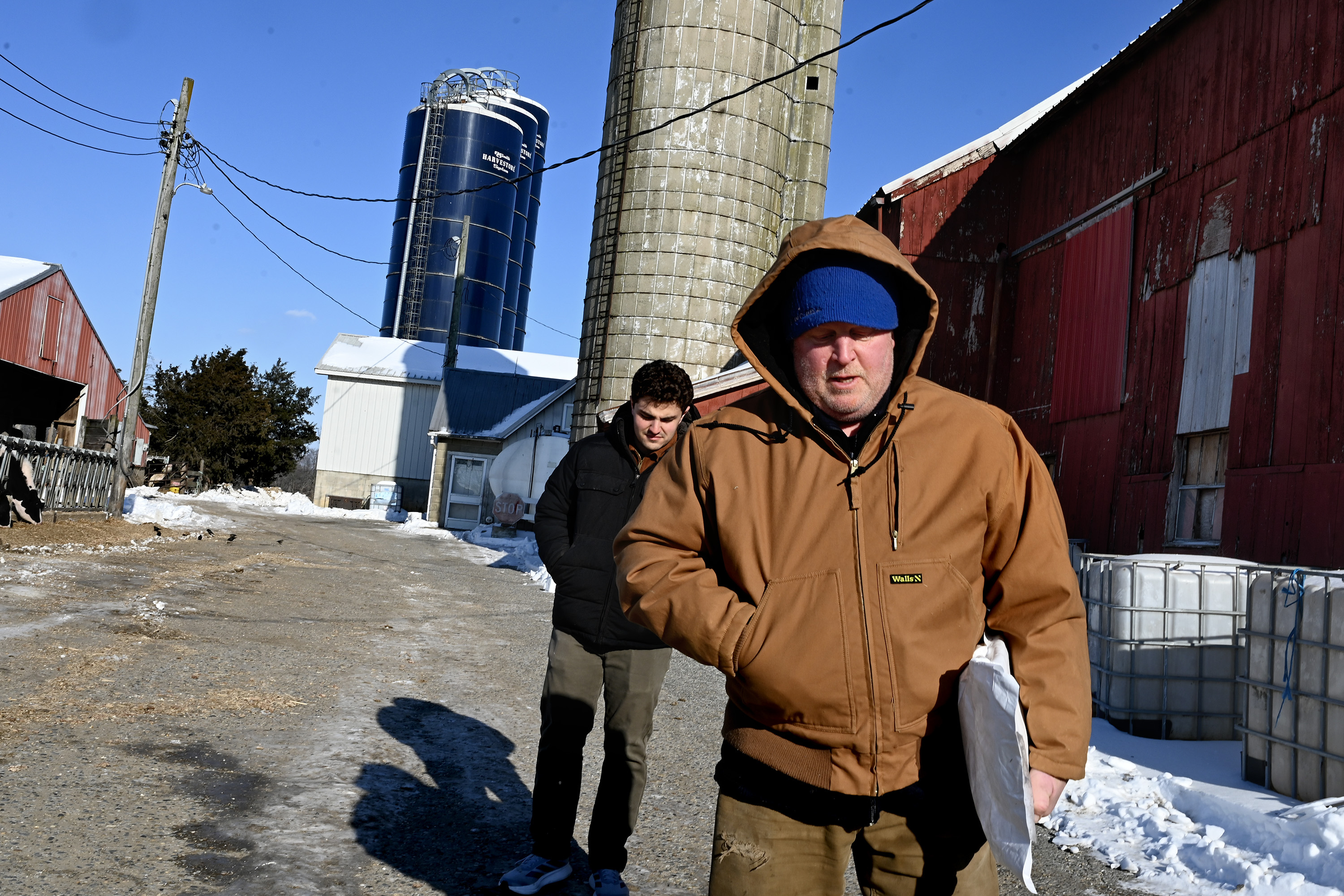
    Farmers Andrew Cadwallader and his father David Cadwallader (front) at Waldac Farms in Salem, N.J., on Jan. 29.

    Andrew Cadwallader declined to go into exact figures but said the family would be “paid well” by the AES lease. Waldac Farms would pivot to sheep and the sale of their lambs, while possibly still milking cows on a smaller scale.

    “We have been losing money for the last 10 years,” Andrew said of the dairy operation.

    AES approached the family about “solar grazing” during the pandemic, Andrew said, and as they sought a use variance from the Mannington planning board to move forward, he became the project’s public face. Andrew made numerous, lengthy Facebook posts in local groups about the project to be transparent.

    “Will we continue to hope that the price of milk goes up and risk failure, or will we pivot and change?” Andrew wrote in the Salem County Advocates group in November.

    Many comments were supportive or neutral, in a libertarian “it’s your land” way. There was plenty of pushback, though, and Andrew said it was disheartening to see how many comments focused on visual impact.

    “I’m glad people can worry about the look of the farm,” he said in late January. “We have to worry about making a living.”

    Cadwallader said flat farmland is not a natural part of landscapes in South Jersey. People have just gotten used to seeing it. His farmland was likely cleared of trees by the native Lenni-Lenape centuries ago, he said. Barns and tractors are industrial buildings and commercial machinery, he said, not quaint antiques.

    “They are prioritizing the look, and it’s not reality,” he said. “It’s not a natural feature.”

    Still, Cadwallader felt confident, on a late January afternoon on his farm, that the planning board might approve the project.

    Jennifer Kugler, founder of the nonprofit South Jersey Preservation, visited Andrew’s farm shortly before the planning board meeting with her children and wrote a lengthy Facebook post in support of his plan that received 573 likes.

    “The Cadwalladers want to evolve,” Kugler wrote. “This means new solutions are necessary to ensure the continued viability of the farming operation. For farmers, this can be incredibly scary.”

    Kugler, 42, lives in Pilesgrove, Salem County, home to America’s oldest continuously-operating rodeo. She was raised on a dairy farm in Lackawanna County. That farm closed in the 1990s and never reopened, and part of her goal with South Jersey Preservations, she said, is to prevent more small farms from folding.

    “We support farmers continuing to farm,” she told The Inquirer.
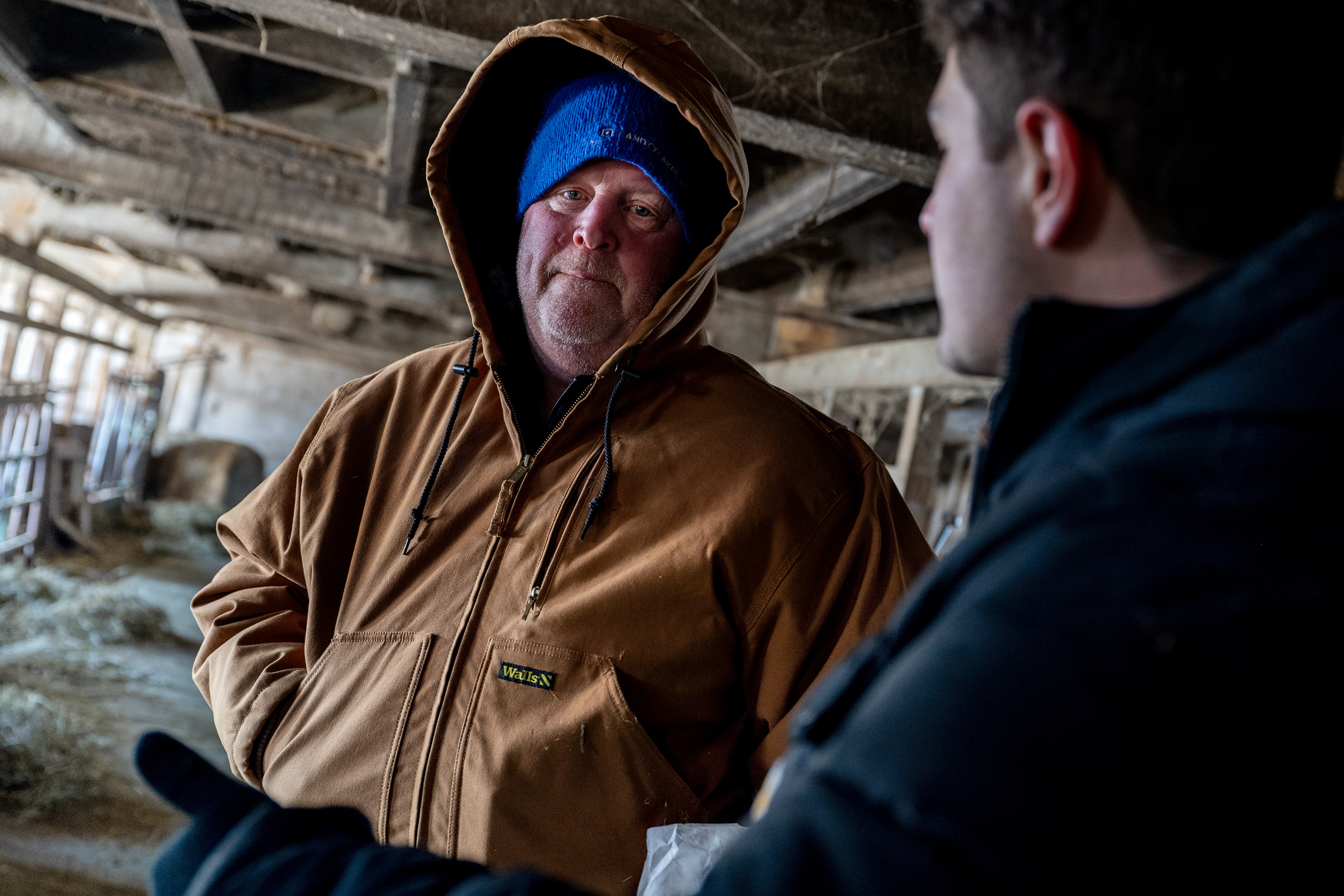
    Farmers Andrew Cadwallader and his father David Cadwallader (left) at Waldac Farms in Salem, N.J., on Jan. 29.

    To preserve or not to preserve

    While the Cadwalladers would prefer the solar project, there are other options to keep farms afloat in New Jersey. The state’s Farmland Preservation Program is a common way to ensure that housing and warehouse developers don’t buy up farms. It’s a relatively simple process.

    The program uses a combination of federal, state, county, municipal, and nonprofit funds to buy a farm’s development rights. The purchase price, according to the program’s website, is “based on the difference between what a developer would pay for the land and what it is worth for agriculture.”
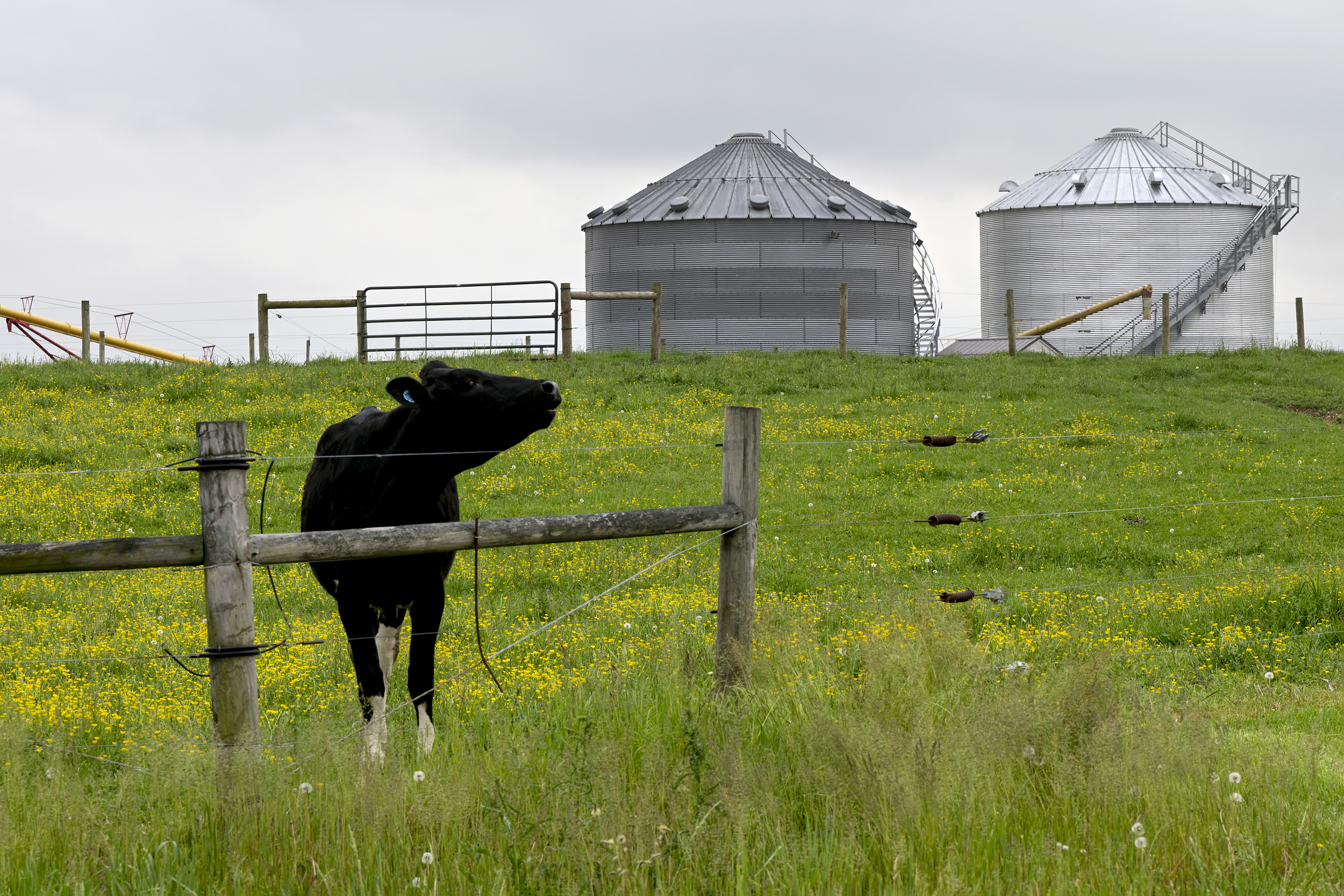
    A cow at a farm along Route 49 in Salem County, N.J., on May 6, 2024.

    In turn, farmers get a much-needed payout while keeping their agricultural operation running. If those farmers choose to sell their land someday, deed restrictions require the property to be used for agricultural purposes or otherwise remain undeveloped.

    “You can’t do additional residential or commercial improvements. You can’t turn it into a housing development or a Walmart,” said Charles Roohr, executive director of the New Jersey State Agriculture Development Committee.

    Since the program began in 1984, Roohr said New Jersey has preserved 250,000-plus acres, with a goal of 500,000 acres. Salem County leads the way among counties, with more than 43,000 preserved acres.

    The family has not ruled out farmland preservation if the solar project is rejected, but they were concerned about some of the potential restrictions and complications.

    “It’d be like a bailout, but we have 500 acres,” Andrew said on the farm in late January. “We need to figure out what the heck we’re going to do with the 500 acres that’s going to actually make us some money.”

    Cowtown Rodeo in Pilesgrove, N.J.

    A complicated farmland preservation issue played out right in Mannington in recent years, when Mannington Deputy Mayor Robert DiGregorio filed a civil rights lawsuit against local and county officials in 2021. According to the lawsuit and Transparency NJ,, DiGregorio was holding weddings, private parties, and nonprofit functions on his preserved, 78-acre farm, but was told by officials that he would need variances and site plan approvals or waivers to continue. The back-and-forth between those officials and DiGregorio, according to Transparency NJ, almost grew physical.
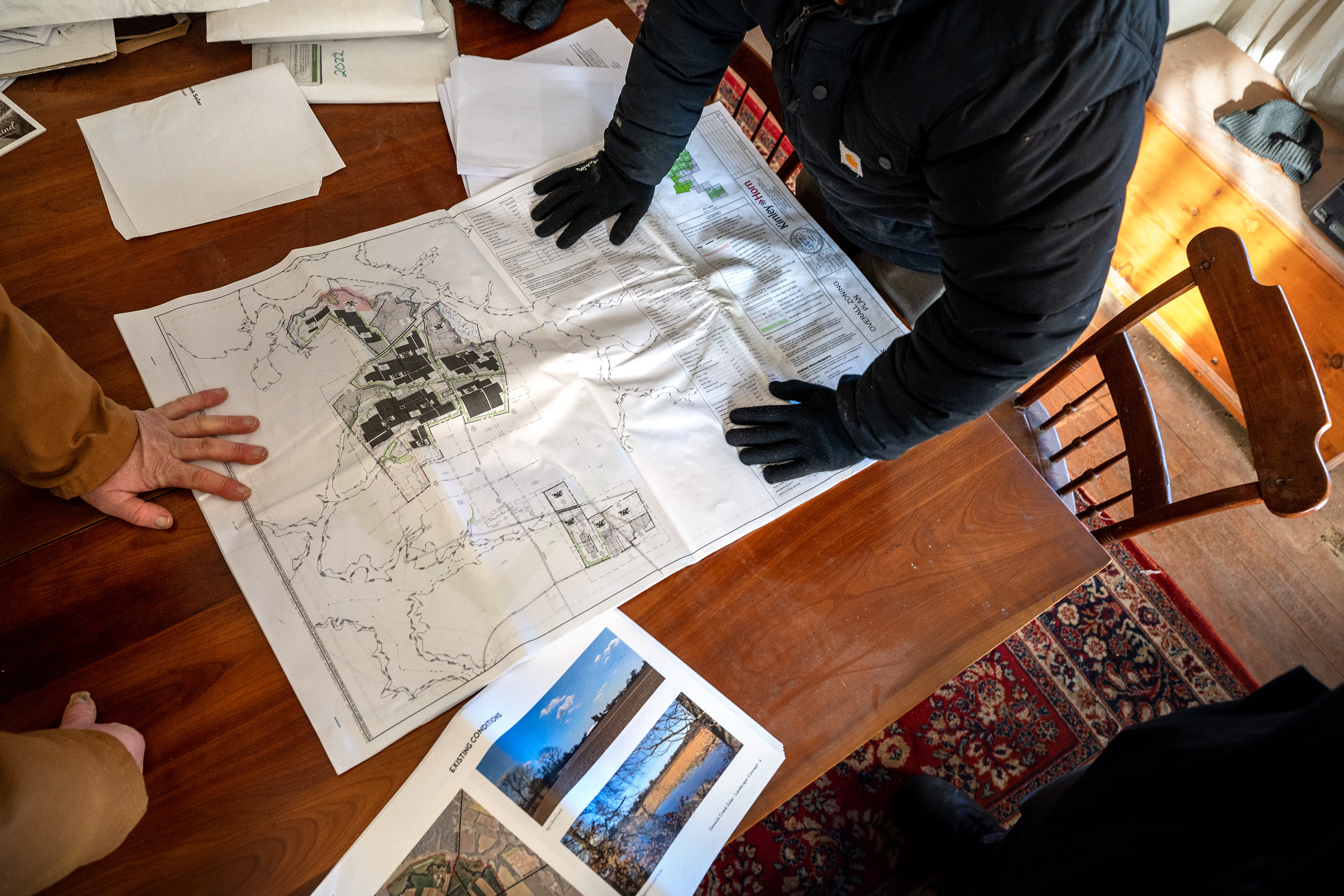
    Farmers Andrew Cadwallader and his father David Cadwallader (left) with plans at Waldac Farms in Salem, N.J., on Jan. 29.

    In April, Mannington agreed to pay DiGregorio $55,000 to end the lawsuit, according to an article in NJ.com. Neither DiGregorio, who is on the planning board, nor his attorney returned requests for comment. It’s unclear if he will continue to host events on his farm.

    Roohr, commenting on farmland preservation restrictions in general, said events are allowed if “the purpose of the event is to sell the things that you’re producing on your farm.”

    A tomato festival on a tomato farm would be fine, for example. A folk festival on a tomato farm would probably require a special-use permit.

    “If the main purpose of the event is some other focus and your stuff ‘might’ get sold as a side benefit, then we consider that a non-agricultural use. And so the greatest example of that would be a wedding.”

    Roohr said the preservation program is more important than ever, as data centers look to build in rural areas nationwide.

    “We have over 200 applications [for farmland preservation] in our office right now,” he said.

    The Cadwalladers said they have no plans to sell to a developer.
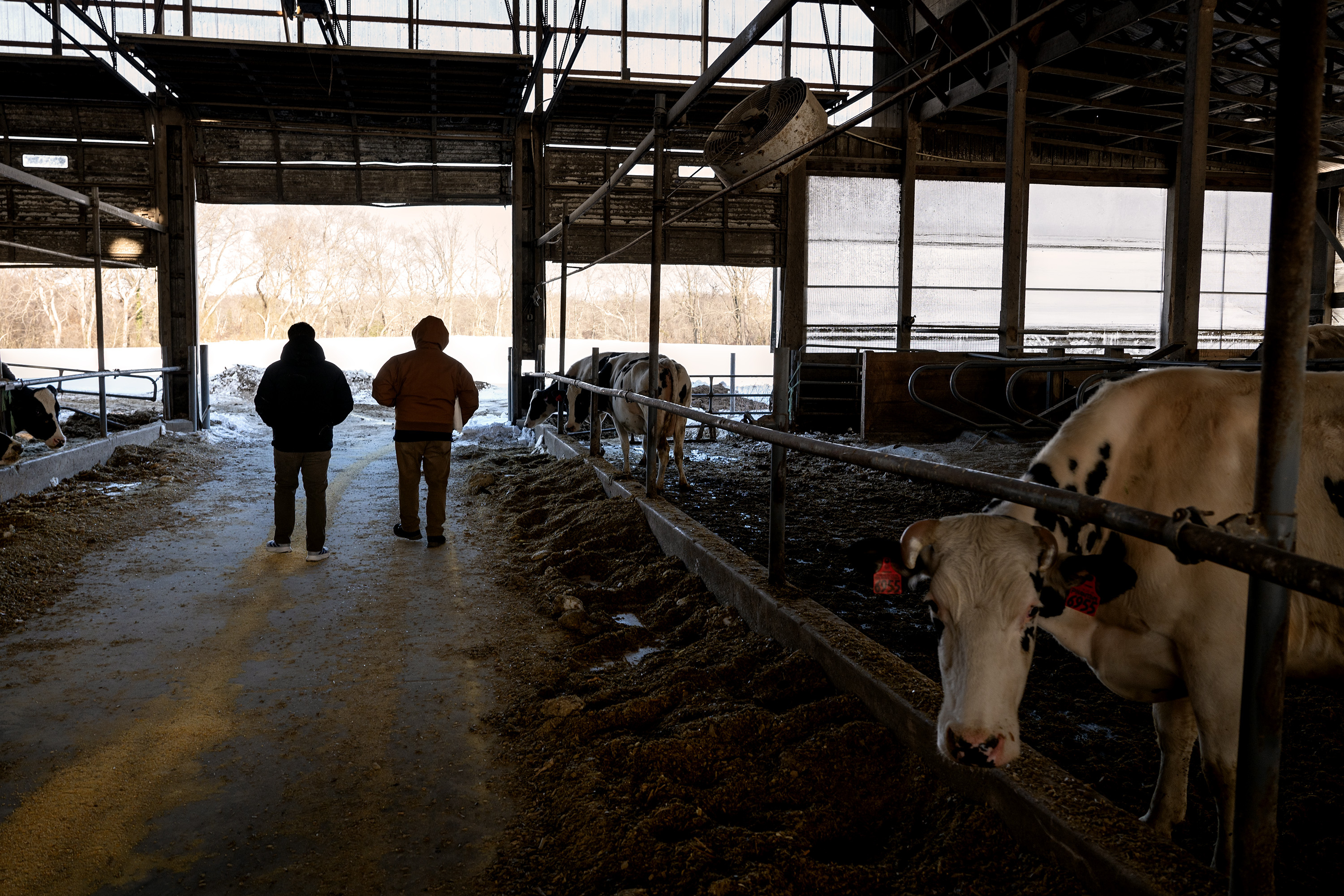
    Farmers Andrew Cadwallader and his father David Cadwallader (right) at Waldac Farms in Salem, N.J., on Jan. 29.

    The vote

    Along with Alice Waddington, numerous others spoke at the March planning board meeting. Union officials said the solar project would bring jobs (AES put the number between 75 and 100). Some spoke in support of Andrew Cadwallader and his love for the ecosystem. Still, others talked about protecting Mannington’s “rural identity” and fears that the project could affect property values.

    Andrew Cadwallader was the last member of the public to speak.

    “As a family, we’re at a crossroads,” he said. “We can’t risk volatility anymore as a family and as a farm.”

    When he was finished, Davis gave a final summation on behalf of AES and the Cadwalladers. Minutes later, the planning board made a resounding 6-1 vote, shooting down the project.

    Cadwallader hung his head and gave a half-smile and some quiet “thank yous” to the attendees who patted his shoulder and shook his hand.

    Laura Kellogg, a development manager for AES, said the team was disappointed but would continue to “evaluate next steps for the project.”

    A week later, Andrew Cadwallader said he and the family were still dealing with the disappointment and contemplating their next move.

    “People like this area so much, but we love it. No one loves this land more than my family,” he said. “People have to understand that a working farm is not a museum.”

    Cadwallader’s life was getting busier at Haverford, too. He was taking geology classes and working on a senior thesis about preserving “the agricultural viability of mid-sized farming operations in the United States.”

    Andrew drives the 38 miles south from college, back to Salem County, every weekend. A week or so after the meeting, though, Alice Waddington’s warning to the planning board, and the people of Mannington, proved prophetic.

    Waldac still looked like a farm to neighbors and motorists passing by, but the Cadwalladers had stopped milking cows.

    Correction: This article has been corrected to reflect that AES Corp. is based out of Virginia.
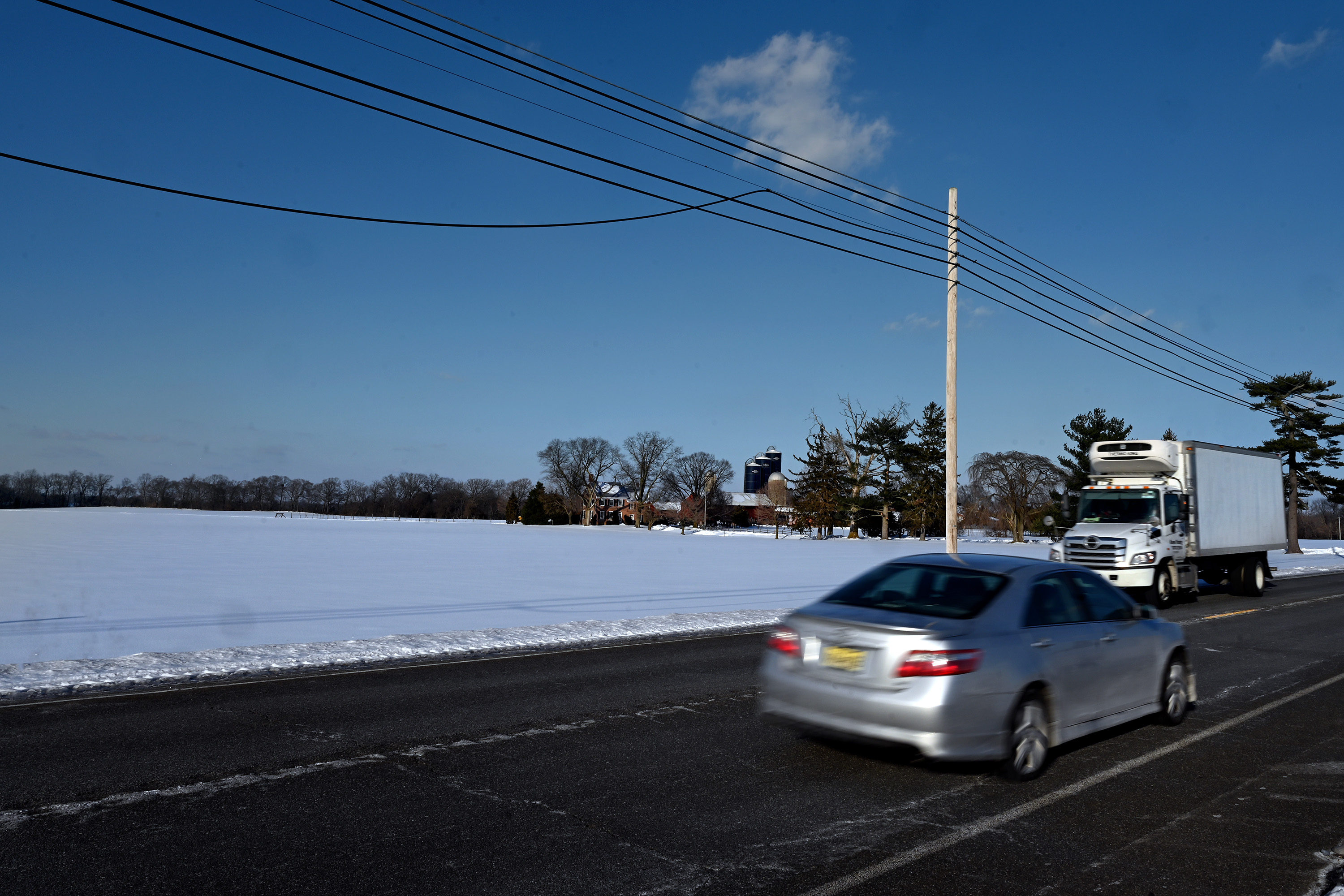
    Waldac Farms in Salem, N.J., on Jan. 29.
  • Dear Abby |Stress and emotions set best friends against each other

    DEAR ABBY: I have fallen out with my best friend of 20 years, and I’m not sure how to proceed. A few years ago, she started a new job and became too busy for chats or to catch up. However, whenever we do manage to chat or catch up, she wades in with advice and suggestions about what I “need” to do to improve my situation.

    I’m recently separated from a marriage of 20 years, and I’m trying to keep things even for my two teenage children. I became increasingly frustrated by how inappropriate her suggestions were and eventually lost my temper. I told her to stop making suggestions as they weren’t helpful, and that she was too removed from my life. This was three months ago, and since then, she has ceased all contact and didn’t reply to my apology for losing my temper. She said no one has ever hurt her the way I hurt her.

    She has now emailed me asking to meet when she’s less busy, saying she’s still very hurt but she misses me. I miss her too, but at the same time, I don’t miss the stupid suggestions. She’s godmother to one of my children (she has had no contact with her since this happened, even missing her birthday). How should I handle this? I am very hurt at how she deserted me at a time when I needed people around me while going through a painful separation.

    — DESERTED IN DUBLIN, IRELAND

    DEAR DESERTED: Emotions are raw and folks are rarely at their best when going through a divorce. At the same time, your friend appears to be stressed because of her work schedule. Since your separation, you are looking for more emotional support and contact than she is now able to give you. She, too, was hurt when you — with no filter — rejected her attempts to be helpful. You did the right thing to apologize. Be glad there is a thaw on the horizon because, with time, things may improve if you can tactfully communicate what you need and do not need from her.

    ** ** **

    DEAR ABBY: We just moved back to Southern California and into a gated community. My neighbor’s property is higher than mine, and she has a spiky, thorny hedge that’s growing over into my property and staining the side of my house. I went over and introduced myself, wanting to discuss the issue. My neighbor’s reply was, “That’s YOUR hedge!” The next thing I know, she has a person trim it and throw all of the clippings into my backyard for me to clean up. How do I deal with a neighbor like this?

    — THORNY RELATIONSHIP

    DEAR THORNY: Contact the homeowner’s association and describe what has been going on. Your neighbor may be violating the covenants, conditions and restrictions (CC&Rs). (There may be fines for this.) It is important that you establish where your property line ends and hers begins. If the plant really is on your land, you may have the right to remove it entirely.

  • Sharing the sidewalk with Uber Eats robots in Philly is a whole new level of dystopia

    Sharing the sidewalk with Uber Eats robots in Philly is a whole new level of dystopia

    One of my close high school friends from central Pennsylvania came to visit me last weekend with her daughter to celebrate the girl’s 12th birthday in Philly. Admittedly, I was a little nervous. I don’t have children, I don’t know what 12-year-olds like, and I don’t want to screw up anyone’s birthday, especially a kid’s.

    Luckily, her mom provided advanced intel that this preteen is currently into K-pop and hopes to study abroad in South Korea someday. So after stopping by Philadelphia’s Magic Gardens on Saturday morning (where I take all first-time Philly visitors), we decided to surprise her by going to Chinatown that afternoon.

    It was my friend’s daughter’s first trip to any Chinatown anywhere, and when she began to see the signs and people and asked where we were going, she let out the kind of joyful shriek preteen girls typically reserve for boy bands. I smiled at her joy and at my pride that I hadn’t messed this up — yet.

    North 10th Street in Philadelphia’s Chinatown.

    I told the girl in advance that she’d see some things on the streets of Philly she doesn’t see at home and that would be hard to see: people experiencing homelessness, people who are in addiction, and people who are suffering from mental illness. Part of living in a city, I told her, is to constantly be reminded of the struggles of others. Hopefully that makes you more compassionate toward all people and grateful for what you do have, but at the very least, it forces you to face the reality of our society and how difficult life is for some people.

    What I didn’t warn her about were the robots.

    ‘Bodies in the Delaware’

    We encountered our first Uber Eats delivery robot made by Avride while walking from the Fashion District parking garage to the Chinatown Friendship Gate. Thankfully, I knew what it was because of my colleague Michael Klein’s story on them last week, and because of a post about them on the Philly subreddit that garnered very Philly responses like: “Bodies in the Delaware. Heads in the Schuylkill.”

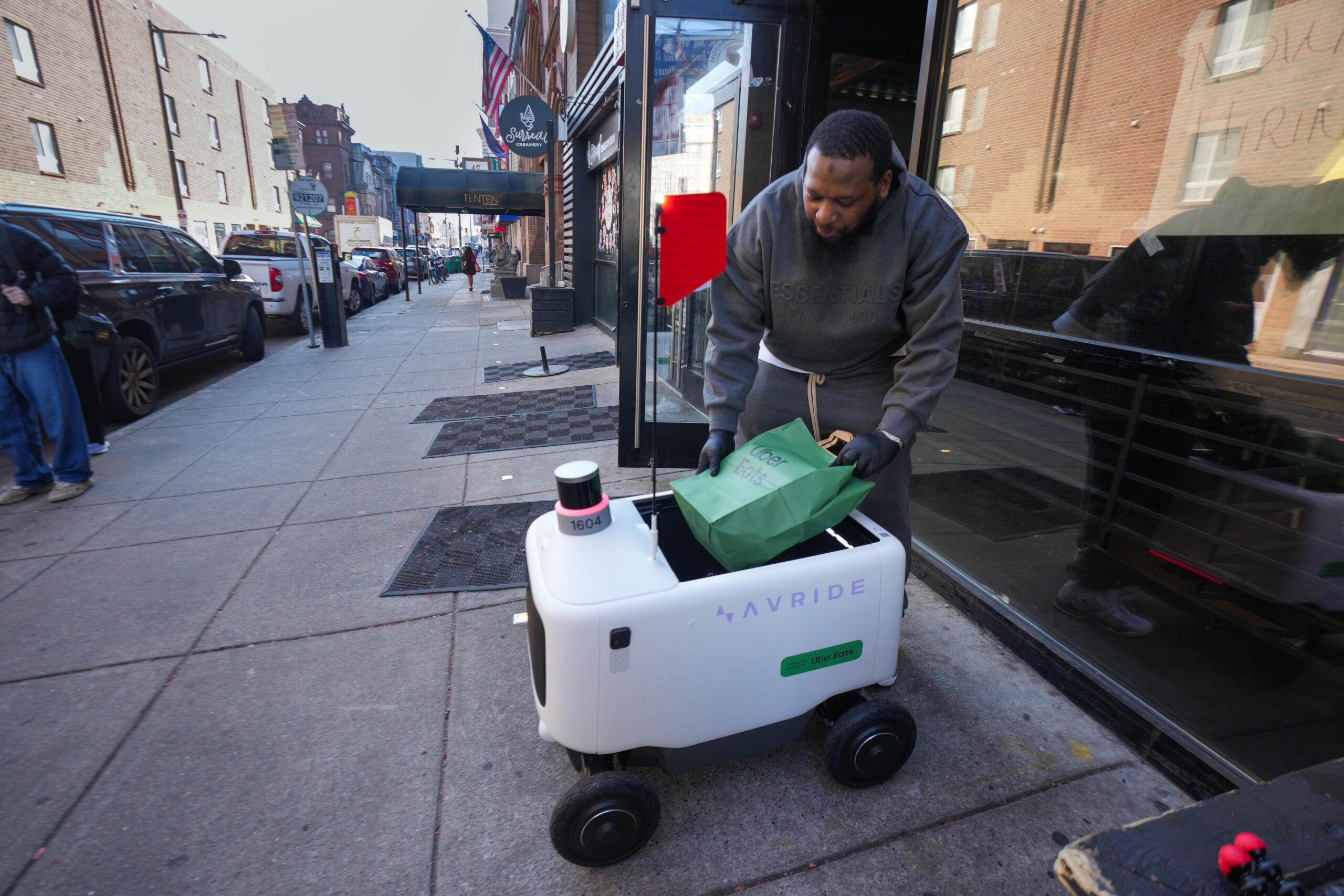
    An Uber Eats delivery robot in Philadelphia.

    Even though I knew what the robot was, it was still really weird to see this boxy thing on wheels navigating around people on the sidewalk and across city streets. My guests agreed and it seemed many people around us did too, because they were pointing and laughing as it passed.

    These robots were breaking folks out of their everyday and pausing people in midconversation, and not in a good Philly way, like the unexpected art that adds whimsy and beauty to our city, but in a dystopian way. I found myself creeped out by the robots and what their presence here might portend.

    Sure, I’ve seen Marty the robot at Giant supermarkets and I’ve written about the robot cat servers in a few area restaurants, but those are in private businesses. These delivery bots are out in public and unavoidable. It feels different, like Philadelphia’s murder of HitchBot didn’t prevent a robotic uprising, as we’d all hoped, it only delayed it for a while.

    ‘DESTROY ME PLZ’

    In the nine hours we walked around Chinatown and Center City, we saw three Uber Eats delivery robots. On Filbert Street near the courthouse, one was rolling along ahead of us and a woman in a red shower cap who was parked across the street in an SUV yelled out her window that they were not delivery robots, but rather police surveillance bots keeping watch on us (while nothing seems impossible today, there is no proof of that).

    Philly photographer HughE Dillon captured video of a delivery bot out on the streets of Philly Saturday night while St. Patrick’s Day revelers were bar hopping with the Erin Express. One person sat on one of the robots; someone else wrote “DESTROY ME PLZ” on it.

    Here’s where it gets even weirder for me, because these robots are anthropomorphized with digital eyes that blink and wink and turn into hearts, I began to feel sorry for them. Maybe these robots don’t want to be here either, I thought, maybe they didn’t even want to be invented, but now they’re stuck with us without a choice, just like we’re stuck with them. Of course I know this is all highly illogical, that these are just machines, but emotions aren’t always logical. That’s what makes us human.

    Uber Eats’ delivery robot.

    Philly does its thing

    When I took my friend’s daughter into You & Me, the Asian toy store with the secret basement-level grocery store, she announced that she had died and gone to heaven and I took great pride in knowing that I’d impressed a 12-year-old.

    But what I was even more proud of was that Philly did it’s Philly thing, as I’d hoped. Strangers continually engaged with us, whether it was a customer at a store who saw my friend’s fair skin and, unsolicited, recommended the best sunscreen she’s ever used, or the server at Nine Ting who saw us struggling with the grill and helped us navigate our first Korean barbecue experience. Three people complimented my friend’s daughter’s outfit — a cute skirt, leg warmers, and Mary Jane combo she’d obviously put a lot of thought into — and it absolutely made her day.

    While we encountered robots, our best interactions were with humans.

    The TLC

    I hope those robots are the last thing my friend’s kid remembers about her trip to Philly and I hope I don’t look back on that lovely day as a turning point in some larger evolutionary story about humanity and robots.

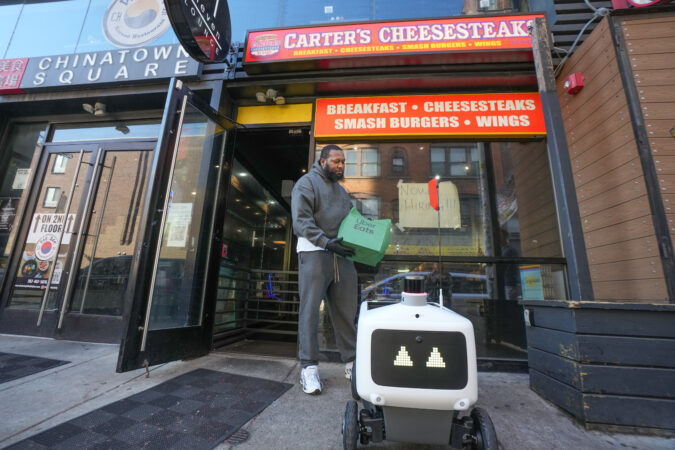
    Lavelle “Garci” Peterkin, owner and CEO of Carter’s Cheesesteaks by Garci, places food inside of an Uber Eats delivery robot in Philly.

    (I can hear myself now at 85, telling children in the future: “That was the first time I saw robots and humans interacting independently of one another, but it would not be the last!”)

    We came home Saturday night to a homemade chocolate birthday cake with vanilla buttercream frosting my husband made. Our bellies already full, our sugar intake already high, we ate it with delight as we recounted the day. The cake dripped with what my husband says is the most important ingredient of any dish — the TLC.

    A robot could never.

    As I was cleaning Sunday, I found a note my friend’s daughter left in our guest room on a page she’d torn from one of my reporter’s notebooks. In the note, she talked about how thankful she was for the great cake, gifts, and wonderful day.

    “Coming back next year!” she wrote.

    There was no mention of the robots.

  • They paid $259,000 for a South Philly rowhouse with vibes and an ‘eagles nest’ | How I Bought This House

    They paid $259,000 for a South Philly rowhouse with vibes and an ‘eagles nest’ | How I Bought This House

    The buyers: Katherine Rumble, 38, public engagement manager; Benjamin Rumble, 39, graphic designer

    The house: a 960-square-foot-home near South Philly’s Marconi Plaza with three bedrooms and one bathroom, built in 1957

    The price: listed for $259,000; purchased for $259,000

    The agent: Sue Liedke, Compass

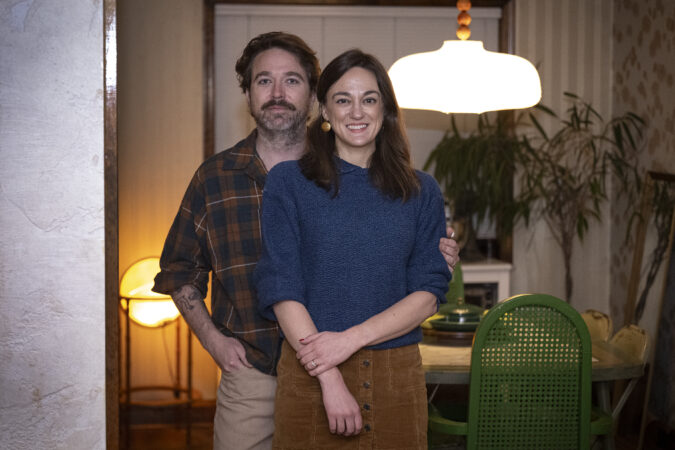
    Benjamin and Katherine Rumble pin their new home in South Philadelphia.

    The ask: Katherine and Benjamin Rumble were looking to leave Nashville. They wanted a city that was affordable, walkable, and had decent public transit. “Philadelphia was pretty much the only option,” said Katherine. After falling in love with South Philly, they moved in 2023 and rented a place in Point Breeze.

    Two years later, they started searching for their forever home. Their wish list was specific: proximity to the Broad Street Line, central air, office space for both of them, and ideally a home that hadn’t been gutted, flipped, and turned “millennial gray.”

    “We did not want to live in a doctor’s office,” Katherine said. “We wanted to live in a place that felt warm and welcoming like your grandma’s house.”

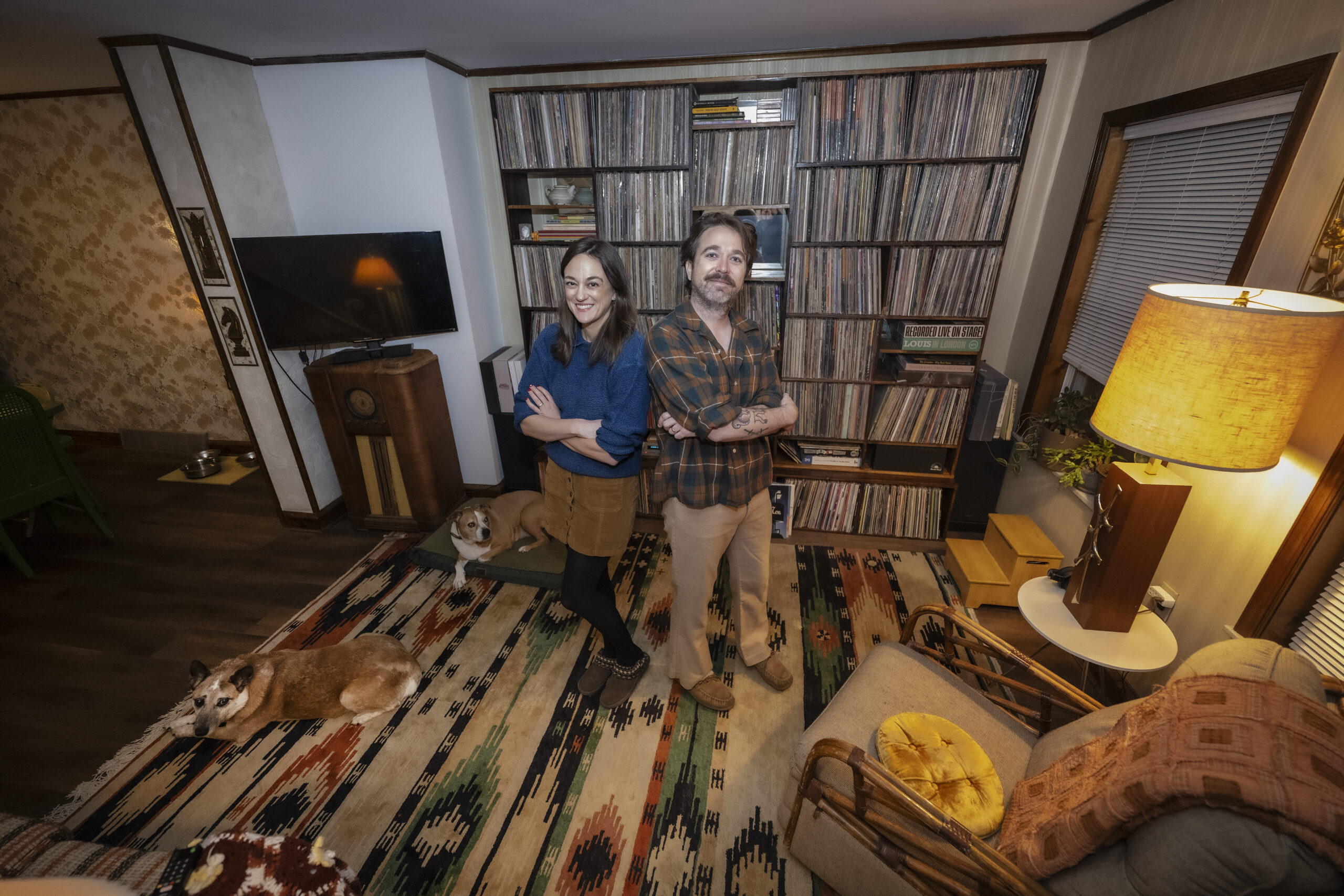
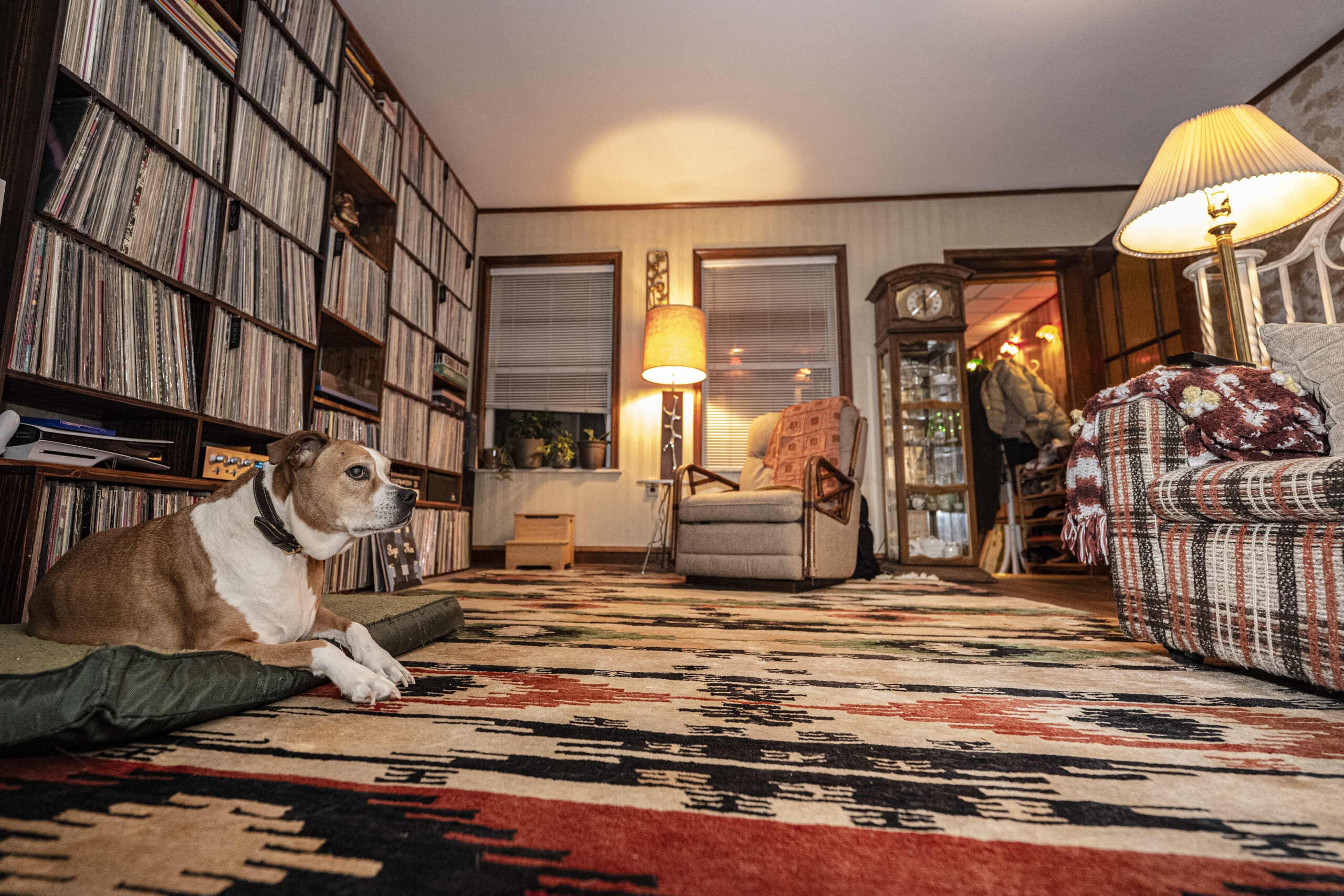
    Benjamin and Katherine Rumble’s dog, Miller, relaxes in their living room.

    The search: The couple already had a habit of checking Zillow regularly, but the listing that caught their attention came through Instagram.

    They had long followed the account of Sue Liedke, a Philadelphia real estate agent who highlights vintage homes across the city. “We were obsessed with her account,” Katherine said. When Liedke posted a house near Oregon Station, they reached out.

    The home checked many boxes. It was close to the Broad Street Line and near Marconi Plaza, which was a major plus for the couple, who have two dogs. It also had central air and enough space for both of them to work from home.

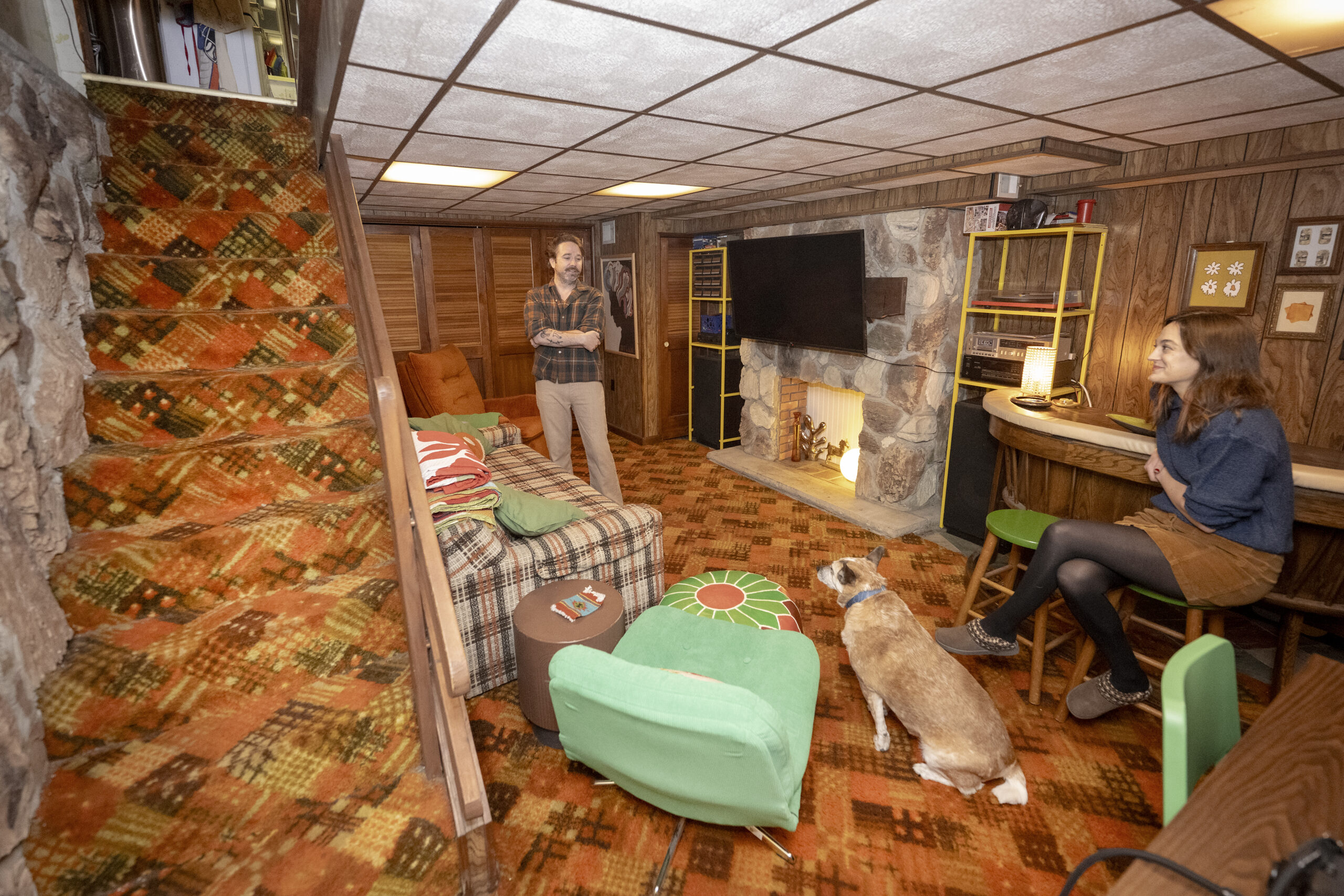
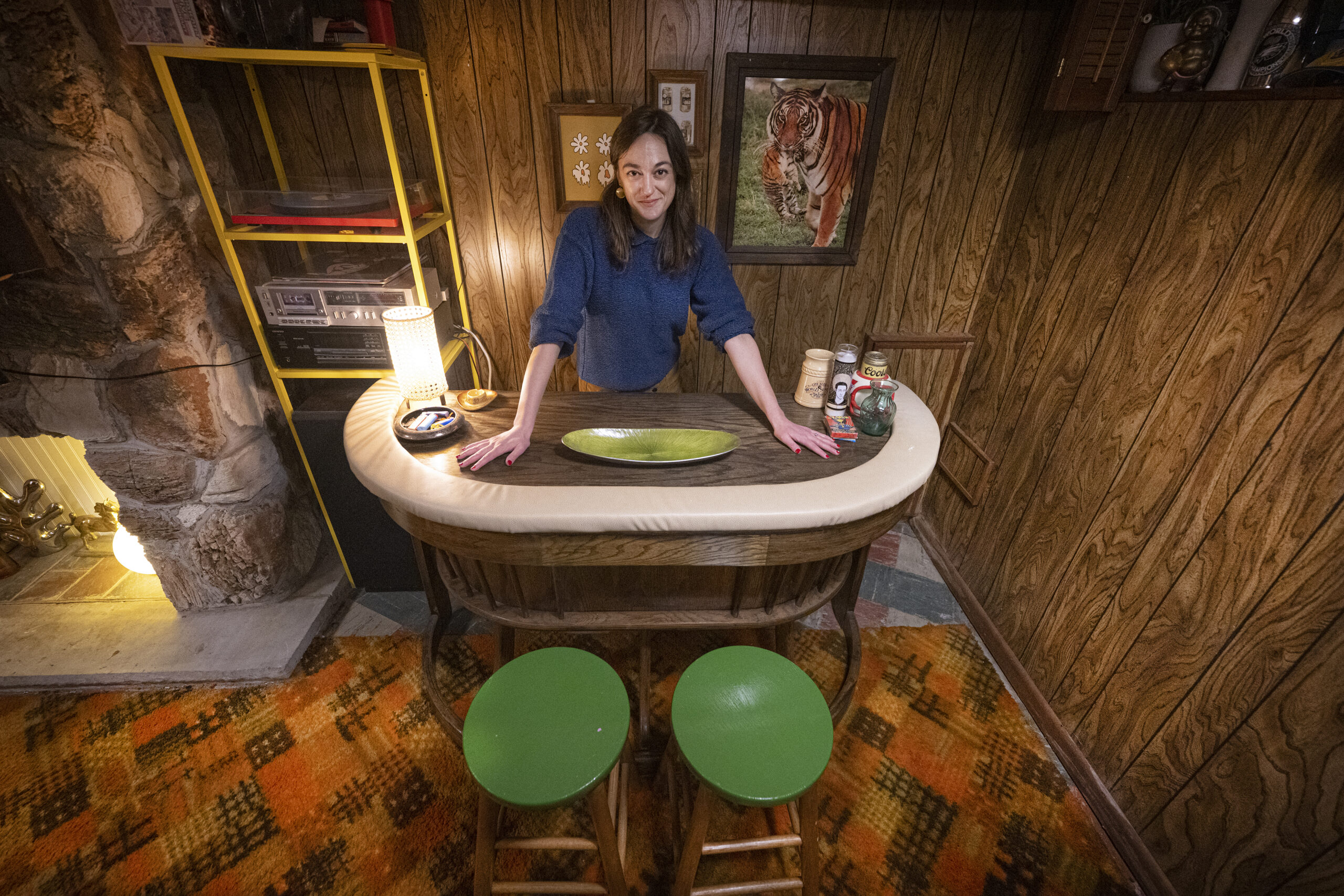
    The appeal: They went to see the house immediately and loved it. “It had vibes,” Benjamin said. “The basement looked like people had been watching Eagles games down there since 1974.”

    “The basement looked like someone had been watching Eagles games down their since 1974,” said Benjamin.

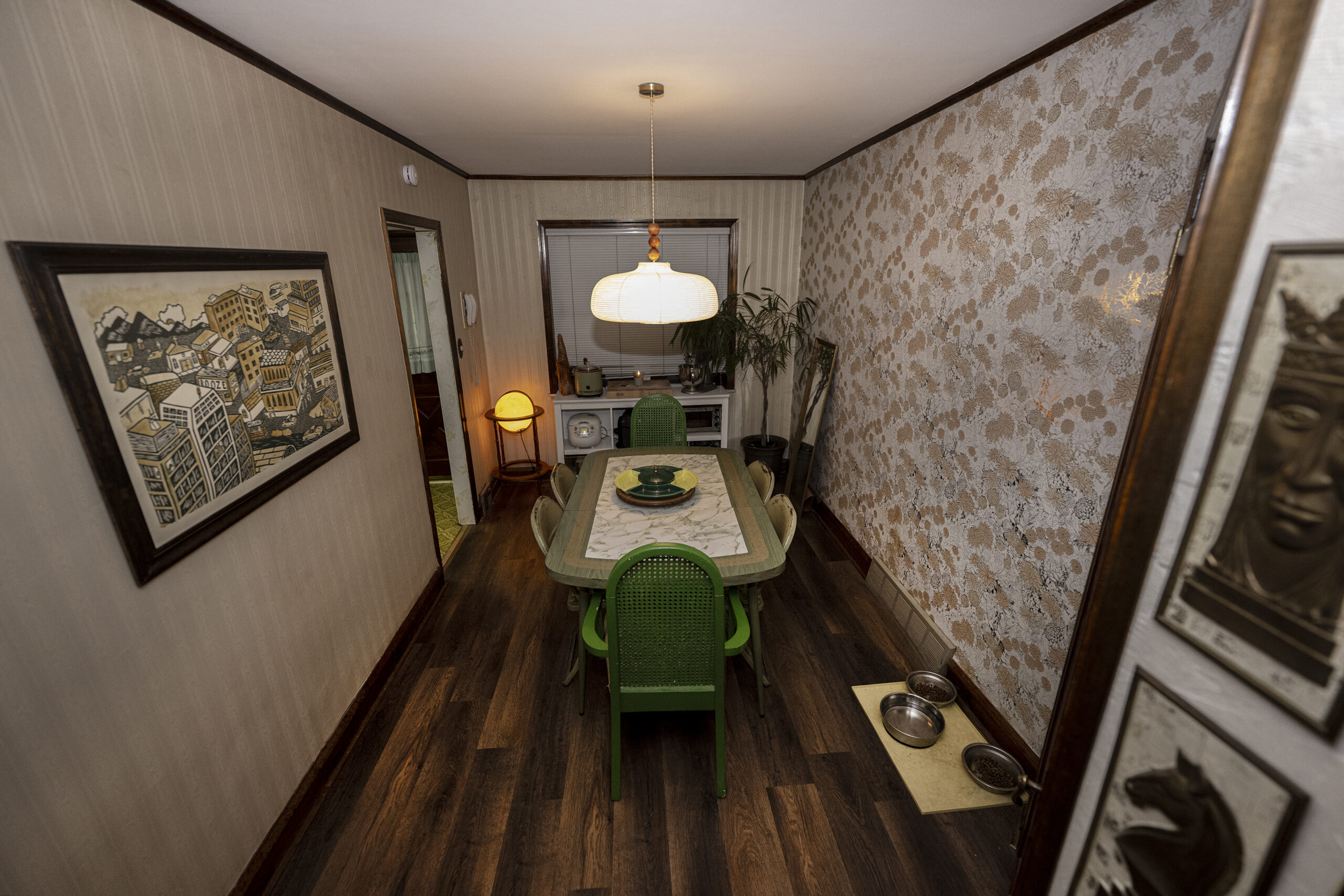
    Upstairs, there were original wood doors, wood trim, and wallpaper that appeared decades old. The bathroom featured seafoam-green and pink tile and a skylight.

    “We loved everything already in it,” Benjamin said. “I thought I wanted to buy a house so I could paint the walls. Then we bought this house and realized we didn’t want to change anything.”

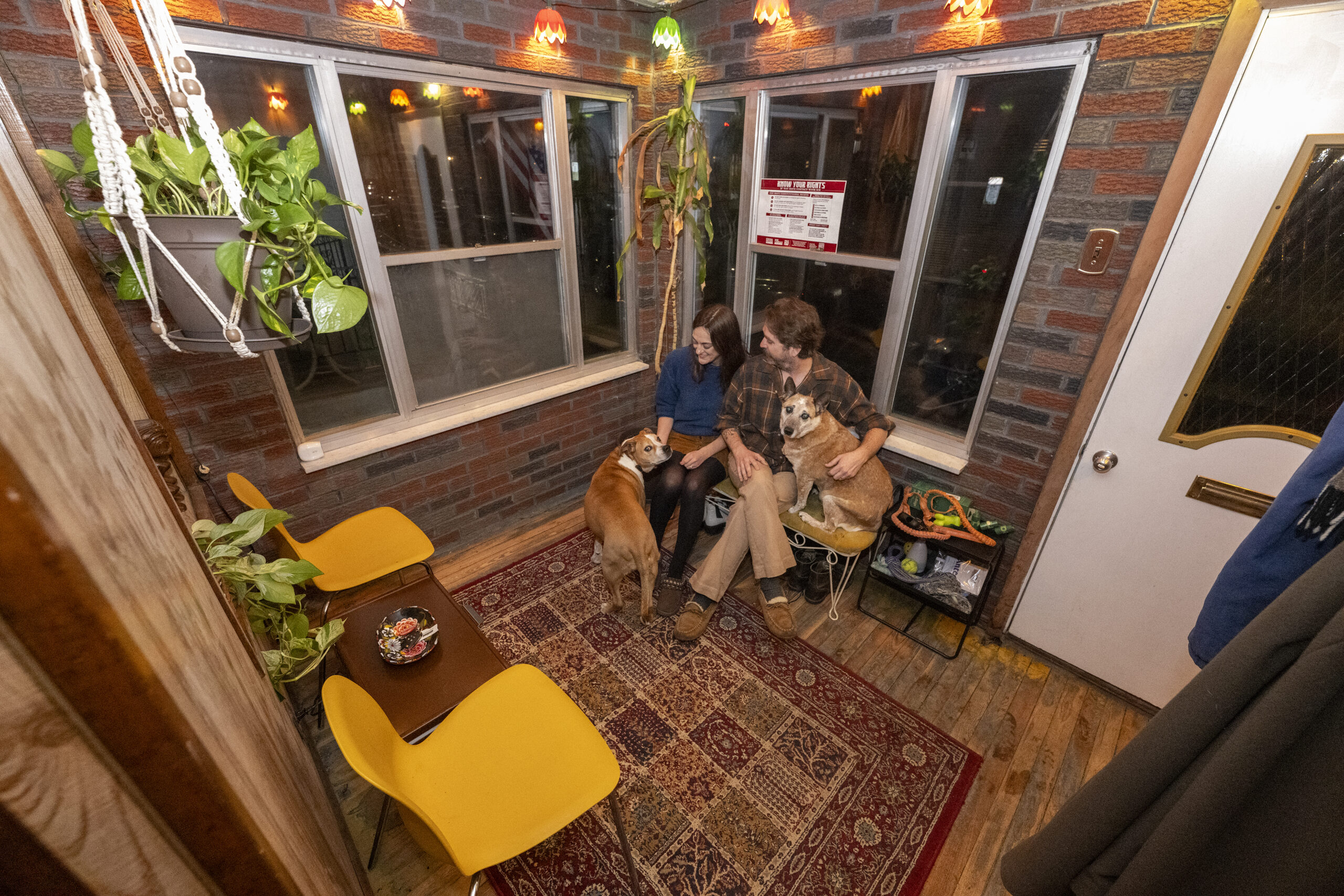
    At the front of the house was a small screened-in room sometimes referred to as a Florida room, a term Katherine rejected immediately. “I said, ‘We’re not calling anything Florida in this house,’” she recalled. They renamed it “the eagles’ nest.”

    For all its charm, the house did still have its drawbacks. There was only one bathroom, and the kitchen was tiny. But “it had so many of the things we wanted that it felt worth it,” Katherine said.

    The deal: The house had been on the market for only a few days when they saw it. The listing price was $259,000, and it was being sold as-is, meaning the seller was not required to pay for any issues uncovered during the inspection. “It was a risk,” Katherine said.

    They offered the full asking price and requested a $5,500 seller’s assist to help cover closing costs. The seller agreed and even repaired a plumbing issue that came up during the inspection, despite selling the house as-is. In the end, the appraisal came in $5,000 above the asking price, which reassured the couple that the deal made financial sense.

    The money: The couple put down 5%, or $12,590.

    The money came from a second retirement account Katherine opened several years earlier. “It wasn’t really making any money,” she said. She decided cashing it out to buy a home was a better investment.

    Benjamin and Katherine Rumble and their dogs, Miller and Bambi, in the eagle’s nest.

    After the seller credit and deposit adjustments, the couple needed $24,225 in cash to close. They used almost all their personal savings to cover the remaining costs. They are rebuilding their nest egg from $2,000.

    One thing boosting their savings is their low mortgage payment. They purchased mortgage points, an upfront fee paid at closing that lowers your interest rate, to get their monthly payment below $2,000. “That was our big goal,” Katherine said. “It’s a miracle.”

    The move: To save money, the couple moved themselves. They couldn’t get a full-sized truck down their narrow street, so they rented a U-Haul van and shuttled their belongings back and forth across four weekends. They also had to get rid a lot of their existing furniture, requiring extra trips to 2A Thrift and Philly AIDS Thrift. “It was harder moving 10 minutes down the road in South Philly than it was moving from Nashville to Philadelphia three years ago,” Katherine said.

    Benjamin and Katherine fell in love with the home’s original details, like the wallpaper in the dining room.

    Any reservations? One thing the couple wasn’t prepared to deal with was a private neighborhood sewer line. It connects all the houses on the block before linking up with the main public sewer line. The couple both grew up in parts of the country where individual houses connect directly to the main sewer line. After moving in, neighbors explained the history of the sewer line. It hasn’t caused any major issues yet, but if something goes wrong, the neighbors will have to pay for the repairs together.

    Life after close: The house has influenced their interior design choices. Because it was built in the 1950s, the couple has tried to source furniture from the 1960s and 1970s.

    They regularly browse thrift stores, Facebook Marketplace, and vintage shops such as Thunderbird Salvage and Jinxed.

    “We’re trying to find things that fit the character of the house,” Katherine said. “It takes time to find the things you want. But it’s really exciting when you do.”

    Katherine Rumble behind the bar.

    It also helped that the previous owner let them keep some furniture, including, said Benjamin, “a really rad set of couches.”

  • How do I trim my neighbor’s tree without starting another feud?

    How do I trim my neighbor’s tree without starting another feud?

    This week’s question is… My neighbor and I don’t get along. A tree from her yard is starting to brush up against my house. I know I’m allowed to trim it, but how do I go about doing it without starting another feud?

    Elizabeth Wellington, Features Columnist

    Start with asking her. Politely, of course.

    Abigail Covington, Life & Culture Reporter

    But what if she says you can’t? As a non-confrontational person, I would simply melt.

    Elizabeth Wellington

    I would melt, too. But she can’t tell me that I can’t. Right? Because it is on my property. If she says that I can’t, I guess it’s time to play hard ball. I’d have to break out the law that says, “I can.”

    Abigail Covington

    Evidently, under Pennsylvania law, you can trim any part of a neighbor’s tree or shrub that crosses your property line. But you must stay on your side of the property line and trimming must not kill the tree or bush, or you could be liable for damages.

    Evan Weiss, Deputy Features Editor

    So are you asking the neighbor or telling?

    Elizabeth Wellington

    I’d start by asking if they minded. And then I’d have to tell them what’s happening as nicely as I could, of course.

    Abigail Covington

    Would you ask them to trim it or would you offer to do it for them?

    Elizabeth Wellington

    So maybe we ask them if they can trim their tree back first. And if they say no, then perhaps we offer to do it for them?

    Evan Weiss

    And if they say they don’t want it either way, you just do it anyway, right?

    Elizabeth Wellington

    I guess so. But also I need to know how much this foliage is disrupting my life. Like, is it messing up my view? Is it ruining my swimming pool activity? Are me and my kids brushing up against it and it’s scratching me? Or is this just a run-of-the-mill aesthetic thing?

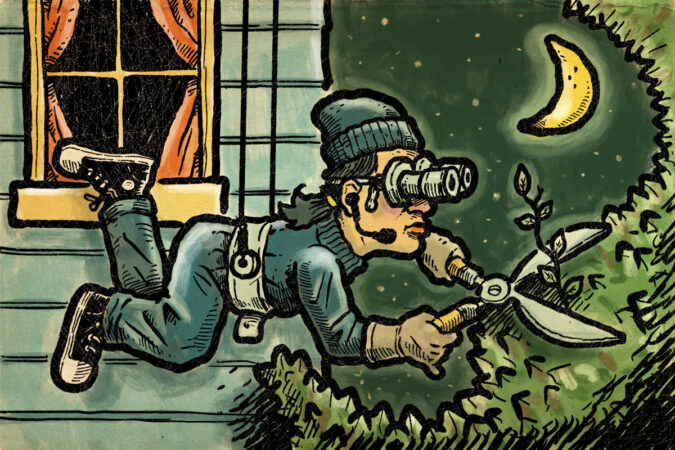
    I would need to weigh these things and then figure or not whether it’s worth raising heck. Having an angry neighbor can ruin a homeowning experience. But if Pennsylvania law is on my side and this is really working my nerves, I’ll just have to snip, snip, snip.

    Abigail Covington

    I’m with you. Having an actively angry neighbor is more unpleasant than a tree branch dangling in your yard. At some point, the city will step in if it gets to be too much.

    But if it’s really bothering you, the law is on your side.

    Elizabeth Wellington

    The question is, do we do the hacking in the middle of the night? Or boldly in broad open daylight?

    Abigail Covington

    Dressed in all black. Middle of the night. Like it never happened. Repeat after me: You were never there.

    Elizabeth Wellington

    Hahaha. You mean like, “Oops… How did this ever happen?”

    Evan Weiss

    “Wow, I can’t believe someone did that! I loved that tree!”

    Elizabeth Wellington

    Hahaha. Right.

    That’s kind of taking a punk’s way out. We should say it with our chest. (Sheepishly…)

    Abigail Covington

    100%. “Must’ve been that darn barn owl I’ve seen flying around here!”

    Elizabeth Wellington

    An owl, Abigail? Really.

    Go with a raccoon. Blame everything on raccoons.

    Evan Weiss

    Start by being straightforward.

    “This tree is hitting my house and I don’t like it because of XYZ, so I’m going to trim it. Thank you for understanding.”

    Abigail Covington

    “Thank you for understanding” is what you say when you know someone is mad, but you don’t want them to be mad. I get it.

    Elizabeth Wellington

    Would bringing a tiny gift make things better? Like a bottle of wine, a gift card to Starbucks? Sweeten the deal. Let them know it’s not personal?

    Abigail Covington

    Tiny little treats make everything better. Something for their garden? A small plant?

    Evan Weiss

    A bouquet of freshly-cut branches.

    Abigail Covington

    Hahahaha.

    “Thank you for understanding.”

    Elizabeth Wellington

    Now, Evan. You are cruising for a bruising.

    Evan Weiss

    I kid, I kid.

    I don’t think a gift is necessary, but it wouldn’t hurt if that eases the asker’s anxiety.

    Elizabeth Wellington

    It’s kind of like you have to ask them, and already know what you plan to do anyway.

    Evan Weiss

    Any last words of advice for the asker?

    Elizabeth Wellington

    Be sheepish on the outside. But know what you are going to do on the inside. It’s easy to be swayed in these situations. Stand your ground. With a gift.

    Abigail Covington

    Be polite but bold. You got this.


    Have a question of your own about a relationship? Philly life? Annoying neighbors? Or an opinion? Email me.

  • The Penn vs. Penn State mix-up, cheesesteak diplomacy, and a very good boy | Weekly Report Card

    The Penn vs. Penn State mix-up, cheesesteak diplomacy, and a very good boy | Weekly Report Card

    The cheesesteak diplomacy phase of the DNC bid: B+

    Philadelphia is once again trying to convince a room full of national political operatives that we are the perfect place to host their giant televised event.

    The pitch is familiar: plenty of hotel rooms, an arena in South Philly, SEPTA ready to move thousands of delegates around, and a city that knows how to handle the logistical chaos of a major convention. We did it in 2016, after all. And these days, we’re basically hosting everything. World Cup matches. The MLB All-Star Game. The country’s 250th birthday.

    But the real strategy is the soft sell. When the selection committee visits, they’ll get the full Philly treatment: Reading Terminal, skyline views, maybe a rooftop party, definitely a cheesesteak.

    And that’s not a guess. That was pretty much the marketing strategy when DNC officials toured Philly ahead of the 2016 convention.

    Because every big event bid in this city eventually comes down to the same argument: Look how fun we are.

    And clearly, it’s been working.

    Philadelphia Phillies center fielder Johan Rojas takes the field before the game against the Washington Nationals at BayCare Ballpark on Thursday, Feb. 26, 2026 in Clearwater, Fla. The Philadelphia Phillies defeated the Washington Nationals 7 to 3.

    Losing Johan Rojas (and his walk-up song): C

    Johan Rojas potentially missing 80 games for a failed PED test is frustrating for the Phillies in a specific way: They don’t really have another center fielder.

    Rojas isn’t exactly an offensive powerhouse, but he plays defense in a spot where the roster is otherwise thin. Take him out of the mix and the Phillies are left juggling a few spring-training options and hoping someone looks like a center fielder by opening day.

    That’s the baseball problem.

    The smaller but still tragic loss is the walk-up song. Every time Rojas stepped to the plate, Citizens Bank Park got “Oh Oh Oh (Veo Veo),” which was extremely fun and made you want to shimmy on a random Tuesday night.

    The Phillies will figure out center field eventually, but the stadium is at risk of losing one of its best vibes.

    Jeffrey Epstein vs. the Penn vs. Penn State mix-up: A

    Newly released emails show the disgraced financier repeatedly claimed he funded a “Quantum Gravity Program” at Penn. The problem: The research program he actually helped fund was at Penn State.

    To outsiders, that might sound like a harmless mix-up. Technically both are universities, sure. But socially it lands closer to mixing up Wawa and Sheetz. People will notice.

    Few things irritate University of Pennsylvania alumni more than being mistaken for Penn State. The Ivy League school has spent decades correcting people on this, to the point that alumni sell novelty shirts that read, “Not Penn State.

    Apparently, Epstein missed the memo.

    Reddit planning a Philly itinerary for a Midwesterner: B+

    A visitor from Columbus popped into Reddit after a first trip to Philadelphia to rave about the walkability, Chinatown food, and an Angelo’s cheesesteak — and ask locals what to do next time.

    Naturally, the internet responded by assembling a pretty respectable itinerary.

    One commenter suggested the Barnes: Another recommended the Schuylkill River Trail and neighborhood hopping through Fishtown, Manayunk, and the Italian Market. A third pushed the visitor farther west for food: “Some great Ethiopian and other African restaurants.”

    There was also the very Philly observation that the tourist somehow skipped the city’s most predictable cheesesteak stop. “It is so rare when a tourist does not stop at a Pats or Genos. They can’t help themselves.”

    The thread is mostly right. But if you want the full Philly experience, we’d add a few more essentials: a Phillies game at Citizens Bank Park, a wander down the Italian Market, and a long, aimless walk through one of the city’s rowhouse neighborhoods where every block looks a little different.

    Also, credit where it’s due. The guy went to Angelo’s on his first trip. Some visitors take years to figure that one out.

    Johnny Garbarino hitting his opponent Apostle Spencer with an overhand right at the Wells Fargo Center during BKFC’s KnuckleMania V event.

    A Flyers fight coach starting a fight outside Barstool: F

    The Flyers once brought Johnny “Cannoli” Garbarino, an undefeated bare-knuckle boxer, in to teach players how to handle themselves in hockey fights.

    So it’s not ideal that he’s now at the center of a late-night brawl outside Barstool Sansom Street.

    Video shows Garbarino punching the bar’s plexiglass vestibule, threatening onlookers, and setting off a multiperson street fight after destroying someone’s phone. Police are investigating an assault complaint.

    Hiring a professional fighter to teach hockey players how to fight makes a certain kind of sense. Being surprised when that same fighter gets into a fight outside a bar at 2 a.m. makes a little less.

    Not exactly the kind of player development the Flyers had in mind.

    One of the newly-installed signs for the recent old/new name change at the Philadelphia Museum of Art, on Thursday, Feb. 26, 2026.

    Pay-what-you-wish Fridays at the PMA: A

    The Philadelphia Museum of Art is bringing back something locals have loved for years: pay-what-you-wish admission on Friday nights.

    Considering a full-price ticket can run up to $30, that’s not a small change. Museums love to talk about accessibility but removing the price barrier is one of the few ways to actually make that happen.

    The timing is also convenient. After months of headlines about leadership drama, rebrands, and legal disputes, the museum seems eager to remind people that the actual point of the place is, you know, art.

    And if letting people decide what to pay gets more Philadelphians wandering the galleries on a Friday night, that’s probably a pretty good reset.

    Ivan, a drug-sniffing K-9 dog working for the Pennsylvania State Police, made a 40-pound drug bust in Delaware County last month.

    K-9 Ivan doing police work: A

    A Pennsylvania State Police K-9 named Ivan helped troopers uncover 40 pounds of marijuana and $6,000 in cash during a traffic stop on I-95 in Ridley Township last month.

    From a law enforcement perspective, that’s a pretty significant drug bust.

    From a public relations perspective, it’s also a reminder that every police department should have at least one extremely good dog on staff.

    Ivan alerted troopers to the scent of narcotics in the vehicle, leading to a search warrant and the eventual discovery of boxes and buckets full of marijuana.

    Which means somewhere in Delaware County, a very good boy probably got a treat and a lot of praise — as he should.

  • Big pizza, skyline views, and waterfront strolls in Jersey City, N.J. | Field Trip

    Big pizza, skyline views, and waterfront strolls in Jersey City, N.J. | Field Trip

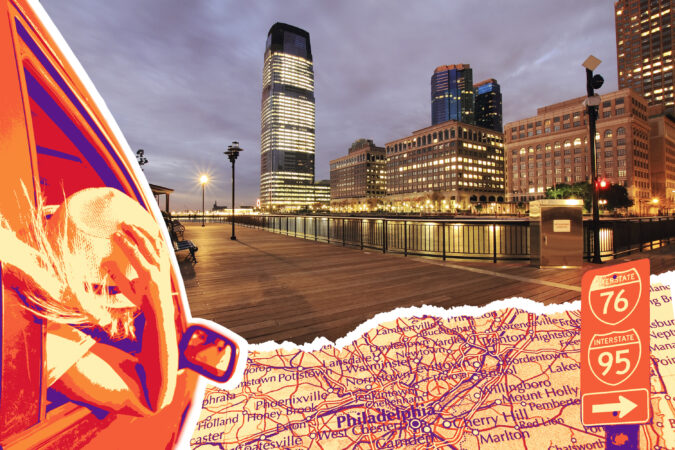
    Most Philadelphians’ experience with Jersey City begins and ends at the mouth of the Holland Tunnel on the way into Lower Manhattan. Except for those who know food.

    Jersey City is one of the state’s best towns for eating and drinking, supported by long-standing immigration and cross-river relocation from New York. Between meals, you’ll find a city that’s at turns gritty and lovely, neighborly and human-scale in a way that makes it feel, to Philadelphians, as warm and familiar as a Champion sweatsuit. (It also has a really nice waterfront from which we could learn a thing or two.)

    It’s only 90 miles and about 90 minutes away, depending on traffic. And if you must, you can easily pair it with a visit to New York.

    Start the car.

    Stay: Hyatt House Jersey City

    A hotel with a story to tell — whether it’s luxurious or eccentric or charming — is always ideal for a weekend getaway. But when corporate keys are what’s available, you can do much worse than Hyatt’s Hyatt House sub-brand. Jersey City’s Hyatt House is relatively new and reliably clean, with great beds, a rooftop deck, and a modicum of style. What more could you ask for? How about a skyline view? Upgraded rooms facing Manhattan are bookable in April for under $300.

    📍 1 Exchange Pl., Jersey City, N.J. 07302

    Snack: Bread and Salt

    “Bakery” is a limiting descriptor for what Rick Easton does at Bread and Salt on Palisade Avenue, opposite the Hoboken border. Sugared bomboloni, esoteric Italian cookies and crostadas, suppli, thin-crusted pizzas, cups of stewy beans begging for a heel of crusty bread, curly punatarelle salad, Lent-friendly fish specials on Fridays. It’s an inspiring operation. Get more than you think you need. Then get more to bring home.

    📍 435 Palisade Ave., Jersey City, N.J. 07307

    Stroll: Liberty State Park

    Hemmed in by the NJ Turnpike extension and the Hudson River, Liberty State Park encompasses 1,200 acres of greenspace (about half under ongoing revitalization) and miles of scenic waterfront trails perfect for spring strolling. Pause at the 9/11 Empty Sky Memorial. If you’re traveling with kids (or adult dinosaur fans), check out the immersive T. Rex Experience at Liberty Science Center, whose planetarium dome you’ve probably seen from the Turnpike driving home from New York.

    📍 1 Audrey Zapp Dr., Jersey City, N.J. 07305

    Visit: Statue of Liberty & Ellis Island

    Ellis Island and the Statue of Liberty are typically associated with New York, not New Jersey, but the sites actually fall under an unusual joint-custody arrangement. It’s also much less of a headache to visit from Jersey City; no downtown traffic to get through, way thinner crowds. The ferry departs right from the Liberty State Park and visits both islands in a single ticketed experience.

    📍 1 Audrey Zapp Dr., Jersey City, N.J. 07305

    Drink: San Patricios

    No one: You know what we really need in Jersey City? An Irish-Mexican cocktail bar. The acclaimed Dead Rabbit crew: Bienvenidos a San Patricios. Open last year, the cantina/pub celebrates the little-known 19th-century brotherhood between Ireland and Mexico. Stop in before dinner for something thematic: a palmona spiked with Irish moonshine, frozen horchata café con leche with Lost Irish Whiskey, or the Countess, a rum-and-Guinness hibiscus mule.

    📍 8 Erie St. A, Jersey City, N.J. 07302

    Dine: Razza

    At Razza, Dan Richer makes some of the best pizzas in the county, a mix of reliables (the fermented chile-flamed Calabrese; the yellow-and-red tomato pie dusted in 36-month-old Parm-Reg) and hyperseasonal creations like last spring’s mosaic of mozzarella, asparagus, nettles, spinach, and ramp pesto. Bread and butter might seem redundant when you’re having pizza for dinner, but you cannot miss the tawny, crusty sourdough, served with tangy house-cultured butter made from grass-fed Pennsylvania cows.

    📍 275 Grove St., Jersey City, N.J. 07302

    Indulge: Torico Ice Cream

    Family-owned and spanning three generations, Torico Ice Cream is the charming scoop shop every neighborhood wishes it had. Towering atop house-made waffle cones, you’ll find classics like chocolate-marshmallow, mint-chip, and a notably excellent strawberry, but Torico’s secret sauce is the tropical ice creams and sorbet like passionfruit, guava, and soursop that nod to the Berrios clan’s native Puerto Rico.

    📍 20 Erie St., Jersey City, N.J. 07302

  • Dear Abby | Co-workers putting out quite the vibe in the office

    DEAR ABBY: I work in an office with a man who has expressed an interest in me in various subtle (and not-so-subtle) ways, including winks. I have also caught him staring at me with intense longing. We communicate well, and he has told me I have influenced him. We are both disciplined, determined and accomplished men. I envy him for his easy smile, his self-confidence and his effortless, universal appeal.

    This man is married with grown children. I am a widower, 21 years his senior. I am prepared to say to him, “You are spoken for, and I’m not a homewrecker. If you are ever single again, you and I should have a serious conversation. But unless that day comes, much will remain unsaid.” I suspect the two of us would have a good life together. I do not believe I am misreading his intent. Have you any advice for me?

    — INTERESTED IN WASHINGTON

    DEAR INTERESTED: This younger colleague may be as attracted to you as you are to him. However, he could also consider you nothing more than a valued mentor. Because he is married, I’m concerned that if you say what you are thinking to him, it could disrupt your working relationship or even be considered harassment. Do not jeopardize your job by doing it.

    ** ** **

    DEAR ABBY: My husband vapes in our home, and I have run out of ways to get it through his thick skull that this is unhealthy, not only for his health, but for mine. Even more upsetting is that he vapes when our grandchildren are here and when he drives them in his truck.

    I have printed reliable scientific information for him, yet his response is always, “I know, I’m sorry, I need to stop.” It’s been seven years, so that’s how sincere his response is. He just continues trying to hide what he’s doing.

    I’m not wealthy enough to pack his bags and change the locks. But maybe someone will read this and smarten up before they damage their loved ones’ health. Do you have any advice?

    — THINKING ABOUT MY GRANDS

    DEAR THINKING: I do, actually. You imply that your husband is addicted to nicotine, which is why he is vaping. Tell him that you will quit nagging him about it on one condition: that when he vapes, he must step outside to do it, which will ensure that you are not affected by it. As to his vaping with the grands in the vehicle, how do their parents feel about it? Do they realize what Gramps is doing? Your next step should be to make sure they know exactly what is going on so they can put a stop to it.

    ** ** **

    DEAR READERS: This is my timely reminder for all of you who live where daylight saving time is observed: Don’t forget to turn your clocks forward one hour tonight at bedtime. Daylight saving time begins at 2 a.m. Sunday. I look forward to it each year because it signals longer, brighter days and warmer weather. I find the extra light to be a mood elevator and an energizer. Spring has almost sprung!

    — LOVE, ABBY

  • An Upper Darby restaurant is reportedly closing a year after appearing on Gordon Ramsay’s show

    An Upper Darby restaurant is reportedly closing a year after appearing on Gordon Ramsay’s show

    When Steve and Kelly Wilson appeared last year in an episode of Gordon Ramsay’s Secret Service — a FOX reality show in which the celebrity chef lends a hand to struggling restaurants — it appeared to be a victory for their Upper Darby barbecue establishment, Wilson’s Secret Sauce.

    In the episode’s final moments, after executing a significant makeover, Ramsay stands with the Wilsons in the restaurant’s dining room, which is brimming with patrons.

    “A full house,” Ramsay tells the couple. “Get used to it.”

    The reality, though, has apparently been different.

    Just a year after Ramsay’s reality-TV glow-up, the Wilsons told Philadelphia magazine this week that they’d elected to close the restaurant and sell the building after a year of declining business.

    From the start, the couple’s restaurant was an unlikely endeavor. Their foray into the local food scene came around 2010, when Steve — a former mechanic — began a barbecue catering service from their home. But when demand jumped in the ensuing years, they eventually decided to open a brick-and-mortar restaurant.

    Kelly, at least, was not exactly thrilled with the idea.

    “[Steve] came home from bowling and asked me if I wanted to open up a restaurant — I literally said, ‘[Expletive] no,’” she said on the episode of Secret Service. “‘I’ve never worked in one, you’ve never worked in one, and I don’t think we could work together all day long.’”

    Nevertheless, Wilson’s Secret Sauce debuted in 2018 in Upper Darby, specializing in barbecue dishes while also serving everything from pizza and lobster to egg rolls.

    But stress quickly ensued, and when Ramsay came to town last March, he set about transforming the restaurant.

    Over the course of the 43-minute episode, Ramsay chastised the couple for everything from food hygiene to kitchen inefficiencies before helping implement a variety of changes aimed at ensuring the restaurant’s survival.

    Among the various changes pushed by Ramsay was significantly shrinking the restaurant’s expansive menu, which the couple did, whittling their dozens of menu items down to just 13.

    But the Wilsons later told Philadelphia magazine that business slowed after Ramsay’s suggested change, at least in part because customers missed the items that had been cut from the menu.

    “We had a lot of customers coming in from day one of the new menu begging us to bring the old menu back,” Kelly Wilson told the magazine. “We were getting lost with his menu, and our menu really worked a lot better.”

    While the Wilsons’ sit-down restaurant is set to close, they said they’ll continue the catering service that was once their bread-and-butter, operating out of a shared “ghost kitchen.”

  • Girl Scouts of America isn’t happy with cookie sales at a South Jersey weed dispensary

    Girl Scouts of America isn’t happy with cookie sales at a South Jersey weed dispensary

    Girl Scouts of America is not a fan of a popular weed strain using the name of their iconic cookies, nor are they comfortable with Girl Scouts selling cookies outside of weed dispensaries, which has been an unsanctioned practice among some Scouts for at least a decade.

    The conversation reared its head again this week after a New Jersey Girl Scout troop set up shop outside of a Mount Laurel recreational marijuana dispensary to sell Thin Mints and Caramel deLites. Owners of Daylite Cannabis dispensary had been trying for years to make this possible, and were excited to share the news of a “pilot program” at their store, owner Steve Cassidy said in an article for NJ.com.

    “Being community-minded is a core part of our mission at Daylite. We’re a locally and family-owned business, so supporting local organizations and helping them raise funds in the community is very important to us,” Cassidy said, who runs the dispensary alongside his wife and parents.

    What they didn’t expect was for it to become a national and global headline, upsetting higher-ups at the Girl Scouts of America. A representative for the Girl Scouts of Central and South Jersey said that there was no formal agreement to allow Girl Scouts to sell cookies in front of a dispensary and don’t approve of the practice.

    “Our guidance for Girl Scout cookie booths is that girls should not set up booths in front of any businesses that they themselves could not legally patronize,” the representative said. “It’s just unfortunate that [the owner] was quoted as saying this is a ‘trial’ because that is factually incorrect.”

    The Girl Scout troop, which Cassidy did not identify, sold cookies outside the dispensary on NJ Route 73 in February to much enthusiasm from customers, Cassidy said. Some customers even bypassed the marijuana to go to the cookies first, he told NJ.com.

    Girl Scouts of Central and South Jersey said they do not know how the miscommunication occurred. Cassidy said he was told by a member of a local Girl Scout organization that a “small pilot program” had been approved.

    “Our intention was simply to support a local troop and be part of our community. We’ve seen an overwhelmingly positive response from people who enjoyed supporting the girls, and we hope that enthusiasm helps encourage similar community partnerships in the future.”

    Girl Scout cookie season runs from January to April, providing young girls the chance to exercise the entrepreneurial spirit and engage with their community. Girl Scouts started selling cookies in 1917, but Girl Scouts selling cookies in front of weed dispensaries has been making headlines for more than a decade.

    In 2014, Girl Scout Danielle Lei garnered national media attention for selling out of cookies in 45 minutes when she opened up shop in front of San Francisco’s Green Cross medical marijuana dispensary.

    At the time, Lei’s mom told press that she encourages her daughters to “set up shop at various points around San Francisco so they can learn about different environments while earning some cash” and to use it as an opportunity, “to start a conversation about drugs and how some people use marijuana as medicine while others just get high.”

    A 9-year-old San Diegoan sold 300 boxes in less than six hours outside of a weed shop in 2018. Right before the pandemic, a Chicago dispensary went viral for hosting a rotation of Girl Scout troops selling cookies out front. Girl Scouts did the same at a Portland dispensary in 2016, a Michigan dispensary in 2021, and in Arizona in 2022.

    In each case, the respective regional Girl Scouts organization disavowed the practice.

    The Girl Scout troop that sold cookies at Daylite in February was scheduled to return Friday, but that has now been canceled.