DEAR ABBY: I was always the wild child and did pretty much what I wanted. My four siblings stuck to the straight and narrow. We stayed close and loving, though. We are old now, and they all lead very comfortable lives. I, however, became injured and gravely ill. I could no longer work and now live on supplemental security income and food stamps.
My siblings all give generously to food banks and homeless charities, even putting some homeless people up in hotels, which is great. But not one of them thinks to ask me if I have enough food or anything. I’m really hurt. Luckily, my affordable housing will offer some food for the residents, so I’m OK.
Should I say anything to my siblings? Occasionally, in the past, they have helped me, like buying me a chest of drawers or some other minor thing. They could easily support me if they wanted to. Should I just be grateful for that?
— UNDERPERFORMING IN CALIFORNIA
DEAR UNDERPERFORMING: Your relatives are not mind readers. If you need help, speak up, explain the problem and ask for help in plain English. The worst they can do is refuse, and you will be no worse off than you are.
** ** **
DEAR ABBY: I’m worried about my husband’s grief response. His mom collapsed and died in our driveway. At the time, I responded quickly. I made sure everyone was fed and paid for the funeral service. That was all fine. But now, I don’t understand why he’s not grieving. I love my husband very much, but this has me confused. Please advise.
— LETTING IT OUT IN OREGON
DEAR LETTING IT OUT: Please accept my sympathy for the shocking loss of your mother-in-law. We are not clones in the way we respond to death. Everyone does it differently, including your husband. If his mother was a strong influence in his life, he will feel her absence. If he’s still eating and sleeping well and is able to concentrate, do not let this absence of emotion worry you. This is his journey, and if anything changes, your doctor can refer him to a grief support group.
** ** **
DEAR ABBY: I am a disabled person. When I go to doctors’ offices or restaurants, there are usually two doors to get in. Sometimes, if someone is coming in or out, they will hold the door open for me. However, when they do, almost every time, another person will push past me, almost knocking me down.
What can I say to them about their rudeness? One of these days they might be in my position and need someone to hold the door for them. The next time it happens, I’m going to tell them “The door was held open for the disabled person, not for you. Be glad you can walk well!” What would you say, Abby? I can’t believe how rude the country is getting.
— TRYING TO GET THROUGH IN VIRGINIA
DEAR TRYING: A better word than “rude” to use would be “entitled.” If it happened to me, I would say loudly that the door was held for me because of my disability. Then I would add how fortunate I felt not to have been injured again this time.
She didn’t even like diamonds. That was the funny thing. Costume jewelry, yes. A pair of handmade earrings, certainly. Diamonds, well, she’d always found them a bit showy.
She liked this one, though, because it had been Jim’s.
It was a man’s ring, a 1.3-carat diamond, round cut, set on a simple gold band, and when her husband, Jim, passed away a few years ago, Cindy Ware made it hers.
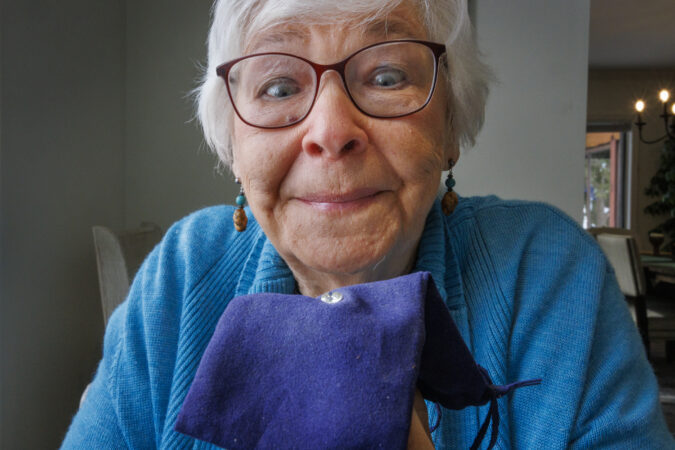
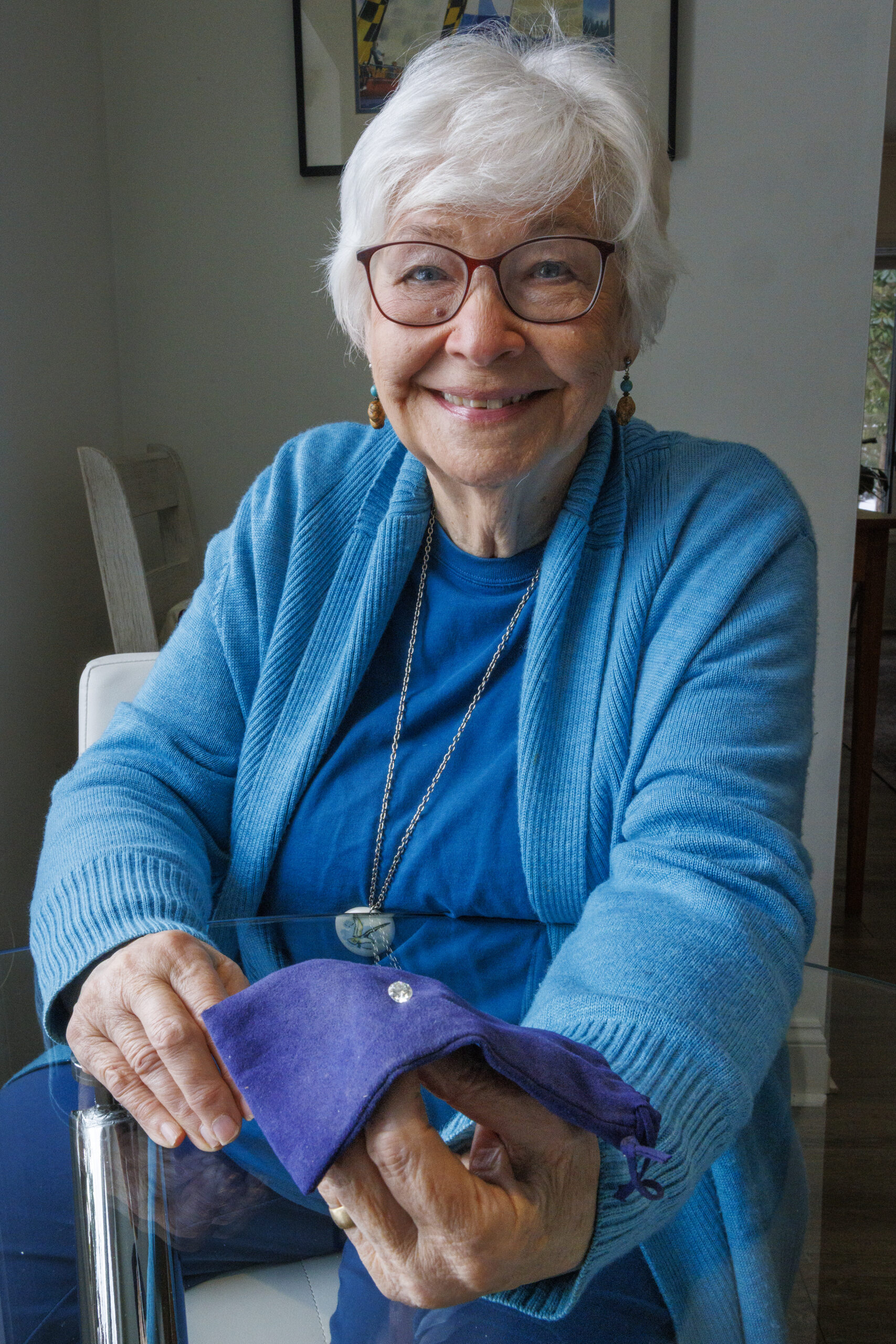
Cindy Ware of Kennett Square with diamond inherited by her late husband, Jim. She lost it but it was discovered embedded in a neighbors shoe in Florida. Photograph taken at her home on Wednesday, Feb. 25, 2026.
She wore it everywhere — to the grocery store, to lunch with friends, to her morning water aerobics class. It brought her comfort. A few times a day, she would look down at it, think of Jim, and smile.
“I never took it off,” says Cindy, who is 82 and impossibly sweet and sometimes wears a sweatshirt that says I’m often mistaken for an adult because of my age.
So when the diamond went missing last December, shortly before Christmas, Cindy was devastated. She felt sick, like she’d let Jim down.
She thought to herself: “Cindy, you just lose everything that’s important.”
A 60-year love story
Cindy Ware met the man she would marry in Pinkie Patterson’s second-grade class. This was in Mount Holly, N.C., in 1951. On Valentine’s Day of that year, while out sick with the mumps, Cindy had been allowed to come to the school parking lot to collect her Valentines.
The teacher sent a little boy out to deliver a box of treats.
He had a buzzcut and a little cowlick and his name was Jim.
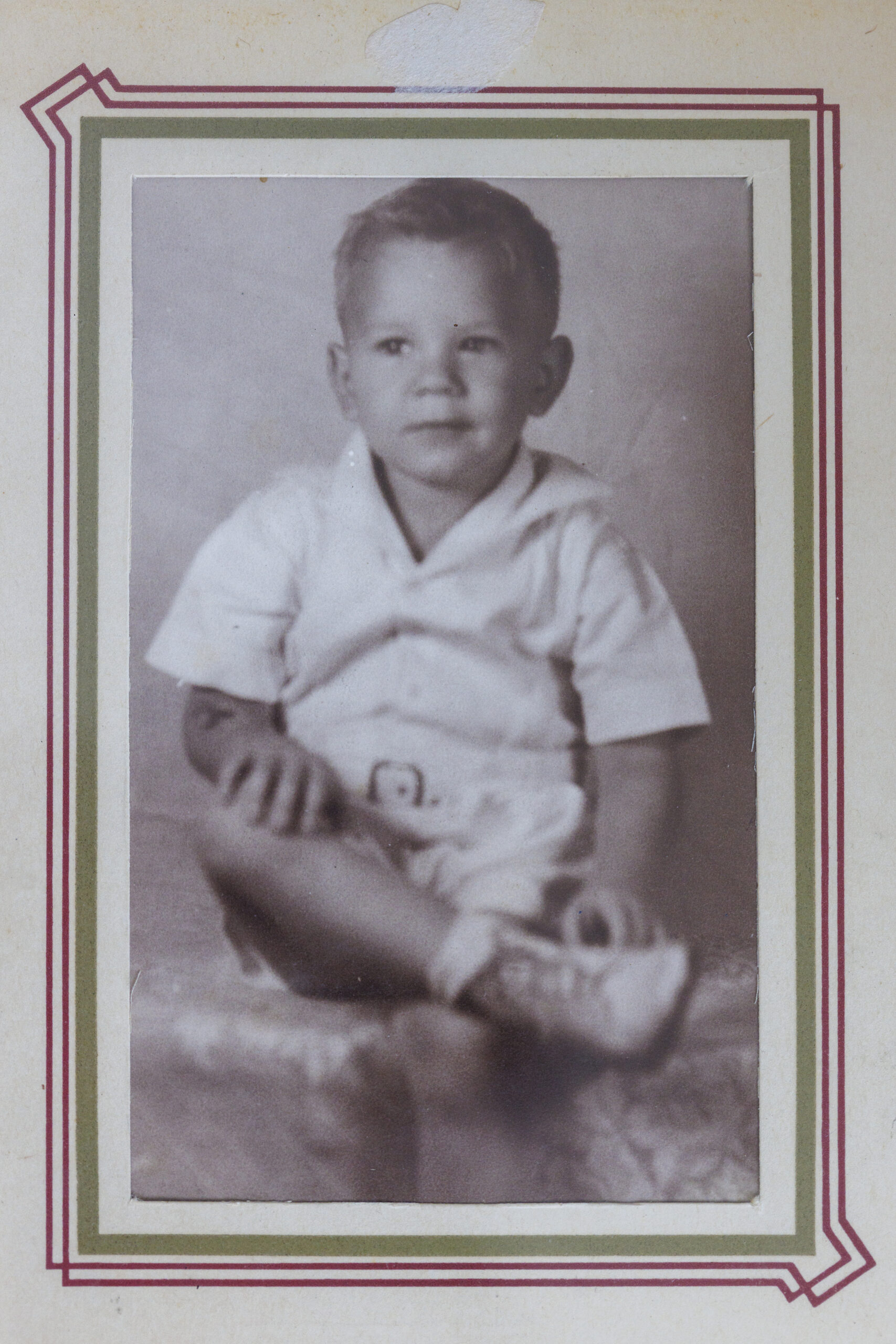
Childhood photograph of Jim Ware the late husband, Cindy Ware of Kennett Square. She lost the diamond he inherited but it was discovered embedded in a neighbors shoe in Florida. Photograph taken at her home on Wednesday, Feb. 25, 2026.
Well, Cindy’s mother thought Jim was about the most precious little boy she had ever seen. And Cindy — who until that point hadn’t given it much thought — soon decided that maybe she agreed.
By high school, they were an item — inseparable, Cindy explains, “except when we were mad at each other and dated other people.”
They got together for good during college, and theirs was a 60-year love story.
They married in 1965. They moved to New Jersey, then to Pennsylvania. They raised three boys. Their boys grew up and had children of their own. A few years ago, they settled into a retirement community in Kennett Square, where they liked to take morning walks and eat pizza with mushrooms and pepperoni.
“We never needed a lot of anything else,” Cindy says. “Just the two of us.”
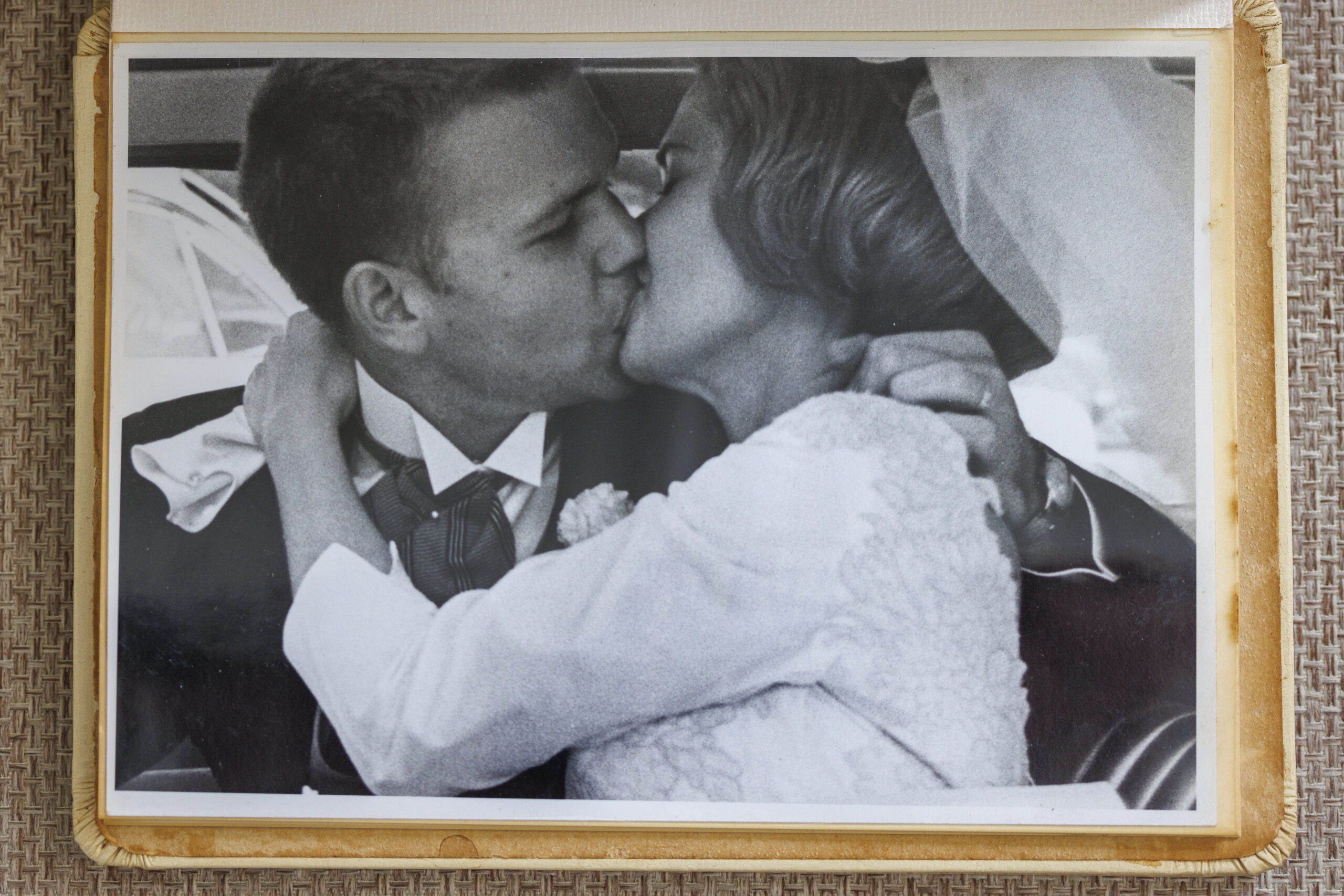
Wedding photograph of Jim (late) and Cindy Ware of Kennett Square. She lost a diamond he inherited but it was discovered embedded in a neighbors shoe in Florida. Photograph taken at her home on Wednesday, Feb. 25, 2026.
When Jim got sick, in 2020, it was horrible.Months of doctor’s visits, then specialist visits. Then, finally, hospice.
“The worst year of my life,” Cindy says.
Not long after Jim passed, in 2023, Cindy was getting the family’s affairs in order. One day, at a local bank, she opened an old lockbox and discovered a diamond ring — an heirloom that had been passed down through generations of Jim’s family.
Back when she and Jim married, and they didn’t have much money, he had told her she could have her pick: a ring or a car. “That’s a no-brainer,” she had replied. “I want a car.”
Still, something about the diamond spoke to her.
She plucked it from the lockbox and slid it onto her middle finger, and that’s where it remained for the next three years.
The missing diamond
She was having lunch with a friend last December when she glanced down and realized it was gone.
The diamond had dislodged from the setting, and it was nowhere to be found.
“I was just bereft,” Cindy says.
It could have been anywhere. In her car. In the grass outside her home.
At one point, she wondered whether she had lost it during her water aerobics class at the retirement community’s swimming pool. Things could get a little intense with the arm exercises. Maybe it had jostled loose and sunk to the bottom.
But what could be done? Even if they drained the pool, the likelihood of them ever finding the diamond was minuscule.
Her sons urged her not to worry, assured her that it was OK. There was always the chance that it might still turn up.
But weeks passed, then months.
Eventually, she resigned herself to the fact that the diamond was never coming back.
‘That might be a diamond’
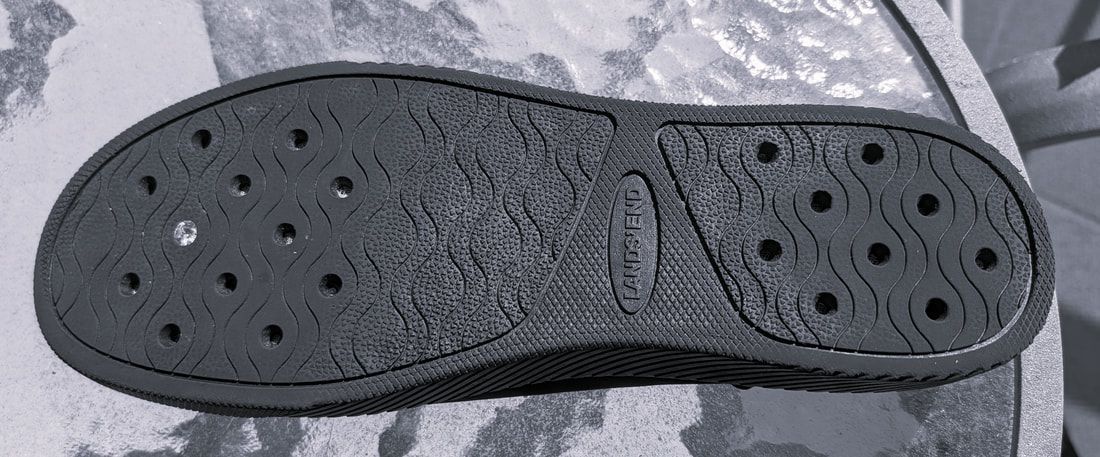
One afternoon a couple weeks ago — on a pool deck 1,100 miles from Kennett Square — a man named Coleman looked down and noticed, lodged in the tread of his Lands End pool shoe, what appeared to be a small piece of glass.
Or wait. Maybe it was some kind of gem.
At a pool in South Florida earlier this month, a Pennsylvania man looked down at his pool shoe and discovered what at first appeared to be a gem or piece of glass stuck in the tread.
For days he had been wearing the pool shoes — to the pool, through locker rooms. He had stuffed them into his gym bag, into a suitcase. Earlier that day, he had worn them on a walk in the gritty sand of a South Florida beach.
He also wore them back home in Kennett Square, where he lived in a retirement community. In the afternoons — after the ladies finished their morning water aerobics — Coleman’s group played pool volleyball. He always wore his pool shoes during games.
Now, sitting poolside in Florida, Coleman’s husband, John, examined the stone and said, “Uh, that might be a diamond.”
Intrigued, but not yet convinced, the couple went the following day to a Pompano Beach jeweler.
Nine times out of 10, the jeweler told them, when people think they’ve found a diamond, it turns out to be nothing.
This was not one of those times.
Yes, the jeweler said, it was a diamond, all right — 1.3 carats, nicely colored, likely from the 1950s or ’60s. Probably worth a bit of money.
Tickled, Coleman posted a photo of the diamond to Facebook.
A diamond in the sole of his shoe
Back in Pennsylvania, Cindy was on the phone with her good friend.
It was Valentine’s Day, and the two were chatting about this and that, and at the end of their conversation, in passing, her friend mentioned a man from their neighborhood, Coleman, who had just posted a photo from Florida.
Apparently, he had found a diamond lodged in his shoe.
As it happened, Cindy and Coleman knew each other well. They lived just a couple streets apart, worked out in the same pool. Once, when Jim was in hospice, Coleman and his husband had brought her flowers.
Cindy tracked down the photo. Saw the small gem lodged in her neighbor’s pool shoe.
Impossible, she thought.
She dialed Coleman’s number.
“Hello,” she said, “I think you have my diamond.”
The return
It was confirmed a day later.
Back from Florida, Coleman delivered the diamond to Cindy’s house, along with a collection of yellow roses. Neither of them could stop smiling.
Best they can tell, the diamond fell to the bottom of the community pool, where Coleman — while playing pool volleyball — happened to step on it, just right. How it had remained lodged in his shoe’s tread for days or weeks or months — across multiple states — was anyone’s guess.
“It could never happen in a million thousand years,” Cindy says.
Says Coleman, “It does make you sit back and think for a minute about what is going on here.”
As you might imagine, their story has been the talk of their retirement community. Everyone, it seems, wants to talk about the little diamond that traveled halfway across the country in a shoe.
As for the diamond itself, Cindy has decided that it‘s time to pass it on, to her oldest son.
“I can no longer be trusted,” she jokes.
In the meantime, she has stopped wearing it to water aerobics.
Hair stylist Artur Kirsh, who has long served clients out of his Saks Fifth Avenue salon in Bala Cynwyd, will be relocating to Narberth in April as Saks prepares to close. Kirsh will open a second salon at Boyds in Center City this fall.
Kirsh’s relocation comes after Saks Global, the owner of Saks Fifth Avenue and Neiman Marcus, announced the closure of numerous department stores, including the Bala Cynwyd Saks, in February. Saks Global filed for bankruptcy in January.
Kirsh said he was surprised to hear about the closure, but decided to take the opportunity to “do something huge” and open two new studios, expanding his presence in the region.
Kirsh will open Artur Kirsh Hair Studio, his new Narberth location, in April at 948 Montgomery Ave. He described the studio as “very artsy” and “very hip.” The Narberth outpost will have ample parking, a “fun and intimate” vibe, and will allow clients to move beyond traditional salon hours and schedule based on their availability, according to a news release. Kirsh called the Narberth studio a “boutique concierge salon concept.”
The hair stylist will continue to see clients at Saks through March to ensure a “seamless transition” ahead of the department store’s closure in April.
Kirsh said he chose Narberth because it’s minutes from his old Saks studio and would allow him to maintain some continuity for Main Line clients.
Kirsh will also expand his footprint in Center City in September, where he plans to open Artur Kirsh Salon on the fourth floor of Boyds department store at 1818 Chestnut St.
“I’ll have best of both worlds,” he said. “I’ll have the suburbs and the city.”
Though the changes happened quickly, Kirsh said he’s ultimately looking forward to the next chapter.
“When you’re in an old place, you kind of get stale,” he said. “Things happen for a reason.”
Kirsh was born and raised in Russia and moved to New York in the mid-1990s. After training at a Manhattan salon, Kirsh relocated to the Philadelphia area. He has worked out of the Bala Cynwyd Saks for six years. Kirsh specializes in coloring and “dry cutting” and describes himself as the ”go-to stylist for models and local celebrities.”
In addition to his Bala Cynwyd salon, Kirsh sees clients at the Rittenhouse Spa & Club in Center City, John Barrett Salon in New York City, and Oasis Salon & Med Spa in Boca Raton, Fla. Over the years, Kirsh has styled a number of celebrity clients, including Dorinda Medley, Betsey Johnson, Carolina Herrera, Celine Dion, Kathy Griffin, and Ken Downing.
This suburban content is produced with support from the Leslie Miller and Richard Worley Foundation and The Lenfest Institute for Journalism. Editorial content is created independently of the project donors. Gifts to support The Inquirer’s high-impact journalism can be made at inquirer.com/donate. A list of Lenfest Institute donors can be found at lenfestinstitute.org/supporters.
DEAR ABBY: I’ve been with my boyfriend for 17 years. He has a friend, “Byron,” whom he hangs out with multiple times a week, sometimes up to six days. Byron’s wife, “Crystal,” (married 22 years) is always attached to Byron’s hip. They do everything together.
Crystal needs to be the center of attention. She constantly brags about herself and speaks louder so she gets all the attention. She’s always texting my boyfriend, even sending him pictures of herself. My boyfriend says it’s harmless and that there’s nothing to be worried about because “she’s his friend’s wife.” To me, that means nothing. Crystal is very competitive, and I feel like she’s trying to win him over. I’m about ready to let her win because I’m not a confrontational person.
I hang out with them often, so I can distract her and let my boyfriend talk to Byron without her. But I get so exhausted. It’s nonstop. She’s definitely going out of bounds, treating my boyfriend like her man.
I’ve mentioned my dislike of the situation but have been told it’s my problem (I’m jealous), not his. My boyfriend says I’m acting too clingy now because I always want to be there to keep them separated, but it’s wearing on me. Am I reading too much into this?
— ENCROACHED ON IN VERMONT
DEAR ENCROACHED: No, I think you have probably read Crystal, and her insatiable need for attention, right. Because trying to shield your boyfriend from her attempts to monopolize him hasn’t worked, it may be time for a change in tactics. By that, I mean stop tagging along so often. Give him space, while you use the time to get together with friends, family or some other activity you enjoy. If you do, you and your boyfriend will have more to talk about when he returns from these marathons. As I see it, you have nothing to lose and possibly something to gain by trying it.
** ** **
DEAR ABBY: I am in the process of leaving my husband of 15 years. He has admitted that he used to have sex with me while I was sleeping and when I was passed out drunk back when I had a drinking problem. He’s aware that I was molested when I was younger and that most of it took place when I was sleeping and I would wake up to it happening. He doesn’t see anything wrong with it. He says he was gentle and it was OK because I’m his wife and it’s better than cheating on me. This has permanently scarred me. I don’t know how to handle it. Please help.
— TRAUMATIZED IN NEW YORK
DEAR TRAUMATIZED: You have my sympathy. If you haven’t sought counseling, I hope you will do it to help you process the fact that the assaults you have described were spousal rape. Sex with a person who is unable to give consent is illegal in all 50 states. For the sake of your mental health, please talk with a psychotherapist, who can help you to heal as well as report this to the police. A helpful resource that has been mentioned in my column many times is RAINN, the Rape, Abuse, Incest National Network. You will find it at rainn.org.
Why did the little seal pup leave the ocean, wander up the beach path, go one block up Middlesex Avenue, then cross three lanes of Long Beach Boulevard in Harvey Cedars?
Who knows?
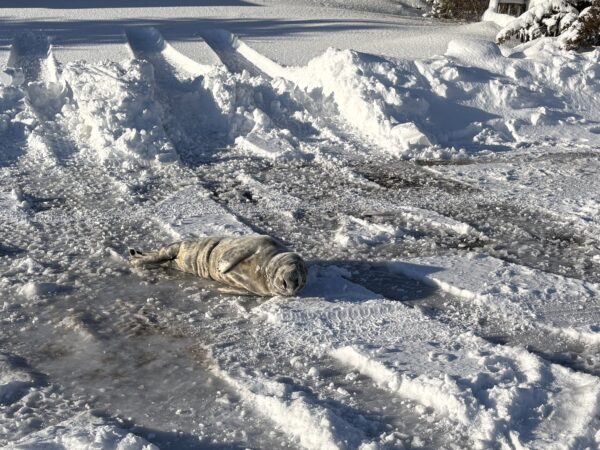
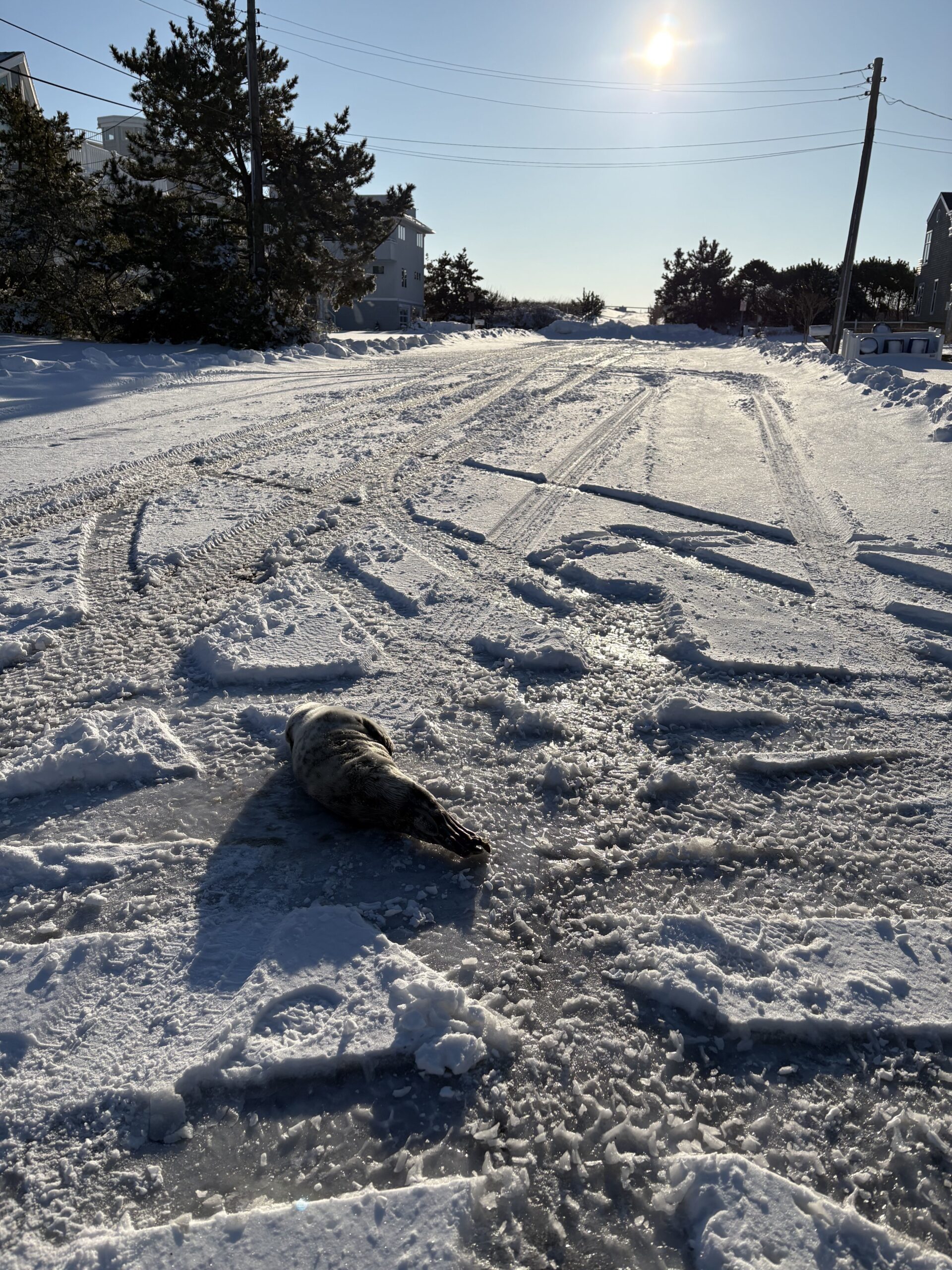
Maybe it was just the long slick surface of post-storm snow and ice that urged the seal to keep going until a sunny spot in this beach town’s southbound slow lane invited her to stretch out.
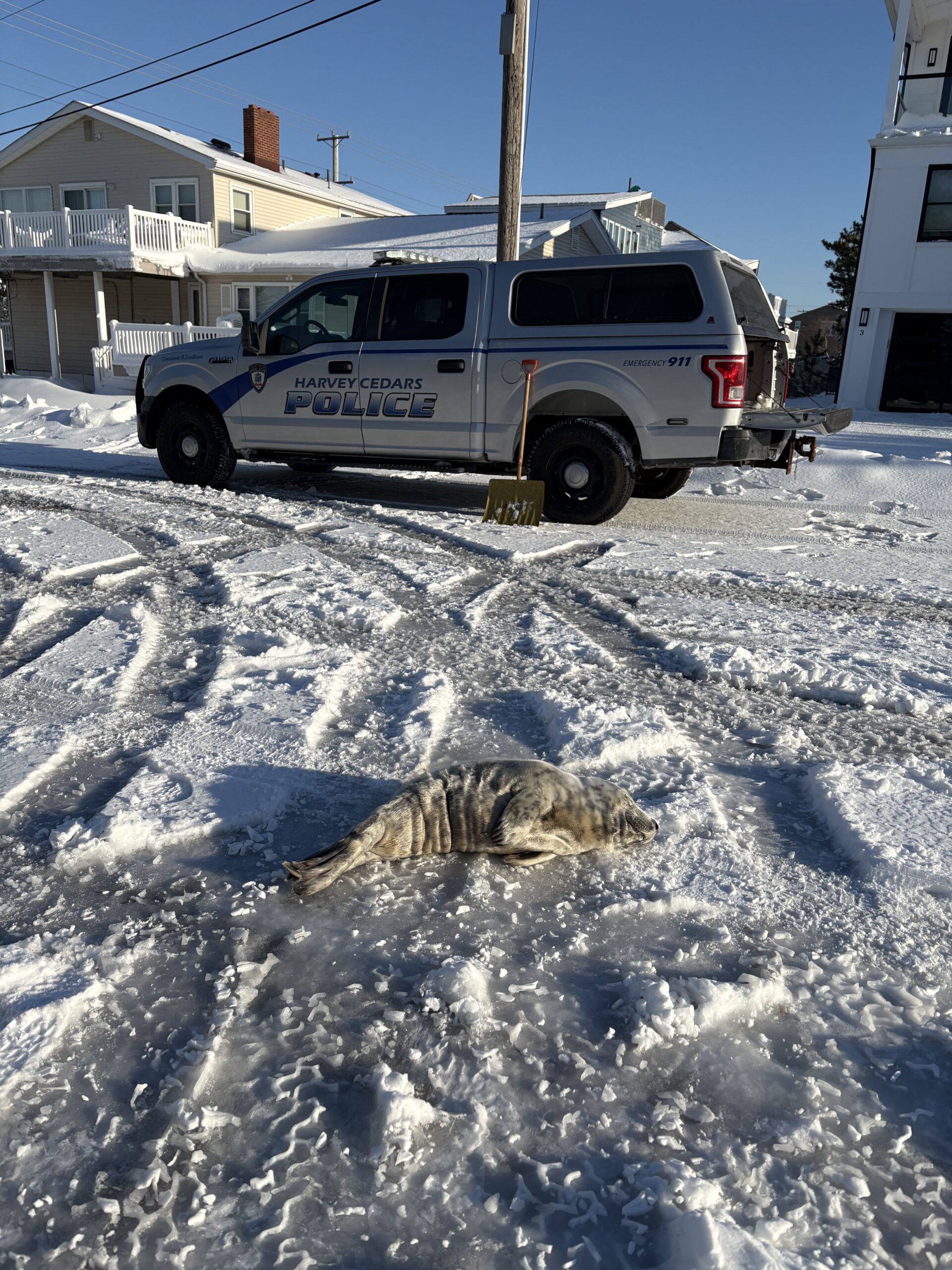
Luckily for the gray seal pup, a landscaper on his way to plowing snow did not mistake her for a chunk of snow, and pulled over to block the roadway and help, Harvey Cedars Police Chief Robert Burnaford said Tuesday.
“At approximately 7 o’clock, an innocent bystander was driving by and saw the seal laying in the Boulevard,” Burnaford said by telephone.
“They called us, and the officers confirmed the seal was kind of just relaxing in the slow lane of Long Beach Boulevard,” the chief said. “Literally it crossed over three lanes of traffic to where it was finally hanging out.”
A member of Public Works wrapped the seal in his jacket and moved her to Middlesex Avenue, out of traffic, Burnaford said. The Marine Mammal Stranding Center responded and carried her to their truck, and then to their hospital in Brigantine.
A gray seal pup wandered off the beach in Harvey Cedars and ended up in the middle of Long Beach Boulevard on Tuesday, Feb. 24, 2026, a day after a snowstorm dropped a foot and a half of snow on the island.
The Stranding Center put it this way on Instagram: “POV: When your nap shuts down a whole street.”
The center said in social media statements that the pup had no injuries but was in “thin overall body condition.”
“She is currently resting comfortably in Pen 2 of the Pool House,” the center wrote.
Seal beachings are not uncommon at the Jersey Shore, but the animals rarely end up off the beach. Burnaford said that a seal once ended up in the driveway of an oceanfront home.
“They beach themselves to sun themselves,“ Burnaford said. ”Maybe she was sick and tired of the weather, trying to find another place.”
A gray seal pup wandered off the beach in Harvey Cedars and ended up in the middle of Long Beach Boulevard on Tuesday, a day after a snowstorm dropped a foot and a half of snow on the island.
Official totals put towns on Long Beach Island at around 18 inches of snow.
“It was icy and maybe [the seal] was able to slip and slide easier,” the chief said.
When my neighbor told me during last month’s snowstorm that I had to shovel the sidewalk around my house, I thought she was joking. It’s my first winter in the city. It didn’t snow much where I grew up, so the whole idea of shoveling snow was foreign to me. Call me naive, but I assumed the city would do it. Or my landlord. But no. Evidently, it was my responsibility. I guess that’s why there was a shovel in the shed. I remember seeing it when I moved in and wondering when, if ever, I had shoveled before.
Well, I was about to make up for lost time. My house sits on a corner lot, which means I pay for the great light it got with extra sidewalk that now had to be shoveled. I tried to convince myself and my partner, whom I forced to help me, that it would be a fun family adventure. A little bit of exercise in the fresh air. Honestly, how long could it take? 15 minutes, max, I thought to myself as I strapped my 4-month-old baby, who is basically an 18-pound kettlebell, to my chest and got to work.
Within minutes, my baby was asleep, the steady digging and chucking motion of shoveling lulling him even as it shredded back muscles I never knew I had. At least one of us was at peace. An hour into the job, with the end still nowhere in sight, my 11-year-old neighbor waddled over and asked if she could do my stairs for me. Was she acting out of goodwill, or had she heard me hacking up a lung through her double-pane bedroom window? I wasn’t sure. I didn’t care. “You sure can,” I said.
She knocked on my door to let me know she was done. She didn’t ask for any money, but I gave her $10 anyway. I probably would’ve given her $100 if she’d asked. That’s how desperate I was not to have to shovel anymore. This is what economists call demand.
And it was clear this past Monday, when it snowed again, that word had gotten out about me, because not one, not two, but three kids offered to shovel for me. Except this time, they wanted to be paid. And they already had a price in mind: $30 to do the remainder of my sidewalk.
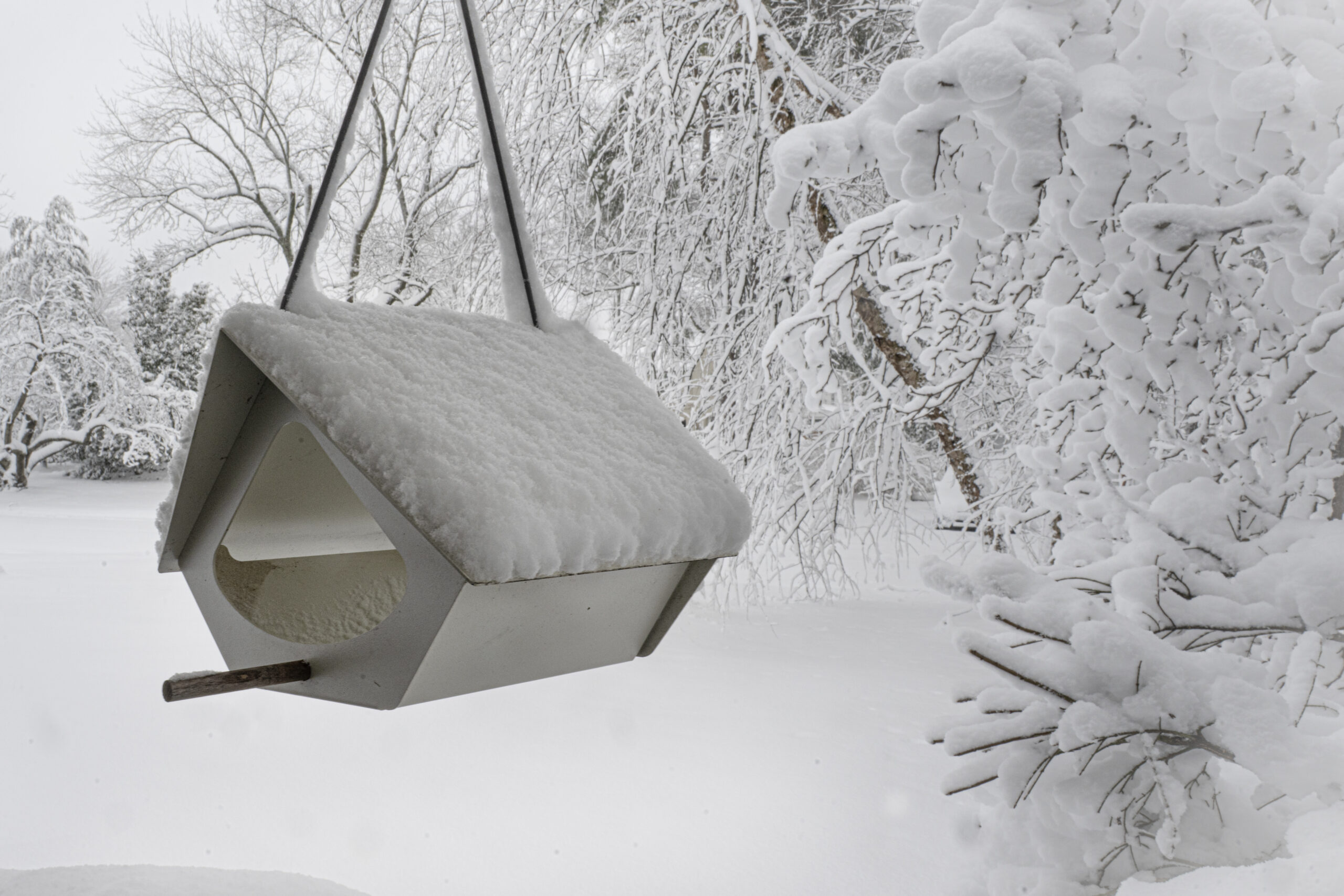
Snow caps the roof of a birdhouse outside a home in Wallingford, Monday, Feb. 23, 2026, a day after a blizzard swept through the Philadelphia region.
But I had already spent two hours doing the majority of it. Between the three of them, it would probably take about six minutes to do the rest. That’s an hourly rate of $300. Were they shoveling my sidewalk or representing my company in court?
Obviously, that was an absurd amount of money for a small amount of work. I should’ve refused to pay, if only to teach these kids a lesson about hard work and economic fairness. On the other hand, I was sleepy. I’m a new parent. I didn’t want to shovel anymore.
So, yes, I paid them $30, and I would do it again. Was it highway robbery? Definitely. But the richest I ever felt in my life was the moment I tossed that stupid shovel back into the shed and locked the door.
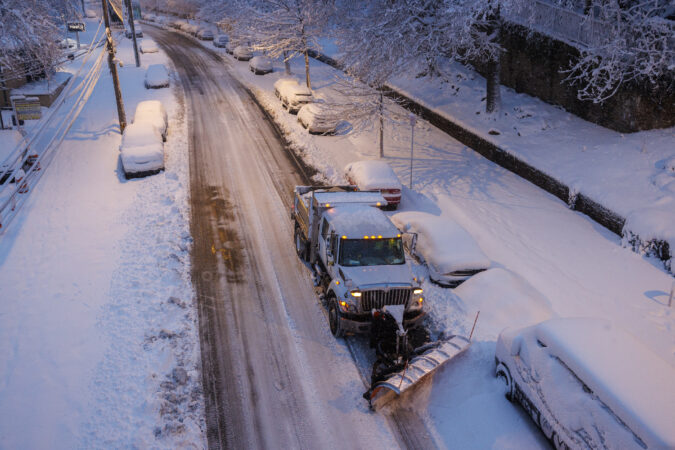
As sanitation crews finish clearing the 14 inches of snow that blanketed Philadelphia during this week’s near-blizzard, more workers can now be diverted back to trash pickup.
Trash and recycling collections will resume Wednesday on a two-day delayed schedule, meaning households with Monday pickups will get their trash collected Wednesday. Tuesday trash pickups will be on Thursday, Wednesday pickups on Friday, Thursday pickups on Saturday, and households with Friday pickups will have trash collected on Sunday.
Due to the modified schedule, there will be no second trash collection for neighborhoods that regularly receive it, and no collections in rear driveways for the rest of the week. With significant snow accumulation, the Streets Department said the measures would help mitigate the risk of sanitation trucks getting stuck in snow.
Expect collection delays as crews navigate through the snow and ice, and inaccessible streets may experience additional delays of trash pick up, according to the Streets Department.
Residents who cannot wait for delayed trash collection or do not receive collections due to unplowed streets can use one of the six sanitation convenience centers. Open Monday through Saturday, from 8 a.m. to 6 p.m., residents can drop off trash and recycling at these locations.
Sanitation convenience centers in Philadelphia
Northeast Philadelphia: 8401 State Rd., zip code 19136
Northwest Philadelphia: 320 Domino Ln., zip code 19128
Port Richmond: 3901 Delaware Ave., zip code 19137
Southwest Philadelphia: 3033 S 63rd St., zip code 19153
Strawberry Mansion: 2601 W Glenwood Ave., zip code 19121
West Philadelphia: 5100 Grays Ave., zip code 19143
Saladine Sherrod was in a jam. The 34-year-old handyman from North Philly needed to get to a job in Roxborough, but he didn’t have a car. He says the PPA had towed it the night before. “I was on top of the snow,” Sherrod said. “There weren’t any lines of demarcation.”
And speaking of the winter storm, it was still wreaking havoc on SEPTA. “It was detour after detour after detour,” Sherrod said about the bus routes that day. It had been two weeks since it snowed, but cold weather had kept the city encased in snow and ice, and a brutal wind chill had plunged temperatures to historic lows. Sherrod said bus operators were unavailable as a result. “Employees were calling off because of the weather or some craziness like that.”
He would have to take three buses to get to his job and three more to get home. That would cost almost $18. He only had $40 to get through the rest of the week, and several more jobs lined up. Plus, “with the way the weather was,” he said, “I’d be sitting outside for hours.”
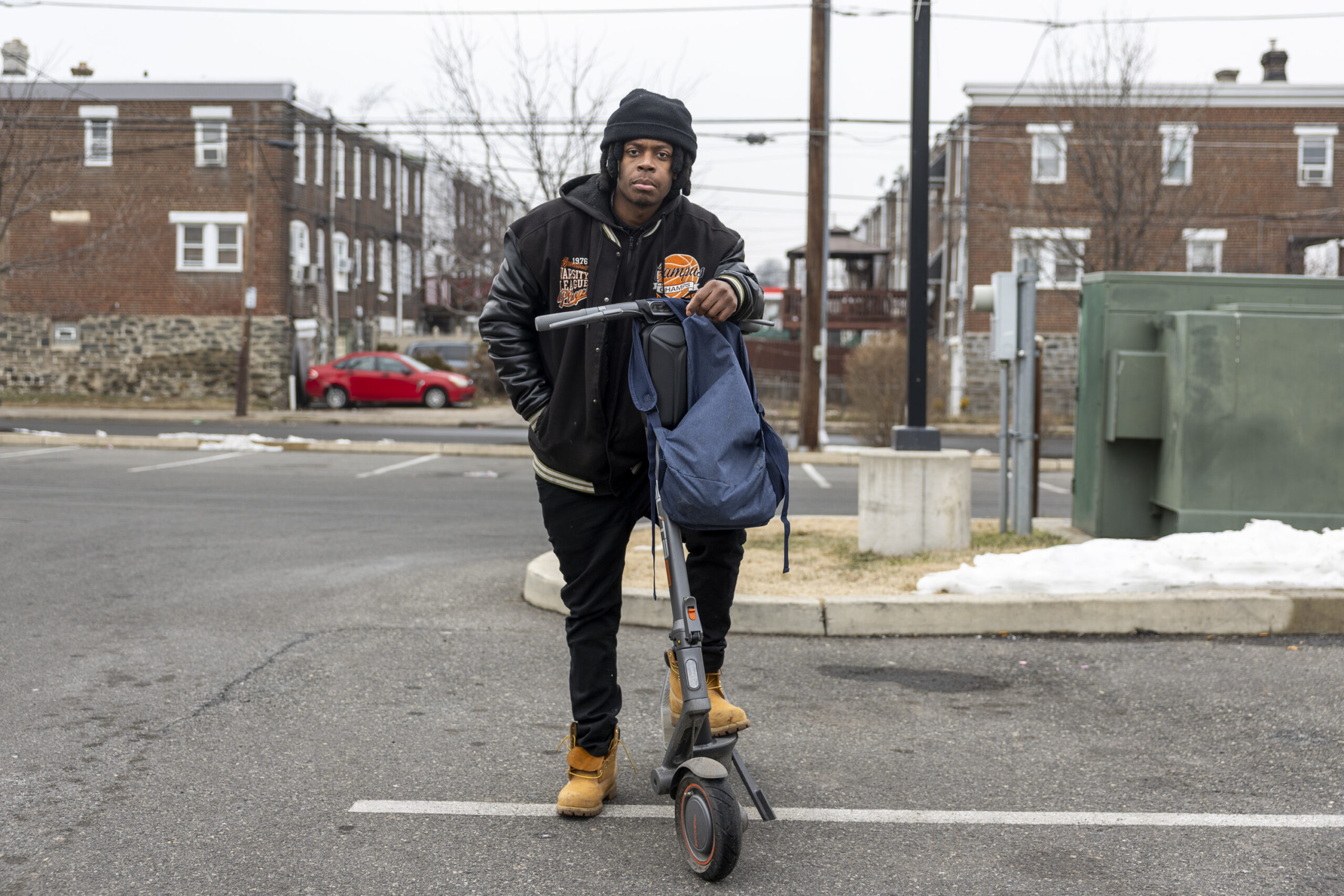
So Sherrod came up with a different plan. He found a shop that would finance an electric scooter for $40 down and set off toward Roxborough, following the “via bike” route on Google Maps. Having moved to Philadelphia from the Bronx in 2022, Sherrod still wasn’t all that familiar with the city. He knew his part of town, near Broad and Logan, but Germantown was a mystery. Still, he zipped along its side streets on his newly purchased Yaddea Elite Prime without much concern for his safety.
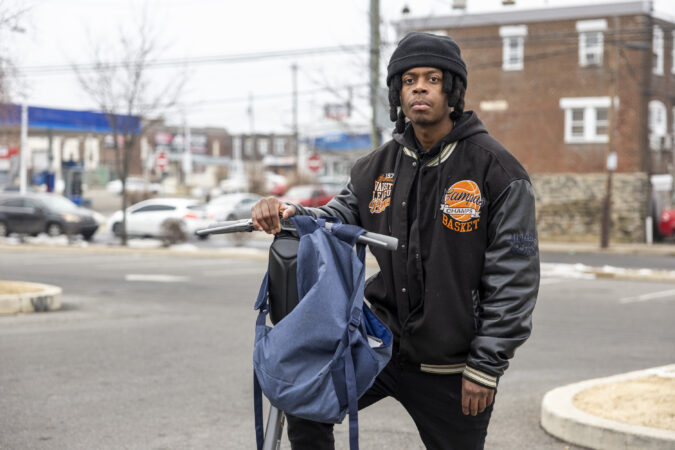
Saladine Sherrod, 34, of North Philadelphia, Pa., poses for a photo with his electric scooter in Philadelphia, Pa., on Wednesday, Feb. 18, 2026.
It wasn’t until Google Maps ushered him out of the neighborhood and pointed him toward a busy intersection in a dense, wooded area that his anxiety spiked. He could see he was meant to reach a bike path dotting the four-lane road he was about to turn onto, but it was closed because of the snow. He had no choice but to take the “via car” route. As he turned, the road narrowed. Vehicles flew past him. Unbeknown to Sherrod, he was now on one of Philadelphia’s most dangerous streets: Lincoln Drive.
Car accidents occur almost every day on Lincoln Drive, a treacherous, shoulderless state road that winds along the perimeter of Wissahickon Valley Park. Drivers regularly take its hairpin curves at nearly twice the posted speed limit of 25 mph. Since 2019, five people have died driving on it. Fed-up residents who live nearby have long pushed for additional safety measures. In September 2023, the city’s Streets Department added speed tables along one of the most dangerous stretches to force drivers to slow down.
But that mid-February afternoon, they still appeared to be speeding to Sherrod. “It looked like a NASCAR rally,” he said. Sherrod had never driven on Lincoln Drive, but he immediately sensed he was in a precarious situation. He maneuvered as far to the right as he could and focused on the snaking road ahead. He tried to ignore how cold he was. “My hands were numb,” he said. “My legs were dead. If I moved them, it felt like a bunch of needles were poking me.”
He wasn’t wearing a helmet. He was scared, he said, but he had a job to get to. “It was one of those scares that, because you have the responsibility, it’s almost OK,” Sherrod said. “Like, ‘I heard that there are alligators in this lake, but I’ve got to get to the other side.’”
What Sherrod saw as commitment, though, others saw as recklessness. He remembers one driver shouting at him “out of concern.” Sherrod let them know he was OK with a nod, and they drove off. But unbeknown to Sherrod, the driver had filmed him and uploaded the video to Instagram. “WHO MANS IS THIS??? Only in Philly electric scooter seen driving on Lincoln Drive,” the caption read.
The clip was already pinballing across local feeds when Sherrod finally escaped Lincoln Drive via Henry Avenue and arrived at work. A few hours later, he finished building furniture for his customer, and they paid for an Uber so he would not have to ride the scooter home in the freezing cold. By then, the video had spread across Philly.
Still, it would take a few days to reach Sherrod. He only saw it when a friend reached out to show it to him, wanting to know what happened to his car. Sherrod was stunned. But the commenters seemed to understand his circumstances. “That’s probably his only transportation to work,” read a typical comment. “He not tryna get fired cuz SEPTA on bulls—,” read another.
Sherrod seized the moment and reposted the clip. In follow-up videos, he criticized the PPA and SEPTA and hawked T-shirts he made to commemorate his ride.
He’s only made $50 so far, but it’s not his only income stream. In addition to his handyman work, he recently picked up a part-time job as a cashier at the Dollar Store. He hopes to be back behind the wheel soon. For now, he is still riding the scooter to work. “It’s all working itself out,” Sherrod said. “Slowly, but surely.”
Snow isn’t a constant in Philadelphia but after two big storms dumped on us just weeks apart this year, it’s clear some things remain predictably consistent during a snowstorm in Philly, no matter the year.
While all hail hasn’t broken loose yet, we have fallen right back into our classic winter storm habits, some of which aren’t snow great. So put on your parka, pull up your boots, and come traipsing through our winter tropes with me, because if there’s one thing that certainly isn’t predictable during a snowstorm it’s SEPTA.
Acting like the Philadelphia Museum of Art is Vail
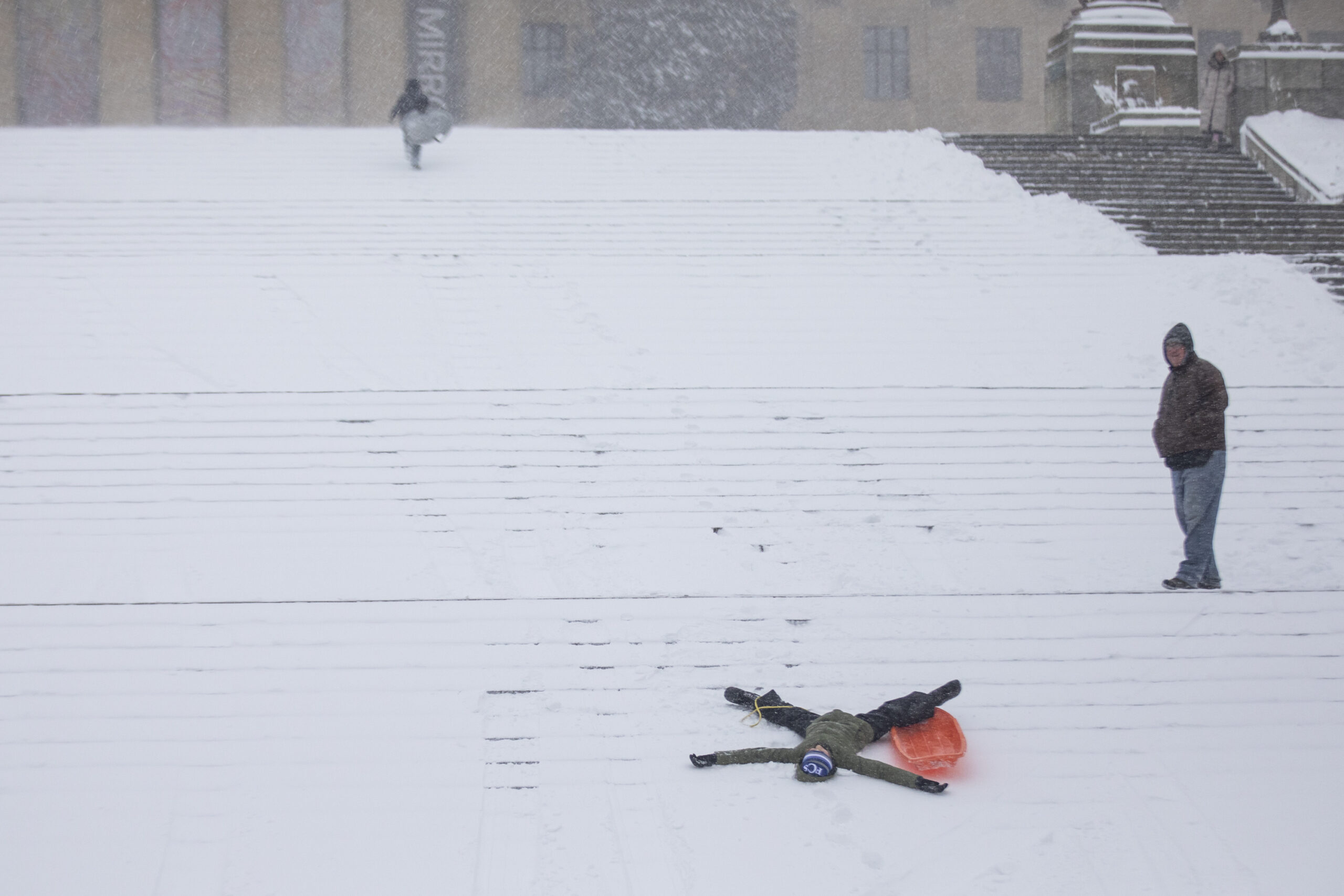
A snow boarder goes down the steps of the Philadelphia Museum of Art.
I love that people sled and snowboard down the steps of the Philadelphia Museum of Art after a snowstorm like it was a ski resort. It’s one of those traditions that gives Philly such a wonderful, joyous sense of place, but, like many of our beloved traditions, it is also a highly dangerous activity.
There is no ground beneath the snow here, just pointy stone steps that could leave your face looking like a Picasso painting if you hit them the wrong way. Even if you manage to stay upright the entire way down, it’s a bumpier ride than Philly’s pothole-plagued streets (which are certainly going to get worse after this storm).
A sledder wipes out while sledding down the Philadelphia Museum of Art steps.
The substance
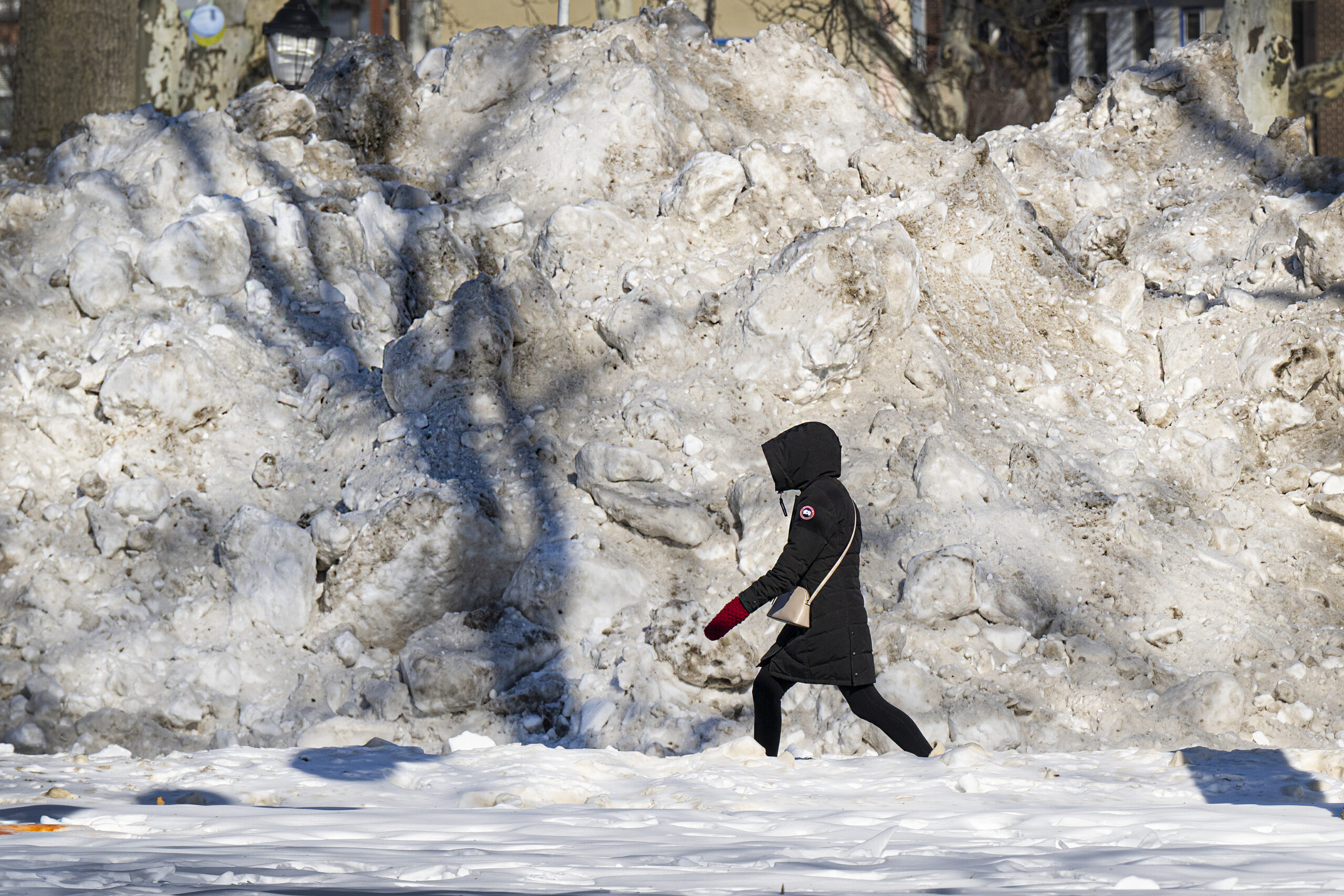
Throughout a snowstorm and for five minutes immediately following one, Philadelphia looks absolutely stunning. But after those five minutes are up, things get real gross, real quick. The snow turns into lakes of slush and large, gray mountains of immovable ice, making the city look like a dumpster site on Hoth for the next five weeks.
It reminds me of that movie The Substance with Demi Moore, except the substance for Philly is snow. It makes the city beautiful for a short time, but in the end, it just turns it into a bigger mess than it was to begin with.
A pedestrian walks past a large pile of snow and ice along the Benjamin Franklin Parkway this year.
Doggone dirty
Among the many reasons the snow gets so gross so quickly here is because some dog owners are under the impression that the laws of polite society freeze when the temperature does. Just because your dog left its pile on a pile of snow does not mean you don’t have to pick it up.
Trash spotted in the snow in Philadelphia. Photographed, but not pictured (as a courtesy to you), was also a pile of dog poo.
Then there are the really terrible, lazy owners who kick snow over their dog’s piles in an attempt to cover it up, thus leaving a nasty surprise for unsuspecting pedestrians. While all dogs may go to heaven, there’s a special circle of hell for those folks.
Snowstalgia
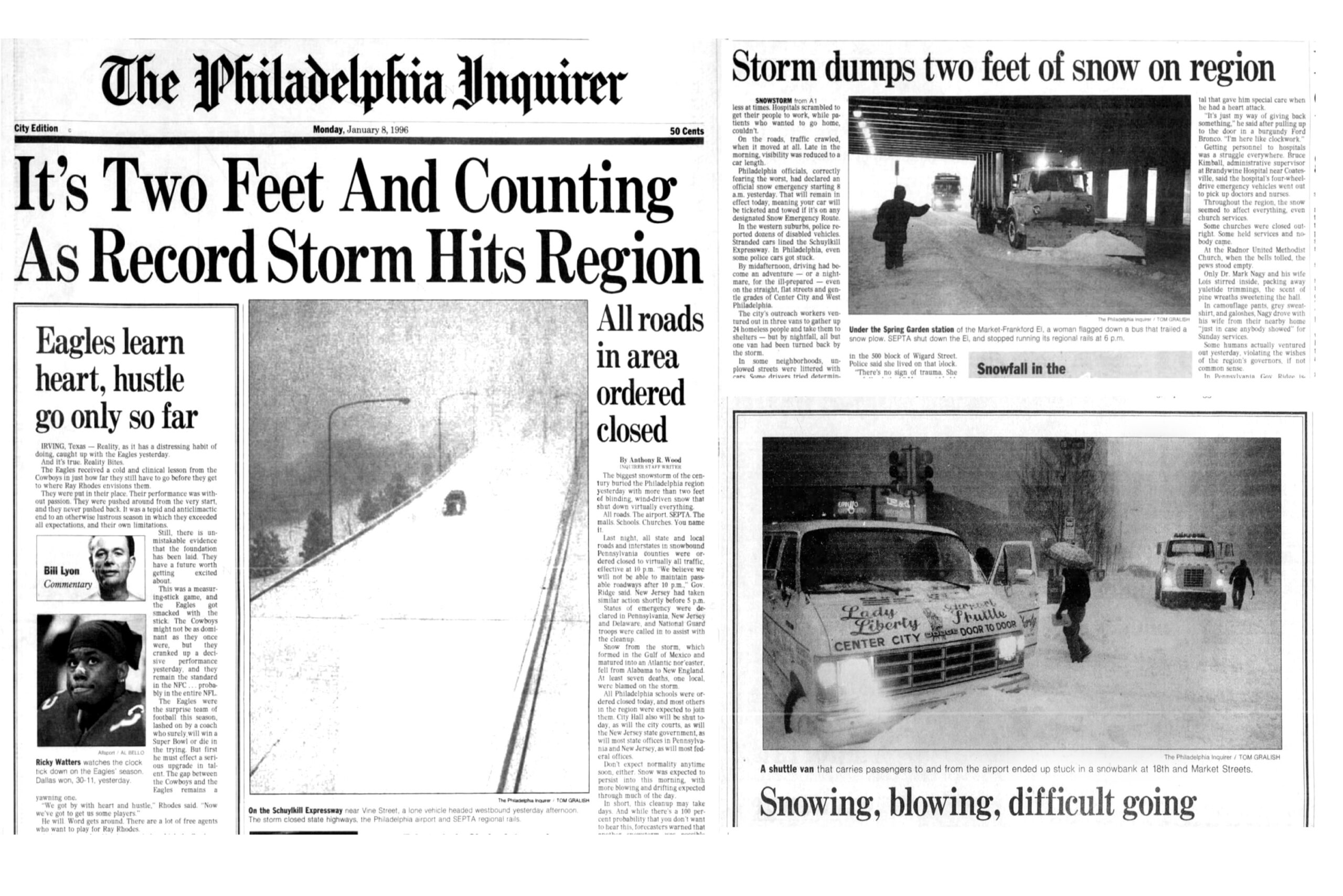
No matter how much snow is predicted or falls during a storm, it will inevitably be compared to the Blizzard of ‘96 by at least three people you speak you to, or three times by at least one person you speak to.
The Blizzard of ‘96 is pretty much our Beetlejuice, you have to say it three times or it doesn’t snow around here.
Front page and inside photos from The Philadelphia Inquirer. January 8, 1996. The Blizzard of 1996, or “Storm of the Century,” a severe nor’easter that was Philadelphia’s largest-ever snowfall of 30.7 inches Jan. 6-8, 1996.
Work or Wawa
There are two types of people who travel out in Philly during a storm: those who are going to work and those who are going to Wawa.
There’s absolutely no rational reason someone has to go on a Wawa run during a snowstorm — especially since everyone waited an hour in line at the Acme for milk and bread two days before it hit — yet there they always are, sometimes in flip-flops, just picking up a cup of coffee like it’s something they can’t get at home.
The flagship Wawa store near Independence Hall.
I’m sure some folks go just in the hopes of being interviewed by the 6ABC reporter who’s doing live shots from the Wawa parking lot, and some do it just to get out of the house while their kids are at home. Whatever the reason, if you’re one of those people, be nice to the Wawa workers who risked their lives to go to work so you had somewhere to go.
Savesies
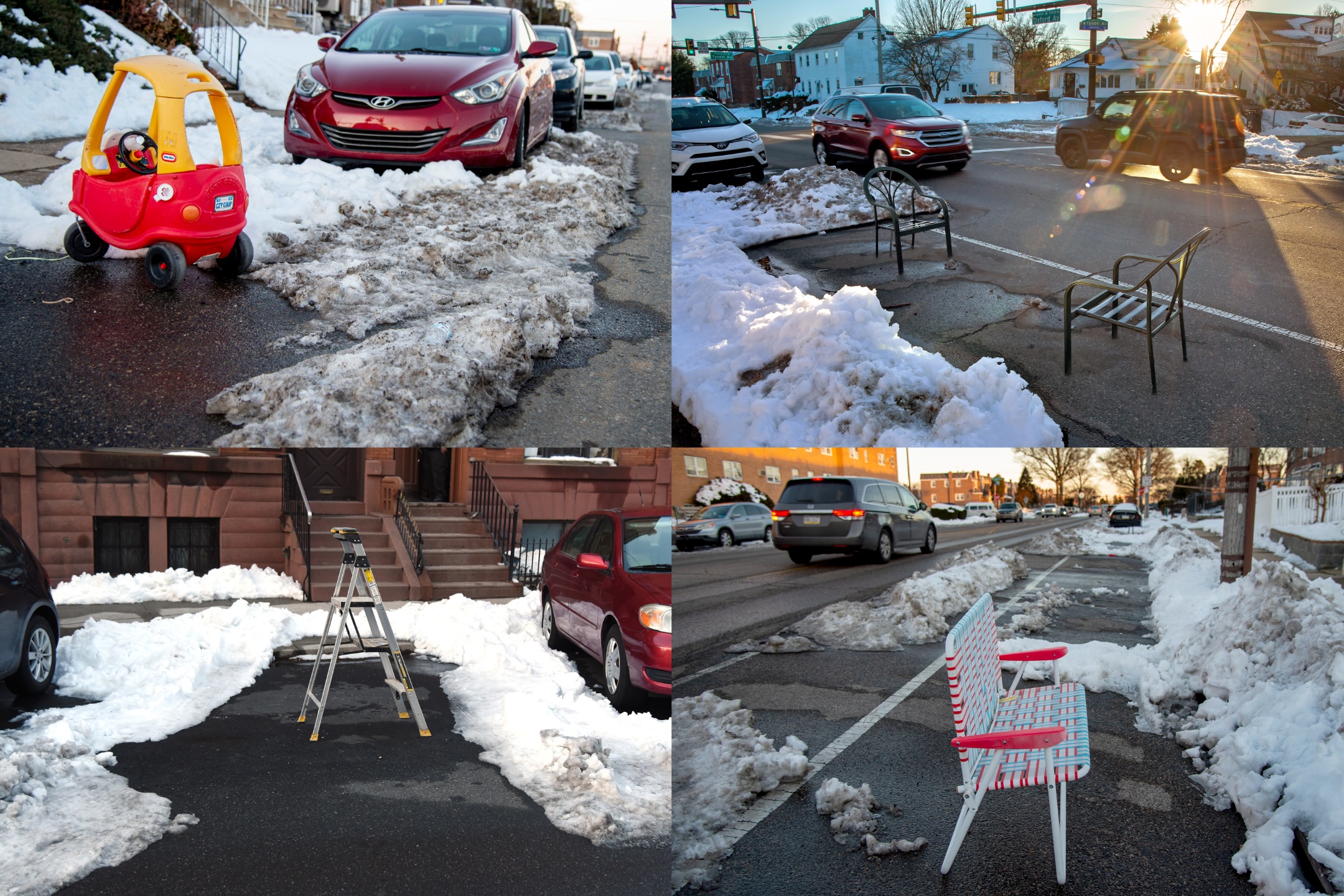
Few things will pit neighbor-against-neighbor in this city quite like savesies, the longstanding Philly practice of using an orange cone, folding chair, or any other inanimate object to save a parking space you’ve shoveled out.
Collage of savesies, a long-held parking tradition across Philadelphia.
Folks are either firmly for or against the tradition, but no matter which camp they land in, few are bold enough to mess around and find out by parking in a saved space, lest they become the recipient of a strongly-worded letter on their windshield, a knock at their door, or whatever curse has plagued the Flyers since 1976.
Shorts shovelers
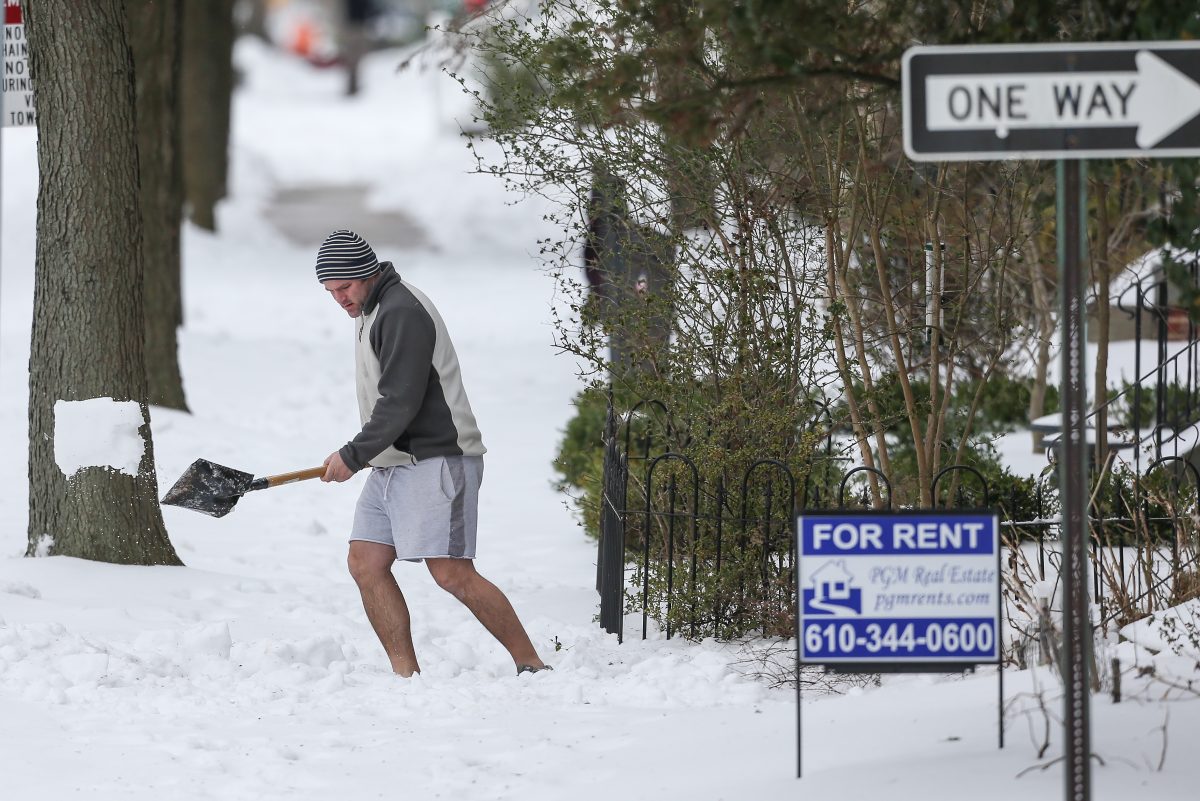
Shoveling in shorts is a long-standing tradition practiced by men in the Philadelphia region.
It could be 3 degrees out with a windshear of negative 10 and eight inches of snow on the ground and you will still see some dude out shoveling in shorts and an Eagles hoodie. In Delco, you will see several.
Do these men get hot flashes in their legs? Is their calf hair luxuriously thick? Did someone cut off the bottom half of all their pants? Inquirer minds (mainly mine) want to know!
Greetings from sunny Florida
During a snowstorm, someone you know will inevitable post a picture of themselves in Florida, where they snowbird in the winter or are visiting for Phillies spring training. The caption will say something like “Sorry to miss out on the storm!” or “Sending my friends in Philly sunny vibes from Florida!”
Philadelphia Phillies Trea Turner and Bryce Harper enter the field during the first full-squad workout of spring training Feb. 16, 2026, at BayCare Ballpark in Clearwater, Fla.
These are bold-faced lies. They are not sorry and they are not sending you anything but a hard time. Just rest assured in the knowledge that no matter what, you are in the greatest city in the world and they are still in Florida.
DEAR ABBY: I supervise a group of six mid-level professionals. Usually, we manage fine, but a current conflict may push me over the edge. “Lauren” lives alone with dogs that seem to be her only family. One of them (age 11) had been sick. She kept asking for sick leave to take him to the vet. I told her she had to use vacation time for that.
Well, the dog died, and now Lauren wants to take bereavement leave. When I refused, she had a fit and started yelling about unequal treatment because another co-worker, “Jenny,” was allowed to take bereavement leave earlier this year.
Jenny’s toddler son died in a drowning accident. It was a horrific tragedy. Jenny was traumatized and incapacitated for weeks. The situations are not comparable. But Jenny heard Lauren yelling and comparing Jenny’s child to her elderly basset hound. This is causing all sorts of interpersonal problems that HR has flatly refused to get involved with.
I understand that Lauren loved her dog, but I also think she needs to get a grip, apologize to Jenny and take a vacation if she needs to. Is it unreasonable to expect an adult to know the difference between a human and a dog and act accordingly?
— STRESSED SUPERVISOR IN CALIFORNIA
DEAR SUPERVISOR: I think you already know the answer to your rather snarky question. HR at your firm may be reluctant to handle this hot potato because they do not have a policy in place that covers pet illness or bereavement for the loss of one. Please suggest it to your employer.
** ** **
DEAR ABBY: My wife and I are seniors and live in a one-floor condominium. I am in good health, but she has several medical issues, including impaired balance and mobility. She refuses the recommended physical therapy and rarely uses the walker I bought for her. She hates cooking now and wants me to drive almost daily for takeout, which is expensive and time-consuming. Now, she’s talking about selling our condominium to move into a seniors’ complex with independent, assisted and continuing care phases. All meals are prepared there.
I do not want this move and have told her so. When I do, she goes silent for days, telling me it’s time for the change. I disagree. We are at an impasse. I am so upset about this I am considering divorce after 55 years. What do you recommend we do?
— STILL YOUNG IN NORTH CAROLINA
DEAR STILL YOUNG: I recommend you discuss this with your CPA and your attorney before making any decisions. If you could afford it, an assisted living facility for her while you remain in the condo might be ideal. However, if that’s not possible, would you be willing to send her to the facility while you rent a one-bedroom apartment for yourself?
One thing I am pretty sure of: Your wife is signaling that she’s shutting down. Her world is now smaller than it was. You haven’t aged at the same rate, and it may be time to do for her what you would like her to do for you if the situation were reversed.