Barry Leonard, 87, formerly of Philadelphia, celebrated crimper, longtime innovative owner of the Barry Leonard Crimper & Spa in Center City, unisex beauty salon groundbreaker, fashion and marketing trendsetter, haircutting mentor, and Army veteran, died Sunday, Oct. 12, at his home in Hallandale Beach, Fla. The cause of his death has not been disclosed.
Born in Philadelphia to a family of hairstylists, Mr. Leonard swept the floor at his father’s beauty salon in West Philadelphia as a boy and, in 1955, became the first male to graduate from the beauty culture curriculum at Murrell Dobbins Career and Technical Education High School. He went on to help rewrite state statutes to allow unisex beauty salons in the 1970s, wow the marketing world with innovative ads that featured Fidel Castro, Albert Einstein, Santa Claus, and the Wolfman, and own high-end shops in the old Marriott Hotel on City Avenue and then on Chestnut Street for 43 years.
A proponent of what he called “natural haircutting,” Barry Leonard, Crimper, counted politicians, musicians, actors, and other celebrities as well as local residents as his regulars, and most of them were fine with waiting months for an appointment. He moved his bustling salon from the Marriott to 1527 Chestnut St. in 1972, relocated to 1822 Chestnut in 1995, and retired to Florida in 2005.
In the early 1970s, he saw that men appreciated hair care, too, and he successfully challenged an old state law that required separate locations for male and female haircuts. So unisex salons became common in the 1980s and ’90s.
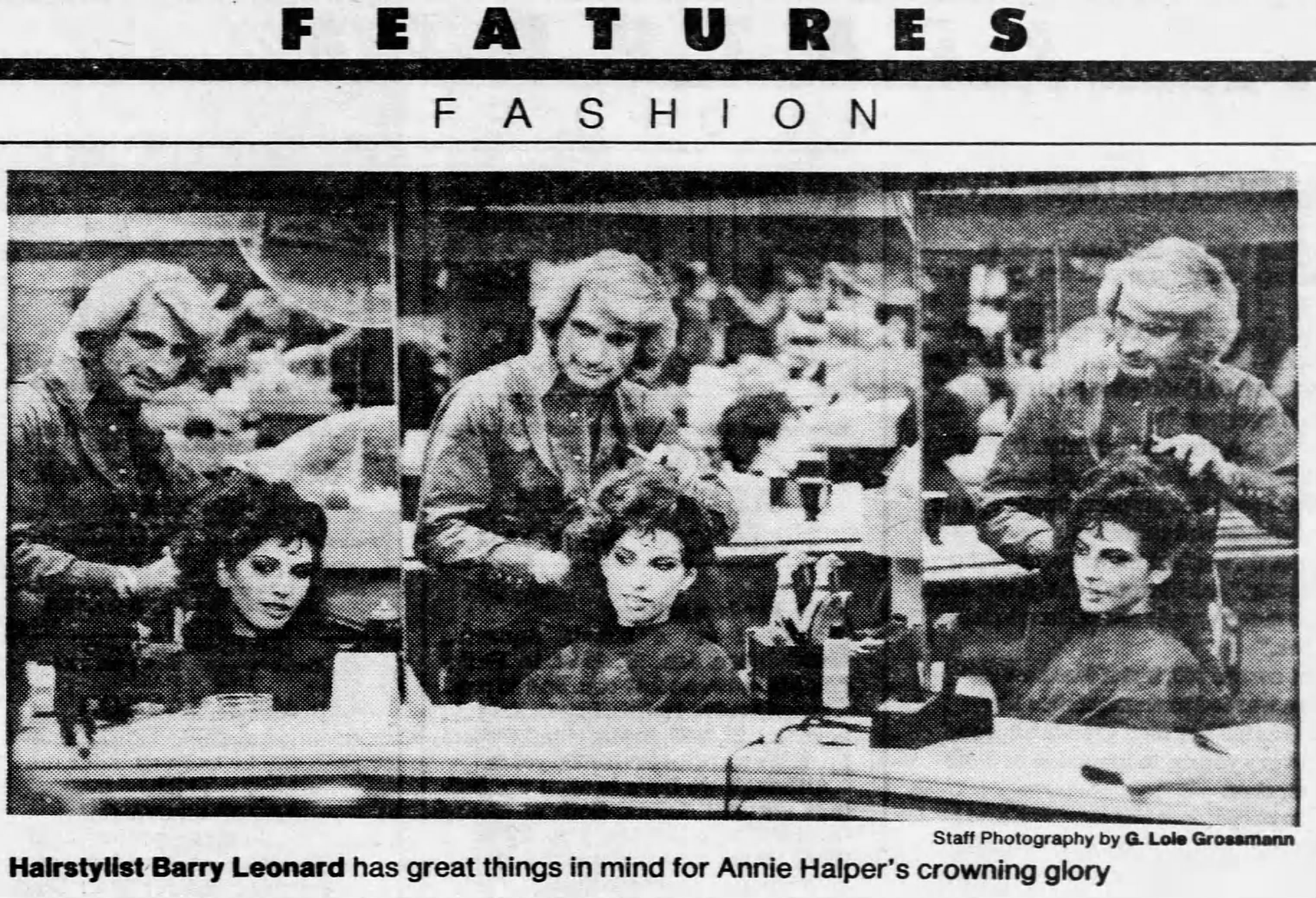
Mr. Leonard is shown styling the hair of Annie Halpern, his future wife, in this 1985 photo in the Daily News.
“Hair,” he told The Inquirer in 1973, “is the only part of the body that can be changed readily and allows the individual to play his role as he feels it at that particular moment — protest, freakiness, sensuality, anything.”
His New Age salon featured wicker furniture, hanging plants, big pillows, Japanese koi, and free coffee, fruit, and wine. He charged $12.50 per cut in 1973 and $25 in 1991. Sometimes, he booked 75 heads a day, his wife, Annie, said.
Most often, he consulted with customers before the cut, assigned the job to an assistant stylist, and checked back when the work was done. Over his career, he told his wife, he likely attended to more than 1 million customers. In 1991, he told The Inquirer: “My general philosophy is to make people happy.”
He also created and distributed do-it-yourself manuals for those who couldn’t get appointments and introduced computerized styling technology in the 1980s so clients could design their own cuts on video screens. “I’m a firm believer that nothing lasts forever,” he told the Daily News in 1977. “But right now, I’ll stay the way I am. It’s really a matter of the world catching up with me.”
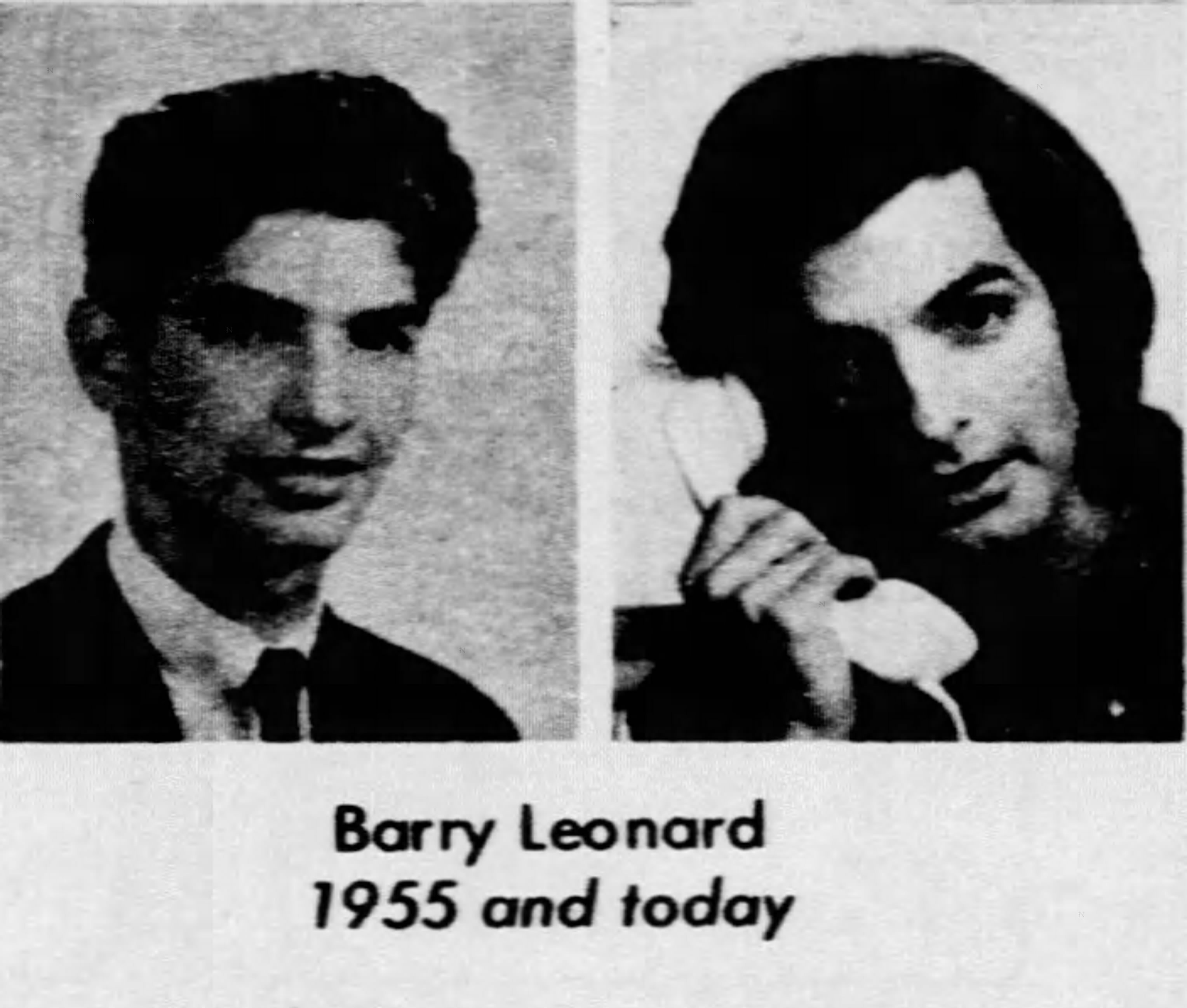
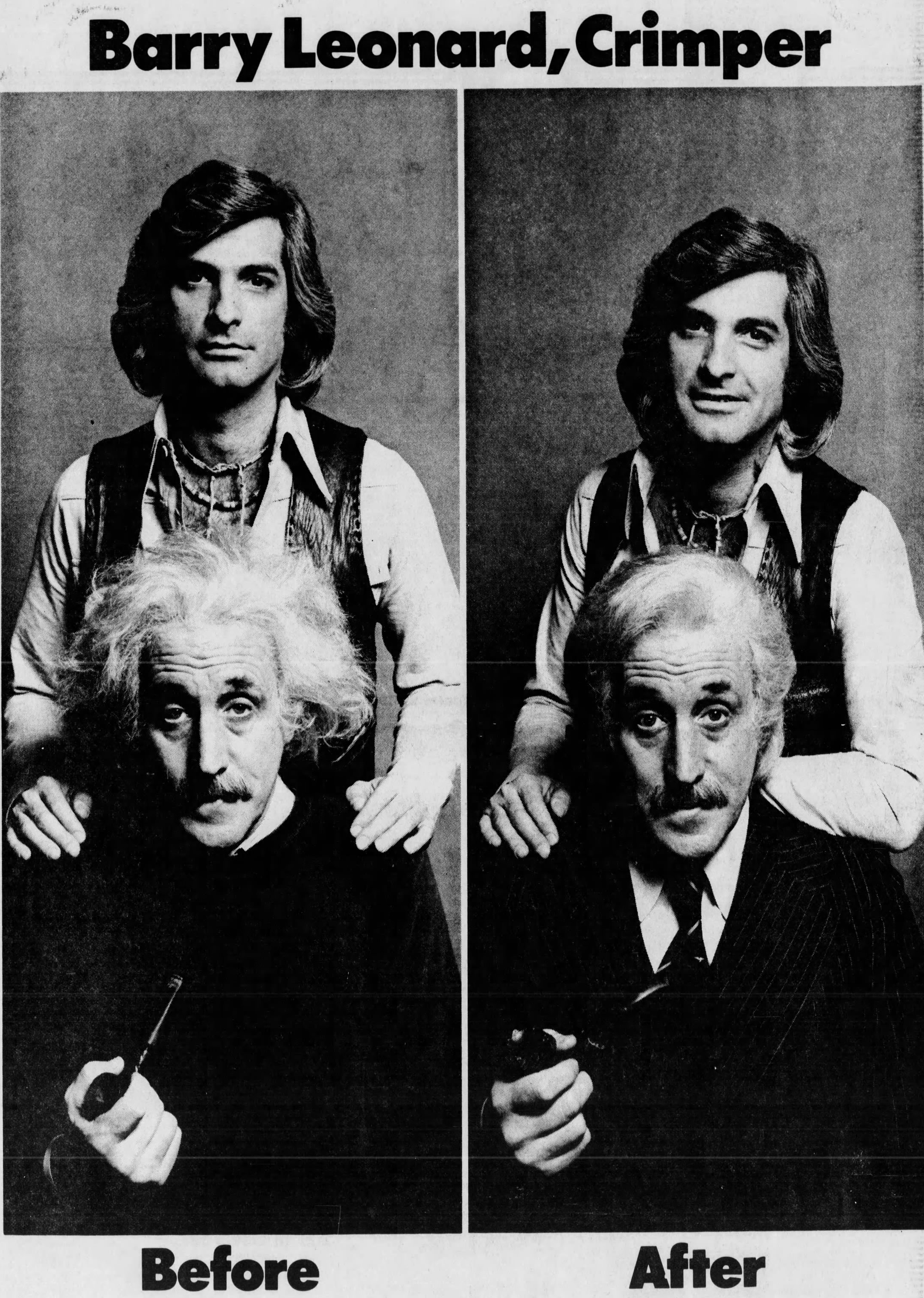
This then and now photo appeared with a story in The Inquirer in 1973.
He was featured often in The Inquirer, Daily News, Philadelphia Magazine, Philadelphia Business Journal, and other publications, and writers dubbed him the “top hair gun” in Philadelphia, “the dashing haircutter,” and “Philadelphia’s leading proponent of hair as art.” He dabbled in selling franchises, endorsed a new Japanese hair-straightening process, and hosted runway-style hair shows and crimper workshops.
Women told him his beauty advice changed their lives. Men said his haircuts improved their sex lives.“I was the image changer,” he told The Inquirer in 2002.
In the late 1960s, Mr. Leonard gave local advertising whiz Elliott Curson a haircut, and Curson, delighted with the result, suggested rebranding Mr. Leonard as “a crimper,” British slang for hairdresser. What followed was a hugely successful ad campaign and a friendship that lasted more than 50 years.
One of their first ads featured the phrase: “When I come out of Barry Leonard’s, I won’t look like my mother.” Curson said: “He had that look, the outfit, and the vision that worked so well.”
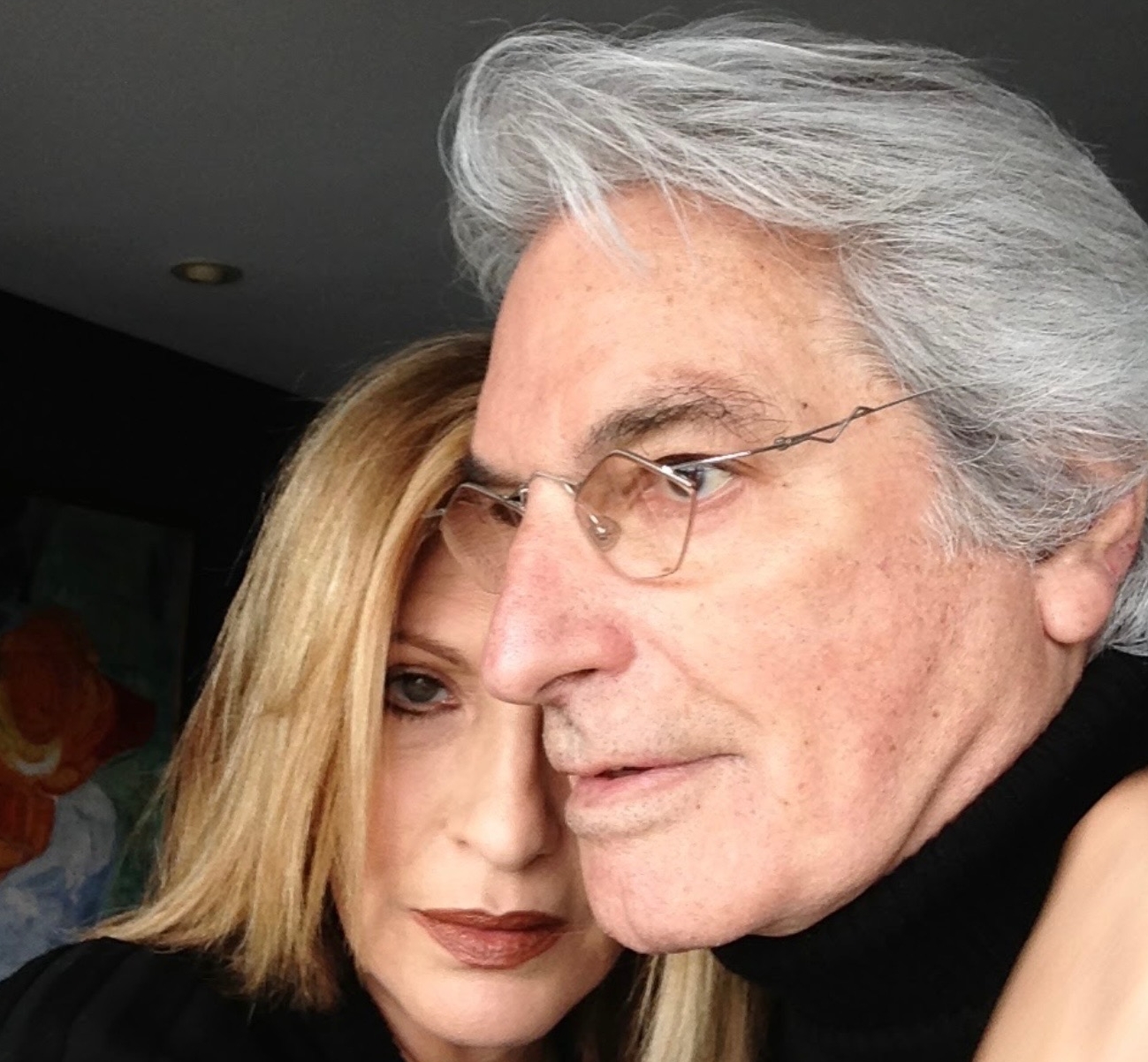
Mr. Leonard and his wife, Annie, married in 1986.
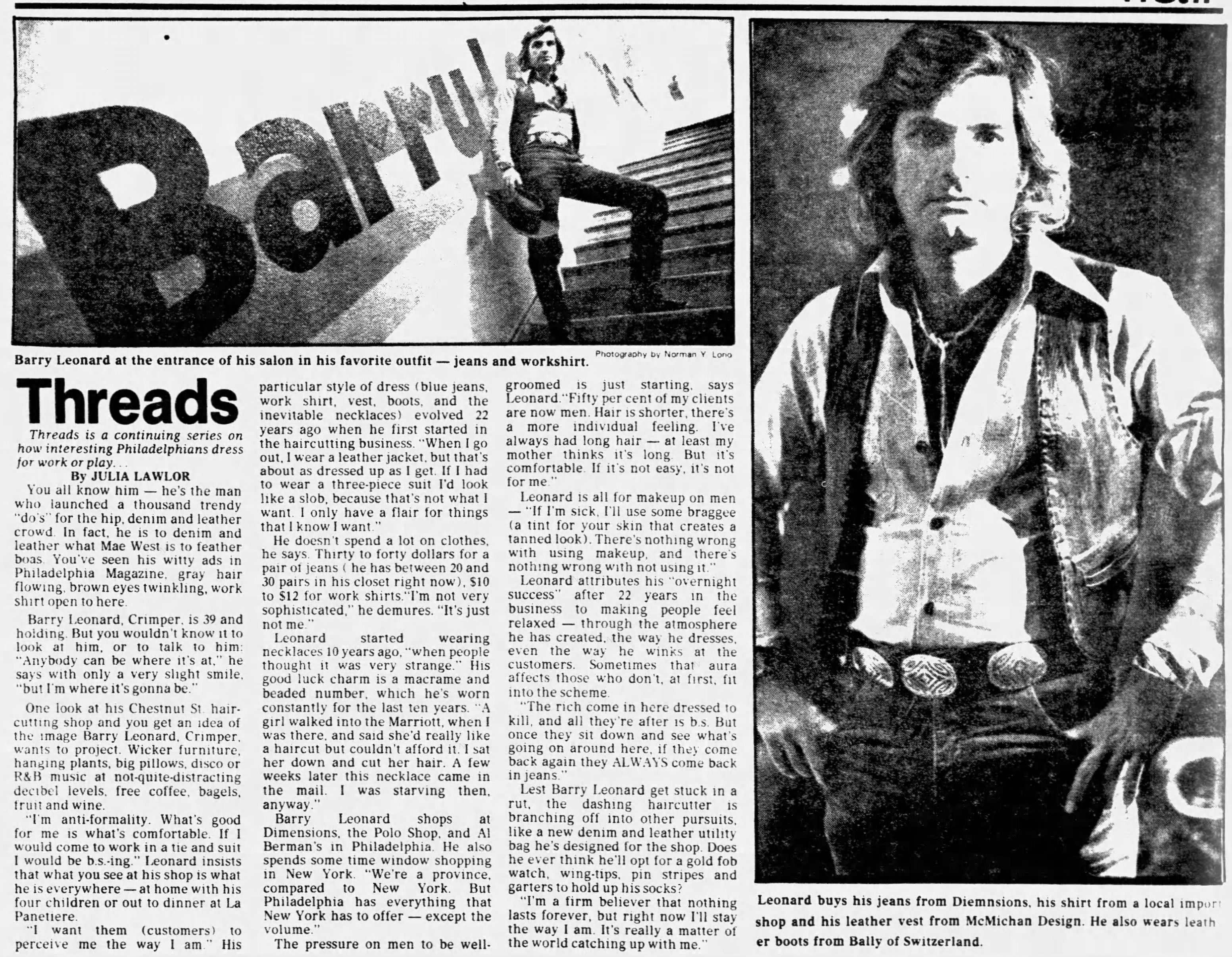
Mr. Leonard liked to wear a work shirt, vest, blue jeans, boots, designer glasses, and turquoise jewelry to work. His own hair flowed down to his shoulders when he was young. He told the Daily News in 1977: “Anybody can be where it’s at. But I’m where it’s going to be.”
He was a member of Intercoiffure America and participated in its competitive showings in New York and elsewhere. He was included in a display called “Movers and Shakers” at the now-closed Philadelphia History Museum.
“He would meet you once and have an impact on the rest of your life,” his wife said. “Everybody loved him. He was passionate and compassionate.”
Barry Leonard was born Jan. 27, 1938, in Philadelphia. He grew up in Wynnefield and Bala Cynwyd, and served in the Army’s 101st Airborne Division for two years after high school.
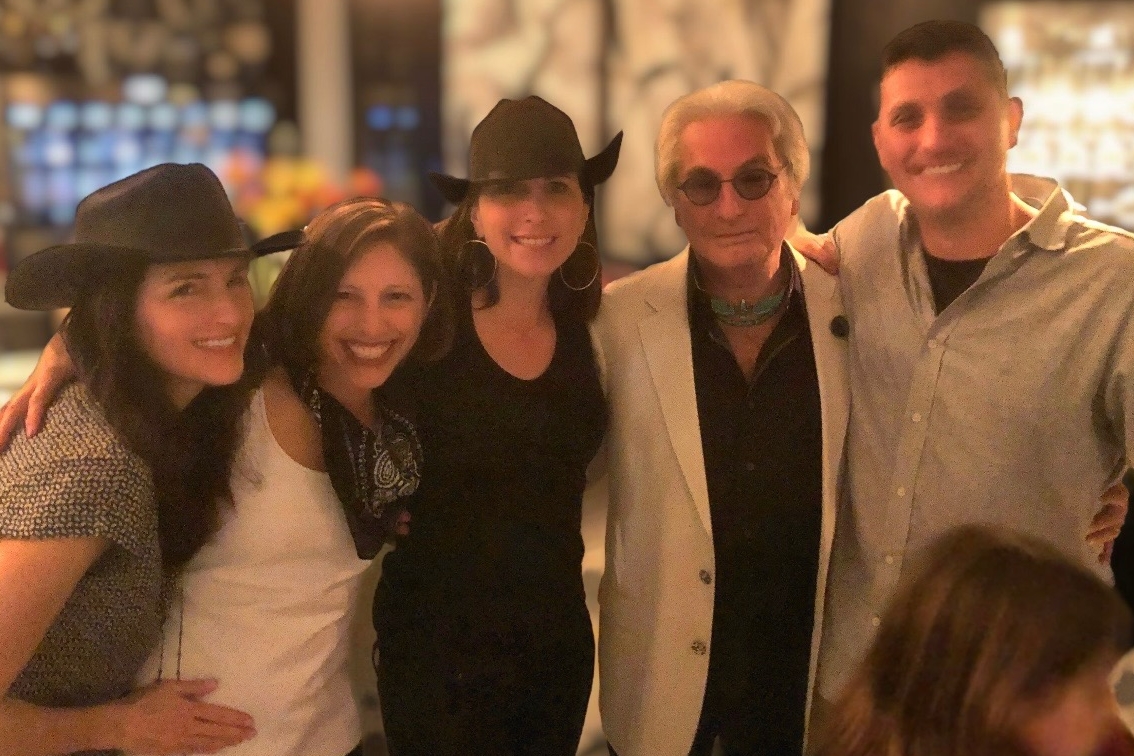
Mr. Leonard (second from right) celebrated his 80th birthday with his children.
He wore a traditional tie and jacket, and cut hair with his father and in a few local shops before opening his place at the Marriott in 1962. He also spent some time working in London and first heard the word crimper there.
He married Charlene Brooks, and they had daughters Karen, Susan, and Elizabeth and a son, Brett. After a divorce, he met Annie Halpern at a party in 1983. They went to a Neil Diamond concert on their first date in 1984, married in 1986, and moved from Center City to Florida in 2005.
Mr. Leonard was an avid boxing fan, and he knew his way around the popular Blue Horizon venue on Broad Street. He had a summer home in Longport, N.J., and enjoyed time at Gulfstream Park racetrack in Florida.
He was spiritual and loquacious, his wife said. He had favorite witty quips, and his family and friends refer to them as “Barryisms.”
This article about Mr. Leonard’s fashion sense was published in the Daily News in 1977.
He attended all kinds of galas and benefits, and doted on his children. “He gave me my first shag” haircut, a longtime friend said on Facebook. Another friend said her neighbor cut her hair once. “The results were not good,” she said. “Barry fixed me.”
They called him “one of a kind,” “truly the best around,” and a “mentor and a friend.” His wife said: “He was the love of my life.”
In addition to his wife, children, and former wife, Mr. Leonard is survived by eight grandchildren and other relatives. A brother died earlier.
A celebration of his life is to be at 11 a.m. Saturday, Dec. 6, at Gulfstream Park, Third Floor, Flamingo Room, 901 S. Federal Highway, Hallandale Beach, Fla. 33009. RSVP to blcrimper@aol.com.
This ad by Mr. Leonard and Elliott Curson appeared in The Inquirer in 1982.
The Rev. Carolyn Cavaness is adjusting to her new life as a celebrity.
Any pastor of the historic Mother Bethel A.M.E. Church might get stopped and asked for a picture while walking down the street, as she sometimes does. The church is a national historic landmark, long celebrated for its role as a hub for Black activism and the oldest church property in the United States to be owned continuously by Black people.
But in November, Cavaness, 42, was appointed as the first femalepastor in the church’s 238-year history. She is a fourth-generation A.M.E. preacher from Newark, N.J., and previously led the Bethel A.M.E. Church of Ardmore for 10 years, also serving as its first woman pastor. Cavaness took over for the Rev. Mark Kelly Tyler, who had left Mother Bethel after 16 years.
“Some days I have this moment where I say, ‘Wow, Carolyn, you are the pastor of Mother Bethel. You’re in the big chair. What if somebody else was in this spot? What would they be doing in this moment?’” she said.
While Cavaness brings a new perspective, she is also focused on honoring the legacy of the 52 pastors and their congregations who came before. She said that the church’s first members knew immediately that they were “a big deal” who would matter greatly to the Black community. Two centuries later, that is still the case.
“Here I am in this 21st century and having to be the caretaker, but also being called to action,” Cavaness said.
“So what becomes our contribution?”
Cavaness spoke with The Inquirer about her first year at Mother Bethel, what it has meant to take on her trailblazing role, and how the church’s tradition of resilience inspires her and the congregation.
This conversation has been edited for clarity.
Your first sermon at Mother Bethel was an emotional one, about your family’s deep Philly roots and great achievements born out of the Black struggle, even though you were only notified about your appointment just the day before. What do you remember about that day? What have you learned about what Mother Bethel means to people over the past year?
It was surreal. I mean I literally found out less than 24 hours before. But that is being an itinerant preacher [of] Methodist tradition. You’re here to serve.
I had very much the sentiment of “I wish my dad and my grandmothers were here to see this.”
I think about when I walked into the pulpit for the first time, how the congregation stood up. I think about the smiles, the hugs. I think about the flowers they gave me. And the sacred trust that I’ve been given.
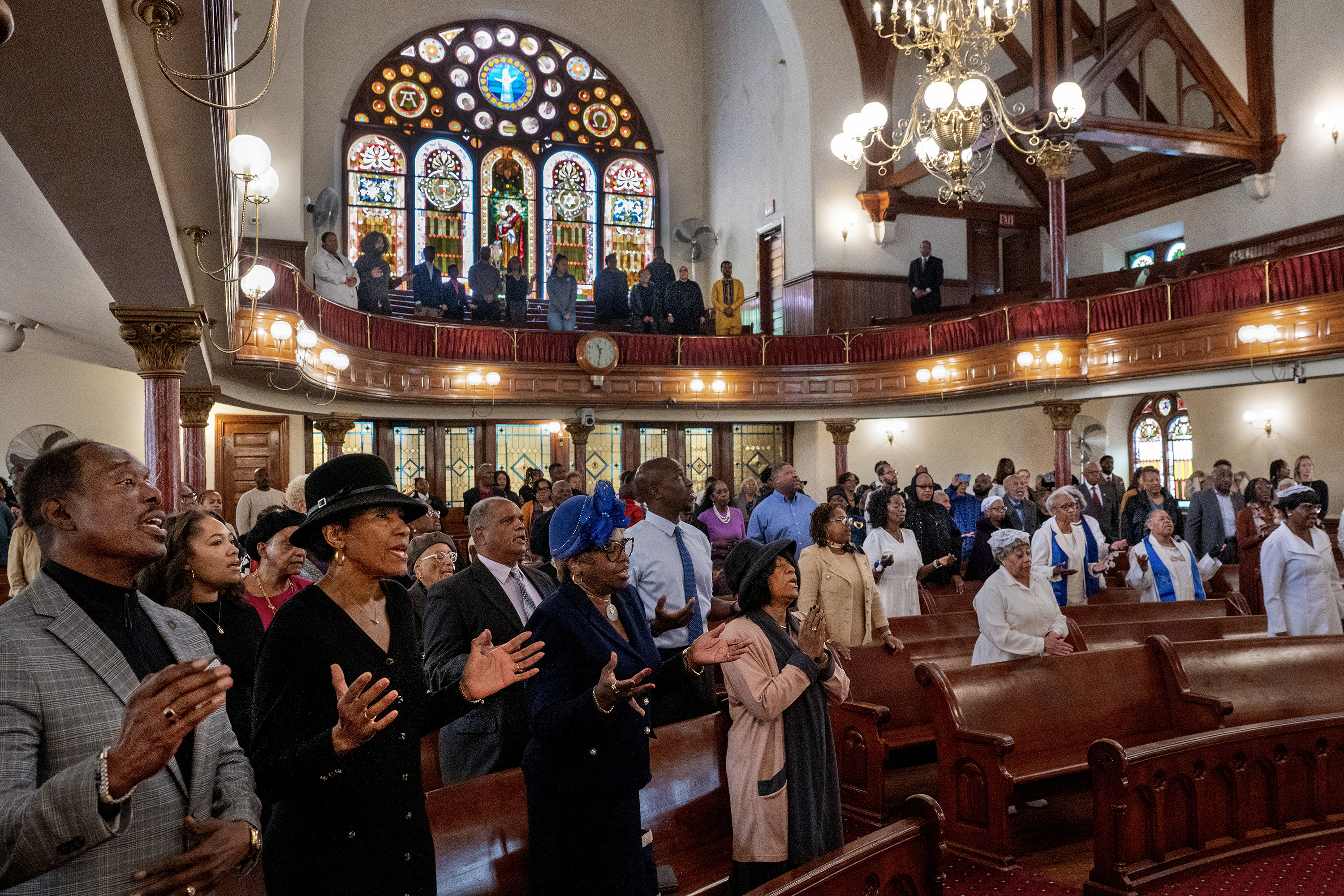
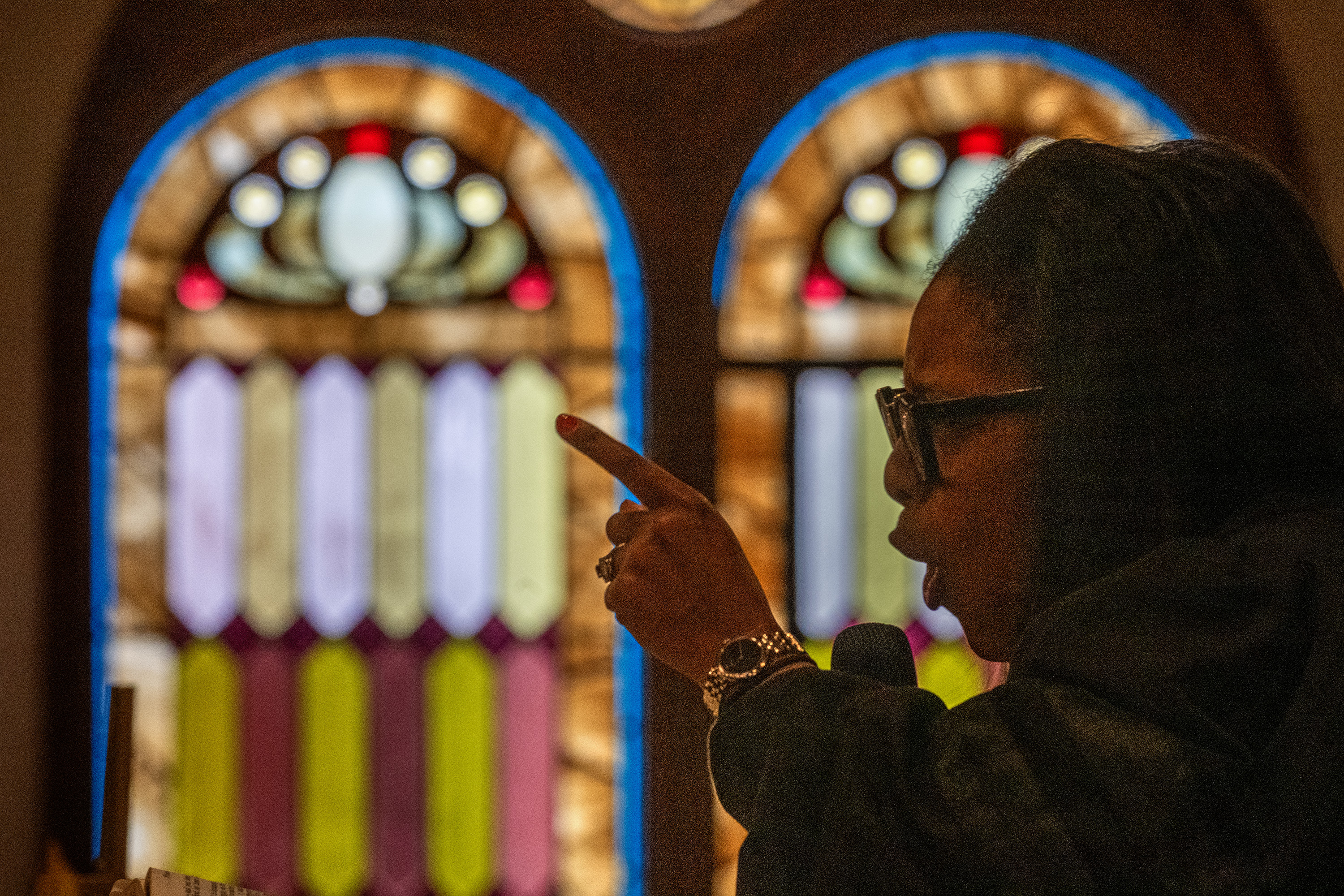
The congregation sings as Rev. Carolyn Cavaness (not shown) celebrates her first worship service on Nov. 10, 2024.
It’s been an amazing first year, definitely life-transforming, being entrusted with this national, this international treasure. I have just been captivated by the testament and the hope that she bears.
There’s this connection, this affinity for her. We’ve gotta be intentional about being the light, about being a place of love, sanctuary, refuge, that people feel safe. That’s a real thing for me.
The people I’ve come to know, the smiles, their new sense of hope — it is possible, you know? People have a sense of joy, and you can feel that and see that. Sometimes when you’re a leader, you’re in a vacuum. And so to hear and to see people smiling more, that does something. As a pastor, that’s a gift. You feel that you’re making a difference.
You are the first woman pastor at Mother Bethel A.M.E. How has it felt to hold that distinction, and how have people received you?
People have been very supportive. It’s about building trust and relationships. All I knew, I could only be Carolyn. I can’t be anybody I’m not. I like to laugh, I like to joke. I think I have surprised people by being accessible.
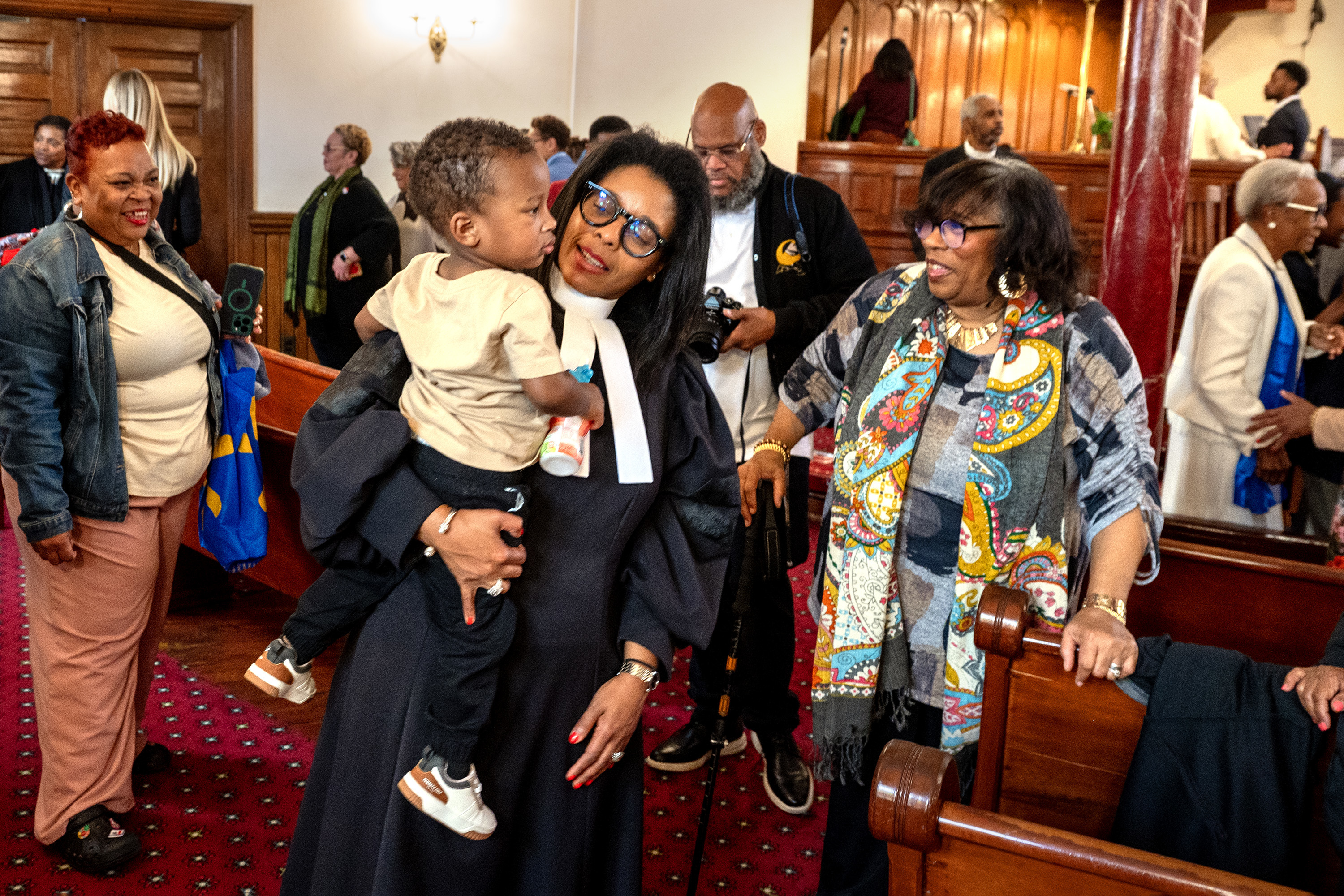
Rev. Carolyn Cavaness holds 2-year-old Kylo Banks as she greets members of the congregation after her first service.
Many people have reminded me, “You know, reverend, you’re a historical figure. Amongst the 53, there’s gonna be that picture of you.” It’s very humbling.
I went to New Orleans and an older gentleman walked up and he said, “Hello, good to meet you. You’re pastor of Mother Bethel.” Fifty years ago, that would have been a different conversation.
I have two twin nephews. They had a women’s history project, and they wrote about me being the pastor of Mother Bethel. My 5-year-old nephews are esteeming me. That was special.
When you were appointed last year, Donald Trump had just won the election, and many of your congregation were fearful of what was to come. What is Mother Bethel’s role during this time?
We are resilient people. This is not the first time that we have had pharaohs and tyrants and dictators.
Here is an institution providing, a way in which government ought to, esteem and affirm and care for [people]. Democracy has ideals, but here, this place, Mother Bethel, is where it’s realized. Where you’re a safe haven and a sanctuary. The principles and the ideals of the Free African Society. We come from that legacy, from that line where we have always taken care. We have always filled a gap. We’ve always been out front.
The Rev. Carolyn Cavaness celebrates her first worship service.
Another has definitely been around how we honor our history and legacy. I was honored to give the eulogy for Ruby Boyd — she was the first African American librarian in the city of Philadelphia. She lived to be 105, and she’s one noted for putting into a book, On This Rock, of Mother Bethel, the history of many of the stained glass window collection, pictures and little vignettes about the pastors. And so in my eulogy, I talked about that we have a responsibility to tell the story and to make it accessible.
This regime of erasure has really amplified my efforts as the spiritual leader and also just how important Mother Bethel is.
What are you looking forward to in year two?
I’m looking forward to the [Semiquincentennial], the 250th. Definitely the larger preservation plan, there are some conversations that we as a congregation are gonna be having about her preservation and how accessible [it is]. And to continue to tell this story.
I think also around community engagement. Just seeing people becoming more strengthened in their sense of witness.
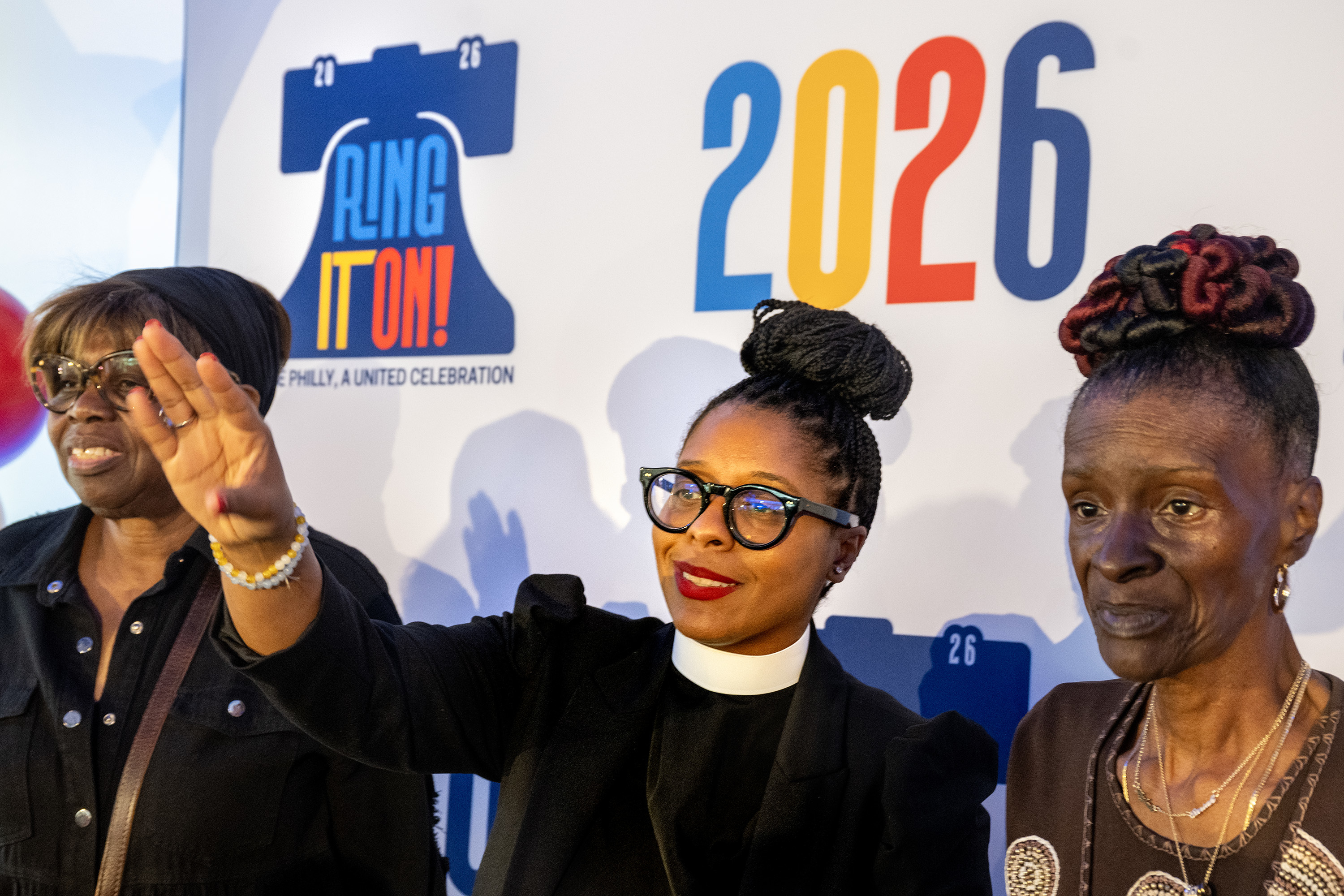
The Rev. Carolyn Cavaness (center) at the Independence Visitor Center during a September Semiquincentennial event.
There’s joyous chaos inside Indian markets on Diwali — and mithai (sweets) are at the center of it. The Festival of Lights, significant for people of Hindu, Jain, Sikh, and Buddhist faiths, falls on Monday, Oct. 20. Like clockwork, laddoos, gajar ka halwa, burfi, gulab jamun, and more, have begun to fill display cases with the vibrant, colorful sweets (made with dairy, sugar, and nuts) beckoning guests to pack two or three boxes for their loved ones.
There’s gajar ka halwa, a carrot-based treat studded with nuts; and gulab jamun, made sweet with rose water syrup and sometimes coated in coconut. Kulfi is a traditional creamy no-churn ice cream, similar to frozen custard with a distinct taste of the fruits and nuts it’s flavored with. Then you have creamy, milk-based mithai like burfi, ras malai, kalakand, and cham cham. And you can’t forget about laddoos, rava kesari or suji ka halwa — nutty, semolina-based sweets.
Whether you’re gifting or feasting by yourself, here are a handful of Philly spots to get your mithai in time for Diwali.
“Mithai is the go-to gift to bring to people or celebrate with,” said owner Paramjit Singh.
There’s fresh, frozen, and canned mithai offered at the shop. Packaged boxes sit in the front. Canned are stacked on shelves, and frozen packages from India and Canada are in the refrigerators in the back.
Singh has a variety of options for the area’smany students and price-conscious customers. But he noted that prices of mithai have increased as well as the cost to ship boxes from India.
Find boxes of bundi and motichoor laddoo, gulab jamun, badam and kaju burfi, kalakand, and a variety of Bengali sweets in the fresh market up front.
With the Philadelphia Sikh Society nearby, this Upper Darby store is bustling with energy on Diwali morning, said co-owner Mohinder Pal.
“Mithai is a favorite, everybody likes it,” he said.
Walk up to the refrigerators next to the cashier station and pick from a variety of boxed mithai. There’s gajar ka halwa, laddoos, assorted cham cham, coconut and regular gulab jamun, and more. Frozen mithai is also available.
📍6700 Market St., Upper Darby, 📞 610-352-3400, 🌐facebook.com/sabjimandi, 🕑 Monday to Sunday 9 a.m. to 8 p.m.
A traditional Indian Ice Cream (Malal Kulfi) topped with poached blueberries and creme-de-cassis, at Veda in Philadelphia, Pa., on Thursday, May 25, 2023.
Inside this modern bistro in Rittenhouse Square, order kulfi topped with poached blueberries. The dessert is sweetened with sugar that’s added as the milk is reduced in a flat pan. It’s frozen with crushed cardamom seeds mixed in that bring an inviting texture to the kulfi. Enjoy for $7 at Veda. (The dessert is also offered at Bhasin’s four other restaurants: Indiya in Collingswood, Coriander in Voorhees, and Naan in Moorestown).
📍 1920 Chestnut St., 📞 267-519-2001, 🌐 vedaphilly.com, 🕒 Daily, 11:30 a.m. to 2:30 p.m. (lunch) and 4:30 to 9:30 p.m. (dinner), till 10 p.m. on Friday and Saturday.
On Chestnut Street, you’ll find freshly made gulab jamun, gajar ka halwa, and ras malai. Step into the restaurant and you’ll see the tub of brown spheres soaking in a sugary bath in the display case. That’s gulab jamun. The ras malai is milky, soft, and sweet. The gajar ka halwa is creamy, filled with carrots and perfectly nutty — it’s a specialty item for the fall and winter season.
“Ras malai is really the selling item,” said owner Asad Ghuman. “We get catering orders and families coming in to the restaurant (for food and sweets).”
📍4201 Chestnut St., 📞 215-222-8081, 🌐kabobeesh.com, 🕑 Monday 11 a.m. to 11 p.m., Tuesday to Sunday 11 a.m. to midnight.
If you’re in West Philly, small boxes of gulab jamun, gajar ka halwa, and orange sticky, sweet jalebi wait for you. Kheer or rice pudding, and ras malai are also available.
Wah-Gi-Wah in University City is a big fan of Crown Kulfi. Restaurant manager Muhammad Khan said they previously served housemade kulfi but switched to the premade brand. “[The brand] is very famous over here in Philadelphia,” he said. Enjoy chocolate, coconut, almond, pistachio, mango, and malai as frozen pops ($3) or in cups ($4.50).
DEAR ABBY: Two years ago, a close friend of my husband’s and mine asked us to be the “best couple” in their wedding. After being postponed for a year due to some family issues, the wedding is coming up soon. My husband and I have been married 25 years. We have a strong, faithful bond.
Last weekend, we were informed that we won’t be paired together. Neither of us is happy with this news. We feel that our friends are not respectful of our relationship. I’m baffled about why the “best couple” wouldn’t be paired together. I’m so upset that I have cried for days. I feel disrespected, betrayed and unvalued.
I don’t want us to be paired with other partners. I told our friends I’m not comfortable with my husband walking with another woman, and me walking with another man, but I was ignored. I no longer want to even go to the wedding. Am I being unreasonable?
— COMMITTED BUT UNHAPPY
DEAR COMMITTED: Please dry your tears. You may have blown this out of proportion. For the last quarter of a century, you and your husband have been known to be a solid couple. I don’t know why the bride and groom are asking you to walk down the aisle separately. It could be something as simple as pairing attendants who are similar heights. Participate in the wedding and support your friends. It is only for one day and, I assume, you will be seated with your husband after the ceremony.
** ** **
DEAR ABBY: I have read your column for 40 years. Now I have an issue. I have been taking care of my wife’s uncle for the last two years. He had a stroke, and I became a certified nursing assistant. I stay home and take care of him 24/7. My wife does not help. Recently, her sister decided to return to college to finish her RN and moved in with us. She does not help at all.
I decided to go back to school to get my master’s. I work 60 hours a week and also work on my master’s in cybersecurity. I told my wife that if her sister doesn’t move out by the end of the year, I am moving out. We are putting her uncle back in a nursing home. I CANNOT DO IT ANYMORE. In the last two years, I have had only four days off. When I had the flu, no laundry was done.
Am I a bad person for wanting a career? Am I a bad person for wanting a house with just my wife and me?
— EXHAUSTED IN THE EAST
DEAR EXHAUSTED: It was loving and generous of you to enroll in classes to become a CNA so you could give your wife’s uncle the care he needed. That she did nothing to lighten your burden, and then invited her sister to move in without first clearing it with you, was wrong.
Marriage is supposed to be a partnership, and it appears you have been doing all the heavy lifting. You are not a bad person for wanting a career and the financial benefits it will bring, and you should not be made to feel guilty for it.
DEAR ABBY: Six months ago, my oldest child died in a horrific car accident. Our family went into a sort of hibernation for several months, mourning and trying to deal with the sadness of the situation.
Now the kids are back in school, and I’m starting to work again. I’m interacting with a lot of people I haven’t seen since before the accident who maybe don’t know what happened. How do I respond when they ask perfectly reasonable questions, like “What’s new?” or “How was your break?” I want to be honest and let people know I’m not really OK. But I also want to avoid “trauma dumping,” or providing too much information they aren’t ready for.
The full truth is a lot for anyone to hear. If I say something like, “We’ve had some family issues that have been hard,” people tend to assume I’m getting a divorce or have cancer, which changes how they interact with me. If I tell the truth they almost always start crying, which makes me cry, and then the situation is derailed. What can I say that is true, and that also indicates they don’t really want to know more?
— SURVIVOR IN TENNESSEE
DEAR SURVIVOR: Please accept my deepest sympathy for the tragic loss of your first-born child. If someone asks what’s new or how you are, respond, “We’ve been through some trials and tribulations, but we’re moving forward.” If you are questioned further, simply say, “I’d rather not go into detail right now,” and change the subject.
** ** **
DEAR ABBY: Six months ago, my grandson, “Levi,” 23, told his father (“Alex”) and me that he wants no contact with us. Levi and his dad had an argument when Alex asked for help paying the utilities, since Levi and his girlfriend live rent-free in Alex’s house. Alex has tried to reach out to Levi through texting, but his texts are ignored. I tried sending texts and letters but received no response either.
My son is not perfect, but he has always been a loving and devoted father. Levi means the world to him, and this estrangement is causing Alex physical and mental health problems. I have always doted on my grandson and been warm and kind to his girlfriend, so we don’t understand why he turned on me, too. Should I keep trying to reach out, or accept that Levi does not want me in his life? Please advise.
— DISTRESSED GRANDMOTHER
DEAR GRANDMOTHER: Levi may be a young adult, but he’s acting like a spoiled child. His father’s request that Levi contribute to the cost of the utilities in the home where he had been living rent-free wasn’t unreasonable. I can only wonder where he and his girlfriend are now living and presumably getting a better deal.
Stop trying to reach out only to be rejected. When Levi grows up a little, or needs something else from you and his father, he will show up in your lives again. Right now, because Alex isn’t doing well, concentrate on your son’s health.
The house: a 1,380-square-foot 1950s twin with three bedrooms and 2½ baths
The price: $255,000
The ask: Kim Sephes didn’t want to live in a house attached to her father’s church anymore. It “felt strange,” she said, living there after he passed away in 2019.
So in 2022, she and her husband, Matthew, began searching for a home for their family of eight. Safety, location, and a driveway were top priorities. They needed four bedrooms and dreamed of a backyard.
The search: At first, the couple searched in Northeast Philadelphia, where they found a lot of nice houses, but were worried about their kids walking around safely without supervision. They expanded their search to Mount Airy, but the competition was stiff. They made offers on four houses only to get outbid every time.
“It was a crazy housing market where people were offering cash offers left and right,” Sephes said.
Soon after, the family “stepped on the gas” with their search and found a house they loved in August 2022.
The appeal: The house was move-in ready. Only the kitchen needed updating.
But they had to make a few compromises.
It was three bedrooms, not four — but it had a finished basement that Sephes says could be converted. It was a twin, not their preferred single, home — but it was attached to the corner house.
“At least we weren’t in the middle of the block,” said Sephes. Most importantly, it was in a great section of Mount Airy, and it had a back patio.
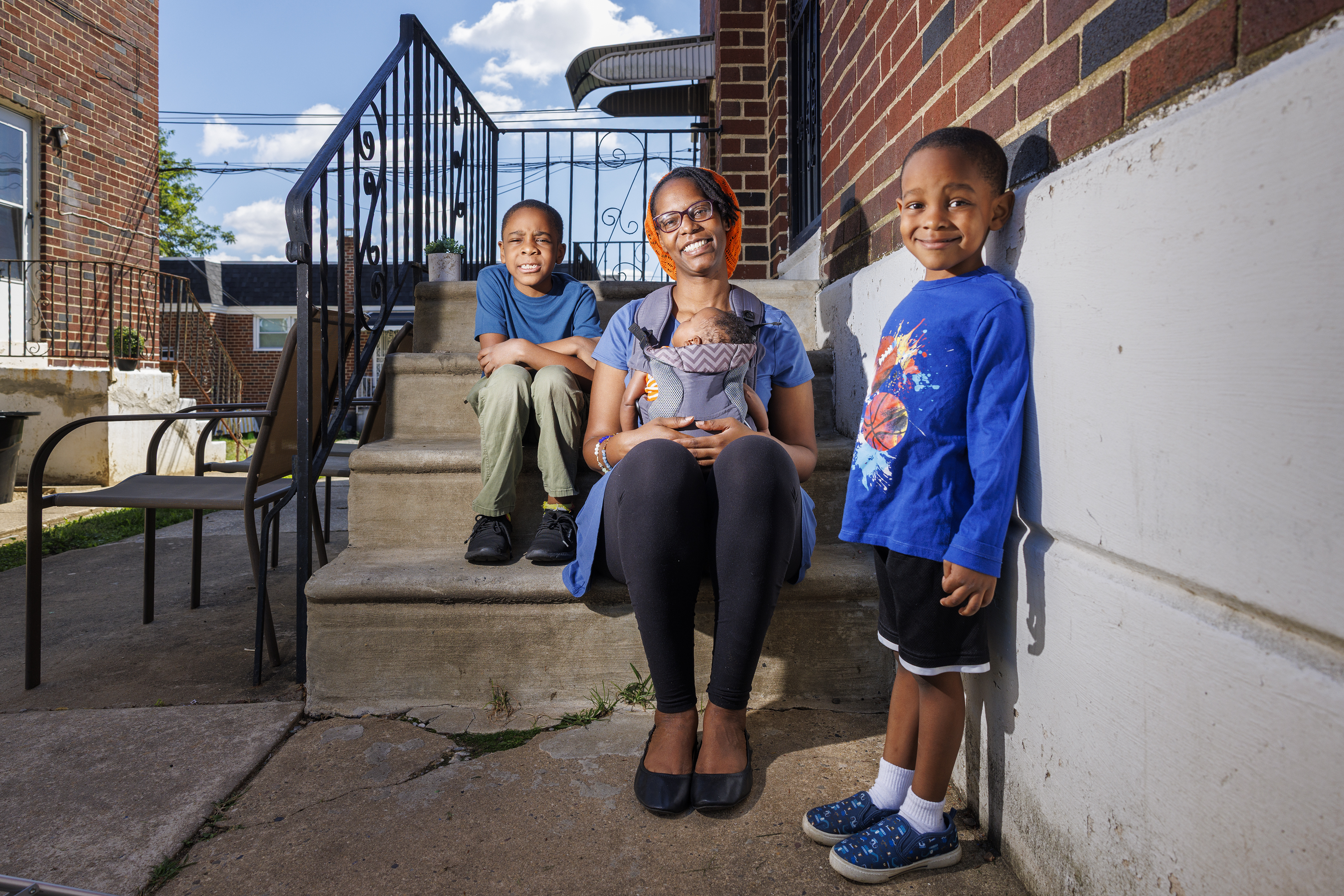
Kim Sephes with children (from left) Darius, 8, and Solomon, 4, on the steps of their home. She is carrying 1-month-old Adam.
The deal: They offered $5,000 over the asking price of $250,000. The house attracted several offers from investors but “the sellers really wanted to sell it to a family,” said Sephes. “Our real estate agent went hard trying to convince them to sell it to us, because they did have a cash offer on the table for more than what we were going to offer.”
In the end, the Sepheses’ offer was accepted and, after a little back and forth about the inspection, they sealed the deal with a $5,000 non-refundable earnest money deposit.
The money: The couple saved $18,000 for a down payment, socking away the previous two years’ tax returns and parts of their paychecks. For three years, they put a little bit away every time they got paid.
“I was so determined,” said Sephes.
They also got a $15,000 forgivable loan through the Neighborhood Lift program, which they do not have to pay back as long as they stay in the house for 10 years.
Through their lender, Fulton Bank, they secured an additional $2,000 grant and a Federal Housing Authority (FHA) mortgage with a 5% interest rate.
The Neighborhood Lift grant “helped get us in the home,” Sephes said. Without it, they “would’ve qualified for something way less.”
The move: The Sepheses closed on Sept. 26 and started moving right away.
To ensure they had enough time to move, they paid October rent. However, they were officially out of the house within the first week, so the church gave them the full month’s rent back. “I really appreciated that because they didn’t have to do that,” Sephes said.
Any reservations? The only issue with the house is that “it’s a little small,” Sephes said. But the garage has extra space for storage.
More than anything, Sephes is grateful they were able to move.
“We were ready to leave the church house,” she said.
Life after close: Sephes says the best thing about their new home is the neighborhood.
“It’s a beautiful block, very quiet, and it’s wide, too, so we don’t have to worry about traffic.”
And we’re back with another Very Philly Question. I asked back two Philly natives for their take on the forever-Philly issue.
.inno-chat__body {
border-radius: 12px;
}
Evan Weiss
Deputy Features Editor
The question is: Can I move the cones my neighbor places to save his parking spot?
Tommy Rowan
Programming Editor
You absolutely can and should.
Sam Ruland
Features Planning and Coverage Editor
10000%
Sam Ruland
You don’t own the street — it’s public parking! If you want guaranteed parking, get a driveway.
Tommy Rowan
Now, if you shoveled out a spot for your car and put work into it, I'm OK with you claiming that spot for that snow day.
Tommy Rowan
But never should someone ever save a spot with a cone, folding chair, bucket, nada.
Sam Ruland
Exactly, if it’s mid-blizzard and you just spent two hours digging out your car, fine, take a victory lap. But by the next morning when everything's melted away, cones are getting tossed.
Tommy Rowan
And for extra credit, you could also return said cone to the Water Department, which most likely owned the cone first before this concerned party stole them.
Sam Ruland
But in all reality, I hate the whole saving-spots-with-cones thing. It’s entitled — that’s not your spot, it’s A SPOT.
Tommy Rowan
Amen
Evan Weiss
In the moment you're removing that cone, are you at all nervous that the neighbor will see you?
Sam Ruland
Yeah, you feel a little nervous. That's why you move it like it's a lit bomb. Quick hands, no eye contact, and sprint to the car.
Tommy Rowan
Also, I'm a big fan of the "others see it, too," approach. Your other neighbors on your block already know who the conehead is.
Tommy Rowan
Safety in numbers.
Sam Ruland
Half the block’s in silent agreement every time someone finally moves it.
Tommy Rowan
Yup!
Sam Ruland
I’m not circling the block three times when there’s an open spot right there. Cone or not, I’m parking.
Tommy Rowan
I came here to chew gum and park. The cone is in the way, and I'm all out of chewing gum.
Evan Weiss
What do you do if your neighbor comes out mid-cone removal?
Sam Ruland
You commit. You’re already in too deep. Smile, wave, and park like you belong there.
Tommy Rowan
Tell them you're reclaiming the property of the Philadelphia Water Department.
Sam Ruland
Or pickup your cellphone and pretend to be on the phone.
Tommy Rowan
Or, if you're really in the mood, give 'em a smile and say, "Thanks for saving it for me!"
Sam Ruland
Bonus points if you follow it up with, “Go Birds!” while stepping out of the car.
Tommy Rowan
Yeah! And look, nobody likes circling blocks. But suck it up, find an ACME or a shopping center and park there for the night and move it in the morning before the tow trucks come. Like the rest of us!
Tommy Rowan
And for God's sake leave the Water Department alone!
This conversation has been edited for length.
What other Very Philly Questions should we address?
The advent of spooky season brings endless options for driving-distance getaways packed with U-pick orchards, twisting corn mazes, and high-tech haunts. But only Sleepy Hollow, at the gateway to New York’s Hudson Valley, has a reputation so perfectly tied to the macabre.
As the setting for Washington Irving’s The Legend of Sleepy Hollow, the town and its neighboring villages blend American history, small-town autumn charm, and an enduring flair for the supernatural. It’s about a two and a half hour drive from Philly — or take Amtrak to Penn Station, get to Grand Central, and hop on Metro-North’s Hudson Line.
Once you’ve arrived, the mix of colonial history, Halloween pageantry, and riverfront beauty makes it easy to fall under Sleepy Hollow’s spell.
If you’re making a weekend of it, check into Tarrytown House Estate, a historic retreat on a hill above Sunnyside. The estate is home to Goosefeather, chef Dale Talde’s acclaimed Cantonese-inspired restaurant, and combines classic mansions with modern touches — think terraces, firepits, and lounges. It’s one of the few local hotels that’s both stylish and (relatively) affordable. During fall, the property leans into the season with festive touches like pumpkin displays and glowing jack-o’-lanterns scattered across the grounds. It’s an ideal base for exploring Sleepy Hollow’s haunted happenings — close to the action, but tucked away once the lanterns dim.
However you choose to travel, make a morning pit stop at Irvington Station. Grab a matcha latte or flat white from the Australian-accented Ludy Café, and a sage-scented apple-cheddar scone from Red Barn Bakery, walking distance from one another right along the train tracks.
📍 Ludy Café, 7 N. Astor St., Irvington, N.Y. 10533
📍 Red Barn Bakery, 4 S. Astor St., Irvington, N.Y. 10533
Learn: Blue Hill at Stone Barns
Continuing north, head into the woods of Tarrytown to chef Dan Barber’s famous Blue Hill at Stone Barns for a guided Explore Tour of their elysian farm and agricultural center. Take a spin through the market, admiring the hand-thrown ceramics and exquisite preserves, and stay for lunch at the cafeteria. Reservations required.
After arriving in Sleepy Hollow proper, ease into the spookiness at Sleepy Hollow Cemetery, where the one-hour guided tour (in full daylight) leans more history than horror. Not only is the cemetery beautiful, it’s also a great context-setter for the region, providing all the background on its most famous storyteller, Washington Irving, who rests here among other notable figures.
📍 540 N. Broadway, Sleepy Hollow, N.Y. 10591
Solve: The Headless Horseman Files
At the Headless Horseman Files, collect clues from costumed townspeople to unravel what really happened to Ichabod Crane. This live theater-meets-interactive whodunit at Philipsburg Manor is part mystery, part museum experience — and yes, you can exit through the gift shop for a Horseman snow globe.
Bask in the flickering glow of candles and Gothic drama at the Lyndhurst After Dark, the spooky (but not scary) experience at the Lyndhurst Mansion. Guests walk through the riverfront estate, decked in its Halloween best, and encounter live actors in period dress, who share unnerving tales of the mansion’s history.
Pot stickers plumped with dry-aged beef, char siu Berkshire pork belly, and blueberry cheesecake mochi waffles grace the menu at Goosefeather. The free-spirited Cantonese-ish joint comes from Dale Talde, known for his appearances on Top Chef.
Gloria Del Piano, 72, of Philadelphia, celebrated designer of silk clothing, fashion accessories, and jewelry, former Italian TV producer and public relations director, energy therapist, Italian translator, voice-over actor, and community volunteer, died Wednesday, Oct. 1, of complications from cancer at the Hospital of the University of Pennsylvania.
Energetic, artistic, and indomitable, Ms. Del Piano was 31 when she arrived in Philadelphia from Rome in 1984. She had little money and knew little English. But she discovered her skill for silk painting in a do-it-yourself class, and the colorful hand-painted silk scarves, evening wraps, handkerchiefs, handbags, and original jewelry she went on to create turned Gloria Del Piano Accessories LLC into a fashion powerhouse.
In just a few years, she opened a store on Bainbridge Street and contracted with Bergdorf Goodman, Neiman Marcus, Nan Duskin, Nordstrom, and hundreds of other fashion outlets to carry her designs in Philadelphia, New York, Los Angeles, San Francisco, Detroit, Minneapolis, and elsewhere around the country. Locally, her signature scarves and earrings were featured at gallery exhibits, charity benefits, private homes, and fashion shows at Penn’s Landing, Fairmount Park, the Wayne Art Center, and elsewhere.
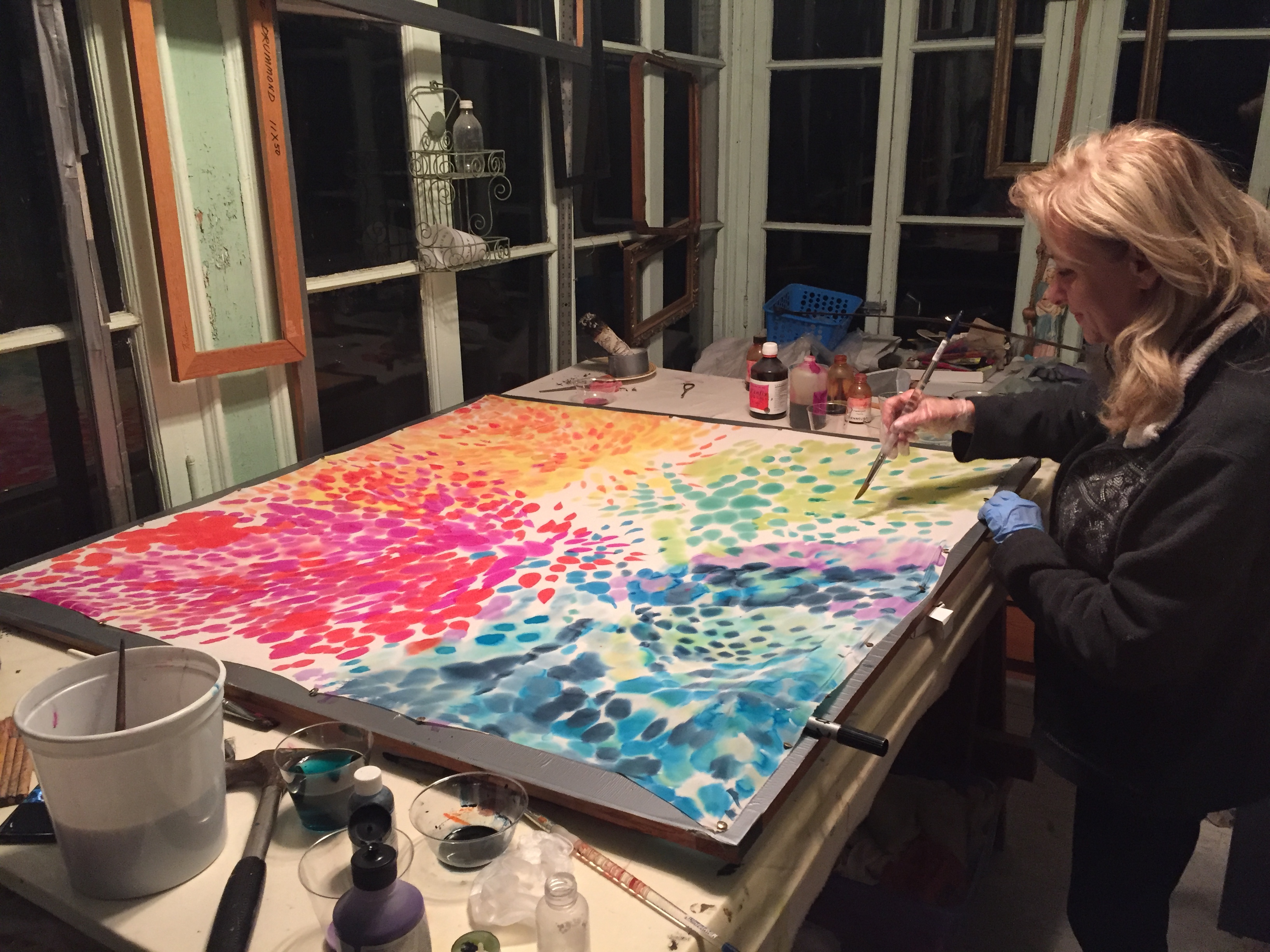
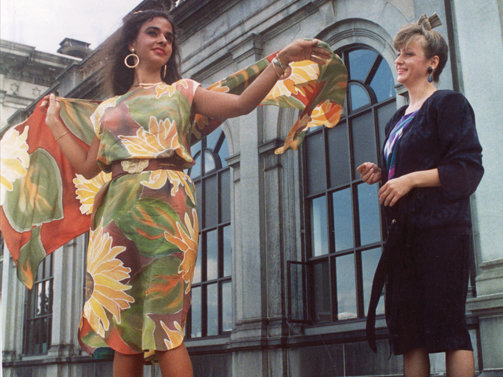
Many of Ms. Del Piano’s designs were colorful.
Her line of accessories won awards for excellence and creativity at the Philadelphia Dresses the World fashion expos in 1986 and ’87, and she was inducted into the Philadelphia Get to Know Us Fashion Hall of Fame in 1988. The Inquirer, Daily News, Los Angeles Times, and other outlets publicized her exhibits, and a fashion writer for Newsday called her scarves, with flower and bird patterns, “exquisite” in a 1986 story.
Some of her scarves were priced between $220 and $300 in 1986, and a black cape listed in 1988 at $495. In 1993, a gold lace-trimmed handkerchief was $45. A fellow artist exhibited with Ms. Del Piano at a Philadelphia festival and said in a fashion blog: “We watched her tie a scarf so many ways so fast it was like a magic act.”
Earlier, from 1976 to 1984, Ms. Del Piano worked as a program producer and public relations director at GBR-TV in Rome during the station’s glory years. She also did Italian voice-overs, interpretations, and translations for clients of all kinds.
Ms. Del Piano (right) smiles at a model wearing her designs at an event at Memorial Hall in Fairmount Park.
She served on the board of the nonprofit Enabling Minds, volunteered in Philadelphia as aCourt Appointed Special Advocate for Children, and raised funds for other organizations she championed. In a Facebook tribute, a friend said she was “bigger than life itself” with “a flare of the Italian opera star and the warmth of the Mother Earth itself.”
Her partner, Wainwright Ballard, said: “She was generous and empathetic. She took care of everyone, including those abandoned or forgotten by others.”
Gloria Del Piano was born Jan. 20, 1953, in Rome. She was artistic as a girl and always interested in spiritual growth and personal transformation. She studied sociology and business administration after high school in Italy, was certified by the Florida-based Barbara Brennan School of Healing in 2000, and led seminars in healing therapy for years.
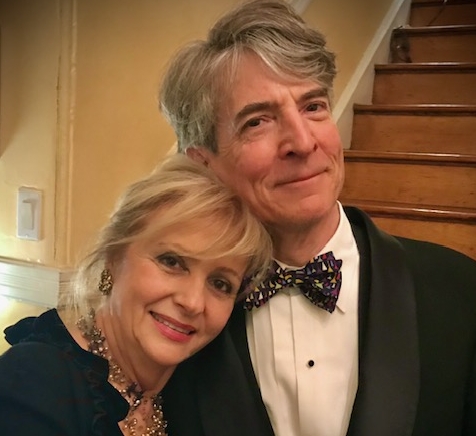
Ms. Del Piano and her partner, Wainwright Ballard, met in Chestnut Hill.
She married Roberto Borea in 1985, and they divorced in 1992. She met Ballard at the Mermaid Inn in Chestnut Hill, and they spent the last eight years dancing, traveling, and enjoying life together.
Ms. Del Piano doted on her family and friends in the United States and Italy, and returned often to Rome for reunions. She lived in Mount Airy and then a 20-room house in Germantown, and visitors marveled at her eclectic collection of art and antiques.
She enjoyed music, gardening, thrift shopping, and chatting with friends. Friends called her “a philosopher,” “a noble soul,” and “a magician in the kitchen.” She delighted in cooking and entertaining, Ballard said, and always sent guests home with armloads of leftovers.
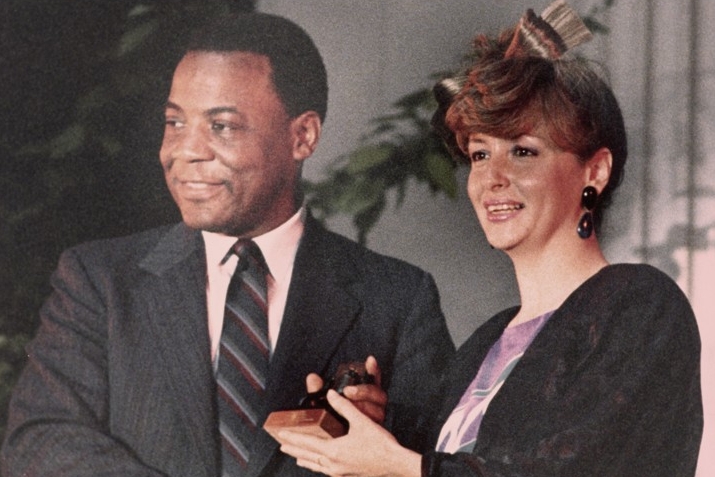
Ms. Del Piano receives an award from then-Mayor Wilson Goode at a fashion expo in Philadelphia.
Her “fabulous parties” were “fun and adventurous,” a friend said. Ms. Del Piano said on Facebook: “You never know how wonderful what you have is when you have it. It is when you miss it that we realize how lucky we were.”
A friend said her “optimism, tenacity, enthusiasm, kindness, beauty, and elegance will always be with us.” Another friend said: “My life has been made richer having known Gloria Del Piano.”
In addition to Ballard, Ms. Del Piano is survived by a brother, two sisters, and other relatives. Her former husband died earlier.
A funeral mass is to be held at 9:30 a.m. on Tuesday, Nov. 4, at St. Vincent de Paul Church, 109 E. Price St., Philadelphia, Pa. 19144.
Donations in her name may be made to Unite for Her, 22 E. King St., Malvern, Pa. 19355.
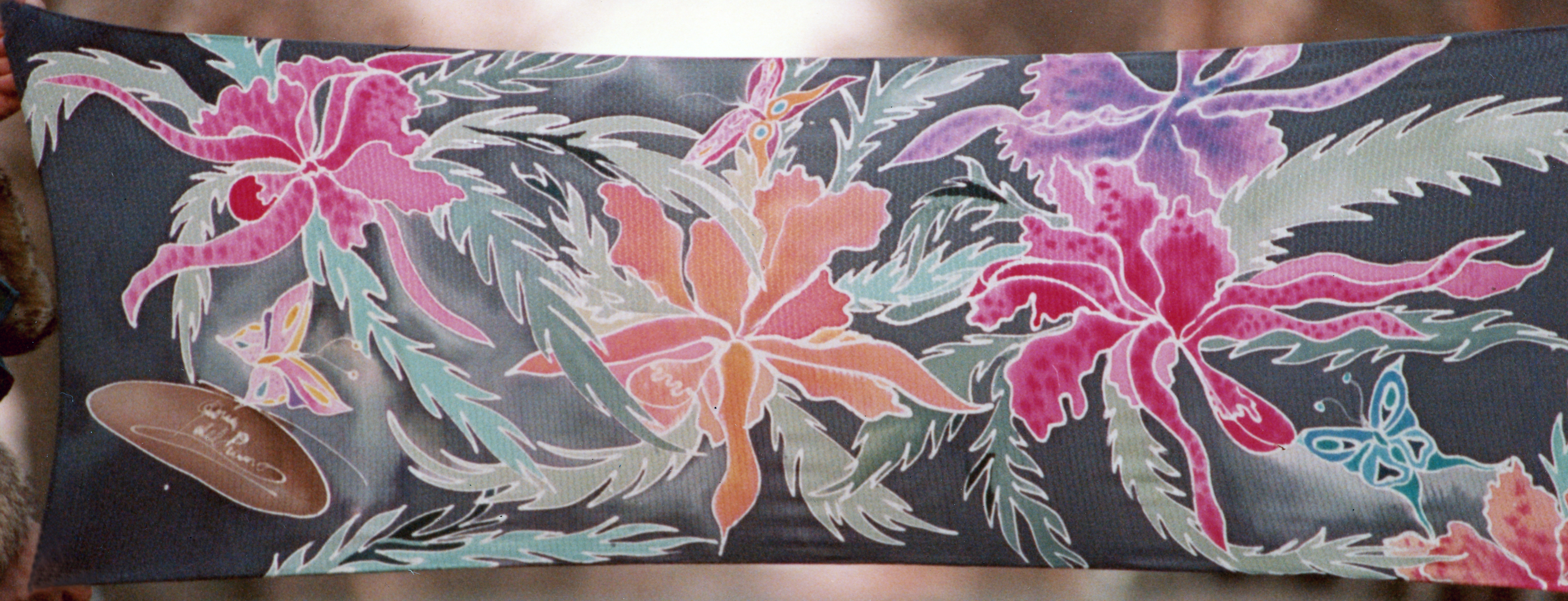
Many of Ms. Del Piano’s designs featured flowers and birds.
When it gets colder, it’s not only important to be mindful of your pets and your plants but also your home’s pipes and water heater.
Yes, those inanimate objects need extra care, too.
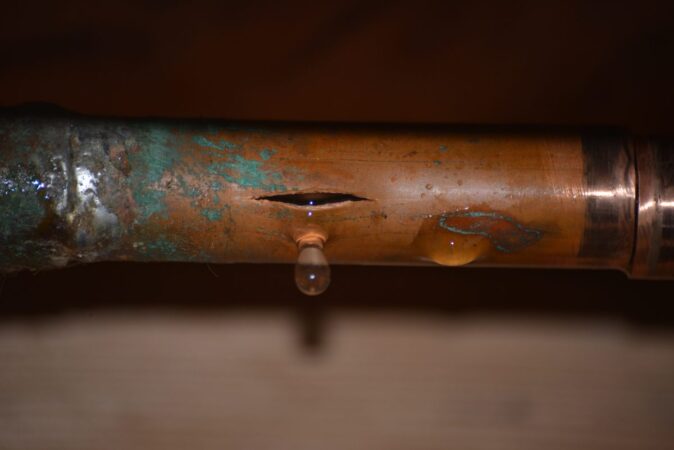
As temperatures drop across the region, the risk of your home’s pipes freezing increases. There are steps, however, that homeowners can take to help stop that from happening and help you avoid a hefty plumbing bill this winter.
Here’s a list of plumber-approved tips on how to keep a pipe from freezing, spotting a frozen one, and what to do if it bursts.
How to prevent your pipes from freezing
“It comes down to three main things: draining outside faucets, keeping pipes warm, and checking for leaks,” said Vincent Thompson, owner of Thompson Plumbing and Heating. Thompson is a master plumber of more than 50 years and for two decades taught plumbing at Dobbins Vocational School in North Philadelphia.
💧 Draining outside faucets
Over the summer, we use outside faucets and hoses to water the plants, rinse of sidewalks, or simply cool down. When the temperature dips, water can freeze and build pressure, ultimately causing a burst pipe, a situation far too common, according to Thompson.
He recommends disconnecting your hose (and storing it for the winter), shutting off the valve that feeds the faucet or spigot (usually found near the hot water heater), and letting the remaining water in the pipe drain out. You can leave the faucet or spigot slightly open, according to Thompson. Letting the faucet drip is also a good suggestion for inside fixtures.
“If it’s empty, it’ll never freeze,” Thompson said. “But if there’s water, it can expand and explode. Then you’ll come out in the spring to use your hose and the water will be shooting out of the wall.”
🌡️ Keep your pipes warm
When the freezing weather descends upon us, we bundle up to stay warm. Pipes need that treatment too. Ideally, the lowest you want to keep your thermostat set at is 50 degrees, but heating is expensive. According to Thompson, the absolute lowest you can go is 40 degrees, because your pipes will start freezing at 39 degrees.
Opening the cabinets underneath your bathroom sink can be a good way to keep pipes from getting too cold. And for the ones in extra-cold spots, using electrical heating tape or fitting them with foam and rubber sleeves is a good idea. Be sure to check for any leaks beforehand, because if water is accumulating, they won’t prevent a pipe from bursting and it will become an added step.
🚽 Check for leaks
“Every drop that goes down the drain will turn into an icicle and eventually can clog up the entire soil stack,” explained Thompson. Not addressing it can result in frozen pipes, flooding, and even water backing up through your toilet.
After 50 years of handling these cases, he advises looking at your water meter because sometimes the leak might not be obvious. Make sure no water sources are open, and look at the blue or red triangle (depending on your meter). If it’s turning that can be a sign of a leak.
If you suspect the culprit is your toilet, he recommends adding a couple of food dye drops into the tank. If the water in the bowl changes color, your suspicions are correct.
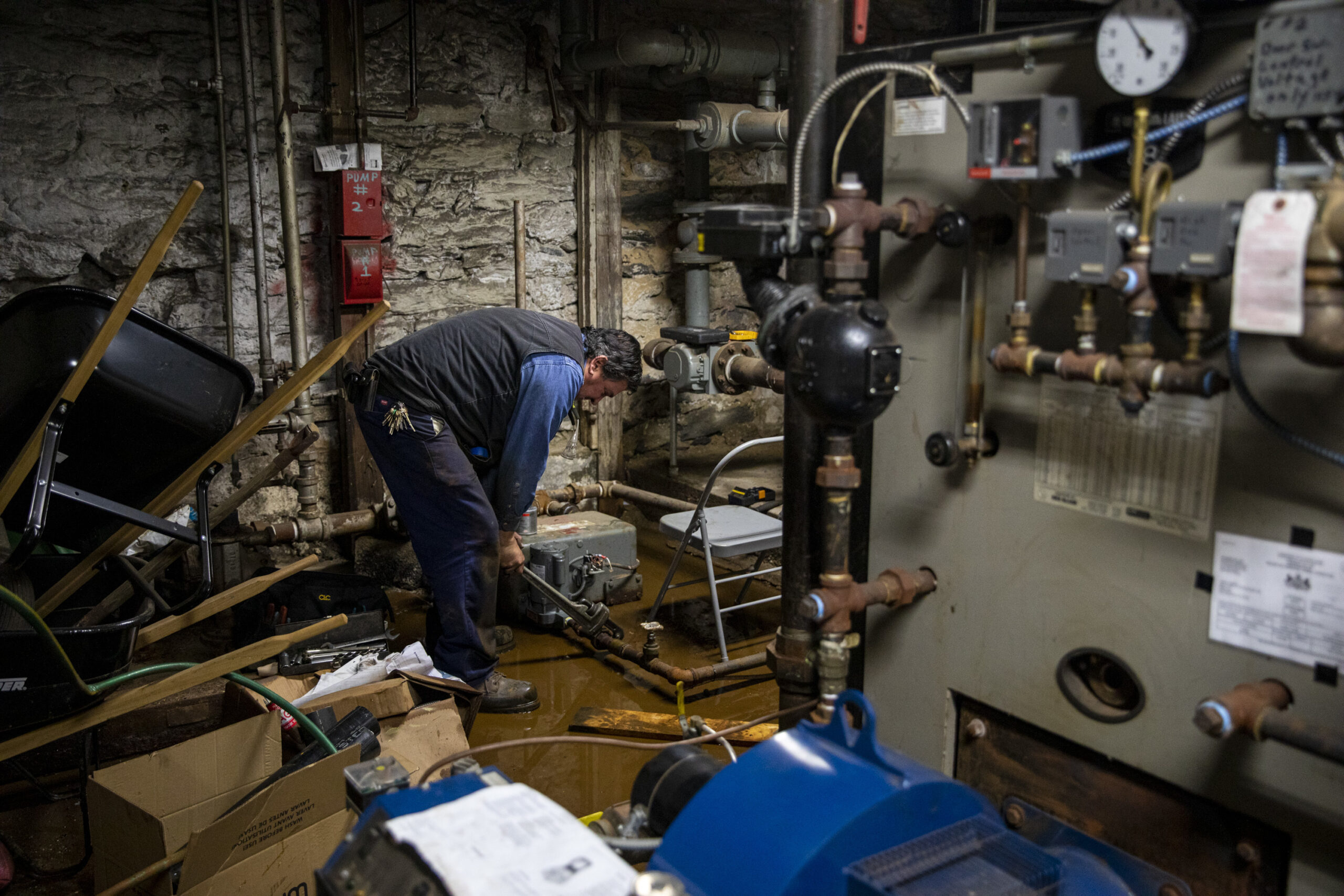
Andrew Gadaleta, contractor, works on getting the heat fixed at Visitation BVM School in Philadelphia in December 2021 so that students could return to school. Thieves broke into the school Tuesday morning, ripping copper pipes from the walls that caused flooding. The water rendered the school unusable for a week.
How to spot a frozen pipe
Your house is filled with water pipes, and while it’s not hard to figure out when you’re dealing with a frozen pipe, it can be tricky to figure out where the frozen section is. If you turn on a faucet and nothing comes out, you’re going to have to do a little detective work.
The first step should be to try all the other faucets in your house. If all the faucets in a room aren’t working, the freeze is likely in a split from the main pipe. If all the faucets on a floor aren’t working, the freeze is likely between where the first- and second-floor pipes separate. If all the faucets in your house aren’t working, then the freeze is probably near where the main pipe enters the house.
The frozen section of the pipe, if exposed, will sometimes have condensation over it. You’ll also be able to tell that it’s colder just by touching it.
How to thaw a frozen pipe
Before thawing a frozen section of pipe, you should open the faucet to relieve the water pressure and allow the water to escape once it thaws. You should also begin the thawing process close to the faucet and work your way to the blockage. If melted water and ice get caught behind the blockage, the chance that the pipe will burst increases.
One of the easiest ways to thaw a frozen pipe is with a hair dryer. You can also use hot towels or a heat lamp to warm up the pipe. Never use an open flame.
What to do if a pipe bursts
Don’t panic. The first thing you should do is shut off the main water line into your property. This will prevent your house from flooding. The main water valve is usually near your water meter. After you’ve done that, call your plumber. Locating and tagging the valve to your main water line ahead of time can help make the moment less stressful.