Category: Nation & World

  • Head of FBI’s New York field office to serve as co-deputy director after Bongino’s departure

    Head of FBI’s New York field office to serve as co-deputy director after Bongino’s departure

    WASHINGTON — The head of the FBI’s New York field office has been named co-deputy director of the bureau, replacing Dan Bongino following his recent departure, an FBI spokesperson said Friday.

    Christopher Raia, who helped lead the response to the deadly truck attack in New Orleans on New Year’s Day last year, was picked to run the New York office in April after having served as a top counterterrorism official at FBI headquarters. A former Coast Guard officer, Raia joined the FBI in 2003 and during the course of his two-decade career has investigated violent crime, drugs and gangs as well as overseen counterterrorism and national security investigations.

    As a career FBI agent, Raia is a more conventional selection for the FBI’s No. 2 job than was Bongino, a popular conservative podcaster who had previously served as a Secret Service agent but had never worked for the FBI until being selected by the Trump administration last year.

    Raia is expected to serve as co-deputy director alongside Andrew Bailey, the former Missouri attorney general who was named to the job last August. He is scheduled to start next week.

    He became the head of the New York field office after his predecessor, James Dennehy, who was reported to have resisted Justice Department efforts to scrutinize agents who participated in politically sensitive investigations, was forced to retire.

    Bongino announced last month that he was departing the bureau following a brief and tumultuous tenure. He officially ended his tenure last week.

    No immediate successor was named for Raia in New York.

  • Five Democratic-led states sue HHS over frozen welfare funding

    Five Democratic-led states sue HHS over frozen welfare funding

    Five Democratic-led states are suing the Trump administration for freezing their share of federal food, housing, and childcare assistance dollars, saying officials failed to justify the sweeping actions that could strip billions in aid from needy families.

    New York, along with California, Colorado, Illinois, and Minnesota, asked for a temporary restraining order that would allow them to continue receiving the funds, in a lawsuit filed Thursday evening with the United States District Court for the Southern District of New York.

    The states argued that the Administration for Children and Families, which is within the Department of Health and Human Services, provided no evidence of fraud and acted illegally by enacting sanctions within the three welfare programs without following processes laid out by law. The administration wrote to the states earlier this week that the freeze was necessary to prevent “potential” fraud but didn’t detail what it meant, according to letters viewed by the Washington Post.

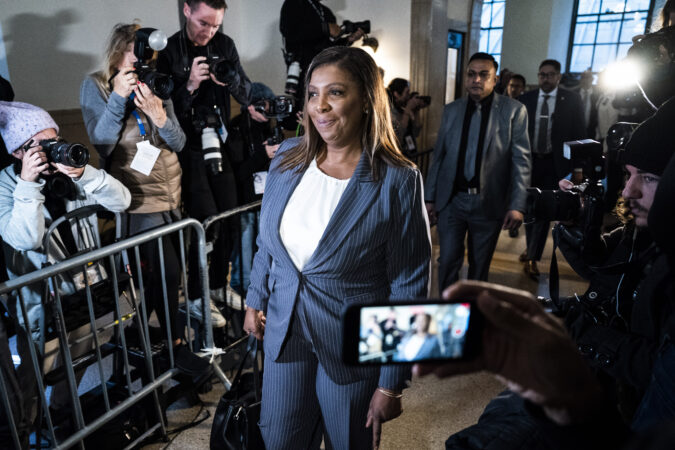
    “I will not allow this administration to play political games with the resources families need to help make ends meet,” New York Attorney General Letitia James (D) said in a statement.

    State officials and child advocates have said the funding freeze would wreak havoc on families relying on childcare aid and could cause ripple effects if parents are forced to quit their jobs to care for children or daycare centers shut down permanently.

    HHS General Counsel Mike Stuart wrote on X late Thursday that the agency “stands by its decision to take this action to defend American taxpayers.”

    “We identified serious concerns in these states that warranted immediate review and action,” he wrote. “These same officials were complicit in this perpetuation of this fraud and allowing it to happen.”

    Minnesota was already in the administration’s crosshairs amid investigations into billions of federal dollars authorities say were fraudulently claimed by individuals and groups purporting to help the state’s low-income population. HHS broadened its crackdown this week, saying nearly $2.4 billion in childcare grants have been frozen to the five states, as well as $7.35 billion in temporary grants for needy families and $869 million in social services funds. These programs help cover childcare, housing, food, and home utility costs for families with low incomes.

    Democratic leaders in those states blasted the move as politically motivated. Before the lawsuit was filed Thursday, New York Gov. Kathy Hochul (D) told reporters that the administration is “coming after Democratic governors, five of us, for no reason at all.”

    “I want them to know this, that you may think you’re punishing me as a Democrat, but this is a county program,” she said, referring to safety net programs in New York partly funded with federal dollars. “We are simply the pass-through. The money goes to providers selected by the counties. They run this.”

    Under the freeze, the states must submit justification and receipts before being able to collect funds from any of the programs. The administration wrote in letters to the states that the freeze wouldn’t be lifted until they put in place more verification measures to ensure the funds are being used properly for eligible recipients.

    A letter from HHS’s Administration for Children and Families to Colorado said the administration is committed to “rooting out fraud” and expressed concern that Colorado is providing “illegal aliens” government benefits.

    Fraud investigations into the three programs targeted by the administration are typically handled by states, former HHS officials said. New York’s Office of the Welfare Inspector General reported it secured nearly $600,000 in fraud-related restitution in 2024, for example.

    The administration froze childcare funding to nearly a dozen daycare facilities in Minnesota in late December after a viral video alleged they were collecting funds without caring for children — claims the state has rebutted. Federal prosecutors have charged 92 people with committing fraud in other, Medicaid-funded programs in the state.

    All five states involved in the lawsuit filed Thursday are among more than two dozen states that previously sued the Trump administration over withholding other federal funds including for education, disaster relief and public health, arguing the actions jeopardize critical services.

  • South Carolina measles outbreak grows by nearly 100, spreads to North Carolina and Ohio

    South Carolina measles outbreak grows by nearly 100, spreads to North Carolina and Ohio

    South Carolina’s measles outbreak exploded into one of the worst in the U.S., with state health officials confirming 99 new cases in the past three days.

    The outbreak centered in Spartanburg County grew to 310 cases over the holidays, and spawned cases in North Carolina and Ohio among families who traveled to the outbreak area in the northwestern part of the state.

    State health officials acknowledged the spike in cases had been expected following holiday travel and family gatherings during the school break. A growing number of public exposures and low vaccination rates in the area are driving the surge, they said. As of Friday, 200 people were in quarantine and nine in isolation, state health department data shows.

    “The number of those in quarantine does not reflect the number actually exposed,” said Dr. Linda Bell, who leads the state health department’s outbreak response. “An increasing number of public exposure sites are being identified with likely hundreds more people exposed who are not aware they should be in quarantine if they are not immune to measles.”

    Since the outbreak started in October, Bell has warned that the virus was spreading undetected in the area. Hundreds of school children have been quarantined from school, some more than once.

    South Carolina is one of two active hot spots for measles. The other outbreak is on the Arizona-Utah border, where 337 people have gotten measles since August.

    Last year was the nation’s worst year for measles spread since 1991, end-of-year data from the Centers for Disease Control and Prevention shows. The U.S. confirmed 2,144 cases across 44 states.

    And as the one-year anniversary of the Texas-New Mexico-Oklahoma outbreak approaches — which sickened at least 900 people and killed three — health experts say the vaccine-preventable virus is on the verge of making a lasting comeback in the U.S.

    At that point, the U.S. would lose its status of having eliminated local spread of the virus, as Canada did in November. International health experts say the same strain of measles is spreading across the Americas.

  • US and Venezuela take initial steps toward restoring relations after Maduro’s ouster

    US and Venezuela take initial steps toward restoring relations after Maduro’s ouster

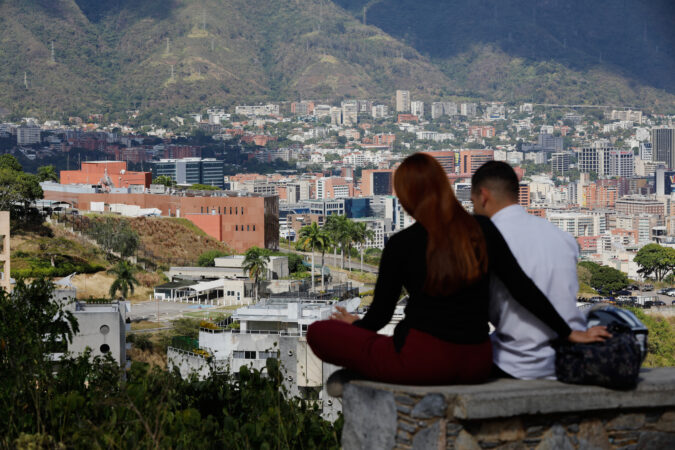
    GUATIRE, Venezuela — The United States and Venezuela said Friday they were exploring the possibility of restoring diplomatic relations, as a Trump administration delegation visited the South American nation.

    The visit marks a major step toward warming icy relations between the historically adversarial governments. U.S. military forces captured former President Nicolás Maduro last weekend in Caracas and took him to New York to face federal charges of drug-trafficking.

    The small team of U.S. diplomats and a security detail traveled to Venezuela to make a preliminary assessment about the potential reopening of the U.S. Embassy in Caracas, the State Department said in a statement.

    Venezuela’s government on Friday said it plans to send a delegation to the U.S. but it did not say when. Any delegation traveling to the U.S. will likely require sanctions to be waived by the Treasury Department.

    In a statement, the government of acting Venezuelan President Delcy Rodríguez said it “has decided to initiate an exploratory process of a diplomatic nature with the Government of the United States of America, aimed at the re-establishment of diplomatic missions in both countries.”

    President Donald Trump has placed pressure on Rodriguez and other former Maduro loyalists now in power to advance his vision for the future of the nation — a major aspect of which would be reinvigorating the role of U.S. oil companies in a country with the worlds’ largest proven reserves of crude oil.

    The U.S. and Venezuela cut off ties in 2019, after the first Trump administration said opposition leader Juan Guaidó was the rightful president of Venezuela, spiking tensions. Despite the assertions, Maduro maintained his firm grip on power.

    The Trump administration shuttered the embassy in Caracas and moved diplomats to nearby Bogotá, Colombia. U.S. officials have traveled to Caracas a handful of times since then. The latest visit came last February when Trump’s envoy for special missions, Richard Grenell met with Maduro. The visit resulted in six detained Americans being freed by the government.

  • In unprecedented move, NASA cuts short space mission over astronaut’s health

    In unprecedented move, NASA cuts short space mission over astronaut’s health

    For the first time in the International Space Station’s history, NASA said it was cutting short a crew mission after an astronaut “experienced a medical situation.”

    “It’s in the best interests of our astronauts to return Crew-11 ahead of their planned departure,” NASA Administrator Jared Isaacman told reporters at a news conference Thursday, without naming the astronaut or specifying what the problem was.

    The four-person Crew-11 is made up of U.S. astronauts Zena Cardman and Mike Fincke, along with Japan’s Kimiya Yui and Russia’s Oleg Platonov. Together, they have spent about five months aboard the space station and had planned to stay until mid-February.

    On Wednesday, they were conducting scientific research, ahead of a planned space walk, when one of the astronauts had a medical issue that required help from the other crew members and onboard medical equipment, NASA officials said.

    “The astronaut is absolutely stable. This is not an emergent evacuation,” said NASA’s Chief Health and Medical Officer, J.D. Polk.

    He said the issue also did not reflect a problem with the space station environment and “was not an injury that occurred in the pursuit of operations.”

    Although the Space Station has medical equipment onboard, he said the issue was sufficient to warrant bringing the astronaut back for a full work-up and diagnosis at a facility with more extensive hardware and without the challenges of working in microgravity.

    “Always we err on the side of the astronaut’s health and welfare. And in this particular case, we are doing the same,” he said.

    The crew will return to Earth in the “coming days,” Isaacman said, with plans for a parachute-assisted splashdown off the coast of California. And because of that early departure, Crew-12, which had been scheduled to take over in mid-February, could be deployed earlier.

    “This is exactly what our astronauts train and prepare for,” he added.

    Crew members live and work aboard the International Space Station, orbiting Earth 16 times a day. Run as an international partnership by five space agencies, the station has had more than 290 visitors representing 26 countries since it was assembled in 1998.

  • Trump meets with oil executives at the White House on Friday, seeking investments in Venezuela

    Trump meets with oil executives at the White House on Friday, seeking investments in Venezuela

    WASHINGTON — President Donald Trump met with oil executives at the White House on Friday in hopes of securing $100 billion in investments to revive Venezuela’s ability to fully tap into its expansive reserves of petroleum — a plan that rides on their comfort in making commitments in a country plagued by instability, inflation and uncertainty.

    Since the U.S. military raid to capture former Venezuelan leader Nicolás Maduro on Saturday, Trump has quickly pivoted to portraying the move as a newfound economic opportunity for the U.S., seizing tankers carrying Venezuelan oil, saying the U.S. is taking over the sales of 30 million to 50 million barrels of previously sanctioned Venezuelan oil and will be controlling sales worldwide indefinitely.

    On Friday, U.S. forces seized their fifth tanker over the past month that has been linked to Venezuelan oil. The action reflected the determination of the U.S. to fully control the exporting, refining and production of Venezuelan petroleum, a sign of the Trump administration’s plans for ongoing involvement in the sector as it seeks commitments from private companies.

    It’s all part of a broader push by Trump to keep gasoline prices low. At a time when many Americans are concerned about affordability, the incursion in Venezuela melds Trump’s assertive use of presidential powers with an optical spectacle meant to convince Americans that he can bring down energy prices.

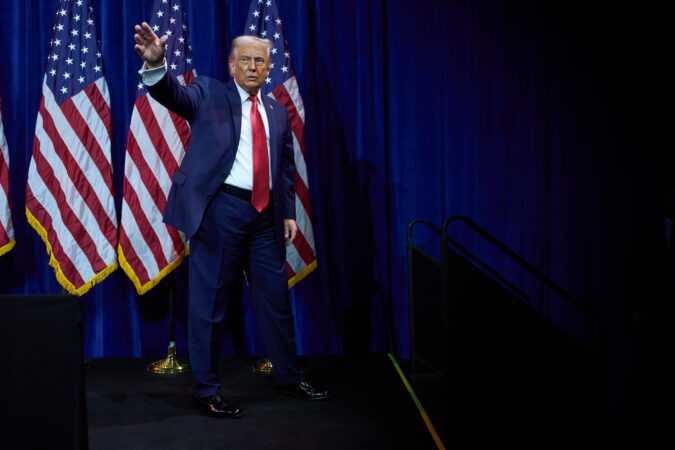
    “At least 100 Billion Dollars will be invested by BIG OIL, all of whom I will be meeting with today at The White House,” Trump said Friday in a pre-dawn social media post.

    Trump met with executives from 17 oil companies, according to the White House. Among the companies attending are Chevron, which still operates in Venezuela, and ExxonMobil and ConocoPhillips, which both had oil projects in the country that were lost as part of a 2007 nationalization of private businesses under Maduro’s predecessor, Hugo Chávez.

    The president is meeting with a wide swath of domestic and international companies with interests ranging from construction to the commodity markets. Other companies slated to be at the meeting include Halliburton, Valero, Marathon, Shell, Singapore-based Trafigura, Italy-based Eni, and Spain-based Repsol.

    Large U.S. oil companies have so far largely refrained from affirming investments in Venezuela as contracts and guarantees need to be in place. Trump has suggested on social media that America would help to backstop any investments.

    Venezuela’s oil production has slumped below one million barrels a day. Part of Trump’s challenge to turn that around will be to convince oil companies that his administration has a stable relationship with Venezuela’s interim President Delcy Rodríguez, as well as protections for companies entering the market.

    Secretary of State Marco Rubio, Energy Secretary Chris Wright and Interior Secretary Doug Burgum are slated to attend the oil executives meeting, according to the White House.

    Meanwhile, the United States and Venezuelan governments said Friday they were exploring the possibility of restoring diplomatic relations between the two countries, and that a delegation from the Trump administration arrived to the South American nation on Friday.

    The small team of U.S. diplomats and diplomatic security officials traveled to Venezuela to make a preliminary assessment about the potential re-opening of the U.S. Embassy in Caracas, the State Department said in a statement.

    Trump also announced on Friday he’d meet with President Gustavo Petro in early February, but called on the Colombian leader to make quick progress on stemming flow of cocaine into the U.S.

    Trump, following the ouster of Maduro, had made vague threats to take similar action against Petro. Trump abruptly changed his tone Wednesday about his Colombian counterpart after a friendly phone call in which he invited Petro to visit the White House.

  • Swiss bar owner put in pre-trial detention over the fatal fire at an Alpine resort

    Swiss bar owner put in pre-trial detention over the fatal fire at an Alpine resort

    MARTIGNY, Switzerland — Switzerland held a national day of mourning on Friday for the 40 people who died in an Alpine bar fire during a New Year’s Eve celebration, as prosecutors requested one of the managers to be placed in pretrial detention.

    Valais region’s chief prosecutor Beatrice Pilloud said in a statement the detention of the man was needed to avoid a “risk of flight.” The man’s wife and co-manager will remain free under judicial supervision, the statement said.

    A Swiss business register lists French couple Jacques and Jessica Moretti as the owners of Le Constellation bar, in the Alpine resort of Crans-Montana, where a fire broke out less than two hours after midnight on Jan. 1. As well as the fatalities, 116 people were injured, many of them seriously.

    Local media reported that Moretti was being held in custody pending the court’s decision after the couple were questioned by prosecutors in Sion on Friday morning.

    Swiss authorities have opened a criminal investigation into the owners, who are suspected of involuntary homicide, involuntary bodily harm, and involuntarily causing a fire.

    A memorial service and a minute’s silence marked Friday’s national homage, while church bells across Switzerland rang out for five minutes, beginning at 2 p.m. Across the country, people gathered to light candles, put down flowers for the victims and followed the national ceremony that was livestreamed on public television.

    Speaking at the memorial ceremony in Martigny, Swiss President Guy Parmelin said that “the memory of that terrible night illuminates the faces of the 156 victims, their happy days, their carefree spirit.”

    He added: “Our country is appalled by this tragedy. It bows before the memory of those who are no longer with us. It stands by the bedside of those who are about to embark on a long road to recovery.”

    Investigators have said they believe sparkling candles atop Champagne bottles ignited the fire when they came too close to the ceiling. Authorities are looking into whether soundproofing material on the ceiling conformed with regulations and whether the candles were permitted for use in the bar. Fire safety inspections hadn’t been carried out since 2019.

    The severity of burns made it difficult to identify some victims, requiring families to supply authorities with DNA samples. Police have said many of the victims were in their teens to mid-20s.

    An autopsy has been ordered for five of the six Italian victims and has been delegated to the prosecutors’ offices in Milan, Bologna, and Genoa, where the bodies of the victims have been returned.

    “What happened is not a disaster: It’s the result of too many people who didn’t do their job or who thought they were making easy money,” Italian Premier Giorgia Meloni said during a press conference on Friday. “Those responsible must be identified and prosecuted.”

    Meloni said the State Attorney General’s Office has contacted the Swiss Attorney General to follow the investigation. She also confirmed that the Rome Prosecutor’s Office has started a separate probe.

    “The families have my word that they will not be left alone while they seek justice,” she added.

    The Paris prosecutor’s office Monday announced that it was opening a probe to assist the Swiss investigation and make it easier for families of French victims to communicate with Swiss investigators. Nine French citizens were killed, the youngest of them aged 14, and 23 others were injured.

  • Trump says he will meet Machado — and would accept Nobel Peace Prize from her

    Trump says he will meet Machado — and would accept Nobel Peace Prize from her

    President Donald Trump said he will meet with Nobel Peace Prize winner María Corina Machado next week — and that he would accept the award she has said she wants to share with him.

    “I understand she’s coming in next week sometime, and I look forward to saying hello to her,” the president said of the Venezuelan opposition leader during an interview with Fox News’s Sean Hannity that aired Thursday. Trump added that he heard Machado wants to give him the prize, “and that would be a great honor.”

    The White House late Thursday did not provide details about Machado’s trip or specify what issues she and Trump would discuss.

    In an interview with Hannity this week in which she heaped praise on Trump, Machado said she had not spoken to the U.S. president since October, when she was announced as the latest Nobel laureate.

    She had been in hiding in Venezuela during President Nicolás Maduro’s last days in power and turned up in Oslo, where her daughter accepted the prize on her behalf. But she promised to return to her country and called for elections to replace Maduro.

    “But I do want to say today, on behalf of the Venezuelan people, how grateful we are for [Trump’s] courageous mission,” Machado said on Hannity’s show this week, adding that she and the Venezuelan people want to “share” the prize with Trump after the U.S. military seized Maduro and his wife and brought them to New York to stand trial on narco-terrorism charges.

    Trump has openly coveted and publicly lobbied for the Nobel Peace Prize, claiming to have “solved” a number of international conflicts. Several world leaders have backed his claims.

    Machado, a former National Assembly member, won the opposition primary in Venezuela two years ago but was barred from running by Maduro in the general election. Maduro claimed victory over the candidate Machado backed, but ballot audits by the Washington Post and independent monitors show the reported election result was invalid.

    Following the U.S. operation to arrest Maduro on Saturday, Trump said the United States would “run” Venezuela with the cooperation of Delcy Rodríguez, Maduro’s vice president, who has become the country’s acting leader. Trump has not given a timeline for when elections would be held and said he did not believe Machado had the support to run the country after Maduro’s removal.

    “I think it would be very tough for her to be the leader,” Trump told reporters last weekend. “She doesn’t have the support within, or the respect within, the country. She’s a very nice woman, but she doesn’t have the respect.”

    Two people close to the White House previously told The Post that Trump was not willing to support Machado because she accepted the Peace Prize. “If she had turned it down and said, ‘I can’t accept it because it’s Donald Trump’s,’ she’d be the president of Venezuela today,” one of the people said, speaking on the condition of anonymity to discuss a sensitive situation.

    Machado told Hannity she believed that if elections were held, she would win the presidency in a landslide.

  • Russia unleashes nuclear-capable missile in latest Ukraine attack

    Russia unleashes nuclear-capable missile in latest Ukraine attack

    KYIV — Russia launched an Oreshnik medium-range ballistic missile, which is capable of carrying nuclear warheads, as part of a large-scale aerial assault on Ukraine overnight Friday, the Russian Defense Ministry said — a menacing reminder to the world of Moscow’s huge nuclear arsenal at a moment when a peace plan promoted by President Donald Trump appears to be faltering.

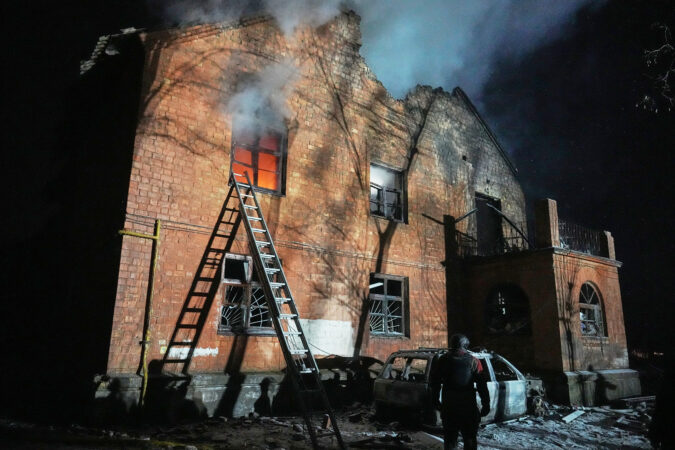
    The latest Russian aerial barrage largely pummeled Kyiv, leaving close to half a million people without electricity in Kyiv and the surrounding region, officials said, as temperatures plummeted — prompting Mayor Vitali Klitschko to urge residents to temporarily evacuate the capital if possible.

    Klitschko said nearly 6,000 apartment buildings — half of the city’s total — were without heat. Water supply was disrupted in some districts, he said, and he urged residents, “who have the opportunity to temporarily leave the city” to find “alternative sources of power and heat.”

    Russian forces first used the Oreshnik — meaning “hazelnut tree” — in an attack on Ukraine in November 2024, creating concern in Western capitals over Moscow’s potential use of nuclear-capable weapons in the conflict. The missile fired overnight Friday did not carry a nuclear payload.

    Countries friendly to Moscow, such as China, have warned Russia against using nuclear weapons in Ukraine, meaning Russian President Vladimir Putin would risk wide international condemnation even by using a small-scale “tactical” nuclear weapon. Depending on the target, a nuclear strike could also pose the danger of releasing radiation next door to Putin’s own country.

    The Russian Defense Ministry said that the Oreshnik was launched in retaliation for a claimed attack by Ukrainian drones on one of Putin’s residences — an attack that Trump, citing U.S. intelligence, now says never happened.

    Trump initially expressed fury over the alleged drone strike after Putin told him that his residence in the northwestern Novgorod region had been targeted by drones. Kyiv, however, forcefully denied the attack, and local residents did not post anything about it on social media, despite Russia’s claims that 91 drones had been involved and shot down. Days later, Trump rejected Moscow’s claims.

    In its statement, on the Telegram messaging platform, the Russian Defense Ministry called the alleged drone incident a “terrorist attack.”

    Trump told reporters earlier this week: “I don’t believe that strike happened.”

    Trump has been pushing an initiative to halt Russia’s war but with little indication that Putin is willing to support any ceasefire. After a meeting in Paris this week, European leaders and Ukrainian President Volodymyr Zelensky said they had made progress on plans to provide postwar security guarantees and that their initiative was ready for Trump’s approval. Russia, however, quickly rejected any presence of Western peacekeeping forces in Ukraine, a core pillar of the security guarantees.

    On Friday, Ukrainian officials did not specify whether an Oreshnik had been used, but Zelensky later said in a social media post that an Oreshnik had been part of Russia’s overnight aerial assault.

    Ukraine’s security services, the SBU, said that its investigators had found debris indicating the missile was an Oreshnik — including the “stabilization and guidance unit,” which was described as the “brain” of the missile, and “parts from the engine unit.”

    The country’s western air command said in a Facebook post that “the enemy launched a missile strike on infrastructure facilities in Lviv using a ballistic missile.”

    “The air target was moving at a speed of about 13,000 kilometers per hour along a ballistic trajectory,” the air command said. “The type of missile with which the Russian aggressors attacked the city will be established after studying all its elements.”

    Ukrainian media reported six loud explosions in the Lviv region, one after another, shortly before midnight.

    In a Telegram post, Ukraine’s air force said that a “medium-rаnge ballistic missile” was launched from Russia’s Kapustin Yar test site, in the Astrakhan region on the Caspian Sea.

    Ukrainian Foreign Minister Andrii Sybiha said the possible use of an Oreshnik near Ukraine’s border with European Union and NATO member Poland was “a grave threat to the security on the European continent and a test for the transatlantic community.”

    “We demand strong responses to Russia’s reckless actions,” Sybiha wrote on X.

    “It is absurd that Russia attempts to justify this strike with the fake ‘Putin residence attack’ that never happened,” he wrote, adding that Putin used the Oreshnik “in response to his own hallucinations — this is truly a global threat.”

    Alexander Gabuev, director of the Carnegie Russia Eurasia Center, said that Russia’s use of the Oreshnik as a “high precision kinetic weapon with normal warheads” did not make a great deal of sense, since the destruction it caused was “limited.”

    Instead, Gabuev said it was potentially “a signal” — that in striking the Lviv region in far western Ukraine “no part of the country is immune.” It also could be a warning to Western leaders that any peacekeeping contingent sent to Ukraine would be vulnerable.

    “The message could be both to undermine Ukrainian morale but also to show that, look, if you place Western military, it will not be immune, because we have multiple ways to reach these troops,” Gabuev said in an interview.

    In addition to the Oreshnik, Ukraine’s air force said that the Russian attack involved 242 drones “of various types” and 36 missiles, including 13 ballistic missiles. In total, the air force said that 18 missiles and 16 drones pummeled 19 locations.

    “The main direction of the attack was Kyiv region,” the air force said. Air raid alerts in the capital lasted until the early morning hours on Friday, with explosions ringing out regularly — as Ukrainian antiaircraft defenses countered the aerial assault and some of the drones and missiles hit their targets.

    At least four people died and 22 were injured in Kyiv, Ukraine’s state emergency service said.

    Among those killed was a first responder, Serhiy Smolyak. “When the emergency medical team arrived at the scene of the shelling of a residential building, the enemy launched a second strike,” Ukrainian Health Minister Viktor Liashko wrote on social media.

    The damage to Kyiv’s critical infrastructure was extensive, city officials said. Tymur Tkachenko, head of Kyiv’s military administration, said that at least 50 buildings, four educational institutions and 18 cars were damaged, as well as “more than 1,000 broken windows.” A Russian drone also damaged the Qatari Embassy in Kyiv, Zelensky said.

    The difficult energy situation was made worse as temperatures across Ukraine were forecasted to remain well below freezing.

    “This is one of the most difficult attacks on the city,” Tkachenko said. This was in part due to “the challenging weather,” he said, which the Russians were “counting on,” hoping that “we will freeze and our services will collapse.”

    Klitschko warned Kyiv residents that the cold weather would not let up for some time.

    “City services are operating in emergency mode,” the mayor wrote on Telegram. “And the weather conditions, unfortunately, are forecast to be difficult in the coming days.”

  • Renee Good’s wife says she was supporting neighbors when killed by ICE

    Renee Good’s wife says she was supporting neighbors when killed by ICE

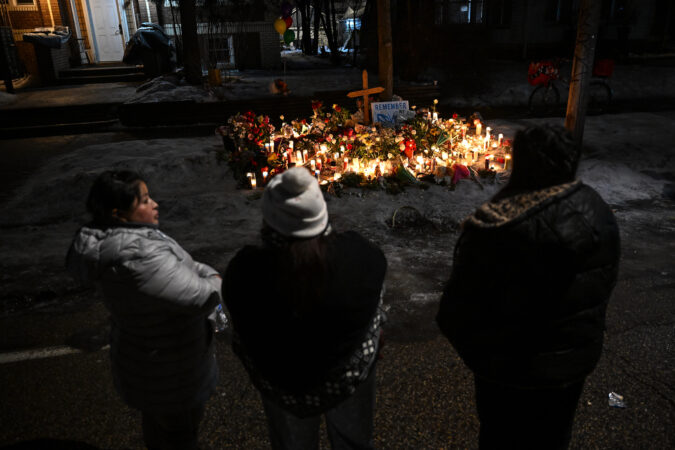
    MINNEAPOLIS — Renee Nicole Good and her wife had “stopped to support our neighbors” when she was fatally shot by an ICE officer in a confrontation on a residential street Wednesday, her wife said in a statement.

    The couple had come to Minneapolis almost a year ago, looking for a place that they and their 6-year-old son could feel comfortable.

    “On Wednesday, January 7, we stopped to support our neighbors. We had whistles. They had guns,” Rebecca Good said in a statement Friday.

    “We were raising our son to believe that no matter where you come from or what you look like, all of us deserve compassion and kindness,” the statement said. “Renee lived this belief every day. She is pure love. She is pure joy. She is pure sunshine.”

    Good, 37, was shot and killed Wednesday morning blocks from her home by an ICE agent, who federal officials say fired in self-defense. Details of the shooting, which was captured in videos by private citizens, are in dispute.

    Tricia McLaughlin, a spokesperson for the Department of Homeland Security, told Fox News on Thursday that Good “was stalking agents all day long, impeding our law enforcement.” Asked by the Washington Post what she was basing that description on, McLaughlin said the information came from “firsthand accounts” from law enforcement officers who had been in contact with Good.

    In interviews this week, friends and family members painted a picture of a woman who lived a quiet life not shaped by overt activism — a sharp contrast to comments by Vice President JD Vance, who blamed Good for her own death, and Homeland Security Secretary Kristi L. Noem, who said Good’s actions amounted to “an act of domestic terrorism.”

    Noem’s comments, and the FBI’s apparent move to block state investigators from the probe into the shooting, show the administration has “already come to a conclusion” about what it wants the inquiry to find, Minneapolis Mayor Jacob Frey said Friday.

    “From the very beginning, they’re calling the victim a domestic terrorist, they’re calling the actions of the agent involved as some form of defensive posture,” Frey said from the Minneapolis City Hall rotunda. “We know they’ve already determined much of the investigation.”

    Good’s family members have said they do not believe she was an aggressive activist tailing ICE officers. She had just dropped her son at school, they said. Her father, Tim Ganger, in a brief interview Wednesday, said she got “caught up in a bad situation. I think she was just caught in the crossfire.”

    Videos show Good’s maroon Honda Pilot parked across the road as U.S. Immigration and Customs Enforcement vehicles approach. ICE agents then confront her, demanding she get out of her car. A frame-by-frame analysis by the Post of the footage, however, raises questions about the accounts of administration officials. The SUV did move toward the ICE agent as he stood in front of it. But the agent was able to move out of the way and fire at least two of three shots from the side of the vehicle as it veered past him, according to the analysis.

    Good’s family and friends describe her as a devoted mother to her three children, an artist with a prizewinning talent for poetry who had weathered personal difficulties, including the death of her second husband, a military veteran who suffered from post-traumatic stress disorder.

    She was “a devoted Christian who took part in youth mission trips to Northern Ireland when she was younger,” said her first husband, who spoke on the condition of anonymity out of concern for the safety of his daughter, 15, and son, 12. “She loved to sing and studied vocal performance in college.”

    Good grew up in Colorado Springs. She attended Coronado High School, sang in the school’s show choir and participated in a school group called Community Crew dedicated to learning practical skills like cooking, according to the yearbook. When she graduated in 2006, Good won “Best Personality.”

    “When I found out that I had won, I was like ‘this is pretty flippin’ sweet!’” she told yearbook staff.

    Good attended Metropolitan State University of Denver briefly in 2014 and 2015. After she and her first husband divorced, he said Good married Timmy Macklin Jr., who served in the U.S. Air Force. In 2019, she began studying creative writing at Old Dominion University in Virginia.

    “She was his heart,” her former brother-in-law Joseph Macklin, who lives near Knoxville, Tenn., said of Good and his brother. He described her as “a great and loving mother.”

    One of her professors, Kent Wascom, director of Old Dominion’s MFA and creative writing program, recalled her as a poet studying how to improve her fiction writing, first in a class and then an advanced workshop. Unlike some of her peers, Good never talked about politics, Wascom said, focusing instead on “realist fiction” about those very different from her, from an elderly woman to a veteran.

    “She consistently sought to write outside of her experience,” he said. “She was a really warm presence but not a show-off. She never made a class about herself, even when her work was the focus of a workshop.”

    By then, Good was older than many of her classmates, pregnant with her third child and working to pay for school (as a dental assistant and at a credit union, her first husband said). “My memory of Renee is how much she tried to connect with her peers and support them,” Wascom said. He recalled how Good later brought her newborn son to meet him.

    By 2020, Good had won a prestigious prize for one of her poems, an honor Wascom said demonstrated her promise. She graduated with a bachelor’s degree in English that December.

    In April 2021, Good met a professional photographer named Charles W. Winslow at an Old Dominion football game that he was covering. She wanted advice on how to incorporate photography into covers for book projects she had planned. He said she was a gifted student and accompanied him on many of his professional assignments. But he also remembered her kindness.

    “As a friend she was kindhearted and always helping others in need,” Winslow said. “She didn’t care of race, creed, color. If she had $10 in her pocket, she would give a homeless person $9 that she passes on the street.”

    In 2023, Timmy Macklin died at the age of 36, and Good became primarily a stay-at-home mom, her first husband said.

    Joseph Macklin said Good made an effort to keep her son in touch with his family back in Tennessee: “She always brought him to see us. She was so kindhearted.”

    After she met and married Rebecca Good, 40, the couple settled in Kansas City, Mo., and crafted a quiet life.

    As a gay couple living in a red state, they weren’t overtly political, at least among the residents of their quiet street in the Waldo neighborhood, their neighbor Jennifer Ferguson recalled Thursday. But after Donald Trump was reelected in 2024, the two broke their lease and told Ferguson they were moving to Canada because of the political situation.

    “[Becca] said, ‘We’re getting out,’ ” Ferguson said. “‘We can go to Canada until we figure out what we are going to do.’”

    The couple lived in the neighborhood for only a short time but made an impression on Ferguson, 41, an administrative assistant. Becca Good had sold a home improvement business before they moved in, so she mostly stayed home with their son, cooking and mowing the lawn. Renee Good told Ferguson she was studying for a master’s degree.

    The two families exchanged Christmas treats and their kids played together, she said.

    They were “just such nice people” and “great parents” to their son, then in preschool, Ferguson said. Both were attentive, quick to enforce rules or stop an activity — like splashing in a kiddie pool — when the little boy seemed overly tired. When they moved away, they gave Ferguson their lawn mower after hers had been stolen.

    “We always talked about free stuff for the kids,” Ferguson said. “She asked about a free indoor playground, and I said, ‘Go to the McDonald’s up the street.” The couple also asked her opinion about nearby charter schools, because her son was about to start kindergarten.

    “They rarely left the house,” Ferguson said, except to take the boy to school. “They were homebodies.”

    They were also devotees of the WNBA and the KC Current, the local women’s pro soccer team. (A KC Current sticker was visible on Good’s Honda Pilot.)

    The couple moved from Kansas City to Minneapolis in March of last year, her first husband said, adding that Becca Good was “getting support from friends and her and Renee’s family.”

    Macklin, Good’s former brother-in-law, said Thursday that Good’s children “are hurting and wondering why this happened, especially the youngest.”

    “We just buried his father three years ago in June and now he lost his mother,” Macklin said. “It is definitely a tragedy no kid should have to go through at such a young age. And to have to see it all over social media and television is sickening.”

    He said that after the shooting, Good’s wife contacted his parents. “My heart really hurts for her. I’m praying for her,” he said. “She’s such a sweet and caring woman.”

    Macklin, whose father is a Christian street preacher, struggled to make sense of Good’s death.

    “I wish she would’ve minded her business and stayed out the way,” he said, but added, “I know families are being broken apart … and it’s heartbreaking, but now it’s our family.”

    “She was a good mother and a good person, and she didn’t deserve this. Her [significant other] doesn’t deserve to be without her, her mom doesn’t deserve to be without her, and her kids don’t deserve to be without her,” he said. “It truly is a tragedy that not just our family is going through, but our nation.”