Category: Nation & World

  • Do metals found in tampons pose a health risk? A new FDA study provides an answer.

    Do metals found in tampons pose a health risk? A new FDA study provides an answer.

    A new study from the U.S. Food and Drug Administration detected heavy metals, including lead and arsenic, in popular tampon brands, but not enough to raise health concerns.

    “While trace metals are present in tampons, the amount released during use is too small to cause harm,” the agency announced this week.

    The Inquirer spoke with Robyn Faye, an OB-GYN at Jefferson Abington Hospital, about what prompted the FDA study, what women should know about it, and the latest trends in menstrual products.

    Robyn Faye, a gynecologist at Jefferson Abington Hospital, specializes in menopause and sexual health.

    What triggered worry about metals in tampons?

    A 2024 study by UC Berkeley raised alarms after finding trace amounts of 16 metals — arsenic, cadmium, lead, mercury, nickel — in more than a dozen different tampon unnamed brands.

    The study found lead concentrations were higher in non-organic tampons, while arsenic was higher in organic tampons.

    Tampons are made with cotton, rayon, or both. Researchers believe cotton can absorb metals from water, soil, or industrial contaminants near fields. Some metal might get added to tampons during manufacturing.

    Metals have been linked to increased risk of dementia, cancer, kidney damage, and cardiovascular and neurological harm.

    The UC study had a major shortcoming, however. It showed that metals exist inside raw tampon materials, but it did not test whether they leach out or get absorbed into the body, and if so, how much.

    “Obviously, there was a concern about what the exposure would be to women using these tampons,” Faye said. “So they needed to look into the potential toxicological risk.”

    What did the new FDA study find?

    The FDA-led study, recently published in the journal Toxicological Sciences, tested 11 tampon products from six different brands sold in the United States. It did not name the brands, nor test any scented tampons.

    The agency regulates tampons as “medical devices.”

    While FDA scientists detected 19 metals at trace levels in tampons, they found “negligible toxicological concern.”

    “The levels of metals released from tampons are not expected to result in adverse health effects,” the study concluded.

    Scientists created a “worst-case” exposure, using a testing method that extracted as much metal out of the fibers as possible, under circumstances far more intensive than normal tampon use.

    “They exaggerated the risk,” said Faye, who did not work on the study. “So the real-world exposure is probably even lower.”

    The bottom line, she said, is tampons are safe to use.

    What concerns do your patients have about tampons?

    Faye said older women still worry about “toxic shock syndrome,” a rare bacterial infection caused from an open cut or vaginal wound. Many women still mistakenly believe it is a common risk from wearing a tampon too long.

    Most younger patients, however, don’t use tampons.

    They prefer reusable menstrual cups, special absorbent underwear, or insertable discs, because they are environmentally friendly.

    “The trend in the younger women population is actually throwing out their tampons,” Faye said. “It’s interesting that the FDA is now doing a study on tampons when fewer girls are using them.”

  • U.S. launches new strikes on Iran, threatening ceasefire deal

    U.S. launches new strikes on Iran, threatening ceasefire deal

    DUBAI, United Arab Emirates — The United States launched new airstrikes against Iran early Thursday, and Tehran responded by targeting U.S.-allied Mideast countries in an exchange of fire that threatened an interim deal intended to help end the war in the Middle East.

    Back-and-forth attacks, including a day earlier, have repeatedly threatened the ceasefire. But Thursday’s appeared bigger all around, with sirens sounding at least three times in Bahrain, home to the U.S. Navy’s 5th Fleet headquarters, and missiles targeting Kuwait and Qatar.

    Sirens sounded Thursday afternoon in Jordan as well, where the U.S. has stationed troops and aircraft.

    An Iranian official accused the U.S. of launching an airstrike later Thursday targeting the area around Iran’s sole nuclear power plant, and other explosions were reported elsewhere in the country during the afternoon.

    The strikes came hours after President Donald Trump said recent Iranian attacks on ships in the Strait of Hormuz signaled the end of a fragile ceasefire and threatened to escalate the conflict if they didn’t stop. That raised concerns that the region could tip back into a war that would engulf several countries and could halt energy shipments through the strait that are crucial for the global economy.

    In Iran, the two days of American airstrikes have killed at least 14 people and wounded another 78, Iran’s Health Ministry said Thursday. Most were reportedly members of the armed forces.

    In Kuwait, the military said falling debris wounded one person as the nation shot down three ballistic missiles, a cruise missile and 10 drones. Bahrain said it shot down incoming fire, without elaborating, and Jordanian government spokesman Mohammad al-Momani said all incoming fire from Iran had been intercepted. Iranian state TV said the country’s paramilitary Revolutionary Guard fired missiles at a U.S. base in Jordan.

    There was no immediate word of damage in Qatar.

    U.S. strikes hit more targets

    The U.S. military’s Central Command said it hit 90 targets across Iran, releasing black-and-white footage of what appeared to be strikes on an airport runway and missile launchers.

    The U.S. said the strikes were intended to “further degrade” Iran’s ability “to threaten freedom of navigation” in the strait, through which a fifth of the world’s traded oil and natural gas passed before the war began with U.S. and Israeli attacks on Feb. 28.

    Traffic has picked up somewhat since a tentative deal last month included opening the waterway. Maritime data company Lloyd’s List Intelligence said Thursday that preliminary data showed at least 576 ships passed through the strait in June, compared to 233 in May. More than 3,100 transited the strait in June 2025.

    Attacks on ships — and the threat of such strikes — virtually halted traffic in the waterway during the conflict, making oil prices skyrocket and raising the cost of food and other basic goods far beyond the region.

    Iranian state media reported explosions in several locations, including Bushehr, home to Iran’s nuclear power plant complex, and southern port cities. The state-run IRNA news agency quoted Ehsan Jahanian, a local official in Bushehr, as accusing the U.S. of striking near the plant around noon, hours after the U.S. military’s Central Command said it had ended its latest round of strikes on Iran. Asked for comment on Bushehr, Central Command referred to a press release that detailed targets but made no mention of the nuclear power plant.

    During the war, several strikes hit the area around the plant but didn’t damage it.

    For the first time since April, U.S. strikes also appeared to target Iranian bridges. State media reported a strike on a railway bridge in Iran’s northeastern Golestan province, and the Revolutionary Guard said two bridges were attacked on the route to Mashhad, where officials plan to bury the late Ayatollah Ali Khamenei on Thursday.

    Trump warns of attacks on shipping

    After leaving a NATO summit in Turkey, Trump posted several videos on his social media site of what he said were explosions in Iran and issued another warning to the Islamic Republic.

    “This is in retribution for yesterday’s bombing of ships by Iran. If it happens again, it will get much worse!” Trump wrote Wednesday, a day after three tankers were attacked in the Strait of Hormuz.

    Trump said the latest back-and-forth fighting would not result in lengthy military action.

    Trump also renewed his past threats to hit Iran’s civilian infrastructure, including electric and desalination plants, and to seize Kharg Island, through which some 90% of Iranian oil exports pass.

    Parliament Speaker Mohammad Bagher Qalibaf, a key negotiator in talks seeking a permanent end to the war, was defiant in a post on X on Thursday morning: “America still hasn’t learned that bullying and breaking promises are no longer cost-free. Let me put it plainly: If you strike, you’ll get hit.”

    Meanwhle, Iranian Foreign Minister Abbas Araghchi said he spoke by phone with his Saudi, Turkish and Omani counterparts and with Pakistan’s army chief, Field Marshal Asim Munir, who has been one of the main mediators in the war. The diplomatic outreach suggested efforts may be underway to reduce tensions.

    In a post on Telegram, Araghchi repeated Iran’s assertion that the U.S. has violated the interim peace deal reached last month. The U.S. says Iran breached the agreement by firing on commercial ships in the strait.

    Strikes raise fear that war could resume

    Trump fueled concerns that the war could restart by saying Wednesday that the interim agreement to pause the fighting was “over.” He added that he would allow negotiations to continue but thought negotiators were “wasting their time.”

    Iranian Deputy Foreign Minister Kazem Gharibabadi, also a top negotiator, retorted on X that Trump’s remarks “are not a sign of power but an admission of the failure” of U.S. policy toward Iran.

    Negotiations to reach a final deal were due to start after the dayslong funeral for Khamenei, who was killed in the war’s first moments. He was to be laid to rest Thursday.

    The talks are meant to focus on the toughest matters, including fully reopening the strait and rolling back Tehran’s disputed nuclear program.

  • How Mitch McConnell’s absence complicates the Senate’s business and war funding

    How Mitch McConnell’s absence complicates the Senate’s business and war funding

    Sen. Mitch McConnell’s current health condition and ongoing absence threatens to complicate the U.S. Senate’s return to business next week.

    Congress is returning from recess on Monday and faces a limited number of days left before the Sept. 30 deadline to fund the government for fiscal year 2027. McConnell (R., Ky.) plays a crucial role as a member of the Senate Appropriations Committee.

    Republicans and Democrats on the committee have been at a stalemate that began over disagreements about defense funding. If the two sides can’t come to an agreement, Republicans will likely need McConnell’s support to advance any spending bills out of the committee amid Democratic opposition.

    The Trump administration has requested Congress provide an additional $87.6 billion in supplemental funding for the Pentagon and other agencies, largely to cover needs related to the war with Iran, which reignited this week.

    McConnell, 84, leads the Senate Defense Appropriations Subcommittee, which has jurisdiction over that military spending. He has not cast a vote on the Senate floor since June 11. He was admitted to the hospital on June 14. While members of Senate leadership said they have since spoken to him, McConnell’s office has offered limited details about his condition and he has not been seen publicly.

    Democrats have refused to support the increase in defense funding Republicans have put forward without a comparable boost for domestic programs. That disagreement is part of the reason the committee, which normally advances these measures on a bipartisan basis, has not yet advanced any legislation for fiscal year 2027.

    The Senate Appropriations Committee planned to begin hearings the week of June 22 to review some of the nondefense bills, after previous delays related to the defense spending. But those plans were canceled due to McConnell’s absence, according to a Republican aide, who spoke on the condition of anonymity to share internal deliberations.

    A separate Republican congressional aide, who also spoke on the condition of anonymity to share internal deliberations, argued that the delays with the appropriations process “predate” McConnell’s hospitalization and blamed the delays on Senate Democrats.

    McConnell’s continued absence could make it harder for the Senate Appropriations Committee to pass budget bills, by eliminating Republicans’ one-seat majority on the panel. Without McConnell, the Appropriations committee is split evenly between Republicans and Democrats, and tied votes tend to sink legislation in committees.

    Republicans could move forward with hearings to markup the nondefense bills, but Democrats have indicated they would not support any funding measures without an agreement on overall spending levels.

    Lawmakers will have to pass a temporary stopgap funding bill to prevent a government shutdown if they cannot get the fiscal year spending bills done in time.

    McConnell’s office declined a request for comment about McConnell’s role in delaying the budget process, referring The Post to the appropriations committee. The appropriations committee pointed to a statement by its chair, Sen. Susan Collins (R., Maine), who has said there would be a hearing on the defense supplemental request.

    McConnell’s absence is attracting more concern outside of Washington. Kentucky Gov. Andy Beshear, a Democrat, sent a letter on Wednesday to McConnell’s office asking for an update on his health.

    “Over the last several weeks, Kentuckians have grown increasingly concerned about the current state of your health and well-being, and ability to hold office in the United States Senate,” Beshear said in the letter. “As public officeholders, we have made a commitment to our constituents to do our best to represent them and to always be transparent. I believe this requires clear communication about one’s ability to serve.”

  • Kylian Mbappé condemns Paraguayan senator over racist remarks after World Cup match in Philly

    Kylian Mbappé condemns Paraguayan senator over racist remarks after World Cup match in Philly

    France star Kylian Mbappé on Monday condemned a Paraguayan senator over racist remarks she made following Paraguay’s loss to France in the round of 16 at the World Cup.

    Mbappé called Celeste Amarilla, a senator from Paraguay’s Liberal Radical Party, a “despicable woman” who was “unworthy” of serving in Paraguay’s Congress.

    “Through your recklessness and your brazen racism, the entire world has already forgotten the journey and the historic effort that your players accomplished during this World Cup,” Mbappé wrote on X.

    Amarilla posted a series of racist comments on X after Mbappé converted the winning penalty in France’s victory over Paraguay on Saturday, mocking the French captain’s origins, upbringing, education and appearance. France advanced to the quarterfinals, where it will face Morocco on Thursday.

    Late Monday, Amarilla issued an open letter in French and Spanish to Mbappé on social media, in which she said her problem was with the player, not the country of France. She wrote that she regretted mistreating Mbappé with “the same insults” she’s received as a mixed-race person and that she had deleted her post.

    But she also demanded an apology from Mbappé, accusing him of gender-based violence in his comments about her, and threatening legal action if he didn’t retract them.

    The Associated Press emailed France’s team media officers for comment on Amarilla’s letter.

    The Paraguayan government released a statement Monday afternoon condemning Amarilla’s remarks as “contrary to the values and principles that inspire peaceful coexistence and respect for human dignity that our country promotes.” It added that the senator’s comments do not represent either the Paraguayan government or the Paraguayan people.

    The French Football Federation on Monday denounced Amarilla’s comments as “utterly abhorrent” and “unacceptable,” adding that it would refer the matter to prosecutors.

    France’s president, Emmanuel Macron, and sports minister Marina Ferrari voiced support for the national team’s captain.

    “By targeting Kylian Mbappé, the senator is attacking everything our captain embodies and everything our country stands for: liberty, equality and fraternity,” Ferrari wrote on X.

    “One more goal for Kylian Mbappé. This time against racism,” Macron wrote on X, adding the captain had his “full support.”

    France’s assistant coach Guy Stéphan also condemned the remarks on Monday.

    “In three words, it’s indignant, abject, scandalous,” he said.

    Before Saturday’s match, former Paraguay goalkeeper José Luis Chilavert referred to France as “a squad from Africa.” Philippe Diallo, president of the FFF, said Chilavert “was once a great goalkeeper” who had now “fallen into disgrace.”

  • U.S. carries out another round of strikes on Iran after Trump says ceasefire is over

    U.S. carries out another round of strikes on Iran after Trump says ceasefire is over

    DUBAI, United Arab Emirates — The U.S. carried out another round of strikes on Iran on Wednesday, hours after President Donald Trump said that recent Iranian attacks on ships in the Strait of Hormuz signaled the end of the ceasefire.

    Military officials said in a social media post that the strikes were intended to “further degrade” Iran’s ability “to threaten freedom of navigation” in the strait.

    The action comes just a day after the U.S. military hit a variety of military sites and port facilities following Iran’s targeting of several merchant vessels off the coast of Oman.

    The social media post said that the U.S. “is holding Iran accountable for recent unjustified aggression against commercial shipping and civilian crews freely navigating a vital international waterway.”

    Iranian state media reported explosions, including in the port city of Bandar Abbas on the strait and in Sirik, another southern coastal city. State media also reported explosions were heard in Bushehr, home to Iran’s nuclear power plant complex.

    A day earlier, Iranian state television said eight members of the Army’s air and naval forces were killed in Bandar Abbas and Bushehr.

    Trump threatened to ‘hit them hard again’

    At a military base in the United Kingdom after leaving a NATO summit in Ankara, Turkey, Trump posted several videos on his social media site of what he said were explosions in Iran, and issued another warning to Tehran.

    “This is in retribution for yesterday’s bombing of ships by Iran. If it happens again, it will get much worse!” Trump wrote.

    Earlier in the day, Trump said the U.S. would “probably hit them hard again tonight” and later added that the latest back-and-forth fighting would not result in “long-term” military action.

    “Anything that happens is going to happen very fast,” Trump said, though he also suggested the U.S. military might “just finish the job.”

    A day after assaults on commercial shipping escalated into an exchange of strikes on Iranian and U.S. military targets, Trump also renewed his past threats to hit Iran’s civilian infrastructure, including electric plants and desalinization plants, and to seize the oil-production hub of Kharg Island.

    Speaking on the sidelines of a NATO summit in Ankara, Turkey, Trump said the strikes are continued retaliation for Iranian attacks on commercial ships in the Strait of Hormuz.

    “They are behaving very badly,” he said of Iran, accusing the country of launching drones and a missile at ships. After three tankers were hit Tuesday, the U.S. launched strikes on Iran, and Iranian forces retaliated by attacking American military sites in the Persian Gulf.

    Iran has asserted that the interim ceasefire deal gives it the right to manage traffic through the strait. Parliament Speaker Mohammad Bagher Qalibaf, a key negotiator in talks seeking a permanent end to the war, was defiant in a post on X: “The era of bullying and extortion is over. It leads nowhere. We don’t fold.”

    Strikes raise fears that war could resume

    The exchange of fire raised fears that the war in Iran could reignite, and Trump fueled those concerns by saying the interim agreement to pause fighting was “over,” although he added that he would allow negotiations to continue.

    Attacks have repeatedly threatened the shaky ceasefire, but Trump’s comments added new uncertainty, and oil prices shot up after he spoke. A renewed conflict could engulf the wider Middle East and would likely again halt energy shipments through the strait that are crucial to the global economy.

    “For me, I think it’s over,” Trump said when asked about the status of the ceasefire. He added that U.S. representatives can continue negotiations, but he cast doubt on the outcome. “They can talk, but I think they’re wasting their time,” he said.

    Iranian Deputy Foreign Minister Kazem Gharibabadi, also a top negotiator, retorted on X that Trump’s remarks “are not a sign of power but an admission of the failure” of U.S. policy toward Iran.

    Trump has threatened to seize Kharg Island at previous points in the war, including last month, when he also questioned whether the U.S. “has the stomach for it.” Some 90% of Iranian oil exports pass through the island.

    The new attacks on ships in the strait, despite the negotiations, could reflect a divide among Iran’s leadership. Hard-liners seek lasting control over the waterway, which is a globally important conduit for fuel shipments and has become a critical lever in confronting the West. Pragmatists want a permanent peace deal to lift international sanctions and provide desperately needed economic relief.

    Negotiations to reach a final deal had been due to start after the dayslong funeral for Iran’s Supreme Leader Ayatollah Ali Khamenei, who was killed Feb. 28 in the war’s first moments. The funeral, which ends Thursday, was supposed to be a period of lower tensions.

    The talks are meant to focus on the toughest matters, including fully reopening the strait and rolling back Tehran’s disputed nuclear program.

    Military says it hit air defenses and small boats

    On Tuesday, the U.S. military’s Central Command said American forces hit Iranian targets including air-defense systems, radars and over 60 small boats used by Iran’s paramilitary Revolutionary Guard.

    Those boats have been key to threatening ships in the strait, through which a fifth of the world’s traded oil and natural gas passed before the war. Iran’s ability to bring shipping in the waterway to a near halt during the war proved its greatest strategic advantage.

    On Wednesday morning, both Bahrain, home to the U.S. Navy’s 5th Fleet, and Kuwait, home to U.S. Army forces, sounded missile alerts. The Revolutionary Guard issued a statement acknowledging targeting U.S. military installations in both countries.

    Kuwait said it intercepted two ballistic missiles and 13 drones launched by Iran. The Kuwaiti Electricity Ministry said a number of lines were out of service after shrapnel fell on them.

    U.S. revokes license allowing the sale of Iranian oil

    After the Iranian strikes on shipping, the U.S. revoked a license that — for the first time in years — had allowed Iran to conduct oil sales openly in U.S. dollars, as part of the interim deal.

    Iran and the United States agreed as part of the interim deal to allow ships to pass through the strait without paying charges for 60 days. But Tehran has insisted it must control the vessels’ routes and vowed to later charge fees for passage. That would upend decades of practice in the waterway. The ships attacked Tuesday all appeared to be using a route close to Oman’s shore, rather than one ordered by Tehran.

    The U.S. and many Gulf Arab states say they will not agree to Iran charging for passage through the strait.

    Elsewhere, Iranian President Masoud Pezeshkian, Iraqi Prime Minister Ali Falah al-Zaidi and other Iranian and Iraqi officials attended funeral ceremonies for Khamenei on Wednesday in the Iraqi city of Najaf.

    Khamenei’s body will be returned to Iran to be buried Thursday at the Imam Reza shrine in Mashhad, his birthplace.

  • Dozens charged with trying to steal thousands of beagles from research facility

    Dozens charged with trying to steal thousands of beagles from research facility

    Dozens of people were charged with felonies after trying to steal thousands of beagles from a Wisconsin research facility — a major development in a case that has drawn increased attention to animal testing practices.

    The facility, Ridglan Farms, outside Madison, breeds the beagles for research intended to improve veterinary medicine, but is now winding down operations. Protesters have tried on separate occasions in recent months to steal beagles from the facility in response to allegations of animal mistreatment, and in one case succeeded. The company has denied that it abuses animals.

    Prosecutors in Dane County, Wis., filed charges on Friday against at least 47 people they believe participated in a March break-in that ended with the removal of 22 dogs. The people, including members of a national animal welfare group, have each been charged with burglary, according to a criminal complaint. Four other individuals who authorities believe played a large role in the incident face additional charges, filed in April.

    For all but those four individuals, the maximum sentence for this latest round of charges is 12.5 years. Members of the group include residents of 19 U.S. states, Washington, D.C., and Canada.

    On March 15, the group, wearing a mix of white lab jumpsuits and all-black outfits, piled out of vans parked near Ridglan Farms. Some used hammers, crowbars and other tools to cut through fencing surrounding the facility and to break at least one window, according to the complaint. A few carried portable radios with attached earpieces. Others livestreamed their actions on Facebook, the complaint said.

    Weeks of planning predated the incident, according to the complaint. Organizers recruited participants, created a travel guide, held a training session, scoped out the facility and purchased materials, including protective gear, saws and mallets. Local authorities arrested dozens of participants at the scene.

    “Roads were blocked,” said Kalvin Barrett, the Dane County sheriff. “Drones were used.”

    About a month later, the police used tear gas and rubber bullets to halt another attempt by a group of more than 1,000 activists, and several more were arrested.

    Wayne Hsiung, founder of Direct Action Everywhere, a national animal welfare group, was among those arrested. “Only a deeply corrupt system” would deploy tear gas and rubber bullets against “peaceful activists,” Hsiung previously said in a statement from jail.

    Law enforcement officials were “just trying to protect the property and uphold the law,” Barrett said.

    Charges filed last week in Dane County concern the theft of beagles in March. But the sheriff’s office has also recommended charges related to the April incident to the Dane County District Attorney’s Office, Barrett said.

    It could not be reached for comment.

    All individuals charged thus far are expected to appear in court in August, a Dane County official confirmed. Meanwhile, Ridglan Farms is winding down its operations.

    Last fall — after former employees testified that dogs at the center had undergone eye surgeries without general anesthesia — a special prosecutor found that Ridglan Farms performed procedures that constituted animal mistreatment.

    The highly publicized beagle theft attempts prompted increased scrutiny of Ridglan Farms’ operations this year. In response to public concerns about the welfare of dogs at the facility, the sheriff’s office in April requested to accompany state officials on an unannounced walk-through of Ridglan Farms. That request was denied, Barrett said. Ridglan Farms could not be reached for comment on Tuesday.

    “Law enforcement cannot just go in there and shut it down because we don’t agree with what we’re seeing or what’s happening there,” Barrett said.

    Ridglan Farms previously bred beagles for experiments done on site and sold the dogs to other research labs. The company was expected to surrender its breeding license this summer, ending its ability to sell dogs to outside labs — a consequence of a state investigation. The facility would have maintained permission to perform experiments on its own beagles.

    Now, though, Ridglan Farms is on track to close in August, said Lauree Simmons, president and founder of Big Dog Ranch Rescue.

    After purchasing dogs from Ridglan Farms in May, Big Dog Ranch Rescue, which has campuses in Florida and Alabama, reached a deal with the company: Ridglan Farms will close its Wisconsin center, and Big Dog Ranch Rescue will purchase the remaining beagles, Simmons said.

    Other rescue groups across the country have also purchased dogs from Ridglan Farms. Currently, nearly 500 beagles remain there, Simmons said.

    “I think with all of the activists’ actions that brought this really to the world’s attention, I think they may have had enough,” Simmons said. The beagles that Big Dog Ranch Rescue has purchased from Ridglan Farms range from puppies to 10-year-olds, Simmons said. Many were scared and shy when they first arrived, she added, but “have really rebounded.”

    “This facility had a long history of violations, and they’re not the only one,” Simmons said. “Animal testing in this country, especially on dogs, is cruel and unnecessary.”

  • Danish PM says her country is ‘ready to defend’ Greenland as Trump’s demands upend NATO summit

    Danish PM says her country is ‘ready to defend’ Greenland as Trump’s demands upend NATO summit

    ANKARA, Turkey — Denmark on Wednesday vowed to defend its territory after President Donald Trump insisted again that the United States should control Greenland, upending a NATO summit in Turkey meant to be a show of strength and unity.

    Denmark’s Prime Minister Mette Frederiksen said her country is “ready to defend every inch of NATO including our own territory” in the event of an attack, and would rely on NATO allies to honor their commitment to defend each other.

    “We hope that all, including all allies, will respect the Greenland people’s right for self-determination,” Frederiksen said ahead of the meeting of NATO leaders. “Greenland is of course not for sale.”

    Trump had reopened old wounds on the eve of the meeting by insisting that the United States should control Greenland, a semiautonomous Danish territory.

    Arriving at the summit on Wednesday, Trump said he was “not happy with NATO” for its member nations’ pushback against his earlier efforts to take over Greenland, adding that the territory “is very important for the United States, but it’s not important for Denmark.”

    Trump’s renewed interest in Greenland could put at risk the entire future of NATO, which was founded in 1949 to counter the threat to European security posed by the Soviet Union during the Cold War.

    The organization is normally focused on outside threats such as that posed by Russia. It is not designed to deal with threats from within.

    Iceland’s Prime Minister Kristrún Frostadóttir said Greenland “belongs to the people of Greenland,” and called for unity in the face of Russia, which she called “the biggest threat.”

    NATO chief backs latest U.S. strikes on Iran

    NATO Secretary-General Mark Rutte said from Ankara on Wednesday that he believes the United States is fully committed to the alliance. He praised Trump for the series of U.S. strikes on Iran overnight, after Tehran struck three merchant ships in the Strait of Hormuz.

    “I think what you did last night was absolutely necessary,” Rutte said to Trump. “It was a very strong response, and I’m with you on this.”

    The U.S. strikes, as well as the revoking of a license allowing Iran to sell its oil on global markets, underscored the fragility of an interim deal to end months of fighting.

    Trump said Wednesday the interim agreement with Iran is “over” after the strikes, but that he will allow talks to continue.

    “For me, I think it’s over,” Trump responded when asked about the status of the ceasefire. “It’s just a waste of time dealing with them.”

    NATO leaders sought to show Trump they were boosting defense

    The meeting in Ankara was meant to focus on progress made toward meeting the alliance’s spending targets — something Rutte highlighted by noting numerous countries that are already investing more.

    “The commitment is there, no doubt,” Rutte said before chairing the summit, but noted the Trump administration expects “the Europeans and Canadian will equalize their spending with the United States.”

    In an attempt last month to mollify the U.S. leader, Rutte went to Washington to hail the “Trump Trillion” — the $1.2 trillion that European allies and Canada have added to defense spending since Trump came to power in 2017.

    Yet Trump has demanded “loyalty” and branded NATO a “paper tiger” after some allies refused to grant open access to their bases for U.S. forces to attack Iran.

    Trump on Wednesday blasted NATO member Spain for its refusals to allow U.S. forces to use its bases to attack Iran, saying it was a “terrible partner in NATO” and renewing his threats to cut off trade with Spain.

    As leaders converged on Ankara, Rutte hosted a “big reveal” event to showcase the many deals planned for the increased spending — much of it to be spent on U.S. companies, creating thousands of jobs for Americans.

    NATO diplomats and officials had hoped that Trump would take the win, but judging by some of his remarks since arriving in Turkey, they are in for yet another dressing down.

    NATO braces for Trump’s grievances

    Trump has long argued that the U.S. carries more than its fair share of the defense burden for NATO. At last year’s summit, the allies agreed to invest 5% of their gross domestic product on defense — 3.5% on their defense budgets and 1.5% on infrastructure so troops and equipment can move faster in times of conflict.

    Yet new figures released by NATO on Tuesday showed that Slovenia, Belgium, Spain, and the Czech Republic could be in hot water with the Trump administration as they struggle to meet the alliance’s old spending target of 2% of GDP.

    The Trump administration wants to see a more lean and lethal “NATO 3.0,” with Europe taking responsibility for its own security, including Ukraine, with conventional weapons while America would continue to provide its nuclear umbrella.

    However, the Pentagon has launched a six-month review of U.S. military presence in Europe, leaving allies to seek clarity on just how deeply Trump intends to cut U.S. force numbers.

  • The Vances added a chicken coop to the vice president’s residence. We had questions.

    The Vances added a chicken coop to the vice president’s residence. We had questions.

    Vice President JD Vance and his family are raising chickens at their residence at the U.S. Naval Observatory. The family has a dozen hens pecking inside a custom-made coop on a 72-acre federal observatory — but many other details about their experiment in raising chickens are unknown.

    The coop was designed to mirror the Queen Anne-style architecture of the vice president’s residence at Number One Observatory Circle. As such, the henhouse is not cheap: It cost between $100,000 and $120,000, according to the owner of the North Carolina company that built the structure. But U.S. taxpayers didn’t foot the bill. The coop was donated by the company.

    So who exactly will be raising the hens? And why are the Vances taking on this project? For eggs? For educational purposes? For feathered pets? A spokesperson for Vance did not respond to multiple emails seeking comment.

    The Washington Post turned to former and current backyard chicken keepers to gather insights on what may be going on at Number One Observatory Circle. We also talked to the guy who built the pricey coop. We even checked with a city official to discuss whether the Vances are following the proper protocols to raise hens in Washington.

    Who built the Vances’ coop?

    The henhouse and run were custom-built by Carolina Coops, which specializes in high-end structures for those looking to pamper their backyard birds. Owner Matt DuBoise said Fox & Friends Weekend co-host Rachel Campos-Duffy, wife of Transportation Secretary Sean P. Duffy, recommended him to the Vances. DuBoise had built a coop for the Duffys.

    The Vances’ henhouse is elevated — about 2 feet off the ground — and situated inside a shed that is protected from the elements, DuBoise said. The design is such that the owner does not have to walk through “chicken droppings and chicken bedding” to tend to the birds. The keeper can access the hens via interior shed doors. The attached run is predator-proof, DuBoise said, and includes a solid roof, which helps prevent avian flu from spreading to the flock, as it can be “transmitted with migratory birds flying overhead,” he said.

    Why are the Vances raising chickens?

    In the run-up to the 2024 presidential election, Vance raised alarms about the high cost of eggs, which was apparently affecting his family’s budget. He and his wife, Usha, have three children. At a supermarket stop in Reading, Pa., Vance turned to his kids and said, “These guys actually eat about 14 eggs every single morning. Is that right?”

    “Yeah!” one child responds, off-camera.

    The family’s daily consumption is probably a joke, but it highlighted a possible reason the Vances wanted a coop: In their prime, the second family’s 12 hens may each lay up to six eggs a week, nearly enough to cover the Vances’ daily needs. Like many hen keepers, the Vances will have to figure out what to do with their eggs: Eat some, give away some, maybe even donate some to a food bank that will accept them.

    The addition has led to speculation that there may be political motivations behind the flock’s appearance. It’s a theory that resonates with Danny Bowers, who keeps 19 chickens on a suburban property in Utah County, Utah. Bowers, who uses they/them pronouns, points out that some conservatives have embraced the values espoused by “trad wife” influencers, many of whom raise chickens.

    Who will do the actual work of raising the hens?

    It’s not clear, but Usha Vance, who is due to deliver the family’s fourth child later this month, may be off the hook for a little while — numerous state health departments say pregnant women should avoid handling chickens, especially chicks, because of the risk of salmonella infection.

    DuBoise said he expects the family to take a hands-on approach with the chickens. When he was at the Naval Observatory, installing the coop, the Vance children were “very, very active, asking great questions,” DuBoise said. “That’s always a great sign when the kids are very curious and wanting to get involved.”

    Is it legal to raise chickens in D.C.?

    Yes, but chicken keepers must meet some requirements before the city will issue them a permit. Every coop in Washington must be located at least 50 feet from a building “used for human habitation,” according to regulations. A henhouse and run must also be at least 250 feet from any property line or, failing that, the owners must get written permission from all neighbors located within 100 feet of their property line.

    There’s also a rule that you can’t keep roosters, said Tony Tomelden, the D.C. hospitality veteran who owns the Pug on H Street NE. Tomelden and his family raised chickens in their Brookland backyard for years, starting in the 2010s. Tomelden said it’s not easy to determine whether your chicks are cockerels (male) or pullets (female), unless you’re trained to know the difference. It’s only later, when a cockerel matures into a rooster, that owners learn — the hard way.

    “What they say is, ‘You’ll know it’s a rooster when it lets you know,’” Tomelden said. “And so one of them did.”

    I tried to confirm the regulations with a few people at D.C. Health. No one returned my calls or responded to my emails. But one city official said D.C. regulations don’t typically apply to federal property. He spoke on the condition of anonymity because he wasn’t authorized to talk to the media.

    But locals don’t follow the rules, either, the official said. “I know we have plenty of people in the city that are raising chickens on properties that don’t meet [the] requirements,” he said.

    Are there benefits to raising hens aside from eggs?

    Backyard keepers often develop an emotional attachment to their chickens. Take Clara Cho. Her parents, Yon and Francie, have raised hens at their suburban New Jersey home, outside New York City, since Clara, now 27, was a senior in high school. Clara had grown up with dogs and cats.

    The chickens “weren’t as affectionate as the cats or the dogs,” Clara remembered. “But they’d come for pets, and they would come out when you called them from the coop and everything. It was definitely sad when they passed away.”

    Bowers, the Utah chicken keeper, thinks of their hens, especially a bearded white Silkie bantam named Karen, almost as emotional support animals. When Bowers is having a particularly bad day — they suffer chronic pain from several autoimmune disorders — they will cuddle up with Karen.

    “You wouldn’t think a chicken could be such a comfort,” Bowers said. “But all I know is she’s 6 years old, and she better live to be, like, 20.”

    Is this the first time a president or vice president has raised livestock in office?

    Plenty of presidents have had livestock at the White House, including horses and cows, but the White House Historical Association found only one instance of a president raising chickens.

    According to White House chief usher Irwin Hood “Ike” Hoover’s 1934 memoir, Forty-Two Years in the White House, an admirer sent two dozen live chickens to the White House during Calvin Coolidge’s presidency in the 1920s. Coolidge apparently kept the chickens near a mint patch that Theodore Roosevelt started for his mint juleps.

    The White House Historical Association has not been able to verify the account from other contemporary sources.

    DuBoise, however, believes Vance will be the first to raise chickens at the vice president’s residence.

    Will the Vances save money on eggs by raising their own hens?

    It depends on how you crunch the numbers.

    The Post’s Unearthed columnist Tamar Haspel raised chickens for 15 years with her husband, Kevin, on their property in Cape Cod, Mass. If you read Haspel’s book To Boldly Grow, you quickly learn she and Kevin know how to stretch a dollar when it comes to raising birds.

    I asked Haspel to calculate how much it would cost the Vances to produce a dozen eggs, based on the best information we could gather. She figured a laying hen would produce about 24 dozen eggs a year, which, based on feed costs alone, would come to $1.46 per dozen. That’s more than 70 cents cheaper than the average price per dozen of large white Grade A eggs, which stood at $2.19 in May.

    But that price doesn’t factor in expenses such as water, supplemental feed, bedding, and the cost of the chicks. Nor does it factor in the price of the fancy coop, which the Vances did not pay for, but most Americans would. Haspel said that if you amortize the coop over the remaining months of the Trump administration, it would add $139 to every dozen eggs. If you amortize the structure over 10 years, it adds $35 to every dozen eggs.

    In other words, it wouldn’t be a bargain.

    “If you get a coop like that,” Haspel wrote via email, “don’t ever expect to make up the money in eggs. But mostly that’s not why people get chickens.”


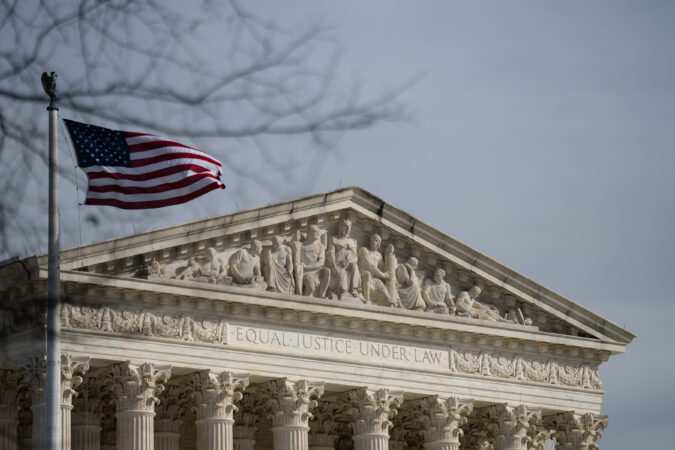
  • George Hutchinson, the Supreme Court’s last official crier, dies at 102

    George Hutchinson, the Supreme Court’s last official crier, dies at 102

    George Hutchinson’s words were far from the most important spoken during Brown v. Board of Education. But they were the first.

    With a cry of “Oyez, oyez, oyez,” Mr. Hutchinson announced the arrival of the justices and gaveled the court to order, as he did for virtually every Supreme Court case from 1952 to 1962.

    Mr. Hutchinson, who died June 14 at 102, was the last crier of the U.S. Supreme Court, tasked with carrying out ceremonial duties that were later turned over to the court marshal.

    His tenure as crier coincided with one of the most momentous periods in the court’s history, a time when the justices extended constitutional protections to Mexican Americans, refused to review the espionage convictions of Julius and Ethel Rosenberg, and, in Brown v. Board, held that segregated schools were “inherently unequal” and unconstitutional.

    As court crier, Mr. Hutchinson opened many of those consequential moments and, as if in a high school cafeteria, shepherded discreet notes to the justices, including messages sent from one end of the bench to the other.

    Decades later, he provided a window into the day-to-day activities of one of the government’s most secretive bodies, said Clare Cushman, a historian for the Supreme Court Historical Society. Mr. Hutchinson could speak about the court’s Christmas parties or the carpenter shop in its basement, or recall the way soldiers were deployed to the court building following the Japanese attack on Pearl Harbor.

    “The big pieces are always recorded,” Cushman said, “but the little pieces, no.”

    Mr. Hutchinson was 15 when he joined the court in 1938 as a page, one of the knicker-clad young people who would assist the justices. There were two requirements: You had to be short, according to Mr. Hutchinson, who grew to 5-foot-8, and you had to have a financial need.

    Mr. Hutchinson’s father had died when he was an infant, and his meager page’s salary helped support his mother and sister. He spent his afternoons in the Supreme Court, running books and water to the justices, before being drafted into the Army at age 19, dispatched to Europe in the final months of World War II.

    When he came home, he rejoined the court, working out of the marshal’s office and eventually taking the job of crier, which dates to the Supreme Court’s first meeting in 1790. He was given a handwritten script — the words of the opening proclamation, which concludes, “God save the United States and this honorable court” — as well as a distinctive gavel.

    “There was no handle. All it was was the clonk,” he recalled in a 2019 interview. “I said, ‘Where’s the handle?’ They said, ‘This is tradition. You’ve got to use this.’ So for 10 years I was banging like this.”

    As crier, Mr. Hutchinson oversaw the pages, a group that grew to include Charles V. Bush, the first Black Supreme Court page, who was hired in the aftermath of Brown v. Board at the urging of Chief Justice Earl Warren.

    Mr. Hutchinson worked alongside the pages while assuming a sneakier job within the court each October. Many of the justices were baseball fans and wanted updates on the World Series, said Vance Morrison, a former page who as a teenager worked under Mr. Hutchinson. They would pass a paper to Mr. Hutchinson or a page, who would run to the offices, listen to the radio and quietly report the score.

    “We just worked with discretion,” Morrison said.

    In October 1960, as the Supreme Court considered the conviction of a man who had failed to comply with the House’s anti-communist investigations, Mr. Hutchinson helped Justice Potter Stewart follow along to Game 7 of the World Series, providing score updates every inning and, as the game neared its end, every half-inning. He delivered his final update to Stewart after Bill Mazeroski hit a walk-off home run, giving the Pirates the win over the Yankees.

    “His eyes lit up and he sent the note down to the court,” Mr. Hutchinson recalled.

    Mr. Hutchinson also shared a bond with Justice Felix Frankfurter, according to his daughter, Sara Hutchinson. One day, he was unexpectedly called into the justice’s office to serve as a witness as Frankfurter finalized his will.

    “He said, ‘Have you ever faced death?’ I said, ‘What?’ I had to think about it,” Mr. Hutchinson recounted. “‘I was in the service in World War II.’ He laughed, he said, ‘Here,’ and he threw me his will.”

    George Edward Hutchinson, a fourth-generation Washingtonian — according to his family, two of his relatives were at Ford’s Theatre the night of Lincoln’s assassination — was born Aug. 31, 1923. His father was a lawyer, and his mother was a schoolteacher.

    While working at the Supreme Court, Mr. Hutchinson went to school part time, earning a law degree at George Washington University, and ultimately becoming a member of the Supreme Court Bar.

    After leaving the court in 1962, he became the marshal and then the clerk of the U.S. Court of Customs and Patent Appeals, where he was charged with saying “Hear ye” instead of “Oyez.” Two decades later, when the court merged with the Court of Claims to become the Court of Appeals for the Federal Circuit, he was named its first clerk.

    Mr. Hutchinson retired from federal service in 1985 to join the law firm Finnegan, Henderson, Farabow, Garrett & Dunner, where he remained on staff until 2023, the year he turned 100.

    Few people could recount the customs and procedures of the American court system like Mr. Hutchinson, said James Barney, managing partner at the firm.

    “I always viewed George as a living history,” Barney said.

    His death, at home in Arlington, Va., was confirmed by his daughter, his only immediate survivor. Mr. Hutchinson was predeceased by his wife of 63 years, Dorothy U. Hutchinson, and by another daughter, Carol Hutchinson.

    In 2018, 80 years after he joined the Supreme Court as a page, Mr. Hutchinson returned to the courtroom as a visitor. “He remains a member in good standing of our bar,” Chief Justice John G. Roberts Jr. said from the bench. “Mr. Hutchinson, welcome back!”

  • The real reason the colonists declared independence

    The real reason the colonists declared independence

    This month marks the 250th anniversary of the Declaration of Independence, an anniversary well worth celebrating. It is not, however, the anniversary of the start of the American Revolution. That began on April 19, 1775, with the battles of Lexington and Concord Bridge. It took over a year of fighting to convince colonists to accept that the time for compromise, for reconciliation, for any kind of reversion to the previous state of existence — for half-measures — was gone and the only path forward was independence.

    That’s where Thomas Paine and Common Sense played a role. Since his arrival in Philadelphia in 1774, Paine had watched American politicians try to reason with England, hoping to reshape the relationship with George III and with Parliament, rather than to sever it. It did not work. “Why is it that we hesitate?,” Paine asked his readers. “From Britain we can expect nothing but ruin.”

    Paine wrote Common Sense at the end of 1775 — between when the Revolution began and when the colonists declared independence — and he wrote specifically to convince the colonists to break their ties with England. “Nothing can settle our affairs so expeditiously,” he told his readers, “as an open and determined declaration for independence.”

    In the winter of 1775-1776, a growing number of colonists were ready to meet the British Army on the battlefield. The colonists and the British government had been at odds with each other for a decade, fighting over taxes and over jurisdiction. The government in London, though, seemed only to be pushing things further to the brink, especially when they began stationing soldiers in Boston.

    Still, and much to Paine’s chagrin, through the rest of 1775 most colonists thought that declaring independence was a step too far. Three months after the fighting began, when the Continental Congress set out to explain the “causes and necessity of taking up arms,” they tried to assure “our friends and fellow-subjects” in the British Empire that “we mean not to dissolve that union which has so long and so happily subsisted between us, and which we sincerely wish to see restored … We have not raised armies with ambitious designs of separating from Great-Britain, and establishing independent states.”

    Five months later, when Paine wrote Common Sense, he still worried that “the sentiments contained in the following pages, are not yet sufficiently fashionable to procure them general favor.” And so, Paine made a case not just outlining England’s crimes, but also explaining why they had rendered any sort of half-measure or compromise impossible.

    We tend to associate the lead-up to the American Revolution with the colonists’ complaints about British taxes and duties, which certainly led to disputes about jurisdiction and the relative authority of the crown and the colonial governments. We also remember the catch-phrase of the era, “no taxation without representation.

    Those debates and those issues, though, were not part of Common Sense. Paine focused on what, for him, was Britain’s unforgivable crime: setting the British Army against the colony’s own citizens. “The independancy of America,” Paine wrote, “should have been considered, as dating its æra from, and published by, the first musket that was fired against her.”

    This was a point that Paine returned to again and again.

    “No man was a warmer wisher for reconciliation than myself before the fatal nineteenth of April 1775.” But once he learned that British troops had attacked the people of Lexington and Concord, he knew that “a new era for politics is struck; a new method of thinking hath arisen. All plans, proposals, & c. prior to the nineteenth of April … are like the almanacks of the last year; which, though proper then, are … useless now.” As for King George II, “I rejected the hardened, sullen tempered Pharaoh of England for ever; and disdain the wretch, that with the pretended title of father of his people can unfeelingly hear of their slaughter, and composedly sleep with their blood upon his soul.”

    Made By History sponsors. FOR USE ON MADE BY HISTORY STORIES ONLY.

    Paine’s message was clear: setting troops against the people demanded resistance. And this message was the key to getting the colonies to unite and declare independence. The disputes about taxes and jurisdiction went back to 1765. The colonists’ leaders had fought British policies on every issue, without ever wanting to stop being a part of the British Empire. But now that the British had sent their own army against the colony’s British citizens, Paine’s calls for independence found an eager audience among American readers.

    When Paine wrote of moderates calling for reconciliation with England, he urged them to think closely about the violence which the British Army had inflicted on the colonists, and if that level of violence had made reconciling impossible. “Tell me,” he wrote, “whether you can hereafter love, honour, and faithfully serve the power that hath carried fire and sword into your land?”

    In January 1776, his answer was no. In July 1776, that became the Continental Congress’s answer, as well — colonists from New Hampshire to Georgia were united enough in their horror at the British army’s violence that they declared their independence not as 13 colonies, but as 13 united states.

    This concern about state-sanctioned violence resonates again today. Paine’s reference to British soldiers as “Highwaymen and Housebreakers” brings up images of agents from U.S. Immigration and Customs Enforcement barging into homes without warrants and dragging out their terrified inhabitants.

    In 2026, there is no foreign power from which we can declare independence, but as state violence persists, so too does the legacy of resistance by colonists who heeded Paine’s call to reject Britain’s “long and violent abuse of power.”

    The “Road to 250” series is an initiative of Historians for 2026, a group of early American academics, public historians, archivists, and educators devoted to shaping an accurate, inclusive, and just public memory of the American Founding for the 250th anniversary.

    Noah Shusterman is associate professor of history at the Chinese University of Hong Kong. He is the author most recently of Armed Citizens: The Road from Ancient Rome to the Second Amendment.

    Made by History takes readers beyond the headlines with articles written and edited by professional historians. Opinions expressed do not necessarily reflect the views of The Inquirer.