President Donald Trump’s administration on Tuesday asked a federal appeals court in Philadelphia to overturn an order that has, for the moment, blocked authorities from deporting pro-Palestinian activist Mahmoud Khalil — the latest development in a complex legal saga that began when the administration was seeking to crack down on anti-Israeli college campus protests earlier this year.
During a hearing before a three-judge panel in a Center City courtroom, Deputy Assistant Attorney General Drew Ensign said the earlier order, issued by a federal judge in New Jersey, was “indefensible” for several reasons — including that it was issued in the wrong jurisdiction, and that it was effectively helping Khalil’s lawyers improperly “fragment” the various legal proceedings against him and seek venues that might issue favorable rulings.
Khalil’s attorneys, however, said the judges should uphold the lower court’s ruling because the government had illegally targeted the 30-year-old for removal over his political views — something they called a clear First Amendment violation and a situation that could have wider implications amid Trump’s push to increase deportations.
Speaking outside the courthouse after the hearing, Khalil, a legal permanent resident who was born in Syria, told a crowd of supporters he planned to continue his legal fight to remain in the United States.
“This shows how my case is actually just a test for everyone’s right’s here across the country,” he said. “Not only one place, not only for specific people, for immigrants or documented or undocumented people, it’s for everyone across the country.”
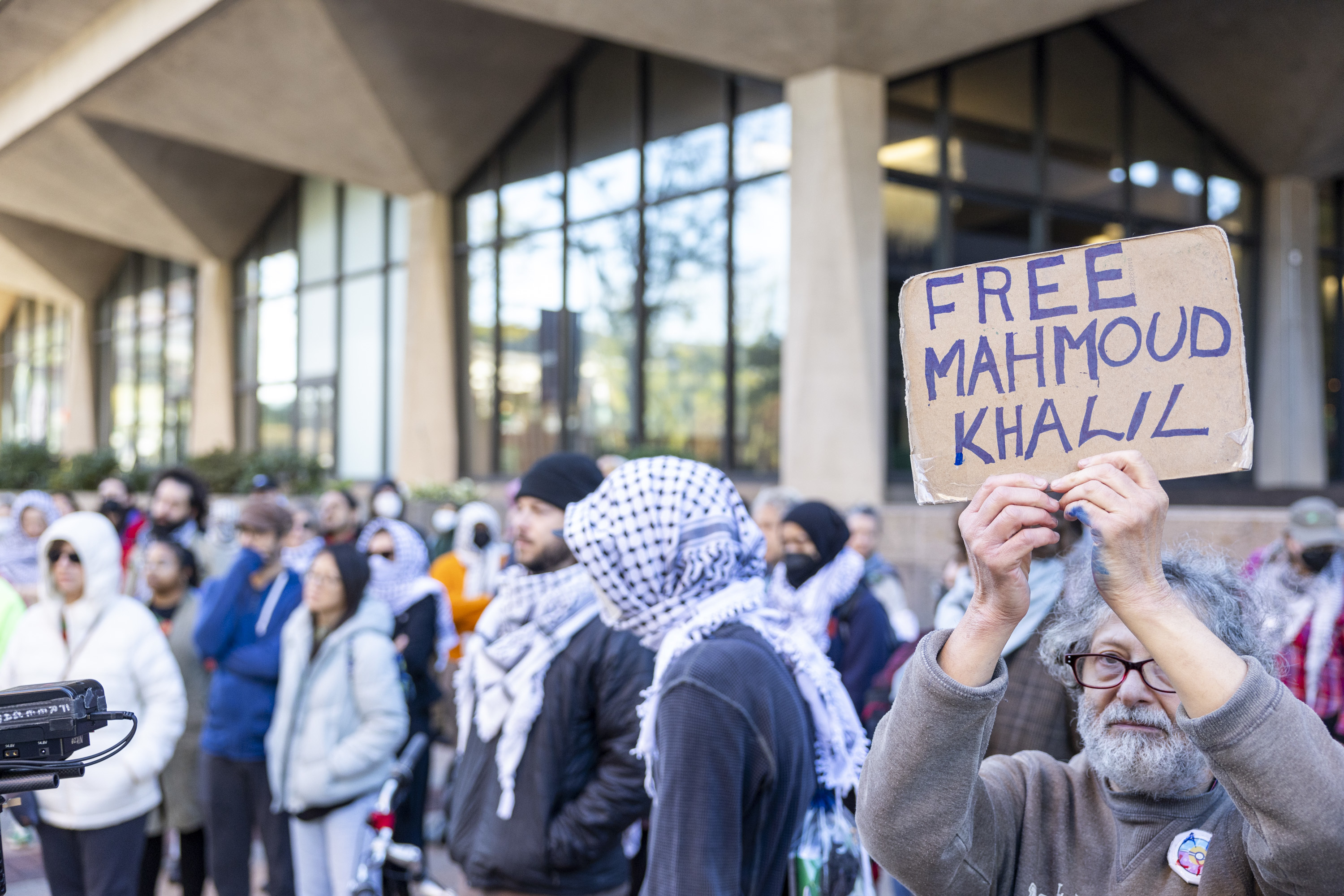
Eric Hamell, of West Philadelphia, holds up a sign saying Free Mahmoud Khalil during a rally outside the James A. Byrne U.S. Courthouse in Philadelphia on Tuesday.
The case against Khalil began in March, when he was arrested by immigration authorities at Columbia University, where he had recently completed a master’s degree and had become a prominent figure at pro-Palestinian protests. Authorities detained Khalil and then pushed to deport him, with Secretary of State Marco Rubio citing an obscure legal statute in contending that Khalil’s rhetoric and continued presence in the country could undermine U.S. foreign policy interests.
Khalil’s lawyers quickly challenged the administration’s actions in court — first in New York, where he lived and was arrested, then in New Jersey, where he was detained in the immediate aftermath of his arrest.
Within days, however, Khalil was transferred to a detention facility in Louisiana, where he was held for more than three months (he was living there this spring when his wife, an American citizen, gave birth to their son in New York).
The issue of where Khalil was located was something Ensign, the government attorney, said was important for the appellate judges to consider: Because Khalil was primarily detained in Louisiana, Ensign said, any legal challenge seeking to have him released should have taken place in that jurisdiction.
And in Ensign’s view, that meant the June ruling by a judge in New Jersey that ordered Khalil released — and temporarily blocked his deportation — should be overturned.
Several judges appeared skeptical of the jurisdictional aspect of Ensign’s argument. Circuit Judge Stephanos Bibas, a Trump appointee, pointed out that authorities were moving Khalil to various jurisdictions over a weekend — and suggested attorneys couldn’t be forced to wait until the work week to file emergency challenges to what they viewed as wrongful detention.
“The lawyers didn’t know” where Khalil was, Bibas said. “They had to do their best.”
The judges seemed more receptive to another of Ensign’s arguments: That Khalil is currently the subject of a complex web of legal cases, with various claims being weighed in various courts.
In addition to the matter being argued in Philadelphia on Tuesday, his immigration case remains pending in Louisiana because of a separate issue: In September, an immigration judge there ruled that Khalil be removed to Syria or Algeria because he failed to disclose information about his past work with pro-Palestinian groups on his green card application.
While his attorneys have appealed that ruling, the appellate panel on Tuesday questioned whether it was appropriate for different jurisdictions to be weighing different aspects of his various cases — particularly when many of the legal issues in them are generally similar.
Circuit Judge Thomas M. Hardiman asked whether doing so would give Khalil a “second bite at the apple” to challenge rulings that don’t go his way.
It remained unclear Tuesday how or when the judges might rule.
Khalil, meanwhile, said outside the courthouse afterward: “We are in the fight until the end.”
WASHINGTON — The White House on Monday started tearing down part of the East Wing, the traditional base of operations for the first lady, to build President Donald Trump’s $250 million ballroom despite lacking approval for construction from the federal agency that oversees such projects.
Dramatic photos of the demolition work showed construction equipment tearing into the East Wing façade and windows and other building parts in tatters on the ground. Some reporters watched from a park near the Treasury Department, which is next to the East Wing.
Trump announced the start of construction in a social media post and referenced the work while hosting 2025 college baseball champs Louisiana State University and LSU-Shreveport in the East Room. He noted the work was happening “right behind us.”
“We have a lot of construction going on, which you might hear periodically,” he said, adding, “It just started today.”
Its chairman, Will Scharf, who is also the White House staff secretary and one of Trump’s top aides, said at the commission’s September meeting that agency does not have jurisdiction over demolition or site preparation work for buildings on federal property.
“What we deal with is essentially construction, vertical build,” Scharf said last month.
It was unclear whether the White House had submitted the ballroom plans for the agency’s review and approval. The White House did not respond to a request for comment and the commission’s offices are closed because of the government shutdown.
The Republican president had said in July when the project was announced that the ballroom would not interfere with the mansion itself.
“It’ll be near it but not touching it and pays total respect to the existing building, which I’m the biggest fan of,” he said of the White House.
The East Wing houses several offices, including those of the first lady. It was built in 1902 and and has been renovated over the years, with a second story added in 1942, according to the White House.
Karoline Leavitt, the White House press secretary, said those East Wing offices will be temporarily relocated during construction and that wing of the building will be modernized and renovated.
“Nothing will be torn down,” Leavitt said when she announced the project in July.
Trump insists that presidents have desired such a ballroom for 150 years and that he’s adding the massive 90,000-square-foot, glass-walled space because the East Room, which is the largest room in the White House with an approximately 200-person capacity, is too small. He also has said he does not like the idea of hosting kings, queens, presidents and prime ministers in pavilions on the South Lawn.
Trump said in the social media announcement that the project would be completed “with zero cost to the American Taxpayer! The White House Ballroom is being privately funded by many generous Patriots, Great American Companies, and, yours truly.”
The ballroom will be the biggest structural change to the Executive Mansion since the addition in 1948 of the Truman Balcony overlooking the South Lawn, even dwarfing the residence itself.
At a dinner he hosted last week for some of the wealthy business executives who are donating money toward the $250 million construction cost, Trump said the project had grown in size and now will accommodate 999 people. The capacity was 650 seated people at the July announcement.
The White House has said it will disclose information on who has contributed money to build the ballroom, but has yet to do so.
Trump also said at last week’s event that the head of Carrier Global Corp., a leading manufacturer of heating, ventilation and air conditioning systems, had offered to donate the air conditioning system for the ballroom.
Carrier confirmed to The Associated Press on Monday that it had done so. A cost estimate was not immediately available.
“Carrier is honored to provide the new iconic ballroom at the White House with a world-class, energy-efficient HVAC system, bringing comfort to distinguished guests and dignitaries in this historic setting for years to come,” the company said in an emailed statement.
The clearing of trees on the south grounds and other site preparation work for the construction started in September. Plans call for the ballroom to be ready before Trump’s term ends in January 2029.
Steve Hirst relies on virtual visits with his urologist, whose office is an hour away from his Broomall home, to stay on top of his treatment plan and renew medications.
But earlier this month Hirst, 70, got a notice from his doctor’s office informing him that it could no longer schedule telemedicine visits for patients like him who have Medicare because of new federal policy changes.
Medicare began covering telemedicine services during the COVID-19 pandemic and has maintained the popular offering through temporary waivers approved by Congress since. But the most recent of those waivers expired at the end of September when Congress failed to reach a budget deal and the government shut down.
The change specifically affects traditional Medicare, which is administered by the government for people 65 and older and some with disabilities. People with Medicare Advantage plans, which are administered by private insurers, should check with their plan.
Some of the Philadelphia area’s leading health systems, including Temple Health and Penn Medicine, have said they are continuing to provide telehealth services to people with Medicare and temporarily suspending billing for those services, with hope that coverage will be reinstated when a budget deal is eventually reached.
But smaller provider practices may not have the luxury of delaying payment for thousands of dollars in services for an indefinite period of time.
With the government shutdown in its third week, Republicans and Democrats seem no closer to reaching a deal. The next vote is scheduled for Monday evening, though no deal is expected.
Another health policy issue — tax credits for people who buy insurance through Affordable Care Act marketplaces, including Pennie in Pennsylvania — has been a major sticking point in the ongoing federal budget debate. Democrats want the enhanced subsidies extended permanently as part of the budget deal, and Republicans have refused, arguing that lawmakers could address the issue separately, before the subsidies expire at the end of the year.
Meanwhile, the waiver’s expiration has left Hirst and others who are covered by Medicare unsure how they will access needed health services.
Telehealth rose in popularity during the COVID-19 pandemic, when people were urged to avoid hospitals unless they were having an emergency and when most routine procedures were canceled.
The approach was especially helpful to older adults and people with disabilities, who needed to stay in contact with doctors for ongoing treatment and who were considered particularly vulnerable to severe illness from COVID-19.
After the pandemic ended, many private insurers, Medicaid, and Medicare permanently adopted telehealth coverage for certain services, such as mental health, because of its popularity during the pandemic.
Medicare has used temporary waivers to continue telehealth coverage for other types of doctors’ visits.
Beyond patient popularity, research has found that telehealth visits can be as effective as in-person visits for certain types of care, such as palliative care for cancer patients, while improving access to patients with transportation challenges.
Philadelphia health systems respond
Philadelphia’s largest health systems said they are optimistic that coverage will be reinstated — either by a new temporary waiver or a permanent change — when Congress reaches a new budget agreement and the shutdown ends.
Temple Health will continue to provide telehealth services to Medicare patients for the next three weeks, in anticipation of Congress reaching a deal.
Penn Medicine has not billed Medicare patients for telehealth visits since the shutdown began and has paused its process for filing claims until the government reopens, a spokesperson said.
“Congress has been vocal in its support of telehealth and its value, and we are hopeful that legislation will be passed to ensure permanent Medicare telehealth coverage and flexibilities once the government reopens,” Penn said in a statement.
Main Line Health has been reaching out to affected patients to help them change previously scheduled virtual visits into in-person appointments or reschedule virtual visits that can be put off.
Jefferson Health did not respond to a request for comment in time for publication.
Patients in limbo
Hirst drives into Philadelphia to see his urologist in person once a year. Every three months, he has a virtual visit to check in and renew prescriptions.
Driving to Philadelphia for every appointment would be inconvenient, but Hirst will probably do it “for now,” he said.
But he worries about older adults and people with disabilities who can’t safely drive to the doctor’s office, and for whom virtual care is a lifeline. They could end up putting themselves or others at risk being on the road when they shouldn’t be. Or they may end up skipping needed care because they don’t have a ride.
LONDON — Amazon says a massive outage of its cloud computing service has been resolved as of Monday evening, after a problem disrupted internet use around the world, taking down a broad range of online services, including social media, gaming, food delivery, streaming and financial platforms.
The all-day disruption and the ensuing exasperation it caused served as the latest reminder that 21st century society is increasingly dependent on just a handful of companies for much of its internet technology, which seems to work reliably until it suddenly breaks down.
About three hours after the outage began early Monday morning, Amazon Web Services said it was starting to recover, but it wasn’t until 6 p.m. Eastern that “services returned to normal operations,” Amazon said on its AWS health website, where it tracks outages.
AWS provides behind-the-scenes cloud computing infrastructure to some of the world’s biggest organizations. Its customers include government departments, universities and businesses, including The Associated Press.
Cybersecurity expert Mike Chapple said “a slow and bumpy recovery process” is “entirely normal.”
As engineers roll out fixes across the cloud computing infrastructure, the process could trigger smaller disruptions, he said.
“It’s similar to what happens after a large-scale power outage: While a city’s power is coming back online, neighborhoods may see intermittent glitches as crews finish the repairs,” said Chapple, an information technology professor at the University of Notre Dame’s Mendoza College of Business.
Amazon blames domain name system
Amazon pinned the outage on issues related to its domain name system that converts web addresses into IP addresses, which are numeric designations that identify locations on the internet. Those addresses allow websites and apps to load on internet-connected devices.
DownDetector, a website that tracks online outages, said in a Facebook post that it received over 11 million user reports of problems at more than 2,500 companies. Users reported trouble with the social media site Snapchat, the Roblox and Fortnite video games, the online broker Robinhood and the McDonald’s app, as well as Netflix, Disney+ and many other services.
The cryptocurrency exchange Coinbase and the Signal chat app both said on X that they were experiencing trouble related to the outage.
Amazon’s own services were also affected. Users of the company’s Ring doorbell cameras and Alexa-powered smart speakers reported that they were not working, while others said they were unable to access the Amazon website or download books to their Kindle.
Many college and K-12 students were unable to submit or access their homework or course materials Monday because the AWS outage knocked out Canvas, a widely used educational platform.
“I currently can’t grade any online assignments, and my students can’t access their online materials” because of the outage’s effect on learning-management systems, said Damien P. Williams, a professor of philosophy and data science at the University of North Carolina at Charlotte.
The exact number of schools impacted was not immediately known, but Canvas says on its website it is used by 50% of college and university students in North America, including all Ivy League schools in the U.S.
At the University of California, Riverside, students couldn’t submit assignments, take quizzes or access course materials, and online instruction was limited, the campus said.
Ohio State University informed its 70,000 students at all six campuses by email Monday morning that online course materials might be inaccessible due to the outage and that “students should connect with their instructors for any alternative plans.” As of 7:10 p.m. Eastern, access was restored, the university told students.
Record of past outages
This is not the first time issues with Amazon cloud services have caused widespread disruptions.
Many popular internet services were affected by a brief outage in 2023. AWS’s longest outage in recent history occurred in late 2021, when a wide range of companies — from airlines and auto dealerships to payment apps and video streaming services — were affected for more than five hours. Outages also happened in 2020 and 2017.
The first signs of trouble emerged at around 3:11 a.m. Eastern time, when AWS reported on its “health dashboard” that it was “investigating increased error rates and latencies for multiple AWS services in the US-EAST-1 Region.” Later, the company reported that there were “significant error rates” and that engineers were “actively working” on the problem.
Around 6 a.m. Eastern time, the company reported seeing recovery across most of the affected services and said it was seeking a “full resolution.” As of midday, AWS was still working to resolve the trouble.
Sixty-four internal AWS services were affected, the company said.
Just a few companies provide most internet infrastructure
Because much of the world now relies on three or four companies to provide the underlying infrastructure of the internet, “when there’s an issue like this, it can be really impactful” across many online services, said Patrick Burgess, a cybersecurity expert at U.K.-based BCS, The Chartered Institute for IT.
“The world now runs on the cloud,” Burgess said.
And because so much of the online world’s plumbing is underpinned by so few companies, when something goes wrong, “it’s very difficult for users to pinpoint what is happening because we don’t see Amazon, we just see Snapchat or Roblox,” Burgess said.
“The good news is that this kind of issue is usually relatively fast” to resolve, and there’s no indication that it was caused by a cyberattack, Burgess said.
“This looks like a good old-fashioned technology issue. Something’s gone wrong, and it will be fixed by Amazon,” he said.
There are “well-established processes” to deal with outages at AWS, as well as rivals Google and Microsoft, Burgess said, adding that such outages are usually over in “hours rather than days.”
KYIV, Ukraine — President Donald Trump said Monday that while he thinks it is possible that Ukraine can defeat Russia, he’s now doubtful it will happen.
The comments from Trump added a fresh layer of skepticism toward Kyiv as he plans to meet again in the coming weeks with Russian President Vladimir Putin for face-to-face talks in Budapest, Hungary, on ending the war.
“They could still win it. I don’t think they will, but they could still win it,” Trump told reporters on Monday at the start of a White House meeting with Australian Prime Minister Anthony Albanese.
But after a lengthy call with Putin last week followed by a meeting with Ukrainian President Volodymyr Zelenskyy, Trump made another reversal and called on Kyiv and Moscow to “stop where they are” and end their brutal war.
Asked on Monday about his whiplashing opinion on Kyiv’s position, Trump offered the dour assessment about Ukraine’s chances. He added, “I never said they would win it. I said they could. Anything can happen. You know war is a very strange thing.”
Earlier Monday, Zelenskyy said that during the White House meeting Trump informed him that Putin’s maximalist demand — that Ukraine cede the entirety of its eastern Donetsk and Luhansk regions — was unchanged.
Still, Zelenskyy described the meeting as “positive,” even though Trump also rebuffed his request for long-range Tomahawk cruise missiles.
In public comments in the weeks leading up to his meeting with Zelenskyy, Trump had appeared to warm to the possibility of sending the Tomahawks, which would allow Ukrainian forces to strike deeper into Russian territory.
But the U.S. leader’s tone changed after his latest call with Putin and he made clear that he was reluctant to send Ukraine the missile system, at least for the time-being.
“In my opinion, he does not want an escalation with the Russians until he meets with them,” Zelenskyy told reporters on Sunday. His comments were embargoed until Monday morning.
Zelenskyy also expressed skepticism about Putin’s proposal to swap some territory it holds in the Kherson and Zaporizhzhia regions if Ukraine surrenders Donetsk and Luhansk, saying the proposal was unclear. The Donetsk and Luhansk regions make up the Donbas.
Ukraine’s leader said Trump ultimately supported a freeze along the current front line.
“We share President Trump’s positive outlook if it leads to the end of the war,” Zelenskyy said, citing “many rounds of discussion over more than two hours with him and his team.”
Zelenskyy was diplomatic about his meeting with Trump despite reports that he faced pressure to accept Putin’s demands. The meeting followed the disastrous Oval Office spat on Feb. 28 when the Ukrainian president was scolded on live television for not being grateful for U.S. support.
Zelenskyy said he has not been invited to attend but would consider it if the format for talks were fair to Kyiv.
He also took a shot at Hungarian Prime Minister Viktor Orban, saying he does not believe that a prime minister “who blocks Ukraine everywhere can do anything positive for Ukrainians or even provide a balanced contribution.”
Zelenskyy said he thinks that all parties have “moved closer” to a possible end to the war.
“That doesn’t mean it will definitely end, but President Trump has achieved a lot in the Middle East, and riding that wave he wants to end Russia’s war against Ukraine,” he added.
Ukraine is hoping to purchase 25 Patriot air defense systems from U.S. firms using frozen Russian assets and assistance from partners, but Zelenskyy said procuring them would require time because of long production waits. He said he spoke to Trump about help procuring them more quickly, potentially from European partners.
Zelenskyy said the United States is interested in bilateral gas projects with Ukraine, including the construction of an LNG terminal in the southern port city of Odesa. Other projects of interest include those related to nuclear energy and oil.
The world’s most-visited museum was closed Monday following a professional heist that resulted in the theft of priceless jewels. Within minutes, thieves entered and exited the Louvre on Sunday, taking eight treasures.
The result? One of the highest-profile museum thefts in living memory amid a climate where museum staffs — worldwide, not just at the Louvre — are complaining about crowding, thin staffing, high turnover, and strained security.
Here’s what we know so far.
How did the Louvre heist happen?
Within minutes, thieves rode up a basket lift outside the Louvre’s facade, forced open a window, smashed display cases, and fled with priceless Napoleonic jewels, officials said.
The heist took place on Sunday, only 30 minutes after opening, with visitors already inside.
The theft took four minutes inside the building and less than eight in total, according to French Culture Minister Rachida Dati, who called it a “professional” operation.
“They went straight to the display windows,” Dati said. “They knew exactly what they wanted. They were very efficient.”
Sunday’s theft focused on the gilded Apollo Gallery, where the crown jewels are displayed. Alarms brought Louvre agents to the room, forcing the intruders to bolt on motorbikes, but the robbery was already over.
It’s unclear how many people took part in the theft and whether they had inside assistance. French media reported there were four perpetrators, including two dressed as construction workers. Authorities have not commented on the specifics.
What was taken from the Louvre?
Eight pieces of “priceless” jewels were stolen from the Louvre in Paris. Here is what they were.
Eight objects were taken, according to officials:
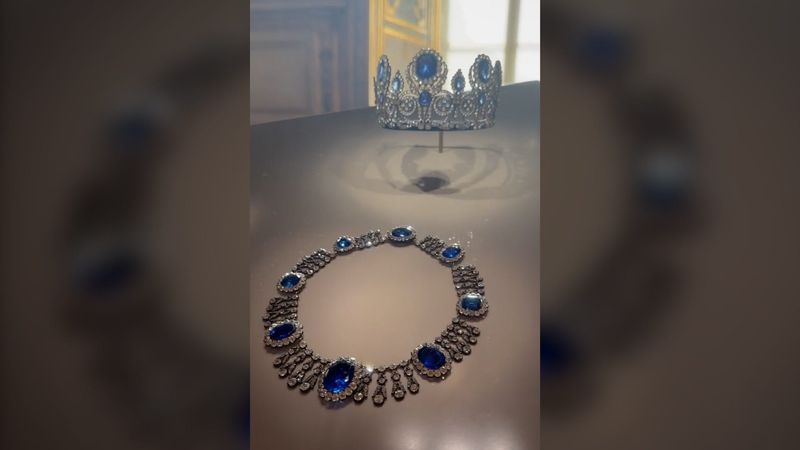
A sapphire diadem, necklace, and single earring from a matching set linked to 19th-century French queens Marie-Amélie and Hortense.
An emerald necklace and earrings from the matching set of Empress Marie-Louise, Napoleon Bonaparte’s second wife.
A reliquary brooch.
Empress Eugénie’s diadem and her large corsage-bow brooch, a prized 19th-century imperial ensemble.
A ninth object, the emerald-set imperial crown of Napoleon III’s wife, Empress Eugénie, was also taken but apparently dropped by the thieves. The crown, with more than 1,300 diamonds, was damaged but recovered outside the museum.
All of the items are considered priceless, though officials have not disclosed an overall estimate.
What will happen to the stolen jewels?
The Louvre has been closed since the robbery on Sunday morning for the investigation.
Experts say the initial hours after a heist are critical before the scent grows colder and thieves have more time to dispose of the jewels.
The big concern is that the thieves are motivated by commodity vs. art, and will scrap the priceless works for sale on the black market, breaking the pieces for their stones and melting down the precious metals. In doing so, the thieves can make more high-ticket sales while remaining undetected.
Has this ever happened before at the Louvre?
According to National Geographic, the Louvre has a long history of bold heists — but it’s been a while until now.
In 1911, the Mona Lisa — then a lesser-known piece by Leonardo da Vinci — was taken by Vincenzo Peruggia, a former employee dressed in his old work uniform. No one noticed it was missing for over 24 hours. The painting was recovered two years later after Peruggia tried to sell it to another museum.
In 1940, a portion of the Louvre’s collection was looted by occupying Nazis, though the museum’s director had already hidden most of its collection in a safe house off-site.
There was the 1966 theft of antique jewelry, which was being transported back to France from a loan to a Virginia museum. Those jewels were recovered after being found in New York inside a grocery bag. A decade later, one group of thieves stole a Flemish painting, and months after that, another group stole French King Charles X’s jeweled sword. The sword is still missing.
The most recent string of heists occurred in the 1990s. In 1990, thieves cut a Renoir painting from its frame in broad daylight and also took ancient Roman jewelry and other paintings. In 1995, two pieces — a painting and a battle ax from a 17th-century bronze sculpture — were stolen. Finally, in 1998, a Camille Corot painting was cut from its frame and taken. It hasn’t been recovered.
What about in Philly? Any heists?
Yep. Philly-area museums have seen their fair share of art thefts over the years.
Dating back to the 1980s, several thefts or alleged thefts have occurred across the Philadelphia Art Museum, Rodin Museum, Penn Museum, and more, according to Inquirer archives.
Various thefts include a gold saw from Iraq and a 19th-century Chinese crystal ball taken from the Penn Museum in 1981 and 1988, a painting taken during a Philadelphia Art Museum after-hours party in 1984, and a bronze sculpture from the Rodin Museum in 1988 during a gunpoint robbery. The sculpture was recovered shortly afterward, and the alleged robber was arrested and charged. The crystal ball was also recovered.
There’s also Frank Waxman, the Philly-based doctor who authorities said secretly amassed the largest known private collection of stolen art: about 150 pieces worth more than $2 million. The FBI raided his Rittenhouse condo in 1982 to find Rodins, Picassos, and more. Due to the statute of limitations surrounding his thefts, he was only convicted of taking eight pieces and served eight months in prison.
In 2003, the Barnes Foundation said hundreds of items were missing from its collection, including a piece by Henri Matisse, a Jean Renoir ceramic vase, a mahogany Steinway piano, and historic recordings. It’s unclear whether the items were stolen or simply unaccounted for. No formal large-scale investigation took place.
There was also an incident in 2017 where Michael Rohana, who was attending an after-hours ugly sweater party at the Franklin Institute, broke the thumb off a life-size Chinese terracotta warrior statue.
Rohana described the incident as a “drunken mistake” and returned the thumb, which he had taken home. Still, it caused international turmoil, with Chinese officials accusing the Franklin Institute of carelessness with the artifact. The statue, which is called “The Cavalryman,” is insured for $4.5 million. Rohana went to court in 2019, eventually pleading guilty to a misdemeanor charge in 2023. He was sentenced to five years’ probation, a $5,000 fine, and community service.
Thomas Gavin admitted to targeting dozens of museums up and down the East Coast, taking valuable artifacts sometimes unnoticed for years. The Hershey Museum and Pennsylvania Farm Museum in Landis, Lancaster County, were among some of the museums impacted. Gavin’s crimeswent cold for so long that the statute of limitations expired for many, leading him to only serve a day in prison for trying to sell a historic rifle.
What does the jewel heist mean for museums’ futures?
The latest Louvre heist comes amid a tense time for museums worldwide.
Following the height of the COVID-19 pandemic, museums have been working to balance mass tourism, stretched-thin staff, and security upgrades.
Locally, the Philadelphia Art Museum and its employees reached a settlement last year after a yearlong dispute over pay raises called for in their 2022 labor contract and a nearly three-week strike.
At the Louvre, a June staff walkout over frustrations with overcrowding and chronic understaffing led to a delayed opening. Unions say mass tourism leaves too few eyes on too many rooms and creates pressure points where construction zones, freight routes, and visitor flows meet.
Officials say security updates are underway at the Louvre as part of an $800 million modernization plan. But critics say the measures are too little, too late.
MEXICO CITY – The Trump administration’s justification for blowing up suspected drug traffickers off the Venezuelan coast has been clear and consistent: These people aren’t just criminals; they’re “narco-terrorists” smuggling a “deadly weapon poisoning Americans” at the behest of terrorist organizations.
“We take them out,” Trump told the nation’s three- and four-star generals and admirals last month. “Every boat kills 25,000 on average – some people say more. You see these boats, they’re stacked up with bags of white powder that’s mostly fentanyl and other drugs, too.”
Claiming the power to summarily kill traffickers as though they’re enemy troops, Trump has authorized the U.S. military to strike at least six speedboats the administration has deemed suspicious, killing dozens of people since the beginning of September. At least half of the strikes and 21 of the killings, locals say, have transpired in the waters between Venezuela and Trinidad and Tobago – nations so close that on clear days they’re within eyesight of each other.
But records and interviews with 20 people familiar with the route or the strikes, including current and former U.S. and international officials, contradict the administration’s claims. The passage, they said,is not ordinarily used to traffic synthetic opioids such as fentanyl, present in 69 percent of drug overdose deaths last year. Nor are the drugs typically headed for the United States.
Trinidad and Tobago, a Caribbean nation more than 1,000 miles south and 1,200 miles east of Miami, is both a destination market for marijuana and a transshipment point for South American cocaine bound for West Africa and Europe, according to U.S. officials, Trinidadian police and independent analysts. The fentanyl seized in the United States, in contrast, is typically manufactured in Mexico using precursors from China and smuggled in through the land border, most often by U.S. citizens.
The military strikes are unlikely, as a result, to cut overdose deaths in the United States, officials say – but it has brought U.S. forces into striking distance of Venezuelan President Nicolás Maduro.Trump has accused the authoritarian socialist, who claimed reelection last year despite ballot audits showing he lost the vote, of leading the Venezuela gang Tren de Aragua to push lethal drugs into America.
“When I saw [an internal document on the strikes],” a senior U.S. national security official said, “I immediately thought, ‘This isn’t about terrorists. This is about Venezuela and regime change.’ But there was no information about what it was really about.”
The official, like others quoted in this report, spoke on the condition of anonymity to provide his candid assessment.
The White House declined to share evidence to support the claims that Trump has used to justify the strikes. A spokeswoman defended the killings as necessary to protect Americans.
“All of these decisive strikes have been against designated narco-terrorists bringing deadly poison to our shores,” spokeswoman Anna Kelly said. “The president will continue to use every element of American power to stop drugs from flooding into our country and to bring those responsible to justice.”
Two family members of the 11 men killed in September in the first attack acknowledged by Trump did not deny that the men aboard had been taking marijuana and cocaine from Venezuela to Trinidad. But they said Trump’s allegation in his announcement was inaccurate that they’d worked for the Venezuelan gang Tren de Aragua.
“I knew them all,” said one of the family members, who spoke on the condition of anonymity for fear of retribution. “None of them had anything to do with Tren de Aragua. They were fishermen who were looking for a better life” by smuggling contraband.
On Tuesday, Trump said, a new strike had killed“six male narco-terrorists” off the Venezuelan coast. That afternoon, one mother in the Trinidadian community of Las Cuevas received a call from her brother, a fisherman. Her son Chad Joseph, the second of her six children, had been killed in the explosion.
Speaking by phone Thursday morning, Leonore Burnley was furious. Her son had been deprived a trial. And she’d been deprived of any chance of closure.
“You can’t get the body to bury it,” she said.
Joseph had spent the last three months in Venezuela working odd jobs, Burnley said. He had written her recently to say he would be returning home.
She called Trump’s claim he had been involved in trafficking drugs a lie.
“They are judging him wrong,” she said. “He was no drug dealer. Chad was a good boy, anything you want, he would help; he was a loving child.”
“Twenty-six years he have,” she said.
Claiming the power to summarily kill traffickers as though they’re enemy troops, Trump has authorized the U.S. military to strike at least six speedboats the administration has deemed suspicious, killing dozens of people since the beginning of September.
How cocaine courses through Venezuela
In recent years, drug cartels in Colombia and other South American nations have supercharged cocaine production. The rush to bring it to market – largely the United States and Europe, but increasingly West Africa – has transformed the continent’s criminal landscape, fueling the rise of new transnational gangs and threatening weaker national governments with limited power of state.
Venezuela, too, has been swept into the boom. Economically battered by years of socialist mismanagement and punishing international sanctions, a nation that was once Latin America’s wealthiest has become increasingly involved in the trade. Along its border with Colombia, cocaine is now produced for sale and shipment abroad.
U.S. federal prosecutors in March 2020 accused senior government officials in the Maduro regime, including Maduro himself, of leading the Cártel de Los Soles – “Cartel of the Suns” – a criminal networkthat extorts drug trafficking groups and controls routes and product itself.
Venezuela, U.S. investigators say, is now a narco free-for-all filled with armed groups from throughout Latin America.
“The Mexicans are there,” one former Drug Enforcement Administration agent said. “The Colombians are there, sometimes on behalf of the Mexicans. Sometimes the Hondurans and Guatemalans have guys there, too.”
Most of the South American cocaine bound for North America flows through the Pacific, but some does depart Venezuela through the Caribbean, according to U.S. officials and analysts who track drug routes. Much of it courses overland through the western states of Zulia and Falcón before shipping northward to Puerto Rico, the U.S. Virgin Islands and the Dominican Republic. Some travels by air, departing clandestine airstrips in Maracaibo or Apure state for Central America and onward to Mexico and the United States.
It’s less common, investigators say, to ship U.S.-bound cocaine northeast into the Sucre peninsula and across the narrow Bocas del Dragón channel to Trinidad – the route the administration has targeted. Trinidad is used far more frequently as a gateway to Europe. Spanish authorities seized 1.65 tons of cocaine that had transited through the island, the State Department reported in 2024. Portuguese authorities in June recovered 1.66 tons of cocaine that traversed the same route.
“When you look at a map, countries like Trinidad and Tobago and Suriname are used as transshipment points of massive amounts of cocaine from Colombia into Venezuela [and then onward] to West Africa and Europe,” a former senior U.S. security official said. He added that routes may change based on pressure.
One recently retired senior Trinidadian police official, asked whether Sucre traffickers were bringing drugs intended for the United States, chuckled.
“Why would they use Trinidad and Tobago to transport drugs to the United States, when you have Colombia and Mexico and all of these other places that are closer?”
The waters between Sucre and Trinidad
The Sucre peninsula, known for its paradisiacal beaches and green-thatched mountains, has always been poor. But its fortunes turned decidedly for the worse in recent years, as the economy melted down and the state slipped into lawlessness.
With few opportunities to work, fishermen turned to the smuggling route that has long tethered Sucre to Trinidad, a half-hour boat ride away.
The former senior Trinidadian police official has investigated the route since 1989. It has historically carried manykinds of contraband: guns, cigarettes, alcohol, honey, exotic animals and people. But in recent years, as more drugs poured into Venezuela, it began to be used as a route to bring over marijuana and cocaine.
“It’s 80 percent marijuana,” said one Trinidad criminologist who has studied seizure data. “Cocaine is a much, much smaller amount.”
While Tren de Aragua has had a presence in Sucre, locals and drug trafficking analysts say it doesn’t control the trade. The drugs are instead moved by other local gangs.
“We have found no links between Tren de Aragua and multinational smugglers,” said Jeremy McDermott, co-founder of Insight Crime, whose team recently visited the region. “There was an attempt by them to penetrate Sucre, but they were ejected by local gangs.”
“The evidence,” he added, “does not support the claims” by the Trump administration.
One man who grew up in San Juan de Unare along the Sucre coast, but moved to Caracas after his community plunged into poverty, said his cousin Reibys Gomez was among the first fishermen to take drugs to Trinidad. He said his cousin had a young family to support.
“People are in need,” he said. “They live off fishing and hunting, and that’s it.”
Now Reibys is dead, and the man said his family has “deteriorated” in San Juan de Unare – unable to collect his body and haunted by questions over why the U.S. military killed him.
“They were going to Trinidad,” he said. “They weren’t going to the United States.”
LOS ANGELES — Inside a North Hollywood police precinct late on March 9, 1977, before the cops began questioning her about her father, Carol Steindler noticed a young woman sitting outside an office. The word HOMICIDE was stripped across the room’s pebbled-glass door, but Steindler didn’t think anything of it, didn’t see the straight line linking those three things: the word and the woman and her father. How could she see it? She didn’t know yet that he was dead.
What she did know was that Howie Steindler, 72, the owner of the Main Street Gym and a respected boxing manager, had not come home that night. Her mother, Ann, had telephoned her in a panic. Your daddy still isn’t here. Howie often stopped at his favorite bar, the Redwood, after a long day of work, but something this time made Ann “insanely upset,” Carol said recently, “more upset than usual.” Ann was so unsettled that she also called boxing promoter Don Fraser, Howie’s best friend. Fraser in turn called the police, who told him to get himself and at least one member of the Steindler family to the precinct.
The nature and timing of Howie’s disappearance were strange. Over the previous month, Ann, who tended toward the eccentric, had become convinced that something terrible was going to happen to her husband, telling Carol and others, My Howie’s gonna die. My Howie’s gonna die. Carol had stopped by her parents’ condominium in Encino, Calif., one day in February to find Howie, who had always handled the couple’s finances, teaching Ann how to write checks. “Are you sick?” Carol asked him, fearing that her father might be suffering from a fatal disease. No, he replied. It was just time for Ann to learn.
Those puzzling incidents were piling up while Steindler was approaching what promised to be the apex of his career in boxing. Looming over LA’s skid row neighborhood, the Main Street Gym was an institution, and Steindler was a popular member of the sport’s community, 5-foot-6 and slim but tough, hot-tempered yet softhearted, with few apparent enemies if any at all. He was so well regarded, in fact, that when the cast and crew of a low-budget movie — about an underdog Philadelphia fighter who gets an improbable shot at the heavyweight title — decided to use the gym as a location to shoot several scenes, one of the film’s stars had sought him out.
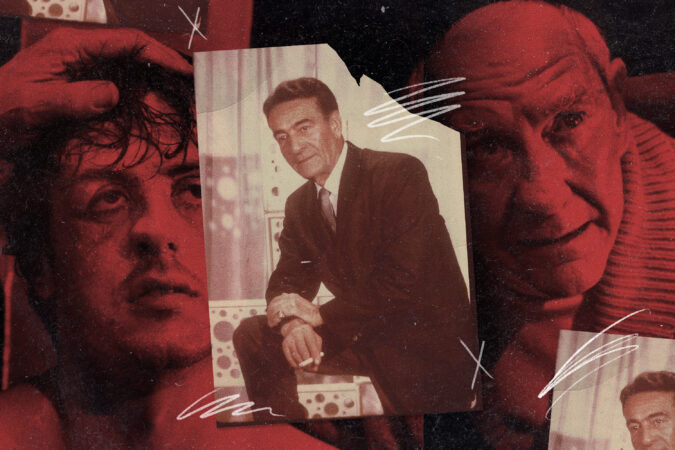
For two weeks in 1975, Burgess Meredith had shadowed Steindler, observing how he spoke to fighters and ran the gym, soliciting insights and advice from him, so he could better portray Mickey Goldmill, the wise and grouchy trainer who prepares Rocky Balboa to go the distance against Apollo Creed in Rocky. The Academy Awards would be held on March 28, 1977, and among the film’s 10 nominations was Meredith’s, for best actor in a supporting role. If he won, the chances were good that Meredith, in front of millions of viewers on ABC, would thank Steindler in his acceptance speech.
That moment of worldwide recognition for Steindler would never materialize, and not merely because Jason Robards, for playing Washington Post editor Ben Bradlee in All the President’s Men, won the best supporting actor Oscar that year and Meredith did not. Instead, Howie Steindler’s name would be left, for those who remember it, cloaked in sadness and mystery. Fraser picked up Carol and drove to the police station. The two of them sat together, waiting for an answer about his whereabouts, as the clock ticked toward midnight.
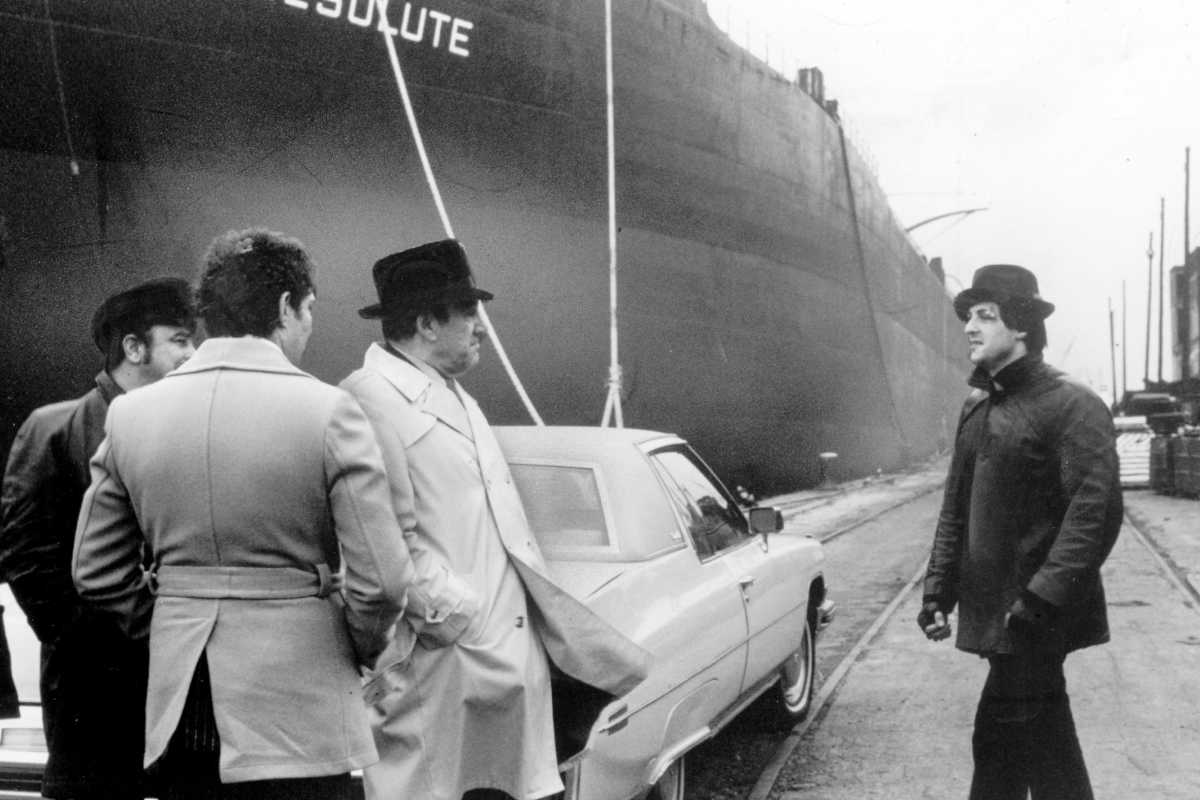
Sylvester Stallone on location while filming the original “Rocky” in Philadelphia.
A troubled heart of gold
Sylvester Stallone was anonymous in Hollywood, with just $106 to his name, before writing the script for Rocky and insisting, at the risk of scuttling the entire project, that he play the titular character. Rocky’s true star, the biggest name in the movie at the time, was Meredith.
He had earned an Oscar nomination for best supporting actor the previous year for his performance as a salesman/ex-vaudevillian in The Day of the Locust, and his lengthy career as a stage and screen actor, coupled with his deserved reputation as a ladies’ man, had made him a frequent source of copy in newspaper entertainment sections and gossip pages. (“Showgirl is 4th Wife of Burgess Meredith” was the headline of a brief United Press International story in January 1951.)
He was one of 41 actors who either auditioned or was considered for the role of Mickey; Lee J. Cobb, Art Carney, and George Burns were among the others. When producer Bob Chartoff approached him about the part, though, Meredith was skeptical.
“Chartoff came to Dad’s house,” Meredith’s son Jonathan said. “‘Look, we’re making a film about a boxer with Sylvester Stallone, and we’d like you to be in it. We think it’s really going to be a great film, so what we’d like to do is give you a piece of the production and then pay you less.’ And Dad says, ‘Well, I don’t know. I’d rather have the money because no one’s gonna watch a film about a boxer.’ And then, of course, it became a hit.”
Meredith accepted the role for a salary of $20,000, and the Main Street Gym was an obvious choice for Stallone, Chartoff, coproducer Irwin Winkler, and director John Avildsen as an essential location for Rocky, its grimy interior and creaky floors lending Stallone’s training scenes with Meredith an atmosphere fit for any Philly neighborhood.
The gym, on the second floor of an old concrete theater, hovered above a parking garage at the intersection of Third and Main Streets. Its entrance adorned with a sign that read “World Rated Boxers Train Here Daily,” it shared the building with a luggage store. Jim Murray, the renowned Los Angeles Times sports columnist, described the gym’s setting as “losers’ turf, the crossroads of hopelessness and despair, the home base of a lot of guys who have quit in their corners of life.”
It was the perfect place for the hardest men on earth to harden themselves. Rocky Marciano, Muhammad Ali (when his name was Cassius Clay), Jack Dempsey, Floyd Patterson, Joe Louis, George Foreman: All of them and more trained there. Steindler himself managed Danny Lopez to the World Boxing Council featherweight championship in November 1976 — the same month that Rocky premiered. Lopez’s title fight was held in Ghana, and Steindler, sick at the time, couldn’t accompany him on the trip.
Still, he was so proud of his contribution to Lopez’s championship that he invited several friends and reporters to the Redwood one night, then had them listen to a recording of the radio broadcast of the bout. He’d sip a bottle of brandy immediately after Lopez’s fights to calm his nerves, and having taken over the gym in 1960, he kept a ledger, on a yellow notepad, of all the money he had loaned to fighters — two dollars here, three dollars there, 10 dollars sometimes — and never collected.
“Even with the gruff exterior,” Carol said recently, “he had a heart of gold.”
Jimmy Gambina, who played Mike, Mickey’s assistant, and whose father, Ralph, was an accomplished manager, spent weeks teaching, or trying to teach, Stallone proper boxing technique for the film. “I got him in condition to be a tough guy,” Gambina said, “not a good boxer, just a banger, a Joe Frazier type who weighed less.” Steindler served a different function, simply by being himself. He was Meredith’s model.
Jimmy Gambina, who played Mike, Mickey’s assistant in “Rocky.”
The first time he met Steindler, at the gym, Meredith was dressed in what he called his “broken-down outfit” to play Mickey: ratty sweatshirt, pilled cardigan, cotton balls stuffed in his cheeks, makeup cauliflowering his ears, 17 fake stitches zigzagging near his eyes. He asked Steindler if he could use the phone. The costume fooled Steindler, who told him, You think I’m running a hotel here? There’s a phone down on the street. I got other things to do.
“He thought I was one of the bums, and he gave it to me,” Meredith once told the Los Angeles Times. “Later, when I went out, one of the rather slow-minded pugs around there must’ve got to his ear and said, ‘That’s one of the stars of this thing.’”
Meredith wasn’t much of a boxing fan. Loving the sport required a “love of the brutal,” he once said, that he didn’t possess. But Steindler “gave me the mind of the man,” meaning Mickey. “I’d stay around that office and listen to him crack. He’s quite a fella.”
Rudy Tellez, who apprenticed under Steindler before becoming a longtime trainer and manager himself, said that Meredith and Steindler would sit down for long conversations, and Meredith would watch Steindler’s facial expressions intently: “That’s where he picked up all that dialogue and persona.”
There’s no public record of Steindler ever saying, Women weaken legs or You’re gonna eat lightning, and you’re gonna crap thunder, as Mickey did. But it wouldn’t have been out of character if he had. “He used to call me ‘schmuck’ or ‘putz’ or all other kinds of crazy Jewish names,” Tellez said. “He meant it with love, though.” He kept a wad of cash, as much as $400, on him at all times because he didn’t trust banks. He wore a special 14-karat-gold diamond ring and drove a gold ’76 Cadillac. His office was barely big enough to store a couple of brooms, and he decorated it with photos of chimpanzees with people’s names under them. He refused to list the gym’s phone number because he didn’t want to be bothered with “too many annoying calls.”
Homeless men, their bottles of wine and beer wrapped in paper bags, sometimes slipped inside the foyer and staggered up the staircase, following the aromas of fresh sweat, dried blood, and liniment. On those occasions, Steindler might grab the billy club that hung on one of the walls.
“I run this place, y’see,” he told an LA writer in February 1976; by then, his health deteriorating, he was carrying an oxygen tank with him. “I pay the rent, and this is the most famous gym in the world. Y’might hear remarks that this is a dingy neighborhood, but no gym in the world has a tenth the traffic or a hundredth of the number of fighters.
“Sure, we got troubles sometimes, but it’s nothing. Everybody’s being hit by the same trouble. We got characters floating around — the screwballs find their way up here — but I run a strict place. This is one establishment that stays the way it was established.”
Some of those characters were more dangerous, and some of the potential troubles more serious, than Steindler implied. Crime boss Mickey Cohen, who as a teen had trained at Main Street and fancied himself a budding featherweight contender, was a presence in the LA boxing scene until his death, from complications from stomach cancer surgery, in July 1976. Fraser tried to keep Cohen and the rest of his kind at a distance, according to his daughter Denise.
“Dad would say, ‘Don’t ever have the mob do anything for you because you’ll owe them for the rest of your life,’” she said. But boxing has always been seamy, stained with corruption. There’s no cleaning it. There never has been. All you do is live with it, if you can.
“Ex-gangsters, Mafia, I met a few,” Tellez said. “They’d come up and see Howie.”
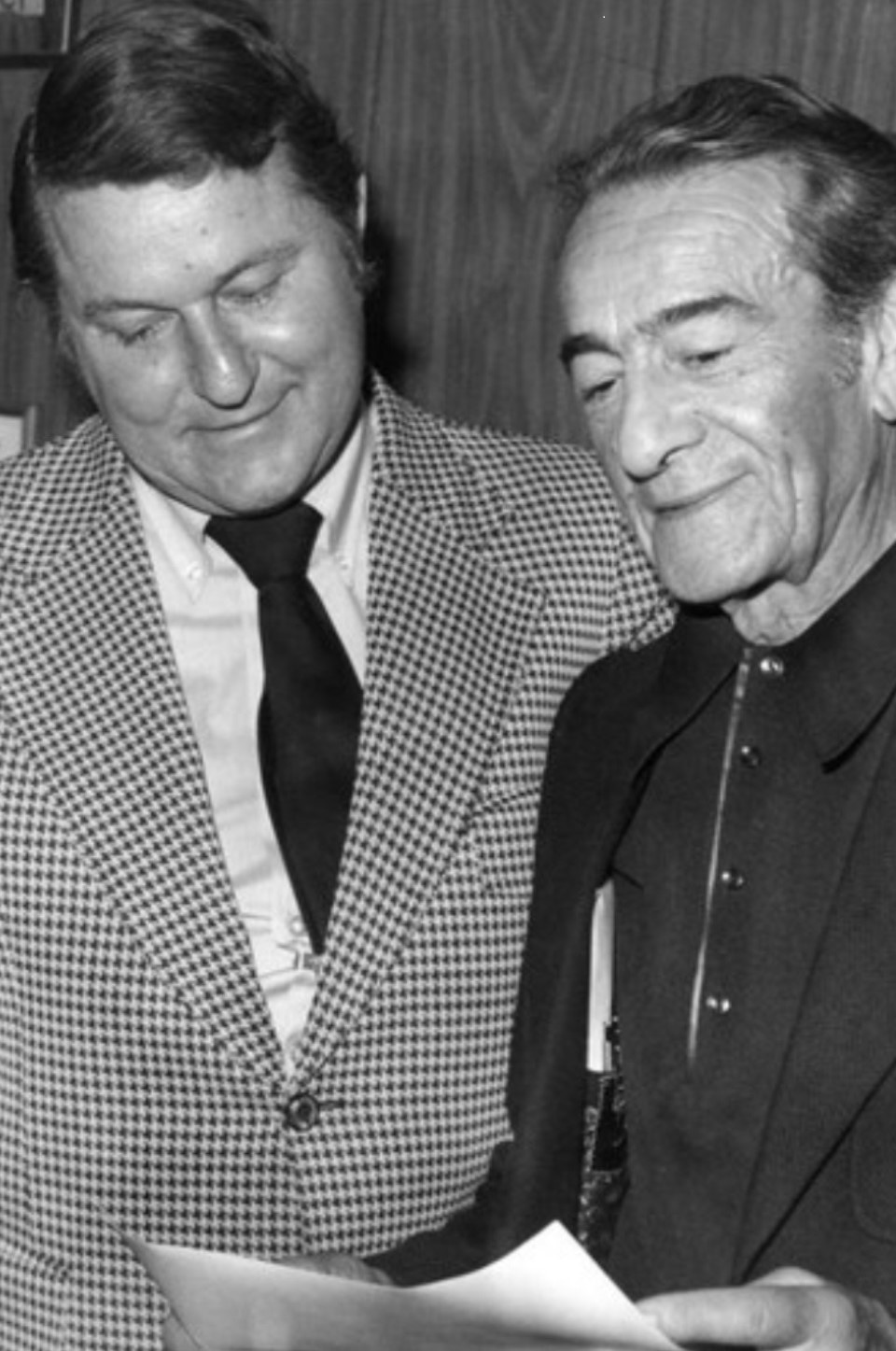
Howie Steindler (right), who was Burgess Meredith’s model for the character Mickey in the movie “Rocky,” had a close friendship with promoter Don Fraser.
A critical error
The day of Steindler’s death began in its ordinary way: the click of a key into a lock, the clomping of feet up steps. Tellez had been worried about Steindler for a while, had heard him arguing on the phone frequently. The previous afternoon, in fact, Steindler had called a state senator to talk about problems he was having with the state athletic commission. He had another loud, anxious phone conversation that morning; with whom, Tellez didn’t know. When Steindler hung up the phone, Tellez asked him, Are you OK?
Yeah, schmuck, he mumbled. I’m all right.
Tellez wouldn’t let Steindler lock up the gym alone. They left together that night. He never saw his mentor again.
At the precinct, Carol thought perhaps her father had gotten into an argument or fight with another motorist, a road-rage-style incident, or maybe he had been arrested on DUI charges. The word murder didn’t cross her mind until the police separated her and Fraser and brought her into an office to question her.
“When I got in the room there,” she said, “you would have thought I killed my father. They treated you like that. ‘What time do you get home? What time did your husband get home? Where were you?’ And yet, they haven’t told me anything about my father. Finally, I said to the guy, ‘You’d better’ — and I used some not-so-nice words — ‘tell me what’s going on or I’m not telling you another thing.’”
So they told her: A highway patrol officer had come across Howie’s Cadillac on the shoulder of Ventura Freeway, five miles from the Steindlers’ house. His body was in the backseat, his feet dangling out an open door. He had sustained a horrible beating. Three of his ribs and a vertebra were broken. He had bruises on his head, chest, and right leg and a puncture wound to his right temple. Fraser identified the body to spare Carol the sight. The official cause of death was “suffocation by apparent smothering”; the police speculated that the killers had pushed Steindler’s face into the car-seat cushion.
His wallet, his keys, his identification papers, and his gold diamond ring were missing. There was a dent on the back of Steindler’s car and a hole slicing through the bumper, indications that someone had rear-ended him.
A witness had told police that two men had attacked Steindler as he stood near his Cadillac a block from his home, punching him before shoving him in the back of the car and driving away. At first, the observer had thought the victim was female, because Steindler was so small and slight. The witness drove past the scene once, then again, then left when one of the assailants started to approach her, but she described the men’s car as being older and gray.
The young woman. Carol now understood why the young woman had been sitting near the HOMICIDE door. She was the witness. And she had made one critical mistake: Instead of noticing the license plate of the old, gray car, she remembered the license plate of Steindler’s: HOWIE-5.
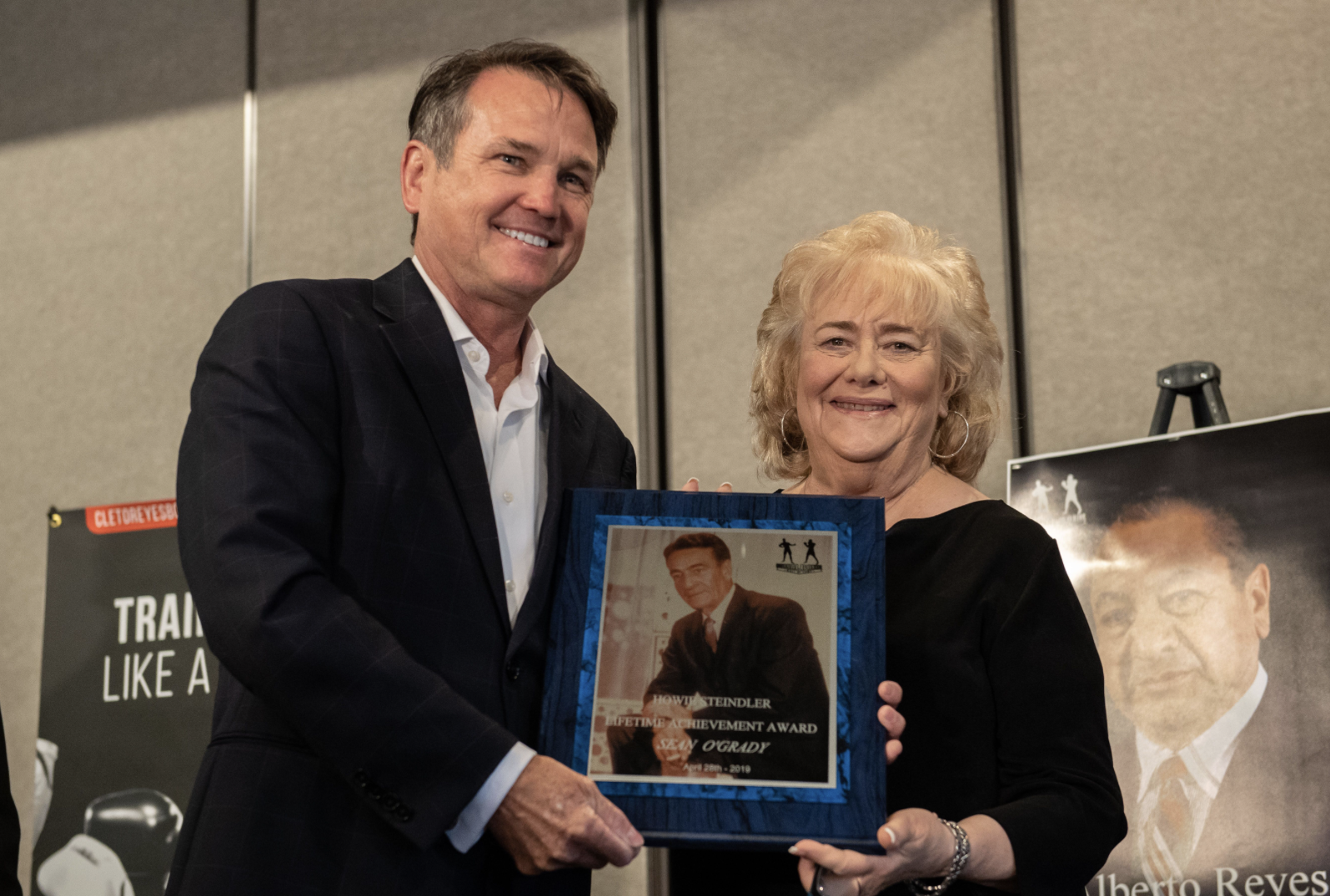
Carol Steindler, with former lightweight champion Sean O’Grady, has maintained a close connection to the National Boxing Hall of Fame, which gives out an award in her father’s honor.
‘You never know’
From that beginning, a lack of evidence — and competing theories of the crime — made the case difficult to solve. Marv Engquist, the detective who led the investigation, believed that Steindler had been a random victim, that the killers had collided with his Cadillac to draw him into a confrontation and rob him. The MO fit other unsolved murders in the same vicinity and time frame, and Steindler’s feistiness, his refusal to back down from anyone, could have escalated a robbery into something more deadly.
Carol has long been skeptical of that theory. “The police, the homicide detectives, all thought it was a bump-and-run,” she said, “and I kept saying, ‘No, it’s something else. My father and mother were acting really strange for two weeks.’ I don’t think it’s just a bump-and-run. I think they knew something.”
Gambina and Tellez still believe that the mob was responsible for Steindler’s murder. They raised and discussed that possibility in hushed tones and with measured words. “The fight game,” Gambina said. “You never know what’s going to happen with people.”
Carol took over the Main Street Gym and ran it until 1984, when it was razed to build a parking lot. She and her sister, Bobbi Beatty, would from time to time speak to a newspaper or TV reporter, usually on the anniversary of their father’s death, to reawaken interest in and awareness of the case. But the odds that it will be solved are less than slim. Detectives compiled suspects but never made an arrest. Carol, who lives in Thousand Oaks, Calif., is 86. Bobbi died of cancer in 2004. Those who were involved or might know what happened — even the killers themselves — have either died or aged into inertia.
“Unfortunately,” William Beatty, Bobbi’s widower, said in a phone interview, “it’s like you’re trying to find out if there are any witnesses to the Civil War.”
After 48 years, with so many questions still lingering unanswered and unanswerable, one detail remains especially haunting. Nine months after her husband’s car and body were discovered, Ann Steindler received a strange package in the mail: Howie’s wallet, Howie’s keys, Howie’s credit cards. No cash, no return address, no fingerprints.
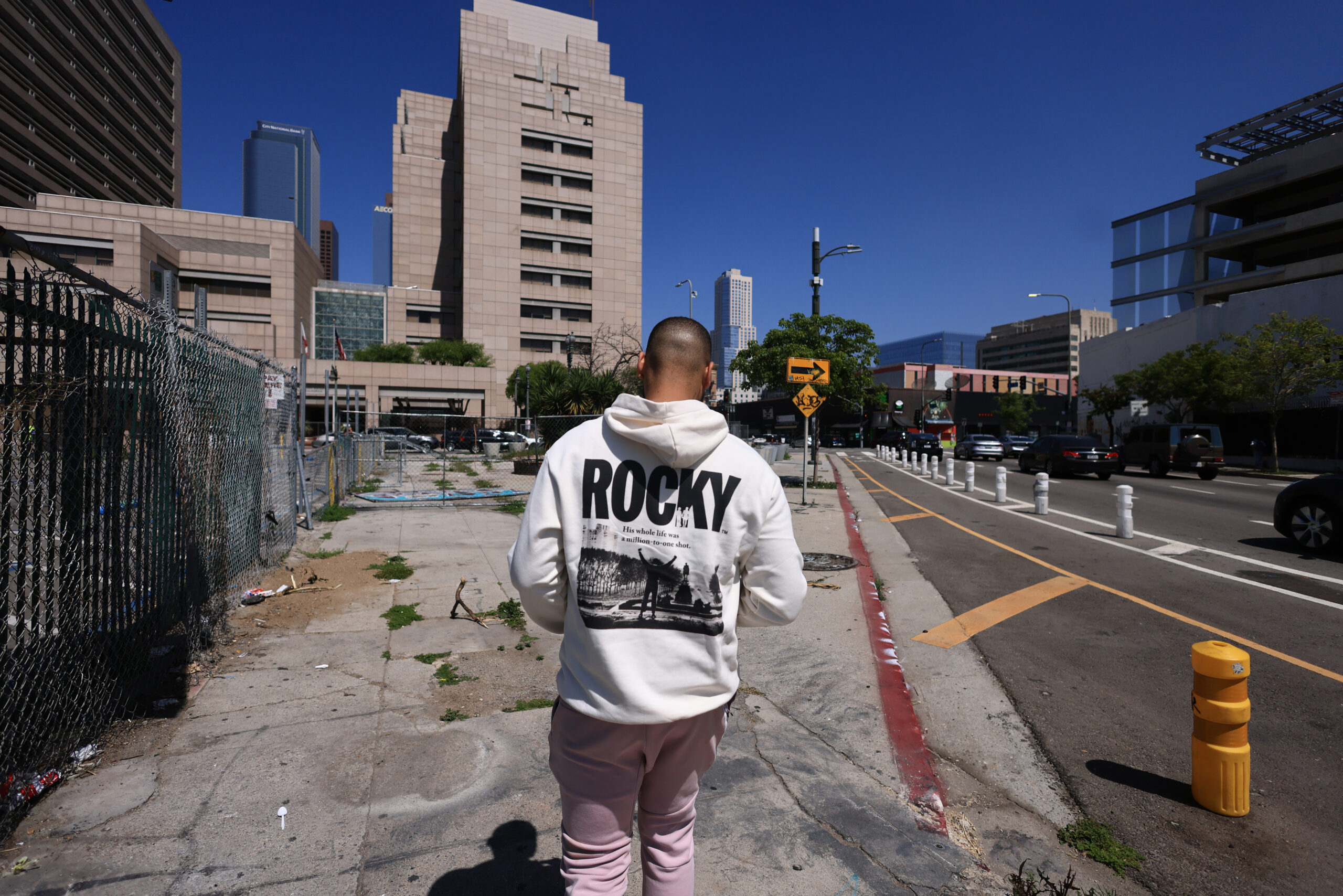
True Rice, a Los Angeles transplant from Baltimore, walks by a site where “Rocky” was filmed, coincidentally wearing an appropriate hoodie.
What has changed and what hasn’t
Three hundred parking spots, give or take, cover the piece of land where the Main Street Gym once stood. In some ways, little has changed about the neighborhood. Weeds and tufts of grass burst up from the concrete. Walls and telephone poles are psychedelic with graffiti.
On a recent morning, a man in a red plaid shirt stretched out on a ledge near a palm bush and slept. A few feet away, another man, dressed in ratty black, crouched down, put his hands on the sides of his head, and began screaming. A pair of white sneakers dangled from a wire stretched above, giving the lot a Philadelphian flavor. Around the corner, a dog had dropped something in the middle of the sidewalk that its owner, if the animal even had an owner, hadn’t bothered to scoop up.
There was no historical marker commemorating the gym. No artwork invoking Rocky, Stallone, or Meredith. No acknowledgment of one of the most inspirational films ever made … or the dark story connected to it.
Then, as if by magic, there was something. There was someone. True Rice strolled through the lot, heading back to his apartment after grocery shopping. Twenty-nine and a native of West Baltimore, he moved to Los Angeles in 2020 to try to make it in modeling and music.
“Came out here with 60 dollars in my pocket,” he said, “looking for a change.”
The striking aspect about him wasn’t what he did but what he wore: a white, hooded sweatshirt that he had bought the day before. Plastered across the back were the words “ROCKY: His whole life was a million-to-one shot” and a depiction of Stallone atop the Art Museum steps.
Did Rice have any idea about the history of where was walking and what that history represented? The lot … the gym … the men … the movie … the murder … the stories and the scenes, exhilarating and evil.
He said what anyone would have expected him to say. He said what even those few who remember Howie Steindler and his death would have to admit. He stood in the middle of a grim city block with no memory, and he said he didn’t know.