Category: Nation & World

  • The Trump administration will announce the dismantling of multiple parts of the Education Department

    The Trump administration will announce the dismantling of multiple parts of the Education Department

    The Education Department plans to announce Tuesday that it will move multiple parts of the agency to other federal departments, an unprecedented and unilateral effort to dismantle an agency created by Congress to ensure all Americans have equal access to educational opportunity and better coordinate federal programs.

    The move was described by three people informed of the plan ahead of the announcement. Two of these people said six offices within the department would be shifted elsewhere; the third person said it was at least two.

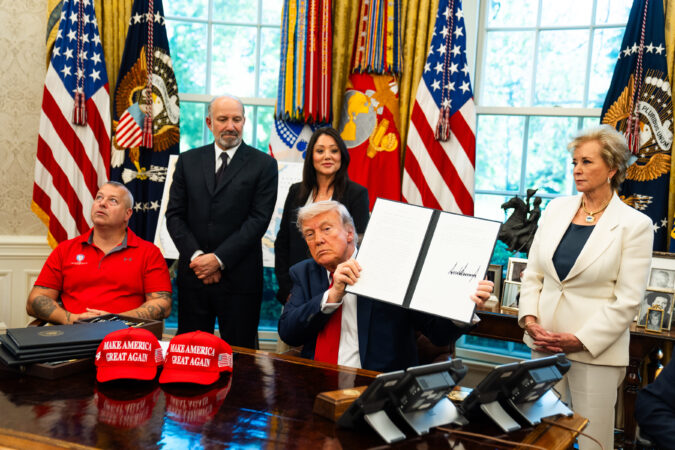
    President Donald Trump signed an executive order in March seeking to close the department and asked Education Secretary Linda McMahon to work with Congress to do so. The agency, which was created in 1979, has long been derided by conservatives as unnecessary and ineffective. But Congress has not acted on or seriously considered Trump’s request.

    McMahon has acknowledged that only Congress can eliminate the department but vowed to do everything in her power to dismantle it from within.

    Asked for comment, an Education Department spokeswoman suggested some information provided to The Post about the plan was inaccurate, but did not offer specifics.

    Supporters of the department say that the agency is effective in coordinating multiple aspects of education in one place and keeping priorities important to students, parents and schools high on the federal agenda.

    Offices that could be moved out of the agency include the Office for Civil Rights, which investigates allegations of discrimination on the basis of race, sex and disability; the Office of Special Education and Rehabilitative Services, which administers the $15 billion Individuals with Disabilities Act program; and the Indian Education program; the Office of Elementary and Secondary Education, which administers K-12 grant programs; and the Office of Postsecondary Education.

    Federal law directs that these programs be housed in the Education Department. The Trump administration is employing a work-around, the people briefed on the matter said, whereby other government agencies would run the Education programs under a contract with the Education Department. The people spoke on the condition of anonymity because they were not authorized to discuss the changes.

    The Trump administration laid the groundwork for this change earlier this year when it signed an agreement to move career, technical and adult education grants out of the Education Department to the Labor Department. Under the arrangement, Education retains oversight and leadership while managing the programs alongside Labor, a way of sidestepping the federal statute.

    “We believe that other department functions would benefit from similar collaborations,” McMahon wrote in an op-ed essay published Monday in USA Today.

    More broadly, McMahon has argued that the recently ended government shutdown showed how unnecessary her agency is.

    “Students kept going to class. Teachers continued to get paid. There were no disruptions in sports seasons or bus routes,” she wrote. “The shutdown proved an argument that conservatives have been making for 45 years: The U.S. Department of Education is mostly a pass-through for funds that are best managed by the states.”

  • ‘Wicked’ lights during Eagles broadcast mark Boathouse Row’s first movie promo

    ‘Wicked’ lights during Eagles broadcast mark Boathouse Row’s first movie promo

    Those watching the Eagles’ winning matchup against the Detroit Lions on Sunday may have caught a glimpse of something absolutely “thrillifying.”

    As the NBC Sunday Night Football broadcast headed to a commercial break, hosts pointed out a flyover view of Philadelphia’s iconic Boathouse Row. Only this time, the boathouses along the Schuylkill were lit up in pink and green.

    Announcers said the special color treatment was brought to viewers by Wicked: For Good, the anticipated musical-to-film finale starring Cynthia Erivo and Ariana Grande (plus West Philly’s own Colman Domingo as the Cowardly Lion).

    On social media, viewers were surprised and delighted by the marketing play.

    “What do you mean ‘Wicked: For Good’ sponsored by Boathouse Row?” one X user wrote. “Boathouse Row being lit up in Wicked colors is HUGE for my brand,” said another.

    It marks the latest effort in the film’s megamarketing campaign, which has ranged from Wicked dolls, to deodorant, to laundry detergent, to make up kits, to Swiffers, to cereal, and everything in between. Truly, no stone has been left un-greenified. And now that approach appears to extend to extremely hyperlocal stops, like Boathouse Row.

    It also appears to be Boathouse Row’s first foray into paid movie promotions.

    So how did this all pan out? And does it mean Wicked has paid the Fairmount Park Conservatory and Boathouse Row a boatload of sponsorship dollars?

    Here’s what we know.

    How do the Boathouse Row lights work?

    The Boathouse Row lights debuted in 1979 and quickly became a beloved feature along the stretch of 19th-century historic homes. The strip is listed on the National Register of Historic Places.

    In 2005, the homes transitioned to LED lights, according to the Fairmount Park Conservancy, which manages Boathouse Row. In 2023, the homes temporarily went dark as part of a $2 million refurbishing project. They were re-lit in March 2024.

    According to the conservancy’s website, 6,400 individual LED lights are installed along 10 of the historic boathouses. The light configurations, which were installed by Philly-based firm The Lighting Practice can make 16 million color combinations.

    Can anyone make a Boathouse Row light change request?

    Surprisingly, yes.

    After the homes’ lighting upgrades, Boathouse Row announced that seemingly anyone could become a “Boathouse Row Lighting Partner,” and make a special request in exchange for payment to the Fairmount Park Conservancy.

    Of course, the conservancy gets first right of refusal, and there are some exceptions. According to its website, political events and observances, campaigns that conflict with City of Philadelphia laws, religious figures or organizations, and campaigns or events deemed “inappropriate” will not be considered.

    You can also check on Boathouse Row’s website to see what color the lights are each day.

    How much does a special lighting request cost?

    It depends on the level of razzle-dazzle and its duration.

    According to Boathouse Row’s website, prices range from $750 to $2,500 per day, depending on the display’s complexity. Fees go directly to the Boathouse Row’s ongoing maintenance. The limit for a display is one week.

    How much did Wicked pay Boathouse Row to go green and pink?

    It’s unclear exactly how much the Wicked display costs. The lighting scheme aired during Sunday’s broadcast. In reality, that B-roll was filmed in advance on Friday evening, a spokesperson with the Fairmount Park Conservancy said. It lasted about 20 minutes.

    The conservancy declined to disclose the exact amount NBC paid. Wicked is a Universal film, which is under the NBC and Comcast umbrella. NBC also broadcasts Sunday Night Football.

    Have other movies or marketing campaigns worked with Boathouse Row before?

    It looks like this is the first movie campaign.

    “We don’t think it’s ever been done before,” conservancy spokesperson Cari Feiler Bender said.

    But there are no other mentions of entertainment-related tributes. (This week’s Wicked tribute did not make the row’s Instagram feed, which posts light color updates.)

    Boathouse Row has traditionally lit up in color schemes to celebrate local teams or to observe special causes like breast cancer, Alzheimer’s awareness, and Pride months.

    The spokesperson added that Boathouse Row would welcome future marketing partnerships to “help keep the lights on.”

  • Medicare costs will eat a big chunk of older Americans’ Social Security cost-of-living increase next year

    Medicare costs will eat a big chunk of older Americans’ Social Security cost-of-living increase next year

    It’s official. Medicare costs will eat up much of older Americans’ Social Security cost-of-living increase next year.

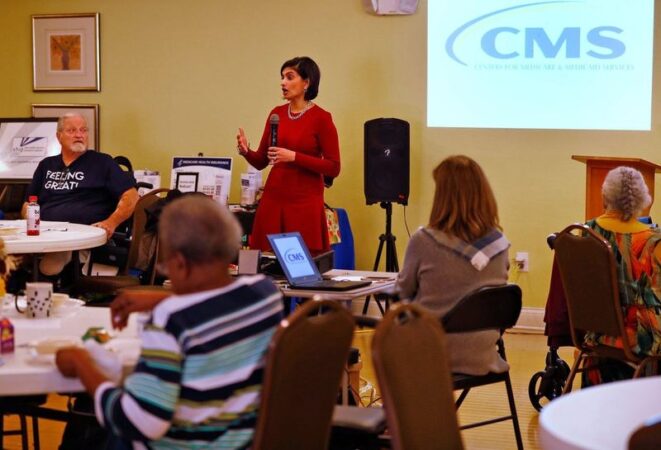
    The standard monthly premium for Medicare Part B, which covers outpatient care, doctors’ services, durable medical equipment and preventive service, will be $202.90 in 2026, the Centers for Medicare and Medicaid Services said on Nov. 14. That’s up $17.90, or nearly 9.7%, from $185.00 in 2025.

    It’s smaller than the $21.50 increase the Medicare Trustees had forecast earlier but still the second largest dollar jump in program history behind 2022’s $21.60 gain and almost 3.5 times the 2.8% Social Security raise for next year. That means seniors will probably see a drop, again, in their standard of living, experts said.

    Seniors were the only ones who saw an increase in poverty in 2024. All other age groups saw a decrease or stayed the same.

    “The public is likely to perceive this Part B increase as taking a significant chunk of or even most of their COLA,” said Mary Johnson, independent Social Security and Medicare policy analyst. “In other words, another continuation in relentless cost increases battering consumer finances.”

    Monthly Social Security checks will rise $56, on average, starting in January because of the 2.8% COLA, the Social Security Administration said. After the $17.90 increase in Medicare Part B, the average monthly COLA increase is cut to $38.10.

    Hold-harmless provision

    Such a large increase in Medicare Part B will likely trigger the hold-harmless provision for Social Security recipients with a Social Security benefit of $640 or less, Johnson said.

    The Medicare hold-harmless provision prevents the Part B premium increase from being larger than the Social Security COLA. If a premium increase is higher than the COLA, the rule prevents the beneficiary from paying the full increase. The portion of the increase those beneficiaries don’t pay is spread out among others who aren’t protected by the rule.

    For those people with a Social Security benefit of $640 or less, the 2.8% COLA next year would mean just less than an $18 per month increase in their Social Security checks. Without the hold-harmless rule, the Part B premium increase would swallow the entire COLA.

    In 2022, only about 1.5% of Medicare beneficiaries had their Part B premiums limited by the hold-harmless provision, government data showed. Part B rose $21.60 to $170.10 in 2022 while the average monthly COLA increase boosted Social Security checks by $92.

    In 2017, when Medicare premiums jumped 10%, or $12.20, to $134.00 and far outpaced the 0.3%, or $5 average, monthly COLA increase, 70% of Medicare Part B enrollees paid a lower-than-standard Part B premium due to the hold-harmless provision.

    Hold-harmless rule isn’t panacea for all costs

    The hold-harmless provision can protect seniors from Part B premium surges, but other costs may bite, Johnson said.

    “If individuals have other automatic deductions such as for Medicare Advantage or Part D premiums, increases in those premiums could reduce Social Security benefits,” Johnson said. The optional Part D covers prescription drugs.

    Some Part D plans are increasing premiums by as much as $50 in 2026, the maximum allowed under a Part D Premium Stabilization Demonstration Program, according to the nonprofit, nonpartisan research organization KFF.

    “To complicate things, there are fewer stand-alone Part D plans to choose from,” Johnson said. The total number of prescription drug plans has dropped by half since 2024, KFF said.

    Is everyone eligible for hold harmless?

    Those who aren’t eligible for the hold-harmless provision include:

    • New Medicare enrollees
    • People who aren’t receiving Social Security benefits
    • High-income earners

    What about deductibles?

    In addition to higher premiums, higher annual deductibles next year will make health insurance even more expensive for Medicare enrollees.

    The annual deductible for all Medicare Part B beneficiaries before insurance covers costs will be $283 in 2026, up $26 from $257 in 2025, CMS said.

    Could it have been worse?

    The Part B premium could have been higher, CMS said.

    “If the Trump Administration had not taken action to address unprecedented spending on skin substitutes, the Part B premium increase would have been about $11 more a month,” CMS said. “However, due to changes finalized in the 2026 Physician Fee Schedule Final Rule, spending on skin substitutes is expected to drop by 90% without affecting patient care.”

    Skin substitutes are materials like biologic, synthetic or biosynthetic products that mimic human skin and are used to cover and treat chronic wounds, such as diabetic foot ulcers. The Trump administration reclassified these bandages so they aren’t billed separately. CMS estimates the change would reduce Medicare spending on these products by nearly 90% in calendar year 2026.

    Medicare Trustees also estimated earlier this year the standard monthly Part B premium would rise $21.50 to $206.50 in 2026 from $185 in 2025. That would have been more than the $17.90 increase to $202.90 in 2026.

  • Cloudflare outage impacts X, ChatGPT, Spotify, and other websites

    Cloudflare, an internet infrastructure platform, is experiencing an outage that appears to be affecting websites across the internet, including the social media platform X.

    The company said in a status update before 7 a.m. EST on Nov. 18 that it was aware of “an issue which potentially impacts multiple customers,” and was investigating the problem.

    In a statement to USA TODAY around 8:30 a.m. EST, Cloudflare said it “saw a spike in unusual traffic” to one of its services around 6:20 a.m. EST.

    “That caused some traffic passing through Cloudflare’s network to experience errors. We do not yet know the cause of the spike in unusual traffic. We are all hands on deck to make sure all traffic is served without errors. After that, we will turn our attention to investigating the cause of the unusual spike in traffic,” the statement said.

    Many X users reported having problems loading the social media app.

    According to Downdetector, an outage-tracking website, thousands of users of several popular websites were reporting issues or outages as of 8 a.m. EST, including X, Spotify, OpenAI, League of Legends and more.

    By 8:30 a.m. EST, though, Downdetector also appeared to be having connectivity issues tied to the Cloudflare outage.

    Is Cloudflare down?

    Cloudflare said it is experiencing issues with its global network, causing outages at many websites that rely on the platform.

    Shortly after 8 a.m. EST, Cloudflare said it had identified the issue and made changes to recover its Cloudflare Access and WARP system, which both help protect companies’ traffic and devices.

    “We are continuing to work towards restoring other services,” Cloudflare said.

    More updates will be available on its status website.

    Cloudflare is a platform which many websites use to improve their performance and functionality.

    Which websites are down from Cloudflare outage?

    According to Downdetector, the following websites were reporting increased outages as of 9 a.m. EST:

    • X, formerly Twitter
    • Spotify
    • OpenAI
    • League of Legends
    • Grindr
    • Google Store
    • Archive of Our Own
    • Uber
    • Quizlet
    • Canva
    • Claude AI
    • Character AI
    • Indeed
    • Truth Social
    • Dayforce
    • ChatGPT
    • Letterboxd
    • Square
    • Rover
    • Zoom
    • Canvas
    • Ikea

    Downdetector also appeared to be impacted by the outage, as did news outlet Axios. Both websites loaded a banner that said, “Please unblock challenges.cloudflare.com to proceed.”

  • Judge scolds Justice Department for ‘profound investigative missteps’ in James Comey case

    Judge scolds Justice Department for ‘profound investigative missteps’ in James Comey case

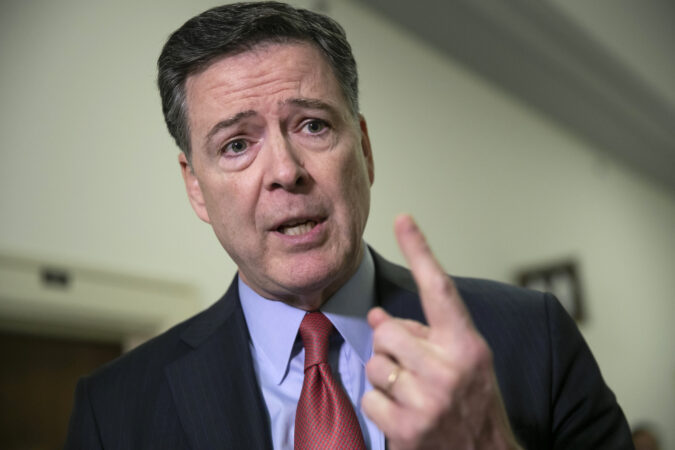
    WASHINGTON — The Justice Department engaged in a “disturbing pattern of profound investigative missteps” in the process of securing an indictment against former FBI Director James Comey, a federal judge ruled Monday in directing prosecutors to provide defense lawyers with all grand jury materials from the case.

    Those problems, wrote Magistrate Judge William Fitzpatrick, include “fundamental misstatements of the law” by a prosecutor to the grand jury that indicted Comey in September, the use of potentially privileged communications during the investigation and unexplained irregularities in the transcript of the grand jury proceedings.

    “The Court recognizes that the relief sought by the defense is rarely granted,” Fitzpatrick wrote “However, the record points to a disturbing pattern of profound investigative missteps, missteps that led an FBI agent and a prosecutor to potentially undermine the integrity of the grand jury proceeding.”

    The 24-page opinion is the most blistering assessment yet by a judge of the Justice Department’s actions leading up to the Comey indictment. It underscores how procedural missteps and prosecutorial inexperience have combined to imperil the prosecution pushed by President Donald Trump for reasons separate and apart from the substance of the disputed allegations against Comey.

    The Comey case and a separate prosecution of New York Attorney General Letitia James have hastened concerns that the Justice Department is being weaponized in pursuit of Trump’s political opponents. Both defendants have filed multiple motions to dismiss the cases against them before trial, arguing that the prosecutions are improperly vindictive and that the prosecutor who filed the charges, Lindsey Halligan, was illegally appointed.

    A different judge is set to decide by Thanksgiving on the challenges by Comey and James to Halligan’s appointment.

    Though grand jury proceedings are presumptively secret, Comey’s lawyers had sought records from the process out of concern that irregularities may have tainted the case. The sole prosecutor who defense lawyers say presented the case to the grand jury was Halligan, a former White House aide with no prior prosecutorial experience who was appointed just days before the indictment to the job of interim U.S. attorney for the Eastern District of Virginia.

    In his order Monday, Fitzpatrick said that after reviewing the grand jury transcript himself, he had come away deeply concerned about the integrity of the case.

    “Here, the procedural and substantive irregularities that occurred before the grand jury, and the manner in which evidence presented to the grand jury was collected and used, may rise to the level of government misconduct resulting in prejudice to Mr. Comey,” Fitzpatrick said.

    The Justice Department responded to the ruling by asking that it be put on hold to give prosecutors time to file objections. The government said it believed Fitzpatrick “may have misinterpreted” some facts in issuing his ruling.

    Fitzpatrick listed, among nearly a dozen irregularities in his ruling, two different comments that a prosecutor — presumably, Halligan — made to the grand jury that he said represented “fundamental misstatements of the law.”

    The actual statements are blacked out, but Fitzpatrick said the prosecutor seems to have ignored the fact that a grand jury may not draw a negative inference about a person who exercises his right not to testify in front of it. He said she also appeared to suggest to grand jurors that they did not need to rely only on what was presented to them and could instead before assured that there was additional evidence that would be presented at trial.

    The judge also drew attention to the jumbled manner in which the indictment was obtained and indicated that a transcript and recording of the proceedings do not provide a full account of what occurred. Halligan initially sought a three-count indictment of Comey, but after the grand jury rejected one of the three proposed counts and found probable cause to indict on the other two counts, a second two-count indictment was prepared and signed.

    But Fitzpatrick said it was not clear to him in reviewing the record that the indictment that Halligan presented in court at the conclusion of the process had been presented to the grand jury for their deliberation.

    “Either way, this unusual series of events, still not fully explained by the prosecutor’s declaration, calls into question the presumption of regularity generally associated with grand jury proceedings, and provides another genuine issue the defense may raise to challenge the manner in which the government obtained the indictment,” he wrote.

    The two-count indictment charges Comey with lying to Congress in September 2020 when he suggested under questioning that he had not authorized FBI leaks of information to the news media. His lawyers say the question he was responding to was vague and confusing but the answer he gave to the Senate Judiciary Committee was true.

    The line of questioning from Sen. Ted Cruz appeared to focus on whether Comey had authorized his former deputy director, Andrew McCabe, to speak with the news media. But since the indictment, prosecutors have made clear that their indictment centers on allegations that Comey permitted a separate person — a close friend and Columbia University law professor, Dan Richman — to serve as an anonymous source in interactions with reporters.

    The FBI executed search warrants in 2019 and 2020 to access messages between Richman and Comey as part of a media leaks investigation that did not result in charges. But Fitzpatrick said he was concerned that communications between the men that might have been protected by attorney-client privilege — Richman was at one point functioning as a lawyer for Comey — were exposed to the grand jury without Comey having had an opportunity to object.

  • Flight schedules will return to normal at PHL ahead of Thanksgiving and holiday travel season

    Flight schedules will return to normal at PHL ahead of Thanksgiving and holiday travel season

    Flight schedules should soon return to normal across major U.S. airports, including Philadelphia, after the FAA lifted government shutdown-related flight restrictions for airlines.

    The Federal Aviation Administration retracted its order at more than 40 airports on Sunday night. Transportation Secretary Sean Duffy initially told airlines to eliminate 10% of their scheduled flights starting on Nov. 7 in response to “concerning data” that showed pressure on the national aviation system and on air traffic controllers who were experiencing staffing shortages amid the federal government shutdown.

    Now that the federal government has passed a bill to fund the government until at least Jan. 30, federal agencies and workers, including those across the aviation system, are heading back to work.

    “Today’s decision to rescind the order reflects the steady decline in staffing concerns across the National Airspace System and allows us to return to normal operations,” FAA Administrator Bryan Bedford said in a statement. “I am grateful for the hard work of the FAA safety and operations teams and for their focus on the safety of the traveling public.”

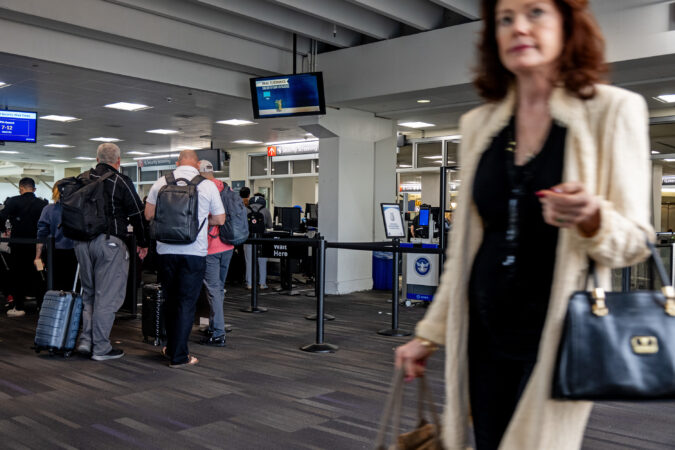
    Air traffic at the Philadelphia International Airport on Nov. 6.

    American Airlines, which operates 75% of the flights in and out of Philadelphia International Airport, is ready to bounce back swiftly after flight restrictions are lifted, a spokesperson said.

    “American is ready for business, and we are serving customers with a full schedule in advance of the Thanksgiving and year-end holidays,” said Bri Harper, American Airlines’ spokesperson for the Northeast region.

    Recovering from the FAA-ordered flight reductions won’t be a huge task, said Mike Taylor, J.D. Power’s practice lead for travel, and will likely be resolved in a matter of days.

    “A matter of two or three days is generally all it takes,” Taylor said. “So I think they want to get that ball rolling well in advance of holiday travel so that there’s less hassle when holiday travel picks up in a week and a half from now.”

    PHL’s major airlines, including American, United, and Delta, don’t expect any major hiccups associated with restoring flights after the FAA-ordered flight reductions.

    United CEO Scott Kirby lauded employees during the chaotic period of cancellations in a LinkedIn post. While Nov. 8 and 9 set records in staffing shortage-driven cancellations and delays at the FAA, he wrote, Kirby said United customers gave the airline their fourth- and fifth-highest satisfaction scores of the year on those days.

    Delta CEO Ed Bastian told CBS, “The system should return to normal by the weekend.”

  • Trump administration posts notice that no federal food aid will go out Nov. 1

    Trump administration posts notice that no federal food aid will go out Nov. 1

    The U.S. Department of Agriculture has posted a notice on its website saying federal food aid will not go out Nov. 1, raising the stakes for families nationwide as the government shutdown drags on.

    The new notice comes after the Trump administration said it would not tap roughly $5 billion in contingency funds to keep benefits through the Supplemental Nutrition Assistance Program, commonly referred to as SNAP, flowing into November. That program helps about 1 in 8 Americans buy groceries.

    “Bottom line, the well has run dry,” the USDA notice says. “At this time, there will be no benefits issued November 01. We are approaching an inflection point for Senate Democrats.”

    The shutdown, which began Oct. 1, is now the second-longest on record. While the Republican administration took steps leading up to the shutdown to ensure SNAP benefits were paid this month, the cutoff would expand the impact of the impasse to a wider swath of Americans — and some of those most in need — unless a political resolution is found in just a few days.

    The administration blames Democrats, who say they will not agree to reopen the government until Republicans negotiate with them on extending expiring subsidies under the Affordable Care Act. Republicans say Democrats must first agree to reopen the government before negotiation.

    Democratic lawmakers have written to Agriculture Secretary Brooke Rollins requesting to use contingency funds to cover the bulk of next month’s benefits.

    But a USDA memo that surfaced Friday says “contingency funds are not legally available to cover regular benefits.” The document says the money is reserved for such things such as helping people in disaster areas.

    It cited a storm named Melissa, which has strengthened into a major hurricane, as an example of why it’s important to have the money available to mobilize quickly in the event of a disaster.

    The prospect of families not receiving food aid has deeply concerned states run by both parties.

    Some states have pledged to keep SNAP benefits flowing even if the federal program halts payments, but there are questions about whether U.S. government directives may allow that to happen. The USDA memo also says states would not be reimbursed for temporarily picking up the cost.

    Other states are telling SNAP recipients to be ready for the benefits to stop. Arkansas and Oklahoma, for example, are advising recipients to identify food pantries and other groups that help with food.

    Sen. Chris Murphy, D-Conn., accused Republicans and Trump of not agreeing to negotiate.

    “The reality is, if they sat down to try to negotiate, we could probably come up with something pretty quickly,” Murphy said Sunday on CNN’s “State of the Union.” “We could open up the government on Tuesday or Wednesday, and there wouldn’t be any crisis in the food stamp program.”

  • Going green: Why frogs are appearing at ICE protests

    Going green: Why frogs are appearing at ICE protests

    The frogs are all over social media, playing and prancing in front of the ICE building in Portland, Ore. The demonstrators in big, green inflatable costumes have grown from local oddity to symbol of the resistance, undermining President Donald Trump’s claim that “war ravaged” Portland is under siege by “domestic terrorists.”

    Protests that started with a single amphibian have in recent weeks expanded into full ponds, particularly after a viral video showed officers pepper-spraying a demonstrator through the air-intake of his costume. The frog corps there has been joined by a shark, giraffe, chicken, and raccoon, and during the recent nationwide “No Kings” marches expanded its web-toed footprint to places including Philadelphia.

    Demonstrators gather for a ’No Kings’ rally in Philadelphia on Saturday, Oct. 18, 2025.

    Why has the frog become so popular?

    People following the news on the internet and TV see the paramilitary might of helmeted ICE agents arrayed against … frogs. And unicorns. And other dancing creatures.

    For demonstrators, it’s a way to make the other side look ridiculous by embracing ridiculousness ― a staple of effective political street theater, said Temple University professor Ralph Young, an expert on protest and dissent.

    “Trump saying Portland is occupied by terrorists, it’s so over the top,” Young said. “How do you respond? I guess you put on a frog outfit.”

    What has made Portland a center of immigration protest?

    Demonstrators oppose Trump’s effort to deport millions of people. And Portland has long been a target of the president, who last week again falsely claimed that the city was “burning down.”

    He wants to deploy National Guard troops in response to the protests outside the city’s Immigration and Customs Enforcement facility. An appeals court last week reversed an earlier ruling and said that deployment could proceed.

    Wearing animal costumes “dismantles their narrative a little bit,” chicken-suited protester Jack Dickinson told Willamette Week. “[Homeland Security Secretary] Kristi Noem is up on the balcony staring over the ‘Antifa Army’ and it’s, like, eight journalists and five protesters and one of them is in a chicken suit.”

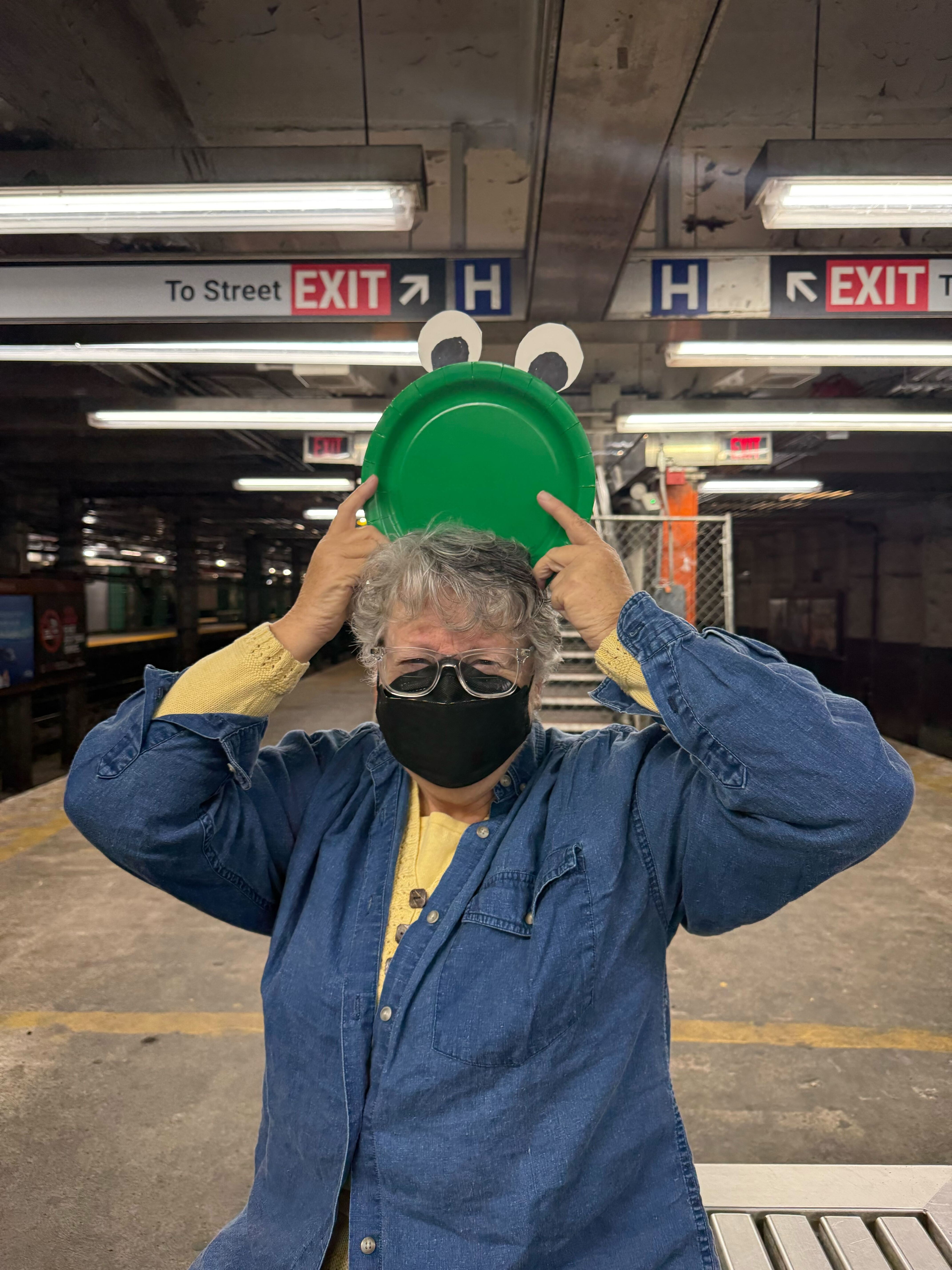
    Laura Murphy, 74, wears a handmade tiara inspired by a Portland, Oregon, protester’s frog costume, on her way to the No Kings protest on Oct. 18 in Philadelphia.

    Where did the idea for the frogs come from?

    The frogs, Temple’s Young said, come out of a court jester tradition. In ancient times, jesters could speak to the king in ways that might get someone else beheaded. They offered what others might be unwilling to say ― the truth, cloaked in humor.

    Since that time there have been many other instances of truth-in-comedy protests.

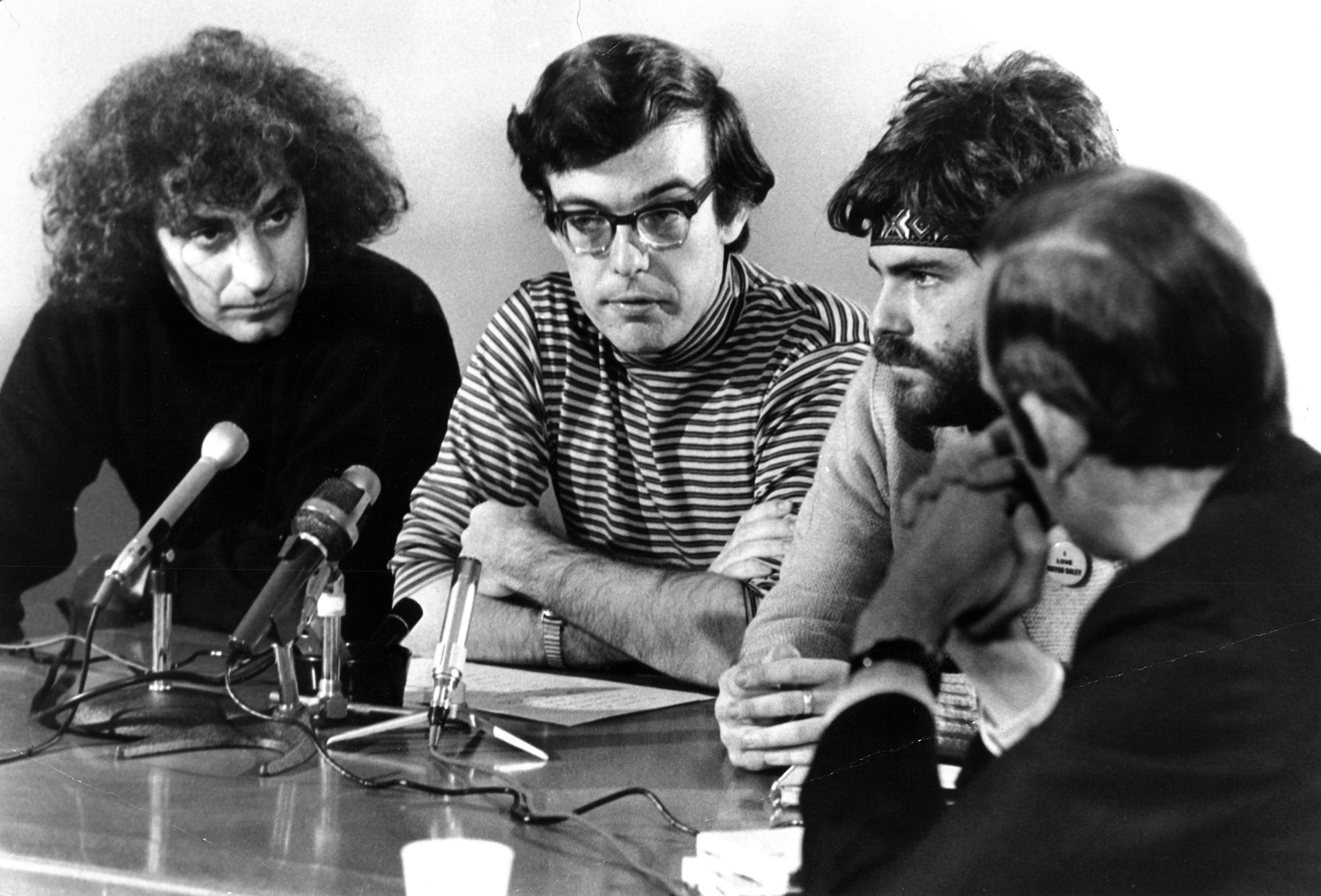
    At the 1968 Democratic National Convention, the Youth International Party, the Yippies, nominated a 145-pound pig for president. Pigasus, sarcastically named for the winged horse Pegasus, served to protest the political establishment and the sorry choice many voters felt they faced in choosing between Richard Nixon and Hubert Humphrey. The pig’s campaign slogan: “If we can’t have him in the White House, we can have him for breakfast.”

    Here on trial as part of the Chicago Seven, Abbie Hoffman (left) and Jerry Rubin (right), with beard and headband, helped nominate a pig for president. In center in striped shirt is defendant Rennie Davis. They’re picture here on Oct. 23, 1969, at the Federal Building in Chicago.

    The same year, the New York Radical Women attracted huge news coverage at the Miss America pageant when they dumped bras, makeup, and girdles into a “Freedom Trash Can” set up on the Atlantic City Boardwalk. The demonstrators were labeled “bra-burners,” though organizers insisted no bras were actually burned.

    Have frogs been spotted in Philadelphia?

    Yes, including at the recent “No Kings” protest that drew thousands onto city streets. One person carried a sign endorsing “Amphifa,” or “Amphibians Against Fascism.”

    Frogs are appearing on posters and T-shirts in a variety of poses: Raising the U.S. flag at Iwo Jima, with the help of a chicken and a unicorn. And as the subject of the famous Barack Obama campaign portrait, this one captioned not “HOPE” but “HOP.”

    So far the ICE field office in Philadelphia has not been the target of sustained protests, though the exterior of the building is now guarded by heavy concrete blocks. The group No ICE Philly plans to hold an all-day, Halloween Eve demonstration on Thursday, complete with costumes, live music, art, and free food.

    A demonstrator wearing a frog costume stands outside a U.S. Immigration and Customs Enforcement facility on Tuesday, Oct. 7, 2025, in Portland, Ore. (AP Photo/Ethan Swope)

    Is it true the frogs are meant as a biblical reference?

    Let’s not get carried away. But, yes, some people have posted social media photos of the Portland frogs captioned with a verse from Exodus 8:2-6: “If you refuse to let them go, I will bring a plague of frogs on your whole country. … The frogs will jump on you, on your people, and on all your officials.”

    Staff writer Michelle Myers contributed to this article.

  • Social Security recipients get a 2.8% cost-of-living boost in 2026, average of $56 per month

    Social Security recipients get a 2.8% cost-of-living boost in 2026, average of $56 per month

    WASHINGTON — The Social Security Administration’s annual cost-of-living adjustment will go up by 2.8% in 2026, translating to an average increase of more than $56 for retirees every month, agency officials said Friday.

    The benefits increase for nearly 71 million Social Security recipients will go into effect beginning in January. And increased payments to nearly 7.5 million people receiving Supplemental Security Income will begin on Dec. 31.

    Friday’s announcement was meant to be made last week but was delayed because of the federal government shutdown.

    The cost-of-living adjustment, or COLA, for retirees and disabled beneficiaries is financed by payroll taxes collected from workers and their employers, up to a certain annual salary, which is slated to increase to $184,500 in 2026, from $176,100 in 2025.

    Recipients received a 2.5% cost-of-living boost in 2025 and a 3.2% increase in their benefits in 2024, after a historically large 8.7% benefit increase in 2023, brought on by record 40-year-high inflation.

    The smaller increase for 2026 reflects moderating inflation. The agency will notify recipients of their new benefit amount by mail in early December.

    Some seniors say the increase isn’t enough

    Some seniors say the cost-of-living adjustment won’t help much in their ability to pay for their daily expenses. Linda Deas, an 80-year-old Florence, South Carolina, resident said “it does not match the affordability crisis we are having right now.”

    Deas, a retired information systems network operations specialist, moved to South Carolina from New York in 2022 to be closer to family. She says her monthly rent has increased by $400 in the past two years.

    She listed other items that have become more expensive for her in the past two years, including auto insurance and food. “If you have been into the supermarkets lately you will notice how prices are going up, not down,” she said.

    Deas is not alone in feeling that costs are getting out of control. Polling from the AARP shows that older Americans are increasingly struggling to keep up in today’s economy. The poll states that only 22% of Americans over age 50 agree that a COLA of right around 3% for Social Security recipients is enough to keep up with rising prices, while 77% disagree. That sentiment is consistent across political party affiliations, according to the AARP.

    In Deas’ case, the MIT Living Wage Calculator estimates that an adult living alone in Florence, South Carolina, would spend per year $10,184 for housing, $3,053 for medical expenses and $3,839 for food.

    AARP CEO Myechia Minter-Jordan said the COLA is “a lifeline of independence and dignity, for tens of millions of older Americans,” but even with the annual inflation-gauged boost in income, “older adults still face challenges covering basic expenses.”

    Social Security Administration Commissioner Frank Bisignano said in a statement Friday that the annual cost-of-living adjustment “is one way we are working to make sure benefits reflect today’s economic realities and continue to provide a foundation of security.”

    Emerson Sprick, the Bipartisan Policy Center’s director of retirement and labor policy, said in a statement that cost-of-living increases “can’t solve all the financial challenges households face or all the shortcomings of the program.”

    The agency has been in turmoil in recent months

    The latest COLA announcement comes as the Social Security Administration has been navigating almost a year of turmoil, including the termination of thousands of workers as part of the Trump administration’s efforts to shrink the size of the federal workforce. Trump administration officials have also made statements they later walked back that raised concerns about the future of the program.

    Treasury Secretary Scott Bessent said in July that the Republican administration was committed to protecting Social Security hours after he said in an interview that a new children’s savings program President Donald Trump signed into law “is a back door for privatizing Social Security.”

    And in September, Bisignano had to walk back comments that the agency is considering raising the retirement age to shore up Social Security. “Raising the retirement age is not under consideration at this time by the Administration,” Bisignano said at the time in an e-mailed statement to The Associated Press.

    “I think everything’s being considered, will be considered,” Bisignano said in the statement when asked whether raising the retirement age was a possibility to maintain the old age program’s solvency.

    Efforts to boost benefits for seniors

    In addition, the Social Security Administration faces a looming bankruptcy date if it is not addressed by Congress. The June 2025 Social Security and Medicare trustees’ report states that Social Security’s trust funds, which cover old age and disability recipients, will be unable to pay full benefits beginning in 2034. Then, Social Security would only be able to pay 81% of benefits.

    Social Security benefits were last reformed roughly 40 years ago, when the federal government raised the eligibility age for the program from 65 to 67.

    While a permanent solution for shoring up the benefits program has not been passed into law, both the Trump and Biden administrations have recently signed into law new benefits for retirees, which are expected to boost their finances.

    The Trump administration, as part of Republicans’ tax and spending bill, gave tax relief to many seniors through a temporary tax deduction for seniors aged 65 and over, which applies to all income — not just Social Security. However, those who won’t be able to claim the deduction include the lowest-income seniors who already don’t pay taxes on Social Security, those who choose to claim their benefits before they reach age 65 and those above a defined income threshold.

    Additionally, former President Joe Biden in 2024 repealed two federal policies — the Windfall Elimination Provision and the Government Pension Offset — that previously limited Social Security payouts for roughly 2.8 million people, including largely former public workers.

    These measures have accelerated the insolvency of the old-age benefits program.

    Sprick at the Bipartisan Policy Center said “there have been longstanding questions about whether benefits are adequate for low-income seniors, which should inspire urgency among policymakers to work toward broader reforms instead of ignoring Social Security’s long-term solvency.”

  • Philly rapper Armani White criticizes TMZ coverage of his arrest

    Philly rapper Armani White criticizes TMZ coverage of his arrest

    Philly-raised rapper Armani White is pushing back on the media coverage of his arrest earlier this month.

    White, 29, born Enoch Armani Tolbert, was arrested for disorderly conduct on Oct. 12 after police found the artist and members of his tour bus filming a music video on I-75 in Newport, Ky.

    TMZ covered the arrest, releasing Tolbert’s mug shot and police bodycam footage of the arrest, as well as remarking on the nature of his hair in the mug shot.

    “My father didn’t raise me to be a criminal. My grandfather didn’t raise me to be a criminal. The only reason why I smiled in that mug shot is because I refuse to let anybody paint a picture of me as a criminal on TV, on the internet, anywhere,” White said to a packed crowd in Birmingham, Ala., last weekend.

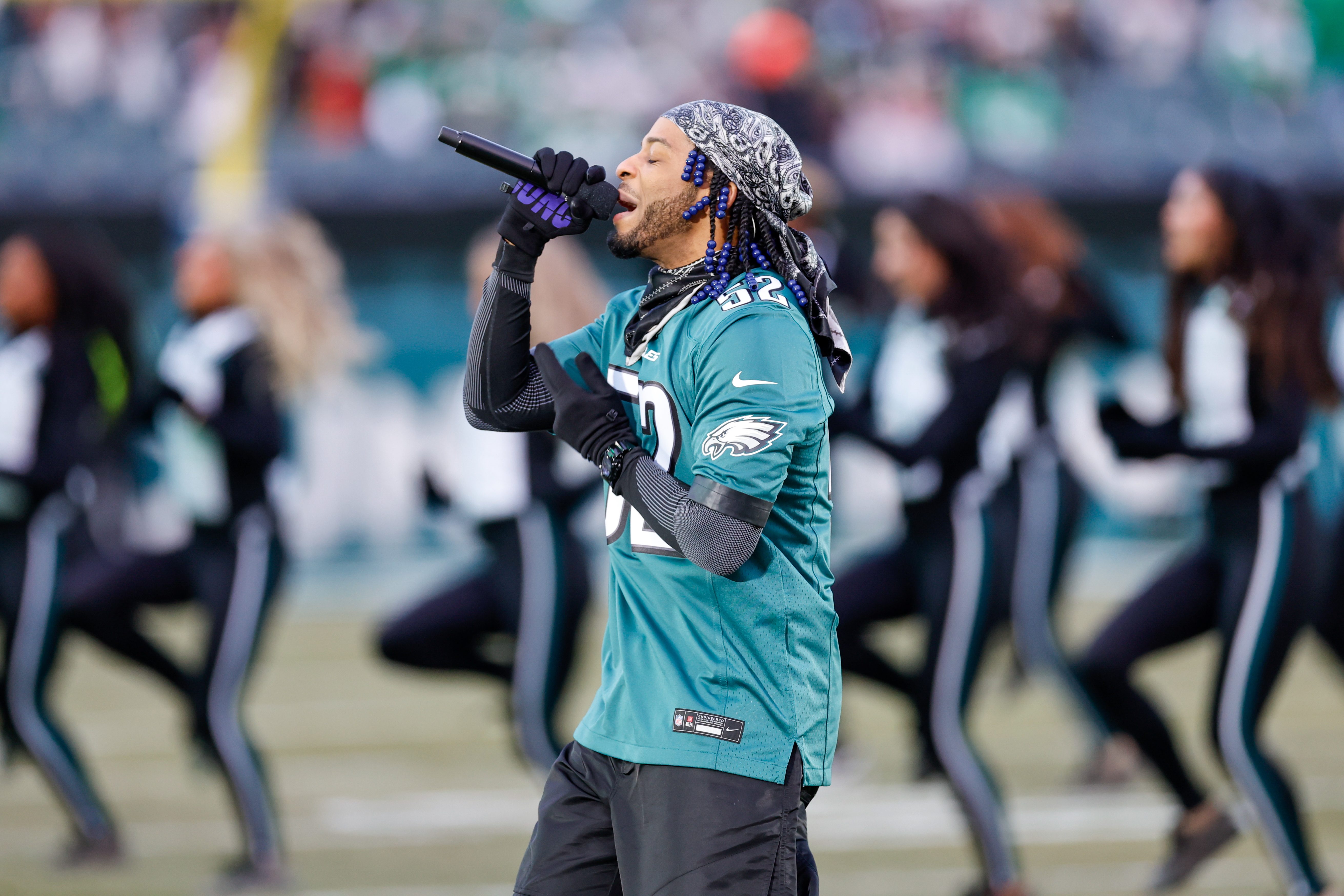
    Armani White performs during the NFC Championship show as the Eagles face the Commanders Sunday, Jan. 26, 2025, in Philadelphia.

    Tolbert was in Kentucky as part of a nationwide tour alongside Grammy-award-winning singer T-Pain when his tour bus stopped on the interstate to film a music video. White did not respond to a request for comment.

    According to a police citation, the police were called to the highway after reports of people running on the road. When they arrived, police reportedly found White dancing on the concrete median of the interstate.

    White grew to international fame in 2022 after his bass-bumping, Neptunes-sampled track “BILLIE EILISH” birthed a viral TikTok challenge reaching millions. White later joined the track’s namesake, Billie Eilish, the 23-year-old Grammy and Oscar award-winning singer, to perform the song together in 2023.

    Rapping since the 2010s, White grew an underground following before joining the lineup of Jay-Z’s Made In America festival in 2018, which he had been attending as a fan before hitting the stage. Earlier this year, White performed his first NFL halftime show during the NFC championship, with the Philadelphia Eagles against the Washington Commanders.

    White released his debut album, Keep In Touch, in 2019, followed by the EP, Things We Lost in the Fire, referring to a house fire in which White lost family members at a young age.

    This week, he released a music video for the single, “MOUNT PLEASANT.,” a teaser for what’s to come on the release of his next album on Oct. 31.