Category: Nation & World

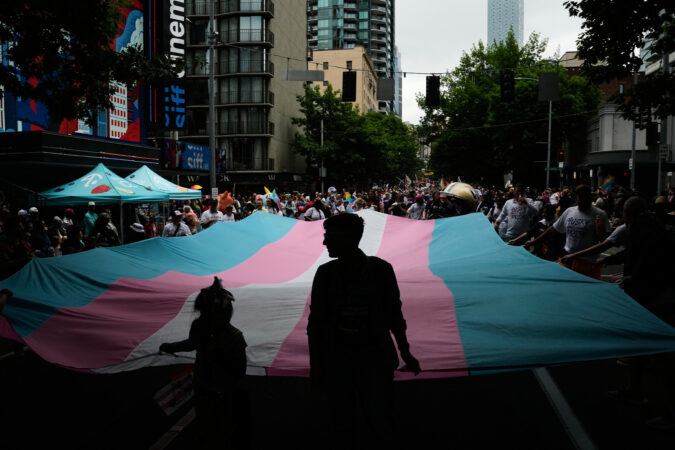
  • Trans people are fleeing red states for Seattle. The city can’t keep up.

    Trans people are fleeing red states for Seattle. The city can’t keep up.

    SEATTLE — Crow Harmony never felt at ease living in Florida as a transgender guy. The state has some of the most restrictive anti-LGBTQ+ laws in the country, and Harmony said he struggled to find employers willing to hire trans people. Last fall, after Harmony’s boyfriend transitioned, the couple lost their housing.

    They were just 21 and 20 with no money or job prospects, so Harmony reached out to a Seattle nonprofit for help getting out of Florida. The nonprofit, a trans-led organization called Traction, welcomed the couple with a place to sleep and money for moving.

    But unbeknownst to Harmony, Traction was struggling, too.

    Since the 2024 election, Traction has helped 1,500 trans people flee red states — more than 20 times the 70 people it aided in the 18 months before the election. And it’s just one of several Seattle nonprofits whose leaders say they don’t have the resources to help the number of trans people who’ve left their homes for the safety of the Pacific Northwest.

    Though trans people make up just 1% of the population in Washington state, the nonprofits that help them say their budgets are drained and their staffs are stretched so thin that last month the Seattle LGBTQ Commission asked Mayor Katie Wilson (D) to declare a civil state of emergency. Such a declaration would free up general fund dollars to bolster the nonprofits’ finances as they help transplants find housing and jobs.

    “The conditions,” the commission wrote in a June 2 letter to Wilson and the City Council, “are an urgent policy concern and a life-and-death matter for internal displaced persons fleeing to Seattle for safety.”

    Though no one tracks the migration of LGBTQ+ people from one place to another, a poll conducted by NORC suggests that roughly 400,000 trans adults fled red states in the six months after the 2024 election, a time when President Donald Trump issued a slew of executive orders aimed at restricting nearly every facet of trans life. Another 1.2 million trans people were estimated to be considering such moves.

    In the year since, the need for aid has skyrocketed, nonprofit leaders say, as states such as Kansas and Idaho have stripped trans people of their drivers’ licenses and threatened to jail them if they didn’t use bathrooms that conform to the sex they were assigned at birth. Meanwhile, private donations have shrunk and grant opportunities have disappeared as Trump warns against using federal funding to “promote gender ideology.”

    Wilson has said she will decide by the end of August whether to authorize a state of emergency, which could free up $2.1 million and create a program to help LGBTQ+ newcomers navigate the city’s social services. In a nearly three-hour council committee meeting in late June, commission members said that without the declaration, some LGBTQ+ organizations might close, further straining the city’s already overtaxed safety net.

    “We need help,” LGBTQ Commissioner Kody Allen told the City Council. “Our community needs help. And this is the only place we can get it.”

    Seattle has long been known as one of the country’s most trans-friendly cities. It banned discrimination on the basis of gender 40 years ago. Its hospitals were among the first to offer gender transition care to young people. And Washington state was the first in the nation to allow trans athletes to compete.

    Those protections have always drawn trans people from elsewhere, but in the years before Trump won reelection, nonprofit leaders say, the numbers were small enough, and the newcomers so prepared, that organizations could easily help people settle in. Most arrived with jobs and rental agreements. But after Trump took office and further emboldened conservative lawmakers to strip trans people of rights, Seattle leaders say they began to hear from people with no plan, only a desperate need to move immediately.

    “Most people don’t come to us saying, ‘I want to move to Seattle.’ They say, ‘I need to get the hell out now,’” said Aspen Coyle, a program manager for Traction. “It’s been chaos. We have been scaling up as fast as we can, but there is so much need out there. It is this massive, massive wave of people coming in.”

    Nearly 400 people have asked for help in the past two months alone. For a nonprofit that took in less than $84,000 in revenue before the election, those requests can feel “immense.” But Coyle and Traction founder Michael Woodward said securing money has become increasingly difficult under Trump. Last year, the organization applied for a dozen grants and won only two small ones — worth just $17,500. Individual donors have stopped giving as much, too, and some are afraid to donate to organizations Trump might consider part of “a radical ideology.”

    When Harmony and his boyfriend contacted Traction last year, the couple had nearly no resources to rebuild their lives. They were too young to have amassed any real savings, and they were leaving all of their friends and most of their possessions behind.

    A Traction peer navigator met the couple at the airport. Three different couples who volunteer with the group offered to house Harmony and his boyfriend for weeks at a time. The navigator helped Harmony sign up for health insurance and food benefits, and eventually, Traction helped the couple find jobs and enroll in college. A few months ago, the couple signed a lease for their own apartment.

    “For the very first time, I felt like I didn’t have to do it all myself,” Harmony said. “We never had to wonder, ‘What are we going to do now?’ They were already thinking ahead of what we might need.”

    In a council committee meeting in late June, dozens of trans people told similar stories. A person from Kansas said they lost their job driving a bus after the state forced trans people to surrender their licenses. Others from New Orleans and Georgia said they lost access to medical care. And several described themselves as “refugees” who would have been homeless if not for Seattle’s nonprofits.

    Leaders from multiple nonprofits told the council that they were now hearing “every day” from people who were afraid to continue living elsewhere. But Taylor Farley, the executive director of the Queer Power Alliance, said they worried local groups don’t have the resources to help everyone who needs it.

    “Our costs are rising nearly twice as fast as our funding is coming in,” said Farley. “Our community is under attack, and organizations protecting LGBTQIA+ people are struggling to survive.” (One conservative influencer in Seattle decried the “emergency” as an attempt by left-wing groups to tap public tax dollars unnecessarily.)

    Declaring a civil emergency would be a “significant step,” commission members acknowledged in a letter to Wilson this spring — one that could cost the city $2.1 million if it addresses the immediate needs. Seattle is facing a nearly $500 million shortfall over the next three years, and some city officials have told commission members they worry about the financial feasibility of declaring an emergency. But it’s not without precedent: Eight months ago, city leaders set aside $8 million in discretionary dollars to declare a state of emergency after the federal government cut food stamp funding.

    In a written reply to the commission, Wilson said that even though the city is facing “challenging budget restraints,” she will “proactively search for ways” to meet the need and ensure Seattle remains “a place of safety, dignity, and inclusion” for LGBTQ+ newcomers.

    Wilson, whose office did not respond to a request for comment, has convened an interdepartmental group that now meets every other week to evaluate the needs and the city’s capacity to address them. She has said that group will make a recommendation by August.

    If the city chooses not to declare a state of emergency, commission leaders said, they worry what will happen not only to Seattle’s LGBTQ+ organizations but also to ones that help all city residents. Many of the newcomers need shelter, food aid, and subsidized healthcare. And the city’s homeless population has already reached a record high this year.

    Allen, who also works for a youth homeless shelter, said his organization is turning away at least 10 young trans people a night from the shelter because it doesn’t have space.

    The one positive nonprofits say they have seen is an uptick in volunteers. Early last year, Traction had only three or five volunteers. Now it has more than 70, including Harmony. In the months since his life stabilized, Harmony has helped other newcomers navigate Seattle. Many have told him they don’t want to leave their home states, but they have to.

    “If there’s no state of emergency, we’re still going to have an influx of trans people who have been displaced from their homes, their lives,” Harmony said. “Half of them have no connections. They just want to be able to live safely. So it’s up to us to say, ‘Here is your chance. You deserve one.’”

  • Historians reject White House’s criticism of Smithsonian museum

    Historians reject White House’s criticism of Smithsonian museum

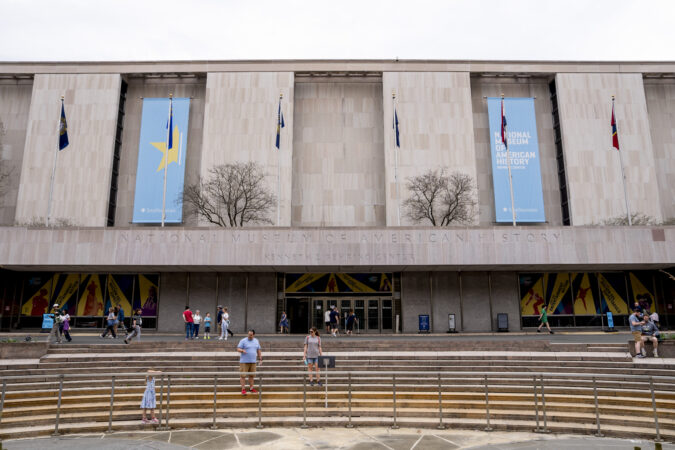
    On July 4, the White House posted a lengthy report condemning the Smithsonian Institution’s National Museum of American History, accusing it of promoting “extreme ideological activism” while denigrating the nation’s founders and its founding.

    Historians have started to reply with failing grades of their own.

    The Organization of American Historians, the nation’s largest group of scholars of U.S. history, blasted the report in a statement Monday, accusing the administration of presenting a partisan ideological attack in the guise of historical critique.

    “The National Museum of American History interprets America’s history through its vast collection,” it said. “This report’s objective is to punish it for doing that in a way that makes U.S. history accessible to and reflective of all Americans. The report is only the latest chapter in a broader, systematic campaign that now targets an institution that was never meant to answer to any single administration.”

    The group accused the administration of ignoring decades of scholarship and trying to “erase the conflict, struggle, and diversity — the complexity — that have always defined the American experience.”

    “Make no mistake: The report represents an attempt to turn back the clock to a time when U.S. history was taught as the history of white Christian men who conquered a continent, U.S. military leaders who rarely lost a battle and U.S. presidents who were single-handedly responsible for national greatness, all under the cover of ‘anti-DEI’ and ‘anti-woke’ crusading,” it said.

    The White House report presents a wide array of charges, including that the museum promotes transgender issues and engages in “pro-illegal immigrant activism.” But at its core is a complaint that it fails to tell an “inspiring and unifying” national story that focuses on the heroism of the founders and acknowledges Christianity’s “constructive role” in “shaping the nation and its freedoms.”

    In a separate email to the New York Times, the president of the Organization of American Historians, Marc Stein, questioned the symbolic timing of the report.

    “Released on July 4, 2026, the 250th birthday of the U.S. Declaration of Independence, the report is a declaration of independence from history,” he said.

    Stein, a history professor at San Francisco State and the author of a recent history of the 1976 Bicentennial, defended the museum’s director, Anthea M. Hartig, a scholar of architectural history and cultural heritage who took over that role in 2019.

    The report “mischaracterizes and misrepresents the words of Anthea Hartig, who has consistently worked to educate and inform visitors to the museum with innovative exhibits and inspirational programs,” he said. (Hartig is a past president of the Organization of American Historians.)

    Some historians have questioned the accuracy of some of the report’s claims, including that the museum largely ignores the American Revolution and figures such as George Washington.

    Sarah Weicksel, the executive director of the American Historical Association, which has more than 10,000 members, noted in an email that the museum includes some “extraordinary” Revolutionary-era objects, like the newly restored gunboat Philadelphia, which it is highlighting for the nation’s 250th anniversary.

    Weicksel questioned some of the report’s criticisms of specific wall labels — for example, one about the history of U.S. education that refers to portraits of George Washington that have hung in many classrooms to promote patriotism. The report faults the label for not including biographical information about Washington and why he is important.

    “Studies of museum visitation have shown that labels should be presented no higher than an eighth-grade reading level and that most visitors will read no more than a brief label,” she said. “If every label that mentions Washington or Lincoln needs to recount a rote interpretation of their importance to the country, visitors will never learn anything new.”

    This article originally appeared in the New York Times.

  • Repression turns to rage after quakes in Venezuela

    Repression turns to rage after quakes in Venezuela

    LA GUAIRA, Venezuela — As postquake efforts in Venezuela start shifting from rescue to recovery, a crack has opened in Venezuelan society, and people are speaking out against their repressive government with a force and openness that has not been seen in years.

    Across La Guaira, the northern state hardest hit by the twin quakes, grieving citizens have shouted down police officers and national guard members, accusing them of standing by as civilians and international aid workers dig for the living, and now, the dead.

    In interviews, Venezuelans are openly criticizing the country’s ruling party and its leader, Delcy Rodríguez, something that would have been unthinkable just a year ago.

    They are also turning their anger toward the Trump administration, which has spent the last few months facilitating economic deals between U.S. companies and Venezuela, and has stood by the government’s management of the disaster.

    Inside Venezuela, fears of imprisonment, torture, and forced exile, once powerful incentives for silence, are being pushed aside as feelings of frustration and impotence grow.

    “Why would I be afraid?” said José Silva, 47, who on Friday was resting on a sidewalk not far from a giant public housing complex now turned to rubble. Some 700 families had lived inside.

    Silva’s clothes were drenched with sweat; it was evening, only partway through his 10th day pulling survivors and bodies from under slabs of concrete. He lashed out at the government: the police were rescuing only their own, he said, and the government had sent only “second rate” tools.

    “Why would I be afraid,” to speak out, he said, “if I was born to die?”

    This anger runs parallel to growing political tension over the leadership of Rodríguez. When U.S. forces captured her predecessor, Nicolás Maduro, in January and greenlit her ascension from vice president to president, the Trump administration characterized Rodríguez as a force of stability.

    Before the quake, President Donald Trump said that she was doing a “very good job” running the country.

    But criticism of her government’s response to the disaster, particularly in the critical first 72 hours when victims are most likely to be rescued alive, and the growing fury in the streets, has raised questions about whether she can cement that stability.

    The public outrage could also complicate the Trump administration’s strategy of supporting Rodríguez so the United States can benefit from Venezuela’s resources.

    Trump’s envoy to Venezuela, John Barrett, has supported Rodríguez, saying in a television interview after the quakes that Washington had “a great deal of confidence” in the Venezuelan authorities.

    But in recent days a chorus of hard-line congressional Republicans have doubled down on criticism of her management, calling for political change as soon as possible.

    “They’re failing at their job right now,” Rep. Carlos Gimenez (R., Fla.) said in an interview with CNN, calling Rodríguez an “interim dictator.”

    Venezuelans have gathered outside the U.S. Embassy, pleading with Barrett to do more to help victims. One man, yelling into news media microphones outside the embassy recently, harangued Barrett for sitting with government officials the United States had once deemed criminals and terrorists, while victims suffered “just two blocks away.”

    “The grievance is indeed directed at John Barrett,” he shouted. “Why has he not sat with Venezuelan civil society — the honest ones, the ones who haven’t stolen anything?”

    Maria Corina Machado, the country’s popular opposition leader, has been trying to get back into the country, but she does not have a passport, or permission from Rodríguez or the United States, to enter Venezuela.

    At a news briefing on Thursday, Rodríguez defended her government’s response to the disaster, saying she had immediately dispatched 4,000 government workers to respond to the quakes, a number that had grown to 19,000.

    “What happened in Venezuela on June 24 was a natural tragedy of a scale we never imagined,” she said.

    In response to accusations of a poor state response, Rodríguez asserted repeatedly that “media laboratories” were inventing a narrative of chaos.

    As evidence of the government’s mobilization, official social media accounts have heavily publicized a handful of state-supported rescues, including one in which dozens of well-equipped emergency workers from Chile rescued a man who had survived a week in the rubble. Rodríguez visited the man at the hospital.

    But these videos contrast sharply with the reality in La Guaira, where civilians in sneakers and T-shirts are doing a vast amount of the rescue and recovery work, using shovels and pickaxes and their bare hands to pull friends, neighbors, children, spouses, siblings, and parents from the rubble. Some lack masks to protect themselves from the dust and stench of decomposing bodies.

    Rodríguez was widely criticized in Venezuela as out of touch after she was photographed wearing a luxury ski jacket, a logo of the Italian brand Moncler on her arm, to visit quake victims.

    “It’s a lie that the government is helping,” Silva said.

    Soon after he spoke, darkness fell. Not far way, a group of men had just discovered five bodies in a hole they had dug in the side of the mountain of broken concrete.

    The men wrapped the bodies in sheets and then laid them gently on the ground. Survivors looking for relatives crowded around, pulling back the sheets to try to identify the deceased. One was the body of a little girl. The others were unrecognizable.

    Thousands of people are now homeless, and the death toll, officially over 3,500, is likely to be far greater. In the coming weeks, the government will be under intense pressure to address an increasingly complex humanitarian crisis.

    Outside of another collapsed public housing building, Kimberling León, 39, a resident of the complex, described the government response in the hours and days after the quakes hit.

    She was searching for her sons, ages 9 and 13, who she believed were trapped in the rubble.

    “The police came by, normal, filming, they didn’t help us,” she said, her voice flat, like a person still in shock.

    “We said to them: ‘help us, help us,’ they didn’t come to our aid. We started digging with our hands, but the smoke was too much, the flames rose high, the gas tanks had exploded.”

    The second or third day, a shovel and pickax arrived, she said.

    “We started digging, digging, digging. We called for machines to help, but they just passed us by, headed to the private buildings” where people could pay, she said.

    Silence has been one of the most valuable commodities in La Guaira, as rescuers try to make out the taps and calls of any living that might still be buried in the rubble.

    Often, rescuers shoot a fist in the air and call for quiet, instructing drivers to cut motors and people to stop walking.

    On a recent day, profanities rained down on the interior ministry workers who rolled past a silent zone with sirens blaring. Civilians banged on the car in anger.

    While the quakes have opened space for people to vent years of pent up fury, this public outcry could also spur a crackdown, leading to questions about how the United States would respond to any repression.

    The last major social outburst was in 2024, after the ruling party stole a presidential election.

    Venezuelan officials halted protests in a matter of days by sending the military into the streets, killing protesters and locking up civilians accused of minor expressions of dissent.

    Last week, a volunteer rescuer named Wilmer Cruz who had been filmed speaking out about the government response disappeared, according to human rights groups.

    When activists publicly accused the government of retaliating against Cruz, the authorities released him from prison.

    Oscar Murillo, who leads Provea, a human rights group, said the arrest highlighted for him that the quakes have not changed the “authoritarian model” in Venezuela.

    This article originally appeared in the New York Times.

  • Hackers stole private information of more than 50,000 clients from a Philly-based law firm, lawsuits say

    Hackers stole private information of more than 50,000 clients from a Philly-based law firm, lawsuits say

    Cybercriminals duped a Blank Rome attorney into sharing the personal information of 57,554 former and current clients, two federal lawsuits filed Monday say.

    The firm, which is headquartered in Philadelphia and has 15 other offices nationwide, notified impacted clients a month after the incident, according to the complaints.

    The two nearly identical proposed class-action lawsuits, filed in the Eastern District of Pennsylvania by former Blank Rome clients from California, accuse the firm of negligence, breach of contract, and violation of consumer protection laws, among other claims.

    Blank Rome failed to use industry standards for cybersecurity and to comply with safeguards mandated by a federal medical privacy law, according to the complaints. It also didn’t appropriately train staff to identify these types of cyber schemes, the suits said.

    The lawsuits asks a judge to certify the class action on behalf of all people impacted by the breach, award them damages, and order action to ensure their identities are protected.

    “The exposure of one’s Private Information to cybercriminals is a bell that cannot be unrung,” the suits say. “Before this data breach, its current, former, and prospective clients’ Private Information was exactly that — private. Not anymore.”

    The incident was limited to one attorney and the firm’s network was never breached, a Blank Rome spokesperson said.

    “We are committed to protecting our clients’ information and maintaining the trust they place in us,” the firm’s statement said. “We believe the lawsuit has no merit and will aggressively defend against it.”

    The firm disputed that all people impacted were clients, but did not say who else was impacted.

    The attorney who filed the two lawsuits did not respond to a request for comment.

    Class-action lawsuits following cybersecurity breaches have become increasingly common. Earlier this year, Comcast agreed to pay $117.5 million to settle two dozen suits over a 2023 data breach, and the University of Pennsylvania was sued multiple times over an October breach that impacted fewer than 10 people.

    They are also lucrative for class attorneys who can pocket as much as a third of the settlement’s amount.

    The Blank Rome data breach took place on May 21 after an “unauthorized third party” posing as a member of the firm’s IT department instructed a Blank Rome attorney to upload files to an external Google Drive, according to a notice of breach attached to the complaint.

    Clients began receiving notice on June 26, the suits say.

    The firm identified the breach within two hours, deleted all the files on the drive, and opened an investigation, the notice said. Blank Rome also notified law enforcement.

    The notice was sent to clients whose information, which included names and Social Security numbers, was stolen. Clients’ addresses, dates of birth, driver’s license numbers, passport numbers, and medical and health insurance information were also potentially obtained by the hackers, the notice said.

    Blank Rome provided complimentary credit monitoring to impacted clients, the notices said, and has taken internal steps “mitigating similar risk,” including by working with cybersecurity professionals.

    “We are notifying you of this incident and want to assure you that we take it seriously,” the firm’s notice said.

  • Judge rejects Justice Department attempt to get names of 2020 election workers in Fulton County

    Judge rejects Justice Department attempt to get names of 2020 election workers in Fulton County

    ATLANTA — The U.S. Department of Justice cannot have the names and personal contact information for every person who worked during the 2020 election in Georgia’s Fulton County, a federal judge ruled Tuesday.

    The Justice Department in April obtained a grand jury subpoena seeking the names and personal contact information of county employees and volunteer poll workers. President Donald Trump has long claimed without evidence that widespread voter fraud in Georgia’s most populous county, a Democratic stronghold, cost him victory in the state in 2020.

    Fulton County asked a judge to quash the subpoena, arguing it was meant to “target, harass, and punish the President’s perceived political opponents” and that it was “grossly over broad and untethered to any reasonable need.”

    “Given the low need for the subpoenaed information and the highly burdensome nature of the disclosure of the same, the Subpoena is unreasonable and must be quashed,” U.S. District Judge William Ray wrote in his ruling, calling the scope of the request “staggering.”

    Emails seeking comment were sent to both the Justice Department and Fulton County.

    While grand juries often work with federal prosecutors to investigate alleged crimes, “that does not give the DOJ the right to use the Grand Jury to do whatever the DOJ wants,” he wrote.

    Even if the records sought by the Justice Department could help find people who worked for the county during the 2020 election who support the theory that the election was unfair, the information couldn’t be used to charge anyone, Ray wrote.

    “That is because the statute of limitations for any possible crime arising from the 2020 Election has long expired,” he wrote.

    The subpoena came after the FBI in January served a search warrant at the Fulton County election hub and seized hundreds of boxes of ballots and other documents from the 2020 election. A federal judge in May denied the county’s request to force the federal government to return the ballots.

    The Justice Department argued in a court filing that the subpoena was the “next step in the normal investigative process” and that it seeks “records identifying persons with relevant knowledge.”

    Kamal Ghali, a lawyer for the county, argued that the subpoena “will chill participation by election workers” and that the statute of limitations for any of the alleged misconduct had already lapsed.

    Justice Department lawyer William McComb argued the statute of limitations issue is not relevant at the investigative stage. The point of the investigation is to figure out what charges can be brought, he said.

    “My point is, as we sit here now, we are not sure what charges can be brought. That’s the whole point of the investigation,” he said.

    The request for election workers’ contact information, McComb said, “would simply be a pathway to determine and speak with and interview certain individuals who worked at the polls who may have seen, heard or done something in and of themselves.”

    The judge noted that the Justice Department had expressed concern about possible criminal actions in the years that followed the election, including an alleged failure by the county to preserve electronic ballot images. But he pointed out that the subpoena seeks information related to what happened during the 2020 election and its immediate aftermath.

    “In these hyper-political times in which we currently live, there are sure to be some who disagree with this decision because they believe the allegations of fraud in the 2020 Election and believe that ‘light’ should be brought to those claims,” Ray wrote.

    He added that nothing prevents continued investigation into those allegations by people who believe those claims — such as Congress or even the Justice Department — but the power of the grand jury, “which exists to investigate potential crimes and to bring viable indictments,” cannot be used for that purpose. Otherwise, anyone in power could use the grand jury process to subpoena personal information of citizens “with no legitimate law enforcement purpose,” he wrote.

    “Thus, everyone, whether you support the President or you do not, or whether you believe the 2020 Election was fair or believe that it was not, should be concerned about the DOJ’s ability to utilize the power of the Grand Jury to appropriate your private information without a legitimate purpose,” Ray wrote.

  • NATO unveils billions in arms deals to prove its firepower as Trump again demands Greenland

    NATO unveils billions in arms deals to prove its firepower as Trump again demands Greenland

    ANKARA, Turkey — President Donald Trump on Tuesday insisted that the United States should be in control of Greenland rather than NATO ally Denmark, renewing tensions in Europe even as the trans-Atlantic military alliance was announcing billions in arms deals at a summit in an attempt to appease the mercurial U.S. leader.

    Trump called the semiautonomous island “an important part” for the United States, as he repeated the false claim that it’s surrounded by Chinese and Russian ships and said he won’t let Greenland be threatened.

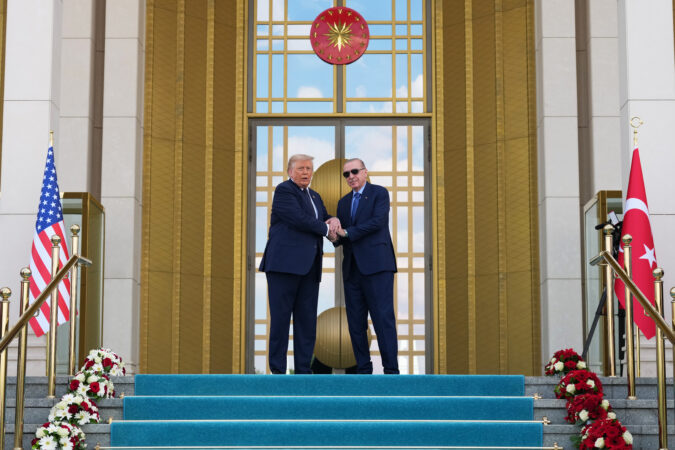
    “That should be controlled by the United States, not by Denmark,” Trump told reporters during a meeting with Turkish President Recep Tayyip Erdogan in Ankara.

    The NATO alliance was founded on the principle that its 32 members will defend each others’ territory and not threaten to seize it. At the summit, European countries and the alliance’s secretary-general, Mark Rutte, were already working overtime to address another longstanding Trump complaint: that European allies do not spend enough on their own defense.

    Separately, Trump announced that the U.S. will lift sanctions on Turkey that were issued after Ankara purchased a Russian missile defense system that led to the country being kicked out of the F-35 fighter jet program — in a nod to his warm ties with summit host Erdogan.

    Trump cites Erdogan ‘chemistry’ as he lifts obstacle on F-35s

    Turkey’s purchase in 2019 of Russian-made S-400 missile defense systems sparked years of tensions, despite the warm personal relationship between Trump and Erdogan dating back to the U.S. president’s first term.

    Legal hurdles remain before Turkey could be fully admitted back to the U.S. F-35 program, but the removal of sanctions issued under the Countering America’s Adversaries Through Sanctions Act would help ease that process. Regaining access to the F-35s is a top goal of Erdogan.

    “We’re going to be taking the sanctions off, OK?” Trump said in response to a question, saying Secretary of State Marco Rubio, Treasury Secretary Scott Bessent, and Defense Secretary Pete Hegseth were working on the issue.

    Trump said the possibility of selling F-35s to Turkey is “something certainly we’d consider” given the countries’ relationship, and that “Turkey’s been, in many ways, much more loyal than other countries that we think would be loyal.”

    Erdogan expressed hope that the U.S. will sell the F-35s, saying the U.S. president always stands by his word.

    Trump and Erdogan showed off their fondness for each other. Erdogan greeted Trump with an elaborate ceremony involving military officials on horseback and jets overhead emitting red, white, and blue smoke.

    Asked what makes their relationship so strong, Trump said there’s “a chemistry that works between us,” adding that “Sometimes you get along with the toughest people, like him.”

    Turkey’s access to U.S. F-35s could complicate relationships elsewhere. Israeli Prime Minister Benjamin Netanyahu said he has urged Trump not to sell the fighter jets to Turkey, saying it would put Israel in danger.

    “This is not a force for peace and stability,” Netanyahu said on CNN. “When you give them that power, you’re going to see aggression its wake.”

    There is also opposition among U.S. lawmakers to Turkey having the F-35s as long as the Russian missile defense system remains in its possession. Even if sanctions are lifted, the Trump administration still faces restrictions under U.S. law that prevent Turkey from being able to purchase the fighter jets if it owns the S-400s.

    NATO has ‘moment of great pride’ on defense

    Earlier in the day, NATO showcased military projects worth billions of dollars — an investment Rutte called “money well spent” and one clearly meant to try to satisfy Trump.

    Rutte was speaking to government ministers and defense industry officials at a forum billed as NATO’s “big reveal,” to the thrum of techno music.

    NATO does not own weapons — these are the property of member countries — but it has 14 AWACS early warning radar surveillance planes that are about 50 years old, along with newer surveillance drones.

    A deal to replace the aging planes was announced Tuesday. Swedish manufacturer Saab will supply up to 10 new GlobalEye surveillance aircraft for a 10-nation consortium, Swedish Prime Minister Ulf Kristersson announced.

    “It’s a moment of great pride,” he said.

    Some projects will be paid for with funds from a system of cheap loans for defense purposes set up by the European Union, comprising up to $170 billion raised on capital markets.

    Representatives from 15 nations announced a multinational effort to buy air-to-air refueling and transport planes from Airbus. Then Rutte announced a four-country effort to purchase as many as five new Triton surveillance drones.

    Rutte had told reporters on the eve of the two-day summit that “we will announce tens of billions in new contracts.” However, at Tuesday’s event, no dollar figures were given and the display included some projects long since agreed upon.

    Ukraine’s Zelensky pushes for NATO entry

    Separately, Ukrainian President Volodymyr Zelensky made a fresh appeal for his country to be allowed to join the alliance, saying his country’s armed forces are highly experienced and would boost NATO’s defense capabilities.

    He highlighted Ukraine’s ability to strike deep inside Russia and hit oil refineries and other energy targets. He said Ukraine’s armed forces are “eliminating” on average 30,000 Russian troops every month. He is set to meet with Trump on Wednesday in Ankara.

    “Frankly we take no pride in this,” Zelensky said, noting that the war with Russia — now in its fifth year — is one “we did not seek but one we are forced to fight.”

    Concern is mounting among some European countries that Russia might be preparing a hybrid attack — a combination of conventional warfare with tactics like cyberattacks — on the continent as Russian President Vladimir Putin struggles to secure victory in Ukraine.

    Yet a senior NATO official, speaking on the summit’s sidelines, said that despite some “reckless” actions by Russia, including airspace violations over Poland, Romania, and Estonia, the alliance has been successful in deterring Moscow from any potential attack on a member country. The official insisted on anonymity to brief reporters.

  • McConnell speaks to Republican leaders as speculation swirls about his health, remains hospitalized

    McConnell speaks to Republican leaders as speculation swirls about his health, remains hospitalized

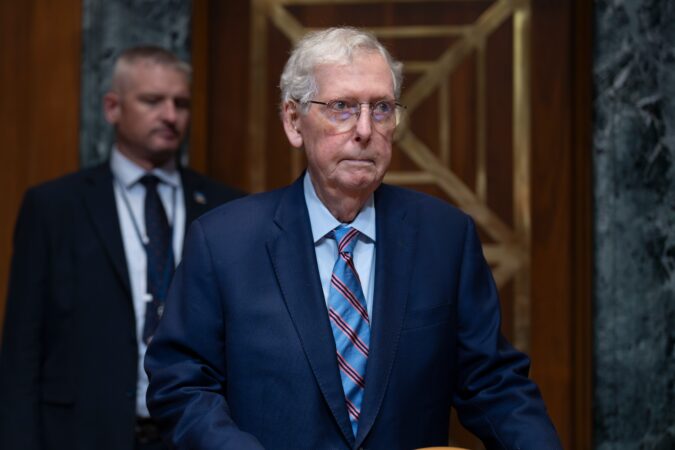
    WASHINGTON — The Senate’s top two Republicans have spoken individually to Kentucky Sen. Mitch McConnell, according to aides, as the former GOP leader remains in the hospital more than three weeks after being admitted for undisclosed health issues.

    Aides to McConnell have declined to release any information about his condition, fueling speculation about his prognosis and whether he will be healthy enough to be at the Capitol when the Senate returns to Washington next week after a two-week recess. McConnell, 84, is retiring at the end of his term in January.

    A spokesperson for Senate Majority Leader John Thune (R., S.D.) said he had spoken with McConnell by phone on Monday and that the two had a “lengthy and substantive conversation that covered a variety of topics, including national security.” As leader, Thune is generally kept up to date on illnesses and absences in his conference as he has to navigate vote counts and his narrow 53-47 majority.

    Wyoming Sen. John Barrasso, the No. 2 Senate Republican, had a 20-minute conversation with McConnell on Tuesday, according to a spokesperson. The two discussed Senate races ahead of the midterm elections, the Supreme Court, and other topics, the statement said.

    “Senator McConnell was fully engaged and is eager to get back to the Senate,” said Barrasso spokesperson Kate Noyes.

    Another McConnell ally, Republican strategist Scott Jennings, posted on X that he had also talked to McConnell for 20 minutes on Tuesday, and that “he’s still recovering in the hospital.” Jennings said they spoke about politics, foreign policy, “and even a little bit of Senate history.”

    Few details released as McConnell remains in the hospital

    McConnell was admitted to the hospital on June 14, according to a statement from his office that only said he was “receiving excellent care.”

    A statement a week later said that he would not be voting that week. And on Thursday, a new statement said that he ”appreciates the outpouring of support he’s receiving while he continues his recovery in the hospital.”

    “The Senator continues to improve, and is working closely with his staff on Kentucky and Senate matters while the Senate is out of session,” the statement said.

    A spokesperson for McConnell released the same statement again on Tuesday, with no updates.

    McConnell has a history of health troubles

    The senator’s unspecified health issues come after several hospitalizations in recent years.

    While he was still Republican leader, McConnell was hospitalized with a concussion in March 2023 and missed several weeks of work after falling in a Washington hotel. He twice froze up during news conferences after he returned, staring vacantly ahead before colleagues and staff — including Barrasso, who is a doctor — came to his assistance.

    A year later, he fell and sprained his wrist while walking out of a GOP luncheon.

    McConnell had polio in his early childhood and he has long acknowledged some difficulty as an adult in walking and climbing stairs. He also tripped and fell in 2019 at his home in Kentucky and underwent surgery for a fractured shoulder.

    The Kentucky senator was first elected to the Senate in 1984 and was the Republican leader from 2007 until last year, serving as both majority and minority leader during that period. He has remained active as a rank-and-file senator, showing up for work when the chamber is in session, often using a wheelchair to get around.

  • Judge rules for the Washington Post in $3.8B defamation suit brought by Trump Media

    Judge rules for the Washington Post in $3.8B defamation suit brought by Trump Media

    A federal judge on Thursday ruled in favor of the Washington Post, throwing out a $3.8 billion defamation lawsuit filed in 2023 by President Donald Trump’s social media company, Trump Media and Technology Group.

    U.S. District Judge Thomas Barber, who is based in Tampa, wrote in a summary docket entry — known as a minute order — that Trump Media “failed to present evidence that would allow a jury to find by clear and convincing evidence” that the Post “published the allegedly defamatory statements with actual malice.” Barber granted the Post’s motion for summary judgment and denied one from Trump Media.

    The judge said in his ruling Thursday that a full opinion is forthcoming.

    Public figures who sue for defamation in U.S. courts generally must demonstrate that the defendants acted with actual malice — disseminating information they know is false, or acting with reckless disregard for the truth — under the standard set by the landmark 1964 Supreme Court case New York Times Co. v. Sullivan.

    In the complaint, lawyers for Trump’s social media company alleged a “yearslong crusade” by the Post that culminated in an “egregious hit piece.”

    The article, published on May 13, 2023, focused on Trump Media’s effort to obtain financing ahead of a merger to take the company public. The deal, a merger with a special purpose acquisition company, or SPAC, called Digital World Acquisition, received sign-off from federal securities regulators in February 2024. One month later, in March, the company debuted under the ticker symbol DJT on the Nasdaq stock exchange.

    “We are pleased with the court’s decision and look forward to reviewing its written order upon release,” a Post spokesperson wrote in a statement.

    After discovery concluded in the case, the Post published a correction to the original piece, appended with a hyperlink on May 22, 2026 — three years after it was published.

    The correction noted that “[d]iscovery in the ongoing litigation has established that Trump Media didn’t pay a loan referral fee of $240,000, as was stated in the article and was based on The Post’s reporting at the time of publication.”

    Trump Media said the correction was a win and said it is considering appealing the court loss.

    “After three years, The Washington Post finally admitted its harmful story was false,” a spokesperson for Trump Media wrote in a statement on Monday. “We believe a jury should decide whether these falsehoods were actionable and will evaluate whether to appeal last week’s ruling in due course. We will also continue to hold the media accountable.”

  • An Idaho mother who said her toddler twins died after vaccinations has been charged with murder

    An Idaho mother who said her toddler twins died after vaccinations has been charged with murder

    An Idaho woman who said her toddler twins died last year after being vaccinated faces murder charges connected to their deaths, authorities said.

    A grand jury indicted Andrea Shaw, who is accused of suffocating her 18-month-old twins in May 2025, on two counts of first-degree murder on June 29, according to court records and a statement from the Payette Police Department.

    While appearing last year on an internet show produced by Children’s Health Defense — an anti-vaccine group founded by Health and Human Services Secretary Robert F. Kennedy Jr. — Shaw said her twins died after getting vaccinated. Kennedy has not been affiliated with the group since December 2024, when he formally resigned as chairperson to join President Donald Trump’s administration.

    Shaw, 23, was arrested by Boise police officers last week and arraigned Thursday. She is being held on a $2 million bond and could face life in prison or the death penalty if convicted or if she pleads guilty to first-degree murder. Her next court appearance is July 14.

    Joe Filicetti, an attorney representing Shaw, wrote in a text message that she “denies anything and everything” and that the state “cannot prove” the criminal charges.

    “We will defend her with wholeheartedness,” Filicetti added.

    The Payette Police Department and the Payette County prosecutor’s office declined to comment Monday.

    During her May 2025 appearance on the Children’s Health Defense show, Shaw said she found her twins dead in their room days after they got vaccinated for the flu and other diseases.

    “They had got their shots at the same time by two nurses at the same time,” Shaw said. “And they got sick.”

    Medical experts point out that the childhood vaccines at issue — hepatitis A, influenza, and DTaP — are safe and effective for kids and recommended by various medical groups.

    Shaw is also a plaintiff in a federal lawsuit brought by Children’s Health Defense and others against the American Academy of Pediatrics. The lawsuit, which was filed in January in federal court in Washington, accuses the American Academy of Pediatrics of racketeering for its “central role in an enterprise that has defrauded American families about the safety of the childhood vaccine schedule for several decades.” In the lawsuit, Shaw is described as a mother “whose children died following routine vaccinations administered according to AAP guidelines.”

    The American Academy of Pediatrics has asked the court to dismiss the suit, asserting in an April court filing that it is the “latest missive in a campaign targeting” the academy and its “use of science-backed evidence in vaccine policy.”

    In January, pediatricians and other experts became alarmed when U.S. health officials made broad changes to childhood vaccine guidance, dropping several universal recommendations. Kennedy, who helped lead the anti-vaccine movement for years, said the changes better align the U.S. with peer nations “while strengthening transparency and informed consent.”

    In March, a federal judge blocked the changes and said Kennedy likely violated federal procedures in revamping a key vaccine advisory committee. But the judge’s order is not the final word; the blocks are temporary, pending either a trial or a decision for summary judgment.

  • The accused is in court but conspiracy theories still swirl around Kirk case

    The accused is in court but conspiracy theories still swirl around Kirk case

    PROVO, Utah — Outside the state District Court where the preliminary hearing for a man charged with shooting Charlie Kirk was about to begin its first day, Houston-based podcaster Keli Rabon laughed sheepishly when asked if that man, Tyler Robinson, was guilty.

    “You’re going to think I’m crazy,” Rabon replied, “but I think Charlie’s still alive.”

    Robinson, she went on, “was at most a spotter” at the scene of the crime at Utah Valley University last September. Rabon suggested that Kirk, a 31-year-old conservative activist, was currently at an undisclosed location and that he, along with his wife, President Donald Trump, and other government officials, were potentially involved in the “psy-op.”

    Rabon is one of several conspiracy theorists at the Provo courthouse. Camping out overnight to be the first member of the public allowed into the courtroom, Selena Armitage, too, had questions. A true-crime enthusiast living 45 miles away in West Valley City, Armitage said of Kirk’s killing, “I don’t think we’ve even scratched the surface.”

    The proceeding this week to weigh evidence against Robinson will seek to impose judicial norms on a case that seems likely to test those standards to the breaking point. Kirk’s death, after all, is the first assassination of a prominent American political figure in the internet age. Any straightforward prosecution of Robinson will require navigating a parallel universe of conspiracy theories turbocharged by social media.

    The cramped district courtroom has just 14 seats available to the public, and some will be occupied by people including Rabon and Armitage, who are of the view that the state’s case is far from the complete picture. They will be reinforced by untold watchers of the hearing’s livestream.

    The shooting was, in effect, nationally televised. The moment a bullet pierced Kirk’s neck was captured on mobile phones and posted in real time.

    As straightforward as the horrific footage was, internet sleuths were not taking it at face value: Where is the exit wound? Where is the blood? Who are the adults in the campus audience? Is one of them gesturing just before the shot? Why do some of the staff members of Turning Point USA, Kirk’s political organization, seem to react without alarm to his slumping body? Why are several men in the crowd wearing maroon shirts?

    The first two days of testimony have offered additional fodder. The prosecution’s opening witness, a former Utah Valley special officer named Chris Bagley, testified Monday that his body camera’s battery died while he was investigating the rooftop where police say Robinson fired his lethal shot.

    Under cross-examination by defense attorney Kathryn Nester, Bagley also acknowledged that his report did not include any mention of a rifle case that surveillance video showed the shooter carrying. Nor had he identified a plainclothes officer with a badge who had accompanied Bagley to the rooftop. Nor had he secured an empty pistol holster that he saw lying abandoned on the grassy area near where Kirk was killed.

    On Tuesday morning, Nester elicited from the lead investigator in the case, David Hull from the State Bureau of Investigation, the facts that no shell casings had been found on the rooftop, while at least two other firearms were discovered at the crime scene below. Hull also admitted that he had not interviewed two individuals who claimed that their own rooftop video featured an individual whose clothing and build did not match those of Robinson.

    Such vagaries are common in criminal investigations. Evidence is rarely conclusive, eyewitness accounts seldom 100% reliable, confessions not always ironclad. But such nuance can be lost on the judges and juries of social media.

    Right-wing social media influencers have foraged on Kirk’s assassination with particular zeal, chief among them Candace Owens, a former Turning Point USA star turned antagonist who has devoted dozens of podcast episodes to the subject.

    “I feel confident stating that Tyler Robinson did not murder Charlie Kirk,” Owens said recently. In her view, Robinson was “a total patsy” who was not even on campus that day.

    Owens has at various times implicated the victim’s widow, Erika Kirk, Turning Point USA staff, and even the Israeli government, but only with tantalizing questions and dots for her audience to connect, not a true alternative scenario.

    Erika Kirk and other Turning Point officials have expressed outrage, but privately, they have acknowledged the far right’s susceptibility to such theories, owing to a suspicion of traditional news sources and hostility toward the left.

    Kirk himself regularly argued that the 2020 presidential election was stolen and that Democrats were purposely opening the border to reshape the electorate.

    Such theories may lack evidence, but they have an audience. By far the biggest media presence at the Utah preliminary hearing is Fox News Channel, which has more than a dozen employees in Provo. And as Rabon acknowledged outside the courtroom, conspiracy theories are popular — some more than others. Her podcast was eight months old and already had 7,500 YouTube subscribers, a figure that she said would be higher if she were to embrace a more alluring conspiracy theory, such as the belief that Kirk was killed by an incendiary device in his microphone.

    “I’m doing ‘fake death,’” Rabon said. “If I was doing ‘exploding microphone,’ the algorithms would like me better.”

    This article originally appeared in the New York Times.