Category: Nation & World

  • NATO unveils billions in arms deals to prove its firepower as Trump arrives in Ankara

    NATO unveils billions in arms deals to prove its firepower as Trump arrives in Ankara

    ANKARA, Turkey — President Donald Trump arrived in Ankara Tuesday afternoon for the NATO summit, as the transatlantic military alliance was announcing billions in arms deals in an attempt to appease the mercurial U.S. leader.

    Trump was expected to head first to the presidential compound of Turkish leader Recep Tayyip Erdoğan, a close ally who is hosting this year’s gathering.

    Just before Air Force One touched down in Ankara, NATO showcased a series of military projects worth billions of dollars — an investment that the alliance’s secretary-general, Mark Rutte, called “money well spent.” An energized Rutte was speaking to government ministers and defense industry officials at a forum billed as NATO’s “big reveal,” to the thrum of techno music and a slick video display.

    NATO as an organization does not own any weapons — these are the property of the 32 member countries — but it does have a fleet of 14 AWACS early warning radar surveillance planes that are about 50 years old, along with some newer surveillance drones.

    A deal to replace the aging planes was announced Tuesday. Swedish manufacturer Saab will be supplying up to 10 new GlobalEye surveillance aircraft for a 10-nation consortium, Swedish Prime Minister Ulf Kristersson announced.

    “It’s a moment of great pride,” he said, noting that the twin-engine aircraft would be “made within the alliance for all the alliance.”

    Some of the projects will be paid for with funds from a system of cheap loans for defense purposes set up by the European Union, comprising up to $170 billion raised on capital markets.

    “We need to ensure that we are translating our economic might into military capabilities, putting the cash to work from defense plans to drones, from money to missiles and interceptors,” Rutte said.

    Trump has branded NATO a “paper tiger” that would cease to function without American arms and leadership. At the forum on Tuesday, Michael Duffy, a U.S. undersecretary of defense, said “the reality is that we need production increases across the board.”

    “We will be looking to increase our exports to those who are looking to buy our equipment, and we’ll also be looking to partner with the expansion of production capacity here in Europe,” he said.

    Defense sales announced

    Representatives from 15 nations shook hands and patted shoulders on a vast podium under the NATO logo as they announced a multinational effort to buy air-to-air refueling and transport planes from Airbus.

    Then Rutte announced a four-country effort to purchase as many as five new Triton surveillance drones to add to NATO’s small fleet.

    “It is genuinely made in NATO, and creating jobs on both sides of the Atlantic,” he said.

    Rutte told reporters on the eve of the military alliance’s two-day summit in Turkey that “we will announce tens of billions in new contracts that will provide the crucial kit we need to deter and defend.”

    However, at Tuesday’s event, no dollar figures were given and the display included some projects long since agreed.

    The defense industry splash comes a few weeks after Rutte tried to ease U.S. concerns about military spending at NATO with a new pitch using a chart labeled “The Trump Trillion” — showing $1.2 trillion in spending by European allies and Canada since 2017.

    Far from being impressed, Trump appeared unmoved, saying he was still disappointed at some NATO allies’ refusal to join the Iran war, which he had launched alongside Israel without consulting them.

    “We don’t need their money — we don’t need anything,” Trump said. “I just want loyalty.”

    Debate over jet sales to Turkey

    The summit is being held in President Recep Tayyip Erdogan’s sprawling palace compound in Ankara, and Trump has suggested he would come bearing gifts for the Turkish leader.

    Speaking Monday on the morning show “Fox & Friends,” Israeli Prime Minister Benjamin Netanyahu urged the U.S. not to sell F-35 fighter jets to Turkey, saying that Erdogan “calls openly for the annihilation of Israel.”

    Turkey and Israel have acrimonious relations. Erdogan frequently accuses Israel of committing genocide in its war in Gaza, triggered by the deadly Oct. 7, 2023, Hamas-led attack on southern Israel.

    Turkey was barred from the F-35 program in 2019 after it purchased Russian-made S-400 missile defense systems. However, Trump, who has warm relations with Erdogan, has hinted ahead of his planned visit to Ankara that the sales could soon resume.

    Netanyahu said selling Turkey F-35s would “upset the power balance in the Middle East, which is ultimately guaranteed by Israeli air superiority and also, I think, by America’s posture in the Middle East.”

    Israel’s Air Force depends on hundreds of U.S. fighter jets, including F-35s, F-16s and F-15s.

    Turkey beefed up security and banned protests in Ankara during the summit, but a small group of demonstrators gathered on Tuesday in the capital. They were quickly surrounded by police, and a legal association said 22 students affiliated with the leftist Turkish Workers Party and three lawyers had been detained.

    Seeking a stronger Europe for a stronger NATO

    The focus of the summit is a stronger Europe for a stronger NATO. The Trump administration has warned the allies that they must handle Europe’s security alone as the United States focuses on China and the Indo-Pacific region.

    The Pentagon wants a reboot and is promoting what it calls “NATO 3.0,” a vision of the alliance in which Europe assumes greater responsibility for its own defense, freeing the U.S. to concentrate on other priorities.

    But hiking defense spending means increasing taxes or diverting resources from other priorities. U.K. Defense Secretary John Healey unexpectedly quit last month, saying the British government was not willing to spend at a time of rising threats.

    Concern is mounting among some northern and central eastern countries that Russia might be preparing a hybrid attack — a combination of conventional warfare with tactics like cyberattacks — on the continent as Russian President Vladimir Putin struggles to secure victory in Ukraine.

    Keir Starmer’s office said the British leader will be “focused on building a stronger and more European NATO” on what is likely to be his last foreign trip as prime minister.

    Starmer, who announced his resignation June 22, has faced criticism from military leaders, opposition politicians and some in his center-left party for the slow rate of increase in U.K. military spending.

    His government has committed to reach the NATO budget target of spending 3.5% of gross domestic product on defense by 2035 but does not have a concrete plan to get there. Its current spending plan will see that spending hit 2.7% of GDP by 2029.

  • The demand for purity in Trump’s GOP comes from the death of the party’s moderate wing

    The demand for purity in Trump’s GOP comes from the death of the party’s moderate wing

    With the 2026 midterm elections shaping up to be one of the most consequential in recent memory, President Donald Trump has gone on offense — not only against Democrats, but also against Republicans who he has accused of disloyalty. In fact, in recent primary elections, Trump has targeted candidates in his own party, from those running for state office to U.S. senators seeking reelection, including John Cornyn and Bill Cassidy.

    Most of those targeted by Trump have lost, which has sent a clear message: there is no longer room for debate within the GOP; only complete allegiance to MAGA orthodoxy — and by extension to Trump himself — is acceptable. This is a far cry from the GOP of yesteryear, which comfortably included staunch conservatives like Barry Goldwater and Ronald Reagan, as well as a robust moderate-to-liberal wing centered in the Northeast, upper Midwest and on the West Coast. In Pennsylvania and New Jersey alone, moderate Republicans like Hugh Scott Jr., Arlen Specter, Thomas Kean Sr. and Christie Whitman, routinely won Senate and gubernatorial elections into the 21st century.

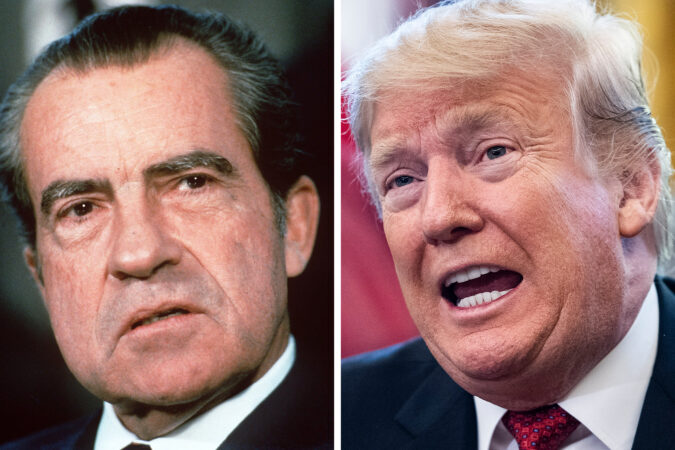
    In fact, an often-forgotten chapter in the career of Richard Nixon — the president most often compared with Trump — vividly illustrates that the ideological boundaries in the GOP were once quite malleable. Nixon regularly shapeshifted and operated across multiple wings of the GOP as he rose from congressman to senator to vice president, and finally, to president. Yet, as Republicans have become more ideologically rigid, such moves have become increasingly difficult, replaced by debates over who qualifies as a “real Republican” — and who is a Republican in Name Only (RINO).”

    The Richard Nixon who embarked on a political career in 1945 was nothing like the figure who resigned the presidency in disgrace three decades later. When he launched his first campaign in California’s 12th Congressional District, Nixon pledged to local Republicans that he would wage an “aggressive, vigorous campaign on a platform of practical liberalism” to defeat the popular incumbent congressman, Jerry Voorhis.

    At this time, Nixon modeled himself on Republican Harold Stassen, the former “boy wonder” governor of Minnesota. Stassen had built a national reputation in the late 1930s for his bipartisan “middle way” approach to governance, which blended fiscal discipline, civil service reform and bipartisan labor legislation. By 1943, when he resigned from the governorship to serve in the Navy during World War II, Stassen had become one of the country’s most prominent progressive Republicans.

    In Stassen’s success, Nixon saw a model for how a newcomer could win over liberal and independent voters in California. He wrote to the Minnesotan, “I have been very interested in following your campaign to liberalize the Republican Party because I feel strongly that the party must adopt a constructive progressive program in order to merit the support of voters.” Key to this program was retooling the principles of Democrat Franklin D. Roosevelt’s vaunted New Deal instead of rejecting them outright like many conservative Republicans did.

    This formula included accepting popular New Deal programs like Social Security — and even bolstering them. It also involved advocating against American isolationism and in favor of increased international cooperation. On labor rights — another thorny issue — Nixon, like Stassen, sought a middle ground: he supported arbitration to avoid strikes, while balancing the interests of workers and management. In a campaign speech, Nixon claimed that he “would not be a candidate if he were not strongly in favor of unions and small business.”

    This platform proved successful for Nixon, who the Minneapolis Star Tribune dubbed a “Stassen Candidate.”

    Shortly after he upset Voorhis and became the representative-elect for the 12th District, a former Whittier College classmate wrote to Nixon to offer “hearty congratulations” — despite being a Democrat who hadn’t voted for him. Nixon’s progressive message resonated with his former classmate, who expressed hope not only for Nixon’s success but “for the success of the progressive and liberal elements” within the Republican Party.

    In the coming years, Nixon would dash this hope as he illustrated the ease with which politicians moved between ideological camps in the GOP. During his early years in Congress, Nixon hung his hat not on the progressive vision of Stassen, but on staunch anti-Communism and red baiting. In 1947, Nixon joined the House Un-American Activities Committee (HUAC), where his pursuit of former State Department official Alger Hiss generated national attention. The case helped transform Nixon from an anonymous freshman congressman into one of the nation’s most prominent anticommunists.

    In 1950, Nixon further cemented his anti-Communist reputation during a successful Senate campaign against Rep. Helen Gahagan Douglas, who he portrayed as soft on Communism by repeatedly linking her voting record to that of left-wing Congressman Vito Marcantonio.

    Nixon’s reputation as an anti-Communist crusader compelled Dwight Eisenhower to select him for the 1952 GOP ticket as an olive branch to disgruntled conservatives after he beat their preferred candidate for the nomination, Ohio Sen. Robert Taft.

    Eisenhower’s election was a victory for progressive Republicans as he promised an era of “Modern Republicanism” — which paired a commitment to free enterprise with a belief that the government had an obligation to improve society and provide a basic social safety net.

    The GOP’s right flank derided this philosophy, and Nixon often spent time mediating between the two wings of the party. His ability to move comfortably between the camps reflected the ideological flexibility that still characterized the Republican Party during the 1950s.

    Made By History sponsors. FOR USE ON MADE BY HISTORY STORIES ONLY.

    Yet, even as he tried to reassure conservatives, Nixon embraced Modern Republicanism; he represented the Eisenhower administration abroad, including during his highly publicized exchanges with Soviet Premier Nikita Khrushchev. This engagement reflected the desire to contain communism through diplomacy and alliances, and the administration’s internationalist approach.

    Domestically, Nixon served as the administration’s point man on civil rights, supporting measures such as the Civil Rights Act of 1957 and overseeing efforts to combat employment discrimination through his leadership of the President’s Committee on Government Contracts. In 1958, Martin Luther King Jr. expressed his belief that “Nixon would have done much more to meet the present crisis in race relations than President Eisenhower has done.”

    In 1960, Nixon embarked on his first presidential campaign. During an October question-and-answer session at the University of Southern California, the vice president turned to the question of whether he considered himself a liberal or a conservative.

    He started by offering a definition of liberalism from Roosevelt. “A liberal is a man who wants to build bridges over the chasms that separate humanity from a better life,” Nixon explained. To him that meant, “we’re all liberals … We all want a better life.” Nixon concluded his answer by describing himself as a “practical progressive” — an echo of the “practical liberalism” he embraced during his 1946 campaign.

    Nixon went on to lose that race narrowly. But in 1968, he rebounded, by once again successfully navigating the party’s competing factions. He appealed to conservatives with his Southern Strategy and rhetorical emphasis on “law and order,” while reassuring moderates that he remained an experienced and pragmatic Republican.

    As president, he did some things that were progressive by today’s standards, including enacting the first federal affirmative action program and signing the Clean Air and Clean Water Acts. Simultaneously, however, he tangled with the liberal wing of his party over Vietnam and several Supreme Court appointments, and he vetoed legislation to provide federally funded daycare for children.

    Nixon is typically remembered for helping to usher in the populist conservative tide that would eventually sweep GOP politics. Today, he’s often compared with Trump because of his embrace of white grievance politics, his demands for personal loyalty and his abuse of power.

    Yet, his career also highlights how the Republican Party once had a vibrant and popular progressive and moderate wing. When Nixon launched his career, the idea of branding someone a RINO would have been far-fetched because the GOP comfortably managed to include staunch conservatives like Taft, as well as progressives like Stassen. The progressive or moderate wing of the party survived into the 1990s and 2000s; in Pennsylvania, Specter won the first of five Senate terms in 1980, while in New Jersey, Kean and Whitman both served as governors in the 1980s and 1990s.

    Yet, their careers tell the story of what happened as the brand of populist conservatism that Nixon capitalized on to win the presidency gained steam: In 2009, Specter switched parties and became a Democrat for his last years in the Senate, and Whitman is now a national co-chair of the Forward Party, and has endorsed Democrats in the last three presidential elections.

    Their departures reflected the rise of a new hard-line conservative Republican base with little tolerance for moderation or compromise. The collapse of the GOP’s liberal wing made today’s battles of who counts as a “real Republican” not just possible, but inevitable.

    Gaetano V. Della Torre is a New Jersey-based historian and educator. His article “Nixon’s Practical Liberalism: How Richard Nixon Tapped Harold Stassen’s Progressive Vision in 1946” is forthcoming in the Southern California Quarterly.

    Made by History takes readers beyond the headlines with articles written and edited by professional historians. Opinions expressed do not necessarily reflect the views of The Inquirer.

  • US support for Israel slips as Democrats grow more critical, AP-NORC poll finds

    US support for Israel slips as Democrats grow more critical, AP-NORC poll finds

    NEW YORK — After decades of reliable bipartisan backing for Israel, a new AP-NORC poll reveals a dramatic erosion of support for the longtime U.S. ally, with rising opposition from Democrats and signs of division among Republicans.

    The survey by The Associated Press-NORC Center for Public Affairs Research arrives at a moment when a once-consensus foreign policy issue is increasingly polarizing Americans along partisan and generational lines, driven by criticism for Israel’s conduct nearly three years after the outbreak of its latest war with Hamas in Gaza.

    About one-third of U.S. adults — including roughly half of Democrats — believe that Israel has committed genocide against Palestinians during the war in Gaza, an accusation that’s been leveled by some human rights organizations and vehemently denied by Israel and the U.S. government. About 2 in 10 Americans say Israel has not and the rest, about half, don’t know enough to say.

    A similar share, 30%, of Jewish adults say Israel has committed genocide, although about half, 49%, say it has not.

    Harold Kalmus, a 69-year-old Democrat from Arden, Delaware who describes himself as Jewish by birth, said he remembers being proud of Israel when he was younger. Not anymore.

    “I realize that there is a threat from Hamas. And I realize they’re in a very difficult situation, but what they have done is just an unspeakable horror,” he said of Israel’s military action against the Palestinians. “They’re trying to wipe out a civilization as far as I’m concerned.”

    The findings show sharply eroded views of Israel in the U.S., nearly three years after Hamas’ attack on Oct. 7, 2023, which left 1,200 people dead in Israel, mainly civilians, while 251 hostages were taken back to Gaza. More than 73,000 Palestinians have died in Gaza according to the Hamas-run Gaza Health Ministry, which doesn’t distinguish between civilian and militant deaths, including more than 1,000 killed since the beginning of the latest ceasefire. American sympathies had been shifting toward the Palestinians and away from the Israelis since around 2020, according to other polling, but has nose-dived since the latest war in Gaza began.

    Many Americans, about 4 in 10, don’t know enough to say whether Israel’s immediate military response to Hamas’ attack or its ongoing military operations were justified. Among those who did have an opinion in each case, most say the initial retaliation was justified — but a majority think its current actions are not.

    About three-quarters of Jewish adults said Israel’s initial response was justified, but only about 4 in 10 believe that about its ongoing operations.

    Only about one-third of U.S. adults view Israel as an “extremely” or “very” important issue to them personally. But it’s been a searing topic in American politics as the relationship between the two countries remains tense, just four months before high-stakes midterm elections determine the balance of power in Congress for President Donald Trump’s final two years in office. Vice President JD Vance recently criticized Israeli leaders who have expressed frustration with Trump, while vocal critics of Israel recently defeated establishment-backed Democrats in New York and Colorado primaries.

    Democrats’ support for Israel drops

    The AP-NORC poll reveals a decisive shift within the Democratic Party.

    About 58% of Democrats now say the U.S. is “too supportive” of the Israelis, up from 45% in an AP-NORC poll from January 2024 when former President Joe Biden was in office. That includes 51% of Jewish Democrats in the new poll.

    Roughly 6 in 10 Democrats, 62%, say the U.S. is “not supportive enough” of the Palestinians, up from 49% in 2024. Younger Democrats — those 45 and younger — are still more likely than older ones to say that the United States is “not supportive enough” of the Palestinians, but older Democrats are catching up to their younger counterparts. About 57% of older Democrats now say the U.S. should do more for the Palestinians, up from 39% two years ago.

    Joy Jennik, a 73-year-old Democrat from Brookfield, Wisconsin, said she didn’t have strong opinions about the U.S. relationship with Israel until after Hamas’ Oct. 7 attack.

    Now, she believes Israel is guilty of genocide.

    “The Gaza Strip, there’s not a lot left of it. Those poor people are barely living,” said Jennik, a retired home economics teacher.

    GOP stays behind Israel, but less so among young Republicans

    Just a sliver of Republicans, 13%, describe Israel’s actions as genocide, although there is an apparent age gap. About 2 in 10 Republicans under 45 say Israel has committed genocide, while about 1 in 10 Republicans ages 45 and older say the same.

    Overall, 60% of Republicans describe the U.S. support for Israel as “about right.” Only about 2 in 10 Republicans say that the United States is “too supportive” of the Israelis, although Republicans under 45 are more likely to say this.

    The share of Republicans overall who say the U.S. is “too supportive” of Israel has not changed meaningfully since 2024, but the share who say the U.S. is “not supportive enough” has shrunk from 39% to 15%.

    Mike Cardona, a 70-year-old Republican from suburban Phoenix, said he’s pleased with the level of support that the U.S. is giving Israel and rejects the notion that Israel has committed genocide.

    “I wish they’d gone in harder and better,” Cardona, a retired industrial supply salesperson said of Israel’s military action in Gaza. “Unfortunately, some innocents will be hurt, but Hamas and Hezbollah never took that into consideration when they were killing children and women in Israel.”

    Netanyahu is broadly unpopular, while views of Mamdani are split

    In interviews, several respondents emphasized that their criticism of Israel was focused on its leaders, especially Prime Minister Benjamin Netanyahu, who is perceived as closely aligned with Trump after repeated clashes with Democratic presidents.

    Overall, only 20% of U.S. adults have a favorable view of the Israeli prime minister, while about twice as many, 38%, have an unfavorable view. About 41% don’t know enough to have an opinion.

    Netanyahu is particularly unpopular among Jewish adults: about 6 in 10 view him unfavorably, while about one-third see him positively.

    Younger adults, regardless of party, are more likely than older adults to say they don’t have an opinion about Netanyahu. But while older Republicans see Netanyahu more positively than negatively, younger Republicans’ views tilt unfavorably.

    New York City Mayor Zohran Mamdani has gained prominence as an outspoken critic of Israel, and 27% of U.S. adults have a favorable opinion of the 34-year-old democratic socialist. Another 28% of U.S. adults have an unfavorable opinion, while 44% don’t know enough to say.

    Jewish adults, who overwhelmingly identify as Democrats, have a more positive view of Mamdani than of Netanyahu, with 44% viewing the New York City mayor positively, 39% viewing him negatively, and 17% saying they don’t know enough to say.

    About half of Democrats overall have a favorable impression of Mamdani and only about 1 in 10 have an unfavorable view of him, while the rest, about 39%, don’t have an opinion.

    Meanwhile, the U.S.-Israel relationship is not top of mind for many Americans as they think about the upcoming midterm elections.

    For people like Michael Ripka, a 34-year-old stage hand from Casper, Wyoming who typically votes Republican, the economy is by far the most important thing on his mind.

    “Everything is mad expensive,” he said. The conflicts in the Middle East, he added, is “100% a very big distraction.”

  • Explosions rock Damascus, wounding 18, as French President Macron visits Syria

    Explosions rock Damascus, wounding 18, as French President Macron visits Syria

    DAMASCUS, Syria — Explosions rocked Damascus on Tuesday as France’s president met with his Syrian counterpart in a landmark visit, wounding at least 18 people, Syria’s Interior Ministry said.

    Emmanuel Macron was inside the presidential palace when the explosions happened, and Macron’s office said he was safe and that the meeting with Syrian President Ahmad al-Sharaa continued.

    “Nothing can smother the aspiration of Syrian women and men to live in a fully sovereign, safe, pluralistic, and united Syria,” Macron said in a post on X hours after the deadly explosions. “This morning I met Syria in all its diversity. I saw dignity, courage and determination.”

    A large plume of smoke could be seen from the site of the explosion near the Four Seasons Hotel, where Syrian media reported Macron was staying. Footage widely circulated on social media showed a van and a motorcycle on fire and blood stains on the street in the area on a busy street near the headquarters of the Tourism Ministry and the Damascus National Museum.

    The explosions represent a challenge to al-Sharaa, who came to power after leading an insurgency that ousted Bashar Assad in 2024 and ending the country’s 14-year uprising turned-civil war. Assad’s dynasty ruled Syria with an iron fist for half a century.

    Al-Sharaa has since pushed to assert full control over and bring stability to war-torn Syria, appeal to minorities skeptical of his Islamist-led rule, and win the support of Western governments who were concerned about his past leadership of the formerly al-Qaeda-linked Hayat Tahrir al-Sham group. His government has promised political and economic reform after decades of autocratic rule.

    Macron is the first major Western leader to visit Syria since al-Sharaa came to power and his visit comes before he is set to head to Ankara, Turkey later Tuesday for a NATO summit. Macron also plans to hold a joint news conference with his Syrian counterpart. The official spoke on condition of anonymity to discuss Macron’s whereabouts and security.

    The French head of state played a major role in pushing Europe and the United States to drop most sanctions on Syria. He arrived in the country Monday night with an economic delegation, and is scheduled to sign memorandums of understanding with his counterpart as the battered country tries to lure investors to help it rebuild after 14 years of war.

    The Interior Ministry in a statement reported by Syrian state media said that the two blasts in the heart of the capital were caused by explosive devices, one placed in a garbage bin and the other in a parked car. It added that four of the wounded were police officers, and no deaths were immediately reported.

    An investigation is currently taking place at the scene of the attack. No group immediately claimed responsibility.

    Macron arrived in the country Monday night with an economic delegation, and is scheduled to sign memorandums of understanding with his counterpart as the battered country tries to lure investors to help it rebuild after the war.

    The incident comes days after an explosive device was detonated in a cafe near the Justice Palace in Damascus, killing at least 10 people and wounding more than 20.

    While Syria’s new rulers have wrestled with violence involving different groups in the country as they work to assert control, the capital has largely been peaceful during the turbulent period.

    The conflict in Syria killed nearly half a million people and displaced millions. Syria’s infrastructure lies in ruins, and while other nations and businesses have made large investment pledges, the country still needs hundreds of billions of dollars to rebuild and lift millions out of poverty.

    Before arriving at the presidential palace, Macron met with members of Syrian civil society, though his office did not give details on who.

  • Here’s what we know about Sen. Mitch McConnell’s health

    Here’s what we know about Sen. Mitch McConnell’s health

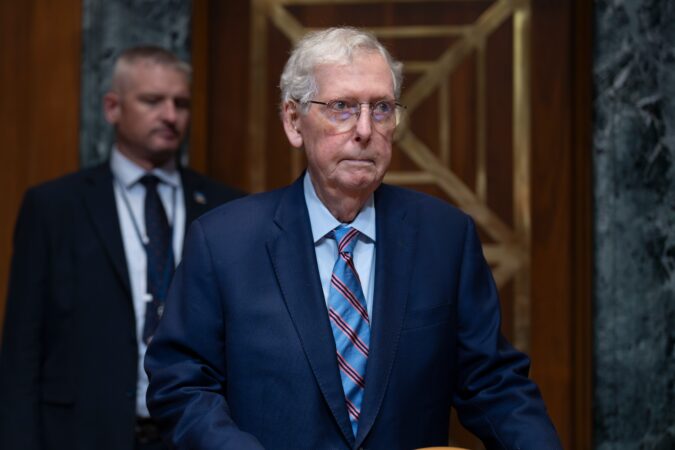
    Sen. Mitch McConnell has been hospitalized for more than three weeks, and his office still will not say what sent the 84-year-old Kentucky Republican there, his latest condition, or when he might return.

    McConnell, who has served in the Senate since 1985 and led Senate Republicans from 2007 until 2025, has not cast a vote since June 11. His absence comes as Republicans are navigating a narrow Senate majority. It has helped stall spending bills in the Appropriations Committee and added uncertainty around a senator already in the final months of his career.

    Here’s what we know about his health.

    What happened to McConnell?

    McConnell was admitted to the hospital on the morning of June 14, according to a statement from his office that said that he was “receiving excellent care.”

    EMS dispatch audio from the morning of June 14 suggests that emergency medical personnel were sent to McConnell’s home to attend to an unconscious person in cardiac arrest.

    According to the dispatch audio, a call went out at 8:36 a.m. for an “unconscious” person at McConnell’s address, and an ambulance was sent with an advanced life support crew. Six minutes later a medic radioed that CPR was “in progress.” At 8:43 a.m., a dispatcher relayed the emergency as a “cardiac arrest.” McConnell is named nowhere in the recording, though the address is his.

    The next day, Senate Majority Leader John Thune (R., S.D.) and Senate Majority Whip John Barrasso (R., Wyo.) — the top two Senate Republicans — told reporters that they had spoken to McConnell.

    What else do we know?

    McConnell’s office has been quiet on his condition in the weeks since and has not provided additional information on his treatment or the cause for his hospitalization.

    On June 22, eight days after McConnell was hospitalized, his office said that he wouldn’t be voting that week “as he continues his recovery.”

    Thune, on the same day, told reporters that he spoke with McConnell “toward the end of last week” and that McConnell “sounded good and was anxious to get back.”

    A July 2 statement from McConnell’s office provided little new information but said he was still in the hospital.

    “The Senator continues to improve, and is working closely with his staff on Kentucky and Senate matters while the Senate is out of session,” his office said.

    His office has not provided additional information since and did not respond to a request for comment on Monday.

    What does his continued absence mean?

    Any extended absence for McConnell could make matters more difficult for Republicans to pass legislation this year, as it would temporarily shrink their majority to 52-47 in the chamber.

    McConnell’s absence also further complicates matters for the Senate Appropriations Committee, which is already running behind schedule. The committee has not advanced any spending bills for the 2027 fiscal year due to disagreements over defense funding.

    Without McConnell, the Senate Appropriations committee is split evenly between Republicans and Democrats. This could prevent Republicans from advancing their spending priorities if all Democrats vote against them, as any vote within the committee that splits evenly along party lines would fail.

    The committee already had postponed plans to mark up spending bills during the week of June 22 due in part to McConnell’s absence, according to a Republican aide who spoke on the condition of anonymity.

    McConnell did not run for reelection this year and is set to retire from the Senate in January at the end of his term.

    What health issues has McConnell faced before?

    McConnell’s health has drawn repeated attention in recent years.

    McConnell had polio as a child and has long had difficulty climbing stairs.

    In March 2023, he was hospitalized after falling at a Washington hotel and was away from the Senate floor for several weeks. Months later, he had two highly public episodes in which he stopped speaking during news conferences and had to be helped by others.

    He was injured again in December 2024 after tripping outside a Senate Republican lunch, and earlier this year, he spent more than a week in the hospital after his office said he had flulike symptoms.

  • Macron arrives in Syria as first major western leader to visit war-torn country under new leadership

    Macron arrives in Syria as first major western leader to visit war-torn country under new leadership

    DAMASCUS, Syria — French President Emmanuel Macron arrived Monday in Syria, making him the first major western leader to visit the war-torn country since the ouster of Bashar al-Assad in 2024.

    Ukrainian President Volodymyr Zelensky visited in April but Macron is the first leader from western Europe or North America to do so.

    The French president’s visit comes during a period of relative calm in the Middle East after the monthslong war in Iran and Lebanon. He will travel next to Ankara, Turkey, for the NATO summit, where Syrian President Ahmad al-Sharaa is also expected to attend and hold a high-profile meeting with U.S. President Donald Trump.

    Syria’s state-run SANA news agency said Macron would visit with a business delegation to discuss regional security as well as business and investment opportunities.

    The French president was greeted at Damascus airport by Syrian Foreign Minister Asaad al-Shibani.

    “I have come to express France’s commitment to the Syrian people. For a sovereign Syria, united in its diversity and at peace with its neighbors,” Macron said in a post on X. “Together, let us open a new chapter of stability and peace.”

    France supports all those who can “contribute to build a new Syria” in line with the aspirations expressed since the 2011 Arab Spring, Macron’s office said, referring to a period of widespread uprisings across the Middle East that called for political change and reform.

    Macron will meet with al-Sharaa at the presidential palace and “engage directly with diverse Syrian people,” his office said.

    The French president’s meetings are scheduled throughout Tuesday, beginning with members of Syrian civil society, his office said, though no details were disclosed. Macron will then meet with al-Sharaa, before holding economic talks and signing memorandums of understanding. The two leaders will hold a joint news conference afterward.

    Macron hosted al-Sharaa in Paris in May 2025, where he urged European and U.S. leaders to lift longstanding sanctions on Damascus. Most of those sanctions have since been lifted.

    Paris supported Syria’s new leadership even at a time where others were skeptical of al-Sharaa’s Islamist-led rule and former role as the head of the Hayat Tahrir al-Sham militant group, previously linked to al-Qaida.

    Western governments were especially concerned about the treatment and inclusion of women and minorities, and whether Syria’s new government would transition into a more democratic rule.

    Syria has managed to sidestep the region’s recent conflicts, but the country is still battered from 13 years of war that left much of it in ruins, drove millions into poverty, and will cost hundreds of billions of dollars to rebuild. While Syria has signed memorandums of understanding with states and large companies for large investment projects, they have not yet come to fruition.

  • Former officer describes finding a ‘sniper pad’ on nearby rooftop after Charlie Kirk assassination

    Former officer describes finding a ‘sniper pad’ on nearby rooftop after Charlie Kirk assassination

    PROVO, Utah — A former campus police officer testified Monday that he found an apparent “sniper pad” on a rooftop near where Charlie Kirk was assassinated, as prosecutors sought to convince a state judge they have enough evidence to put a Utah man on trial for murder.

    Former Utah Valley University Officer Christopher Bagley said he witnessed Kirk’s shooting as the conservative activist spoke to a crowd of thousands last year. Soon after, he went to a nearby gravel rooftop, where it appeared someone had been lying prone with a clear sightline to Kirk’s location, Bagley said.

    “It looks like a sniper pad,” Bagley said, adding, “you’ve got markings of elbows, knees, and feet.”

    The testimony came as Kirk’s parents, Kathryn and Robert, and widow, Erika, were in the courtroom for the first time since the case began, along with Donald Trump Jr., President Donald Trump’s son.

    Prosecutors are seeking the death penalty for defendant Tyler Robinson. A five-day preliminary hearing that began Monday marks the most significant presentation of evidence to date in the case.

    Robinson’s parents also were present, sitting a few rows behind the Kirks as the hearing began. The 23-year-old defendant is charged with aggravated murder in the Sept. 10 assassination of Kirk, a conservative activist and ally of the president, at Utah Valley University. Robinson turned himself in the day after the shooting.

    Prosecutors allege he confessed in a note left for his roommate, who was also his romantic partner, that read: “I had the opportunity to take out Charlie Kirk and I’m going to take it.”

    Robinson has not yet entered a plea, and his attorneys have not commented on his guilt or innocence. They have, however, sought to get the death penalty taken off the table, so far unsuccessfully.

    A low threshold for prosecutors

    Robinson sat quietly between his attorneys on Monday, looking at the prosecution’s exhibits on a monitor and occasionally taking notes. He wore a gray suit, and his wrists were shackled to a chain around his waist.

    Charlie Kirk’s parents and widow walked out of the courtroom when a police officer started testifying about Kirk’s arrival on campus the day he was shot. They later returned.

    The proceeding resembles a minitrial, but prosecutors need only demonstrate that there are reasonable grounds to believe Robinson killed Kirk. The standard is lower than for a trial, where prosecutors must prove guilt “beyond a reasonable doubt.”

    Prosecutors as a result should have little trouble advancing their case, said Mark Kouris, a former prosecutor and state judge in Salt Lake City.

    “This standard is extremely low and the chances of them not getting through it are, quite frankly, almost nothing,” said Kouris, now an adjunct professor at the University of Utah’s S.J. Quinney College of Law.

    Bagley, the prosecution’s first witness, said he could see the right side of Charlie Kirk’s body as Kirk spoke on campus. Kirk was answering a question when Bagley heard a gunshot.

    “I saw him go to the left … I could no longer see the right side of his body,” Bagley said. “Then everybody started getting up and started to run, more of a chaos situation.”

    Defense attorney Kathryn Nester asked Bagley about finding an empty pistol holster on the ground after the crowd fled. Bagley acknowledged he never took custody of the holster and didn’t know if it was fingerprinted.

    Nester repeatedly objected to evidence introduced by prosecutors, but was overruled by the judge. Any evidence from this week’s hearing would have to be reintroduced again to be used at trial.

    Roommate’s recorded testimony could be focal point

    Prosecutors can use secondhand information, or hearsay, to help present their case. They expect to present between 40 and 50 exhibits during this week’s hearing.

    Chief Deputy Utah County Attorney Chad Grunander told state District Judge Tony Graf that the exhibits will include several videos of the Sept. 10 shooting, which occurred as Kirk was addressing a crowd of thousands at Utah Valley University. The videos will be shown on a courtroom monitor that is being set up so that it won’t be captured by the press videographer in the courtroom, said Graf.

    Prosecutors have said they plan to present DNA evidence linking Robinson to the suspected murder weapon, autopsy findings, witness statements, and video of Kirk’s killing. They are also expected to argue the shooting endangered others at Kirk’s campus event — an aggravating circumstance that could make the crime punishable by death under Utah law.

    Once the hearing is finished, Graf must determine whether there is enough evidence for the case to proceed to trial.

    Robinson’s roommate is not expected to testify in person during the hearing. Still, the roommate’s recorded testimony could be a focal point for prosecutors.

    In addition to the alleged confession note, Robinson reportedly texted his roommate that he targeted Kirk because he “had enough of his hatred,” prosecutors have said.

    Erika Kirk says court proceedings are a ‘painful reminder’

    Before his death, Kirk and the organization he co-founded, Turning Point USA, galvanized the conservative youth vote to help Trump win a second term.

    The Republican president has said he hopes Robinson receives the death penalty.

    Erika Kirk said during her husband’s memorial service that she forgives Robinson.

    Ahead of Monday’s hearing, she thanked supporters in a statement for their kindness and prayers.

    “Every court proceeding serves as a painful reminder of his death,” she wrote, “and the loss that has irrevocably impacted our lives and the lives of his children.”

    She added that the public outpouring “has sustained us during the darkest days of our lives.”

  • Russia’s missile and drone attacks on Ukraine kill at least 22

    Russia’s missile and drone attacks on Ukraine kill at least 22

    KYIV, Ukraine — Russia unleashed waves of missiles and drones at Ukraine early Monday, killing at least 22 people in attacks that exposed widening gaps in the country’s air defenses more than four years into Moscow’s full-scale invasion, authorities said.

    All of the ballistic missiles launched by Russia struck their targets, underscoring Kyiv’s need for more U.S.-made Patriot interceptor missiles — a point Ukrainian President Volodymyr Zelensky will likely reiterate at a NATO summit in Ankara, Turkey, this week.

    Fifteen people were killed in the capital of Kyiv, which was Russia’s main target, and 56 were injured, according to administrative head Tymur Tkachenko. Another seven people were killed in the wider Kyiv region and 29 were injured, according to Ukraine’s emergency service.

    Emergency workers searched for survivors in the rubble of residential high-rises in two locations that suffered direct hits.

    Moscow has stepped up attacks on Kyiv in retaliation for Ukraine’s recent long-range strikes, according to the Russian Defense Ministry. Those Ukrainian attacks have caused severe fuel shortages and put pressure on President Vladimir Putin.

    On Thursday, a Russian strike killed 31 people in Kyiv, the deadliest attack in the capital this year.

    Ukraine’s advances in drone technology have given it an edge in recent months, analysts and Western officials say, striking supply routes behind the front line, stripping the Russian army of momentum on the battlefield, and slowing its advance.

    But Russia now is exploiting vulnerabilities in Ukraine’s air defenses, which remain heavily reliant on the Patriot missile systems to intercept ballistic missiles it can rarely shoot down. The war in the Middle East has strained the global supply of Patriot interceptors — a shortage now felt keenly in Ukraine.

    Zelensky notes gaps in stopping ballistic missiles

    Ukraine’s air force said Russia fired 351 drones and 68 missiles overnight, targeting mainly Kyiv, and all 29 ballistic missiles struck their targets.

    “To intercept ballistics, we need the means for interception,” air force spokesperson Yurii Ihnat said on national television. “Russians are certainly using the fact that there is a serious deficit of interceptor missiles now, in Ukraine and the world.”

    Ahead of the NATO summit in Turkey, Zelensky said Ukrainian forces had performed well against drones and cruise missiles but not against ballistic missiles — a shortfall he blamed on insufficient supplies of interceptors. He urged U.S. and European partners at the summit to bolster Ukraine’s air defense and protect civilians.

    “As long as Patriot missiles remain in our allies’ stockpiles, Russia is only encouraged to keep ‘vanquishing’ residential buildings. The United States and Europe have enough strength to stop this terror,” he said on X following the attack.

    Russia’s Defense Ministry said any increase in the supply of drones, missiles, and ammunition produced in the West “will not go unnoticed and will be countered by a corresponding increase in the number and power of retaliatory strikes by the Russian armed forces on Ukrainian territory.”

    Ukraine’s Defense Minister Mykhailo Fedorov said Russia is deliberately ramping up ballistic missile attacks on a scale unseen before, exploiting the acute shortage of Patriot interceptors. “Fewer such missiles are produced worldwide each month than the enemy fires at Ukraine in that same period,” he said.

    Russia’s Defense Ministry said the attack targeted weapons factories in Kyiv, including sites it said produce drones, armored vehicles, and missiles, as well as facilities repairing air defense systems and fuel and energy infrastructure in the capital and surrounding region. The claims could not be independently verified.

    Russia’s attacks have repeatedly hit civilian areas. More than 16,000 Ukrainian civilians have been killed in the war, according to the United Nations.

    “These are residential buildings. Places where people slept and lived their ordinary lives,” Tkachenko said in a post on Telegram.

    A residential building in the Podilskyi district partially collapsed, he said. In the Darnytsia district, several multistory buildings were damaged and people were believed to be buried in the rubble.

    In Kyiv’s suburb of Vyshneve, about 600 residents were evacuated due to the risk of unexploded munitions, Ukraine’s Emergency Service said.

    Witnesses recount their harrowing escapes

    Khrystyna Piatetska, 20, a resident of Kyiv’s Darnytskyi district, said she began screaming after the first strike, which was followed by a second blast that blew out the windows in her apartment building.

    The lights went out, a burning smell filled the air, and the stairwell was thick with smoke, she said.

    “When we were leaving the building, bodies were lying there,” Piatetska said. “When we got downstairs, cars started exploding, and we came out from under the rubble straight into the fire.”

    Halina Ivanivna, 61, said she was awakened by the first strike about 2 a.m. Moments later, her apartment building began collapsing around her.

    “Everything was falling down,” she said. Water poured through the building as smoke filled the air while emergency crews rushed to evacuate residents.

    About five minutes after the initial impact, a second strike hit, she said.

    Ukrainian strikes reach from Russian-held Crimea to Siberia

    Russia’s Defense Ministry said its air defenses downed 613 of 625 Ukrainian drones overnight.

    Ukraine’s military said its Special Operations Forces struck the Omsk oil refinery in western Siberia, nearly 1,550 miles from Ukraine’s border. That appeared to be the farthest oil refinery in Russia’s east that Ukraine has ever struck, and added to a long list of key refineries hit in recent months.

    Omsk regional Gov. Vitaly Khotsenko confirmed a Ukrainian attack on the refinery in a Telegram post but provided no details, saying only that “most of the drones” targeting the facility were destroyed and that there were no casualties.

    The Omsk refinery is Russia’s largest, boasting a capacity of around 460,000 barrels a day, said Gary Peach, oil markets analyst at Energy Intelligence. As of the end of June, it was producing close to capacity, accounting for 12% of all Russian refining output, Peach said.

    “Depending on the extent of the damage, a sustained outage of even part of Omsk’s capacity will exacerbate Russia’s woes on the domestic fuel market and make the need to find import replacements even more urgent,” he said.

    Russia has been grappling with a widespread fuel crisis from Ukraine’s repeated strikes on refineries and other infrastructure inside the country. Gasoline shortages and fuel rationing have been reported in multiple regions, with drivers waiting for hours to fill their tanks.

    In Crimea, which Russia illegally annexed in 2014, an energy provider reported a blackout across the peninsula following Ukrainian attacks early Monday. The Moscow-appointed head of the city of Sevastopol, Mikhail Razvozhayev, said the attacks cut power that was restored with backup equipment.

    Ukraine’s military confirmed it struck several Russian energy and military facilities used to supply Russia’s armed forces with fuel and support its war efforts.

    In the Russian city of Yaroslavl, two people were wounded in an attack in which over 70 Ukrainian drones were downed, according to regional Gov. Mikhail Yevrayev. He didn’t say if any facilities were damaged, but the Astra online news outlet said they caused a fire at an oil refinery.

    Ukrainian drone attack on the Leningrad region north of Moscow damaged unspecified infrastructure at the Luga training ground, as well as in the areas of Baltic Sea ports of Ust-Luga and Vysotsk, Gov. Alexander Drozdenko said.

  • Obamacare rolls shrank dramatically in many states over the past year, new federal data shows

    Obamacare rolls shrank dramatically in many states over the past year, new federal data shows

    NEW YORK — States across the country saw steep drops in the number of people covered by the Affordable Care Act over the past year, with Ohio and Oklahoma each losing nearly one-third of enrollees, according to new federal data that provides the first complete 50-state breakdown of sharp enrollment declines following the January expiration of enhanced subsidies.

    The data, posted in late June by the Trump administration and first reported on by the Associated Press, reveals how changes in each state’s insured population led to around 2.6 million fewer Americans having Obamacare plans in February compared with the same time last year.

    It captures not only how many people signed up for or were automatically reenrolled in plans in 2026, but how many paid their first monthly premiums to keep coverage, according to Cynthia Cox, a vice president and director of the ACA program at the healthcare research nonprofit KFF, who reviewed the dataset. She said it accounts for people who were retroactively removed from coverage after a nonpayment grace period ended.

    “This is the first time we’ve seen state-level data that shows how much ACA marketplace enrollment truly fell,” Cox said. “It’s in line with our expectations, but it does show a very steep drop in the number of people with ACA coverage.”

    Healthcare affordability is a central issue to voters

    Health analysts have kept a close eye on changes in ACA enrollment since the expiration of so-called enhanced premium tax credits caused many Americans’ monthly health insurance fees to double or triple, forcing some to forgo coverage entirely. The subsidies had been at the center of a bitter fight in Congress last fall, with Democrats and some Republicans calling for their renewal.

    Health insurance costs have been rising across ACA and other health insurance programs at a time when voters in the approaching November elections say affordability is among their top concerns.

    In a report released last week, the U.S. Department of Health and Human Services suggested the significant drop in enrollment this year could be attributed to a federal crackdown on fraudulent or “phantom” enrollment. But analysts have said it was more likely related to the Jan. 1 expiration of federal subsidies, and other changes, including tightened requirements on which immigrants could access subsidized plans.

    Ohio, Oklahoma, Arizona saw the most significant drop-offs

    An AP analysis of the data finds that Ohio and Oklahoma each saw a more than 32% decline in ACA enrollment over the past year. They lost larger shares of their covered populations than any other state.

    Following closely behind, and losing more than a fourth of their enrollees, were Arizona, South Carolina, Minnesota, Indiana, Michigan, Mississippi, Louisiana, and Missouri.

    Florida, a state that relies highly on ACA insurance in part because it did not expand Medicaid and is home to many gig workers and entrepreneurs, still has more residents in the marketplace than any other state, at nearly 4 million. But it also saw the highest number of enrollees drop coverage this year — around 443,000.

    The data doesn’t show whether people who dropped ACA health insurance this year found coverage elsewhere, and chances are some of them became insured through employer plans or other options. But Cox said most people who left the marketplace are likely going without insurance, because it is typically a “place of last resort” to get health coverage for people who aren’t eligible elsewhere.

    Some of the states that saw the largest enrollment declines were the same ones that saw the biggest enrollment gains after the federal government introduced enhanced subsidies during the COVID-19 pandemic. Cox said that isn’t surprising, because those states likely had large numbers of people who enrolled only because the enhanced subsidies made coverage much more affordable.

    Only one state saw an increase in its covered population. New Mexico gained some 14% more enrollees in the government health insurance program compared with the same time last year. It was the only state in the nation that fully replaced the lost federal subsidies using its own funds.

    Federal marketplace states saw biggest enrollment losses

    About three in five states use the federal marketplace Healthcare.gov, while the rest operate their own state-based marketplaces for ACA insurance.

    The new data shows that federal marketplace states overall lost larger shares of enrollees than states with state-based exchanges.

    One reason for that could be that many states with their own marketplaces took steps to offset costs for their residents when the enhanced subsidies expired in January.

    New Mexico, which saw double-digit enrollment gains, is the most extreme example of that. In a special legislative session last fall, lawmakers in the state approved a plan to use state funds to make up for the missing subsidies through mid-2026. In March, the state’s governor signed a bill to continue making up the difference through mid-2027.

  • A new ICE facility could speed up deportations for families and kids

    A new ICE facility could speed up deportations for families and kids

    NEW ORLEANS — The Trump administration plans to open a 528-bed holding facility for migrant families and unaccompanied children next to an airport hub, positioning itself to speed up deportations.

    The location in Alexandria, La., would remove logistical headaches caused by wrangling children from foster homes and shelters across the country and not having anywhere to put them during final preparations for flight. Those obstacles were apparent last year when Guatemalan children were awoken at night and given almost no time to get to Harlingen, Texas, where they waited on an airport tarmac for hours.

    A federal judge prevented their deportation, but the chaotic episode illustrated the challenges authorities face because they don’t have anywhere to put families and children near the airport. U.S. Immigration and Customs Enforcement is calling the Alexandria facility a “staging area,” not a detention center, and says people would only be there a few days at most.

    However, several immigration advocates expressed concern that children could be held at the new facility for weeks or months, which has happened at other federal immigration holding sites. These advocates are also concerned about oversight, and say the facility represents a departure from how the government manages those children.

    “It’s an expansion of the deportation system in ways we haven’t seen before,” said Leecia Welch, chief legal counsel at the nonprofit Children’s Rights. “There’s just so much that could go wrong with this facility.”

    ICE taps private prison company to run deportation facility

    Unaccompanied children who are in the U.S. without parents or close relatives are not taken to facilities overseen by ICE. Instead, the law says they must be swiftly placed in the care of state-licensed shelters and foster care programs.

    Those are run by the Office of Refugee Resettlement in the Department of Health and Human Services. However, that agency isn’t involved in the Alexandria facility’s operation, according to a spokesperson at the airfield where it’s being built.

    Instead, the facility would be run by a nonprofit arm of LaSalle Corrections, a private prison contractor, according to Ralph Hennessy, executive director of the England Airpark Authority. He said it could be operational as early as August.

    ICE officials signed a contract late last month to build the facility at the former military base near Alexandria International Airport, roughly 175 miles northwest of New Orleans, Hennessy said.

    It would operate as a 72-hour holding center for migrants awaiting deportation, according to records obtained by the Associated Press.

    Compass Connections, a Texas-based nonprofit that runs shelters for unaccompanied immigrant children, had originally been tapped to help operate the facility and laid out plans during a public presentation in February.

    But the company’s president, Sonya Thompson, told the AP last week that it was no longer involved. She did not elaborate.

    Officials have said facility is for “self-deporting” families

    In public board meetings, airpark officials said the facility is a “humanitarian effort” for families that are “self-deporting.” Immigration advocates say families and unaccompanied children sometimes make that decision under pressure or because they don’t understand their options.

    “These are people that are volunteering to go back home and they’re going back home as a family unit,” Hennessy told the AP.

    The facility would sit next to the nation’s largest hub for deportations. More than 4,400 immigration enforcement flights came into and out of the Alexandria International Airport in 2025, according to data from the ICE Flight Monitor, an initiative of Human Rights First. ICE planning documents say families and children at the facility “are in the legal custody of ICE and can only be released at the direction of ICE.”

    The agency has instructed contractors that families at the facility cannot be referred to as prisoners, detainees, or inmates, records show. The agency ordered contractors to not use bars or cages when transporting families and unaccompanied children. The facility will not be required to engage in headcounts and should allow families to “wear their own clothes,” the agency added.

    Private prison company runs other ICE detention centers

    Louisiana-based LaSalle Corrections runs a range of private prisons and federal immigration detention centers throughout the South, including the “Louisiana Lockup” inside the state’s maximum-security prison in Angola.

    The official contractor for the new ICE holding facility will be the company’s nonprofit arm, the LaSalle Family Foundation. According to its tax records, the nonprofit provides chaplain services and educational programming in correctional facilities.

    However, LaSalle Corrections itself will be involved in operating the holding facility and ensuring compliance, the company’s chief financial officer, Tim Kurpiewski, wrote in an email reviewed by the AP.

    LaSalle spokesperson Scott Sutterfield declined to comment.

    The deaths of two detainees have been reported since April at a LaSalle-run ICE facility in the state.

    Winn Correctional Center was also found in June to have violated standards governing environmental health and safety, food service, use of force, medical care, and other subjects, according to the Department of Homeland Security’s Office of Inspector General.