Category: Nation & World

  • Myanmar holds first election since military seized power but critics say the vote is a sham

    Myanmar holds first election since military seized power but critics say the vote is a sham

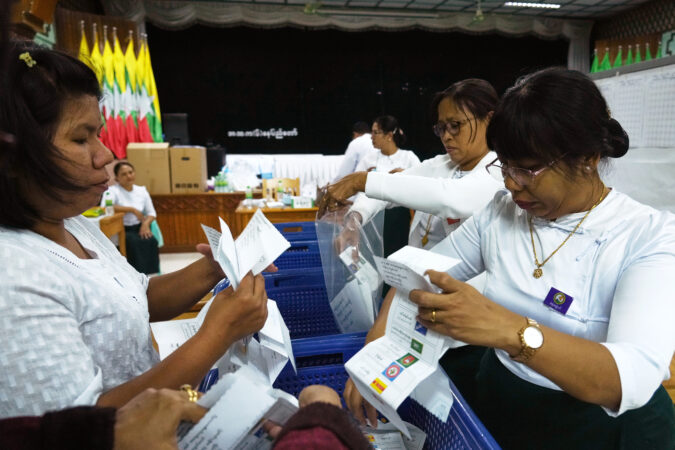
    YANGON, Myanmar — Voters went to the polls Sunday for the initial phase of Myanmar’s first general election in five years, held under the supervision of its military government while a civil war rages throughout much of the country.

    Final results won’t be known until after two more rounds of voting are completed later in January. It’s widely expected that Senior Gen. Min Aung Hlaing, who has governed Myanmar since an army takeover in 2021, will then assume the presidency.

    The military government has presented the vote as a return to democracy, but its bid for legitimacy is marred by the absence of formerly popular opposition parties and reports that soldiers used threats to force voters’ participation.

    Military-backed party favored

    While more than 4,800 candidates from 57 parties are competing for seats in national and regional legislatures, only six are competing nationwide with the possibility to gain political clout in parliament. The military-backed Union Solidarity and Development Party is by far the strongest contender.

    Voting is taking place in three phases, with Sunday’s first round held in 102 of Myanmar’s 330 townships. Subsequent phases will take place on Jan. 11 and Jan. 25, but 65 townships won’t participate in the election because of ongoing armed conflicts.

    Final results are expected to be announced by February. It wasn’t clear if or when the authorities would release aggregate figures of Sunday’s voting, although counts were publicly announced at local polling stations.

    Critics of the current system say that the election is designed to add a facade of legitimacy to the status quo. Military rule began when soldiers ousted the elected government of Aung San Suu Kyi in February 2021. It blocked her National League for Democracy party from serving a second term despite winning a landslide victory in the 2020 election.

    They argue that the results will lack legitimacy because of the exclusion of major parties and government repression.

    “Theater of the absurd”

    The expected victory of the military-backed Union Solidarity and Development Party makes the nominal transition to civilian rule a chimera, say opponents of military rule and independent analysts.

    “An election organized by a junta that continues to bomb civilians, jail political leaders, and criminalize all forms of dissent is not an election — it is a theater of the absurd performed at gunpoint,” Tom Andrews, the U.N.-appointed human rights expert for Myanmar, posted on X.

    However, the election may provide an excuse for neighbors like China, India, and Thailand to say that the vote represents progress toward stability. Western nations have maintained sanctions against Myanmar’s ruling generals because of the military’s anti-democratic actions and the brutal war against opponents.

    According to a count carried out at one polling station in Yangon after the polls closed, only 524 of 1,431 registered voters — just under 37% — cast their ballots.

    Of those, 311 voted for the pro-military Union Solidarity and Development Party, suggesting that opposition calls for a voter boycott may have been heeded.

    Khin Marlar, 51, who cast her ballot in Yangon’s Kyauktada township, said that she felt that she should vote, because she hoped that peace would follow afterward. She explained that she had fled her village in the town of Thaungta in the central Mandalay region because of the fighting.

    “I am voting with the feeling that I will go back to my village when it is peaceful,” she told the Associated Press.

    Voter intimidation reports

    A resident of southern Mon state, who asked to be identified only by her first name, Khin, for fear of arrest by the military, told the AP that she felt compelled to go to a polling station because of pressure from local authorities.

    “I have to go and vote even though I don’t want to, because soldiers showed up with guns to our village to pressure us yesterday,” Khin said, echoing reports from independent media and rights groups.

    Suu Kyi, Myanmar’s 80-year-old former leader, who received the Nobel Peace Prize in 1991, and her party aren’t participating in the polls. She is serving a 27-year prison term on charges widely viewed as spurious and politically motivated. Her party, the National League for Democracy, was dissolved in 2023 after refusing to register under new military rules.

    Other parties also refused to register or declined to run under conditions they deem unfair, and opposition groups have called for a voter boycott.

    Amael Vier, an analyst for the Asian Network for Free Elections, noted a lack of genuine choice, pointing out that 73% of voters in 2020 cast ballots for parties that no longer exist.

    Violence and repression

    According to the Assistance Association for Political Prisoners, more than 22,000 people are currently detained for political offenses, and more than 7,600 civilians have been killed by security forces since 2021.

    Armed resistance arose after the army used lethal force to crush nonviolent protests against its 2021 takeover. The ensuing civil war has left more than 3.6 million people displaced, according to the U.N.

    A new Election Protection Law imposes harsh penalties and restrictions for virtually all public criticism of the polls.

    There were no reports of major interference with the polls, though opposition organizations and armed resistance groups had vowed to disrupt the electoral process.

    Both the military and its opponents believe power is likely to remain with Min Aung Hlaing, who led the 2021 seizure of power.

    “I am the commander in chief. I am a civil servant. I cannot say that I want to serve as a president. I am not the leader of a political party,” he told journalists after casting his vote. “There is a process for electing a president from parliament only when it is convened. I think it is appropriate to speak about it only then.”

  • China expands nuclear warhead manufacturing capacity, research finds

    China expands nuclear warhead manufacturing capacity, research finds

    China is rapidly overhauling a network of secret facilities used to manufacture warhead components as it expands its nuclear stockpile faster than any other country, according to an analysis of satellite imagery.

    These changes are taking place as Beijing intensifies efforts to be able to retaliate more quickly against an attack, according to expert assessments of official publications — dramatically raising the stakes of any nuclear standoff.

    “The levels of changes that we’re seeing since around 2019 to today are probably more extensive than anything we’ve ever seen,” said Renny Babiarz, who led analysis of half a dozen key sites for a project by the Vienna-based Open Nuclear Network (ONN) and the London-based Verification Research, Training, and Information Centre (VERTIC).

    China’s rapid expansion of weapons-production facilities continues, even as a Pentagon report last week shows nuclear warhead production has slowed since 2024, with totals in the low 600s, though it’s on track to surpass 1,000 by decade’s end.

    President Donald Trump recently said, when discussing plans to restart U.S. nuclear weapons testing, that China could catch up with U.S. nuclear capabilities within five years.

    Analysts say it’s unlikely that China could match the estimated 3,700 warheads in the U.S. arsenal in the foreseeable future. But the dramatic changes Beijing has made to almost every part of its nuclear weapons program suggest the People’s Liberation Army is preparing for an all-out arms race, they said, even as it claims it does not want one.

    The ONN/VERTIC satellite imagery and expert analysis, shared exclusively with the Washington Post, show that Beijing has sharply accelerated activity at key sites involved in producing nuclear warheads — a burst of expansion since 2021 that could supercharge China’s nuclear ambitions.

    The construction includes major upgrades at facilities thought to design and manufacture plutonium pits — the cores of nuclear warheads — as well as plants that produce the high explosives used to trigger nuclear reactions.

    Chinese military textbooks, internal publications, and articles by military-affiliated scholars further suggest that nuclear brigades are being placed at higher alert levels and might be shifting toward a launch-on-warning posture, meaning that China would be prepared to retaliate as soon as a missile attack were detected. This is a significant departure from Beijing’s strategy of prioritizing its ability to retaliate after an attack, analysts said.

    Together, these changes show how Beijing is developing more versatile munitions and tactics that give it options to threaten the U.S. and its allies, even if it cannot match the size of the U.S. nuclear warhead stockpile.

    Infrastructure surge

    China’s fast-growing arsenal remains one of the world’s most opaque: Detailed glimpses into how Beijing is positioning itself as a leading nuclear power are rare.

    Attention has largely focused on hundreds of missile-silo fields carved into its remote northern deserts since 2021. But satellite imagery of less-scrutinized facilities linked to warhead production indicates that China made significant upgrades across its nuclear weapons supply chain as it built the silos.

    Analysts track these sites by matching reports, including declassified government documents and academic papers, with places that have specific structures — such as blast chambers and specialized chemical storage sites — and comparing them to similar facilities elsewhere in the world. They also review military vehicle movement patterns at the Chinese sites.

    Nuclear warheads thought to be under construction in China contain a core of fissile material — typically weapons-grade plutonium — manufactured into a spherical shape known as a pit and surrounded by conventional high explosives. When detonated, these explosives compress the fissile core and trigger a chain reaction that releases enormous energy in a nuclear explosion.

    Production of pits and high‑explosive components is likely separated across multiple facilities, which have expanded in parallel with testing sites and missile silo fields since around 2020.

    In a mountainous area of China’s Sichuan province near the city of Pingtong, a facility to be used for the production of fissile material pits has undergone vast changes in the past five years, according to Babiarz’s analysis. New security fencing has more than doubled the site’s secured footprint, alongside building upgrades and construction across at least 10 locations, including near the core facility where the pits are thought to be produced, the images show.

    Pingtong is the only publicly identified plant linked to China’s plutonium pit production.

    In research published in the U.S. Air Force-affiliated Journal of Indo-Pacific Affairs, one analyst describes the site as similar to the Pantex plant in Texas, which assembles and maintains U.S. nuclear warheads — but China’s site has additional plutonium pit production capabilities.

    A separate facility in the supply chain — which analysts and previous U.S. government assessments say is probably the primary site for producing the high‑explosive components used to trigger nuclear pits — has also undergone rapid changes. Located in a remote area of Zitong County in Sichuan province, the site has expanded significantly since 2019, according to Babiarz’s analysis of satellite imagery.

    There are sweeping changes across the multisite complex. In one area alone, Babiarz identified an extensive security wall under construction since about 2021, a possible new storage area, and large, newly cleared tracts for additional facilities, probably beginning in 2023. The construction is concentrated near sites that appear to be built for testing explosions, including dome-shaped high-explosive test chambers and a shock-tube test site — a roughly 2,000-foot-long tube used to simulate blasts and assess vulnerabilities in new nuclear warhead designs.

    At Zitong, Babiarz’s team identified a 430,000-square-foot facility, completed last year, that they assess could be used to assemble, handle, and prepare warhead components, possibly for transport to other locations in China for storage and assembly.

    “Based on all the changes that we’re seeing that show a huge investment in these locations, that altogether indicates an improved capability to produce nuclear warheads for the nuclear program,” Babiarz said. While the increased production capacity at the facilities could equate to more warheads, he said it could also mean Beijing is upgrading and modernizing existing warheads.

    China’s main nuclear test site, Lop Nur in far western Xinjiang, has also expanded in recent years, with new underground tunnels and large shafts that might be preparations for renewed nuclear testing.

    Beijing conducted only 46 tests from 1964 to 1996 — the year it signed, but never ratified, the Comprehensive Nuclear-Test-Ban Treaty — far fewer than the 1,000 carried out by the U.S. and Russia.

    China’s initial tests likely resulted in a far greater ability to build a variety of warheads — including smaller and lighter bombs — than was previously recognized, according to a new book by Hui Zhang, a senior research associate at the Project on Managing the Atom at Harvard University, based on little-known accounts from Chinese nuclear scientists.

    Faster retaliation

    At the same time as these production facilities were upgraded, Beijing has gradually signaled its ambitions to field a far more diverse nuclear force at higher alertness levels, giving it more tools to pressure the U.S. in an escalating standoff.

    The Pentagon report last week said Beijing has made significant strides in developing rapid counterstrike capabilities similar to the U.S. Launch on Warning (LOW) system, which can detect ballistic missiles thousands of miles away and launch a counterstrike before they detonate. It also said China has probably loaded more than 100 solid-propellant ICBMs into silos to support the system and refined the ability to launch multiple missiles simultaneously after late-2024 tests.

    Chinese military publications covering the period of the buildup through last year, recently unearthed by Western analysts, suggest that China is readying its nuclear brigades to retaliate as soon as an incoming attack is detected.

    China has already built out infrastructure and command structures to support a launch-on-warning posture, although some of its capabilities remain rudimentary, according to analysis of China’s evolving early warning architecture published by the Pentagon’s Defense Threat Reduction Agency last month.

    “This is one of the most significant and overlooked aspects of ongoing shifts in China’s nuclear forces,” said David Logan, an assistant professor at Tufts University and one of the authors of the analysis. “What states do with their weapons and how they posture them often matters much more than … how many they field.”

    The PLA Rocket Force has “adjusted its nuclear warhead storage and handling practices and training to support regular high alert status” and has now standardized “combat readiness duty” for brigades, according to articles in Rocket Force News, an internal publication, seen by Logan and Phillip Saunders, an expert on the Chinese military at National Defense University.

    It is unclear what this duty involves but it might mean that China has more warheads attached to missiles in peacetime, instead of its traditional practice of keeping most warheads in storage. This change would be “a big deal because it’s a big change from how China operated similar forces in the past,” Logan said. “It’s also much riskier.”

    Beijing now has a sufficient number of early warning satellites and radars to detect incoming missiles, analysts said. It has a command structure designed to quickly disseminate orders — by fiber-optic cables, microwaves, radios, and satellites — to ensure that nuclear-armed intercontinental ballistic missiles can be launched within minutes.

    These changes come as Chinese leader Xi Jinping has overseen a massive purge of top generals, including from the Rocket Force, in an attempt to ensure political loyalty and accelerate military modernization, including of the nuclear forces.

    Recent Chinese military textbooks have described launch-on-warning systems as essential for national security in peacetime and war and for nuclear and conventional conflicts.

    These publications often praise the U.S.’s advanced early warning systems as having strengthened American deterrence and argue that China needs similar capabilities to ensure Washington takes its nuclear forces seriously.

    “Strategic early warning is among decisive factors reflecting a nation’s military strength,” said a textbook published by China’s National University of Defense Technology last year. The text also warned that the systems must be exceptionally accurate to avoid an accidental launch.

    Another textbook, published in 2023, described advanced early warning systems as allowing a country to use “strategic offensive weapons to gain the initiative in combat” and added that a “powerful, responsive, and globally covered strategic early warning system can create a strong deterrent effect on the opposing side.”

    But that ability to deter adversaries comes with additional risks. Throughout the Cold War, technical glitches and human errors in American and Soviet early warning systems created multiple false alarms that nearly ended in disaster.

    “For China to abandon its traditional policy of delayed retaliation and move toward rapid response could significantly increase the risk of misunderstanding, overreaction and even incidental nuclear war,” said Tong Zhao, an expert on China’s nuclear weapons program at the Carnegie Endowment of International Peace, a Washington think tank.
  • Thai and Cambodian top diplomats meet in China to solidify ceasefire

    Thai and Cambodian top diplomats meet in China to solidify ceasefire

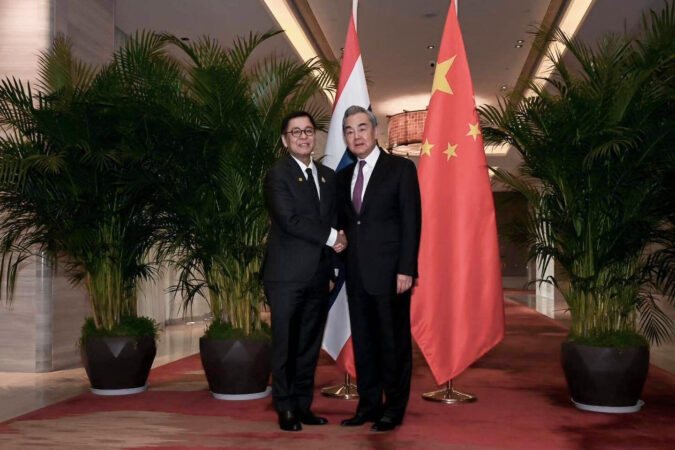
    BEIJING — Top diplomats from Thailand and Cambodia kicked off two days of talks in China on Sunday as Beijing seeks to strengthen its role in mediating the two countries’ border dispute, a day after they signed a new ceasefire.

    The ceasefire agreement calls for a halt to weeks of fighting along their contested border that has killed more than 100 people and displaced over half a million in both countries.

    Thai Foreign Minister Sihasak Phuangketkeow and Cambodian Foreign Minister Prak Sokhonn were set to meet in China’s southwestern Yunnan province for talks mediated by their Chinese counterpart, Wang Yi.

    China has sought to position itself as a mediator in the crisis, along with the United States and Malaysia.

    U.S. President Donald Trump, who threatened to withhold trade privileges unless Thailand and Cambodia agreed to a July ceasefire, suggested Sunday that the fighting between Thailand and Cambodia “will stop momentarily” and boasted that the U.S. “has become the REAL United Nations.”

    In a post on his social media site from his Mar-a-Lago estate in Florida, where he’s been spending the winter holidays, Trump wrote that both sides “will go back to living in PEACE” and referenced his past comments about helping to broker a ceasefire that largely hasn’t held.

    “I want to congratulate both great leaders on their brilliance in coming to this rapid and very fair conclusion. It was FAST & DECISIVE, as all of these situations should be!” Trump wrote.

    The talks in China aim to ensure a sustained ceasefire and promote lasting peace between the countries, according to a statement by Sihasak’s office.

    Wang was scheduled to join both bilateral meetings with each of the diplomats and a trilateral talk on Monday.

    China has welcomed the ceasefire announcement, which freezes the front lines and allows for displaced civilians to return to their homes near the border.

    “China stands ready to continue to provide (the) platform and create conditions for Cambodia and Thailand to have fuller and more detailed communication,” a Chinese Foreign Ministry statement read.

    The ceasefire agreement comes with a 72-hour observation period, at the end of which Thailand agreed to repatriate 18 Cambodian soldiers it has held as prisoners since earlier fighting in July. Their release has been a major demand of the Cambodian side.

    Prak Sokhonn, in a statement after his meeting with Wang, expressed deep appreciation for China’s “vital role” in supporting the ceasefire.

    China also announced 20 million yuan ($2.8 million) of emergency humanitarian aid for Cambodia to assist the displaced.

    The first batch of Chinese aid, including food, tents, and blankets, arrived in Cambodia on Sunday, Wang Wenbin, Chinese ambassador to Cambodia, wrote on Facebook.

    Sihasak said Sunday he hoped the meetings would convey to China that it should both support a sustainable ceasefire and send a signal to Cambodia against reviving the conflict or attempting to create further ones.

    “Thailand does not see China merely as a mediator in our conflict with Cambodia but wants China to play a constructive role in ensuring a sustainable ceasefire by sending such signals to Cambodia as well,” he said.

  • Winter rain floods Gaza camps as Netanyahu heads for U.S. meeting

    Winter rain floods Gaza camps as Netanyahu heads for U.S. meeting

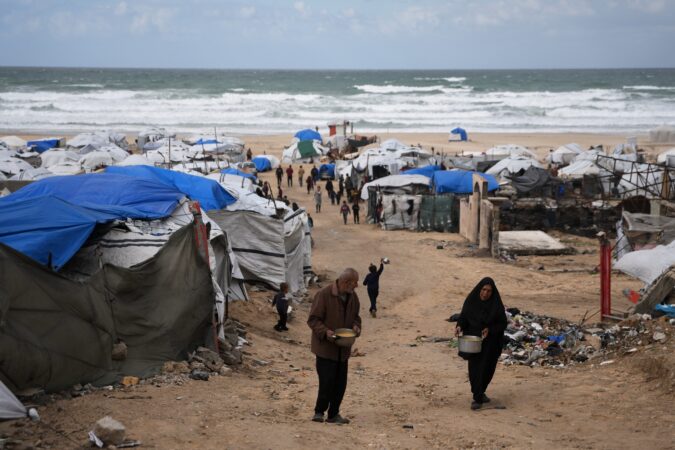
    KHAN YOUNIS, Gaza Strip — Winter rain lashed the Gaza Strip over the weekend, flooding camps with ankle-deep puddles as Palestinians displaced by two years of war attempted to stay dry in tents frayed by months of use.

    Israeli Prime Minister Benjamin Netanyahu traveled for an expected meeting on Monday with U.S. President Donald Trump in Florida about the second phase of the ceasefire. The first phase that took effect on Oct. 10 was meant to bring a surge in humanitarian aid for Gaza, including shelter.

    Netanyahu made no public statement as he departed.

    Nowhere to escape

    In the southern city of Khan Younis, blankets were soaked and clay ovens meant for cooking were swamped. Children wearing flip-flops waded through puddles. Some people used shovels or tin cans to remove water from tents. Others clawed at the ground to pry collapsed shelters from the mud.

    ““Puddles formed, and there was a bad smell,” said Majdoleen Tarabein, displaced from Rafah in southern Gaza. ”The tent flew away. We don’t know what to do or where to go.”

    She and family members tried to wring muddy blankets dry by hand.

    “When we woke up in the morning, we found that the water had entered the tent,” said Eman Abu Riziq, also displaced in Khan Younis. “These are the mattresses. They are all completely soaked.”

    She said her family is still reeling from her husband’s death less than two weeks ago.

    “Where are the mediators? We don’t want food. We don’t want anything. We are exhausted. We just want mattresses and covers,” said Fatima Abu Omar as she tried to prop up a collapsing shelter.

    At least 12 people, including a 2-week-old infant, have died since Dec. 13 from hypothermia or weather-related collapses of war-damaged homes, according to Gaza’s Health Ministry, part of the Hamas-run government.

    Emergency workers have warned people not to stay in damaged buildings, because they could collapse. But with much of the territory in rubble, there are few places to escape the rain. In July, the United Nations estimated that almost 80% of buildings in Gaza have been destroyed or damaged.

    Since the ceasefire between Israel and Hamas began, 414 people have been killed and 1,142 wounded in Gaza, according to the Health Ministry. The overall Palestinian death toll from the war is at least 71,266. The ministry, which does not distinguish between militants and civilians in its count, is staffed by medical professionals and maintains detailed records viewed as generally reliable by the international community.

    The Israel-Hamas war began with the Hamas-led attack in southern Israel on Oct. 7, 2023 that killed about 1,200 people and saw 251 taken hostage,

    Aid groups call for more help

    Humanitarian deliveries into Gaza are falling far short of the amount called for under the U.S.-brokered ceasefire, according to aid organizations and an Associated Press analysis of the Israeli military’s figures.

    The Israeli military body in charge of humanitarian aid said in the past week that 4,200 trucks with aid entered Gaza, plus eight garbage trucks to assist with sanitation, as well as tents and winter clothing. It refused to elaborate on the number of tents. Aid groups have said the need far outstrips the number that have entered.

    Since the ceasefire began, around 72,000 tents and 403,000 tarps have entered, according to Shelter Cluster, an international coalition of aid providers led by the Norwegian Refugee Council.

    “People in Gaza are surviving in flimsy, waterlogged tents and among ruins,” Philippe Lazzarini, commissioner-general of the top U.N. group overseeing aid in Gaza, wrote on social media. “There is nothing inevitable about this. Aid supplies are not being allowed in at the scale required.”

    Ceasefire’s next phase

    Though the ceasefire agreement has mostly held, its progress has slowed.

    Israel has said it refuses to move to the next phase while the remains of the final hostage are still in Gaza. Hamas has said the destruction in Gaza has hampered efforts to find remains.

    Challenges in the next phase include the deployment of an international stabilization force, a technocratic governing body for Gaza, the disarmament of the Hamas militant group, and further Israeli troop withdrawals from the territory.

    Both Israel and Hamas have accused each other of truce violations.

  • Netanyahu’s ties with Trump to be tested amid differences ahead of visit

    Netanyahu’s ties with Trump to be tested amid differences ahead of visit

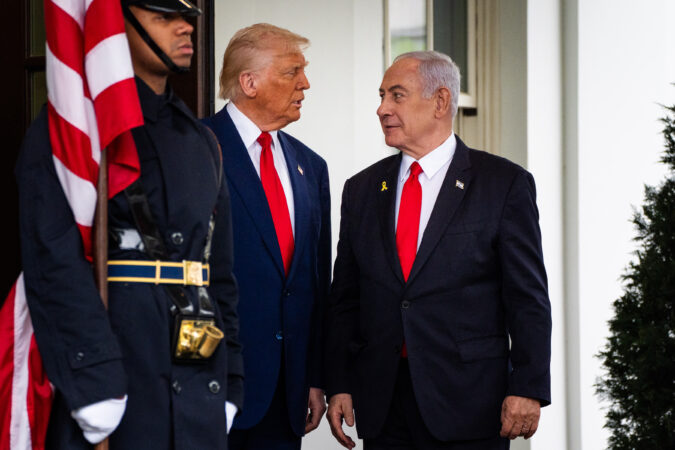
    JERUSALEM — Three months ago, Israeli Prime Minister Benjamin Netanyahu hailed Donald Trump as the “greatest friend Israel has ever had in the White House.” But that friendship — and Netanyahu’s powers of persuasion — will be tested on Monday at Trump’s Mar-a-Lago estate, where the Israeli leader will meet a U.S. president with increasingly diverging views on practically every Middle East hot spot.

    For Netanyahu, the trip to Florida offers a crucial opportunity to convince Trump to take a tougher stance on Gaza and require that Hamas disarm before Israeli troops further withdraw as part of the second phase of Trump’s 20-point peace plan, Israeli officials say. On Iran, Netanyahu is seeking a green light for another strike against the Islamic Republic’s ballistic missile program, possibly as part of a joint operation with the United States — even though Trump forcefully demanded an end to the 12-day Israel-Iran war in June and declared that Iran’s nuclear program had been “totally obliterated” by U.S. stealth bombers.

    On Syria, the Trump administration has bristled at actions by the Israeli military inside the country that undermine efforts by the new president, Ahmed al-Sharaa, to consolidate control, with Trump publicly warning Israel this month against doing anything “that will interfere with Syria’s evolution into a prosperous State.” And in Lebanon, Israel has repeatedly bombed Hezbollah targets while demanding that the militant group disarm in accordance with a U.S.-brokered ceasefire, but the strikes have threatened to tip the region into another conflagration on Trump’s watch.

    As they meet Monday for the fifth time this year, Netanyahu’s hawkishness will butt up against a U.S. president who has staked his own image and legacy on promoting peace, and Netanyahu may struggle to win Trump’s backing given how the relationship has deteriorated, according to people familiar with the thinking of the two leaders and political observers.

    “This is an emergency summit,” said Dan Diker, president of the Jerusalem Center for Security and Foreign Affairs think tank. “The context is a need to clear or purify the air, because there’s been tensions between the two sides. They have different timelines to get to the same destination, which is a Middle East that is liberated from the Iranian regime and its terror proxies, particularly Hamas.”

    In recent months, Netanyahu has often appeared to undercut Trump’s self-congratulations for making peace in the region. Israel carried out additional airstrikes on Iran after the president had declared the 12-day war with Israel over last summer, prompting an expletive-laden warning from Trump on television.

    Then, following Israel’s airstrike against Hamas negotiators in Qatar as the Gaza peace deal was being hammered out in September, Trump strong-armed Netanyahu into apologizing. “I think he felt like the Israelis were getting a bit out of control in what they were doing and that it was time to be very strong and stop them from doing things that he felt were not in their long-term interests,” Jared Kushner, Trump’s son-in-law and U.S. negotiator, said on CBS’s 60 Minutes in October.

    Now, Israeli officials have indicated that Netanyahu wants to discuss what Israel sees as a dangerous expansion of Iran’s ballistic missile capabilities and the possibility of new joint strikes by Israel and the U.S. This week, the prime minister’s office released an AI-generated video showing Netanyahu and Trump sitting side by side, co-piloting a B-2 bomber — the iconic stealth aircraft that the United States used in June to strike Iran’s nuclear facility at Fordow at Netanyahu’s urging.

    But while Trump continues to see Iran near or at the top of his regional concerns, his administration has launched another attempt to negotiate with Tehran and first wants to see the effort play out, according to several people familiar with the president’s thinking, who spoke on the condition of anonymity about the sensitive issue. Morgan Ortagus, Trump’s deputy special envoy to the Middle East, told a meeting of the U.N. Security Council on Tuesday that Washington “remains available for formal talks with Iran,” while repeating U.S. insistence that “there can be no [uranium] enrichment.”

    Other Trump concerns include Lebanon, where a truce with Israel, brokered by the U.S. and France late last year, is teetering as Netanyahu’s government continues to carry out almost daily bombardments and maintains an army deployment in the southern part of the country, amid charges that Hezbollah has failed to disarm.

    “There are mixed policy currents,” said another person familiar with U.S. administration deliberations. “There are those who believe only Israel [is capable of doing] something that can even begin to change Hezbollah’s calculations. … There are others that think you cannot trust what Israel might do as exploding the situation and creating broader chaos.”

    Gaza takes center stage

    For both Trump and Netanyahu, the most contentious issue will likely be Gaza, not only because of security implications but also its political significance for both leaders. Three months after Trump hailed the peace deal between Israel and Hamas as a “new dawn” for the region, implementation of his 20-point plan has bogged down after the first phase of a ceasefire plan, which has so far seen the release of hostages and prisoners and an increase in humanitarian aid.

    Amid contentious conversations between the two governments over who will have final word on what happens in Gaza, none of the main elements of a second phase — a supervising Board of Peace, a committee of Palestinian technocrats to govern Gaza’s internal affairs, and an International Stabilization Force to oversee in part the demilitarization of Hamas — is yet in place, even as Israel frequently strikes at Hamas targets inside Gaza despite the ceasefire agreement.

    Israel has been reluctant to advance to the deal’s second phase, which could also see Israel eventually withdraw further from the enclave’s interior, without Hamas first disarming. Israeli officials have also balked at the prospect that Turkey — a bitter rival of Israel but an ally of the U.S. — may gain a foothold in Gaza by deploying its troops there as part of the International Stabilization Force.

    On Tuesday, tensions with Washington spiked after Netanyahu’s defense minister, Israel Katz, appeared to flout Trump’s peace plan by declaring that Israel will establish Jewish settlements inside the Gaza Strip, drawing a rebuke from U.S. officials. Two days later, Katz doubled down and reiterated that Israel would never fully withdraw from the Strip.

    Earlier, after Israeli forces killed the Hamas commander Raed Sa’ad in Gaza on Dec. 13, Trump told reporters he was “looking into” whether Israel had violated the ceasefire agreement. U.S. officials, meanwhile, warned Netanyahu that “we won’t allow you to ruin President Trump’s reputation after he brokered the deal in Gaza,” Axios quoted a U.S. official as saying.

    “I’m not sure the Americans will like [the Israeli perspective on] Gaza because it’s not working according to their plan,” said an Israeli government adviser who spoke on the condition of anonymity to discuss internal deliberations. “But for Israel, it has to be total demilitarization, no weapons, no [Hamas] tunnels. And it could take years. We cannot withdraw now.”

    For Netanyahu, the trip to Palm Beach, Fla., is further complicated by his political need ahead of the 2026 Israeli elections to project strength and victory on every front, particularly Gaza. Since Oct. 7, 2023, when a Hamas attack left more than 1,200 Israelis dead and 250 taken hostage, Netanyahu has been lambasted by his political opponents for failing to protect Israel. He has also been criticized by Israel’s far right for not doing enough to destroy Hamas, even though the Israeli military carried out a withering, two-year campaign that left more than 70,000 Palestinians dead in Gaza and much of the Strip in ruins.

    “There’s the potential for a significant clash on Gaza, because for both of them, it’s the most central issue,” said Daniel Shapiro, a former U.S. ambassador to Israel. “For Trump, he wants to show that this grand deal he struck actually gets implemented, even if he has cut some corners. For Bibi, it’s a serious political risk to go into the election with an arrangement in Gaza that looks like Hamas will survive in some form.”

  • ICE shift in tactics leads to soaring number of at-large arrests, data shows

    ICE shift in tactics leads to soaring number of at-large arrests, data shows

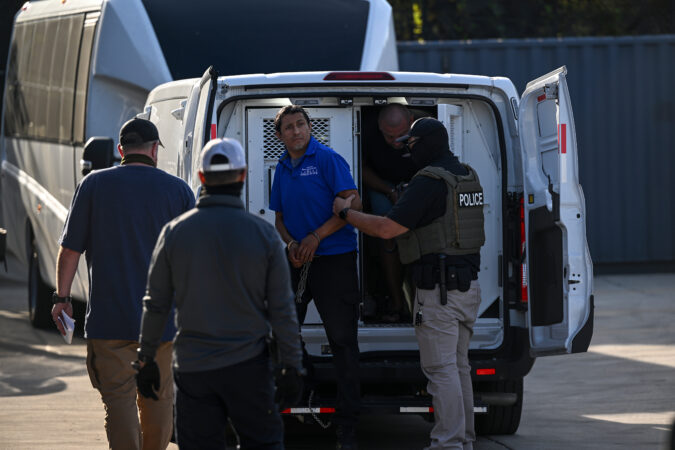
    The Trump administration’s mass deportation campaign has led to a significant change in strategy, as federal officers shift away from focusing on arresting immigrants already held in local jails to tracking them down on the streets and in communities, according to a Washington Post analysis of government data.

    The result has been a huge surge of such at-large arrests, with Immigration and Customs Enforcement tallying about 17,500 in September and on pace to exceed that in October. (The data the Post examined had been updated through the middle of that month.) That was far more than any other month included in the data, which dated back to October 2011.

    Before this year, the highest number of at-large arrests came in January 2023, when the Biden administration made more than 11,500. ICE is making more than four times as many at-large arrests per week as it did in President Donald Trump’s first term, the analysis found.

    The Post’s analysis highlights a broader pattern in how the Department of Homeland Security is approaching enforcement, even as authorities insist that immigration officers are focusing on violent criminals who they describe as “the worst of the worst.” Government data shows that more than 60% of the people detained in at-large arrests since June did not have criminal convictions or pending charges.

    Former DHS officials said the effort demonstrates a less targeted approach and reflects mounting pressure from senior White House and DHS officials to boost deportation totals.

    “That is consistent with their mandate to remove anybody in the country who doesn’t have authorization,” said Sarah Saldaña, who served as ICE director under President Barack Obama. “To me, that is a waste of resources.”

    The administration’s new approach began to take shape in June, when federal immigration agents launched a large-scale enforcement operation in Los Angeles. In the ensuing five months, ICE’s at-large arrests in communities nationwide totaled 67,800, more than twice the total number during the previous five months.

    In June, September, and October, such arrests — which include people detained in their homes, at work sites, during immigration check-ins, or in other public spaces — accounted for more than half of ICE’s total number of monthly arrests for the first time since April 2023.

    Administration officials have set a goal of 1 million deportations in Trump’s first year of his second term, and deputy chief of staff Stephen Miller has pressed for 3,000 immigration arrests per day.

    Daily arrests are lagging well behind that number. The highest number of single-day arrests by ICE took place when its officers detained more than 1,900 on June 4.

    The total number of overall arrests, however, rose by 60% in the period from June through mid-October, compared with the first five months of the Trump administration, the data showed. In September, ICE had 21 days in which it made 1,000 or more arrests, the highest number of such days in any month this year.

    “The shift in tactics is related to the ongoing process from the White House to up numbers, and the easiest way to do that is to do broader-brush approaches,” said Claire Trickler-McNulty, a former senior ICE official in the Biden administration.

    ICE is the lead federal agency in charge of immigration enforcement inside the United States, while U.S. Customs and Border Protection (CBP) typically focuses on the border. Historically, ICE officers have detained most immigrants inside prisons or jails after they have been charged with a crime or completed their sentences.

    Many local jails flag undocumented immigrants for removal and contact ICE directly. ICE also has the authority to monitor local arrests through a fingerprint-sharing program. The agency often files a detainer requesting that jails hold potential deportees for up to 48 hours for federal officers to take custody.

    By comparison, at-large arrests typically require more human and financial resources to carry out, immigration experts said. ICE’s website says that such arrests “are unpredictable and can be dangerous to the public.”

    In a statement, DHS spokesperson Tricia McLaughlin said 70% of the immigrants arrested by ICE have criminal convictions or pending criminal charges in the United States and that some have convictions or charges in their home countries.

    The Post’s examination found that from Jan. 20, when Trump took office, through Oct. 15 about 36% of ICE detainees had criminal convictions and 30% had pending charges.

    “This story only reveals how the media manipulates data to peddle a false narrative that DHS is not targeting the worst of the worst,” McLaughlin said. “Nationwide our law enforcement is targeting the worst of the worst criminal illegal aliens — including murderers, rapists, gang members, pedophiles, and terrorists.”

    The DHS data for this story was obtained through a public records request filed by the Deportation Data Project, a group of academics and lawyers that collects and releases immigration enforcement data. The Post used to the data to conduct its own analysis.

    The data does not include information on immigration arrests made by other federal departments, including CBP, whose Border Patrol division has taken on an increasingly prominent role in the Trump administration’s enforcement strategy in recent months. In Chicago, Border Patrol agents came under federal court scrutiny for the deployment of tear gas in response to protesters.

    As the overall number of arrests increased nationally, the number of people without a criminal record arrested by ICE since June nearly tripled, according to the Post’s analysis. (That includes both at-large arrests and arrests at jails.) Since September, more than 40% of those arrested by ICE had no criminal records.

    That trend is continuing. Nearly half of the 79,000 people ICE arrested and placed in detention between Oct. 1 and the end of November did not have criminal convictions or pending criminal charges, according to separate government data obtained by the Post. (Those arrests included CBP arrests, which make up a small percentage of the total.) Of the migrants who do have criminal convictions, nearly a quarter were traffic offenses, that data showed.

    Julia Gelatt, associate director of the U.S. Immigration Policy Program at the Migration Policy Institute, said that the data showing relatively few detainees have committed serious crimes is not surprising.

    “ICE is getting the worst of the worst,” she said. “But they’re also picking up a lot of people who either have no criminal charge … or convictions — or they have relatively minor convictions.”

    Federal data suggests that the administration’s goal of boosting detentions was aided by high-profile targeted enforcement operations that lasted for weeks in large cities, including Los Angeles; Boston; Washington, D.C.; and Chicago; many of which drew significant public protests.

    The District of Columbia experienced the largest spike in arrests, with the number increasing fivefold from June through October as compared with the previous five months, the federal data showed.

    In Illinois, 428 people were arrested between Jan. 20 and May 31 who had no criminal records. That number more than tripled to 1,408 from June 1 through Oct. 15, a period that included a targeted enforcement campaign in Chicago titled Operation Midway Blitz.

    Jason Houser, former ICE chief of staff in the Biden administration, said that the Trump administration is “trying to find the lowest bar of calling somebody a criminal.”

  • Winter storm threatens to bring blizzards and ice to parts of the U.S., hampering holiday travel

    Winter storm threatens to bring blizzards and ice to parts of the U.S., hampering holiday travel

    A powerful winter storm was sweeping east from the Plains on Sunday, driven by what meteorologists describe as an intense cyclone, setting off a chain reaction of snow, ice, rain, and severe weather expected to affect much of the country.

    Snow and strengthening winds spread across the Upper Midwest on Sunday, where the National Weather Service warned of whiteout conditions and possible blizzard conditions that could make travel impossible in some areas. Snowfall totals were expected to exceed a foot across parts of the upper Great Lakes, with up to 2 feet possible along the south shore of Lake Superior.

    In the South, meteorologists warn of severe thunderstorms expected to signal the arrival of a sharp cold front — sometimes referred to as a “Blue Norther” — bringing a sudden temperature drop and strong north winds that will end days of record warmth across the region.

    The snowy holiday season in the Upper Midwest and Northeast comes as springlike warmth continues in much of the nation’s midsection and South, where record high temperatures had Santa sweating in recent days.

    The high temperature in Atlanta was forecast to be around 72 degrees Fahrenheit on Sunday, continuing a warming trend after climbing to 78 F to shatter the city’s record high temperature for Christmas Eve, the National Weather Service said. Numerous other record high temperatures were seen across the South and Midwest on the days after Christmas.

    But that record heat is quickly coming to an end, forecasters say.

    A cold front was expected to bring rain to much of the South late Sunday night into Monday, bringing much colder weather on Tuesday. The abrupt change will drop the low temperature in Atlanta to 25 F by early Tuesday morning. The colder temperatures in the South are expected to continue through New Year’s Day.

    Over the next 48 hours, the cyclone is expected to produce heavy snow and blizzard conditions in the Midwest and Great Lakes, freezing rain in New England, thunderstorms across the eastern U.S. and South, and widespread strong winds.

    The storm is expected to intensify as it moves east, drawing energy from a sharp clash between frigid air plunging south from Canada and unusually warm air that has lingered across the southern United States, according to the National Weather Service.

    It follows thousands of flight delays and cancellations across the Northeast and Great Lakes regions over the weekend due to snow, as thousands took to the roads and airports during the busy travel period between Christmas and New Year’s.

    On the other side of the country, California was experiencing a fairly dry weekend after powerful storms battered the state with heavy rains, flash flooding, and mudslides. At least four people were killed including a man who was found dead Friday in a partially submerged car near Lancaster, the Los Angeles County Sheriff’s Department reported.

  • Winter storm snarls U.S. holiday travel across Northeast, Great Lakes

    Winter storm snarls U.S. holiday travel across Northeast, Great Lakes

    BOSTON — More than a thousand flights were canceled or delayed across the Northeast and Great Lakes regions due to snow as thousands took to U.S. roads and airports during the busy travel period between Christmas and New Year’s.

    New York City received around 4 inches of snow Friday night into early Saturday — slightly under what some forecasts had predicted. At least 1,500 flights were canceled from Friday night, according to flight-tracking service FlightAware. But by Saturday morning, both the roads and skies were clearing.

    “The storm is definitely winding down, a little bit of flurries across the Northeast this morning,” said Bob Oravec, a Maryland-based forecaster at the National Weather Service.

    Oravec said the storm was quick-moving from the northwest toward the Southeast U.S., with the largest snowfall in the New York City area reaching over 6 inches in central eastern Long Island. Further to the north in the Catskills, communities saw as much as 10 inches of snowfall.

    Newark Liberty International Airport, John F. Kennedy International Airport, and LaGuardia Airport posted snow warnings on the social media platform X on Friday, cautioning that weather conditions could cause flight disruptions.

    The National Weather Service warned of hazardous travel conditions from the Great Lakes through the northern mid-Atlantic and southern New England, with the potential for tree damage and power outages. Forecasters said the storm was expected to weaken by Saturday morning.

    In Times Square on Saturday, workers in red jumpsuits worked to clear the sludge and powder-coated streets and sidewalks using shovels and snowblowers.

    Jennifer Yokley, who was in Times Square on a holiday trip from North Carolina, said she was excited to see snow accumulating as it dusted buildings, trees, and signs throughout the city.

    “I think it was absolutely beautiful,” she said.

    Payton Baker and Kolby Gray, who were visiting New York City from West Virginia on Saturday, said the snow was a Christmas surprise for their third anniversary trip.

    “Well, it’s very cold and it was very unexpected,” Baker said, her breath visible in the winter air. “The city is working pretty well to get all the roads salted and everything, so it’s all right.”

    Ahead of the storm, New York Gov. Kathy Hochul declared a state of emergency for more than half of the state.

    4 dead in California

    On the other side of the country, California was experiencing a fairly dry weekend after powerful storms battered the state with heavy rains, flash flooding, and mudslides. At least four people were killed including a man who was found dead Friday in a partially submerged car near Lancaster, the Los Angeles County Sheriff’s Department reported.

    Some mountainous areas received 10 to 18 inches of rain over three days, peaking on Christmas Eve, National Weather Service meteorologist Rose Schoenfeld said. There were varied amounts of rain in other populated areas, including up to 4 inches across the Los Angeles Basin and many coastal areas.

    There was significant damage to homes and cars in Wrightwood, a 5,000-resident mountain town about 80 miles northeast of Los Angeles, as floods and mudslides turned roads into rivers and buried vehicles in rock and debris.

    Before rain reappears in the forecast later next week, California was expected to experience Santa Ana winds with gusts of over 60 mph in mountainous areas from Sunday night through Tuesday. The winds could uproot saturated trees and cause power outages.

  • Russian attack pummels Kyiv as Zelensky prepares to meet Trump

    Russian attack pummels Kyiv as Zelensky prepares to meet Trump

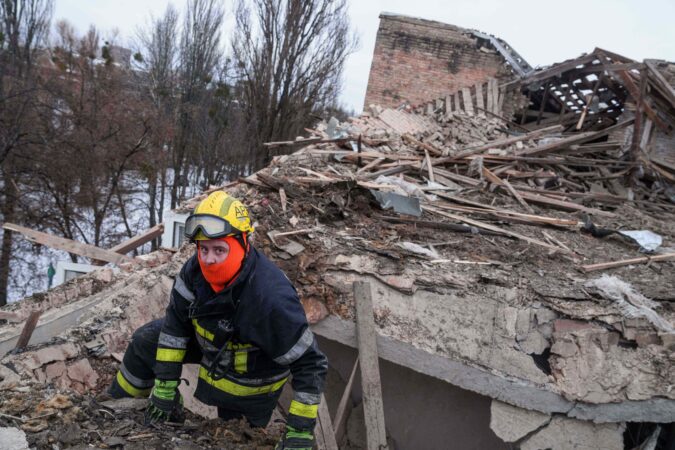
    KYIV — Russia launched a massive attack on civilian infrastructure in Ukraine early Saturday, targeting the Kyiv region’s energy grid and leaving one-third of the capital without heating, Foreign Minister Andrii Sybiha said, as residents face freezing temperatures and frost.

    The assault, which also triggered power cuts throughout Kyiv, comes just one day before Ukrainian President Volodymyr Zelensky is set to meet with President Donald Trump at his Mar-a-Lago estate in Florida to discuss the latest draft of a peace plan to end the war — a document that Russia has not signaled it is prepared to sign.

    Zelensky told journalists Saturday that he was en route to Canada, where he would meet with Prime Minister Mark Carney and speak via videoconference with European leaders ahead of the Trump meeting.

    The key issues Trump and Zelensky are expected to discuss include territorial control, future U.S. security guarantees for Ukraine, and investment in Ukraine’s reconstruction.

    “Putin deliberately ordered a massive bombing of residential areas and critical infrastructure of Kyiv just as leaders of Ukraine and the US are preparing to meet and advance peace,” Sybiha wrote on X. “ … Putin must realize that further rejection of peace will come at a very heavy price for him and his regime.”

    Zelensky pleaded for European partners to provide new air defense systems to Ukraine and described the Russian attacks as a reaction to “peaceful negotiations between Ukraine and the United States regarding ending Russia’s war against Ukraine.”

    By midmorning Saturday, Russia had launched nearly 500 Shahed drones and 40 missiles at Ukraine, including ballistic Kinzhals, Zelensky said in a post on Telegram. Several residential buildings were hit. Footage showed vehicles on fire on a major road in Kyiv.

    At least one person was killed and 28 people wounded in Kyiv, including two children, Mayor Vitali Klitschko said. One woman was killed in the nearby city of Bila Tserkva. The assault lasted 10 hours — and air raid sirens blared again throughout the afternoon as more drones closed in on Kyiv’s airspace. The attacks followed others elsewhere in Ukraine in recent days, including a glide-bomb strike on Kharkiv, the country’s second-largest city, on Friday night that killed two civilians and wounded a 9-month old girl and her mother.

    Russia has spent months targeting Ukraine’s energy infrastructure in a bid to damage the country’s economy and its people’s resolve in the coldest and darkest months of the year. In many parts of the country, including the capital, scheduled blackouts have been in place that leave civilians without power for much of the day. New emergency outages were implemented Saturday in response to the latest attack.

    The Kremlin refused Ukraine’s request for a Christmas ceasefire. Fierce battles continue across the front line in the country’s east and south. The Russian Volunteer Corps, a group of Russian soldiers fighting for Ukraine, announced Saturday that its commander, Denis Kapustin, was killed in a Russian drone attack in the southeastern Zaporizhzhia region.

    “If Russia even turns the Christmas and New Year’s time into a time of destroyed buildings and burned apartments, ruined power stations, then this sick activity can only be responded to with really strong steps,” Zelensky wrote Saturday on Telegram. “America has this opportunity, Europe has this opportunity, many of our partners have this opportunity. The main thing is to take advantage of it.”

    A frenzied effort to draft a workable peace plan has been in the works since last month, when the White House threatened to cut all aid to Ukraine unless Kyiv signed on to a controversial 28-point proposal by Thanksgiving. That draft made major concessions to Russia, stirring outrage in Ukraine and Europe. Washington eventually backed down on the threat, and delegations from Kyiv and Washington have since met several times to draft a new version, which Zelensky said Friday numbers 20 points and is 90% complete.

    The U.S. has pressured Ukraine to organize elections, including a presidential vote, which has been postponed since last year because of martial law, which has been in place throughout the war. Putin, meanwhile, changed Russia’s constitution to extend his stay in office indefinitely. Zelensky said recently that he would urge lawmakers to discuss how best to organize a presidential election but has insisted that Ukraine will require security guarantees to host any vote.

    Kyiv and European partners have repeatedly warned that Russia will attempt to disrupt any vote in Ukraine. Some elements of the latest draft peace plan, especially those regarding territory, would require a referendum in Ukraine, which also would face challenges with millions of people displaced or serving on the front line.

    “I am not clinging to the chair; we are ready for this,” Zelensky said Saturday of elections. But he insisted that the legal and security framework be established before any vote. “After today’s strikes — again, I repeat, because this happens daily, because Russia attacks us every day — the sky must be safe, and security ensured throughout our territory, at least for the duration of the elections or a referendum.”

    Any U.S. security guarantees, Zelensky said, will depend on Trump — “what he is ready to give, when he is ready to give it, for what term. Without a doubt, I will be grateful to him if his decision aligns with our wishes.”

    Ukraine continues to refuse to cede territory to Russia but has signaled openness to establishing a demilitarized zone in the Donbas region if Russia withdraws its troops — a proposal that Moscow, which remains adamant it wants to control all of Donbas, may refuse.

    Ukraine also rejected an earlier suggestion that its military be restricted to 600,000 troops, which would make it incapable of fighting off any future Russian attack, instead writing into the latest draft that its peacetime military could be capped at 800,000 troops.

    “Where is the Russian response to the proposals to end the war, which were put forward by the United States and the world?” Zelensky wrote on Telegram. “Russian representatives are having long conversations, but in reality, it’s the Kinzhals and Shaheds that speak for them. This is the real attitude of Putin and his entourage. They don’t want to end the war and are trying to use every opportunity to inflict more pain on Ukraine and increase their pressure on others in the world. And this means that the responsive pressure is not enough.”

  • Times Square to feature patriotic crystal ball for New Year’s Eve, kicking off U.S. 250th birthday

    Times Square to feature patriotic crystal ball for New Year’s Eve, kicking off U.S. 250th birthday

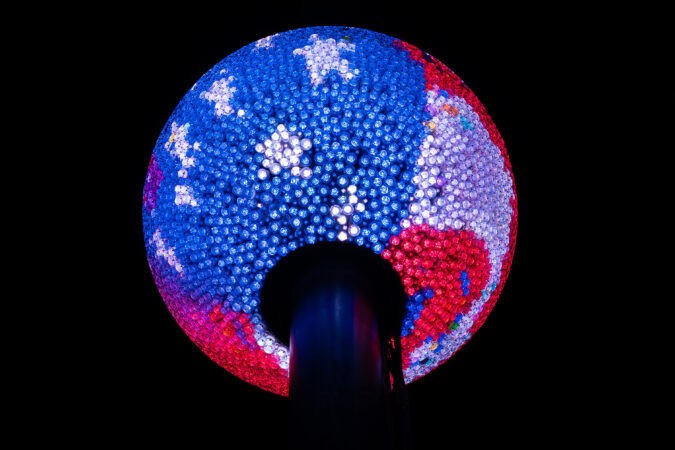
    After the crystal ball drops on New Year’s Eve in New York City, it will rise again, sparkling in red, white, and blue to usher in 2026 and kick off months of celebrations for the nation’s upcoming 250th birthday.

    The patriotic touches at this year’s Times Square gathering, including a second confetti drop, will offer an early glimpse of what’s ahead: hundreds of events and programs, big and small, planned nationwide to mark the signing of the Declaration of Independence in 1776.

    “I’m telling you right now, whatever you’re imagining, it’s going to be much more than that,” said America250 Chair Rosie Rios, who oversees the bipartisan commission created by Congress in 2016 to organize the semiquincentennial anniversary. “It’s going to be one for the ages, the most inspirational celebration this country and maybe the world has ever seen.”

    Rios and her group worked with the Times Square Alliance business district and One Times Square, the building from which the ball is dropped, to make the changes to this year’s ceremonies. They’re also planning a second ball drop event on July 3, the eve of the nation’s birthday, “in the same beautiful style that Times Square knows how to do it,” Rios said.

    It will mark the first time in 120 years there will be a ball drop in Times Square that doesn’t occur on New Year’s Eve, she said.

    A New Year’s Eve ball was first dropped in Times Square in 1907. Built by a young immigrant metalworker named Jacob Starr, the 700-pound, 5-foot-diameter ball was made of iron and wood and featured 100 25-watt light bulbs. Last year, the Constellation Ball, the ninth and largest version, was unveiled. It measures about 12 feet in diameter and weighs nearly 12,000 pounds.

    The only years when no ball drop occurred were 1942 and 1943, when the city instituted a nightly “dimout” during World War II to protect itself from attacks. Crowds instead celebrated the new year with a moment of silence followed by chimes rung from the base of One Times Square.

    This year, the stroke of midnight will also mark the official launch of America Gives, a national service initiative created by America250. Organizers hope to make 2026 the largest year of volunteer hours ever aggregated in the country.

    On the following day, America250 will participate in the New Years Day Rose Parade in Pasadena, Calif., with a float themed “Soaring Onward Together for 250 Years.” It will feature three larger-than-life bald eagles representing the country’s past, present, and future.

    “We want to ring in this new year from sea to shining sea. What better way to think about it than going from New York to California,” Rios said. “This has to be community-driven, this has be grassroots. We’re going from Guam to Alaska, from Fairbanks to Philadelphia, and everything in between.”

    President Donald Trump has also announced the “Freedom 250” initiative to coordinate additional events for the 250th anniversary.

    Rios said she sees the wide range of celebrations and programs planned for the coming months, from large fireworks displays and statewide potluck suppers to student contests and citizen oral histories, as an opportunity to unite a politically divided nation.

    “If we can find something for everyone … having those menus of options that people can pick and choose how they want to participate,” she said. “That’s how we’re going to get to engaging 350 million Americans.”