Category: Nation & World

  • U.S. military launches strikes in Syria against Islamic State fighters after American deaths

    U.S. military launches strikes in Syria against Islamic State fighters after American deaths

    WASHINGTON — The Trump administration launched military strikes Friday in Syria to “eliminate” Islamic State group fighters and weapons sites in retaliation for an ambush attack that killed two U.S. troops and an American interpreter almost a week ago.

    A U.S. official described it as “a large-scale” strike that hit 70 targets in areas across central Syria that had IS infrastructure and weapons. Another U.S. official, who also spoke on condition of anonymity to discuss sensitive operations, said more strikes should be expected.

    The attack was conducted using F-15 Eagle jets, A-10 Thunderbolt ground attack aircraft, and AH-64 Apache helicopters, the officials said. F-16 fighter jets from Jordan and HIMARS rocket artillery also were used, one official said.

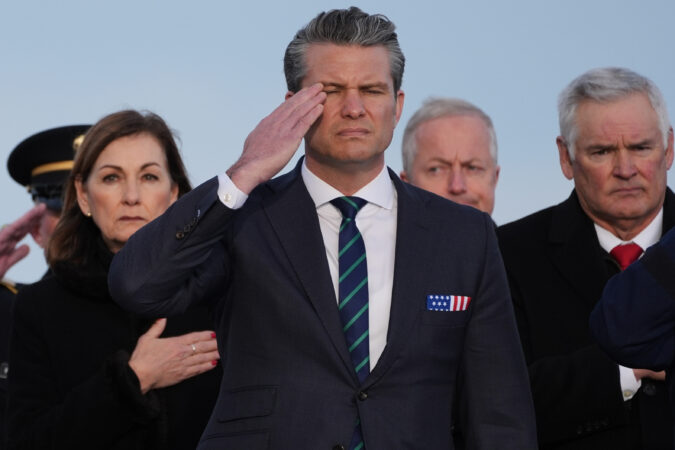
    “This is not the beginning of a war — it is a declaration of vengeance. The United States of America, under President Trump’s leadership, will never hesitate and never relent to defend our people,” Defense Secretary Pete Hegseth said on social media.

    President Donald Trump had pledged “very serious retaliation” after the shooting in the Syrian desert, for which he blamed IS. The troops were among hundreds of U.S. troops deployed in eastern Syria as part of a coalition fighting the terrorist group.

    Trump in a social media post said the strikes were targeting IS “strongholds.” He reiterated his support for Syrian President Ahmad Al-Sharaa, who he said was “fully in support” of the U.S. effort to target the militant group.

    Trump also offered an all-caps threat, warning the group against attacking U.S. personnel again.

    “All terrorists who are evil enough to attack Americans are hereby warned — YOU WILL BE HIT HARDER THAN YOU HAVE EVER BEEN HIT BEFORE IF YOU, IN ANY WAY, ATTACK OR THREATEN THE U.S.A.,” the president added.

    The attack was a major test for the warming ties between the United States and Syria since the ouster of autocratic leader Bashar Assad a year ago. Trump has stressed that Syria was fighting alongside U.S. troops and said al-Sharaa was “extremely angry and disturbed by this attack,” which came as the U.S. military is expanding its cooperation with Syrian security forces.

    Syria’s foreign ministry in a statement on X following the launch of U.S. strikes said that last week’s attack “underscores the urgent necessity of strengthening international cooperation to combat terrorism in all its forms” and that Syria is committed “to fighting ISIS and ensuring that it has no safe havens on Syrian territory and will continue to intensify military operations against it wherever it poses a threat.”

    IS has not claimed responsibility for the attack on the U.S. service members, but the group has claimed responsibility for two attacks on Syrian security forces since, one of which killed four Syrian soldiers in Idlib province. The group in its statements described al-Sharaa’s government and army as “apostates.” While al-Sharaa once led a group affiliated with al-Qaida, he has had a long-running enmity with IS.

    Syrian state television reported that the U.S. strikes hit targets in rural areas of Deir ez-Zor and Raqqa provinces and in the Jabal al-Amour area near Palmyra. It said they targeted “weapons storage sites and headquarters used by ISIS as launching points for its operations in the region.”

    Trump this week met privately with the families of the slain Americans at Dover Air Force Base in Delaware before he joined top military officials and other dignitaries on the tarmac for the dignified transfer, a solemn and largely silent ritual honoring U.S. service members killed in action.

    The guardsmen killed in Syria last Saturday were Sgt. Edgar Brian Torres-Tovar, 25, of Des Moines, and Sgt. William Nathaniel Howard, 29, of Marshalltown, according to the U.S. Army. Ayad Mansoor Sakat, of Macomb, Mich., a U.S. civilian working as an interpreter, was also killed.

    The shooting nearly a week ago near the historic city of Palmyra also wounded three other U.S. troops as well as members of Syria’s security forces, and the gunman was killed. The assailant had joined Syria’s internal security forces as a base security guard two months ago and recently was reassigned because of suspicions that he might be affiliated with IS, Interior Ministry spokesperson Nour al-Din al-Baba has said.

    The man stormed a meeting between U.S. and Syrian security officials who were having lunch together and opened fire after clashing with Syrian guards.

    When asked for further information, the Pentagon referred AP to Hegseth’s social media post.
  • Rep. Elise Stefanik says she’s suspending her campaign for New York governor, won’t seek reelection

    Rep. Elise Stefanik says she’s suspending her campaign for New York governor, won’t seek reelection

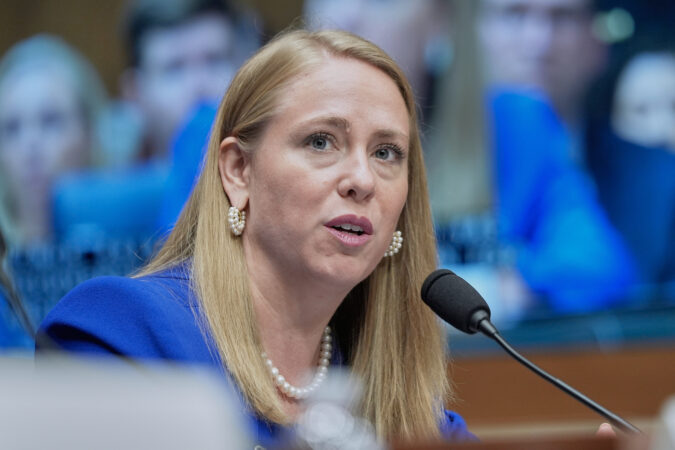
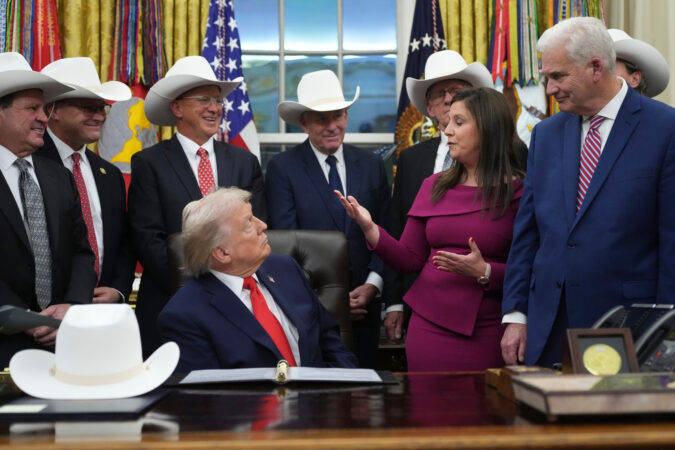
    ALBANY, N.Y. — Rep. Elise Stefanik announced Friday that she is suspending her campaign for New York governor and will not seek reelection to Congress, bowing out of the race in a surprise statement that said “it is not an effective use of our time” to stay in what was expected to be a bruising Republican primary.

    Stefanik, a Republican ally of President Donald Trump, said in a post on X that she was confident of her chances in the primary against Bruce Blakeman, a Republican county official in New York City’s suburbs. But she said she wanted to spend more time with her young son and family.

    “I have thought deeply about this and I know that as a mother, I will feel profound regret if I don’t further focus on my young son’s safety, growth, and happiness — particularly at his tender age,” she said.

    Stefanik has been an intense critic of incumbent Democratic Gov. Kathy Hochul, who is also seeking reelection but faces a primary challenge from her own lieutenant governor, Antonio Delgado.

    The announcement marks an abrupt end, at least for now, for a once-promising career for Stefanik. She was the youngest woman ever elected to Congress when she won her first campaign in 2014 at just 30 years old, representing a new generation of Republicans making inroads in Washington. She ultimately rose to her party’s leadership in the House when she became the chair of the House Republican Conference in 2021.

    First viewed as a moderate when she came to Washington, Stefanik became far more conservative as Trump began to dominate the party. Once someone who refused to say Trump’s name, she became one of his top defenders during his first impeachment inquiry. She would go on to vote against certifying the 2020 election results, even after a violent mob stormed the Capitol on Jan. 6.

    Stefanik was expected to have a bitter Republican primary against Blakeman, who also counts himself as an ally of Trump. The president had so far seemed keen on avoiding picking a side in the race, telling reporters recently: “He’s great, and she’s great. They’re both great people.”

    Stefanik’s decision follows a clash with Speaker Mike Johnson, whom she accused of lying before embarking on a series of media interviews criticizing him. In one with The Wall Street Journal, she called Johnson a “political novice” and said he wouldn’t be reelected speaker if the vote were held today.

    The tumultuous early December episode appeared to cool when Johnson said he and Stefanik had a “great talk.”

    “I called her and I said, ‘Why wouldn’t you just come to me, you know?’” Johnson said. “So we had some intense fellowship about that.”

    Still, Stefanik, the chairwoman of the House Republican leadership, has not fully walked back her criticisms. A Dec. 2 social media post remains online in which, after a provision she championed was omitted from a defense authorization bill, Stefanik accused Johnson of falsely claiming he was unaware of it, calling it “more lies from the Speaker.”

    State Republican Chairman Ed Cox said the party respected Stefanik’s decision and thanked her for her efforts.

    “Bruce Blakeman has my endorsement and I urge our State Committee and party leaders to join me,” Cox said in a prepared statement. “Bruce is a fighter who has proven he knows how to win in difficult political terrain.”

  • Justice Department releases limited set of files tied to Epstein sex trafficking investigation

    Justice Department releases limited set of files tied to Epstein sex trafficking investigation

    WASHINGTON — The Justice Department released thousands of files Friday about convicted sex offender Jeffrey Epstein but the incomplete document dump did not break significant ground about the long-running criminal investigations of the financier or his ties to wealthy and powerful individuals.

    The files included a small number of photos of President Donald Trump, sparing the White House for now from having to confront fresh revelations about an Epstein relationship that the administration for months has tried in vain to push past.

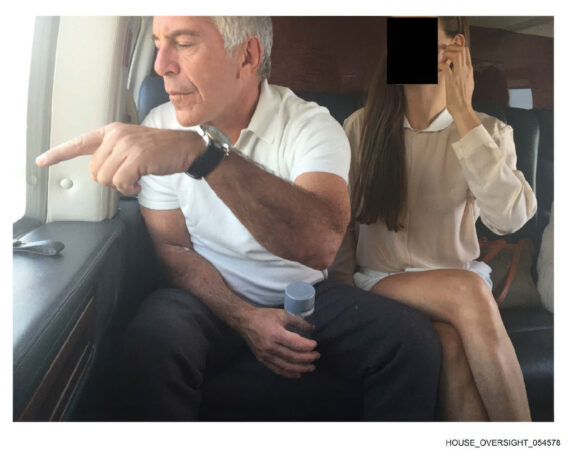
    It did, however, feature a series of never-before-seen photos of Bill Clinton from a trip that the former president appears to have take with Epstein decades ago.

    Reaction to the disclosures broke along mostly partisan lines. Democrats and some Republicans seized on the limited release to accuse the Justice Department of failing to meet a congressionally set deadline to produce the Epstein files. White House officials on social media gleefully promoted a photo of Clinton in a hot tub with a person with a blacked-out face. The Trump administration touted the release as a show of its commitment to transparency, ignoring the fact that the Justice Department just months ago said no more files would be released. Congress then passed a law mandating it.

    The records, consisting largely of pictures but also including call logs, grand jury testimony, interview transcripts, and other documents, arrived amid extraordinary anticipation that they might offer the most detailed look yet at nearly two decades worth of government scrutiny of Epstein’s sexual abuse of young women and underage girls. Their release has long been demanded by a public hungry to learn whether any of Epstein’s associates knew about or participated in the abuse. Epstein’s accusers have also sought answers about why federal authorities shut down their initial investigation into the allegations in 2008.

    Yet the release, replete with redactions. seemed unlikely to satisfy the public clamor for information given how many investigative records the department indicated it was continuing to withhold.

    In a letter to Congress obtained by The Associated Press, Deputy Attorney General Todd Blanche wrote that the Justice Department was continuing to review files in its possession and expected additional disclosures by the end of the year. The department also said it was withholding some documents under exemptions allowed in the law and was redacting names of victims. The department expects to complete its document production by the end of the year, Blanche said.

    Bowing to political pressure from fellow Republicans, Trump on Nov. 19 signed a bill giving the Justice Department 30 days to release most of its files and communications related to Epstein, including information about the investigation into his death in a federal jail. The law’s passage, which set a deadline for Friday, was a remarkable display of bipartisanship that overcame months of opposition from Trump and Republican leadership.

    Limited details about Trump

    The released files include a small number of photos of Trump, which appear to have been known for decades, including two in which Trump and Epstein are posing with now-first lady Melania Trump in February 2000 at an event at Trump’s Palm Beach club, Mar-a-Lago, before the pair’s friendship ruptured.

    Trump was friends with Epstein for years before the two had a falling-out. Neither he nor Clinton has ever been accused of wrongdoing in connection with Epstein, and the mere inclusion of someone’s name in files from the investigation does not imply otherwise.

    Attorney General Pam Bondi said last month that she had ordered a top federal prosecutor to investigate Epstein’s ties to Trump’s political foes, including Clinton. Bondi acted after Trump pressed for such an inquiry, though he did not explain what supposed crimes he wanted the Justice Department to investigate.

    In July, Trump dismissed some of his own supporters as “weaklings” for falling for “the Jeffrey Epstein hoax.” But both Trump and House Speaker Mike Johnson (R., La.) failed to prevent the legislation from coming to a vote.

    Trump did a U-turn on the files once it became clear that congressional action was inevitable. He insisted that the Epstein matter had become a distraction to the Republican agenda and that releasing the records was the best way to move on.

    After nearly two decades of court action and prying by reporters, a voluminous number of records related to Epstein had already been public well before Froday, including flight logs, address books, email correspondence, police reports, grand jury records, courtroom testimony, and transcripts of depositions of his accusers, his staffers and others.

    New photos of Clinton

    Senior Trump White House aides took to X to promote photos in the Epstein files that show Clinton with women whose faces are redacted.

    Karoline Leavitt, the White House press secretary, wrote “Oh my!” and added a shocked face emoji in response to a photo of Clinton in a hot tub with a woman whose face was redacted.

    “They can release as many grainy 20-plus-year-old photos as they want, but this isn’t about Bill Clinton,” Clinton spokesman Angel Ureña said in a statement.

    “There are two types of people here,” he said. “The first group knew nothing and cut Epstein off before his crimes came to light. The second group continued relationships after that. We’re in the first. No amount of stalling by people in the second group will change that.”

    The Epstein investigations

    Police in Palm Beach, Fla., began investigating Epstein in 2005 after the family of a 14-year-old girl reported she had been molested at his mansion. The FBI joined the investigation, and authorities gathered testimony from multiple underage girls who said they had been hired to give Epstein sexual massages.

    Ultimately, though, prosecutors gave Epstein a deal that allowed him to avoid federal prosecution. He pleaded guilty to state prostitution charges involving someone under age 18 and was sentenced to 18 months in jail.

    Epstein’s accusers then spent years in civil litigation trying to get that plea deal set aside. One of those women, Virginia Giuffre, accused Epstein of arranging for her to have sexual encounters, starting at age 17, with numerous other men, including billionaires, famous academics, U.S. politicians, and Andrew Mountbatten-Windsor, then known as Britain’s Prince Andrew. Mountbatten-Windsor denied ever having sex with Giuffre, but King Charles III stripped him of his royal titles this year after Giuffre’s memoir was published after she died.

    Prosecutors never brought charges in connection with Giuffre’s claims, but her account fueled conspiracy theories about supposed government plots to protect the powerful. Giuffre died by suicide at her farm in Western Australia in April at age 41.

    Federal prosecutors in New York brought new sex trafficking charges against Epstein in 2019, but he killed himself in jail a month after his arrest. Prosecutors then charged Epstein’s longtime confidant, British socialite Ghislaine Maxwell, with recruiting underage girls for Epstein to abuse.

    Maxwell was convicted in late 2021 and is serving a 20-year prison sentence, though she was moved from a low-security federal prison in Florida to a minimum-security prison camp in Texas after she was interviewed over the summer by Blanche. Her lawyers argued that she never should have been tried or convicted.

    The Justice Department in July said it had not found any information that could support prosecuting anyone else.

  • Rubio is hopeful about Russia-Ukraine and Gaza peace efforts but clear about the challenges

    WASHINGTON — Secretary of State Marco Rubio was hopeful but clear about the challenges facing the Trump administration’s Russia-Ukraine and Israel-Hamas peace efforts and defended increasing U.S. military pressure on Venezuela during a marathon end-of-year news conference Friday.

    In a freewheeling exchange with reporters running more than two hours, Rubio offered no predictions for timing or success on any of those three issues. He also said he was proud of President Donald Trump’s radical overhaul in foreign assistance and that the administration was working to reach a humanitarian ceasefire in Sudan in time for the new year.

    Rubio’s rare and lengthy appearance in the State Department briefing room came as key meetings on Gaza and Russia-Ukraine are being held in Miami on Friday and Saturday after a tumultuous year in U.S. foreign policy. Rubio has assumed the additional role of national security adviser and emerged as a staunch defender of Trump’s “America First” priorities on issues ranging from visa restrictions to a shakeup of the State Department bureaucracy.

    Talks on Ukraine and Gaza are planned

    Rubio spoke about peace efforts as national security officials from Britain, France, and Germany were taking part in talks in Florida with Ukraine’s lead negotiator, Rustem Umerov, and envoys Steve Witkoff and Jared Kushner to discuss the latest iteration of Trump’s Ukraine-Russia peace proposal.

    A White House official, who spoke on condition of anonymity because of the sensitivity of the matter, said Witkoff and Kushner, who is Trump’s son-in-law, also would see Egyptian, Turkish, and Qatari officials Friday for talks on how to get to the next phase of Trump’s plan to end the Israel-Hamas war in Gaza.

    Progress on Trump’s Gaza ceasefire plan has moved slowly since it was announced in October. U.S. officials have been pushing to get the plan implemented by setting up a “Board of Peace” that would oversee the territory after two years of war and create an international stabilization force that would police the area.

    “I think we owe them a few more answers before we get there,” Rubio said when asked about contributions to the stabilization force. After establishing the Board of Peace and a Palestinian technocratic group to govern Gaza, “that will allow us to firm up the stabilization force, including how it’s going to be paid for, what the rules of engagement are, what their role will be in demilitarization.”

    In a whirlwind of diplomacy, Witkoff and Kushner are also set to meet Saturday with Russian President Vladimir Putin’s adviser Kirill Dmitriev in Miami, officials said. Rubio, who will be at his home in Florida for the holidays, said he would probably attend the meeting.

    But he said there would be no peace deal unless both Ukraine and Russia can agree to the terms, making it impossible for the U.S. to force a deal on anyone. Instead, the U.S. is trying to “figure out if we can nudge both sides to a common place.”

    “We understand that you’re not going to have a deal unless both sides have to give, and both sides have to get,” Rubio said. “Both sides will have to make concessions if you’re going to have a deal. You may not have a deal. We may not have a deal. It’s unfortunate.”

    The U.S. proposal has been through numerous versions with Trump seesawing back and forth between offering support and encouragement for Ukraine and then seemingly sympathizing with Putin’s hard-line stances by pushing Ukrainian President Volodymyr Zelensky to agree to territorial concessions. Kyiv has rejected that concession in return for security guarantees intended to protect Ukraine from future Russian incursions.

    Rubio defends U.S. policy toward Venezuela

    On Venezuela, Rubio has been a leading proponent of military operations against suspected drug-running vessels targeted in the Caribbean Sea and eastern Pacific Ocean since early September. The actions have ramped up pressure on leftist Venezuelan President Nicolás Maduro, who has been charged with narcoterrorism in the U.S.

    Rubio defended Trump’s prerogatives on Venezuela and said the administration believes “nothing has happened that requires us to notify Congress or get congressional approval or cross the threshold into war.” He added, “We have very strong legal opinions.”

    In an NBC News interview Friday, Trump would not rule out a war with Venezuela. Rubio and Defense Secretary Pete Hegseth have publicly maintained that the current operations are directed at “narcoterrorists” trying to smuggle deadly drugs into the United States. Maduro has insisted the real purpose is to force him from office.

    Rubio sidestepped a direct question about whether the U.S. wants “regime change in 2026” in the South American country.

    “We have a regime that’s illegitimate, that cooperates with Iran, that cooperates with Hezbollah, that cooperates with narcotrafficking and narcoterrorist organizations,” Rubio said, “including not just protecting their shipments and allowing them to operate with impunity, but also allows some of them to control territory.”

    Other peacemaking efforts at risk

    Trump has spoken of wanting to be remembered as a “peacemaker,” but ceasefires his administration helped craft are already in trouble due to renewed military action between Cambodia and Thailand as well as Rwanda and Congo. Rubio, however, said those deals created a list of commitments that can now be used to push the parties back to peace.

    “Those commitments today are not being kept,” Rubio said of the Thailand-Cambodia conflict, which now threatens to reignite following Thai airstrikes. “The work now is to bring them back to the table.”

    In a departure from his predecessors who often limited questions to just four, Rubio responded to queries, including a handful in Spanish, from nearly every reporter seated in the 59-seat briefing room, which has not been used since the State Department ended its twice-weekly press briefings in August.

    Since taking over the department, Rubio has moved swiftly to implement Trump’s “America First” agenda, helping dismantle the U.S. Agency for International Development and reducing the size of the diplomatic corps through a significant reorganization. Previous administrations have distributed billions of dollars in foreign assistance over the past five decades through USAID.

    Critics have said the decision to eliminate USAID and slash foreign aid spending has cost lives overseas, although Rubio and others have denied this, pointing to ongoing disaster relief operations in the Philippines, the Caribbean and elsewhere, along with new global health compacts being signed with countries that previously had programs run by USAID.

    “We have a limited amount of money that can be dedicated to foreign aid and humanitarian assistance,” Rubio said. “And that has to be applied in a way that furthers our national interest.”

  • Hunger monitor says Gaza is still seeing acute malnutrition but not famine

    Hunger monitor says Gaza is still seeing acute malnutrition but not famine

    JERUSALEM — The Gaza Strip is no longer facing famine in any of its regions after humanitarian and commercial food deliveries surged following an October ceasefire between Israel and Hamas, but more than three-quarters of the population, or 1.6 million people, still experience acute food insecurity and malnutrition, the global authority on hunger said Friday.

    The report from the Integrated Food Security Phase Classification (IPC) was the first to be published since the international group of experts declared in August that the Gaza City region was experiencing “man-made” famine as a result of two years of war, displacement, and harsh Israeli restrictions on food and other aid. Although the IPC had projected that by September, more than 600,000 people would experience Phase 5, or “catastrophic” levels of starvation and malnutrition, that figure dropped to 100,000 by the end of November after Israel began loosening the flow of aid as part of an Oct. 10 ceasefire agreement brokered by the United States, according to the latest report.

    Israel has come under intense international criticism this year for choking the flow of humanitarian aid, which Israeli officials said was being stolen by Hamas fighters and resold, prolonging the conflict. In a statement Friday, the Israeli government said the latest report showed “even the IPC had to admit that there is no famine in Gaza” and criticized the group’s findings as based on incomplete data.

    Between “600 and 800 aid trucks enter the Gaza Strip every day, 70% of them carrying food — nearly five times more than what the IPC itself said was required for the Strip,” the Israeli Foreign Ministry said in a statement that criticized the latest IPC report as “deliberately distorted.”

    The IPC said that although the nutrition situation has improved since its August report, acute malnutrition is considered “critical,” or Phase 4 in its five-tier classification, in Gaza City and “serious,” or Phase 3, in the Deir al-Balah and Khan Younis regions. North Gaza is also believed to be suffering from malnutrition, the report warned, adding that conditions remain severe for the most vulnerable populations.

    “Over the next 12 months, across the entire Gaza Strip, nearly 101,000 children aged 6-59 months are expected to suffer from acute malnutrition and require treatment, with more than 31,000 severe cases,” the report found. “During the same period, 37,000 pregnant and breastfeeding women will also face acute malnutrition and require treatment.”

  • Head of workplace rights agency urges white men to report discrimination

    Head of workplace rights agency urges white men to report discrimination

    The head of the U.S. agency for enforcing workplace civil rights posted a social media call-out urging white men to come forward if they have experienced race or sex discrimination at work.

    “Are you a white male who has experienced discrimination at work based on your race or sex? You may have a claim to recover money under federal civil rights laws,” U.S. Equal Employment Opportunity Commission Chair Andrea Lucas, a vocal critic of diversity, equity and inclusion, wrote in an X post Wednesday evening with a video of herself. The post urged eligible workers to reach out to the agency “as soon as possible” and referred users to the agency’s fact sheet on “DEI-related discrimination” for more information.

    Lucas’ post, viewed millions of times, was shared about two hours after Vice President JD Vance posted an article he said “describes the evil of DEI and its consequences,” which also received millions of views. Lucas responded to Vance’s post saying: “Absolutely right @JDVance. And precisely because this widespread, systemic, unlawful discrimination primarily harmed white men, elites didn’t just turn a blind eye; they celebrated it. Absolutely unacceptable; unlawful; immoral.”

    She added that the EEOC “won’t rest until this discrimination is eliminated.”

    A representative for Vance did not respond to a request for comment. Lucas said Thursday evening that “the gaslighting surrounding what DEI initiatives have entailed in practice ends now. We can’t attack and remedy a problem if we refuse to call it out for what it is — race or sex discrimination — or acknowledge who is harmed.”

    She added that “the EEOC’s doors are open to all,” and Title VII of the Civil Rights Act of 1964 “protects everyone, including white men.”

    Since being elevated to acting chair of the EEOC in January, Lucas has been shifting the agency’s focus to prioritize “rooting out unlawful DEI-motivated race and sex discrimination,” aligning with President Donald Trump’s own anti-DEI executive orders. Trump named Lucas as the agency’s chair in November.

    Earlier this year, the EEOC along with the Department of Justice issued two “technical assistance” documents attempting to clarify what might constitute “DEI-related Discrimination at Work” and providing guidance on how workers can file complaints over such concerns. The documents took broad aim at practices such as training, employee resource groups and fellowship programs, warning such programs — depending on how they’re constructed — could run afoul of Title VII of the Civil Rights Act, which prohibits employment discrimination based on race and gender.

    Those documents have been criticized by former agency commissioners as misleading for portraying DEI initiatives as legally fraught.

    David Glasgow, executive director of the Meltzer Center for Diversity, Inclusion, and Belonging at the NYU School of Law, said Lucas’s latest social media posts demonstrate a “fundamental misunderstanding of what DEI is.”

    “It’s really much more about creating a culture in which you get the most out of everyone who you’re bringing on board, where everyone experiences fairness and equal opportunity, including white men and members of other groups,” Glasgow said.

    The Meltzer Center tracks lawsuits that are likely to affect workplace DEI practices, including 57 cases of workplace discrimination. Although there are instances in which it occurs on a case-by-case basis, Glasgow said he has not seen “any kind of systematic evidence that white men are being discriminated against.”

    He pointed out that Fortune 500 CEOs are overwhelmingly white men, and that relative to their share of the population, the demographic is overrepresented in corporate senior leadership, Congress, and beyond.

    “If DEI has been this engine of discrimination against white men, I have to say it hasn’t really been doing a very good job at achieving that,” Glasgow said.

    Jenny Yang, a former EEOC chair and now a partner at law firm Outten & Golden, said it is “unusual” and “problematic” for the head of the agency to single out a particular demographic group for civil rights enforcement.

    “It suggests some sort of priority treatment,” Yang said. “That’s not something that sounds to me like equal opportunity for all.”

    On the other hand, the agency has done the opposite for transgender workers, whose discrimination complaints have been deprioritized or dropped completely, Yang said.

    The EEOC has limited resources, and must accordingly prioritize which cases to pursue. But treating charges differently based on workers’ identities goes against the mission of the agency, she said.

    “It worries me that a message is being sent that the EEOC only cares about some workers and not others,” Yang said.

  • The spread of famine in the Gaza Strip has been averted but Palestinians there still face starvation, experts say

    The spread of famine in the Gaza Strip has been averted but Palestinians there still face starvation, experts say

    TEL AVIV, Israel — The spread of famine has been averted in the Gaza Strip, but the situation remains critical with the entire Palestinian territory still facing starvation, the world’s leading authority on food crises said Friday.

    The new report by The Integrated Food Security Phase Classification, or IPC, comes months after the group said famine was occurring in Gaza City and likely to spread across the territory without a ceasefire and an end to humanitarian aid restrictions.

    There were “notable improvements” in food security and nutrition following an October ceasefire and no famine has been detected, the report said. Still, the IPC warned that the situation remains “highly fragile” and the entire Gaza Strip is in danger of starvation with nearly 2,000 people facing catastrophic levels of hunger through April.

    In the worst-case scenario, including renewed conflict and a halt of aid, the whole Gaza Strip is at risk of famine. Needs remain immense, and sustained, expanded and unhindered aid is required, the IPC said.

    Palestinians wait to receive donated food at a community kitchen in Gaza City on Thursday, Oct. 23.

    The Israeli military agency in charge of coordinating aid to Gaza, known as COGAT, said Friday that it strongly rejected the findings.

    The agency adheres to the ceasefire and allows the agreed amount of aid to reach the strip, COGAT said, noting the aid quantities “significantly exceed the nutritional requirements of the population” in Gaza according to accepted international methodologies, including the United Nations.

    The Israeli Foreign Ministry said Friday that it also rejects the findings, saying the IPC’s report doesn’t reflect reality in Gaza and more than the required amount of aid was reaching the territory. The ministry said the IPC ignores the vast volume of aid entering Gaza, because the group relies primarily on data related to U.N. trucks, which account for only 20% of all aid trucks.

    The IPC said that the report totals include commercial and U.N. trucks and its information is based on U.N. and COGAT data.

    Israel’s government has rejected the IPC’s past findings, with Israeli Prime Minister Benjamin Netanyahu calling the previous report an “outright lie.”

    Palestinians grab sacks of flour from a moving truck carrying World Food Programme aid as it drives through Deir al-Balah in central Gaza on Nov. 15.

    Ceasefire offsets famine

    The report’s findings come as the shaky U.S.-brokered ceasefire between Israel and Hamas reaches a pivotal point as Phase 1 nears completion, with the remains of one hostage still in Gaza. The more challenging second phase has yet to be implemented and both sides have accused the other of violating the truce.

    The IPC in August confirmed the grim milestone of famine for the first time in the Middle East and warned it could spread south to Deir al-Balah and Khan Younis. More than 500,000 people in Gaza, about a quarter of its population, faced catastrophic levels of hunger, with many at risk of dying from malnutrition-related causes, the August report said.

    Friday’s report said that the spread of famine had been offset by a significant reduction in conflict, a proposed peace plan and improved access for humanitarian and commercial food deliveries.

    There is more food on the ground and people now have two meals daily, up from one meal each day in July. That situation “is clearly a reversal of what had been one of the most dire situations where we were during the summer,” Antoine Renard, the World Food Program’s director for the Palestinian territories, told U.N. reporters in a video briefing from Gaza City Thursday.

    Food access has “significantly improved,” he said, warning that the greatest challenge now is adequate shelter for Palestinians, many of whom are soaked and living in water-logged tents. Aid groups say nearly 1.3 million Palestinians need emergency shelter as winter sets in.

    Aid is still not enough

    Displacement is one of the key drivers behind the food insecurity, with more than 70% of Gaza’s population living in makeshift shelters and relying on assistance. Other factors such as poor hygiene and sanitation as well as restricted access to food are also exacerbating the hunger crisis, the IPC said.

    While humanitarian access has improved compared with previous analysis periods, that access fluctuates daily and is limited and uneven across the Gaza Strip, the IPC said.

    To prevent further loss of life, expanded humanitarian assistance including food, fuel, shelter and health care is urgently needed, according to the group’s experts, who warned that over the next 12 months, more than 100,000 children between the ages of 6 months and 5 years are expected to suffer from acute malnutrition and require treatment.

    Figures recently released by Israel’s military suggest that it hasn’t met the ceasefire stipulation of allowing 600 trucks of aid into Gaza each day, though Israel disputes that finding. American officials with the U.S.-led center coordinating aid shipments into Gaza also say deliveries have reached the agreed upon levels.

    Aid groups say despite an increase of assistance, aid still isn’t reaching everyone in need after suffering two years of war.

    “This is not a debate about truck numbers or calories on paper. It’s about whether people can actually access food, clean water, shelter and health care safely and consistently. Right now, they cannot,” said Bushra Khalidi, Oxfam’s policy lead for Israel and the occupied Palestinian territory.

    People must be able to rebuild their homes, grow food and recover and the conditions for that are still being denied, she said.

    Even with more products in the markets, Palestinians say they can’t afford it. “There is food and meat, but no one has money,” said Hany al-Shamali, who was displaced from Gaza City.

    “How can we live?”

  • Coast Guard abruptly deletes swastika, noose entry from policy manual

    Coast Guard abruptly deletes swastika, noose entry from policy manual

    The U.S. Coast Guard on Thursday deleted language from its new workplace harassment policy that had downgraded the definition of swastikas and nooses from overt hate symbols to “potentially divisive,” an abrupt turnaround after the more lenient interpretation of those items was allowed to take effect this week despite objections from Congress.

    In a message to all Coast Guard personnel, Adm. Kevin Lunday, the service’s acting commandant, said those revisions had been “completely removed” from the policy manual. The document, a copy of which was reviewed by the Washington Post, now shows a large black bar obscuring the relevant chapter in its table of contents and a message directing readers to a separate manual outlining the Coast Guard’s civil rights policies.

    Lunday’s message also says that a separate directive he issued last month prohibiting swastikas and nooses “remains in full effect.”

    The sudden turn of events appeared to satisfy Sens. Tammy Duckworth (D., Ill.) and Jacky Rosen (D., Nev.), who said after Lunday’s announcement that they had lifted their holds on his nomination to become the service’s full-time commandant. Both cited their disapproval of the new policy when explaining earlier this week why they had taken such measures.

    Lunday’s announcement caps a tumultuous few weeks within the Coast Guard, following Washington Post reports detailing the service’s plan to include the incendiary language within its new workplace harassment manual, its vow to reverse course in the face of widespread criticism, and the wording’s surprising retention as the new manual took effect earlier this week.

    In response to the Post’s initial reporting in late November, Lunday issued an order condemning and categorically prohibiting swastikas and nooses, and said then that his directive would supersede any other policy language. But for reasons that remain unclear, Lunday’s order was never incorporated.

    Two people familiar with the policy manual overhaul said this week that the Coast Guard, which is overseen by the Department of Homeland Security, wanted to strike the “potentially divisive” wording from the document but was unable to do so. They spoke on the condition of anonymity to discuss the contentious situation.

    The Coast Guard’s hazing and harassment policy was an early focus of Lunday’s after the Trump administration, upon entering office in January, fired his predecessor, Adm. Linda Fagan — the first woman to lead a branch of the U.S. military. In announcing Fagan’s removal, officials cited among other things her “excessive focus” on diversity and inclusion initiatives.

    Within days, Lunday ordered the suspension of the policy manual that, among its other guidance, said explicitly that the swastika was among a “list of symbols whose display, presentation, creation, or depiction would constitute a potential hate incident.” Nooses and the Confederate flag also matched that description under the previous policy. Lunday was later nominated by Trump to lead the service as its commandant.

    In a statement announcing that she had lifted her hold on his nomination, Rosen said she had put another on Sean Plankey, Trump’s nominee to be the director of Homeland Security’s Cybersecurity and Infrastructure Security Agency, and “will keep that hold in place until we see that this new policy works to protect our men and women in uniform from racist and antisemitic harassment.” She also chastised leadership within the Coast Guard and at DHS who, she said, had been “evasive, misleading, and elusive” as lawmakers sought assurances the “potentially divisive” wording would be cut from the policy manual.

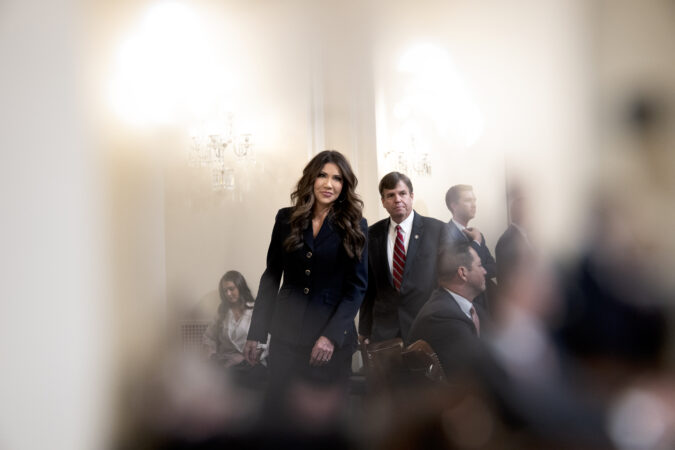
    Homeland Security Secretary Kristi L. Noem said in a social media post earlier Thursday that the language was being removed from the manual “so no press outlet, entity or elected official may misrepresent the Coast Guard to politicize their policies and lie about their position on divisive and hate symbols.”

    Neither DHS nor the Coast Guard has addressed questions seeking to understand whether Lunday, as acting commandant, was empowered to change the manual’s wording on his own or if DHS leadership had to approve it.

    The lack of action, particularly amid a rise in antisemitism, incensed an array of lawmakers, including Republicans, who said Lunday had pledged to them that the “potentially divisive” wording would be removed from the policy manual before it went into effect.

    Several expressed anger at the existence of an official U.S. government document defining swastikas, inseparable from the extermination of millions of Jews in World War II, and nooses, a symbol of racial hatred, as “potentially divisive.”

    Sen. James Lankford (R., Okla.) was among those who registered disapproval with what his office called the Coast Guard’s “conflicting policies.” A GOP aide said Lankford took his concerns directly to the Trump administration and urged officials to change the manual.

  • CHOP faces threat as Trump administration proposes rules to stop gender-affirming care for minors

    CHOP faces threat as Trump administration proposes rules to stop gender-affirming care for minors

    President Donald Trump’s administration proposed a sweeping set of rules Thursday designed to prevent hospitals from providing gender-affirming care to minors, a move that could have consequential implications for Children’s Hospital of Philadelphia.

    CHOP runs one of the nation’s largest clinics providing medical care and mental health support for transgender and gender-nonbinary children and teens and their families. Each year, hundreds of new families seek care at CHOP’s Gender and Sexuality Development Program, created in 2014. The information of CHOP patients who have sought gender-affirming care had been the target of a recent unsuccessful lawsuit from the Trump administration.

    The proposals constitute the most significant moves the administration has taken to restrict the use of puberty blockers, hormone therapy, and surgical interventions for transgender people under the age of 18 — including cutting off federal Medicaid and Medicare funding from hospitals that provide gender-affirming care to children and prohibiting federal Medicaid dollars from being used to fund such procedures.

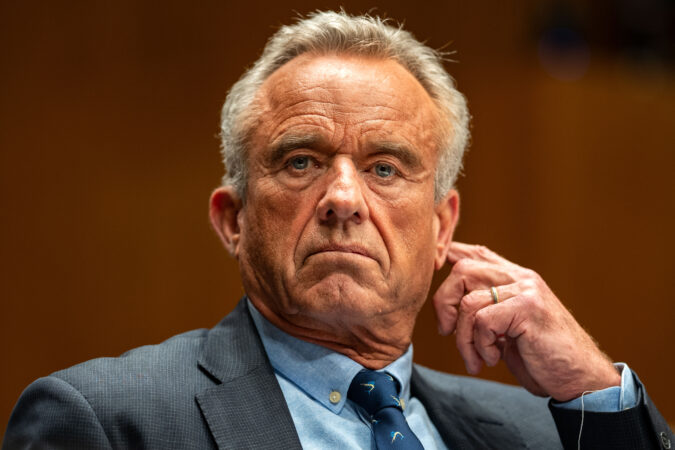
    “This is not medicine, it is malpractice,” Health Secretary Robert F. Kennedy Jr. said, referring to gender-affirming procedures, at a news conference Thursday. “Sex-rejecting procedures rob children of their futures.”

    CHOP, like most other hospitals in the country, participates in both Medicare and Medicaid.

    CHOP declined to comment Thursday.

    The renowned pediatric hospital treats children and teens with gender dysphoria — a medical condition in which a person’s body does not match their gender identity. Its doctors prescribe hormone therapy and puberty blockers.

    The American Academy of Pediatrics and other major medical associations, citing research, widely accept such medications as safe, effective, and medically necessary for the patients’ mental health.

    CHOP has said its doctors do not prescribe any medication before its patients undergo extensive medical and psychological evaluations.

    Gender-affirming care is legal in Pennsylvania, and states, not the federal government, regulate medicine and doctors.

    But Trump has sought to criminalize this care for minors, saying doctors are engaged in “chemical mutilation,” akin to child abuse, and he has called the research “junk science.”

    Just days into his second term in office, the president issued an executive order titled “Protecting Children from Chemical and Surgical Mutilation,” which contains inflammatory and misleading descriptions of largely medically approved transgender care. Kennedy has followed the president’s lead, signing a declaration Thursday rejecting these procedures.

    Other actions proposed Thursday include the U.S. Food and Drug Administration issuing warning letters to 12 manufacturers and retailers for what an HHS news release claims to be “illegal marketing of breast binders to children for the purposes of treating gender dysphoria.”

    The court battle over gender care for minors

    In June, the U.S. Department of Justice issued subpoenas to CHOP and at least 19 other hospitals that treat transgender youth as part of an investigation into possible healthcare fraud. The federal subpoenas demanded patient medical records, including their dates of birth, Social Security numbers, and addresses, as well as every communication by doctors — emails, voicemails, and encrypted text messages — dating back to January 2020.

    The subpoenas touched off a wave of legal battles that continue to play out. Several hospitals around the country, including CHOP, filed motions asking federal judges to block the release of private patient information.

    So far, federal judges in Philadelphia, Boston, and Washington state have sided with the hospitals, ruling the subpoenas were politically motivated.

    In Philadelphia, U.S. District Judge Mark A. Kearney last month determined that the “privacy interests of children and their families substantially outweighs the department’s need to know” such confidential and sensitive information. The federal government has 60 days to appeal the Nov. 21 ruling.

    In September, patients and their parents joined the legal fight to limit the scope of the subpoenas issued to CHOP and UPMC Children’s Hospital of Pittsburgh. The Philadelphia-based Public Interest Law Center (PILC) filed separate but similar legal relief on behalf of families with children and teens who have received gender-affirming care at CHOP and in Pittsburgh.

    The federal judge presiding over the Pittsburgh hospital’s case has yet to issue a ruling. Earlier this week, however, DOJ lawyers said they are willing to accept redacted medical records. They argued that would solve the dispute over patient privacy rights.

    On Thursday, Mimi McKenzie, PILC’s legal director, said the center “strongly disagrees” and would fight the release of redacted medical records.

    “These records are so deeply personal and contain such highly sensitive information about these young patients,” McKenzie said. “There is no anonymization or redaction that can protect their privacy interests.”

    McKenzie said the proposed federal rule to ban all federal funding to hospitals that treat transgender youth would “face a myriad of legal challenges.” She described gender-affirming care as “lifesaving” for many children.

    “The notion that our federal government would tell hospitals to pick which children you want to save — the children who need gender-affirming care or all the other children — is despicable. The cruelty of this administration knows no bounds.”

    Other institutions have recoiled in the face of the Trump administration’s threats.

    Earlier this year, Penn Medicine and Penn State Health cut back gender-affirming care for youth. Nemours Children’s Hospital in Delaware and UPMC Children’s Hospital of Pittsburgh announced they will no longer provide gender-affirming care beyond behavioral health services to new patients.

    All cited fear of federal funding cuts.

  • Trump’s handpicked board votes to rename Washington performing arts center the Trump Kennedy Center

    Trump’s handpicked board votes to rename Washington performing arts center the Trump Kennedy Center

    WASHINGTON — President Donald Trump’s handpicked board voted Thursday to rename Washington’s leading performing arts center as the Trump Kennedy Center, the White House said, in a move that made Democrats fume, saying the board had overstepped its legal authority.

    Congress named the center after President John F. Kennedy in 1964, after his assassination. Donald A. Ritchie, who served as Senate historian from 2009-2015, said that because Congress had first named the center it would be up to Congress to “amend the law.”

    Ritchie said that while Trump and others can “informally” refer to the center by a different name, they couldn’t do it in a way “that would [legally] stick.”

    But the board did not wait for that debate to play out, immediately changing the branding on its website to reflect the new name.

    House Democratic leader Hakeem Jeffries told reporters that legislative action was needed, “and we’re going to make that clear.” The New York Democrat is an ex officio member of the board because of his position in Congress.

    Trump has teased the name change for some time

    “The Kennedy Center Board of Trustees voted unanimously today to name the institution The Donald J. Trump and The John F. Kennedy Memorial Center for the Performing Arts,” said Roma Daravi, the institution’s vice president for public relations.

    She said the vote recognized that Trump saved the center from “financial ruin and physical destruction,” a pair of claims denied by the venue’s ousted leadership.

    “The new Trump Kennedy Center reflects the unequivocal bipartisan support for America’s cultural center for generations to come,” Daravi said.

    Press secretary Karoline Leavitt announced the vote on social media, attributing it to the “unbelievable work President Trump has done over the last year in saving the building. Not only from the standpoint of its reconstruction, but also financially, and its reputation.”

    Trump, a Republican who’s chairman of the board, said at the White House that he was “surprised” and “honored” by the vote.

    “The board is a very distinguished board, most distinguished people in the country and I was surprised by it and I was honored by it,” he said.

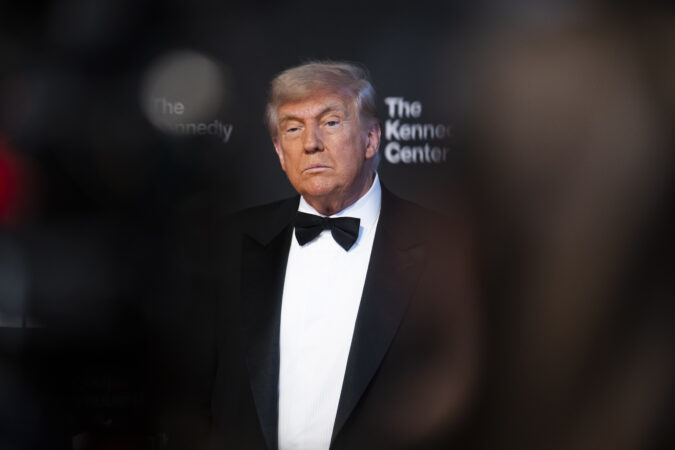
    Trump had already been referring to the center as the “Trump Kennedy Center.” Asked Dec. 7 as he walked the red carpet for the Kennedy Center Honors program whether he would rename the venue after himself, Trump said such a decision would be up to the board.

    Earlier this month, Trump talked about a “big event” happening at the “Trump Kennedy Center” before saying, “excuse me, at the Kennedy Center,” as his audience laughed. He was referring to the FIFA World Cup soccer draw for 2026, in which he participated.

    A name change won’t sit well with some Kennedy family members.

    Maria Shriver, a niece of John F. Kennedy, referred to the legislation introduced in Congress to rebrand the Kennedy Center as the Donald J. Trump Center for the Performing Arts as “insane” in a social media post in July.

    “It makes my blood boil. It’s so ridiculous, so petty, so small minded,” she wrote. “Truly, what is this about? It’s always about something. ‘Let’s get rid of the Rose Garden. Let’s rename the Kennedy Center.’ What’s next?”

    Trump earlier this year turned the Kennedy-era Rose Garden at the White House into a patio by removing the lawn and laying down paving stones.

    Another Kennedy family member, Robert F. Kennedy Jr., serves in Trump’s cabinet as secretary of the Department of Health and Human Services.

    Trump showed scant interest in the Kennedy Center during his first term as president, but since returning to office in January he has replaced board members appointed by Democratic presidents with some of his most ardent supporters, who then elected him as board chairman.

    He also has criticized the center’s programming and its physical appearance and has vowed to overhaul both.

    Trump secured more than $250 million from the Republican-controlled Congress for renovations of the building.

    He attended opening night of the musical Les Misérables, and last week he served as host of the Kennedy Center Honors program after not attending the show during his first term as president. The awards program is scheduled to be broadcast by CBS and Paramount+ on Dec. 23.

    Sales of subscription packages are said to have declined since Trump’s takeover of the center, and several touring productions, including Hamilton, have canceled planned runs there. Rows upon rows of empty seats have been seen in the Concert Hall during performances by the National Symphony Orchestra.

    Some performers, including actor Issa Rae and musician Rhiannon Giddens, have scrapped scheduled appearances, and Kennedy Center consultants including musician Ben Folds and singer Renée Fleming have resigned.