Category: Nation & World

  • Britain’s BBC is both beloved and maligned. Now it faces a $10 billion Trump lawsuit

    Britain’s BBC is both beloved and maligned. Now it faces a $10 billion Trump lawsuit

    LONDON — President Donald Trump is suing the BBC for $10 billion over a television documentary he claims was “false, defamatory, deceptive, disparaging, inflammatory, and malicious.”

    Britain’s national broadcaster has apologized to Trump over the way it edited a speech in the program, but says it will defend itself against the defamation claim.

    The BBC is not the first media organization on the receiving end of a lawsuit from the president. But its position is complicated by its status as a taxpayer-funded public broadcaster and its stature as a closely scrutinized national institution.

    A pioneering broadcaster

    The BBC was founded in 1922 as a radio service to “inform, educate and entertain,” a mantra still central to its self-image.

    It launched the world’s first regularly scheduled television service in 1936, and helped make TV a mass medium when many Britons bought a TV set specifically to watch the 1953 coronation of Queen Elizabeth II.

    It operates 15 U.K. national and regional TV channels, several international channels, 10 national radio stations, dozens of local radio stations, the globe-spanning World Service radio and copious digital output including the iPlayer streaming service.

    As well as its news output it has a huge global viewership for entertainment shows including “Doctor Who,” “EastEnders,” “The Traitors” and “Strictly Come Dancing.”

    The BBC is funded from the public purse

    The broadcaster is funded by an annual license fee, currently set at 174.50 pounds ($230), paid by all U.K. households who watch live TV or any BBC content.

    The license fee has long had opponents, not least rival commercial broadcasters, and they have grown louder in an era of digital streaming when many people no longer have television sets or follow traditional TV schedules.

    The BBC’s governing charter, which sets the license fee, is reviewed once a decade, and the latest round of the process kicked off Tuesday. The center-left Labour government says it will ensure the BBC has “sustainable and fair” funding but has not ruled out replacing the license fee with another funding model.

    Managing the broadcaster has become a political football

    The broadcaster is bound by the terms of its charter to be impartial in its output. It is not a state broadcaster beholden to the U.K government, but is overseen by a board that includes both BBC staff and political appointees.

    It’s frequently a political football, with conservatives seeing a leftist slant in its news programs and some liberals accusing it of having a conservative bias.

    It has repeatedly battled British governments over editorial independence, from the 1926 general strike, when Cabinet minister Winston Churchill tried to seize control of the airwaves, to a battle with Tony Blair’s administration over the intelligence used to justify the 2003 invasion of Iraq.

    Recently it has been criticized for its coverage of trans issues and the Israel-Hamas war in Gaza. In February, the BBC removed a documentary about Gaza from its streaming service after it emerged that the child narrator was the son of an official in the Hamas-led government.

    Documentary that riled Trump

    The lawsuit stems from an edition of the BBC’s “Panorama” current affairs series titled “Trump: A Second Chance?” that was broadcast days before the 2024 U.S. presidential election. The film, made by a third-party production company, spliced together two sections of a speech given by Trump on Jan. 6, 2021, into what appeared to be one quote in which Trump urged supporters to march with him and “fight like hell.”

    By doing so, it made it look like Trump was giving the green light to his supporters to storm the U.S. Capitol as Congress was poised to certify President-elect Joe Biden’s victory in the 2020 election that Trump falsely alleged was stolen from him.

    The BBC apologized last month and two of its top executives resigned.

    Trump’s lawyers say the program falsely portrayed the president as a “violent insurrectionist,” caused “massive economic damage to his brand value” and was a “brazen attempt” to interfere in the U.S. election.

    The lawsuit, filed in a Florida court, seeks $5 billion in damages for defamation and $5 billion for unfair trade practices.

    Legal jeopardy

    The BBC said in a statement that “we will be defending this case. We are not going to make further comment on ongoing legal proceedings.”

    Media attorney Mark Stephens said Trump and his lawyers face several hurdles. They must prove that the BBC program was shown in Florida and that people in that state thought less of him as a consequence. Trump’s lawyers argue that U.S. subscribers to BritBox and people using virtual private networks could have watched it, but they must prove it definitively, said Stephens, a consultant at the firm Howard Kennedy.

    “Allegations of libel are cheap, but proof is dear,’’ Stephens said.

    Stephens said Trump’s lawyers also have to deal with the fact that public figures have “to put up with the slings and arrows of incorrect reporting,’’ which are protected under the First Amendment.

    While many legal experts have dismissed the president’s claims against the media as having little merit, he has won some lucrative settlements against U.S. media companies and he could try to leverage the BBC mistake for a payout, potentially to a charity of his choice.

    The BBC’s position is complicated by the fact that any money it pays out in legal fees or a settlement comes from British taxpayers’ pocket.

    “I think President Trump is banking on the fact that the British public will not want to spend the money to defend the claim, nor will they want to pay any money in damages to him,’’ Stephens said. “So it allows him to continue a narrative of fake news and all of those other things at fairly little cost in the global scheme of things.”
  • Pentagon plan calls for major power shifts within U.S. military

    Pentagon plan calls for major power shifts within U.S. military

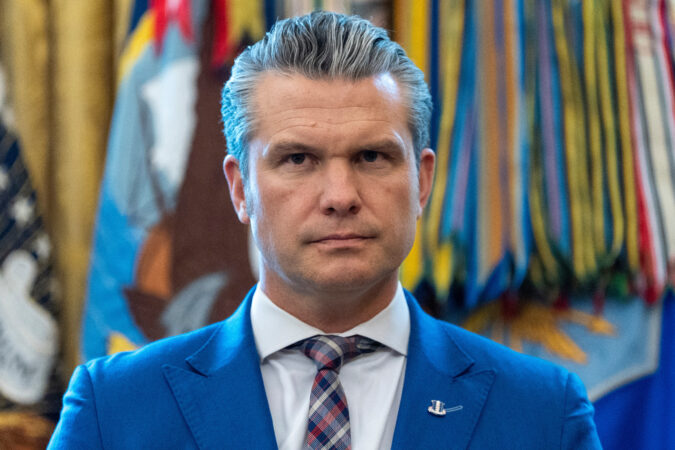
    Senior Pentagon officials are preparing a plan to downgrade several of the U.S. military’s major headquarters and shift the balance of power among its top generals, in a major consolidation sought by Defense Secretary Pete Hegseth, people familiar with the matter said.

    If adopted, the plan would usher in some of the most significant changes at the military’s highest ranks in decades, in part following through on Hegseth’s promise to break the status quo and slash the number of four-star generals in the military. It would reduce in prominence the headquarters of U.S. Central Command, U.S. European Command, and U.S. Africa Command by placing them under the control of a new organization known as U.S. International Command, according to five people familiar with the matter.

    Joint Chiefs Chairman Dan Caine is expected to detail the proposal, which had not previously been reported, for Hegseth in the coming days. Such moves would complement other efforts by the administration to shift resources from the Middle East and Europe and focus foremost on expanding military operations in the Western Hemisphere, these people said. Like others interviewed for this report, they spoke on the condition of anonymity to discuss the effort before it is conveyed to the secretary.

    Hegseth’s team said in a statement that it would not comment on “rumored internal discussions” or “pre-decisional matters.” Any insinuation that there is a divide among officials over the issue is “completely false — everyone in the Department is working to achieve the same goal under this administration,” the statement said.

    The Pentagon has shared few, if any, details with Congress, a lack of communication that has perturbed members of the Republican-led Senate and House Armed Services Committees, according to two people familiar with how the panels have prepared for the proposal. Top officers at the commands involved are awaiting more details as well, officials said.

    The plan also calls for realigning U.S. Southern Command and U.S. Northern Command, which oversee military operations throughout the Western Hemisphere, under a new headquarters to be known as U.S. Americas Command, or Americom, people familiar with the matter said. That concept was reported earlier this year by NBC News.

    Pentagon officials also discussed creating a U.S. Arctic Command that would report to Americom, but that idea appears to have been abandoned, people familiar with the matter said.

    Combined, the moves would reduce the number of top military headquarters — known as combatant commands — from 11 to eight while cutting the number of four-star generals and admirals who report directly to Hegseth. Other remaining combatant commands would be U.S. Indo-Pacific Command, U.S. Cyber Command, U.S. Special Operations Command, U.S. Space Command, U.S. Strategic Command, and U.S. Transportation Command.

    Those familiar with the plan said it aligns with the Trump administration’s national security strategy, released this month, which declares that the “days of the United States propping up the entire world order like Atlas are over.”

    The proposal was organized by the Pentagon’s Joint Staff under the supervision of Caine, and is due to be shared with Hegseth as soon as this week as the preferred course of action among senior military officials. It grew from a request made by Hegseth in the spring to look for ways to improve how troops are commanded and controlled, a senior defense official familiar with the discussion said, adding that Hegseth has kept in touch with Caine about the issue over the last several months.

    Any changes would need the approval of Hegseth and President Donald Trump. The moves would come in the Pentagon’s Unified Command Plan, which lays out the roles of the military’s major headquarters.

    Lawmakers have taken the extraordinary step of requiring the Pentagon to submit a detailed blueprint that describes the realignment’s potential costs and impacts on America’s alliances. The measure, included in Congress’ annual defense policy bill, would withhold money to enact the effort until at least 60 days after the Pentagon provides lawmakers with those materials.

    The bill has cleared the House and is expected to pass the Senate this week.

    The senior defense official said the proposed realignment is meant to speed decision-making and adaptation among military commanders. “Decay” had been observed in how the U.S. military commands and controls troops, he added, suggesting that the need for sweeping change is urgent.

    “Time ain’t on our side, man,” the senior defense official said, describing internal conversations around the plan. “The saying here is, ‘If not us, who, and if not now, when?’”

    The potential reorganization comes as Hegseth has begun broader efforts to cull the number of generals and admirals across the military. He also has fired or otherwise forced out more than 20 senior officers, threatened others with polygraph tests to determine whether they have leaked information to the news media, and told those remaining that if they do not like the administration’s policies they should “do the honorable thing and resign.”

    Chuck Hagel, who served as defense secretary during the Obama administration and as a Republican member of the Senate before that, expressed concerns about the Trump administration’s ambitions. There are different dynamics, needs, and security threats throughout the globe, he said.

    “The world isn’t getting any less complicated,” Hagel said in an interview. “You want commands that have the capability of heading off problems before they become big problems, and I think you lose some of that when you unify or consolidate too many.”

    Senior military officials considered about two dozen other concepts, the senior defense official said. At least one discussion called for a reduction to six total combatant commands. Under that plan, Special Operations Command, Space Command, and Cyber Command would be downgraded and placed under the control of a new U.S. Global Command, said other officials familiar with the discussion.

    Caine is expected to share at least two other courses of action with Hegseth, people familiar with the matter said. One concept calls for creating two commands to house all of the others, with all major geographic organizations such as Central Command and European Command placed under the control of an entity that would be called Operational Command. Other major headquarters, such as Transportation Command and Space Command, would fall under an organization called Support Command.

    One proposal suggested the creation of a new headquarters unit, Joint Task Force War, to be based at the Pentagon. It would focus on planning and strategy when the United States was not at war, and be capable of controlling forces anywhere in the world when there was a conflict, people familiar with the matter said.

    The idea didn’t “test well” in exercises with military officials and appears unlikely to be adopted, the senior defense official said. Top military officials expressed concerns that such an organization would not possess the same regional expertise and relationships inherent to the military’s current construct.

    Even if you have “some of your best people” in such a task force, the senior official said, “you don’t have a fingertip feel” for what is occurring in a region. A second official said it seemed “very confusing” to have top commanders in a region prepare for a conflict there, only to hand those plans over to another commander when something occurred.

    Another plan sought to reorganize the military by domain, with operations organized and led by whether they occurred on land or in air, sea, space, or cyberspace, people familiar with the matter said. The idea had supporters in the Space Force but had few other proponents, people familiar with the matter said. It also limited the Marine Corps’ influence, with it falling under the control of the Navy Department even as the other branches of service were elevated.

    Military officials involved in the reorganization effort also considered whether to elevate the chairman’s role to allow him to command forces, rather than serving as the senior military adviser to both the president and the defense secretary. That could have occurred through the Joint Task Force War framework, two officials said, but the concept seemed murky.

    The idea also could have been complicated by the Goldwater-Nichols Act of 1986, landmark legislation that reorganized the military and defined the chairman’s role. Under the law, the chairman is considered the “principal” military adviser to the president, the defense secretary, and other senior officials. Operations are controlled through a chain of command that runs from combatant commanders to the defense secretary and then to the president.

  • The U.S. gained 64,000 jobs in November but lost 105,000 in October as the unemployment rate rose to 4.6%

    The U.S. gained 64,000 jobs in November but lost 105,000 in October as the unemployment rate rose to 4.6%

    WASHINGTON — The United States gained a decent 64,000 jobs in November but lost 105,000 in October as federal workers departed after cutbacks by the Trump administration, the government said in delayed reports.

    The unemployment rate rose to 4.6%, highest since 2021.

    Both the October and November job creation numbers, released Tuesday by the Labor Department, came in late because of the 43-day federal government shutdown.

    The November job gains came in higher than the 40,000 economists had forecast. The October job losses were caused by a 162,000 drop in federal workers, many of whom resigned at the end of fiscal year 2025 on Sept. 30 under pressure from billionaire Elon Musk’s purge of U.S. government payrolls.

    Labor Department revisions also knocked 33,000 jobs off August and September payrolls.

    Workers’ average hourly earnings rose just 0.1% from October, the smallest gain since August 2023. Compared to a year earlier, pay was up 3.5%, the lowest since May 2021.

    Healthcare employers added more than 46,000 jobs in November, accounting for more than two-thirds of the 69,000 private sector jobs created last month. Construction companies added 28,000 jobs. Manufacturing shed jobs for the seventh straight month, losing 5,000 jobs in November.

    Hiring has clearly lost momentum, hobbled by uncertainty over President Donald Trump’s tariffs and the lingering effects of the high interest rates the Federal Reserve engineered in 2022 and 2023 to rein in an outburst of inflation.

    American companies are mostly holding onto the employees they have. But they’re reluctant to hire new ones as they struggle to assess how to use artificial intelligence and how to adjust to Trump’s unpredictable policies, especially his double-digit taxes on imports from around the world.

    The uncertainty leaves jobseekers struggling to find work or even land interviews. Federal Reserve policymakers are divided over whether the labor market needs more help from lower interest rates. Their deliberations are rendered more difficult because official reports on the economy’s health are coming in late and incomplete after a 43-day government shutdown.

    Labor Department revisions in September showed that the economy created 911,000 fewer jobs than originally reported in the year that ended in March. That meant that employers added an average of just 71,000 new jobs a month over that period, not the 147,000 first reported. Since March, job creation has fallen farther — to an average 35,000 a month.

    The unemployment rate, though still modest by historical standards, has risen since bottoming out at a 54-year low of 3.4% in April 2023.

    “The takeaway is that the labor market remains on a relatively soft footing, with employers showing little appetite to hire, but are also reluctant to fire,” Thomas Feltmate, senior economist at TD Economics, wrote in a commentary. “That said, labor demand has cooled more than supply in recent months, which is what’s behind the steady upward drift in the unemployment rate.’’

    Adding to the uncertainty is the growing use of artificial intelligence and other technologies that can reduce demand for workers.

    “We’ve seen a lot of the businesses that we support are stuck in that stagnant mode: ‘Are we going to hire or are we not? What can we automate? What do we need the human touch with?’’’ said Matt Hobbie, vice president of the staffing firm HealthSkil in Allentown, Pennsylvania.

    “We’re in Lehigh Valley, which is a big transportation hub in eastern Pennsylvania. We’ve seen some cooling in the logistics and transportation markets, specifically because we’ve seen automation in those sectors, robotics.’’

    Worries about the job market were enough to nudge the Fed into cutting its benchmark interest rate by a quarter of a percentage point last week for the third time this year.

    But three Fed officials refused to go along with the move, the most dissents in six years. Some Fed officials are balking at further cuts while inflation remains above the central bank’s 2% target. Two voted to keep the rate unchanged. Stephen Miran, appointed by Trump to the Fed’s governing board in September, voted for a bigger cut – in line with what the president demands.

    Tuesday’s report shows that “the labor market remains weak, but the pace of deterioration probably is too slow to spur the (Fed) to ease again in January,’’ Samuel Tombs, chief U.S. economist at Pantheon Macroeconimics, wrote in a commentary. The Fed holds its next policy meeting Jan. 27-28.

    Because of the government shutdown, the Labor Department did not release its jobs reports for September, October and November on time.

    It finally put out the September jobs report on Nov. 20, seven weeks late. It published some of the October data – including a count of the jobs created that month by businesses, nonprofits and government agencies – along with the November report Tuesday. But it did not release an unemployment rate for October because it could not calculate the number during the shutdown.

  • Australian police say the Bondi Beach mass shooting was inspired by an Islamic State group

    Australian police say the Bondi Beach mass shooting was inspired by an Islamic State group

    MELBOURNE, Australia — A mass shooting in which 15 people were killed during a Hanukkah celebration at Sydney’s Bondi Beach was “a terrorist attack inspired by Islamic State,” Australia’s federal police commissioner, Krissy Barrett, said Tuesday.

    The suspects were a father and son, ages 50 and 24, authorities have said. The older man, whom state officials named as Sajid Akram, was shot dead. His son was being treated at a hospital.

    A news conference by political and law enforcement leaders on Tuesday was the first time officials confirmed their beliefs about the suspects’ ideologies. Prime Minister Anthony Albanese said the remarks were based on evidence obtained, including “the presence of Islamic State flags in the vehicle that has been seized.”

    Indian police said Tuesday that the older suspect was originally from the southern city of Hyderabad and held an Indian passport. They said he married a woman of European origin and migrated to Australia in 1998 in search of employment opportunities, maintaining little contact with his family in India.

    “The family members have expressed no knowledge of his radical mindset or activities, nor of the circumstances that led to his radicalization,” Telangana State Police Chief B. Shivadhar Reddy said in a statement.

    Twenty-five people are still being treated in hospitals after Sunday’s massacre, 10 of them in critical condition. Three are patients in a children’s hospital.

    Also among those being treated is Ahmed al Ahmed, who was captured on video tackling and disarming one assailant, before pointing the man’s weapon at him and then setting it on the ground.

    Those killed ranged in age from 10 to 87. They were attending a Hanukkah event at Australia’s most famous beach Sunday when the gunshots rang out.

    Calls for stricter gun laws

    Albanese and the leaders of some of Australia’s states have pledged to tighten the country’s already strict gun laws in what would be the most sweeping reforms since a shooter killed 35 people in Port Arthur, Tasmania, in 1996. Mass shootings in Australia have since been rare.

    Officials divulged more information as public questions and anger grew about how the attackers were able to plan and enact it and whether Australian Jews had been sufficiently protected from rising antisemitism.

    Albanese announced plans to further restrict access to guns, in part because it emerged the older suspect had amassed his cache of six weapons legally.

    “The suspected murderers, callous in how they allegedly coordinated their attack, appeared to have no regard for the age or ableness of their victims,” Barrett said. “It appears the alleged killers were interested only in a quest for a death tally.”

    Authorities probe suspects’ trip to Philippines

    The suspects traveled to the Philippines last month, said Mal Lanyon, the police commissioner for New South Wales state. Their reasons for the trip and where in the Philippines they went would be probed by investigators, Lanyon said.

    He also confirmed that a vehicle removed from the scene, registered to the younger suspect, contained improvised explosive devices.

    “I also confirm that it contained two homemade ISIS flags,” Lanyon said.

    The Philippines Bureau of Immigration confirmed Tuesday that Sajid Akram traveled to the country from Nov. 1 to Nov. 28 along with Naveed Akram, 24, giving the city of Davao as their final destination. Australian authorities have not named the younger suspect.

    Groups of Muslim separatist insurgents, including Abu Sayyaf in the southern Philippines, once expressed support for the Islamic State group and have hosted small numbers of foreign combatants from Asia, the Middle East, and Europe in the past.

    Decades of military offensives, however, have considerably weakened Abu Sayyaf and other such armed groups, and Philippine military and police officials say there has been no recent indication of any foreign militants in the country’s south.

    Albanese visits man who tackled shooter

    Earlier, Albanese visited Ahmed in a hospital. Albanese said the 42-year-old Syrian-born fruit shop owner had further surgery scheduled on Wednesday for shotgun wounds to his left shoulder and upper body.

    “It was a great honor to met Ahmed al Ahmed. He is a true Australian hero,” Albanese told reporters after a 30-minute meeting with him and his parents.

    “We are a brave country. Ahmed al Ahmed represents the best of our country. We will not allow this country to be divided. That is what the terrorists seek. We will unite. We will embrace each other, and we’ll get through this,” Albanese added.

    Lifeguards praised for actions during massacre

    The famous blue-shirted lifeguards of Bondi Beach attracted praise as more stories of their actions during the shooting emerged.

    One duty lifeguard, identified by the organization’s Instagram account as Rory Davey, performed an ocean rescue during the shooting after people fled, fully clothed, into the sea.

    Another lifeguard, Jackson Doolan, posted to his social media a photo taken as he sprinted, barefoot and clutching a first aid kit, from Tamarama beach a mile away toward Bondi as the massacre continued.

    “These guys are community members, and it’s not about the surf,” Anthony Caroll, one of the stars of a popular reality television show called Bondi Rescue, told Sky News on Tuesday. “They heard the gunshots and they left the beach and came right up the back here into the scene of the crime, into harm’s way while those bullets were being shot.”

    Record numbers sign up to donate blood as Australians mourn at scene of shooting

    Israeli Ambassador to Australia Amir Maimon visited the scene of the carnage on Tuesday and was welcomed by Jewish leaders.

    “I’m not sure that my vocabulary is rich enough to express how I feel. My heart is torn apart because the Jewish community, the Australians of Jewish faith, the Jewish community is also my community,” Maimon said.

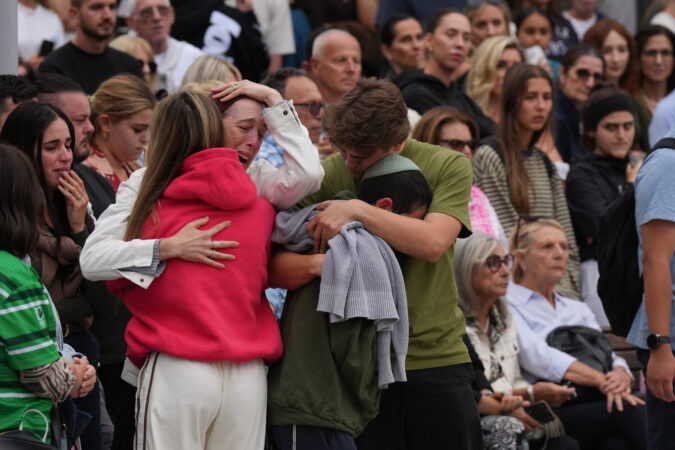
    Thousands have visited Bondi from all walks of life since the tragedy to pay their respects and lay flowers on a mounting pile at an impromptu memorial site.

    One of the visitors on Tuesday was former Prime Minister John Howard, who was responsible for the 1996 overhaul of gun laws and an associated buyback of newly outlawed weapons.

    In the aftermath of Sunday’s shooting, a record number of Australians signed up to donate blood. On Monday alone close to 50,000 appointments were booked, more than double the previous record, the national donation organization Lifeblood told the Associated Press.

    Almost 1,300 people signed up to donate for the first time. Such was the enthusiasm at Lifeblood’s Bondi location that appointments to give blood were unavailable before Dec. 31, according to the organization’s website.

    A total of 7,810 donations of blood, plasma, and platelets were made across the country on Monday, spokesperson Cath Stone said. Australian news outlets reported queues of up to four hours at some Sydney donation sites.

  • A disabled Ecuadorian immigrant tried to flag down an ICE officer. Now he faces deportation.

    A disabled Ecuadorian immigrant tried to flag down an ICE officer. Now he faces deportation.

    Victor Acurio Suarez is 52 but childlike, born with developmental disabilities that have left him unable to live on his own.

    He likes to talk to people, said his brother, who takes care of him. And on Sept. 22, in a Lowe’s parking lot near the brothers’ home in Seaford, Del., he tried to flag down an ICE agent, apparently thinking the officer could help him find work.

    Instead, Acurio Suarez, originally from Ecuador, was arrested for being in the country without permission and sent to the Moshannon Valley Processing Center, an ICE detention facility in central Pennsylvania.

    Acurio Suarez doesn’t realize he’s in custody, his brother, Lenin Acurio Suarez, said in an interview. He thinks he’s on vacation, provided with three free meals a day and allowed to buy snacks and kick a soccer ball.

    But in phone calls from Moshannon, he says that after three months, he’s grown tired of vacation and wants to come home.

    In fact, Acurio Suarez faces deportation to Ecuador ― with a key Immigration Court hearing that had been scheduled for Thursday now postponed. When that hearing takes place, he could be granted asylum and allowed to stay in the U.S., safe from the gang violence he fled, or ordered returned to his homeland.

    His case, said his attorney, Kaley Miller-Schaeffer, is a prime example of how Trump-administration policy shifts have encouraged ICE to detain even the most vulnerable and to treat potential discretionary relief as irrelevant in a bid to boost deportations.

    Her Sept. 30 request to have Acurio Suarez released to the care of his brother while his immigration case goes forward was denied.

    Asked about Acurio Suarez’s arrest and detention, ICE said in a statement that they screen and look out for the health of all detainees.

    “U.S. Immigration and Customs Enforcement is firmly committed to the health, safety, and welfare of all detainees in custody. ICE’s National Detention Standards and other ICE policies require all contracted facilities to provide comprehensive medical and mental health screenings from the moment an alien arrives at a facility and throughout their entire time in custody.”

    At an earlier court hearing, Miller-Schaeffer said, she watched as Acurio Suarez struggled to answer basic questions. He told the judge he didn’t know if he had an attorney or know what an attorney does.

    His ability to testify was so limited, she said, that the judge allowed his brother to take the stand to explain his sibling’s experience and situation.

    Acurio Suarez can recall big events in his life, she said. He remembers being beaten by gangs who seized on his vulnerability, but he couldn’t tell you exactly when that occurred.

    Today, as President Donald Trump pursues an unprecedented mass-deportation campaign, more migrants including Acurio Suarez have been made subject to mandatory detention. That means they’re held in custody during their deportation proceedings, unable to seek release on bond.

    Victor Acurio Suarez’s empty room at his home in Seaford, Del.

    That includes immigrants whose only offense was crossing the border without approval, who in the past might have been issued a notice to appear in court and allowed to live in the community while their cases go forward.

    That’s helped drive the number of immigrants in federal detention past 65,000, a two-thirds increase since Trump took office in January.

    The administration says it is arresting the “worst of the worst,” dangerous immigrants who have committed serious and sometimes violent offenses. But data show 74% of those in detention have no criminal convictions.

    That includes Acurio Suarez, who worked at odd jobs in Ecuador before coming to this country in 2021.

    According to an ICE report, at 9:14 a.m. on Sept. 22, an ICE team was conducting operations in Seaford, a southern Delaware city of 9,000 where 13% of the population is foreign-born.

    The ICE officer wrote that he was looking for a place to park in the Lowe’s lot when a man in paint-stained clothing, Acurio Suarez, approached him. Acurio Suarez waved his hand, signaling the officer to come to him, according to the ICE account.

    The officer kept going, then stopped his car and watched Acurio Suarez from another lot. Acurio Suarez tried to hail other cars, and could be seen talking to people who were loading lumber onto a trailer in the parking lot, he said.

    It looked like Acurio Suarez was trying to find daily work, which is why he tried to get the ICE officer to stop his vehicle, the report said.

    It’s common for undocumented immigrants seeking a day’s pay to wait in the parking lots of big home-improvement stores like Lowe’s and Home Depot, hoping to connect with building contractors who need laborers.

    Lenin Acurio Suarez said his brother cannot hold a full-time job, able only to handle small tasks, provided someone is beside him giving directions.

    A second ICE officer arrived, and both parked their cars near where Acurio Suarez had left his lunch box unattended. Acurio Suarez walked back toward the officers, and one of the agents approached and questioned him.

    Acurio Suarez said he had no identification or immigration documents and was placed in handcuffs. He told the officer he was in good health, the report says.

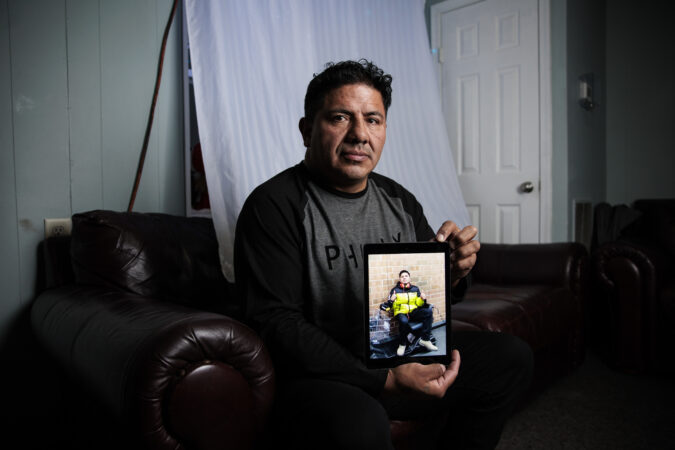
    Lenin Acurio Suarez holds a photograph of his brother, Victor, at his home in Seaford, Del., on Wednesday. Victor was arrested by ICE on Sept. 22.

    Records show that four years ago, on Aug. 2, 2021, he and his brother were stopped by the U.S. Border Patrol as they tried to enter the country near Eagle Pass, Texas, southwest of San Antonio.

    The brothers were processed separately by immigration authorities. Lenin Acurio Suarez was issued a notice to appear in court and released. His immigration case was later dismissed.

    Victor Acurio Suarez was ordered deported and subsequently returned to Ecuador on Sept. 24. But three days later, for reasons that are unclear, the deportation order was found to have been issued incorrectly, and Acurio Suarez was brought back by authorities to the U.S.

    In October 2021, he was granted temporary permission to stay in the country. He had filed his asylum case by the time that permission expired a year later.

    Asylum cases from Ecuador have surged in recent years, as thousands of people flee violence, political instability, and economic hardship. Gang violence there has rocketed as criminal organizations compete for control of the illicit economy, including extortion, kidnapping, transporting drugs, and illegal mining, according to the Geneva-based Global Initiative Against Transnational Organized Crime.

    The group projects that intentional homicides in Ecuador could reach 9,100 in 2025, a 40% increase over the previous year.

    That’s a rate of nearly 50 per 100,000 inhabitants, which would continue to give Ecuador the highest homicide rate in Latin America, the organization said. In the U.S. the figure is about five per 100,000 people.

    While ICE agents were arresting Acurio Suarez, Lenin was frantically searching the neighborhood, initially not having realized that his brother had left their home. Lenin called local police for help, and officers checked the Lowe’s security cameras. The video showed Victor being taken into custody.

    In an interview, Lenin, 49, explained that he has always taken care of his younger brother, since their mother left when they were teenagers in Ecuador.

    In this country, Lenin has a job in housing construction that enables him to provide for himself and his brother and to live with others in a rented house. He worries what will happen to Victor if he’s sent back to Ecuador, where there’s no one to care for him.

    “Thanks to God I’ve been able to pay rent and food for me and my brother,” Lenin said. “I am grateful for this country, to be in this country. But I want my brother to have a fair life, with me, out of detention. He won’t be able to survive by himself in Ecuador.”

  • Punk protest group Pussy Riot declared ‘extremist organization’ by a Russian court

    Punk protest group Pussy Riot declared ‘extremist organization’ by a Russian court

    Punk group Pussy Riot was declared an “extremist organization” by a Russian court on Monday.

    The ruling, which was made by Moscow’s Tverskoy District Court, effectively outlaws the group from operating in Russia and puts anyone linked with the group at risk of criminal prosecution.

    The feminist protest group first catapulted to notoriety in 2012, when its members performed a provocative “punk prayer” against President Vladimir Putin from the pulpit of Russia’s largest cathedral.

    Today, members of the group remain part of Russia’s opposition, largely working in exile.

    In September, five people linked with Pussy Riot — Maria Alyokhina, Taso Pletner, Olga Borisova, Diana Burkot, and Alina Petrova — were handed jail terms by a Russian court after being found guilty of spreading “false information” about the Russian military, news outlet Mediazona reported. Mediazona was founded by Alyokhina along with another Pussy Riot member, Nadezhda Tolokonnikova.

    The case was linked to an anti-war music video made by the group, as well as an art performance in Germany that saw Pletner urinate on a portrait of Putin.

    Alyokhina received a 13-year prison sentence, while Pletner was given 11 years. Burkot, Petrova, and Borisova were given eight years’ imprisonment. All have rejected the charges as politically motivated.

  • Western, Arab diplomats tour Lebanon-Israel border to observe Hezbollah disarmament efforts

    Western, Arab diplomats tour Lebanon-Israel border to observe Hezbollah disarmament efforts

    BEIRUT — Western and Arab diplomats toured an area along Lebanon’s border with Israel Monday where Lebanese troops and U.N. peacekeepers have been working for months to end the armed presence of the militant Hezbollah group.

    The delegation that included the ambassadors of the United States and Saudi Arabia was accompanied by Gen. Rodolph Haikal, commander of the Lebanese Armed Forces, as well as top officers in the border region.

    The Lebanese government has said that by the end of the year, the army should have cleared all the border area south of the Litani River of Hezbollah’s armed presence.

    Hezbollah’s leader Naim Kassem had said that the group will end its military presence south of the Litani but vowed again over the weekend that they will keep their weapons in other parts of Lebanon.

    Parts of the zone south of the Litani River and north of the border with Israel were formerly a Hezbollah stronghold, off limits to the Lebanese national army and U.N. peacekeepers deployed in the area.

    During the tour, the diplomats and military attaches were taken to an army post that overlooks one of five hills inside Lebanon that were captured by Israeli troops last year.

    “The main goal of the military is to guarantee stability,” an army statement quoted Haikal as telling the diplomats. Haikal added that the tour aims to show that the Lebanese army is committed to the ceasefire agreement that ended the Israel-Hezbollah war last year.

    There were no comments from the diplomats.

    The latest Israel-Hezbollah war began Oct. 8, 2023, a day after Hamas attacked southern Israel, after Hezbollah fired rockets into Israel in solidarity with Hamas. Israel launched a widespread bombardment of Lebanon in September last year that severely weakened Hezbollah, followed by a ground invasion.

    The war ended in November 2024 with a ceasefire brokered by the U.S.

    Israel has carried out almost daily airstrikes since then, mainly targeting Hezbollah members but also killing 127 civilians, according to the office of the U.N. High Commissioner for Human Rights.

    On Sunday, the Israeli military said it killed three Hezbollah members in strikes on southern Lebanon.

    Over the past weeks, the U.S. has increased pressure on Lebanon to work harder on disarming Hezbollah and canceled a planned trip to Washington last month by Haikal.

    U.S. officials were angered in November by a Lebanese army statement that blamed Israel for destabilizing Lebanon and blocking the Lebanese military deployment in south Lebanon.

    A senior Lebanese army official told the Associated Press Monday that Haikal will fly to France this week where he will attend a meeting with U.S., French, and Saudi officials to discuss ways of assisting the army in its mission. The officer spoke on condition of anonymity because he wasn’t authorized to speak publicly.

    The Lebanese army has been severely affected by the economic meltdown that broke out in Lebanon in October 2019.

  • U.S. Army names 2 Iowa National Guard members killed in attack in Syria

    U.S. Army names 2 Iowa National Guard members killed in attack in Syria

    WASHINGTON — The two Iowa National Guard members killed in a weekend attack in Syria that the U.S. military blamed on the Islamic State group were identified Monday and remembered as dedicated soldiers.

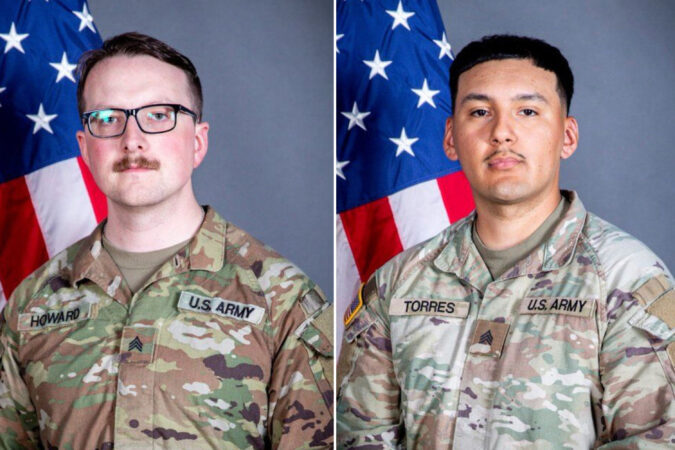
    The U.S. Army named them as Sgt. Edgar Brian Torres-Tovar, 25, of Des Moines, and Sgt. William Nathaniel Howard, 29, of Marshalltown.

    Iowa Gov. Kim Reynolds ordered all flags in Iowa to fly at half-staff in their honor, saying, “We are grateful for their service and deeply mourn their loss.”

    The Pentagon’s chief spokesperson, Sean Parnell, has said a U.S. civilian working as an interpreter also was killed. Three other Guard members were wounded in the attack, the Iowa National Guard said Monday, with two of them in stable condition and the other in good condition.

    The attack was a major test for the rapprochement between the United States and Syria since the ouster of autocratic leader Bashar Assad a year ago, coming as the U.S. military is expanding its cooperation with Syrian security forces. Hundreds of American troops are deployed in eastern Syria as part of a coalition fighting IS.

    How the attack happened

    The shooting Saturday in the Syrian desert near the historic city of Palmyra also wounded members of the country’s security forces, and the gunman was killed. The assailant had joined Syria’s internal security forces as a base security guard two months ago and recently was reassigned amid suspicions that he might be affiliated with IS, a Syrian official said.

    The man stormed a meeting between U.S. and Syrian security officials who were having lunch together and opened fire after clashing with Syrian guards, Interior Ministry spokesperson Nour al-Din al-Baba said Sunday.

    Al-Baba acknowledged that it was “a major security breach” but said that in the year since Assad’s fall, “there have been many more successes than failures” by security forces.

    The Army said Monday that the incident is under investigation. Military officials and President Donald Trump have blamed the attack on an IS member.

    Trump administration vows retaliation

    “Our hearts go out to their families, and we lift them up in prayer for strength and comfort during this time of grief,” Defense Secretary Pete Hegseth said Monday on social media. “The United States of America will avenge these fallen Americans with overwhelming force.”

    Trump reiterated his promise of retaliation from over the weekend, telling reporters at the White House on Monday that IS will “be hit hard.”

    He also reaffirmed his support for Syrian President Ahmad al-Sharaa, saying the Syrian government is not to blame for the deadly attack.

    “This had nothing to do with him,” Trump said of al-Sharaa. “This is a part of Syria that they really don’t have much control over. And it was a surprise. He feels very badly about it. He’s working on it. He’s a strong man.”

    Trump welcomed al-Sharaa, who led the lightning insurgency that toppled Assad’s rule, to the White House for a historic meeting last month.

    Iowa National Guard members remembered as heroes

    Meanwhile, Torres-Tovar and Howard were remembered as dedicated soldiers and “cherished members” of the Iowa National Guard family, Stephen Osborn, adjutant general, said in a statement.

    “Our focus now is providing unwavering support to their families through this unimaginable time and ensuring the legacy of these two heroes is never forgotten,” Osborn said.

    Howard had wanted to be a soldier since he was a young boy, according to Jeffrey Bunn, Howard’s stepfather and chief of the Meskwaki Nation Police Department in Tama, Iowa, about 60 miles northeast of Des Moines.

    Howard “loved what he was doing and would be the first in and last out,” Bunn wrote Saturday on the department’s Facebook page.

    Howard also was a loving husband and an “amazing man of faith,” Bunn said, adding that Howard’s younger brother, a staff sergeant in the Iowa National Guard, would escort “Nate” back to Iowa.

    Howard was inspired by his grandfather’s service and wanted to serve for 20 years, according to an April post on a Facebook page dedicated to sharing stories of the unit. He had served for over 11 years.

    Three fellow members of the Iowa Guard who were deployed with Torres-Tovar reflected on his character in a joint statement to local TV broadcast station, WOI.

    David Hernandez, Freddy Sarceño, and Luis Corona described him as “very positive,” family oriented, and always putting others first.

  • Hunter Biden disbarred in Connecticut following complaints about his gun and tax convictions

    Hunter Biden disbarred in Connecticut following complaints about his gun and tax convictions

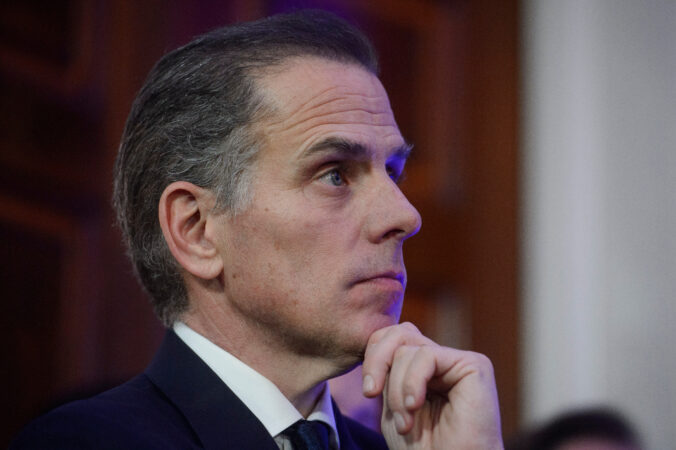
    WATERBURY, Conn. — A judge on Monday disbarred Hunter Biden in Connecticut for violating the state’s attorney conduct rules, a decision that comes after complaints were made about the federal gun and tax charges Biden was convicted of before being pardoned last year by his father, former President Joe Biden.

    In an agreement with the state office that disciplines lawyers, Hunter Biden consented to being disbarred and admitted to attorney misconduct, but he did not admit to any criminal wrongdoing. He was disbarred in Washington, D.C., in May.

    Hunter Biden did not speak as he and his lawyer, Ross Garber, appeared via video at a virtual court hearing before Judge Trial Referee Patrick L. Carroll III in Waterbury.

    Hunter Biden was convicted last year in Delaware federal court of three felonies for purchasing a gun in 2018 when, prosecutors said, he lied on a federal form by claiming he was not illegally using or addicted to drugs.

    He had been set to stand trial in September 2024 in a California case in which prosecutors accused him of failing to pay at least $1.4 million in federal taxes. He agreed to plead guilty to misdemeanor and felony charges hours after jury selection was set to begin.

    The Connecticut judge found that Hunter Biden violated several ethical rules for lawyers, including engaging in conduct “involving dishonesty, fraud, deceit or misrepresentation.” In a court document, Hunter Biden admitted to some but not all of the misconduct allegations. The judge also cited the Washington disbarment.

    Paul Dorsey, one of the two people who filed the complaints about the former president’s son, told the judge during Monday’s hearing that he objected to the agreement because Hunter Biden did not admit to committing crimes. But Leanne Larson, an attorney with the Office of Chief Disciplinary Counsel, cited the pardon.

    Hunter Biden was admitted to the Connecticut bar in 1997, a year after graduating from Yale Law School.

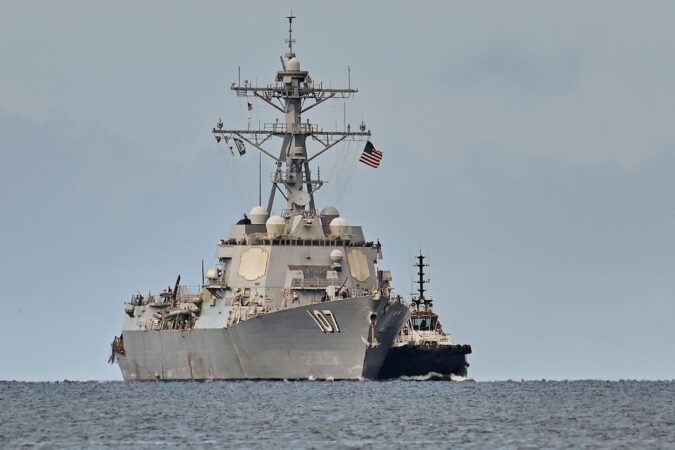
  • Trinidad and Tobago will open Caribbean nation’s airports to US military as Venezuela tensions grow

    Trinidad and Tobago will open Caribbean nation’s airports to US military as Venezuela tensions grow

    PORT-OF-SPAIN, Trinidad (AP) — The government of Trinidad and Tobago said Monday that it would allow the U.S. military to access its airports in coming weeks as tensions build between the United States and Venezuela.

    The announcement comes after the U.S. military recently installed a radar system at the airport in Tobago. The Caribbean country’s government has said the radar is being used to fight local crime, and that the small nation wouldn’t be used as a launchpad to attack any other country.

    The U.S. would use the airports for activity that would be “logistical in nature, facilitating supply replenishment and routine personnel rotations,” Trinidad and Tobago’s Ministry of Foreign Affairs said in a statement. It did not provide further details.

    Trinidad’s prime minister previously has praised ongoing U.S. strikes on alleged drug boats in the Caribbean.

    Only 7 miles separate Venezuela from the twin-island Caribbean nation at their closest point. It has two main airports: Piarco International Airport in Trinidad and ANR Robinson International Airport in Tobago.

    Hours after the announcement, Venezuelan Vice President Delcy Rodríguez said her country was immediately canceling any contract, deal, or negotiation to supply natural gas to Trinidad and Tobago.

    She claimed that the government of Trinidad and Tobago participated in the recent U.S. seizure of an oil tanker off the country’s coast, calling it an “act of piracy.”

    She also accused Trinidad and Tobago’s prime minister, Kamla Persad-Bissessar, of having a “hostile agenda” against Venezuela, noting that the U.S. military installed an airport radar in Tobago.

    “This official has turned the territory of Trinidad and Tobago into a US aircraft carrier to attack Venezuela, in an unequivocal act of vassalage,” Rodríguez said.

    The office of Trinidad’s prime minister did not immediately return a message seeking comment.

    Trinidad and Venezuela had previously reached a deal over the development of a gas field in Venezuelan waters, near the maritime border separating the two countries.

    In December 2023, Venezuela granted a license for oil giant Shell and Trinidad and Tobago to produce gas from the field. In October, the U.S. government granted Trinidad and Tobago permission to negotiate the gas deal without facing U.S sanctions placed on Venezuela.

    Amery Browne, an opposition senator and Trinidad and Tobago’s former foreign minister, accused the Trinidadian government on Monday of being deceptive in its announcement.

    Browne said that Trinidad and Tobago has become “complicit facilitators of extrajudicial killings, cross-border tension, and belligerence.”

    “There is nothing routine about this. It has nothing to do with the usual cooperation and friendly collaborations that we have enjoyed with the USA and all of our neighbors for decades,” he said.

    He said the “blanket permission” with the U.S. takes the country “a further step down the path of a satellite state” and that it embraces a “‘might is right’ philosophy.”

    American strikes began in September and have killed more than 80 people as Washington builds up a fleet of warships near Venezuela, including the largest U.S. aircraft carrier.

    In October, an American warship docked in Trinidad’s capital, Port-of-Spain, as the administration of U.S. President Donald Trump boosts military pressure on Venezuela and President Nicolás Maduro.

    U.S. lawmakers have questioned the legality of the strikes against vessels in the Caribbean and the eastern Pacific Ocean, and recently announced that there would be a congressional review of them.