Category: Nation & World

  • A Homeland Security shutdown seems certain as funding talks between White House and Democrats stall

    A Homeland Security shutdown seems certain as funding talks between White House and Democrats stall

    WASHINGTON — A shutdown for the Department of Homeland Security appeared certain Thursday as lawmakers in the House and Senate were set to leave Washington for a 10-day break and negotiations with the White House over Democrats’ demands for new restrictions had stalled.

    Democrats and the White House have traded offers in recent days as the Democrats have said they want curbs on President Donald Trump’s broad campaign of immigration enforcement. They have demanded better identification for U.S. Immigration and Customs Enforcement and other federal law enforcement officers, a new code of conduct for those agencies and more use of judicial warrants, among other requests.

    The White House sent its latest proposal late Wednesday, but Trump told reporters on Thursday that some of the Democratic demands would be “very, very hard to approve.”

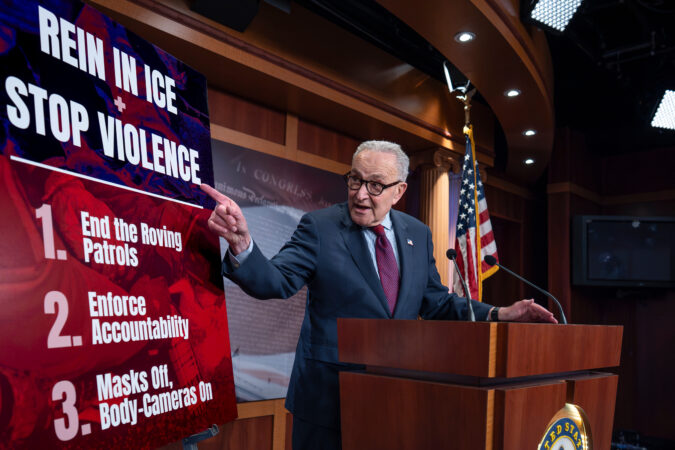
    Democrats said the White House offer, which was not made public, did not include sufficient curbs on ICE after two protesters were fatally shot last month. The offer was “not serious,” Senate Democratic Leader Chuck Schumer of New York said Thursday, after the Senate rejected a bill to fund the department.

    Americans want accountability and “an end to the chaos,” Schumer said. “The White House and congressional Republicans must listen and deliver.”

    Lawmakers in both chambers were on notice to return to Washington if the two sides struck a deal to end the expected shutdown. Sen. Patty Murray, the top Democrat on the Senate Appropriations Committee, told reporters that Democrats would send the White House a counterproposal over the weekend.

    Impact of a shutdown

    Senate Majority Leader John Thune, R-S.D., said after the vote that a shutdown appeared likely and “the people who are not going to be getting paychecks” will pay the price.

    The impact of a DHS shutdown is likely to be minimal at first. It would not likely block any of the immigration enforcement operations, as Trump’s tax and spending cut bill passed last year gave ICE about $75 billion to expand detention capacity and bolster enforcement operations.

    But the other agencies in the department — including the Transportation Security Administration, the Federal Emergency Management Agency, the Secret Service and the Coast Guard — could take a bigger hit over time.

    Gregg Phillips, an associate administrator at FEMA, said at a hearing this week that its disaster relief fund has sufficient balances to continue emergency response activities during a shutdown, but would become seriously strained in the event of a catastrophic disaster.

    Phillips said that while the agency continues to respond to threats like flooding and winter storms, long-term planning and coordination with state and local partners will be “irrevocably impacted.”

    Trump defends officer masking

    Trump, who has remained largely silent during the bipartisan talks, noted Thursday that a recent court ruling rejected a ban on masks for federal law enforcement officers.

    “We have to protect our law enforcement,” Trump told reporters.

    Democrats made the demands for new restrictions on ICE and other federal law enforcement after ICU nurse Alex Pretti was shot and killed by a U.S. Border Patrol officer in Minneapolis on Jan. 24. Renee Good was shot by ICE agents on Jan. 7.

    Trump agreed to a Democratic request that the Homeland Security bill be separated from a larger spending measure that became law last week. That package extended Homeland Security funding at current levels only through Friday.

    Schumer and House Democratic leader Hakeem Jeffries of New York have said they want immigration officers to remove their masks, to show identification and to better coordinate with local authorities. They have also demanded a stricter use-of-force policy for the federal officers, legal safeguards at detention centers and a prohibition on tracking protesters with body-worn cameras.

    Democrats also say Congress should end indiscriminate arrests and require that before a person can be detained, authorities have verified that the person is not a U.S. citizen.

    Thune suggested there were potential areas of compromise, including on masks. There could be contingencies “that these folks aren’t being doxed,” Thune said. “I think they could find a landing place.”

    But Republicans have been largely opposed to most of the items on the Democrats’ list, including a prohibition on masks.

    Sen. Eric Schmitt, R-Mo., said Republicans who have pushed for stronger immigration enforcement would benefit politically from the Democratic demands.

    “So if they want to have that debate, we’ll have that debate all they want,” said Schmitt.

    Judicial warrants a sticking point

    Thune, who has urged Democrats and the White House to work together, indicated that another sticking point is judicial warrants.

    “The issue of warrants is going to be very hard for the White House or for Republicans,” Thune said of the White House’s most recent offer. “But I think there are a lot of other areas where there has been give, and progress.”

    Schumer and Jeffries have said DHS officers should not be able to enter private property without a judicial warrant and that warrant procedures and standards should be improved. They have said they want an end to “roving patrols” of agents who are targeting people in the streets and in their homes.

    Most immigration arrests are carried out under administrative warrants. Those are internal documents issued by immigration authorities that authorize the arrest of a specific person but do not permit officers to forcibly enter private homes or other nonpublic spaces without consent. Traditionally, only warrants signed by judges carry that authority.

    But an internal ICE memo obtained by The Associated Press last month authorizes ICE officers to use force to enter a residence based solely on a more narrow administrative warrant to arrest someone with a final order of removal, a move that advocates say collides with Fourth Amendment protections.

    Far from agreement

    Thune, R-S.D., said were “concessions” in the White House offer. He would not say what those concessions were, though, and he acknowledged the sides were “a long ways toward a solution.”

    Schumer said it was not enough that the administration had announced an end to the immigration crackdown in Minnesota that led to thousands of arrests and the fatal shootings of two protesters.

    “We need legislation to rein in ICE and end the violence,” Schumer said, or the actions of the administration “could be reversed tomorrow on a whim.”

    Simmering partisan tensions played out on the Senate floor immediately after the vote, as Alabama Sen. Katie Britt, the chairwoman of the Senate Appropriations subcommittee that oversees Homeland Security funding, tried to pass a two-week extension of Homeland Security funding and Democrats objected.

    Britt said Democrats were “posturing” and that federal employees would suffer for it. “I’m over it!” she yelled.

    Connecticut Sen. Chris Murphy, the top Democrat on the Homeland spending subcommittee, responded that Democrats “want to fund the Department of Homeland Security, but only a department that is obeying the law.”

    “This is an exceptional moment in this country’s history,” Murphy said.

  • Inflation measure falls to nearly five-year low, but consumer prices are still about 25% higher

    Inflation measure falls to nearly five-year low, but consumer prices are still about 25% higher

    WASHINGTON — A key measure of inflation fell to nearly a five-year low last month as apartment rental price growth slowed and gas prices fell, offering some relief to Americans grappling with the sharp cost increases of the past five years.

    Inflation dropped to 2.4% in January compared with a year earlier, down from 2.7% in December and not too far from the Federal Reserve’s 2% target. Core prices, which exclude the volatile food and energy categories, rose just 2.5% in January from a year ago, down from 2.6% the previous month and the smallest increase since March 2021.

    Friday’s report suggests inflation is cooling, but the cost of food, gas, and apartment rents have soared after the pandemic, with consumer prices still about 25% higher than they were five years ago. The increase in such a broad range of costs has kept “affordability,” a topic that helped shape the most recent U.S. presidential election, front and center as a dominant political issue.

    And on a monthly basis, consumer prices rose 0.2% in January from December, while core prices rose 0.3%. Core inflation was held down by a sharp drop in the price of used cars, which fell 1.8% just in January from December.

    “Inflation continues to decelerate and is not threatening to move back up, and that will enable more rate cuts by the Fed,” said Luke Tilley, chief economist at Wilmington Trust.

    There were signs in the report that retailers are passing on more of the costs of President Donald Trump’s tariffs to consumers for goods such as furniture, appliances, and clothes. But those increases were offset by falling prices elsewhere. In other areas, Trump has delayed, scrapped, or provided exemptions to his duties.

    Furniture prices jumped 0.7% in January from the previous month and are up 4% from a year ago. Appliances rose 1.3% in January though are only slightly more expensive than a year earlier. Clothing price rose 0.3% in January from December and have increased 1.7% in the past year.

    Some services prices also rose: Airline fares soared 6.5% just in January, after a 3.8% jump in November, though they rose only 2.2% from a year earlier. Music streaming subscriptions increased 4.5% in January and are 7.8% higher than a year ago.

    Yet those increases were largely offset by price declines, or much slower price growth, in other areas, including many that make up a greater share of Americans’ spending.

    The cost of used cars, for example, plunged 1.8% in January, the biggest decline in two years. Gas prices fell 3.2% last month, the third drop in the past four months, and are down 7.5% from a year earlier. Grocery prices rose just 0.2% in January, after a big 0.6% rise in December, and are up 2.1% from a year ago. Hotel prices ticked down 0.1% in January and have fallen 2% from last year.

    Rental prices and the cost of owning a home, which make up a third of the inflation index, both rose just 0.2% in December, while rents increased only 2.8% from a year earlier. That is much lower than during the pandemic: Rents rose by more than 8% in 2022.

    The tariffs have increased some costs and many economists forecast companies will pass through more of those increases to consumers in the coming months. A study released Thursday by the Federal Reserve Bank of New York found that U.S. companies and consumers are paying nearly 90% of the tariffs’ costs, echoing similar findings in studies by Harvard and other economists.

    Yet the increases haven’t been as broad-based as many economists feared.

    Tilley said that the higher tariffs have pulled some consumer spending away from other services, which has forced companies to keep those prices a bit lower as a result.

    “We don’t think consumers are in a place to take on price increases across the board, so you’re not seeing those price increses,” he said. Hiring was particularly weak last year, slowing wage growth, and many Americans remain gloomy about the economy.

    Some economists note that the rental figures were distorted by October’s six-week government shutdown, which interrupted the Labor Department’s gathering of the data. The government plugged in estimated figures for October which economists say have artificially lowered some of the housing costs.

    Companies are still grappling with the higher costs from Trump’s duties, though some have benefited from tariffs being delayed or scrapped.

    Arin Schultz, chief growth officer at Naturepedic, which makes organic mattresses in Cleveland, breathed a sigh of relief when Trump postponed import duties on upholstered furniture until 2027. They would have substantially pushed up the cost of the headboards the company imports.

    Schultz welcomed the decision to lower tariffs on imports from India to 18%, from 50%. Naturepedic sources a lot of the cotton fabrics and bedding that it sells from India. When that reduction kicks in, he said, the company could even cut some prices.

    Still, Naturepedic’s costs jumped because of duties on imports from Vietnam and Malaysia, where it sources its organic latex, which can’t be grown in the United States. Naturepedic makes its mattresses in the United States at a factory in Cleveland and employs about 200 workers.

    “We’re paying more now for that,” he said, and the company raised its prices about 7% last year as a result. “Tariffs are awful. We are less profitable now as a company because of tariffs.”

    If inflation gets closer to the Federal Reserve’s target of 2%, it could allow the central bank to cut its key short-term interest rate further this year, as Trump has repeatedly demanded. High borrowing costs for things like mortgages and auto loans have also contributed to a perception that many big-ticket items remain out of reach for many Americans.

    Inflation surged to 9.1% in 2022 as consumer spending soared as supply chains snarled after the pandemic. It began to fall in 2023 but leveled off around 3% in mid-2024 and remained elevated last year.

    At the same time, measures of wage growth have declined as hiring has cratered. With companies reluctant to add jobs, workers don’t have as much leverage to demand raises.

  • Search for Nancy Guthrie now seeks nearby security videos from the month before she vanished

    Search for Nancy Guthrie now seeks nearby security videos from the month before she vanished

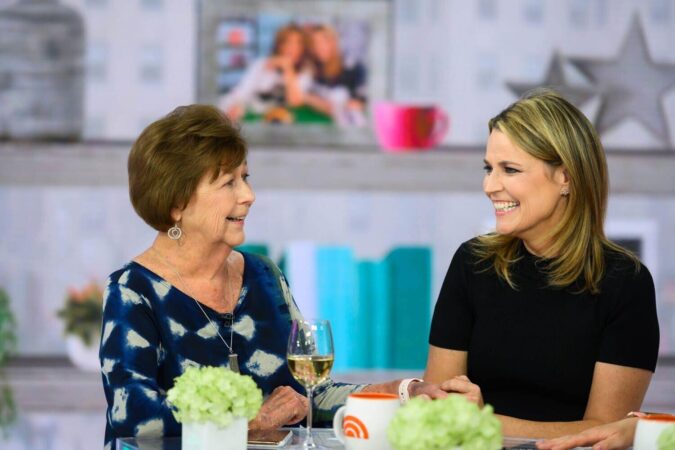
    TUCSON, Ariz. — Investigators in Arizona want residents near Nancy Guthrie ‘s home to share surveillance camera footage of suspicious cars or people they may have noticed in the month before she disappeared.

    The alert went across a 2-mile (3.2-kilometer) radius in neighborhoods close to where the mother of “Today” show host Savannah Guthrie went missing 12 days ago, the Pima County Sheriff’s Department said Thursday.

    It asked for video of “anything neighbors deem out of the ordinary or important to our investigation” since the beginning of January.

    Federal and local officers have been going door-to-door in Tucson neighborhoods around 84-year-old Nancy Guthrie’s house while also looking for clues around her other daughter’s nearby home, which she had visited just hours before disappearing.

    Investigators have recovered and are analyzing several pieces of evidence, including a pair of gloves, the sheriff’s department said.

    Authorities on Thursday briefly put up a tent in front of Nancy Guthrie’s entryway where her blood was discovered in the early days of the investigation, and where a doorbell camera captured images of a masked person the night she went missing. The FBI released descriptors of that person Thursday, whom it now calls a suspect, in a post on X.

    The post describes the suspect as a 5-foot-9-inch or 5-foot-10-inch male with an average build, and included photos from multiple angles of a black, 25-liter “Ozark Trail Hiker Pack” backpack, which the agency said is the brand and model the suspect was wearing.

    “We hope this updated description will help concentrate the public tips we are receiving,” the FBI said, noting the thousands of tips it has gotten since Nancy Guthrie’s disappearance.

    FBI Phoenix also announced it has hiked its reward to $100,000 for information on Guthrie’s disappearance.

    Authorities have said Guthrie was taken against her will. She’s been missing since Feb. 1, and authorities say she takes several medications and there’s concern she could die without them.

    While much of the nation remains engrossed by the mysterious disappearance, Savannah Guthrie on Thursday shared on Instagram a vintage home video of her mom with two children sharing pink flowers, writing “we will never give up on her. thank you for your prayers and hope.”

    On Wednesday, FBI agents carrying water bottles to beat the desert heat walked among rocks and vegetation at Nancy Guthrie’s home. They also fanned out across a nearby neighborhood, knocking on doors and searching through cactuses, brush and boulders.

    “They were just asking some general questions wondering if there was anything, any information we could shed on the Nancy Guthrie issue. Wanted to look around the property and after that, cameras and such,” Ann Adams, a neighbor of Nancy Guthrie’s oldest daughter, Annie Guthrie, told The Associated Press on Wednesday.

    “They did ask specifically for the 31st of January and the morning of the first of February and then they wanted to know if we saw anything suspicious on cameras since then,” Adams said.

    Several hundred detectives and agents are now assigned to the investigation, which is expanding in the area, the Pima County Sheriff’s Department said.

    Two investigators emerged from daughter Annie Guthrie’s home Wednesday with a paper grocery sack and a white trash bag. One, still wearing blue protective gloves, also took a stack of mail from the roadside mailbox.

    Adams, the neighbor, said she was out walking her dog earlier this week when, “it started to get really busy and then I heard about them searching, looked down the street, I saw them slowly moving this way.”

    Savannah Guthrie and her two siblings have indicated a willingness to pay a ransom. But it’s not known whether ransom notes demanding money with deadlines that have already passed were authentic.

  • Palestinian protester, detained for nearly a year, says ‘inhumane’ jail conditions prompted seizure

    Palestinian protester, detained for nearly a year, says ‘inhumane’ jail conditions prompted seizure

    A Palestinian woman who has been held in an immigration jail for nearly a year after she attended a protest in New York City said she suffered a seizure after fainting and hitting her head last week, an episode she linked to “filthy” and “inhumane” conditions inside the privately run detention facility.

    Leqaa Kordia, 33, was hospitalized for three days following the seizure, which she said was the first of her life. She has since returned to the Prairieland Detention Facility in Texas, where she has been held since March.

    In a statement released through her lawyers on Thursday, Kordia said she was shackled the entire time she was hospitalized and prevented from calling family or meeting with her lawyers.

    “For three days in the emergency room, my hands and legs were weighed down by heavy chains as they drew my blood and gave me medications,” Kordia said. “I felt like an animal. My hands are still full of marks from the heavy metal.”

    Her doctors, she said, told her the seizure may have been the result of poor sleep, inadequate nutrition and stress. Her lawyers previously warned that Kordia, a devout Muslim, had lost 49 pounds and fainted in the shower, in part because the jail had denied her meals that comply with religious requirements.

    “I’ve been here for 11 months, and the food is so bad it makes me sick,” the statement continued. “At Prairieland, your daily life — whether you can have access to the food or medicine you need or even a good night’s sleep — is controlled by the private, for-profit business that runs this facility.”

    Department of Homeland Security spokesperson Tricia McLaughlin didn’t immediately respond to a request for comment from The Associated Press, but said in a statement to The New York Times that Kordia wasn’t being mistreated and was receiving proper medical care.

    A resident of New Jersey who grew up in the West Bank, Kordia was among about 100 people arrested outside Columbia University during protests at the school in 2024.

    The charges against her were dismissed and sealed. But information about her arrest was later given to the Trump administration by the New York City police department, which said it was told the records were needed as part of a money laundering investigation.

    Last year, Kordia was among the first pro-Palestinian protesters arrested in the Trump administration’s crackdown on noncitizens who had criticized Israel’s military actions in Gaza. She is the only one who remains jailed.

    She has not been accused of a crime and has twice been ordered released on bond by an immigration judge. The government has challenged both rulings, an unusual step in cases that don’t involve serious crimes, which triggers a lengthy appeals process.

    Kordia was taken into custody during a March 13 check-in with U.S. Immigrations and Customs Enforcement. At the time, federal officials touted her arrest as part of the sweeping crackdown on pro-Palestinian campus activists, pointing to her 2024 arrest outside of Columbia as proof of “pro-Hamas” activities.

    Kordia said she joined the demonstration after Israel killed scores of her relatives in Gaza, where she maintains deep personal ties. “My way of helping my family and my people was to go to the streets,” she told The Associated Press in October.

    Federal officials have accused Kordia of overstaying her visa, while casting scrutiny on payments she sent to relatives in the Middle East. Kordia said the money was meant to help family members whose homes were destroyed in the war or were otherwise suffering.

    An immigration judge later found “overwhelming evidence” that Kordia was telling the truth about the payments. Attorneys for Kordia say she was previously in the U.S. on a student visa, but mistakenly surrendered that status after applying to remain in the country as the relative of a U.S. citizen.

    In her statement on Thursday, Kordia said the detention facility was “built to break people and destroy their health and hope.”

    “The best medicine for me and everyone else here is our freedom,” she added.

  • Jeanine Pirro files a $250,000 negligence suit in New York over a trip-and-fall

    Jeanine Pirro files a $250,000 negligence suit in New York over a trip-and-fall

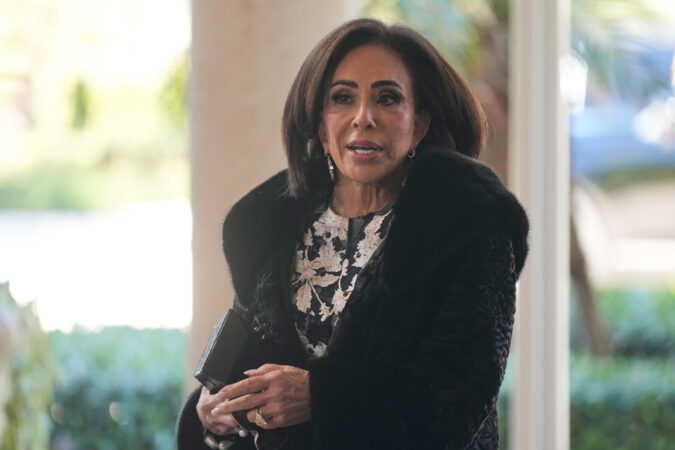
    RYE, N.Y. — Jeanine Pirro, the U.S. Attorney for the District of Columbia, has filed a $250,000 negligence lawsuit against her suburban hometown north of New York City and a power utility after claiming she tripped and fell while out walking.

    Pirro said she tripped over a large wooden block protruding from a steel plate in a roadway on Aug. 28 in the Westchester County city of Rye, just weeks after she was confirmed as the Trump administration’s top prosecutor for the District of Columbia.

    The plate was covering excavation related to gas-main work for Consolidated Edison, according to an amended complaint filed Wednesday in state court.

    “As a result of defendants’ negligence, Ms. Pirro sustained serious personal injuries, including but not limited to bruises and contusions to the head, eye, face, and shoulder areas, together with pain, discomfort, and limitation of movement,” according to the complaint, initially filed last month.

    The 74-year-old former Fox News host was confined to bed, required medical attention and “continues to experience pain and suffering,” according to the filing.

    Representatives for Pirro, Con Ed, and Rye declined to comment on the pending litigation Thursday.

    In a motion to dismiss the claim, an attorney for Rye wrote that it “can hardly be said that the City was negligent in a duty to pedestrians at a location that was not a pedestrian walkway.” An attorney for Con Ed wrote in a separate court filing seeking dismissal that all the dangers and risks related to the incident “were open, obvious and apparent.”

    Pirro has served as both a judge and the district attorney for Westchester County.

  • RFK Jr. promised to restore trust in U.S. health agencies. One year later, it’s eroding

    RFK Jr. promised to restore trust in U.S. health agencies. One year later, it’s eroding

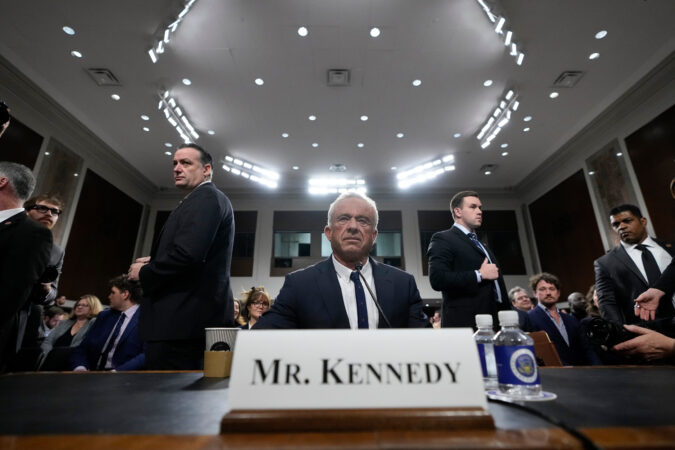
    NEW YORK — Since Robert F. Kennedy Jr. was sworn in to lead the U.S. Department of Health and Human Services one year ago, he has defended his upending of federal health policy by saying the changes will restore trust in America’s public health agencies.

    But as the longtime leader of the anti-vaccine movement scales back immunization guidance and dismisses scientists and advisers, he’s clashed with top medical groups who say he’s not following the science.

    The confrontation is deepening confusion among the public that had already surged during the COVID-19 pandemic. Surveys show trust in the agencies Kennedy leads is falling, rather than rising, as the country’s health landscape undergoes dramatic change.

    Kennedy says he’s aiming to boost transparency to empower Americans to make their own health choices. Doctors counter that the false and unverified information he’s promoting is causing major, perhaps irreversible, damage — and that if enough people forgo vaccination, it will cause a surge of illness and death.

    There was a time when people trusted health agencies regardless of party and the government reported “the best of what science knows at this point,” said Kathleen Hall Jamieson, director of the Annenberg Public Policy Center at the University of Pennsylvania.

    “Now, you cannot confidently go to federal websites and know that,” she said.

    HHS spokesman Andrew Nixon argued that trust had suffered during the Biden administration. “Kennedy’s mandate is to restore transparency, scientific rigor, and accountability,” he said.

    Trust slid during the COVID pandemic

    Historically, federal scientific and public health agencies enjoyed strong ratings in public opinion polls. The U.S. Centers for Disease Control and Prevention for decades scored above many other government agencies in Gallup surveys that asked whether they were doing a “good” or “excellent” job.

    Two decades ago, more than 60% of Americans gave the CDC high marks, according to Gallup. But that number fell dramatically at the beginning of the COVID-19 pandemic, amid agency mistakes and guidance that some people didn’t like.

    In 2020, the percentage of Americans who believed the CDC was doing at least a “good” job fell to 40% and then leveled off for the next few years.

    Alix Ellis, a hairstylist and mom in Madison, Georgia, used to fully trust the CDC and other health agencies but lost that confidence during the COVID-19 pandemic. She said some of the guidance didn’t make sense. At her salon, for example, stylists could work directly on someone’s hair, but others in the room had to be several feet away.

    “I’m not saying that we were lied to, but that is when I was like, OK, ‘Why are we doing this?’” the 35-year-old said.

    Kennedy helped create the trust problem, doctor says

    Part of Kennedy’s pitch as health secretary has been restoring Americans’ trust in public health.

    “We’re going to tell them what we know, we’re going to tell them what we don’t know, and we’re going to tell them what we’re researching and how we’re doing it,” Kennedy told senators last September, while explaining how he intended to make the CDC’s information reliable. “It’s the only way to restore trust in the agency — by making it trustworthy.”

    Before entering politics, Kennedy was one of the loudest voices spreading false information about immunizations. Now, he’s trying to fix a trust problem he helped create, said Dr. Rob Davidson, a Michigan emergency physician.

    “You fed those people false information to create the distrust, and now you’re sweeping into power and you’re going to cure the distrust by promoting the same disinformation,” said Davidson, who runs a doctor group called the Committee to Protect Health Care. “It’s upside-down.”

    Kennedy has wielded the power of his office to take multiple steps that diverge from medical consensus.

    Last May, he announced COVID-19 vaccines were no longer recommended for healthy children and pregnant women, a move doctors called concerning and confusing.

    In November, he directed the CDC to abandon its position that vaccines do not cause autism, without supplying new evidence. And earlier this year, the CDC under his leadership reduced the number of vaccines recommended for every child, a decision medical groups said would undermine protections against a half-dozen diseases.

    Kennedy also has overhauled his department through canceled grants and mass layoffs. Last summer, Kennedy fired his new CDC chief after less than a month over disagreements about vaccine policy.

    Confusion emerges as trust erodes

    Some have applauded the moves. But surveys suggest many Americans have had the opposite reaction.

    “I have much less trust,” said Mark Rasmussen, a 67-year-old retiree walking into a mall in Danbury, Connecticut, one recent morning.

    Shocked by Kennedy’s dismantling of public health norms, professional medical groups have urged Americans not to follow new vaccine recommendations they say were adopted without public input or compelling evidence.

    The American Academy of Pediatrics, along with more than 200 public health and advocacy groups, urged Congress to investigate how and why Kennedy changed the vaccine schedule. The American Medical Association, working with the University of Minnesota’s Vaccine Integrity Project, this week announced a new evidence-based process for reviewing the safety of respiratory virus vaccines — something they say is needed since the government stopped doing that kind of systematic review.

    Many Democratic-led states also have rebuffed Kennedy’s policies, even creating their own alliances to counter his vaccine guidance.

    “We see burgeoning confusion about which sources to trust and about which sources are real. That makes decision-making on an individual level much harder,” said Dr. Megan Ranney, dean of the Yale School of Public Health.

    She said she worried the confusion was contributing to the recent rise in diseases like whooping cough and measles, which were once largely eliminated in the U.S.

    Surveys indicate growing public wavering over support for the measles-mumps-rubella vaccine. Although a large majority of people support giving it to children, the proportion declined significantly in just over nine months, according to Annenberg research. An August 2025 survey finds that 82% would be “very” or “somewhat” likely to recommend that an eligible child in their household get MMR vaccine, compared with 90% in November 2024.

    Surveys show trust is declining again

    New findings from the healthcare research nonprofit KFF in January show that 47% of Americans trust the CDC “a great deal” or “a fair amount” to provide reliable vaccine information, down about 10 percentage points since the beginning of Trump’s second term.

    Trust among Democrats dropped 9 percentage points since September, to 55%, the survey found. Trust among Republicans and independents hasn’t changed since September, but it has declined somewhat among both groups since the beginning of Trump’s term.

    Even among MAHA supporters, the poll shows, fewer than half say they trust agencies like the CDC and FDA “a lot” or “some” to make recommendations about childhood vaccine schedules.

    Gallup surveys also show a drop in Americans who believe the CDC is doing a “good job,” from 40% in 2024 to 31% last year.

    Those results came alongside a decline of trust across the government — not just agencies under Kennedy’s oversight. Yet concerns about Kennedy’s trustworthiness also have emerged in the past year. Documents recently obtained by The Associated Press and The Guardian, for example, undermine his statements that a 2019 trip to Samoa ahead of a measles outbreak had “nothing to do with vaccines.” The documents have prompted senators to assert that Kennedy lied to them over the visit.

    HHS officials say they are promoting independent decision-making by families while working to reduce preventable diseases. They say reducing routine vaccine recommendations was meant to ensure parents vaccinate children against the riskiest diseases.

    HHS did not make Kennedy available for an interview, despite repeated requests. But as he has pledged to restore trust, he’s also urged people to come to their own conclusions.

    “This idea that you should trust the experts,” Kennedy said recently on The Katie Miller Podcast, “a good mother doesn’t do that.”

  • Puerto Rico governor signs law to recognize fetus as human being as critics warn of consequences

    Puerto Rico governor signs law to recognize fetus as human being as critics warn of consequences

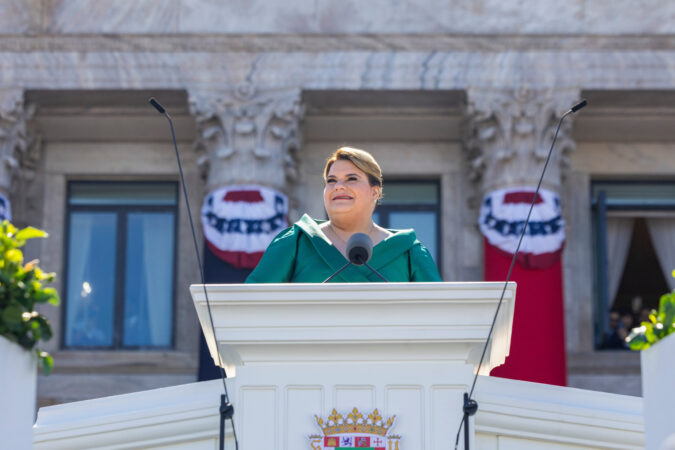
    SAN JUAN, Puerto Rico — Puerto Rico’s governor on Thursday signed a bill that amends a law to recognize a fetus as a human being, a move doctors and legal experts warn will have deep ramifications for the U.S. Caribbean territory.

    The amendment was approved without public hearings and amid concerns from opponents who warned it would unleash confusion and affect how doctors and pregnant or potentially pregnant women are treated.

    The new law will lead to “defensive health care,” warned Dr. Carlos Díaz Vélez, president of Puerto Rico’s College of Medical Surgeons.

    “This will bring complex clinical decisions into the realm of criminal law,” he said in a phone interview.

    He said that women with complicated pregnancies will likely be turned away by private doctors and will end up giving birth in the U.S. mainland or at Puerto Rico’s largest public hospital, noting that the island’s crumbling health system isn’t prepared.

    “This will bring disastrous consequences,” he said.

    Díaz noted that the amended law also allows a third person to intervene between a doctor and a pregnant woman, so privacy laws will be violated, adding that new protocols and regulations will have to be implemented.

    “The system is not prepared for this,” he said.

    Gov. Jenniffer González, a Republican and supporter of U.S. President Donald Trump, said in a brief statement that “the legislation aims to maintain consistency between civil and criminal provisions by recognizing the unborn child as a human being.”

    The amendment, in Senate Bill 923, was made to an article within Puerto Rico’s Penal Code that defines murder.

    The government noted that the amendment complements a law that among other things, classifies as first-degree murder when a pregnant woman is killed intentionally and knowingly, resulting in the death of the conceived child at any stage of gestation. The law was named after Keishla Rodríguez, who was pregnant when she was killed in April 2021. Her lover, former Puerto Rican boxer Félix Verdejo, received two life sentences after he was found guilty in the killing.

    Some cheered the amendment signed into law Thursday, while opponents warned that it opens the door to eventually criminalizing abortions in Puerto Rico, which remain legal.

    “A zygote was given legal personality,” said Rosa Seguí Cordero, an attorney and spokesperson for the National Campaign for Free, Safe and Accessible Abortion in Puerto Rico. “We women were stripped of our rights.”

    Seguí rattled off potential scenarios, including whether a zygote, or fertilized egg, would have the right to health insurance and whether a woman who loses a fetus would become a murder suspect.

    Díaz said doctors could even be considered murder suspects and condemned how public hearings were never held and the medical sector never consulted.

    “The problem is that no medical recommendations were followed here,” he said. “This is a serious blow … It puts us in a difficult situation.”

    Among those condemning the measure was Annette Martínez Orabona, executive director for the American Civil Liberties Union in Puerto Rico.

    She noted that no broad discussion of the bill was allowed, which she said is critical because the penal code carries the most severe penalties.

    “There is no doubt that the measure did not undergo adequate analysis before its approval and leaves an unacceptable space for ambiguity regarding civil rights,” she said.

    “The legislative leadership failed to fulfill its responsibility to the people, and so did the governor.”

  • Grieving families press Congress on aviation safety reforms after midair collision near D.C.

    Grieving families press Congress on aviation safety reforms after midair collision near D.C.

    Key senators and the families of the 67 dead in an airliner collision with an Army helicopter near the nation’s capital are convinced that advanced aircraft locator systems recommended by experts for nearly two decades would have prevented last year’s tragedy. But it remains unclear if Congress will pass a bill requiring every plane and helicopter to use them around every busy airport.

    The Senate Commerce Committee held a hearing Thursday to highlight why the National Transportation Safety Board has been recommending since 2008 that all aircraft be equipped with one system that can broadcast their locations and another one to receive data about the location of other aircraft. Only the system that broadcasts location is currently required. The hearing will review all 50 of the NTSB’s recommendations to prevent another midair collision like that of Jan. 29, 2025.

    Everyone aboard the helicopter and the American Airlines jet flying from Wichita, Kansas, including 28 members of the figure skating community, died when the aircraft collided and plummeted into the icy Potomac River.

    The Senate already unanimously approved the bill that would require all aircraft flying around busy airports to have both kinds of Automatic Dependent Surveillance-Broadcast systems installed. However, leaders of the key House committees seem to want to craft their own comprehensive bill addressing all the NTSB recommendations instead of immediately passing what’s known as the ROTOR act. The ADS-B Out systems continually broadcast an aircraft’s location and speed and have been required since 2020. But ADS-B In systems that can receive those signals and create a display showing pilots were all air traffic is located around them are not standard.

    Facing headwinds in the House

    Commerce Committee Chairman Sen. Ted Cruz said he’s concerned that some people are talking about possibly adding loopholes to the bill that would exempt regional airlines and private jets from the mandate. The Texas Republican said that would undermine the effort, and doesn’t make sense given that the plane involved in this collision was flown by a regional airline.

    “Flying can only be safe when everyone follows the same standards,” Cruz said. He said that he hopes the House will vote on the bill in the next two weeks to send it to the president’s desk.

    But Rep. Sam Graves, who leads the House Transportation Committee, said Thursday that he doesn’t plan to consider the Senate bill.

    “I haven’t looked a whole lot at the ROTOR Act. We’re going to do our own bill,” Graves said.

    If the American Airlines jet and the helicopter had also been equipped with one of the ADS-B In systems that can receive location data, the NTSB and the victims’ families and key lawmakers say, the pilots may have been able to avoid the collision because they would have received nearly a minute of advanced warning.

    The receiving systems would have provided more warning along with an indication of where the other aircraft was. But for that to work the helicopter’s ADS-B Out system that’s supposed to broadcast its location would have to be turned on and working correctly, which wasn’t the case on the night of the crash.

    Tragedy could have been prevented

    These locator systems are one of the measures that might have been able to overcome all the systemic problems and mistakes the NTSB identified in the disaster. That’s why this requirement was endorsed by NTSB Chairwoman Jennifer Homendy — the only witness called to the hearing — Transportation Secretary Sean Duffy and all of the Senate. This is the 18th time the NTSB has recommended the technology.

    “This seems like a no-brainer, right? Especially when this is not a new thing that they’re proposing,” said Amy Hunter, whose cousin Peter Livingston died on the flight with his wife and two young daughters.

    Sen. Tammy Duckworth said the FAA also failed to act on warnings from its own controllers after a strikingly similar near miss in 2013 about the risks that helicopters pose around DCA (Ronald Reagan Washington National Airport), and an alarming number of near misses chronicled in the agency’s own data.

    “FAA’s failure in the face of blaring alarm bells, screaming out that it was a matter of when — not if — one of the near misses at DCA would become a deadly tragedy is, unfortunately, emblematic of a chronic crisis that’s plagued FAA for years,” Duckworth said.

    Afterward, the FAA made several changes including prohibiting helicopters from flying along the route where the crash happened whenever a plane is landing on DCA’s secondary runway and requiring all aircraft to use their ADS-B Out systems to broadcast their locations.

    The crash anniversary and NTSB hearing on the causes of the crash have made recent weeks challenging for victims’ families. And now the Olympics are reminding Hunter and others that their loved ones — like young Everly and Alydia Livingston — will never have a chance to realize their dreams of competing for a gold medal.

    Cost concerns for plane owners

    The biggest stumbling block is cost. Upgrading some airline jets might cost hundreds of thousands of dollars or more, placing an expensive burden on some — especially regional airlines with tighter profit margins like the one that flew the jet that collided with the Army helicopter. Some also worry whether general aviation pilots could afford the upgrades. These systems haven’t even been designed and certified for some airline jets — particularly the CRJ models that were involved in this crash.

    But some airlines have already begun to add the technology to their planes, partly because in addition to the safety benefits, the systems can help increase the number of planes that can fly into an airport by spacing them more precisely. American Airlines leads the industry, having added the technology to its Airbus A321s over the past several years, equipping more than 300 of its roughly 1,000 planes to date. Homendy said American officials told her the retrofits cost less than $50,000 per plane.

    Any plane more than a decade old likely doesn’t have either of these systems installed. Most newer planes have at least an ADS-B Out system that broadcasts their location.

    But roughly three quarters of the pilots of business jets and smaller single-engine Cessnas and Bonanzas use portable devices that only cost $400 dollars that can tap into this location data and display the information about nearby aircraft on an iPad. So it doesn’t appear the legislation would create a significant expense for them. Homendy held up one of the small receivers during her testimony to demonstrate how easy it is for pilots to get ADS-B In warnings.

    Tim Lilley, a pilot himself, said having both these locator systems would have saved the life of his son Sam, who was copilot of the airliner, and everyone else who died. He said small plane owners have an affordable option, but even the expensive upgrades to large planes would be worth it.

    “If those recommendations had been fully realized, this accident wouldn’t have happened,” Lilley said. “I don’t know what value we put on the human life, but 67 lives would still be here today.”

  • Trump immigration officials shown video of Minneapolis protester’s death in tense Senate hearing

    Trump immigration officials shown video of Minneapolis protester’s death in tense Senate hearing

    WASHINGTON — The men tasked with carrying out President Donald Trump’s mass deportation agenda were made to watch a video of the shooting death of Alex Pretti in a slow, moment-by-moment analysis on Thursday by Sen. Rand Paul, who repeatedly cast doubt on the tactics used by federal officers and warned that the American public had lost trust in the country’s immigration agencies.

    It was a tense confrontation at a Senate hearing that was called to scrutinize the immigration chiefs as they carry out one of Trump’s signature policy and after the deaths of two protesters in Minneapolis over recent weeks at the hands of federal officers.

    Paul, who paused the video every few seconds to explain his interpretation of the events, argued that Pretti posed no threat to the officers and questioned why the situation culminated in the ICU nurse’s death.

    “He is retreating at every moment,” said Paul, speaking of Pretti’s behavior while officers pepper-sprayed him. “He’s trying to get away and he’s being sprayed in the face.”

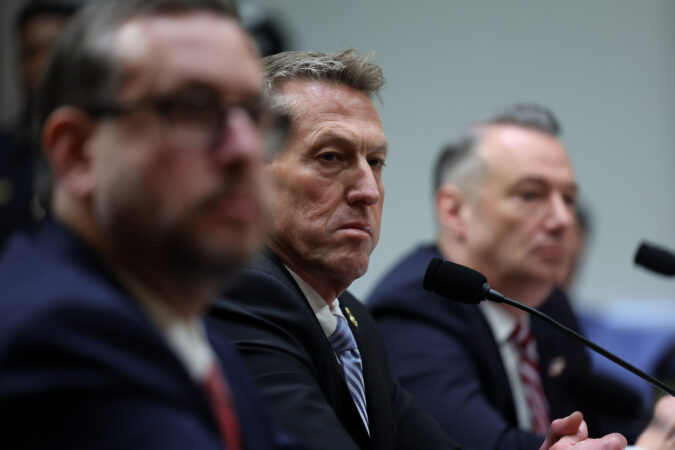
    The hearing’s witnesses included Todd Lyons, the acting director of Immigration and Customs Enforcement; Rodney Scott, who heads Customs and Border Protection, and Joseph Edlow, who runs U.S. Citizenship and Immigration Services. The same officials appeared in front of a House committee earlier this week.

    Paul’s comments were a strong rebuke of the conduct by CBP officers who ultimately shot and killed Pretti on Jan. 24 in Minneapolis.

    “It’s clearly evident that the public trust has been lost. To restore trust in ICE and Border Patrol they must admit their mistakes, be honest and forthright with their rules of engagement and pledge to reform,” Paul said in his opening statements.

    But Paul, who’s often shown a willingness to buck party line, was the lone Republican voice questioning the immigration officers’ conduct with others steering clear of any criticism. Democrats also weighed in with sharp condemnation of the shooting and, more broadly, on how officers from those agencies are using force when carrying out their responsibilities.

    Scott disputed that Pretti wasn’t a threat.

    “What I’m seeing is a subject that’s also not complying. He’s not following any guidance. He’s fighting back nonstop,” said Scott.

    Lyons disputed claims that his officers are not held accountable. He said in the year since Trump took office, ICE has opened 37 investigations for excessive force; 18 were closed, 19 are still pending and one was been referred for “further action,” he said.

    The shooting death of Pretti, along with another American citizen, Renee Good, who were protesting immigration enforcement in Minnesota, sparked outrage and prompted changes to the Minnesota operation. On Thursday, Trump’s border czar, Tom Homan, announced that he was winding down the operation, which at one point included 3,000 ICE and CBP officers.

    Sen. Richard Blumenthal pushed Lyons to explain a memo he wrote justifying the use of administration warrants — documents signed by an ICE officer and not an independent judge — to forcibly enter a home to make an arrest.

    The Associated Press reported last month that ICE was asserting sweeping power through the use of administrative warrants in its enforcement operations.

    Administrative warrants historically have not been sufficient to overcome Fourth Amendment protections that guard against illegal searches.

    Lyons defended the practice, arguing that there is case law in Minnesota that allows officers to enter a home to catch a fugitive using only an administrative warrant.

    Blumenthal, who compared the ICE’s administrative warrants to a permission slip, said they aren’t enough to overcome constitutional protections.

    Other Republicans directed their toughest questioning toward an earlier panel of Minnesota officials. When questioning Lyons and Scott, they focused not on the officers’ tactics but on the threats they said ICE and CBP officers faced in carrying out their jobs.

    Sen. Ron Johnson, a Wisconsin Republican, asked Lyons to talk about the “violence, the threats, the doxing against ICE officers.”

    “That’s where I’ve got a great deal of sympathy for people trying to enforce law,” he said.

  • White House fires new U.S. attorney in N.Y. within hours of his appointment

    White House fires new U.S. attorney in N.Y. within hours of his appointment

    Federal judges in Albany, N.Y., appointed a new U.S. attorney on Wednesday, exercising a rarely invoked legal authority to appoint top prosecutors in regions without a Senate-confirmed nominee.

    Their choice lasted less than five hours on the job.

    Donald T. Kinsella, a 79-year-old former prosecutor and registered Republican, was summarily fired via an email from the White House later that evening, Justice Department officials said.

    The move underscored a growing point of tension between the Trump administration and courts in parts of the country where the president’s controversial picks for U.S. attorney have been unable to win Senate support.

    Kinsella’s swift termination also sent a signal to judges in several other federal court districts, including the Eastern District of Virginia, who have recently announced plans to make similar replacements of Trump-installed prosecutors whose appointments have been deemed invalid by the courts.

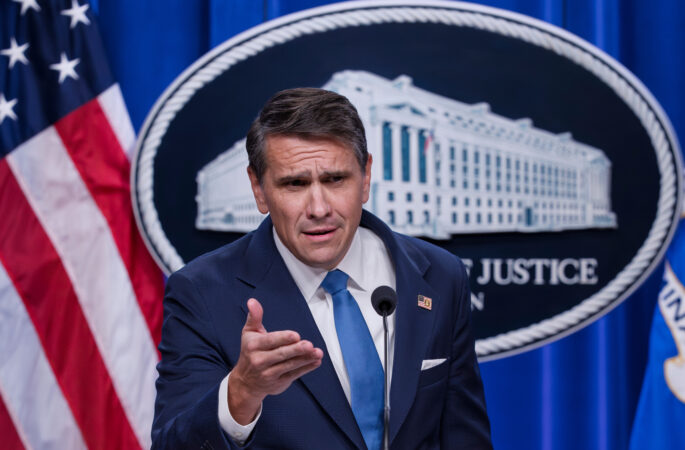
    “Judges don’t pick U.S. Attorneys, @POTUS does,” Deputy Attorney General Todd Blanche, said in a social media post late Wednesday. “See Article II of our Constitution. You are fired, Donald Kinsella.”

    Kinsella did not immediately respond to requests for comment Wednesday morning. And it was not immediately clear whether federal judges in Albany had any recourse to counter the White House’s decision.

    When administration officials similarly fired a new U.S. attorney whom federal judges in New Jersey appointed in July to replace Alina Habba, President Donald Trump’s former personal lawyer and pick for the position there, there was little formal response from the courts.

    Typically, U.S. attorneys, who wield broad prosecutorial discretion to pursue civil and criminal matters in their districts, are nominated by the president and confirmed or rejected in a Senate vote. But federal law empowers judges to name acting U.S. attorneys when there is no lawfully serving appointee or Senate-confirmed presidential pick serving in the role.

    Before his appointment Wednesday, Kinsella had most recently worked as a senior counsel to Albany-based law firm Whiteman Osterman & Hanna. He had served a previous stint in the U.S. attorney’s office in Albany from 1989 to 2002.

    The judges named him to lead the office as a replacement for John A. Sarcone III — a Trump loyalist whom the Justice Department appointed to serve in the position on an interim basis in March.

    Before his appointment, Sarcone had never worked as a prosecutor and most recently had served as a regional administrator for the General Services Administration.

    His tenure as interim U.S. attorney has been marked by a series of controversies, including an incident in June in which he announced a knife-wielding undocumented immigrant from El Salvador had tried to kill him outside an Albany hotel.

    Surveillance footage later showed the man did not come close to Sarcone with his weapon, and charges brought by a local prosecutor were downgraded from attempted murder to a misdemeanor.

    Sarcone had also launched an investigation over the summer into New York Attorney General Letitia James (D), probing whether her office had violated Trump’s civil rights when it secured a multimillion-dollar fraud judgment against him and his real estate empire in 2024.

    As part of a legal challenge from James, a federal judge ruled in January that Sarcone had been serving unlawfully in his position for months well beyond the 120-day limit federal law places on interim U.S. attorney picks.

    But like other interim U.S. attorney picks by Trump who have faced similar disqualification rulings in Los Angeles, Nevada, New Mexico and Alexandria, Va., Sarcone refused to immediately vacate the job. He continues leading the office.

    Until recently, judges in districts like Sarcone’s have been reticent to exercise their authority to appoint prosecutors counter to the Trump administration’s wishes.

    Last month, though, the chief federal judge in the Eastern District of Virginia announced the courts there would be accepting applications for a U.S. attorney to replace Lindsey Halligan, another former Trump lawyer named interim U.S. attorney only to be later disqualified by the courts. She left her post in January.

    The judges in Virginia have not yet named a replacement.

    Federal judges in Seattle have similarly been soliciting applications to potentially appoint a new acting U.S. attorney there, after the term of the Trump administration’s interim pick expired this month.