MOSCOW — A deputy chief of Russia’s military intelligence agency was shot and wounded in Moscow on Friday in an attack that follows a series of assassinations of senior military officers that Russia has blamed on Ukraine.
Lt. Gen. Vladimir Alekseyev was hospitalized after being shot several times by an unidentified assailant at an apartment building in northwestern Moscow, Investigative Committee spokesperson Svetlana Petrenko said in a statement.
She didn’t say who could be behind the attack on the 64-year-old who has served as the first deputy head of Russia’s military intelligence agency, known as the GRU, since 2011.
He was decorated with the Hero of Russia medal for his role in Moscow’s military campaign in Syria and in June 2023 was shown on state TV speaking to mercenary chief Yevgeny Prigozhin when his Wagner Group seized the military headquarters in the southern city of Rostov-on-Don during his short-lived mutiny.
The shooting came a day after Russian, Ukrainian, and U.S. negotiators wrapped up two days of talks in Abu Dhabi, United Arab Emirates, aimed at ending the nearly 4-year-old war in Ukraine. The Russian delegation was led by Alekseyev’s boss, military intelligence chief Adm. Igor Kostyukov.
President Vladimir Putin was informed about the attack, said Kremlin spokesman Dmitry Peskov, who added that law enforcement agencies need to step up protection of senior military officers during the conflict in Ukraine.
Ukrainian authorities haven’t commented on the attack.
Asked about the shooting, Russian Foreign Minister Sergey Lavrov said it would be up to law enforcement agencies to pursue the investigation but described it as an apparent “terrorist act” by Ukraine intended to derail peace talks.
The business daily Kommersant said the attacker, posing as a delivery person, shot the general twice in the stairway of his apartment building, wounding him in the foot and the arm. Alekseyev tried to wrest away the gun and was shot again in the chest before the attacker fled, the report said.
Alekseyev, who was born in Ukraine when it was part of the Soviet Union, rose steadily through the ranks to lead operations of Russian military intelligence in Syria, Ukraine, and elsewhere.
He was sanctioned by Washington for meddling in the 2016 U.S. election and also faced sanctions in the U.K. and the European Union over his alleged role in the 2018 poisoning of former Russian intelligence officer Sergei Skripal and his daughter with the nerve agent Novichok in Salisbury, England.
Since Moscow sent troops into Ukraine in 2022, Russian authorities have blamed Kyiv for several assassinations of military officers and public figures in Russia. Ukraine has claimed responsibility for some of them.
In December, a car bomb killed Lt. Gen. Fanil Sarvarov, head of the Operational Training Directorate of the Russian Armed Forces’ General Staff.
In April, another senior Russian military officer, Lt. Gen. Yaroslav Moskalik, a deputy head of the main operational department in the General Staff, was killed by a bomb placed in his car parked near his apartment building just outside Moscow.
A Russian man who previously lived in Ukraine pleaded guilty to carrying out the attack and said he had been paid by Ukraine’s security services.
Days after Moskalik’s killing, Ukrainian President Volodymyr Zelensky said he received a report from the head of Ukraine’s foreign intelligence agency on the “liquidation” of top Russian military figures, adding that “justice inevitably comes” although he didn’t mention Moskalik’s name.
In December 2024, Lt. Gen. Igor Kirillov, the chief of the military’s nuclear, biological and chemical protection forces, was killed by a bomb hidden on an electric scooter outside his apartment building. Kirillov’s assistant also died. Ukraine’s security service claimed responsibility for the attack.
An undocumented immigrant is seeking $1 million in damages after he says he was riding his bike in Melrose Park, Ill., when a U.S. Border Patrol agent suddenly tackled him, placed him in a chokehold and punched his head.
A Chicago resident says that federal agents caused $30,000 worth of property damage when they broke a lock on his wrought-iron gate and scaled a wooden fence to chase after construction workers repairing his Victorian-era home.
A Columbia University student and activist who spent 104 days in a U.S. Immigration and Customs Enforcement detention center is demanding $20 million over what he says was a false arrest.
All three should expect a long and difficult fight under the current legal landscape, lawyers warn.
These and scores of other claims expected to arise out of the Trump administration’s crackdown on illegal immigration are winding through a bureaucratic process mandated under the Federal Tort Claims Act. It is the primary legal recourse for people seeking compensation for property damage, injuries and even deaths allegedly caused by federal agencies and their employees.
First, individuals must fill out a form and submit it for review by the agency that they say caused the harm. Agencies such as ICE and Customs and Border Protection have six months to deny a claim, offer a settlement, or not respond at all. Only then can people sue in court under the Federal Tort Claims Act.
But these cases are different from civil rights lawsuits. Judges, not juries, decide the outcome. Awarded damages are likely to be much lower. And individual officers can’t be named as defendants.
“It’s absolutely bonkers,” said Brian Orozco, a Chicago attorney for Ricardo Aguayo Rodriguez, the bike-riding immigrant who was hospitalized and is now detained, awaiting deportation to Mexico. “If a Chicago police officer abuses my civil rights, I can file a claim immediately. I don’t have to wait six months [to file a lawsuit]. I have a right to a jury trial. I don’t have that when I’m up against the federal government. It’s scary to me how protected these federal agents are.”
After the Civil War, Congress passed a law that established the right to sue local and state officials for the violation of constitutional rights. Federal officials weren’t included in the law, though a 1971 Supreme Court ruling established precedence for such lawsuits. But legal experts said that the court’s decisions within the past decade have narrowed that path and made it nearly impossible to successfully sue federal agents for civil rights violations.
“It is arguably harder today in 2026 than at any other time in American history to sue federal officials for money damages if they violate your constitutional rights,” said Harrison Stark, senior counsel at the State Democracy Research Initiative at the University of Wisconsin Law School.
Relatives of both Renée Good and Alex Pretti, Minneapolis residents who were fatally shot in separate encounters by federal immigration officers in January, have hired attorneys. In a statement, Romanucci & Blandin, the law firm retained by Good’s family, said it is pursuing a tort claim and would not be deterred by “the byzantine, time-consuming processes mandated by the Federal Tort Claims Act.” The attorney hired by Pretti’s parents did not respond to a request for comment.
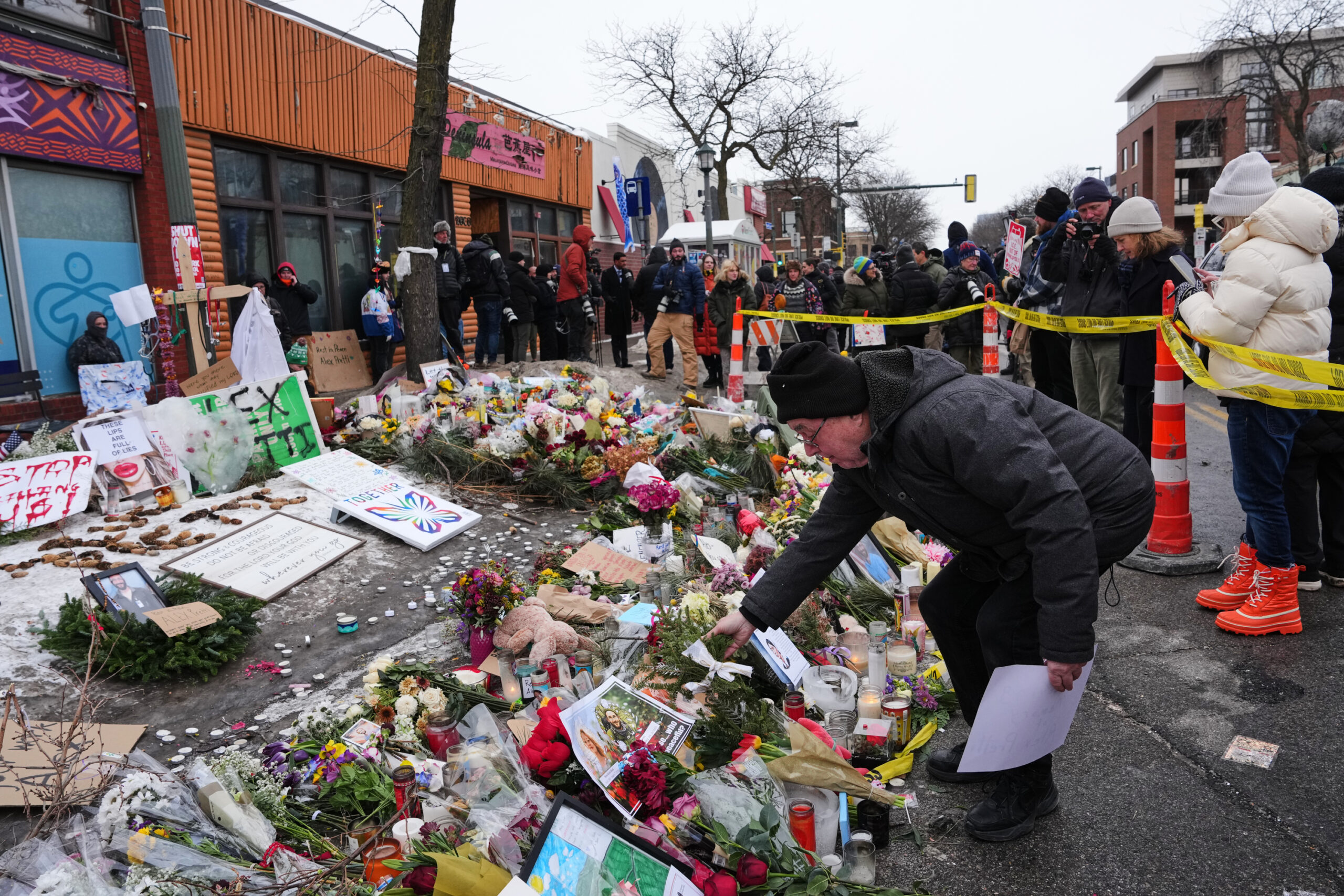
People visit a makeshift memorial on Jan. 26 in Minneapolis for 37-year-old Alex Pretti, who was fatally shot by immigration officers.
An ICE spokesperson said the agency received about 400 tort claims in fiscal 2025, which ended Sept. 30, but did not provide a breakdown of how many resulted in settlements or denials.
“Despite facing a more than 1,300% increase in assaults against them, 8,000% increase in death threats, and a 3,200% increase in vehicle rammings, the men and women of ICE continue working around the clock” to arrest and remove “the worst of the worst criminal aliens from the United States,” ICE said in an emailed statement. The Washington Post could not independently verify these numbers.
A U.S. Customs and Border Protection spokesperson declined to provide data about the number of tort claims the agency received last year.
“Rioters and agitators have created an extraordinary amount of damage to public and private property, not to mention the harm they have put our officers and the public in,” a CBP spokesperson said in a statement. “We expect these agitators will be held responsible for their actions.”
Spokespeople for ICE and CBP declined to comment on individual claims described in this story. They broadly said their agencies adhere to the Federal Tort Claims Act.
A significant settlement is not impossible. The estate of Ashli Babbitt, the woman who was shot and killed on Jan. 6, 2021, during the U.S. Capitol riot, filed a tort lawsuit and reached a nearly $5 million settlement with the government.
But the challenges of navigating the Federal Tort Claims Act — coupled with an anticipated rise in claims as violent encounters continue in cities across the United States — have put pressure on Congress to pass legislation to allow civil rights lawsuits against federal officers and agents.
Such an effort would probably face pushback, experts said. Several years ago, the National Border Patrol Council, a union that represents Border Patrol agents, warned the Supreme Court of the “potentially massive financial impact” that would occur if thousands of its agents were exposed to “liability for personal damages.”
‘Not very hopeful’
Leo Feler said he ran into challenges as soon as he decided to pursue a tort claim. For one thing, he wasn’t sure where to send it: Feler didn’t know which federal agency employed the masked men who came to his Chicago home on Oct. 24.
Feler, a 46-year-old economist, said he wasn’t there at the time. But he received a notification from his Ring security camera: Someone was on his property.
A construction crew had been repairing the windows and siding of his home in the affluent Lakeview neighborhood. As the workers ate lunch outside, armed men in green uniforms jumped from two vehicles and tried to break the locks on the gates of a nearly 6-foot-high wrought-iron fence, according to Feler, who reviewed security camera footage of the incident and a video taken by a neighbor.
The agents, Feler said, had scaled a wooden fence along the side of his house and hopped onto his balcony in pursuit of the fleeing workers.
One worker was injured as he scrambled through a construction site littered with wood and nails, Feler said, leaving a trail of blood in the home. Another worker was detained, he said.
Feler said a tenant who rented a unit on his property asked the officers to provide a warrant that authorized the raid, but they refused to do so. Through his Ring camera’s intercom system, Feler told the agents that they were trespassing and needed to leave. But they ignored him, he said.
Feler later sought legal advice. Attorneys told him he could file a tort claim for damages.
Unsure which agencies had come to his house, Feler sent the paperwork for his tort claim in December to ICE, Customs and Border Protection and the Department of Homeland Security.
He described the damage to his property — including to his locks and fence — and also wrote that the agents “robbed me and my family of the feeling of security we once enjoyed in my home.” His tenant was afraid and asked to break her lease early, which Feler said he agreed to do.
Overall, Feler estimated $30,000 in damage to his property.
He said he is “not very hopeful” that he will receive payment. If his claim is denied, he said he and his attorneys will pursue a lawsuit under the Federal Tort Claims Act.
Others caught up in Operation Midway Blitz, the administration’s immigration enforcement actions in the Chicago area last fall, also said they expect it will be difficult to recover alleged damages.
Leigh Kunkel, a 39-year-old freelance journalist, said she was documenting federal agents shooting pepper balls at protesters in late September outside an ICE facility in Broadview, Ill. An agent then aimed the weapon at her and fired pepper balls, she said, striking her in the back of the head and the nose and leaving her bloodied.
A week later, her fiancé, Kyle Frankovich, also was protesting in Broadview within an area that he said state police monitoring the scene had designated a “free speech zone.” Federal officials, including Border Patrol commander Gregory Bovino, emerged from the ICE facility and began arresting protesters, according to video footage.
Frankovich, 41, said he showed no aggression toward agents; nevertheless, he said, they took him to the ground and put him in handcuffs. They later lined him up with other detainees along a guardrail near the facility. The scene served as a backdrop to a Department of Homeland Security promotional video featuring Secretary Kristi L. Noem.
He said he was detained for eight hours before a federal agent dropped him off at a nearby gas station. Frankovich has not been charged with a crime.
Antonio Romanucci, a civil rights lawyer and founding partner at the Chicago-based firm representing Renée Good’s family, said his office plans to file federal tort claims for Kunkel and Frankovich. The couple said they understand the path may be long and their case could be unsuccessful, while also exposing them to public scrutiny.
“Ultimately, we landed on the feeling that we are privileged enough to have the opportunity to fight back against this as citizens,” Kunkel said, “and that if we can do that, if this is one little way that we can push back, that we should.”
Pushing for change
Previous efforts to change the federal law have failed to gain traction.
A law signed by President Ulysses S. Grant in 1871 established the statutory right to sue local or state officials for constitutional violations. Nearly two years ago, a group of U.S. lawmakers introduced draft legislation that would have amended that law by inserting just four words — “or the United States” — and established the right to sue federal officials as well. But the effort stalled.
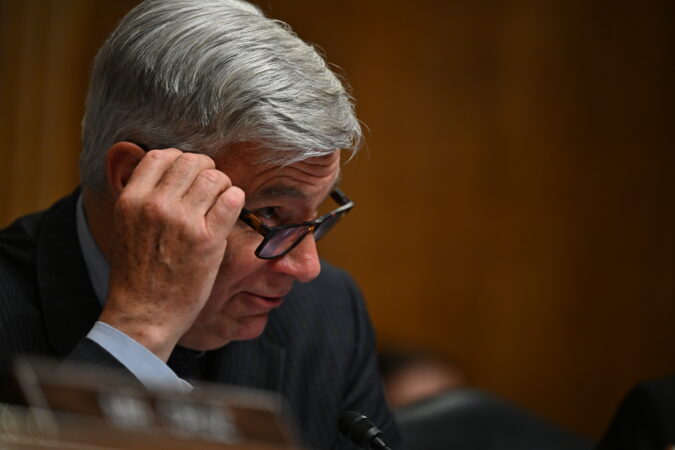
“It’s a somewhat complicated area of law across different jurisdictions,” Sen. Sheldon Whitehouse (D., R.I.) said of the challenges in garnering support for the bill, which he sponsored. “But I didn’t see any huge partisan issues.”
Whitehouse said there was a lack of urgency at the time, even though the Supreme Court had “more or less strangled” the legal pathway that had been used since the 1970s to sue federal officials for civil rights violations.
Last fall, Whitehouse and Rep. Hank Johnson (D., Ga.) reintroduced the measure. Legal experts told the Post they think it is unlikely to pass, citing anticipated concerns about exposing federal law enforcement officers to personal liability.
A handful of states already have laws that authorize claims against federal officials for the violation of constitutional rights, including New Jersey and Massachusetts, according to research compiled by Stark of the University of Wisconsin Law School. Lawmakers in other states are scrambling to draft similar bills.
Last week, the California Senate passed the “No Kings Act” to allow civil rights lawsuits against federal officers. The measure will head to the State Assembly next.
In Colorado, Mike Weissman, a Democratic state senator, recently introduced a similar bill. He described talking with state legislators in Washington, New Mexico, and Virginia, to exchange ideas.
And in Minnesota, State Rep. Jamie Long, a Democrat whose district includes part of Minneapolis, has drafted such a bill for the legislative session that begins later this month.
“We know that there is evidence of these severe constitutional violations happening, and that’s why we think it’s appropriate to create this state remedy,” Long said.
Such measures are likely to be challenged. The U.S. Justice Department has already sued Illinois, alleging that its new law authorizing civil rights claims against federal officers is an “unconstitutional attempt to regulate federal law enforcement officers.”
In the meantime, those who say they have sustained property damage or injuries during immigration enforcement efforts and their attorneys are continuing to press lawmakers to enable them to sue federal officers.
Christopher Parente, a Chicago-based lawyer, is representing Marimar Martinez, a 30-year-old teacher’s assistant who was shot five times by a Border Patrol agent in October and survived. In an interview with the Post, her attorney said he thinks that Congress should change the law.
Parente, a former federal prosecutor who plans to file a tort claim on Martinez’s behalf, said, “There is no deterrence — in fact, these agents are embraced and celebrated by this administration and their colleagues.”
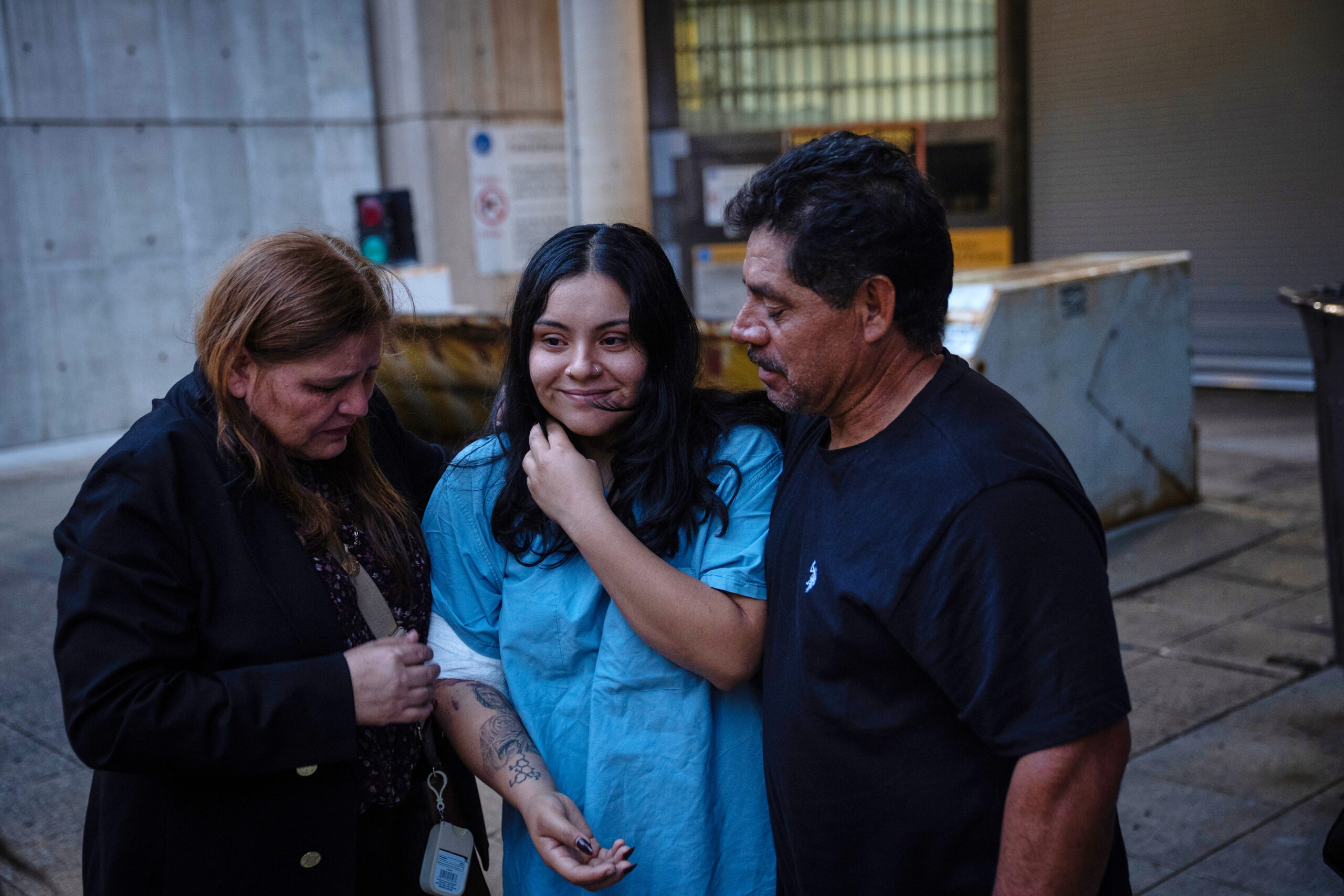
Marimar Martinez (center) is greeted by her family after being released from the Metropolitan Correctional Center on Oct. 6, 2025, after being shot by immigration agents and charged with assaulting federal officers in an incident in Chicago’s Brighton Park.
A chilling effect
People seeking compensation from the federal government may face another roadblock: finding an attorney to take their case.
“I’ve met people who spent the entire statute of limitations period, which is generally two years, looking for attorneys to represent them in cases against the federal government or federal officials and not being able to find them,” said Anya Bidwell, senior attorney for the Institute for Justice, a nonprofit law firm based in the D.C. area.
Bidwell said many attorneys are deterred from taking Federal Tort Claims Act cases because the government often invokes “a very broad immunity that courts traditionally interpret to pretty much swallow any of the claims that involve any kind of a judgment or choice on behalf of an officer.”
In other words, many cases are dismissed. Bidwell said “even getting to trial is extremely difficult.”
Some people who consider filing claims ultimately decide not to, discouraged by the long and difficult process.
In Minneapolis, Gina Christ, a 55-year-old business manager, contacted a lawyer to challenge what she described as an unlawful detention. But the attorney she met with told her suing the government would be “very, very difficult,” Christ recalled.
Christ had driven to a protest that began after Border Patrol agents allegedly tried to arrest a pair of Latino teens. She said she parked along the side of the street to observe the agents, not to obstruct them.
Christ said she was soon surrounded by agents and protesters. Agents yelled at her to move before smashing the window of her Ford Escape. They opened the door, pulled her out of the car, and held her facedown on the pavement, she said.
Agents restrained her wrists with plastic zip ties, Christ said, while her eyes and throat burned from tear gas fired into the nearby crowd.
Authorities took her to a federal building for processing, she said, and placed her in metal arm and leg shackles. She said they walked her to a folding table, where there was a makeshift sign with the criminal code for assaulting an officer. They told her she would face charges and took her fingerprints and a DNA swab.
Christ said she spent nearly four hours in custody before she was released. She hasn’t been charged with a crime.
A Customs and Border Protection spokesperson did not answer questions about the agency’s interaction with Christ.
After weighing the difficulty of pursuing a tort claim, Christ said she plans to pay to fix her window herself. Given what others have lost, she said, it seems too small to pursue.
COLLINGSWOOD, N.J. — The shawarma, falafel wraps and baklava at Jersey Kebab are great, but many of its patrons are also there these days for a side of protest.
A New Jersey suburb of Philadelphia has rallied around the restaurant’s Turkish owners since federal officers detained the couple last February because they say their visas had expired.
In fact, business has been so good since Celal and Emine Emanet were picked up early in the Trump administration’s immigration crackdown that they have moved to a bigger space in the next town over. Their regulars don’t seem to mind.
Celal Emanet, 52, first came to the U.S. in 2000 to learn English while he pursued his doctorate in Islamic history at a Turkish university. He returned in 2008 to serve as an imam at a southern New Jersey mosque, bringing Emine and their first two children came, too. Two more would be born in the U.S.
Before long, Celal had an additional business of delivering bread to diners. They applied for permanent residency and believed they were on their way to receiving green cards.
When the COVID-19 pandemic began and the delivery trucks were idled, Celal and Emine, who had both worked in restaurants in Turkey, opened Jersey Kebab in Haddon Township. Business was strong from the start.
On Feb. 25, U.S. marshals and Immigration and Customs Enforcement officers arrested the couple at the restaurant. Celal was sent home with an ankle monitor, but Emine, now 47, was moved to a detention facility more than an hour’s drive away and held there for 15 days.
With its main cook in detention and the family in crisis, the shop closed temporarily.
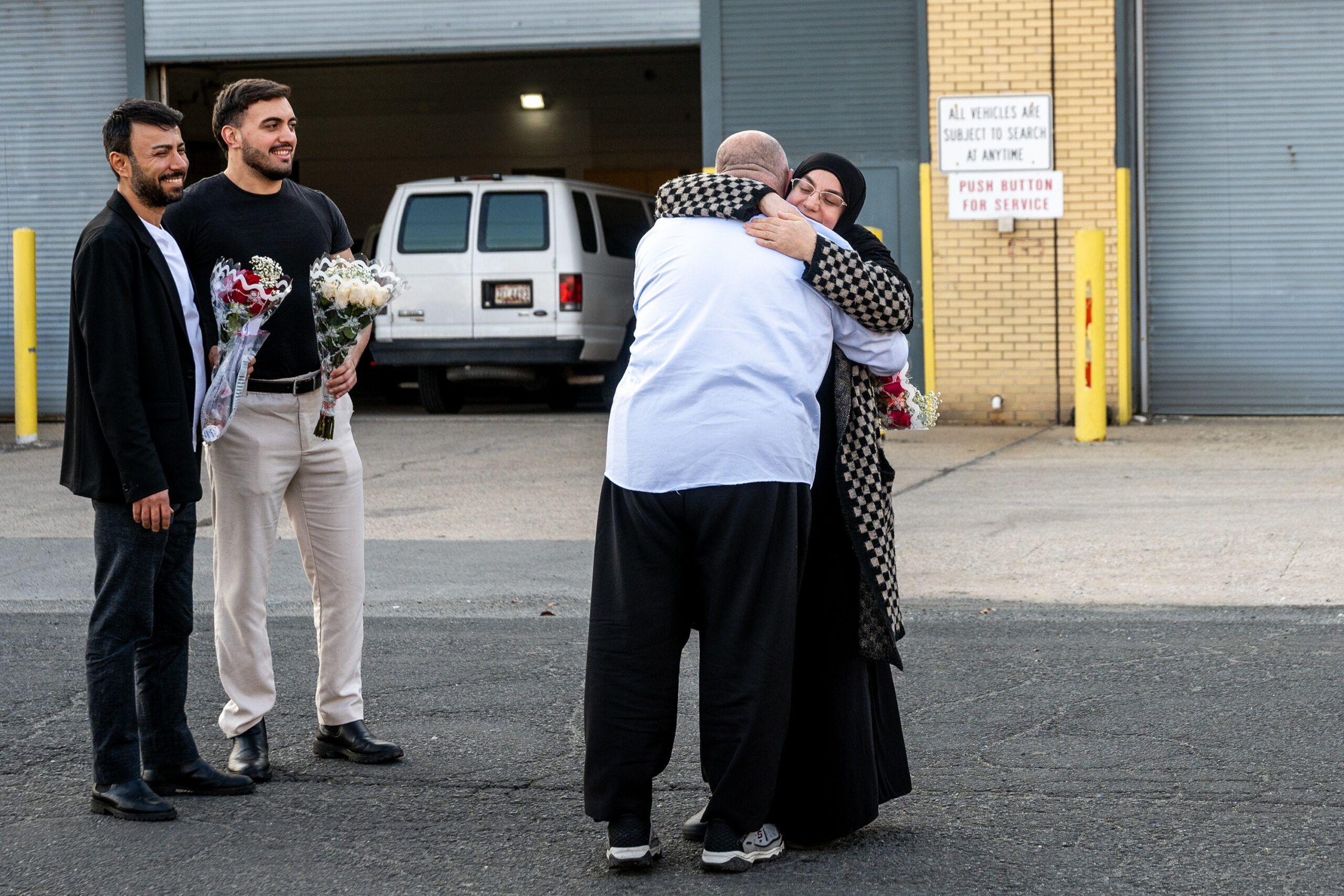
Emine Emanet hugs her husband Celal as she leaves the ICE Elizabeth Detention Facility on Wednesday, March 12, 2025.
Although the area is heavily Democratic, the arrests of the Emanets signaled to many locals that immigration enforcement during President Donald Trump’s second term wouldn’t stop at going after people with criminal backgrounds who are in the U.S. illegally.
“They were not dangerous people — not the type of people we were told on TV they were looking to remove from our country,” Haddon Township Mayor Randy Teague said.
Supporters organized a vigil and raised $300,000 that kept the family and business afloat while the shop was closed — and paid legal bills. Members of Congress helped, and hundreds of customers wrote letters of support.
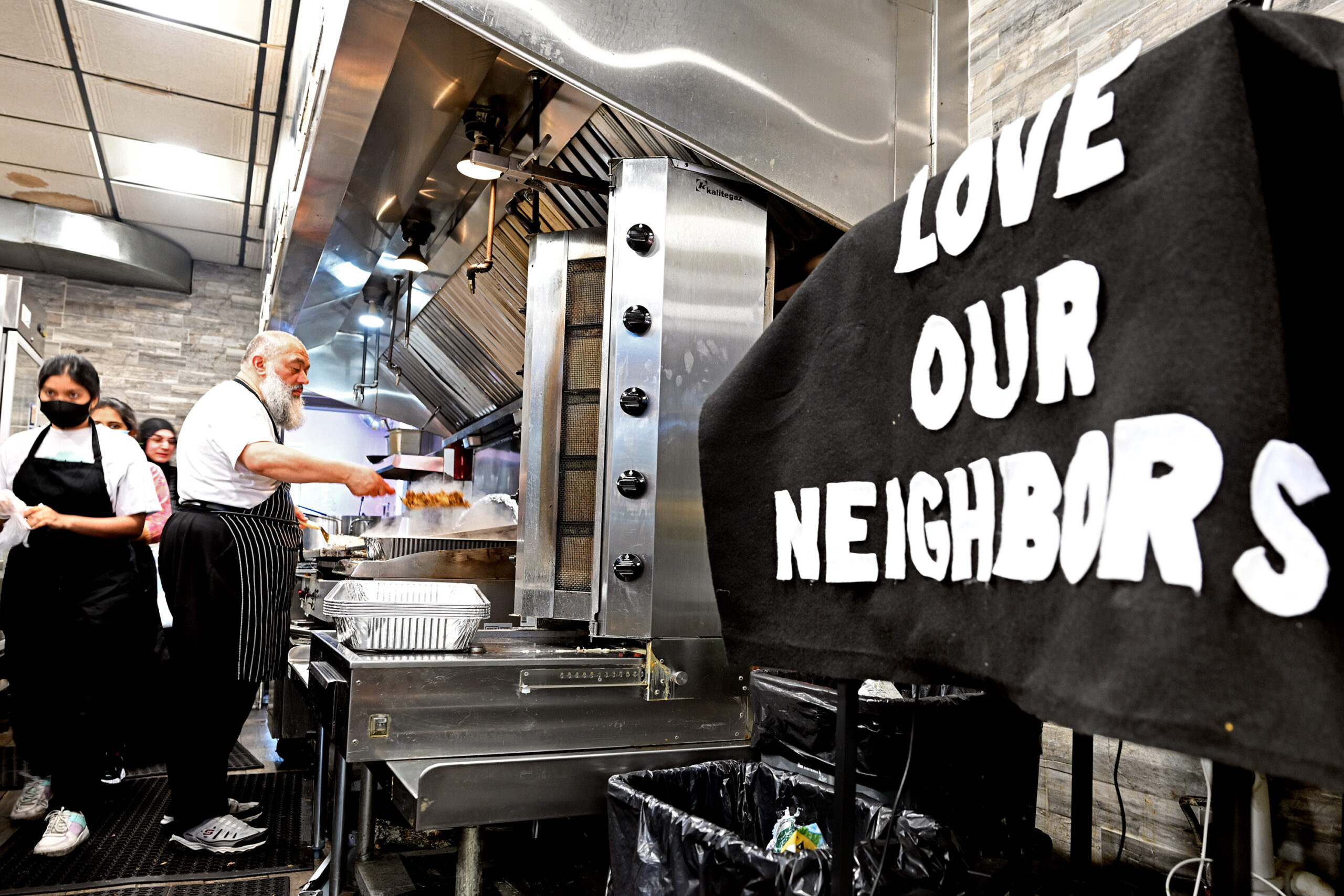
Celal Emanet works at the grill in his Jersey Kebab restaurant on Sunday, Mar. 30, 2025.
Space for a crowd
As news of the family’s ordeal spread, customers new and old began packing the restaurant. The family moved it late last year to a bigger space down busy Haddon Avenue in Collingswood.
They added a breakfast menu and for the first time needed to hire servers besides their son Muhammed.
The location changed, but the restaurant still features a sign in the window offering free meals to people in need. That’s honoring a Muslim value, to care for “anybody who has less than us,” Muhammed said.
Judy Kubit and Linda Rey, two friends from the nearby communities of Medford and Columbus, respectively, said they came to Haddon Township last year for an anti-Trump “No Kings” rally and ate a post-protest lunch at the kebab shop.
“We thought, we have to go in just to show our solidarity for the whole issue,” Kubit said.
Last month, with the immigration crackdown in Minneapolis dominating the headlines, they were at the new location for lunch.
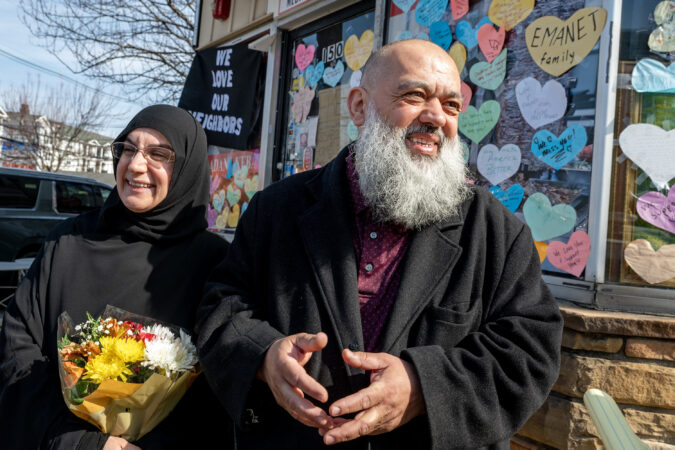
Gretchen Seibert tapes up hearts with words of support for Celal and Emine Emanet, the owners of Jersey Kebab, after the couple was detained by ICE in February 2025.
The legal battle hasn’t ended
The Emanets desperately want to stay in the U.S., where they’ve built a life and raised their family.
Celal has a deportation hearing in March, and Emine and Muhammed will also have hearings eventually.
Celal said moving back to Turkey would be bad for his younger children. They don’t speak Turkish, and one is autistic and needs the help available in the U.S.
Also, he’d be worried about his own safety because of his academic articles. “I am in opposition to the Turkish government,” he said. “If they deport me, I am going to get very big problems.”
The groundswell of support has shown the family they’re not alone.
“We’re kind of fighting for our right to stay the country,” Muhammed Emanet said, “while still having amazing support from the community behind us. So we’re all in it together.”
TUCSON, Ariz. — “Today” show host Savannah Guthrie’s brother on Thursday renewed the family’s plea for their mother’s kidnapper to contact them, hours after an Arizona sheriff said investigators don’t have proof Nancy Guthrie is alive but believe “she’s still out there.”
“Whoever is out there holding our mother, we want to hear from you. We haven’t heard anything directly,” Camron Guthrie said in a video posted on social media.
“We need you to reach out and we need a way to communicate with you so we can move forward,” but first the family needs to know the kidnapper has their mother, he said, echoing a statement his famous sister read the day before.
Five days into the desperate search for 84-year-old Nancy Guthrie, authorities have not identified any suspects or persons of interest, Pima County Sheriff Chris Nanos said.
Authorities think she was taken against her will from her home in Tucson over the weekend. DNA tests showed blood found on Guthrie’s front porch was a match to her, the sheriff said.
“Right now, we believe Nancy is still out there. We want her home,” Nanos said at a news conference earlier Thursday. He acknowledged, however, that authorities have no evidence she’s OK.
Demands for ransom
Investigators said they are taking seriously notes seeking ransom that were sent to some media outlets.
It’s unclear if all of the notes were identical. Heith Janke, the FBI chief in Phoenix, said details included a demand for money with a Thursday evening deadline and a second deadline for Monday if the first one wasn’t met. At least one note mentioned a floodlight at Guthrie’s home and an Apple watch, Janke said.
“To anyone who may be involved, do the right thing. This is an 84-year-old grandma,” Janke said.
At least three media organizations reported receiving purported ransom notes, which they handed over to investigators. Authorities made an arrest after one ransom note turned out to be fake, the sheriff said.
A note e-mailed Monday to the KOLD-TV newsroom in Tucson included information that only the abductor would know, anchor Mary Coleman told CNN.
“When we saw some of those details, it was clear after a couple of sentences that this might not be a hoax,” she said.
The sheriff said it’s possible Nancy Guthrie was targeted, but if she was, investigators don’t know if that’s because her daughter is one of television’s most visible anchors.
Authorities say any decision on whether to fulfill ransom demands ultimately is up to the family.
A day earlier, Savannah Guthrie and her siblings released a message to her mother’s kidnapper, saying they are ready to talk but want proof their mom is still alive. There’s been no response to their pleas so far.
New timeline of Guthrie’s disappearance
Investigators gave a more detailed timeline from the hours after Nancy Guthrie was last seen Saturday night. She was eating dinner and playing games with family members before one of them dropped her off at her home in a upscale neighborhood that sits on hilly, desert terrain, the sheriff said.
About four hours later, just before 2 a.m. Sunday, the home’s doorbell camera was disconnected, Nanos said. But Guthrie did not have an active subscription, so the doorbell company was unable to recover any footage.
Software data recorded movement at the home minutes later, the sheriff said, acknowledging that the motion could have come from an animal.
Then at 2:28 a.m. the app on Guthrie’s pacemaker was disconnected from her phone.
Search enters a fifth day
Guthrie was reported missing shortly before noon Sunday after she didn’t show up at a church.
While she is able to drive and her mind is sharp, the sheriff said she has difficulty walking even short distances. She also requires daily medicine that’s vital to her health, he has said.
A sheriff’s dispatcher said during the search Sunday that Guthrie has high blood pressure, a pacemaker and heart issues, according to audio from broadcastify.com.
Investigators searched in and around Guthrie’s home again for several hours Wednesday.
Authorities are bringing more resources and people into the investigation, and the FBI announced Thursday it was offering up to $50,000 for information. A day earlier, President Donald Trump posted on social media that he was directing federal authorities to help where they can.
Savannah Guthrie has hosted “Today” — NBC’s flagship morning show — for more than a decade and had been set to co-anchor the network’s coverage of Friday’s opening ceremony for the Winter Olympics. For now, she’s staying close to her mother’s home.
She joined her two siblings in an emotional plea on social media Wednesday to say they’re ready to talk to whoever sent the ransom notes.
“We need to know without a doubt that she is alive and that you have her. We want to hear from you and we are ready to listen. Please reach out to us,” she said while fighting off tears.
With her voice cracking, she addressed her mother directly, saying the family was praying for her and that people were looking for her. She was flanked by Camron and their sister, Annie.
“Mamma, If you’re listening, we need you to come home. We miss you,” Annie Guthrie said.
BAIDI, Nigeria — There are still bloodstains and bullet holes in the mud-brick alcove where villagers took shelter last month after militants overran their community, opening fire on residents who had gathered to drink tea in the town square.
Six people, ages 18 to 60, were killed in Baidi that night, locals said, gunned down without warning by men whose faces were obscured by the darkness. The attack was the latest in Nigeria’s northwestern Sokoto state, carried out by what Nigerian and U.S. officials believe is the newest African affiliate of the Islamic State.
On Christmas night, President Donald Trump announced that United States had launched airstrikes against the group, known here as Lakurawa, part of what the White House and its allies have described as a campaign to put a stop to the “slaughter of Christians” in Nigeria. But the U.S. strikes were largely ineffective, Nigerian officials, analysts and residents said, and there are very few Christians in Sokoto to protect. The state, once part of a 19th-century caliphate, remains overwhelmingly Islamic, and it is Muslims in villages like this one who have borne most of the violence in Sokoto.
Yet no one here denies there is a real and growing security crisis. Islamist militants from several different groups have wrought havoc in Mali, Burkina Faso and Niger in recent years while quietly extending their reach into northern Nigeria. Most researchers see Lakurawa as an extension of the Islamic State Sahel Province (ISSP), which is strongest along the borderlands between Mali and Niger but has shown the ability to strike high-profile targets. Its fighters kidnapped an American missionary in central Niamey, Niger’s capital, late last year and, just last week, executed a large-scale attack on Niger’s international airport.
Now, according to five Nigerian and U.S. officials, ISSP is sharing intelligence and coordinating logistics with the more established Islamic State West Africa Province (ISWAP), which is based hundreds of miles to the east on the islands of Lake Chad. Together, officials fear, the two groups could destabilize vast stretches of northern Nigeria, home to an estimated 130 million people, where authorities have long struggled to contain insurgent violence.
“This is not just a Nigeria problem,” said one of the Nigerian security officials, speaking like others in this story on the condition of anonymity to discuss sensitive and ongoing operations. “It affects the entire region.”
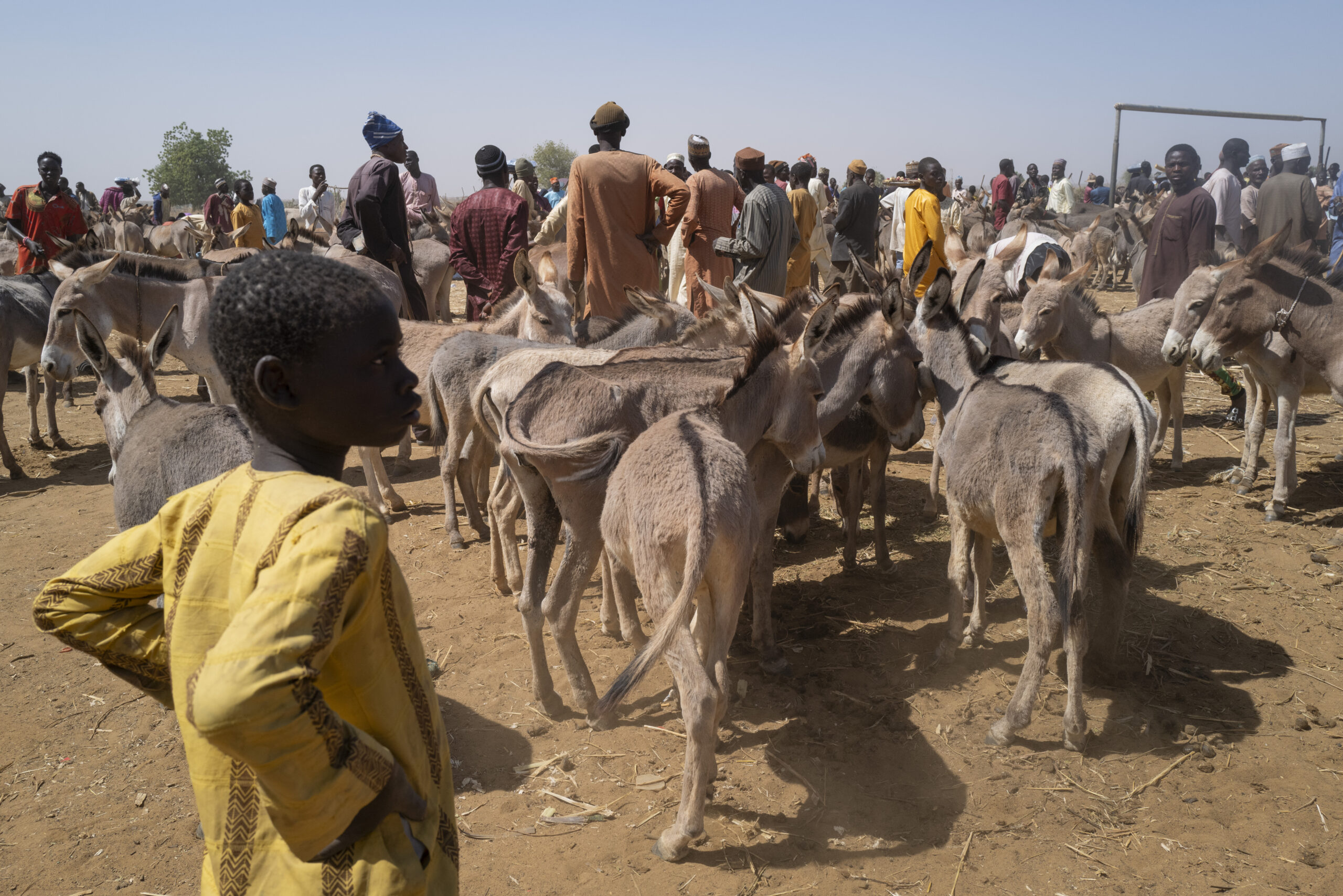
Men handle donkeys at the market in Tangaza, Nigeria, on Jan. 26. Many kidnappings and attacks occur in this area.
The U.S. has ramped up cooperation with Nigeria’s military in recent months, according to four of the officials, running daily surveillance flights over northern Nigeria with drones launched from Ghana. Officials said the flights have provided actionable intelligence used in additional strikes by the Nigerian military.
What, if anything, the U.S. and Nigerian strikes have achieved against militants in the northwest remains difficult to discern. Both nations are playing catch-up on a threat that analysts say has been building for years and is still poorly understood. Attacks by Lakurawa have not been officially claimed by the Islamic State, and researchers and officials have competing theories about the group’s origins and allegiances.
What was clear over the course of more than 20 interviews across Sokoto state is that the militants are on the offensive. Residents in multiple front line villages say armed men are increasingly imposing an extreme version of Islamic law on their communities, demanding they pay taxes known as zakat and punishing those who refuse.
Fighters often announce their arrival by barging into mosques and dictating the rules communities must live by. Most of the villages around Baidi, residents said, have already fallen under Lakurawa’s control. Western schools, already rare in this impoverished region, have been shuttered. Music, cigarettes, and traditional celebrations, including weddings and naming ceremonies, have been banned. Drinking and drugs are forbidden and strict dress codes are enforced.
Musa Sani next to blood and bullet holes where Lakurawa shot during a recent attack that killed several people in Baidi, Nigeria, on Jan. 26.
A few weeks before the attack in Baidi, residents said, militants approached members of a local vigilante group that had formed to defend the community, demanding they urge local leaders to submit to their rule. The leaders refused.
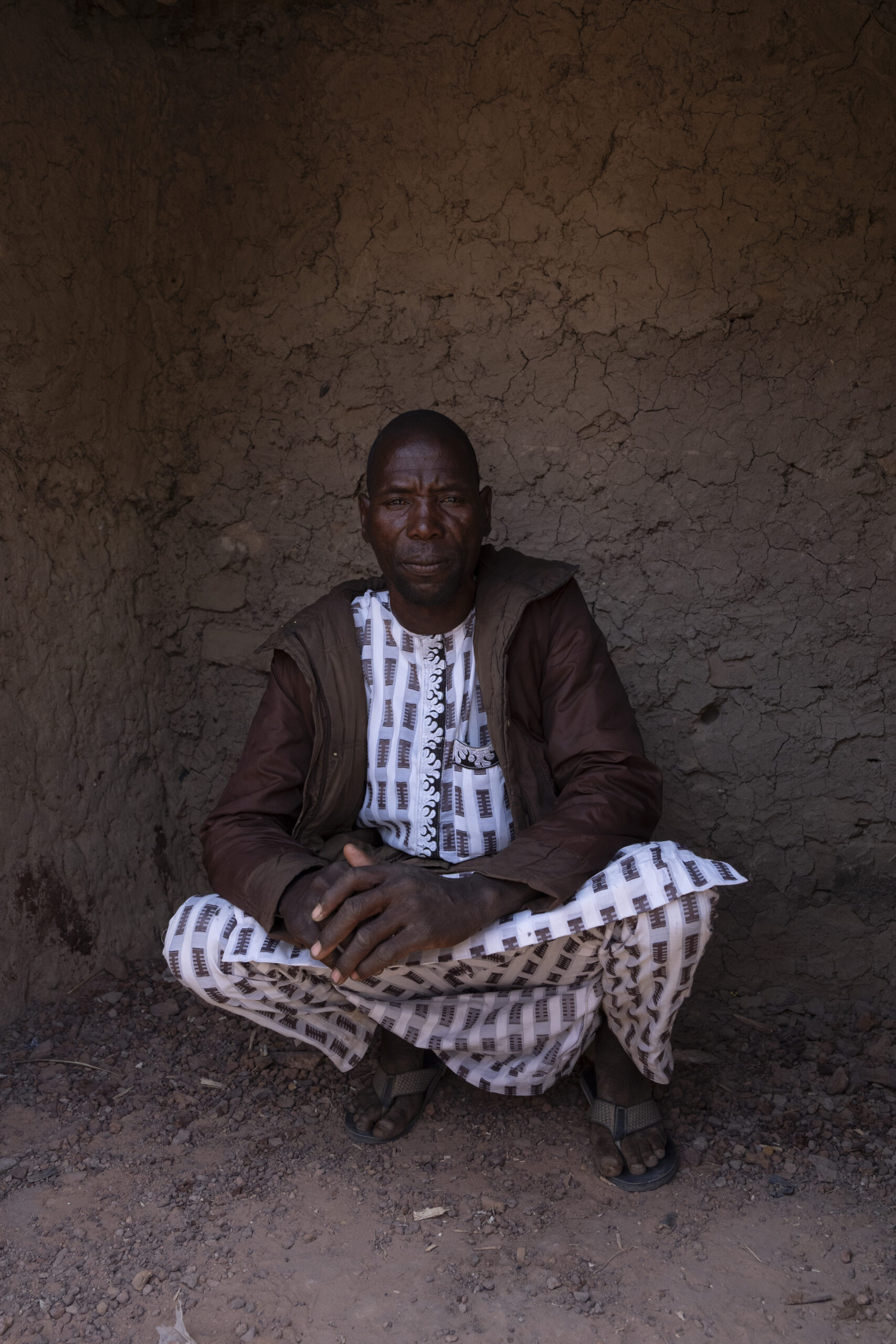
“We understood there would be retaliation,” said Musa Sani, 47, one of the vigilantes. “But we did not want to live under a terrorist regime.”
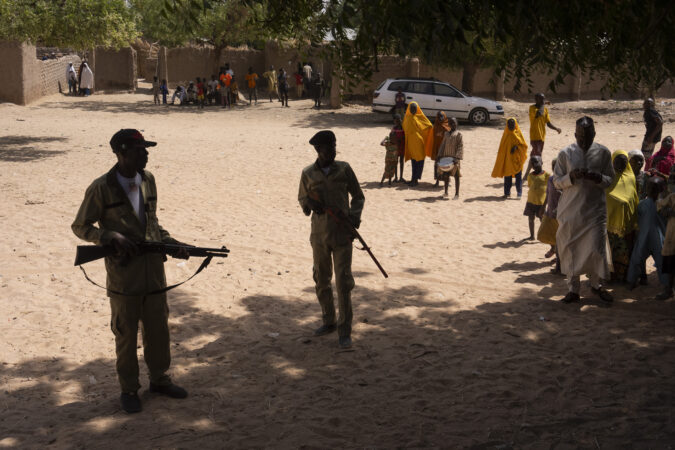
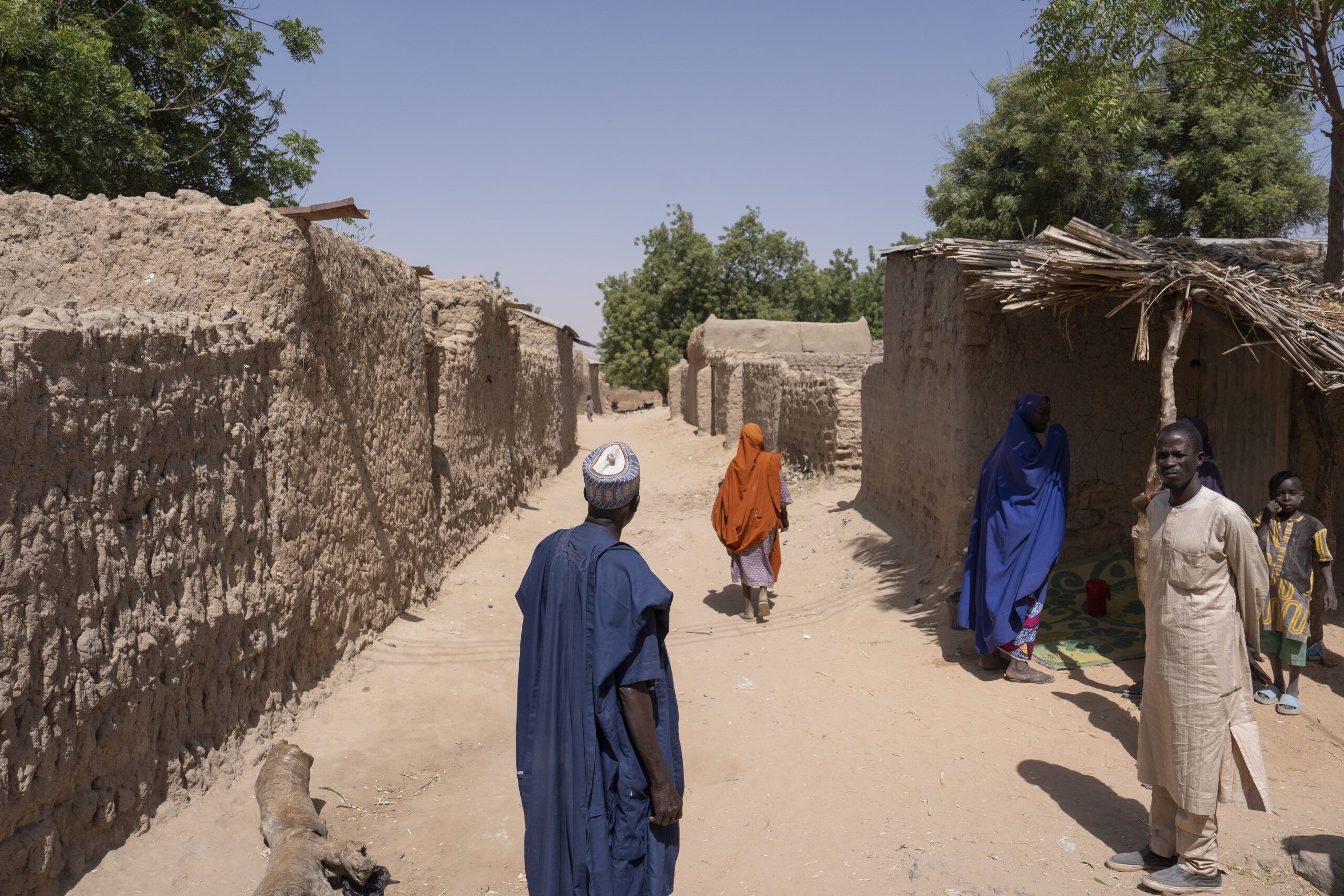
Men hang out in Silame, Nigeria, where Lakurawa pass through, on Jan. 25. Lakurawa have been known to punish people for having cell phones. Many kidnappings and attacks occur in this area.
‘Under the radar’
In November, U.N. secretary-general António Guterres told the U.N. Security Council that Africa’s Sahel region, spanning the breadth of the continent from the Atlantic Ocean to the Red Sea, now accounts for more than half of all terrorism deaths worldwide and warned of a “disastrous domino effect across the entire region.”
A dizzying array of armed groups thrive across a succession of weak states with porous borders. JNIM, a powerful al-Qaeda affiliate, and ISSP compete for influence in Mali, Burkina Faso, and Niger (JNIM also claimed its first attack in Nigeria in late October). ISWAP and the remnants of the Boko Haram jihadist movement are dominant in northeast Nigeria and around Lake Chad.
Boko Haram’s rampage in northeast Nigeria captured the world’s attention more than a decade ago when fighters kidnapped nearly 300 schoolgirls from their dormitories in Chibok. But the arrival of Sahelian militants in the northwest a few years later flew largely under the radar and has been a source of growing alarm for Nigerian officials.
Hakimi Maikudi, community leader, stands in the road where Lakurawa came through during the attack in Baidi, Nigeria, on Jan. 26.
In early November, when Trump suddenly threatened to go “guns-a-blazing” into Nigeria to protect embattled Christmas, officials here were surprised and angry. Nigeria’s population of 230 million is roughly split between Christians and Muslims, and people of both faiths have been targeted by extremists.
But Nigeria’s military was watching the militant violence, especially in the northwest, with growing concern, acknowledged Daniel Bwala, a senior adviser to President Bola Tinubu. “We had always viewed the United States as a senior brother,” said Bwala. “We needed to find a way to work with [them].”
Bwala and a delegation of top officials made the rounds in Washington, appealing for help in addressing a security crisis they said impacted all Nigerians. Their efforts paid off: When the U.S. launched strikes on Dec. 25, it was against Lakurawa targets provided by Nigerian officials.
Although Trump and other U.S. officials have publicly claimed the strikes were a success, they have provided no evidence to support their claims. At least four of the 16 Tomahawk missiles failed to explode, the Washington Post found, landing in open fields and a residential area far from where the militants are known to operate. Nigeria’s government has said three dozen suspected militants were arrested while attempting to flee Sokoto state following the strikes. Mohammed Idris, the country’s information minister, told the Post that a “comprehensive evaluation” was still underway.
A senior Nigerian intelligence official who deployed a team to the sites where missiles reached their targets told the Post that while Lakurawa camps were destroyed, there was no indication that militants were killed. Three other Nigerian officials conceded that the sheer number of armed groups operating in the northwest, and shifting alliances among them, have made it difficult to obtain accurate intelligence.
That lack of clarity presents “a real operational challenge vis-à-vis targeting,” said James Barnett, a Nigeria specialist based between Lagos and Britain. “Intelligence has to be precise and fresh for it to be effective.”
Barnett also cautioned that Lakurawa may not be a single coherent group, but rather a catchall term for Sahelian Islamist militants. Allied criminal bandits, he added, may be exploiting the confusion and operating under its name.
As officials try to make sense of the situation, fighters loyal to ISSP have “entrenched themselves in the Niger-Nigeria borderland and are advancing toward Benin,” said Héni Nsaibia, the senior West Africa analyst for the Armed Conflict Location & Event Data project.
“They have decided to run their operations covertly,” he said, “to try to stay under the radar.”
Children leave their home in Silame, Nigeria, where Lakurawa pass through, on Jan. 25.
Rule of the gun
Driving north from the bustling city of Sokoto, the regional capital, toward the border with Niger, the roads are largely devoid of traffic. Rolling brushland is interrupted only by the occasional farm.
It is in these remote, ungoverned spaces that Lakurawa established a foothold, officials say, and is now expanding.
Residents in four towns and villages described armed men arriving here more than five years ago from Mali and Niger, traveling on motorbikes and speaking languages they didn’t understand.
At first, they presented themselves as peacemakers — mediating disputes between herders and farmers, which sometimes turned violent, and protecting communities from roving bandits. But it was not long before they showed their true colors, residents said, issuing draconian decrees at gunpoint.
Over the last year, according to experts, residents and officials, the militants have widened their reach, bringing more villages under their control and using violence against those who resist.
Residents in Dankale recalled being crowded into the village meeting place last year by 10 men with AK-47s, their faces mostly hidden by turbans. Through an interpreter, the Islamists demanded that locals disarm and adhere to their rules, said Awal, one of the men present that day.
“We knew that if we spoke,” he said, “we would be killed.”
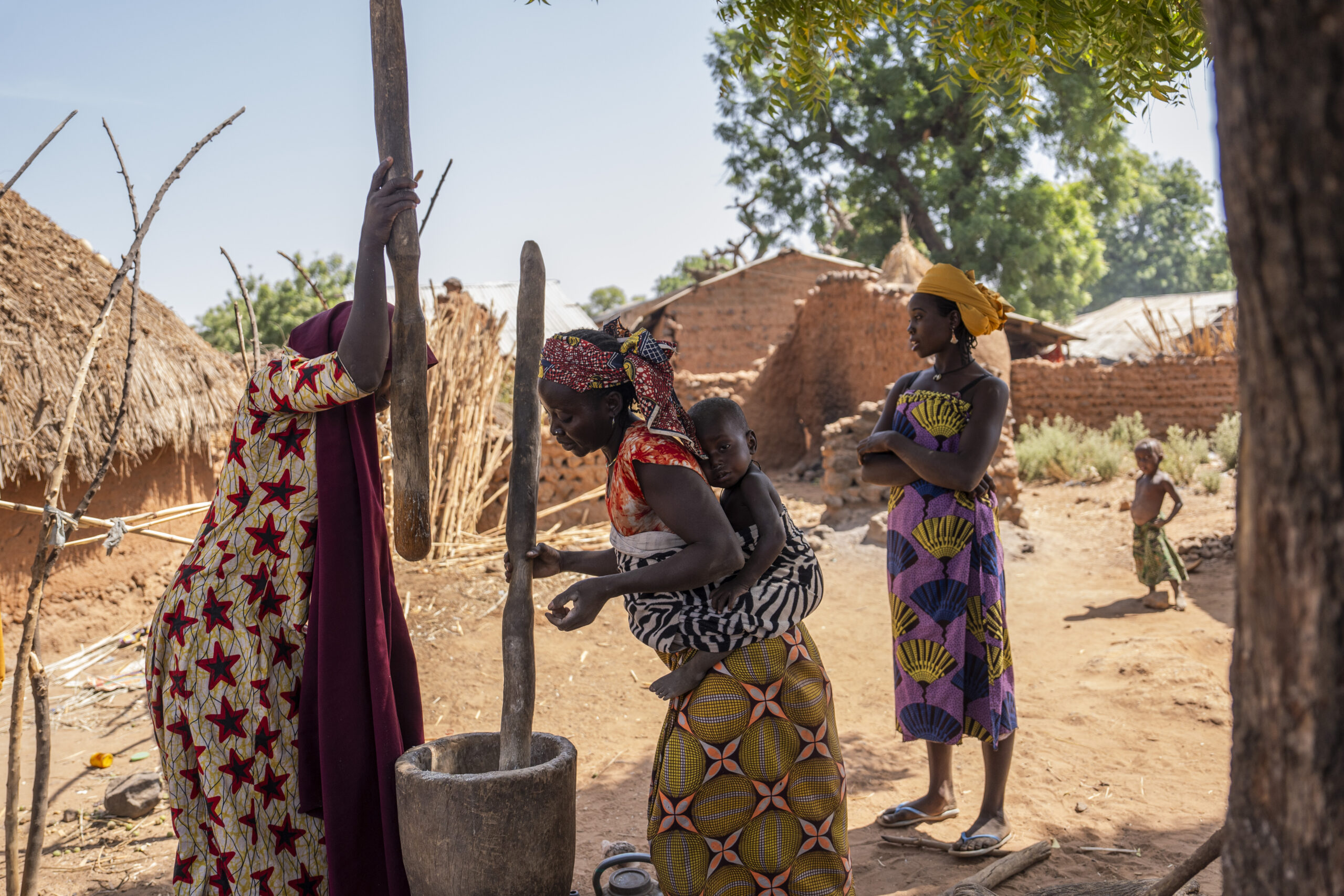
Habiba, left, and Bashariya, carrying baby Awaisu, grind cornmeal in Dankale, Nigeria, where Lakurawa pass through, on Jan. 25.
In nearby Karadal, imam Sirajo Lawal said that virtually everyone in his village tries to live by the Quran. But the Islam that he preaches, and that his father preached before him, gives people the freedom to choose their own path, he said.
With the militants, however‚ “they say, ‘You must do this, otherwise, hellfire,’” said Lawal, 55. “This is the point of difference.”
He spoke to the Post at a school in Tangaza, about six miles from his village, now solidly under the control of Lakurawa. Interviewing him there would have been too dangerous. Men in the community who listen to music or refuse to grow beards are beaten or fined by the militants, he said. Gunmen have also burst into traditional ceremonies, which are no longer permitted, and fired into the air.
Imam Sirajo Lawal in Tangaza, Nigeria, on Jan. 26.
In Karadal, and dozens of communities like it, the group rules by extortion: forcing locals to pay taxes in exchange for safety. Lawal said he had put aside eight bags of grain for his next payment to the group.
Kingsley L. Madueke, the Nigeria research coordinator for the Global Initiative Against Transnational Organized Crime, said much of Lakurawa’s funding is believed to come from tax collection, though the group also carries out kidnappings for ransom and steals cattle from herders. Often, he added, they cooperate with local bandits who know the terrain.
Most analysts believe Lakurawa is part of, or affiliated with, the Islamic State Sahel Province, which first emerged in 2015, killed four U.S. soldiers in an ambush in rural Niger in 2017 and was officially recognized as a “province” by the Islamic State in 2022. How much support Lakurawa receives from the Islamic State’s hub in northern Somalia is unclear — one of many things researchers are still trying to pin down.
Lawal said the militants came straight to him when they wanted to enter his village. He acquiesced to their demands, he said, knowing the Nigerian government would not protect them.
“We are not comfortable at all, but we cannot do otherwise,” he said. “They could kill us at any time.”
In the wake of U.S. strikes, Lakurawa have apparently moved their camps, Madueke said, but their attacks have continued. Dislodging them from the northwest would require a clear strategy and sustained commitment from an administration that has not prioritized Africa, said retired U.S. Air Force Maj. Gen. Kenneth Ekman.
“A dozen cruise missiles does not a counterterrorism mission make,” he said. “We’ve learned time and again that success requires consistent presence with sufficient capability and will alongside our partners.”
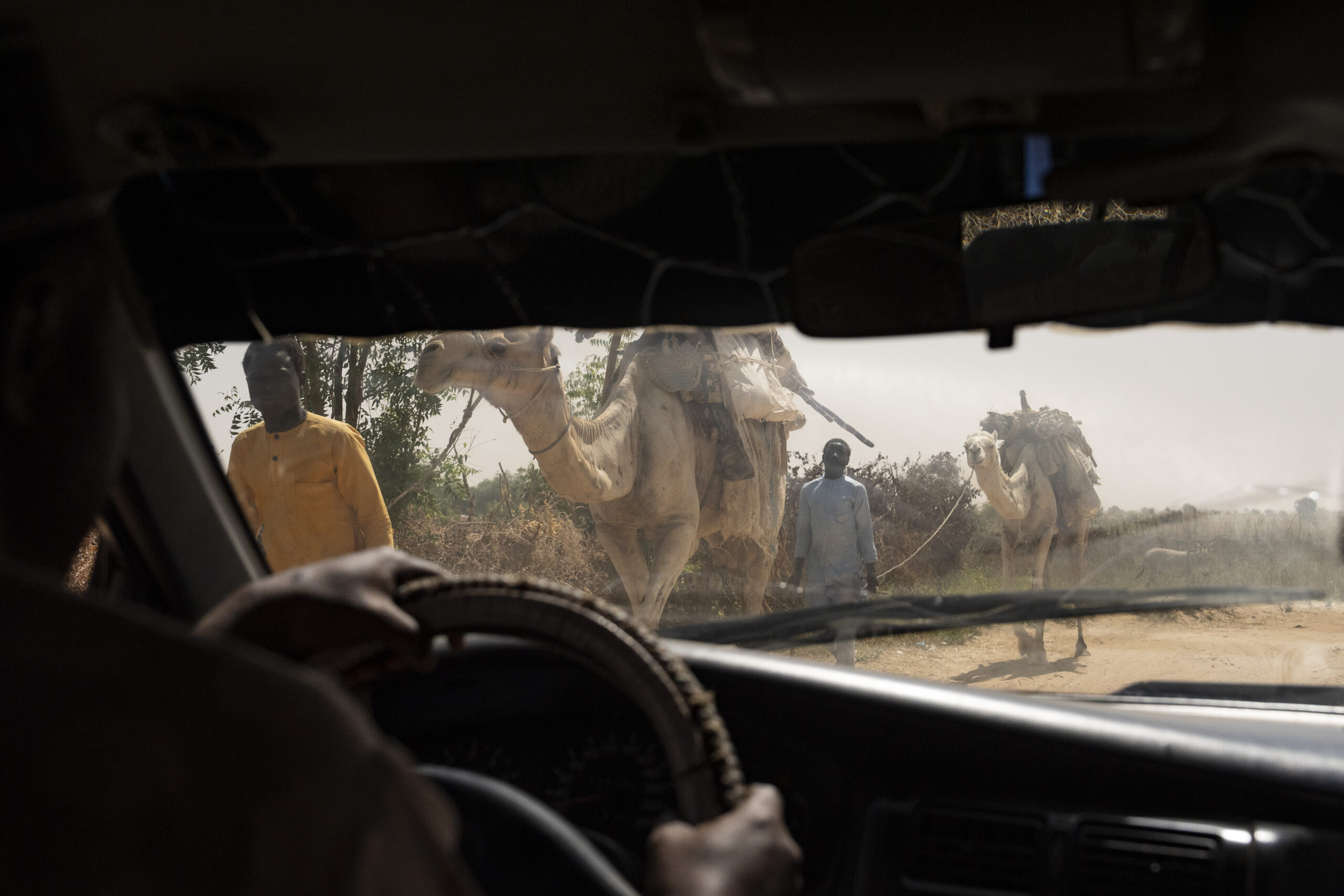
Men walk with camels in Baidi, Nigeria, on Jan. 26. A recent attack by Lakurawa here killed several people.
Sani, the vigilante in Baidi, was initially hopeful the U.S. strikes would wipe out so many militants that they would abandon the area. He knew he was mistaken when he heard the gunfire in the town square.
He found his grandfather among the dead, his stomach perforated with bullets. Through his tears, he tried to help two men with critical injuries, he said, but neither made it. He expects more violence is coming.
“We’re more scared than ever before,” he said. “It feels like they’ve dispersed and are everywhere.”
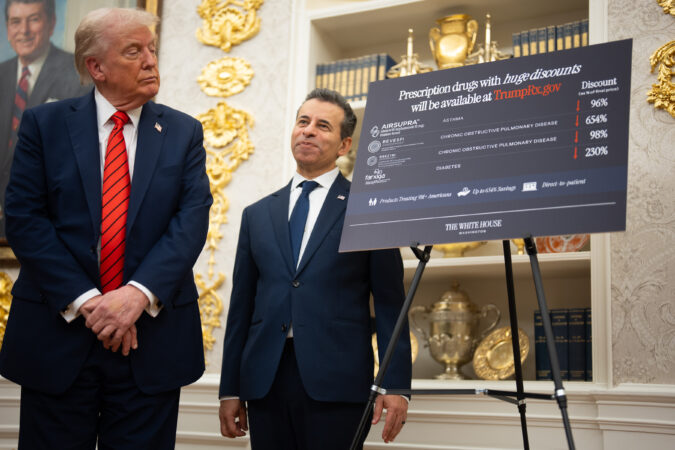
NEW YORK — The Trump administration on Thursday launched TrumpRx, a website it says will help patients buy prescription drugs directly at a discounted rate at a time when health care and the cost of living are growing concerns for Americans.
“You’re going to save a fortune,” President Donald Trump said at the site’s unveiling. “And this is also so good for overall health care.”
The government-hosted website is not a platform for buying medications. Instead, it’s set up as a facilitator, pointing Americans to drugmakers’ direct-to-consumer websites, where they can make purchases. It also provides coupons to use at pharmacies. The site launches with over 40 medications, including weight-loss drugs such as Ozempic and Wegovy.
The site is part of a larger effort by the Trump administration to show it’s tacking the challenges of high costs. Affordability has emerged as a political vulnerability for Trump and his Republican allies going into November’s midterm elections, as Americans remain concerned about the cost of housing, groceries, utilities and other staples of middle-class identity.
Trump stressed that the lower prices were made possible by his pressuring of pharmaceutical companies on prices, saying he demanded that they charge the same costs in the U.S. as in other nations. He said prescription drug costs will increase in foreign countries as a result.
“We’re tired of subsidizing the world,” Trump said at the event on the White House campus that lasted roughly 20 minutes.
The president first teased TrumpRx in September while announcing the first of his more than 15 deals with pharmaceutical companies to lower drug prices to match the lowest price offered in other developed nations. He said in December the website would provide “massive discounts to all consumers” — though it’s unclear whether the prices available on drugmakers’ websites will routinely be any lower than what many consumers could get through their insurance coverage.
The website’s Thursday release came after it faced multiple delays, for reasons the administration hasn’t publicly shared. Last fall, Mehmet Oz, administrator of the Centers for Medicare and Medicaid Services, told Trump the site would share prices for consumers before the end of the year. An expected launch in late January was also pushed back.
The president has spent the past several months seeking to spotlight his efforts to lower drug prices for Americans. He’s done that through deals with major pharmaceutical companies, including some of the biggest drugmakers like Pfizer, Eli Lilly and Merck, which have agreed to lower prices of their Medicaid drugs to so-called “most favored nations” pricing. As part of the deals, many of the companies’ new drugs are also to be launched at discounted rates for consumer markets through TrumpRx.
Many of the details of Trump’s deals with manufacturers remain unclear, and drug prices for patients in the U.S. can depend on many factors, including the competition a treatment faces and insurance coverage. Most people have coverage through work, the individual insurance market or government programs like Medicaid and Medicare, which shield them from much of the cost.
Trump’s administration also has negotiated lower prices for several prescription drugs for Medicare enrollees, through a direct negotiation program created by a 2022 law.
NEW YORK — In 2015, Woody Allen and his wife, Soon-Yi Previn, went on a trip to Washington, D.C. With the help of their friend Jeffrey Epstein, they were able to tour the White House.
Allen’s friendship with Epstein has been known for years, but emails in the huge trove of records released by the Justice Department in recent days illustrate that relationship in new depth.
The filmmaker, his wife and Epstein were neighbors in New York City, and the three dined together often, records show. They offered each other emotional support during periods when they were being criticized in the media. They commiserated about being accused — unfairly, they told each other — of sexual misconduct.
And in 2015, Epstein used his connections to another friend who had been in President Barack Obama’s administration to help the couple get a White House tour.
“Could you show soon yi the White House,” Epstein wrote in a May 2015 email to former White House counsel Kathy Ruemmler. “I assume woody would be too politically sensitive?”
“I am sure I could show both of them the White House,” Ruemmler responded, although she doubted whether Epstein, who in 2008 had pleaded guilty to solicitating prostitution from an underage girl, would be allowed in.
“You are too politically sensitive, I think,” she added.
White House records show that Allen, Previn, and Ruemmler visited on Dec. 27, a Sunday. Obama was in Hawaii at the time.
Ruemmler and Allen were among a long list of notable people who maintained friendships with Epstein for years, even though he was a registered sex offender who had been accused of abusing children, and whose legal problems had been widely covered in newspapers.
Some of the guests who accompanied Allen and Previn to dinners with Epstein included talk show host Dick Cavett, linguist Noam Chomsky, and the late comedian David Brenner. Epstein also attended screenings of Allen’s movies and, according to emails, would visit with Allen so he could watch him edit his latest film.
“Wide variety of interesting people at every dinner,” was how Allen described some of their gatherings in a letter commissioned for a 2016 Epstein birthday party. “It’s always interesting and the food is sumptuous and abundant. Lots of dishes, plenty of choices, numerous desserts, well served. I say well served often it’s by some professional houseman and just as often by several young women reminding one of Castle Dracula where (actor Bela) Lugosi has three young female vampires who service the place.”
A message sent to an assistant for Allen and Previn via email seeking comment wasn’t immediately returned. Epstein killed himself in 2019 while awaiting trial on sex trafficking charges.
Emails suggest that Previn, too, had a close relationship to Epstein and she often served as the intermediary between Epstein and Allen.
Numerous exchanges among Allen, Previn, and Epstein refer to the scandals that began in the early 1990s when Allen acknowledged he was having an affair with Previn, the adopted daughter of his then-girlfriend Mia Farrow. Around the same time, he was investigated by state authorities over allegations he had assaulted their adopted daughter, Dylan Farrow, while visiting Mia’s Connecticut home.
A Connecticut prosecutor said in 1993 that there was “probable cause” to charge Allen with molesting Dylan, but that he decided not to pursue the case.
Allen, who married Previn in 1997 and has since adopted two daughters, has denied any wrongdoing. Dylan’s allegations returned to the news in 2014 when an open letter from her was published in the New York Times. Allen has since been largely ostracized by the American film community.
In emails in 2016, Epstein, Previn, and Allen compared their own scandals to another celebrity in the news at the time: Bill Cosby, who had denied allegations that he drugged and sexually assaulting numerous women.
“The crowd needs a witch to burn, and there are not many left,” Epstein wrote.
Allen replied, in a message relayed through Previn, that his own situation is “radically different” from Cosby’s.
“I do expect (and get) many ugly unfair accusations, (but) he has to battle 50 women and criminal charges,” Allen said, according to Previn’s email. “I have one irate mother whose case was investigated and discredited,” he said, referring to Mia Farrow.
Epstein replied that the public scorn Allen received was more likely related to his relationship with Previn, which he called a “publicly broken taboo.”
“Everything else is noise,” he added.
Allen, in comments relayed through Previn, responded that if the couple’s taboo relationship was the issue, “there’s nothing to be done.”
“I’m certainly not going to dump her and I’m not going to apologize because I don’t feel either of us did anything we have to apologize for,” he says. “Our romantic life is our business and not the business of the public so it’s a hopeless situation because there’s no way out if that’s what they’re holding against us.”
Epstein advised his friends to just enjoy themselves and in life.
“Some actors or actresses might decline a role,” Epstein wrote. “But, so what.”
Allen hasn’t been accused of having any involvement in Epstein’s alleged sexual abuse of girls and women.
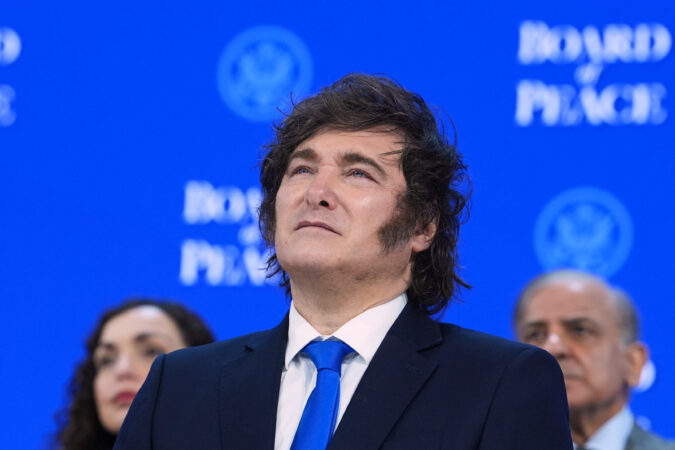
BUENOS AIRES, Argentina — Argentina and the United States agreed Thursday to ease restrictions on each other’s goods in an expansive trade and investment deal that boosts a drive by President Javier Milei’s government to open up Argentina’s protectionist economy and a push by the Trump administration to reduce food prices for Americans.
The deal, which slashes hundreds of reciprocal tariffs between the countries, also reflects the importance of Milei’s ideological loyalty to President Donald Trump, even as the chronically distressed South American nation long isolated from the global economy has little to offer Washington in the way of economic reward or geopolitical clout.
Argentina’s radical libertarian leader has gone to dramatic lengths to prove his devotion to Trump, reshaping his country’s foreign policy to align with the U.S. and championing Trump’s increasingly aggressive interventions in the Western Hemisphere. Milei has traveled to the U.S. at least a dozen times since entering office and plans to visit Trump’s private Mar-a-Lago club in Florida again next week.
The efforts have already paid off. Last year as market turmoil threatened to derail Milei’s free-market overhaul and drain Argentina’s foreign currency reserves ahead of a crucial midterm election, Trump offered his ally a $20 billion credit line. Milei avoided a currency devaluation and won a decisive victory in the election that sent markets rallying.
A trade deal between ideological allies
On Thursday, Argentine Foreign Minister Pablo Quirno and U.S. Trade Representative Jamieson Greer signed the trade and investment agreement in Washington.
After imposing sweeping tariffs on its traditional trading partners for months, the Trump administration changed its tune last November in announcing framework deals with four Latin American countries, including Argentina.
The White House argued that the reduction of mutual tariffs on a range of food imports, like Argentine beef and Ecuadorian bananas, would improve the ability of American firms to sell industrial and agricultural products abroad and relieve rising prices for American consumers. The announcement also came as Trump’s steep tariffs drew scrutiny from the Supreme Court.
Argentina on Thursday became the first of the four countries to finalize its agreement with the U.S. Quirno hailed it as a milestone not only in Argentina’s alliance with the U.S., but also in Milei’s campaign to rebuild the serial defaulter’s reputation.
“Today Argentina sent a clear signal to the world,” he wrote on social media. “We are a reliable partner, open to trade and committed to clear rules, predictability and strategic cooperation.”
Concessions could revive criticism
Argentina’s foreign ministry said it would scrap trade barriers on more than 200 categories of goods from the U.S., including chemicals, machinery and medical devices, slash tariffs to 2% on a range of imports like auto parts and allow sensitive imports like vehicles, beef and dairy products to enter the country tariff-free under government quotas.
Those are key concessions as local Argentine industries long protected by steep tariffs voice concern about their ability to compete with American manufacturers.
Washington, for its part, will eliminate reciprocal tariffs on 1,675 Argentine products, the Argentine Foreign Ministry said, adding $1 billion in export revenue. It did not name all the products, while the White House only said the U.S. would remove reciprocal tariffs on “unavailable natural resources” and ingredients for pharmaceutical goods.
The text of the deal also shows the U.S. agreeing to review its stiff 50% taxes on steel and aluminum imports that have hobbled Argentine manufacturers since last year and quadruple the amount of Argentine beef it allows into the country annually at a lower tariff rate.
An influx of Argentine beef
The influx of beef could reignite criticism from cattle ranchers and Republican lawmakers in farm states who were outraged last October when Trump first floated plans to increase imports of Argentine beef, threatening to lower the price that American ranchers receive for their cattle.
The move, aimed at shoring up the South American country’s limping economy while helping bring beef prices in the U.S. down from record highs, came shortly after the Trump administration offered Milei the $20 billion lifeline and directly purchased both U.S. dollar-denominated Argentine bonds that ratings agencies were classifying as “junk” at the time and the volatile Argentine currency that local investors were dumping in droves.
The backlash came from across the political spectrum. Trump’s MAGA base questioned the need to bail out a far-flung country that has never been a natural U.S. trading partner: The two countries export many of the same things and directly compete in markets of soy, corn, wheat, meat and oil.
Democratic lawmakers expressed outrage that Trump was staking taxpayer money on a political gift to an ideological soulmate. That criticism continues, with U.S. Sen. Elizabeth Warren, the top Democrat on the Senate Banking Committee, on Thursday appealing to Treasury Secretary Scott Bessent to end the $20 billion lifeline.
Thirty-one families that lost relatives in two fatal crashes of Boeing 737 Max jetliners asked a federal appeals court on Thursday to revive a criminal case against the aircraft manufacturer.
Paul Cassell, a lawyer for the families, urged a three-judge panel of the 5th U.S. Circuit Court of Appeals to overturn a lower court’s dismissal of a criminal conspiracy charge Boeing faced for allegedly misleading Federal Aviation Administration regulators about a flight-control system tied to the crashes, which killed 346 people.
The dismissal came at the request of the U.S. government after it reached a deal with Boeing that allowed the company to avoid prosecution in exchange for paying or investing an additional $1.1 billion in fines, compensation for victims’ families, and internal safety and quality measures.
Cassell said Thursday that federal prosecutors violated the families’ rights by failing to properly consult them before striking the deal and shutting them out of the process.
Federal prosecutors countered that, for years, the government, “has solicited and weighed the views of the crash victims’ families as it’s decided whether and how to prosecute the Boeing Company.”
More than a dozen family members attended Thursday’s hearing in New Orleans, and Cassell said many more “around the globe” listened to a livestream of the arguments.
“I feel that there wouldn’t be meaningful accountability without a trial,” Paul Njoroge said in a statement after the hearing. Njoroge, who lives in Canada, lost his entire family in the second of the two crashes — his wife, Carolyne, their children, ages 6, 4, and 9 months, and his mother-in-law.
All passengers and crew died when the 737 Max jets crashed less than five months apart in 2018 and 2019 — a Lion Air flight that plunged into the sea off the coast of Indonesia and an Ethiopian Airlines flight that crashed into a field shortly after takeoff.
U.S. District Judge Reed O’Connor in Texas, who oversaw the case for years, issued a written decision in November that described the families’ arguments as compelling. But O’Connor said case law prevented him from blocking the dismissal motion simply because he disagreed with the government’s view that the deal with Boeing served the public interest.
The judge also concluded that federal prosecutors hadn’t acted in bad faith, had explained their decision and had met their obligations under the Crime Victims’ Rights Act.
In the case of its deal with Boeing, the Justice Department had argued that given the possibility a jury might acquit the company, taking the case to trial carried a risk that Boeing would be spared any further punishment.
Boeing attorney Paul Clement said Thursday that more than 60 families of crash victims “affirmatively supported” the deal and dozens more did not oppose it.
“Boeing deeply regrets” the tragic crashes, Clement said, and “has taken extraordinary steps to improve its internal processes and has paid substantial compensation” to the victims’ families.
The appeals court panel that heard the arguments said it would issue a decision at a later date.
The criminal case took many twists and turns after the Justice Department first charged Boeing in 2021 with defrauding the government but agreed not to prosecute if the company paid a settlement and took steps to comply with anti-fraud laws.
However, federal prosecutors determined in 2024 that Boeing had violated the agreement, and the company agreed to plead guilty to the charge. O’Connor later rejected that plea deal, however, and directed the two sides to resume negotiations. The Justice Department returned last year with the new deal and its request to withdraw the criminal charge.
The case centered on a software system that Boeing developed for the 737 Max, which airlines began flying in 2017. The plane was Boeing’s answer to a new, more fuel-efficient model from European rival Airbus, and Boeing billed it as an updated 737 that wouldn’t require much additional pilot training.
But the Max did include significant changes, some of which Boeing downplayed — most notably, the addition of an automated flight-control system designed to help account for the plane’s larger engines. Boeing didn’t mention the system in airplane manuals, and most pilots didn’t know about it.
In both of the deadly crashes, that software pitched the nose of the plane down repeatedly based on faulty readings from a single sensor, and pilots flying for Lion Air and Ethiopian Airlines were unable to regain control. After the Ethiopia crash, the planes were grounded worldwide for 20 months.
Investigators found that Boeing did not inform key Federal Aviation Administration personnel about changes it had made to the software before regulators set pilot training requirements for the Max and certified the airliner for flight.
LONDON — Keir Starmer never met Jeffrey Epstein. But the British prime minister’s job is under threat because of the fallout from the late sex offender’s global web of relationships.
Friendship with Epstein has already brought down a British royal — Andrew Mountbatten-Windsor, formerly known as Prince Andrew — and U.K. ambassador to Washington Peter Mandelson, fired by Starmer over his links to the financier.
Now new revelations have plunged Starmer’s center-left government into turmoil.
The prime minister is facing mounting pressure from within his governing Labour Party over his decision in 2024 to appoint Mandelson, a veteran Labour politician, to the Washington role despite his ties to Epstein. Just how close those ties were has been exposed in newly released documents that have dominated headlines in the U.K.
Starmer apologized on Thursday to Epstein’s victims, saying Mandelson had repeatedly lied and “portrayed Epstein as someone he barely knew.”
“I am sorry, sorry for what was done to you, sorry that so many people with power failed you,” Starmer said. “Sorry for having believed Mandelson’s lies and appointed him.”
Critics believe it’s an error that could end Starmer’s premiership.
“He is now essentially a boxer on the ropes,” said Rob Ford, professor of political science at the University of Manchester. “His administration could fall over tomorrow, or it could stagger on for months or even years. [But] his authority is seriously shot.”
Mandelson a risky appointment
Starmer fired Mandelson, 72, in September after emails were published showing that he maintained a friendship with Epstein after the late financier’s 2008 conviction for sex offenses involving a minor. Epstein committed suicide in a jail cell in 2019 while awaiting trial on U.S. federal charges accusing him of sexually abusing dozens of girls.
Documents published last week by the U.S. Justice Department contain new revelations, including papers suggesting Mandelson shared sensitive government information with Epstein after the 2008 global financial crisis, and records of payments totaling $75,000 in 2003 and 2004 from Epstein to accounts linked to Mandelson or his husband Reinaldo Avila da Silva.
There are also chatty, jokey messages pointing to a much closer relationship with Epstein than Mandelson had disclosed.
British police are investigating Mandelson over potential misconduct in public office. He is not accused of any sexual offenses and says he never witnessed any sexual wrongdoing,
Mandelson was chosen as ambassador because his trade expertise, contacts and mastery of the political “dark arts” were considered assets in dealing with U.S. President Donald Trump’s second administration.
Critics say Starmer was, at best, naive in not recognizing the risks involved. Aside from his association with Epstein, Mandelson twice had to resign from senior government posts because of scandals over money or ethics.
‘His judgment is questionable’
In the House of Commons on Wednesday, Starmer answered “Yes” when asked whether the vetting process in 2024 had revealed that Mandelson’s friendship with Epstein continued after the latter’s 2008 conviction.
The answer sent shock waves through the chamber. On Thursday Starmer said he had meant only that it had “been known publicly for some time that they knew each other.”
The government plans to release files related to the vetting process that it hopes will exonerate Starmer and show Mandelson lied. But the government is not entirely in control of the process. Some documents are likely to be held back because of the police investigation. Others will be reviewed by Parliament’s independent Intelligence and Security Committee for potential national security implications.
Labour lawmaker Paula Barker said the prime minister “has shown that his judgment is questionable.”
“I think he has a very long way to go to rebuild trust and confidence with the public, and trust and confidence within our party,” she told the BBC.
A string of setbacks
Starmer has faced a string of setbacks since he led Labour to a landslide election victory in July 2024. He has struggled to deliver promised economic growth, repair tattered public services and ease the cost of living. He pledged a return to honest government after 14 years of scandal-tarred Conservative rule, but has been beset by missteps and U-turns over welfare cuts and other unpopular policies.
Despite his struggles on the home front, Starmer has been praised for his work on the world stage. He has played a key role in maintaining European support for Ukraine, and in keeping Trump engaged with peace efforts and NATO. He has also worked to rebuild ties with the European Union after the U.K.’s acrimonious departure from the bloc in 2020.
Labour consistently lags behind the hard-right Reform U.K. party in opinion polls, and its failure to improve had sparked talk of a leadership challenge, even before the Mandelson revelations.
The Epstein files may have brought a challenge closer, but key rivals are holding back, for now.
Senior lawmaker Angela Rayner, a popular figure on the left of the party, is still stinging after being forced to resign as deputy prime minister in September for failing to pay enough tax on a home purchase. Health Secretary Wes Streeting, a star of Labour’s right, was close to Mandelson in the past.
Some Labour lawmakers are calling for Starmer to fire his top aide Morgan McSweeney, a powerful backroom figure mistrusted by many Labour lawmakers, and widely seen as a key force behind Mandelson’s appointment.
Legislator Karl Turner said the prime minister should “get rid of those advisers who frankly have given terrible advice to him over these weeks and months.”
On Thursday Starmer vowed to carry on doing the “vital work” of governing.
But more potential flashpoints loom. Labour may lose a long-held seat in Parliament in a Feb. 26 special election in Greater Manchester. The party is also expected to fare badly in regional and local elections in May.
Ford said that “whenever the moment comes when Starmer does finally leave, either of his own volition or because his MPs oust him … It will all be traced back to appointing Peter Mandelson.”