Category: Nation & World

  • Tens of thousands face another arctic blast without power as East Coast preps for a new storm

    Tens of thousands face another arctic blast without power as East Coast preps for a new storm

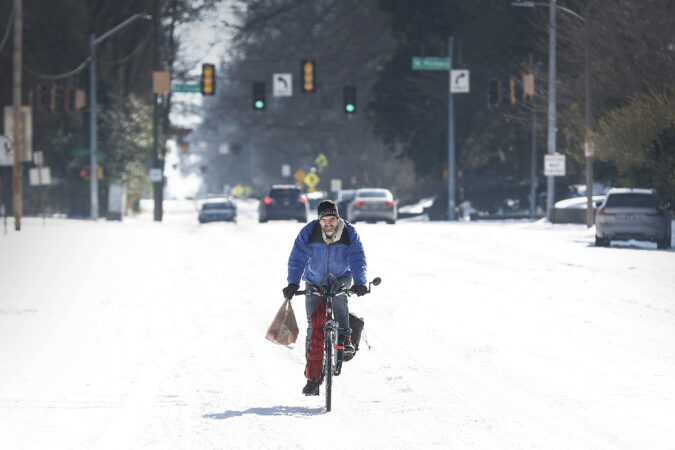
    BELZONI, Miss. — As tens of thousands of people endured nearly a week with no electricity, another storm loomed on the East Coast where residents braced for near-hurricane force winds, heavy snow, and potential flooding.

    More than 230,000 homes and businesses were without electricity Friday, with the vast majority of those outages in Mississippi and Tennessee, according to the outage tracking website poweroutage.us.

    In Mississippi’s Lafayette County, where about 12,000 people were still without electricity midday Friday, emergency management agency spokesperson Beau Moore said he knows not everyone will get power back before the cold hits.

    “It’s a race against time to get it on for those we can get it on for,” Moore said.

    Workers are attacking the project by ground and air. A video on the Tennessee Valley Authority’s Facebook page shows a worker sitting on the skids of a hovering helicopter so they can repair a giant power structure.

    Arctic air moving into the Southeast was expected to cause already frigid temperatures to plummet into the teens on Friday night in cities like Nashville, where many still lacked power nearly a week after a massive storm dumped snow and ice across the eastern U.S., the National Weather Service said.

    Forecasters say the subfreezing weather will persist in the eastern U.S. into February and there’s high chance of heavy snow in the Carolinas, Virginia, and northeast Georgia this weekend, possibly up to a foot in parts of North Carolina. Snow is also possible along the East Coast from Maryland to Maine.

    On Saturday night and early Sunday, forecasters expect wind and snow that could lead to blizzard conditions before the storm starts to move to sea.

    Snow should pile up in the Carolinas

    Several inches of snow, possibly 1 foot in some locations, were forecast statewide, particularly in eastern counties.

    Hundreds of state National Guard soldiers were ready to help. State workers have also been preparing roads.

    In Myrtle Beach, S.C., a town more accustomed to hurricanes, traffic jams and tourists, the National Weather Service predicted 6 inches of snow.

    The city has no snow removal equipment. Mayor Mark Kruea said they will “use what we can find” — maybe a motor grader or bulldozer to scrape streets.

    “With a hurricane you can storm proof many things,” Kruea said Friday. “But at a place like this, there is only a few things you can do to get ready for snow.”

    In North Carolina, several inches of snow, possibly 1 foot in some locations, were forecast statewide, particularly in eastern counties.

    In Wake Forest, N.C., people filled propane tanks Friday at Holding Oil and Gas, where employee Stanley Harris disconnected one tank, set it aside with a clank and then hooked up another.

    In Dare County to the east, home to much of North Carolina’s Outer Banks, longtime resident Bob Woodard said he’s worried about that more unoccupied houses in communities like Rodanthe and Buxton could collapse into the Atlantic Ocean.

    Hypothermia risks grow

    With the wave of dangerous cold heading for the South, experts say the risk of hypothermia heightens for people in parts of Mississippi and Tennessee who are entering their sixth day trapped at home without power in subfreezing temperatures.

    “The body can handle cold temperatures briefly very well, but the prolonged exposure is a problem,” said Hans House, University of Iowa professor of emergency medicine.

    People who are more vulnerable — the elderly, infants and those with underlying health conditions — may have started experiencing hypothermia symptoms within hours of exposure to the frigid temperatures, explained Zheng Ben Ma, medical director of the University of Washington Medical Center’s northwest emergency department. That can include exhaustion, slurred speech, and memory loss.

    “Once you get into days six, seven, upward of 10, then even a healthy, resilient person will be more predisposed to experiencing some of those deleterious effects of the cold temperature,” he said.

    Frostbite is also a concern in southern states, where people might not own clothes for northern winters, said David Nestler, an emergency medicine specialist at the Mayo Clinic in Minnesota.

    Mississippi and Tennessee still seeking full power

    Mississippi officials say it’s the state’s worst winter storm since 1994. About 80 warming centers were opened in one of the nation’s poorest states. National Guard troops were delivering supplies by truck and helicopter.

    Yazoo Valley Electric Power Association workers, some of whom don’t have power at their own homes, are working 16-hour days to restore electricity in Mississippi. Workers cut their way through downed trees to reach some areas for repairs, said Michael Neely, CEO and general manager.

    Worker Ethan Green, 21, said he feels pressure to get the job done quickly. “We can only go so quick,” he said. “In order to do it safely, we have to take our time.”

    In Tennessee, crews were also distributing supplies, said Gov. Bill Lee.

    The governor on Friday also said he has shared “strong concerns” with Nashville Electric Service leadership, saying communication with customers and power restoration efforts must improve.

    Tennesseans “need a clear timeline for power restoration, transparency on the number of linemen deployed, and a better understanding of when work will be completed in their neighborhood,” Lee said.

    Nashville residents’ criticisms have grown louder over their utility’s storm preparations and recovery, as more than 60,000 homes and businesses it serves remained powerless with frigid temperatures expected. Nashville Electric Service has defended its approach, saying it was an unprecedented storm. At the peak, about half of its customers in and near the capital city lost power.

    Nearly 90 people have died in bitter cold from Texas to New Jersey. Roughly half the deaths were reported in Tennessee, Mississippi, and Louisiana. While some deaths have been attributed to hypothermia, others are suspected to be related to carbon monoxide exposure. Officials have not released specific details about how some of the people died.

    The arctic cold was expected to plunge as far south as Florida.
  • The Justice Department released 3 million pages from its Jeffrey Epstein files

    The Justice Department released 3 million pages from its Jeffrey Epstein files

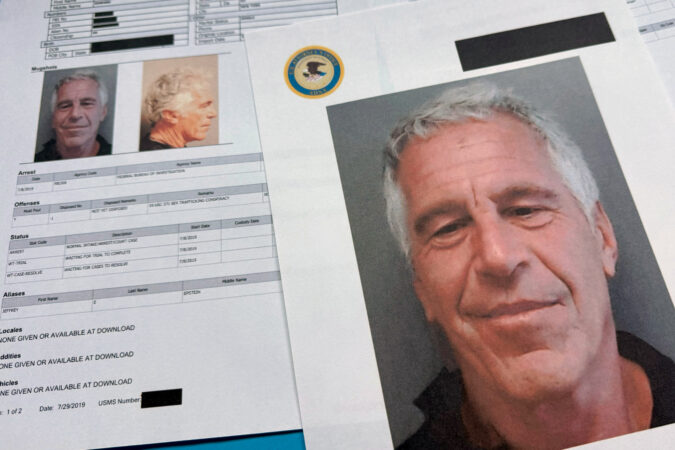
    NEW YORK — The Justice Department on Friday released many more records from its investigative files on Jeffrey Epstein, resuming disclosures under a law intended to reveal what the government knew about the millionaire financier’s sexual abuse of young girls and his interactions with rich and powerful people such as Donald Trump and Bill Clinton.

    Deputy Attorney General Todd Blanche said the department would be releasing more than 3 million pages of documents in the latest Epstein disclosure, as well as more than 2,000 videos and 180,000 images. The files, posted to the department’s website, include some of the several million pages of records that officials said were withheld from an initial release in December.

    Included in the batch were records concerning some of Epstein’s famous associates, including Andrew Mountbatten-Windsor, formerly known as Britain’s Prince Andrew, as well as email correspondence between Epstein and Elon Musk and other prominent contacts from across the political spectrum.

    The documents were disclosed under the Epstein Files Transparency Act, the law enacted after months of public and political pressure that requires the government to open its files on the late financier and his confidant and onetime girlfriend, Ghislaine Maxwell. Lawmakers complained when the Justice Department made only a limited release last month, but officials said more time was needed to review an additional trove of documents that was discovered and to scour the records to ensure no sensitive information about victims was inadvertently released.

    “Today’s release marks the end of a very comprehensive document identification and review process to ensure transparency to the American people and compliance with the act,” Blanche said at a news conference announcing the disclosure.

    Friday’s disclosure represents the largest document dump to date about a saga the Trump administration has struggled for months to shake because of the president’s previous association with Epstein. State and federal investigations into the financier have long animated online sleuths, conspiracy theorists and others who have suspected government cover-ups and clamored for a full accounting, demands that even Blanche acknowledged might not be satisfied by the latest release.

    “There’s a hunger, or a thirst, for information that I don’t think will be satisfied by the review of these documents,” he said.

    After missing a Dec. 19 deadline set by Congress to release all the files, the Justice Department said it tasked hundreds of lawyers with reviewing the records to determine what needed to be redacted, or blacked out. But it denied any effort to shield Trump, who says he cut ties with Epstein years ago despite an earlier friendship, from potential embarrassment.

    “We did not protect President Trump. We didn’t protect — or not protect — anybody,” Blanche said.

    Among the materials withheld is information that could jeopardize any ongoing investigation or expose the identities of potential victims of sex abuse. Women other than Maxwell were redacted from videos and images being released Friday, Blanche said.

    The number of documents subject to review ballooned to roughly 6 million, including duplicates.

    Epstein’s famous friends

    The latest batch of documents include correspondence either with or about some of Epstein’s friends.

    Mountbatten-Windsor’s name appears at least several hundred times in the documents, sometimes in news clippings, sometimes in Epstein’s private email correspondence and in guest lists for dinners organized by Epstein. Some of the records also document an attempt by prosecutors in New York to get the former prince to agree to be interviewed as part of their Epstein sex trafficking probe.

    The records also show that Musk, the billionaire Tesla founder, reached out to Epstein on at least two separate occasions to plan visits to the Caribbean island where many of the allegations of sexual abuse purportedly occurred.

    In a 2012 exchange, Epstein inquired how many people Musk would like flown by helicopter to the island he owned — Little Saint James in the U.S. Virgin Islands.

    “Probably just Talulah and me,” Musk responded, referencing his partner at the time, actress Talulah Riley. “What day/night will be the wildest party on our island?”

    Musk messaged Epstein again ahead of a planned trip to the Caribbean in December 2013. “Will be in the BVI/St Bart’s area over the holidays,” he wrote. “Is there a good time to visit?” Epstein responded by extending an invite for sometime after the New Year holiday.

    It’s not immediately clear if the island visits took place. Spokespersons for Musk’s companies, Tesla and X, didn’t immediately respond to emails seeking comment.

    Musk has maintained that he repeatedly turned down the disgraced financier’s overtures.

    “Epstein tried to get me to go to his island and I REFUSED,” he posted on X in 2025 when House Democrats released an Epstein calendar with an entry mentioning a potential Musk visit to the island.

    The documents also contain hundreds of friendly text messages between Epstein and Steve Bannon during Trump’s first term.

    Bannon, a conservative activist who served as Trump’s White House strategist earlier in the president’s first term, bantered over politics with the financier, discussed get-togethers with him over breakfast, lunch or dinner and, on March 29, 2019, asked Epstein if he could supply his plane to pick him up in Rome: “Is it possible to get your plane here to collect me?”

    Epstein told him his pilot and crew “are doing their best” to arrange that flight but if Bannon could find a charter flight instead, “I’m happy to pay.” Apparently in France at the time, Epstein followed up with a text saying: “My guys can pick you up. Come for dinner.” The exchange did not show how that played out.

    On one occasion in December 2012, Epstein invited Howard Lutnick — now Trump’s commerce secretary — to his private island in the Caribbean for lunch, documents released Friday show. Lutnick’s wife, Allison Lutnick, enthusiastically accepted the invitation and said they would arrive on a yacht with their children. On another occasion in 2011, the two men had drinks, according to a schedule shared with Epstein.

    Lutnick has tried to distance himself from Epstein, saying in a 2025 interview that he cut ties decades ago and calling him “gross.” He didn’t respond to a request for comment Friday.

    During Trump’s first term, Epstein emailed Kathy Ruemmler, a lawyer and former Obama White House official, to warn that Democrats should stop demonizing Trump as a Mafia-type figure even as he derided the president as a “maniac.”

    A spokesperson for Goldman Sachs, where Ruemmler serves as general counsel and chief legal officer, said in a statement that Ruemmler “had a professional association with Jeffrey Epstein when she was a lawyer in private practice” and “regrets ever knowing him.”

    Building on the earlier release

    The Justice Department released tens of thousands of pages of documents just before Christmas, including photographs, interview transcripts, call logs and court records. Many were either already public or heavily blacked out.

    They included previously released flight logs showing Trump flew on Epstein’s private jet in the 1990s, before they had a falling-out, and several photographs of Clinton. Neither Trump, a Republican, nor Clinton, a Democrat, has been publicly accused of wrongdoing in connection with Epstein. Both have said they had no knowledge he was abusing underage girls.

    Epstein killed himself in a New York jail cell in August 2019, a month after he was indicted on federal sex trafficking charges.

    In 2008 and 2009, Epstein served jail time in Florida after pleading guilty to soliciting prostitution from someone under the age of 18. At the time, investigators had gathered evidence that Epstein had sexually abused underage girls at his Palm Beach home. The U.S. attorney’s office agreed not to prosecute him in exchange for his guilty plea to lesser state charges.

    In 2021, a federal jury in New York convicted Maxwell, a British socialite, of sex trafficking for helping recruit some of his underage victims. She is serving a 20-year prison sentence at a prison camp in Texas, after being moved there from a prison in Florida. She denies any wrongdoing.

    U.S. prosecutors never charged anyone else in connection with Epstein’s abuse of girls, but one of his victims, Virginia Roberts Giuffre, accused him in lawsuits of having arranged for her to have sexual encounters at age 17 and 18 with numerous politicians, business titans, noted academics, and others, all of whom denied her allegations.

    Among those she accused was Britain’s Prince Andrew, who was stripped of his royal titles amid the scandal. Andrew denied having sex with Giuffre but settled her lawsuit for an undisclosed sum.

    Giuffre died by suicide last year at age 41.

  • Israel reopening Gaza’s border crossing with Egypt on Sunday after long closure

    Israel reopening Gaza’s border crossing with Egypt on Sunday after long closure

    JERUSALEM — Israel said Friday that it will reopen the pedestrian border crossing between the Gaza Strip and Egypt over the weekend, marking an important step forward for U.S. President Donald Trump’s Gaza ceasefire plan.

    COGAT, the Israeli military body in charge of coordinating aid to Gaza, said in a statement that starting on Sunday a “limited movement of people only” would be allowed through the Rafah crossing, Gaza’s main gateway to the outside world.

    The announcement followed statements from Israeli Prime Minister Benjamin Netanyahu and Ali Shaath, newly appointed to head the Palestinian administrative committee governing Gaza’s daily affairs, that it would likely open soon.

    While COGAT said the passage will open in both directions on Sunday, Shaath said the first day will be a trial for operations and that travel both ways will start Monday.

    Israel as of Friday agreed to allow up to 150 people to leave each day — 50 medical patients with two family members, an official familiar with the situation told the Associated Press, speaking on condition of anonymity because they were discussing diplomatic talks. Up to 50 people who fled during the war can return daily, the source said.

    Roughly 20,000 sick and wounded Palestinians need treatment outside Gaza, according to the territory’s health ministry. Gaza’s health system was decimated in the war, rendering advanced surgical procedures out of reach.

    COGAT said both Israel and Egypt will vet individuals for exit and entry through the crossing, which will be supervised by European Union border patrol agents. In addition to screenings at the crossing, Palestinians leaving and returning will be screened by Israel in the adjacent corridor, which remains under Israeli military control.

    The crossing has been under a near complete closure since Israel seized it in May 2024, saying the step was part of a strategy to halt cross-border arms smuggling by Hamas. It was briefly opened for the evacuation of medical patients during a short-lived ceasefire in early 2025.

    Israel had resisted reopening the crossing, but the recovery of the remains of the last hostage in Gaza on Monday cleared the way to move forward. A day later, Netanyahu said the crossing would soon open in a limited and controlled fashion.

    Thousands of Palestinians inside Gaza are trying to leave the war-battered territory, while tens of thousands who fled the territory during the heaviest fighting say they want to return home.

    The reopening is one of the first steps in the second phase of last year’s U.S.-brokered ceasefire agreement, which includes challenging issues ranging from demilitarizing Gaza to putting in place an alternative government to oversee rebuilding the mostly destroyed enclave.

    Netanyahu said this week that Israel’s focus is on disarming Hamas and destroying its remaining tunnels. Without these steps, he said that there would be no reconstruction in Gaza, a stance that could make Israel’s control over Rafah a key point of leverage.

    More deadly strikes in Gaza

    Palestinians in Gaza on Friday mourned friends and relatives who died earlier this week in Israeli strikes, which have slowed but not stopped since the return of the remains of the final hostage held in the territory.

    Three Palestinians were laid to rest in traditional Islamic funeral rites. Men gathered to pay their final respects, carrying the shrouded bodies through the streets before praying over them.

    Israel’s military said four people were killed in airstrikes Friday in central Gaza, saying they were armed and approaching troops near the ceasefire line dividing Israeli-held areas and most of Gaza’s Palestinian population.

    The most recent deaths Friday are on top of the 492 Palestinians killed since the ceasefire began in October, according to the Gaza Health Ministry. The ministry doesn’t distinguish between civilians and combatants in its figures. It maintains detailed casualty records that are seen as generally reliable by U.N. agencies and independent experts.

  • Cubans scramble to survive as U.S. vise on island tightens in push to oust government

    Cubans scramble to survive as U.S. vise on island tightens in push to oust government

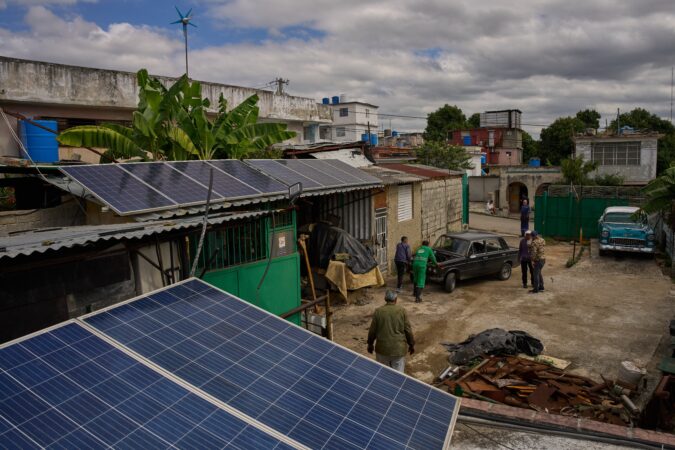
    HAVANA — Cubans are hustling to become more self-sufficient as the U.S. government tightens its economic noose over the communist-run island in a move experts say is meant to force a popular uprising and usher in a new government.

    A sharp increase in U.S. sanctions was already suffocating Cubans when critical oil shipments from Venezuela were disrupted after the U.S. attacked the South American country and arrested its leader.

    The long-term repercussions of those halted shipments have yet to hit Cuba, but its people are not waiting.

    Some are installing solar panels while others are growing their own crops or returning to a simpler way of life, one that doesn’t rely on technology or petroleum.

    “It’s how you survive,” said Jose Ángel Méndez Faviel. “It’s best to depend on yourself.”

    Méndez recently moved from the center of Havana to a farm in the rural community of Bacuranao because of Cuba’s severe blackouts. At the farm, he can cook with firewood and charcoal, something unthinkable in a darkened city apartment.

    Méndez said he doesn’t know what to make of President Donald Trump’s threats against Cuba, but he’s not taking any chances. He’s stocking up on gasoline, charcoal, and produce, which he began planting three months ago at his farm.

    Méndez also is thinking of buying back his old horse that he sold in favor of motorized equipment to transport vegetables he sells at local markets.

    “You don’t need fuel for a horse,” he said. “We need to go back in time.”

    ‘Very close to failing’

    Before the U.S. attacked Venezuela and disrupted oil shipments to Cuba, the island already was struggling with chronic blackouts, soaring prices, and a lack of basic goods.

    With experts warning of a potentially catastrophic economic crisis, some wonder if Cuba is reaching its breaking point. For Trump, who signed an executive order Thursday that would impose a tariff on any goods from countries that sell or provide oil to Cuba, it’s all but guaranteed.

    “Cuba is really a nation that is very close to failing,” he recently said.

    But Cubans scoff at that assertion, especially those who remember the so-called “Special Period,” when cuts in Soviet aid sparked the 1990s deprivation that eased when Venezuela became an ally under former President Hugo Chávez.

    Yadián Silva, a nurse and driver of a classic car who has seen tourism plummet, said Cubans aren’t dumb.

    “We have problems, and we know we have a lot of problems,” he said. “But when things happen in Cuba, it’s because people truly feel they should happen. Not because someone from the outside says, ‘do this.’”

    On a recent weeknight, tens of thousands of Cubans clutched flaming torches and joined an annual march to remember national hero José Martí. Many of them were university students.

    “We are a dignified people, a people eager to move forward, eager to prosper, who do not believe in threats and are not intimidated by any reprisals from the enemy,” said Sheyla Ibatao Ruíz, a 21-year-old law student. “If we have to take up arms, we will be the first to do so.”

    Before the march began, a presenter addressed the massive audience that included Cuban President Miguel Díaz-Canel.

    “This is not an act of nostalgia, it is a call to action,” said Litza Elena González Desdín, president of the Federation of University Students in a speech that included references to Trump.

    A day later, Christopher Landau, U.S. deputy secretary of state, noted that the U.S. embraces Martí “because he shared that passion that we have for freedom.”

    “We hope that by 2026, Cubans will finally be able to exercise their fundamental freedoms,” Landau said Wednesday in a recording played at a small gathering at the U.S. embassy in Havana. “The communist Castro regime is tottering; it won’t last much longer. After 67 years of a failed revolution that has betrayed the Cuban people, it’s time for the change that the people on the island are yearning for.”

    ‘We’ll ride bicycles’

    Last September, Ángel Eduardo launched a small business to install solar panels. He called it “Con Voltage,” a word with double meaning in Cuba that can refer to doing something well.

    He said he was fed up with studying in the dark and being forced to write in a notebook instead of a computer to obtain his degree as an automation control engineer.

    Eduardo started rigging pieces to light a single bulb for his home and ended up learning how to install solar systems thanks to a combination of a friend, Chat GPT and social media.

    He now has installed dozens of systems across Cuba, averaging one to two installations a day since November on an island where daily demand for electricity on average surpasses 3,000 megawatts when only about half that is available during peak hours.

    Eduardo said he saw a surge in calls from people in Havana seeking solar systems ever since the disruption in oil shipments from Venezuela.

    Growing a business is something that 62-year-old Niuvis Bueno Zavala has been pondering. A retired Russian interpreter for the Cuban government, she now runs a small wooden shack near the sea that sells drinks but not food.

    “I’ve never had it this hard,” she said, adding that she might start selling homemade food. “There’s always a helping hand to assist us. But now those helping hands can’t reach us. We’re blocked from all sides.”

    Many Cubans decry the embargo, including retired pilot Pedro Carbonell.

    The 73-year-old recently waited more than two hours to buy gasoline. He said Cubans have to keep fighting.

    “If we don’t have fuel, then we’ll ride bicycles,” he said, recalling how Cubans walked a lot during the Special Period. “Our wine is bitter. But it’s our wine. Do you understand? And we don’t want anyone from somewhere else coming here and telling us how to drink our wine.”

  • DOJ has opened a federal civil rights probe into the death of Alex Pretti, deputy AG says

    DOJ has opened a federal civil rights probe into the death of Alex Pretti, deputy AG says

    WASHINGTON — The Justice Department has opened a federal civil rights investigation into the shooting of Alex Pretti, the Minneapolis resident killed Saturday by Border Patrol officers, Deputy Attorney General Todd Blanche said Friday.

    “We’re looking at everything that would shed light on what happened that day and in the days and weeks leading up to what happened,” Blanche said during a news conference.

    Blanche did not explain why DOJ decided to open an investigation into Pretti’s killing, but has said a similar probe is not warranted in the Jan. 7 death of Renee Good, who was shot by an Immigration and Customs Enforcement officer in Minneapolis. He said only on Friday that the Civil Rights Division does not investigate every law enforcement shooting and that there have to be circumstances and facts that “warrant an investigation.”

    “President Trump has said repeatedly, ‘Of course, this is something we’re going to investigate,’” Blanche said of the Pretti shooting.

    Steve Schleicher, a Minneapolis-based attorney representing Pretti’s parents, said Friday that “the family’s focus is on a fair and impartial investigation that examines the facts around his murder.”

    FBI to take over federal investigation

    The Department of Homeland Security also said Friday that the FBI will lead the federal probe into Pretti’s death.

    Homeland Security Secretary Kristi Noem first disclosed the shift in which agency was leading the investigation during a Fox News interview Thursday evening. Her department previously said Homeland Security Investigations, a departmental unit, would head the investigation.

    “We will continue to follow the investigation that the FBI is leading and giving them all the information that they need to bring that to conclusion, and make sure that the American people know the truth of the situation and how we can go forward and continue to protect the American people,” Noem said, speaking to Fox host Sean Hannity.

    Homeland Security spokesperson Tricia McLaughlin said Homeland Security Investigations will support the FBI in the investigation. Separately, Customs and Border Protection, which is part of DHS, is doing its own internal investigation into the shooting, during which two officers opened fire on Pretti.

    DHS did not immediately respond to questions about when the change was made or why. The FBI did not immediately respond to a request for comment.

    It was not immediately clear whether the FBI would share information and evidence with Minnesota state investigators, who have thus far been frozen out of the federal investigation.

    In the same interview, Noem appeared to distance herself from statements she made shortly after the shooting, claiming Pretti had brandished a handgun and aggressively approached officers.

    Multiple videos that emerged of the shooting contradicted that claim, showing the intensive care nurse had only his mobile phone in his hand as officers tackled him to the ground, with one removing a handgun from the back of Pretti’s pants as another officer began firing shots into his back.

    Pretti had a state permit to legally carry a concealed firearm. At no point did he appear to reach for it, the videos showed.

    Videos emerge of previous altercation

    The change in agency comes after two other videos emerged of an earlier altercation between Pretti and federal immigration officers 11 days before his death.

    The Jan. 13 videos show Pretti yelling at federal vehicles and at one point appearing to spit before kicking out the taillight of one vehicle. A struggle ensues between Pretti and several officers, during which he is forced to the ground. Pretti’s winter coat comes off, and he either breaks free or the officers let him go and he scurries away.

    When he turns his back to the camera, what appears to be a handgun is visible in his waistband. At no point do the videos show Pretti reaching for the gun, and it is not clear whether federal agents saw it.

    Schleicher, the Pretti family attorney, said Wednesday the earlier altercation in no way justified the shooting more than a week later.

    In a post on his Truth Social platform early Friday morning, President Donald Trump suggested that the videos of the earlier incident undercut the narrative that Pretti was a peaceful protester when he was shot.

    “Agitator and, perhaps, insurrectionist, Alex Pretti’s stock has gone way down with the just released video of him screaming and spitting in the face of a very calm and under control ICE Officer, and then crazily kicking in a new and very expensive government vehicle, so hard and violent, in fact, that the taillight broke off in pieces,” Trump’s post said. “It was quite a display of abuse and anger, for all to see, crazed and out of control. The ICE Officer was calm and cool, not an easy thing to be under those circumstances!”

  • Judge bars federal prosecutors from seeking the death penalty against Luigi Mangione

    Judge bars federal prosecutors from seeking the death penalty against Luigi Mangione

    NEW YORK — Federal prosecutors can’t seek the death penalty against Luigi Mangione in the killing of UnitedHealthcare CEO Brian Thompson, a judge ruled Friday, foiling the Trump administration’s bid to see him executed for what it called a “premeditated, cold-blooded assassination that shocked America.”

    U.S. District Judge Margaret Garnett dismissed a federal murder charge that had enabled prosecutors to seek capital punishment, finding that it was technically flawed. She wrote that she did so to “foreclose the death penalty as an available punishment to be considered by the jury” as it weighs whether to convict Mangione.

    Garnett also dismissed a gun charge but left in place stalking charges that carry a maximum punishment of life in prison. In order to seek the death penalty, prosecutors needed to show that Mangione killed Thompson while committing another “crime of violence.” Stalking doesn’t fit that definition, Garnett wrote in her opinion, citing case law and legal precedents.

    In a win for prosecutors, Garnett ruled that prosecutors can use evidence collected from his backpack during his arrest, including a 9mm handgun and a notebook in which authorities say Mangione described his intent to “wack” an insurance executive. Mangione’s lawyers had sought to exclude those items, arguing the search was illegal because police hadn’t yet obtained a warrant.

    The rulings could be subject to appeal. Garnett gave prosecutors 30 days to inform her of any plans to appeal her death penalty decision. A message seeking comment was left for a spokesperson for the U.S. attorney’s office in Manhattan, which is prosecuting the federal case.

    Garnett acknowledged that the decision “may strike the average person — and indeed many lawyers and judges — as tortured and strange, and the result may seem contrary to our intuitions about the criminal law.” But, she said, it reflected her “committed effort to faithfully apply the dictates of the Supreme Court to the charges in this case. The law must the Court’s only concern.”

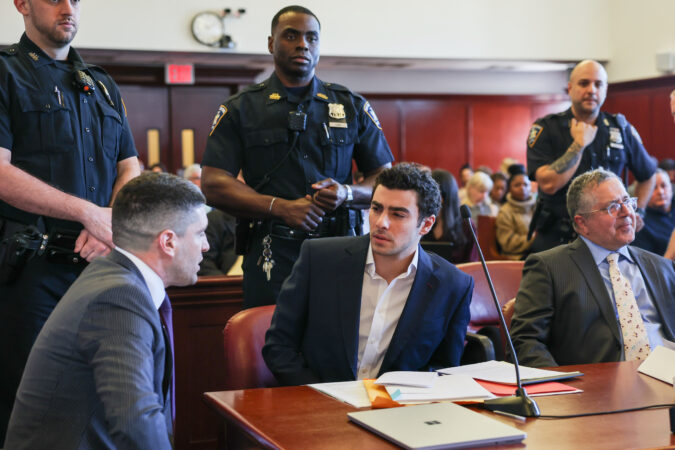
    Mangione, 27, appeared relaxed as he sat with his lawyers at a brief, previously scheduled hearing about an hour after Garnett issued her written ruling. Prosecutors retained their right to appeal the decision but said they were ready to proceed to trial.

    Mangione’s lawyers didn’t address the decision during the hearing. But his lawyer Karen Friedman Agnifilo said afterward that her client and his defense team were relieved by the “incredible decision.”

    Jury selection in the federal case is scheduled to begin Sept. 8, followed by opening statements and testimony beginning on Oct. 13. The state trial’s date hasn’t been set yet. On Wednesday, the Manhattan district attorney’s office sent a letter urging the judge in that case to schedule a July 1 trial date.

    Thompson, 50, was killed on Dec. 4, 2024, as he walked to a midtown Manhattan hotel for UnitedHealth Group’s annual investor conference. Surveillance video showed a masked gunman shooting him from behind. Police say “delay,” “deny” and “depose” were written on the ammunition, mimicking a phrase used to describe how insurers avoid paying claims.

    Mangione, an Ivy League graduate from a wealthy Maryland family, was arrested five days later at a McDonald’s in Altoona, Pa., about 230 miles west of Manhattan.

    Following through on Trump’s campaign promise to vigorously pursue capital punishment, Attorney General Pam Bondi ordered Manhattan federal prosecutors last April to seek the death penalty against Mangione.

    It was the first time the Justice Department was seeking to bring the death penalty in President Donald Trump’s second term. He returned to office a year ago with a vow to resume federal executions after they were halted under his predecessor, President Joe Biden.

    Garnett, a Biden appointee, ruled after a flurry of court filings in the prosecution and defense in recent months. She held oral arguments on the matter earlier this month.

    In addition to seeking to have the death penalty thrown out on the grounds Garnett cited, Mangione’s lawyers argued that Bondi’s announcement flouted long-established Justice Department protocols and showed the decision was “based on politics, not merit.”

    They said her remarks, which were followed by posts to her Instagram account and a TV appearance, “indelibly prejudiced” the grand jury process that resulted in his indictment a few weeks later.

    Prosecutors urged Garnett to keep the death penalty on the table, arguing that the charges allowing for such punishment were legally sound and that Bondi’s remarks weren’t prejudicial, as “pretrial publicity, even when intense, is not itself a constitutional defect.”

    Rather than dismissing the case outright or barring the government from seeking the death penalty, prosecutors argued, the defense’s concerns can best be alleviated by carefully questioning prospective jurors about their knowledge of the case and ensuring Mangione’s rights are respected at trial.

    “What the defendant recasts as a constitutional crisis is merely a repackaging of arguments” rejected in previous cases, prosecutors said. “None warrants dismissal of the indictment or categorical preclusion of a congressionally authorized punishment.”

  • Trump names former Federal Reserve governor Kevin Warsh as the next Fed chair, replacing Jerome Powell

    Trump names former Federal Reserve governor Kevin Warsh as the next Fed chair, replacing Jerome Powell

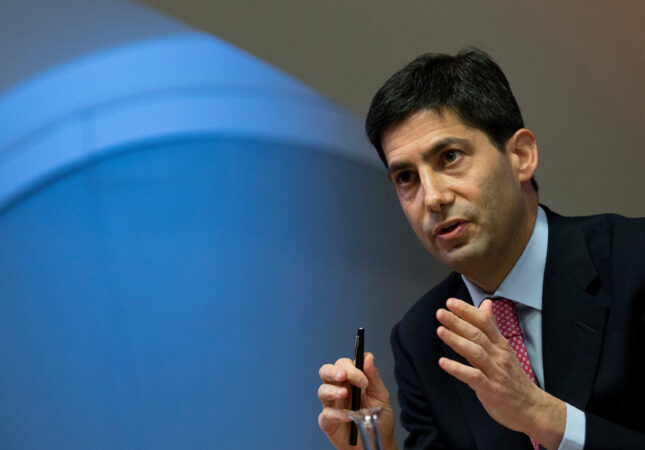
    WASHINGTON — President Donald Trump said Friday that he will nominate former Federal Reserve official Kevin Warsh to be the next chair of the Fed, a decision likely to result in sharp changes to the powerful agency that could bring it closer to the White House.

    If approved by the Senate, Warsh would replace current chair Jerome Powell when his term expires in May. Trump chose Powell to lead the Fed in 2017 but this year has relentlessly assailed him for not cutting interest rates quickly enough.

    “I have known Kevin for a long period of time, and have no doubt that he will go down as one of the GREAT Fed Chairmen, maybe the best,” Trump posted on social media. “On top of everything else, he is ‘central casting,’ and he will never let you down.”

    The appointment, which requires Senate confirmation, amounts to a return trip for Warsh, 55, who was a member of the Fed’s board from 2006 to 2011. He was the youngest governor in history when he was appointed at age 35. He is currently a fellow at the right-leaning Hoover Institution and a lecturer at the Stanford Graduate School of Business.

    In some ways, Warsh is an unlikely choice for the Republican president because he has long been a hawk in Fed parlance, or someone who typically supports higher interest rates to control inflation. Trump, by contrast, has said the Fed’s key rate should be as low as 1%, a level few economists endorse, and far below its current level of about 3.6%.

    During his time as governor, Warsh objected to some of the low-interest rate policies that the Fed pursued during and after the 2008-09 Great Recession. He also often expressed concern at that time that inflation would soon accelerate, even though it remained at rock-bottom levels for many years after that recession ended.

    More recently, however, in speeches and opinion columns, Warsh has voiced support for lower rates.

    Early reaction

    Financial markets reacted in ways that suggest investors expect that Warsh could keep rates a bit higher over time. The dollar and yields on long-term U.S. Treasurys rose, although that moderated a bit.

    The 10-year yield is at 4.26%, up from 4.23% Thursday. U.S. stock futures saw losses of around 0.5%. The biggest moves were in the suddenly volatile metals markets, where gold dropped more than 5% and silver sank more than 13%.

    In Congress, Sen. Thom Tillis, a North Carolina Republican who is retiring, reiterated in a social media post that he will oppose Warsh’s nomination until a Justice Department investigation into Powell is resolved.

    Tillis is a member of the Senate Banking Committee, which will consider Warsh’s nomination.

    He added that Warsh is a “qualified nominee” but stressed that “protecting the independence of the Federal Reserve from political interference or legal intimidation is non-negotiable.”

    Tillis’s opposition could complicate the confirmation process. Asked late Thursday whether Warsh could be confirmed without Tillis’s support, Senate Majority Leader John Thune said, “Probably not.”

    Democratic Sen. Elizabeth Warren of Massachusetts, the highest-ranking Democrat on the Banking Committee, said, “This nomination is the latest step in Trump’s attempt to seize control of the Fed.”

    Warsh beat out several other candidates, including Trump’s top economic adviser, Kevin Hassett, investment manager Rick Rieder, and current Fed governor Christopher Waller.

    Controlling the Fed

    Warsh’s appointment could be a major step toward Trump asserting more control over the Fed, one of the few remaining independent federal agencies. While all presidents influence Fed policy through appointments, Trump’s rhetorical attacks on the central bank have raised concerns about its status as an independent institution.

    The announcement comes after an extended and unusually public search that underscored the importance of the decision to Trump and the potential impact it could have on the economy. The chair of the Federal Reserve is one of the most powerful economic officials in the world, tasked with combating inflation in the United States while also supporting maximum employment.

    The Fed is also the nation’s top banking regulator.

    The Fed’s rate decisions, over time, influence borrowing costs throughout the economy, including for mortgages, car loans, and credit cards.

    For now, Warsh would likely fill a seat on the Fed’s governing board that was temporarily occupied by Stephen Miran, a White House adviser whom Trump appointed in September. Once on the board, Trump could then elevate Warsh to the chair position when Powell’s term ends in May.

    Trump has sought to exert more control over the Fed. In August he tried to fire Lisa Cook, one of seven governors on the Fed’s board, in an effort to secure a majority of the board. Cook, however, sued to keep her job, and the Supreme Court, in a hearing last week, appeared inclined to let her stay in her position while her suit is resolved.

    Powell revealed this month that the Fed had been subpoenaed by the Justice Department about his congressional testimony on a $2.5 billion building renovation. Powell said the subpoenas were “pretexts” to force the Fed to cut rates.

    Trump’s economic policies

    Since Trump’s reelection, Warsh has expressed support for the president’s economic policies, despite a history as a more conventional, pro-free trade Republican.

    In a January 2025 column in the Wall Street Journal, Warsh praised Trump’s deregulatory policies and potential spending cuts, which he said would help bring down inflation. Lower inflation would allow the Fed to deliver the rate cuts the president wants.

    Trump had said he would appoint a Fed chair who will cut interest rates to lower the government’s borrowing costs and bring down mortgage rates, though the Fed doesn’t decide those costs directly.

    In December, he wrote on social media of the need for lower borrowing costs and said, “Anyone who disagrees with me will never be the Fed chairman!”

    Potential challenges and pushback

    Warsh would face challenges in pushing interest rates much lower. The chair is just one member of the Fed’s 19-person rate-setting committee, with 12 of those officials voting on each rate decision. The committee is already split between those worried about persistent inflation, who’d like to keep rates unchanged, and those who think that recent upticks in unemployment point to a stumbling economy that needs lower interest rates to bolster hiring.

    Financial markets could also push back. If the Fed cuts its short-term rate too aggressively and is seen as doing so for political reasons, then Wall Street investors could sell Treasury bonds out of fear that inflation would rise. Such sales would push up longer-term interest rates, including mortgage rates, and backfire on Warsh.

    Trump considered appointing Warsh as Fed chair during his first term, though ultimately he went with Powell. Warsh’s father-in-law is Ronald Lauder, heir to the Estee Lauder cosmetics fortune and a longtime donor and confidant of Trump’s.

    Warsh in recent years has become harshly critical of the Fed, calling for “regime change” and assailing Powell for engaging on issues like climate change and diversity, equity and inclusion, which Warsh said are outside the Fed’s mandate.

    His more critical approach suggests that if he does ascend to the position of chair, it would amount to a sharp transition at the Fed.

    In a July interview on CNBC, Warsh said Fed policy “has been broken for quite a long time.”

    “The central bank that sits there today is radically different than the central bank I joined in 2006,” he added. By allowing inflation to surge in 2021-22, the Fed “brought about the greatest mistake in macroeconomic policy in 45 years, that divided the country.”

  • Trump threatens Canada with 50% tariff on aircraft sold in U.S., expanding trade war

    Trump threatens Canada with 50% tariff on aircraft sold in U.S., expanding trade war

    WASHINGTON — President Donald Trump on Thursday threatened Canada with a 50% tariff on any aircraft sold in the U.S., the latest salvo in his trade war with America’s northern neighbor as his feud with Prime Minister Mark Carney expands.

    Trump’s threat posted on social media came after he threatened over the weekend to impose a 100% tariff on goods imported from Canada if it went forward with a planned trade deal with China. But Trump’s threat did not come with any details about when he would impose the import taxes, as Canada had already struck a deal.

    In Trump’s latest threat, the Republican president said he was retaliating against Canada for refusing to certify jets from Savannah, Ga.-based Gulfstream Aerospace.

    Trump said the U.S., in return, would decertify all Canadian aircraft, including planes from its largest aircraft maker, Bombardier. “If, for any reason, this situation is not immediately corrected, I am going to charge Canada a 50% Tariff on any and all Aircraft sold into the United States of America,” Trump said in his post.

    Spokespeople for Bombardier and Canada’s transport minister didn’t immediately respond to messages seeking comment Thursday evening.

    The U.S. Commerce Department previously put duties on a Bombardier commercial passenger jet in 2017 during the first Trump administration, charging that the Canadian company is selling the planes in America below cost. The U.S. said then that the Montreal-based Bombardier used unfair government subsidies to sell jets at artificially low prices.

    The U.S. International Trade Commission in Washington later ruled that Bombardier did not injure U.S. industry.

    Bombardier has since concentrated on the business and private jet market in recent years. If Trump cuts off the U.S. market it would be a major blow to the Quebec company.

    Treasury Secretary Scott Bessent warned Carney on Wednesday that his recent public comments against U.S. trade policy could backfire going into the formal review of the U.S.-Mexico-Canada Agreement, the trade deal that protects Canada from the heaviest impacts of Trump’s tariffs.

    Carney rejected Bessent’s contention that he had aggressively walked back his comments at the World Economic Forum during a phone call with Trump on Monday.

    Carney said he told Trump that he meant what he said in his speech at Davos, and told him Canada plans to diversify away from the United States with a dozen new trade deals.

    In Davos at the World Economic Forum last week, Carney condemned economic coercion by great powers on smaller countries without mentioning Trump’s name. The prime minister received widespread praise and attention for his remarks, upstaging Trump at the gathering.

  • Venezuelan lawmakers vote to ease state grip on oil, abandoning self-proclaimed socialist tenet

    Venezuelan lawmakers vote to ease state grip on oil, abandoning self-proclaimed socialist tenet

    CARACAS, Venezuela — Venezuela’s acting President Delcy Rodríguez on Thursday signed a law that will open the nation’s oil sector to privatization, reversing a tenet of the self-proclaimed socialist movement that has ruled the country for more than two decades.

    Lawmakers in the country’s National Assembly approved the overhaul of the energy industry law earlier in the day, less than a month after the brazen seizure of then-President Nicolás Maduro in a U.S. military attack in Venezuela’s capital.

    As the bill was being passed, the U.S. Treasury Department officially began to ease sanctions on Venezuelan oil that once crippled the industry, and expanded the ability of U.S. energy companies to operate in the South American nation, the first step in plans outlined by Secretary of State Marco Rubio the day before. The license authorization by the Treasury Department strictly prohibits entities from China, Russia, Iran, North Korea, or Cuba from the transactions.

    The moves by both governments on Thursday are paving the way for yet another radical geopolitical and economic shift in Venezuela.

    “We’re talking about the future. We are talking about the country that we are going to give to our children,” Rodríguez said.

    Rodríguez proposed the changes in the days after President Donald Trump said his administration would take control of Venezuela’s oil exports and revitalize the ailing industry by luring foreign investment.

    Private companies to control oil production

    The legislation promises to give private companies control over the production and sale of oil and allow for independent arbitration of disputes.

    Rodríguez’s government expects the changes to serve as assurances for major U.S. oil companies that have so far hesitated about returning to the volatile country. Some of those companies lost investments when the ruling party enacted the existing law two decades ago to favor Venezuela’s state-run oil company, Petróleos de Venezuela SA, or PDVSA.

    The revised law would modify extraction taxes, setting a royalty cap rate of 30% and allowing the executive branch to set percentages for every project based on capital investment needs, competitiveness and other factors.

    It also removes the mandate for disputes to be settled only in Venezuelan courts, which are controlled by the ruling party. Foreign investors have long viewed the involvement of independent courts as crucial to guard against future expropriation.

    Will change Venezuela’s economy

    Ruling-party lawmaker Orlando Camacho, head of the assembly’s oil committee, said the reform “will change the country’s economy.”

    Meanwhile, opposition lawmaker Antonio Ecarri urged the assembly to add transparency and accountability provisions to the law, including the creation of a website to make funding and other information public. He noted that the current lack of oversight has led to systemic corruption and argued that these provisions can also be considered judicial guarantees.

    Those guarantees are among the key changes foreign investors are looking for as they weigh entering the Venezuelan market.

    “Let the light shine on in the oil industry,” Ecarri said.

    Some oil workers support overhaul

    Oil workers dressed in red jumpsuits and hard hats celebrated the bill’s approval, waving a Venezuelan flag inside the legislative palace and then joining lawmakers in a demonstration with ruling-party supporters.

    The law was last altered two decades ago as Maduro’s mentor and predecessor, the late Hugo Chávez, made heavy state control over the oil industry a pillar of his socialist-inspired revolution.

    In the early years of his tenure, a massive windfall in petrodollars thanks to record-high global oil prices turned PDVSA into the main source of government revenue and the backbone of Venezuela’s economy.

    Chávez’s 2006 changes to the hydrocarbons law required PDVSA to be the principal stakeholder in all major oil projects.

    In tearing up the contracts that foreign companies signed in the 1990s, Chávez nationalized huge assets belonging to American and other Western firms that refused to comply, including ExxonMobil and ConocoPhillips. They are still waiting to receive billions of dollars in arbitration awards.

    From those heady days of lavish state spending, PDVSA’s fortunes turned — along with the country’s — as oil prices dropped and government mismanagement eroded profits and hurt production, first under Chávez, then Maduro.

    The nation home to the world’s biggest proven crude reserves underwent a dire economic crisis that drove over 7 million Venezuelans to flee since 2014. Sanctions imposed by successive U.S. administrations further crippled the oil industry.

  • A man impersonating an FBI agent tried to get Luigi Mangione out of jail, authorities say

    A man impersonating an FBI agent tried to get Luigi Mangione out of jail, authorities say

    NEW YORK — A man claiming to be an FBI agent showed up to a federal jail in New York City on Wednesday night and told officers he had a court order to release Luigi Mangione, authorities said.

    Mark Anderson, 36, a Minnesota native who has a history of drug and other arrests and disclosed last year in court papers that he suffers from mental illness, was arrested and charged with impersonating a federal officer in a foiled bid to free Mangione from the Metropolitan Detention Center. Mangione is being held at the notorious Brooklyn lockup while awaiting state and federal murder trials in the killing of UnitedHealthcare CEO Brian Thompson.

    A criminal complaint against Anderson did not identify the person he attempted to free. A law enforcement official familiar with the matter confirmed it was Mangione. The official was not authorized to speak publicly and did so on condition of anonymity.

    Anderson was ordered held without bail after an initial appearance Thursday in Brooklyn federal court. He was not required to enter a plea. A day after getting stopped at the entrance, he is now locked up in the same jail as Mangione, according to federal prison records. An online court docket did not include information on a lawyer who could speak on Anderson’s behalf. A message was also left for a spokesperson for Mangione’s legal team.

    In a lawsuit last year alleging injuries from a fall at a city homeless shelter, Anderson said he has “multiple disabilities” and has been ruled by the Social Security Administration to be “fully disabled because of mental illness.” He said he had no money and said he received state and federal assistance.

    According to public records, Anderson has had numerous drug and alcohol-related arrests and convictions over the last two decades in his native Minnesota and in Wisconsin, where he has also lived.

    Papers ‘signed by a judge’ and a pizza cutter

    According to the criminal complaint, Anderson approached the jail intake area around 6:50 p.m. Wednesday and told uniformed jail officers that he was an FBI agent in possession of paperwork “signed by a judge” authorizing the release of a specific person in custody at the jail.

    When the officers asked for his federal credentials, Anderson showed them a Minnesota driver’s license, threw documents at them and claimed to have weapons, the criminal complaint said. The documents appeared related to filing claims against the Justice Department, according to an FBI agent who viewed them and prepared the complaint. Officers searched Anderson’s bag and found a barbecue fork and a circular steel blade, the complaint said. In a photo included in the complaint, the blade appeared to be a small pizza cutter wheel.

    Anderson’s driver’s license listed an address in Mankato, Minn., about 65 miles southwest of Minneapolis. He moved to New York for a job opportunity and started working at a Bronx pizzeria when that fell through, the law enforcement official said. Court records indicate he had been living in the city at least since 2023, including at motels, a shelter and a Bronx apartment.

    Acting as his own lawyer, he has filed handwritten lawsuits against the Pentagon, Chinese and Russian ambassadors and a Minnesota police department, all of which have been thrown out. Another lawsuit, alleging a Bronx pizzeria forced him to work 70 hours a week with no overtime, is still pending.

    Mangione due in court Friday

    The alleged attempt to free Mangione added a bizarre wrinkle to a critical stretch in his legal cases.

    Hours before Anderson’s arrest, the Manhattan district attorney’s office sent a letter urging the judge in Mangione’s state case, Gregory Carro, to set a July 1 trial date.

    On Friday, Mangione will be in court for a conference in his federal case. The judge in that case, Margaret Garnett, is expected to rule soon whether prosecutors can seek the death penalty and whether they can use certain evidence against him.

    Last week, Garnett scheduled jury selection in the federal case for Sept. 8, with the rest of the trial happening in October or January, depending on whether she allows prosecutors to seek the death penalty.

    Mangione has pleaded not guilty in both cases. The state charges carry the possibility of life in prison.

    A cause célèbre for people upset with the health insurance industry, Mangione has attracted legions of supporters, some of whom have regularly turned up at his court appearances donning green clothing — the color worn by the Mario Bros. video game character Luigi — as a symbol of solidarity. Some have brought signs and shirts with slogans such as “Free Luigi” and “No Death For Luigi Mangione.”

    Thompson, 50, was killed on Dec. 4, 2024, as he walked to a midtown Manhattan hotel for UnitedHealth Group’s annual investor conference. Surveillance video showed a masked gunman shooting him from behind. Police say “delay,” “deny,” and “depose” were written on the ammunition, mimicking a phrase used to describe how insurers avoid paying claims.

    Mangione, 27, a Penn graduate from a wealthy Maryland family, was arrested five days later at a McDonald’s in Altoona, Pa., about 230 miles west of Manhattan.

    After several days of court proceedings in Pennsylvania, Mangione was whisked to New York and sent to the Metropolitan Detention Center.

    The jail is also home to former Venezuelan President Nicolás Maduro and his wife, Cilia Flores. Former inmates include hip-hop mogul Sean “Diddy” Combs and cryptocurrency fraudster Sam Bankman-Fried.