Category: Nation & World

  • AP: Venezuelan leader Delcy Rodríguez has been on DEA’s radar for years

    AP: Venezuelan leader Delcy Rodríguez has been on DEA’s radar for years

    WASHINGTON — When President Donald Trump announced the audacious capture of Nicolás Maduro to face drug trafficking charges in the U.S., he portrayed the strongman’s vice president and longtime aide as America’s preferred partner to stabilize Venezuela amid a scourge of drugs, corruption, and economic mayhem.

    Left unspoken was the cloud of suspicion that long surrounded Delcy Rodríguez before she became acting president of the beleaguered nation earlier this month.

    In fact, Rodríguez has been on the radar of the U.S. Drug Enforcement Administration for years and in 2022 was even labeled a “priority target,” a designation DEA reserves for suspects believed to have a “significant impact” on the drug trade, according to records obtained by The Associated Press and more than a half dozen current and former U.S. law enforcement officials.

    The DEA has amassed a detailed intelligence file on Rodríguez dating to at least 2018, the records show, cataloging her known associates and allegations ranging from drug trafficking to gold smuggling. One confidential informant told the DEA in early 2021 that Rodríguez was using hotels in the Caribbean resort of Isla Margarita “as a front to launder money,” the records show. As recently as last year she was linked to Maduro’s alleged bag man, Alex Saab, whom U.S. authorities arrested in 2020 on money laundering charges.

    The U.S. government has never publicly accused Rodríguez of any criminal wrongdoing. Notably for Maduro’s inner circle, she’s not among the more than a dozen current Venezuelan officials charged with drug trafficking alongside the ousted president.

    Rodríguez’s name has surfaced in nearly a dozen DEA investigations, several of which remain ongoing, involving agents in field offices from Paraguay and Ecuador to Phoenix and New York, the AP learned. The AP could not determine the specific focus of each investigation.

    Three current and former DEA agents who reviewed the records at the request of AP said they indicate an intense interest in Rodríguez throughout much of her tenure as vice president, which began in 2018. They were not authorized to discuss DEA investigations and spoke on the condition of anonymity.

    The records reviewed by AP do not make clear why Rodríguez was elevated to a “priority target,” a designation that requires extensive documentation to justify additional investigative resources. The agency has hundreds of priority targets at any given moment, and having the label does not necessarily lead to being charged criminally.

    “She was on the rise, so it’s not surprising that she might become a high-priority target with her role,” said Kurt Lunkenheimer, a former federal prosecutor in Miami who has handled multiple cases related to Venezuela. “The issue is when people talk about you and you become a high-priority target, there’s a difference between that and evidence supporting an indictment.”

    Venezuela’s Communications Ministry did not respond to emails seeking comment.

    The DEA and U.S. Justice Department also did not respond to requests for comment. Asked whether the president trusts Rodríguez, the White House referred AP to Trump’s earlier remarks on a “very good talk” he had with the acting president Wednesday, one day before she met in Caracas with CIA Director John Ratcliffe.

    Almost immediately after Maduro’s capture, Trump started heaping praise on Rodríguez — this past week referring to her as a “terrific person — in close contact with officials in Washington, including Secretary of State Marco Rubio.

    The DEA’s interest in Rodríguez comes even as Trump has sought to install her as the steward of American interests to navigate a volatile post-Maduro Venezuela, said Steve Dudley, co-director of InSight Crime, a think tank focused on organized crime in the Americas.

    “The current Venezuela government is a criminal-hybrid regime. The only way you reach a position of power in the regime is by, at the very least, abetting criminal activities,” said Dudley, who has investigated Venezuela for years. “This isn’t a bug in the system. This is the system.”

    Those sentiments were echoed by opposition leader Maria Corina Machado, who met with Trump at the White House Thursday in a bid to push for more U.S. support for Venezuelan democracy.

    “The American justice system has sufficient information about her,” said Machado, referring to Rodríguez. “Her profile is quite clear.”

    Rodríguez, 56, worked her way to the apex of power in Venezuela as a loyal aide to Maduro, with whom she shares a deep-seated leftist bent stemming from her socialist father’s death in police custody when she was only 7 years old. Despite blaming the U.S. for her father’s death, she steadily worked while foreign minister and later vice president to court American investment during the first Trump administration, hiring lobbyists close to Trump and even ordering the state oil company to make a $500,000 donation to his inaugural committee.

    The charm offensive flopped when Trump, urged on by Rubio, pressured Maduro to hold free and fair elections. In September 2018, the White House sanctioned Rodríguez, describing her as key to Maduro’s grip on power and ability to “solidify his authoritarian rule.” She was also sanctioned earlier by the European Union.

    But those allegations focused on her threat to Venezuela’s democracy, not any alleged involvement in corruption.

    “Venezuela is a failed state that supports terrorism, corruption, human rights abuses, and drug trafficking at the highest echelons. There is nothing political about this analysis,” said Rob Zachariasiewicz, a longtime former DEA agent who led investigations into top Venezuelan officials and is now a managing partner at Elicius Intelligence, a specialist investigations firm. “Delcy Rodríguez has been part of this criminal enterprise.”

    The DEA records seen by AP provide an unprecedented glimpse into the agency’s interest in Rodríguez. Much of it was driven by the agency’s elite Special Operations Division, the same Virginia-based unit that worked with prosecutors in Manhattan to indict Maduro.

    One of the records cites an unnamed confidential informant linking Rodríguez to hotels in Margarita Island that are allegedly used as a front to launder money. The AP has been unable to independently confirm the information.

    The U.S. has long considered the resort island, northeast of the Venezuelan mainland, a strategic hub for drug trafficking routes to the Caribbean and Europe. Numerous traffickers have been arrested or taken haven there over the years, including representatives of Joaquín “El Chapo” Guzman’s Sinaloa cartel.

    The records also indicate the feds were looking at Rodríguez’s involvement in government contracts awarded to Maduro’s ally Saab — investigations that remain ongoing even after President Joe Biden pardoned him in 2023 as part of a prisoner swap for Americans imprisoned in Venezuela.

    The Colombian businessman rose to become one of Venezuela’s top fixers as U.S. sanctions cut off its access to hard currency and Western banks. He was arrested in 2020 on federal charges of money laundering while traveling from Venezuela to Iran to negotiate oil deals helping both countries circumvent sanctions.

    The DEA records also indicate agents’ interest in Rodríguez’s possible involvement in allegedly corrupt deals between the government and Omar Nassif-Sruji, the brother of her longtime romantic partner, Yussef Nassif. Nassif-Sruji and Nassif did not respond to emails and text messages seeking comment.

    Companies registered by the two brothers in Hong Kong received more than $650 million in Venezuelan government contracts between 2017 and 2019 to import food and dialysis medicine, according to copies of the contracts obtained in 2021 by Venezuelan investigative journalism outlet Armando.info.

    Taken together, the DEA investigations underscore how power has long been exercised in Venezuela, which is ranked as the world’s third most corrupt country by Transparency International. For Rodríguez, they also represent something of a razor-sharp sword over her head, breathing life to Trump’s threat soon after Maduro’s ouster that she would “pay a very big price, probably bigger than Maduro” if she didn’t fall in line. The president added that he wanted her to provide the U.S. “total access” to the country’s vast oil reserves and other natural resources.

    “Just being a leader in a highly corrupted regime for over a decade makes it logical that she is a priority target for investigation,” said David Smilde, a Tulane University professor who has studied Venezuela for three decades. “She surely knows this, and it gives the U.S. government leverage over her. She may fear that if she does not do as the Trump administration demands, she could end up with an indictment like Maduro.”
  • Iran’s leader calls Trump a ‘criminal’ for backing protests and blames demonstrators for deaths

    Iran’s leader calls Trump a ‘criminal’ for backing protests and blames demonstrators for deaths

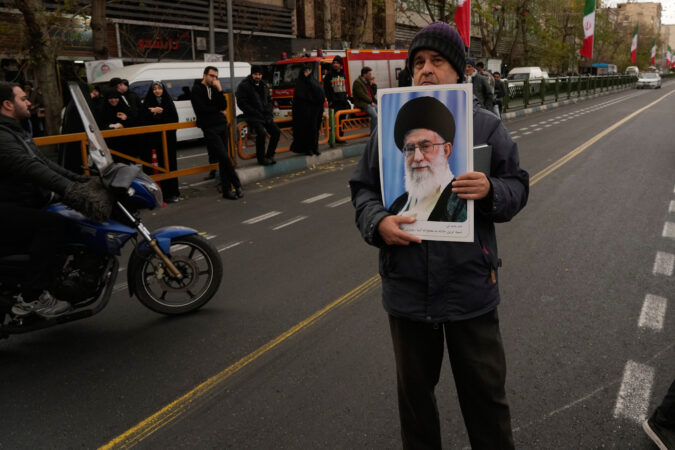
    DUBAI, United Arab Emirates — Iran’s Supreme Leader Ayatollah Ali Khamenei on Saturday branded U.S. President Donald Trump a “criminal” for supporting protesters in Iran, and blamed demonstrators for causing thousands of deaths.

    In a speech broadcast by state television, Khamenei said the protests had left “several thousand” people dead — the first indication from an Iranian leader of the extent of the casualties from the wave of protests that began Dec. 28 and led to a bloody crackdown.

    “In this revolt, the U.S. president made remarks in person, encouraged seditious people to go ahead and said: ‘We do support you, we do support you militarily,’” said Khamenei, who has final say on all state matters. He reiterated an accusation that the U.S. seeks domination over Iran’s economic and political resources.

    “We do consider the U.S. president a criminal, because of casualties and damages, because of accusations against the Iranian nation,” he said. He described the protesters as “foot soldiers” of the United States and said they had destroyed mosques and educational centers. “Through hurting people, they killed several thousand of them,” he said.

    In response, Trump called for an end to Khamenei’s nearly 40-year reign.

    “The man is a sick man who should run his country properly and stop killing people,” Trump told Politico in an interview Saturday. “His country is the worst place to live anywhere in the world because of poor leadership.”

    “It’s time to look for new leadership in Iran,” he added.

    Trump had sounded a conciliatory tone

    His comments come a day after Trump sounded a conciliatory tone, saying that “Iran canceled the hanging of over 800 people,” and adding that “I greatly respect the fact that they canceled.” He did not clarify whom he spoke to in Iran to confirm the state of any planned executions. His comments were a sign he may be backing away from a military strike.

    The official IRNA news agency reported that Tehran Prosecutor Gen. Ali Salehi, referring to Trump’s remarks about the cancellation of the death sentence of 800 protesters, said: “Trump always makes futile and irrelevant statements. Our attitude is severe, preventive, and fast.” He did not elaborate.

    In recent days, Trump had told protesting Iranians that ” help is on the way ” and that his administration would “act accordingly” if the killing of demonstrators continued or if Iranian authorities executed detained protesters.

    In his speech, Khamenei said rioters were armed with live ammunition that was imported from abroad, without naming any countries.

    “We do not plan, we do not take the country toward war. But we do not release domestic offenders, worse than domestic offenders, there are international offenders. We do not let them alone either,” he said, and urged officials to pursue the cases.

    An uneasy calm

    Iran has returned to an uneasy calm after harsh repression of protests that began Dec. 28 over Iran’s ailing economy. The crackdown has left at least 3,095 people dead, according to the U.S.-based Human Rights Activists News Agency, exceeding that of any other round of protest or unrest in Iran in decades and recalling the chaos surrounding the 1979 revolution.

    The agency has been accurate throughout the years of demonstrations, relying on a network of activists inside Iran that confirms all reported fatalities. The AP has been unable to independently confirm the toll.

    Iranian officials have repeatedly accused the United States and Israel of fomenting unrest in the country. On Friday, Iran’s President Masoud Pezeshkian, in a phone conversation with Russian President Vladimir Putin, accused the U.S. and Israel of meddling in the unrest.

    Reports of limited internet access briefly restored

    There have been no signs of protests for days in Tehran, where shopping and street life have returned to outward normality, and Iranian state media has not reported on any new unrest.

    During the protests, authorities blocked all internet access on Jan. 8. On Saturday, text messaging and very limited internet services began functioning again briefly in parts of Iran, witnesses said.

    Cellphone text messaging began operating overnight, while users were able to access local websites through a domestic internet service. Some also reported limited access to international internet services via use of a virtual private network, or VPN.

    The extent of access and what was behind it wasn’t immediately clear. It was possible that officials were turning on some systems for the start of the Iranian working week, as the outage has affected businesses, particularly banks in the country trying to handle transactions.

    Internet traffic monitoring service Cloudflare and internet access advocacy group NetBlocks reported very slight increases in connectivity Saturday morning, while Iran’s semiofficial Mehr news agency also reported limited internet access. It did not offer an explanation.

    No new protests reported

    A call by Iran’s exiled Crown Prince Reza Pahlavi for protesters to take to the streets again from Saturday to Monday did not appear to have been heeded by Saturday afternoon.

    Pahlavi, whose father was overthrown by Iran’s 1979 Islamic Revolution, enjoys support from die-hard monarchists in the diaspora but has struggled to gain wider appeal within Iran. However, that has not stopped him from presenting himself as the transitional leader of Iran if the government were to fall.

  • Israel objects to U.S. announcement of leaders who will help oversee next steps in Gaza

    Israel objects to U.S. announcement of leaders who will help oversee next steps in Gaza

    NAHARIYA, Israel — Israel’s government is objecting to the White House announcement of leaders who will play a role in overseeing next steps in Gaza as the ceasefire moves into its challenging second phase.

    The rare criticism from Israel of its close ally in Washington said the Gaza executive committee “was not coordinated with Israel and is contrary to its policy,” without details. Saturday’s statement also said Prime Minister Benjamin Netanyahu has told the foreign ministry to contact Secretary of State Marco Rubio.

    The committee announced by the White House on Friday includes no Israeli official but has an Israeli businessman, billionaire Yakir Gabay. Other members announced so far include two of U.S. President Donald Trump’s closest confidants, a former British prime minister, a U.S. general and representatives of several Middle Eastern governments.

    The White House has said the executive committee will carry out the vision of a Trump-led “Board of Peace,” whose members have not yet been named. The White House also announced the members of a new Palestinian committee to run Gaza’s day to day affairs, with oversight from the executive committee.

    The executive committee’s members include Rubio, Trump envoy Steve Witkoff, Trump’s son-in-law Jared Kushner, former British Prime Minister Tony Blair, Apollo Global Management CEO Marc Rowan, World Bank President Ajay Banga and Trump’s Deputy National Security Adviser Robert Gabriel.

    Committee members also include a diplomat from Qatar, an intelligence chief from Egypt and Turkey’s foreign minister — all countries have been ceasefire mediators — as well as a Cabinet minister for the United Arab Emirates.

    Turkey has a strained relationship with Israel but good relations with Hamas and could play an important role in persuading the group to yield power and disarm. Hamas has said it will dissolve its government in Gaza once the new Palestinian committee takes office, but it has shown no sign that it will dismantle its military wing or security forces.

    Netanyahu’s office didn’t respond Saturday to questions about its objections regarding the executive committee.

    Minutes after its statement, Israel’s far-right National Security Minister Itamar Ben-Gvir in a statement backed Netanyahu and urged him to order the military to prepare to return to war. Finance Minister Bezalel Smotrich, another far-right Netanyahu ally, said on social media that “the countries that kept Hamas alive cannot be the ones that replace it.”

    The Palestinian Islamic Jihad, Gaza’s second-largest militant group after Hamas, in a statement Saturday also expressed dissatisfaction with the makeup of the Gaza executive committee and claimed it reflected Israeli “specifications.”

    The Trump administration on Wednesday said the U.S.-drafted ceasefire plan for Gaza was now moving into its second phase, which includes the new Palestinian committee in Gaza, deployment of an international security force, disarmament of Hamas and reconstruction of the war-battered territory.

    The ceasefire in the deadliest war ever fought between Israel and Hamas took effect on Oct. 10. The first phase focused on the return of all remaining hostages in exchange for the release of hundreds of Palestinian detainees, along with a surge in humanitarian aid and a partial withdrawal of Israeli forces in Gaza.

    The war began with the Hamas-led attack on southern Israel on Oct. 7, 2023, that killed some 1,200 people, mostly civilians, and took over 250 hostage. Israel’s retaliatory offensive has killed over 71,400 Palestinians, including over 460 since this ceasefire began, according to Gaza’s Health Ministry.

    The ministry, part of the Hamas-run government, maintains detailed casualty records that are seen as generally reliable by U.N. agencies and independent experts.

  • Trump says 8 European countries will be charged a 10% tariff for opposing US control of Greenland

    Trump says 8 European countries will be charged a 10% tariff for opposing US control of Greenland

    President Donald Trump said Saturday that he would charge a 10% import tax starting in February on goods from eight European nations because of their opposition to American control of Greenland, setting up a potentially dangerous test of U.S. partnerships in Europe.

    Denmark, Norway, Sweden, France, Germany, the United Kingdom, the Netherlands. and Finland would face the tariff, Trump said in a social media post while at his golf club in West Palm Beach, Fla. The rate would climb to 25% on June 1 if no deal was in place for “the Complete and Total purchase of Greenland” by the United States, he said.

    The Republican president appeared to indicate that he was using the tariffs as leverage to force talks with Denmark and other European countries over the status of Greenland, a semiautonomous territory of NATO ally Denmark that he regards as critical to U.S. national security.

    “The United States of America is immediately open to negotiation with Denmark and/or any of these Countries that have put so much at risk, despite all that we have done for them,” Trump said on Truth Social.

    The tariff threat could mark a problematic rupture between Trump and America’s longtime NATO partners, further straining an alliance that dates to 1949 and provides a collective degree of security to Europe and North America. Trump has repeatedly tried to use trade penalties to bend allies and rivals alike to his will, generating investment commitments from some nations and pushback from others, notably China.

    Trump is scheduled to travel on Tuesday to the World Economic Forum in Davos, Switzerland, where he likely will run into the European leaders he just threatened with tariffs that would start in little more than two weeks.

    There are immediate questions about how the White House could try to implement the threatened tariffs because the European Union is a single economic zone in terms of trading, according to a European diplomat who was not authorized to comment publicly and spoke on the condition of anonymity. It was unclear, too, how Trump could act under U.S. law, though he could cite emergency economic powers that are currently subject to a U.S. Supreme Court challenge.

    Trump has long said he thinks the U.S. should own the strategically located and mineral-rich island, which has a population of about 57,000 and whose defense is provided by Denmark. He intensified his calls a day after the military operation to oust Venezuela’s Nicolás Maduro earlier this month.

    The president indicated the tariffs were retaliation for what appeared to be the deployment of symbolic levels of troops from the European countries to Greenland, which he has said was essential for the “Golden Dome” missile defense system for the U.S., He also has argued that Russia and China might try to take over the island.

    The U.S. already has access to Greenland under a 1951 defense agreement. Since 1945, the American military presence in Greenland has decreased from thousands of soldiers over 17 bases and installations to 200 at the remote Pituffik Space Base in the northwest of the island, the Danish foreign minister has said. That base supports missile warning, missile defense and space surveillance operations for the U.S. and NATO.

    Resistance has steadily built in Europe to Trump’s ambitions even as several countries on the continent agreed to his 15% tariffs last year in order to preserve an economic and security relationship with Washington.

    ‘Important for the whole world’

    Earlier Saturday, hundreds of people in Greenland’s capital, Nuuk, braved near-freezing temperatures, rain and icy streets to march in a rally in support of their own self-governance.

    Tillie Martinussen, a former member of Greenland’s parliament, said the push to preserve NATO and Greenland’s autonomy were more important than facing tariffs, though she added that she was not dismissing the potential economic impact.

    “This is a fight for freedom,” she said. ”It’s for NATO, it’s for everything the Western Hemisphere has been fighting for since World War II.”

    Thousands of people also marched through Copenhagen, many of them carrying Greenland’s flag. Some held signs with slogans such as “Make America Smart Again” and “Hands Off.”

    “This is important for the whole world,” Danish protester Elise Riechie told The Associated Press as she held Danish and Greenlandic flags. “There are many small countries. None of them are for sale.”

    The rallies occurred hours after a bipartisan delegation of U.S. lawmakers, while visiting Copenhagen, sought to reassure Denmark and Greenland of their support.

    NATO training exercises

    Danish Maj. Gen. Søren Andersen, leader of the Joint Arctic Command, told the AP that Denmark does not expect the U.S. military to attack Greenland, or any other NATO ally, and that European troops were recently deployed to Nuuk for Arctic defense training.

    He said the goal is not to send a message to the Trump administration, even through the White House has not ruled out taking the territory by force.

    “I will not go into the political part, but I will say that I would never expect a NATO country to attack another NATO country,” he said from aboard a Danish military vessel docked in Nuuk. “For us, for me, it’s not about signaling. It is actually about training military units, working together with allies.”

    The Danish military organized a planning meeting Friday in Greenland with NATO allies, including the U.S., to discuss Arctic security on the alliance’s northern flank in the face of a potential Russian threat. The Americans were also invited to participate in Operation Arctic Endurance in Greenland in the coming days, Andersen said.

    In his 2½ years as a commander in Greenland, Andersen said that he hasn’t seen any Chinese or Russian combat vessels or warships, despite Trump saying that they were off the island’s coast.

    But in the unlikely event of American troops using force on Danish soil, Andersen confirmed that Danish soldiers have an obligation to fight back.

    ‘Almost no better’ ally

    Trump has contended that China and Russia have their own designs on Greenland and its vast untapped reserves of critical minerals. He said recently that anything less than the Arctic island being in U.S. hands would be “unacceptable.”

    The president has seen tariffs as a tool to get what he wants without having to resort to military actions. At the White House on Friday, he recounted how he had threatened European allies with tariffs on pharmaceuticals and he teased the possibility of doing so again.

    “I may do that for Greenland, too,” Trump said.

    Earlier in the week, the foreign ministers of Denmark and Greenland met in Washington with Trump’s vice president, JD Vance, and secretary of state, Marco Rubio.

    That session did not resolve the deep differences, but it did produce an agreement to set up a working group — on whose purpose Denmark and the White House then offered sharply diverging public views.

    European leaders have said that it is only for Denmark and Greenland to decide on matters concerning the territory, and Denmark said this week that it was increasing its military presence in Greenland in cooperation with allies.

    “There is almost no better ally to the United States than Denmark,” said Sen. Chris Coons, (D., Del.), while visiting Copenhagen with other members of Congress. “If we do things that cause Danes to question whether we can be counted on as a NATO ally, why would any other country seek to be our ally or believe in our representations?”

  • Justice Department investigating whether Minnesota’s Walz and Frey impeded immigration enforcement

    Justice Department investigating whether Minnesota’s Walz and Frey impeded immigration enforcement

    WASHINGTON — The Justice Department is investigating whether Minnesota Gov. Tim Walz and Minneapolis Mayor Jacob Frey have impeded federal immigration enforcement through public statements they have made, according to two people familiar with the matter.

    The investigation focused on potential violation of a conspiracy statute, the people said.

    The people spoke to the Associated Press on condition of anonymity because they were not authorized to discuss a pending investigation by name.

    CBS News first reported the investigation.

    In response to reports of the investigation, Walz said in a statement: “Two days ago it was Elissa Slotkin. Last week it was Jerome Powell. Before that, Mark Kelly. Weaponizing the justice system and threatening political opponents is a dangerous, authoritarian tactic.”

    Walz’s office said it has not received any notice of an investigation.

    Minneapolis Mayor Jacob Frey’s office did not immediately respond to an email and voicemail requesting comment.

    The investigation comes during a weekslong immigration crackdown in Minneapolis and St. Paul that the Department of Homeland Security has called its largest enforcement operation, resulting in more than 2,500 arrests.

    The operation has become more confrontational since the fatal shooting of Renee Good on Jan. 7. State and local officials have repeatedly told protesters to remain peaceful.

  • Justice Department says members of Congress can’t intervene in release of Epstein files

    Justice Department says members of Congress can’t intervene in release of Epstein files

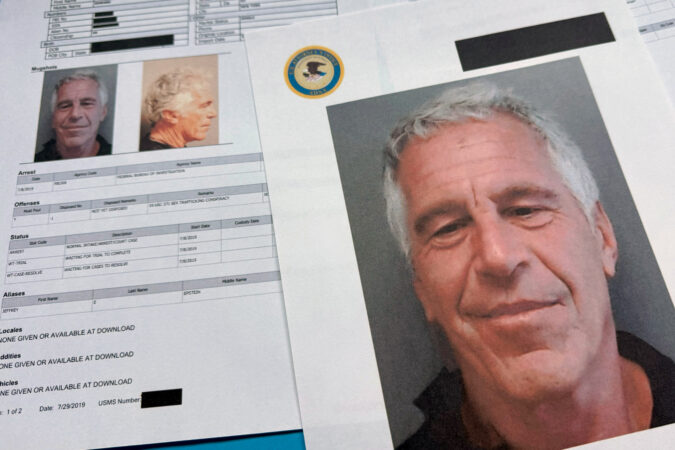
    NEW YORK — Manhattan’s top federal prosecutor said Friday that a judge lacks the authority to appoint a neutral expert to oversee the public release of documents in the sex trafficking probe of financier Jeffrey Epstein and British socialite Ghislaine Maxwell.

    Judge Paul A. Engelmayer was told in a letter signed by U.S. Attorney Jay Clayton that he must reject a request made earlier this week by the congressional cosponsors of the Epstein Files Transparency Act to appoint a neutral expert.

    U.S. Rep. Ro Khanna, a California Democrat, and Rep. Thomas Massie, a Kentucky Republican, say they have “urgent and grave concerns” about the slow release of only a small number of millions of documents that began last month.

    In a filing to the judge they said they believed “criminal violations have taken place” in the release process.

    Clayton, though, said Khanna and Massie do not have standing with the court that would allow them to seek the “extraordinary” relief of the appointment of a special master and independent monitor.

    Engelmayer “lacks the authority” to grant such a request, he said, particularly because the congressional representatives who made the request are not parties to the criminal case that led to Maxwell’s December 2021 sex trafficking conviction and subsequent 20-year prison sentence for recruiting girls and women for Epstein to abuse and aiding the abuse.

    Epstein died in a federal jail in New York City in August 2019 as he awaited trial on sex trafficking charges. The death was ruled a suicide.

    The Justice Department expects to update the court “again shortly” regarding its progress in turning over documents from the Epstein and Maxwell investigative files, Clayton said in the letter.

    The Justice Department has said the files’ release was slowed by redactions required to protect the identities of abuse victims.

    In their letter, Khanna and Massie wrote that the Department of Justice’s release of only 12,000 documents out of more than 2 million documents being reviewed was a “flagrant violation” of the law’s release requirements and had caused “serious trauma to survivors.”

    “Put simply, the DOJ cannot be trusted with making mandatory disclosures under the Act,” the representatives said as they asked for the appointment of an independent monitor to ensure all documents and electronically stored information are immediately made public.

    They also recommended that a court-appointed monitor be given authority to prepare reports about the true nature and extent of the document production and whether improper redactions or conduct have taken place.

  • National Guard troops to stay on Washington, D.C., streets through 2026

    National Guard troops to stay on Washington, D.C., streets through 2026

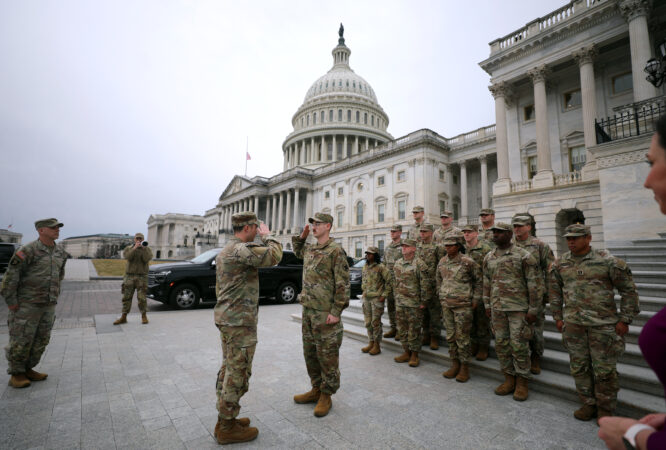
    WASHINGTON — National Guard troops will be on the streets of Washington, D.C., until the end of the year, according to a memo reviewed by the Associated Press.

    The memo, signed by Army Secretary Dan Driscoll and dated Wednesday, said “the conditions of the mission” warranted an extension past the end of next month to continue supporting President Donald Trump’s “ongoing efforts to restore law and order.”

    Meanwhile, Trump said this month that for now he was dropping his push to deploy National Guard troops in Chicago, Los Angeles, and Portland, Ore., which had provoked legal challenges. He also backed off a bit Friday from his threat a day earlier to invoke the Insurrection Act to deploy troops to quell protests in Minnesota.

    In Washington, troops have been charged with patrolling the streets and picking up trash. Trump has asserted repeatedly that crime has vanished in the city.

    Two National Guard troops from West Virginia that were part of the mission in D.C. were shot the day before Thanksgiving. Specialist Sarah Beckstrom, 20, died from her injuries.

    The National Guard has about 2,400 troops in Washington, with about 700 from D.C. and the rest from 11 states with Republican governors, including Indiana, South Carolina, Alabama, and Oklahoma.

  • Family of man shot by ICE in Minneapolis disputes key aspects of DHS account

    Family of man shot by ICE in Minneapolis disputes key aspects of DHS account

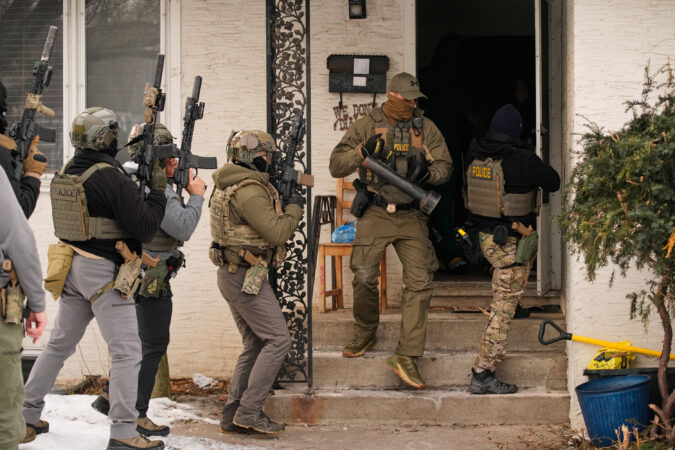
    The family of a man shot in the leg by an ICE officer in Minneapolis on Wednesday has disputed key elements of the Department of Homeland Security’s version of the incident, saying the shooting happened at the door of the man’s house as he let his housemate inside, rather than out in the street during a scuffle.

    The Department of Homeland Security has said an ICE officer shot Julio Cesar Sosa-Celis as he was assaulting the officer “with a shovel or broom stick.” The agency said the incident began when the officer attempted to stop Sosa-Celis in his car, and that Sosa-Celis tried to flee and then got into an altercation with the officer outside, joined by two housemates.

    But Sosa-Celis’ mother, citing an account from her son, said DHS had actually been pursuing one of his housemates, who Sosa-Celis let into their house just before the shooting. Alicia Celis said her son made no mention of anyone running from the house to attack ICE officers.

    A Facebook Live video reviewed by the Washington Post includes people at the house telling 911 dispatchers that the shooting happened as the men closed the door at the residence. Another video includes Sosa-Celis mentioning some sort of scuffle before any gunshots were fired, but he does not specify whether that struggle happened at the door or in the street.

    Celis, who lives in Venezuela, told the Post that her son called her from the hospital after he was taken into custody by ICE. He told her he had received a panicked call Wednesday evening from Alfredo Alejandro Ajorna, who is one of his housemates and a fellow DoorDash driver, Celis said. Ajorna said he was being pursued by ICE and that he needed Sosa-Celis to let him in the front door of the house, where they and their partners and children and others live.

    Sosa-Celis opened the door to let Ajorna inside, Celis said her son told her. Ajorna ran indoors. As Sosa-Celis went to close the door an ICE officer shot him in the leg, his mother said. The men retreated into the house, and people inside called emergency dispatchers, Celis said.

    A short time later, ICE officers broke down the front door and went inside the building, Celis said. They arrested Ajorna, Sosa-Celis, and Gabriel Alejandro Hernandez-Ledezma, who Celis said was not involved in the incident and was in the basement of the house, where he lives. All three men are undocumented immigrants from Venezuela, according to DHS; Sosa-Celis’ family said his temporary protected status to live legally in the United States lapsed last year. DHS had not announced charges against the men as of Friday afternoon.

    In its account of Wednesday night’s shooting, DHS alleged that Sosa-Celis fled in his car during an attempted traffic stop, crashed into a parked car, and then ran away. An officer chased him and attempted to arrest him, the agency said, adding that Sosa-Celis resisted and began to “violently assault the officer.” DHS alleged that Sosa-Celis and the officer were struggling when Ajorna and Hernandez-Ledezma came out of a nearby residence and hit the officer with a snow shovel and broom handle.

    DHS also said Sosa-Celis freed himself of the struggle and hit the officer “with a shovel or broom stick,” at which point the officer fired his gun. The agency called the shot “defensive” and said the officer feared for his life. DHS said the men ran into the residence and ICE officers then arrested them.

    When asked to provide additional evidence or body-camera footage of the alleged attack and to address the claims presented by Sosa-Celis’s family, DHS referred the Post to remarks Homeland Security Secretary Kristi L. Noem made Thursday morning.

    “I would say that our agent is beat up,” Noem told reporters. “He’s bruised, he’s injured, he’s getting treatment. And we’re thankful that he made it out alive.”

    The agency also did not respond to questions Thursday evening about the medical conditions of the officer and Sosa-Celis.

    The shooting of Sosa-Celis — and the angry and sometimes violent protests from residents that followed later — came one week after an ICE officer shot and killed Renée Good as she and other residents monitored and protested ICE activity on a residential street.

    The federal government over the past week has increased the number of officers in the city to 3,000, a massive deployment, with vows to send more personnel to quell what one administration official called an “insurrection.” Residents have objected to agents detaining people and said they feel like their city is under attack.

    Some of the family’s account of Wednesday night’s shooting appeared to align with what was said in a Facebook Live video from inside the home that evening. A chaotic scene appears to unfold as children cry and multiple people speak over each other. The people in the livestream report to 911 dispatchers that one of their family members was shot in the leg as they closed the door of the residence, with ICE officers outside. The Post confirmed the video was filmed from the same address on Minneapolis’s north side.

    Sosa-Celis also joined a different Facebook Live video broadcast the same night by a person who Sosa-Celis’ relatives described as a friend of his. That livestream shows Sosa-Celis describing the incident from what appears to be a hospital bed. Speaking Spanish and using a phrase that can be interpreted several ways, he indicates there was some kind of interaction with ICE personnel before the shooting, though it’s unclear whether he’s describing it happening outside the building or as he moved to close the door on the ICE officer.

    Sosa-Celis also joined that livestream from his home in the moments after the shooting. He can be heard telling the host of the video that he needs assistance. “We need help, friend. We have ICE here,” said Sosa-Celis, providing his address to viewers. “They shot us, they shot us. They shot us, and hit me in the leg.”

    When asked by the host if ICE had been following him, Sosa-Celis, who has his camera pointed toward a window outside, replies that ICE had been following Ajorna.

    Neighbors who live behind the house where the shooting happened also confirmed some elements of the family’s version.

    Brieella Johnson, 35, said she was home preparing dinner for her children at about 6:30 p.m. — her husband had just left with one of their sons for Bible study — when she heard two men arguing outside the house on North 24th Avenue, which she can see from her back deck.

    “We heard two men arguing, then we heard a screech of the vehicle trying to go, and then we heard two to three gunshots,” Johnson said, holding her baby and surrounded by her six older children in her living room on Thursday morning.

    She said she saw uniformed ICE officers with guns drawn “swarm” the house. She heard some of the officers shout, “Come out now!” and “Come out now, or we’re going to shoot!” and other things in Spanish.

    Johnson said she saw ICE officers shoot at one of the windows of the house, then, “They threw one smoke bomb, then yelled ‘Fire’ … Then afterwards we could see smoke in the second floor window.” One of the building’s front windows appeared to have been shattered, she said.

    Johnson heard the DHS account of the shooting and said, “It doesn’t make sense. It doesn’t add up.” She questioned why the ICE officer ended up grappling with and chasing someone he was trying to detain, why he didn’t call for backup sooner, and why he fired in a residential area so close to families with children.

    “Even if you’re going after someone you know is illegal, have back up,” she said.

    Tommy Ross, 72, stood outside his rental house around the block from the shooting location and said he heard three shots late Wednesday and saw the gray Ford sedan mired in the snow and uniformed ICE officers “all around it.”

    Ross, who has lived in the neighborhood for 40 years, said he recognized the car: He had met the owner, a young man with a Spanish accent, after he struck Ross’ Nissan sedan about a month ago, and they exchanged insurance information. He said he did not recall the man’s name.

    Ross and his family heard a car wreck about 7 p.m. “ICE was chasing them people. They ran into the house. There was a fight inside the house,” said Tommy Ross Jr., 40, who was visiting his father at the time of the shooting.

    He said he heard a woman shout: “Get out of my house!,” then heard ICE officers shout, “Freeze!” and “Get on the floor!”

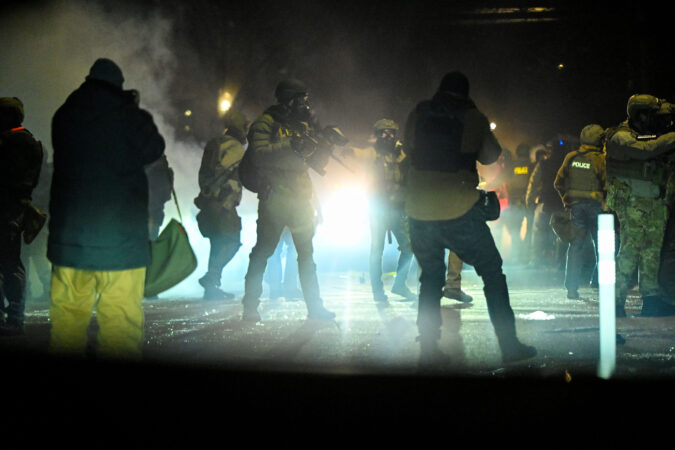
    Following ICE officers’ detention of the three men Wednesday night, tensions flared as neighbors and protesters arrived at the scene. Some protesters heckled, filmed with cellphones, and threw fireworks and a water bottle at officers. Officers fired tear gas and flash bangs at the crowd. Conservative influencer Nick Sortor posted video footage on social media that showed protesters attacking empty ICE vehicles. On Thursday, a damaged ICE laptop and a torn FBI property receipt could be seen on the street.

    “They were combative all night,” the younger Ross said. “They were shooting tear gas, it was all in the air, you couldn’t stand outside without coughing.” The activity was still going on when he headed to bed at 2:30 a.m., he said. “I went to sleep to ‘boom, boom, boom.’ Sounded like a war zone.”

    Local and state officials have called on ICE to leave Minnesota, while the Trump administration has condemned residents who are tracking, protesting, and trying to disrupt ICE activity.

    On Thursday morning, President Donald Trump threatened to invoke the Insurrection Act in Minnesota, raising the possibility of taking the highly unusual step of sending U.S. troops into a domestic city. Minnesota Gov. Tim Walz and Minneapolis Mayor Jacob Frey, both Democrats, urged the federal government not to escalate the tension.

    “They’re trying to make a riot out of it,” the elder Ross said of Trump administration officials, choking up as he spoke. “Governor Walz is doing a good thing, trying to keep them together.”

    Trump on Friday addressed his comments on the Insurrection Act, telling reporters outside the White House: “If I needed it, I’d use it. I don’t think I need it right now.”

    Johnson, the neighbor, said she does not support Trump invoking the Insurrection Act. “I don’t think they need U.S. troops or the National Guard. They need a safe and secure plan,” she said of ICE officers. “If the federal government is going to continue to use ICE, they need to treat these people like humans … You can’t just go in guns blazing. You disrupt communities. You make people scared.”

    But her husband Bryant Johnson, 35, who runs a painting business, blamed local and state officials for not preventing or doing more to address welfare fraud claims that intensified Trump’s attention on Minnesota. Like Trump, he blamed the fraud on Minneapolis’s large Somali community, because many of the dozens of people implicated in the scandal are Somali American. Most Somalis in the Twin Cities, a population of more than 83,000, are U.S. citizens.

    “I feel like a lot of this was brought on by our mayor and our government officials that were very well aware of the fraud,” Bryant Johnson said. “And if they didn’t let that kind of stuff continue and go on, we might not have this much of a presence of ICE.”

    “When you come here from another country to defraud our country of hundreds of millions of dollars,” he added, “you’ve got to go.”

    His wife shook her head. “There has to be a different way of getting them out,” she said. “There’s plenty of Americans that committed fraud. They go to jails, they don’t get killed.”

    Sosa-Celis’ father-in-law, who lives in Saint Paul and spoke on the condition of anonymity because he is undocumented, described Sosa-Celis as a hardworking man who provides for his family in the United States and Venezuela.

    Sosa-Celis’ mother said Thursday evening that she had not heard from her son since Wednesday night and does not know where he is or the status of his injury.

    “I haven’t been able to sleep,” she said. “He never has a ‘no’ for me … He says, ‘Here, Mom. Take as much as you want.’”

  • Cuba launches mass demonstration to decry U.S. attack on Venezuela and demand Maduro’s release

    Cuba launches mass demonstration to decry U.S. attack on Venezuela and demand Maduro’s release

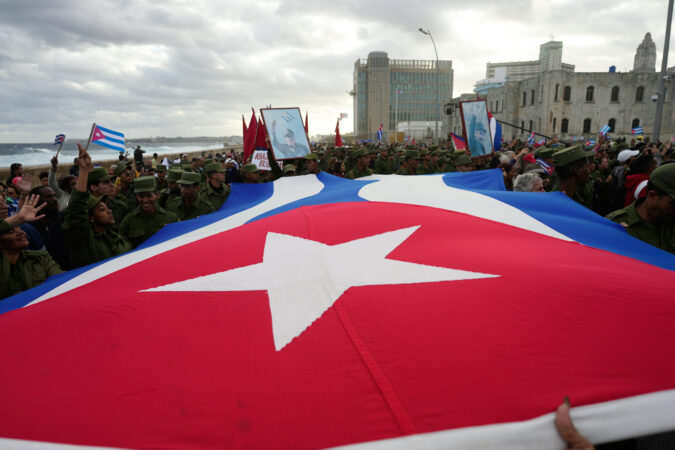
    HAVANA — Tens of thousands of Cubans demonstrated Friday outside the U.S. Embassy in Havana to decry the killing of 32 Cuban officers in Venezuela and demand that the U.S. government release former Venezuelan President Nicolás Maduro.

    They crowded into the open-air José Martí Anti-Imperialist plaza across from the embassy in a rally organized by the Cuban government as tensions between Cuba and the U.S. spike following the U.S. attack Jan. 3 on Venezuela.

    The 32 Cuban officers were part of Maduro’s security detail killed during the raid on his residence in Caracas to seize the former leader and bring him to the U.S. to face drug trafficking charges.

    “Humanity is experiencing something very complex, and (the U.S.) is governed by a president who considers himself an emperor,” said René González, 64, one of the protesters.

    “We must show him that ideas are worth more than weapons,” he said. ”This march is a message of our unity. Independence is sacred, and we will defend it tooth and nail if necessary.”

    Cuba’s national anthem rang out at Friday’s demonstration as large Cuban flags waved in the chilly wind and big waves broke nearby along Havana’s famed sea wall. Cuban President Miguel Díaz-Canel shook hands with members of the crowd clad in jackets and scarves before speaking to them.

    “The current U.S. administration has opened the door to an era of barbarism, plunder, and neo-fascism,” he said.

    The demonstration was a show of popular strength after U.S. President Donald Trump recently demanded that Cuba make a deal with him before it is “too late.” He did not explain what kind of deal.

    Trump also has said that Cuba will no longer live off Venezuela’s oil and money. Experts say the move could have catastrophic consequences since Cuba is already struggling with severe blackouts.

    “No one here surrenders,” Díaz-Canel said. “The current emperor of the White House and his infamous secretary of state haven’t stopped threatening me.”

    Washington has maintained a policy of sanctions against Cuba since the 1960s to pressure the island’s government to improve its human rights record, end its one-party communist system, and allow democracy. The sanctions have been further tightened during Trump’s presidency, suffocating the island’s economy.

    “Cuba does not have to make any political concessions, and that will never be on the table for negotiations aimed at reaching an understanding between Cuba and the United States,” Díaz-Canel said. “It is important that they understand this. We will always be open to dialogue and improving relations between our two countries, but only on equal terms and based on mutual respect.”

    After the president’s speech, the demonstration transitioned into a parade that Cubans call a “combatant march,” a custom that originated during the time of the late leader Fidel Castro. The crowd was led by a line of people holding pictures of the 32 officers killed.

    “Down with imperialism!” the crowd yelled. “Cuba will prevail!”

    The demonstration was organized a day after tens of thousands of Cubans gathered at the headquarters of the Ministry of the Revolutionary Armed Forces to pay their respects to the 32 officers slain.

    Their remains arrived home on Thursday morning, and they were scheduled to be laid to rest on Friday afternoon in various cemeteries following memorial ceremonies in all of Cuba’s provincial capitals.

  • In the face of Trump’s tariffs, Canada and China grow closer

    In the face of Trump’s tariffs, Canada and China grow closer

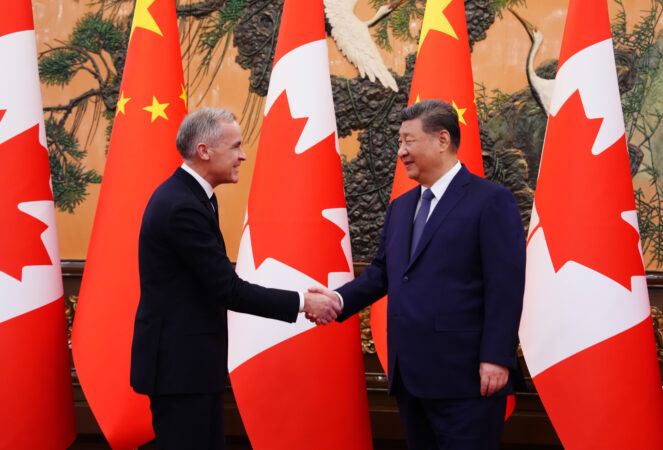
    Canadian Prime Minister Mark Carney hailed a “new strategic partnership” and tariff deals with China on Friday after a four-day visit that analysts said was an effort reset a deeply troubled relationship amid Canada’s efforts to diversify trade away from the United States.

    Carney announced the easing of some of the tariffs the two countries had imposed on each other, with Canada agreeing to allow in 49,000 Chinese electric vehicles at a much-reduced tariff of 6.1%, while China will cut canola seed tariffs to about 15%.

    The moves were a sign of how President Donald Trump’s levies on allies and adversaries alike are reordering global economic relationships, pushing two of the United States’ largest trading partners closer together after years of strained ties to offset the costs.

    Earlier in the day, Carney met with Chinese President Xi Jinping, who described the visit as part of a “turnaround” in Sino-Canadian ties.

    China, Canada’s second-largest trading partner after the United States, imposed steep tariffs on Canadian agricultural goods, including rapeseed and beef, last year. Those duties were retaliation for Canada’s levies on Chinese-made electric vehicles, steel, and aluminum. Ottawa announced those tariffs in 2024, as part of an effort to align itself with U.S. policy on China.

    Despite the easing of some tariffs and the optimistic words from both leaders, the visit was largely an opening “icebreaker,” said Zhao Minghao, deputy director of the Fudan University Center for American Studies. Sino-Canadian ties, he added, still face “many difficulties, especially in areas like ideology and national security. It’s an exploratory process, and they are focusing on the so-called low-hanging fruit first.”

    Reflecting the assessments of many other analysts, Zhao also said the most striking part of the visit was the way Canada was “using the restoration of ties with China as a way to de-risk its relationship with the U.S.”

    Carney’s visit was the first by a Canadian prime minister in nearly a decade, and Sino-Canadian ties have been in a deep freeze for nearly as long. But Canada has been seeking a thaw as part of an effort to diversify trade away amid Trump’s tariffs and threats to use “economic force” to make it the 51st state.

    For Canada, a country caught in the middle between China and the United States — its two largest trading partners — the trade diversification strategy has meant knotty choices. For Carney, a political rookie who won a federal election last year by casting himself as the best person to manage the break in U.S.-Canada ties, the China visit has required walking a tightrope.

    Carney’s predecessor and fellow Liberal, Justin Trudeau, was the last Canadian prime minister to travel to China. He, too, sought closer economic relations with Beijing, but his 2017 visit ended with the two sides deeply divided on several issues and without an expected announcement on the start of formal free trade talks.

    That chasm only widened the next year, after China detained two Canadians — former diplomat Michael Kovrig and businessperson Michael Spavor — in what was widely viewed as retaliation for Canada’s arrest of Meng Wanzhou, a Huawei executive wanted in the U.S. on bank and wire fraud charges.

    The “two Michaels,” as they were known in Canada, were held in secret prisons on vague charges of espionage and stealing state secrets, allegations for which China never provided evidence. They were tried in secret proceedings from which Canadian diplomats were barred, in violation of a consular agreement between the two countries.

    The Canadians were released in 2021, after Meng reached a deal with the U.S. Justice Department that allowed her to return to China in exchange for acknowledging some wrongdoing in the criminal case. A Pew Research Center poll that year found a record of more than 70% of Canadians had an “unfavorable” view of China — up from 45% in 2018.

    Canadian intelligence officials have accused China of “clandestinely and deceptively” seeking to interfere in Canada’s federal elections with the goal of supporting candidates favorable to its strategic interests. They have also alleged that the country conducts transnational repression in Canada, targeting dissidents and lawmakers who are vocal opponents of Beijing.

    Critics of Carney’s rapprochement of China have argued that closer ties could spell trouble, given Beijing’s history of weaponizing access to its markets. Not long after the two Michaels were detained, China imposed tariffs on Canadian canola in what was widely viewed here as further retaliation for Meng’s arrest.

    Opponents of the recalibration in the relationship have also warned that it could draw the ire of the Trump administration, which has been seeking to curtail China’s influence, ahead of a planned review this year of the U.S.-Mexico-Canada Agreement (USMCA). Chris LaCivita, a former Trump campaign manager, said on X that drawing closer to China “won’t end well for Carney.”

    Canadian officials and businesses view the continued existence of the North American free-trade pact as critical for the country’s economic prosperity. More than 70% of Canadian exports have typically gone to the United States. But Trump, who brokered the USMCA and called it “the best agreement we’ve ever made,” said this week that he doesn’t “really care about it.”

    “There’s no real advantage to us,” Trump told reporters in Dearborn, Mich., renewing fears in Canada that he could rip the deal up. “It’s irrelevant to me. … Canada wants it. They need it. We don’t.”

    Carney has been unable to reach a deal to ease the tariffs that the U.S. has imposed on Canadian goods. In October, Trump terminated all trade talks with Canada over a television advertisement critical of tariffs that was broadcast on U.S. networks and paid for by the government of Ontario. Canadian officials said they were close to a deal before Trump suspended negotiations.

    At home, the China reset has also proved tricky.

    Provincial leaders and farmers in the prairie provinces of Saskatchewan and Manitoba, which have been hardest hit by the Chinese tariffs, have long pressed Carney to ease the levies on China. But the move is poised to anger officials in the province of Ontario, the heart of Canada’s auto industry.

    Officials there have supported the tariffs on China, viewing them as necessary for protecting Canadian auto jobs and citing national security concerns. Canada’s auto sector is facing an existential crisis, analysts say, because of Trump’s tariffs on autos, steel, and aluminum. Trump administration officials have repeatedly asserted they do not want to make cars with Canada.

    Trump’s tariffs and threats against Canadian sovereignty have infuriated Canadians. A Pew Research Center poll in July found that 59% of Canadians view the United States as their country’s top threat, while just 17% see China that way.