There was a time — back when The Inquirer had multiple suburban bureaus — that photographers like myself who were assigned to the main newsroom on North Broad Street worked only in the city. (We’re now more like ride share drivers, going everywhere.)
So I walked a lot more to cover news and events in Center City, and more often stumbled into things and sights that piqued my curiosity.
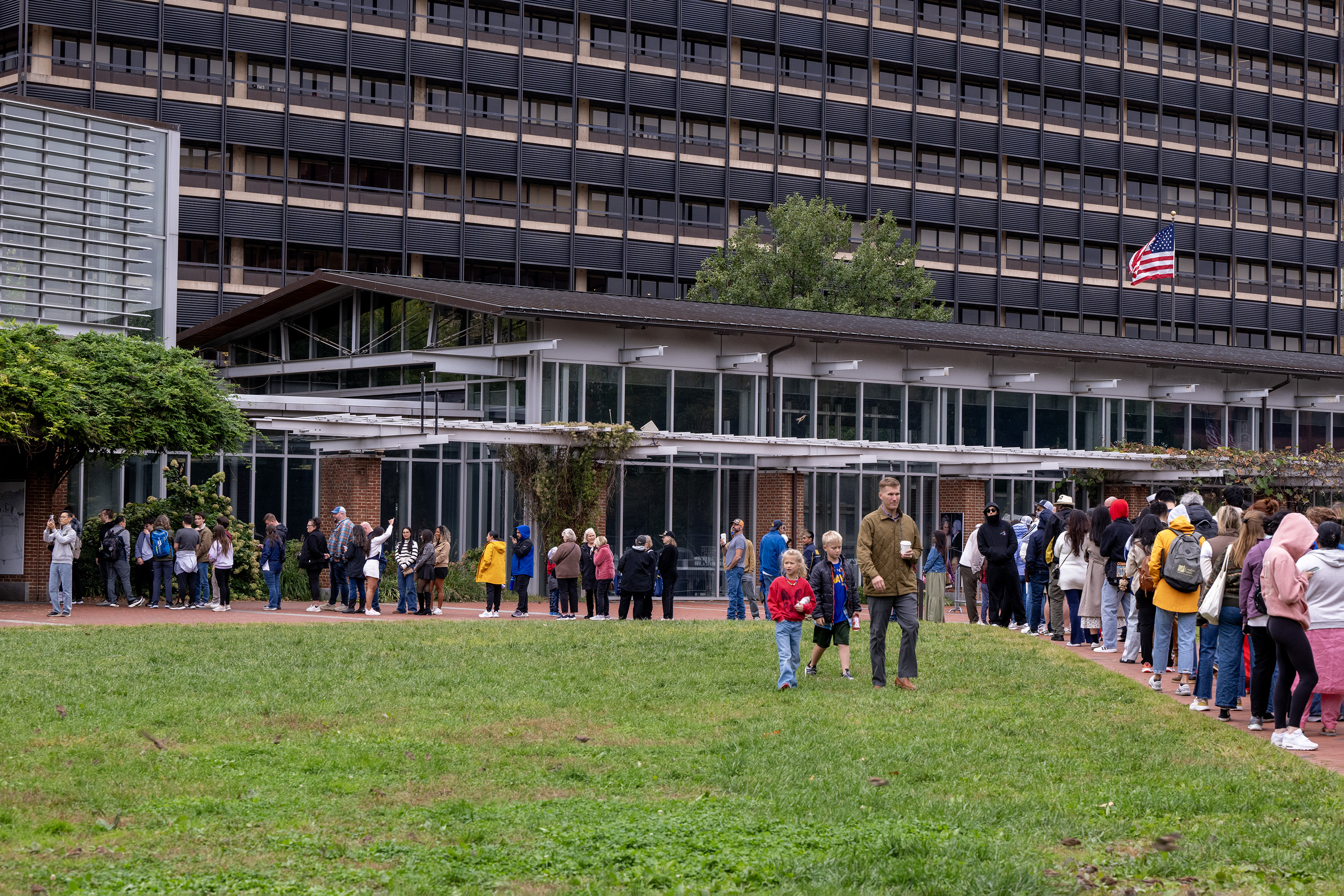
Things like a long line.
Visitors queue up to get a glimpse through a single window in the Liberty Bell Center Oct. 12, 2025 while the building is closed due to the federal government shutdown.
Years ago seeing one likely meant unhoused people were waiting as church folks or outreach advocates served dinner on the street. Or they were waiting for concert tickets or movie premiers (Beanie Babies?).
I remember once questioning someone standing in a blocks-long line along Walnut Street and was flabbergasted to learn a new sneaker was dropping.
Or for a device that combined a portable media player, a cell phone, and an internet communicator.
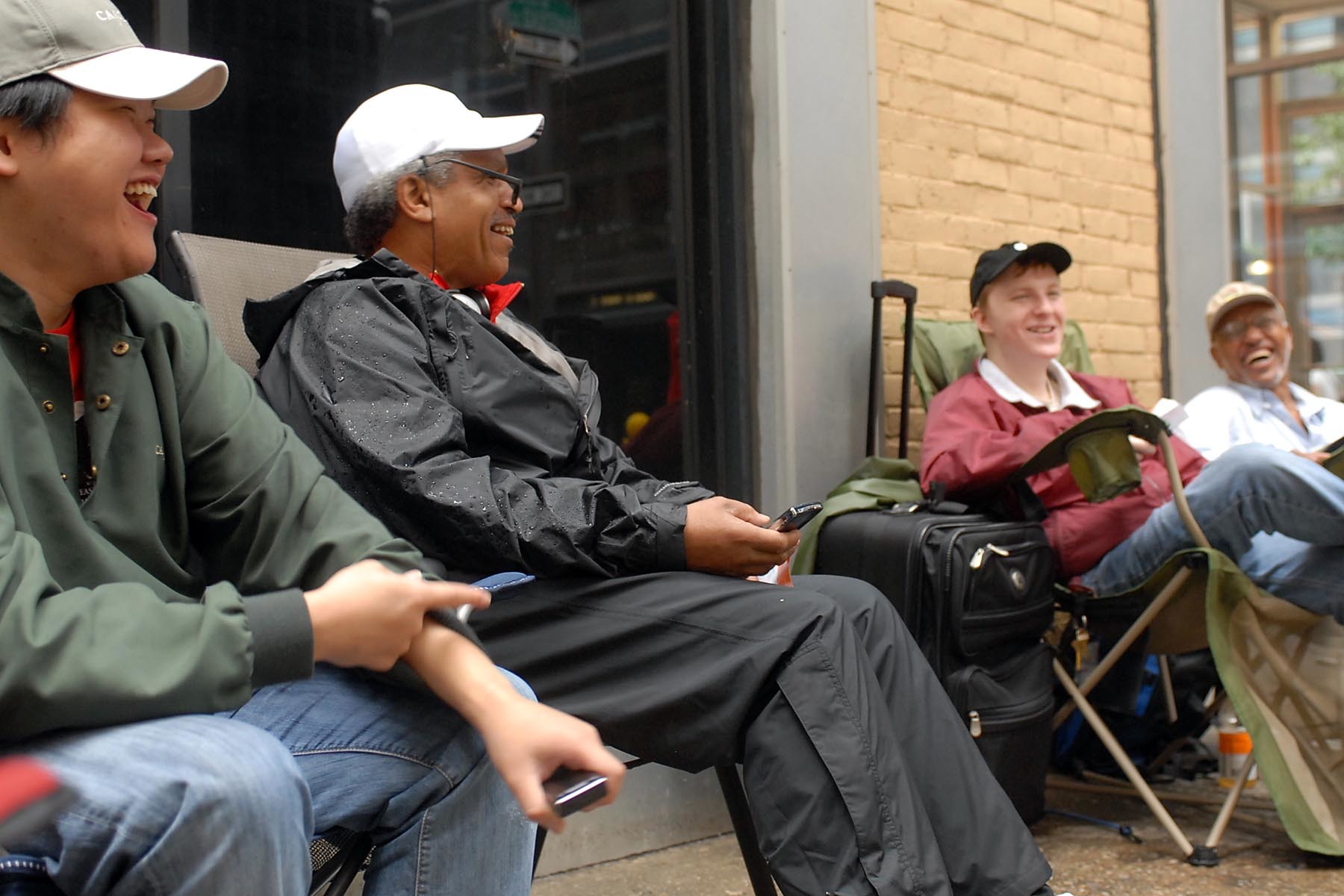
Mayor John F. Street reads jokes aloud from his Blackberry as he waits with fellow technology enthusiasts in an alley off 16th Street to purchase an iPhone at the At&T store Jun. 29, 2007. There were two models available that day: a 4GB for $499 and the 8GB for $599.
Mayor Street was the third in line to buy the first-generation iPhone 2G launched that day. He said he arrived around 3:30 a.m. Leonard F. Johnson (far right) at the front of the line, arrived 36 hours ahead of the 6:00 p.m. official release.
Hizzoner defended the time he spent in line, saying he got work done and kept in touch with city officials on the issues of the day using his Blackberry to send emails and make phone calls.
I had no idea what the yellow shipping container was when I saw it next to City Hall last weekend. Even after I walked over and watched those at the front of the long line take their selfies inside a retro Philly diner-esque booth tableau.
I watched it all unfold, along with others, asking ourselves what was going on. Nobody knew. Except those in line.
It was the last stop on the Pleasing Express Line that ended its nation-wide tour in Philadelphia.
Followers on social media were invited to, “Climb on to immerse yourself in the worlds of Pleasing Fragrance, Big Lip, and exclusive treasures,” including a spin of the “Freebie Wheel,” for products of the unisex lifestyle brand Pleasing, created by former One Direction singer Harry Styles.
A spontaneous walk around Center City can build for me the same kind of excitement felt by those waiting in lines. Except they know their eventual reward. Mine comes from the anticipation of not knowing what’s around a corner.
And that is exactly what makes street photography worth the walk – and sometimes even the wait.
Since 1998 a black-and-white photo has appeared every Monday in staff photographer Tom Gralish’s “Scene Through the Lens” photo column in the print editions of The Inquirer’s local news section. Here are the most recent, in color:
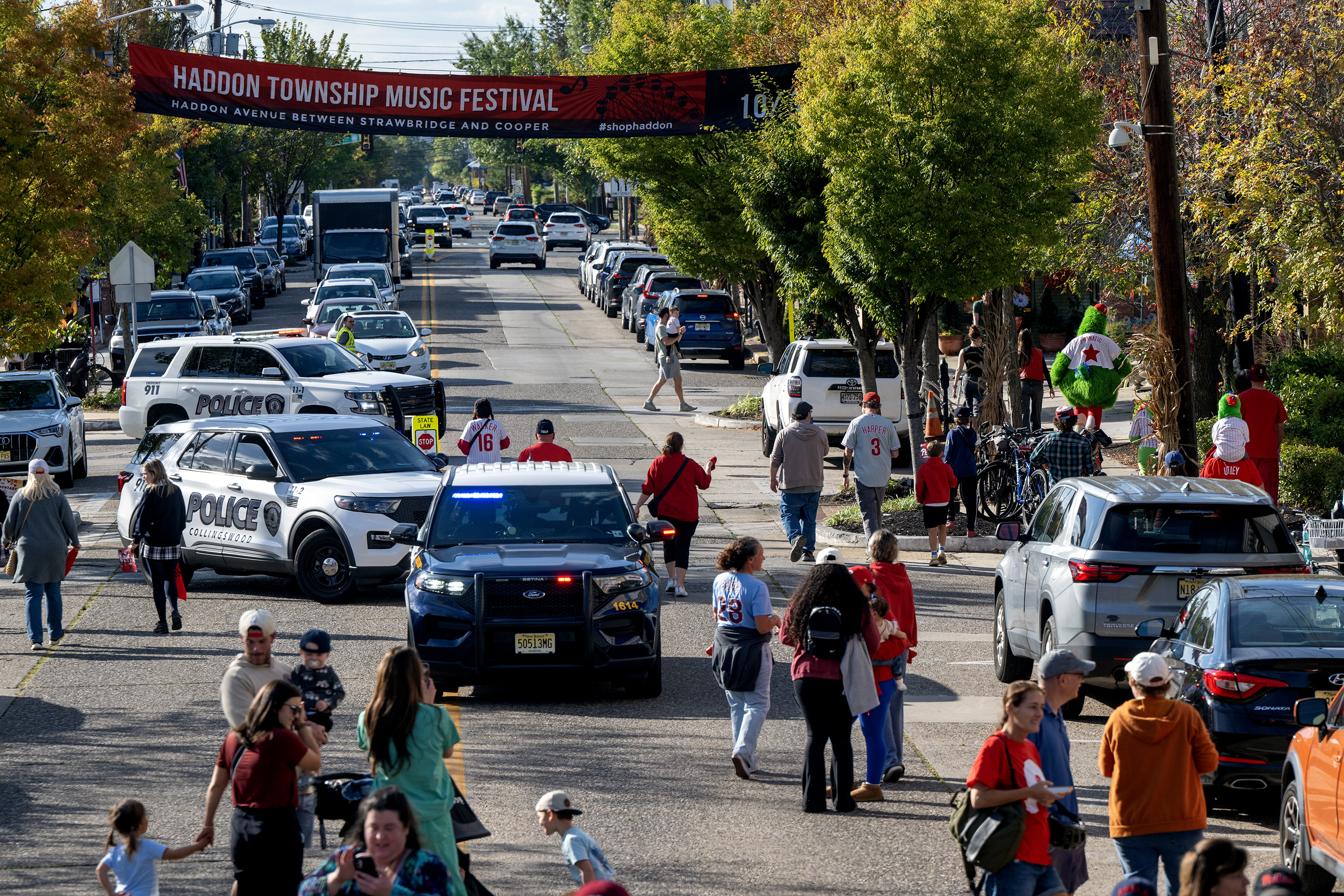
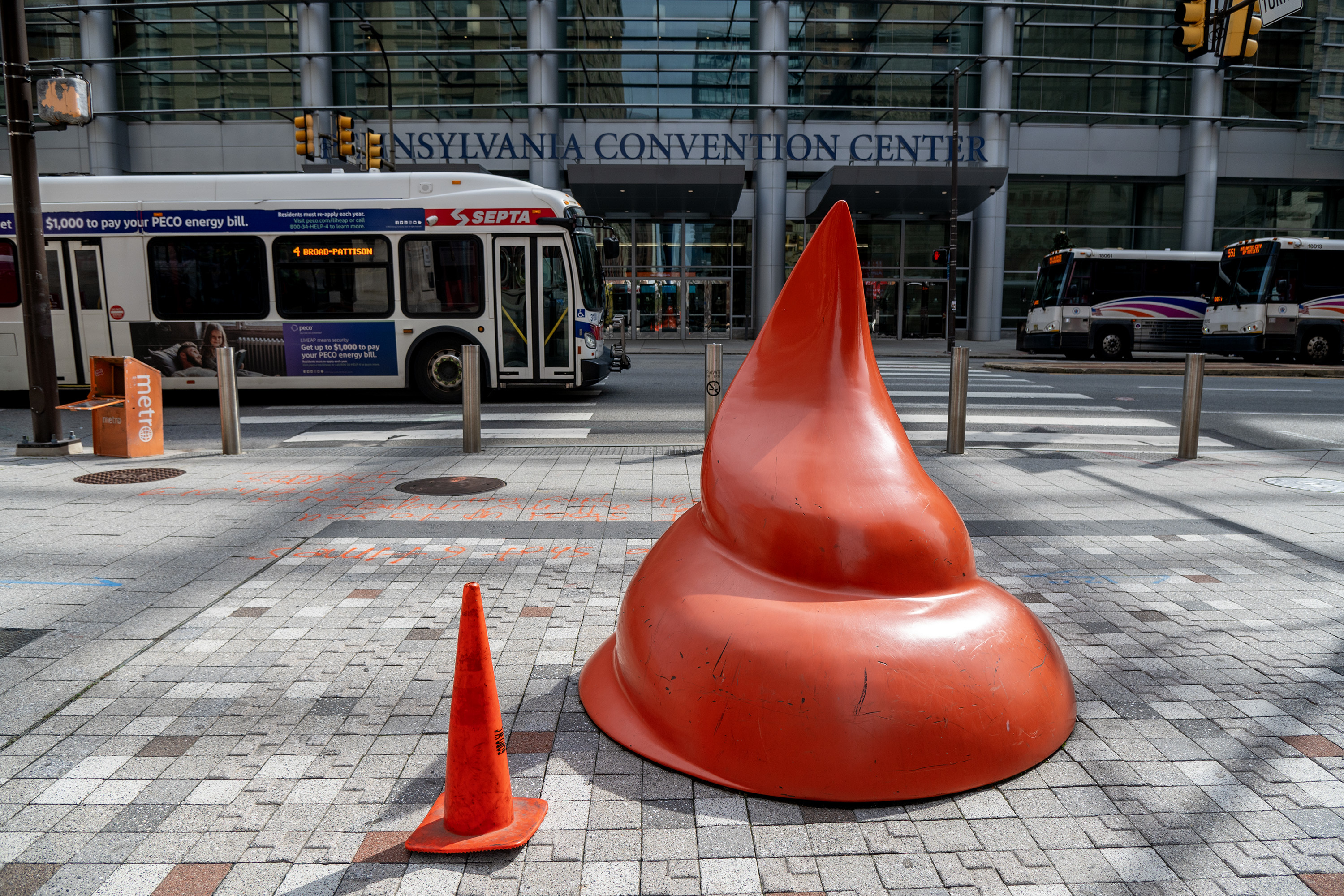
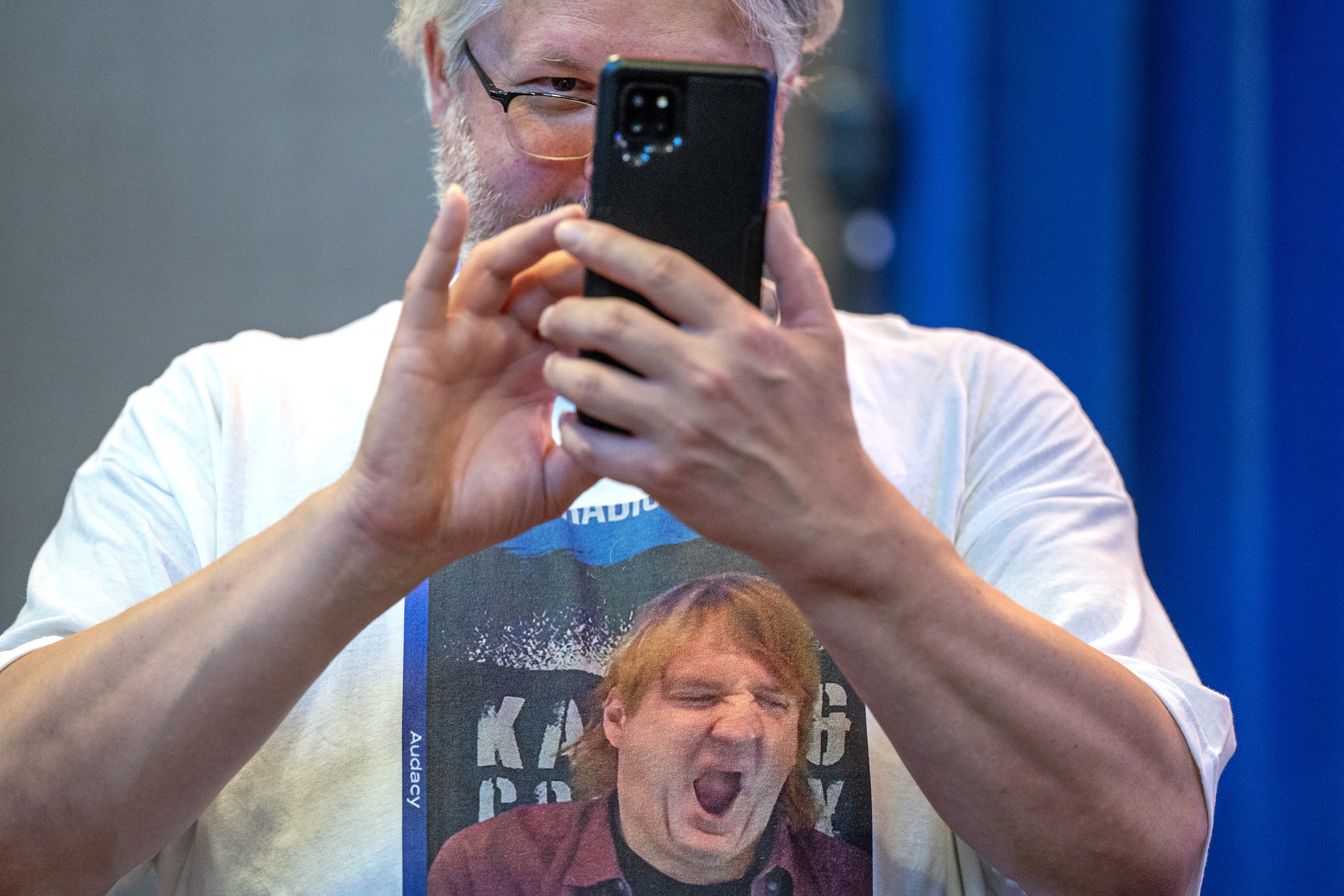
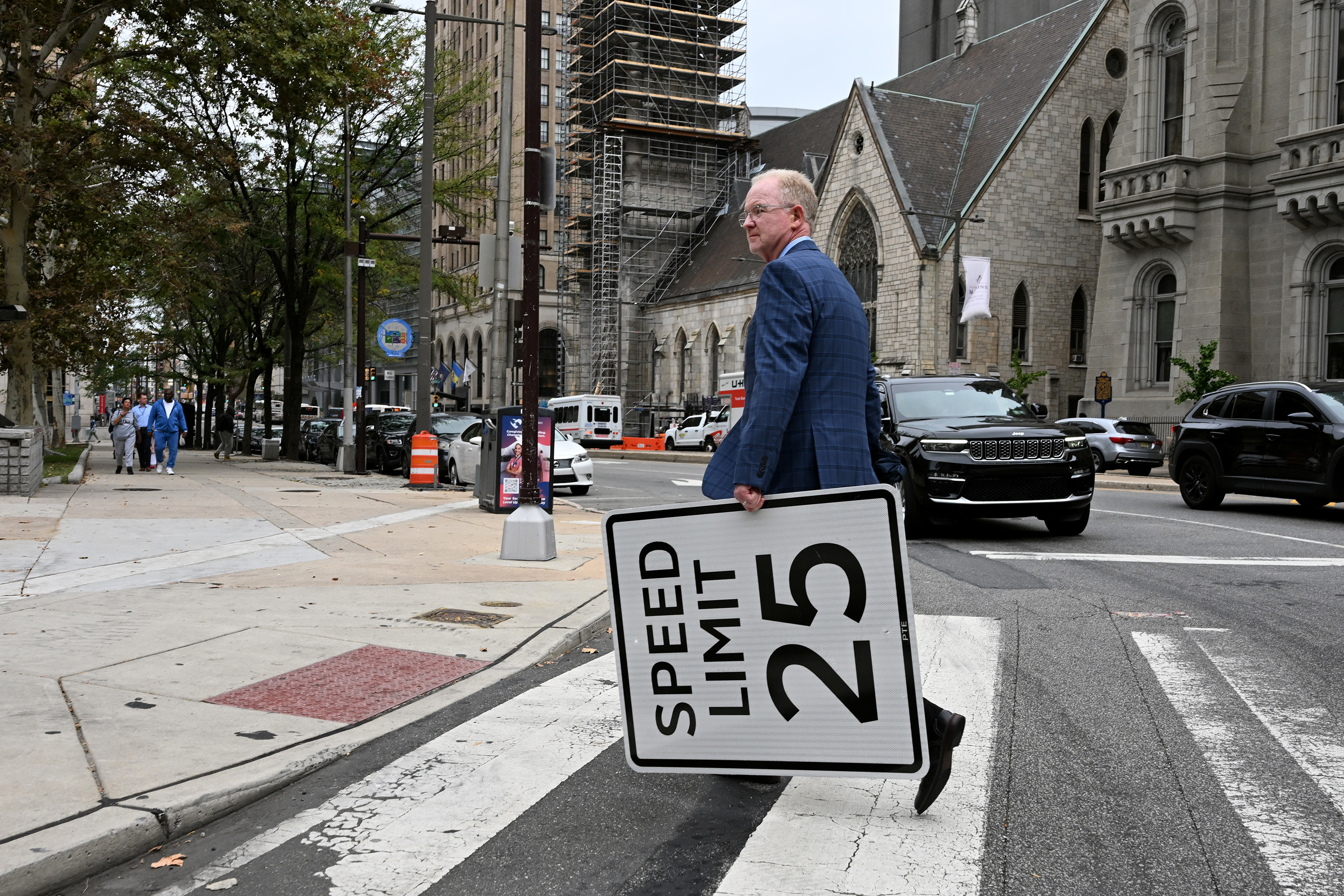
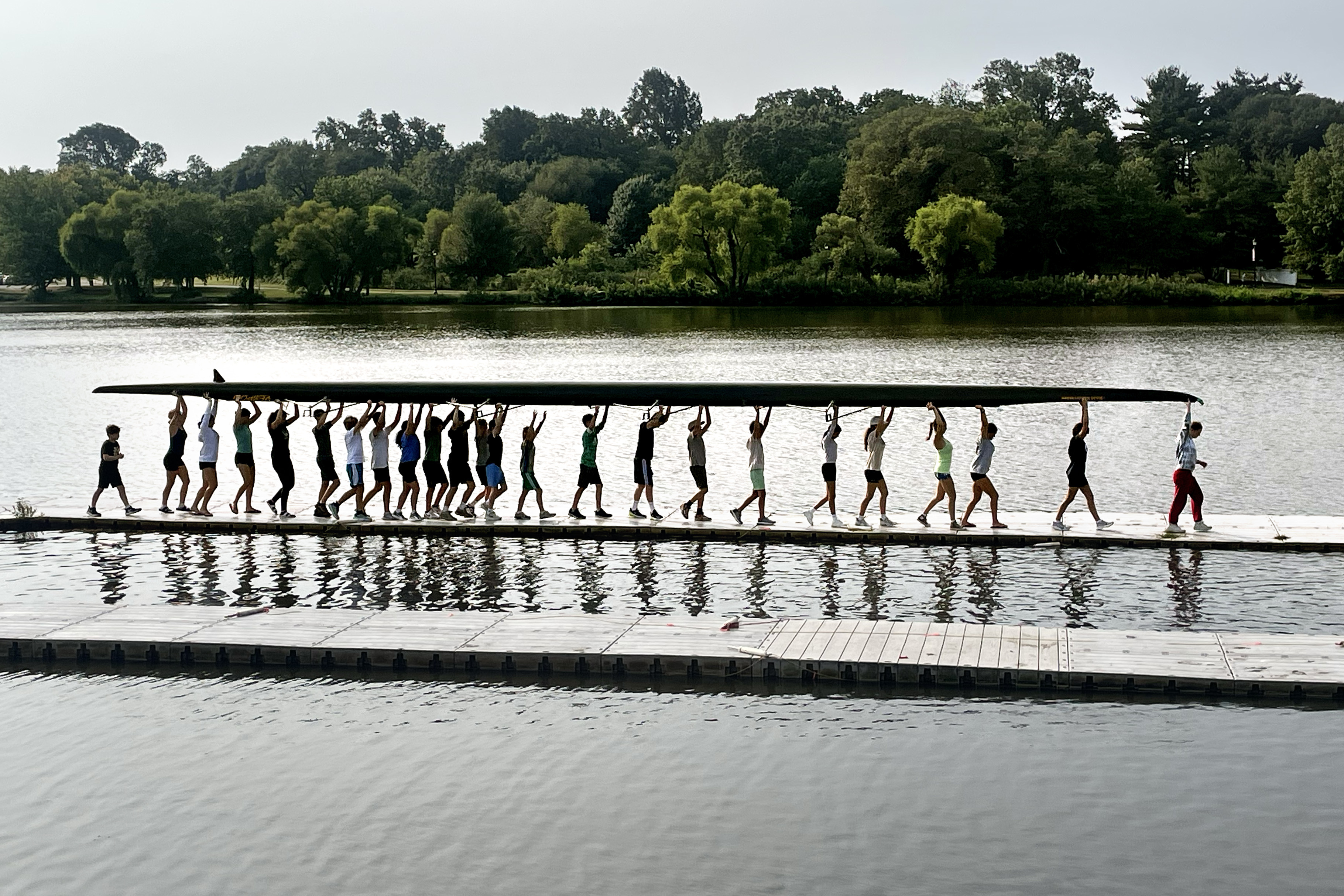
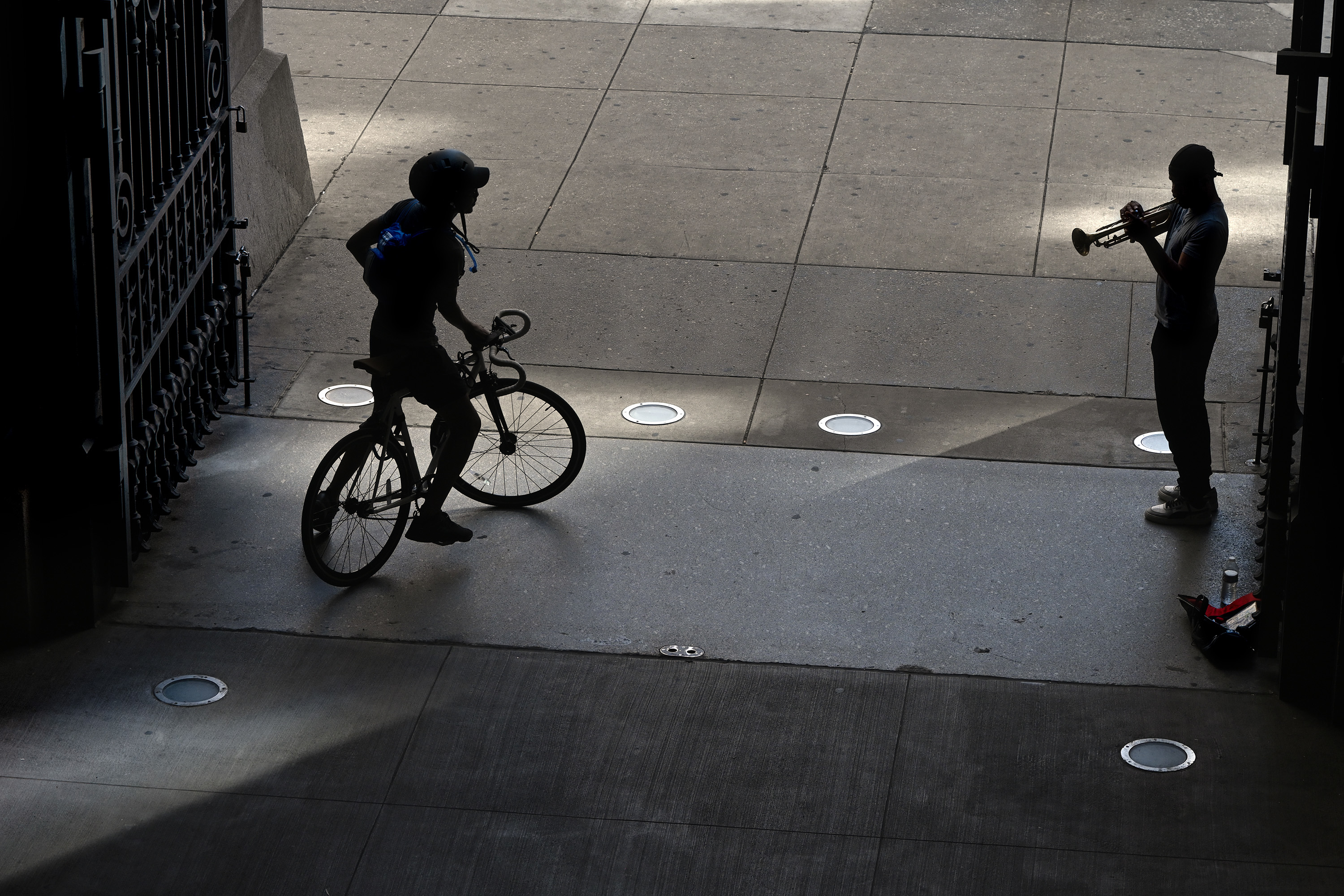
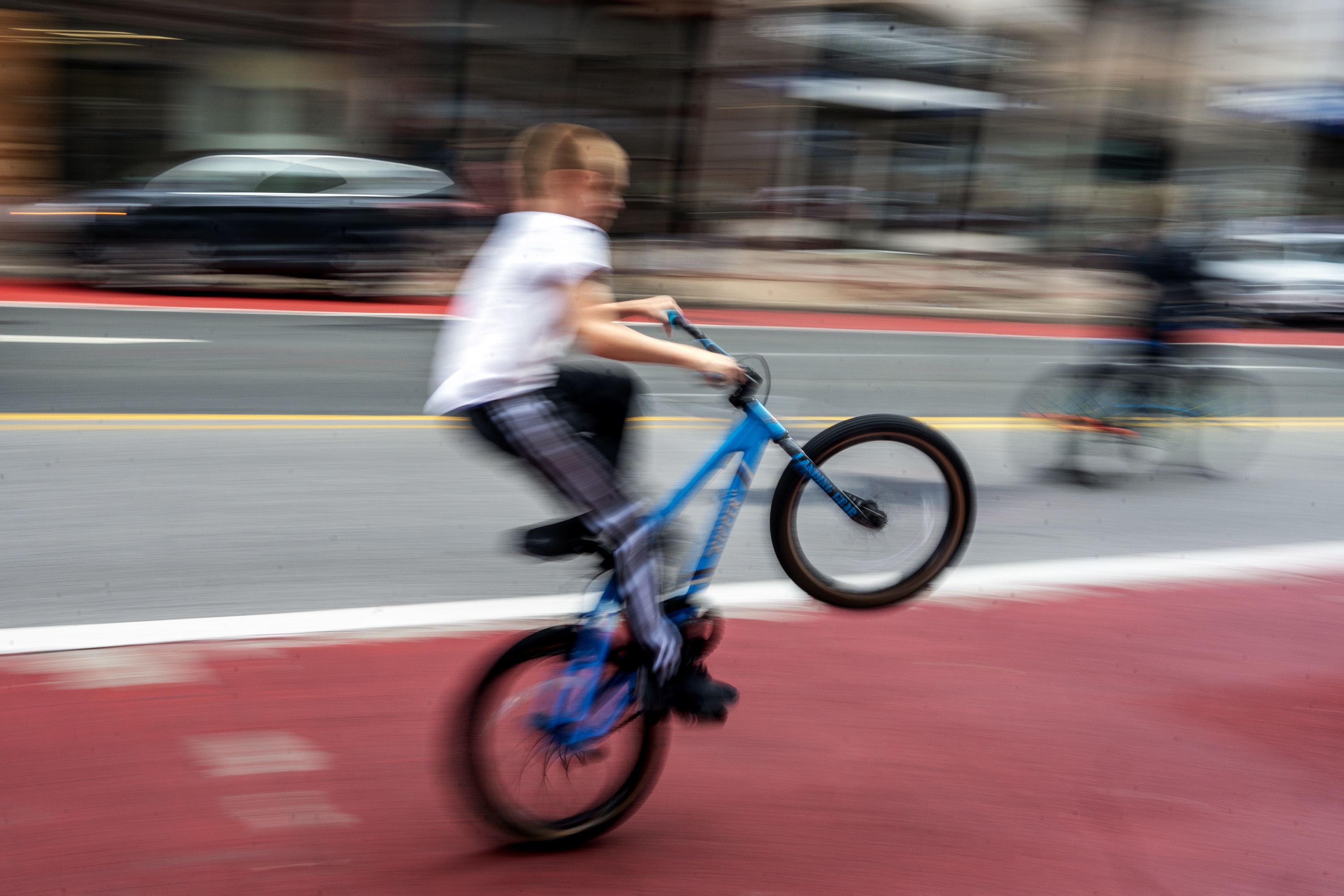
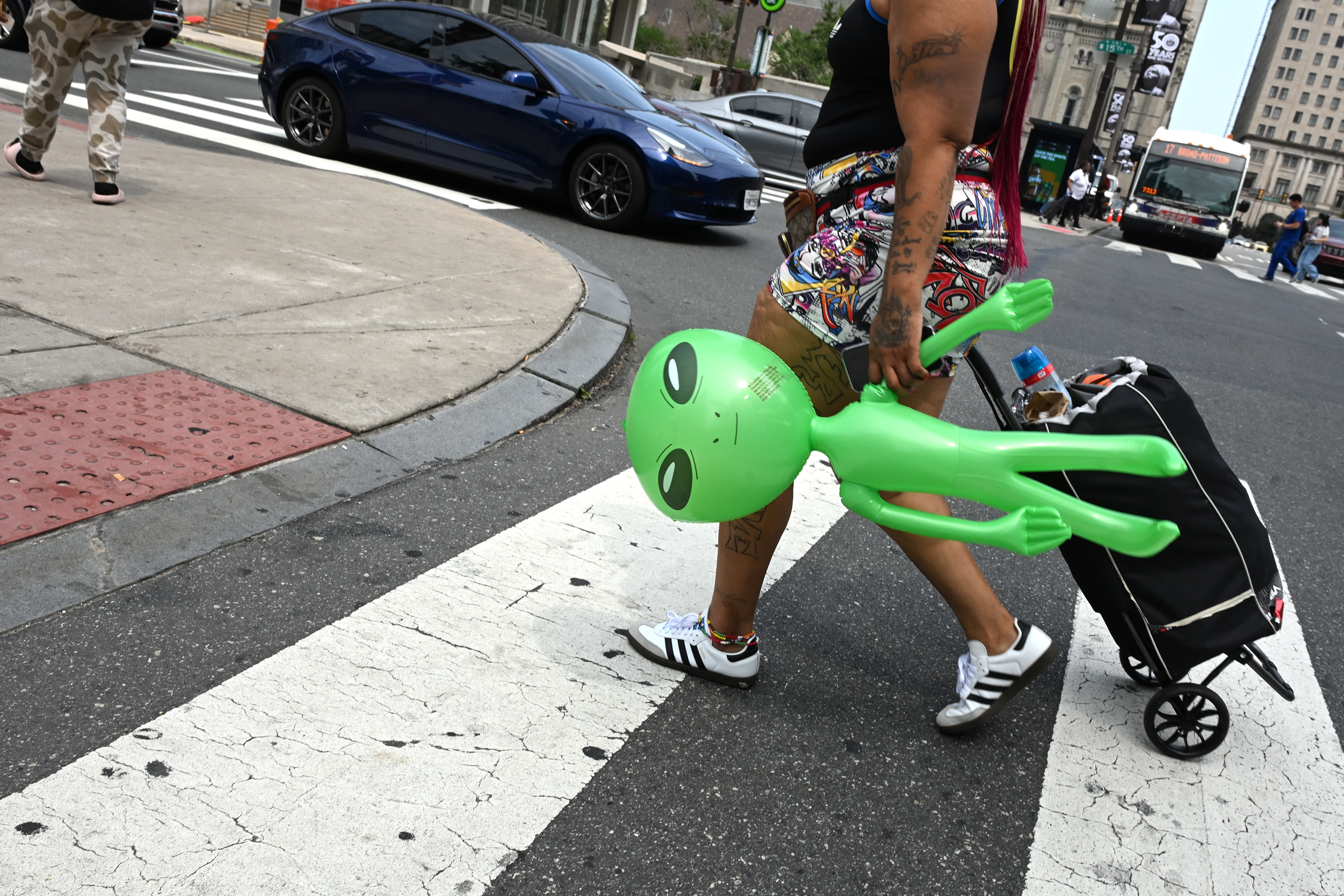
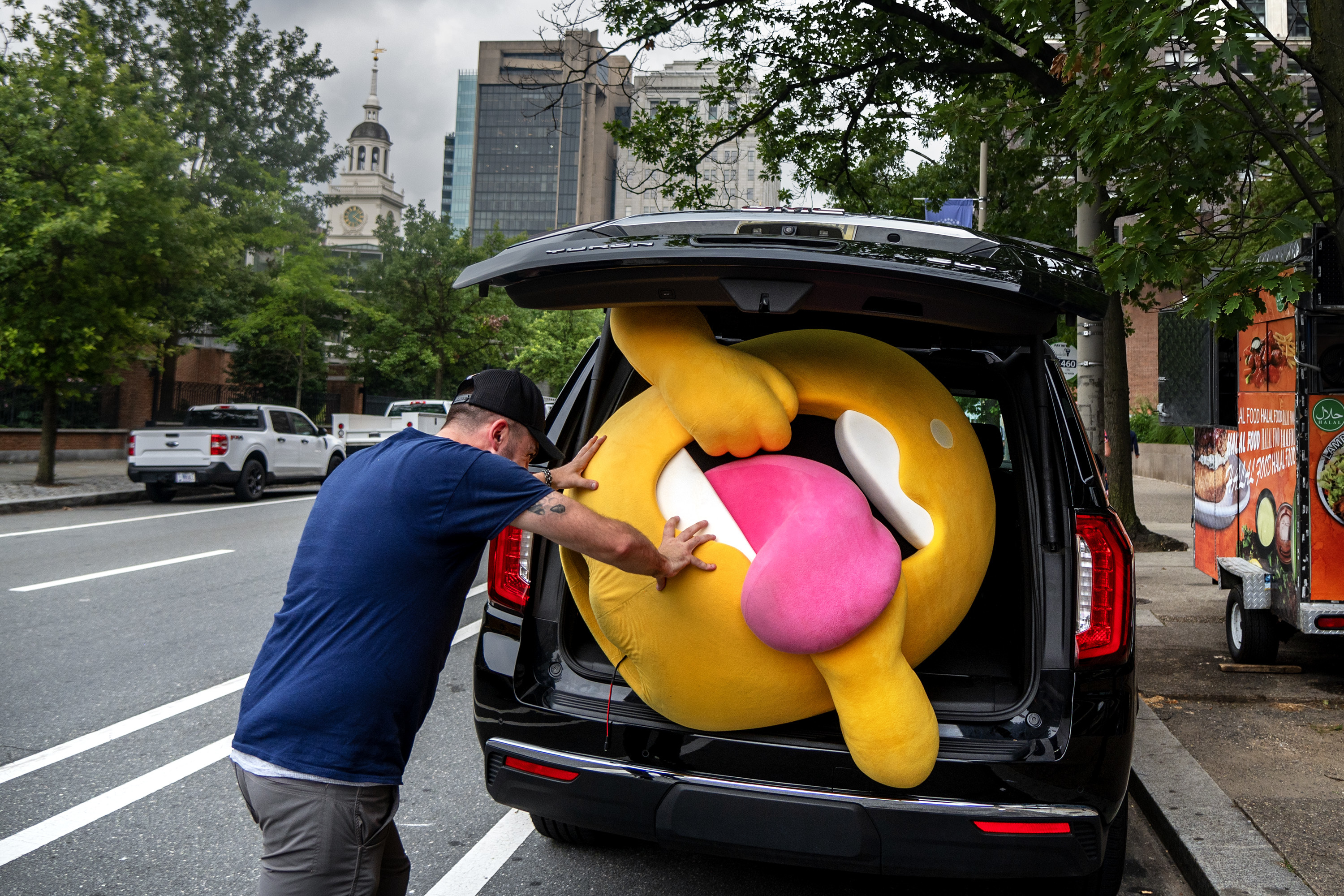
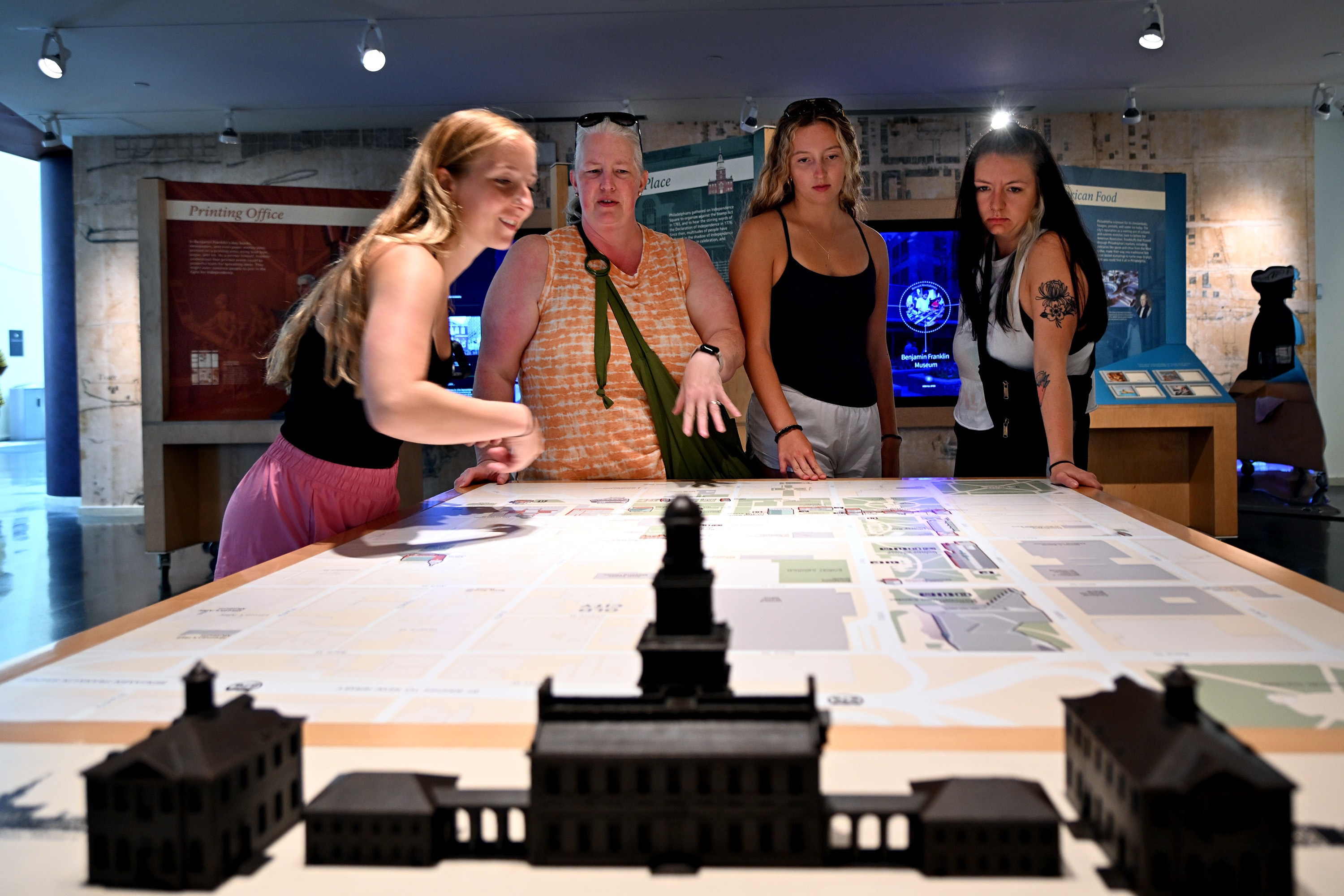
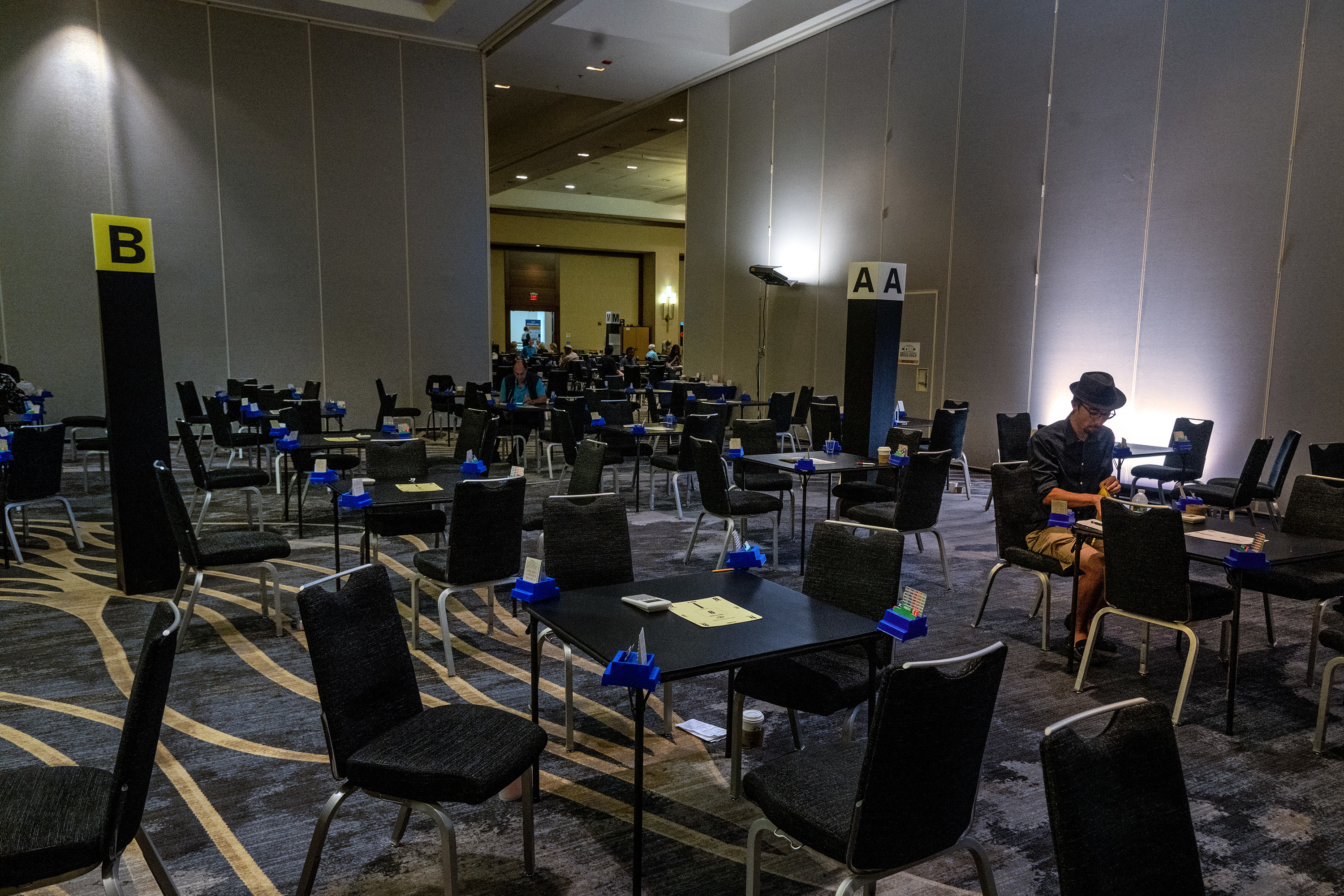
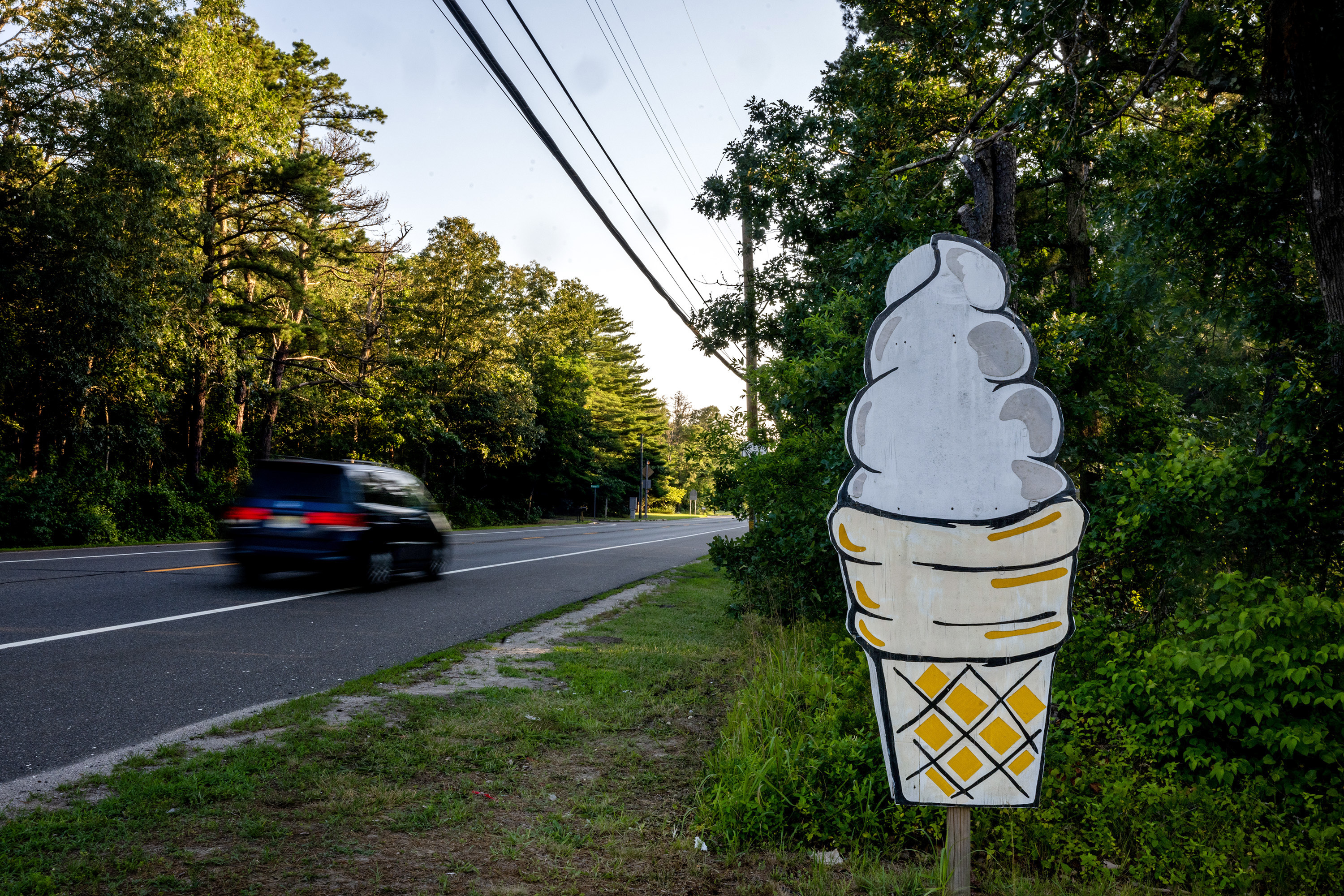
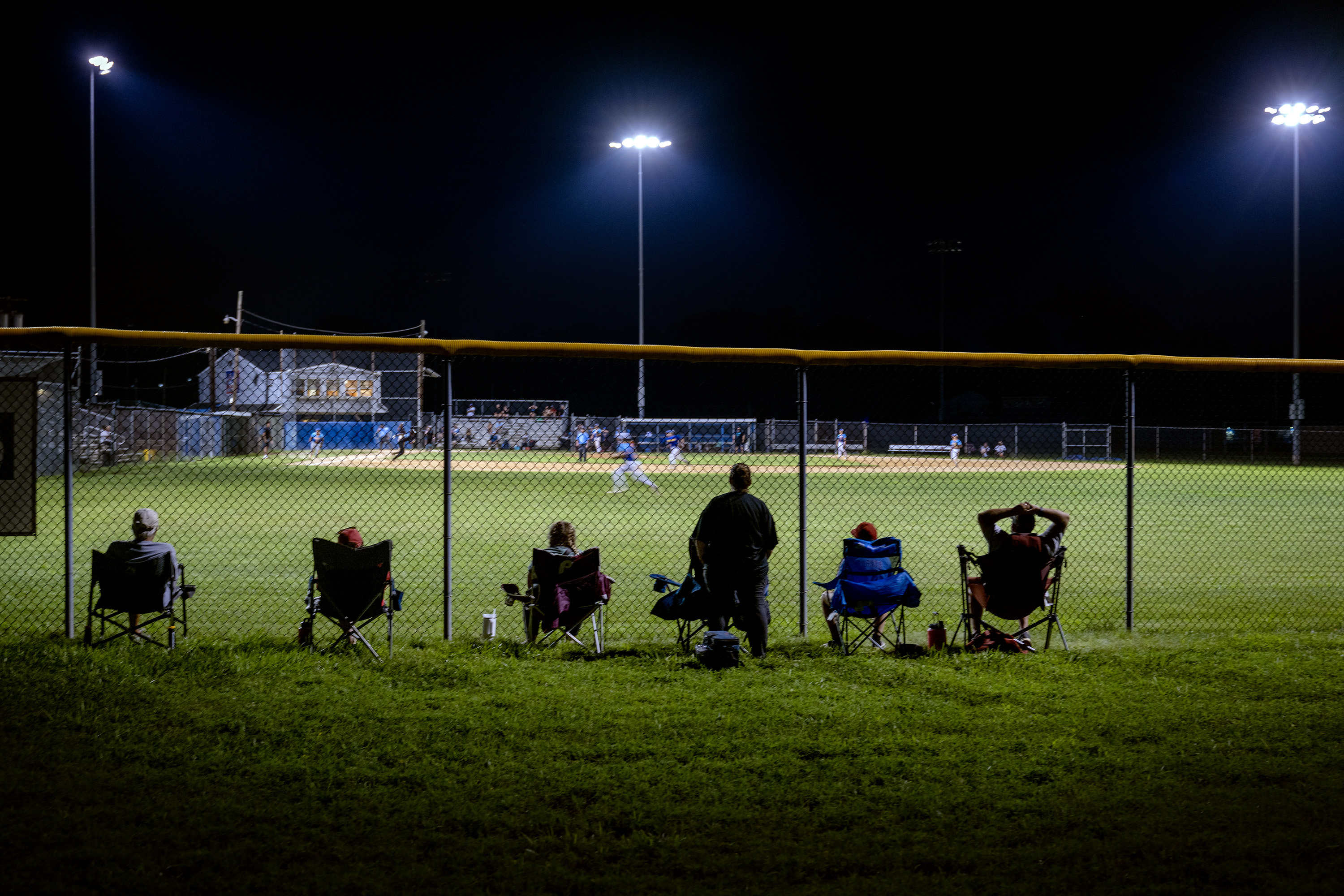
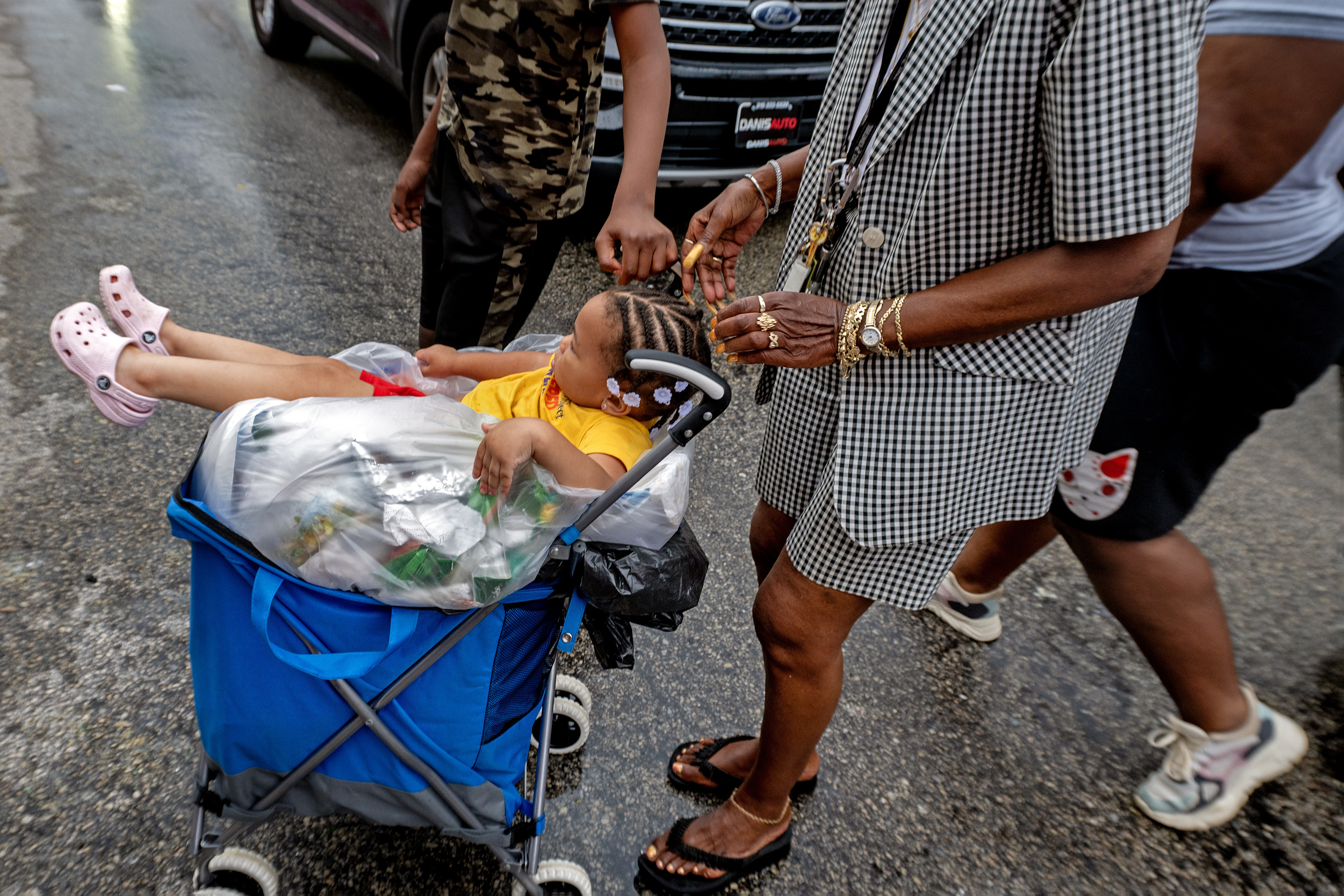
October 11, 2025: Can you find the Phillie Phanatic, as he leaves a “Rally for Red October Bus Tour” stop in downtown Westmont, N.J. just before the start of the NLDS? There’s always next year and he’ll be back. The 2026 Spring Training schedule has yet to be announced by Major League Baseball, but Phillies pitchers and catchers generally first report to Clearwater, Florida in mid-February.October 6. 2025: Fluorescent orange safety cone, 28 in, Poly Ethylene. Right: Paint Torch (detail) Claes Oldenburg, 2011, Steel, Fiberglass Reinforced Plastic, Gelcoat and Polyurethane. (Gob of paint, 6 ft. Main sculpture, 51 ft.). Lenfest Plaza at the Pennsylvania Academy of the Fine Arts on North Broad Street, across from the Convention Center.September 29, 2025: A concerned resident who follows Bucks County politics, Kevin Puls records the scene before a campaign rally for State Treasurer Stacy Garrity, the GOP candidate for governor. His T-shirt is “personal clickbait” with a url to direct people to the website for The Travis Manion Foundation created to empower veterans and families of fallen heroes. The image on the shirts is of Greg Stocker, one of the hosts of Kayal and Company, “A fun and entertaining conservative spin on Politics, News, and Sports,” mornings on Talk Radio 1210 WPHT.September 22, 2025: A shadow is cast by “The Cock’s Comb,” created by Alexander “Sandy” Calder in 1960, is the first work seen by visitors arriving at Calder Gardens, the new sanctuary on the Ben Franklin Parkway. The indoor and outdoor spaces feature the mobiles, stabiles, and paintings of Calder, who was born in Philadelphia in 1898, the third generation of the family’s artistic legacy in the city.September 15, 2025: Department of Streets Director of Operations Thomas Buck leaves City Hall following a news conference marking the activation of Automated Speed Enforcement (ASE) cameras on the Broad Street corridor – one the city’s busiest and most dangerous roads. The speed limit on the street, also named PA Route 611, is 25 mph.September 8, 2025: Middle schoolers carry a boat to the water during their first outing in a learn-to-row program with the Cooper Junior Rowing Club, at the Camden County Boathouse on the Cooper River in Pennsauken. September 1, 2025: Trumpet player Rome Leone busks at City Hall’s Easr Portal. The Philadelphia native plays many instruments, including violin and piano, which he started playing when he was 3 years old. He tells those who stop to talk that his grandfather played with Billie Holiday, Duke Ellington, Nina Simone, and Dizzy Gillespie. August 25, 2025: Bicycling along on East Market Street.August 18, 2025: Just passing through Center City; another extraterrestrial among us. August 11, 2025: Chris Brown stows away Tongue, the mascot for a new hard iced tea brand, after wearing the lemon costume on a marketing stroll through the Historic District. Trenton-based Crooked Tea is a zero-sugar alcoholic tea brand founded by the creator of Bai, the antioxidant-infused coconut-flavored water, and launched in April with former Eagles defensive end Brandon Graham as a partner.August 4,2025: Shanna Chandler and her daughters figure out their plans for a morning spent in Independence National Historical Park on the map in the Independence Visitor Center. The women (from left) Lora, 20; Shanna; Lenna, 17; and Indigo, 29, were stopping on their way home to Richmond, Virginia after vacationing in Maine. The last time they were all in Philadelphia Shanna was pregnant with Lenna. July 28, 2025: Louis-Amaury Beauchet, a professional bridge player from Brittany, France, takes a break between game sessions in an empty ballroom during the North American Bridge Championships at the Center City Marriott with some 4000 people in town over week of the tournament. The American Contract Bridge League is hosting the week of meetings and tournaments with bridge players from all over the world. The ACBL is the largest bridge organization in North America, with over 120,000 members (down from around 165,000 before COVID). Bridge draws players of all ages and walks of life – fictional characters James Bond and Snoopy both played as do billionaires Bill Gates and Warren Buffett (who sometimes play as partners).July 21, 2015: Signage for the Kustard Korner in Egg Harbor City, on the way to the Jersey Shore. President Ronald Reagan designated July as National Ice Cream Month and the third Sunday of the month.July 14, 2025: Fans watch a game at the Maple Shade Babe Ruth Field, part of the 20th Annual Franny Friel Summer Classic, on a cool(er) night with a refreshing breeze, the weekend before the MLB All-Star Game (with Kyle Schwarber the lone Phillies representative).July 7, 2025: Caroline Small wheels her two year-old great-granddaughter atop a bag of garbage as she carts it to a drop-off site at the Tustin Playground at 60th St. and W Columbia Ave. as residential trash collection stopped when a strike was called by District Council 33. Small lives just around the corner and said of the toddler, “she was just walking too slow.”
Former President Barack Obama endorsed U.S. Rep. Mikie Sherrill, the Democratic nominee for New Jersey governor, who is locked in a tight race with Republican Jack Ciattarelli.
Obama’s announcement just weeks ahead of the Nov. 4 election came in the form of an ad paid for by Sherrill’s campaign that Sherrill shared on X Friday morning.
“Mikie is a mom who will drive down costs for New Jersey families,” Obama said in the ad, echoing her campaign’s core message. “As a federal prosecutor and former Navy helicopter pilot, she worked to keep our communities safe.”
“Mikie’s integrity, grit, and commitment to service are what we need right now in our leaders,” he adds.
I'm honored to have President @BarackObama on Team Mikie.
This movement is about delivering something better for New Jersey — lower costs, more opportunity for our kids, and a government that's truly accountable to the people. pic.twitter.com/A0f5mHr0GI
Sherrill maintains a single-digit leadin polls over Ciattarelli, a former Assembly member who also ran for governor in 2017 and 2021 and has the endorsement of President Donald Trump.
In a statement, Sherrill praised Obama for leading “historic efforts to lower healthcare costs” and criticized Ciattarelli for defending cuts to Medicaid in Trump’s “big beautiful bill.”
“There’s so much at stake in this election, so President Obama and I are mobilizing New Jerseyans to make a plan to vote on or before November 4,” Sherrill added.
Sherrill last week appeared in South Jersey last week with Sens. Cory Booker (D., N.J.) and Amy Klobuchar (D., Minn.) and in her hometown of Montclair with former U.S. Rep. Gabby Giffords, an Arizona Democrat. She will appear in this weekend with Maryland Gov. Wes Moore.
Ciattarelli appeared on Wednesday with Ohio gubernatorial candidate Vivek Ramaswamy, who co-founded Trump’s DOGE and who appeared at a GOP summit in Atlantic City earlier this year to garner enthusiasm ahead of the gubernatorial primary.
Trump does not currently have plans to appear in the state with Ciattarelli, Axios reported. While New Jersey shifted more in support of Trump in 2024 he still lost the state by 6 percentage points.
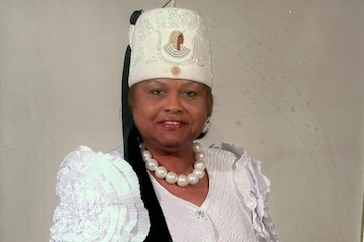
Dorothy Womble-Wyatt, 84, of Cherry Hill, innovative teacher and celebrated school principal for the Camden City School District, active church member, mentor, and proud graduate of what is now Fayetteville State University, died Tuesday, Sept. 23, of complications from a heart condition at her home.
For 37 years, from 1968 to her retirement in 2005, Ms. Womble-Wyatt connected with Camden students through progressive teaching techniques, and with classroom colleagues, parents, and nearby residents through her collaborative administrative style.
She was named principal at the old Bonsall Elementary School in 1977 and became the first principal at the new Riletta T. Cream Elementary School in 1991.
“She led the Riletta Twyne Cream Family School with distinction,” the Camden City Advisory Board of Education said in a recent resolution, “guiding its opening in January 1991 and building a school culture centered on high expectations, literacy, and community partnership.”
As a teacher, Ms. Womble-Wyatt focused on elementary school students, and she emphasized how math, geography, spelling, science, English, and other subjects were important in everyday life. She joined the school district in 1968 as a first-grade teacher and served as an administrative assistant before advancing to principal at Bonsall.
Ms. Womble-Wyatt was active with the Order of the Eastern Star.
In its resolution, the Board of Education said she “championed professional learning and innovative classroom practices that advanced student growth.”
Her nephew Micheal W. Moore said: “She was always a teacher at heart. She taught her family when she was young and her classmates in high school. She never stopped.”
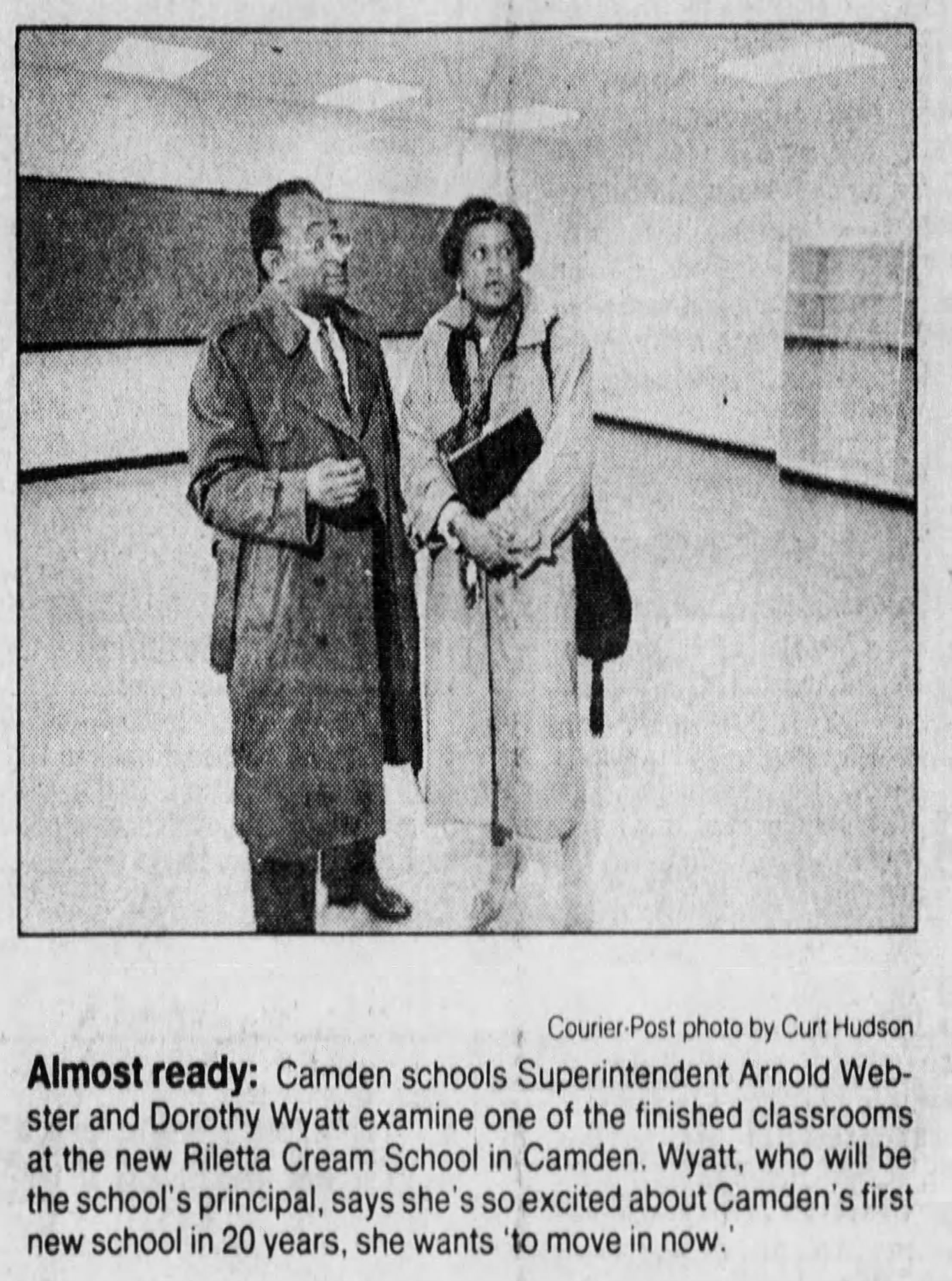
As principal at the Cream School, Ms. Womble-Wyatt supervised the transfer of 800 students from four other elementary schools during the 1990-91 school year and told the Courier-Post: “I’m just thinking about a smooth transition. … It’s the same as if you’re moving into a new home. You’re excited moving into a new environment. When you get something nice, you want to keep it that way.”
She supported all kinds of new educational initiatives and lobbied tirelessly for better school supplies and improved healthcare services for Camden students. The Courier-Post covered Cream’s grand opening, and 9-year-old student Bradford Sunkett told the newspaper: “I’m glad to be at a new school. But I’m most glad Ms. Wyatt is here. Ms. Wyatt and the teachers are more important than a school building.”
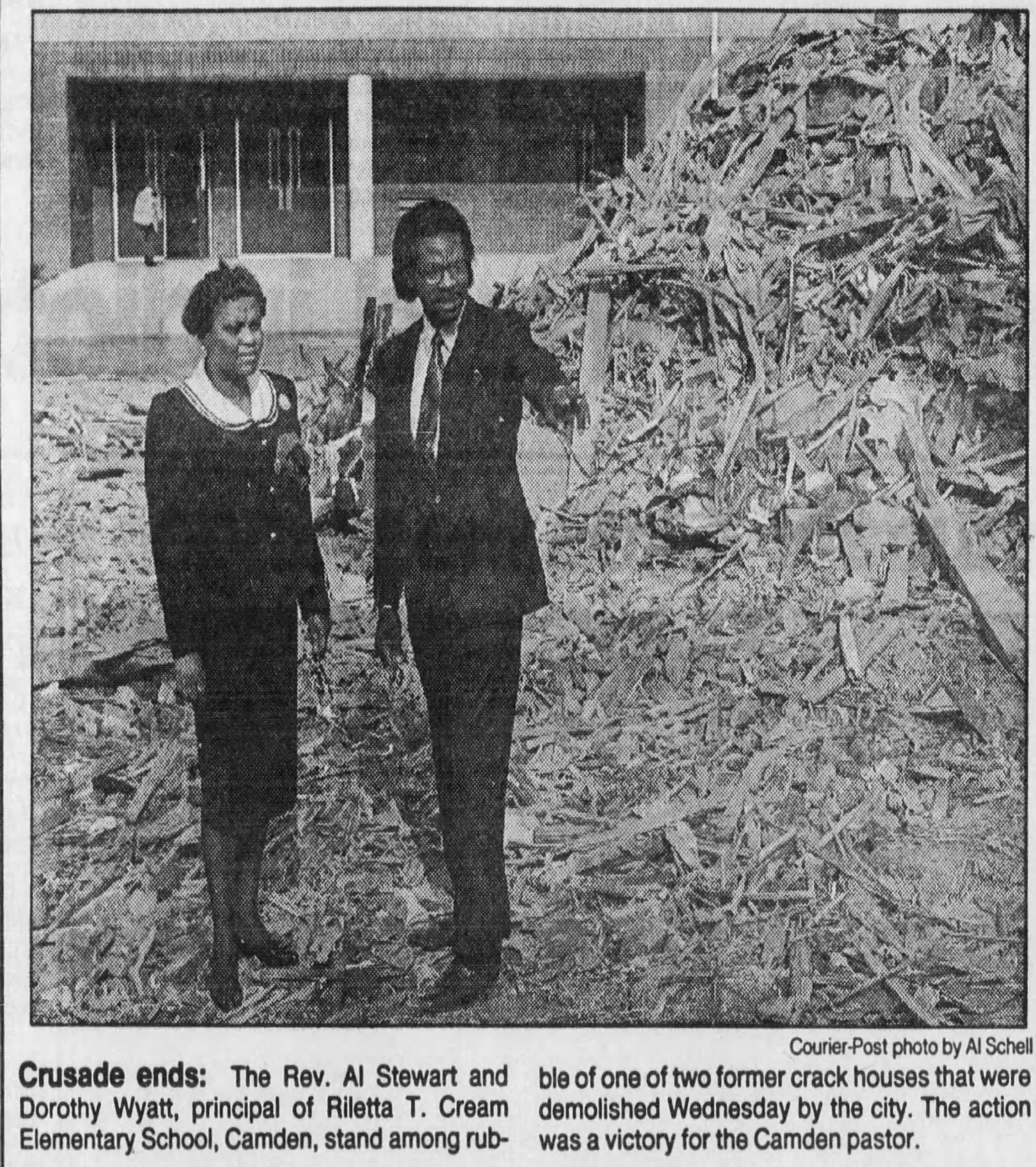
She cheered in 1992 when community activists cleared a cluttered lot near the school and told the Courier-Post: “It’s a joyful feeling knowing people have listened to what we have to say and did something about it.”
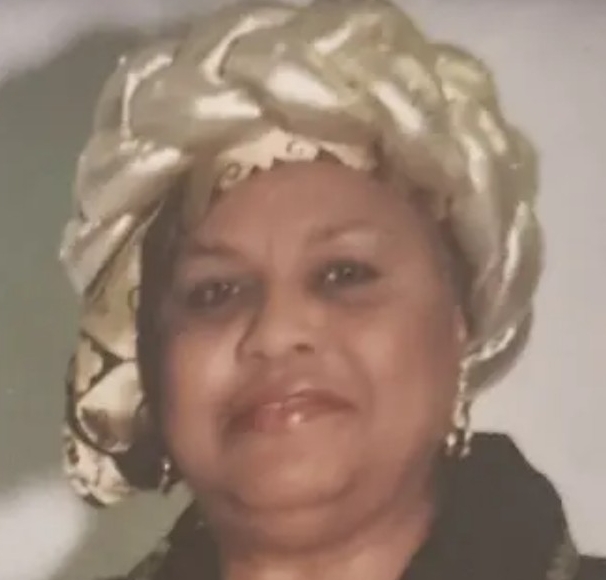
This photo of Ms. Womble-Wyatt appeared in the Courier-Post in 1990 as she was assuming the role of principal at the Cream School.
In 1999, she endorsed a New Jersey state reform program that invited parents to help shape school curriculum. “It’s a great thing for parents because many don’t have the experience of what schools are up against,” she told the Courier-Post. “All they hear is that schools are failing. This lets parents become part of the foundation.”
Ms. Womble-Wyatt was active at Roberts Chapel Missionary Baptist Church in North Carolina, First Nazarene and Zion Baptist Churches in Camden, and New Community Baptist Church in Collingswood. Zion recognized her with a service award in 2008.
“She loved to invite family and friends to attend worship services with her on Sundays and join her for dinner afterward,” her nephew said.
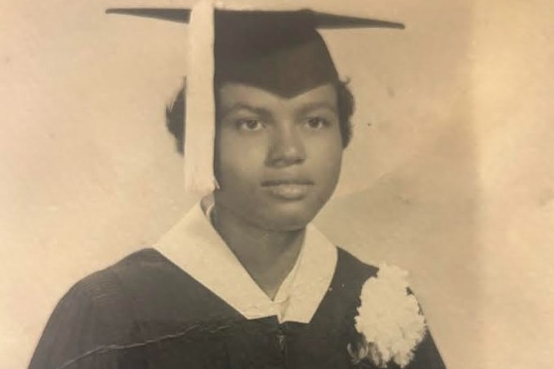
She earned a bachelor’s degree in education and leadership at Fayetteville State in North Carolina and recruited new students everywhere she went. In 2003, the university’s Gospel Choir honored her lifelong support with a concert at Camden High School.
This photo of Ms. Womble-Wyatt was published in the Courier-Post in 1992 during a nearby neighborhood cleanup.
She belonged to the Alpha Kappa Alpha Sorority and the Order of the Eastern Star, and spoke often at churches and community groups about Black history. She was honored at Camden’s third annual Women’s Recognition Ceremony in 1996 and earned an Outstanding Citizen’s Award from the local Freemasons in 1997.
“People wanted to be around her,” her nephew said. “She lifted you up.”
Dorothy Marie Womble was born May 16, 1941, in Goldston, N.C. She earned a master’s degree in education from North Carolina Central University, married Glenmore Wyatt in 1967, and they had a son, Glen. Her husband died in 2021, and their son died in 2023.
Ms. Womble-Wyatt collected African artifacts, hosted memorable dinners, and never forgot a birthday. She enjoyed casinos, shopping for gifts, and visiting family and friends.
Ms. Womble-Wyatt earned a master’s degree in education from North Carolina Central University.
On Instagram, a friend called her “an educator par excellence, a fashionista, and genuine lover of people.” Her nephew said: “She was generous and joyous. She was a queen in every right.”
In addition to her nephew, Ms. Womble-Wyatt is survived by a grandson and other relatives. A brother died earlier.
Services were held Oct. 2 and 3 in Camden, and Oct. 12 in North Carolina.
Ms. Womble-Wyatt’s “life was vibrant and ever moving,” her family said in a tribute. “Indeed, her legacy has grown into a gorgeous train of diamonds and appreciation.”
As The Philadelphia Inquirer closes its printing plant, a ‘family’ of employees marks the end of an era
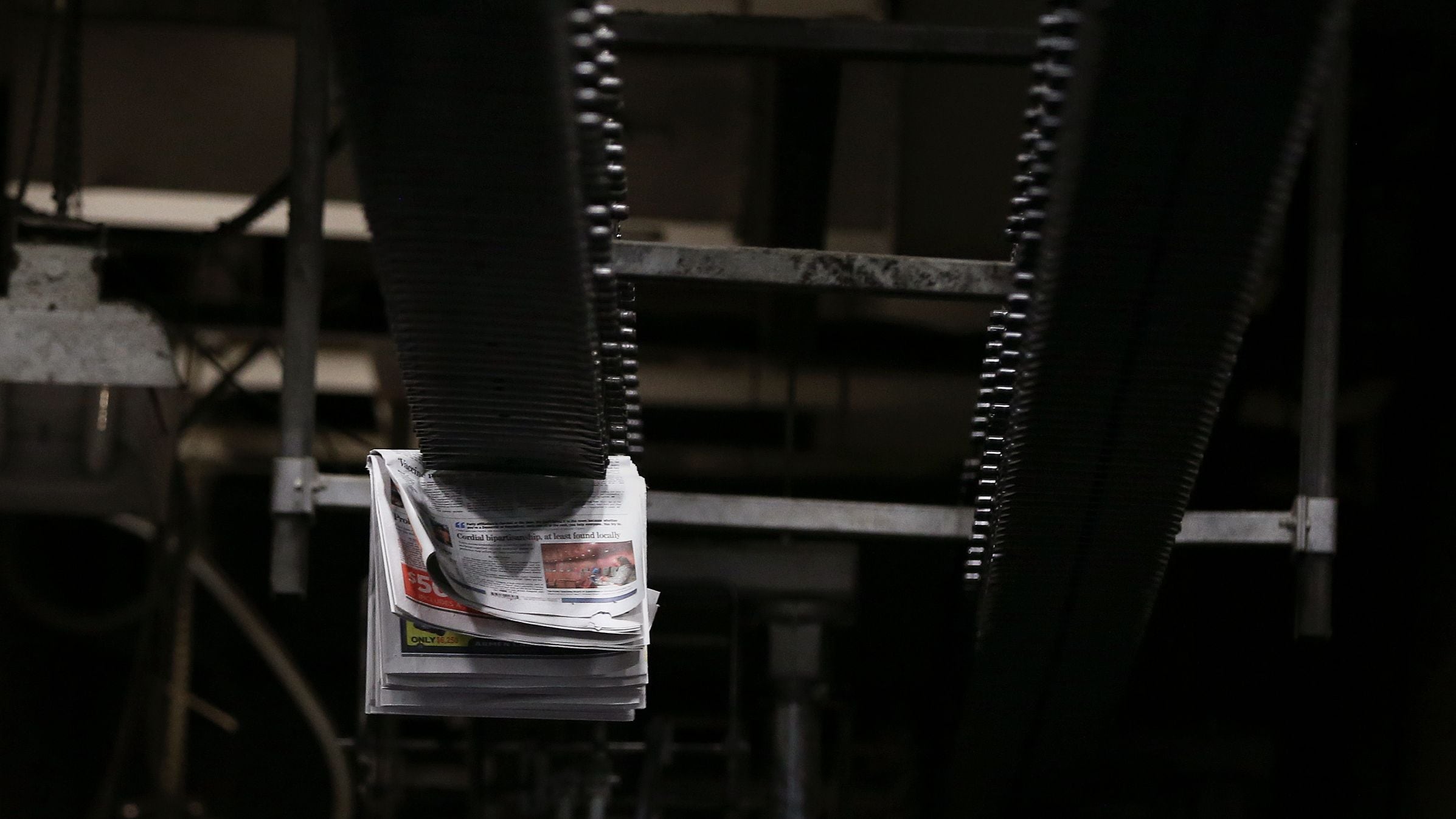
A tattered copy of The Inquirer is the last to ride the grippers from the pressroom to the mailroom at the Schuylkill Printing Plant in Upper Merion Township on March 28.TIM TAI / Staff Photographer
Tom “Three Bars” Lafauci had no chance of disappearing quietly into the howling winds of the night.
“Lafauci!”
Sybil White, a longtime security officer, summoned him before he could reach the only available exit at The Philadelphia Inquirer’s Schuylkill Printing Plant, the mammoth newspaper factory that was about to call it an era.
“Come on, get in the picture,” she commanded him. Almost reflexively, Len Leach and Tanya Rockeymore, who were working the lobby security detail that night, stuck their heads in the frame. They might not see him again. One of 500 who lost their jobs with the building’s sale, this was Lafauci’s last work shift.
At the age of 192, The Inquirer is stopping its own presses for good — the April 1 issues marked the last official runs — and will be outsourcing its print operations in line with newspapers across the country that are cutting costs and fighting a media universe changing at the speed of breaking news.
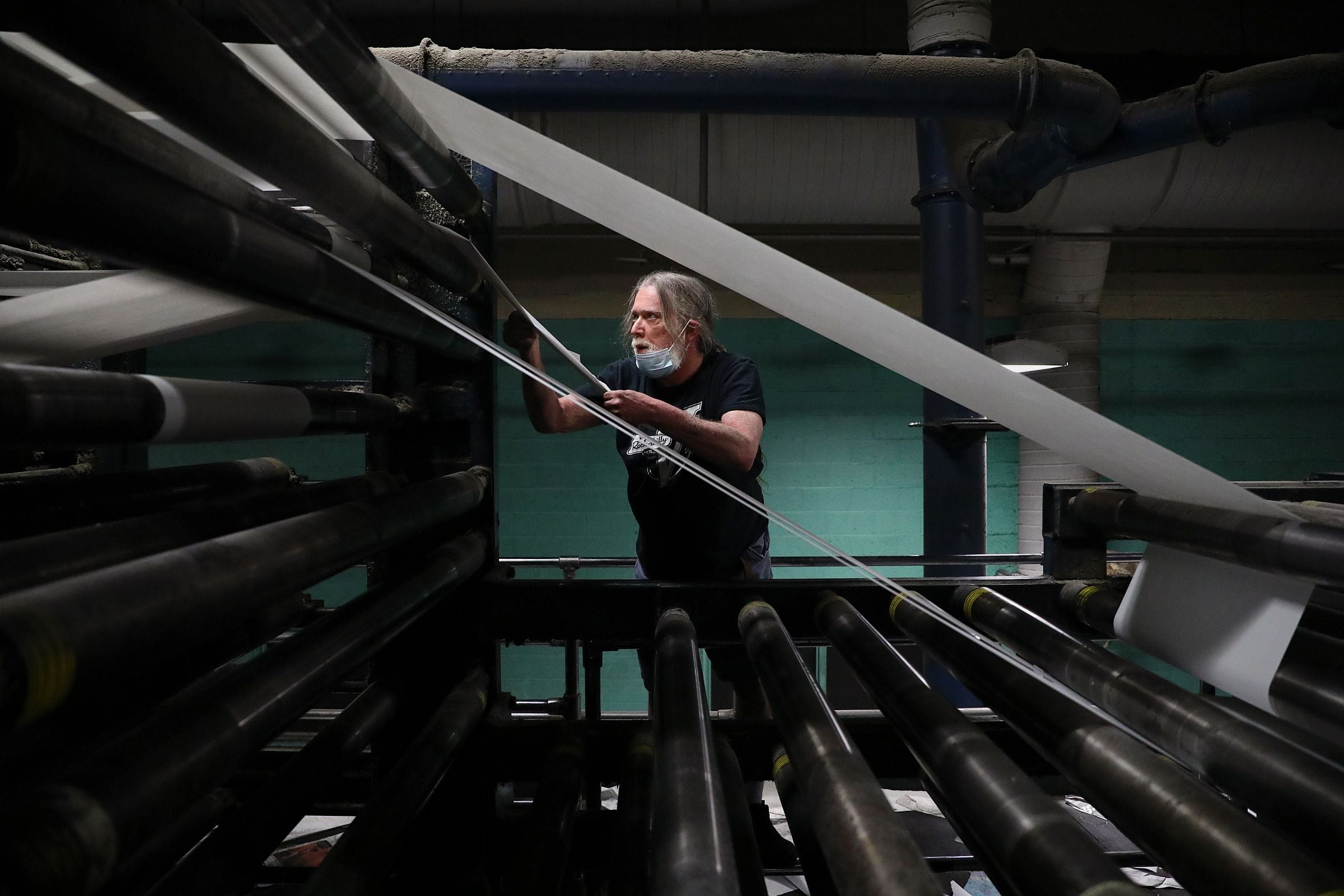
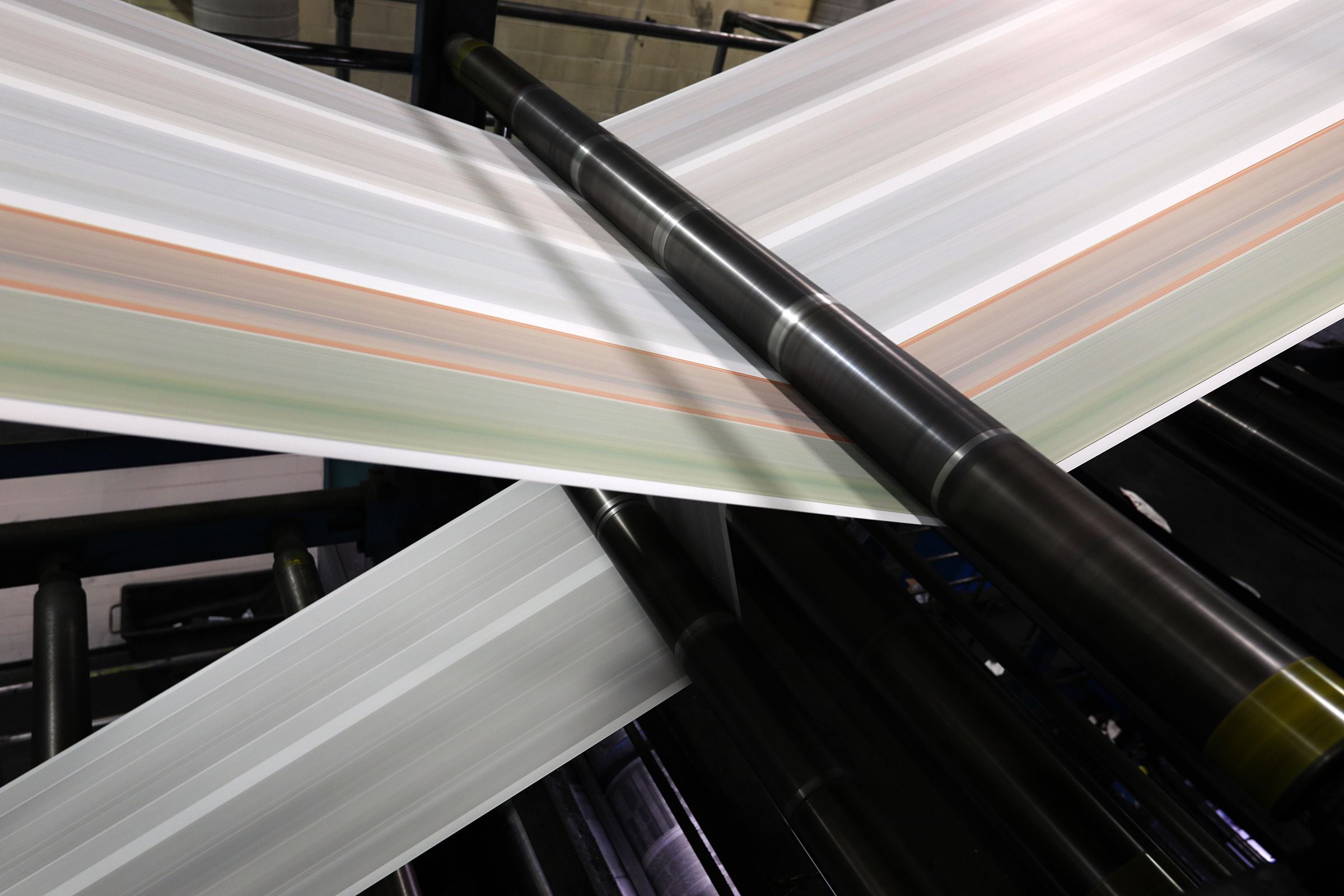
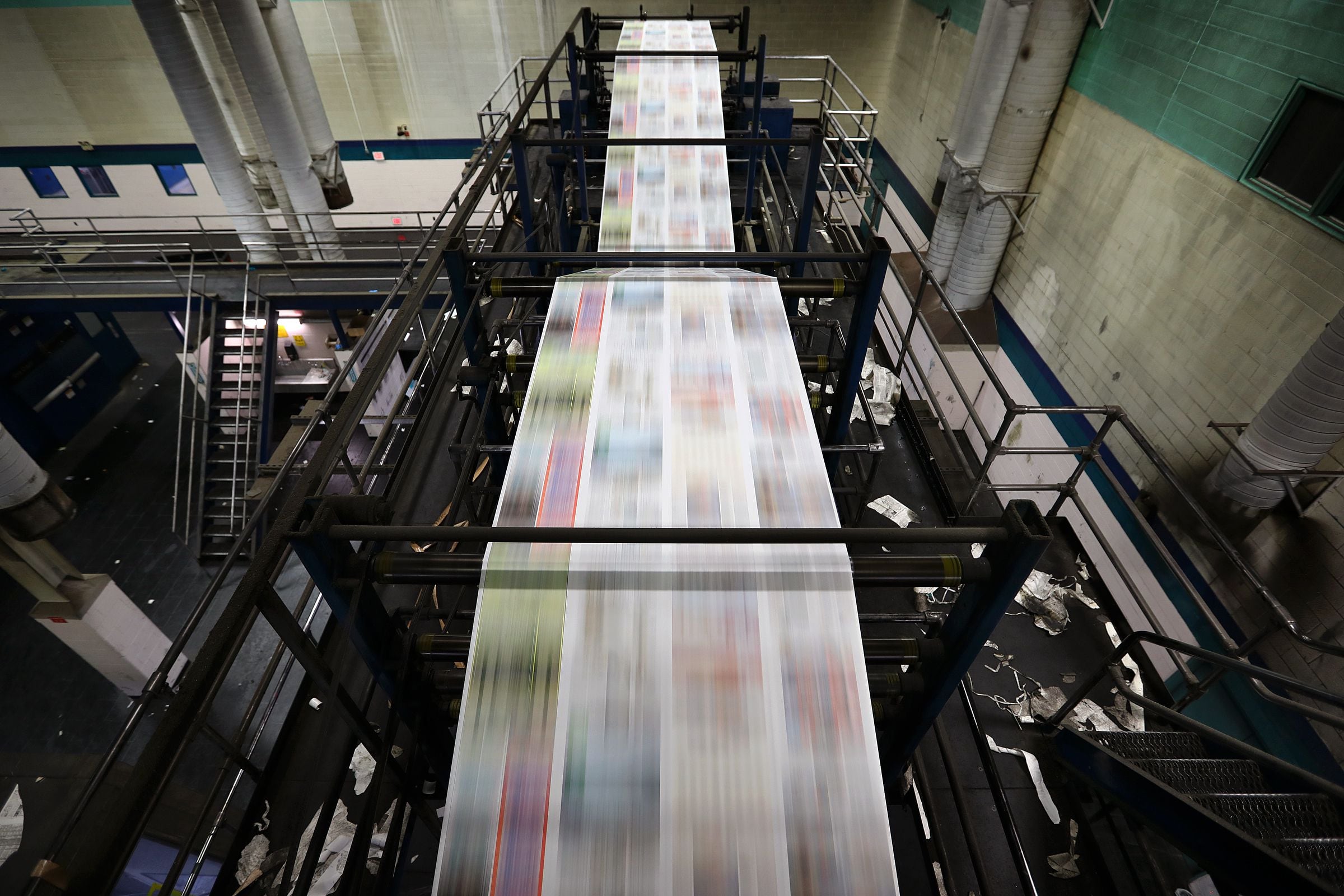
Aaron Krakovitz, a third-generation, 47-year pressman, threads paper through a set of rollers as he prepares for the night's press run. TIM TAI / Staff PhotographerA blur of paper courses along rollers during a Sunday advance run; some sections of the Sunday paper are printed ahead of time. TIM TAI / Staff PhotographerColor pages speed across rollers for a Sunday advance run. TIM TAI / Staff Photographer
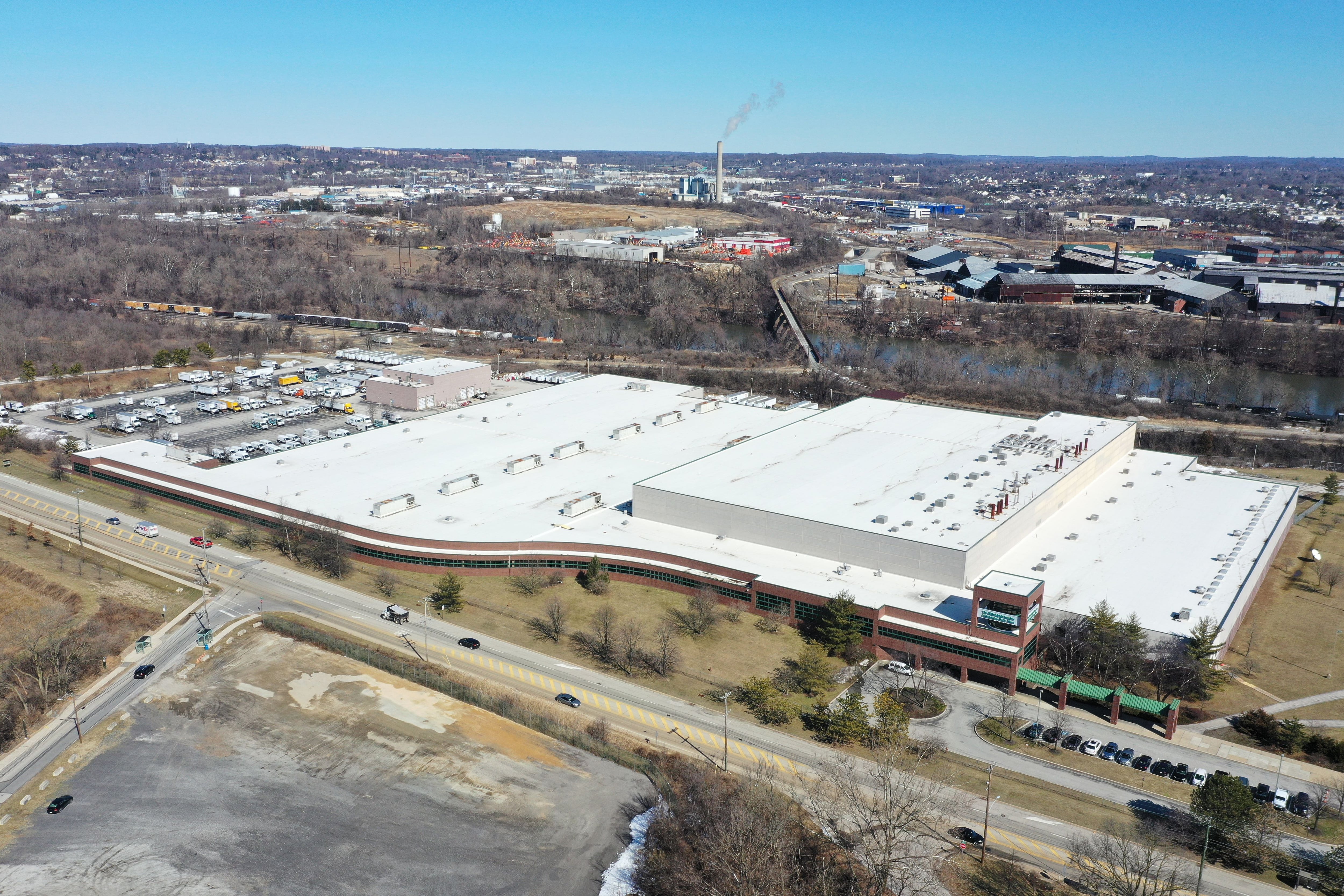
The guards seemed to be well-acquainted with Three Bars. Actually, they seemed to be well-acquainted with everyone exiting and entering the brick, curving structure built for $299.5 million (about $600 million in today’s dollars) 30 years ago, and sold to developer J. Brian O’Neill for $37 million to become part of his burgeoning biotech-health science empire.
“You get to know everybody,” said White. “It’s like family,” a leitmotif sentiment among the guards, engravers, pressmen, mailers, and drivers who worked in the immense, quirk-infested complex that was marinated in the vague odors of paper and the ink that blackwashed the floors and layered the handrails.
A production theme park
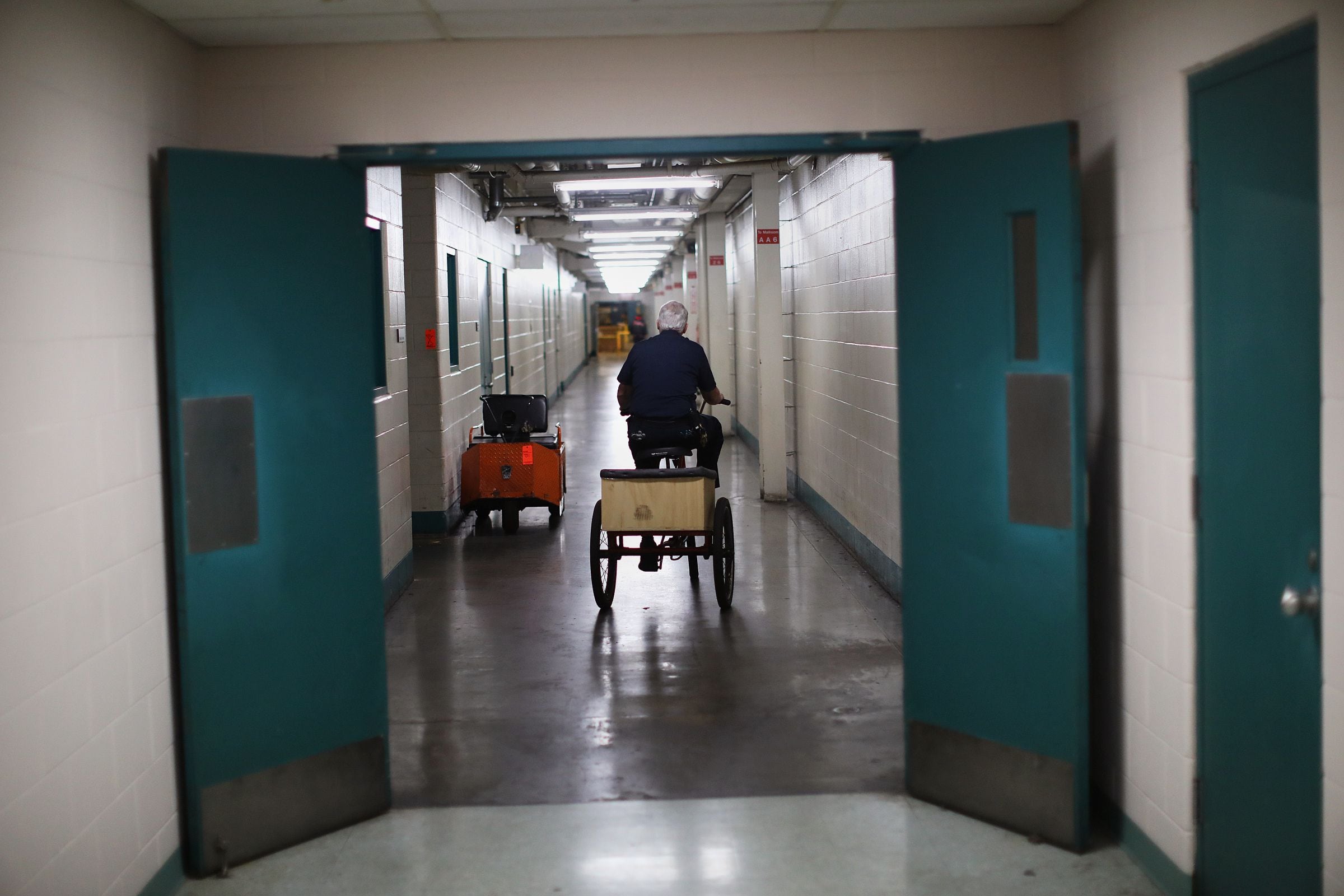
The printing plant, a 681,023-square-foot complex along the river, was built to house $160 million worth of “state of the art” presses. FRANK WIESE / StaffSecond childhood? No, engineer Joe Hoban is riding a tricycle that can carry tools while navigating the building’s lengthy corridors. TIM TAI / Staff Photographer
This was a thundering production theme park of impossible intricacy, where paper-carrying freight cars rumbled and rammed into the rail bay, where newspaper pages rolled off presses that collectively weighed as much as a Navy destroyer.
They were folded and collated, and commuted on cars and conveyors as though they had purchased tickets on amusement rides. Ultimately they landed in trucks that ferried The Inquirer and Daily News to hundreds of locations while most readers slept.
All it took to get them their papers, said Fred Lehman, vice president of operations, was about two million moving parts.
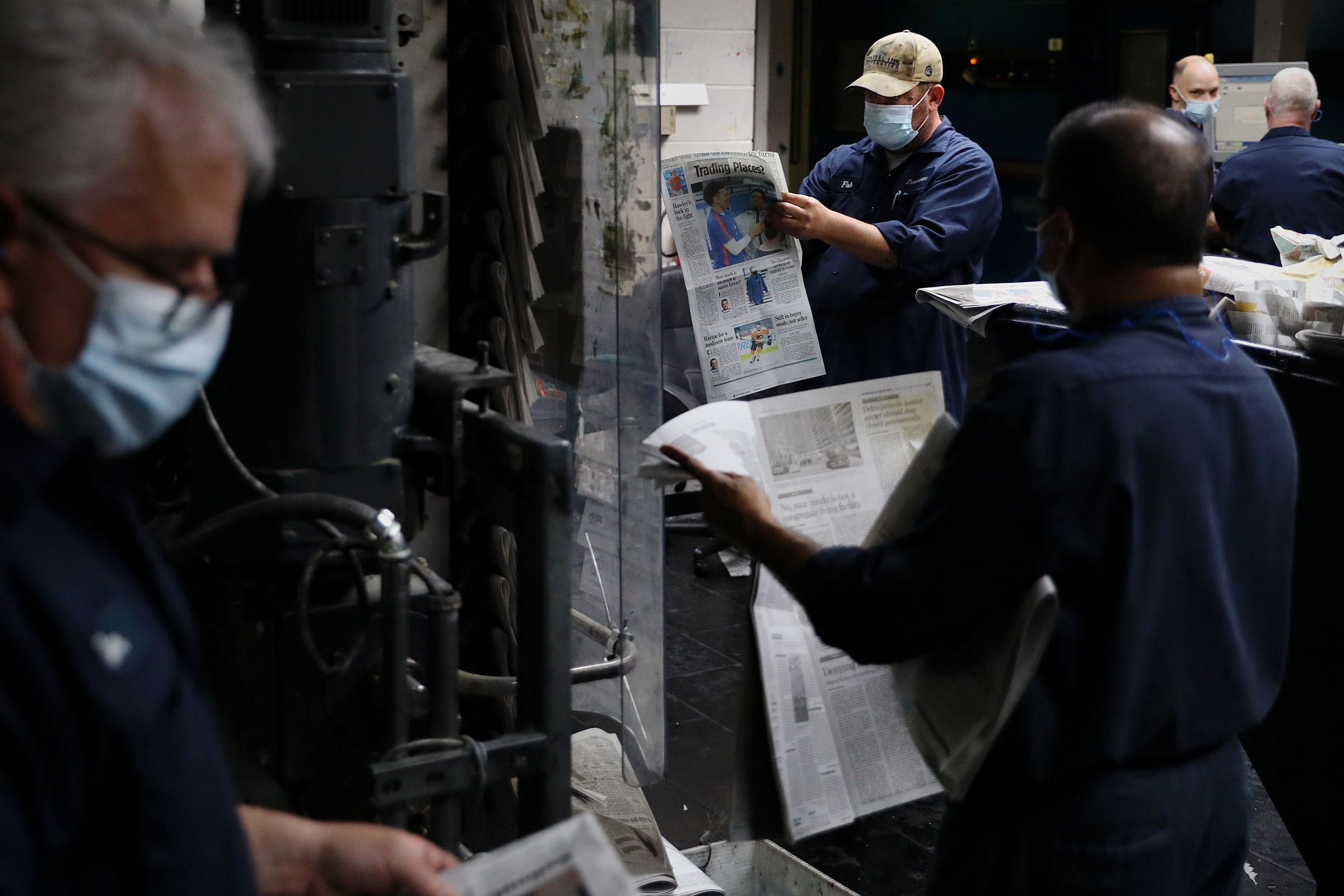
Pressroom supervisor Jim Fish (top) flips through Inquirer pages as a quality check. TIM TAI / Staff Photographer
Somehow amid the often hellish cacophony in this 681,023-square-foot behemoth, people got to know each other.
In many cases, they knew each other already. “Family” was more than metaphoric in White’s case. Her uncle got her the job 25 years ago; he worked at the company. Her father was a driver.
Lafauci, a mailer, said his nickname had no association with happy hour. “Three Bars … my grandfather worked here, my father worked here.” Yes, he was the third bar. Bill Burk, a transportation manager, worked with all three bars, and at one time or another, The Inquirer employed 20 of Burk’s family members.
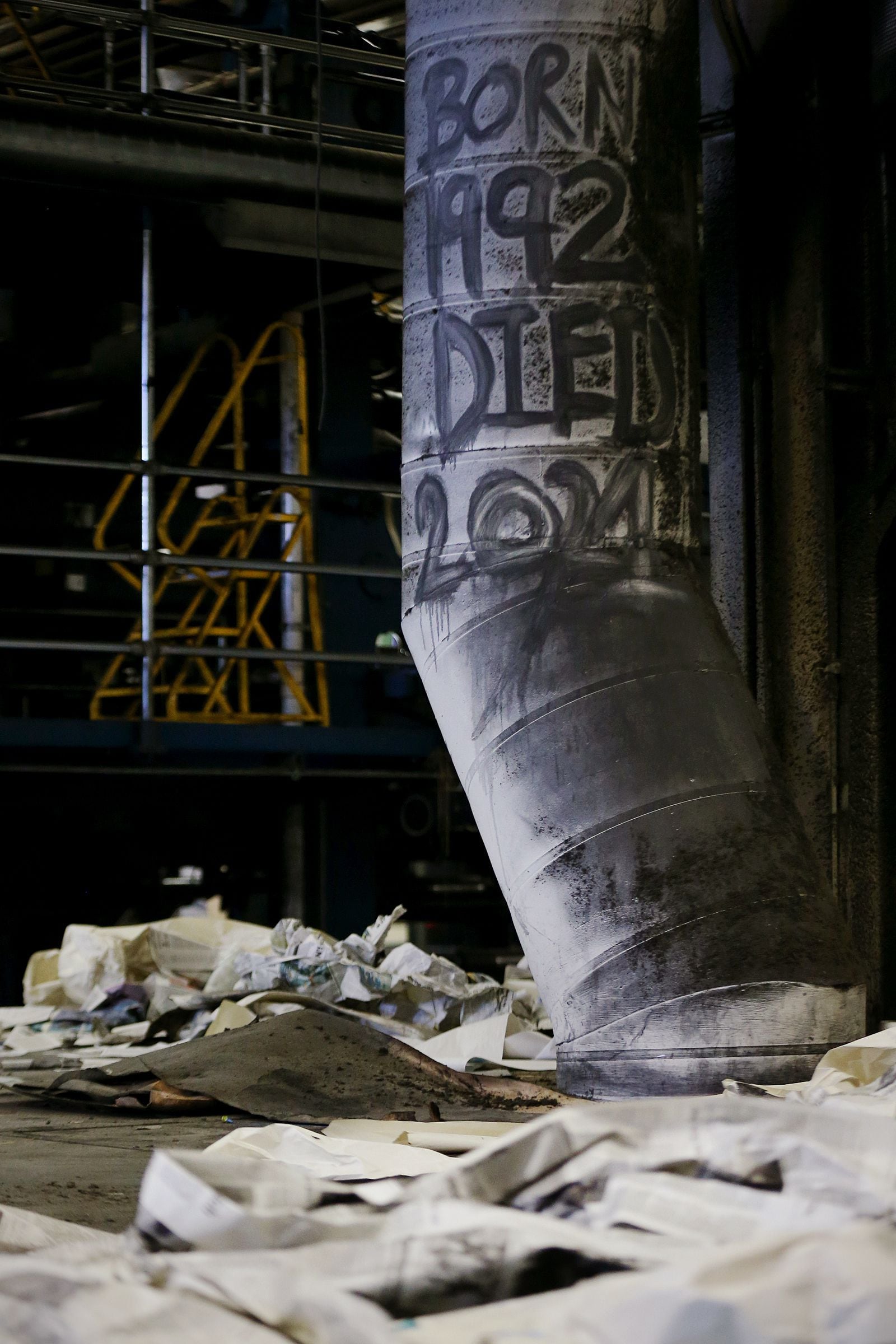
Epitaph for an era: "BORN 1992 DIED 2021" is traced in the grime on an air duct inside the pressroom. TIM TAI / Staff Photographer
“My grandfather worked here, my father worked here.”
Tom “Three Bars” Lafauci
‘It was family’
Those days are history, as soon will be the printing plant, located in Upper Merion Township at the junction of Routes 23 and 320, a location a reporter once described as “centrally isolated.”
Rather than a death in the family, October’s announcement that SPP would be sold was more like deaths in multiple families, and the sense of loss — a mix of resignation, equanimity, sadness, with a dash of bitterness — condensed as employees were leaving the building for the last time.
“It was family,” Lafauci said. There’s that word again.
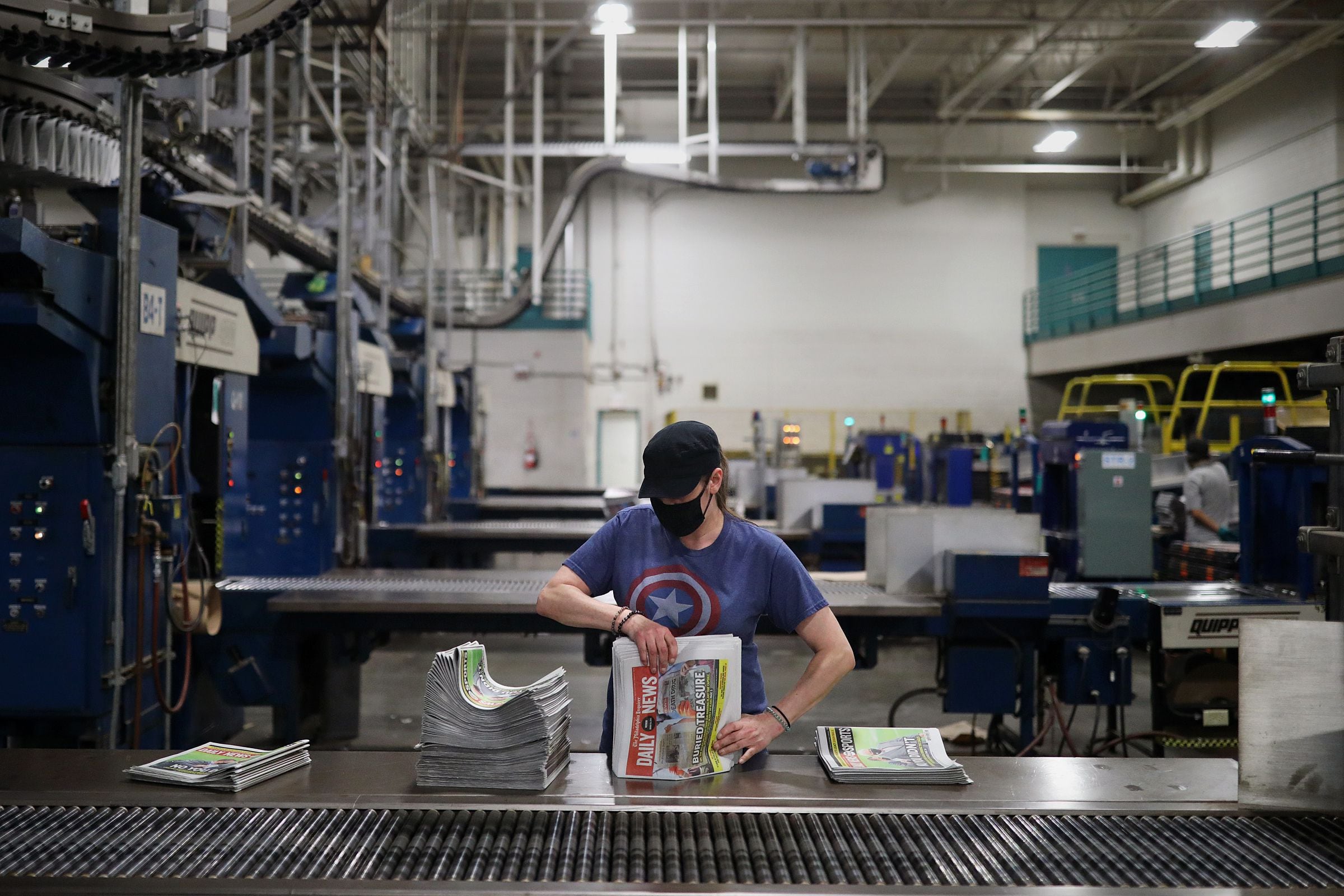
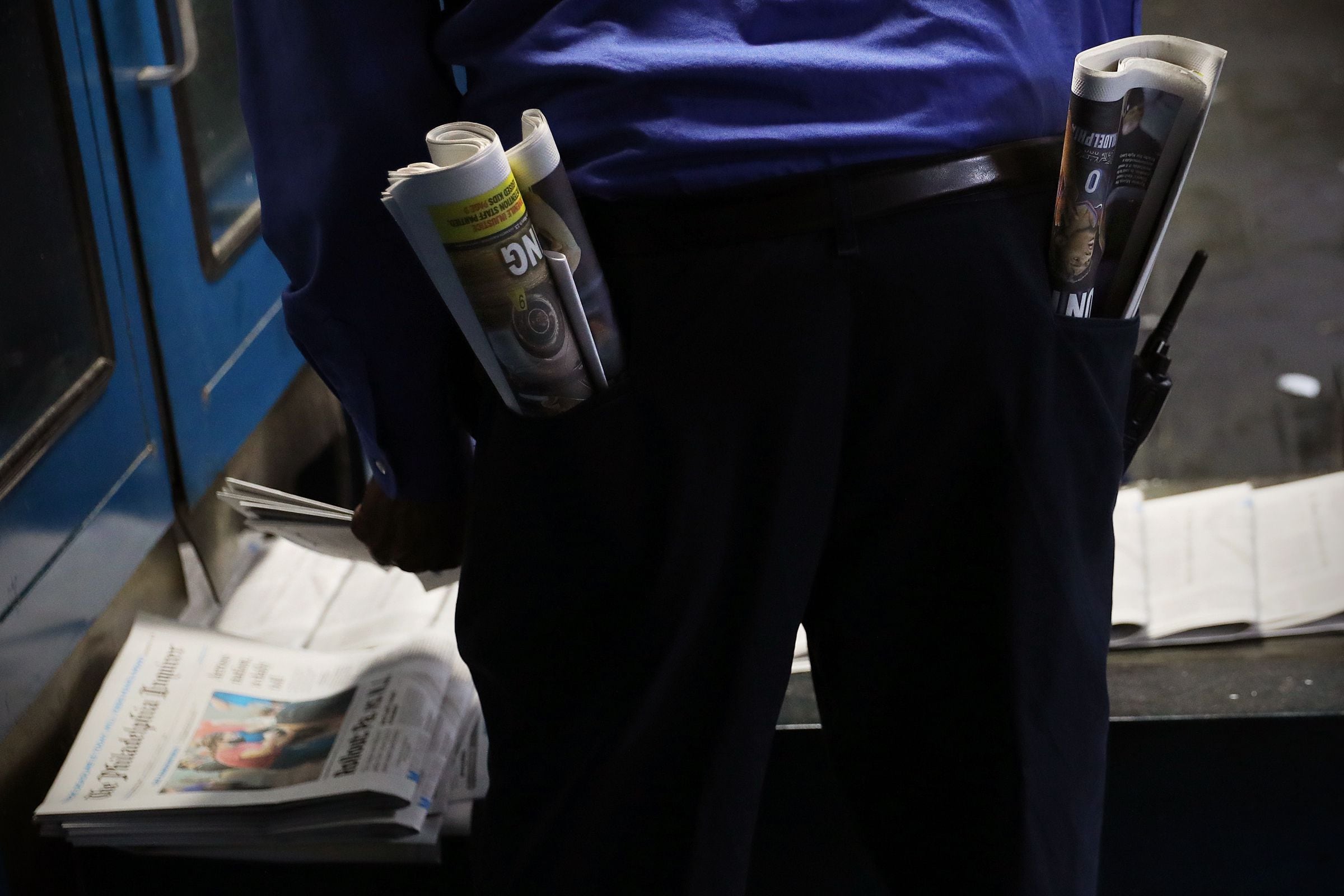
Mailer Jessica Tayoun, who started working for The Inquirer in 1992, stacks a bundle of Daily News issues. TIM TAI / Staff PhotographerTayoun and Lionel Shaw, a 37-year Inquirer veteran, prepare bundles of the newspaper's last scheduled edition to be printed at SPP. TIM TAI / Staff PhotographerPressroom supervisor Tom Addison, hired in 1979, carries in his rear pockets rolled-up Daily News issues that he will examine later for quality. TIM TAI / Staff Photographer
About the only problems they had at the plant, the guards said, involved intra-family disputes that reasoned discussion failed to resolve. Said White, “We tried to calm them down.”
The writers and editors reported and crafted the stories — from seven presidential elections in the SPP era, to a World Series title and a Super Bowl championship, to the 9/11 terrorist attacks, to one tenacious pandemic — but the SPP workforce made sure people got to read them on paper that they could hold in their hands, and perhaps even save.
During the last run of the Inquirer's own presses, a “family” of employees say goodbye as the company transitions to an outsourced printing operation.Kristen Balderas, Raishad Hardnett, Astrid Rodrigues, Lauren Schneiderman and Frank Wiese / Staff
All the news that fits
In the pre-SPP days, type and advertisements were posted on flats by hand. Editors marked last-minute cuts with blue pencils, and the compositors would surgically consign them to the cutting-room floor.
The job evolved rapidly with “pagination,” as computer screens replaced the flats and workers such as Kathleen Griffiths moved from the composing room to a video terminal. Inspecting the pages to make sure that the ads are properly placed and error-free, and that the display type and copy are correctly confined to a page is a critical step in the “prepress” process.
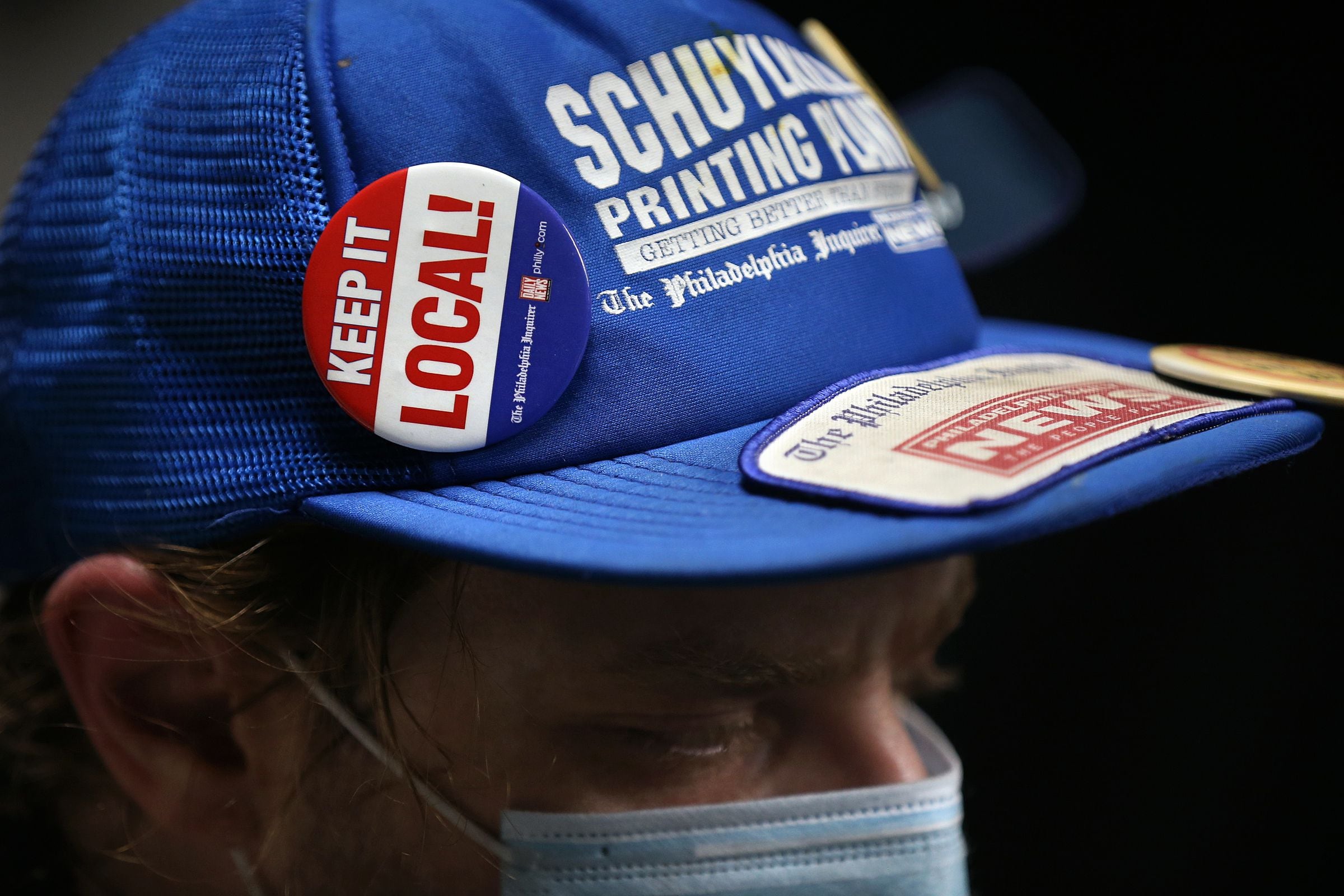
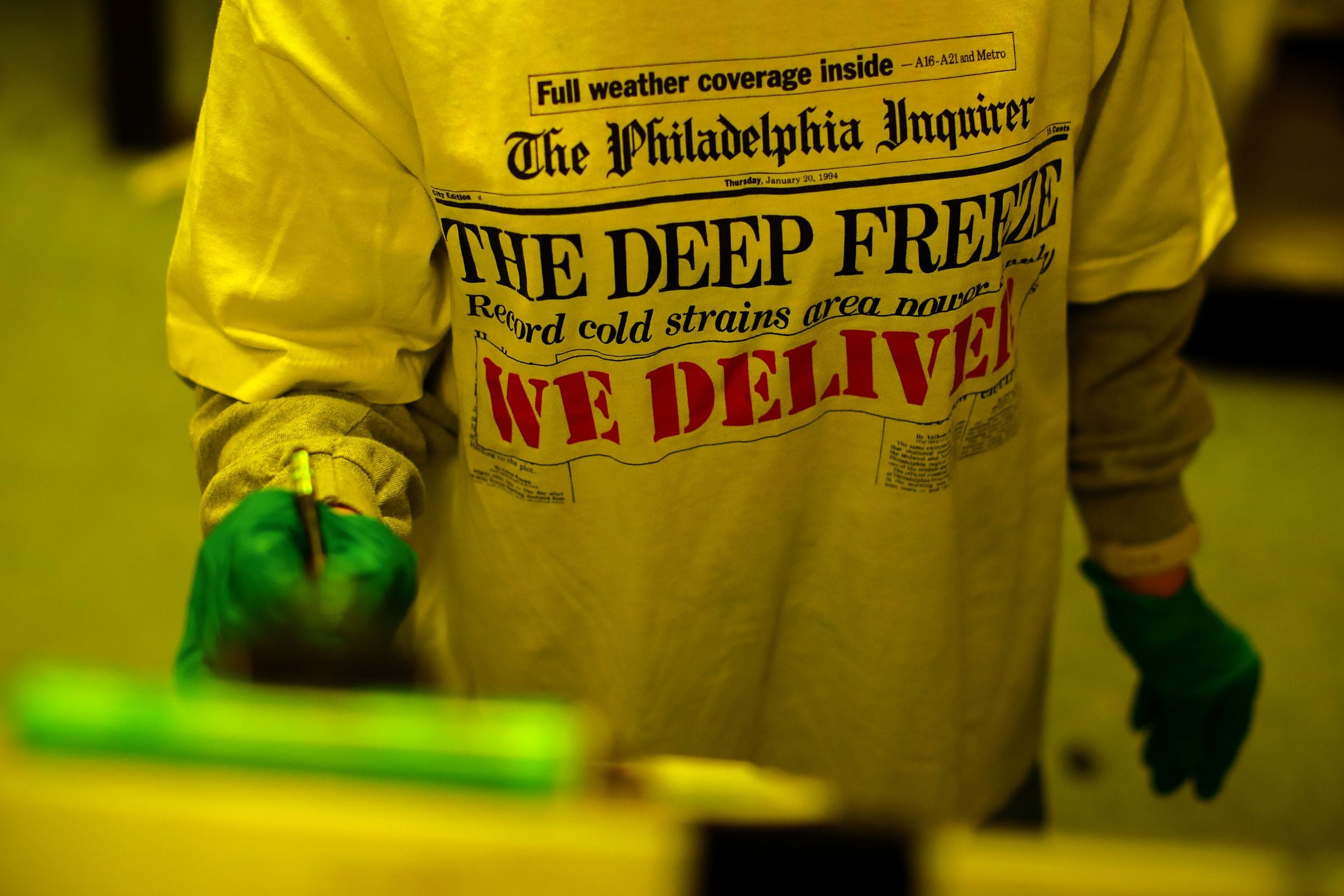
Pressman Brett Nick, who started working at The Inquirer in 2003, wears a hat with an old Inquirer campaign slogan: "Keep It Local!" TIM TAI / Staff PhotographerPlatemaker Debbie Dougherty wears a T-shirt stamped with a front-page image from Jan. 20, 1994, the year she was hired. TIM TAI / Staff Photographer
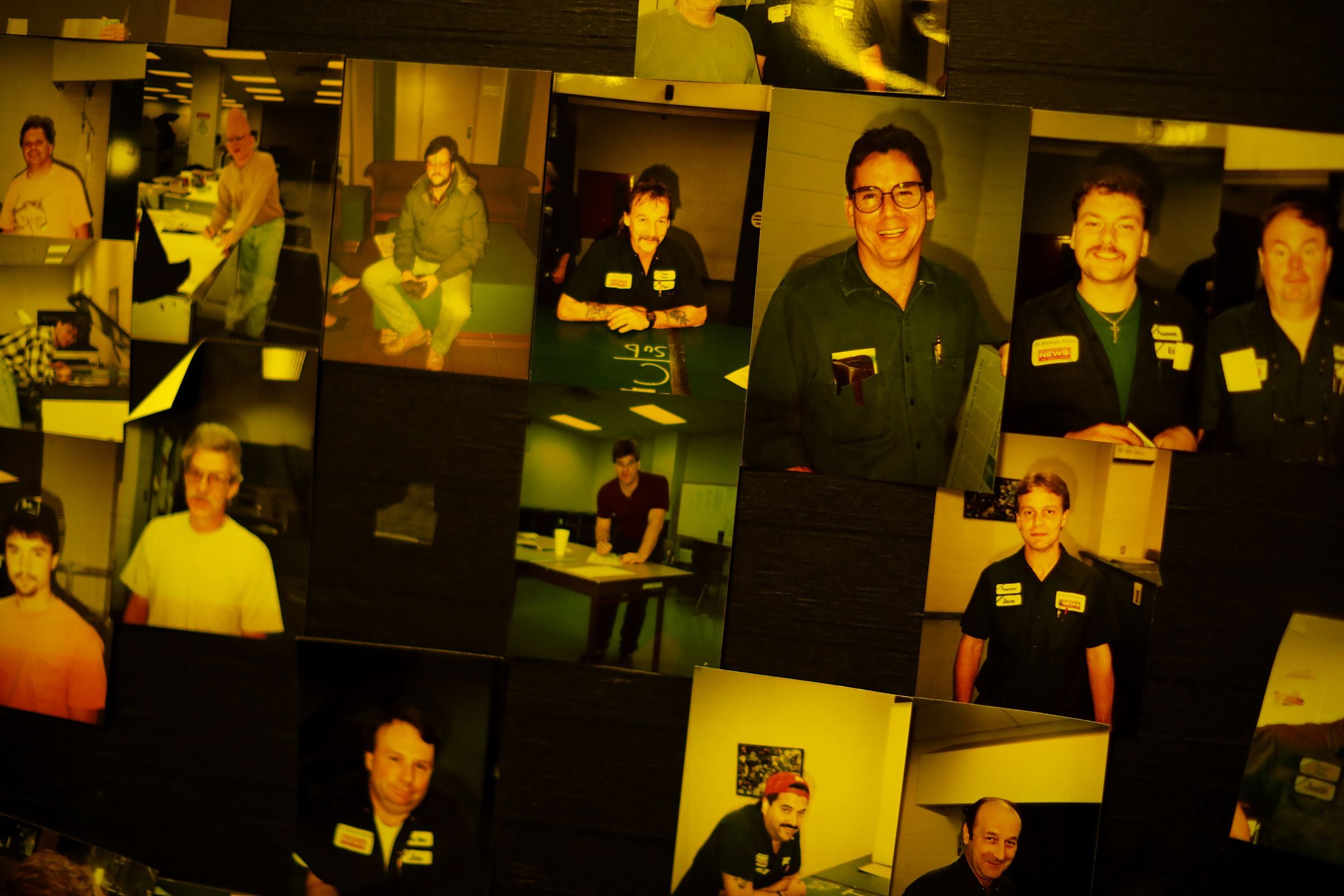
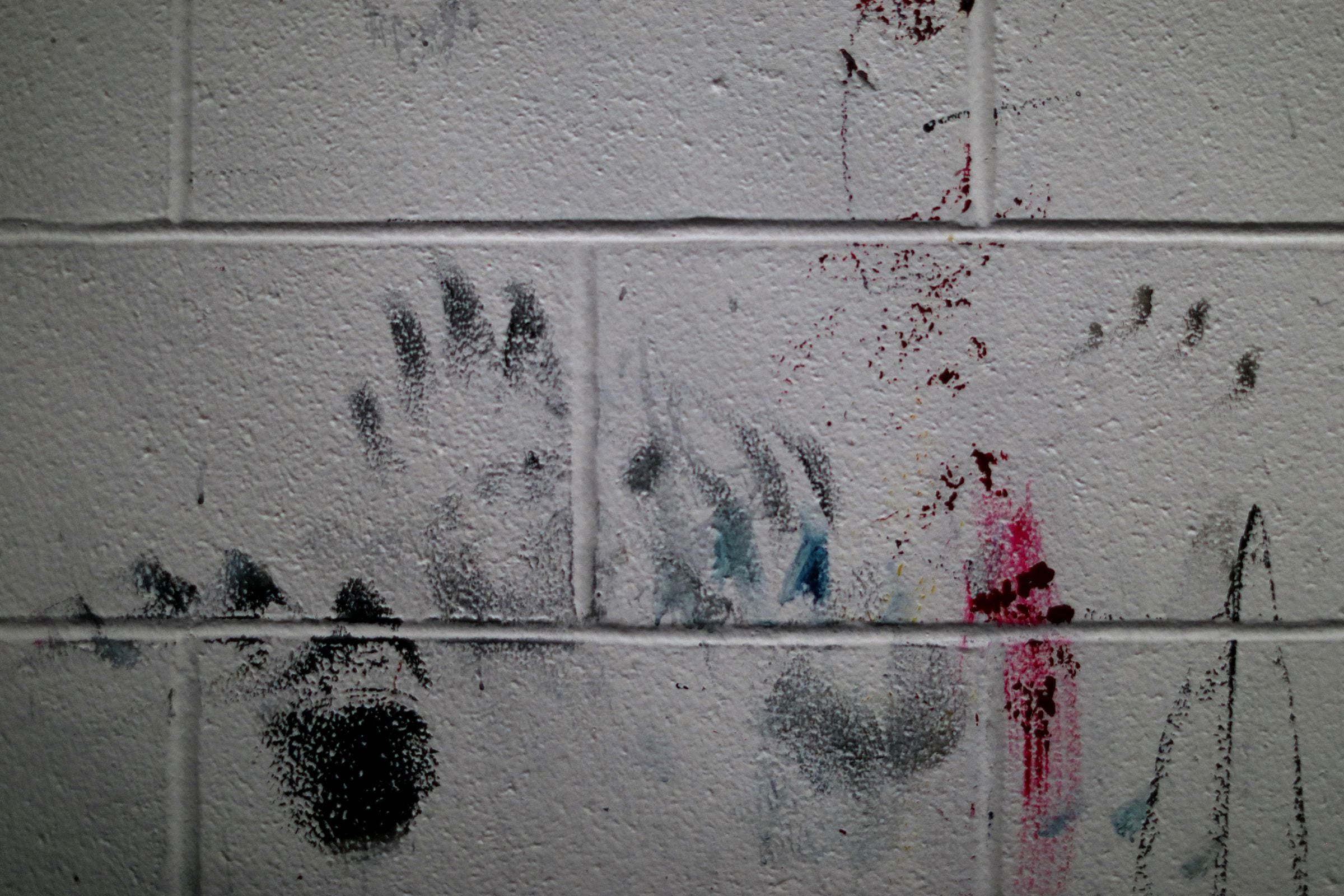
Engraved in memory: A board inside the plate room features photos of former employees. TIM TAI / Staff PhotographerInk-stained handprints decorate a pressroom wall. TIM TAI / Staff Photographer
“It’s like putting a puzzle together,” said Tom Chambers, who has worked for the company for 31 years. He and the other platemakers imprint those completed-puzzle images on wafer-thin aluminum plates that bear the images of the pages of The Inquirer and Daily News.
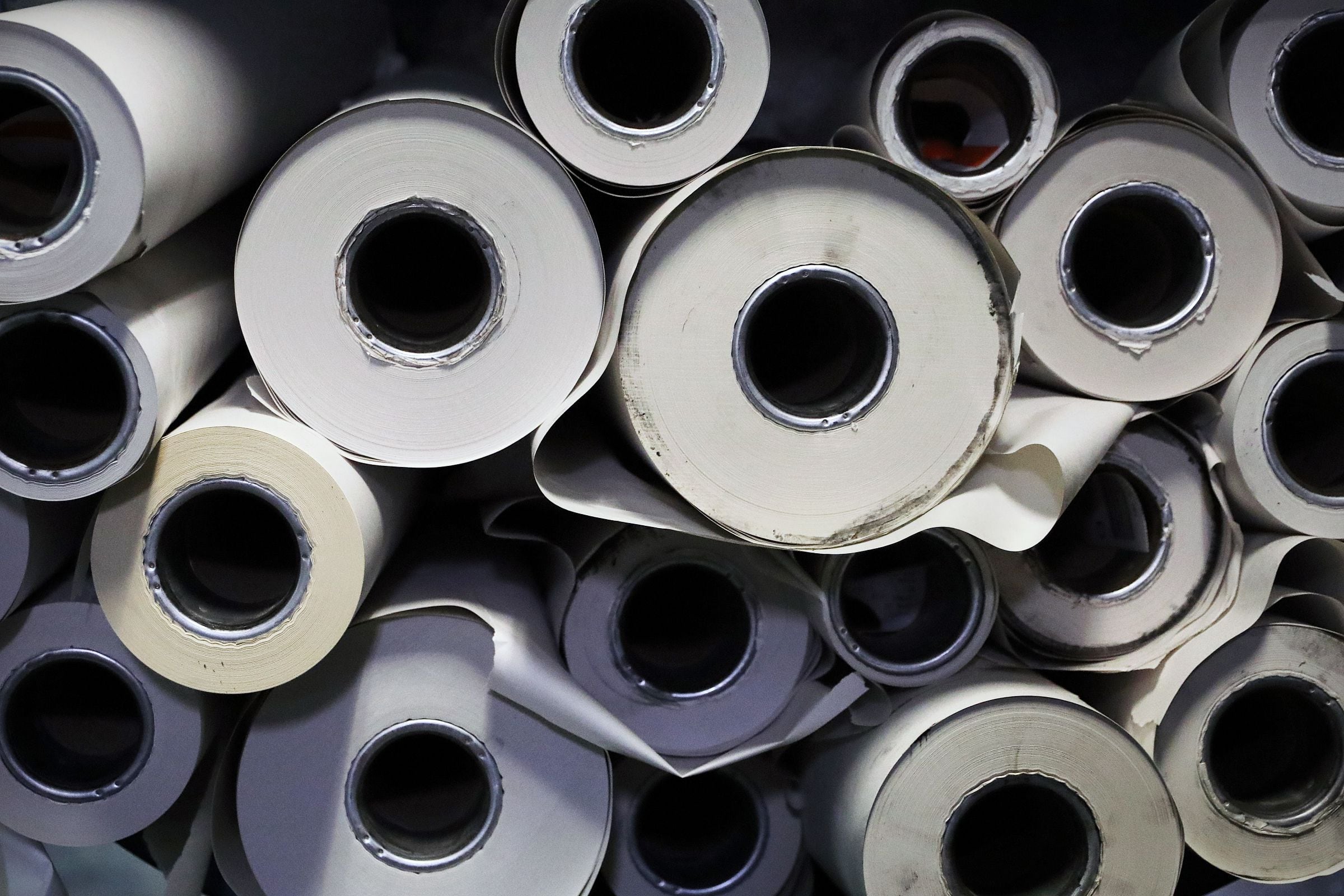
On any given day those images would be stamped on paper rolls whose linear footage would reach halfway around the world — all the way on Sundays.
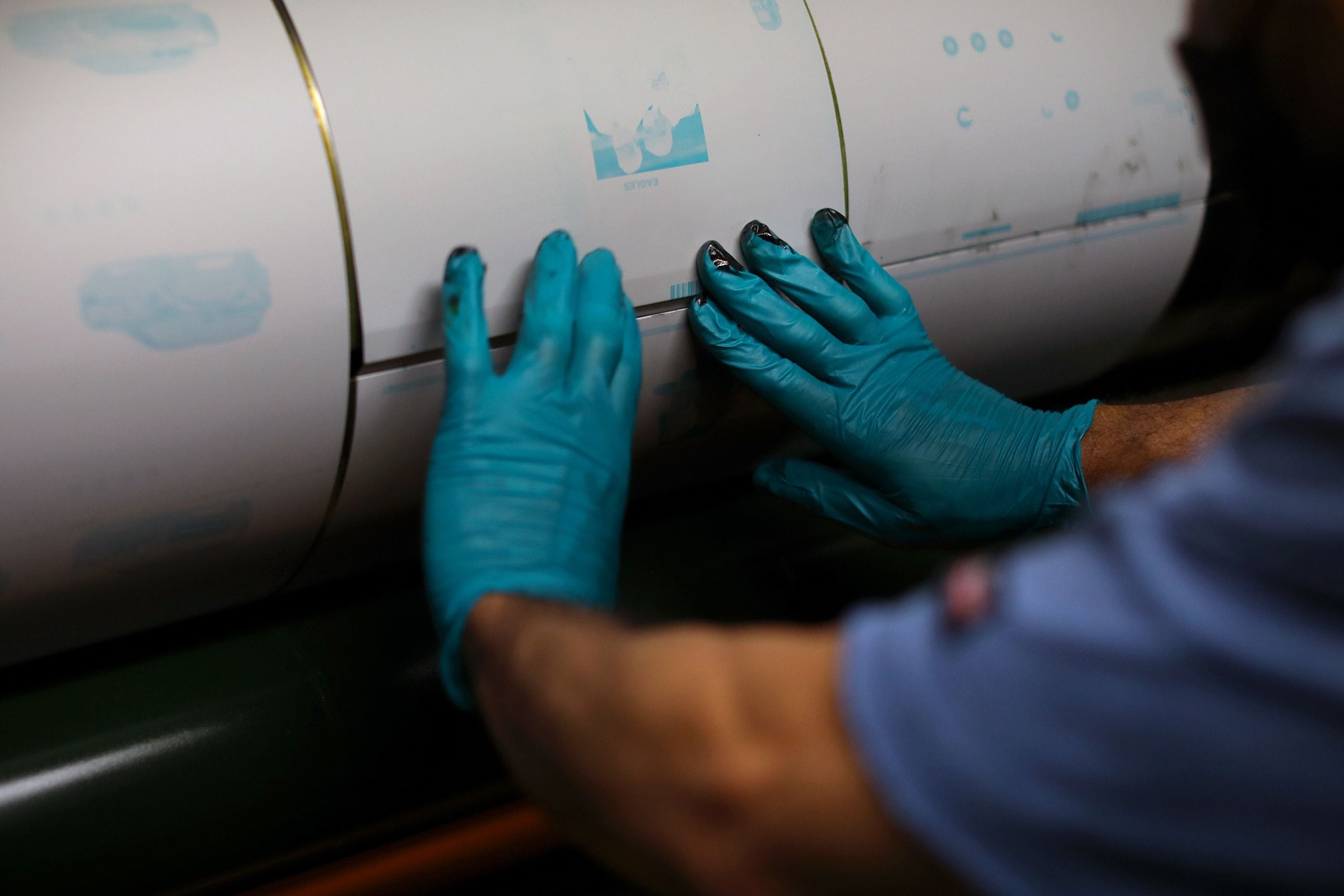
Pressman Hayden Darrabie, hired in 1998, presses plates into place before the night's run. TIM TAI / Staff Photographer
Roll ‘em
SPP is more or less a prodigious shell built around $160 million worth of presses, said Pat McElwee, the production supervisor. When the plant started operating in the summer of 1992, “It was fantastic,” he said.
The Goss Colorlink “offset” presses were radically different from the 45-year-old “letterpress” predecessors in which plates were pressed directly onto the paper. With offset, the plates roll against rubber “blankets” that press against the paper. For the first time The Inquirer and Daily News could publish photographs and ads in color.
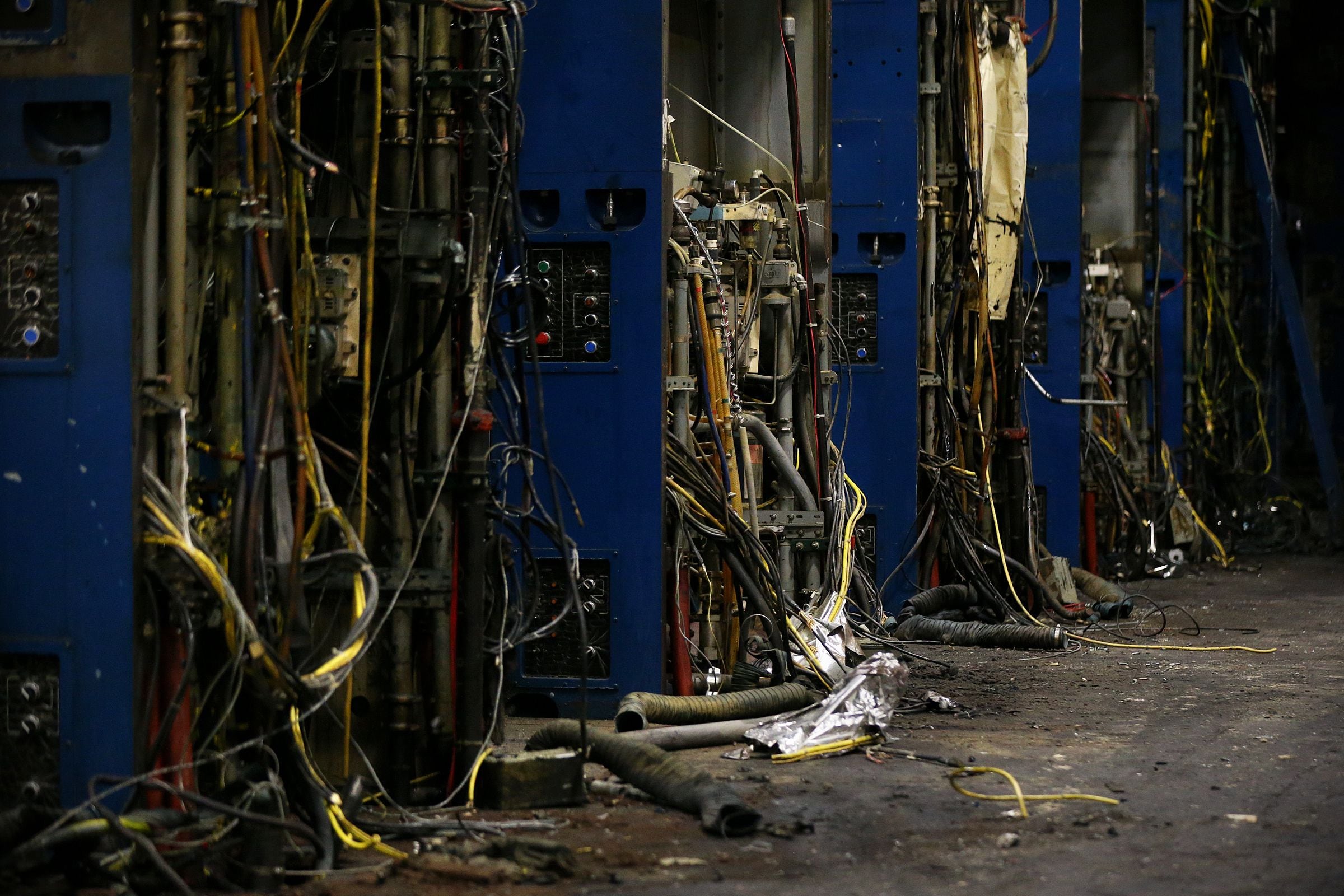
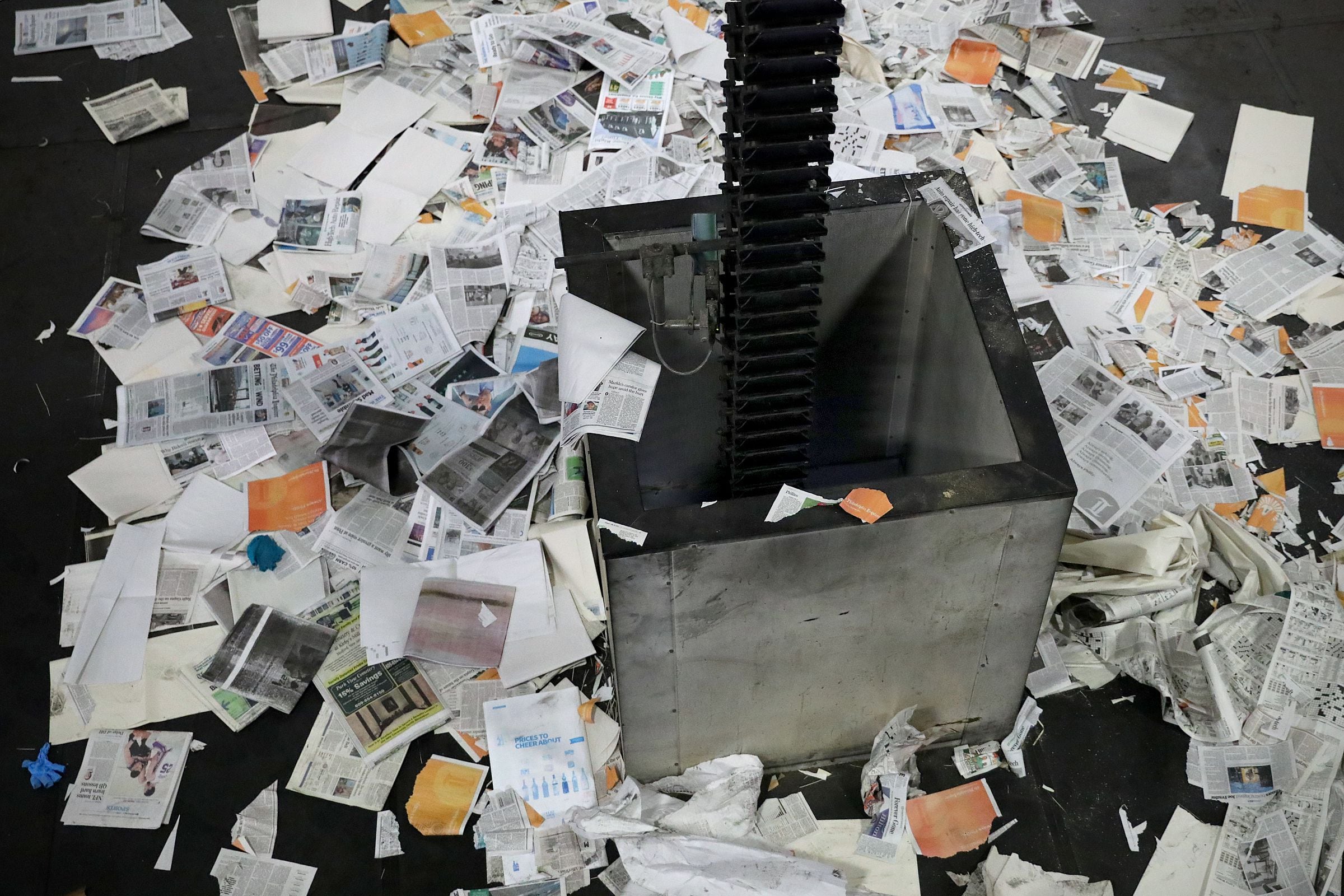
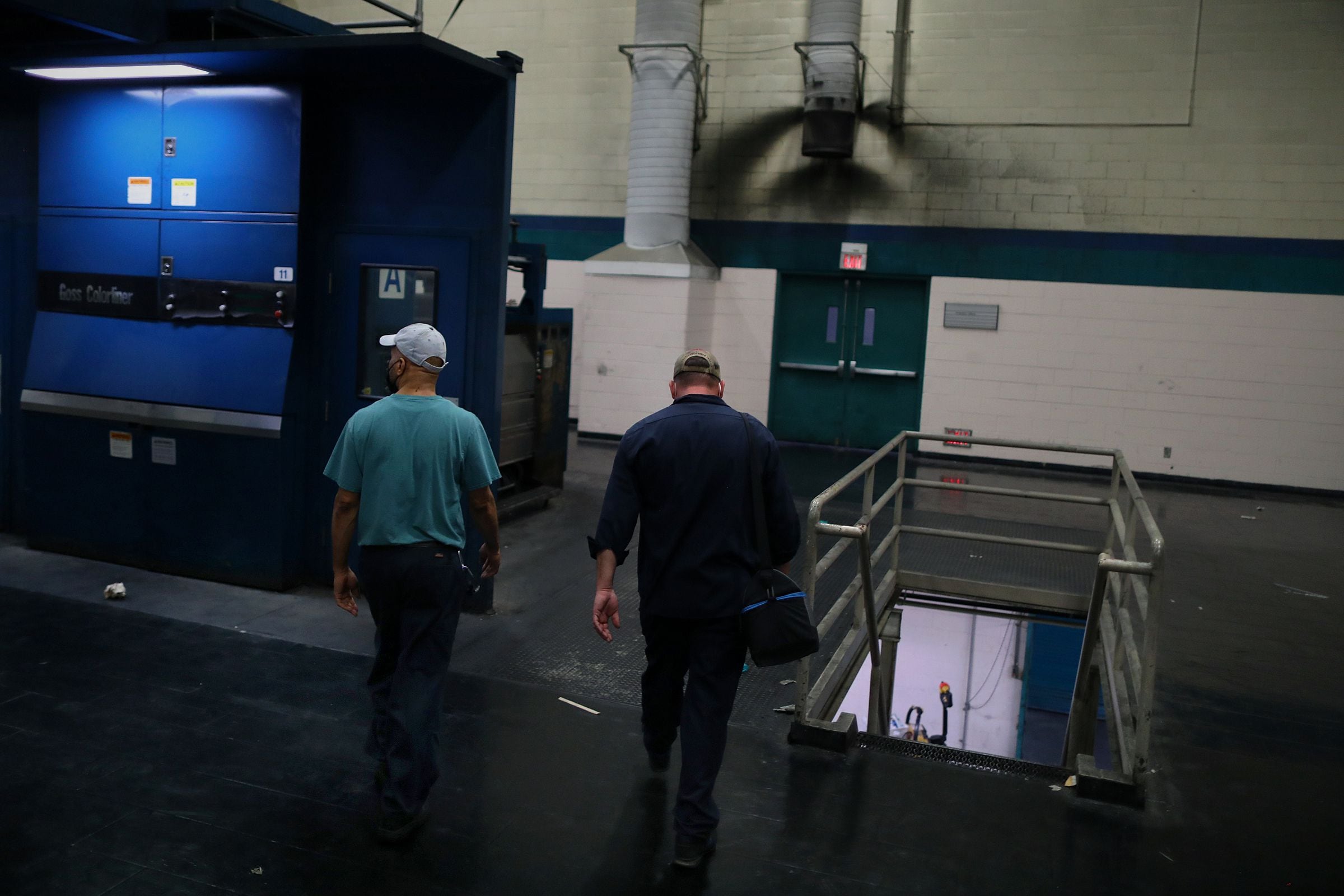
Wiring dangles from one of the nine Goss Colorliner presses. TIM TAI / Staff PhotographerLoose papers are scattered across the base of the gripper chute from which papers are conveyed from the pressroom to the mailroom for packaging. TIM TAI / Staff PhotographerPartial rolls of leftover paper from press runs, known as "butt rolls," are stored in the reel room. TIM TAI / Staff Photographer
“It was all new,” said Tom Addison, the company pressroom foreman. With novelty came mishaps. More than once the papers published “To our readers” apology notes for delivery issues.
Like so many employees on the production side, Addison was a lifer, having started in 1979.
And to Aaron Krakovitz, Addison was a newcomer: Krakovitz already had been there five years, starting as a high school senior, recruited to fill in on a short-staffed weekend. He was child labor whose own father was a pressman.
The pressmen developed a familial and literal closeness, said Jim Fish, the union foreman: In the heydays, he said, “You worked with six to seven guys on the press.”
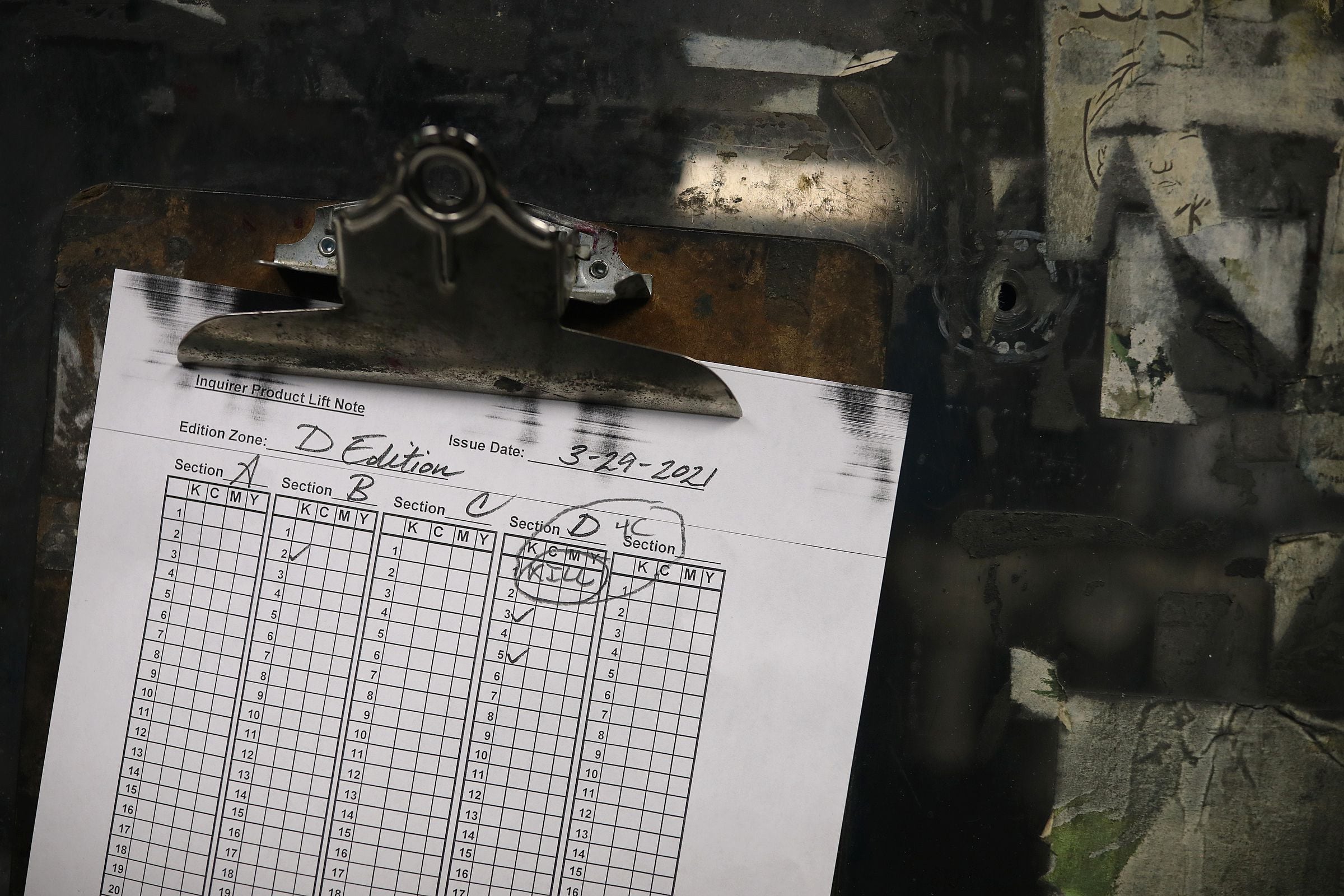
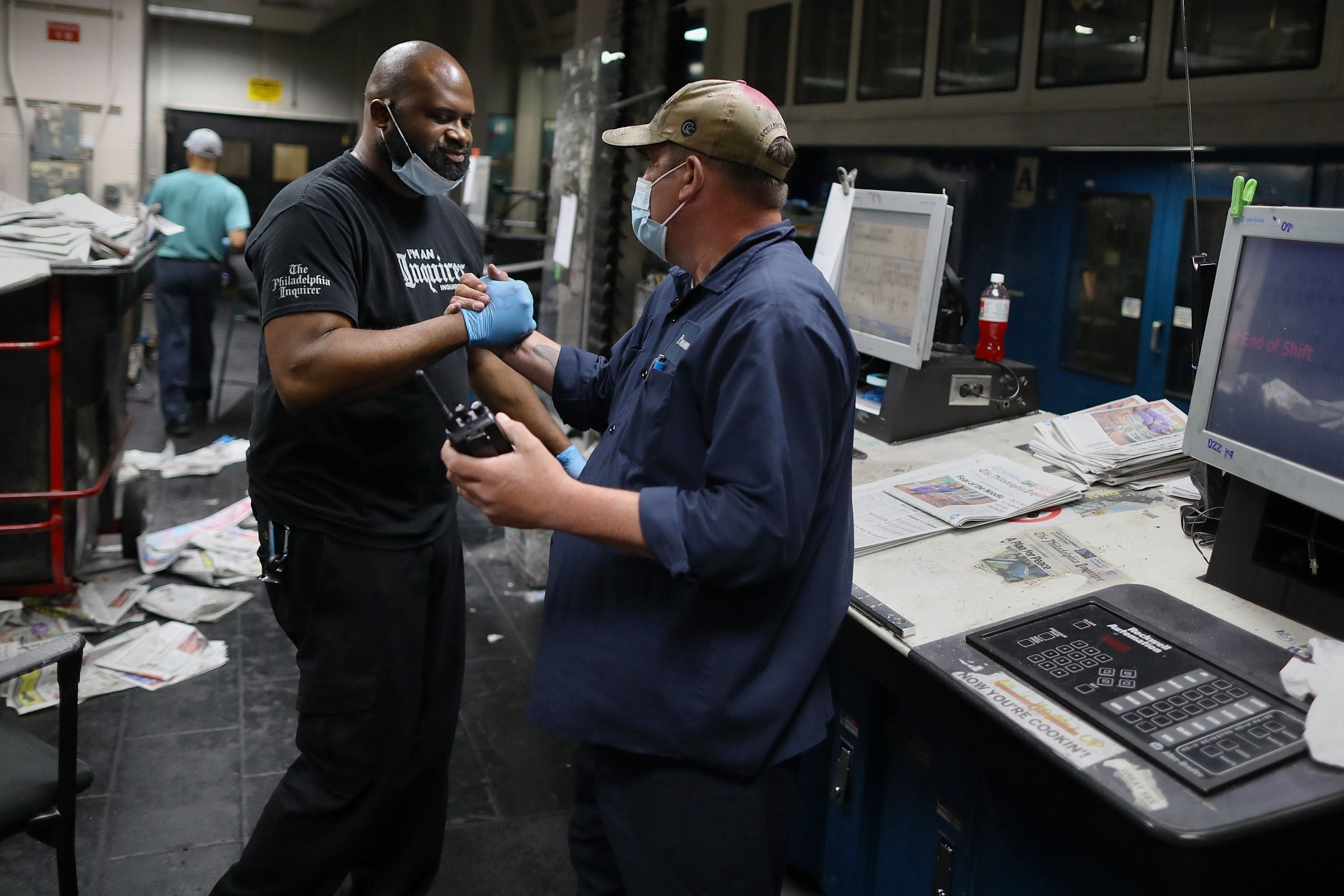
A clipboard in the quiet room informs pressmen about the plates that need to be switched out for a "lift" for a later edition. TIM TAI / Staff PhotographerPressman Keith Jones (left), who was hired in 2005, and Jim Fish prepare to embrace as they are about to depart after the last scheduled press run. TIM TAI / Staff Photographer
Fold ‘em, stuff ‘em
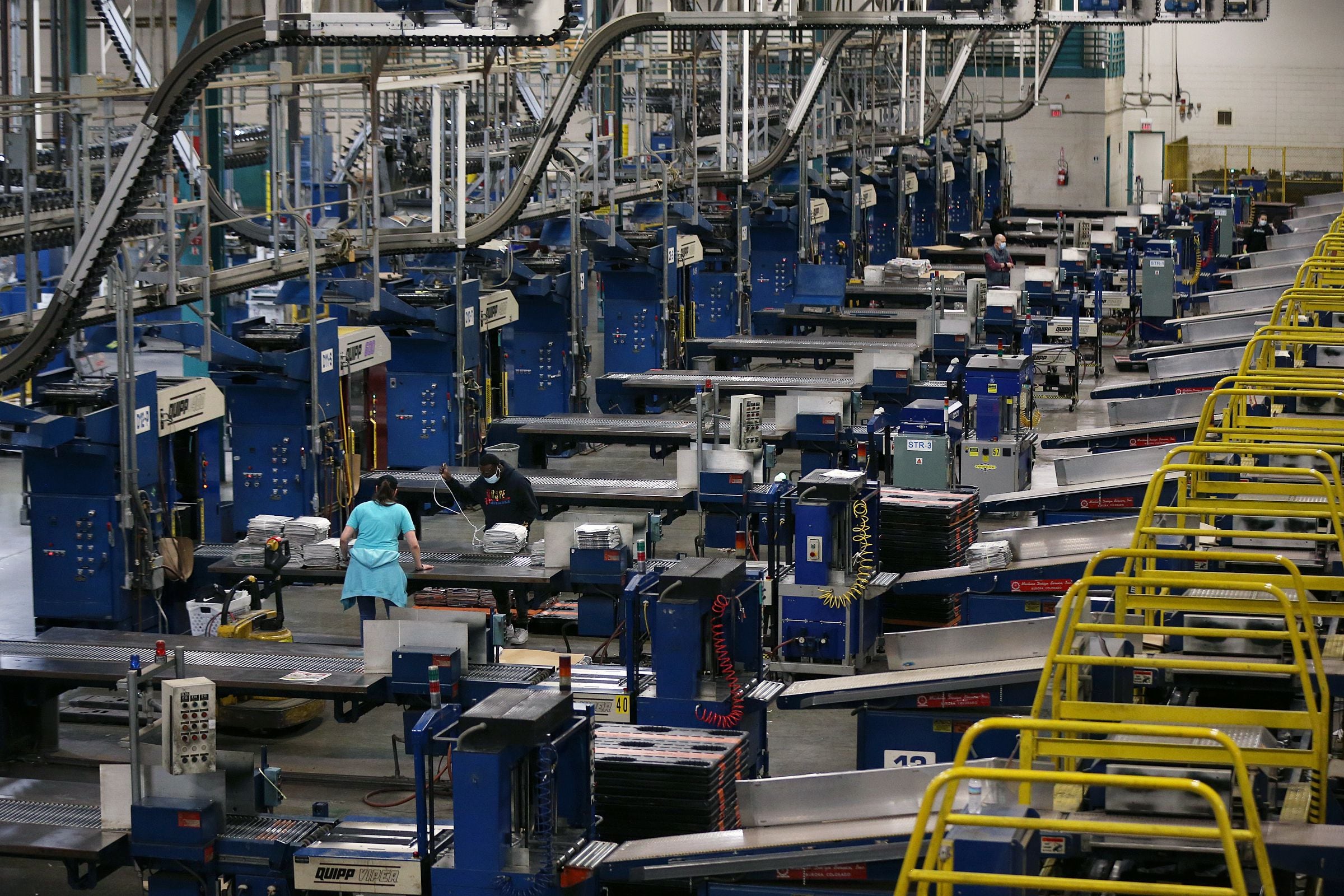
Among all his family members who ever worked in the mail room, a 187,000-square-foot canyon where the printed sections and advertising inserts were added and prepared for the trucks, Devin Leidy counted 150 years’ experience.
“When I was 12 years old, my father said, ‘You’re going to be delivering newspapers. You’re going to learn how to hand-stuff,’ ” said Leidy.
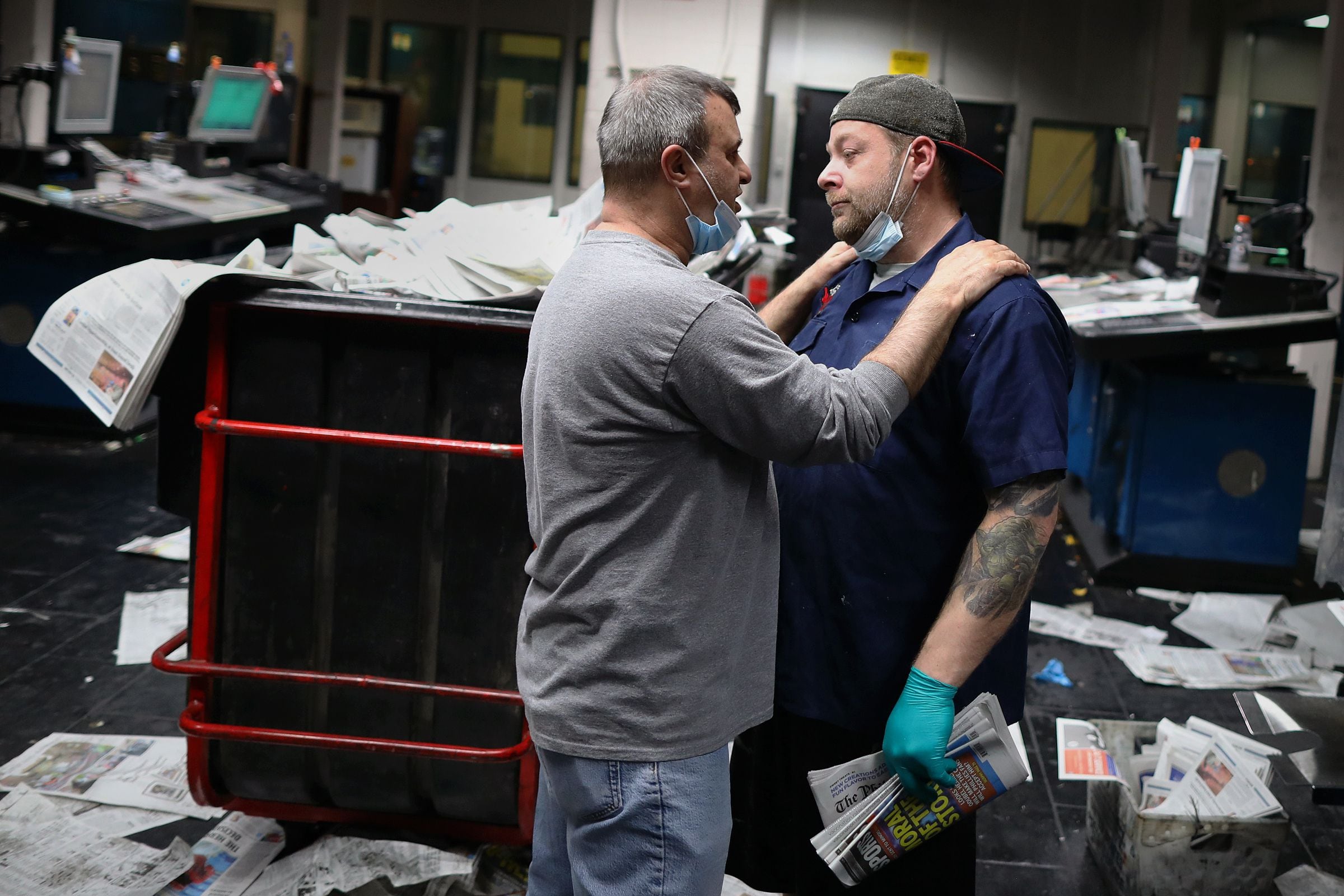
Pressroom supervisor David Creek (left), hired in 1984, chats with colleague Bobby Nick, who joined The Inquirer in 2002, as Nick gets ready to sign off. TIM TAI / Staff PhotographerDriver Darryl Jackson (left) looks toward dispatcher George Young (center) hugging driver Dominic Delvecchio, all of whom started in 2000. TIM TAI / Staff PhotographerPressman Hayden Darrabie (left) and Jim Fish walk out of the press room after the last scheduled run. TIM TAI / Staff Photographer
Leidy, who would grow up to be a mailroom supervisor, said the assembly and presentation of the papers were critical to sales: “You’re trying to put it out correctly … neatly.”
Evie Lang, a mailer who (stop if you heard this before) was the daughter and granddaughter of mailers, derived satisfaction from her labor as she left the house on Sunday mornings. “The newspaper would fall out the door and you’d go, ‘Oh, I helped to make that.’ ”
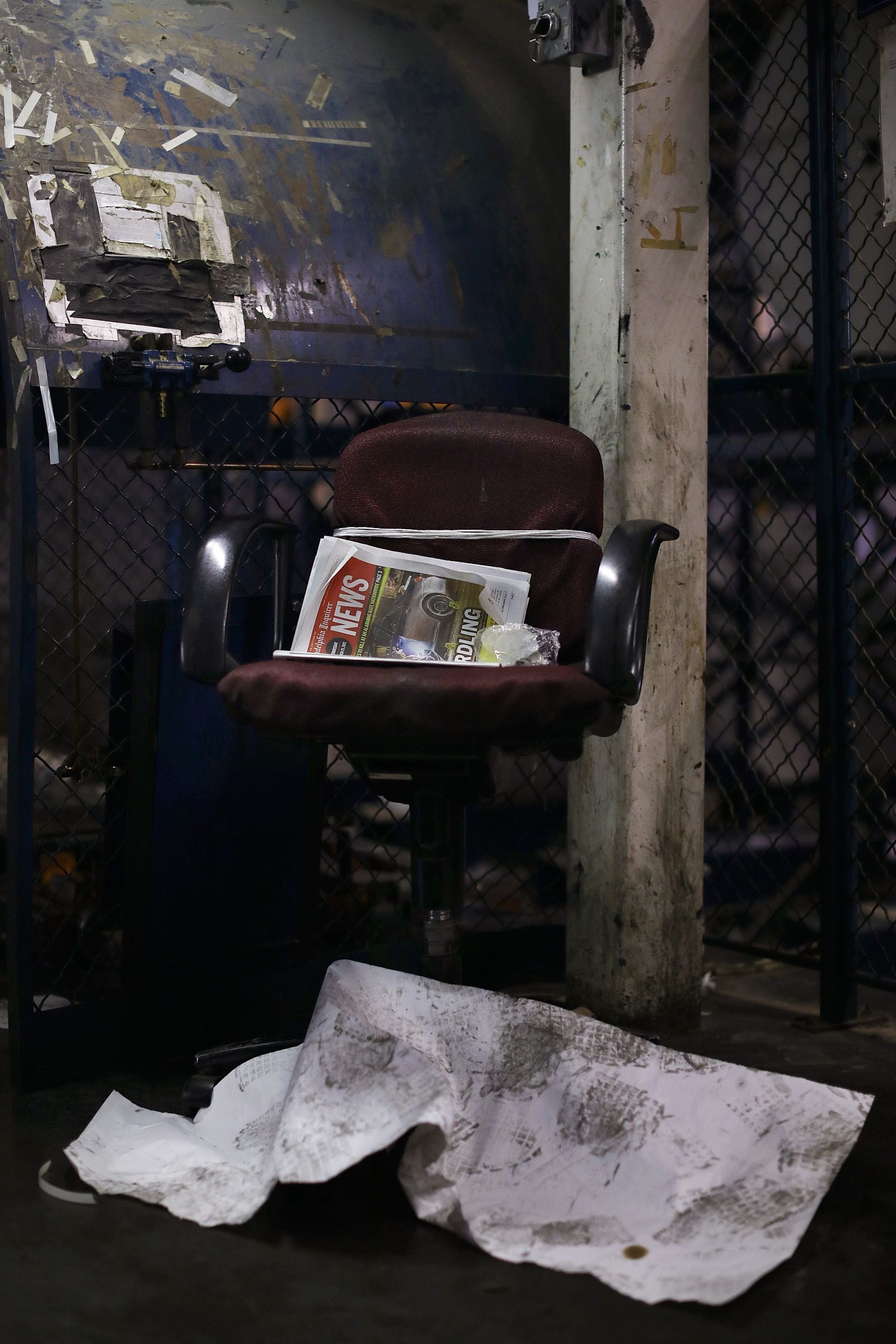
A discarded Daily News rests in a chair in the reel room, where paper had been loaded onto the presses that had been operating since 1992. TIM TAI / Staff Photographer
“My whole life. I wanted to yell, ‘Stop the presses.’ But now, when I think about it, I don’t want to stop them. I wish they could keep going.”
Pat McElwee
The last rides
Budd Emmett got hired in an antiquarian fashion: through a newspaper ad. That was in 1971.
Emmett became a transportation supervisor in 1988, overseeing a truck fleet that at one time exceeded 325.
“It’s all family,” Emmett said. It wasn’t an echo; it just sounded like one. The mood at the building in the closing days was similar to that of a pre-funeral viewing, only in this case the subject of conversation wasn’t yet deceased and had the benefit of hearing the praise.
Emmett said he plans to retire, as does pressman Krakovitz and others.
The furloughed SPP workers generally were pleased with what they viewed as generous severance packages. Lehman said those who wanted to keep working have found jobs.
Lehman and McElwee are among those who plan to call it a career. McElwee is anxious to spend more time with his grandchildren, but the end is profoundly bittersweet.
“My whole life. I wanted to yell, ‘Stop the presses.’ ” he said. “But now, when I think about it, I don’t want to stop them. I wish they could keep going.”
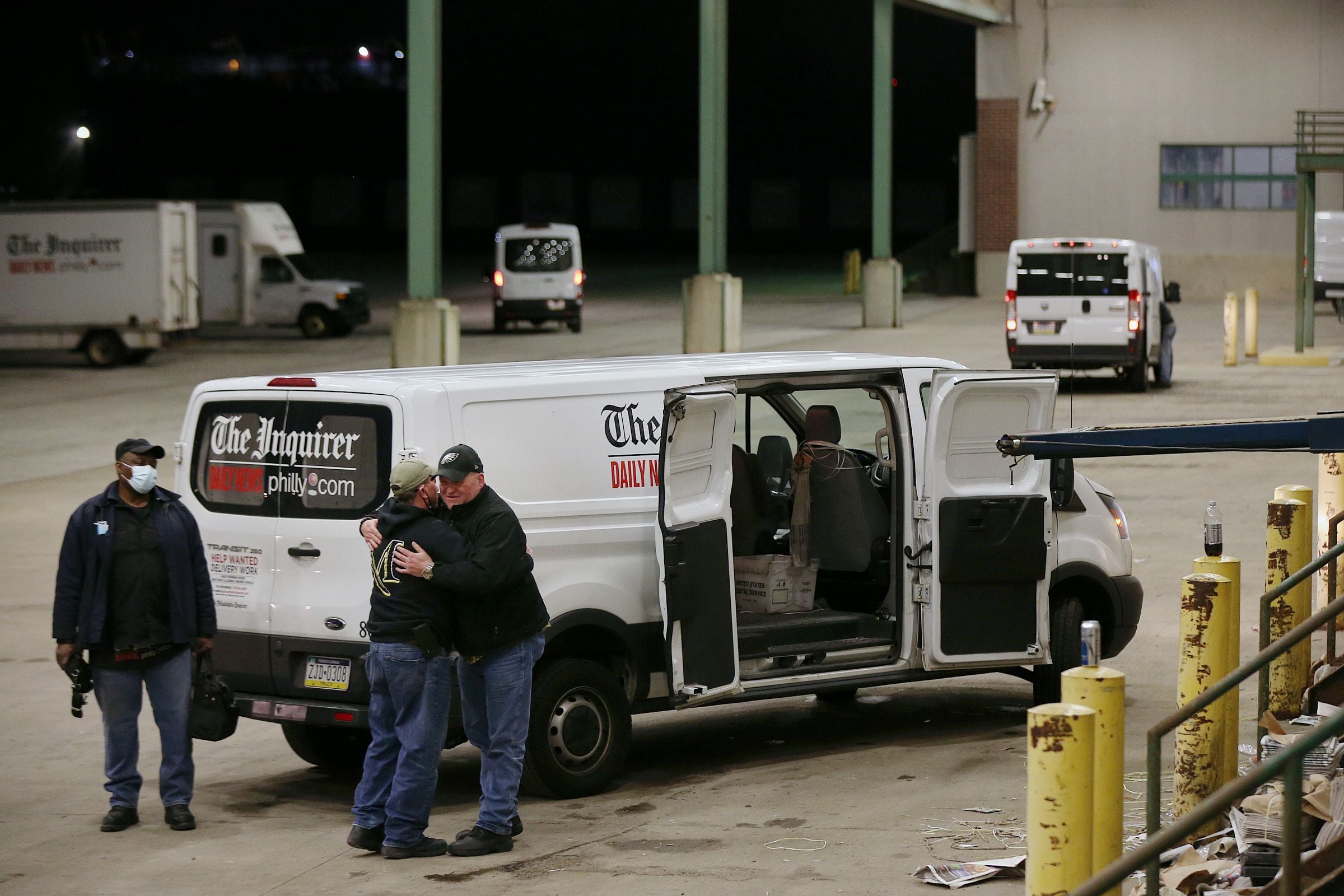
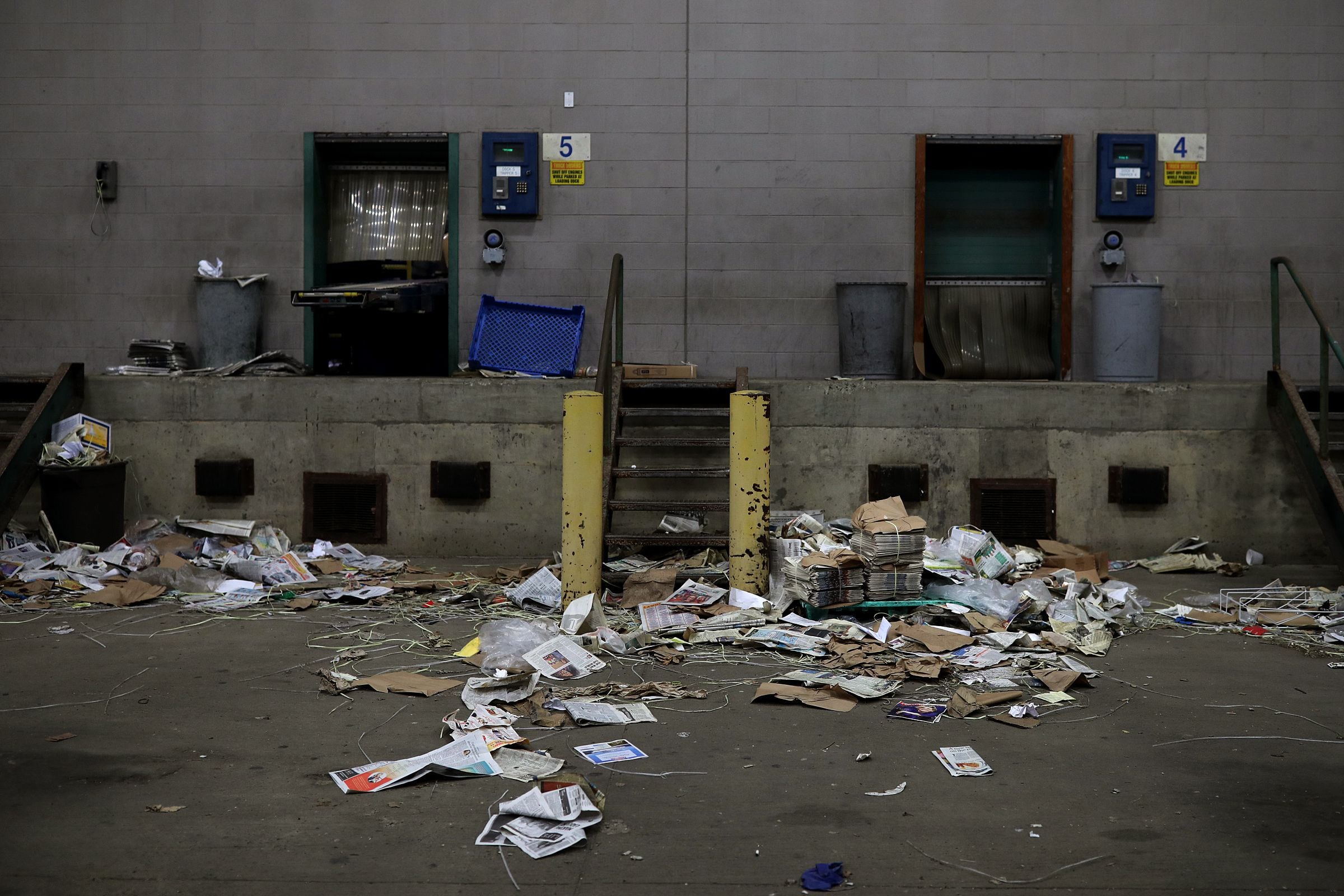
In the early morning hours of March 29, newspapers litter the docks that no longer will be used for loading The Inquirer and Daily News onto delivery trucks while most of us slept. TIM TAI / Staff Photographer
Staff Contributors
Reporting: Anthony R. Wood
Visuals: Tim Tai, Frank Wiese, Danese Kenon, Astrid Rodrigues, Kristen Balderas, Lauren Schneiderman, and Raishad Hardnett
Design & Development: Dain Saint and Jessica Parks
Editing: Emily Babay and Diane Mastrull
Digital: Kerith Gabriel, Patricia Madej, Lauren Aguirre, and Caryn Shaffer
Copy editing & Print: Brian Leighton and Sterling Chen