Category: News

Latest breaking news and updates

  • Philly public defender launches new immigration unit amid growing federal arrests and deportations

    Philly public defender launches new immigration unit amid growing federal arrests and deportations

    The Defender Association of Philadelphia has launched a new initiative to help people facing immigration consequences both inside and outside the criminal-justice system.

    The move comes as the Trump administration pursues aggressive new enforcement, where even minor legal cases can put undocumented city residents at risk of detention, family separation, or deportation.

    The agency’s Immigration Law Practice is expected to grow to up to 11 staff members. Its creation is to be officially announced at a news conference on Wednesday.

    “This is necessary right now,” Chief Defender Keisha Hudson said in an interview. “We’re going to have to sustain this work and expand this work if we’re going to meet the moment.”

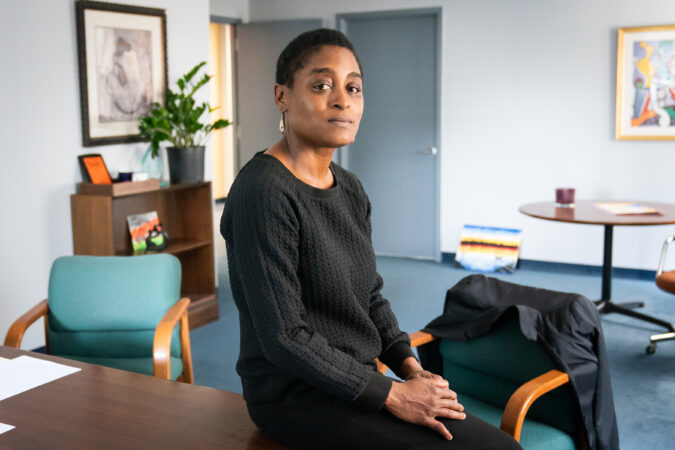
    The practice will be led by veteran immigration attorney Lilah Thompson, who often represents migrants facing complex legal challenges. She said the work would be done in collaboration with trial attorneys, social workers, and mitigation specialists to shape defense strategies that protect clients and their families.

    One area of concentration will be on clients who are in immigration detention despite having no criminal charges, another on people who could face serious immigration repercussions because of what are often minor offenses.

    In Philadelphia, attorneys say, people have been arrested by Immigration and Customs Enforcement as they’re enrolling in diversionary programs or heading to court to plead not guilty.

    The Trump administration maintains it is arresting dangerous immigrants, though figures show 74% of all those held in detention have no criminal convictions.

    The Defender Association also expects to handle more cases that push back against Trump administration efforts around mandatory detention. Federal judges in Philadelphia have ruled dozens of times against an administration policy that mandates detention for nearly all undocumented immigrants, joining a nationwide wave of decisions criticizing the government.

    A challenge is that those cases must be filed individually, and many of those in detention have neither a lawyer nor the money to hire one.

    The new practice consolidates and builds on work that was done at the Nationalities Service Center and the Pennsylvania Immigrant Family Unity Project, or PAIFUP.

    Thompson said the immigration practice will make sure that clients have accurate information, strong advocacy, and a chance to protect their futures.

    “The work changes every day, with the twists and turns of this administration, and the cruelty it inflicts on noncitizens,” she said. “We have to respond to the moment.”

  • Kids get free dental care at this Philly school. Officials say it’s a model that could be replicated in schools with empty space.

    Kids get free dental care at this Philly school. Officials say it’s a model that could be replicated in schools with empty space.

    Crystal Edwards didn’t see a dentist until she had a deep cavity at age 10: growing up in a struggling Philadelphia family, the resources to access dental checkups just weren’t there.

    So she jumped at the opportunity to locate a dental clinic in the school where she is now principal, W.D. Kelley, a K-8 in North Philadelphia.

    “This dental clinic is saving lives,” said Edwards.

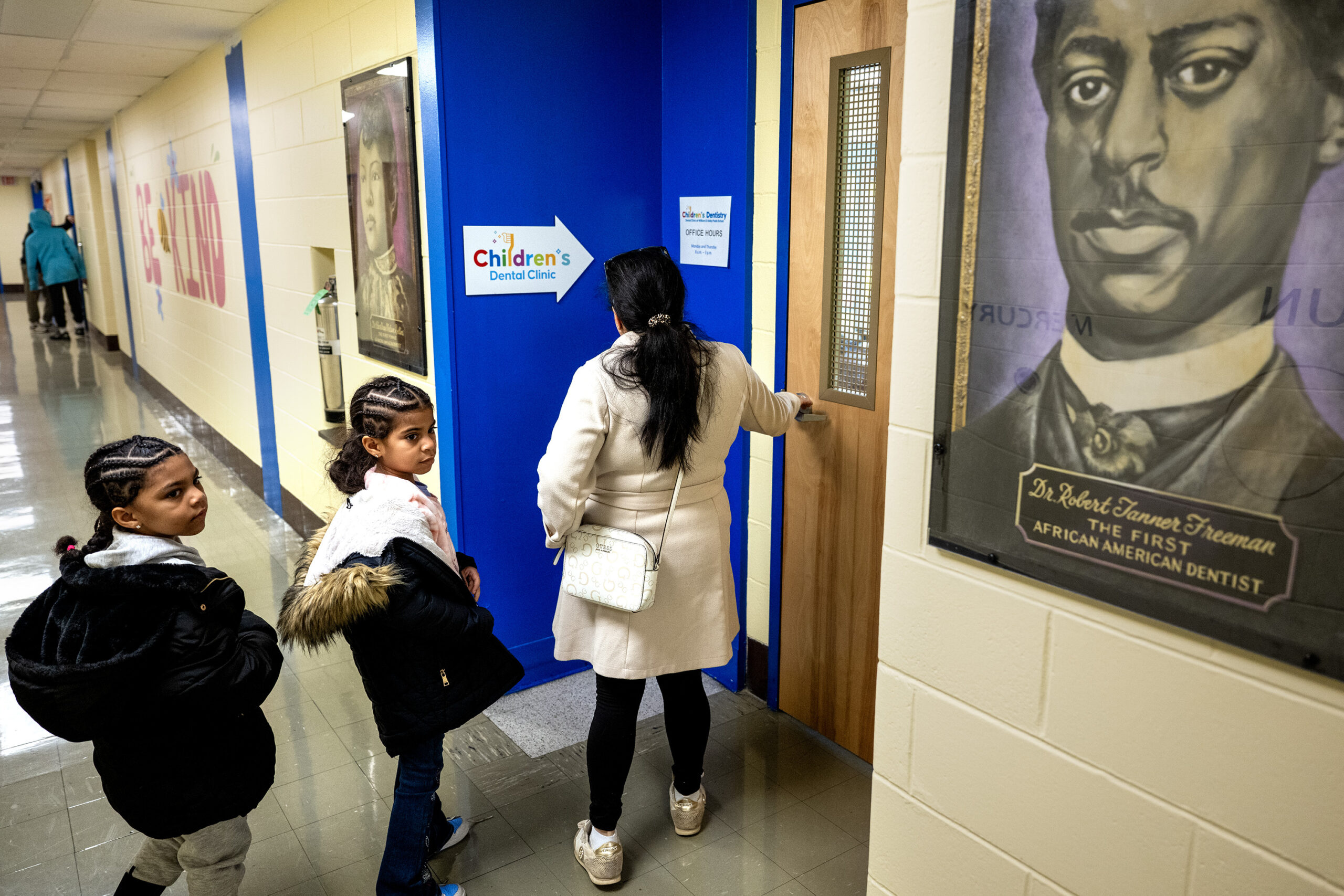
    Tucked into a converted science lab on the school’s third floor, the Dental Clinic at William. D. Kelley, operated by Temple University’s Maurice H. Kornberg School of Dentistry, is nearing its third year of operation. It is open to all Philadelphia children, including those who do not attend Kelley, regardless of insurance status.

    School district officials have pointed to the Kelley clinic as a model as it prepares to make facilities master plan decisions, which will result in closing, combining, and reconfiguring some school buildings. The clinic is an example, they say, of how the system could use available space in some of its schools for public good.

    Soribel Acosta arrives at the Dental Clinic at William D. Kelley public school on Thursday, with her children, Andrea Jimenez (left), 6. And Sayra Jimenez, 7.

    “This is certainly a great example of what can happen when a university partners with a school district to create life-changing opportunities and outcomes for young people,” Superintendent Tony B. Watlington Sr. said in a statement in 2023, when the clinic opened.

    Temple dental school officials said more clinics could follow elsewhere in the city.

    Taking care of every child

    The underlying concept is simple, said Eileen Barfuss, the Temple dental professor who leads the clinic.

    “If your tooth hurts, if you’re not feeling well, you’re not going to learn,” said Barfuss. “In the past, there have been a lot of barriers to care for dentistry that weren’t there for medicine, but preventative care is so important so it doesn’t get to the point of pain.”

    The clinic accepts all comers, including those who are uninsured or underinsured, and sometimes treats students’ parents. (Most, but not all, patients have Medicaid dental, and grants help cover treatment for those without insurance.)

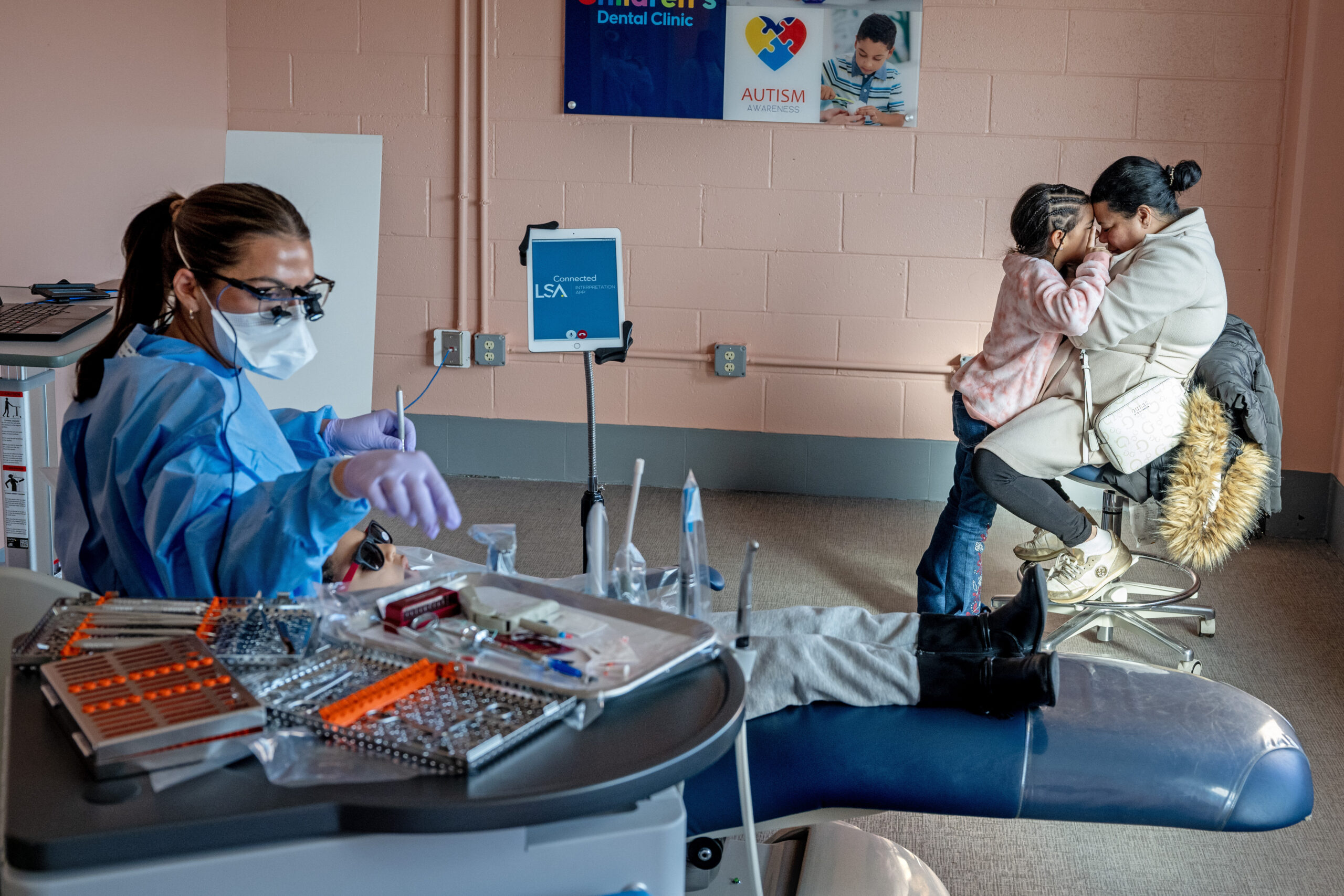
    Temple dentistry student Carly Pandit works on the teeth of Andrea Jimenez, 6, as her mother, Soribel Acosta, entertains sister Sayra Jimenez, 7, waiting her turn in the char at the dental clinic at William D. Kelley public school on Thursday.

    “We try to take care of every child in the Philadelphia School District,” said Barfuss. “There’s a place that they can come and get comprehensive care and establish a dental home.”

    To date, the clinic has seen nearly 700 patients, some of whom are repeat visitors. Patients are treated both by Barfuss and dental students she supervises.

    Students do come from other schools to the clinic; Barfuss said her team does outreach at community events and spreads the word through the district’s school nurses, who often send patients to the clinic. And staff teach lessons in Kelley classrooms on oral health and the importance of seeing a dentist twice a year.

    Being in a school helps normalize the dentist for many kids, who might poke their heads into the clinic to look around and see the friendly dental staff in their scrubs in the hallways, Barfuss said.

    ‘This is a good dentist’

    On Thursday, Fatoumata Bathily, a fourth grader with pink glasses and a bright smile, swung her legs down from a Kelley clinic dentist chair after a successful checkup.

    Eileen K. Barfuss (left), a pediatric dentist and Temple dentistry instructor consults with Fily Dramera after her daughter Fatoumata Bathily (rear), 9, was seen by a Temple student dentist at the Dental Clinic at William D. Kelley public school on Thursday.

    “It’s good here,” said Fatoumata, who attends nearby Robert Morris Elementary, and came for preventive care along with her brother, Abubakr. “This is a good dentist. I like that it’s colorful, and the people are nice.”

    Amid Ismail has wanted to bring such a model to the city since he became dean of Temple’s dental school in 2008. Decades ago, some schools offered dental care via city services, but as funding dried up, those clinics went away, Ismail said.

    Ismail raised the idea of a Temple-district partnership, but it took several years to get off the ground. Edwards, an award-winning principal who takes pride in bringing the community into Kelley, got the vision intuitively, he said.

    Temple paid to transform a large science lab into the dental clinic; the district provides the space and does not charge rent. There are four chairs, including one in a space specifically designed for patients with autism who might need a quieter environment and more room. Rooms are bright and modern.

    “The message to the parents and caregivers is that this is a nice place where all treatment is provided,” Ismail said. “A lot of children do have dental problems, but here we can treat them easily — they miss one class, max, and they don’t have to stay a long time.”

    Soribel Acosta waits for their appointment with her children, Sayra Jimenez (left), 7; and Andrea Jimenez (right), 6, at the Dental Clinic at William D. Kelley public school on Thursday.

    The clinic, which is about to celebrate its third anniversary, just expanded its schedule — it’s open four days a week, and officials eventually hope it will be open five days.

    Edwards fought for the clinic to come to Kelley, and it’s been just the boon she had hoped, she said.

    “This is a historic community that was really devastated and hard hit by the crack and drug pandemic,” said Edwards. “The dental office has really given us leverage on how to serve the community better.”

  • Federal Reserve Chair Powell says DOJ has subpoenaed central bank, threatens criminal indictment

    Federal Reserve Chair Powell says DOJ has subpoenaed central bank, threatens criminal indictment

    WASHINGTON — Federal Reserve Chair Jerome Powell said Sunday the Department of Justice has served the central bank with subpoenas and threatened it with a criminal indictment over his testimony this summer about the Fed’s building renovations.

    The move represents an unprecedented escalation in President Donald Trump’s battle with the Fed, an independent agency he has repeatedly attacked for not cutting its key interest rate as sharply as he prefers. The renewed fight will likely rattle financial markets Monday and could over time escalate borrowing costs for mortgages and other loans.

    The subpoenas relate to Powell’s testimony before the Senate Banking Committee in June, the Fed chair said, regarding the Fed’s $2.5 billion renovation of two office buildings, a project that Trump has criticized as excessive.

    Powell on Sunday cast off what has up to this point been a restrained approach to Trump’s criticisms and personal insults, which he has mostly ignored. Instead, Powell issued a video statement in which he bluntly characterized the threat of criminal charges as simple “pretexts” to undermine the Fed’s independence when it comes to setting interest rates.

    “The threat of criminal charges is a consequence of the Federal Reserve setting interest rates based on our best assessment of what will serve the public, rather than following the preferences of the President,” Powell said. “This is about whether the Fed will be able to continue to set interest rates based on evidence and economic conditions — or whether instead monetary policy will be directed by political pressure or intimidation.”

    It’s a sharp departure from the Fed’s understated response to Trump this year. The central bank has attempted to placate the administration by dialing back some policies, such as efforts to consider the impact of climate change on the banking system, that the administration clearly opposed.

    The renewed attacks on the Fed’s independence, and Powell’s full-throated defense, reignite what had appeared to be a dormant battle between Trump and the chair he appointed in 2017. The subpoenas will renew fears that the Fed’s independence from day-to-day politics will be compromised, which could undermine global investors’ confidence in U.S. Treasury securities.

    “We expect the dollar, bonds and stocks to all fall in Monday trading in a sell-America trade similar to that in April last year at the peak of the tariff shock and earlier threat to Powell’s position as Fed chair,” Krishna Guha, an analyst at Evercore ISI, an investment bank, wrote in a note to clients.

    “We are stunned by this deeply disturbing development which came out of the blue after a period in which tensions between Trump and the Fed seemed to be contained,” Guha added.

    In a brief interview with NBC News Sunday, Trump insisted he didn’t know about the investigation into Powell. When asked if the investigation is intended to pressure Powell on rates, Trump said, “No. I wouldn’t even think of doing it that way.”

    Powell’s term as chair ends in May, and Trump administration officials have signaled that he could name a potential replacement this month. Trump has also sought to fire Fed governor Lisa Cook, an unprecedented step, though she has sued to keep her job and courts have ruled she can remain in her seat while the case plays out. The Supreme Court will hear arguments in that case Jan. 21.

    At the Senate Banking Committee hearing in June, Chairman Tim Scott, a Republican from South Carolina, said the Fed’s building renovation included “rooftop terraces, custom elevators that open into VIP dining rooms, white marble finishes, and even a private art collection.”

    Powell disputed those details in his testimony, saying “there’s no new marble. … there are no special elevators” and added that some of the controversial items are “not in the current plan.” In July, Russell Vought, director of the Office of Management and Budget, said in a letter to Powell that his testimony about changes to the building plans “raises serious questions about the project’s compliance” with previous plans approved by a planning commission.

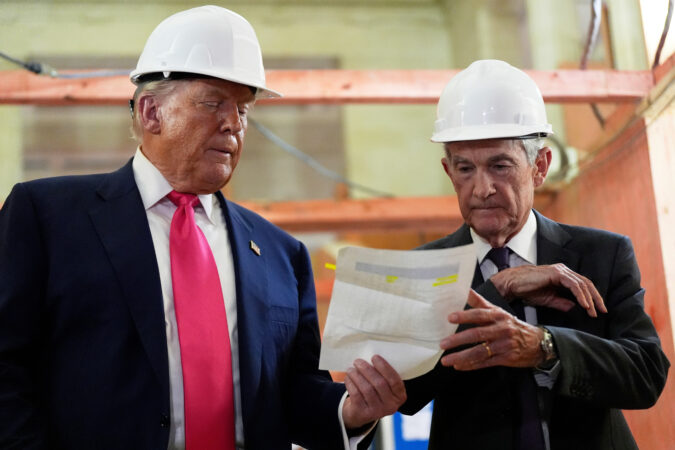
    Still, later that month, Trump visited the building site and, while standing next to Powell, overstated the cost of the renovation. Later that day, Trump, speaking to reporters, downplayed any concerns with the renovation. He said, “they have to get it done” and added, “Look, there’s always Monday morning quarterbacks. I don’t want to be that. I want to help them get it finished.”

    When asked if it was a firing offense, Trump said, “I don’t want to put that in this category.”

    The Justice Department in a statement Sunday said it can’t comment on any particular case, but added that Attorney General Pam Bondi “has instructed her US Attorneys to prioritize investigating any abuse of tax payer dollars.”

    Timothy Lauer, a spokesperson for U.S. Attorney Jeanine Pirro’s office, said they don’t comment on ongoing investigations.

    With the subpoenas, Powell becomes the latest perceived adversary of the president to face a criminal investigation by the Trump administration’s Justice Department. Trump himself has urged prosecutions of his political opponents, obliterating institutional guardrails for a Justice Department that for generations has taken care to make investigative and prosecutorial decisions independent of the White House.

    The potential indictment has already drawn concern from one Republican senator, who said he’ll oppose any future nominee to the central bank, including any replacement for Powell, until “this legal matter is fully resolved.”

    “If there were any remaining doubt whether advisers within the Trump administration are actively pushing to end the independence of the Federal Reserve, there should now be none,” said North Carolina Sen. Thom Tillis, who sits on the Banking Committee, which oversees Fed nominations. “It is now the independence and credibility of the Department of Justice that are in question.”

  • Death toll from protests in Iran hits at least 544, activists say, as Trump says Iran wants to talk

    Death toll from protests in Iran hits at least 544, activists say, as Trump says Iran wants to talk

    DUBAI, United Arab Emirates — President Donald Trump said Sunday that Iran proposed negotiations after his threat to strike the Islamic Republic over its bloody crackdown targeting demonstrators there, a move coming as activists said the death toll in protests rose to at least 544.

    Trump and his national security team have been weighing a range of potential responses against Iran including cyberattacks and direct strikes by the U.S. or Israel, according to two people familiar with internal White House discussions who were not authorized to comment publicly and spoke on condition of anonymity.

    “The military is looking at it, and we’re looking at some very strong options,” Trump told reporters on Air Force One on Sunday night. Asked about Iran’s threats of retaliation, he said: “If they do that, we will hit them at levels that they’ve never been hit before.”

    Trump said that his administration was in talks to set up a meeting with Tehran, but cautioned that he may have to act first as reports of the death toll in Iran mount and the government continues to arrest protesters.

    “I think they’re tired of being beat up by the United States,” Trump said. “Iran wants to negotiate.”

    He added: “The meeting is being set up, but we may have to act because of what’s happening before the meeting. But a meeting is being set up. Iran called, they want to negotiate.”

    There was no immediate acknowledgment from Iran of the offering for a meeting. The massive ongoing U.S. military deployment to the Caribbean is a factor that the Pentagon and Trump’s national security planners must consider. Tehran also warned that the U.S. military and Israel would be “legitimate targets” if America uses force to protect demonstrators. Trump meanwhile said the Islamic Republic reached out and proposed negotiations.

    More than 10,600 people also have been detained over the two weeks of protests, said the U.S.-based Human Rights Activists News Agency, which has been accurate in previous unrest in recent years and gave the death toll. It relies on supporters in Iran cross-checking information. It said 496 of the dead were protesters and 48 were with security forces.

    With the internet down in Iran and phone lines cut off, gauging the demonstrations from abroad has grown more difficult. The Associated Press has been unable to independently assess the toll. Iran’s government has not offered overall casualty figures.

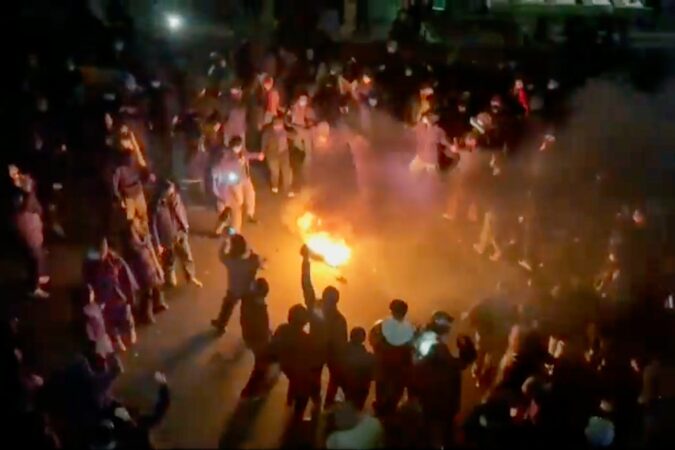
    Those abroad fear the information blackout is emboldening hard-liners within Iran’s security services to launch a bloody crackdown. Protesters flooded the streets in the country’s capital and its second-largest city on Saturday night into Sunday morning. Online videos purported to show more demonstrations Sunday night into Monday, with a Tehran official acknowledging them in state media.

    Defiance in parliament

    The threat to strike the U.S. military and Israel came during a parliamentary speech by Mohammad Baagher Qalibaf, the hard-liner speaker of the body who has run for the presidency in the past.

    He directly threatened Israel, calling it “the occupied territory.”

    “In the event of an attack on Iran, both the occupied territory and all American military centers, bases and ships in the region will be our legitimate targets,” Qalibaf said. “We do not consider ourselves limited to reacting after the action and will act based on any objective signs of a threat.”

    Lawmakers rushed the dais in parliament, shouting: “Death to America!”

    It remains unclear how serious Iran is about launching a strike, particularly after its air defenses were destroyed during the 12-day war in June with Israel. Any decision to go to war would rest with Iran’s 86-year-old Supreme Leader Ayatollah Ali Khamenei.

    The U.S. military has said in the Mideast it is “postured with forces that span the full range of combat capability to defend our forces, our partners and allies and U.S. interests.” Iran targeted U.S. forces at Al Udeid Air Base in Qatar in June, while the U.S. Navy’s Mideast-based 5th Fleet is stationed in the island kingdom of Bahrain.

    Israel, meanwhile, is “watching closely” the situation between the U.S. and Iran, said an Israeli official, who spoke on condition of anonymity due to not being authorized to speak to journalists. Israeli Prime Minister Benjamin Netanyahu spoke with U.S. Secretary of State Marco Rubio overnight on topics including Iran, the official added.

    “The people of Israel, the entire world, are in awe of the tremendous heroism of the citizens of Iran,” said Netanyahu, a longtime Iran hawk.

    At the Vatican, Pope Leo XIV mentioned Iran as a place “where ongoing tensions continue to claim many lives,” adding that “I hope and pray that dialogue and peace may be patiently nurtured in pursuit of the common good of the whole of society.”

    Demonstrations were held in some international capitals in support of the protesters. A spokesperson said United Nations Secretary-General António Guterres was “shocked” by reports of violence against protesters resulting in “scores of deaths” and called on Iranian authorities to use maximum restraint and restore communications.

    Protests in Tehran and Mashhad

    Online videos sent out of Iran, likely using Starlink satellite transmitters, purportedly showed demonstrators gathering in northern Tehran’s Punak neighborhood. There, it appeared authorities shut off streets, with protesters waving their lit mobile phones. Others banged metal while fireworks went off.

    In Mashhad, Iran’s second-largest city some 450 miles northeast of Tehran, footage purported to show protesters confronting security forces. Protests also appeared to happen in Kerman, 500 miles southeast of Tehran.

    Iranian state television on Sunday morning had correspondents appear on the streets in several cities to show calm areas, with a date stamp shown on screen. Tehran and Mashhad were not included.

    The demonstrations began Dec. 28 over the collapse of the Iranian rial currency, which trades at over 1.4 million to $1, as the country’s economy is squeezed by international sanctions in part levied over its nuclear program. The protests intensified and grew into calls directly challenging Iran’s theocracy.

  • ‘A turning point’: Anti-ICE protests reach the Philadelphia suburbs

    ‘A turning point’: Anti-ICE protests reach the Philadelphia suburbs

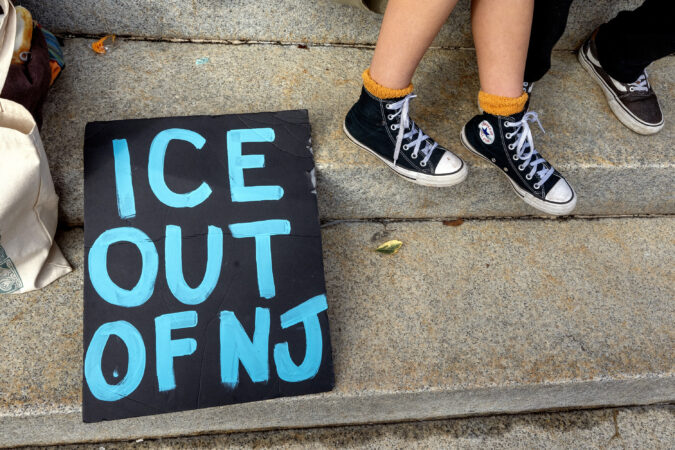
    Legions of suburbanites decried federal ICE actions on Sunday in a series of vigils and protests across the Philadelphia area, signaling the breadth of opposition to a central part of President Donald Trump’s agenda.

    Expressions of anger, sadness, and resistance poured out into the streets of major cities nationwide this weekend in response to the killing of 37-year-old Renee Good by an ICE officer in Minnesota. But that dysphoria also spilled into small towns — including in places like Gloucester County, New Jersey, where voters favored Trump in 2024.

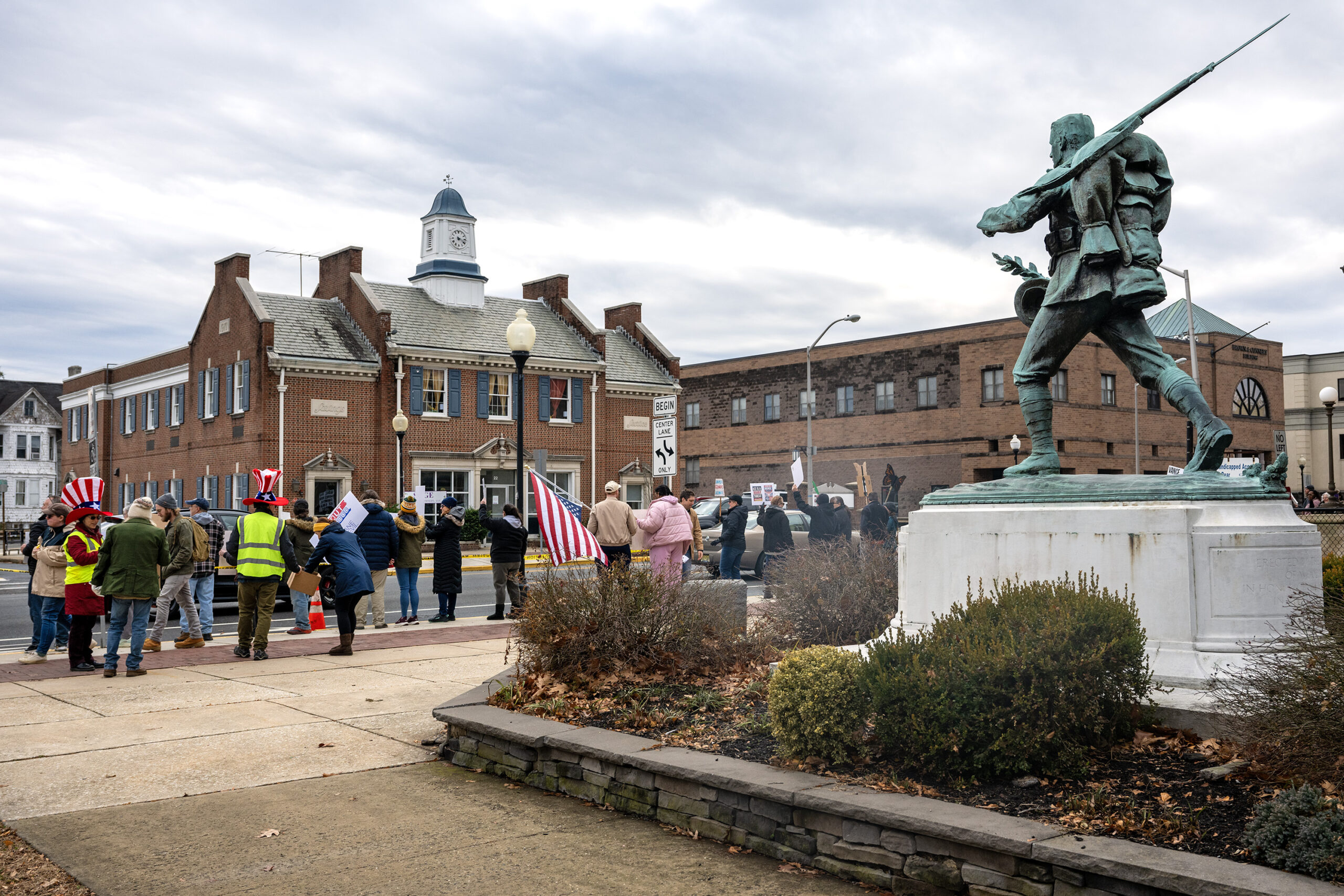
    “I’ve been quiet and timid my whole life, and now I’m just trying to speak up,” said Cristen Beukers, one of more than 100 people who attended a demonstration in Gloucester’s county seat, Woodbury, a city of about 10,000. Gathered along North Broad Street, near the Gloucester County Courthouse, participants’ signs, whistles, and bullhorn-led protest chants were met with beeping car horns and the supportive shouts of drivers.

    Beukers, 40, of nearby Paulsboro, called for a proper investigation into the shooting death of Good, a mother and poet, on Wednesday.

    Mi Casa Woodbury and Cooper River Indivisible hold a “roadside rally” in downtown Woodbury, N.J., in support of immigrants and to protest ICE on Sunday, Jan. 11, 2026, as protests against Trump administration actions spread in the suburbs.

    Thousands of ICE agents and federal troops have swarmed blue American cities as part of Trump’s unprecedented campaign to arrest and deport millions of immigrants. Good was shot three times in the driver’s seat of her SUV after a brief confrontation with ICE agents on a residential Minneapolis street. Trump administration officials insist ICE agent Jonathan Ross fired out of self-defense; video footage appears to show he was not in the vehicle’s path when he fired.

    “It’s an S.O.S.,” said Alex Baji, 31, of Woodbury, who said he’s a former IRS auditor laid off last year by the Department of Government Efficiency, overseen by billionaire Elon Musk. “Masked goons murdering U.S. citizens — and the vice president says it’s perfectly justified.”

    The turnout in Woodbury suggested a new level of urgency for the tight-knit suburban community, said Kaitlin Rattigan. Rattigan is a community organizer with Mi Casa Woodbury, a group that formed in response to ICE activity in their neighborhoods. Mi Casa has held a demonstration every Sunday since mid-November, even if just a few people attended.

    “I think it’s a turning point for many people — and frankly for white people,” Rattigan, who is white, said.

    According to a recent poll conducted by Pew Research Center, 50% of American adults surveyed in October disapproved of the Trump administration’s approach to immigration, while 39% approve. (Some participants responded “neither.”) While 53% of respondents said the country is doing “too much” when it comes to immigration enforcement, a large majority continue to say at least some people living in the United States should be deported.

    Trump has derided and propagandized protesters as “paid insurrectionists,” “domestic terrorists,” or radical leftists — people who are not representative of mainstream Americans, Steve McGovern, a political science professor at Haverford College, said in an interview. Anti-ICE rhetoric in the suburbs threatens Trump’s narrative, according to McGovern. Trump’s 2024 win was fueled by key gains in Philadelphia’s suburbs, an Inquirer analysis found.

    “The popular image of suburbia continues to be a place where lots of middle-class, mainstream people live and work,” he said. “If suburbanites take to the streets and in large numbers, that would send — I think — a powerful message that a strong majority of the country is increasingly fed up with the outrageous, lawless, and even murderous behavior of ICE agents.”

    At least one Republican observer was skeptical. Guy Ciarrocchi, a GOP analyst, said in a statement these protests no longer influence independent voters, nor intimidate Republicans.

    “Unfortunately, these ‘rallies’ are political theatre — plug [and] play crowds with professional signs for any ‘cause.’ Tools to rally extremist Democrat voters,” he said. “Ms. Good’s death was a tragedy. And, ICE’s work is important and necessary. No ‘rent a rally’ will change either of those truths.”

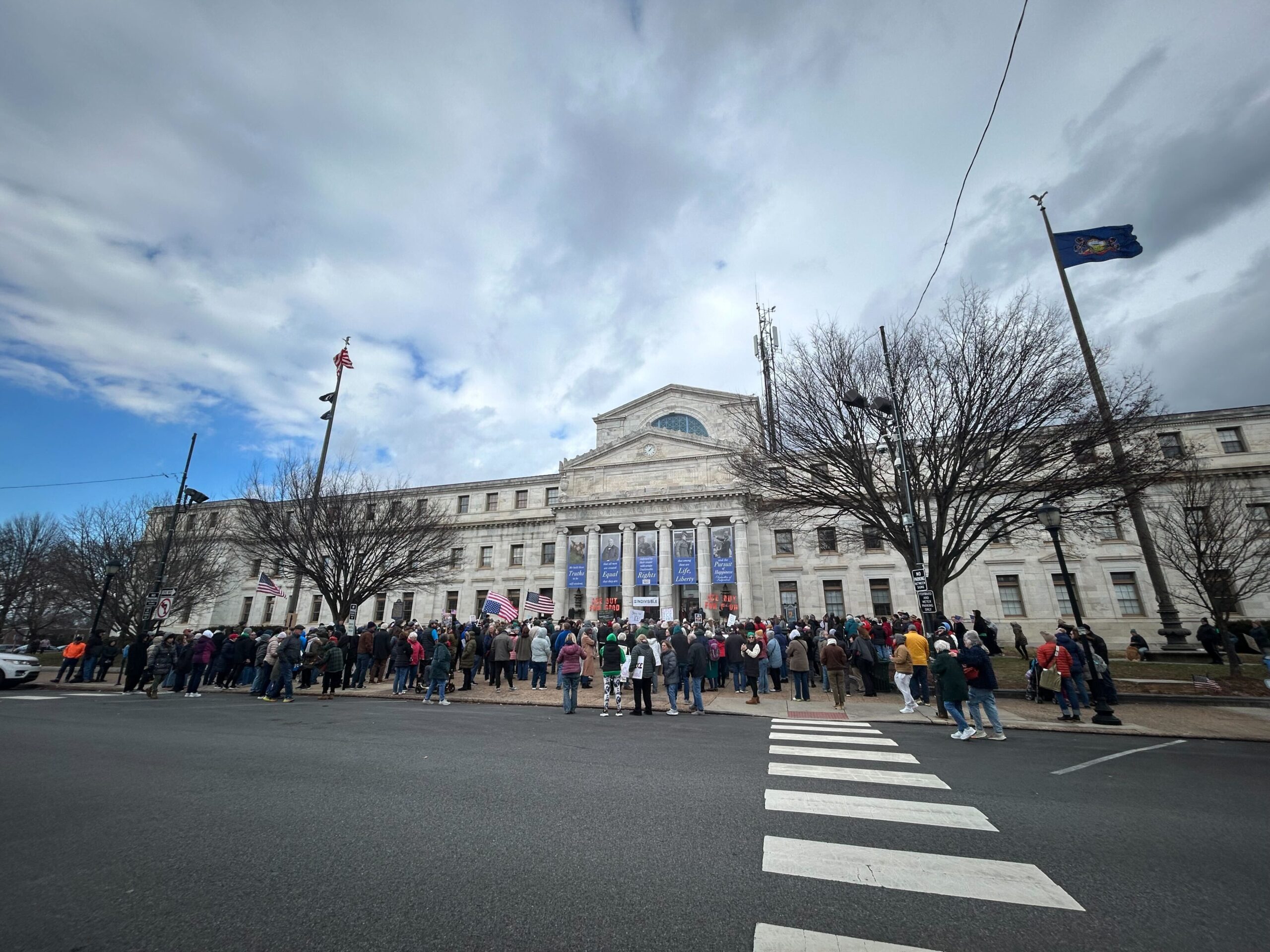
    Outside the Delaware County Courthouse in Media, hundreds shouted into the bitter wind: “United we stand, divided we fall.” The voices came from attendees of all ages — older people in wheelchairs, young parents pushing babies in strollers, and children holding crayon-drawn signs etched with messages like “ICE Cream, not ICE” and “NO ICE because it’s cruel.”

    “The entire nation is watching Pennsylvania,” said U.S. Rep. Mary Gay Scanlon, a Delaware County Democrat. “We can reject Trumpism at the state and federal levels this year. … We will not be bullied out of the future that we and all our children deserve.”

    Area residents hold what organizers called a “vigil for peace on our communities” on Jan. 11, 2026, in Media, Pa.

    In the increasingly blue suburban county — that not long ago was solidly red — the vocal opposition to Trump has grown louder in recent years, said Cathy Spahr, coleader of Delco Indivisible, which organized Sunday’s vigil for Good.

    “We didn’t have this during the first [Trump] administration,” she said of the event’s turnout. Spahr said she was especially heartened by the attendance given that the vigil was announced only days before — and ended an hour before the Eagles’ first playoff game of the year.

    But Spahr and several attendees said there’s something special about coming together closer to home. And logistically, it’s easier.

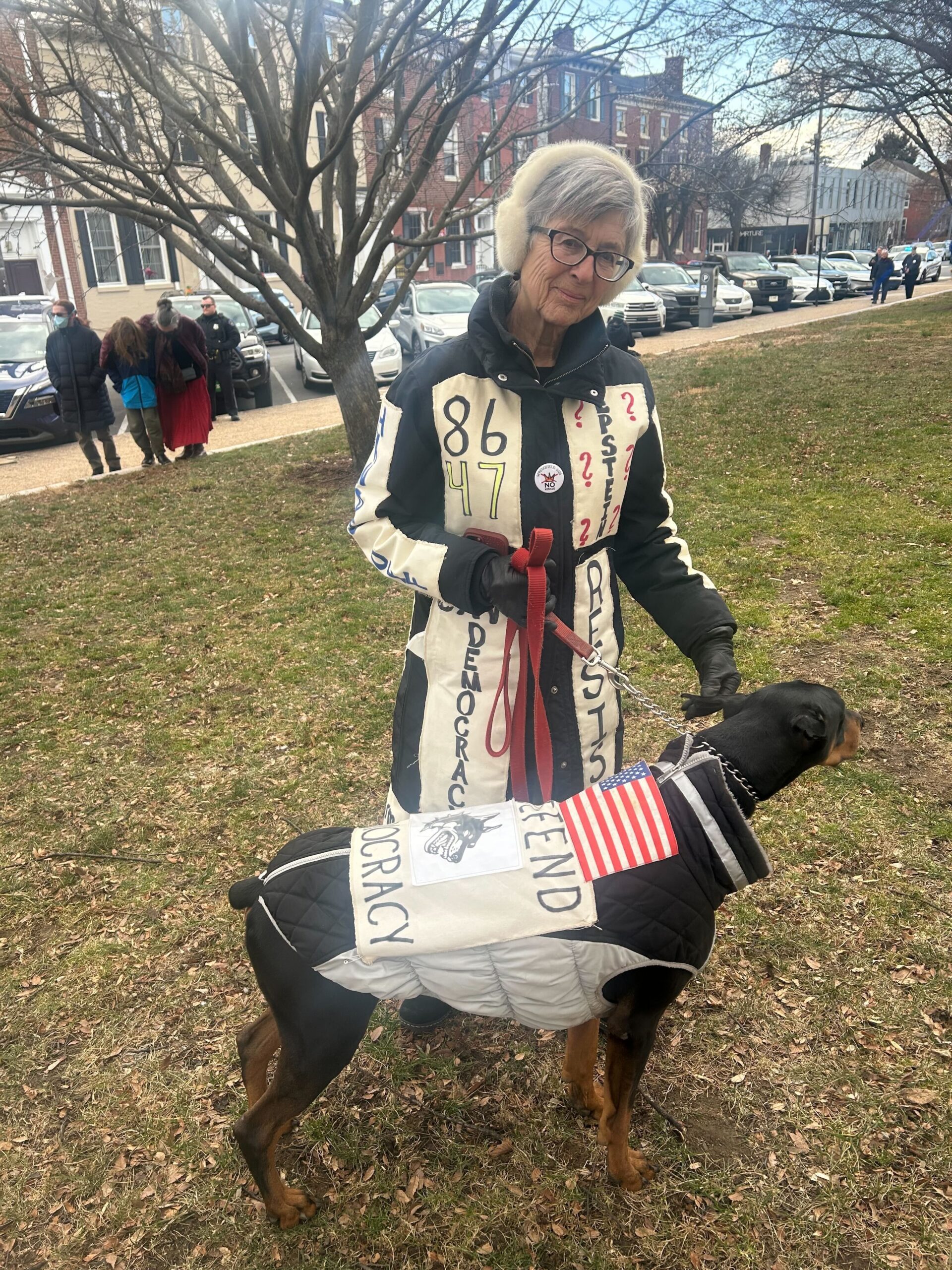
    Corinne Fiore, 75, of Media, and her 4-year-old Doberman, Laser, cherish the opportunity to be involved in the anti-Trump movement in Delaware County.

    Corinne Fiore, 75, of Media, poses with her 4-year-old Doberman, Laser, who wears a “Defend Democracy” vest to local rallies and events, on Jan. 11, 2026, outside of the Delaware County Courthouse in Media, Pa.

    “I just can’t get in a car and go for 10 hours somewhere,” she said. She’s thankful she doesn’t have to. “Delaware County has a lot of responsible people in it. They’re good and kind people. Patriotic people.”

    For families with young children, the Media vigil also presented a convenient opportunity to teach their children the importance of standing up for their neighbors.

    “I want to show them it’s important to stand up to a bully,” said Candice Carbone Bainbridge, 42, of Wallingford. Nearby, her 8-year-old daughter, Cora, held a sign with pink and purple lettering that read: “Be a good human. It’s not that hard!”

    Sixteen miles southeast, in Bellmawr, N.J., dozens gathered along Black Horse Pike, hoisting signs, cheering on supportive honks from passing commercial trucks, and dancing to the Rascals’ 1968 anthem, “People Got to Be Free.” One poster read, “American foundations are being destroyed, no one is safe, stand up now.”

    Karen Kelly, 72, who drove 40 minutes and DJed the demonstration, said she’s frustrated by apathy and disengagement.

    “All the people staying home — doing nothing — have to get the heck up,” Kelly said.

    Residents in the outskirts of Philadelphia expressed similar sentiments to their suburban counterparts.

    “This is not law enforcement, this is brutality,” said Susan MacBride, 84, at a protest in Roxborough, which was largely attended by residents of Cathedral Village, a retirement community in Northwest Philadelphia. Tired of what she described as the Trump administration’s cruelty and disrespect, MacBride felt compelled to put a pause on her retirement and join the 160-person rally at Ridge Avenue and Cathedral Road.

    “Kids need to know this isn’t normal; it’s a period of disruption, but we can’t let them get used to this,” she said.

    Nearby neighbor Lorraine Webb, 73, agreed with MacBride.

    “This isn’t what we are about, we need to do better,” Webb said. “We need to show up because this isn’t just a Center City issue; it’s a Philadelphia issue.”

  • Former N.J. acting governor Richard Codey, the state’s longest-serving legislator, has died at 79

    Former N.J. acting governor Richard Codey, the state’s longest-serving legislator, has died at 79

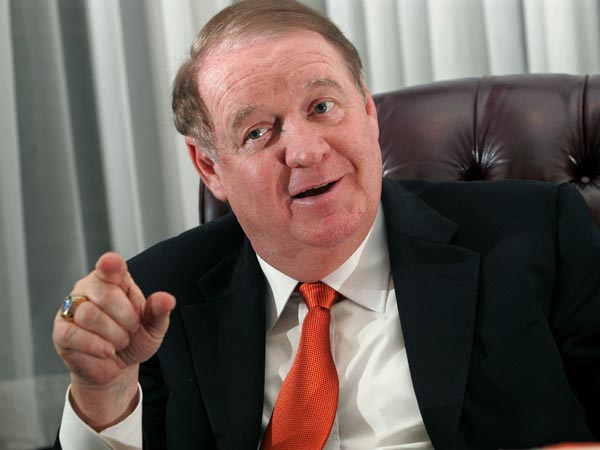
    Richard Codey, a former New Jersey acting governor and longtime state senator, has died at 79, his family announced Sunday.

    The Democrat represented an Essex County-based district in the Assembly from 1974 to 1982 and the Senate from 1982 to 2024, the longest combined service in state history. His family said he died peacefully at home Sunday after a brief illness.

    He was the New Jersey Senate president from 2002 to 2010.

    After Gov. Jim McGreevey resigned in 2004, Mr. Codey served as acting governor for the remaining 14 months of McGreevey’s term, until Jon Corzine was elected and succeeded him. Under a state constitutional provision in effect at the time, Mr. Codey concurrently served as governor and Senate president.

    In a statement on Facebook, Mr. Codey’s family said he served with humility and compassion. “He made friends as easily with Presidents as he did with strangers in all-night diners,” the family’s statement said.

    Legislators who served alongside Mr. Codey reacted to his death on social media.

    Current Senate President Nicholas Scutari said he had lost a trusted colleague and good friend.

    “New Jersey has lost a remarkable public servant who touched the lives in meaningful ways of everyone who knew him,” Scutari said in a statement on Facebook.

    State Sen. John McKeon served the same district as Mr. Codey in the Assembly for 22 years before succeeding him in the Senate.

    “Observing firsthand his empathy, humility, and advocacy for those who could not speak for themselves have had a profound and enduring influence on my professional life,” McKeon said on Facebook.

    Known for his feisty, regular-guy persona, Mr. Codey was a staunch advocate of mental health awareness and care issues. The Democrat also championed legislation to ban smoking from indoor areas and sought more money for stem cell research.

    As acting governor, Mr. Codey passed and signed a state law that limited public contracts for vendors who make campaign contributions.

    Mr. Codey operated his family’s funeral home before entering politics.

    Mr. Codey routinely drew strong praise from residents in polls, and he gave serious consideration to seeking the Democratic nomination for governor in 2005. But he ultimately chose not to run when party leaders opted to back wealthy Wall Street executive Jon Corzine, who went on to win the office.

    Mr. Codey would again become acting governor after Corzine was incapacitated in April 2007 due to serious injuries he suffered in a car accident. He held the post for nearly a month before Corzine resumed his duties.

    After leaving the governor’s office, Mr. Codey returned to the Senate and also published a memoir that detailed his decades of public service, along with stories about his personal and family life.

    His wife told the Associated Press that Mr. Codey was willing to support her speaking out about postpartum depression, even if it cost him elected office.

    “He was a really, really good guy,” Mary Jo Codey said. “He said, ‘If you want to do it, I don’t care if I get elected again.’”

    The Codey family said it would share information about his funeral in the coming days.

    This article contains information from the Associated Press.

  • Erich von Däniken, Swiss writer who spawned alien archaeology, has died at 90

    Erich von Däniken, Swiss writer who spawned alien archaeology, has died at 90

    BERLIN — Erich von Däniken, the Swiss author whose best-selling books about the extraterrestrial origins of ancient civilizations brought him fame among paranormal enthusiasts and scorn from the scientific community, has died. He was 90.

    Von Däniken’s representatives announced on his website on Sunday that he had died the previous day in a hospital in central Switzerland.

    Von Däniken rose to prominence in 1968 with the publication of his first book Chariots of the Gods, in which he claimed that the Mayans and ancient Egyptians were visited by alien astronauts and instructed in advanced technology that allowed them to build giant pyramids.

    The book fueled a growing interest in unexplained phenomena at a time when thanks to conventional science humankind was about to take its first steps on the Moon.

    Chariots of the Gods was followed by more than two dozen similar books, spawning a literary niche in which fact and fantasy were mixed together against all historical and scientific evidence.

    Public broadcaster SRF reported that altogether almost 70 million copies of his books were sold in more than 30 languages, making him one of the most widely read Swiss authors.

    While von Däniken managed to shrug off his many critics, the former hotel waiter had a troubled relationship with money throughout his life and frequently came close to financial ruin.

    Born in 1935, the son of a clothing manufacturer in the northern Swiss town of Schaffhausen, von Däniken is said to have rebelled against his father’s strict Catholicism and the priests who instructed him at boarding school by developing his own alternatives to the biblical account of the origins of life.

    After leaving school in 1954, von Däniken worked as a waiter and barkeeper for several years, during which he was repeatedly accused of fraud and served a couple of short stints in prison.

    In 1964, he was appointed manager of a hotel in the exclusive resort town of Davos and began writing his first book. Its publication and rapid commercial success were quickly followed by accusations of tax dodging and financial impropriety, for which he again spent time behind bars.

    By the time he left prison, Chariots of the Gods was earning von Däniken a fortune and a second book, Gods from Outer Space, was ready for publication, allowing him to commit himself to his paranormal passion and travel the world in search of new mysteries to uncover.

    Throughout the 1970s von Däniken undertook countless field trips to Egypt, India, and above all Latin America, whose ancient cultures held a particular fascination for the amateur archaeologist.

    He lectured widely and set up societies devoted to promoting his theories, later pioneering the use of video and multimedia to reach out to ever-larger audiences hungry for a different account of history.

    No amount of criticism dissuaded him and his fans from believing that Earth has been visited repeatedly by beings from outer space, and will be again in the future.

    In 1991 von Däniken gained the damning accolade of being the first recipient of the “Ig Nobel” prize for literature — for raising the public awareness of science through questionable experiments or claims.

    Even when confronted with fabricated evidence in a British television documentary — supposedly ancient pots were shown to be almost new — von Däniken insisted that, minor discrepancies aside, his theories were essentially sound.

    In 1985 von Däniken wrote Neue Erinnerungen an die ZukunftNew Memories of the Future — ostensibly to address his many critics: “I have admitted (my mistakes), but not one of the foundations of my theories has yet been brought down.”

    Although his popularity was waning in the English-speaking world by the 1980s, von Däniken’s books and films influenced a wave of semi-serious archaeological documentaries and numerous popular television shows, including The X-Files, which featured two FBI agents tasked with solving paranormal mysteries.

    His last major venture, a theme park based on his books, failed after just a few years due to lack of interest. The Mystery Park still stands, its human-made pyramids and otherworldly domes rotting as tourists prefer to explore the charms of the nearby town of Interlaken and the imposing Swiss Alps that surround it.

    Erich von Däniken is survived by his wife of 65 years, Elisabeth Skaja, daughter Cornelia, and two grandchildren.

  • Iraq War critic, Venezuela mission defender: Vance’s foreign policy journey

    Iraq War critic, Venezuela mission defender: Vance’s foreign policy journey

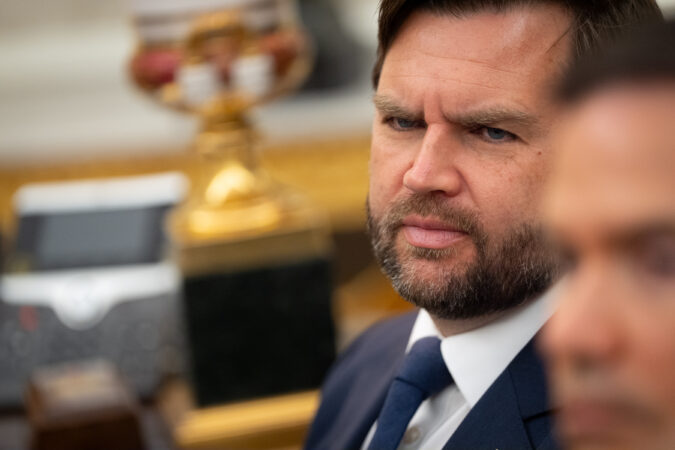
    Vice President JD Vance served in the Iraq War and came home a sharp critic of foreign military interventions, saying that too often Washington policymakers lose sight of American interests when they entangle themselves in faraway wars.

    Now he is defending President Donald Trump’s decision to conduct a daring raid this month in a country closer to home — to depose Venezuelan President Nicolás Maduro. The White House said that a more pro-U.S. government in Venezuela will stop drug and migrant flows, and open the country’s vast oil reserves to U.S. companies. But there are also major risks that armed conflict in the country could escalate, sucking in the United States and making the venture harder to defend as an “America First” endeavor.

    Vance’s defense of Maduro’s seizure appears discordant with his far more skeptical stance toward strikes on the Houthi militia in Yemen — a position revealed in a Signal group chat that was accidentally made public in March. Many prominent advocates of military restraint who have boosted Vance’s foreign policy views in the past now oppose the decision to oust Maduro.

    But as the vice president eyes his 2028 presidential prospects while also wanting to appear in lockstep with the president, Vance has claimed no contradiction at all.

    Going back to his time in the Senate, Vance has been an advocate for a robust U.S. presence in the Western Hemisphere, co-sponsoring a 2023 resolution reaffirming the Monroe Doctrine, which warns foreign powers against challenging U.S. predominance in the Americas.

    Now, he is defending the Venezuela operation as an America First decision.

    “As a Marine Corps veteran, for my entire lifetime, presidents — and let’s be honest, they were Democrats and Republicans — would send the American military to far-off places,” Vance said Friday at a Venezuela-focused White House event for oil executives. “They would get us involved in these endless quagmires. They would lose hundreds or thousands of American lives. And the American people would get nothing out of these misadventures.

    “And now you have an American president who’s empowered the American military to stop the flow of drugs into our country and to ensure that we, as opposed to our adversaries, control one of the great energy reserves that exist anywhere in the entire world. And he did it without losing a single American life in the process,” Vance said.

    Even some of Vance’s allies see the vice president struggling to thread the needle as he tries to stand by Trump while not alienating the GOP’s anti-interventionist wing.

    “If JD Vance himself were president, would Venezuela have happened? Would we have captured Maduro? To me, without a doubt, the answer is no. I cannot fathom a scenario,” said Ben Freeman, a senior fellow at the Quincy Institute, a Washington-based think tank that has hosted Vance in the past.

    Vance is “not interested in militarism,” Freeman said. “He is seeking out diplomacy-first solutions and keeping the U.S. out of foreign adventurism.”

    Vance says there is no daylight between himself, Trump, and Secretary of State Marco Rubio. But Rubio, a Cuban-American from Florida and another potential 2028 contender, has long advocated for aggressive action in Venezuela as a larger strategy to bolster U.S. ties to Latin America and weaken Cuba’s Communist leaders.

    In recent days, Vance has repeatedly felt the need to explain to his followers why the administration decided to go after Maduro.

    “I understand the anxiety over the use of military force, but are we just supposed to allow a communist to steal our stuff in our hemisphere and do nothing? Great powers don’t act like that,” Vance wrote on X on Jan. 4, a day after the president announced Maduro’s capture. Trump was at Mar-a-Lago during the raid, surrounded by his senior-most aides — but not the vice president.

    Two administration officials, who spoke on the condition of anonymity to discuss sensitive considerations, said political optics did not play a role in the decision for Vance to stay away from Mar-a-Lago.

    For safety reasons, Vance rarely joins Trump outside of Washington. Additionally, officials were worried that a vice-presidential motorcade to Mar-a-Lago the evening of the operation could have tipped off Venezuela. As a result, Vance and other White House officials determined it wasn’t necessary for him to attend the news conference, according to the officials.

    Vance and White House officials also said he played a key role in the lead-up to the operation.

    In mid-December, Vance and Rubio led a meeting of Trump’s top advisers and Cabinet officials to plan the operation, including the decision to move forward with an economic quarantine using U.S. military vessels to block sanctioned Venezuelan oil shipments, according to a person with knowledge of the meeting who spoke on the condition of anonymity to discuss sensitive details.

    At the end of the month, Vance also spoke with Qatari intermediaries about whether Maduro was willing to accept any of the United States’ exit offers, the person said. When it was clear Maduro wasn’t prepared to accept the negotiations, Vance and Rubio jointly concluded Maduro was “not a credible interlocutor” and that the U.S. couldn’t conduct business with Venezuela under his leadership, the person said.

    As the operation took place, Vance was “on the same systems as the president,” the person said, monitoring it in real time and “on a line watching the operation with the president.” A spokesperson has previously said that Vance was monitoring events from elsewhere in Palm Beach and departed Florida before Trump spoke to the media.

    Vance has not always been so enthusiastic about taking U.S. military action. He was a sharp voice of dissent in the Signal group chat about strikes on Houthi militants in Yemen threatening shipping traffic in the Red Sea. The Signal chat included Trump’s top national security officials — and the editor of the Atlantic.

    “There is a real risk that the public doesn’t understand this or why it’s necessary,” Vance wrote, noting that militants were threatening more European than American trade.

    “I am willing to support the consensus of the team and keep these concerns to myself,” he said. “I just hate bailing Europe out again.”

    Although Vance never intended for his comments to become public, his sharply independent voice — especially since another top Trump aide on the thread, deputy chief of staff Stephen Miller, said the president had already made a “clear” decision — jumped out to some.

    “The president had decided and Vance was still relitigating,” said Rebecca Lissner, who was former vice president Kamala Harris’ principal deputy national security adviser. “I thought it was really informative about how he operates as the vice president, and how different it is. The fact that instead of JD Vance being the one being like, ‘Guys, the president has decided. We’re moving out,’ he was the one questioning the decision.”

    Vice presidents are often faced with thorny questions about how to influence their administration’s policies. Without a clear portfolio, an agency to run, or a defined responsibility, the vice president has to own actions without always helping decide them.

    That became a struggle for Harris on Gaza policy during the 2024 campaign, when President Joe Biden’s decisions on Israel became unpopular with the Democratic base.

    With Trump and Vance, there may be more room for input, Lissner said.

    “Trump does like to be presented with options, and that means that there’s space for different people to advocate for different options,” she said.

    Vance has leaned into some of the administration’s domestic initiatives with gusto, as was clear last week when he came to the White House briefing room to deliver a sharp defense of the ICE agent who fatally shot a protester in Minneapolis and announce a new Justice Department initiative to uncover fraud in federal programs.

    Allies of Vance say his support for Trump’s foreign policy decisions over the last year should come as no surprise.

    “Vance is never going to break with Trump, and he authentically likes him, and he seems to authentically like Rubio,” said Curt Mills, the executive director of the American Conservative, a magazine that formed in opposition to the Iraq War. “He’s a nationalist and a realist, but he’s also the vice president and not the president, so he’s not ultimately the decision-maker.”

    Sen. Jim Banks (R., Ind.), a friend of Vance’s, said the two have talked about their time serving overseas — Banks in Afghanistan — and how it shaped their view of the U.S.’s role abroad. He too described Vance’s foreign policy as “rooted in realism,” and said that “JD believes that America has a strong role to play around the world.”

    “We served in wars that were poorly run and managed by the military leaders of the prior administrations, and we don’t want to see our country send troops to 20-year forever wars with little purpose and fail in the same way that the previous administrations did,” Banks said. “President Trump doesn’t want that either. He ran against that.”

    Advocates for Trump’s use of force over the past year said he has been careful about not getting pulled deeply into ongoing conflicts.

    The decision not to seek more dramatic change in Venezuela, and instead to work with Maduro’s deputy, Delcy Rodríguez, may be part of that pattern, analysts said — but it also may not work.

    “This isn’t about regime change. This definitely does have that harder-nosed realpolitik flavor, and I think that’s why folks like Vance or others find themselves able to at least try and defend this,” said Emma Ashford, a senior fellow at the foreign police think tank the Stimson Center, who has argued for a more restrained approach to the use of military force.

    Governmental collapse in Venezuela, a military coup, or other unrest could lead to greater migration and larger drug trafficking issues, Ashford said — the opposite of what Vance said he hopes will come.

    “If this spirals into something more, it’s going to be much harder to defend,” she said. “For folks like me, I would say that’s the reason you shouldn’t do it in the first place.”

  • Retouched images of Netanyahu’s wife, distributed by the state, ignite a fiery ethics debate

    Retouched images of Netanyahu’s wife, distributed by the state, ignite a fiery ethics debate

    JERUSALEM — The photos seemed destined for posterity in Israel’s state archives.

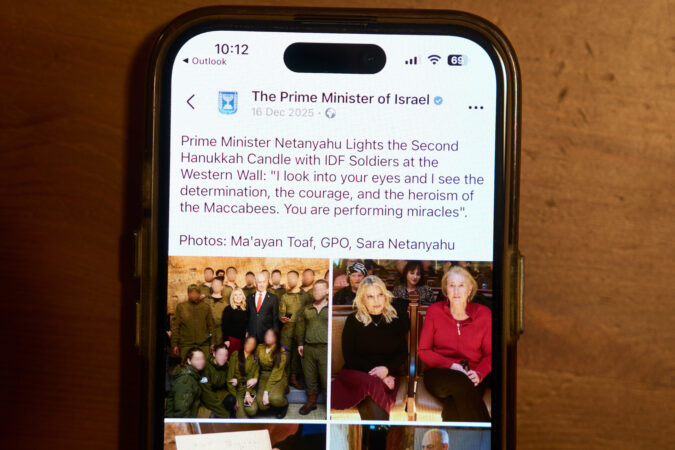
    In the snapshots, Prime Minister Benjamin Netanyahu is joined by his wife, Sara, as well as U.S. Ambassador Mike Huckabee and a group of Israeli soldiers, as they light Hannukah candles at Western Wall, the holiest site where Jews pray. The leaders exchange triumphant looks.

    But something is off.

    Sara Netanyahu’s skin is poreless, her eyes overly defined and her hair perfectly coiffed — a look officials acknowledge is the result of heavy retouching.

    Critics say the issue isn’t the use of photo-editing software, which is common on the social media accounts of celebrities and public figures. They say it’s the circulation of the images in official government announcements, which distorts reality, violates ethical codes, and risks compromising official archiving and record-keeping efforts.

    “All the pictures to this day in the archives in Israel are authentic pictures of reality as it was captured by the lenses of photographers’ cameras since the establishment of the state,” said Shabi Gatenio, the veteran political journalist who broke the story in the Seventh Eye, an Israeli site that covers local media. “These images, if entered into the database, will forever infect it with a virtual reality that never existed.”

    Since the manipulation of images was revealed, the government has taken the unprecedented step of crediting Sara Netanyahu in its releases that include manipulated images. And it’s not clear if the official archive will include images of her taken during the second half of last year, when Gatenio said the editing appears to have begun.

    Mrs. Netanyahu’s personal spokesperson did not respond to a request for comment.

    Nitzan Chen, director of the Government Press Office, told the Associated Press that images of the prime minister are never manipulated and that his office would not upload any retouched photos to the official archive.

    Personal Photoshop habit enters political realm

    Sara Netanyahu, 67, has long used photo-editing software on her images. Her social media account is filled with images in which her face appears heavily retouched.

    But the topic raised eyebrows since her Photoshop habit entered the public record.

    Gatenio said he first noticed this last July, when the couple visited President Donald Trump in Washington, D.C., and again in September, as Sara Netanyahu joined her husband on the tarmac ahead of a trip to New York for the U.N. General Assembly.

    At the time, the prime minister’s office released a video of the send-off along with a photo, credited to Avi Ohayon, an official government photographer.

    Comparing the photo to the raw video, Hany Farid, a digital forensics expert at the University of California, Berkeley, said the image had been post-processed, bearing local manipulations to smooth her skin and remove wrinkles.

    Since then, photos showing Mrs. Netanyahu meeting with Vice President JD Vance and his wife, Usha, in Washington also appear to have been retouched, Farid said.

    “There’s been some Photoshop editing to — let’s call it — ‘beautify,’ lighten, smooth the face,” Farid said.

    “Is it nefarious? No. Is it a problem? Yes. This is about something bigger than, ‘she Photoshopped her face to make herself look younger.’ This is about trust. Why should I trust any official photo coming out of that administration?”

    Chen, the head of the Government Press Office, said office lawyers are trying to determine how to handle and properly identify photos “processed by people other than GPO photographers.”

    He said the Justice Ministry is also examining the “criteria, limitations, and possibilities” of the edited images, though he stressed there is nothing illegal about touching up photos. The issue, he said, is being transparent when such changes are made.

    For now, the Prime Minister’s Office has decided to add Sara Netanyahu’s name to press releases that include retouched images. Since November, press releases showing photos of her smiling next to Trump and the family of the last hostage in Gaza in Washington, visiting a Miami synagogue, and attending a funeral for an Israeli mayor have included this label.

    At least one outlet, the Times of Israel, has said it will no longer carry official state photos that appear to have been manipulated. The Associated Press does not publish images that appear to have been retouched or digitally manipulated.

    A broader phenomenon

    Chen said the prime minister is never edited: “No Photoshop, no corrections, no color. Nothing.”

    While his face may not be retouched, the prime minister’s official Instagram account tells another story.

    The page has posted a bevy of content that appears to be AI-edited or generated, including a picture of the couple with Trump and first lady Melania Trump celebrating the new year in Washington.

    The photo raised suspicions in Israel because it shows Sara Netanyahu wearing a black dress absent from other photos of the event, where she wore a dark red frock. Appearing in the sky above the couples are brightly colored fireworks and American and Israeli flags that Farid said were “almost certainly” generated by AI.

    It is now marked with a tag on Instagram indicating that it may have been altered or generated using AI. It is not clear when the tag was added nor by whom.

    Netanyahu is not alone. Many world figures, including Trump, frequently use AI-generated image manipulation in their public output.

    Tehilla Shwartz Altshuler, who runs the Democracy in the Digital Age Program at the Israel Democracy Institute, a Jerusalem think tank, called it “part of the populist playbook” and said there was “no question” that Netanyahu was emulating how Trump uses the technology.

    Netanyahu’s official Instagram has posted video of Trump and Netanyahu in a B-2 bomber that appears entirely AI-generated. It is captioned “on our victory lap,” referencing the joint Israel-U.S. attacks on Iran last year.

    “This is exactly what Netanyahu and his surrounding circle have tried to do for many years,” she said. “Presenting himself as a superhero, his wife as a supermodel, their family as a super loyal family. Even when it wasn’t the case, even at the expense of actual political work, administrative work, and social work.”

    She said Israel has reached a critical point in official government record-keeping and communications.

    “The question of archiving the truth, archiving history, will be one of the questions of our time.”

  • Hamas says it will dissolve its Gaza government when new Palestinian body takes over

    Hamas says it will dissolve its Gaza government when new Palestinian body takes over

    CAIRO — Hamas said Sunday it will dissolve its existing government in Gaza once a Palestinian technocratic leadership committee takes over the territory, as mandated under the U.S.-brokered peace plan. But the group gave no specifics on when the change will occur.

    Hamas and the rival Palestinian Authority, the Palestinians’ internationally recognized representative, have not announced the names of the technocrats, who are not supposed to be politically affiliated, and it remains unclear if they will be cleared by Israel and the U.S.

    The “Board of Peace,” an international body led by Trump, is supposed to oversee the government and other aspects of the ceasefire that took effect on Oct. 10, including disarming Hamas and deploying an international security force. The board’s members have not been announced.

    Meanwhile, the post-ceasefire death toll continued to rise in Gaza, with Israeli gunfire killing three Palestinians, according to Palestinian hospital officials.

    The ceasefire began with a halt in fighting and the release of hostages held in Gaza in exchange for thousands of Palestinians held by Israel. The deal is still in its first phase as efforts continue to recover the remains of the final hostage left in Gaza.

    An Egyptian official, who spoke on condition of anonymity to discuss closed-door information, said Hamas was sending a delegation to talks with Egyptian, Qatari, and Turkish officials about moving to the second phase.

    Future Gaza governance in flux

    In comments posted on his Telegram channel Sunday, Hazem Kassem, a Hamas spokesperson, called for speeding up the establishment of the technocratic committee.

    The Egyptian official said Hamas will meet with other Palestinian factions this week to finalize the committee’s formation. The Hamas delegation will be chaired by top negotiator Khalil al-Hayya, the official said.

    Trump has said the Board of Peace will monitor the committee and handle the disarmament of Hamas, the deployment of an international security force, additional pullbacks of Israeli troops, and Gaza’s reconstruction. The U.S. has reported little progress on any of these fronts, though the members of the board are expected to be announced this week.

    Israeli Prime Minister Benjamin Netanyahu said Thursday that Bulgarian diplomat Nickolay Mladenov has been selected as the board’s director-general. Mladenov is a former Bulgarian defense and foreign minister who served as U.N. envoy to Iraq before being appointed as the U.N. Mideast peace envoy from 2015 to 2020. During that time, he had good working relations with Israel and frequently worked to ease Israel-Hamas tensions.

    Also Sunday, Israel’s Foreign Minister Gideon Saar met in Jerusalem with Japanese Foreign Minister Toshimitsu Motegi. Saar said Israel was committed to enforcing Trump’s plan, while Motegi expressed Japan’s willingness to play an active role in the ceasefire.

    According to Japan’s Foreign Ministry, Motegi visited the Civil-Military Coordination Center, where the ceasefire is being monitored. He was also set to meet Netanyahu and Palestinian officials in the Israeli-occupied West Bank.

    Violence in Gaza continues

    In Gaza, two men were shot dead in the southern town of Bani Suhaila, according to Nasser Hospital, which received the bodies. Earlier Sunday, a man was killed by Israeli gunfire in the Tuffah neighborhood of Gaza City, according to Al-Ahly hospital, which received the body.

    In response to questions about the Tuffah incident, Israel’s military said it had fired at and hit a “terrorist” in northern Gaza who had approached troops. In a later statement, the military said it had killed a “terrorist” in southern Gaza who approached troops.

    Israel and Hamas have accused each other of violating the ceasefire. Continued Israeli strikes in Gaza have killed more than 400 Palestinians, according to local health officials.

    The Israeli military says any actions since the ceasefire began have been in response to violations of the agreement.

    Israeli police detain top official

    Israeli police said Sunday they were questioning a top official from Netanyahu’s office over possible obstruction of an investigation into last year’s leak of classified military information to a German tabloid.

    Israeli media identified the official as Tzachi Braverman, Netanyahu’s chief of staff, who is expected to start as the next ambassador to the United Kingdom in the coming months.

    He’s the latest official to be caught up in the scandal, in which Netanyahu’s inner circle is accused of leaking confidential information to German tabloid Bild to improve public perception of the prime minister following the killing of six hostages in Gaza in 2024.

    It comes after an explosive interview by Kan News with former Netanyahu spokesperson Eli Feldstein, who described a clandestine meeting with Braverman in an underground parking lot in the middle of the night in connection with the leak. Feldstein, who has been indicted, said Braverman offered to “shut down” the probe into the leaked information.

    Opposition leader Yair Lapid immediately called for the suspension of Braverman as ambassador. “It is unacceptable that a person suspected of involvement in obstructing a serious security investigation should be the face of Israel in one of Europe’s most important countries,” Lapid wrote on X.

    In response, Saar defended Braverman’s appointment and said he would not be removed from it until formally charged or tried.