Category: News

Latest breaking news and updates

  • Denmark, Greenland envoys meet with White House officials over Trump’s call for a ‘takeover’

    Denmark, Greenland envoys meet with White House officials over Trump’s call for a ‘takeover’

    Denmark and Greenland’s envoys to Washington have begun a vigorous effort to urge U.S. lawmakers as well as key Trump administration officials to step back from President Donald Trump’s call for a “takeover” of the strategic Arctic island.

    Denmark’s ambassador, Jesper Moller Sorensen, and Jacob Isbosethsen, Greenland’s chief representative to Washington, met on Thursday with White House National Security Council officials to discuss a renewed push by Trump to acquire Greenland, perhaps by military force, according to Danish government officials who were not authorized to comment publicly and spoke on the condition of anonymity.

    The White House did not respond to a request for comment about the meeting.

    The envoys have also held a series of meetings this week with American lawmakers as they look to enlist help in persuading Trump to back off his threat.

    Secretary of State Marco Rubio is expected to meet next week with Danish officials.

    Trump, in a New York Times interview published Thursday, said he has to possess the entirety of Greenland instead of just exercising a long-standing treaty that gives the United States wide latitude to use Greenland for military posts.

    “I think that ownership gives you a thing that you can’t do with, you’re talking about a lease or a treaty. Ownership gives you things and elements that you can’t get from just signing a document,” Trump told the newspaper.

    The U.S. is party to a 1951 treaty that gives it broad rights to set up military bases there with the consent of Denmark and Greenland.

    Meanwhile, Vice President JD Vance told reporters that European leaders should “take the president of the United States seriously” as he framed the issue as one of defense.

    “What we’re asking our European friends to do is take the security of that landmass more seriously, because if they’re not, the United States is going to have to do something about it,” Vance said.

    In a floor speech Thursday, Sen. Lisa Murkowski (R., Alaska) warned that the rhetoric from some in the Trump administration is “profoundly troubling.”

    “We’ve got a lot ahead of us in 2026,” Murkowski said. “Greenland — or taking Greenland, or buying Greenland — should not be on that list. It should not be an obsession at the highest levels of this administration.”

    Danish officials were hopeful about the upcoming talks with Rubio in Washington.

    “This is the dialogue that is needed, as requested by the government together with the Greenlandic government,” Danish Defense Minister Troels Lund Poulsen told Danish broadcaster DR.

    The island of Greenland, 80% of which lies above the Arctic Circle, is home to about 56,000 mostly Inuit people.

    Vance criticizes Denmark

    Vance said on Wednesday that Denmark “obviously” had not done a proper job in securing Greenland and that Trump “is willing to go as far as he has to” to defend American interests in the Arctic.

    In an interview with Fox News, Vance repeated Trump’s claim that Greenland is crucial to both the U.S. and the world’s national security because “the entire missile defense infrastructure is partially dependent on Greenland.”

    He said the fact that Denmark has been a faithful military ally of the U.S. during World War II and the more recent “war on terrorism” did not necessarily mean they were doing enough to secure Greenland today.

    “Just because you did something smart 25 years ago doesn’t mean you can’t do something dumb now,” Vance said, adding that Trump “is saying very clearly, ‘you are not doing a good job with respect to Greenland.’”

    Right to self-determination

    Earlier, Rubio told a select group of U.S. lawmakers that it was the Republican administration’s intention to eventually purchase Greenland, as opposed to using military force.

    “Many Greenlanders feel that the remarks made are disrespectful,” Aaja Chemnitz, one of the two Greenlandic politicians in the Danish parliament, told The Associated Press. ”Many also experience that these conversations are being discussed over their heads. We have a firm saying in Greenland, ‘Nothing about Greenland, without Greenland.’”

    She said most Greenlanders “wish for more self-determination, including independence” but also want to “strengthen cooperation with our partners” in security and business development as long as it is based on “mutual respect and recognition of our right to self-determination.”

    Chemnitz denied a claim by Trump that Greenland is “covered with Russian and Chinese ships all over the place.”

    Greenland is “a long-standing ally and partner to the U.S. and we have a shared interest in stability, security, and responsible cooperation in the Arctic,” she said. “There is an agreement with the U.S. that gives them access to have bases in Greenland if needed.”

    France’s President Emmanuel Macron has denounced the “law of the strongest” that is making people “wonder if Greenland will be invaded.”

    In a speech to French ambassadors at the Elysee presidential palace on Thursday, Macron said: “It’s the greatest disorder, the law of the strongest, and everyday people wonder whether Greenland will be invaded, whether Canada will be under the threat of becoming the 51st state (of the United States) or whether Taiwan is to be further circled.”

    He pointed to an “increasingly dysfunctional” world where great powers, including the U.S and China, have “a real temptation to divide the world amongst themselves.”

    The United States is “gradually turning away from some of its allies and freeing itself from the international rules,” Macron said.

    Surveillance operations for the U.S.

    “Greenland belongs to its people,” Antonio Costa, president of the European Council, said on Wednesday. “Nothing can be decided about Denmark and about Greenland without Denmark, or without Greenland. They have the full solid support and solidarity of the European Union.”

    The leaders of Canada, France, Germany, Italy, Poland, Spain and the U.K. joined Denmark’s Prime Minister Mette Frederiksen on Tuesday in defending Greenland’s sovereignty in the wake of Trump’s comments about Greenland, which is part of the NATO military alliance.

    After Vance’s visit to Greenland last year, Danish Foreign Minister Lars Løkke Rasmussen published a video detailing the 1951 defense agreement between Denmark and the U.S.. Since 1945, the American military presence in Greenland has decreased from thousands of soldiers over 17 bases and installations on the island, Rasmussen said, to the remote Pituffik Space Base in the northwest with some 200 soldiers today. The base supports missile warning, missile defense and space surveillance operations for the U.S. and NATO.

    The 1951 agreement “offers ample opportunity for the United States to have a much stronger military presence in Greenland,” Rasmussen said. “If that is what you wish, then let us discuss it.”

    ‘Military defense of Greenland’

    Last year, Denmark’s parliament approved a bill to allow U.S. military bases on Danish soil. The legislation widens a previous military agreement, made in 2023 with the Biden administration, where U.S. troops had broad access to Danish air bases in the Scandinavian country.

    Denmark is moving to strengthen its military presence around Greenland and in the wider North Atlantic.

    Last year, the government announced a 14.6 billion-kroner ($2.3 billion) agreement with parties including the governments of Greenland and the Faroe Islands, another self-governing territory of Denmark, to “improve capabilities for surveillance and maintaining sovereignty in the region.”

    The plan includes three new Arctic naval vessels, two additional long-range surveillance drones and satellite capacity.

    Denmark’s Joint Arctic Command, headquartered in Nuuk, is tasked with the “surveillance, assertion of sovereignty and military defense of Greenland and the Faroe Islands,” according to its website. It has smaller satellite stations across the island.

    The Sirius Dog Sled Patrol, an elite Danish naval unit that conducts long-range reconnaissance and enforces Danish sovereignty in the Arctic wilderness, is also stationed in Greenland.

  • ‘The most horrific thing I’ve seen:’ Authorities say a Lancaster County man stole more than a hundred skulls and bones from a historic cemetery

    ‘The most horrific thing I’ve seen:’ Authorities say a Lancaster County man stole more than a hundred skulls and bones from a historic cemetery

    He stored them in the basement, authorities said — the human bones and headless torsos, the skulls and mummified feet, a skeleton with a pacemaker still attached. More than 100 pieces and parts, in all.

    There were so many remains, they said, that the police officers who discovered them stopped short, stunned by what they were seeing.

    Jonathan Christian Gerlach, 34, of Ephrata, is charged in what Delaware County law enforcement officials described as the most sweeping and unsettling case of its kind they have encountered: the systematic theft of human remains from Mount Moriah Cemetery, the sprawling 160-acre burial ground that straddles Philadelphia and Yeadon Borough, and the place where Betsy Ross was once interred and Civil War soldiers still lie.

    “After 30 years, I can say this is probably the most horrific thing that I’ve seen,” said Yeadon Police Chief Henry Giammarco.

    Authorities announced Gerlach’s arrest Thursday on charges of burglary, abuse of corpse and desecration and theft or sale of venerated objects. He is being held in jail in lieu of $1 million bail.

    Inside the Delaware County District Attorney’s Office, law enforcement officials projected Gerlach’s photo — his neck covered in tattoos, a gold ring through his nose, green eyes rimmed red — onto a television screen as they outlined crimes whose scale and depravity District Attorney Tanner Rouse said were difficult to comprehend.

    Prosecutors said Gerlach repeatedly broke into mausoleums and underground vaults, prying them open with tools and carrying away bodies, bones, and body parts, leaving behind desecrated graves and questions.

    The thefts began last fall, authorities said, and ended after dark on Jan. 6, when Yeadon Borough detectives caught Gerlach as he was leaving the cemetery.

    For weeks, the detectives had been tracking reports of vandalism and theft from at least 26 mausoleums and underground vaults inside Mount Moriah Cemetery, said Yeadon Mayor Rohan Hepkins, who sits on the cemetery’s board and who brought the case to police.

    Investigators tied Gerlach to the crimes, investigators said, after his brown Toyota RAV4 began appearing on nearby license plate readers around the times the burglaries were believed to have occurred. The vehicle had never shown up on the readers before the thefts began, according to the affidavit of probable cause for Gerlach’s arrest. Records also showed his cell phone in the area.

    “This was good, old-fashioned police work,” Rouse said.

    On Jan. 6, detectives said they watched Gerlach walk out of the cemetery carrying a burlap sack and a crowbar. He was arrested beside his SUV, its back seat strewn with human remains. Inside the sack, detectives said, were the mummified remains of two children, three skulls, and several loose bones.

    According to the affidavit, Gerlach told detectives he had used the crowbar to pry open a grave that night to steal the remains. He also admitted to taking at least 30 sets of human remains from across the cemetery, investigators said.

    The next day, Jan. 7, a search of Gerlach’s home on the 100 block of Washington Avenue in Ephrata uncovered what Rouse described as the grim collection he had been amassing: remains scattered on shelves and suspended from the ceiling, some in fragments, others stitched back together.

    Despite what authorities called overwhelming evidence that Gerlach committed the crimes, much remains unknown, Rouse said Thursday.

    “We don’t know what he was doing with them,” he said.

    Investigators have not identified a motive, and they cannot say whether Mount Moriah was the only cemetery targeted.

    “There are other reports out there that we have not been able to corroborate,” Rouse said, declining to name specific locations. “And frankly, I don’t know that we ever will.”

  • N.J. adopts ‘bell-to-bell’ cell phone ban policy for public schools

    N.J. adopts ‘bell-to-bell’ cell phone ban policy for public schools

    Gov. Phil Murphy signed a law Thursday banning cell phones in New Jersey public schools from “bell to bell” in an effort to help students focus on learning.

    New Jersey joins a growing number of states that have enacted tighter cell phone restrictions in schools to remove distractions. Pennsylvania is considering a similar measure, and 17 states have banned the devices in schools, according to ABC News.

    Murphy proposed the restrictions last year during his annual State of the State address. Legislation then won bipartisan support in both houses.

    During a bill-signing event at Ramsey High School in Bergen County, Murphy said the law would promote improved academic performance and student mental health.

    “By getting rid of needless distractions, we are fundamentally changing our schools’ learning environments and encouraging our children to be more attentive and engaged during the school day,” Murphy said. “This is a sensible policy that will make a world of difference for our children.”

    Murphy, who said he refrains from bringing his phone into meetings, borrowed a phone to use as a prop for the news conference because his was locked in his car.

    “That will be locked up until I’m no longer governor,” said Murphy, who leaves office Jan. 20.

    The bill was heavily endorsed by principals and teachers, who said valuable instruction time is lost when they have to direct students to put away the devices during class.

    Experts say cell phones have become a growing distraction and hinder learning. Students have been using their phones to text friends and even to watch movies during class. The devices have also been used for cyberbullying.

    Bans will not go into place in schools around the state, however, until next school year. The law requires the state Department of Education to develop guidelines for districts to draft polices restricting the use of cell phones and devices by students in classrooms and during the school day.

    Local school boards that operate more than 600 districts across the state must then adopt a new policy. The law takes effect for the 2026-2027 school year.

    Many districts in South Jersey, including Cherry Hill, Deptford, Moorestown, Washington Township, and Woodbury, already restrict cell phone use in classrooms, but the policies have not been consistently enforced and punishments vary. Some require students to store their phones in lockers all day, while others allow phones during lunch and breaks.

    Some districts only require students to keep their phones turned off, while others provide locations for the devices to be stored during the school day.

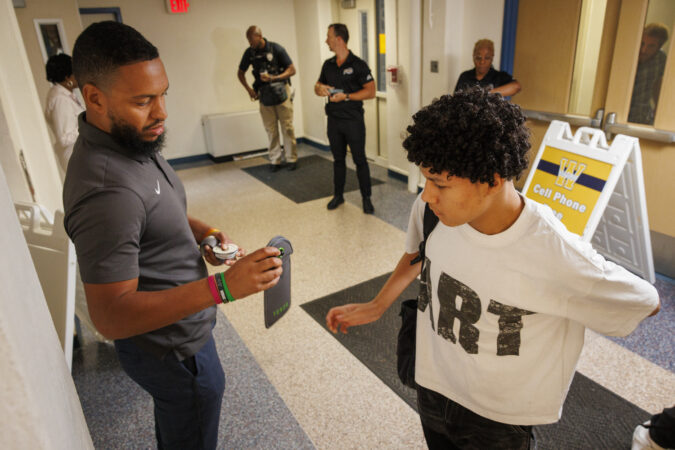
    Under the bell-to-bell approach of the new state law, students will not be permitted to access their phones for the entire school day.

    Lianah Carruolo, a seventh-grade student at Woodbury Junior-Senior High School, unlocks her cell phone pouch in September 2024.

    Woodbury Superintendent Andrew Bell said a cell-phone-free campus policy at Woodbury Senior High School has drastically changed the culture. There are fewer disciplinary issues and students interact more with classmates and teachers, he said.

    “Students are noticeably happier, engaged and present in their classrooms, and connected to one another,” said Dwayne Dobbins Jr., acting co-principal of Woodbury Junior-Senior High School.

    What happens next?

    Districts must adopt policies restricting cell phones during the entire school day. That may require students to lock up the devices when they arrive or secure them in locked pouches.

    In December, the state awarded nearly $1 million in grants to 86 districts under a new Phone-Free Schools Grant Program to help districts implement the policy. Schools had to agree to restrict cell phone use during the entire day.

    In South Jersey, 12 districts in Burlington, Camden, and Gloucester Counties received grants. The grant amounts varied depending on the size of each district.

    window.addEventListener(“message”,function(a){if(void 0!==a.data[“datawrapper-height”]){var e=document.querySelectorAll(“iframe”);for(var t in a.data[“datawrapper-height”])for(var r,i=0;r=e[i];i++)if(r.contentWindow===a.source){var d=a.data[“datawrapper-height”][t]+”px”;r.style.height=d}}});

    Gloucester City Superintendent Sean Gorman said his district used a $10,823 grant to install cabinets in classrooms where students in grades 7-12 must lock up their devices when they arrive for homeroom. Younger students are instructed to leave the devices at home, he said.

    “We know it’s right for kids,” Gorman said. “If you let them bury their head in their phone for a good portion of the day they will.”

    Other districts, like Woodbury, have opted to use locked pouch systems to store students’ phones. They retrieve their phones at the end of the day.

    In Pennsylvania, similar legislation has bipartisan support and advanced out of a Senate committee last month.

    What about parental concerns?

    Not everyone agrees with the bans.

    Some parents have expressed concern that they will not be able to reach their children, especially in the event of an emergency. School officials say parents will still be able to contact their children through the main office.

    There have also been arguments by opponents that states are overreacting with the cell phone bans and that the legislation is unlikely to have the intended impact.

    But groups have parents have also mobilized to speak out against cell phone use, circulating pledges to wait until eighth grade or high school to purchase phones for their children.

    Are there exceptions to the ban?

    Districts will have some flexibility to allow exceptions. For example, some students use their phones for medical conditions such as glucose testing.

    Exceptions may also be made for students with individual education plans or IEPs and use devices such as tablets and ear buds as part of their curriculum.

    Before the law signed Thursday, some districts allowed students to retrieve their phones during breaks, in the hallways between classes or during lunch. The law no longer permits that.

    Will students be penalized?

    It will be left to districts to decide how policy violations should be handled. Some districts with policies already have opted for a progressive discipline approach.

    Gorman said Gloucester City has had 60 violations at its high school since the new policy took effect in September, down from 130 the previous year. The school has 731 students.

    First-time offenders are given a two-day, in-school suspension and their phone is confiscated, Gorman said. A second offense gets a four-day, in-school suspension; three-time offenders are given a three-day, out-of-school suspension and remanded to an alternative program, he said.

    Gorman said students have largely accepted the policy. The school has had fewer disciplinary problems and conflicts typically escalated through text messages have decreased, he said.

    “We barely had any repeat offenders,” Gorman said.

  • Frances Ola Walker, cofounder of Parents Against Drugs and lifelong community activist, has died at 86

    Frances Ola Walker, cofounder of Parents Against Drugs and lifelong community activist, has died at 86

    Frances Ola Walker, 86, of Philadelphia, cofounder of Parents Against Drugs and Dunlap Community Citizens Concerned, onetime president of the Mill Creek Coalition and director of the West Philadelphia Empowerment Zone, former aide to U.S. Rep. William H. Gray III, college instructor, mentor, and volunteer, died Tuesday, Dec. 30, of respiratory illness at the Hospital of the University of Pennsylvania-Cedar Avenue.

    A lifelong champion of education, civil rights, comprehensive healthcare, environmental responsibility, employment and housing equity, and community partnerships, Ms. Walker spent more than 70 years, from age 13 to 86, protesting injustice, improving life for her neighbors, and caring for historic residential swaths of West Philadelphia.

    In the 1960s, she marched with fellow activist Cecil B. Moore and others to protest segregation at Girard College. Most recently, she advocated for alternative SEPTA transit routes to support Black-owned businesses.

    “I just stayed involved,” she said in a video interview for the West Philadelphia Landscape Project. “If there was a protest, I was leading it. … I’m glad I made a contribution people can respect.”

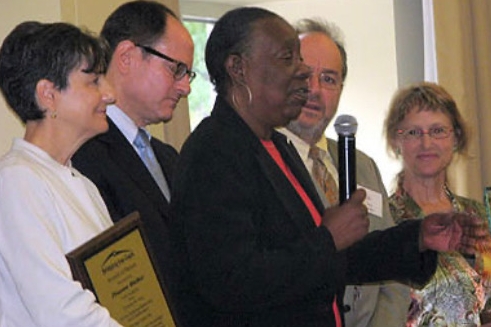
    Ms. Walker (center) spoke often at awards ceremonies and civic events.

    She cofounded Dunlap Community Citizens Concerned in the early 1980s to address housing and infrastructure concerns, and Parents Against Drugs in the late ‘80s. She led the local Healthy Start federal initiative to reduce infant mortality in the 1990s and served on the advisory board of Bridging the Gaps, a healthcare partnership of academic health institutions and community groups.

    She developed programs that connected University of Pennsylvania students and faculty with neighborhood residents through what is now Penn’s Netter Center for Community Partnerships. She acquired federal funds to revitalize communities in the West Philadelphia Empowerment Zone, partnered with Penn to pioneer urban ecology projects, and supervised the West Philadelphia Landscape Project in the Mill Creek neighborhood.

    Her family said she was “fearless in her pursuit of justice.”

    Anne Whiston Spirn, professor of landscape architecture and planning at the Massachusetts Institute of Technology in Cambridge, invited Ms. Walker to lecture virtually in her ecological urbanism course. “She bridged the worlds of university, politics, and neighborhood, and called the powerful to account,” Spirn said.

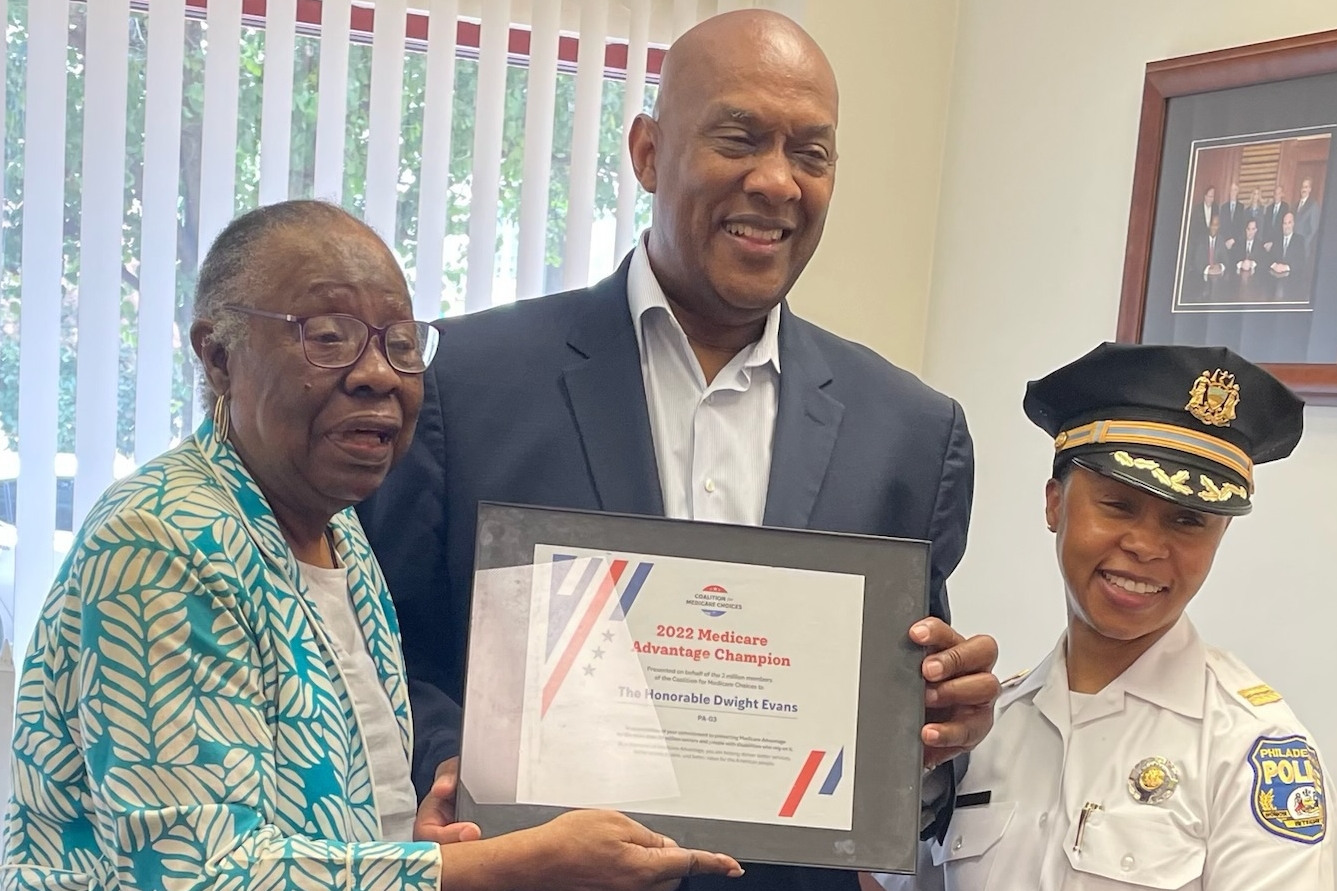
    Ms. Walker (left) presents an award to U.S. Rep. Dwight Evans (center) as a Philadelphia police officer looks on.

    She served on then-Mayor Ed Rendell’s search committee for a new health commissioner in 1993 and briefly considered her own run for City Council. She worked with then-Vice President Al Gore on his community empowerment programs and managed Gray’s West Philadelphia office for 10 years in the 1980s.

    Former U.S. Rep. Chaka Fattah noted her “extraordinary legacy of helping others” and said: “She always chartered her own path and spoke her truth.” Former City Council member at large Blondell Reynolds Brown said: “Her unwavering grassroots work brought care, dignity, and possibility to families facing hardships.”

    She studied community engagement in MIT’s Mel King Community Fellows Program in 2000 and 2001, and earned more than 100 awards, citations, and commendations, including from the White House for her leadership in a children’s immunization campaign.

    She was on the advisory board at Power 99 FM radio and quoted often in The Inquirer and Daily News. Her achievements were noted in two books, They Carried Us: The Social Impact of Philadelphia’s Black Women Leaders and The Lex Street Massacre.

    Regarding drugs and crime in West Philadelphia, Ms. Walker said in 1987: “People in this community have to take a stand.”

    “My grandmother didn’t leave us directions,” said her grandson, Abdul-Malik Walker, “but she left us a compass. Her voice is in our habits, and her strength is in how we handle the miles ahead.”

    Frances Ola Walker was born Jan. 20, 1939, in South Philadelphia. Her father was a preacher, and the family is related to the Rev. Dr. Martin Luther King Jr. So it surprised no one when she began leading academic tutoring for her siblings and teen neighborhood friends on her front stoop.

    She was one of 11 children, and her family moved to the Dunlap section of West Philadelphia in 1945. She attended West Philadelphia High School and worked at first as a personal shopper for neighborhood seniors.

    She was always interested in civic affairs and social justice, and she became the first Black woman to work at an Acme markets warehouse, her family said, and one of the first female postal carriers.

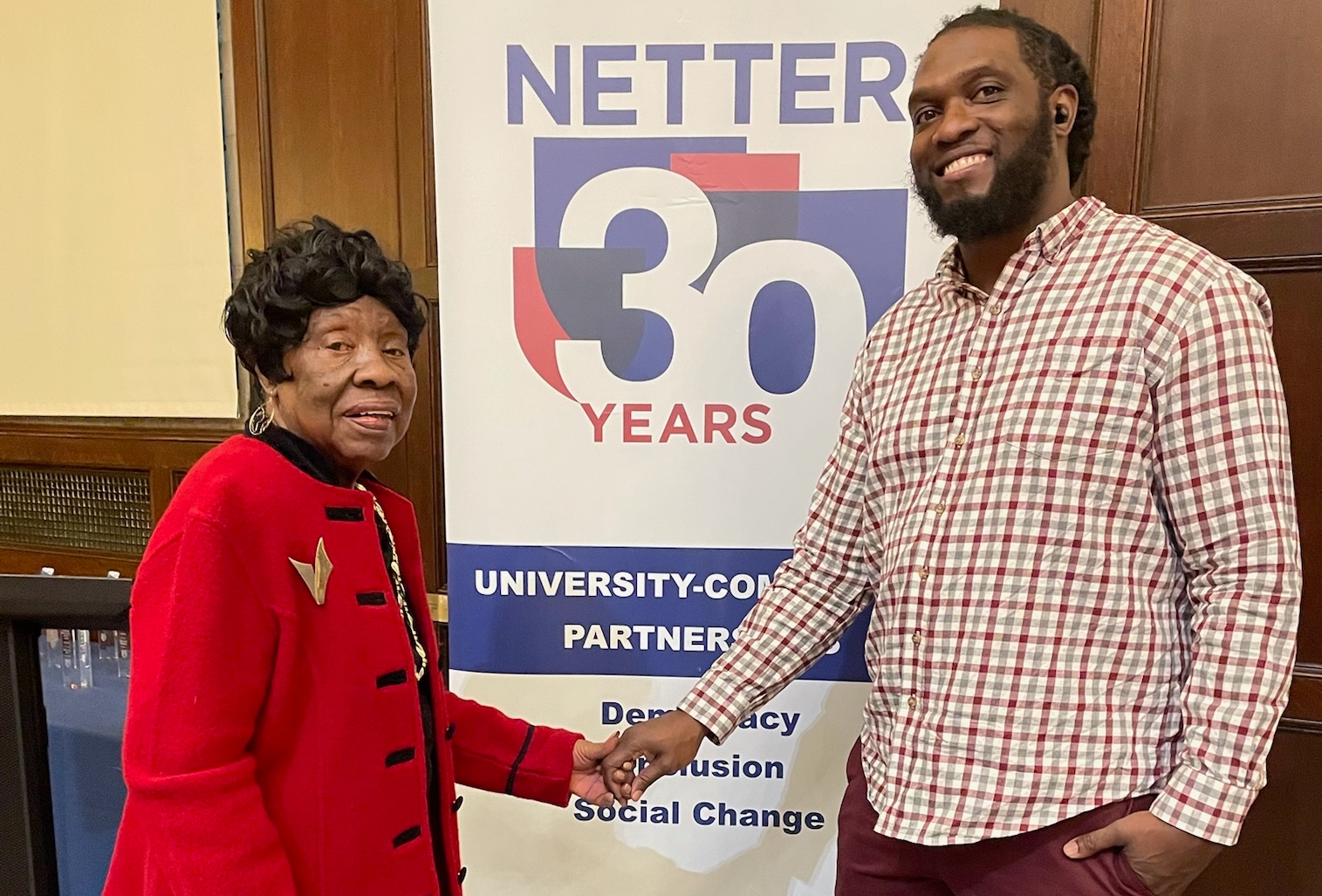
    Ms. Walker stands with her grandson Abdul-Malik Walker.

    She had sons Gregory and James, and daughters Michelle, Roslyn, Wala, and Patricia. She married John Ponnie. Her husband, sons Gregory and James, and daughters Michelle and Patricia died earlier.

    Ms. Walker enjoyed traveling and playing cards with her family. She knew the detailed history of Dunlap and Mill Creek, and delighted in sharing it with others she encountered on her frequent walks.

    “She was an encourager to people of all ages,” said her niece Sibrena Stowe. “She was truly a force to be reckoned with.”

    Ms. Walker told her family: “It is through love that all things are possible. For me, it is when people call on you that lets you know you make a difference.”

    Ms. Walker appeared in this documentary video for the West Philadelphia Landscape Project.

    In addition to her daughters, niece, and grandson, Ms. Walker is survived by 16 other grandchildren, nine great-grandchildren, two sisters, and other relatives. Six sisters and two brothers died earlier.

    Visitation with the family is to be from 9 to 10 a.m. Friday, Jan. 9, at Ezekiel Baptist Church, 5701 Grays Ave., Philadelphia, Pa. 19143. A service is to follow, and a repast at 2 p.m. Livestream is at repastai.com/frances.

  • Gov. Shapiro asks Pennsylvania voters to choose ‘getting stuff done’ over ‘chaos’ as he kicks off 2026 reelection bid

    Gov. Shapiro asks Pennsylvania voters to choose ‘getting stuff done’ over ‘chaos’ as he kicks off 2026 reelection bid

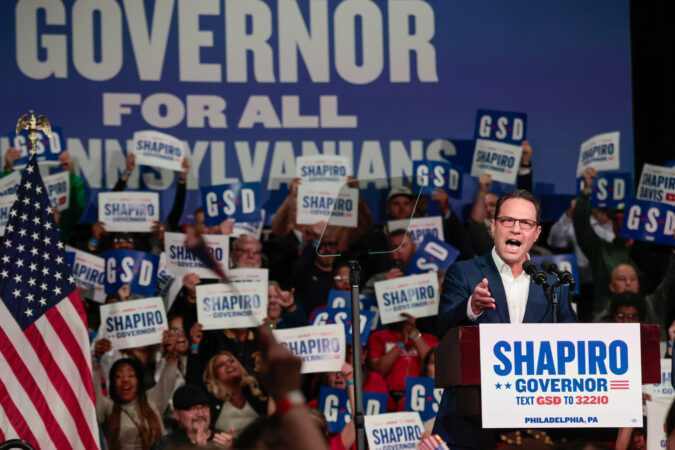
    Pennsylvania Gov. Josh Shapiro officially launched his widely expected bid for reelection Thursday, spending his first day back on the campaign trail in one of the nation’s most politically divided states by touting his achievements for workers, seniors, and schools while contrasting himself against Republicans in President Donald Trump’s Washington.

    The Montgomery County Democrat presented his opening argument to voters Thursday afternoon in a highly produced campaign rally at a Pittsburgh union hall, before appearing Thursday night before Philadelphia voters at the Alan Horwitz “Sixth Man” Center in Nicetown.

    Shapiro, 52, of Abington Township, will pursue his reelection bid by crisscrossing the state, boasting a high approval rating that Republicans hope to damage as talk of his potential 2028 candidacy continues to build.

    Shapiro took the stage in Pittsburgh and Philadelphia following speeches from Lt. Gov. Austin Davis and a parade of public officials, labor leaders, and community advocates who touted his first term accomplishments, all delivering a similar message: Shapiro shows up and delivers for residents across the commonwealth.

    At the Sixth Man Center, supporters and local leaders packed the event space in the youth sports center where Shapiro delivered a speech next to a huge mural of 76ers star Joel Embiid. Shapiro joked about his midrange jumper as he praised the center’s work.

    “I am proud to be here on today to say that Josh Shapiro as governor of the commonwealth has delivered for us in a way that some thought … was impossible,” said Philadelphia Mayor Cherelle L. Parker to an excited crowd.

    The rollout signaled Shapiro’s campaign will be anchored in his administration’s motto, “Get S— Done,” emphasizing that state government should be able to solve residents’ problems effectively.

    “You deserve someone who goes to work every day focused on you and on getting stuff done,” Shapiro said.

    He is not expected to face a primary challenger, just like in 2022, when he later cruised to victory in the general election against far-right State Sen. Doug Mastriano (R., Franklin). Mastriano, who had been teasing another run, announced Wednesday he would not join the race for governor.

    This time, Republicans hope to take a stronger swing at Shapiro by coalescing around one candidate early. The state GOP endorsed State Treasurer Stacy Garrity more than a year in advance of November’s midterm election.

    State Treasurer and Republican candidate for governor Stacy Garrity holds a rally on Sept. 25, 2025 at the Newtown Sports & Events Center in Bucks County.

    State Republican Party Chair Greg Rothman said in a statement Thursday that Pennsylvanians have had “enough of Josh Shapiro’s lack of leadership and broken promises,” noting several of Shapiro’s missteps in his administration such as his reneging on school vouchers, a $295,000 payout over a sexual harassment claim against a former top aide, and failing to send a month’s worth of state agency mail.

    “[Garrity] actually gets stuff done, she doesn’t just talk about it on the campaign trail,” Rothman added.

    Garrity has contended that Shapiro — a former attorney general, county commissioner, and state representative — is more focused on running for president in 2028 than leading the state.

    “Josh Shapiro is more concerned with a promotion to Pennsylvania Avenue than serving hardworking Pennsylvanians,” Garrity said in a statement earlier this week, noting the state fared poorly in U.S. News and World Report rankings on the economy and education.

    But that’s part of the appeal for some of Shapiro’s supporters.

    Fernando Rodriguez, who works at Fox Chase Farm in Philadelphia, was eager to hear Shapiro’s stump speech. The 37-year-old didn’t vote for Shapiro in 2022 and had cast only one ballot for a presidential election, voting for President Barack Obama in 2008.

    But he wanted to see Shapiro win reelection and, more importantly, go on to run for president in 2028.

    “There seems to be some maturity, some presidential qualities to him,” Rodriguez said, noting that is particularly important given the direction of national politics.

    Shapiro has not publicly acknowledged any presidential ambitions and is expected to keep a local focus as he campaigns for reelection. But on Thursday at his rally, he reminded voters that they have the ability to deliver not only a resounding reelection victory for him, but also the chance to flip control of the U.S. House and state Senate as Democrats target four congressional districts in Pennsylvania and other down-ballot offices.

    Shapiro has already raised $30 million to support his reelection, which is likely to boost the entire ticket.

    State Democrats hope Shapiro will be able to leverage his popularity and growing national brand to bring more voters out to the polls, in what is already likely to be an advantageous midterm year for the party.

    “We’ve got a lot of work to do and it’s not just about reelecting the governor,” Eugene DePasquale, the chair of the state Democratic Party, said Thursday in Pittsburgh.

    Gov. Josh Shapiro’s supporters cheer as he makes his way to the stage during a reelection announcement event event at the Alan Horwitz “Sixth Man” Center in Philadelphia on Thursday, Jan. 8, 2026.

    ‘The hard work of bringing people together’

    Offering an opening pitch to voters, Shapiro highlighted key themes he is expected to repeat during the next 10 months on the campaign trail: He’s protected Pennsylvanians’ freedoms and created jobs, with more work to do.

    He noted several bipartisan achievements passed by the state’s divided legislature during his time in office, including a long-sought increase to the state’s rent and property tax rebate, historic funding increases for public education, and more. Pennsylvanians, he argued, have a simple choice in November.

    “Will we continue to do the hard work of bringing people together to get stuff done, or will we descend into the chaos and extremism that has gripped too many other places across our nation?” Shapiro asked in his stump speech in Pittsburgh and Philadelphia.

    In Philly, the crowd gave this question a resounding “No.”

    Shapiro’s launch drew a distinction between his style of leadership and that of Trump — whom Shapiro repeatedly called a danger to democracy prior to his reelection in 2024. Shapiro did not name the president during his announcement, but alluded to Trump — while noting his legal challenges against the Trump administration.

    The move followed Shapiro’s oft-repeated tactic since Trump took office for a second time: Criticize his policies, while not alienating Trump’s supporters in Pennsylvania, as the state swung in favor of Trump in 2024.

    In addition to his two campaign rallies, Shapiro kicked off his reelection bid in a video advertisement posted on social media. He led that off with footage from one of his biggest accomplishments from his first three years in office: rebuilding a collapsed section of I-95 in 12 days, in what was expected to take months.

    The quick rebuild also featured in his speech in Philly, where he heaped praise on organized labor for its role in the reconstruction.

    Rob Buckley with Buckley & Company, Inc., shakes hands with Gov. Josh Shapiro (right) at the end of a 2023 news conference before the reopening of I-95.

    Notably, Shapiro’s video announcement included a focus on several issues important to rural or conservative voters, such as signing a law that ended the ban on Sunday hunting, hiring 2,000 more law enforcement officers, and removing college degree requirements for most state agency jobs. He also highlighted his work in helping to reopen the lone gas pump in Germania, Potter County, following an Inquirer report about its closure.

    During his speech on the glossy basketball court in Nicetown, supporters began chanting “Four more years!”

    “I like the sound of that,” Shapiro said, with a smile.

  • Ex-Philly fire deputy says he was framed for sexual harassment after he exposed fraud — and that the city is hiding reports that clear him

    Ex-Philly fire deputy says he was framed for sexual harassment after he exposed fraud — and that the city is hiding reports that clear him

    To hear Anthony Hudgins tell it, overtime fraud at the Philadelphia Fire Department is so brazen that some employees continued abusing the system even after officials started investigating them.

    A paramedic was billing the city for overtime hours last May, Hudgins, the former first deputy fire commissioner, contends. But according to a federal lawsuit Hudgins filed Wednesday, there was one problem: That employee was luxuriating on a Norwegian Cruise at the time, not on the clock as a paramedic.

    The alleged deception took place after The Inquirer reported that the city was investigating overtime abuse within the 2,800-member fire department and, at the same time, investigating Hudgins over a series of sexual harassment complaints made against him — claims Hudgins says were false and made by employees he’d reported for overtime abuse.

    In his complaint filed in the U.S. District Court for the Eastern District of Pennsylvania, Hudgins accuses paramedics, the firefighters union president, and top city officials of defamation, subjecting him to a “bad faith” investigation, and ultimately forcing the department veteran of 31 years to lose his rank and take a $75,000 pay cut.

    The dueling misconduct investigations have roiled the fire department since late 2024, and Mayor Cherelle L. Parker’s administration has declined to release the findings from either probe. Hudgins was demoted last fall.

    Hudgins’ lawsuit claims that findings from the sexual harassment investigation conducted by the law firm Campbell Durrant cleared him of “verbal misconduct” and found that he had “hugged co-workers.” The complaint states that Fire Commissioner Jeffrey Thompson told Hudgins that the investigators found: “You were just being you.”

    The lawsuit did acknowledge that Parker’s administration found that Hudgins had violated the city’s sexual harassment policy and demoted him as a result. Women who lodged complaints against Hudgins said that his conduct included unwanted touching, inappropriate comments, and intimidation tactics, The Inquirer reported last year.

    However, Hudgins contended in his lawsuit that the overtime review conducted by Inspector General Alexander DeSantis concluded that two of the women who’d accused him of misconduct were “proven fraudsters” who also recruited other women to file complaints.

    Hudgins claimed that the overtime probe was completed in September. DeSantis told The Inquirer last month that the investigation is “still ongoing and may be for some time.” DeSantis declined further comment Thursday.

    Because Parker’s administration and DeSantis have continued to decline to release the results of their investigations, it is difficult to confirm Hudgins’ account.

    Parker’s administration declined to comment on the lawsuit.

    According to the complaint, Hudgins called for an overtime review in fall 2024 after hearing that paramedic Jacqulyn Murphy had lodged a disproportionately high number of overtime shifts that year. While her peers averaged about 24 overtime payments, Murphy had accrued 238, more than 80% of them without the necessary approval forms, Hudgins claimed.

    The department’s payroll supervisor, Marian Farris, rubber-stamped the overtime approvals, according to Hudgins’ complaint. Hudgins alerted Fire Commissioner Thompson.

    But before he could finish his review, he asserts, Murphy and Farris retaliated by filing sexual harassment complaints against him and encouraging other female employees to do the same — including Tabitha Boyle, Christina Quinones, and Dana Jackson, who are also named as defendants in the lawsuit. Requests for their comments were not returned Thursday.

    Murphy, now a defendant in the lawsuit, did not respond to requests for comment Thursday. Payroll records show she was the ninth highest overtime earner in the department in 2024, more than doubling her $94,549 base salary.

    The city paid Campbell Durrant $30,000 to conduct interviews and investigate the claims against Hudgins, who was reassigned to remote work and, later, forced to take a leave of absence.

    The city has taken The Inquirer to court to block the release of overtime records related to the overtime investigation, claiming their public disclosure would jeopardize the integrity of the probe led by The Office of the Inspector General, the city’s fraud prevention watchdog.

    Hudgins, in his lawsuit, claims to have seen the results of that investigation. According to his complaint, the OIG produced its findings to the city and found that Murphy and Farris had both conspired to defraud the city.

    According to the complaint, the OIG report stated Murphy had received an undisclosed sum of overtime pay and then “consistently” paid Farris via CashApp. The payments occurred biweekly for at least six months in 2024.

    Farris left the department in March 2025. In a phone interview Thursday, she denied any scheme involving payments with Murphy. Investigators found CashApp receipts on Murphy’s email account, but Farris said those were innocent transactions.

    “It ain’t a good thing to say, but Jackie was somebody I could borrow money from when I was in Atlantic City, or I could babysit her son for her or something like that,” Farris said. “I get CashApps from my mother. I’m not doing anything fraudulent with my mother.”

    Hudgins’ complaint also accused Murphy of continuing to bilk the overtime system even after Farris left the department last year.

    The fire department did not respond to a request for comment on the complaint. Michael Bresnan, president of Local 22 of the International Fire Fighters and Paramedics Union, was also named as a defendant in the suit. He declined to comment Thursday.

    Per the complaint, Hudgins received a phone call from Thompson in July, who told him the law firm found no wrongdoing and that he could return to work, saying, essentially:

    “Good news! You’re coming back to work. You were just being you.”

    Staff writer Samantha Melamed contributed to this article.

  • Toll Brothers just named a new CEO. Here’s how much he’ll earn.

    Toll Brothers just named a new CEO. Here’s how much he’ll earn.

    Toll Brothers, the luxury homebuilder based in Fort Washington, will have a new CEO this spring.

    Karl K. Mistry, an executive vice president who has been with the company for 22 years, is set to be promoted to CEO effective March 30, Toll Brothers announced Wednesday. Mistry will succeed Douglas C. Yearley Jr., who will become executive chairman of the board.

    Yearley has served as CEO since 2010, when he was given the reins by company cofounder Robert Toll during the financial crisis.

    Mistry joined Toll Brothers in 2004 and went on to hold leadership positions in the Houston and Washington, D.C., markets. Since 2021, Mistry has managed the company’s homebuilding operations in 15 states in the Eastern U.S.

    “Karl has honed his skills in both strong markets and challenging ones. He has run numerous homebuilding divisions and has overseen our expansion into several major markets,” Yearley said in a statement. “With Karl at the helm partnering with our other seasoned leaders and operating teams, the company’s future is in excellent hands.”

    Mistry is set to receive a base salary of $1 million, with annual cash bonuses of around $2.25 million, according to the company’s recent filing with the U.S. Securities and Exchange Commission.

    Karl K. Mistry, an executive vice president at Toll Brothers, is set to become the company’s next CEO starting March 30.

    Yearley, who was named one of Barron’s top 25 CEOs in 2024, made an annual base salary of $1.2 million, as well as nearly $8 million in cash incentives, according to SEC filings.

    As executive board chair, Yearley’s base salary is set to remain at $1.2 million, according to the recent filing, and his total annual compensation is expected to be $6.6 million, including cash bonuses and long-term equity, starting in fiscal year 2027.

    Toll Brothers was founded in 1967 by brothers Bob and Bruce Toll, who grew up in Elkins Park and were the sons of a homebuilder. Their company has since expanded, now building in more than 60 markets nationwide.

    Douglas C. Yearley Jr., CEO of Toll Brothers, outside a model home in Newtown Square in this 2015 file photo.

    Toll Brothers recorded a record $10.8 billion in home sales revenue in fiscal year 2025, according to the company’s most recent earnings report. But the company was less profitable than in 2024, with net income at $1.35 billion, compared with $1.57 billion the prior year.

    Last year, Toll Brothers “executed well in a choppy environment” that saw “soft demand across many markets,” Yearley said in a statement accompanying the report.

    During that time, Toll Brothers sold more than 11,000 homes for $960,000 on average, according to the report. The company described its customer base in a recent news release as “first-time, move-up, active-adult, and second-home buyers.”

  • DA Krasner condemns fatal ICE shooting in Minneapolis, says officers who commit crimes in Philly will ‘be convicted’

    DA Krasner condemns fatal ICE shooting in Minneapolis, says officers who commit crimes in Philly will ‘be convicted’

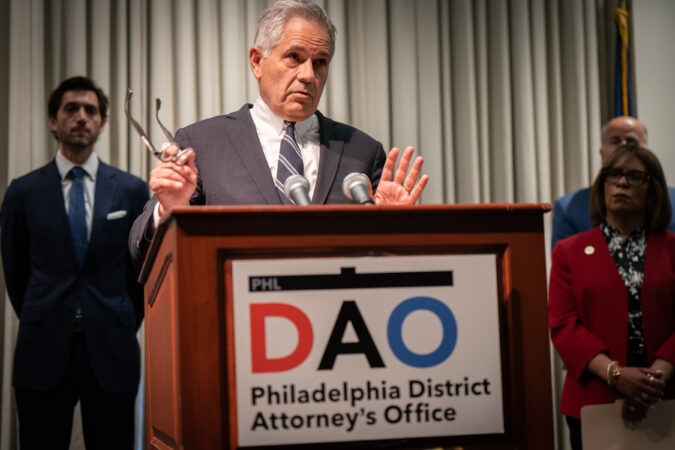
    District Attorney Larry Krasner, responding to the killing of a 37-year-old woman by an ICE agent in Minneapolis, vowed to prosecute law enforcement officers who commit crimes in the city of Philadelphia.

    “You will be arrested, you will stand trial, you will be convicted,” Krasner said during a news conference Thursday.

    His remarks came a day after a masked ICE agent shot Renee Nicole Good multiple times in her SUV.

    In widely circulated videos of the incident, Good appears to be driving away from a group of immigration agents as they order her to get out of her vehicle.

    President Donald Trump and top White House officials offered a starkly different view, saying Good tried to run over the officer with her car.

    Department of Homeland Security Secretary Kristi Noem said the officer, identified Thursday as Jonathan Ross, was justified in shooting the woman because he feared for his life. She said Good, a mother of three, had committed an act of domestic terrorism.

    Minnesota officials have called for an investigation into the conduct of the officer, who has not been charged with any crimes.

    But Krasner, flanked by a group of Philadelphia City Council members and the sheriff, called the actions criminal.

    The top prosecutor said that he has family ties to Minneapolis, and that he had reviewed the videos of the shooting, about a mile from where George Floyd was killed by police in 2020. He held a moment of silence for Good and displayed her photo before leading the group in a chant of her name.

    “We have to use our voices to call out people who commit terrible crimes,” Krasner said. “Or who justify them.”

    That last part was aimed at Trump, whom Krasner has sharply and repeatedly criticized.

    The progressive prosecutor often uses his platform to openly decry the president and his policies, most recently when he urged Philadelphians to film ICE agents who have ramped up immigration enforcement since Trump’s return to office.

    He said that tactic had been a success in Minneapolis because the video brought widespread attention to the incident.

    After Good’s killing, Krasner said, “The first thing out of Trump’s mouth was a lasagna of lies.”

    “She behaved horribly,” Trump told reporters. “And then she ran him over.”

    Krasner said he could not even be certain that Good was blocking officers from the roadway, as some officials have suggested. Had Good done so, Krasner said, she would have been engaging in an act that “protesters have done forever.”

    And that behavior, he said, does not justify a fatal shooting.

    Any law enforcement agent inclined to behave similarly in Philadelphia should “get the eff out of here,” Krasner said. And should such an incident happen in the city, the DA said, he would charge the offending officer in state court, where presidential pardons have no effect.

    “There are honest decent moral law enforcement officers by the bushel — this is not for you,” Krasner said of his warning. “This is for any one of your colleagues who thinks they are above the law.”

  • China played big role in reducing opioid deaths, research suggests

    China played big role in reducing opioid deaths, research suggests

    Chinese crackdowns on chemicals used to make illicit fentanyl may have played a significant role in the sharp reduction of U.S. overdose deaths, according to research published Thursday.

    The paper suggests that the illicit fentanyl trade — which drove a historic surge in drug deaths during the past decade — experienced a large-scale decline in supply. Overdose deaths had surpassed 100,000 annually during the Biden administration, but began to decline in mid-2023 and plunged further in its final year. They have kept falling under President Donald Trump, who invokes drug trafficking as he imposes steep tariffs on other countries and unleashes missile strikes on suspected drug boats in the Caribbean.

    The research, published Thursday in the journal Science, adds to debates among government officials, public health researchers, and addiction experts over the complex reasons for the precipitous drop in deaths.

    They have also pointed to billions spent on addiction treatment, the overdose reversal drug naloxone and law-enforcement actions that disrupted traffickers domestically and abroad. Researchers in the Science paper stressed that those factors have been crucial in saving lives but emphasized the importance of efforts to prevent fentanyl from even being manufactured.

    In suggesting a major disruption in the fentanyl trade “possibly tied to Chinese government actions,” researchers also analyzed death trends in Canada, the purity of seized fentanyl and online posts about shortages of the drugs.

    “This demonstrates how influential China can be and how much they can help us — or hurt us,” said Keith Humphreys, a co-author of the paper and former White House drug policy adviser under President Barack Obama.

    U.S. government and law enforcement agencies have long scrutinized the role China’s chemical and pharmaceutical industries played in the international fentanyl trade.

    China agreed to internal restrictions on fentanyl-related substances during the first Trump administration. But that led to Mexican criminal groups synthesizing illicit fentanyl in secret labs in Mexico with precursor chemicals bought from companies in China. Since 2023, the Chinese government has shut down some of those companies as part of a broader crackdown.

    The Drug Enforcement Administration, in its latest annual drug intelligence report, noted that some China-based chemical suppliers are wary of supplying them to international customers, “demonstrating an awareness on their part that the government of China is controlling more fentanyl precursors.”

    According to state data compiled by the Centers for Disease Control and Prevention, estimated drug deaths plummeted in 2024 to about 81,711, of which 49,241 involved synthetic opioids such as fentanyl. Estimates for 2025 won’t be published for several months, but researchers believe the decline is continuing.

    The Science researchers caution that the precise scope of China’s crackdown is difficult to assess, given the opacity of enforcement in the country. China’s cooperation with U.S. drug authorities on fentanyl has long been fragile, often collapsing when broader tensions flare.

    That changed ahead of a November 2023 summit between President Joe Biden and Chinese leader Xi Jinping, when the two governments agreed to launch a multiagency crackdown on Chinese chemical suppliers tied to the fentanyl trade. Chinese authorities subsequently arrested about 300 people and moved to restrict roughly 55 additional synthetic substances — steps Beijing had previously resisted.

    The summit, however, happened months after overdose deaths had already begun to fall — a timing mismatch the researchers acknowledge. Humphreys theorizes China may have begun crackdowns months earlier before the agreements were announced.

    Other researchers are skeptical. Vanda Felbab-Brown, a senior fellow at the Brookings Institution specializing in security and counternarcotics, noted that when overdoses began to fall, tensions between Washington and Beijing remained high over issues of trade, technology and security. Beijing would want to trumpet its enforcement, she said.

    In a statement, the Chinese embassy said the country’s broad efforts to combat the spread of deadly synthetic drugs has achieved “remarkable results.”

    The embassy said that between October 2023 and August 2025, the Chinese government has shut down 286 companies and forced more than 500 to delete information on chemical sales. About 160,000 ads have been removed in that time, the statement said.

    “China has been helping the U.S. tackle the fentanyl issue and is willing to continue the cooperation on the basis of equality and mutual respect,” the embassy said.

    The Science paper does not account for how overdose death rates fell in parts of the U.S. first, or how fatalities in more populous states can skew national statistics, said Nabarun Dasgupta, an epidemiologist at the University of North Carolina at Chapel Hill. He said fentanyl habits have been changing as fewer people start using it, and many users are cutting back or no longer using alone.

    “It’s not a straight line between drug supply and overdose deaths because of protective behaviors that have been adopted in between,” Dasgupta said.

    In trying to determine reasons for the sharp decrease in deaths, researchers pointed out that purity of fentanyl seizures tested by the DEA dropped around the same time U.S. deaths were falling. Seizures fell too, an indication of reduced supply, they said.

    Researchers also analyzed posts on Reddit, the online forum where users often post about the illicit drug market. They noted a spike in mentions of fentanyl shortages in the middle of 2023, “roughly coinciding with the beginning of the decline in fatal overdoses,” researchers wrote.

    Researchers also analyzed fentanyl trends in Canada, where criminal groups also secure precursor chemicals from China.

    Canada has typically embraced a more public-health-centered approach to combating the opioid epidemic than the U.S. — for example, authorizing numerous centers where users can consume drugs under supervision. Still, deaths began falling around the same time, researchers said. Chinese crackdowns may explain the “parallel mortality declines,” the authors of the Science paper said.

    “What’s really striking is that parallel across the two countries, even though the two countries have very different domestic policies,” Jonathan Caulkins, a Carnegie Mellon University professor who researches the criminal drug trade and was a study co-author.

    Inside China, sellers of chemicals have offered mixed message on the impacts of the 2023 measures. They said there is heightened oversight of scheduled substances and online advertising but enforcement varies widely by locality.

    Some companies left the business after 2023, said one Hubei-based employee at a chemical manufacturer, whose products can be used to make fentanyl and who spoke on the condition of anonymity to talk candidly about the industry.

    Asked whether the company is still able to sell controlled chemicals to customers, including those in Mexico, the employee said those sales persist.

    “We don’t sell much anymore because the company focus has changed,” the person said, but “it’s not much trouble to do that.”

  • These clever dogs rival toddlers when it comes to learning words

    These clever dogs rival toddlers when it comes to learning words

    In many households, it’s a forbidden four-letter word. It can’t be uttered aloud, only spelled, so those within earshot don’t get too worked up.

    “Can you take the dog for a W-A-L-K?”

    Many dog owners know their pets excel at learning words such as “walk,” “sit,” “stay,” and even their own names. But researchers have discovered the word-acquisition ability of certain canines can rival that of toddlers.

    A study published in the journal Science on Thursday found that some dogs can learn words simply by overhearing conversations, even when the pets are not directly addressed, an ability humans begin to acquire at about 18 months old.

    “This can really give us more appreciation to how exceptional dogs can be,” said lead author Shany Dror, a comparative cognition researcher at the University of Veterinary Medicine in Vienna and Eötvös Loránd University in Budapest.

    For their experiments, Dror and her team recruited 10 dogs and their owners from around the world. The breeds included a miniature Australian shepherd, a German shepherd, a Labrador retriever, and several border collies — all herding or sporting breeds known for their trainability.

    Dogs tend to be better at learning words for actions — think “fetch” or “roll over” — than at retaining the names of objects. So Dror sought out what she called “gifted” dogs that had previously demonstrated an ability to learn the names of their toys.

    Basket, a 7-year-old border collie in New York, was among them.

    “I noticed she started to actually know the names of her toys without me giving her assistance when she was about 8 months old,” said one of her owners, Elle Baumgartel-Austin.

    The researchers instructed the dog owners to discuss two toys that their dogs had never seen before. The dogs were present for those conversations. But the owners never directly addressed their pets.

    “It was very funny watching the video after the fact, just to see what she was doing,” Baumgartel-Austin said. Basket had followed the toy with her eyes as they talked. “She got a little frustrated. It was not very fun to see two humans play with a toy that she wanted.”

    To assess what the dogs learned by eavesdropping, a day or more later the owners were guided to place the toys in a different room among other plushies and then ask their dog to retrieve one of the two new toys by name. Seven of the 10 dogs, including Basket, regularly fetched the correct toy. Although the sample size was small, the results were statistically significant.

    The discovery not only reveals a previously unknown cognitive ability of canines, but it could also offer clues to how human language may have evolved.

    Overhearing the conversations of parents and other adults is part of how toddlers learn to talk. That some dogs are able to do so as well suggests that an ability to read social cues needed to follow a conversation predates language itself.

    “This is something that came before language,” Dror said. “Because dogs don’t have language, and yet they do have these abilities.”

    Gabriella Lakatos, a researcher at Britain’s University of Hertfordshire who also has studied human-dog interactions, said the findings “extend the list of behaviors and abilities previously described in dogs as analogous to those of young children.”

    Among other animals, the ability to eavesdrop has also been documented in bonobos. Canine researchers have known since the early 2000s that some dogs can recognize more than 200 items by name and can even infer the names of new toys by excluding ones they already know.

    But Juliane Kaminski, a comparative psychology associate professor at Britain’s University of Portsmouth who conducted that early research, cautioned against overinterpreting the results to say dogs can deeply learn language the same way people do. “The interpretation in terms of ‘word learning’ in the linguistic sense seems a little too strong for me,” she said. “What the study shows is that dogs can learn labels without being explicitly directed toward” an object.

    She added it is still unclear why only a handful of dogs are able to learn the names of their toys. Her own work with label-learning dogs suggests they are more curious and focused than their less-gifted canine counterparts.

    “However, what we do not know is what comes first,” Kaminski said. Are some dogs born better learners? Or do they simply get used to fetching objects when asked?

    “It’s a chicken-and-egg problem, and we need further research to explore this,” she said.

    Dror tried for years in vain to train other less gifted but still very good dogs — including her own German shepherd, Mitos — to associate names with toys. “Nothing worked. It was very frustrating.”

    Still, Mitos nuzzled his way into the new paper. He died last year at 15, just as Dror was submitting the research for publication, and she dedicated the paper to him. “It’s definitely hard to lose someone that’s been such a huge part of your life for so long,” she said.

    Now, Dror has a new puppy — a schipperke named Flea. She is introducing her to toys and hoping she can learn.