WASHINGTON — A federal judge has temporarily blocked the Trump administration’s efforts to remake Head Start, ordering it to stop purging words it associates with diversity, equity and inclusion from grant applications and barring it from laying off any more federal employees in the Office of Head Start.
The order came this week in a lawsuit filed in April against Department of Health and Human Services Secretary Robert F. Kennedy Jr. and other officials. The lawsuit accuses the Trump administration of illegally dismantling Head Start by shutting down federal Head Start offices and laying off half the staff. It also challenges the administration’s attempts to bar children who are in the U.S. illegally from Head Start programs and to ban language they view as suggestive of DEI.
The plaintiff organizations representing Head Start providers and parents said in a court filing last month that officials told a Head Start director in Wisconsin to axe the terms “race,” “belonging” and “pregnant people” from her grant application. They later sent a list with nearly 200 words the department discouraged her from using in her application, including “Black,” “Native American,” “disability” and “women.”
A Health and Human Services spokesperson said he could not comment on the judge’s order.
Head Start, founded six decades ago as part of President Lyndon B. Johnson’s War on Poverty, is an early education and family support program that serves hundreds of thousands of children who come from low-income households, foster homes or homelessness. It is federally funded but operated by nonprofits, schools and local governments.
Joel Ryan, who heads the Washington State Head Start & Early Childhood Education and Assistance Program, said the order halts an attack on Head Start centers.
“When a Head Start program has their funding withheld because of their efforts to provide effective education to children with autism, serve tribal members on a reservation, or treat all families with respect, it is an attack on the fundamental promise of the Head Start program,” Ryan said.
The directive on the forbidden words raised confusion for Head Start directors, who must describe how they will use the money in grant applications and are required by law to provide demographic information about the families they serve. A director in Washington state said in a court filing the guidance led her to cancel staff training on how to support children with autism and children with trauma.
The order from U.S. District Judge Ricardo S. Martinez of Seattle, published Monday, bars Health and Human Services from cutting any more employees and from punishing Head Start providers if they use the prohibited language.
PROVIDENCE, R.I. — When a gunman began firing inside an academic building on the Brown University campus, students didn’t wait for official alerts warning of trouble. They got information almost instantly, in bits and bursts — through phones vibrating in pockets, messages from strangers, rumors that felt urgent because they might keep someone alive.
On Dec. 13 as the attack at the Ivy League institution played out during finals week, students took to Sidechat, an anonymous, campus-specific message board used widely at U.S. colleges, for fast-flowing information in real time.
An Associated Press analysis of nearly 8,000 posts from the 36 hours after the shooting shows how social media has become central to how students navigate campus emergencies.
Fifteen minutes before the university’s first alert of an active shooter, students were already documenting the chaos. Their posts — raw, fragmented, and sometimes panicked — formed a digital time capsule of how a college campus experienced a mass shooting.
As students sheltered in place, they posted while hiding under library tables, crouching in classrooms and hallways. Some comments even came from wounded students, like one posting a selfie from a hospital bed with the simple caption: #finalsweek.
Others asked urgent questions: Was there a lockdown? Where was the shooter? Was it safe to move?
Described by Harvard Magazine as “the College’s stream of collective consciousness,” Sidechat allows anyone with a verified university email to post to a campus feed. On most days, the Brown feed is filled with complaints about dining hall food, jokes about professors, and stress about exams — fleeting posts running the gamut of student life.
On the Saturday afternoon just before the shooting, a student posted about how they wished they could “play Minecraft for 60 hours straight.” Then, the posts abruptly shifted.
Crowds began pouring out of Brown’s Barus and Holley building, and someone posted at 4:06 p.m.: “Why are people running away from B&H?”
Others quickly followed. “EVERYONE TAKE COVER,” one wrote. “STAY AWAY FROM THAYER STREET NEAR MACMILLAN 2 PEOPLE JUST GOT SHOT IM BEING DEAD SERIOUS,” another user wrote at 4:10 p.m.
Dozens of frantic messages followed as students tried to fill the information gap themselves.
“so r we on lockdown or what,” one student asked.
By the time the university alert was sent at 4:21 p.m., the shooter was no longer on campus — a fact Brown officials did not yet know.
“Where would we be without Sidechat?” one student wrote.
A university spokesperson said Brown’s alert reached 20,000 people minutes after the school’s public safety officials were notified shots had been fired. Officials deliberately didn’t use sirens to avoid sending people rushing to seek shelter into harm’s way, said the spokesperson, Brian E. Clark, who added Brown commissioned two external reviews of the response with the aim of enhancing public safety and security.
Long hours of hiding
Long after the sun had set, students sheltered in dark dorm rooms and study halls. Blinds were closed. Doors were barricaded with dressers, beds, and mini fridges.
“Door is locked windows are locked I’ve balanced a metal pipe thing on the handle so if anyone even tries the handle from the outside it’ll make a loud noise,” one student wrote.
Students reacted to every sound — footsteps in hallways, distant sirens, helicopters overhead. When alerts came, the vibrations and ringtones were jarring. Some feared that names of the dead would be released — and that they would recognize someone they knew.
Law enforcement moved through campus buildings, clearing them floor by floor.
A student who fled Barus and Holley asked whether anyone could text his parents to let them know he had made it out safely. Others said they had left phones behind in classrooms when they fled, unable to reach frantic loved ones. Ironically, those closest to the shooting often had the least information.
Many American students expressed emotions hovering between numbness and heartbreak.
“Just got a text from a friend I haven’t spoken to in nearly three years,” one student wrote. “Our last messages? Me checking in on her after the shooting at Michigan State.” Multiple students replied, saying they’d had similar experiences.
International students posted about parents unable to sleep on the other side of the world.
“I just want a hug from my mom,” one student wrote.
Anxiety sets in
As the hours dragged on, students struggled with basic needs. Some described urinating in trash cans or empty laundry detergent bottles because they were too afraid to leave their rooms. Others spoke of drinking to cope.
“I was on the street when it happened & suddenly I felt so scared,” one student wrote. “I ran and didn’t calm down for a while. I feel numb, tired, & about to throw up.”
Another wrote: “I’m locked inside! Haven’t eaten anything today! I’m so scared i don’t even know if I get out of this alive or dead.”
Some students posted into the early morning, more than 10 hours into the lockdown, saying they couldn’t sleep. Sidechat also documented acts of kindness, including a student going door to door with macaroni and cheese cups in a dark dorm.
Information, and its limits
Students repeatedly asked the same questions — news? sources? — and challenged one another to verify what they saw before reposting it.
“Frankly I’d rather hear misinformation than people not report stuff they’ve heard,” one student wrote.
Others pushed back, sharing a Google Doc that would grow to 28 pages where students could find the most updated, verified information. Some posted police scanner transcriptions or warned against relying on artificial intelligence summaries of the developing situation. Professors — who rarely post on the app — joined the feed, urging caution and offering reassurance.
“If you’re talking about the active situation please add a source!!!” one student wrote.
But “reliable information,” students noted, often arrived with a delay.
Within about 30 minutes of the shooting, posts incorrectly claimed the shooter had been caught. Reports of more gunshots — later proven false — continued into the night and the next day, fueling fear and frustration. Asked one student, what are police doing “RIGHT NOW”?
Replies came quickly.
“They are trying their best,” one person responded. “Be grateful,” another added. “They are putting their lives in danger at this moment for us to be safe.”
A campus changed
Students awoke Sunday to a campus they no longer recognized. It had snowed overnight — the first snowfall of the academic year.
In post after post, students called the sight unsettling. What was usually a celebration felt instead like confirmation something had irrevocably shifted.
“It truly hurt seeing the flakes fall this morning, beautiful and tragic,” one student wrote.
Even as the lockdown lifted, many said they were unsure what to do — where they could go, whether dining halls were open, whether it was safe to move.
“What do I do rn?” one student posted. “I’m losing my mind.”
Students walked through fresh snow in a daze, heading to blood donation centers. Others noticed flowers being placed at the campus gates and outside Barus and Holley.
Many mourned not only the two students killed, but the innocence they felt had been stripped from their campus.
“Will never see the first snow of the season and not think about those two,” one student wrote.
With the lockdown ended, students returned to their dorms as Sidechat continued to fill with grief and reflection. Many said Brown no longer felt the same.
“Snow will always be bloody for me,” one person posted.
MORGANTOWN, Pa. — The Trump administration says it is focused on protecting unaccompanied migrant children. It imposed strict new background checks on those seeking custody of young migrants and cut ties with a chain of youth shelters accused of subjecting children in its care to pervasive sexual abuse.
“This administration is working fearlessly to end the tragedy of human trafficking and other abuses of unaccompanied alien children who enter the country illegally,” saidHealth Secretary Robert F. Kennedy Jr., who oversees the Office of Refugee Resettlement, or ORR, which cares for unaccompanied migrant children.
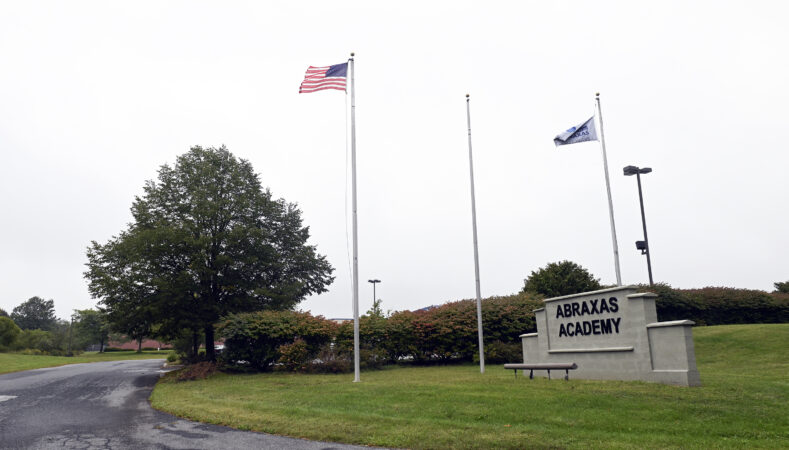
But for the last three months, that office has also locked some teenage migrant boys inside a secure juvenile prison about 50 miles west of Philadelphia with a long and publicly documented history of staff physically and sexually abusing juvenile offenders in its care, a Washington Post investigation has found.
“ORR is sending children to a juvenile detention center who should not be there,” said Becky Wolozin, a senior attorney at National Center for Youth Law.
ORR awarded $9 million to Abraxas Alliance in August to hold up to 30 young immigrants deemed a danger to themselves or others in its facility in Morgantown, Berks County. At various times since early October, between five and eight migrant teenage boys have been held inside a dedicated wing of the juvenile detention center, sleeping inside locked cells the size of walk-in closets, according to lawyers who met with them.
Pennsylvania state inspectors have documented at least 15 incidents since 2013 in which they said staff physically mistreated minors at the Morgantown facility, which holds principally juveniles facing or convicted of criminal offenses. In at least two incidents, officials documented allegations of staff sexually harassing or sexually abusing young residents. The most recent reported abuse occurred in November.
In a lawsuit filed in 2024, six former residents of the facility allege they were sexually abused by staff between 2007 and 2016, accusing management of enabling a “culture of abuse.”
A spokesperson for Abraxas Alliance, the Pittsburgh nonprofit that operates the facility,did not respond to a long list of questions about its treatment of children. After some of the incidents cited by inspectors, Abraxas suspended or fired staff members and submitted correction plans to state regulators, promising to retrain workers on proper restraining techniques and install more surveillance cameras.
ORR has wide latitude over the types of facilities it uses to house children, though federal rules require it to use “the least restrictive setting that is in the best interests of the child.” The rules say ORR may place minors in secure facilities if they have been charged with a crime, or if the agency determines they could harm themselves or others.
HHS spokesman Andrew Nixon said decisions on where to place migrant children “are based on each child’s specific circumstances, behavior-based risk assessments, and legal criteria.” All the teens at the Morgantown facilitywere provided a notice with “specific details as to why they are placed there,” he added.
Some of the migrant boys have no pending criminal charges, and several have parents or close relatives in the U.S. asking to be reunited with them, said Becky Wolozin, a senior attorney at National Center for Youth Law who visited the facility and spoke to some of the boys in November.
The Post was unable to identify any of the boys or verify Wolozin’s claims about their circumstances, because neither their immigration lawyers nor government officials would share details about their cases due to strict rules protecting the records of minors.
License revoked
In November, Pennsylvania revoked one ofthe three licenses held by different units within the Morgantown facility, Abraxas Academy. The state accused Abraxas of “gross incompetence, negligence, and misconduct” following a Nov. 4 incident of staff violence against a child, state records show. According to those documents, a staff member put his hand on a child’s neck andshoved his face into a table, an incident the facility’s operatordid not report to local authorities.
Ali Fogarty, a spokeswoman for Pennsylvania’s Department of Human Services, said state law prevented her from commenting on the incident, includingwhether the child was a migrant placed by ORR or another juvenile held in the facility. The state increased its monitoring of the Morgantown facility and reduced its maximum capacity under one license by 25 residents whilethe companyappeals the revocation. Its two other licenses were unaffected, and it is still permitted to hold more than 100 individuals, Fogarty said.
Nixon, the HHS spokesman, saidORR “will make any necessary adjustments to its use of the facility based on the outcome of the state’s licensing process” and its own review of the incident,adding that “ORR has zero tolerance for sexual abuse and harassment of children in our care.”
The problems at the nation’s only secure jail for migrant youths are unfolding as the Trump administration pushes measures it says are aimed at safeguarding the 2,300 unaccompanied migrant children in its custody, as well as those it releases to sponsors within the country.
In March, ORR ended its use of shelters operated by Southwest Keys — a Texas nonprofit which the Justice Department sued in 2024, alleging its workers repeatedly sexually abused children in the nonprofit’s shelters from 2015 to at least 2023. The company said in a 2024 statement that the lawsuit did not “present the accurate picture of the care and commitment our employees provide to the youth and children.” The department dropped the lawsuit last year.
Around the same time, ORRalso began requiring people to provide income documents and submit to DNA testing, fingerprinting and interviews before regaining custody of young migrants, including their own children, which agency officials say will help ensure they are not being claimed by traffickers.
The Trump administration said President Joe Biden had released tens of thousands migrant children to sponsors with little or no vetting, including to some adults with a history of violent crimes. U.S. Immigration and Customs Enforcementsays it’s enlisting the help of local law enforcement agencies to locate the children and verify their safety.
Jen Smyers, a former deputy director of ORR under Biden, said this population has faced abuse for decades, across several administrations. She said stricter vetting cannot always prevent mistreatment.
Partly as a result of the Trump administration’s new vetting procedures, the average child remains in ORR custody about six months —nearly three times longer than at the beginning of 2025, government data shows.
A history of abuse allegations
By jailing migrant children in a secure detention center, especially one with a recent history of abuse, the administration is exposing these young people to some of the same risks it says it wants to eliminate, said Jonathan White, a former career HHSofficial who managed the unaccompanied children program during part of Trump’s first term.
Under any previous administration, a track record of physical or sexual abuse would be “instantly disqualifying” for federal contracts involving the care of minors, White said. “This is the kind of thing under Republican and Democratic administrations you terminate existing grants for — you don’t give new grants to places like that.”
Abraxas Academy, part of a chain of 10 youth detention and treatment centers, holds dozens of teenage boys from surrounding areas, many of whom are serving sentences for violent crimes or awaiting court hearings. Rob Monzon, a former director of the Morgantown facility, calls it “the most extreme setting in juvenile detention.”Its young inmates, some who claim to be from gangs, frequently lash out at one another, vandalize the building and attack staff members, he said.
State inspection records show that staff members have at times responded with violence.
One staff member“picked up[a child] by the shirt and threw the child to the ground, holding the child down with a knee, and banging the child into the wall,” a 2013 report on the state’s website said. Another threw punches at a different minor and yet another bit an incarcerated child in the abdomen, other reports said.The reports noted that one staff member “frequently escalates situations” by applying restraint holds that are “known to cause pain to the child.”
Workers have been trained to defend themselves by placing inmates into restrictive holds, waiting for them to calm down and calling for help from other employees, according to Shamon Tooles, who worked as a supervisor at Abraxas Academy for eight months in 2023. But due to a lack of training, supervision, and frequent short-staffing, he said, some workers resorted to fighting back.
“A lot of the staff were just scared,” said Tooles, who said he does not condone any mistreatment of children.
In December 2016, Pennsylvania state inspectors said they found “a preponderance of evidence” that a staff member sexually harassed a child at the Morgantown facility. The staff member, who was not identified, was put on leave and subsequently resigned.
One of the former detainees who is suing AbraxasAllianceclaimed a staff membertook away his food or gym privileges or locked him in his room if he did not comply with sexual requests.
In court records, attorneys for Abraxas Alliance denied any wrongdoing and said they would need the names of all the abusers to confirm details of the alleged abuse. The lawsuit, which covers allegations lodged by 40 former residents from fiveAbraxas facilities, is still active and no trial date has been set.
Nixon,the HHS spokesman, saidAbraxas Academy was the only state-licensed facility that submitted a bid on the ORR contract that “operated a secure care facility for youth between the ages of 13 to 17.” He said the contract is part of an effort to “restore” the government’s capacity to hold “children whose needs cannot be safely supported” in less restrictive settings.
Fresh paint
Abraxas Academy sits at the end of a three-mile road, deep in the farmlands of Amish country. It’sso remote that when nine boys escaped through a hole in the barbed wire fence in 2023, they were quickly discovered a few miles away, lost and shivering in the rain, ready to go back,according to Paul Stolz, the police chief of nearby Caernarvon Township.
When Wolozin visited Nov. 5, she said the walls smelled like fresh paint and workers were still renovating the floors of the wing designated for immigrant boys, separate from the teens serving criminal sentences. At that time, there were eight migrant boys; at least two have since been transferred to less restrictive facilities, and another was moved to an adult detention center upon turning 18, according to their lawyers. At least two new detainees arrived in December.
Wolozin’s group advocates for children in the foster care, juvenile detention and immigration detention systems and has special permission to meet with them per the terms of a landmark 1997 legal agreement. She has personally supported Democratic politicians and causes.
According to Wolozin, the conditions for migrant boys at Abraxas Academy mirror those of children serving criminal sentences. The boys are woken from their cells and counted every morning. Their use of a “family room,” with TVs, board games and bean bag chairs, is restricted to certain times, as is their access to an outdoor recreation area with farm animals and an indoor gym. Some have told lawyers and advocates they have been limited to two 15-minute phone calls to family members per week. Federal rulesrequire at least three calls per week.
Wolozin, who interviewed five of the migrant boys but has not reviewed their files, said one appeared to have severe cognitive disabilities. Another had completed his sentence for a criminal charge and was set to be released to his familybut was instead transferred to ORR custody. Others had never been in jail before.
“What became very apparent to me is that ORR is sending children to a juvenile detention center who should not be there,” she said.
The vast majority of the migrant children in government custody live in shelters where they move freely around a campus. But the government can place children in more restrictive settings if they are deemed a risk — a broad authority that former child welfare officials say ORR has misused.
In 2018, ORR found it had “inappropriately placed” 18 of the 32 minors who were in secure facilities at the time, according to the court deposition of a former agency official. One child, the official said, had been placed in a jail because they were an “annoyance” and not an actual danger.
ORR had moved away from juvenile detention centers since 2023, after the government settled lawsuits that claimed children in these facilities were subjected to inhumane punishments or illegally locked up based on being mislabeled gang members. As part of the settlements, ORR agreed to implement new rules providingstronger legal protections for migrant children in custody.
Now, the administration is expanding the practice of secure detention once more. Along with the 30 beds for migrant teens at Abraxas Academy, ORR is exploring a second secure facility that would hold up to 30 additional migrant children in Texas, government procurement records show.
Advocates for migrant youths say these jails are unnecessary and harmful — and evident from the government’s tumultuous history with ORR detention centers before the Abraxas contract.
‘I just went on myself’
Young peopledetained at Virginia’s Shenandoah Valley Juvenile Center said in 2018 court declarations that they had been locked in small rooms for most of the day. Some said they were beaten by guards. If they acted out, some said, they were put in a restraint chair, with straps around their head, elbows, legs and feet, and wheeled into a room where they were left to sit alone for hours with their head covered in a white mesh hood so they couldn’t spit on the guards.
“This is embarrassing, but on one occasion, I had to pee, and they wouldn’t let me, so I just went on myself,” a child identified as “R.B.”said in a court filing. “I know one or two other kids this happened to as well; they peed on themselves while they were in the chair.”
Shenandoah’s operators said their use of the restraint chair was not abuse. ORR policies permit such restrains as a last resort. A federal judge ruled in 2018 that the government had improperly placed minors in secure facilities including Shenandoah but did not determine whether its use of restraints constituted abuse.
California’s Yolo County Juvenile Detention Center commonly used chemical agents and physical force to control children, the state’s attorney general found in 2019. A spokeswoman for Yolo County said in an emailed statement that the facility took measures to reduce its reliance on chemical agents, including staff training on nonviolent crisis intervention.
Community activists pressured city and state officials to stop jailing migrant children there, citing lawsuits and the growing costs of defending against them. One Salvadoran teen alleged in court papershe was shipped across the country to the facility simply because New York police claimed he was a member of MS13. A federal judge found no unequivocal evidence of the boy’s ties to any gang.
By 2023, Shenandoah, Yolo and another juvenile detention center in Alexandria, Va., had all opted not to renew their contracts with ORR.
“Nobody wants these contracts,” said Holly S. Cooper, co-director of the Immigration Law Clinic at UC Davis, who was involved in the effort to end the Yolo contract. “There was a massive public outcry.”
According to Smyers, ORR’s No. 2 official at the time, the agency in late 2023 solicited proposals for a new kind of facility where children could have restrictions increased or reduced depending on their behavior. ORR has not awarded this contract, but Nixon said it is still a priority.
Fights, an escape attempt
The Abraxas chain of youth detention and treatment centers has changed ownership at least twice. At the time of many of the abuse incidents in the inspection reports, it was owned by private prison firm Geo Group, which purchased the chain for $385 million in 2010. Geo has said in court records it is not aware of any sexual abuse.
The company sold parts of the Abraxas business to a nonprofit group run by Jon Swatsburg, the unit’s longtime executive, for $10 million in 2021.At the time, Geo was losing federal contracts and being shunned by major banks in response to community activism against its business. Geo still owns the building in Morgantown and leases it out to Abraxas Alliance, securities filings show.
A spokesman for Geo did not respond to requests for comment.
Swatsburg, who has overseen the properties for more than two decades, was paid $752,000 by Abraxas and related entities in 2022, according to the most recent tax filings available. Inperium, an investor in the nonprofit group, said Swatsburg was departing in 2023, but he continued to list himself as president and chairman of Abraxas in corporate filings in 2024 and 2025. As of last year, Swatsburg was also listed as a vice president of Geo Group.
Last year alone, police responded to at least 34 incidents at the facility, local records show, including inmate fights, at least one attempted escape,a suicidal detainee, an incident that left three police officers with minor injuries and another incident in which a staff member’s finger was partly amputated by a door.
Meanwhile, the migrant boys at Abraxis havetold advocates that they feel stuck.
“They had plans and family, and lives and school and girlfriends, and things going on that they planned to do,” Wolozin said. “Instead, they are in this place.”
While weed is legal in Delaware, with a baker’s dozen worth of dispensaries to buy it from, people can still face jail time for public marijuana use under current state law.
State Rep. Eric Morrison (D., Newark) introduced a bill last month that would ease those punishments. House Bill 252 would reduce the penalties for public marijuana consumption from a misdemeanor to a civil violation.
“This is not saying that public consumption of cannabis is OK. It is simply making the penalty commensurate with the offense,” Morrison said. “Almost all of the states that have legalized cannabis like we have revisited their laws and changed this violation to a civil offense instead of a misdemeanor, which carries higher fines, a criminal record, and possible jail time.”
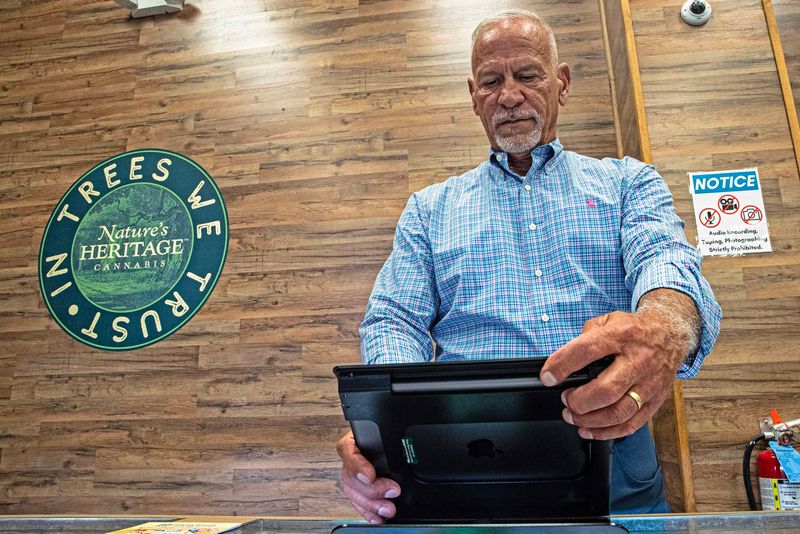
Customers line up for the first day of recreational marijuana sales at Thrive Dispensary in Wilmington on Aug. 1, 2025.
Currently, police can either stop and fine someone up to $200 for smoking weed in public, or officers have the option to arrest the person, with possible imprisonment for up to five days.
Under Morrison’s bill, police can still stop people for smoking or consuming marijuana in public, but instead of a misdemeanor, the offense is considered a civil violation — similar to a traffic violation — that carries a fine of up to $50 for a first offense, and up to $100 for subsequent offenses.
People driving a vehicle while under the influence of marijuana would still beconsidered a DUI.
Delaware’s decriminalization of public marijuana use would match the policies of neighboring states, like New Jersey and Maryland, where weed is fully legal, and some Pennsylvania cities where only medical marijuana is legal, such as Philadelphia and Pittsburgh. In these places, only fines are given out, and violations do not appear on criminal records.
New Jersey went a step further and approved the East Coast’s first legal weed lounges, which means more adults can safely and legally consume cannabis outside of their homes.
Zoë Patchell, president of the Delaware Cannabis Advocacy Network, said some lawmakers are now correcting a policy that should have been included in the original legalization laws.
“This simply just brings Delaware’s law in line with the standards used by most other states,” Patchell said. “This measure does not legalize public consumption. It reduces the penalty from a misdemeanor, which can result in a criminal record.”
Criminal charges have “severe collateral consequences,” Patchell added. For example, arrest and incarceration can negatively impact someone’s health and social outcomes, like losing access to housing, financing, and employment.
“Especially today, for people in America living paycheck to paycheck, spending time in jail can lead to lost wages or having this charge on a criminal record can lead to being terminated from your job,” Morrison said. “For a whole lot of Americans, losing any wages puts their family in a hard predicament financially.”
A customer browses through product offerings on Day One of recreational marijuana sales at Thrive Dispensary in Lewes on Aug. 1, 2025.
Delaware legalized recreational marijuana in 2023, but it took years to open legal sales to adults in recreational dispensaries. The first 13 dispensaries opened to adults last year, but advocates like Patchell say the current law makes it difficult to consume cannabis legally.
Delaware’s laws on consumption on private property are also restrictive, Patchell said. Adults can consume cannabis on private property, but only in locations that are at least 10 feet from a sidewalk, street, parking lots, businesses, or “any other areas to which the general public is invited,” according to state law.
“This means that someone can be arrested for consuming cannabis on their own private property,” Patchell said. This proves even more difficult for those living in households that don’t have the property space to be away from the public, she said.
Morrison said he wants to keep working with cannabis advocates to create a safe and robust cannabis industry, but that it would be premature to say if additional measures will be taken at this time, such as amending the 10-foot rule around private property and public space.
“For this year, [decriminalization of public use] is what I’m focused on regarding cannabis,” Morrison said.
For the first time in more than half a century, Marie Scott is free.
Scott, 72, who served more than 52 years in prison for felony murder, was released from custody on Wednesday after Gov. Josh Shapiro commuted her life sentence in June. Despite opposition from the victim’s family, community advocates had pushed for her freedom for years, saying she had served enough time, was a model inmate, and no longer posed a threat to society.
Scott, known as “Mechie,” has been incarcerated since 1973, after she and her then-16-year-old boyfriend, Leroy Saxton, robbed a Germantown gas station. She was 19 and addicted to heroin when she helped Saxton restrain the cashier, Michael Kerrigan, and then rummage through the store’s cash register and safe. Her attorneys say she was acting as a lookout when — to her surprise, she says — Saxton shot Kerrigan, 35, in the back of the head.
Philadelphia firefighter Michael Kerrigan, left, was killed in 1973. His family, shown in a 1973 photograph, was never the same. In the photo, from right to left, is Kerrigan’s son Kevin, wife Florence, and daughter Erin holding 8-month-old Angela.
Saxton was later convicted of first-degree murder and sentenced to life in prison. Scott was convicted of felony murder and handed the same fate.
But Saxton was released on time served in 2020 after the U.S. Supreme Court overturned mandatory life sentences for juveniles.
Scott had remained behind bars ever since.
Until Wednesday, when hours before dawn, she walked out of her cell in State Correctional Institutional Muncy for the final time, stepped into the back of a van, and was driven three hours toward her new life in Philadelphia.
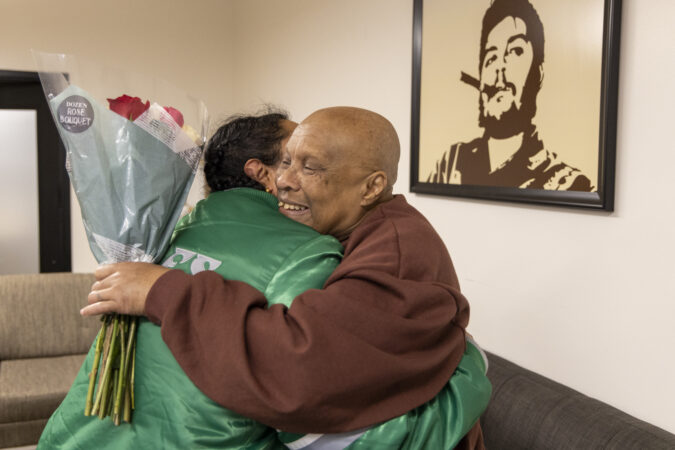
There, for the first time in her life, she hugged her daughter, Hope Segers, outside the prison walls.
“I just covered my face and lost it,” Scott said of seeing her Wednesday. “That was the first time I have seen my daughter and grandson in the real world. … To feel them, to smell them in the free air.”
Marie Scott had her life sentence commuted after 52 years in prison.
Segers was born in SCI Muncy 45 years ago. During one of the three times Scott escaped from prison between 1975 and 1980, she reunited with a man who worked in the prison kitchen and with whom she had fallen in love, and she got pregnant.
Segers has known her mother only through prison visits often years apart, and short calls via phone and Zoom. Now, she said, she is eager to begin building a true relationship with her.
“It’s still not real,” she said of sitting next to her mother. “I’m still in shock.”
Scott, who will be on parole for the rest of her life, will move into her daughter’s home in Northeast Philadelphia after living in a halfway house for a year, as is required by the prisons.
Scott’s health has deteriorated in recent years. She uses a wheelchair, suffered from Stage 2 breast cancer, and had a double mastectomy last year. She was not ill enough to qualify for compassionate release, her attorneys said.
But she has since learned she is cancer free, she said.
Marie Scott, 72, survived Stage 2 breast cancer while in prison.
Scott had been serving a mandatory life sentence under Pennsylvania’s felony murder law, which allows people to be convicted of second-degree murder if a death occurs during the commission of a felony such as robbery — even if they did not kill the victim or intend for anyone to die. Pennsylvania is one of only two states where a felony murder conviction automatically carries a life sentence, a punishment Shapiro has called unjust and unconstitutional. (Pennsylvania’s Supreme Court is currently weighing the issue.)
Other than the decades-old escapes, her attorneys said, she has been a model inmate. She is deeply remorseful for her actions, and has written books about healing, directed plays, and led drug and alcohol treatment courses for inmates, they said. She became a mentor and mother figure to dozens of women at Muncy.
Rupalee Rashatwar (from left, Hope Segers, Bret Grote, and Sam Lew worked to free Marie Scott through their work at the Abolitionist Law Center.
For years, Scott and her attorneys at the Abolitionist Law Center applied for a commutation from the Pennsylvania Board of Pardons, asking that her life sentence be reduced. Her applications were repeatedly denied without explanation, lawyer Bret Grote said.
She applied last year with renewed hope after the leadership at SCI Muncy said they would support her petition.
Still, Grote said, Laurel Harry, secretary of the state Department of Corrections, told officials she would not support Scott’s petition because of the prison escapes decades ago. Harry’s support was typically a requirement of the board’s approval for release, he said.
Grote, his colleagues, and a collection of volunteers drafted a social media, phone, and letter writing campaign to persuade Shapiro and prison officials to support her commutation. Members of Philadelphia City Council, alongside state senators and representatives, called for her release, as did Philadelphia rapper Meek Mill.
It worked. In May, the Board of Pardons voted to recommend a commutation of her sentence, and the following month, Shapiro formally approved her release. The board then required that Scott spend six additional months in prison for the prison escapes.
Her release comes amid opposition from the victim’s family.
Michael Kerrigan holding his granddaughter, Angela Kerrigan Hightower. His wife later adopted Angela to be one of her seven children.
Initially, two of Kerrigan’s daughters said they supported Scott’s release and could forgive her, but later changed their minds and asked the board of pardons and parole not to release her. They said they do not believe she has taken enough responsibility for the crime.
Angela Kerrigan Hightower, a grandchild of Kerrigan’s who was later adopted by his wife and would have been his seventh child, said Wednesday that “the system failed the victims in this case.” She said she does not believe Scott has shown sufficient remorse, and that she and Saxton should have had to serve a life sentence for the suffering they brought her family.
“I want to know,” she said, “where is the justice for the victims in this case.”
Scott has said she deeply regrets what happened. She said Wednesday that she hopes to use her time outside of prison to tell the story of the cycle of drug and sexual abuse and codependency that she has said contributed to her actions.
She also wants to push for the release of other women who she said have been reformed in prison and don’t deserve to die there.
Marie Scott, 72, joined a Zoom call with the Coalition to Abolish Death by Incarceration alongside her daughter, Hope Segers, and grandson Dashawn Green.
Scott’s grandson, Dashawn Green, 28, said he wants to get his grandmother’s health and diet back on track, introduce her to his girlfriend and miniature schnauzer, and maybe even plan a road trip.
Scott said her first order of business is to find a church.
Seated on the couches in the Abolitionist Law Center in North Philadelphia Wednesday night, she recalled gathering for her final Sunday service inside the prison last week and saying goodbye to the women in the facility who raised her.
“You’re my family,” she said she told them. “I don’t make promises because they’re made to be broken, but if you don’t have your word, then you don’t have anything. And I give you my word, I am going to die trying to get all of my women out.”
“It feels like I’m on another planet,” Marie Scott, 72, said of her newfound freedom.
In the aftermath, Homeland Security Secretary Kristi L. Noem said the woman had committed an act of “domestic terrorism,” first disobeying officers’ commands and then weaponizing her SUV by attempting to “run a law enforcement officer over.” President Donald Trump said the woman “violently, willfully and viciously ran over the ICE officer.”
A frame-by-frame analysis of video footage, however, raises questions about those accounts. The SUV did move toward the ICE agent as he stood in front of it. But the agent was able to move out of the way and fire at least two of three shots from the side of the vehicle as it veered past him, according to the analysis.
Video taken by a witness shows Renee Nicole Good’s vehicle, a burgundy Honda Pilot SUV, stopped in the middle of a one-way road in a residential area of south Minneapolis on Wednesday morning. That footage and other videos examined by The Washington Post do not show the events leading up to that moment.
The agent, who has not been publicly identified, can be seen standing behind Good’s SUV, holding up a phone and pointing it toward a woman who also has her phone out. The two appear to be recording each other.
The agent then walks around the passenger side of Good’s vehicle.
A pickup truck pulls up, and two additional agents exit the vehicle and approach Good, the video shows. A voice can be heard saying to “get out” of the car at least two times. One of the agents puts a hand on the opening of the driver’s side window and with his other hand tugs twice quickly on the door handle, but the driver’s door does not open.
That same agent puts his hand farther in the opening of Good’s window, and almost simultaneously, the SUV begins to back up.
The agent who was first seen behind Good’s SUV reemerges in front of the vehicle, still appearing to hold up a phone. The SUV quickly pulls forward, and then veers to the right, in the correct direction of traffic on the one-way street.
As the vehicle moves forward, video shows, the agent moves out of the way and at nearly the same time fires his first shot. The footage shows that his other two shots were fired from the side of the vehicle.
Videos examined by The Post, including one shared on Truth Social by Trump, do not clearly show whether the agent is struck or how close the front of the vehicle comes to striking him. Referring to the officer, Trump wrote in his post that it was “hard to believe he is alive.” Video shows the agent walking around the scene for more than a minute after the shooting.
Good’s SUV travels a short distance before crashing into a car parked on the opposite side of the street.
The FBI and Minnesota’s Bureau of Criminal Apprehension are investigating the shooting. The White House and the Department of Homeland Security did not immediately respond to a request seeking comment for this story.
Philadelphia firefighters pulled a 60-year-old woman away from a burning building where she was trapped early Thursday morning, but she later died at a hospital.
The fire department responded to the blaze around 4:45 a.m. on the 6200 block of Ogontz Avenue in North Philadelphia. Firefighters arrived to find a heavy fire scorching throughout the two-story rowhouse.
About 60 firefighters, medics, and support staff were at the scene, officials said. Upon searching the house, firefighters found an unresponsive woman, who did not survive. The Medical Examiner’s Office will soon determine the cause of death, with the Fire Marshal’s Office investigating the cause of the fire.
There have been at least two deadly fires in the area over the last month, in addition to Thursday. Additionally, two people were rescued and survived a fire in South Philadelphia Wednesday, according to CBS.
Earlier this week, Bucks County officials confirmed the death of a third person related to the Bristol Health & Rehab Center fire, which claimed the lives of two other people and injured 20 others. Days before the Bristol fire, a deadly fire in Upper Darby killed one person, critically injured another, and left a firefighter and a handful of others with less-severe injuries.
Two former Philadelphia homicide detectives were sentenced Wednesday to a combined three years of probation for lying about their knowledge of DNA evidence during the retrial of a man they helped convict of murder 35 years ago.
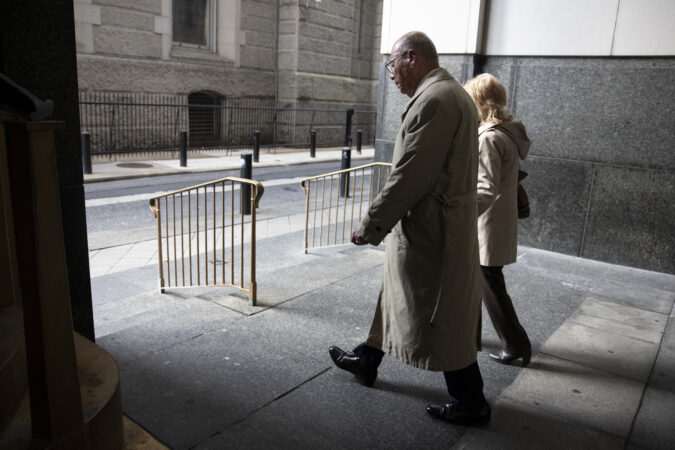
Common Pleas Court Judge Lucretia Clemons imposed a two-year probation sentence for Manuel Santiago, 76, and one-year sentence for Frank Jastrzembski, 78. The retired detectives will not be required to meet with probation officers.
The sentencing punctuates an unusual case in which prosecutors accused three retired Philadelphia police officers of fabricating evidence in a decades-old homicide case, and later perjuring themselves when testifying about that evidence under oath. A grueling eight-day trial in March revisited the 1991 murder of 77-year-old Louis Talley in Nicetown and the 2016 retrial of Anthony Wright, the man police helped send to prison for the crime.
The jury ultimately rejected the larger conspiracy built by prosecutors that the detectives had framed Wright, but found both Santiago and Jastrzembski guilty of misdemeanor false swearing and found Santiago guilty on an additional count of perjury, a felony. A third detective who worked on the case, Martin Devlin, was acquitted of all charges.
Santiago’s attorney, Fortunado Perri Jr., thanked Clemons for the “appropriate” sentence on Wednesday. Steve Patton, an attorney for Jastrzembski, reiterated that the jury had acquitted his client of planting evidence and described the conviction as a matter of “technical knowledge.”
“We’re pleased with that outcome and thankful for the judge’s careful consideration of the facts of this case,” Patton said.
In an interview Wednesday, Krasner blasted what he described as lenient sentencing guidelines for lying under oath in Pennsylvania. Probation is the recommended sentence for a false swearing conviction, while the maximum recommended penalty for perjury is nine months.
“Those sentencing guidelines are disgraceful,” Krasner said, while also acknowledging the two defendants are both now in their 70s and have health issues.
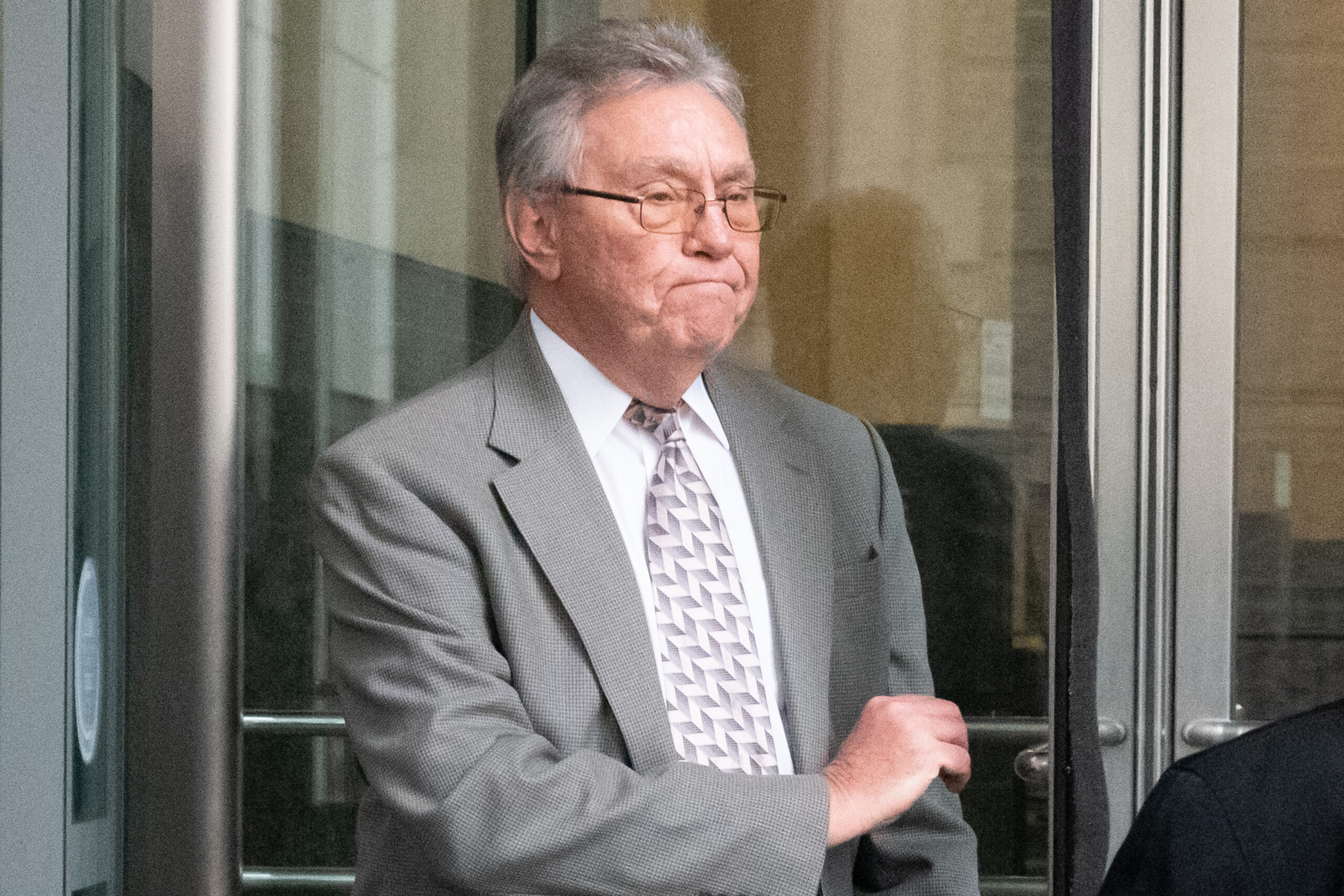
Former Philadelphia Police Detective Frank Jastrzembski leaves the Criminal Justice Center in Philadelphia on March 17, 2025.
At trial, Krasner’s top prosecutors contended that the three detectives had conspired to frame Wright for Talley’s murder, extracted a false confession from him, and planted evidence in his home.
Santiago was acquitted of perjury in connection with his testimony about Wright’s murder confession, while Jastrzembski was acquitted of perjury and related charges for his testimony about a search warrant he executed at Wright’s home — charges that hinged on prosecutors’ ability to prove the detectives had wholly fabricated evidence.
Instead, the convictions centered on what Santiago and Jastrzembski knew about the evidence against Wright when they testified at his 2016 retrial. The two detectives were instrumental in building the original case against Wright in 1991, and later sought to send him back to prison — even after DNA evidence implicated another man in Talley’s murder. Wright’s conviction was overturned in 2014 based on the strength of that forensic science.
When prosecutors under former District Attorney Seth Williams charged Wright a second time — under suspicion that he had acted with an accomplice — Santiago and Jastrzembski were briefed on the new DNA information. The results pointed to a known crack user who lived near Talley in Nicetown, a man who had since died in a prison.
Under oath at Wright’s retrial, however, Santiago and Jastrzembski denied knowing the DNA evidence implicated another suspect.
Wright was acquitted and later filed a federal civil rights lawsuit against the city and won a $9.85 million settlement. During sworn depositions in that case, Santiago and Jastrzembski were questioned about the DNA evidence and gave answers that prosecutors said contradicted their earlier trial testimony.
The perjury trial in March at times resembled a second retrial for Wright, with defense attorneys accusing him of getting away with Talley’s murder. Wright proclaimed his innocence.
Following the jury’s verdict, Krasner insisted that the detectives had framed Wright, and he criticized his predecessor’s decision to retry the man after his conviction was overturned.
The American colonies in the autumn of 1775, then under the thumb of King George III and his sprawling British Empire, were divided on the prospect of independence.
Revolutionary ideas start in refined quarters, but they must spread to the masses to surge into action.
And the 13 colonies were divided in threes: those who favored independence from English rule, those who opposed it, and those who wished to remain neutral.
And then the spark arrived as a pamphlet.
On Jan. 10, 1776, in a small publishing house at Third and Walnut Streets in present-day Old City, Englishman Thomas Paine published his 47-page document. It promoted the cause of American independence, and stoked the fires of revolution.
This pamphlet, titled “Common Sense,” was first printed anonymously.
But the colonists knew who wrote it.
An original English printing of “Common Sense,” the pamphlet written by Thomas Paine, combined with a rebuke entitled “Plain Truth” by James Chalmers, a British Loyalist officer. The two pamphlets were reprinted together in a book in London in 1776.
Paine was a self-educated rabble-rouser who had found little success making corsets or collecting taxes.
And who, upon meeting Benjamin Franklin after giving a speech in London,opted to join the upstart colonists and move to America in 1774.
After following Franklin to Philadelphia, he followed him into journalism, writing and editing for Pennsylvania Magazine.
It’s where he displayed a knack for speaking to the common people through essays denouncing slavery, promoting women’s rights, and dumping on English rule.
And again he took from Franklin, turning his pamphlet into a lightning rod.
In it he laid out his arguments in plain language.
An island, he argued, should not rule a continent.
“Every thing that is right or natural pleads for separation,” he wrote.
More than 500,000 copies circulated the colonies, convincing the commoners, the people who would actually take up arms against the Royal military,to support a war against Great Britain.
Despite his outsized role in lighting the fires of rebellion, Paine’s services would go unrecognized for a generation.
Hetemporarily returned to Europe after the war, and his later denouncing of Christianity did him no favors on either side of the Atlantic. He died in poverty in New York in 1809 at age 72.
It wouldn’t be until the mid-1970s for historians to recognize the enduring power of Paine’s pamphlet, which now holds a place of honor a step below Thomas Jefferson’s Declaration of Independence.
Welcome to the first full week of 2026. To kick off the year, we get to know the township’s five new commissioners, who were sworn in Monday. Also this week, a popular Manayunk bakery specializing in gluten-free breads and pastries is moving to Bryn Mawr, plus construction on The Piazza is underway.
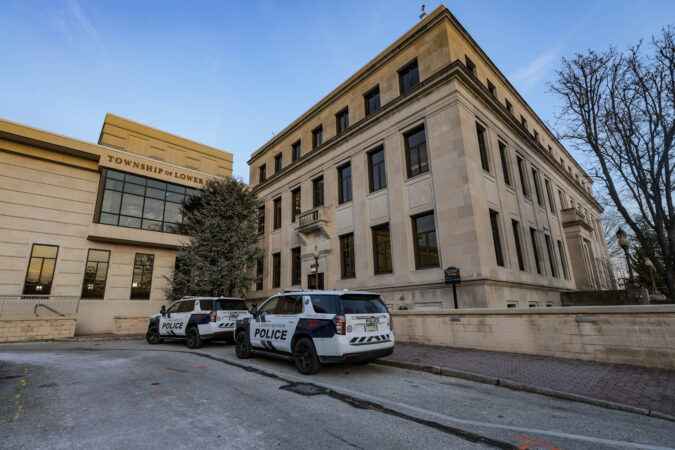
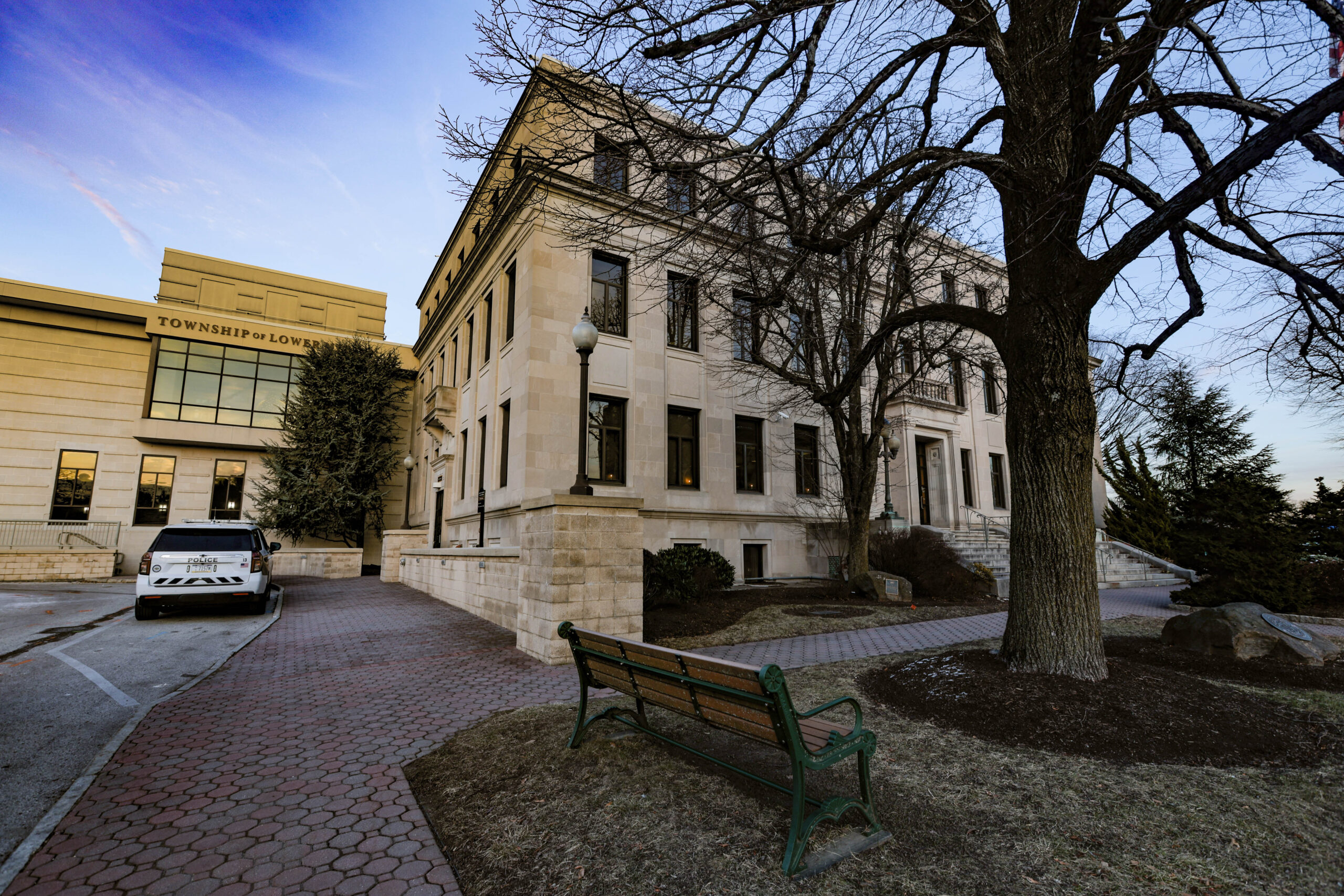
Five new Lower Merion commissioners were sworn in Monday evening: Michael Daly, Charles Gregory, Christine McGuire, Craig Timberlake, and Shelby Sparrow. Each replaces a township official who chose not to seek reelection.
The new commissioners come from across the township and have varied backgrounds, including local government, law, forensic psychology, business, and community organizing.
With its new members now in place, the board will make some big decisions in the year ahead, including negotiating collective bargaining agreements, overseeing Main Line Health’s redevelopment of the St. Charles Borromeo Seminary property, and addressing township finances, The Inquirer’s Denali Sagner reports.
Lila Colello is bringing her popular gluten-free bakery Flakely to Bryn Mawr.
Popular Manayunk bakery Flakely is relocating to Bryn Mawr in February, where it will take over a former hookah lounge at 1007 W. Lancaster Ave.
Flakely is known for its gluten-free breads and pastries and is the brainchild of Lila Colello, who’s worked for the Ritz Carlton and Wolfgang Puck Catering. She came up with the business after being diagnosed with Celiac disease.
The new location, which will be takeout only, will offer everything from fresh baguettes to browned butter chocolate chip cookies, as well as frozen take-and-bake doughs, The Inquirer’s Beatrice Forman reports.
In case you missed it, the township released its 2026 trash and recycling collection schedule, which you can see here. Have a Christmas tree to dispose of? The township is collecting them curbside through next week or they can be taken to the Public Works Complex in Penn Valley.
Construction is now underway on The Piazza, the mixed-used building in Ardmore that will have 270 apartments, 30,000 square feet of retail space, and 480 parking spots. The development at 100 Lancaster Ave. will cost an estimated $187 million and is planned to be completed by 2028.
Country music station host Nicole Michalik, who’s on-air weekdays at 92.5 XTU in Bala Cynwyd from 2 to 7 p.m., recently shared what her perfect day looks like. It includes a stop at the City Avenue Starbucks before starting her shift, followed by dinner at Lark. See what else is on her ideal itinerary.
GET Café in Narberth was the 2025 recipient of CBS Philadelphia’s Hometown Heartbeat Award, which is given to a business “working to make our communities better.” The nonprofit café, which provides employment and community to neurodivergent individuals, received $50,000, plus $25,000 in advertising.
Leveaux Pilates, which opened at 14 Lancaster Ave. in June, is already expanding. The Ardmore studio has taken the space next door, where it will offer infrared heated mat Pilates. The new space is expected to open early this year.
🏫 Schools Briefing
Harriton High School is hosting its winter one act plays today through Saturday, and a number of other schools will have concerts next week. There are evening conferences at both high schools tonight and school board committee meetings Monday, in addition to an education association council meeting. See the district’s full calendar here.
🍽️ On our Plate
There are two grand opening celebrations taking place Saturday. Bored Trading Cafe is hosting a grand opening starting at 7:30 a.m. for its new Ardmore outpost at 43 Cricket Ave., where the first 100 people will get free coffee. The cafe offers coffee and other specialty drinks, baked goods, burgers, salads, and all-day breakfast. And The Brew Room, which opened back in October, is hosting its grand opening from noon to 4 p.m. The Greek-inspired cafe will have a DJ, espresso martinis, and giveaways to mark the occasion.
In case you missed it, The Inquirer’s Michael Klein reflected on the most notable restaurant openings of 2025. They include Burtons Grill & Bar in Wayne, Eataly in King of Prussia, the expansion of Johnny’s Pizza to Wayne, and the opening of Triple Crown in Radnor. Also notable was The Buttery’s expansion to the Ardmore Farmers Market and Maison Lotus’ debut in Wayne. See the full list here.
As for the best things Inquirer food writers ate last year, the vegan combo with injera at Eshkol Ethiopian Cuisine was up there. Here’s why.
Italian eatery il Fiore closed its doors over the holidays. In a message to customers on its website, the team behind the Bryn Mawr restaurant said it was a “tough decision” and thanked those who had dined there.
🎳 Things to Do
🎶 Unforgettable Fire: Tickets are going fast for the U2 tribute band which will perform some of the Irish outfit’s best-known songs. ⏰ Friday, Jan. 9, 8 p.m. 💵 $33.38 📍 Ardmore Music Hall
🍿 Paddington: See the film adaptation of the beloved children’s series on the big screen. Bryn Mawr Film Institute will have another screening on Jan. 24, plus screenings of the sequel on Jan. 17 and Jan. 31. ⏰ Saturday, Jan. 10, 11 a.m. 💵 $6.75-$7.75 📍 Bryn Mawr Film Institute
🌹 Create Beautiful Paper Poppies: Add a little color to your winter by learning to make paper versions of these flowers. ⏰ Tuesday, Jan. 13, 6-8 p.m. 💵 $40 📍 Plant 4 Good
Built in 1925, this classic five-bedroom stone Colonial mixes modern amenities with classic charm. Its features include a living room with a fireplace, a family room, a dining room, and a modern kitchen with exposed wood beams and white cabinetry.
By submitting your written, visual, and/or audio contributions, you agree to The Inquirer’s Terms of Use, including the grant of rights in Section 10.
This suburban content is produced with support from the Leslie Miller and Richard Worley Foundation and The Lenfest Institute for Journalism. Editorial content is created independently of the project donors. Gifts to support The Inquirer’s high-impact journalism can be made at inquirer.com/donate. A list of Lenfest Institute donors can be found at lenfestinstitute.org/supporters.