Category: News

Latest breaking news and updates

  • A former Philly lawyer who tried to get a cell phone to an accused gang leader in jail was sentenced to probation

    A former Philly lawyer who tried to get a cell phone to an accused gang leader in jail was sentenced to probation

    A former criminal defense attorney was sentenced Wednesday to two years’ probation for smuggling contraband — including Suboxone and a cell phone — into Philadelphia’s Federal Detention Center last year in an apparent attempt to placate a purported gang leader.

    Paul DiMaio of Turnersville apologized for his actions during a sentencing hearing before U.S. District Judge John R. Padova, saying: “I absolutely should’ve known better.”

    DiMaio said his behavior was an ill-conceived response to a variety of pressures he was feeling at the time — including learning of a cancer diagnosis for his wife, and being afraid that the inmate who wanted the prohibited items was an accused murderer who had also been charged with attempting to arrange contract killings from jail.

    “This is not me,” DiMaio said. “I think it was, for lack of a better term, a perfect storm.”

    Padova said that 90 days of DiMaio’s probationary sentence must be served at a halfway house or similar reentry facility.

    DiMaio was indicted last year after prosecutors said he went to the detention center in February 2025 with two accordion-style folders, one of which contained a cell phone, a charging cord, strips of Suboxone, and 240 loose cigarettes.

    The materials — which inmates are not allowed to possess — were not discovered by guards overseeing entrants to the jail that day, prosecutors said. But surveillance footage later showed DiMaio taking the two folders to a visiting room, where he met with a prisoner who was associated with another inmate, Jahlil Williams, who prosecutors say was the intended recipient of the contraband.

    Williams — also known as “25th Street Bill” or “Kill Bill” — was awaiting trial for a variety of violent crimes in a sprawling racketeering case. DiMaio said he was afraid that Williams, the purported leader of the Omerta street gang, was upset over a monetary dispute involving a previous legal case, and that Williams might seek to harm him if he didn’t go along with the smuggling plot.

    “I panicked,” DiMaio said, “and I made just a horrible decision.”

    While in the visiting room at the detention center, prosecutors said, DiMaio gave Williams’ associate — who has not been charged in the case — the folder containing the prohibited items, and that man was supposed to give the materials to Williams.

    But a guard searched the folder before the prisoner got back to his cellblock and found the prohibited items inside. After an FBI investigation, DiMaio was charged with crimes including providing contraband to an inmate and aiding and abetting.

    Williams was charged as well, as were his sister Jada and his mother, Tanya Culver, who were accused of participating in the conspiracy. They are all still awaiting trial.

    DiMaio pleaded guilty last fall to providing contraband and making a false statement.

    He surrendered his law license voluntarily shortly after he was charged, he said in court. He has since been seeking to find other ways to pay his family’s bills, but said the loss of his career and his wife’s ongoing health challenges have left the couple “financially ruined.”

    Padova, the judge, told DiMaio he was involved in “serious conduct” but added: “This is the first day of the rest of your life.”

    “We’ve given you the opportunity to make the best of it,” Padova said.

  • Homeland Security officials voice concerns about looming shutdown

    Homeland Security officials voice concerns about looming shutdown

    WASHINGTON — A disruption in reimbursements to states for disaster relief costs. Delays in cybersecurity response and training. And missed paychecks for the agents who screen passengers and bags at the nation’s airports, which could lead to unscheduled absences and longer wait times for travelers.

    Those were just some of the potential ramifications of a looming funding lapse at the Department of Homeland Security, according to officials who testified before a House panel on Wednesday.

    Congress has approved full-year funding for the vast majority of the federal government, but it only passed a short-term funding patch for the Department of Homeland Security that extends through Friday. In response to the killing of two American citizens in Minneapolis and other incidents, Democrats have insisted that any funding bill for the department come with changes to immigration enforcement operations.

    Finding agreement on the issue of immigration enforcement will be exceedingly difficult. But even though lawmakers in both parties were skeptical, a White House official said that the administration was having constructive talks with both Republicans and Democrats. The official, granted anonymity to speak about ongoing deliberations, stressed that President Donald Trump wanted the government to remain open and for Homeland Security services to be funded.

    Meanwhile, Republicans are emphasizing that a Homeland Security shutdown would not curtail the work of the agencies Democrats are most concerned about. Trump’s tax and spending cut bill passed last year gave Immigration and Customs Enforcement about $75 billion to expand detention capacity and beef up enforcement operations.

    “Removal operations will continue. Wall construction will continue,” said Rep. Mark Amodei, the Republican chairman of the House Appropriations subcommittee on Homeland Security.

    Rather, agencies such as the Transportation Security Administration, the Secret Service, Coast Guard, and Federal Emergency Management Agency would take the biggest hit, he said. Officials from those agencies appeared before the House subcommittee to explain the potential impact of a Homeland Security shutdown.

    Rep. Henry Cuellar, the ranking Democrat on the panel, said the tragic loss of two American citizens in Minneapolis — Renee Good and Alex Pretti — should concern every lawmaker. He said that strong borders and a respect for human life are not competing values.

    “When enforcement actions lead to outcomes like that, we have an obligation to ask the hard question and to make sure our laws and policies are working as intended,” Cuellar said.

    He said on Homeland Security funding that “we were almost there. We were there, Democrats and Republicans and everybody, but the second shooting brought different dynamics. I think we can get there to address that.”

    Essential work continues

    About 90% of the department’s employees would continue working in a shutdown, but they would do so without pay. Vice Admiral Thomas Allan of the U.S. Coast Guard said law enforcement and emergency response missions continue during a shutdown, but that the possibility of missed paychecks creates significant financial hardships.

    “Shutdowns cripple morale and directly harm our ability to recruit and retain the talented Americans we need to meet growing demands,” Allan said.

    Ha Nguyen McNeill, of the Transportation Security Administration, shared a similar concern. She estimated about 95% of the agency’s 61,000 workers would continue to work, but potentially go without a paycheck depending upon the length of a shutdown. She noted that they just went through a lengthy shutdown last fall.

    “We heard reports of officers sleeping in their cars at airports to save money on gas, selling their blood and plasma and taking on second jobs to make ends meet,” she said. “…Some are just recovering from the financial impact of the 43-day shutdown. Many are still reeling from it. We cannot put them through another such experience.”

    Homeland Security also includes the agency charged with working to protect the public and private sector from a broad range of cyber threats. Madhu Gottumukkala, acting director of that agency, said a shutdown would “degrade our capacity to provide timely and actionable guidance to help partners defend their networks.”

    “I want to be clear, when the government shuts down, cyber threats do not,” he said.

    Long-term impact

    Gregg Phillips, an associated administrator at FEMA, said its disaster relief fund has sufficient balances to continue emergency response activities during a shutdown, but would become seriously strained in the event of a catastrophic disaster. He said that while the agency continues to respond to threats like flooding and winter storms, long-term planning and coordination with state and local partners is “irrevocably impacted.”

    For example, he said a lapse would disrupt training for first responders at the National Disaster & Emergency Management University in Maryland.

    “The import of these trainings cannot be measured,” Phillips said. “And their absence will be felt in our local communities.”

    At the Secret Service, “the casual observer will see no difference,” said Matthew Quinn, the agency’s deputy director. But he said reform efforts taking place at the Secret Service are affected.

    “Delayed contracts, diminished hiring and halted new programs will be the result,” Quinn said.

  • Philly is warming up after a historic cold snap, as locals break out short sleeves and plan vacations

    Philly is warming up after a historic cold snap, as locals break out short sleeves and plan vacations

    Punxsutawney Phil may have seen his shadow, but Phillies pitchers and catchers are reporting in at the Clearwater spring training facility, and that means one thing: Warmer weather is arriving in Philadelphia.

    After the biggest snowfall in a decade and an Arctic freeze that locked in the snowpack with a tenacity rarely experienced in the region, Philadelphians can now be seen walking the streets in short sleeves, eating lunch outside, and preparing for spring staples like the Cherry Blossom Festival.

    It was only in the 40s in Philly Wednesday, but after what felt like a never-ending cold front, it might as well have been summer.

    “I can’t wait to take walks again,” said Jenny Rojas, a Korean major at the University of Pennsylvania. She and classmate Justin Lo were strolling through campus in 40-degree weather like it was a breath of fresh air after weeks of below-freezing temperatures.

    “I’m from Michigan, so this snow isn’t that bad, but the temperatures were freezing. We just stayed inside,” said Lo, a Penn economics major.

    As Philadelphians bustled through Penn’s campus, an assortment of short-sleeve T-shirts, skirts, and shorts was sported by many. Some folks’ lack of coats didn’t stop Lo and Rojas from bundling up still. And while the temperature is getting reasonable, Philadelphians are still traversing treacherously slippery sidewalks and 3-foot snow piles blocking walkways.

    The remnants are going to be slow to vanish with overnight lows below freezing, but the snowpack is decidedly showing its age and is on the run.

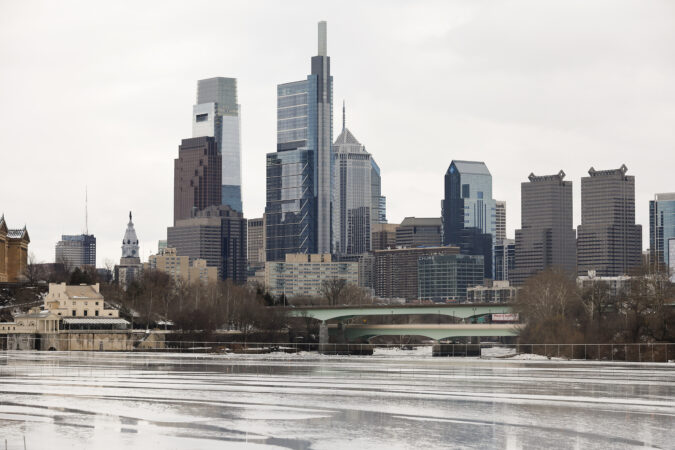
    The ice covering the Schuylkill River is melting on Wednesday, Feb. 11, 2026 in Philadelphia, Pa. The high on Wednesday was 46 degrees.

    Temperatures are due to cool down some Thursday and Friday with highs in the 30s, but the 40s are due back on the weekend.

    For some, like Penn administrative assistant Sheria Crawley, it was just a relief, and a surprise, to be able to finally say, “Thank God it’s 30 degrees out.” Crawley, who has lived in the city for years, said the snowstorm of 2026 is one of the worst she’s seen, not giving residents a reprieve from the cold.

    “It was brutal because we’re used to getting snow and then a warm-up right after that takes the snow away. This year, we couldn’t catch a break,” she said.

    The thing she can’t wait for most this spring is to see the “last vestige” of snow finally melt. Crawley said she would be excited then, but the severity of this storm would stick with her for years.

    “I feel like there’s going to be a mass exodus from the city to all the classic vacation spots nearby so that we can just recover from that storm,” she said.

    A cyclist travels on the Schuylkill River Trail along Kelly Drive on Wednesday, Feb. 11, 2026 in Philadelphia, Pa. The high on Wednesday was 46 degrees.

    Eirini Antonopoulou felt like a phoenix rising from the ashes after weeks cooped up inside without the sunshine.

    “Since the previous weeks have been so gloomy, I’ve been feeling kind of down,” the Penn freshman said. “It’s gorgeous out today. We have more sunlight now, so I feel more optimistic.”

    Antonopoulou’s classmate, Tyrus Roney, said he was happy to see city life returning to normal, with people stopping to chat and not bundled up, rushing to their destinations.

    “It’s just it’s so much more vibrant with people outside interacting with each other,” Roney said. “Now we just have to take care of this dirty snow on the side of the road.”

    On another day, perhaps we would mention that the region has an outside chance of seeing some fresh snow late in the weekend. That can wait; as long as it chooses.

  • Art Commission votes to move Joe Frazier statue from South Philly to the Art Museum

    Art Commission votes to move Joe Frazier statue from South Philly to the Art Museum

    “Smokin’” Joe Frazier is heading to the Philadelphia Museum of Art.

    Philly’s statue of the famed heavyweight boxing champion is slated to be installed at the base of the museum’s steps later this year following a Philadelphia Art Commission vote Wednesday that approved the move. All five commissioners present Wednesday voted in favor of the statue’s relocation from its longtime home at the sports complex in South Philadelphia.

    The proposal, presented by Creative Philadelphia, the city’s office for the creative sector, will see the Frazier statue installed where Philly’s original Rocky statue stands today. The Rocky statue, meanwhile, will be installed at the top of the museum’s steps.

    “Placing the Joe Frazier statue at the Art Museum allows us to share a more complete history about Philadelphia’s spirit,” Marguerite Anglin, the city’s public art director, said Wednesday. “One rooted in real people, real work, and real pride in this city.”

    The Frazier statue should move to the Art Museum sometime this spring, Anglin said. That relocation coincides with the move of the Rocky statue currently at the base of the steps, which is slated to be temporarily installed inside the museum for the first time as part of the forthcoming exhibition “Rising Up: Rocky and the Making of Monuments.” That Rocky statue will then be installed at the top of the museum’s steps in the fall, while the Rocky statue now at the top of the steps will go back into actor Sylvester Stallone’s private collection.

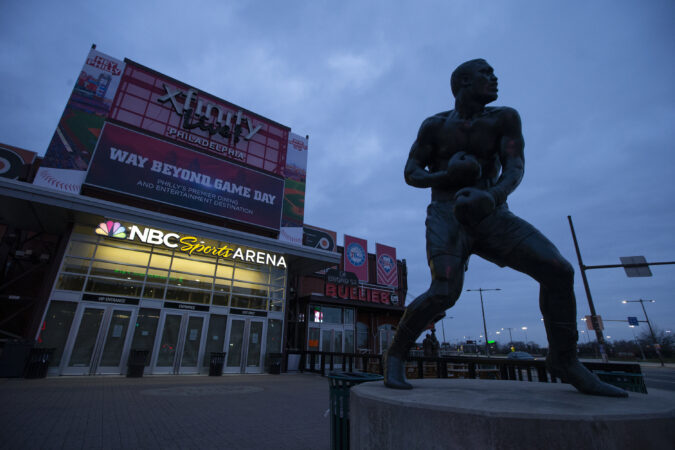
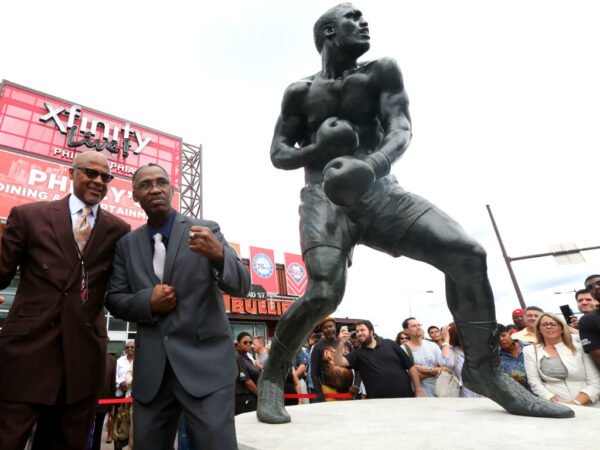
    Created by sculptor Stephen Layne, the Frazier statue was unveiled in 2015 at what is now Stateside Live! at the sports complex in South Philadelphia. Its debut came years after Frazier’s death in 2011, which kicked off a campaign to erect the statue in his memory. Standing at 12 feet tall, it depicts the boxer moments after knocking down Muhammad Ali during the “Fight of the Century” — a famed March 1971 bout in which Ali suffered his first professional loss after a brutal 15-round skirmish.

    For years before its creation, Frazier’s supporters lamented the fact that Philadelphia had long had a Rocky statue, but lacked one showing its own real-life champion. Our Rocky statue, in fact, has been around for more than 40 years, and has stood outside the Art Museum for two decades — about twice as long as the Frazier statue has even existed.

    “Tell them Rocky was not a champion, Joe Frazier was,” the Rev. Jesse Jackson famously said at Frazier’s funeral. “Tell them Rocky’s fists were frozen in stone. Joe’s fists were smokin’.”

    Creative Philadelphia’s plan featured widespread support from leaders including Mayor Cherelle L. Parker, as well as Frazier’s family and friends. It received little pushback at Wednesday’s meeting, with Gabrielle Gibson, a granddaughter of Frazier’s, asking what is perhaps the most obvious question about the placement: Shouldn’t the Frazier statue be at the top?

    He was, after all, a real person, a real Philadelphian, and a real champion. Rocky, meanwhile, is a fictional character who appears to be an amalgamation of several real-life boxers’ stories — Frazier included, according to Creative Philadelphia. Many speakers Wednesday noted that, like Rocky, Frazier was known to run up the Art Museum’s steps and was said to have boxed sides of beef during his training, among other parallels.

    And then there is the symbolism of where the Rocky and Frazier statues will stand.

    “During Black History Month, I think we need to understand the new placement,” Gibson said. “A real boxer and a Black man’s image and likeness would be placed at a lower position beneath the fictional white character whose story was inspired by real boxers.”

    The Frazier statue’s placement at the bottom of the steps, Anglin said, was for two main reasons. First, she said, having Frazier at the bottom makes it the first statue visitors will encounter at the Art Museum — even if they are there expressly to see Rocky — which will provide “an opportunity to be grounded in history.”

    Second, the Rocky statue’s footprint is roughly half the size of the Frazier statue, which would not be “safe or feasible” to install on high, Anglin said. Putting Rocky at the top, Anglin said, allows for better circulation around the monument, and avoids the potential logistical and code-related issues putting Frazier there could present.

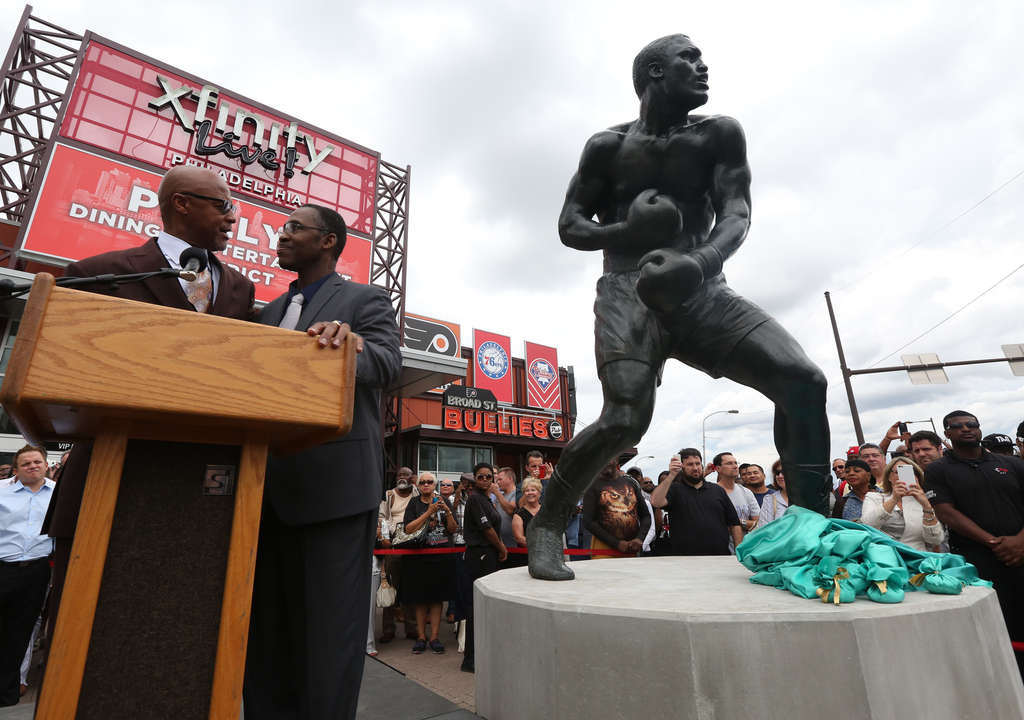
    His son, and former heavyweight boxer Marvis Frazier (right), and Rev. Blane Newberry from Enon Tabernacle Baptist Church bless a 12-foot-tall 1,800-pound bronze statue of “Smokin’ Joe” Frazier after it was unveiled in 2015.

    Jacqueline Frazier-Lyde, Frazier’s daughter, a retired professional boxing champion and a Municipal Court judge, expressed support for the move Wednesday, calling the statue a reminder that “we can overcome any obstacle and achieve.” She also recounted her father’s feelings on the Rocky statue, specifically when he would see tourists taking photos with Stallone’s character.

    “At times,” she said, “he would say, ‘Don’t they understand that I’m the heavyweight champion?’”

  • Robert E. Booth Jr., pioneering knee surgeon and celebrated antiquarian, has died at 80

    Robert E. Booth Jr., pioneering knee surgeon and celebrated antiquarian, has died at 80

    Robert E. Booth Jr., 80, of Gladwyne, renowned pioneering knee surgeon, former head of the Department of Physical Medicine and Rehabilitation at Pennsylvania Hospital, celebrated antiquarian, professor, researcher, writer, lecturer, athlete, mentor, and volunteer, died Thursday, Jan. 15, of complications from cancer at his home.

    Born in Philadelphia and reared in Haddonfield, Dr. Booth was a top honors student at Haddonfield Memorial High School, Princeton University, and what is now the Perelman School of Medicine at the University of Pennsylvania. He was good at seeing things differently and went on to design new artificial knee joint implants and improved surgical instruments, serve as chief of orthopedics at Pennsylvania Hospital, and mentor celebrated surgical staffs at Jefferson Health, Aria Health, and Penn Medicine.

    He joined with two other prominent doctors to cofound the 3B orthopedic private practice in the late 1990s and, over 50 years until recently, performed more than 50,000 knee replacements, more than anyone, according to several sources. Last March 26, he did five knee replacements on his 80th birthday.

    In a tribute, fellow physician Alex Vaccaro, president of Rothman Orthopaedic Institute, said: “He restored mobility to thousands, pairing unmatched technical mastery with a compassion that patients never forgot.”

    In a 1989 story about his career, Dr. Booth told The Inquirer: “It’s so much fun and so gratifying and so rewarding to see what it means to these people. You don’t see that in the operating room. You see that in the follow-ups. That’s the fun of being a surgeon.”

    Friends called him “a legend in his profession” and “a friend to everyone” in online tributes. He was known to check in with patients the night before every surgery, and a colleague said online: “Patients were all shocked by his compassion.”

    Dr. Booth was also praised for his organization and collaboration in the operating room. “His OR was a clinic in team work and efficiency,” a former colleague said on LinkedIn.

    He told Medical Economics magazine in 2015: “I love fixing things. I like the mechanics and the positivity of something assembled and fixed.”

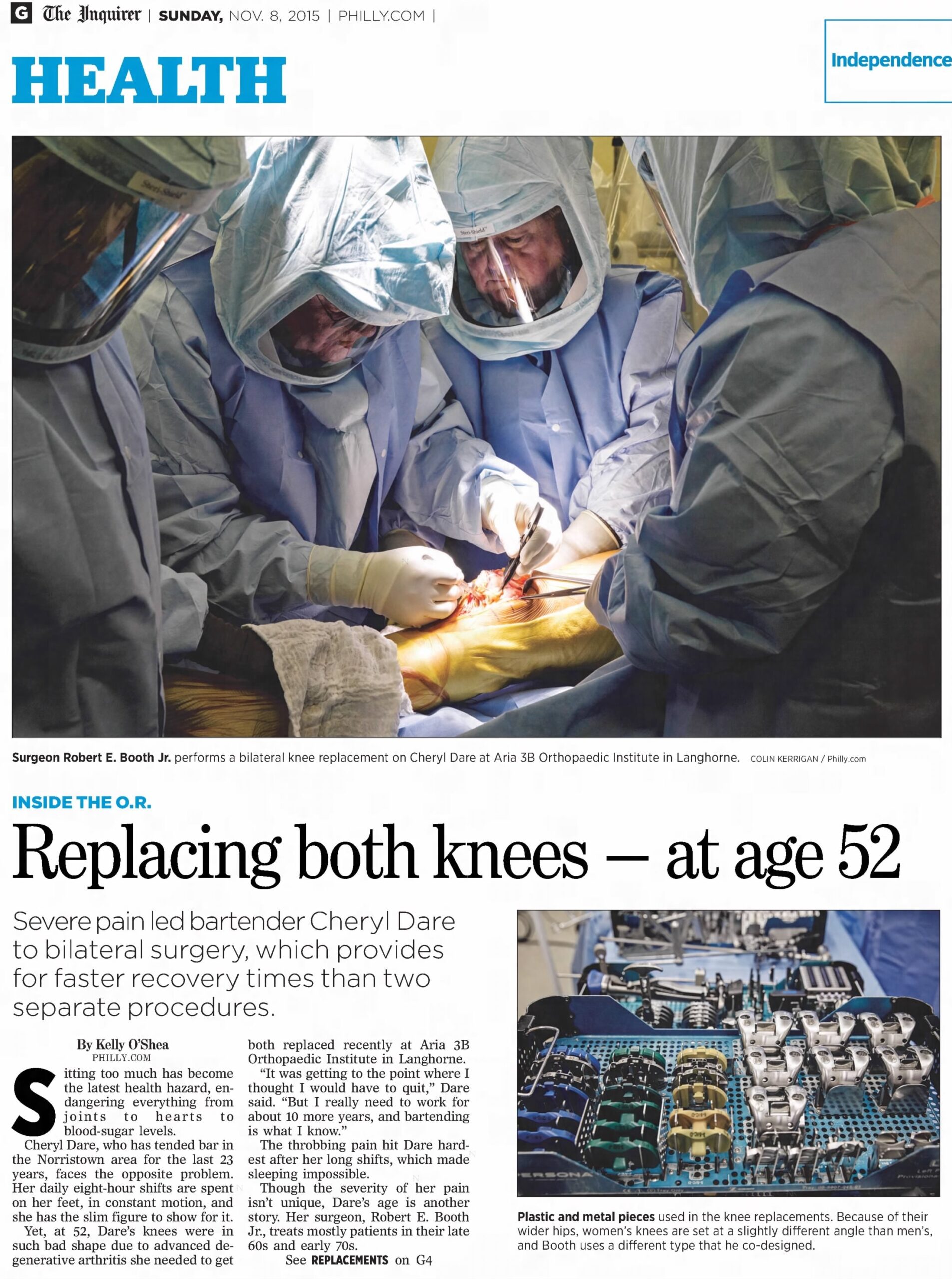
    This article about Dr. Booth’s practice was published in The Inquirer in 2015.

    His procedural innovations reduced infection rates and increased success rates. They were scrutinized in case studies by Harvard University and others, and replicated by colleagues around the world. Some of the instruments he redesigned, such as the Booth retractor, bear his name.

    He was president of the Illinois-based Knee Society in the early 2000s and earned its 2026 lifetime achievement award. In an Instagram post, colleagues there called him “one of the most influential leaders in the history of knee arthroplasty.”

    He was a professor of orthopedics at Penn’s school of medicine, Thomas Jefferson University Hospital, and the old Allegheny University of Health Sciences. He loved language and studied poetry on a scholarship in England after Princeton and before medical school at Penn. He told his family that his greatest professional satisfaction was using both his “manual and linguistic skills.”

    He was onetime president of the International Spine Study Group and volunteered with the nonprofit Operation Walk Denver to provide free surgical care for severe arthritis patients in Panama, Guatemala, Honduras, Nicaragua, and elsewhere. Colleagues at Operation Walk Denver noted his “remarkable spirit, profound expertise, and unwavering commitment” in a Facebook tribute.

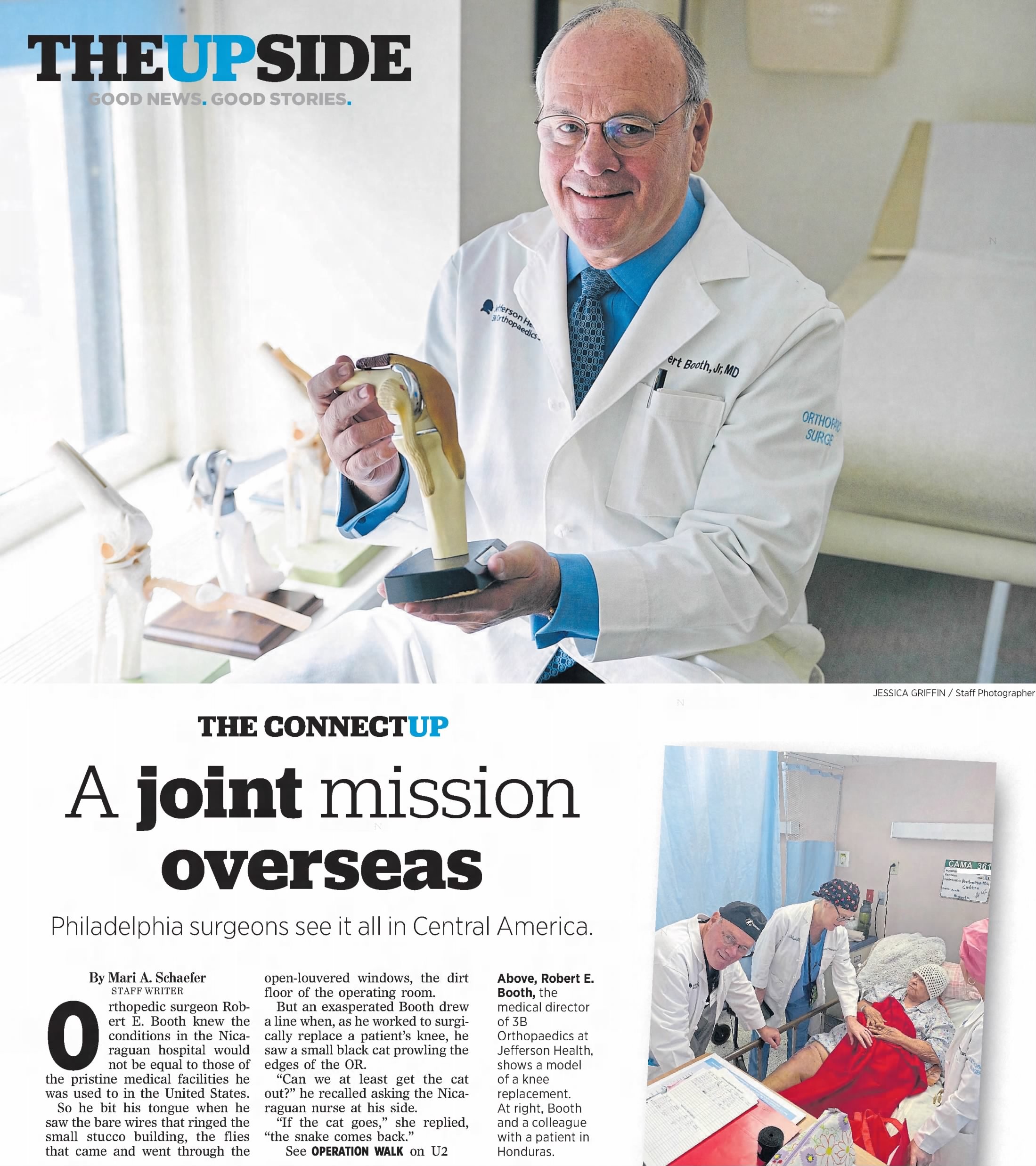
    This story about Dr. Booth’s charitable work abroad appeared in The Inquirer in 2020.

    At home, Dr. Booth and his wife, Kathy, amassed an extensive collection of Shaker and Pennsylvania German folk art. They curated five notable exhibitions at the Philadelphia Antiques Show and were recognized as exceptional collectors in 2011 by the Philadelphia Society for the Preservation of Landmarks.

    He lectured widely about art and antiques, and wrote articles for Magazine Antiques and other publications. He was president of the American Folk Art Society and active at the Philadelphia Museum of Art, the Metropolitan Museum of Art in New York, and the Canterbury Shaker Village in New Hampshire.

    “He was larger than life for sure,” said his daughter, Courtney.

    Robert Emrey Booth Jr. was born March 26, 1945, in Philadelphia. He was the salutatorian of his senior class and ran track and field at Haddonfield High School.

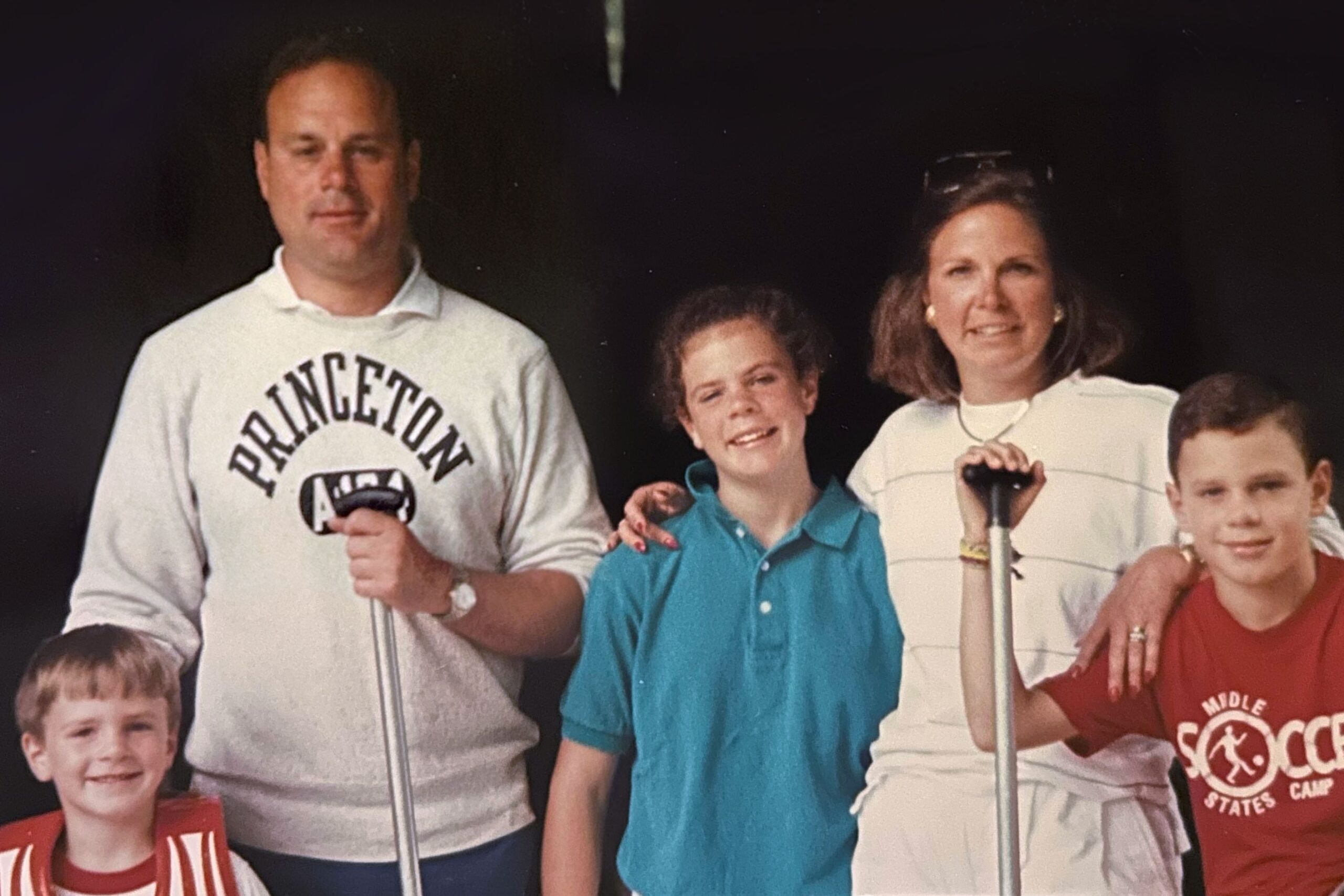
    Dr. Booth enjoyed time with his family.

    He earned a bachelor’s degree in English at Princeton in 1967, won a letter on the swimming and diving team, and played on the school’s Ivy League championship lacrosse team as a senior. He wrote his senior thesis about poet William Butler Yeats and returned to Philadelphia from England at the suggestion of his father, a prominent radiologist, to become a doctor. He graduated from Penn’s medical school in 1972.

    “I always liked the intellectual side of medicine,” he told Medical Economics. “And once I got to see the clinical side, I was pretty well hooked.”

    He met Kathy Plummer at a wedding, and they married in 1972 and had a daughter, Courtney, and sons Robert and Thomas. They lived in Society Hill, Haddonfield, and Gladwyne.

    Dr. Booth liked to ski and play golf. He was an avid reader and enjoyed time with his family on Lake Kezar in Lovell, Maine.

    “He was quite the person, quite the partner, and quite the husband,” his wife said, “and I’m so proud of what we built together.”

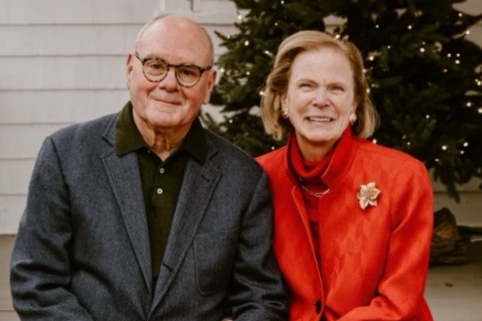
    Dr. Booth and his wife, Kathy, married in 1972.

    In addition to his wife and children, Dr. Booth is survived by six grandchildren and other relatives.

    A private celebration of his life is to be held later.

    Donations in his name may be made to Operation Walk Denver, 950 E. Harvard Ave., Suite 230, Denver, Colo. 80210.

  • The history of Philly’s Joe Frazier statue, from inception to a move to the Art Museum

    The history of Philly’s Joe Frazier statue, from inception to a move to the Art Museum

    The blank space that our famed Rocky statue is slated to soon leave at the base of the Philadelphia Museum of Art’s steps will be filled by a monument to someone a whole lot less fictional — and it has been a long time coming.

    After just over a decade standing outside of what is now known as Stateside Live!, the city’s statue of Philly’s own “Smokin’” Joe Frazier will be the newest Philly boxer to call the Art Museum home. The Philadelphia Art Commission on Wednesday approved a plan detailing the move presented by Creative Philadelphia, the city’s office for the creative sector.

    That plan is the latest development in a saga that began before Frazier’s death from liver cancer in 2011. Frazier’s statue was unveiled in 2015 after years of work and advocacy. Fans and supporters considered the lack of a statue an injustice, given that the statue of Rocky Balboa has been in the city for more than 40 years and he’s not even a real person.

    Rocky, in fact, has been stationed at the base of the Art Museum steps since 2006. That lengthy run follows installations not only at the top of the steps, but also at the sports complex in South Philadelphia, where the Frazier statue has been located since its inception. And Rocky has been in its current home twice as long as the Frazier statue has existed.

    Still, Philly’s Frazier statue has a storied history of its own. Here is how The Inquirer and the Daily News covered it:

    https://www.newspapers.com/article/the-philadelphia-inquirer/191021228/

    Article from Nov 12, 2011 The Philadelphia Inquirer (Philadelphia, Pennsylvania) <!— –>

    Early advocacy

    Frazier’s supporters had long lamented that Philadelphia lacked a memorial to the boxer. In fact, in a June 2011 Daily News poll, nearly 21% of respondents said Smokin’ Joe should be the next Philadelphia legend honored with a statue — second only to Flyers great Bob Clarke, who himself got a statue in 2013.

    Calls for a statue intensified after Frazier’s death in November 2011. His loved ones and fans — including fellow Philly boxing great Bernard Hopkins — leaned on the city to memorialize the fallen legend. As Hopkins that year told the Daily News, the city ought to “build the biggest statue in appreciation for all the heart and love” Frazier gave to Philadelphia.

    Following his death, Frazier lay in state at the Wells Fargo Center to allow friends, family, and fans to grieve. At Frazier’s funeral, the Rev. Jesse Jackson admonished the city for its lack of respect to Frazier.

    “Tell them Rocky was not a champion, Joe Frazier was,” Jackson said to cheers. “Tell them Rocky’s fists were frozen in stone. Joe’s fists were smokin’.”

    https://www.newspapers.com/article/philadelphia-daily-news/191021343/

    Article from Mar 9, 2012 Philadelphia Daily News (Philadelphia, Pennsylvania) <!— –>

    Building momentum despite challenges

    In March 2012, two months after what would have been Frazier’s 68th birthday, boxing promoter Joe Hand — a longtime Frazier supporter — publicized plans for a life-size statue of Frazier that would be placed near what was then Xfinity Live! Hand pledged a memorial, at a cost of $200,000, would be built.

    Divisions among family members, friends, and business partners emerged, but by that September, Frazier’s family — led by daughters and estate executors Weatta Collins and Renae Martin — took over efforts for a statue.

    Hand later bowed out of the proceedings, leaving the memorial up to Frazier’s family with backing from the city via the Fund for Philadelphia. Plans later shifted to a $150,000 funding goal for the statue, with support from the city under then-Mayor Michael Nutter, who was a longtime Frazier fan dating back to his childhood.

    “[This is] a very personal moment for me to be in this position and make this announcement about someone I truly admire,” Nutter told The Inquirer in 2012.

    https://www.newspapers.com/article/philadelphia-daily-news/191021483/

    Article from Apr 25, 2013 Philadelphia Daily News (Philadelphia, Pennsylvania) <!— –>

    Setbacks and continued effort

    In April 2013, Frazier’s family and the city selected New Hampshire-based sculptor Lawrence J. Nowlan to helm the project. An Overbrook Park native, Nowlan homed in on an image of Frazier knocking down fellow legend Muhammad Ali in the famed 1971 “Fight of the Century” as the statue’s inspiration.

    But in late July, Nowlan unexpectedly died at the age of 48. The city proceeded with its Frazier statue plans, and roughly three months later selected Fishtown-based sculptor Stephen Layne as Nowlan’s replacement.

    “We all deeply regret the passing of sculptor Lawrence Nowlan and the loss of his artistry in this project,” Nutter said at the time. “But Mr. Nowlan’s untimely passing will not deter us from honoring a great Philadelphian.”

    Layne largely stuck with Nowlan’s plan, and in December 2013, the Philadelphia Art Commission approved designs for a statue depicting Frazier during the iconic Ali fight. It was, The Inquirer reported, expected to stand nine feet tall, plus a three-foot base, ultimately to be cast in bronze.

    https://www.newspapers.com/article/the-philadelphia-inquirer/191021607/

    Article from Sep 13, 2015 The Philadelphia Inquirer (Philadelphia, Pennsylvania) <!— –>

    Frazier’s unveiling

    Among the most ardent supporters of the Frazier statue ahead of its unveiling in September 2015 was boxer Hopkins, who donated hundreds of thousands of dollars to see it erected. In April 2014, he told the Daily News that Frazier “has a rightful place in Philadelphia history and that should be honored.”

    Sculptor Layne, meanwhile, plugged away at the statue for months. The pose, he told the Daily News ahead of its unveiling, showed a “pivotal moment” in Frazier’s career, which itself showed a “blue-collar mentality” that showcased his connection to Philadelphia perfectly.

    And finally, on Sept. 12, 2015, Philly finally got its first look at the statue with its unveiling on the corner of 11th Street and Pattison Avenue. Family and friends pulled a green shroud off the statue in front of several hundred onlookers.

    “I am very happy to know Joe is being honored and memorialized in the city he loved, something that is long overdue,” Ali, Frazier’s longtime arch-nemesis, told the Daily News. “Joe was a great boxer and a worthy opponent in the ring. He always brought his best whenever he stepped inside the ropes. My only regret is that Joe won’t be there to share in the celebration.”

  • Kennedy Center head warns staff of cuts and ‘skeletal’ staffing during renovation closure

    Kennedy Center head warns staff of cuts and ‘skeletal’ staffing during renovation closure

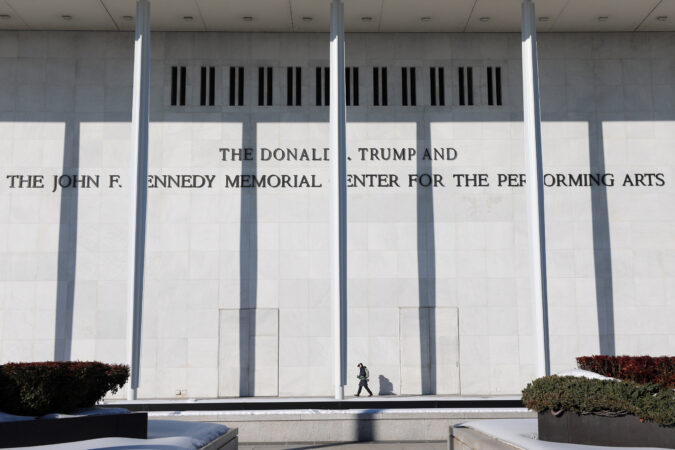
    As the Trump administration prepares to close the Kennedy Center for a two-year renovation, the head of Washington’s performing arts center has warned its staff about impending cuts that will leave “skeletal teams.”

    In a Tuesday memo obtained by The Associated Press, Kennedy Center president Richard Grenell told staff that “departments will obviously function on a much smaller scale with some units totally reduced or on hold until we begin preparations to reopen in 2028,” promising “permanent or temporary adjustments for most everyone.”

    A Kennedy Center spokesperson declined comment Wednesday.

    Over the next few months, he wrote, department heads would be “evaluating the needs and making the decisions as to what these skeletal teams left in place during the facility and closure and construction phase will look like.” Grenell said leadership would “provide as much clarity and advance notice as possible.”

    The Kennedy Center is slated to close in early July. Few details about what the renovations will look like have been released since President Donald Trump announced his plan at the beginning of February. Neither Trump nor Grenell have provided evidence to support claims about the building being in disrepair, and last October, Trump had pledged it would remain open during renovations.

    It’s unclear exactly how many employees the center currently has, but a 2025 tax filing said nearly 2,500 people were employed during the 2023 calendar year. A request for comment sent to Kennedy Center Arts Workers United, which represents artists and arts professionals affiliated with the center — wasn’t immediately returned.

    Leading performers and groups have left or canceled appearances since Trump ousted the center’s leadership a year ago and added his own name to the building in December. The Washington Post, which first reported about Grenell’s memo, has also cited significant drops in ticket revenue that — along with private philanthropy — comprises the center’s operating budget. Officials have yet to say whether such long-running traditions as the Mark Twain Award for comedy or the honors ceremony for lifetime contributions to the arts will continue while the center is closed.

    The Kennedy Center was first conceived as a national cultural facility during the Eisenhower administration, in the 1950s. President John F. Kennedy led a fundraising initiative, and the yet-to-be-built center was named in his honor following his assassination. It opened in 1971 and has become a preeminent showcase for theater, music and dramatic performances, enjoying bipartisan backing until Trump’s return to office last year.

    “This renovation represents a generational investment in our future,” Grenell wrote. “When we reopen, we will do so as a stronger organization — one that honors our legacy while expanding our impact.”

  • QVC may file for bankruptcy, according to a new report. Here’s what to know.

    QVC may file for bankruptcy, according to a new report. Here’s what to know.

    The West Chester-based QVC Group is considering filing for Chapter 11 bankruptcy as its financial troubles mount, according to Bloomberg.

    The TV shopping network has been negotiating the voluntary restructuring of billions in debt during confidential conversations with creditors, Bloomberg reported Tuesday, citing anonymous sources familiar with the matter.

    A final decision had not been made on whether the company would file, according to Bloomberg. As of midday Wednesday, a search for “QVC Group” in online court records did not show any bankruptcy filings.

    In September, QVC Group had $6.6 billion in debt and $1.8 billion in cash or cash equivalents, according to its latest earnings report.

    A QVC Group spokesperson did not return a request for comment from The Inquirer. On Tuesday, company representatives did not immediately respond to Bloomberg or the Philadelphia Business Journal.

    After Bloomberg’s article published, QVC Group’s stock price took a nosedive, losing about two-thirds of its value by the end of the trading day.

    How QVC got into these financial straits

    Based in West Chester for more than three decades, QVC pioneered home shopping.

    Before consumers could make purchases on laptops and smartphones, the network and its smaller counterpart HSN — which until recently was based in Florida — broadcast on live TV at all hours. Anchors sold a wide array of clothing, electronics, household goods, beauty products, and other wares.

    A QVC show is shot at the network’s West Chester studio in this 2019 file photo.

    The news of a potential bankruptcy comes after a tumultuous few years.

    In early 2025, executives closed HSN’s studio in St. Petersburg, Fla., and consolidated both networks on its West Chester campus, laying off hundreds of employees in the process.

    Around the same time, the parent company rebranded as QVC Group. Executives said they planned to focus more on livestreaming and social-media shopping to keep up with stiff competition from the likes of TikTok Shop.

    “Live social shopping is a natural evolution for us,” David L. Rawlinson II, the company’s president and CEO, said in a November 2024 statement. “Our customers are spending dramatically more time on social media, and that is increasingly where they are finding inspiration and shopping.”

    David L. Rawlinson II, CEO of QVC Group, is shown in this 2023 file photo.

    The strategy did not prove fruitful.

    By May, as President Donald Trump’s tariffs took a toll, Rawlinson said the company was taking steps to cut costs and win back customers who were feeling down on the economy. That included an agreement with TikTok that the CEO said would create “the first 24/7 live shopping experience in the U.S.”

    Then in August, a company spokesperson announced plans to hire about 250 employees by early 2026. It was not clear Wednesday whether those hires were ever made.

    Despite these changes, QVC’s revenue and operating income have continued to decline, according to earnings reports, and the company has continued shedding customers.

    As of September, about 7 million people had shopped on the networks in the past year, down from 8.1 million in fiscal year 2023.

    QVC Group is set to release its fourth quarter 2025 earnings report later this month.

    What Chapter 11 bankruptcy could mean for QVC

    A holiday segment is taped at QVC’s West Chester studio in this 2023 file photo.

    A Chapter 11 bankruptcy would not mean the end of QVC.

    Chapter 11 is different from Chapter 7, which involves the liquidation of assets. (Iron Hill Brewery closed all restaurants when it filed for Chapter 7 bankruptcy this fall.)

    After filing for Chapter 11 protection, companies usually continue to operate, though they often decide to close locations or downsize in other ways amid the restructuring process.

    Saks Global, for instance, which filed for Chapter 11 bankruptcy last month, announced Tuesday that its restructuring would involve the closure of its longstanding Bala Cynwyd store, as well as nine other Saks Fifth Avenue and Neiman Marcus locations.

  • She bounced a $25 check in 2014. ICE tried to deport her.

    She bounced a $25 check in 2014. ICE tried to deport her.

    One evening last summer, Donna Hughes-Brown was handcuffed and led into a filthy holding cell somewhere in Kentucky, where insects crawled out of a drain and feces streaked the walls.

    The Missouri grandmother’s life had taken an unrecognizable turn days earlier, when federal agents pulled her off an arriving flight at Chicago’s O’Hare International Airport, arrested her and told her she would be deported.

    Her crime? Writing two bad checks, for a combined total of less than $75, more than a decade earlier.

    Hughes-Brown, a lawful permanent resident of the United States since she was a child, would go on to spend 143 days — nearly five months — in detention. She was only released at the end of last year after an immigration judge granted an application to stop her removal. Her story underscores just how far the Trump administration is willing to go in its quest to boost deportations, extending its dragnet to people who are legally present in the country with minor offenses from years earlier.

    For those swept up in the expanding deportation drive, it is also increasingly difficult to win release, resulting in lengthy detentions such as the one Hughes-Brown experienced. In November, the number of people released from Immigration and Customs Enforcement detention into the U.S. fell about 70 percent from a year earlier, according to a recent report from the American Immigration Council.

    When asked about Hughes-Brown, Tricia McLaughlin, assistant secretary at the Department of Homeland Security, defended her agency’s handling of the case. A conviction for passing bad checks does “not make for an upstanding lawful permanent resident,” McLaughlin said in an email. A spokesperson for ICE did not respond to a request for comment.

    Hughes-Brown, 59, is an Irish citizen and green-card holder who immigrated to the U.S. with her parents in 1978. Before last year, she never imagined she would become a target of the administration’s clampdown on immigration, she said, and she believed that everyone should come to the country legally, like she did.

    Now back home in small-town Missouri, Hughes-Brown said she thinks constantly of the women she left behind in detention: Jeimy, a 25-year-old from Guatemala who is married to an American citizen; Grace, a woman from Venezuela with a congenital heart condition; Beata, a Polish green-card holder with two convictions for minor retail theft more than a decade ago, her story an echo of Hughes-Brown’s.

    “It was the intent for this to happen to so many people,” Hughes-Brown said. “It doesn’t really matter how you got here, the end result is the same.”

    A $25 mistake

    Hughes-Brown’s ordeal began last July, when she made her first overseas trip in almost a decade. Her aunt had died, so Donna and her husband, Jim Brown, traveled to Ireland, gathering with family at a lighthouse overlooking an estuary as they spread her aunt’s ashes.

    At the airport in Dublin, Donna and Jim precleared U.S. Customs and Immigration. Officers pulled Donna aside and asked questions about her travel history. Then they let her proceed to her flight, she said.

    As the plane was approaching Chicago’s O’Hare airport, the flight attendant announced that all passengers would be required to show their passports as they exited. That’s odd, Donna thought. Exiting the plane, she saw armed officers waiting on the jet bridge. They were there for her.

    After a night in a cell at O’Hare, Donna received paperwork explaining why she had been apprehended. She was flummoxed. Back in 2015, she pleaded guilty to passing a bad check the previous year, a misdemeanor. The check was for $25, court records show, and made out to Krazy Korner, a gas station, and convenience store.

    She was living paycheck to paycheck and didn’t realize the check would bounce, Donna says. After it did, court records show, she paid restitution of $80 plus court fees of $117 and served a year of probation. She stabilized her finances, building a career as a home health care aide. She was certain that chapter was closed.

    The government also cited a separate 2012 misdemeanor conviction for passing a bad check. Records from that case are not available to the public because the case was either dismissed or expunged, a county official in Missouri said. Donna barely remembered it; she believes it was for less than $50 at a grocery store.

    While lawful permanent residents have considerably more protection from deportation than visa holders, the government can seek to deport green-card holders for certain nonviolent offenses. One such situation: crimes of “moral turpitude,” which include offenses with an intent to steal or defraud.

    But the government has an “immense amount of discretion” in deciding whether to exercise such powers and whether to detain someone, said César Cuauhtémoc García Hernández, a law professor and immigration expert at Ohio State University. In the past, he said, he would have expected DHS to exercise its discretion favorably in Donna’s case, given her “half a century in the United States with only one or two extremely minor hiccups.”

    To assert that passing a bad check more than a decade ago “makes you unworthy of living in the U.S. — that’s a policy decision,” García Hernández said. What’s more, detaining someone for months is “neither easy nor cheap.”

    The average cost to house an ICE detainee per day was $187, according to the most recent figures available. At that rate, detaining Hughes-Brown cost taxpayers about $27,000.

    ‘Hell from both sides’

    In early August, Donna and several other detainees were handcuffed and loaded into a van for the six-hour drive from Illinois to Campbell County Detention Center, a local jail in Kentucky that also houses ICE detainees. Four hundred miles from home, she lived in a pod with dozens of other women, she says, sleeping on metal bunks with only a thin mat and toilets that were clogged for days.

    One of the women was Beata Siemionkowicz, a lawful permanent resident from outside of Chicago who has lived in the U.S. since 1995. Federal agents arrested her at her daughter’s house in August, her lawyer, George Gomez, said, and told her they were launching deportation proceedings. The reason: two misdemeanor cases for retail theft in 2005 and 2011.

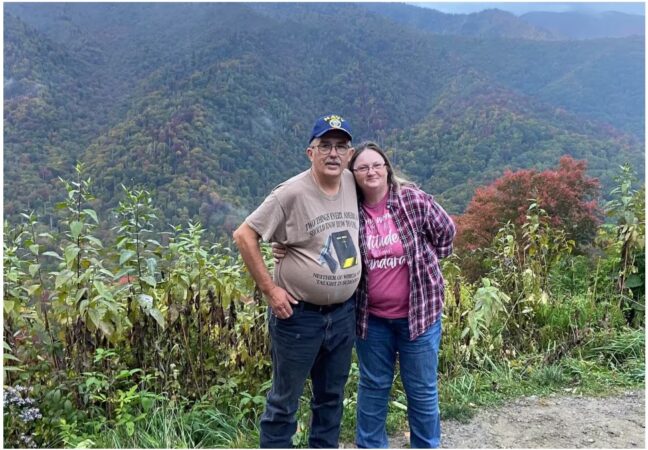
    Meanwhile, Donna’s husband, Jim, was doing everything he could think of to get her released. They’d met online and married seven years before, building a life in Cyrene, a tiny town south of Bowling Green, where they keep three horses and are active in their church. After Hurricane Helene, they twice filled a 30-foot horse trailer with supplies and drove it to North Carolina to help disaster victims.

    A combat veteran turned CT technologist, Jim describes himself as a conservative Christian and voted for Trump in 2024. He’s not against immigration: He grew up around migrant workers in Texas, hard-working people who paid taxes into the system.

    When Donna was detained, Jim wrote to every member of Missouri’s congressional delegation. He struck out, but then help came from an unexpected place: Rep. Seth Magaziner, a Democrat who represents Rhode Island. Magaziner brought Jim to Washington to speak at a panel on Trump’s immigration crackdown. At the event, Jim was asked why he had voted for Trump. He paused. “Because I was an idiot,” he answered.

    The partisan backlash has been swift, he said. Longtime friends in the ruby-red county where the couple lives have turned their back on him because he criticized Trump. Meanwhile, more liberal neighbors have said his wife’s ordeal is a fitting consequence of his vote.

    “My family and I have got hell from both sides,” Jim said.

    In December, Magaziner also asked Homeland Security Secretary Kristi L. Noem about Donna’s case during a hearing on Capitol Hill. “The Trump Administration claimed it would target the ‘worst of the worst,’ but no one understands how false that promise was more than Jim and Donna Brown,” Magaziner said in a statement.

    As the months rolled by, Donna spent two stints in an isolation cell, where the only book allowed was the Bible and she was permitted an hour outside every other day. Her requests to be released on bond were rejected by an immigration judge. But on Dec. 18, after a hearing during which family members talked about how devastating her deportation would be, the judge granted her application to cancel removal proceedings. DHS declined to appeal the decision.

    Still, Donna doesn’t intend to take chances. Her passport and green card were finally returned to her last week after the Irish consulate intervened. “I’m not even getting close to the border,” she said.

    These days, she senses an awkwardness with some friends. They’re sorry for what happened to her but still support the administration’s efforts. That’s their right, she says, and she’s not interested in cutting people off because they disagree with her.

    But she does want to talk to them. About how helpless she felt in her darkest moments in detention – labeled a criminal, locked away and unsure if she would ever return to her life in Missouri. She’s determined to fight for the women she met there.

    “I’m going to keep on keepin’ on,” Donna said. “Because it is not right. It is not right.”
  • IRS improperly disclosed confidential immigrant tax data to DHS

    IRS improperly disclosed confidential immigrant tax data to DHS

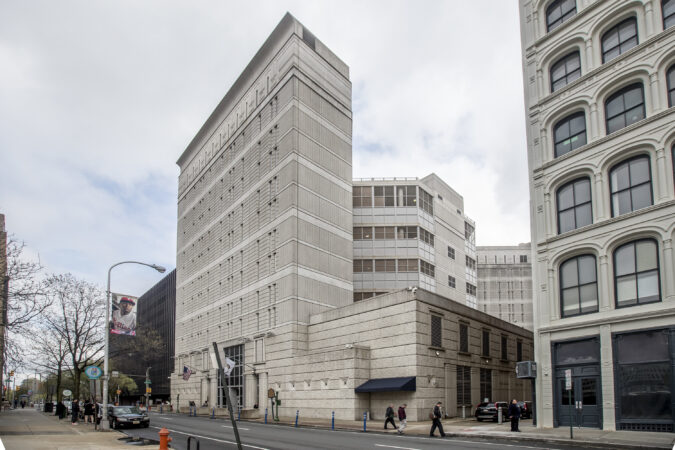
    The Internal Revenue Service improperly shared confidential tax information of thousands of individuals with immigration enforcement officials, according to three people familiar with the situation, appearing to breach a legal firewall intended to protect taxpayer data.

    The erroneous disclosure was only recently discovered, the people said. The IRS is working with officials from the Treasury Department, Justice Department, and Department of Homeland Security on the administration’s response.

    The IRS confirmed the Washington Post’s reporting in a court filing Wednesday afternoon. Dottie Romo, the tax agency’s chief risk and control officer, wrote in a sworn declaration that the IRS provided confidential taxpayer information even when DHS officials could not provide sufficient data to positively identify a specific individual.

    But in a controversial decision, Treasury, which oversees the IRS, in April agreed to provide DHS with the names and addresses of individuals the Trump administration believed to be in the country illegally, pursuant to DHS requests.

    Federal courts have since blocked the data-sharing arrangement, holding that it violates taxpayers’ rights, though the government appealed those rulings.

    Before the agreement was struck down, DHS requested the addresses of 1.2 million individuals from the IRS. The tax agency responded with data on 47,000 individuals, according to court records.

    When the IRS shared the addresses with DHS, it also inadvertently disclosed private information for thousands of taxpayers erroneously, a mistake only recently discovered, said the people familiar, who spoke on the condition of anonymity for fear of retribution.

    Romo, in her declaration, did not state when the IRS learned of its error. She said the agency notified DHS on Jan. 23, to begin taking steps to “prevent the disclosure or dissemination, and to ensure appropriate disposal, of any data provided to ICE by IRS based on incomplete or insufficient address information.”

    She declined to state if the IRS would inform people whose data was illegally disclosed to immigration officials, and said DHS and ICE had agreed to “not inspect, view, use, copy, distribute, rely on, or otherwise act on any return information that has been obtained from or disclosed by IRS” because of the pending litigation.

    The affected individuals could be entitled to financial compensation for each time their information was improperly shared. And government officials can personally face stiff civil and criminal penalties for sharing confidential tax information.

    Charles Littlejohn, an IRS contractor, pleaded guilty in 2023 to leaking the tax returns of President Donald Trump and other wealthy individuals.

    Littlejohn was sentenced to five years in prison. Trump in January sued the IRS for $10 billion in damages related to the Littlejohn leak.

    In a statement, a DHS spokesperson said that under the data-sharing agreement, “the government is finally doing what it should have all along.”

    “Information sharing across agencies is essential to identify who is in our country, including violent criminals, determine what public safety and terror threats may exist so we can neutralize them, scrub these individuals from voter rolls, and identify what public benefits these aliens are using at taxpayer expense,” the spokesperson said.

    There is little evidence that undocumented immigrants have attempted to participate in U.S. elections, nor is there a link between undocumented immigrants and higher levels of crime.

    “With the IRS information specifically, DHS plans to focus on enforcing long-neglected criminal laws that apply to illegal aliens,” the DHS spokesperson said.

    Treasury and Justice Department spokespeople declined to comment, citing agency policies not to comment on active litigation. The Office of the Deputy Attorney General is monitoring the ongoing litigation, but the office is not making any decisions on the matter, according to a person familiar with the matter who was not authorized to comment publicly.

    When the IRS began conversations with DHS over data sharing shortly after Trump returned to the White House, senior IRS employees warned administration officials that the program was likely illegal and could sweep up misidentified people, the Post has reported.

    During early meetings on the project, one agency staffer asked immigration authorities how many people with the same name may live in the same state, according to one of the people, illustrating how easy it would be for the Trump administration to inadvertently breach taxpayers’ privacy, including those who are not targets of immigration investigations.

    The IRS’s privacy department was largely sidelined from the talks, two of the people said, and its IT department took over implementing the data sharing. That team had largely been taken over by officials from Trump’s U.S. DOGE Service, the White House’s “efficiency” office charged with shrinking the federal government.

    Treasury officials justified the data-sharing agreement by arguing immigration enforcement was pursuing individuals who had violated criminal statutes, though immigration violations are generally civil, not criminal.

    Under the arrangement, DHS would provide the IRS with the name and address of a taxpayer. The IRS would then cross-reference that information with its confidential databases and confirm the taxpayers’ last known address.

    Immigration officials said the procedure was necessary because DHS lacked reliable information to locate individuals the Trump administration wanted to detain and deport, according to numerous IRS and DHS officials, who spoke on the condition of anonymity because they were not authorized to publicly discuss the matter.

    “This allegedly unauthorized viewing involves personal information that taxpayers provided to the IRS pursuant to a promise that the IRS would prioritize keeping the information confidential,” Judge Colleen Kollar-Kotelly of the U.S. District Court for the District of Columbia wrote in a November order. “A reasonable taxpayer would likely find it highly offensive to discover that the IRS now intends to share that information permissively because it has replaced its promise of confidentiality with a policy of disclosure.”