Category: News

Latest breaking news and updates

  • Moore College will consider opening undergraduate programs to men

    Moore College will consider opening undergraduate programs to men

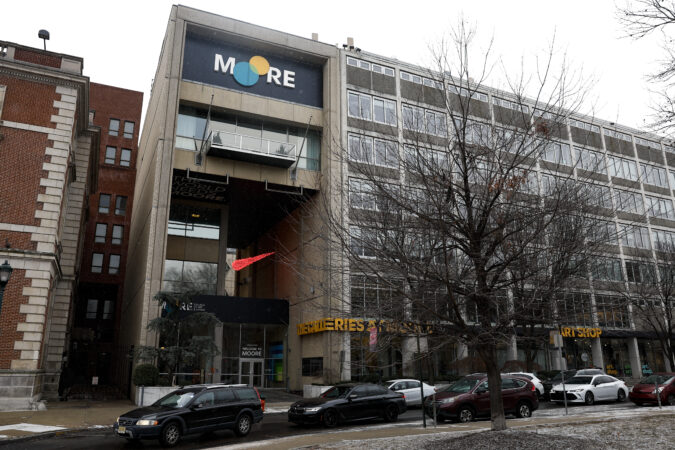
    Moore College of Art and Design will consider opening its undergraduate programs to men for the first time in its 177-year history.

    The Philadelphia school, which touts its role as “the first and only historically visual arts college for women in the nation,” cited the need to make arts programs more accessible in the region and the expected national decline in the available pool of high school graduates.

    The college, which enrolls about 500 students, will study and discuss with its community the prospect of admitting men over the next four months and make a decision by June, the school announced in emails to alumni, faculty, and students Monday. If the school decides to admit all genders, the first class admitted would be for 2027.

    “We will explore all of this together in an inclusive way for students, faculty, staff, and alumni,” wrote Moore president Cathy Young and Frances Graham and Art Block, chairs of the school’s board of trustees and board of managers, respectively. “Your voices are essential. No decision has been made at this time. The boards want your feedback.”

    Moore College of Art and Design president Cathy Young.

    If Moore goes coed, Bryn Mawr College would be the only remaining women’s school in the Philadelphia region. (In Allentown, Cedar Crest College remains primarily a women’s college.)

    Several other colleges in the region that were formerly for women have gone coed over the last decades, including Rosemont on Philadelphia’s Main Line in 2008, Immaculata University in Chester County in 2005, and Chestnut Hill College in Philadelphia in 2003.

    Nationally, the number of women’s colleges has been declining from a high of over 200 to just 31 as of 2022, according to a 2025 report by the Pew Research Center.

    It wouldn’t be the first change in Moore’s admissions policy in recent years.

    In 2015, Moore began admitting “all qualified students who live as women and who consistently identify as women at the time of application.”

    Then in 2020, Moore also began accepting nonbinary and gender-nonconforming students. Since then, the number of those students has been growing. They made up 6% of the first freshman class under the new policy in 2021. By fall 2022, they accounted for 21%, and by fall 2023, 26%. Last fall, that grew to one-third of the freshman class.

    Moore’s graduate programs and most of its continuing education programs already include men.

    Moore officials said they are making the decision from a position of financial and academic “strength.” The school has had operating surpluses for the last 24 consecutive years, a school spokesperson said. Many small schools have faced financial strain in recent years, but Moore fared among the top small private colleges in the Philadelphia region for financial health in a 2024 Inquirer review.

    Moore’s net tuition climbed from $10.8 million to $12.7 million in fiscal 2024 and to $16.5 million in fiscal 2025, financial records show. The school also saw a big gain in private gifts and grants last year to $2.2 million, up from $885,383 the year before.

    This year’s enrollment is the school’s second highest behind fall 2024, when the college accepted 112 students from the University of the Arts, which abruptly closed in June 2024. The school also took 12 students that year from the Delaware College of Art and Design, which closed that year, too.

    Moore opened a new residence hall in Rittenhouse Square last fall, which is just a seven-minute walk from campus and will allow the school to guarantee students housing for all four years.

    In announcing the possibility of accepting all genders, Moore officials noted UArts’ closure and the end of degree-granting programs at the Pennsylvania Academy of Fine Arts.

    “There is a void in Philadelphia’s higher ed creative landscape, and that begs the question: Shouldn’t all creatives, regardless of gender, have access to Moore …” they wrote. “The answer doesn’t have to be “yes,” but it is our responsibility to explore it.”

    College surveys of applicants have shown that the school’s status as a women’s college isn’t a big draw. Only 6% cited it as important to their decision out of 885 survey respondents over the last dozen years, the school said. Meanwhile, a quarter said it was one of the important reasons they didn’t choose Moore.

    Moore officials also cited the expected drop in the high school graduate population beginning this year because of declining birth rates. A decline of 10% is expected by 2037, they noted.

    “There are simply fewer students,” they wrote. “No responsible institution can ignore factors like these. And we won’t.”

    They said they will discuss ways “to preserve and activate in new ways” Moore’s history and legacy as part of the exploration.

    Between February and April, Moore plans to host about 20 sessions for faculty, staff, and alumni to share their thoughts, as well as providing an opportunity for online comments.

    Staff writer Harold Brubaker contributed to this article.

  • Trump set off a surge of AI in the federal government. Here’s what happened.

    Trump set off a surge of AI in the federal government. Here’s what happened.

    As the Trump administration seeks to sweep away obstacles to developing artificial intelligence, the president’s team has brought its zeal for the new technology to the federal government itself.

    Orders came down from the White House budget office in April urging every corner of the government to deploy AI. “The Federal Government will no longer impose unnecessary bureaucratic restrictions on the use of innovative American AI in the Executive Branch,” the White House said in a statement announcing the push.

    Officials across the government answered the call, according to a Washington Post analysis of more than two dozen recent agency disclosures on AI use. On top of automating rote tasks, government agencies have launched hundreds of artificial intelligence projects in the past year, many of them taking on central and sensitive roles in law enforcement, immigration, and healthcare.

    The Department of Homeland Security has adopted new, more sophisticated facial recognition tools. The FBI has purchased novel systems to sift through reams of images and text to generate leads for investigators. And the Department of Veterans Affairs is developing an AI program to predict whether a veteran is likely to attempt suicide.

    Revoking — even scorning — the Biden administration’s caution, the White House has directed government departments to cut through any red tape that might slow the adoption of AI. “Simply put, we need to ‘Build, Baby, Build!’” the Trump administration’s AI action plan says.

    Federal agencies are doing just that: The 29 that had posted data last week listed 2,987 active uses for AI by the end of 2025, up from 1,684 the year before. The disclosures are required by the budget office and provide basic details about each use of AI. Hundreds of those uses were marked as “high impact,” meaning they are being used as the main basis for making significant decisions or have implications for people’s rights or their safety, according to federal standards.

    The White House argues the technology is a way to make the government vastly more efficient, though it’s impossible to tell from the disclosures how well used any of the thousands of tools are.

    The practical value of many of these tools remains uncertain. The public, meanwhile, remains deeply skeptical of the technology.

    The administration’s focus on speed may come at the expense of ensuring the tools are being used safely, said Suresh Venkatasubramanian, a Brown University computer science professor. AI could spit out erroneous information, leading officials to make bad decisions, or a facial recognition tool could lead to someone being wrongfully placed on a watch list, he said. Venkatasubramanian, who worked on AI safety in the Biden administration, argued that officials previously placed a greater emphasis on oversight and managing risks.

    “It’s not the use case itself that raises the question, it’s do you have the guardrails in place to use what can be very noisy and powerful tools in the right way,” he said. “Any particular use case — even the most innocuous sounding ones — could backfire.”

    The White House Office of Management and Budget, which is overseeing the government’s AI rollout, did not respond to a request for comment. Its April memo directs agency leaders to ensure “that rapid AI innovation is not achieved at the expense of the American people or any violations of their trust.”

    Turbocharged law enforcement

    As the administration has dramatically ramped up its deportation efforts, DHS has increasingly turned to advanced technology to turbocharge its work. The department’s disclosures reveal a suite of facial recognition tools deployed in the past year and another system to help identify people to deport. In all, 151 AI use cases mention either “immigration” or “border” or were filed by immigration and customs agencies.

    Immigration and Customs Enforcement, which is part of DHS, reported adding new facial recognition functions, including the Mobile Fortify app, which is used to scan individuals’ faces in the field. It also disclosed its use of an unspecified system to identify “vulnerable populations,” which the agency defined as including “unaccompanied minors who have crossed the border.”

    ICE also said it began in June using a new generative AI system from the defense contractor Palantir that trawls through handwritten records such as rap sheets and warrants, to automatically extract addresses to aid Enforcement and Removal Operations, the agency’s deportation division. The AI-powered system, called Enhanced Leads Identification and Targeting for Enforcement (ELITE), is not supposed to serve as a “primary basis for enforcement actions,” the agency said. Officers manually review the data and make decisions, it added.

    Another Palantir system helps quickly review ICE’s tip line, summarizing and categorizing each tip, whatever language it is submitted in.

    “Employing various forms of technology in support of investigations and law enforcement activities aids in the arrest of criminal gang members, child sex offenders, murderers, drug dealers, identity thieves and more, all while respecting civil liberties and privacy interests,” DHS previously said in a statement.

    The Justice Department disclosed multiple tools designed to generate leads for investigators, including a facial recognition system at the FBI and another to prioritize tips coming into bureau offices around the country. But many of the department’s descriptions are vague: The output of one FBI tool is described merely as “text.”

    Valerie Wirtschafter, a fellow at the Washington-based think tank Brookings, said a lack of detail in some agency disclosures makes it difficult to fully judge some of their more sensitive uses of AI.

    The Justice Department and Palantir did not respond to requests for comment.

    A Veterans Affairs boom

    The Department of Veterans Affairs listed more high-impact uses of AI than any other agency, disclosing 174 such tools either in development or operation to revamp how it provides healthcare and benefits. The department said it is developing AI helpers to prepare patients for surgery, use computer vision to more precisely measure wounds, and identify potential suicide risks that human clinicians might have missed.

    Another system is designed to help veterans claim their benefits. “This project harnesses the power of artificial intelligence to analyze vast amounts of data, providing personalized recommendations and streamlined access to a wide array of veteran benefits,” the department said in its disclosure.

    Pete Kasperowicz, a VA spokesperson, said those four systems “are still being assessed for their viability and have not been tested or deployed.” He said the department uses AI only as a “support tool,” leaving final healthcare and benefits decisions to agency staff.

    Chris Macinkowicz, an official at Veterans of Foreign Wars, a service group, said that while VA’s use of AI promises to help the agency serve millions of veterans more efficiently, it needs to be carefully overseen.

    “Our experience has shown that, although AI can be a valuable tool, it is not infallible,” Macinkowicz said in an email. “Human judgment is essential to ensure accuracy, fairness, and accountability in decisions that have a direct and lasting impact on veterans and their families.”

    The Department of Health and Human Services disclosed an additional 89 projects connected to medical care. They include using AI to oversee clinical trials and to track the availability of vaccines. The department did not respond to a request for comment.

    Chatbots

    Many government uses are similar to those available to the general public. Agencies operate at least 180 chatbots designed to not only help federal employees complete mundane tasks such as scheduling travel and IT help, but also support them in more sensitive work like understanding labyrinthine internal rule books. Several agencies are using similar tools to help with writing federal rules and deciding how to award contracts.

    In a year that saw hundreds of thousands of federal employees laid off or take buyouts under cuts engineered by the Trump administration, a Defense Department official described at a conference last month how one team was able to use AI to still get a mandatory report finished despite losing the help of a team of about 20 contractors.

    “There’s four people, and guess what?” said Jake Glassman, a senior Pentagon technology official. “They generated the report, and I would dare anyone to see any type of difference on that.”

    National security

    The Pentagon is exempt from the disclosure process, but other government records show how it is aggressively accelerating its AI experimentation. Defense Secretary Pete Hegseth ordered officials to avoid being hamstrung by undue concerns of risks in a memo issued last month. Future AI contracts with vendors must allow for “any lawful use,” he wrote, without further usage constraints.

    “We must eliminate blockers to data sharing,” the memo said. “… We must approach risk tradeoffs … and other subjective questions as if we were at war.” The Pentagon told vendors in recent weeks that it is seeking to acquire cutting-edge “agentic” AI systems that exhibit “decision-making capabilities” and “humanlike agency” for its elite Special Operations forces. One potential use for such systems is to weigh various “constraints” that govern when units can initiate or continue combat and the risk of killing or injuring civilians.

    “These constraints overlap and sometimes include conflicting guidance,” the department said in a request for industry input, adding that the AI agents should understand how certain constraints have priority over others.

    The request said the tools are expected to adapt and learn in real time, though they will be prohibited from “online” learning in contexts such as “kinetic fires” — the use of live ammunition — “since it may lead to undesired behavior.”

    The Defense Department did not respond to a request for comment.

    Science and research

    Government scientists are experimenting with using AI to solve problems in hundreds of niche areas, including eight related to whales and dolphins. Some at the National Oceanic and Atmospheric Administration are working on “Automated whale blow detections” — part of a population-tracking effort. (Some of these biologists are having fun, titling one project “Artificial Fintelligence: Automating photo-ID of dolphins in the Pacific Islands.”) Some 49 other projects use AI to evaluate satellite and aerial imagery to detect ice seals, track invasive species, estimate soybean yields, and locate cooling towers that might be vectors for the spread of Legionnaires’ disease.

    NOAA did not respond to a request for comment.

    Federal archivists have also turned to AI to help make the nation’s history more accessible.

    Jim Byron, a senior adviser at the National Archives and Records Administration, said the agency launched an AI-powered tool last month to let the public search through newly digitized records. They include documents related to the assassinations of President John F. Kennedy and Martin Luther King Jr., as well as the disappearance of pioneering aviator Amelia Earhart.

    Byron said in a statement that the agency plans to build on its work, calling the tool a “giant leap into the present.”

  • Palace says King Charles III will support police assessing former Prince Andrew’s Epstein links

    Palace says King Charles III will support police assessing former Prince Andrew’s Epstein links

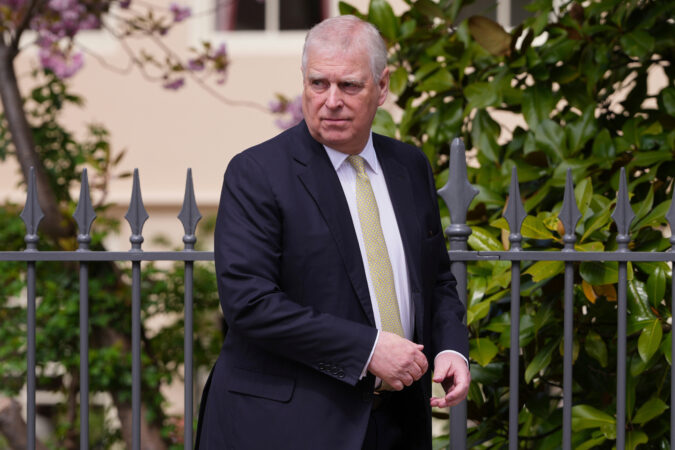
    LONDON — King Charles III is ready to “support’’ U.K. police examining claims that the former Prince Andrew gave confidential information to convicted sex offender Jeffrey Epstein, Buckingham Palace said on Monday.

    The statement came after Thames Valley Police said Monday that they were ”assessing” reports that the former prince, now known as Andrew Mountbatten-Windsor, sent trade reports to Epstein in 2010. The department, which serves an area west of London that includes Mountbatten-Windsor’s former home, previously said it was evaluating allegations that Epstein flew a young woman to Britain to have sex with Andrew, also in 2010.

    “The King has made clear, in words and through unprecedented actions, his profound concern at allegations which continue to come to light in respect of Mr. Mountbatten-Windsor’s conduct,’’ the palace said in a statement. “While the specific claims in question are for Mr. Mountbatten-Windsor to address, if we are approached by Thames Valley Police we stand ready to support them as you would expect.’’

    The statement is just the latest effort by the palace to distance the royal family from Mountbatten-Windsor as the U.S. Justice Department’s release of more than 3 million pages of documents from its investigation into Epstein reveal more embarrassing details about the relationship between the two men. Earlier in the day, Prince William and Princess Catherine released their own statement saying they have been “deeply concerned” by recent revelations.

    The palace also reiterated Charles and Queen Camilla’s concern for the victims of Epstein’s abuse.

    “As was previously stated, Their Majesties’ thoughts and sympathies have been, and remain with, the victims of any and all forms of abuse,’’ the palace said.

    The jeopardy faced by the royal family could be seen Monday when Charles visited Lancashire, in northwest England. While most of the crowd clapped, cheered, and waved flags, one person shouted, “How long have you known about Andrew?”

    Concerns about Mountbatten-Windsor’s links to Epstein have dogged the royal family for more than a decade.

    The late Queen Elizabeth II forced her second son to give up royal duties and end his charitable work in 2019 after he tried to explain away his friendship with Epstein during a catastrophic interview with the BBC. After more details about the relationship emerged in a book published last year, Charles stripped him of the right to be called a prince and ordered him to move out of a royal residence close to Windsor Castle.

    But the Justice Department documents have brought new attention to Mountbatten-Windsor as reporters home in on dozens of email exchanges between Epstein and the former prince, many of which took place after the financier was convicted of soliciting a minor for prostitution in 2008.

    Correspondence unearthed in recent days appears to show that Mountbatten-Windsor sent Epstein copies of his reports from a 2010 tour of Southeast Asia, which he undertook as Britain’s envoy for international trade. An earlier email appears to show Andrew sharing his itinerary for the two-week trip to Hanoi, Saigon, Singapore, Kuala Lumpur, and Hong Kong with Epstein.

    “We can confirm receipt of this report and are assessing the information in line with our established procedures,” Thames Valley police said in a statement released on Monday.

    Adding to the storm, a U.S.-based attorney said on Feb. 1 that he represented a woman who alleges Epstein flew her to Britain to have sex with Mountbatten-Windsor. The encounter took place at Royal Lodge, the former prince’s longtime home in Windsor, the attorney said in an interview with the BBC.

    Police previously said they were assessing this report.

    The king last week forced Mountbatten-Windsor to move out of Royal Lodge months ahead of schedule. Anger over Mountbatten-Windsor’s living arrangements had grown amid concern that he was still reaping rewards from his status as a royal even though he is no longer a working member of the royal family.

    Mountbatten-Windsor is now living on the king’s Sandringham estate in eastern England. He will live temporarily at Wood Farm Cottage while his permanent home on the estate undergoes repairs. Unlike Royal Lodge, which is owned by the crown and managed for the benefit of taxpayers, Sandringham is owned privately by the king.

    Thames Valley Police began its latest inquiry after Graham Smith, chief executive of the antimonarchy group Republic, reported Mountbatten-Windsor for suspected abuse of public office and violations of Britain’s Official Secrets Act.

    Smith, whose group seeks to replace the king with an elected head of state, compared Mountbatten-Windsor’s correspondence with Epstein to earlier revelations about Peter Mandelson, Britain’s former ambassador to the U.S., who is already the subject of a police investigation into whether he shared sensitive information with Epstein. Those communications were also revealed in the Justice Department documents.

    “I cannot see any significant difference between these allegations and those against Peter Mandelson,” Smith said on social media.

  • Vatican again approves Archbishop Fulton Sheen beatification after 2019 ceremony derailed at last minute

    Vatican again approves Archbishop Fulton Sheen beatification after 2019 ceremony derailed at last minute

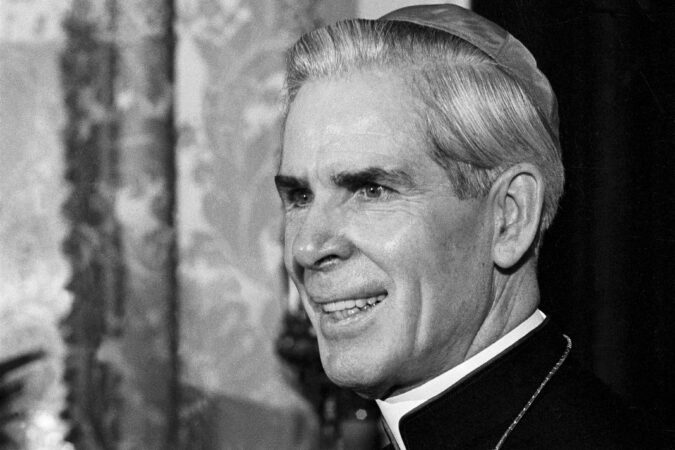
    ROME — The Vatican has given the green light, again, to beatify Archbishop Fulton Sheen, the popular U.S. radio and TV preacher whose path to sainthood was derailed first by a lengthy court battle over his remains and then by concerns about how he handled clergy sexual misconduct cases.

    After a rare six-year delay to investigate the concerns, Sheen’s beatification can now take place in Peoria, Ill., as originally planned, the Peoria diocese announced Monday.

    No new date for the ceremony, the last major step before possible sainthood, was immediately announced. But the Vatican’s approval now sets the stage for the Illinois-born Sheen to be beatified during the pontificate of the Illinois-born Pope Leo XIV.

    “The Holy See has informed me that the cause for the Venerable Servant of God Archbishop Fulton J. Sheen can proceed to beatification,” Peoria Bishop Louis Tylka said in a written and video statement on the websites of the diocese and the Sheen foundation. “We are working with the Dicastery of the Causes of Saints at the Vatican to determine the details for the upcoming beatification.”

    Sheen was an enormously effective evangelizer in the 20th century U.S. church, who in some ways pioneered televangelism with his 1950s television series, Life Is Worth Living. According to Catholic University of America, where he studied and taught before he was made a bishop, Sheen won an Emmy Award, was featured on the cover of Time Magazine, “and became one of the most influential Catholics of the 20th century.”

    Pope Francis had confirmed a miracle attributed to Sheen’s intercession on July 6, 2019, and had set his beatification for Dec. 21 that year in Peoria. But with less than three weeks’ notice, the Vatican postponed the ceremony indefinitely.

    It acted after the diocese of Rochester, N.Y., where Sheen served as bishop from 1966-1969, asked for further investigation into Sheen’s tenure and “his role in priests’ assignments.”

    The concerns focused on Sheen’s handling of two cases of priests accused of sexual misconduct. Sheen was never accused of abuse himself. A top canonical affairs official from Peoria, Monsignor James Kruse, said in 2019 that an investigation had cleared Sheen of any wrongdoing. Kruse later complained that the Rochester diocese was “sabotaging” the cause, writing a lengthy essay that had been posted on the official Sheen beatification site but later taken down.

    Peoria Bishop Tylka’s statement made no reference to the concerns that prompted the delay in 2019.

    The 2019 investigation was the latest obstacle to hinder Sheen’s cause, coming after an expensive, yearslong legal battle between Sheen’s relatives in Peoria and the New York City archdiocese over his final resting place.

    Sheen, who died in 1979, was interred under the altar of St. Patrick’s Cathedral in New York. His remains were returned to Peoria in 2019 after a court ruled Sheen’s niece could bury him there.

    Among those celebrating the Vatican’s new green light to beatify Sheen was the Pontifical Missions Societies in the U.S., the Vatican’s main missionary fundraising office in the U.S., which Sheen headed from 1950-1966. Sheen left most of his patrimony, including writings and audio recordings, to the organization, which raises money for the Catholic Church in Africa, Asia, Latin America, and other mission areas.

    “It is profoundly moving that, in God’s providence, the first U. S. — born pope is able to advance the cause of his fellow Illinois native, the most iconic evangelizer ever produced by the American Church,” Monsignor Roger Landry, national director of the office, said in a statement.

  • Man who stole nearly $250,000 from Pa. Occupational Therapy Association charged with theft

    Man who stole nearly $250,000 from Pa. Occupational Therapy Association charged with theft

    A Western Pennsylvania man stole nearly $250,000 from the Montgomery County-based Pennsylvania Occupational Therapy Association, prosecutors said Monday, and spent the money on a trip to Disney World, country club membership fees, an Outer Banks vacation rental, and other personal expenses.

    Michael Fantuzzo, 40, was charged with several counts of theft for the crimes, which prosecutors said took place between 2021 and 2024 while Fantuzzo, of Westmoreland County, served as treasurer for the nonprofit trade organization.

    In all, prosecutors said, Fantuzzo spent $246,708 of the association’s funds, effectively reducing its savings account to zero.

    Fantuzzo admitted to investigators that he used the association’s funds for personal expenses, though he initially told them he had spent $90,000 of the group’s funds and did so by accident.

    A further investigation into Fantuzzo’s spending found that the sum was much larger.

    Prosecutors say Fantuzzo spent more than $100,000 from the association’s bank account to pay off debt on a handful of credit cards opened in his name.

    And Fantuzzo charged more than $128,000 to the association’s credit card, including $10,513 to install a hot tub at his home; $7,247 for a vacation home rental in Duck, N.C.; $5,460 for his local and county taxes; $4,124 for membership to the Hillcrest Country Club; $2,040 for a limousine service; and $2,019 for the trip to Disney World.

    Members of the Pennsylvania Occupational Therapy Association, based in Plymouth Meeting at the time of the theft, realized something was wrong when newly elected board members learned the organization they inherited was experiencing “severe financial distress,” police said. They reported the suspicious payments to authorities in November.

    The association advocates for occupational therapists and provides career development and networking opportunities, among other services, according to its website.

    Investigators say they linked the spending back to Fantuzzo in a variety of ways.

    Some payments, such as the Disney World tickets, included Fantuzzo and his family members’ names on the charges. Meanwhile, the PayPal payments went to an account bearing the name of Fantuzzo’s wife. And investigators tracked Fantuzzo’s name back to invoices and rental agreements for other purchases.

    Fantuzzo turned himself in to Montgomery County authorities on Feb. 6. He was released from custody and is expected to appear in court for a preliminary hearing on Feb. 17.

  • China critic and former media tycoon Jimmy Lai is sentenced to 20 years in a Hong Kong security case

    China critic and former media tycoon Jimmy Lai is sentenced to 20 years in a Hong Kong security case

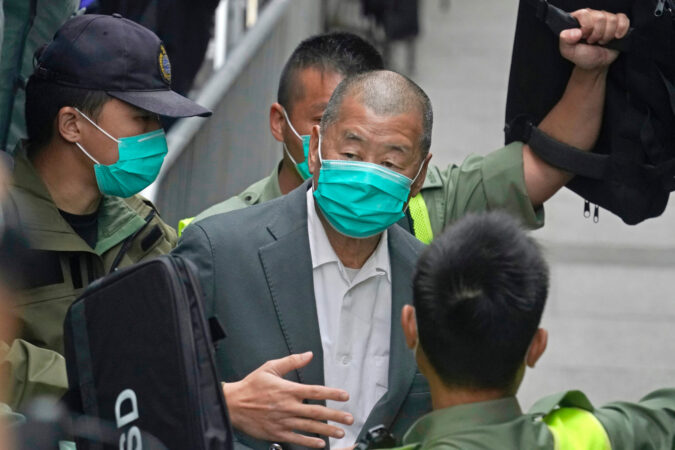
    HONG KONG — Jimmy Lai, the pro-democracy former Hong Kong media tycoon and a fierce critic of Beijing, was sentenced on Monday to 20 years in prison in the longest punishment given so far under a China-imposed national security law that has virtually silenced the city’s dissent.

    Lai, 78, was convicted in December of conspiring with others to collude with foreign forces to endanger national security, and of conspiracy to publish seditious articles. The maximum penalty for his conviction was life imprisonment.

    His co-defendants, six former employees of his Apple Daily newspaper and two activists, received prison terms of between 6 years and 3 months, and 10 years on collusion-related charges.

    Lai smiled and waved at his supporters when he arrived for the sentence. But before he left the courtroom, he looked serious, as some people in the public gallery cried. When asked about whether they would appeal, his lawyer Robert Pang said “no comment.”

    Lai’s daughter says he will die ‘a martyr’ in prison

    The democracy advocate’s arrest and trial have raised concerns about the decline of press freedom in what was once an Asian bastion of media independence. The government insists the case has nothing to do with a free press, saying the defendants used news reporting as a pretext for years to commit acts that harmed China and Hong Kong.

    Lai was one of the first prominent figures to be arrested under the security law in 2020. Within a year, some of Apple Daily’s senior journalists also were arrested and the newspaper shut down in June 2021.

    Lai’s sentencing could heighten Beijing’s diplomatic tensions with foreign governments, which have criticized Lai’s conviction and sentencing.

    U.S. President Donald Trump, who is expected to visit China in April, said he felt “so badly” after the verdict and noted he spoke to Chinese leader Xi Jinping about Lai and asked him “to consider his release.”

    British Prime Minister Keir Starmer’s government also has called for the release of Lai, who is a British citizen. U.K. Foreign Secretary Yvette Cooper called the prosecution “politically motivated,” saying the prison term is tantamount to a life sentence.

    In a statement, Lai’s son, Sebastien, said the “draconian” prison term was devastating for his family and life-threatening for his father. “It signifies the total destruction of the Hong Kong legal system and the end of justice,” he said.

    His sister Claire called the sentence “heartbreakingly cruel” in the same statement. “If this sentence is carried out, he will die a martyr behind bars,” she said.

    Hong Kong leader John Lee said Lai’s sentence demonstrated the rule of law, citing his serious crimes.

    “It’s bringing great satisfaction to the people,” he said in a statement.

    In Beijing, China’s Foreign Ministry spokesperson Lin Jian said Lai is a Chinese citizen and called him a major planner and participant in a series of anti-China destabilizing activities in Hong Kong. He urged “relevant countries” to respect the rule of law in Hong Kong.

    Judges ruled Lai was the mastermind

    Lai founded Apple Daily, a now-defunct newspaper known for its critical reports against the governments in Hong Kong and Beijing. He was arrested in August 2020 under the security law that was used in a yearslong crackdown on many of Hong Kong’s leading activists.

    In their ruling, three government-vetted judges wrote that the starting point of Lai’s sentence was increased because they found him to be the mastermind of the conspiracies. But they also reduced his penalty because they accepted that Lai’s age, health condition, and solitary confinement would cause his prison life to be more burdensome than that of other inmates.

    “Lai was no doubt the mastermind of all three conspiracies charged and therefore he warrants a heavier sentence,” they said. “As regards the others, it is difficult to distinguish their relative culpability.”

    They took into account that Lai is serving a prison term of five years and nine months in a separate fraud case and ruled that 18 years of Lai’s sentence in the security case should be served consecutively to that prison term.

    Urania Chiu, lecturer in law at Oxford Brookes University, said the case is significant for its broad construction of seditious intent and application of the term “collusion with foreign forces” to certain activities by the media. The implication is particularly alarming for journalists and those working in academia, she said.

    “Offering and publishing legitimate critiques of the state, which often involves engagement with international platforms and audiences, may now easily be construed as ‘collusion,’” Chiu said.

    Lai has been in custody for more than five years. In January, Pang said Lai suffered health issues including heart palpitations, high blood pressure, and diabetes. The prosecution said a medical report noted Lai’s general health condition remained stable. The government said his solitary confinement was at Lai’s wish.

    Co-defendants get reduced sentences

    The former Apple Daily staffers and activists involved in Lai’s case entered guilty pleas, which helped reduce their sentences Monday. They earlier admitted to the prosecution charge that said they conspired with Lai to request foreign forces to impose sanctions or blockades, or engage in other hostile activities against Hong Kong or China.

    The convicted journalists are publisher Cheung Kim-hung, associate publisher Chan Pui-man, editor-in-chief Ryan Law, executive editor-in-chief Lam Man-chung, executive editor-in-chief responsible for English news Fung Wai-kong, and editorial writer Yeung Ching-kee. They received prison terms ranging between six years and nine months, to 10 years.

    The two activists, Andy Li and Chan Tsz-wah, were sentenced to six years and three months, and seven years and three months respectively.

    The penalties for Cheung, Chan, and Yeung, alongside the two activists, were reduced in part because they served as prosecution witnesses and the judges said their evidence had “significantly” contributed to the conviction of Lai.

    Before sunrise, dozens of people stood in line outside the court building to secure a seat in the courtroom. One of them was former Apple Daily employee Tammy Cheung.

    “Whatever happens, it’s an end — at least we’ll know the outcome,” Cheung said before the sentence was delivered.

    Case considered a blow to Hong Kong media

    Lai founded Apple Daily in 1995, two years before the former British colony returned to Chinese rule. Its closure in 2021 shocked the local press scene. Hong Kong ranked 140th out of 180 territories in the press-freedom index compiled by media freedom organization Reporters Without Borders in 2025, far from its 18th place in 2002.

    Steve Li, chief superintendent of the police force’s National Security Department, welcomed the heavy sentence on Lai. “Obviously, he has done nothing good for Hong Kong that could serve as a basis for his mitigation,” he told reporters.

    The government said it will confiscate assets related to Lai’s crime.

    Human Rights Watch’s Asia director Elaine Pearson said the harsh 20-year-sentence is effectively a death sentence, calling it cruel and unjust.

  • New video footage released from day of the fatal Brown University shooting

    New video footage released from day of the fatal Brown University shooting

    PROVIDENCE, R.I. — A new video from the day of the Brown University shooting that killed two students and injured nine others was released Monday, with city officials saying they had withheld other footage and redacted the most graphic, violent images to avoid harming victims.

    “This was a difficult process to both maintain our commitment to transparency, to respond to requests from the media and the public’s right to know exactly what happened, but also balancing what we know are potential, really serious downside effects of releasing some of this information,” Providence Mayor Brett Smiley said at a news conference.

    News outlets across the U.S. and other countries had been requesting body camera footage, audio clips, and other public records since shortly after the shooting took place in mid-December.

    Material shows police response to the shooting

    The newly released material includes audio of a campus police officer calling city police at 4:07 p.m. “This is Brown police. We have confirmed gunshots at 184 Hope Street,” the officer said. “We do have a victim but we do not know where they are.”

    Four minutes later, campus police called back with an update: “We have a suspect description, wearing all black and a ski mask, unknown travel direction.”

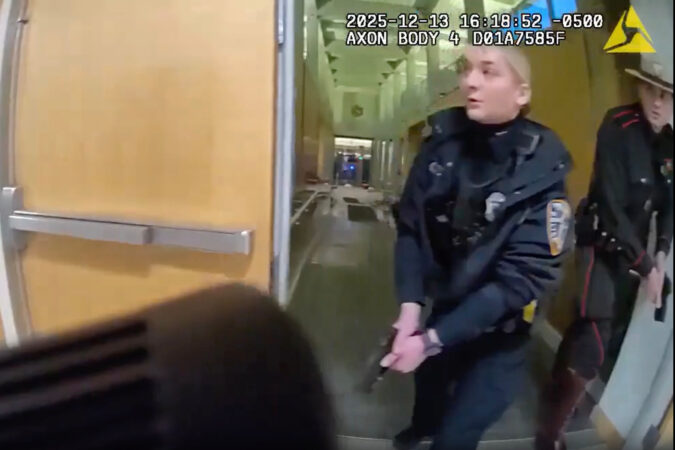
    Separately, the city released roughly 20 minutes of body camera footage of the officer in charge of the initial response to the shooting. The heavily redacted footage shows a chaotic and confusing scene of officers not knowing if the shooter was still in the building and attempts to quickly find a safe spot to send the students evacuated from the building. Scattered backpacks, gloves, and other items can be seen as officers scour the building looking for a possible shooter and victims.

    “Let’s get these rescues in, where are we staging rescue?” the officer, who was not identified, says in the video.

    He later cautions other officers, “Shooter might still be in the building, so use caution alright.”

    Long portions of the video are either blacked out or with the audio redacted. The video is often blocked by the officer’s arms in front of the camera. Officials defended their decision, made in consultation with city lawyers, to release only one video, saying it offered the most “comprehensive” view. Smiley argued that releasing more videos would not answer the harder question of why the shooter chose to attack the university.

    “Why did this person do this? None of those videos are going to answer that question. None of them,” Smiley said.

    Other audio captures officers describing a possible sighting of the shooter on the second floor of another building and a report of a suspect being taken into custody. That person turned out to be a maintenance worker. It’s unclear when officers realized they had the wrong person in custody, but within minutes, one officer instructs them “We’re gonna work on the premise that that’s not him. We’re gonna conduct a secondary search.”

    The city released those records Monday, saying they waited at the request of the victims′ families until after a memorial service was held the previous week on Brown’s campus. Smiley said he had spoken to the victims and their families in recent days.

    “Many of their kids are working really hard at moving forward and moving on, and releases like today they fear will make it harder to move forward,” he said, describing them as “remarkably strong and resilient.”

    Details of the shooting

    On Dec. 13, gunman Claudio Neves Valente, 48, entered a study session in a Brown academic building and opened fire on students, killing 19-year-old sophomore Ella Cook and 18-year-old freshman MukhammadAziz Umurzokov and wounding nine others.

    A newly released police incident report reiterated the emotional moments law enforcement had previously shared about hospitalized victims responding to photos of the suspected shooter.

    One victim “quickly froze, physically pushed back” and began crying and shaking as she confirmed the image matched the person who shot her. Another victim “took a deep breath, shut his eyes, changed his breathing pattern and confirmed that the shooter he saw in the hallway appeared to be the person in the photos presented.”

    Authorities say Neves Valente, who had been a graduate student at Brown studying physics during the 2000-01 school year, also fatally shot Massachusetts Institute of Technology professor Nuno F.G. Loureiro at Loureiro’s Boston-area home.

    Neves Valente, who had attended school with Loureiro in Portugal in the 1990s, was found dead days after the shooting in a New Hampshire storage facility.

    The Justice Department has since said Neves Valente planned the attack for years and left behind videos in which he confessed to the killings but gave no motive. The FBI recovered the electronic device containing the series of videos during a search of the storage facility where Neves Valente’s body was found.

  • Boy who appeared in Bad Bunny’s Super Bowl show is not the 5-year-old detained by ICE in Minneapolis

    Boy who appeared in Bad Bunny’s Super Bowl show is not the 5-year-old detained by ICE in Minneapolis

    Social media users incorrectly identified a small boy who was part of Bad Bunny’s Super Bowl halftime show on Sunday as Liam Conejo Ramos, the 5-year-old who, along with his father, was detained by immigration officials in Minnesota and held at an ICE facility in Texas.

    The boy was actually Lincoln Fox Ramadan, a child actor from Costa Mesa, Calif., who is also 5 years old, according to his Instagram profile.

    After Bad Bunny finished his song “NUEVAYoL,” cameras showed Lincoln watching Bad Bunny accepting his Grammy for album of the year last week. The artist then walks over and hands Lincoln what appears to be a Grammy.

    Here’s a closer look at the facts.

    Claim: Bad Bunny handed his Grammy to Liam Conejo Ramos during his Super Bowl halftime performance.

    The Facts: This is false. The boy was child actor Lincoln Fox Ramadan.

    “An emotional, unforgettable day being cast as the young Benito — a symbolic moment where the future hands the past a Grammy,” reads a Monday post on Lincoln’s Instagram profile. “A reminder that dreams come true and it’s never too early to dream big.”

    The post includes photos from Lincoln’s appearance during the halftime show and other moments from the day, as well as a childhood photo of Bad Bunny, whose real name is Benito Antonio Martínez Ocasio.

    In the caption, Lincoln also wrote that he’s “sending love to Liam Ramos” and that “we all deserve peace and love in America, a country built by and home to so many hard-working immigrants.”

    Another post from Lincoln’s Instagram, shared on Sunday, included a video of his cameo and was captioned, “I’ll remember this day forever! @badbunnypr — it was my truest honor.” His last post before the Super Bowl, on Jan. 31, was a photo of himself captioned, “I booked a cool gig! Can’t wait to share it with you guys.”

    Liam and his father, Adrian Conejo Arias, who is originally from Ecuador, were detained by immigration officers in a Minneapolis suburb on Jan. 20. They were taken to an ICE detention facility in Dilley, Texas, but returned to Minneapolis on Feb. 1 following a judge’s order.

    Images of immigration officers surrounding the young boy in a blue bunny hat and Spider-Man backpack drew outrage about the Trump administration’s immigration crackdown in Minneapolis.

    Lincoln, the child actor, is half Egyptian and half Argentinian, according to his Instagram and his acting profile. He previous work has included modeling for Walmart and Target.

    Bad Bunny has won six total Grammys, including three at the 2026 awards show. His album of the year win for the critically-acclaimed DeBÍ TiRAR MáS FOToS, is the first time a Spanish-language album has taken home the top prize.

    Representatives for Bad Bunny did not respond to a request for comment.

  • Judge sentences man who decapitated his wife: ‘I don’t think I’ve ever seen a case like this’

    Judge sentences man who decapitated his wife: ‘I don’t think I’ve ever seen a case like this’

    Hours before Ahmad Shareef was arrested for killing his wife, he called his mother and confessed.

    “I cut her head off,” he told her, according to the affidavit of probable cause for his arrest.

    On Monday, Shareef, 37, was sentenced to 16 to 42 years in prison in the decapitation death of Leila Al Raheel inside the couple’s Northeast Philadelphia home. Shareef pleaded guilty to third-degree murder and related crimes in the November 2022 slaying.

    “I don’t think I’ve ever seen a case like this,” said Common Pleas Court Judge Charles Ehrlich.

    New details of the killing also surfaced during the hearing.

    After Shareef confessed to his mother, she asked a neighbor to go to her son’s home in the 300 block of Magee Avenue and check on Al Raheel, according to the affidavit. The neighbor found Al Raheel dead in the dining room, she later told police.

    Officers who responded to the house discovered Al Raheel’s headless body on the kitchen floor, the affidavit said. They found Shareef about four miles away, hiding in bushes in front of a house. His sweatpants, the document said, were stained red with blood.

    Inside a police interview room, Shareef waived his Miranda rights, according to the affidavit. He told detectives he’d argued with Al Raheel after she had called him names.

    Then, he said, he cut off her head with a kitchen knife.

    In court Monday, the neighbor described how discovering Al Raheel’s body upended her life. She said she has been diagnosed with post-traumatic stress disorder. “This isn’t something that time simply erases,” she said.

    No one testified on Shareef’s behalf. His mother, who had been expected to appear, was ill and unable to attend, his defense attorney, Gregg Blender, said.

    Al Raheel, who came to the U.S. with Shareef and his family in 2011, “has no family to speak on her behalf,” said the prosecutor, Maggie McDermott.

    The judge imposed a sentence slightly below the prosecution’s request of 23 to 47 years, after Shareef’s attorney urged him to consider his client’s traumatic childhood and long-standing mental illness, which he said went largely untreated.

    As a child, Shareef moved with his mother from Kuwait to Iraq and later to Syria, fleeing both war and abusive men who, Blender said, subjected them to violence. At the insistence of his family, Shareef later married Al Raheel, a neighbor, Blender said.

    In the U.S., Shareef was treated repeatedly for mental health crises, Blender said. In 2012, he was hospitalized after striking himself and cutting his wrists, and in 2019, Blender said, Shareef stabbed himself in the neck.

    Blender urged the judge to weigh what he described as his client’s “horrific upbringing” against what he acknowledged was “nothing less than a horrific crime.”

    McDermott called the killing the “peak of domestic violence” and “unspeakably awful,” and warned that Shareef posed a continuing danger. If he was capable of such violence toward someone he loved, she argued, then even strangers were at risk.

    Ehrlich said the sentence reflected both Shareef’s traumatic past and the threat he posed going forward.

    “To sever a head with a kitchen knife takes a lot of effort,” he said. “Mr. Shareef, you have lived a life of horrors. I don’t think anyone in this courtroom disputes that.” The question, he added, was what needed to be done to protect others.

    “I’m very concerned about the future — I’m going to be honest with you,” the judge said. “What happened to you as a child was not your fault. But people with this kind of damage can hurt others.”

    After the slaying, neighbors told The Inquirer that several people had been living in the house, which had become an eyesore on the block. Shareef, they said, stood out: He behaved aggressively to other residents, and sometimes appeared outside wearing only underwear.

    Since late 2016, police responded to more than 50 calls on the 300 block of Magee Street for domestic disturbances, reports of weapons, and other complaints. However, police would not disclose exact addresses, and it remains unclear how many of those calls — if any — originated from the home Shareef shared with Al Raheel, where she was eventually killed.

    The city’s Department of Licenses and Inspections also confirmed that inspectors visited the house more than a year before Al Raheel was killed, following reports that the house’s garage was being used as a living space. But the inspectors weren’t able to gain access to the property, according to the department. Instead, they issued violations for weeds and combustible storage.

  • Masks emerge as symbol of Trump’s ICE crackdown and a flashpoint in Congress

    Masks emerge as symbol of Trump’s ICE crackdown and a flashpoint in Congress

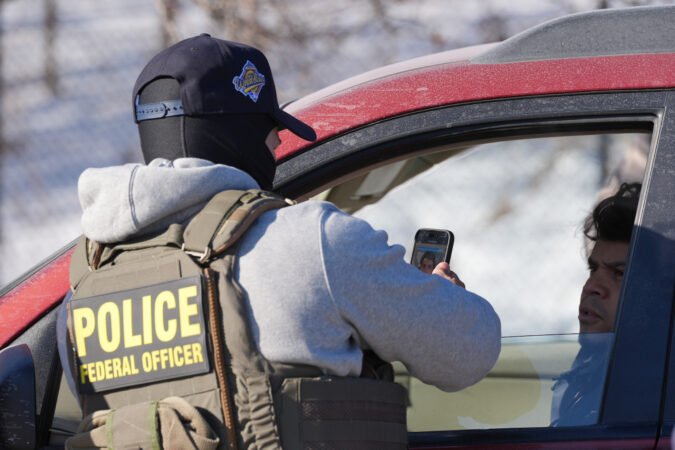
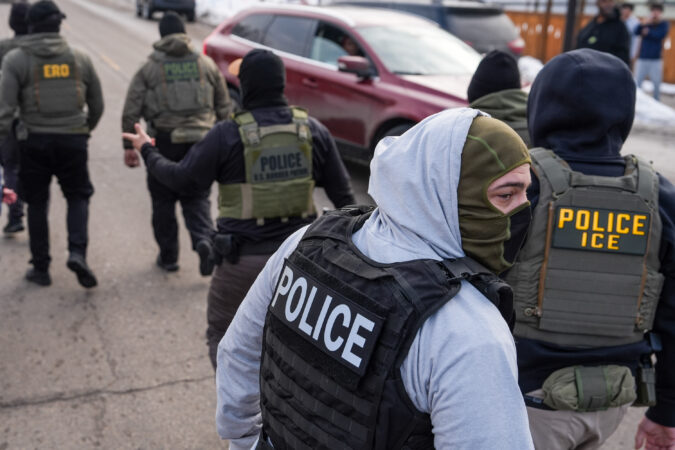
    WASHINGTON — Beyond the car windows being smashed, people tackled on city streets — or even a little child with a floppy bunny ears snowcap detained — the images of masked federal officers have become a flashpoint in the Trump administration’s immigration enforcement operations.

    Not in recent U.S. memory has an American policing operation so consistently masked its thousands of officers from the public, a development that the Department of Homeland Security believes is important to safeguard employees from online harassment. But experts warn masking serves another purpose, inciting fear in communities, and risks shattering norms, accountability, and trust between the police and its citizenry.

    Whether to ban the masks — or allow the masking to continue — has emerged as a central question in the debate in Congress over funding Homeland Security ahead of Friday’s midnight deadline, when it faces a partial agency shutdown.

    “Humans read each others’ faces — that’s how we communicate,” said Justin Smith, a former Colorado sheriff who is executive director and CEO of the National Sheriffs’ Association.

    “When you have a number of federal agents involved in these operations, and they can’t be identified, you can’t see their face, it just tends to make people uncomfortable,” he said. “That’s bringing up some questions.”

    Democrats demand ‘masks off’

    Masks on federal agents have been one constant throughout the first year of President Donald Trump’s mass deportation operation.

    What began as a jarring image last spring, when plain-clothes officers drawing up their masks surrounded and detained a Tufts University doctoral student near her Massachusetts home, has morphed into familiar scenes in Los Angeles, Chicago, and other cities. The shooting deaths of two American citizens at the hands of federal immigration officers during demonstrations against ICE raids in Minneapolis sparked widespread public protest and spurred lawmakers to respond.

    “Cameras on, masks off” has become a rallying cry among Democrats, who are also insisting the officers wear body cameras as a way to provide greater accountability and oversight of the operations.

    House Democratic Leader Hakeem Jeffries told reporters at the Capitol that unmasking the federal agents is a “hard red line” in the negotiations ahead.

    Immigration and Customs Enforcement says on its website that its officers “wear masks to prevent doxing, which can (and has) placed them and their families at risk. All ICE law enforcement officers carry badges and credentials and will identify themselves when required for public safety or legal necessity.”

    Fueled with funds from Trump’s big tax cuts bill, which poured some $170 billion into Homeland Security, ICE has grown to be among the largest law enforcement operations in the nation. Last year, it announced it had more than doubled its ranks, to 22,000, with rapid hiring — and $50,000 signing bonuses. Homeland Security did not respond to an emailed request for further comment.

    Most Republicans say the current political climate leaves the immigration officers, many of them new to the job, exposed if their faces and identities are made public.

    Sen. Thom Tillis (R., N.C.) said he just can’t agree with Democrats’ demand that officers unmask themselves.

    “You know, there’s a lot of vicious people out there, and they’ll take a picture of your face, and the next thing you know, your children or your wife or your husband are being threatened at home,” he said. “That’s just the reality of the world that we’re in.”

    ICE stands apart with masks

    It appears no other policing agency in the country regularly uses masking on a widespread basis. Instead, masks are used during special operations, particularly undercover work or at times during large crowd control or protest situations, and when there is inclement weather or individual health concerns.

    Experts said only perhaps during the Ku Klux Klan raids or in the Old West has masking been a more widely used tool.

    “It is without precedent in modern American history,” said the American Civil Liberties Union’s Naureen Shah in Washington.

    She said the idea of masked patrols on city streets seeking immigrants can leave people scared and confused about who they are encountering — which she suggested is part of the point.

    “I think it’s calculated to terrify people,” she said. “I don’t think anybody viscerally feels like, OK, this is something we want to become a permanent fixture in our streets.”

    Toward the end of the first Trump administration, Congress sought to clamp down after masked federal agents showed up in 2020 to quell protests in Portland, Ore., and other cities. A provision requiring agents to clearly identify themselves was tucked into a massive defense authorization bill that Trump assigned into law.

    Last year, California became the first state in the nation to ban most law enforcement officers, including federal immigration agents, from covering their faces. The Trump administration’s Justice Department sued, saying the state’s policies “create risk” for the agents.

    A federal judge on Monday blocked the part of the California law that would ban federal immigration agents from covering their faces, but they will still be required to wear clear identification showing their agency and badge number.

    Judge Christina Snyder said she issued the initial ruling because the mask ban as it was enacted did not also apply to state law enforcement authorities, discriminating against the federal government. The ruling could have national implications as states grapple with how to deal with federal agents enforcing the Trump administration’s immigration crackdown.

    It left open the possibility of future legislation banning federal agents from wearing masks if it applied to all law enforcement agencies, with Snyder writing “the Court finds that federal officers can perform their federal functions without wearing masks.” The ruling will go into effect Feb. 19.

    Police seek middle ground, advocates say unmasking not enough

    Smith, of the sheriffs’ association, said there’s no easy answer to the current masking debate.

    He suggested perhaps a middle ground could be reached — one that would allow officers to wear masks, but also require their badge or other identifying numbers to be prominently displayed.

    Advocates said while unmasking the federal agents would be an important step, other restraints on immigration enforcement operations may be even more so.

    They are pushing Congress to curb the ability of ICE officers to rely on administrative warrants in immigration operations, particularly to enter people’s homes, insisting such actions should be required to use judicial warrants, with sign-off from the courts.

    There is also an effort to end roving patrols — the ability of immigration officers to use a person’s race, language, or job location to question their legal status, sometimes called “Kavanaugh stops” after Supreme Court Justice Brett Kavanaugh’s concurring opinion to a Supreme Court decision last summer.

    Greg Chen, senior director of government affairs at the American Immigration Lawyers Association, said because Congress gave Homeland Security such robust funding in the tax cuts bill, “That’s why the policy reforms are so important right now to bring the agency in check.”

    Rep. Ayanna Pressley (D., Mass.), who recently returned from Minnesota, said the weight of the masked enforcement operation can be felt in ways that impact everyone — regardless of a person’s own immigration status.

    “It’s a very a heavy presence of surveillance and intimidation,” she said. “No one is exempt.”