Category: News

Latest breaking news and updates

  • Venezuelans wonder who’s in charge as Trump claims contact with Maduro’s deputy

    Venezuelans wonder who’s in charge as Trump claims contact with Maduro’s deputy

    BUENOS AIRES, Argentina — Venezuelans on Saturday were scrambling to understand who is in charge of their country after a U.S. military operation that captured President Nicolás Maduro.

    President Donald Trump delivered a shocking pick: the United States, perhaps in coordination with one of Maduro’s most trusted aides.

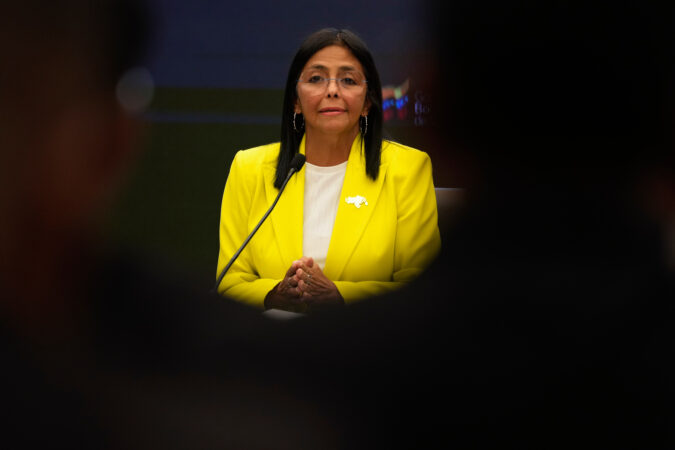
    Delcy Rodríguez has served as Maduro’s vice president since 2018, overseeing much of Venezuela’s oil-dependent economy as well as its feared intelligence service. But she is someone the Trump administration apparently is willing to work with, at least for now.

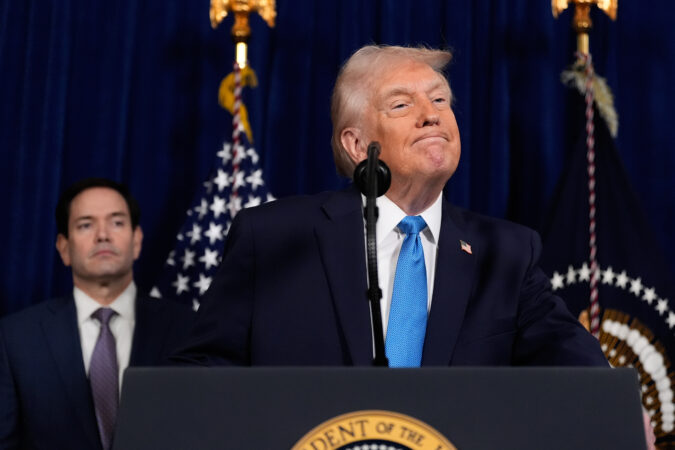
    “She’s essentially willing to do what we think is necessary to make Venezuela great again,” Trump told reporters of Rodríguez, who faced U.S. sanctions during Trump’s first administration for her role in undermining Venezuelan democracy.

    In a major snub, Trump said opposition leader Maria Corina Machado, who was awarded last year’s Nobel Peace Prize, didn’t have the support to run the country.

    Trump said Rodríguez had a long conversation with Secretary of State Marco Rubio in which Trump claimed she said, “‘We’ll do whatever you need.’”

    “I think she was quite gracious,” Trump added. “We can’t take a chance that somebody else takes over Venezuela that doesn’t have the good of the Venezuelan people in mind.”

    Rodríguez tried to project strength and unity among the ruling party’s many factions, downplaying any hint of betrayal. In remarks on state TV, she demanded the immediate release of Maduro and his wife, Cilia Flores, and denounced the U.S. operation as a flagrant violation of the United Nations charter.

    “There is only one president in this country, and his name is Nicolás Maduro,” Rodríguez said, surrounded by top civilian officials and military commanders.

    There was no immediate sign that the U.S. was running Venezuela.

    “What will happen tomorrow? What will happen in the next hour? Nobody knows,” Caracas resident Juan Pablo Petrone said.

    No sign of a swearing-in

    Trump indicated that Rodríguez had been sworn in already as president of Venezuela, per the transfer of power outlined in the constitution. However, state television has not broadcast any swearing-in ceremony.

    In her televised address, Rodríguez did not declare herself acting president or mention a political transition. A ticker at the bottom of the screen identified her as the vice president. She gave no sign that she would be cooperating with the U.S.

    “What is being done to Venezuela is an atrocity that violates international law,” she said. “History and justice will make the extremists who promoted this armed aggression pay.”

    The Venezuelan constitution also says a new election must be called within a month in the event of the president’s absence.

    But experts have been debating whether the succession scenario would apply here, given the government’s lack of popular legitimacy and the extraordinary U.S. military intervention.

    Venezuelan military officials were quick to project defiance in video messages.

    “They have attacked us but will not break us,” said Defense Minister Gen. Vladimir Padrino López, dressed in fatigues.

    Interior Minister Diosdado Cabello appeared on state TV in a helmet and flak jacket, urging Venezuelans to “trust in the political leadership and military” and “get out on the streets” to defend the country’s sovereignty.

    “These rats attacked and they will regret what they did,” he said of the U.S.

    Strong ties with Wall Street

    A lawyer educated in Britain and France, Rodríguez has a long history of representing the revolution started by the late Hugo Chávez on the world stage.

    She and her brother, Jorge Rodríguez, head of the Maduro-controlled National Assembly, have strong leftist credentials born from tragedy. Their father was a socialist leader who died in police custody in the 1970s, a crime that shook many activists of the era, including a young Maduro.

    Unlike many in Maduro’s inner circle, the Rodríguez siblings have avoided criminal indictment in the U.S. Delcy Rodríguez has developed strong ties with Republicans in the oil industry and on Wall Street who balked at the notion of U.S.-led regime change.

    Among her past interlocutors was Blackwater founder Erik Prince and, more recently, Richard Grenell, a Trump special envoy who tried to negotiate a deal with Maduro for greater U.S. influence in Venezuela.

    Fluent in English, Rodríguez is sometimes portrayed as a well-educated moderate in contrast to the military hard-liners who took up arms with Chávez against Venezuela’s democratically elected president in the 1990s.

    Many of them, especially Cabello, are wanted in the U.S. on drug trafficking charges and stand accused of serious human rights abuses. But they continue to hold sway over the armed forces, the traditional arbiter of political disputes in Venezuela.

    That presents major challenges to Rodríguez asserting authority. But experts say that Venezuela’s power brokers have long had a habit of closing ranks behind their leaders.

    “These leaders have all seen the value of staying united. Cabello has always taken a second seat or third seat, knowing that his fate is tied up with Maduro’s, and now he very well might do that again,” said David Smilde, a sociology professor at Tulane University who has conducted research into Venezuela’s political dynamics over the past three decades.

    “A lot depends on what happened last night, which officials were taken out, what the state of the military looks like now,” Smilde said. ”If it doesn’t have much firepower anymore, they’re more vulnerable and diminished, and it will be easier for her to gain control.”

    An apparent snub of the opposition

    Shortly before Trump’s news conference, Machado, the opposition leader, called on her ally Edmundo González — a retired diplomat widely considered to have won the country’s disputed 2024 presidential election — to “immediately assume his constitutional mandate and be recognized as commander-in-chief.”

    In a triumphant statement, Machado promised that her movement would “restore order, free political prisoners, build an exceptional country and bring our children back home.”

    She added: “Today we are prepared to assert our mandate and take power.”

    Asked about Machado, Trump was blunt: “I think it would be very tough for (Machado) to be the leader,” he said.

    “She doesn’t have the support or respect within the country.”

    Venezuelans expressed shock, with many speculating on social media that Trump had mixed up the two women’s names. Machado has not responded to Trump’s remarks.

  • Trump’s Venezuela move pushes the limits of ‘America First’

    Trump’s Venezuela move pushes the limits of ‘America First’

    President Donald Trump on Saturday demonstrated how expansively he is willing to exert U.S. power abroad, removing a foreign leader who had not threatened military force against America and declaring that Washington could assume long-term control in Venezuela.

    The operation echoed those by past hawkish U.S. presidents to overthrow leaders in Iraq and Panama, raising questions about whether Trump’s “America First” doctrine is being redefined as he authorizes successive foreign attacks and pursues regime change in the South American nation.

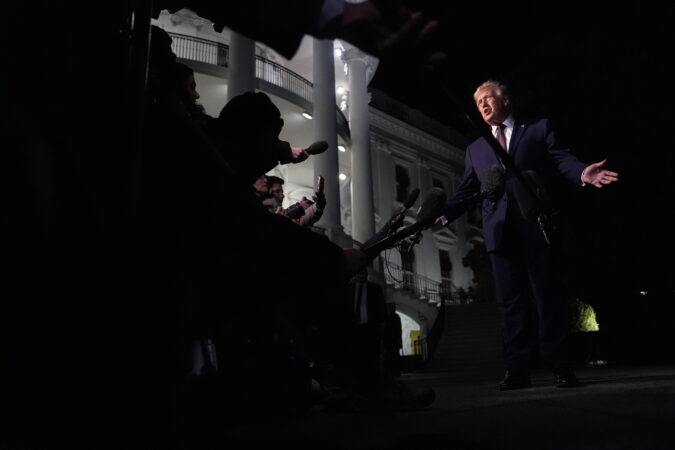
    “We’re going to run the country until such time as we can do a safe, proper, and judicious transition,” Trump said in a news conference at Mar-a-Lago. The remark contrasted with Trump’s past criticism of U.S. leaders who, he has argued, acted as “the policemen of the world,” and stood to sharpen tensions inside his political movement, which has long been skeptical of overseas entanglements. He did not say how long the United States would seek to control Venezuela.

    But Trump described the operation as part of a broader effort to reassert “American dominance in the Western Hemisphere,” language that echoed Cold War-era interventionism more than the restraint he once championed.

    “We’re not afraid of boots on the ground,” Trump said, adding that the United States would be “replacing” the country’s oil infrastructure. The remarks pointed to a scope of involvement that could extend beyond the limited, short-term actions Trump has previously championed.

    In a wide-ranging news conference, Trump pointed to multiple justifications for the action, citing drugs, dictatorship, and regional dominance. Taken together, the shifting explanations suggest not a single rationale for the operation, but a broader assertion of presidential authority — one in which the White House claims latitude to act first and justify later.

    Trump’s approval of a “large scale strike” on Venezuela early Saturday to capture President Nicolás Maduro and his wife marked the latest in a series of U.S. military actions since Trump returned to office, following strikes on Iranian nuclear facilities in June and attacks against the Islamic State in Nigeria on Christmas that underscore his expanding use of force abroad.

    Despite branding himself a “peace president” who ran on a promise of “no new wars” and openly coveted the Nobel Peace Prize, Trump has increasingly relied on military force abroad — a turn that has unsettled parts of his MAGA base even as it has not yet produced prolonged U.S. involvement. The approach reflects a gamble Trump appears willing to take as he seeks to project strength and test the limits of presidential authority, even if doing so strains the anti-interventionist identity once central to his political brand.

    Asked how taking control of a South American country was “America First,” Trump told reporters it is because he wanted to “surround” America with “good neighbors” and “stability.”

    “We have tremendous energy in that country,” Trump said. “It’s very important that we protect it. We need that for ourselves. We need that for the world.”

    Trump rose to power in 2016 in part because of his willingness to break sharply with previous Republican interventionism, especially the 2003 invasion of Iraq, which his Democratic rival Hillary Clinton supported.

    Throughout his first term, he focused on reducing U.S. presence abroad, including setting in motion the pullout from Afghanistan ultimately carried out by President Joe Biden in 2021.

    But Trump has been willing to be sharply more interventionist in his second term, declaring a desire to take over Gaza and again threatening Iran this week — saying the U.S. is “locked and loaded” to take action if the government harms more protesters in a 3 a.m. social media post Friday.

    The president said he had watched the Venezuela mission in real time from his Mar-a-Lago estate in Palm Beach, Fla., surrounded by military generals, and compared the feed to an action-packed “television show.” The “massive number” of aircraft — helicopters and fighter jets — and “steel all over the place” that didn’t stop the U.S. team from snatching Maduro in the dead of night.

    Calling into Fox News’ morning show, Trump touted “the speed, the violence” employed by the military personnel assigned to the mission.

    “‘Violence.’ They used that term,” Trump said, describing accounts of the operation relayed to him. “It was just an amazing thing.”

    As he spoke with the conservative news channel, his first extensive public remarks about the operation since he had announced it hours earlier on Truth Social, Trump offered shifting rationales for why the apprehension of Maduro had occurred, suggesting that he is still testing how to sell the operation to American voters.

    On the one hand, Trump said, preventing Venezuela from being “run by a dictatorship” was important, asserting that the United States has a role in shaping the country’s political future — a claim he framed as serving Venezuelan citizens’ interests.

    “We can’t take a chance of letting somebody else run it and just take over what he left off,” Trump said. “We’ll be involved in it very much. And we want to do liberty for the people … I think the people of Venezuela are very, very happy because they love the United States. You know, they were run by, essentially, a dictatorship or worse.”

    “But look,” Trump said as he returned to the antidrug message he has emphasized for months, “Tremendous numbers of people were being killed through drugs. And what they did to our country in sending prisoners and mental people, people from mental institutions and drug lords and everything — they sent them by the hundreds of thousands of people into our country — and that is just unforgivable.”

    An Economist/YouGov poll conducted Dec. 20-22 found that 52% of respondents opposed using the U.S. military to overthrow Maduro, while just 22% said they supported doing so. Another 26% of adults, meanwhile, said they were not sure.

    Vice President JD Vance, who has privately urged restraint in some foreign-policy decisions, said on social media Saturday that Trump had “offered multiple off-ramps” to Maduro before apprehending him, framing the operation as chiefly a law enforcement mission. He cited U.S. indictments of Maduro “for narco-terrorism.”

    “You don’t get to avoid justice for drug trafficking in the United States because you live in a palace in Caracas,” Vance wrote.

    He was not among the senior officials flanking Trump during a news conference at Mar-a-Lago on Saturday — a notable absence given his past criticisms of excessive military action abroad. A spokesperson for Vance said the vice president “was deeply integrated in the process and planning of the Venezuela strikes and Maduro’s arrest,” and remotely took part in several late-night meetings ahead of and during the operation. Vance “briefly” met with Trump at his West Palm Beach golf club Friday to discuss the strikes, the spokesperson said, but steered clear of Mar-a-Lago as the operation took place for fear of signaling an attack was imminent.

    Trump gave little indication this week that his administration was preparing the strike, declining to answer reporters’ questions about Venezuela as he entered his glitzy New Year’s Eve party Wednesday. He spent Friday shopping for marble for his planned White House ballroom project and spending time at his West Palm Beach golf club.

    Photos released by Trump on Truth Social showed that the administration had stood up a makeshift situation room where the president, Defense Secretary Pete Hegseth, and Secretary of State Marco Rubio — a longtime proponent of regime change in the South American country — monitored the attack. Black fabric draped the room, where the president and administration officials sat on golden chairs.

    Trump at the news conference Saturday embraced the “Donroe Doctrine” — a play on former president James Monroe’s declaration that the Western Hemisphere is Washington’s sphere of interest and that U.S. leaders would not tolerate unfriendly nations in their backyard.

    Despite a flurry of recent declarations from right-wing commentators and online influencers criticizing the Trump administration for focusing too much on foreign affairs, many MAGA-aligned voices were largely silent Saturday morning, a sign that they were waiting to see the scope of the strike and potential fallout.

    Stephen K. Bannon, a former Trump adviser and prominent MAGA commentator who has been sharply critical of the prospect of the United States pushing for regime change in Iran, initially spoke favorably about the operation in Venezuela.

    Before Trump’s news conference, during his War Room show, Bannon called it “a stunning and dazzling overnight strike by U.S. forces.” But after Trump declared the United States would “run” the country, Bannon withheld further endorsement.

    While Trump appeared to have the backing of traditional, hawkish Republicans, there were signs that his staunchest supporters may remain uneasy about open-ended control.

    MAGA-aligned pollster Rich Baris warned that any brief “rally around the flag” effect from Trump’s announcement would fade if the Venezuela mission expanded. “Unless Trump can pull off the first ever successful regime change in a non-Western European nation since WWII,” Baris wrote on social media, “this will consume much of the year and voters will get more pissed he isn’t focused on them.”

    So far, however, resistance inside Trump’s coalition has been limited. Congressional Republicans largely praised the strike despite Trump not seeking authorization or briefing lawmakers in advance, while only two House Republicans publicly raised concerns. Democrats, by contrast, warned the move amounted to an overreach of executive authority that could set a dangerous precedent.

    Trump has declared ambitions over the Western Hemisphere so sweeping that they would reshape world affairs — and maps — for generations. He has said he wants to turn Canada into the 51st state, an effort that would require military force.

    He evinced interest in annexing Greenland from Denmark, a close ally, and has tapped a top Republican as a special envoy to the territory. He has tied military action in Latin America to his top domestic priorities of reducing immigration and stopping the flow of drugs into the United States.

    On Saturday, he left the door open to further military action against the leaders of Cuba and Colombia, who have also opposed Trump and his policies.

  • Iran’s leader says rioters ‘must be put in their place’ as protest death toll reaches at least 10

    Iran’s leader says rioters ‘must be put in their place’ as protest death toll reaches at least 10

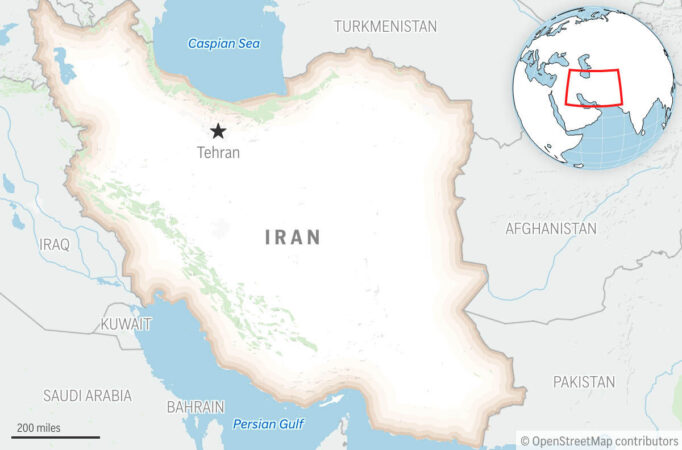
    DUBAI, United Arab Emirates — Iran’s supreme leader insisted Saturday that “rioters must be put in their place” after a week of protests that have shaken the Islamic Republic, likely giving security forces a green light to aggressively put down the demonstrations.

    The first comments by 86-year-old Ayatollah Ali Khamenei come as violence surrounding the demonstrations sparked by Iran’s ailing economy has killed at least 10 people. The protests show no sign of stopping and follow U.S. President Donald Trump warning Iran on Friday that if Tehran “violently kills peaceful protesters,” the United States “will come to their rescue.”

    While it remains unclear how and if Trump would intervene, his comments sparked an immediate, angry response, with officials within the theocracy threatening to target American troops in the Mideast. They also take on new importance after Trump said Saturday that the U.S. military captured Venezuelan President Nicolás Maduro, a longtime ally of Tehran.

    The protests have become the biggest in Iran since 2022, when the death of 22-year-old Mahsa Amini in police custody triggered nationwide demonstrations. However, the protests have yet to be as widespread and intense as those surrounding the death of Amini, who was detained over not wearing her hijab, or headscarf, to the liking of authorities.

    Khamenei makes first comments on protests

    State television aired remarks by Khamenei to an audience in Tehran that sought to separate the concerns of protesting Iranians upset about the collapse of the rial, Iran’s currency, from “rioters.”

    “We talk to protesters, the officials must talk to them,” Khamenei said. “But there is no benefit to talking to rioters. Rioters must be put in their place.”

    He also reiterated a claim constantly made by officials in Iran that foreign powers like Israel or the United States were pushing the protests, without offering any evidence. He also blamed “the enemy” for Iran’s collapsing rial.

    “A bunch of people incited or hired by the enemy are getting behind the tradesmen and shopkeepers and chanting slogans against Islam, Iran, and the Islamic Republic,” he said. ”This is what matters most.”

    Iran’s paramilitary Revolutionary Guard ranks include the all-volunteer Basij force, whose motorcycling-riding members have violently put down protests like the 2009 Green Movement and the 2022 demonstrations. The Guard answers only to Khamenei.

    Hard-line officials within the country are believed to have been pushing for a more aggressive response to the demonstrations as President Masoud Pezeshkian has sought talks to address protesters’ demands.

    But bloody security crackdowns often follow such protests. Protests over a gasoline price hike in 2019 reportedly saw over 300 people killed. A crackdown on the Amini protests of 2022, which lasted for months, killed more than 500 people and saw over 22,000 detained.

    “Iran has no organized domestic opposition; protesters are likely acting spontaneously,” the Eurasia Group said in an analysis Friday. “While protests could continue or grow larger (particularly as Iran’s economic outlook remains dire), the regime retains a large security apparatus and would likely suppress such dissent without losing control of the country.”

    Deaths overnight in protests

    Two deaths overnight into Saturday involved a new level of violence. In Qom, home to the country’s major Shiite seminaries, a grenade exploded, killing a man there, the state-owned IRAN newspaper reported. It quoted security officials alleging the man was carrying the grenade to attack people in the city, some 80 miles south of the capital, Tehran.

    Online videos from Qom purportedly showed fires in the street overnight.

    The second death happened in the town of Harsin, some 230 miles southwest of Tehran. There, the newspaper said, a member of the Basij died in a gun and knife attack in the town in Kermanshah province.

    Demonstrations have reached over 100 locations in 22 of Iran’s 31 provinces, the U.S.-based Human Rights Activists News Agency reported.

    The protests, taking root in economic issues, have heard demonstrators chant against Iran’s theocracy as well. Tehran has had little luck in propping up its economy in the months since its June war with Israel, in which the U.S. also bombed Iranian nuclear sites in Iran.

    Iran recently said it was no longer enriching uranium at any site in the country, trying to signal to the West that it remains open to potential negotiations over its atomic program to ease sanctions. However, those talks have yet to happen as Trump and Israeli Prime Minister Benjamin Netanyahu have warned Tehran against reconstituting its atomic program.

  • Security advisers discuss peace proposals in Ukraine ahead of leaders’ summit

    Security advisers discuss peace proposals in Ukraine ahead of leaders’ summit

    KYIV, Ukraine — National security advisers from Europe and other allies visited Kyiv on Saturday to discuss security guarantees and economic support as a U.S.-led diplomatic push to end the nearly 4-year-old war in Ukraine intensifies.

    President Volodymyr Zelenskyy, preparing to travel to Paris for a meeting with partners, said work on the peace proposals could now accelerate as Ukraine has shared all documents under discussion with the 18 national security advisers, including those on security guarantees.

    “We expect that this further work will now take place in the capitals of European countries as well as Canada, Japan, and other representatives of the Coalition of the Willing,” he said, referring to the approximately 30 countries who support Kyiv’s effort to end the war with Russia on acceptable terms.

    “We are not allocating a great deal of time for this process,” Zelensky added.

    He said representatives from Ukraine’s General Staff and military sector would meet on Monday in Paris, followed by a meeting Tuesday of European leaders, where he said he hoped documents on security guarantees would be finalized. He said there also would be meetings with U.S. representatives in Paris.

    In a briefing earlier in the day, Ukrainian negotiator Oleksandr Bevz said Kyiv is coordinating security guarantee plans with European partners that would include a multilateral framework agreement involving Ukrainian forces as the first line of defense, European-led troops deployed in Ukraine, and U.S. “backstop” support.

    Ukraine’s deputy prime minister, Taras Kachka, said international partners have reached consensus on an economic support package of about $800 billion for Ukraine over the next decade.

    The package, based on calculations by the World Bank, the International Monetary Fund, and the European Union, would cover damage compensation, reconstruction, economic stability, and a $200 billion growth “booster” and is tied to Ukraine’s EU accession reforms.

    Specific funding sources have not been identified, economy minister Oleksii Sobolev said, though roughly $500 billion is expected from public grants and concessional loans, with details to be worked out over the next two weeks.

    Also on Saturday, Zelensky announced further changes to the government, saying he had proposed Denys Shmyhal to become energy minister and first deputy prime minister.

    Shmyhal, who served most recently as defense minister and formerly as Ukraine’s longest-serving prime minister, is well respected. His proposed replacement in defense is Mykhailo Fedorov, who is widely credited with leading the introduction of drone technology into the army in his role as digital transformation minister.

    Zelensky on Friday appointed the head of Ukraine’s military intelligence as his new chief of staff. The president framed the appointment of Gen. Kyrylo Budanov as part of an effort to sharpen the focus on security, defense development, and diplomacy.

    Meanwhile, the death toll from a Russian missile attack on the city of Kharkiv on Friday increased to two, including a 3-year-old boy, Kharkiv regional head Oleh Syniehubov wrote on Telegram.

    An overnight Russian drone attack on the Mykolaiv region targeted critical infrastructure and left some communities without electricity, according to regional head Vitalii Kim. He said engineers spent the night working to restore power and there were no casualties reported.

  • Ouster of Maduro government sparks celebrations among Venezuelans in South Florida

    Ouster of Maduro government sparks celebrations among Venezuelans in South Florida

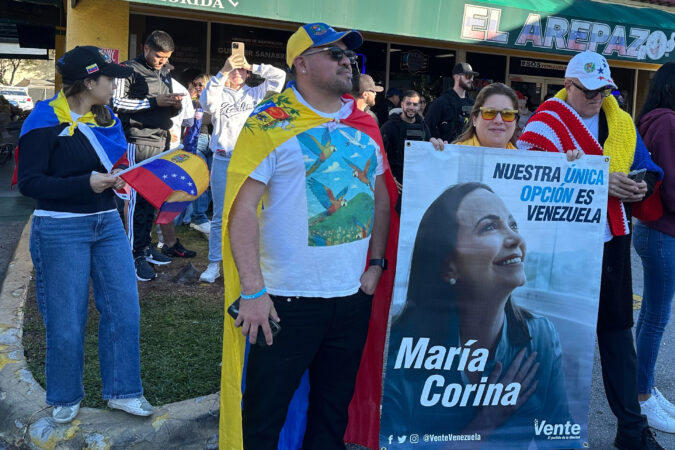
    DORAL, Fla. — Revelers chanted “liberty” and draped Venezuelan flags over their shoulders in South Florida on Saturday to celebrate the American military attack that toppled Nicolás Maduro’s government — a stunning outcome they had longed for but that left them wondering what comes next in their troubled homeland.

    People gathered for a rally in Doral, Fla. — the Miami suburb where President Donald Trump has a golf resort and where roughly half the population is of Venezuelan descent — as word spread that Venezuela’s president had been captured and flown out of the country.

    Outside the El Arepazo restaurant, a hub of the Venezuelan culture of Doral, one man held a piece of cardboard with “Libertad” scrawled with a black marker. It was a sentiment expressed by other native Venezuelans hoping for a new beginning for their home country as they chanted “Liberty! Liberty! Liberty!”

    “We’re like everybody — it’s a combination of feelings, of course,” said Alejandra Arrieta, who came to the U.S. in 1997. “There’s fears. There’s excitement. There’s so many years that we’ve been waiting for this. Something had to happen in Venezuela. We all need the freedom.”

    Trump insisted Saturday that the U.S. government would run the country at least temporarily and was already doing so. The action marked the culmination of an escalating Trump administration pressure campaign on the oil-rich South American nation as well as weeks of planning that tracked Maduro’s behavioral habits.

    About 8 million people have fled Venezuela since 2014, settling first in neighboring countries in Latin America and the Caribbean. After the COVID-19 pandemic, they increasingly set their sights on the United States, walking through the jungle in Colombia and Panama or flying to the U.S. on humanitarian parole with a financial sponsor.

    In Doral, upper-middle-class professionals and entrepreneurs came to invest in property and businesses when socialist Hugo Chávez won the presidency in the late 1990s. They were followed by political opponents and entrepreneurs who set up small businesses. In recent years, more lower-income Venezuelans have come for work in service industries.

    They are doctors, lawyers, beauticians, construction workers, and house cleaners. Some are naturalized U.S. citizens or live in the country illegally with U.S.-born children. Others overstay tourist visas, seek asylum, or have some form of temporary status.

    Niurka Meléndez, who fled her native Venezuela in 2015, said Saturday she’s hopeful that Maduro’s ouster will improve life in her homeland. Meléndez immigrated to New York City, where she co-founded Venezuelans and Immigrants Aid, a group striving to empower the lives of immigrants. She became a steadfast advocate for change in her home country, where she said her countrymen were “facing a humanitarian crisis.”

    She hopes those hardships will end as a result of American intervention.

    “For us, it’s just the start of the justice we need to see,” Meléndez said in a phone interview.

    Her homeland had reached a “breaking point” due to forced displacements, repression, hunger, and fear, she said. She called for international humanitarian support to help in Venezuela’s recovery.

    “Removing an authoritarian system responsible for these crimes creates the possibility, not a guarantee, but a possibility, for recovery,” she said. “A future without criminal control over institutions is the minimum condition for rebuilding a country based on justice, rule of law, and democratic safeguards.”

  • Wisconsin judge convicted of obstructing arrest of immigrant resigns as GOP threatens impeachment

    Wisconsin judge convicted of obstructing arrest of immigrant resigns as GOP threatens impeachment

    Embattled Wisconsin Judge Hannah Dugan, who was convicted of obstruction last month for helping an immigrant evade federal officers, has sent her resignation letter to the governor.

    The letter was sent Saturday. Republicans had been making plans to impeach her ever since her Dec. 19 conviction. A spokesperson for Gov. Tony Evers, a Democrat, said his office received Dugan’s letter, and he would work to fill the vacancy without delay.

    Dugan wrote that over the past decade she handled thousands of cases with “a commitment to treat all persons with dignity and respect, to act justly, deliberately and consistently, and to maintain a courtroom with the decorum and safety the public deserves.”

    But she said the case against her is too big of a distraction.

    “As you know, I am the subject of unprecedented federal legal proceedings, which are far from concluded but which present immense and complex challenges that threaten the independence of our judiciary. I am pursuing this fight for myself and for our independent judiciary,” Dugan said in her letter.

    Last April, federal prosecutors accused Dugan of distracting federal officers trying to arrest a Mexican immigrant outside her courtroom and leading the man out through a private door. A federal jury convicted her of felony obstruction.

    The case against Dugan was highlighted by President Donald Trump as he pressed ahead with his sweeping immigration crackdown. Democrats insisted the administration was trying to make an example of Dugan to blunt judicial opposition to the operation.

    Republican Wisconsin assembly Speaker Robin Vos praised Dugan’s decision.

    “I’m glad Dugan did the right thing by resigning and followed the clear direction from the Wisconsin Constitution,” Vos said.

    Democrat Ann Jacobs, who is chairperson of the Wisconsin Elections Commission board, said she agreed with Dugan that Milwaukee should have a permanent judge in place while this fight plays out.

    “Despite her situation, she is ever the champion of justice, wanting to remove the judiciary from a political battle over her fate. I’m sure this is terribly hard for her but she is true to her faith and her principles,” Jacobs said in a post on X.

    On April 18, immigration officers went to the Milwaukee County courthouse after learning 31-year-old Eduardo Flores-Ruiz had reentered the country illegally and was scheduled to appear before Dugan for a hearing in a state battery case.

    Dugan confronted agents outside her courtroom and directed them to the office of her boss, Milwaukee County Chief Judge Carl Ashley, because she told them their administrative warrant wasn’t sufficient grounds to arrest Flores-Ruiz.

    After the agents left, she led Flores-Ruiz and his attorney out a private jury door. Agents spotted Flores-Ruiz in the corridor, followed him outside, and arrested him after a foot chase. The U.S. Department of Homeland Security announced in November he had been deported.

  • Trump says U.S. has captured Venezuelan President Nicolás Maduro, will run the country

    Trump says U.S. has captured Venezuelan President Nicolás Maduro, will run the country

    CARACAS, Venezuela — The United States captured Venezuelan President Nicolás Maduro and flew him out of the country in an extraordinary military operation early Saturday that plucked a sitting leader from office. President Donald Trump insisted the U.S. government would run the country at least temporarily and would tap Venezuelan’s vast oil reserves to sell “large amounts” to other countries.

    The action marked the culmination of an escalating Trump administration pressure campaign on the South American country that consisted of months of strikes on boats officials said were smuggling drugs to the U.S. Behind the scenes, U.S. officials tracked Maduro’s behavioral habits, including what he ate and where he slept, in preparing to execute an operation that resulted in one of the more stunning regime changes in modern history.

    Maduro and his wife, seized overnight from their home on a military base, were aboard a U.S. warship on their way to New York, where they were to face criminal charges in connection with a Justice Department indictment accusing them of a role in narco-terrorism conspiracy.

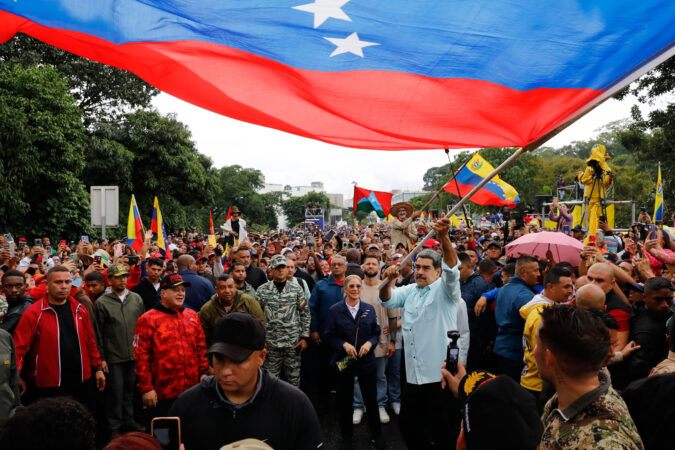
    Trump said the U.S. planned to run Venezuela until a transition of power can take place. He claimed the American presence was already in place, though there were no immediate signs the U.S. was running the country. Venezuelan state TV continued to air pro-Maduro propaganda, broadcasting live images of supporters taking to the streets in Caracas in protest.

    Trump claimed that Venezuelan vice president Delcy Rodríguez had been sworn in as president shortly before he spoke to reporters and added she had spoken with Secretary of State Marco Rubio.

    “She is essentially willing to do what we think is necessary to make Venezuela great again. Very simple,” Trump said.

    Earlier, opposition leader María Corina Machado said that the opposition candidate Edmundo González should assume power, saying that he rightfully won the 2024 presidential election.

    “We’re going to run the country until such time as we can do a safe, proper and judicious transition,” Trump said at a Mar-a-Lago news conference where he boasted that this “extremely successful operation should serve as warning to anyone who would threaten American sovereignty or endanger American lives.”

    The legal authority for the attack, which echoed the 1990 U.S. invasion of Panama that led to the surrender and seizure of leader Manuel Antonio Noriega, was not immediately clear. The U.S. government does not recognize Maduro, who last appeared on state television Friday while meeting with a delegation of Chinese officials in Caracas.

    Maduro and other Venezuelan officials were indicted in 2020 on “narco-terrorism” conspiracy charges, but the Justice Department released a new indictment Saturday of Maduro and his wife, Cilia Flores, that described the regime as a “corrupt, illegitimate government” fueled by a drug trafficking operation that flooded the U.S with cocaine.

    Trump posted on his Truth Social account a photo that he said showed Maduro in custody, blindfolded and wearing a sweatsuit.

    Early morning attack

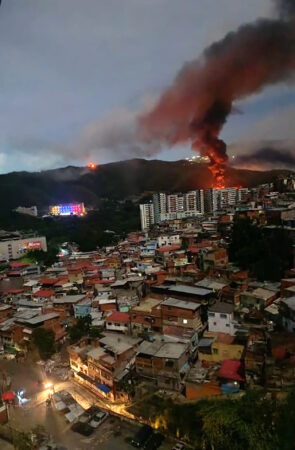
    Early Saturday, multiple explosions rang out and low-flying aircraft swept through the Venezuelan capital. Maduro’s government accused the United States of attacking civilian and military installations, calling it an “imperialist attack” and urging citizens to take to the streets.

    The attack lasted less than 30 minutes and the explosions — at least seven blasts — sent people rushing into the streets, while others took to social media to report what they’d seen and heard. Some Venezuelan civilians and members of the military were killed, said Vice President Delcy Rodríguez, without giving a number. Trump said some U.S. forces were injured in Venezuela but none were killed.

    “We think, we develop, we train, we rehearse, we debrief, we rehearse again, and again. not to get it right, but to ensure we cannot get it wrong,” said Dan Caine, the chairman of the Joint Chiefs of Staff.

    Video obtained from Caracas and an unidentified coastal city showed tracers and smoke clouding the landscape as repeated muted explosions illuminated the night sky. Other footage showed cars passing on a highway as blasts illuminated the hills behind them. The videos were verified by the Associated Press.

    Smoke was seen rising from the hangar of a military base in Caracas, while another military installation in the capital was without power.

    Venezuelan ruling party leader Nahum Fernández told the Associated Press that Maduro and Flores were at their home within the Fort Tiuna military installation when they were captured.

    “That’s where they bombed,” he said. “And, there, they carried out what we could call a kidnapping of the president and the first lady of the country.”

    The strike followed a monthslong Trump administration pressure campaign on the Venezuelan leader, including a major buildup of American forces in the waters off South America and attacks on boats in the eastern Pacific and Caribbean accused of carrying drugs. Last week, the CIA was behind a drone strike at a docking area believed to have been used by Venezuelan drug cartels — the first known direct operation on Venezuelan soil since the U.S. began strikes in September.

    As of Friday, the number of known boat strikes was 35 and the number of people killed at least 115, according to the Trump administration. Trump said that the U.S. is engaged in an “armed conflict” with drug cartels and has justified the boat strikes as a necessary to stem the flow of drugs into the U.S.

    Maduro has decried the U.S. military operations as a thinly veiled effort to oust him from power.

    Some streets in Caracas fill up

    Venezuela’s ruling party has held power since 1999, when Maduro’s predecessor Hugo Chávez took office, promising to uplift poor people and later to implement a self-described socialist revolution.

    Maduro took over when Chávez died in 2013. His 2018 reelection was widely considered a sham because the main opposition parties were banned from participating. During the 2024 election, ruling party-loyal electoral authorities declared him the winner hours after polls closed, but the opposition gathered overwhelming evidence that he lost by a more than 2-to-1 margin.

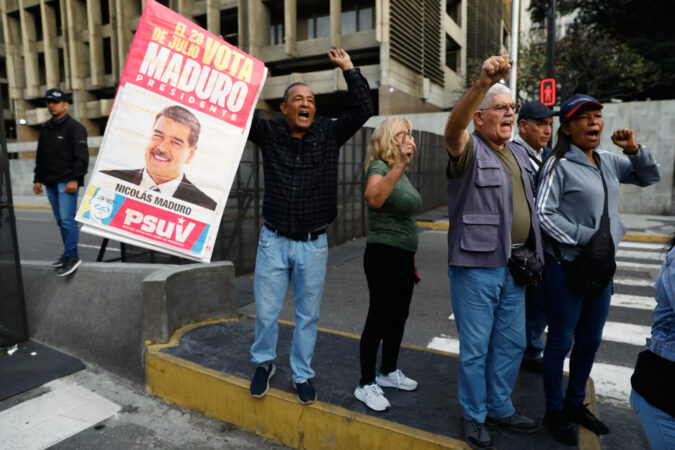
    In a demonstration of how polarizing a figure Maduro is, people variously took to the streets to deplore his capture and celebrate it.

    At a protest in the Venezuelan capital, Caracas Mayor Carmen Meléndez joined a crowd demanding Maduro’s return.

    “Maduro, hold on, the people are rising up!” the crowd chanted. “We are here, Nicolás Maduro. If you can hear us, we are here!”

    Earlier, armed people and uniformed members of a civilian militia took to the streets of a Caracas neighborhood long considered a stronghold of the ruling party.

    In other parts of the city, the streets remained empty hours after the attack, as residents absorbed events. Some areas remained without power, but vehicles moved freely.

    “How do I feel? Scared, like everyone,” said Caracas resident Noris Prada, who sat on an empty avenue looking down at his phone. “Venezuelans woke up scared, many families couldn’t sleep.”

    In the Chilean capital of Santiago, people waved Venezuelan flags and banged pots and pans as vehicles passed by honking at them.

    Questions of legality

    The Armed Services committees in both houses of Congress, which have jurisdiction over military matters, had not been notified by the administration of any actions, according to a person familiar with the matter and granted anonymity to discuss it.

    Lawmakers from both political parties in Congress have raised deep reservations and flat-out objections to the U.S. attacks on boats suspected of drug smuggling near the Venezuelan coast, and Congress has not specifically approved an authorization for the use of military force for such operations in the region.

    Connecticut Rep. Jim Himes, the top Democrat on the House Intelligence Committee, said he had seen no evidence that would justify Trump striking Venezuela without approval from Congress and demanded an immediate briefing by the administration on “its plan to ensure stability in the region and its legal justification for this decision.”

    Deputy Secretary of State Christopher Landau said the military action and seizure of Maduro marks “a new dawn for Venezuela,” saying that “the tyrant is gone.” He posted on X hours after the strike. His boss, Rubio, reposted a post from July that said Maduro “is NOT the President of Venezuela and his regime is NOT the legitimate government.”

    Cuba, a supporter of the Maduro government and a longtime adversary of the United States, called for the international community to respond to what President Miguel Díaz-Canel Bermúdez called “the criminal attack.”

    “Our zone of peace is being brutally assaulted,” he said on X. Iran’s Foreign Ministry also condemned the strikes.

  • With capture of Maduro, Trump claims successful operation as he treads into uncharted territory

    With capture of Maduro, Trump claims successful operation as he treads into uncharted territory

    WASHINGTON — With the capture of Venezuela’s Nicolás Maduro, President Donald Trump and his allies are calling the audacious military operation a major success as the U.S. leader once again demonstrated a willingness to use U.S. forces for risky missions that come with a potential big payoff.

    The operation has ousted a South American strongman blasted by Trump’s administration as an “illegitimate” dictator and a “narco-terrorist,” a scourge responsible for a steady of stream of illegal drugs poisoning U.S. and Europe.

    “It was a brilliant operation, actually,” Trump told the New York Times shortly after U.S. forces were cleared from Venezuelan airspace. He later added in an appearance on Fox & Friends that some U.S. troops were injured in the strike but none were killed.

    But the path ahead could certainly be treacherous as the White House faces a series of difficult questions.

    Who will fill the power vacuum now that Maduro is gone? How do you maintain stability in a country that’s already endured years of hyperinflation, food and medicine shortages and brain drain despite its vast oil wealth?

    What lessons will U.S. adversaries take from Trump’s decision to demonstrate American might in its sphere of influence as China’s Xi Jinping vows to annex the self-ruled island of Taiwan and Russia’s Vladimir Putin has designs on neighbor Ukraine and diminishing NATO’s eastern flank?

    Trump takes a big risk

    The operation to remove Maduro certainly marks another big moment for Trump’s foreign policy in his second term, as he hasn’t shied away from flexing U.S. military might even as he has vowed to keep America out of war.

    Trump has now twice used U.S. forces to carry out risky operations against American adversaries. In June, he directed U.S. strikes on key Iranian nuclear sites.

    Saturday’s action stirred fresh anxiety in capitals around the world that have sought to adjust to a new normal in Trump 2.0, where the idea of the U.S. trying to find global consensus on issues of war and peace is now passe. On Friday, Trump issued a new threat to Iran that if it “violently kills peaceful protesters” — in protests sparked by the collapse of Iran’s currency — the United States “will come to their rescue.”

    With the Venezuela operation, Trump followed through on a promise, spelled out in his National Security Strategy published last month, to assert U.S. dominance in the Western Hemisphere.

    More questions than answers

    Retired Navy Rear Adm. Mark Montgomery said the immediate path ahead for Trump in Venezuela could be more difficult to navigate than what he faced after the Iran strikes.

    “Unlike the [Iran] strikes where Trump did the action and then said ‘fights over,’ he will not have that luxury here in Venezuela,” said Montgomery, an analyst at the Foundation for Defense of Democracies, a hawkish think tank in Washington. “He needs to stay engaged in Venezuela to make sure that Maduro’s cronies — equally guilty of any crime he is — are also pushed out of power, and they may want to stay and fight as they don’t have too many places to run.”

    What’s next for Venezuela?

    European allies had expressed concern as Trump built up a massive presence of troops in the Caribbean in recent months and carried out dozens of lethal strikes on suspected drug smugglers — many that the administration claimed were effectively an arm of the Maduro government.

    Maduro was hardly viewed as a choir boy by the international community. His 2018 and 2024 elections were seen as riddled with irregularities and viewed as illegitimate.

    But many U.S. allies greeted news of Maduro’s capture with a measure of trepidation.

    European Commission President António Costa said he had “great concern” about the situation in Venezuela following the U.S. operation.

    “The EU has repeatedly stated that Mr Maduro lacks legitimacy and has defended a peaceful transition,” European Union foreign policy chief Kaja Kallas added on X. “Under all circumstances, the principles of international law and the UN Charter must be respected. We call for restraint.”

    France’s Foreign Minister Jean-Noël Barrot said “the military operation that led to the capture of Maduro infringes the principle of the non-use of force that underpins international law.”

    “France recalls that no lasting political solution can be imposed from outside and that sovereign peoples alone decide their future,” he said in a statement posted on X.

    The criticism from some Democrats over Trump’s military action to oust Maduro was immediate.

    “This war is illegal, it’s embarrassing that we went from the world cop to the world bully in less than one year.” Sen. Ruben Gallego of Arizona wrote on X. “There is no reason for us to be at war with Venezuela.”

    Russia’s Foreign Ministry condemned what it called a U.S. “act of armed aggression” against Venezuela in a statement posted on its Telegram channel Saturday. The ouster of Maduro, who was backed by the Russians, comes as Trump is urging Putin to end his nearly four-year brutal war on Ukraine.

    “Venezuela must be guaranteed the right to determine its own destiny without any destructive, let alone military, outside intervention,” the statement said.

    Similarly, China’s foreign ministry in a statement condemned the U.S. operation, saying it violates international law and Venezuela’s sovereignty.

    Capture follows months of pressure

    The operation was the culmination of a push inside the administration led by Secretary of State Marco Rubio and other like-minded foes of Maduro who have been urging Trump to take action against the Venezuelan leader for years dating back to Trump’s first administration.

    In South Florida — the epicenter of the Venezuelan diaspora opposition to Maduro that has influenced Rubio’s thinking — Saturday’s operation was cheered as an era-changing moment for democracy.

    Rep. Carlos Gimenez, a Florida Republican, said he had spoken to Rubio and thanked Trump for having “changed the course of history in our hemisphere. Our country & the world are safer for it,” he wrote on X, comparing Maduro’s ouster to the fall of the Berlin Wall.

    Maduro had sought a pathway to exit from power, while saving face.

    Venezuelan government officials had floated a plan in which Maduro would eventually leave office, the Associated Press reported in October.

    The proposal, which was rejected by the White House, called for Maduro to step down in three years and hand over to his vice president, Delcy Rodriguez, who would complete Maduro’s six-year term that ends in January 2031. Rodriguez would not run for reelection under the plan.

    But the White House had rejected the proposal because the administration questioned the legitimacy of Maduro’s rule and accused him of overseeing a narco-terrorist state.

    Maduro earlier this week said Venezuela was open to negotiating an agreement with the United States to combat drug trafficking and work with Washington on promoting U.S. further investment in the Venezuelan oil industry.

    But Trump for months has insisted that Maduro’s days in power were numbered.

    Shorty after Trump announced Maduro’s capture, the White House posted video on one of its social media accounts of Trump in October explicitly telling reporters that Maduro was feeling pressure from the U.S. campaign and trying to cut a deal.

    “He doesn’t want to f— around with the United States,” Trump said.

    Elliot Abrams, who served as U.S. special representative for Iran and Venezuela in the first Trump administration, said the president now must decide how invested his administration will be in shaping the next government in Caracas. Venezuela’s opposition says the rightful president is the exiled politician Edmundo González.

    “I think the real question is whether Trump will claim victory and be satisfied with Delcy Rodriguez making some promises or engaging in negotiations,” Abrams said. “Or will he insist on Gonzalez.”

    Trump in an appearance on Fox & Friends on Saturday morning said he wasn’t ready to commit to a certain leader but pledged his administration would be “very involved” in Venezuela.

    “We can’t take a chance of letting somebody else run it — just take over where [Maduro] left,” Trump said.

  • From bus driver to president: Venezuela’s Maduro never escaped his predecessor’s shadow

    From bus driver to president: Venezuela’s Maduro never escaped his predecessor’s shadow

    CARACAS, Venezuela — Nicolás Maduro, who rose from unionized bus driver to Venezuelan president and oversaw his country’s democratic undoing and economic collapse, was captured Saturday during an attack by U.S. forces on his capital.

    U.S. President Donald Trump, in an early morning social media post, announced Maduro’s capture. Venezuela’s vice president, Delcy Rodríguez, later announced that the whereabouts of Maduro and his wife, Cilia Flores, remained unknown. Trump’s attorney general, Pam Bondi, said Maduro and Flores, would face charges after an indictment in New York.

    Maduro’s fall was the culmination of months of stepped-up U.S. pressure on various fronts.

    He had spent the last months of his presidency fueling speculation over the intentions of the U.S. government to attack and invade Venezuela with the goal of ending the self-proclaimed socialist revolution that his late mentor and predecessor, Hugo Chávez, ushered in 1999. Maduro, like Chávez, cast the United States as Venezuela’s biggest threat, railing against Democratic and Republic administrations for any efforts to restore democratic norms.

    Maduro’s political career began 40 years ago. In 1986, he traveled to Cuba to receive a year of ideological instruction, his only formal education after high school. Upon his return, he worked as a bus driver for the Caracas subway system, where he quickly became a union leader. Venezuela’s intelligence agencies in the 1990s identified him as a leftist radical with close ties to the Cuban government.

    Maduro eventually left his driver job and joined the political movement that Chávez organized after receiving a presidential pardon in 1994 for leading a failed and bloody military coup years earlier. After Chávez took office, the former youth baseball player rose through the ranks of the ruling party, spending his first six years as a lawmaker before becoming president of the National Assembly. He then served six years as foreign minister and a couple months as vice president.

    Appointed the political heir to Chávez

    Chávez used his last address to the nation before his death in 2013 to anoint Maduro as his successor, asking his supporters to vote for the then-foreign affairs minister should he die. The choice stunned supporters and detractors alike. But Chávez’s enormous electoral capital delivered Maduro a razor-thin victory that year, giving him his first six-year term, though he would never enjoy the devotion that voters professed for Chávez.

    Maduro married Flores, his partner of nearly two decades, in July 2013, shortly after he became president. He called her the “first combatant,” instead of first lady, and considered her a crucial adviser.

    Maduro’s entire presidency was marked by a complex social, political and economic crisis that pushed millions into poverty, drove more than 7.7 million Venezuelans to migrate and put thousands of real or perceived government opponents in prison, where many were tortured, some at his direction. Maduro complemented the repressive apparatus by purging institutions of anyone who dared dissent.

    Venezuela’s crisis took hold during Maduro’s first year in office. The political opposition, including the now-Nobel Peace Prize winner María Corina Machado, called for street protests in Caracas and other cities. The demonstrations evidenced Maduro’s iron fist as security forces pushed back protests, which ended with 43 deaths and dozens of arrests.

    Maduro’s United Socialist Party of Venezuela would go on to lose control of the National Assembly for the first time in 16 years in the 2015 election. Maduro moved to neutralize the opposition-controlled legislature by establishing a pro-government Constituent Assembly in 2017, leading to months of protests violently suppressed by security forces and the military.

    More than 100 people were killed and thousands were injured in the demonstrations. Hundreds were arrested, causing the International Criminal Court to open an investigation against Maduro and members of his government for crimes against humanity. The investigation was still ongoing in 2025.

    In 2018, Maduro survived an assassination attempt when drones rigged with explosives detonated near him as he delivered a speech during a nationally televised military parade.

    President Nicolas Maduro acknowledges supporters alongside first lady Cilia Flores during his closing election campaign rally in Caracas, Venezuela, on July 25, 2024.

    Bedeviled by economic problems

    Maduro was unable to stop the economic free fall. Inflation and severe shortages of food and medicines affected Venezuelans nationwide. Entire families starved and began migrating on foot to neighboring countries. Those who remained lined up for hours to buy rice, beans and other basics. Some fought on the streets over flour.

    Ruling party loyalists moved the December 2018 presidential election to May and blocked opposition parties from the ballot. Some opposition politicians were imprisoned; others fled into exile. Maduro ran virtually unopposed and was declared winner, but dozens of countries did not recognize him.

    Months after the election, he drew the fury after social media videos showed him feasting on a steak prepared by a celebrity chef at a restaurant in Turkey while millions in his country were going hungry.

    Under Maduro’s watch, Venezuela’s economy shrank 71% between 2012 and 2020, while inflation topped 130,000%. Its oil production, the beating heart of the country, dropped to less than 400,000 barrels a day, a figure once unthinkable.

    The first Trump administration imposed economic sanctions against Maduro, his allies, and state-owned companies to try to force a government change. The measures included freezing all Venezuelan government assets in the U.S. and prohibiting American citizens and international partners from doing business with Venezuelan government entities, including the state-owned oil company.

    Out of options, Maduro began implementing a series of economic measures in 2021 that eventually ended Venezuela’s hyperinflation cycle. He paired the economic changes with concessions to the U.S.-backed political opposition with which it restarted negotiations for what many had hoped would be a free and democratic presidential election in 2024.

    Maduro used the negotiations to gain concessions from the U.S. government, including the pardon and prison release of one of his closest allies and the sanctions license that allowed oil giant Chevron to restart pumping and exporting Venezuelan oil. The license became his government’s financial lifeline.

    Losing support in many places

    Negotiations led by Norwegian diplomats did not solve key political differences between the ruling party and the opposition.

    In 2023, the government banned Machado, Maduro’s strongest opponent, from running for office. In early 2024, it intensified its repressive efforts, detaining opposition leaders and human rights defenders. The government also forced key members of Machado’s campaign to seek asylum at a diplomatic compound in Caracas, where they remained for more than a year to avoid arrest.

    Hours after polls closed in the 2024 election, the National Electoral Council declared Maduro the winner. But unlike previous elections, it did not provide detailed vote counts. The opposition, however, collected and published tally sheets from more than 80% of electronic voting machines used in the election. The records showed Edmundo González defeated Maduro by a more than 2-to-1 margin.

    Protests erupted. Some demonstrators toppled statues of Chávez. The government again responded with full force and detained more than 2,000 people World leaders rejected the official results, but the National Assembly sworn in Maduro for a third term in January 2025.

    Trump’s return to the White House that same month proved to be a sobering moment for Maduro. Trump quickly pushed Maduro to accept regular deportation flights for the first time in years. By the summer, Trump had built up a military force in the Caribbean that put Venezuela’s government on high alert and started taking steps to address what it called narco-terrorism.

    For Maduro, that was the beginning of the end.

  • A timeline of the US military’s buildup and strikes against Venezuela leading to Maduro’s capture

    A timeline of the US military’s buildup and strikes against Venezuela leading to Maduro’s capture

    WASHINGTON — President Donald Trump had long threatened that he could order military strikes on targets on Venezuelan territory after months of attacks on boats accused of carrying drugs from the South American country. President Nicolás Maduro of Venezuela said the U.S. military operations were a thinly veiled effort to oust him from power.

    On Saturday, the U.S. conducted a “large-scale strike” against Venezuela and said that Maduro and his wife, Cilia Flores, had been captured and flown out of the country. Trump announced the operation on social media hours after the attack. The Venezuelan government called it an “imperialist attack” and urged citizens to take to the streets.

    Attorney General Pam Bondi said Maduro and Flores, would face charges after an indictment in New York.

    Before the escalation, there had been 35 known strikes against alleged drug smuggling boats in South American waters since early September that killed at least 115 people, according to announcements from the Republican administration.

    The U.S. had sent a fleet of warships to the region, the largest buildup of forces in generations.

    The White House said Washington was in “armed conflict” with drug cartels to halt the flow of narcotics into the United States, while U.S. officials alleged that Maduro supported the international drug trade.

    Here is a timeline of the U.S. military actions and related developments:

    Jan. 20, 2025

    Trump signs an executive order that paved the way for criminal organizations and drug cartels to be named “foreign terrorist organizations.” They included Tren de Aragua, a Venezuelan street gang.

    U.S. intelligence agencies have disputed Trump’s central claim that Maduro’s administration was working with Tren de Aragua and orchestrating drug trafficking and illegal immigration into the U.S.

    Feb. 20

    The Trump administration formally designated eight Latin American crime organizations as foreign terrorist organizations.

    The label is normally reserved for groups such as a-Qaida or the Islamic State that use violence for political ends, and not for profit-focused crime rings.

    Aug. 19

    The U.S. military deployed three guided-missile destroyers to the waters off Venezuela.

    The naval force in the Caribbean grew within weeks to include three amphibious assault ships and other vessels, carrying about 6,000 sailors and Marines and a variety of aircraft.

    The U.S. sent F-35 fighter jets to Puerto Rico in September, while a Navy submarine carrying cruise missiles operated off South America.

    Sept. 2

    The U.S. carried out its first strike against what Trump said was a drug-carrying vessel that departed from Venezuela and was operated by Tren de Aragua.

    Trump said all 11 people on the boat were killed. He posted a short video clip of a small vessel appearing to explode in flames.

    Sept. 10

    In a letter to the White House, Democratic senators said the administration had provided “no legitimate legal justification” for the strike.

    Sen. Jack Reed of Rhode Island, the top Democrat on the Senate Armed Services Committee, said the U.S. military was not “empowered to hunt down suspected criminals and kill them without trial.”

    Sept. 15

    The U.S. military carried out its second strike against an alleged drug boat, killing three people.

    Asked what proof the U.S. had that the vessel was carrying drugs, Trump told reporters that big bags of cocaine and fentanyl were spattered all over the ocean. Images of what Trump described were not released by the military or the White House.

    Sept. 19

    Trump said the U.S. military carried out its third fatal strike against an alleged drug-smuggling vessel. Several senators and human rights groups continued to question the legality of the strikes, describing them as a potential overreach of executive authority.

    Oct. 2

    Trump declared drug cartels to be unlawful combatants and said the U.S. was now in an “armed conflict” with them, according to an administration memo obtained by The Associated Press.

    The memo appeared to represent an extraordinary assertion of presidential war powers and drew criticism from some lawmakers, including Republican Sen. Rand Paul of Kentucky.

    Oct. 3

    Defense Secretary Pete Hegseth said he ordered a fourth strike on a small boat he accused of carrying drugs.

    Oct. 8

    Senate Republicans voted down legislation that would have required the president to seek authorization from Congress before further military strikes.

    Oct. 14

    Trump announced the fifth strike against a small boat accused of carrying drugs, saying it killed six people.

    Oct. 15

    Trump confirmed he has authorized the CIA to conduct covert operations inside Venezuela and said he was weighing carrying out land operations in the country.

    He declined to say whether the CIA has authority to take action against Maduro.

    Oct. 16

    The Navy admiral who oversaw military operations in the region said he will retire in December.

    Adm. Alvin Holsey became leader of U.S. Southern Command only the previous November, overseeing an area that encompasses the Caribbean and waters off South America. Such postings typically last three years to four years.

    Oct. 16

    Trump said the U.S. struck a sixth suspected drug-carrying vessel in the Caribbean, killing two people and leaving two survivors who were on the semisubmersible craft.

    The president later said the survivors would be sent to Ecuador and Colombia, their home countries, “for detention and prosecution.” Repatriation avoided questions about what their legal status would have been in the U.S. justice system.

    Oct. 17

    The U.S. military attacked a seventh vessel that Hegseth said was carrying “substantial amounts of narcotics” and associated with a Colombian rebel group, the National Liberation Army, or ELN. Three people are killed.

    Oct. 20

    Washington Rep. Adam Smith, top Democrat on the House Armed Services Committee, called for a hearing on the boat strikes.

    “Never before in my over 20 years on the committee can I recall seeing a combatant commander leave their post this early and amid such turmoil,” Smith said in a statement of Holsey’s impending departure. “I have also never seen such a staggering lack of transparency on behalf of an Administration and the Department to meaningfully inform Congress on the use of lethal military force.”

    Oct. 21

    Hegseth said the U.S. military launched its eighth strike against an alleged drug-carrying vessel, killing two people in the eastern Pacific.

    The attack was an expansion of the military’s targeting area to the waters off South America where much of the cocaine from the world’s largest producers is smuggled.

    Oct. 22

    Hegseth announced the ninth strike, another in the eastern Pacific, saying three men are killed.

    Oct. 24

    Hegseth ordered the U.S. military’s most advanced aircraft carrier, the USS Gerald R. Ford, to the region in a significant escalation of military firepower.

    Oct. 24

    Hegseth said the military conducted the 10th strike on a suspected drug-running boat, leaving six people dead.

    Oct. 27

    Hegseth said three more strikes were carried out in the eastern Pacific, killing 14 people and leaving one survivor.

    Hegseth said Mexican authorities “assumed responsibility for coordinating the rescue” of the sole survivor, who was presumed dead after Mexico suspended its search.

    Oct. 29

    Hegseth said the U.S. military carried out another strike on a boat he said was carrying drugs in the eastern Pacific, killing all four people aboard in the 14th attack.

    Oct. 29

    Virginia Sen. Mark Warner, the ranking Democrat on the Senate Intelligence Committee, said the administration briefed Republicans, but not Democrats, on the boat strikes.

    The Senate at the time was facing a potential vote on a war powers resolution that would have prohibited strikes in or near Venezuela without congressional approval.

    Oct. 31

    U.N. human rights chief Volker Türk called for an investigation into the strikes, in what appeared to be the first such condemnation of its kind from a U.N. organization.

    Ravina Shamdasani, a spokeswoman for Türk’s office, relayed his message at a briefing: “The U.S. must halt such attacks and take all measures necessary to prevent the extrajudicial killing of people aboard these boats.”

    Nov. 1

    Hegseth announced the 15th known strike, saying three people were killed.

    Nov. 4

    In the 16th known strike, Hegseth posted on social media that two people were killed aboard a vessel in the eastern Pacific.

    Nov. 6

    Hegseth announced the 17th known strike, which killed three people.

    Senate Republicans voted to reject legislation that would have limited Trump’s ability to order an attack on Venezuelan soil without congressional authorization. Lawmakers from both parties had demanded more information on the strikes, but Republicans appeared more willing to give Trump leeway to continue his buildup of naval forces.

    Nov. 9

    The U.S. military struck two vessels in the eastern Pacific, killing six people, according to an announcement from Hegseth the following day.

    Nov. 10

    The 20th known strike on a boat accused of transporting drugs killed four people in the Caribbean, according to a social media post from the U.S. military’s Southern Command.

    Nov. 11

    Venezuela’s government launched what it said was a “massive” mobilization of troops and volunteers for two days of exercises prompted by the U.S. military buildup.

    Defense Minister Vladimir Padrino López asserted that Venezuela’s military was “stronger than ever in its unity, morale and equipment.”

    Nov. 15

    Three people were killed after the U.S. military conducted its 21st strike on an alleged drug-smuggling boat in the eastern Pacific, according to a post from Southern Command a day later.

    Nov. 16

    The Ford arrived in the Caribbean, a major moment in the Trump administration’s show of force.

    The aircraft carrier’s arrival brought the total number of troops in the region to around 12,000 on nearly a dozen Navy ships in what Hegseth said was “Operation Southern Spear.”

    Nov. 16

    Trump said the U.S. ” may be having some discussions ” with Maduro and “Venezuela would like to talk,” without offering details.

    “I’ll talk to anybody,” Trump said. “We’ll see what happens.”

    Dec. 4

    Adm. Frank “Mitch” Bradley appeared for closed-door classified briefings at the Capitol as lawmakers began investigating the strikes. The investigation started after reports that Bradley ordered a follow-on attack that killed the survivors of the first strike on Sept. 2 to comply with Hegseth’s demands.

    Sen. Tom Cotton, R-Ark., later told reporters that “Bradley was very clear that he was given no such order, to give no quarter or to kill them all.”

    Democrats said they found the video of the entire attack disturbing.

    Smith said the survivors were “basically two shirtless people clinging to the bow of a capsized and inoperable boat, drifting in the water — until the missiles come and kill them.”

    Dec. 4

    Four people were killed in the 22nd strike on an alleged drug-smuggling boat in the eastern Pacific, according to a post from Southern Command.

    Dec. 10

    The U.S. seized an oil tanker off the coast of Venezuela after the ship left that country with about 2 million barrels of heavy crude.

    Attorney General Pam Bondi said the tanker was involved in “an illicit oil shipping network supporting foreign terrorist organizations.” Venezuela’s government said the seizure was “a blatant theft and an act of international piracy.”

    Dec. 15

    The U.S. military struck three alleged drug-smuggling boats, killing eight people, in the eastern Pacific Ocean, Southern Command announced.

    Dec. 16

    Hegseth said the Pentagon will not publicly release unedited video of the Sept. 2 strike that killed two survivors, even as questions mounted in Congress about the attack and the overall campaign near Venezuela.

    Dec. 16

    Trump said he was ordering a blockade of all “sanctioned oil tankers” going into and out of Venezuela, a move that seemed designed to put a tighter chokehold on the South American country’s oil-dependent economy.

    Trump alleged that Venezuela was using oil to fund drug trafficking, terrorism and other crimes. He pledged to continue the military buildup until Venezuela returned to the U.S. oil, land and assets, though it was unclear why Trump felt the U.S. had a claim.

    Dec. 17

    The U.S. military said it attacked a boat accused of smuggling drugs in the eastern Pacific Ocean, killing four people.

    House Republicans rejected a pair of Democratic-backed resolutions that would have put a check on Trump’s power to use military force against drug cartels and Venezuela. They were the first votes in the House after Senate Republicans previously voted down similar war powers resolutions.

    Dec. 18

    The U.S. military said it conducted two more strikes against boats that were allegedly smuggling drugs in the eastern Pacific, killing five people.

    Dec. 20

    Homeland Security Secretary Kristi Noem said the U.S. Coast Guard, with help from the Defense Department, stopped a second oil tanker off the coast of Venezuela.

    Dec. 22

    Trump confirmed that the U.S. Coast Guard was chasing another oil tanker that the administration described as part of the “dark fleet.”

    The U.S. military said it attacked a boat accused of smuggling drugs in the eastern Pacific Ocean, killing four people.

    Dec. 29

    Trump told reporters that the U.S. struck a facility where boats accused of carrying drugs “load up.” He declined to say whether the U.S. military or the CIA carried out the strike on the dock or where it occurred. He did not confirm it happened in Venezuela.

    The U.S. military said it attacked a boat accused of smuggling drugs in the eastern Pacific Ocean, killing two people.

    Dec. 30

    The CIA was behind the drone strike at a docking area believed to have been used by Venezuelan drug cartels, according to two people familiar with details of the classified operation who requested anonymity to discuss it.

    It was the first known direct operation on Venezuelan soil since the U.S. began strikes in September. Venezuelan officials have not acknowledged the strike.

    Dec. 30

    The U.S. military struck three more boats that were allegedly smuggling drugs, killing three people in the first boat while people from the other two boats jumped overboard and may have survived, Southern Command announced the following day.

    Dec. 31

    The U.S. imposed sanctions on four companies operating in Venezuela’s oil sector and designated four additional oil tankers as blocked property and part of the larger shadow fleet that was evading U.S. sanctions on Venezuela.

    Dec. 31

    The U.S. military said it attacked two more boats, killing five people who were allegedly smuggling drugs along known trafficking routes.

    Jan. 1, 2026

    Maduro, in an interview on state television that aired on New Year’s Day, said Venezuela was open to negotiating an agreement with the United States to combat drug trafficking. He declined to comment on the CIA-led strike and reiterated that the U.S. wanted to force a government change in Venezuela and gain access to its vast oil reserves.

    Jan. 3

    The U.S. conducted a “large-scale strike” across Caracas, the capital of Venezuela, captured Maduro and Flores and flew them out of the country. Maduro and Flores would face charges after an indictment in New York, according to Attorney General Pam Bondi.

    Maduro was indicted in 2020 on “narco-terrorism” conspiracy charges, but it was not previously known that Flores had been.

    ___

    Garcia Cano reported from Caracas, Venezuela.