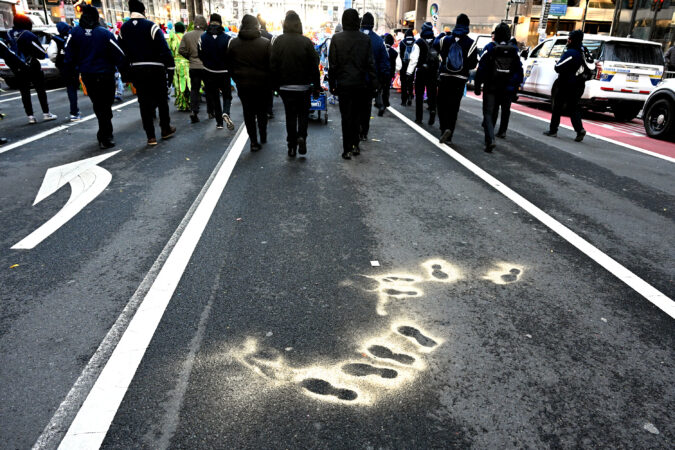
Just a week ago, in my last column of 2025 I said I was looking forward. So where do I go in the very first column of 2026?
When you drive for decades all over the city on assignment certain streets, buildings or neighborhoods tilt you toward the past.
Memories don’t just live in one place but are scattered across the map, waiting around a corner, or sitting on a stoop like an old friend. Every recurring event or anniversary replays images in my head.
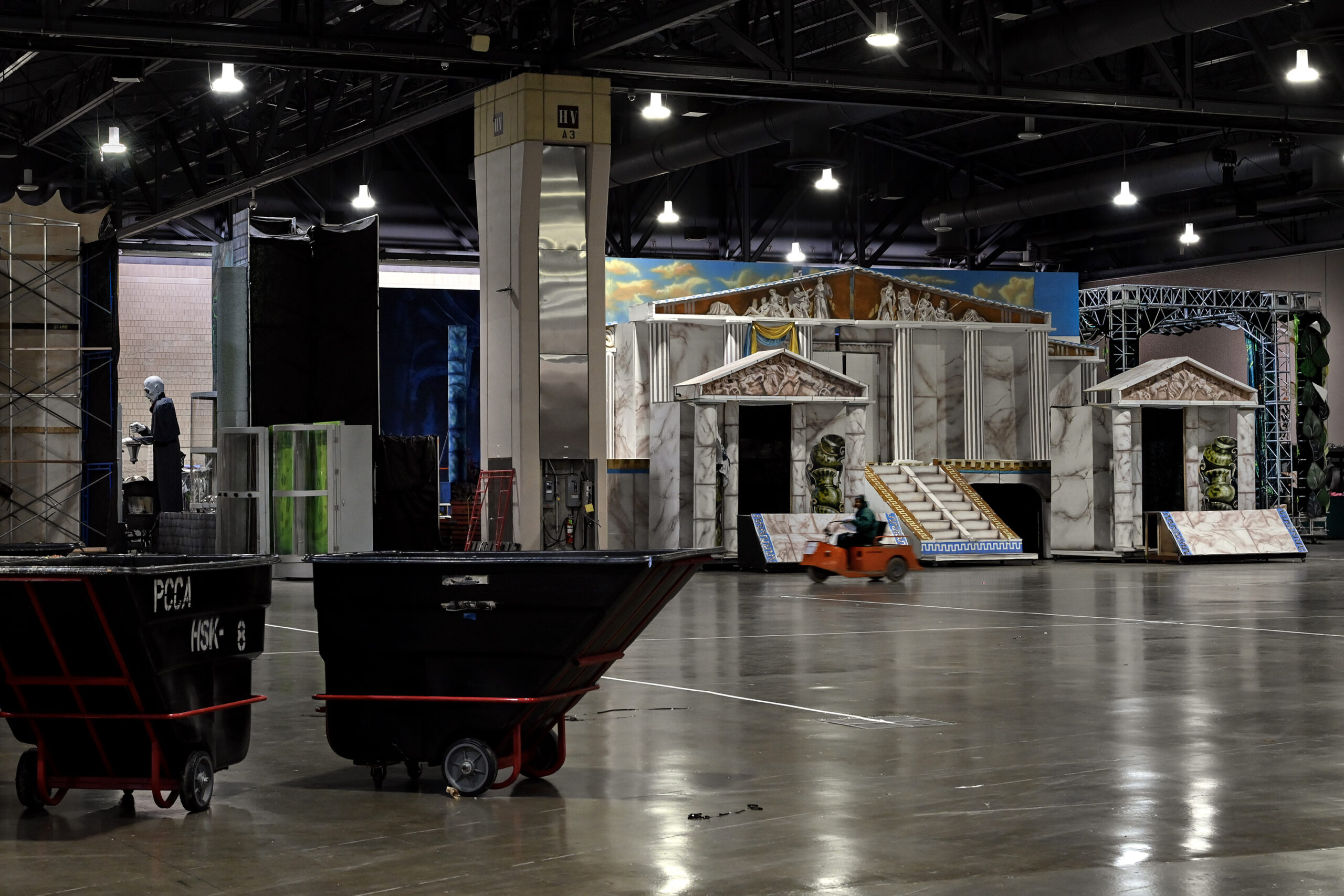
An empty Convention Center hours before Fancy Brigade members arrive for a night of finishing the construction of their stage sets.
I went to the Convention Center two days before the Mummers Parade, looking as I have many times, to make a photo ahead of the event.
But this year, there were no Fancy Brigade members in the cavernous room. Nobody working on their elaborate stage sets or rehearsing their Broadway-quality choreographed performances.
As a cost-cutting measure this year, the clubs only booked the hall (and union workers) for an eight-hour shift in the evening. No early overtime.
So there I was, “seeing” feathered and sequined Mummer ghosts of my memory dancing through the hall. Then, like in the 2006 movie Night at the Museum. I almost wondered if a Greek god, 15 foot high Tiki figure or jester would suddenly come alive.
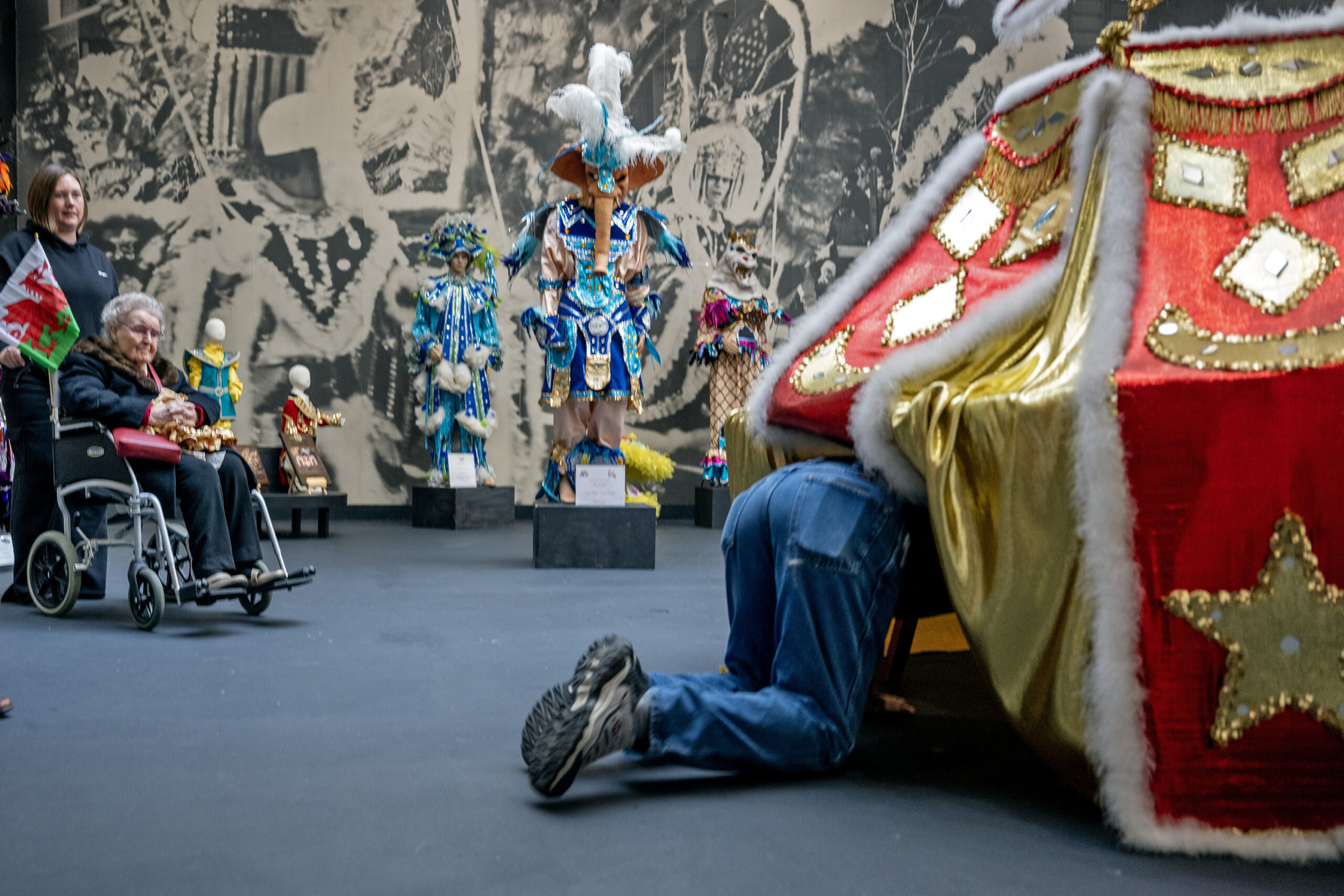
Mummers Museum president Brian Donnelly crawls inside to demonstrat marching in a large Fancy Division frame suit while giving Avril Davidge a tour.
The next day she was to live her dream of going to the parade. I wondered what she was thinking the next day, even as I photographed it for my umpteenth time, collecting more memories and learning, as always, how to see things in new ways.
Since 1998 a black-and-white photo has appeared every Monday in staff photographer Tom Gralish’s “Scene Through the Lens” photo column in the print editions of The Inquirer’s local news section. Here are the most recent, in color:
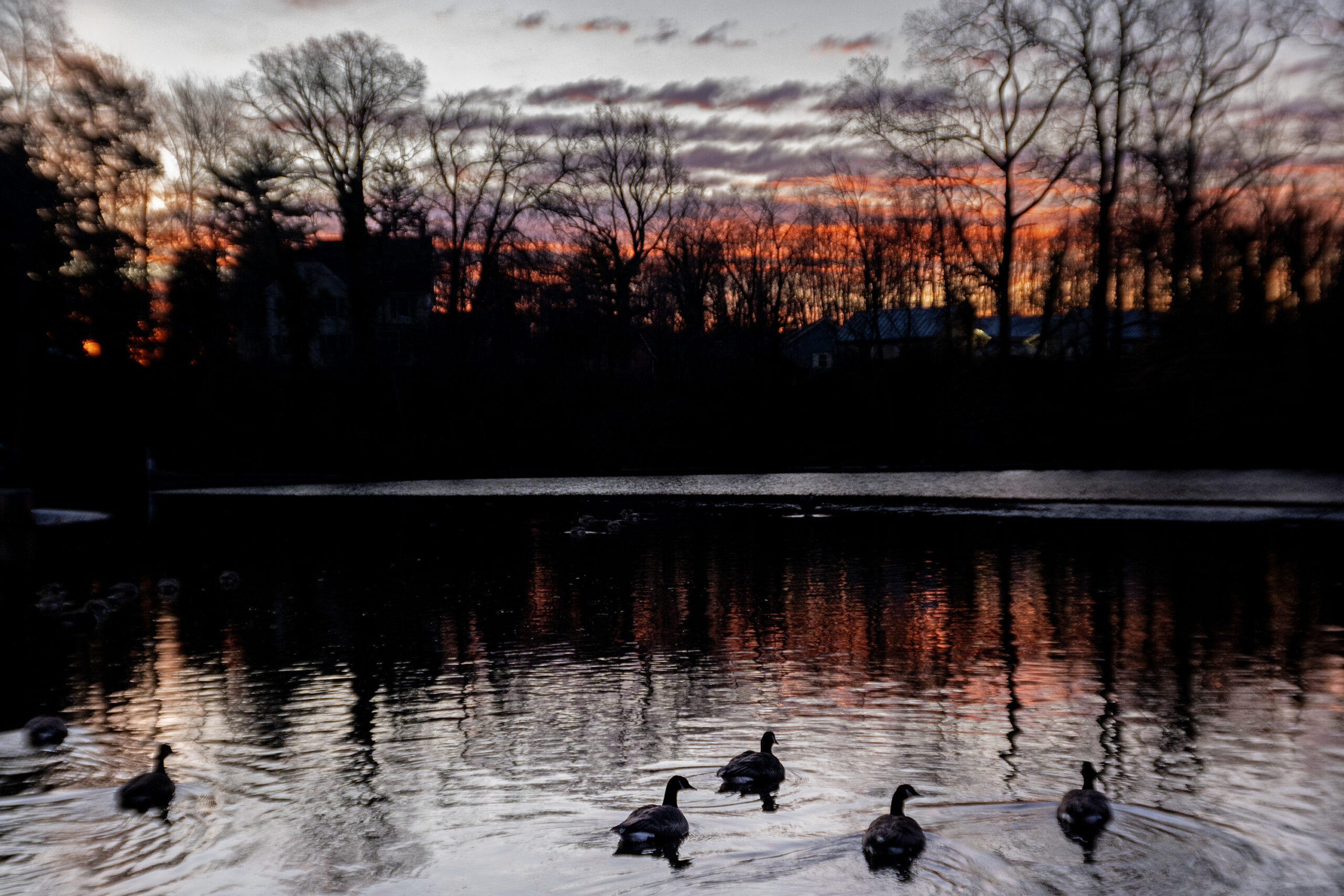
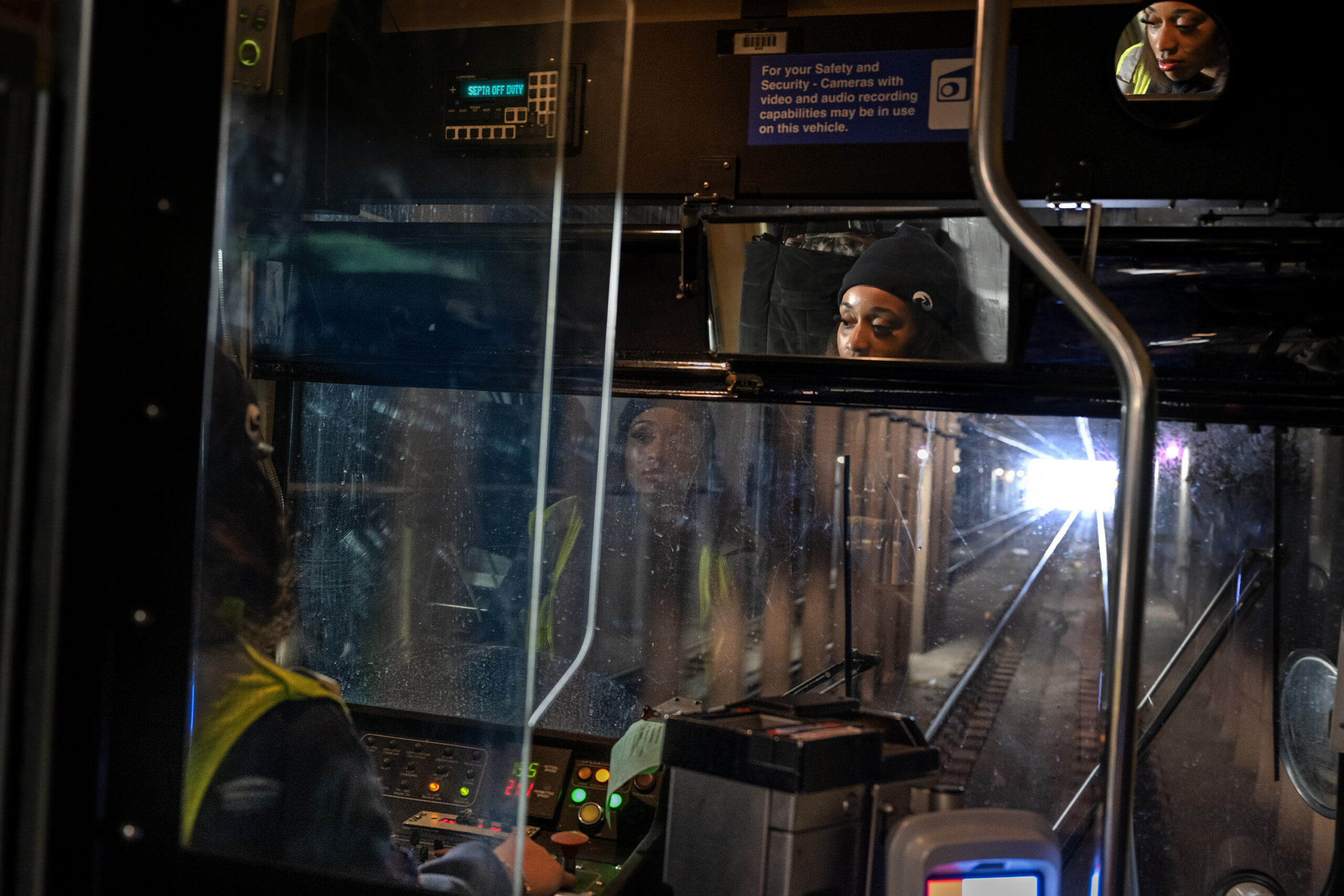
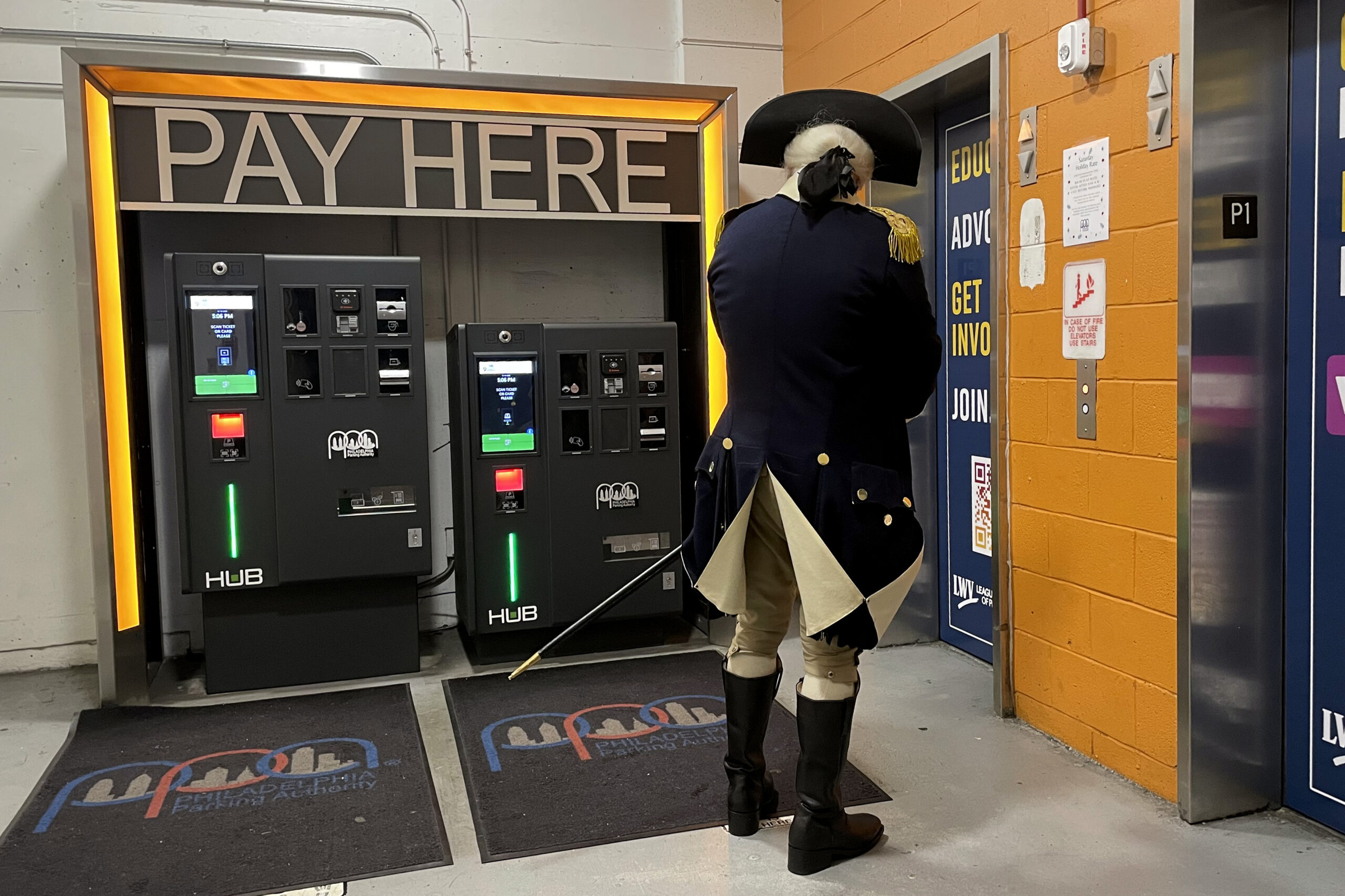
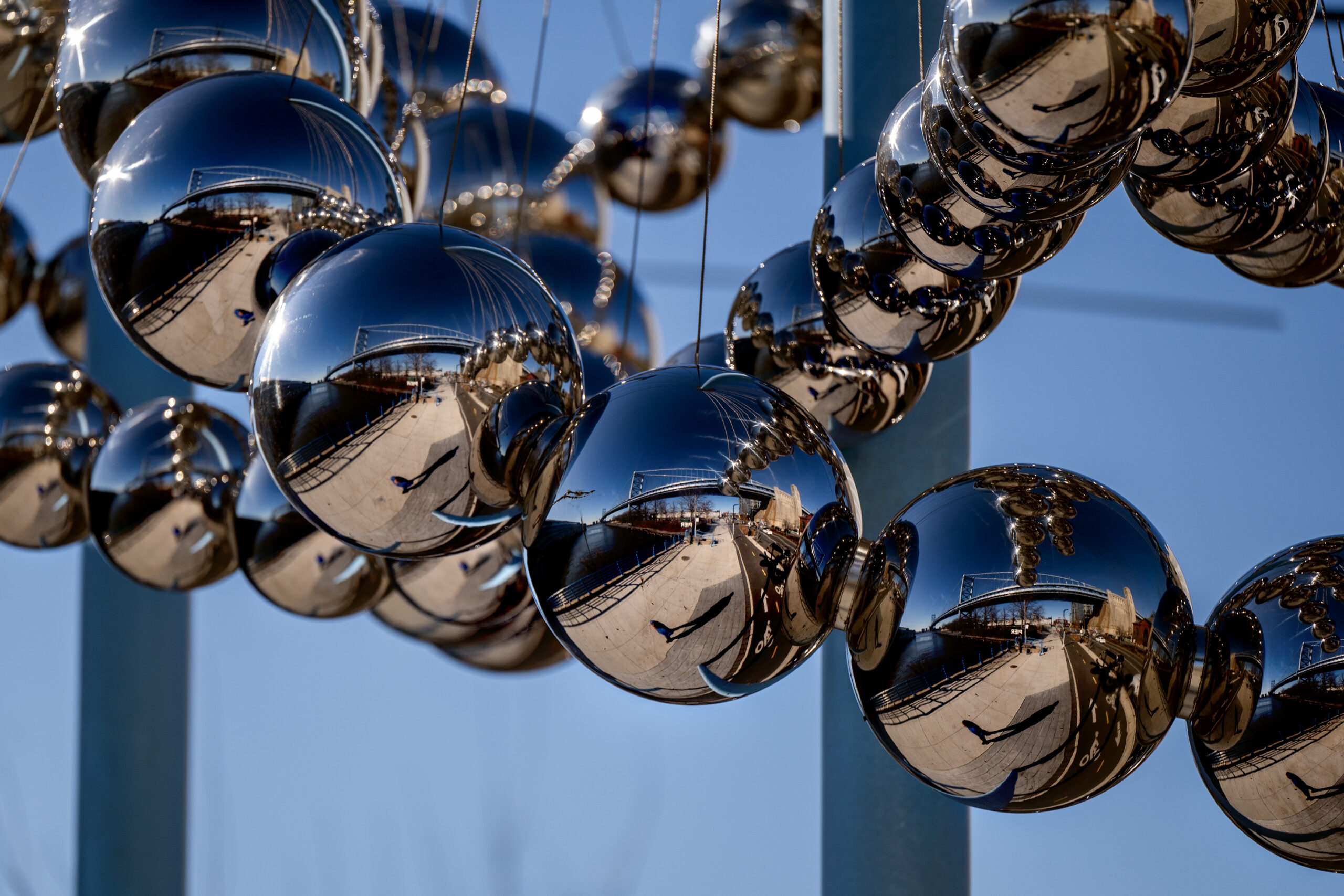
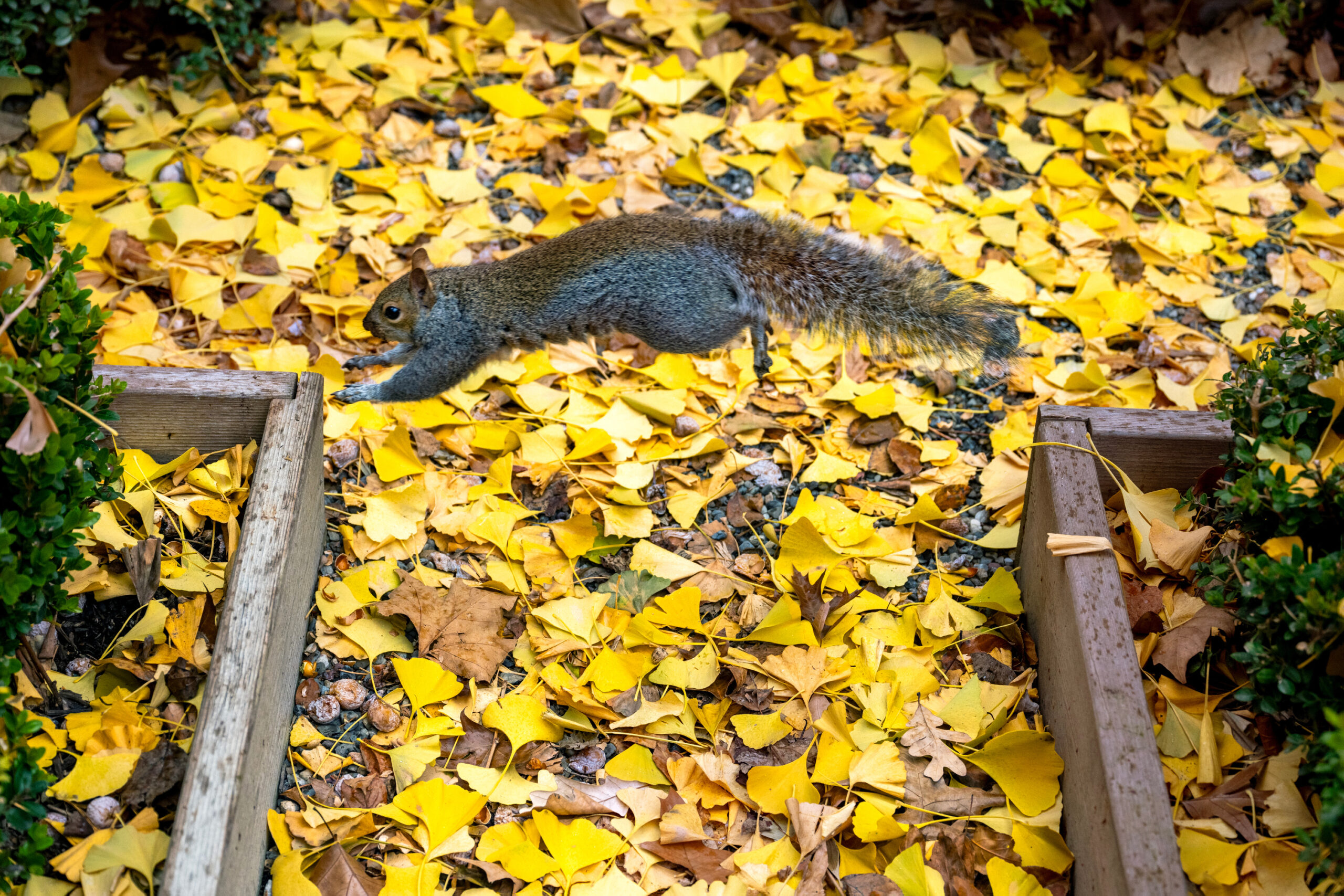
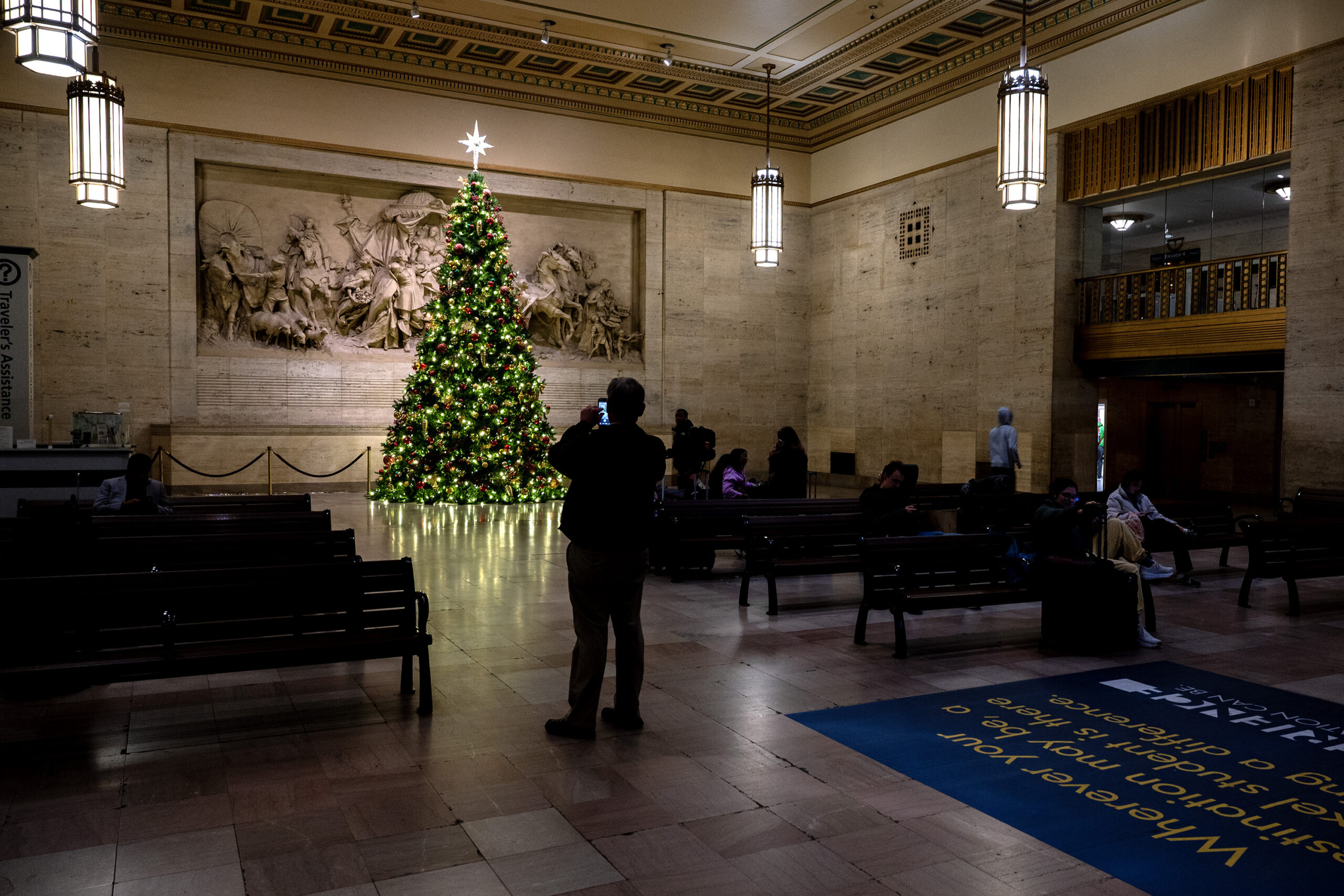
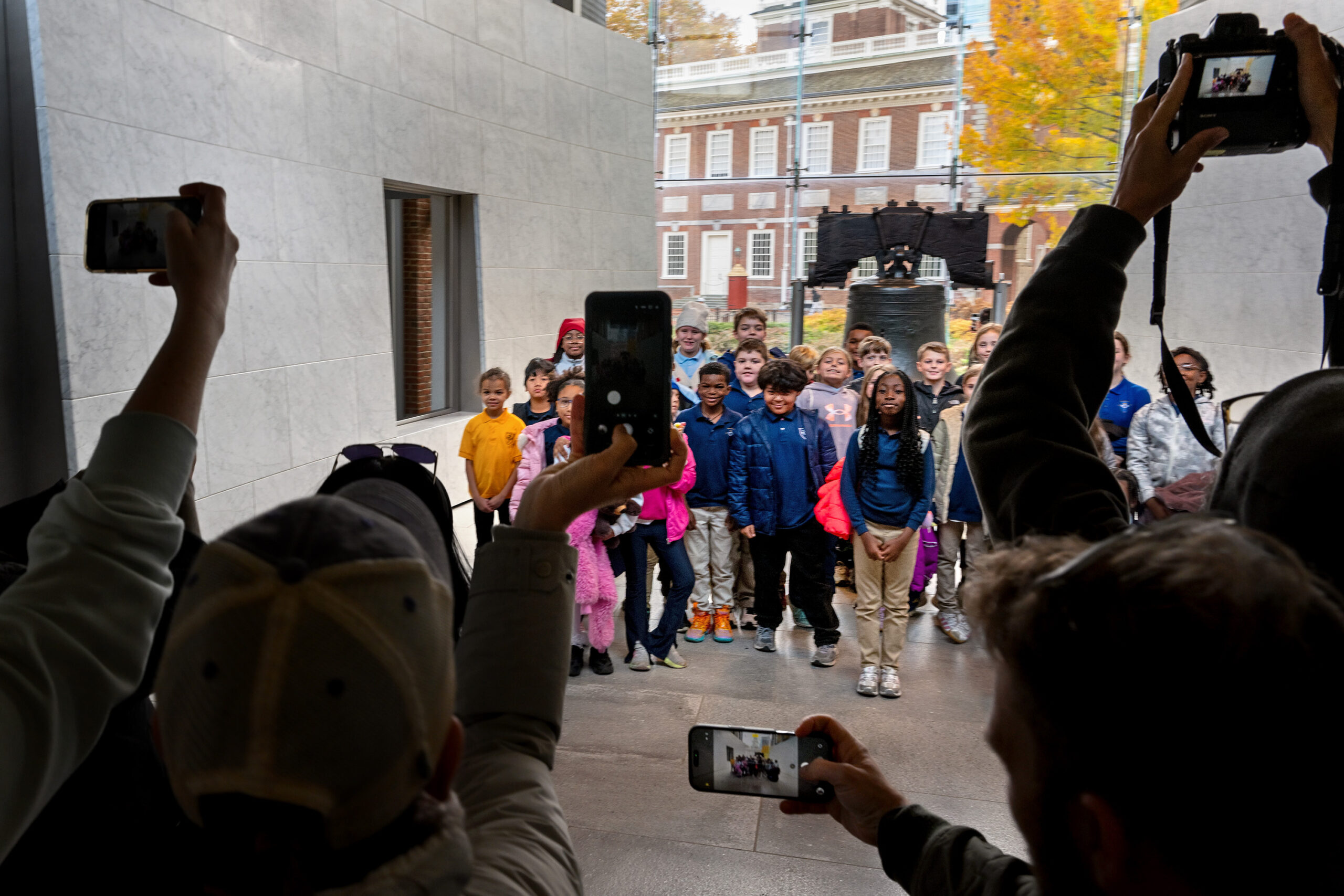
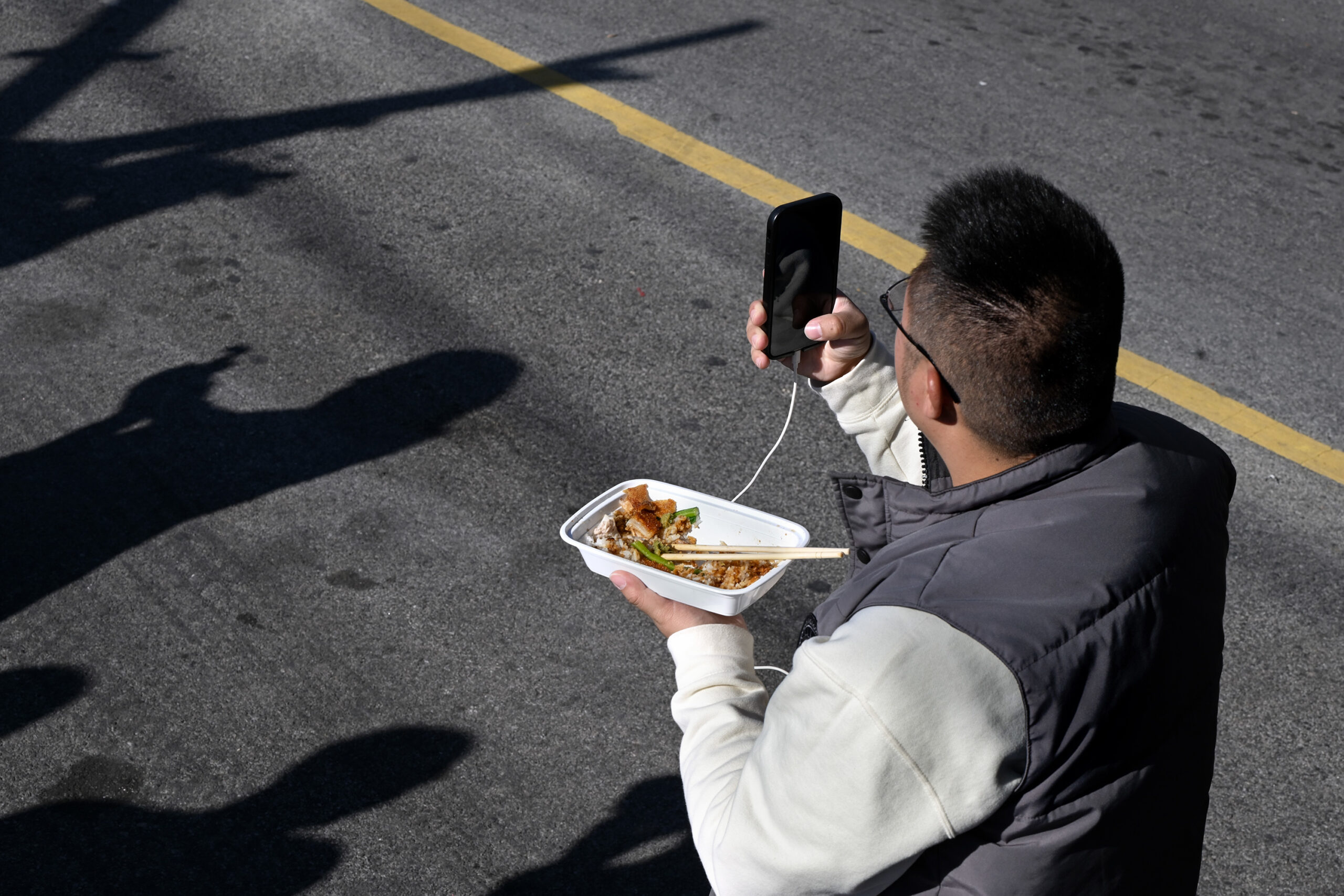
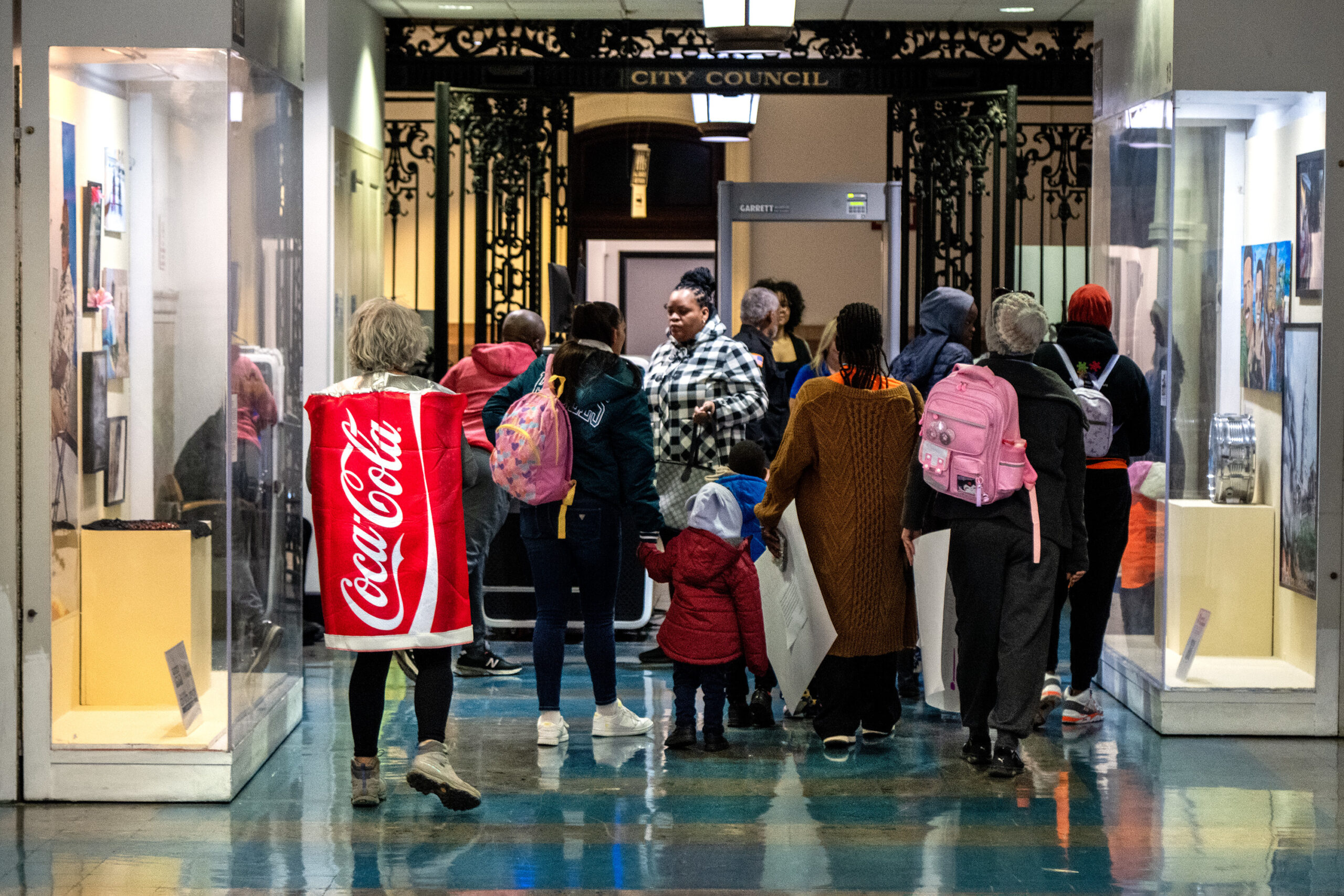
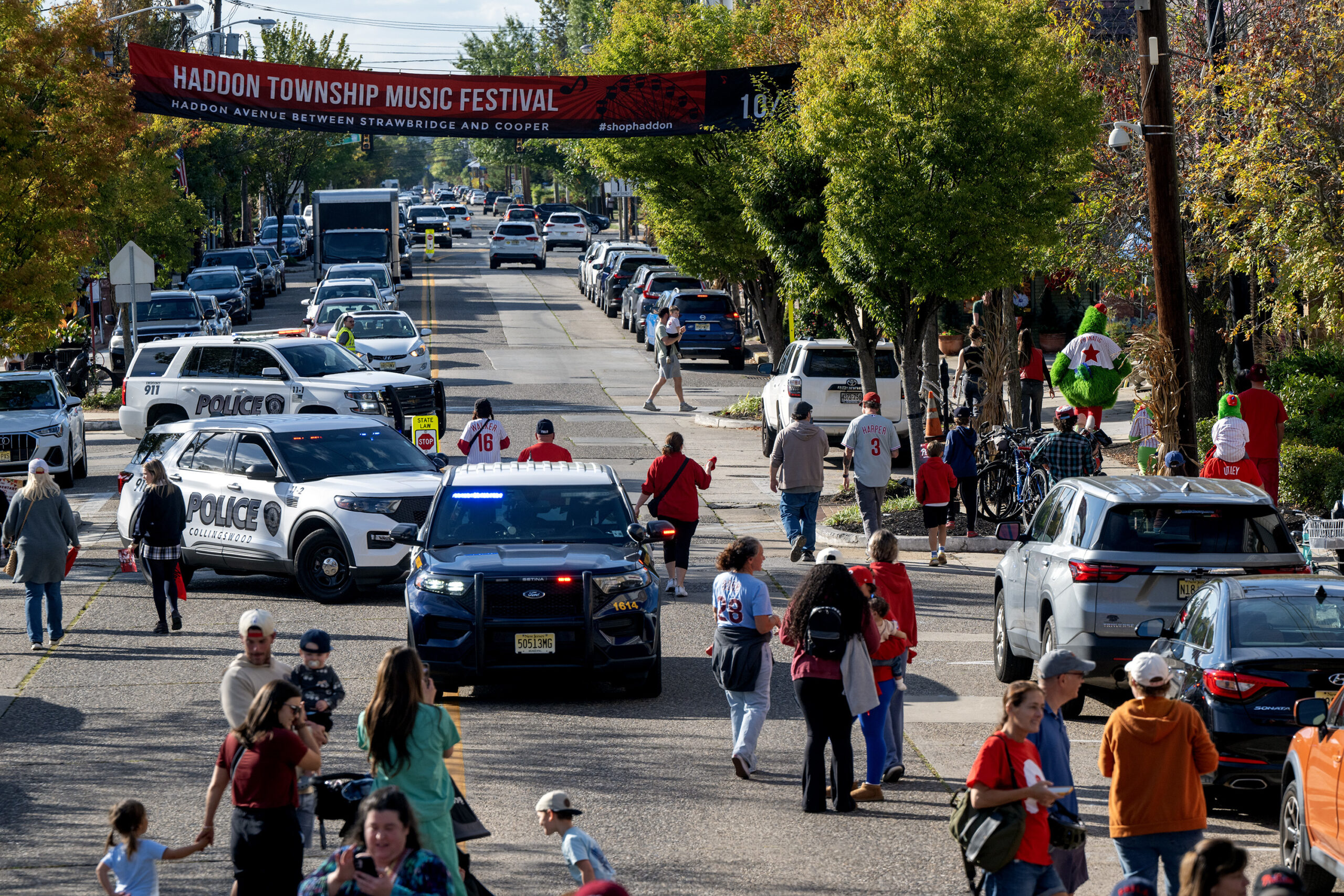
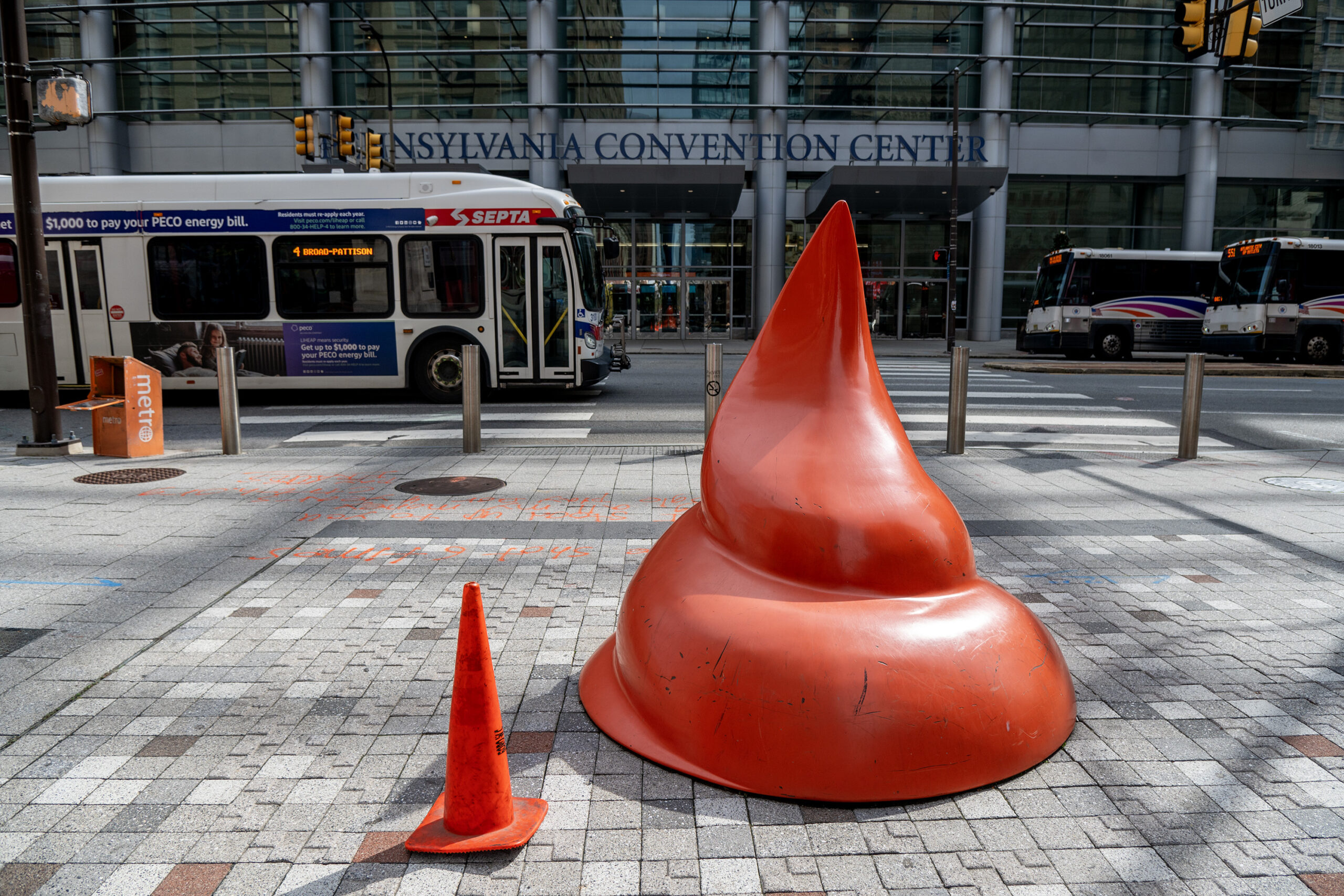
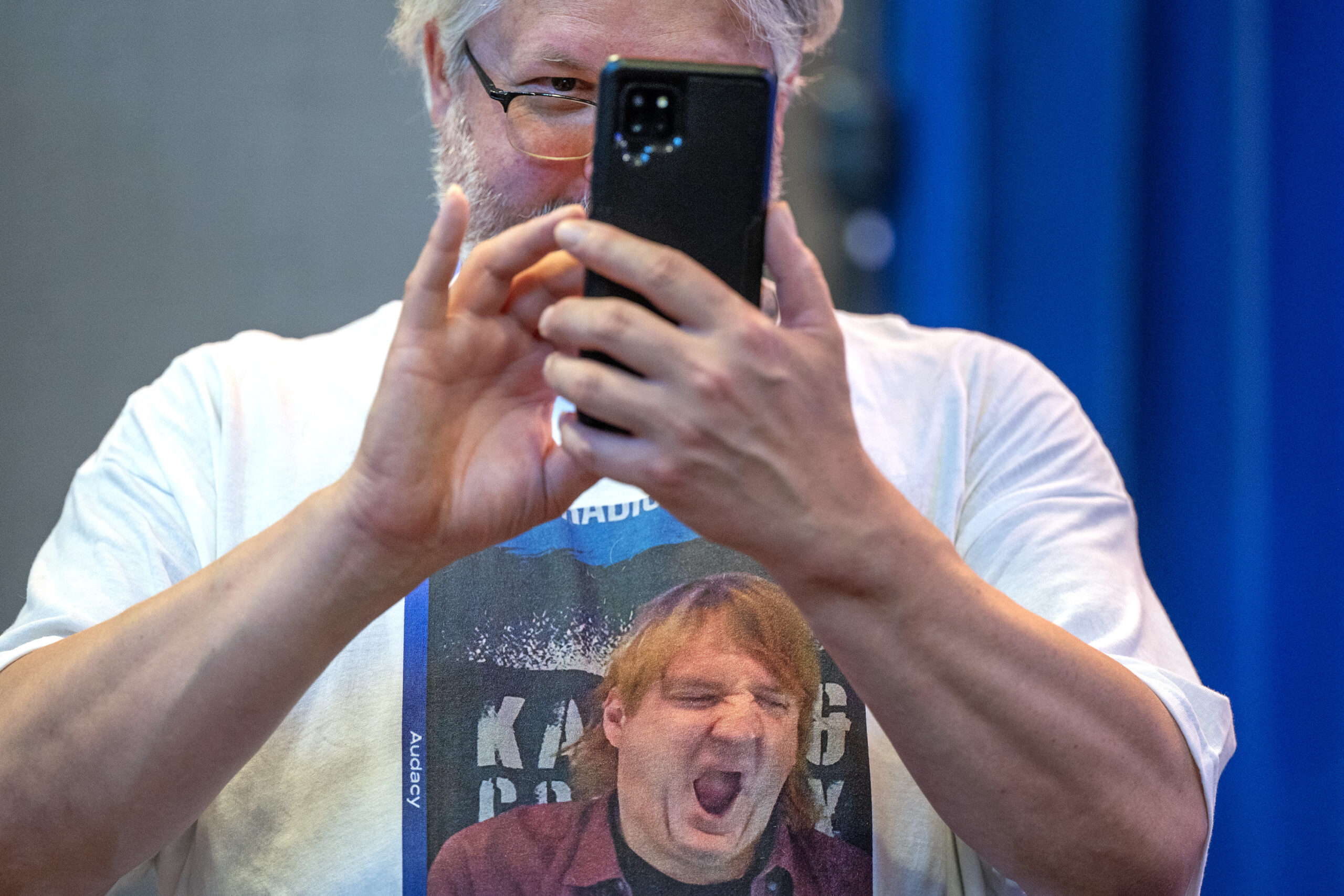
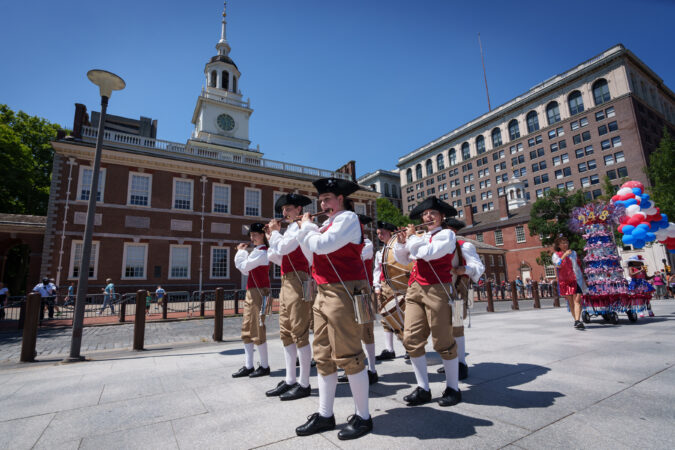
Dec. 29, 2025: Canada geese at sunrise in Evans Pond in Haddonfield, during the week of the Winter Solstice for the Northern Hemisphere. December 22, 2025: SEPTA trolley operator Victoria Daniels approaches the end of the Center City Tunnel, heading toward the 40th Street trolley portal after a tour to update the news media on overhead wire repairs in the closed tunnel due to unexpected issues from new slider parts.December 15, 2025: A historical interpreter waits at the parking garage elevators headed not to a December crossing of the Delaware River, but an event at the National Constitution Center. General George Washington was on his way to an unveiling of the U.S. Mint’s new 2026 coins for the Semiquincentennial, December 8, 2025: The Benjamin Franklin Bridge and pedestrians on the Delaware River Trail are reflected in mirrored spheres of the “Weaver’s Knot: Sheet Bend” public artwork on Columbus Boulevard. The site-specific stainless steel piece located between the Cherry Street and Race Street Piers was commissioned by the City’s Public Art Office and the Delaware River Waterfront Corporation and created and installed in 2022 by the design and fabrication group Ball-Nogues Studio. The name recalls a history that dominated the region for hundreds of years. “Weaver’s knot” derives from use in textile mills and the “Sheet bend” or “sheet knot” was used on sailing vessels for bending ropes to sails. November 29, 2025: t’s ginkgo time in our region again when the distinctive fan-shaped leaves turn yellow and then, on one day, lose all their leaves at the same time laying a carpet on city streets and sidewalks. A squirrel leaps over leaves in the 18th Century Garden in Independence National Historical Park Nov. 25, 2025. The ginkgo (Ginkgo biloba) is considered a living fossil as it’s the only surviving species of a group of trees that existed before dinosaurs. Genetically, it has remained unchanged over the past 200 million years. William Hamilton, owner the Woodlands in SW Phila (no relation to Alexander Hamilton) brought the first ginkgo trees to North America in 1785.November 24, 2025: The old waiting room at 30th Street Station that most people only pass through on their way to the restrooms has been spiffed up with benches – and a Christmas tree. It was placed there this year in front of the 30-foot frieze, “The Spirit of Transportation” while the lobby of Amtrak’s $550 million station restoration is underway. The 1895 relief sculpture by Karl Bitter was originally hung in the Broad Street Station by City Hall, but was moved in 1933. It depicts travel from ancient to modern and even futuristic times. November 17, 2025: Students on a field trip from the Christian Academy in Brookhaven, Delaware County, pose for a group photo in front of the Liberty Bell in Independence National Historical Park on Thursday. The trip was planned weeks earlier, before they knew it would be on the day park buildings were reopening after the government shutdown ended. “We got so lucky,” a teacher said. Then corrected herself. “It’s because we prayed for it.” November 8, 2025: Multitasking during the Festival de Día de Muertos – Day of the Dead – in South Philadelphia.November 1, 2025: Marcy Boroff is at City Hall dressed as a Coke can, along with preschoolers and their caregivers, in support of former Mayor Jim Kenney’s 2017 tax on sweetened beverages. City Council is considering repealing the tax, which funds the city’s pre-K programs. October 25, 2025: Austin Gabauer, paint and production assistant at the Johnson Atelier, in Hamilton Twp, N.J. as the finished “O” letter awaits the return to Philadelphia. The “Y” part of the OY/YO sculpture is inside the painting booth. The well-known sculpture outside the Weitzman National Museum of American Jewish History was removed in May while construction continues on Market Street and has been undergoing refurbishment at the Atelier at the Grounds for Sculpture outside of Trenton.October 20, 2025:The yellow shipping container next to City Hall attracted a line of over 300 people that stretched around a corner of Dilworth Park. Bystanders wondered as they watched devotees reaching the front take their selfies inside a retro Philly diner-esque booth tableau. Followers on social media had been invited to “Climb on to immerse yourself in the worlds of Pleasing Fragrance, Big Lip, and exclusive treasures,” including a spin of the “Freebie Wheel,” for products of the unisex lifestyle brand Pleasing, created by former One Direction singer Harry Styles.October 11, 2025: Can you find the Phillie Phanatic, as he leaves a “Rally for Red October Bus Tour” stop in downtown Westmont, N.J. just before the start of the NLDS? There’s always next year and he’ll be back. The 2026 Spring Training schedule has yet to be announced by Major League Baseball, but Phillies pitchers and catchers generally first report to Clearwater, Florida in mid-February.October 6. 2025: Fluorescent orange safety cone, 28 in, Poly Ethylene. Right: Paint Torch (detail) Claes Oldenburg, 2011, Steel, Fiberglass Reinforced Plastic, Gelcoat and Polyurethane. (Gob of paint, 6 ft. Main sculpture, 51 ft.). Lenfest Plaza at the Pennsylvania Academy of the Fine Arts on North Broad Street, across from the Convention Center.September 29, 2025: A concerned resident who follows Bucks County politics, Kevin Puls records the scene before a campaign rally for State Treasurer Stacy Garrity, the GOP candidate for governor. His T-shirt is “personal clickbait” with a url to direct people to the website for The Travis Manion Foundation created to empower veterans and families of fallen heroes. The image on the shirts is of Greg Stocker, one of the hosts of Kayal and Company, “A fun and entertaining conservative spin on Politics, News, and Sports,” mornings on Talk Radio 1210 WPHT.
Nowhere will celebrate America’s 250th anniversary like Philadelphia. Because nowhere else can celebrate the national milestone like Philadelphia.
Philly is where it happened.
Only in Philadelphia, on July 4, 1776, did 56 sweat-soaked delegates of the Second Continental Congress stride into sweltering Independence Hall to stake their necks on an idea. In the course of human events, it had become time to declare self-evident truths. All men are created equal and endowed by certain unalienable rights.
Some men, that is.
This unforgivable erasure would have reverberations to this day. Nowhere are the centuries-old wounds of that betrayal more visible than in the unrelenting poverty, violence, and inequality preventing so many Philadelphians from their pursuit of happiness.
But the manifesto was still the most revolutionary freedom document humankind ever produced. A single piece of parchment composed of elegant, unwavering prose that defied and dared an empire, forever reordered the rights of man, and drew the eyes of humanity — and judgments of history — upon our humble burg.
Their work for the day done — and in keeping with the rest of the Founders’ stay in the City of Brotherly Love — the framers presumably dusted off their wigs, loosened up their waistcoats, and repaired to the cooling comfort of the City Tavern for a rager for the ages.
Only in Philadelphia.
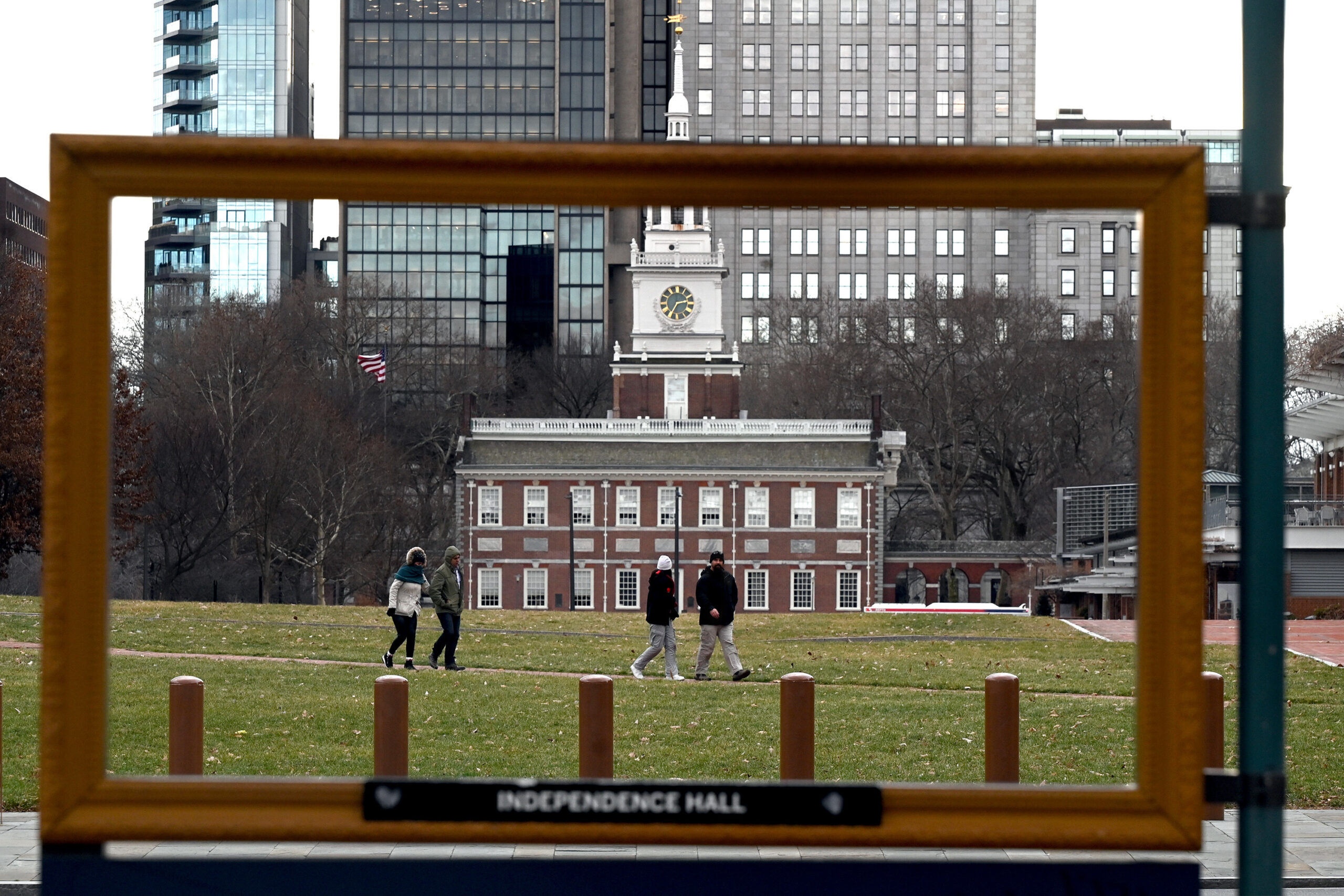
Independence Hall in Independence National Historical Park Jan. 3, 2024. one of the Philadelphia region’s most visited areas, but the lustre has often seem faded in its grounds and buildings. But organizers say it will be different in time for 2026, the 250th birthday celebration of America.
‘Philly is beyond ready’
Two-and-half centuries later, the eyes of the world again fall upon our Philly — for yet another rager for the ages.
In Philly fashion, the city’s preparations for the 250th anniversary of the signing of the Declaration of Independence, also known as the Semiquincentennial, stumbled to a rocky start. Poor funding, a lack of leadership, and miscommunication plagued early stages of Philly’s 250th party planning.
But in truer Philly fashion, dozens of passionate Philadelphian civil servants, cultural leaders, artists, volunteers, and philanthropies rallied to ensure the city where it happened met the moment.
Only a year ago, during a 2026 preparedness meetings, worried planners requested $100 million from city and state coffers to fund festivities and programming worthy of democracy’s birthplace. They have received it.
“A year ago, we were having a conversation about, ‘Are we ready?’, ‘Is the money there?’, ‘Can we pull this off?’” said Max Weisman, an aide to Councilmember Isaiah Thomas, a key planner. “Yes, yes, yes.”
Philadelphia is ready, the planners say. Have no doubt.
These Philly-loving patriots say they have organized a once-in-a-lifetime party equal to the city’s unparalleled role in history — and its irrepressibly proud personality.
“Philly is beyond ready,” said Kathryn Ott Lovell, president and CEO of the Philadelphia Visitor Center Corporation and Philadelphia250, the city’s key planning partner for 2026. “Everyone is pulling out the red carpet. Every museum. Every cultural institution. Every neighborhood organization. Everyone is doing something special for the company that’s coming.”
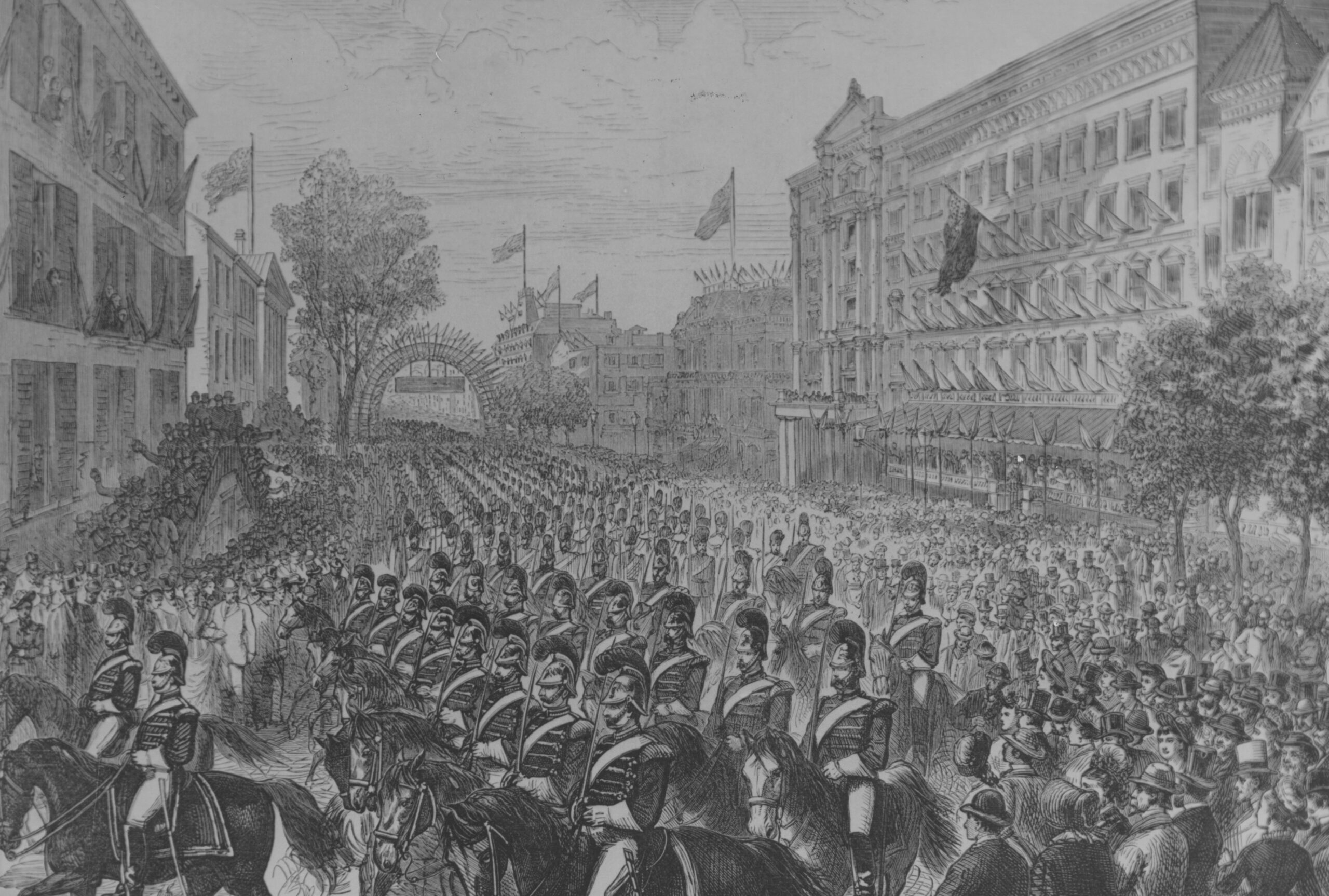
In this depiction published in The Inquirer July 1, 1951, the first event of July 4, 1876, was a huge military parade. The celebration was held in Independence Square after the parade.
A ‘reintroduction to the world’
Look around. Everywhere signs abound of the already-underway party. In the scores of new museum exhibits grandly exploring every power and contradiction enshrined in the declaration bellowed out of Philadelphia 250 years ago. In the abundance of plans for neighborhood programming and beautifications that bring the party to the people in 2026. In new ventures honoring Philly diversity and pride. In the polish and paint in the works for the Historic District.
Hey, Philly cleans up when it needs to.
It was visible when a parade of ships sailed along the Delaware in October to kick off the 250th anniversary of the Navy, founded in Philly. And it was heard in the crisp salutes and solemn hymns of the Marines who crowded Old City in November to mark their branch’s founding, also in Philly in 1775. It builds in the excitement of clock-ticking preparations for the string of big-ticket events that will grace Philadelphia in 2026.
Six FIFA World Cup matches, with a summer fan festival and volunteer-training campus. The MLB All-Star Game. A pumped-up Fourth of July with to-be-announced special guests. TED Democracy talks featuring citizen speakers from Philly and beyond, exploring democracy’s painful past and uncertain present.
It rings out in the genuine excitement of Philadelphians who work in ceaseless dedication to the principle that Philadelphians know how to throw a party.
Philadelphia is not screwing up a party, is Weisman’s mantra (except he doesn’t say, “screwing.”)
Matthew Skic, of Morristown, N.J., Director of Collections and Exhibitions, (left), and Michael Hensinger, of Fishtown, Pa., Senior Manager of K-12 Education, (right), are dressed as Minute Men from the Massachusetts Militia at the opening of the exhibit Banners of Liberty which showcased the original revolutionary war flags at the Museum of the American Revolution in Philadelphia, Pa., on Saturday, April 19, 2025.
Not just a party. A year-long, city-wide commemoration that delivers Philadelphia into a more prosperous future. Before city planners found their 250th footing, Philly tourism and cultural leaders banded together to seize the opportunity. With more than500,000 visitors expected for the World Cup alone, they aim to reintroduce Philadelphia to the world.
“Or introduce ourselves for the very first time to people who do not know Philadelphia or have a very narrow view of Philadelphia,” said Angela Val, president and CEO of Visit Philadelphia, the nonprofit that serves as the city’s official leisure-tourism marketing agency. “We don’t take these big events lightly. They are investments. This is really an opportunity to set ourselves up for success in 2026 and beyond.”
Parties of the past
We’ve been here before.
Every 50 years since 1876, the nation’s Centennial year, and America’s first major birthday bash, Philly has dusted off its wig to get down. Each of these events came with larger national wounds.
“Before every one of these fairs, there’s a scar,” said David Brigham, librarian and CEO of the Historical Society of Pennsylvania, referring to Philly’s previous national birthday parties. “There’s always been a conflict and a pain.”
And in these moments, Philly has strove to be a salve, he said. Most of the time, anyway.
In 1876, when America reeled from unhealed wounds of the Civil War, Philadelphia built a small city in Fairmount Park — and hosted 10 million people from 37 countries. The showcase of growing American innovation and economic prowess aimed to heal a ruptured nation. Memorial Hall, its massive art gallery, remains today as the Please Touch Museum.
In 1926, as America emerged from the carnage of World War I, our Sesquicentennial marked the building of the Ben Franklin Bridge, the transformation of what is now FDR Park, and the construction of a temporary, gleaming, utopian metropolis in South Philly.
The Bicentennial in 1976 led to the creation of the Mann Center and the African American Museum in Philadelphia, even if the party itself was marred by Mayor Frank Rizzo’s heavy-handed security — he summoned 15,000 National Guard members.
We’ve been here before. And we aren’t perfect.
As ready as Philadelphia stands, next year’s commemoration will not include the big legacy projects of past celebrations, the bridges, stadium, and new museums.
But maybe that’s not what this moment is about, anyway.
An unfinished journey
Just as past planners grappled with the questions of their American moment, Philadelphia organizers wrestle with ours.
“It’s a commemoration of why our republic was created,” Lovell said. “But also about a recommitment to the ideals that were established. We were founded on these basic principles and values that the Founding Fathers fought over. And we’re still fighting over it.”
It’s that same theme — the grand fragility of our American experiment — that pulses though the Museum of the American Revolution’s landmark exhibit, “The Declaration’s Journey.”
A breath-taking assemblage of rare artifacts, including Thomas Jefferson’s writing chair and Martin Luther King’s prison bench, the museum’s most ambitious show ever explores the 250-year global impact of the declaration. How words proclaimed out from Philadelphia inspired revolutions and freedom movements throughout the centuries
“The American Revolution is not synonymous with the Revolutionary War,” said R. Scott Stephenson, president of the museum. “It is a centuries-long, ongoing experiment in liberty, equality, and self-government.”
And that journey’s not yet over.
The birth of democracy in Philadelphia, and the worldwide struggle to sustain it, represents the most significant event since the birth of Christ, said filmmaker Ken Burns. (And here we though it was Super Bowl LII.)
The American war may be over, but the revolution is not, said Burns, whose 12-hour docuseries, “The American Revolution,” is streaming on PBS.
All we were promised was the pursuit, he said. And the chance to forever make the imperfect a little less so.
The republic the Founders forged in the Philly heat stands the most divided and tested it has been in decades, with core disagreements about its very foundations.
It is only right, then, that Philadelphians march onto the global stage. Who else but us?
In every way, being America’s birthplace shapes Philadelphia. Where else is its hallowed iconography such a daily staple? Where else does its symbolism so powerfully frame every civic successes — and failure? Every sports triumph and cultural happening. Every step forward; every stumble backward.
Where else does the promise and contradictions of a proclamation that turned the world upside down so intrinsically coarse through the lifeblood of a place?
From losing a leg to a parasitic infection that almost took his life to getting temporarily cast out by his herd, Ray the Nubian goat had a rough 2025. Loving volunteers and a wheelchair might make for an improved 2026.
In October, the Philly Goat Project, an East Germantown nonprofit that provides community wellness through nature connection, shared Ray’s story with The Inquirer.
The 7-year-old goat had gone from helping people in bereavement and children with cerebral palsy at Awbury Arboretum to needing help moving around. Readers showed up for the middle-aged ruminant, donating enough for Ray to get his wheelchair and have physical therapy.
On a recent cold Monday morning, Ray eagerly awaited his rehabilitation, standing strong on three legs and eating orange peels out of volunteer Jay Tinkleman’s hand.
“It’s amazing what he has been through,” Tinkleman said, kissing Ray’s forehead. “He seems more confident now, a little stronger, and the other goats don’t pick on him like they used to at first, so I think they sense that he is stronger.”
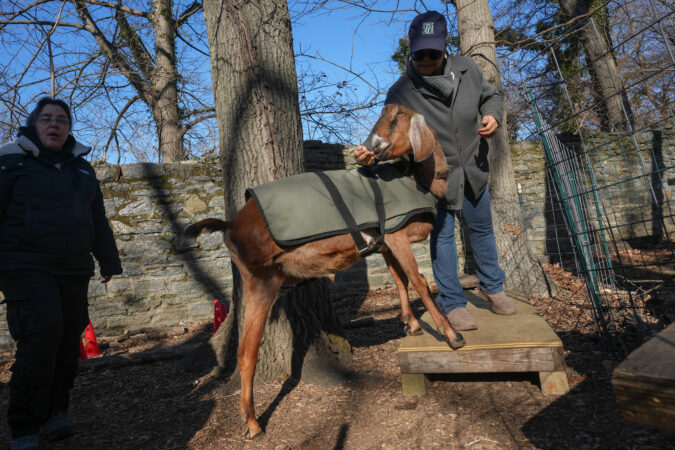
Leslie Jackson, director of operations, works with Ray, who lost his leg due to a parasite infection.
Casey Buckley, who runs Ray’s physical therapy, agrees with Tinkleman, but said the friendly goat still has a long way to go.
These days, Ray is an ambulatory wheelchair user. He can move with or without a wheelchair, but needs it for long strolls, an important part of goat life.
“His rehab is a lifelong process,” Buckley said. “The goal is that on long walks, where he might not be able to go, he can use the wheelchair, but we just have to take it day by day.”
Ray might not fully agree. Once the first of his nine exercises began, he was ready to go.
“Slow down!” Leslie Jackson, director of operations at Philly Goat Project, told Ray on multiple occasions.
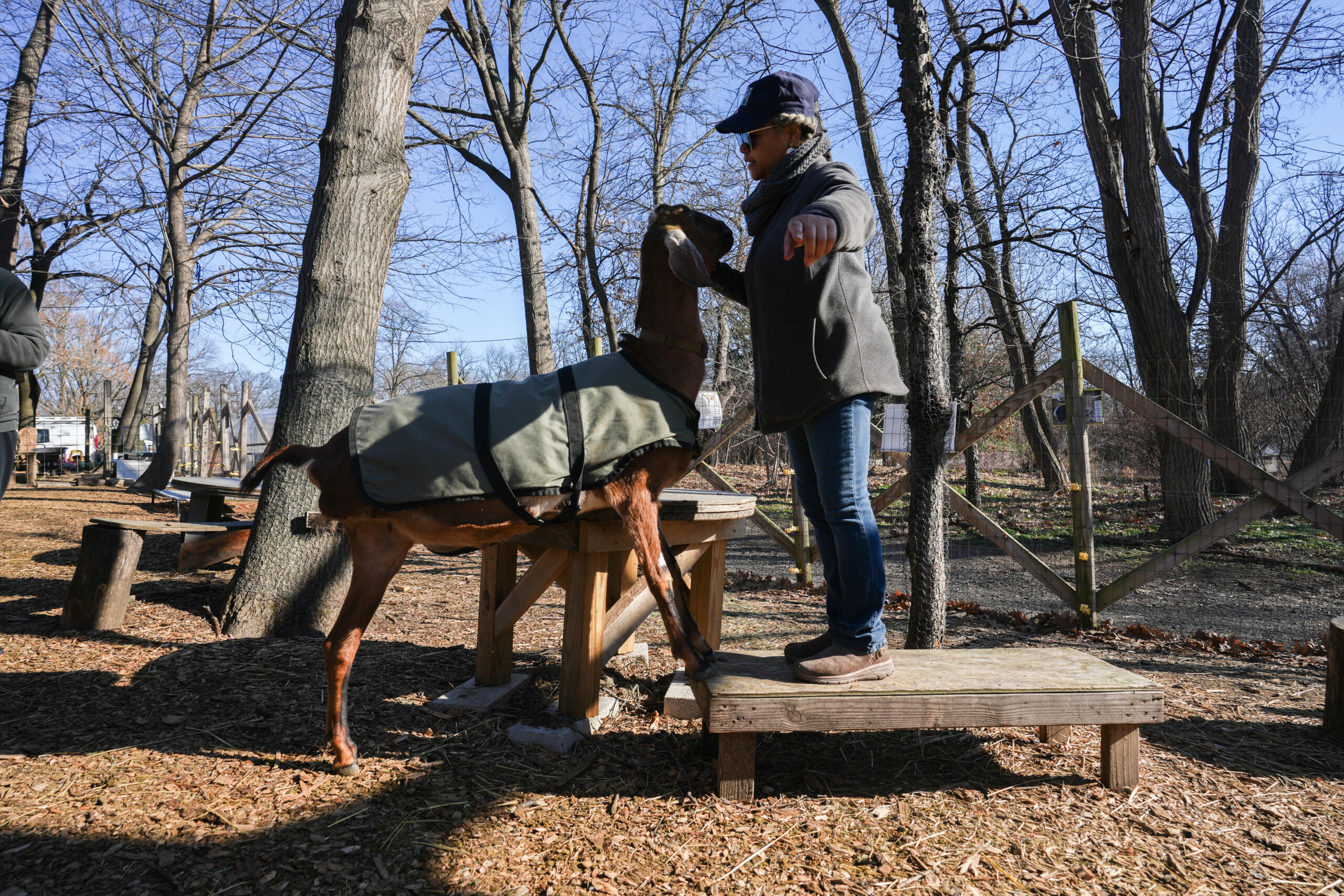
Neck stretches side to side, he aced it. Getting rocked back and forth to get the core strength humans get when doing crunches, no problem. Elevating his two front hooves on a table, while balancing on his third leg, to practice climbing the Philly Goat Project van “Vangoat,”easy.
Then came the orange cone course. Ray flew through it only to be stopped by Jackson right before the ending.
“No, no, no cheating, back, back,” Jackson told him upon realizing, in his speed, Ray had missed a line.
He tried again and again, but his last paw kept missing a line of cones. He bumped Jackson’s arm softly, perhaps looking for a comforting treat.
“We will do it together, teamwork makes the dream work,” Jackson told Ray, as Tinkleman and Buckley rallied around them to help line up the cones for another try. And shortly, to Ray, victory tasted like orange peels.
After 30 minutes of PT, he was ready to practice walking around in his wheelchair.
It took all three to get Ray into the chair. Tinkleman petted Ray’s head, keeping him calm. Jackson lifted the back of his body. And Buckley placed the metal contraptionaround Ray, making sure there was a wheel on each side, securing the black belt, and placing two soft sponges under the hip where his fourth leg used to be.
“He is not afraid of it, he doesn’t run from it,” Jackson said as Ray took off walking faster than before, no hopping or dragging. A milestone for the team that had been working for Ray to walk with his chair instead of feeling like he had to drag it.
Belly full of treats, the jolly goat led the group to the barn where his 11 goat friends and brother Teddy rested after returning from one of their long walks.
In time, the team hopes that the chair will help Ray join in once again. They are practicing having Teddy walk next to Ray in his wheelchair, keeping enough space for the wheels not to run over Teddy’s hooves.
Until then, Jackson feels grateful for Ray’s resilience and the big hearts that have helped him along the way.
“You don’t give up on a teammate, you try to help them through,” Jackson said. “Without the people who responded from The Inquirer [article], and our friends and family and fans, this would not be possible; he would not be getting stronger without a trainer, without a professional wheelchair. It’s a community effort.”
We’ll show you a photo taken in the Philly-area, you drop a pin where you think it was taken. Closer to the location results in a better score. This week’s theme is all about the new year. Good luck!
Round #14
Question 1
Where were people enjoying the fireworks?
Loading…
ClickTap on map to guess the location in the photo
ClickTap again to change your guess and hit submit when you're happy
You will be scored at the end. The closer to the location the better the score
Elizabeth Robertson / Staff Photographer
Pretty good/Not bad/Way off! Your guess was from the location.Spot on! Your guess was exactly at the location. Here's also where a random selection of Inquirer readers guessed.
This is Penn Treaty Park. Crowds gather here annually to watch the New Year’s Eve firework shows on the Delaware River.
Quiz continues after ad
Question 2
Where was this sunrise?
Loading…
Alejandro A. Alvarez / Staff Photographer
Pretty good/Not bad/Way off! Your guess was from the location.Spot on! Your guess was exactly at the location. Here's also where a random selection of Inquirer readers guessed.
This sunrise was at Delancey Street and South 6th Street.
Quiz continues after ad
Question 3
Where is this building?
Loading…
Jose F. Moreno / Staff Photographer
Pretty good/Not bad/Way off! Your guess was from the location.Spot on! Your guess was exactly at the location. Here's also where a random selection of Inquirer readers guessed.
This is the Athenaeum of Philadelphia on South Sixth Street. The Athenaeum will host a celebration on Jan. 6 to commemorate the first balloon voyage in America, kicking off the city's yearlong United States Semiquincentennial celebrations.
Your Score
ARank
Amazing work. You are already checking off your resolution list!
BRank
Good stuff. Seems like you’re ready to embrace a promising new year!
CRank
C is a passing grade, but you need to commit to studying all year-round!
DRank
D isn’t great. Your answers look like leftovers from 2025.
FRank
We don’t want to say you failed, but you didn’t not fail.
You beat % of other Inquirer readers.
We’ll be back next Saturday for another round of Citywide Quest.
Robert Caputo was captivated by the natural world, its animals and people. So he spent 35 years, from 1970 through 2005, traveling through Africa, Asia, and South America, taking photos, writing stories, and making films and TV shows for National Geographic magazine, Time, PBS, TNT, and other media outlets.
From Kenya to Egypt, Venezuela to Zanzibar, in China, Cuba, New Orleans, and Boston, Mr. Caputo chronicled the beauty and tragedy of everyday life. He reported as a freelancer, with a camera and a notepad, for National Geographic for decades, covering political coups, civil wars, and famines in Sudan and Somalia, and the AIDS epidemic in Uganda.
He worked for photographer and filmmaker Hugo van Lawick in Tanzania in the 1970s and then camera-stalked lions and leopards for National Geographic on the Serengeti Plain. He sent back striking images of the Abu Simbel Temples in Egypt and the old Kingdom of Mustang in Nepal.
In Sudan, he sipped tea with camel traders, slept under the stars, and posed for portraits with tribal chiefs. He trekked the Himalayas and photographed fishermen on the Congo, Nile, and Mississippi Rivers. His poignant August 1993 cover photo for National Geographic of a starving Somali woman gained worldwide attention.
“In fact, it is a great job,” Mr. Caputo told the Washington Post in 1995, when he was featured in a TV show about the Geographic photographers. “You really do get to go places and do things others only dream about.”
He told the New York Daily News in 1995: “I’ve always thought of my job as a license to be nosy.”
In 2002, as he was winding down his international travel, Mr. Caputo moved from Washington, D.C., to a farmhouse in Kennett Square, Chester County. In early 2025, he was diagnosed with Alzheimer’s disease. In December, he and his family traveled to the Pegasos Swiss Association voluntary assisted dying center in Basel, Switzerland. He died Thursday, Dec. 18. He was 76.
“Fairly early on, Bob had expressed his wishes to go out on his own terms,” said his wife, Amy. “We were able to honestly and pragmatically deal with our situation, and he remained his thoughtful self, with his sense of humor intact till the end.”
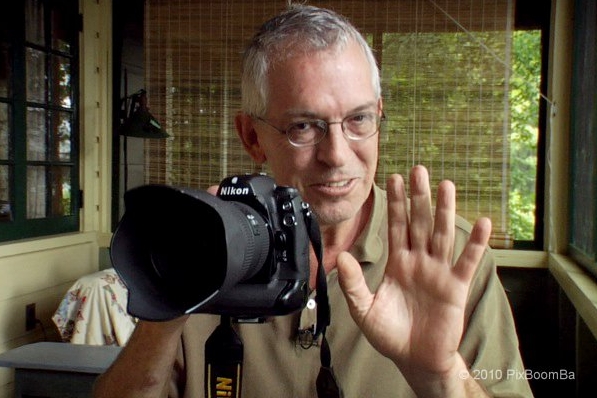
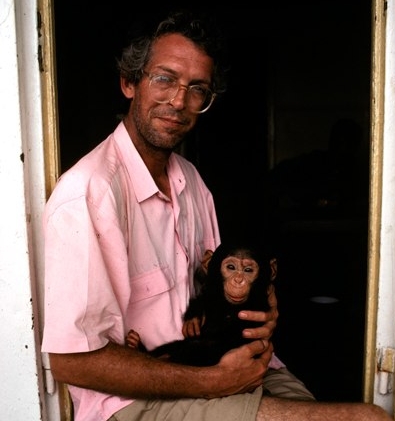
Mr. Caputo loved spending time with animals.
Mr. Caputo first went to Africa in 1970. He dropped out of Trinity College in Connecticut as a senior and meandered with friends across the vast continent, from Morocco to Tanzania.
He returned to earn a bachelor’s degree in film at New York University in 1976. Then, until 1979, he lived in Nairobi, Kenya, and sold photos and stories about Africa to Time, Life, and other magazines.
“He liked to learn about things,” said his son Nick. “He was constantly inquiring into things.”
In 1981, National Geographic hired him to report from Sudan on the verge of its civil war, and he produced striking cover photos, dramatic picture spreads, and detailed stories about Africa. In 1984 and ’85, he spent eight months and traveled 4,000 miles on steamboats, tugboats, and all-terrain vehicles to document traditional daily life along the Nile.
Mr. Caputo had several cover photos for National Geographic.
“Everywhere he went,” his family said, “Bob found that the people he met were fundamentally good and generous, happy to share their often limited food with him, a perfect stranger, and excited to tell him about their lives.”
There were challenges, too, he said in many interviews. He was detained by border guards in Uganda in 1979 and contracted malaria nine times. The monthslong assignments in search of remote Indigenous people were often lonely, and he got hungry and tired.
But the connections he made with people he encountered were worth it, he said. “The great advantage of working for National Geographic is having time,” he told the New York Daily News. “You can go to a village in Africa and not just have to waltz in and start shooting away. You can spend time getting to know people, and they can know you.”
Mr. Caputo was a natural innovator and teacher, and he organized photo workshops and lectured about photography around the world. He taught digital photography at the Center for Digital Imaging Arts at Boston University and cofounded Aurora & Quanta Productions in Maine in 1985 and the PixBoomBa.com photo website in 2010.
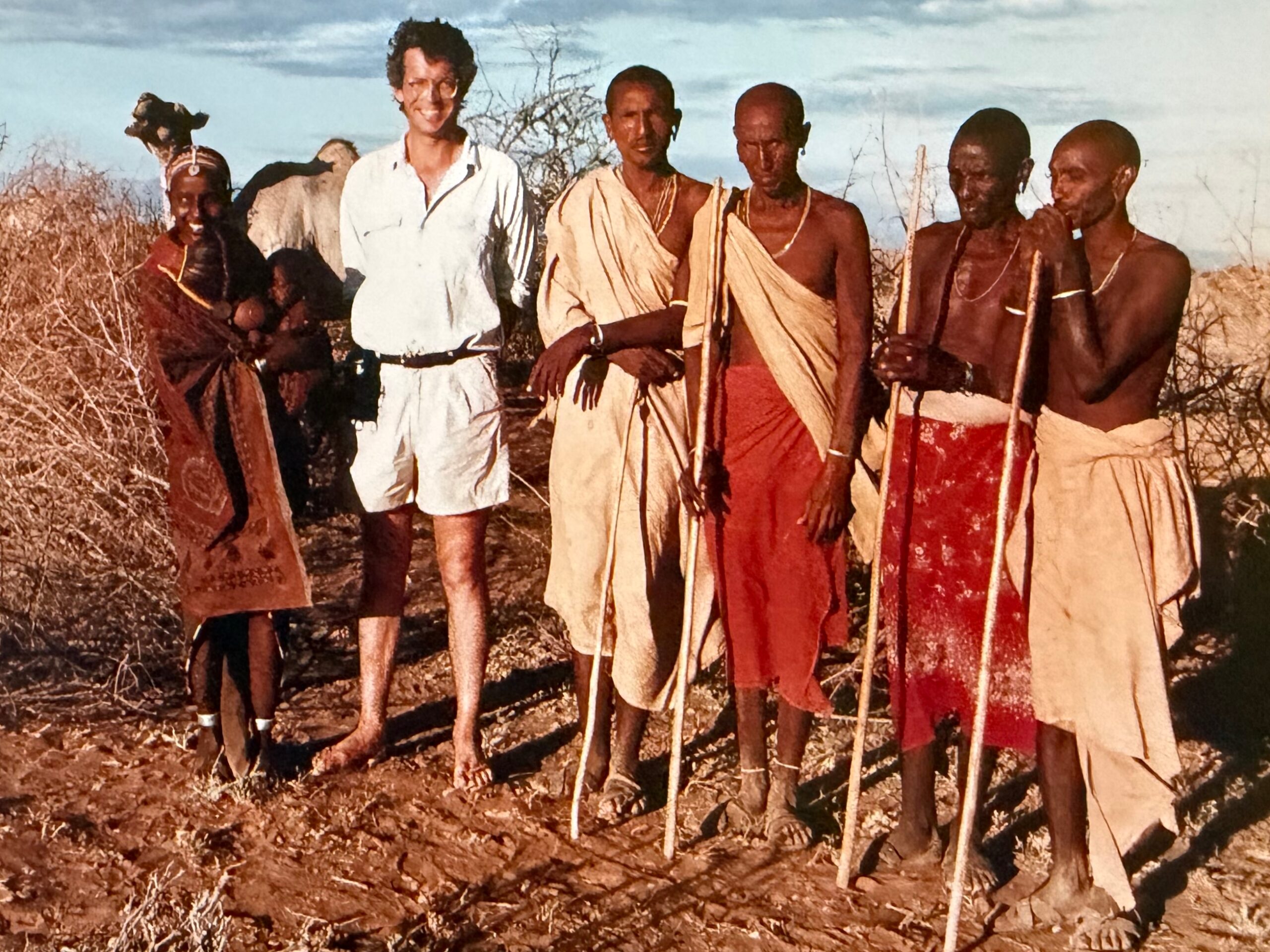
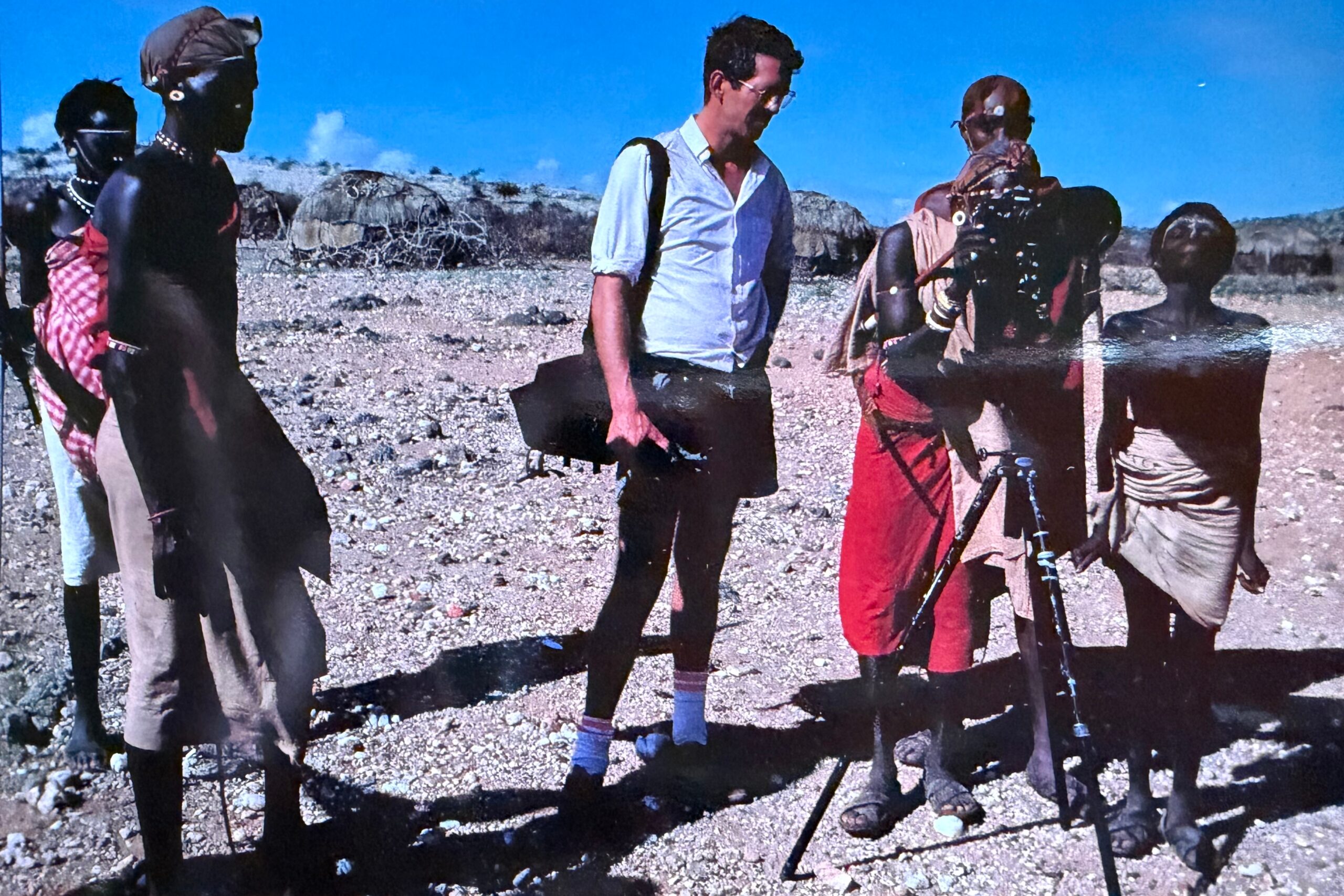
Mr. Caputo (second from left) poses with local people in Africa.
He wrote and appeared in wildlife shows, hosted TV programs and YouTube videos about photography, and wrote the story on which Glory & Honor, a 1998 award-winning TV film, is based. He made films about making films in Nigeria and the history of Boston’s Fenway Park.
He earned awards from the National Press Photographers Association, the American Travel Writers Foundation, Communications Arts journal, and other groups. He was personable and energetic, colleagues said, and he cofounded the annual National Geographic Prom at the Washington office.
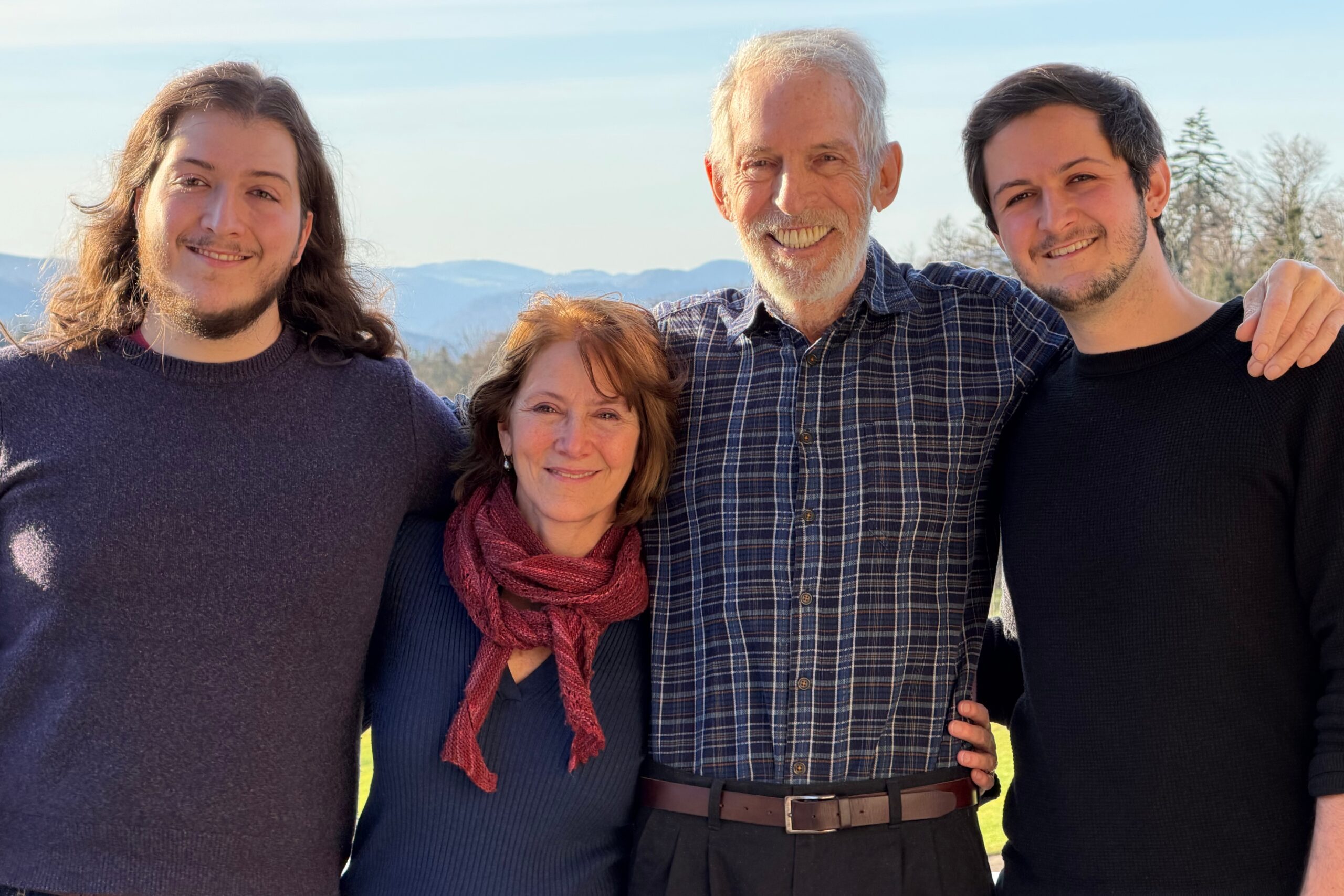
“He was a tremendously caring and loving person,” his son Nick said. “He looked out for other people.”
Mr. Caputo met TV and film producer Amy Wray on a National Geographic TV shoot in the Amazon rainforest. They married in 1997 and had sons Nick and Matt.
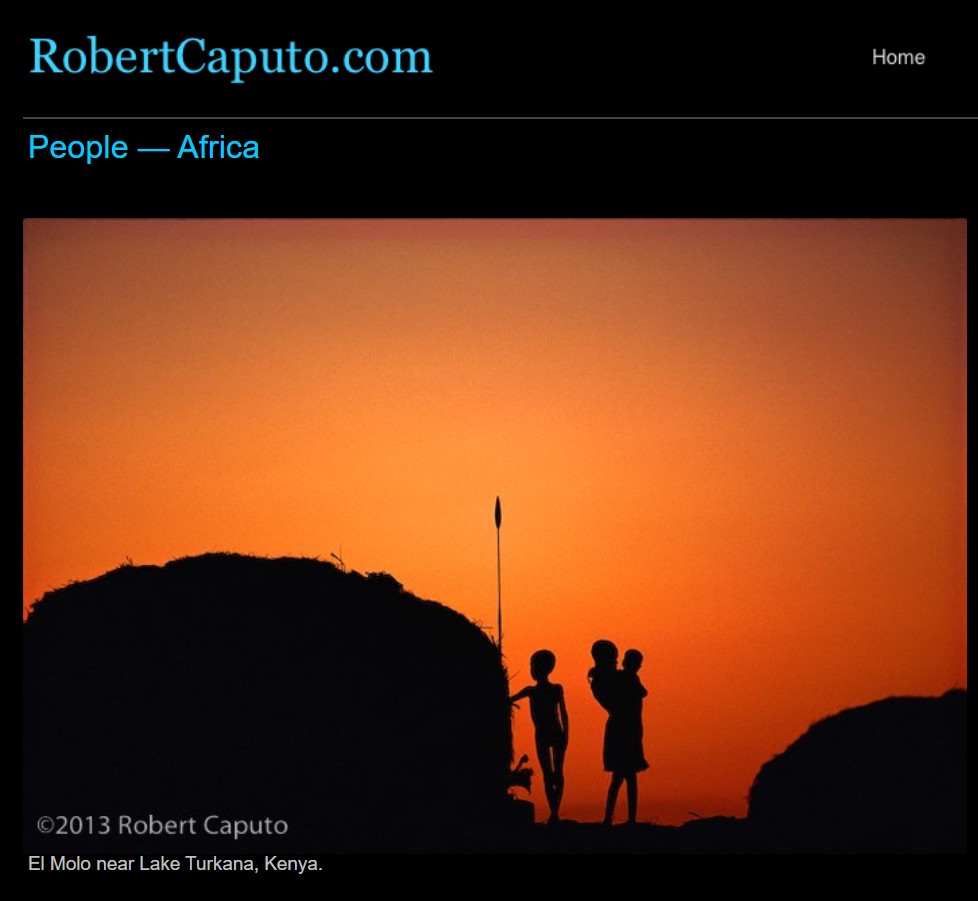
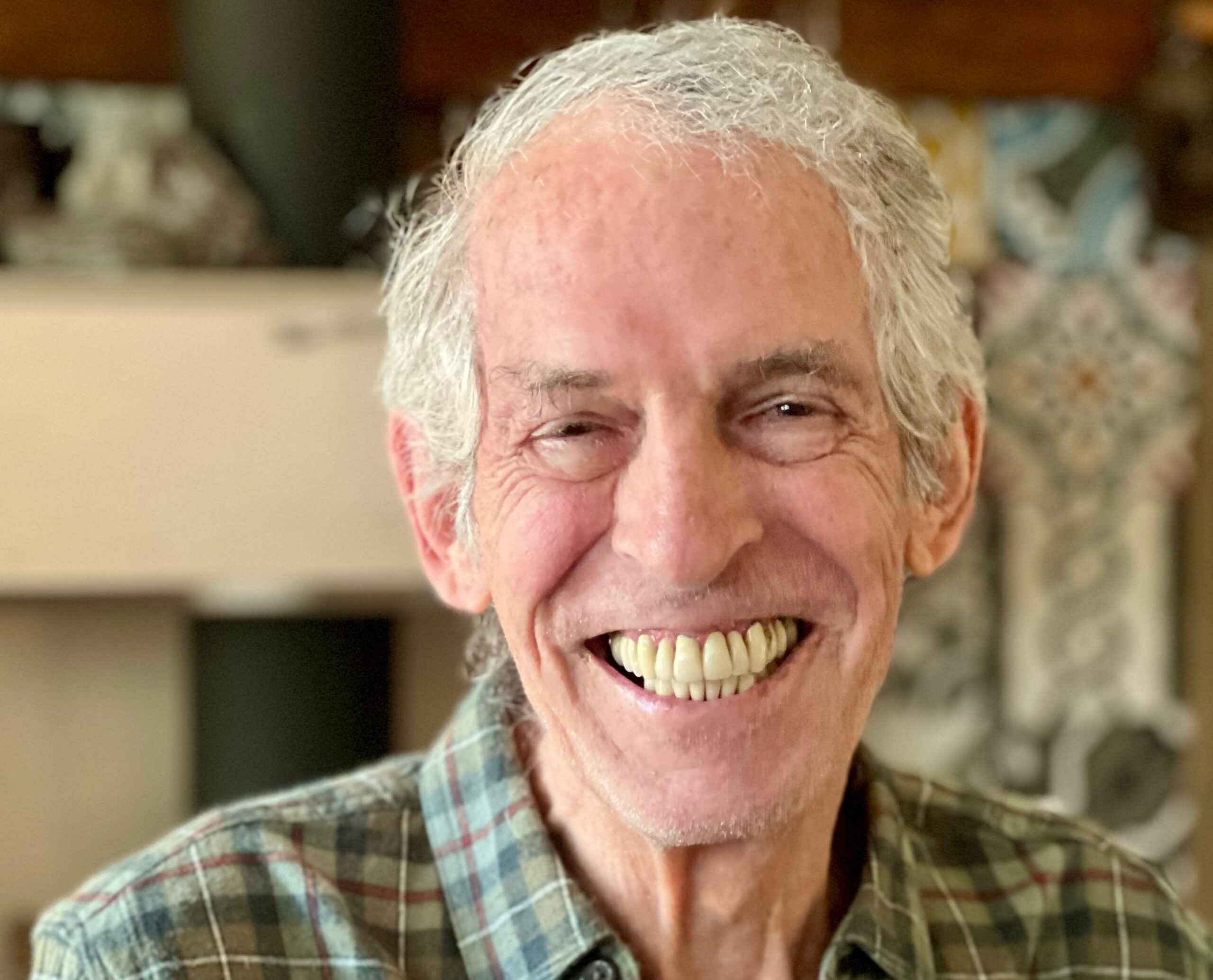
This photo is featured on Mr. Caputo’s website.
In Facebook tributes, friends and colleagues noted his “wonderful smile” and “deep love of people and animals.” They called him a “legend” and “amazing.” Robert J. Rosenthal, former Africa correspondent and former executive editor of The Inquirer, called Mr. Caputo “one of the best humans I ever knew.”
Mr. Caputo told MainLine Today in 2009: “My personal heroes are the people who work for aid organizations and nongovernmental organizations, who go to some faraway place to help people they’re not related to and often put themselves in harm’s way.”
Robert Anthony Caputo was born Jan. 15, 1949, at Camp Lejeune, N.C. His father was a career Marine and moved the family to bases in Virginia and then Sweden for an assignment at the U.S. embassy there.
In a 1991 interview with the Newhouse News Service, Mr. Caputo said: “I remember as a kid going to sleep listening to artillery going off in the distance down at the range. It was kind of comforting. I wouldn’t change it for anything.”
Mr. Caputo (second from right) doted on his wife and sons.
He attended a Swedish middle school, learned the language, skied, and played soccer. He returned to the United States in the late 1960s to attend boarding school in Virginia and then Trinity.
In Kennett Square, Mr. Caputo was a soccer, baseball, and basketball coach to his sons, and a Cub Scouts leader. He walked the boys to the school bus stop in the morning. He told them bedtime tales about secret agents and pirates, they said, and built a tree house in the backyard.
He decorated his truck on Halloween and grew impressive gardens. His neighbors called him Farmer Bob.
He took his family on trips to Kenya and Tanzania. He dabbled in experimental playwriting and literature when he was young, and enjoyed classic movies and William Blake’s poetry.
Mr. Caputo (center) shows his camera to the locals in Africa.
“He felt extraordinarily lucky to have lived the life he did,” his wife said, “full of adventure, family and friends. And in the end he said, ‘I’m ready.’”
In addition to his wife and sons, Mr. Caputo is survived by a sister and other relatives.
Services are to be at 11 a.m. Saturday, Jan. 10, at Kennett Friends Meeting, 125 W. Sickle St., Kennett Square, Pa. 19348.
Donations in his name may be made to Doctors Without Borders, Box 5030, Hagerstown, Md. 21741.
His family called Mr. Caputo “buttered side up” when he was young “because no matter
how he fell he always seemed to end up the right way, and his life was full and lucky.”
A suspect in a West Philadelphia carjacking briefly stole a Philadelphia police car in the city’s Frankford section Friday night before finally being arrested.
Around 6:30 p.m. at Race and Robinson Streets, a young man carjacked a Chevrolet SUV, said Inspector D.F. Pace.
Its OnStar system enabled police to track the vehicle, which the man abandoned at Frankford and Adams Avenues, Pace said.
As officers tried to apprehend him, the man stole a 25th District police vehicle and drove north to the area of Castor Avenue and Herbert Street, Pace said, where he then parked the vehicle in a driveway on the 900 block of Herbert Street.
The department’s helicopter unit tracked the stolen police car and officers were able to apprehend the man a short time later, Pace said.
No one was injured, Pace said. The SUV that was originally stolen sustained some damage.
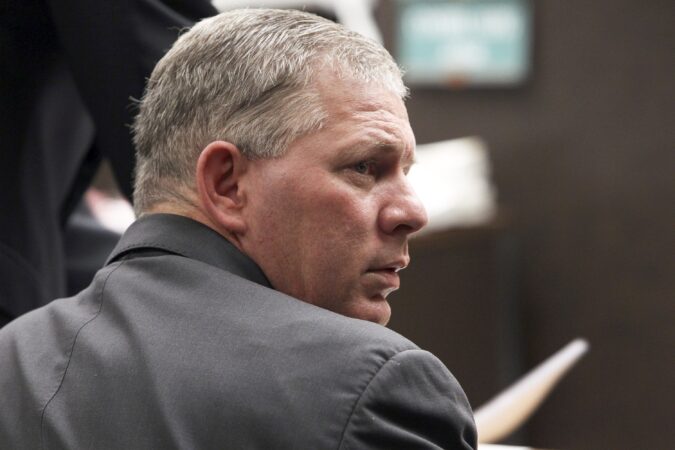
Former Phillies star Lenny Dykstra was arrested for possession of narcotics and narcotics paraphernalia during a traffic stop just after midnight on New Year’s Day in Northeastern Pennsylvania, the state police said.
Dykstra, 62, who lives in Scranton, was a passenger in a 2015 silver GMC Sierra truck in the area of Route 507 and Robinson Road in Greene Township, Pike County, when the vehicle was stopped by the Pennsylvania State Police for an alleged motor vehicle code violation, the state police said in a report.
“During this investigation, the passenger was found to be in possession of narcotics and narcotic related equipment/paraphernalia,” the state police report said. “Charges to be filed.”
Neither Dykstra nor the Pike County District Attorney’s Office could be reached for comment Friday night.
Dykstra played 12 seasons in Major League Baseball in center field, spending the first four with the Mets — including as part of the team that won the 1986 World Series — before being traded to the Phillies during the 1989 season. He retired with the Phillies in 1996.
Nicknamed the “Dude” and “Nails,” Dykstra was a celebrated member of the 1993 Phillies team that made it to the World Series, but lost to the Toronto Blue Jays.
After his baseball career, Dykstra ran afoul of the law multiple times. He spent time in prison after pleading guilty in federal court for bankruptcy fraud and pleading no contest to grand theft auto in California.
In February 2024, Dykstra suffered a stroke. In an interview later that year with the Times-Tribune in Scranton, he reflected on his health recovery and his legal and drug problems.
Dykstra told the Times-Tribune he did some drinking while playing for the Mets, but his drug use intensified when he played for the Phillies.
“It was a pharmacy,” he said.
Dykstra said he liked using drugs and alcohol, but did not consider himself an addict, the Times-Tribune reported.
“There were a lot of other players that were worse than me,” he said.
NEW YORK — Less than 24 hours after throngs of ecstatic supporters poured into Manhattan for his history-making inauguration, Zohran Mamdani began his first full day of work with a routine familiar to many New Yorkers: trudging to the subway from a cramped apartment.
Bundled against the frigid temperature and seemingly fighting off a cold, he set out Friday morning from the one-bedroom apartment in Queens that he shares with his wife. But unlike most commuters, Mamdani’s trip was documented by a photo and video crew, and periodically interrupted by neighbors wishing him luck.
The 34-year-old democratic socialist, whose victory was hailed as a watershed moment for the progressive movement, has now begun the task of running the nation’s largest city: signing orders, announcing appointments, facing questions from the press — and answering for some of the actions he took in his first hours.
But first, the symbolism-laden Day One commute.
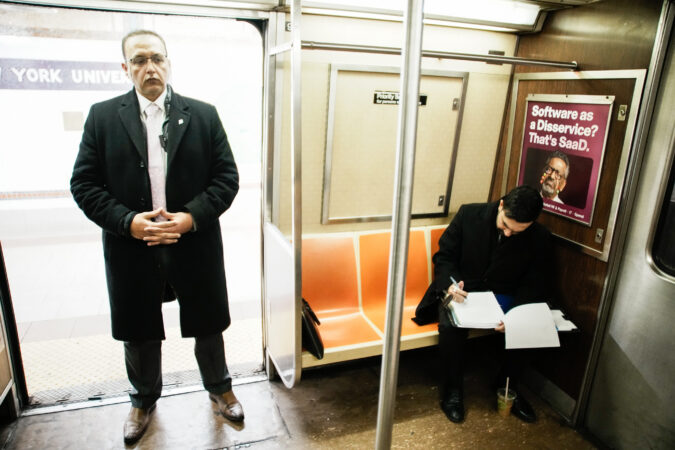
Flanked by security guards and a small clutch of aides on a Manhattan-bound train, he agreed to several selfies with wide-eyed riders, then moved to a corner seat of the train to review his briefing materials.
When a pair of French tourists, confused by the hubbub, approached Mamdani, he introduced himself as “the new mayor of New York.” They seemed doubtful. He held up the morning’s copy of the New York Daily News, featuring his smiling face, as proof.
Mamdani, a Democrat, is hardly alone among city mayors in using the transit system to communicate relatability. His predecessor, Eric Adams, also rode the subway on his first day, and both Bill de Blasio and Michael Bloomberg made a habit out of it, particularly when seeking to make a political point.
Within minutes of Mamdani entering City Hall, the images of him riding public transit had lit up social media.
If the ride served as a well-timed photo-op, it also seemed to reflect Mamdani’s pledge, made in his inaugural speech, to ensure his “government looks and lives like the people it represents.”
His other early actions have also seemed to underscore that priority.
After centering much of his campaign on making rent cheaper for New Yorkers, Mamdani raced from his inauguration ceremony Thursday to a Brooklyn apartment building lobby, drawing boisterous cheers from the tenants union as he pledged that the city would ramp up an ongoing legal fight against the allegedly negligent landlord.
In an effort to give his government a “clean slate,” he revoked a slate of executive orders issued by Adams late in his term, including two related to Israel: one that officially adopted a contentious definition of antisemitism that includes certain criticism of Israel, and another barring city agencies and employees from boycotting or divesting from the country.
The move drew swift backlash from some Jewish groups, including allegations from the Israeli government posted to social media that Mamdani had poured “antisemitic gasoline on an open fire.”
When a journalist on Friday asked about the revoked orders, Mamdani read from prepared remarks, promising his administration would be “relentless in its effort to combat hate and division.” He noted that he had left in place the Mayor’s Office to Combat Antisemitism.
Mamdani also announced the creation of a “mass engagement” office, which he said would continue the work his campaign’s field operation did to bring more New Yorkers into the political fold.
Ringed by supporters and passersby who stood several rows deep, phones in the air, to catch a glimpse of the new mayor, Mamdani then acknowledged the weight of the current moment.
“We have an opportunity where New Yorkers are allowing themselves to believe in the possibility of city government once again,” he said. “That is not a belief that will sustain itself in the absence of action.”
Also on Mamdani’s to-do list: Moving to the mayor’s official residence, a stately mansion in the Upper East Side neighborhood of Manhattan, before the lease on his Queens apartment ends later this month.
NAGASAKI, Japan — Hundreds of prisoners of war from Allied countries were held at brutal Japanese camps in Nagasaki when the United States dropped an atomic bomb 80 years ago.
Their presence during the Aug. 9, 1945, bombing is little known, and family and researchers have been collecting and publishing testimonies to tell the stories of these often unrecognized victims.
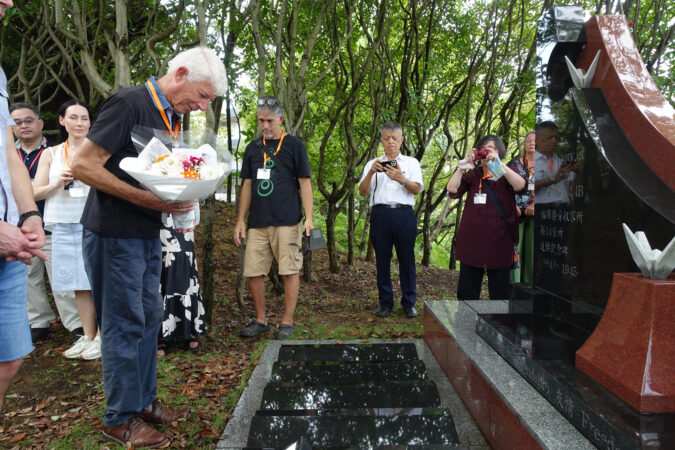
In September, dozens of relatives of Dutch POWs and descendants of Japanese bombing survivors came together to commemorate both those who were abused at the camps and the tens of thousands of Japanese who were killed that day. The dead included at least eight captives at one of the Nagasaki camps.
Descendants and survivors reckon with a painful past
Andre Schram, who represented the Dutch families at the Nagasaki memorial, unveiled in 2015, is the son of a sailor who was among nearly 1,500 POWs held at the Fukuoka No. 2 Branch Camp for three years and forced to work at the Kawanami shipyard.
Many of the prisoners were Dutch service members captured by the Japanese in Indonesia, transported to Nagasaki on so-called “hell ships,” kept at two major camps — No. 2 and No. 14 — and used as slave labor.
About 150,000 Allied prisoners were held in dozens of camps across Asia during the war, including 36,000 sent to Japan to make up for labor shortage as Japanese men were drafted and deployed to battlefields across Asia, according to the POW Research Network Japan.
There were also prisoners from the United States, Britain, and Australia in Nagasaki. None died from the atomic blast at the No. 2 Camp, but more than 70 earlier died of malnutrition, overwork, and illness.
Andre Schram’s father, Johan Willem Schram, returned to the Netherlands four months after the war ended, but only near the end of his life did he tell his son about being treated like a slave. Japanese officials have apologized multiple times for wartime atrocities, “but Johan, like many other victims, had doubts about their sincerity,” his son said.
“He felt Japan and the Netherlands treated him and other prisoners of war with disrespect. He never wanted anything to do with Japan again,” Andre Schram wrote in Johan’s Story, a booklet about the Netherlands’ colonial rule of the Dutch East Indies, the war with Japan and the aftermath, based on his research after his father died in 1993.
Peter Klok said his father, Leendert Klok, also a Dutch POW at the camp, told him that Japanese civilians at the shipyard were friendly and helped him find parts to repair his watch. Military police later beat him for seeking help.
Klok called the atomic bombings of Hiroshima and Nagasaki awful, but said Japan must reflect on its atrocities.
A blinding flash, violent explosions, then the end of the war
When the U.S. B-29 dropped the “Fat Man” plutonium bomb on Nagasaki, prisoners at the No. 2 Camp, about 6.2 miles from ground zero, saw a huge orange fireball, purple smoke, and a triple-layer mushroom cloud, British captive Tom Humphrey wrote in his diary, part of which is quoted on the Royal Air Force website.
Windows at the camp were shattered, doors were blasted off, and the clinic ceiling collapsed, he wrote.
The other camp, Fukuoka No. 14, was much closer to the blast. The brick buildings were destroyed, killing eight and injuring dozens.
A former Dutch captive, Rene Schafer recalled that he and his fellow prisoners were digging a new shelter when Japanese soldiers warned of U.S. aircraft approaching. They jumped into a bunker, but his roommate suffered severe burns and died nine days later.
Australian survivor Peter McGrath-Kerr was reading when everyone bolted to shelters. A fellow Australian captive dug him out from the debris, but he was unconscious for five days with broken ribs, cuts and bruises and radiation burns on his hand.
Researchers examine a largely neglected history
In the days that followed the atomic bombing, prisoners from the Fukuoka No. 2 Camp provided rice and other assistance to their comrades from the No. 14 Camp.
Schram’s father and fellow POWs at the No. 2 Camp were officially notified of Japan’s surrender on Aug. 18, and a U.S. B-29 delivered its first food drop for the Allied POWs on Aug. 26.
On Sept. 13, the prison camp survivors left Nagasaki, heading for the Philippines on a U.S. carrier.
The ceremony in Nagasaki at a granite monument with three inscribed panels was the result of efforts by the families of Dutch POWs, who returned home with painful memories, and the descendants of atomic bombing survivors, said Kazuhiro Ihara, whose father lived through the bombing and was devoted to reconciliation with the POWs.
In Hiroshima, Japanese survivor Shigeaki Mori’s decadeslong independent research led to U.S. confirmation of the deaths of 12 captured American service members in the Aug. 6 atomic bombing.
Former President Barack Obama, who became the first U.S. leader to visit Hiroshima’s Peace Memorial Park in 2016, mentioned in his speech “a dozen Americans held prisoner” as part of the victims. He recognized Mori for seeking out the Americans’ families, believing their loss was equal to his own, and later gave him a hug.
A 1957 Japanese law allowed medical support for certified atomic bombing survivors and has since gradually expanded its scope. The number of certificate holders is now 99,000, down from a peak of 372,000 in 1980.
The Health and Welfare ministry says about 4,000 certificate holders were living outside Japan, many of them South Koreans and Japanese in the United States, Brazil and other countries.
According to the POW Research Network, at least 11 former POWs who were in Nagasaki — seven Dutch, three Australian and one British — received survivors’ certificates.
“The issue has been swept under the rug,” POW Research Network co-founder Taeko Sasamoto said.
The research requires the time-consuming examination of historical documents that haven’t attracted much academic interest, Sasamoto said. “It’s an important issue that has long been neglected.”
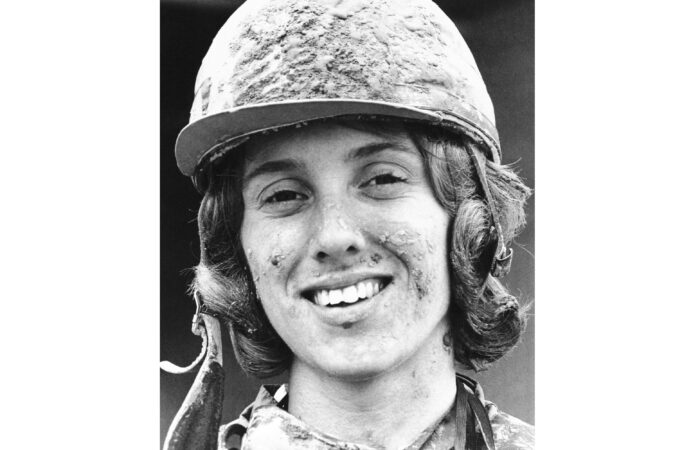
WASHINGTON — Diane Crump, who in 1969 became the first woman to ride professionally in a horse race and a year later became the first female jockey in the Kentucky Derby, has died. She was 77.
Ms. Crump was diagnosed in October with an aggressive form of brain cancer and died Thursday night in hospice care in Winchester, Va., her daughter, Della Payne, told the Associated Press.
Ms. Crump went on to win 228 races before riding her last race in 1998, a month shy of her 50th birthday and nearly 30 years after her trailblazing ride at Hialeah Park in Florida on Feb. 7, 1969.
Ms. Crump was among several women to fight successfully at the time to be granted a jockey license, but they still needed a trainer willing to put them in a race and then for the race to run. Others were thwarted when male jockeys boycotted or threatened to boycott if a woman was riding.
Photographs of Ms. Crump’s walk to the saddling area at Hialeah show her protected by security guards as a crowd pressed in on all sides. Six of the original 12 jockeys in the race had refused to ride, Mark Shrager wrote in his biography, Diane Crump: A Horse Racing Pioneer’s Life in the Saddle. Among them were future legends Angel Cordero Jr., Jorge Velasquez, and Ron Turcotte, who four years later would ride Secretariat to win the Triple Crown.
But other jockeys stepped up, and as the 12 horses made their way onto the track, the bugler skipped the traditional call to the post and instead played “Smile for Me, My Diane.” Ms. Crump, on a 50-1 longshot called Bridle ’n Bit, finished 10th, but the barrier had been broken. A month later, Bridle ’n Bit gave Ms. Crump her first victory at Gulfstream Park.
She again made history in 1970 by becoming the first woman to ride in the Kentucky Derby. She won the first race that day at Churchill Downs, but again her mount for the history-making race was outclassed. She finished 15th out of 17 on Fathom.
It would be 14 more years before another female jockey would ride in the Derby, with only four more to follow in the decades since.
The president of Churchill Downs Racetrack, Mike Anderson, said in a statement on Friday that Crump “will be forever respected and fondly remembered in horse racing lore.”
He noted that Ms. Crump, who had been riding since age 5 and galloping young Thoroughbreds since she was a teenager, “was an iconic trailblazer who admirably fulfilled her childhood dreams.”
Chris Goodlett, of the Kentucky Derby Museum, said “Diane Crump’s name stands for courage, grit, and progress.” He added: “Her determination in the face of overwhelming odds opened doors for generations of female jockeys and inspired countless others far beyond racing.”
After retiring from racing, Ms. Crump settled in Virginia and started a business helping people buy and sell horses.
In later years, she took her therapy dogs, all Dachshunds, to visit patients in hospitals and other medical clinics. Some with chronic illnesses she visited regularly for years.
Payne said when her mother went into assisted living in November, she was already “quasi-famous” in the medical center because of how much time she had spent there, and a “steady stream” of doctors and nurses came to see her. One of the last people to visit her was the man who mowed her lawn.
Her daughter said Ms. Crump would never take “no” for an answer, whether it was becoming a jockey or helping someone in need.
“I wouldn’t say she was as competitive as she was stubborn,” Payne said. “If someone was counting on her, she could never let someone down.”
Late in life, Ms. Crump’s mottos were literally tattooed on her forearms: “Kindness” on the left, “Compassion” on the right.
Crump will be cremated and her ashes interred between her parents in Prospect Hill Cemetery in Front Royal, Va.