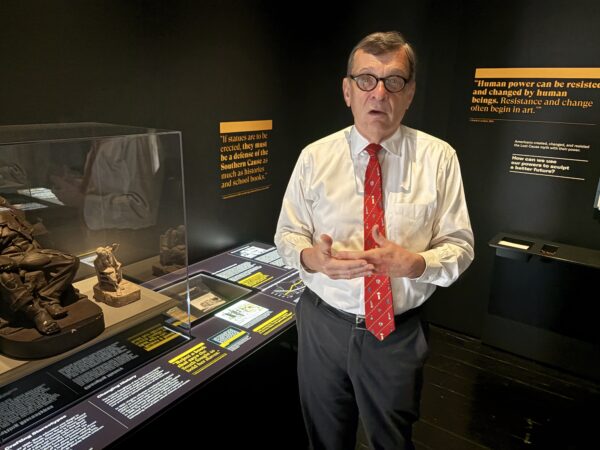
RICHMOND — In a cavernous gallery of the Valentine museum filled with marble busts and giant images of maps, Bill Martin gestured at a humble 1950s school history textbook in a display case.
“This is where it gets personal for me,” Martin said one day last August.
That book taught generations of young Virginia fourth graders — including Martin — that slavery was benign and enslaved people were happy. Now, as the director of a history museum, he had featured it in an exhibit that exploded the lies of the Southern “Lost Cause” mythology.
Martin has been one of the most beloved and influential figures in the movement to retell the story of Richmond — and, by extension, Virginia and the nation — in a more honest and clear-eyed fashion.
Over the weekend, Martin, 71, was struck by a vehicle and killed while crossing a street near the Valentine in downtown Richmond.
His sudden loss has brought an outpouring of grief and shock from a wide swath of the community, ranging from historians to activists to politicians.
“He stood in the gap for so many — helping to connect some of the very most complicated corners of the city through arts, culture, and history,” Sesha Joi Moon, co-leader of the JXN Project’s effort to commemorate a historic Black neighborhood, said in a written statement. Moon has been nominated as state director of diversity by Gov.-elect Abigail Spanberger.
“No one was more dedicated to fostering a deep understanding of Virginia’s complicated history than Bill Martin,” Sen. Tim Kaine (D., Va.) posted on X this week.
A bespectacled white man from rural Culpeper County with a soft Southern accent and a wit as sharp ashis penchant for neckties, William J. “Bill” Martin was an unlikely agent of reform in the former capital of the Confederacy.
He graduated from Virginia Tech and had worked at museums in Georgia and Florida before landing in Petersburg,Va., in 1987 to run that city’s museums and tourism effort. Martin joined the Valentine, which is dedicated to Richmond history, in 1994, just in time to see it nearly sink from depleted finances and low attendance.
Over time, Martin became known as the “dean” of Richmond’s many museums, a one-man welcoming committee for new directors and a clearinghouse for collaborative efforts.
He was a congenial force for change as the city wrestled with its complicated history. As recently as 2020, giant statues of Confederate leaders still loomed over busy intersections and enthusiasts waving the rebel battle flag regularly greeted traffic outside the national headquarters of the United Daughters of the Confederacy.
Martin led a long process to reorganize the Valentine, using community input to focus its collections and slowly homing in on a story he felt it was uniquely positioned to tell: the origins of the Lost Cause, the romanticized view of the South that took hold in the years after the Civil War. After all, one of the primary creators of the images that fueled the myth was sculptor Edward Valentine, first president of the museum that bears his family’s name and the artist behind some of the iconic statues of Confederate leaders.
When Martin’s changes to the museum’s messageprovoked hate mail and even death threats, he was known to invite his critics to lunch, as recounted last year by Richmond’s StyleWeekly magazine in naming him Richmonder of the Year for 2024. “You can’t do history and sit on the sidelines,” Martin told the magazine.
That philosophy was put into action in 2020 when Richmond’s streets erupted in racial justice protests over the killing of George Floyd by Minnesota police. One night in early June, Martin stayed alone at the Valentine in case there was rioting or vandalism. Police broke up demonstrations with chemical sprays and trapped protesters in a warren of downtown blocks, arresting them by the dozens.
As he described in an interview with the Post that year, Martin heard voices whispering outside a museum window and found several young protesters hiding in the bushes. He hustled them inside, helped wash the chemical spray out of their eyes with milk, and kept watch until it was safe for them to leave without being arrested. The next morning, he gathered rubber bullets and signs from the streets to display in the museum.
Only a few days later, protesters dragged down a statue of Confederate president Jefferson Davis from stately Monument Avenue. That touched off a series of events that saw city and state officials eventually remove almost all Confederate monuments from public spaces in the city.
Martin had quietly been angling to get Davis into the Valentine for several years, at least since the deadly Unite the Right rally in Charlottesville in 2017 began turning the tide of public opinion against the monuments. The Davis figure was an Edward Valentine creation — the former Confederate had posed for his likeness in the carriage house studio that now sits on the grounds of the museum.
While the rest of Richmond’s statues went into storage, the Davis — dented and spattered with paint — went on display at the Valentine. The museum convened community meetings to discuss how to remake the sculpture studio to better tell the story of what Valentine’s body of work had created.
On Aug. 19 of this year, reporters descended on the Valentine to see the Davis statue removed from the museum to be loaned to a gallery in Los Angeles. Martin was there, of course, and pulled a few reporters aside individually to show them something he considered more profound: the remade sculpture studio, located across a courtyard from the main gallery.
Where floor-to-ceiling shelves once held hundreds of pieces of Valentine’s work — studies of hands, heads, other body parts — now a black screen covered the far wall. A multimedia display would occasionally illuminate sculptures behind the screen, bringing them out of darkness to tell the story of how the South constructed a new narrative for itself after the Civil War.
Or, as Martin put it, “How does fiction become accepted truth?”
He emphasized that the answer to that question came not with lecturing or preaching but with facts. Around the room, quotes highlighted in orange signified primary sources — figures from the postwar era stating, clearly and in their own words, that they were devising a massive publicity campaign to burnish Southern honor.
“All that is left of the South is the ‘war of ideas,’ ” author Edward Pollard wrote in his 1866 book The Lost Cause, which was published in Richmond.
“If statues should be erected, they must be defensive of the Southern cause, as much as histories and school books,” sculptor Valentine wrote in a letter around 1900. He was a chief image maker of the movement, creating everything from the noble statue of Gen. Robert E. Lee that until recently represented Virginia in the U.S. Capitol to caricatures of happy, simpleminded Black people.
With an animated map, Martin demonstrated how grand monuments proliferated across Richmond — not in the immediate aftermath of the Civil War, but in the 20th century during the repression of Jim Crow, when the statues made the same intimidating point as the Ku Klux Klan Christmas parade that’s also depicted in the gallery. Similar tales played out across the South.
“Richmond is the only place” to tell that story, Martin said, “because you have every part of the history here.”
Martin spent more than 30 years investing in that belief. On Saturday, Dec. 27, he stopped by the Valentine to check in — as he often did on weekends, staffers said. He left around 2 p.m. and was just two blocks away, crossing Broad Street, when he was struck by a vehicle. Martin died the next day in a hospital.
Police have released little information about the incident, other than to say the driver remained at the scene and that the investigation is ongoing.
Martin’s leadership “helped shape the museum into the place it is today, and his impact will be felt for generations to come,” Meg Hughes, who will serve as acting director while the Valentine’s board seeks a replacement for Martin, said in a written statement to museum members. “We remain committed to serving our community and honoring the legacy that he leaves behind.”
For the first time in more than half a century, Philadelphia has recorded fewer than 225 homicides in a single year.
In 2025,222people were killed — the fewest since 1966, when there were a fraction of as many guns in circulation and 178 homicides.
It is a milestone worth commemorating — and mourning: Violence has fallen to its lowest level in decades, yet 222 deathsin a single city is still considered progress.
window.addEventListener(“message”,function(a){if(void 0!==a.data[“datawrapper-height”]){var e=document.querySelectorAll(“iframe”);for(var t in a.data[“datawrapper-height”])for(var r,i=0;r=e[i];i++)if(r.contentWindow===a.source){var d=a.data[“datawrapper-height”][t]+”px”;r.style.height=d}}});
The drop mirrors a national reduction in violence and follows years of sustained declines after Philadelphia’s annual homicide totals peaked during the pandemic, and it reflects a mix of likely contributing factors: Tech-savvy police are solving more shootings, violence prevention programs have expanded, and the city has emerged from pandemic instability.
No single policy or investment explains it, and officials caution that the gains are fragile.
“The numbers don’t mean that the work is done,” said Adam Geer, the city’s director of public safety. “But it’s a sign that what we’re doing is working.”
The impact is tangible: fewer children losing parents, fewer mothers burying sons, fewer cycles of retaliation.
“We are saving a life every day,” District Attorney Larry Krasner said.
Still, the violence hit some. Victims ranged from a 2-year-old girl allegedly beaten to death by her mother’s boyfriend to a 93-year-old grandfather robbed and stabbed in his home. They included Ethan Parker, 12, fatally shot by a friend playing with a gun, and Said Butler, 18, killed just days before starting his first job.
Police say street-level shootings and retaliatory violence fell sharply, in part because some gang conflicts have burned out after key players were arrested or killed. Killings this year more often stemmed from long-standing drivers — arguments, drugs, and domestic violence — and were concentrated in neighborhoods that have borne the brunt of the crisis.
“These same communities are still traumatized,” said Police Commissioner Kevin Bethel. “One gunshot is a lot. We can’t sit or act like we don’t see that.”
window.addEventListener(“message”,function(a){if(void 0!==a.data[“datawrapper-height”]){var e=document.querySelectorAll(“iframe”);for(var t in a.data[“datawrapper-height”])for(var r,i=0;r=e[i];i++)if(r.contentWindow===a.source){var d=a.data[“datawrapper-height”][t]+”px”;r.style.height=d}}});
The number of domestic-related killings nearly doubled this year compared with last, making up about 20% of homicides, Geer said. The disappearance and killing of Kada Scott, a 23-year-old woman from Mount Airy, was among them, and led to a citywide outcry and renewed scrutiny of how authorities handle violence against women.
And mass shootings on back-to-back holiday weekends — 11 people shot in Lemon Hill on Memorial Day, and 21 shot in a pair of incidents in South Philadelphia over July Fourth — left residents reeling.
<iframe title="Philadelphians’ Perceptions of Safety at Night" aria-label="Line chart" id="datawrapper-chart-GRrTN" src="https://datawrapper.dwcdn.net/GRrTN/1/" scrolling="no" frameborder="0" style="width: 0; min-width: 100% !important; border: none;" height="556" data-external="1"></iframe><script type="text/javascript">window.addEventListener("message",function(a){if(void 0!==a.data["datawrapper-height"]){var e=document.querySelectorAll("iframe");for(var t in a.data["datawrapper-height"])for(var r,i=0;r=e[i];i++)if(r.contentWindow===a.source){var d=a.data["datawrapper-height"][t]+"px";r.style.height=d}}});</script>
The progress comes even as the police department remains 20% below its budgeted staffing levels, with about 1,200 fewer officers on the force than 10 years ago.
The city’s jail population has reached its lowest level in recent history. It dipped below 3,700 in April for the first time in at least a decade, and remains so today.
And arrests citywide, particularly for drug crimes, have cratered and remain far below pre-pandemic levels, mirroring a nationwide trend.
Experts say the moment demands persistence.
“We can’t look at this decline and turn our attention to other problems that we have to solve. We have to keep investing and keep pushing to get this number even lower, because it could be even lower,” said Jason Gravel, an assistant professor of criminal justice at Temple University.
‘Unheard of’ clearance rates
After shootings exploded during the pandemic, and Philadelphia recorded 562 homicides in 2021 — the most in its history — violence began to decline, slowly at first.
But then, from 2023 to 2024, killings fell by 35% — the largest year-over-year reduction among U.S. cities with the highest homicide rates, according to an analysis by Pew.
The decline continued into 2025.
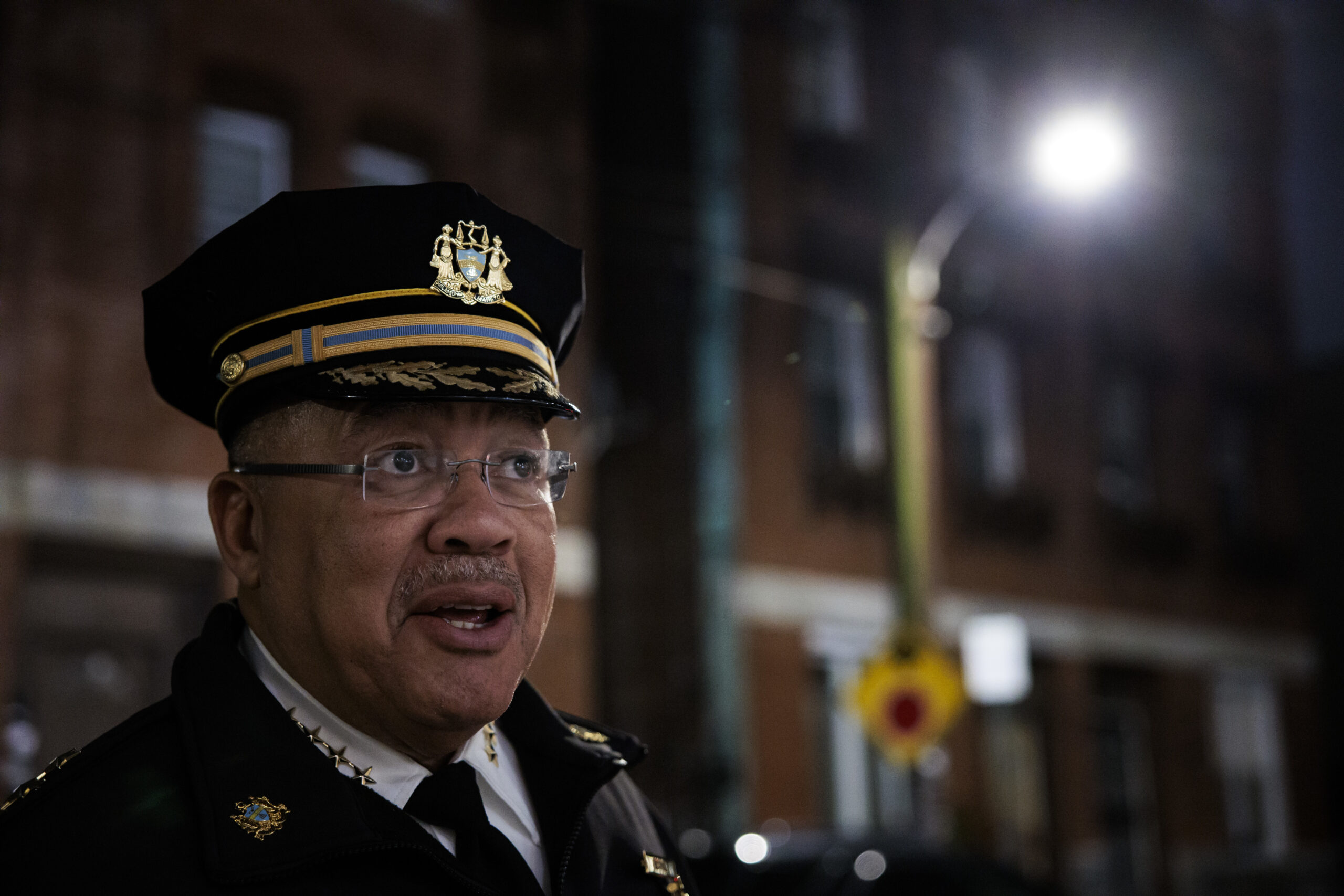
Police Commissioner Kevin Bethel arrives at a North Philadelphia community meeting on Dec. 2.
Bethel has pointed to a host of potential reasons for the decline: the reopening of society post-pandemic — kids returned to school and adults reconnected with jobs, courts, and probation officers — as well as police resources focused in hot spot crime areas and improved coordination among city leaders.
Most notably, he said, detectives are making more arrests in nonfatal shootings and homicides. Experts say that arresting shooters is a key violence-prevention strategy — it prevents that shooter from committing more violence or from ending up as a victim of retaliation, sends a message of accountability and deterrence, and improves the relationship between police and the community.
The homicide clearance rate this year ended at 81.98%, the highest since 1984, and the clearance of nonfatal shootings reached 39.9%.
“That’s unheard of,” said Geer, the public safety director. “The small amount of people who are committing these really heinous, violent crimes in our neighborhood[s] are being taken off the street.”
window.addEventListener(“message”,function(a){if(void 0!==a.data[“datawrapper-height”]){var e=document.querySelectorAll(“iframe”);for(var t in a.data[“datawrapper-height”])for(var r,i=0;r=e[i];i++)if(r.contentWindow===a.source){var d=a.data[“datawrapper-height”][t]+”px”;r.style.height=d}}});
Still, more than 800 killings from between 2020 and 2023 remain without an arrest, according to an Inquirer analysis.
That has had a significant impact on the police department’s relationship with the community over the years, something Bethel has sought to repair since he was appointed commissioner in 2024.
In 2025, he created an Office of the Victim Advocate, hired a 20-person team to communicate with and support victims, and hosted 35 meetings with residents of the most challenged neighborhoods.
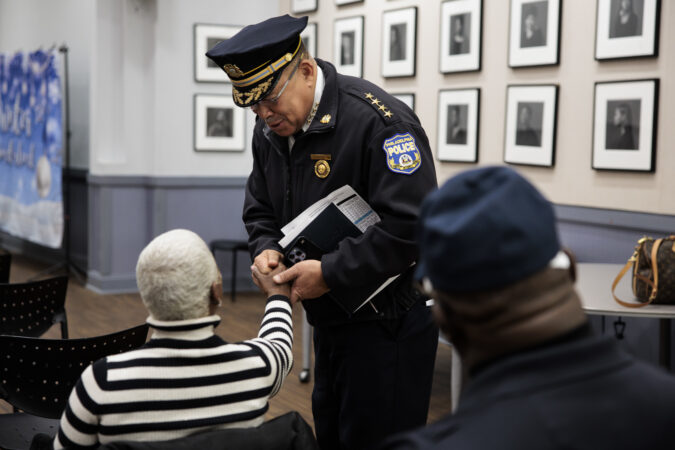
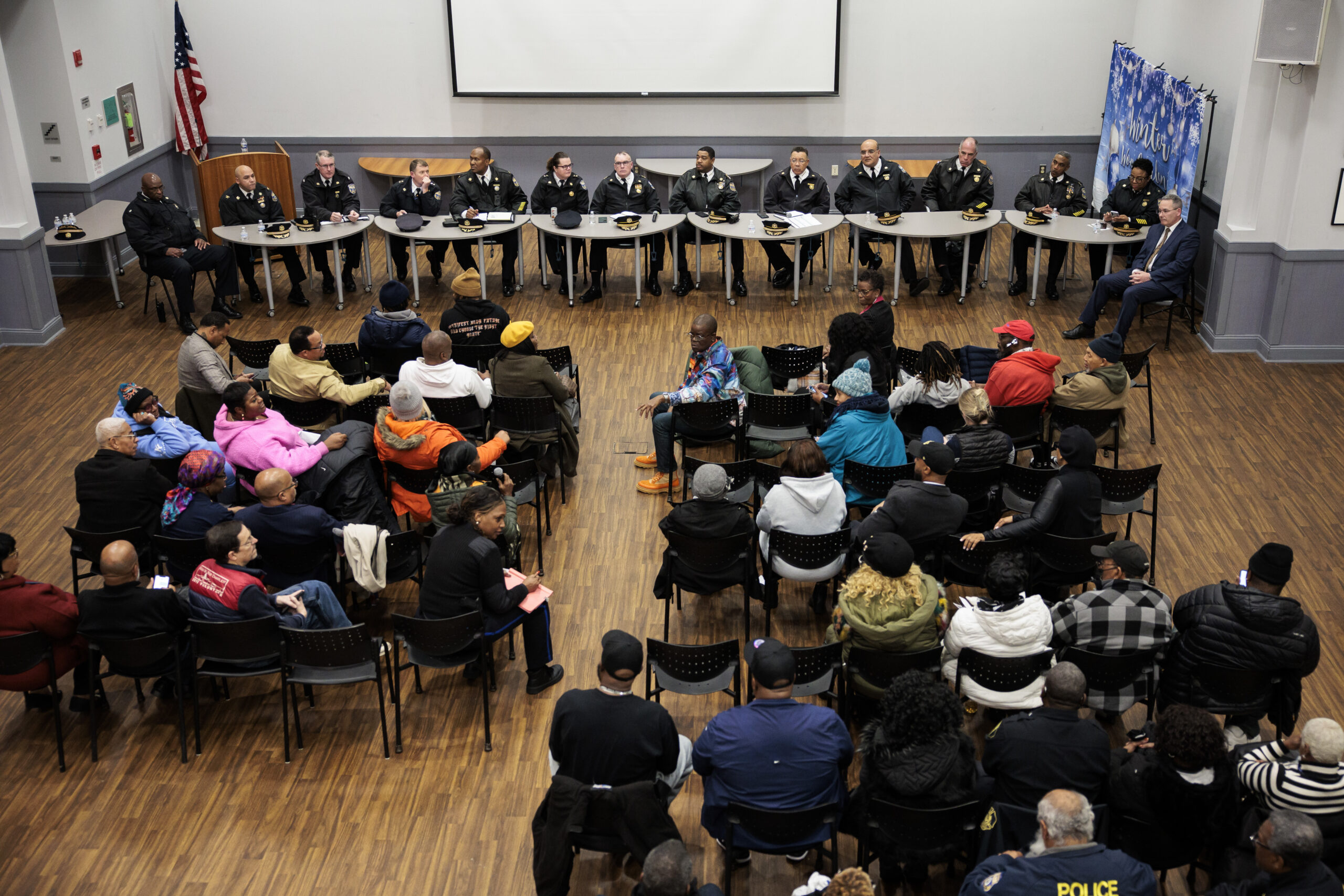
A few dozen community members gathered with top police brass in North Philadelphia on Dec. 2.
Yet Bethel has grappled with the challenge of convincing residents that the city is safer today than four years ago, while questioning whether today’s gains can outweigh years of devastation.
That challenge was on display on a recent cold December night, as Bethel gathered with a few dozen residents inside a North Philadelphia church and asked what they wanted him to know.
Person after person stood and told him what gun violence had taken from them in recent years.
My son. My brother. My nephew.
Both of my sons.
Investing in violence prevention
The city’s network of violence prevention strategies has expanded greatly since 2020, when the city began issuing tens of millions of dollars in grants to grassroots organizations.
Early on, the city faced criticism that its rollout of the funds was chaotic, with little oversight or infrastructure to track impact. Today, Geer said, the city has stronger fiscal oversight, better organizational support, and a data-driven approach that targets neighborhoods experiencing the most violence.
In 2024,Community Justice, a national coalition that researches violence-intervention strategies, said that Philadelphia had the most expansive violence-prevention infrastructure of the 10 largest U.S. cities. When evaluating 100 cities, it ranked Philadelphia as having the third-best public-health-centered approach to preventing violence, falling behind Washington and Baltimore.
Geer said the work will continue through 2026. Starting in January, the city will have a pool of about $500,000 to help cover the funeral expenses for families affected by violence.
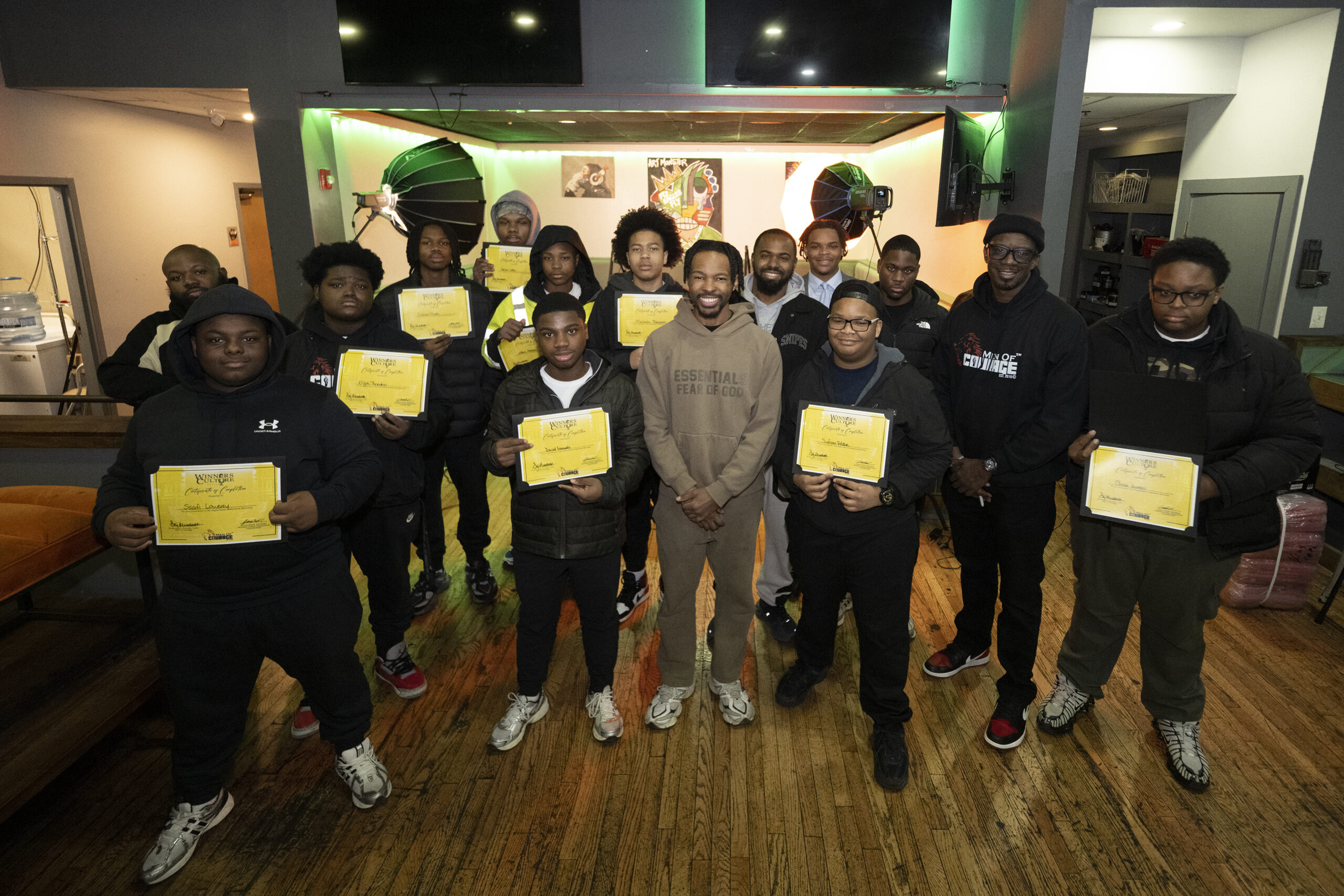
Members of Men of Courage pose with the certificates of accomplishment after completing a 16-week program on multi-media work and podcasting, one of multiple programs the community organization uses to help Black teens build their confidence.
One of those organizations that has benefited from the city’s funding is Men of Courage, a Germantown-based group that mentors young Black men ages 12 to 18 and focuses on building their confidence, resilience, and emotional intelligence.
“We want them to know that one decision can affect your entire life,” said founder Taj Murdock. “Their environment already tells them they’ll be nothing. … We have to shift their mindsets.”
Arguments are a leading cause of shootings, and teaching teens how to de-escalate conflicts and think through long-term consequences can prevent them from turning disputes violent, he said.
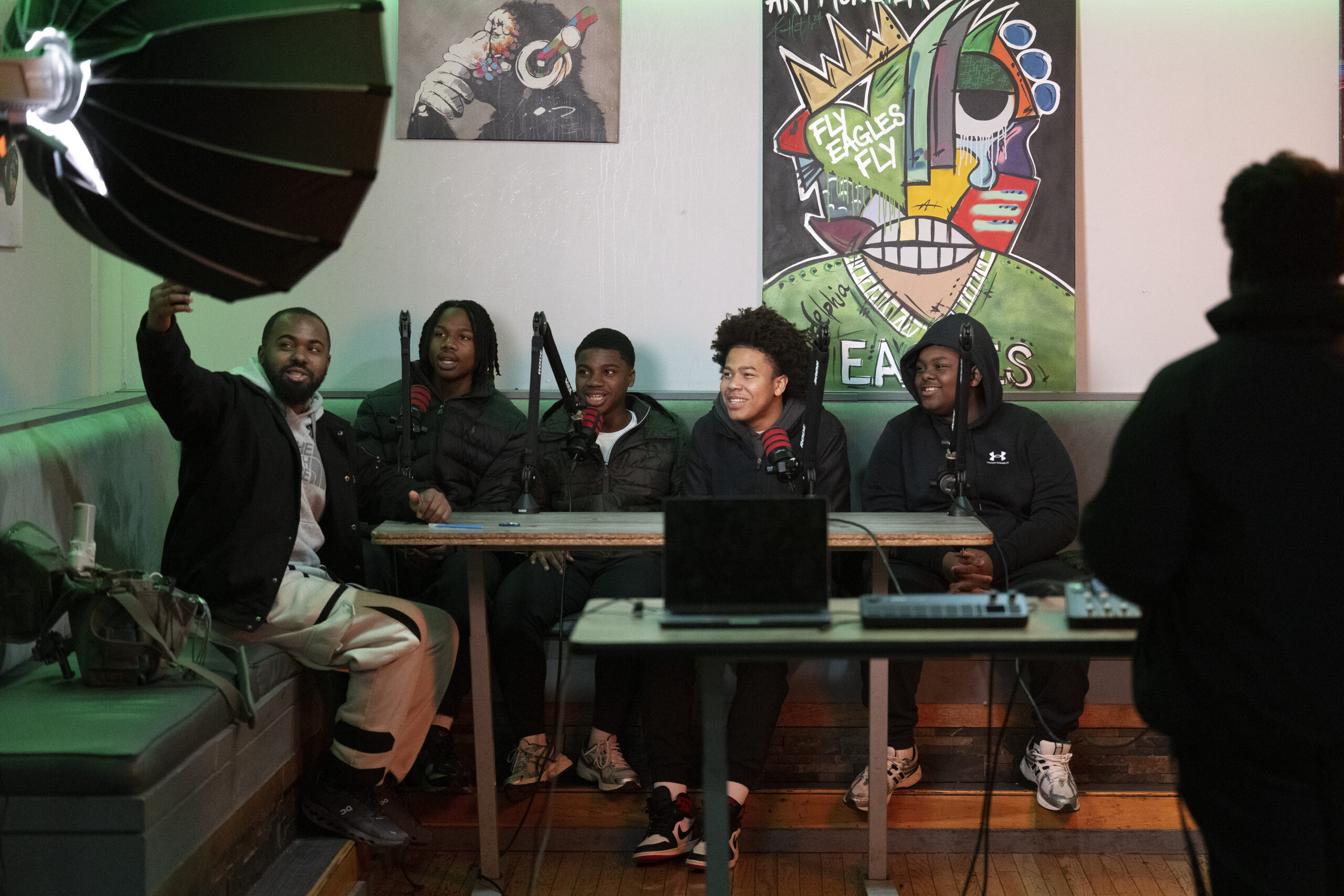
Isaiah Clark-White, second to left, and David Samuel, middle, pose for a photo with other members of Men of Courage before recording a podcast.
Isaiah Clark-White, 16, a sophomore at Hill Freedman World Academy in East Mount Airy, said that in his three years working with Men of Courage, he has grown more confident and has improved his public speaking.
And David Samuel, 15, of Logan, said he has learned how to better control his emotions and identify those of the people around him. Both said they feel safer today than three years ago, but remain vigilant of their surroundings.
Samuel said his dad watches the news every day and talks about the overnight crimes and shootings.
“He’s always telling me,” he said, “‘David, I don’t want this to happen to you.’”
Suraya, the Michelin-recognized Lebanese restaurant in Fishtown, will temporarily close Friday after a nearby rooftop fire left the restaurant without gas.
The Philadelphia Fire Department arrived to fire on the roof of a two-story building on the 1500 block of Frankford Avenue late Thursday night. The department controlled the fire within 20 minutes and there were no reported injuries. The cause was under investigation.
However, Suraya reported that its building was still without gas service and wouldn’t open until the service was restored.
“We are incredibly grateful that our team was unharmed in the fire. We are temporarily without gas, so we cannot open the restaurant. The Suraya team will be working with local authorities to support their ongoing investigation and appreciates the community’s support,” said a spokesperson for Defined Hospitality, the restaurant group that includes Suraya.
Halabi kebabs and the samke harra are pictured at Suraya in Philadelphia’s Fishtown section on Tuesday, Aug. 11, 2020.
Updates on the restaurant opening will be posted on social media at @surayaphilly.
Suraya, named after the sibling-cowners Nathalie Richan and Roland Kassis’ grandmother in Beirut, was just recognized by the Michelin Guide for its welcoming presence, rich Middle East and Levant-inspired menu, and expansive offerings from the bakery and shop up front to its open kitchen and outdoor dining area.
At 9 years old, Jim Donovan would share with his parents his dreams of becoming a journalist. Around that time, he also flicked through the Guinness Book of World Records, thinking it would be cool to set one himself one day.
Guinness World Records verified on Dec. 8 that the 15-time Emmy winner is now the owner of the world’s largest sock collection at 1,531 pairs, many of which have eccentric designs, including Friends and Star Trek-themed socks, and every color of the rainbow. Donovan announced the achievement before his final day on-air at CBS Philadelphia on Dec. 19.
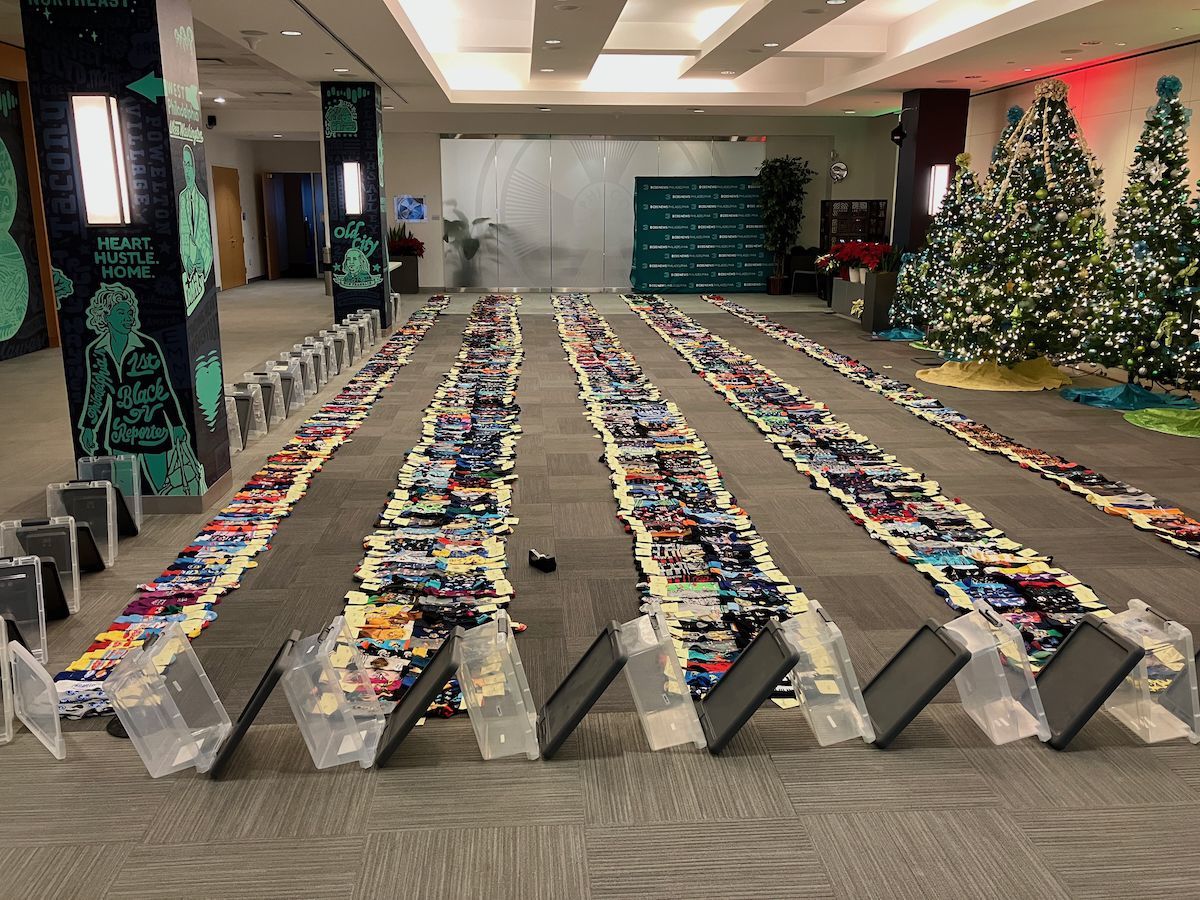
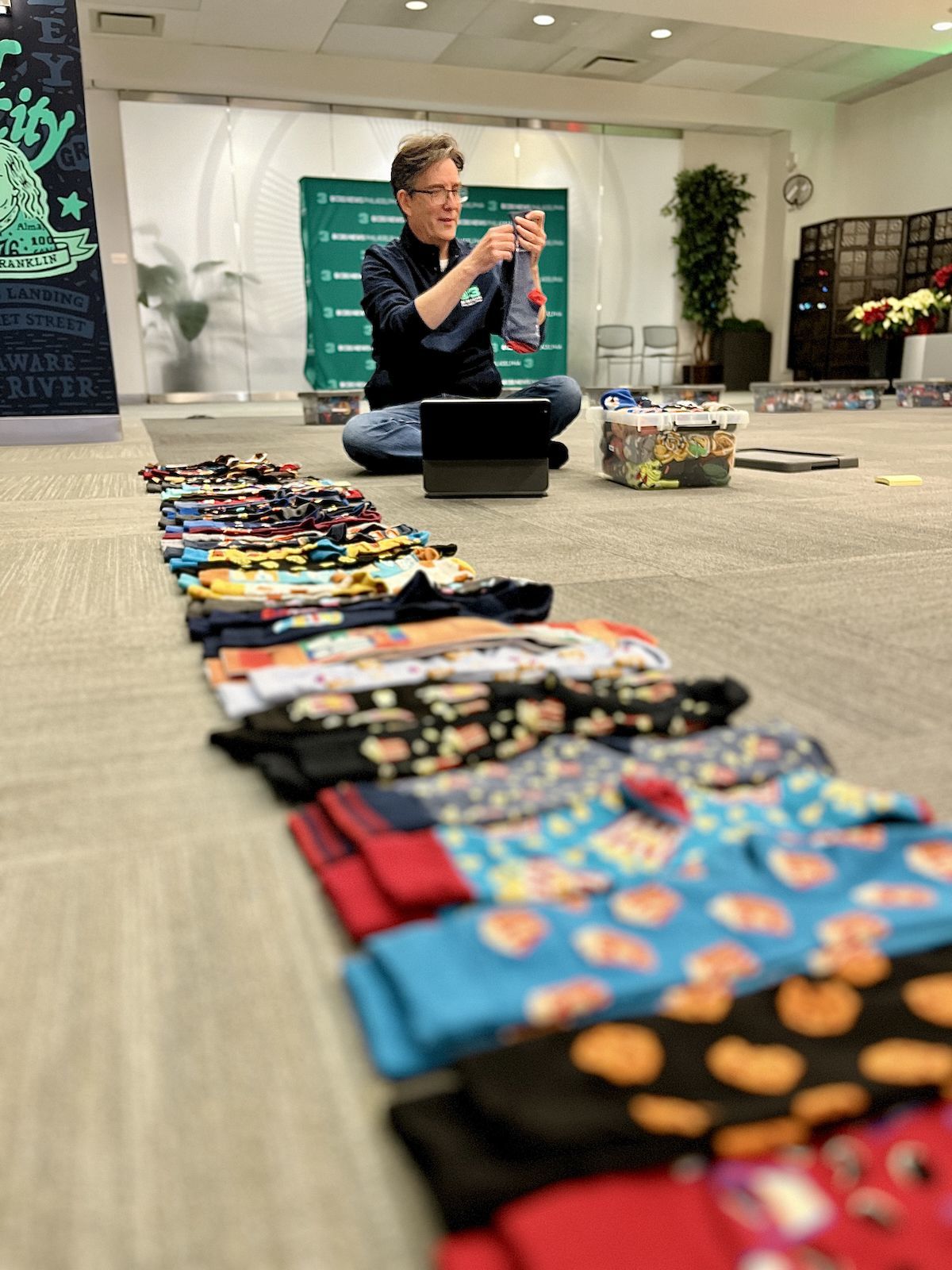
Jim Donovan’s 1,531 pairs of socks laid out on the floor of CBS Philadelphia studios while Donovan and two independent experts counted each sock on camera to be submitted to the Guinness World Records.
While Donovan said he’s immensely grateful for a ceremonious end to a long career — a feat he admits can be rare in the world of journalism — preparing his Guinness World Record application was also a difficult project.
“I’ve done major investigation pieces and consumer stories over four decades of TV, and this was the thing that nearly pushed me over the edge,” he said of the nearly 40 hours of inventory work required to painstakingly document each pair of socks.
Jim Donovan takes inventory of the thousands of socks he submitted for a Guinness World Record. After 40 years in broadcast journalism, he will be retiring. But, not before receiving the world record on Dec. 8, 2025.
Donovan questioned himself at times when the hours of inventory work became overwhelming, but he remembered that this record was, in part, meant to thank his fans for their decades of support.
Guinness requires applicants to have two independent third-party experts oversee the counting of the world records. Two members of Thomas Jefferson University’s fashion merchandising and management program, Juliana Guglielmi-DeRosa and Jeneene Bailey-Allen, stepped up to facilitate Donovan’s counting. Together, the two experts and Donovan recorded the counting of socks for more than an hour inside CBS Philadelphia studios, without interruptions or editing of the footage, as required by Guinness.
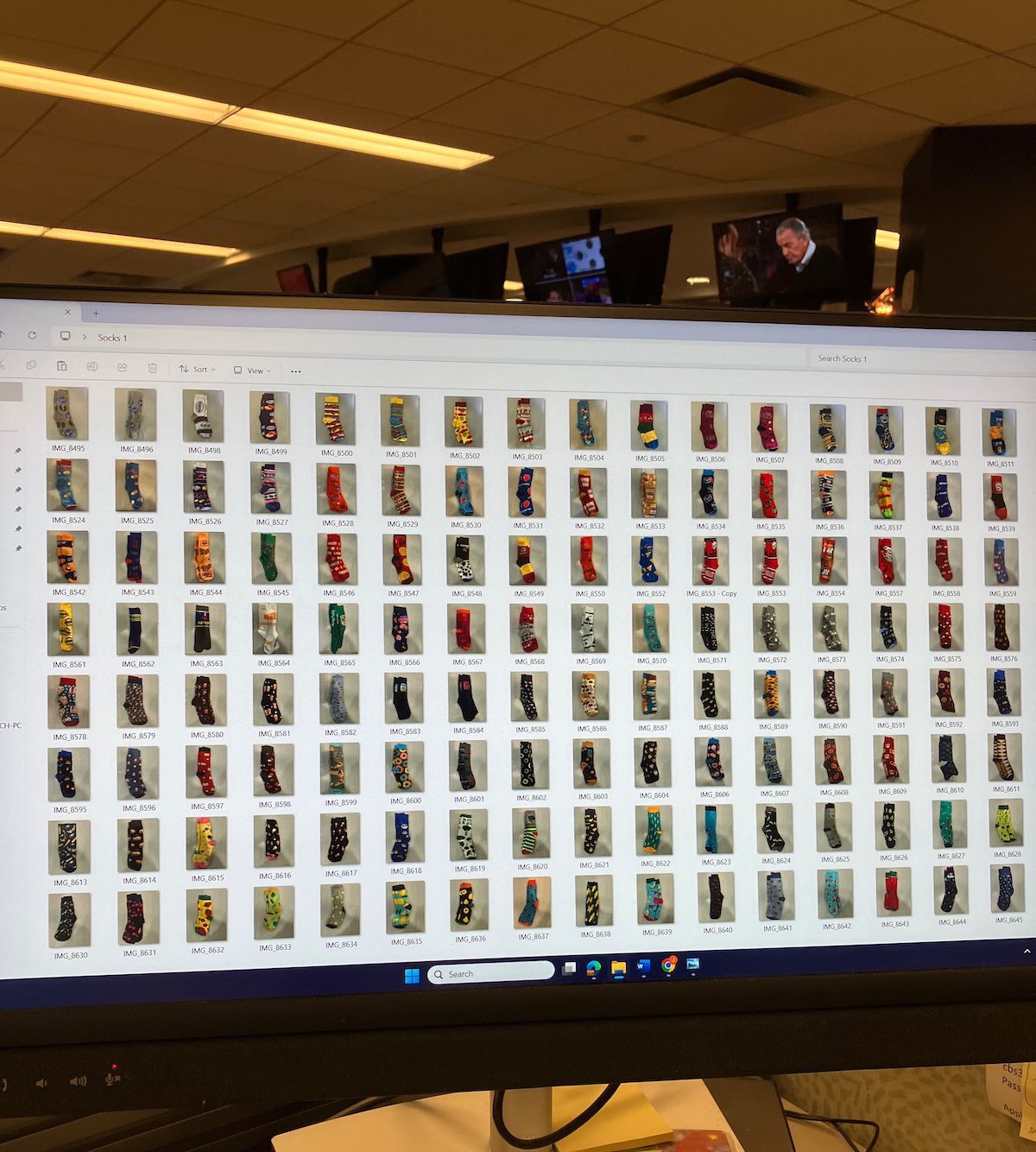
Digital images of Jim Donovan’s socks that he submitted for a Guinness World Record. He received recognition for his 1,531 pairs of socks on Dec. 8, 2025.
Donovan would then embed pictures and descriptions of each sock into what became a 262-page spreadsheet so that Guinness inspectors could verify the count at a later date. During the final count, Guglielmi-DeRosa and Bailey-Allen gifted Donovan an additional pair of socks, bringing the unofficial total to 1,532, but there was no way he was going to redo the spreadsheet, Donovan said.
“I just remember when I was a kid looking in that Guinness World Records book and thinking, ‘Boy, it would be cool to do this.’ And here I am now, 59 years old, and I finally checked off one of those kid bucket list items,” Donovan said.
Storing thousands of socks is no small feat, either. Folded and stacked inside dozens of bins, with 48 pairs per bin, Donovan has an entire closet dedicated to the socks. Each box contains different categories, from animals to food to holidays, and more.
Jim Donovan holds his Guinness World Records plaque verifying that he owns the largest sock collection in the world at 1,531 pairs of socks. He received the recognition on Dec. 8, 2025.
The first openly LGBTQ+ news anchor in Philadelphia, Donovan garnered a loyal fan base with whom he frequently chatted during his daily Facebook livestreams outside of his regular broadcasts. Around eight years ago, fans noticed Donovan’s penchant for socks with bold colors and designs, and started sending the journalist socks to wear on-air.
During the winter holidays, it was Santa socks; birthdays, it was socks with his face on them; and randomly, folks would get creative, Donovan said, sending him Spock socks (complete with Spock ears), flamingos playing golf, and Superman socks with a cape.
In his final week on-air at CBS Philadelphia, where he was for 22 years, the station celebrated each day as part of a “Week of Jim.” In retirement, Donovan plans to spend more time with his father, who lives on Staten Island, N.Y., and dive into volunteering and nonprofit work.
Now he’ll be enjoying retirement as a world-record holder. Donovan said he’seven starting to get messages from other Guinness World Record holders welcoming him to the club.
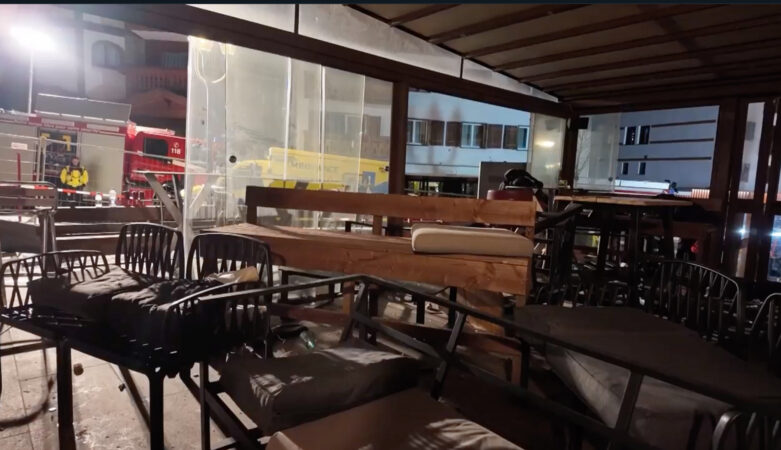
CRANS-MONTANA, Switzerland — Swiss investigators are probing what caused a fire in a bar at an Alpine ski resort that left around 40 people dead and another 115 injured during a New Year’s celebration.
Most injuries, many of them serious, occurred when the blaze swept through the crowded bar less than two hours after midnight Thursday in southwestern Switzerland.
The Crans-Montana resort is best known as an international ski and golf venue. Overnight, its crowded Le Constellation bar morphed from a scene of revelry into the site of one of Switzerland’s worst tragedies.
While officials said Thursday it was too early to determine the fire’s cause, investigators have already ruled out the possibility of an attack.
Crans-Montana is less than 5 kilometers (3 miles) from Sierre, Switzerland, where 28 people, including many children, were killed when a bus from Belgium crashed inside a Swiss tunnel in 2012.
Here’s what we know about the deadly fire:
A frantic attempt to escape
The blaze broke out around 1:30 a.m. Thursday during a holiday celebration inside the Le Constellation bar.
Two women told French broadcaster BFMTV they were inside when they saw a male bartender lifting a female bartender on his shoulders as she held a lit candle in a bottle. The flames spread, collapsing the wooden ceiling, they told the broadcaster.
People frantically tried to escape from the basement nightclub up a narrow flight of stairs and through a narrow door, causing a crowd surge, one of the women said.
A young man at the scene said people smashed windows to escape the fire, some gravely injured, reported BFMTV. He said he saw about 20 people scrambling to get out of the smoke and flames.
Gianni Campolo, a Swiss 19-year-old who was in Crans-Montana on holiday, rushed to the bar to help first responders after receiving a call from a friend who escaped the inferno.
“As we get closer, we see almost dismembered persons lying on the floor, in cardiac arrest. People were also inside trapped, laying on the ground. We saw their clothes melting onto their skin,” Campolo told TF1. “I have seen horror and I don’t know what else would be worse than this.”
The blaze triggered a flashover or backdraft
The Swiss officials called the blaze an “embrasement généralisé,” a French firefighting term describing how a blaze can trigger the release of combustible gases that can then ignite violently and cause what English-speaking firefighters would call a flashover or a backdraft.
The injured suffered from serious burns and smoke inhalation. Some were flown to specialist hospitals across the country.
Authorities urged people to show caution in the coming days to avoid any accidents that could require the already overwhelmed medical resources.
Italian and French nationals are among the missing
Italy’s Foreign Minister Antonio Tajani placed flowers at the memorial in Crans-Montana and said 13 Italian citizens were wounded and six remained missing by midday Friday.
One of the missing was Giovanni Tamburi, whose mother Carla Masielli issued an appeal on Italian state television network RAI for any news about her son and asked the media to show his photo in hopes of identifying him.
“We have called all the hospitals but they don’t give me any news. We don’t know if he’s among the dead. We don’t know if he’s among the missing,” she wailed. “They don’t tell us anything!”
Three of Italy’s wounded were transported Thursday from Switzerland to a Milan hospital while a fourth is expected to be transferred Friday, Tajani said.
France’s foreign ministry said eight French people are missing and another nine are among the injured. Top-flight French soccer team FC Metz said one of its trainee players, 19-year-old Tahirys Dos Santos, was badly burned and has been transferred by plane to Germany for treatment.
A top venue for the world’s best athletes
With high-altitude ski runs rising around 3,000 meters (nearly 9,850 feet) in the heart of the Valais region’s snowy peaks and pine forests, Crans-Montana is one of the top venues on the World Cup circuit.
Think you know your news? There’s only one way to find out. Welcome back to our weekly News Quiz — a quick way to see if your reading habits are sinking in and to put your local news knowledge to the test.
Question 1 of 10
A recent Inquirer article documented how two regional political figures with differing views have become unlikely friends. Who is the pair featured in the story?
CorrectIncorrect. XX% of other readers got this question right.
The two come from different parties and have vastly different approaches to their jobs — including their approaches to President Donald Trump. But that hasn't stopped Attorneys General Dave Sunday and Matt Platkin from working together.
Question 2 of 10
Northwestern University announced it hired this former Eagle (we won’t give away if it’s a player or staffer) as its new offensive coordinator:
CorrectIncorrect. XX% of other readers got this question right.
Former Eagles coach Chip Kelly, 62, will serve as Northwestern’s offensive coordinator, the college announced Tuesday. Kelly served in the same role for the Las Vegas Raiders this season, but he was fired on Nov. 23 after the team’s 2-9 start. He has been a head coach with the Eagles (2013-15) and the San Francisco 49ers (2016). In the college game, he was head coach at Oregon (2009-12) and UCLA (2018-23). He also was offensive coordinator at Ohio State last season as the Buckeyes captured the national championship.
Subscribe to The Philadelphia Inquirer
Our reporting is directly supported by reader subscriptions. If you want more journalism like this story, please subscribe today.
WXPN host Joey Sweeney told The Inquirer about his perfect Philly day. It starts with a coffee near his house. What’s his cafe of choice?
CorrectIncorrect. XX% of other readers got this question right.
Sweeney is a big fan of Loretta’s where he usually orders a coffee and a chocolate croissant. He also enjoys the cafe’s Betty sandwich, a breakfast sandwich with egg, bacon, and pimento cheese.
Question 4 of 10
What object was featured at Cherry Street Pier for New Year’s Eve celebrations?
CorrectIncorrect. XX% of other readers got this question right.
A 2,000-pound “sibling” Liberty Bell, typically displayed at the National Liberty Museum at Fourth and Chestnut Streets, and produced by the same London-based foundry as the original, was temporarily moved to the Cherry Street Pier as part of the city’s New Year’s on the Pier celebration Wednesday night.
Question 5 of 10
This Philly-based restaurant chain continues to expand nationally, with 71 existing locations across the country and plans for 18 more in 2026.
CorrectIncorrect. XX% of other readers got this question right.
Honeygrow, the fast-casual eatery based in Center City, plans to open up to 18 new locations next year, founder and CEO Justin Rosenberg told The Inquirer. Honeygrow sells made-to-order stir-fries, salads, and desserts. Since launching in 2012, the company has grown to 71 locations across several states, including Ohio, Massachusetts, Virginia, Maryland, Delaware, and New York. The company’s expansion plans include adding locations in Ohio and New Jersey, as well as in Boston. The eatery is also in negotiations to bring Honeygrow to the Detroit metropolitan area.
story continues after advertisement
Question 6 of 10
TikTok content creator Daniel Rodriguez, who lives in Philly’s Jewelers’ Row, gained popularity documenting his weekly super-commute from Philadelphia to this city for work:
CorrectIncorrect. XX% of other readers got this question right.
Rodriguez ping pongs between his home (and his Center City office) in Philadelphia and his office in midtown Atlanta, twice a week. He’s mostly car adverse and relies on public transportation as much as possible in both cities.
Question 7 of 10
This renowned guitar company — which has made instruments played by Kurt Cobain, Hank Williams, and countless other star musicians over the years — is headquartered in Nazareth, Pa.
CorrectIncorrect. XX% of other readers got this question right.
Founded in New York City in 1833 by German luthier Christian Frederick Martin, Martin Guitars, best known for its artisanal acoustic guitars, moved to Nazareth in 1839 and has crafted 3 million guitars.
Question 8 of 10
Where was the Christmas song “O Little Town of Bethlehem” first composed and played?
CorrectIncorrect. XX% of other readers got this question right.
"O Little Town of Bethlehem" was composed in Philadelphia by the Rev. Phillips Brooks and his church organist, Lewis Redner, at the Church of the Holy Trinity in Rittenhouse Square. Brooks wrote the poem and asked Redner to create the music for a Christmas performance at their church. Despite some hesitation and delay, Redner reportedly came up with the tune after an inspirational moment on the night before the service, writing it down hastily before finalizing it with harmony just in time for the Sunday service.
Question 9 of 10
As evidenced by TikTok content and now a pop-up concept from a local Philly chef, food writer Kiki Aranita says this is the latest food trend to watch for:
CorrectIncorrect. XX% of other readers got this question right.
The baked potato has gained traction again fairly recently. There’s chef Ange Branca’s Mod Spuds, which puts a Malaysian-Philadelphian spin on English jacket potatoes. She offers an array of toppings, from a Philly cheesesteak loaded potato to one topped with Branca’s legendary beef rendang. On TikTok, baked potatoes were buoyed by Nara Smith, who made a “jacket potato tutorial” for her 12.3 million followers. And viral UK-based SpudBros has become a global brand with multiple locations, millions of followers, and food trucks, including one heading to Philly.
Question 10 of 10
A wallaby escaped from a South Jersey petting zoo before a family helped catch them at a Walmart about a half-mile away. What is the Wallaby’s name?
CorrectIncorrect. XX% of other readers got this question right.
The 3-year-old wallaby’s name is Rex. He’s 3 feet tall, gray, and can typically be found at the Lots of Love Farm in Williamstown, Gloucester County.
Your Results
You have skipped .
You scored XX out of 10.
The average reader scored XX out of 10
Seems like you’ve been skimming more than reading there, buddy. There’s always next week.
You’ve read some articles (or made some educated guesses) but we wouldn’t come to you first for our local news recaps. Better luck next week!
Do you work here? You’re a local news stan with the latest updates on Philly happenings. Your friends definitely ask you for summaries on what’s going on and it shows.
It’s the first week in January, which means the gym is packed and the health food section at the grocery store is more picked over than usual, as many of our friends and neighbors vow to start the new year off on a healthier foot.
Around 3 in 10 Americans made New Year’s resolutions in 2024, according to the Pew Research Center. At the top of the resolutions list were aspirations related to diet and exercise, finances, relationships, and hobbies. The percentage of resolution makerswas even higher amongyoung adults (ages 18 to 29), around half of whom committed to dropping, or picking up, a habit when the clock struck Jan. 1.
Here’s how to get started on a New Year’s resolution in Lower Merion. If you haven’t picked a resolution yet, take this as some inspiration to get going.
Try a new workout (for free)
“Exercise more” is often at the top of New Year’s resolution lists. While a walk around the block or a visit to the gym is a reliable way to get back into the swing of things, fitness studios across the Main Line are offering free trials, from Tai Chi to yoga sculpt.
Get your first class free at Pure Barre in Wayne, a workout studio chain that fuses yoga, Pilates, and ballet to strengthen and tone. Try your hand at Tai Chi at the Bryn Mawr Presbyterian Church on Tuesdays at 10:30 a.m. or on Zoom. Your first Tai Chi class is free. BodyX Kitchen & Fitness Studio, a boutique studio in Bryn Mawr with group fitness classes, personal training, and healthy cooking classes, offers a free week of fitness classes to all new participants. If you’re interested in CrossFit, Ardmore’s CrossFit Main Line offers a free trial for new participants. The gym also has locations in Wayne and Plymouth Meeting. And if you want something more personalized, Train and Nourish, a women’s-only personal training studio in Ardmore, offers free consults for new clients.
As John Romani, owner of Sales by Helen, a Philly-based estate sale giant, told The Inquirer early last year, the Main Line abounds with great secondhand shops. Romani recommends Bryn Mawr Hospital Thrift, a top spot for furniture, high-end clothing, art, and collectibles, and Ardmore’s Pennywise Thrift Shop, which has a rotating inventory, low prices, and some luxury brands. Romani also has high praise for thrift stores in Wayne and Berwyn, including the Berwyn Goodwill and Neighborhood League in Wayne.
Romani’s tips? Use your phone to look up items, seek out high quality, and be assertive.
The Main Line Art Center in Haverford offers art classes and workshops for adults. Take tapestry weaving or portrait painting, learn to make jewelry, or try your hand at pottery.
Looking for a book club? Ardmore’s Mavey Books has book clubs for adults and teens. The Lower Merion Library System also hosts book clubs across its locations, including in Ardmore, Belmont Hills, and Penn Wynne. Ludington Library has a book club dedicated specifically to LGBTQ+ stories.
The Lower Merion Library System also hosts board game cafés, family puzzle nights, film discussions, and art events (you can see their full calendar here).
Declutter your house by donating
After all holiday presents are unwrapped and the last Christmas cookies are eaten, it’s customary to look around and think: “How did I accumulate so much stuff?“ If you’re looking to declutter, nonprofits in and around Lower Merion are accepting gently used clothing, furniture, kitchen tools, and other items.
Our Closet In Your Neighborhood (OCIYN), a program of Jewish Family and Children’s Service of Greater Philadelphia, accepts casual clothing and shoes for men, women, and children of all sizes. OCIYN is a free mobile program that provides Philly-area residents with food, clothing, and access to services and benefits. Those looking to donate clothes to OCIYN can contact Skylar Fox, program manager, at 267-273-5537 or sfox@jfcsphilly.org.
Cradles to Crayons is a national nonprofit with a Philadelphia-area presence that provides clothing, shoes, books, school supplies, and hygiene items to kids in need. The nonprofit has a small collection site at Church of the Redeemer in Bryn Mawr and a larger site at the Haverford YMCA. Cradles to Crayons accepts new youth socks and underwear, new arts and school supplies, new hygiene items, unopened diapers, pull-ups, and diaper wipes, and new or gently used clothes and shoes in youth and adult sizes. See the full list of collection sites here and donation guidelines here.
This suburban content is produced with support from the Leslie Miller and Richard Worley Foundation and The Lenfest Institute for Journalism. Editorial content is created independently of the project donors. Gifts to support The Inquirer’s high-impact journalism can be made at inquirer.com/donate. A list of Lenfest Institute donors can be found at lenfestinstitute.org/supporters.
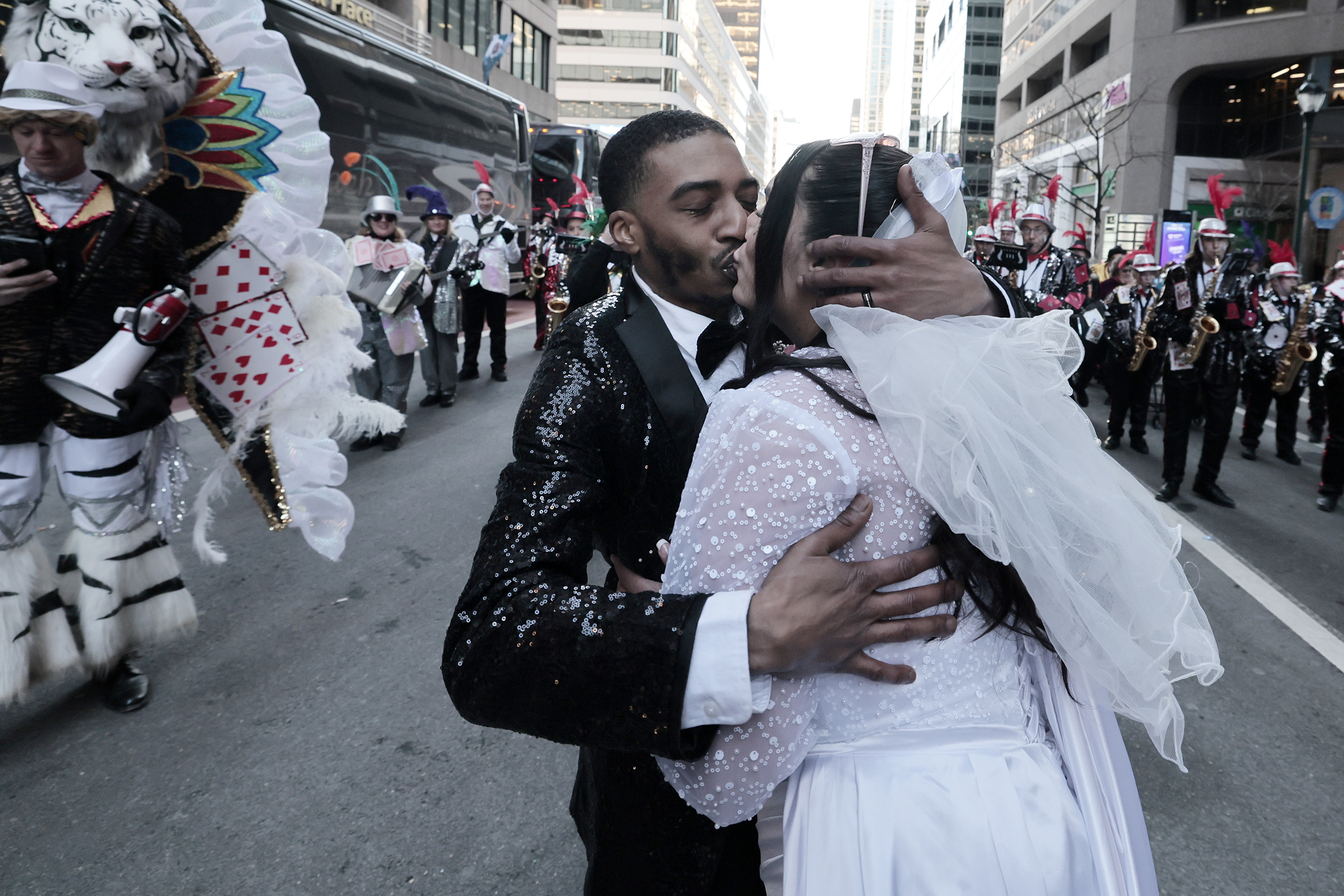
The bride wore a sequin silk gown with golden sneakers. The groom, a bedazzled tux. They became husband and wife in the bitter cold of Market Street — in the middle of the Mummers Parade.
Juliana Bonilla, 25, and Stanley Wells, 32, met online three years ago. And they never envisioned their love story would include a storybook Mummers Parade wedding. But on Thursday, the pair, who marched with the Hegeman String Band, officially tied the knot as part of a Mummers Parade performance.
The wedding was a first, said Kelliann Gallagher, captain of Hegeman. At least in the string band division, anyway, she said. At least that anyone had ever heard of.
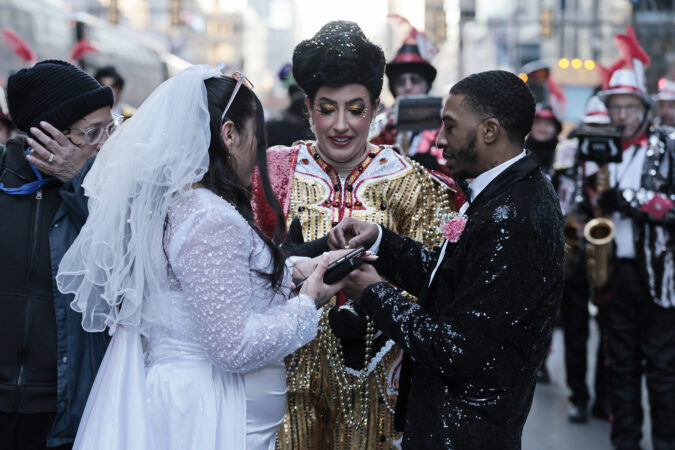
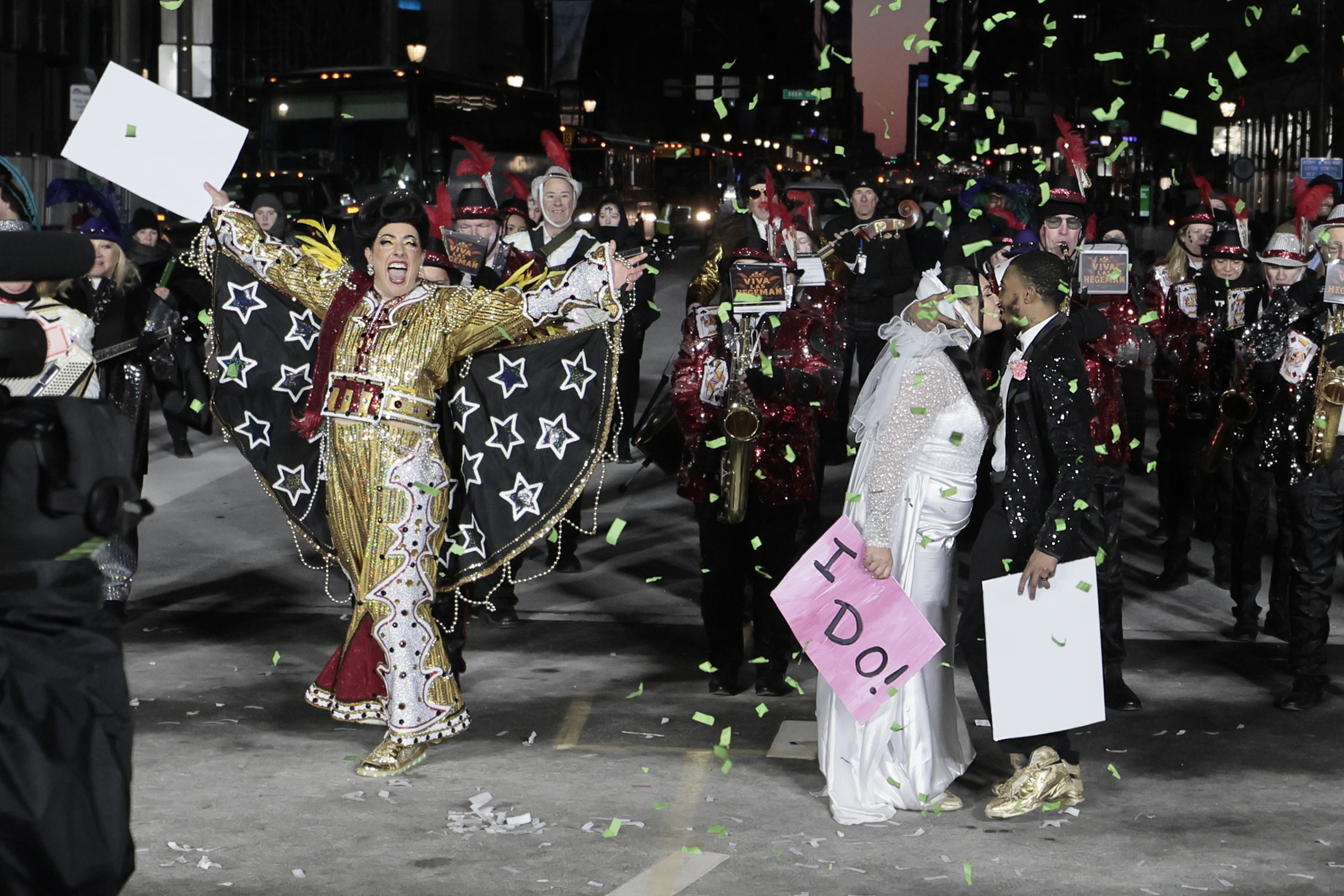
Julianna Bonilla (middle) and Stanley Wells (right) kiss after saying “I DO” and being officially married by Hegeman String Band captain Kelliann Gallagher (left) during the 2026 Mummers Parade in Philadelphia on Thursday, Jan. 1, 2026.
The Mummers Day matrimony had come together by chance, explained Gallagher, who served as the officiant.
Back in October, the South Philly string band was finalizing its parade plans when it struck Gallagher that a real wedding would be the perfect ending to their Las Vegas-themed routine.
“Of course, one of the aspects of Vegas is the little white wedding chapel,” said Gallagher. “So we thought, ‘Wouldn’t it be cool if we can get someone to actually be married on New Year’s Day?”
They just needed a couple.
Evie Pastor, who serves as sergeant-at-arms for Hegeman, thought of her recently engaged daughter, Juliana. She had grown up around the Mummers, and her stepfather, Jon Pastor, plays first alto saxophone in the string band.
After all, Bonilla, of South Philadelphia, and Wells, of North Philadelphia, who both work as home healthcare aides, had a very Philly courtship. Their first date three years ago was at a Delaware Avenue eatery, where they watched the Eagles play.
She had fallen for him immediately.
“He was a gentleman,” Bonilla said of Wells.
He was drawn to her beauty and humor.
By October, the couple who have a daughter, Kehlani, 2, had already picked out a venue. Bonilla, who is shy and nervous in front of large crowds, was hesitant when her mother asked about a Mummers wedding.
“I don’t like all the attention on me,” she said.
But the more she thought of it, the more the idea grew on her. It would be special. She would be marching anyway. But this year, instead of a parade marshal, she’d be the bride.
“It was something different,” she said.
Julianna Bonilla (left) and Stanley Wells go over wedding service details before being married by Hegeman String Band captain Kelliann Gallagher (right) during the 2026 Mummers Parade in Philadelphia on Thursday, Jan. 1, 2026.
Her nerves grew as the parade drew close, and it had nothing to do with Wells. It was about the crowds and the television cameras that would be filming the band’s performance — and her wedding.
She found a long-sleeve gown with a long train and a Mummers vibe. And on Thursday morning, she and Stanley posed in front of the band’s Second Street clubhouse, showing off their golden sneakers.
They practiced their vows on the bus ride to Market Street, where the bands would perform before the judges. The bride packed a flask of Southern Comfort to warm herself against the cold — and to calm herself about the crowds.
And then they waited on Market Street — for hours — due to delays caused when the String Band Division called off its competition because of punishing winds. Many props were destroyed, and five people were sent to the hospital Thursday morning, Mummers officials said.
While no longer competing, the bands would still march.
By 4 p.m., Hegemen String Band finally begun to inch toward the bright lights and crowds at City Hall. As Jon Pastor played “Can’t Help Falling in Love” on his sax, Bonilla and Wells stepped off the band’s bus.
Taking each other’s hands before Gallagher, who would officiate in a bedazzled Elvis get-up, they wanted to at least exchange their vows in the quiet moments before the performance.
“I promise to stand by your side, to support and cherish you in all the seasons of your life,” Wells said.
“I promise to love you without condition or expectation, exactly as you are today and every day after.”
Stanley Wells (left) and Julianna Bonilla kiss after being married by Hegeman String Band captain Kelliann Gallagher during the 2026 Mummers Parade in Philadelphia on Thursday, Jan. 1, 2026.
Then, with a showman’s touch, Gallagher shouted, “Stay tuned for the rest of the wedding.”
That took place a short while later, as the band performed its routine under the stars of Market Street. Braving the cold and the crowds, the couple strutted to the front of the line, each holding aloft signs saying, “I do.”
With that, Gallagher pronounced them man and wife to the grandstand cheers.
Evie Pastor began to cry.
“That’s enough, get a room,” joked a parade emcee, as the couple’s kiss lingered.
With that, Juliana Bonilla and Stanley Wells, now husband and wife, strutted down Broad Street, the bride’s nerves finally eased by the overwhelming emotion of the moment.
“I’m glad its done with,” she said. “I can get warm now.”
With sequins and glitter, music and pageantry, the nation’s oldest folk parade strutted through downtown Philadelphia on Thursday, delighting thousands who lined Broad Street despite fierce, damaging, and bitter winds.
Over 125 years, there have been weather events — postponements because of cold, rain and snow and, in 2021, a COVID cancellation. But for the first time in Mummers history, one part of the parade was suspended.
The popular String Band Division called off its competition because of punishing winds that destroyed props and sent five people to the hospital early Thursday morning during parade setup. Each of the 14 string bands marched later Thursday, playing music in costumes and makeup, but solely for entertainment purposes and not with their planned routines.
A full string band competition, with judges and routines the clubs have spent a full year devising and practicing, will happen on a yet-to-be-determined date, after logistics and finances are worked out.
Still, the 2026 parade was quintessentially Philadelphia — not perfect, but full of heart-on-its-sleeve scrappiness.
Ryan Echols, president of the Hegeman String Band, said the group had shortened its performance and packed up props due to the gusty wind, but still came to play.
“The parade still goes on, regardless,” said Echols. “We’re still here to perform for the city of Philadelphia.”
The cancellation had thrown a wrench in the day, said Nick Magenta, captain of the Polish American String Band.
“You get used to all these years — how the parade goes, how the morning goes,” he said. “When you have something like those, it kind of throws you off your focus.”
Still, Mummer morale remained high, he said.
“You can’t change it, regardless,” said Magenta. “Everyone is just looking forward to being out here and celebrating the new year.”
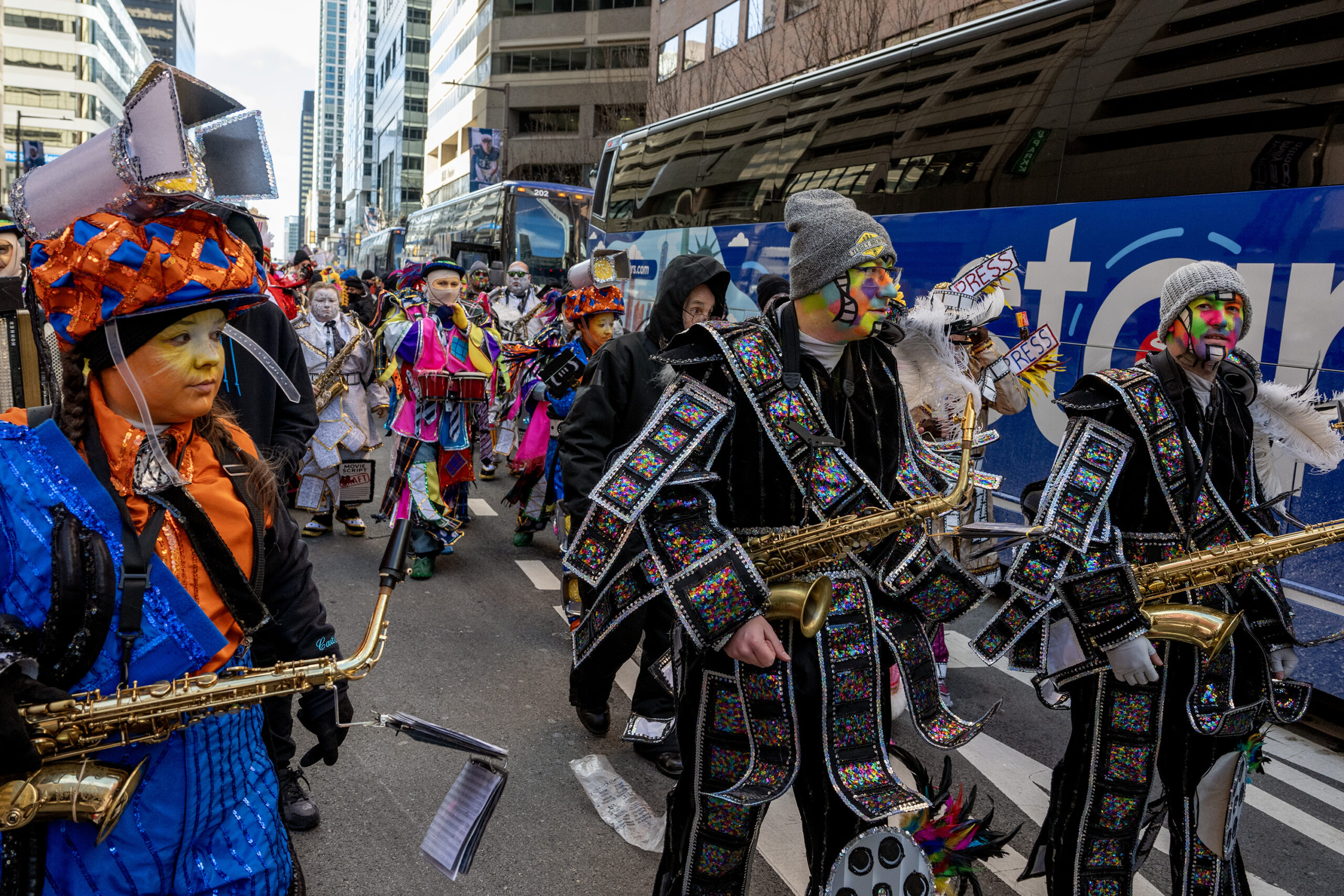
Musicians with the Uptown String Band arrive on buses, to play for their theme of “From Script to Screen,” highlighting the golden age of Hollywood movie making.
‘Things were just being ripped out of our hands’
String band officials saw the forecasts: possible snow squalls and wind gusts early Thursday morning. They monitored forecasts hour by hour.
But in the 5 a.m. reality of readying “a mobile Broadway show,” it quickly became apparent that they were not gusts, but, on Broad Street, sustained 30-mile-per-hour winds. As clubs set up their elaborate props, five people sustained injuries that sent them to the hospital. Some clubs had important set pieces destroyed.
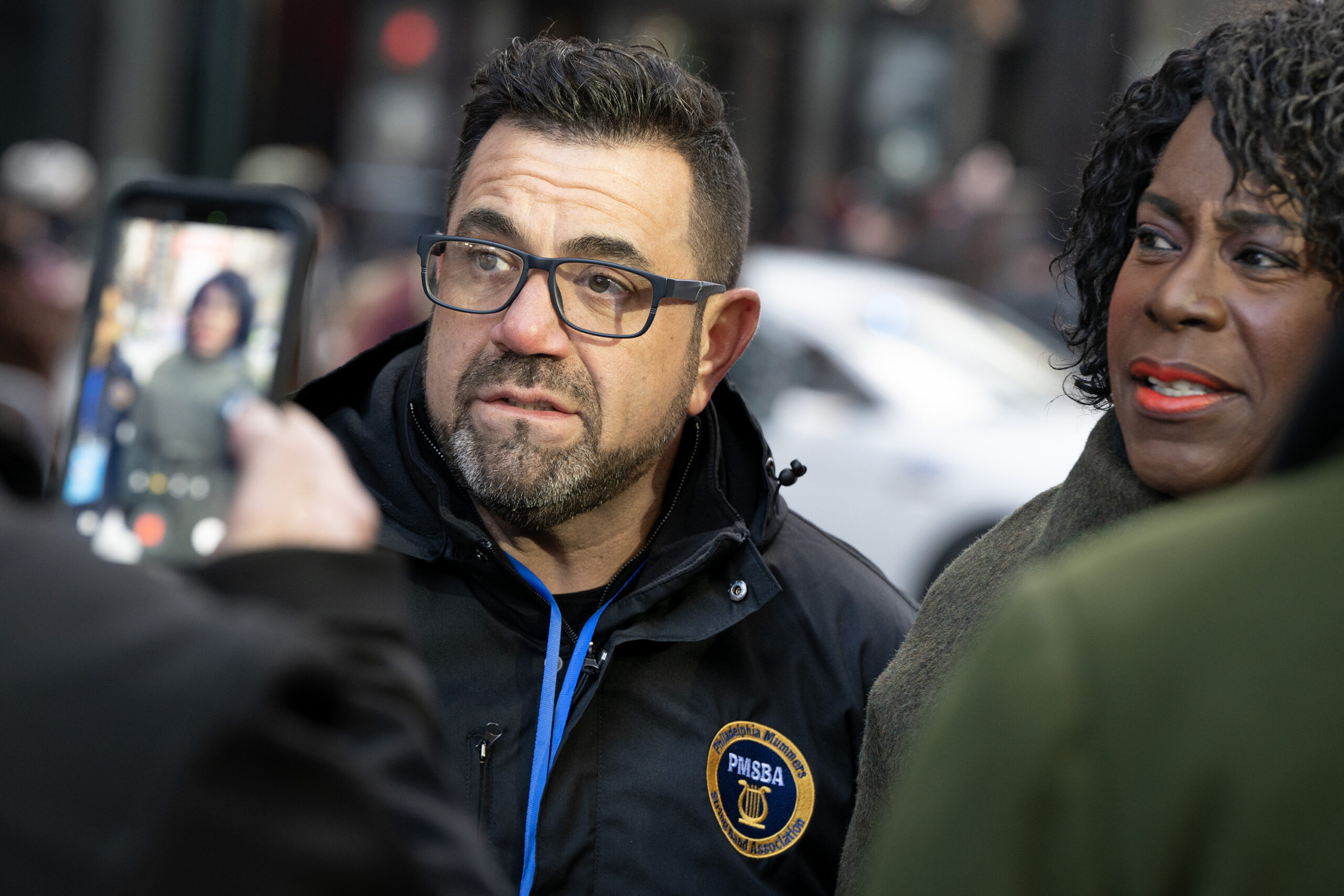
“We did everything precaution-wise — sandbags and all of that,” said Sam Regalbuto, president of the Philadelphia Mummers String Band Association. “But as they were trying to assemble, things were just being ripped out of our hands.”
Regalbuto quickly called a meeting of association delegates, and the consensus was to suspend the competition but still march. Only a little differently, not putting anyone at a disadvantage, because several bands had lost key pieces of their show.
Sam Regalbuto, president of the Philadelphia Mummers String Band Association, pauses for a photo with Mayor Cherelle L. Parker, during the Mummers Parade Thursday. The string band competition was suspended because of high winds that destroyed props and caused injuries during morning setup. The bands still marched and played their music, but did not carry props, and would not be judged.
Even into the afternoon, winds were still brisk, with temperatures in the 30s. (Cold temperatures are scheduled to continue into the weekend.)
“We’ve lost sets, we’ve lost props that we’ve worked 365 days to put together to bring you the best possible string band spectacular that we do every year,” he said. “It was very hard for all of us, as a unit, to make this decision.”
After the last Comic Divisions finished, it was showtime for the strings, with Duffy String Band leading off.
Crowds seemed unfazed by the amended show. Some Mummers wore beanies instead of their typical elaborate headpieces.
A jubilant Mayor Cherelle L. Parker’s spirits were undimmed by the changes.
“I want you to remember how much time, energy, and practice and effort goes into preparing,” Parker said. “Don’t forget about the generations of families who are here. We are proud, and this is our Philly tradition.”
‘Our thing, together’
Dressed in handmade, bedazzled Colonial-era costumes, Joe Bongard, 47, and his teenage daughter, Lucy, were the first Mummers to march.
By parade time, it had almost seemed like they hadn’t slept in days, the Bongards said. Father and daughter had been preparing since September.
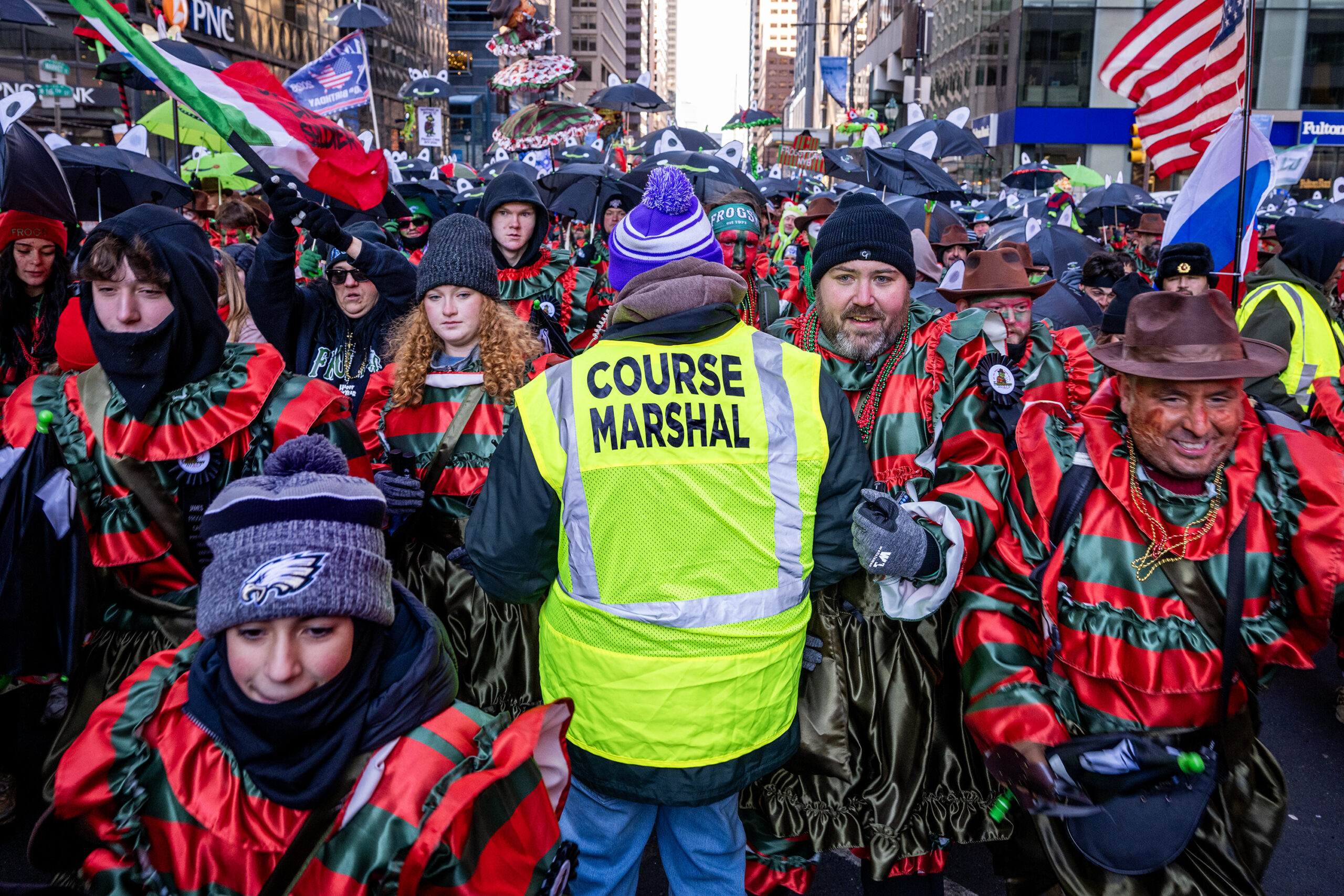
Bruce Platt, a parade marshal for 17 years, holds back the rush of Froggy Carr wenches as they take off for their TV start time march,
In the final hours before Parade Day, Lucy sewed her bejeweled and sparkled red-white-and-blue Colonial-era woman’s costume. Meanwhile, her father, who is in his first year as captain of Golden Sunrise Fancy Club, applied finishing touches to his Ben Franklin outfit and practiced his knee step for the dance routine.
Poised in the warming glow of the television cameras, their patriotic sequins and feathers rustling in the icy wind, Joe and Lucy Bongard said this is what they love to do.
“It’s our thing, together,” Joe Bongard said.
Proudly watching her husband and daughter from the grandstand, Erika Bongard laughed when she said that, for her, the Mummers Parade represented something else entirely. “Honestly for me, lots of cleaning, because there is sequins and glitter everywhere for months,” she said, recording as Joe and Lucy began to strut and dance to Rocky theme song “Gonna Fly Now,” officially kicking things off.
“Clearly, Lucy got her rhythm from me, and not Joe,” said Erika Bongard, beaming about her daughter’s smooth steps.
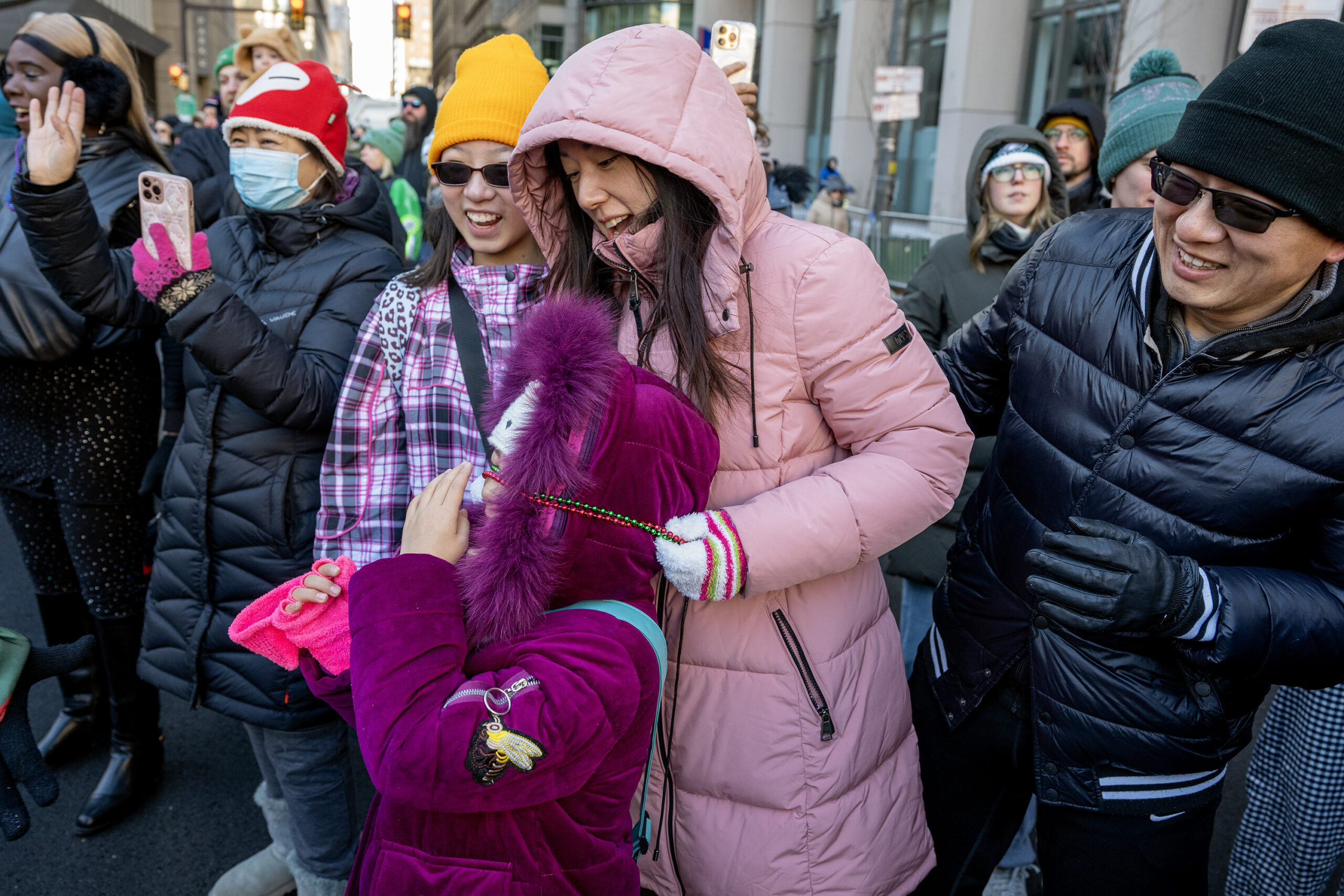
McKenna Wei, 7, gets help putting on a set of beads given to her by a passing Mummer Wench as the Newtown Square family watches the Mummers Parade Thursday, the 125th anniversary of Philly’s iconic New Year’s Day celebration. From left is grandmother Qin; sister Mabel, 12; mom, Helen and dad, Michael.
Nearby, Ellie Jozefowski, 75, fought back tears as she strutted in a sequined Flyers jacket. The tears come easily every year for Jozefowski, a parade veteran of more than three decades.
Thursday was no different. They flowed freely as four generations of Jozefowskis marched together for Golden Sunrise, including Ellie’s 7-month-old grandson, Peter, bundled up in a cheesesteak costume and carried by his mother, Molly.
“I’m crying because I’m happy!” shouted Ellie Jozefowski.
Farther back in line, Mummer Brian Creamer, of South Philly, shivered over his coffee. His young daughter, Amita, also a Mummer, had helped him bejewel his pirate king costume. He would not miss it for the cold or the wind, he said.
“It’s about spreading the new year joy,” he said.
Even farther back, wenches Ricky Dinaro, 35, and his pal, Anthony Putnick, warmed themselves on the regenerative powers of Miller Lite.
They’d been born into the parade, they said, and marched all their lives. They had been drinking for hours.
“I stayed up all night,” said Putnick, of the MGK Outsiders NYB.
Others had found their way into the longest-running continuous folk parade.
Cheyenne Cohen, of Golden Sunrise, grew up in Northern California before joining the Mummers three years ago after she moved to Philly. There was nothing like the Mummers in Santa Cruz, she said, adding that she now also works at the Mummers Museum in South Philly.
“Absolutely, the most welcoming community,” she said of her sequined and feathered found family.
It was a parade of firsts for the Mummers of the Philadelphia Chinese Community Organization United troupe.
Celebrating its inaugural year, the Chinatown Mummers danced traditional Chinese folk dances, which many members practiced late nights after their restaurant jobs.
“We want to welcome people to Chinatown and show our culture,” said member Holly Ming.
In the crowded grandstands, new and old fans shivered.
Kenzie McBride thought what better year to score front-row grandstand seats for her stepmother, Jennifer Smithson, than the 125th anniversary?
Smithson, bundled in a blanket, approved.
“It’s been on my bucket list,” she said.
And though some would-be parade-goers stayed home because of the string band news, plenty came out to enjoy the iconic parade anyway.
In the grandstands as darkness fell, Patrick Finnegan, 46, of Oreland, danced with his son, Dylan, 6, on his shoulders. His 8-year-old twins, Arielle and Melody, were by his side.
It was the first time he had brought the kids to the parade.
The cancellations didn’t affect their fun, Finnegan said.
“It’s all about riding the train downtown to see the Mummers,” Finnegan said, mid-strut. “My wife thinks I’m crazy.”
Daycare operators say the Trump administration’s restrictions on federal childcare funding unfairly punish them over a conservative activist’s fraud allegations against Minnesota centers that are undercut by state records anddisputed by some of the owners.
YouTuber Nick Shirley recently went to nine federally subsidized daycare centers in Minneapolis, many operated by Somali Americans.
In a 42-minute video of his visits that went viral last week, he claimed that thecenters weren’t caring for any children because none could be seen entering or exiting the buildings.
In response, the U.S. Department of Health and Human Services cut off funds to the centers until they undergo extensive auditing and announced stricter verification measures nationwide for childcare funds.
Minnesotastate regulators visited the centers within the past 10 months and saw children, according to state officials and records,undermining claims that they are fraudulent businesses.
One daycare manager told theWashington Post thatsecurity camera footage showed Shirley visiting her facility when it was closed. Another daycare director said staff didn’t open the door in part because they assumed that Shirley and six or seven men with him, some masked, were from Immigration and Customs Enforcement — which launched an operation in early December focused on Somali immigrants in the Minneapolis area.
Ahmed Hasan, director of ABC Learning Center, said the YouTuber showed up at the front entrance around noon on Dec. 16. During the winter, most parents use the back entrance and Shirley stayed no more than a few minutes, he said.
“There were kids here all the time,” Hasansaid. “I was also here.”
Hasan said his daycare serves about 56 children, most from low-income East African families. It was last visited by a state regulator on Nov. 7. Since the video went viral, people have flooded his center’s phones with harassing calls, threatening to have him arrested or call ICE, he said.
Ayan Jama, manager at Mini Childcare Center, said that herdaycare has also received threatening phone calls, including a bomb threat, and that people have attempted to break in.
She said Shirley visited in the morning before her center opened after noon. Its typical hours are 12:30 to 9:30 p.m. to serve mostly Somali children after school while their parents work in the afternoons and evenings, she said.
“Why not come during operating hours?” she said. “This is a targeted attack on our community.”
Jama, whose business was last visited by a regulator on June 11, said she won’t be able to keep her doors open if federal funds, which account for 90% of her revenue, aren’t restored.
Of the seven other daycare centers featured in Shirley’s video, five didn’t return requests for comment on Wednesday, the mailbox was full for a sixth, and multiple calls to a seventh resulted in a busy signal.
Minnesota Attorney General Keith Ellison, a Democrat, said the Trump administration is threatening funding for childcare services “apparently all on the basis of one video on social media.”
“To say I am outraged is an understatement,” Ellison said in a statement Wednesday.
The scrutiny on the nine daycare centers in Shirley’s video has nationwide implications because all daycare centers will have to submit more documentation to HHS before receiving childcare funds.
The new guidelines, while still unclear, mirror “defend the spend” requirements that briefly went into effect in April before they were stopped, child welfare policy analysts said. For a few weeks, states seeking to draw down money to reimburse daycares were asked to upload additional details on why the payments were justified.
That effort significantly delayed payments to providers, said Stephanie Schmit, director of childcare and early education at nonpartisan Center for Law and Social Policy.
If the new documentation requirements are the same or more onerous, providers that are chronically underfunded will struggle to keep their doors open, she said.
“We already know that childcare providers don’t have a lot of additional time to do things like this,” Schmit said.
HHS said federal childcare dollars, which help familieswith low incomes pay for care, will be frozen to the centers under suspicion until they release extensive documents, including attendance records, inspection reports, and complaints.
HHS spokesman Andrew Nixon said the agency has “a clear duty to verify the proper use of taxpayer funds.”
“The documentation process exists to rule out fraud and confirm that funds are supporting legitimate child care providers,” he said in a statement. “Any provider operating should be prepared to demonstrate compliance.”
Clare Sanford, a government relations chair for the Minnesota Child Care Association, which represents more than 300 centers across the state, called the viral video misleading.
For example, daycare centers often lock their front doors for safety reasons, and it is not unusual for employees to not answer a door if they are caring for children and not expecting a visitor, she said.
If an employee opens a door, children might not be visible because daycare centers keep them in classrooms, away from entrances, she said.
Shirley did not return requests for comment Wednesday evening.
The action comes amid state and federal fraud investigations of 14 Minnesota-run safety net programs, including for child nutrition, housing, and autism assistance.
President Donald Trump, Republican lawmakers, and conservative activists and media outlets have cited the involvement of Somali Americans to blast the immigrant group. Trump said in a Cabinet meeting last month that he doesn’t want Somali immigrants in the United States and referred to them as “garbage.”
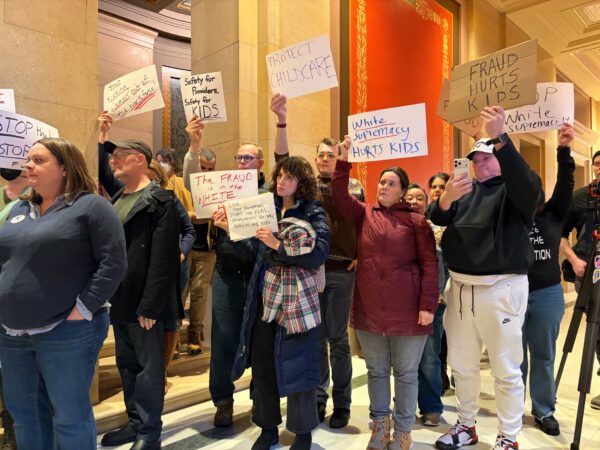
Around threedozenpeople gathered Wednesday at the Minnesota Capitol to express opposition to the childcare funding restrictions, holding signs that said “No child care, no workforce” and “Fund care not fear.”
“Let’s be honest about how we really got here: Our president decided he doesn’t like the Somali community and he wants to destroy them,” said Amanda Schillinger, a Minnesota childcare provider, to a loud chorus of boos.
Minnesota Gov. Tim Walz, a Democrat, tweeted Tuesday that Trump was “politicizing the issue to defund programs that help Minnesotans.”
State Rep. Carlie Kotyza-Witthuhn, a Democrat who is cochair of the House Children and Families Finance and Policy Committee, said thestate has been actively working for years to put safeguards in place against fraud.
“It’s incredibly frustrating to me that Donald Trump and the Republicans want to use this as a political vehicle to cut funding to our state,” she said.
Eight of the daycare centers depicted in Shirley’s video have received multiple violations by state regulators. ABC Learning Center was cited for deficiencies, which Hasansaid were corrected and described as common among daycares, such as not having food menus with proper nutritional requirements and not having an individual care plan for a child with a known allergy.
The ninth center in Shirley’s video — Super Kids Daycare Center — had its license activated Oct. 1 and shares the same address as another daycare center whose license expired that same day and previously received violations.
The Minnesota Department of Children, Youth and Families did not return requests for comment after the Trump administration announced its funding freeze.