WASHINGTON — The Trump administration said Monday it is pausing leases for five large-scale offshore wind projects under construction in the East Coast due to unspecified national security risks identified by the Pentagon.
The pause is effective immediately and will give the Interior Department, which oversees offshore wind, time to work with the Defense Department and other agencies to assess the possible ways to mitigate any security risks posed by the projects, the administration said.
“The prime duty of the United States government is to protect the American people,” Interior Secretary Doug Burgum said in a statement. “Today’s action addresses emerging national security risks, including the rapid evolution of the relevant adversary technologies, and the vulnerabilities created by large-scale offshore wind projects with proximity near our east coast population centers.”
The administration said leases are paused for the Vineyard Wind project under construction in Massachusetts, Revolution Wind in Rhode Island and Connecticut, Coastal Virginia Offshore Wind, and two projects in New York: Sunrise Wind and Empire Wind.
The Interior Department said unclassified reports from the U.S. government have long found that the movement of massive turbine blades and the highly reflective towers create radar interference called “clutter.” The clutter caused by offshore wind projects obscures legitimate moving targets and generates false targets in the vicinity of wind projects, the Interior Department said.
The action comes two weeks after a federal judge struck down President Donald Trump’s executive order blocking wind energy projects, saying the effort to halt virtually all leasing of wind farms on federal lands and waters was “arbitrary and capricious” and violates U.S. law.
Judge Patti Saris of the U.S. District Court for the District of Massachusetts vacated Trump’s Jan. 20 executive order blocking wind energy projects and declared it unlawful.
Saris ruled in favor of a coalition of state attorneys general from 17 states and Washington, D.C., led by New York Attorney General Letitia James, that challenged Trump’s Day One order that paused leasing and permitting for wind energy projects.
An internal CBS News battle over a “60 Minutes” story critical of the Trump administration has exploded publicly, with a correspondent charging it was kept off the air for political reasons and news chief Bari Weiss saying Monday the story did not “advance the ball.”
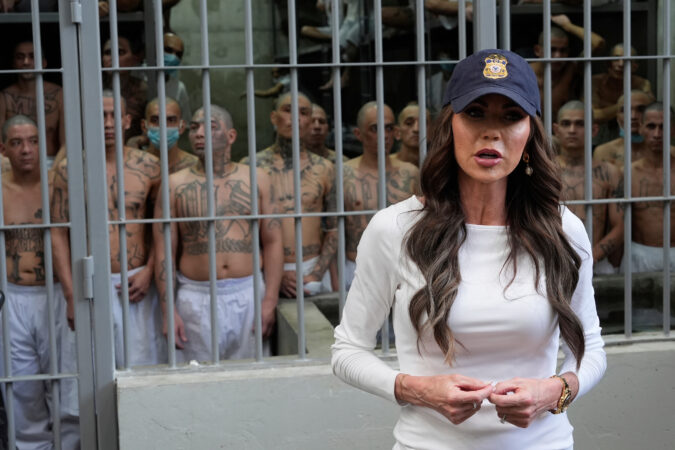
Two hours before airtime Sunday, CBS announced that the story where correspondent Sharyn Alfonsi spoke to deportees who had been sent to El Salvador’s notorious CECOT prison, would not be a part of the show. Weiss, the Free Press founder named CBS News editor-in-chief in October, said it was her decision.
The dispute puts one of journalism’s most respected brands — and a frequent target of President Donald Trump — back in the spotlight and amplifies questions about whether Weiss’ appointment was a signal that CBS News was headed in a more Trump-friendly direction.
Alfonsi, in an email sent to fellow “60 Minutes” correspondents said the story was factually correct and had been cleared by CBS lawyers and its standards division. But the Trump administration had refused to comment for the story, and Weiss wanted a greater effort made to get their point of view.
“In my view, pulling it now after every rigorous internal check has been met is not an editorial decision, it is a political one,” Alfonsi wrote in the email. She did not immediately respond to requests for comment from The Associated Press.
Alfonsi said in the email that interviews were sought with or questions directed to — sometimes both — the White House, State Department and Department of Homeland Security.
“Government silence is a statement, not a VETO,” Alfonsi wrote. “Their refusal to be interviewed is a tactical maneuver designed to kill the story. If the administration’s refusal to participate becomes a valid reason to spike a story, we have effectively handed them a ‘kill switch’ for any reporting they find inconvenient.”
“Spike” is a journalist’s term for killing a story. But Weiss, in a statement, said that she looked forward to airing Alfonsi’s piece “when it’s ready.”
Speaking Monday at the daily CBS News internal editorial call, Weiss was clearly angered by Alfonsi’s memo. A transcript of Weiss’ message was provided by CBS News.
“The only newsroom I’m interested in running is one in which we are able to have contentious disagreements about the thorniest editorial matters with respect and, crucially, where we assume the best intent of our colleagues,” Weiss said. “Anything else is completely unacceptable.”
She said that while Alfonsi’s story presented powerful testimony about torture at the CECOT prison, The New York Times and other outlets had already done similar work. “To run a story on this subject two months later, we need to do more,” she said. “And this is ‘60 Minutes.’ We need to be able to get the principals on the record and on camera.”
It wasn’t clear whether Weiss’ involvement in seeking administration comment was sought. She reportedly helped the newscast arrange interviews with Jared Kushner and Steve Witkoff this past fall to discuss Trump’s Middle East peace efforts. Trump himself was interviewed by Norah O’Donnell on a “60 Minutes” telecast that aired on Nov. 2.
Trump has been sharply critical of “60 Minutes.” He refused to grant the show an interview prior to last fall’s election, then sued the network over how it handled an interview with election opponent Kamala Harris. CBS’ parent Paramount Global agreed to settle the lawsuit by paying Trump $16 million this past summer. More recently, Trump angrily reacted to correspondent Lesley Stahl’s interview with Trump former ally turned critic Marjorie Taylor Greene.
“60 Minutes” was notably tough on Trump during the first months of his second term, particularly in stories done by correspondent Scott Pelley. In accepting an award from USC Annenberg earlier this month for his journalism, Pelley noted that the stories were aired last spring “with an absolute minimum of interference.”
Pelley said that people at “60 Minutes” were concerned about what new ownership installed at Paramount this summer would mean for the broadcast. “It’s early yet, but what I can tell you is we are doing the same kinds of stories with the same kind of rigor, and we have experienced no corporate interference of any kind,” Pelley said then, according to deadline.com.
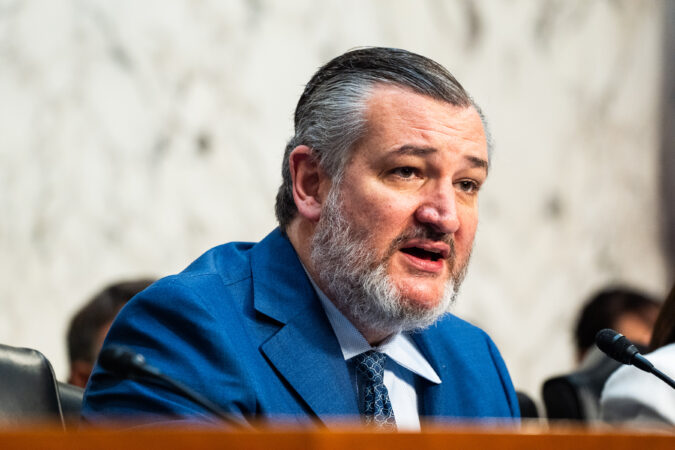
Sen. Ted Cruz sat down with a longtime ally in November at an office near D.C.’s Union Station to discuss the future of the Republican Party. Before long, the discussion touched on his own future.
His friend Morton Klein, president of the Zionist Organization for America, told Cruz he believed that “Jew hatred and Israel bashing” was on the rise on the right — and that something had to be done about it. Cruz, who had begun a series of speeches decrying antisemitism in the GOP, told Klein he had been fielding requests from people urging him to run for president in 2028.
Cruz came across as someone “seriously” considering such a run, Klein recalled.
With the future of the party up for grabs in a Donald Trump-less 2028 primary, Cruz has in recent months positioned himself as a loud voice for a more traditional, hawkish Republican foreign policy. He’s also urging the GOP to rid itself of popular MAGA pundit Tucker Carlson, whom he argues is injecting the “poison” of antisemitism into the movement with his broadsides against Israel. Carlson has rejected that characterization.
As he feuds with Carlson, Cruz is weighing a second presidential bid, according to a person close to the senator and another briefed on his thinking, who spoke like others on the condition of anonymity to disclose internal conversations. A White House run would be politically risky for Cruz, 55, putting him on course to collide with Vice President JD Vance, who many Republicans expect to enter the 2028 race.
Friction is already evident behind the scenes: Cruz has criticized Vance, a close ally of Carlson, to Republican donors, according to two people familiar with the comments. The senator has warned that Vance’s foreign policy views are dangerously isolationist, the people said.(Vance has been one of the GOP’s most prominent skeptics of U.S. intervention abroad.)
The emerging rivalry shows how much the party has changed under Trump’s leadership since Cruz arrived in the Senate in 2013. After rising to prominence as a rebel against the establishment, Cruz is now a vocal champion of some longtime orthodox GOP positions, as a new generation of conservatives is ascending with a different vision.
Some political observers are skeptical that another Cruz run would gain much traction. He can no longer run as an outsider and alienated some conservatives with his fight against Trump in the 2016 campaign. Still, Cruz has built name recognition and relationships with plenty of activists and donors across the country in recent years, and it’s far from clear what will animate the base in the next GOP primary.
“Can Ted help craft or meld together the traditional Republican approach with the new reality of what the Republican Party is now?” asked Daron Shaw, a political science professor at the University of Texas who overlapped with Cruz as a staffer on George W. Bush’s presidentialcampaign. “It’s a heavy lift.”
The day after his chat with Klein, Cruz called Carlson “a coward” during a speech before a group supporting Jewish conservatives in Las Vegas, again denouncing the “poisonous lies” of antisemitism. He said they were “blessed” to have Trump, who “loves the Jewish people,” in the White House right now.
“When Trump is not in the White House, what then?” he asked in his booming voice.
“Ted Cruz!” an audience member shouted.
The senator just smiled, then continued his speech.
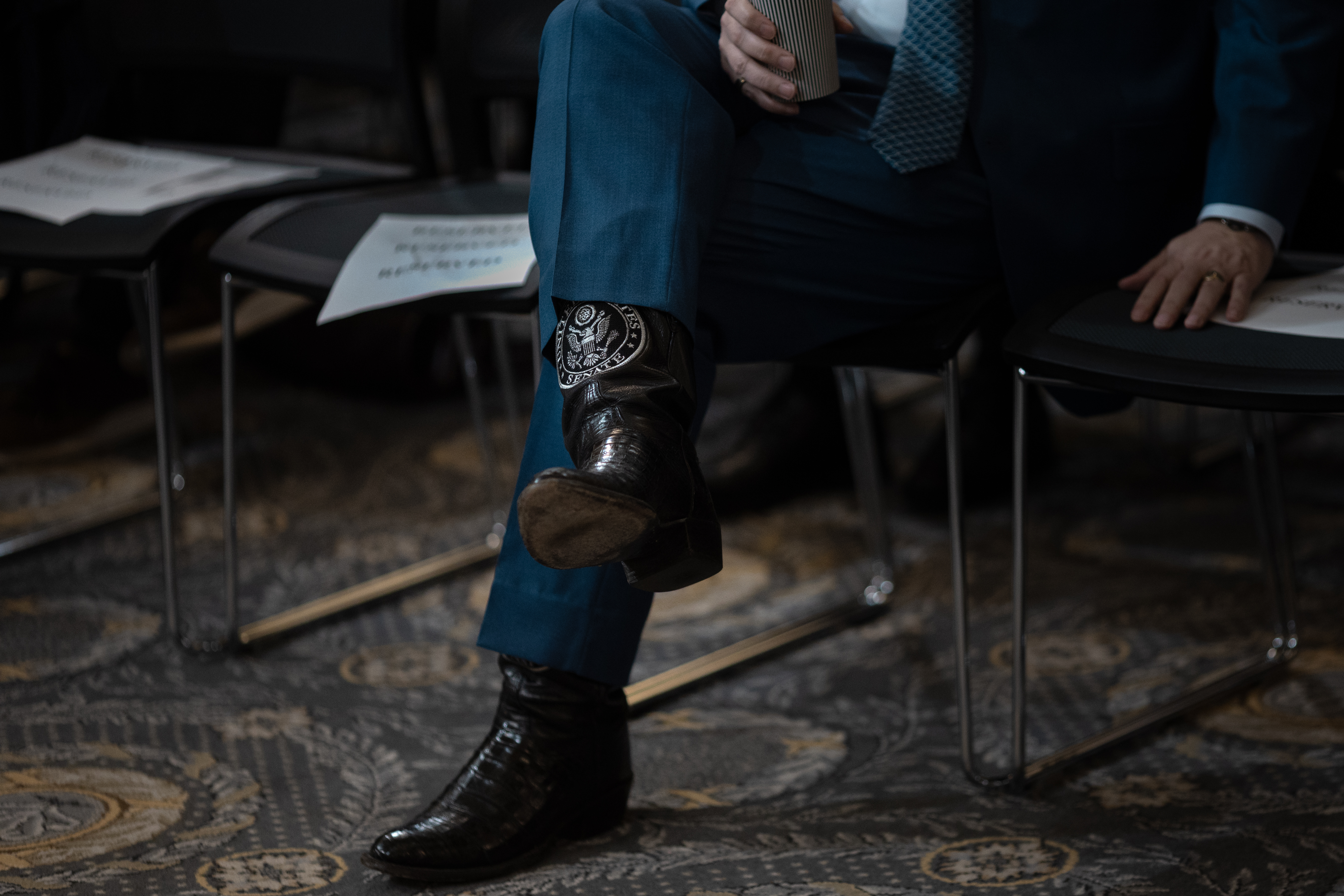
Sen. Ted Cruz (Texas) wears Senate-themed boots in May at the Capitol.
‘All of us hate Ted Cruz’
Anyone considering a run for the GOP nomination in 2028 faces a big obstacle: Vance.
The 41-year-old vice president leads early polls and is seen as a loyal lieutenant to Trump, who maintains high support from the party base even as the president’s approval ratings have plummeted.
But Trump has been noncommittal about endorsing his running mate as heir to his Make America Great Again movement, leaving an opening for an ambitious conservative with a different vision for the party.
“The Republicans will be fighting for their identity,” Rep. Marjorie Taylor Greene (R-Georgia) said of the 2028 primary. Greene, a close ally of Carlson who represents the populist and isolationist wing of the party, added: “There’ll be Ted Cruz, I’m sure, running against JD Vance. All of us hate Ted Cruz.”
Cruz has adapted to changes in his party over several decades in politics. Following a stretch in the establishment during Bush’s 2000 campaign, he became solicitor general of Texas in 2003 and launched a Senate campaign in 2011 as a tea-party-infused change agent, defeating the lieutenant governor in the GOP primary.
“The best thing to happen to the Republican Party was to get its teeth kicked in in 2008,” Cruz said during a 2012 campaign event with the libertarian Ron Paul.
When he arrived in Washington, Cruz picked fights over spending and President Barack Obama’s health care law, sparking a government shutdown in 2013. Not everyone in his party liked his style. “If you killed Ted Cruz on the floor of the Senate, and the trial was in the Senate, nobody could convict you,” Sen. Lindsey Graham (R-South Carolina) joked at a 2016 press dinner.
Cruz brought his insurgent pitch into the 2016 presidential race, but Trump caught fire with an antiestablishment campaign that dramatically eclipsed the senator’s. After bowing out of the GOP race as the last major Trump opponent standing, Cruz told delegates at the Republican National Convention that year to “vote your conscience,” instead of throwing his support behind Trump, who had branded him as “Lyin’ Ted.” He returned to the Senate, where he is now chair of the Commerce Committee and has refashioned himself into a bipartisan dealmaker on aviation safety and other issues.
The Texas senator, who has called himself a “noninterventionist hawk” and has long been a vocal ally of Israel, argues that an anti-Israel foreign policy could embolden terrorists. And he is a defender of the benefits of traditional capitalism at a time when some in the “New Right” are calling for a more populist turn.
“Those who are anti-Israel quickly become anti-capitalist and anti-American,” Cruz said in a brief interview about his decision to speak out against Carlson. “Tucker’s obsession is unhealthy and dangerous.”
By targeting Carlson and growing anti-Israel sentiment within the party, Cruz has hit upon a division within the GOP base that some believe could animate the 2028 primaries. Carlson is closely allied with Vance, a onetime Trump critic who is now an “America First” populist, embracing skepticism of some big-business interests and rejecting the U.S. foreign policy status quo.
Cruz is staking out positions against isolationism and antisemitism at a time when explicitly antisemitic figures such as white supremacist commentator Nick Fuentes are gaining an audience on the right.
Vance, by contrast,has rejected the suggestion that the right has a problem with antisemitism afterCarlson hosted Fuentes for a friendly interview. (The vice president disavowed Fuentes months before the interview and has not explicitly weighed in on Carlson hosting him.)
It’s “kind of slanderous to say that the Republican Party, the conservative movement, is extremely antisemitic,”Vancesaid in a recent interview with NBC News. In a social media postlast week, Vance criticized a news article claiming antisemitism was rising among young people.
“I would say there’s a difference between not liking Israel (or disagreeing with a given Israeli policy) and antisemitism,” he replied to one user.
Asked to respond to Vance’s comment, Cruz said he is not in agreement with “people who are anti-Israel or people who are antisemitic.”
“Every Hamas or Hezbollah or IRGC terrorist that Israel took out makes Americans safer,” Cruzsaid, referencing militants in Gaza, Lebanon and Iran that the United States designates as terrorist groups. “And those who don’t see that are not acting in accordance with American national security interests.”
The feud
In early July, Cruz sat down in Washington with Israel’s prime minister and delivered a dire warning. Over cigars at Blair House, Cruz told Benjamin Netanyahu that antisemitism on the right was rising to a level he had never seen before.
“No, Ted,” Netanyahu responded, according to Cruz, who recounted the conversation in a speech. “That’s Qatar, that’s Iran, that’s astroturf, that’s paid for.”
But Cruz said he was not placated. Replies to his social media posts were flooded with anti-Jewish bigotry from what looked to him like ordinary, real people. He began to fear that what he saw as antisemitism on the left was beginning to infect the right, he said.
In June, Cruz sat for an interview with Carlson that grew heated over the topic of Israel. Cruz suggested that Carlson criticizes Israel more than other countries because of bigotry toward Jews. Carlson said he has many Jewish friends who have the same questions as him and grilled Cruz with factual questions on the Middle East. In an uncharacteristic lapse, Cruz failed to identify the population of Iran. “You don’t know the population of the country you seek to topple?” Carlson asked.
Since then, the two have savaged each other in increasingly personal terms. Carlson has called Cruz “vulgar and dumb and reckless” for connecting U.S. military support for Israel to a biblical responsibility to defend the Holy Land and God’s chosen people. After Carlson hosted Fuentes on his podcast this fall, Cruz called on Republicans to repudiate the pundit.
Carlson “decided Jews are the source of all evil in the world,” Cruz said in a recent podcast. The senator also posted a digitally altered sexually suggestive photo of Carlson to critique his friendly stance toward Qatar, a U.S. ally with which Israel has clashed.
Since the killing of conservative influencer Charlie Kirk, internal battles about the future of the GOP have spilled into the open, many centering on the true meaning of “America First” as Trump spends time and political capital on Ukraine, Israel and Venezuela. Carlson criticized Trump’s decision to strike Iran’s nuclear sites in June and has warned the president against pursuing regime change in Venezuela, a goal Cruz shares.
“What Ted is trying to do is say, this is where our voters are,” said one person close to the senator. “Trump and Ted are much more aligned on foreign policy than Trump and Tucker are.”
Few Republicans have publicly rallied to Cruz’s side.
“I can tell you, my colleagues, almost to a person, think what is happening is horrifying,” Cruz said in one speech on Carlson. “But a great many of them are frightened because he has one hell of a big megaphone.”
Rep. Dan Crenshaw (R-Texas) said he “applauds” Cruz for speaking out against Carlson. But others declined to weigh in.
Sen. Tommy Tuberville (R-Alabama), a close Trump ally, said he believes the back-and-forth is personal. “Sometimes when you get embarrassed, you get mad, get your feelings hurt,” he said.
Sen. Richard Blumenthal (D-Connecticut) said he is surprised but happy that Cruz has the “courage” to challenge such a powerful figure on the right. “To give Senator Cruz due credit, it requires some guts and gumption to stand up against Tucker Carlson,” he said.
As Carlson and Cruz have attacked each other, Trump has declined to take sides, calling Carlson a “nice guy” and Cruz a “good friend” in recent months.
Carlson has said he thinks “antisemitism is immoral, and I am against it.” He argues the feud is just politics. “All [Cruz] wants is to be president. That’s all he’s ever wanted,” Carlson said in an interview. “As a political matter, he somehow thinks that calling me a Nazi is going to get him the nomination because it’s going to hurt JD Vance.” (Cruz has not publicly used that word to described Carlson.)
Rep. Ryan Zinke (R-Montana), who argued that Cruz damaged his credibility with conservatives after spurning Trump in 2016 but later recovered his standing, said Cruz “always has an eye on running.”
“Ted stakes out his position pretty well, and so were he to run, we know where he is,” Zinke said.
So far, there are few signs that Cruz is gaining an advantage. Hal Lambert, a major GOP donor who helped organize a super PAC to support Cruz when he ran for president in 2016, said he thinks a 2028 bid would be tricky for the senator.
“If JD Vance is running, I’m going to be supporting JD Vance,” Lambert said.
“I just don’t understand what the platform would be,” he said of Cruz’s potential run. “The platform would be, I’m Ted, and that’s JD?”
Kadia Goba and Sarah Ellison contributed to this report.
Esperanza Academy Charter School laid off 17 employees this month — a move that officials say was necessary amid a challenging financial climate.
But some Esperanza Academy veterans say the 4% reduction in the workforce — which came with no notice a few weeks before the holidays — is emblematic of troubling recentchanges at the Hunting Park charter.
Ten Esperanza Academy staffers, students, and parents spoke with The Inquirer and detailed concerns about changes at the school in the last year.
Teachers say morale is low, particularly at the high school, where staff have filed paperwork to form a union for the first time in the school’s history. Student frustration bubbled over recently, with hundreds walking out to express their anger over the loss of teachers, a counselor, an administrator, and more.
“Students are protesting,” Jarely Cruz-Ruiz, an Esperanza Academy ninth grader, wrote in a letter to the charter’s board of trustees, “because even we see the wrong being done.”
School officials declined to be interviewed, but in a statement, CEO Evelyn Nuñez said: “Like many academic institutions across the commonwealth and nation, Esperanza Academy is navigating a challenging economic environment.”
But, Nuñez said, the board and leadership team will ensure “the school will be a source of hope in this neighborhood for years to come.”
An anchor, changing
Esperanza has operated a charter school in North Philadelphia since 2000; the school has expanded to encompass grades K-12, and now serves more than 2,000 students in multiple buildings.
The charter is part of the Nueva Esperanza organization, a sprawling nonprofit “opportunity community,” as its founder, theRev. Luis Cortés Jr., has described it, a one-stop shop for neighborhood revitalization work, job training, legal services, and more.
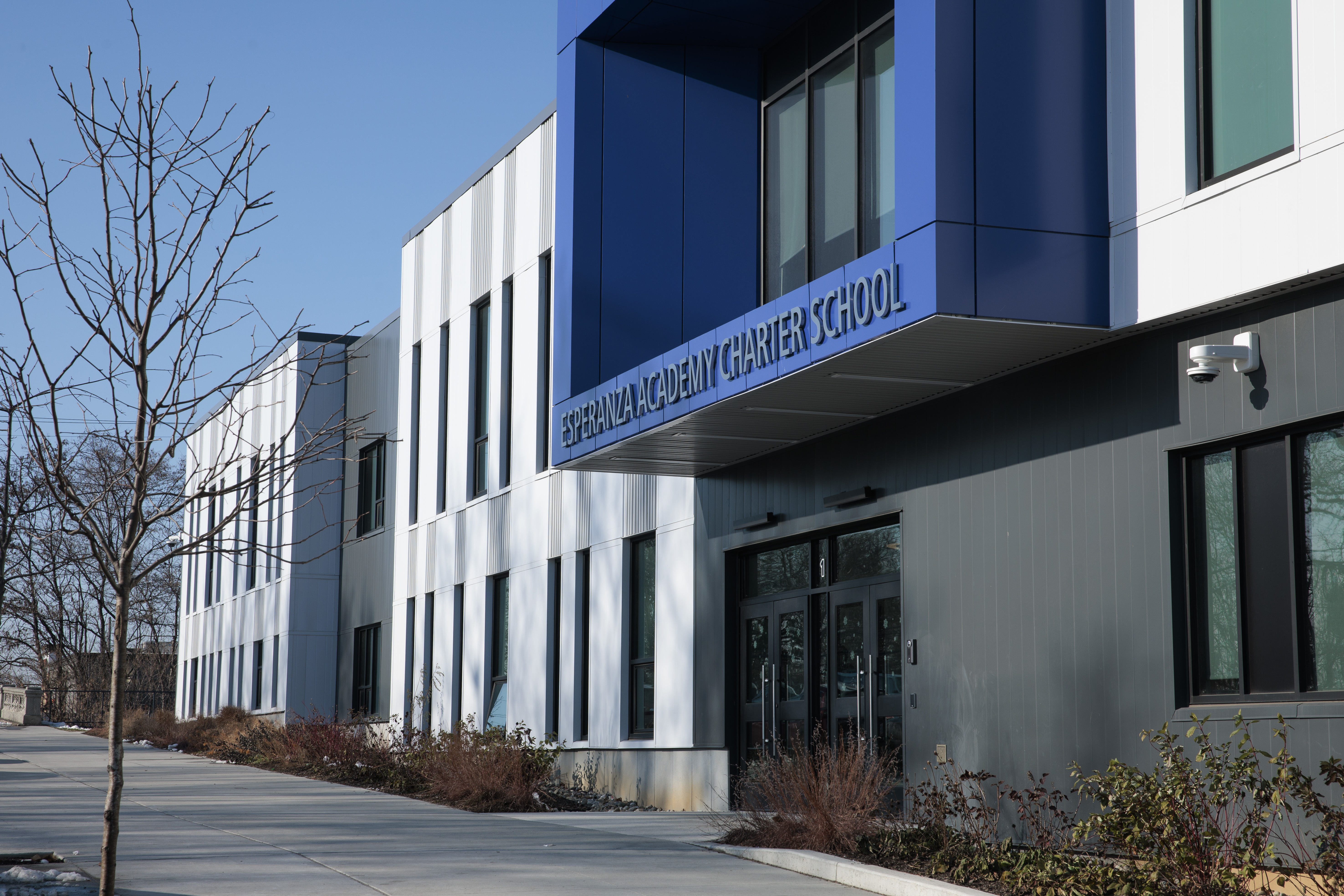
Esperanza opened a brand-new, 73,000-square-foot elementary building on the nonprofit’s campus at the beginning of this school year. Officials, in a statement released after the student walkout, said the project was planned for many years and noted that the broader organization, not the charter school, pays for campus improvements.
The exterior of the new Esperanza Academy Charter elementary building at 201 West Hunting Park Ave.
Esperanza has long been an anchor in the neighborhood and the larger Latino community, a place with a one-big-family feel.
But Daniel Montes, who came to the school as a climate control officer in 2017 and worked his way up to be a teacher, said shifts began happening about a year ago. Montes was among those staffers laid off recently.
Nuñez came to the school from the Philadelphia School District last year to become its CEO.
“Things started to change when we got the new CEO,” Montes said. “I don’t know if it’s when you get a new broom, it sweeps clean.”
At a staff retreat just before the start of this school year, Cortes, Esperanza’s founder, alluded to coming financial difficulties, said one staffer, who asked not to be named for fear of reprisal.
“He said, ‘Stuff’s happening, you have to buy in or get out,’” said another staffer, who asked not to be identified because they did not want to be targeted by leaders. “He said it was politically driven [at the national level], and that funds would be tight.”
‘Three strikes’
Tensions began to simmer among high school staff.
“There are very unilateral changes being put into effect extremely quickly,” saidanother teacher, who also asked not to be named for fear or reprisal. “We’ve had major changes go into effect on a Monday after a meeting on a Friday. They said, ‘We don’t have subs and you’re going to be covering classes for free.’”
Montes and others said teachers were frustrated over new schedules, lost prep time, and the order to cover classes without compensation — Esperanza Academy had, in the past, paid teachers for covering classes.
“It was three strikes,” said Montes.
“We just did not feel heard,” a third teacher, who also asked not to be named for fear of retribution,said. “We’re out of paper towels, and staples for the printer. The printer’s broken, but they hired six-figure administrators.”
Most charter schools do not have unionized staff; in October, a majority of Esperanza Academy’s high school teachers signed union authorization cards and chose to affiliate with the American Federation of Teachers.
Layoffs came Dec. 4, a Thursday, with no warning — some of the affected staff were pulled out midclass and given notice.
Students weren’t told what was happening, but something seemed off that day, they said. And a basketball game was canceled.
Those who remained at Esperanza Academy’s high school were told they would be absorbing the job responsibilities of the laid-off workers, including classes, coverages, and special-education caseloads.
Some teachers got extra classes added to their schedules — with no extra pay. Other classes were combined, with class sizes growing.
Interventionists — those charged with working with the neediest students — were laid off, and staffers saidno plan has been articulated about who will do that work.
In every staff meeting, teachers said they are reminded that the school’s focus is increasing attendance, boosting the number of students who meet state standards, and decreasing the number of students who score at the lowest levels.
“How are we doing that if we don’t have any interventionists?” the second teacher said.
Student protest
The layoffs stunned students. They mobilized and held a walkout a few days later.
Hundreds showed up, voicing their displeasure with the cuts and their support for the lost staff. They carried homemade signs and chanted.
Nuñez acknowledged the walkout in an email to students and families the next day, saying students demonstrated “thoughtful advocacy and respect as they honored the staff members affected by the recent reductions, and we are proud of the way they used their voices to support their school community. School leadership will continue working closely with the [student government] on how we can best support our students as we move through this transition together.”
Cruz-Ruiz, the Esperanza Academy ninth grader, said the school no longer felt like a family.
“In this building,” Cruz-Ruiz wrote in her letter to the board, “data matters more than people. You named this school Esperanza. Hope. But hope doesn’t live here, scores do. Reputation does. Those graphs and percentages you stare at do.”
‘It’s affected so many of the kids’
Francesca Castro, mother of an Esperanza Academy 10th grader, said she’s been very pleased with the education her daughter has received since middle school.
But the layoffs were deeply unsettling, she said.
“It’s affected so many of the kids,” said Castro. “I’m in the corporate world — I understand sometimes you need to make cuts. But there was no preparation, and it was right around the holidays. Couldn’t we find a different way, see what else we could cut?”
Montes and other laid-offstaff were some of the most important people in the building in terms of relationships with students, Castro said.
“What worries my daughter and some of the students and parents is: If these changes were made all of a sudden, what other changes could happen?” she said. “Are the athletes going to get less? Are the after-school programs being cut? Are they going to start cutting academics?”
Officials said in a statement that the layoff decision was not made lightly, and “our priority throughout this process has been to preserve the high-quality learning environment and supportive services that our students and families rely on. We remain fully committed to ensuring that the school year continues with minimal disruption to classrooms, instruction, or student support.”
Students are aware of the larger changes at the school, said teachers, parents, and staff. They can’t understand why those closest to the students were taken away.
“We’re broke, but we have all these new administrators, and we just built a new building? Students are savvy to that stuff — they’re angry,” said the third teacher.
What’s next?
Wendy G. Coleman, president of the American Federation of Teachers-PA, sent Nuñez a letter Dec. 10 asking Esperanza to formally recognize an AFT-affiliated union at the school.
The staff wants a salary scale anda voice on working conditions and class sizes, Coleman said.
“The overwhelming majority of the staff has signed cards,” said Coleman. “That is something I hope the administration of Esperanza will voluntarily recognize so that we can collaboratively bargain their first contract.”
Esperanza Academy leaders on Friday told the AFT they will not voluntarily recognize the union; Coleman said she will soon file paperwork with the National Labor Relations Board seeking certification.
“I would hope that we can work together to do this as amicably as possible,” Coleman said. “The staff has spoken, and the likelihood of Esperanza avoiding a union coming is pretty slim.”
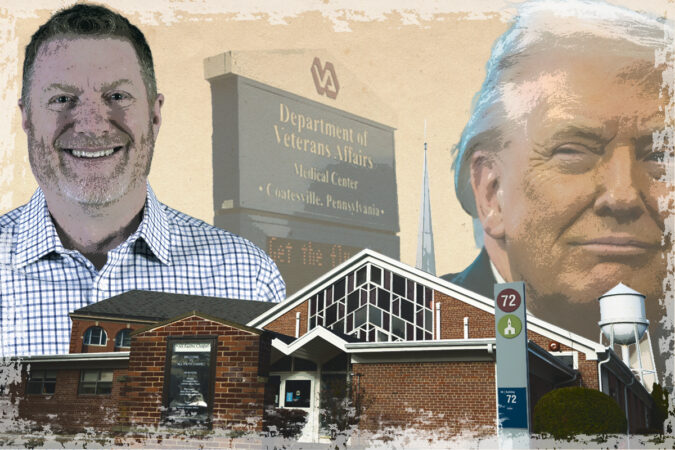
Russell “Rusty” Trubey said he was compelled by God to preach the words that helped set off a national battle over religion at the U.S. Department of Veterans Affairs.
Reading from a sermon titled“When Culture Excludes God,” Trubey, an Army Reserve chaplain, sermonized to a congregation of veterans at the Coatesville VA Medical Center from a Bible passage — Romans 1:23-32 — that refers to same-sex relationships as “shameful.”
Some congregants, upset by the sermon, walked out of the June 2024 service at the Chester County facility, where Trubey has been employed for roughly 10 years. Soon after, Trubey’s lawyers said he was temporarily pulled from his assignment — and transferred to stocking supply shelves — while his supervisors investigated his conduct.
Speaking to Truth and Liberty, a Christian group that advocates for the church to play a greater role in the public sphere, Trubey said he knows that reading the Bible verses about same-sex relationships is “100%” the reason he got in trouble.
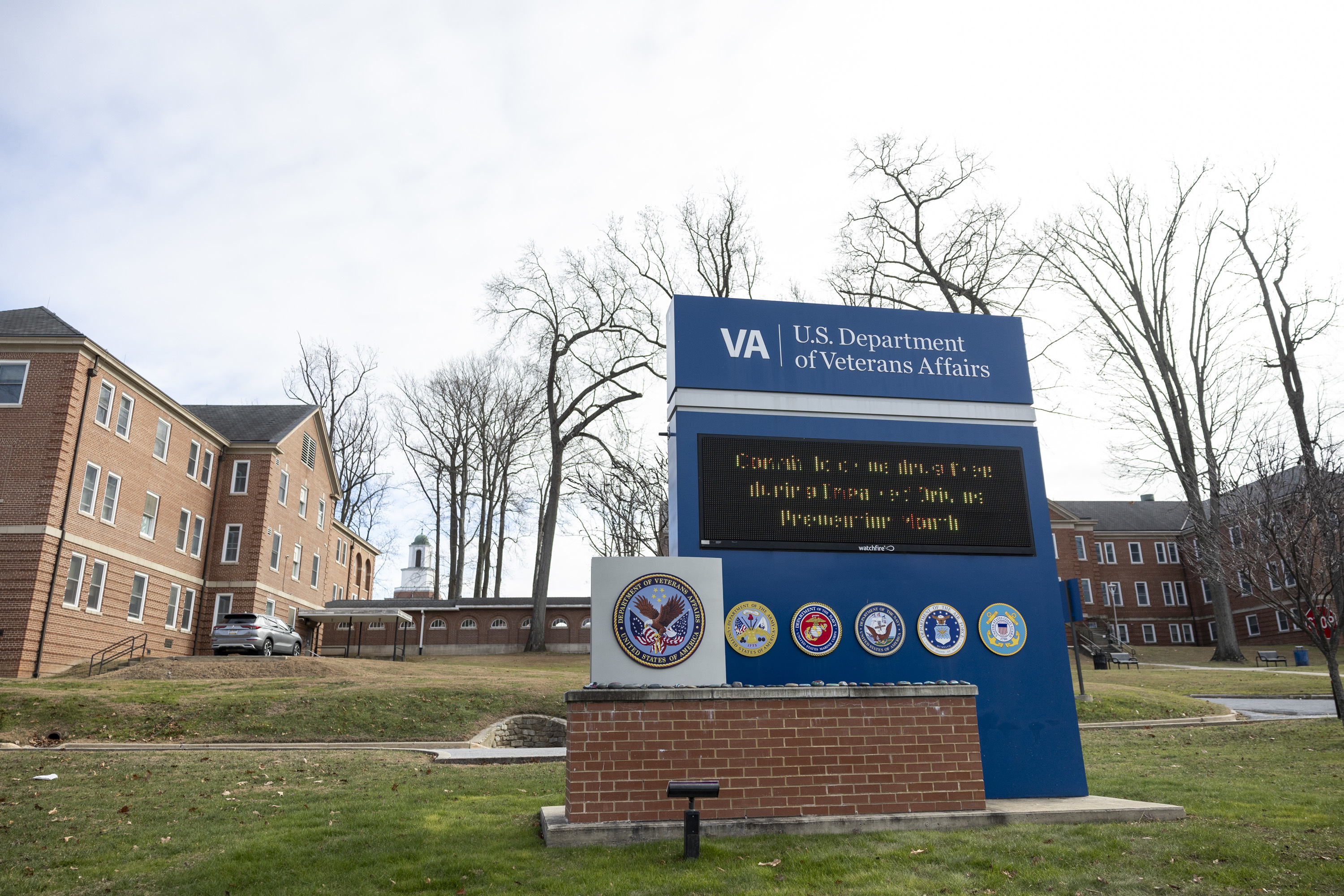
One of the entrances leading into Coatesville VA Medical Center.
A month earlier, Trubey’s lawyers had taken hiscase to the White House. In a letter sent a few weeks after President Donald Trump’s inauguration, Trubey’s lawyers asked Trump’s VA secretary, Doug Collins, to interveneon Trubey’s behalf in regard to repercussions for the sermon.
Trubey had delivered the talk during former President Joe Biden’s administration — an environment that Trump officials allege was hostile to Christians.
In the letter, the chaplain’s lawyers from the First Liberty Institute and Independence Law Center accused Trubey’s supervisor of wanting sermons to be screened ahead of time for pre-approval and stated that Trubey received a letter of reprimand, which would later go on to be rescinded by Coatesville VA Medical Center officials.
Soon after the lawyers’ letter reached the new administration, the VA, one of the largest federal employers in Pennsylvania, reinstated Trubey to his position and Collins reaffirmed that chaplains’ sermons would not be censored.
But the fallout from this incident — paired with Trump’s ongoing campaign to root out perceived prejudice against Christians and dismantle diversity, equity, and inclusion — left an undeniable mark on the VA, helping to inspire an agencywide “Anti-Christian Bias Task Force.”
Announced to employees in April 2025, the task force asks employees to report offenses such as “reprimand issued in response to displays of Christian imagery or symbols,” per a department email reviewed by The Inquirer.
And the VA wants names.
In the email, the VA encouraged employees to identify colleagues and workplace practices that violate the policy and send information about the alleged offenses to a dedicated email address. The announcement was in accordance with a Trump executive order from February that ordered federal agencies to “eradicate” anti-Christian bias and create a larger White House task force composed of cabinet secretaries and chaired by Attorney General Pam Bondi.
As of this summer, the VA received more than 1,000 reports of anti-Christian bias and reviewed 500, according to task force documents. Another report is expected in February.
Some of the offenses the VA is on the watch for could be especially pertinent during the holiday season when workers may want their faith represented at their desks.
One union leader at the Veterans Benefits Administration office in Philadelphia called the task force, which does not extend to biases against other religions, “McCarthyism for Christians.”
“What they’re really doing is they’re trying to create a hostile work environment where you’re now afraid to say something because you may be reported,” said the union representative weeks after the VA’s task force announcement. The representative asked to speak anonymously out of fear of workplace retaliation.
The VA said in a statement that the department is “grateful” for Trump’s executive order. The VA did not answer The Inquirer’s questions on an updated number of reports received through the task force, what happens to people or practices that are reported, and next steps of the task force.
“As the EO stated, the prior administration ‘engaged in an egregious pattern of targeting peaceful Christians, while ignoring violent, anti-Christian offenses,’” said VA press secretary Pete Kasperowicz in the statement. “Under President Trump, VA will never discriminate against Veterans, families, caregivers or survivors who practice the Christian faith.”
One of those offenses, as outlined by the VA, is “informal policies, procedures, or unofficial understandings hostile to Christian views.” Another is retaliation against chaplains’ sermons, which appears to be in responseto the Trubey incident from June 2024.
Erin Smith, associate counsel at the First Liberty Institute, who helped represent Trubey said: “If Chaplain Trubey’s story serves as inspiration to help protect the rights of all chaplains in the VA, then that is a wonderful thing to come out of a terrible situation.”
But some VA employees disagree.
Ira Kedson, president of AFGE Local 310, which represents employees at the Coatesville VA Medical Center, said in an interview in June that he heard some employees were “deeply troubled” by the incident with Trubey, especially those who worked in clinical settings with patients who were in attendance of the controversial sermon.
“I was told that some of the residents were deeply hurt and deeply troubled by the situation and it took a long time for them to be able to move past it,” Kedson said.
Religion takes center stage in the Trump administration
Trump is leading what is arguably one of the most nonsecular presidencies in modern United States history with his embrace of a loyal, conservative Christian base.
“We’re bringing back religion in our country,” Trump said at the Rose Garden during the National Day of Prayer in May.
And efforts to elevate religion in the public sphere have gone beyond Trump’s rhetoric. For instance, the Office of Personnel Management, the federal government’s human resources agency, issued guidance that aims to protect religious expression in the workplace for all religions.
Most of the reports submitted to the VA focused on “denying religious accommodations for vaccines and provision of abortion services; mandating trainings inconsistent with Christian views; concealing Christian imagery; and Chaplain program and protections for Chaplains,” according to task force documents.
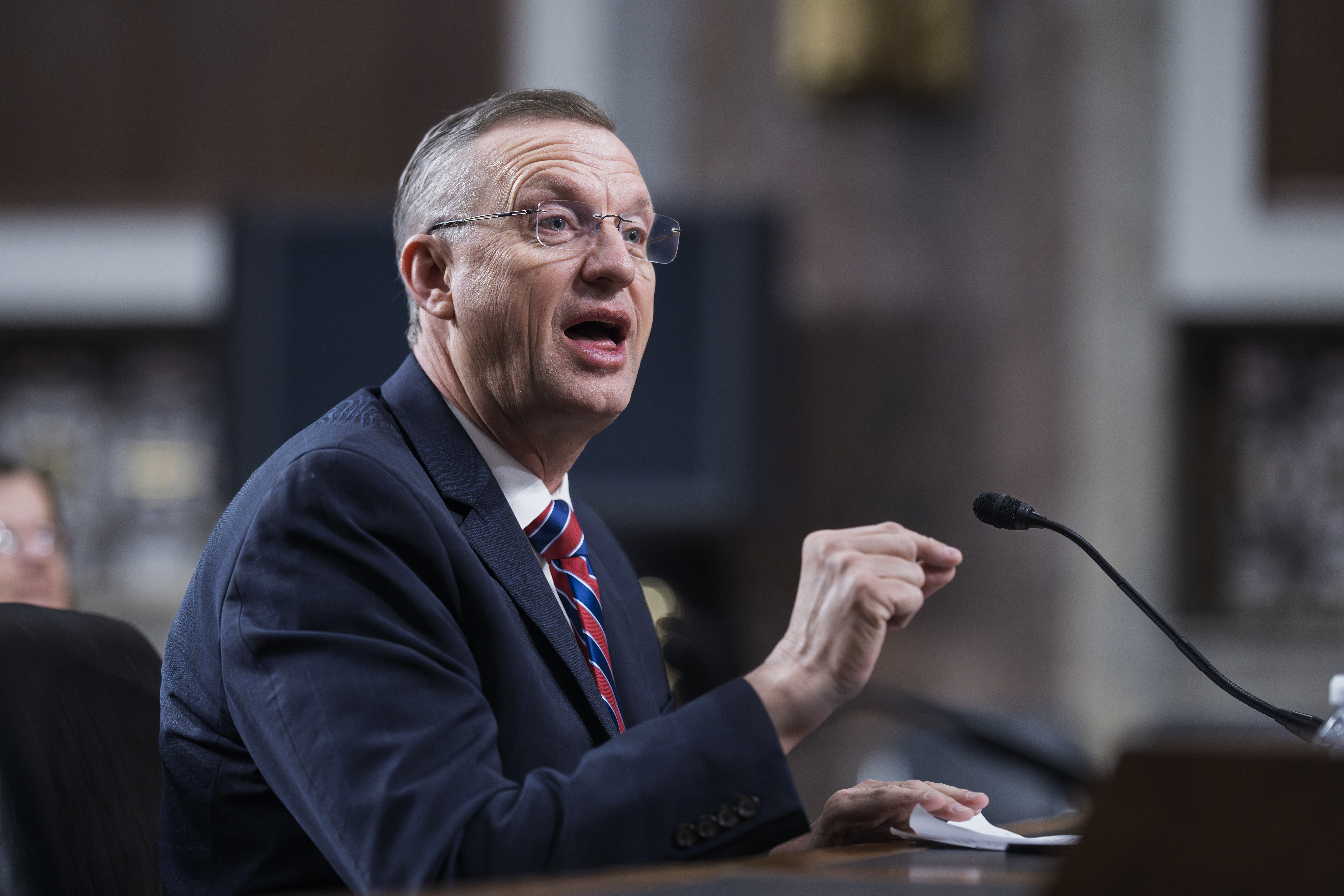
Doug Collins at his Jan. 21 confirmation hearing before the Senate Veterans’ Affairs Committee, at the Capitol in Washington.
Charles Haynes, senior fellow for religious liberty at the Freedom Forum, a nonpartisan organization based in Washington that promotes First Amendment rights, said while it’s not unconstitutional or unprecedented to createa faith-specific task force, “the appearance of [the Christian-bias task force], to many people, is a favoritism of the government for one group over another.”
The White House, in a statement, said Trump has a record of defending religious liberty regardless of faith.
“President Trump has taken unprecedented action to fight anti-Christian, anti-Semitic, and other forms of anti-religious bias while ending the weaponization of government against all people of faith,” said White House spokesperson Taylor Rogers in an email to The Inquirer.
Furthermore, she added, that the media is doing “insane mental gymnastics to peddle a false and negative narrative about the President’s efforts on behalf of nearly 200 million Christians across the country.”
Identifying anti-Christian bias or chasing a ‘unicorn’?
The Trump administration has shared few details about the operations and goals of the anti-Christian bias task force, raising questions from lawmakers and other stakeholders.
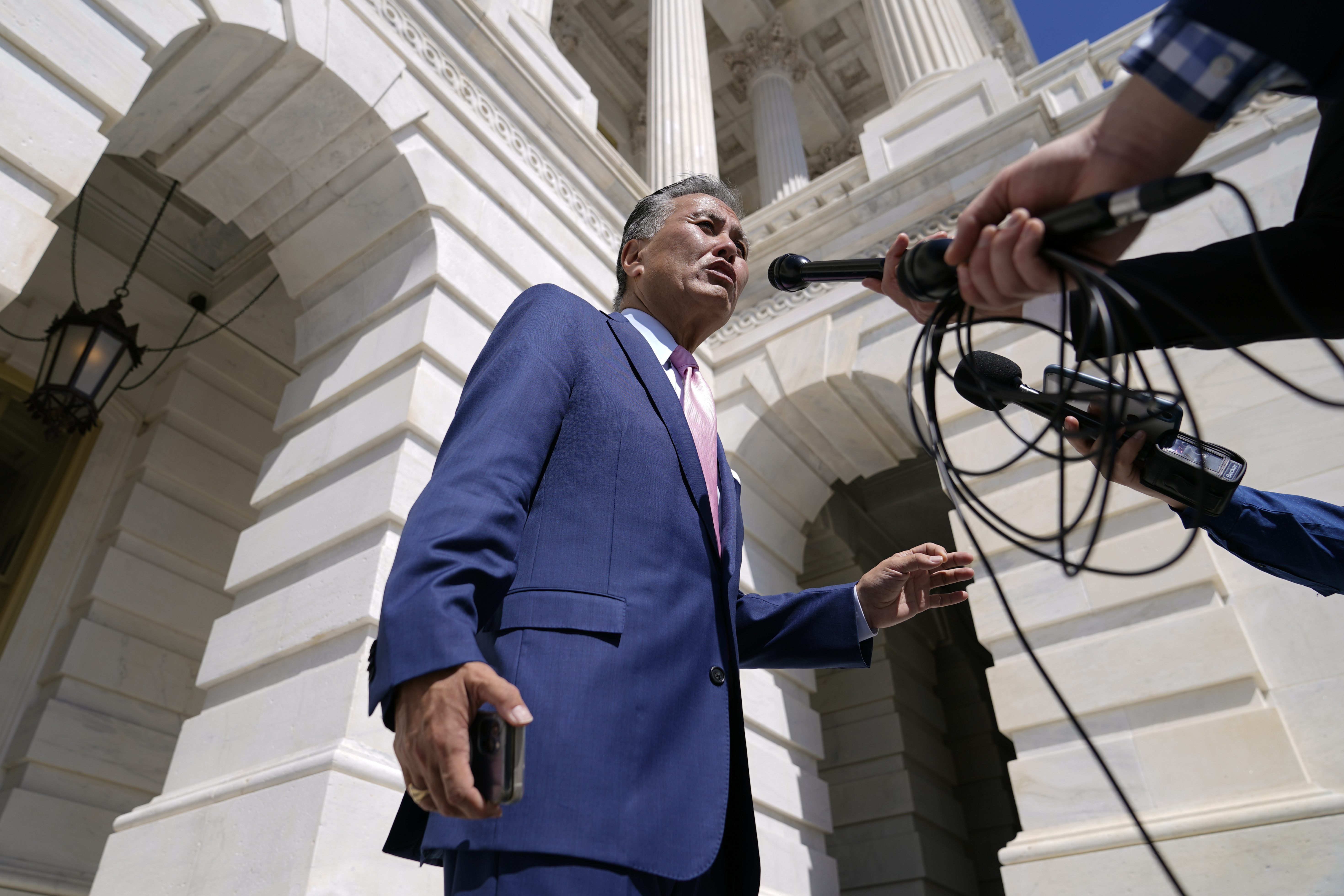
Rep. Mark Takano, the ranking member of the House Committee on Veterans’ Affairs, was in a monthslong back-and-forth with VA Secretary Collins, trying to get answers to an extensive list of questions he initially sent in May, with the California Democrat particularly concerned that the scope of the initiative is limited to bias against Christians.
“To preserve this right to religious freedom, the Department cannot prioritize one faith over others, nor can it allow religious considerations to shape its policies in ways that may conflict with the First Amendment,” Takano wrote in May. “Further, the vagueness of the task force’s mission raises significant concerns about how it will be used and whether it is compatible with the mission of the Department.”
Collins responded in June and did not answer most of Takano’s questions, though he did saythat the task force, which reports to the secretary, will identify, strategize, and potentially alter any policies that discriminate against Christians or religious liberty.
The lawmakerfollowed up a week later. Roughly four months later, in October, Collins’ responses were vague once again.Most recently, Takano is asking for both Democratic and Republican members of the House and Senate’s Veterans’ Affairs Committees to be looped in on future correspondence regarding the task force.
The VA, according to a statement from Takano, has not fully answered their questions and has refused to host a bipartisan briefing.
“The lack of transparency and accountability of this task force leaves me with numerous concerns for the due process and privacy of hardworking VA employees,” Takano said. “VA’s silence won’t stop us from asking the questions we are constitutionally obligated to ask.”
Rep. Mark Takano (D., Calif.) in August 2022, on Capitol Hill in Washington. Takano, ranking member of the House Committee on Veterans’ Affairs, has been trying to get answers from the VA on the Anti-Christian Bias Task Force.
Michael L. “Mikey” Weinstein, former counsel for the Reagan administration turned founder and president of the Military Religious Freedom Foundation, said his group is looking for a plaintiff to sue the government over the task force. The group has been receiving calls from VA employees concerned aboutit, one of whom, he said, was a senior physician at the VA Medical Center in Philadelphia.
The physician, Weinstein said, was distraught to receive the memo about the task force. He had family in town and noted the irony of showing his family around all the historical sites that signified the birthplace of American freedoms while being asked by the federal government to partake in such a project.
“It was like a dagger in his heart,” Weinstein said.
Weinstein is adamant that anti-Christian bias in the federal workforce is nonexistent, like looking for a “unicorn.”
Noticeably absent from the task force, critics say, is any effort to explore instances of discrimination against other faiths within federal agencies.
Trump has historically espoused hateful rhetoric against Muslims, including enacting a travel ban on individuals from predominantly Muslim countries during his first term. The president has issued an executive order this term to combat antisemitism on college campuses, but he also has a history of engaging with antisemites on the political right.
Ahmet Selim Tekelioglu, executive director of CAIR-Philadelphia, a nonprofit that aims to protect the civil rights of Muslims in the U.S., said he believes all forms of discrimination should be stamped out, but he’s concerned the task force isn’t affording those protections to everyone.
“It focuses exclusively on alleged anti-Christian conduct within the federal agencies, and in our opinion of this, risks then entrenching preferential treatment and signaling the protections that should exist for everyone is conditional, right?” Tekelioglu said.
There is hope, however, that this task force could lead to other future initiatives to root out hate, said Jason Holtzman, chief of Jewish Community Relations Council at the Jewish Federation of Greater Philadelphia.
“My hope is that hopefully they’re starting with the task force on Christian bias, and then maybe they’ll initiate one on antisemitism, Islamophobia, because I think task forces need to exist on all of these different forms of hate,” said Holtzman, noting that both Trump and Biden have taken action to combat antisemitism.
Haynes, the religious liberty expert, said anti-Christian bias is a “matter of perspective.”
“How you see it for the conservative Christian, what others would say is just creating an inclusive, safe workplace for everyone, they see, in some respects, as being anti-Christian,” Haynes said.
Haynes said that “anecdotal sort of stories” about prejudice against Christians pushed by conservative groups do not appear to be based in any kind of research into a widespread trend. But it only takes one story — as seen in Trubey’s case — to set off a firestorm.
With First Day hikes surging in popularity, Pennsylvania and New Jersey are rolling out a full slate of outings to welcome 2026 — from daybreak rambles to sunset treks, and nearly every hour in between for those easing into the new year.
Many of the guided hikes require advance registration and fill quickly.
The Jan. 1 hikes are offered through the Pennsylvania Department of Conservation and Natural Resources (DCNR) and the New Jersey Department of Environmental Protection (DEP). Some are guided by rangers, others by volunteers.
Another option: Join the Friends of Ridley Creek State Park in Media, Delaware County, for a 3.5-mile loop featuring creek views and a stop at historic hilltop Russell Cemetery.
Or, for a spectacular bird’s-eye view of the Pinelands at daybreak, you can tackle a 2.5-mile round trip, starting at 6 a.m., to Apple Pie Hill in Wharton State Forest, where hikers climb the 79 steps of the fire tower at sunrise. The only drawback: The hike has become so popular that the DEP holds a lottery at 1 p.m. on Dec. 31 to select participants.
Apple Pie Hill Tower offers a dramatic view of the Pinelands.
First Day Hikes began in Massachusetts in 1992, and went nationwide in 2012 under an effort by the National Association of State Park Directors.
Ian Kindle, environmental education regional program coordinator for DCNR’s Bureau of State Parks, said the hikes in Pennsylvania started not long after that. But, he said, they have become increasingly popular since the pandemic, when many people took to the outdoors.
“I think people have really taken to the idea of making getting outdoors on the first day of the year a tradition.” Kindle said. “I know that some of the first ones I led at Delaware Canal State Park, we could have 100, 150, and upward of 200 people, which is a challenge to lead.”
Last New Year’s Day, 2,488 people — and 224 dogs — participatedin Pennsylvania. They gathered for 74 hikes at 47 state parks and one state forest, accumulating 6,478 miles.
Cheryl and Gary Moore, of Bucks County, ride their horses over the Schofield Ford covered bridge in Tyler State Park in Newtown, Bucks County in this 2021 file photo.
The two most attended hikes were at Beltzville State Park in Carbon County in the Poconos (175 people) and Tyler State Park in Bucks County (170 people).
This year, DCNR has organized 60 free guided hikes in 49 state parks and three forest districts, choosing to make the walks more focused.
Kindle said an “almost full moon” hike is set for Delaware Canal State Park in Yardley, Bucks County, at 4 p.m. He noted a two-mile hike around Militia Hill at Fort Washington State Park in Montgomery County.
The hikes include: walks at 10 a.m., noon, and 2 p.m. through historic Revolutionary-era Batsto Village in Wharton State Forest; a more rigorous six-mile hike at Brendan T. Byrne State Forest on the Cranberry Trail that includes Pinelands cedar swamps and Pakim Pond; and a two-mile hike at Washington Crossing State Park in Mercer County where you can learn about the famed feat by the Continental Army that routed the Hessians at Trenton.
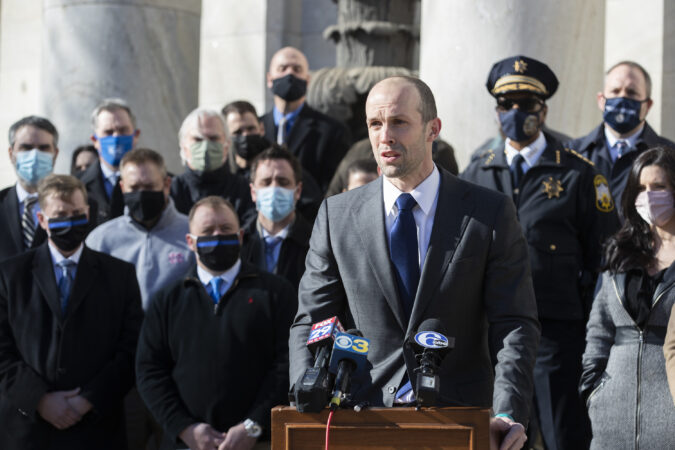
Tanner Rouse will be Delaware County’s new top law enforcement officer, but he’snot new to the work.
Rouse will be sworn in on Jan. 5 as district attorney after his predecessor, Jack Stollsteimer, steps down to assume the county judgeship he won in November. Rouse, 42, will finish out the final two years of Stollsteimer’s term after working as his first assistant since 2020.
In a recent interview, Rouse discussed the strides in reducing violent crime he and his colleagues have made under Stollsteimer — the first-ever Democrat to serve as district attorney in Delaware County — as well as how he plans to continue those advances.
The short answer: Keeping the same playbook, but “putting a personal stamp on it,” as an offensive coordinator does when he takes over as head coach, said Rouse, an avid Eagles fan and ambitious Little League coach.
A former Philadelphia prosecutor under Seth Williams, Rouse credited the lessons he learned from investigating gun violence in the city, along with the recruitment of several former colleagues he brought over the county line, withimproving the way crime is prosecuted in Delaware County.
“We have demonstrated you can reform the criminal justice system and that it doesn’t have to come at the expense of stopping violent crime,” Rouse said. “They’re not mutually exclusive.”
Who is Tanner Rouse?
Rouse, a Phoenixville-area native, is the son of the late Willard Rouse III, the prominent Philadelphia developer behind One and Two Liberty Place. After graduating from the University of Wisconsin and Fordham Law School, Rouse spent seven years in the Philadelphia District Attorney’s Office, prosecuting crimes in Center City and North Philadelphia.
Rouse left the office in 2017, months before Larry Krasner took over. He practiced civil law for a time and ran an ultimately failed campaign to unseat then-State Sen. Tom McGarrigle before Stollsteimer called and offered him the first assistant job.
At the time, Rouse said, the offer was unexpected. But, looking back, he now considers it one of the greatest opportunities of his career.
What is Rouse most proud of from his tenure as first assistant?
The most notable achievement of his tenure to date in the district attorney’s office, Rouse said, is the steep reduction of gun violence in Chester.Shootings are down 75% since 2020. Rouse credits community outreach efforts for that, especially through the Chester Partnership for Safe Neighborhoods program, overseen by veteran homicide prosecutor Matt Krouse, whom Rouse worked with in Philadelphia and recruited to join him in Delaware County.
The partnership’s fundamental philosophy is a combination of focused deterrence programs Rouse helped oversee in Philadelphia that target repeat offenders, as well as community outreach efforts run by trusted neighborhood figures.
Rouse said he never wanted to be a faceless presence in the county and made it his priority to get out and form relationships in all of the municipalities he served, visiting community meetings, block parties, and even a few pickup basketball games.
“I don’t do this job from behind a desk,” he said, speaking in his county courthouse office. “And I think demonstrating that commitment and that care by being more present in those communities, and not just being kind of the big, scary law enforcement agency on a hill is incredibly important.”
Rouse said he is proud of other reforms including creating a diversionary unit in the office, revamping its drug court and instituting a special “child’s court,” created by Kristen Kemp — Rouse’s chosen first assistant and an expert in special-victims’ cases — that allows young victims to testify against adult offenders in a more comfortable environment.
The county’s jail population is down 50% as well, something Rouse says is a result of approaching prosecuting crimes in a humane, logical way.
What are his priorities as district attorney?
Rouse said he plans to create a similar community outreach program in Upper Darby, a community he said is “on the verge of some big things.”
“It’s not as if we’re saying, ‘We’re coming in here to take on Upper Darby and what goes on there,’ but more of, ‘Guys, look, we’re not just the people you pick up and call when there’s a crime.’”
He also expressed interest in creating reciprocity agreements with his counterparts in the other collar counties around Philadelphia, specifically when it comes to handling drug cases and providing treatment to the people caught up in them.
How has his time in Philadelphia influenced his work in Delco?
Rouse said he cut his teeth in the city working alongside veteran prosecutors, and he’s worked to bring that environment of mentorship to Delaware County.
He said he and his more senior deputies often sit in on trials, giving feedback to younger staff members just as his mentors did for him nearly two decades ago.
“That’s how I got better, and that’s one of the roles I most cherish here,” he said.
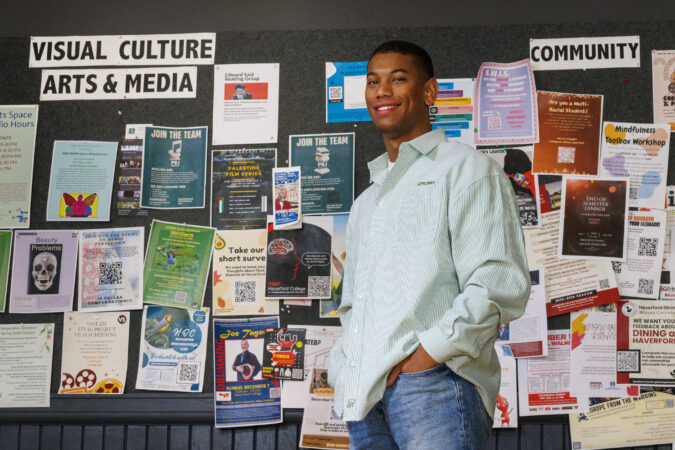
Haverford College senior Jackson Juzang earlier this year had been talking to a school administrator about the need for more resources to support student journalism.
The administrator, Chris Mills, Haverford’s associate vice president for college communications, asked if there was a network of student newspaper journalists in the region that Haverford could join and seek support from.
There wasn’t.
“So I decided to create one,” said Juzang, 22, an English major from Pittsburgh who serves as associate editor of the Clerk, Haverford’s student newspaper.
Jackson Juzang explains why he started the Philadelphia Student Press Association.
He established the Philadelphia Student Press Association as a nonprofit and created a board with student editors from 11 college news organizations around the region, including Temple, Drexel, Villanova, St. Joseph’s, La Salle, Rowan, Rutgers-Camden, Bryn Mawr, Swarthmore, Haverford, and Eastern.
With the slogan “Rooted in Philly, Reporting for All,” the group — which collectively represents about 400 student journalists — is seeking funding from organizations to support student journalism at a time when college budgets are tight and the news industry faces challenges, including rising print costs and lower readership. The association already has held workshops with more planned next year, and its 21-member board meets monthly and discusses common issues and problems and brainstorms solutions.
“We have so many people coming from different regions, but we are united in the sense that we are all here for the same reason,” said Claire Herquet, an editor at the La Salle Collegian.
At a recent meeting, members talked about artificial intelligence and what to do if an editor suspects a student writer used it, Herquet said. There were two instances over the past semester when she read an article submission and thought the terminology and phrasing didn’t sound like the writer, she said.
“If I didn’t have PSPA, I wouldn’t have people to lean on,” said Herquet, 21, a junior communications major from Camden. “It would just be me versus the problem.”
Herquet manages communications for the association. She has been reaching out to foundations about obtaining grant funding for the association. Some college newsrooms are better funded than others and can give writers and editors stipends.
She’s hopeful that uniting the newsrooms will result in better experiences for students and more funding.
La Salle’s publication is only digital; there is no print version. Costs are minimal, but funding would cover professional workshops for students and costs, such as travel, associated with their reporting.
The Whit, Rowan University’s student news site, prints a newspaper once a week and receives financial support via student government, but print costs are rising, said junior Katie Thorn, who serves as managing editor.
“We’re trying to figure out with the budget we have if it is possible and what we are going to have to sacrifice to keep our paper printing,” Thorn said.
Thorn, who is serving as treasurer for the association, said it’s been helpful to learn that other student organizations are facing the same challenges.
“Journalism as a whole is such a scary world right now,” said Thorn, 20, a journalism major from Mantua, Gloucester County, “and you’re kind of throwing yourself into the fire. Am I going to find a job? Where does my future lie? Having people who support you and uplift you is a great thing.”
Haverford’s student newspaper has received funding via the president’s office and is able to pay its writers, Juzang said. In January, the Clerk will publish its first print edition.
But the Clerk would like resources for deeper reporting and investigative work and mentorship, he said.
Juzang, who hopes to pursue a graduate degree in communication management next year at the University of Southern California, said he’s invested thousands of dollars of his own money to get the association started. He currently works as a research/editorial intern for NBC Sports.
He said the association also has received support from the Philadelphia-based Foundation for Individual Rights and Expression.
Juzang said he would like to help schools, including Widener and Lincoln, that used to have student news sites revive them. He also has begun talking to student journalists in other metro areas, including Washington, Boston, New York, and Baltimore, about starting an association for their university newsrooms, he said.
Mills, the Haverford communications administrator, was pleased to see Juzang take that conversation the two had last March and create a mechanism for student journalists to share their experiences and learn from each other.
“It’s really important for the students to share resources and knowledge and wisdom,” he said. “For those of us who value student journalism, it’s great to see them prioritizing this and making the time to do it.”
There’s a chance of snow for the Philadelphia region late Monday night into Tuesday, turning to rain by Tuesday morning, according to forecasters.
It will come at the end of what is forecast to be a relatively tranquil day on Monday, according to Zack Cooper, a meteorologist with the National Weather Service.
The weather service forecast cool weather with highs in the upper 30s to lower 40s, with an increase in clouds late in the day, Cooper said Sunday evening.
Cooper said the precipitation could move in around 1 a.m. Tuesday. It may start as snow, but by daybreak, it’s would turn into a mix of rain and snow before ending as rain later in the morning ending by around 1 p.m. Tuesday.
Any snow may not stick much.
“It’s possible we can see basically a coating but under an inch expected areawide,” Cooper said.
That may affect some drivers Tuesday morning, but the weather service didn’t forecast widespread problems as of Sunday evening.
“It’s possible for sure that we have overnight lows that are below freezing,” Cooper said. “So if we were to get a period of snow, there could be a few slippery spots out there, but overall it looks to be relatively minor event.”
Friends, family, and celebrities take stock of the year on social media with carousels of photos noting the year’s highlights.
Malala Yousafzai, the Nobel Peace Prize laureate and Pakistani education advocate, is no different.
In a brief post shared with her 3.7 million Instagram followers, Yousafzai shared seven photos and looked back fondly on her travels to Egypt, Greece, Tanzania, and Ireland.
She celebrated sampling pastries across Europe during her Finding My Way book tour and “seeing a long-held dream of building a school become reality in the north of Pakistan.”
But tucked in the seven-photo carousel of the 28-year-old — slide five to be precise — is a photo of her wearing a Kelly Green Philadelphia Eagles T-shirt as she’s getting ready to eat some Popeyes.
There’s no confirmation regarding when or where the photo was taken. But we do know Yousafzai was in Philadelphia promoting her new memoir in October, with Eagles superfan Kylie Kelce moderating the conversation.
Yousafzai, who didn’t think she’d been to any American football games when she spoke to The Inquirer ahead of her visit, said she was open to seeing the Birds in real life.
Could Kelce’s fandom have spread to Yousafzai, who prefers cricket?
The Inquirer tried to get some answers from the spokesperson handling the book tour stop. Did Kelce get the Eagles-curious Yousafzai to give the Birds a chance? Was the T-shirt a gift from the event? Alas, it’s a Sunday smack-dab in the middle of the holiday season, so we did not immediately hear back, though we’ll certainly report back if we do.
Still, a potential fandom is not out of left field. Yousafzai is no stranger to Eagles country.
Two years after the Taliban boarded her school bus and shot her in the head for advocating for girls’ rights to an education, the National Constitution Center awarded Yousafzai its 2014 Liberty Medal. She spent the day in Philly, attending the Forbes Under 30 Summit and meeting local students. During her visit, she was welcomed with open arms.