The Justice Department released a slice of its massive files on the convicted sexual offender Jeffrey Epstein on Friday, a much-anticipated disclosure that revealed new details about the government’s investigation into Epstein’s sex crimes and opulent life.
The more than 100,000 pages released included few documents related to President Donald Trump, although mentions of the president were expected among files that Congress had required the government to release by Friday. DOJ said it will continue to release documents in coming weeks, angering critics who have demanded a speedier process and fewer deletions of photos, videos, court records, and more.
The government has continued to release new files since the initial dump Friday afternoon. Overnight, the Justice Department posted records, including grand jury testimony and an interview with Alex Acosta, who as U.S. Attorney in Miami oversaw the lenient plea deal Epstein received in 2008.
U.S. Deputy Attorney General Todd Blanche said the department is working “tirelessly” to provide documents while protecting victims’ identities.
“We are looking at every single piece of paper that we are going to produce, making sure that every victim, their name, their identity, their story, to the extent it needs to be protected, is completely protected,” Blanche told Fox News.
Here are four takeaways from what has been released so far:
Trump is not mentioned in many records
A major question looming over the Epstein case has been whether Trump had any awareness of Epstein’s crimes. The president has said he did not know about criminal behavior, and his spokesperson has said he kicked Epstein out of his Mar-a-Lago Club for being “a creep.”
Friday’s disclosures don’t mention the president often.
Trump’s name appears in victim interviews where investigators and attorneys bring up his friendship with Epstein, but no victim in the files accuses Trump of wrongdoing. Much of the material released has been previously disclosed, including a 2010 deposition in which Epstein declined to answer a question, citing his Fifth Amendment rights, when asked about socializing with Trump in the presence of underage girls.
Friday’s materials include several photos and other documents that mention Trump. There is a photo of a check signed with his name, which appears similar to a check in a previously released book for Epstein’s birthday. Trump’s The Art of the Comeback is on Epstein’s bookshelf in another picture. A flight log shows Trump traveling with Epstein and his son Eric.
Former President Bill Clinton is depicted in several photos, including one where he is swimming with Epstein’s accomplice Ghislaine Maxwell and another woman.
Clinton’s spokesperson Angel Ureña suggested that the White House had engineered the release of the photos to shield Trump.
“They can release as many grainy 20-plus-year-old photos as they want, but this isn’t about Bill Clinton,” he said. “Never has, never will be.”
Epstein had many celebrities in his orbit
Over the years, Epstein’s associations with major figures in business, politics, and Hollywood have been a big part of the narrative about him.
Friday’s release includes photos showing Epstein and Maxwell posing with celebrities, including a sunglass-wearing Michael Jackson, who died in 2009.
These records didn’t implicate the celebrities in any wrongdoing. They vividly illustrate Epstein’s social access to high-profile figures. Many of Epstein’s star-studded associations were previously known.
Last week, the Democrats on the House Oversight Committee released a batch of photos from a separate group of documents provided by Epstein’s estate. Those included photos of Microsoft co-founder Bill Gates, filmmaker Woody Allen, and conservative media figure Stephen K. Bannon.
Epstein pleaded guilty in 2008 in Florida to state charges of soliciting prostitution from a minor. In 2019, he was arrested by federal authorities and charged with sex trafficking. He died in federal custody that year, before his case could go to trial. His death was ruled a suicide. Blanche said Friday in a letter to Congress that the Justice Department had compiled the names of 1,200 people who were either victims of Epstein or relatives of victims.
Many documents are redacted or not new
Many documents are entirely covered with black or have rows of information blocked out.
There are also pages and pages of scans of CDs, blank file covers, and other records without much information about what they contain. Many of the redactions clearly cover personal information from victims’ statements, investigative records, and Epstein’s personal documents.
Under the law, the administration is authorized to redact information to protect victims, withhold any images of child abuse, and block the release of documents that are classified or would jeopardize current federal law enforcement efforts.
The redactions have been widely criticized by Democrats and those seeking more disclosures.
Sen. Charles E. Schumer (D., N.Y.) said in a statement that “this set of heavily redacted documents released by the Department of Justice today is just a fraction of the whole body of evidence.”
Reps. Ro Khanna (D., Calif.) and Thomas Massie (R., Ky.), who led the effort in Congress to demand the document release, demanded full disclosure of the records.
“Attorney General Pam Bondi is withholding specific documents that the law required her to release by today,” Massie said.
There is more to come
Blanche told Fox that he expects “several hundred thousand more” records to be released by the government “in the next couple of weeks.”
The Justice Department has not shared what records are still remaining and when they will be released.
Khanna told NPR that he found the release unsatisfactory and expects the agency to release the draft indictment in Epstein’s first case, more witness interviews, and other records.
“Overall, I’ve been pretty disappointed with the release,” he said.
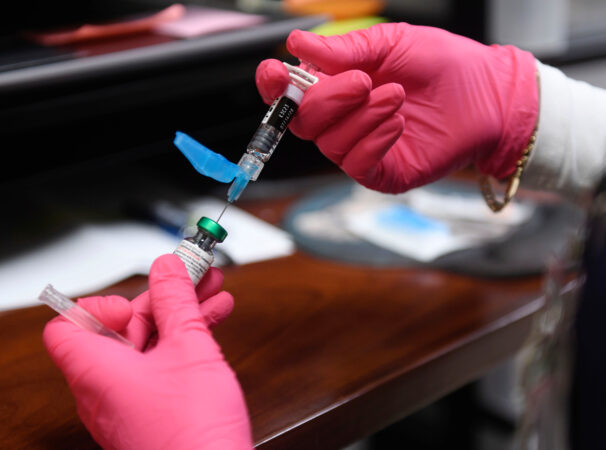
The Trump administration plans to shift the federal government away from directly recommending most vaccines for children and suggest they receive fewer shots to more closely align with Denmark’s immunization model, according to two people familiar with the matter.
Federal health officials are weighing vaccine guidance that would encourage parents to talk to a doctor to make decisions for most shots, according to the people, who spoke on the condition of anonymity to describe internal deliberations. This approach would mark a fundamental shift in the U.S. healthcare system, which generally relies on federal health agencies to guide how patients are protected against disease.
It was not immediately clear which shots would no longer be recommended. The plans are still in flux, the people said, but broadly align with President Donald Trump’s directive earlier this month to consider recommending fewer shots, referring to the United States as an “outlier” among developed countries. He said any changes to the country’s vaccine schedule should continue to preserve access to currently available shots.
Health Secretary Robert F. Kennedy Jr. has been critical of the childhood vaccine schedule for years and has called for additional scrutiny, even though he told senators during his confirmation hearings that he supports the schedule.
Andrew Nixon, a spokesperson for the Department of Health and Human Services, said of the planned revisions to vaccine recommendations: “Unless you hear it from HHS directly, this is pure speculation.” The potential shift to more closely align with Denmark’s schedule was first reported by CNN.
The current U.S. schedule calls for vaccinations to protect against 18 infectious diseases, including COVID-19, according to a Food and Drug Administration presentation in December, compared with calls for vaccinations to protect against 10 infectious diseases in Denmark. Denmark does not recommend vaccinating children for influenza, respiratory syncytial virus (RSV), and chickenpox, among other common pathogens.
Public health experts say comparisons to Denmark are misleading, noting the countries differ sharply in population, health systems, and disease burden. They argue that what works in Denmark’s small universal healthcare system does not easily translate to the far larger and more diverse U.S. population with uneven access to quality care.
“You don’t just superimpose policies from other countries without context onto the United States,” said Demetre Daskalakis, who oversaw the Centers for Disease Control and Prevention’s center for respiratory diseases and immunization before he resigned from the agency in August. “This is not gold standard science.”
A Danish health official questioned why the U.S. would follow his country’s lead.
“Personally, I do not think this makes sense scientifically,” Anders Hviid, an official in Denmark’s Statens Serum Institute, which prevents and controls infectious diseases as part of the country’s ministry of health, wrote in an email early Saturday. “Public health is not one size fits all. It’s population specific and dynamic. Denmark and the U.S. are two very different countries.”
Unlike Denmark, the U.S. is planning a more limited approach for recommending vaccines to children known as shared clinical decision-making, which has not been reported. This means people should consult a doctor, pharmacist, or other medical professional before getting a shot, and insurers would still be required to pay for them. It’s not clear how broad the shift would be and when it would happen.
This type of recommendation is usually made when there is real uncertainty about the benefits and risks, said David Higgins, an assistant professor of pediatrics at the University of Colorado Anschutz Medical Campus. By applying it broadly to many vaccines that are now routinely recommended, it creates the false impression that experts are divided on the best way to protect health, he said.
“I have never been more concerned about the future of vaccines and children’s health than I am now,” Higgins said.
In practice, vaccination is often already done in consultation with doctors, who explain the risks and benefits to patients. But critics of the shared clinical decision-making approach say it takes the government out of the business of providing powerful endorsements and can confuse doctors.
A 2016 survey found that most pediatricians and family doctors did not know private insurers are required to cover vaccines recommended under this model.
Under Kennedy, the CDC has already shifted recommendations for some vaccines to this talk-to-a-doctor approach, including for COVID and the hepatitis B vaccine for children. In the case of adults seeking COVID vaccines, the shift has had little practical impact at major pharmacy chains such as CVS where the shots are still routinely administered without prescriptions.
Kennedy, the founder of a prominent anti-vaccine group, has previously decried the “exploding vaccine schedule” and blamed it for the rise of chronic disease, autism, and food allergies in the United States. Medical experts have said more vaccines are available now to combat more diseases, arguing the link has no basis in evidence.
In a Truth Social post this month, Trump wrote that “many parents and scientists have been questioning the efficacy of this ‘schedule,’ as have I!”
The plan to redo the U.S. schedule “kicked into high gear” immediately after Trump’s directive, one person familiar with the plan said. Two experts who were consulted — Martin Kulldorff, recently named a chief science officer at HHS, and Tracy Beth Hoeg, a top official at the Food and Drug Administration — have expressed concern about the number of vaccinations in the U.S. schedule.
Hoeg gave a presentation two weeks ago comparing the U.S. with Denmark during a meeting of the CDC’s federal vaccine advisory committee. One of her slides, titled “Danish Vaccination Schedule Benefits,” said the country makes more time for overall health at doctors’ appointments and decreases the “medicalization of childhood.”
The Denmark schedule does not include seasonal respiratory vaccines, such as RSV, the leading cause of infant hospitalizations in the U.S., or influenza for children. During last year’s flu season, the CDC reported 288 deaths associated with pediatric influenza, the highest number since the 2009-2010 H1N1 swine flu pandemic.
Denmark also does not recommend vaccinating against hepatitis B for all infants, as well as hepatitis A and rotavirus for any infants and children.
Higgins, the Colorado pediatrician, said many clinics and pediatricians will simply say they don’t recommend the Denmark schedule, which will worsen parental confusion. School vaccination requirements are set by state laws, and most require some of the vaccines that aren’t on the Denmark schedule, Higgins said.
Denmark has universal prenatal care and strong social services. Tom Frieden, a former CDC director, recently wrote that virtually every pregnant woman in Denmark receives consistent medical attention and testing for serious diseases that can be passed to their babies throughout their pregnancy, including hepatitis B.
About 1 in 4 pregnant patients in the U.S. deliver babies without adequate prenatal care, according to a report by the March of Dimes.
“We do not believe in the one-size-fits-all approach nor the approach of choose one random alternate national schedule and adopt it,” said James Campbell, vice chair of the American Academy of Pediatrics’ infectious-diseases committee.
Del Bigtree, Kennedy’s former communications director during his presidential run and the leader of an anti-vaccine group, said he’d support shifting to a Denmark model for vaccination, adding that the “medical freedom” movement has always touted that country.
“Our belief is there are just too many vaccines,” Bigtree said. “It’s very exciting, but it still won’t solve my major issue that vaccines aren’t mandated.”
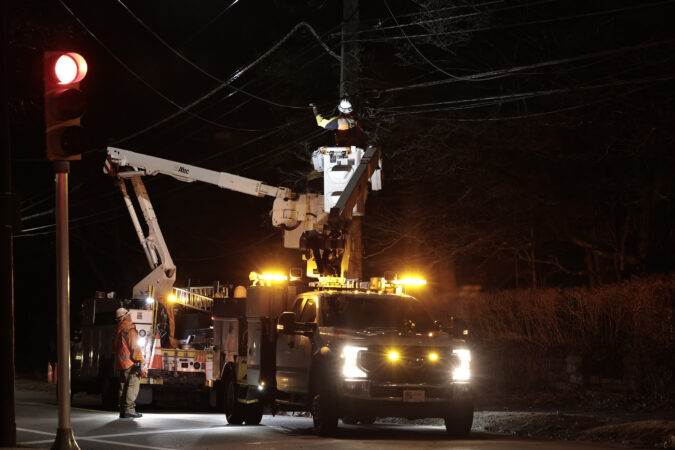
Thousands of households in Philadelphia’s collar counties remained without power a day after wind gusts downed trees and caused hundreds of electrical outages throughout the region.
More than 2,230 customers, mostly in Bucks, Chester, Delaware, and Montgomery Counties, still did not have electric service as of Saturday evening, according to Peco.
Nearly half the outages were due to fallen trees and branches interfering with electrical systems, Peco spokesperson Tom Brubaker said Saturday afternoon. As a result, suburban counties saw far more outages than Philly, he said.
Winds registered as high as 62 mph Friday afternoon. Around 7 p.m., a pine tree fell on a Chestnut Hill apartment, CBS3 reported, while in Roxborough, a tree fell on a vehicle, sending two people to the hospital.
Temperatures plummeted into the 20s Friday night, and, according to Brubaker, about 80,000 homes lost power.
Crews faced challenges from the weather, with wind gusts frequently topping 40 mph, Brubaker said.
“When wind gusts are that high, we can’t take our bucket trucks to repair lines,” he said.
An additional 135 Peco employees from Virginia and North Carolina have traveled to the region to assist in the recovery, Brubaker said.
He said he expected most of the remaining outages to be resolved by Saturday evening, though “a few rural, isolated customers” may face longer waits.
The intersection of Shelbourne and Willard Streets is known by neighbors as an illegal dumping corner, where debris, trash, and weeds are part of the scenery.
A $17,000 grant from the pilot program Revive and Thrive could change that, as the teenagers from nonprofit Klean Kensington are set to turn the vacant lot at 859 E. Willard St. into a public park.
In Upper Kensington, the typical block has, on average, three or four vacant buildings or lots, an Inquirer investigation found. The problem has been identified as a contributing factor to the open-air drug trade.
Since 2022, Klean Kensington has been trying to address the issue by employing local teens to transform trash-filled parcels into community gardens on Madison, Westmoreland, and Hilton Streets, providing food for neighbors, and offering young residents a way to stay occupied.
For Jeremy Chen, the group’s executive director, the Willard Street project is an opportunity to “activate the corner” by creating a garden that neighbors feel is their own while recognizing the community work.
“The teens have been doing this work for a while, but it’s always encouraging to have their work recognized,” Chen said.
The idea is to keep children and youth at the center of the garden, Chen said. Pollinator flowers, benches, bright art, planter boxes, and a durable trash setup are among the features being considered. Klean Kensington will employ 25 teens for the project, and two or three local high school students will be hired as park ambassadors.
Thomas Jefferson University’s Park in a Truck (PIAT) program, Circular Philadelphia, Trash Academy, and Glitter will partner for the program, providing dumping-prevention workshops, facilitating the design process, documenting the effectiveness of the project, and aiding in weekly cleanups.
Cleanup activities are expected to start early in the spring. And community members will gather to decide what they envision for the 16-by-60-foot space owned by Esperanza Health Center.
For Lois Williams, Trash Academy codirector, this initiative is an opportunity to benefit both the city and neighbors in the fight against illegal dumping.
“This project can demonstrate how neighbors with low budgets, on privately owned lots, can make a difference,” Williams said.
Keeping neighborhoods clean and ending the sprawling drug market have been a focus of Mayor Cherelle L. Parker’s administration. Chen hopes this initiative can show City Hall that funding local organizations to do cleaning in their neighborhoods instead of hiring contractors can give them a sense of ownership, preventing dumping recurrence.
“When it’s locals taking care of their community, it’s more likely for them to care and to self-monitor so it doesn’t become a dumping ground again,” Chen said.
The garden is scheduled to open in the summer of 2026.
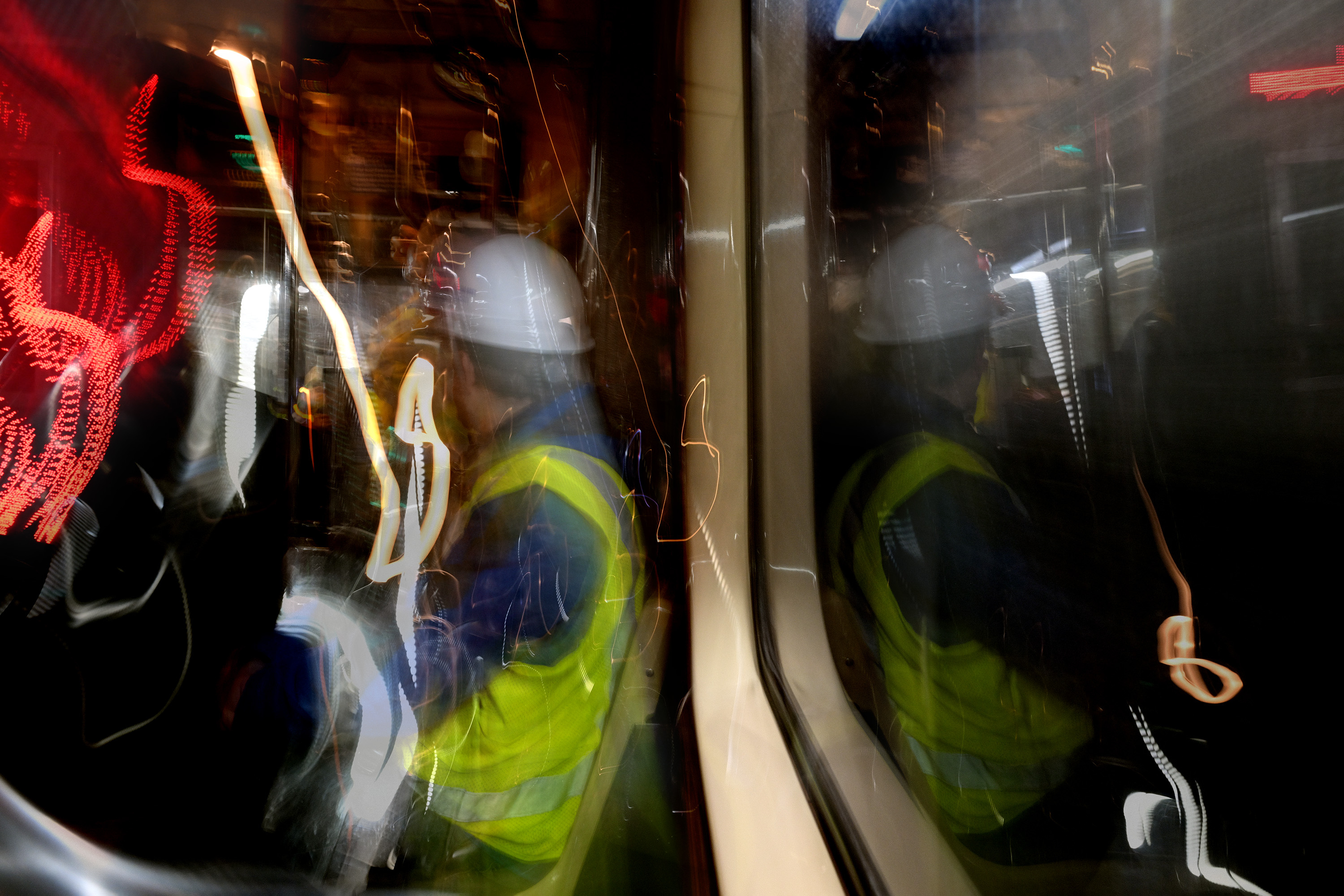
Can you see all four? There is one “real” image of SEPTA trolley operator Victoria Daniels and three different reflections.
I only saw two reflections as I was trying to focus and compose while bracing my camera on the back of a seat to stabilize myself on the moving trolley. I wanted to photograph the light at the end of the tunnel (the metaphor was apt, as tens of thousands of riders are hoping for some relief as service in the Center City Tunnel has been shut down for weeks.)
Trolley slider parts are on display as Jason Tarlecki, acting SEPTA chief engineer of power, talks with the news media at the 40th Street trolley portal.
More than just a “talker” the SEPTA folks first showed lots of equipment parts and then we got to take a field trip, riding a trolley into the closed tunnel to see where they were repairing the overhead wire.
While, for most of the media, the ride was just a way to get to the closed station for the show-and-tell, for me it was an opportunity to take pictures out the windows — something I like to do anytime I am on public transit. And play around with exposures …
…which sometimes just doesn’t work out.
Two things that did work out photographically this week; the first snowfall of the season:
And, on the same day, a firefighter Santa riding through the neighborhood.
Since 1998 a black-and-white photo has appeared every Monday in staff photographer Tom Gralish’s “Scene Through the Lens” photo column in the print editions of The Inquirer’s local news section. Here are the most recent, in color:
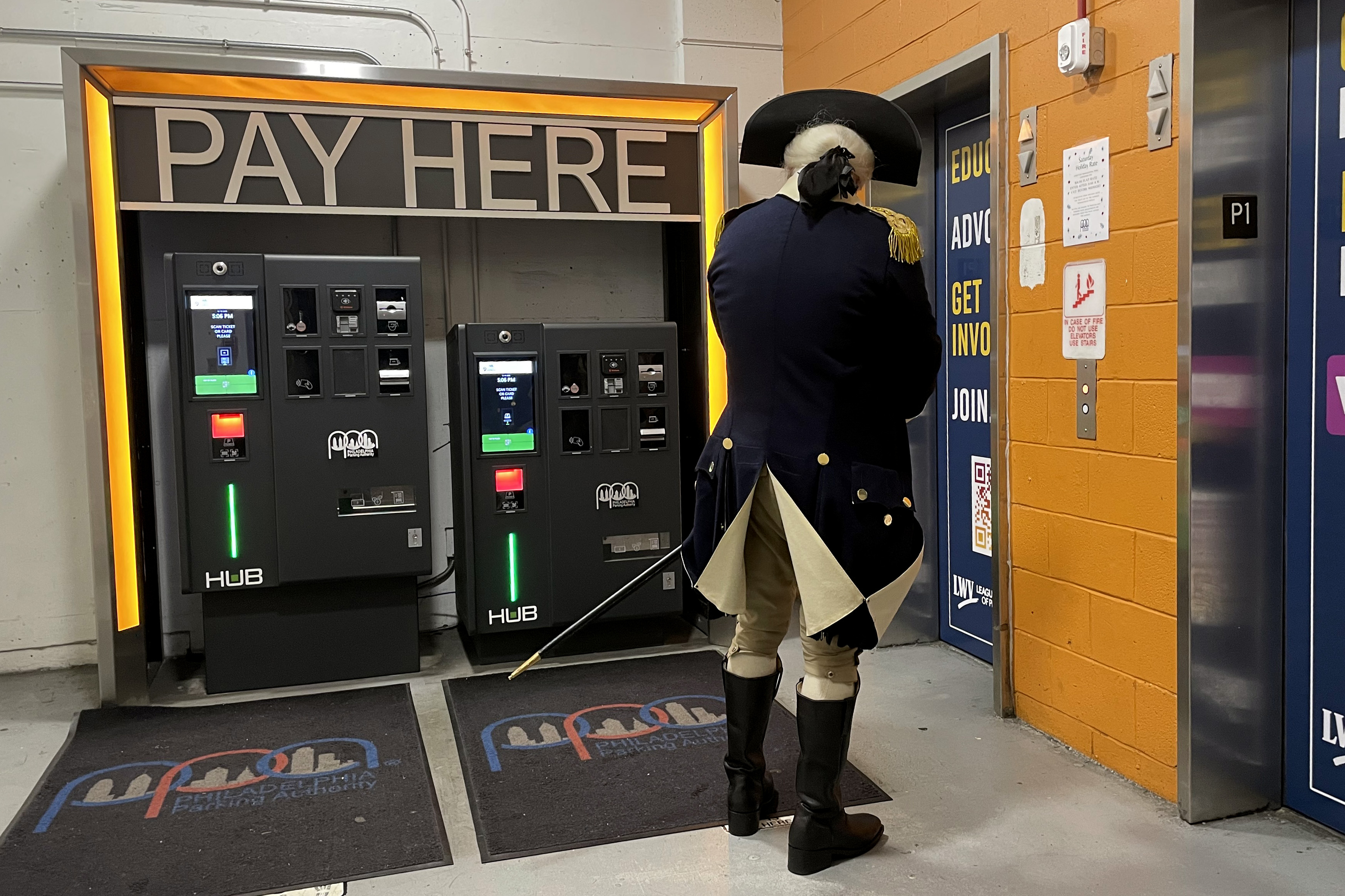
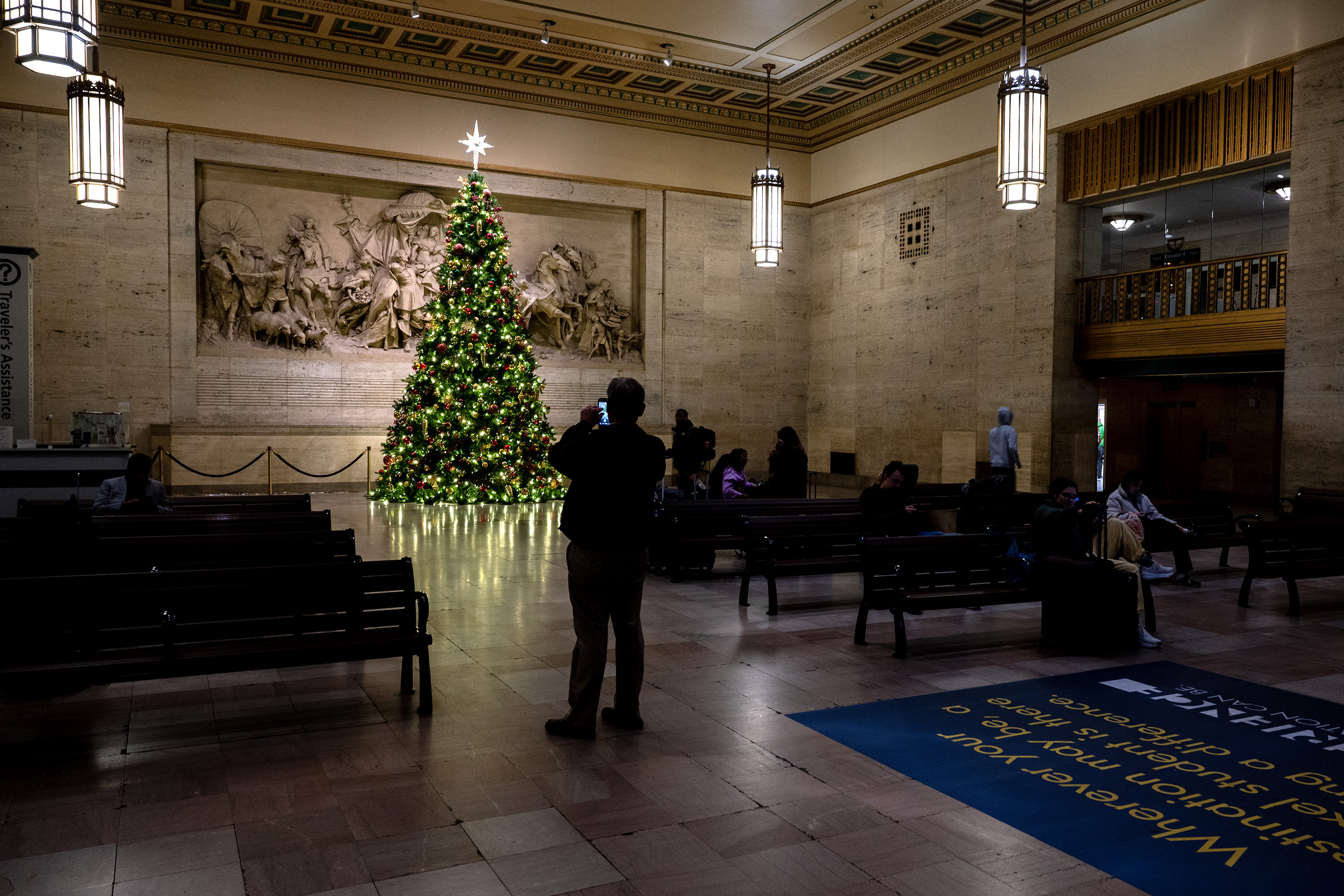
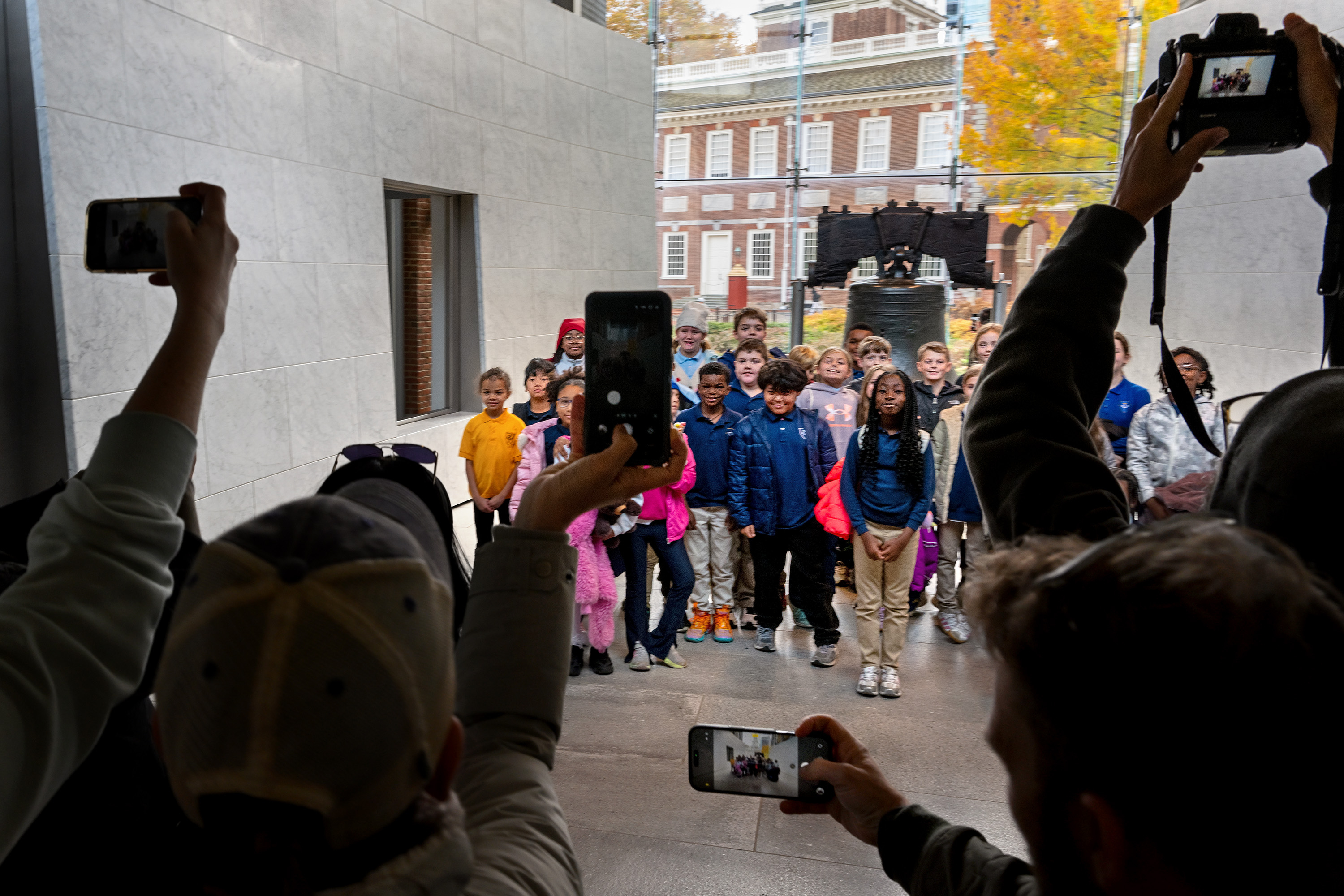
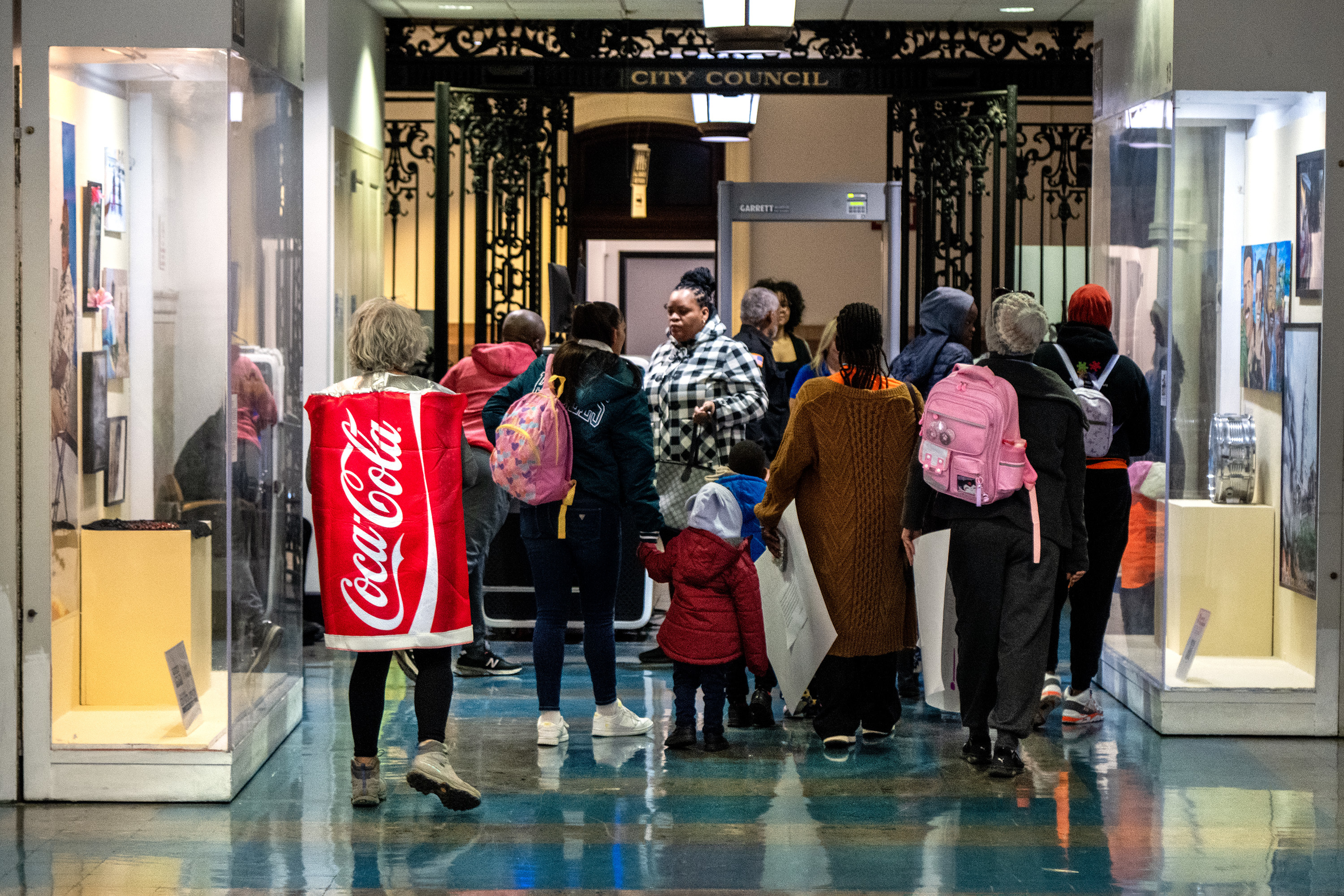
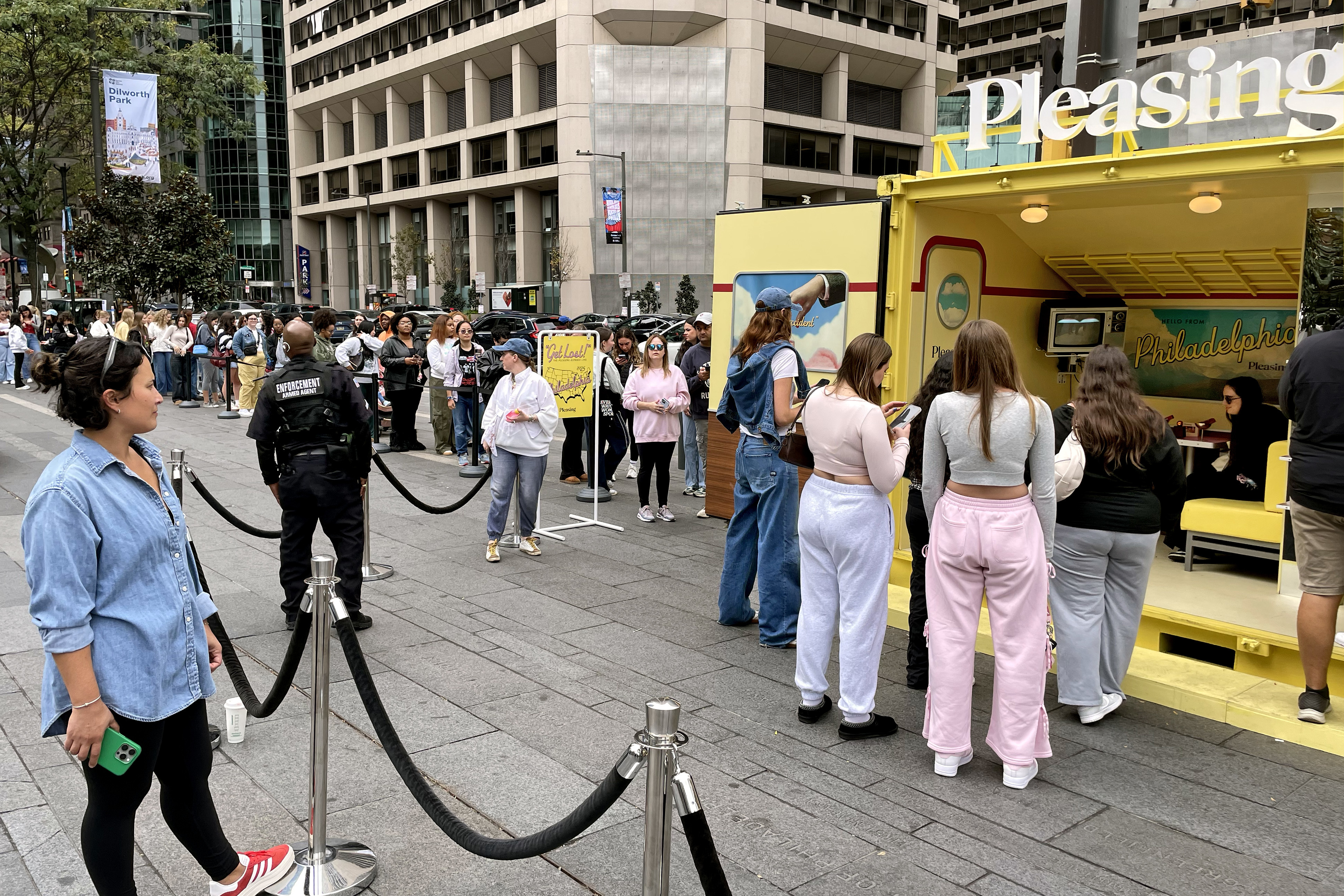
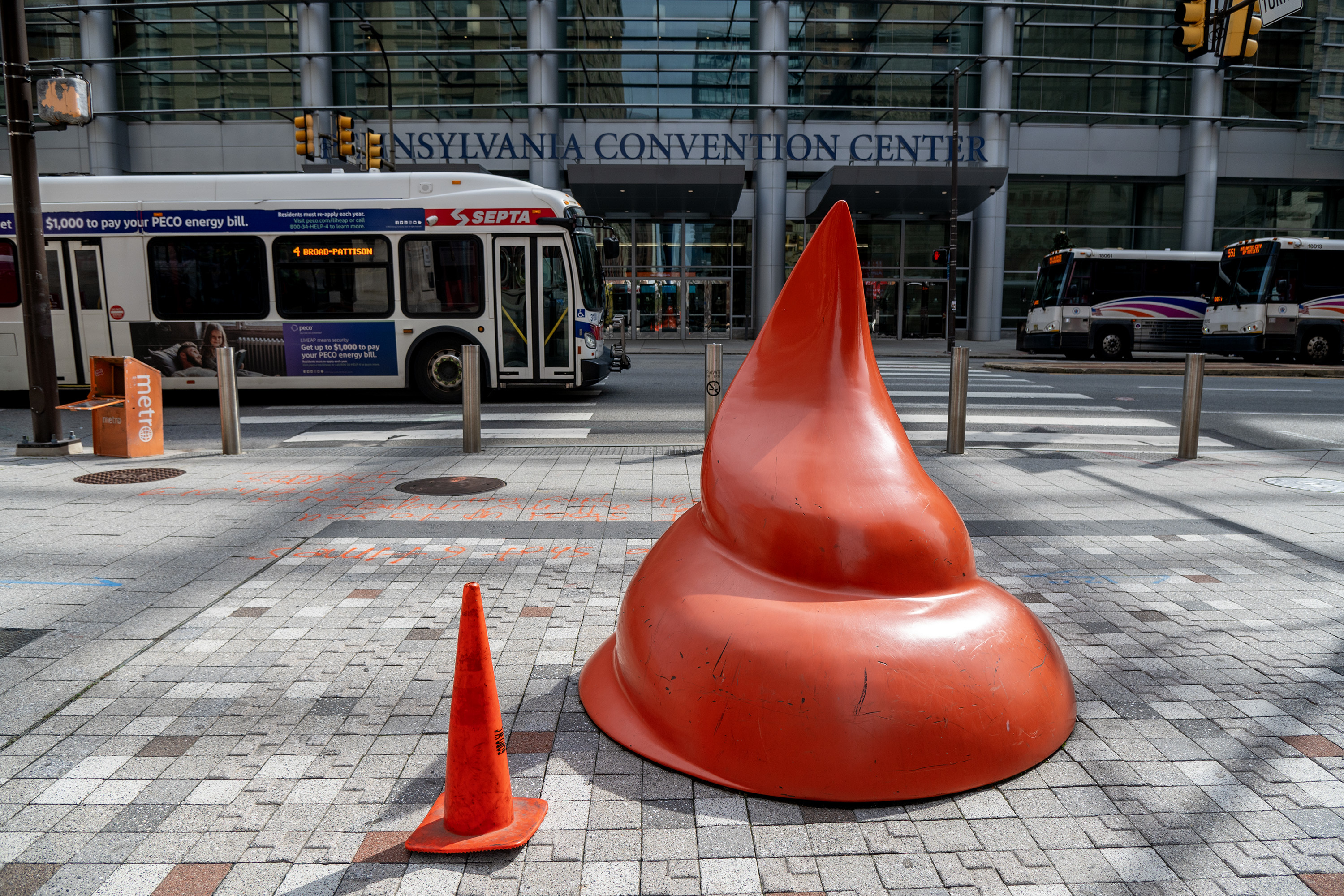
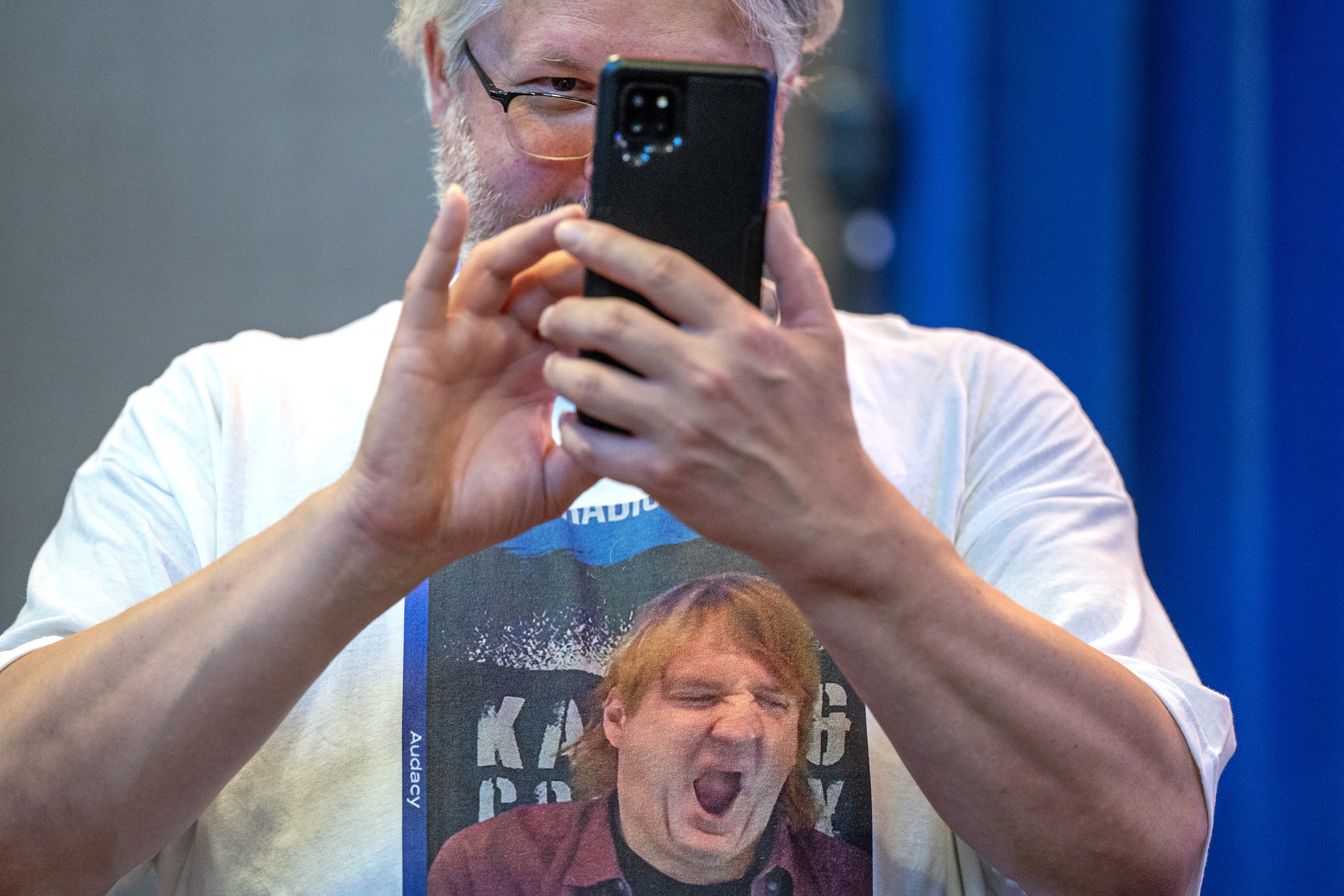
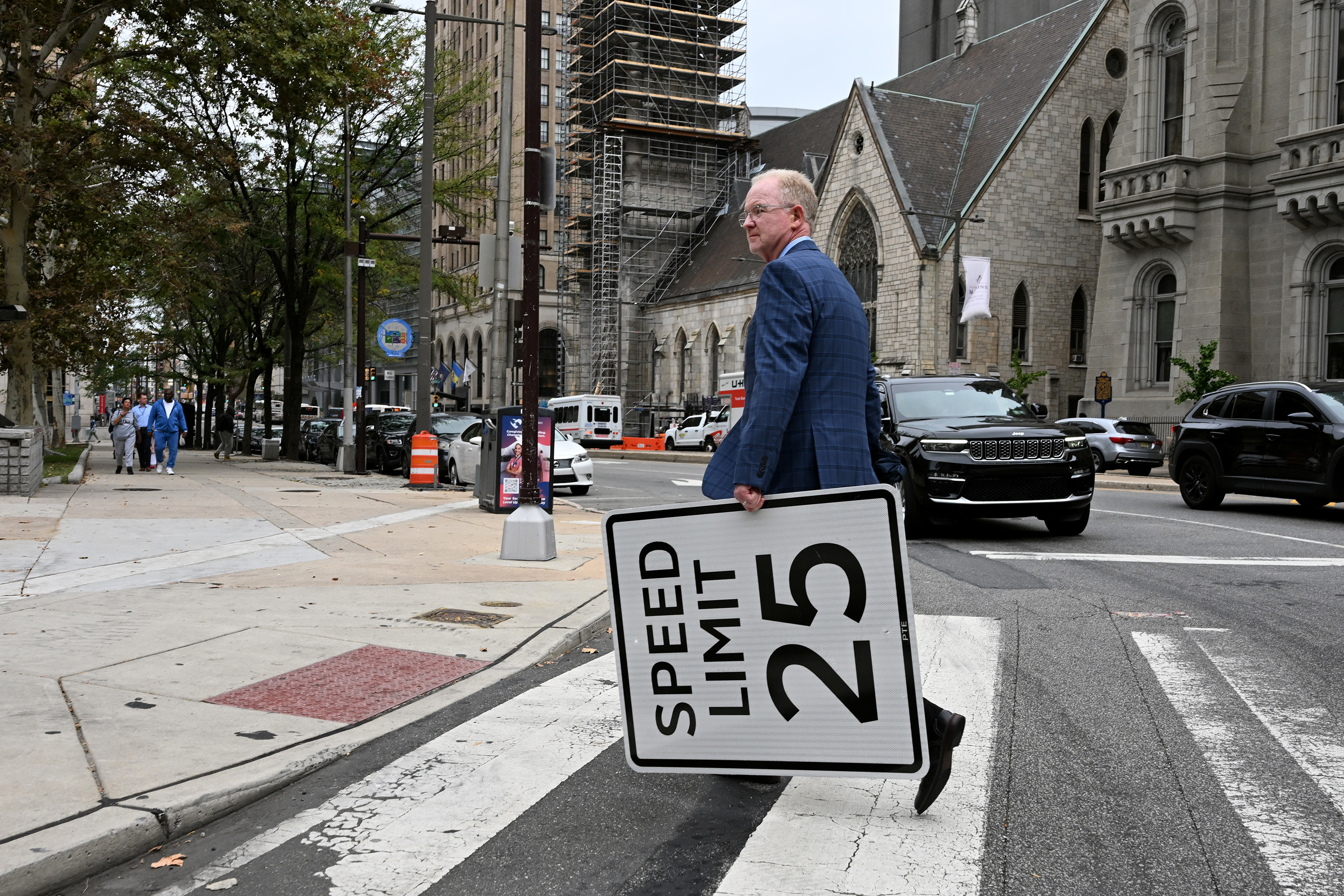
December 15, 2025: A historical interpreter waits at the parking garage elevators headed not to a December crossing of the Delaware River, but an event at the National Constitution Center. General George Washington was on his way to an unveiling of the U.S. Mint’s new 2026 coins for the Semiquincentennial, December 8, 2025: The Benjamin Franklin Bridge and pedestrians on the Delaware River Trail are reflected in mirrored spheres of the “Weaver’s Knot: Sheet Bend” public artwork on Columbus Boulevard. The site-specific stainless steel piece located between the Cherry Street and Race Street Piers was commissioned by the City’s Public Art Office and the Delaware River Waterfront Corporation and created and installed in 2022 by the design and fabrication group Ball-Nogues Studio. The name recalls a history that dominated the region for hundreds of years. “Weaver’s knot” derives from use in textile mills and the “Sheet bend” or “sheet knot” was used on sailing vessels for bending ropes to sails. November 29, 2025: t’s ginkgo time in our region again when the distinctive fan-shaped leaves turn yellow and then, on one day, lose all their leaves at the same time laying a carpet on city streets and sidewalks. A squirrel leaps over leaves in the 18th Century Garden in Independence National Historical Park Nov. 25, 2025. The ginkgo (Ginkgo biloba) is considered a living fossil as it’s the only surviving species of a group of trees that existed before dinosaurs. Genetically, it has remained unchanged over the past 200 million years. William Hamilton, owner the Woodlands in SW Phila (no relation to Alexander Hamilton) brought the first ginkgo trees to North America in 1785.November 24, 2025: The old waiting room at 30th Street Station that most people only pass through on their way to the restrooms has been spiffed up with benches – and a Christmas tree. It was placed there this year in front of the 30-foot frieze, “The Spirit of Transportation” while the lobby of Amtrak’s $550 million station restoration is underway. The 1895 relief sculpture by Karl Bitter was originally hung in the Broad Street Station by City Hall, but was moved in 1933. It depicts travel from ancient to modern and even futuristic times. November 17, 2025: Students on a field trip from the Christian Academy in Brookhaven, Delaware County, pose for a group photo in front of the Liberty Bell in Independence National Historical Park on Thursday. The trip was planned weeks earlier, before they knew it would be on the day park buildings were reopening after the government shutdown ended. “We got so lucky,” a teacher said. Then corrected herself. “It’s because we prayed for it.” November 8, 2025: Multitasking during the Festival de Día de Muertos – Day of the Dead – in South Philadelphia.November 1, 2025: Marcy Boroff is at City Hall dressed as a Coke can, along with preschoolers and their caregivers, in support of former Mayor Jim Kenney’s 2017 tax on sweetened beverages. City Council is considering repealing the tax, which funds the city’s pre-K programs. October 25, 2025: Austin Gabauer, paint and production assistant at the Johnson Atelier, in Hamilton Twp, N.J. as the finished “O” letter awaits the return to Philadelphia. The “Y” part of the OY/YO sculpture is inside the painting booth. The well-known sculpture outside the Weitzman National Museum of American Jewish History was removed in May while construction continues on Market Street and has been undergoing refurbishment at the Atelier at the Grounds for Sculpture outside of Trenton.October 20, 2025:The yellow shipping container next to City Hall attracted a line of over 300 people that stretched around a corner of Dilworth Park. Bystanders wondered as they watched devotees reaching the front take their selfies inside a retro Philly diner-esque booth tableau. Followers on social media had been invited to “Climb on to immerse yourself in the worlds of Pleasing Fragrance, Big Lip, and exclusive treasures,” including a spin of the “Freebie Wheel,” for products of the unisex lifestyle brand Pleasing, created by former One Direction singer Harry Styles.October 11, 2025: Can you find the Phillie Phanatic, as he leaves a “Rally for Red October Bus Tour” stop in downtown Westmont, N.J. just before the start of the NLDS? There’s always next year and he’ll be back. The 2026 Spring Training schedule has yet to be announced by Major League Baseball, but Phillies pitchers and catchers generally first report to Clearwater, Florida in mid-February.October 6. 2025: Fluorescent orange safety cone, 28 in, Poly Ethylene. Right: Paint Torch (detail) Claes Oldenburg, 2011, Steel, Fiberglass Reinforced Plastic, Gelcoat and Polyurethane. (Gob of paint, 6 ft. Main sculpture, 51 ft.). Lenfest Plaza at the Pennsylvania Academy of the Fine Arts on North Broad Street, across from the Convention Center.September 29, 2025: A concerned resident who follows Bucks County politics, Kevin Puls records the scene before a campaign rally for State Treasurer Stacy Garrity, the GOP candidate for governor. His T-shirt is “personal clickbait” with a url to direct people to the website for The Travis Manion Foundation created to empower veterans and families of fallen heroes. The image on the shirts is of Greg Stocker, one of the hosts of Kayal and Company, “A fun and entertaining conservative spin on Politics, News, and Sports,” mornings on Talk Radio 1210 WPHT.September 22, 2025: A shadow is cast by “The Cock’s Comb,” created by Alexander “Sandy” Calder in 1960, is the first work seen by visitors arriving at Calder Gardens, the new sanctuary on the Ben Franklin Parkway. The indoor and outdoor spaces feature the mobiles, stabiles, and paintings of Calder, who was born in Philadelphia in 1898, the third generation of the family’s artistic legacy in the city.September 15, 2025: Department of Streets Director of Operations Thomas Buck leaves City Hall following a news conference marking the activation of Automated Speed Enforcement (ASE) cameras on the Broad Street corridor – one the city’s busiest and most dangerous roads. The speed limit on the street, also named PA Route 611, is 25 mph.
Travelers are expected to fly in record numbers for the holidays this year, breaking a years-long dip brought on by the COVID-19 pandemic.
Whether or not they make it to their destinations on time, however, is a different story.
AAA estimates more than 8 million will fly this year between Dec. 20 and 31, up 2.3% from last year — a record if it holds.
Travel through PHL has been relatively smooth so far through the holiday season, Inquirer analysis of flight data shows, but a stampede of year-end travelers could quickly change that.
Are you headed to PHL? Use our charts below to get a glimpse of how the airport is functioning today. The charts will update every hour through Jan. 20, and reset every morning at 4 a.m.
window.addEventListener(“message”,function(a){if(void 0!==a.data[“datawrapper-height”]){var e=document.querySelectorAll(“iframe”);for(var t in a.data[“datawrapper-height”])for(var r,i=0;r=e[i];i++)if(r.contentWindow===a.source){var d=a.data[“datawrapper-height”][t]+”px”;r.style.height=d}}});
window.addEventListener(“message”,function(a){if(void 0!==a.data[“datawrapper-height”]){var e=document.querySelectorAll(“iframe”);for(var t in a.data[“datawrapper-height”])for(var r,i=0;r=e[i];i++)if(r.contentWindow===a.source){var d=a.data[“datawrapper-height”][t]+”px”;r.style.height=d}}});
So far in December, about 81% of flights coming in and out of PHL have been on time, data show, with arrivals faring slightly worse than departures.
The worst day for travel was Dec. 14, when snow blanketed the region. Only 36% of flights were on time that day.
Delays also mounted in the days following Thanksgiving, another of the year’s busiest travel periods, data show, but quickly recovered.
PHL offers flights from 15 airlines. The chart below shows what percentage of the most active airlines’ flights are delayed or canceled.
window.addEventListener(“message”,function(a){if(void 0!==a.data[“datawrapper-height”]){var e=document.querySelectorAll(“iframe”);for(var t in a.data[“datawrapper-height”])for(var r,i=0;r=e[i];i++)if(r.contentWindow===a.source){var d=a.data[“datawrapper-height”][t]+”px”;r.style.height=d}}});
What about my flight?
PHL offers up-to-date information for each flight arriving or departing from its gates on its website. However, airport officials recommend checking with your airline for more specific information.
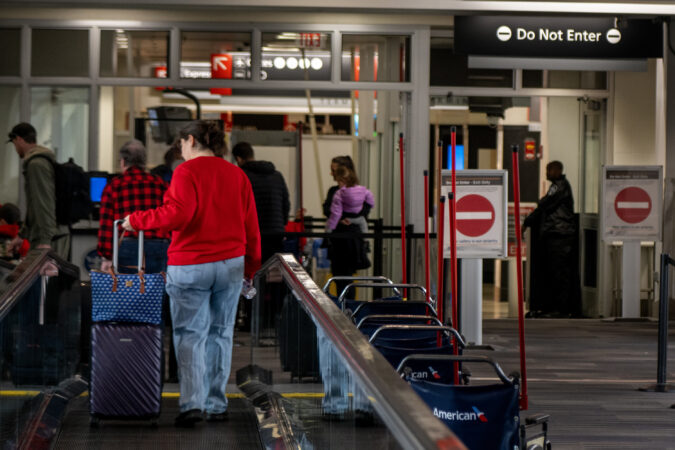
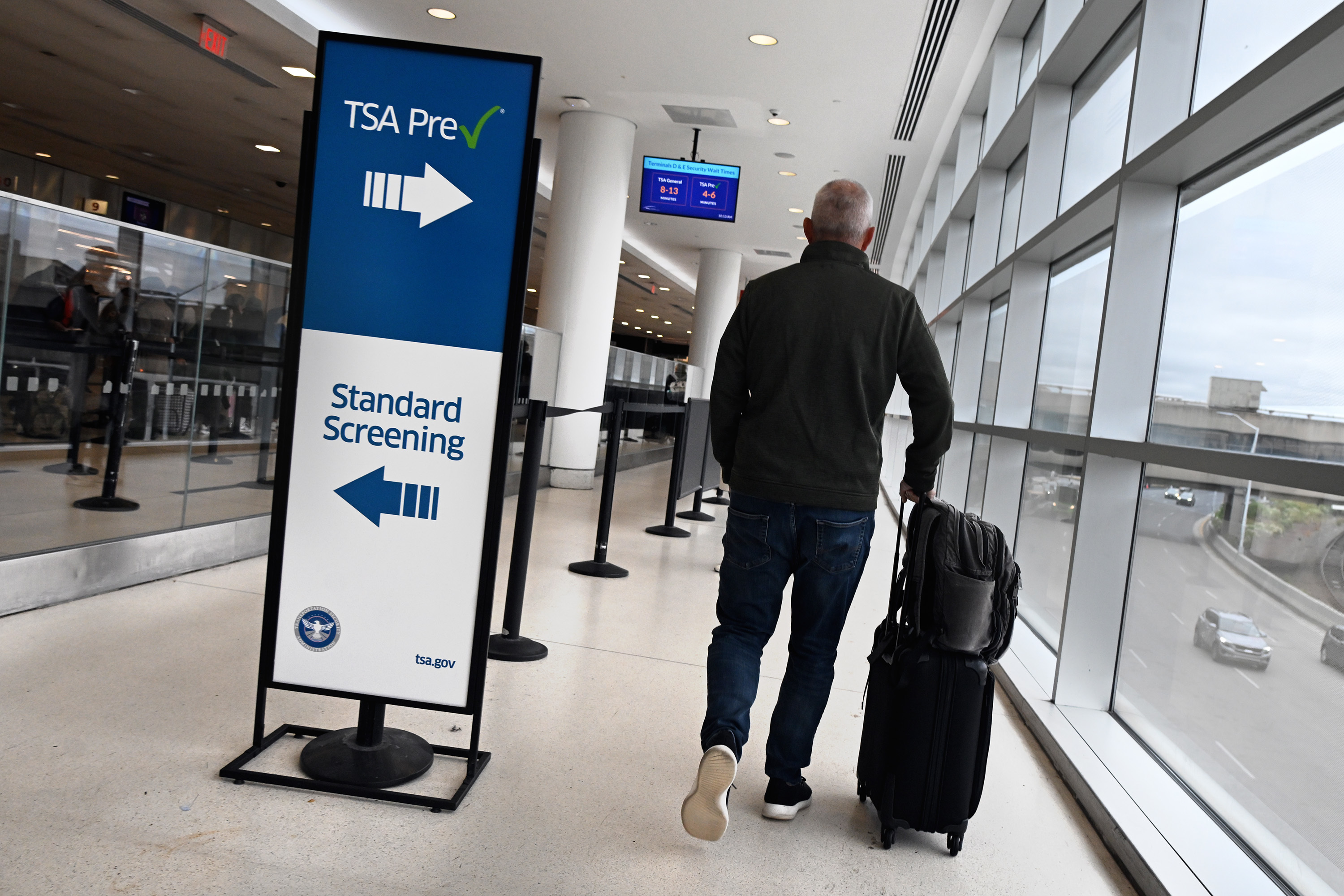
A traveler enters the TSA PreCheck security line at Terminals E-F at Philadelphia International Airport in October.
Security wait times
As of Friday morning, all six security checkpoints at PHL were open. TSA PreCheck is available at Terminals A-East, C and D/E.
Current security wait times are available on PHL’s website.
Every Philly-adjacent viral saga eventually ends the same way: not with a plot twist, but with probation.
The Delco Pooper (a title no one asked for but Delaware County fully delivered) finally reached the unglamorous end of her moment in the internet sun this week. Instead of a trial, Christina Solometo entered a first-time offender program that includes probation, community service, anger management, and a strict “no posting about this” rule that feels tailor-made for someone who briefly became a meme.
If she completes it all, her record could be wiped clean. Which feels… both reasonable and deeply unceremonious, given how loudly this story echoed across the internet.
Here’s the thing: This was never really a crime story. It was a spectacle. A perfect storm of road rage, cell phone video, Delco energy, and a news cycle that will absolutely stop to rubberneck if given the chance. The moment went viral because it was shocking and absurd, not because anyone was asking for a legal reckoning.
And now, like most viral Philly chaos, it fizzles out in a courtroom with no cameras and a lot less laughter.
The C grade isn’t about whether the punishment fits the offense. It’s about the strange disconnect between how massive this story became and how ordinary its ending is. Two years of probation and some mandated self-reflection doesn’t feel dramatic. But maybe that’s the point. Real life isn’t a meme, and viral notoriety doesn’t translate to anything meaningful once the internet moves on.
Philadelphia Eagles quarterback Jalen Hurts (1) scores a touchdown against the New York Giants during the third quarter of an NFL football game, Sunday, Dec. 11, 2022, in East Rutherford, N.J. (AP Photo/John Minchillo)
Taking back a Jalen Hurts touchdown ball: D
If a quarterback hands you a touchdown ball, that’s not a loan. That’s a gift. And if the allegations in this lawsuit are even mostly true, what followed was one of the most aggressively uncool things the NFL industrial complex could’ve done to a fan.
Jalen Hurts scored, made history, and chose a guy in an Eagles jersey to share the moment with. That should’ve been the end. Instead, according to the suit, it turned into security, state police, and multiple officials allegedly insisting the fan return the ball, including being told he’d be “breaking the law” if he didn’t.
Yes, historic game balls matter. Yes, teams want them back. But there is a time-honored, normal-person solution here: You ask nicely, you offer a jersey or autographs, everyone leaves happy. What you don’t do is allegedly escalate a good-vibes moment into a stadium-security fever dream.
If this played out the way it’s described, the failure wasn’t policy. It was vibes. You can’t spend all week saying fans are the heart of the game and then, on Sunday, treat one like he stole the Declaration of Independence.
That said — and this is where Philly clears its throat — declaring you’re no longer an Eagles fan over it is… a lot. We’ve survived the Vet, Santa, and several entire seasons of Chip Kelly. Eagles fandom is not something you simply return at the gate like a confiscated football.
So yes: If the ball was forcibly taken back, that’s deeply uncool and deserves a D. But also: Buddy, you still bleed green. You just had a very bad day at MetLife.
Every winter, Philadelphia relearns the same brutal lesson: The stoop is not a safe place, especially in December. This week’s Philly Reddit reminder came courtesy of a transplant who made it almost a full year without incident, a rare and beautiful run, only to have a Christmas package stolen. Not electronics. Not sneakers. Homemade cookies from an aunt. The kind of theft that doesn’t just steal stuff, but steals joy.
The comments quickly turned into a familiar group therapy session: delivery drivers who won’t ring the bell, packages sitting untouched until they’re suddenly gone, neighbors debating whether knocking on strangers’ doors makes you a Good Samaritan or a suspect on Ring footage. One person suggested fake poop packages. Another admitted they stopped ordering anything between Thanksgiving and New Year’s. Several people basically said, “Welcome. This is Philly.”
The unofficial Philly solution, as always, is community. Grab your neighbor’s packages. Knock if you see a box sitting too long. Use lockers if you can. Put up a sign that says “PLEASE RING THE BELL” and hope for the best.
The two most-beloved Pennsylvania convenience store chains are just .3 miles apart – with a CVS in between – Thursday, Sept. 19, 2024, as the first Wawa in Central Pennsylvania – solid Sheetz territory – had its grand opening in the Dauphin County borough of Middletown.
Wawa absolutely cooking Sheetz: A+
Wawa once again reminded Pennsylvania who the main character is. The Delco-born convenience store giant is still the state’s largest private company. And while Sheetz’s revenue took a 20% tumble, Wawa kept cruising, widening the gap like a hoagie wrapper slowly unpeeling in victory.
Sure, Wawa’s revenue dipped slightly on paper. In reality? The lights were on, the coffee was hot, and no one has ever stress-cried in a Wawa parking lot at 2 a.m. wishing they were at Sheetz instead. That’s brand power you can’t spreadsheet.
Sheetz hired more people. Wawa hired none of our doubts. It’s expanding, it’s everywhere, and it continues to dominate the only metric that truly matters in this region: where people go when they’re tired, hungry, and emotionally fragile.
The Christmas Village mystery package hut: A
Only in Philadelphia would one of the longest lines at the Christmas Village be for a booth selling completely unknown items in heavily taped boxes. No cocoa, no ornaments, no guarantees. Just curiosity, chaos, and the real possibility you’re paying $25 for either a diamond bracelet or a deadbolt.
Hundreds of people a day are voluntarily handing over cash for packages nobody ordered, nobody claimed, and nobody is allowed to peek inside. It’s reckless. It’s hopeful. It’s the purest form of “eh, sure” spending this city has ever embraced.
Watching grown adults aggressively shake mystery mail like they’re working airport security is peak Philly behavior. So is opening it immediately, accepting your fate, and announcing it’s “actually perfect” no matter what comes out. Lacy lingerie? Seasonal. Random hardware? Useful. Animal pregnancy tests? That’s a story you’ll be telling for years.
This hut works because it removes all the pressure of gift-giving. You didn’t pick a bad present — the box did. And now it’s everyone’s problem.
Some cities do traditional Christmas markets. Philly sells you a taped-up question mark and says, “Good luck.”
FILE – Chicago Cubs closing pitcher Brad Keller celebrates after the Cubs defeating the Pittsburgh Pirates in a baseball game, Aug. 16, 2025, in Chicago. (AP Photo/Paul Beaty, File)
Phillies landing Brad Keller: A-
Credit where it’s due: The Phillies actually identified a problem and spent real money fixing it. That alone deserves applause.
Brad Keller isn’t a flashy closer signing or a back-page splash, but he’s exactly what this bullpen has been screaming for: a legit, high-leverage righty who doesn’t make everyone start bargaining with the universe in the seventh inning. A 2.07 ERA, a fastball that suddenly touches 97, and proof he can handle pressure without combusting? We’ll take it.
This is also a refreshing break from the Phillies’ recent bullpen habit of “maybe this guy will be fine” optimism. Keller isn’t a flier. He’s a bet. And at two years, $22 million, it’s a smart one. Not cheap, not reckless, just intentional. That’s new.
Is there risk? Of course. Relievers are famously fragile creatures. But after last postseason’s bullpen roulette wheel, it’s hard to argue this team didn’t need another arm they can trust when the game tightens and the stadium starts vibrating.
The best part: This move signals awareness. Dave Dombrowski didn’t pretend last year’s formula was good enough. He didn’t wait for July. He didn’t say “internal options” and hope everyone forgot October.
No parade yet. But for once, the Phillies didn’t ignore the fire and buy another rug.
Donna Kelce and Jason Kelce pose for a photo at the premier of Jason Kelce’s documentary at Suzanne Roberts Theater in Philadelphia on Friday, Sept. 9, 2023. The film, “Kelce,” is a feature-length documentary featuring Jason Kelce and the Eagles’ 2022-23 season.
Donna Kelce on ‘The Traitors’: A (Philly claims her, sorry not sorry)
Donna Kelce entering a Scottish castle to scheme, lie, and possibly backstab for $250,000 feels less like reality TV casting and more like destiny. Yes, she technically gave birth to two NFL stars in different cities. But let’s be clear: Jason Kelce played his entire Hall of Fame career here, wore a Mummers parade costume, screamed about underdogs, and permanently imprinted his mom onto the city’s cultural fabric. Donna Kelce is Philly now.
Watching her plot alongside Johnny Weir (a Coatesville native, also claimed) is just icing on the Tastykake. While the rest of the cast is stacked with reality-show professionals who’ve been training for deception their whole lives, Donna’s superpower is subtler: calm mom energy and the ability to disappoint you with one look. That’s lethal in a game like this.
Also, the idea of Donna Kelce quietly maneuvering through a castle while reality stars spiral feels extremely on brand. She has raised elite athletes, survived Super Bowl media weeks, and somehow stayed likable through all of it. A few traitors don’t stand a chance.
If she wins, we’re counting it as a hometown victory. If she betrays someone? Even better.
The man, Victor Acurio Suarez, is unable to live on his own, always cared for by his younger brother. He tried to flag down a U.S. Immigration and Customs Enforcement agent in a Lowe’s parking lot near his home in September, apparently thinking the officer could help him find work. Instead, he was arrested and placed in detention and is scheduled for an Immigration Court hearing on Jan. 16.
“Given Mr. Suarez’s medical and functional limitations, I am concerned that he is unable to safely care for himself, effectively represent himself in legal processes, or access the necessary support without his family,” the governor wrote to Judge Dennis Ryan.
Meyer also advocated for Acurio Suarez in a series of social media posts, saying, “I want Delawareans to know about Victor Acurio Suarez,” and calling what has happened to him “deeply disturbing.”
Meyer’s advocacy is notable. While many elected officials have spoken out against President Donald Trump’s broader immigration policies, advocating for specific individuals has been typically reserved for high-profile cases like Kilmar Abrego Garcia, the Maryland man who was illegally deported to El Salvador’s notorious CECOT prison, returned to Moshannon Valley Processing Center, and was recently released.
Meyer argued that with no criminal history, not even a traffic violation, Acurio Suarez “poses no threat to public safety.”
Yet how much weight the backing of a governor carries in the immigration system remains to be seen.
In the past, someone with Acurio Suarez’ profile might have been allowed to stay home as their case moved forward in Immigration Court.
A medical assessment submitted for his asylum application this week said Acurio Suarez has autism and aphasia, a language disorder that affects his ability to produce or understand speech.
Dr. David W. Baron noted Acurio Suarez can’t safely live on his own. He requires supervision to perform daily hygiene activities or cook and has a hard time communicating his needs to others, a condition made worse by being in an unfamiliar setting while in detention, where he doesn’t have access to the support needed for his neurocognitive disabilities.
Still, as the Trump administration pursues a mass deportation agenda, undocumented immigrants without violent criminal histories are increasingly held in mandatory detention, unable to seek release on bond, as their cases play out.
It’s unclear what impact the governor’s letter might have. The judge on the case can only approve or deny the asylum application.
ICE does have discretion in releases but has so far denied a September request from Acurio Suarez’ attorney, Kaley Miller-Schaeffer.
“The letter from the governor, if anything, could maybe persuade ICE to relook at the request for release on parole,” she said, noting that Meyer’s letter brings more attention to the case.
An ICE spokesperson said in a statement that the agency was committed to the “health, safety, and welfare of all detainees in custody.”
“ICE’s National Detention Standards and other ICE policies require all contracted facilities to provide comprehensive medical and mental health screenings from the moment an alien arrives at a facility and throughout their entire time in custody,” the statement said.
Miller-Schaeffer said she will still have to prove Acurio Suarez met all the strict requirements for asylum in Immigration Court. Should ICE not reconsider releasing Suarez on bond, he will remain in Moshannon Valley Processing Center until he is either granted asylum or deported.
Deportation could be deadly, according to Acurio Suarez and his brother. In addition to lacking the necessary support to perform daily tasks, Acurio Suarez fears the gang that drove him and his brother to flee the country would find him again in an effort to recruit or kill him.
Acurio Suarez told Baron he fled to the United States in 2021 after a group of gang members beat and kicked him with steel-toe boots, knocking out his gold front teeth and stealing them. The group was part of Los Lobos, a criminal organization with a national presence in the country, designated a foreign terrorist organization by U.S. Secretary of State Marco Rubio this year.
Acurio Suarez said the group also set his home on fire after they learned his younger brother reported the attack to the police.
According to the Global Initiative Against Transnational Organized Crime, gang violence has risen in Ecuador amid economic hardship and subsequent battles over the illicit economy. The Geneva-based group estimates that the country will reach about 9,100 intentional homicides in 2025, a 40% increase from the previous year.
In his passionate defense of Acurio Suarez, Meyer said the 52-year-old is at “high risk of re-victimization by the Los Lobos gang” should he be deported.
“If you believe compassion belongs in our immigration system, join me in calling for Victor’s release,” Meyer wrote.
We’ll show you a photo taken in the Philly-area, you drop a pin where you think it was taken. Closer to the location results in a better score. This week’s theme is all about Christmas. Good luck!
Round #12
Question 1
Where can you find this Christmas tree?
Loading…
ClickTap on map to guess the location in the photo
ClickTap again to change your guess and hit submit when you're happy
You will be scored at the end. The closer to the location the better the score
Tom Gralish / Staff Photographer
Pretty good/Not bad/Way off! Your guess was from the location.Spot on! Your guess was exactly at the location. Here's also where a random selection of Inquirer readers guessed.
The tree is in the old waiting room at 30th Street Station. It was placed in front of the 30-foot frieze, “The Spirit of Transportation”, which depicts travel from ancient to modern and futuristic times.
Quiz continues after ad
Question 2
Where are these people?
Loading…
Tom Gralish / Staff Photographer
Pretty good/Not bad/Way off! Your guess was from the location.Spot on! Your guess was exactly at the location. Here's also where a random selection of Inquirer readers guessed.
This is the Betsy Ross House in Old City decked out in Christmas decorations.
Quiz continues after ad
Question 3
Where is this Grinch family?
Loading…
Joe Lamberti / For The Inquirer
Pretty good/Not bad/Way off! Your guess was from the location.Spot on! Your guess was exactly at the location. Here's also where a random selection of Inquirer readers guessed.
This is the Christmas Village on the north side of City Hall. The event will take place from Thanksgiving Day through Christmas Eve this year, featuring more than 120 vendors offering holiday merchandise and seasonal food.
Your Score
ARank
Amazing work. You are the head elf!
BRank
Good stuff. You've earned a spot on Santa’s nice list this year!
CRank
C is a passing grade. Do you like Christmas?You’ve shown some Grinch-like tendencies.
DRank
D isn’t great. Did Santa get stuck in the chimney while delivering knowledge to you?
FRank
We don’t want to say you failed, but you didn’t not fail.
You beat % of other Inquirer readers.
We’ll be back next Saturday for another round of Citywide Quest.
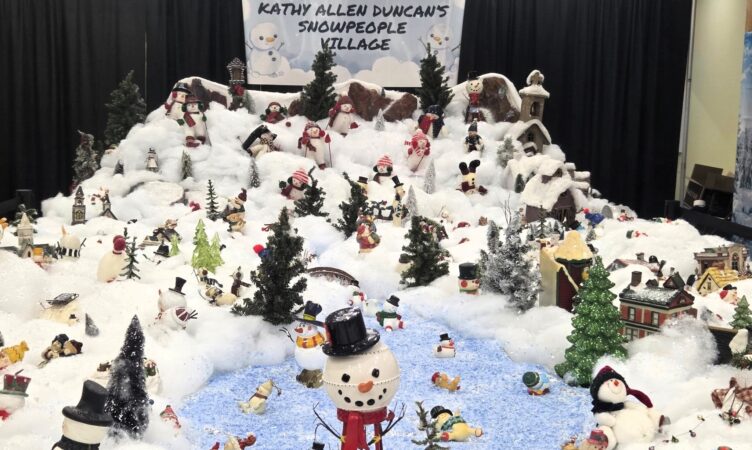
The hundreds of snowman figurines on display at a Kansas mall might look alike, but each wasimportantto Kathy Allen Duncan.
Some are skiing, others are caroling in front of houses or lounging in the snow made from cotton. A handful are using the bathroom.
For five decades, Kathy created detailed snowman displays in her home with the roughly 1,000 figurines she collected. But the tradition was in peril when Kathy, 73, died in September of complications from diabetes.
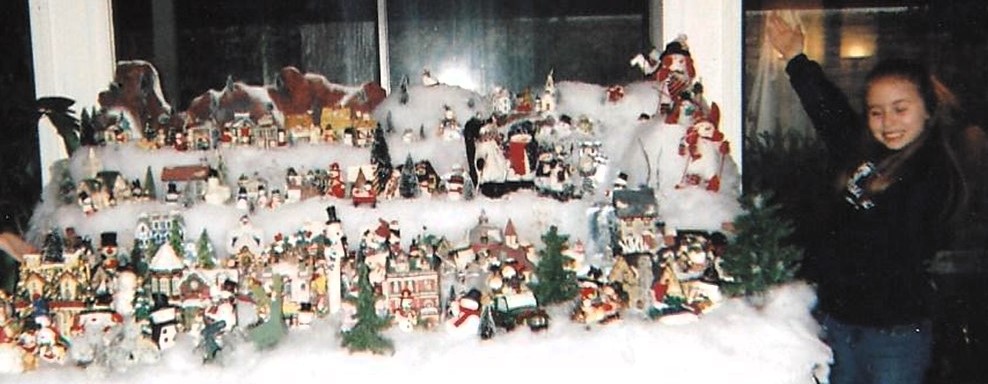
Kathy created a snowman display each year in her home over five decades.
Her husband, R.E. “Tuck” Duncan, looked back at photos of Kathy’s displays before her funeral. He recalled thinking, “We need to build one more, one last one.” He wanted to share it not just with his family, but also with all of Topeka, Kan.
Tuck, 74, rented a vacant store at a local shoppingmall where he and other family members created an exhibit showing hundreds of Kathy’s snowmen — which she called “snowpeople” — enjoying the winter. There’s a banner that reads: “KATHY ALLEN DUNCAN’S SNOWPEOPLE VILLAGE.” Another poster shows Kathy’s obituary.
Kathy’s family said their goal was to spread joy — something they said Kathy did daily — to as many people as possible. They exceeded their expectations.
Thousands of people have visited the free exhibit, Tuck told the Washington Post. More than 1 million people have seen photos of it on social media, where one user wrote:
“Guys I’m sobbing a local woman passed away in September and her husband/family rented a whole store at the mall to show off her Christmas decorations nothing is for sale it’s literally just so everyone can see it and it’s so beautiful I love.”
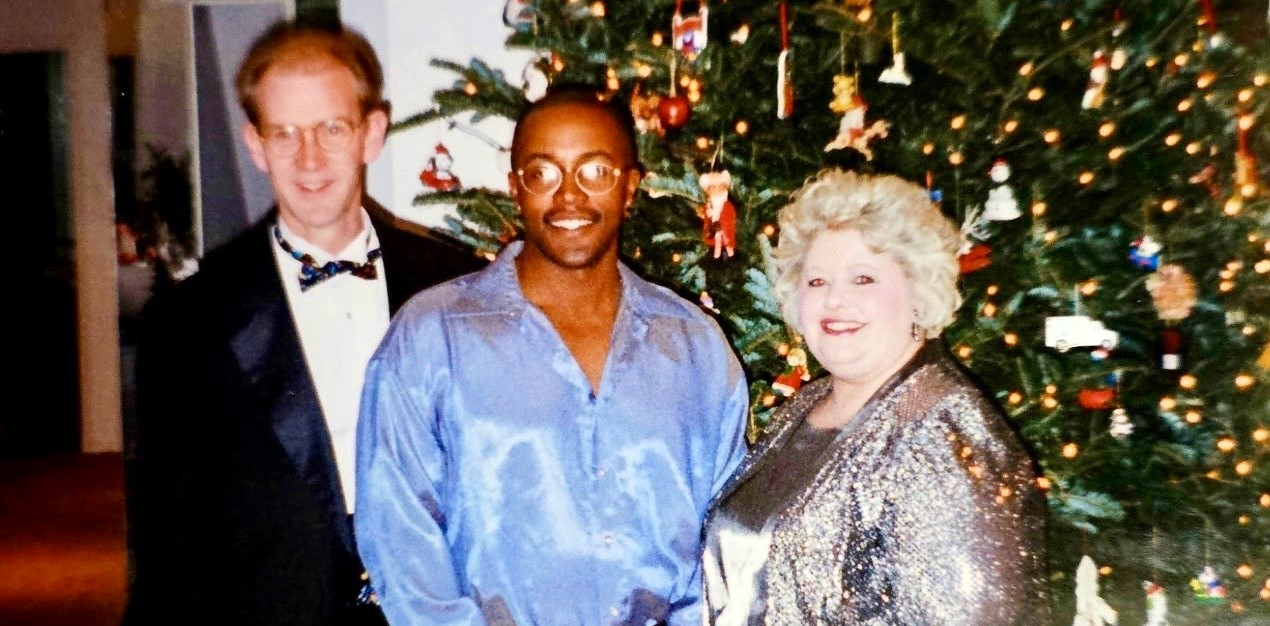
Kathy took decorating seriously as a way to express love for the people she cared for, said Joro Martin, who was raised by Kathy and Tuck after he said he left a troubled household.
“Mom was a safe space for so many people, and what is created there is a safe space to share,” Martinsaid about the mall exhibit.
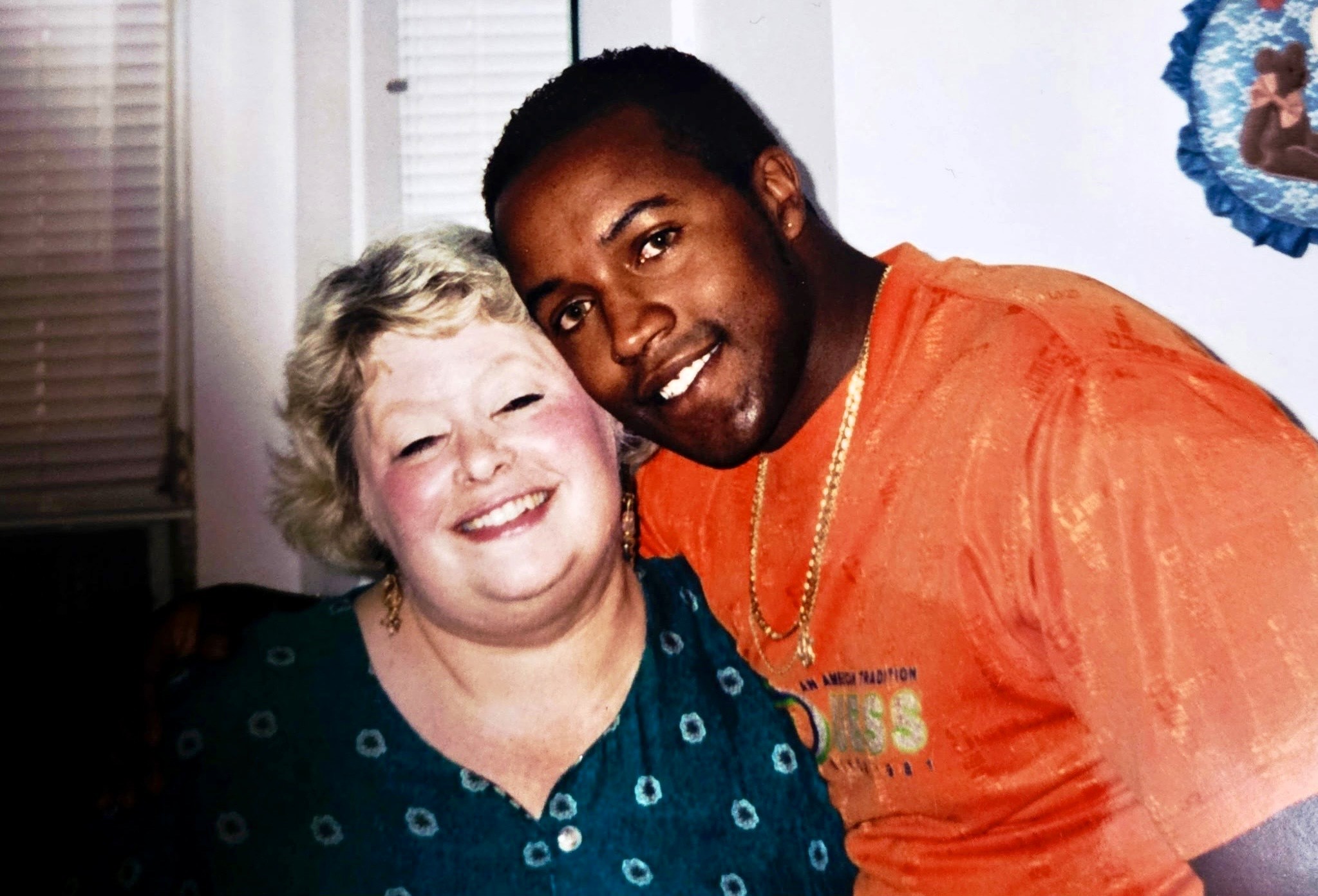
Kathy and Joro Martin, whom she helped raise, in the early 1990s.
Kathy built her first snowman display on a card table in aone-bedroom apartment in December 1974, shortly after she and Tuckgot married. There were only a handful of figurines — she had picked up the hobby of collecting them from her grandmother — and she hoped they would bring smiles to visitors.
Kathy collected more snowman figurines over the years from antique booths, craft shows, flea markets, and Hallmarkstores.
Kathy’s snowman figurines displayed at the mall.
There’s a wax candle shaped like a snowman — one of Kathy’s oldest figurines — which has faded paint. There’s one with glasses that Kathy joked was the snowman version of Tuck, an attorney, so the figurine always stood outside a law office in her displays.
Some are dressed as firefighters, nurses, police officers, chefs, and musicians. Others wear crimson-and-blue clothes to match the colors of her alma mater, the University of Kansas.
They are built from a wide range of materials, including yarn, plastic, ceramic, cotton, and wood.
Tessa Olorunfemi, Kathy’s granddaughter, with her 2008 snowman display.
Kathy started building the display each year after Thanksgiving and finished around Christmas Eve, when the family ate dinner off snowman-themed tableware. She started the display by covering the table with cotton and sprinkling artificial snow on top, then she placed shelves in the back to resemble mountains.
The displays moved from the roughly 34-by-34-inch card table to a 3-by-6-foot table to two adjoining 3-by-6-foot tables.
Kathy changed the setting each year. She created rural towns with recreational vehicles, cities with clustered buildings, and ice skating rinks with bridges. One year — even though Kathy pointed out that snowmen can’t survive warm weather — she let their youngest son, Ryan Duncan, build a beach.
Kathy’s snowman display in 2021.
Outside the holidays, Kathy and Tuck initially rented a storage unit for the figurines. For the past two decades, snowmenfilled half of their garage. But that didn’t mean the snowman decorations were absent in the condo: Kathy had a four-foot-tall metal snowman in the atrium that waved year-round.
“I can’t remember a Christmas, a holiday — shoot, I can’t remember a July — without something with snowmans in it,” Ryan said.
About a month after Kathy died, Tuck rented the second-floor space in Topeka’s West Ridge Mall near a Petland and a Spencer’s store. Tuck hired movers to transport 60 plastic boxes of snowman figurines there.
From left, R.E. “Tuck” Duncan, Martin, and Kathy.
Tuck and his family placed plywood, a foam board, buffalo cotton, and white and blue sparkles atop a 8-by-16-foot table.
At the front of the display, they set up a water tower with a snowman head serving as the tank. There’s a lake made of foil. Houses and trees are scattered throughout. Some small pieces of cotton even represent snowman poop.
The family finished the display and opened the room Nov. 25. Local news WIBW-TV covered the story.
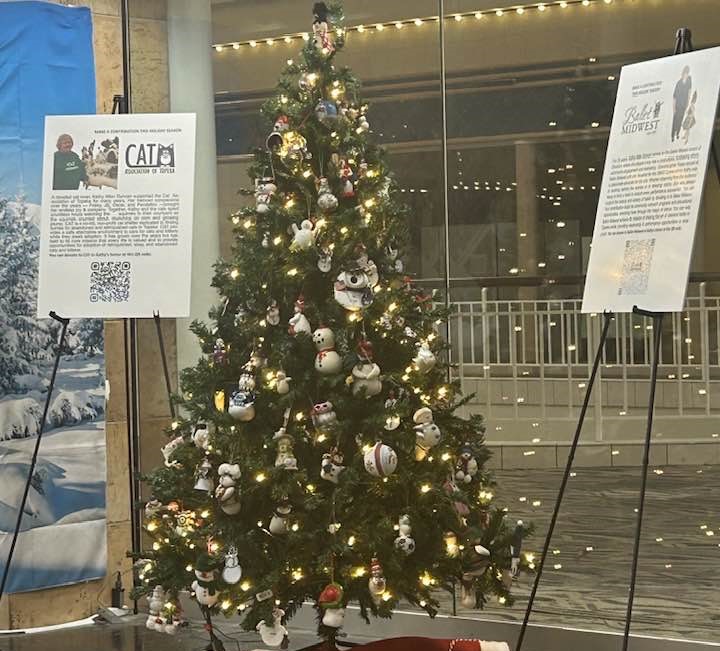
A Christmas tree with snowman-themed ornaments in the room at the mall in Kathy’s honor.
There’s a Christmas tree by the front window that holds about 50 snowman ornaments and eight tables on the edges of the room displaying more figurines and snowman-themed items like calendars and quilts.
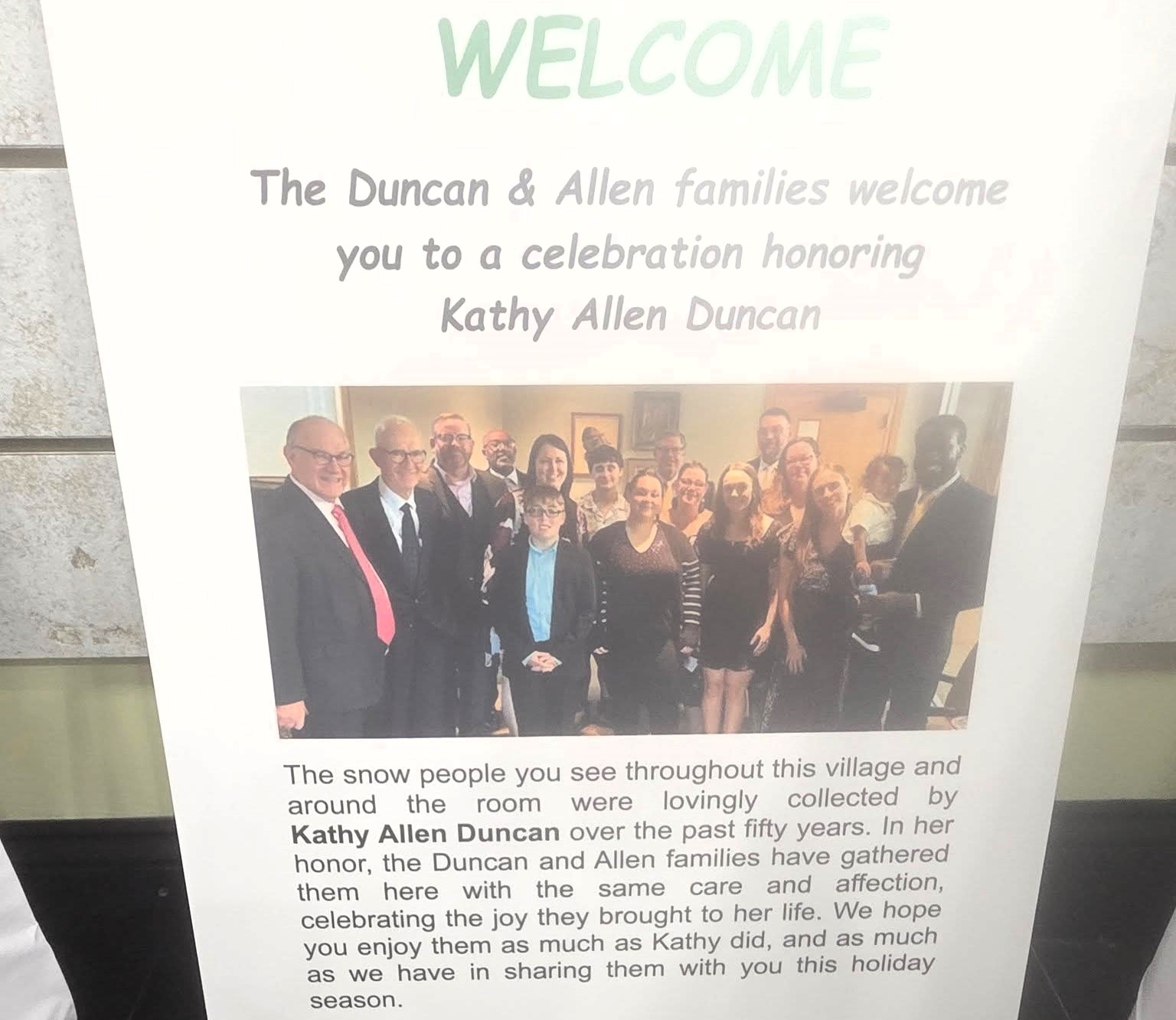
“The snow people you see throughout this village and around the room were lovingly collected by Kathy Allen Duncan over the past fifty years,” a poster in the room reads. “In her honor, the Duncan and Allen families have gathered them here with the same care and affection, celebrating the joy they brought to her life.”
The project cost about $15,000, Tuck said, “and it’s worth every penny.” Many people are learning about his wife, who he said fed peanuts and corn to wild squirrels and who, even in her final days, was still askingabout the well-being of others.
Kathy’s family members wrote a note to welcome visitors to the exhibit.
A family member opens the mall room every morning and closes it at night. While the exhibit evokes memories that make Tuck emotional — like remembering his 5-foot tall wife trying to grab boxes of snowman figurines from the top of the garage — Tuck said talking about Kathy with visitors has been cathartic.
More of Kathy’s snowman figurines at the mall.
He has an ornament on his Christmas tree that says, “Those we love don’t go away, they walk beside us everyday.”
The display will close on Christmas Eve. Afterward, family members — including the couple’s oldest son Spencer, the mayor-elect of Topeka — will take the snowmen back to their homes. Then, the whole family plans to build their own small snowman displays in Kathy’s memory.