A 30-gallon stoneware crock sat in the corner of Lois Jurgens’ back porch for nearly three decades, collecting dust through Nebraska summers and snow through the winters. Her late husband used it as a makeshift table to rest grilling tongs and platters. They almost never thought of it.
On Jan. 10, that same crock sold at auction for $32,000.
“I just couldn’t believe it,” said Jurgens, who turned 91 on the day the crock was sold. “It’s the biggest thing I’ve ever gotten on my birthday.”
The crock was manufactured by Red Wing Stoneware, probably between 1877 and 1900. The nearly knee-high crock features molded side handles and a cobalt blue butterfly, along with the company name stamped twice. Unlike later models finished with a smoother zinc glaze, the crock is salt glazed, giving it a coarser texture. Despite its many years outdoors, it is still in good condition.
“It’s very unusual,” said Ken Bramer, the owner of Bramer Auction & Realty in Amherst, Nebraska, which sold the piece. “That’s the first one of those I’ve seen in 40 years of auctioneering.”
Jurgens, who lives in Holdrege, Neb., said she can’t recall how or when she and her husband acquired the crock.
“I really don’t know how it came into the family,” said Jurgens, whose husband died in 2022. She has three children and four grandchildren.
Whatever its origins, Jurgens said, she never imagined it might be valuable. Stoneware crocks were common household items, historically used for food preservation before modern refrigeration. Today, some are still used for fermenting or as decorative objects, and pieces like Jurgens’s are seen as rare collectors’ items. In 2019, a salt-glazed stoneware cooler sold for $177,000.
“Some people collect strange things,” Bramer said.
Jurgens had spent the past several months clearing out items from her home that she no longer needed. Last summer, she had a garage sale and considered putting the crock out with the rest, but it never made it to the driveway.
“It was too heavy for us to handle,” Jurgens said, adding that her daughter helped her with the garage sale. “We just decided we weren’t going to bother with it.”
Then, earlier this month, she saw a notice in the local Holdrege Daily Citizen newspaper about an upcoming auction for antiques and collectibles, including many Redwing crocks. She called Bramer Auction & Realty, and Bramer offered to stop by Jurgens’s house and take some photos of the crock.
“I said, ‘Oh my goodness, that’s a good one,’” Bramer said, telling her: “I think you will be pleasantly surprised by what it brings.”
Jurgens’s son let Bramer know they were prepared to sell it for $20 at the garage sale, and they’d be glad if it fetched more than that.
“She was hoping for $100,” Bramer said.
Bramer posted pictures of the crock on his website and Facebook, and offers started pouring in.
“I was getting calls from collectors all over the United States,” Bramer said. “I knew it was a good piece, but I really didn’t know how good.”
Since so many calls came in from bidders outside Nebraska, Bramer said he allowed people to call in with offers during the auction on Jan. 10. Jurgens did not attend the auction, as she was at church for a funeral.
He started bids at $1,000 for the crock, and things escalated quickly.
“People just started bidding like crazy,” Bramer said, noting that the most he had sold a crock for was about $5,800 last year. “People were standing up in the crowd, and they all had their cameras out, taking pictures and videos of it … it’s something that doesn’t happen every day.”
The bidding war ended when a crock collector in Kansas offered a whopping $32,000 for the crock. About an hour later, while the auction was still happening, Jurgens walked in with her daughter.
“I stopped the auction and asked Lois if she’d come up to the front,” Bramer said. “I introduced her to the crowd and said, ‘This is the young lady who had the crock on the back porch.’”
He asked her how much she thought it sold for.
“I hope you got $100,” Jurgens said.
“I think we did just a little bit better,” Bramer replied.
When he revealed the final number, “she kind of went weak in the knees,” Bramer said.
Jurgens said she was — and still is — in disbelief.
“The whole situation kind of left me in shock. Thankful, but in shock,” she said. “I just couldn’t believe it.”
Bramer said he, too, was stunned by the outcome.
“It was really fun for both of us to be surprised,” Jurgens said. “I feel guilty that I didn’t even pretend to take care of it.”
Jurgens said that since the auction, people stop her when they see her out and about and ask her to tell the story. It was first reported by local news personality Colleen Williams.
“I can’t go anywhere or they recognize me,” Jurgens said.
She said she plans to give part of her windfall to her church, and she’s still thinking about what to do with the rest.
“It would have been fun to share with him if he was still alive,” she said of her husband.
He would have gotten a kick out of his trusty makeshift table being an actual treasure.
President Donald Trump’s efforts this week to “de-escalate” controversial deportation tactics in Minnesota in the face of widespread public dismay have caused a new wave of blowback from his base of hard-line anti-immigration advocates.
The president is caught between competing interests: a loyal base of voters who elected him on a campaign promise of “mass deportations,” and a broader electorate that is increasingly uncomfortable with an aggressive approach that has led to the shooting deaths of two American protesters by federal agents this month.
The conflicting viewpoints are evident within the administration, too, with advisers divided along similar lines and offering opposing feedback on whether and how drastically to shift Trump’s immigration strategy, according to people aware of the conversations.
Federal agents deploy tear gas near the intersection of Park Avenue and 34th Street in Minneapolis on Jan. 13.
Trump is also navigating a collision of his own instincts: his desire for flashy roundups of foreign-born criminals, and his recognition that the broader public, including business leaders he identifies with who rely on immigrant labor, have soured on the expansion of those roundups to noncriminals in workplaces.
The conflict has put the normally resolute Trump in an unusual spot, needing to tread carefully on an issue that he has previously plowed ahead on with threats and swagger. The result has been mixed signals from the White House — and fresh evidence of the difficult task Trump faces in a midterm election year of appeasing both his MAGA base and a broader swath of voters.
Earlier this month, Trump threatened to invoke the Insurrection Act to allow him to send the military to Minneapolis — and suggested that “THE DAY OF RECKONING & RETRIBUTION IS COMING.” He also sharply criticized two Minnesota Democrats, Gov. Tim Walz and Minneapolis Mayor Jacob Frey, calling them “useless” earlier this month.
This week, however, the president characterized conversations with Walz and Frey as positive and productive. He told Fox News that he wanted to “de-escalate a little bit” and that his talk with Walz “couldn’t have been a nicer conversation.”
Yet Trump has not articulated a clear shift in immigration strategy, leaving the public unsure of where he actually stands or what comes next.
He sidelined Homeland Security Secretary Kristi L. Noem from the Minnesota operation — a tacit but rare show of disapproval towarda cabinet member. He has not taken parallel action against senior aide Stephen Miller, who is widely viewed as the architect of Trump’s immigration policies — and who advised Noem on how to respond publicly to the shooting death of ICU nurse Alex Pretti in Minneapolis on Saturday, according to a person who spoke on the condition of anonymity to describe internal conversations.
In the immediate aftermath of the shooting, both Miller and Noem labeled Pretti a “domestic terrorist.” Miller also called him an “assassin.” Trump and White House press secretary Karoline Leavitt have not defended the officials’ rhetoric but also have not publicly criticized their job performance.
In a statement to the Washington Post, Miller said the initial information he received about the shooting from the Department of Homeland Security was “based on reports from CBP on the ground.” Miller said the White House is now working to determine why Customs and Border Protection at the time of the incident was not using the extra personnel that DHS had sent to Minnesota for “force protection.”
Stephen Miller, deputy White House chief of staff for policy, on Tuesday at the White House.
Noem asked for a meeting with Trump on Monday evening — after Trump announced that his border czar, Tom Homan, would be taking over operations in Minnesota. The gathering lasted for hours, according to twopeople who spoke anonymously to describe a private meeting.Noem and her top aide, Corey Lewandowski, joined the president and other aides to discuss issues including the border wall and Minneapolis, one of the people said. Separately, Lewandowski and Homan, who have previously clashed, have spoken and agreed to work together, the person added.
The White House’s efforts to make adjustments on tactics have not stanched the bleeding in public opinion.
The most recent flood of criticism has come from pro-Trump users online and top influential MAGA commentators. Some called Trump’s pivot a “betrayal.” Others warned, as they have about other issues for months, of the risk that the base could sit out November’s elections.
Fresh public polling showing increased “anti-ICE sentiment” and “increased support of sanctuary cities” makes clear that the administration must change its deportation tactics, said Mark Mitchell, head pollster at the conservative Rasmussen Reports.
An Economist/YouGov poll released this week — with most respondents answering after the Pretti shooting — found that 55% of Americans have little confidence in ICE, an increase of 10 percent since mid-December. The decline in trust for ICE has been most pronounced among independent voters, the poll found, with 67% now saying they have little confidence in the immigration agency, compared with 49% last month.
By contrast, 60% of Republicans say they have “a great deal” or “quite a lot” of confidence in ICE, highlighting the gap between Trump’s own party and independents and Democrats.
Andthe president’s sudden interest in cooperating with Walz and Frey and his suggestions about going easy on longtime immigrant workers have amounted to a “rug pull” for the base in his rhetoric, Mitchell said. While polling hasn’t yet showed Trump’s base punishing him, the midterms already look increasingly problematic for the GOP, Mitchell said, and concern remains about declining enthusiasm among Trump supporters. Mitchell met with Trump in November to warn him of frustration within his populist base.
“Ten years, this has been the core part of his platform — ‘They all have to go home … Build the wall,’” Mitchell said. Trump talking about only focusing on removing violent criminals sounds like he has “caved on the major campaign promise.”
Within the MAGA base, the president’s supporters want as aggressive an offense as Trump can conceive.
“This is an inflection point — you blink now and you’re going to blink forever. You bend the knee now, you’ll bend the knee forever,” Stephen Bannon, a former Trump adviser and influential MAGA commentator, said on his show Wednesday as he continued urging the Trump administration to ramp up deportations and to not “de-escalate” or draw back federal agents from Minnesota. “I don’t care how many people I’ve got to deport. I don’t care.”
Federal agents threaten to spray a chemical agent as they confront journalists and rapid responders in Minneapolis on Jan. 14.
Some prominent Trump supporters are also concerned about the actions by some members of Congress, possibly emboldened by Trump’s recent change of tone, to renew efforts to pass immigration reform.
The White House has pushed back on the notion that Homan’s elevation amounts to a dialing back of deportations. A White House official, who spoke on the condition of anonymity to discuss strategy, said the administration has “not wavered” in its deportation mission, but Trump doesn’t want to see Americans injured because of clashes with immigration officials.
In a statement, White House spokeswoman Abigail Jackson said the administration “will never waver in standing up for law and order and protecting the American people.”
“Any left-wing agitator or criminal illegal alien who thinks Tom’s presence is a victory for their cause is sadly mistaken,” she said.
This isn’t the first time in Trump’s second term that the MAGA base has erupted over his comments on immigration policy, which have consistently revealed his sensitivity to the concerns of business leaders and average conservatives put off by the deportation of otherwise law-abiding immigrants.
In late spring, after hearing complaints from friends and donors about deportation roundups at farms, hotels and restaurants hurting operations and scaring off workers, Trump announced that “changes are coming” to spare the agriculture and hospitality fields.
Trump’s base similarly went off on him. Even some top advisers were blindsided, privately insisting that no such policy changes were in the works and chalking up the suggestion to Trump’s habit of trying to smooth public conflictswith rhetoric.
Miller at the time raised concerns to the president about his stated plans for “changes” to protect migrant workers, according to a person who spoke anonymously to describe private conversations. Miller had been calling for a drastic increase in deportation numbers to keep up with the administration’s aggressive goals. Homan told the Washington Post soon after Trump’s announcement that he had not discussed any such changes with the president and wasn’t a part of crafting a policy to carve out workers.
During a speech a few weeks later in Iowa, Trump acknowledged he had gotten “into a little trouble because I said I don’t want to take people away from the farmers,” before describing supporters who were unhappy with his comments as “serious radical-right people.” The comment further inflamed tensions, with influential MAGA commentators including Bannon and Charlie Kirk, the head of Turning Point USA shot dead later last year, accusing the administration of preparing to offer amnesty to some illegal immigrants.
A number of Republicans in Minnesota said they were glad to see Trump shift course this week. They said they welcomed the arrival of Homan and the apparent truce between Trump and local leaders.
“I’m just grateful that we’re moving in a direction to get back to being sensible,” said Jim Abeler, a GOP state senator in Minnesota who worried that federal agents were violating people’s rights. “There are people afraid, there are citizens afraid to leave their homes, to go buy groceries because of their skin color or their nationality … It’s past time.”
Yet on Wednesday, the president also signaled that he was aware of the latest criticism from within his base. A day after speaking favorably of his conversation with the Minneapolis mayor, Trump posted on Truth Social that Frey was “PLAYING WITH FIRE” by saying he would not enforce federal immigration laws.
Large slate-shaped slabs of ice in the Delaware River this week have been like a floating harbinger of things to come for the Philadelphia Water Department (PWD).
PWD, which draws its drinking water from intakes along the Delaware and the Schuylkill, takes a freezing river seriously.
It has implemented emergency plans to provide for 24-hour ice patrol at its river water intake plants — and it is on high alert for freezing and bursting water mains and pipes.
The department has two intakes on the Schuylkill and one on the Delaware that help provide drinking water for about 1.6 million people.
There is no easy way to say how much of the rivers are icing. But the Middle Atlantic River Forecast Center at State College, an office of the National Weather Service, uses gauges placed in the rivers by the U.S. Geological Survey. At various times this week, officials could not get readings from some gauges because they were affected by ice.
Brian Rademaekers, a spokesperson for PWD, said the city can also pull from already stored water if ice does became a problem at an intake.
“We’re getting into a stretch where we haven’t been above freezing for days,” he said, “And I think at least through Feb. 1 it looks like we’ll remain below freezing.”
Indeed, the region has been subjected to an Arctic blast for nearly a week. Daily highs have been below freezing since Saturday. The top temperature in that stretch was 28 degrees on Monday. Wednesday hit a low of 14. Overnight Thursday into Friday is forecast to drop to 2degrees.
The National Weather Service is not forecasting a high of 32 until Tuesday. And then it’s back to below-freezing temperatures.
Burst water main on S. 16th Street just below Federal Street, Philadelphia, Wednesday, Jan. 28, 2026.
Bursting pipes
PWD is warning residents and businesses that the extreme cold is affecting city water mains and reminding them thatwater lines that are the responsibility of property owners.
As the city facesunbroken stretches of below-freezing temperatures, PWD knows pipes will begin to freeze or, worse, burst, Rademaekers said.
Pipes can start to be seriously affected after 72 hours, or three days, of below-freezing weather. Philadelphia is past that benchmark.
PWD’scall center is already inundated with reports of water outages and leaks. But the department cannot help people with frozen pipes because that takes away from crews responding to public water main leaks.
Rademaekers said PWD has responded to 147 water main breaks in January, but noted that is a preliminary figure.
Last year, 256 breaks were reported in January. In recent memory, he said, 2018 was the worst year, with 366 breaks.
City mains are public property and range in sizefrom 96 inches in diameter to 48 inches, 12 inches, and 6 inches.
Breaks in smaller pipes are most common. PWD is currently fixing a 6-inch main at 16th and Federal Streets.
Property owners are responsible for the lateral pipes that run from the curb into a home.
Rademaekers said residents who suddenly find themselves without water should check with a neighbor first. If the neighbor has running water, it’s likely the homeowner has a frozen pipe.
In that case, PWD suggests trying to bring the pipes near your water to 40 degrees and opening faucets so that thawing water can drip out and release pressure.
He said running a hair dryer or using another source to gently warm the pipes could help them thaw. He said residents should be cautious trying to use space heaters to warm on pipes.
The department has tips online for how to deal with frozen pipes.
Homeowners should not to wait for the department to respond to take these steps, PWD advises. Doing so could lead to burst pipes.
Rademaekers said many homes in Philadelphia have their main water meter by the wall facing the street, often in uninsulated basements, some with cracked windows.
“When it falls to 6 degrees overnight, even if the heat’s on in your house, that particular space right there might just get cold enough to freeze that pipe up, and then ice kind of spreads through the system,” Rademaekers said. “Once the freezing starts, the pressure will build.”
Rademaekers cautioned customers against calling 311 if they have a frozen pipe. Instead, he said, they should call the PWD hotline at 215-685-6300 and press 1.
“Certainly whenever we see freezing temperatures for more than two days we start to see a surge of calls into the call center,” he said. “Over the last week, the top three reports we have been getting are water in the basement, leak in the street, or no water at the tap.” Some of those could be water main problems, he said, ”but most often they are traced back to private lines.”
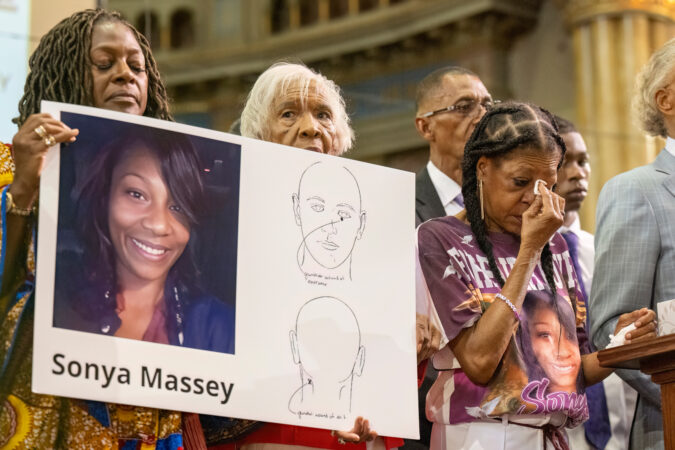
SPRINGFIELD, Ill. — A former Illinois sheriff’s deputy was sentenced Thursday to 20 years in prison for fatally shooting Sonya Massey, who had dialed 911 to report a possible prowler outside her Springfield home.
Sean Grayson, 31, was convicted in October. Grayson, who is white, received the maximum possible sentence. He has been incarcerated since he was charged in the killing.
He apologized during the sentencing, saying he wished he could bring Massey back and spare her family the pain he caused.
“I made a lot of mistakes that night. There were points when I should’ve acted, and I didn’t. I froze,” he said. “I made terrible decisions that night. I’m sorry.”
But Massey’s parents and two children — who lobbied for the maximum sentence — said their lives had changed dramatically since the killing. Her two children said they had to grow up without a mother, while Massey’s mother said she lived in fear. They asked the judge to carry out justice in her name.
“Today, I’m afraid to call the police in fear that I might end up like Sonya,” her mother Donna Massey said.
When the judge read the sentence, the family reacted with a loud cheer: “Yes!” The judge admonished them.
After the hearing, Massey’s relatives thanked the public for the support and listening to their stories about Massey.
“Twenty years is not enough,” her daughter Summer told reporters.
In the early morning hours of July 6, 2024, Massey — who struggled with mental health issues — summoned emergency responders because she feared there was a prowler outside her Springfield home.
According to body camera footage, Grayson and sheriff’s Deputy Dawson Farley, who was not charged, searched Massey’s yard before meeting her at her door. Massey appeared confused and repeatedly said, “Please, God.”
The deputies entered her house, Grayson noticed the pot on the stove and ordered Farley to move it. Instead, Massey went to the stove, retrieved the pot and teased Grayson for moving away from “the hot, steaming water.”
From this moment, the exchange quickly escalated.
Massey said: “I rebuke you in the name of Jesus.”
Grayson drew his sidearm and yelled at her to drop the pan. She set the pot down and ducked behind a counter. But she appeared to pick it up again.
That’s when Grayson opened fire on the 36-year-old single mother, shooting her in the face. He testified that he feared Massey would scald him.
Grayson was charged with three counts of first-degree murder, which could have led to a life sentence, but a jury convicted him of the lesser charge. Illinois allows for a second-degree murder conviction if evidence shows the defendant honestly thought he was in danger, even if that fear was unreasonable.
Massey’s family was outraged by the jury’s decision.
“The justice system did exactly what it’s designed to do today. It’s not meant for us,” her cousin Sontae Massey said after the verdict.
After a night of dancing and laughter in San Juan, Puerto Rico, Kelly Crispin and her fiance, Omar Padilla Vélez, were driving back to his family’s home when they made a wrong turn off the popular Calle Cerra nightlife strip.
It was about 1:45 a.m. on Jan. 3. The side street that the South Philadelphia couple had turned onto, which they thought led to the highway, was nearly pitch-black. Then suddenly, Crispin said, roughly a dozen masked men carrying AR-15-style rifles appeared in the road and quickly surrounded the car.
Padilla Vélez tried to press forward and drive around the crew, she said, when the men opened fire. She remembers the glass exploding around her and the pain in her shoulder and hand as bullets tore through the car. And then the words from her fiance: “I’ve been shot.”
Padilla Vélez, a 33-year-old chemist for DuPont, was shot in the head. He was rushed to a hospital, where he died days later.
Omar Padilla Vélez, of South Philadelphia, was shot and killed in San Juan on Jan. 3.
Crispin, 31, recounted the attack in a phone interview from her South Philadelphia home this week as she struggled to come to terms with what she said San Juan police believe was a random attack by a gang controlling a small stretch of road near a popular tourist area.
After the shooting stopped, at the intersection of Calle Blanca and Calle La Nueva Palma, Crispin said, one of the men appeared at the side of the car and took her phone as she was calling 911.
She said she heard some of the men yelling at one another that there was a woman in the car and urging others not to shoot, as if realizing they had made a mistake. They searched her purse, she said, but returned her phone. They took nothing.
Crispin and a friend,who was with them in the car and was unharmed, pulled Padilla Vélez into the back seat. As she held pressure on his wounds, her friend took the wheel, and the gunmen told them to leave and told them how to get out of the neighborhood.
It was surreal, she said, to be shot and then have one of the gunmen explain how to leave safely.
They called 911 again as they left, and met an ambulance at a nearby gas station and were rushed to Centro Médico de Puerto Rico.
About two days later, Padilla Vélez was briefly stable enough for Crispin to visit him.
“He told me that he loved me, and I told him that I loved him, too,” she said. “And he said, ‘I’m so sorry.’ Then he fell asleep.”
Kelly Crispin and Omar Padilla Vélez got engaged in the fall and were looking forward to getting married.
Later that day, she said, he suffered a catastrophic stroke. Days later, he was declared brain-dead. He was an organ donor, she said, and doctors were able to use his organs to save several lives.
Padilla Vélez was Puerto Rican, she said, and came to the mainland U.S. in 2015 to earn a Ph.D. in chemistry at Cornell University. He moved to Philadelphia in 2022 and worked as a senior scientist for DuPont in Wilmington.
The couple met about three years ago at their best friends’ wedding. Crispin, who works as a project manager for an electrical vehicle company, moved to Philadelphia about a year into their relationship. In September, they got engaged.
They often returned to San Juan to visit Padilla Vélez’s relatives. This trip, which began Dec. 30, was meant to ring in the new year.
Crispin said she has been frustrated with San Juan police, who she said did not appear to have visited the scene of the shooting until five days later, after her fiance died and the case was assigned to a homicide detective. She said she was not interviewed until Jan. 21 and worries those delays could hamper the investigation.
No arrests have been made.
Police in San Juan did not respond to several requests for comment about the case.
Crispin said the homicide detective assigned to the investigation told her that residents in the area, fearful of retaliation, have refused to provide information. Police, she said, told her that a gang operates on the street where they were ambushed, and that she and her fiance were likely shot in a case of mistaken identity.
Crispin said the city should warn people to avoid the area, especially since it’s so close to a popular tourist district.
Omar Padilla Vélez earned a doctorate in chemistry from Cornell, before moving to South Philadelphia, where he lived with his fiancée.
Since returning to Philadelphia last week, she has struggled to make sense of her new reality. The bones in her hand were shattered and will require multiple surgeries to repair. The bullet passed through her shoulder, and she will need months of physical therapy.
But that is nothing, she said, compared to the searing heartache of what she has lost.
Padilla Vélez, she said, was intelligent and funny. To meet him was to feel like you’d known him for years.
He had a booming laugh that was often the loudest in the room.
“I thought it was mortifying at first, how loud it was,” she said. “Then I just began to love it.”
She recalled sitting with him on their couch one night and laughing so hard that their stomachs ached. She can’t remember what started the laughing fits, she said, but she remembers thinking: I am so lucky.
“I would see other couples and wonder if they laugh like Omar and I do,” she said.
“We had just made this decision to spend the rest of our lives together, forever,” she said. “It just feels so cruel that this was taken away.”
A 19-year-old man was arrested and will be charged with homicide in the fatal shooting of another man in Southwest Philadelphia on Wednesday night, according to police.
The shooting occurred at 66th Street and Dicks Avenue just after 10 p.m.
The suspect, whom police did not immediately identify, had just stolen a bicycle from a SEPTA bus at a nearby intersection, police said, when he encountered the man he later shot, also a 19-year-old whom police did not identify.
Police responded to the scene to find the victim unresponsive with a gunshot wound to the throat. He was taken to Penn Presbyterian Medical Center and pronounced dead around 10:20 p.m.
The shooter fled after robbing a second person of an electric bicycle, police said.
Investigators tracked the shooter to 84th Street and Bartram Avenue, where they took him into custody and recovered a firearm, police said.
New Jersey Gov. Mikie Sherrill supports cementing the state’s sanctuary state policy into law — as it’s already written.
The Immigrant Trust Directive, commonly called a sanctuary policy, restricts state law enforcement from cooperating with U.S. Immigration and Customs Enforcement (ICE). Enshrining the policy into law would ensure future governors of either party could not unilaterally take it away. As of now, the directive could be undone with a flick of a pen.
Immigrant rights groups in New Jersey have pushedfor several years to make the policy permanent with a new law, a move they say is increasingly urgent amid President Donald Trump’s immigration crackdown in Minneapolis, which has reverberated across the country. But those activists want to expand protections, which could clash with Sherrill’s approach.
“Gov. Sherrill supports a bill to codify the directive,” her spokesperson Sean Higgins said. “What she does not support is anything that undermines the ability to defend our protections in court, which puts people at risk.”
Sherrill has said making changes to the directive while making it law could invite lawsuits andrisk the whole policy, which was enacted during Trump’s first presidency and has survived federal judges appointed by both Trump and former President George W. Bush.
“New Jersey’s directive has already withstood judicial review — and that additional action, if not precise, could undo important protections which we cannot risk under the Trump administration,” Sherrill said during her primary campaign.
Higgins said those concerns “have not changed.”
Immigrant rights groups nearlyreached the finish line late last year after the state legislature passed a bill that included some of the changes they wanted to make.
But former Gov. Phil Murphy rejected the bill in his final hours in office. Like Sherrill, he said the policy could be in jeopardy if it changed and could invite lawsuits.
Amol Sinha, the executive director of ACLU New Jersey, disagrees.
The bill Murphy vetoed — which Democraticlawmakers have already signaled they will reintroduce in the new session—would remove an exception for law enforcement to work with federal immigration authorities on final orders of removal and prohibit law enforcement from providing money to federal immigration authorities.
Sinha and others who support the bill say those changes would be on solid legal ground. Since the courts previously found federal law does not preempt the state’s immigration policy, and the state has the right to determine where its resources go, he said, he believes Murphy’s veto was overly cautious.
“We cannot be in a situation where we’re constantly afraid of lawsuits and therefore we don’t pass any laws,” Sinha said. “There is legal risk to every law that passes in New Jersey. You’re going to get sued, and if you don’t want to get sued, then you shouldn’t be in government.”
Sherrill’s stance on the matter has, at times, been ambiguous.
After a general election debate in late September, she said she was “going to focus on following the law and the Constitution” when pressed by reporters on whether she would keep the directive in place. In October, she said she supported aspects of the policy but also suggested she wanted to revisit it.
During the primary contest, her spokesperson said Trump “is changing the rules rapidly” and Sherrill would “address the circumstances as they exist,” but she had also signaled support for keeping the policy.
Since taking office last week, Sherrill has taken other steps to try to shield the state from ICE. She announced Thursday that her administration plans to launch a state database for New Jerseyans to upload videos of ICE operations in the state after two fatal shootings in Minnesota.
But the pressure to work with legislators on making the sanctuary directive law remains.
Assemblymember Balvir Singh, a Burlington County Democrat and cosponsor of the bill Murphy rejected, said part of the urgency is concern over Trump’s threats to withhold federal funding from Democratic-led states over policy disagreements.
Even though Sherrill has kept the policy in place, a directive carries less weight than a statute backed by two branches of government.
“Our executive can be put under a tremendous amount of pressure where they have to figure out how they’re going to fund our social services systems that rely on federal funding,” Singh said.
Just last week, Trump directed federal government agencies to review funding for several Democratic states, including New Jersey, almost all of which were on a list of sanctuary jurisdictions produced by his administration.
The one exception was Virginia, where new DemocraticGov. Abigail Spanberger rescinded a directive that instructed law enforcement to work with ICE. The previous week, Trump said he planned to cut off federal funding for states with sanctuary cities.
Singh, whose district includes communities with large immigrant populations, said preserving the seven-year-old policy through law is “the very minimum.”
‘I take Gov. Sherrill at her word’
Sherrill declined to comment on the specifics of the bill that reached Murphy’s desk, and the question will be whether lawmakers are able to enact changes to the current directive or if she will only sign a carbon copy of what already exists.
The sanctuary bill was one of three pieces of legislation aimed at protecting immigrants that Murphy weighed in his final days in office. He signed one about creating model policies for safe spaces in the state and vetoed another aimed at limiting data collected by government agencies and health centers, citing a “drafting oversight.”
As she waited anxiously for Murphy’s decisions on the bills earlier this month, Nedia Morsy, the executive director of immigrant advocacy group Make the Road New Jersey, said that New Jersey should not “make policy based on fear” and that immigrants in the state were experiencing a “collective feeling of suffocation.”
She criticized Murphy’s vetoes, saying legal experts had already vetted the bills.
Sherrill has repeatedly promised to fight Trump and recently said that ICE agents are “occupying cities, inciting violence, and violating the Constitution” and need to be held accountable “for their lawless actions.”
Her comments have given some activists hope that she will be willing to work with them.
And while a single bill cannot stop ICE from sweeping New Jersey communities, Sinha said, the state can “put up safeguards and guardrails” through policies like the ones Murphy rejected.
“I take Gov. Sherrill at her word that she wants to push back against authoritarianism,” he added, “and to me, that means doing whatever we can to protect immigrants in our state.”
Another weekend snow chance and more cold are in the forecasts. But the big difference between last week and this one in the Philadelphia region is a matter of degrees — about 10 of them.
A coastal “bomb cyclone” could form during the weekend with significant impacts, at least at the Shore. Computers were still sorting out what effects, if any, it would have in Philly. On Thursday, however, they favored snow staying to the south and east, with only a 40% chance they got to I-95.
In the meantime the cold will be epical by Philly standards.
If the forecast holds, in addition to coming close to ending a 32-year zero-less streak, Philadelphia would have daily minimums of 5 degrees Fahrenheit or lower on the next two mornings.
And it appears the city will have its first nine-day stretch in which the temperature failed to reach 30 degrees since 1979, based on analysis of temperature data from the Pennsylvania state climatologist.
In issuing a cold weather advisory for wind chills as low as 10 below zero, the National Weather Service in Mount Holly noted that “it is exceedingly rare to get this combination of length and magnitude of an arctic airmass for this area.”
Heading into the weekend, that subtly laminated lunar landscape with the one-horse-open-sleigh look in the fields and parks is almost certain to persist while bedeviling road-clearing efforts.
Some snow is possible late Saturday or Sunday — and this is becoming a habit — in time for the rising of the full “Snow Moon,” which may be a problem for the Jersey Shore. The full moon will likely contribute to tidal flooding.
Snow removal contractor Jordan Harlow clears the sidewalk in front of an apartment building on Main Street in Doylestown Wednesday, Jan. 28, 2026, following Sunday’s snowstorm. He said the layer of ice made it twice as difficult to use the snow blower.
The snow outlook for the weekend
On Wednesday only two things were certain about the latest threat: A major coastal storm is going to blow up during the weekend, and it’s not going to rain.
“Everything looks like it’s going to come together,” said Paul Pastelok, the long-range forecaster for AccuWeather Inc.
AccuWeather said it may intensify enough to qualify as a “bomb cyclone.”
An early consensus among computer models was that the storm would stay too far offshore to generate a major snowfall in the immediate Philly area. Pastelok said it was looking for Philly to get “sideswiped” with a 1- to 3-inch event. However, that was very much subject to change.
The weather service would not be making a first guess at potential accumulations until Thursday afternoon, said Alex Staarmann, a National Weather Service meteorologist in Mount Holly. In its forecast discussion Wednesday, it said that based on a consensus of the models, the Shore had a 35% to 50% chance of 6 inches of snow or more, with a 20% chance along I-95.
More certain was the potential coastal flooding threat at the Shore with potent onshore winds coinciding with Sunday’s full moon.
And while it may seem the atmosphere enjoys ruining weekends, it’s not uncommon for weather systems to fall into 3½- and seven-day cycles. That has to do with the spacing between weather systems, meteorologists say.
Regardless of what happens during the weekend, the region is going to begin the workweek with snow on the ground.
The snow is going to have more staying power than the average computer-model snow forecast.
It’s not going to get a whole lot warmer anytime soon
Even though it’s ice cold, as if developing a slow leak, the depth of the snow pack is actually decreasing, but ever so ponderously.
That 9.3 inches of snow and sleet that accumulated Sunday was down to 6 inches at Philadelphia International Airport on Wednesday morning, Staarmann said.
Compaction and sublimation, which is similar to evaporation, are lowering the depth, despite the cold. But Wednesday’s depth report was the same as Tuesday’s.
And after what does or doesn’t happen Sunday, temperatures are forecast to remain below freezing at least until Feb. 4.
No significant warm-up is in sight, and the National Oceanic and Atmospheric Administration’s Climate Prediction Center has odds strongly favoring below-normal temperatures until Feb. 11.
The upper-air pattern continues to favor cold pouring into the Northeast.
And more cold air is possible later in the month with a visit from the polar vortex, Pastelok said.
Average temperatures in Philly finished 3.6 degrees below normal in December, and despite a 10-day warm spell earlier in the month, January is projected to finish at least 2 degrees below long-term averages.
New Jersey Gov. Mikie Sherrill said her administration will create an online database for people to upload videos they record of ICE.
“If you see an ICE agent in the street, get your phone out,” she urged New Jerseyans in an appearance on The Daily Show on Wednesday night with host Desi Lydic in New York City.
Sherrill, a Democrat and former member of Congress, said her administration will set up an online portal “so people can upload all their cell phone videos and alert people.”
Cell phone video from onlookers has been used to rebut the narrative of President Donald Trump’s administration after federal agents fatally shot Renee Good and Alex Pretti in Minneapolis.
“They will pick people up, they will not tell us who they are … they’ll pick up American citizens. They picked up a 5-year-old child,” she said on the show. “We want documentation, and we are going to make sure we get it.”
The policy announcement was not featured in the television broadcast, but it was posted to YouTube shortly afterward by The Daily Show.
New Jersey residents routinely report ICE activity and arrests around the state, including recently in Bridgeton and Princeton. The Garden State is home to about the seventh-largest undocumented population in the country, an estimated 476,000 people, according to the Migration Policy Institute in Washington.
Amy Torres, executive director of the New Jersey Alliance for Immigrant Justice, said Sherrill needs to do more.
“We don’t need to see more evidence of what ICE is doing,” Torres said. “They’ve arrested a New Jersey mayor. They’ve gone after a sitting member of Congress. They’ve opened up a 1,000-bed facility in our state’s largest city and they’re ripping our families apart. New Jersey doesn’t need more evidence, we need leadership who is going to act.”
Sherrill, meanwhile, also said her administration plans to put out information to help New Jerseyans know their rights in the state. And she said she will not allow ICE raids “to be staged from state properties.”
Sherrill, a former Navy helicopter pilot, compared U.S. Immigration and Customs Enforcement to secret police forces she observed in foreign nations during her service.
“I knew where this was headed when we started to see DHS people taking loyalty oaths to the president, not the Constitution,” she said. “We saw people in the street with masks and no insignia, so not accountable at all, hiding from the population.”
New Jersey has become a key state in the Trump administration’s plan to arrest and deport millions of immigrants, and has been slated for an expansion of ICE detention.
A facility in Elizabeth was for a time the only detention center in the state. But the 1,000-bed Delaney Hall in Newark was reopened for detention in May, and the administration recently announced plans to hold 1,000 to 3,000 detainees at Joint Base McGuire-Dix-Lakehurst, which spans parts of Burlington and Ocean Counties.
In Wednesday night’s television appearance, Sherrill denounced the Minneapolis shootings, calling Good “a mother of three, who drops her 6-year-old off in her Honda Pilot and then gets shot and killed.”
And shenoted that Pretti worked at the Minneapolis VA as an ICU nurse.
“I saw his official photo, and I’ve seen a million of those … with the flag in the background, I know those guys,” Sherrill said.
Pretti was fatally shot by a Border Patrol agent, while Good was shot and killed by an ICE agent. Both agencies fall under the Department of Homeland Security.
The new governor also said on The Daily Show that she called Trump to discuss his decision to freeze funding for the planned Gateway Tunnel in North Jersey, a project championed by Sherrill that would connect New York and New Jersey under the Hudson River.
New Jersey Gov. Mikie Sherrill does her best New Jersey “Oh!” and “C’mon!” impressions on The Daily Show with host Desi Lydic.
“I haven’t heard back from him yet to flag for him that this is about 100,000 jobs in the region, and by the way, his numbers aren’t looking so good in that area,” she said.
Sherrill said the president “should listen to me because I just won back all his voters,” citing her victory in November of more than 14 percentage points, outperforming her Democratic predecessors and reversing rightward shifts in 2024.
But she also said it is time to “rethink” the federal government’s relationship with states because of attacks from Trump.
“We need to start looking at expanding,” she said. “This is a time when I think we’re going to see a large expansion of state power, because the states are the rational actors in this space.”
Sherrill also played a game with Lydic where she picked which things were most New Jersey, choosing Tony Soprano over Snookie; hating New Yorkers over hating Pennsylvanians; diners over Wawa; and “C’mon!” over “Oh!”
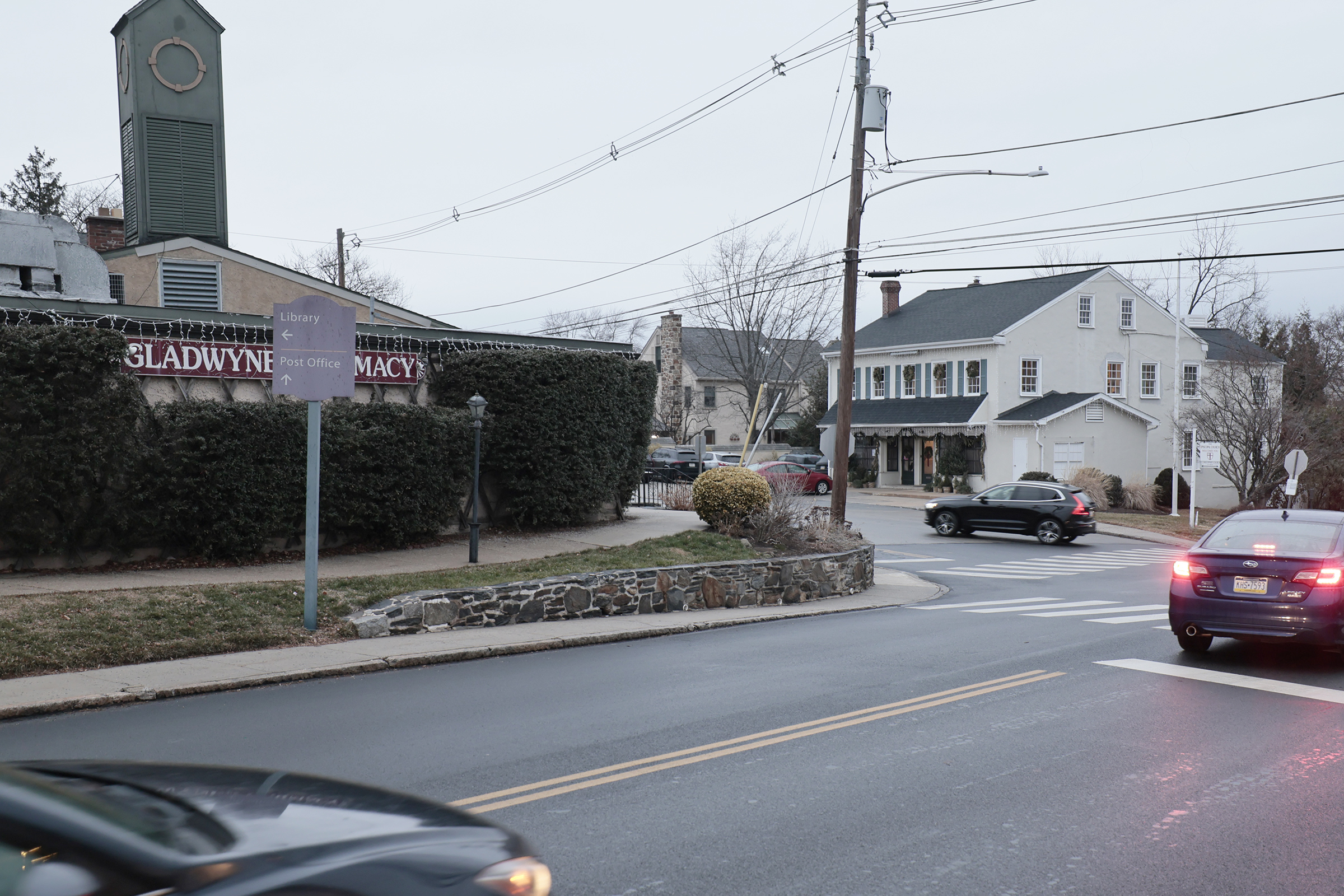
A proposal calls for revitalizing Gladwyne’s town center.
Gladwyne residents are mixed on their support for a sweeping revitalization proposal of the town center, plans for which were revealed just a few weeks ago.
Led by design firm Haldon House and backed by billionaire Jeff Yass, the project calls for historic architecture, green spaces, and businesses that “fit the character” of the area, The Inquirer’s Denali Sagner reports.
One resident called the proposed changes an “absolute no-brainer,” but others are skeptical, particularly about one group having so much say over the town center. It’s even prompted a petition.
The $8.5 million property for sale in Gladwyne includes a 9,166-square-foot home.
This Gladwyne estate situated on 12.76 acres on Country Club Road is on the market for $8.5 million. While the lot size is rare for the area, and provides plenty of privacy, a future owner has the option to subdivide it into three parcels.
The property includes a more than 9,000-square-foot main home that was designed for entertaining. It has six bedrooms, eight full bathrooms, two kitchens, an elevator, a sauna, and a pool.
The region saw its largest snowstorm in a decade over the weekend, with many spots recording more than nine inches, including Penn Wynne, which saw 9.4 inches, according to one figure reported to the National Weather Service — and there’s a small chance more is on the way this weekend. Freezing temperatures are expected to remain this week, meaning the snow and ice aren’t going anywhere. Check out a map of where the most snow fell.
Jamal McCullough was sentenced on Friday to three to six years in a state prison after fatally hitting 61-year-old Tracey Cary as she crossed City Avenue in her wheelchair in 2024. While prosecutors said McCullough was not at fault since Cary wasn’t in a posted crosswalk, he fled the scene, which carries criminal penalties. Cary’s sister said the hearing offered a chance to give the public a more complete picture of her sister, who was unhoused and had a love of reading, traveling, and the outdoors.
There’s a public meeting on Tuesday at 6 p.m. at the Lower Merion Township Building to discuss the Montgomery Avenue Corridor Traffic Calming and Safety Action Plan. The study, which is supported by a Safe Streets and Roads for All grant, focuses on Montgomery Avenue between Spring Mill Road and City Avenue, assessing things like traffic volume and crashes. Lower Merion Township and the Borough of Narberth will use the data and the public’s feedback to help improve safety.
St. Matthias Catholic Church’s former business manager, Sean Michael Sweeney, who is accused of stealing $1.1 million from the Bala Cynwyd institution, has been ordered to stand trial and is scheduled for an arraignment hearing on Feb. 25. (Main Line Times)
The township’s planning commission will discuss a preliminary land development proposal for a portion of 1400 Waverly Rd. in Gladwyne on Monday. Retirement community Waverly Heights is seeking to demolish seven semi-attached single-family villas and put three buildings in their place. Two three-story buildings would be identical and house 12 units each, while the third would add 12 units onto the Blair Apartment Building. Plans also call for additional parking spaces. The meeting will take place at 7 p.m. at the Township Administration Building.
Lights are likely coming to Richie Ashburn Field in Gladwyne, after the Lower Merion Board of Commissioners voted to move forward with a memorandum of understanding to allow the Lower Merion Little League to build and operate lights there. The league will pay for the lights and can’t operate them after 10 p.m. (Main Line Times)
Members of the Lower Merion Township Police Department have donated a collective 800 hours of their time off to their colleague Dan Gilbert. The detective’s wife was diagnosed with Stage 4 colorectal cancer last year, and in a show of support, the department rallied to give him extra time to spend with his family. His wife, Lauren Gilbert, 42, has undergone surgeries and is currently on trial medications. (CBS News Philadelphia)
🏫 Schools Briefing
Tonight is course selection night for LMHS students and tomorrow is the school choice deadline. Tomorrow is also movie night for Penn Wynne Elementary, and there are middle school conferences Tuesday evening. See the district’s full calendar here.
For families who missed last week’s eighth grade to high school transition meeting, the district posted a video from the event, which you can watch here.
The district is hosting a presentation for parents and guardianswith students receiving special education services that will focusonpositive behavior support. It will be held virtually via Zoom on Wednesday from 7 to 8:30 p.m.
On Saturday, LMHS is hosting the 12th Annual Hope Classic to benefit the Angelman Syndrome Foundation. Angelman Syndrome is caused by a gene change and can result in developmental delays, speech and balance problems, mental disability, and seizures, according to the Mayo Clinic. The doubleheader will see the boys and girls basketball teams take on Haverford High’s teams at 1 p.m. and 2:30 p.m., respectively.
Lark is among the region’s 50 best restaurants, according to a new ranking from Philadelphia Magazine, which put Chef Nick Elmi’s Bala Cynwyd restaurant at No. 41. The outlet noted that “there’s hardly a dish that isn’t simultaneously approachable and elevated,” calling out the cavatelli with escargot and bone marrow and pork cheek agnolotti with Taleggio.
🎳 Things to Do
🌎 Ardmore Passport: World Pours: Take a trip around the world by sampling global cuisine, craft beers, and other sips at this festival-style event, which will also feature live music. ⏰ Saturday, Jan. 31, 12:30 p.m. 💵 $64.17-$124.20 📍 Ardmore Music Hall
🍿 Monday Night Movie: In honor of Groundhog Day, catch a screening of the iconic 1993 film starring Bill Murray and Andie MacDowell. Registration is required. ⏰ Monday, Feb. 2, 6:30-8:30 p.m. 💵 Free 📍 Penn Wynne Library
Built in 1924, this four-bedroom, three-and-a-half-bathroom Wynnewood Tudor blends past and present. This home’s first floor features a living room with a gas fireplace, a dining room, a “bonus room,” and a kitchen, with granite countertops, stainless steel appliances, and a separate coffee bar area. There are three bedrooms on the second floor, including the primary suite, which has dual closets, and an additional suite on the third level. The home also has a finished basement, a detached three-car garage, and a heated pool with a spa and waterfall. There’s an open house today from noon to 2 p.m.
By submitting your written, visual, and/or audio contributions, you agree to The Inquirer’s Terms of Use, including the grant of rights in Section 10.
This suburban content is produced with support from the Leslie Miller and Richard Worley Foundation and The Lenfest Institute for Journalism. Editorial content is created independently of the project donors. Gifts to support The Inquirer’s high-impact journalism can be made at inquirer.com/donate. A list of Lenfest Institute donors can be found at lenfestinstitute.org/supporters.