Category: News

Latest breaking news and updates

  • A Cherry Hill man with autism was kicked off a cruise | Inquirer Cherry Hill

    A Cherry Hill man with autism was kicked off a cruise | Inquirer Cherry Hill

    Hello, Cherry Hill! 👋

    A Cherry Hill mom is on a mission to increase understanding for people with autism after her adult son was kicked off a cruise last month. Also this week, we look at whether Wegmans is using biometric technology to spy on its customers, we’ve mapped how much snow fell around town this past weekend, plus a township resident has been charged in the hit-and-run death of a pedestrian.

    If someone forwarded you this email, sign up for free here.

    A Cherry Hill mom is advocating for greater autism awareness after her son was kicked off a cruise

    Cherry Hill resident Carolyn Piro poses for a portrait with her son Sean Curran, who has autism.

    Cherry Hill resident Carolyn Piro’s first vacation in a decade didn’t end how she expected. The mom of four — including a son with autism and two other sons with development disabilities — took her family on a Celebrity Cruise to the Caribbean last month to celebrate her 60th birthday.

    She chose the cruise line because the company, Royal Caribbean, claims to offer an “autism friendly” environment. But when her eldest son was kicked off the ship on Christmas Eve over an incident on board, Piro found staff lacked understanding about his needs.

    After having what she described as the “worst Christmas ever,” Piro is on a mission to increase awareness and acceptance for people with autism, The Inquirer’s Melanie Burney reports.

    Is the Cherry Hill Wegmans collecting shoppers’ biometric data?

    Wegmans has nine New Jersey locations, including in Cherry Hill and Mt. Laurel.

    Signs in New York City Wegmans grocery stores recently alerted shoppers that it was collecting biometrics, raising concerns about what it was doing with that data and whether it was collecting it from other stores, too.

    The popular Rochester, New York-based grocery store won’t say if it’s collecting similar data at its Cherry Hill location, but noted it does have cameras with facial recognition technology in “a small fraction of our stores that exhibit an elevated risk,” The Inquirer’s Denali Sagner reports.

    Read more about why biometric technology is gaining traction in stores beyond Wegmans.

    💡 Community News

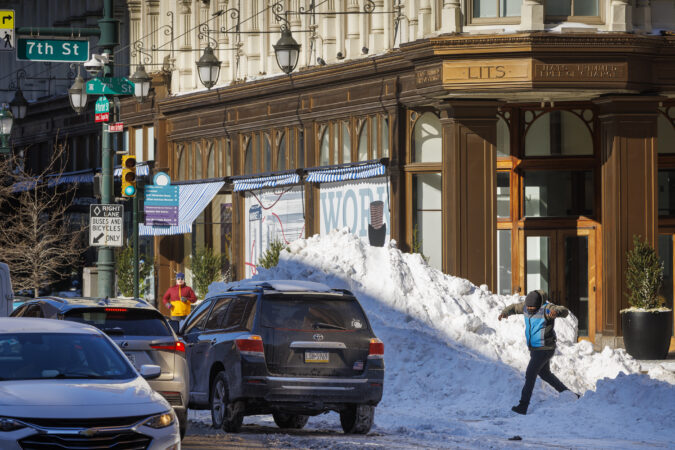
    • The region saw its largest snowstorm in a decade over the weekend, with Cherry Hill recording 9.3 inches as of Monday morning, according to one figure reported to the National Weather Service. Freezing temperatures are expected to remain this week, meaning the snow and ice aren’t going anywhere. Check out a map of where the most snow fell.
    • Due to the storm, Monday’s township council meeting has been pushed to tonight. The caucus meeting is at 7 p.m., with the council meeting slated for 7:30 p.m.
    • A 34-year-old Cherry Hill resident has been charged in the death of a 75-year-old woman in a hit-and-run on Jan. 17. Shakira Carter allegedly hit Andrea Wilson and her dog, Ozzie, near a crosswalk in the Evesham Road and Alpha Avenue area. Carter, a juvenile detention officer, fled the scene before returning in a different vehicle. She has been suspended from work with the Camden County Juvenile Detention Center and charged with second-degree leaving the scene of a fatal motor vehicle accident. (NBC10)
    • Last week, Cherry Hill residents Giselle V. Brown and Ted Gallagher were recognized as recipients of the 2026 Camden County Freedom Medal for their contributions to the community. Township resident Jim Peeler was also presented with the 2026 Camden County Congressional Award.
    • Women’s apparel and accessories store Francesca’s, which has a location at the Cherry Hill Mall, is reportedly closing its remaining stores after years of financial turmoil. Francesca’s filed for Chapter 11 bankruptcy protection in late 2020. (Fox Business)
    • In case you missed it, Club Studio Fitness recently announced it will open a 30,240-square-foot location at Ellisburg Shopping Center in the former Buy Buy Baby space.
    • Gearing up for the Academy Awards? While they may still be six weeks out, the AMC Cherry Hill 24 is screening several of the nominated movies, including the William Shakespeare-inspired Hamnet, the Leonardo DiCaprio-led One Battle After Another, and the 1930s-set Sinners.

    🏫 Schools Briefing

    • Due to snow closures on Monday and Tuesday, the district has planned make-up days for Feb. 16, previously allocated as a holiday for President’s Day, and March 30, which was originally the first day of spring break.

    🍽️ On our Plate

    • In case you missed it, the James Beard Award semifinalists were announced last week, and there are two Cherry Hill ties among them: Russ Cowan of Radin’s Delicatessen was nominated in the Best Chef: Mid-Atlantic category, and township native Greg Vernick got the region’s lone nod in the Outstanding Restaurateur category.
    • Speaking of Greg Vernick, his latest restaurant, run by fellow Cherry Hill native Meredith Medoway, opened yesterday. Located in Kensington, Emilia is a neighborhood trattoria with a seasonal menu featuring house-made pasta and live-fire cooking.

    🎳 Things to Do

    🛍️ Hott’s Pop-Up Home and Lifestyle Show: Browse local businesses selling home decor, food, and art. ⏰ Friday, Jan. 30-Sunday, Feb. 1, times vary 💵 Pay as you go 📍Cherry Hill Mall

    🧸 The Winter Fever Toy Show: Browse over 180 tables of antique and collectible toys. ⏰ Saturday, Jan. 31, 9 a.m. admission for early buyers, 10 a.m.-4 p.m. for general admission 💵 $10 general admission, $20 for early buyers, free for kids under 12 📍Cherry Hill Army National Guard Recruiting Station

    📼 The Bygone Boomerang Vintage Show: If you’re in search of other vintage finds, this show features vendors selling goods like housewares, clothing, art, and more from the 1950s to ‘90s. ⏰ Sunday, Feb. 1, 10 a.m.-4 p.m. 💵 $5, free for kids under 12 📍Cherry Hill Army National Guard Recruiting Station

    ❤️ Galentine’s Besties Brunch: Tickets are going fast for this third annual event, which connects women with one another. Attendees are encouraged to wear red. ⏰ Sunday, Feb. 1, 1-4 p.m. 💵 $36.09 📍Vera

    🏡 On the Market

    A completely updated Ashland home

    The updated kitchen features two-tone cabinetry and an island.

    Located in the Ashland neighborhood, this three-bedroom, two-bathroom home recently underwent a full renovation down to the studs, and now has new windows, a new roof, new HVAC and electrical systems, as well as a completely updated interior. The first floor features a kitchen with an island, a living room, two bedrooms, including the primary, and a full bathroom. There’s another room and bathroom upstairs, and a basement downstairs. There’s an open house Saturday from 11 a.m. to 2 p.m.

    See more photos of the home here.

    Price: $395,000 | Size: 2,470 SF | Acreage: 0.17

    📈 Cherry Hill market report

    • Median listing price: $435,000 (down $25,000 from November) 📉
    • Median sold price: $492,500 (up $35,000 from November) 📈
    • Median days on the market: 52 (up 11 days from November) 📈

    This Cherry Hill market report is published on a monthly basis. Above is data for December from realtor.com.

    🗞️ What other Cherry Hill residents are reading this week:

    By submitting your written, visual, and/or audio contributions, you agree to The Inquirer’s Terms of Use, including the grant of rights in Section 10.

    This suburban content is produced with support from the Leslie Miller and Richard Worley Foundation and The Lenfest Institute for Journalism. Editorial content is created independently of the project donors. Gifts to support The Inquirer’s high-impact journalism can be made at inquirer.com/donate. A list of Lenfest Institute donors can be found at lenfestinstitute.org/supporters.


  • Her adult autistic son was kicked off a cruise ship. Now this South Jersey mother is on a mission to better awareness.

    Her adult autistic son was kicked off a cruise ship. Now this South Jersey mother is on a mission to better awareness.

    While preparing her four sons to take a dream family vacation in the Caribbean last month, Carolyn Piro carefully reviewed every detail to get them ready.

    She also contacted the Royal Caribbean cruise line about accommodations for her children, because her oldest, Sean Curran, has autism, and two other sons also have developmental disabilities.

    The trip ended abruptly when Curran, 31, was kicked off the Celebrity Cruise ship in Cozumel on Christmas Eve after an incident that his family says was mishandled by cruise officials who lacked understanding of his disability.

    “Worst Christmas ever. Horrible,” Curran said. “I’m never going on a cruise again.”

    Piro, a trauma therapist, is now on a mission to increase awareness and acceptance for people with autism. About 1 in 31 children in the United States are diagnosed with autism, according to the Centers for Disease Control and Prevention, and that number is 1 in 29 in New Jersey, according to the group Autism New Jersey.

    “They have a place in our society. They have a place in our community,” Piro said.

    Royal Caribbean, which advertises an “autism friendly” environment, said it had reviewed the incident and “concluded we could have been more sensitive to their needs during the debarkation process.” The company, which owns Celebrity Cruises, will provide additional training for employees, a spokesperson said.

    ‘Just trying to be nice’

    Curran lives as independently as possible at home, Piro said. He participates in job training at Ability Solutions in Westville, has a girlfriend, sings with the Pine Barons Chorus, volunteers at an animal hospital, and enjoys dancing.

    The Cherry Hill family was having a great time on a seven-day Caribbean cruise in December to celebrate Piro’s 60th birthday. It was Curran’s fourth cruise, and he knew the ropes and was allowed to roam unaccompanied.

    Four days into the cruise, Curran was in a pool lounge when, he said, a teenage girl asked him to purchase her a Long Island iced tea. He said he bought the drink, unaware that it contained alcohol. His mother and brothers were not with him at the time.

    According to Curran, the girl touched his chest and stomach, used profanity, and followed him to a hot tub, where he lifted her like Shrek did when he rescued Princess Fiona from a dragon in one of his favorite movies. (Piro said Curran enjoys swimming and playing in the water.)

    The girl’s parents arrived and her mother began screaming, Curran said. Ship personnel escorted Curran to a security office, where he was asked to give a statement, he said.

    “I have autism and I was just trying to be nice,” he wrote in the statement, given to ship personnel and provided to The Inquirer. The statement was only a few sentences of explanation Curran wrote about what happened.

    Piro arrived during the questioning and said Curran offered an apology to the girl’s parents. Curran said he asked for patience and repeated what his mother taught him to say about having autism when he encountered difficulty explaining.

    Curran was given 90 minutes to pack and leave the ship, his mother said. She accompanied him, along with another son. Other passengers gawked and pointed as security escorted them off the ship, she recalled, saying, “Look at them: They’re getting kicked off the ship.”

    “It was just so shameful,” Piro said.

    Piro said she believes ship officials had other options, such as restricting Curran to his room, rescinding his room card that allowed him to buy drinks, or allowing him to disembark at their next port of call, she said.

    “With all of the information about autism, there was no compassion. They treated him as a fully functioning adult,” the mother said.

    Piro said the family was given only a security incident report and told that the FBI and Homeland Security would be notified. She was not allowed to speak with the girl’s family, whose full name she does not know. She said no charges were filed.

    Sean Curran, 31, of Cherry Hill, boarding a Celebrity cruise ship in December for a family vacation. He has autism and was evicted from the ship after a misunderstanding.

    Piro, Curran, and another of her sons who left the cruise were reunited with two other family members several days later when the ship docked in Florida.

    Piro said she accepted an apology from Royal Caribbean after returning home, complaining about the incident, and sharing her story publicly. She also said she had asked to be reimbursed for the $20,000 she spent on the cruise and expenses. Royal Caribbean declined to comment on the request.

    A spokesperson said Royal Caribbean’s additional training for its staff will “ensure this experience doesn’t happen again.” She declined to comment further.

    Stacie Sherman, a spokesperson for Autism New Jersey, declined to comment about the specific incident but agreed there is a need for more awareness. She has had similar experiences as the mother of two on the autism spectrum.

    “Education and awareness is key,” Sherman said.

    Sherman said acceptance is slowly growing. Her daughter used to get nasty looks and comments for making loud noises or having a tantrum in public places, she recalled.

    “I get way more smiles and nods, even praise and offers of help. It gives me hope,” Sherman said.

    Sean Curran, 31, of Cherry Hill, plays with a dolphin during a cruise excursion in Cozumel, Mexico in December.

    Seeking change to the system

    When the family arrived home, Piro said, she reprimanded Curran and limited his activities for a month. Piro said she acknowledges that he did something wrong but said his intent was not malicious.

    Piro said she had selected Royal Caribbean for her first family vacation in a decade because it offered initiatives for families with children who have special needs.

    She said she contacted the cruise line a month before their vacation about her children’s special needs. In addition to Curran, two younger sons have mosaic Down syndrome and fragile X syndrome.

    Piro said she requested special seating, for example, to isolate the family in the dining area from noise and large groups. During an excursion, she rented a cabana away from other guests, she said.

    “We don’t go anywhere where people don’t stare, giggle, or make a comment,” Piro said.

    Piro said she plans to monitor whether Royal Caribbean implements the additional training that it has promised. She wants changes “in the system so that this doesn’t happen again.”

    Carolyn Piro, of Cherry Hill, poses for a portrait with her son Sean, who has autism, in their home this month.

    Curran said telling his story was “making me feel better.” He wants to better advocate for himself and others with autism.

    “I want people to treat other people with dignity and respect, compassion, and kindness,” he said.

  • Bucks County parents of deaf and blind infants are worried about losing a ‘lifeline’ as early intervention contract ends

    Bucks County parents of deaf and blind infants are worried about losing a ‘lifeline’ as early intervention contract ends

    Julia Hess was on the precipice of discovering the extent of the hearing loss in her 9-month-old daughter Jasmine’s right ear, when she learned that crucial support services for her baby and other visually or hearing impaired children in Bucks County would be cut off next week.

    Jasmine, affectionately known as Jazzy, is a smiley infant who has maintained a “sweet and sassy” personality even as she’s been diagnosed with Smith-Lemli-Opitz syndrome, a developmental disorder, and undergone three surgeries.

    “We can see it in her face in the way that she continues to try even when her body is exhausted and her muscles won’t move anymore,” said Hess, 29, a mental health therapist.

    Jazzy has been receiving early intervention services since she was 2 months old from the Bucks County Intermediate Unit, a county-level education agency, including hearing and communication services due to hearing loss in both ears and other developmental delays. Once a week, an instructor travels to Hess’ home and teaches Jazzy how to communicate with the world around her.

    The 9-month-old has made significant progress, but could face setbacks starting this Saturday when the Bucks County IU will cease services for hearing and visually impaired babies and toddlers ages 0-2, citing funding and staffing challenges. And it’s unclear where parents will find services next.

    “It’s really scary to feel like we are kind of just wandering in the dark,” Hess said.

    In Pennsylvania, children with developmental delays and disabilities are eligible to receive services through a state-backed early intervention system — a right grounded in federal special education law.

    But officials with the Bucks IU say they’ve been losing money on the program for hearing and visually impaired infants and toddlers, which currently serves 49 kids. While the state reimburses the county for early intervention services, it doesn’t cover “indirect” service time, officials said. That means the IU can’t bill for the time incurred by therapists driving between appointments, documenting services, and preparing a child’s program.

    Last year, the gap between what the state reimbursed and what the IU paid to deliver the services was $200,000, officials said.

    At the same time, the demand for services for older children also served by the intermediate unit — both preschool and school-age — has been growing, officials said. And with shortages of special education teachers plaguing school districts statewide, ending services for babies and infants allows the unit to redirect its limited supply of teachers for the deaf and visually impaired to serving older children — a group the IU has primary responsibility for serving.

    “I think what we’re experiencing is what happens when you have a severe shortage, a growing number of kids that need the support, and antiquated models of funding that haven’t kept up,” the intermediate unit’s executive director, Mark Hoffman, said Jan. 20 at a meeting of the unit’s board, which is made up of school board members from districts across Bucks County.

    A Pennsylvania Department of Human Services spokesperson said Monday that provider rates would soon be increased as the result of a $10 million boost in this year’s state budget.

    Revised rates “are still being finalized based on this increase and are expected in the coming weeks,” and will be retroactive to July, said the spokesperson, Brandon Cwalina, who said the change would also allow the state to access more federal money.

    It was unclear whether the increase would change the situation in Bucks County. Officials with the IU said Tuesday they hadn’t been informed of any funding increases.

    Families dependent on services from the intermediate unit are unsure what will happen once the contract expires Saturday.

    “They’ve been a lifeline to us … We haven’t had anybody in our family with this,” said Ali Tirendi, 32, of Warrington, noting that service providers not only help kids, but also educate parents, too.

    Nine-month-old Jasmine receives early intervention services, that are set to be disrupted, from the Bucks County IU.

    Grappling with staffing and funding shortages

    Just 24 days before these crucial services were set to be disrupted, families received correspondence from the Bucks County Department of Behavioral Health/Developmental Programs notifying them that “your current hearing/vision support provider may no longer be available,” according to a Jan. 7 letter from Patricia Erario, county early intervention director, reviewed by The Inquirer.

    One of those providers is BARC Developmental Services, a nonprofit agency that provides services to individuals with intellectual disabilities and autism, and uses teachers from the Bucks intermediate unit to carry out its services.

    Mary Sautter, executive director of BARC, said the Bucks IU informed BARC on Dec. 8 that they would be terminating their contract with the developmental services agency, ending a partnership that’s existed for decades. She said stakeholders are planning to have a meeting this week to discuss next steps.

    “Our hope is that we can find a resolution that minimizes disruption to these vital services so that children can continue to thrive,” said Sautter, adding that BARC is also dealing with staff shortages making it difficult to use their own personnel as providers.

    They have one contractor that services 14 kids, but Sautter said they’re looking to expand the contractor’s caseload.

    “It’s a very unfortunate situation,” Sautter said.

    Erario said that the department would work with agencies to find solutions for families, including virtual options, changing the date or time, or finding an alternative provider if necessary.

    Bucks County spokesperson Jim O’Malley said the county “will be working with our partners in the community to restore access to those affected.”

    Given staffing shortages, Jill Waldbieser, a Neshaminy school board member who serves on the intermediate unit’s board, said she was extremely skeptical the county would find replacement teachers.

    “There’s absolutely no way they’re going to find providers,” said Waldbieser, whose 11-year-old son is deaf.

    Waldbieser’s son went without an interpreter for a year in violation of his individualized education plan.

    “Even if it’s a day or week” that children go without services, “you can never get that time back,” said Waldbieser, who has been pressing officials for a solution.

    Early intervention is valuable for families, and a gap in services could be detrimental, said Casey James, 35, of Warminster, whose 19-month-old has a hearing impairment.

    “What families like mine are concerned about are service gaps, delays, being forced into a fragmented system with multiple providers,” James said.

    Ashley Dats said it “took us as a shock” to learn services for her 21-month-old daughter, who has severe hearing loss, would soon be interrupted.

    “We’re worried,” said Dats, who lives in Doylestown. Her daughter gets a weekly hourlong session with a teacher of the deaf, who works to help her understand spoken language — narrating actions during play, and encouraging her to mimic words — and catch up to her normal-hearing peers.

    Even if a new provider is identified, Dats doesn’t know when that will be, or how her daughter will fare with the change. It took two months for her daughter to reengage after a previous switch in teachers, she said.

    “There are milestones we’re looking to hit, to show us her brain is processing and understanding” words, said Dats, who worried about losing momentum as a result of the service interruption.

    “We don’t want them to get left behind because of funding issues.”

  • Russia offers cash bonuses, frees prisoners, and lures foreigners to replenish its troops in Ukraine

    Russia offers cash bonuses, frees prisoners, and lures foreigners to replenish its troops in Ukraine

    For average wage earners in Russia, it’s a big payday. For criminals seeking to escape the harsh conditions and abuse in prison, it’s a chance at freedom. For immigrants hoping for a better life, it’s a simplified path to citizenship.

    All they have to do is sign a contract to fight in Ukraine.

    As Russia seeks to replenish its forces in nearly four years of war — and avoid an unpopular nationwide mobilization — it’s pulling out all the stops to find new troops to send into the battlefield.

    Some come from abroad to fight in what has become a bloody war of attrition. After signing a mutual defense treaty with Moscow in 2024, North Korea sent thousands of soldiers to help Russia defend its Kursk region from a Ukrainian incursion.

    Men from South Asian countries, including India, Nepal, and Bangladesh, complain of being duped into signing up to fight by recruiters promising jobs. Officials in Kenya, South Africa, and Iraq say the same has happened to citizens from their countries.

    Russian numbers in Ukraine

    President Vladimir Putin told his annual news conference in December that 700,000 Russian troops are fighting in Ukraine. He gave the same number in 2024, and a slightly lower figure — 617,000 — in December 2023. It’s unclear if those numbers are accurate.

    Still hidden are the numbers of military casualties, with Moscow having released limited official figures. The British Defense Ministry said last summer that more than 1 million Russian troops may have been killed or wounded.

    Independent Russian news site Mediazona, together with the BBC and a team of volunteers, scoured news reports, social media and government websites, and collected the names of over 160,000 troops killed. More than 550 of those were foreigners from over two dozen countries.

    How Russia gets new soldiers

    Unlike Ukraine, where martial law and nationwide mobilization has been in place since the start of Russia’s full-scale invasion in February 2022, Putin has resisted ordering a broad call-up.

    When a limited mobilization of 300,000 men was tried later that year, tens of thousands of people fled abroad. The effort stopped after a few weeks when the target was met, but a Putin decree left the door open for another call-up. It also made all military contracts effectively open-ended and barred soldiers from quitting service or being discharged, unless they reached certain age limits or were incapacitated by injuries.

    Since then, Moscow has largely relied on what it describes as voluntary enlistment.

    The flow of voluntary enlistees signing military contracts has remained strong, topping 400,000 last year, Putin said in December. It was not possible to independently verify the claim. Similar numbers were announced in 2024 and 2023.

    Activists say these contracts often stipulate a fixed term of service, such as one year, leading some potential enlistees to believe the commitment is temporary. But contracts are automatically extended indefinitely, they say.

    The incentives

    The government offers high pay and extensive benefits to enlistees. Regional authorities offer various enlistment bonuses, sometimes amounting to tens of thousands of dollars.

    In the Khanty-Mansi region of central Russia, for example, an enlistee would get about $50,000 in various bonuses, according to the local government. That’s more than twice the average annual income in the region, where monthly salaries in the first 10 months of 2025 were reported to be just over $1,600.

    There also are tax breaks, debt relief, and other perks.

    Despite Kremlin claims of relying on voluntary enlistment, media reports and rights groups say conscripts — men aged 18-30 performing fixed-term mandatory military service and exempted from being sent to Ukraine — are often coerced by superiors into signing contracts that send them into battle.

    Recruitment also extends to prisoners and those in pretrial detention centers, a practice led early in the war by the late mercenary chief Yevgeny Prigozhin and adopted by the Defense Ministry. Laws now allow recruitment of both convicts and suspects in criminal cases.

    Targeting foreigners

    Foreigners also are recruiting targets, both inside Russia and abroad.

    Laws were adopted offering accelerated Russian citizenship for enlistees. Russian media and activists also report that raids in areas where migrants typically live or work lead to them being pressuring into military service, with new citizens sent to enlistment offices to determine if they’re eligible for mandatory service.

    In November, Putin decreed that military service was mandatory for certain foreigners seeking permanent residency.

    Some reportedly are lured to Russia by trafficking rings promising jobs, then duping them into signing military contracts. Cuban authorities in 2023 identified and sought to dismantle one such ring operating from Russia.

    Nepal’s Foreign Minister Narayan Prakash Saud told the Associated Press in 2024 that his country asked Russia to return hundreds of Nepali nationals who were recruited to fight in Ukraine, as well as to repatriate the remains of those killed in the war. Nepal has since barred citizens from traveling to Russia or Ukraine for work, citing recruitment efforts.

    Also in 2024, India’s federal investigation agency said it broke up a network that lured at least 35 of its citizens to Russia under the pretext of employment. The men were trained for combat and deployed to Ukraine against their will, with some “grievously injured,” the agency said.

    When Putin hosted Indian Prime Minister Narendra Modi for talks in 2024, New Delhi said its nationals who were “misled” into joining the Russian army would be discharged.

    Iraqi officials say about 5,000 of its citizens have joined the Russian military along with an unspecified number who are fighting alongside Ukrainian forces. Officials in Baghdad cracked down on such recruiting networks, with one man convicted last year of human trafficking and sentenced to life in prison.

    An unknown number of Iraqis have been killed or gone missing while fighting in Ukraine. Some families have reported that relatives were lured to Russia under false pretenses and forced to enlist; in other cases, Iraqis have joined voluntarily for the salary and Russian citizenship.

    Foreigners duped into fighting are especially vulnerable because they don’t speak Russian, have no military experience and are deemed “dispensable, to put it bluntly,” by military commanders, said Anton Gorbatsevich of the activist group Idite Lesom, or “Get Lost,” which helps men desert from the army.

    A drain on a slowing economy

    This month, a Ukrainian agency for the treatment of prisoners of war said over 18,000 foreign nationals had fought or are fighting on the Russian side. Almost 3,400 have been killed, and hundreds of citizens of 40 countries are held in Ukraine as POWs.

    If true, that represents a fraction of the 700,000 troops that Putin said are fighting for Russia in Ukraine.

    Using foreigners is only one way to meet the constant demand, said Artyom Klyga, head of the legal department at the Movement of Conscientious Objectors, noting Russian recruitment efforts appear to be stable. Most of those seeking help from the group, which assists men in avoiding military service, are Russian citizens, he said.

    Kateryna Stepanenko, a Russia researcher at the Washington-based Institute for the Study of War, said the Kremlin has gotten more “creative” in the last two years with attracting enlistees, including foreigners.

    But recruitment efforts are becoming “extremely expensive” for Russia, which faces a slowing economy, she added.

  • Two teens, ages 14 and 15, injured in North Philly shooting

    Two teens, ages 14 and 15, injured in North Philly shooting

    Two teenage boys, ages 14 and 15, were injured in a shooting Tuesday night in North Philadelphia, police said.

    The shooting, which happened shortly after 7 p.m. at the corner of 24th Street and Cecil B. Moore Avenue, was captured on surveillance video, said Chief Inspector Scott Small.

    The boys were walking toward a store at the corner when they appeared to get into a verbal altercation with another male, Small said.

    The shooter fired at least two times and then ran north on 24th Street, Small said. The 14-year-old was shot in the foot and the 15-year-old was shot in the abdomen.

    The teens, who are friends, then ran to a nearby house where one of them lives on the 2400 block of Turner Street, Small said. They were then taken by police to Temple University Hospital, where they were listed in stable condition.

    Police found one spent shell casing at the shooting scene, Small said.

  • Man arrested after spraying unknown substance on Rep. Ilhan Omar at Minneapolis town hall

    Man arrested after spraying unknown substance on Rep. Ilhan Omar at Minneapolis town hall

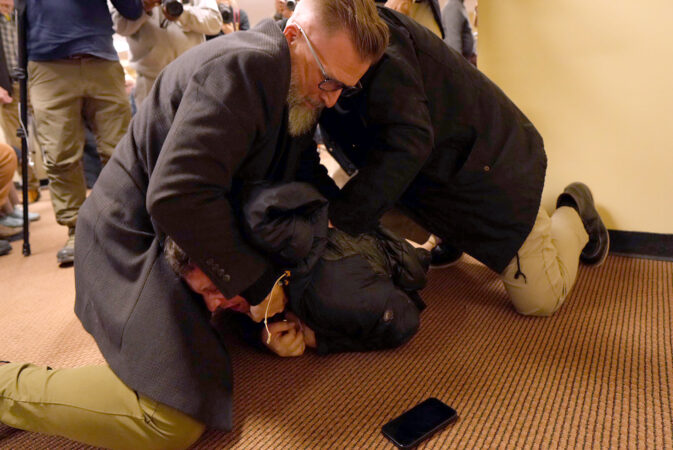
    MINNEAPOLIS — A man sprayed an unknown substance on Democratic U.S. Rep. Ilhan Omar and was tackled to the ground Tuesday during a town hall in Minneapolis, where tensions over federal immigration enforcement have come to a head after agents fatally shot an intensive care nurse and a mother of three this month.

    The audience cheered as the man was pinned down and his arms were tied behind his back. In video of the incident, someone in the crowd can be heard saying, “Oh my god, he sprayed something on her.”

    Just before that Omar had called for the abolishment of U.S. Immigration and Customs Enforcement and for Homeland Security Secretary Kristi Noem to resign or face impeachment. Calls are mounting on Capitol Hill for Noem to step down after the shooting deaths in Minneapolis of two people who protested deportations. Few Republicans have risen to her defense.

    “ICE cannot be reformed,” Omar said, seconds before the attack.

    Minneapolis police said officers saw the man use a syringe to spray an unknown liquid at Omar. They immediately arrested him and booked him at the county jail for third-degree assault, spokesperson Trevor Folke said. Forensic scientists responded to the scene.

    Police identified the man as 55-year-old Anthony Kazmierczak. It was not immediately clear if Kazmierczak had an attorney. The county public defenders’ office could not immediately be reached.

    Omar continued speaking for about 25 more minutes after the man was ushered out by security, saying she would not be intimidated.

    There was a strong, vinegarlike smell after the man pushed on the syringe, according to an Associated Press journalist who was there. Photos of the device, which fell to the ground when he was tackled, showed what appeared to be a light-brown liquid inside. There was no immediate word from officials on what it was.

    Minneapolis Council Member LaTrisha Vetaw said some of the substance also came into contact with her and state Sen. Bobby Joe Champion. She called it a deeply unsettling experience.

    No one in the crowd of about 100 people had a noticeable physical reaction to the substance.

    Omar says she is OK and ‘a survivor’

    Walking out afterward, Omar said she felt a little flustered but was not hurt. She was going to be screened by a medical team.

    She later posted on the social platform X: “I’m ok. I’m a survivor so this small agitator isn’t going to intimidate me from doing my work. I don’t let bullies win.”

    The White House did not immediately respond to a message seeking comment Tuesday night.

    President Donald Trump has frequently criticized the congresswoman and has stepped up verbal attacks on her in recent months as he turned his focus on Minneapolis. During a Cabinet meeting in December, he referred to her as “garbage.”

    Hours earlier on Tuesday, the president criticized Omar as he spoke to a crowd in Iowa, saying his administration would only let in immigrants who “can show that they love our country.”

    “They have to be proud, not like Ilhan Omar,” he said, drawing loud boos at the mention of her name.

    He added: “She comes from a country that’s a disaster. So probably, it’s considered, I think — it’s not even a country.”

    Omar is a U.S. citizen who fled her birthplace, Somalia, with her family at age 8 as a civil war tore apart the country.

    The Minneapolis-St. Paul area is home to about 84,000 people of Somali descent — nearly a third of Somalis living in the U.S.

    Officials condemn the attack

    Democratic Minnesota Gov. Tim Walz expressed gratitude that Omar was safe, adding in a post on X: “Our state has been shattered by political violence in the last year. The cruel, inflammatory, dehumanizing rhetoric by our nation’s leaders needs to stop immediately.”

    U.S. Rep. Nancy Mace, a South Carolina Republican, also denounced the assault.

    “I am deeply disturbed to learn that Rep. Ilhan Omar was attacked at a town hall today” Mace said. “Regardless of how vehemently I disagree with her rhetoric — and I do — no elected official should face physical attacks. This is not who we are.”

    Minneapolis Mayor Jacob Frey, a Democrat, called the attack “unacceptable.” He said he was relieved that Omar “is OK” and thanked police for their quick response, concluding: “This kind of behavior will not be tolerated in our city.”

    The city has been reeling from the fatal shootings of two residents by federal immigration agents this month during Trump’s massive immigration enforcement surge. Intensive care unit nurse Alex Pretti was killed Saturday, less than three weeks after Renee Good was fatally shot behind the wheel of her vehicle.

    Lawmakers face rising threats

    The attack came days after a man was arrested in Utah for allegedly punching U.S. Rep. Maxwell Frost, a Democrat from Florida, in the face during the Sundance Film Festival and saying Trump was going to deport him.

    Threats against members of Congress have increased in recent years, peaking in 2021 in the aftermath of that year’s Jan. 6 attack on the U.S. Capitol, before dipping slightly only to climb again, according to the most recent figures from the U.S. Capitol Police.

    Lawmakers have discussed the impact on their ability to hold town halls and public events, with some even citing the threat environment in their decisions not to seek reelection.

    Following the assault on Omar, U.S. Capitol Police said in a statement that the agency was “working with our federal partners to see this man faces the most serious charges possible to deter this kind of violence in our society.”

    It also released updated numbers detailing threats to members of Congress: 14,938 “concerning statements, behaviors, and communications directed against lawmakers, their families, staff and the Capitol Complex” in 2025.

    That is a sharp increase from 2024, when the number of cases was 9,474, according to USCP. It is the third year in a row that the number of threats has increased.

    Capitol Police have beefed up security measures across all fronts since Jan. 6, 2021, and the department has seen increased reporting after a new center was launched two years ago to process reports of threats.

  • 2 federal officers fired shots during encounter that killed Alex Pretti, DHS tells Congress

    2 federal officers fired shots during encounter that killed Alex Pretti, DHS tells Congress

    WASHINGTON — Two federal officers fired shots during an encounter that killed ICU nurse Alex Pretti in Minneapolis, a Customs and Border Protection official told Congress in a notice sent Tuesday.

    The notice said one Border Patrol officer fired his Glock and a CBP officer fired his, according to a notification to Congress obtained by The Associated Press.

    Investigators from CBP’s Office of Professional Responsibility conducted the analysis based on a review of body-worn camera footage and agency documentation, the notice said. The agency is required to report in-custody and certain other deaths involving its agents and officers to Congress.

    A Customs and Border Protection official said in the notice that officers tried to take Pretti into custody and he resisted, leading to a struggle. During the struggle, a Border Patrol agent yelled, “He’s got a gun!” multiple times, the official said.

  • Many Philly side streets remain full of snow and ice days after Sunday’s storm

    Many Philly side streets remain full of snow and ice days after Sunday’s storm

    It is a sentiment long held by residents across Philadelphia, especially those living on side streets, dating back to when snowfall was a more frequent occurrence than it has been in recent years: Don’t expect the city to do a thorough plowing job.

    That belief is one that Philadelphia Mayor Cherelle L. Parker has said she is trying to shake with action.

    Two days before a storm that whacked the city with 9.3 inches of snow and sleet, Parker, surrounded by the leaders of various agencies, including the Philadelphia Streets Department, vowed to buck precedent on the plowing issue.

    “We will make every effort to get to every primary, secondary, and tertiary street in the city of Philadelphia, and that is our standard,” she said, adding it would take “as long as it takes,” citing worker safety.

    “But know that we won’t leave any neighborhood, any block, or any community behind.”

    Still, residents across the city Tuesday said they were losing patience as side streets and even some secondary streets remained packed with several inches of snow and ice, locking cars in and making navigating intersections impossible.

    Fishtown resident Rohan Khadka, 22, was hoping plowing might happen overnight. Instead he woke up Tuesday to streets that were hard for him to cross even with the proper footwear.

    “A lot of our roads down here look exactly the same,” he said. “Most of the cleanup that has happened, to my knowledge, has either been by other residents or just cars happening to clean it because they’re using those roads.”

    A pedestrian walks through a snow-covered parking lot at Ninth and Arch Streets in Center City Philadelphia, Tuesday, Jan. 27, 2026.

    Analysis of the City of Philadelphia’s PlowPHL data, which tracks the movement of plows via GPS data, showed that about a quarter of streets citywide had received no snow treatment at all — including salting or plowing — after the conclusion of the storm Sunday night.

    Some areas were worse off than others.

    In places like Overbrook and Wynnefield, the city had salted or plowed about 70% of streets by the end of Sunday morning, when the storm began. But the majority of streets in these neighborhoods received no additional plowing or salting since Sunday, according to city data.

    The same was true for about a third of streets in South Philadelphia.

    The streets department said Tuesday it was deploying over 200 vehicles and excavators as part of a so-called lifting operation. Fourteen teams were fanning across the city to scoop up snow from the narrow roads and load it into dump trucks on nearby primary streets.

    The snow hauls were then being taken to storage sites across the city.

    Director of Clean and Green Initiatives Carlton Williams drove through parts of South Philadelphia on Tuesday afternoon, as dozens of the side-street-size excavators made their way through the city’s narrowest byways.

    “It is the smaller tertiary streets that are challenging,” he said. “There’s more of them. It’s difficult to navigate through those streets.”

    As Williams passed a side street with several inches of snow packed, he noted a car illegally parked on the corner, which would make it difficult for machines to get through.

    Williams said this storm came with additional challenges. Not only did the snow fall in a condensed period of time, but it was followed by sleet and frozen rain.

    “We wouldn’t have many of the challenges that we’re facing today, slowdowns, if those other weather conditions beyond our control did not exist,” he said. “But again, I want to reassure the public that we’re aware. You see us out here today. We’ll be out here tomorrow, and we’ll continue to fight this storm.”

    But for Philadelphians waiting for a plow, time is of the essence.

    311 ringing off the hook

    For Moya Ferenchak, 30, the effectiveness of the operation carries serious health implications. They started pet sitting on the 1500 block of South Capitol, a South Philly side street, for a friend last Tuesday, bringing exactly one week’s worth of food and lifesaving medication — more than they expected to need.

    Ferenchak, who lives with a disability that causes limited mobility, cannot shovel. Calling a car not only is expensive but also would require Ferenchak to travel with all their belongings to an intersection that is not blocked by snow.

    Adding to frustrations across the city were reports of inundated 311 phone lines.

    “I called first thing this morning, and there was a 50-plus-person queue,” Ferenchak said. “Then I called again, and there was like a 70-plus-person queue. I waited for like an hour or so, and then it hung up on me.”

    Alex Wiles of Philadelphia has been hustling during the recent snow, shoveling sidewalks and digging out cars. This photograph was taken along North Second Street near his home, Tuesday, Jan. 27, 2026. He was heading to the bus for a trip to his next client.

    The processing of online 311 tickets has also been a source of confusion for residents who wonder if they are being paid attention to. Williams said the complaints are populating a map used to direct plows to avoid redundancies.

    “We’ll take that data and get it within the operation,” he said.

    Some homes feel the impact more than others

    On the 4800 block of Regent Street in West Philadelphia, Justin Rothrauff described the road as “treacherous” for the mix of families and older residents who live there.

    “One of the big problems, besides the street not being plowed, is that the plowing that they have done on some of those primary roads has blocked the secondary and tertiary roads,” the 43-year-old teacher said, adding even if he could somehow get his car out of his block, he is not sure he would make it back in.

    While Rothrauff had heard of people paying to have their roads shoveled, he feels no one should have to.

    “I refuse to pay anyone money, I pay enough taxes in the city,” he said.

    For some Philadelphians, some information could go a long way. A much-touted live map of plow operations has been reported for mistakenly listing some streets as plowed, according to the residents who live there.

    Ken Wong shovels snow on Waverly Street, in Philadelphia, Monday, Jan. 26, 2026.

    Krista Dedrick-Lai, 45, a South Philly resident, hopes the city will do more to tell people about plowing statuses, and explain why their streets are still covered in snow days after the storm, even if the answers are not what they are hoping to hear.

    “Sometimes context can make everyone feel better,” she said, noting her block on Federal Street got a plow Monday and Tuesday, but the snow banks had blocked cars in.

    Fortunately, she said, she and her husband have not needed to leave their house to work or to help their child learn through third-grade virtual learning modules.

    Others, however, do not have that flexibility. Making matters worse, more snow may be on the horizon this weekend.

  • Streets will be closed around City Hall for snow removal operation

    Streets will be closed around City Hall for snow removal operation

    The Streets Department on Tuesday is removing snow that has piled up around City Hall, and the operation requires street closures on nearby blocks, the agency said.

    With the region expected to remain in a prolonged deep freeze, there is no chance the snow piles will melt anytime soon. And weather forecasters say the region might be hit with another storm this weekend, so the city is eager to get rid of the existing snow.

    The “lifting operation” includes the removal of snow using dozens of vehicles, including excavators and loaders, the department said Tuesday.

    The city already has been conducting lifting operations in North Philadelphia, removing snow from Girard Avenue and nearby neighborhoods since Sunday evening, the department said.

    Similar operations have been underway in neighborhoods across the city, the department said.

    The streets around City hall will be closed through midnight Tuesday.

    The closures include:

    • Penn Square around City Hall
    • North Broad Street from Arch Street to City Hall
    • South Broad from Chestnut Street to City Hall
    • 15th Street from Arch to Chestnut
    • John F. Kennedy Boulevard from Filbert to 16th Street
    • East Market Street from 13th Street to City Hall
    • West Market Street from 16th to City Hall

    The snow is being removed to 37 storage sites across the city, mainly large paved surfaces, the department said.

  • ICE tactics in Minneapolis set off political firestorm from Philadelphia City Hall to Washington

    ICE tactics in Minneapolis set off political firestorm from Philadelphia City Hall to Washington

    In Philadelphia, lawmakers on Tuesday unveiled legislation that would institute some of the nation’s toughest limits on federal immigration-enforcement operations.

    In Harrisburg, a top Democrat floated making Pennsylvania a so-called sanctuary state to protect undocumented immigrants.

    And in Washington, senators faced mounting pressure to hold up funding for the Department of Homeland Security, an effort that could result in a government shutdown by the end of the week.

    Across the nation, lawmakers are fielding calls to rein in U.S. Immigration and Customs Enforcement after President Donald Trump’s administration surged forces into Minneapolis as part of his aggressive nationwide deportation campaign. Frustration with the agency reached new heights Saturday after agents fatally shot protester Alex Pretti, the second killing of a U.S. citizen there this month.

    Democrats nationwide slammed ICE and called on Trump to pull the forces out of Minnesota. Sen. John Fetterman, the Pennsylvania Democrat who has at times sided with Trump on immigration matters, said DHS Secretary Kristi Noem should be fired.

    Anti-ICE activists demonstrate outside U.S. Sen. John Fetterman’s Philadelphia office on Monday, calling for an end to federal immigration enforcement policies.

    But Fetterman has also said he will not vote to shut down the government. That angered protesters, who rallied on Tuesday outside his Philadelphia office. Some of the senator’s fellow Democrats, including members of Pennsylvania’s U.S. House delegation, urged him to vote against a bill to fund DHS.

    A growing number of Republicans have also signaled their discomfort with the Minneapolis operation, including Trump allies who called on members of the administration to testify before Congress. Sen. Dave McCormick, a Pennsylvania Republican, has called for an independent investigation into Pretti’s killing.

    Trump, for his part, showed some willingness to change course, sending border czar Tom Homan to Minneapolis to meet with Democratic leaders there. The president on Tuesday called Pretti’s death a “very sad situation.”

    Rue Landau shown here during a press conference at City Hall to announce a package of bills aimed at pushing back against ICE enforcement in Philadelphia on Tuesday.

    However, a chorus of Democrats and activists said Tuesday that the agency needs to change its tactics and be held accountable for missteps. And local leaders said they are laying out plans in case a surge of immigration enforcement comes to Philadelphia, home to an estimated 76,000 undocumented immigrants.

    “We have spent hours and hours and hours doing tabletop exercises to prepare for it,” Gov. Josh Shapiro, a Democrat, said during a Monday night interview on The Late Show with Stephen Colbert.

    Shapiro, who is running for reelection and is a rumored presidential contender, added: “I want the good people of Pennsylvania to know — I want the American people to know — that we will do everything in our power to protect them from the federal overreach.”

    Codifying sanctuary policies

    Philadelphia officials said the best way they can prepare is by limiting the city’s cooperation with federal immigration enforcement.

    City Councilmember Kendra Brooks, of the progressive Working Families Party, and Councilmember Rue Landau, a Democrat, were joined by dozens of activists and other elected officials during a news conference Tuesday to unveil a package of legislation aimed at codifying into law the city’s existing “sanctuary city” practices.

    Those policies, which are currently executive orders, bar city officials from holding undocumented immigrants in custody at ICE’s request without a judicial warrant.

    Landau and Brooks’ legislative package, expected to be introduced in Council on Thursday, goes further, preventing ICE agents from wearing masks, using city-owned property for staging raids, or accessing city databases.

    Erika Guadalupe Núñez, executive director of immigrant advocacy organization Juntos, said the legislation “goes beyond just ‘We don’t collaborate.’”

    Juntos gets regular calls about ICE staging operations at public locations in and around Philadelphia, and people have been worried, despite official assurances, whether personal information held by the city will be secure from government prying.

    “We deserve a city that has elected leadership that’s willing to step forward with clear and stronger protections,” Núñez said.

    A protester speaks to a Minnesota State Patrol officer near the site of the fatal shooting of 37-year-old Alex Pretti by federal agents in Minneapolis on Saturday.

    If the legislation is approved, Philadelphia would have some of the most stringent protections for immigrants in the country.

    Oregon has especially strong restrictions against cooperation with federal immigration authorities, including barring local law enforcement from detaining people or collecting information on a person’s immigration status without a judicial warrant.

    In Illinois, local officers “may not participate, support, or assist in any capacity with an immigration agent’s enforcement operations.” They are also barred from granting immigration agents access to electronic databases or to anyone in custody.

    California, New York, Colorado, Vermont — and individual jurisdictions in those states — also provide strong protections for immigrants.

    In New Jersey, Gov. Mikie Sherrill, a Democrat who was sworn in last week, has kept the state’s sanctuary directive in place as lawmakers seek to expand and codify the policy into law. Legislators came close in the final days of former Gov. Phil Murphy’s administration, but he killed a related bill that had won approval in Trenton, saying he worried that enacting a law that included changes to the state’s current policy would invite new lawsuits.

    Meanwhile, some conservatives say bolstering sanctuary policies risks community safety.

    “If an illegal immigrant breaks the law, they should be dealt with and handed over to federal law enforcement, not be released back into our neighborhoods to terrorize more victims and commit more crime,” said James Markley, a spokesperson for the Pennsylvania Republican Party.

    He added: “Sanctuary policies don’t protect communities, they endanger all of us by shielding criminals from accountability for their crimes.”

    Democrats are taking varying approaches

    The widespread outrage over ICE’s tactics in Minneapolis has exposed sharp divisions in elected Democrats’ responses.

    On one end of the party’s ideological spectrum is Fetterman, who has said often that he will not bow to activist demands and strongly opposes shutting down the federal government, even if it means funding DHS.

    On the other end is District Attorney Larry Krasner, Philadelphia’s most prominent progressive, who has on several occasions threatened to file criminal charges against ICE agents who commit crimes in the city.

    “There will be accountability now. There will be accountability in the future. There will be accountability after [Trump] is out of office,” Krasner said Tuesday. “If we have to hunt you down the way they hunted down Nazis for decades, we will find your identities.”

    District Attorney Larry Krasner speaks during a news conference at City Hall on Tuesday to announce a package of bills aimed at pushing back against ICE enforcement in Philadelphia.

    Somewhere in the middle is State Sen. Sharif Street, a Philadelphia Democrat and former head of the state party who is running for Congress.

    Street does not have Krasner’s bombast, but this week he announced plans to introduce legislation to prevent state dollars from funding federal immigration enforcement. The bill has less of a chance of becoming law in Pennsylvania’s divided state legislature than similar measures would in Philadelphia, where City Council is controlled by a supermajority of Democrats.

    “Who knows the amount of money that the state could incur because of Trump’s reckless immigration policies?” Street said in an interview Tuesday. “I don’t think state taxpayers should be paying for Donald Trump’s racist, reckless policies.”

    The city’s most prominent Democrat — Mayor Cherelle L. Parker — has perhaps said the least.

    The centrist Democrat has largely avoided outwardly criticizing Trump or his administration, saying often that she is focused on carrying out her own agenda.

    The mayor’s critics have said her approach is not responsive to the city’s overwhelmingly Democratic residents.

    “To the people of Philadelphia, I want to say: I hear you. You want ICE out of our city, and you want your local government to take action,” Brooks, the Council member, said Tuesday. “Some people believe that silence is the best policy when dealing with a bully, but that’s never been an option for me.”

    Kendra Brooks shown here during a news conference at City Hall on Tuesday to announce a package of bills aimed at pushing back against ICE enforcement in Philadelphia.

    Others say Parker’s conflict-averse strategy is appropriate.

    “All of us have different roles to play,” Street said. “The mayor has to manage the city. She’s got to command law enforcement forces. … As a state legislator, we make policy.”

    Rafael Mangual, a fellow who studies urban crime and justice at the right-leaning Manhattan Institute in New York City, said legislative efforts to erect barriers between federal and local law enforcement could backfire.

    “If you don’t engage at all, and you do something that seems to actively frustrate the federal government,” Mangual said, “that would seem to be an invitation for the federal government to prioritize a city like Philadelphia.”

    Staff writers Alfred Lubrano, Aliya Schneider, and Gillian McGoldrick contributed to this article.