Category: News

Latest breaking news and updates

  • Yes, there are bats in her Berks County home — and she’s trying to save them all

    Yes, there are bats in her Berks County home — and she’s trying to save them all

    Stephanie Stronsick has bats in her Berks County house. On purpose.

    “Aw, look at her little face,” Stronsick said about an injured brown bat her husband was holding on a recent winter afternoon.

    Stephanie Stronsick is the founder of PA Bat Rescue in Berks County.

    Stronsick, 42, is the founder and executive director of Pennsylvania Bat Conservation and Rehabilitation (PA Bat Rescue), a nonprofit that underwent a major overhaul last year.

    She’d like the bats to leave, ideally, but only after they’ve healed. Currently, the facility is treating over 100 bats for injuries and illness. Some bonked their heads on tall urban buildings that don’t turn off their lights at night. Others were torn up by outdoor cats or birds of prey.

    Some big fruit bats, which look like puppies, were hanging upside down in one room. They used to live at the Akron Zoo.

    Like the other bats in Stronsick’s house, they were asleep.

    “They’re all retired,” she said.

    Some of Stronsick’s bats are being treated for white-nose syndrome, a fungal disease that has killed millions of bats in North America. In Pennsylvania, it’s estimated that 99% of cave-dwelling bats have been affected by the fungus during hibernation.

    “We’ve lost so many bats that we’re at a point where if we don’t do something, they’re going to be gone,” Stronsick said. “In my lifetime, we are looking at the [local] extinction of two species that occur in Pennsylvania: the Northern long-eared bat and the tricolored bat.”

    Northern long-eared bat. (Wisconsin Department of Natural Resources via AP, File)

    Bats get a bad rap, Stronsick said, thanks to horror tropes, rabies fears, and the overhyped interest in vampire bats. Only three of the approximately 1,500 bat species drink blood, and they’re in Central and South America.

    “I think all bats are adorable,” she said.

    If the general public doesn’t see that, they should at least understand that the flying mammals are biologically fascinating, contribute to healthy ecosystems, and help scientists.

    “If it wasn’t for bats, the military wouldn’t have radar, and anticoagulants that vampire bats use have been studied to treat blood clots and stroke,” said Greg Turner, a mammalogist with the Pennsylvania Game Commission.

    Bats, Turner said, are also highly resistant to cancer.

    In Pennsylvania, bats are insectivores, Turner said, and they eat nothing but flying insects at night. He said studies have shown that bats in Pennsylvania save farmers $74 per acre, by eating moths that would otherwise produce crop-eating caterpillars.

    “They also eat mosquitoes,” he said.

    Elsewhere in the world, bats help pollinate cacti and agave.

    “A lot of people should be happy bats are out there performing every night,” Turner said. “No bats, no tequila. No margaritas.”

    Aside from the fungus, Stronsick said bats face serious dangers similar to birds: predation from feral and outdoor cats and building strikes.

    “Bats do not recognize cats as a predator. If people have cats outdoors, they absolutely should not be feeding birds in the same area, and they should not have a bat house anywhere near there either,” she said. “If you do that, you’re inviting these animals to die. ”

    Stronsick said the light pollution from large cities, combined with a bat’s ability to echolocate, makes window strikes common.

    “When they hit something hard, they do a lot of damage,” she said. “Cityscapes are not good environments for bats.”

    Turner said wind turbines, which dot the landscape in mountainous regions of Pennsylvania, are bat killers. Bats do not constantly echolocate, he said — that would be like screaming, nonstop — and when they’re not echolocating, they’re susceptible to the turbines.

    “It’s estimated that 25 bats are killed per turbine per year, and we have hundreds of turbines in the state,” Turner said.

    PA Bat Rescue takes in bats, year-round.

    Stronsick said she grew up outdoors, seeing bats at her grandmother’s home and playing with salamanders. She’s worked with raptors and shore birds in California and stumbled upon bats.

    “They were so different from what I imagined,” she said. “I left shore birds and birds of prey and started working with bats.”

    Now she has some bat tattoos.

    Stronsick’s facility, which is attached to her home, underwent a major investment in May. She accepts both donations and grants, which are hard to come by, she said.

    PA Bat Rescue takes in bats, year-round, for treatment and injury rehabilitation.

    Since 2018, PA Bat Rescue has rehabilitated 2,000 bats. Unlike most animal rehabilitation centers, hers is as quiet as a church.

    “Bats prefer silence,” she said. “The fruit bats can get a little noisy when they wake up.”

    Correction: This article has been corrected to reflect that there are no bats in the refuge that have been struck by wind turbines. Most bats who do fly into wind turbines die on impact. The article also has been corrected to note that some, but not many, of the bats in Strosnsick’s care are being treated for white-nose syndrome. Finally, a quote has been amended to make clear that two bat species are at risk of extinction in our area, but not total extinction as a species.

  • New University of Delaware president runs with staff and students and wants better relationships with state and local governments

    New University of Delaware president runs with staff and students and wants better relationships with state and local governments

    On Thursdays at 7 a.m., Laura Carlson is by the iconic granite and bronze sculpture of an open book on University of Delaware’s Mentor’s Circle.

    As the new university president, she invites faculty, staff, students and community members to join her there and run a five-kilometer loop through campus. Typically 10 to 20 people show.

    “Rain or shine, we run down to the track on South Campus, loop the track and come back,” said Carlson, 60, who began the treks as interim president last summer and is continuing them in her permanent role, which started earlier this month.

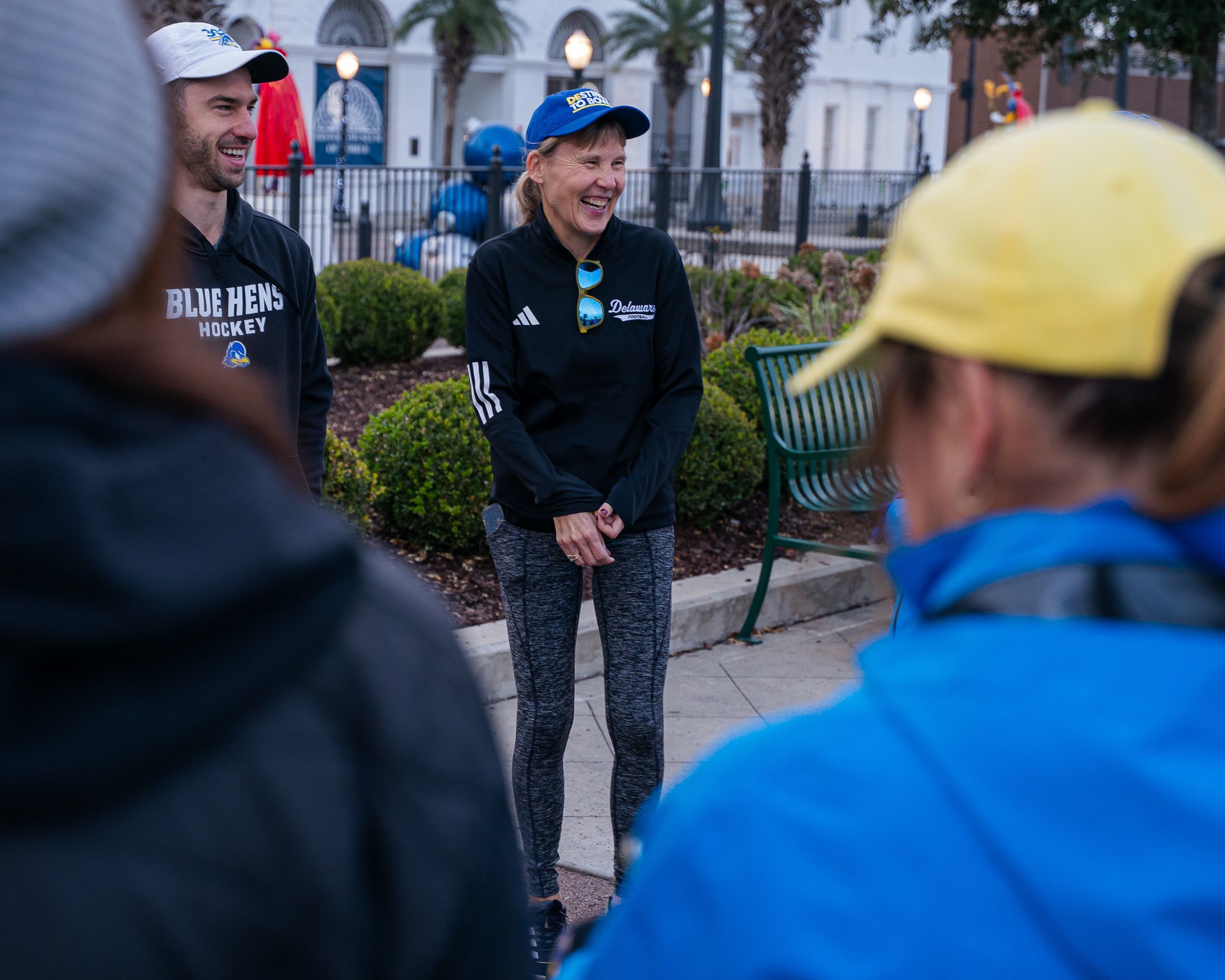
    University of Delaware president Laura Carlson (right) goes on one of her Prez Runs in Mobile, Ala., where the Blue Hens won a bowl game, defeating Louisiana-Lafayette 20-13 on Dec. 17, 2025.

    The “Prez Run” is just one way the psychology scholar — who plans to run her 15th Boston Marathon in April — is building relationships on campus, with alumni and with the community and state. She also runs with alumni, employees, and students during events in other cities.

    “I’ve heard that the alumni association is going to put it on their bucket list of 10 things to do before you graduate,” she said.

    Carlson, a Dartmouth alumna who got her doctorate in cognitive psychology from the University of Illinois Urbana-Champaign, is focused on strengthening relationships with state and local governments and internally with faculty. Finding new revenue streams to plug holes from terminated federal grants and recruiting students in new national markets also are on her list.

    The Massachusetts native previously served as provost for three years, having come to Delaware after 28 years as a faculty member and administrator at the University of Notre Dame in Indiana. She’s the first internal candidate to get the presidential appointment in about 50 years.

    She follows Dennis Assanis, who resigned in June and is now chancellor of the University of California at Santa Barbara.

    Laura Carlson, president of the University of Delaware

    Carlson is visiting classes each semester, including elementary organic chemistry and mechanical engineering.

    “I want to make sure I don’t feel distant from the rhythm of the academic year,” she said. “Anything we value, we should put attention on it.”

    When building a team, she asks participants to pick their top 10 values, such as family, world peace, humor, and authenticity, and rank them. Her top value is always purpose.

    University of Delaware president Laura Carlson talks to fellow runners during one of her Prez Runs in Mobile, Ala., where the football team won a bowl game.

    “I want to live a life of purpose,” she said.

    Partnering with state and local government

    She’s attempting to change the way the partnership with the state is viewed.

    “We lead with what does the state need from us, as opposed to what do we need from the state,” she said.

    Southern Delaware, where the university has a campus in Lewes and Georgetown, has housing, healthcare, education and workforce development needs, and the university can help, Carlson said.

    She said she can envision a public-private partnership for new housing in Lewes, she said, or a classroom building with event space for the community.

    Laura Carlson, president of the University of Delaware, discusses her priorities.

    “If we are a university for the whole state, we need to show up in the whole state, and we need to be responsive to the needs across the state,” she said.

    She’s also looking at the possibility of more residential space for the main campus in Newark — possibly a “sophomore village” — through a public-private partnership. The university has about 7,100 residential beds in Newark.

    “That would take some of the pressure off the city,” she said, noting the tight rental market, and adding that parents and students may prefer on-campus housing options.

    She also wants to help Delaware Gov. Matt Meyer with his plan to bring medical education to the state. Delaware remains one of few states without a medical school. The idea is not to build one from scratch but to partner with an existing medical university, she said.

    “We’ve been in conversations with Thomas Jefferson” in Philadelphia, which has a nonexclusive memorandum of understanding with the state to explore a partnership, she said. “What we offer is the classrooms, the lab space, and so on to do kind of the first part of that medical school type of training.”

    Federal government

    Dealing with the federal government could be more challenging. The university has lost 41 grants worth $33.9 million since President Donald Trump took office last year. Those span engineering, biological sciences, arts, and sustainability, she said, and impact 117 graduate students and 27 postdoctoral students.

    In total, $1.1 million in salaries and $2.1 million in stipends have been lost, though the university has been working to find other funding through foundations and industry, she said. No one has lost their job, she said.

    “I’ve been really working hard on … kind of strengthening those relationships with our business community,” she said.

    The school also has experienced a 19% decline in international graduate students following Trump’s pause on student visas and other policies, and the school lowered its doctoral admissions by 19.5% last year amid concerns over federal funding. What will happen with doctoral admissions this year is unclear.

    “Each college is sort of looking strategically program by program and trying to figure out what is the right size for their doctoral programs,” she said. “If they’re compressing their number of students coming in, it’s because they’re trying to prioritize funding for their existing students.”

    The school’s overall enrollment of more than 24,000 rose last fall and applications are up 10%, she said. But as another drop in high school graduates begins this year, the university has found success in new recruiting areas such as Colorado and Wake Forest, N.C., where the football team played as part of the school’s entry into Conference USA, she said.

    “We’ve been very strategic about putting marketing in there, convening alumni and really using that as a way to establish ourselves more nationally,” she said.

    Biden Institute — and a conservative counterpart

    She said the university is on course to build Biden Hall, an academic building named for former President Joe Biden, a Delaware native. It will house the school’s Biden School of Public Policy and Administration and the Biden Institute on government theory and practice. The design phase likely will begin this spring.

    Fundraising is also continuing for Siegfried Hall, which will include the Institute for Free Leadership and Enterprise. The donors, Robert L. Siegfried Jr., a certified public accountant and his wife, Kathleen Marie (Horgan) Siegfried, have said they wanted to bring a “conservative” vision and offer a balance to the Biden Institute.

    Carlson said she doesn’t view the halls as conservative and liberal, but rather places where ideas can be vetted. She noted the Biden Institute is nonpartisan.

    “Siegfried is a think tank on conservative economics, but part of that building will be also to sort of question the limits of those policies,” she said. “That’s what we do in any discipline.”

    Personal life

    Here are a few fun facts about Carlson, whose husband, Robert West, is a professor of psychological and brain sciences at the university.

    Last book read: Chris Whitaker’s All the Colors of the Dark.

    Favorite band or musical group: Bruce Springsteen.

    Favorite food: Indian. Greek.

    Favorite vacation spot: “I spend so little time at my house. Some of my best days on break are if you don’t even get out of your pajamas.”

  • PHA says former Germantown Settlement properties will be reopened by 2029 — at great cost

    PHA says former Germantown Settlement properties will be reopened by 2029 — at great cost

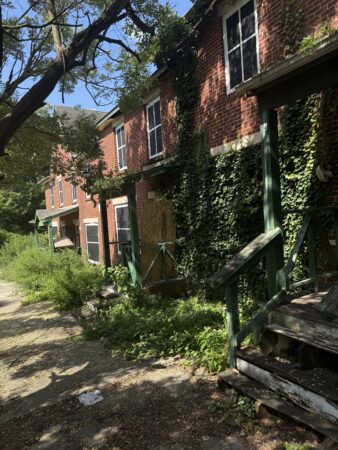
    For over 15 years, dozens of properties once owned by disgraced nonprofit Germantown Settlement have sat derelict and mostly empty.

    In 2024, the properties were given to the Philadelphia Housing Authority (PHA). This month the agency finally announced its plans: $84 million will be spent to gut and rehabilitate 113 units and build 40 apartments for seniors.

    Most of the properties will be earmarked as rentals for very low-income Philadelphians at 30% of area median income, or roughly $32,000 for a family of three. The former Settlement buildings are a mix of rowhouses, duplexes, and small apartment buildings.

    “I was shocked and dismayed by the conditions,” said Kelvin Jeremiah, CEO of PHA. “It’s going to cost a lot of money to get it back to habitable use.”

    Some critics of the plans say the amount PHA plans to spend beggars belief. Spilt 153 ways, $84 million is almost $550,000 a property.

    Longtime Northwest Philadelphia developer Ken Weinstein says his company could build new units at $284,000 a unit, and small developers who are active in the neighborhood can rehab houses for $152,000 apiece.

    “We have limited government resources, and we have so many people that need subsidies to put a roof over their heads,” Weinstein said. “I don’t know why we wouldn’t stretch our dollars as far as possible.”

    (function() {
    var l2 = function() {
    new pym.Parent(‘GERMANTOWN.html’,
    ‘https://media.inquirer.com/storage/inquirer/projects/innovation/arcgis_iframe/GERMANTOWN.html’);
    };
    if (typeof(pym) === ‘undefined’) {
    var h = document.getElementsByTagName(‘head’)[0],
    s = document.createElement(‘script’);
    s.type = ‘text/javascript’;
    s.src = ‘https://pym.nprapps.org/pym.v1.min.js’;
    s.onload = l2;
    h.appendChild(s);
    } else {
    l2();
    }
    })();

    Weinstein emphasized that he thinks Jeremiah has been a transformative and innovative leader for PHA, but he doesn’t understand why the agency isn’t trying to get the properties back into productive use in a more cost-effective way.

    He noted that PHA has sold scattered site single-family units it owns in the area to small developers for low-cost revitalization, with deed restrictions in place to keep them affordable in the long term.

    Weinstein also points to PHA’s campaign to obtain struggling new apartment buildings as an example of its capacity for flexibility and cost sensitivity. Jeremiah has said the purchases are being made because they cut the agency’s costs in half in contrast to building new.

    “I thought it was brilliant that PHA set out to buy existing apartment buildings at $200,000 a unit. That is a much better way to address the affordability issue in housing,” Weinstein said. “I don’t know why PHA would go out of their way to spend 2½-times that to rehab and newly construct in Germantown.”

    The transfer of the former Germantown Settlement properties from the Redevelopment Authority to PHA was controversial in 2024. Some residents felt a community engagement campaign had been ignored. Many attendees had expressed a desire for more homeownership opportunities.

    Jeremiah says that after a community meeting earlier this month, he is open to using 16 of the properties for affordable homeownership.

    “We heard that they would like to see a more balanced community, and so we’re going to work through what that means,” Jeremiah said. “We are revisiting some of the suggestions that we heard from the community, and we are going to revise our plans.”

    But Jeremiah says that sales to small developers for homeownership units, even with deed restrictions, would not help the poorest Philadelphians.

    When PHA does sell scattered site homes for private redevelopment, the rebuilt houses primarily go to those making 60% of area median income or $64,000 for a family of three.

    A former Germantown Settlement property, courtesy of Kelvin Jeremiah.

    The lowest-income residents, who make half that, are the overwhelming majority of PHA’s tenants. They are not in a position to buy a home — even a subsidized and permanently affordable one.

    “A mom and pop [developer] would be hard-pressed to maintain permanent affordability,” Jeremiah said.

    Keeping the former Germantown Settlement properties as PHA-run rentals will guarantee a repository of affordable units no matter how this corner of Northwest Philadelphia evolves, he said.

    “Some of our assets are in communities that are rapidly becoming unaffordable,” Jeremiah said. “Our assets in those communities ensure we are maintaining some level of affordability.”

    Jeremiah himself has often criticized how much it costs PHA to build or gut rehabilitate projects, but he notes that the agency is restricted by a variety of federal regulations.

    “The construction costs are untenable for us, but it’s driven by the regulatory requirements that we must adhere to,” he said. “I have no flexibility.”

    Jeremiah estimates that the rehabilitation work will begin in 2027, after PHA hopefully secures Low Income Housing Tax Credits this year. Once begun, he expects the project to take 15 months, so at earliest the homes will be ready for habitation again in 2028.

    Many of the former Germantown Settlement properties have fallen into ruin over the last 10 years, with copper wiring stripped out and mold or insect infestations harrowing their interiors.

    The city demolished the Blakemore Apartments because of their poor condition. Its site is where PHA will build a new 40-unit building for seniors. (PHA received 121 of 140 of the expired nonprofit’s units, with the rest going to smaller developers.)

    The former Germantown Settlement properties are heavily concentrated in two sections of East Germantown, creating pockets of dense vacancy near the intersection of Church Lane and Lena Street and on the 40th blocks of Wister and Garfield Streets.

    For Councilmember Cindy Bass, who represents the neighborhood, PHA is the right entity to redevelop these long troubled buildings.

    “It’s very important to preserve affordable housing, and that’s what we’re doing here,” Bass said. “This is not for profit. This is for people.”

  • 3 people found dead at Bucks County home, man in custody

    3 people found dead at Bucks County home, man in custody

    Three people were found dead Monday at a Bucks County home where a man barricaded himself for hours before being taken into custody, police said.

    Police in Northampton Township said they responded around 2:15 p.m. to a home on the unit block of Heather Road for a well-being check and were confronted by a man armed with a knife.

    The South Central Emergency Response Team responded to the scene and later took the suspect into custody, police said, adding that there was no danger to the community.

    Police released no other details about the victims or the man who was in custody.

    A neighbor who asked not to be named said that earlier in the day, police several times tried to communicate over a loud speaker or megaphone with a man inside the house.

    “We just want to talk to you. Come out. We just want to talk,” the neighbor recalled the police saying to the man. “But nobody came out.”

    <iframe src="https://www.facebook.com/plugins/post.php?href=https%3A%2F%2Fwww.facebook.com%2FNTPD54%2Fposts%2Fpfbid02s2KtUyfsmL5mTeyR9FZiGaT6qeEiMVFLu1cvuPySnbhKxVhUjiJwzvVyBdjBB4jdl&show_text=true&width=500" width="500" height="284" style="border:none;overflow:hidden" scrolling="no" frameborder="0" allowfullscreen="true" allow="autoplay; clipboard-write; encrypted-media; picture-in-picture; web-share"></iframe>

    The neighbor said a couple possibly in their 80s have lived in the home for decades and had a son and a daughter. The son, possibly in his 50s, has moved in and out of the home several times over the years, the neighbor said.

    At 3:17 p.m., the Northampton Township Police Department posted an alert on Facebook asking the public to avoid the area of Heather Road and Second Street Pike because of police activity.

    The neighbor said officers from several other police agencies responded to the scene. There were two armored vehicles and several ambulances included as part of the response.

    “It seems like they kept coming and coming and coming,” the neighbor said.

    Around 7:35 p.m., the neighbor said some police officers had left, but many were still at the scene.

  • Israel recovers remains of the last hostage in Gaza. Ceasefire moves into tricky new phase

    Israel recovers remains of the last hostage in Gaza. Ceasefire moves into tricky new phase

    JERUSALEM — Israel brought home the remains of the last hostage in Gaza on Monday, closing a painful chapter for the country and clearing the way for the next and more challenging phase of its ceasefire with Hamas.

    The next step is likely to be the reopening of Gaza’s border with Egypt, enabling Palestinians to travel in both directions and eventually allowing more aid to enter the territory devastated by two years of war. The ceasefire’s second phase also calls for deploying an international security force, disarming Hamas, pulling back Israeli soldiers, and rebuilding Gaza.

    The remains of police officer Ran Gvili were found in a cemetery in northern Gaza.

    Prime Minister Benjamin Netanyahu called it “an incredible achievement” for Israel and its soldiers. He said Gvili, who was killed during the Hamas-led attack on Oct. 7, 2023, that sparked the war, was among the first to be taken into Gaza.

    Dozens of people, including relatives, military officials, and friends from Gvili’s police unit, received his coffin at an army post on the Israeli side of the border with Gaza.

    Many more Israelis lined nearby roads to pay their respects as a convoy carrying the coffin made its way to Tel Aviv, where it arrived Monday night.

    “You should see the honor you’re receiving here,” Gvili’s father, Itzik, said, kissing his son’s coffin, which was draped in an Israeli flag. “The entire police is here with you, the entire army is with you, the entire people. I’m proud of you.”

    The return of all remaining hostages, living or dead, had been a key part of the Gaza ceasefire’s first phase. Hamas said it now has met those terms.

    Netanyahu’s office said Sunday that once the search for Gvili was finished, Israel would open the Rafah crossing between Gaza and Egypt, which Palestinians see as their lifeline to the world. It has been largely shut since May 2024, except for a short period early last year.

    The ceasefire’s next phase will confront thornier issues, including transitioning to a new governance structure in Gaza and disarming Hamas, which has ruled the territory for nearly two decades.

    “The next phase is disarming Hamas and demilitarizing the Gaza Strip. The next phase is not reconstruction,” Netanyahu said Monday while addressing the Israeli parliament.

    Palestinians react to recovery of remains

    Palestinians in Gaza were optimistic that opening the Rafah crossing will allow travel to and from the enclave along with the evacuation of people needing medical care.

    “We hope this will close off Israel’s pretexts and open the crossing,” said Abdel-Rahman Radwan, a Gaza City resident whose mother has cancer and requires treatment outside Gaza.

    Ahmed Ruqab, a father who lives with his family of six in a tent in the Nuseirat refugee camp, called for mediators and the U.S. to pressure Israel to allow more aid.

    “We need to turn this page and restart,” he said over the phone.

    An official with the United Nation’s children’s agency said Monday that there is backlog of supplies in Egypt ready to move into Gaza whenever the crossing opens to aid traffic.

    The next phase needs to include bringing not only more humanitarian and commercial supplies but also permanent shelter materials and items to repair infrastructure, said Ted Chaiban, UNICEF’s deputy executive director.

    Gvili’s relatives last week repeated calls for Israel’s government and U.S. President Donald Trump to ensure the release of his remains.

    “Most thought of it as an impossible thing to do,” Trump posted on social media.

    Gvili’s mother, Talik, thanked the Israeli government and security forces as well as Trump for allowing the family to “achieve closure.”

    Israel had repeatedly accused Hamas of dragging its feet in the search while Hamas said it had provided all the information it had, accusing Israel of obstructing the efforts.

    How remains of last hostage were found

    Gvili’s remains were found right along the “yellow line” dividing Gaza just on the Israeli side, according to a military official, speaking anonymously under army protocol.

    The October 2023 attack on Israel that launched the war killed about 1,200 people and saw 251 taken hostage. Gvili, a 24-year-old police officer known affectionately as “Rani,” was killed while fighting Hamas militants.

    On a call with reporters Monday, two U.S. officials credited Egypt, Qatar, and Turkey with helping to get Hamas to release Gvili’s body, and said Hamas was very cooperative in making it happen.

    The officials, who insisted on anonymity per the rules of a call set up by the White House, said they now expect Israel to help both sides move forward into phase two of the ceasefire and they want Hamas to disarm in accordance with the agreement and believe they will.

    Before Gvili’s remains were recovered, 20 living hostages and the remains of 27 others had been returned to Israel since the ceasefire, most recently in early December.

    Israel has released roughly 2,000 Palestinian prisoners under the ceasefire deal, many who were seized by Israeli troops during the two-year war and held without charge. It also has released the bodies of more than 300 Palestinians back to Gaza, where officials have struggled to identify them.

    In a symbolic act, Israeli President Isaac Herzog on Monday removed a yellow pin worn by many to show solidarity with the hostages and their families.

    Hundreds of Palestinians killed since ceasefire

    Palestinians in Gaza who spoke to the Associated Press in recent weeks questioned whether the ceasefire’s next steps will improve conditions, pointing to ongoing bloodshed and challenges securing basic necessities.

    Israeli forces on Monday fatally shot two people in Gaza, according to hospitals that received the bodies. One man was close to the area where the military was searching for Gvili, according to Shifa Hospital.

    Israel’s offensive has killed at least 71,660 Palestinians since 2023, according to Gaza’s Health Ministry — with more than 480 Palestinians killed by Israeli fire since the latest ceasefire began. The ministry, which is part of the Hamas-led government, maintains detailed casualty records that are seen as generally reliable by U.N. agencies and independent experts.

    Top court considers petition to open Gaza for journalists

    The Foreign Press Association on Monday asked Israel’s Supreme Court to allow journalists to enter Gaza freely and independently.

    The FPA represents dozens of global news organizations and has been pushing for independent media access to Gaza. Israel has barred reporters from entering Gaza independently since the 2023 attacks by Hamas, saying entry could put journalists and soldiers at risk.

    FPA lawyers told the court that the restrictions are not justified and that with aid workers moving in and out of Gaza, journalists should be allowed in. They said tightly controlled visits under strict military supervision are no substitute for independent access. The judges are expected to rule soon.

  • Philly schools virtual for Tuesday, and here’s what other districts are doing as road conditions remain iffy

    Philly schools virtual for Tuesday, and here’s what other districts are doing as road conditions remain iffy

    Philadelphia school buildings won’t be open Tuesday as road conditions remain rough in many places after the weekend’s significant winter storm.

    After Mayor Cherelle L. Parker told residents city offices and courts would be closed Tuesday, Superintendent Tony B. Watlington Sr. affirmed the virtual learning call for schools.

    “Given the conditions of the roads and the issues that the mayor and others have talked about, and out of an abundance of caution,” district offices will remain closed Tuesday, and after-school programs and athletics are also closed, Watlington said.

    The superintendent prioritizes in-person learning, he said, but Tuesday “and any subsequent inclement weather days will be remote learning days.”

    The district sent students’ Chromebooks home with them Friday.

    Philadelphia schools had already planned half days Thursday and Friday for report card conferences.

    Virtual instruction, closures and delays beyond Philly

    Districts around the region were starting to make similar calls.

    Haddon Heights, in South Jersey, had already called a two-hour delay.

    The Cheltenham School District is also going virtual.

    “After consulting with my team, many roads remain unpassable and are likely to refreeze after dusk, making bussing on Tuesday too risky,” Superintendent Brian Scriven told families in a message Monday afternoon.

    Schools have increasingly been turning to online instruction during winter storms, though some districts use a different calculus on when to go virtual. New Jersey schools do not allow for virtual instruction.

    Scriven said Cheltenham administrators were “hopeful schools will return to normal operations as soon as possible,” and would communicate any additional schedule changes before Wednesday.

    Upper Darby schools also announced virtual instruction.

    “Unfortunately, we are going to need another day to continue to remove snow and ice,” Superintendent Dan McGarry told families Monday afternoon.

    Officials with the Centennial School District in Bucks County also said they would have virtual instruction, telling community members in a message that “conditions remain challenging, and our facilities personnel are hard at work clearing lots and entryways.” Central Bucks also called a remote learning day.

    The Colonial School District, meanwhile, announced a second traditional snow day Tuesday.

    “More work needs to be completed on our secondary roads to make it safe for our students to travel on Wednesday,” Superintendent Michael Christian said in a message to families. In the event of more inclement weather, Christian said, the district would have virtual instruction.

    Camden schools will also be closed on Tuesday. So will Cherry Hill, Winslow, Woodbury, and Washington Township, among others.

  • Border Patrol commander Bovino and some agents expected to leave Minneapolis

    Border Patrol commander Bovino and some agents expected to leave Minneapolis

    MINNEAPOLIS — Minneapolis Mayor Jacob Frey said he spoke to President Donald Trump about the immigration crackdown in his city and that some federal officers will begin leaving.

    Frey said he asked Trump in a phone call to end the immigration enforcement surge and that Trump agreed the present situation cannot continue.

    Frey said some agents will begin leaving Tuesday. The mayor said he would keep pushing for others involved in Operation Metro Surge to go.

    Trump posted on social media that he had a good conversation with Frey. “Lots of progress is being made!” he wrote.

    A senior Border Patrol commander and some agents are expected to leave Minneapolis as early as Tuesday, a person familiar with the matter told the Associated Press.

    The expected departure of Border Patrol commander Greg Bovino, who has been at the center of the Trump administration’s aggressive immigration enforcement surge in cities nationwide, comes as President Donald Trump dispatched border czar Tom Homan to Minnesota to take charge of Immigration and Customs Enforcement operations.

    The person familiar with the matter was not authorized to publicly discuss details of the operation and spoke to AP on condition of anonymity.

    Bovino’s departure marks a significant public shift in federal law enforcement posture amid mounting outrage over the fatal shooting of 37-year-old ICU nurse Alex Pretti by Border Patrol agents.

    His leadership of highly visible federal crackdowns, including operations that sparked mass demonstrations in Los Angeles, Chicago, Charlotte, and Minneapolis, has drawn fierce criticism from local officials, civil rights advocates, and congressional Democrats.

    Criticism has increased around Bovino in the last few days after his public defense of the Pretti shooting and disputed claims about the confrontation that led to his death.

  • After Philly’s biggest snow in 10 years, a very big chill is coming

    After Philly’s biggest snow in 10 years, a very big chill is coming

    For the Philly region Monday it wasn’t so much a matter of digging out from the heftiest snowfall in a decade, it was more like a chipping, shaving, scraping, expletive-inducing, and ice-chunk hurling operation.

    Public transportation appeared to be getting back on track, and major roads were open for business with speed reductions removed, thanks to crews working through the weekend.

    But expect some side streets in the city and elsewhere to remain fit for sleigh rides this week and trash pickup to be delayed. City offices will be shut down again Tuesday, as will Philly school buildings, with Camden and more calling for a snow day or opting for remote learning.

    And if you’re stepping outside, get used to that underfoot crunching sensation. The removal operation isn’t going to get much help this week from the atmosphere. It’s about to turn about as frigid as it ever gets around here. New Jersey officials are warning of “historic” demands on energy.

    “We’re going to be in the freezer all week,” said Mike Gorse, meteorologist at the National Weather Service Office in Mount Holly. Philly may have its first zero-degree reading in 32 years later in the week.

    It’s as if after recent wimpy winters, the Arctic is reacquainting with Philly and much of the rest of the East.

    And did we mention another snow threat for the weekend?

    “There’s a chance,” said Marc Chenard, meteorologist with NOAA’s Weather Prediction Center in iced-over College Park, Md., who was among those who had to chuck some frozen boulders before leaving for work Monday morning. “I had to chip it and carry it in pieces,” he said. Sound familiar?

    Why this storm was particularly challenging

    Snow totals for the biggest snowfall since Jan. 22-23, 2016, varied throughout the region; the inconveniences, not so much.

    A general 8 to 12 inches of snow and sleet accumulated while temperatures remained mostly in the teens Sunday, 10 degrees or more below forecast.

    A shallow layer of warmer air caused a changeover to sleet, and the tiny ice balls remained frozen for the entire trip through the stubbornly cold air near the surface. As much as 2 to 3 inches of sleet piled on, containing the same amount of liquid as several inches of snow.

    That added weight to the snowpack. Based on the amount of melted precipitation measured in the 9.3 inches at Philadelphia International Airport, the snowpack weighed about as much as a 12- to 15-inch pile of the pure flaky fluff.

    On a 200-square-foot driveway — a 10 by 20 — what fell Sunday weighed about 1,100 pounds. On a 100-square-foot sidewalk — 5 by 20 — that would be about 550 pounds.

    In addition, ice tends to be rather shovel resistant.

    This is going to be a memorably cold week in Philly

    The ice and snow isn’t going to give up easily. On Monday, temperatures topped out in the upper 20s, and that’s going to be warmest day of the week.

    Based on the forecast, it may not get above 28 degrees until next week, said Chenard, a cold streak the region hasn’t seen in decades.

    Chenard said the upper-air patterns remain in place to import Arctic air on winds from the northwest for at least the next several days.

    In fact, temperatures may have trouble getting out of the teens in Philly until the weekend, and Philly has a shot at reaching zero for the first time in 32 years.

    The forecast lows are in the single digits all week, and down to 1 degree on Friday morning and 2 degrees on Saturday, the National Weather Service says. Both would be record lows for the dates.

    The stubborn snow cover “absolutely” will increase the chances of the airport reaching zero for the first time since January 1994, Gorse said. Snow is ideal for radiating daytime warmth (such as it is) into space.

    Temperatures will moderate some on the weekend, he said, but that might come in advance of yet another storm.

    Said Chenard, “There will be coastal low. It’s a matter of how close it is.”

    window.addEventListener(“message”,function(a){if(void 0!==a.data[“datawrapper-height”]){var e=document.querySelectorAll(“iframe”);for(var t in a.data[“datawrapper-height”])for(var r,i=0;r=e[i];i++)if(r.contentWindow===a.source){var d=a.data[“datawrapper-height”][t]+”px”;r.style.height=d}}});

    One historic footnote in the Philly weather annals

    Philly’s official snowfall total for the winter stands at 15.7 inches, almost double normal for the date and double what fell all of last season.

    Sunday’s was not only the biggest snow in 10 years, it also set a record for a Jan. 25.

    It beat the 8.5 inches of Jan. 25, 2000, a day that the weather service just as soon would like to forget.

    The storm came as a surprise, just a week after a weather service honcho announced a computer upgrade that would bring the nation closer to a “no surprise” era.

    Expect surprises to continue.

    Staff writers Ximena Conde, Kristen A. Graham, Maddie Hanna, Rob Tornoe, and Nick Vadala contributed to this article.

  • Geoffrey Mason, 85, TV producer of 1972 Munich Olympics hostage crisis

    Geoffrey Mason, 85, TV producer of 1972 Munich Olympics hostage crisis

    Geoffrey Mason, who had a five-decade career in sports television and was best known as the coordinating producer for ABC’s coverage of the 1972 Munich Olympic Games hostage crisis, has died. He was 85.

    ESPN said Mr. Mason died Sunday in Naples, Fla. He died of natural causes, according to his family.

    “Geoff was a giant visionary in television, never seeking credit. He preferred leading and mentoring teams, connecting people to projects, and was devoted to people and recovery of all sorts. He was a great teacher and mentor to everyone who came in his orbit,” former ESPN President Steve Bornstein said.

    Over the course of his career, Mr. Mason worked on eight Olympics. As a young producer on Sept. 5, 1972, he was in the control room in Munich, Germany, when the Palestinian militant group Black September stormed the Olympic village and took Israeli Olympic team members hostage.

    ABC provided continuous coverage for 22 hours, culminating in a failed rescue attempt in which six Israeli coaches and five athletes died. Jim McKay broke the news with, “They’re all gone.”

    Mr. Mason was a consultant on the script and every aspect of production for the 2024 feature film September 5, which recreates what it was like in the ABC control room that day. The international broadcast center in Munich was 100 yards away from where the hostage crisis was taking place in the Olympic village.

    The movie recreates the moment when West German police stormed the control room and pointed guns at Mr. Mason’s face. This happened because one of ABC’s cameras was showing a tactical squad taking position on the roof above the hostages. Mr. Mason ended up cutting off the camera’s feed.

    It is estimated that nearly 900 million people worldwide at some point viewed ABC’s coverage.

    “Geoff told me that day there was no chance to think. Their singular goal was to stay on the air to keep the story going, to do their job as sports broadcasters,” said John Magaro, who played Mr. Mason, in 2025. “Once the clock starts ticking, there’s no chance to think.”

    Mr. Mason’s career was largely spent with ABC and ESPN, but he also worked for NBC, Fox, NFL Network, and other television entities. He began as a production associate at ABC Sports in 1967, working on Wide World of Sports and the 1968 Winter and Summer Olympics. Over the years, he earned 24 Emmy Awards and was inducted into the Sports Broadcasting Hall of Fame in 2010.

    He also worked on Super Bowl 25, Monday Night Football, the World Series, horse racing’s Triple Crown, the Indianapolis 500, and the FIFA Men’s and Women’s World Cup tournaments.

    He is also known for his coverage of the 1986-87 America’s Cup from Fremantle, Australia.

    “Geoff Mason was a friend and a colleague who had a storied career, touching just about every corner of the sports television industry,” said Bob Iger, CEO of the Walt Disney Company, which owns ABC and ESPN. “He had a passion for the business, which was evidenced in his prodigious work ethic and the constant love and enthusiasm he exhibited on everything he worked on.”

    Mr. Mason was selected by Jim Valvano as a founding board member of the V Foundation for Cancer Research and was a longtime board member of the Hazelden Betty Ford Foundation. He delivered a eulogy during Betty Ford’s funeral in 2011.

    “Geoffrey was a force of nature in our industry for six decades, but more important is all the help he gave to so many people through his association with the Betty Ford Center. He changed so many lives personally and professionally,” said former CBS Sports chairperson Sean McManus, who worked with Mr. Mason at both ABC and NBC.

    Mr. Mason was a veteran of the U.S. Navy and graduated from Duke University with a bachelor of arts degree in sociology in 1963. Survivors include wife Chris, son Geoff Jr., and brother David.

  • Minnesota GOP gubernatorial candidate Chris Madel drops out, faults Trump immigration policy

    Minnesota GOP gubernatorial candidate Chris Madel drops out, faults Trump immigration policy

    MADISON, Wis. — A lawyer for the immigration officer who shot and killed Renee Good dropped out of the Minnesota governor’s race Monday, breaking with many fellow Republicans and calling President Donald Trump’s immigration operation in the state an “unmitigated disaster.”

    Chris Madel’s surprise move comes amid growing calls from Republicans to investigate federal immigration tactics in Minnesota after a U.S. Border Patrol agent fatally shot Alex Pretti in Minneapolis on Saturday.

    Madel went a step further than most Republicans in his video, saying that while he supports the goal of deporting “the worst of the worst” from Minnesota, he thinks the Trump administration’s immigration enforcement operation in the Twin Cities has gone too far.

    “I cannot support the national Republicans’ stated retribution on the citizens of our state,” Madel said. “Nor can I count myself a member of a party that would do so.”

    Madel said that U.S. citizens, “particularly those of color, live in fear.”

    “United States citizens are carrying papers to prove their citizenship,” Madel said. ”That’s wrong.”

    Madel said he personally had heard from local Asian and Hispanic law enforcement officers who had been pulled over by ICE.

    “I have read about and I have spoken to help countless United States citizens who have been detained in Minnesota due to the color of their skin,” Madel said.

    He also said it was unconstitutional and wrong for federal officers to “raid homes” using a civil warrant, rather than one issued by a judge.

    Madel was among a large group of candidates seeking to replace Democratic Gov. Tim Walz, who dropped his reelection bid earlier this month. Other Republican candidates include MyPillow founder and chief executive Mike Lindell, an election denier who is close to Trump; Minnesota House Speaker Lisa Demuth; Scott Jensen, a former state senator who was the party’s 2022 gubernatorial candidate; and state Rep. Kristin Robbins.

    Democratic U.S. Sen. Amy Klobuchar has filed paperwork to run, but has yet to publicly launch a campaign to succeed Walz.

    Madel, in his Monday video posted on the social platform X, described himself as a “pragmatist,” and said national Republicans “have made it nearly impossible for a Republican to win a statewide election in Minnesota.”

    Madel did not immediately return a text message seeking comment.

    Madel, 59, was a political newcomer making his first run for public office. He got into the race on Dec. 1.

    Madel brought 30 years of experience as an attorney to the race, including cases taking on corporate corruption. Madel also defended law enforcement officers, including the 2024 case of a Minnesota state trooper who fatally shot a Black man after a traffic stop. Prosecutors dropped charges against Trooper Ryan Londregan in the killing of Ricky Cobb II, saying the case would have been difficult to prove.

    Madel often referenced that victory in his brief campaign for governor, including in his video dropping out.

    Republicans were expecting the race for governor to be focused on Walz, who at the time was seeking a third term amid questions about how his administration handled welfare fraud. But the race shifted dramatically on Jan. 5 when Walz dropped out.

    That same week, the Trump administration sent thousands of federal officers to Minnesota. ICE agent Jonathan Ross shot and killed Good in Minneapolis two days later on Jan. 7.

    Madel agreed to offer pro bono legal advice to Ross, although no criminal charges or civil lawsuits have been filed. Madel said he was honored to help Ross, particularly during a gubernatorial campaign.

    “Justice requires excellent legal representation,” Madel said.

    Madel announced his decision ending his candidacy two days after a Border Patrol officer shot and killed Pretti on Saturday in Minneapolis.