Category: News

Latest breaking news and updates

  • Flamingo fans fight to unseat the mockingbird as Florida’s state bird

    Flamingo fans fight to unseat the mockingbird as Florida’s state bird

    Jim Mooney has launched a high-wattage campaign to elevate the flamingo to Florida’s state bird.

    The Republican has handed out flamingo lapel pins and 11-by-16 prints of flamingo artwork to his 119 colleagues in the state legislature. He sported a suit with a pink shirt, a pink pocket square, and a tie festooned with flamingos to testify on behalf of his legislation.

    But the gangly pink bird must unseat the mockingbird, which has been Florida’s official bird for 99 years, to gain the distinction Mooney says it deeply deserves.

    To accomplish this, the lawmaker is hoping to reach a political compromise with supporters of the sprightly and charming Florida scrub jay, who have torpedoed his legislation in the past. The scrub jay would be honored as the state’s songbird under Mooney’s bill, while the flamingo would become the state bird.

    “It’s unbelievable how this has taken on a life of its own,” said Mooney, a retired high school sports coach and former mayor of Islamorada. “I’m seeing flamingos everywhere I go. Across the state, everywhere I turn around, it’s a flamingo here and a flamingo there. People are sending me texts and letters about it. Everybody is on board for the flamingo.”

    He quickly added, “And the scrub jay.”

    Florida struck a similar deal in 2022 when strawberry growers lobbied the state to honor the strawberry shortcake. Many in the state especially in Mooney’s Florida Keys district — were outraged at the prospect that the key lime pie, the official state pie, could be pushed aside. Instead, state lawmakers just created a new category — state dessert — and awarded it to the strawberry shortcake.

    “There’s room for both, just like there’s room for both the flamingo and the scrub jay,” Mooney said.

    At stake are mostly bragging rights, though supporters also hope to secure more money for the study and conservation of flamingos. The American flamingo is already protected by the U.S. Migratory Bird Treaty Act, but conservationists say it should also be considered a threatened species, offering it even more protection after it was nearly wiped out in Florida in the past century by plume hunters and, later, habitat loss.

    Audubon Florida Executive Director Julie Wraithmell refuses to choose a favorite among the flamingo, mockingbird, and scrub jay — “we don’t choose between our kids” — but hopes the bird competition will lead to them all receiving more recognition.

    “If you’re Team Flamingo, you should put your influence and your support where your loyalty lies and really support Everglades restoration,” Wraithmell said. “If you’re Team Scrub Jay, you need to be paying attention to if the state is appropriating enough funding for upland land management for our parks and preserves.”

    Supporters have been campaigning for flamingos, one of the state’s most celebrated symbols, for years. But a debate among scientists about whether the wading bird, which on average can stand five feet tall, is native to the Sunshine State has hampered those efforts. Skeptics noted that few were seen in the wild, or outside a zoo, for more than 100 years.

    But Mooney, who has sponsored pro-flamingo legislation for four years, said a new University of Central Florida study may finally settle the dispute. Flamingos are native to the state and “genetically fit for restoration,” according to the study released in December. Audubon Florida also found that more than 101 flamingos landed in the state during Hurricane Idalia in 2023 and didn’t leave.

    The exact number of flamingos in Florida is unknown — the state doesn’t keep track — but residents regularly report sightings, including Mooney, who likes to show everyone he encounters a video of nearly three dozen flamingos serenely feeding in the Florida Bay in early January. A scientist spotted a flamboyance of 125 flamingos in the Everglades in July.

    The proposal, being debated during the current legislative session, isn’t as weighty as some of the other topics Florida lawmakers are expected to tackle, including the cost of property insurance, Mooney said, but is still important.

    “We seldom have bills that make you feel good,” he said. “This bill does, and it also has some real intrinsic value. It shows that our restoration projects are bearing fruit, and that flamingos are here to stay.”

    He was thrilled when Florida Gov. Ron DeSantis gave the birds a shout-out during his State of the State address Jan. 13. “Even the flamingos have returned,” DeSantis said while touting the state’s Everglades restoration work.

    Efforts to elevate the flamingo have overtaken a decades-long pro-scrub jay campaign. The friendly blue-and-white bird has fans among Florida schoolchildren, who have formed clubs and written lawmakers in support of the scrub jay being named state bird. It also has a devoted following among environmentalists who often argue against overdevelopment that would disturb their habitats.

    In 1999, Marion Hammer, the first female president of the National Rifle Association and considered among the most formidable lobbyists in Tallahassee, helped derail scrub jay supporters. They are “evil little birds that rob the nests of other birds and eat their eggs and kill their babies,” she said.

    A northern mockingbird keeps a keen eye out for intruders in 2015 n Houston. After nearly a century on its lofty perch, the northern mockingbird may be singing its last melodies as the state bird of Florida.

    Hammer was on Team Mockingbird and in an op-ed in 2016 noted that they are good parents and also remarkable songbirds, while the scrub jay “can’t even sing — it can only squawk.”

    The scrub jay lets out a soft trill during courtship but is often lumped in with songbirds, like blue jays, that it is related to. Flamingos, meanwhile, make squawky sounds.

    The mockingbird should remain the state bird, just as it has been since 1927, Hammer argued. (It’s also the state bird in Arkansas, Mississippi, Tennessee, and Texas.)

    Hammer couldn’t be reached for comment on the latest bird competition, but the scrub jay also has adversaries among Florida developers. It is at the center of a federal lawsuit filed in 2024 over homeowner rights in southwest Florida, where Charlotte County officials charge a fee to build in the bird’s habitat.

    “The scrub jay has just been commandeered to really violate property rights across Florida, and I just cannot allow it to be elevated to this level,” state Rep. Monique Miller, a Central Florida Republican, said during a committee meeting in December. “I wish these were decoupled because I want to make the flamingo your bird so badly.”

    Jackson Oberlink, a third-generation Floridian, has testified on behalf of the flamingo for the past three years, only to see his hopes dashed. He’s not nearly as optimistic as Mooney that it will succeed this time.

    “Every year, there seems to be a few more flamingo props in a committee room, and it seems like there’s a bit more enthusiasm. And then every year, it kind of peters out,” said Oberlink, the former legislative director for Florida for All, a liberal lobbying group.

    But he’s not ready to give up.

    Oberlink said he became enchanted with the gangly pink birds when he encountered Pinky, a flamingo that was blown into the St. Marks National Wildlife Refuge in north Florida by Hurricane Michael in 2018.

    “I have a tattoo of Pinky and the St. Marks Lighthouse. So it definitely left a mark on me, and I’ll always be rooting for the flamingo in Florida.”

  • A former industrial site making up 10% of Kennett Square could become housing — after it’s decontaminated

    A former industrial site making up 10% of Kennett Square could become housing — after it’s decontaminated

    One of Kennett Square’s last remaining sizable undeveloped parcels could get hundreds of townhomes and apartments — once contamination cleanup of a former industrial site passes muster.

    But even with the OK from state and federal environmental officials, it would be years — and require more sign-offs at the municipal level — before the developer eyeing a residential complex at the former National Vulcanized Fiber site could break ground.

    And the site’s owners face headwinds beyond the governmental approval, as some borough residents worry that the site is not safe for homes.

    Officials from the U.S. Environmental Protection Agency and the Pennsylvania Department of Environmental Protection, agencies that have to ultimately green-light the land as safe for people to live on, sought to assuage those concerns Tuesday during a town hall that explained the processes for cleanup and the standards the developer would have to meet for any homes to be built.

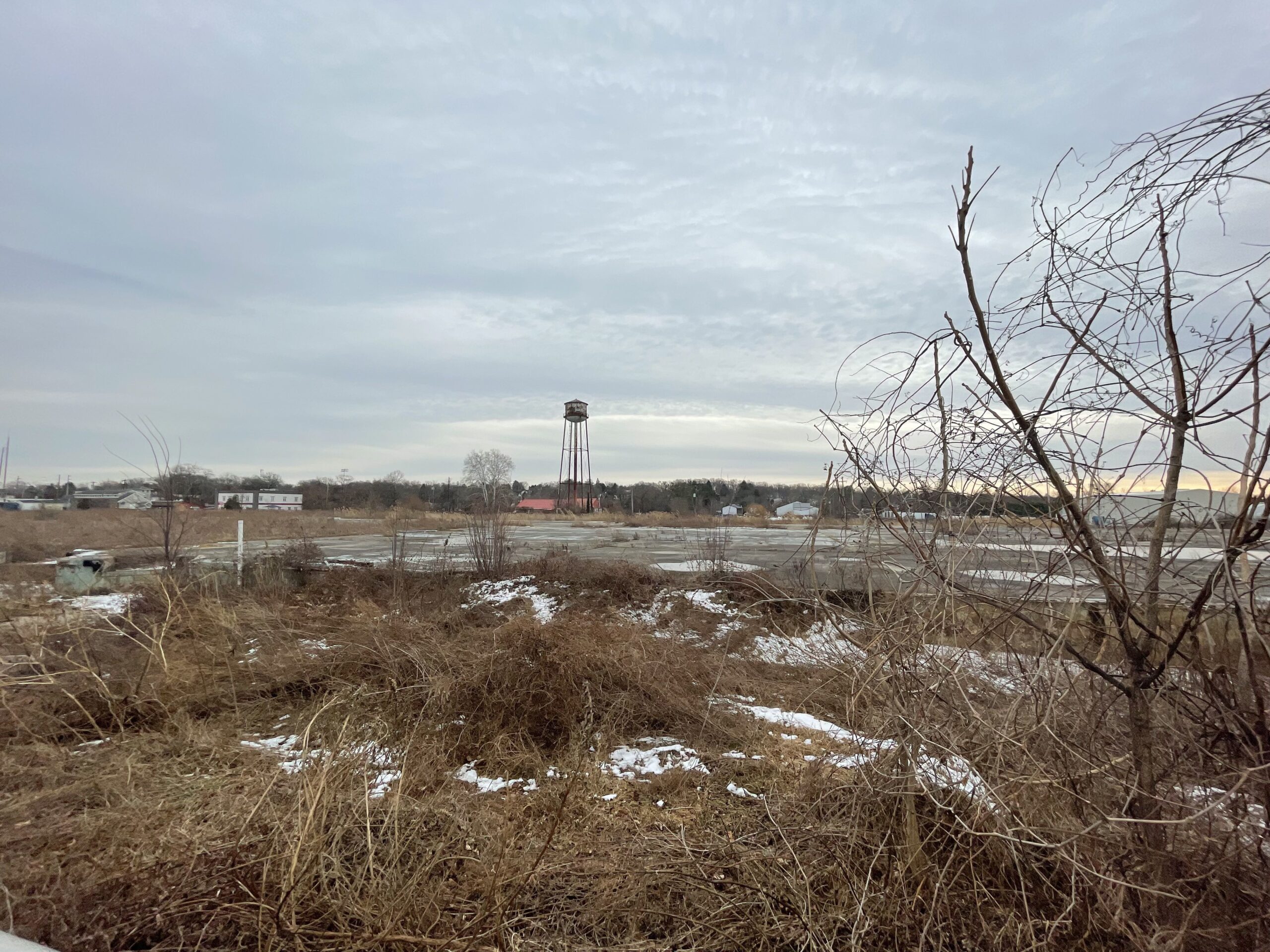
    It was the latest update regarding a proposed residential complex that would feature 246 townhomes and 48 apartments, located at the 22-acre lot on 400 W. Mulberry St., not far from the historic district of the borough, on a plot of land that has languished for almost 20 years.

    It’s one of the largest untouched parcels in the borough, making up at least 10% of Kennett Square, which is one square mile. Developers project the residential complex would increase the population of the 7,000-person borough by 15%.

    The site, which housed National Vulcanized Fiber from the late 1890s until it shut down in 2007, was purchased by its current owner in 2009 and has been the subject of cleanup efforts for more than a decade after the land was found to be contaminated with so-called forever chemicals.

    “It feels like the cart was put before the horse for the public,” one resident, Sarah Hardin, said during Tuesday’s meeting. “I think it’s the fact that we’re all feeling like this was guns a-blazing forward, and we would like to know that all the proper environmental steps are taken.”

    The former National Vulcanized Fiber in Kennett Square on Friday, Jan. 23, 2026. Once an industrial site, the property’s current owner is seeking to eventually turn it into a residential development. But first, the property has to be decontaminated that satisfy state and federal requirements.

    What’s the history of the site?

    For more than 100 years, National Vulcanized Fiber ran operations on the property, creating a slew of products with vulcanized fiber — a durable, flexible, lightweight plastic-like material that was used to make anything from trash cans to computer circuit boards.

    Production of those items led to contamination of the site; polychlorinated biphenyls (PCBs) were identified in the 1980s, after contamination spread into Red Clay Creek. That prompted the EPA to become involved, said Amanda Michel, the agency’s PCB coordinator for the region.

    The chemicals are probable carcinogens, linked to liver and breast cancer, melanoma, and non-Hodgkin lymphoma. The chemical is also associated with birth defects, developmental delays, and immune system dysfunction.

    Remediation began after the chemicals were found in the 1980s, and NVF folded in 2007. Rockhopper LLC purchased the property two years later and began cleaning the site, eyeing future residential development.

    Along with the federal cleanup, in 2010 the owners began a voluntary state cleanup process — which is aimed at redeveloping contaminated, vacant, and unused parcels into productive uses — to target the other chemicals found on the site.

    In both cases, the owners have to demonstrate, through sample testing, that contamination has been lowered to a threshold acceptable for human health or that they have the proper barriers in place to prevent exposure.

    “Until that happens, there will not be a residential occupant at this property,” said Jonathan Spergel, an environmental lawyer representing Rockhopper.

    What is the developer proposing?

    Under the proposed development, the property would have 104 stacked and 38 unstacked townhomes, along with 48 one-, two-, and three-bedroom apartments. The owners said the project would comprise affordable and market-value units. A proposed rezoning ordinance would require 15% of the homes to be affordable.

    That component was critical for Kennett Square officials, Mayor Matt Fetick said in an interview last week.

    “It’s our best opportunity to have an affordable component,” he said.

    Alongside those homes, the property would have roughly 732 parking spaces, and 50 would be added to Mulberry Street.

    To offset feared bottlenecks, the property’s proposed plan would have five driveways to distribute traffic flow.

    The site’s developers estimate that the property would bring in $382,000 for the borough and more than $830,000 for the school district each year.

    Another portion of the site serves as a baseball field at the high school, and no further development is planned there, the property’s owners said in 2024.

    The project is helmed by Rockhopper LLC, which is led by two development firms, Delaware Valley Development Corp. and Catalyst City. They brought in Lennar, a home-building company, in 2021. Lennar has done at least two similar projects, remediating industrial lots in Phoenixville and in Bridgeport for residential use, a representative said previously.

    What are residents’ concerns?

    On Tuesday, residents shared stories of loved ones who lived near the site who have been diagnosed with cancer. They worried that the developer could skew data to move the project forward. They wondered why there had been no urgency to clean it up before.

    Officials said the developer has to work with an independent environmental professional and their agencies had been on site throughout the cleanup process.

    Corey Barber, who lived near the site for 20 years and moved out of the area after her cancer diagnosis in 2021, worried what construction on the site would bring.

    “People are going to believe that they’re going to get cancer from the dust kicking up,” she said.

    Charla Watson, who lives right by the property, said there was distrust because the community has not seen the work the developer says is happening.

    “It’s just been a wasteland,” she said. “Everything looks the same the day they moved out of there.”

    What comes next?

    The developer is going through two processes simultaneously. As it cleans up the property to get the necessary state and federal approvals for residential development, it is also working at the municipal level for the land to be rezoned so it can build the residences.

    The borough is advertising a change to the ordinance that would rezone the land.

    If the ordinance is approved, the developer could formally start developing the land — which would come with at least another year of planning and meetings.

    This suburban content is produced with support from the Leslie Miller and Richard Worley Foundation and The Lenfest Institute for Journalism. Editorial content is created independently of the project donors. Gifts to support The Inquirer’s high-impact journalism can be made at inquirer.com/donate. A list of Lenfest Institute donors can be found at lenfestinstitute.org/supporters.

  • Declaring a state of emergency, Sherrill urges safety as storm approaches

    Declaring a state of emergency, Sherrill urges safety as storm approaches

    Saying “it’s been a while” since New Jersey faced a storm like the one being forecasted for Sunday and Monday, Gov. Mikie Sherrill urged state residents to stay off the roads and to not “commit to anything on Monday.”

    Sherrill said in a press conference in Newark late Saturday afternoon that while “we’re tough” in New Jersey, “we have to be safe.” She declared a state of emergency starting 5 p.m. Saturday.

    Sherrill said she was expecting snowfall to range from eight inches to 18 inches throughout the state. It will be a storm “the likes of which we haven’t seen in a decade,” Sherrill said.

    The governor said extremely cold temperatures are expected to make things more difficult, and she suggested that people watch football and play board games with their children on Sunday.

    “We are prepared for the moment, but we do need the people of New Jersey to stay safe,” she said.

    The governor was accompanied by State Police Acting Superintendent Lieutenant Colonel David Sierotowicz, Department of Transportation Acting Commissioner Joseph Bertoni, and NJ Transit President and CEO Kris Kolluri.

    With challenging conditions expected, Acting Attorney General Jennifer Davenport and the Division of Consumer Affairs warned sellers that price gouging New Jersey’s consumers during the declared state of emergency wouldn’t be tolerated.

    Sellers can’t excessively increase prices (10% more than normal or higher) during a declared state of emergency, or for 30 days after the termination of the state of emergency, according to New Jersey law.

    “As a former prosecutor, my administration will not tolerate price gouging, and we will be vigilant during this winter storm,” Sherrill said, adding that there’d be “zero tolerance for those who prey on New Jerseyans during this state of emergency.”

  • Gov. Josh Shapiro promised fair elections, condemned ICE at his book tour launch in Philly Saturday afternoon

    Gov. Josh Shapiro promised fair elections, condemned ICE at his book tour launch in Philly Saturday afternoon

    Gov. Josh Shapiro recounted Saturday to a crowd of nearly 500 in Philadelphia how he found himself struggling as a father weeks after his family survived an arson attempt at the governor’s mansion on Passover last year.

    That’s when the proudly Jewish governor went to Salem Baptist Church in his hometown of Abington for counsel and support from Pastor Marshall Mitchell.

    “I could feel the power of their prayers,” Shapiro recalled. “I think that’s helped me be a better, more compassionate governor for all.”

    Mitchell, a longtime Shapiro friend who served on his transition team, joined the governor onstage at the Central Library of the Free Library of Philadelphia to discuss his memoir, Where We Keep The Light, set for release Tuesday.

    The conversation focused on the governor’s spiritual journey and family, but it also offered critiques of both parties and promises to the community.

    “There’s a lot more that unites us,” Shapiro said during the hour-long conversation. “There’s a lot more common bonds that we have. And we have to find our way back to that.”

    Shapiro opined that the city’s Quaker founder, William Penn, “would have never imagined a Jewish governor and a Black preacher sitting up here, but I bet he’d be proud of that.”

    The Philadelphia event kicked off a flurry of promotional events as Shapiro plans to travel to New York, Boston, and Washington in the coming week. A CBS interview focused on the book is also slated to air Sunday.

    The release of the memoir comes as Shapiro is seeking a second term as governor, but it has fueled speculation about his potential presidential ambitions in 2028.

    “I think people want authenticity from our leadership, and I think he’s providing it,” said State Rep. Sharif Street, a Philadelphia Democrat running for Congress, who attended the event. “I think Josh Shapiro would make an excellent president.”

    The book, which has been shared with The Inquirer and other outlets, includes details on what Shapiro called an “offensive” vetting process to be Kamala Harris’ running mate when she took over the Democratic presidential ticket for President Joe Biden in 2024. Shapiro said he was being unfairly scrutinized as the only Jewish person in the running for the vice presidency.

    Harris did not come up during the conversation with Mitchell.

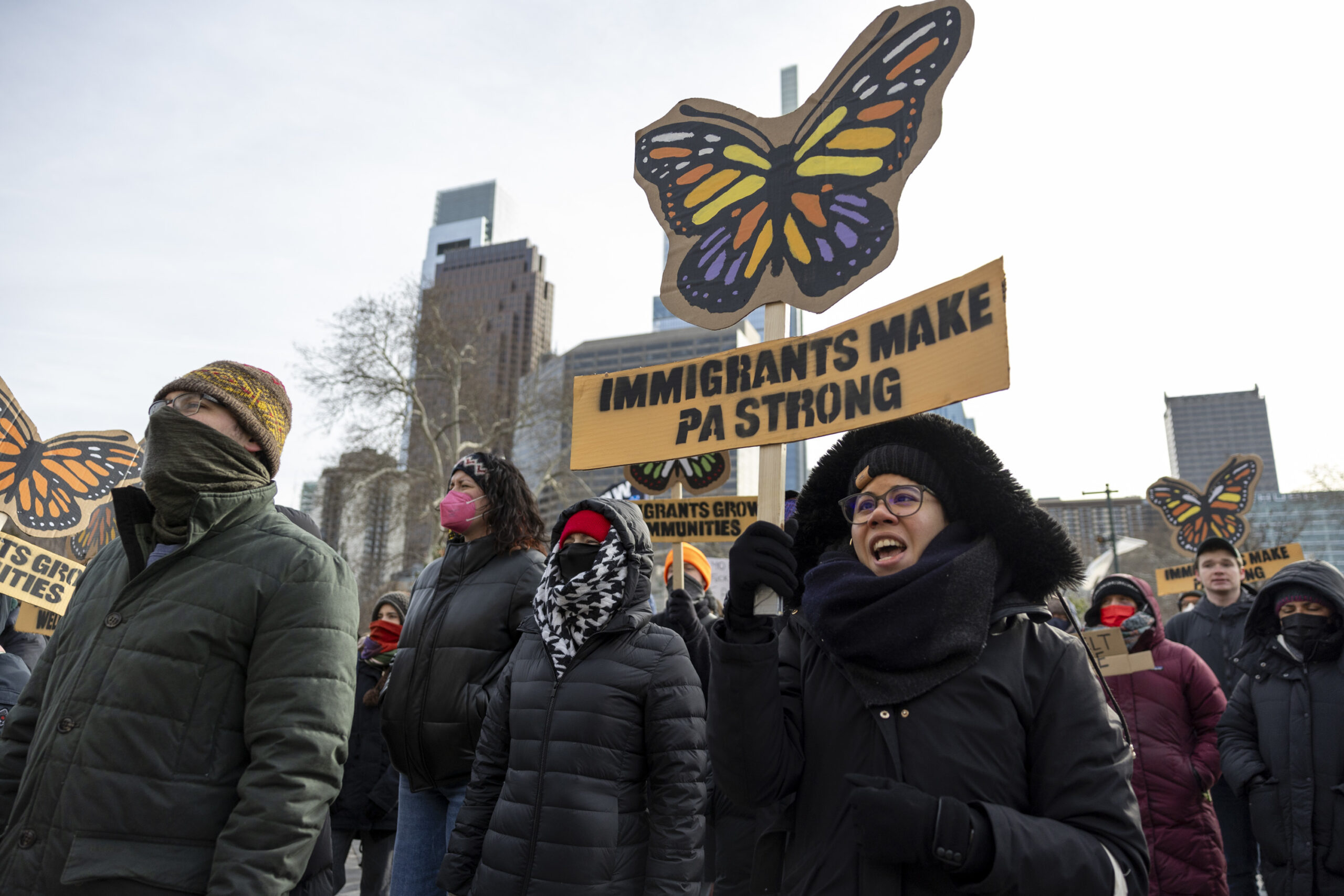
    Diana Robinson, of East Kensington, Codirector with Make the Road Pennsylvania, chants with fellow protestors outside the Free Library at Governor Josh Shapiro’s new book “Where We Keep The Light” author event in Philadelphia, Pa., on Saturday, Jan. 24, 2026.

    Shapiro weighs in on ICE’s crackdown as protesters gather outside

    Shapiro answered several submitted questions after the discussion. He said that he expects President Donald Trump to attempt to disrupt the 2026 election, as he did in 2020.

    “We are on it. We are prepared. We will do everything in our power to protect your vote.”

    Shapiro also said that his team was prepared to handle a Minneapolis-style Immigration and Customs Enforcement action in Pennsylvania.

    “What we are seeing in Minnesota is absolutely unacceptable,” Shapiro told the crowd. “What we are seeing is lawlessness by these federal agents.”

    The conversation took place just hours after a U.S. Border Patrol agent shot and killed a man in Minneapolis, which Shapiro decried as an atrocity.

    Outside the book event, roughly 100 protesters gathered in the bitter cold to demand that Shapiro “stop working with ICE.”

    Pennsylvania has no sanctuary policy limiting cooperation with ICE — though Philadelphia and several other jurisdictions in the state do.

    Immigration advocates contend Shapiro is collaborating by allowing ICE access to state databases that they said provide the agency with facial recognition and personal information that can put immigrants in Pennsylvania at risk.

    “As the governor, he has an opportunity to step up and lead with conviction, especially at a moment when people are dying in ICE custody,” said Jasmine Rivera, executive director of the Pennsylvania Immigration Coalition. “Instead, he is arming ICE with the information they need to attack his own people.”

    Will Simons, a spokesperson for the governor, said in a statement after the rally that outside agencies “do not have unfettered access to state databases,” but rather Pennsylvania State Police share information when it’s necessary for an investigation.

    “There are legitimate investigations that involve foreign nationals who have committed crimes in PA or elsewhere that would require immigration enforcement agencies to seek access to information contained in Commonwealth-run databases,” Simons said.

    Democrats are likely to be grappling with how best to respond to Trump’s immigration crackdown and other policies as they head into this year’s midterms and the next presidential cycle.

    But Shapiro warned the party risks alienating voters with too much of a focus on Trump.

    “I think we can’t be a party that is defined by being negative on Donald Trump all the time,” Shapiro said.

    This story was updated to include Shapiro’s spokesperson’s statement on state databases.

  • ‘Stand up, fight back, and resist’: Activist who helped shape President’s House rallies new fight after the site was dismantled

    ‘Stand up, fight back, and resist’: Activist who helped shape President’s House rallies new fight after the site was dismantled

    Nearly a quarter century ago, Black activists fought relentlessly to memorialize the lives of nine people enslaved at the first presidential mansion. On Saturday, the leader of that decade-long battle rallied a new fight.

    Michael Coard, an attorney and founding member of Avenging the Ancestors Coalition (ATAC), pledged to restore the slavery memorial at the President’s House Site on Independence Mall and said his group will not concede on the exhibit’s location or its content, despite efforts from federal officials to sanitize and erase the outdoor museum.

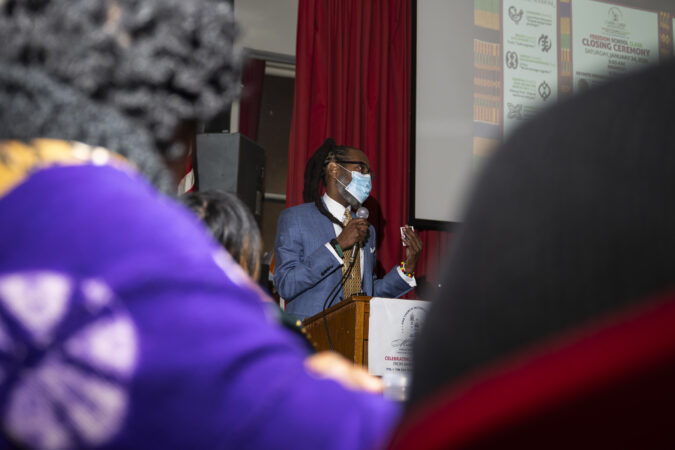
    “Our goal, first and foremost, is to remain at that site — intact,” Coard told a roughly 60-person crowd at an unrelated event at Mother Bethel A.M.E. Church. “There’s only one first White House where Black people were enslaved. … There are no alternatives.”

    This week, the National Park Service dismantled all the educational displays and illustrations, including those titled “Life Under Slavery” and “The Dirty Business of Slavery,” at the memorial on the corner of Sixth and Market Streets. The site was the latest casualty in President Donald Trump’s push to remove all displays and other content that he has said “inappropriately disparage Americans past or living” from federal land — what some have called an attempt to whitewash history.

    While the sudden removal of the exhibits elicited shock from passersby and ire from local leaders and stakeholders, Coard said he saw it coming: This summer, 13 items at the site were flagged for review as part of Trump’s executive order and federal authorities set a mid-September deadline to change or remove the disputed content at national parks nationwide. The September deadline passed and the site remained unaltered, but its fate was still in limbo.

    Coard, whose group has been stewarding and championing the exhibits since 2002, said Avenging the Ancestors is mounting a multipronged response; he alluded to a legal strategy but would not elaborate. (Mayor Cherelle L. Parker’s administration filed a lawsuit Thursday arguing that the removal of the exhibits is unlawful.)

    There has been an outpouring of sorrow and appreciation for the exhibits and anger at Trump’s administration. On Friday, small tokens — a rose, a bouquet of flowers, and a sign that read “Slavery was real” — were left at the site. A group of teachers on their lunch break taped up dozens of posters reading “Learn all history” and “History is real.” The signs were gone as of Saturday morning; by the afternoon, new tributes had spawned. One event promoted online encouraged Philadelphia artists to craft replicas of the removed displays.

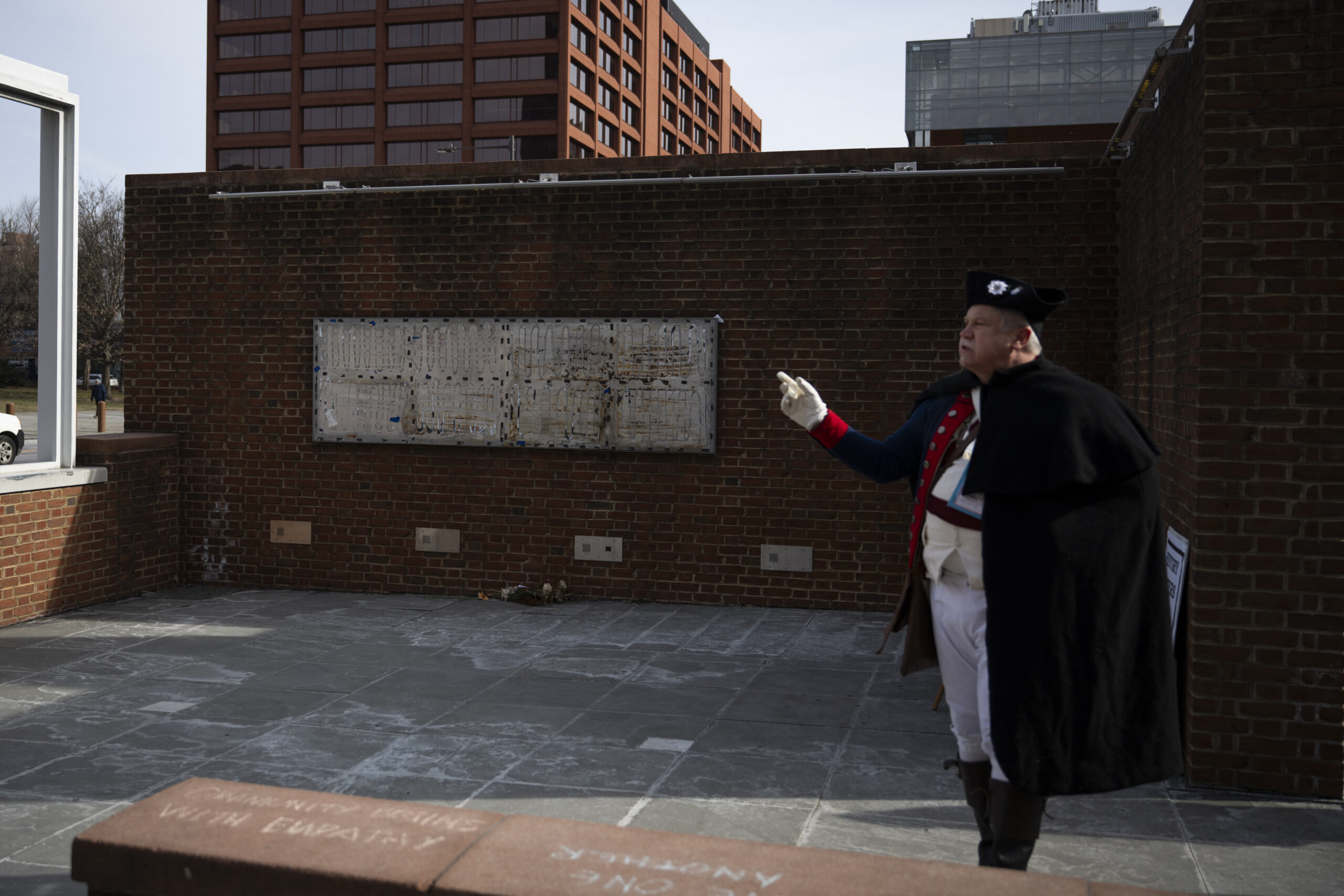
    Michael Carver portrays colonial merchant and soldier Mordecai Sheftall during a “History Matters” event Saturday at the President’s House Site in Independence National Historical Park. Displays at the site were dismantled by the National Park Service last week.

    “We support and commend those who are doing something,” Coard told The Inquirer after the event, which honored the inaugural graduates of Mother Bethel’s “Freedom School,” a 10-week course on African American history. “If that’s simply liking a social media post about resisting, do that. If it’s taking signs and other items down to the site, do that. … Stand up, fight back, and resist.”

    On Saturday, U.S. Sen. Dave McCormick (R., Pa.) took to social media to weigh in against the National Park Service’s dismantling of the exhibits, marking a rare break from Trump.

    “Our history is our history. It is our willingness to learn from it that makes America exceptional and the greatest country on Earth, on our journey to become a more perfect union,” McCormick wrote on X, responding to The Inquirer’s reporting.

    In the same post, McCormick said he also invoked this reasoning when he opposed renaming military bases, like Fort Bragg, after Confederate generals and the park service’s proposal (which was later retracted) to remove a statue of William Penn in Philadelphia in 2024.

    Fort Bragg was named after Confederate Gen. Braxton Bragg before former President Joe Biden’s administration changed it to Fort Liberty. Secretary of Defense Pete Hegseth changed it back to Bragg, but in honor of Roland L. Bragg, whom the Defense Department describes as a “World War II hero,” NPR reported.

    McCormick appears to be one of the first Pennsylvania Republicans — if not the only one — to weigh in against the exhibits’ removal. Democratic lawmakers across the region have also expressed their disapproval.

    U.S. Sen. John Fetterman (D., Pa.) called the NPS decision “deeply wrong and misguided” in a statement emailed to The Inquirer on Saturday.

    “America is the best country in the world. Our history is filled with the greatest sacrifices to the most awful chapters. Teach all of it,” Fetterman said.

    The erasure of the site — which captured the somber paradox of a young America that exalted freedom for some but deprived others of it — comes ahead of the country’s Semiquincentennial celebrations, when Philadelphia will be in the national spotlight.

    The Rev. Carolyn Cavaness of Mother Bethel said it was a blow to her heart to see the exhibits removed. Mother Bethel is a hub for activism and the oldest church property in the United States to be owned continually by Black people. Bishop Richard Allen, the former slave, educator, and Methodist lay preacher who founded the church, was featured at the site.

    “There’s something about the full story being told, and for that piece of this story to just be ripped away, I think it even mobilizes … preserving, protecting, sharing our story and our contributions,” Cavaness said. “It just ups the ante.”

  • With a snowstorm on the way, Philly-area bars and restaurants weigh their plans: Open or close?

    With a snowstorm on the way, Philly-area bars and restaurants weigh their plans: Open or close?

    With a snowstorm bearing down, Philadelphia-area restaurant and bar owners spent Saturday weighing whether to stay open, limit hours, or close altogether — balancing safety concerns against the reality that snow days can sometimes drive business.

    Heavy snow is historically a mixed proposition for the hospitality industry, especially in the city. After the 30.7-inch snowfall in January 1996, for example, The Inquirer reported that the chef at Moriarty’s restaurant slept overnight in a booth and awoke to record crowds, fueled by nearby hotel guests, hospital workers, and neighborhood regulars trudging through the drifts.

    Similar dynamics could still play out in dense neighborhoods, where many bar customers and employees live within walking distance — especially given the fact that Pennsylvania’s Fine Wine & Good Spirits stores will be closed Sunday.

    This weekend’s forecast, however, arrives at a sensitive moment. The storm threatens to disrupt Center City District Restaurant Week; of the 120 participating restaurants, most were counting on strong Sunday sales.

    A spot check of local restaurants and bars shows a wide range of approaches. Ember & Ash and River Twice in South Philadelphia plan to close Sunday, as do Southgate, Wilder, and Leo in Center City and Fleur’s and Amá in Kensington. Suraya in Fishtown plans to close for brunch but open for dinner. Gather Food Hall in University City will be closed Sunday and Monday. Others, including Uchi in Rittenhouse, and Hannah K’s in Point Breeze, were still evaluating conditions Saturday.

    Stephen Starr said he expected his 19 Philadelphia restaurants to be open Sunday, though he planned to reassess conditions in the morning. “Parc never closes,” Starr said of his brasserie, a Rittenhouse Square stalwart. “No matter what.”

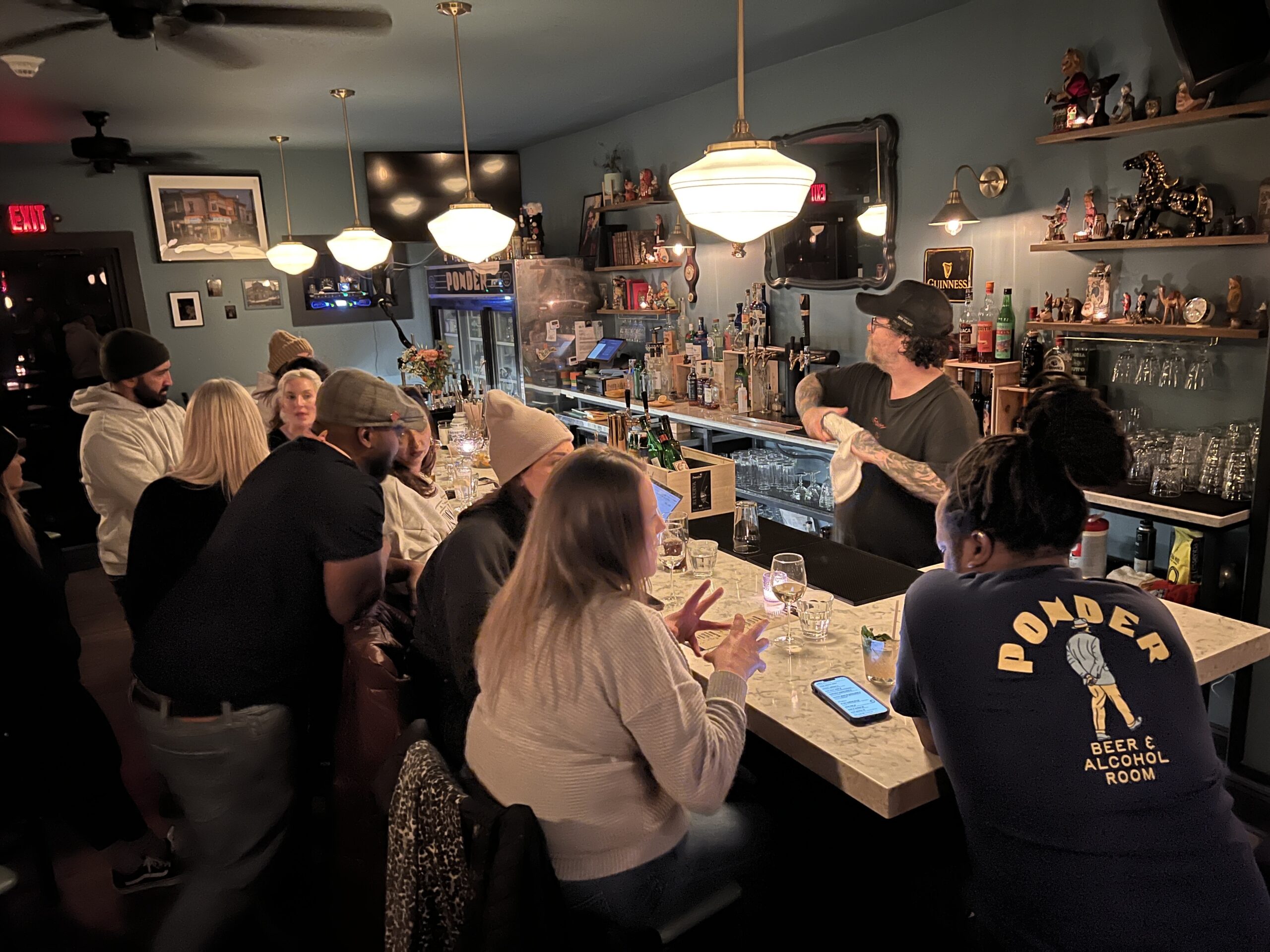
    Customers crowding the bar at Ponder Bar in Kensington on Jan. 21, 2026.

    Matt Kuziemski said his newly opened Ponder Bar in Kensington would be open, in part because he lives nearby. “I’ll set expectations,” he said. “Come in for something simple — cozy up or grab takeout.”

    At the Little Gay Pub in Washington Square West, co-owner Dito Sevilla said the bar plans to open. “We have done what we can to make sure staff has places to stay and can commute on foot for the next few days,” Sevilla said. “We’ve got enough booze stored up for a storm or two.”

    Other operators are taking a wait-and-see approach. Dave Conn, chef-owner of Alice in South Philadelphia, said Saturday that he would decide Sunday morning. “If it’s eight or nine inches or less [of snow], we’d probably open,” Conn said. “Anything crazy where it might be unsafe for staff coming and going, we’d probably close.”

    Hotel restaurants are more likely to remain open, largely because many are housing employees. About 30 staff members are staying overnight at the Logan Hotel, which houses Urban Farmer steakhouse and Assembly Rooftop Lounge, while roughly 20 employees are being accommodated at Hotel Palomar, home to Square 1682.

    Aleks Alimpijevic of Restaurant Aleksandar in Rittenhouse said the restaurant would be open for lunch Sunday, serving its Restaurant Week menu, but would close for dinner and remain closed Monday, its normal day off.

    In the suburbs, Sydney Grims of Fearless Restaurants said she was monitoring conditions but hoped to open Triple Crown at the Radnor Hotel and Rosalie at the Wayne Hotel. “Our staff’s safety is priority number one,” she said, noting both properties have generator backup.

    Justin Weathers, co-owner of several suburban restaurants, including Stove & Tap, said staffing decisions depend heavily on who lives nearby. “If the snow starts to accumulate, then we cut third-party apps as well,” he said.

    Third-party delivery from companies such as DoorDash and Grubhub was not a thing in 1996. Philadelphia’s snow emergency declaration, issued ahead of the storm, does not automatically ban driving. A Grubhub spokesperson said the company may proactively pause deliveries in certain areas ahead of severe weather and continue doing so on a rolling basis to prioritize safety. If deliveries remain available and restaurants stay open, customers are encouraged to be patient, as delivery times may be longer.

    Large-scale caterers face additional logistical challenges. Joe Volpe, owner of Cescaphe, said his company, which handles events at nine local venues, was relieved that the storm was forecast to begin late Saturday night rather than earlier. Cescaphe had four weddings and a 300-person anniversary party scheduled for Saturday, but only one wedding on Sunday.

    Cescaphe is preparing extra food for guests who may arrive early or stay overnight due to travel disruptions, Volpe said, adding that safety remains the priority. Weddings, he noted, leave little room for rescheduling. “It’s rain or shine — there are no makeups, no do-overs,” he said. “We’re going to be there, and we’ll do everything possible to make it happen.”

    The storm is also rippling through the supply chain. Mark Oltman, chief financial officer of Foods Galore, said the South Jersey distributor urged customers to complete deliveries by Saturday for food needed through Monday. “Most places are telling us they won’t be open Sunday and possibly not even Monday,” Oltman said. “As much as we want to service our customers, we’re never going to put our people at risk.”

    Winter weather, he added, compounds an already slow season. “January and February are tough,” Oltman said. “You finally get into a rhythm, and then winter shows up and wipes it out.”

    Still, some view snow days as part of the city’s fabric. “Bar-hopping during snowstorms in Philadelphia are great memories of mine,” Weathers said.

  • The man killed by a federal officer in Minneapolis was an ICU nurse, family says

    The man killed by a federal officer in Minneapolis was an ICU nurse, family says

    MINNEAPOLIS — Family members say the man killed by a U.S. Border Patrol officer in Minneapolis on Saturday was an intensive care nurse at a Department of Veterans Affairs hospital who cared deeply about people and was upset by President Donald Trump’s immigration crackdown in his city.

    Alex Jeffrey Pretti, 37, was an avid outdoorsman who enjoyed getting in adventures with Joule, his beloved Catahoula leopard dog who also recently died. He had participated in protests following the killing of Renee Good by a U.S. Immigration and Customs officer on Jan. 7.

    “He cared about people deeply and he was very upset with what was happening in Minneapolis and throughout the United States with ICE, as millions of other people are upset,” said Michael Pretti, Alex’s father. “He thought it was terrible, you know, kidnapping children, just grabbing people off the street. He cared about those people, and he knew it was wrong, so he did participate in protests.”

    Pretti was a U.S. citizen, born in Illinois. Like Good, court records showed he had no criminal record and his family said he had never had any interactions with law enforcement beyond a handful of traffic tickets.

    In a recent conversation with their son, his parents, who live in Colorado, told him to be careful when protesting.

    “We had this discussion with him two weeks ago or so, you know, that go ahead and protest, but do not engage, do not do anything stupid, basically,” Michael Pretti said. “And he said he knows that. He knew that.”

    The Department of Homeland Security said that the man was shot after he “approached” Border Patrol officers with a 9 mm semiautomatic handgun. Officials did not specify if Pretti brandished the gun. In bystander videos of the shooting that emerged soon after, Pretti is seen with a phone in his hand but none appears to show him with a visible weapon.

    Family members said Pretti owned a handgun and had a permit to carry a concealed handgun in Minnesota. They said they had never known him to carry it.

    Alex Pretti’s family struggles for information about what happened

    The family first learned of the shooting when they were called by an Associated Press reporter. They watched the video and said the man killed appeared to be their son. They then tried reaching out to officials in Minnesota.

    “I can’t get any information from anybody,” Michael Pretti said Saturday. “The police, they said call Border Patrol, Border Patrol’s closed, the hospitals won’t answer any questions.”

    Eventually, the family called the Hennepin County Medical Examiner, who they said confirmed had a body matching the name and description of their son.

    Alex Pretti grew up in Green Bay, Wisc., where he played football and baseball and ran track for Preble High School. He was a Boy Scout and sang in the Green Bay Boy Choir.

    After graduation, he went to the University of Minnesota, graduating in 2011 with a bachelor’s degree in biology, society, and the environment, according to the family. He worked as a research scientist before returning to school to become a registered nurse.

    Pretti had protested before

    Pretti’s ex-wife, Rachel N. Canoun, said she was not surprised he would have been involved in protesting Trump’s immigration crackdown. She said she had not spoken to him since they divorced more than two years ago and she moved to another state.

    She said he was a Democratic voter and that he had participated in the wave of street protests following the killing of George Floyd by a Minneapolis police officer in 2020, not far from the couple’s neighborhood. She described him as someone who might shout at law enforcement officers at a protest, but she had never known him to be physically confrontational.

    “These kinds of things, you know, he felt the injustice to it,” Canoun said. “So it doesn’t surprise me that he would be involved.”

    Canoun said Pretti got a permit to carry a concealed firearm about three years ago and that he owned at least one semiautomatic handgun when they separated.

    “He didn’t carry it around me, because it made me uncomfortable,” she said.

    Pretti had ‘a great heart’

    Pretti lived in a four-unit condominium building about 2 miles from where he was shot. Neighbors described him as quiet and warmhearted.

    “He’s a wonderful person,” said Sue Gitar, who lived downstairs from Pretti and said he moved into the building about three years ago. “He has a great heart.”

    If there was something suspicious going on in the neighborhood, or when they worried the building might have a gas leak, he would jump in to help.

    Pretti lived alone and worked long hours as a nurse, but he was not a loner, his neighbors said, and would sometimes have friends over.

    His neighbors knew he had guns — he’d occasionally take a rifle to shoot at a gun range — but were surprised at the idea that he might carry a pistol on the streets.

    “I never thought of him as a person who carried a gun,” said Gitar.

    Pretti was passionate about the outdoors

    A competitive bicycle racer who lavished care on his new Audi, Pretti had also been deeply attached to his dog, who died about a year ago.

    His parents said their last conversation with their son was a couple of days before his death. They talked about repairs he had done to the garage door of his home. The worker was a Latino man, and they said with all that was happening in Minneapolis he gave the man a $100 tip.

    Pretti’s mother said her son cared immensely about the direction the county was headed, especially the Trump administration’s rollback of environmental regulations.

    “He hated that, you know, people were just trashing the land,” Susan Pretti said. “He was an outdoorsman. He took his dog everywhere he went. You know, he loved this country, but he hated what people were doing to it.”

  • Trump heaps praise on U.K. troops following furor over Afghanistan comments

    Trump heaps praise on U.K. troops following furor over Afghanistan comments

    LONDON — U.S. President Donald Trump heaped praise Saturday on British soldiers who fought in Afghanistan, in a post on social media that represented a partial reversal of comments he made this week that drew a cascade of criticism in the U.K., particularly from families of those killed and seriously injured in the conflict.

    In the wake of a conversation earlier with British Prime Minister Keir Starmer, Trump said on Truth Social that the “great and very brave soldiers of the United Kingdom will always be with the United States of America.”

    He described the 457 British servicemen and women who died in Afghanistan and those that were badly injured as “among the greatest of all warriors.”

    Trump added that the bond between the two countries’ militaries is “too strong to ever be broken” and that the U.K. “with tremendous heart and soul, is second to none (except for the USA).”

    Trump’s comments follow an interview with Fox Business Network on Thursday in Davos, Switzerland, when he said he wasn’t sure the other 31 nations in NATO would be there to support the United States if and when requested and that troops from those countries stayed “a little off the front lines.”

    Trump did not apologize directly for those comments, nor retract them, as Starmer had suggested in his initial response on Friday when he described the words of the president as “insulting and frankly appalling.”

    Starmer’s office in No. 10 Downing Street said the issue was raised in a conversation between the pair on Saturday, in which other topics were discussed, including the war in Ukraine and security in the Arctic region.

    “The prime minister raised the brave and heroic British and American soldiers who fought side by side in Afghanistan, many of whom never returned home,” Downing Street said in a statement. “We must never forget their sacrifice.”

    Trump’s view as expressed in the Fox Business interview stands at odds with the reality that in October 2001, nearly a month after the 9/11 attacks, the U.S. led an international coalition in Afghanistan to destroy al-Qaida, which had used the country as its base, and the group’s Taliban hosts.

    Alongside the U.S. were troops from dozens of countries, including from NATO, whose mutual-defense mandate had been triggered for the first time after the attacks on New York and Washington. More than 150,000 British troops served in Afghanistan in the years after the invasion, the largest contingent after the American one.

    The Italian and French governments also expressed their disapproval Saturday at Trump’s comments, with both describing them as “unacceptable.”

  • Iran’s Revolutionary Guard commander warns U.S. his force has its ‘finger on the trigger’

    Iran’s Revolutionary Guard commander warns U.S. his force has its ‘finger on the trigger’

    DUBAI, United Arab Emirates — The commander of Iran’s paramilitary Revolutionary Guard, which was key in putting down recent nationwide protests in a crackdown that left thousands dead, warned that his force is “more ready than ever, finger on the trigger,” as U.S. warships headed toward the Middle East.

    Nournews, a news outlet close to Iran’s Supreme National Security Council, reported on its Telegram channel that the commander, Gen. Mohammad Pakpour, warned the United States and Israel “to avoid any miscalculation.”

    “The Islamic Revolutionary Guard and dear Iran stand more ready than ever, finger on the trigger, to execute the orders and directives of the Commander-in-Chief,” Nournews quoted Pakpour as saying.

    Tension remains high between Iran and the U.S. in the wake of a bloody crackdown on protests that began on Dec. 28, triggered by the collapse of Iran’s currency, the rial, and swept the country for about two weeks.

    Meanwhile, the number of people reported by activists as having been arrested jumped to more than 40,000, as fears grow some could face the death penalty.

    Trump’s warnings

    U.S. President Donald Trump has repeatedly warned Tehran, setting two red lines for the use of military force: the killing of peaceful demonstrators and the mass execution of people arrested in the protests.

    Trump has repeatedly said Iran halted the execution of 800 people detained in the protests. He has not elaborated on the source of the claim, which Iran’s top prosecutor, Mohammad Movahedi, strongly denied Friday in comments carried by the judiciary’s Mizan news agency.

    On Thursday, Trump said aboard Air Force One that the U.S. was moving warships toward Iran “just in case” he wants to take action.

    “We have a massive fleet heading in that direction and maybe we won’t have to use it,” Trump said.

    A U.S. Navy official, who spoke on condition of anonymity to discuss military movements, said Thursday that the aircraft carrier USS Abraham Lincoln and other warships traveling with it were in the Indian Ocean.

    Trump also mentioned the multiple rounds of talks American officials had with Iran over its nuclear program before Israel launched a 12-day war against the Islamic Republic in June, which also saw U.S. warplanes bomb Iranian nuclear sites. He threatened Iran with military action that would make earlier U.S. strikes against Iranian uranium enrichment sites “look like peanuts.”

    Airline jitters

    The tension has led at least two European airlines to suspend some flights to the wider region.

    Air France canceled two return flights from Paris to Dubai over the weekend. The airline said it was “closely following developments in the Middle East in real time and continuously monitors the geopolitical situation in the territories served and overflown by its aircraft in order to ensure the highest level of flight safety and security.” It said it would resume its service to Dubai later Saturday.

    Luxair said it had postponed its Saturday flight from Luxembourg to Dubai by 24 hours “in light of ongoing tensions and insecurity affecting the region’s airspace, and in line with measures taken by several other airlines.”

    It told the AP it was closely monitoring the situation “and a decision on whether the flight will operate tomorrow will be taken based on the ongoing assessment.”

    Arrivals information at Dubai’s international airport also showed the cancellation of Saturday flights from Amsterdam by Dutch carriers KLM and Transavia. The airlines did not immediately respond to requests for comment.

    Some KLM flights to Tel Aviv in Israel were also canceled on Friday and Saturday, according to online flight trackers.

    Rising death toll and arrests

    Although there have been no further demonstrations in Iran for days, the death toll reported by activists has continued to rise as information trickles out despite the most comprehensive internet blackout in Iran’s history, which has now lasted more than two weeks.

    The U.S.-based Human Rights Activists News Agency on Saturday put the death toll at 5,200, with the number expected to increase. The group’s figures have been accurate in previous unrest and rely on a network of activists in Iran to verify deaths. That death toll exceeds that of any other round of protest or unrest there in decades, and recalls the chaos surrounding Iran’s 1979 Islamic Revolution.

    Iran’s government offered its first death toll on Wednesday, saying 3,117 people were killed. It said 2,427 were civilians and security forces, and labeled the rest as “terrorists.” In the past, Iran’s theocracy has undercounted or not reported fatalities from unrest.

    The activist agency on Saturday also increased the total number of people arrested to 40,879 — a significant jump from the more than 27,700 people in its previous update.

    There have been fears Iran could apply the death penalty to arrested protesters, as it has done in the past.

    Iranian judiciary officials have called some of those being held “mohareb” — or “enemies of God” — a charge that carries the death penalty. It had been used along with other charges to carry out mass executions in 1988 that reportedly killed at least 5,000 people.

    At a U.N. Human Rights Council special session on Iran held in Geneva Friday, Volker Türk, the U.N.’s high commissioner for human rights, expressed concern over “contradictory statements from the Iranian authorities about whether those detained in connection with the protests may be executed.”

    He said Iran “remains among the top executioner states in the world,” with at least 1,500 people reportedly executed last year — a 50% increase over 2024.

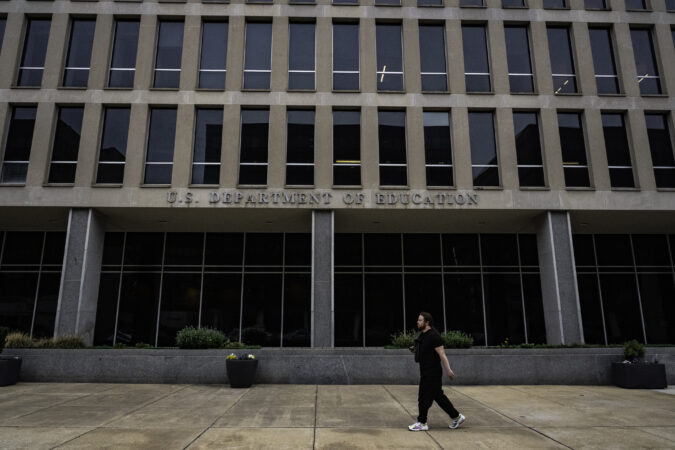
  • Trump letter banning DEI in schools is dead after legal appeal is dropped

    Trump letter banning DEI in schools is dead after legal appeal is dropped

    Nearly a year ago, the Education Department sent universities and K-12 school districts scrambling with a sweeping but vague directive. The “Dear Colleague” letter said schools may be in violation of federal law if they consider race in virtually any way — hiring, discipline policy, scholarships, or programming.

    After a lawsuit and a defeat in court, however, the Trump administration says it is dropping the matter entirely.

    That means an August federal court order blocking the “Dear Colleague” letter will stand. The Trump administration had also demanded that schools certify that they are in compliance with the letter, and that demand is now dead, too.

    Still, it is unclear how significant the impact will be. The Trump administration, which made sweeping changes to education over its first year, can still work to impose its view of the law on schools through enforcement actions and other pressure. For instance, in July, the Justice Department published a memo that included many of the same ideas that were in the Education Department’s letter.

    Further, many schools have already changed their diversity, equity, and inclusion policies, wary of running afoul of the administration’s anti-DEI stance.

    In a statement, Education Department spokesperson Julie Hartman said the agency will continue to interpret Title VI of the Civil Rights Act as barring “impermissible DEI initiatives” that discriminate on the basis of race, color, or national origin.

    “Title VI has always prohibited schools from racial preferencing and stereotyping, and it continues to do so with or without the February 14th Dear Colleague Letter,” Hartman said. She said the agency’s civil rights office “will continue to vigorously enforce Title VI to protect all students and hold violators accountable.”

    The letter, issued by the department last February, laid out the agency’s interpretation of civil rights law and argued that schools at every level had embraced “pervasive and repugnant race-based preferences and other forms of racial discrimination.”

    It said that efforts to consider race in staffing, programming, and other aspects of campus life were unlawful, and that even race-neutral policies aimed at diversity could result in schools, colleges, and universities losing federal funding.

    Soon after, the American Federation of Teachers filed a lawsuit challenging the directive.

    In court, the government argued that it was simply clarifying and reaffirming that schools may not practice racial discrimination. But in August, U.S. District Judge Stephanie Gallagher in Maryland struck down both the guidance and the certification requirement, saying the department was trying to “substantially alter the legal obligations” of schools without going through proper procedures.

    “The government did not merely remind educators that discrimination is illegal: it initiated a sea change in how the Department of Education regulates educational practices and classroom conduct, causing millions of educators to reasonably fear that their lawful, and even beneficial, speech might cause them or their schools to be punished,” she wrote.

    The judge pointed to the letter’s suggestion that teaching about “systemic and structural racism” would be discriminatory. That, she wrote, is “textbook viewpoint discrimination” and contrary to law.

    The government appealed Gallagher’s ruling, and the case was proceeding until Wednesday, when the administration informed the court that it was dropping its challenge. That left the August ruling in place.

    The American Federation of Teachers and Democracy Forward, which brought the case, hailed the legal victory as a “final defeat” for the administration’s attempt to enforce what they see as an unlawful interpretation of civil rights law.

    “With the stroke of a pen, the administration tried to take a hatchet to 60 years of civil rights laws that were meant to create educational opportunity for all kids,” Randi Weingarten, president of the American Federation of Teachers, the lead plaintiff, said in a statement.

    The government’s decision to drop its appeal should put an end to the assertions in the original guidance since it was so thoroughly rejected by the court, said Michael Pillera, who worked for a decade at the Education Department’s civil rights office before becoming director of the educational opportunities project at the Lawyers’ Committee for Civil Rights Under Law.

    “The Dear Colleague letter was really their opening volley in their campaign of chaos against DEI, and what we have now is a spectacular failure,” he said. “They could not defend their positions in court. They had no argument to stand on.”

    But he conceded that it’s possible nothing will change and said the administration’s behavior “is often untethered to law.”

    Many schools may continue to comply with the anti-DEI directive in an effort to stave off attention from the administration, said Frederick Hess, director of education policy studies at the American Enterprise Institute, a conservative think tank.

    “One of the things we have seen is how reluctant institutional leaders are to get crosswise with the federal government, whether or not it’s clearly aligned with the law,” he said.

    Either way, Hess said, he was pleased that the February letter is no longer in force. That’s because he does not think those types of guidance documents should be used to make policy — something that both Democratic and Republican administrations have done in the past.

    “Dear Colleague letters have become a blunt instrument to move thousands of postsecondary institutions or 10,000-plus school districts in one direction or another, and I don’t think that’s an appropriate use of them,” he said. “I don’t think that’s good for anybody.”