A South Jersey man was charged with impersonating law enforcement after he showed up at a police investigation claiming to work for the U.S. Department of Homeland Security, police in Gloucester County said Friday.
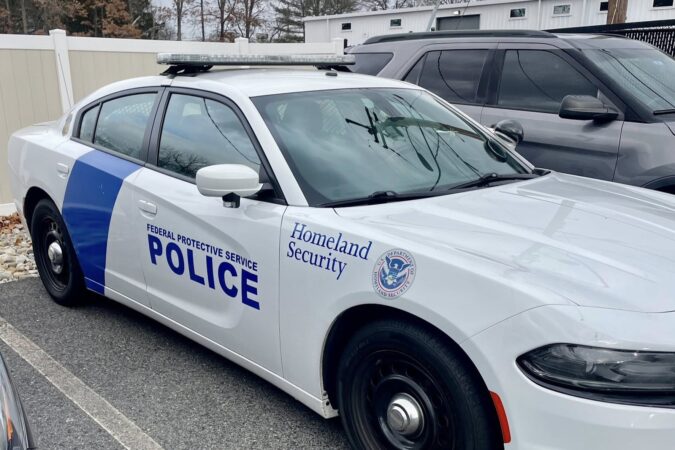
Nicholas M. Cabral, 32, of Sewell, drove in his wife’s marked Homeland Security police vehicle Wednesday afternoon to the scene of a Washington Township police call on the 200 block of Strand Avenue and said he was a Homeland Security police officer, the Washington Township Police Department said.
The police call was for a report that a home under construction had a front door open. The caller was later identified as Cabral, the police department said.
Cabral allegedly attempted to assist officers in clearing the property while holding a handgun. Cabral had a permit to carry the firearm, but the follow-up investigation determined he did not work for any law enforcement agency, the police department said.
The investigation found that the marked Homeland Security vehicle was used by Cabral’s wife, who did work for the agency as a police officer and was out of state on assignment, the township police department said.
The Department of Homeland Security was notified and took possession of the vehicle.
The investigation, using data from automated license plate readers, found that Cabral allegedly had driven the vehicle with its emergency lights activated and also went to a Wendy’s restaurant.
Cabral was charged with impersonating a police officer and possession of a weapon for an unlawful purpose.
The Washington Township Police Department said Cabral was transferred to the Salem County jail and his gun was taken as evidence. Online court records indicated that Cabral was released from custody Friday.
A woman answering the phone at his residence, which is a block from the scene of the police call on Strand Avenue, said Cabral was unavailable and hung up.
Cabral’s attorney could not be reached for comment.
A spokesperson for the Department of Homeland Security also could not be reached for comment.
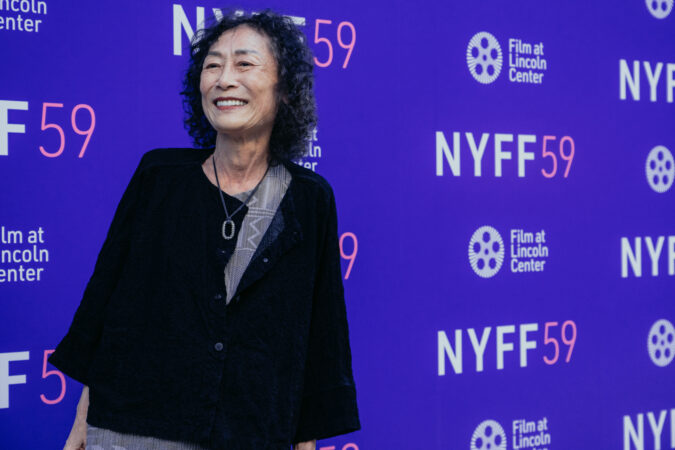
Christine Choy, a trailblazer for Asian Americans in independent film and whose documentary on the fatal beating of Vincent Chin was nominated for an Academy Award, has died. She was 73.
Ms. Choy died Sunday, according to a statement from JT Takagi, executive director of Third World Newsreel, a filmmaking collective Choy helped establish in the 1970s. No cause of death was given.
“She was a prolific filmmaker who made significant films that helped form our Asian American and American film history,” Takagi said on the organization’s website.
Chin, a Chinese American who grew up in Detroit, was celebrating his bachelor party in 1982 when two white autoworkers attacked him. At that time, Japanese auto companies were being blamed for job losses in the U.S. auto manufacturing industry. The attackers were motivated by their assumption Chin was Japanese. His death and the lack of prison time for the two assailants is considered a galvanizing moment for Asian Americans fighting anti-Asian hate.
Renee Tajima-Peña, co-director of Who Killed Vincent Chin?, met Ms. Choy around 1980 through Third World Newsreel. They decided to collaborate on a documentary a year after Chin’s death after seeing how little coverage it received.
Tajima-Peña recalls bonding with Ms. Choy and other crew during freezing Detroit winter nights while waiting for witnesses in Chin’s death and evenings spent with Chin’s mother’s over home-cooked meals.
“We were in constant motion during the production with Chris always the picture of cool — sunglasses, stylishly slim, cigarette in hand. And yes she was brash and outspoken — her cigarettes may have had filters but her language didn’t,” Tajima-Peña said in an email to the Associated Press on Friday. “But, her audaciousness was all a part of the package.”
Their production was lauded for bringing more attention to Chin’s slaying and went on to earn an Oscar nomination for best documentary feature in 1989. In 2021, it was chosen for preservation in the National Film Registry by the Library of Congress.
Ms. Choy was a full-time professor at New York University’s Tisch School of the Arts up until her death. She was praised as someone who enjoyed mentoring young auteurs and students at NYU and Third World Newsreel.
In a statement, Dean Rubén Polendo called her “a triumphant force in documentary filmmaking whose works penetrated America’s social conscience.”
“Christine’s loss is felt deeply across the Tisch community, where her unparalleled legacy survives through her pioneering work as an artist and educator,” Polendo said.
Born in China, Ms. Choy grew up with a Korean father and a Chinese mother. She immigrated to New York City as a teen. Being there in the 1960s, Ms. Choy learned about the Civil Rights Movement up-close. That would shape her passion for social justice, according to her NYU faculty biography.
She moved to Los Angeles and earned a directing certificate from the American Film Institute. But she eventually moved back to New York and, in 1972, helped create Third World Newsreel. The group’s mission was to advance films about social justice and marginalized communities, particularly people of color. Ms. Choy’s early documentaries included subjects such as New York City’s Chinatown and race relations in the Mississippi Delta.
Ms. Choy received several awards and fellowships over the years including Guggenheim and Rockefeller fellowships. She also taught at other universities including Yale, Cornell and City University in Hong Kong.
Plans for funeral services were not immediately known.
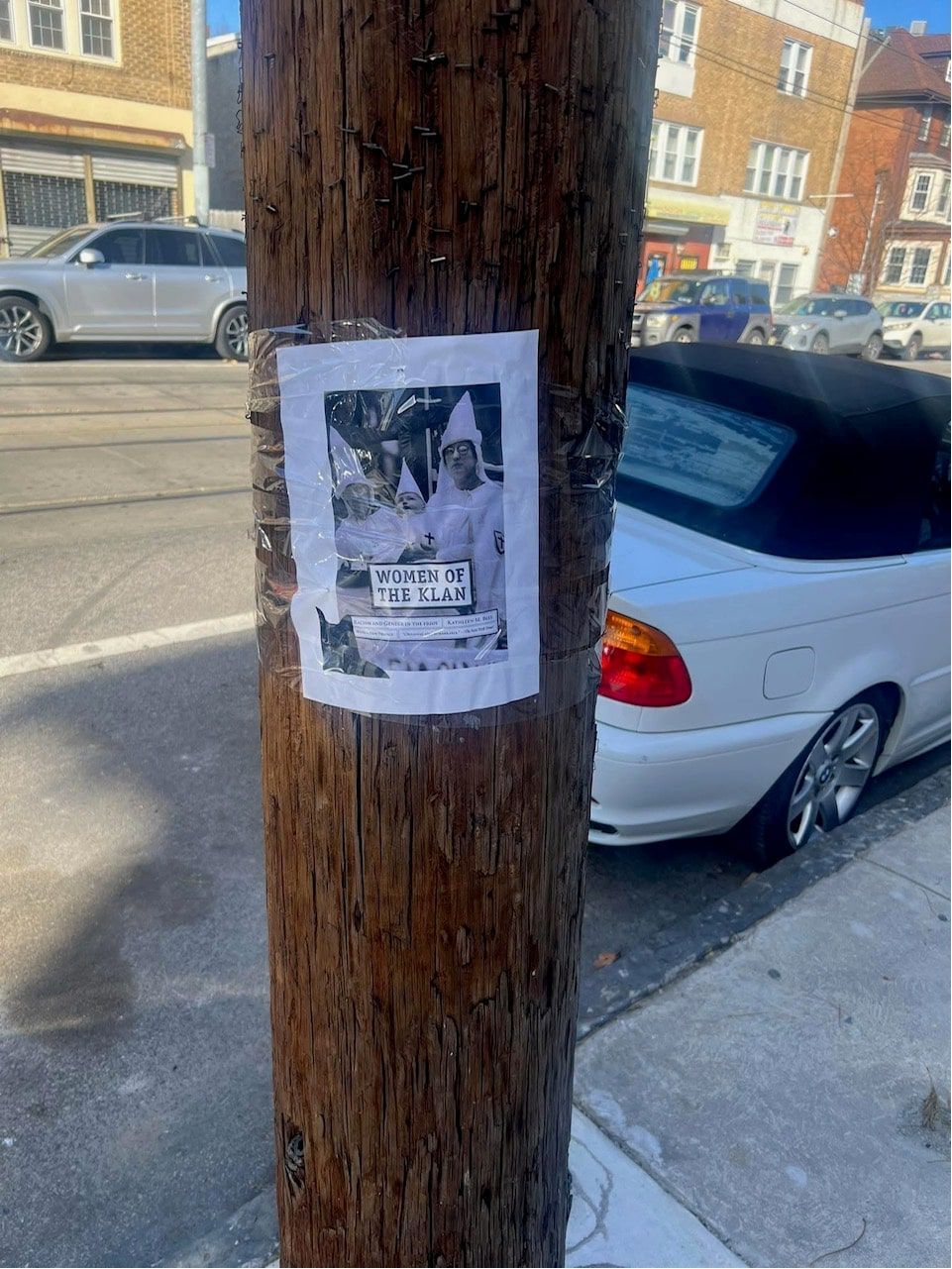
When a Southwest Philly resident reported a KKK flier had been taped to a pole outside their home this week, people got angry.
The Pennsylvania Human Relations Commission looked into the incident and put out a statement denouncing hate. Angry commenters on the 51st Ward’s Facebook page about the flier dared white supremacists to show their faces.
But 51st Ward Democratic leader Gregory Benjamin said while he understands the alarm and does not intend to dismiss people’s concerns, he believes this all may be some kind of misunderstanding.
“We want to calm that,” he said.
On Tuesday, a neighbor called Benjamin to let him know that they’d discovered a flier depicting members of the KKK on an electrical pole outside their home on the 5100 block of Chester Avenue.
A flier posted earlier this week in Southwest Philly is a copy of the cover from a book titled “Women of the Klan: Racism and Gender in the 1920s”.
The flier is black-and-white copy of the cover of a book written by University of Pittsburgh sociologist Kathleen M. Blee, Women of the Klan: Racism and Gender in the 1920s. The cover features a photograph of three generations of klans-people — an older woman, a younger adult woman, and a baby — all wearing white pointed robes, with a cross and American flag behind them.
It’s unclear what message whoever put up the flier intended to send. Blee’s book, originally published in 1991, is a study of the role that women played in the Jim Crow-era KKK and the covert ways they carried out the Klan’s mission, not an endorsement of the group’s ideology. The first page of the book describes the Klan as “one of U.S. history’s most vicious campaigns of prejudice and hatred.”
The flier still raised concerns. Residents contacted the Human Relations Commission, and its Philadelphia advisory council was notified, as well as police. It’s possible another identical flier wasposted nearby around the same time, Benjamin said, but all fliers have since been removed.
No person or group has taken responsibility for the flier so far. While there is no indication the flier was put up by a white supremacist group, the manner in which it was posted can still be harmful, said Chad Dion Lassiter, executive director of the Pennsylvania Human Relations Commission.
“These things, they take an emotional toll on individuals,” he said.
Even if the flier was a piece of trolling or a message targeted at white people, Lassiter said it was crucial not to ignore it.
“We take all of these things [seriously]… we’re in a moment where people want to continue to deny the surge of white nationalism and white supremacy,” he said.
Representatives of the Pennsylvania Human Relations Commission will attend the 51st Ward’s monthly community meeting onSaturday at noon at the Kingsessing Library, located at 1201 S. 51st St.
Benjamin said the meeting would be an opportunity for community members to share more information about the incident and ease any remaining tension. He said he hopes this experience will encourage neighbors to connect more and communicate better.
“Maybe we can bring something constructive out of this. Demonstrate that the community is more interested in [doing] something positive than anything else,” he said.
Correction: An earlier version of this article misstated the publication date of Blee’s book. It was originally published in 1991.
LONDON — King Charles III said Friday that early diagnosis and treatment will allow doctors to reduce his cancer treatment in the new year as he encouraged others to take advantage of screening programs that can detect the disease early when it is easiest to treat.
Charles, 77, revealed the positive outlook in a recorded message broadcast on British television as part of a campaign to promote such screening, which increases the likelihood of successful treatment.
“Early diagnosis quite simply saves lives,” the king said.
“I know, too, what a difference it has made in my own case, enabling me to continue leading a full and active life even while undergoing treatment,” he added.
Buckingham Palace said his treatment is moving to a “precautionary phase” and his condition will be monitored to ensure his continued recovery.
Friday’s message is the latest example of how Charles has used his own story to promote cancer awareness and treatment since he announced his diagnosis in February 2024. That seems to have paid off, with British cancer charities saying the number of people seeking information about cancer jumped after the king revealed he was undergoing treatment.
But the king has never revealed what type of cancer he has or the kind of treatment he is receiving. The palace said this was an intentional decision designed to ensure his message reaches the widest possible audience.
“The advice from cancer experts is that, in his determination to support the whole cancer community, it is preferable that His Majesty does not address his own specific condition but rather speaks to those affected by all forms of the disease,” the palace said in a statement.
The king’s cancer was discovered after treatment for an enlarged prostate. While doctors ruled out prostate cancer, tests revealed “a separate issue of concern,” palace officials said last year.
Charles suspended his public appearances for about two months after his diagnosis so he could focus on his treatment and recovery. But he continued with state business and retained his constitutional role as head of state.
The king returned to the public eye in April of last year with a visit to a cancer-treatment center at University College Hospital in central London, where he met with staff and shared stories with fellow cancer patients.
“It’s always a bit of a shock, isn’t it, when they tell you,” he said, sympathizing with one patient as chemotherapy drugs dripped into her arm.
Charles’ decision to disclose his diagnosis was a departure for Britain’s royals, who have traditionally considered their health to be a personal matter and shared few details with the public.
“As I have observed before, the darkest moments of illness can be illuminated by the greatest compassion,’’ he said. “But compassion must be paired with action. This December, as we gather to reflect on the year past, I pray that we can each pledge, as part of our resolutions for the year ahead, to play our part in helping to catch cancer early.
“Your life — or the life of someone you love — may depend upon it,” he said.
It’s no secret that times are tough for landlords around Temple University.
An eight-bedroom rowhouse at 1734 N. Gratz St., for example, languished on the real estate market after being listed for sale, like many dormlike apartments left in the wake of a rental boom that fizzled amid declining student enrollment.
The property went up for sale in April 2024 for $475,000 — $40,000 less than the owner had paid two years prior. It sat on the market for one year with no takers.
Then real estate agent Patrick C. Fay got involved.
In April 2025, the Gratz Street rowhouse was re-listed for $875,000. The very same day, it was listed as a pending sale, with Fay representing the buyer, according to real estate data from the Realtors Multiple Listing Service.
An Inquirer review of 33 other sales Fay brokered over the last year showed a similar pattern.
After properties went unsold at lower prices, Fay stepped in as the buyer’s agent and almost immediately arranged a sale for anywhere from $290,000 to nearly $550,000 more than sellers originally asked for.
On average, Fay’s clients have paid about double the original listing.
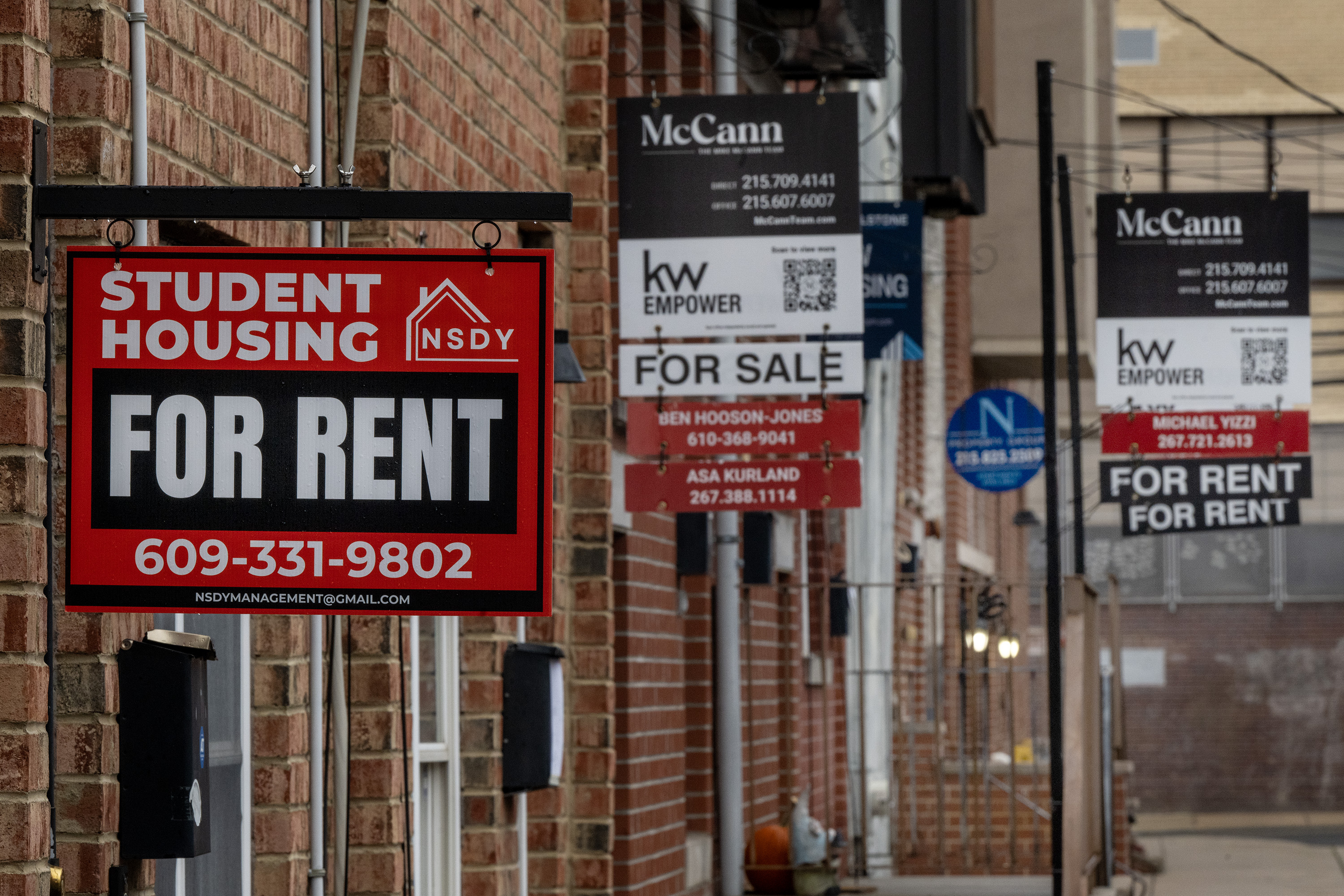
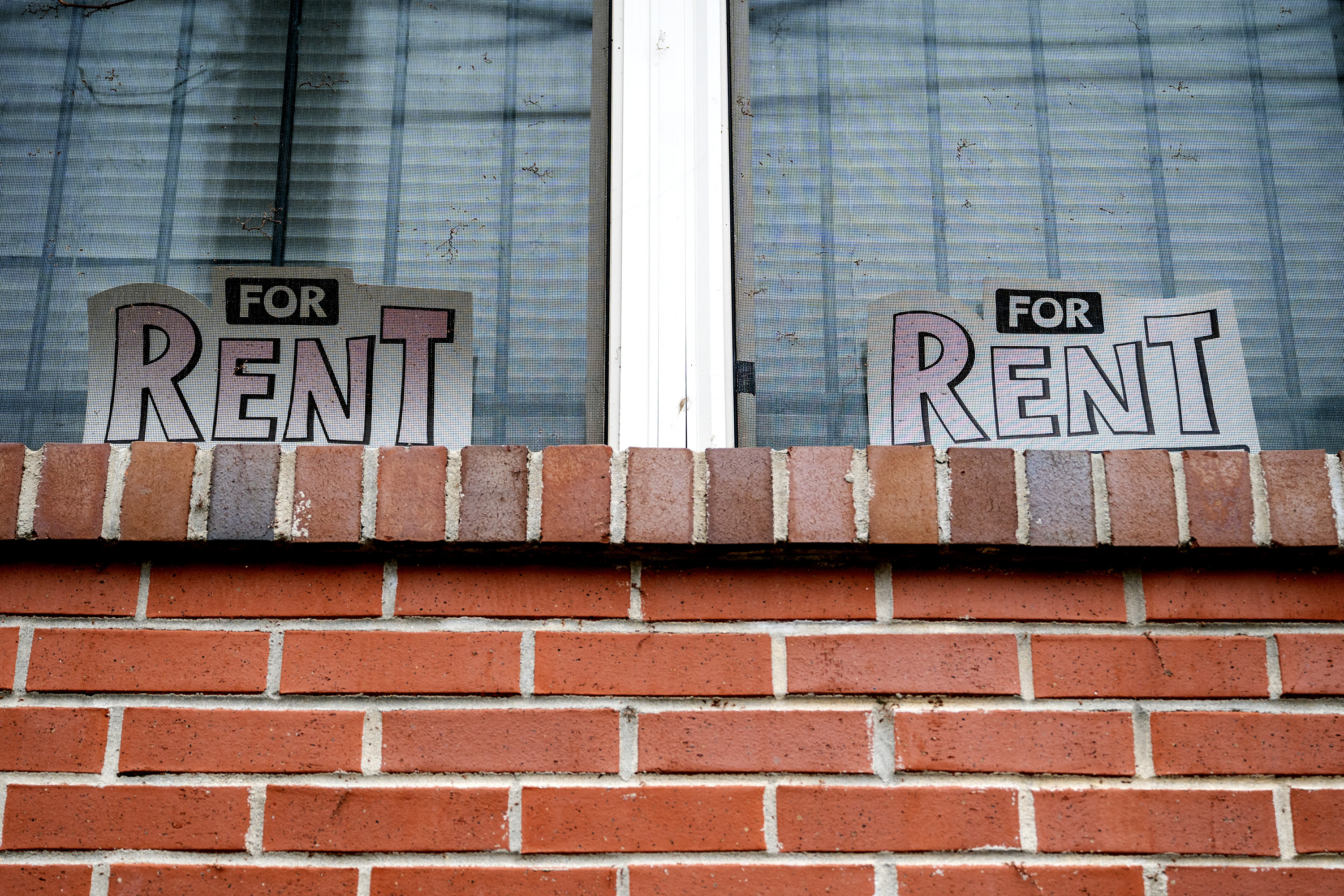
The value of rental properties around Temple has dipped in recent years. Many property owners have sold. Some blocks, like the 1700 block of Arlington St., are lined with for-rent and for-sale signs.
Fay, who worked out of Coldwell Banker’s offices in Old City and Moorestown, Burlington County, has now represented buyers in at least $40 million worth of settled or pending real estate deals involving multifamily properties around Temple.
(After this article published online Friday, the real estate firm cut ties with Fay and his biographical page was removed from its site. “The agent is no longer affiliated with Coldwell Banker Realty,” a company spokesperson said by email.)
Of about a dozen properties in the area that sold for more than $750,000 over the last 90 days, every one listed Fay as the buyer’s agent.
The Inquirer’s examination of the deals found the sales involve a small group of repeat buyers, including two linked to an earlier prosecution over a 2000s-era mortgage fraud scheme. In that case, federal investigators found that the group was involved with purchasing distressed homes using artificially inflated mortgages, pocketing the excess money and allowing the properties to lapse into foreclosure.
Fay, who is one of the top agents in his Coldwell office, said his transactions were all aboveboard. He credited the high sale prices to rebounding demand for student housing in the Temple University area.
“I think it’s a desirable area for sure,” said Fay, who lives in Moorestown. “They just had their biggest enrollment of all time.”
Pat Fay has been one of the top real estate agents this year in Coldwell Banker’s Old City office. His clients have been purchasing properties around Temple University, but at steep markups.
Actually, Temple’s head of admissions resigned last month after the university missed its annual enrollment goal. Its student population remains below 30,000, down from a high eight years ago of more than 40,000.
“This is not a good time for being a property owner around Temple,” said Nick Pizzola, vice president of the Temple Area Property Association, a group that represents many landlords and was formed to “encourage responsible development and property management” in the area.
“Rents are down, vacancies are up,” he said. “It’s a buyer’s market.”
The financing on Fay’s sales is provided by higher-risk private lenders, which grew in popularity as conventional bank lending contracted in the wake of the 2008 real estate crash.
Jon Hornik, head of the National Private Lenders Association, a trade group that represents firms like the ones that lent to Fay’s clients, recently flagged sales around Temple on a watch list the group maintains for suspicious transactions.
He had a simple explanation for these market-defying sales.
“These are bad actors inflating the value of the real estate through the sale structure, and therefore borrowing more money than they really should be able to,” Hornik said in an interview. “There’s real estate there. There’s a borrower there. But the values are off.”
Off-campus housing in North Philadelphia is still popular among some Temple students, but university President John Fry recently announced plans for a new dorm.
Fay, who describes himself on Instagram as a partnerin the upscale Center City Irish bar the Mulberry, has been pursued in New Jersey Superior Court by seven credit card companies or lenders in connection with roughly $57,000 in debts. Most were linked to unpaid credit card bills, and most have ended in default judgments.
Business records show Fay is listed as debtor to an Atlanta-based company called Real Commissions, which lets real estate agents tap into cash based solely on the promise of a forthcoming commission, so long as they have a signed agreement of sale in hand.
In an email Thursday, Fay cited several 2022 student rental sales in the $800,000 to $900,000 range to support his sale prices, insisting that “at no point did either party set or influence those values.” He did not respond to questions about why his clients would pay twice what a seller had initially been asking.
The real estate agent’s narrative of a booming rental market around Temple was also disputed by a recent seller in one of his deals.
The former property owner, who asked not to be named because he feared legal repercussions, acknowledged that he tried to unload his rental property last year but found no takers. He said his real estate agent then brought him Fay’s offer to broker a sale for $875,000, which he said was actually just the amount that would be recorded on the deed.
In reality, he said, he made the sale for only $385,000, or $15,000 less than what it was originally listed for.
The seller said he knew the deal was suspicious, but his agent advised him that he was unlikely to find a better deal.
“I had a mortgage, but I couldn’t get any renters,” the seller explained. “It’s called desperation.”
He took the deal, recording an official sale price that was more than $250,000 higher than any comparable properties recently sold on that block.
Then, anotherproperty across the street sold in June for the exact same price — $875,000 — shortly after being re-listed from $475,000.
The real estate agent on that sale: Pat Fay.
‘Strange stuff’
Historically a commuter school, Temple has long had room for just a fraction of its total student body in traditional dorms. But as Philadelphia’s fortunes improved in the 20th century and more students sought to live on or near campus, the housing shortage intensified.
Private developers stepped in. Blocks that had long served as home to mostly Black working-class residents transformed into rows of student housing units, sometimes prefabricated.
But during the pandemic, the boom in rentals came to a grinding halt. Classes went virtual, driving student renters away. Surging homicide rates — including the 2023 shooting death of a Temple police officer — drove a public-safety crisis for the university.
Recently, Temple president John Fry announced a plan to steer more students back to campus with the university’s first new dorm in years.
Today, even with homicide rates now at historic lows and enrollment creeping up again, many of the blocks once flooded with student housing are underpopulated.
For-rent and for-sale signs line both sides of the 1700 block of Arlington Street. Around the corner, on 18th Street, mailboxes overflow with unopened letters, and the chirps of dying smoke detector batteries in vacant units create an eerie birdsong.
Landlords on the 1900 block of N. 18th St and elsewhere are looking for renters. It is unclear why a small network of buyers is overpaying for nearby properties.
Pizzola said membership is down in the Temple Area Property Association as building owners have looked to get out of the rental business.
“Since COVID hit, it just turned the market upside down,” he said. “If you’re an investor who was buying off-campus housing right before COVID, you got slaughtered.”
Bart Blatstein, a developer who was heavily involved in the mid-2000s Temple-area housing boom, said the recent transactions are highly unusual.
“I’ll give you a commission if you can get twice what my properties are worth,” Blatstein joked.
Officially, more than 40 different corporations have purchased student rental buildings in sales brokered by Fay. But those companies trace back to a handful of purchasers, according to Pennsylvania corporate registries.
Some of these buyers, contacted by The Inquirer, described Fay more as a participant among a loose but unnamed group of “real estate investors,” rather than a mere agent.
Stephen L. Johnson, a Montgomery County resident, was linked to companies involved in six purchases, totaling $5.2 million. Several of the companies were registered to the home of Johnson’s mother, although in an interview she said she was unaware her rowhouse was being used as a nominal corporate headquarters and referred questions to her son.
Reached by phone, Johnson echoed Fay’s enthusiasm for the future of the real estate market around Temple, predicting a surge in values if the university seeks to expand.
“The investment was all about Temple buying up everything and making it better,” Johnson said of his purchases. “In 10 or 20 years, they’ll probably own all of North Philly.”
Johnson could not explainwhy one of his companies, 17th Street Estates LLC, had paid so much for properties like 2113 N. 17th St., which was listed for $475,000 but sold for $900,000.
“I’d have to talk to Patrick about that,” said Johnson, who referred to Fay as “the main guy.”
“It’s like a team,” he added. “We all help each other out.”
Another one of Fay’s clients, Tanjania Powell-Avery of Pottstown, Montgomery County, is a former real estate agent charged in 2010 by the U.S. Attorney’s Office as part of a mortgage fraud ring.
Prosecutors said Powell-Avery aided two men who “purchased distressed properties at low prices, found buyers for the properties at a much higher price, and submitted false documents to the mortgage lender in support of mortgage applications,” according to the federal indictment. She pleaded guilty and was sentenced to five years’ probation and nine months’ house arrest.
Despite this, and a 2012 bankruptcy, companies linked to Powell-Avery appeared in at least two recent sales around Temple, both brokered by Fay. These companies tapped $1.3 million in mortgages to close sales with a combined value of $1.6 million — each for about double its initial listing price.
Powell-Avery did not respond to a request for comment.
Her two codefendants in the 2010 federal indictment, Joseph Tookes and Othniel Tookes, also pleaded guilty. Both men are relatives of Abigail Tookes, a resident of a Norristown apartment complex who was pursued by creditors in 2020 after defaulting on a loan, leading to a $46,067 court judgment against her.
Even so, companies tied to Abigail Tookes were linked to at least $3.4 million in mortgages to finance the acquisition of at least five properties in sales involving Fay. In all five purchases, Tookes’ company recorded sale prices at double the original values.
Reached by phone, Tookes insisted the sales were “totally legitimate transactions.”
“There’s no fraudulent activity. It’s just an investment group,” she said. “There’s no story here. These are real estate transactions between the buyers and sellers. They all agreed to the sale. It doesn’t matter why.”
Other people linked to companies in Fay’s sales — Patrick M. Williams, Miles Fambro, and Angel Rodriguez — did not return calls for comment.
Many of the Temple-area sales featured the same mortgage broker: Viva Capital Group.
Reached by email, Viva president Juan Arguello said his Florida-based company operated “in full accordance with state and federal guidelines, rules, and regulations” and does “not have any contact with the sellers or their agents.”
He also said his company relied on an outside appraisal management company to approve mortgage values. He did not respond to questions about which appraiser had been used to support the Philadelphia sales.
Pizzola, who owns student-rental properties in the area, said these recent sale prices would eventually start driving up neighborhood property assessments, leading to higher tax bills, particularly on blocks where Fay’s clients have purchased multiple properties.
He said he suspects there is fraud involved.
“The fact that you’re seeing multiple sales at twice the average market value, it doesn’t pass the smell test,” he said.
Uncertain future
A prospectus for a property on Cecil B. Moore Avenue, listed for sale at $850,000 in October by several other real estate agents, included a string of Fay’s recent sales as comparable sales to justify the high asking price.
That property has yet to sell.
Over the last three weeks, at least three more properties near Temple have gone under contract — all with Fay as real estate agent.
Fay had been listed as an agent on a large apartment complex on the 1300 block of North Broad Street that was listed for sale at just under $6 million in late October. In November, the property was re-listed for $12 million.
The city has begun placing liens for unpaid water bills on the buildings in some of the earliest deals Fay arranged. Many of the properties have skipped out on biannual commercial trash hauling fees imposed by the city.
Some of the buildings do not appear to be occupied.
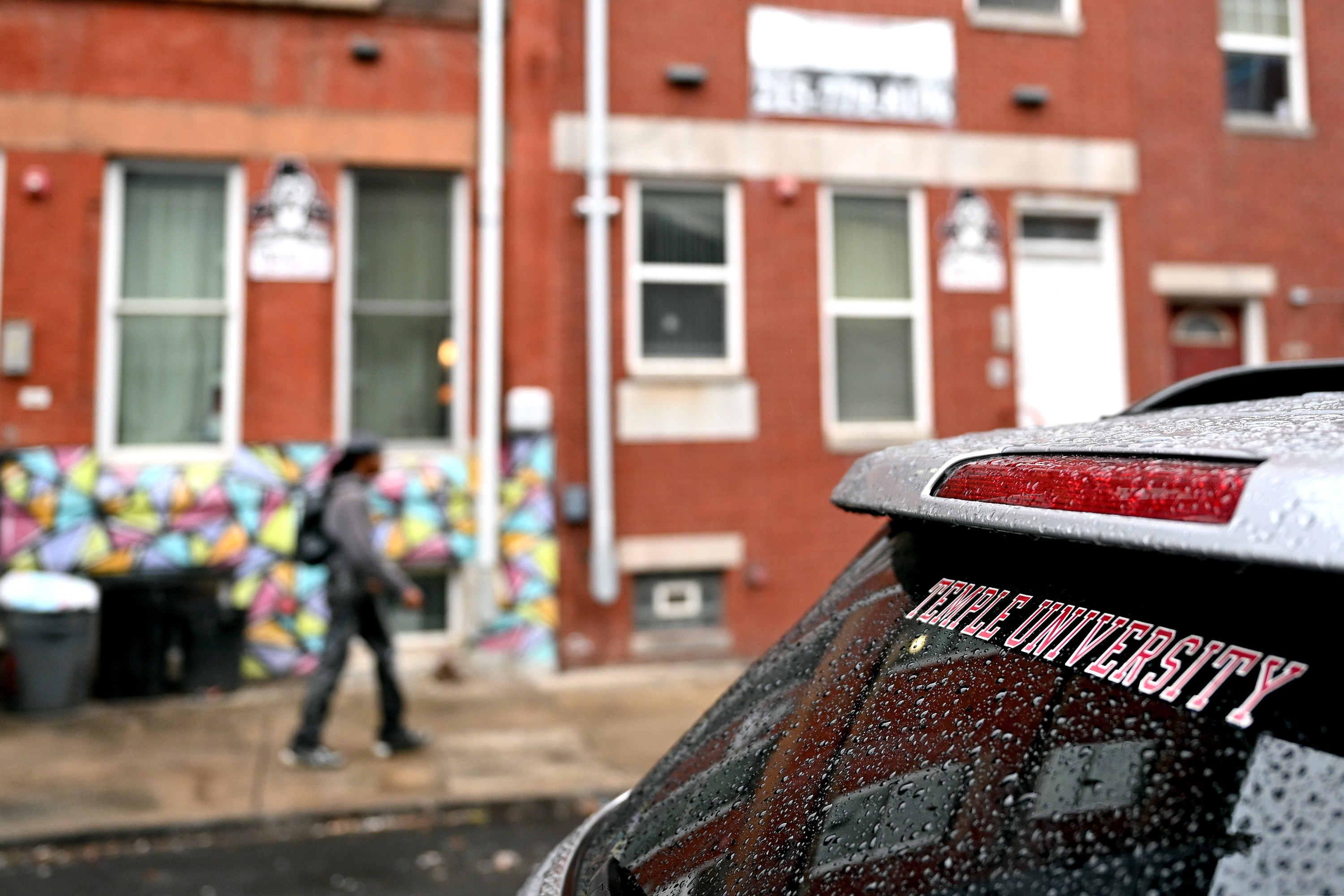
Someone appeared to have busted open a door, which was ajar with broken locks. A Temple sticker was on an upstairs window.
Hornik, from the NPLA, said that unless Fay’s purchasers figure out a way to extract enough rental income from these properties to cover mortgage costs, a mass foreclosure by lenders was likely in North Philadelphia — leaving the ownership of dozens of properties up in the air.
“If the loan goes negative, the lender has to foreclose,” he said, “and they’re not going to recover that money.”
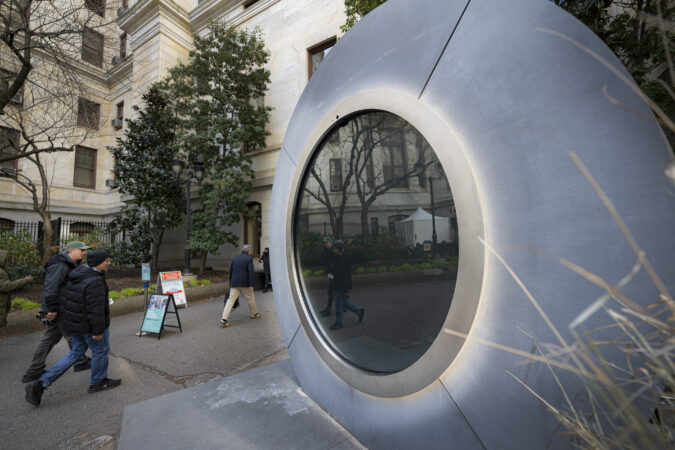
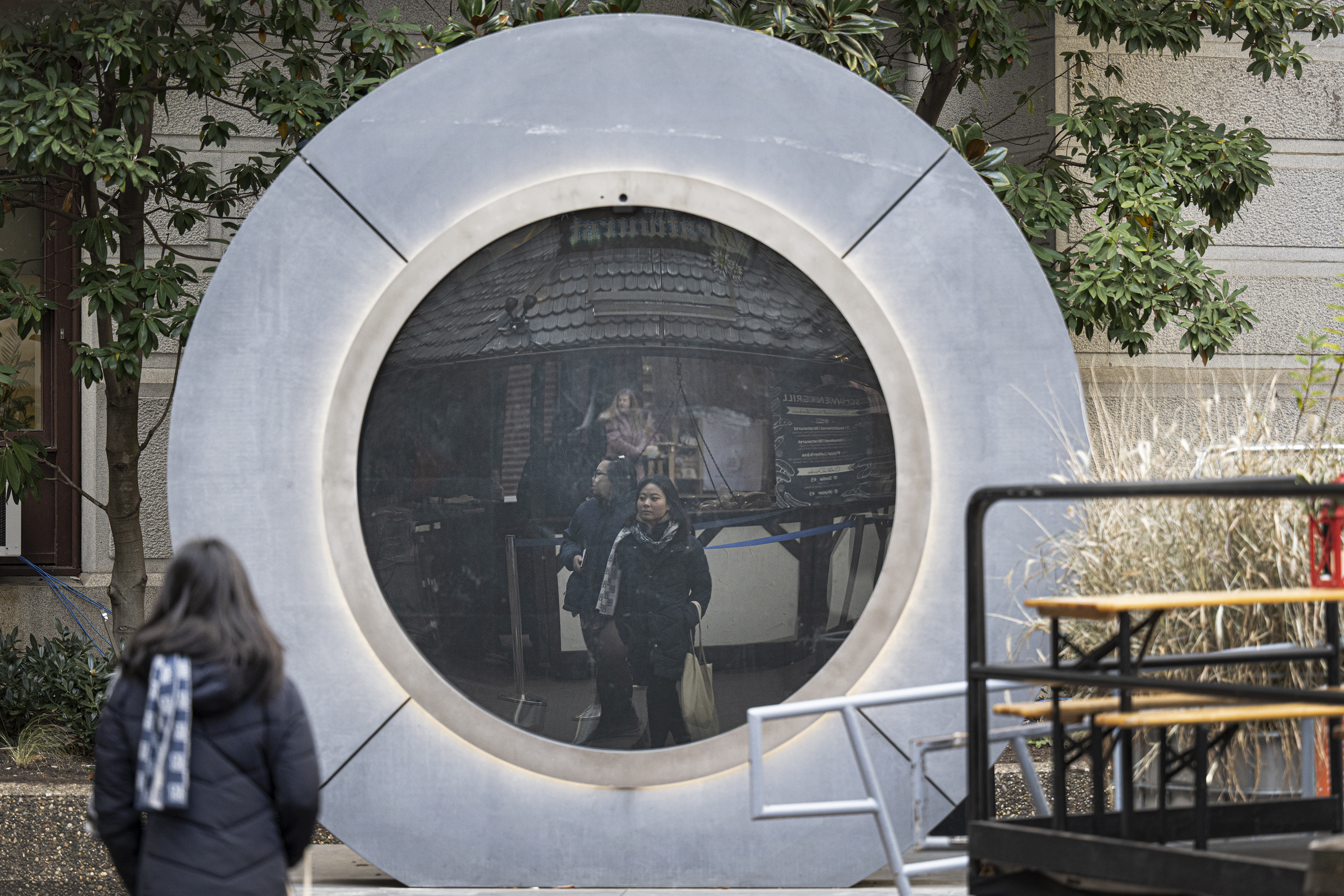
With its screen blank, the sculptural art installation that usually connects people in different cities around the world was akin to a void Friday afternoon, idling in the City Hall courtyard as the magic of Center City’s Christmas Village swirled around it.
It’s unclear exactly how long the Portal has been out of commission; according to city spokesperson Leah Uko, a technical issue “has disrupted the live stream in recent weeks,” and Portal officials expect a fix next week. The operators of the Portal did not respond to requests for comment by publication time.
“Turn the Portal back on, we demand it,” one onlooker said.
Another scoffed, “It must be nighttime there.”
Pedestrians walk by “The Portal” art installation on Friday, Dec. 12, 2025, in the Philadelphia City Hall courtyard.
Yonas Legesse, 22, and Martina Gebrail, 24, trekked more than two hours from Secaucus, N.J., and Jersey City, respectively, in hopes of seeing the famous Portal.
“We were definitely gonna stop here, go wave at some people, and now it’s off,” Legesse said. “It kind of hurts.”
Gebrail was amazed by the technology she saw on TikTok: The 3.5-ton circular video screen beams real-time, 24-hour, unfiltered livestreams from and to places like Dublin, Ireland; Vilnius, Lithuania; and Lublin, Poland.
Despite their disappointment, Legesse and Gebrail said they would come back to see an operative Portal. It’s expected to stay in Philadelphia through the country’s Semiquincentennial celebration in 2026.
WASHINGTON — After a spate of deadly accidents that have claimed the lives of 20 service members in the past four years, a Navy report acknowledges that the military failed to address a growing series of issues with the V-22 Osprey aircraft since it took flight almost 20 years ago.
“The cumulative risk posture of the V-22 platform has been growing since initial fielding,” according to the report by Naval Air Systems Command released Friday. It added that the office in charge of the aircraft “has not promptly implemented … fixes to mitigate existing risks.”
“As a result, risks continue to accumulate,” the report said.
The Associated Press reported last year that the most serious types of accidents for the Osprey, which is the only aircraft to fly like a plane but convert to land like a helicopter, spiked between 2019 and 2023 and that, unlike other aircraft, the problems did not level off as the years passed. The V-22 Ospreys are built at Boeing’s Ridley Park helicopter plant, and final assembly is done at a Bell helicopter plant in Texas.
“As the first and only military tilt-rotor aircraft, it remains the most aero-mechanically complex aircraft in service and continues to face unresolved legacy material, safety, and technical challenges,” the report said.
Commissioned in 2023 by NAVAIR, the Navy command responsible for the purchase and maintenance of aircraft, the investigation reveals that the Osprey not only has the “second highest number of catastrophic risks across all Naval Aviation platforms” but that those risks have gone unresolved for an average of more than 10 years.
By contrast, the average across other aircraft in the Navy’s inventory is six years.
The Navy’s response
Vice Adm. John Dougherty, commander of NAVAIR, said the service is “committed to improving the V-22’s performance and safeguarding the warfighters who rely on this platform.” He offered no details on any actions taken for years of failing to address the Osprey’s risks.
The command did not respond to questions about what, if any, accountability measures were taken in response to the findings.
The lack of details on accountability for missteps also came up when the Navy recently released investigations into four accidents during a U.S.-led campaign against Yemen’s Houthi rebels. A senior Navy official, who spoke to reporters on the condition of anonymity to offer more candid details, said that he didn’t believe the service had an obligation to make accountability actions public.
Risks were allowed to build up, the report says
The investigation lays much of the responsibility for the problems on the Osprey’s Joint Program Office. Part of the mission for this office, which operates within NAVAIR, is making sure the aircraft can be safely flown by the Marine Corps, the Navy and the Air Force, all of which use different versions of the aircraft for different missions.
The report found that this office “did not effectively manage or address identified risks in a timely manner, allowing them to accumulate,” and it faced “challenges” in implementing safety fixes across all three services.
Two major issues involve the Osprey’s complicated transmission. The aircraft has a host of gearboxes and clutches that, like a car’s transmission, are crucial to powering each propeller behind the Osprey’s unique tilting capability. The system also helps connect the two sides of the aircraft to keep it flying in the event of engine failure.
One problem is an issue in which the transmission system essentially shreds itself from the inside due to a power imbalance in the engines. That brought down a Marine Corps Osprey, killing five Marines in California in 2022.
The report reveals that this manufacturing issue went back to 2006 but the Osprey’s Joint Program Office did not formally assess or accept this risk until March 2024.
Besides these mechanical issues, the report found that the program office failed to ensure uniform maintenance standards for the aircraft, while determining that 81% of all the accidents that the Ospreys have had on the ground were due to human error.
Recommendations for the issues revealed
The report offers a series of recommendations for each of the issues it uncovered. They range from rudimentary suggestions like consolidating best maintenance practices across all the services to more systemic fixes like developing a new, midlife upgrade program for the Osprey.
While fixes for both mechanical issues are also in the report, it seems that it will take until 2034 and 2033 for the military to fully deal with both, respectively.
Naval Air Systems Command did not reply when asked if it had a message for troops who will fly in the aircraft in the meantime.
Watchdog also releases Osprey report
The Government Accountability Office, an independent watchdog serving Congress, made similar conclusions and recommendations in a separate report released Friday.
The GAO blamed most Osprey accidents on part failures and human error while service members flew or maintained the aircraft. It determined that the military hasn’t fully “identified, analyzed, or responded” to all of the Osprey’s safety risks.
The GAO said the Pentagon should improve its process for addressing those risks, while adding more oversight to ensure they are resolved. Another recommendation is for the Navy, Air Force and Marines to routinely share information on hazards and accidents to help prevent mishaps.
The odds are almost always stacked against a white Christmas around here, but it is looks like the region will experience a white Dec. 14.
The National Weather Service on Friday said Philadelphia was all but certain to get at least an inch of snow during the weekend, with a general 2 to 4 inches expected, said Joe DeSilva, a meteorologist in the Mount Holly office.
The weather service issued a winter-weather advisory for the entire region from 7 p.m. Saturday through 1 p.m. Sunday.
A storm forming along an Arctic front combined with a strung idsturbance in the upper atmosphere were forecast to begin shaking out snowflakes very late Saturday night or early Sunday. It’s possible that the snow may be mixed with rain, at least at the outset, especially south and east of the city.
And while this may be shocking, computer models continue to tweak outcomes, leaving “still a little bit of uncertainty how this low is going to track,” said DeSilva’s colleague Eric Hoeflich.
However, recent model runs overall have been a shade more bullish on snow amounts than they had been, and the U.S. model has bumped up amounts slightly, said DeSilva.
Timing and duration issues remained to be resolved, and snow could cause commuting issues in the morning. In addition to church-goers, tail-gaters will be commuting commuting to the Eagles game at Lincoln Financial Field in South Philly, and supermarkets typically experience brisk traffic in the run-up to Eagles’s games.
The snow, however, is forecast to end well before kickoff at the Linc, scheduled for 1:15 p.m., DeSilva said.
Some flakes were evident Thursday in the region, with Philadelphia International Airport, where winds gusted past 30 mph, reporting its third “trace” of the season.
The renegade flakes were flying from lake-effect snows, said Bill Deger, senior meteorologist with AccuWeather Inc.
The winds have shut off, and both Friday and Saturday were expected to be tranquil with daytime temperatures mostly in the 30s.
And this time, that holiday least-favorite, the “wintry mix,” wouldn’t be in the mix.
How much snow for Philly?
AccuWeather Inc. was calling for up to 3 inches.
If the storm is a quick mover, expect the inch, but if slows down and ripens a bit, it could be as much as 3, said AccuWeather senior meteorologist Bill Deger.
The weather service was pretty much on board with that estimate.
It painted 3 nches for Philly on its Friday morning snow map.
One near-certainty: This will change.
What time would the snow start?
It is likely to begin very late Saturday night or very early Sunday and continue until mid- or late morning, forecasters say.
Temperatures throughout the day are not expected to get past 30, with wind chills in the teens.
It might feel even colder if the Eagles lose to the lowly Las Vegas Raiders.
Regardless, everyone should be able to make it home.
“We’re not talking a major snowstorm,” Hoeflich said.
But this would be something a little bit different compared with recent local snow history.
Hoeflich noted that, as happened last winter, generous snow has fallen to the north, south, and west, leaving “a giant snow hole” over the Philadelphia area.
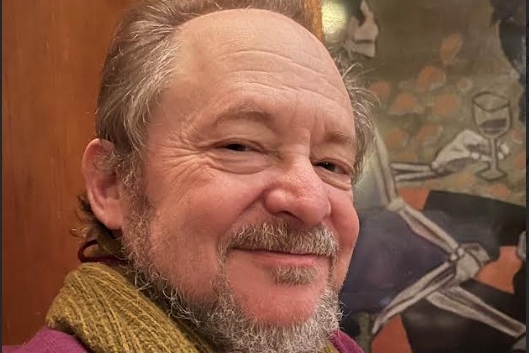
Aaron Goldblatt, 70, of Philadelphia, award-winning museum services partner emeritus at Metcalfe Architecture & Design, former vice president for exhibits at the Please Touch Museum, exhibit designer, sculptor, adventurer, and mentor, died Sunday, Dec. 7, of lung cancer at his home.
He joined business partner Alan Metcalfe in 2002 and specialized in constructing canopy walks, glass floors, elevated walkways, net bridges, abstract playgrounds, multimedia exhibits, and other unique designs in prominent locations. Visitors encounter their creations at the Museum of the American Revolution, the Independence Seaport Museum, Children’s Hospital of Philadelphia, the National Museum of Industrial History in Bethlehem, Pa., and the Whiting Forest at Dow Gardens in Michigan.
He and colleagues built the Lorax Loft on the Trail of the Lorax at the Philadelphia Zoo, the innovative garden and playground at Abington Friends School, and the lobby at Wissahickon Charter School. At Morris Arboretum, they built the celebrated Out on a Limb and Squirrel Scramble “treetop experiences” that Inquirer architecture critic Inga Saffron called “an irresistible allure, to young and old alike.”
He earned bachelor’s and master’s degrees in sculpture, hitchhiked from adventure to adventure around the country and South America after high school, and said in 2019 that “learning, laughter, and creating genuine connections between people, nature, and history … really inspire my design.”
Play, he said, is one of those genuine connections. “Wherever people are, as long as they are there long enough, play will happen,” he said in 2019. “It happens in schools, museums, and even prisons. Play is fundamental to being human.”
Together, Mr. Goldblatt, Metcalfe, and their colleagues earned design awards from the local chapter of the American Institute of Architects, the American Association of Museums, and other groups. In 2022, they earned the Wyck-Strickland Award from the historic Wyck house, garden, and farm for outstanding contributions to the cultural life of Philadelphia.
In a tribute, colleagues at Metcalfe said Mr. Goldblatt “transformed our studio into the place we are today.” They said: “His generosity, wisdom, and passion for play emanated throughout every conversation, punctuated only by his wit and sense of humor.”
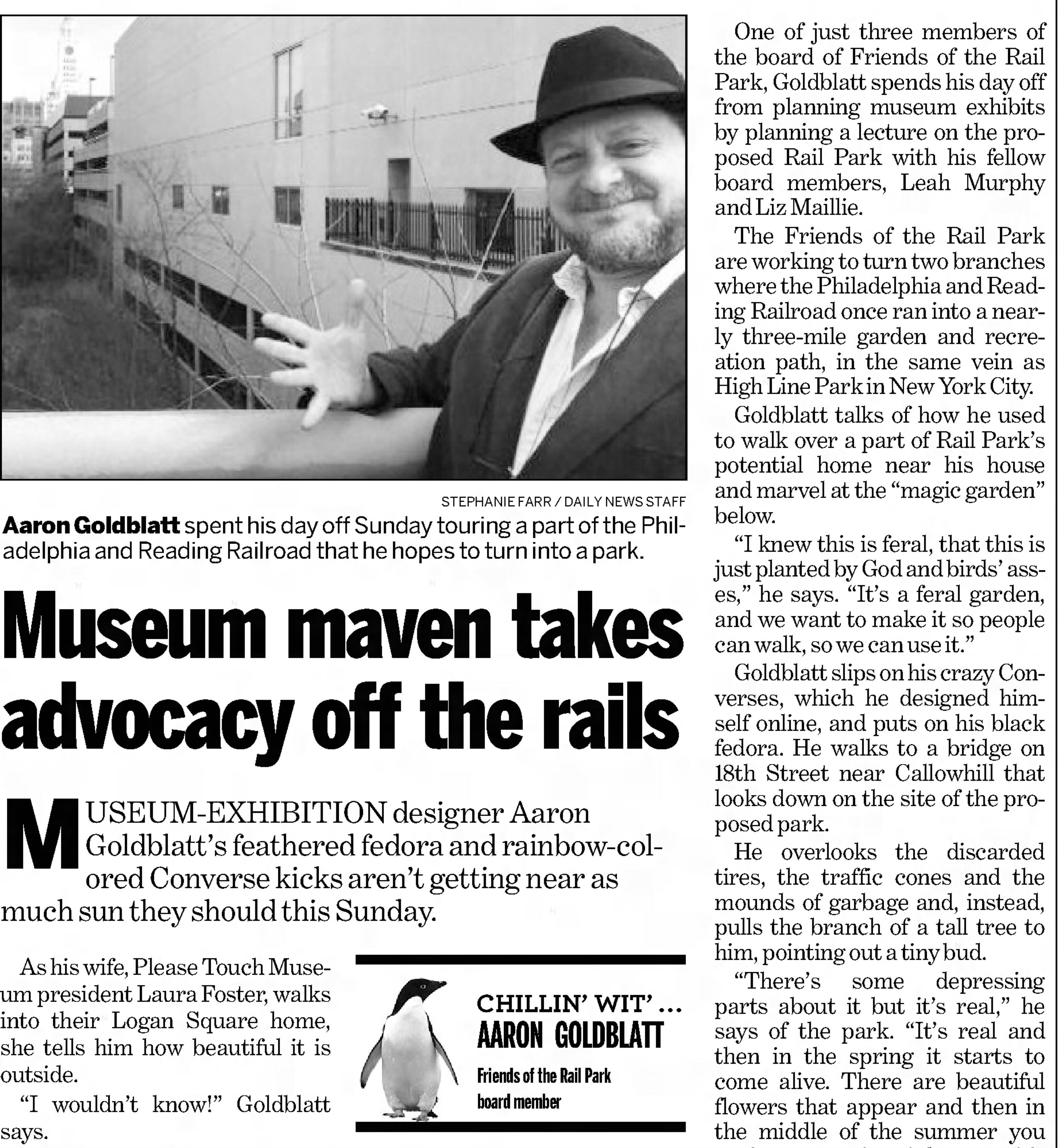
This photo and story about Mr. Goldblatt appeared in the Daily News in 2013.
From 1990 to 2002, he designed and developed exhibits at the Please Touch Museum. Earlier, he was director of exhibits for the Academy of Natural Sciences, assistant director at the Wagner Free Institute of Science, and studio assistant to sculptor Alice Aycock and other artists.
He helped design the Rail Park and was a cofounder and longtime board member of Friends of the Rail Park. He served on boards at the Print Center, the Wagner Free Institute of Science, and other groups, and taught postgraduate museum studies at the University of the Arts for 20 years.
“He developed a love of the process and philosophy of building,” said his daughter, Lillian. His wife, Susan Hagen, said: “He was always engaged, always asking questions. He was curious, funny, and extremely smart.”
Friends called him “lovely, smart, and witty” and “warm, wise, and creative” in Facebook tributes. One friend said: “He always had a spark.”
Aaron Shlomo Goldblatt was born March 22, 1955, in Cleveland. His father was in the Army, and Mr. Goldblatt grew up on military bases across the country and in Germany.
Mr. Goldblatt and his wife, Susan Hagen, married in 2023.
He graduated from high school in Maryland and earned his bachelor’s degree at Philadelphia College of Art in 1982 and master’s degree at Rutgers University in 1990. Before settling in Philadelphia, he worked on farms, painted houses, and spent time as a carpenter, a welder, and a potter.
He married Diane Pontius, and they had a daughter, Lilly. After a divorce, he married Laura Foster. She died in 2019. He married fellow artist Susan Hagen in 2023, and they lived in Spring Garden.
An engaging storyteller and talented cook, Mr. Goldblatt enjoyed all kinds of art, music, and books. He watched foreign films, wrote letters to politicians and the editor of The Inquirer, and visited the Reading Terminal Market as often as possible. He and his wife started birding during the pandemic.
“Aaron led with his heart, engaging deeply with the people and ideas around him,” his daughter said. “He could burst into song at any moment.”
Mr. Goldblatt smiles with his daughter, Lilly.
His wife said: “He was a family person, and everyone talks about his love and kindness.”
In addition to his wife and daughter, Mr. Goldblatt is survived by a grandson, a sister, a brother, his former wife, and other relatives.
President Donald Trump’s U.S. attorney in Delaware abruptly resigned Friday amid a growing standoff over the administration’s authority to install loyalists in powerful prosecutorial roles while bypassing Senate confirmation and the courts.
Julianne Murray, a former chair of the Delaware Republican Party whom the Justice Department had appointed as interim U.S. attorney in the state this summer, announced her departure in a statement posted to social media. She said a recent ruling by the U.S. Court of Appeals for the 3rd Circuit disqualifying Trump’s U.S. attorney in New Jersey, Alina Habba, had made it clear to her she could no longer stay in her role.
Habba resigned from her post on Monday after the court ruled she had been unlawfully appointed through a process that administration officials had also used to keep Murray in her role. The Philadelphia-based 3rd Circuit handles appeals arising from Pennsylvania, New Jersey, Delaware, and the U.S. Virgin Islands, and its rulings extend throughout that jurisdiction.
“I naively believed that I would be judged on my performance and not politics,” Murray said in her statement. “Unfortunately that was not the case.”
Murray said she will continue to work for the Justice Department in a different capacity but did not indicate what her new job might be. Her former office will now be overseen by her first assistant U.S. attorney, Ben Wallace, who has worked as a prosecutor in the office since 2023.
Murray’s initial appointment in July drew controversy given her lack of prosecutorial experience and the fact that she was still serving as head of the Delaware Republican Party when she was named interim U.S. attorney. She resigned from that role shortly afterward.
Her statement Friday saying she would step down as U.S. attorney used many of the same turns of phrase as the resignation letter she submitted to the state party five months earlier. In both, she said she refused to allow her office “to be used as a political football.”
While the nation’s 93 U.S. attorneys are appointed through a political process and are often affiliated with the president’s party, their jobs have traditionally been viewed as largely apolitical. Most come from traditional legal backgrounds, not openly partisan roles.
Since Trump’s return to the White House, his administration has made installing loyalists in these position a priority.
In addition to Murray and Habba, his former personal lawyer, the Justice Department has appointed other controversial allies to U.S. attorney roles on an interim basis. They included Bill Essayli, a former GOP state assemblyman named U.S. attorney in Los Angeles; Sigal Chattah, a former GOP committeewoman in Nevada; and Lindsey Halligan, another former Trump lawyer, in Eastern Virginia.
Federal law limited each of their interim appointments to a period of 120 days and empowered the federal courts to appoint a replacement if there was no Senate-confirmed nominee by that deadline. But when the terms of Murray, Habba and the others expired, the Justice Department sought to keep Trump’s picks in their roles through complex maneuvers that the 3rd Circuit has ruled were illegal.
In Murray’s case, Delaware’s chief U.S. district judge, Colm Connolly, a Trump appointee, began soliciting applications for her replacement weeks before her 120 days were up. The move drew a sharp rebuke from Deputy Attorney General Todd Blanche, another former Trump attorney who now serves in the Justice Department’s No. 2 position.
When Murray’s interim term expired in November, Delaware’s judges declined to reappoint her but did not immediately name a replacement. The Justice Department responded by changing Murray’s title to “acting” U.S. attorney and maintained that the president had the authority to keep her in her job indefinitely.
Within hours of Murray’s resignation, the judges on Friday posted notice that they were appointing Wallace as acting U.S. attorney.
Unlike Habba, Chattah, Essayli, and Halligan, whose appointments federal courts have all ruled to be unlawful, Murray had not drawn a legal challenge questioning her legitimacy. In her statement Friday, she blamed Delaware’s U.S. senators — Chris Coons and Lisa Blunt Rochester, both Democrats — of sinking her prospects in the job.
Normally, the president must formally nominate his U.S. attorney picks, and they must be approved in a Senate vote. In the case of Murray and the others, their home-state senators — all Democrats — had said they would withhold their support should Trump formally nominate them to the role.
That decision effectively killed any chance of their nominations moving forward under a Senate custom known as the “blue slip,” which allows senators to veto judicial and U.S. attorney nominees for their states.
Trump has railed against the blue slip tradition, saying it interferes with his ability to install his chosen candidates. Sen. Chuck Grassley — the Iowa Republican who chairs the Senate Judiciary Committee — has resisted pressure from the president to abandon the custom, saying it gives senators of both parties an important voice in deciding who will fill powerful law enforcement roles in their states.
Coons and Blunt Rochester said they had concluded Murray “was not the right person” for the job after interviewing her and a number of other potential candidates.
“I look forward to working with the District Court’s appointed U.S. Attorney, Ben Wallace, and remain willing to work with the Trump administration to identify and confirm a mutually agreeable candidate,” Coons said in a statement.
Murray called the blue slip process “highly politicized” and “incredibly flawed,” saying it cost Delaware a U.S. attorney.
“The people that think they have chased me away will soon find out that they are mistaken,” she wrote. “I did not get here by being a shrinking violet.”