Police are seeking a suspect wanted in connection with the killing of a 93-year-old man in the city’s Logan neighborhood last week, authorities said Friday.
The victim, Lafayette Dailey, was found dead in his home on the 4500 block of North 16th Street when medics were called there around 3 p.m. on Friday, Dec. 5.
Dailey had suffered a laceration to the chest and trauma in his head, police said. A medical examination found that he died from multiple stab wounds, and his death was ruled a homicide.
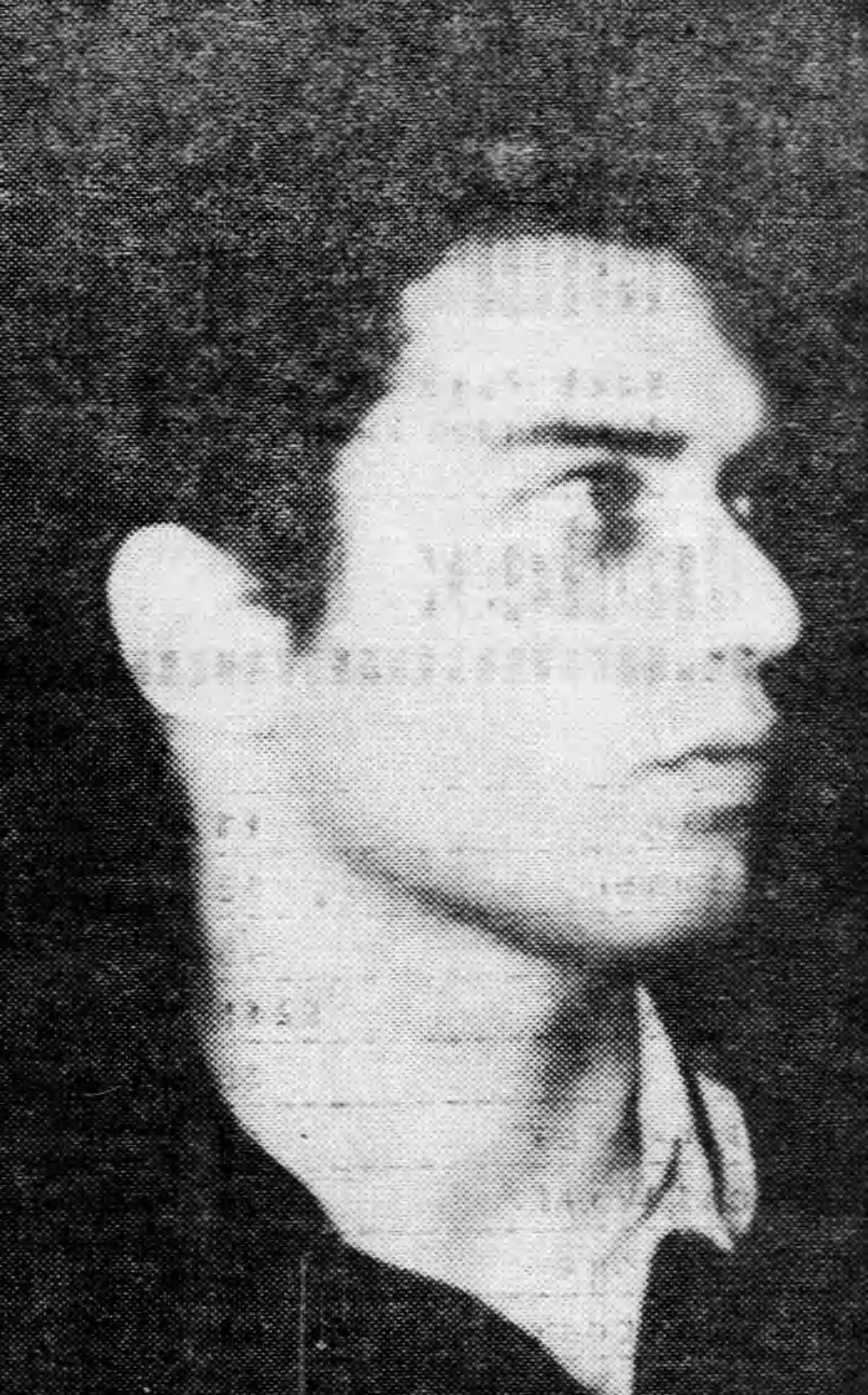
Investigators are now searching for 53-year-old Coy Thomas, who police say is considered a suspect in their homicide investigation. His last known address was on Ashmead Place in Germantown, police said.
They found Dailey’s wallet, keys, and vehicle missing from his home. They later found his car, a white Chrysler 300 sedan, several days after his death.
A department spokesperson declined to comment on the circumstances around the discovery of the car, citing an active investigation.
The department is urging anyone with information on Thomas’ whereabouts to Contact the homicide unit at 215-686-3334 verified or call its anonymous tip hotline, 215-686-TIPS (8477).
A foundation in her name said she was detained in Mashhad, about 420 miles northeast of the capital, Tehran, while attending a memorial for a human rights lawyer recently found dead under unclear circumstances.
A local official reportedly acknowledged arrests had been made, but did not directly name Mohammadi, 53. It wasn’t clear if authorities would immediately return her to prison, where she had been serving a sentence until her temporary release in December 2024 for medical purposes.
However, her detention comes as Iran has been cracking down on intellectuals and others as Tehran struggles with sanctions, an ailing economy and the fear of a renewed war with Israel. Arresting Mohammadi may spark increased pressure from the West at a time when Iran repeatedly signals it wants new negotiations with the United States over its nuclear program — something that has yet to happen.
Activist detained at ceremony for dead lawyer
Her supporters on Friday described her as having been “violently detained earlier today by security and police forces.” They said other activists had been arrested as well at a ceremony honoring Khosrow Alikordi, a 46-year-old Iranian lawyer and human rights advocate who had been based in Mashhad.
“The Narges Foundation calls for the immediate and unconditional release of all detained individuals who were attending a memorial ceremony to pay their respects and demonstrate solidarity,” a statement read. “Their arrest constitutes a serious violation of fundamental freedoms.”
Alikordi was found dead earlier this month in his office, with officials in Razavi Khorasan describing his death as a heart attack. However, a tightening security crackdown coincided with his death, raising questions. Over 80 lawyers signed a statement demanding more information.
“Alikordi was a prominent figure among Iran’s community of human rights defenders,” the New York-based Center for Human Rights in Iran said Thursday. “Over the past several years, he had been repeatedly arrested, harassed and threatened by security and judicial forces.”
Footage published by her foundation also showed her without a hijab, surrounded by a large crowd.
Hasan Hosseini, the city governor of Mashhad, said prosecutors ordered security officials to temporarily detain a number of participants at the ceremony after the chanting of “norm-breaking” slogans, Iranian state television reported.
Hosseini described the detentions as preventive to protect those there from others in the crowd, but did not address claims that security forces used violence in making the arrests.
Other anti-government chants could be heard in purported video footage of the event.
While that was to be only three weeks, Mohammadi’s time out of prison lengthened, possibly as activists and Western powers pushed Iran to keep her free. She remained out even during the 12-day war in June between Iran and Israel.
Mohammadi still kept up her activism with public protests and international media appearances, including even demonstrating at one point in front of Tehran’s notorious Evin prison, where she had been held.
Mohammadi had been serving 13 years and nine months on charges of collusion against state security and propaganda against Iran’s government. She also had backed the nationwide protests sparked by the 2022 death of Mahsa Amini, which have seen women openly defy the government by not wearing the hijab.
Mohammadi suffered multiple heart attacks while imprisoned before undergoing emergency surgery in 2022, her supporters say. Her lawyer in late 2024 revealed doctors had found a bone lesion that they feared could be cancerous that later was removed.
“Mohammadi’s doctors recently prescribed an extension of her medical leave for at least six more months to conduct thorough and regular medical examinations, including monitoring the bone lesion which was removed from her leg in November, physiotherapy sessions to recover from the surgery and specialized cardiac care,” the Free Narges Coalition said in late February 2025.
“The medical team overseeing Mohammadi’s health has warned that her return to prison — especially under stressful conditions of detention and without adequate medical facilities — could severely worsen her physical well-being.”
An engineer by training, Mohammadi has been imprisoned 13 times and convicted five. In total, she has been sentenced to over 30 years in prison. Her last incarceration began when she was detained in 2021 after attending a memorial for a person killed in nationwide protests.
The white package that arrived at Mattias Krantz’s home in Sweden after a five-hour flight contained an octopus that Krantz saved from becoming someone’s meal.
Krantz’s hopes for the octopus, which he named Takoyaki, were high — maybe unreasonably so. Within about six months, Krantz wanted Takoyaki to play the piano so well that the animal could perform “Under the Sea” and the theme from the movie Jaws.
Krantz, who typically makes YouTube videos playing instruments he modifies, had long wanted to teach piano to an animal. Krantz said octopuses, whose eight arms can each act somewhat independently because of the neurons inside them, had the most potential.
But the task proved more difficult — and fulfilling — than Krantz imagined, requiring hundreds of hours and a wealth of patience. His YouTube video detailing the teaching process has more than 6 million views.
“It was probably the worst thing I’ve ever done, and maybe the coolest thing, but also the worst ever,” Krantz, 28, told the Washington Post. “I never pushed myself to such limits.”
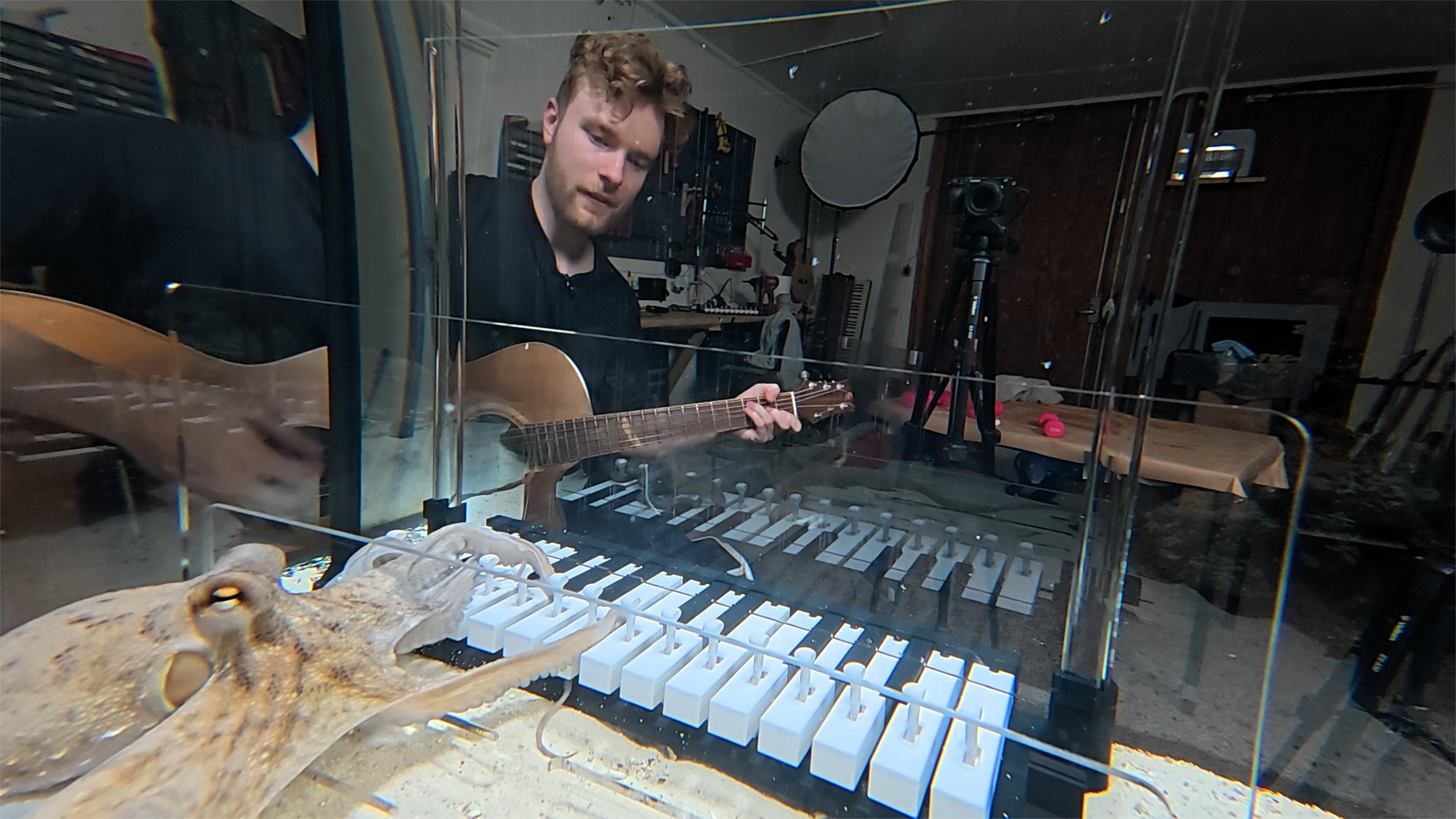
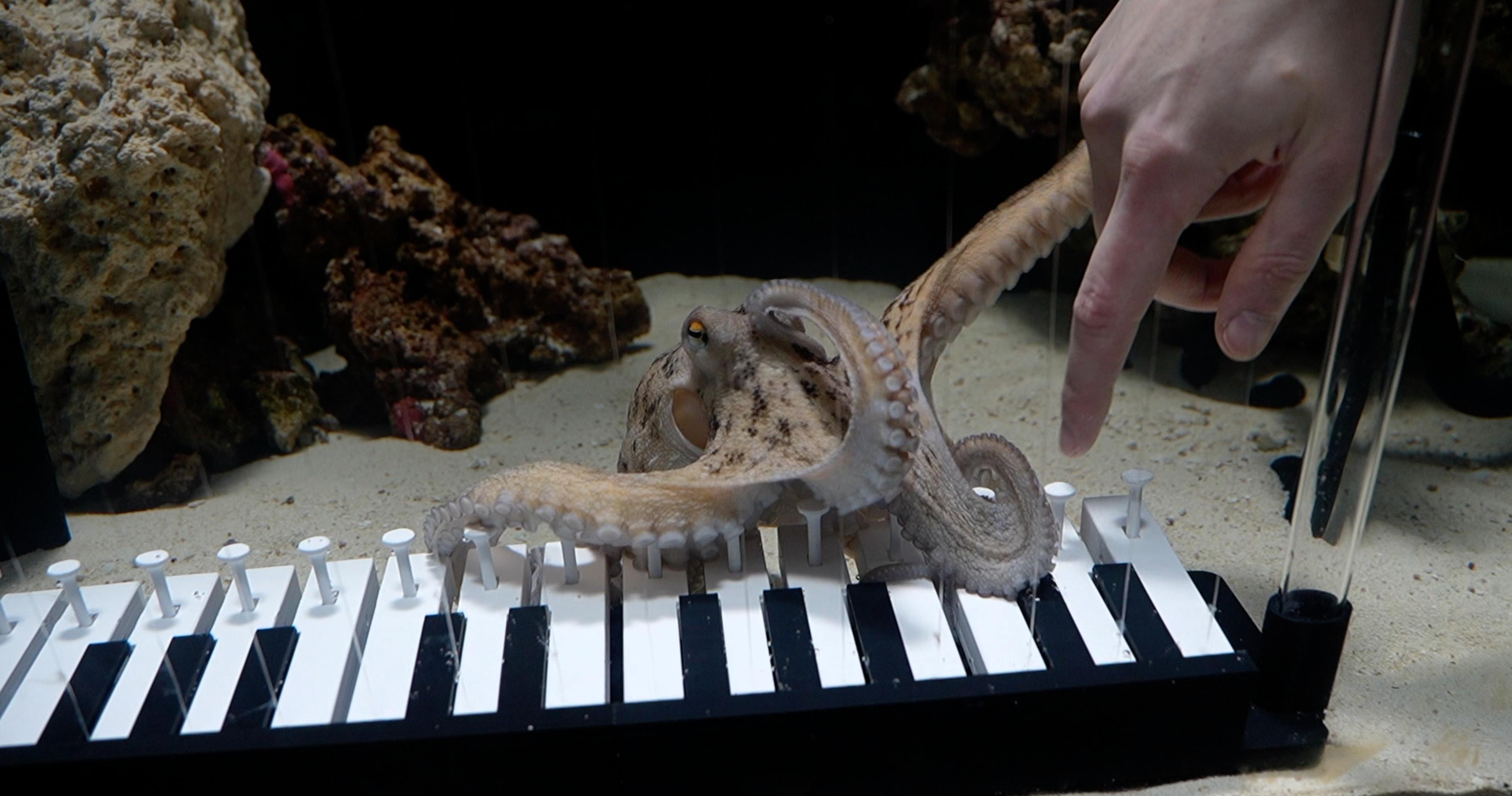
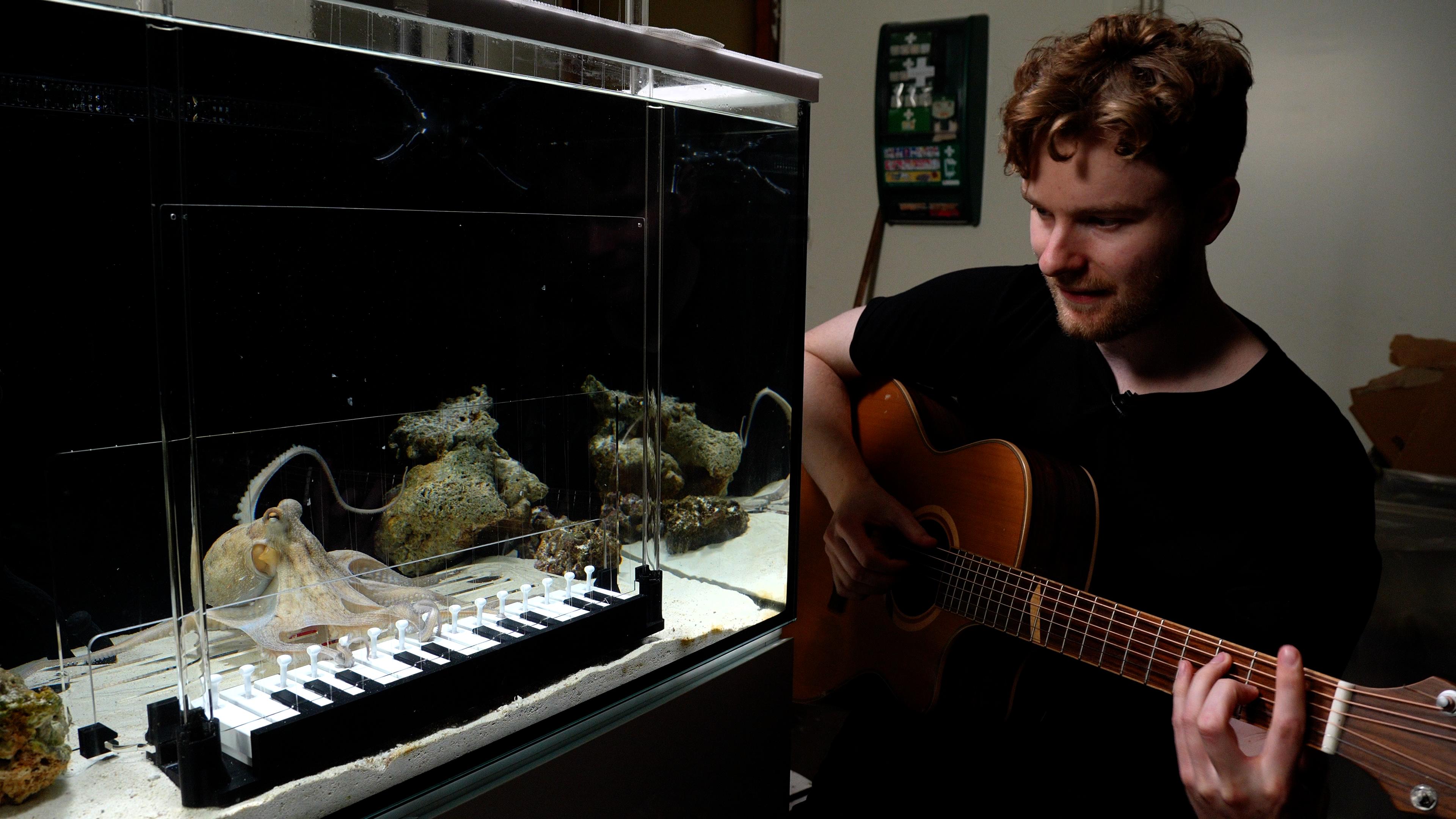
Takoyaki, an octopus, played piano keys while Mattias Krantz played an acoustic guitar.
Krantz purchased Takoyaki from a Portuguese fishery in March; he did not buy the octopus from a Korean market as is depicted in his YouTube video. Once Krantz got the octopus into his home, he dumped the creature into a roughly 110-gallon tank containing rocks, sand, and dog toys. The tank was connected to machines that filtered water and removed octopus waste.
“You’re going to be the greatest pianist the sea has ever known,” Krantz told Takoyaki, which he nicknamed Tako.
Mattias Krantz bought Takoyaki, an octopus, from a Portuguese fishery in March.
But first, Krantz had to earn Tako’s trust.
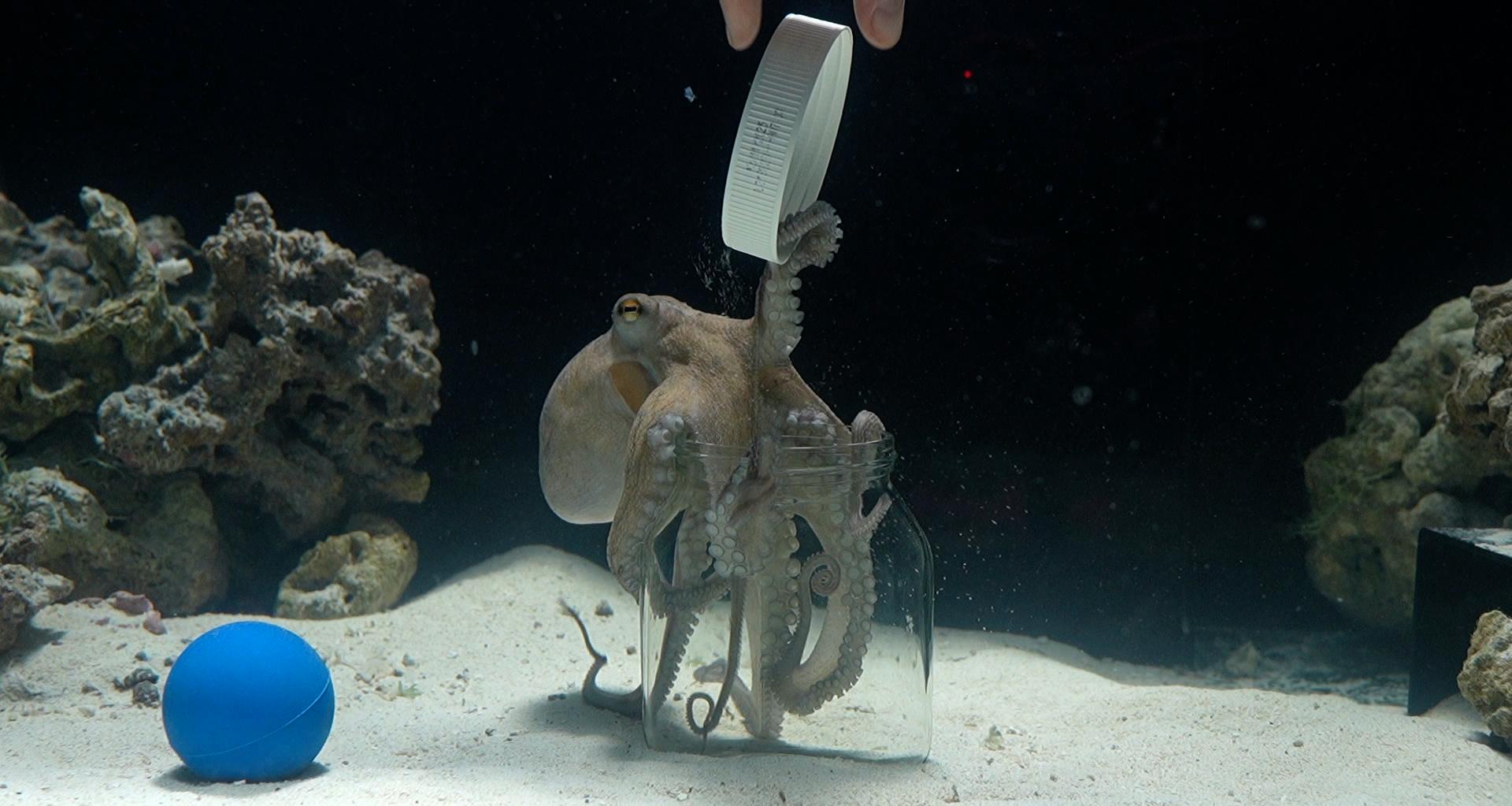
On the first day in its tank, Tako hid behind rocks and didn’t eat the small crabs and mussels Krantz had fished off Sweden’s southern coast. Tako began eating on the second day, and soon Krantz gave Tako a simple task to judge whether the octopus was up for the piano challenge: Take a plastic lid off a glass jar containing crab and shrimp. Tako passed the test after about three days.
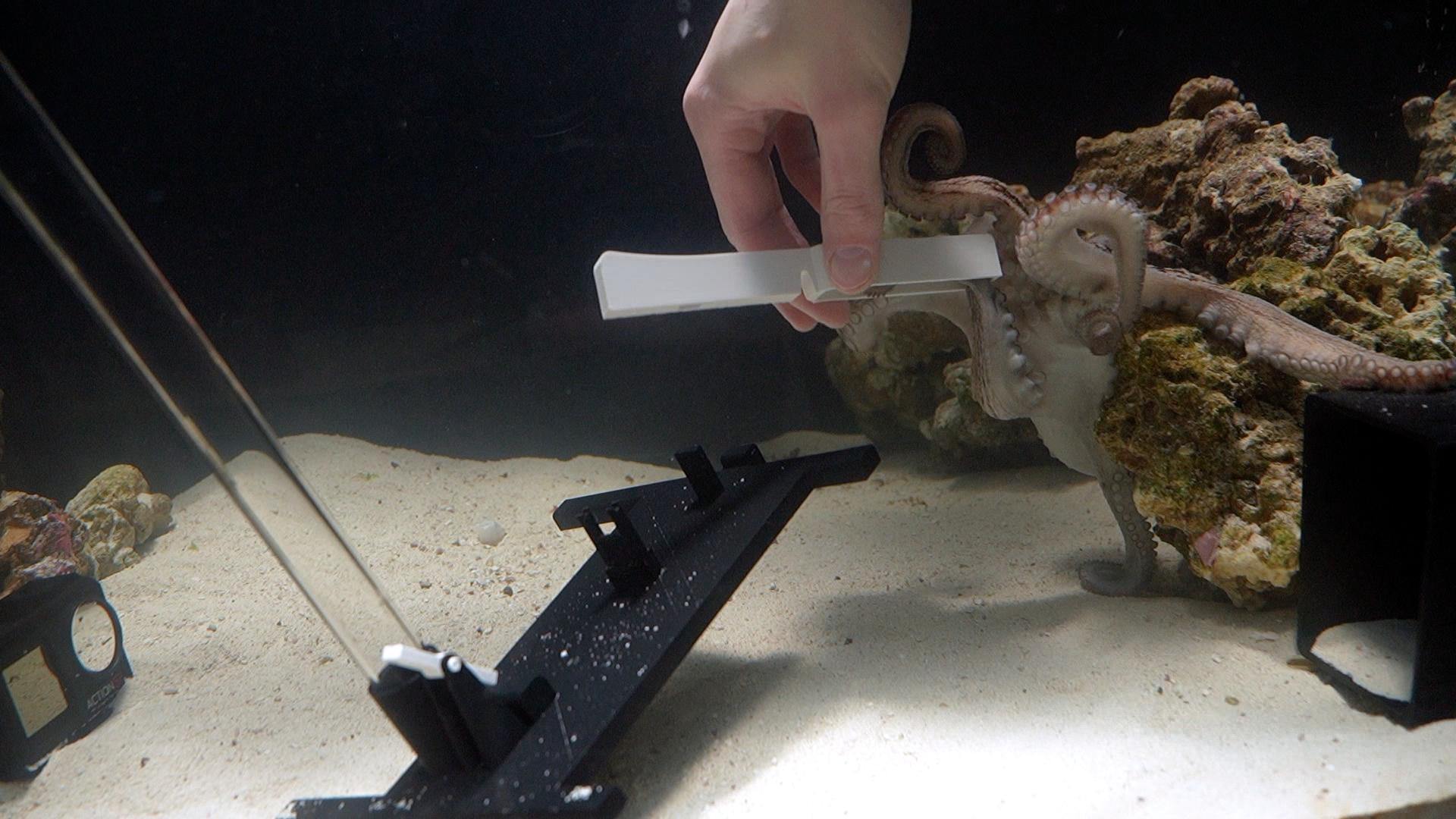
Krantz then designed a piano key on his computer, 3D-printed it and set it down in the tank. When Tako touched the key on the second day, Krantz gave the octopus a treat. But Krantz wanted Tako to push the key to play a note, so he added a white lever that Tako wrapped its arms around and pulled to make a sound (Tako also broke the key off its mount a few times and hid it under rocks).
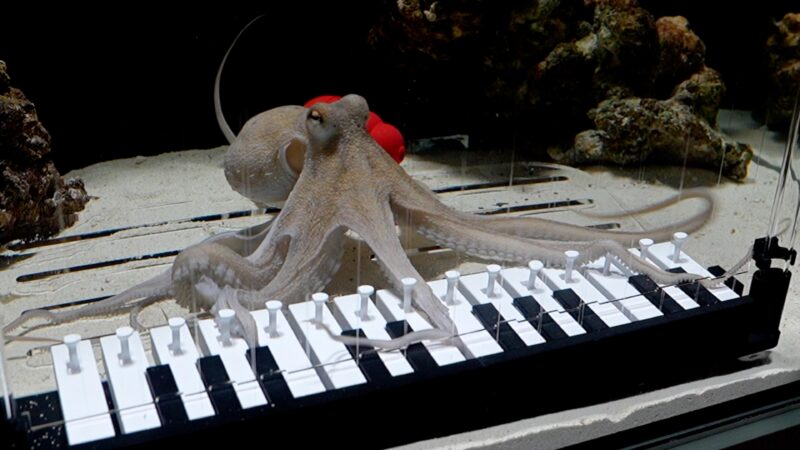
After that first success, Krantz built Tako a 15-key piano — a process Tako seemed to watch closely by pressing its body against the glass. But when Krantz placed the piano in the tank, Tako sat on it instead of playing it.
One of Takoyaki’s first tasks was to open a plastic lid off a glass jar.
So Krantz tried different approaches.
First, he added a blue underwater speaker that allowed Tako — whose species has poor hearing — to feel a vibration when the octopus played a key. Tako began playing random notes, Krantz said, but he wanted Tako to play particular keys to form a melody.
Krantz added symbols to the keys he wanted Tako to play — circles, crosses, and stripes — which Tako didn’t respond to. Krantz even added pictures of an orange crab to the keys. The octopus was interested in the pictures but not in playing the keys.
Takoyaki took the piano key Mattias Krantz made.
But one thing seemed to grab Tako’s attention: movement. When a bubble formed in the tank, Tako chased it.
So, with fishing wire, Krantz wiggled the lever on the keys he wanted Tako to play. It worked — despite Tako also spending time playing the wires like a harp. (Marine scientist Jenny Hofmeister said octopuses are attracted to movement because it might signal prey.)
After a week, Tako played two notes in a row. After two weeks, Tako played a pair of notes simultaneously.
After Mattias Krantz built Takoyaki a 15-key piano, the octopus seemed to resist Krantz pointing to the keys from inside the tank.
But in the following weeks — after about four months of training — Tako plateaued.
Plus — as expected from an octopus — Tako wasn’t focused on learning the instrument. Tako wrapped its arms around the GoPro camera in its tank, squirted water at Krantz, and, once, escaped the tank and hid in a cupboard.
Krantz lost hope that Tako could learn to play.
Takoyaki sometimes squirted water outside of the tank.
But Tako stared at the piano, which sat on the ground beside the tank, throughout the day, appearing to want to play at the usual 6 p.m. training time, Krantz said. So Krantz experimented with a new strategy.
“The one thing I’m really good at is insane stubbornness,” Krantz said.
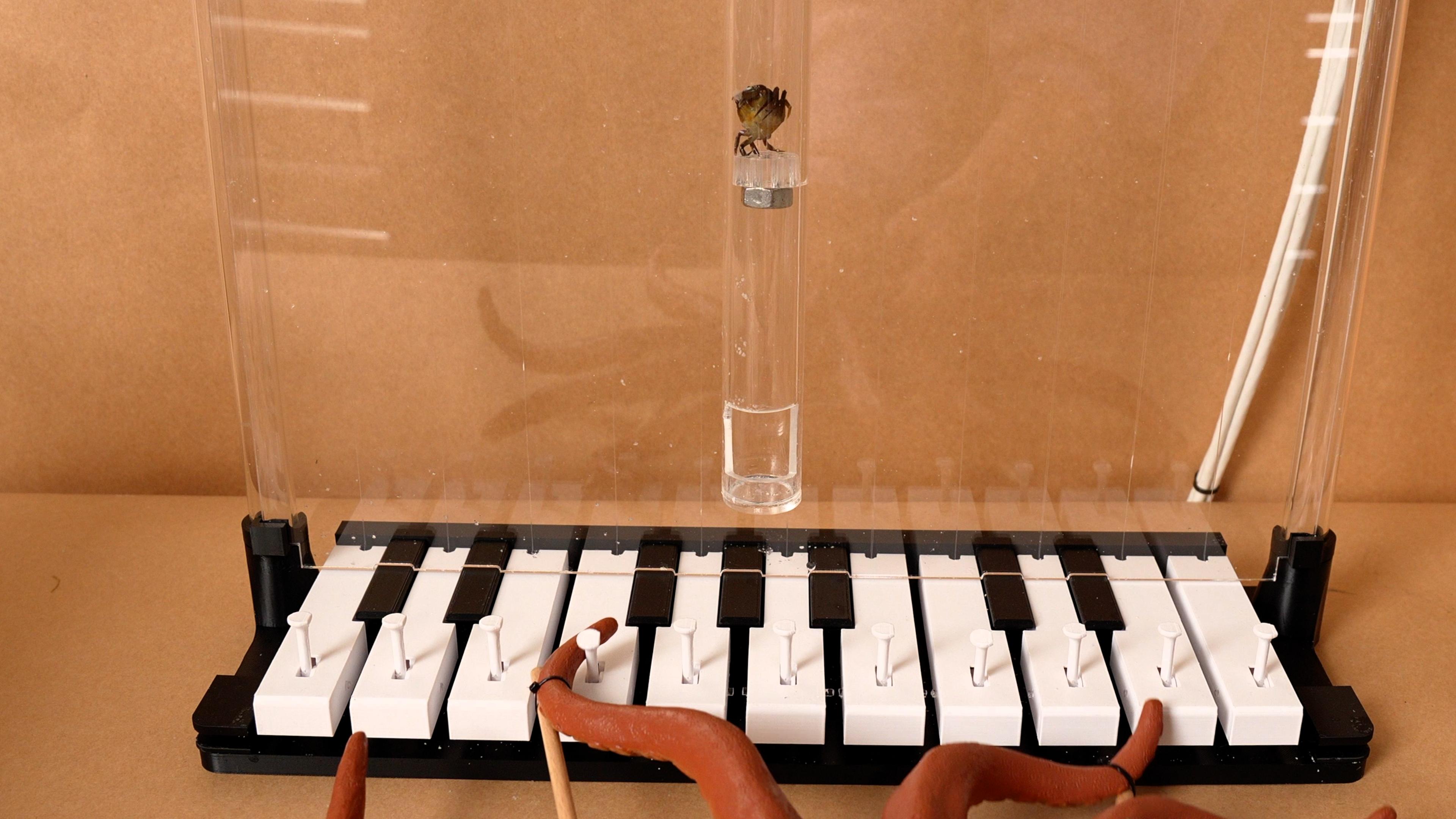
In early August, he placed an acrylic tube inside the tank and inserted a crab —Tako’s favorite treat — at the top. When Tako played a key, Krantz lowered the crab closer to the bottom of the tube. Krantz called his device the “crab elevator.”
Mattias Krantz built a “crab elevator” for his octopus, Takoyaki.
Tako initially tried to retrieve the crab by swimming into the tube and attempting to pull the crab down. But once Tako saw the crab inch closer after playing a note, the octopus became more motivated to play. After a few weeks, Krantz gave Tako the crab once the octopus played seven or eight keys.
In mid-August, Krantz began playing chord progressions on his acoustic guitar and simultaneously wiggled keys for Tako to play so they could perform together. Krantz fed Tako after each recital.
Krantz never taught Tako to consistently play the right keys at the right times. Sometimes the piano sounded good; other times, not so much. Tako played the keys to “Baby Shark” — even if it was off tempo, Krantz said.
“I can’t believe I sit here and play with an octopus,” Mattias Krantz said.
But the fact that Tako could play keys at all was like a “fever dream,” Krantz said.
Hofmeister, the marine scientist, said Tako probably didn’t know he was playing the piano; he was motivated by food.
Octopuses are smart in their own ways: They change colors based on their surroundings, build dens with stones, use makeshift weapons, throw objects at targets, and eject ink clouds when they’re in danger.
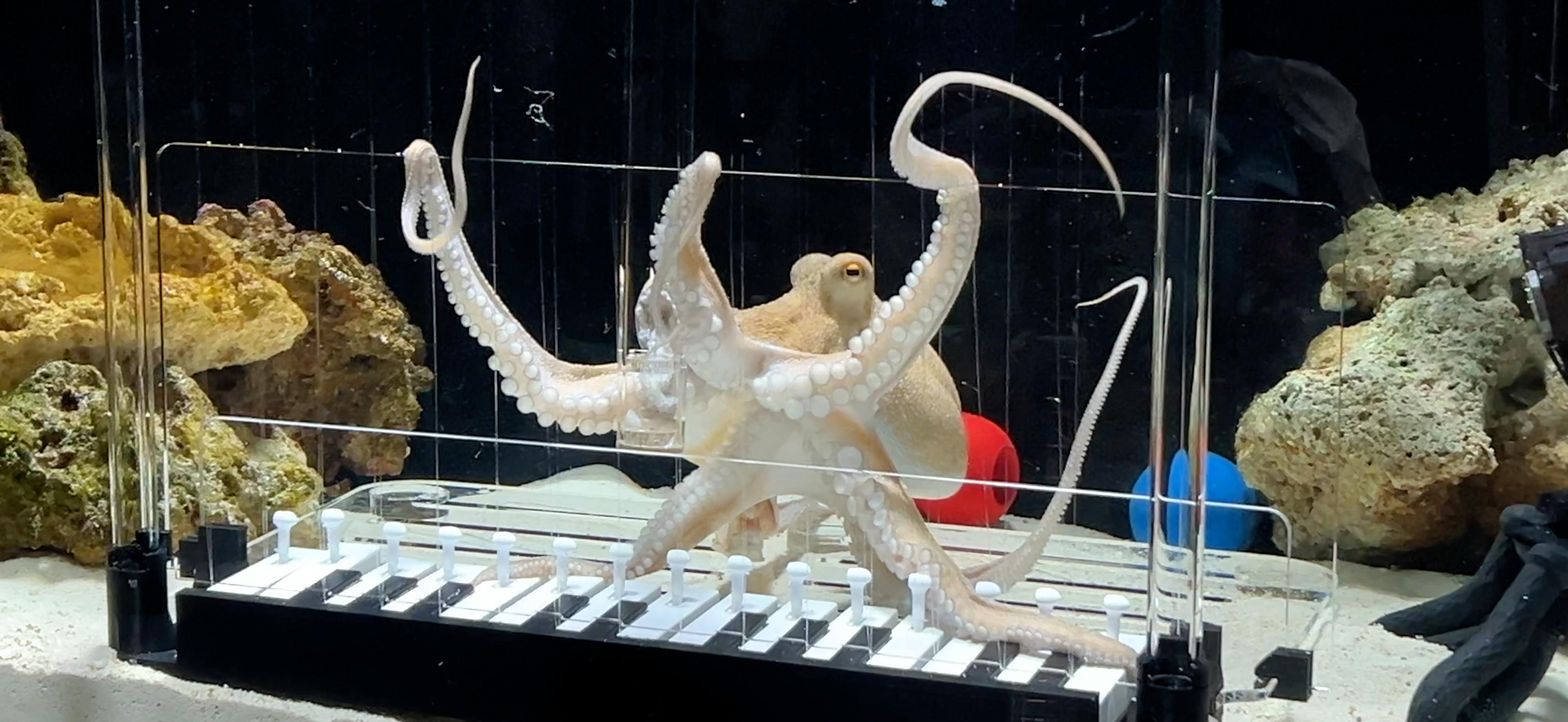
Takoyaki, an octopus, seemed to enjoy playing piano keys.
“The octopus is not perceiving rhythm,” Hofmeister said. “It’s not perceiving, you know, tempo. It wants to do the steps it has to do to get the crab.”
She said teaching an octopus to play the piano perfectly is nearly impossible.
But in addition to creating music, Krantz received another benefit from the process: a friend. He has kept Takoyaki — the name means grilled octopus — as a pet.
Takoyaki still plays the piano about every other day.
Octopuses typically live for a year or two, and Krantz said Tako,which he estimated to be about 14 months old, now sleeps most of the day. But that hasn’t stopped Tako from continuing to practice its unique skill; the octopus plays piano about every other day.
The recitals still leave Krantz in awe.
“I can’t believe I sit here,” Krantz said last week, “and play with an octopus.”
BALTIMORE — A federal judge blocked U.S. immigration authorities on Friday from re-detaining Kilmar Abrego Garcia, saying she feared they might take him into custody again just hours after she had ordered his release from a detention center.
The order came as Abrego Garcia appeared at a scheduled appointment at an Immigration and Customs Enforcement field office roughly 14 hours after he walked out of immigration detention facility in Pennsylvania.
His lawyers had sent an urgent request to the judge, warning that ICE officials could immediately place him back into custody. Instead, Abrego Garcia exited the building after a short appointment, emerging to cheers from supporters who had gathered outside.
Speaking briefly to the crowd, he urged others to “stand tall” against what he described as injustices carried out by the government.
Officials cannot re-detain him until the court conducts a hearing on the motion for the temporary restraining order, U.S. District Judge Paula Xinis in Maryland said. She wrote that Abrego Garcia is likely to succeed on the merits of any further request for relief from ICE detention.
“For the public to have any faith in the orderly administration of justice, the Court’s narrowly crafted remedy cannot be so quickly and easily upended without further briefing and consideration,” she wrote.
Abrego Garcia on Friday stopped at a news conference outside the building, escorted by a group of supporters chanting “We are all Kilmar!”
“I stand before you a free man and I want you to remember me this way, with my head held up high,” Abrego Garcia said through a translator. “I come here today with so much hope and I thank God who has been with me since the start with my family.”
He urged people to keep fighting.
After Abrego Garcia spoke, he went through security at the field office, escorted by supporters.
When Abrego Garcia’s attorney, Simon Sandoval-Moshenberg, announced to the crowd assembled outside that his client would walk back out the field office’s doors again, he stressed that the legal fight was not over.
“Yesterday’s order from Judge Xinis and now the temporary restraining order this morning represent a victory of law over power,” Sandoval-Moshenberg said.
The agency freed him just before 5 p.m. on Thursday in response to a ruling from Xinis, who wrote federal authorities detained him after his return to the United States without any legal basis.
Kilmar Abrego Garcia waits with Lydia Walther-Rodriguez of Casa in Maryland, left, to enter the building for a mandatory check at the Immigration and Customs Enforcement office in Baltimore, Friday, Dec. 12, 2025, after he was released from detention on Thursday under a judge’s order. (AP Photo/Stephanie Scarbrough)
Mistakenly deported and then returned
Abrego Garcia is a Salvadoran citizen with an American wife and child who has lived in Maryland for years. He immigrated to the U.S. illegally as a teenager to join his brother, who had become a U.S. citizen. In 2019, an immigration judge granted him protection from being deported back to his home country, where he faces danger from a gang that targeted his family.
While he was allowed to live and work in the U.S. under ICE supervision, he was not given residency status. Earlier this year, he was mistakenly deported and held in a notoriously brutal Salvadoran prison despite having no criminal record.
Facing mounting public pressure and a court order, President Donald Trump’s Republican administration brought him back to the U.S. in June, but only after issuing an arrest warrant on human smuggling charges in Tennessee. He has pleaded not guilty to those charges and asked a federal judge there to dismiss them.
A lawsuit to block removal from the U.S.
The 2019 settlement found he had a “well founded fear” of danger in El Salvador if he was deported there. So instead ICE has been seeking to deport him to a series of African countries. Abrego Garcia has sued, claiming the Trump administration is illegally using the removal process to punish him for the public embarrassment caused by his deportation.
In her order releasing Abrego Garcia, Xinis wrote that federal authorities “did not just stonewall” the court, “They affirmatively misled the tribunal.” Xinis also rejected the government’s argument that she lacked jurisdiction to intervene on a final removal order for Abrego Garcia, because she found no final order had been filed.
ICE freed Abrego Garcia from Moshannon Valley Processing Center, about 115 miles northeast of Pittsburgh, on Thursday just before the deadline Xinis gave the government to provide an update on Abrego Garcia’s release.
He returned home to Maryland a few hours later.
Immigration check-in
Check-ins are how ICE keeps track of some people who are released by the government to pursue asylum or other immigration cases as they make their way through a backlogged court system. The appointments were once routine but many people have been detained at their check-ins since the start of Trump’s second term.
The Department of Homeland Security sharply criticized Xinis’ order and vowed to appeal, calling the ruling “naked judicial activism” by a judge appointed during the Obama administration.
“This order lacks any valid legal basis, and we will continue to fight this tooth and nail in the courts,” said Tricia McLaughlin, the department’s assistant secretary.
Sandoval-Moshenberg said the judge made it clear that the government can’t detain someone indefinitely without legal authority.
Abrego Garcia has also applied for asylum in the U.S. in immigration court.
Charges in Tennessee
Abrego Garcia was hit with human smuggling and conspiracy to commit human smuggling charges when the U.S. government brought him back from El Salvador. Prosecutors alleged he accepted money to transport within the United States people who were in the country illegally.
The charges stem from a 2022 traffic stop in Tennessee for speeding. Body camera footage from a Tennessee Highway Patrol officer shows a calm exchange with Abrego Garcia. There were nine passengers in the car, and the officers discussed among themselves their suspicions of smuggling. However, Abrego Garcia was eventually allowed to continue driving with only a warning.
A Department of Homeland Security agent testified at an earlier hearing that he did not begin investigating the traffic stop until after the U.S. Supreme Court said in April that the Trump administration must work to bring back Abrego Garcia.
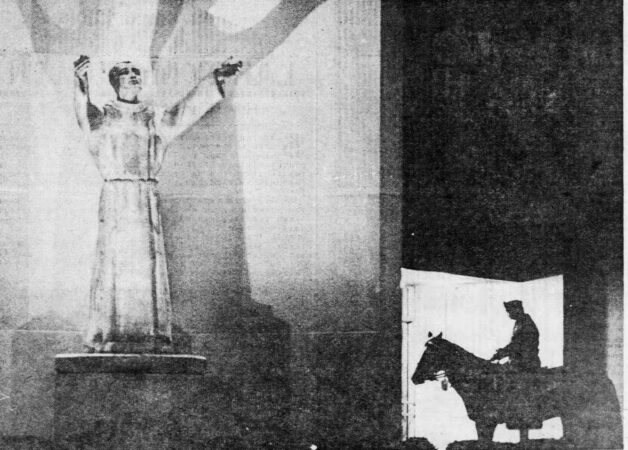
Around 2 p.m. Gold spoke with police by phone, and demanded President Ronald Reagan — who first ran on the Make America Great Again campaign slogan — resign from office.
And turn over leadership of the country to Gold,who said he wanted to be called the Antichrist.
In a statement that was read to the press, Gold wrote:
“Either choose my leadership, or accept the death of America.”
Back then, the Catholic high school was separated into two segregated schools: the boys’ school in the south wing, and the girls’ school in the north wing.
Gold took the hostages in the boys’ wing. Shortly afterward, the 1,950 male students were dismissed. They walked out just as the 2,150 female students were leaving for the day on a shortened schedule. Together, boys and girls filed calmly out of the massive, three-story school building at Academy Road and Chalfont Drive.
About an hour into the standoff, Gold let the secretary go after learning she was a mother of four. Shortly afterward, he traded the assistant dean for a food order, leaving only three male students as hostages.
Around 7 p.m., a police negotiator briefly entered the disciplinarian’s office.
As student hostages (from left) Patrick Hood, 15, Raymond Smith, 16, and Mike Wissman, 17, meet the press, Smith estimates the size of the captor’s knife.
Gold told the negotiator on the phone that he would let two of the students go, and then the officer heard “a commotion and a lot of screaming” on the other end of the phone.
The students decided the gun Gold was brandishing was a fake.
So in good, old-fashioned Northeast Philly fashion, they jumped him. And it turned out they were right: The gun was a starter’s pistol, and it was loaded with blanks.
The students overpowered Gold, and held him down until the stakeout officers rushed in and put an end to the more than seven-hour standoff.
Think you know your news? There’s only one way to find out. Welcome back to our weekly News Quiz — a quick way to see if your reading habits are sinking in and to put your local news knowledge to the test.
Question 1 of 10
Bar Caviar, a new restaurant focusing on caviar and champagne, is coming to the Dwight D Hotel near Rittenhouse Square. The champagne selection is a collector’s catalogue with rare and exceptional bottles and glasses. One showstopper, Salon, is ultrarare and will cost roughly how much per pour?
CorrectIncorrect. XX% of other readers got this question right.
Salon is only produced in exceptional years from a single village and a single grape. Bar Caviar plans to offer it by the glass, at an estimated $600 per pour. Nonvintage options will start at $15.
Question 2 of 10
In honor of America’s 250th anniversary, 20 Philadelphia neighborhoods are getting a replica of this item, each painted in a different style by local artists.
CorrectIncorrect. XX% of other readers got this question right.
Twenty large replica Liberty Bells will decorate Philly neighborhoods for the national milestone. Designed by 16 local artists selected through Mural Arts Philadelphia — and planned for commercial corridors and public parks everywhere from Chinatown and South Philly to West Philly and Wynnefield — the painted bells depict the histories, heroes, cultures, and traditions of Philly neighborhoods.
Subscribe to The Philadelphia Inquirer
Our reporting is directly supported by reader subscriptions. If you want more journalism like this story, please subscribe today.
This week brought some conversation regarding the fate of the Rocky statue located at the top of the Philadelphia Art Museum’s steps (for now, it’s not moving). In total, how many official Rocky statues are in Philly?
CorrectIncorrect. XX% of other readers got this question right.
Philadelphia has three Rocky statues made by sculptor A. Thomas Schomberg. The original, at the foot of the museum’s steps, is owned by the city and has sat there since 2006. Sylvester Stallone commissioned that statue for Rocky II and later gave it to the city. The second was set at the top of the steps last December as part of the city’s inaugural RockyFest. The third is located at Philadelphia International Airport, where it was unveiled late last month in Terminal A-West.
Question 4 of 10
World Cafe Live remains open for now, but a potential eviction is looming. What institution owns the building where the venue’s currently located?
CorrectIncorrect. XX% of other readers got this question right.
Penn owns the building at 3025 Walnut St. that houses World Cafe Live’s 650-capacity Music Hall and 220-capacity Lounge. It is also home to the university’s radio station, WXPN-FM (88.5), which is a separate business. According to public documents obtained by The Inquirer, as early as July, Penn’s real estate office sent organizers notice that they had defaulted on their lease and owed the university $1.29 million for rent and utility payments dating back to April 2022.
Question 5 of 10
Rachel Billebault, once known around the world as Harlow, is regarded as the city’s most famous transgender woman. Today out of the spotlight, she mostly keeps to herself in Northeast Philly. But every now and then, the 77-year-old will get dressed up and head to this Gayborhood favorite:
CorrectIncorrect. XX% of other readers got this question right.
At 77, Billebault is still stylish, refusing to step out without a fully made-up face and perfectly coiffed hair. If she’s going out, she heads to Knock, the Gayborhood piano bar, owned by her dear friend Bill Wood and run by an attentive staff who dote on her. A Francesco Scavullo portrait of her remains permanently ensconced on the piano.
story continues after advertisement
Question 6 of 10
The largest U.S. outpost of the popular Vietnamese coffee brand Trung Nguyên Legend is open in South Philly. It features this architectural detail:
CorrectIncorrect. XX% of other readers got this question right.
The 5,000-square-foot cafe boasts two floors and a year-round roof deck, where customers can sip on citrusy espresso tonics, frothy Vietnamese egg coffees, or strong phin pour-overs, paired with a small array of European pastries (macarons, eclairs, mille-feuille) delivered daily from an off-site bakery.
Question 7 of 10
The new U.S. Mint coins commemorating America’s 250th anniversary include portrayals of three Philly landmarks, the Liberty Bell, Independence Hall, and:
CorrectIncorrect. XX% of other readers got this question right.
Three separate quarter designs include images of Independence Hall, where the Declaration of Independence was signed; the Liberty Bell, housed and managed by the National Park Service in Philadelphia; and a Continental Army soldier at Valley Forge commemorating the Revolutionary War.
Question 8 of 10
The original Fresh Prince, Will Smith, makes a cameo in the final scene of Bel-Air, Peacock’s reimagining of the 1990s hit The Fresh Prince of Bel-Air. He advises “younger Will” that sometimes he’ll mess things up, but he’ll learn from those mistakes. Then he adds this piece of sage advice:
CorrectIncorrect. XX% of other readers got this question right.
“Eat a cheesesteak,” the older Smith said with a laugh. “Not every day because cholesterol is real.” Smith told ET that the series’ final scene almost didn’t happen. “I almost played the father,” Smith said, of the role of Lou played by Marlon Wayans. “It just felt like it might be a little too meta, a little too weird.”
Question 9 of 10
The Phillies and Kyle Schwarber have agreed to a contract, the team announced on Tuesday night. How much was it for?
CorrectIncorrect. XX% of other readers got this question right.
The Phillies and Schwarber agreed to a five-year contract. A source told The Inquirer that the deal totals $150 million. The contract will take Schwarber, who turns 33 in March, through his age-37 season.
Question 10 of 10
West Philly rapper Bul Bey has had his music featured on Abbott Elementary twice. The artist said it’s all because he sent an “awkward” message to the show’s music supervisor on this platform:
CorrectIncorrect. XX% of other readers got this question right.
Back in February 2022, Richardson sent an introductory message on LinkedIn to Abbott Elementary music supervisor, Kier Lehman. Among the tens of tracks Richardson pulled from his catalog to include in that message, the 2014 single, “Where I’m From,” managed to strike a chord with Lehman.
Your Results
You have skipped .
You scored XX out of 10.
The average reader scored XX out of 10
Seems like you’ve been skimming more than reading there, buddy. There’s always next week.
You’ve read some articles (or made some educated guesses) but we wouldn’t come to you first for our local news recaps. Better luck next week!
Do you work here? You’re a local news stan with the latest updates on Philly happenings. Your friends definitely ask you for summaries on what’s going on and it shows.
The average commute in Philadelphia takes longer than in most large U.S. cities — and it’s gotten slightly worse recently.
In 2024, commuters spent on average 33.2 minutes getting to work in the city, according to a new report from Yardi Kube, a digital management platform for coworking spaces. That’s more than the national average and a 2.1-minute increase from the previous year.
The increase in Philadelphia also reflects a larger national trend, according to the report. The average American’s commute time inched up in 2024 by nearly half a minute, to 27.2 minutes. Still, that’s less time than the average worker spent in transit to their job in 2019.
Meanwhile, Philadelphia faced some of the worst traffic congestion in the country last year, and public transit has confronted several challenges this year that caused disruption for commuters.
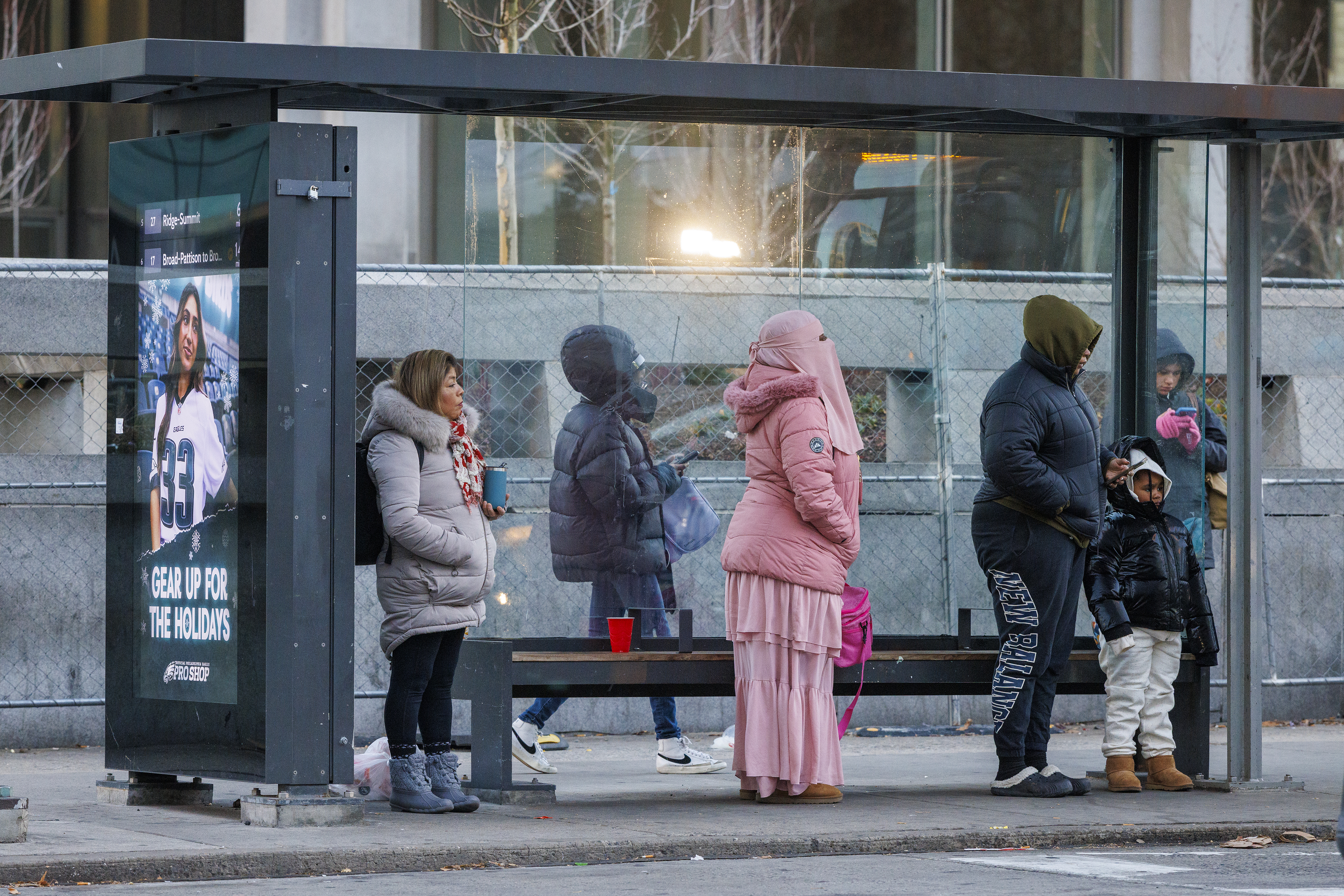
Commuters at a bus stop at 15th Street and JFK Boulevard on a cold December morning in Philadelphia.
The increase in Philadelphia and beyond comes as employers have increasingly called workers back to in-person work, reversing trends toward hybrid or remote arrangements during the pandemic. The report notes that as the number of Americans working from home has decreased, the average time spent commuting has inched up.
“Across the United States, how people get to work — and how often they do — continues to evolve,” the report reads.
“The rise of remote and hybrid work dramatically reshaped commuting habits, leading to sharp declines in travel times during the pandemic years,” it said. ”Yet as more employees return to the office, commute durations are climbing again, in some cases more quickly than before.”
The report is based on data from the U.S. Census Bureau’s American Community Survey. It took into consideration the 50 largest cities based on the size of their population and evaluated the time spent commuting for a one-way trip, regardless of mode of transportation.
window.addEventListener(“message”,function(a){if(void 0!==a.data[“datawrapper-height”]){var e=document.querySelectorAll(“iframe”);for(var t in a.data[“datawrapper-height”])for(var r,i=0;r=e[i];i++)if(r.contentWindow===a.source){var d=a.data[“datawrapper-height”][t]+”px”;r.style.height=d}}});
While Philadelphia’s average commute lengthened from 2023 to 2024, it’s still shorter than the average of 34.3 minutes in 2019.
But the region’s public transit system has seen a series of significant challenges this year, rankling commutes for many.
And SEPTA‘s Regional Rail system has encountered significant disruption and delays this fall, as the transit authority was ordered to inspect all of its 50-year-old Silverliner IV train cars following five train fires this year.
This week, SEPTA averted a worker strike, after coming to an agreement with Transport Workers Union Local 234 over improvements to the employee contract. The union represents some 5,000 SEPTA employees including operators of buses, subways, and trolleys.
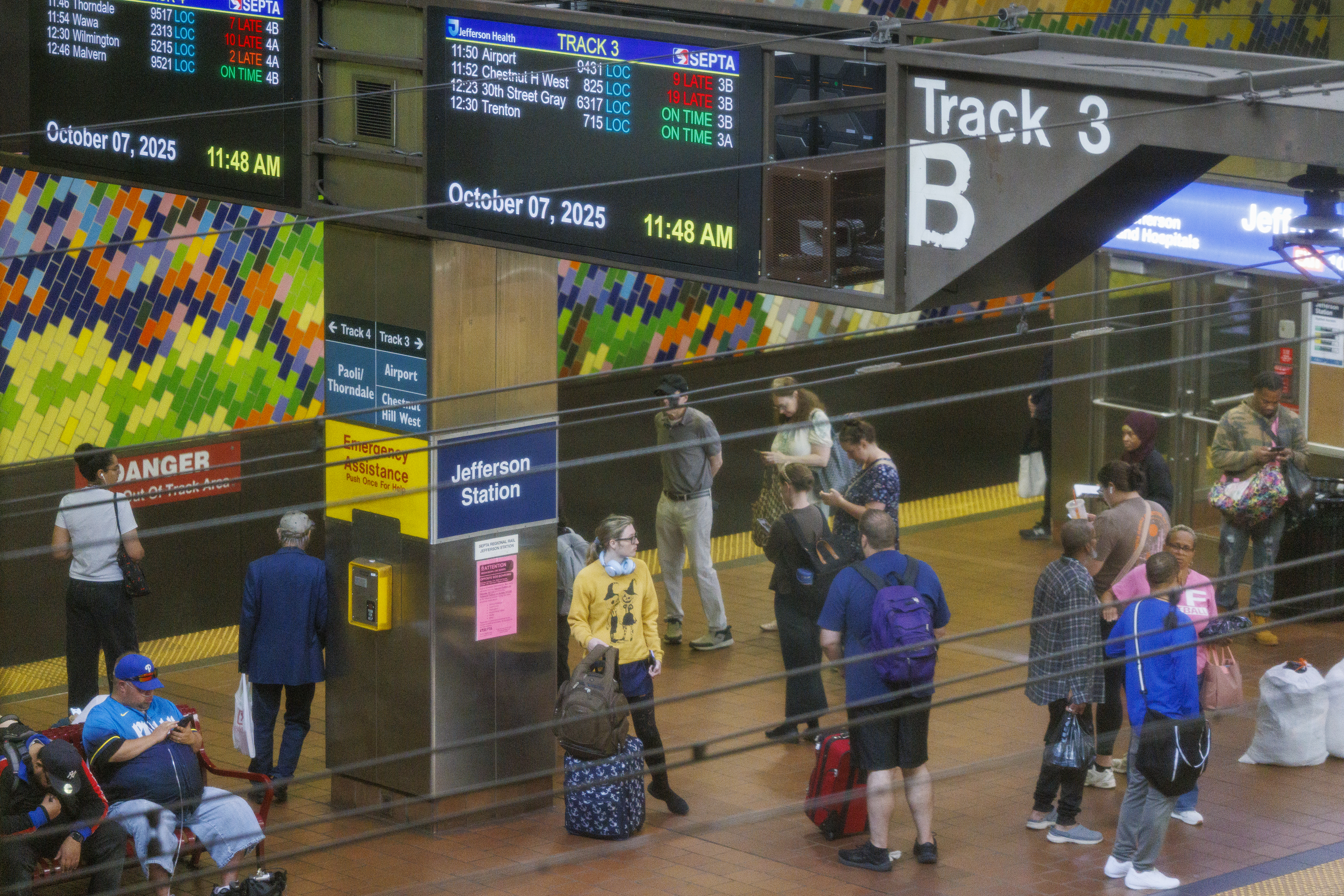
Commuters waiting for SEPTA Regional Rail at Jefferson Station on Oct. 7.
Other cities with long commutes last year include New York, Chicago, San Francisco, Los Angeles, and Boston. New Yorkers spent an average of 40.6 minutes getting to work in 2024, nabbing the worst commute time in the country. Chicago ranked second, with an average of 33.5 minutes in transit last year.
All of those cities saw an uptick in their commuting time in the past year.
Among the 50 most populous cities in the country, the places with the shortest commutes are Tulsa, Okla.; Omaha, Neb.; Memphis; Tucson, Ariz.; and Kansas City, Mo. Those cities had average commute times between 19.7 and 21.8 minutes last year.
NEW YORK — Pennsylvania’s political elite will return this weekend for the first time in seven years to where the annual out-of-state glitzy gathering all began: the Waldorf Astoria New York.
The Pennsylvania Society began in 1899 in the Waldorf Astoria, after historian James Barr Ferree invited 55 fellow Pennsylvania natives living in New York to the iconic hotel to talk about how they could better their home state. Early members of what was originally called the “Pennsylvania Society of New York” included industrialist titans like Andrew Carnegie and Andrew Mellon, both of whom began their empires in Pennsylvania.
In the 127 years since, the society has evolved into a nonpartisan, nonprofit organization that has raised millions of dollars for student scholarships and hosts the annual dinner in New York, in addition to events around the commonwealth each year.
Gov. Josh Shapiro is slated to deliver a speech at the dinner, as is tradition for Pennsylvania’s governors. Another tradition: honoring a notable Pennsylvanian, and this year that person will be former U.S. Ambassador to Canada David L. Cohen, a Philadelphia stalwart whose long career includes stints as an executive at Comcast, chair of the University of Pennsylvania’s Board of Trustees, and five years as Ed Rendell’s chief of staff during his mayorship.
President Donald Trump waves in 2015 to a crowed outside Trump Tower in Manhattan as he heads to the nearby Republican luncheon that kicks off Pennsylvania Society during his first campaign for president.
Why does the Pennsylvania Society meet in New York?
The society hosted its annual dinners at the Waldorf for 119 years, until it was forced to find a new home while the iconic hotel was closed for prolonged renovations.
“This is where it started: a group of Pennsylvanians living in New York who wanted to come together around their shared love of Pennsylvania,” said Trish Wellenbach, president of the Pennsylvania Society. “There’s no place like home.”
But that home is not in Philly or Pittsburgh.
Ballroom of the Waldorf-Astoria, decked out for the Pennsylvania Society dinner.
The dinner has faced scrutiny for decades for taking hundreds of thousands of dollars that could be spent within Pennsylvania to a different state, as well as often being a tone-deaf showing of wealth while many Pennsylvanians are struggling.
A standard ticket to attend the black-tie affair cost $1,000 per person, with lower rates available for emerging leaders under age 35.
Wellenbach acknowledged the longtime criticism, but she said she believes that the weekend away from Pennsylvania helps form new relationships among lawmakers that otherwise would not be forged.
“New York’s a kind of neutral territory,” Wellenbach added. “No part of the state has a brighter light shining on it than another. … Sometimes you have to get out of your own home territory to think more expansively and strategically.”
Shapiro, a first-term Democratic governor up for reelection next year, has delivered a speech at the Pennsylvania Society each year of his governorship, breaking from his immediate predecessor, Tom Wolf, who skipped the event during his tenure.
Shapiro’s likely 2026 opponent, Treasurer Stacy Garrity, the state Republican Party’s endorsed candidate, will also be among the officials attending the annual dinner, where politicians try to position themselves for higher office or reelection.
Sen. Dave McCormick (R., Pa.) will also be among the officials turning up for this year’s dinner. McCormick attended last year’s event just weeks after he ousted longtime incumbent Sen. Bob Casey in November 2024.
Then-Pennsylvania Gov. Tom Corbett, left, talks with David Cohen at the Pa. Society dinner in 2013. Cohen, a former U.S. ambassador to Canada, will be honored at this year’s dinner.
The former Comcast executive has been attending the Pennsylvania Society, the place where his career paths in politics and business merged, for nearly 40 years. Getting the award this year is a “huge honor,” he added.
“I’ve been [to the Pennsylvania Society] almost 40 times. I’ve seen 40 gold medal winners,” Cohen said in an interview this week. “I never imagined myself being a gold medal winner.”
After spending four years away from Philadelphia as an ambassador, Cohen said, he has become keenly aware of the importance that the city and Pennsylvania hold internationally as the origin of modern democracy, ahead of America’s 250th birthday next year.
“There’s a common perception in the world that Philadelphia and Pennsylvania was the birthplace of democracy,” Cohen said. “I can’t tell you how many times I’d get stopped and asked, ‘You live in Philadelphia? Does that mean you can see the Liberty Bell?,’ just marveling at living in a place where there was so much history relating to the founding of democracy.”
Guests mill about during cocktail hour at the New York Hilton Midtown before the start of the Pennsylvania Society’s 121st Annual Dinner in 2019.
Cohen will be honored for his decades of contributions to Pennsylvania and Philadelphia.
He said his personal proudest achievements include his ambassadorship in Canada, his work during Rendell’s administration to improve the perception of the city, and his work at Comcast to improve internet access across America.
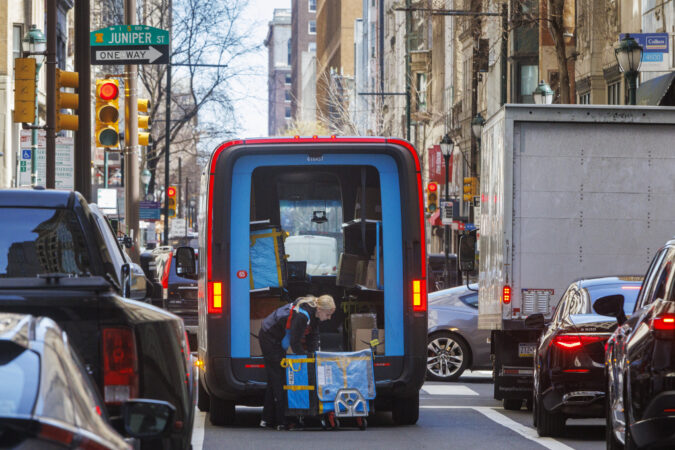
As boxes of holiday gifts pile up on your stoop, beware: Porch pirates continue to strike in Philadelphia.
Reports of package theft from January through November of this year are up 6% compared to last year, according to The Inquirer’s analysis of Philadelphia Police Department data.
And if the past two years are any indication, porch pirates will be particularly active this month.
In neighborhoods across the city, residents have shared their frustration over repeated thefts. Katie Byrne said she’s had more a dozen packages swiped from out front of her Fishtown home. Often, she said, “before I even get the notification it got delivered.” This year, she said she and a neighbor have teamed up to grab each other’s packages when the other isn’t home.
Porch pirates strike in the suburbs, too. Exasperated consumers have vented about package thefts to their neighborhood Facebook groups in Brookhaven, Cheltenham, Conshohocken, Croydon, Lower Merion, Levittown, Media, West Chester, Quakertown, and even down the Shore.
Last holiday season in Newtown Square, Katy Retzbach said $150 in Christmas gifts were stolen from under her family’s mailbox in broad daylight.
Nationwide, at least 58 million packages were stolen last year, amounting to $16 billion in financial losses, according to a recent report from the U.S. Postal Service Office of the Inspector General. Most stolen packages are between $50 and $200 in value.
What Philly’s package theft data shows
window.addEventListener(“message”,function(a){if(void 0!==a.data[“datawrapper-height”]){var e=document.querySelectorAll(“iframe”);for(var t in a.data[“datawrapper-height”])for(var r,i=0;r=e[i];i++)if(r.contentWindow===a.source){var d=a.data[“datawrapper-height”][t]+”px”;r.style.height=d}}});
It’s difficult to determine how many package thefts will occur in Philadelphia before the year’s end, as reports of the crime spike each December. And some of these incidents go unreported to the police.
In 2023 and 2024, package-theft reports in December accounted for nearly 14% of the annual total on average, according to the analysis of police data.
If 2025 were to follow that pattern, Philadelphia would log around 450 reported package thefts this month — slightly more than last year but less than 2023 — and would end the year with a total of 3,300 reports, more than the city recorded each of the past two years.
The total number of reported package thefts declined by 1.2% between 2023 and 2024, according to the analysis. However, the number of thefts reported in December increased over the same period.
How to protect against porch piracy
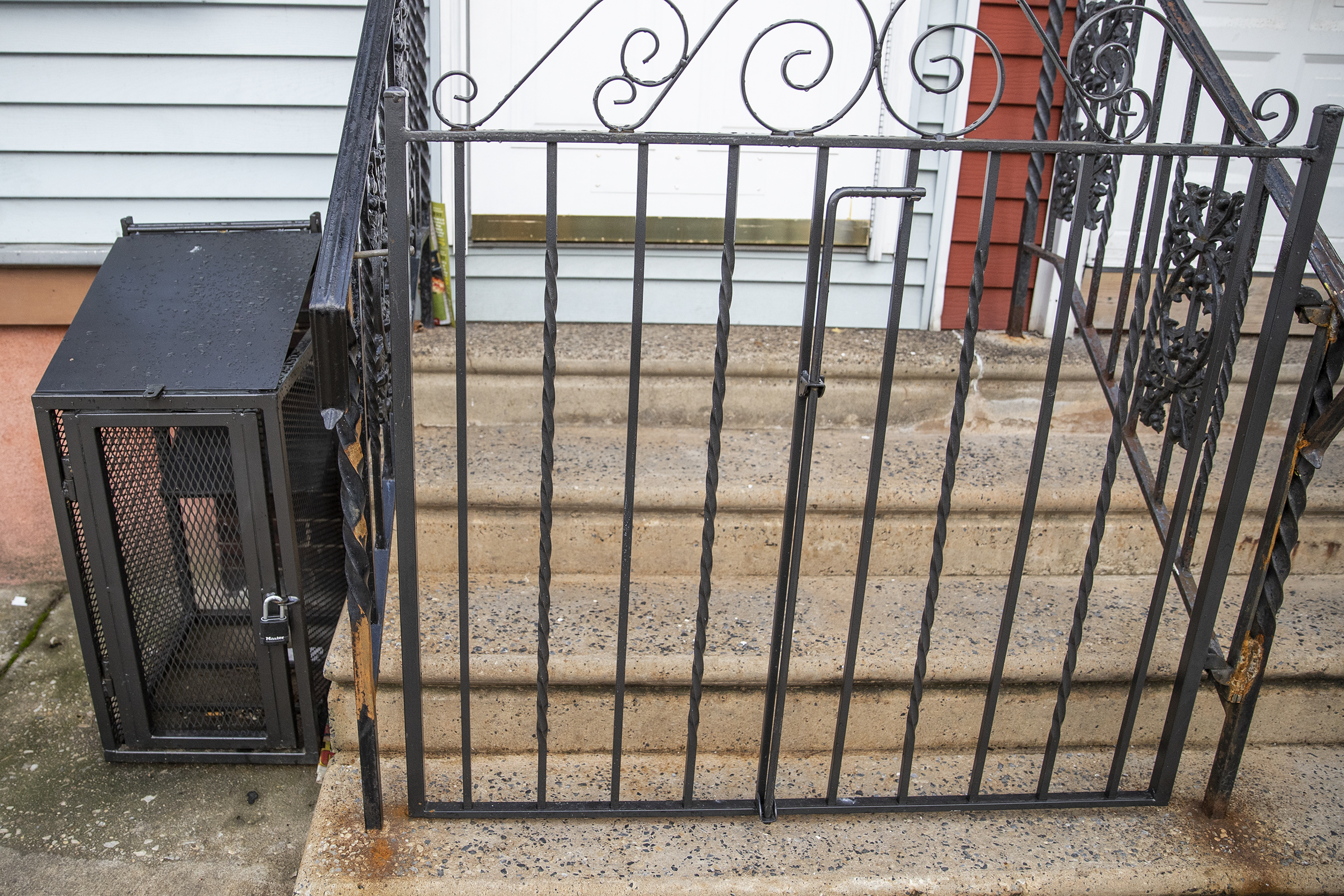
Some people find or erect secure places to have their packages delivered. A metal cage for packages is shown here in this 2019 file photo.
There’s no surefire way to prevent porch piracy.
But police departments and carriers like USPS, FedEx, and UPS provide the following tips to reduce your chances of falling victim — or to get your money back if your package is stolen:
Leave drop-off instructions: Log into your online account with the package carrier and ask that they leave deliveries in a less visible location, such as behind a planter, in a shed, or at a side door. Or ask that they require a signature for drop-off. This requires that delivery people read the instructions, which some Philadelphians have found is not always the case.
Redirect the delivery: You can also go online and redirect deliveries to locations such as your office, the home of a friend who doesn’t experience package theft, or a secure physical mailbox, such as a FedEx, UPS, or Amazon Locker pickup location. If you aren’t going to be home for a day, you can also request a hold on packages until you return, or have a neighbor or friend pick them up.
Use security cameras: Cameras can alert you that someone is outside and allow you to grab a package immediately if you’re at home. If a delivery is stolen, the footage can help police find the porch pirate. (If they’re charged and convicted in New Jersey, they could even go to prison.)
Report theft: After confirming that the package was in fact delivered, file a police report. Then, contact the seller, shipping company, and, if all else fails, your credit card company to see if they cover package theft.
Blustery winds propelled the giant blades of five turbines at the Jersey-Atlantic Wind Farmon a recent day. Set on a back bay island, they were once contested over fears of noise, aesthetics, and worries of threats to Shore birds.
But two decades later, they have emerged as a spinning landmark to Atlantic City.
The 380-foot turbines silently rotate in clear view of motorists streaming to casinos. Some visitors have even requested hotel rooms facing the structures, which are taller than the Statue of Liberty.
The embrace of the land-based wind farm contrasts sharply with the more recently divisive battle over offshore wind projects, an effort stalled by economics and the Trump administration.
Together, the Jersey-Atlantic Wind Farm turbines produce 63% of the energy for the Atlantic County Utilities Authority’s wastewater treatment plant, which serves 14 municipalities. Officials calculate the farm has saved ratepayers $8.8 million since its grand opening on Dec. 12, 2005.
It is one of only two wind farms operating in New Jersey. The other is a much smaller farm in Bayonne.
“This was a total home run for everybody involved,” said Richard Dovey, president of the ACUA at the time it was built. “It’s been nothing but successful, environmentally and economically … [an] inspiration for many other entities, whether they’re public or private.”
How the wind farm came to be
The idea for a wind farm near Atlantic City came from a worker in the energy industry who passed the idea onto Dovey in the early 2000s. With Dovey’s help, it picked up support in former Gov. Jim McGreevey’s administration.
Dovey believed in renewable energy and thought it could power the ACUA’s regional wastewater treatment plant on City Island in Absecon Bay, about two miles from the Atlantic Ocean. He thought Atlantic City’s ample breezes from land and seawould make it an ideal location.
Atlantic City’s ample breezes from land and sea made an ideal location for a wind farm.
Community Energy Inc., a developer of wind power based in the Philadelphia suburbs, played a significant role in the project’s development and received a $1.7 million grant from the New Jersey Board of Public Utilities.
The New Jersey Sierra Club backed the project.
Construction began in mid-2005. The project cost $12 million and included driving pilings into an island of upland surrounded by wetlands and installing intricate concrete bases to support the turbines made by GE.
Currently, the wind farm is owned by Texas-based Leeward Energy. Leeward rents the land for the wind farm from ACUA.
In return, ACUA has a 20-year agreement to purchase the power produced by the turbines from Leeward for 7.9 cents a kilowatt-hour, which was cheap even then. Now, the rate is about half the market rate for energy.
It has helped ACUA keep some of the lowest sewer rates in the state.
However, that agreement is expiring, and the two sides are in negotiations to renew a contract, which could change the rate the ACUA pays for its wind power.
window.addEventListener(“message”,function(a){if(void 0!==a.data[“datawrapper-height”]){var e=document.querySelectorAll(“iframe”);for(var t in a.data[“datawrapper-height”])for(var r,i=0;r=e[i];i++)if(r.contentWindow===a.source){var d=a.data[“datawrapper-height”][t]+”px”;r.style.height=d}}});
Community concerns
Initially, the wind farm faced resistance. Residents in the neighboring Venice Park section of Atlantic City were concerned primarily about potential noise from the turbines.
To allay their fears, Dovey organized a bus trip that took residents to visit a wind farm in Somerset County in Pennsylvania.
“Their major concern was noise,” Dovey, now 73, recalls. “We drove literally underneath the turbine. One neighborhood leader took one step out and said my air conditioner is louder than this; let’s go home. They thought the turbines were beautiful, even inspiring.”
In addition, there were apprehensions regarding how the turbines would affect birds and marine life. The wind farm is just below the Edwin B. Forsythe National Wildlife Refuge, a 48,000-acre area of coastal habitat. New Jersey Audubon agreed to monitor the impact on the bird population as part of its support for the project.
According to the ACUA, a three-year study by NJ Audubon found “a small number of bird deaths which could be attributed to collisions with turbines.” It found more fatalities were caused by raccoons, feral cats, and collisions with wires and trucks.
People were also concerned about the visual impact, fearing they might spoil scenic views, affect property taxes, and hurt tourism. However, the wind farm has since become an iconic part of the landscape.
The concerns were part of a broader debate at the time regarding the emerging push among some New Jersey leaders for offshore wind farms, which had faced a moratorium by the state.
Even though the moratorium was lifted, and Gov. Phil Murphy backed a large offshore wind program that would have powered millions of homes, the debate continued. This year, President Donald Trump issued an executive order to stop offshore wind, making any project in the near future unlikely.
However, a federal judge recently ruled that Trump exceeded his authority with the order, a ruling the administration is likely to challenge. It is unclear whether renewable energy companies still have the political will for a renewed push to build an offshore wind farm off the coast of New Jersey.
Taking advantage of wind
The Jersey-Atlantic Wind Farm is an example of how wind power can work, even if on a smaller scale. The farm is ideally located because of consistent land and ocean breezes. If winds exceed 45 mph, the turbines, each equipped with a weather station, switch off to protect the machinery. That happens only a few times a year.
Matt DeNafo, current president of the ACUA, says the wind farm has been a “huge project” for his organization. The ACUA is operating a pilot project that would store energy captured by the turbines in a battery. A solar array on site also provides about 3% of the facility’s power.
DeNafo said the arrangement with Leeward brought significant economic stability through the 20-year fixed rate. He said it allows the agency to offer the lowest wastewater rates in the region.
At the same time, the ACUA does not have to pay for maintenance of the turbines, while still collecting rent from Leeward.
If winds exceed 45 mph, the turbines, each equipped with a weather station, switch off to protect the machinery.
“It’s really been a great partnership for us. It’s been a beacon for our organization,” DeNafo said. One casino was “getting a lot of requests for windmill-view rooms because it’s got a calming effect.”
Harrah’s, MGM, and Borgata casino hotels all are in view of the windmills.
Amy Menzel, a spokesperson for the ACUA, said summer tours of the wind farm and treatment plant are popular.
“We give open house tours in the summer on Wednesdays,” Menzel said. “People can just drop in. We have a lot of curious people who are visiting the Shore. The tours are really a mix of locals and out-of-town visitors, people who just want to get a little closer and learn more.”
Editor’s note: This article has been corrected to note that the wind farm is on an upland, not a wetland.