Category: News

Latest breaking news and updates

  • Trump’s handling of the economy is at its lowest point, according to new AP-NORC polling

    Trump’s handling of the economy is at its lowest point, according to new AP-NORC polling

    WASHINGTON — President Donald Trump’s approval on the economy and immigration have fallen substantially since March, according to a new AP-NORC poll, the latest indication that two signature issues that got him elected barely a year ago could be turning into liabilities as his party begins to gear up for the 2026 midterms.

    Only 31% of U.S. adults now approve of how Trump is handling the economy, the poll from The Associated Press-NORC Center for Public Affairs Research finds. That is down from 40% in March and marks the lowest economic approval he’s registered in an AP-NORC poll in his first or second term. The Republican president also has struggled to recover from public blowback on other issues, such as his management of the federal government, and has not seen an approval bump even after congressional Democrats effectively capitulated to end a record-long government shutdown last month.

    Perhaps most worryingly for Trump, who’s become increasingly synonymous with his party, he’s slipped on issues that were major strengths. Just a few months ago, 53% of Americans approved of Trump’s handling of crime, but that’s fallen to 43% in the new poll. There’s been a similar decline on immigration, from 49% approval in March to 38% now.

    The new poll starkly illustrates how Trump has struggled to hold onto political wins since his return to office. Even border security — an issue on which his approval remains relatively high — has declined slightly in recent months.

    The good news for Trump is that his overall approval hasn’t fallen as steeply. The new poll found that 36% of Americans approve of the way he’s handling his job as president, which is down slightly from 42% in March. That signals that even if some people aren’t happy with elements of his approach, they might not be ready to say he’s doing a bad job as president. And while discontent is increasing among Republicans on certain issues, they’re largely still behind him.

    Declining approval on the economy, even among Republicans

    Republicans are more unhappy with Trump’s performance on the economy than they were in the first few months of his term. About 7 in 10 Republicans, 69%, approve of how Trump is handling the economy in the December poll, a decline from 78% in March.

    Larry Reynolds, a 74-year-old retiree and Republican voter from Wadsworth, Ohio, said he believes in Trump’s plan to impose import duties on U.S. trading partners but thinks rates have spiraled too high, creating a “vicious circle now where they aren’t really justifying the tariffs.”

    Reynolds said he also believes that inflation became a problem during the coronavirus pandemic and that the economy won’t quickly recover, regardless of what Trump does. “I don’t think it’ll be anything really soon. I think it’s just going to take time,” he said.

    Trump’s base is still largely behind him, which was not always the case for his predecessor, President Joe Biden, a Democrat. In the summer of 2022, only about half of Democrats approved of how Biden was handling the economy. Shortly before he withdrew from the 2024 presidential race two years later, that had risen to about two-thirds of Democrats.

    More broadly, though, there’s no sign that Americans think the economy has improved since Trump took over. About two-thirds of U.S. adults, 68%, continue to say the country’s economy is “poor.” That’s unchanged from the last time the question was asked in October, and it’s broadly in line with views throughout Biden’s last year in office.

    Why Trump gets higher approval on border security than immigration

    Trump’s approval ratings on immigration have declined since March, but border security remains a relatively strong issue for him. Half of U.S. adults, 50%, approve of how Trump is handling border security, which is just slightly lower than the 55% who approved in September.

    Trump’s relative strength on border security is partially driven by Democrats and independents. About one-third of independents, 36%, approve of Trump on the border, while 26% approve on immigration.

    Jim Rollins, an 82-year-old independent in Macon, Georgia, said he believes that when it comes to closing the border, Trump has done “a good job,” but he hopes the administration will rethink its mass deportation efforts.

    “Taking people out of kindergarten, and people going home for Thanksgiving, taking them off a plane. If they are criminals, sure,” said Rollins, who said he supported Trump in his first election but not since then. “But the percentages — based on the government’s own statistics — say that they’re not criminals. They just didn’t register, and maybe they sneaked across the border, and they’ve been here for 15 years.”

    President Donald Trump made his first stop on an “economic tour” in Mt. Pocono, Pa., on Tuesday, Dec. 9.

    Other polls have shown it’s more popular to increase border security than to deport immigrants, even those who are living in the country illegally. Nearly half of Americans said increasing security at the U.S.-Mexico border should be “a high priority” for the government in AP-NORC polling from September. Only about 3 in 10 said the same about deporting immigrants in the U.S. illegally.

    Shaniqwa Copeland, a 30-year-old independent and home health aide in St. Augustine, Florida, said she approves of Trump’s overall handling of the presidency but believes his immigration actions have gone too far, especially when it comes to masked federal agents leading large raids.

    “Now they’re just picking up anybody,” Copeland said. “They just like, pick up people, grabbing anybody. It’s crazy.”

    Health care and government management remain thorns for Trump

    About 3 in 10 U.S. adults approve of how Trump is handling health care, down slightly from November. The new poll was conducted in early December, as Trump and Congress struggled to find a bipartisan deal for extending the Affordable Care Act subsidies that will expire at the end of this month.

    That health care fight was also the source of the recent government shutdown. About one-third of U.S. adults, 35%, approve of how Trump is managing the federal government, down from 43% in March.

    But some Americans may see others at fault for the country’s problems, in addition to Trump. Copeland is unhappy with the country’s health care system and thinks things are getting worse but is not sure of whether to blame Trump or Biden.

    “A couple years ago, I could find a dentist and it would be easy. Now, I have a different health care provider, and it’s like so hard to find a dental (plan) with them,” she said. “And the people that do take that insurance, they have so many scheduled out far, far appointments because it’s so many people on it.”

    The AP-NORC poll of 1,146 adults was conducted Dec. 4-8 using a sample drawn from NORC’s probability-based AmeriSpeak Panel, which is designed to be representative of the U.S. population. The margin of sampling error for adults overall is plus or minus 4 percentage points.


  • Time magazine names ‘Architects of AI’ as its person of the year for 2025

    Time magazine names ‘Architects of AI’ as its person of the year for 2025

    The “Architects of AI” were named Time’s person of the year for 2025 on Thursday, with the magazine citing this year as when the potential of artificial intelligence “roared into view” with no turning back.

    “For delivering the age of thinking machines, for wowing and worrying humanity, for transforming the present and transcending the possible, the Architects of AI are TIME’s 2025 Person of the Year,” Time said in a social media post.

    The magazine was deliberate in selecting people — the “individuals who imagined, designed, and built AI” — rather than the technology itself, though there would have been some precedent for that.

    “We’ve named not just individuals but also groups, more women than our founders could have imagined (though still not enough), and, on rare occasions, a concept: the endangered Earth, in 1988, or the personal computer, in 1982,” wrote Sam Jacobs, the editor-in-chief, in an explanation of the choice. “The drama surrounding the selection of the PC over Apple’s Steve Jobs later became the stuff of books and a movie.”

    One of the cover images resembling the “Lunch Atop a Skyscraper” photograph from the 1930s shows eight tech leaders sitting on the beam: Meta CEO Mark Zuckerberg, AMD CEO Lisa Su, Tesla CEO Elon Musk, Nvidia CEO Jensen Huang, OpenAI CEO Sam Altman, the CEO of Google’s DeepMind division Demis Hassabis, Anthropic CEO Dario Amodei and AI pioneer Fei-Fei Li, who launched her own startup World Labs last year.

    Another cover image shows scaffolding surrounding the giant letters “AI” made to look like computer componentry.

    It made sense for Time to anoint AI because 2025 was the year that it shifted from “a novel technology explored by early adopters to one where a critical mass of consumers see it as part of their mainstream lives,” Thomas Husson, principal analyst at research firm Forrester, said by email.

    The magazine noted AI company CEOs’ attendance at President Donald Trump’s inauguration this year at the Capitol as a herald for the prominence of the sector.

    “This was the year when artificial intelligence’s full potential roared into view, and when it became clear that there will be no turning back or opting out,” Jacobs wrote.

    AI was a leading contender for the top slot, according to prediction markets, along with Huang and Altman. Pope Leo XIV, the first American pope whose election this year followed the death of Pope Francis, was also considered a contender, with Trump, Israeli Prime Minister Benjamin Netanyahu and New York Mayor-elect Zohran Mamdani topping lists as well.

    Trump was named the 2024 person of the year by the magazine after his winning his second bid for the White House, succeeding Taylor Swift, who was the 2023 person of the year.

    The magazine’s selection dates from 1927, when its editors have picked the person they say most shaped headlines over the previous 12 months.

  • Temple’s former enrollment head gets job at Rutgers

    Temple’s former enrollment head gets job at Rutgers

    Jose A. Aviles, who abruptly resigned last month as Temple University’s head of enrollment, has taken a leadership role at Rutgers University.

    Aviles has been named senior vice president for enrollment management and student success at New Jersey’s flagship university.

    “Dr. Aviles’ commitment to data-informed, student-centered leadership will be pivotal to strengthening student recruitment, expanding access and enhancing student success metrics,” Rutgers said in its announcement.

    At Rutgers, the overall enrollment neared 71,500 this year, up 3.2%.

    When Aviles announced his exit from Temple, he told The Inquirer he was leaving for “a life-changing opportunity.”

    Aviles, who served as Temple’s vice president for enrollment and student success for 2½ years, joined the North Philadelphia school in 2023, after about six years at Louisiana State University.

    In that experience at LSU, he has a tie to Rutgers’ new president, William F. Tate IV, who led the Baton Rouge university from 2021 to this July, when he took the helm at Rutgers.

    Aviles left Temple with recent successes under his belt; he had recently been promoted from a vice provost to a vice president.

    “Jose has reimagined enrollment management at the university over the last couple of years, helping move us to a modern, technology- and data-driven approach that has delivered results,” Temple president John Fry and interim provost David Boardman said to the campus community last month.

    They noted the university achieved growth in first-year enrollment the last two years, with this year’s group reaching a record high of 5,379.

    The university also under Aviles’ tenure started the Temple Promise program, which makes tuition and fees free for first-time, full-time college students from low-income families who live in Philadelphia, and the Temple Future Scholars program, a mentoring and college-readiness initiative.

    While Temple’s first-year class was strong, the school fell short of its initial overall enrollment projection by about 700 students, which translates to about $10 million in lost revenue.

    The university had been estimating it would enroll a total of 30,100 to 30,300 students, which would have been its first enrollment increase since 2017.

    Instead, enrollment came in at 29,503, down about 500 from last year and further declining from its high of more than 40,000 eight years ago. (That does not include enrollment on its Japan and Rome campuses, which increased. Including those campuses, Temple’s overall enrollment was over 33,000, a slight increase from last year.)

    There have also been concerns about sophomore retention and a higher percentage of third- and fourth-year students not returning.

  • A new village makes it easier to age in place | Inquirer Lower Merion

    A new village makes it easier to age in place | Inquirer Lower Merion

    Hi, Lower Merion! 👋

    A group of township residents has formed a network aimed at helping older adults age in place. Also this week, SEPTA plans to wrap up Regional Rail car updates shortly, Narberth parking permits are available for 2026, plus where to get unique and crafty gifts around town.

    If someone forwarded you this email, sign up for free here.

    For older Lower Merion residents, it takes a village to age in place

    The Lower Merion Village offers social activities and volunteer opportunities for older adults and people with disabilities in the Main Line community.

    A group of Lower Merion residents has come together to help one another age in place. More and more older adults prefer to remain in their homes, a choice that comes with some logistical concerns.

    Lower Merion Village, part of the national Village to Village Network, is setting out to ease some of those burdens by connecting residents to social events, as well as transportation, household help, and other services.

    While Lower Merion Village isn’t accepting members yet, its organizers have their sights set on being a resource to help longtime residents thrive in the community they love.

    Read more about Lower Merion Village here.

    💡 Community News

    • SEPTA missed Friday’s federally imposed deadline to finish repairs to the heat-detection system on its Regional Rail cars. The agency said the lapse was due to a shortage of the thermal wire required to make the repairs. Installation of the backordered wire for 30 of SEPTA’s remaining trains is expected to be completed next week.
    • Narberth residential parking permits for 2026 are now available. Fees range from $10 for a single car to $100 for a fourth vehicle.
    • Bryn Mawr College last week announced Airea “Dee” Matthews, professor and co-chair of the creative writing department, as its next provost. Matthews will assume the role on Jan. 1.
    • Looking for a crafty holiday gift for those on your list? Several Lower Merion shops, including Past Present Future in Ardmore, and Something Different by Eric in Bryn Mawr, have goods like funky snow globes, cat-themed pillows, and other unique housewares.
    • For those shopping in Ardmore, township metered parking spaces and the township garage on Cricket Avenue are free on Saturdays this month.
    • On Sunday and Monday, Santa will be visiting parts of Lower Merion aboard a Merion Fire Company of Ardmore fire truck. The big man will visit Wynnewood, Ardmore north of the railroad tracks, and Haverford on Sunday, and then the Ardmore section south of the railroad tracks on Monday.
    • Brook J. Lenfest sold his 14,000-square-foot Haverford home, which was the most expensive recorded residential sale in the Philadelphia area among public records last week. The CEO of telecommunications company NetCarrier’s Avonwood Road home went for $5.9 million. (Philadelphia Business Journal)
    • Narberth’s GET Café is the subject of a new documentary that will debut at the Bryn Mawr Film Institute tonight at 7 p.m. David Block’s Brewing Possibilities focuses on the cafe’s mission to support neurodivergent individuals through employment and community building. Tickets to the premiere are $30. (Patch)
    • It may not even officially be winter yet, but Holy Child School at Rosemont has opened registration for its 2026 summer camps.

    🏫 Schools Briefing

    • Black Rocks’ book fair runs through tomorrow and winter concerts continue throughout this week and next. See the district’s full calendar here.
    • Lower Merion tackle/defensive tackle Kechan Miller has signed on to play college football at Temple University next year.

    🍽️ On our Plate

    • Hanukkah begins Sunday night. Looking for takeout or catering options? Main Line Today has rounded up 10 local spots offering everything from sides to main dishes. 

    🎳 Things to Do

    🎄 Home for the Holidays: Take a look inside the main house at Stoneleigh, all decked out for the holidays. There will also be seasonal treats and musical performances. ⏰ Saturday, Dec. 13-Sunday, Dec. 14, times vary 💵 $15 for Natural Lands members and $20 for non-members 📍Stoneleigh

    🛍️ Ardmore Holiday Market: Over 20 vendors will be selling handcrafted goods at this inaugural event. ⏰ Saturday, Dec. 13, 11 a.m.-3 p.m. 💵 Pay as you go 📍Schauffele Plaza

    🎵 Funky Brunch: Holiday Edition: Shop local vendors while sipping beer and enjoying brunch at this family-friendly event. ⏰ Sunday, Dec. 14, 11 a.m.- 3 p.m. 💵 Pay as you go 📍 Ardmore Music Hall

    🍫 Happy Hanukkah Menorah Making and More: Kids ages 5 to 12 can make edible Hanukkah-themed crafts. ⏰ Sunday, Dec. 14, 4-5 p.m. 💵 $21.20 📍The Candy Lab

    ✡️ Menorah Lighting: Celebrate the first night of Hanukkah with a lighting of the giant menorah at Suburban Square. There will also be food, drinks, and activities like donut decorating. ⏰ Sunday, Dec. 14, 5 p.m. 💵 Free 📍Suburban Square

    🖌️ Kwanzaa Crafternoon: Kids can make a colorful Kwanzaa craft out of paper, stickers, and markers during this drop-in event. ⏰ Wednesday, Dec. 17, 3-5 p.m. 💵 Free 📍 Gladwyne Library

    🏡 On the Market

    This midcentury modern Penn Valley home has an indoor pool

    The home has a midcentury modern design.

    This Penn Valley home has a distinctive look thanks to its midcentury modern design. The majority of the home’s living space is on the first floor, which has an updated eat-in kitchen and six of the home’s seven bedrooms. The primary suite has three walk-in closets and sliding glass doors that lead to an atrium and an office. There’s another suite on the lower level, but perhaps most unique is the glass-encased indoor pool. The home also has a large deck and patio.

    See more photos of the home here.

    Price: $2.485M | Size: 5,881 SF | Acreage: 1.29

    🗞️ What other Lower Merion residents are reading this week:

    By submitting your written, visual, and/or audio contributions, you agree to The Inquirer’s Terms of Use, including the grant of rights in Section 10.

    This suburban content is produced with support from the Leslie Miller and Richard Worley Foundation and The Lenfest Institute for Journalism. Editorial content is created independently of the project donors. Gifts to support The Inquirer’s high-impact journalism can be made at inquirer.com/donate. A list of Lenfest Institute donors can be found at lenfestinstitute.org/supporters.

  • WSSD seeks ideas to fix its dire budget issues | Inquirer Greater Media

    WSSD seeks ideas to fix its dire budget issues | Inquirer Greater Media

    Hi, Greater Media! 👋

    Last night, Delaware County Council approved a tax hike for 2026. We share more details below. Also this week, Wallingford-Swarthmore School District is looking at ways to stem its budget deficit, plus Ridley Creek remediation to clean up a September oil spill is nearing completion.

    If someone forwarded you this email, sign up for free here.

    Wallingford-Swarthmore is looking for ways to dig out of its budget deficit

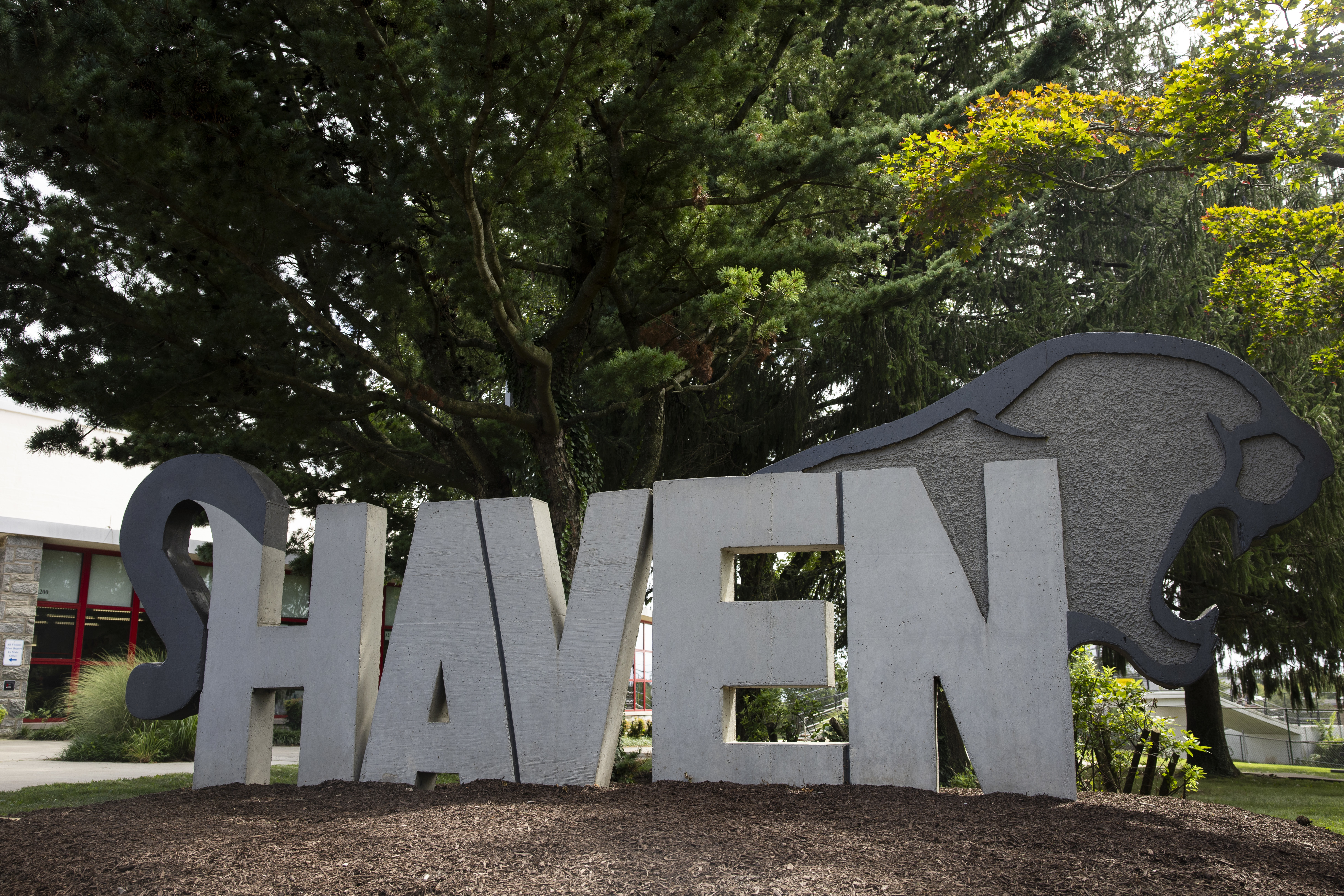
    Wallingford-Swarthmore School District held listening sessions about its budget at Strath Haven Middle School on Monday.

    Facing a $2.6 million budget deficit for the 2027-28 school year, Wallingford-Swarthmore School District is considering any idea to trim that figure.

    That was the takeaway from a Monday listening session, where Superintendent Russell Johnston said the district is “turning over every stone” in its quest and took suggestions from the public.

    Unlike neighboring districts, WSSD is predominately supported by homeowners’ tax dollars, many of whom already feel stretched thin, The Inquirer’s Denali Sagner reports.

    While some attendees left the meeting feeling better about the school’s objectives, others still wonder how it got in this hole in the first place.

    Read more about Wallingford-Swarthmore’s plans to address its budget woes here.

    Ridley Creek cleanup is nearing the finish line after an oil tanker crash earlier this year

    Remediation work to clean up a September oil spill that contaminated Ridley Creek is nearing completion.

    Work to clean up oil that spilled into Ridley Creek when a tanker crashed on the Route 1 Bypass in September is nearly finished. Officials expect to wrap up next week, with road closures on Ridley Creek Road continuing until then.

    Crews have been remediating the area, where an estimated 1,000 to 2,000 gallons of oil spilled, including removing contaminated soil and refilling the site, The Inquirer’s Torin Sweeney reports.

    Read more about how crews have tackled the cleanup here.

    💡 Community News

    • Last night, Delaware County Council voted to approve a 19% property tax hike for 2026. Despite pushback from residents, the council enacted a double-digit increase for the second consecutive year. For the average assessed home, taxes will go up an additional $188 annually.
    • Delaware County Council voted unanimously last week to enact a policy protecting LGBTQ+ individuals from discrimination based on sexual orientation, gender identity, and gender expression. It is one of at least 79 local governments in Pennsylvania to adopt similar nondiscrimination ordinances.
    • SEPTA missed Friday’s federally imposed deadline to finish repairs to the heat-detection system on its Regional Rail cars. The agency said the lapse was due to a shortage of the thermal wire required to make the repairs. Installation of the backordered wire for 30 of SEPTA’s remaining trains is expected to be completed next week.
    • Now in its 50th year, the Festival of Lights officially got underway last week at Rose Tree County Park in Media, and will be lit nightly through Jan. 3. We take a look back at highlights from the opening night.
    • An Inquirer analysis of a year’s worth of Riddle Hospital inspections found that the Media hospital was cited once between last November and this October for failing to properly monitor a patient’s vital signs while waiting for care in the emergency department.
    • Residential parking permits for 2026 are now available for Media borough residents. Fees are $5 each for a household’s first two cars and $15 each thereafter. New for 2026, the borough will not distribute a physical sticker, but will instead track registration through the Passport Parking app.
    • Newlin Grist Mill has named a new executive director to lead the historic Concord Township site. Amy Ricci, who most recently held that same role at former Philadelphia paper mill Historic Rittenhouse Town, will assume the position in January, becoming the organization’s fourth executive director.
    • Wawa is opening its 1,000th fuel store today at 675 Baltimore Pike in Springfield. The first 250 guests will get a free T-shirt and coffee. (Daily Times)

    🏫 Schools Briefing

    • Notre Dame de Lourdes School in Swarthmore took home first place in the kindergarten through eighth grade category of B101’s annual Christmas Choir Competition for its rendition of Like It’s Christmas. The school will receive $5,000 for its music program and will perform the winning song at the Philly Pops’ A Philly Holiday Spectacular on Sunday.
    • There’s a school board meeting tonight at Penncrest High School. On Monday and Tuesday, Rose Tree Elementary will host its fifth grade band concert. Penncrest High School’s winter choral concert is on Wednesday. See RTMSD’s full calendar here.
    • Tonight is Swarthmore-Rutledge School’s winter concert, Strath Haven High’s orchestra concert is Monday, and its choral concert is Tuesday. Wallingford Elementary is hosting winter concerts on Wednesday and Thursday. See WSSD’s full calendar here.
    • WSSD is also hosting a community artificial intelligence forum tonight from 6 to 7:30 p.m. at Strath Haven Middle School’s library, where attendees can provide feedback about policies.

    🍽️ On our Plate

    • Wonder is opening next week at the Promenade at Granite Run. The food hall at 1145 W. Baltimore Pike will host a “friends and family” preview Monday through Wednesday ahead of its grand opening next Thursday.
    • The Towne House in Media has been transformed for the five-week run of “Holly Jolly.” The holiday décor will be on display through Jan. 4, during which time festive drinks can also be ordered. Options include the Mistletoe Kiss, made with vodka, rosemary simple syrup, lemon, and club soda, or Holly’s Hot Chocolate, which gives hot cocoa a kick thanks to vanilla vodka and Irish cream.
    • Santa will be making a stop in Glen Mills this weekend alongside Mrs. Claus when the duo visit Harvest Seasonal Grill Saturday from 9 a.m. to 11 a.m. Kids can also decorate cookies during the holiday brunch buffet. Tickets are $25 for children and $35 for adults. Reservations are required.

    🎳 Things to Do

    🌃 Night Market: Swarthmore merchants will stay open later on Friday, and there will also be pop-up vendors, food, drinks, and an ugly sweater competition. ⏰ Friday, Dec. 12, 5-8 p.m. 💵 Pay as you go 📍 Swarthmore town center

    🎙️ The Newspaper Taxis: Hear tunes from this Beatles tribute band. ⏰ Friday, Dec. 12, 8 p.m. 💵 Free 📍 Shere-E-Punjab, Media

    🍪 Cookie Walk: Love holiday cookies but don’t love baking? Or just want to get a larger array? This annual event lets attendees pick and pay for the homemade sweets they want. ⏰ Saturday, Dec. 13, 9 a.m. 💵 Pay as you go 📍 Middletown Church, Media

    Cocoa and Photos with the Clauses and Friends: Write a letter to Santa, decorate cookies, and pose for festive photos with Olaf, Jolly Bear, and the big man himself. ⏰ Saturday, Dec. 13, 10 a.m.-noon 💵 Free 📍 Media Community Center

    🕎 Chanukah Village: A number of stores throughout Media will host crafts and other activities in celebration of the first night of the holiday. A 4:30 p.m. menorah lighting will be held at the Delaware County Courthouse. ⏰ Sunday, Dec. 14, 3-5 p.m. 💵 Free 📍 Various locations

    🏡 On the Market

    A modern four-bedroom townhouse in Middletown Township

    The townhome spans over 3,600 square feet and backs up to woods.

    Built in 2022, this spacious townhouse’s first floor features an open-concept kitchen, dining, and living area, which has access to a deck overlooking the woods. There are four bedrooms upstairs, including a primary suite with double vanities and a walk-in closet. It also has a finished walk-out basement with a full bathroom, and access to the community clubhouse and a tot lot. There’s an open house this Saturday from noon to 3 p.m.

    See more photos of the townhouse here.

    Price: $815,000 | Size: 3,640 SF

    🗞️ What other Greater Media residents are reading this week:

    By submitting your written, visual, and/or audio contributions, you agree to The Inquirer’s Terms of Use, including the grant of rights in Section 10.

    This suburban content is produced with support from the Leslie Miller and Richard Worley Foundation and The Lenfest Institute for Journalism. Editorial content is created independently of the project donors. Gifts to support The Inquirer’s high-impact journalism can be made at inquirer.com/donate. A list of Lenfest Institute donors can be found at lenfestinstitute.org/supporters.

  • Cleanup of Ridley Creek oil spill near Media is almost complete

    Cleanup of Ridley Creek oil spill near Media is almost complete

    Crews are in the final stages of cleaning up the site where oil leaked into Ridley Creek after a tanker truck crashed near Media in September, according to municipal and county officials.

    Ridley Creek Road will continue to have road closures from 9 a.m. to 2 p.m. until the work is finished.

    Work should be completed next week, said Larry Bak, the county’s hazmat crew chief. Crews from Lewis Environmental have removed the contaminated soil and are refilling the site. Environmental consulting firm Aquaterra is overseeing the remediation work and testing.

    A Cardinal USA truck carrying home heating oil crashed on Sept. 22 while traveling north on the Route 1 Bypass at the border of Upper Providence and Middletown Townships. The truck swerved across the highway and rolled an undetermined number of times, according to Upper Providence Fire Marshal Alan Mancill.

    The truck came to rest with the cab hanging off the east side of an overpass and a gash in its side that spilled 1,000 to 2,000 gallons of oil onto the roadway and into Ridley Creek below, Mancill said.

    The cause of the crash is unclear and Upper Providence police could not be reached for comment.

    Remediation work continues on Ridley Creek Tuesday, Dec. 9, 2025, under the Route 1 overpass in Media, Delaware County where a tanker overturned spilling thousands of gallons of home heating oil in September.

    Blocking the oil’s flow downstream was a priority for the Delaware County Emergency Services Department’s hazmat team, Bak said.

    “I sent half of my team up onto the bridge to work with the tank truck, and I sent the other half of my initial response down to the creek to get in front of it as it was going downstream,” Bak said. The crew put containment booms across the creek to halt the spread of oil.

    Aqua’s Ridley Creek water treatment facility is about a mile and a half downstream from the site. Bak said the facility was quickly alerted to shut off its intake after the spill. It was reopened after the water was deemed safe, but the booms remain in place just in case.

    “I believe the expression is ‘an overabundance of caution,’” Bak said.

    The site of the crash posed a challenge to the cleanup crew, with oil contaminating a hillside as well as the creek and marshy area below the bridge. Crews used a special excavator with 35-foot arms.

    “It had to reach out and down because it’s a fairly steep hill,” Bak said. “It’s not an insignificant height.”

    To reach the contaminated areas, the crew also built a dam from the Ridley Creek Road side with pipes underneath to let the creek flow underneath. The dam will be removed after work is complete, Bak said.

    Once the work is done, soil will continue to be monitored for two years.

    This suburban content is produced with support from the Leslie Miller and Richard Worley Foundation and The Lenfest Institute for Journalism. Editorial content is created independently of the project donors. Gifts to support The Inquirer’s high-impact journalism can be made at inquirer.com/donate. A list of Lenfest Institute donors can be found at lenfestinstitute.org/supporters.

  • A nonprofit thought it had $170,000 in the bank. Then the payroll didn’t clear.

    A nonprofit thought it had $170,000 in the bank. Then the payroll didn’t clear.

    Lil’ Filmmakers, a Roxborough-based nonprofit, was supposed to have $170,000 in the bank.

    The mission of helping young people become storytellers through film and media had caught the attention of major donors in 2025. The city awarded it a $28,000 anti-violence grant, and one of Michael Jordan’s charitable organizations issued a separate $35,000 grant. Funding should not have been a problem, according to CEO Janine Spruill, who started the program in 1999.

    But on Aug. 27, neither she nor her four staffers, nor her summer program participants, had gotten paid by the Federation of Neighborhood Centers, the Philadelphia nonprofit that managed their money.

    She remembers FNC staff telling her they had decided not to process payroll because they were trying to “figure some things out.” Without specifics, Spruill walked away suspecting the worst.

    “I went into a bit of a panic mode,” Spruill said, upset that she hadn’t even been given a heads-up. “I ended up crying my eyes out because I said, ‘Oh, my God, I raised all this money, and they’re telling me they don’t have it.’”

    Other organizations that had contracts with FNC soon realized that they, too, were having issues accessing their funds. They reported overdue invoices, payroll issues, and spotty communication with FNC.

    As the weeks turned into months, Spruill said, FNC would not let her access the money she had raised. She had to launch emergency fundraisers.

    The announcement many of the groups dreaded arrived in November. FNC’s grant management services — known as a fiscal sponsorship program in the nonprofit world — would shut down Dec. 31.

    “This choice does not come lightly,” said FNC’s announcement on its website. “It comes after years of carrying work that we believed in wholeheartedly — often beyond our capacity — because we care deeply about every project, every leader, and every community member who trusted us with their mission.”

    FNC’s collapse, by its own admission, is a story of an organization that grew too quickly and let basic accounting principles go by the wayside. Demir Moore, the nonprofit’s new CEO as of Aug. 26 and a former Lil’ Filmmakers intern, insisted FNC’s collapse was due to a “lapse of management” and “absolutely not attributable to malfeasance or embezzlement.”

    FNC spent itself into a deficit over the course of years, continuously using money belonging to one group to pay for another, according to Thaddeus Squire of Social Impact Commons, an organization aiding FNC as it winds down.

    “That deficit started to become unrecoverable,” he said. “Money that was borrowed was not put back.”

    Moore declined to say how much money FNC has or how many groups are affected by the end of the fiscal sponsorship program. FNC has about 50 groups on its rolls, he said, but some have not been active or have no funds with the nonprofit.

    Still, it is unclear how the nonprofit was able to operate the way it did for years. Sorting out just how FNC’s fiscal sponsorship program unraveled is going to take time, Moore said, declining to comment on leadership turnover in the last year.

    Attempts to reach past FNC leadership for insight on what transpired were unsuccessful.

    And while Moore described a round-the-clock effort to sort out how much every group should have in its account, he would not say for certain whether groups would get all their funds back by the time FNC shuts down.

    When the ‘safe approach’ loses control

    When run right, a fiscal sponsor can be a boon to newer community groups that do not have a tax-exempt status. By contracting with fiscal sponsors, which are registered as 501c3s, these smaller groups can apply for grants.

    Donors are left assured that a more established nonprofit is guiding the smaller or newer group, said Brian Mittendorf, the H.P. Wolfe Chair in Accounting at Ohio State University, who specializes in nonprofit accounting.

    “Financial difficulties at fiscal sponsors are much less frequent just because their position … is typically an indicator that they have strong financial controls and other infrastructure in place,” he said, adding that signing with a fiscal sponsor is “often viewed as the safe approach.”

    Fiscal sponsors can also be of much help to registered nonprofits that would rather focus on providing services than on managing administrative tasks.

    In exchange for a fee, the sponsor signs on to manage and distribute grants, offer reports, and take on a range of tasks, such as payroll or legal questions, giving community groups peace of mind.

    For Lil’ Filmmakers, the promise of back-office support led it to contract with FNC nearly a decade ago. Spruill said the monthly accounting report FNC sent her would sometimes require adjustments, but she cited no major issues until this year.

    The first red flag came in March. Spruill said FNC did not pay the rent for Lil’ Filmmakers’ studio in Roxborough. FNC ultimately took care of the late fees and cut the rent check, so Spruill said she chalked it up as a one-time occurrence.

    Teens at the Lil’ Filmmakers nonprofit learn the ins and outs of filmmaking.

    What Spruill and other community group leaders could not see was an organization Moore said could not keep up with its own expansion. The nonprofit recorded a revenue of $774,000 in 2019 tax filings, which peaked at $4.76 million in 2023.

    A years-old message from then-CEO Jerry Tapley remained on the FNC website until this summer, touting more than 50 projects ranging from urban farming and the arts to animal rescue work. The organization’s work affected 250,000 people annually in “Philadelphia and beyond,” he wrote.

    Moore said that as the nonprofit grew, FNC was not always collecting key documentation, such as receipts. Community groups were allowed to draw checks for funds they did not have, and balance statements given to groups were out of date or inaccurate.

    When Moore stepped down as FNC board president and took over as CEO, the first thing he did, in an attempt to take stock of finances and accounts, was freeze outgoing payments.

    While Moore described the move as a necessary first step, community groups struggled to pay for basic overhead, and some sought outside help. Soon, Philanthropy Network Greater Philadelphia and Social Impact Commons, an organization that supports fiscal sponsors, were working with FNC — but it was too late.

    There did not appear to be any nefarious intent behind the mismanagement, Social Impact Commons’ Squire said, but FNC’s system allowed some projects to spend into the negative and for debt to snowball.

    Social Impact Commons recommended FNC shut down its fiscal sponsorship program and “stop trying to catch up,” according to Squire.

    Clarity may not come for at least several more weeks

    Sharon Wilson, Lil’ Filmmakers’ attorney, said one of her biggest frustrations is what she finds to be a general lack of transparency as FNC winds down operations, despite her repeated requests for updates in writing.

    “All of the information that was learned about FNC’s internal problems, and the fact they were failing other nonprofits other than Lil’ Filmmakers, was all gleaned outside of them,” she said.

    The way Moore explains it, the reason FNC has not outright said all community groups would be made whole is that figuring out who is owed what will take at least several more weeks. He said FNC does have funds available, but until the reconciliation process is complete, “no final conclusions can be made about individual project balances or what each project’s final financial position will be.”

    Polaroids from a community pet day at Lil’ Filmmakers Thursday, Dec. 4, 2025. The Roxborough based nonprofit and other community groups claim they have been unable to access their funds managed by FNC, which insists it’s not a case of embezzlement or financial malfeasance

    For now, multiple third parties, including the city, are working to move the process along.

    The Philadelphia Office of Public Safety, for example, said Lil’ Filmmakers and three other anti-violence grant recipients with awards managed by FNC are in different parts of the process. Together, the groups had roughly $380,000 in city-issued funds awarded, which the city said are largely accounted for.

    Though the final spending report for Lil’ Filmmakers remains in dispute, it might be resolved by the end of the month, according to the city.

    In the meantime, a public safety office spokesperson said staffers were working with organizations to help close their accounts with FNC and offering technical assistance to its grant recipients, including bookkeeping and fiscal sponsor matchmaking.

    Still, the office said, there is not much it can do for other grants awarded by other donors.

    Complicating money matters further, some organizations used a California-based fundraising platform called Flipcause to collect donations. Last month, California’s attorney general sent a cease-and-desist order to the company, ordering it to halt operations after more than a dozen nonprofits in the state accused Flipcause of withholding funds. The platform also faces a class-action lawsuit in federal court.

    In all, Moore said, FNC organizations have about $100,000 being withheld by Flipcause; Lil’ Filmmakers is not one of them.

    Moore did not rule out that some groups might have less in their accounts than they were initially told in their FNC financial statements because of accounting discrepancies.

    Squire went a step further, adding that philanthropic fundraising would be necessary.

    “We’re cautiously optimistic that despite a lot of genuine harm that’s been done, that we can at least get people sorted out and back on their feet in the next few months,” Squire said.

    The goal, he said, is that each of the groups needing to be placed with a new fiscal sponsor to access their money will have a new one by the end of the first quarter of 2026.

    The results of the internal audits will likely determine any legal recourse or investigations. For example, the Pennsylvania Bureau of Corporations and Charitable Organizations, part of the Department of State, can impose fines against charities and revoke their registrations if they are found to be violating the state laws that govern them.

    But Spruill, her staff, and her teaching artists cannot afford to keep waiting.

    Lil’ Filmmakers has launched another fundraising campaign, this time for $50,000, so programming can continue uninterrupted.

    When speaking about the financial setback, Spruill remains defiant.

    “We refuse to let this stop the stories that need to be told,” reads her plea to donors.

  • Delco residents prepare for a 19% property tax hike — the second double-digit increase they face in two years

    Delco residents prepare for a 19% property tax hike — the second double-digit increase they face in two years

    For the second year in a row the Delaware County Council approved a double-digit property tax increase.

    Facing fury from residents, the all-Democratic board voted 4-1 Wednesday to approve a $340 million budget that raises the county portion of property taxes 19%.

    Last year, the council voted to increase taxes 23% as federal COVID-19 relief dollars that had filled the county’s longstanding structural deficit began to run dry. That hike took effect in January.

    The new 19% increase, which will take effect next month, will place Delaware County on stable financial footing, members of the council argued.

    “Our primary responsibility is to ensure that this county is on solid financial footing. Make no mistake, absent this increase tonight that would not be the case. We would run out of money,” said Councilmember Kevin Madden, whose term on the board runs out this year.

    The budget, Council Chair Monica Taylor said, would be the first truly balanced budget for the county in more than a decade.

    The tax increase will translate to an additional $188 annually for the county’s average assessed home value of $255,000.

    Taylor and the other council members said they didn’t take the increase lightly, but that it was a necessary step. Their Republican predecessors, they argued, went too long without substantially increasing taxes and left the county in dire straits when Democrats took control in 2020.

    Amid inflation and shrinking federal funds, they said the last two years of increases were needed. And after increasing taxes 19% in 2026, they predicted taxes could be kept level in the future.

    “If it comes down to it, next year rather than raise taxes I am going to be looking at cutting discretionary spending,” Councilmember Christine Reuther said Wednesday.

    The proposed budget increased spending by just under 6% with the majority of new spending attributed to increased costs for employee health benefits, increased court costs, employee pay, and increases to the county’s SEPTA contribution.

    “Our strategy is not just to increase revenue but to decrease expenses,” County Executive Barbara O’Malley said.

    Over the course of several meetings and hearings ahead of the vote Delaware County residents showed frustration with the increase and doubt that 2026 would be the end of the hikes. They urged council members to find ways to cut the budget or to spread the increases out over more years.

    “I own my home but I’m behind on my taxes because the taxes are so high,” resident Maureen Mitchell said in a Monday budget hearing. “Something’s gotta give for the seniors, we’re losing our homes.”

    Although Democrats inherited a deficit when they took control of the council, residents pointed out that they also made significant expenditures in recent years, including the decision to deprivatize the prison, spending more on legal fees, and launching a health department. The majority of the health department is funded by state and federal dollars.

    “Find some cuts and give taxpayers a break, then hold the line on future spending,” said Michael Straw, the chair of the Media Borough Republican Committee.

    Democrats retained control of all five seats on council in November despite GOP messaging that focused on rising tax costs.

    Cynthia Sabatini, an Upper Providence resident, asked council members to release a full list of what spending is discretionary and to spread the increase out over several years.

    “Why does it have to be done in one fell swoop?” she asked Monday.

    Councilmember Elaine Schaefer voted against the increase because she said she couldn’t justify such a steep hike during hard economic times.

    “We do need to raise the revenue but in my opinion it’s too abrupt and causes too much of a hardship to do two really significant increases in a row,” Schaefer said Wednesday.

    Delaware County is one of three of Philadelphia’s collar counties considering a tax increase this year. Montgomery County is poised to vote on a 4% tax increase next week while Bucks County is contemplating a tax increase to fill a $16 million deficit.

  • Scientists discover oldest evidence of human-made fire in a 400,000-year-old hearth

    Scientists discover oldest evidence of human-made fire in a 400,000-year-old hearth

    Scientists have discovered the oldest evidence of ancient humans igniting fires: a 400,000-year-old open-air hearth buried in an old clay pit in southern England.

    The study, published in the journal Nature, is based on a years-long examination of a reddish patch of sediment excavated at a site in Barnham. It pushes back the timeline on fire-making by about 350,000 years.

    The nebulous question of how far back human ancestors conjured fire is deeply intertwined with some of the biggest outstanding mysteries about human evolution. The ability to reliably set fires would have allowed humans to cook food, expanding the range of what they could eat and making meals more digestible. That, in turn, could have supported bigger brains that consumed more energy, catalyzing new social behaviors as humans gathered around campfires.

    But campfires don’t leave fossils. It takes painstaking work to reconstruct these ephemeral uses of technology. And what remains unclear is who set them. No telltale bones have been recovered at Barnham, but researchers think it was Neanderthals, close cousins of our species who interbred with our ancestors.

    “The evidence of fire is incredibly difficult to preserve. If you get to ash and charcoal, it can wash away. Sediment can get washed away,” said Nicholas Ashton, curator of Paleolithic collections at the British Museum and one of the leaders of the work. “We just found this one pocket — quite a large site — where it happens to be preserved.”

    Even when traces of fire remain, the task of distinguishing incidental flames sparked by lightning strikes or wildfires from those set by people is difficult. Perhaps most challenging is distinguishing between fires ignited by humans with the know-how from those produced by scavenging embers from wildfires.

    The study could spark more debate.

    “The authors did an excellent job with their analysis of the Barnham data, but they seem to be stretching the evidence with their claim that this constitutes the ‘earliest evidence of fire making,’” Wil Roebroeks, an archaeologist at Leiden University, said in an email, calling the evidence “circumstantial.”

    Ségolène Vandevelde, an archaeologist and adjunct professor at the University of Quebec at Chicoutimi, praised the multidisciplinary approaches the authors used and said the finding was “solid.”

    Pyroarchaeology

    In the Paleolithic era, the Barnham site would have been a woodland with a seasonal pond — set away from the main river valley, where predators might have roamed, according to Robert Davis, an archaeologist at the British Museum and one of the authors of the study. The wildlife would have included elephants, lions, deer, fish and other small mammals.

    Despite the fleeting nature of fire, it can leave traces under the right conditions. At the site in Barnham, where artifacts such as heat-shattered flint hand axes were also found, researchers were intrigued by a layer of reddish sediment — a result of iron-rich sediments being heated to produce a mineral called hematite. For four years, they studied it, trying to determine whether it was the result of a wildfire or deliberate human activity.

    One of the first questions they asked was whether this was a one-time blaze or something closer to a fireplace that was lit and relit many times.

    To deconstruct this question, scientists studied the magnetism of the sediment, which is altered by heating. They conducted modern experiments, to see if they could come up with an estimate of how many heating events might have resulted in the magnetic profile of the sediment — and found that after about a dozen heating events, each one four hours long, their modern samples mimicked the archaeological one.

    Then they examined the chemistry of the site — scrutinizing particular chemical compounds left behind. The patterns they found suggested humans had been using these fires.

    The last element was small pieces of cracked flint scattered about the site — as well as two bits of pyrite, which can create a spark when struck together. A geological study of the area showed that pyrite was scarce in the local landscape, leading the authors to argue that the inhabitants had carried it there for the specific purpose of making fire.

    Scavenging sparks vs. setting fires

    The archaeological record with examples of fires used by hominins — the ancestors of humans — stretches back more than a million years ago in Africa.

    But what interests scientists is not just the ability to successfully scavenge sparks from wildfires or lightning strikes, but also the ability to reliably create it — possibly by striking flint and pyrite together to create sparks.

    The oldest accepted evidence of fires purposefully set are from a Neanderthal site dated to 50,000 years ago in France. That evidence is considered convincing in part because there are chunks of flint showing “microwear traces of having been struck” to create sparks, Roebroeks said. But at Barnham, there are no microwear traces, leaving room for disagreement.

    “It’s a very contentious debate that’s been going on for some time,” Davis said.

    Early hominins would have learned to harvest fire by collecting embers, harvesting the right fuel and tending the fire. And eventually, they had to learn how to make it on demand — which would allow them to live in colder places, cook, fend off predators and socialize after dark.

    The study does not suggest that Barnham was where fire originated; it was probably widespread across the ancient world. But it does offer a rare, preserved snapshot of prehistoric life.

    “The maintenance of fire requires social cooperation, cultural rules and work coupled with knowledge of wood types, and means that a complicated tradition is at play,” said John Hawks, a paleoanthropologist at the University of Wisconsin at Madison.

  • House passes defense bill to raise troop pay and overhaul weapons purchases

    House passes defense bill to raise troop pay and overhaul weapons purchases

    WASHINGTON — The House voted to pass a sweeping defense policy bill Wednesday that authorizes $900 billion in military programs, including a pay raise for troops and an overhaul of how the Department of Defense buys weapons.

    The bill’s passage comes at a time of increasing friction between the Republican-controlled Congress and President Donald Trump’s administration over the management of the military.

    The annual National Defense Authorization Act typically gained bipartisan backing, and the White House has signaled “strong support” for the must-pass legislation, saying it is in line with Trump’s national security agenda. Yet tucked into the more than-3,000-page bill are several measures that push back against the Department of Defense, including a demand for more information on boat strikes in the Caribbean and support for allies in Europe, such as Ukraine.

    Overall, the sweeping bill calls for a 3.8% pay raise for many military members as well as housing and facility improvements on military bases. It also strikes a compromise between the political parties — cutting climate and diversity efforts in line with Trump’s agenda, while also boosting congressional oversight of the Pentagon and repealing several old war authorizations. Still, hard-line conservatives said they were frustrated that the bill does not do more to cut U.S. commitments overseas.

    “We need a ready, capable and lethal fighting force because the threats to our nation, especially those from China, are more complex and challenging than at any point in the last 40 years,” said Rep. Mike Rogers, the GOP chair of the House Armed Services Committee.

    Lawmakers overseeing the military said the bill would change how the Pentagon buys weapons, with an emphasis on speed after years of delay by the defense industry. It’s also a key priority for Defense Secretary Pete Hegseth. Rep. Adam Smith, the top Democrat on the armed services panel, called the bill “the most ambitious swing at acquisition reform that we’ve taken.”

    Still, Smith lamented that the bill does not do as much as Democrats would like to rein in the Trump administration but called it “a step in the right direction towards reasserting the authority of Congress.”

    “The biggest concern I have is that the Pentagon, being run by Secretary Hegseth and by President Trump, is simply not accountable to Congress or accountable to the law,” he said.

    The legislation next heads to the Senate, where leaders are working to pass the bill before lawmakers depart Washington for a holiday break.

    Several senators on both sides of the aisle have criticized the bill for not doing enough to restrict military flights over Washington. They had pushed for reforms after a midair collision this year between an Army helicopter and a jetliner killed all 67 people aboard the two aircraft near Washington’s Ronald Reagan National Airport. The National Transportation Safety Board has also voiced opposition to that section of the bill.

    Here’s what the defense bill does as it makes its way through Congress:

    Boat strike videos and congressional oversight

    Lawmakers included a provision that would cut Hegseth’s travel budget by a quarter until the Pentagon provides Congress with unedited video of the strikes against alleged drug boats near Venezuela. Lawmakers are asserting their oversight role after a Sept. 2 strike where the U.S. military fired on two survivors who were holding on to a boat that had partially been destroyed.

    The bill also demands that Hegseth allow Congress to review the orders for the strikes.

    Reaffirm commitments to Europe, Korea

    Trump’s ongoing support for Ukraine and other allies in Eastern Europe has been under doubt over the last year, but lawmakers included several positions meant to keep up U.S. support for countering Russian aggression in the region.

    The defense bill requires the Pentagon to keep at least 76,000 troops and major equipment stationed in Europe unless NATO allies are consulted and there is a determination that such a withdrawal is in U.S. interests. Around 80,000 to 100,000 U.S. troops are usually present on European soil. It also authorizes $400 million for each of the next two years to manufacture weapons to be sent to Ukraine.

    Additionally, there is a provision to keep U.S. troops stationed in South Korea, setting the minimum requirement at 28,500.

    Cuts to climate and diversity initiatives

    The bill makes $1.6 billion in cuts to climate change-related spending, the House Armed Services Committee said. U.S. military assessments have long found that climate change is a threat to national security, with bases being pummeled by hurricanes or routinely flooded.

    The bill also would save $40 million by repealing diversity, equity and inclusion offices, programs and trainings, the committee said. The position of chief diversity officer would be cut, for example.

    Iraq War resolution repeal

    Congress is putting an official end to the war in Iraq by repealing the authorization for the 2003 invasion. Supporters in both the House and Senate say the repeal is crucial to prevent future abuses and to reinforce that Iraq is now a strategic partner of the U.S.

    The 2002 resolution has been rarely used in recent years. But the first Trump administration cited it as part of its legal justification for a 2020 U.S. drone strike that killed Iranian Gen. Qassim Suleimani.

    Lifting final Syria sanctions

    Congress would permanently remove U.S. sanctions put on Syria after the Trump administration temporarily lifted many penalties.

    Lawmakers imposed economically crippling sanctions on the country in 2019 to punish former leader Bashar Assad for human rights abuses during the nearly 14-year civil war. After Syrian President Ahmed al-Sharaa led a successful insurgency to depose Assad, he is seeking to rebuild his nation’s economy.

    Advocates of a permanent repeal have said international companies are unlikely to invest in projects needed for the country’s reconstruction as long as there is a threat of sanctions returning.

    Lack of IVF coverage

    Democrats criticized House Speaker Mike Johnson (R., La.) for stripping a provision from the bill to expand coverage of in vitro fertilization for active duty personnel. An earlier version covered the medical procedure, known as IVF, which helps people facing infertility have children.