Harold “Hal” Miller Jr. disappeared in June, leaving behind only two clues for police to follow: his vehicle abandoned in Pennsauken and, inside, a cell phone that last dialed a contact named “E. Poker.”
From those scant clues, investigators said, they uncovered something grim: Miller had been shot to death and dismembered with a chainsaw, they alleged, by the man whose number was saved in his phone as “E. Poker,” Everton Thomas, and two of Thomas’ relatives, in Camden.
In September, police charged Thomas, 41, with murder, desecration of human remains, and tampering with physical evidence. His wife, Sherrie Thomas, 41, and son, Deshawn Thomas, 23, were also charged with desecrating and disposing of Miller’s remains.
But more than five months later — after 178 days of searches, interviews, and forensic work — investigators have yet to find Miller’s body.
“It’s a horrible waiting game,” said Miller’s ex-wife and mother of his four children, Tamika Miller.
The case that has emerged since Miller’s disappearance is as sprawling as it is brutal: a trail of surveillance footage, internet searches, hardware-store runs, and border crossings that authorities say chart a carefully concealed killing. Court records detail a sequence of events that is at once methodical and frenzied — and has left investigators hunting for Miller’s remains even as three members of the Thomas family stand charged in his death.
Everton Thomas denies any involvement in the crime and is expected to plead not guilty to the charges on Dec. 15, according to his defense attorney, Timothy Farrow. Attorneys for Sherrie Thomas and Deshawn Thomas did not respond to requests for comment.
‘An awesome father’
Harold Miller and Tamika Miller had four children, three girls and a boy. “He was an awesome father,” Tamika Miller said.
He swelled with pride when their son announced he would join the Navy, continuing a military tradition in his family that “flat-footed” Miller could not follow himself, she recalled. His happiest moment, she said, came when their daughter, a special-education teacher, received her bachelor’s degree.
Miller worked in Camden’s social-services world, leading outreach for Volunteers of America and programs for Joseph House, a men’s homeless shelter. In 2017, he pleaded guilty in federal court to conspiring to sell crack cocaine and served five years in prison.
The couple divorced in 2023. But the family still gathered for holidays, including Thanksgiving, when Miller would rent a hall large enough for 100 people and make sure four turkeys — including his favorite, fried turkey — were on the table, Tamika Miller said.
Miller, who lived in Deptford Township, was 48 when he died. “The holidays will never be the same,” Tamika Miller said.
The grisly crime
Miller’s final call — placed at 11:26 a.m. on June 12 — went to the contact in his phone listed as “E. Poker.” Investigators later learned the number belonged to Everton Thomas, according to the affidavit of probable cause for his arrest.
Street cameras caught what happened next, the document said: Miller climbing the back stairs to Thomas’ Baird Boulevard home around the time the call was placed. Minutes later, the cameras recorded the crack of a gunshot. Miller was never seen emerging from the home.
From there, investigators say, camera footage captured an ominous procession across Camden. It shows a man they say is Thomas leaving the house in Miller’s minivan and abandoning it in Pennsauken. It shows his wife and son making a series of trips to stores, buying bleach, heavy-duty contractor bags, ice, latex gloves, duct tape, plastic sheeting — and a chainsaw, according to court filings. Later, cameras captured three people dumping large black trash bags into dumpsters behind a nearby housing complex, Tamarack Station Apartments.
When investigators examined Deshawn Thomas’ phone, they say, they found a browser search typed in amid the chaos: whether a chainsaw could cut through meat.
Authorities searched Everton Thomas’ house on June 20. They found a loaded Glock, and bloodstains on a doorframe leading to the basement, the affidavit said. Testing later confirmed the blood matched Miller’s DNA.
How the two men may have been connected is unclear. Tamika Miller said they were acquaintances, not friends. “Everybody knows everybody in Camden,” she said.
In an interview with police, Thomas told detectives that he and Miller had played poker the night before Miller vanished, and that they had spoken again around 11 a.m. on June 12. He denied knowing anything about what happened, according to the affidavit.
By the next afternoon, investigators said, they learned Thomas had slipped across the border. Agents at Fort Erie-Buffalo reported he had entered Canada. Nearly three months later, on Sept. 8, U.S. border officers arrested him as he tried to cross back into the country. He remains in custody, awaiting a court hearing next week.
Tamika Miller said family members held a private memorial service, where they gained some closure. “We don’t know if they will ever find him,” she said. “But we have hope.”
Investigators, meanwhile, continue to search for clues and Miller’s body.
“As we near the end of the year, our detectives are still seeking leads — no matter how small — that would assist with the recovery of Mr. Miller’s remains,” Camden County Prosecutor Grace MacAulay said Tuesday. “For anyone who has information, but has not yet come forward, we implore you to consider what his grieving family has been through. They deserve answers and the opportunity to properly mourn their loved one. We remain hopeful that our community does what’s right and helps bring Mr. Miller home.”
Anyone with information is asked to contact Detective Jake Siegfried of the Camden County Prosecutor’s Office Homicide Unit at 856-225-5086 and Detective Andrew Mogck of the Camden County Police Department at 609-519-8588. Tips can also be submitted to https://camdencountypros.org/tips.
Philadelphia native Sheinelle Jones will be taking over Hoda Kotb’s chair on Today.
Jones will join Jenna Bush Hager as a permanent co-host starting Jan. 12, Hager announced on Tuesday morning, after nearly a year of rotating 60 fill-ins, including Jones, to find the perfect person to fill the shoes left by Kotb earlier this year.
During her stint as a fill-in co-host in September, Jones exchanged pleasantries with Hager as if it were a first date.
“Hopefully this will be a date where you walk away and go, ‘OK, hopefully she calls me tomorrow!’” Jones said to Hager on Today.
“You’re coming back,” Hager promised.
Today with Jenna & Sheinelle marks a new chapter for Jones, since she joined the chatty morning show in 2014. Before hitting the national stage, she worked at local station Fox 29 for nine years, including as co-host of Good Day Philadelphia.
Left to Right: Jennaphr Frederick, Sheinelle Jones, and Sue Serio of Fox Good Day Philadelphia backstage preparing for The Career Wardrobe fashion show on Saturday, June 9, 2011, at the Hyatt at the Bellevue.
The announcement comes just months after the death of Jones’ husband, Uche Ojeh, 45, who died in May while battling an aggressive form of brain cancer. After returning to Today in September, she joined Hager live to share her experiences: “My coach was gone, right? My life partner. The days after my first week were tough. Because it’s my new normal,” she said.
The two met as college sweethearts at Northwestern University when Jones, a freshman, showed Ojeh, a high school senior, around campus. Married in 2007 at Rittenhouse Square’s Church of the Holy Trinity, the couple would later have their son Kayin, 15, and twins Clara and Uche, 12.
Jones was on leave since January to care for her family before returning in September to her post at the 9 a.m. show alongside Dylan Dreyer, Al Roker, and Craig Melvin.
NBC News executive vice president Libby Leist and Jenna & Friends executive producer Talia Parkinson-Jones celebrated Jones’ addition to the show.
“Sheinelle has been a cherished member of NBC News for more than 11 years,” the executive said in a joint statement. “From standout interviews with newsmakers and celebrities to her iconic Halloween performances as Beyoncé and Tina Turner, she has captivated audiences time and again.”
In some regions, rainfall has plunged as much as eight inches below average for the past year, straining reservoirs, streams, and aquifers enough that the state Department of Environmental Protection has issued a drought warning — a notch shy of an emergency.
As a result, officials are asking residents to voluntarily curtail water use. Should conditions deteriorate, officials may impose mandatory restrictions on certain uses of water, though such measures are rarely invoked.
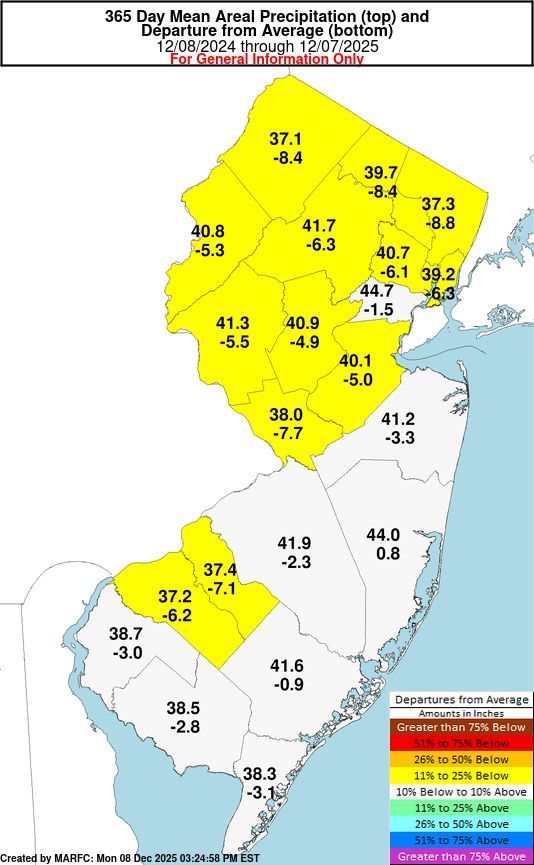
Map shows precipitation well below normal over the 365 days ending Dec. 7, 2025.
DEP Commissioner Shawn LaTourette said in a statement on Friday’s announcement that there is an “urgency of the need to conserve water.”
“The precipitation and water supply uncertainty we’ve experienced over the past year is a symptom of the impacts of climate change here in New Jersey,” LaTourette said.
It’s the second year the state is looking at a drought.
The last drought warning was issued in November 2024. That declaration came as firefighters had fought multiple simultaneous wildfires, one deadly, that broke out across the state amid dry, windy conditions.
That warning was lifted in June following record rainfall for some parts of the state in May.
Up to 8 inches below normal
However, the state overall has experienced below-average precipitation for more than a year, officials said.
New Jersey officials cited data from the Middle Atlantic River Forecast Center operated by the National Weather Service.
That data shows that Burlington, Camden, and Gloucester Counties are all running nearly four inches below average over the past 90 days.
Burlington County is running more than seven inches below normal for the past 365 days, and Camden County is running more than six inches below normal for the same period.
Northwestern New Jersey is running more than eight inches below normal over the past year.
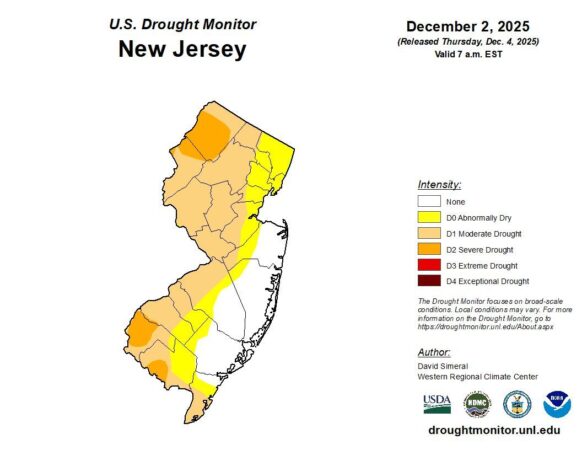
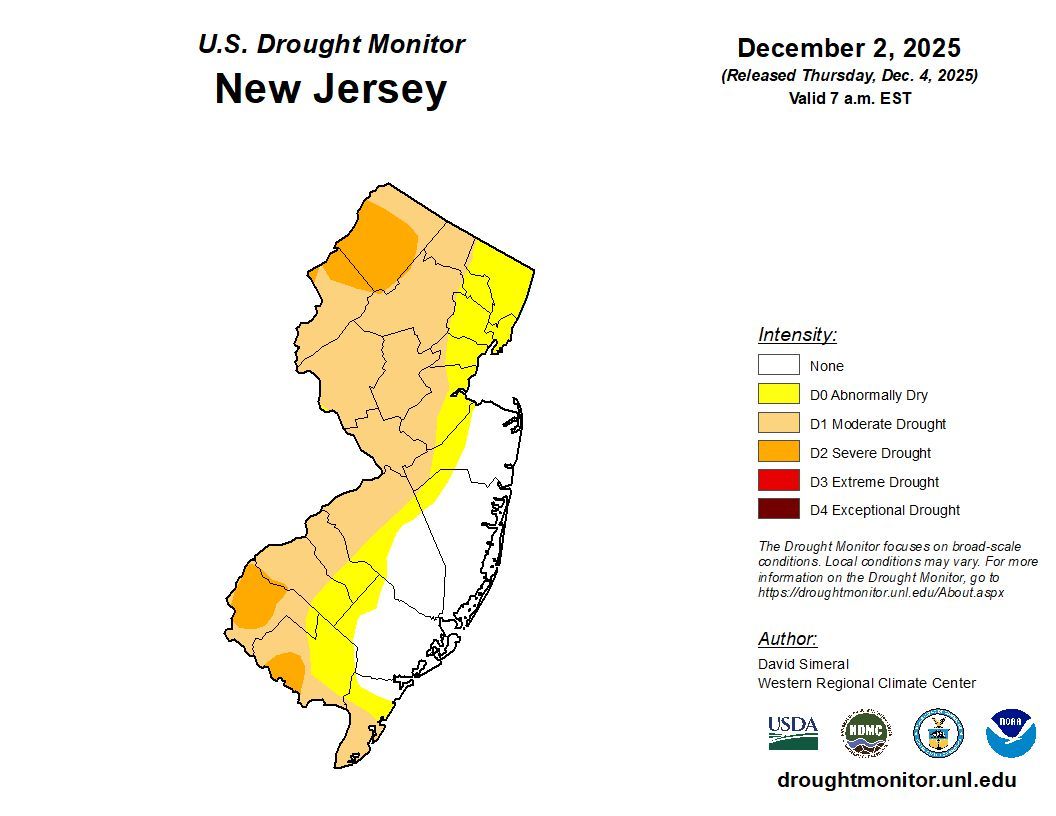
Likewise, the U.S Drought Monitor, a partnership of the University of Nebraska-Lincoln’s National Drought Mitigation Center and multiple federal agencies, shows the South Jersey counties along the Delaware River in either a moderate or severe drought.
About 3.5 million residents of New Jersey live in a drought-impacted area.
Officials said recent rains have not made much difference, considering the size of the gap. Ocean County is one of the few areas of the state with near-normal precipitation levels.
Map by the U.S. Drought Monitor shows that multiple counties in South Jersey are in a moderate to severe drought.
An update on rainfall and drought data is expected Wednesday.
State officials use multiple sources to determine the impact of rainfall on water supplies. Those include reservoir levels, stream flows, and groundwater (aquifers).
South Jersey counties, such as Burlington, Camden, Gloucester, and Salem, rely primarily on groundwater but also use water from the Delaware River and other rivers and streams.
Drought indicators for groundwater levels in South Jersey are designated as extremely dry while precipitation and stream flows are severely dry.
Officials say the persistent dryness has resulted in “observable stress across all specific indicators.” Nearly all regions of the state are classified as being severely or extremely dry.
Pennsylvania is also dry. Last week, the Commonwealth Drought Task Force said 37 counties are under a drought watch, although none in Southeastern Pennsylvania. A drought watch means an area has received 25% less rain over three months than normal. It is the lowest of three levels of drought declarations in Pennsylvania.
How to conserve
In New Jersey, officials have issued some tips on conserving water, such as:
Run dish and clothes washers only when full.
Turn off and winterize outdoor pipes and irrigation systems.
Check pipes for leaks.
Use a commercial car wash that recycles water.
Compost vegetable food waste instead of running the garbage disposal.
Installing a low-flow toilet can save up to 1,000 gallons per year.
Installing a low-flow shower head can save 7,700 gallons per year.
Installing newer faucets and aerators can save 16,000 gallons per year.
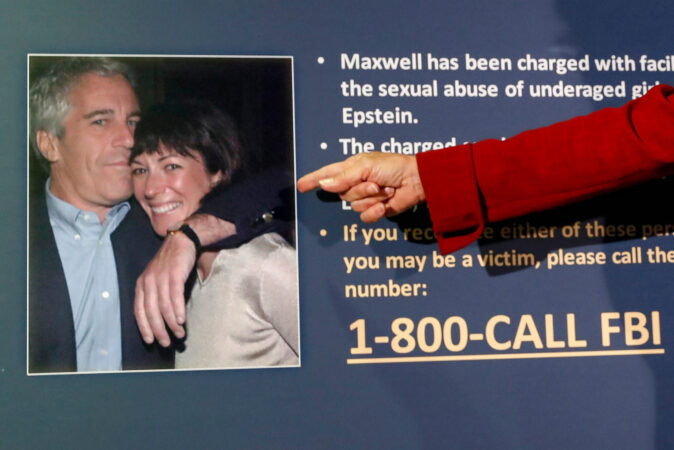
NEW YORK — The Justice Department can publicly release investigative materials from a sex trafficking case against Ghislaine Maxwell, the longtime confidant of Jeffrey Epstein, a federal judge said on Tuesday.
Judge Paul A. Engelmayer ruled after the Justice Department in November asked two judges in New York to unseal grand jury transcripts and exhibits from Maxwell and Epstein’s cases, along with investigative materials that could amount to hundreds or thousands of previously unreleased documents.
The ruling, in the wake of the passage last month of the Epstein Files Transparency Act, means the records could be made public within 10 days. The law requires the Justice Department provide Epstein-related records to the public in a searchable format by Dec. 19.
Engelmayer is the second judge to allow the Justice Department to publicly disclose previously secret Epstein court records. Last week, a judge in Florida granted the department’s request to release transcripts from an abandoned federal grand jury investigation into Epstein in the 2000s.
A request to release records from Epstein’s 2019 sex trafficking case is still pending.
The Justice Department said Congress intended the unsealing when it passed the transparency act, which President Donald Trump signed into law last month.
Three judges — two in New York and one in Florida — had previously refused an unusual department request to unseal grand jury transcripts.
The latest request, though, dramatically enlarged the files that the department said it planned to release to encompass 18 categories of investigative materials gathered in the massive sex trafficking probe.
Epstein, a financier, was arrested in July 2019 on sex trafficking charges, a month before he was found dead in a federal jail cell. The death was ruled a suicide. Maxwell was convicted of sex trafficking charges in December 2021. She is serving a 20-year prison sentence. Maxwell, a British socialite, was moved over the summer from a federal prison in Florida to a prison camp in Texas as her criminal case generated renewed public attention.
In response to a request by the New York judges for more specifics on what it would release, the department said in recent submissions in Manhattan federal court that the materials would include 18 categories including search warrants, financial records, survivor interview notes, electronic device data and material from earlier Epstein investigations in Florida.
The government said it was conferring with survivors and their lawyers and planned to redact records to ensure protection of survivors’ identities and prevent the dissemination of sexualized images.
After the request to unseal investigative files last month, two judges in New York invited Maxwell, the Epstein estate and accusers to provide opinions about the request.
Maxwell’s lawyer said his client took no position about the requested unsealing, except to note that her plans to file a habeas petition could be spoiled because the public release of materials “would create undue prejudice so severe that it would foreclose the possibility of a fair retrial” if the habeas request succeeded.
Lawyers for the Epstein estate took no position. At least one outspoken Epstein accuser, Annie Farmer, said through her lawyer, Sigrid S. McCawley, that Farmer “is wary of the possibility that any denial of the motions may be used by others as a pretext or excuse for continuing to withhold crucial information concerning Epstein’s crimes.”
In August, Judges Richard M. Berman and Paul A. Engelmayer in Manhattan denied the department’s requests to unseal grand jury transcripts and other material from Epstein and Maxwell’s cases, ruling that such disclosures are rarely, if ever, allowed.
Tens of thousands of pages of records pertaining to Epstein and Maxwell have already been released through lawsuits, public disclosures and Freedom of Information Act requests.
Many of the materials the Justice Department plans to release stem from reports, photographs, videos and other materials gathered by police in Palm Beach, Florida, and the U.S. attorney’s office there, both of which investigated Epstein in the mid-2000s.
Last year, a Florida judge ordered the release of about 150 pages of transcripts from a state grand jury that investigated Epstein in 2006. On Dec. 5, at the Justice Department’s request, a Florida judge ordered the unsealing of transcripts from a federal grand jury there that also investigated Epstein.
That investigation ended in 2008 with a then-secret arrangement that allowed Epstein to avoid federal charges by pleading guilty to a state prostitution charge. He served 13 months in a jail work-release program. The reques
A driver struck and killed a man who was crossing a street in Cherry Hill on Monday night.
Cherry Hill resident Gerald S. Yashinsky, 51, was crossing Haddonfield Road near Yale Avenue around 6:41 p.m. Monday when the driver of a northbound vehicle struck him, according to the Cherry Hill Police Department. Law enforcement officers, firefighters, and EMS personnel responded and provided medical aid.
Yashinsky was later pronounced dead.
The driver remained at the scene and was cooperating with investigators.
No additional injuries were reported.
The crash remains under investigation by the Cherry Hill Police Department, the Camden County Prosecutor’s Office, and the medical examiner’s office.
Anyone who witnessed the incident or has information is encouraged to contact Cherry Hill Police Officer Geoffrey Byrne at 856-432-8859 or traffic@cherryhillpolice.com.
President Donald Trump is expected to visit Northeast Pennsylvania today, promoting his economic agenda — including affordability and gas prices.
The trip — which the White House confirmed with The Inquirer last week — will include stops in Scranton and a rally in Mount Pocono.
Trump is no stranger to northeast and north-central Pennsylvania. He visited the region 13 times, including stops in Wilkes-Barre Township and Scranton on his second-term campaign last year. He had a particularly strong performance in Northeast Pennsylvania last year, with some of his top gains compared to the 2020 election coming from Lackawanna and Luzerne counties.
It’s part of an expected national tour where Trump will tout his efforts to lower inflation ahead of the 2026 midterm elections in battleground areas. Those races, including ones in northeastern and north-central Pennsylvania, will determine whether Democrats or Republicans control Congress.
Trump’s visit Tuesday appears to be his first to Pennsylvania since attending an energy summit in Pittsburgh in July.
Affordability — a concept Trump has rebuked in the past, calling it a “fake narrative” — remains a top issue for voters, including locals. Trump continues to claim that prices have fallen since he took office in January, despite reports of the opposite. A CNN fact-checking report from November said prices and inflation have increased. Trump’s tariff policies have contributed to those increases, according to experts.
When and where will Trump be in Pennsylvania?
Trump has obligations at the White House and in D.C. until at least 3:15 p.m. according to his public schedule.
His first publicly visible scheduled appearance in Pennsylvania is at 6:10 p.m. at the Mount Airy Casino Resort in Mount Pocono. As of Tuesday morning, registration to attend the remarks were still open.
This story will be updated. Staff reporter Fallon Roth contributed to this article.
The city experienced its coldest morning since at least Feb. 19 with low temperatures in the teens, even at Philadelphia International Airport, as for the second straight year December is off to quite a chilly start.
And also for the second straight year, those looking forward to that first generous coating of white in Philly, or viewing the possibility with a certain trepidation, may be in for a wait.
Readings dropped into single digits in Pottstown and Doylestown, and in the teens elsewhere. As usual, Philadelphia International Airport was the regional hotspot, bottoming out at 18.
Temperatures are due to top out in the mid-30s Tuesday, more than 10 degrees below normal. A midweek warmup is due as rain approaches, followed by a late-week cooldown, and a deeper chill over the weekend into next week as the Arctic continues to share a generous supply of cold air to the central and eastern United States.
Flake sightings are possible this week in Philly, but don’t expect a rash of school closings.
The city and areas to the north and west may see a few snowflakes at the onset of general rainfall Wednesday, said Robert Deal, the science and operations officer at the National Weather Service Office in Mount Holly. And a dusting or less is possible in the region Friday with a cold frontal passage, he said.
So, while folks around Doylestown had to dig out from a whole three-tenths of an inch of snow during the weekend, and the likes of Atglen, Chester County, and Avalon at the Shore were buried under a tenth of an inch, the vigil goes on for Philly’s first ruler-worth snowfall.
With an unusual degree of certainty, in its Monday update, NOAA’s Climate Prediction Center said it was very likely that temperatures in Philadelphia and the rest of the Northeast would be below normal in the Dec. 13-17 period, with odds favoring below-normal readings through the solstice.
Deal pointed out that since the 2019-20 season, Philly’s official snowfall is more than 80 inches below normal — that’s a total of 56.7 inches measured, vs. 139.4 inches that constitute the normal.
The last several winters generally have been mild, but snow doesn’t always correlate well with cold, and atmospheric scientists caution that snow is a lousy climate indictor.
Last season, for example, the Dec. 1-Feb. 28 meteorological winter finished about a degree below normal with plenty of cold air for snow, but snowfall was a paltry 8.1 inches — beating New Orleans by a mere 0.1 inches. The seasonal normal as measured at Philadelphia International Airport is 22.3 inches.
Tuesday officially would be Philadelphia’s 13th consecutive day of below-normal temperatures, and 13th without measurable snow.
Why the absence?
Snow around here typically falls near the battlegrounds of cold, heavy air from the north country and warmer moist air off the Gulf and Atlantic Ocean, which can rout the cold.
“We generally need a high-pressure system anchored to the north so it keeps the cold air locked in place,” Deal said. “Lately, most of the high-pressure systems have been more transient, shifting offshore.”
If they are too strong and persistent, those same cold high-pressure systems can repel moisture.
The climate center outlooks favor below-normal precipitation in the Northeast in the six-to-10-day and eight-to-14-day periods.
The lack of snow to date is by no means unusual,Deal points out. On average Philly doesn’t measure an official inch until Dec. 10.
“Right now,” he said, “normal is next to nothing.”
Brightening prospects
The winter solstice doesn’t occur until Dec. 21, but if you have had it with these early sunsets, your prospects are brightening considerably.
Monday’s sunset, just before 4:37 p.m., was a second later than Sunday’s. Tuesday’s will be 4 seconds later than Monday’s, and the sun will call it a day four whole minutes later on Dec. 21.
That will still be the shortest day, however, since daybreak will be later, but feel free to sleep through it.
Kevin Bean was a frail 125 pounds last February when he entered a brand-new recovery house, a facility where he landed after spending four years in the throes of addiction — at times on the streets of Kensington, the epicenter of the city’s drug crisis.
The Frankford native was one of the first residents to enter the Riverview Wellness Village, the 20-acre recovery facility that Mayor Cherelle L. Parker’s administration opened in Northeast Philadelphia nearly a year ago as part of City Hall’s efforts to address opioid addiction and the Kensington drug market.
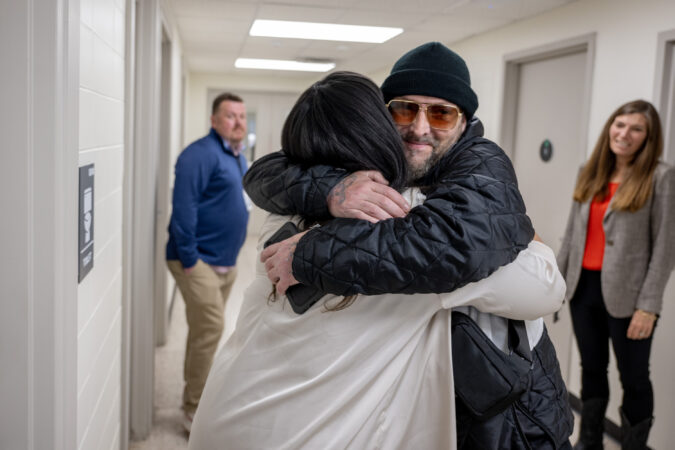
Bean, now 46 and boasting a healthier frame, just celebrated one year of sobriety and is preparing to move out of Riverview early next year.
He described his transition simply: “whole new life.”
Much of the mayor’s agenda in Kensington has been visible to the neighborhood’s residents, such as increased law enforcement and a reduction in the homeless population. But the operations and treatment outcomesat Riverview, located down a winding road next to the city’s jail complex, happen largely outside of public view. Last spring, some city lawmakers complained that even they knew little about the facility operations.
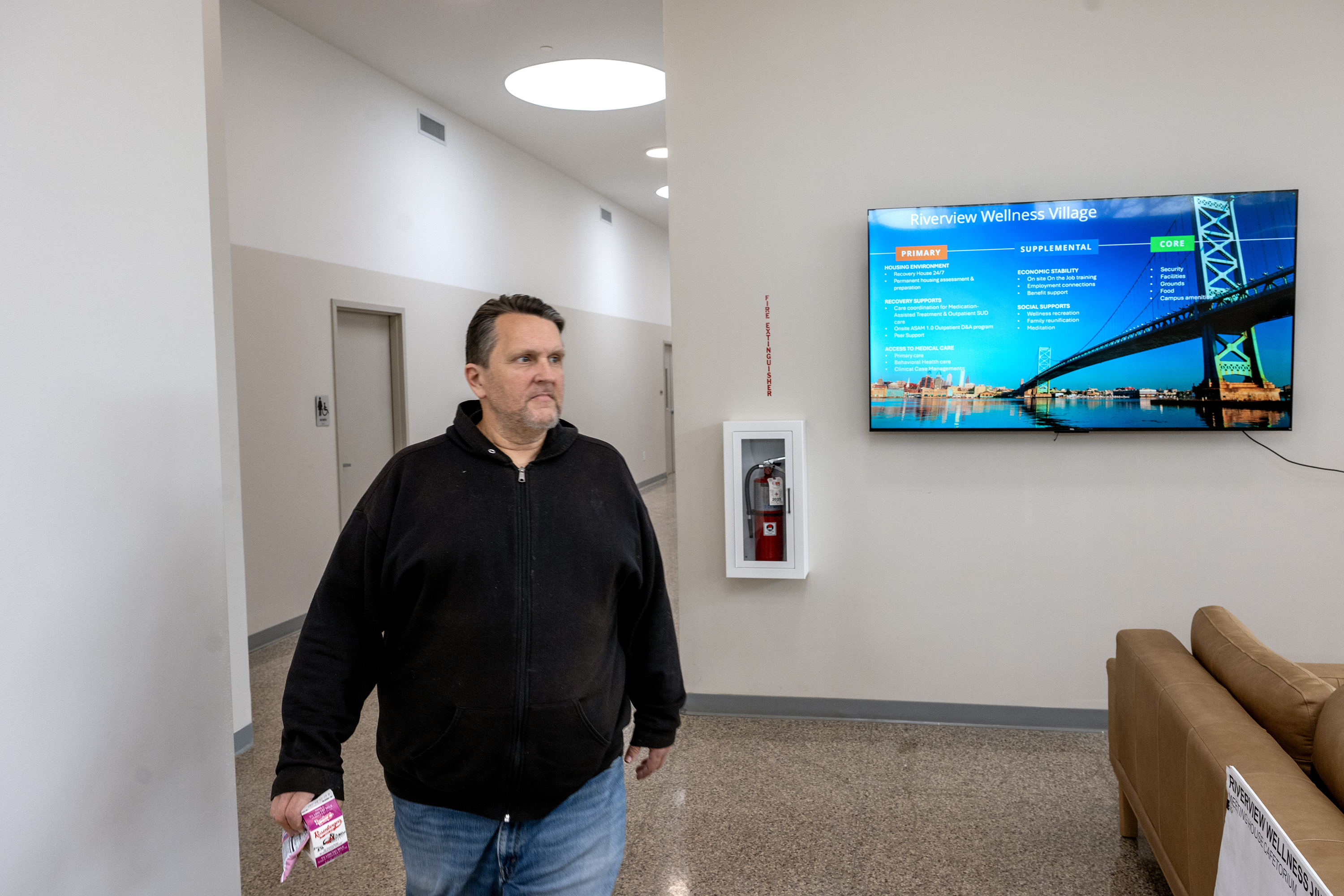
An inside look at the Riverview complex and interviews with more than a dozen residents and employees showed that, over the last year, the city and its third-party healthcare providers have transformed the facility. What was recently a construction zone is now a one-stop health shop with about 75 staff and more than 200 residents, many of whom previously lived on Kensington streets.
Those who live and work at Riverview said the facility is plugging a hole in the city’s substance use treatment landscape. For years, there have not been enough beds in programs that help people transition from hospital-style rehab into long-term stability. The recovery house industry has been plagued with privately run homes that are in poor condition or offer little support.
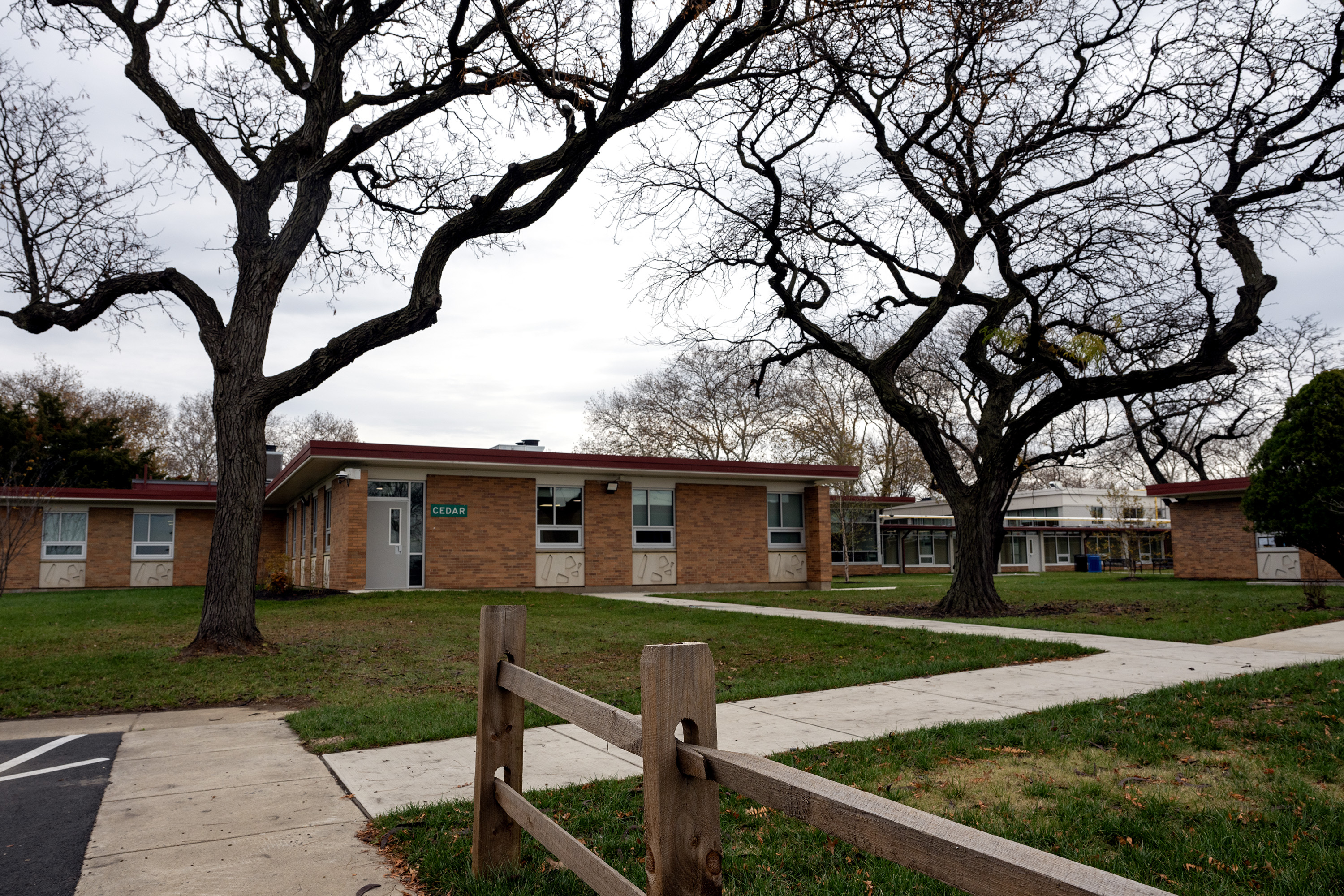
The grounds and residence buildings at Riverview Wellness Village, a city-owned drug recovery home in Northeast Philadelphia.
At its current capacity, Riverview has singularly increased the total number of recovery house beds in the city by nearly 50%. And residents — who are there voluntarily and may come and go as they please — have much of what they need on the campus: medical care, mental health treatment, job training, and group counseling.
They also, as of last month, have access to medication-assisted treatment, which means residents in recovery no longer need to travel to specialized clinics to get a dose of methadone or other drugs that can prevent relapse.
Arthur Fields, the regional executive director at Gaudenzia, which provides recovery services to more than 100 Riverview residents, said the upstart facility has become a desirable option for some of the city’s most vulnerable. Riverview officials said they aren’t aware of anywhere like it in the country.
“The Riverview Wellness Village is proof of what’s possible,” Fields said, “when we work together as a community and move with urgency to help people rebuild their lives.”
While the facility launched in January with much fanfare, it also faced skepticism, including from advocates who were troubled by its proximity to the jails and feared it would feel like incarceration, not treatment. And neighbors expressed concern that the new Holmesburg facility would bring problems long faced by Kensington residents, like open drug use and petty theft, to their front doors.
But despite some tenets of the mayor’s broader Kensington plan still facing intense scrutiny, the vocal opposition to Riverview has largely quieted. Parker said in an interview that seeing the progress at Riverview and the health of its residents made enduring months of criticism “well worth it.”
“I don’t know a Philadelphian who, in some way, shape, or form, hasn’t been touched by mental and behavioral health challenges or substance use disorder,” said Parker, who has spoken about how addiction shaped parts of her own upbringing. “To know that we created a path forward, to me, I’m extremely proud of this team.”
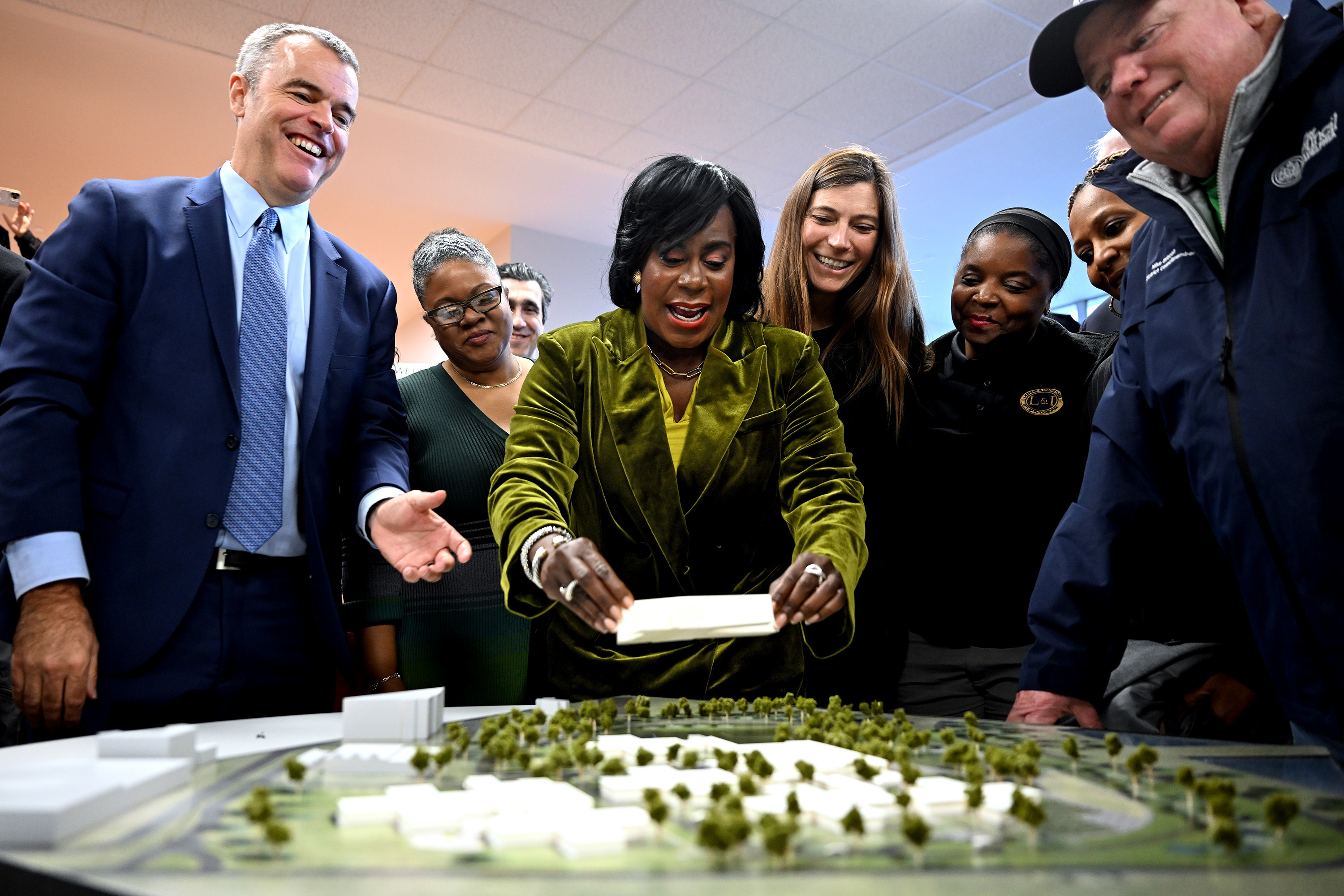
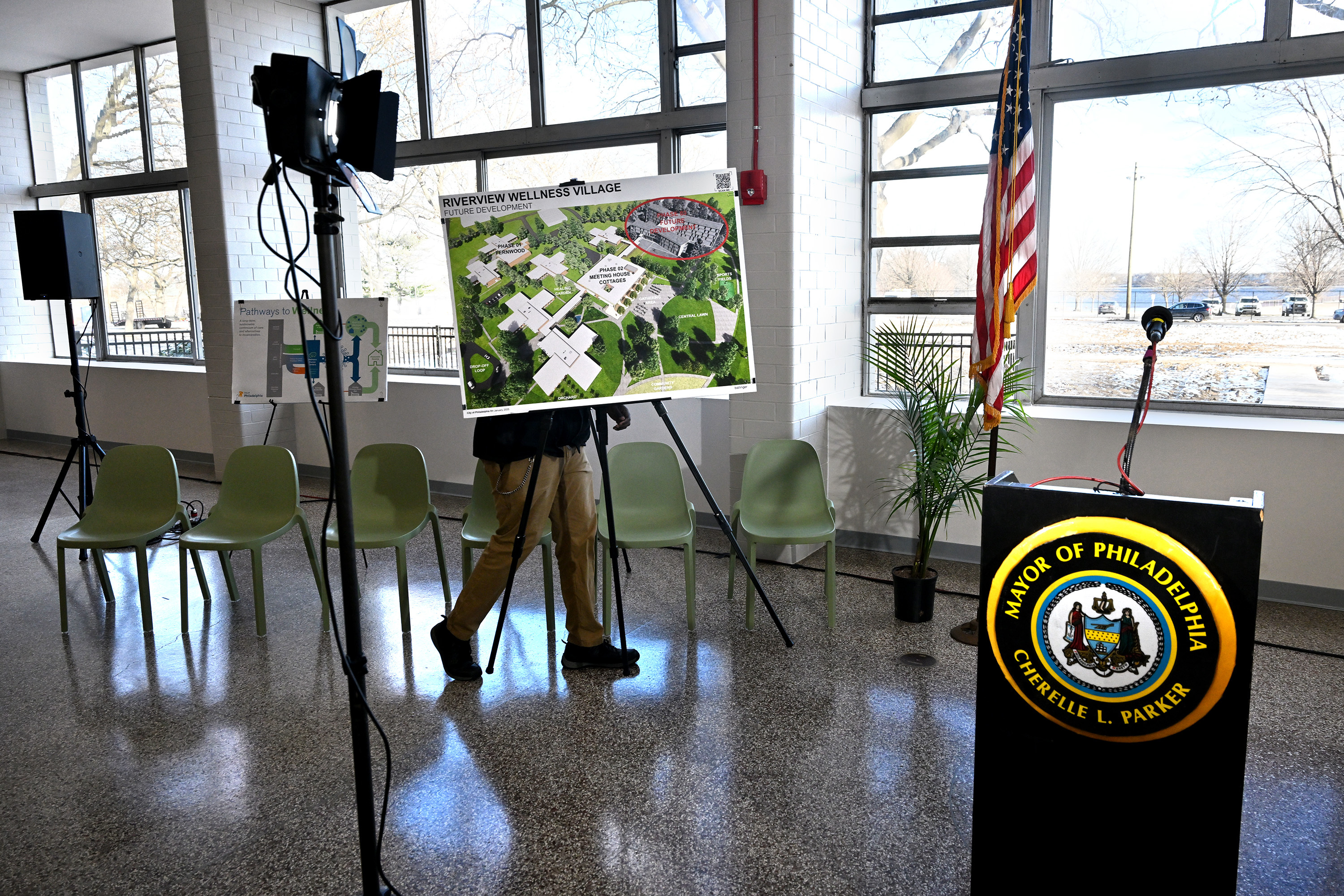
Mayor Cherelle L. Parker places a new block on the scale model of the Riverview Wellness Village on Wednesday, Jan. 8 during the unveiling of Philadelphia’s new city-operated drug treatment facility. At left is Managing Director Adam Thiel. City Councilmember Michael Driscoll is at right.Isabel McDevitt, executive director of the Office of Community Wellness and Recovery, points to a model with upcoming expansion at Riverview Wellness Village, a city-owned drug recovery home in Northeast Philadelphia on Nov. 25.Staffers move photos into place at the Riverview Wellness Village on Jan. 8 before the unveiling of Philadelphia’s new city-operated drug treatment facility.
Meanwhile, neighbors who live nearby say they have been pleasantly surprised. Pete Smith, a civic leader who sits on a council of community members who meet regularly with Riverview officials, said plainly: “There have been no issues.”
“If it’s as successful as it looks like it’s going to be,” he said, “this facility could be a model for other cities throughout the country.”
Smith, like many of his neighbors, wants the city’s project at Riverview to work because he knows the consequences if it doesn’t.
His son, Francis Smith, died in September due to health complications from long-term drug use. He was 38, and he had three children.
Getting a spot at Riverview
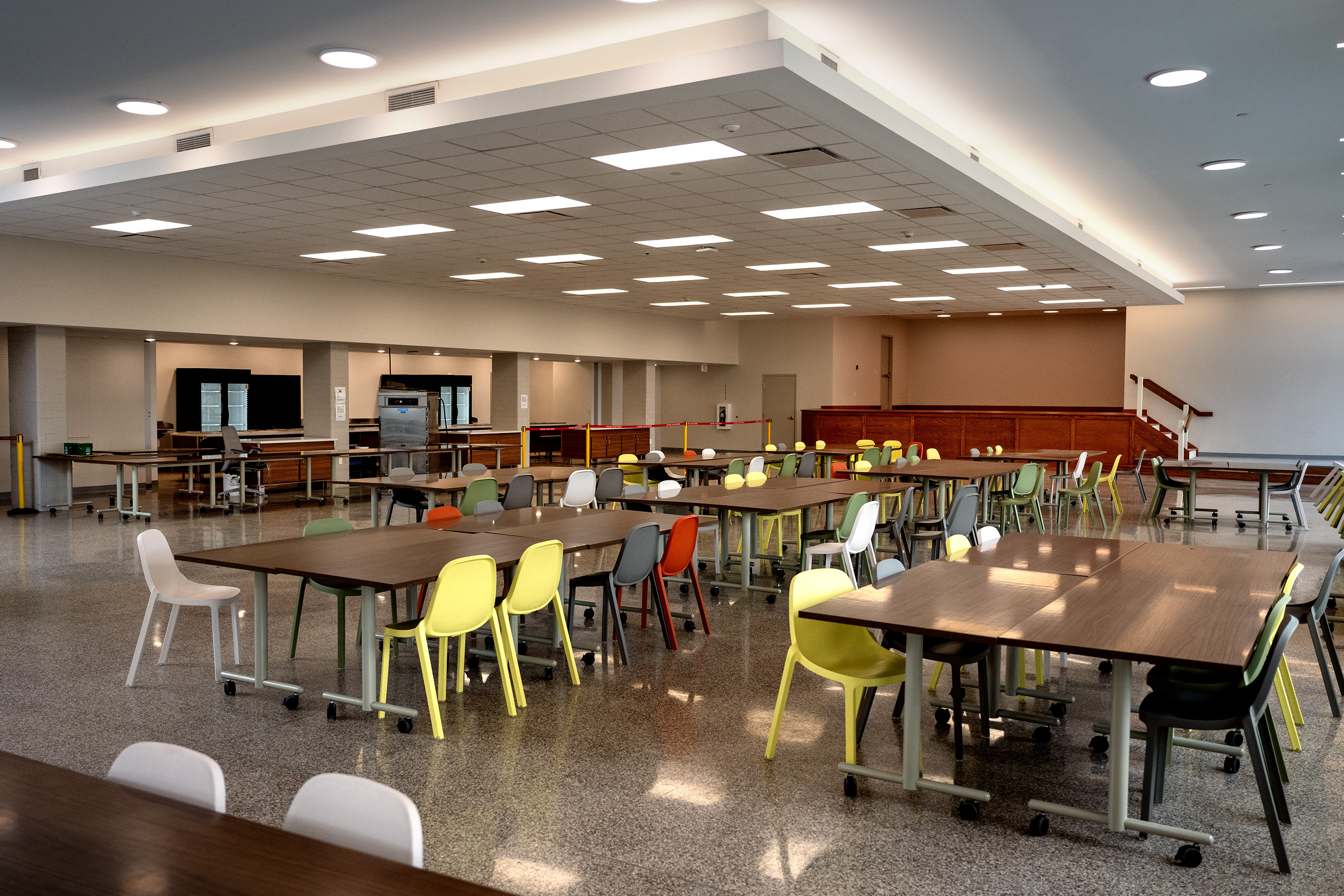
The sprawling campus along the Delaware River feels more like a college dormitory setting than a hospital or homeless shelter. Its main building has a dining room, a commercial kitchen, a gym, and meditation rooms. There are green spaces, walking paths,and plans for massive murals on the interior walls.
Katherine Young, director of Merakey at Riverview Wellness Village, talks with a resident at the city-owned drug recovery home in Northeast Philadelphia on Nov. 25.
Residents live and spend much of their time in smaller buildings on the campus, where nearly 90% of the 234 licensed beds are occupied. The city plans to add 50 more in January.
Their stays are funded through a variety of streams. The city allocated $400 million for five years of construction and operations, a portion of which is settlement dollars from lawsuits against pharmaceutical companies that manufactured the painkillers blamed for the opioid crisis.
(function() {
var l2 = function() {
new pym.Parent(‘RIVERVIEW_MAP2.html’,
‘https://media.inquirer.com/storage/inquirer/projects/innovation/arcgis_iframe/RIVERVIEW_MAP2.html’);
};
if (typeof(pym) === ‘undefined’) {
var h = document.getElementsByTagName(‘head’)[0],
s = document.createElement(‘script’);
s.type = ‘text/javascript’;
s.src = ‘https://pym.nprapps.org/pym.v1.min.js’;
s.onload = l2;
h.appendChild(s);
} else {
l2();
}
})();
To get in to Riverview, a person must complete at least 30 days of inpatient treatment at another, more intensive care facility.
(function() { var l = function() { new pym.Parent( ‘riverview-flowchart__graphic’, ‘https://media.inquirer.com/storage/inquirer/ai2html/riverview-flowchart/index.html’); }; if(typeof(pym) === ‘undefined’) { var h = document.getElementsByTagName(‘head’)[0], s = document.createElement(‘script’); s.type = ‘text/javascript’; s.src = ‘https://pym.nprapps.org/pym.v1.min.js’; s.onload = l; h.appendChild(s); } else { l(); } })();
Still, residents at Riverview have come from more than 25 different providers, according to Isabel McDevitt, the city’s executive director of community wellness and recovery. The bulk were treated at the Kirkbride Center in West Philadelphia, the Behavioral Wellness Center at Girard in North Philadelphia, or Eagleville Hospital in Montgomery County.
They have ranged in age from 28 to 75. And they have complex medical needs: McDevitt said about half of Riverview’s residents have a mental health diagnosis in addition to substance use disorder.
She said offering treatment for multiple health conditions in one place allows residents to focus less on logistics and more on staying healthy.
“Many of the folks that are at Riverview have long histories of substance use disorder, long histories of homelessness,” she said. “So it’s really the first time a lot of people can actually breathe.”
When new residents arrive, they go through an intake process at Riverview that includes acute medical care and an assessment for chronic conditions. Within their first week, every resident receives a total-body physical and a panel of blood work.
“They literally arrive with all of their belongings in a plastic bag and their medications and some discharge paperwork,” said Ala Stanford, who leads the Black Doctors Consortium, which provides medical services at Riverview. “We are the ones who greet them and help get them acclimated.”
Stanford — who this fall announced a run for Congress — said doctors and nurses at Riverview have diagnosed and treated conditions ranging from drug-related wounds to diabetes to pancreatic cancer. And patients with mental health needs are treated by providers from Warren E. Smith Health Centers, a 30-year-old organization based in North Philadelphia.
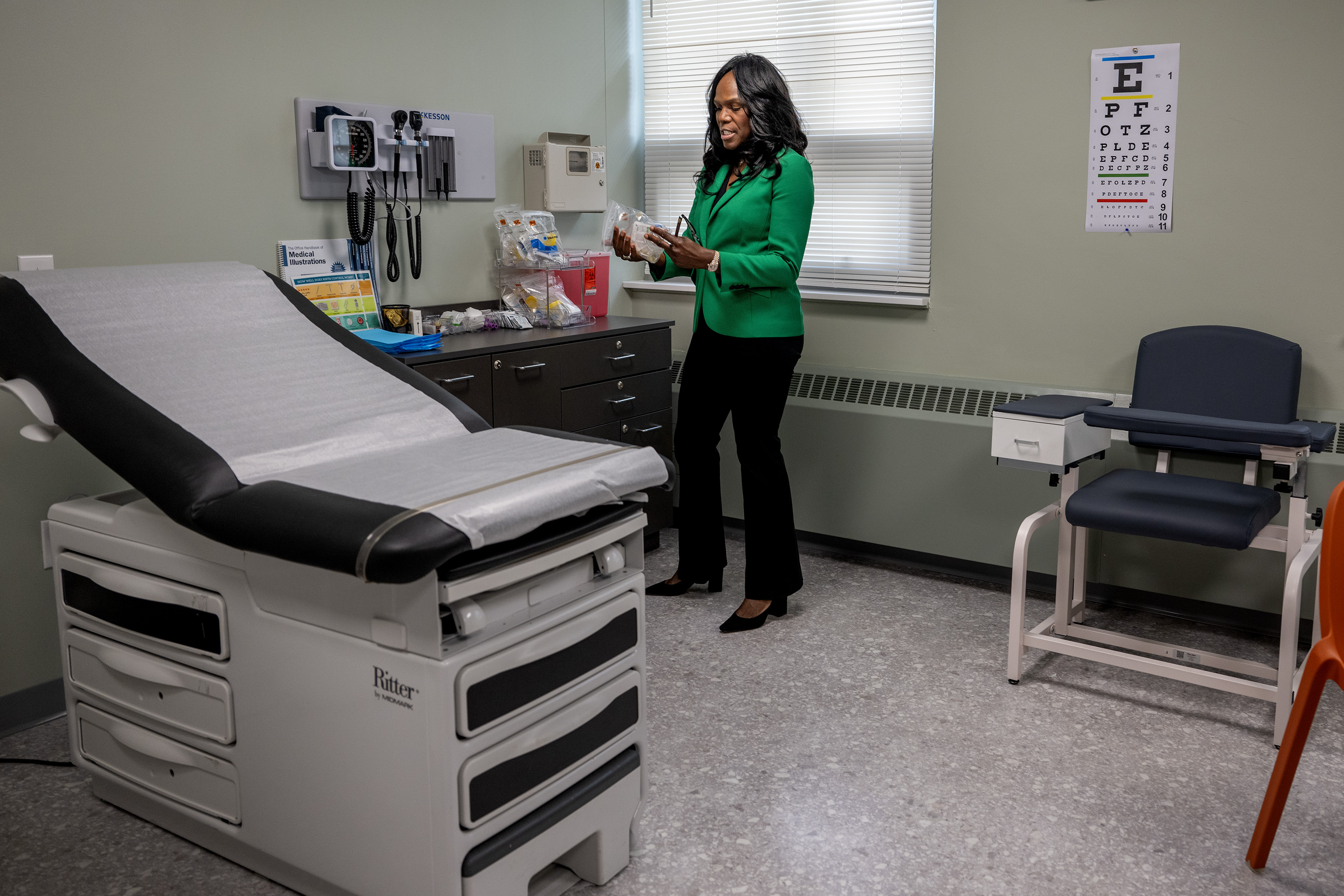
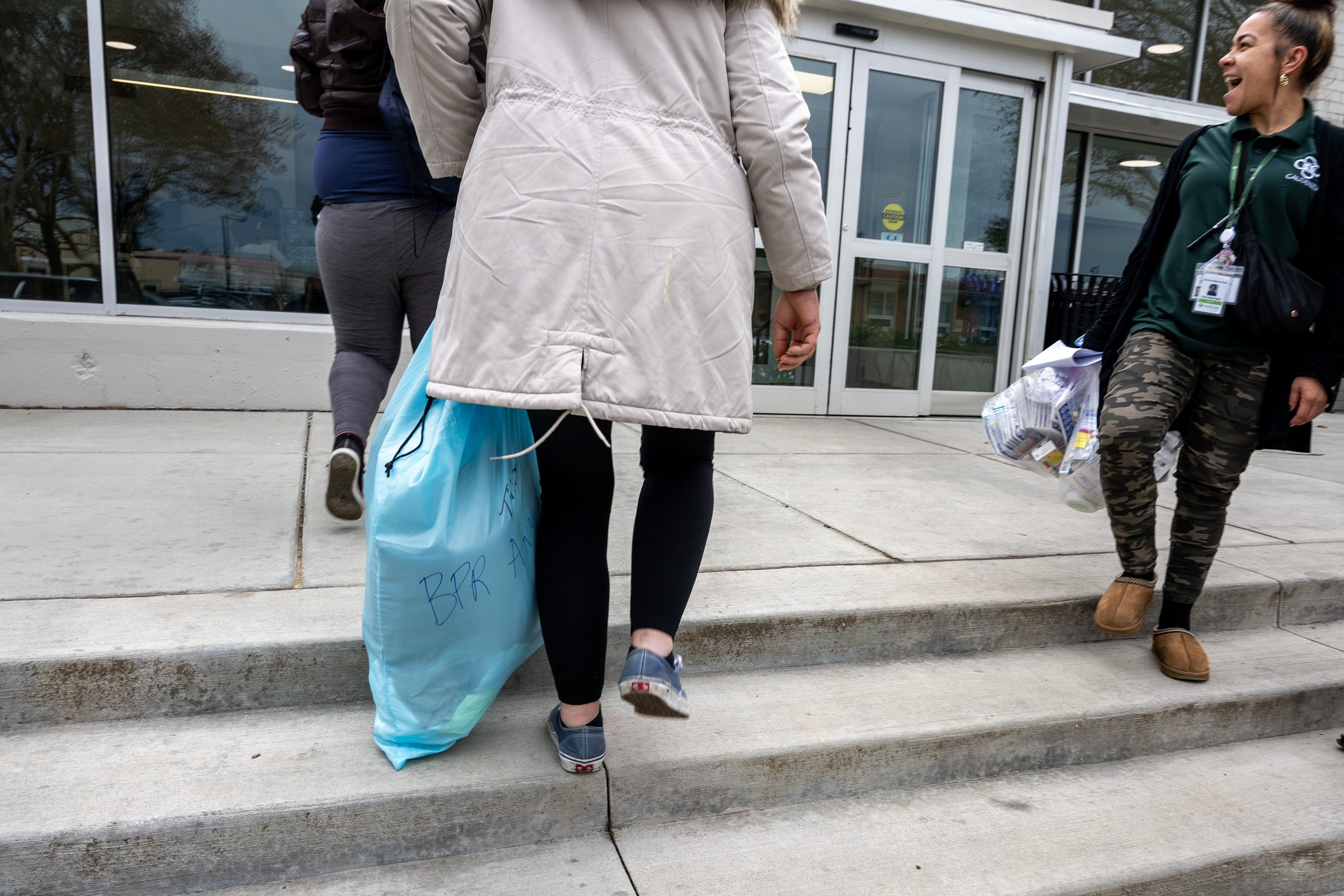
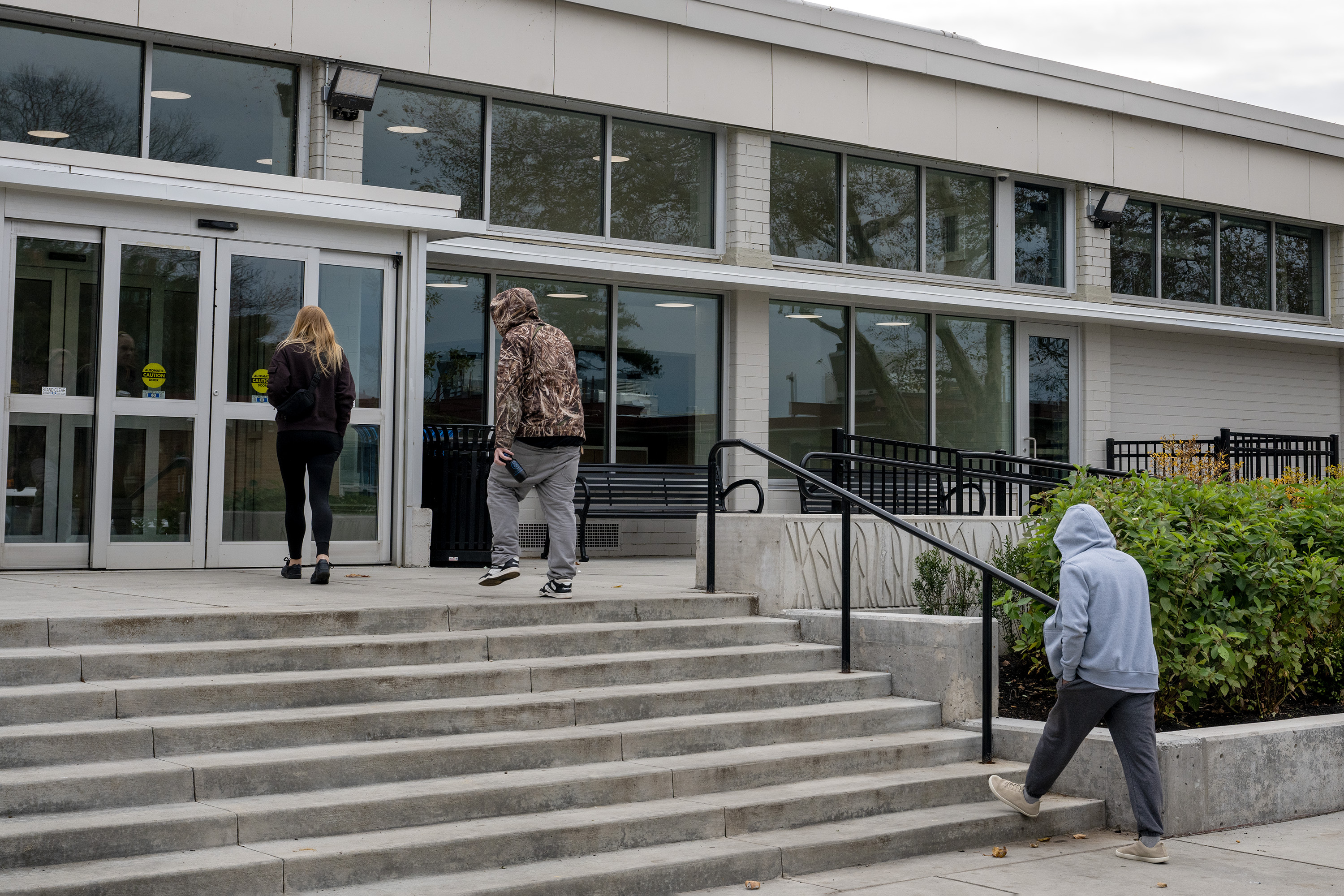
Physician Ala Stanford in an examination room at the primary medical care center run by her Black Doctors Consortium at Riverview Wellness Village, a city-owned drug recovery home in Northeast Philadelphia, on Nov. 25.Francesca Colon (right), a recovery support professional with Gaudenzia, brings people in recovery to the main entrance of the Meetinghouse at Riverview Wellness Village on Nov. 25.
Residents’ schedules are generally free-flowing and can vary depending on their wants and needs. About 20% have jobs outside the campus. Culinary arts training will be available in the next month or so. And residents can meet with visitors or leave to see family at any time.
They also spend much of their time in treatment, including individual, family, and group therapy. On a recent day, there were group sessions available on trauma recovery, managing emotions, and “communicating with confidence.”
Vernon Kostic, a 52-year-old Port Richmond native who said he has previously been homeless, has been in and out of drug treatment facilities for years.
He said he’s been content as a Riverview resident since July, and called it “one of the smartest things that the city has ever done.”
“We have the doctor’s office right over here,” he said. “They’ve got counseling right here. Everything we need. It’s like a one-stop recovery place.”
Resident Vernon Kostic heads to a group meeting at Riverview Wellness Village on Nov. 25.The dining room and meeting room in the Meetinghouse at Riverview Wellness Village. At rear left is a brand-new, industrial, restaurant-quality kitchen that was not operational yet on Nov. 25.
Finding ways to stay at Riverview
Finding success in recovery is notoriously hard. Studies show that people who stay in structured sober housing for at least six months after completing rehab see better long-term outcomes, and Riverview residents may stay there for up to one year.
But reaching that mark can take multiple tries, and some may never attain sobriety. McDevitt said that on a monthly basis, about 35 people move into Riverview, and 20 leave.
Some who move out are reunited with family and want to live at home. Others simply were not ready for recovery, McDevitt said, “and that’s part of working with this population.”
Fields said a resident who relapses can go back to a more intensive care setting for detoxification or withdrawal management, then return to Riverview at a later time if they are interested.
“No one is punished for struggling,” he said. “Recovery is a journey. It takes time.”
Providers are adding new programming they say will help residents extend their stays. Offering medication-assisted treatment is one of the most crucial parts, said Josh Vigderman, the senior executive director of substance use services at Merakey, one of the addiction treatment providers at Riverview.
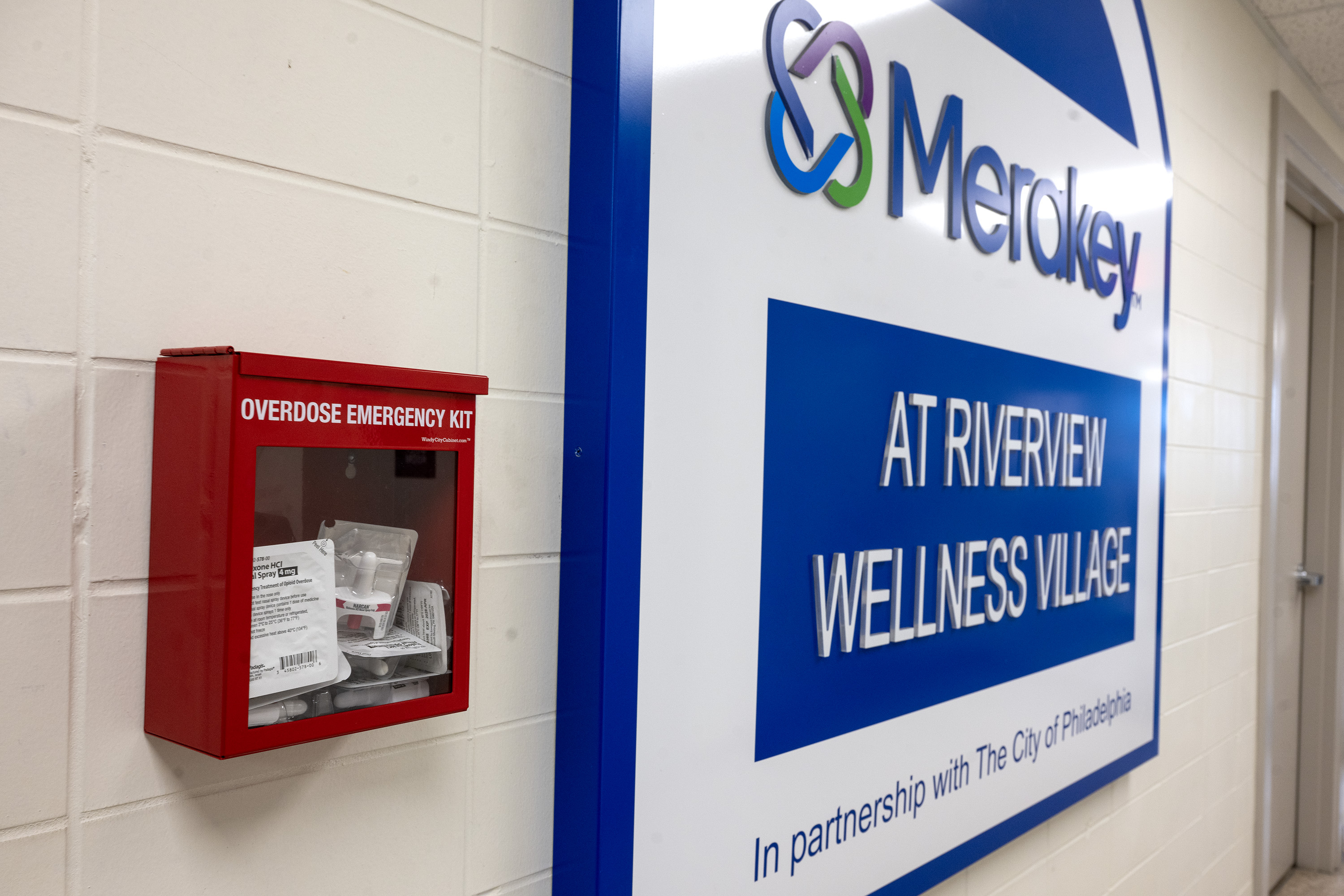
Entry to the primary medical care center run by the Black Doctors Consortium at Riverview Wellness Village.The main entry Meetinghouse at Riverview Wellness Village.Naloxone (Narcan) in an “overdose emergency kit” at Riverview Wellness Village.
In the initial months after Riverview opened its doors, residents had to travel off campus to obtain medication that can prevent relapse, most commonly methadone and buprenorphine, the federally regulated drugs considered among the most effective addiction treatments.
Typically, patients can receive only one dose of the drug at a time and must be supervised by clinicians to ensure they don’t go into withdrawal.
Vigderman said staff suspected some residents relapsed after spending hours outside Riverview, at times on public transportation, to get their medication.
This fall, Merakey — which was already licensed to dispense opioid treatment medications at other locations — began distributing the medications at Riverview, eliminating one potential relapse trigger for residents who no longer had to leave the facility’s grounds every day.
Interest in the program has been strong, Vigderman said, with nearly 80 residents enrolling in medication-assisted treatment in just a few weeks. Merakey is hiring more staff to handle the demand.
What’s next at Riverview
The city is eying a significant physical expansion of the Riverview campus, including a new, $80 million building that could double the number of licensed beds to more than 500. That would mean that about half of the city’s recovery house slots would be located at Riverview.
Parker said the construction is “so important in how we’re going to help families.” She said the process will include “meticulous design and structure.”
“The people who come for help,” she said, “we want them to know that we value them, that we see them, and that we think enough of them to provide that level of quality of support for them.”
In the meantime, staff are working to help the center’s current residents — who were among the first cohort to move in — plot their next steps, like employment and housing.
A rendering of the new, $80 million five-story building to be constructed on the campus of Riverview Wellness Village. It will include residences and medical suites.
That level of support, Vigderman said, doesn’t happen in many smaller recovery houses.
“In another place, they might not create an email address or a resumé,” he said. “At Riverview, whether they do it or not is one thing. But hearing about it is a guarantee.”
Bean is closing in on one year at Riverview. He doesn’t know exactly what’s next, but he does have a job prospect: He’s in the hiring process to work at another recovery house.
“I’m sure I’ll be able to help some people,” he said. “I hope.”
The Philadelphia school board on Monday signaled its intentions to play ball: Later this week, it will hold a special action meeting to vote on a resolution authorizing Superintendent Tony B. Watlington Sr. and his team to consider handingover a portfolio of unused school buildings to the city.
Watlington, the resolution states, “recommends that, in the best interests of the district and its students, the district explore and pursue negotiations with the city to potentially convey certain vacant and surplus district property.”
Parker, in a statement, said the process was about “public health and public safety” and the school buildings can be used to improve residents’ quality of life.
Officials “cannot let blighted buildings in the middle of residential neighborhoods lie vacant — many of which have been vacant for many years — from two years to over 30,” Parker said. “It’s unconscionable to me that we are in the middle of a housing crisis and we have government buildings sitting vacant for years or even decades. That cannot continue.”
School board president Reginald Streater said that no decisions are final and that public deliberation will still happen at the special meeting at 4 p.m. Thursday. But, he said, the move makes sense with “the board moving toward being much more willing to be intergovernmental partners” with the city.
“Many of these properties have not been used in the last decade or more, and they require a significant amount of upkeep and maintenance,” Streater said. “These properties are unused, for the most part, and unnecessary for K-12 education.”
The district is in the business of running schools, Streater said.
“I do believe that the city possesses considerably more expertise and capacity than the district does regarding property development,” Streater said. “We are an education institution. To build the capacity to do such things is out of our wheelhouse, and economic development would take us out of our lane.”
According to the language of the resolution, the district is urging Watlington to consider all angles — bond obligations, property conditions, financial protection of the district, any legal processes that would need to happen, and more.
The action comes as something of a surprise, happening just a week after what was to be the final voting meeting of the year. Streater said he did not want to add it as a walk-on resolution to the December school board meeting, but wanted to give members of the public time to understand it and provide testimony, if desired.
Giving unused school buildings to the city could further academic outcomes, the school board president said.
“It’s possible,” Streater said, “that conveying these vacant and surplus properties to the city for redevelopment and revitalization could help stabilize and grow the city and district’s tax base … and consequently positively impact future revenues to the district and educational experiences for students.”
Asked for a list of the unused buildings the resolution would cover, school board officials said more internal evaluation is needed before such a list is released.
The possible transfer of district properties to the city comes as officials debate the specifics of one of Parker’s signature initiatives.
The mayor wants to spend $800 million on her housing initiative, Housing Opportunities Made Easy, or H.O.M.E. In a rare sign of division, Council last week allotted more housing funds to the city’s poorest residents over the Parker administration’s objections.
Because of Council’s move, more legislation is now needed to advance H.O.M.E. It will not come until January at the earliest.
Thomas, chair of Council’s education committee, has long been pushing for a school facilities plan.
“It’s unclear to say what this step forward means, but I want to understand how it fits into a larger plan for Philly’s educational institutions,” Thomas said in a statement.
“Without getting into hypotheticals, and due to a lack of communications with City Council, there are a lot of moving pieces and still many questions about what this means and what is the overall plan for the future of our school buildings,” Thomas said.
Two Philadelphia police officers who drove after a fleeing drug suspect until the man crashed his car and killed a bystander are not liable under federal law for causing the fatal collision because the officers didn’t intend to harm anyone, an appeals court ruled.
In an opinion issued last week, the three-judge panel from the Third Circuit Court of Appeals said officers Christian Kane and Alexander Hernandez were forced to make a quick decision in 2020 when they sped after a man they’d seen dealing drugs in Kensington.
The pursuit of the suspect, Tahir Ellison, proceeded at a normal speed for a few blocks, court documents said, but became dangerous after Ellison drove through a red light and down a one-way street.
The episode ended in tragedy when Ellison ignored another red light and crashed into Virgen Martinez’s car at the intersection of Allegheny and Frankford Avenues, killing Martinez, a 47-year-old mother of four.
Ellison pleaded guilty in 2023 to charges including third-degree murder and was sentenced to 10 to 20 years in prison, court records show.
But Martinez’s relatives sued Kane and Hernandez, arguing in part that the decision to speed after Ellison — which violated the police department’s policy to avoid most car chases — also violated Martinez’s 14th Amendment due process rights and made the officers liable for her death. Last year, U.S. Magistrate Judge Scott W. Reid agreed that that question should be put before a jury.
The officers appealed. And in the opinion issued last week, Circuit Judge Stephanos Bibas wrote that although Hernandez’s death was a tragedy, the officers made a “snap judgment” to pursue Ellison and did not behave egregiously during the portion of the chase in which Ellison began speeding and ignoring traffic signals.
“We ask not whether in hindsight [the officers] chose rightly, but whether they intended to cause harm,” Bibas wrote.
Philadelphia police directives generally prohibit car chases, which are often dangerous for both citizens and officers. Exceptions are made only if officers are seeking to capture suspects fleeing violent felonies, or to prevent imminent death or serious injuries.
An Inquirer investigation published last year found that about half of all reported chases by Philadelphia police were in violation of department polices and that the city had spent about $20 million since 2020 to settle crash- or chase-related lawsuits involving police.
Earlier this year, the city agreed to pay $2.9 million to settle a lawsuit over a crash in which a man on a dirt bike being pursued by a city police officer struck two bystanders — including a 6-year-old girl — in Upper Darby.
In that case, however, the officer initiated the chase without witnessing any crime, continued driving after the man for nearly 10 miles, and was later accused by the department of providing false statements to a superior and falsifying official documents.
Bibas wrote that Kane and Alexander, by contrast, “had a split second” to decide whether to follow Ellison, whom they’d seen dealing drugs from his car. And the dangerous portion of the pursuit spanned about half a mile and 39 seconds before Ellison crashed into Martinez’s vehicle.
Jim Waldenberger, one of the attorneys who filed suit on behalf of Hernandez’s relatives, said he and his colleagues disagreed with the ruling.
Before the officers’ pursuit turned dangerous, Waldenberger said, they pursued Ellison at a normal speed with their police lights on for several blocks, meaning their decision to continue the chase when he sped up was not a snap judgment made under unavoidable pressure.
The department conducted an internal investigation and found that the officers violated departmental policies regarding pursuits, and each spent at least several months on administrative duty, court documents said. The documents did not specify whether either officer faced additional discipline.
Sgt. Eric Gripp, a police spokesperson, said Monday that Kane is still on the force but that Hernandez left last year. Gripp declined to comment further.
Waldenberger said he and his colleagues were still weighing whether to appeal the Third Circuit’s ruling on the officers’ liability.
The lawsuit can proceed on more limited grounds surrounding whether the city sufficiently trains police officers regarding pursuits, and whether Kane, who was driving the police car, violated state negligence laws.