Category: News

Latest breaking news and updates

  • Olympian is indicted after arrest at Washington’s Reflecting Pool

    Olympian is indicted after arrest at Washington’s Reflecting Pool

    A former Olympic canoeist who had been arrested in June on charges that he had vandalized the Lincoln Memorial Reflecting Pool has been indicted, according to court documents. He is charged with “destruction of property $1,000 or more,” a felony.

    President Donald Trump blamed vandals for the problems following a quick and costly makeover of the pool, and the canoeist, David Carter Hearn, 67, of Bethesda, Md., was among the first to be charged. The U.S. Park Police had arrested Hearn near the pool June 19, and accused him of destroying government property. At the time, Hearn denied the charge in an interview with the New York Times.

    Jeanine Pirro, the U.S. attorney in Washington, said in a news briefing that prosecutors had “tremendous evidence” underpinning the indictment, and she condemned what she called “unchecked vandalism and civil disorder.”

    “National Park Service employees observed Hearn actually forcefully and violently pulling up and removing the bottom liner with both hands,” she said. “According to witnesses, Hearn damaged approximately 2 square feet of sealant from the bottom of the pool.”

    When a parks employee told him to stop, Pirro said, Hearn was “belligerent, rude, and disrespectful.”

    Norm Eisen and Mary Dohrmann, lawyers representing Hearn, said in a statement that he is innocent.

    “These charges are outrageous and should be alarming to every American,” they said. “This indictment reflects the administration’s effort to shift blame for their own failures. On the eve of our nation’s Independence Day, Americans should be deeply concerned by the misuse of government power against an ordinary citizen.”

    Hearn has acknowledged putting his hand in the water and touching the peeling sealant during a pause in a bike ride but has said that is all he did. “I was just a curious, concerned citizen,” he said in an interview. “I guess I was there at the wrong place, wrong time.”

    On Thursday, Pirro described the case in the context of Trump’s extensive efforts to refurbish Washington, D.C., which she said was amid “a renaissance like it has never experienced before, in both safety and in beauty.”

    In April, Trump announced that he would be fixing “the once beautiful Reflecting Pool.”

    The pool’s problems, including leakage and the routine algal blooms, had bedeviled previous administrations, including Barack Obama’s, but Trump declared that when he was done, the pool would be “much more beautiful than the day it was built!”

    The administration awarded no-bid contracts to drain, resurface, and refill the pool at a cost of $16.4 million, but by mid-June — days before Hearn’s arrest — it was already clear that things were not going according to plan.

    Chunks of the sealant, which had been recently applied to the pool’s concrete slabs, were spotted floating in the water. And the water was turning a lively shade of green, proof that the algae was still present.

    Past administrations have wrestled with keeping the pool free of algae, but experts said some of the current problems were because of decisions made during the rushed makeover. But Trump blamed vandals, who he said, without citing evidence, had poured fertilizer into the water to nurture the algae.

    The area, an eternal draw for tourists, was quickly surrounded by security officers. Federal officials have said that seven people, including Hearn, have been arrested on charges of vandalizing the pool.

    Pirro said that her office was reviewing those other cases and that some would likely result in misdemeanor charges and others in violations.

    The indictment of Hearn came at a fraught moment for Pirro’s office, which has had trouble obtaining — and sustaining — criminal cases against Washington residents who protested Trump’s anti-crime efforts involving the National Guard and federal law enforcement.

    Under Pirro, prosecutors failed three times last summer to secure an indictment against a woman accused of assaulting an FBI agent during a protest against immigration officials, and ultimately lost the case at trial.

    In a similar case, grand jurors in Washington rejected efforts to indict a man who was accused of hurling a submarine sandwich at a federal officer on the street. Prosecutors later lost that case at trial as well.

    Gregory Rosen, a former prosecutor in Pirro’s office, raised questions about Thursday’s charges, especially given binding precedent from the court of appeals in Washington.

    “Malicious destruction of property has never meant just touching things,” he said. “The court has consistently required either an actual intent to cause the harm or wanton conduct, and damage resulting from an accident or curiosity doesn’t qualify.”

    This article originally appeared in the New York Times.

  • Burlington County man caught in child trafficking sting drove an hour to have sex with underage girl, DA says

    Burlington County man caught in child trafficking sting drove an hour to have sex with underage girl, DA says

    Christopher Reynolds thought he was talking to a woman looking to exchange money for sex with her 13-year-old daughter, Bucks County prosecutors said Thursday.

    Reynolds was adamant about certain graphic details while negotiating the price for the encounter, and even offered a higher rate so the woman could buy her daughter an emergency contraceptive pill, according to the affidavit of probable cause for his arrest.

    But in reality, Reynolds was speaking to an undercover detective who investigates human trafficking. And Reynolds, 35, was arrested late Wednesday after driving nearly an hour from New Jersey to a motel in Bensalem.

    Reynolds, of Browns Mills, Burlington County, has been charged with criminal attempt to engage or perform a commercial sex act with a minor, criminal attempt to commit trafficking in individuals, and related crimes. He was held in lieu of $500,000 bail, and there was no indication that he had hired an attorney.

    District Attorney Joe Khan said Reynolds’ arrest “sends an unmistakable message to those who look to prey on children in our communities.”

    “This is the exact kind of proactive, aggressive enforcement the public can expect from our office’s revamped anti-trafficking operation,” he said. “We are going to use every tool and technology at our disposal, and we will continue to hunt down those who attempt to exploit vulnerable individuals.”

    Investigators say the undercover detective first started communicating with Reynolds on Tuesday, after he responded to an ad on a website offering “taboo” with an underage girl, the affidavit said.

    After negotiating the price and duration of the encounter, Reynolds agreed to meet the girl’s mother at a motel on Lincoln Highway. He nearly called off the appointment when detectives declined to send nude images of the girl, but relented when they sent a digitally de-aged photo of a female detective.

    Investigators arrested Reynolds as soon as he entered the motel, the affidavit said. He was carrying $300 and a bottle of Mountain Dew, items the undercover detective told him to bring to the meeting while posing as the girl’s mother.

    Reynolds is scheduled to appear before a district judge for his preliminary hearing on July 16.

  • Trump and Republicans return to communist attacks against Democrats ahead of the midterm elections

    Trump and Republicans return to communist attacks against Democrats ahead of the midterm elections

    WASHINGTON — President Donald Trump and his fellow Republicans are reviving a line of attack against Democrats heading into the midterm elections: They’re communists.

    In just the past week, Trump has issued dark warnings that members of the Democratic Party’s ascendant left are communists who want to “completely destroy the traditional American way of life” and even engage in assassinations. Vice President JD Vance has similarly called out communism as a political shift that is “something we haven’t seen in the U.S.” House Speaker Mike Johnson has decried “radical candidates” who are “self-described, self-identifying Marxists.”

    The GOP’s ideological focus conflates democratic socialism, which often centers on securing universal healthcare, higher taxes on the wealthy, and stricter corporate regulation, with communism, under which private ownership is largely eliminated. It has been building since Zohran Mamdani, a democratic socialist, won the Democratic nomination for New York City mayor last year.

    But it’s kicked into a higher gear recently after democratic socialists won several New York City congressional primaries last week. The primary victory on Tuesday by another democratic socialist, Melat Kiros, for a Denver congressional seat suggested the trend may extend beyond Manhattan liberalism.

    “The Democrats are making this easy for us,” Rep. Richard Hudson, the North Carolina Republican who leads the House GOP’s strategy and fundraising arm, said in an interview. “They’re nominating extreme liberals, leftists who are out of touch even with mainstream Democrats.”

    Republicans are holding onto slim majorities

    The messaging effort comes as Republicans scramble to hold onto threadbare congressional majorities in the November midterms. It risks overlooking public frustration, particularly among younger voters, with unfettered capitalism at a time of growing income inequality and rising costs.

    But it also gives Republicans a much-needed opportunity to shift the conversation back to territory that is more comfortable for them after their party has spent much of the year on defense over the fallout from Trump’s decision to launch a war against Iran, which contributed to widespread price spikes.

    Ralph Reed, the longtime conservative activist who hosted Trump last week at a Faith and Freedom Coalition conference, acknowledged that Republicans are facing steep headwinds this year. But the recent string of wins by democratic socialists, he said, allows Republicans to present a contrast between “common sense and crazy.”

    Democrats uncertain over the party’s direction

    The renewed push could tug at tensions among Democrats who are largely united in their loathing of Trump but are divided over the party’s direction. This year’s primaries are shaping up as a referendum between centrists who are eager to course correct from what they see as progressive overreach earlier in the decade and a left wing pushing for even more sweeping change.

    “A lot of this anger has been boiling under the surface,” said Joseph Geevarghese, executive director of Our Revolution, which was founded by U.S. Sen. Bernie Sanders, a Vermont independent who caucuses with Democrats. “It’s coming to the fore in this moment in a very powerful way.”

    But Rep. Josh Gottheimer, a centrist New Jersey Democrat, called the victories in Colorado and New York “aberrations.”

    “We’ve got to fight like hell to keep our party from being hijacked by socialists,” he said. “Most of them are bomb throwers, not problem solvers.”

    Nevada Attorney General Aaron Ford easily dispatched a more progressive rival earlier this year in his Democratic bid for governor in a state Trump carried in 2024. As he eyes a general election challenge to Republican Gov. Joe Lombardo, he insisted candidates like those who won in New York don’t represent all Democrats.

    He said the Democratic Socialists of America “is not the face of our party.”

    Rep. Suzan DelBene, a Washington Democrat who chairs the House Democratic campaign committee, said in a statement that Republicans were “resorting to desperate attacks that aren’t actually about the pocketbook issues.”

    Trump risks overreaching with communism argument

    Trump and fellow Republicans risk missing the mark when the public’s embrace of capitalism might not be as strong as it was decades ago.

    About half of U.S. adults, 54%, have a positive view of capitalism, according to an August poll from Gallup, a slight decline from 61% in 2010. Democrats have driven some of the shift, but favorable opinions of capitalism have fallen among independents as well.

    Only 42% of Democrats viewed capitalism favorably, while 66% had a positive view of socialism. The poll found that both younger and older Democrats have warmed slightly on socialism since 2010, but Democrats under age 50 are much less likely to view capitalism favorably. Democrats age 50 or older didn’t shift meaningfully.

    “Young voters, who I would argue are driving a lot of the electoral energy that we’re seeing, came of age politically in a post-Soviet world,” Geevarghese said. “The attacks don’t land in the same way when Donald Trump was politically of age.”

    Hudson, who is running the House GOP campaign committee, acknowledged the communism line might not resonate in the same way with all voters, particularly younger people. That’s why, he said, it’s important for Republicans to tailor their message to the needs of individual districts.

    “I’ve never run cookie-cutter campaigns where we just say one thing over and over everywhere,” he said.

    Still, the argument was high on Trump’s mind again on Wednesday as he visited the newly built Theodore Roosevelt Presidential Library in North Dakota. He called the former president a “ferocious opponent of a thing called communism.”

    “It’s the biggest threat to our country, including World War I, World War II, Pearl Harbor, September 11,” he said. “It’s a bigger threat, potentially a bigger threat than that, because it’s like a cancer that spreads, and you better stop it fast.”

    Beverly Gage, a history professor at Yale University who has written on the rise and fall of Sen. Joe McCarthy, said earlier eras of anti-communism politics took hold because there was a large and active Communist Party in the U.S. and the Soviet Union was the country’s primary foe. But she said Trump’s focus on the issue is notable given his ties to Roy Cohn, a onetime confidant of Trump who earlier worked for McCarthy.

    “It’s not very many steps to get from McCarthy to Roy Cohn to Donald Trump,” she said.

    California Gov. Gavin Newsom, a potential Democratic presidential candidate, shrugged off Trump’s communism focus as “bunk.” In an interview, he said the direction of the party isn’t all that different from the dynamics he’s navigated for decades in California politics.

    “I governed in an environment where the DSA was otherwise known as progressives,” he said. “This dialectic is so deeply familiar to me, and I don’t over read any of it.”

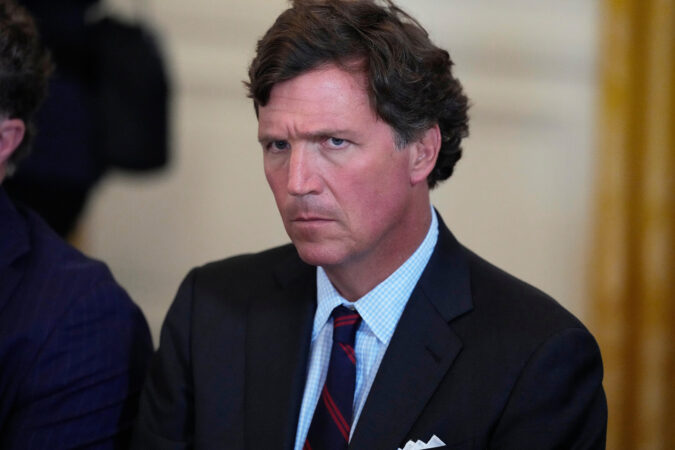
  • Tucker Carlson, who broke with Trump, plans to ‘help build a third party’

    Tucker Carlson, who broke with Trump, plans to ‘help build a third party’

    Tucker Carlson, the influential conservative media commentator, said in an interview that he planned to help start a new political party after leaving the Republican Party but that he had no interest in running for office.

    Carlson, a former close ally of President Donald Trump who has broken with the Republican Party over the war with Iran, told the Columbia Journalism Review that he was “going to help build a third party.”

    “There should be a good-faith effort to figure out what benefits the country,” Carlson said in an interview with the Columbia Journalism Review published Wednesday.

    He outlined his plans at a moment of upheaval for both parties: The insurgent left appears ascendant in the Democratic Party as the base has grown angry over the party leadership’s stance on Israel since the war in the Gaza Strip. The Republican Party has been fractured by Trump’s handling of the war with Iran.

    Carlson, a popular podcaster and former Fox News host, said last month that he was leaving the Republican Party. He described himself on a podcast episode as a “consistent defender” of the party for 35 years, but said that he believed the party had lost touch with “America First” principles under Trump.

    In the Columbia Journalism Review interview, he described some of the policies that might animate his new party, saying he supports “ending all immigration.” A longtime nativist and immigration hard-liner prone to conspiratorial views, Carlson said immigration drives unemployment. (Many economists say it does not.)

    He also argued that the two parties did not offer a sufficient contrast on “war and finance.”

    “That’s not a democracy,” Carlson told the Columbia Journalism Review. “That’s a one-party state posing as a democracy, and it needs to be broken, and there’s going to be a third party, and I’m going to do everything I can to bring that about.”

    Carlson was often at Trump’s side during his 2024 presidential campaign and pushed Trump to select JD Vance, then a senator from Ohio, as his running mate.

    But he broke sharply with the president after the United States started the war with Iran in late February, declaring Trump was violating a core campaign promise to avoid foreign conflicts. By April, Carlson said he was “tormented” by his past support for the president.

    He told the Columbia Journalism Review that he had not spoken to Trump since the start of the war, which has been largely paused by a fragile ceasefire.

    “I’m not interested in talking to him,” Carlson told the publication.

    In the past, Carlson’s relationship with Trump has been revived after rocky stretches. In a text surfaced by a defamation lawsuit filed by Dominion Voting Systems, Carlson wrote of Trump, “I hate him passionately.” (Carlson was fired by Fox News after it agreed to pay $787.5 million to resolve the case, which centered on the network’s promotion of 2020 election misinformation.)

    But Carlson’s frequent, forceful public criticism of Trump since the war began has led to some speculation that he might be angling for his own run for office.

    Carlson told the Columbia Journalism Review that he was not entertaining the idea, and he insisted he did not see himself as a competitor to Trump.

    “I’m not a politician, that’s for sure,” Carlson told the publication. “I’m not a rival to Trump for power. I have no power. I’m someone who knows Trump, and I know him well, and I’ve known him for a long time.”

    This article originally appeared in the New York Times.

  • Temple University IDs student killed by hit-and-run driver on Kelly Drive

    Temple University IDs student killed by hit-and-run driver on Kelly Drive

    Temple University on Tuesday identified a 20-year-old student who was killed last week by a hit-and-run driver on Kelly Drive.

    Bryce Wolfe, of Conyngham, a borough in Luzerne County, was an actuarial science major in the Fox School of Business and had just completed his sophomore year, said Temple President John Fry in a joint statement to the university community with Jodi Bailey Accavallo, vice president of student affairs, and Denise Wilhelm, interim vice president for public safety.

    Wolfe was riding a motorcycle when he was struck by a vehicle believed to be a white SUV, his parents said in an interview late Tuesday night.

    The unidentified driver dragged Wolfe for more than a mile on Kelly Drive, Clarence Wolfe III said.

    “We’re committed to getting justice for our son,” Lori Wolfe said.

    Philadelphia police said they responded to a report of a crash at Kelly and Reservoir Drives around 11:15 p.m. on June 24.

    Police said they believe the driver of a white SUV was traveling east on Kelly Drive and was trying to make an illegal turn onto Reservoir Drive, but then attempted to return to eastbound Kelly Drive when the SUV entered the westbound path of the red 2004 Triumph motorcycle Wolfe was riding.

    Wolfe became trapped beneath the SUV and was dragged to the area of Fountain Green Drive before his body was dislodged from the SUV, police said.

    Wolfe was transported by medics to Penn Presbyterian Medical Center and pronounced dead at 4:41 a.m. on June 25, police said.

    The suspected SUV sustained damage on the driver’s side and damage to the driver’s-side front wheel well, fender, and possibly driver’s-side door, police said.

    “Thanks to an anonymous donor, there is a $10,000 reward available for information leading to an arrest and conviction,” Fry said.

    Anyone with information about the case can contact police at 215-686-TIPS (8477), Fry said.

    Wolfe “had quickly established a reputation as both an excellent student and engaged member of the Temple community,” maintaining a high grade-point average while being enrolled in both Temple and Fox Honors program, Fry said.

    “Bryce was also deeply involved outside of class as he was a member of the student professional organization Gamma Iota Sigma and had recently started an internship with United States Liability Insurance Group,” Fry said.

    “There is no doubt that he had a very bright future ahead of him, and that’s what makes delivering this news especially difficult,” Fry said.

  • Shark attack on Alabama teen inspires the start of a national alert system

    Shark attack on Alabama teen inspires the start of a national alert system

    Lulu Gribbin was 15 when she survived a shark attack off the coast of Florida. She lost her left hand, part of her right leg and almost her life.

    What she didn’t know when she entered the water on that day in 2024 was that another woman had been bitten by a shark 90 minutes earlier and just 3 miles down the beach. Had she known about the earlier attack, there is no way she would have been swimming, she said.

    Gribbin’s story has inspired new federal legislation to authorize emergency alerts to mobile phones to warn beachgoers when a shark has bitten someone in the area.

    President Donald Trump last week signed Lulu’s Law, which requires the Federal Communications Commission to allow the emergency messages. The legislation, which Gribbin advocated for, authorizes the warnings by classifying a shark attack as an event for which an emergency alert can be issued. It is up to states to implement the warnings. Gribbin’s home state of Alabama approved such a warning system last year.

    “It’s really just common-sense legislation. It says that whenever there has been a shark attack in a certain area where you are near, it will send an alert to your phone, exactly like how an Amber Alert system works when a child is abducted,” she said.

    Gribbin said she hopes the alert system will help prevent attacks like hers. “I definitely see this law working in the future and I’m really excited to hopefully save lives,” she said.

    A fight to survive

    Gribbin was one of three people bitten by a shark on June 7, 2024, off the Florida Panhandle.

    She was on a mother-daughter trip to the Florida Panhandle. Gribbin said she and her friend had been diving for sand dollars.

    “All of the sudden my best friend yelled, ‘Shark!’ and so we all started swimming for our lives,” Gribbin recalled. She said she remembered that sharks are attracted to frantic splashing and yelled for everyone to be calm. Gribbin, who was closest to the shark, was bitten.

    “The shark bit off my hand first, and I raised my arm out of the water, and there was just flesh and bone there,” Gribbin said. The shark then latched onto her leg. A man punched the shark off her and strangers on the beach rushed to help. She was flown by helicopter to a nearby hospital.

    Doctors were able to save the teen’s life but had to amputate part of her right leg.

    Choosing positivity throughout her recovery

    In the hospital, Gribbin made a deliberate decision to choose joy and to never give up.

    She initially struggled, knowing “that I only have two regular limbs, and that my life would be completely different.”

    “I would cry, and I would ask my mom, ‘Why is it happening to me?’ And on that day, we put a Bible verse on my bedside table that said, ‘With God, all things are possible.’ And then she told me that what you look like doesn’t define you, it’s who you are on the inside. And so, I think that stuck with me throughout my whole recovery the past two years.

    “It doesn’t matter what I look like, as long as I’m spreading positivity and inspiring others to stay strong and to never give up,” she said.

    Gribbin was fitted with prosthetic limbs, quickly regained her ability to walk, returned to sports, and got her driver’s license. She has gone back in the water and learned to surf, meeting Bethany Hamilton, a professional surfer who lost her arm in a shark attack.

    U.S. Sen. Katie Britt, the Alabama Republican who sponsored the legislation, said the fact that Gribbin was bitten soon after an attack on another woman prompted discussions about what could have been done differently. That led to the idea of an alert. She contacted Gribbin’s parents who had thought about the same possibility.

    “If there had been any type of alert that was given, that there’s no way that Lulu would have been in the water. And so we talked about how a simple change could have made a huge impact,” Britt said.

    Shark bites remain rare

    While sharks are commonly found in the waters off the United States, shark bites are rare, said Gavin Naylor, director of the Florida Museum of Natural History’s shark research program.

    There are between 60 to 80 known unprovoked bites worldwide each year, he said. It’s extremely rare that two or more people are bitten in close proximity. He said in a database of known shark bites, called the International Shark Attack File, there have only been a few instances of multiple bites in a single day.

    “If somebody is bitten by a shark, and then an alert goes out, the probability that another person’s going to be bitten by a shark within, let’s say, two or three hours is incredibly small,” Naylor said.

    When that happens, he said it’s likely because of environmental conditions such as sharks following schools of bait fish closer to the shore. Murky water conditions can also be a factor because they increase the chance that a shark will mistake a person for a fish or seal.

    In the area where Gribbin was bitten, there are about 20 to 30 bull sharks 1,312 feet offshore at any time, Naylor said. Great white sharks have been spotted more frequently in the chilly waters of New England and Atlantic Canada, according to conservation groups. A smartphone app called Sharktivity also allows shark spotters to report their sightings.

    The sightings might unnerve people, but Naylor said it’s important to remember that shark attacks are rare.

    “If sharks wanted to eat people, we’d have about 10,000 bites a day. The fact that we have so few is basically testament to the fact that the sharks are doing their level best to avoid people, not to target them,” Naylor said.

    Britt said she believes parents and others on the beach will want the information. “I know as a parent, I want every tool in my toolbox to be able to keep my child safe,” Britt said.

    Another survivor praises the alert system

    Braxton Rocha, who was bitten by a large tiger shark off the north shore of the Big Island of Hawaii, said he liked the idea of an alert system. He thinks it is information that people, particularly tourists to the island, will want to know.

    Rocha was spearfishing in 2015 when he saw the large shark. “Looked like a bus or submarine. She was the biggest thing I’d seen in the ocean at that time,” Rocha said. He started making his way to shore. When he looked back to check where the shark was, the animal was right in front of him. He tried to push the shark away, but the animal was too big and powerful. It latched onto his leg. Rocha punched it in the nose and the shark let go and swam away.

    “Everything happened so fast. It was almost like being struck by lightning. I was still kind of out of it. I looked down and see giant clouds of blood just bursting out of my leg,” he said.

    It took nearly 100 staples to repair the gaping wound on his leg. But the experience did not dampen Rocha’s enthusiasm for the ocean and wildlife. “I’ve always loved sharks,” Rocha said.

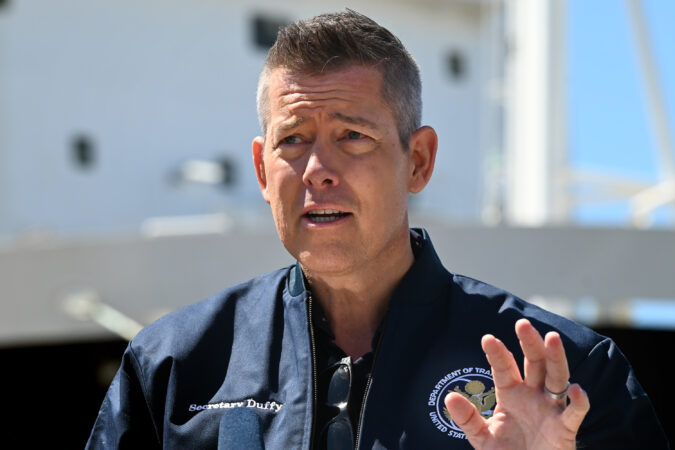
  • Top Trump official Sean Duffy promotes the President’s House in video with Mayor Parker

    Top Trump official Sean Duffy promotes the President’s House in video with Mayor Parker

    President Donald Trump’s administration has spent almost a year scrutinizing, and then dismantling, and then trying to rewrite history at one of Independence Mall’s most informative exhibits on slavery.

    All for one of Trump’s cabinet secretaries to promote the President’s House in a new video ahead of July Fourth.

    Transportation Secretary Sean Duffy, who has been one of the Trump administration’s biggest cheerleaders for this week’s 250th anniversary celebrations, produced a video asking Mayor Cherelle L. Parker which Philadelphia historical sites visitors should see.

    Parker listed the highlights — the National Constitution Center, Independence Mall, the Liberty Bell, and ended her list of recommendations with the President’s House, which memorializes the nine people enslaved by George Washington in Philadelphia.

    “Reconnect with our history, recommit to the democratic values that we stand on, and have an amazing time,” Parker said.

    Cue Duffy showcasing pictures of the very panels at the President’s House that his boss wants to take down.

    The video, which was posted Wednesday to Duffy’s social media, appears to have been filmed in May, when Duffy visited Philadelphia while the city and the Trump administration were in the midst of a legal battle over the President’s House after the federal government removed the site’s exhibits earlier this year.

    A February court order allowed some of the panels to be reinstalled. Then, a ruling from the Third Circuit Court of Appeals in June said the Trump administration could replace the exhibits with its own materials, which are posted online.

    After the Third Circuit’s ruling, Parker said in a statement that: “I will pursue every legal action possible to reverse this decision. We cannot and WILL not rest until the full story of American history — including the existence of slavery at the President’s House here in Philadelphia — is told, for our Nation and the World to see.”

    On Thursday, a Boston-based federal appeals court removed the final legal obstacle that prevented the Trump administration from installing its own exhibits at the President’s House.

    This was not Duffy’s only visit to Philadelphia that coincided with a key event in the President’s House saga. Duffy joined Interior Secretary Doug Burgum in a visit to Independence National Historical Park in September 2025, just days after reports that the Interior Department planned to make changes to the President’s House.

    The secretaries were preparing for the Semiquincentennial celebrations. The Transportation Department, led by Duffy, has promoted road trips to a number of sites targeted by the Interior for changes, including Harpers Ferry National Historical Park in Virginia, in addition to the sites in Philadelphia.

    Duffy, a former MTV reality television star, has faced backlash for shooting a reality TV-style travel series with his family over the span of several months called The Great American Road Trip, meant to encourage celebrating the United States ahead of the 250th.

    A trailer for the series shows that he stopped in Philadelphia and visited LOVE Park and the Liberty Bell.

    In Wednesday’s video, which does not appear to be related to the series, Duffy says, “There’s no better place to go than where it all began in Philadelphia.”

    “This city is truly amazing, and the history that exists here,” Duffy said, “No one has it.”

  • After gutting foreign aid, Trump goes big on Venezuela earthquake relief

    After gutting foreign aid, Trump goes big on Venezuela earthquake relief

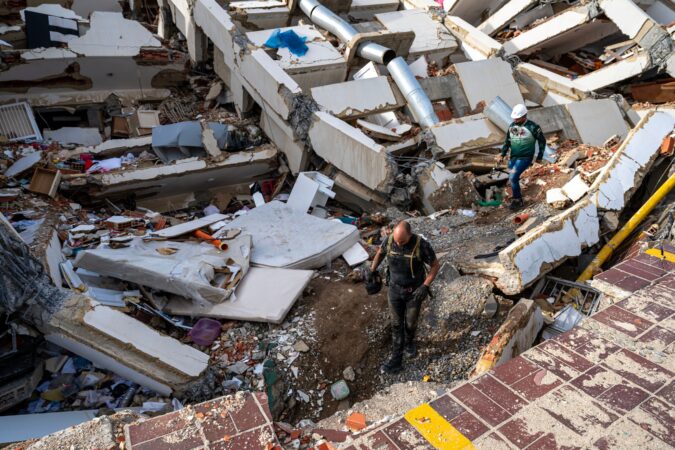
    The humanitarian crisis gripping Venezuela after last week’s earthquakes is testing President Donald Trump’s claim of American leadership in the Western Hemisphere, as officials tout their surge of U.S. money and personnel to the country after gutting America’s foreign assistance apparatus early in the administration.

    At first glance, the large-scale relief effort may be surprising as the Trump administration has championed a policy of “trade over aid” in its attempt to reimagine how Washington apportions the federal government’s largess.

    But the U.S. aid presence now in Venezuela — including search-and-rescue teams along with military and civilian logistical support — is an example of the big, brash displays of humanitarian assistance and disaster relief that the administration says it favors over slower-paced development work.

    “There is a definite ‘Team America’ element to a search-and-rescue deployment,” said Jeremy Konyndyk, former head of disaster assistance at the United States Agency for International Development (USAID), which the Trump administration dismantled and shuttered within months of the president taking office. “It makes for good TV.”

    Another twist is Washington’s newly close relationship with Venezuela, which has become tethered to the United States since a January military raid captured President Nicolás Maduro. The Trump administration has fostered ties with the country’s interim leader, Delcy Rodríguez, focusing on shared economic benefits, including the takeover of Venezuela’s oil industry, and sidelining its exiled opposition leader María Corina Machado.

    Trump emphasized this dynamic in the hours after the two quakes struck June 24, writing on social media that the U.S. would “be there for our new and great friends.”

    On Capitol Hill, some in the president’s own party have appeared more skeptical of this relationship, citing reports of Venezuelan officials stymieing the efforts of international rescue teams, including those from the U.S. Such accounts are “very troublesome for the White House,” Rep. María Elvira Salazar (R., Fla.) told reporters this week, adding that it raised questions about where Rodríguez’s “heart is.”

    Asked about the reports, John Barrett, chargé d’affaires of the U.S. Embassy in Caracas, told reporters Wednesday that “local authorities have fully complied with our requests and have accelerated this massive humanitarian response.”

    Since returning to office, Trump has advanced a more assertive U.S. leadership role in the Western Hemisphere in a bid to dilute the influence of China and Russia. His supporters call it the “Donroe Doctrine,” a play on the 19th-century pledge by President James Monroe to protect America’s neighboring nations from European colonial powers.

    At the same time, the Trump administration has radically overhauled the U.S. government’s decades-old approach to foreign aid, and what remains is sharply scaled back in key areas, including global health, food aid, and support for refugees around the world.

    Few have expressed doubt that the U.S. response to the Venezuelan earthquakes is substantial, though some experts question the metrics being used by the Trump administration to promote its claims that the relief effort is one of Washington’s fastest and most robust in decades.

    Jeremy Lewin, a senior official with the State Department’s foreign aid bureau, told reporters Monday that the $300 million the United States had pledged to spend on the relief effort was likely to grow significantly.

    “This is, by really any estimate, at this point the largest response to any natural disaster the United States has mounted in this century in terms of personnel on the ground, money out the door, [and] speed,” Lewin said.

    It is unclear how the State Department arrived at that assessment. One official, speaking on the condition of anonymity to describe internal discussions, pointed to the number of U.S. personnel “on the ground,” including military staff, urban search-and-rescue teams, and other U.S. government employees, as well as the initial pledge of monetary support.

    Gen. Francis Donovan, the commander of U.S. Southern Command, told reporters this week that there were “roughly 2,000 teammates” from the Defense Department in area to help with search and rescue. The U.S. military has used drones to aid those efforts and led the repair and reopening of an international airport in Caracas that had been inoperable due to damage.

    Sam Vigersky, a former USAID official now at the Council on Foreign Relations think tank, said that in 2010, when Haiti experienced a devastating earthquake, records show that the U.S. sent roughly 5,800 military personnel to help within five days — a figure significantly larger than those currently deployed to Venezuela.

    The Obama administration deployed six search-and-rescue teams to Haiti, compared to the four in Venezuela, Vigersky said.

    President Barack Obama also extended temporary protected status to Haitian nationals after the earthquake, allowing tens of thousands of people to continue living and working in the U.S. by shielding them from deportation.

    The Trump administration canceled TPS for Haitians and for Venezuelans, who were granted protected status by the Biden administration due to political and economic turmoil under Maduro. Deportation flights originating from the U.S. were arriving in the country right up until the day of last week’s earthquakes.

    Vigersky said that the different nature of the natural disasters in Haiti and Venezuela, as well as the political situations in the two nations, may explain disparate figures; the U.S. initially estimated more than 65,000 dead in Haiti, far more than the current toll of about 1,700 in Venezuela.

    Even still, Vigersky said, “Venezuela is a huge response by any measure.” And with the $300 million in aid announced by the State Department so far, the Trump administration may well surpass early U.S. spending after the Haiti earthquake.

    However, only a third of that money appeared to be new funding for partner organizations in Venezuela, with the rest made up of previously announced assistance for the United Nations Office for the Coordination of Humanitarian Affairs and other agencies.

    The State Department said this week it was directing funding to several large and well-established religious aid agencies, including the evangelical Samaritan’s Purse and Catholic Relief Services. Both organizations have been involved in relief efforts since the earthquakes hit, with CRS working through a local partner, Caritas Venezuela, and Samaritan’s Purse setting up a field hospital in the coastal city of La Guaira.

    Representatives of both organizations said Wednesday that they had not yet received funding from the State Department.

    Brittany Wichtendahl, a media relations contact for CRS, said that their “request is still in proposal form” and they did not have a dollar figure yet.

    Franklin Graham, president and CEO of Samaritan’s Purse, said his organization was in “final discussions” with the State Department for a $15 million funding agreement. “While that has not been finalized yet, these funds would certainly enable us to do more and to help more people,” Graham said in a statement.

    In response to a request for comment from the Washington Post, the State Department said that there were 1,900 personnel currently deployed to Venezuela and that the number of search-and-rescue teams sent to the region does not “signify any perceived level of support.”

    “In terms of personnel, financial support, and speed, the State Department’s response has been swift and comprehensive,” the State Department said in a statement.

    The Trump administration drew criticism last year for a slower and smaller response to an earthquake in Myanmar that occurred amid the dismantling of USAID. More than 5,000 were later estimated to have died in that disaster.

    Paul Spiegel, a professor at Johns Hopkins University who chaired a recent commission that proposed radical ways to overhaul the international humanitarian system, expressed concern with what he called the seemingly selective nature of the support for Venezuela.

    “A $300 million response to Venezuela, framed around its strategic importance and set beside roughly $9 million for a comparable earthquake in Myanmar last year, creates the appearance of aid being allocated by political interest rather than relative need,” Spiegel said.

    Speaking to reporters Monday, Lewin, the State Department official who oversaw much of USAID’s dismantling, said politics and geography would play a role in the Trump administration’s response to such disasters going forward.

    “Venezuela,” he told reporters, “has been part of our system and part of our hemisphere … it’s one of our neighbors.”

    Lewin pointed to efforts in the Caribbean last year, where the State Department led a smaller disaster-relief effort after Hurricane Melissa struck the region. The new model, he explained, is to support these nations as “quickly, efficiently, and accountably as possible, whenever these sudden onset disasters occur in friendly nations and our neighbors.”

    Konyndyk, who now leads the nongovernmental group Refugees International, said he supported the administration spending big on the disaster-relief efforts underway in Venezuela. “There’s a really powerful symbolism to it, in addition to being lifesaving,” he said.

    But in terms of dollars spent per life saved, the administration could do more if it also reinstated other forms of foreign assistance, Konyndyk added.

    “The administration has fully cut off food aid to Somalia ahead of what could turn into a famine there,” he said. “You could save exponentially more lives for dramatically less money in Somalia just by turning food aid back on there. They’re choosing not to do that.”

  • Bill Wine, Emmy Award-winning film and TV critic, and longtime La Salle professor, has died at 81

    Bill Wine, Emmy Award-winning film and TV critic, and longtime La Salle professor, has died at 81

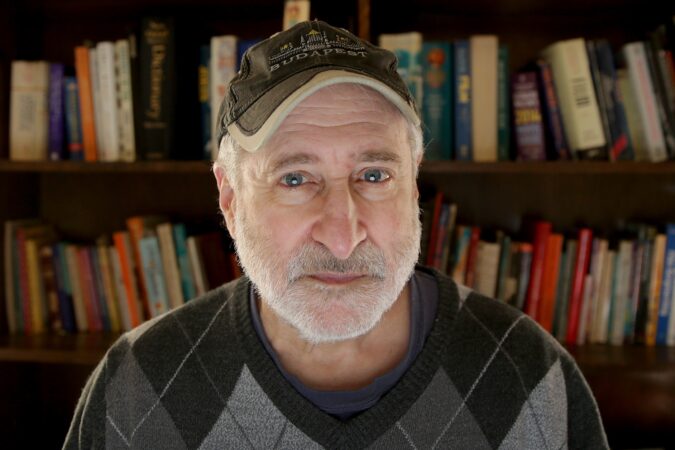
    Bill Wine, 81, of Philadelphia, three-time Mid-Atlantic Emmy Award-winning film and TV critic, retired tenured associate professor of TV and film at La Salle University, onetime freelance TV critic for the Daily News, freelance writer, playwright, and popular lecturer, died Sunday, June 14, of complications from Parkinson’s disease at his home in Chestnut Hill.

    The son of two part-time amateur actors and a lifelong devotee of theater, film, TV, writing, and teaching, Mr. Wine was a film critic for WTXF-TV, Channel 29, for 12 years and KYW radio for 17 years. Known for his pithy, witty, and often acerbic reviews, and a breezy conversational style of writing, he worked at Channel 29 from 1990 to 2002 and KYW from 2001 to 2018.

    “Bill Wine was a character out of a Neil Simon comedy, more Oscar than Felix,” said Carrie Rickey, former Inquirer movie critic. “You didn’t have to wait long for the punchline.”

    Mr. Wine’s film reviews on Channel 29 were often funny and entertaining.

    At Channel 29, Mr. Wine was nominated for eight regional Emmy Awards for commentary and writing, and won three. He appeared regularly on the station’s Ten O’Clock News, in primetime movie preview and review programs, and later on Mondays, Wednesdays, and Fridays on Good Day Philadelphia.

    By 1990, he had already written hundreds of freelance film reviews for the Daily News and Courier-Post, done radio reviews for WPEN, and taught a variety of classes about film and writing for a decade at La Salle. So, despite no previous TV experience, he was hired at Channel 29 over 60 other film critic applicants.

    “I had never been on TV, but I wasn’t nervous,” he told the Daily News in 2001, “because I had been standing in front of 100 students for 10 years.”

    Mr. Wine worked at at WTXF-TV, Channel 29, for 12 years.

    He started at KYW radio in 2001 and usually aired reviews and reports on Thursdays, Fridays, and Saturdays. Sometimes, he watched three movies in one day. He left Channel 29 in 2002 and KYW in 2018 only after both companies eliminated their local film critic position.

    “When I started [writing film reviews], it was before the internet,” he told The Inquirer in 2018. “A lot of people [now] feel like, ‘Who the heck is a movie critic to come on in a minute and to dismiss something that took hundreds of people and millions of dollars to create?’”

    In the 1970s and ‘80s, he wrote articles and reviewed films, TV shows, books, and plays for WPEN, The Inquirer, Courier-Post, Philadelphia Magazine, and other outlets. In 1975, he wrote dozens of freelance TV columns called “On the Air” for the Daily News.

    Mr. Wine wrote dozens of columns as a freelance TV critic for the Daily News in 1975.

    He spent three years in California in the 1970s working on plays and film and TV scripts. He hobnobbed with famous writers, producers, and actors in Los Angeles, staged one of his own plays, and was a winning contestant on a new TV game show.

    He wrote 11 plays over the years, and several made it to the stage. “Now the people who disagree with my reviews can come and find out if I’m as dumb as they think I am,” he told The Inquirer in 2002.

    He aired reviews on WIP radio and lectured often at libraries, schools, community centers, theaters, and other venues about his favorite films, adapting books to film, and other topics. “He could be wickedly funny, especially when delivering a pan of a movie,” his family said in a tribute. “One of his favorite quotes was: ‘I had a bad seat. It was facing the screen.’”

    Mr. Wine was a prolific playwright who enjoyed table readings with family and friends.

    Mr. Wine earned a bachelor’s degree in math at Drexel University and a master’s degree in communications at Temple University. He helped design La Salle’s nascent Communication Department in the 1980s, and school officials called him one of their “Founding Fathers.” He also taught briefly at Drexel, and came close to earning a doctorate at Temple.

    In 2001, he was featured in a Daily News story about “celebrity professors” and said: “You have to remind yourself that this is television, not the classroom. You mention, say, ‘film noir’ on TV, and you get a memo.”

    William David Wine was born June 21, 1944, in Germantown. He grew up in West Oak Lane and Cherry Hill, attended Central High School, and graduated from the old Cherry Hill High School.

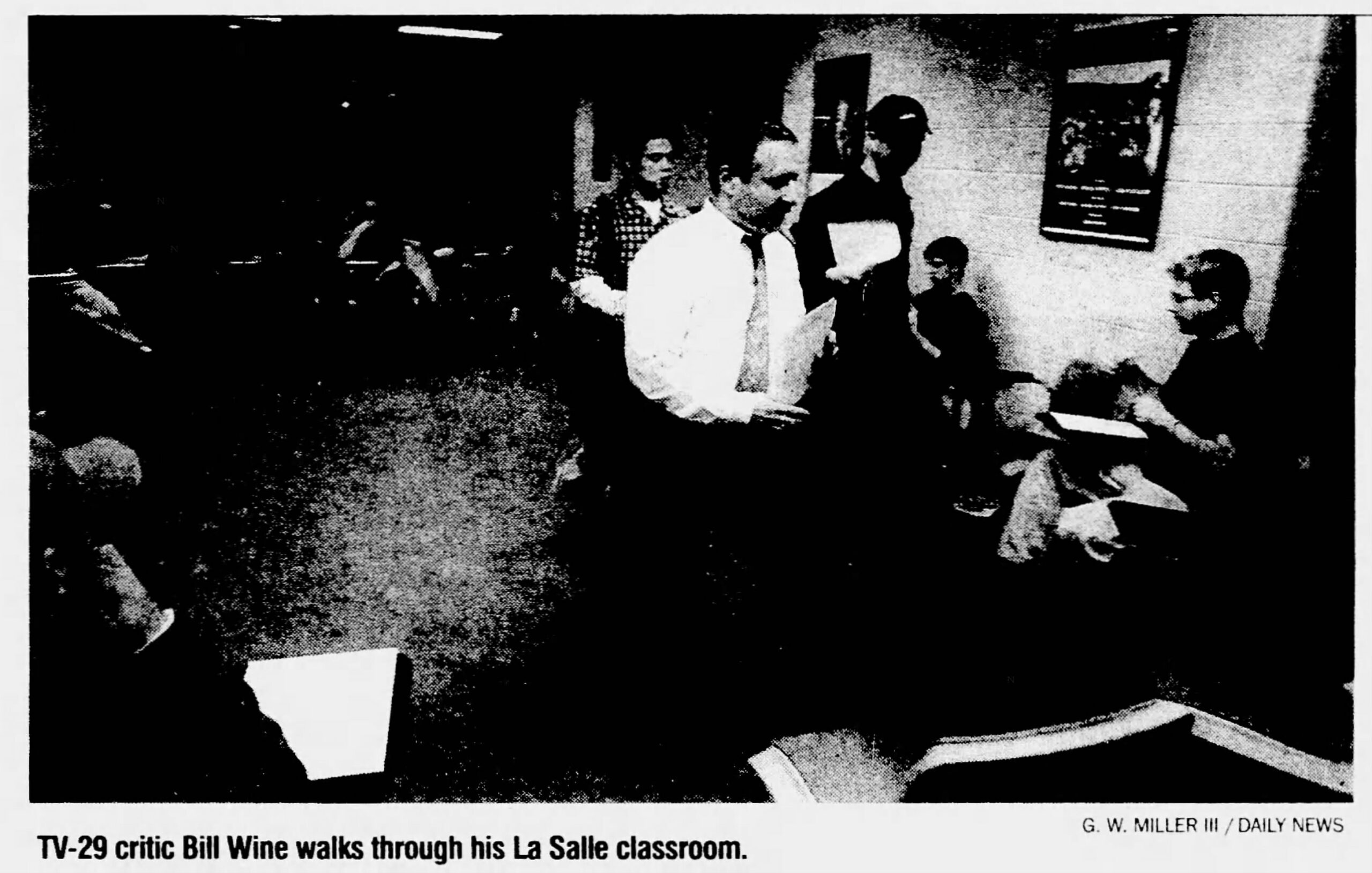
    A story and this photo of Mr. Wine about his time as a professor at La Salle appeared in the Daily News in 2001.

    As a boy, he devoured newspaper movie reviews and fell in love with film after seeing Alfred Hitchcock’s 1954 thriller Rear Window. He got positive reviews of his own freelance movie review when he was at Temple, and he knew then, he said later, that writing about movies was his creative niche.

    “The first time I saw my byline, I was hooked,” he told Drexel Magazine in 2016.

    He married Dina Lichtman, and they divorced later. He married Suzanne Monsalud in 1981, and they had daughters Simone and Paulina, and lived in Germantown, Wyncote, and Chestnut Hill.

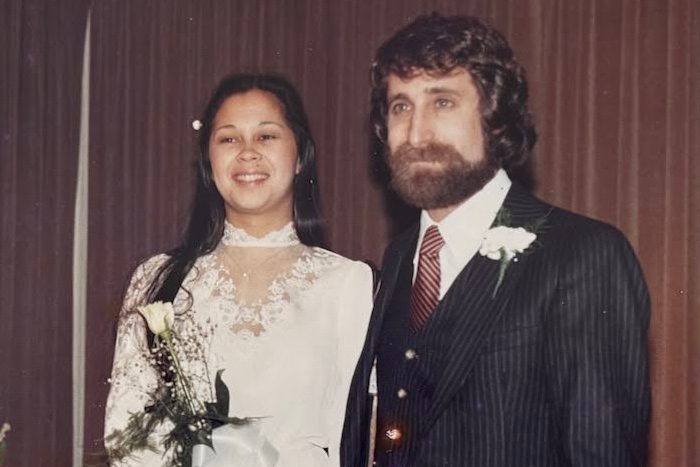
    Mr. Wine and his wife, Suzanne, married in 1981.

    Together, Mr. Wine and his family traveled to Paris and London, and he and his wife honeymooned in Rio de Janeiro, Brazil. He doted on his daughters and sometimes took them to his La Salle classroom, the Channel 29 TV set, and movie screenings.

    Friends, former colleagues, and former students called him “a force of nature,” “smart and gifted,” and “a rare combination of kindness, professionalism, and humor.” His daughter Simone said: “His humor, warmth, and presence made life brighter.”

    Mr. Wine played tennis, third base on adult softball teams, and pickup basketball into his 70s. He followed the Phillies, 76ers, and Eagles closely, and hit tennis balls with Hall of Famer Rod Laver at a publicity event in Los Angeles.

    Mr. Wine and his family made memorable trips to Paris, London, and elsewhere.

    “He was a wonderful father and a dedicated teacher,” his wife said. “He was a real Philadelphian, and we complemented each other.”

    His daughter Paulina said: “Dad, I think you cracked the code. We’ll see you at the movies.”

    In addition to his wife and daughters, Mr. Wine is survived by three grandchildren, a sister, Marcia, and other relatives. A sister died earlier.

    A celebration of his life was held earlier.

    Donations in his name may be made to the Bill Wine Scriptwriting Award at La Salle University, 1900 W. Olney Ave., Philadelphia, Pa. 19141.

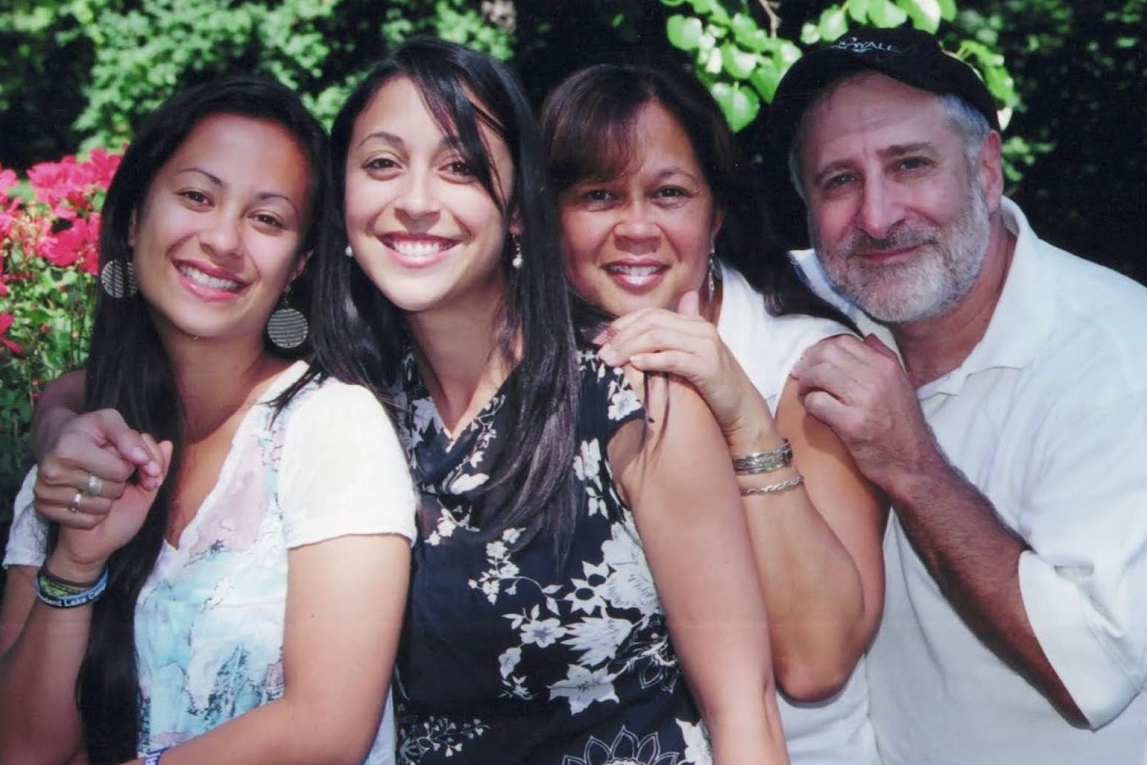
    Mr. Wine (second from left) enjoyed time with his family.
  • Second teen accused of killing Penn State student arrested on murder charge, authorities say

    Second teen accused of killing Penn State student arrested on murder charge, authorities say

    A teenager who authorities say killed a Penn State student surrendered to Philadelphia police on Thursday, one day after U.S. marshals captured a second teen wanted in the slaying more than 1,700 miles from the South Philadelphia street where the crime occurred.

    Kaiseem Smith, 16, turned himself in after a two-week, multiagency law enforcement search, according to the U.S. Marshals Service.

    Smith and Azzubair Outen-Fleming, 16, are expected to face charges of murder, robbery, criminal conspiracy, illegal possession of a firearm, and related crimes in the June 6 death of William “Billy” Schmidt.

    Both teens had been on the run until Wednesday night, authorities said, when members of the U.S. Marshals Service arrested Outen-Fleming at a house in Colorado Springs, Colo.

    Smith remained at large until Thursday.

    Police have said Outen-Fleming and Smith killed Schmidt, 22, shortly after 1 a.m. as he walked toward his South Philadelphia home.

    According to prosecutors, surveillance video captured two masked people — identified by investigators as Outen-Fleming and Smith — robbing Schmidt of his cell phone, searching his pockets, and then, moments later, shooting him.

    Smith, they said, is accused of firing the fatal shot.

    The teenagers fled after the shooting, police said.

    On Wednesday, prosecutors also announced charges against Outen-Fleming’s stepfather, Donte Abdulmalik, who they said helped him evade authorities after the killing.

    Abdulmalik was charged with hindering apprehension, obstruction of justice, tampering with evidence, and related crimes.

    Deputies with the U.S. Marshals Service’s Violent Offender Task Force tracked Outen-Fleming this week to a house in southern Colorado Springs with “ties to his family in Philadelphia,” Supervisory Deputy U.S. Marshal Robert Clark said. After conducting surveillance, deputies arrested him there late Wednesday.

    Schmidt’s father, William, did not return a phone call Thursday afternoon, and attempts to reach other family members were unsuccessful.

    Philadelphia police spokesperson Sgt. Eric Gripp said it was not clear when Outen-Fleming would be returned to Philadelphia.