Category: News

Latest breaking news and updates

  • Fewer than a dozen homes have been rebuilt a year after being burned down in LA-area wildfires

    Fewer than a dozen homes have been rebuilt a year after being burned down in LA-area wildfires

    LOS ANGELES — On the first anniversary of the most destructive wildfires in the LA area, the scant home construction projects stand out among the still mostly flattened landscapes.

    Fewer than a dozen homes have been rebuilt in Los Angeles County since the Jan. 7, 2025, Palisades and Eaton fires erupted, killing 31 people and destroying about 13,000 homes and other residential properties. The fires burned for more than three weeks and clean-up efforts took about seven months.

    For those who had insurance, it’s often not enough to cover the costs of construction. Relief organizations are stepping in to help, but progress is slow.

    Among the exceptions is Ted Koerner, whose Altadena home was reduced to ash and two chimneys. With his insurance payout tied up, the 67-year-old liquidated about 80% of his retirement holdings, secured contractors quickly, and moved decisively through the rebuilding process.

    Shortly before Thanksgiving, Koerner was among the first to finish a rebuild in the aftermath of the fires, which were fueled by drought and hurricane-force winds.

    But most do not have options like Koerner.

    The streets of the coastal community of Pacific Palisades and Altadena, a community in the foothills of the San Gabriel Mountains, remain lined with dirt lots. In the seaside city of Malibu, foundations and concrete piles rising out of the sand are all that’s left of beachfront homes that once butted against crashing ocean waves.

    Neighborhoods are pitch black at night, with few streetlamps replaced. Even many homes that survived are not inhabited as families struggle to clear them of the fire’s toxic contaminants.

    Koerner was driven in part by fear that his beloved golden retriever, Daisy Mae, now 13 years old, might not live long enough to move into a new home, given the many months it can take to build even under the best circumstances.

    He also did not have to wait for his insurance payout to start construction.

    “That’s the only way we were going to get it done before all of a sudden my dog starts having labored breathing or something else happens,” Koerner said.

    Once construction began, his home was completed in just over four months.

    Daisy Mae is back lying in her favorite spot in the yard under a 175-year-old Heritage Oak. Koerner said he enjoys his morning coffee while watching her and it brings tears to his eyes.

    “We made it,” he said.

    Many fear they can’t afford to rebuild

    About 900 homes are under construction, potentially on pace to be completed later this year.

    Still, many homeowners are stuck as they figure out whether they can pay for the rebuilding process.

    Scores of residents have left their communities for good. More than 600 properties where a single-family home was destroyed in the wildfires have been sold, according to real estate data tracker Cotality.

    “We’re seeing huge gaps between the money insurance is paying out, to the extent we have insurance, and what it will actually cost to rebuild and/or remediate our homes,” said Joy Chen, executive director of the Eaton Fire Survivors Network, a group of 10,000 fire survivors mostly from Altadena.

    By December, less than 20% of people who experienced total home loss had closed out their insurance claims, according to a survey by the Department of Angels, a nonprofit that formed after the disaster to advocate for recovery efforts.

    About one-third of insured respondents had policies with State Farm, the state’s largest private insurer, or the California FAIR plan, the insurer of last resort. They reported high rates of dissatisfaction with both, citing burdensome requirements, lowball estimates, and dealing with multiple adjusters.

    In November, Los Angeles County opened a civil investigation into State Farm’s practices and potential violations of the state’s Unfair Competition law. Chen said the group has seen a flurry of substantial payouts since then.

    State Farm spokesperson Tom Hartman said in an email to the Associated Press on Wednesday that the company has addressed more than 13,500 claims and issued more than $5 billion in payments. He called the investigation a “distraction” and said the company is committed to helping.

    Without answers from insurance, households can’t commit to rebuilding projects that can easily exceed $1 million.

    “They’re worried about getting started and running out of money,” Chen said.

    An uncertain future

    Jessica Rogers discovered only after the Palisades fire destroyed her home that her coverage had been canceled.

    The mother of two’s fallback was a low-interest loan from the Small Business Administration, but the application process was grueling. After losing her job because of the fire and then having her identity stolen, her approval for $550,000 came through last month.

    She is still weighing how she’ll cover the remaining costs and says she wonders: “Do I empty out my 401(k) and start counting every penny in a penny jar around the apartment?”

    Rogers — now executive director of the Pacific Palisades Long Term Recovery Group — estimates there are hundreds like her in Pacific Palisades who are “stuck dealing with FEMA and SBA and figuring out if we could piecemeal something together to build our homes.”

    Also struggling to return home are the community’s renters, condo owners, and mobile homeowners. Meanwhile, many are also dealing with their trauma.

    “It’s not what people talk about, but it is incredibly apparent and very real,” said Rogers, who still finds herself crying at unexpected moments.

    A slow start

    That so few homes have been rebuilt a year after the wildfires echoes the recovery pattern of a December 2021 blaze that erupted south of Boulder, Colo., destroying more than 1,000 homes.

    “At the one-year mark, many lots had been cleared of debris and many residents had applied for building permits, said Andrew Rumbach, co-lead of the Climate and Communities Program at Urban Institute. “Around the 18-month mark is when you start to see really significant progress in terms of going from handfuls to hundreds” of homes rebuilt.

    Time will bring the scope of problems into focus.

    “You’re going to start to see some real inequality start to emerge where certain neighborhoods, certain types of people, certain types of properties are just lagging way far behind, and that becomes the really important question in the second year of a recovery: Who’s doing well and who is really struggling and why?” Rumbach said.

    That’s a key concern in Altadena, which for decades drew aspiring Black homeowners who otherwise faced redlining and other forms of racial discrimination when they sought to buy a home in other LA-area communities. In 2024, 81% of Black households in Altadena owned their homes, nearly twice the national Black homeownership rate.

    But recent research by UCLA’s Latino Policy & Politics Institute found that, as of August, 7 in 10 Altadena homeowners whose property was severely damaged in last year’s wildfire had not begun taking steps to rebuild or sell their home. Among these, Black homeowners were 73% more likely than others to have taken no action.
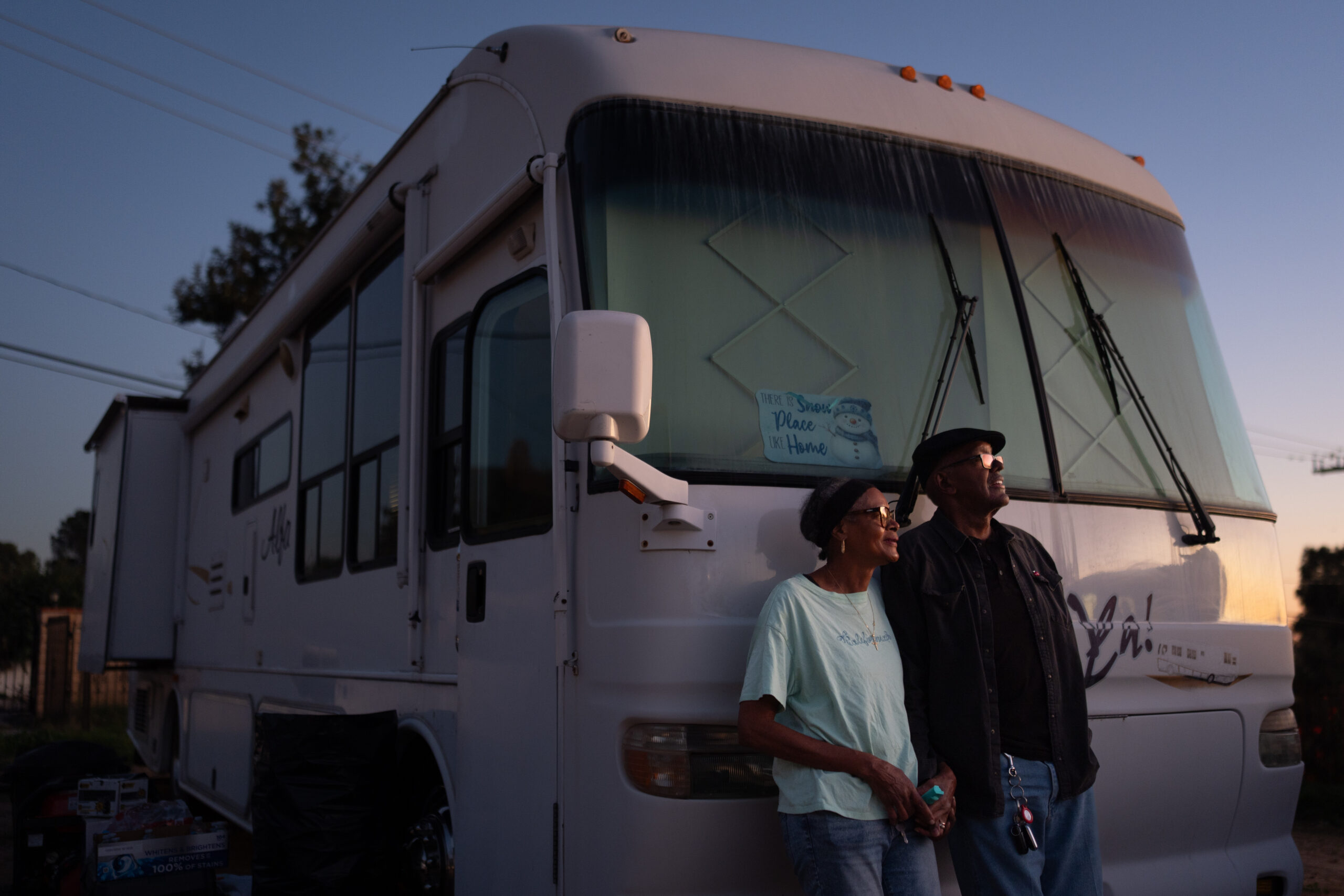
    Al and Charlotte Bailey, who lost their home in the Eaton Fire, have been living in an RV parked on the property where their house once stood in Altadena, Calif.

    Determined to rebuild

    Al and Charlotte Bailey have been living in an RV parked on the empty lot where their home once stood.

    The Baileys are paying for their rebuild with funds from their insurance payout and a loan. They’re also hoping to receive money from Southern California Edison. Several lawsuits claim its equipmentsparked the wildfire in Altadena.

    “We had been here for 41 years and raised our family here, and in one night it was all gone,” said Al Bailey, 77. “We decided that, whatever it’s going to cost, this is our community.”
  • House takes step toward extending Affordable Care Act subsidies, overpowering GOP leadership

    House takes step toward extending Affordable Care Act subsidies, overpowering GOP leadership

    WASHINGTON — Overpowering Speaker Mike Johnson, a bipartisan coalition in the House voted Wednesday to push forward a measure that would revive an enhanced pandemic-era subsidy that lowered health insurance costs for roughly 22 million people, but that had expired last month.

    The tally of 221-205 was a key test before passage of the bill, which is expected Thursday. And it came about because four GOP centrist lawmakers joined with Democrats in signing a so-called discharge petition to force the vote. After last year’s government shutdown failed to resolve the issue, they said doing nothing was not an option as many of their constituents faced soaring health insurance premiums beginning this month.

    Rep. Mike Lawler (R., N.Y.), one of the Republicans who crossed party lines to back the Democratic proposal, portrayed it as a vehicle senators could use to reach a compromise.

    “No matter the issue, if the House puts forward relatively strong, bipartisan support, it makes it easier for the senators to get there,” Lawler said.

    Republicans go around their leaders

    If ultimately successful in the House this week, the voting would show there is bipartisan support for a proposed three-year extension of the tax credits that are available for those who buy insurance through the Affordable Care Act, also known as Obamacare. The action forcing a vote has been an affront to Johnson and GOP leaders who essentially lost control of their House majority as the renegade lawmakers joined Democrats for the workaround.

    But the Senate is under no requirement to take up the bill.

    Instead, a small group of members from both parties are working on an alternative plan that could find support in both chambers and become law. One proposal would be to shorten the extension of the subsidy to two years and make changes to the program.

    Senate Majority Leader John Thune (R., S.D.) said any plan passing muster in the Senate will need to have income limits to ensure that it’s focused on those who most need the help and that beneficiaries would have to at least pay a nominal amount for their coverage.

    That way, he said, “insurance companies can’t game the system and auto-enroll people.” Finally, Thune said there would need to be some expansion of health savings accounts, which allow people to save money and withdraw it tax-free as long as the money is spent on qualified medical expenses.

    Democrats are pressing the issue

    It’s unclear the negotiations will yield a bill that the Senate will take up. Democrats are making clear that the higher health insurance costs many Americans are facing will be a political centerpiece of their efforts to retake the majority in the House and Senate in the fall elections.

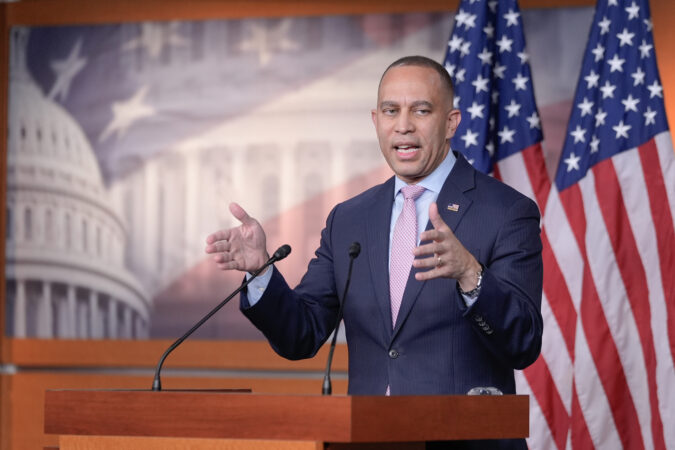
    Democratic Leader Hakeem Jeffries, who led his party’s effort to push the healthcare issue forward, particularly challenged Republicans in competitive congressional districts to join if they really wanted to prevent steep premium increases for their constituents. Before Wednesday’s vote, he called on colleagues to “address the healthcare crisis in this country and make sure that tens of millions of people have the ability to go see a doctor when they need one.”

    Republican Reps. Brian Fitzpatrick, Robert Bresnahan, and Ryan Mackenzie, all from Pennsylvania, and Lawler signed the Democrats’ petition, pushing it to the magic number of 218 needed to force a House vote. All four represent key swing districts whose races will help determine which party takes charge of the House next year.

    Johnson (R., La.) had discussed allowing more politically vulnerable GOP lawmakers a chance to vote on bills that would temporarily extend the subsidies while also adding changes such as income caps for beneficiaries. But after days of discussions, the leadership sided with the more conservative wing of the party’s conference, which has assailed the subsidies as propping up a failed program.

    Lawmakers turn to discharge petitions to show support for an action and potentially force a vote on the House floor, but they are rarely successful. This session of Congress has proven an exception.

    A vote requiring the Department of Justice to release the Jeffrey Epstein files, for instance, occurred after Reps. Ro Khanna (D., Calif.) and Thomas Massie (R. Ky.) introduced a petition on the Epstein Files Transparency Act. The signature effort was backed by all House Democrats and four Republicans.

  • Driver shot in Minneapolis is at least the fifth person killed in U.S. immigration crackdown

    Driver shot in Minneapolis is at least the fifth person killed in U.S. immigration crackdown

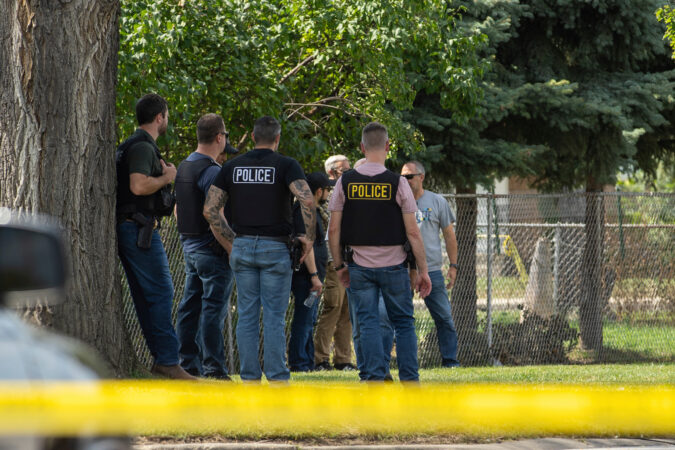
    The fatal shooting Wednesday of a woman by an immigration officer in Minneapolis was at least the fifth death to result from the aggressive U.S. immigration crackdown the Trump administration launched last year.

    The Department of Homeland Security said the officer fired in self-defense as the woman tried to run down officers with her vehicle. Minneapolis Mayor Jacob Frey said video of the incident showed it was reckless and unnecessary. It occurred as the federal agency escalates immigration enforcement operations in Minnesota by deploying an anticipated 2,000 agents and officers.

    Last September, Immigration and Customs Enforcement shot and killed another person outside Chicago. Two people have died after being struck by vehicles while fleeing immigration authorities. And a California farmworker fell from a greenhouse and broke his neck during an ICE raid last July.

    No officers or agents have been charged in the deaths.

    Cook from Mexico shot during a traffic stop

    ICE agents fatally shot Silverio Villegas González during a traffic stop Sept. 12 in suburban Chicago. Relatives said the 38-year-old line cook from Mexico had dropped off one of his children at day care that morning.

    At the time, the Department of Homeland Security said federal agents were pursuing a man with a history of reckless driving who entered the country illegally. They alleged Villegas González evaded arrest and dragged an officer with his vehicle.

    Homeland Security said the officer opened fire fearing for his life and was hospitalized for “serious injuries.” However, local police body camera videos showed the agent who shot Villegas González walking around afterward and dismissing his own injuries as “nothing major.”

    Homeland Security has said the death remains under investigation.

    Another shooting, this one nonfatal, occurred in Chicago last fall. Marimar Martinez survived being shot five times by a Border Patrol agent but was charged with a felony after Homeland Security officials accused her of trying to ram agents with her vehicle. The case was dismissed after videos emerged that Martinez’s attorneys said showed an agent steering his vehicle into Martinez’s truck.

    Farmworker fell from greenhouse roof during ICE raid

    Immigration authorities were rounding up dozens of farmworkers July 10 at Glass House Farms in southern California when Jaime Alanis fell from the roof of a greenhouse and broke his neck. The 57-year-old laborer from Mexico died at a hospital two days later.

    Relatives said Alanis had spent a decade working at the farm, a licensed cannabis grower that also produces tomatoes and cucumbers, located in Camarillo about an hour east of Los Angeles. They said he would send his earnings to his wife and daughter in Mexico.

    During the raid, Alanis called family to say he was hiding. Officials said he fell about 30 feet from the greenhouse roof.

    The Department of Homeland Security said Alanis was never in custody and was not being chased by immigration authorities when he climbed onto the greenhouse.

    Man struck on California freeway after running from Home Depot

    A man running away from immigration authorities outside a Home Depot store in southern California died after being hit by an SUV while he tried to cross a nearby freeway on Aug. 14.

    Police in Monrovia northeast of Los Angeles said ICE agents were conducting enforcement operations when the man fled on foot to Interstate 210. He was running across the freeway’s eastbound lanes when an SUV hit him while traveling 50 or 60 mph. He died at a hospital.

    The man killed was later identified by the National Day Laborer Organizing Network as 52-year-old Roberto Carlos Montoya Valdez of Guatemala.

    The Department of Homeland Security said Montoya Valdez wasn’t being pursued by immigration authorities when he ran.

    Gardener from Honduras killed on Virginia interstate

    A pickup truck fatally struck Josué Castro Rivera on a highway in Norfolk, Virginia, as he tried to escape immigration authorities during a traffic stop Oct. 23.

    Castro Rivera, 24, of Honduras, was heading to a gardening job with three passengers when ICE officers pulled over his vehicle, according to his brother, Henry Castro.

    State and federal authorities said Castro Rivera ran away on foot and was hit by a pickup truck on Interstate 264.

    The Department of Homeland Security said Castro Rivera’s vehicle was stopped as part of a “targeted, intelligence-based” operation and that Castro Rivera had “resisted heavily and fled.”

    His brother said Castro Rivera came to the U.S. four years earlier and worked to send money to family in Honduras.

  • Gov. Ron DeSantis calls for special session in April to redraw Florida’s congressional districts

    Gov. Ron DeSantis calls for special session in April to redraw Florida’s congressional districts

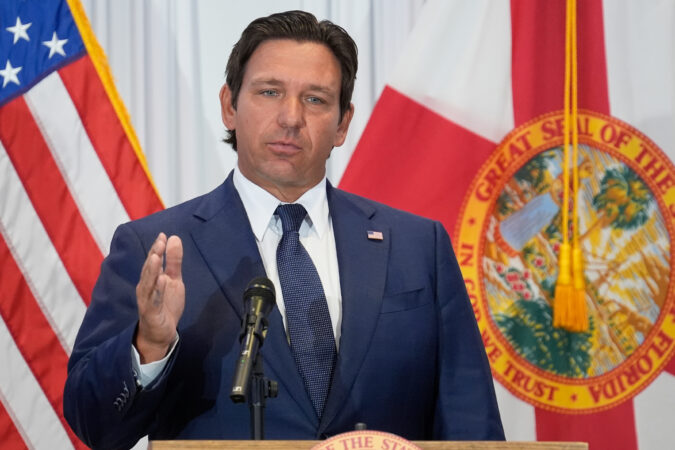
    ORLANDO, Fla. — Florida Gov. Ron DeSantis said Wednesday he plans to call a special session in April for the Republican-dominated legislature to draw new congressional districts, joining a redistricting arms race among states that have redrawn districts mid-decade.

    Even though Florida’s 2026 legislative session starts next week, DeSantis said he wanted to wait for a possible ruling from the U.S. Supreme Court on a key provision of the Voting Rights Act. The ruling in Louisiana v. Callais could determine whether Section 2, a part of the Voting Rights Act that bars discrimination in voting systems, is constitutional. The governor said “at least one or two” districts in Florida could be affected by the high court’s ruling.

    “I don’t think it’s a question of if they’re going to rule. It’s a question of what the scope is going to be,” DeSantis said at a news conference in Steinhatchee, Fla. “So, we’re getting out ahead of that.”

    Currently, 20 of Florida’s 28 congressional seats are held by Republicans.

    Congressional districts in Florida that are redrawn to favor Republicans could carry big consequences for President Donald Trump’s plan to reshape congressional districts in GOP-led states, which could give Republicans a shot at winning additional seats in the midterm elections and retaining control of the closely divided U.S. House.

    Nationwide, the unusual mid-decade redistricting battle has so far resulted in a total of nine more seats Republicans believe they can win in Texas, Missouri, North Carolina, and Ohio — and a total of six more seats Democrats expect to win in California and Utah, putting Republicans up by three. But the redrawn districts are being litigated in some states, and if the maps hold for 2026, there is no guarantee the parties will win the seats.

    In 2010, more than 60% of Florida voters approved a constitutional amendment prohibiting the drawing of district boundaries to unfairly favor one political party in a process known as gerrymandering. The Florida Supreme Court, however, last July upheld a congressional map pushed by DeSantis that critics said violated the “Fair Districts” amendment.

    After that decision, Florida House Speaker Daniel Perez last August announced the creation of a select committee to examine the state’s congressional map.

    Florida Senate Democratic Leader Lori Berman said in a statement that what DeSantis wants the Legislature to do is clearly illegal.

    “Florida’s Fair Districts Amendment strictly prohibits any maps from being drawn for partisan reasons, and regardless of any bluster from the governor’s office, the only reason we’re having this unprecedented conversation about drawing new maps is because Donald Trump demanded it,” Berman said. “An overwhelming majority of Floridians voted in favor of the Fair Districts Amendment and their voices must be respected. The redistricting process is meant to serve the people, not the politicians.”

    In a statement, the Florida Democratic Party called the move by DeSantis “reckless, partisan and opportunistic.”

    “This is nothing more than a desperate attempt to rig the system and silence voters before the 2026 election,” the statement said. “Now, after gutting representation for Black Floridians just three years ago, Ron is hoping the decimation of the Voting Rights Act by Trump’s Supreme Court will allow him to further gerrymander and suppress the vote of millions of Floridians.”

    Michael McDonald, a political science professor at the University of Florida, said the state already has a fairly strong Republican gerrymander, so it would be difficult for Republicans to pick up additional seats, unless they’re planning to draw “noncompact districts that squiggle all over the place” and then hold the election before a judge can throw out the map. McDonald said DeSantis also could be trying to shore up Republican strongholds to mitigate the losses generally experienced by the party in power during midterm elections.

    “Trump’s approval ratings are pretty low,” McDonald said. “And so looking at what we would expect to happen in November, unless something fundamentally changes in the country between now and then, we expect the Democrats to have a very good year.”

  • Pa. State Sen. Doug Mastriano won’t run for governor again in 2026, after months of teasing a potential campaign launch

    Pa. State Sen. Doug Mastriano won’t run for governor again in 2026, after months of teasing a potential campaign launch

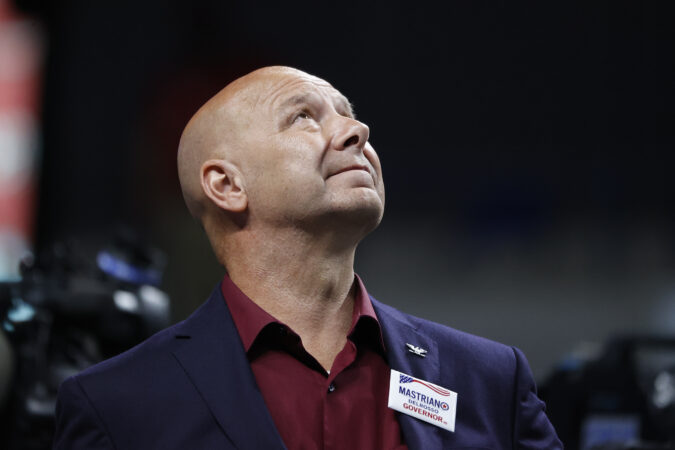
    HARRISBURG — State Sen. Doug Mastriano will not seek the GOP nomination for Pennsylvania again this year, after months of teasing a potential run to the chagrin of establishment Republicans.

    Mastriano’s announcement Wednesday now clears the way for State Treasurer Stacy Garrity, who was endorsed by the state GOP last fall as the party’s best pick to challenge Gov. Josh Shapiro this November.

    “We believe, with full peace in our hearts, God has not called us to run for governor,” Mastriano said in a Facebook Live video stream alongside his wife, Rebbie.

    He did not endorse Garrity as part of his announcement, nor did he mention her by name.

    “For you to have a Republican governor here, the grassroots is going to have to back the candidate,” Mastriano said, referring to Garrity.

    Republicans chose Garrity early — endorsing her more than a year before the 2026 election — in an effort to avoid a crowded primary like the one that eventually led to Mastriano’s nomination in 2022. They hope that a candidate like Garrity, who has won statewide elections twice and dethroned Shapiro for receiving the most votes of any state-level candidate, will have a better chance at beating Shapiro, or at least, preventing a down-ballot blowout in an election that already is likely to favor Democrats.

    Mastriano, a two-term state senator representing Gettysburg and the surrounding area, publicly criticized the state party for endorsing Garrity so early, and has repeatedly said that their endorsement would not deter him from getting in the race.

    In a statement, Garrity said she respected Mastriano’s decision not to run, calling him a “strong voice for faith, family and freedom.”

    “I look forward to working with him to restore integrity, fiscal responsibility, and common-sense leadership in our commonwealth,” Garrity added.

    Mastriano, a former U.S. Army colonel with top-secret clearance, built a grassroots online following during the early days of the COVID-19 pandemic for his resistance to business shutdowns. That support continued to grow after the 2020 presidential election as he promoted President Donald Trump’s false claims that Pennsylvania’s election results were rigged. He has remained a staunch supporter of Trump ever since.

    Trump’s advisers, however, feared that Mastriano’s presence on the ticket would hurt Republicans up and down the ticket despite him leading Garrity in private polling by 21 points, Politico reported in July.

    Mastriano and his wife spent much of his 20-minute announcement on Wednesday reminiscing on their movement since 2020: their daily virtual fireside chats during COVID-19 closures and their other attempts to reopen the state’s businesses amid the pandemic, their efforts to overturn Pennsylvania’s 2020 election results for Trump, Mastriano’s 2022 gubernatorial run, and the GOP’s electoral successes in 2024.

    However, things are different now, the couple said. The grassroots supporters aren’t as unified as they once were, and the state party overstepped in its early endorsement.

    “Bottom line is: They don’t have the last say,” said Rebbie Mastriano, in a reminder to their supporters. “You have the last say.”

    In the 2022 primary, the state GOP declined to endorse candidates in the gubernatorial or U.S. Senate races. That led to a crowded, nine-candidate GOP primary ballot for governor that was advantageous for Mastriano, who had built name recognition through his anti-lockdown and 2020 election efforts.

    Democrats saw Mastriano and his far-right views as an easier opponent in the general election. Shapiro, who at the time was state attorney general and did not face a primary opponent, ran an ad in the GOP primary to try to ensure that he would face the right-wing senator in the general election, where he later cruised to victory.

    Shapiro is expected to announce his reelection campaign on Thursday, beginning his 2026 effort with a record-setting $30 million in his war chest and polls continuing to show him with a more than 50% approval rating.

    The state Democratic Party responded to Mastriano’s announcement with fresh attacks on Garrity, calling her a “far-right, toxic candidate” and noted some of the areas where she and Mastriano agree, including that she denied the 2020 election results and her past opposition to abortion. (She now says she would not support a state abortion ban.)

    As of Wednesday, no GOP candidate had announced their candidacy for lieutenant governor. Garrity told The Inquirer last month she was vetting candidates and planned to announce who she’d endorse as her running mate in February, ahead of the next state GOP meeting.

    Mastriano last year floated the idea of running with Garrity, though he implied he would be at the top of the ticket.

    “I’m still a state senator, still fighting in Harrisburg for you here,” Mastriano said Wednesday. “We’re still in the fight.”

    “We’re going to keep this movement together,” he added.

  • U.S. vows to control Venezuela oil sales ‘indefinitely’

    U.S. vows to control Venezuela oil sales ‘indefinitely’

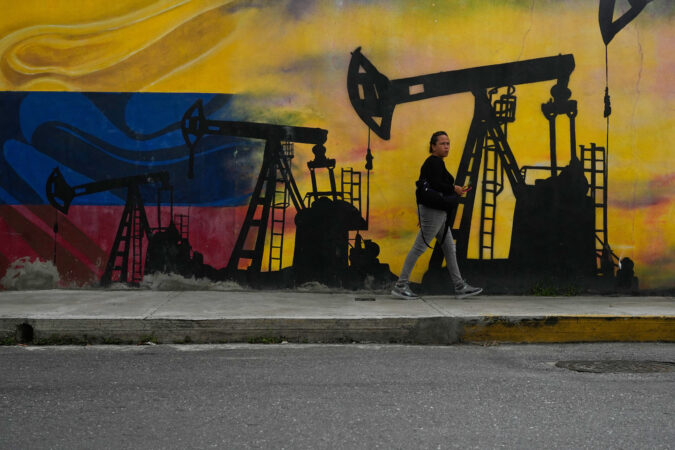
    Energy Secretary Chris Wright announced Wednesday that the Trump administration will take control of all existing flows of oil from Venezuela for the foreseeable future as it struggles to persuade U.S. firms to invest in expansive drilling operations there.

    Speaking at a Goldman Sachs energy industry event in Miami, Wright said the United States will allow Venezuelan oil under U.S. sanctions to flow again, but only to U.S. refineries. He said the sales will be “done by the U.S. government and deposited into accounts controlled by the U.S. government.”

    “From there, those funds can flow back into Venezuela to benefit the Venezuelan people,” Wright said. “We need to leverage and control those oil sales to drive the changes that must happen in Venezuela.”

    Wright’s comments followed an announcement from President Donald Trump on Tuesday night that tens of millions of barrels of Venezuelan oil currently blocked by a U.S. embargo will be shipped to refineries in the U.S. The directive enables revenue to start flowing to Venezuela, but even that arrangement could be complicated because those refineries get abundant oil from North America.

    On Wednesday, Wright framed the effort as crucial to re-establishing a viable oil industry in Venezuela. He said the revenue generated could be used to help rebuild the badly rotting oil infrastructure in that country and to help lure U.S. firms to invest there. He said the U.S. will control Venezuelan oil flows “indefinitely.”

    The unorthodox arrangement puzzled some analysts. The reason oil had not been flowing to the U.S. refineries was that U.S. sanctions prohibit it. If the sanctions were lifted, they say, market forces would already guide most of the Venezuelan oil to the U.S., which has refineries specially equipped to handle the heavy type of crude pumped there.

    “So much Venezuelan oil is exported to China, India, and other markets because of sanctions,” said Ben Cahill, an energy markets scholar at the University of Texas at Austin. “If the goal is to redirect it to U.S. refiners, sanctions relief could do that on its own.”

    The Venezuelan oil will be flowing at a time forecasts project the U.S. refining market will have more than enough oil.

    “I don’t see how this benefits the American people,” said Amos Hochstein, managing partner at the investment holding company TWG Global, who was a senior economic and national security adviser in the Biden White House. “If anything, we may have an oversupply, which is why oil prices are in multiyear lows and declining. Nor do I see how this helps the people of Venezuela.”

    An oil tanker is docked at El Palito Port in Puerto Cabello, Venezuela, last month.

    The effort is underway as Wright also runs point on the White House effort to coax U.S. oil companies to invest in Venezuela, according to industry officials. As the companies express reticence, the White House is working aggressively to try to lure them.

    Trump has started telling reluctant oil company leaders that he might make it worth their while.

    Within days after sending Special Operations forces into Venezuela to arrest Nicolás Maduro, Trump suggested that U.S. taxpayers could help foot the bill to drill the vast reserves of the Latin American nation.

    “A tremendous amount of money will have to be spent, and the oil companies will spend it, and then they’ll get reimbursed by us or through revenue,” he told NBC on Monday.

    Using taxpayer-funded cash subsidies to incentivize oil companies to pump abroad would be unprecedented, industry analysts say. But the White House faces a steep challenge persuading firms to drill in a politically and economically unstable country that has burned them in the past by expropriating assets worth billions and then leaving U.S.-built oil infrastructure to rot.

    The firms themselves are still working out what they want to request from the White House, according to a half-dozen individuals close to the companies who spoke on the condition of anonymity to talk speak frankly.

    Since Monday, Wright has talked with the CEOs of the three major oil companies that would be positioned to drill there: Chevron, the sole remaining U.S. firm that has operations in Venezuela; ConocoPhillips, which is still owed some $8 billion after its assets were taken when it exited nearly two decades ago; and ExxonMobil, which also previously operated in Venezuela and is owed about $1 billion. The Energy Department said in an email that Wright would meet privately with executives from the firms at the Goldman Sachs event Wednesday.

    ConocoPhillips said in a statement that “it would be premature to speculate on any future business activities or investments.” The other companies did not respond to requests for comment.

    The White House declined to answer detailed questions.

    According to one lobbyist close to the conversations, some company officials have been pondering the possibility of proposing a joint venture with the U.S. government, in which American taxpayers would invest in drilling in return for a stake in any profits.

    The conversations are focused on how to make it viable to invest tens of billions of dollars in such a high-risk country at a time when oil prices are low and there are many other safer, more attractive places for them to drill, such as nearby Guyana.

    “The companies are scrambling right now,” said a senior oil industry executive who has been involved in conversations with the administration. “I don’t think this was on anybody’s bingo card when they were making their [corporate] budgets for 2026.”

    “I have talked to all of the CEOs at companies that could be in a position to engage there,” said the executive. “There were no conversations between the industry and the White House or the president about what would happen. Maybe the president said something to somebody, like ‘be ready’ at some casual conversation. If it happened, it happened months and months ago.”

    The executive was also skeptical that companies would want subsidies, because partnering with the U.S. government carries its own risks. The next administration could be hostile to fossil fuels, and the companies would find themselves tied to it financially, as these agreements would pencil out only if they were in place for at least a decade or two. “We are a free-market industry,” the executive said. “We have benefited from not having state control of oil companies.”

    Still, the firms, indebted to a White House that has been a relentless booster of the industry, are under considerable pressure to deliver in Venezuela, even as company officials warn privately that Trump’s vows that expanded pumping will begin in as soon as 18 months are out of touch with reality.

    Despite other corporate partnerships undertaken by the administration around the world, it’s unclear how serious officials are about providing financial help for oil producers. Involving U.S. taxpayers is politically fraught and would probably confront opposition in Congress, industry analysts said.

    “These companies being asked by the Trump administration to dive into Venezuela are confronting enormous risks,” said Bob McNally, president of Rapidan Energy Group, a research firm that serves the industry. “It is like walking into a factory left to rot for 2 1/2 decades, or like asking yourself, ‘How bad is this house we just bought?’ I imagine they would want to mitigate those risks however they can.”

    The administration has offered financial incentives elsewhere around the world to entice companies and countries to align with the White House. In Ukraine, it struck a deal to create a Reconstruction Investment Fund, through which companies that invest in that country can tap into a fund generated with the help of natural-resource revenue from Ukraine.

    Ted Posner, a partner at Baker Botts, a global law firm that advises major oil companies, said the Trump administration could do something similar for U.S. corporations investing in Venezuela “as a way of demonstrating that the U.S. government has skin in the game. It’s here by your side.”

    But the levels of industry investment the White House wants to see in Venezuela — estimated at as much as $100 billion — dwarf what is being considered in Ukraine, and it is unclear if such partnerships would help sway oil company executives and their reluctant shareholders.

    “There are carrots available” to entice companies to drill, Posner said. “What I don’t know is if there are enough.”

    One oil company executive who has firsthand experience with the challenges in Venezuela warned that the administration’s rosy projections ignore realities on the ground.

    Even the firms that are owed billions of dollars, the executive said, will be reluctant to return, because recouping their investments would almost certainly require them to spend billions more.

    The reimbursement for seized assets would be the obligation of the Venezuelan state oil company, and it won’t have the funds if Venezuela does not restore its production capacity, which has collapsed after decades of neglect.

    “The only way to recoup that funding is through [pumping] crude oil,” the executive said. “But that will not happen overnight. Will you be fully compensated at the end of the day? Maybe. Maybe not.”

    “The U.S. government is going to have a hard time making this sales pitch,” this individual said. “Some companies are going to say, ‘We appreciate this, but we have our shareholders to think about and just cannot do it.’ Other companies will make demands to the U.S. that they want to be made whole if something happens. … How can you commit the U.S. Treasury to backstop these issues in Venezuela? Think about all the geopolitics around that. That alone could be tied up with lawyers for a year.”

    As oil executives grapple with all of this uncertainty, Trump continues to indicate that he expects all of them to align with his plans.

    On Tuesday he told reporters that he will personally be meeting with companies. “You know what that’s about,” he said, alluding to Venezuela. “We got a lot of oil to drill, which is going to bring down oil prices even further.”

  • NYC Mayor Zohran Mamdani defends tenant official facing backlash for ‘white supremacy’ posts

    NYC Mayor Zohran Mamdani defends tenant official facing backlash for ‘white supremacy’ posts

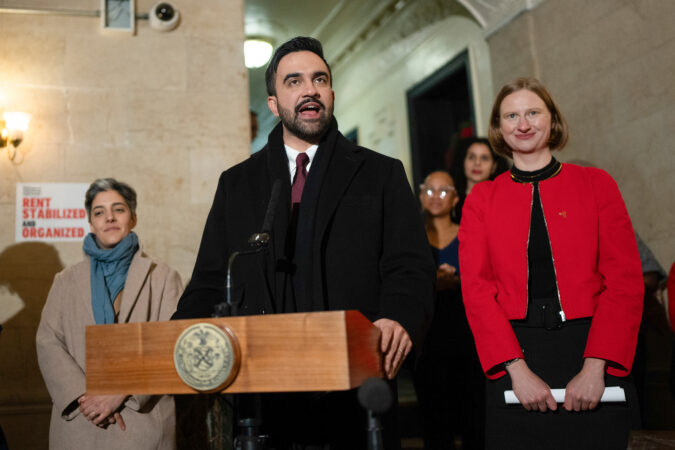
    NEW YORK — New York City Mayor Zohran Mamdani is standing behind a newly appointed housing official as she faces backlash for years-old social media posts, including messages that called for the seizure of private property and linked homeownership to white supremacy.

    Cea Weaver, a longtime tenant activist, was tapped by the Democrat last week to serve as executive director of the Mayor’s Office to Protect Tenants. The mayor has vowed to expand and empower the office to take “unprecedented” steps against negligent landlords.

    But in a sign of the high-level scrutiny on Mamdani’s administration, Weaver’s since-deleted posts have sparked condemnations from officials in the U.S. Department of Justice and the editorial board of The Washington Post.

    The posts, which were circulated on social media in recent days by critics of Mamdani, included calls to treat private property as a “collective good” and to “impoverish the *white* middle class.” A tweet sent in 2017 described homeownership as “a weapon of white supremacy masquerading as ‘wealth building public policy.’”

    Eric Adams, the city’s former mayor and a fellow Democrat, said the remarks showed “extreme privilege and total detachment from reality.”

    Asked about the controversy on Wednesday, Mamdani did not address the substance of Weaver’s posts but defended her record of “standing up for tenants across the city and state.”

    Weaver said in an interview with a local TV station that some of the messages were “regretful” and “not something I would say today.”

    “I want to make sure that everybody has a safe and affordable place to live, whether they rent or own, and that is something I’m laser-focused on in this new role,” she added.

    The discussion comes after Mamdani last month accepted the resignation of another official, Catherine Almonte Da Costa, after the Anti-Defamation League shared social media posts she made over a decade ago that featured antisemitic tropes.

    While Mamdani had said he was unaware of Da Costa’s messages, Weaver’s past social media posts were known to the administration, according to a mayoral spokesperson, Dora Pekec.

    Weaver previously led the Housing Justice for All coalition, which was widely credited with helping to convince state lawmakers to pass a sweeping package of tenant protections in 2019.

    As leader of the city’s tenant protection office, she would play a key role in achieving one of Mamdani’s most polarizing campaign pledges: identifying negligent landlords and forcing them to negotiate the sale of their properties to the city if they are unable to pay fines for violations.

    The “public stewardship” proposal has drawn consternation from landlord groups and skepticism from others in city government.

    But the early days of his administration have brought signs that the new mayor is not backing off on the idea.

    In a press conference immediately following his inauguration last week, Mamdani said the city would take “precedent-setting” action against the owner of a Brooklyn apartment building that owed the city money and was currently in bankruptcy proceedings.

    He then announced Weaver’s appointment, drawing loud cheers from the members of a tenants union gathered in the building’s lobby.

    “It is going to be challenging,” Weaver acknowledged. “New York is home to some of the most valuable real estate in the world. Everything about New York politics is about that fact.”

  • Bolsonaro leaves Brazilian prison to undergo medical examinations after fall from his bed

    Bolsonaro leaves Brazilian prison to undergo medical examinations after fall from his bed

    RIO DE JANEIRO — Former President Jair Bolsonaro was granted a brief leave Wednesday from his 27-year prison sentence for a coup attempt so that he could undergo medical tests at a hospital in the capital after he fell from his bed.

    Police escorted Bolsonaro, 70, from the federal police’s headquarters in Brasilia to the nearby DF Star hospital where he arrived at around midday for three brain tests.

    At about 4:30 p.m. local time, Bolsonaro’s wife, Michelle, said on Instagram that the exams had been carried out and that they were awaiting results. Her husband went back to prison, she said.

    Later, DF Star hospital said in a brief statement that the tests showed “mild soft-tissue thickening in the frontal and right temporal regions” due to the trauma, but that no additional treatment was needed.

    Bolsonaro fell in his cell overnight from Monday to Tuesday while sleeping. His wife, and Bolsonaro’s son Carlos, said on social media Tuesday that the far-right politician needed medical attention and expressed frustration that Bolsonaro hadn’t been sent to the hospital on Tuesday.

    In his decision authorizing the trip to the hospital Wednesday, Supreme Court Justice Alexandre de Moraes cited a health report conducted by the federal police on Tuesday. Bolsonaro reported mild head trauma, according to the report. Upon examination, the former Brazilian leader was found to be conscious and lucid, with a superficial cut to his face.

    De Moraes authorized a tomography, brain scan and a brain wave test requested by Bolsonaro’s lawyers. The Supreme Court justice said that his transfer to the hospital should be conducted in a “discreet manner,” and that federal police were responsible for Bolsonaro’s security and his return to prison.

    Bolsonaro had previously left the hospital and returned to prison last Thursday, a week after undergoing double hernia surgery.

    Bolsonaro has been hospitalized multiple times since being stabbed at a campaign event before the 2018 presidential election.

    Bolsonaro and several of his allies were convicted in September by a panel of Supreme Court justices of attempting to overthrow Brazil’s democratic system following his 2022 election defeat.

    The plot included plans to kill Lula, Vice President Geraldo Alckmin and de Moraes. There was also a plan to encourage an insurrection in early 2023.

    Bolsonaro was also convicted on charges that include leading an armed criminal organization and attempting the violent abolition of the democratic rule of law. He has denied any wrongdoing.

  • Two new ‘year-round’ public schools, with a special model and resources, are coming to Philadelphia

    Two new ‘year-round’ public schools, with a special model and resources, are coming to Philadelphia

    Two new schools are coming to the Philadelphia School District.

    Both schools, a K-8 and a high school, district officials said Wednesday, will have resources to help eliminate long-standing achievement and opportunity gaps for kids from underresourced communities.

    They’ll be part of the “North Philadelphia Promise Zone,” Superintendent Tony B. Watlington Sr. announced. Watlington said they would be the first schools in the United States to replicate the success of the acclaimed Harlem Children’s Zone, with the blessing of its founder, Geoffrey Canada,who pioneered a model that takes a birth-to-career approach to tackling generational poverty.

    Watlington said the schools would be “true year-round schools.” They would bring a new approach to the new Philadelphia public schools, where prior attempts to replicate the Harlem Children’s Zone blueprint have shown mixed results.

    Harlem Children’s Zone runs charters in New York City, but the proposed Philadelphia schools will be run by the district using the organization’s educational model, which includes extra resources and a longer school day and school year, as well as extensive social service supports.

    Members of the West Philadelphia Marching Orange & Blue perform before Philadelphia Mayor Cherelle L. Parker speaks on the state of Philadelphia schools during a gathering at Edison High School in Philadelphia, Wednesday, Jan. 7, 2026.

    “We’re going to be partners in opening these two state-of-the-art schools,” Watlington said at his state of the schools address, held Wednesday at Edison High School in North Philadelphia.

    The district has big hopes for the schools, which officials said will be opened in existing Philadelphia school buildings — no new school structures will be involved.

    “Not only will they get better, but get better faster than our district average. We’re going to make sure the school is staffed with the very best, most effective principals,” Watlington said. “We’re going to ensure that these schools are staffed with the very best, most effective teachers.”

    They will be schools of choice, meaning parents can opt into having their children attend rather than basing enrollment on where students live.

    The schools will also pull in Temple University; Watlington said that via the Temple Future Scholars program, “every single one of these graduates from this K-8 and high school” will be college-ready.

    Many details were not clear Wednesday, including when the schools will open, what the year-round model will look like, the exact relationship with Harlem Children’s Zone, how the schools will be funded, and who will staff them. The district said it could not give more details immediately.

    News of the new schools caught an important partner off guard. Arthur Steinberg, president of the Philadelphia Federation of Teachers, said Watlington’s speech was the first he heard of the initiative.

    “Any changes in working conditions must be negotiated with the PFT,” Steinberg said. “We will not agree to anything that requires members to work additional days or hours.”

    Watlington said the K-8 school will open first, and he has tapped Aliya Catanch-Bradley, the respected principal of Bethune Elementary in North Philadelphia, to lead the efforts to open the North Philadelphia Promise Zone schools.

    Catanch-Bradley said it was too soon to discuss the particulars about the schools, which will be built with significant community involvement.

    But, she said, North Philadelphia is a prime location for the cradle-to-career Harlem Children’s Zone model.

    “We know that it’s not a food desert, because food… deserts are natural,” she said of North Philadelphia. “It is food insecure by design, right? And so, we now know that you have a resource drought there, to which it’s going to take an intentional pouring of all types of resources to wrap around a community, to help expand and become a very successful ecosystem.”

    Philadelphia district officials will take time to study Harlem Children’s Zone, “but also to understand the landscape of Philadelphia, what needs to be augmented to echo the needs of this community,” Catanch-Bradley said.

    Mayor Cherelle L. Parker campaigned on the promise of year-round schools, and her administration has put extended-day, extended-year programs into 40 district and charter schools. But those programs are essentially before- and after-care and summer camps, paid for with city funds and offered free to 12,000 students, rather than traditional year-round education.

    Harlem Children’s Zone schools have longer school days and longer school years. It’s not clear what form the proposed North Philadelphia Promise Zone schools might take, and how these efforts would differ from prior attempts around the country to replicate the success of the Harlem Children’s Zone. Former President Barack Obama in 2010 highlighted the model and selected 20 communities, including Philadelphia, to start “Promise Neighborhood” programs that would improve access to housing, jobs, and education. Those efforts were met with varying degrees of success, and no schools opened in Philadelphia.

    Watlington’s new-school announcement capped a two-plus-hour, pep-rally-style event where he and others underscored progress the district has made in the past year — and since the superintendent came to Philadelphia four years ago.

    Philadelphia Mayor Cherelle Parker (left), Superintendent Tony B. Watlington Sr. (center), and school board president Reginald Streater during a ceremony on the state of Philadelphia schools at Edison High School on Wednesday.

    Other news from the state of Philadelphia schools event

    Parker, who led off the event, said she was pleased with the state of schools.

    “The school district has continued to make steady and meaningful progress,” Parker said. “Test scores are rising, attendance is rising. Dropout rates are declining, and those gains are real, and they reflect what happens when we invest in our students.”

    Parker emphasized her desire to have the city take over a list of abandoned district buildings. The school board took the first step in December, voting to authorize Watlington and his administration to begin negotiating with the city to do just that.

    Parker said that some of the buildings have been vacant for as long as 30 years. The district has not yet released a list of buildings to consider transferring, but the mayor said it includes at least 20 former schools.

    “I want you to be clear about what my goal and objective is,” Parker said. “It’s not OK for me to have 20, 21 buildings consistently vacant, red on the school district’s balance sheet, generating no revenue and not at all working at their best and highest use. We’re going to find a way to do what has never been done in the city of Philadelphia before — develop a plan for those persistently vacant buildings.”

    Watlington also ran down a laundry list of accomplishments, including ongoing fiscal stability and improvements on the National Assessment of Educational Progress, known as the nation’s report card.

    He said the district would “retire” its structural deficit completely by 2029-30 though declined to give details.

    He and Reginald Streater, president of the city’s school board, said the district still has a ways to go but has made strides. More than half of all district students still fail to meet grade-level standards in reading and math.

    But, Watlington said, “I can assure you we’re making progress. We’re going to double down. More for our children, not less. More opportunities, more access, more exposure, more good things to come in 2026.”

  • CIA turncoat Aldrich Ames, who sold U.S. secrets to the Soviets, dies in prison at 84

    CIA turncoat Aldrich Ames, who sold U.S. secrets to the Soviets, dies in prison at 84

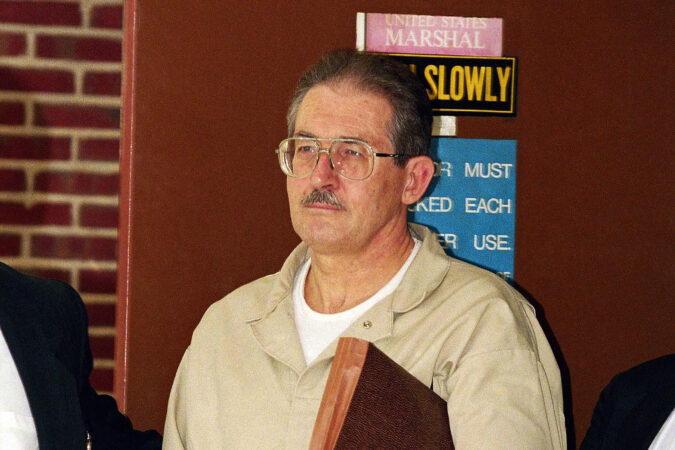
    WASHINGTON — CIA turncoat Aldrich Mr. Ames, who betrayed Western intelligence assets to the Soviet Union and Russia in one of the most damaging intelligence breaches in U.S. history, has died in a Maryland prison. He was 84.

    A spokesperson for the Bureau of Prisons confirmed Mr. Ames died Monday.

    Mr. Ames, a 31-year CIA veteran, admitted being paid $2.5 million by Moscow for U.S. secrets from 1985 until his arrest in 1994. His disclosures included the identities of 10 Russian officials and one Eastern European who were spying for the United States or Great Britain, along with spy satellite operations, eavesdropping and general spy procedures. His betrayals are blamed for the executions of Western agents working behind the Iron Curtain and were a major setback to the CIA during the Cold War.

    He pleaded guilty without a trial to espionage and tax evasion and was sentenced to life in prison without parole. Prosecutors said he deprived the United States of valuable intelligence material for years.

    He professed “profound shame and guilt” for “this betrayal of trust, done for the basest motives,” money to pay debts. But he downplayed the damage he caused, telling the court he did not believe he had “noticeably damaged” the United States or “noticeably aided” Moscow.

    “These spy wars are a sideshow which have had no real impact on our significant security interests over the years,” he told the court, questioning the value that leaders of any country derived from vast networks of human spies around the globe.

    In a jailhouse interview with The Washington Post the day before he was sentenced, Mr. Ames said he was motivated to spy by “financial troubles, immediate and continuing.”

    Mr. Ames was working in the Soviet/Eastern European division at the CIA’s headquarters in Langley, Va., when he first approached the KGB, according to an FBI history of the case. He continued passing secrets to the Soviets while stationed in Rome for the CIA and after returning to Washington. Meanwhile, the U.S. intelligence community was frantically trying to figure out why so many agents were getting discovered by Moscow.

    Mr. Ames’ spying coincided with that of FBI agent Robert Hanssen, who was caught in 2001 and charged with taking $1.4 million in cash and diamonds to sell secrets to Moscow. He died in prison in 2023.

    Mr. Ames’ wife, Rosario, pleaded guilty to lesser espionage charges of assisting his spying and was sentenced to 63 months in prison.