Category: News

Latest breaking news and updates

  • Shooter who killed Brown students and MIT professor planned attack for months, says DOJ

    Shooter who killed Brown students and MIT professor planned attack for months, says DOJ

    BOSTON — The man identified by law enforcement as the shooter who killed two Brown University students and an MIT professor had been planning the attack for at least six semesters, according to information released Tuesday by the U.S. Department of Justice.

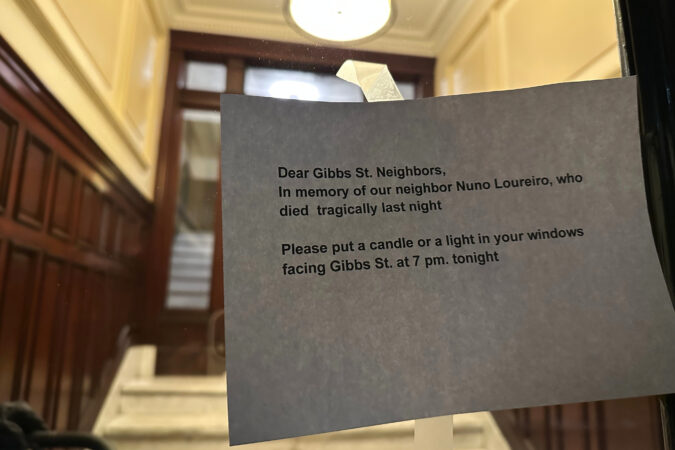
    Claudio Neves Valente, 48, a former Brown student and Portuguese national, was found dead in a New Hampshire storage facility after he killed two students and wounded nine others in an engineering building on Dec. 13. Two days later, he killed MIT professor Nuno F.G. Loureiro in his home in the Boston suburb of Brookline.

    Justice Department officials said Tuesday that during the search of the storage facility where Neves Valente’s body was found, the FBI recovered an electronic device containing a series of short videos made by Neves Valente after the shootings.

    In the recordings, the shooter admits in Portuguese that he had been “planning the Brown University shooting for a long time,” according to a press release. He did not provide a motive for targeting Brown or the MIT professor, with whom he attended school in Portugal decades ago.

    He said he felt he had nothing to apologize for. He also complained in the videos about injuring his eye in the shootings.

    “I’m not going to apologize because during my lifetime no one sincerely apologized to me,” he said.

    Neves Valente said his “only objective was to leave more or less” on his “own terms” and to ensure he “wouldn’t be the one who ended up suffering the most from all this.”

    “No, that cannot happen. So if you don’t like it, tough luck,” he said. Neves Valente called his execution of the murders “a little incompetent.”

    “But at least something was done,” he said.

    In the recording, he said he’d had the storage space where his body was found for about three years.

  • Fear grips Caracas as a new wave of repression is unleashed in Venezuela

    Fear grips Caracas as a new wave of repression is unleashed in Venezuela

    For a brief moment, some Venezuelans allowed themselves to celebrate.

    When they learned Saturday that strongman Nicolás Maduro had been seized by U.S. Special Forces, many group chats filled with messages of joy and relief. Some people cried. One family in Caracas opened a bottle of champagne they had bought months earlier and saved for a special occasion. After more than a decade of living under Maduro, there were cautious hopes for a different future.

    By Monday, however, those feelings had been replaced by more familiar ones: fear, dread, and uncertainty.

    Venezuela’s government has moved quickly to suppress any public expression of support for Maduro’s ouster, launching a nationwide crackdown that has included the detention of journalists, the arrest of civilians, and the deployment of armed gangs across the capital.

    “It feels like it did after the presidential elections in 2024,” said María, 55, who like others in this story spoke on the condition that they be identified by their first name, or on the condition of anonymity, for fear of reprisals. “We won, but we also lost,” she said, referring to the country’s last elections, in which Maduro claimed victory despite tallies showing the opposition had prevailed.

    The crackdown unfolded as Delcy Rodríguez, the country’s vice president, was sworn in as interim president Monday at the National Assembly. Senior military officials publicly pledged their loyalty to her — a signal that while the country had a new leader, the old power structure remained in place.

    At least 14 journalists and media workers were detained Monday — including 11 working for international outlets, according to the National Press Workers Union. Most, the union said, were held for several hours and later released, but several reported that military counterintelligence officers searched their phones. Many of the detentions took place near the National Assembly as Rodríguez took the oath of office in a ceremony overseen by her brother, Jorge Rodríguez, who heads the legislature.

    Authorities also moved against ordinary citizens — empowered by a “state of external commotion” decree that ordered Venezuela’s national, state, and municipal police forces to immediately search for and arrest anyone “involved in promoting or supporting the armed attack by the United States of America.” The decree, which entered into force Saturday but was published in full Monday, also suspended the right to protest and authorized broad restrictions on movement and assembly.

    In the western state of Mérida, two people in their 60s were arrested for shouting anti-government slogans and “celebrating the kidnapping of President Nicolás Maduro and First Lady Cilia Flores,” according to state police.

    Across Caracas, pro-government paramilitary groups known as “colectivos” — a hallmark of the informal security state built by former president Hugo Chávez and inherited by Maduro after his death — set up checkpoints, including along the Cota Mil highway that runs north of the city. Residents described being pulled over, questioned and forced to hand over their phones. Some said the armed men scrolled through their messages and social media, looking for anything that could be construed as support for the U.S. raid.

    “We’re texting each other routes to avoid,” said a Caracas resident. “You hear ‘don’t go there — they’re stopping cars with machine guns.’”

    In the wake of Maduro’s capture, President Donald Trump has said repeatedly that the United States is “running” Venezuela, though it is unclear what influence Washington is exerting on authorities in Caracas.

    Overseeing U.S. involvement in the country, Trump said, would fall to a small group of senior officials, including Secretary of State Marco Rubio, Defense Secretary Pete Hegseth, Deputy White House Chief of Staff Stephen Miller, — and himself. Venezuela, the president told NBC on Monday, was not in a position to hold elections.

    “We have to fix the country first,” he said. “We have to nurse the country back to health.”

    In a news conference Tuesday, Trump suggested that the Venezuelan government planned to shut down El Helicoide, a sprawling, spiral-shaped detention center in Caracas that has long been used to hold and torture dissidents, according to rights groups.

    Foro Penal, a local human rights group, has said more than 860 political prisoners remain in state custody.

    “Of course I have hope things could get better without Maduro,” a 30-year-old man in the capital told the Washington Post. “But from where I am, all I see is the same people who destroyed my country still in power. They’re still persecuting us. And we’re still afraid.”

    In an interview with Fox News’s Sean Hannity, opposition leader María Corina Machado — who left Venezuela in December to accept the Nobel Peace Prize in Norway — called the crackdown “really alarming” and urged the U.S. and the international community to monitor the situation. She described Rodríguez as “one of the main architects of torture, persecution [and] corruption.”

    Late Monday, as weary families bedded down, gunshots rang out near the Miraflores presidential palace. On social media, residents shared videos from their window of armed men in the streets; some speculated that a coup was underway.

    Hours later, the Communication and Information Ministry put out a statement saying police had fired warning shots after “drones flew over the area without authorization.”

    “The entire country is completely calm,” the statement said.
  • Gov. Josh Shapiro, Pa. Democratic lawmakers criticize Trump’s Jan. 6 rioter pardons on anniversary of Capitol attack

    Gov. Josh Shapiro, Pa. Democratic lawmakers criticize Trump’s Jan. 6 rioter pardons on anniversary of Capitol attack

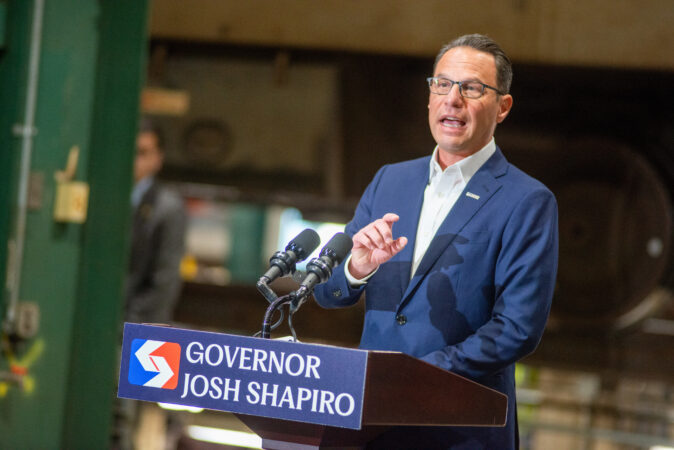
    Five years after rioters stormed the U.S. Capitol, Gov. Josh Shapiro and other Pennsylvania Democrats on Tuesday marked the anniversary of the Jan. 6, 2021, attack by sharply criticizing President Donald Trump.

    Trump, who was impeached for inciting the riot in the final days of his first administration, pardoned nearly every Jan. 6 defendant and commuted sentences for a handful of violent offenders as one of his first actions upon returning to office last year.

    “Law enforcement officers literally gave their lives to protect our country and our democracy — yet one of the first things Donald Trump did when he took office was pardon people who were convicted of assaulting police officers,” Shapiro said in a post on X Tuesday morning.

    “The President may not respect our law enforcement officers’ courage and commitment to service — but here in Pennsylvania, we remember the sacrifices they make and will always have their backs.”

    Shapiro played a key role as state attorney general in defending the 2020 election results in Pennsylvania in the weeks leading up to the attack, which took place the same day that Congress was certifying former President Joe Biden’s victory.

    His comments Tuesday came as he’s preparing to announce his reelection bid for governor. As Shapiro has built a national profile as a potential Democratic presidential contender in 2028, he has repeatedly criticized Trump and presented himself as an alternative vision of leadership.

    The president has continued to falsely claim he won Pennsylvania in 2020, including at his rally in Mount Pocono last month, even after he won the White House again in 2024.

    Trump has downplayed the events of Jan. 6, and on Tuesday the White House unveiled a webpage dedicated to the events, falsely describing the riot as a peaceful protest and blaming Capitol Police for the violence that unfolded.

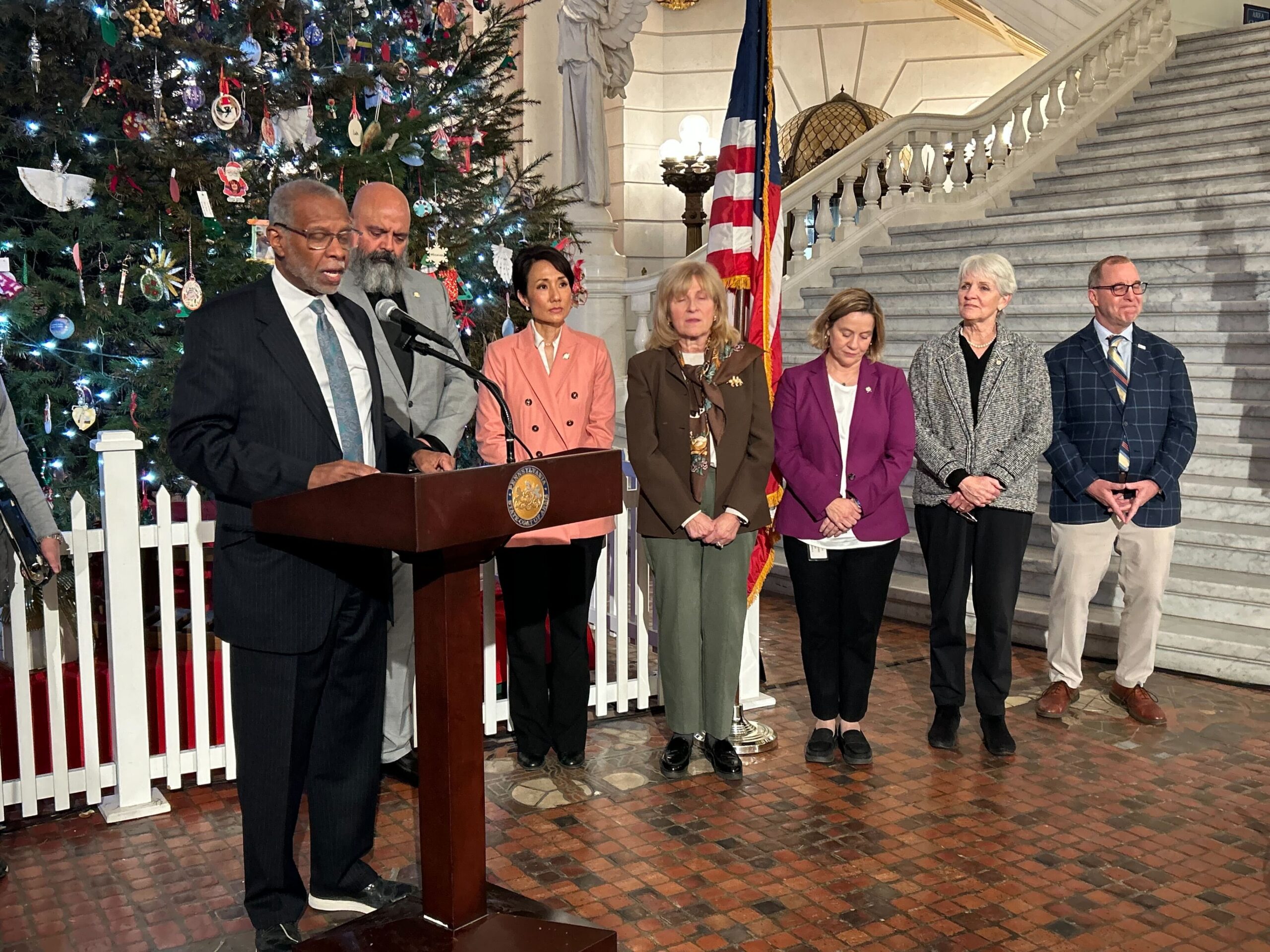
    Pennsylvania Senate Democrats hold an event in the state Capitol Tuesday to commemorate the Jan. 6, 2021, attack on the U.S. Capitol.

    Shapiro was one of several Democrats who marked the anniversary of the attack for the first time since Trump returned to office.

    State Rep. Malcolm Kenyatta, of Philadelphia, introduced a resolution alongside other House Democrats to designate Jan. 6 as the “Democracy Observance Day for Education, Remembrance, and Vigilance.”

    And Pennsylvania Senate Democrats held an event in the state Capitol Tuesday.

    State Sen. Art Haywood, who represents parts of Montgomery County and Philadelphia, described the events of Jan. 6, 2021, as an “attempted coup” orchestrated by Trump.

    He recounted the events in minute-by-minute detail drawing from what has been reported about the day, from Trump’s direction to rally-goers to go to the Capitol to former Vice President Mike Pence’s evacuation from the Senate chambers and rioters’ success breaking into offices.

    State Sen. Jay Costa, of Pittsburgh, said Tuesday’s anniversary event was aimed at drawing attention to the “lawlessness” of the day. Trump’s decision to pardon those involved, he said, was a “slap in the face” to law enforcement.

    Scores of Pennsylvanians were charged with taking part in the Jan. 6 attack, some of whom were convicted of committing acts of violence at the Capitol. In addition to the sweeping pardons eliminating the criminal cases of more than 1,500 people, the president also commuted the sentences of 14 people — including Philadelphia native Zach Rehl, the leader of the local far-right Proud Boys chapter who was convicted of seditious conspiracy and sentenced to 15 years in prison.

    Costa contended that other incidents of political violence in the years that have followed could be traced back to Jan. 6.

    “We cannot pick and choose, as our president has done, when we think about what we’re going to do and say about our law enforcement officers,” he said. “We need to stand with them all the time.”

  • A third person has died following the fire at a Bucks County nursing home

    A third person has died following the fire at a Bucks County nursing home

    A third person has died following the fire at a Bucks County nursing home that claimed the lives of two other people and injured 20 others days before Christmas.

    Bristol Township identified resident Patricia Mero, 66, as the latest death following the fire that destroyed parts of the Bristol Health & Rehab Center in Bristol Township on Dec. 23. Mero died Monday morning, according to the Bucks County Coroner’s Office. The cause of death was listed as a chest trauma; the manner of death an accident.

    Nurse Muthoni Nduthu and a woman whom Bristol Township Police identified as Ann Reddy, another resident, were also killed in the fire.

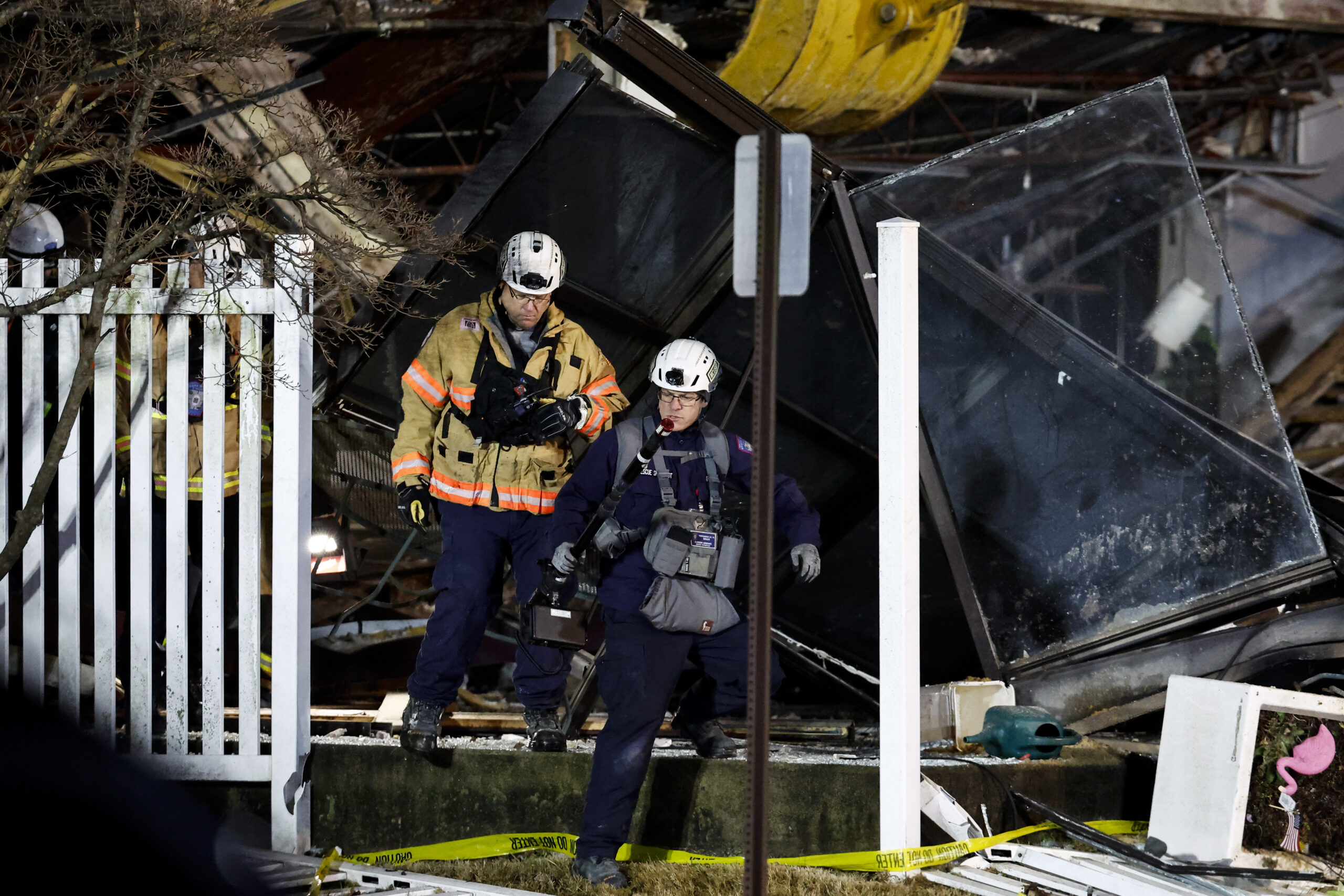
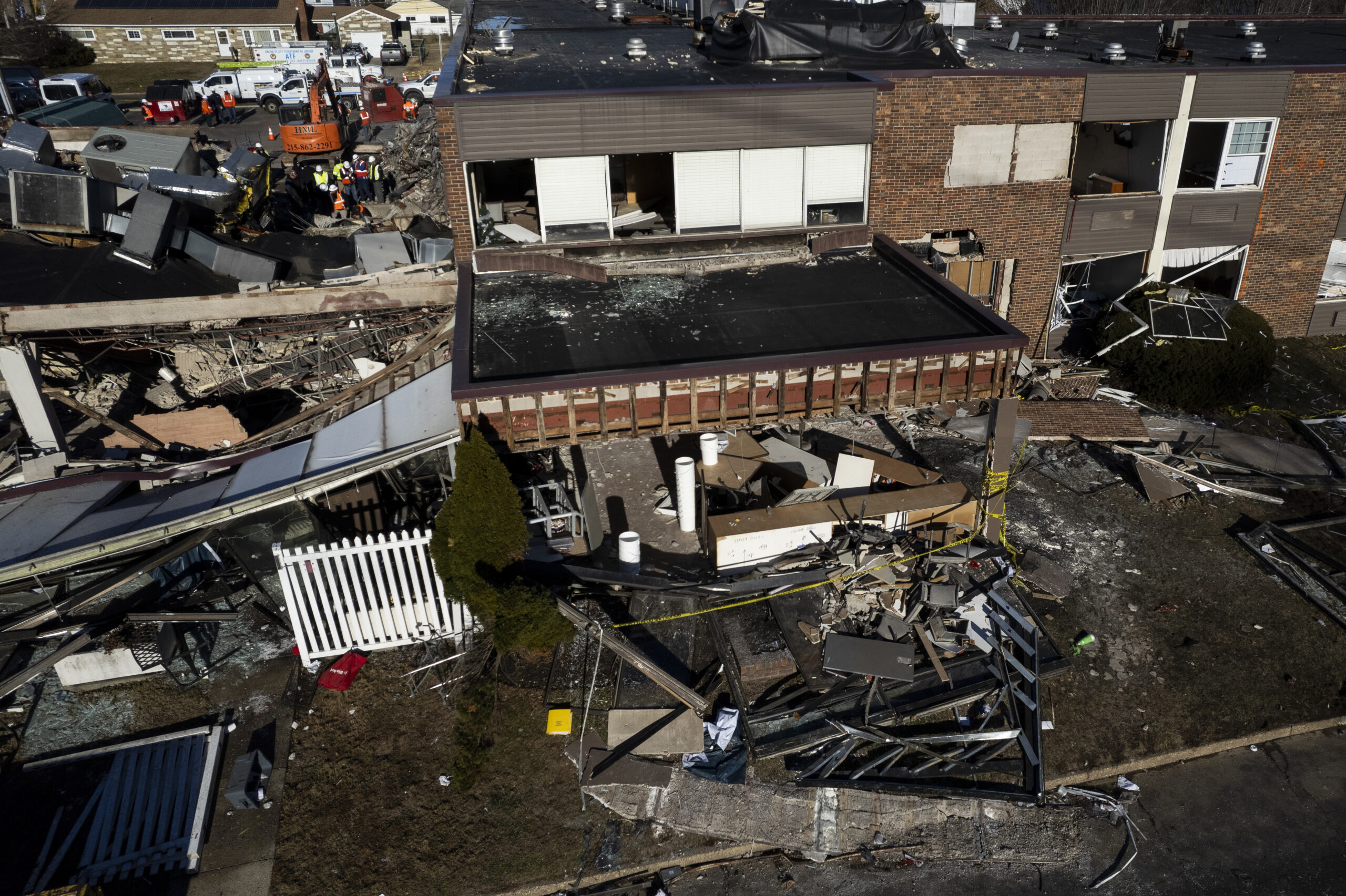
    First responders work the scene of an explosion and fire on Dec. 23, 2025, at Bristol Health & Rehab Center.

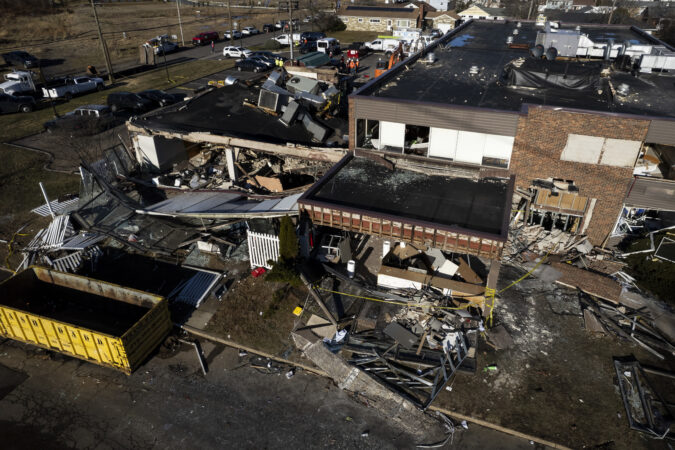
    An explosion occurred at the nursing home in the early afternoon on Dec. 23, flattening a section of the building that collapsed the first floor and sent people and debris tumbling into the basement. Bristol Fire Chief Kevin Dippolito said that at one point, a heavy odor of gas forced firefighters out of the building, only for another explosion to go off 30 seconds later.

    Investigators work the scene at Bristol Health & Rehab Center on Dec. 24, 2025 in Bristol Township.

    Many residents and visitors of the 174-bed nursing home reported the smell of gas in the days leading up to the disaster. Additionally, Peco had visited the nursing home hours before the explosion.

    The National Transportation Safety Board is leading an investigation into the cause of the fire, while the owners of the nursing home, Saber Healthcare Group, Peco, and others are being sued for their alleged negligence in the fiery explosion.

    On Monday, the NTSB said it had completed on-scene work in Bristol and would release a preliminary report on its findings by early February.

    The investigation into the fire will likely take months, with experts telling The Inquirer that federal investigators would focus on Peco and the nursing home operator’s actions leading up to the explosion.

  • The trolley tunnel is still closed as SEPTA tests repairs. When will it reopen?

    The trolley tunnel is still closed as SEPTA tests repairs. When will it reopen?

    Philadelphia’s trolley tunnel has been closed for two months, but SEPTA now is saying that it has completed most necessary repairs and could reopen the connection between Center City and West Philadelphia soon.

    Crews currently are running trolleys through the tunnel to test fixes for damaged overhead wires and other equipment and to decide when it is safe for normal service to resume.

    “We’re pretty close,” SEPTA spokesperson Andrew Busch said Tuesday.

    About 60,000 riders traveled daily through the tunnel between 13th Street and its West Philadelphia portal at 40th Street before SEPTA closed it in early November.

    Since then, people have had to use slower shuttle bus service or the Market-Frankford El as alternatives.

    At issue is a U-shaped brass part called a slider that carries carbon, which acts as a lubricant on the copper wires above the tracks that carry the electricity that powers the trolleys.

    Earlier in the fall, SEPTA replaced its usual 3-inch sliders with 4-inch models in an effort to reduce maintenance costs, but the carbon in the longer units wore out sooner than thought, causing metal-on-metal contact that damaged the overhead wires.

    The slider switch was meant to prolong their lifespan, but failed to work. Inside the tunnel, where there are more curves on the tracks and more equipment holding the wire to the ceiling, the new sliders and carbon burned through faster than earlier tests indicated.

    There were two major incidents when trolleys were stranded in the tunnels. On Oct. 14, 150 passengers were evacuated from one vehicle and 300 were evacuated from a stalled trolley on Oct. 21.

    The Federal Transit Administration on Oct. 31 ordered SEPTA to inspect the overhead catenary system along all its trolley routes.

    The directive came in response to four failures of the catenary system in September and October, including the tunnel evacuations.

    SEPTA has had to replace about 5,000 feet of damaged wire and make other repairs. It also switched back to 3-inch sliders.

    On Nov. 7, SEPTA shut down the tunnel to deal with the issue, which had cropped up again, then reopened it on the morning of Nov. 13, thinking it was solved. But it discovered further damage to the catenary system and the tunnel was closed at the end of the day.

    Other potential reopening dates were announced but postponed.

    This story has been updated to correct the amount of wire replaced in the tunnel.

  • Margaret Dupree, longtime funeral director and teacher’s aide, has died at 104

    Margaret Dupree, longtime funeral director and teacher’s aide, has died at 104

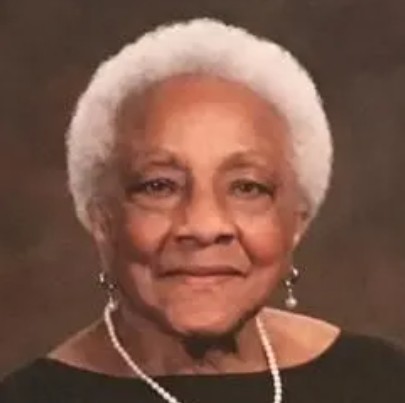
    Margaret Dupree, 104, of Philadelphia, cofounder, director, and president of Dupree Funeral Home Inc. at 28th and Diamond Streets in North Philadelphia, former teacher’s aide for the School District of Philadelphia, beautician, and mentor, died Monday, Dec. 15, of age-associated decline at Thomas Jefferson University Hospital.

    Mrs. Dupree and her husband, Troy, established the Dupree Funeral Home in 1955, and she became sole owner and president when he died in 1987. Her son Kenneth joined her as supervisor, and together, for nearly 40 years, they conducted thousands of funerals and oversaw a building expansion in 2000 and renovation in 2003.

    Most often, Mrs. Dupree supervised the books and answered the office telephone. Her son handles the funeral arrangements. “She was very meticulous and organized,” her son said. “She continued our legacy and served with integrity.”

    In the 1960s and ‘70s, Mrs. Dupree told The Inquirer in 1999, funerals were held at night because most people worked during the day. So she and her husband had day jobs, too. She was a reading and math aide at William Dick and Richard R. Wright Elementary Schools. He worked for the telephone company.

    Mrs. Dupree earned a beautician’s license after graduating from Philadelphia High School for Girls in 1941.

    She earned a beautician’s license after graduating from Philadelphia High School for Girls in 1941 and worked at her mother’s beauty shop at 13th Street and Susquehanna Avenue for a while. She became licensed as a funeral director in 1949 and met her husband when they were interns at a funeral home in South Philadelphia.

    “Her lifelong commitment to funeral service stands as a rare and remarkable testament to dedication, professionalism, and service to families during their most sacred moments,” her family said in a tribute.

    Mrs. Dupree was among the oldest licensed funeral directors in the country, her family said, and she told The Inquirer she went into the business because morticians and barbers were so respected when she was a child. “They were the people who were looked up to,” she said.

    She used her makeup and beauty expertise to augment the cosmetic work on bodies in the mortuaries and said in 1995: “In the early stages, I liked doing reconstructive work. I relished doing the ‘invisible stitch.’”

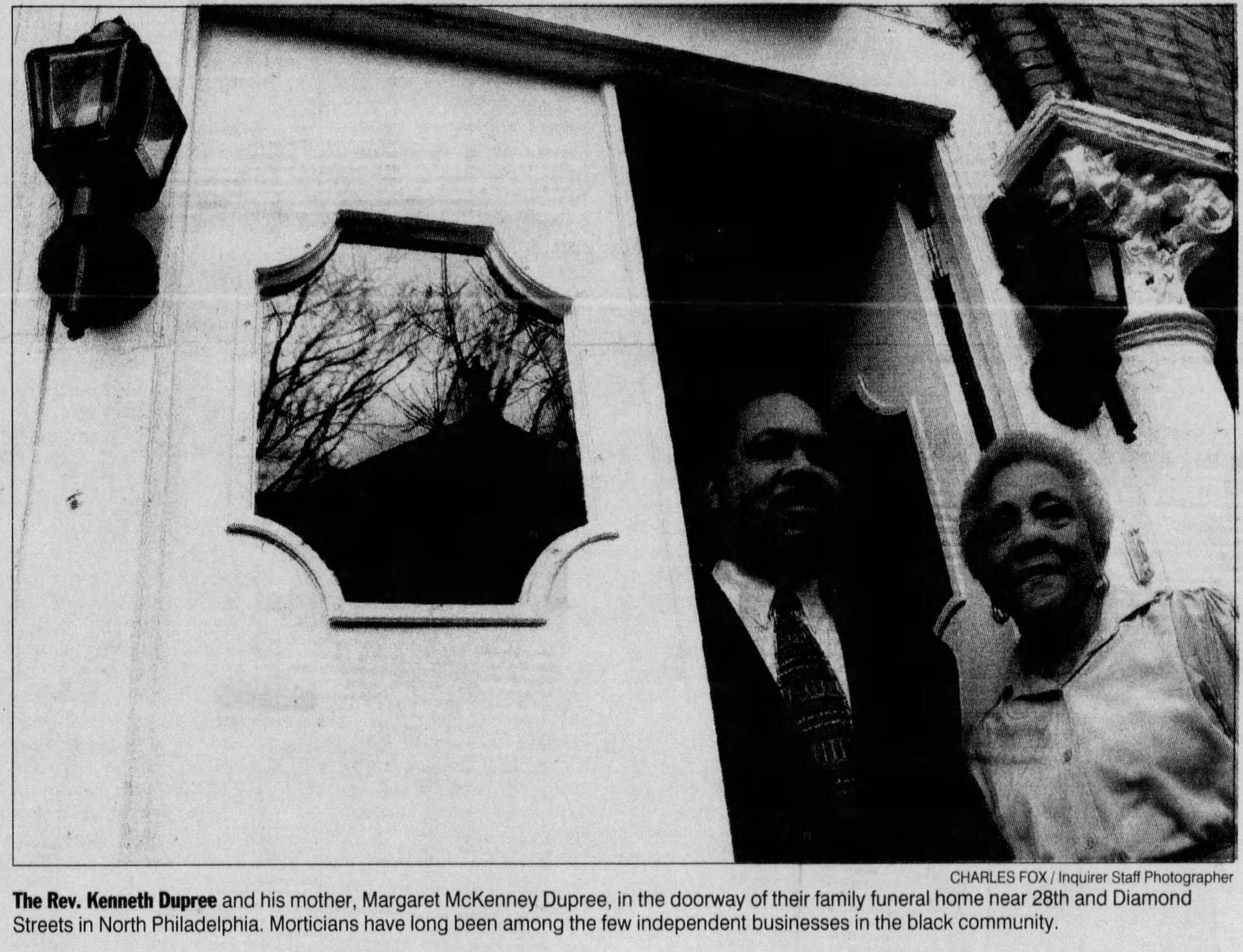
    This photo of Mrs. Dupree (right) and her son Kenneth appeared in The Inquirer in 1999.

    Her family called her career “a powerful symbol of her lifelong devotion to the calling of funeral service” and praised her “mentoring others, serving families with dignity, and remaining deeply connected to the profession she loved.”

    She was a charter member of Child’s Memorial Baptist Church, known now as Keeping It Real Christian Fellowship, and supported affordable housing initiatives in North Philadelphia. “I like for women to have a place to raise their children,” she told The Inquirer in 1998 regarding a proposed housing renewal project. “If you give people a place to work and take care of their children, then the whole neighborhood will be improved.”

    Friends and former colleagues called her “funny and sweet” and a “history maker” in online tributes. One friend said she was “a woman of grace, and her radiant smile always was contagious.” Another said: “She has had a positive impact on so many Philadelphians.”

    Margaret Alma McKenney was born July 8, 1921, in Belvedere, S.C. She relocated with her family to North Philadelphia when she was 5 and grew up at 13th and Diamond Streets.

    Mrs. Dupree doted on her grandchildren and great-grandchildren.

    During World War II, she worked for the Army Signal Corps and at the Frankford Arsenal. Afterward, she earned her funeral director’s license at the old Eckels College of Mortuary Science in Philadelphia.

    She married Troy Dupree in 1951, and they had daughters Melanie and Carrie, and sons Troy Jr. and Kenneth. For years, she reared the children, worked at the funeral home, and helped out at her mother’s shop.

    Later, she doted on her grandchildren and great-grandchildren, and a friend said online: “I am a better grandma having watched from one of the best to ever do it.”

    Mrs. Dupree enjoyed knitting sweaters for her children, solving cryptograms in the newspaper, and traveling with family and friends to Bermuda, Africa, and elsewhere. She always, even at restaurants, her son Kenneth said, ate her dessert first.

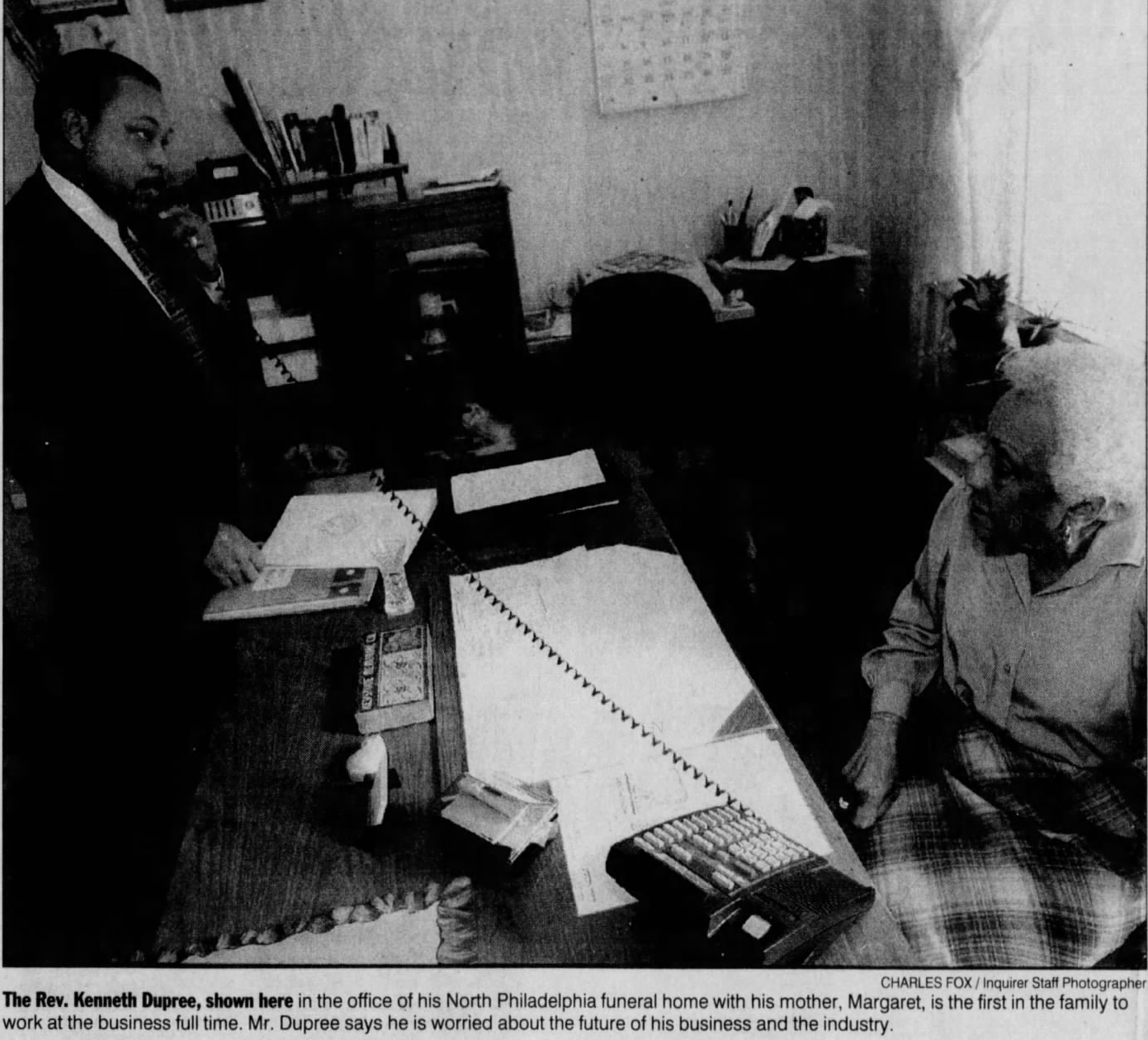
    Mrs. Dupree (right) sits at her office desk while her son Kenneth talks on the phone in a photo that was published in The Inquirer in 1999.

    “She had a multifaceted personality,” her son Kenneth said. “She was a comedian, an organizer, and a fan of the underdog.”

    Her family said: “Margaret lived a life rooted in service, compassion, and purpose. Funeral service and education were never just her profession. It was her calling.”

    In addition to her children, Mrs. Dupree is survived by six grandchildren, six great-grandchildren, and other relatives. Two sisters and five brothers died earlier.

    Services were held on Dec. 28 and 29.

    Donations in her name may be made to Project Home, Development Dept., 1515 Fairmount Ave., Philadelphia, Pa. 19130.

  • U.S. mandates more foreign travelers to pay $15,000 visa bond deposits

    U.S. mandates more foreign travelers to pay $15,000 visa bond deposits

    Foreign travelers from seven additional countries are now required to pay up to $15,000 for a reimbursable bond when applying for a U.S. visitor visa, as the Trump administration continues to tighten entry requirements to the country.

    As of Jan. 1, Bhutan, Botswana, the Central African Republic, Guinea, Guinea-Bissau, Namibia, and Turkmenistan are required to pay the assurances as part of a State Department pilot program launched in August. Thirteen countries are now affected by the program, most of them in Africa.

    The bond deposits — which the department has said are aimed at deterring visitors from staying in the United States longer than they are allowed for business or tourism — range between $5,000 and $15,000, and do not guarantee that a visa will be issued. The payment will be refunded if visitors depart the U.S. within the time specified on their visas, according to the policy.

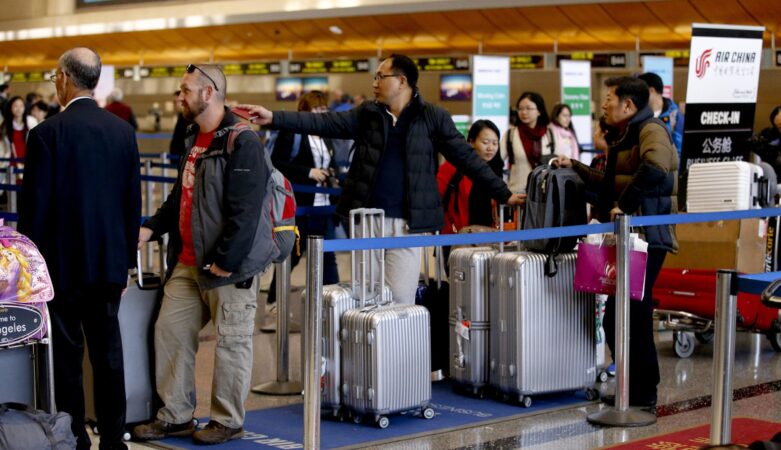
    Applicants whose visas are approved can only enter the U.S. from three designated airports: Boston Logan International Airport, New York’s John F. Kennedy International Airport, and Washington Dulles International Airport, the State Department notice said. The program is not applicable to those on student visas.

    Travelers from 42 countries that are part of the visa waiver program — who don’t need a visa to enter the U.S. — including much of Europe, Australia, Qatar, and Israel, are also exempt.

    The administration has said the program is aimed at countries with high visa overstay rates, citing a Department of Homeland Security report to Congress. However, some of the countries newly added to the list have low overstay numbers. The department suspects that two of the 137 visitors from the Central African Republic (or about 2%) overstayed their nonimmigrant business and tourist visas in fiscal year 2024, while about 4% from Namibia are suspected of overstaying.

    The pilot was launched in August with Malawi and Zambia. An estimated 234 visitors from Malawi (or 14%) overstayed their nonimmigrant visas in fiscal year 2023, as did 365 (11%) from Zambia. Four countries were added to the list in October.

    For couples or families, the potential up-front cost of $10,000 or $15,000 per person could be prohibitive. At the time of its launch, the State Department predicted the year-long pilot program would cost travelers around $20 million, based on 2,000 potential travelers paying an average bond of $10,000.

    The State Department had planned a six-month visa bond pilot in 2020, but did not implement it as global travel dwindled during the coronavirus pandemic.

  • Iran hospital raid fuels protest anger as crackdown kills 29

    Iran hospital raid fuels protest anger as crackdown kills 29

    Iran’s government ordered an investigation into clashes between protesters and riot police at a hospital in the country’s west as a video emerged online showing another hospital being hit with tear gas by security forces.

    Video posted to social media on Tuesday purportedly showed the courtyard of Sina Hospital submerged in tear gas smoke. The footage cannot be verified by Bloomberg but the hospital is near the capital’s Grand Bazaar, where a fresh bout of protests and clashes with police erupted on Tuesday, according to the Associated Press.

    Security forces fired tear gas at demonstrators in the sprawling market — where unrest began on Dec. 28 — who had shuttered their businesses and were staging a sit-in at the trading hub, the AP said, citing witnesses. Unverified social media footage also appeared to show police rushing crowds in the bazaar’s surrounding streets and in one of its main arteries.

    The U.S.-based Human Rights Activists News Agency said Monday that at least 29 people have been killed in provinces including Lorestan, Fars, and Kurdistan and more than 1,200 people arrested since a sharp currency decline triggered demonstrations in Tehran that later spread to other cities.

    On Sunday, videos emerged on social media appearing to show security forces storming the Imam Khomeini Hospital in the western city of Ilam and firing tear gas inside. The footage fueled even more public anger at the authorities, prompting President Masoud Pezeshkian to order the investigation. Officials haven’t yet responded to the incident at the hospital in Tehran.

    The protests have divided Iran’s leadership over how to respond. While Pezeshkian, a political moderate and a former heart surgeon, has described protesters’ demands as legitimate, judiciary chief Gholam-Hossein Mohseni Ejei has warned that “no leniency or tolerance” would be shown toward protesters and vowed swift trials, according to the official Mizan news agency.

    “Rioters can no longer claim to have been misled,” Ejei said, accusing the U.S. and Israel of openly backing the unrest. “There is now no room for any concessions toward rioters and instigators of unrest.”

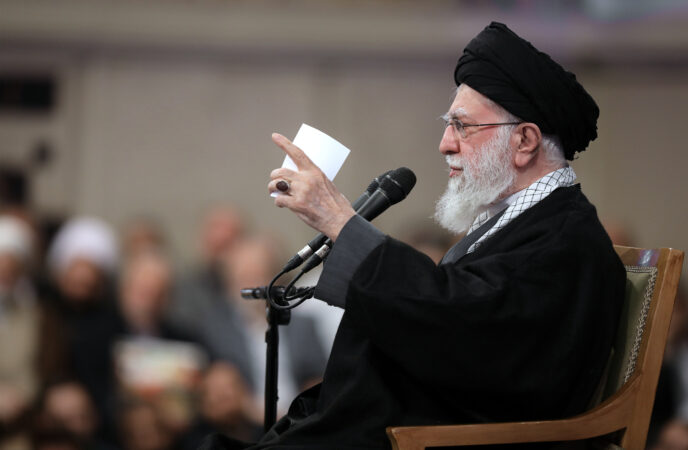
    Supreme Leader Ayatollah Ali Khamenei, who has the final say on most state matters, said Saturday that “rioters must be put in their place.”

    The protests are the biggest to rock Iran since nationwide unrest in 2022 over the death of a young woman, Mahsa Amini, in police custody. But they don’t yet represent a threat to the Islamic Republic’s security, Eurasia Group analysts wrote in a report last week.

    The unrest comes amid deteriorating living conditions in Iran, where high inflation, rising costs and a weak currency have fueled growing public dissatisfaction.

    The government has announced measures to ease the frustration including a monthly cash subsidy of 10 million rials (roughly $7) for each member of every household. It also appointed a new central bank governor to stabilize the declining rial.

    The subsidy is part of a broader “livelihood plan” that’s aimed at offsetting the rising cost of basic goods like cooking oil, milk, sugar, and meat, government spokeswoman Fatemeh Mohajerani said on Monday.

    Iran’s currency has dropped by around 45% on the black market in the past year. It trades at roughly 1.5 million against the dollar, according to bombast, a website that tracks the currency.

  • Congress has four weeks to dodge another shutdown

    Congress has four weeks to dodge another shutdown

    Lawmakers are back in Washington this week for a four-week sprint to finish funding the government before the current spending law runs out on Jan. 30.

    If they fail, they will need to pass another short-term extension or spark another government shutdown just two and a half months after the last one, the longest funding lapse in U.S. history.

    Funding the government usually requires passing 12 individual bills. Lawmakers approved three as part of a deal to end last fall’s shutdown, and they also extended current funding levels for the rest of the government into January. Those levels were last set in March 2024.

    But it will be challenging to finalize the remaining bills, which have not yet been formally negotiated between the House and the Senate or approved by congressional leaders.

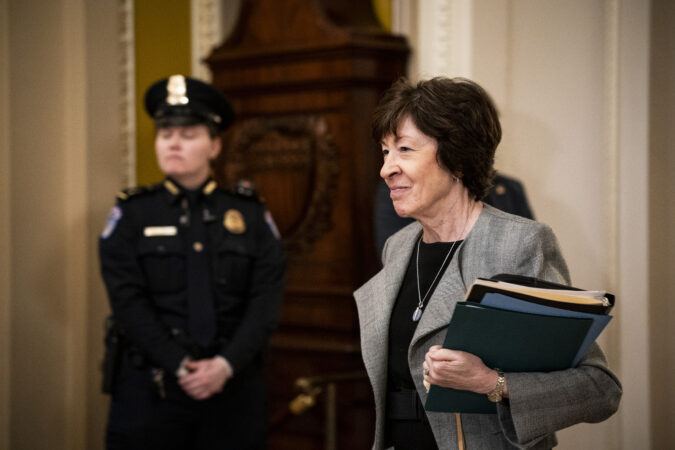
    The two Appropriations Committee chairs, Rep. Tom Cole (R., Okla.) and Sen. Susan Collins (R., Maine), announced in late December that they had finally reached an agreement on the total spending level they’ll shoot for in the remaining bills. They did not reveal the overall cost, but Cole said it is lower than the amount if Congress were to pass another funding extension, known as a continuing resolution.

    “This pathway forward aligns with President [Donald] Trump’s clear direction to rein in runaway, beltway-driven spending,” Cole said in a statement. “We will now begin expeditiously drafting the remaining nine full-year bills to ensure we are ready to complete our work in January.”

    From there, appropriators must navigate political pressures from their right and left: Fiscal hawks, including many in the conservative House Freedom Caucus, insist that funding levels for most agencies should not be higher than the last fiscal year.

    “I believe that we should begin to control our federal deficit and runaway federal debt by keeping this year’s discretionary spending level at or below last year’s level,” said House Freedom Caucus chairman and senior Appropriations Committee member Rep. Andy Harris (R., Md.) in a statement.

    But Democrats must approve any funding agreement, which has to receive at least 60 votes in the Senate to bypass the filibuster. Republicans control the upper chamber 53-47.

    Sen. Patty Murray of Washington, the top Democrat on the Senate Appropriations Committee, slammed the chamber’s newly released Homeland Security spending bill in December, calling it “partisan” and pledging to fight for accountability in Trump’s “out-of-control” DHS.

    The Senate has spent weeks attempting to pass a five-bill appropriations package that had only been negotiated in that chamber. The bill needed consent from all 100 senators to advance, and several conservative senators held up action for weeks over billions of dollars in earmarks tucked into the bills. (The House proposals also include billions in earmarks.)

    Those senators eventually relented, and the chamber was poised to vote on the package right before leaving town for the winter break, but two Democratic senators blocked it — demanding funding be reinstated for the National Center for Atmospheric Research, a Colorado-based research organization that Trump has moved to eliminate.

    The Senate package would tie together two major government funding bills — covering defense, labor, education, and health and human services agencies — with three other bills to fund the departments of Interior, Transportation, Housing and Urban Development, Commerce, Justice, and science-related agencies.

    It would appropriate $1.3 trillion, making up the vast majority of discretionary federal government spending.

    Cole has said that the Senate’s five-bill package would be too big to pass the lower chamber. He suggested passing the remaining nine appropriations bills in three separate three-bill packages in January when lawmakers return, beginning with bills covering the Commerce and Justice Departments, the Interior Department and agencies covering energy and water.

    The political minefield ahead may mean lawmakers once again turn to a funding extension rather than face another shutdown.

    “I don’t want another CR, I don’t think Mr. Cole wants another CR,” said Rep. Rosa DeLauro of Connecticut, the top Democrat on the House Appropriations Committee. “Let’s go. Let’s get the bills done.”

    Congress is supposed to pass all 12 appropriations bills before government funding runs out at the end of each fiscal year on Sept. 30.

    But lawmakers’ inability to adhere to that process is not new: Congress has only passed all its spending bills before the deadline four times in recent decades. Instead, most spending bills in modern history have been approved in one big package known as an “omnibus” right before the holiday break.

    House Speaker Mike Johnson (R., La.) pledged to stop that practice. The political complications of passing all 12 bills separately, however, has made that difficult to achieve. Instead, lawmakers have extended funding levels first approved under President Joe Biden multiple times, and Republicans have passed supplemental spending for their immigration and defense priorities through a party-line tax and spending bill.

  • Danish prime minister says a U.S. takeover of Greenland would mark the end of NATO

    Danish prime minister says a U.S. takeover of Greenland would mark the end of NATO

    COPENHAGEN, Denmark — Danish Prime Minister Mette Frederiksen said Monday an American takeover of Greenland would amount to the end of the NATO military alliance. Her comments came in response to U.S. President Donald Trump’s renewed call for the strategic, mineral-rich Arctic island to come under U.S. control in the aftermath of the weekend military operation in Venezuela.

    The dead-of-night operation by U.S. forces in Caracas to capture leader Nicolás Maduro and his wife early Saturday left the world stunned, and heightened concerns in Denmark and Greenland, which is a semiautonomous territory of the Danish kingdom and thus part of NATO.

    Frederiksen and her Greenlandic counterpart, Jens Frederik Nielsen, blasted the president’s comments and warned of catastrophic consequences. Numerous European leaders expressed solidarity with them.

    “If the United States chooses to attack another NATO country militarily, then everything stops,” Frederiksen told Danish broadcaster TV2 on Monday. “That is, including our NATO and thus the security that has been provided since the end of the Second World War.”

    20-day timeline deepens fears

    Trump called repeatedly during his presidential transition and the early months of his second term for U.S. jurisdiction over Greenland, and has not ruled out military force to take control of the island. His comments Sunday, including telling reporters “let’s talk about Greenland in 20 days,” further deepened fears that the U.S. was planning an intervention in Greenland in the near future.

    Frederiksen also said Trump “should be taken seriously” when he says he wants Greenland. “We will not accept a situation where we and Greenland are threatened in this way,” she added.

    Nielsen, in a news conference Monday, said Greenland cannot be compared to Venezuela. He urged his constituents to stay calm and united.

    “We are not in a situation where we think that there might be a takeover of the country overnight and that is why we are insisting that we want good cooperation,” he said.

    Nielsen added: “The situation is not such that the United States can simply conquer Greenland.”

    Ask Rostrup, a TV2 political journalist, wrote on the station’s live blog Monday that Mette previously would have flatly rejected the idea of an American takeover of Greenland. But now, Rostrup wrote, the rhetoric has escalated so much that she has to acknowledge the possibility.

    Trump slams Denmark’s security efforts in Greenland

    Trump on Sunday also mocked Denmark’s efforts at boosting Greenland’s national security posture, saying the Danes have added “one more dog sled” to the Arctic territory’s arsenal.

    “It’s so strategic right now,” Trump had told reporters Sunday as he flew back to Washington from his home in Florida. “Greenland is covered with Russian and Chinese ships all over the place.”

    He added: “We need Greenland from the standpoint of national security, and Denmark is not going to be able to do it.”

    But Ulrik Pram Gad, a global security expert from the Danish Institute for International Studies, wrote in a report last year that “there are indeed Russian and Chinese ships in the Arctic, but these vessels are too far away to see from Greenland with or without binoculars.”

    U.S. space base in northwestern Greenland

    Greenlanders and Danes were further rankled this weekend by a social media post following the raid by a former Trump administration official turned podcaster, Katie Miller. The post shows an illustrated map of Greenland in the colors of the Stars and Stripes accompanied by the caption: “SOON.”

    “And yes, we expect full respect for the territorial integrity of the Kingdom of Denmark,” Ambassador Jesper Møller Sørensen, Denmark’s chief envoy to Washington, said in a post responding to Miller, who is married to Trump’s influential deputy chief of staff Stephen Miller.

    The U.S. Department of Defense operates the remote Pituffik Space Base in northwestern Greenland. It was built following a 1951 defense agreement between Denmark and the United States. It supports missile warning, missile defense, and space surveillance operations for the U.S. and NATO.

    On Denmark’s mainland, the partnership between the U.S. and Denmark has been long-lasting. The Danes buy American F-35 fighter jets and just last year, Denmark’s parliament approved a bill to allow U.S. military bases on Danish soil.

    Critics say the vote ceded Danish sovereignty to the U.S. The legislation widens a previous military agreement, made in 2023 with the Biden administration, where U.S. troops had broad access to Danish air bases in the Scandinavian country.