A Lower Gwynedd man has been charged with the attempted murder of a law enforcement officer after authorities say he struck a Plymouth Township police officer with his car multiple times before fleeing the scene.
Dalton Lee Janiczek, 21, faces multiple felony charges, including attempted murder of a law enforcement officer, aggravated assault, and fleeing or attempting to elude a police officer.
Around 10:19 a.m. on Friday, Janiczek fled in a white Mercedes-Benz G-Wagon from an attempted traffic stop by Springfield Township police officers, according to police. The officers did not pursue but instead broadcast information about the incident to neighboring police departments.
Around noon, Sgt. Jon Bleuit of the Whitpain Township Police Department was out on patrol when he heard a radio transmission about the attempted stop, police said.
Earlier that day, Bleuit had received information that Janiczek had been involved in an incident in Chester County where he “threatened to blow up a police department,” police said. Bleuit and the Whitpain Township Police Department were “familiar with Janiczek” and his SUV, according to police. There was no warrant out for Janiczek’s arrest at the time.
Several minutes after Bleuit heard the radio transmission, he saw Janiczek driving and attempted to stop him for a traffic violation, police said. Janiczek allegedly drove over a center concrete median barrier and drove off again. Bleuit did not attempt to follow Janiczek and also relayed the information to neighboring departments.
At 12:39 p.m., a Plymouth Township police officer, whom police did not identify, responded to the Doubletree Hotel in the township, where he saw the Mercedes G-Wagon driven by Janiczek, police said.
The officer turned on his emergency lights. Within seconds, police said, Janiczek reversed his SUV, hitting the police officer’s car several times. The officer got out of his car, drew his firearm, and started yelling at Janiczek to stop the car and show his hands.
In response, Janiczek allegedly accelerated directly at the officer, trying to strike him. The officer discharged his firearm at least five times toward the front windshield of Janiczek’s car, police said. Janiczek struck the officer, causing him to fall to the ground and start bleeding out of his leg, police said. Janiczek then drove away briefly before allegedly striking the officer three more times as the officer lay on his back attempting to apply a tourniquet.
The officer was airlifted to a hospital in Philadelphia with severe leg injuries. As of Saturday afternoon, he was in intensive care and would require multiple surgeries for his injuries, police said.
The incident was captured by bodycam footage and video taken by a bystander at the hotel, police said.
After leaving the Doubletree lot, officials say, Janiczek fled the area and began traveling southbound on Walton Road. A Plymouth Township police car with its emergency lights on approached northbound on Walton Road. Janiczek allegedly crossed the double yellow line, striking the police car and causing it to strike another police car. Janiczek continued to travel southbound in the northbound lane, where he struck a stopped Plymouth police car head-on, injuring a Plymouth Township police sergeant.
The sergeant, who was not identified, was taken to a local hospital for injuries to his legs. Both injured officers are in stable condition, according to a news release from the Montgomery County District Attorney’s Office.
Janiczek was taken into custody after striking the sergeant’s car. According to police, Plymouth Township Officer Mike Watts said he heard Janiczek say, “Put me in the car or I will kill you,” as officers took him into custody. Janiczek was treated at Jefferson Abington Hospital for injuries, including a graze wound to his head.
Janiczek was arraigned on Saturday by Judge Thomas P. Murt, who denied bail. A preliminary hearing before Judge Jodi L. Griffis is scheduled for Nov. 4.
Before Friday’s incident, Janiczek had been charged with driving violations multiple times in both Pennsylvania and Arizona, including careless driving, driving without a license, and driving an unregistered vehicle. Authorities say Janiczek had been involved in several traffic incidents within the last week where he had fled from police.
On the first day of early in-person voting in New Jersey, and with U.S. Rep. Mikie Sherrill, the Democratic gubernatorial candidate, showing a slim polling edge over her Republican opponent, Democrats called in the popular governor from neighboring Pennsylvania to drum up some enthusiasm among Garden State voters.
Gov. Josh Shapiro stumped for Sherrill at a senior center auditorium and an African Methodist Episcopal church, targeting two groups seen as necessary for Sherrill to beat Republican Jack Ciattarelli.
“Thank you for getting off the sidelines,” Shapiro said to the crowd at the senior center, several of whom said they either voted by mail already or were on their way to the polls. “Thank you for doing your part. Thank you for being in this game. I am grateful.”
Outside the Monroe Township senior center, Shapiro was a big draw among the crowd that lined up early Saturday to get through security.
“He’s very well liked,” said Connie Hamlin, 71, of Monroe Township, who sipped coffee to stay warm “Number one, he’s handsome. He’s young. That’s very important.”
Equally important, she said, is that Shapiro is “for democracy” and “a decent person,” two traits she said President Donald Trump lacks.
Gov. Josh Shapiro on the campaign trail for NJ gubernatorial candidate Mikie Sherrill (left) Saturday, Oct. 25, 2025.
At the two campaign stops, Sherrill ripped into Trump, saying that while the prices of consumer goods like coffee have skyrocketed, “Trump and his family are making billions.”
Sherrill said her opponent would rubber-stamp Trump administration policies that are unpopular with many in New Jersey — such as his cancellation of $16 billion in funding to build two new rail tunnels under the Hudson River.
“It’s about opportunity and affordability,” Sherrill said. “We’re fighting for our kids, to make sure they have a better future.”
Ciattarelli hit the campaign trail as well Saturday, stopping in Passaic, Bergen, and Morris Counties with a message of “a stronger, safer, and more affordable New Jersey,” according to Facebook posts.
Friday evening, Trump held a tele-rally for Ciattarelli, in which he said Sherrill would “be a travesty as the governor of New Jersey” and urged Republicans to take part in early voting.
“You got to make sure the votes are counted, because New Jersey has a little bit of a rough reputation, I must be honest,” Trump said.
There is no evidence of mass voter fraud in New Jersey or anywhere else in recent elections, but Trump still claims the 2020 election was rigged against him and has appointed a notorious Pennsylvania election denier to a federal position monitoring elections. On Friday, the Department of Justice said it will send federal observers to monitor elections in New Jersey and California.
At a news conference Saturday, Sherrill said she is proud that New Jersey’s elections have been “open, transparent, and free.”
“And we’re going to continue to do that, and ensure we don’t have any voter intimidation,” Sherrill said.
At the senior center, Hamlin said she supports Sherrill’s plan to lower energy costs, likes that she’s a woman, and feels it’s important that the next governor is a Democrat. “She’s soft-spoken, but she has meaningful things to say,” Hamlin said.
Shapiro spoke about how he was raised and how his faith teaches him that “no one is required to complete the task, but neither are we free to refrain from it.”
The message wasn’t lost on Steve Riback, who said Trump has given antisemites and other extremists “license to come out of the woodwork.” Riback, who is Jewish, said that Shapiro would be his top choice for president in 2028, above Illinois Gov. JB Pritzker.
Shapiro urged voters frustrated with Trump to send a message to the rest of the country “that here in Jersey, we value our freedom, we cherish our democracy, and we love our country.”
And Shapiro held up Sherrill as someone who would get things done in New Jersey. Sherrill has cited Pennsylvania as an example of a state with more efficient business licensure rules and better-managed energy costs.
Shapiro, who has not officially announced his reelection campaign, has long been floated as a presidential hopeful by Democratic insiders and national pundits. Shapiro’s soon-to-be-released memoir will likely add to speculation about his 2026 intentions.
After the senior center visit, Shapiro and Sherrill hit the turnpike up to New Brunswick, where a packed Mount Zion A.M.E. Church — congregants had come in on buses from around the state — was waiting for him.
Shapiro said it was up to Democrats to keep, and build upon, what the founders created. “We are those people, and this is a moment where we have to do this work. We’ve got to stand up for our rights,” he said. “We’ve got to keep perfecting our union.”
Pheobie Thomas, an A.M.E. member who traveled from Trenton for church, said Shapiro and Sherrill offered promising signs that they support “equitable access for all people, including Black people.”
Thomas, 48, said there is a long history of Democratic politicians courting Black churches for votes, and for good reason.
“The Black church is extremely important,” Thomas said. “We do go to the polls. We do show up.”
As for Shapiro, she said he was speaking to New Jersey — but at the same time, he hinted that he was speaking to a broader audience.
“You just know that there’s that potential of, you know, ‘I may come back again to ask for your vote.’”
Staff writer Robert Moran contributed to this article.
Benita Valente, 91, a revered lyric soprano whose voice thrilled listeners with its purity and seeming effortlessness, died Friday night at home in Philadelphia, said her son, Pete Checchia. In a remarkable four-decade career, she appeared on the opera stage, in chamber music, and with orchestras.
In the intimate genre of lieder — especially songs by Schubert and Brahms — she was considered one of America’s great recitalists.
Even during an era of towering, individualistic voices, Ms. Valente stood out as something special. With pinpoint-precise technique, she deployed no vocal cheats or affectations. Her recognizable sound and honest approach were adored by aficionados.
“She is as gifted a singer as we have today, worldwide,” wrote John Rockwell in the New York Times in 1983.
Her voice had a natural quality, said pianist Richard Goode, who recalled that it was Ms. Valente who introduced him to the lieder repertoire. “There was an extraordinary distinctive sweetness of the timbre. Very clear pitch. Very focused,” said Goode, who recorded with her. ”And a kind of natural charm that came through in everything that she sang.”
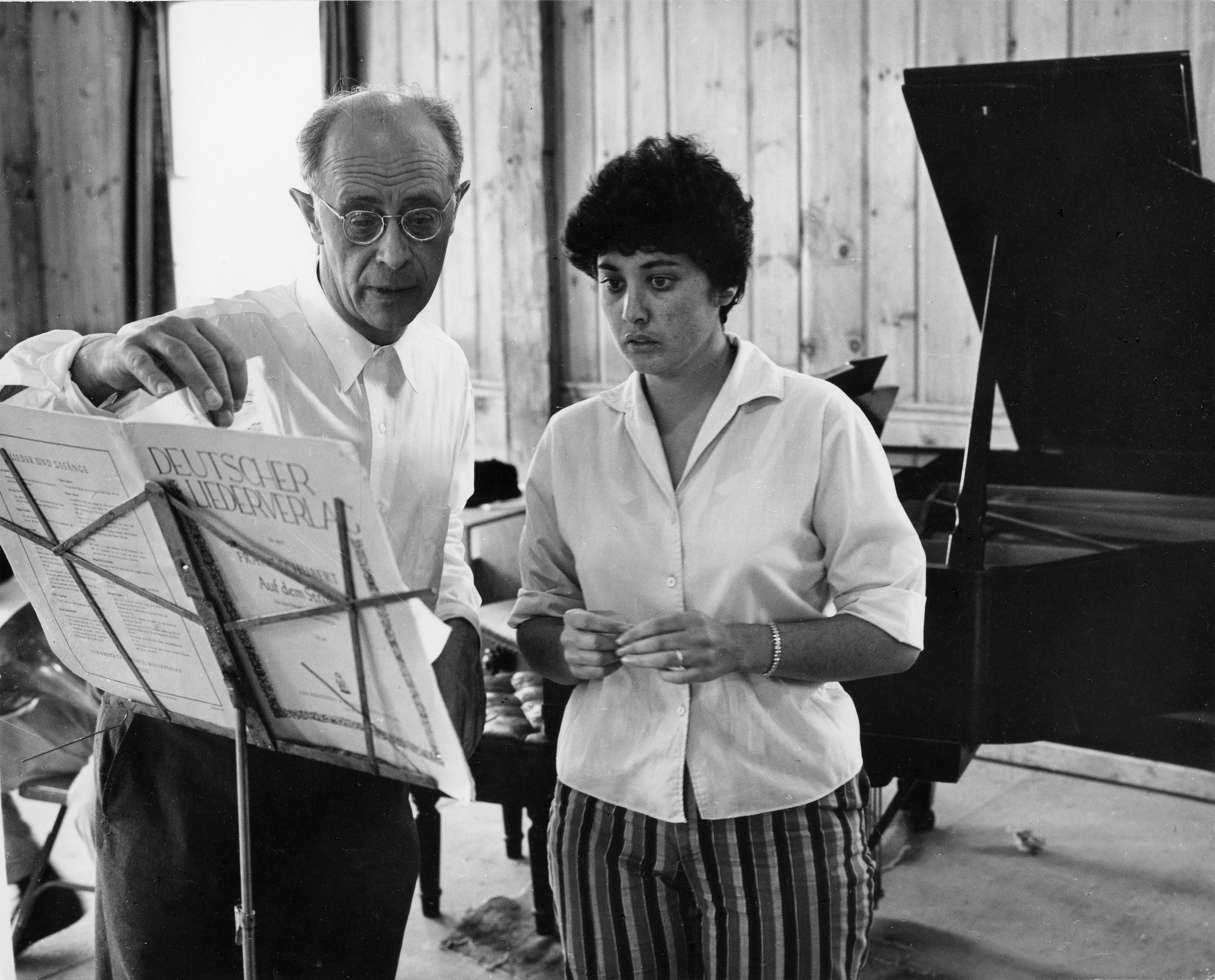
Pianist Rudolf Serkin with soprano Benita Valente at Marlboro Music, 1960s.
A longtime resident of Rittenhouse Square, Ms. Valente sang in the opera houses of San Francisco, Santa Fe, N.M., Germany, and Italy, and the Teatro Colón in Buenos Aires. She appeared with the Metropolitan Opera more than 70 times between 1960 and 1992 — as Pamina in Die Zauberflöte, Almirena in Handel’s Rinaldo, Gilda in Rigoletto, Susanna in Le Nozze di Figaro, and others.
With the Juilliard String Quartet, she gave the world premiere of Ginastera’s String Quartet No. 3 in 1974, and was the voice for the Juilliard’s recording of Schoenberg’s String Quartet No. 2 in a collection that won a 1978 Grammy Award.
In 1999, she became the first vocalist to win Chamber Music America’s Richard J. Bogomolny National Service Award.
Critics pronounced her voice “incomparable” and “almost miraculously lovely.”
She had something more: “that special projection of personality that distinguishes the great artist,” the Times wrote.
The artist had her beginnings as a self-described shy tomboy growing up on her uncle’s farm in California’s San Joaquin Valley. Ms. Valente was born Oct. 19, 1934, in Delano, Calif., the daughter of an Italian father and a Swiss mother. A high school teacher noticed her gifts and recommended her to Lotte Lehmann, and as a teenager she traveled from home to Santa Barbara to study with the celebrated soprano and Lehmann’s brother, vocal coach Fritz Lehmann.
“She didn’t know what to do with me,” Ms. Valente told The Inquirer. “I’d sing something she thought was very touching, and then there were lapses where I was as green as all get-out. She finally said, ‘I have contacts in Hollywood, I could get you to a screen test. I think you’d do very well.’ But I wanted to go into opera.”
Benita Valente with her husband, Anthony P. Checchia, at the Marlboro Music Festival.
It was Fritz Lehmann who suggested that she audition for the Curtis Institute of Music with Mozart, and she got in. Ms. Valente attended Curtis from 1955 to 1960, where her primary teacher was French baritone Martial Singher, and later studied with Wagnerian soprano/mezzo-soprano Margaret Harshaw. She was still a student when she won a Philadelphia Orchestra student competition that brought a 1958 debut with the orchestra.
The next year she married Anthony P. Checchia, a bassoonist she met at the Marlboro Music Festival who would go on to lead both Marlboro and the Philadelphia Chamber Music Society. They became one of classical music’s power couples, and had a special understanding because of their modest backgrounds — he from Tacony, she from a farm — said their son. “I remember my dad pulling over on Lombard Street once when she was on the radio. He was more nervous than she was,” Pete Checchia said. Anthony Checchia died in 2024.
Ms. Valente became a regular soloist with the Philadelphia Orchestra, appearing with the ensemble 60 times — in core repertoire of Mozart and Beethoven, but also in contemporary works. She gave the world premiere in 1981 of David del Tredici’s All in the Golden Afternoon from Child Alice, Part II, with Eugene Ormandy conducting the Philadelphians.
The work was in an ecstatic, neo-romantic musical language, thickly orchestrated with amplified soprano. Ms. Valente’s performance was “an essay in vocal purity,” wrote Inquirer music critic Daniel Webster.
For the Academy of Music 130th Anniversary Concert in 1987, she sang an evening of Puccini arias with the Philadelphia Orchestra led by legendary conductor Klaus Tennstedt. ‘’O mio babbino caro” from Gianni Schicchi seemed an ideal choice, Webster wrote, “in which her sun-filled voice illuminated the joyous text.”
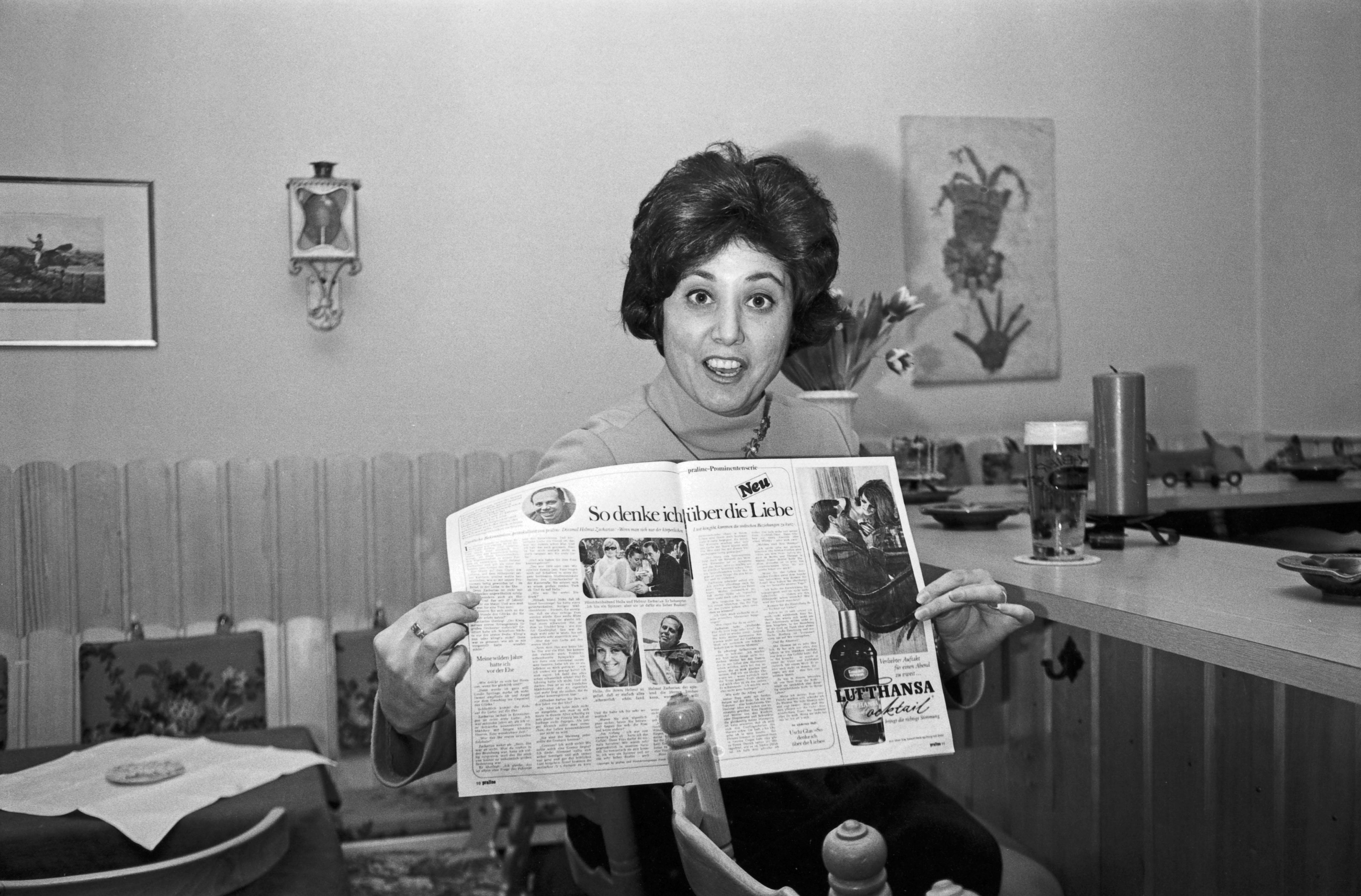
American soprano singer Benita Valente, Germany, 1970s.
Ms. Valente was soloist the previous season for one of the orchestra’s most notorious programs. She was Mélisande in a concert version of Debussy’s Pelléas et Mélisande at which an unusual number of listeners, apparently unimpressed with one of Western civilization’s great achievements, walked out. One man in the Academy of Music’s second row stretched out a newspaper and was asked to leave, she recalled.
“It has too much mystery, that Pelléas,” Ms. Valente told The Inquirer years later, pointing out that the audience seemed similarly disenchanted with the work at a Metropolitan Opera performance she attended.
Ms. Valente was never a household name, which often confounded critics. Some put it down to her lack of diva-ness. But it was perhaps more the fact that Ms. Valente was never a careerist. She was known to turn down prestigious opportunities — like a chance to sing Berg’s Altenberglieder with the Boston Symphony Orchestra — when she felt the part was not right for her voice.
She retired from singing in 2000 and was awarded an honorary degree from Curtis in 2001.
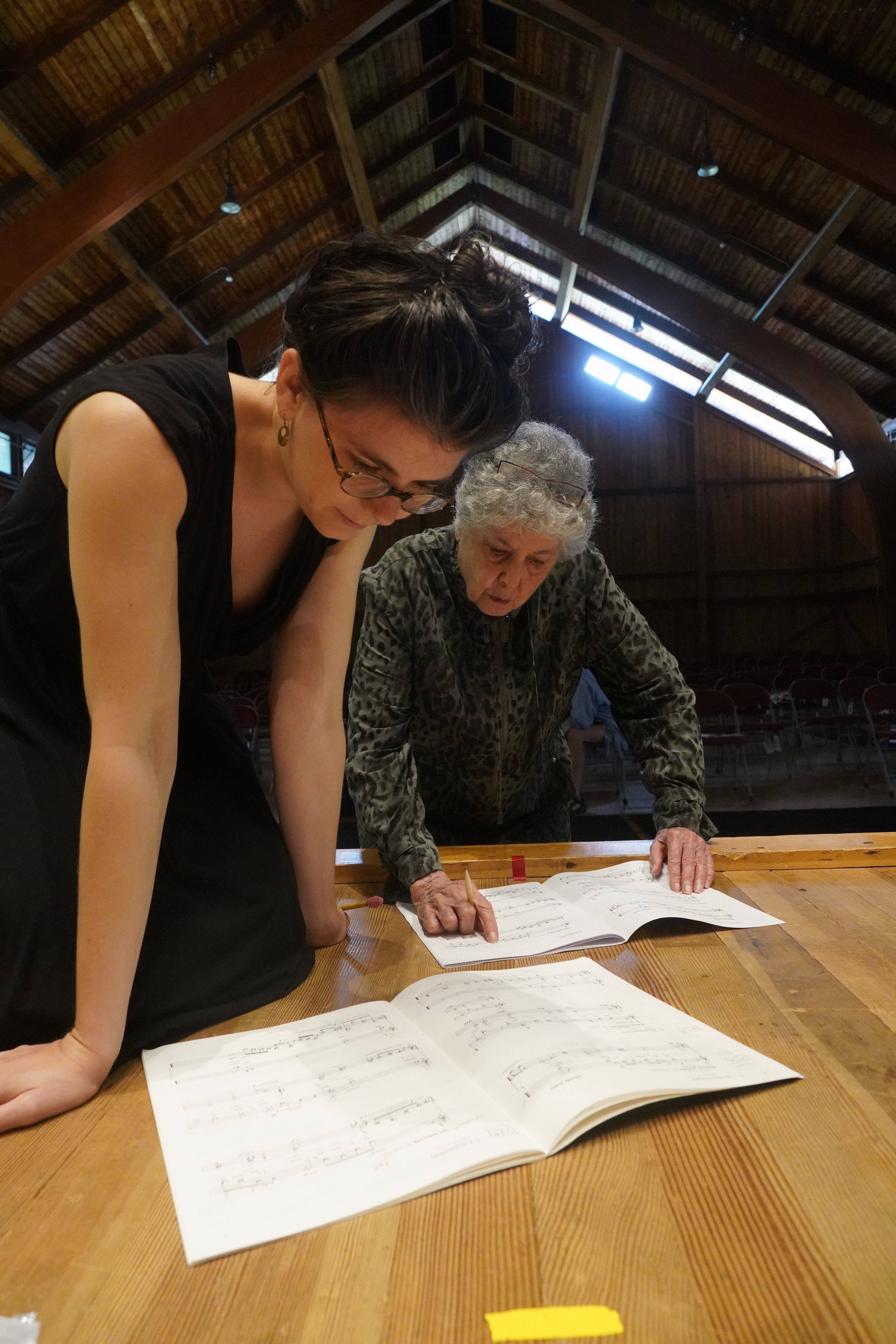
Benita Valente with soprano Lucy Fitz Gibbon in 2021.
Ms. Valente taught and mentored young singers.
“She was so meticulous about connecting the vowels and would listen in between the notes to how you got from one note to the next,” said soprano Sarah Shafer, who studied with Ms. Valente at Marlboro and in Philadelphia. “That trained my ear and my voice to pay attention to those things and brought me to a different level of detail.”
Her knowledge of the repertoire was vast, said pianist Lydia Brown, with whom Ms. Valente worked in vocal coachings at Marlboro and the Met. “Every rehearsal she came to was a piece she had sung many times, or she commissioned it or premiered it. There were so few pieces that Benita didn’t have active performing knowledge of.”
In recordings she is particularly renowned for a collection of Handel and Mozart duets with soprano Tatiana Troyanos; Haydn’s The Seven Last Words of Christ with the Juilliard String Quartet; and two discs in Bridge Records’ “Great Singers of the 20th Century” series, including a classic recording of Schubert’s “The Shepherd on the Rock” with pianist Rudolf Serkin and clarinetist Harold Wright.
“She was in the old-school style of singing, where the singer is just a vessel for the music. Not selfish, not about herself, she was just delivering the music in as clear and undistorted a way as possible,” said Shafer, who learned “The Shepherd on the Rock” from Ms. Valente and has made it a calling card of her own.
”The result is this sparkly, silver jewel of her voice that you hear in these recordings. There’s just no singing like it now.”
In addition to her son, the Philadelphia photographer Pete Checchia, Ms. Valente is survived by her “daughter by choice,” Eliza Batlle, Checchia said. A memorial concert is planned for a later date.
Spotlight PA is an independent, nonpartisan, and nonprofit newsroom producing investigative and public-service journalism that holds power to account and drives positive change in Pennsylvania. Sign up for our free newsletters.
HARRISBURG — Taxpayers are paying for roughly $1 million in security upgrades to Gov. Josh Shapiro’s private home in Montgomery County, according to information the administration disclosed to top lawmakers about its expenditures in the aftermath of the brazen arson attack on the first family earlier this year.
In a Friday letter to legislative leaders, administration officials said improvements include “erecting physical and visual barriers on the property, installing enhanced security technology, and other steps.” They then noted that due to safety concerns, they could not provide more details about the work being conducted at Shapiro’s private home.
The letter, authored by Pennsylvania State Police Commissioner Christopher Paris and Department of General Services Secretary Reggie McNeill, also disclosed safety upgrades totaling $32.3 million at the governor’s official residence in Harrisburg, including $8 million to retrofit the mansion with new windows that are bullet- and shatterproof.
The attack occurred at the 29,000-square-foot mansion this past April while the governor and his family were asleep inside.
“The horrifying attack on the Governor, his family, and Commonwealth property, coupled with the unfortunate rise in political violence across our country, has made these updates necessary to protect the Governor and his family and ensure the continued operation of the executive branch of the Commonwealth,” Paris and McNeill wrote. “No family should have to live behind bulletproof glass or behind large walls — but the nature of the threats against elected officials today require us to take these important steps.”
They added: “Unfortunately, the threat to a high-profile elected official like Gov. Shapiro does not end when he leaves the Governor’s Residence.”
In a statement, Shapiro spokesperson Rosie Lapowsky said the State Police conducted a security review of the governor’s personal residence and recommended a number of improvements. Before carrying out any of those improvements, she said the administration “consulted the Ethics Commission … to ensure there is no improper private, pecuniary gain from these security improvements.”
Last week, Harrisburg resident Cody Balmer pleaded guilty to attempted murder, aggravated arson, and other charges related to the attack in the dead of the night on April 13. That is when Balmer scaled the perimeter fence at the governor’s official residence along the banks of the Susquehanna River, broke two windows, and used crude, homemade Molotov cocktails to set fire to several rooms on the residence’s first floor.
Shapiro, his family, and friends had celebrated Passover just hours before, and were asleep on the second floor of the residence when Balmer broke in. Balmer told authorities that he would have beaten Shapiro with a hammer he had with him if he had encountered the governor.
The Democratic governor has said that he and his family are still struggling with the emotional toll of the attack, but stressed that he will not be deterred from continuing in public service.
It is not clear what prompted Paris and McNeill’s letter. Earlier this week, Spotlight PA submitted a public records request for all taxpayer-funded expenditures at the governor’s private home.
Also midweek, Republican state Sen. Jarett Coleman, who chairs the chamber’s Intergovernmental Operations Committee, fired off a letter to Paris seeking similar information about physical improvements to Shapiro’s Montgomery County home, among other items.
Coleman told Spotlight PA on Friday that his committee will “continue to investigate” spending at the governor’s private residence “to protect taxpayers as this unprecedented project is being completed.”
Spotlight PA last month reported that the state has spent more than $6 million to repair extensive damage from the fire at the governor’s official residence — but that the administration is shielding information about nearly a quarter of those expenses, including who was paid and exactly what the money was spent on.
The news organization has also reported that private donors have separately contributed to a fund managed by a Harrisburg-based nonprofit to help restore the mansion. So far, neither the organization nor the administration has disclosed the donors’ identities, the amount they contributed to the fund, or provided a general description of what that money has or will be used for.
In the letter sent to legislative leaders, the administration shed light on at least some of those questions. The officials said that to date, the state has submitted $4.5 million in expenses to one of its insurers, which in turn has so far approved $2 million in reimbursements.
Security upgrades and improvements to the official residence, however, are not covered by the state’s insurance plans. The security improvements — recommended by a third-party review commissioned by the State Police in the wake of the attack — there include:
An estimated $14 million to replace the 6-foot fence that Balmer scaled with a “single material, 10-foot barrier resistant to vehicle damage or climbing.”
An estimated $6.3 million to install updated cameras, improve lighting, and add motion detection sensors in the residence’s yard.
An estimated $8 million to retrofit the residence’s existing windows with bulletproof and shatterproof glass.
An estimated $4 million to install a comprehensive fire suppression system in the residence, one of the largest state-owned buildings without one.
“In addition to the visible and extensive building security enhancements outlined above, additional recommendations on things like staffing, internal systems, and other technology improvements have been implemented,” by the state, Paris and McNeill wrote. “To avoid risk of a successful security threat against the property or the Governor in the future, we cannot disclose all of those recommendations publicly.”
The two men noted that the fire damaged multiple decorative items inside the residence, including chandeliers, china, pianos, and artwork. Most of those items, they said, do not qualify for insurance reimbursement, and their repair or replacement will be funded by private dollars.
BEFORE YOU GO… If you learned something from this article, pay it forward and contribute to Spotlight PA at spotlightpa.org/donate. Spotlight PA is funded by foundations and readers like you who are committed to accountability journalism that gets results.
LOS ANGELES — The Department of Justice is preparing to send federal election observers to California and New Jersey next month, targeting two Democratic states holding off-year elections following requests from state Republican parties.
The DOJ announced Friday that it is planning to monitor polling sites in Passaic County, New Jersey, and five counties in southern and central California: Los Angeles, Orange, Kern, Riverside, and Fresno. The goal, according to the DOJ, is “to ensure transparency, ballot security, and compliance with federal law.”
“Transparency at the polls translates into faith in the electoral process, and this Department of Justice is committed to upholding the highest standards of election integrity,” Attorney General Pam Bondi said in a statement to the Associated Press.
Election monitoring is a routine function of the Justice Department, but the focus on California and New Jersey comes as both states are set to hold closely watched elections with national consequences on Nov. 4. New Jersey has an open seat for governor that has attracted major spending by both parties and California is holding a special election aimed at redrawing the state’s congressional map to counter Republican gerrymandering efforts elsewhere ahead of the 2026 midterms.
The DOJ’s efforts are also the latest salvo in the GOP’s preoccupation with election integrity after President Donald Trump spent years refusing to accept the results of the 2020 election and falsely railing against mail-in voting as rife with fraud. Democrats fear the new administration will attempt to gain an upper hand in next year’s midterms with similarly unfounded allegations of fraud.
The announcement comes days after the Republican parties in both states wrote letters to the DOJ requesting their assistance. Some leading Democrats in the states blasted the decision.
New Jersey Attorney General Matt Platkin called the move “highly inappropriate” and said the DOJ “has not even attempted to identify a legitimate basis for its actions.”
Rusty Hicks, chair of the California Democratic Party, said in a statement that “No amount of election interference by the California Republican Party is going to silence the voices of California voters.”
California’s House districts at stake
The letter from the California GOP, sent Monday and obtained by the AP, asked Harmeet Dhillon, who leads the DOJ’s Civil Rights Division, to provide monitors to observe the election in the five counties.
“In recent elections, we have received reports of irregularities in these counties that we fear will undermine either the willingness of voters to participate in the election or their confidence in the announced results of the election,” wrote GOP chairwoman Corrin Rankin.
Each of the counties named, they alleged, has experienced recent voting issues, such as sending incorrect or duplicate ballots to voters. They also take issue with how Los Angeles and Orange counties maintain their voter rolls.
California is one of at least eight states the Justice Department has sued as part of a wide-ranging request for detailed voter roll information involving at least half the states. The department has not said why it wants the data.
Brandon Richards, a spokesman for Gov. Gavin Newsom, said the DOJ has no standing to “interfere” with California’s election because the ballot contains only a state-specific initiative and has no federal races.
“Deploying these federal forces appears to be an intimidation tactic meant for one thing: suppress the vote,” he said in an email.
Orange County Registrar of Voters Bob Page said he welcomes anyone who wants to watch the county’s election operations and said it’s common to have local, state, federal and even international observers. He described Orange County’s elections as “accessible, accurate, fair, secure, and transparent.”
Los Angeles County Clerk Dean Logan said election observers are standard practice across the country and that the county, with 5.8 million registered voters, is continuously updating and verifying its voter records.
“Voters can have confidence their ballot is handled securely and counted accurately,” he said.
Most Californians vote using mail ballots returned through the Postal Service, drop boxes or at local voting centers, which typically leaves polling places relatively quiet on Election Day. But in pursuit of accuracy and counting every vote, the nation’s most populous state has gained a reputation for tallies that can drag on for weeks — and sometimes longer.
In 2024, it took until early December to declare Democrat Adam Gray the winner in his Central Valley district, the final congressional race to be decided in the nation last year.
Passaic County the target in New Jersey
California’s request echoed a similar letter sent by New Jersey Republicans asking the DOJ to dispatch election monitors to “oversee the receipt and processing of vote-by-mail ballots” and “monitor access to the Board of Elections around the clock” in suburban Passaic County ahead of the state’s governor’s race.
The New Jersey Republican State Committee told Dhillon that federal intervention was necessary to ensure an accurate vote count in the heavily Latino county that was once a Democratic stronghold, but shifted to President Donald Trump’s column in last year’s presidential race.
The county could be critical to GOP gubernatorial nominee Jack Ciattarelli’s hopes against Democrat Mikie Sherrill. But the letter cited previous voter fraud cases in the county and alleged a “long and sordid history” of vote-by-mail shenanigans.
In 2020, a judge ordered a new election for a city council seat in Paterson — the largest city in Passaic County — after the apparent winner and others were charged with voter fraud.
Platkin said the state is committed to ensuring its elections are fair and secure. With the DOJ’s announcement, he said the attorney general’s office is “considering all of our options to prevent any effort to intimidate voters or interfere with our elections.”
Election observers are nothing new
Local election offices and polling places around the country already have observers from both political parties to ensure rules are followed. The DOJ also has a long history of sending observers to jurisdictions that have histories of voting rights violations to ensure compliance with federal civil rights laws.
Last year, when the Biden administration was still in power, some Republican-led states said they would not allow federal monitors to access voting locations on Election Day.
Trump has for years railed against mail voting as part of his repeated false claims that former President Joe Biden’s victory in 2020 was rigged. He alleges it is riddled with fraud, even though numerous studies have found no evidence of widespread fraud in U.S. elections.
Earlier this year, Trump pledged to ban vote-by-mail across the country, something he has no power to do under the U.S. Constitution.
The DOJ’s effort will be overseen by Dhillon’s Civil Rights Division, which will deploy personnel in coordination with U.S. attorney’s offices and work closely with state and local officials, the department said
The department also is soliciting further requests for monitoring in other jurisdictions.
David Becker, a former DOJ attorney who has served as an election monitor and trained them, said the work is typically done by department lawyers who are prohibited from interfering at polling places.
But Becker, now executive director of the Center for Election Integrity & Research, said local jurisdictions normally agree to the monitors’ presence.
If the administration tried to send monitors without a clear legal rationale to a place where local officials didn’t want them, “That could result in chaos,” he said.
There were Irish step-dancing vampires and opera-singing vampires. Vampires who claim to hunt billionaires and vampires who moonlight as emergency medical technicians. And, in at least one instance, a vampire who doubled as a heavyweight champ.
Such was the lineup of the first-ever Miss American Vampire Philadelphia pageant, where 13 wannabe bloodsuckers donned their best vampiric drag to compete inside heavy metal bar Doom Friday night. Contestants were thirsty to show that vampires contain multitudes (and, perhaps, for a little bit of blood).
Back then, MGM hosted the regional beauty competition to promote the movie House of Dark Shadows, with finalists going on to compete in Los Angeles for title of Miss American Vampire and a guest-starring role on the long-running vampire soap opera Dark Shadows. Native American activist Sacheen Littlefeather won the crown, though she never redeemed her prize.
The stakes of Doom’s pageant were far lower than a TV appearance and eternal life, though just as competitive. Contestants were judged by a panel of full-time goths and burlesque performers on their creativity and vampiric presence as they competed in the standard pageant categories: A costume parade, an interview, and a dark art — or talent with a touch of the occult.
The crowd reacts as Ezra Markel’s vampire persona “Isolde the Saturnine” eats the human heart she concocted during the talent portion of the Miss American Vampire Pageant at heavy metal bar Doom in Philadelphia on Friday, Oct. 24, 2025.
Prizes included $100 cash, a new set of fangs, and comic books donated from Atomic City Comics. Skull and mixed metal artist Sue Moerder prepared a Bob Mackie-inspired gothic crown, with feathers and pearls sprouting from an arrangement of ornate obsidian gems.
“Vampires represent the alternative, the occult, the bat-brained, the gothic … [people] on the outskirts of civilization,” Delgado told The Inquirer. “We just wanted to show that this bar is a safe cave for vampires to commune.”
Both floors at 421 N. 7th St. were packed as contestants flitted across the makeshift stage in costumes that highlighted the full expanse of vampire-dom. There were homages to both the German and Transylvanian versions of Dracula in peasant blouses and bejeweled collars, as well as more contemporary interpretations, with floor-length evening gowns, corseted waistlines, and lots of red lips.
Lilith Lobotomy — a blue-haired vamp whose bio alleged she bakes cakes and stalks billionaires — was an immediate favorite, earning thunderous applause when she turned away from the audience to drop her floor length duster. Emblazoned in sparkling blood red font on the back of her black dress was the phrase “Eat the rich.”
Logan Laudenslager performs as “Lilith Lobotomy” during the talent portion of the Miss American Vampire pageant held at Doom. She performed a rendition of “Phantom of the Opera.”
Madame Lobotomy would go on to win the coveted title of Miss Off Putting — Delgado’s spin on Miss Congeniality — after belting out the song “The Phantom of the Opera” while twirling a lit candelabra.
She was still no match for Norah Morse, who took home the Miss American Vampire Philadelphia crown after shocking the judges with her interview. When asked how she prepared for the competition, Morse scoffed.
“I don’t know what you mean,” she said in a thick Transylvanian accent. “I’m a vampire and I showed up.”
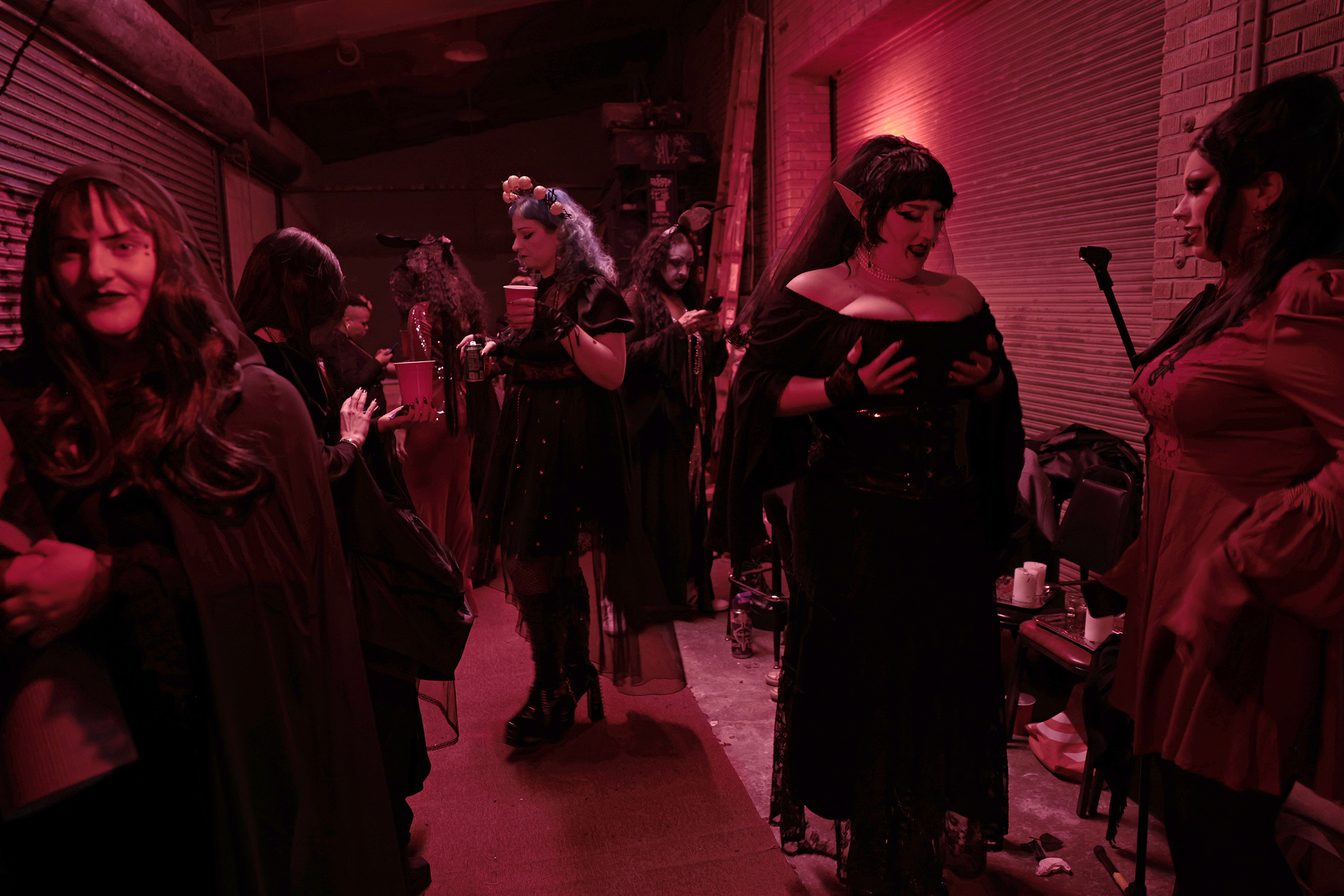
Contestants get ready backstage to performing during the Miss American Vampire Pageant at heavy metal bar Doom.
Judge and burlesque performer Caress Deville said Morse represented the commitment she was looking for. “I was gagged,” Deville said. “That’s exactly how you would answer if you were a real vampire.”
During her crowning, Morse’s human mother rushed to the front of the crowd to take photos. Even vampires, it seems, yearn for mom’s approval.
In the world of us mortals, Morse goes by Alex Decker, a 29-year-old from Bellmawr who has been drawn to vampires since she was a child. Decker lives with contamination OCD, she said, and envies the freedom of the undead.
“Life would be a lot easier if I was a vampire who could just drink blood all the time,” Decker said. “I have been weird and creepy and insane my entire life.”
Jenna Painter, of Willow Grove, performed as a naughty ‘Count Orlok” during the Miss American Vampire Pageant at heavy metal bar Doom, throwing off a trench coat to reveal a leotard and garters.
Competing to be America’s next top vampire
For some contestants, Miss American Vampire Philadelphia was an opportunity to transform their mortal selves into bolder and braver versions that were battle-tested from centuries of living.
When Doom announced the pageant on Instagram in early October, the post received more than 4,500 likes, Delgado said, and hundreds of shares. More than 50 hopefuls sent in applications via a Google form that asked for their vampiric backstory and talent, forcing Holden and Delgado to spend hours deliberating.
Delgado was unsurprised that the pageant took off. They were, however, shocked by the lack of trolling.
“I didn’t know how serious everyone who applied was at first,” Delgado said. “It’s supposed to be campy.”
On Friday, the beauty competition toed the line between a drag show and an actual Miss America preliminary. The judges pressed contestants on tough questions, such as how they choose their victims, and if it’s ethical to let them live post blood-sucking.
For Mira Castigin, of Camden, the most important quality to look for in a vampire is fun.
“What’s the point in being immortal if you let life pass you by?” she told the crowd.
Castigin’s vampiric persona is Elmira, a bewitching goth girl who shares Castigin’s day job as an EMT in hopes of atoning for her sins. The competition was an excuse for Castigin to air out some special pieces from her vintage clothing collection, including a petticoat and a pair of London Underground shoes.
Mira Castigin’s vamprie persona “Elmira” is applauded after performing during the Miss American Vampire Pageant at heavy metal bar Doom. For her talent, Castigin sang opera.
“I think it’s always fun to do your makeup and get dressed up no matter what day it is,“ Castigin, 25, of Camden, said. ”And this is like a more thought-out version of that.”
Castigin opened the talent portion by singing an operatic aria, setting up the audience for a night of bewitching tricks. One vampire played the violin, while another danced an Irish jig to a Type O Negative song. Cassius King — a silent movie star turned vampire — wowed the audience by performing feats of strength, at one point picking up his assistant and turning him upside down.
Rachel Rushmore — aka “Vampire Rachel” of Philadelphia — waits backstage during the Miss American Vampire Pageant at heavy metal bar Doom.
Rachel Rushmore, 34, of Fishtown, had a simpler talent, using sleight of hand to summon a tiny bat. Rushmore said she felt called to compete after 15 friends — including several who don’t even live in Philly — sent her Doom’s Instagram post.
Onstage, Rushmore transformed from mortal Rachel to Vampire Rachel, a temptress and philanthropist who had been around since “the age of powdered wigs and Ben Franklin.” Vampire Rachel wears maroon floor-length gowns and bedazzles her face with gems borrowed from Marie Antoinette. The real-life version works in children’s book publishing and had never performed in front of a crowd before.
“I called myself Vampire Rachel because it’s hard for me to be somebody who I’m not,” Rushmore said. “Tonight I’m Rachel, but more.”
We’ll show you a photo taken in the Philly-area, you drop a pin where you think it was taken. Closer to the location results in a better score. This week’s theme is all about Halloween. Good luck!
Round #4Published Oct 25, 2025
Question 1
Where can you find this raven?
Loading…
.st0 {
fill: #222;
}
ClickTap on map to guess the location in the photo
ClickTap again to change your guess and hit submit when you're happy
You will be scored at the end. The closer to the location the better the score
Tom Gralish / Staff Photographer
Pretty good/Not bad/Way off! Your guess was from the location. Here's also where a random selection of Inquirer readers guessed.
This is the Edgar Allan Pоe National Historic Site. Known for the horrifying and mystifying works, Poe lived in Philadelphia from 1838 to 1844. Here he wrote some of his most well-known stories, including the “Fall of the House of Usher” and “The Mask of the Red Death.”
Quiz continues after ad
Question 2
Where can you find Benjamin Franklin’s grave?
Loading…
.st0 {
fill: #222;
}
Monica Herndon / Staff Photographer
Pretty good/Not bad/Way off! Your guess was from the location. Here's also where a random selection of Inquirer readers guessed.
There are some lingering rumors about the ghost of Benjamin Franklin wandering around in Old City. Whether you believe the tales or not, you can find his final resting place at the Christ Church Burial Ground. The graveyard first opened in 1719 and is open to the public.
Quiz continues after ad
Question 3
Where was this old photo taken?
Loading…
.st0 {
fill: #222;
}
The Library of Congress
Pretty good/Not bad/Way off! Your guess was from the location. Here's also where a random selection of Inquirer readers guessed.
This is the lobby of the Bellevue Hotel on South Broad Street in the mid-20th century. According to some tour guides, Bellevue Hotel’s “haunted” reputation started with a Legionnaires’ disease outbreak in the 1970s and still attracts horror lovers.
Your Score
ARank
Amazing work. Consider yourself an expert in Philly's spooky lore!
BRank
Good stuff. You've almost mastered the art of being scarily smart.
CRank
C is a passing grade, but maybe take a ghost tour next time.
DRank
D isn’t great. Did a spooky spirit guess for you?
FRank
We don’t want to say you failed, but you didn’t not fail.
Cherokee Guido swung her legs and hips vertically above the lower uneven bar at Vare Recreation Center one recent evening as her coach steadied her. Guido had once mastered this handstand but lost it during a few months off. She wanted it back.
“I can’t be afraid to fall,” Guido, 19, coached herself out loud. Behind her hung a sign with rainbow borders: The way you speak to yourself matters.
Over the years, young gymnasts like Guido and their Vare coaches have learned to talk themselves to victory, first when they were practicing in a crumbling rec building before COVID, then when they were trekking from South Philadelphiato Brewerytown’s Athletic Recreation Center while Vare underwent renovations. They had gotten used to tumbling on mats that slipped around, without a regulation spring floor. They learned to train their minds as much as their bodies.
Throughout practice, the girls cheer each other on across the gym, quick to compliment teammates they say are more like sisters.
“Nice, Laila!” Ariah Buzzetto, 10, called out to her friend Laila Godfrey, 12, across the floor.
“How you practice is how you compete. If you practice lazy, then you’re going to compete lazy,” said 12-year-old Meela Muhammad, sounding very much like an inspirational poster.
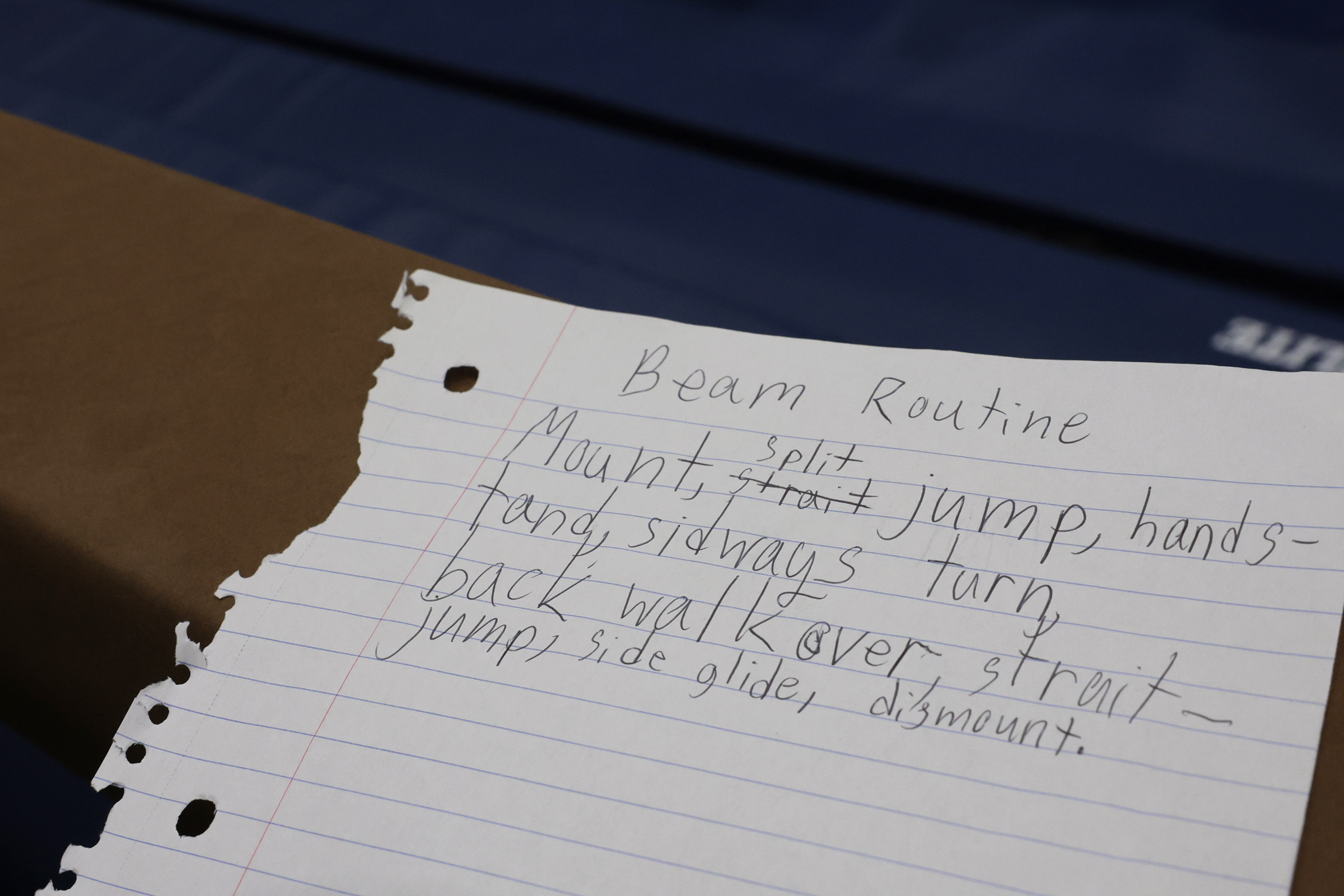
Notes written by 9-year-old Alessia Samson during practice.
Now, training in a new, state-of-the-art, 4,900-square-foot gym at the renovated Vare, which reopened in November 2024,the gymnasts have come a long way — but they’re still competing against private-club teams with sleek, matching uniforms who are better funded, and often better prepared for high-pressure USA Gymnastics (USAG) competitions.
“They have a lot more, bigger skills,” Guido said of their rivals. “At first, for me, I felt like how you go to a ball, you feel underdressed.”
Guido, for example, still wears an older purple leotard because she couldn’t afford a new one, while the rest of her team wears blue.
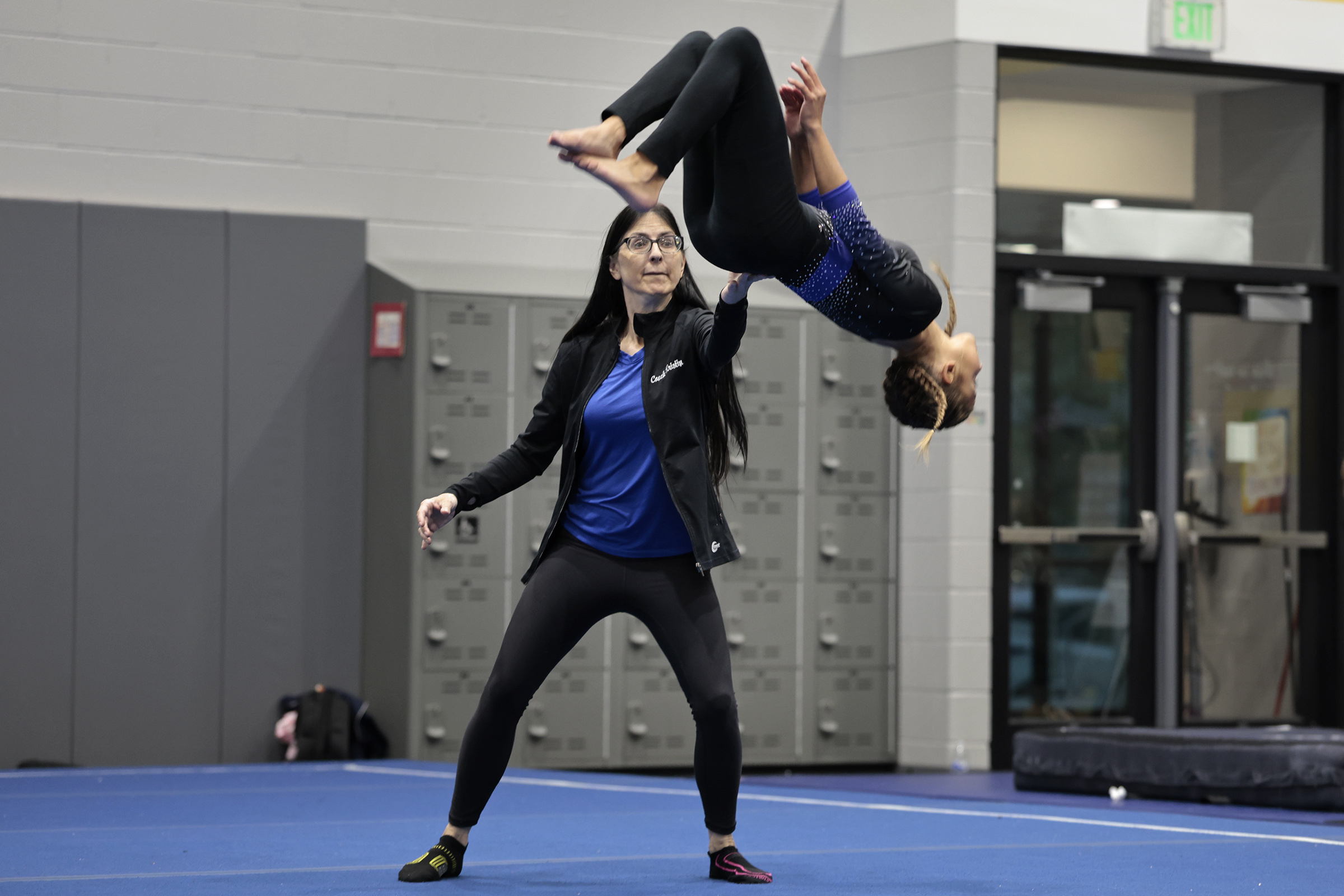
Head coach Kristin Smerker and Cherokee Guido, 19, laugh while working on the uneven bars during team practice.
Now, Vare Gymnastics is trying to raise at least$6,000 as soon as possible through a GoFundMefor new jackets and gym bags for this year’s competition season, which begins with the Liberty Cup, a December USAG meet at the Greater Philadelphia Expo Center.
If they don’t raise the money, they won’t be able to purchase full uniform sets. The team is also hoping to put some of the money toward financial aid for spring meets; most meets fill up by the end of the fall, and without the funds to enter, some girls won’t be able to attend.
USAG is the national governing body for gymnasts; the Vare Rec team competes in Xcel, a program that offers more accessible competitions than the parallel track that funnels athletes to world competitions and the Olympics.There are only two other city rec centers in Philly that compete in USAG competitions: Kendrick Recreation Center in Roxborough and the Water Tower Recreation Center in Chestnut Hill.
From left, Cherokee Guido, 19, and Alessia Samson, 9, train on the balance beam during team practice.
Though Xcel is supposed to be more affordable, gymnastics is expensive: Entrance fees and uniforms cost hundreds of dollars per child, plus tuition for practice. At $100 per semester, Vare’s rate is far less than at those private gyms, but many parents still struggle to pay.
Marie McBreen, 42, has two daughters in the program. Her oldest enrolled 10 years ago after McBreen begged the coaches for three weeks to find her a spot. She’s seen how positive the team is for them: It has boosted their confidence and they’ve made close friends. But this year, with two kids in the program, she can’t afford to send both to all the competitions.
“Most of us don’t have a whole lot of money. You do the fundraiser to help so they don’t have to miss out,” McBreen said.
Head coach Kristin Smerker is not sure whether the team will raise enough in time.
“Every club has a whole getup. And we don’t. We’re getting whatever we can,” Smerker said. “You can still compete, but they just don’t feel good about it … They’re so talented and they deserve better.”
Smerker is a Northeast native, an encouraging, pump-you-up kind of coach prone to wearing black leggings and mismatched grip socks at daily practice. She built the program from the ground up, starting in 1998 with two floor mats she had begged from nearby gyms.
Nearly 30 years later, Vare Gymnastics has 130 participants, plus a nine-page waiting list. In 2013, the team joined USAG. Alongside Smerker, the team has a beam coach and also a floor coach, Smerker’s sister. In 2017, Smerker brought the team to a USAG meet and lamented to the other coaches that the girls didn’t have a permanent building and were shuttling all over the city for practice.
“Our team won first place,” she said, laughing. “Our kids have heart.”
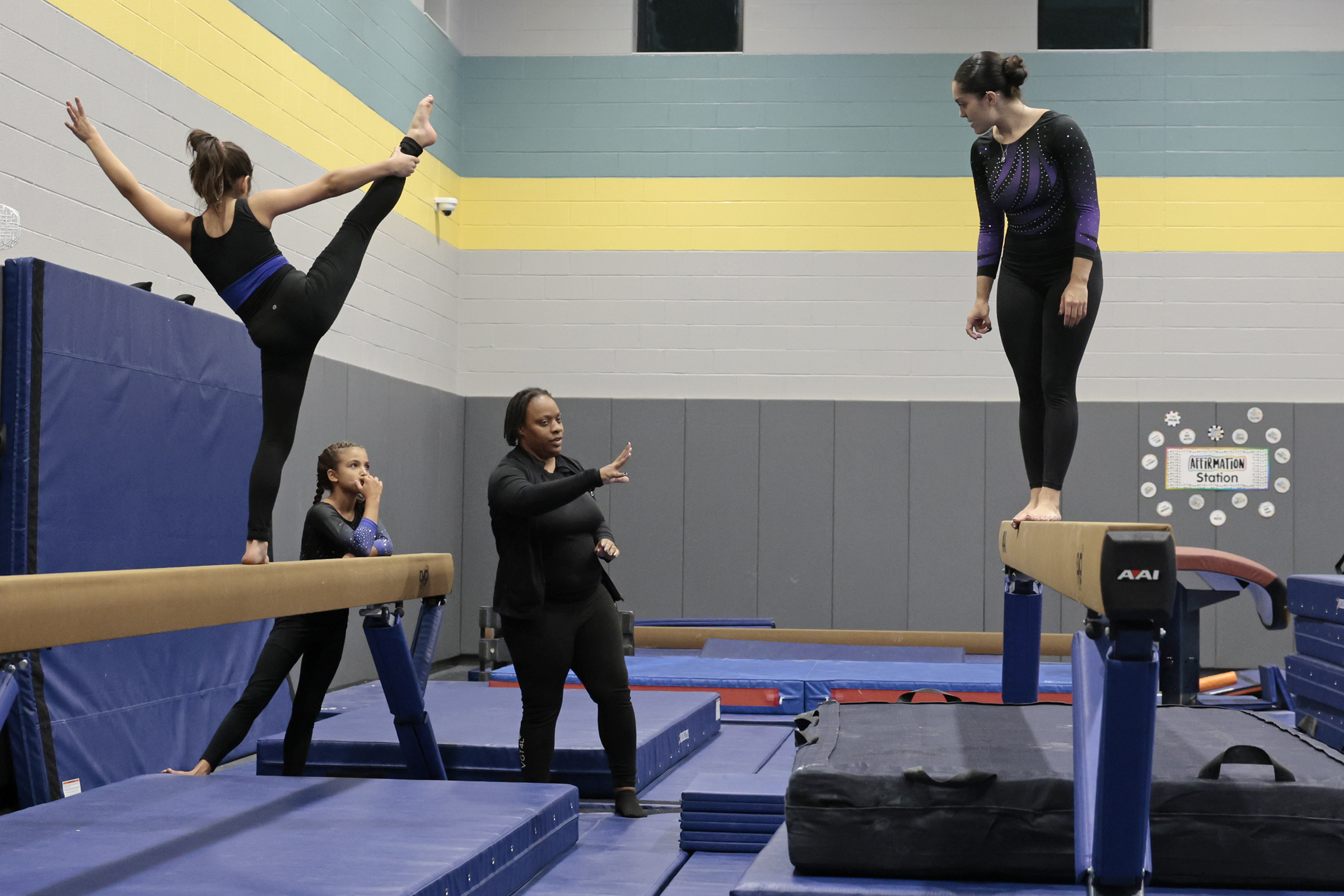
Head coach Kristin Smerker guides Ariah Buzzetto, 10, during practice. Alessia Samson, 9, (left) and Cherokee Guido, 19, (right) are guided by beam coach Natasha Rogers (middle) as Ariah Buzzetto, 10, looks on.
Guido has been practicing gymnastics at Vare since she was 2 years old, and is among the best at the gym. Last year she graduated from high school and technically from Vare, but she is now back working on her skills.
“I love it already!” she called to her teammate Suadaa “Susu” Muhammad, as Susu debuted her new floor routine.
Along with team captain Elianna Olsen,Muhammad and Guido call themselves the “OG gymnasts” because they’ve been at Vare the longest.
Perhaps like many young gymnasts, Muhammad, 19, started with enormous dreams.
In the beginning, she said, “I thought I was gonna be bigger than Simone Biles.”
These days, she fits practice in three times a week, alongside radiology classes in her freshman year at the Community College of Philadelphia, and a night job pushing wheelchairs at the airport. She was also just hired as a coach for the Vare team. In her own training, she’s focused on her round off back handspring back tuck for her floor routine, trying to get it ready for December’s meet.
“Some coaches say to our coaches, ‘Oh, wow, you’re from a rec center? I’m surprised your girls are doing this good,’” Muhammad said.
South Philly’s Vare Gymnastics Team is the subject of the short documentary “Underdogs,” which is executive produced by former Philadelphia Eagles Connor Barwin and Jason Kelce.
In the early years, Muhammad used to get points deducted at meets for wearing her headscarf, she said; the judges considered it in the same category as jewelry and nail polish, which are prohibited. Her family and coaches wrote letters to USAG, and the rule was changed, Smerker said.
This year, Smerker wants the girls to be wearing their matching uniforms when they walk out to meet their rivals.
“I want them to walk in there and feel proud of themselves and feel confident,” she said. “It’s important to them and important to me to do everything to make it happen.”
Another experiential retail concept is coming to the region. This time it’s a live social-gaming venue at the King of Prussia Mall.
Massachusetts-based Level99 announced this week that it plans to bring its next “sprawling adult playground” to the Montgomery County shopping destination in 2027. The move marks the company’s first foray into the Philadelphia market.
The 46,000-square-foot venue will include 50 “life-size mini games” geared toward adults, according to a news release, and a full-service restaurant and bar serving local craft beer.
“Level99 goes beyond your conventional entertainment venue — it’s a place to play, explore, and actively connect,” Matthew DuPlessie, founder and CEO of Level99, said in a statement.
The venue is moving into the ground floor of the former JCPenney, which closed in 2017.
It will be across the mall from the 100,000-square-foot Netflix House. The immersive experience for fans of the streaming service’s shows is set to open Nov. 12 in the former Lord & Taylor department store.
Level99 customers race through the venue’s signature “Axe Run” game, one of 50 mini-challenges set to be part of King of Prussia’s location when it opens in 2027.
“We’re thrilled to welcome Level99 to King of Prussia, further elevating our commitment to delivering dynamic, experience-driven destinations,” Mark Silvestri, president of development for mall owner Simon Property Group, said in a statement. ”This innovative concept brings a new layer of interactive entertainment to King of Prussia and is a perfect complement to our growing lineup of immersive offerings.”
In the Philadelphia region, Cherry Hill Mall is set to open a Dick’s House of Sport next year. The 120,000-square-foot space will include a climbing wall, golf simulators, a running track, and batting and soccer cages.
And along with the forthcoming Netflix House, the King of Prussia Mall recently opened the Philadelphia area’s first Eataly, a 21,000-square-food Italian-centric marketplace and wine shop.
At Level99 venues, customers can choose from 50 mini-games that test mental and physical skills.
At existing Level99 locations, pricing starts at $29.99 per person for two hours of play, according to its website. Prices increase on weekends and holidays, and if a customer wants more time.
Level99 is supported by Act III Holdings, a $1.5 billion private-equity investment firm led by Panera Bread cofounder and Cava chairman Ron Shaich. Last month, Act III executives announced a $50 million commitment to the chain’s expansion into new markets, including Philadelphia.
Tony B. Watlington Sr. took some razzing when he arrived in Philadelphia for a high-stakes job: superintendent of the city’s public school system.
Who was this outsider hired to run the nation’s eighth-largest school system?
Watlington was born in New Jersey — Fort Dix, to be exact — but spent most of his life and all of his career in North Carolina, with the lilting Southern accent to prove it.
Philadelphia School District Superintendent Tony B. Watlington, Sr. at round table discussion at Murrell Dobbins Career & Technical Education High School Sept. 2, 2025.
But since 2022, Watlington has been a Philadelphian — a distinction he’s now proud to claim. (He’s staying around, too — the school board just extended Watlington’s contract through 2030.)
While most Philadelphians describe their perfect day away from work, Watlington couldn’t help himself.
5:45 a.m.
I’m up early, and I’m either out early getting a run on the Schuylkill or doing an indoor CrossFit workout. I work out for one hour — and I make sure to spend plenty of time stretching.
8 a.m.
I walk into my office, and it is clutter-free. All my emails are responded to from the evening before — though some come in overnight. All of my phone calls are returned from the previous day, so I get to hit the ground running, ahead and not behind. That is really important to me.
After I get a cup of coffee and look at that nice email inbox, I meet with the chief financial officer [Mike Herbstman] if it’s a Monday. He’s the first person I meet with every single week — we talk about district finances.
Philadelphia School District superintendent Tony B. Watlington Sr. (left) stops to talk with Marie Williams, the grandparent of a Building 21 High School student as he leaves a meeting with families, students and staff of the school at Strawberry Mansion High School Sunday Mar. 5, 2023.
Then I’m ready to gear up and hit the trail with district spokesperson Monique Braxton, or Deputy Chief [of Government and Community Relations Edwin] Santana, and we’re out and about. My perfect day would be to spend more than 50% of the day in schools, with teachers, principals, and students.
Superintendent Tony B. Watlington Sr. eats lunch with students at Hunter Elementary in North Philadelphia: pizza, carrots and green beans, fruit cup. Watlington also drank chocolate milk and chatted with kids about the first day of school of the 2025-26 school year.
When I’m not in schools, during that 50% of the day that I’m out of the office, I’m engaging with other external stakeholders — everything from grassroots organizations, elected officials at the city and state level, and with our federally elected officials, and also with members of the philanthropic community. I believe strongly in this notion of “nothing for us without us.”
I want to see how well things are going, and get some real-time feedback. One thing I love about Philadelphia: you don’t have to guess what people think. We are a frank city.
Philadelphia Eagles’ Jason Kelce shares a laugh with School District of Philadelphia Superintendent Dr. Tony Watlington on Tuesday, Dec. 10, 2024, during Operation Snowball Media Day at Shipmates in Philadelphia, Pa.The team is giving gifts to Philly school children with the money raised from the Eagles holiday album A Philly Specials Christmas Party.
3-5:30 p.m.
On Mondays, myself, the deputy, and associate superintendents spend the latter part of the day into the evening in a cabinet meeting. I never get home in time for the 6:30 p.m. news, which I used to like to see as a teacher sometimes.
Evening
I try to eat a healthy dinner, get a good night’s sleep, and drink plenty of water.
Even though I’m an empty nester at this point, that’s the time to either get a quick phone call or check in with my family, including my three sons Tony Jr., Aaron, and Caleb, who love coming to Philadelphia.
By the time I get to the end of the week or the weekend, I’m ready for more of the robust things in Philadelphia, like cheesesteaks.
Superintendent Tony B. Watlington, Ed.D, during State-of-the-schools address, High School of the Future, Philadelphia, Thursday, Jan. 30, 2025. .
I have found so many places in Philadelphia for good food. Today, I had a chicken gyro from the Reading Terminal Market.
The other day, I went back to the first restaurant where my predecessor in Philly [William R. Hite Jr.] first took me to lunch, Talula’s Garden.
Dr. William Hite (foreground) listens to Tony Watlington Sr., the Philadelphia Public School districts new superintendent. Photograph taken on the morning of his announcement at the School District Headquarters at 440 N. Broad Street in Philadelphia on Friday morning April 1, 2022.
Now I’ve learned here in year four to just kind of wander around the city and so I’ve got a two-page list of restaurants. Everywhere I go, I’m always adding something new.
If there’s time, I try to be very intentional about being able to get out and cheer for the teams here. I am a frequent visitor to the stadiums, to see the Eagles, the Phillies, and the 76ers. The only team I’ve not actually been to a sporting event for yet is the Flyers. That’s on my list for year four.
Dr. Tony Watlington Sr. Ed.D, Superintendent of Philadelphia schools helps kick off the Ring the Bell PHL campaign at Citizens Bank Park on Tuesday, August 13, 2024. This kick off starts the community thinking about upcoming school year.