Category: News

Latest breaking news and updates

  • Zelensky replaces Ukraine’s security chief and hires a Canadian economic adviser

    Zelensky replaces Ukraine’s security chief and hires a Canadian economic adviser

    KYIV, Ukraine — President Volodymyr Zelensky replaced the head of Ukraine’s security service Monday, continuing a top-level reshuffle ahead of a trip to Paris where he hoped to finalize agreements with allies on how to ensure that Russia doesn’t repeat its invasion if a peace agreement is signed.

    Zelensky is trying to revamp his administration as the grinding war of attrition with Russia marks its fourth anniversary next month. He is keen to keep up the momentum of U.S.-led peace talks as well as sharpen Ukraine’s focus on defense if those efforts collapse.

    The Paris talks are expected to include the leaders of about 30 countries, dubbed the “coalition of the willing,” which are ready to provide security guarantees to keep Ukraine safe in the future.

    Key issues include whether countries are prepared to deploy troops inside or close to Ukraine and what the remit of any force overseeing a ceasefire might be. Russia has said it won’t accept troops from NATO countries on Ukrainian soil.

    Zelensky’s changes at the top

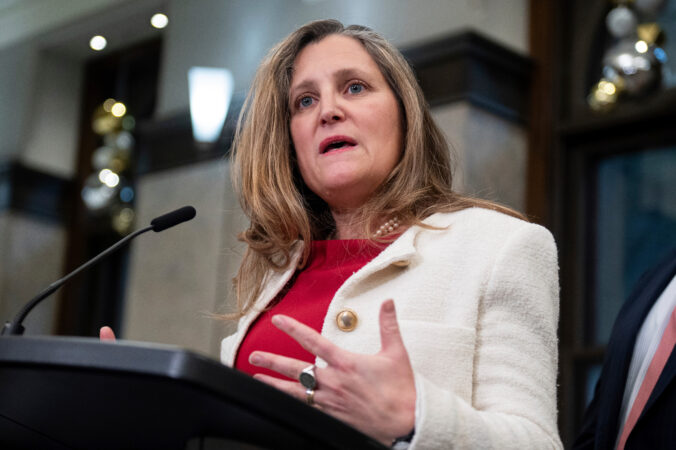
    Zelensky also announced the appointment of Canada’s former Deputy Prime Minister Chrystia Freeland as Ukraine’s economic development adviser, describing her as an expert on the issues with “significant experience in attracting investment and carrying out economic transformations.”

    Amid Ukraine’s biggest top-level reshuffle in about six months, Lt. Gen. Vasyl Maliuk, the head of the Security Service, or SBU, announced his resignation on the agency’s website.

    Zelensky published a decree on the presidential website appointing Ievhen Khmara, former head of the “A” Special Operations Center of the Security Service, as the agency’s acting head.

    Under Maliuk, the SBU produced some stunning successes against Russia, including Operation Spiderweb, which Ukraine said damaged or destroyed 41 Russian military aircraft in coordinated strikes on four air bases.

    On Friday, Zelensky appointed the head of Ukraine’s military intelligence as his new chief of staff.

    Announcing the appointment of Lt. Gen. Kyrylo Budanov, Zelensky said Ukraine needs to focus on security issues, developing its defense and security forces, and peace talks — areas that are overseen by the office of the president.

    New adviser has been a staunch critic of Putin

    Zelensky also is looking to strengthen the war-battered economy, including through projects in partnership with the U.S. and other countries. Freeland, who is of Ukrainian heritage and is a strong critic of Russian President Vladimir Putin, is a former journalist and Canadian lawmaker.

    Besides being a former deputy prime minister, she also served as Canada’s minister of international trade, foreign minister, and finance minister, and helped negotiate trade agreements with both Europe and the U.S.

    The Harvard University graduate has served as Canada’s special representative for the reconstruction of Ukraine — a position outside the Cabinet — in addition to her responsibilities as a lawmaker.

    Freeland and U.S. President Donald Trump have had a sometimes-fraught relationship that could work against Ukraine. In Trump’s first term, Freeland played a key role in negotiating the U.S.-Mexico-Canada Trade Agreement, and occasionally frustrated Trump aides with her tactics.

    During Trump’s first meeting with Canadian Prime Minister Mark Carney in the Oval Office, the president recalled his own antipathy for Freeland. “She was terrible, actually — she was a terrible person,” Trump said.

    When Freeland left former Prime Minister Justin Trudeau’s Cabinet, Trump said on social media that “her behavior was totally toxic.”

    One opposition lawmaker in Canada argued that Freeland could not be a member of the country’s parliament and at the same time work as an adviser to a foreign government.

    Ukraine seeks to counter size of Russian forces

    In his New Year’s address, Zelensky said a proposed U.S.-brokered peace deal was “90% ready” but warned that the remaining 10%, believed to include issues such as the future of disputed territory, would determine the outcome of the push for peace.

    Moscow hasn’t been forthcoming about details of the negotiations. Officials have, however, restated Russia’s demands and insist there can be no ceasefire until a comprehensive settlement is agreed.

    The fighting has not subsided along the roughly 600-mile front line that snakes along southern and eastern Ukraine.

    Zelensky said he met with Budanov on Monday to look at ways to reduce Russia’s edge in larger armed forces.

    “Russia has one significant advantage in this war, namely the ability to put pressure on Ukraine with the scale of strikes, the scale of assaults,” he said on social media. “We have and must respond with more active use of technology, faster development of new types of weapons, new tactics.”

    An overnight Russian drone strike at a private clinic in Kyiv’s Obolon district killed a 30-year-old old patient and injured three others, the capital’s prosecutor’s office said Monday.

    Energy workers and repair crews worked across the country after Russian drones damaged energy infrastructure, causing more power disruptions for civilians in the bitter winter, Zelensky said. Russia fired nine ballistic missiles and 165 long-range drones at Ukraine overnight, the air force said Monday.

    Meanwhile, a Ukrainian drone sparked a fire at an industrial facility in Yelets, in Russia’s western Lipetsk region, according to regional Gov. Igor Artamonov. There were no casualties, he said.

    The Russian airports of Ivanovo, Nizhny Novgorod, and Yaroslavl briefly suspended flights because of Ukrainian drone attacks, authorities said.The Russian Defense Ministry reported downing another 50 Ukrainian drones later Monday over the Belgorod, Kursk and Lipetsk regions.

  • What’s a McRib anyway? McDonald’s faces lawsuit over sandwich’s ingredients

    What’s a McRib anyway? McDonald’s faces lawsuit over sandwich’s ingredients

    They’re not lovin’ it.

    Fast food mega-chain McDonald’s is facing a proposed class-action lawsuit focused on the authenticity of its McRib sandwich and what it’s made of.

    The complaint, filed in the U.S. District Court for the Northern District of Illinois on Dec. 23, claims that McDonald’s deceptively markets the McRib to specifically contain meat from pork ribs through its name, branding, and appearance.

    “The name ‘McRib’ is a deliberate sleight of hand,” the plaintiffs — four consumers from California, New York, Illinois, and the District of Columbia — said in the filing.

    For those uninitiated, the McRib is sort of a big deal. It’s a fan favorite with “limited edition” status within McDonald’s. Its availability varies based on timing and location. It debuted on McDonald’s menus back in 1981, and when the chain announced its discontinuation in 2005, there was a lengthy “farewell tour.”

    In the years since, the sandwich continues to make celebrated annual returns, heightened with the help of social media. There are dedicated unofficial McRib fan accounts and trackers.

    “McDonald’s McRib is a sandwich of legend,” a 2009 Maxim article titled “The Cult of the McRib” said. “The heavenly blend of pork patty, barbecue sauce, and bun is, to devotees, so addictive that songs have been written about it, Internet shrines erected to it, and TV shows dedicated to it. … It is rarely seen, yet frequently sought and cultishly worshiped. It is the Holy Grail on a bun.”

    And now, that famed sandwich’s integrity is being scrutinized.

    Here’s what we know so far.

    What exactly is the McRib?

    McDonald’s describes the McRib as seasoned boneless pork dipped in BBQ sauce and topped with onions and pickles on a toasted bun. The sandwich is 520 calories and 24 grams of protein according to the fast food chain’s website.

    Is the McRib available at McDonald’s now?

    The McRib returned to some McDonald’s menus as part of its annual “farewell tour” in November 2025 and seems to still be available. But the sandwich is limited to certain McDonald’s locations, including in Atlanta, Chicago, Cleveland, Dallas, Los Angeles, Miami, Seattle, and St. Louis.

    According to the fan-led McRib Tracker, there’s only a handful of states nationwide serving up McRibs right now. It ranges in price from about $4 to $8, depending on the region.

    What does the McRib proposed lawsuit say?

    The proposed class action suit says the McRib’s name, pricing, and appearance — a rib-shaped patty on a bun — misleads consumers into believing they’re purchasing a premium pork rib product.

    The complaint adds that the rib-shaped patty is made of “restructured” pork using lower-quality cuts of pork, including shoulder, heart, stomach, and tripe instead of rib meat. McDonald’s has denied those claims.

    The plaintiffs say they believed the McRib to be made of rib meat before purchasing. They add that marketing the McRib as a “limited-time” item is a strategy to create a sense of urgency, discouraging consumers from investigating its ingredients closely.

    All four plaintiffs say they wouldn’t have purchased the McRib, or paid as much as they did, if they knew the sandwich had no actual pork rib meat.

    The proposed lawsuit seeks class-action status on behalf of U.S. consumers who bought the McRib in recent years and is seeking damages, restitution, and a remedy to prevent future “deceptive marketing.”

    What are McDonald’s McRibs made of?

    McDonald’s McRib features what the company calls a “McRib Pork Patty,” which is shaped like a rack of ribs.

    According to its website, the boneless patty is made of pork, water, salt, dextrose, and rosemary extract.

    Using the phrase boneless pork does a lot of quiet, legal work in the background, noted Quartz.

    McRib supporters say the sandwich has always been marketed as a boneless, snackable take on ribs. And it’s not a secret. To this day, there are no rib bones involved, and McDonald’s doesn’t pretend there are.

    “Contrary to what its name implies, there is very little actual rib meat in a McRib,” the 2009 Maxim article about the cultish sandwich said. “Primar­ily, it’s shoulder meat,” Rob Cannell, then-director of McDonald’s U.S. supply chain, told the outlet.

    He added, “The pork meat is chopped up, then seasoned, then formed into that shape that looks like a rib back. Then we flash-freeze it. The whole process from fresh pork to frozen McRib takes about 45 minutes.”

    Has McDonald’s responded?

    In a statement sent to multiple outlets, McDonald’s said that the lawsuit “distorts the facts and many of the claims are inaccurate.”

    The fast food chain says the McRib is made with 100% pork sourced from farmers and suppliers nationwide.

    “We’ve always been transparent about our ingredients so guests can make the right choice for them,” the company said.

    The statement did not go into detail regarding the plaintiffs’ claims that the McRib’s marketing as “limited edition” plays into its price point and distinction from other permanent menu items.

    Has something like this happened before?

    Over the years, there have been several instances of lawsuits and disputes surrounding how popular foods are marketed or made.

    For instance, in 2023, a judge dismissed a lawsuit that claimed that Subway’s tuna sandwiches didn’t use real tuna or contained less tuna than advertised. Subway denied those claims. The plaintiff and Subway came to an undisclosed agreement.

    Another Subway-related incident: Last year, consumers filed multiple class-action suits claiming that the amount of steak in the sandwich company’s cheesesteaks was falsely advertised.

    And similar but different: In 2014, the pomegranate juice company Pom sued Coca-Cola over its Minute Maid pomegranate blueberry juice. Pom claimed the Minute Maid juice was mostly apple and grape juice despite its branding. A jury eventually ruled for Coca-Cola.

    There was also a major case in 2014 where food production company Unilever sued vegan mayo company Hampton Creek for calling its spread “Just Mayo” despite it being plant-based and lacking eggs. The case led to new regulations throughout the vegan food scene regarding how foods can be branded and if terms like milk or mayo can be used without key animal byproducts.

    What happens next?

    In short, a court will need to determine if the lawsuit qualifies as a class action that represents U.S. consumers who purchased the McRib.

    From there, McDonald’s could file a motion to dismiss the suit, or the parties could potentially settle along the way. If the case proceeds, a judge may have to decide the scope of a “reasonable consumer” and their expectations when it comes to rib-shaped pork sandwiches.

  • Maduro says ‘I was captured’ as he pleads not guilty to drug trafficking charges

    Maduro says ‘I was captured’ as he pleads not guilty to drug trafficking charges

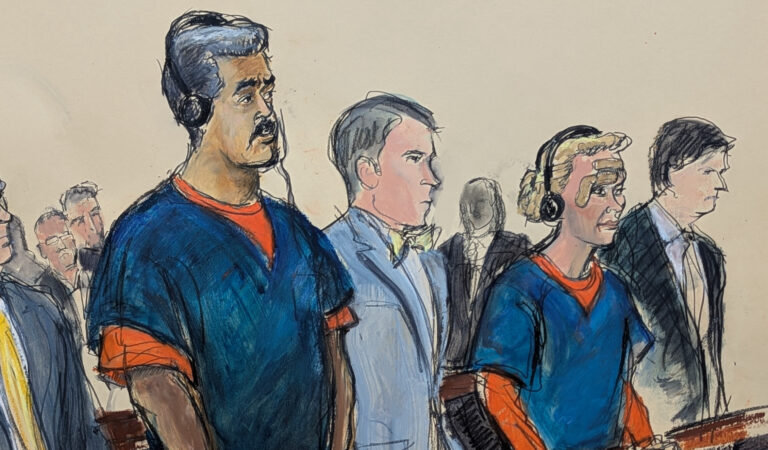
    NEW YORK — A defiant Nicolás Maduro declared himself “the president of my country” as he protested his capture and pleaded not guilty Monday to federal drug trafficking charges that the Trump administration used to justify removing him from power in Venezuela.

    “I was captured,” Maduro said in Spanish as translated by a courtroom reporter before being cut off by the judge. Asked later for his plea to the charges, he stated: “I’m innocent. I am not guilty. I am a decent man, the president of my country.”

    The courtroom appearance, Maduro’s first since he and his wife were seized from their home in a stunning middle-of-the-night military operation, kicked off the U.S. government’s most consequential prosecution in decades of a foreign head of state. The criminal case in Manhattan is unfolding against a broader diplomatic backdrop of an audacious U.S.-engineered regime change that President Donald Trump has said will enable his administration to “run” the South American country.

    Maduro was led into court along with his co-defendant wife just before noon for the brief legal proceeding. Both put on headsets to hear the English-language proceeding as it was translated into Spanish.

    The couple was transported to the Manhattan courthouse under armed guard early Monday from the Brooklyn jail where they’ve been detained since arriving in the U.S. on Saturday.

    A legal fight begins

    As a criminal defendant in the U.S. legal system, Maduro will have the same rights as any other person accused of a crime — including the right to a trial by a jury of regular New Yorkers. But he’ll also be nearly — but not quite — unique.

    The stakes were made clear from the outset as Maduro, who took copious notes throughout the proceedings and wished a Happy New Year to reporters in court, repeatedly pressed his case that he had been unlawfully abducted.

    “I am here kidnapped,” Maduro said. “I was captured at my home in Caracas.”

    U.S. District Judge Alvin Hellerstein, a 92-year-old jurist who was appointed to the federal bench in 1998 by Bill Clinton, interrupted him, saying: “There will be time and place to go through all of this.” Hellerstein added that Maduro’s attorney could do so later.

    “At this time, I just want to know if you are Nicolás Maduro Moros,” which Maduro confirmed that he was.

    Maduro’s lawyers are expected to contest the legality of his arrest, arguing that he is immune from prosecution as a head of state. Barry Pollack, a prominent Washington lawyer whose clients have included WikiLeaks founder Julian Assange, said Maduro is “head of a sovereign state and entitled to the privilege” that the status ensures. He also said the defense would raise “questions about the legality of his military abduction.”

    Panamanian strongman Manuel Noriega unsuccessfully tried the same immunity defense after the U.S. captured him in a similar military invasion in 1990. But the U.S. doesn’t recognize Maduro as Venezuela’s legitimate head of state — particularly after a much-disputed 2024 reelection.

    Maduro’s wife, Cilia Flores, also pleaded not guilty on Monday. She had bandages on her forehead and right temple, and her lawyer said had she suffered “significant injuries” during her capture.

    A 25-page indictment accuses Maduro and others of working with drug cartels to facilitate the shipment of thousands of tons of cocaine into the U.S. They could face life in prison if convicted.

    Among other things, the indictment accuses Maduro and his wife of ordering kidnappings, beatings, and murders of those who owed them drug money or undermined their drug trafficking operation. That included a local drug boss’ killing in Caracas, the indictment said.

    Outside the courthouse, police separated protesters of the U.S. military action from prointervention demonstrators. Inside the courtroom, as Maduro stood to leave with federal officers, a man in the audience stood and began speaking forcefully at him in Spanish, calling him an “illegitimate” president.

    The man, 33-year-old Pedro Rojas, said later that he had been imprisoned by the Venezuelan regime. As deputy U.S. marshals led Maduro from the courtroom, the deposed leader looked directly at the man and shot back in Spanish: “I am a kidnapped president. I am a prisoner of war.”

    Trump reiterates U.S. will ‘run it’

    The U.S. seized Maduro and his wife in a military operation early Saturday, capturing them in their home on a military base. Trump said Saturday the U.S. would “run” Venezuela temporarily and reiterated Sunday night that “we’re in charge,” telling reporters aboard Air Force One that “we’re going to run it, fix it.”

    Secretary of State Marco Rubio had tried to strike a more cautious tone on Sunday morning talk shows, saying the U.S. would not govern the country day to day other than enforcing an existing “oil quarantine.”

    But on Monday, NBC’s Kristen Welker reported that in a phone interview Trump insisted that top administration officials, including Rubio, Vice President JD Vance, Defense Secretary Pete Hegseth, and deputy chief of staff Stephen Miller would be in charge of Venezuela.

    When Welker asked who the top person in charge would be, Trump responded, “Me.”

    Before his capture, Maduro and his allies claimed U.S. hostility was motivated by lust for Venezuela’s rich oil and mineral resources.

    Trump has suggested that removing Maduro would enable more oil to flow out of Venezuela, but oil prices rose a bit more than 1% in Monday morning trading to roughly $58 a barrel. There are uncertainties about how fast oil production can be ramped up in Venezuela after years of neglect of the industry, as well as questions about governance and oversight of the sector.

    Venezuela’s new interim leader, Delcy Rodríguez, has demanded that the U.S. return Maduro, who long denied any involvement in drug trafficking — although late Sunday she also struck a more conciliatory tone in a social media post, inviting collaboration with Trump and “respectful relations” with the U.S.

    Rodríguez was sworn in on Monday by her brother, National Assembly leader Jorge Rodríguez.

    “I come with sorrow for the suffering inflicted upon the Venezuelan people following an illegitimate military aggression against our homeland,” she said with her right hand up. “I come with sorrow for the kidnapping of two heroes.”

    Maduro’s son and Venezuelan congressman Nicolás Maduro Guerra warned on Monday that his father’s capture could set a dangerous precedent globally and demanded that his parents be returned.

    “If we normalize the kidnapping of a head of state, no country is safe. Today it’s Venezuela. Tomorrow it could be any nation that refuses to submit. This is not a regional problem. It is a direct threat to global political stability,” Maduro Guerra said.

    Hegseth, Rubio brief congressional leaders

    Congressional leaders expected to hear more about the U.S. government’s plans for the future of Venezuela, as top officials from Trump’s administration headed to Capitol Hill to brief select lawmakers Monday evening.

    Rubio, Hegseth, and other officials were to discuss Venezuela with House and Senate leadership, as well as top members of the intelligence committees and national security committees.

    The top Republican and Democrat on the Senate Judiciary Committee say they should have been included.

    The briefing Monday was for members of the “gang of eight,” which include the four congressional leaders and the heads of the House and Senate Intelligence Committees. It also included leaders from the various national security committees.

    But the Judiciary Committee, which oversees the Justice Department, is not among those committees, said Sen. Chuck Grassley (R., Iowa) and Illinois Sen. Dick Durbin, the top Democrat on the committee. That is not all right, they say, because the administration has said this was a law enforcement operation involving key DOJ entities.

    “There is no legitimate basis for excluding the Senate Judiciary Committee from this briefing,” Grassley and Durbin said in a joint statement. “The administration’s refusal to acknowledge our Committee’s indisputable jurisdiction in this matter is unacceptable and we are following up to ensure the Committee receives warranted information regarding Maduro’s arrest.”

  • Lawsuit alleges negligence in deadly Bristol nursing home explosion

    Lawsuit alleges negligence in deadly Bristol nursing home explosion

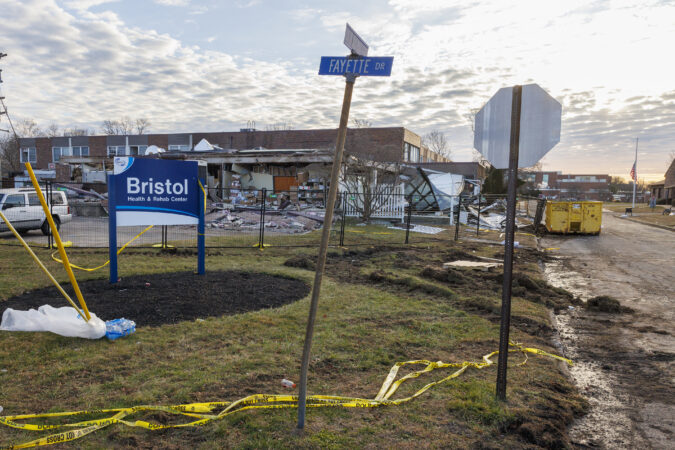
    A newly filed lawsuit alleges that the deadly explosion at a Bucks County nursing home just before Christmas was the result of negligence on the part of the facility’s operator and its natural gas supplier.

    Filed by Philadelphia law firm Saltz Mongeluzzi Bendesky on behalf of four survivors of the explosion, the lawsuit claims that Saber Healthcare Group, Peco, and others failed to appropriately respond to and treat a gas leak at Bristol Health & Rehab Center, and neglected to evacuate the building.

    The resulting explosion, which devastated the facility the afternoon of Dec. 23, killed two people and injured about 20 others.

    “Our pre-suit investigation left no doubt that the defendants were responsible for this foreseeable and preventable tragedy just before Christmas,” said lead attorney Robert J. Mongeluzzi.

    In addition to Peco and Saber Healthcare Group, the lawsuit names Exelon, Saber Healthcare Holdings, and the nursing home as defendants.

    The plaintiffs were among those on site at the time of the blast, the lawsuit says. They include former nursing home resident Barbara Stall, a paraplegic whose motorized wheelchair was allegedly destroyed during the incident, as well as facility aides Stacy Ballard and Davidetta Blay, and telecom contractor James Broderick. Blay and Broderick’s spouses are also included as plaintiffs.

    “Each continues to receive medical treatment for the physical and emotional injuries,” the law firm said in a statement. The lawsuit, the firm added, is believed to be the first filed to allege negligence.

    The blast rocked the Bristol facility just after 2 p.m., coming after Peco crews responded to reports of a gas odor earlier in the day, according to Inquirer reports. Some residents, The Inquirer later reported, had been smelling gas in the 174-bed facility in the days leading up to the explosion, but none were told to evacuate.

    The complaint, filed Monday in the Philadelphia Court of Common Pleas, alleges that despite the gas odor, the defendants did not take steps to evacuate, which it calls a “reckless and outrageous” decision.

    The odor, the complaint alleges, began permeating the building at least a half-hour before the explosion, and the defendants treated the situation with “carelessness, negligence, gross negligence, recklessness, and outrageous conduct,” the complaint said.

    Peco and Exelon, the lawsuit claims, never tested a gas pipeline that fed the nursing home for leaks and failed to properly diagnose and fix the leak once on site. Exelon, the parent corporation of Peco, declined to comment, citing an ongoing investigation.

    Zachary Shamberg, Saber’s chief of government affairs, declined to comment, citing the ongoing litigation.

    The age and condition of the gas line running to the nursing home remain unclear, but Peco has said that it has about 742 miles of substandard gas lines across the state that need to be replaced — accounting for roughly 5% of its gas service, but 82% of leaks, according to a report from the Pennsylvania Public Utility Commission.

    The company’s plans, The Inquirer previously reported, call for all those lines to be replaced by 2035.

    As a result of the explosion, the complaint alleges that the plaintiffs were forced to “suffer catastrophic personal injuries, had to survive harrowing rescue attempts, and watch their friends and colleagues lose their lives and similarly suffered traumatic injuries.”

    The cause of the explosion is being investigated by the National Transportation Safety Board, which said it expects to release a preliminary report on the explosion roughly three weeks from now. Previously, the board said investigators would test the natural gas service line that runs from the street to the basement of the facility, would interview witnesses, and would gather records.

    In the wake of the blast, Saber has relocated roughly 120 residents to local hospitals and other assisted-living facilities. The company said it was evaluating its evacuation procedures.

    Muthoni Nduthu, a 52-year-old nurse at the facility and mother to three sons, was killed in the blast. The second person killed was a resident at the nursing home, but they have not yet been publicly identified.

    “This explosion, and the loss of life and horrific injuries that accompanied it, were the tragic results of Defendants’ failure to timely respond to the gas leak, appropriately treat the leak, and evacuate the building in response to the leak,” the complaint alleges.

    The lawsuit is seeking unspecified damages to be determined by a jury.

  • A man died in Philadelphia police custody after he was arrested for firing a gun into a Mayfair front lawn

    A man died in Philadelphia police custody after he was arrested for firing a gun into a Mayfair front lawn

    A man died Sunday night after being placed in the back of a Philadelphia police cruiser that was parked on a Mayfair road, police said.

    Officers were called to the 4000 block of Hellerman Street after the man, whose name and age have not been released, fired his legally owned gun several times into the ground outside a home he had just left, a police spokesperson said Monday.

    Moments earlier, the spokesperson said, the man had argued with a relative during a party at the house.

    No one was injured by the gunfire, police said.

    When officers arrived, they took the man, who they said appeared disoriented and resisted arrest, into custody. They placed him in the back of a police vehicle, “where he became unresponsive,” the spokesperson said.

    Efforts to resuscitate him were unsuccessful, and he was pronounced dead shortly before midnight at a nearby hospital.

    The police released no additional details about the incident and said the cause of the man’s death has not yet been determined.

    On Monday afternoon, no one answered the door at the home where the party had taken place. There was no visible sign of gunfire on the front lawn, which was crowded with lawn ornaments and a sign warning dog owners to clean up after their pets.

    Two neighbors who were reached for comment at their homes said they had slept through the incident.

  • Who is Delcy Rodriguez, Venezuela‘s new leader?

    Who is Delcy Rodriguez, Venezuela‘s new leader?

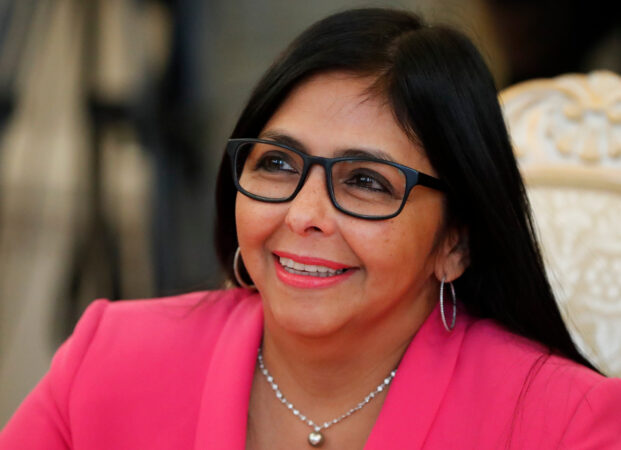
    Venezuela’s vice president, Delcy Rodríguez, has taken over as acting leader in the wake of a U.S. raid that deposed President Nicolás Maduro over the weekend.

    Rodríguez, 56, is a veteran politician, lawyer, and diplomat who had served as Maduro’s vice president since 2018. She has deep family ties to leftist politics in Venezuela, though she was generally viewed as more pragmatic than other members of Maduro’s government. While Rodríguez played a key role in overhauling Venezuela’s economic policy, developing close ties with the business community, she has also been accused of corruption and human rights abuses as part of Maduro’s inner circle.

    Venezuela’s Supreme Court ordered Rodríguez late Saturday to assume the presidency in Maduro’s absence, a position she would hold on an interim basis. On Sunday, Defense Minister Vladimir Padrino López also recognized Rodríguez as acting president, saying in televised remarks that the nation’s forces must be unified in “the mission of confronting imperial aggression.”

    Rodríguez’s first public comments came Saturday when, in an address to the nation, she denounced the U.S. operation to take Maduro and said he is the country’s only president.

    But in a Sunday night statement, Rodríguez offered a more conciliatory message, calling for “peaceful coexistence.”

    “President Donald Trump, our peoples and our region deserve peace and dialogue, not war,” Rodríguez said. “This has always been President Nicolás Maduro’s message, and it is the message of all of Venezuela right now.”

    Earlier, Trump suggested Rodríguez was willing to work with the United States, which he said would “run” Venezuela. But on Sunday, he threatened the vice president in an interview with the Atlantic, saying that “if she doesn’t do what’s right, she is going to pay a very big price, probably bigger than Maduro.”

    On Monday, lawmakers aligned with the ruling party, including Maduro’s son, gathered in the capital, Caracas, to follow through with a scheduled swearing-in ceremony of the National Assembly for a term that will last until 2031.

    Rodríguez was sworn in as interim president by her brother, Jorge Rodríguez, who was reelected as speaker.

    “I come with sorrow for the suffering inflicted upon the Venezuelan people following an illegitimate military aggression against our homeland,” she said with her right hand up.

    Here’s what we know about the interim Venezuelan leader.

    Who is Delcy Rodríguez?

    Rodríguez is a Caracas native and was born in the Venezuelan capital in 1969.

    She was 7 years old when her father, leftist political leader and guerrilla fighter Jorge Antonio Rodríguez, was killed while under interrogation by counterintelligence agents for his alleged role in the abduction of an American executive in Caracas.

    His death left an indelible mark on Rodríguez and her brother, Jorge Rodríguez Gómez, 60, who is president of Venezuela’s National Assembly, according to a 2020 profile in Vanity Fair España.

    After growing up in a deeply socialist family and hearing tales about their father, the siblings embarked on lifelong political careers, embedding themselves in the country’s leftist politics and serving in key roles under Venezuela’s former firebrand president and socialist icon, Hugo Chávez, and his handpicked successor, Maduro.

    Rodríguez, who often wears black-rimmed glasses and bright-colored fabrics, was educated in Caracas, Paris, and London, studying law at the Central University of Venezuela, where she later worked as a professor. She started her professional career as a labor lawyer and joined the Chávez administration in 2003.

    What political role has Rodríguez played in government?

    Rodríguez’s political resumé stretches back over two decades, during which she held positions that led her to the upper echelons of power.

    She started in the office of the general coordinator for the vice president in 2003, moving then to the Ministry of Energy and Mines, where she served as director of international affairs.

    Later, she became minister of presidential affairs under Chávez in 2006.

    She was a fierce defender of Chávez’s Bolivarian Revolution — named after 19th century Venezuelan revolutionary Simón Bolívar — which envisioned social and political reforms that would lift millions out of poverty and build a Latin America free of U.S. influence.

    “She has defended Venezuelan sovereignty, peace and independence like a tiger,” Maduro said of Rodríguez in 2017.

    But even as Chávez sought to fund social welfare programs, he let the country’s strategic petroleum reserves dwindle and made authoritarian moves that stifled the press and gutted the nation’s stable of experts.

    After Chavez died in 2013, Maduro elevated Rodríguez to minister of popular power for communication and information — and appointed her as his top diplomat and foreign minister the next year.

    When the price of oil plummeted in 2014, it set off economic chaos in Venezuela, characterized by severe food shortages, runaway inflation and an exodus from the country.

    On the heels of that collapse, in 2018, Rodríguez became Maduro’s vice president (while serving later as finance minister and minister of oil). A few months afterward, the U.S. placed sanctions on Rodríguez, her brother and other members of Maduro’s inner circle, accusing them of corruption and human rights abuses.

    “The revolution is our revenge for the death of our father and his executioners,” Rodríguez said in an interview that year with Venezuelan journalist José Vicente Rangel.

    What’s next for Rodríguez?

    With her broad portfolio, Rodríguez sought to implement economic changes while maintaining state control over key sectors and continuing to prioritize social spending.

    She has been viewed generally as more pragmatic and willing to oversee a limited opening of Venezuela’s economy than hard-line government officials, including the defense and interior ministers.

    Trump said Saturday that Rodríguez had spoken to Secretary of State Marco Rubio. “She said, ‘We’ll do whatever you need,’” he added. “I think she was quite gracious,” Trump said. “But she really doesn’t have a choice.”

    In some of her first actions as acting president, Rodríguez announced the creation of two commissions in a statement published by Communications Minister Freddy Ñáñez. The first is a high-level panel dedicated to the release of Maduro and his wife, Cilia Flores. The second will focus on guaranteeing and consolidating “food sovereignty and supply projects” in Venezuela, the statement said.

    Rodríguez also visited people who were injured in the U.S. attacks that deposed Maduro, according to the statement, referring to them as “brave and heroic young people who stood up to defend our sovereignty and the integrity of our President, Nicolás Maduro Moros.”

    Rodríguez and her brother are seen as modernizers who want a semiopen country and economy and warmer relations with the broader world, Tulane University sociologist David Smilde said.

    The siblings, however, “don’t have guns,” said Phil Gunson, a senior analyst for the Andes region with the International Crisis Group. And even with Delcy Rodríguez as interim president, the interior and defense ministers could still hold most of the power, given their control of the military and security forces.

    “If it comes to a fight, they’re left hanging because they don’t have anyone to back them,” Gunson said. “What I suspect is going to happen is, she will occupy the presidency, but the powers will be the defense and interior ministers, and that’s not good.”

    Information from the Associated Press was used in this report.

  • U.S. allies and adversaries use U.N. meeting to critique Venezuela intervention as America defends it

    U.S. allies and adversaries use U.N. meeting to critique Venezuela intervention as America defends it

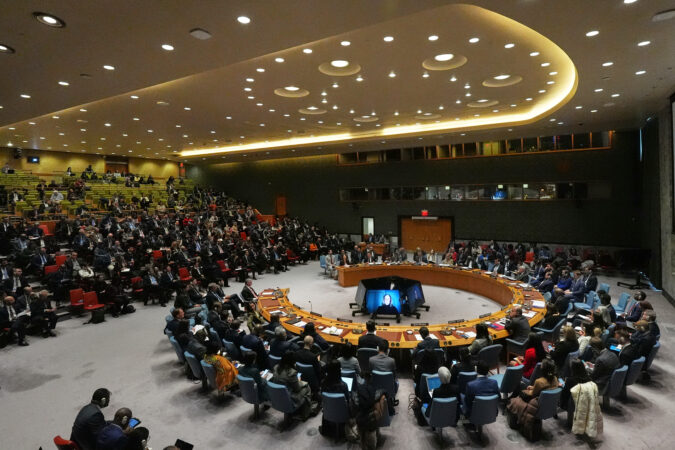
    UNITED NATIONS — Both allies and adversaries of the United States on Monday used an emergency meeting of the U.N. Security Council to voice opposition to the audacious U.S. military operation in Venezuela that captured leader Nicolás Maduro.

    Before the U.N.’s most powerful body, countries critiqued — if sometimes obliquely — President Donald Trump’s intervention in the South American country and his recent comments signaling the possibility of expanding military action to countries like Colombia and Mexico over drug trafficking accusations. The Republican president also has reupped his threat to take over the Danish territory of Greenland for the sake of U.S. security interests.

    Denmark, which has jurisdiction over the mineral-rich island, carefully denounced U.S. prospects for taking over Greenland without mentioning its NATO ally by name.

    “The inviolability of borders is not up for negotiation,” said Christina Markus Lassen, Danish ambassador to the U.N.

    She also defended Venezuela’s sovereignty, saying “no state should seek to influence political outcomes in Venezuela through the use of threat of force or through other means inconsistent with international law.”

    U.S. allies push back on Venezuela

    While French President Emmanuel Macron recently endorsed Maduro’s capture, its U.N. envoy was slightly more critical Monday, saying any violations of international law by the five permanent members of the U.N. Security Council, which include the U.S., erodes “the very foundation of the international order.”

    “The military operation that has led to the capture of Maduro runs counter to the principle of peace dispute resolution and runs counter to the principle of nonuse of force,” said Jay Dharmadhikari, deputy French ambassador to the U.N.

    U.S. envoy Mike Waltz defended the operation in Venezuela as a justified and “surgical law enforcement operation,” calling out the 15-member council for criticizing the targeting of Maduro.

    “If the United Nations in this body confers legitimacy on an illegitimate narco-terrorist with the same treatment in this charter of a democratically elected president or head of state, what kind of organization is this?” said Waltz, who is Trump’s former national security adviser.

    Maduro’s 2024 reelection was widely disputed.

    U.N. Secretary-General Antonio Guterres said in a statement that he is “deeply concerned that rules of international law have not been respected with regard to the 3 January military action.” He said the “grave” action by the U.S. could set a precedent for how future relations between nations unfold.

    Venezuela calls on the U.N. to take action

    Even with the strong support for Venezuela’s sovereignty, its envoy called on the U.N. to go beyond veiled comments and condemnation. Ambassador Samuel Moncada urged the Security Council to demand that Washington release Maduro and his wife.

    “If the kidnapping of a head of state, the bombing of a sovereign country, and the open threat of further armed action are tolerated or downplayed, the message sent to the world is a devastating one: namely that the law is optional, and that force is the true arbiter of international relations,” Moncada said.

    He warned that other countries can’t afford to look away: “Accepting such a logic would mean to open the door to a deeply unstable world.”

    Neighboring Colombia described the raid as reminiscent of “the worst interference in our area in the past.”

    “Democracy cannot be defended or promoted through violence and coercion, and it cannot be superseded, either, by economic interests,” Ambassador Leonor Zalabata said.

    China, Russia are expectedly critical

    The biggest critics of U.S. foreign policy, China and Russia, which are also permanent members of the Security Council, called for the U.N. body to unite in rejecting America turning back to an “era of lawlessness.”

    Maduro, like his predecessor, forged a close relationship with Russia, while China was the main destination for most Venezuelan oil.

    “We cannot allow the United States to proclaim itself as some kind of a supreme judge, which alone bears the right to invade any country, to label culprits, to hand down and to enforce punishments irrespective of notions of international law, sovereignty, and nonintervention,” Russian ambassador Vassily Nebenzia said.

    His own country’s 2022 invasion of Ukraine has drawn widespread condemnation within the U.N. and from the U.S., although the Trump administration is engaging with Russia in hopes of brokering an end to the fighting.

    The U.S. seized Maduro and his wife early Saturday from their home on a military base and put them aboard a U.S. warship to face prosecution in New York in a Justice Department indictment accusing them of participating in a narco-terrorism conspiracy. Maduro declared his innocence during his first appearance in a Manhattan courthouse Monday.

    His stunning removal came after months of the U.S. amassing a military presence off Venezuela’s coast and blowing up alleged drug trafficking boats. Trump has insisted that the U.S. would run Venezuela at least temporarily and tap its vast oil reserves to sell to other nations.

    Secretary of State Marco Rubio, however, says the U.S. would enforce an oil quarantine that was already in place on sanctioned tankers and use that leverage to press policy changes in Venezuela.

  • Jury selection begins in trial for ex-officer accused in police response to Uvalde school shooting

    Jury selection begins in trial for ex-officer accused in police response to Uvalde school shooting

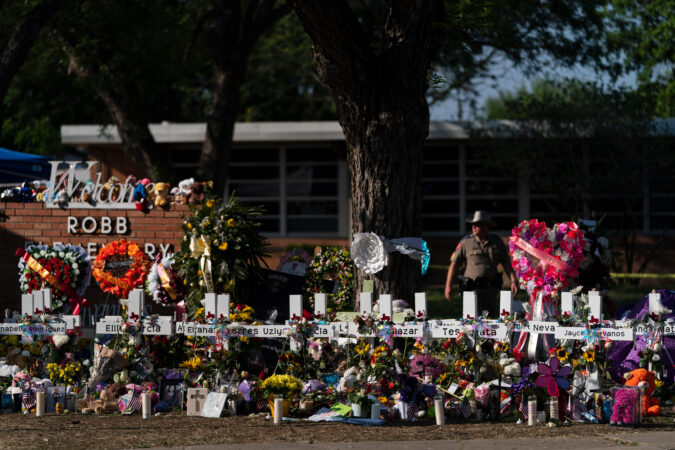
    CORPUS CHRISTI, Texas — A former school police officer in Uvalde, Texas, who was part of the slow law enforcement response to one of the worst school shootings in U.S. history went on trial Monday on charges that he failed to protect children from the gunman.

    Adrian Gonzales, one of the first officers to respond to the 2022 attack, is charged with 29 counts of child abandonment or endangerment in a rare prosecution of an officer accused of not doing more to save lives. Authorities waited more than an hour to confront the teenage shooter who killed 19 students and two teachers at Robb Elementary.

    Gonzales has pleaded not guilty, and his attorney has said the officer tried to save children that day.

    Jury selection began Monday at a Texas courthouse where a long line of prospective jurors stretched outside the building before the proceedings got underway.

    Potential jurors were given a list of questions asking what they knew about the law enforcement response and their impressions of what happened, as well as whether they contributed money to Uvalde victims.

    Judge Sid Harle told several hundred potential jurors that the court was not looking for jurors who know nothing about the shooting but wants those who can be impartial. The trial was expected to last about two weeks, he said.

    Among the potential witnesses are FBI agents, rangers with the Texas Department of Public Safety, school employees, and family members of the victims.

    Nearly 400 officers from state, local, and federal law enforcement agencies responded to the school, but 77 minutes passed from the time authorities arrived until a tactical team breached the classroom and killed the shooter, Salvador Ramos. An investigation later showed that Ramos was obsessed with violence and notoriety in the months leading up to the attack.

    Gonzales and former Uvalde schools police chief Pete Arredondo were among the first on the scene, and they are the only two officers to face criminal charges over the response. Arredondo’s trial has not been scheduled.

    The charges against Gonzales carry up to two years in prison if he is convicted.

    Police and Texas Gov. Greg Abbott initially said swift law enforcement action killed Ramos and saved lives. But that version quickly unraveled as families described begging police to go into the building and 911 calls emerged from students pleading for help.

    The indictment alleges Gonzales placed children in “imminent danger” of injury or death by failing to engage, distract, or delay the shooter and by not following his active shooter training. The allegations also say he did not advance toward the gunfire despite hearing shots and being told where the shooter was.

    State and federal reviews of the shooting cited cascading problems in law enforcement training, communication, leadership, and technology, and questioned why officers waited so long.

    According to the state review, Gonzales told investigators that once police realized there were students still sitting in other classrooms, he helped evacuate them.

    Some family members of the victims have said more officers should be indicted.

    “They all waited and allowed children and teachers to die,” said Velma Lisa Duran, whose sister Irma Garcia was one of the two teachers who were killed.

    Prosecutors will likely face a high bar to win a conviction. Juries are often reluctant to convict law enforcement officers for inaction, as seen after the Parkland, Fla., school massacre in 2018.

    Sheriff’s deputy Scot Peterson was charged with failing to confront the shooter in that attack. It was the first such prosecution in the U.S. for an on-campus shooting, and Peterson was acquitted by a jury in 2023.

    At the request of Gonzales’ attorneys, the trial was moved about 200 miles southeast to Corpus Christi. They argued Gonzales could not receive a fair trial in Uvalde, and prosecutors did not object.

    Uvalde, a town of 15,000, still has several prominent reminders of the shooting. Robb Elementary is closed but still stands, and a memorial of 21 crosses and flowers sits near the school sign. Murals depicting several victims can still be seen on the walls of several buildings.

    Jesse Rizo, whose 9-year-old niece Jackie was one of the students killed, said even with a three-hour drive to Corpus Christi, the family would like to have someone attend the trial every day.

    “It’s important that the jury see that Jackie had a big, strong family,” Rizo said.

  • Man who broke windows at Vance’s Ohio home is detained, the Secret Service says

    Man who broke windows at Vance’s Ohio home is detained, the Secret Service says

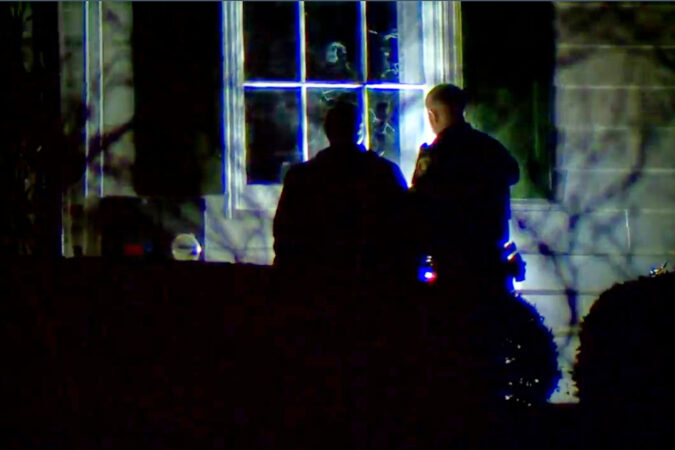
    A man who broke windows at Vice President JD Vance’s Ohio home and caused other property damage was detained early Monday, the U.S. Secret Service said.

    The man was detained shortly after midnight by Secret Service agents assigned to Vance’s home, east of downtown Cincinnati, agency spokesperson Anthony Guglielmi said in a statement emailed to the Associated Press. The vice president and his family were not at home, having returned to Washington on Sunday after a weekend there, his office said.

    The Secret Service heard a loud noise at the house around midnight and found a person who had broken a window with a hammer and was trying to get in, according to two law enforcement officials who were not publicly authorized to discuss the investigation into what happened and spoke on the condition of anonymity. The man had also vandalized a Secret Service vehicle on his way up the home’s driveway, one of the officials said.

    A law enforcement official identified the suspect as William Defoor, 26, who public records list as living in Cincinnati. Calls to the listings for possible relatives and an attorney who previously represented Defoor were not immediately returned.

    Defoor is set to be arraigned Tuesday on misdemeanor charges of vandalism, criminal trespass, criminal damaging, and obstruction of official business, court records show.

    Vance expressed gratitude to the Secret Service and Cincinnati police for responding quickly to the incident in a post on the social platform X.

    “I appreciate everyone’s well wishes about the attack at our home,” Vance tweeted. “As far as I can tell, a crazy person tried to break in by hammering the windows.”

    Court records show that Defoor faced an earlier charge of vandalism in 2024 and agreed to treatment under the county’s Mental Health Court system.

    The Secret Service is coordinating with the Cincinnati Police Department and the U.S. attorney’s office as charging decisions are reviewed, Guglielmi said.

    The Vance home is located in one of the city’s oldest neighborhoods, on hills overlooking the city. Throughout Vance’s vice presidency, protesters have often gathered outside the home — clashing at one point last spring with Vance himself.

    Vance, a Republican, was a U.S. senator representing Ohio before becoming vice president. He moved to Cincinnati after a stint in Silicon Valley following law school, and his half brother ran unsuccessfully for mayor there last year. Vance was raised in nearby Middletown, which figured heavily in his best-selling memoir, Hillbilly Elegy.

    Associated Press writers Mike Balsamo, Sarah Brumfield and Julie Carr Smyth contributed to this article.

  • Hegseth censures Sen. Kelly after Democrats’ video urging troops to resist unlawful orders

    Hegseth censures Sen. Kelly after Democrats’ video urging troops to resist unlawful orders

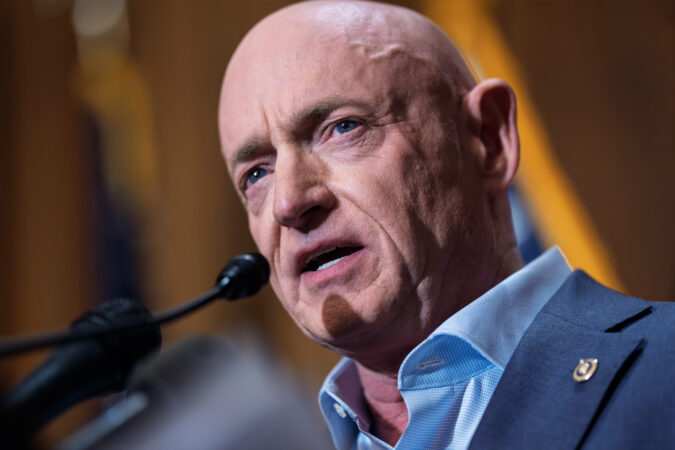
    WASHINGTON — Defense Secretary Pete Hegseth announced Monday that he censured Democratic Sen. Mark Kelly of Arizona over the former Navy pilot’s participation in a video that called on troops to resist unlawful orders.

    Hegseth said the censure — by itself simply a formal letter with little practical consequence — was “a necessary process step” to proceedings that could result in a demotion from Kelly’s retired rank of captain and subsequent reduction in retirement pay.

    Investigating and now punishing a sitting U.S. senator is an extraordinary move for the Pentagon, which until President Donald Trump’s second term had usually gone out of its way to act and appear apolitical. A legal expert says the choice to go after a lawmaker will complicate an already unique case.

    In a lengthy post on social media, Kelly said he “never expected” what he called an “attack” from Trump and Hegseth, recounting his 25 years of Navy service as well as combat and space missions.

    Calling Hegseth’s move “outrageous” and “un-American,” Kelly said he would fight the censure “with everything I’ve got — not for myself, but to send a message back that Pete Hegseth and Donald Trump don’t get to decide what Americans in this country get to say about their government.”

    Hegseth’s action follows video about illegal orders

    The censure comes after Kelly participated in a video in November with five other Democratic lawmakers — all veterans of the armed services and intelligence community — in which they called on troops to uphold the Constitution and defy “illegal orders.”

    Trump, a Republican, accused the lawmakers of sedition “punishable by DEATH” in a social media post days later.

    The 90-second video was first posted from Sen. Elissa Slotkin’s X account. In it, the six lawmakers — Slotkin, Kelly ,and Reps. Jason Crow, Chris Deluzio, Maggie Goodlander, and Chrissy Houlahan — speak directly to U.S. service members, whom Slotkin acknowledges are “under enormous stress and pressure right now.”

    The lawmakers didn’t mention specific circumstances. But their message was released amid a series of military attacks on boats accused of smuggling drugs in the Caribbean Sea and the eastern Pacific Ocean and Trump’s attempts to deploy National Guard troops to American cities.

    The Pentagon announced that it began an investigation of Kelly in late November, citing a federal law that allows retired service members to be recalled to active duty on orders of the defense secretary for possible court-martial or other measures.

    While all six lawmakers served in the military or the intelligence community, Hegseth previously said Kelly was the only one facing investigation because he is the only one of the lawmakers who formally retired from the military and is still under the Pentagon’s jurisdiction.

    Kelly said last month that the investigation was part of an effort to silence dissent: “This is just about sending a message to retired service members, active duty service members, government employees — do not speak out against this president or there will be consequences.”

    Kelly, along with some of the other Democrats in the initial video, have sent out fundraising messages based on Trump’s reaction to their comments, efforts that have gone toward filling their own campaign coffers and further elevating their national-level profiles.

    What accusations Hegseth is leveling against Kelly

    In his post Monday, Hegseth charged that Kelly’s remarks in the video and afterward violated Uniform Code of Military Justice provisions against conduct unbecoming an officer and violating good order and discipline.

    “Captain Kelly’s status as a sitting United States Senator does not exempt him from accountability, and further violations could result in further action,” Hegseth said.

    Todd Huntley, a retired Navy captain and judge advocate general, called this is a “novel” situation that raises legal questions.

    One issue, Huntley said, is whether Kelly’s comments fall under the constitutional protections of the speech or debate clause, which is intended to protect members of Congress from questioning about official legislative acts.

    A 1968 Supreme Court decision said the provision’s intent was “to prevent legislative intimidation by and accountability to the other branches of government.”

    Huntley said that while the type of process Hegseth is using — known as a retirement grade determination — is fairly routine, “as far as I know, they’ve always been based on conduct during the individual’s active duty service, even if it only came to light after retirement.”

    “So, I don’t know if conduct totally after retirement would fit the requirement for such a determination,” he added.

    According to Hegseth, Kelly now has 30 days to submit a response to the proceedings that will decide if he is demoted. The decision will be made within 45 days, Hegseth’s post added.

    Huntley noted that Kelly will also have options to appeal the finding both within the military and in federal court.